
Merlin_X
4.5k Posts

Merlin_X
Report
Block User
Crypto Explorer 🧭 | Always learning, always earning | Loving the Binance |
High-Frequency Trader
5.9 Months
461 Following
15.4K+ Followers
6.0K+ Liked
Posts
All
Quotes
Live
PINNED
·
--
🔴 RED PACKET 🔴
❤️ CLAIM YOUR REWARD ❤️
🧧 WRITE 4 🧧
🔴 RED PACKET 🔴
❤️ CLAIM YOUR REWARD ❤️
🧧 WRITE 4 🧧
❤️ CLAIM YOUR REWARD ❤️
🧧 WRITE 4 🧧

1.8k
42
126
1.9k
·
--
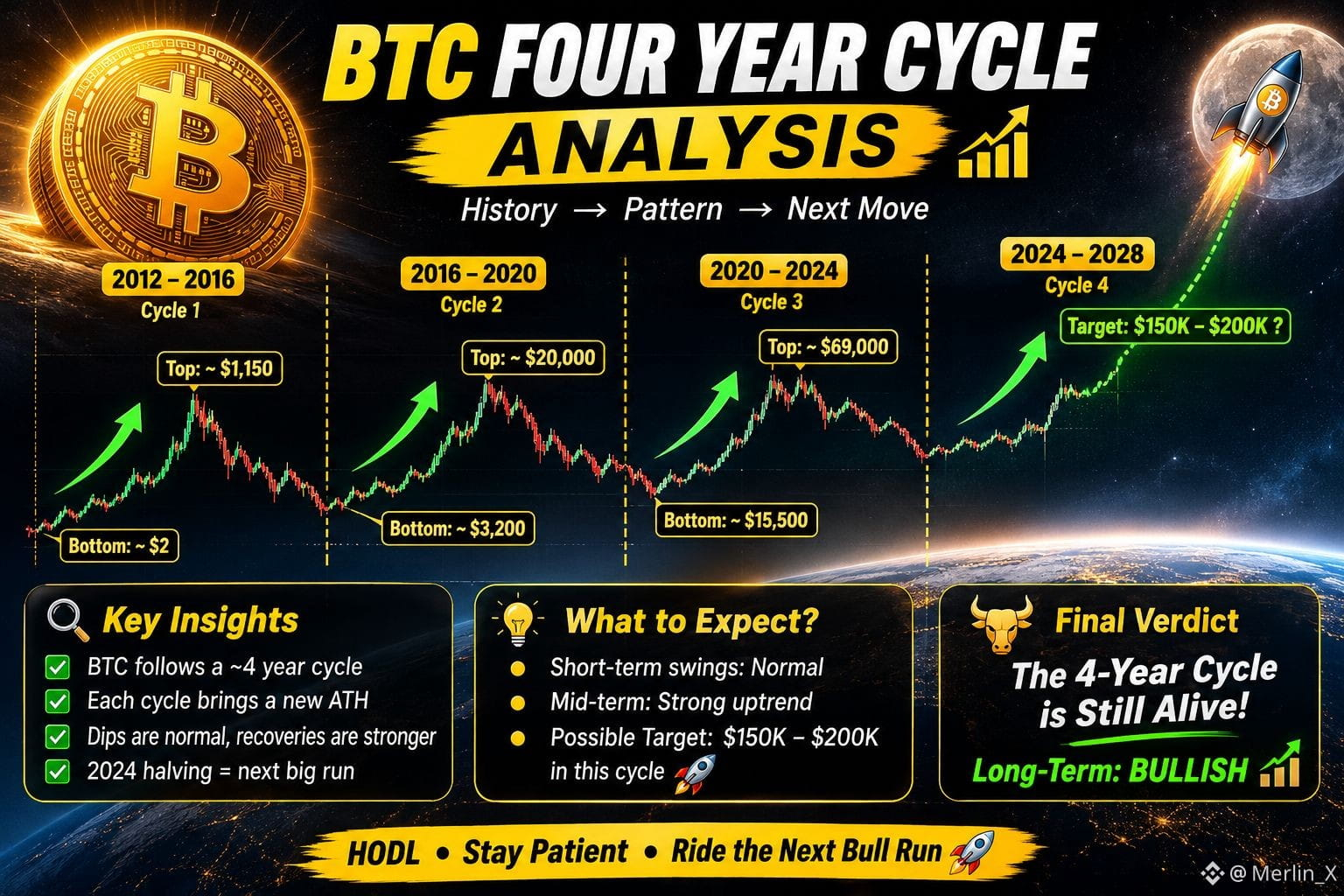
🚀 BITCOIN'S ( $BTC ) 4-YEAR CYCLE IS IN FOCUS! ₿🔥
2012 → 2016 → 2020 → 2024
History shows one powerful pattern: Bitcoin keeps reaching new ATHs after every halving cycle.
👀 Is the next big move still ahead?
Could $150K–$200K be the next target? 📈
🐂 STAY ALERT. THE BTC STORY ISN'T OVER!
{future}(BTCUSDT)
🚀 BITCOIN'S ( $BTC ) 4-YEAR CYCLE IS IN FOCUS! ₿🔥
2012 → 2016 → 2020 → 2024
History shows one powerful pattern: Bitcoin keeps reaching new ATHs after every halving cycle.
👀 Is the next big move still ahead?
Could $150K–$200K be the next target? 📈
🐂 STAY ALERT. THE BTC STORY ISN'T OVER!
2012 → 2016 → 2020 → 2024
History shows one powerful pattern: Bitcoin keeps reaching new ATHs after every halving cycle.
👀 Is the next big move still ahead?
Could $150K–$200K be the next target? 📈
🐂 STAY ALERT. THE BTC STORY ISN'T OVER!
1
335
·
--
Article
The Quiet Infrastructure Shift | #EvolveAtBinanceBlockchainWeekMost people watch crypto conferences for price predictions.
I watched this one for the plumbing.
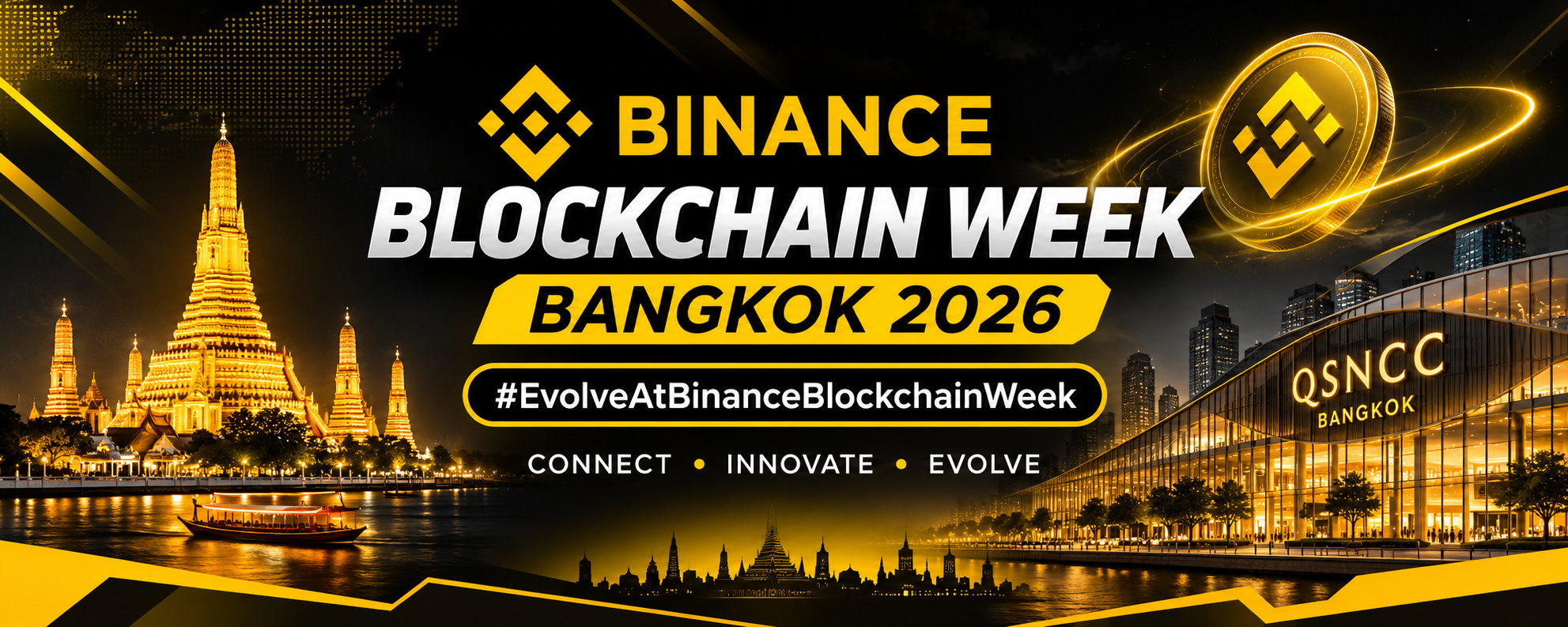
At Binance Blockchain Week Bangkok 2026 — Nov 28-29, Queen Sirikit National Convention Center — the real story isn't hype. It's how money moves when banking hours disappear.
Here's the 2-day blueprint, in simple terms:
Day 1 — The Plumbing of Capital
How value settles globally. Cross-border payment corridors, institutional liquidity, real-world asset tokenization, and what happens when markets move toward always-on settlement.
Day 2 — Intelligence and Interface
How people actually use those rails. AI agents, consumer apps, decentralized data, and user education.
And on Nov 29, there's also the Blockchain 100 Awards, on-site + livestream.
Why Bangkok matters
Binance has taken this event to Singapore, Istanbul, Paris, Dubai before. Hosting this edition in Bangkok, with Binance TH, puts it inside a live policy lab.
Legacy financial centers move slowly because their old systems are deeply entrenched. In many parts of Asia, the pressure is different: slow remittances, high fees, limited FX access.
So regulators here are testing frameworks in public, while builders are in the room.
Policy Watch: Thailand's Stablecoin Draft
This is the part to watch closely.
Per the public consultation discussion ahead of the event, Thailand's SEC has been consulting on stablecoin rules, alongside Travel Rule wallet-verification measures discussed for Feb 2027 and a parallel Bank of Thailand track for baht-pegged stablecoins.
The draft discussion included ideas like:
• Daily ceilings for transfers on licensed platforms (reported as 5M baht per customer) • Transfers limited to regulated exchanges and verified wallets of the same owner • Higher minimums + price disclosure for certain off-platform transactions
The goal is understandable: make it harder for cybercrime syndicates to launder funds through licensed venues.
The trade-off is real too: strict caps and same-owner rules can create friction for freelancers, small exporters, and everyday users who use stablecoins because wires are slow or expensive. And P2P transfers outside licensed platforms remain a separate question.
This is why having Tether, Visa, Celo, United Stables, and Thai policymakers on stage in the same week matters. It's a rare public debate, not just a panel.
Always-On Markets + Tokenization
One of the most interesting Day 1 themes: what happens when closing bells disappear?
Per the agenda, speakers from BlackRock, Nasdaq, Franklin Templeton, UBS, and Mirae Asset Securities are part of that conversation.
24/7 sounds simple. Operationally, it's not:
• Who monitors collateral and liquidity at 3 AM on a Sunday? • How do you price a tokenized stock when its home exchange is closed? • Who is liable if a cross-chain settlement stalls? Same with tokenization — panels with FTSE Russell, CSOP Hong Kong, DBS Bank, KGI Financial, and Ondo Finance.A tokenized bond without deep secondary liquidity isn't very useful. And holding a token doesn't always mean the same shareholder rights or dividend rights as holding the underlying directly. Always read the fine print — that's educational, not legal advice.Real Utility, Not Just HeadlinesWhat I liked most: policymakers and payment operators from places where this solves everyday problems.Per the agenda: Kazakhstan's Ministry of AI and Digital Development, Bhutan's Gelephu Mindfulness City, Ghana's SEC, plus National Bank of Kazakhstan, Japan's PayPay, and Bhutan's DK Bank.In South Asia, Central Asia, and West Africa, adoption isn't driven by ETF headlines. It's driven by:
• A student receiving tuition money from family abroad without losing ∼10% to fees • A remote developer getting paid on time by an international client • A small shop owner managing cross-border inventory without a foreign dollar account That's the real test.Security Is The Price of AdmissionCompliance used to be the boring footnote. Now it's central.Two sessions show this: a cross-border enforcement panel with the Royal Thai Police Cyber Crime Investigation Bureau, Binance, Elliptic, and Mandiant, plus a compliance discussion with TRM Labs, Chainalysis, Solidus Labs, and Binance.My observation: when exchanges, analytics firms, and law enforcement can track and freeze illicit flows together, regulators have less reason to impose blanket bans or rigid caps.For users, most losses I see discussed aren't from market moves. They're from phishing links, leaked seed phrases, and fake fixed-return schemes.Basic habits still matter most:
• Verify wallet addresses carefully • Keep seed phrases offline • Treat any "guaranteed fixed returns" claim as a red flag
Day 2: AI Agents + Human Guardrails
Per the agenda, Yi He opens Day 2 on how Binance is evolving from a trading venue into a broader financial platform. Binance says it serves 300M+ users across 100+ countries — treat that as their reported figure, not my verification.
Then: agentic AI workflows with Prof. Hongxia Yang (PolyU) and Binance's Jeff Li, Arthur Hayes on AI compute + liquidity, pre-IPO perpetual markets with Kaiko, DeFiLlama, CoinDesk, CoinMarketCap, decentralized data with BNB Chain, Pyth Network, RedStone, Babylon, a fireside with Justin Sun and Trust Wallet CEO Felix Fan, humanitarian aid tracking with UNICEF, Prosper Global, Fortune Credit, and education with Guy Turner, Lea Thompson, and Dr. Udomsak Rakwongwan.
AI agents managing portfolios look great in demos. Before trusting any automation with real capital, ask:
• Who bears liability if an automated trade goes wrong? • How is it protected against prompt injection from malicious sites? • How fast can a human revoke permissions?
By contrast, blockchain for humanitarian donation tracking (UNICEF session) is a much clearer use case — public transparency directly solves an accountability problem.
If You're New, Keep These 4 Principles
Expect tighter identity checks as stablecoins become payment infrastructure. Inconvenient, but it keeps regulated venues safer.On tokenized assets, check if you own the underlying asset or just a price-tracking contract.AI makes clicking easier, not safer. Risk management is still your responsibility.Rules in Thailand may look very different from rules in your country. Local law matters.
My Take
Beneath the branding, this event asks one question:
What happens to money when markets never close, borders stop slowing payments, and software handles routine execution?
A stage is a showcase, not a finished product. The real test starts in the months after — which announcements become live settlement rails, balanced frameworks, and tools ordinary people can safely use.
@BinanceBlockchainWeek @CZ @richardteng @heyi @Binance_Angels @Binance_Square_Official
#EvolveAtBinanceBlockchainWeek #BinanceBlockchainWeek #CryptoAdoption #Web3 #DigitalFinance
$CFG
$PORTAL $BTW
The Quiet Infrastructure Shift | #EvolveAtBinanceBlockchainWeek
Most people watch crypto conferences for price predictions.
I watched this one for the plumbing.
At Binance Blockchain Week Bangkok 2026 — Nov 28-29, Queen Sirikit National Convention Center — the real story isn't hype. It's how money moves when banking hours disappear.
Here's the 2-day blueprint, in simple terms:
Day 1 — The Plumbing of Capital
How value settles globally. Cross-border payment corridors, institutional liquidity, real-world asset tokenization, and what happens when markets move toward always-on settlement.
Day 2 — Intelligence and Interface
How people actually use those rails. AI agents, consumer apps, decentralized data, and user education.
And on Nov 29, there's also the Blockchain 100 Awards, on-site + livestream.
Why Bangkok matters
Binance has taken this event to Singapore, Istanbul, Paris, Dubai before. Hosting this edition in Bangkok, with Binance TH, puts it inside a live policy lab.
Legacy financial centers move slowly because their old systems are deeply entrenched. In many parts of Asia, the pressure is different: slow remittances, high fees, limited FX access.
So regulators here are testing frameworks in public, while builders are in the room.
Policy Watch: Thailand's Stablecoin Draft
This is the part to watch closely.
Per the public consultation discussion ahead of the event, Thailand's SEC has been consulting on stablecoin rules, alongside Travel Rule wallet-verification measures discussed for Feb 2027 and a parallel Bank of Thailand track for baht-pegged stablecoins.
The draft discussion included ideas like:
• Daily ceilings for transfers on licensed platforms (reported as 5M baht per customer) • Transfers limited to regulated exchanges and verified wallets of the same owner • Higher minimums + price disclosure for certain off-platform transactions
The goal is understandable: make it harder for cybercrime syndicates to launder funds through licensed venues.
The trade-off is real too: strict caps and same-owner rules can create friction for freelancers, small exporters, and everyday users who use stablecoins because wires are slow or expensive. And P2P transfers outside licensed platforms remain a separate question.
This is why having Tether, Visa, Celo, United Stables, and Thai policymakers on stage in the same week matters. It's a rare public debate, not just a panel.
Always-On Markets + Tokenization
One of the most interesting Day 1 themes: what happens when closing bells disappear?
Per the agenda, speakers from BlackRock, Nasdaq, Franklin Templeton, UBS, and Mirae Asset Securities are part of that conversation.
24/7 sounds simple. Operationally, it's not:
• Who monitors collateral and liquidity at 3 AM on a Sunday? • How do you price a tokenized stock when its home exchange is closed? • Who is liable if a cross-chain settlement stalls? Same with tokenization — panels with FTSE Russell, CSOP Hong Kong, DBS Bank, KGI Financial, and Ondo Finance.A tokenized bond without deep secondary liquidity isn't very useful. And holding a token doesn't always mean the same shareholder rights or dividend rights as holding the underlying directly. Always read the fine print — that's educational, not legal advice.Real Utility, Not Just HeadlinesWhat I liked most: policymakers and payment operators from places where this solves everyday problems.Per the agenda: Kazakhstan's Ministry of AI and Digital Development, Bhutan's Gelephu Mindfulness City, Ghana's SEC, plus National Bank of Kazakhstan, Japan's PayPay, and Bhutan's DK Bank.In South Asia, Central Asia, and West Africa, adoption isn't driven by ETF headlines. It's driven by:
• A student receiving tuition money from family abroad without losing ∼10% to fees • A remote developer getting paid on time by an international client • A small shop owner managing cross-border inventory without a foreign dollar account That's the real test.Security Is The Price of AdmissionCompliance used to be the boring footnote. Now it's central.Two sessions show this: a cross-border enforcement panel with the Royal Thai Police Cyber Crime Investigation Bureau, Binance, Elliptic, and Mandiant, plus a compliance discussion with TRM Labs, Chainalysis, Solidus Labs, and Binance.My observation: when exchanges, analytics firms, and law enforcement can track and freeze illicit flows together, regulators have less reason to impose blanket bans or rigid caps.For users, most losses I see discussed aren't from market moves. They're from phishing links, leaked seed phrases, and fake fixed-return schemes.Basic habits still matter most:
• Verify wallet addresses carefully • Keep seed phrases offline • Treat any "guaranteed fixed returns" claim as a red flag
Day 2: AI Agents + Human Guardrails
Per the agenda, Yi He opens Day 2 on how Binance is evolving from a trading venue into a broader financial platform. Binance says it serves 300M+ users across 100+ countries — treat that as their reported figure, not my verification.
Then: agentic AI workflows with Prof. Hongxia Yang (PolyU) and Binance's Jeff Li, Arthur Hayes on AI compute + liquidity, pre-IPO perpetual markets with Kaiko, DeFiLlama, CoinDesk, CoinMarketCap, decentralized data with BNB Chain, Pyth Network, RedStone, Babylon, a fireside with Justin Sun and Trust Wallet CEO Felix Fan, humanitarian aid tracking with UNICEF, Prosper Global, Fortune Credit, and education with Guy Turner, Lea Thompson, and Dr. Udomsak Rakwongwan.
AI agents managing portfolios look great in demos. Before trusting any automation with real capital, ask:
• Who bears liability if an automated trade goes wrong? • How is it protected against prompt injection from malicious sites? • How fast can a human revoke permissions?
By contrast, blockchain for humanitarian donation tracking (UNICEF session) is a much clearer use case — public transparency directly solves an accountability problem.
If You're New, Keep These 4 Principles
Expect tighter identity checks as stablecoins become payment infrastructure. Inconvenient, but it keeps regulated venues safer.On tokenized assets, check if you own the underlying asset or just a price-tracking contract.AI makes clicking easier, not safer. Risk management is still your responsibility.Rules in Thailand may look very different from rules in your country. Local law matters.
My Take
Beneath the branding, this event asks one question:
What happens to money when markets never close, borders stop slowing payments, and software handles routine execution?
A stage is a showcase, not a finished product. The real test starts in the months after — which announcements become live settlement rails, balanced frameworks, and tools ordinary people can safely use.
@Binance Blockchain Week @CZ @Richard Teng @Yi He @Binance Angels @Binance Square Official
#EvolveAtBinanceBlockchainWeek #BinanceBlockchainWeek #CryptoAdoption #Web3 #DigitalFinance
$CFG
$PORTAL $BTW
1
1.5k
·
--
🚀 TOP 3 FUTURES GAINERS ARE EXPLODING! 🔥
🥇 $PORTAL +214.63% 🚀
🥈 $BULLA +63.30% 🐂
🥉 $VELVET +33.01% 🌕
Bulls are taking control! 📈 Which coin is catching your attention? 👀
🚀 TOP 3 FUTURES GAINERS ARE EXPLODING! 🔥
🥇 $PORTAL +214.63% 🚀
🥈 $BULLA +63.30% 🐂
🥉 $VELVET +33.01% 🌕
Bulls are taking control! 📈 Which coin is catching your attention? 👀
🥇 $PORTAL +214.63% 🚀
🥈 $BULLA +63.30% 🐂
🥉 $VELVET +33.01% 🌕
Bulls are taking control! 📈 Which coin is catching your attention? 👀
🥇 $PORTAL +214.63% 🚀
0%
🥈 $BULLA +63.30% 🐂
0%
🥉 $VELVET +33.01% 🌕
0%
0 votes • Voting closed
1
71
·
--
🚀🐂 THE BULLS ARE TAKING OFF!
BINANCE IS JUST THE LAUNCHPAD…
THE MOON IS THE DESTINATION! 🌕🔥
💚 $INIT | +69.89% 🚀
🐂 $BULLA | +61.27% 💥
⚡ $ELSA | +26.81% 📈
🔥 GREEN EXPLOSION! 24H MOMENTUM IS TURNING HEADS. THE BULLS ARE SHOWING THEIR POWER!
🌕 NEXT STOP: THE MOON! WHO'S COMING? 🚀🐂
🚀🐂 THE BULLS ARE TAKING OFF!
BINANCE IS JUST THE LAUNCHPAD…
THE MOON IS THE DESTINATION! 🌕🔥
💚 $INIT | +69.89% 🚀
🐂 $BULLA | +61.27% 💥
⚡ $ELSA | +26.81% 📈
🔥 GREEN EXPLOSION! 24H MOMENTUM IS TURNING HEADS. THE BULLS ARE SHOWING THEIR POWER!
🌕 NEXT STOP: THE MOON! WHO'S COMING? 🚀🐂
BINANCE IS JUST THE LAUNCHPAD…
THE MOON IS THE DESTINATION! 🌕🔥
💚 $INIT | +69.89% 🚀
🐂 $BULLA | +61.27% 💥
⚡ $ELSA | +26.81% 📈
🔥 GREEN EXPLOSION! 24H MOMENTUM IS TURNING HEADS. THE BULLS ARE SHOWING THEIR POWER!
🌕 NEXT STOP: THE MOON! WHO'S COMING? 🚀🐂
$INIT | +69.89% 🚀
37%
$BULLA | +61.27% 💥
47%
$ELSA | +26.81% 📈
16%
43 votes • Voting closed
2
4.1k
·
--
🎙️ Livestream starting: When will the four family heirlooms break even?
End
04 h 06 m 44 s
9.6k
7
9
·
--
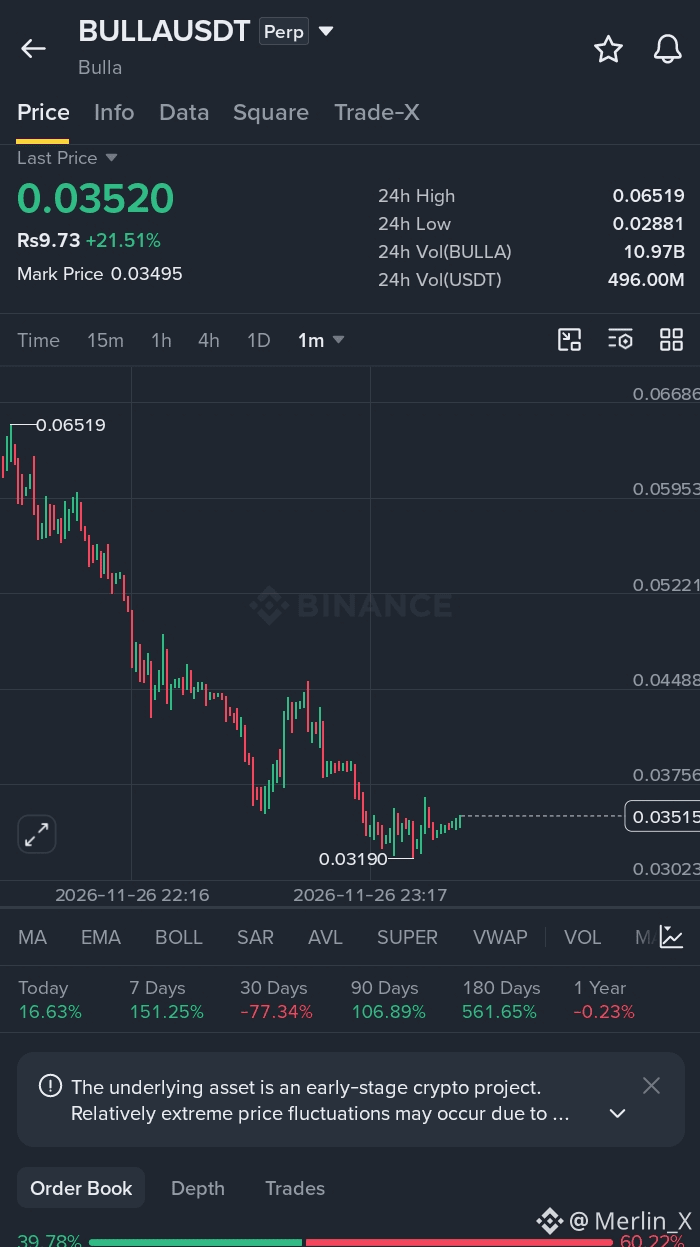
I have already said $BULLA will go short 💯 and now $BULLA is bleeding 🥵☠️
I have already said $BULLA will go short 💯 and now $BULLA is bleeding 🥵☠️
Merlin_X
·
--
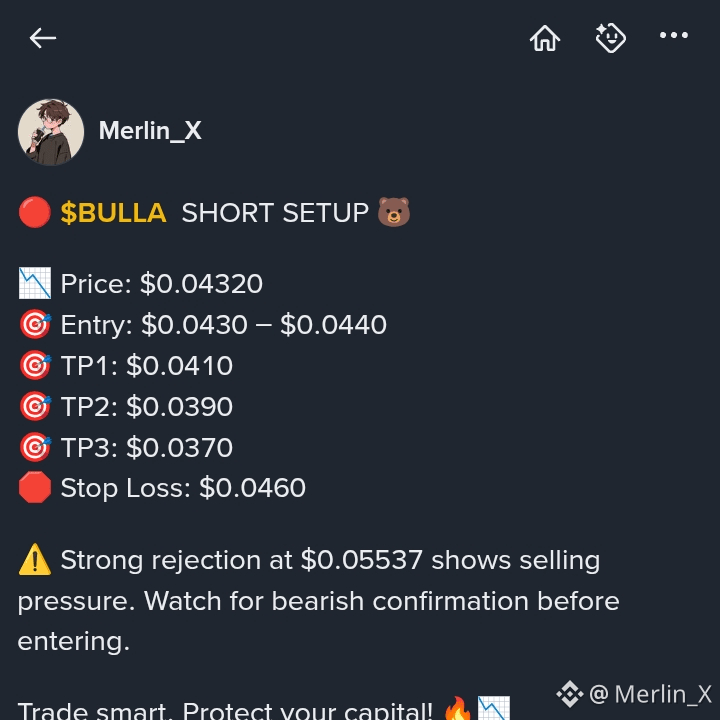
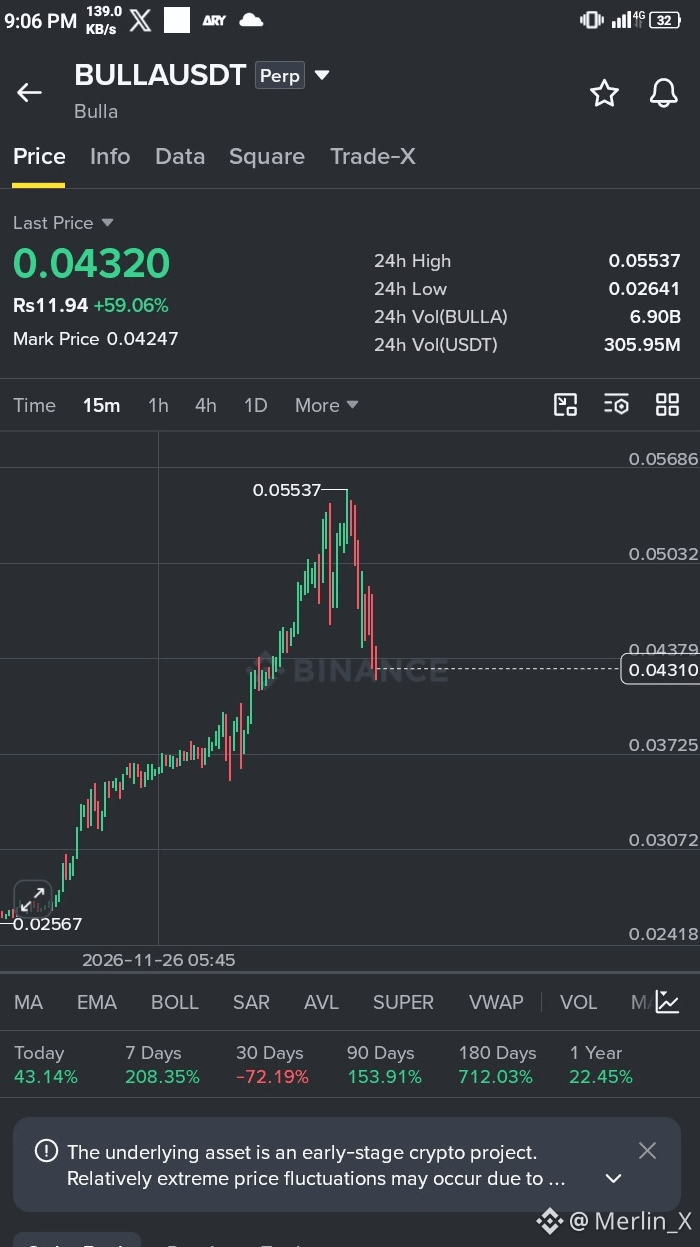
🔴 $BULLA SHORT SETUP 🐻
📉 Price: $0.04320
🎯 Entry: $0.0430 – $0.0440
🎯 TP1: $0.0410
🎯 TP2: $0.0390
🎯 TP3: $0.0370
🛑 Stop Loss: $0.0460
⚠️ Strong rejection at $0.05537 shows selling pressure. Watch for bearish confirmation before entering.
Trade smart. Protect your capital! 🔥📉
📉 Price: $0.04320
🎯 Entry: $0.0430 – $0.0440
🎯 TP1: $0.0410
🎯 TP2: $0.0390
🎯 TP3: $0.0370
🛑 Stop Loss: $0.0460
⚠️ Strong rejection at $0.05537 shows selling pressure. Watch for bearish confirmation before entering.
Trade smart. Protect your capital! 🔥📉
2
423
·
--
🔴 $BULLA SHORT SETUP 🐻
📉 Price: $0.04320
🎯 Entry: $0.0430 – $0.0440
🎯 TP1: $0.0410
🎯 TP2: $0.0390
🎯 TP3: $0.0370
🛑 Stop Loss: $0.0460
⚠️ Strong rejection at $0.05537 shows selling pressure. Watch for bearish confirmation before entering.
Trade smart. Protect your capital! 🔥📉
🔴 $BULLA SHORT SETUP 🐻
📉 Price: $0.04320
🎯 Entry: $0.0430 – $0.0440
🎯 TP1: $0.0410
🎯 TP2: $0.0390
🎯 TP3: $0.0370
🛑 Stop Loss: $0.0460
⚠️ Strong rejection at $0.05537 shows selling pressure. Watch for bearish confirmation before entering.
Trade smart. Protect your capital! 🔥📉
📉 Price: $0.04320
🎯 Entry: $0.0430 – $0.0440
🎯 TP1: $0.0410
🎯 TP2: $0.0390
🎯 TP3: $0.0370
🛑 Stop Loss: $0.0460
⚠️ Strong rejection at $0.05537 shows selling pressure. Watch for bearish confirmation before entering.
Trade smart. Protect your capital! 🔥📉
1
2
385
·
--
🚨💀 THE BULLS ARE GOING ABSOLUTELY CRAZY!
🔥 $BULLA +107.36%
🚀 $INIT +51.90%
☠️ $SSV +43.60%
⚡ AIOT +25.43%
🥵 PIEVERSE +25.22%
BEARS, THIS MARKET IS NOT PLAYING! 🐂🔥
🚨💀 THE BULLS ARE GOING ABSOLUTELY CRAZY!
🔥 $BULLA +107.36%
🚀 $INIT +51.90%
☠️ $SSV +43.60%
⚡ AIOT +25.43%
🥵 PIEVERSE +25.22%
BEARS, THIS MARKET IS NOT PLAYING! 🐂🔥
🔥 $BULLA +107.36%
🚀 $INIT +51.90%
☠️ $SSV +43.60%
⚡ AIOT +25.43%
🥵 PIEVERSE +25.22%
BEARS, THIS MARKET IS NOT PLAYING! 🐂🔥
🔥 BULLA +107.36%
62%
🚀 INIT +51.90%
20%
☠️ SSV +43.60%
18%
68 votes • Voting closed
2
6.5k
·
--
🚨🐂 $BULLA IS ON FIRE! 96%+ AND STILL MAKING NOISE! ☠️💥
🔥🚀 BULLA leading the charge while $SSV and $PIEVERSE hold their gains!🚨
Bears, are you watching this madness? 💀📈
WHO'S READY FOR THE NEXT EXPLOSION? 🚀
🚨🐂 $BULLA IS ON FIRE! 96%+ AND STILL MAKING NOISE! ☠️💥
🔥🚀 BULLA leading the charge while $SSV and $PIEVERSE hold their gains!🚨
Bears, are you watching this madness? 💀📈
WHO'S READY FOR THE NEXT EXPLOSION? 🚀
🔥🚀 BULLA leading the charge while $SSV and $PIEVERSE hold their gains!🚨
Bears, are you watching this madness? 💀📈
WHO'S READY FOR THE NEXT EXPLOSION? 🚀
$BULLA 🚨💥
69%
$SSV ☠️🚀
21%
$PIEVERSE 💢🥵
10%
29 votes • Voting closed
2
3.4k
·
--
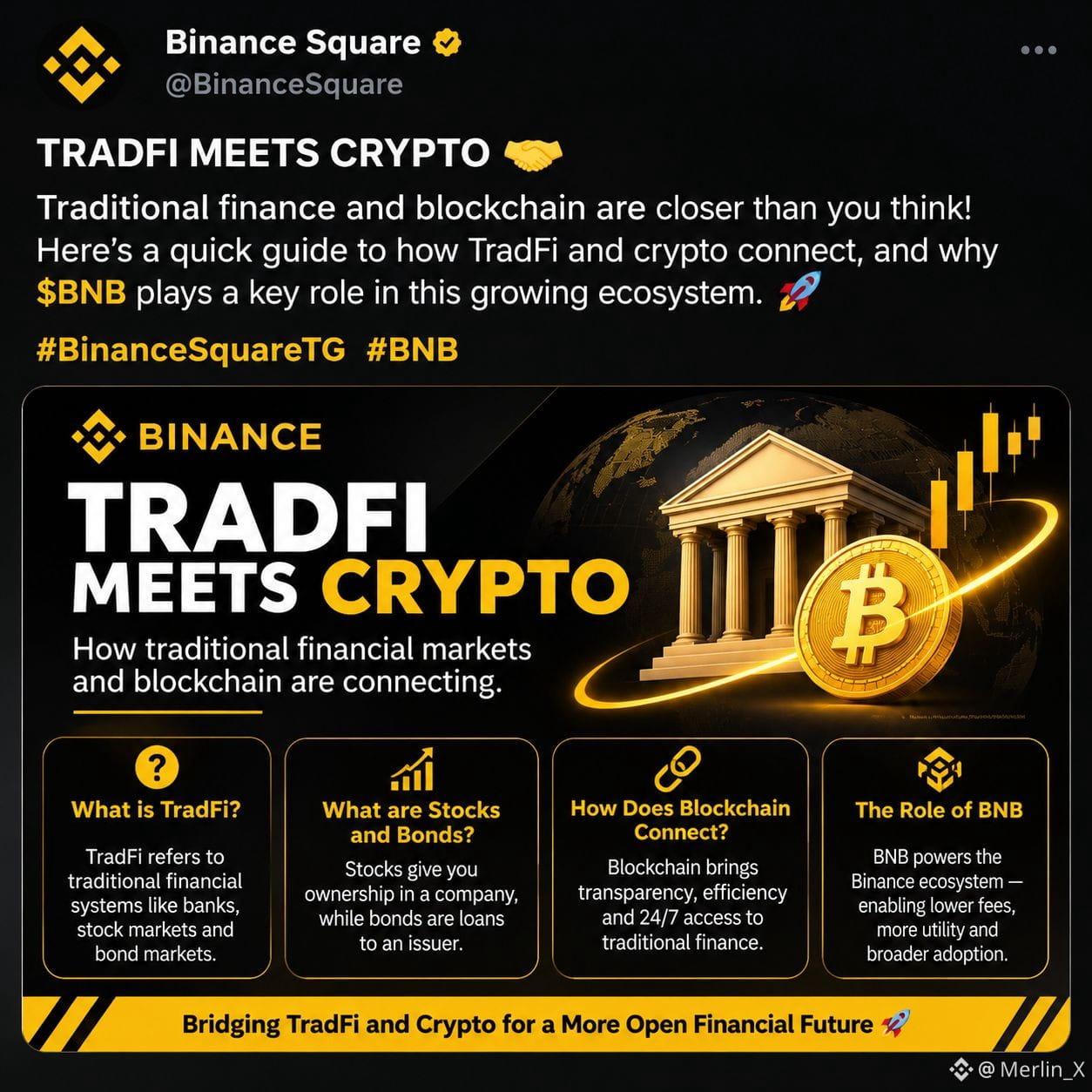
🚀 TRADFI AND CRYPTO ARE COMING CLOSER!
Traditional finance has banks, stock markets and bonds. Crypto brings blockchain, digital assets and new ways to move value.
The interesting part is how these two worlds can connect. Tokenization and blockchain-based services could create new opportunities for financial markets.
And $BNB is an important part of the BNB Chain ecosystem, supporting network activity and applications.
The future of finance could bring both worlds closer together. What do you think? 👀
#BinanceSquareTG #bnb
{future}(BNBUSDT)
$BIGTIME $MANTRA
🚀 TRADFI AND CRYPTO ARE COMING CLOSER!
Traditional finance has banks, stock markets and bonds. Crypto brings blockchain, digital assets and new ways to move value.
The interesting part is how these two worlds can connect. Tokenization and blockchain-based services could create new opportunities for financial markets.
And $BNB is an important part of the BNB Chain ecosystem, supporting network activity and applications.
The future of finance could bring both worlds closer together. What do you think? 👀
#BinanceSquareTG #bnb
$BIGTIME $MANTRA
3
1.5k
·
--
TRADFI KNOWLEDGE CARD... 🚀
TRADFI KNOWLEDGE CARD... 🚀

Binance TG Community
·
--
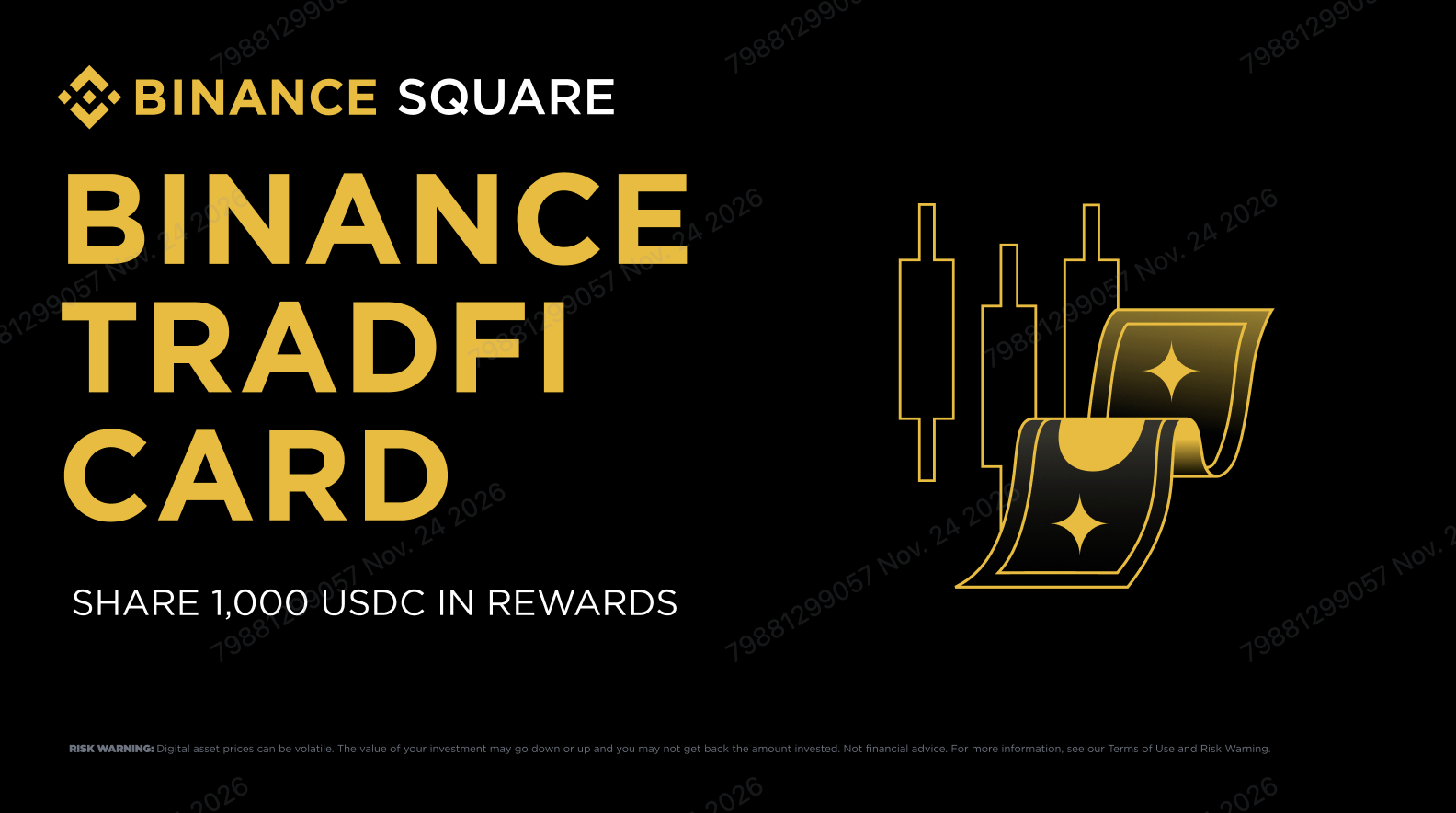
Design a TradFI knowledge card 💛 and win your share of $1,000 in USDC.
🔸 Follow @Binance TG Community ( Square )
🔸 Follow @Binance Blockchain Week ( Square )
🔸 🏷️Make your Binance Branded TradFI knowledge card on Square with 💛#BinanceSquareTG and make a separate post. Like+RT
🔸 add your TradFI token ticker to your post ( example $BNB )
🔸 Fill out the survey: here
🔸 subscribe to our next live stream here
📅 Campaign Period: November 24, 2026, 10:00 UTC – December 4th, 2026, 17:00 UTC.
1
333
·
--
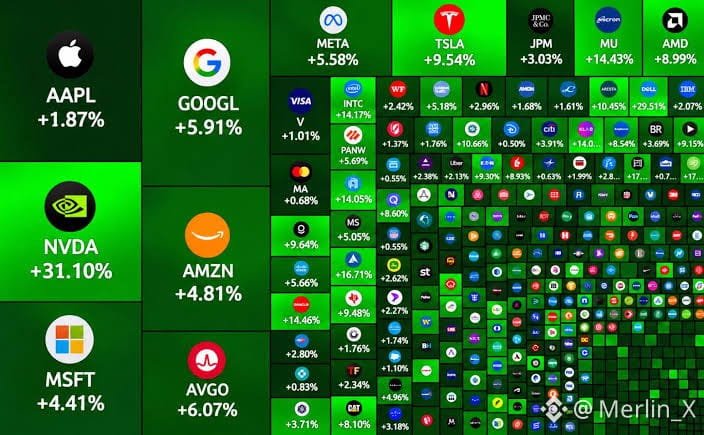
🚀 THE BULLS ARE NOT PLAYING AROUND! 💚🔥
🤯 $NVDAB : +31.10%
🔥 $MU : +14.43%
🚀 $TSLA : +9.54%
💚 $AMD : +8.99%
📈 $AVGO : +6.07%
📈 $GOOGL : +5.91%
📈 $META : +5.58%
Big names, massive moves, and serious buying pressure!
When giants start moving together, everyone pays attention. 👀
Is this the kind of market comeback bulls have been waiting for? 🐂
1
509
·
--
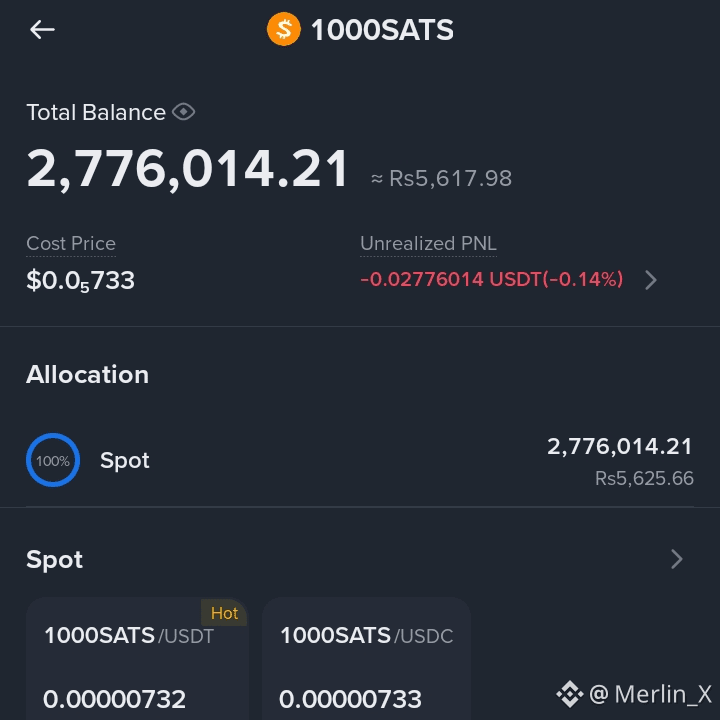
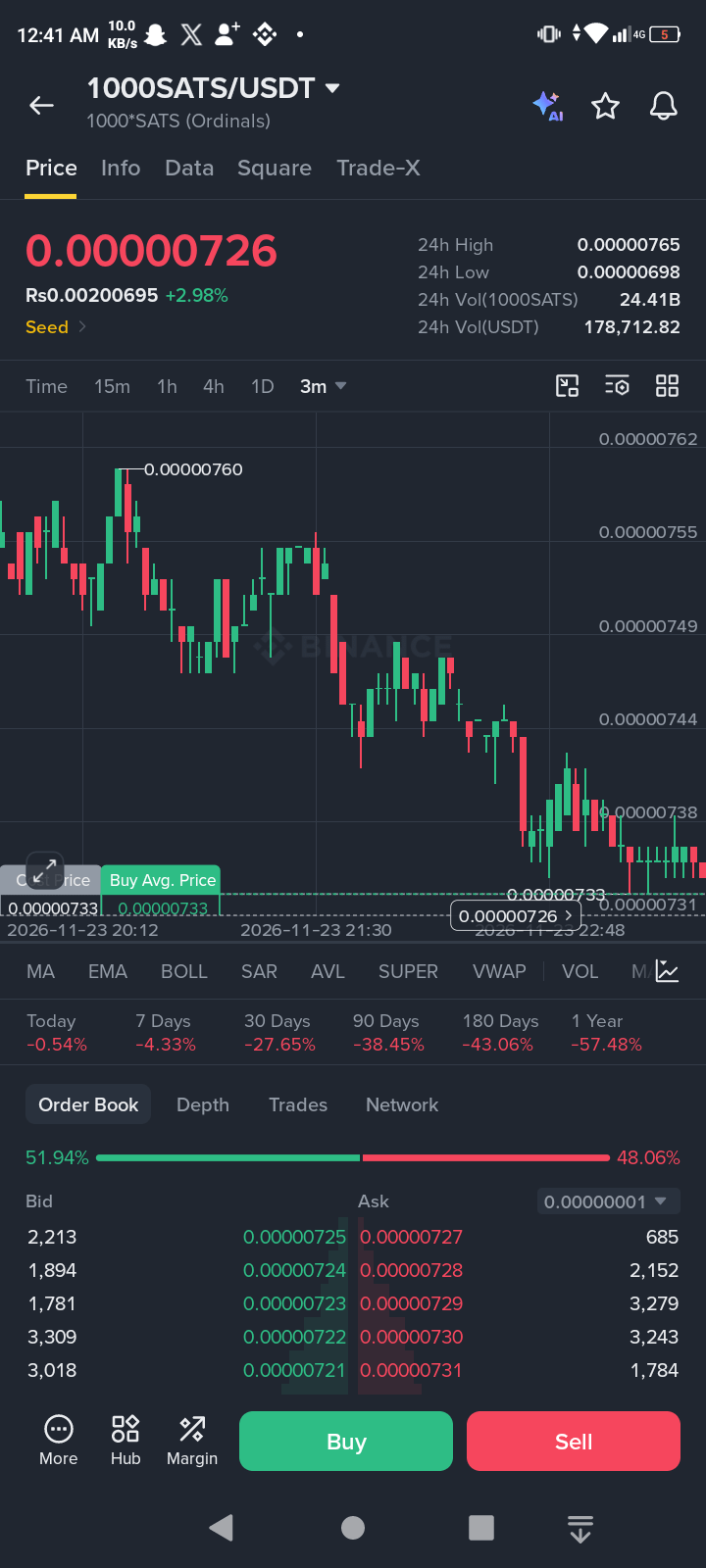
🚨 2.7 MILLION $1000SATS IN MY WALLET! 😂🚀
Everyone is sleeping on this little coin.
but I'm watching closely!
My Holding: 2,776,014 $1000SATS
Current Price: $0.00000732
Current Value: $20.32
NOW LET'S DO SOME MATH! 👀
If $1000SATS reaches:
🔥 $0.00001 = $27.76
🔥 $0.0001 = $277.60
🔥 $0.001 = $2,776
🔥 $0.01 = $27,760
Imagine turning $20 into thousands! 😂
I know these targets are not guaranteed, but what if #1000sats gets a big pump in the next bull run?
I'm keeping my eyes on this one!
WHO IS HOLDING $1000SATS? 🚀🐳
🚨 2.7 MILLION $1000SATS IN MY WALLET! 😂🚀
Everyone is sleeping on this little coin.
but I'm watching closely!
My Holding: 2,776,014 $1000SATS
Current Price: $0.00000732
Current Value: $20.32
NOW LET'S DO SOME MATH! 👀
If $1000SATS reaches:
🔥 $0.00001 = $27.76
🔥 $0.0001 = $277.60
🔥 $0.001 = $2,776
🔥 $0.01 = $27,760
Imagine turning $20 into thousands! 😂
I know these targets are not guaranteed, but what if #1000sats gets a big pump in the next bull run?
I'm keeping my eyes on this one!
WHO IS HOLDING $1000SATS ? 🚀🐳
1
10
3.5k
·
--
🚨 THE BIG MONEY IS WATCHING BITCOIN — ARE RETAIL TRADERS MISSING THE BIGGER PICTURE?$BTC $60,000 Comeback: What Whale Buying Really Tells Us
🔥 When the market turns fearful, the biggest players don't always see a reason to run. Sometimes, they see an opportunity.
$BTC briefly reclaimed the $60,000 level as Abraxas Capital and other major whales reportedly moved in to buy the dip. This development has brought fresh attention to the behavior of large investors during market weakness.
But the bigger story isn't simply that Bitcoin touched $60,000 again. It's about how different market participants react when prices fall.
Whale Activity Is Back in Focus
Large investors can influence market sentiment because their transactions attract attention. When major holders accumulate Bitcoin during a downturn, traders naturally start questioning whether the market is approaching an important turning point.
However, whale buying alone does not guarantee a price recovery. The market still needs sustained demand, stronger buying pressure, and confirmation from price action.
Why $60,000 Matters
Bitcoin reclaiming $60,000 is an important psychological development. Round-number levels often become major areas of attention because traders watch them closely.
Holding above this level could improve confidence, while another rejection could bring selling pressure back into focus.
The Bigger Question
Is this the beginning of renewed confidence in Bitcoin, or just a temporary recovery during a difficult market?
One thing is clear: whale activity has put Bitcoin back in the spotlight.
The next move will matter more than the headlines.
🚀 The reported 17,597 BTC represents exchange withdrawals to Abraxas-linked wallets; it does not independently prove fresh purchases....
🚨 THE BIG MONEY IS WATCHING BITCOIN — ARE RETAIL TRADERS MISSING THE BIGGER PICTURE?
$BTC $60,000 Comeback: What Whale Buying Really Tells Us
🔥 When the market turns fearful, the biggest players don't always see a reason to run. Sometimes, they see an opportunity.
$BTC briefly reclaimed the $60,000 level as Abraxas Capital and other major whales reportedly moved in to buy the dip. This development has brought fresh attention to the behavior of large investors during market weakness.
But the bigger story isn't simply that Bitcoin touched $60,000 again. It's about how different market participants react when prices fall.
Whale Activity Is Back in Focus
Large investors can influence market sentiment because their transactions attract attention. When major holders accumulate Bitcoin during a downturn, traders naturally start questioning whether the market is approaching an important turning point.
However, whale buying alone does not guarantee a price recovery. The market still needs sustained demand, stronger buying pressure, and confirmation from price action.
Why $60,000 Matters
Bitcoin reclaiming $60,000 is an important psychological development. Round-number levels often become major areas of attention because traders watch them closely.
Holding above this level could improve confidence, while another rejection could bring selling pressure back into focus.
The Bigger Question
Is this the beginning of renewed confidence in Bitcoin, or just a temporary recovery during a difficult market?
One thing is clear: whale activity has put Bitcoin back in the spotlight.
The next move will matter more than the headlines.
🚀 The reported 17,597 BTC represents exchange withdrawals to Abraxas-linked wallets; it does not independently prove fresh purchases....
2
456
·
--
🔻 $EVAA -51.59% | $AKE -48.23% | $IDOL -38.40% 💀
CRYPTO BEARS ARE NOT PLAYING TODAY! 🩸
EVAA is down over 51%, while AKE and IDOL are also getting crushed.
Is this a massive dip before recovery or are bears taking full control? 👀
What's next?
🔻 $EVAA -51.59% | $AKE -48.23% | $IDOL -38.40% 💀
CRYPTO BEARS ARE NOT PLAYING TODAY! 🩸
EVAA is down over 51%, while AKE and IDOL are also getting crushed.
Is this a massive dip before recovery or are bears taking full control? 👀
What's next?
CRYPTO BEARS ARE NOT PLAYING TODAY! 🩸
EVAA is down over 51%, while AKE and IDOL are also getting crushed.
Is this a massive dip before recovery or are bears taking full control? 👀
What's next?
📉 More downside
55%
🚀 Massive comeback
42%
⚡ Time to watch closely
3%
38 votes • Voting closed
3
5.5k
Log in to explore more content
Join global crypto users on Binance Square
⚡️ Get latest and useful information about crypto.
💬 Trusted by the world’s largest crypto exchange.
👍 Discover real insights from verified creators.
Email / Phone number
Trending Topics
EvolveAtBinanceBlockchainWeek
2.2M views
19,451 Discussing
Binance Blockchain Week is officially underway! 🌍
On November 28–29, whether you’re in Bangkok or joining from afar, tune in to the livestreams and join the conversation on Binance Square!
Here’s what’s in store 👇
📺 Watch the main stage live
Tune in throughout both days as industry speakers share their perspectives on this year’s theme, “Evolve” From technological innovation to real-world applications, explore what’s next for crypto.
⚔️ Watch two trading competitions
The Aster Open Qualifier and the Binance Trading Master Tournament will both be streamed live. Tune in to follow the traders in action.
🏆 Watch The Blockchain 100 Awards Ceremony
The Blockchain 100 list was selected by the community. Join us in celebrating the creators and the ideas they share!
💬 Join the community conversation
Use #EvolveAtBinanceBlockchainWeek in a post with a photo to share what you’re looking forward to, your views on the industry, or your favorite moments from the event.
The event page is now live! Subscribe to all livestreams with one click so you don’t miss a moment 👏
Binance Blockchain Week
·560 Likes
·852k views
WLFILowersLiquidationPriceTo$0.00631
0 views
18 Discussing
WorldLibertyActsToCutLiquidationRisk
2,098 views
31 Discussing