

Tony Daily
293 Posts

Tony Daily
Report
Block User
Crypto Insights - Trading investment
Open Trade
Frequent Trader
2.4 Years
5 Following
559 Followers
251 Liked
Posts
Portfolio
All
Quotes
·
--
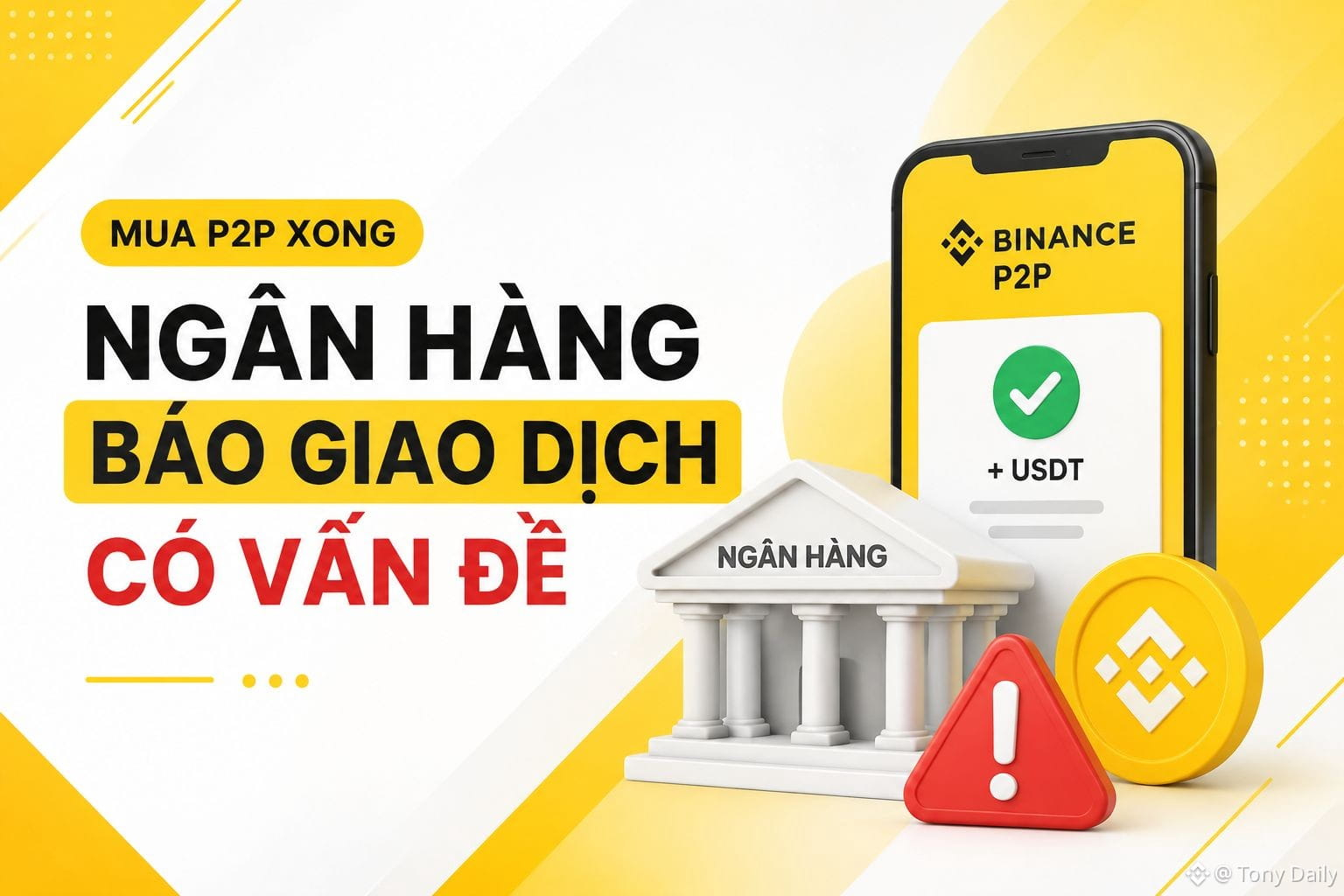
That day I had a USDT sell order for about 150 million VND. The buyer said they had transferred the money, so I opened my banking app to check, and yes—the money was actually credited.
But when I looked closely at the amount, something was off.
They transferred an amount missing some zeros—so it was only 15 million.
So instead of receiving the full 150 million, the actual amount I got was much lower. If at that time I’d only looked at the “money received” notification, seen that the transaction was successful, and released the USDT, then I would definitely have lost a very large amount.
I messaged them again to ask them to check, and the buyer said they would handle it further. But by then, when I checked more transaction details, I discovered another issue: the account they transferred from didn’t match the name of the person trading with me on P2P.
At that point, I stopped.
I’m not saying for sure that the money itself is problematic, because I don’t know the true source of the funds. There could be a normal reason behind using an account with a different name. But for a transaction worth up to 150 million, I don’t want to take that risk.
I asked them to transfer back the correct amount and process it using the proper account. During that time, I absolutely did not release the USDT.
P2P sellers sometimes just focus on price, spread, and the number of transactions—but I think small details like this are actually what matters most.
Just because money hits your account doesn’t mean you have to release it immediately.
I always re-check the exact amount, the sender’s name, the transaction content, and cross-reference it with the P2P order before I press “release.”
150 million missing a few zeros is already painful enough. If you add the risk from a source of funds I can’t verify, then it’s even more not worth it.
#binancep2pantoan @Binance_Vietnam
$RE $BTW $HYPE
That day I had a USDT sell order for about 150 million VND. The buyer said they had transferred the money, so I opened my banking app to check, and yes—the money was actually credited.
But when I looked closely at the amount, something was off.
They transferred an amount missing some zeros—so it was only 15 million.
So instead of receiving the full 150 million, the actual amount I got was much lower. If at that time I’d only looked at the “money received” notification, seen that the transaction was successful, and released the USDT, then I would definitely have lost a very large amount.
I messaged them again to ask them to check, and the buyer said they would handle it further. But by then, when I checked more transaction details, I discovered another issue: the account they transferred from didn’t match the name of the person trading with me on P2P.
At that point, I stopped.
I’m not saying for sure that the money itself is problematic, because I don’t know the true source of the funds. There could be a normal reason behind using an account with a different name. But for a transaction worth up to 150 million, I don’t want to take that risk.
I asked them to transfer back the correct amount and process it using the proper account. During that time, I absolutely did not release the USDT.
P2P sellers sometimes just focus on price, spread, and the number of transactions—but I think small details like this are actually what matters most.
Just because money hits your account doesn’t mean you have to release it immediately.
I always re-check the exact amount, the sender’s name, the transaction content, and cross-reference it with the P2P order before I press “release.”
150 million missing a few zeros is already painful enough. If you add the risk from a source of funds I can’t verify, then it’s even more not worth it.
#binancep2pantoan @Binance Vietnam
$RE $BTW $HYPE
But when I looked closely at the amount, something was off.
They transferred an amount missing some zeros—so it was only 15 million.
So instead of receiving the full 150 million, the actual amount I got was much lower. If at that time I’d only looked at the “money received” notification, seen that the transaction was successful, and released the USDT, then I would definitely have lost a very large amount.
I messaged them again to ask them to check, and the buyer said they would handle it further. But by then, when I checked more transaction details, I discovered another issue: the account they transferred from didn’t match the name of the person trading with me on P2P.
At that point, I stopped.
I’m not saying for sure that the money itself is problematic, because I don’t know the true source of the funds. There could be a normal reason behind using an account with a different name. But for a transaction worth up to 150 million, I don’t want to take that risk.
I asked them to transfer back the correct amount and process it using the proper account. During that time, I absolutely did not release the USDT.
P2P sellers sometimes just focus on price, spread, and the number of transactions—but I think small details like this are actually what matters most.
Just because money hits your account doesn’t mean you have to release it immediately.
I always re-check the exact amount, the sender’s name, the transaction content, and cross-reference it with the P2P order before I press “release.”
150 million missing a few zeros is already painful enough. If you add the risk from a source of funds I can’t verify, then it’s even more not worth it.
#binancep2pantoan @Binance Vietnam
$RE $BTW $HYPE
15,000,000
67%
150,000,000
33%
9 votes • Voting closed
1
3.7k
·
--
#binancep2pantoan @Binance_Vietnam
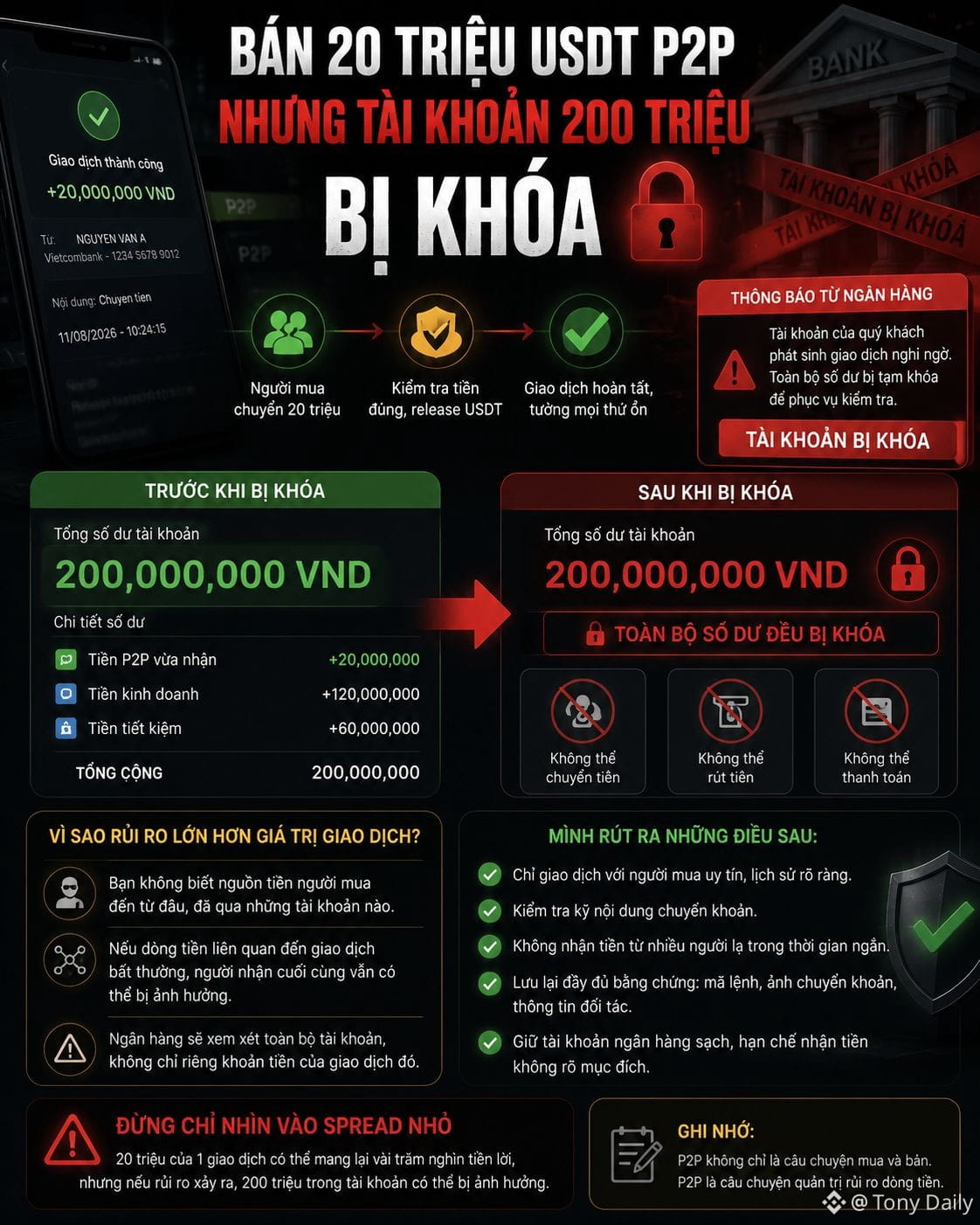
Sell 20 million USDT P2P, but the bank account with 200 million gets locked.
There’s a case I know about recently that made me see P2P transactions in a totally different way.
That day, a USDT P2P seller carried out a transaction of about 20 million VND. The buyer transferred the exact amount, and the P2P transaction went through normally. There was nothing unusual to suggest this would be a problematic transaction.
But a few days later, the bank account ran into issues related to the suspicious transaction.
What’s notable is that the account didn’t only have 20 million at that time.
The total balance was around 200 million VND.
And the amount affected wasn’t only the 20 million received from that P2P transaction. The entire account balance was locked, leaving the seller practically unable to use their money as usual.
This is the part that made me feel that P2P has a kind of risk that many newcomers often overlook.
When selling USDT, I usually only focus on: is the buyer reputable, did they transfer the money correctly, and did the transaction complete.
But I can’t see the full history of the funds before they arrive in my account.
The buyer may transfer money to me completely normally, but if that money is part of a problematic transaction flow, the final recipient may still end up having to explain themselves.
20 million sounds like it’s not that much.
But if just one 20-million transaction causes 200 million in the account to be affected, then the risk equation is completely different.
From then on, I thought that P2P sellers should develop the habit of keeping everything: transaction IDs, timestamps, counterparty information, transfer descriptions, and related evidence.
$BTW $HEMI $MUBARAK
#binancep2pantoan @Binance Vietnam
Sell 20 million USDT P2P, but the bank account with 200 million gets locked.
There’s a case I know about recently that made me see P2P transactions in a totally different way.
That day, a USDT P2P seller carried out a transaction of about 20 million VND. The buyer transferred the exact amount, and the P2P transaction went through normally. There was nothing unusual to suggest this would be a problematic transaction.
But a few days later, the bank account ran into issues related to the suspicious transaction.
What’s notable is that the account didn’t only have 20 million at that time.
The total balance was around 200 million VND.
And the amount affected wasn’t only the 20 million received from that P2P transaction. The entire account balance was locked, leaving the seller practically unable to use their money as usual.
This is the part that made me feel that P2P has a kind of risk that many newcomers often overlook.
When selling USDT, I usually only focus on: is the buyer reputable, did they transfer the money correctly, and did the transaction complete.
But I can’t see the full history of the funds before they arrive in my account.
The buyer may transfer money to me completely normally, but if that money is part of a problematic transaction flow, the final recipient may still end up having to explain themselves.
20 million sounds like it’s not that much.
But if just one 20-million transaction causes 200 million in the account to be affected, then the risk equation is completely different.
From then on, I thought that P2P sellers should develop the habit of keeping everything: transaction IDs, timestamps, counterparty information, transfer descriptions, and related evidence.
$BTW $HEMI $MUBARAK
Sell 20 million USDT P2P, but the bank account with 200 million gets locked.
There’s a case I know about recently that made me see P2P transactions in a totally different way.
That day, a USDT P2P seller carried out a transaction of about 20 million VND. The buyer transferred the exact amount, and the P2P transaction went through normally. There was nothing unusual to suggest this would be a problematic transaction.
But a few days later, the bank account ran into issues related to the suspicious transaction.
What’s notable is that the account didn’t only have 20 million at that time.
The total balance was around 200 million VND.
And the amount affected wasn’t only the 20 million received from that P2P transaction. The entire account balance was locked, leaving the seller practically unable to use their money as usual.
This is the part that made me feel that P2P has a kind of risk that many newcomers often overlook.
When selling USDT, I usually only focus on: is the buyer reputable, did they transfer the money correctly, and did the transaction complete.
But I can’t see the full history of the funds before they arrive in my account.
The buyer may transfer money to me completely normally, but if that money is part of a problematic transaction flow, the final recipient may still end up having to explain themselves.
20 million sounds like it’s not that much.
But if just one 20-million transaction causes 200 million in the account to be affected, then the risk equation is completely different.
From then on, I thought that P2P sellers should develop the habit of keeping everything: transaction IDs, timestamps, counterparty information, transfer descriptions, and related evidence.
$BTW $HEMI $MUBARAK
430
·
--
#binancep2pantoan @Binance_Vietnam
My account was frozen due to suspicious transactions 😲
At first, everything happened completely normally. The buyer transferred money into my bank account. I checked that the received amount matched the order exactly, then completed the transaction. At that time, I didn’t think anything was wrong, because the funds were in my account and the P2P transaction was already marked as completed.
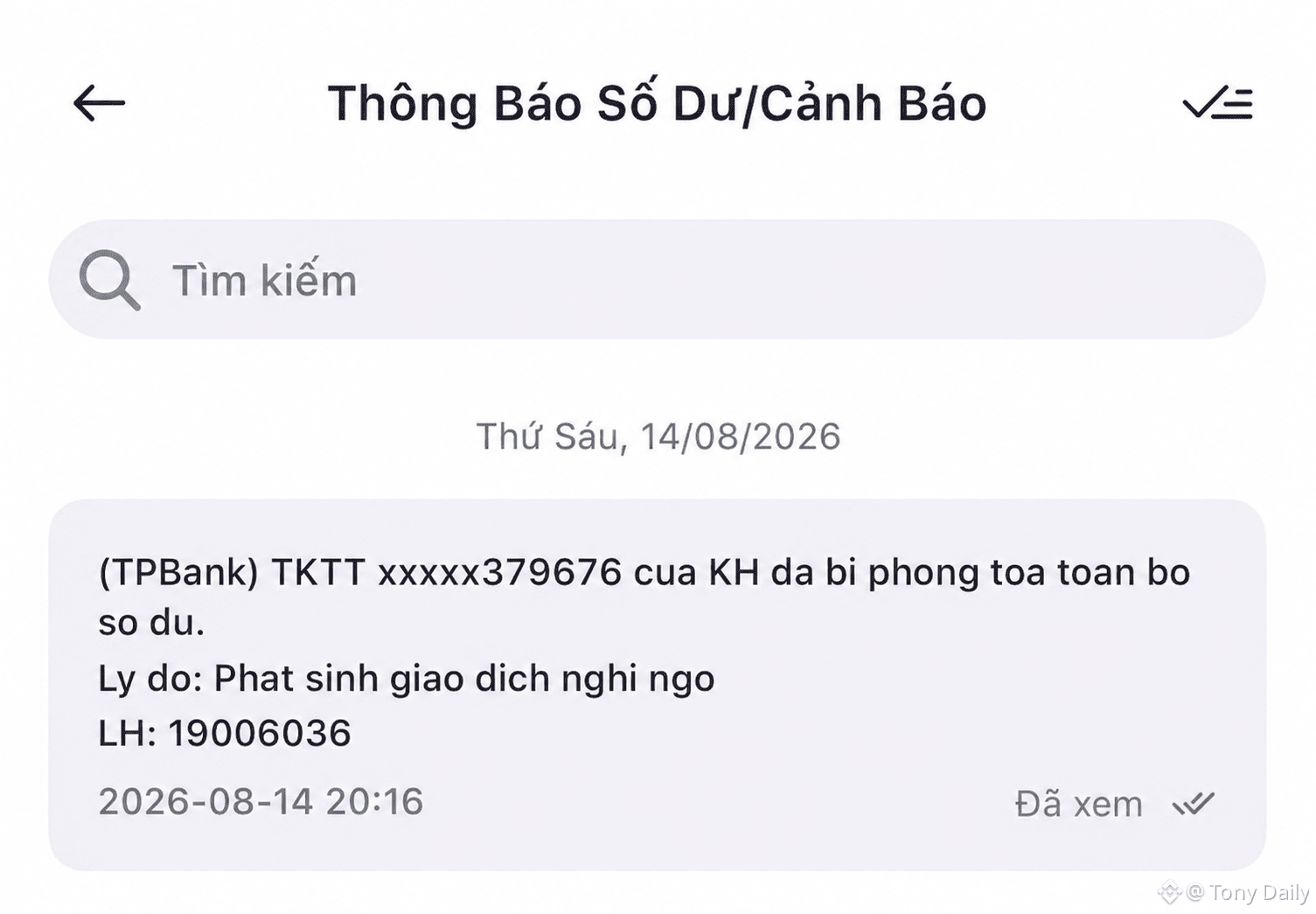
But a few days later, the bank sent me a notification that really surprised me: my account had generated a suspicious transaction, and the entire balance in the account was frozen.
What’s worth noting is that the money in the account was not only affected by that particular P2P transaction. All balances were impacted, making it almost impossible to use the account.
I reviewed my transaction history again and realized the issue is not as simple as “once the money arrives in the account, it’s done.” When selling USDT P2P, I was receiving money from someone whose source of funds I don’t truly know. If that source is related to an abnormal transaction, the recipient may also have to explain themselves even if they weren’t aware of what happened.
From this case, I learned a pretty clear lesson: P2P doesn’t only involve the risk of losing crypto—it also carries risks related to the flow of money through the bank.
So from now on, I will be much more careful when receiving P2P payments—especially checking the buyer’s information, the transfer details, and keeping complete evidence for each transaction.
$TUT $ACE $GPS
#binancep2pantoan @Binance Vietnam
My account was frozen due to suspicious transactions 😲
At first, everything happened completely normally. The buyer transferred money into my bank account. I checked that the received amount matched the order exactly, then completed the transaction. At that time, I didn’t think anything was wrong, because the funds were in my account and the P2P transaction was already marked as completed.
But a few days later, the bank sent me a notification that really surprised me: my account had generated a suspicious transaction, and the entire balance in the account was frozen.
What’s worth noting is that the money in the account was not only affected by that particular P2P transaction. All balances were impacted, making it almost impossible to use the account.
I reviewed my transaction history again and realized the issue is not as simple as “once the money arrives in the account, it’s done.” When selling USDT P2P, I was receiving money from someone whose source of funds I don’t truly know. If that source is related to an abnormal transaction, the recipient may also have to explain themselves even if they weren’t aware of what happened.
From this case, I learned a pretty clear lesson: P2P doesn’t only involve the risk of losing crypto—it also carries risks related to the flow of money through the bank.
So from now on, I will be much more careful when receiving P2P payments—especially checking the buyer’s information, the transfer details, and keeping complete evidence for each transaction.
$TUT $ACE $GPS
My account was frozen due to suspicious transactions 😲
At first, everything happened completely normally. The buyer transferred money into my bank account. I checked that the received amount matched the order exactly, then completed the transaction. At that time, I didn’t think anything was wrong, because the funds were in my account and the P2P transaction was already marked as completed.
But a few days later, the bank sent me a notification that really surprised me: my account had generated a suspicious transaction, and the entire balance in the account was frozen.
What’s worth noting is that the money in the account was not only affected by that particular P2P transaction. All balances were impacted, making it almost impossible to use the account.
I reviewed my transaction history again and realized the issue is not as simple as “once the money arrives in the account, it’s done.” When selling USDT P2P, I was receiving money from someone whose source of funds I don’t truly know. If that source is related to an abnormal transaction, the recipient may also have to explain themselves even if they weren’t aware of what happened.
From this case, I learned a pretty clear lesson: P2P doesn’t only involve the risk of losing crypto—it also carries risks related to the flow of money through the bank.
So from now on, I will be much more careful when receiving P2P payments—especially checking the buyer’s information, the transfer details, and keeping complete evidence for each transaction.
$TUT $ACE $GPS
259
·
--
There was once a time when she messaged me while she was quite panicked: “Hey, I just finished buying P2P, but it seems like there’s a problem.”
She told me that during the transaction, the other party kept urging her and guiding her to do a few steps that were different from what she usually does. Since she was new to trading, she didn’t notice. By the time she detected signs of something abnormal, the money had already been transferred out.
The first thing I did wasn’t to blame her for being careless. I told her to stop all further transactions, not to transfer any more money, and not to follow any requests from that stranger.
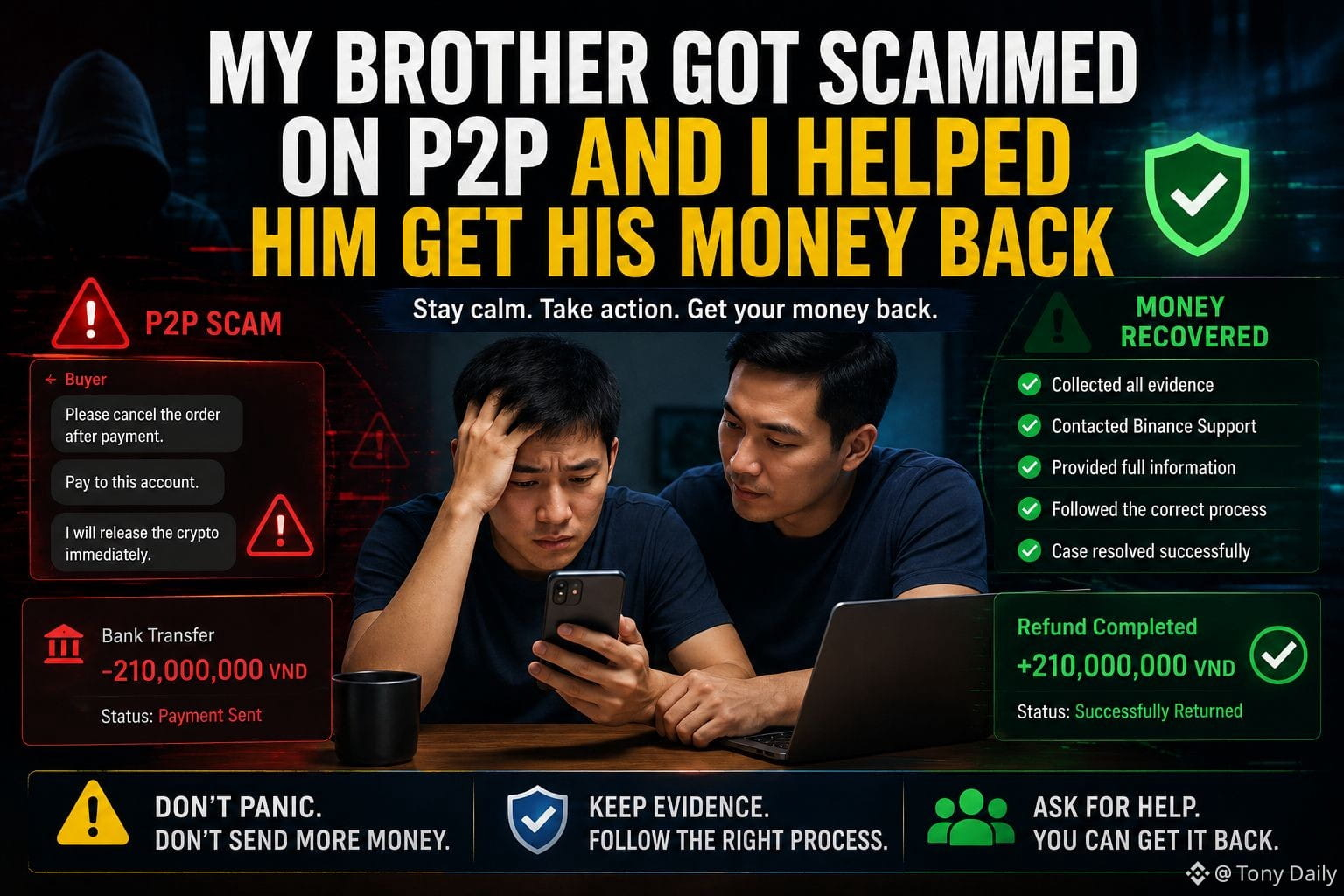
Then, I worked with her to review the entire history: the P2P order code, the amount of money, the transaction time, the recipient account information, the transfer history, and the chat messages. I asked her to save all the evidence and not delete anything.
Luckily, after we handled it correctly according to the proper process and provided all the information, her money was processed in a way that allowed it to be recovered. To me, that was a very significant lesson.
What I regret most isn’t that she lacked experience, but that she trusted too much and handled it while panicked.
From this story, I want to remind everyone: if there’s anything unusual about a P2P transaction, don’t try to solve it by transferring more money or listening to strangers.
Stop, save the evidence, and contact the proper support channel.
Losing money is terrifying, but losing your composure can make everything far worse.
#binancep2pantoan @Binance_Vietnam
$CYS $ACE $APR
There was once a time when she messaged me while she was quite panicked: “Hey, I just finished buying P2P, but it seems like there’s a problem.”
She told me that during the transaction, the other party kept urging her and guiding her to do a few steps that were different from what she usually does. Since she was new to trading, she didn’t notice. By the time she detected signs of something abnormal, the money had already been transferred out.
The first thing I did wasn’t to blame her for being careless. I told her to stop all further transactions, not to transfer any more money, and not to follow any requests from that stranger.
Then, I worked with her to review the entire history: the P2P order code, the amount of money, the transaction time, the recipient account information, the transfer history, and the chat messages. I asked her to save all the evidence and not delete anything.
Luckily, after we handled it correctly according to the proper process and provided all the information, her money was processed in a way that allowed it to be recovered. To me, that was a very significant lesson.
What I regret most isn’t that she lacked experience, but that she trusted too much and handled it while panicked.
From this story, I want to remind everyone: if there’s anything unusual about a P2P transaction, don’t try to solve it by transferring more money or listening to strangers.
Stop, save the evidence, and contact the proper support channel.
Losing money is terrifying, but losing your composure can make everything far worse.
#binancep2pantoan @Binance Vietnam
$CYS $ACE $APR
She told me that during the transaction, the other party kept urging her and guiding her to do a few steps that were different from what she usually does. Since she was new to trading, she didn’t notice. By the time she detected signs of something abnormal, the money had already been transferred out.
The first thing I did wasn’t to blame her for being careless. I told her to stop all further transactions, not to transfer any more money, and not to follow any requests from that stranger.
Then, I worked with her to review the entire history: the P2P order code, the amount of money, the transaction time, the recipient account information, the transfer history, and the chat messages. I asked her to save all the evidence and not delete anything.
Luckily, after we handled it correctly according to the proper process and provided all the information, her money was processed in a way that allowed it to be recovered. To me, that was a very significant lesson.
What I regret most isn’t that she lacked experience, but that she trusted too much and handled it while panicked.
From this story, I want to remind everyone: if there’s anything unusual about a P2P transaction, don’t try to solve it by transferring more money or listening to strangers.
Stop, save the evidence, and contact the proper support channel.
Losing money is terrifying, but losing your composure can make everything far worse.
#binancep2pantoan @Binance Vietnam
$CYS $ACE $APR
200
·
--
#binancep2pantoan @Binance_Vietnam
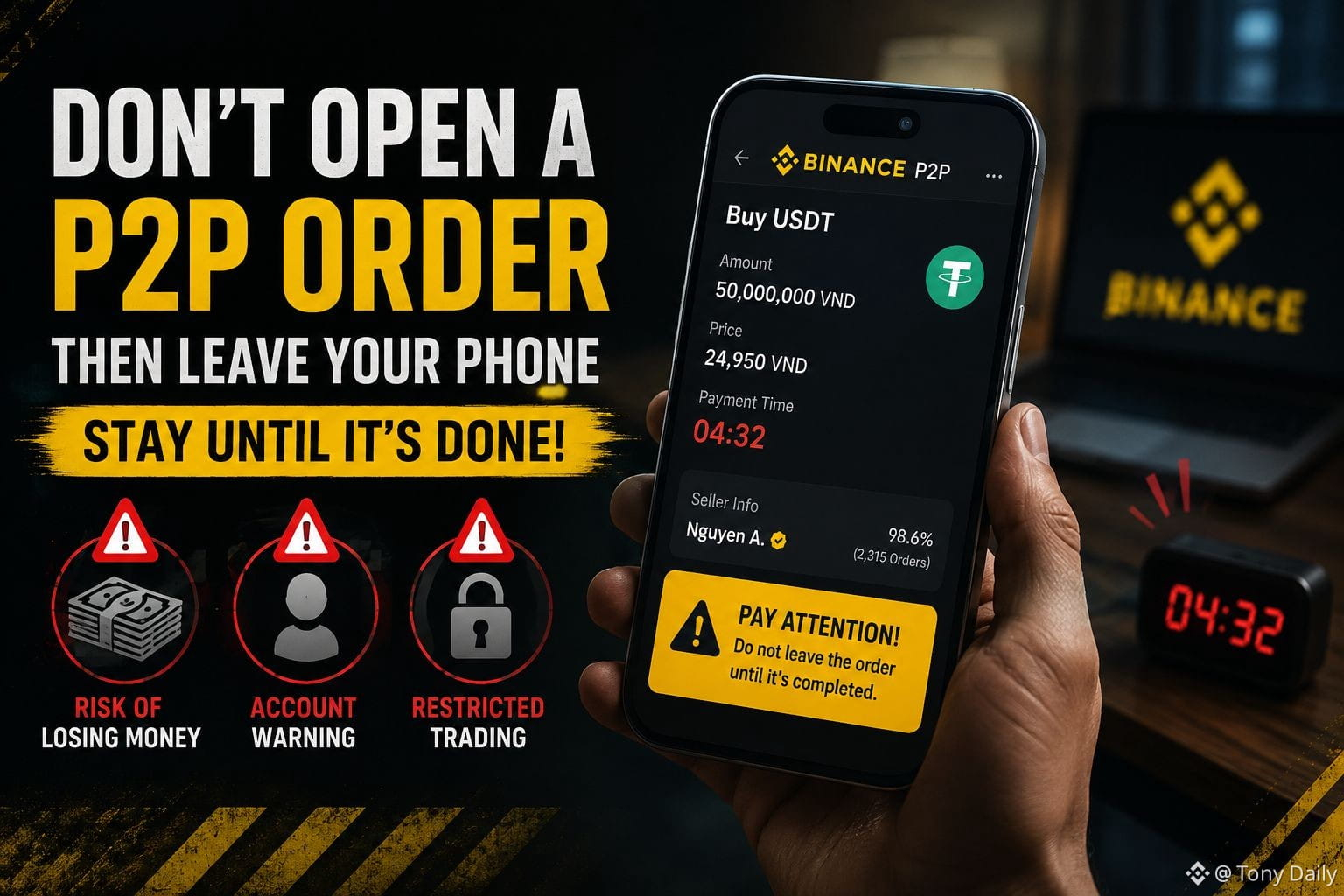
There’s a habit I always remind P2P traders: don’t place the order and then put your phone down to do other work.
I’ve seen many people create a buy order for USDT, then get busy and don’t monitor the payment time. When they come back, the order is almost expired. The transaction may not complete, or issues may arise that force them to spend a lot of time resolving them.
Worse still, if you don’t follow the process properly, you could lose money or get into disputes. In some cases, users transfer the wrong amount, don’t check the order status, or ignore platform notifications. Then, handling the situation can become very complicated—and your account may even receive warnings or be restricted from trading if you violate regulations.
When I open a P2P order, I always stay on top of it until the transaction is completed. Before making the transfer, I check the amount, the recipient information, the payment time, and the order status. Then, I verify the transaction again and save the evidence.
P2P is fast and convenient, but don’t be careless just because you think it’s only a transaction that takes a few minutes.
Stepping away from your phone for a moment could cost you money, waste your time, and even affect your account.
If I’m busy, I’d rather wait until I’m free to trade. Once you’ve placed the order, you must monitor it until it’s finished.
$ACE $AKE $VELVET
#binancep2pantoan @Binance Vietnam
There’s a habit I always remind P2P traders: don’t place the order and then put your phone down to do other work.
I’ve seen many people create a buy order for USDT, then get busy and don’t monitor the payment time. When they come back, the order is almost expired. The transaction may not complete, or issues may arise that force them to spend a lot of time resolving them.
Worse still, if you don’t follow the process properly, you could lose money or get into disputes. In some cases, users transfer the wrong amount, don’t check the order status, or ignore platform notifications. Then, handling the situation can become very complicated—and your account may even receive warnings or be restricted from trading if you violate regulations.
When I open a P2P order, I always stay on top of it until the transaction is completed. Before making the transfer, I check the amount, the recipient information, the payment time, and the order status. Then, I verify the transaction again and save the evidence.
P2P is fast and convenient, but don’t be careless just because you think it’s only a transaction that takes a few minutes.
Stepping away from your phone for a moment could cost you money, waste your time, and even affect your account.
If I’m busy, I’d rather wait until I’m free to trade. Once you’ve placed the order, you must monitor it until it’s finished.
$ACE $AKE $VELVET
There’s a habit I always remind P2P traders: don’t place the order and then put your phone down to do other work.
I’ve seen many people create a buy order for USDT, then get busy and don’t monitor the payment time. When they come back, the order is almost expired. The transaction may not complete, or issues may arise that force them to spend a lot of time resolving them.
Worse still, if you don’t follow the process properly, you could lose money or get into disputes. In some cases, users transfer the wrong amount, don’t check the order status, or ignore platform notifications. Then, handling the situation can become very complicated—and your account may even receive warnings or be restricted from trading if you violate regulations.
When I open a P2P order, I always stay on top of it until the transaction is completed. Before making the transfer, I check the amount, the recipient information, the payment time, and the order status. Then, I verify the transaction again and save the evidence.
P2P is fast and convenient, but don’t be careless just because you think it’s only a transaction that takes a few minutes.
Stepping away from your phone for a moment could cost you money, waste your time, and even affect your account.
If I’m busy, I’d rather wait until I’m free to trade. Once you’ve placed the order, you must monitor it until it’s finished.
$ACE $AKE $VELVET
99
·
--
#binancep2pantoan @Binance_Vietnam
To spoil P2P merchants, the question I receive quite often is: “Can you lower the price a little?”
At first, I thought it was simple—when a customer asks, just lower a few cents to close the deal quickly. But after doing it for a while, I realized that every time you lower the price, it directly affects your cost basis and your profit.
There are times when the market is doing well, and my USDT price is fully competitive, so I don’t lower it. If the customer truly needs to buy, they can still choose to transact because my advertisement has a stable trading history and handles trades quickly.
But sometimes the market changes and many merchants lower their prices at the same time. At that point, I have to reconsider. If I insist on keeping the price high, the advertisement may no longer be attractive, and the cash turnover speed will slow down.
I realized that in P2P, the lowest price isn’t always the best option. I have to factor in not only cost basis, but also transaction volume, the speed of cash turnover, and the actual profit level.
For customers who trade frequently, sometimes I’m willing to adjust a little to maintain long-term relationships. One trade might bring smaller profit, but if the customer comes back many times, the total value is completely different.
After some time doing P2P, I understood that customers aren’t just buying USDT—they’re also buying speed, stability, and trustworthiness.
So when customers ask “Can you lower it a little?”, I don’t answer immediately. I look at the market, then at my cost basis, and only then decide on a price that works for both sides.
$APR $ACU $MYX
#binancep2pantoan @Binance Vietnam
To spoil P2P merchants, the question I receive quite often is: “Can you lower the price a little?”
At first, I thought it was simple—when a customer asks, just lower a few cents to close the deal quickly. But after doing it for a while, I realized that every time you lower the price, it directly affects your cost basis and your profit.
There are times when the market is doing well, and my USDT price is fully competitive, so I don’t lower it. If the customer truly needs to buy, they can still choose to transact because my advertisement has a stable trading history and handles trades quickly.
But sometimes the market changes and many merchants lower their prices at the same time. At that point, I have to reconsider. If I insist on keeping the price high, the advertisement may no longer be attractive, and the cash turnover speed will slow down.
I realized that in P2P, the lowest price isn’t always the best option. I have to factor in not only cost basis, but also transaction volume, the speed of cash turnover, and the actual profit level.
For customers who trade frequently, sometimes I’m willing to adjust a little to maintain long-term relationships. One trade might bring smaller profit, but if the customer comes back many times, the total value is completely different.
After some time doing P2P, I understood that customers aren’t just buying USDT—they’re also buying speed, stability, and trustworthiness.
So when customers ask “Can you lower it a little?”, I don’t answer immediately. I look at the market, then at my cost basis, and only then decide on a price that works for both sides.
$APR $ACU $MYX
To spoil P2P merchants, the question I receive quite often is: “Can you lower the price a little?”
At first, I thought it was simple—when a customer asks, just lower a few cents to close the deal quickly. But after doing it for a while, I realized that every time you lower the price, it directly affects your cost basis and your profit.
There are times when the market is doing well, and my USDT price is fully competitive, so I don’t lower it. If the customer truly needs to buy, they can still choose to transact because my advertisement has a stable trading history and handles trades quickly.
But sometimes the market changes and many merchants lower their prices at the same time. At that point, I have to reconsider. If I insist on keeping the price high, the advertisement may no longer be attractive, and the cash turnover speed will slow down.
I realized that in P2P, the lowest price isn’t always the best option. I have to factor in not only cost basis, but also transaction volume, the speed of cash turnover, and the actual profit level.
For customers who trade frequently, sometimes I’m willing to adjust a little to maintain long-term relationships. One trade might bring smaller profit, but if the customer comes back many times, the total value is completely different.
After some time doing P2P, I understood that customers aren’t just buying USDT—they’re also buying speed, stability, and trustworthiness.
So when customers ask “Can you lower it a little?”, I don’t answer immediately. I look at the market, then at my cost basis, and only then decide on a price that works for both sides.
$APR $ACU $MYX
P2P
33%
Uy tín
67%
An toàn
0%
3 votes • Voting closed
5.6k
·
--
#binancep2pantoan @Binance_Vietnam
I think a very easy mistake to make is transferring the wrong amount of money. For example, an order requires a payment of 10,000,000 VND, but I accidentally transfer 10,500,000 VND, or I mistype a number while using the banking app.
If this happens, the first thing I do is stay calm and not create another transaction on my own just to “make up the difference.” I immediately recheck the transferred amount, the transaction code, the transfer time, and the status of the P2P order.
Then, I keep the screenshot of the bank transfer and all information from the P2P order. If the actual transferred amount does not match the amount on the order, I will message right away in the order’s chat so that all information is recorded clearly.
What I absolutely avoid is transferring more money on my own or agreeing on a refund through another account without carefully verifying first. With large sums of money, I’m even less likely to deal with it hastily just because the other party pressures me.
In my view, when doing a P2P transaction, checking the amount once before pressing transfer is much easier than trying to handle a wrongly transferred transaction afterward.
Especially before confirming payment, I always cross-check at least three things: the amount, the recipient’s information and the order code.
P2P is fast and convenient, but one single mistyped entry can make the transaction extremely troublesome.
$BEAT $BLUAI $VELVET
#binancep2pantoan @Binance Vietnam
I think a very easy mistake to make is transferring the wrong amount of money. For example, an order requires a payment of 10,000,000 VND, but I accidentally transfer 10,500,000 VND, or I mistype a number while using the banking app.
If this happens, the first thing I do is stay calm and not create another transaction on my own just to “make up the difference.” I immediately recheck the transferred amount, the transaction code, the transfer time, and the status of the P2P order.
Then, I keep the screenshot of the bank transfer and all information from the P2P order. If the actual transferred amount does not match the amount on the order, I will message right away in the order’s chat so that all information is recorded clearly.
What I absolutely avoid is transferring more money on my own or agreeing on a refund through another account without carefully verifying first. With large sums of money, I’m even less likely to deal with it hastily just because the other party pressures me.
In my view, when doing a P2P transaction, checking the amount once before pressing transfer is much easier than trying to handle a wrongly transferred transaction afterward.
Especially before confirming payment, I always cross-check at least three things: the amount, the recipient’s information and the order code.
P2P is fast and convenient, but one single mistyped entry can make the transaction extremely troublesome.
$BEAT $BLUAI $VELVET
I think a very easy mistake to make is transferring the wrong amount of money. For example, an order requires a payment of 10,000,000 VND, but I accidentally transfer 10,500,000 VND, or I mistype a number while using the banking app.
If this happens, the first thing I do is stay calm and not create another transaction on my own just to “make up the difference.” I immediately recheck the transferred amount, the transaction code, the transfer time, and the status of the P2P order.
Then, I keep the screenshot of the bank transfer and all information from the P2P order. If the actual transferred amount does not match the amount on the order, I will message right away in the order’s chat so that all information is recorded clearly.
What I absolutely avoid is transferring more money on my own or agreeing on a refund through another account without carefully verifying first. With large sums of money, I’m even less likely to deal with it hastily just because the other party pressures me.
In my view, when doing a P2P transaction, checking the amount once before pressing transfer is much easier than trying to handle a wrongly transferred transaction afterward.
Especially before confirming payment, I always cross-check at least three things: the amount, the recipient’s information and the order code.
P2P is fast and convenient, but one single mistyped entry can make the transaction extremely troublesome.
$BEAT $BLUAI $VELVET
P2P
0%
OTC
0%
0 votes • Voting closed
1
2.1k
·
--
There is a situation in P2P trading that I think everyone especially needs to pay attention to. I bought USDT, and the trade on Binance was completed, but then the bank notified me that there was an issue with the remittance transaction.
In this case, I won’t be careless and I won’t handle it on my own based on what the person I traded with tells me. The first thing I do is to preserve all evidence: the P2P order ID, the amount, the transaction time, payment information, transfer history, and all the exchange messages.
I also don’t rush to delete the transaction history or chat logs. This information may be very important later if I need to explain the source of the funds or work with the bank and the platform.
One thing I particularly avoid is transferring money back to the other party just because they message me saying, “The bank has a problem, refund it to a different account.” If there is an unusual request, I’ll re-check the information and use the correct support process of Binance instead of making an agreement outside of the platform.
In reality, P2P isn’t just as simple as looking at the USDT price and clicking buy. I always care about who the seller is, what their transaction history looks like, what payment method they use, and whether the information on the order matches completely.
In my opinion, the most important thing is not to assume that once the trade is completed on Binance, any issues related to bank payment automatically disappear. When something is abnormal, keep the evidence, check calmly, and contact the right support channel.
#binancep2pantoan @Binance_Vietnam
$BMT $WLD $TUT
There is a situation in P2P trading that I think everyone especially needs to pay attention to. I bought USDT, and the trade on Binance was completed, but then the bank notified me that there was an issue with the remittance transaction.
In this case, I won’t be careless and I won’t handle it on my own based on what the person I traded with tells me. The first thing I do is to preserve all evidence: the P2P order ID, the amount, the transaction time, payment information, transfer history, and all the exchange messages.
I also don’t rush to delete the transaction history or chat logs. This information may be very important later if I need to explain the source of the funds or work with the bank and the platform.
One thing I particularly avoid is transferring money back to the other party just because they message me saying, “The bank has a problem, refund it to a different account.” If there is an unusual request, I’ll re-check the information and use the correct support process of Binance instead of making an agreement outside of the platform.
In reality, P2P isn’t just as simple as looking at the USDT price and clicking buy. I always care about who the seller is, what their transaction history looks like, what payment method they use, and whether the information on the order matches completely.
In my opinion, the most important thing is not to assume that once the trade is completed on Binance, any issues related to bank payment automatically disappear. When something is abnormal, keep the evidence, check calmly, and contact the right support channel.
#binancep2pantoan @Binance Vietnam
$BMT $WLD $TUT
In this case, I won’t be careless and I won’t handle it on my own based on what the person I traded with tells me. The first thing I do is to preserve all evidence: the P2P order ID, the amount, the transaction time, payment information, transfer history, and all the exchange messages.
I also don’t rush to delete the transaction history or chat logs. This information may be very important later if I need to explain the source of the funds or work with the bank and the platform.
One thing I particularly avoid is transferring money back to the other party just because they message me saying, “The bank has a problem, refund it to a different account.” If there is an unusual request, I’ll re-check the information and use the correct support process of Binance instead of making an agreement outside of the platform.
In reality, P2P isn’t just as simple as looking at the USDT price and clicking buy. I always care about who the seller is, what their transaction history looks like, what payment method they use, and whether the information on the order matches completely.
In my opinion, the most important thing is not to assume that once the trade is completed on Binance, any issues related to bank payment automatically disappear. When something is abnormal, keep the evidence, check calmly, and contact the right support channel.
#binancep2pantoan @Binance Vietnam
$BMT $WLD $TUT
322
·
--
Why don't I trade P2P outside Binance?
One principle I always keep when trading P2P is: once I place a trade, I will complete everything on Binance, without switching to Telegram, Zalo, or any other separate channel to negotiate.
If the buyer or seller asks me to trade outside with reasons such as a better price, faster speed, or no need to create an order, I will stop and check very carefully.
Even just one careless step can make the transaction difficult to handle if a dispute arises.
I especially never transfer money just based on a promise like “send first, I’ll send USDT after.” With P2P, I always verify the advertisement, the merchant’s name, the amount, the payment method, and the order status before confirming.
In my opinion, a difference of a few thousand VND isn’t worth risking the safety of the entire transaction.
P2P is convenient, but I always prioritize one principle: follow the correct procedure, double-check everything, and don’t take the transaction out of the platform.
#binancep2pantoan @Binance_Vietnam
$TUT $BMT $BICO
Why don't I trade P2P outside Binance?
One principle I always keep when trading P2P is: once I place a trade, I will complete everything on Binance, without switching to Telegram, Zalo, or any other separate channel to negotiate.
If the buyer or seller asks me to trade outside with reasons such as a better price, faster speed, or no need to create an order, I will stop and check very carefully.
Even just one careless step can make the transaction difficult to handle if a dispute arises.
I especially never transfer money just based on a promise like “send first, I’ll send USDT after.” With P2P, I always verify the advertisement, the merchant’s name, the amount, the payment method, and the order status before confirming.
In my opinion, a difference of a few thousand VND isn’t worth risking the safety of the entire transaction.
P2P is convenient, but I always prioritize one principle: follow the correct procedure, double-check everything, and don’t take the transaction out of the platform.
#binancep2pantoan @Binance Vietnam
$TUT $BMT $BICO
One principle I always keep when trading P2P is: once I place a trade, I will complete everything on Binance, without switching to Telegram, Zalo, or any other separate channel to negotiate.
If the buyer or seller asks me to trade outside with reasons such as a better price, faster speed, or no need to create an order, I will stop and check very carefully.
Even just one careless step can make the transaction difficult to handle if a dispute arises.
I especially never transfer money just based on a promise like “send first, I’ll send USDT after.” With P2P, I always verify the advertisement, the merchant’s name, the amount, the payment method, and the order status before confirming.
In my opinion, a difference of a few thousand VND isn’t worth risking the safety of the entire transaction.
P2P is convenient, but I always prioritize one principle: follow the correct procedure, double-check everything, and don’t take the transaction out of the platform.
#binancep2pantoan @Binance Vietnam
$TUT $BMT $BICO
437
·
--
The most memorable time I traded P2P on Binance was when the market was moving very strongly—I needed to buy USDT really quickly to place the order.
At first, I was a bit worried because it was a trade with a stranger, but I only chose sellers with lots of good ratings and a high completion rate.
After I made the bank transfer, less than a minute later the USDT was already back in my wallet. Everything happened very fast, clearly, and I always felt reassured because Binance holds the escrow assets until the trade is completed.
Since then, whenever I need to deposit or withdraw money, I always prioritize using P2P because it’s convenient, fast, and it feels far safer than what I had previously thought.
#binancep2pantoan @Binance_Vietnam
$GWEI $BICO $SKYAI
The most memorable time I traded P2P on Binance was when the market was moving very strongly—I needed to buy USDT really quickly to place the order.
At first, I was a bit worried because it was a trade with a stranger, but I only chose sellers with lots of good ratings and a high completion rate.
After I made the bank transfer, less than a minute later the USDT was already back in my wallet. Everything happened very fast, clearly, and I always felt reassured because Binance holds the escrow assets until the trade is completed.
Since then, whenever I need to deposit or withdraw money, I always prioritize using P2P because it’s convenient, fast, and it feels far safer than what I had previously thought.
#binancep2pantoan @Binance Vietnam
$GWEI $BICO $SKYAI
At first, I was a bit worried because it was a trade with a stranger, but I only chose sellers with lots of good ratings and a high completion rate.
After I made the bank transfer, less than a minute later the USDT was already back in my wallet. Everything happened very fast, clearly, and I always felt reassured because Binance holds the escrow assets until the trade is completed.
Since then, whenever I need to deposit or withdraw money, I always prioritize using P2P because it’s convenient, fast, and it feels far safer than what I had previously thought.
#binancep2pantoan @Binance Vietnam
$GWEI $BICO $SKYAI
An toàn
22%
Nhanh chóng
22%
Uy tín
56%
9 votes • Voting closed
4.6k
Log in to explore more content
Join global crypto users on Binance Square
⚡️ Get latest and useful information about crypto.
💬 Trusted by the world’s largest crypto exchange.
👍 Discover real insights from verified creators.
Email / Phone number
Trending Topics
EtherGains70.9%InQ3
68,054 views
751 Discussing
🧭🧭🧭 Analysis 🧭🧭🧭
💡 Altcoin Season Indicator 💡
🚨🚨🚨 The third quarter (Q3) has closed. ETH is up 71% and BTC is up 43%. 🚨🚨🚨
Was this the start of altcoin season?
Among the top 100:
🌐🌐🌐 57 outperformed BTC over the last 90 days
Altcoin season starts at 75, so it is still
It is also only advancing 10 points from its annual peak at 67 🌐🌐
💥💥💥 But wait, a month ago the indicator was only at 23!
Can October push it to 75? 👀💥💥💥
Please follow up
#EtherGains70.9%InQ3
$GRAM
Shamika Metting
·2 Likes
·581 views
TreasuryLetsStatesFileStablecoinCertificationsEarly
3,132 views
36 Discussing
US10YearYieldNears5.3%
99,472 views
888 Discussing