
Cryptographic World
627 Posts

Cryptographic World
Report
Block User
Cryptographic World Crypto News Analysis And Setups. No investment plans Apply Risk And Goodluck on Your Journey!
Open Trade
Occasional Trader
3.5 Years
30 Following
2.7K+ Followers
2.6K+ Liked
Posts
Portfolio
All
Quotes
Article
Bitcoin tops $65,000 with US inflation data due this week.Every major except XRP is green on the week, with BTC, ether and BNB each up nearly 3% as global stocks trade near a record.
Bitcoin rose above $65,000 on Monday, up nearly 3% over the week, with July inflation data due Wednesday at 8:30 a.m. ET after Friday's weak jobs report eased worries the Federal Reserve would need to raise rates.
Ether traded near $1,919 and is also up almost 3% on the week. BNB gained 0.3% to $603 and matched that weekly move. Solana was the strongest major, up 1% on the day to nearly $77 and almost 5% over seven days. Tron held at 33 cents.
XRP was the only major in the red on both views, slipping 0.4% to $1.03 and down 4% on the week. Hyperliquid's HYPE fell over 1% to $54 but remains up over 3% on the week, and dogecoin eased to under 7 cents.
Equities set the tone. The MSCI All Country World Index rose 0.1%, its seventh gain in eight sessions, with the Asian gauge up 0.6% after Friday's soft jobs report sent the S&P 500 to a record.
Chipmakers led, with a regional semiconductor gauge rallying more than 1.5% on gains at Taiwan Semiconductor and SK Hynix.
Oil went the other way. Brent rose 1% to $84.40 a barrel, extending a gain of more than 5% over three sessions, after Iran rejected talks with the U.S. and a deal to reopen the Strait of Hormuz stayed out of reach. Treasuries gave back some of Friday's rally, with the 10-year yield up a basis point to 4.66%, and the dollar strengthened against most major currencies.
As such, bitcoin has managed this without much help from its own corner. A fourth wave of sweeps against Coldcard-generated wallets, a critical flaw in BTCPay Server that drained merchant Lightning nodes on Friday, and a chain split over BIP-110 that produced two blocks and stalled have all landed in the past ten days.
U.S. consumer price data is the next test. Friday's jobs number did the work for bitcoin, and an inflation reading that revives the case for higher rates would take it back.
Bitcoin tops $65,000 with US inflation data due this week.
Every major except XRP is green on the week, with BTC, ether and BNB each up nearly 3% as global stocks trade near a record.
Bitcoin rose above $65,000 on Monday, up nearly 3% over the week, with July inflation data due Wednesday at 8:30 a.m. ET after Friday's weak jobs report eased worries the Federal Reserve would need to raise rates.
Ether traded near $1,919 and is also up almost 3% on the week. BNB gained 0.3% to $603 and matched that weekly move. Solana was the strongest major, up 1% on the day to nearly $77 and almost 5% over seven days. Tron held at 33 cents.
XRP was the only major in the red on both views, slipping 0.4% to $1.03 and down 4% on the week. Hyperliquid's HYPE fell over 1% to $54 but remains up over 3% on the week, and dogecoin eased to under 7 cents.
Equities set the tone. The MSCI All Country World Index rose 0.1%, its seventh gain in eight sessions, with the Asian gauge up 0.6% after Friday's soft jobs report sent the S&P 500 to a record.
Chipmakers led, with a regional semiconductor gauge rallying more than 1.5% on gains at Taiwan Semiconductor and SK Hynix.
Oil went the other way. Brent rose 1% to $84.40 a barrel, extending a gain of more than 5% over three sessions, after Iran rejected talks with the U.S. and a deal to reopen the Strait of Hormuz stayed out of reach. Treasuries gave back some of Friday's rally, with the 10-year yield up a basis point to 4.66%, and the dollar strengthened against most major currencies.
As such, bitcoin has managed this without much help from its own corner. A fourth wave of sweeps against Coldcard-generated wallets, a critical flaw in BTCPay Server that drained merchant Lightning nodes on Friday, and a chain split over BIP-110 that produced two blocks and stalled have all landed in the past ten days.
U.S. consumer price data is the next test. Friday's jobs number did the work for bitcoin, and an inflation reading that revives the case for higher rates would take it back.
Bitcoin rose above $65,000 on Monday, up nearly 3% over the week, with July inflation data due Wednesday at 8:30 a.m. ET after Friday's weak jobs report eased worries the Federal Reserve would need to raise rates.
Ether traded near $1,919 and is also up almost 3% on the week. BNB gained 0.3% to $603 and matched that weekly move. Solana was the strongest major, up 1% on the day to nearly $77 and almost 5% over seven days. Tron held at 33 cents.
XRP was the only major in the red on both views, slipping 0.4% to $1.03 and down 4% on the week. Hyperliquid's HYPE fell over 1% to $54 but remains up over 3% on the week, and dogecoin eased to under 7 cents.
Equities set the tone. The MSCI All Country World Index rose 0.1%, its seventh gain in eight sessions, with the Asian gauge up 0.6% after Friday's soft jobs report sent the S&P 500 to a record.
Chipmakers led, with a regional semiconductor gauge rallying more than 1.5% on gains at Taiwan Semiconductor and SK Hynix.
Oil went the other way. Brent rose 1% to $84.40 a barrel, extending a gain of more than 5% over three sessions, after Iran rejected talks with the U.S. and a deal to reopen the Strait of Hormuz stayed out of reach. Treasuries gave back some of Friday's rally, with the 10-year yield up a basis point to 4.66%, and the dollar strengthened against most major currencies.
As such, bitcoin has managed this without much help from its own corner. A fourth wave of sweeps against Coldcard-generated wallets, a critical flaw in BTCPay Server that drained merchant Lightning nodes on Friday, and a chain split over BIP-110 that produced two blocks and stalled have all landed in the past ten days.
U.S. consumer price data is the next test. Friday's jobs number did the work for bitcoin, and an inflation reading that revives the case for higher rates would take it back.
326
Article
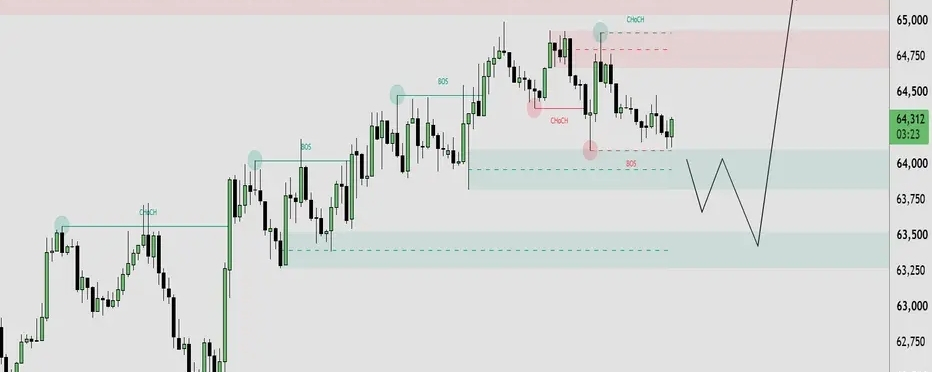
BTCUSD Pullback Into Demand Zone Price Action & Market Structure.BTCUSD is currently trading within a corrective phase after a strong bullish expansion, with recent price action showing a loss of short-term momentum beneath a marked resistance zone. The chart highlights a previous Break of Structure (BOS) followed by multiple Change of Character (CHoCH) points, suggesting the market is transitioning into a pullback rather than extending immediately higher. Price is approaching a highlighted demand area where liquidity could be resting, making this zone important for observing buyer reaction. As long as the broader market structure remains intact, the current decline may represent a retracement within the larger trend rather than a confirmed reversal. The nearby resistance area continues to act as a key technical barrier.
🔸 If BTCUSD finds support inside the highlighted demand zone and bullish price action is confirmed, the market could attempt another move toward the overhead liquidity and resistance levels. On the other hand, if this support area fails to hold, price may continue lower into the next demand zone where additional liquidity could become a focus. Traders may prefer to wait for clear price confirmation before considering any trade, as confirmation around these technical levels may provide stronger context than reacting to the first touch alone.
This analysis is for educational purposes only and does not constitute financial or investment advice. Always conduct your own research before making trading decisions.
BTCUSD Pullback Into Demand Zone Price Action & Market Structure.
BTCUSD is currently trading within a corrective phase after a strong bullish expansion, with recent price action showing a loss of short-term momentum beneath a marked resistance zone. The chart highlights a previous Break of Structure (BOS) followed by multiple Change of Character (CHoCH) points, suggesting the market is transitioning into a pullback rather than extending immediately higher. Price is approaching a highlighted demand area where liquidity could be resting, making this zone important for observing buyer reaction. As long as the broader market structure remains intact, the current decline may represent a retracement within the larger trend rather than a confirmed reversal. The nearby resistance area continues to act as a key technical barrier.
🔸 If BTCUSD finds support inside the highlighted demand zone and bullish price action is confirmed, the market could attempt another move toward the overhead liquidity and resistance levels. On the other hand, if this support area fails to hold, price may continue lower into the next demand zone where additional liquidity could become a focus. Traders may prefer to wait for clear price confirmation before considering any trade, as confirmation around these technical levels may provide stronger context than reacting to the first touch alone.
This analysis is for educational purposes only and does not constitute financial or investment advice. Always conduct your own research before making trading decisions.
🔸 If BTCUSD finds support inside the highlighted demand zone and bullish price action is confirmed, the market could attempt another move toward the overhead liquidity and resistance levels. On the other hand, if this support area fails to hold, price may continue lower into the next demand zone where additional liquidity could become a focus. Traders may prefer to wait for clear price confirmation before considering any trade, as confirmation around these technical levels may provide stronger context than reacting to the first touch alone.
This analysis is for educational purposes only and does not constitute financial or investment advice. Always conduct your own research before making trading decisions.
40
SharpLink CEO Warns Against New Ethereum Network Proposal EIP-8363SharpLink CEO Joseph Chalom opposes EIP-8363, calling it the wrong Ethereum proposal.
The proposal burns validator rewards, cutting issuance yield to zero at a 50% staking ratio.
Chalom concedes the odds of passing are long, but warns the implications are not.
SharpLink CEO Joseph Chalom has come out against EIP-8363. This Ethereum proposal would burn validator rewards as the staking ratio rises, warning that the change would weaken decentralized finance and erase ETH’s native yield advantage over Bitcoin (BTC).
Joseph Chalom, a former BlackRock executive, laid out the opposition on Friday. Analysts, however, doubt the draft will pass.
How EIP-8363 Works
Messari analysts explained that the proposal introduces a burn on part of each validator’s rewards tied to its assigned duties. The burn rate would increase as the amount of staked ETH grows, reaching 100% once staked ETH hits 60.25 million, or roughly half of the total supply.
The change would be implemented gradually over 18 months. As of August 7, 2026, the proposal’s pull request remains open. It would preserve the existing consensus-layer rewards and penalties.
“The proposal aims to stop consensus issuance from encouraging stake growth indefinitely while retaining strong incentives to perform validator duties,” the report reads.
SharpLink CEO’s Objections
Chalom opposed EIP-8363 for four main reasons. He said lower staking yields could weaken DeFi by raising on-chain borrowing costs and reducing liquidity.
The executive also argued that staking makes ETH more attractive to institutions by offering native yield alongside potential price gains. He said staking rewards also fund validators, infrastructure, developers, and other parts of Ethereum’s ecosystem.
Finally, Chalom criticized the proposal’s timing. He argued that Ethereum is gaining institutional momentum through stablecoins, tokenized assets, and major financial firms. Cutting yields now, he said, could weaken that momentum.
Why Analysts Are Skeptical
A Messari report calls EIP-8363 a solution in search of a problem. It notes that Ethereum’s issuance is already low, at about 0.85% per year, so the problem it targets is minor.
“EIP-8363 seeks to address valid concerns regarding stake centralization…However, the impact addresses nominal yield, when real yield from the demand side remains the core problem ETH faces,” the analysts added.
Supporters counter that the burn would curb dilution and resist staking centralization among large institutions. Messari still rates its odds of passing as low.
{spot}(ETHUSDT)
SharpLink CEO Warns Against New Ethereum Network Proposal EIP-8363
SharpLink CEO Joseph Chalom opposes EIP-8363, calling it the wrong Ethereum proposal.
The proposal burns validator rewards, cutting issuance yield to zero at a 50% staking ratio.
Chalom concedes the odds of passing are long, but warns the implications are not.
SharpLink CEO Joseph Chalom has come out against EIP-8363. This Ethereum proposal would burn validator rewards as the staking ratio rises, warning that the change would weaken decentralized finance and erase ETH’s native yield advantage over Bitcoin (BTC).
Joseph Chalom, a former BlackRock executive, laid out the opposition on Friday. Analysts, however, doubt the draft will pass.
How EIP-8363 Works
Messari analysts explained that the proposal introduces a burn on part of each validator’s rewards tied to its assigned duties. The burn rate would increase as the amount of staked ETH grows, reaching 100% once staked ETH hits 60.25 million, or roughly half of the total supply.
The change would be implemented gradually over 18 months. As of August 7, 2026, the proposal’s pull request remains open. It would preserve the existing consensus-layer rewards and penalties.
“The proposal aims to stop consensus issuance from encouraging stake growth indefinitely while retaining strong incentives to perform validator duties,” the report reads.
SharpLink CEO’s Objections
Chalom opposed EIP-8363 for four main reasons. He said lower staking yields could weaken DeFi by raising on-chain borrowing costs and reducing liquidity.
The executive also argued that staking makes ETH more attractive to institutions by offering native yield alongside potential price gains. He said staking rewards also fund validators, infrastructure, developers, and other parts of Ethereum’s ecosystem.
Finally, Chalom criticized the proposal’s timing. He argued that Ethereum is gaining institutional momentum through stablecoins, tokenized assets, and major financial firms. Cutting yields now, he said, could weaken that momentum.
Why Analysts Are Skeptical
A Messari report calls EIP-8363 a solution in search of a problem. It notes that Ethereum’s issuance is already low, at about 0.85% per year, so the problem it targets is minor.
“EIP-8363 seeks to address valid concerns regarding stake centralization…However, the impact addresses nominal yield, when real yield from the demand side remains the core problem ETH faces,” the analysts added.
Supporters counter that the burn would curb dilution and resist staking centralization among large institutions. Messari still rates its odds of passing as low.
The proposal burns validator rewards, cutting issuance yield to zero at a 50% staking ratio.
Chalom concedes the odds of passing are long, but warns the implications are not.
SharpLink CEO Joseph Chalom has come out against EIP-8363. This Ethereum proposal would burn validator rewards as the staking ratio rises, warning that the change would weaken decentralized finance and erase ETH’s native yield advantage over Bitcoin (BTC).
Joseph Chalom, a former BlackRock executive, laid out the opposition on Friday. Analysts, however, doubt the draft will pass.
How EIP-8363 Works
Messari analysts explained that the proposal introduces a burn on part of each validator’s rewards tied to its assigned duties. The burn rate would increase as the amount of staked ETH grows, reaching 100% once staked ETH hits 60.25 million, or roughly half of the total supply.
The change would be implemented gradually over 18 months. As of August 7, 2026, the proposal’s pull request remains open. It would preserve the existing consensus-layer rewards and penalties.
“The proposal aims to stop consensus issuance from encouraging stake growth indefinitely while retaining strong incentives to perform validator duties,” the report reads.
SharpLink CEO’s Objections
Chalom opposed EIP-8363 for four main reasons. He said lower staking yields could weaken DeFi by raising on-chain borrowing costs and reducing liquidity.
The executive also argued that staking makes ETH more attractive to institutions by offering native yield alongside potential price gains. He said staking rewards also fund validators, infrastructure, developers, and other parts of Ethereum’s ecosystem.
Finally, Chalom criticized the proposal’s timing. He argued that Ethereum is gaining institutional momentum through stablecoins, tokenized assets, and major financial firms. Cutting yields now, he said, could weaken that momentum.
Why Analysts Are Skeptical
A Messari report calls EIP-8363 a solution in search of a problem. It notes that Ethereum’s issuance is already low, at about 0.85% per year, so the problem it targets is minor.
“EIP-8363 seeks to address valid concerns regarding stake centralization…However, the impact addresses nominal yield, when real yield from the demand side remains the core problem ETH faces,” the analysts added.
Supporters counter that the burn would curb dilution and resist staking centralization among large institutions. Messari still rates its odds of passing as low.
1
10
Brazil Triggers 24-Hour Hold on $10K Crypto Transfers.The new controls include a precautionary 24-hour retention of funds exceeding $10,000 for an individual or aggregate transactions per day, to allow VASPs to conduct a risk analysis of these movements. The bank stressed that these measures are preventive in nature.
Central Bank of Brazil Issues 24 Hour Retention Period For $10,000 Transactions
The Central Bank of Brazil has published a new resolution to curb the use of digital assets for illicit purposes, given their growing use for the rapid transfer of funds involved in financial fraud.
On Friday, the Central Bank of Brazil issued Resolution 584 of 2026, which amends Resolution 142 of 2021 to include fraud-prevention procedures applicable to institutions part of the Brazilian Payment System operating with digital assets.
Article 2-B explicitly states that these institutions “can only execute transfer orders for digital assets 24 hours after receiving funds” when these transfers are directed toward foreign VASPs or self-custody wallets.
Furthermore, the Resolution specifies that these retentions must be applied when the funds involved “exceed the value of US$10,000.00 or its equivalent in other currencies per transaction or the total value of transactions carried out on the same day on behalf of the customer.”
In a press release, the Central Bank of Brazil stressed that these retentions were precautionary in nature, allowing service providers to evaluate these transactions and apply their risk policies. These funds can be released before the 24-hour window if service providers determine that they pose no risks, and individuals must be informed of the status of their funds at all times.
Finally, the resolution also establishes that virtual asset service providers (VASPs) “must keep daily records detailing occurrences of fraud or attempted fraud in the provision of payment services and of services of virtual assets, including detailing the corrective measures adopted.”
The measures “strengthen the protection of financial services users and contribute to the safe development of the virtual asset market in Brazil,” the bank concluded.
The resolution, which becomes effective on January 1, 2027, follows a public consultation on the issue that closed on July 2 and prompted harsh criticism from national crypto organizations.
Abcrypto, one of the largest crypto associations in the country, which groups companies like Binance, Coinbase, Crypto.com, and Tether, argued that the retention would not affect illicit usage patterns, hurting legitimate institutions that use crypto as a rapid alternative to the legacy financial system instead.
Brazil Triggers 24-Hour Hold on $10K Crypto Transfers.
The new controls include a precautionary 24-hour retention of funds exceeding $10,000 for an individual or aggregate transactions per day, to allow VASPs to conduct a risk analysis of these movements. The bank stressed that these measures are preventive in nature.
Central Bank of Brazil Issues 24 Hour Retention Period For $10,000 Transactions
The Central Bank of Brazil has published a new resolution to curb the use of digital assets for illicit purposes, given their growing use for the rapid transfer of funds involved in financial fraud.
On Friday, the Central Bank of Brazil issued Resolution 584 of 2026, which amends Resolution 142 of 2021 to include fraud-prevention procedures applicable to institutions part of the Brazilian Payment System operating with digital assets.
Article 2-B explicitly states that these institutions “can only execute transfer orders for digital assets 24 hours after receiving funds” when these transfers are directed toward foreign VASPs or self-custody wallets.
Furthermore, the Resolution specifies that these retentions must be applied when the funds involved “exceed the value of US$10,000.00 or its equivalent in other currencies per transaction or the total value of transactions carried out on the same day on behalf of the customer.”
In a press release, the Central Bank of Brazil stressed that these retentions were precautionary in nature, allowing service providers to evaluate these transactions and apply their risk policies. These funds can be released before the 24-hour window if service providers determine that they pose no risks, and individuals must be informed of the status of their funds at all times.
Finally, the resolution also establishes that virtual asset service providers (VASPs) “must keep daily records detailing occurrences of fraud or attempted fraud in the provision of payment services and of services of virtual assets, including detailing the corrective measures adopted.”
The measures “strengthen the protection of financial services users and contribute to the safe development of the virtual asset market in Brazil,” the bank concluded.
The resolution, which becomes effective on January 1, 2027, follows a public consultation on the issue that closed on July 2 and prompted harsh criticism from national crypto organizations.
Abcrypto, one of the largest crypto associations in the country, which groups companies like Binance, Coinbase, Crypto.com, and Tether, argued that the retention would not affect illicit usage patterns, hurting legitimate institutions that use crypto as a rapid alternative to the legacy financial system instead.
Central Bank of Brazil Issues 24 Hour Retention Period For $10,000 Transactions
The Central Bank of Brazil has published a new resolution to curb the use of digital assets for illicit purposes, given their growing use for the rapid transfer of funds involved in financial fraud.
On Friday, the Central Bank of Brazil issued Resolution 584 of 2026, which amends Resolution 142 of 2021 to include fraud-prevention procedures applicable to institutions part of the Brazilian Payment System operating with digital assets.
Article 2-B explicitly states that these institutions “can only execute transfer orders for digital assets 24 hours after receiving funds” when these transfers are directed toward foreign VASPs or self-custody wallets.
Furthermore, the Resolution specifies that these retentions must be applied when the funds involved “exceed the value of US$10,000.00 or its equivalent in other currencies per transaction or the total value of transactions carried out on the same day on behalf of the customer.”
In a press release, the Central Bank of Brazil stressed that these retentions were precautionary in nature, allowing service providers to evaluate these transactions and apply their risk policies. These funds can be released before the 24-hour window if service providers determine that they pose no risks, and individuals must be informed of the status of their funds at all times.
Finally, the resolution also establishes that virtual asset service providers (VASPs) “must keep daily records detailing occurrences of fraud or attempted fraud in the provision of payment services and of services of virtual assets, including detailing the corrective measures adopted.”
The measures “strengthen the protection of financial services users and contribute to the safe development of the virtual asset market in Brazil,” the bank concluded.
The resolution, which becomes effective on January 1, 2027, follows a public consultation on the issue that closed on July 2 and prompted harsh criticism from national crypto organizations.
Abcrypto, one of the largest crypto associations in the country, which groups companies like Binance, Coinbase, Crypto.com, and Tether, argued that the retention would not affect illicit usage patterns, hurting legitimate institutions that use crypto as a rapid alternative to the legacy financial system instead.
1
31
Bitcoin: Global M2 jumps $1 trillion, yet BTC could still fall – Why?The crypto market has yet to shake off the turbulence that has rattled it for weeks. The signals also failed to rule out a further decline in the coming weeks.
Capital flow drove much of that weakness, particularly as stablecoin supply kept falling short of demand.
Global M2 supply, another major market lever, climbed steadily without delivering the growth many had priced in.
Can Global M2 supply lift crypto?
Alphractal recently reported that Global M2 money supply jumped by roughly $1 trillion in a single week.
China accounted for roughly 80% of that increase, or $800 billion. Other economies accounted for the remainder.
Global M2 supply captures cash and liquid deposits across the world. It acts as a primary liquidity source for risk assets. Expanding M2 can push money into stocks, crypto, and real estate. Contracting M2 typically weighs on those same assets.
Setting M2 supply against Bitcoin’s [$BTC] performance sharpens the picture.
Historically, declines in Global M2’s year-over-year growth marked Bitcoin price bottoms. Those periods also opened the door for broader rallies. However, YoY M2 growth remained positive, with no clear move into negative territory.
That suggested Bitcoin and altcoins could still slide lower before a reversal emerges.
Can China’s liquidity move Bitcoin?
China led the recent Global M2 surge as one of its largest contributors. Yet, it had limited exposure to Bitcoin, crypto’s largest risk asset.
Hong Kong Bitcoin spot exchange-traded funds (ETFs) absorbed just 48.1 $BTC since August began. That was worth roughly $3.057 million.
Hong Kong capital has historically reached Bitcoin through official channels, including ETF providers, in thin amounts. That pointed to a limited Bitcoin impact from China’s M2-driven liquidity surge.
Mainland China remained hostile to cryptocurrency and largely banned the asset class. This further limited potential flows from the region.
Why do U.S. inflows matter most?
U.S. flow remained the key factor to watch for Bitcoin. The country’s money supply kept expanding against M2 readings from other economies. TradingView placed the latest U.S. money-supply figure at $23.16 trillion.
The Global M2 surge may have helped U.S. crypto ETFs record their strongest weekly inflow since 17th April 2026.Weekly inflows across crypto ETFs
That same surge also supported a calmer market mood. Quieter Middle East war headlines helped ease pressure in recent weeks.
The inflow could filter through Bitcoin and select altcoins in the near term.
Final Summary
Global M2 supply jumped roughly $1 trillion in a week. China drove 80% of the rise, though its Bitcoin exposure remained thin.
U.S. crypto ETF inflows reached $1.10 billion as
#BIP110ForkSignalingExpectedThisWeekend the U.S. money supply climbed to $23.16 trillion.
$NVDAB
{spot}(BTCUSDT)
Bitcoin: Global M2 jumps $1 trillion, yet BTC could still fall – Why?
The crypto market has yet to shake off the turbulence that has rattled it for weeks. The signals also failed to rule out a further decline in the coming weeks.
Capital flow drove much of that weakness, particularly as stablecoin supply kept falling short of demand.
Global M2 supply, another major market lever, climbed steadily without delivering the growth many had priced in.
Can Global M2 supply lift crypto?
Alphractal recently reported that Global M2 money supply jumped by roughly $1 trillion in a single week.
China accounted for roughly 80% of that increase, or $800 billion. Other economies accounted for the remainder.
Global M2 supply captures cash and liquid deposits across the world. It acts as a primary liquidity source for risk assets. Expanding M2 can push money into stocks, crypto, and real estate. Contracting M2 typically weighs on those same assets.
Setting M2 supply against Bitcoin’s [$BTC] performance sharpens the picture.
Historically, declines in Global M2’s year-over-year growth marked Bitcoin price bottoms. Those periods also opened the door for broader rallies. However, YoY M2 growth remained positive, with no clear move into negative territory.
That suggested Bitcoin and altcoins could still slide lower before a reversal emerges.
Can China’s liquidity move Bitcoin?
China led the recent Global M2 surge as one of its largest contributors. Yet, it had limited exposure to Bitcoin, crypto’s largest risk asset.
Hong Kong Bitcoin spot exchange-traded funds (ETFs) absorbed just 48.1 $BTC since August began. That was worth roughly $3.057 million.
Hong Kong capital has historically reached Bitcoin through official channels, including ETF providers, in thin amounts. That pointed to a limited Bitcoin impact from China’s M2-driven liquidity surge.
Mainland China remained hostile to cryptocurrency and largely banned the asset class. This further limited potential flows from the region.
Why do U.S. inflows matter most?
U.S. flow remained the key factor to watch for Bitcoin. The country’s money supply kept expanding against M2 readings from other economies. TradingView placed the latest U.S. money-supply figure at $23.16 trillion.
The Global M2 surge may have helped U.S. crypto ETFs record their strongest weekly inflow since 17th April 2026.Weekly inflows across crypto ETFs
That same surge also supported a calmer market mood. Quieter Middle East war headlines helped ease pressure in recent weeks.
The inflow could filter through Bitcoin and select altcoins in the near term.
Final Summary
Global M2 supply jumped roughly $1 trillion in a week. China drove 80% of the rise, though its Bitcoin exposure remained thin.
U.S. crypto ETF inflows reached $1.10 billion as
#BIP110ForkSignalingExpectedThisWeekend the U.S. money supply climbed to $23.16 trillion.
$NVDAB
Capital flow drove much of that weakness, particularly as stablecoin supply kept falling short of demand.
Global M2 supply, another major market lever, climbed steadily without delivering the growth many had priced in.
Can Global M2 supply lift crypto?
Alphractal recently reported that Global M2 money supply jumped by roughly $1 trillion in a single week.
China accounted for roughly 80% of that increase, or $800 billion. Other economies accounted for the remainder.
Global M2 supply captures cash and liquid deposits across the world. It acts as a primary liquidity source for risk assets. Expanding M2 can push money into stocks, crypto, and real estate. Contracting M2 typically weighs on those same assets.
Setting M2 supply against Bitcoin’s [$BTC] performance sharpens the picture.
Historically, declines in Global M2’s year-over-year growth marked Bitcoin price bottoms. Those periods also opened the door for broader rallies. However, YoY M2 growth remained positive, with no clear move into negative territory.
That suggested Bitcoin and altcoins could still slide lower before a reversal emerges.
Can China’s liquidity move Bitcoin?
China led the recent Global M2 surge as one of its largest contributors. Yet, it had limited exposure to Bitcoin, crypto’s largest risk asset.
Hong Kong Bitcoin spot exchange-traded funds (ETFs) absorbed just 48.1 $BTC since August began. That was worth roughly $3.057 million.
Hong Kong capital has historically reached Bitcoin through official channels, including ETF providers, in thin amounts. That pointed to a limited Bitcoin impact from China’s M2-driven liquidity surge.
Mainland China remained hostile to cryptocurrency and largely banned the asset class. This further limited potential flows from the region.
Why do U.S. inflows matter most?
U.S. flow remained the key factor to watch for Bitcoin. The country’s money supply kept expanding against M2 readings from other economies. TradingView placed the latest U.S. money-supply figure at $23.16 trillion.
The Global M2 surge may have helped U.S. crypto ETFs record their strongest weekly inflow since 17th April 2026.Weekly inflows across crypto ETFs
That same surge also supported a calmer market mood. Quieter Middle East war headlines helped ease pressure in recent weeks.
The inflow could filter through Bitcoin and select altcoins in the near term.
Final Summary
Global M2 supply jumped roughly $1 trillion in a week. China drove 80% of the rise, though its Bitcoin exposure remained thin.
U.S. crypto ETF inflows reached $1.10 billion as
#BIP110ForkSignalingExpectedThisWeekend the U.S. money supply climbed to $23.16 trillion.
$NVDAB
45
Article
Not great news for $XRP ETFs…🚨Not great news for $XRP ETFs…
It's reported spot $XRP ETFs have now logged their 4th consecutive week of net outflows!
Sentiment is weak, but if you believe what @Ripple are building and where digital assets are heading over the next 5–10 years, periods like this can end up looking like generational accumulation opportunities.
The easy buys rarely feel easy at the time.
Not great news for $XRP ETFs…
🚨Not great news for $XRP ETFs…
It's reported spot $XRP ETFs have now logged their 4th consecutive week of net outflows!
Sentiment is weak, but if you believe what @Ripple are building and where digital assets are heading over the next 5–10 years, periods like this can end up looking like generational accumulation opportunities.
The easy buys rarely feel easy at the time.
It's reported spot $XRP ETFs have now logged their 4th consecutive week of net outflows!
Sentiment is weak, but if you believe what @Ripple are building and where digital assets are heading over the next 5–10 years, periods like this can end up looking like generational accumulation opportunities.
The easy buys rarely feel easy at the time.
2
3
2.2k

Article
Crypto faces a setback in the Senate.The cryptocurrency industry’s top Washington priority has run into a stinging setback in the U.S. Senate.
After GOP senators and crypto executives spent weeks publicly insisting that a floor vote on a sweeping bill to create new, industry-friendly rules governing digital assets was imminent, Senate Republicans are now set to leave for their August recess without taking the measure up, punting it instead to September.
The delay — one of many that have beset the so-called Clarity Act over the past year — is a significant blow that diminishes prospects for the bill. The legislation has been the subject of months of acrimonious bipartisan negotiations as well as a vicious lobbying spat between banks and crypto companies.
“I do think the odds drop precipitously,” said Sen. Thom Tillis, a retiring North Carolina Republican who has become a key player in negotiations on the bill. “We leave for a month, we come back, we’ve got an election ahead of us. I think it gets difficult to get done.”
The fresh skepticism about the fate of the Clarity Act shows how even an industry awash in campaign money and lobbying resources is struggling to get its longtime priority across the finish line. Senate Republicans have pledged to put the measure on the floor as soon as they return, but lawmakers will have a mere three weeks just ahead of the midterm elections to pass a bill that requires bipartisan support and features several contentious unresolved issues.
The 616-page bill, which would overhaul an array of arcane regulations to accommodate digital assets, carries outsize political importance. The crypto industry has threatened to unleash millions in super PAC money this election cycle against lawmakers who stand in the way. A super PAC network known as Fairshake ended June with more than $128 million in the bank — a titanic sum that has loomed large over the legislative effort as lawmakers in both parties eye the rapidly approaching midterm elections.
The crypto industry will now enter the August recess without the Senate naughty-and-nice list of its supporters and detractors that it desired to help inform its spending decisions.
The bill’s supporters say there is enough time to take up and pass the bill. Sen. Cynthia Lummis (R-Wyo.), the Senate’s leading crypto ally, said in a statement Friday that she is “frustrated” by the delay, but added: “We’ve come too far to quit now.”
“I will continue working with my colleagues to get this done— this fight is far from over,” she said.
Sen. Kirsten Gillibrand, a New York Democrat who has partnered for years with Lummis on industry-friendly crypto legislation, said she is “still optimistic.”
The delay “gives the staff several more weeks to work with the White House and to work with industry and to work with our Senate colleagues to button” down the remaining issues, she said.
Republicans blame Democrats for the delay. GOP leaders needed all 100 senators to sign off on a time agreement in order to complete the laundry list of items on their pre-recess to-do list without keeping members in Washington deep into next week. Democrats balked at going along with a time agreement to speed up consideration of the outstanding legislative business that would allow the Clarity Act to come up for a vote. They said they want bipartisan negotiations to continue and warned that if a vote came up without a deal locked in, it could go down on the floor and sink the entire effort.
A group of about a dozen Democrats has signaled openness to backing the crypto bill, but three main issues need to be resolved to secure their support. Most importantly, Democrats are pushing for an ethics provision that would crack down on President Donald Trump’s ability to profit off his family’s crypto businesses. Tillis and Sen. Ruben Gallego (D-Ariz.) teamed up on a counteroffer they sent to the White House last week after Democrats rejected previous ethics language offered up by Republicans that had the blessing of the president’s team.
It’s unclear how viable the Tillis-Gallego plan, which includes a divestment requirement for Trump, is for the White House and other Republicans. In addition to language that would likely force the president to divest from some of his crypto businesses, it includes a provision that would allow state attorneys general to sue the Justice Department for not enforcing the rules — an idea some GOP senators have thrown cold water on.
Beyond the ethics fight, Democrats are also pushing for changes to address concerns raised by law enforcement groups about the bill and for amendments to the commodities portion of the measure that is overseen by the Senate Agriculture Committee.
“I think there is a really good bipartisan pathway to getting this done if they will do on ethics what they should do, which is not allow a president or anybody else to grift off of their office,” said Sen. Cory Booker (D-N.J.), who is leading negotiations for Democrats on the issues under the Ag panel’s jurisdiction.
The bill is also facing headwinds among some Republicans, as banking groups push for changes that would crack down on crypto rewards programs that lenders say mimic old-school checking and savings accounts. At least two Republicans have said they plan to vote against the bill, citing concerns voiced by banks that crypto rewards programs could spark deposit flight and threaten their capacity to lend. The Wall Street Journal editorial board — influential in Republican circles in Washington — has twice sided with banks on the issue in recent days, pushing back against crypto companies that are accusing Wall Street groups of trying to ban their competition.
“The pressure from the banks — this is just a general impression — has given some people pause,” Sen. John Kennedy (R-La.), who supports the bill, told reporters Friday.
Kennedy, who sits on the Senate Banking Committee, called it a “mistake not to vote now.” He said he was “just reading a very critical article in the Wall Street Journal about the Clarity Act.”
With the delay, he said, “the pressure’s just gonna continue.”
Crypto faces a setback in the Senate.
The cryptocurrency industry’s top Washington priority has run into a stinging setback in the U.S. Senate.
After GOP senators and crypto executives spent weeks publicly insisting that a floor vote on a sweeping bill to create new, industry-friendly rules governing digital assets was imminent, Senate Republicans are now set to leave for their August recess without taking the measure up, punting it instead to September.
The delay — one of many that have beset the so-called Clarity Act over the past year — is a significant blow that diminishes prospects for the bill. The legislation has been the subject of months of acrimonious bipartisan negotiations as well as a vicious lobbying spat between banks and crypto companies.
“I do think the odds drop precipitously,” said Sen. Thom Tillis, a retiring North Carolina Republican who has become a key player in negotiations on the bill. “We leave for a month, we come back, we’ve got an election ahead of us. I think it gets difficult to get done.”
The fresh skepticism about the fate of the Clarity Act shows how even an industry awash in campaign money and lobbying resources is struggling to get its longtime priority across the finish line. Senate Republicans have pledged to put the measure on the floor as soon as they return, but lawmakers will have a mere three weeks just ahead of the midterm elections to pass a bill that requires bipartisan support and features several contentious unresolved issues.
The 616-page bill, which would overhaul an array of arcane regulations to accommodate digital assets, carries outsize political importance. The crypto industry has threatened to unleash millions in super PAC money this election cycle against lawmakers who stand in the way. A super PAC network known as Fairshake ended June with more than $128 million in the bank — a titanic sum that has loomed large over the legislative effort as lawmakers in both parties eye the rapidly approaching midterm elections.
The crypto industry will now enter the August recess without the Senate naughty-and-nice list of its supporters and detractors that it desired to help inform its spending decisions.
The bill’s supporters say there is enough time to take up and pass the bill. Sen. Cynthia Lummis (R-Wyo.), the Senate’s leading crypto ally, said in a statement Friday that she is “frustrated” by the delay, but added: “We’ve come too far to quit now.”
“I will continue working with my colleagues to get this done— this fight is far from over,” she said.
Sen. Kirsten Gillibrand, a New York Democrat who has partnered for years with Lummis on industry-friendly crypto legislation, said she is “still optimistic.”
The delay “gives the staff several more weeks to work with the White House and to work with industry and to work with our Senate colleagues to button” down the remaining issues, she said.
Republicans blame Democrats for the delay. GOP leaders needed all 100 senators to sign off on a time agreement in order to complete the laundry list of items on their pre-recess to-do list without keeping members in Washington deep into next week. Democrats balked at going along with a time agreement to speed up consideration of the outstanding legislative business that would allow the Clarity Act to come up for a vote. They said they want bipartisan negotiations to continue and warned that if a vote came up without a deal locked in, it could go down on the floor and sink the entire effort.
A group of about a dozen Democrats has signaled openness to backing the crypto bill, but three main issues need to be resolved to secure their support. Most importantly, Democrats are pushing for an ethics provision that would crack down on President Donald Trump’s ability to profit off his family’s crypto businesses. Tillis and Sen. Ruben Gallego (D-Ariz.) teamed up on a counteroffer they sent to the White House last week after Democrats rejected previous ethics language offered up by Republicans that had the blessing of the president’s team.
It’s unclear how viable the Tillis-Gallego plan, which includes a divestment requirement for Trump, is for the White House and other Republicans. In addition to language that would likely force the president to divest from some of his crypto businesses, it includes a provision that would allow state attorneys general to sue the Justice Department for not enforcing the rules — an idea some GOP senators have thrown cold water on.
Beyond the ethics fight, Democrats are also pushing for changes to address concerns raised by law enforcement groups about the bill and for amendments to the commodities portion of the measure that is overseen by the Senate Agriculture Committee.
“I think there is a really good bipartisan pathway to getting this done if they will do on ethics what they should do, which is not allow a president or anybody else to grift off of their office,” said Sen. Cory Booker (D-N.J.), who is leading negotiations for Democrats on the issues under the Ag panel’s jurisdiction.
The bill is also facing headwinds among some Republicans, as banking groups push for changes that would crack down on crypto rewards programs that lenders say mimic old-school checking and savings accounts. At least two Republicans have said they plan to vote against the bill, citing concerns voiced by banks that crypto rewards programs could spark deposit flight and threaten their capacity to lend. The Wall Street Journal editorial board — influential in Republican circles in Washington — has twice sided with banks on the issue in recent days, pushing back against crypto companies that are accusing Wall Street groups of trying to ban their competition.
“The pressure from the banks — this is just a general impression — has given some people pause,” Sen. John Kennedy (R-La.), who supports the bill, told reporters Friday.
Kennedy, who sits on the Senate Banking Committee, called it a “mistake not to vote now.” He said he was “just reading a very critical article in the Wall Street Journal about the Clarity Act.”
With the delay, he said, “the pressure’s just gonna continue.”
After GOP senators and crypto executives spent weeks publicly insisting that a floor vote on a sweeping bill to create new, industry-friendly rules governing digital assets was imminent, Senate Republicans are now set to leave for their August recess without taking the measure up, punting it instead to September.
The delay — one of many that have beset the so-called Clarity Act over the past year — is a significant blow that diminishes prospects for the bill. The legislation has been the subject of months of acrimonious bipartisan negotiations as well as a vicious lobbying spat between banks and crypto companies.
“I do think the odds drop precipitously,” said Sen. Thom Tillis, a retiring North Carolina Republican who has become a key player in negotiations on the bill. “We leave for a month, we come back, we’ve got an election ahead of us. I think it gets difficult to get done.”
The fresh skepticism about the fate of the Clarity Act shows how even an industry awash in campaign money and lobbying resources is struggling to get its longtime priority across the finish line. Senate Republicans have pledged to put the measure on the floor as soon as they return, but lawmakers will have a mere three weeks just ahead of the midterm elections to pass a bill that requires bipartisan support and features several contentious unresolved issues.
The 616-page bill, which would overhaul an array of arcane regulations to accommodate digital assets, carries outsize political importance. The crypto industry has threatened to unleash millions in super PAC money this election cycle against lawmakers who stand in the way. A super PAC network known as Fairshake ended June with more than $128 million in the bank — a titanic sum that has loomed large over the legislative effort as lawmakers in both parties eye the rapidly approaching midterm elections.
The crypto industry will now enter the August recess without the Senate naughty-and-nice list of its supporters and detractors that it desired to help inform its spending decisions.
The bill’s supporters say there is enough time to take up and pass the bill. Sen. Cynthia Lummis (R-Wyo.), the Senate’s leading crypto ally, said in a statement Friday that she is “frustrated” by the delay, but added: “We’ve come too far to quit now.”
“I will continue working with my colleagues to get this done— this fight is far from over,” she said.
Sen. Kirsten Gillibrand, a New York Democrat who has partnered for years with Lummis on industry-friendly crypto legislation, said she is “still optimistic.”
The delay “gives the staff several more weeks to work with the White House and to work with industry and to work with our Senate colleagues to button” down the remaining issues, she said.
Republicans blame Democrats for the delay. GOP leaders needed all 100 senators to sign off on a time agreement in order to complete the laundry list of items on their pre-recess to-do list without keeping members in Washington deep into next week. Democrats balked at going along with a time agreement to speed up consideration of the outstanding legislative business that would allow the Clarity Act to come up for a vote. They said they want bipartisan negotiations to continue and warned that if a vote came up without a deal locked in, it could go down on the floor and sink the entire effort.
A group of about a dozen Democrats has signaled openness to backing the crypto bill, but three main issues need to be resolved to secure their support. Most importantly, Democrats are pushing for an ethics provision that would crack down on President Donald Trump’s ability to profit off his family’s crypto businesses. Tillis and Sen. Ruben Gallego (D-Ariz.) teamed up on a counteroffer they sent to the White House last week after Democrats rejected previous ethics language offered up by Republicans that had the blessing of the president’s team.
It’s unclear how viable the Tillis-Gallego plan, which includes a divestment requirement for Trump, is for the White House and other Republicans. In addition to language that would likely force the president to divest from some of his crypto businesses, it includes a provision that would allow state attorneys general to sue the Justice Department for not enforcing the rules — an idea some GOP senators have thrown cold water on.
Beyond the ethics fight, Democrats are also pushing for changes to address concerns raised by law enforcement groups about the bill and for amendments to the commodities portion of the measure that is overseen by the Senate Agriculture Committee.
“I think there is a really good bipartisan pathway to getting this done if they will do on ethics what they should do, which is not allow a president or anybody else to grift off of their office,” said Sen. Cory Booker (D-N.J.), who is leading negotiations for Democrats on the issues under the Ag panel’s jurisdiction.
The bill is also facing headwinds among some Republicans, as banking groups push for changes that would crack down on crypto rewards programs that lenders say mimic old-school checking and savings accounts. At least two Republicans have said they plan to vote against the bill, citing concerns voiced by banks that crypto rewards programs could spark deposit flight and threaten their capacity to lend. The Wall Street Journal editorial board — influential in Republican circles in Washington — has twice sided with banks on the issue in recent days, pushing back against crypto companies that are accusing Wall Street groups of trying to ban their competition.
“The pressure from the banks — this is just a general impression — has given some people pause,” Sen. John Kennedy (R-La.), who supports the bill, told reporters Friday.
Kennedy, who sits on the Senate Banking Committee, called it a “mistake not to vote now.” He said he was “just reading a very critical article in the Wall Street Journal about the Clarity Act.”
With the delay, he said, “the pressure’s just gonna continue.”
1
402


Article
Crypto Price Prediction Today 6 February – XRP, Dogecoin, Shiba InuFebruary stays chaotic.A sudden Bitcoin surge just jolted the entire market, Crypto Price Prediction Today looks at what comes next for XRP, Dogecoin, SHIB.
February stays chaotic, and the market just got a reminder of how fast things can change.
Bitcoin ripped nearly 7% in a sudden move, bouncing from around $64,000 to $70,000 and dragging the entire market up with it.
That bounce instantly changed short-term momentum and forced late sellers to cover, giving alts some much-needed breathing room.
XRP, Dogecoin, and Shiba Inu all reacted quickly, but the bigger question now is whether this was just a volatility spike or the start of something more sustainable.
XRP Price Prediction: Strong Bounce, But Bullish Confirmation Still Missing
XRP just flipped the switch on price, and this matters.
Price already broke down below the descending channel, flushed hard, and tagged the $1.20 to $1.40 demand zone. That move looked like classic capitulation, not healthy continuation.
What followed is the interesting part.
XRP snapped higher alongside Bitcoin and is now pushing back toward the underside of the old channel. This is a reclaim attempt, not just a random bounce.
Reclaims are where trends change or completely fail.
The key level is $1.90. A daily close back above it would confirm a successful reclaim and flip structure bullish. That opens the door toward $2.50, then $3.00 if momentum builds.
If price gets rejected here, this move turns into a dead-cat bounce. In that case, $1.40 comes back into focus quickly.
Dogecoin Price Prediction: Could This Bounce Ignite Memecoins Season?
Dogecoin just woke up, and the timing is not random.
DOGE bounced hard from the $0.08 support zone right as Bitcoin ripped higher.
Price had been bleeding inside a clean descending channel, but this move looks like a potential exhaustion break.
If price can push back above $0.13 and hold it on a daily close, the structure flips bullish short term. That opens room toward $0.15 first.
A stronger follow-through could send DOGE toward the $0.21 area, where heavy resistance waits. That would require Bitcoin to stay stable.
Shiba Inu Price Prediction: DOGE Leads, SHIB Tries To Catch Up
Shiba Inu is doing what it usually does, following Dogecoin’s lead.
SHIB trades as a dog-themed beta play, so when DOGE moves, SHIB rarely stays quiet. With Dogecoin bouncing hard, SHIB is starting to react as well.
Structurally, SHIB price recently dipped into the $0.0000053 support zone. That area has held so far, which makes it the base for any bullish attempt.
The breakdown below the channel looks more like exhaustion than clean continuation. Sellers pushed price down, but follow-through has been weak.
RSI is sitting in the mid-30s and starting to stabilize. The first real test is $0.000010. A daily close above that level would confirm a reclaim attempt and shift momentum short term.
If that happens, upside opens toward $0.000015 first, with $0.0000335 as the larger target if meme sentiment fully flips risk-on.
If Dogecoin keeps strength and Bitcoin stays steady, SHIB usually amplifies that move. Lose $0.0000053, though, and this setup resets quickly.
The Layer 2 Attracting Big Whales: Bitcoin $HYPER raised 31M In Bear Market
Bitcoin’s sudden rip is a reminder of how fast momentum can flip, but it also highlights the same old problem. When activity spikes, Bitcoin is still slow, expensive, and limited to use.
#MarketRally
{spot}(BTCUSDT)
{spot}(SHIBUSDT)
{spot}(DOGEUSDT)
Crypto Price Prediction Today 6 February – XRP, Dogecoin, Shiba InuFebruary stays chaotic.
A sudden Bitcoin surge just jolted the entire market, Crypto Price Prediction Today looks at what comes next for XRP, Dogecoin, SHIB.
February stays chaotic, and the market just got a reminder of how fast things can change.
Bitcoin ripped nearly 7% in a sudden move, bouncing from around $64,000 to $70,000 and dragging the entire market up with it.
That bounce instantly changed short-term momentum and forced late sellers to cover, giving alts some much-needed breathing room.
XRP, Dogecoin, and Shiba Inu all reacted quickly, but the bigger question now is whether this was just a volatility spike or the start of something more sustainable.
XRP Price Prediction: Strong Bounce, But Bullish Confirmation Still Missing
XRP just flipped the switch on price, and this matters.
Price already broke down below the descending channel, flushed hard, and tagged the $1.20 to $1.40 demand zone. That move looked like classic capitulation, not healthy continuation.
What followed is the interesting part.
XRP snapped higher alongside Bitcoin and is now pushing back toward the underside of the old channel. This is a reclaim attempt, not just a random bounce.
Reclaims are where trends change or completely fail.
The key level is $1.90. A daily close back above it would confirm a successful reclaim and flip structure bullish. That opens the door toward $2.50, then $3.00 if momentum builds.
If price gets rejected here, this move turns into a dead-cat bounce. In that case, $1.40 comes back into focus quickly.
Dogecoin Price Prediction: Could This Bounce Ignite Memecoins Season?
Dogecoin just woke up, and the timing is not random.
DOGE bounced hard from the $0.08 support zone right as Bitcoin ripped higher.
Price had been bleeding inside a clean descending channel, but this move looks like a potential exhaustion break.
If price can push back above $0.13 and hold it on a daily close, the structure flips bullish short term. That opens room toward $0.15 first.
A stronger follow-through could send DOGE toward the $0.21 area, where heavy resistance waits. That would require Bitcoin to stay stable.
Shiba Inu Price Prediction: DOGE Leads, SHIB Tries To Catch Up
Shiba Inu is doing what it usually does, following Dogecoin’s lead.
SHIB trades as a dog-themed beta play, so when DOGE moves, SHIB rarely stays quiet. With Dogecoin bouncing hard, SHIB is starting to react as well.
Structurally, SHIB price recently dipped into the $0.0000053 support zone. That area has held so far, which makes it the base for any bullish attempt.
The breakdown below the channel looks more like exhaustion than clean continuation. Sellers pushed price down, but follow-through has been weak.
RSI is sitting in the mid-30s and starting to stabilize. The first real test is $0.000010. A daily close above that level would confirm a reclaim attempt and shift momentum short term.
If that happens, upside opens toward $0.000015 first, with $0.0000335 as the larger target if meme sentiment fully flips risk-on.
If Dogecoin keeps strength and Bitcoin stays steady, SHIB usually amplifies that move. Lose $0.0000053, though, and this setup resets quickly.
The Layer 2 Attracting Big Whales: Bitcoin $HYPER raised 31M In Bear Market
Bitcoin’s sudden rip is a reminder of how fast momentum can flip, but it also highlights the same old problem. When activity spikes, Bitcoin is still slow, expensive, and limited to use.
#MarketRally
February stays chaotic, and the market just got a reminder of how fast things can change.
Bitcoin ripped nearly 7% in a sudden move, bouncing from around $64,000 to $70,000 and dragging the entire market up with it.
That bounce instantly changed short-term momentum and forced late sellers to cover, giving alts some much-needed breathing room.
XRP, Dogecoin, and Shiba Inu all reacted quickly, but the bigger question now is whether this was just a volatility spike or the start of something more sustainable.
XRP Price Prediction: Strong Bounce, But Bullish Confirmation Still Missing
XRP just flipped the switch on price, and this matters.
Price already broke down below the descending channel, flushed hard, and tagged the $1.20 to $1.40 demand zone. That move looked like classic capitulation, not healthy continuation.
What followed is the interesting part.
XRP snapped higher alongside Bitcoin and is now pushing back toward the underside of the old channel. This is a reclaim attempt, not just a random bounce.
Reclaims are where trends change or completely fail.
The key level is $1.90. A daily close back above it would confirm a successful reclaim and flip structure bullish. That opens the door toward $2.50, then $3.00 if momentum builds.
If price gets rejected here, this move turns into a dead-cat bounce. In that case, $1.40 comes back into focus quickly.
Dogecoin Price Prediction: Could This Bounce Ignite Memecoins Season?
Dogecoin just woke up, and the timing is not random.
DOGE bounced hard from the $0.08 support zone right as Bitcoin ripped higher.
Price had been bleeding inside a clean descending channel, but this move looks like a potential exhaustion break.
If price can push back above $0.13 and hold it on a daily close, the structure flips bullish short term. That opens room toward $0.15 first.
A stronger follow-through could send DOGE toward the $0.21 area, where heavy resistance waits. That would require Bitcoin to stay stable.
Shiba Inu Price Prediction: DOGE Leads, SHIB Tries To Catch Up
Shiba Inu is doing what it usually does, following Dogecoin’s lead.
SHIB trades as a dog-themed beta play, so when DOGE moves, SHIB rarely stays quiet. With Dogecoin bouncing hard, SHIB is starting to react as well.
Structurally, SHIB price recently dipped into the $0.0000053 support zone. That area has held so far, which makes it the base for any bullish attempt.
The breakdown below the channel looks more like exhaustion than clean continuation. Sellers pushed price down, but follow-through has been weak.
RSI is sitting in the mid-30s and starting to stabilize. The first real test is $0.000010. A daily close above that level would confirm a reclaim attempt and shift momentum short term.
If that happens, upside opens toward $0.000015 first, with $0.0000335 as the larger target if meme sentiment fully flips risk-on.
If Dogecoin keeps strength and Bitcoin stays steady, SHIB usually amplifies that move. Lose $0.0000053, though, and this setup resets quickly.
The Layer 2 Attracting Big Whales: Bitcoin $HYPER raised 31M In Bear Market
Bitcoin’s sudden rip is a reminder of how fast momentum can flip, but it also highlights the same old problem. When activity spikes, Bitcoin is still slow, expensive, and limited to use.
#MarketRally
1
181

Article
UAE firm bought 49% of Trump-linked crypto startup for $500M: WSJA UAE-backed investment vehicle quietly agreed to buy nearly half of World Liberty Financial, a cryptocurrency startup linked to President Donald Trump, just days before he returned to the White House, according to a report by The Wall Street Journal.
Aryam Investment 1, an Abu Dhabi entity backed by Sheikh Tahnoon bin Zayed Al Nahyan, signed a deal in January 2025 to purchase a 49% stake in World Liberty Financial for $500 million, the Journal said, citing documents and people familiar with the matter.
Half of that amount was paid upfront, sending $187 million to Trump family-controlled entities, with additional tens of millions flowing to entities tied to co-founders, including relatives of US Middle East envoy Steve Witkoff, per the report.
The agreement was reportedly signed by Eric Trump. The Journal reported that the deal had not been publicly disclosed, despite World Liberty later revealing that the Trump family’s stake had fallen sharply.
Tahnoon’s ambitions grow after Trump election
Tahnoon, the brother of the United Arab Emirates president and the country’s national security adviser, has been central to Abu Dhabi’s push to become a global leader in artificial intelligence. Under the Biden administration, his efforts to secure advanced US-made AI chips were limited amid concerns that sensitive technology could reach China, particularly through companies such as G42.
Following Trump’s election, those efforts gained momentum. Tahnoon met multiple times with Trump and senior US officials, and within months the administration committed to granting the UAE access to hundreds of thousands of advanced AI chips annually.
The Journal reported that executives from G42 helped manage Aryam Investment 1 and took board seats at World Liberty as part of the deal, making Aryam the startup’s largest outside shareholder. Weeks before the US-UAE chip framework was announced, another Tahnoon-led firm, MGX, used World Liberty’s stablecoin to complete a $2 billion investment into Binance.
World Liberty and the White House have reportedly denied any wrongdoing. Spokespeople told the Journal that President Trump was not involved in the deal and that it did not provide any influence over US policy.
Last year, Democratic senators called on US authorities to investigate alleged links between World Liberty Financial’s token sales and sanctioned foreign actors. In a Nov. letter to the Justice Department and Treasury, Senators Elizabeth Warren and Jack Reed cited claims that WLFI governance tokens were bought by blockchain addresses tied to North Korea’s Lazarus Group, as well as Russian- and Iranian-linked entities.
The controversy is heightened by WLFI’s ownership structure, which gives Trump family-linked entities control over the majority of token revenue. Lawmakers argue this creates a direct conflict of interest, as most proceeds from token sales flow to the president’s family.
{spot}(BTCUSDT)
UAE firm bought 49% of Trump-linked crypto startup for $500M: WSJ
A UAE-backed investment vehicle quietly agreed to buy nearly half of World Liberty Financial, a cryptocurrency startup linked to President Donald Trump, just days before he returned to the White House, according to a report by The Wall Street Journal.
Aryam Investment 1, an Abu Dhabi entity backed by Sheikh Tahnoon bin Zayed Al Nahyan, signed a deal in January 2025 to purchase a 49% stake in World Liberty Financial for $500 million, the Journal said, citing documents and people familiar with the matter.
Half of that amount was paid upfront, sending $187 million to Trump family-controlled entities, with additional tens of millions flowing to entities tied to co-founders, including relatives of US Middle East envoy Steve Witkoff, per the report.
The agreement was reportedly signed by Eric Trump. The Journal reported that the deal had not been publicly disclosed, despite World Liberty later revealing that the Trump family’s stake had fallen sharply.
Tahnoon’s ambitions grow after Trump election
Tahnoon, the brother of the United Arab Emirates president and the country’s national security adviser, has been central to Abu Dhabi’s push to become a global leader in artificial intelligence. Under the Biden administration, his efforts to secure advanced US-made AI chips were limited amid concerns that sensitive technology could reach China, particularly through companies such as G42.
Following Trump’s election, those efforts gained momentum. Tahnoon met multiple times with Trump and senior US officials, and within months the administration committed to granting the UAE access to hundreds of thousands of advanced AI chips annually.
The Journal reported that executives from G42 helped manage Aryam Investment 1 and took board seats at World Liberty as part of the deal, making Aryam the startup’s largest outside shareholder. Weeks before the US-UAE chip framework was announced, another Tahnoon-led firm, MGX, used World Liberty’s stablecoin to complete a $2 billion investment into Binance.
World Liberty and the White House have reportedly denied any wrongdoing. Spokespeople told the Journal that President Trump was not involved in the deal and that it did not provide any influence over US policy.
Last year, Democratic senators called on US authorities to investigate alleged links between World Liberty Financial’s token sales and sanctioned foreign actors. In a Nov. letter to the Justice Department and Treasury, Senators Elizabeth Warren and Jack Reed cited claims that WLFI governance tokens were bought by blockchain addresses tied to North Korea’s Lazarus Group, as well as Russian- and Iranian-linked entities.
The controversy is heightened by WLFI’s ownership structure, which gives Trump family-linked entities control over the majority of token revenue. Lawmakers argue this creates a direct conflict of interest, as most proceeds from token sales flow to the president’s family.
Aryam Investment 1, an Abu Dhabi entity backed by Sheikh Tahnoon bin Zayed Al Nahyan, signed a deal in January 2025 to purchase a 49% stake in World Liberty Financial for $500 million, the Journal said, citing documents and people familiar with the matter.
Half of that amount was paid upfront, sending $187 million to Trump family-controlled entities, with additional tens of millions flowing to entities tied to co-founders, including relatives of US Middle East envoy Steve Witkoff, per the report.
The agreement was reportedly signed by Eric Trump. The Journal reported that the deal had not been publicly disclosed, despite World Liberty later revealing that the Trump family’s stake had fallen sharply.
Tahnoon’s ambitions grow after Trump election
Tahnoon, the brother of the United Arab Emirates president and the country’s national security adviser, has been central to Abu Dhabi’s push to become a global leader in artificial intelligence. Under the Biden administration, his efforts to secure advanced US-made AI chips were limited amid concerns that sensitive technology could reach China, particularly through companies such as G42.
Following Trump’s election, those efforts gained momentum. Tahnoon met multiple times with Trump and senior US officials, and within months the administration committed to granting the UAE access to hundreds of thousands of advanced AI chips annually.
The Journal reported that executives from G42 helped manage Aryam Investment 1 and took board seats at World Liberty as part of the deal, making Aryam the startup’s largest outside shareholder. Weeks before the US-UAE chip framework was announced, another Tahnoon-led firm, MGX, used World Liberty’s stablecoin to complete a $2 billion investment into Binance.
World Liberty and the White House have reportedly denied any wrongdoing. Spokespeople told the Journal that President Trump was not involved in the deal and that it did not provide any influence over US policy.
Last year, Democratic senators called on US authorities to investigate alleged links between World Liberty Financial’s token sales and sanctioned foreign actors. In a Nov. letter to the Justice Department and Treasury, Senators Elizabeth Warren and Jack Reed cited claims that WLFI governance tokens were bought by blockchain addresses tied to North Korea’s Lazarus Group, as well as Russian- and Iranian-linked entities.
The controversy is heightened by WLFI’s ownership structure, which gives Trump family-linked entities control over the majority of token revenue. Lawmakers argue this creates a direct conflict of interest, as most proceeds from token sales flow to the president’s family.
47
Article
AI, crypto and Trump super PACs stash millions to spend on the midtermsMAGA Inc. ended 2025 with more than $300 million on hand, as groups tied to the cryptocurrency and artificial intelligence industries aim to flex their political muscle.
Political groups tied to the cryptocurrency and artificial intelligence industries have raked in tens of millions of dollars, according to new campaign finance reports, as they look to become major players in this year’s midterm elections.
The most prominent pro-crypto groups ended 2025 with nearly $194 million to spend, almost all of that with Fairshake, a group backed by Coinbase and other venture capitalists, new reports filed with the Federal Election Commission show. A pro-AI group, Leading the Future, ended the year with $39 million in its campaign account.
The sizable war chests signal that these groups could wield significant influence in primaries and general elections in the 2026 elections to boost their preferred candidates from both parties, with eyes on influencing policy in Washington.
Pro-crypto groups established themselves as forces in the last election. Fairshake and two aligned groups, Defend American Jobs and Protect Progress, spent a whopping $290 million combined in 2024, according to campaign finance records.
Most notably, these groups spent heavily to help Ohio Republican Bernie Moreno take down Democratic Sen. Sherrod Brown, to oppose Democratic Rep. Katie Porter’s California Senate bid, and to boost Arizona Democrat Ruben Gallego and Michigan Democrat Elissa Slotkin in their successful Senate bids.
Leading the Future is a new group looking to make an impact on this year’s elections. It pulled in more than $50 million from Aug. 15 through Dec. 31, receiving $12.5 million each from OpenAI co-founder Greg Brockman and his wife Anna, and venture capitalists Marc Andreesen and Benjamin Horowitz.
The new super PAC has frustrated some White House officials, since its donors includes some allies of President Donald Trump and the group is open to supporting candidates from both parties.
So far, Leading the Future and its allied groups have announced plans to spend in two primaries in open House seats. The group is opposing state Assemblyman Alex Bores, who sponsored AI safety legislation, in a New York City district to replace retiring Democratic Rep. Jerry Nadler. And it is boosting attorney Chris Gober in a deep-red Texas House seat to replace retiring Republican Rep. Michael McCaul.
Meanwhile, a super PAC tied to President Donald Trump remains one the biggest players in the political arena heading into a midterm election year where control of the GOP-led House and Senate are at stake.
MAGA Inc., Trump’s main allied super PAC, closed the year with $304 million banked away. Most of its fundraising from the second half of 2025 was already disclosed in a filing earlier this month, and the organization raked in more than $112 million over the six-month period, with big checks from those with business in front of the administration or with family facing legal jeopardy.
While Trump won’t be on the ballot in 2026, and, despite his repeated musings, isn’t constitutionally eligible to run for president again, the super PAC's cash will help the president continue to exert his influence in the GOP.
Tech billionaire Elon Musk has continued to donate millions to conventional Republican groups as he's appeared to patch his relationship up with Trump in recent months. Once a close Trump ally and White House adviser, Musk had a public break with Trump and even threatened to start a third party last year.
Musk gave $5 million checks to both the Senate Leadership Fund and Congressional Leadership Fund — the top super PACs aligned with the Senate and House GOP leadership — in December. And Musk also gave $2.9 million, including in-kind contributions, to America PAC, his own political group that spent more than a quarter-billion dollars last election cycle primarily to help Trump. While America PAC closed the year with little in its bank account, the staggering wealth of its main patron makes that number mean very little.
In the second half of 2025, Senate Leadership Fund raised almost $77 million, closing the year with $100 million banked away. Congressional Leadership Fund raised more than $38 million over that period and finished 2025 with $54.5 million in cash on hand.
Democratic dollars
On the Democratic side, House Majority PAC, the major outside group tasked with helping Democrats win control of the House, raised more than $48 million and closed the year with $46 million in cash on hand.
Senate Majority PAC, the group aligned with Senate Democratic leadership, had not yet filed its fundraising report by late Saturday evening.
United Democracy Project, a pro-Israel group that’s aligned with the American Israel Political Action Committee (AIPAC) raised more than $61 million from July through December and ended 2025 with almost $96 million banked away, the latest campaign finance reports show. The group wades into primaries on both sides of the aisle, but largely plays in Democratic contests.
The group is already involved in the upcoming special election in New Jersey's solidly blue 11th Congressional District, where it’s attacking former Democratic Rep. Tom Malinowski.
While United Democracy Project received a massive $30 million check from AIPAC, its second-biggest contributor was GOP mega-donor Paul Singer. Donations from Singer and other prominent Republicans have been a point of contention for Democrats because of the group’s heavy involvement in their party’s primaries.
Democratic lawmakers are also facing new primary threats this election cycle amid the party's generational and ideological divisions.
Leaders We Deserve, a group led by activist David Hogg, announced last year it would target Democrats in deep-blue districts who were “asleep-at-the-wheel” as part of a $20 million effort to back young candidates. The group raised more than $7.8 million in 2025, ending the year with nearly $2.3 million in its campaign account.
{spot}(BTCUSDT)
#CZAMAonBinanceSquare
AI, crypto and Trump super PACs stash millions to spend on the midterms
MAGA Inc. ended 2025 with more than $300 million on hand, as groups tied to the cryptocurrency and artificial intelligence industries aim to flex their political muscle.
Political groups tied to the cryptocurrency and artificial intelligence industries have raked in tens of millions of dollars, according to new campaign finance reports, as they look to become major players in this year’s midterm elections.
The most prominent pro-crypto groups ended 2025 with nearly $194 million to spend, almost all of that with Fairshake, a group backed by Coinbase and other venture capitalists, new reports filed with the Federal Election Commission show. A pro-AI group, Leading the Future, ended the year with $39 million in its campaign account.
The sizable war chests signal that these groups could wield significant influence in primaries and general elections in the 2026 elections to boost their preferred candidates from both parties, with eyes on influencing policy in Washington.
Pro-crypto groups established themselves as forces in the last election. Fairshake and two aligned groups, Defend American Jobs and Protect Progress, spent a whopping $290 million combined in 2024, according to campaign finance records.
Most notably, these groups spent heavily to help Ohio Republican Bernie Moreno take down Democratic Sen. Sherrod Brown, to oppose Democratic Rep. Katie Porter’s California Senate bid, and to boost Arizona Democrat Ruben Gallego and Michigan Democrat Elissa Slotkin in their successful Senate bids.
Leading the Future is a new group looking to make an impact on this year’s elections. It pulled in more than $50 million from Aug. 15 through Dec. 31, receiving $12.5 million each from OpenAI co-founder Greg Brockman and his wife Anna, and venture capitalists Marc Andreesen and Benjamin Horowitz.
The new super PAC has frustrated some White House officials, since its donors includes some allies of President Donald Trump and the group is open to supporting candidates from both parties.
So far, Leading the Future and its allied groups have announced plans to spend in two primaries in open House seats. The group is opposing state Assemblyman Alex Bores, who sponsored AI safety legislation, in a New York City district to replace retiring Democratic Rep. Jerry Nadler. And it is boosting attorney Chris Gober in a deep-red Texas House seat to replace retiring Republican Rep. Michael McCaul.
Meanwhile, a super PAC tied to President Donald Trump remains one the biggest players in the political arena heading into a midterm election year where control of the GOP-led House and Senate are at stake.
MAGA Inc., Trump’s main allied super PAC, closed the year with $304 million banked away. Most of its fundraising from the second half of 2025 was already disclosed in a filing earlier this month, and the organization raked in more than $112 million over the six-month period, with big checks from those with business in front of the administration or with family facing legal jeopardy.
While Trump won’t be on the ballot in 2026, and, despite his repeated musings, isn’t constitutionally eligible to run for president again, the super PAC's cash will help the president continue to exert his influence in the GOP.
Tech billionaire Elon Musk has continued to donate millions to conventional Republican groups as he's appeared to patch his relationship up with Trump in recent months. Once a close Trump ally and White House adviser, Musk had a public break with Trump and even threatened to start a third party last year.
Musk gave $5 million checks to both the Senate Leadership Fund and Congressional Leadership Fund — the top super PACs aligned with the Senate and House GOP leadership — in December. And Musk also gave $2.9 million, including in-kind contributions, to America PAC, his own political group that spent more than a quarter-billion dollars last election cycle primarily to help Trump. While America PAC closed the year with little in its bank account, the staggering wealth of its main patron makes that number mean very little.
In the second half of 2025, Senate Leadership Fund raised almost $77 million, closing the year with $100 million banked away. Congressional Leadership Fund raised more than $38 million over that period and finished 2025 with $54.5 million in cash on hand.
Democratic dollars
On the Democratic side, House Majority PAC, the major outside group tasked with helping Democrats win control of the House, raised more than $48 million and closed the year with $46 million in cash on hand.
Senate Majority PAC, the group aligned with Senate Democratic leadership, had not yet filed its fundraising report by late Saturday evening.
United Democracy Project, a pro-Israel group that’s aligned with the American Israel Political Action Committee (AIPAC) raised more than $61 million from July through December and ended 2025 with almost $96 million banked away, the latest campaign finance reports show. The group wades into primaries on both sides of the aisle, but largely plays in Democratic contests.
The group is already involved in the upcoming special election in New Jersey's solidly blue 11th Congressional District, where it’s attacking former Democratic Rep. Tom Malinowski.
While United Democracy Project received a massive $30 million check from AIPAC, its second-biggest contributor was GOP mega-donor Paul Singer. Donations from Singer and other prominent Republicans have been a point of contention for Democrats because of the group’s heavy involvement in their party’s primaries.
Democratic lawmakers are also facing new primary threats this election cycle amid the party's generational and ideological divisions.
Leaders We Deserve, a group led by activist David Hogg, announced last year it would target Democrats in deep-blue districts who were “asleep-at-the-wheel” as part of a $20 million effort to back young candidates. The group raised more than $7.8 million in 2025, ending the year with nearly $2.3 million in its campaign account.
#CZAMAonBinanceSquare
Political groups tied to the cryptocurrency and artificial intelligence industries have raked in tens of millions of dollars, according to new campaign finance reports, as they look to become major players in this year’s midterm elections.
The most prominent pro-crypto groups ended 2025 with nearly $194 million to spend, almost all of that with Fairshake, a group backed by Coinbase and other venture capitalists, new reports filed with the Federal Election Commission show. A pro-AI group, Leading the Future, ended the year with $39 million in its campaign account.
The sizable war chests signal that these groups could wield significant influence in primaries and general elections in the 2026 elections to boost their preferred candidates from both parties, with eyes on influencing policy in Washington.
Pro-crypto groups established themselves as forces in the last election. Fairshake and two aligned groups, Defend American Jobs and Protect Progress, spent a whopping $290 million combined in 2024, according to campaign finance records.
Most notably, these groups spent heavily to help Ohio Republican Bernie Moreno take down Democratic Sen. Sherrod Brown, to oppose Democratic Rep. Katie Porter’s California Senate bid, and to boost Arizona Democrat Ruben Gallego and Michigan Democrat Elissa Slotkin in their successful Senate bids.
Leading the Future is a new group looking to make an impact on this year’s elections. It pulled in more than $50 million from Aug. 15 through Dec. 31, receiving $12.5 million each from OpenAI co-founder Greg Brockman and his wife Anna, and venture capitalists Marc Andreesen and Benjamin Horowitz.
The new super PAC has frustrated some White House officials, since its donors includes some allies of President Donald Trump and the group is open to supporting candidates from both parties.
So far, Leading the Future and its allied groups have announced plans to spend in two primaries in open House seats. The group is opposing state Assemblyman Alex Bores, who sponsored AI safety legislation, in a New York City district to replace retiring Democratic Rep. Jerry Nadler. And it is boosting attorney Chris Gober in a deep-red Texas House seat to replace retiring Republican Rep. Michael McCaul.
Meanwhile, a super PAC tied to President Donald Trump remains one the biggest players in the political arena heading into a midterm election year where control of the GOP-led House and Senate are at stake.
MAGA Inc., Trump’s main allied super PAC, closed the year with $304 million banked away. Most of its fundraising from the second half of 2025 was already disclosed in a filing earlier this month, and the organization raked in more than $112 million over the six-month period, with big checks from those with business in front of the administration or with family facing legal jeopardy.
While Trump won’t be on the ballot in 2026, and, despite his repeated musings, isn’t constitutionally eligible to run for president again, the super PAC's cash will help the president continue to exert his influence in the GOP.
Tech billionaire Elon Musk has continued to donate millions to conventional Republican groups as he's appeared to patch his relationship up with Trump in recent months. Once a close Trump ally and White House adviser, Musk had a public break with Trump and even threatened to start a third party last year.
Musk gave $5 million checks to both the Senate Leadership Fund and Congressional Leadership Fund — the top super PACs aligned with the Senate and House GOP leadership — in December. And Musk also gave $2.9 million, including in-kind contributions, to America PAC, his own political group that spent more than a quarter-billion dollars last election cycle primarily to help Trump. While America PAC closed the year with little in its bank account, the staggering wealth of its main patron makes that number mean very little.
In the second half of 2025, Senate Leadership Fund raised almost $77 million, closing the year with $100 million banked away. Congressional Leadership Fund raised more than $38 million over that period and finished 2025 with $54.5 million in cash on hand.
Democratic dollars
On the Democratic side, House Majority PAC, the major outside group tasked with helping Democrats win control of the House, raised more than $48 million and closed the year with $46 million in cash on hand.
Senate Majority PAC, the group aligned with Senate Democratic leadership, had not yet filed its fundraising report by late Saturday evening.
United Democracy Project, a pro-Israel group that’s aligned with the American Israel Political Action Committee (AIPAC) raised more than $61 million from July through December and ended 2025 with almost $96 million banked away, the latest campaign finance reports show. The group wades into primaries on both sides of the aisle, but largely plays in Democratic contests.
The group is already involved in the upcoming special election in New Jersey's solidly blue 11th Congressional District, where it’s attacking former Democratic Rep. Tom Malinowski.
While United Democracy Project received a massive $30 million check from AIPAC, its second-biggest contributor was GOP mega-donor Paul Singer. Donations from Singer and other prominent Republicans have been a point of contention for Democrats because of the group’s heavy involvement in their party’s primaries.
Democratic lawmakers are also facing new primary threats this election cycle amid the party's generational and ideological divisions.
Leaders We Deserve, a group led by activist David Hogg, announced last year it would target Democrats in deep-blue districts who were “asleep-at-the-wheel” as part of a $20 million effort to back young candidates. The group raised more than $7.8 million in 2025, ending the year with nearly $2.3 million in its campaign account.
#CZAMAonBinanceSquare
4
313
Article
How the Crypto Market Could React on Monday After the U.S. ShutdownAs the United States enters a partial government shutdown with the House now scheduled to take action on Monday, crypto traders are bracing for a potentially volatile start to the week.
The uncertainty after the gold & silver price crash has already influenced crpyto market wipping out nearly $200 billion from the market.
U.S. Government Partially Shut Down
Crypto prices stayed under strong pressure after late Friday updates showed the U.S. government entering a partial shutdown. Lawmakers approved a temporary funding plan, but the House failed to vote before going into recess.
Because of this delay, the shutdown began, and the House is now expected to take action on Monday. This uncertainty has kept financial markets tense.
At the same time, the market is under pressure from a sharp drop in gold and silver prices. Gold has fallen nearly 15%, while silver is down about 32%, adding fear to an already weak market.
Bitcoin has also felt the impact, sliding from around $88,000 to below $82,000 in hours. Although Bitcoin has made a slight recovery, now trading around $83,559, but still down by nearly 5%.
What Could Happen to Bitcoin and Altcoins on Monday
Historically, crypto markets tend to open cautiously after major such political events. If the House shows progress and moves closer to approving the spending bill, Bitcoin could see a small relief bounce of around 2% to 4%. Major altcoins may follow with slightly higher volatility.
However, if lawm#akers remain divided or delay action further, selling pressure could return. In past shutdowns, key data like jobs and inflation reports were delayed, making it harder for traders to price risk.
And therefore, Bitcoin felt 9%, dropping from around $103,000 to $92,000, while altcoins declined between 12% and 25% due to low liquidity.
Top Crypto Analysts Expect BTC To Hit $74K
In this situation, crypto analyst Ted expects Bitcoin to test key support near $80,000. If this level fails, Bitcoin could fall further toward the April 2025 low near $74,000.
Altcoins, meanwhile, may see sharper and faster moves as trading opens for the week with thin liquidity.
Therefore, Monday’s crypto performance will largely depend on House signals, liquidity conditions, and early trading volume.
{spot}(BTCUSDT)
How the Crypto Market Could React on Monday After the U.S. Shutdown
As the United States enters a partial government shutdown with the House now scheduled to take action on Monday, crypto traders are bracing for a potentially volatile start to the week.
The uncertainty after the gold & silver price crash has already influenced crpyto market wipping out nearly $200 billion from the market.
U.S. Government Partially Shut Down
Crypto prices stayed under strong pressure after late Friday updates showed the U.S. government entering a partial shutdown. Lawmakers approved a temporary funding plan, but the House failed to vote before going into recess.
Because of this delay, the shutdown began, and the House is now expected to take action on Monday. This uncertainty has kept financial markets tense.
At the same time, the market is under pressure from a sharp drop in gold and silver prices. Gold has fallen nearly 15%, while silver is down about 32%, adding fear to an already weak market.
Bitcoin has also felt the impact, sliding from around $88,000 to below $82,000 in hours. Although Bitcoin has made a slight recovery, now trading around $83,559, but still down by nearly 5%.
What Could Happen to Bitcoin and Altcoins on Monday
Historically, crypto markets tend to open cautiously after major such political events. If the House shows progress and moves closer to approving the spending bill, Bitcoin could see a small relief bounce of around 2% to 4%. Major altcoins may follow with slightly higher volatility.
However, if lawm#akers remain divided or delay action further, selling pressure could return. In past shutdowns, key data like jobs and inflation reports were delayed, making it harder for traders to price risk.
And therefore, Bitcoin felt 9%, dropping from around $103,000 to $92,000, while altcoins declined between 12% and 25% due to low liquidity.
Top Crypto Analysts Expect BTC To Hit $74K
In this situation, crypto analyst Ted expects Bitcoin to test key support near $80,000. If this level fails, Bitcoin could fall further toward the April 2025 low near $74,000.
Altcoins, meanwhile, may see sharper and faster moves as trading opens for the week with thin liquidity.
Therefore, Monday’s crypto performance will largely depend on House signals, liquidity conditions, and early trading volume.
The uncertainty after the gold & silver price crash has already influenced crpyto market wipping out nearly $200 billion from the market.
U.S. Government Partially Shut Down
Crypto prices stayed under strong pressure after late Friday updates showed the U.S. government entering a partial shutdown. Lawmakers approved a temporary funding plan, but the House failed to vote before going into recess.
Because of this delay, the shutdown began, and the House is now expected to take action on Monday. This uncertainty has kept financial markets tense.
At the same time, the market is under pressure from a sharp drop in gold and silver prices. Gold has fallen nearly 15%, while silver is down about 32%, adding fear to an already weak market.
Bitcoin has also felt the impact, sliding from around $88,000 to below $82,000 in hours. Although Bitcoin has made a slight recovery, now trading around $83,559, but still down by nearly 5%.
What Could Happen to Bitcoin and Altcoins on Monday
Historically, crypto markets tend to open cautiously after major such political events. If the House shows progress and moves closer to approving the spending bill, Bitcoin could see a small relief bounce of around 2% to 4%. Major altcoins may follow with slightly higher volatility.
However, if lawm#akers remain divided or delay action further, selling pressure could return. In past shutdowns, key data like jobs and inflation reports were delayed, making it harder for traders to price risk.
And therefore, Bitcoin felt 9%, dropping from around $103,000 to $92,000, while altcoins declined between 12% and 25% due to low liquidity.
Top Crypto Analysts Expect BTC To Hit $74K
In this situation, crypto analyst Ted expects Bitcoin to test key support near $80,000. If this level fails, Bitcoin could fall further toward the April 2025 low near $74,000.
Altcoins, meanwhile, may see sharper and faster moves as trading opens for the week with thin liquidity.
Therefore, Monday’s crypto performance will largely depend on House signals, liquidity conditions, and early trading volume.
10
Article
Why Is Crypto Down Today? – January 31, 2026“Bitcoin is likely to keep consolidating in the $76,000–$80,000 range, with attempts to break out toward the $85,000 psychological level,” Gracy Chen, CEO at Bitget.
The crypto market is down today. After a single day of increases, it fell 1.7% over the past 24 hours to the current $3.06 trillion. Also, 90 of the top 100 coins fell in this period. The total crypto trading volume stands at $124 billion.
TLDR: Crypto market cap is down 1.7% on Thursday morning (UTC); 90 of the top 100 coins and 9 of the top 10 coins have gone down; BTC decreased by 1.7% to $80,820, and ETH fell 2.5% to $2,942; The drop follows economic stress, lack of fresh capital, and geopolitical pressure; ‘This period of consolidation allows for a necessary reset’; Rate cuts are unlikely until later in the year;
This environment could reinforce BTC’s and ETH’s ‘roles as hedges against medium-term monetary pressures and dollar debasement narratives’; Markets are set up for a holding pattern, not a policy pivot; This period of consolidation allows for a necessary reset; Sygnum raised 750 BTC for the Starboard Sygnum BTC Alpha Fund; US spot BTC ETFs posted outflows of $19.64 million, and spot ETH ETFs saw $28.1 million in inflows; Crypto market sentiment saw a minor increase within the fear zone.
{spot}(ETHUSDT)
{spot}(BTCUSDT)
Why Is Crypto Down Today? – January 31, 2026
“Bitcoin is likely to keep consolidating in the $76,000–$80,000 range, with attempts to break out toward the $85,000 psychological level,” Gracy Chen, CEO at Bitget.
The crypto market is down today. After a single day of increases, it fell 1.7% over the past 24 hours to the current $3.06 trillion. Also, 90 of the top 100 coins fell in this period. The total crypto trading volume stands at $124 billion.
TLDR: Crypto market cap is down 1.7% on Thursday morning (UTC); 90 of the top 100 coins and 9 of the top 10 coins have gone down; BTC decreased by 1.7% to $80,820, and ETH fell 2.5% to $2,942; The drop follows economic stress, lack of fresh capital, and geopolitical pressure; ‘This period of consolidation allows for a necessary reset’; Rate cuts are unlikely until later in the year;
This environment could reinforce BTC’s and ETH’s ‘roles as hedges against medium-term monetary pressures and dollar debasement narratives’; Markets are set up for a holding pattern, not a policy pivot; This period of consolidation allows for a necessary reset; Sygnum raised 750 BTC for the Starboard Sygnum BTC Alpha Fund; US spot BTC ETFs posted outflows of $19.64 million, and spot ETH ETFs saw $28.1 million in inflows; Crypto market sentiment saw a minor increase within the fear zone.
The crypto market is down today. After a single day of increases, it fell 1.7% over the past 24 hours to the current $3.06 trillion. Also, 90 of the top 100 coins fell in this period. The total crypto trading volume stands at $124 billion.
TLDR: Crypto market cap is down 1.7% on Thursday morning (UTC); 90 of the top 100 coins and 9 of the top 10 coins have gone down; BTC decreased by 1.7% to $80,820, and ETH fell 2.5% to $2,942; The drop follows economic stress, lack of fresh capital, and geopolitical pressure; ‘This period of consolidation allows for a necessary reset’; Rate cuts are unlikely until later in the year;
This environment could reinforce BTC’s and ETH’s ‘roles as hedges against medium-term monetary pressures and dollar debasement narratives’; Markets are set up for a holding pattern, not a policy pivot; This period of consolidation allows for a necessary reset; Sygnum raised 750 BTC for the Starboard Sygnum BTC Alpha Fund; US spot BTC ETFs posted outflows of $19.64 million, and spot ETH ETFs saw $28.1 million in inflows; Crypto market sentiment saw a minor increase within the fear zone.
1
31
Article
XRP Breakout Opportunity Or Trap? Is Ripple About To Shock The Crypto Market Next?The XRP chart is heating up again while macro pressure, ETF hype and political drama collide. Is this the early stage of a major XRP comeback or just another bull trap for the XRP Army? Let’s unpack the risk, the opportunity and the real on-chain and narrative drivers right now.
Vibe Check: XRP is in one of those classic "calm before the storm" moments. The market is neither in full euphoria nor in total fear – more like tense anticipation. Price action has been choppy, swinging between strong rebounds and sharp shakeouts, with traders constantly getting baited into thinking the next massive leg is finally here. That alone tells you one thing: positioning is unstable, and any decisive break could be violent.
Bitcoin’s post-halving environment and the broader altcoin cycle are slowly aligning for a rotation trade, and XRP is firmly on the watchlist of both boomers in suits and the degen XRP Army. But this setup cuts both ways: if liquidity rotates hard into XRP on real catalysts, we get a serious upside squeeze. If not, late FOMO buyers risk becoming fresh bagholders in yet another long consolidation.
The Story: To understand the XRP opportunity and the risk right now, you have to zoom out from the 15-minute chart and look at three big forces: regulation, macro, and narrative.
1. Regulation and the SEC overhang
Ripple’s long war with the SEC has been one of the central crypto storylines of this cycle. The partial legal wins that recognized XRP as not being a security in secondary market trading were a game-changer for sentiment. They cracked open the door for U.S. liquidity to come back. But the overhang is not completely gone: ongoing proceedings, potential appeals, and shifts in U.S. regulatory policy can still swing sentiment fast.
At the same time, there is rising chatter in crypto media about how the next U.S. administration and evolving policy stances could impact Ripple. Every new speech, every hint of a softer or harder stance on crypto, instantly gets reframed as bullish or bearish for XRP. That means volatility spikes around political headlines are not a bug – they are the feature.
2. ETF Hype, Bitcoin Dominance, and Altseason Timing
We are in the post-Bitcoin-halving phase, historically the playground where altcoins fight for dominance. Bitcoin tends to run first, hoarding attention and institutional inflows. Then, once BTC cools and starts ranging, capital rotates into high-beta altcoins. XRP is perfectly positioned as a legacy top asset with a huge community and a still-underexploited regulatory narrative.
There is also growing speculative noise around the potential for an XRP-related ETF in the distant future, inspired by the Bitcoin and Ethereum ETF wave. Is an XRP ETF guaranteed? No. Is the narrative powerful enough to fuel hype and FOMO rallies every time a new rumor drops? Absolutely. Even just the perception that institutional rails could one day open wider for XRP is enough to make traders front-run the story.
3. Real Utility: RLUSD, Payments, and Ledger Adoption
Beyond pure speculation, Ripple is still pushing its core vision: using XRP and Ripple technology to move value across borders in a fast and cost-efficient way. The narrative is evolving around three core pillars:
RLUSD and stablecoin rails: Ripple’s move into stablecoins and tokenized payment infrastructure is aimed at making the XRP Ledger more attractive for institutions and fintechs that want speed and compliance-ready rails.
Institutional payment corridors: Even while the retail crowd watches price candles, banks and payment companies are testing or actively using Ripple’s stack to settle cross-border value faster than legacy SWIFT rails.
XRP Ledger ecosystem: Builders are slowly stacking new use cases on top of the ledger: DeFi primitives, tokenization, NFTs, and application-specific tokens. None of this has reached peak hype yet – which ironically is where long-term asymmetric opportunities often begin.
simply: the more real-world, fee-generating activity migrates to the XRP Ledger, the stronger the long-term fundamental backing of XRP as a settlement and liquidity asset. But this is a slow grind, not an overnight meme pump, and traders need to respect that timeline...
#Xrp🔥🔥
#XRPGuru
{spot}(XRPUSDT)
XRP Breakout Opportunity Or Trap? Is Ripple About To Shock The Crypto Market Next?
The XRP chart is heating up again while macro pressure, ETF hype and political drama collide. Is this the early stage of a major XRP comeback or just another bull trap for the XRP Army? Let’s unpack the risk, the opportunity and the real on-chain and narrative drivers right now.
Vibe Check: XRP is in one of those classic "calm before the storm" moments. The market is neither in full euphoria nor in total fear – more like tense anticipation. Price action has been choppy, swinging between strong rebounds and sharp shakeouts, with traders constantly getting baited into thinking the next massive leg is finally here. That alone tells you one thing: positioning is unstable, and any decisive break could be violent.
Bitcoin’s post-halving environment and the broader altcoin cycle are slowly aligning for a rotation trade, and XRP is firmly on the watchlist of both boomers in suits and the degen XRP Army. But this setup cuts both ways: if liquidity rotates hard into XRP on real catalysts, we get a serious upside squeeze. If not, late FOMO buyers risk becoming fresh bagholders in yet another long consolidation.
The Story: To understand the XRP opportunity and the risk right now, you have to zoom out from the 15-minute chart and look at three big forces: regulation, macro, and narrative.
1. Regulation and the SEC overhang
Ripple’s long war with the SEC has been one of the central crypto storylines of this cycle. The partial legal wins that recognized XRP as not being a security in secondary market trading were a game-changer for sentiment. They cracked open the door for U.S. liquidity to come back. But the overhang is not completely gone: ongoing proceedings, potential appeals, and shifts in U.S. regulatory policy can still swing sentiment fast.
At the same time, there is rising chatter in crypto media about how the next U.S. administration and evolving policy stances could impact Ripple. Every new speech, every hint of a softer or harder stance on crypto, instantly gets reframed as bullish or bearish for XRP. That means volatility spikes around political headlines are not a bug – they are the feature.
2. ETF Hype, Bitcoin Dominance, and Altseason Timing
We are in the post-Bitcoin-halving phase, historically the playground where altcoins fight for dominance. Bitcoin tends to run first, hoarding attention and institutional inflows. Then, once BTC cools and starts ranging, capital rotates into high-beta altcoins. XRP is perfectly positioned as a legacy top asset with a huge community and a still-underexploited regulatory narrative.
There is also growing speculative noise around the potential for an XRP-related ETF in the distant future, inspired by the Bitcoin and Ethereum ETF wave. Is an XRP ETF guaranteed? No. Is the narrative powerful enough to fuel hype and FOMO rallies every time a new rumor drops? Absolutely. Even just the perception that institutional rails could one day open wider for XRP is enough to make traders front-run the story.
3. Real Utility: RLUSD, Payments, and Ledger Adoption
Beyond pure speculation, Ripple is still pushing its core vision: using XRP and Ripple technology to move value across borders in a fast and cost-efficient way. The narrative is evolving around three core pillars:
RLUSD and stablecoin rails: Ripple’s move into stablecoins and tokenized payment infrastructure is aimed at making the XRP Ledger more attractive for institutions and fintechs that want speed and compliance-ready rails.
Institutional payment corridors: Even while the retail crowd watches price candles, banks and payment companies are testing or actively using Ripple’s stack to settle cross-border value faster than legacy SWIFT rails.
XRP Ledger ecosystem: Builders are slowly stacking new use cases on top of the ledger: DeFi primitives, tokenization, NFTs, and application-specific tokens. None of this has reached peak hype yet – which ironically is where long-term asymmetric opportunities often begin.
simply: the more real-world, fee-generating activity migrates to the XRP Ledger, the stronger the long-term fundamental backing of XRP as a settlement and liquidity asset. But this is a slow grind, not an overnight meme pump, and traders need to respect that timeline...
#Xrp🔥🔥
#XRPGuru
Vibe Check: XRP is in one of those classic "calm before the storm" moments. The market is neither in full euphoria nor in total fear – more like tense anticipation. Price action has been choppy, swinging between strong rebounds and sharp shakeouts, with traders constantly getting baited into thinking the next massive leg is finally here. That alone tells you one thing: positioning is unstable, and any decisive break could be violent.
Bitcoin’s post-halving environment and the broader altcoin cycle are slowly aligning for a rotation trade, and XRP is firmly on the watchlist of both boomers in suits and the degen XRP Army. But this setup cuts both ways: if liquidity rotates hard into XRP on real catalysts, we get a serious upside squeeze. If not, late FOMO buyers risk becoming fresh bagholders in yet another long consolidation.
The Story: To understand the XRP opportunity and the risk right now, you have to zoom out from the 15-minute chart and look at three big forces: regulation, macro, and narrative.
1. Regulation and the SEC overhang
Ripple’s long war with the SEC has been one of the central crypto storylines of this cycle. The partial legal wins that recognized XRP as not being a security in secondary market trading were a game-changer for sentiment. They cracked open the door for U.S. liquidity to come back. But the overhang is not completely gone: ongoing proceedings, potential appeals, and shifts in U.S. regulatory policy can still swing sentiment fast.
At the same time, there is rising chatter in crypto media about how the next U.S. administration and evolving policy stances could impact Ripple. Every new speech, every hint of a softer or harder stance on crypto, instantly gets reframed as bullish or bearish for XRP. That means volatility spikes around political headlines are not a bug – they are the feature.
2. ETF Hype, Bitcoin Dominance, and Altseason Timing
We are in the post-Bitcoin-halving phase, historically the playground where altcoins fight for dominance. Bitcoin tends to run first, hoarding attention and institutional inflows. Then, once BTC cools and starts ranging, capital rotates into high-beta altcoins. XRP is perfectly positioned as a legacy top asset with a huge community and a still-underexploited regulatory narrative.
There is also growing speculative noise around the potential for an XRP-related ETF in the distant future, inspired by the Bitcoin and Ethereum ETF wave. Is an XRP ETF guaranteed? No. Is the narrative powerful enough to fuel hype and FOMO rallies every time a new rumor drops? Absolutely. Even just the perception that institutional rails could one day open wider for XRP is enough to make traders front-run the story.
3. Real Utility: RLUSD, Payments, and Ledger Adoption
Beyond pure speculation, Ripple is still pushing its core vision: using XRP and Ripple technology to move value across borders in a fast and cost-efficient way. The narrative is evolving around three core pillars:
RLUSD and stablecoin rails: Ripple’s move into stablecoins and tokenized payment infrastructure is aimed at making the XRP Ledger more attractive for institutions and fintechs that want speed and compliance-ready rails.
Institutional payment corridors: Even while the retail crowd watches price candles, banks and payment companies are testing or actively using Ripple’s stack to settle cross-border value faster than legacy SWIFT rails.
XRP Ledger ecosystem: Builders are slowly stacking new use cases on top of the ledger: DeFi primitives, tokenization, NFTs, and application-specific tokens. None of this has reached peak hype yet – which ironically is where long-term asymmetric opportunities often begin.
simply: the more real-world, fee-generating activity migrates to the XRP Ledger, the stronger the long-term fundamental backing of XRP as a settlement and liquidity asset. But this is a slow grind, not an overnight meme pump, and traders need to respect that timeline...
#Xrp🔥🔥
#XRPGuru
175

Article
Wallet Tied to US Crypto Theft Launches Solana Meme Coin — Plunges 97% OvernightBlockchain investigators had previously linked the wallet behind the LICK token on Pump.fun to alleged U.S. government crypto theft, with the wallet holding 40% of the supply.
A Solana-based meme coin launched by a wallet linked by blockchain investigators to an alleged theft of U.S. government-controlled crypto assets has collapsed almost entirely within hours of trading.
The token, named John Daghita and trading under the ticker LICK, was created on the Pump.fun launchpad and briefly surged to a market capitalization of roughly $915,000 before falling more than 97% overnight.
Onchain data shows the token later dropped below $25,000 in market value, with current figures placing it near $27,700 after a steep 24-hour decline.
Trading activity indicates that the deployer wallet accumulated tokens early while the market capitalization was still below $21,000, making four purchases before the sharp rally and subsequent collapse.
Bubblemaps Finds Concentrated Supply in LICK Token Debut
Further scrutiny came from blockchain analytics firm Bubblemaps, which reported that the deployer of LICK held approximately 40% of the total token supply at launch.
Such concentration is widely viewed by analysts as a warning sign, as it allows insiders to exert outsized control over price action and liquidity.
Bubblemaps claimed that the same individual tied to the alleged theft controlled the deployer wallet and a significant share of the supply during the token’s launch phase.
The launch attracted attention after blockchain investigator ZachXBT said the wallet associated with the token deployer was connected to tens of millions of dollars in crypto allegedly tied to U.S. government-seized assets.
In an X post on Jan. 23, ZachXBT claimed the individual behind the online alias “John Daghita,” also known as “Lick,” had displayed control over wallets holding approximately $23 million during a recorded dispute with another actor in a Telegram group.
Public records show that Command Services & Support, a Virginia-based firm whose president is Dean Daghita, received a U.S. Marshals Service contract in October 2024 to assist with the custody and disposal of certain digital assets seized by the government.
ZachXBT alleged that John Daghita, the president’s son, gained unauthorized access to wallets connected to those holdings.
The allegations have not been tested in court, and no criminal charges have been announced.
Meme Coin Chaos Deepens Across Solana’s Pump.fun Ecosystem
The incident has also drawn attention from policymakers, as Patrick Witt, director of the White House Crypto Council, said in a post on X that he was reviewing the claims following ZachXBT’s disclosures.
According to BitcoinTreasuries.NET, U.S. authorities may control more than 328,000 Bitcoin through various seizures, including assets from the Bitfinex case, potentially worth around $30 billion at current prices.
Beyond the specific allegations, the LICK collapse fits into a broader pattern within Solana’s meme coin ecosystem.
Data from early 2025 suggests that more than 98% of tokens launched on Pump.fun exhibit characteristics associated with rug pulls or rapid pump-and-dump schemes.
Analysts estimate that only a tiny fraction of the millions of tokens created on the platform ever reach even modest liquidity levels, while the average lifespan of many tokens has dropped to less than 25 minutes before abandonment or sharp declines.
Recent cases have reinforced these concerns, as in December, Solana-based AI token AVA fell more than 96% after onchain analysis showed roughly 40% of its supply had been accumulated by wallets linked to the deployer at launch.
In January, the WhiteWhale memecoin briefly lost around 60% of its market value within minutes after a large holder sold a significant portion of the supply, an event widely described by traders as a rug pull despite later partial recovery.
{spot}(AVAUSDT)
Wallet Tied to US Crypto Theft Launches Solana Meme Coin — Plunges 97% Overnight
Blockchain investigators had previously linked the wallet behind the LICK token on Pump.fun to alleged U.S. government crypto theft, with the wallet holding 40% of the supply.
A Solana-based meme coin launched by a wallet linked by blockchain investigators to an alleged theft of U.S. government-controlled crypto assets has collapsed almost entirely within hours of trading.
The token, named John Daghita and trading under the ticker LICK, was created on the Pump.fun launchpad and briefly surged to a market capitalization of roughly $915,000 before falling more than 97% overnight.
Onchain data shows the token later dropped below $25,000 in market value, with current figures placing it near $27,700 after a steep 24-hour decline.
Trading activity indicates that the deployer wallet accumulated tokens early while the market capitalization was still below $21,000, making four purchases before the sharp rally and subsequent collapse.
Bubblemaps Finds Concentrated Supply in LICK Token Debut
Further scrutiny came from blockchain analytics firm Bubblemaps, which reported that the deployer of LICK held approximately 40% of the total token supply at launch.
Such concentration is widely viewed by analysts as a warning sign, as it allows insiders to exert outsized control over price action and liquidity.
Bubblemaps claimed that the same individual tied to the alleged theft controlled the deployer wallet and a significant share of the supply during the token’s launch phase.
The launch attracted attention after blockchain investigator ZachXBT said the wallet associated with the token deployer was connected to tens of millions of dollars in crypto allegedly tied to U.S. government-seized assets.
In an X post on Jan. 23, ZachXBT claimed the individual behind the online alias “John Daghita,” also known as “Lick,” had displayed control over wallets holding approximately $23 million during a recorded dispute with another actor in a Telegram group.
Public records show that Command Services & Support, a Virginia-based firm whose president is Dean Daghita, received a U.S. Marshals Service contract in October 2024 to assist with the custody and disposal of certain digital assets seized by the government.
ZachXBT alleged that John Daghita, the president’s son, gained unauthorized access to wallets connected to those holdings.
The allegations have not been tested in court, and no criminal charges have been announced.
Meme Coin Chaos Deepens Across Solana’s Pump.fun Ecosystem
The incident has also drawn attention from policymakers, as Patrick Witt, director of the White House Crypto Council, said in a post on X that he was reviewing the claims following ZachXBT’s disclosures.
According to BitcoinTreasuries.NET, U.S. authorities may control more than 328,000 Bitcoin through various seizures, including assets from the Bitfinex case, potentially worth around $30 billion at current prices.
Beyond the specific allegations, the LICK collapse fits into a broader pattern within Solana’s meme coin ecosystem.
Data from early 2025 suggests that more than 98% of tokens launched on Pump.fun exhibit characteristics associated with rug pulls or rapid pump-and-dump schemes.
Analysts estimate that only a tiny fraction of the millions of tokens created on the platform ever reach even modest liquidity levels, while the average lifespan of many tokens has dropped to less than 25 minutes before abandonment or sharp declines.
Recent cases have reinforced these concerns, as in December, Solana-based AI token AVA fell more than 96% after onchain analysis showed roughly 40% of its supply had been accumulated by wallets linked to the deployer at launch.
In January, the WhiteWhale memecoin briefly lost around 60% of its market value within minutes after a large holder sold a significant portion of the supply, an event widely described by traders as a rug pull despite later partial recovery.
A Solana-based meme coin launched by a wallet linked by blockchain investigators to an alleged theft of U.S. government-controlled crypto assets has collapsed almost entirely within hours of trading.
The token, named John Daghita and trading under the ticker LICK, was created on the Pump.fun launchpad and briefly surged to a market capitalization of roughly $915,000 before falling more than 97% overnight.
Onchain data shows the token later dropped below $25,000 in market value, with current figures placing it near $27,700 after a steep 24-hour decline.
Trading activity indicates that the deployer wallet accumulated tokens early while the market capitalization was still below $21,000, making four purchases before the sharp rally and subsequent collapse.
Bubblemaps Finds Concentrated Supply in LICK Token Debut
Further scrutiny came from blockchain analytics firm Bubblemaps, which reported that the deployer of LICK held approximately 40% of the total token supply at launch.
Such concentration is widely viewed by analysts as a warning sign, as it allows insiders to exert outsized control over price action and liquidity.
Bubblemaps claimed that the same individual tied to the alleged theft controlled the deployer wallet and a significant share of the supply during the token’s launch phase.
The launch attracted attention after blockchain investigator ZachXBT said the wallet associated with the token deployer was connected to tens of millions of dollars in crypto allegedly tied to U.S. government-seized assets.
In an X post on Jan. 23, ZachXBT claimed the individual behind the online alias “John Daghita,” also known as “Lick,” had displayed control over wallets holding approximately $23 million during a recorded dispute with another actor in a Telegram group.
Public records show that Command Services & Support, a Virginia-based firm whose president is Dean Daghita, received a U.S. Marshals Service contract in October 2024 to assist with the custody and disposal of certain digital assets seized by the government.
ZachXBT alleged that John Daghita, the president’s son, gained unauthorized access to wallets connected to those holdings.
The allegations have not been tested in court, and no criminal charges have been announced.
Meme Coin Chaos Deepens Across Solana’s Pump.fun Ecosystem
The incident has also drawn attention from policymakers, as Patrick Witt, director of the White House Crypto Council, said in a post on X that he was reviewing the claims following ZachXBT’s disclosures.
According to BitcoinTreasuries.NET, U.S. authorities may control more than 328,000 Bitcoin through various seizures, including assets from the Bitfinex case, potentially worth around $30 billion at current prices.
Beyond the specific allegations, the LICK collapse fits into a broader pattern within Solana’s meme coin ecosystem.
Data from early 2025 suggests that more than 98% of tokens launched on Pump.fun exhibit characteristics associated with rug pulls or rapid pump-and-dump schemes.
Analysts estimate that only a tiny fraction of the millions of tokens created on the platform ever reach even modest liquidity levels, while the average lifespan of many tokens has dropped to less than 25 minutes before abandonment or sharp declines.
Recent cases have reinforced these concerns, as in December, Solana-based AI token AVA fell more than 96% after onchain analysis showed roughly 40% of its supply had been accumulated by wallets linked to the deployer at launch.
In January, the WhiteWhale memecoin briefly lost around 60% of its market value within minutes after a large holder sold a significant portion of the supply, an event widely described by traders as a rug pull despite later partial recovery.
1
25
Tradoor
Tradoor

Mr Tobi Official
·
--
BullishAnyOne Who Have Any Doubt in $PENGU
Without Any Doubt $PENGU Will Be The
King Of 2026 👿
Very Easily $PENGU Will Hit 10$ ...
Without Any Doubt $PENGU Will Be The
King Of 2026 👿
Very Easily $PENGU Will Hit 10$ ...
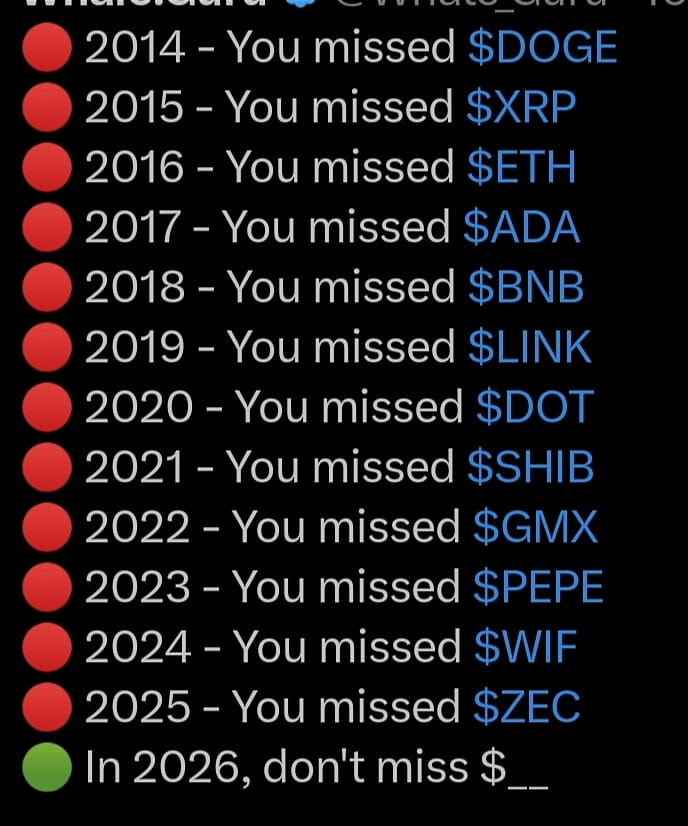
12

Article
a16z Crypto Lays Out 17 Big Priorities For 2026These ideas reflect where a16z sees the market heading and what builders should focus on next year.
Andreessen Horowitz, better known as a16z, has shared its annual list of 17 priorities for the crypto space in 2026. The partners covered topics ranging from stablecoins, tokenization, and finance to AI, privacy, security, prediction markets, and building new products.
These ideas reflect where a16z sees the market heading and what builders should focus on next year.
Stablecoins and Tokenized Assets
a16z says stablecoins will keep growing. They handled about $46 trillion in transactions in 2025. That is more than 20 times PayPal and almost three times Visa. The challenge, a16z notes, is connecting stablecoins to everyday money systems.
Startups are building ways to swap local money for stablecoins and let people spend them in stores. This could help workers get paid instantly across countries and let merchants accept money without banks.
The company also predicts more crypto-native tokenization of real-world assets. They suggest things like perpetual futures could give deeper liquidity instead of copying old financial products.
a16z thinks tokenized assets can help banks and fintechs make payments faster and reach more people while avoiding old system upgrades.
a16z also says AI and tokenized assets could make wealth management easier for everyone, not just the rich. Retail investors may get access to private equity, pre-IPO companies, and private credit through crypto platforms.
AI, Privacy, and New Tools
The firm predicts AI agents will automate tasks and payments. They say a new system called “Know Your Agent” or KYA will be needed to identify these AI agents. a16z also says AI could help with research, patents, and smart contracts.
Privacy is another key point. a16z notes private blockchains could be stronger because moving from one private chain to another is harder than moving between public chains. Messaging and data may also become decentralized with “secrets-as-a-service,” giving users more control over their information.
Other predictions include bigger prediction markets, staked media with verifiable content, and crypto networks working better with U.S. laws. a16z sees 2026 as a year of more mainstream adoption, AI tools, privacy, and new ways to use crypto safely.
{spot}(BTCUSDT)
Disclaimer: Cryptographic World information provided in this article is for informational purposes only. It is not intended to be, nor should it be construed as, financial advice. We do not make any warranties regarding the completeness, reliability, or accuracy of this information. All investments involve risk, and past performance does not guarantee future results. We recommend consulting a financial advisor before making any investment decisions.
a16z Crypto Lays Out 17 Big Priorities For 2026
These ideas reflect where a16z sees the market heading and what builders should focus on next year.
Andreessen Horowitz, better known as a16z, has shared its annual list of 17 priorities for the crypto space in 2026. The partners covered topics ranging from stablecoins, tokenization, and finance to AI, privacy, security, prediction markets, and building new products.
These ideas reflect where a16z sees the market heading and what builders should focus on next year.
Stablecoins and Tokenized Assets
a16z says stablecoins will keep growing. They handled about $46 trillion in transactions in 2025. That is more than 20 times PayPal and almost three times Visa. The challenge, a16z notes, is connecting stablecoins to everyday money systems.
Startups are building ways to swap local money for stablecoins and let people spend them in stores. This could help workers get paid instantly across countries and let merchants accept money without banks.
The company also predicts more crypto-native tokenization of real-world assets. They suggest things like perpetual futures could give deeper liquidity instead of copying old financial products.
a16z thinks tokenized assets can help banks and fintechs make payments faster and reach more people while avoiding old system upgrades.
a16z also says AI and tokenized assets could make wealth management easier for everyone, not just the rich. Retail investors may get access to private equity, pre-IPO companies, and private credit through crypto platforms.
AI, Privacy, and New Tools
The firm predicts AI agents will automate tasks and payments. They say a new system called “Know Your Agent” or KYA will be needed to identify these AI agents. a16z also says AI could help with research, patents, and smart contracts.
Privacy is another key point. a16z notes private blockchains could be stronger because moving from one private chain to another is harder than moving between public chains. Messaging and data may also become decentralized with “secrets-as-a-service,” giving users more control over their information.
Other predictions include bigger prediction markets, staked media with verifiable content, and crypto networks working better with U.S. laws. a16z sees 2026 as a year of more mainstream adoption, AI tools, privacy, and new ways to use crypto safely.
Disclaimer: Cryptographic World information provided in this article is for informational purposes only. It is not intended to be, nor should it be construed as, financial advice. We do not make any warranties regarding the completeness, reliability, or accuracy of this information. All investments involve risk, and past performance does not guarantee future results. We recommend consulting a financial advisor before making any investment decisions.
Andreessen Horowitz, better known as a16z, has shared its annual list of 17 priorities for the crypto space in 2026. The partners covered topics ranging from stablecoins, tokenization, and finance to AI, privacy, security, prediction markets, and building new products.
These ideas reflect where a16z sees the market heading and what builders should focus on next year.
Stablecoins and Tokenized Assets
a16z says stablecoins will keep growing. They handled about $46 trillion in transactions in 2025. That is more than 20 times PayPal and almost three times Visa. The challenge, a16z notes, is connecting stablecoins to everyday money systems.
Startups are building ways to swap local money for stablecoins and let people spend them in stores. This could help workers get paid instantly across countries and let merchants accept money without banks.
The company also predicts more crypto-native tokenization of real-world assets. They suggest things like perpetual futures could give deeper liquidity instead of copying old financial products.
a16z thinks tokenized assets can help banks and fintechs make payments faster and reach more people while avoiding old system upgrades.
a16z also says AI and tokenized assets could make wealth management easier for everyone, not just the rich. Retail investors may get access to private equity, pre-IPO companies, and private credit through crypto platforms.
AI, Privacy, and New Tools
The firm predicts AI agents will automate tasks and payments. They say a new system called “Know Your Agent” or KYA will be needed to identify these AI agents. a16z also says AI could help with research, patents, and smart contracts.
Privacy is another key point. a16z notes private blockchains could be stronger because moving from one private chain to another is harder than moving between public chains. Messaging and data may also become decentralized with “secrets-as-a-service,” giving users more control over their information.
Other predictions include bigger prediction markets, staked media with verifiable content, and crypto networks working better with U.S. laws. a16z sees 2026 as a year of more mainstream adoption, AI tools, privacy, and new ways to use crypto safely.
Disclaimer: Cryptographic World information provided in this article is for informational purposes only. It is not intended to be, nor should it be construed as, financial advice. We do not make any warranties regarding the completeness, reliability, or accuracy of this information. All investments involve risk, and past performance does not guarantee future results. We recommend consulting a financial advisor before making any investment decisions.
42

Article
Gains Tax...
Japan Sets 2026 as Crypto Year With 20% Capital Gains Tax Reform.Japan's Finance Minister Satsuki Katayama made waves last week by declaring 2026 as Japan's first year of digital.
Japan’s Finance Minister Satsuki Katayama made waves last week by declaring 2026 as Japan’s first year of digital. This sets the stage for a major push to have Japan’s financial system incorporate cryptocurrencies and blockchain assets. At the Tokyo Stock Exchange opening ceremony, Katayama said that Japan’s stock and commodity markets will be at the heart of ensuring that Japanese citizens benefit from digital financial products.
To make her point, Katayama referenced international developments, particularly noting that in the US, exchange-traded funds (ETFs) are increasingly seen as inflation-hedging tools. Speaking at the ceremony, she added, “Commodity and stock exchanges play a pretty big role in making sure the public can enjoy the benefits of digital assets – it’s a key part of our plan to push the boundaries of what tech can do in the finance sector.”
Regulatory Frameworks for Cryptocurrencies
The Japan Financial Services Agency began drafting a new regulatory framework for crypto back in October 2025. The goal is to treat digital assets the same as conventional securities. This means that the rules they come up with will include:
Making it illegal to trade on insider information of digital assets
Supervising over 100 registered digital assets, which includes Ethereum
Setting guidelines for banks to offer management and sales of digital assets
Japan is going all in on crypto
The country plans to cut crypto capital gains from 55% to 20% in 2026
Japan's finance minister is promoting crypto integrations into the national finance system.
The aim is for these rules to come into effect in 2026 – and once they’re in place, we expect to see more clarity for investors and financial institutions, making it more likely that we’ll see digital assets listed on ETFS. This move shows that Japan is taking a cautious yet progressive approach, aiming to align with global developments.
Crypto Tax Reforms Become Law
For investors, one of the key changes is a major overhaul of crypto taxation. From 2026, Japan will bring the capital gains tax on digital assets down from as high as 55% all the way down to a flat rate of 20% – and only applies to assets traded on regulated markets – while also exempting any assets that aren’t on the register.
Other notable developments to watch include:
The approval of the first Yen-pegged stablecoin (JYPc)
An assessment of how good banks are at managing both traditional and digital assets
Ongoing monitoring of how crypto transactions are being classified and tracked
These moves are a strong signal from Japan that it wants to make its mark on the global crypto scene by creating a safe and welcoming environment for investors while also encouraging the growth of blockchain-based financial solutions.
{spot}(BTCUSDT)
Disclaimer: Cryptographic World information provided in this article is for informational purposes only. It is not intended to be, nor should it be construed as, financial advice. We do not make any warranties regarding the completeness, reliability, or accuracy of this information. All investments involve risk, and past performance does not guarantee future results. We recommend consulting a financial advisor before making any investment decisions.
Gains Tax... Japan Sets 2026 as Crypto Year With 20% Capital Gains Tax Reform.
Japan's Finance Minister Satsuki Katayama made waves last week by declaring 2026 as Japan's first year of digital.
Japan’s Finance Minister Satsuki Katayama made waves last week by declaring 2026 as Japan’s first year of digital. This sets the stage for a major push to have Japan’s financial system incorporate cryptocurrencies and blockchain assets. At the Tokyo Stock Exchange opening ceremony, Katayama said that Japan’s stock and commodity markets will be at the heart of ensuring that Japanese citizens benefit from digital financial products.
To make her point, Katayama referenced international developments, particularly noting that in the US, exchange-traded funds (ETFs) are increasingly seen as inflation-hedging tools. Speaking at the ceremony, she added, “Commodity and stock exchanges play a pretty big role in making sure the public can enjoy the benefits of digital assets – it’s a key part of our plan to push the boundaries of what tech can do in the finance sector.”
Regulatory Frameworks for Cryptocurrencies
The Japan Financial Services Agency began drafting a new regulatory framework for crypto back in October 2025. The goal is to treat digital assets the same as conventional securities. This means that the rules they come up with will include:
Making it illegal to trade on insider information of digital assets
Supervising over 100 registered digital assets, which includes Ethereum
Setting guidelines for banks to offer management and sales of digital assets
Japan is going all in on crypto
The country plans to cut crypto capital gains from 55% to 20% in 2026
Japan's finance minister is promoting crypto integrations into the national finance system.
The aim is for these rules to come into effect in 2026 – and once they’re in place, we expect to see more clarity for investors and financial institutions, making it more likely that we’ll see digital assets listed on ETFS. This move shows that Japan is taking a cautious yet progressive approach, aiming to align with global developments.
Crypto Tax Reforms Become Law
For investors, one of the key changes is a major overhaul of crypto taxation. From 2026, Japan will bring the capital gains tax on digital assets down from as high as 55% all the way down to a flat rate of 20% – and only applies to assets traded on regulated markets – while also exempting any assets that aren’t on the register.
Other notable developments to watch include:
The approval of the first Yen-pegged stablecoin (JYPc)
An assessment of how good banks are at managing both traditional and digital assets
Ongoing monitoring of how crypto transactions are being classified and tracked
These moves are a strong signal from Japan that it wants to make its mark on the global crypto scene by creating a safe and welcoming environment for investors while also encouraging the growth of blockchain-based financial solutions.
Disclaimer: Cryptographic World information provided in this article is for informational purposes only. It is not intended to be, nor should it be construed as, financial advice. We do not make any warranties regarding the completeness, reliability, or accuracy of this information. All investments involve risk, and past performance does not guarantee future results. We recommend consulting a financial advisor before making any investment decisions.
Japan’s Finance Minister Satsuki Katayama made waves last week by declaring 2026 as Japan’s first year of digital. This sets the stage for a major push to have Japan’s financial system incorporate cryptocurrencies and blockchain assets. At the Tokyo Stock Exchange opening ceremony, Katayama said that Japan’s stock and commodity markets will be at the heart of ensuring that Japanese citizens benefit from digital financial products.
To make her point, Katayama referenced international developments, particularly noting that in the US, exchange-traded funds (ETFs) are increasingly seen as inflation-hedging tools. Speaking at the ceremony, she added, “Commodity and stock exchanges play a pretty big role in making sure the public can enjoy the benefits of digital assets – it’s a key part of our plan to push the boundaries of what tech can do in the finance sector.”
Regulatory Frameworks for Cryptocurrencies
The Japan Financial Services Agency began drafting a new regulatory framework for crypto back in October 2025. The goal is to treat digital assets the same as conventional securities. This means that the rules they come up with will include:
Making it illegal to trade on insider information of digital assets
Supervising over 100 registered digital assets, which includes Ethereum
Setting guidelines for banks to offer management and sales of digital assets
Japan is going all in on crypto
The country plans to cut crypto capital gains from 55% to 20% in 2026
Japan's finance minister is promoting crypto integrations into the national finance system.
The aim is for these rules to come into effect in 2026 – and once they’re in place, we expect to see more clarity for investors and financial institutions, making it more likely that we’ll see digital assets listed on ETFS. This move shows that Japan is taking a cautious yet progressive approach, aiming to align with global developments.
Crypto Tax Reforms Become Law
For investors, one of the key changes is a major overhaul of crypto taxation. From 2026, Japan will bring the capital gains tax on digital assets down from as high as 55% all the way down to a flat rate of 20% – and only applies to assets traded on regulated markets – while also exempting any assets that aren’t on the register.
Other notable developments to watch include:
The approval of the first Yen-pegged stablecoin (JYPc)
An assessment of how good banks are at managing both traditional and digital assets
Ongoing monitoring of how crypto transactions are being classified and tracked
These moves are a strong signal from Japan that it wants to make its mark on the global crypto scene by creating a safe and welcoming environment for investors while also encouraging the growth of blockchain-based financial solutions.
Disclaimer: Cryptographic World information provided in this article is for informational purposes only. It is not intended to be, nor should it be construed as, financial advice. We do not make any warranties regarding the completeness, reliability, or accuracy of this information. All investments involve risk, and past performance does not guarantee future results. We recommend consulting a financial advisor before making any investment decisions.
76

Article
BlackRock clients acquire 3,948 Bitcoin valued at $372MBlackRock clients acquired 3,948 Bitcoin valued at approximately $372 million today, according to data tracked by Farside Investors.
The purchase reflects continued institutional accumulation of Bitcoin through BlackRock's spot ETF product, the IBIT fund. The firm has positioned itself as a key facilitator of structured crypto exposure, settling transfers through platforms like Coinbase Prime.
US-listed spot Bitcoin ETFs recorded approximately $697 million in net inflows on Monday, representing their largest daily intake since October 7.
In addition to BlackRock's IBIT, Fidelity's FBTC fund posted major gains with $191 million in fresh investments. No funds reported outflows during the session.
{spot}(BTCUSDT)
Disclaimer: Cryptographic World information provided in this article is for informational purposes only. It is not intended to be, nor should it be construed as, financial advice. We do not make any warranties regarding the completeness, reliability, or accuracy of this information. All investments involve risk, and past performance does not guarantee future results. We recommend consulting a financial advisor before making any investment decisions.
BlackRock clients acquire 3,948 Bitcoin valued at $372M
BlackRock clients acquired 3,948 Bitcoin valued at approximately $372 million today, according to data tracked by Farside Investors.
The purchase reflects continued institutional accumulation of Bitcoin through BlackRock's spot ETF product, the IBIT fund. The firm has positioned itself as a key facilitator of structured crypto exposure, settling transfers through platforms like Coinbase Prime.
US-listed spot Bitcoin ETFs recorded approximately $697 million in net inflows on Monday, representing their largest daily intake since October 7.
In addition to BlackRock's IBIT, Fidelity's FBTC fund posted major gains with $191 million in fresh investments. No funds reported outflows during the session.
Disclaimer: Cryptographic World information provided in this article is for informational purposes only. It is not intended to be, nor should it be construed as, financial advice. We do not make any warranties regarding the completeness, reliability, or accuracy of this information. All investments involve risk, and past performance does not guarantee future results. We recommend consulting a financial advisor before making any investment decisions.
The purchase reflects continued institutional accumulation of Bitcoin through BlackRock's spot ETF product, the IBIT fund. The firm has positioned itself as a key facilitator of structured crypto exposure, settling transfers through platforms like Coinbase Prime.
US-listed spot Bitcoin ETFs recorded approximately $697 million in net inflows on Monday, representing their largest daily intake since October 7.
In addition to BlackRock's IBIT, Fidelity's FBTC fund posted major gains with $191 million in fresh investments. No funds reported outflows during the session.
Disclaimer: Cryptographic World information provided in this article is for informational purposes only. It is not intended to be, nor should it be construed as, financial advice. We do not make any warranties regarding the completeness, reliability, or accuracy of this information. All investments involve risk, and past performance does not guarantee future results. We recommend consulting a financial advisor before making any investment decisions.
3
533
Log in to explore more content
Join global crypto users on Binance Square
⚡️ Get latest and useful information about crypto.
💬 Trusted by the world’s largest crypto exchange.
👍 Discover real insights from verified creators.
Email / Phone number
Trending Topics
CPIWatch
86.2M views
499,768 Discussing
Share & Win Traffic Reward in our Trending Hashtag Campaign
✨Topic: Will CPI Trigger Rate Hike?
👉How to Join:
Publish a short post or article with hashtag #CPIWatch
Create content based on the below two angles:
- Nonfarm payrolls beat expectations and CPI is around the corner, do you think the Fed will hike or hold the rate?
- Bullish or bearish? Share your take and showcase your stocks or gold trade/holdings with our trade sharing widget.
🚀Campaign Period:
- 2026-09-11 3:00 - 2026-09-12 9:00 UTC
🎁Reward:
- Qualified posts that comply with the above guidelines and contain more than 100 words will be reviewed and may receive a random traffic boost of 500 to 3,000 views. You will receive a notification from your feed secretary if your post is selected.
- Get a chance to have your article featured on Binance Square Official
Need ideas for your post? Visit the topic page #CPIWatch or the Square Guide on How to Post for Better Reach.
Binance Square Official
·294 Likes
·517.1k views
CLARITYActRevisionToRuleNonDeFiControllers
59 views
26 Discussing
TencentBackedEnflameToStartTradingAfter$911MIPO
165 views
9 Discussing