
问剑白玉京
109 Posts

问剑白玉京
Report
Block User
波浪理论交易员,不定时参与撸毛,不定时发布交易策略,可以关注看看实力

U Holder
Frequent Trader
1.8 Years
11 Following
371 Followers
151 Liked
Posts
All
Quotes
Live
·
--
It is recommended that everyone take a look at this educational promotional content
It is recommended that everyone take a look at this educational promotional content


币安Binance华语
·
--
“Don’t laugh—you won’t find the 4th one either 😨”
🪤 They say this is the hardest #币安安全星期四 challenge in history: in the shortest time, can you find all the traps?
👉 点击参与实景陷阱追踪挑战, compete for a spot on the leaderboard 🏆
The top 10 on the leaderboard each get a 100U detective reward, and the top 3 also receive a themed gift box!
Share it and post your clear-through screenshot in the comments, and then 15 people will be selected to receive 44U 🧧
🪤 They say this is the hardest #币安安全星期四 challenge in history: in the shortest time, can you find all the traps?
👉 点击参与实景陷阱追踪挑战, compete for a spot on the leaderboard 🏆
The top 10 on the leaderboard each get a 100U detective reward, and the top 3 also receive a themed gift box!
Share it and post your clear-through screenshot in the comments, and then 15 people will be selected to receive 44U 🧧

66
·
--
Content Creator Countdown: only the final day left—this last celebration is also the most hardcore grand finale! 😊
Today, we’ll switch to a deeper macro perspective and talk about the ultimate ambitions of @termmax TermMax in the on-chain fixed-income space—building DeFi-native “risk-free yield curves” (On-chain Yield Curve
In traditional finance (TradFi), the government bond yield curve is the “anchor” for macro asset pricing. Whether it’s corporate bond issuance, mortgage pricing, or derivatives valuation, everything ultimately benchmarks off it. But in the DeFi world, because major protocols operate in isolation as floating-rate black boxes, on-chain long-term there has been a lack of a widely recognized, standardized, and maturity-spanning risk-free yield curve.
TermMax is changing this situation. By building standardized fixed-rate lending/borrowing markets that cover multiple mainstream chains (Ethereum, BNB Chain, Arbitrum, Base, etc.) and span different fixed maturity dates (Fixed Maturities), together with centralized liquidity matching, it is the first time DeFi has a **maturity structure (Term Structure** priced endogenously by real market supply and demand.
The disruptive part behind this is:
Become an on-chain pricing benchmark: Future RWA (real-world assets), on-chain credit bonds, and complex derivatives can all directly reference the fixed-income yield curve formed on TermMax for precise pricing.
Attract trillion-level traditional institutional capital: What institutions care about most is not short-term, explosive APY spikes, but a compliant-grade yield curve that is predictable, auditable, and anchored to long-term benchmarks.
Compared with the rise-and-fall curve after TMX goes live, the on-chain base yield curve TermMax is drawing is the real cornerstone on the path to the Web3 infrastructure “Holy Grail”!
#termmax @TermMax
Content Creator Countdown: only the final day left—this last celebration is also the most hardcore grand finale! 😊
Today, we’ll switch to a deeper macro perspective and talk about the ultimate ambitions of @TermMax TermMax in the on-chain fixed-income space—building DeFi-native “risk-free yield curves” (On-chain Yield Curve
In traditional finance (TradFi), the government bond yield curve is the “anchor” for macro asset pricing. Whether it’s corporate bond issuance, mortgage pricing, or derivatives valuation, everything ultimately benchmarks off it. But in the DeFi world, because major protocols operate in isolation as floating-rate black boxes, on-chain long-term there has been a lack of a widely recognized, standardized, and maturity-spanning risk-free yield curve.
TermMax is changing this situation. By building standardized fixed-rate lending/borrowing markets that cover multiple mainstream chains (Ethereum, BNB Chain, Arbitrum, Base, etc.) and span different fixed maturity dates (Fixed Maturities), together with centralized liquidity matching, it is the first time DeFi has a **maturity structure (Term Structure** priced endogenously by real market supply and demand.
The disruptive part behind this is:
Become an on-chain pricing benchmark: Future RWA (real-world assets), on-chain credit bonds, and complex derivatives can all directly reference the fixed-income yield curve formed on TermMax for precise pricing.
Attract trillion-level traditional institutional capital: What institutions care about most is not short-term, explosive APY spikes, but a compliant-grade yield curve that is predictable, auditable, and anchored to long-term benchmarks.
Compared with the rise-and-fall curve after TMX goes live, the on-chain base yield curve TermMax is drawing is the real cornerstone on the path to the Web3 infrastructure “Holy Grail”!
#termmax @TermMax
Today, we’ll switch to a deeper macro perspective and talk about the ultimate ambitions of @TermMax TermMax in the on-chain fixed-income space—building DeFi-native “risk-free yield curves” (On-chain Yield Curve
In traditional finance (TradFi), the government bond yield curve is the “anchor” for macro asset pricing. Whether it’s corporate bond issuance, mortgage pricing, or derivatives valuation, everything ultimately benchmarks off it. But in the DeFi world, because major protocols operate in isolation as floating-rate black boxes, on-chain long-term there has been a lack of a widely recognized, standardized, and maturity-spanning risk-free yield curve.
TermMax is changing this situation. By building standardized fixed-rate lending/borrowing markets that cover multiple mainstream chains (Ethereum, BNB Chain, Arbitrum, Base, etc.) and span different fixed maturity dates (Fixed Maturities), together with centralized liquidity matching, it is the first time DeFi has a **maturity structure (Term Structure** priced endogenously by real market supply and demand.
The disruptive part behind this is:
Become an on-chain pricing benchmark: Future RWA (real-world assets), on-chain credit bonds, and complex derivatives can all directly reference the fixed-income yield curve formed on TermMax for precise pricing.
Attract trillion-level traditional institutional capital: What institutions care about most is not short-term, explosive APY spikes, but a compliant-grade yield curve that is predictable, auditable, and anchored to long-term benchmarks.
Compared with the rise-and-fall curve after TMX goes live, the on-chain base yield curve TermMax is drawing is the real cornerstone on the path to the Web3 infrastructure “Holy Grail”!
#termmax @TermMax
58
·
--
When judging whether a piece of basic infrastructure is up to the task, never rely on the promotional video—go dig into its underlying code. When I first skimmed the Babylon documentation, I also casually filed BABY away as “a token that rides BTC hype and uses governance proposals to boost its visibility.” But after going through the rules for the Finality Provider line by line, I was chilled to the bone by this economic model.
It isn’t a decorative accessory in the governance section. It’s the ballast that keeps the entire security network from tipping over.
Most people see “double staking” and immediately think about how to double their returns. But hidden in Babylon’s smart contracts is an iron law: the amount of BTC that an FP can accept has a hard cap. And the height of that cap is determined by how much BABY the node itself locks up with its own funds. This isn’t “the more you work, the more you earn.” It’s an extremely strict margin system.
Without this rule, an FP could take custody of massive amounts of BTC at zero cost. If it misbehaves, the only thing being punished is the users’ real money—the node itself feels nothing. Forcing FPs to stake BABY is how their personal interests are tightly bound to the system’s security. Misbehavior is no longer a get-rich-without-risk deal; it becomes an act of stupidity that could also wipe the FP out financially.
For most governance tokens, their value depends heavily on brainwashing narratives. But in Babylon’s system, BABY’s value anchor is crystal clear: “Don’t be a node without tokens—market value is supported by the amount of BTC staked.”
As an analogy: people move BTC into the ETH ecosystem to unlock liquidity. In Babylon, BABY is like a torque limiter for a security engine. BTC continually provides the drive of trust, while BABY controls the risk thresholds—ensuring that when each gear turns, the pressure stays within what the staked assets can bear. BABY wears the face of a hype token, but inside it functions as the most precise regulator within the protocol itself. Making every node that wants to take on compute must pay the same economic price—this is the brake that calibrates the cost of wrongdoing. That depth is what Web3 security infrastructure should have.
#baby $BABY
When judging whether a piece of basic infrastructure is up to the task, never rely on the promotional video—go dig into its underlying code. When I first skimmed the Babylon documentation, I also casually filed BABY away as “a token that rides BTC hype and uses governance proposals to boost its visibility.” But after going through the rules for the Finality Provider line by line, I was chilled to the bone by this economic model.
It isn’t a decorative accessory in the governance section. It’s the ballast that keeps the entire security network from tipping over.
Most people see “double staking” and immediately think about how to double their returns. But hidden in Babylon’s smart contracts is an iron law: the amount of BTC that an FP can accept has a hard cap. And the height of that cap is determined by how much BABY the node itself locks up with its own funds. This isn’t “the more you work, the more you earn.” It’s an extremely strict margin system.
Without this rule, an FP could take custody of massive amounts of BTC at zero cost. If it misbehaves, the only thing being punished is the users’ real money—the node itself feels nothing. Forcing FPs to stake BABY is how their personal interests are tightly bound to the system’s security. Misbehavior is no longer a get-rich-without-risk deal; it becomes an act of stupidity that could also wipe the FP out financially.
For most governance tokens, their value depends heavily on brainwashing narratives. But in Babylon’s system, BABY’s value anchor is crystal clear: “Don’t be a node without tokens—market value is supported by the amount of BTC staked.”
As an analogy: people move BTC into the ETH ecosystem to unlock liquidity. In Babylon, BABY is like a torque limiter for a security engine. BTC continually provides the drive of trust, while BABY controls the risk thresholds—ensuring that when each gear turns, the pressure stays within what the staked assets can bear. BABY wears the face of a hype token, but inside it functions as the most precise regulator within the protocol itself. Making every node that wants to take on compute must pay the same economic price—this is the brake that calibrates the cost of wrongdoing. That depth is what Web3 security infrastructure should have.
#baby $BABY
It isn’t a decorative accessory in the governance section. It’s the ballast that keeps the entire security network from tipping over.
Most people see “double staking” and immediately think about how to double their returns. But hidden in Babylon’s smart contracts is an iron law: the amount of BTC that an FP can accept has a hard cap. And the height of that cap is determined by how much BABY the node itself locks up with its own funds. This isn’t “the more you work, the more you earn.” It’s an extremely strict margin system.
Without this rule, an FP could take custody of massive amounts of BTC at zero cost. If it misbehaves, the only thing being punished is the users’ real money—the node itself feels nothing. Forcing FPs to stake BABY is how their personal interests are tightly bound to the system’s security. Misbehavior is no longer a get-rich-without-risk deal; it becomes an act of stupidity that could also wipe the FP out financially.
For most governance tokens, their value depends heavily on brainwashing narratives. But in Babylon’s system, BABY’s value anchor is crystal clear: “Don’t be a node without tokens—market value is supported by the amount of BTC staked.”
As an analogy: people move BTC into the ETH ecosystem to unlock liquidity. In Babylon, BABY is like a torque limiter for a security engine. BTC continually provides the drive of trust, while BABY controls the risk thresholds—ensuring that when each gear turns, the pressure stays within what the staked assets can bear. BABY wears the face of a hype token, but inside it functions as the most precise regulator within the protocol itself. Making every node that wants to take on compute must pay the same economic price—this is the brake that calibrates the cost of wrongdoing. That depth is what Web3 security infrastructure should have.
#baby $BABY
99
·
--
Yesterday I helped a friend filter Babylon’s validation nodes. He came at me right away with a screenshot ranking them by APY. I told him that while this kind of selection might work in the Ethereum ecosystem, under Babylon’s shared-staking (collective collateral) logic, doing it that way will end up costing you big sooner or later. A FP node’s real strength isn’t how much yield it promises, but how much BABY it actually has staked in its own wallet.
Babylon’s architecture is quite special. It forcibly ties BTC liquidity being locked to Babylon’s economic penalties. Your $BTC sits on the mainnet as collateral, while the FP must provide enough shared-staking allocation on the BABY chain. Only when the FP’s own BABY staking amount meets the system’s waterline can it stay on the active list to “eat the meat.”
The tolerance level of this waterline is crucial. Suppose an FP’s self-stake is pitifully small—once the BABY market price drops, or if the incoming delegated volume becomes too large, its collateralization ratio will instantly plunge below the threshold. The system will mercilessly remove it in the next epoch, and then your BTC is basically just hanging there for nothing. And when malicious behavior triggers slashing, the Bitcoin side will recover the private keys and reclaim UTXOs via EOTS, while the BABY side will burn the slashed portion through full-node consensus.
This means we must be able to spot the real deal when choosing nodes. Many FPs look like they have huge self-staked amounts, but in reality they’re being propped up by early-unlocked funds. The real safety net is nodes whose operators bought on the secondary market and locked it up for the long term. If something goes wrong with a node, retail users face an unbonding period with no rewards for as long as 14 days. So using the FP’s own BABY staking thickness as the core screening criterion is the foundation for ensuring your assets steadily grow and remain sound.
#baby $BABY
Yesterday I helped a friend filter Babylon’s validation nodes. He came at me right away with a screenshot ranking them by APY. I told him that while this kind of selection might work in the Ethereum ecosystem, under Babylon’s shared-staking (collective collateral) logic, doing it that way will end up costing you big sooner or later. A FP node’s real strength isn’t how much yield it promises, but how much BABY it actually has staked in its own wallet.
Babylon’s architecture is quite special. It forcibly ties BTC liquidity being locked to Babylon’s economic penalties. Your $BTC sits on the mainnet as collateral, while the FP must provide enough shared-staking allocation on the BABY chain. Only when the FP’s own BABY staking amount meets the system’s waterline can it stay on the active list to “eat the meat.”
The tolerance level of this waterline is crucial. Suppose an FP’s self-stake is pitifully small—once the BABY market price drops, or if the incoming delegated volume becomes too large, its collateralization ratio will instantly plunge below the threshold. The system will mercilessly remove it in the next epoch, and then your BTC is basically just hanging there for nothing. And when malicious behavior triggers slashing, the Bitcoin side will recover the private keys and reclaim UTXOs via EOTS, while the BABY side will burn the slashed portion through full-node consensus.
This means we must be able to spot the real deal when choosing nodes. Many FPs look like they have huge self-staked amounts, but in reality they’re being propped up by early-unlocked funds. The real safety net is nodes whose operators bought on the secondary market and locked it up for the long term. If something goes wrong with a node, retail users face an unbonding period with no rewards for as long as 14 days. So using the FP’s own BABY staking thickness as the core screening criterion is the foundation for ensuring your assets steadily grow and remain sound.
#baby $BABY
Babylon’s architecture is quite special. It forcibly ties BTC liquidity being locked to Babylon’s economic penalties. Your $BTC sits on the mainnet as collateral, while the FP must provide enough shared-staking allocation on the BABY chain. Only when the FP’s own BABY staking amount meets the system’s waterline can it stay on the active list to “eat the meat.”
The tolerance level of this waterline is crucial. Suppose an FP’s self-stake is pitifully small—once the BABY market price drops, or if the incoming delegated volume becomes too large, its collateralization ratio will instantly plunge below the threshold. The system will mercilessly remove it in the next epoch, and then your BTC is basically just hanging there for nothing. And when malicious behavior triggers slashing, the Bitcoin side will recover the private keys and reclaim UTXOs via EOTS, while the BABY side will burn the slashed portion through full-node consensus.
This means we must be able to spot the real deal when choosing nodes. Many FPs look like they have huge self-staked amounts, but in reality they’re being propped up by early-unlocked funds. The real safety net is nodes whose operators bought on the secondary market and locked it up for the long term. If something goes wrong with a node, retail users face an unbonding period with no rewards for as long as 14 days. So using the FP’s own BABY staking thickness as the core screening criterion is the foundation for ensuring your assets steadily grow and remain sound.
#baby $BABY
118
·
--
I went back and reread the TBV technical documentation for @babylonlabs_io . At first, I thought a Provider can’t touch your BTC private key—so it was basically just a middleman. If the service was bad, you could simply switch to another. But when I got to the chapter on vault initialization, it hit me: once you choose that “middleman,” it’s permanently baked into the contract. There’s no way to replace that entry point anywhere during the whole lifecycle.
It doesn’t custody your coins, but it does control the entire pipeline required for a normal exit: peg-in needs it to trigger, redeeming the ZK proof needs it to compute, and all three broadcasts—Claim, Assert, and Payout—depend on its nodes being online. The commission is indeed written into the system all at once when it’s created, and the BTC obediently sits in a separate Taproot output—physically no one can steal it.
However, once the Provider goes offline, you’re no longer dealing with something as simple as “click to redeem.” Instead, you’ll be rummaging through your WOTS keypair and claimer artifacts, running the self-service process manually against the watchtower CLI, and then staring at the screen while the challenge window runs for nearly 72 hours.
So I don’t think the Provider starts by asking you for a fee schedule. What truly separates “genuinely smooth” from “pseudo-non-custodial” are things like its historical uptime, the long-tail delay in generating ZK proofs, the success rate of redemptions via the normal path, and how many users are forced into the self-claim escape hatch. We’re still in the public testnet phase; the whitepaper promises trustlessness, but it hasn’t delivered real service-level runtime data yet—that gap is what I care about most.
Real non-custodial doesn’t mean your path doesn’t require anyone. It means that if that person flakes out, the backup key you have in hand can still open the door. But having the key is one thing; how many times you need to turn the knob and how long you need to wait—that’s another.
When you choose a Provider, how do you rank them internally?
A. Drive fees as low as possible
B. Maximize node uptime
C. Make the manual escape process idiot-proof
I’m with B. But the day the Provider actually goes down, whether C’s threshold is low enough is the deciding factor in whether you’ll end up cursing in the streets. Drop your priorities in the comments.
@babylonlabs_io
#baby $BABY
I went back and reread the TBV technical documentation for @BabylonLabs_io . At first, I thought a Provider can’t touch your BTC private key—so it was basically just a middleman. If the service was bad, you could simply switch to another. But when I got to the chapter on vault initialization, it hit me: once you choose that “middleman,” it’s permanently baked into the contract. There’s no way to replace that entry point anywhere during the whole lifecycle.
It doesn’t custody your coins, but it does control the entire pipeline required for a normal exit: peg-in needs it to trigger, redeeming the ZK proof needs it to compute, and all three broadcasts—Claim, Assert, and Payout—depend on its nodes being online. The commission is indeed written into the system all at once when it’s created, and the BTC obediently sits in a separate Taproot output—physically no one can steal it.
However, once the Provider goes offline, you’re no longer dealing with something as simple as “click to redeem.” Instead, you’ll be rummaging through your WOTS keypair and claimer artifacts, running the self-service process manually against the watchtower CLI, and then staring at the screen while the challenge window runs for nearly 72 hours.
So I don’t think the Provider starts by asking you for a fee schedule. What truly separates “genuinely smooth” from “pseudo-non-custodial” are things like its historical uptime, the long-tail delay in generating ZK proofs, the success rate of redemptions via the normal path, and how many users are forced into the self-claim escape hatch. We’re still in the public testnet phase; the whitepaper promises trustlessness, but it hasn’t delivered real service-level runtime data yet—that gap is what I care about most.
Real non-custodial doesn’t mean your path doesn’t require anyone. It means that if that person flakes out, the backup key you have in hand can still open the door. But having the key is one thing; how many times you need to turn the knob and how long you need to wait—that’s another.
When you choose a Provider, how do you rank them internally?
A. Drive fees as low as possible
B. Maximize node uptime
C. Make the manual escape process idiot-proof
I’m with B. But the day the Provider actually goes down, whether C’s threshold is low enough is the deciding factor in whether you’ll end up cursing in the streets. Drop your priorities in the comments.
@BabylonLabs_io
#baby $BABY
It doesn’t custody your coins, but it does control the entire pipeline required for a normal exit: peg-in needs it to trigger, redeeming the ZK proof needs it to compute, and all three broadcasts—Claim, Assert, and Payout—depend on its nodes being online. The commission is indeed written into the system all at once when it’s created, and the BTC obediently sits in a separate Taproot output—physically no one can steal it.
However, once the Provider goes offline, you’re no longer dealing with something as simple as “click to redeem.” Instead, you’ll be rummaging through your WOTS keypair and claimer artifacts, running the self-service process manually against the watchtower CLI, and then staring at the screen while the challenge window runs for nearly 72 hours.
So I don’t think the Provider starts by asking you for a fee schedule. What truly separates “genuinely smooth” from “pseudo-non-custodial” are things like its historical uptime, the long-tail delay in generating ZK proofs, the success rate of redemptions via the normal path, and how many users are forced into the self-claim escape hatch. We’re still in the public testnet phase; the whitepaper promises trustlessness, but it hasn’t delivered real service-level runtime data yet—that gap is what I care about most.
Real non-custodial doesn’t mean your path doesn’t require anyone. It means that if that person flakes out, the backup key you have in hand can still open the door. But having the key is one thing; how many times you need to turn the knob and how long you need to wait—that’s another.
When you choose a Provider, how do you rank them internally?
A. Drive fees as low as possible
B. Maximize node uptime
C. Make the manual escape process idiot-proof
I’m with B. But the day the Provider actually goes down, whether C’s threshold is low enough is the deciding factor in whether you’ll end up cursing in the streets. Drop your priorities in the comments.
@BabylonLabs_io
#baby $BABY
189
·
--
Last Saturday at a coffee shop, Old Zhao spread out his laptop. On the screen was the BABY circulation metrics chart. He asked me, “Is Babylon’s security budget priced again according to the coin price?”
When I got home, I laid the document out on the table. Using BABY to exchange for Bitcoin economic certainty, the whitepaper is internally consistent: stakers lock BTC to get BABY, FP posts BABY to obtain signing rights. This is an experiment grafting a PoS engine onto the settlement layer.
But when you stack the monthly unlock schedule, the FP collateral threshold, and the amount locked—everything together—the coffee went cold.
Babylon’s security budget has a hidden structure: the protocol’s economic defense line uses a “premium” measured by BABY’s market value against Bitcoin’s finality. But the insider allocation that automatically unlocks each month is hard-coded into the rigid codebase—this supply delivers on schedule, no matter what. Even more hidden is the pro-cyclical collateral trap for FP: unlocks dilute the circulating supply, the coin price falls, and the FP collateral value shrinks. Once it drops below the threshold, FP is kicked off the list—so the “outsourced finality” provider is ultimately one fewer. More deadly still, the EOTS slashing layer depends on the total BABY value collateralized by FP; when market value shrinks, the attack cost may be lower than the confiscated value, turning slash-and-penalty deterrence from “unbearable” into “calculable.”
There’s another accounting layer, too: adding back BABY loss and BTC opportunity cost—stakers are essentially paying to provide security services. In a bull market, the surge can mask this effect. But once the market turns down, this is the switch for capital flight. Locked BTC in the mainnet books can look impressive, but locking doesn’t equal loyalty—only the lack of a better place to put the liquidity.
The most story-friendly part of Babylon—“BTC never leaves the mainnet, and the private keys are held by you”—sounds like the ultimate dream of every Holder. But in the end, the sense of security still comes back to the same old question: if the bricks in the load-bearing wall are made from tokens that inflate automatically every month, and the people building the wall are also picking up their deliveries month after month—what exactly is this wall protecting against: outsiders, or the supply curve itself?
What do you think, Old Zhao?
The above are only personal views and do not constitute investment advice. Do you have different opinions? Feel free to discuss in the comments.
@babylonlabs_io
#baby $BABY
Last Saturday at a coffee shop, Old Zhao spread out his laptop. On the screen was the BABY circulation metrics chart. He asked me, “Is Babylon’s security budget priced again according to the coin price?”
When I got home, I laid the document out on the table. Using BABY to exchange for Bitcoin economic certainty, the whitepaper is internally consistent: stakers lock BTC to get BABY, FP posts BABY to obtain signing rights. This is an experiment grafting a PoS engine onto the settlement layer.
But when you stack the monthly unlock schedule, the FP collateral threshold, and the amount locked—everything together—the coffee went cold.
Babylon’s security budget has a hidden structure: the protocol’s economic defense line uses a “premium” measured by BABY’s market value against Bitcoin’s finality. But the insider allocation that automatically unlocks each month is hard-coded into the rigid codebase—this supply delivers on schedule, no matter what. Even more hidden is the pro-cyclical collateral trap for FP: unlocks dilute the circulating supply, the coin price falls, and the FP collateral value shrinks. Once it drops below the threshold, FP is kicked off the list—so the “outsourced finality” provider is ultimately one fewer. More deadly still, the EOTS slashing layer depends on the total BABY value collateralized by FP; when market value shrinks, the attack cost may be lower than the confiscated value, turning slash-and-penalty deterrence from “unbearable” into “calculable.”
There’s another accounting layer, too: adding back BABY loss and BTC opportunity cost—stakers are essentially paying to provide security services. In a bull market, the surge can mask this effect. But once the market turns down, this is the switch for capital flight. Locked BTC in the mainnet books can look impressive, but locking doesn’t equal loyalty—only the lack of a better place to put the liquidity.
The most story-friendly part of Babylon—“BTC never leaves the mainnet, and the private keys are held by you”—sounds like the ultimate dream of every Holder. But in the end, the sense of security still comes back to the same old question: if the bricks in the load-bearing wall are made from tokens that inflate automatically every month, and the people building the wall are also picking up their deliveries month after month—what exactly is this wall protecting against: outsiders, or the supply curve itself?
What do you think, Old Zhao?
The above are only personal views and do not constitute investment advice. Do you have different opinions? Feel free to discuss in the comments.
@BabylonLabs_io
#baby $BABY
When I got home, I laid the document out on the table. Using BABY to exchange for Bitcoin economic certainty, the whitepaper is internally consistent: stakers lock BTC to get BABY, FP posts BABY to obtain signing rights. This is an experiment grafting a PoS engine onto the settlement layer.
But when you stack the monthly unlock schedule, the FP collateral threshold, and the amount locked—everything together—the coffee went cold.
Babylon’s security budget has a hidden structure: the protocol’s economic defense line uses a “premium” measured by BABY’s market value against Bitcoin’s finality. But the insider allocation that automatically unlocks each month is hard-coded into the rigid codebase—this supply delivers on schedule, no matter what. Even more hidden is the pro-cyclical collateral trap for FP: unlocks dilute the circulating supply, the coin price falls, and the FP collateral value shrinks. Once it drops below the threshold, FP is kicked off the list—so the “outsourced finality” provider is ultimately one fewer. More deadly still, the EOTS slashing layer depends on the total BABY value collateralized by FP; when market value shrinks, the attack cost may be lower than the confiscated value, turning slash-and-penalty deterrence from “unbearable” into “calculable.”
There’s another accounting layer, too: adding back BABY loss and BTC opportunity cost—stakers are essentially paying to provide security services. In a bull market, the surge can mask this effect. But once the market turns down, this is the switch for capital flight. Locked BTC in the mainnet books can look impressive, but locking doesn’t equal loyalty—only the lack of a better place to put the liquidity.
The most story-friendly part of Babylon—“BTC never leaves the mainnet, and the private keys are held by you”—sounds like the ultimate dream of every Holder. But in the end, the sense of security still comes back to the same old question: if the bricks in the load-bearing wall are made from tokens that inflate automatically every month, and the people building the wall are also picking up their deliveries month after month—what exactly is this wall protecting against: outsiders, or the supply curve itself?
What do you think, Old Zhao?
The above are only personal views and do not constitute investment advice. Do you have different opinions? Feel free to discuss in the comments.
@BabylonLabs_io
#baby $BABY
1
88
·
--
When I was translating the tokenomics document for @babylonlabs_io , I got stuck on the page titled "Token Unlock Schedule." The document assigns a large share to ecosystem incentives and the team. My first thought was: in the early days, where exactly is the sell-pressure from token unlocks concentrated—at which time points?
Reading on, I realized that community and ecosystem unlocks are tied to participation rates in staking and the number of Finality Providers, turning the release cadence into a counter-indicator of protocol health. But the team and investors’ unlocks are hard-coded and aren’t affected by adoption rates, giving early capital a clearly defined exit window.
I looked at the incentive pool’s release curve. Rewards are distributed by epoch. The total amount and the amount of staked BTC are positively correlated, but the pool is fixed and releases quickly in the early stages. If staking spikes in the first three months, early stakers capture the biggest slice of the cake, while later participants see diminishing returns. The switching cost for BTC stakers is almost zero—if Babylon’s yield is higher today, they come in; if EigenLayer’s yield is higher tomorrow, they leave.
What really held me up was the valuation anchor for BABY. The document defines BABY as a settlement token for “security as a service.” External-chain payments use BABY to buy the economic security backed by BTC. If the price surges, the cost to buy becomes too high; if it stays dull, it fails to attract staking—this cycle has no automatic adjustment mechanism.
My take: in the short term, BABY is driven by the unlock schedule and staking demand. In the long term, it depends on whether Babylon can become the “default security provider” for PoS chains. The key metrics aren’t the token price, but the number of newly integrated chains each quarter and the BABY fees actually paid.
#baby $BABY
When I was translating the tokenomics document for @BabylonLabs_io , I got stuck on the page titled "Token Unlock Schedule." The document assigns a large share to ecosystem incentives and the team. My first thought was: in the early days, where exactly is the sell-pressure from token unlocks concentrated—at which time points?
Reading on, I realized that community and ecosystem unlocks are tied to participation rates in staking and the number of Finality Providers, turning the release cadence into a counter-indicator of protocol health. But the team and investors’ unlocks are hard-coded and aren’t affected by adoption rates, giving early capital a clearly defined exit window.
I looked at the incentive pool’s release curve. Rewards are distributed by epoch. The total amount and the amount of staked BTC are positively correlated, but the pool is fixed and releases quickly in the early stages. If staking spikes in the first three months, early stakers capture the biggest slice of the cake, while later participants see diminishing returns. The switching cost for BTC stakers is almost zero—if Babylon’s yield is higher today, they come in; if EigenLayer’s yield is higher tomorrow, they leave.
What really held me up was the valuation anchor for BABY. The document defines BABY as a settlement token for “security as a service.” External-chain payments use BABY to buy the economic security backed by BTC. If the price surges, the cost to buy becomes too high; if it stays dull, it fails to attract staking—this cycle has no automatic adjustment mechanism.
My take: in the short term, BABY is driven by the unlock schedule and staking demand. In the long term, it depends on whether Babylon can become the “default security provider” for PoS chains. The key metrics aren’t the token price, but the number of newly integrated chains each quarter and the BABY fees actually paid.
#baby $BABY
Reading on, I realized that community and ecosystem unlocks are tied to participation rates in staking and the number of Finality Providers, turning the release cadence into a counter-indicator of protocol health. But the team and investors’ unlocks are hard-coded and aren’t affected by adoption rates, giving early capital a clearly defined exit window.
I looked at the incentive pool’s release curve. Rewards are distributed by epoch. The total amount and the amount of staked BTC are positively correlated, but the pool is fixed and releases quickly in the early stages. If staking spikes in the first three months, early stakers capture the biggest slice of the cake, while later participants see diminishing returns. The switching cost for BTC stakers is almost zero—if Babylon’s yield is higher today, they come in; if EigenLayer’s yield is higher tomorrow, they leave.
What really held me up was the valuation anchor for BABY. The document defines BABY as a settlement token for “security as a service.” External-chain payments use BABY to buy the economic security backed by BTC. If the price surges, the cost to buy becomes too high; if it stays dull, it fails to attract staking—this cycle has no automatic adjustment mechanism.
My take: in the short term, BABY is driven by the unlock schedule and staking demand. In the long term, it depends on whether Babylon can become the “default security provider” for PoS chains. The key metrics aren’t the token price, but the number of newly integrated chains each quarter and the BABY fees actually paid.
#baby $BABY
85
·
--
Yesterday afternoon I went downstairs to a printing shop and ran into Lao Chen (my cousin, he works in traditional finance). He said, “Deng, your crypto-circle time-locking and fund custody—aren’t you basically just writing a date?” I almost smashed the scanner into his head. Lao Chen is used to paper signatures and has no idea how many galaxies lie between on-chain “physical rules” and “legal commitments.”
In these past few weeks, I’ve been going through a frenzy of audits on several mainstream Restaking projects’ token release schedules. The more I look, the more it feels like handing the unlock logic to a foundation via a multisig is a false premise. For projects that rely on EOA multisig, the essence is that you hand over both your right to earn yield and your right to exit at the same time. What you get in exchange is just a third-party IOU that could blow up at any moment because the committee decides to do something malicious.
The release framework Babylon designed for BABY has an interesting part: its “axis.” It doesn’t do “governance committee can flexibly adjust.” Instead, it follows the strict hard rules of the BTC mainnet UTXO model. By using Taproot scripts, it embeds the unlock conditions directly into the lock of each individual unit of locked funds. This kind of physical separation cuts off—at the source—the usual maneuver of “the foundation can change the unlock with a single sentence.”
I ran through it on the testnet. BABY’s release control is held by physical consensus on the BTC mainnet, not by the foundation wallet’s private keys. What you see on-chain is cryptographic proof—on time, in quantity, and in state, with nothing missing. If the committee wants to change it? Nodes simply refuse to accept.
But this solution isn’t a universal cure. By pushing all validation onto BTC scripts, it tests the dev team’s technical chops, and it also directly confronts the upper limits of mainnet throughput and validation latency. The price you pay for “non-tamperability” is “not flexible enough.”
Still, this exploration is valuable. It forces a multiple-choice question in front of us: Do we want “flexibility” backed by a foundation custody full of black boxes, or do we want a clunky on-chain physical lock that lets you sleep at night? I think the latter is more solid.
[TL;DR]
BABY’s unlock isn’t a “gentlemen’s agreement” multisig scheme by the foundation—it’s a Taproot physical lock baked into BTC mainnet UTXOs. It’s cumbersome and constrained by mainnet performance, but it’s harder than any team’s promise. Keep observing; no rush to execute.
@babylonlabs_io
Brothers, come chat in the Binance Plaza comments.
#baby $BABY
Yesterday afternoon I went downstairs to a printing shop and ran into Lao Chen (my cousin, he works in traditional finance). He said, “Deng, your crypto-circle time-locking and fund custody—aren’t you basically just writing a date?” I almost smashed the scanner into his head. Lao Chen is used to paper signatures and has no idea how many galaxies lie between on-chain “physical rules” and “legal commitments.”
In these past few weeks, I’ve been going through a frenzy of audits on several mainstream Restaking projects’ token release schedules. The more I look, the more it feels like handing the unlock logic to a foundation via a multisig is a false premise. For projects that rely on EOA multisig, the essence is that you hand over both your right to earn yield and your right to exit at the same time. What you get in exchange is just a third-party IOU that could blow up at any moment because the committee decides to do something malicious.
The release framework Babylon designed for BABY has an interesting part: its “axis.” It doesn’t do “governance committee can flexibly adjust.” Instead, it follows the strict hard rules of the BTC mainnet UTXO model. By using Taproot scripts, it embeds the unlock conditions directly into the lock of each individual unit of locked funds. This kind of physical separation cuts off—at the source—the usual maneuver of “the foundation can change the unlock with a single sentence.”
I ran through it on the testnet. BABY’s release control is held by physical consensus on the BTC mainnet, not by the foundation wallet’s private keys. What you see on-chain is cryptographic proof—on time, in quantity, and in state, with nothing missing. If the committee wants to change it? Nodes simply refuse to accept.
But this solution isn’t a universal cure. By pushing all validation onto BTC scripts, it tests the dev team’s technical chops, and it also directly confronts the upper limits of mainnet throughput and validation latency. The price you pay for “non-tamperability” is “not flexible enough.”
Still, this exploration is valuable. It forces a multiple-choice question in front of us: Do we want “flexibility” backed by a foundation custody full of black boxes, or do we want a clunky on-chain physical lock that lets you sleep at night? I think the latter is more solid.
[TL;DR]
BABY’s unlock isn’t a “gentlemen’s agreement” multisig scheme by the foundation—it’s a Taproot physical lock baked into BTC mainnet UTXOs. It’s cumbersome and constrained by mainnet performance, but it’s harder than any team’s promise. Keep observing; no rush to execute.
@BabylonLabs_io
Brothers, come chat in the Binance Plaza comments.
#baby $BABY
In these past few weeks, I’ve been going through a frenzy of audits on several mainstream Restaking projects’ token release schedules. The more I look, the more it feels like handing the unlock logic to a foundation via a multisig is a false premise. For projects that rely on EOA multisig, the essence is that you hand over both your right to earn yield and your right to exit at the same time. What you get in exchange is just a third-party IOU that could blow up at any moment because the committee decides to do something malicious.
The release framework Babylon designed for BABY has an interesting part: its “axis.” It doesn’t do “governance committee can flexibly adjust.” Instead, it follows the strict hard rules of the BTC mainnet UTXO model. By using Taproot scripts, it embeds the unlock conditions directly into the lock of each individual unit of locked funds. This kind of physical separation cuts off—at the source—the usual maneuver of “the foundation can change the unlock with a single sentence.”
I ran through it on the testnet. BABY’s release control is held by physical consensus on the BTC mainnet, not by the foundation wallet’s private keys. What you see on-chain is cryptographic proof—on time, in quantity, and in state, with nothing missing. If the committee wants to change it? Nodes simply refuse to accept.
But this solution isn’t a universal cure. By pushing all validation onto BTC scripts, it tests the dev team’s technical chops, and it also directly confronts the upper limits of mainnet throughput and validation latency. The price you pay for “non-tamperability” is “not flexible enough.”
Still, this exploration is valuable. It forces a multiple-choice question in front of us: Do we want “flexibility” backed by a foundation custody full of black boxes, or do we want a clunky on-chain physical lock that lets you sleep at night? I think the latter is more solid.
[TL;DR]
BABY’s unlock isn’t a “gentlemen’s agreement” multisig scheme by the foundation—it’s a Taproot physical lock baked into BTC mainnet UTXOs. It’s cumbersome and constrained by mainnet performance, but it’s harder than any team’s promise. Keep observing; no rush to execute.
@BabylonLabs_io
Brothers, come chat in the Binance Plaza comments.
#baby $BABY
186
·
--
I was stunned for a while by a line in Section 6 of the Babylon Whitepaper.
The team designed a forfeiture-and-slash mechanism. If the Finality Provider issues double signatures on the consumption chain, it will be slashed—but the deducted forfeiture comes from BABY on the Babylon chain. Meanwhile, Zhang is locking his UTXO on the Bitcoin mainnet, and it’s completely immovable.
The jargon is: "Slash on-chain, no loss off-chain".
In plain terms, Zhang locks his BTC in a time-locked vault, and the key is delegated to Dazhuang. Dazhuang goes to the consumption chain to confirm the blocks. If Dazhuang double-signs to cause a fork, under normal logic, Zhang’s BTC should be burned—but the Bitcoin scripts don’t support that. The system can only slash the BABY collateral that Dazhuang put up. Zhang’s BTC remains intact, and Dazhuang only loses some tokens.
This is like Zhang storing real liquor in a bank safety deposit box and handing the key to Dazhuang to do some “tasting.” Dazhuang colludes with fake-liquor sellers, but the bank says, "The liquor can’t be moved—so we can only dock your wages." How much are Dazhuang’s wages? How much is the real liquor worth?
The issue lies in this “firewall.” The whitepaper admits that Bitcoin does not support remote slashing. The consumption chain claims that since it borrows BTC security, the malicious party effectively only risks BABY staking. If BABY’s market value is far lower than the BTC-collateral TVL, then this so-called "economic security" is just paper-thin. Dazhuang posts 10,000 BABY as a deposit to underwrite Zhang’s million BTC; the incentive to fake is far greater than the potential loss.
More importantly, BABY is a staking and governance token. The slashing parameters and entry thresholds are all determined by votes from BABY stakers. The judge deciding whether Dazhuang is guilty is also whoever holds BABY. Zhang’s BTC has no even a seat in the audience.
My take: recognize the engineering value of “time-lock delegation,” and don’t blindly trust the “BTC backing.” The consumption chain borrows the weight of Bitcoin consensus, but security is discounted. The immutable UTXO time-lock is bridged into a soft constraint that depends on BABY economic incentives—your trust boundary has been moved a long way. #baby
Same old rule: DYOR. Don’t feel completely at ease just because you see "BTC staking." If there’s no slashing mechanism on-chain for BTC, is this pragmatic compromise—or is it the Emperor’s New Clothes? Let’s discuss in the Binance Square comments.
#baby $BABY
I was stunned for a while by a line in Section 6 of the Babylon Whitepaper.
The team designed a forfeiture-and-slash mechanism. If the Finality Provider issues double signatures on the consumption chain, it will be slashed—but the deducted forfeiture comes from BABY on the Babylon chain. Meanwhile, Zhang is locking his UTXO on the Bitcoin mainnet, and it’s completely immovable.
The jargon is: "Slash on-chain, no loss off-chain".
In plain terms, Zhang locks his BTC in a time-locked vault, and the key is delegated to Dazhuang. Dazhuang goes to the consumption chain to confirm the blocks. If Dazhuang double-signs to cause a fork, under normal logic, Zhang’s BTC should be burned—but the Bitcoin scripts don’t support that. The system can only slash the BABY collateral that Dazhuang put up. Zhang’s BTC remains intact, and Dazhuang only loses some tokens.
This is like Zhang storing real liquor in a bank safety deposit box and handing the key to Dazhuang to do some “tasting.” Dazhuang colludes with fake-liquor sellers, but the bank says, "The liquor can’t be moved—so we can only dock your wages." How much are Dazhuang’s wages? How much is the real liquor worth?
The issue lies in this “firewall.” The whitepaper admits that Bitcoin does not support remote slashing. The consumption chain claims that since it borrows BTC security, the malicious party effectively only risks BABY staking. If BABY’s market value is far lower than the BTC-collateral TVL, then this so-called "economic security" is just paper-thin. Dazhuang posts 10,000 BABY as a deposit to underwrite Zhang’s million BTC; the incentive to fake is far greater than the potential loss.
More importantly, BABY is a staking and governance token. The slashing parameters and entry thresholds are all determined by votes from BABY stakers. The judge deciding whether Dazhuang is guilty is also whoever holds BABY. Zhang’s BTC has no even a seat in the audience.
My take: recognize the engineering value of “time-lock delegation,” and don’t blindly trust the “BTC backing.” The consumption chain borrows the weight of Bitcoin consensus, but security is discounted. The immutable UTXO time-lock is bridged into a soft constraint that depends on BABY economic incentives—your trust boundary has been moved a long way. #baby
Same old rule: DYOR. Don’t feel completely at ease just because you see "BTC staking." If there’s no slashing mechanism on-chain for BTC, is this pragmatic compromise—or is it the Emperor’s New Clothes? Let’s discuss in the Binance Square comments.
#baby $BABY
The team designed a forfeiture-and-slash mechanism. If the Finality Provider issues double signatures on the consumption chain, it will be slashed—but the deducted forfeiture comes from BABY on the Babylon chain. Meanwhile, Zhang is locking his UTXO on the Bitcoin mainnet, and it’s completely immovable.
The jargon is: "Slash on-chain, no loss off-chain".
In plain terms, Zhang locks his BTC in a time-locked vault, and the key is delegated to Dazhuang. Dazhuang goes to the consumption chain to confirm the blocks. If Dazhuang double-signs to cause a fork, under normal logic, Zhang’s BTC should be burned—but the Bitcoin scripts don’t support that. The system can only slash the BABY collateral that Dazhuang put up. Zhang’s BTC remains intact, and Dazhuang only loses some tokens.
This is like Zhang storing real liquor in a bank safety deposit box and handing the key to Dazhuang to do some “tasting.” Dazhuang colludes with fake-liquor sellers, but the bank says, "The liquor can’t be moved—so we can only dock your wages." How much are Dazhuang’s wages? How much is the real liquor worth?
The issue lies in this “firewall.” The whitepaper admits that Bitcoin does not support remote slashing. The consumption chain claims that since it borrows BTC security, the malicious party effectively only risks BABY staking. If BABY’s market value is far lower than the BTC-collateral TVL, then this so-called "economic security" is just paper-thin. Dazhuang posts 10,000 BABY as a deposit to underwrite Zhang’s million BTC; the incentive to fake is far greater than the potential loss.
More importantly, BABY is a staking and governance token. The slashing parameters and entry thresholds are all determined by votes from BABY stakers. The judge deciding whether Dazhuang is guilty is also whoever holds BABY. Zhang’s BTC has no even a seat in the audience.
My take: recognize the engineering value of “time-lock delegation,” and don’t blindly trust the “BTC backing.” The consumption chain borrows the weight of Bitcoin consensus, but security is discounted. The immutable UTXO time-lock is bridged into a soft constraint that depends on BABY economic incentives—your trust boundary has been moved a long way. #baby
Same old rule: DYOR. Don’t feel completely at ease just because you see "BTC staking." If there’s no slashing mechanism on-chain for BTC, is this pragmatic compromise—or is it the Emperor’s New Clothes? Let’s discuss in the Binance Square comments.
#baby $BABY
142
·
--
Last night, Zhang was flipping through Babylon’s whitepaper at the bar. When the bartender came over and asked what he was looking at, he said he was reading, “Who holds the switch that controls the output of the liquor spigot.”
BABY total supply is 10 billion coins, with a 15% community incentive—taken alone, many new people might think, “The community got too little.” But Zhang never looks at just one column in the allocation chart. Private placement is 30.5%, the team is 15%, and advisors are 3.5%—these three nearly add up to half. Even more hidden are ecosystem building and R&D operations, each at 18%. In the whitepaper there’s a line of small print: Genesis startup immediately unlocks 25%.
Old-timers all know: token allocation is the menu on the front of the house—the unlocking schedule is the prep list in the kitchen. Even if the menu looks beautiful, if the kitchen dumps all the ingredients at once, the front of house will still crash.
Babylon’s private placement has a 12-month lockup; after that, it dumps 12.5% first, and the remaining 36 months drip slowly. The team and advisors follow a four-year cycle—so it looks not that tight. But that 36% for ecosystem and R&D is released 25% at TGE. Add to that the community’s 15% being callable by the foundation anytime, with no hard lock. That means on the first day of mainnet launch, the actual liquid supply is far more than what the “15% community” figure suggests.
My cousin works in traditional finance, and he has a saying: don’t just look at the total on the balance sheet—look at current liabilities. The same logic applies to tokenomics. Whether the community ratio is high or low is a static number. After TGE, who can dump into the secondary market—that’s the real dynamic truth.
Babylon’s Bitcoin staking story is told really well, and capital seems to buy the pitch. But whether BABY’s price can hold up doesn’t depend on how perfectly drawn the promises are in the whitepaper—it depends on, over the next three years, how many tokens quietly slip into the market from the “long-term development” ledger.
After the mainnet runs through two unlocking cycles, then look at that 15% community share—whether it’s the ballast stone, or a reef submerged by the tide. The proportion is for people to see; the release is what’s deadly.
@babylonlabs_io
#baby $BABY
Last night, Zhang was flipping through Babylon’s whitepaper at the bar. When the bartender came over and asked what he was looking at, he said he was reading, “Who holds the switch that controls the output of the liquor spigot.”
BABY total supply is 10 billion coins, with a 15% community incentive—taken alone, many new people might think, “The community got too little.” But Zhang never looks at just one column in the allocation chart. Private placement is 30.5%, the team is 15%, and advisors are 3.5%—these three nearly add up to half. Even more hidden are ecosystem building and R&D operations, each at 18%. In the whitepaper there’s a line of small print: Genesis startup immediately unlocks 25%.
Old-timers all know: token allocation is the menu on the front of the house—the unlocking schedule is the prep list in the kitchen. Even if the menu looks beautiful, if the kitchen dumps all the ingredients at once, the front of house will still crash.
Babylon’s private placement has a 12-month lockup; after that, it dumps 12.5% first, and the remaining 36 months drip slowly. The team and advisors follow a four-year cycle—so it looks not that tight. But that 36% for ecosystem and R&D is released 25% at TGE. Add to that the community’s 15% being callable by the foundation anytime, with no hard lock. That means on the first day of mainnet launch, the actual liquid supply is far more than what the “15% community” figure suggests.
My cousin works in traditional finance, and he has a saying: don’t just look at the total on the balance sheet—look at current liabilities. The same logic applies to tokenomics. Whether the community ratio is high or low is a static number. After TGE, who can dump into the secondary market—that’s the real dynamic truth.
Babylon’s Bitcoin staking story is told really well, and capital seems to buy the pitch. But whether BABY’s price can hold up doesn’t depend on how perfectly drawn the promises are in the whitepaper—it depends on, over the next three years, how many tokens quietly slip into the market from the “long-term development” ledger.
After the mainnet runs through two unlocking cycles, then look at that 15% community share—whether it’s the ballast stone, or a reef submerged by the tide. The proportion is for people to see; the release is what’s deadly.
@BabylonLabs_io
#baby $BABY
BABY total supply is 10 billion coins, with a 15% community incentive—taken alone, many new people might think, “The community got too little.” But Zhang never looks at just one column in the allocation chart. Private placement is 30.5%, the team is 15%, and advisors are 3.5%—these three nearly add up to half. Even more hidden are ecosystem building and R&D operations, each at 18%. In the whitepaper there’s a line of small print: Genesis startup immediately unlocks 25%.
Old-timers all know: token allocation is the menu on the front of the house—the unlocking schedule is the prep list in the kitchen. Even if the menu looks beautiful, if the kitchen dumps all the ingredients at once, the front of house will still crash.
Babylon’s private placement has a 12-month lockup; after that, it dumps 12.5% first, and the remaining 36 months drip slowly. The team and advisors follow a four-year cycle—so it looks not that tight. But that 36% for ecosystem and R&D is released 25% at TGE. Add to that the community’s 15% being callable by the foundation anytime, with no hard lock. That means on the first day of mainnet launch, the actual liquid supply is far more than what the “15% community” figure suggests.
My cousin works in traditional finance, and he has a saying: don’t just look at the total on the balance sheet—look at current liabilities. The same logic applies to tokenomics. Whether the community ratio is high or low is a static number. After TGE, who can dump into the secondary market—that’s the real dynamic truth.
Babylon’s Bitcoin staking story is told really well, and capital seems to buy the pitch. But whether BABY’s price can hold up doesn’t depend on how perfectly drawn the promises are in the whitepaper—it depends on, over the next three years, how many tokens quietly slip into the market from the “long-term development” ledger.
After the mainnet runs through two unlocking cycles, then look at that 15% community share—whether it’s the ballast stone, or a reef submerged by the tide. The proportion is for people to see; the release is what’s deadly.
@BabylonLabs_io
#baby $BABY
94
·
--
I re-ran BABY’s on-chain transfer history over the past couple of days. I only wanted to figure out how that 10% transaction tax got split up into its different parts.
But the more I looked, the more it felt off.
Last week, Lao Zhang just entered the scene. He told me that Reflection is great—you can just lie back and collect the dividends. An old friend of mine who builds DeFi strategies shook his head and said Auto-Liquidity is the real deal: the deeper the pool, the lower the slippage. Then a cousin who works in traditional finance chimed in with an even harsher take: Burn is basically deflationary balance-sheet shrinkage—another play straight out of the central bank playbook.
Three people chatting enthusiastically, yet none of them quite hit the deeper layer.
In BABY’s contracts, users only decide whether to press the button. As for what happens after pressing it—how the money gets cut into pieces, how much goes to dividends, how much gets added to the pool, and how much gets burned—the contract layer handles all of it.
When I got to that point, it suddenly clicked.
What BABY is really selling isn’t the meme nostalgia. It’s: “You just press the button—don’t ask questions about the rest.”
Without this automated splitting, users would have to break down the tax themselves, assemble their LP positions themselves, and judge the real effect of the burns on liquidity themselves. They’d have to pay with both time and cognition. Now, Reflection keeps the books looking good, Auto-Liquidity keeps the pool from collapsing, and Burn gives FOMO a reason.
The benefits are written right on the face of it: you can participate without thinking, “increase in value” even without watching the charts, and you can experience “passive income” without learning DeFi.
But the other side’s cost is rarely laid out: users know the numbers in their wallet are jumping, but they may not know what’s causing the jump—whether it’s external capital flowing in, or internal tax cycles massaging itself. When you can’t even read the tax statements, what do you actually hold—an asset, or a check drawn on a beach?
So I’m increasingly convinced that Reflection, Auto-Liquidity, and Burn—though they look like three separate decisive moves—are actually all completing the same project underneath: taking the “right to do the accounting” away from users. Users press the button; the contract writes the story.
It’s just that as this automated splitting gets smoother and smoother, what holders get in exchange is it easier holding—or a form of passive dependence that keeps pulling you deeper? The contract won’t give standard answers, but the on-chain data will.
#baby $BABY $BTC
I re-ran BABY’s on-chain transfer history over the past couple of days. I only wanted to figure out how that 10% transaction tax got split up into its different parts.
But the more I looked, the more it felt off.
Last week, Lao Zhang just entered the scene. He told me that Reflection is great—you can just lie back and collect the dividends. An old friend of mine who builds DeFi strategies shook his head and said Auto-Liquidity is the real deal: the deeper the pool, the lower the slippage. Then a cousin who works in traditional finance chimed in with an even harsher take: Burn is basically deflationary balance-sheet shrinkage—another play straight out of the central bank playbook.
Three people chatting enthusiastically, yet none of them quite hit the deeper layer.
In BABY’s contracts, users only decide whether to press the button. As for what happens after pressing it—how the money gets cut into pieces, how much goes to dividends, how much gets added to the pool, and how much gets burned—the contract layer handles all of it.
When I got to that point, it suddenly clicked.
What BABY is really selling isn’t the meme nostalgia. It’s: “You just press the button—don’t ask questions about the rest.”
Without this automated splitting, users would have to break down the tax themselves, assemble their LP positions themselves, and judge the real effect of the burns on liquidity themselves. They’d have to pay with both time and cognition. Now, Reflection keeps the books looking good, Auto-Liquidity keeps the pool from collapsing, and Burn gives FOMO a reason.
The benefits are written right on the face of it: you can participate without thinking, “increase in value” even without watching the charts, and you can experience “passive income” without learning DeFi.
But the other side’s cost is rarely laid out: users know the numbers in their wallet are jumping, but they may not know what’s causing the jump—whether it’s external capital flowing in, or internal tax cycles massaging itself. When you can’t even read the tax statements, what do you actually hold—an asset, or a check drawn on a beach?
So I’m increasingly convinced that Reflection, Auto-Liquidity, and Burn—though they look like three separate decisive moves—are actually all completing the same project underneath: taking the “right to do the accounting” away from users. Users press the button; the contract writes the story.
It’s just that as this automated splitting gets smoother and smoother, what holders get in exchange is it easier holding—or a form of passive dependence that keeps pulling you deeper? The contract won’t give standard answers, but the on-chain data will.
#baby $BABY $BTC
But the more I looked, the more it felt off.
Last week, Lao Zhang just entered the scene. He told me that Reflection is great—you can just lie back and collect the dividends. An old friend of mine who builds DeFi strategies shook his head and said Auto-Liquidity is the real deal: the deeper the pool, the lower the slippage. Then a cousin who works in traditional finance chimed in with an even harsher take: Burn is basically deflationary balance-sheet shrinkage—another play straight out of the central bank playbook.
Three people chatting enthusiastically, yet none of them quite hit the deeper layer.
In BABY’s contracts, users only decide whether to press the button. As for what happens after pressing it—how the money gets cut into pieces, how much goes to dividends, how much gets added to the pool, and how much gets burned—the contract layer handles all of it.
When I got to that point, it suddenly clicked.
What BABY is really selling isn’t the meme nostalgia. It’s: “You just press the button—don’t ask questions about the rest.”
Without this automated splitting, users would have to break down the tax themselves, assemble their LP positions themselves, and judge the real effect of the burns on liquidity themselves. They’d have to pay with both time and cognition. Now, Reflection keeps the books looking good, Auto-Liquidity keeps the pool from collapsing, and Burn gives FOMO a reason.
The benefits are written right on the face of it: you can participate without thinking, “increase in value” even without watching the charts, and you can experience “passive income” without learning DeFi.
But the other side’s cost is rarely laid out: users know the numbers in their wallet are jumping, but they may not know what’s causing the jump—whether it’s external capital flowing in, or internal tax cycles massaging itself. When you can’t even read the tax statements, what do you actually hold—an asset, or a check drawn on a beach?
So I’m increasingly convinced that Reflection, Auto-Liquidity, and Burn—though they look like three separate decisive moves—are actually all completing the same project underneath: taking the “right to do the accounting” away from users. Users press the button; the contract writes the story.
It’s just that as this automated splitting gets smoother and smoother, what holders get in exchange is it easier holding—or a form of passive dependence that keeps pulling you deeper? The contract won’t give standard answers, but the on-chain data will.
#baby $BABY $BTC
127
·
--
#BinanceTurns9 Coincidentally marking Binance’s 9th anniversary—here’s wishing Binance a happy birthday and may it only get better. Binance’s vision and scale are nothing short of outstanding—no doubt it’s the world’s number one. Keep it up!
#BinanceTurns9 Coincidentally marking Binance’s 9th anniversary—here’s wishing Binance a happy birthday and may it only get better. Binance’s vision and scale are nothing short of outstanding—no doubt it’s the world’s number one. Keep it up!
89
·
--
GRVT at 3 a.m., in a six-layer New Town tiny room in Shinjuku—cold black coffee formed a membrane. I stared at @GRVT’s KYC interface and laughed out loud. That suffocating feeling from filling out forms on some anonymous platform five years ago—under a different disguise, it’s back again, called “self-custody.”
Old DeFi weeds who have wrestled contracts on zkSync have to admit: GRVT’s “hybrid exchange” setup really hits the mark. Off-chain matching and negative maker fees—interest is subsidized by the limit-order platform. When institutional funds catch the scent, they all want a haven that’s as smooth as a CEX, yet lets them reach into private keys.
But behind every so-called “freedom,” there’s a prison of digital caste. It gives you the private key and creates the illusion of “assets in my hands”; then it uses a Bermuda license and KYC iron gates to strip you clean, even more thoroughly than traditional CEXs. Order priority, latency, and needle-insertion logic are all locked away in an off-chain black box. You hold the private key, yet you can’t open the server’s chassis.
Even more absurd is the Season 2 points algorithm that hunts people down. A huge crowd rushes in with KYC credentials just to farm the airdrop. But have you looked closely at the token model? The team and early investors lock nearly 40%; the community pool goes from “generous” 12% up to 18%—this isn’t a concession, it’s attention dilution before the TGE. Every points you grind is paving the way for institutions’ market-maker exit liquidity.
“55 institutions, 17 market makers”—those numbers are for you to look at, not for you to use. At its core, GRVT is a liquidity slaughterhouse for large capital. Retailers toss in a few thousand U, and they face algorithmic blades. Mainnet Gas, cross-chain frictions, KYC costs—after a few rounds, they chew the bones. If you can’t calculate your profit-loss ratio, you step into it. It’s nothing more than free, digital tenant farming for TVL.
Only after cycling through multiple bull and bear markets do you understand: surviving is the only way. As July 21 TGE approaches, quit the addiction to “airdrop becoming rich overnight,” and treat it purely as a tool. If you have the skills, eat the spreads with negative maker fees—but don’t hold positions overnight. If you don’t, wait until after the unlock sell-pressure hits, then catch the flying knife. Take that 18% community reward as just luck if you pick it up.
When the tide goes out, you’ll know who was swimming naked. Tighten your wallet and resolutely don’t be the fuel for institutional market makers—this is the iron law of the coin world.
#Zksync #defi #grvt
GRVT at 3 a.m., in a six-layer New Town tiny room in Shinjuku—cold black coffee formed a membrane. I stared at @GRVT’s KYC interface and laughed out loud. That suffocating feeling from filling out forms on some anonymous platform five years ago—under a different disguise, it’s back again, called “self-custody.”
Old DeFi weeds who have wrestled contracts on zkSync have to admit: GRVT’s “hybrid exchange” setup really hits the mark. Off-chain matching and negative maker fees—interest is subsidized by the limit-order platform. When institutional funds catch the scent, they all want a haven that’s as smooth as a CEX, yet lets them reach into private keys.
But behind every so-called “freedom,” there’s a prison of digital caste. It gives you the private key and creates the illusion of “assets in my hands”; then it uses a Bermuda license and KYC iron gates to strip you clean, even more thoroughly than traditional CEXs. Order priority, latency, and needle-insertion logic are all locked away in an off-chain black box. You hold the private key, yet you can’t open the server’s chassis.
Even more absurd is the Season 2 points algorithm that hunts people down. A huge crowd rushes in with KYC credentials just to farm the airdrop. But have you looked closely at the token model? The team and early investors lock nearly 40%; the community pool goes from “generous” 12% up to 18%—this isn’t a concession, it’s attention dilution before the TGE. Every points you grind is paving the way for institutions’ market-maker exit liquidity.
“55 institutions, 17 market makers”—those numbers are for you to look at, not for you to use. At its core, GRVT is a liquidity slaughterhouse for large capital. Retailers toss in a few thousand U, and they face algorithmic blades. Mainnet Gas, cross-chain frictions, KYC costs—after a few rounds, they chew the bones. If you can’t calculate your profit-loss ratio, you step into it. It’s nothing more than free, digital tenant farming for TVL.
Only after cycling through multiple bull and bear markets do you understand: surviving is the only way. As July 21 TGE approaches, quit the addiction to “airdrop becoming rich overnight,” and treat it purely as a tool. If you have the skills, eat the spreads with negative maker fees—but don’t hold positions overnight. If you don’t, wait until after the unlock sell-pressure hits, then catch the flying knife. Take that 18% community reward as just luck if you pick it up.
When the tide goes out, you’ll know who was swimming naked. Tighten your wallet and resolutely don’t be the fuel for institutional market makers—this is the iron law of the coin world.
#Zksync #defi #grvt
Old DeFi weeds who have wrestled contracts on zkSync have to admit: GRVT’s “hybrid exchange” setup really hits the mark. Off-chain matching and negative maker fees—interest is subsidized by the limit-order platform. When institutional funds catch the scent, they all want a haven that’s as smooth as a CEX, yet lets them reach into private keys.
But behind every so-called “freedom,” there’s a prison of digital caste. It gives you the private key and creates the illusion of “assets in my hands”; then it uses a Bermuda license and KYC iron gates to strip you clean, even more thoroughly than traditional CEXs. Order priority, latency, and needle-insertion logic are all locked away in an off-chain black box. You hold the private key, yet you can’t open the server’s chassis.
Even more absurd is the Season 2 points algorithm that hunts people down. A huge crowd rushes in with KYC credentials just to farm the airdrop. But have you looked closely at the token model? The team and early investors lock nearly 40%; the community pool goes from “generous” 12% up to 18%—this isn’t a concession, it’s attention dilution before the TGE. Every points you grind is paving the way for institutions’ market-maker exit liquidity.
“55 institutions, 17 market makers”—those numbers are for you to look at, not for you to use. At its core, GRVT is a liquidity slaughterhouse for large capital. Retailers toss in a few thousand U, and they face algorithmic blades. Mainnet Gas, cross-chain frictions, KYC costs—after a few rounds, they chew the bones. If you can’t calculate your profit-loss ratio, you step into it. It’s nothing more than free, digital tenant farming for TVL.
Only after cycling through multiple bull and bear markets do you understand: surviving is the only way. As July 21 TGE approaches, quit the addiction to “airdrop becoming rich overnight,” and treat it purely as a tool. If you have the skills, eat the spreads with negative maker fees—but don’t hold positions overnight. If you don’t, wait until after the unlock sell-pressure hits, then catch the flying knife. Take that 18% community reward as just luck if you pick it up.
When the tide goes out, you’ll know who was swimming naked. Tighten your wallet and resolutely don’t be the fuel for institutional market makers—this is the iron law of the coin world.
#Zksync #defi #grvt
119
·
--
Last week I was dragged to an independent climbing gym. The rock face was painted an intensely white shade, with words on it: "Your cliff, your rules—no safety officers, pure free climbing."
But on the back of the membership application form it read: "Earn points by climbing and hitting rock-mark locations; points grow on a logarithmic curve. Unlock access in two weeks to redeem magnesium chalk and line-rights; KYC is mandatory; Prime members must either stake and lock funds or pay in fiat monthly; the unified safety pool platform takes 80%, and members bear the first loss."
The girl at the front desk smiled and said: "If we don’t write that, you won’t be able to afford new rock points next month."
The cliff is poetry; the fine print is rock points. We share the same room, but live under two rules.
This split reminds me of GRVT.
The homepage looks like a blank white cliff: self-custody, zero-knowledge, an exchange designed to pay you. It tells you all you have to do is climb up—no ropes binding you.
But 《GRVT Token》 and 《Rewards 2.0》 are printed on the back of the brochure. Trade/OI/Refer/Liquidation to Earn. Season 2 rose from 12% to 18%; KYC is a hard gate; Prime either pays with monthly fiat or locks/stakes GRVT. The harshest part is Prime Brokerage Lending: the platform puts up 80%, you put up 20%, and you’re on the hook for the first-loss in any liquidation. Your "unified margin" is the main rope; the platform funds are the safety gear. You think it protects you—but really, you’re the one covering the bill.
Putting "self-custody" next to "KYC + staking/locking" side by side is like seeing "free climbing" and "mandatory insurance" mounted on the same wall. One side teaches you how to let go; the other makes you sign a death warrant.
I call this "roped freedom"—the manifesto is the cliff; the algorithm is the line setter.
GRVT is magnesium chalk. It’s both an aid that increases friction and a variable that determines how long you can hold on. The system only rewards climbs that land in the logarithmic coordinate space. If you haven’t matured for two weeks, the line-setting logs don’t deserve an ID number.
No matter how pure the words on the cliff are, they can’t hide the gravity in the fine print. GRVT's "self-custody" is the motion of letting go—but below, an algorithm safety officer is attached. What truly decides whether you soar or fall isn’t the slogan on the rock face. It’s the line-setting algorithm in the safety system that determines which behaviors are "worthy" of protection—that’s the real line setter of this climbing gym.
#grvt $BTC @grvt_io
Last week I was dragged to an independent climbing gym. The rock face was painted an intensely white shade, with words on it: "Your cliff, your rules—no safety officers, pure free climbing."
But on the back of the membership application form it read: "Earn points by climbing and hitting rock-mark locations; points grow on a logarithmic curve. Unlock access in two weeks to redeem magnesium chalk and line-rights; KYC is mandatory; Prime members must either stake and lock funds or pay in fiat monthly; the unified safety pool platform takes 80%, and members bear the first loss."
The girl at the front desk smiled and said: "If we don’t write that, you won’t be able to afford new rock points next month."
The cliff is poetry; the fine print is rock points. We share the same room, but live under two rules.
This split reminds me of GRVT.
The homepage looks like a blank white cliff: self-custody, zero-knowledge, an exchange designed to pay you. It tells you all you have to do is climb up—no ropes binding you.
But 《GRVT Token》 and 《Rewards 2.0》 are printed on the back of the brochure. Trade/OI/Refer/Liquidation to Earn. Season 2 rose from 12% to 18%; KYC is a hard gate; Prime either pays with monthly fiat or locks/stakes GRVT. The harshest part is Prime Brokerage Lending: the platform puts up 80%, you put up 20%, and you’re on the hook for the first-loss in any liquidation. Your "unified margin" is the main rope; the platform funds are the safety gear. You think it protects you—but really, you’re the one covering the bill.
Putting "self-custody" next to "KYC + staking/locking" side by side is like seeing "free climbing" and "mandatory insurance" mounted on the same wall. One side teaches you how to let go; the other makes you sign a death warrant.
I call this "roped freedom"—the manifesto is the cliff; the algorithm is the line setter.
GRVT is magnesium chalk. It’s both an aid that increases friction and a variable that determines how long you can hold on. The system only rewards climbs that land in the logarithmic coordinate space. If you haven’t matured for two weeks, the line-setting logs don’t deserve an ID number.
No matter how pure the words on the cliff are, they can’t hide the gravity in the fine print. GRVT's "self-custody" is the motion of letting go—but below, an algorithm safety officer is attached. What truly decides whether you soar or fall isn’t the slogan on the rock face. It’s the line-setting algorithm in the safety system that determines which behaviors are "worthy" of protection—that’s the real line setter of this climbing gym.
#grvt $BTC @grvt_io
But on the back of the membership application form it read: "Earn points by climbing and hitting rock-mark locations; points grow on a logarithmic curve. Unlock access in two weeks to redeem magnesium chalk and line-rights; KYC is mandatory; Prime members must either stake and lock funds or pay in fiat monthly; the unified safety pool platform takes 80%, and members bear the first loss."
The girl at the front desk smiled and said: "If we don’t write that, you won’t be able to afford new rock points next month."
The cliff is poetry; the fine print is rock points. We share the same room, but live under two rules.
This split reminds me of GRVT.
The homepage looks like a blank white cliff: self-custody, zero-knowledge, an exchange designed to pay you. It tells you all you have to do is climb up—no ropes binding you.
But 《GRVT Token》 and 《Rewards 2.0》 are printed on the back of the brochure. Trade/OI/Refer/Liquidation to Earn. Season 2 rose from 12% to 18%; KYC is a hard gate; Prime either pays with monthly fiat or locks/stakes GRVT. The harshest part is Prime Brokerage Lending: the platform puts up 80%, you put up 20%, and you’re on the hook for the first-loss in any liquidation. Your "unified margin" is the main rope; the platform funds are the safety gear. You think it protects you—but really, you’re the one covering the bill.
Putting "self-custody" next to "KYC + staking/locking" side by side is like seeing "free climbing" and "mandatory insurance" mounted on the same wall. One side teaches you how to let go; the other makes you sign a death warrant.
I call this "roped freedom"—the manifesto is the cliff; the algorithm is the line setter.
GRVT is magnesium chalk. It’s both an aid that increases friction and a variable that determines how long you can hold on. The system only rewards climbs that land in the logarithmic coordinate space. If you haven’t matured for two weeks, the line-setting logs don’t deserve an ID number.
No matter how pure the words on the cliff are, they can’t hide the gravity in the fine print. GRVT's "self-custody" is the motion of letting go—but below, an algorithm safety officer is attached. What truly decides whether you soar or fall isn’t the slogan on the rock face. It’s the line-setting algorithm in the safety system that determines which behaviors are "worthy" of protection—that’s the real line setter of this climbing gym.
#grvt $BTC @grvt_io
119
·
--
Fellow family members, I’m going over things at midnight and I need to have an honest heart-to-heart with you. Recently, the project with the number @OpenGradient has gotten hot a little too fast. I feel like too many people are only looking at the surface. Tonight I’m going to pour a bucket of cold water on it and help you sort out the logic.
The core point is very direct: the technology really is a trump card, but the risks are at a nuclear-bomb level. At this stage, I’m only watching and not moving—at most I’ll make a small speculative bet with some pocket money.
First, let’s talk about the technology. This isn’t a bunch of empty talk. What they’re doing is B2B off-chain AI inference combined with cryptographic proofs. The goal is to give EVM smart contracts “brains.” What does that mean? It means that contracts won’t just be rigid If-Else logic anymore, but decision-making entities that can “think.” The narrative is big enough, and I do recognize the technical barriers here—definitely not some low-grade project just riding the hype.
But the problem is with this “thinking.” I’ve found that everyone is ignoring AI’s “logic hallucinations.” Traditional vulnerabilities are things hackers exploit. With AI, it’s more like “it goes crazy on its own.” In extreme edge scenarios like liquidity drying up, once the AI generates a probabilistic misjudgment—treating garbage assets as treasures—it can execute a ridiculous rebalance automatically in milliseconds. Within a single night it can drain the pool dry. That’s the real “dynamic black swan.”
So my strategy is very clear right now: until it’s gone through deep bear-market extreme stress tests, I’m not touching any fully automatic custody pool with even a cent. The lessons in real money have told me not to gamble on that “high probability.”
Finally, I’ll leave you with the ultimate challenge: when algorithm hallucinations trigger a chain reaction of bad debts, who takes the blame? Code doesn’t have legal personhood. Where is the risk-management safety net? If you can’t figure that out, don’t rush into hype.
I support the idea, but staying alive is the most important. A small position can help capture early sentiment premium—don’t go All in. What do you think about the risks of smart contracts with “brains”? Drop your thoughts in the comments.
#opg $OPG
Fellow family members, I’m going over things at midnight and I need to have an honest heart-to-heart with you. Recently, the project with the number @OpenGradient has gotten hot a little too fast. I feel like too many people are only looking at the surface. Tonight I’m going to pour a bucket of cold water on it and help you sort out the logic.
The core point is very direct: the technology really is a trump card, but the risks are at a nuclear-bomb level. At this stage, I’m only watching and not moving—at most I’ll make a small speculative bet with some pocket money.
First, let’s talk about the technology. This isn’t a bunch of empty talk. What they’re doing is B2B off-chain AI inference combined with cryptographic proofs. The goal is to give EVM smart contracts “brains.” What does that mean? It means that contracts won’t just be rigid If-Else logic anymore, but decision-making entities that can “think.” The narrative is big enough, and I do recognize the technical barriers here—definitely not some low-grade project just riding the hype.
But the problem is with this “thinking.” I’ve found that everyone is ignoring AI’s “logic hallucinations.” Traditional vulnerabilities are things hackers exploit. With AI, it’s more like “it goes crazy on its own.” In extreme edge scenarios like liquidity drying up, once the AI generates a probabilistic misjudgment—treating garbage assets as treasures—it can execute a ridiculous rebalance automatically in milliseconds. Within a single night it can drain the pool dry. That’s the real “dynamic black swan.”
So my strategy is very clear right now: until it’s gone through deep bear-market extreme stress tests, I’m not touching any fully automatic custody pool with even a cent. The lessons in real money have told me not to gamble on that “high probability.”
Finally, I’ll leave you with the ultimate challenge: when algorithm hallucinations trigger a chain reaction of bad debts, who takes the blame? Code doesn’t have legal personhood. Where is the risk-management safety net? If you can’t figure that out, don’t rush into hype.
I support the idea, but staying alive is the most important. A small position can help capture early sentiment premium—don’t go All in. What do you think about the risks of smart contracts with “brains”? Drop your thoughts in the comments.
#opg $OPG
The core point is very direct: the technology really is a trump card, but the risks are at a nuclear-bomb level. At this stage, I’m only watching and not moving—at most I’ll make a small speculative bet with some pocket money.
First, let’s talk about the technology. This isn’t a bunch of empty talk. What they’re doing is B2B off-chain AI inference combined with cryptographic proofs. The goal is to give EVM smart contracts “brains.” What does that mean? It means that contracts won’t just be rigid If-Else logic anymore, but decision-making entities that can “think.” The narrative is big enough, and I do recognize the technical barriers here—definitely not some low-grade project just riding the hype.
But the problem is with this “thinking.” I’ve found that everyone is ignoring AI’s “logic hallucinations.” Traditional vulnerabilities are things hackers exploit. With AI, it’s more like “it goes crazy on its own.” In extreme edge scenarios like liquidity drying up, once the AI generates a probabilistic misjudgment—treating garbage assets as treasures—it can execute a ridiculous rebalance automatically in milliseconds. Within a single night it can drain the pool dry. That’s the real “dynamic black swan.”
So my strategy is very clear right now: until it’s gone through deep bear-market extreme stress tests, I’m not touching any fully automatic custody pool with even a cent. The lessons in real money have told me not to gamble on that “high probability.”
Finally, I’ll leave you with the ultimate challenge: when algorithm hallucinations trigger a chain reaction of bad debts, who takes the blame? Code doesn’t have legal personhood. Where is the risk-management safety net? If you can’t figure that out, don’t rush into hype.
I support the idea, but staying alive is the most important. A small position can help capture early sentiment premium—don’t go All in. What do you think about the risks of smart contracts with “brains”? Drop your thoughts in the comments.
#opg $OPG
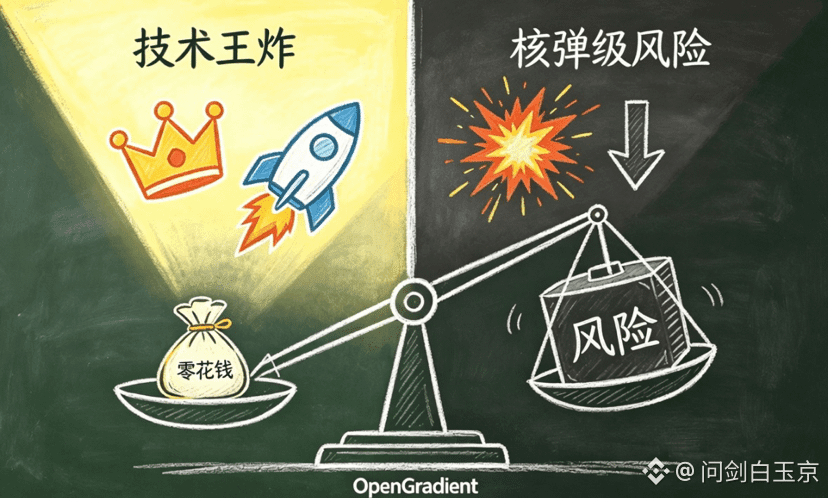
8
5
179
·
--
Just finished reading the latest technical documentation on @OpenGradient , and I have to say this time the x402 upgrade really hit my sweet spot. I used to think decentralized AI was a false proposition—after all, you always have to trade off either performance or privacy. But this time OPG literally “welds” the payment protocol directly into every TEE instance. That move is seriously hardcore.
Now inference requests can go straight into the trusted enclave, completely cutting off all those troublesome centralized payment middlemen. The best part is that the TLS connection is terminated inside the enclave itself—so the data can’t really “run unprotected” from the factory to the end of computation. Anyone trying to intercept in the middle will just get shut out. Add to that the on-chain TEE registry: nodes upload authenticated AWS documents to the blockchain for attestation. We don’t have to kneel and beg the exchange or cloud provider for goodwill anymore—we can verify identities ourselves. Trust anchors finally get taken back from the big players.
To be honest, as someone who boarded long ago, seeing this architecture come to life really makes me feel secure. Prepaid token deduction is extremely friendly for high-frequency calls—you don’t have to suffer through the tortoise speed of on-chain settlement. This is exactly the kind of Web2-level user experience. #OPG $OPG
But today is mostly to give everyone a candid update. I used to be a die-hard believer—I thought the technical logic was unbeatable, and I was holding tight and refusing to let go. But now I’ve figured it out: even if the project is great, small investors still have to stay alive. Lately OPG’s price action has been going well, and I’ve decided to follow discipline—once it reaches my psychological price level, I’ll scale out in batches. I’ll never get greedy and keep holding just to chase more. After all, in this space, “selling at the top and always profiting” is the real rule. From now on, I won’t “fall in love” with whitepapers anymore. Once I hit my targets, I’ll act decisively—locking in gains is better than anything. The rest is up to time; let’s see what height @OpenGradient can bring verifiable AI to. #opg $OPG
Just finished reading the latest technical documentation on @OpenGradient , and I have to say this time the x402 upgrade really hit my sweet spot. I used to think decentralized AI was a false proposition—after all, you always have to trade off either performance or privacy. But this time OPG literally “welds” the payment protocol directly into every TEE instance. That move is seriously hardcore.
Now inference requests can go straight into the trusted enclave, completely cutting off all those troublesome centralized payment middlemen. The best part is that the TLS connection is terminated inside the enclave itself—so the data can’t really “run unprotected” from the factory to the end of computation. Anyone trying to intercept in the middle will just get shut out. Add to that the on-chain TEE registry: nodes upload authenticated AWS documents to the blockchain for attestation. We don’t have to kneel and beg the exchange or cloud provider for goodwill anymore—we can verify identities ourselves. Trust anchors finally get taken back from the big players.
To be honest, as someone who boarded long ago, seeing this architecture come to life really makes me feel secure. Prepaid token deduction is extremely friendly for high-frequency calls—you don’t have to suffer through the tortoise speed of on-chain settlement. This is exactly the kind of Web2-level user experience. #OPG $OPG
But today is mostly to give everyone a candid update. I used to be a die-hard believer—I thought the technical logic was unbeatable, and I was holding tight and refusing to let go. But now I’ve figured it out: even if the project is great, small investors still have to stay alive. Lately OPG’s price action has been going well, and I’ve decided to follow discipline—once it reaches my psychological price level, I’ll scale out in batches. I’ll never get greedy and keep holding just to chase more. After all, in this space, “selling at the top and always profiting” is the real rule. From now on, I won’t “fall in love” with whitepapers anymore. Once I hit my targets, I’ll act decisively—locking in gains is better than anything. The rest is up to time; let’s see what height @OpenGradient can bring verifiable AI to. #opg $OPG
Now inference requests can go straight into the trusted enclave, completely cutting off all those troublesome centralized payment middlemen. The best part is that the TLS connection is terminated inside the enclave itself—so the data can’t really “run unprotected” from the factory to the end of computation. Anyone trying to intercept in the middle will just get shut out. Add to that the on-chain TEE registry: nodes upload authenticated AWS documents to the blockchain for attestation. We don’t have to kneel and beg the exchange or cloud provider for goodwill anymore—we can verify identities ourselves. Trust anchors finally get taken back from the big players.
To be honest, as someone who boarded long ago, seeing this architecture come to life really makes me feel secure. Prepaid token deduction is extremely friendly for high-frequency calls—you don’t have to suffer through the tortoise speed of on-chain settlement. This is exactly the kind of Web2-level user experience. #OPG $OPG
But today is mostly to give everyone a candid update. I used to be a die-hard believer—I thought the technical logic was unbeatable, and I was holding tight and refusing to let go. But now I’ve figured it out: even if the project is great, small investors still have to stay alive. Lately OPG’s price action has been going well, and I’ve decided to follow discipline—once it reaches my psychological price level, I’ll scale out in batches. I’ll never get greedy and keep holding just to chase more. After all, in this space, “selling at the top and always profiting” is the real rule. From now on, I won’t “fall in love” with whitepapers anymore. Once I hit my targets, I’ll act decisively—locking in gains is better than anything. The rest is up to time; let’s see what height @OpenGradient can bring verifiable AI to. #opg $OPG
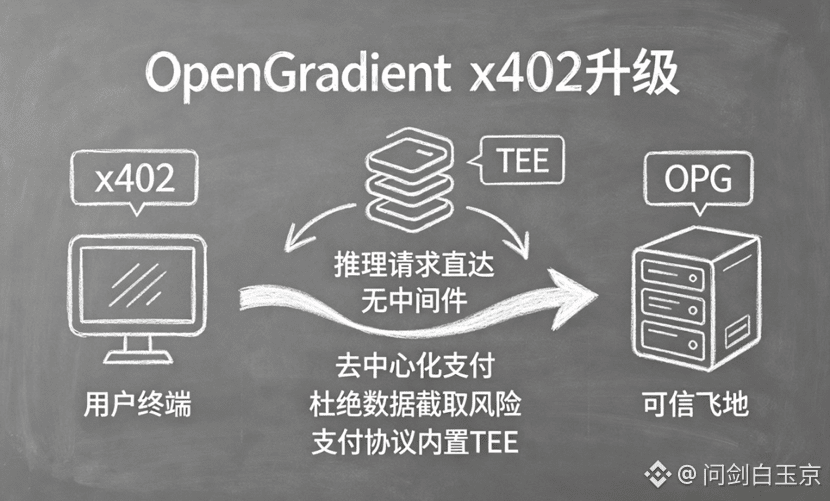
11
3
144
·
--
Having mixed in the crypto community for many years, I’ve always trusted real-world testing data rather than blindly following “track” narratives. After a deep, firsthand experience with the @OpenGradient ecosystem recently, I’ve gained a very objective understanding of the innovative value of $OPG.
To be frank, OPG’s technological breakthrough is indeed tangible. It completely breaks the rigid limitations of traditional smart contracts: by connecting the large model with the on-chain ecosystem through nodes, it can independently fetch real-time off-chain data and perform intelligent computations. In the context of the entire DeFi sector, this is a qualitative upgrade—building a brand-new dynamic risk-control system. In theory, it can precisely intercept common on-chain attacks such as flash loans, perfectly addressing the weakness of passive defense in traditional contracts. This is also the core reason I recognize its long-term narrative.
But after putting it into practice, I must be blunt about its most deadly security flaw at present—an invisible risk that most retail users overlook. The lifeblood of the entire mechanism is entirely tied to the oracle and the AI model. Hackers don’t need to spend any effort to break the underlying code. They only need to batch-fabricate extreme transaction data and feed it to the node, easily misleading the AI into making incorrect judgments and triggering false liquidation instructions.
What’s terrifying is that with just a handful of dirty data points, it’s enough to drain the protocol’s million-level liquidity. And within the current track, there still isn’t a mature countermeasure or defensive solution. These AI poisoning attacks are essentially unprotected for now.
As a veteran who has been doing on-chain risk control for years, my position strategy has always been conservative and clear: you can benefit from the technological upside, but capital safety comes first. Until this AI risk-control system has been tested and proven in real market conditions, and until it fully addresses oracle security vulnerabilities, I absolutely will not allocate a major position. For now, I only use small idle funds to capture early-stage sentiment premium—and I will not entrust core assets to an AI black-box that is still immature.
I’d like to ask everyone in the community: do you think there’s a possibility for OPG’s security shortcomings to be resolved in the short term?
#opg $OPG $BTC
Having mixed in the crypto community for many years, I’ve always trusted real-world testing data rather than blindly following “track” narratives. After a deep, firsthand experience with the @OpenGradient ecosystem recently, I’ve gained a very objective understanding of the innovative value of $OPG .
To be frank, OPG’s technological breakthrough is indeed tangible. It completely breaks the rigid limitations of traditional smart contracts: by connecting the large model with the on-chain ecosystem through nodes, it can independently fetch real-time off-chain data and perform intelligent computations. In the context of the entire DeFi sector, this is a qualitative upgrade—building a brand-new dynamic risk-control system. In theory, it can precisely intercept common on-chain attacks such as flash loans, perfectly addressing the weakness of passive defense in traditional contracts. This is also the core reason I recognize its long-term narrative.
But after putting it into practice, I must be blunt about its most deadly security flaw at present—an invisible risk that most retail users overlook. The lifeblood of the entire mechanism is entirely tied to the oracle and the AI model. Hackers don’t need to spend any effort to break the underlying code. They only need to batch-fabricate extreme transaction data and feed it to the node, easily misleading the AI into making incorrect judgments and triggering false liquidation instructions.
What’s terrifying is that with just a handful of dirty data points, it’s enough to drain the protocol’s million-level liquidity. And within the current track, there still isn’t a mature countermeasure or defensive solution. These AI poisoning attacks are essentially unprotected for now.
As a veteran who has been doing on-chain risk control for years, my position strategy has always been conservative and clear: you can benefit from the technological upside, but capital safety comes first. Until this AI risk-control system has been tested and proven in real market conditions, and until it fully addresses oracle security vulnerabilities, I absolutely will not allocate a major position. For now, I only use small idle funds to capture early-stage sentiment premium—and I will not entrust core assets to an AI black-box that is still immature.
I’d like to ask everyone in the community: do you think there’s a possibility for OPG’s security shortcomings to be resolved in the short term?
#opg $OPG $BTC
To be frank, OPG’s technological breakthrough is indeed tangible. It completely breaks the rigid limitations of traditional smart contracts: by connecting the large model with the on-chain ecosystem through nodes, it can independently fetch real-time off-chain data and perform intelligent computations. In the context of the entire DeFi sector, this is a qualitative upgrade—building a brand-new dynamic risk-control system. In theory, it can precisely intercept common on-chain attacks such as flash loans, perfectly addressing the weakness of passive defense in traditional contracts. This is also the core reason I recognize its long-term narrative.
But after putting it into practice, I must be blunt about its most deadly security flaw at present—an invisible risk that most retail users overlook. The lifeblood of the entire mechanism is entirely tied to the oracle and the AI model. Hackers don’t need to spend any effort to break the underlying code. They only need to batch-fabricate extreme transaction data and feed it to the node, easily misleading the AI into making incorrect judgments and triggering false liquidation instructions.
What’s terrifying is that with just a handful of dirty data points, it’s enough to drain the protocol’s million-level liquidity. And within the current track, there still isn’t a mature countermeasure or defensive solution. These AI poisoning attacks are essentially unprotected for now.
As a veteran who has been doing on-chain risk control for years, my position strategy has always been conservative and clear: you can benefit from the technological upside, but capital safety comes first. Until this AI risk-control system has been tested and proven in real market conditions, and until it fully addresses oracle security vulnerabilities, I absolutely will not allocate a major position. For now, I only use small idle funds to capture early-stage sentiment premium—and I will not entrust core assets to an AI black-box that is still immature.
I’d like to ask everyone in the community: do you think there’s a possibility for OPG’s security shortcomings to be resolved in the short term?
#opg $OPG $BTC
1
4
178
Log in to explore more content
Join global crypto users on Binance Square
⚡️ Get latest and useful information about crypto.
💬 Trusted by the world’s largest crypto exchange.
👍 Discover real insights from verified creators.
Email / Phone number
Trending Topics
BOJRaisesRatesTo31YearHigh
32,959 views
780 Discussing
Bitcoin Reclaims the Spotlight as Macro Pressure Fails to Break Crypto Demand
Fatima_Tariq
·10 Likes
·5.5k views
BuffettStepsDownAsBerkshireChairman
11,317 views
329 Discussing
XRPExchangeReservesHitSevenYearLow
15,495 views
342 Discussing