

CryptosNewss
1.3k Posts

CryptosNewss
Report
Block User
CryptosNewss.com : Cryptocurrency Latest News: Get all latest & breaking news on Cryptocurrency, Bitcoin, Ethereum, Blockchain, NFT, Ripple, Defi news.
3 Following
762 Followers
867 Liked
Posts
·
--

Article
Bitcoin Retail Deposits Hit 6-Month High as Whale Transfers to Binance DeclineRetail deposits surge: CryptoQuant data shows retail Bitcoin deposits to Binance rose from $5.5 billion in April to $10.75 billion, a six-month high.Whale deposits fall: Transfers from large Bitcoin holders to Binance declined 36% from late August, dropping from $5.9 billion to $3.8 billion.Selling pressure remains uncertain: Retail deposits now stand at 2.8 times whale deposits, but exchange transfers alone do not confirm that holders have sold their BTC.
Bitcoin retail deposits to Binance have climbed to a six-month high of $10.75 billion over a 30-day period, while whale deposits have fallen 36% since late August to $3.8 billion. CryptoQuant data shows retail flows exceeding whale flows, potentially indicating that smaller holders are moving BTC onto exchanges during the rebound. However, deposits do not necessarily mean selling, and the figures cover Binance rather than the entire cryptocurrency market.
Bitcoin Retail Deposits Rise as Whale Activity Moves in the Opposite Direction
Bitcoin is showing a notable divide between retail and large-holder exchange activity. Retail deposits to Binance have nearly doubled since April, while Bitcoin whale deposits have declined over almost two months.
Data from on-chain analytics firm CryptoQuant shows the 30-day retail deposit total climbing from $5.5 billion in April to $10.75 billion, reaching its highest level in six months.
🗞️ Retail Inflows hit a 6-Month high as bitcoin:native holds $80KBTC flow analysis shows that whales and retail investors are behaving in radically opposite ways right now.This is not new, retail investors are known for being more emotional, more unstable and more reactive to market moves than whales.But the gap we are seeing today is particularly wide.On the retail side, inflows are surging on Binance.With Bitcoin holding above $80 000 for several weeks, deposits from small holders have reached their highest level in 6 months.On a 30-day sum basis, they have gone from $5.5B to $10.75B, nearly doubling in a very short time.On the whale side, it's the opposite. Their BTC inflows to Binance have been declining steadily for almost 2 months, falling from $5.9B at the end of August to $3.8B today. No sign of rush.After a decline that lasted a full year, retail investors seem to be treating this first rebound as an exit window, a chance to sell at more comfortable levels and relieve built-up pressure.Whales, on the other hand, are staying patient and are in no hurry to send their BTC to exchanges, which suggests they are not looking to distribute at these levels.This divergence is worth watching, particularly to see whether whales will maintain this restraint if the price keeps climbing.— Darkfost (@Darkfost_Coc) October 25, 2026
The retail figure is now 2.8 times the whale deposit total, leaving a reported gap of $6.95 billion between the two groups.
The divergence offers a view of how different groups of Bitcoin holders are positioning their coins during the market rebound. However, it does not establish whether retail investors are actively selling or whether large holders are deliberately waiting for higher prices.
Retail Bitcoin Deposits Reach $10.75 Billion
The increase in retail deposits suggests that smaller Bitcoin holders are moving more BTC onto Binance, one of the world's largest cryptocurrency exchanges.
CryptoQuant's 30-day measure aggregates deposits over the preceding month, helping smooth out unusually large transfers on individual days. That makes the trend more informative than a single-day spike, although it still reflects exchange transfers rather than completed trades.
Moving Bitcoin onto an exchange can make it easier to sell, trade or use as collateral. For that reason, analysts often monitor rising deposits as a potential indicator of increased available supply.
One possible interpretation is that retail holders are using the rebound as an opportunity to realize gains or reduce exposure after market volatility. But this remains an inference, not confirmed selling activity.
Some deposits may instead reflect wallet reorganizations, transfers between custodians or preparation for other trading strategies. Transaction-flow data alone cannot distinguish among those motivations.
Bitcoin Whale Deposits to Binance Fall 36%
Large-holder activity has moved in the opposite direction.
According to CryptoQuant, whale deposits to Binance have fallen from $5.9 billion in late August to $3.8 billion, a decline of 36%.
The remaining flow is still substantial. The data points to a slowdown in whale deposits, not a complete withdrawal of large holders from exchange activity.
Lower whale deposits may indicate that large Bitcoin holders are transferring fewer coins to Binance during the current period. That could limit one potential source of exchange-side selling pressure if the pattern persists.
However, it would be premature to conclude that whales are uniformly accumulating BTC or refusing to sell. The figures measure deposits to Binance only, and activity on other exchanges or through over-the-counter markets may differ.
The distinction matters because large holders can change their behavior quickly in response to market conditions, liquidity needs or portfolio adjustments.
October Inflation Report Failed to Trigger a Whale Deposit Rebound
The current pattern follows an earlier period in which whales increased their balances ahead of the October US inflation report, according to the source analysis.
The report was followed by a 3.3% Bitcoin decline over 24 hours. Despite that market reaction, whale deposits to Binance have not increased since the report, based on the cited data.
That lack of a rebound in whale deposits is notable because market volatility can prompt large holders to move assets onto exchanges in preparation for trading or risk management.
Still, the absence of higher deposits does not reveal the reasons behind whale behavior. Large holders may be using other venues, retaining coins in custody or responding to factors not captured by Binance transfer data.
The available figures establish a difference in exchange flows, but they do not provide a complete account of institutional or large-holder sentiment.
What the Retail-Whale Divide Means for Bitcoin Market Structure
The gap between retail and whale deposits creates two possible interpretations for the market.
If retail deposits continue to rise while whale deposits remain subdued, retail participants could account for a larger share of the Bitcoin supply arriving on Binance. That would make smaller-holder activity more important in assessing potential exchange-side selling pressure.
If whale deposits increase again, both groups could contribute more coins to the exchange's available supply. Whether those deposits translate into selling would depend on actual trade execution and prevailing demand.
This is why exchange inflows should be considered alongside spot trading volume, price movements, exchange reserves and other on-chain indicators. No single metric can confirm the direction of the broader market.
Investor psychology also plays a role. Retail participants may be more inclined to secure gains during a rebound after a period of uncertainty, while large holders may use different time horizons or trading venues. Yet the observed flows do not prove that either group shares a single strategy.
Why Binance Data Does Not Tell the Whole Bitcoin Story
The data provides a useful look at activity on Binance, but it should not be treated as a complete measure of Bitcoin supply across the market.
Coins sent to Binance may be sold, traded for other assets or simply held in exchange custody. Conversely, lower deposits do not rule out selling through other exchanges or trading channels.
The 30-day aggregation also means the retail figure reflects activity across an extended period rather than a single event. It can help reveal persistent changes in deposit behavior, but the underlying reasons still require additional evidence.
For a more complete assessment, analysts would need to compare the figures with broader exchange flows, spot-market activity and other indicators of holder behavior.
Bitcoin's Next Test Is Whether the Flow Divergence Persists
The central question is whether retail deposits remain elevated while whale transfers stay below their late-August levels.
A sustained divergence would reinforce the view that retail holders are contributing a larger share of Binance's incoming Bitcoin. A renewed increase in whale deposits would change that balance, although it would not automatically confirm that large holders are selling.
For now, CryptoQuant's data shows a clear contrast: retail Bitcoin deposits have reached a six-month high, while whale deposits have declined by more than one-third since late August.
Originally first published at CryptosNewss.com
#BinancePick #bitcoin $BTC
Bitcoin Retail Deposits Hit 6-Month High as Whale Transfers to Binance Decline
Retail deposits surge: CryptoQuant data shows retail Bitcoin deposits to Binance rose from $5.5 billion in April to $10.75 billion, a six-month high.Whale deposits fall: Transfers from large Bitcoin holders to Binance declined 36% from late August, dropping from $5.9 billion to $3.8 billion.Selling pressure remains uncertain: Retail deposits now stand at 2.8 times whale deposits, but exchange transfers alone do not confirm that holders have sold their BTC.
Bitcoin retail deposits to Binance have climbed to a six-month high of $10.75 billion over a 30-day period, while whale deposits have fallen 36% since late August to $3.8 billion. CryptoQuant data shows retail flows exceeding whale flows, potentially indicating that smaller holders are moving BTC onto exchanges during the rebound. However, deposits do not necessarily mean selling, and the figures cover Binance rather than the entire cryptocurrency market.
Bitcoin Retail Deposits Rise as Whale Activity Moves in the Opposite Direction
Bitcoin is showing a notable divide between retail and large-holder exchange activity. Retail deposits to Binance have nearly doubled since April, while Bitcoin whale deposits have declined over almost two months.
Data from on-chain analytics firm CryptoQuant shows the 30-day retail deposit total climbing from $5.5 billion in April to $10.75 billion, reaching its highest level in six months.
🗞️ Retail Inflows hit a 6-Month high as bitcoin:native holds $80KBTC flow analysis shows that whales and retail investors are behaving in radically opposite ways right now.This is not new, retail investors are known for being more emotional, more unstable and more reactive to market moves than whales.But the gap we are seeing today is particularly wide.On the retail side, inflows are surging on Binance.With Bitcoin holding above $80 000 for several weeks, deposits from small holders have reached their highest level in 6 months.On a 30-day sum basis, they have gone from $5.5B to $10.75B, nearly doubling in a very short time.On the whale side, it's the opposite. Their BTC inflows to Binance have been declining steadily for almost 2 months, falling from $5.9B at the end of August to $3.8B today. No sign of rush.After a decline that lasted a full year, retail investors seem to be treating this first rebound as an exit window, a chance to sell at more comfortable levels and relieve built-up pressure.Whales, on the other hand, are staying patient and are in no hurry to send their BTC to exchanges, which suggests they are not looking to distribute at these levels.This divergence is worth watching, particularly to see whether whales will maintain this restraint if the price keeps climbing.— Darkfost (@Darkfost_Coc) October 25, 2026
The retail figure is now 2.8 times the whale deposit total, leaving a reported gap of $6.95 billion between the two groups.
The divergence offers a view of how different groups of Bitcoin holders are positioning their coins during the market rebound. However, it does not establish whether retail investors are actively selling or whether large holders are deliberately waiting for higher prices.
Retail Bitcoin Deposits Reach $10.75 Billion
The increase in retail deposits suggests that smaller Bitcoin holders are moving more BTC onto Binance, one of the world's largest cryptocurrency exchanges.
CryptoQuant's 30-day measure aggregates deposits over the preceding month, helping smooth out unusually large transfers on individual days. That makes the trend more informative than a single-day spike, although it still reflects exchange transfers rather than completed trades.
Moving Bitcoin onto an exchange can make it easier to sell, trade or use as collateral. For that reason, analysts often monitor rising deposits as a potential indicator of increased available supply.
One possible interpretation is that retail holders are using the rebound as an opportunity to realize gains or reduce exposure after market volatility. But this remains an inference, not confirmed selling activity.
Some deposits may instead reflect wallet reorganizations, transfers between custodians or preparation for other trading strategies. Transaction-flow data alone cannot distinguish among those motivations.
Bitcoin Whale Deposits to Binance Fall 36%
Large-holder activity has moved in the opposite direction.
According to CryptoQuant, whale deposits to Binance have fallen from $5.9 billion in late August to $3.8 billion, a decline of 36%.
The remaining flow is still substantial. The data points to a slowdown in whale deposits, not a complete withdrawal of large holders from exchange activity.
Lower whale deposits may indicate that large Bitcoin holders are transferring fewer coins to Binance during the current period. That could limit one potential source of exchange-side selling pressure if the pattern persists.
However, it would be premature to conclude that whales are uniformly accumulating BTC or refusing to sell. The figures measure deposits to Binance only, and activity on other exchanges or through over-the-counter markets may differ.
The distinction matters because large holders can change their behavior quickly in response to market conditions, liquidity needs or portfolio adjustments.
October Inflation Report Failed to Trigger a Whale Deposit Rebound
The current pattern follows an earlier period in which whales increased their balances ahead of the October US inflation report, according to the source analysis.
The report was followed by a 3.3% Bitcoin decline over 24 hours. Despite that market reaction, whale deposits to Binance have not increased since the report, based on the cited data.
That lack of a rebound in whale deposits is notable because market volatility can prompt large holders to move assets onto exchanges in preparation for trading or risk management.
Still, the absence of higher deposits does not reveal the reasons behind whale behavior. Large holders may be using other venues, retaining coins in custody or responding to factors not captured by Binance transfer data.
The available figures establish a difference in exchange flows, but they do not provide a complete account of institutional or large-holder sentiment.
What the Retail-Whale Divide Means for Bitcoin Market Structure
The gap between retail and whale deposits creates two possible interpretations for the market.
If retail deposits continue to rise while whale deposits remain subdued, retail participants could account for a larger share of the Bitcoin supply arriving on Binance. That would make smaller-holder activity more important in assessing potential exchange-side selling pressure.
If whale deposits increase again, both groups could contribute more coins to the exchange's available supply. Whether those deposits translate into selling would depend on actual trade execution and prevailing demand.
This is why exchange inflows should be considered alongside spot trading volume, price movements, exchange reserves and other on-chain indicators. No single metric can confirm the direction of the broader market.
Investor psychology also plays a role. Retail participants may be more inclined to secure gains during a rebound after a period of uncertainty, while large holders may use different time horizons or trading venues. Yet the observed flows do not prove that either group shares a single strategy.
Why Binance Data Does Not Tell the Whole Bitcoin Story
The data provides a useful look at activity on Binance, but it should not be treated as a complete measure of Bitcoin supply across the market.
Coins sent to Binance may be sold, traded for other assets or simply held in exchange custody. Conversely, lower deposits do not rule out selling through other exchanges or trading channels.
The 30-day aggregation also means the retail figure reflects activity across an extended period rather than a single event. It can help reveal persistent changes in deposit behavior, but the underlying reasons still require additional evidence.
For a more complete assessment, analysts would need to compare the figures with broader exchange flows, spot-market activity and other indicators of holder behavior.
Bitcoin's Next Test Is Whether the Flow Divergence Persists
The central question is whether retail deposits remain elevated while whale transfers stay below their late-August levels.
A sustained divergence would reinforce the view that retail holders are contributing a larger share of Binance's incoming Bitcoin. A renewed increase in whale deposits would change that balance, although it would not automatically confirm that large holders are selling.
For now, CryptoQuant's data shows a clear contrast: retail Bitcoin deposits have reached a six-month high, while whale deposits have declined by more than one-third since late August.
Originally first published at CryptosNewss.com
#BinancePick #bitcoin $BTC
Bitcoin retail deposits to Binance have climbed to a six-month high of $10.75 billion over a 30-day period, while whale deposits have fallen 36% since late August to $3.8 billion. CryptoQuant data shows retail flows exceeding whale flows, potentially indicating that smaller holders are moving BTC onto exchanges during the rebound. However, deposits do not necessarily mean selling, and the figures cover Binance rather than the entire cryptocurrency market.
Bitcoin Retail Deposits Rise as Whale Activity Moves in the Opposite Direction
Bitcoin is showing a notable divide between retail and large-holder exchange activity. Retail deposits to Binance have nearly doubled since April, while Bitcoin whale deposits have declined over almost two months.
Data from on-chain analytics firm CryptoQuant shows the 30-day retail deposit total climbing from $5.5 billion in April to $10.75 billion, reaching its highest level in six months.
🗞️ Retail Inflows hit a 6-Month high as bitcoin:native holds $80KBTC flow analysis shows that whales and retail investors are behaving in radically opposite ways right now.This is not new, retail investors are known for being more emotional, more unstable and more reactive to market moves than whales.But the gap we are seeing today is particularly wide.On the retail side, inflows are surging on Binance.With Bitcoin holding above $80 000 for several weeks, deposits from small holders have reached their highest level in 6 months.On a 30-day sum basis, they have gone from $5.5B to $10.75B, nearly doubling in a very short time.On the whale side, it's the opposite. Their BTC inflows to Binance have been declining steadily for almost 2 months, falling from $5.9B at the end of August to $3.8B today. No sign of rush.After a decline that lasted a full year, retail investors seem to be treating this first rebound as an exit window, a chance to sell at more comfortable levels and relieve built-up pressure.Whales, on the other hand, are staying patient and are in no hurry to send their BTC to exchanges, which suggests they are not looking to distribute at these levels.This divergence is worth watching, particularly to see whether whales will maintain this restraint if the price keeps climbing.— Darkfost (@Darkfost_Coc) October 25, 2026
The retail figure is now 2.8 times the whale deposit total, leaving a reported gap of $6.95 billion between the two groups.
The divergence offers a view of how different groups of Bitcoin holders are positioning their coins during the market rebound. However, it does not establish whether retail investors are actively selling or whether large holders are deliberately waiting for higher prices.
Retail Bitcoin Deposits Reach $10.75 Billion
The increase in retail deposits suggests that smaller Bitcoin holders are moving more BTC onto Binance, one of the world's largest cryptocurrency exchanges.
CryptoQuant's 30-day measure aggregates deposits over the preceding month, helping smooth out unusually large transfers on individual days. That makes the trend more informative than a single-day spike, although it still reflects exchange transfers rather than completed trades.
Moving Bitcoin onto an exchange can make it easier to sell, trade or use as collateral. For that reason, analysts often monitor rising deposits as a potential indicator of increased available supply.
One possible interpretation is that retail holders are using the rebound as an opportunity to realize gains or reduce exposure after market volatility. But this remains an inference, not confirmed selling activity.
Some deposits may instead reflect wallet reorganizations, transfers between custodians or preparation for other trading strategies. Transaction-flow data alone cannot distinguish among those motivations.
Bitcoin Whale Deposits to Binance Fall 36%
Large-holder activity has moved in the opposite direction.
According to CryptoQuant, whale deposits to Binance have fallen from $5.9 billion in late August to $3.8 billion, a decline of 36%.
The remaining flow is still substantial. The data points to a slowdown in whale deposits, not a complete withdrawal of large holders from exchange activity.
Lower whale deposits may indicate that large Bitcoin holders are transferring fewer coins to Binance during the current period. That could limit one potential source of exchange-side selling pressure if the pattern persists.
However, it would be premature to conclude that whales are uniformly accumulating BTC or refusing to sell. The figures measure deposits to Binance only, and activity on other exchanges or through over-the-counter markets may differ.
The distinction matters because large holders can change their behavior quickly in response to market conditions, liquidity needs or portfolio adjustments.
October Inflation Report Failed to Trigger a Whale Deposit Rebound
The current pattern follows an earlier period in which whales increased their balances ahead of the October US inflation report, according to the source analysis.
The report was followed by a 3.3% Bitcoin decline over 24 hours. Despite that market reaction, whale deposits to Binance have not increased since the report, based on the cited data.
That lack of a rebound in whale deposits is notable because market volatility can prompt large holders to move assets onto exchanges in preparation for trading or risk management.
Still, the absence of higher deposits does not reveal the reasons behind whale behavior. Large holders may be using other venues, retaining coins in custody or responding to factors not captured by Binance transfer data.
The available figures establish a difference in exchange flows, but they do not provide a complete account of institutional or large-holder sentiment.
What the Retail-Whale Divide Means for Bitcoin Market Structure
The gap between retail and whale deposits creates two possible interpretations for the market.
If retail deposits continue to rise while whale deposits remain subdued, retail participants could account for a larger share of the Bitcoin supply arriving on Binance. That would make smaller-holder activity more important in assessing potential exchange-side selling pressure.
If whale deposits increase again, both groups could contribute more coins to the exchange's available supply. Whether those deposits translate into selling would depend on actual trade execution and prevailing demand.
This is why exchange inflows should be considered alongside spot trading volume, price movements, exchange reserves and other on-chain indicators. No single metric can confirm the direction of the broader market.
Investor psychology also plays a role. Retail participants may be more inclined to secure gains during a rebound after a period of uncertainty, while large holders may use different time horizons or trading venues. Yet the observed flows do not prove that either group shares a single strategy.
Why Binance Data Does Not Tell the Whole Bitcoin Story
The data provides a useful look at activity on Binance, but it should not be treated as a complete measure of Bitcoin supply across the market.
Coins sent to Binance may be sold, traded for other assets or simply held in exchange custody. Conversely, lower deposits do not rule out selling through other exchanges or trading channels.
The 30-day aggregation also means the retail figure reflects activity across an extended period rather than a single event. It can help reveal persistent changes in deposit behavior, but the underlying reasons still require additional evidence.
For a more complete assessment, analysts would need to compare the figures with broader exchange flows, spot-market activity and other indicators of holder behavior.
Bitcoin's Next Test Is Whether the Flow Divergence Persists
The central question is whether retail deposits remain elevated while whale transfers stay below their late-August levels.
A sustained divergence would reinforce the view that retail holders are contributing a larger share of Binance's incoming Bitcoin. A renewed increase in whale deposits would change that balance, although it would not automatically confirm that large holders are selling.
For now, CryptoQuant's data shows a clear contrast: retail Bitcoin deposits have reached a six-month high, while whale deposits have declined by more than one-third since late August.
Originally first published at CryptosNewss.com
#BinancePick #bitcoin $BTC
1
1k
·
--
Article
New Market Trading Brings Institutional-Grade Account Security to Every Client, StandardFlorida, USA
New Market Trading, an onchain wealth management firm that gives clients direct ownership of their investment accounts, today announced a 2-of-3 multisig upgrade for client accounts, a security model that requires two of three keys to approve before money can move.
Multisig has long been the standard among exchanges, hedge funds, and institutional custodians entrusted with large pools of client assets. NMT is now bringing that same standard of protection to every one of their client accounts.
The update applies to existing client accounts automatically. Nothing needs to be moved or rebuilt, and clients don't need any technical background to benefit from it.
How It Works
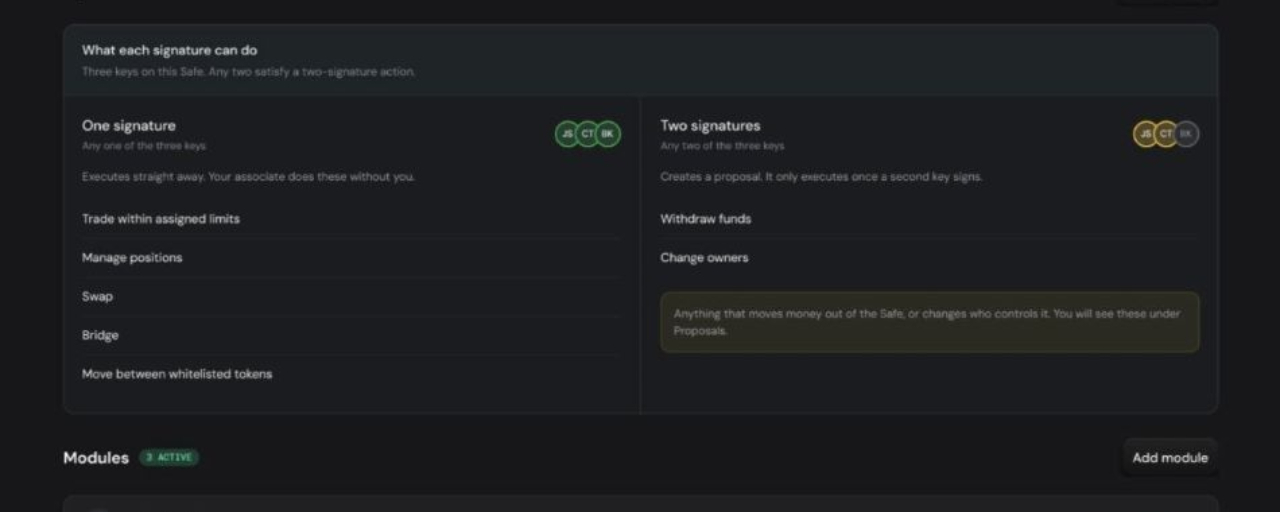
Every client account now has three keys: one the client holds directly, one held by the client's NMT associate, and one backup key controlled entirely by the client, which NMT recommends keeping on a separate physical device. Moving money out of the account, or changing who holds the keys, requires approval from two of the three. Since the client holds two of the three keys, they can always act on their own account without needing NMT's approval.
"Multisig protection has always been available to institutions with the resources to build it themselves. We don't think our clients should get a lesser version of that security just because they're managing their own account instead of a fund. This is now built into every account we offer, not something a client has to ask for," said Frank Hepworth, Founder and CEO of New Market Trading.
Previously, a client's account was protected by a single key. If that one key was ever lost or stolen, there was no built-in backup. Now, if a key is lost or compromised, the other two can replace it without freezing or moving any of the client's assets.
Built for Every Client
Setting up this kind of protection typically requires the in-house engineering team of a large exchange or custodian. NMT built it directly into its account technology so any client can benefit from it, without needing any technical setup of their own.
The extra approval step only applies to money leaving the account or changes to who holds the keys. Everyday portfolio activity, like adjusting investments within an approved strategy, still happens automatically and doesn't require a second approval each time. NMT designed it this way on purpose: stronger protection at the one moment that matters most, money leaving the account, without slowing down everyday management.
"We built this directly into the account itself, not as a setting in our own backend. The two-key requirement is enforced automatically, every time, which means it holds even if something on our end ever went wrong," said Ajdin Kahrović, Chief Technology Officer of New Market Trading.
Three Ways to Use It
The three keys can be combined in different ways depending on what a client needs:
The client's key and their backup key together let the client act completely on their own, including replacing their NMT associate, without needing anyone else's approval.The client's key and their Associate's key can individually conduct everyday management activity.The backup key and the associate's key together keep the account moving if the client's primary key is ever temporarily unavailable.
No single key, including NMT's, can withdraw or change account ownership on its own.
It guards against a single lost or stolen key, but not against every scenario, such as two of the three keys being compromised at once, a client approving something they shouldn't have, or a flaw in the underlying smart contract or blockchain network the account runs on. NMT recommends clients store their backup key's recovery information somewhere separate from their main key's.
The upgrade is available now to existing NMT clients and applies automatically, with no action required to move or migrate assets.
For more information about New Market Trading's account model, visit newmarkettrading.com.
About New Market Trading
New Market Trading is the first wealth management firm to move the investment account itself onto the blockchain. Clients own their account directly using ERC-4337 smart account technology, and delegate trading management to the NMT team, who can execute strategies but never withdraw or redirect funds.
That structure gives clients immediate access to more than 10,000 onchain assets, yield products, and active strategies that no legacy provider can offer.
#earningsseason
New Market Trading Brings Institutional-Grade Account Security to Every Client, Standard
Florida, USA
New Market Trading, an onchain wealth management firm that gives clients direct ownership of their investment accounts, today announced a 2-of-3 multisig upgrade for client accounts, a security model that requires two of three keys to approve before money can move.
Multisig has long been the standard among exchanges, hedge funds, and institutional custodians entrusted with large pools of client assets. NMT is now bringing that same standard of protection to every one of their client accounts.
The update applies to existing client accounts automatically. Nothing needs to be moved or rebuilt, and clients don't need any technical background to benefit from it.
How It Works
Every client account now has three keys: one the client holds directly, one held by the client's NMT associate, and one backup key controlled entirely by the client, which NMT recommends keeping on a separate physical device. Moving money out of the account, or changing who holds the keys, requires approval from two of the three. Since the client holds two of the three keys, they can always act on their own account without needing NMT's approval.
"Multisig protection has always been available to institutions with the resources to build it themselves. We don't think our clients should get a lesser version of that security just because they're managing their own account instead of a fund. This is now built into every account we offer, not something a client has to ask for," said Frank Hepworth, Founder and CEO of New Market Trading.
Previously, a client's account was protected by a single key. If that one key was ever lost or stolen, there was no built-in backup. Now, if a key is lost or compromised, the other two can replace it without freezing or moving any of the client's assets.
Built for Every Client
Setting up this kind of protection typically requires the in-house engineering team of a large exchange or custodian. NMT built it directly into its account technology so any client can benefit from it, without needing any technical setup of their own.
The extra approval step only applies to money leaving the account or changes to who holds the keys. Everyday portfolio activity, like adjusting investments within an approved strategy, still happens automatically and doesn't require a second approval each time. NMT designed it this way on purpose: stronger protection at the one moment that matters most, money leaving the account, without slowing down everyday management.
"We built this directly into the account itself, not as a setting in our own backend. The two-key requirement is enforced automatically, every time, which means it holds even if something on our end ever went wrong," said Ajdin Kahrović, Chief Technology Officer of New Market Trading.
Three Ways to Use It
The three keys can be combined in different ways depending on what a client needs:
The client's key and their backup key together let the client act completely on their own, including replacing their NMT associate, without needing anyone else's approval.The client's key and their Associate's key can individually conduct everyday management activity.The backup key and the associate's key together keep the account moving if the client's primary key is ever temporarily unavailable.
No single key, including NMT's, can withdraw or change account ownership on its own.
It guards against a single lost or stolen key, but not against every scenario, such as two of the three keys being compromised at once, a client approving something they shouldn't have, or a flaw in the underlying smart contract or blockchain network the account runs on. NMT recommends clients store their backup key's recovery information somewhere separate from their main key's.
The upgrade is available now to existing NMT clients and applies automatically, with no action required to move or migrate assets.
For more information about New Market Trading's account model, visit newmarkettrading.com.
About New Market Trading
New Market Trading is the first wealth management firm to move the investment account itself onto the blockchain. Clients own their account directly using ERC-4337 smart account technology, and delegate trading management to the NMT team, who can execute strategies but never withdraw or redirect funds.
That structure gives clients immediate access to more than 10,000 onchain assets, yield products, and active strategies that no legacy provider can offer.
#earningsseason
New Market Trading, an onchain wealth management firm that gives clients direct ownership of their investment accounts, today announced a 2-of-3 multisig upgrade for client accounts, a security model that requires two of three keys to approve before money can move.
Multisig has long been the standard among exchanges, hedge funds, and institutional custodians entrusted with large pools of client assets. NMT is now bringing that same standard of protection to every one of their client accounts.
The update applies to existing client accounts automatically. Nothing needs to be moved or rebuilt, and clients don't need any technical background to benefit from it.
How It Works
Every client account now has three keys: one the client holds directly, one held by the client's NMT associate, and one backup key controlled entirely by the client, which NMT recommends keeping on a separate physical device. Moving money out of the account, or changing who holds the keys, requires approval from two of the three. Since the client holds two of the three keys, they can always act on their own account without needing NMT's approval.
"Multisig protection has always been available to institutions with the resources to build it themselves. We don't think our clients should get a lesser version of that security just because they're managing their own account instead of a fund. This is now built into every account we offer, not something a client has to ask for," said Frank Hepworth, Founder and CEO of New Market Trading.
Previously, a client's account was protected by a single key. If that one key was ever lost or stolen, there was no built-in backup. Now, if a key is lost or compromised, the other two can replace it without freezing or moving any of the client's assets.
Built for Every Client
Setting up this kind of protection typically requires the in-house engineering team of a large exchange or custodian. NMT built it directly into its account technology so any client can benefit from it, without needing any technical setup of their own.
The extra approval step only applies to money leaving the account or changes to who holds the keys. Everyday portfolio activity, like adjusting investments within an approved strategy, still happens automatically and doesn't require a second approval each time. NMT designed it this way on purpose: stronger protection at the one moment that matters most, money leaving the account, without slowing down everyday management.
"We built this directly into the account itself, not as a setting in our own backend. The two-key requirement is enforced automatically, every time, which means it holds even if something on our end ever went wrong," said Ajdin Kahrović, Chief Technology Officer of New Market Trading.
Three Ways to Use It
The three keys can be combined in different ways depending on what a client needs:
The client's key and their backup key together let the client act completely on their own, including replacing their NMT associate, without needing anyone else's approval.The client's key and their Associate's key can individually conduct everyday management activity.The backup key and the associate's key together keep the account moving if the client's primary key is ever temporarily unavailable.
No single key, including NMT's, can withdraw or change account ownership on its own.
It guards against a single lost or stolen key, but not against every scenario, such as two of the three keys being compromised at once, a client approving something they shouldn't have, or a flaw in the underlying smart contract or blockchain network the account runs on. NMT recommends clients store their backup key's recovery information somewhere separate from their main key's.
The upgrade is available now to existing NMT clients and applies automatically, with no action required to move or migrate assets.
For more information about New Market Trading's account model, visit newmarkettrading.com.
About New Market Trading
New Market Trading is the first wealth management firm to move the investment account itself onto the blockchain. Clients own their account directly using ERC-4337 smart account technology, and delegate trading management to the NMT team, who can execute strategies but never withdraw or redirect funds.
That structure gives clients immediate access to more than 10,000 onchain assets, yield products, and active strategies that no legacy provider can offer.
#earningsseason
87
·
--
#EarningsSeason: My Binance Pick Predictions 📊
Earnings season is here, so I made my calls on Binance Pick. Screenshot below 👇
$MSFT (Microsoft): Bullish. Cloud and AI demand have been the main growth drivers, so I expect Azure growth to meet or beat expectations.
$GOOGL (Alphabet): Bullish. Search ad revenue and Google Cloud are the numbers to watch, and I think Cloud margins could surprise to the upside.
$AMZN (Amazon): Bullish. AWS growth and retail margins will decide the reaction. A beat on AWS could lift the stock.
$V (Visa): Neutral to bullish. Consumer spending and cross-border volume look steady, so I expect a stable beat rather than a big move.
$LLY (Eli Lilly): Bullish. Demand for its weight-loss drugs is the key driver, but guidance matters more than the quarterly numbers.
I’m watching guidance and market reaction more than the headline numbers. Stocks can drop even on a beat if expectations are too high.
What are your calls? Beat or miss? 👇
#EarningsSeason #BinancePick
#EarningsSeason: My Binance Pick Predictions 📊
Earnings season is here, so I made my calls on Binance Pick. Screenshot below 👇
$MSFT (Microsoft): Bullish. Cloud and AI demand have been the main growth drivers, so I expect Azure growth to meet or beat expectations.
$GOOGL (Alphabet): Bullish. Search ad revenue and Google Cloud are the numbers to watch, and I think Cloud margins could surprise to the upside.
$AMZN (Amazon): Bullish. AWS growth and retail margins will decide the reaction. A beat on AWS could lift the stock.
$V (Visa): Neutral to bullish. Consumer spending and cross-border volume look steady, so I expect a stable beat rather than a big move.
$LLY (Eli Lilly): Bullish. Demand for its weight-loss drugs is the key driver, but guidance matters more than the quarterly numbers.
I’m watching guidance and market reaction more than the headline numbers. Stocks can drop even on a beat if expectations are too high.
What are your calls? Beat or miss? 👇
#EarningsSeason #BinancePick
Earnings season is here, so I made my calls on Binance Pick. Screenshot below 👇
$MSFT (Microsoft): Bullish. Cloud and AI demand have been the main growth drivers, so I expect Azure growth to meet or beat expectations.
$GOOGL (Alphabet): Bullish. Search ad revenue and Google Cloud are the numbers to watch, and I think Cloud margins could surprise to the upside.
$AMZN (Amazon): Bullish. AWS growth and retail margins will decide the reaction. A beat on AWS could lift the stock.
$V (Visa): Neutral to bullish. Consumer spending and cross-border volume look steady, so I expect a stable beat rather than a big move.
$LLY (Eli Lilly): Bullish. Demand for its weight-loss drugs is the key driver, but guidance matters more than the quarterly numbers.
I’m watching guidance and market reaction more than the headline numbers. Stocks can drop even on a beat if expectations are too high.
What are your calls? Beat or miss? 👇
#EarningsSeason #BinancePick
350
·
--

Article
Crypto Was Built Ahead of the AI Era, Says Bull Market Blueprint Founder Ahead of London SummitDubai, UAE
AI agents are starting to search, compare and buy on people’s behalf, and they will need a way to pay for what they buy.
Luke Davis, Founder and Chief Market Strategist of Bull Market Blueprint (BMB), believes crypto already has much of what they need. He will present this view at BMB’s members-only summit in London. Around 30 members are expected to attend, all self-managed investors with investable portfolios of at least $100,000.
Davis will open the day with a keynote on where crypto and artificial intelligence meet. He will cover agentic commerce, where AI agents make purchases for users, and how it fits with stablecoin networks and decentralized finance (DeFi).
“Crypto was building the financial infrastructure for an AI-driven economy long before that economy began to take shape,” said Davis. “Now, as AI agents begin transacting autonomously, existing blockchain networks and stablecoins could become the financial rails powering an entirely new era of digital commerce.”
The keynote builds on the picture Davis painted at BMB’s previous summit in Barcelona over the summer, where he set out what he thinks the world will look like in five to 10 years with AI. In London, he will focus on the ways the two technologies intersect.
Revisiting the Intelligent New World
Davis will also present an updated version of his Intelligent New World thesis, looking at what has changed over the past quarter, what has been validated and what still needs to be.
The day will include a session on portfolio construction and risk management. Members will continue with community activities around London on Sunday, November 22.
Journalists interested in attending the summit or arranging an interview with Davis can contact the media representative below.
About Bull Market Blueprint
Bull Market Blueprint is an investing education membership founded by Luke Davis in 2023. The company operates from Dubai with a team of nine and serves around 350 active members across the US, Europe, Australia and Canada. Membership requires a minimum investable portfolio of $100,000. Members receive live weekly market education, published research, risk management tools and direct access to Davis and the research team, including full visibility of the positions and reasoning behind his own portfolio. Bull Market Blueprint does not manage client money, take custody of assets, or provide financial advice. Learn more at https://www.bullmarketblueprint.com/
Media Contact Information
Nishy Siva
Genius PR
nishy@theprgenius.com
Crypto Was Built Ahead of the AI Era, Says Bull Market Blueprint Founder Ahead of London Summit
Dubai, UAE
AI agents are starting to search, compare and buy on people’s behalf, and they will need a way to pay for what they buy.
Luke Davis, Founder and Chief Market Strategist of Bull Market Blueprint (BMB), believes crypto already has much of what they need. He will present this view at BMB’s members-only summit in London. Around 30 members are expected to attend, all self-managed investors with investable portfolios of at least $100,000.
Davis will open the day with a keynote on where crypto and artificial intelligence meet. He will cover agentic commerce, where AI agents make purchases for users, and how it fits with stablecoin networks and decentralized finance (DeFi).
“Crypto was building the financial infrastructure for an AI-driven economy long before that economy began to take shape,” said Davis. “Now, as AI agents begin transacting autonomously, existing blockchain networks and stablecoins could become the financial rails powering an entirely new era of digital commerce.”
The keynote builds on the picture Davis painted at BMB’s previous summit in Barcelona over the summer, where he set out what he thinks the world will look like in five to 10 years with AI. In London, he will focus on the ways the two technologies intersect.
Revisiting the Intelligent New World
Davis will also present an updated version of his Intelligent New World thesis, looking at what has changed over the past quarter, what has been validated and what still needs to be.
The day will include a session on portfolio construction and risk management. Members will continue with community activities around London on Sunday, November 22.
Journalists interested in attending the summit or arranging an interview with Davis can contact the media representative below.
About Bull Market Blueprint
Bull Market Blueprint is an investing education membership founded by Luke Davis in 2023. The company operates from Dubai with a team of nine and serves around 350 active members across the US, Europe, Australia and Canada. Membership requires a minimum investable portfolio of $100,000. Members receive live weekly market education, published research, risk management tools and direct access to Davis and the research team, including full visibility of the positions and reasoning behind his own portfolio. Bull Market Blueprint does not manage client money, take custody of assets, or provide financial advice. Learn more at https://www.bullmarketblueprint.com/
Media Contact Information
Nishy Siva
Genius PR
nishy@theprgenius.com
AI agents are starting to search, compare and buy on people’s behalf, and they will need a way to pay for what they buy.
Luke Davis, Founder and Chief Market Strategist of Bull Market Blueprint (BMB), believes crypto already has much of what they need. He will present this view at BMB’s members-only summit in London. Around 30 members are expected to attend, all self-managed investors with investable portfolios of at least $100,000.
Davis will open the day with a keynote on where crypto and artificial intelligence meet. He will cover agentic commerce, where AI agents make purchases for users, and how it fits with stablecoin networks and decentralized finance (DeFi).
“Crypto was building the financial infrastructure for an AI-driven economy long before that economy began to take shape,” said Davis. “Now, as AI agents begin transacting autonomously, existing blockchain networks and stablecoins could become the financial rails powering an entirely new era of digital commerce.”
The keynote builds on the picture Davis painted at BMB’s previous summit in Barcelona over the summer, where he set out what he thinks the world will look like in five to 10 years with AI. In London, he will focus on the ways the two technologies intersect.
Revisiting the Intelligent New World
Davis will also present an updated version of his Intelligent New World thesis, looking at what has changed over the past quarter, what has been validated and what still needs to be.
The day will include a session on portfolio construction and risk management. Members will continue with community activities around London on Sunday, November 22.
Journalists interested in attending the summit or arranging an interview with Davis can contact the media representative below.
About Bull Market Blueprint
Bull Market Blueprint is an investing education membership founded by Luke Davis in 2023. The company operates from Dubai with a team of nine and serves around 350 active members across the US, Europe, Australia and Canada. Membership requires a minimum investable portfolio of $100,000. Members receive live weekly market education, published research, risk management tools and direct access to Davis and the research team, including full visibility of the positions and reasoning behind his own portfolio. Bull Market Blueprint does not manage client money, take custody of assets, or provide financial advice. Learn more at https://www.bullmarketblueprint.com/
Media Contact Information
Nishy Siva
Genius PR
nishy@theprgenius.com
74
·
--
Article
Uphold Launches Automated, Data-Driven Trading Strategies for Everyday Crypto InvestorsSan Francisco, USA, October 22, 2026 (PinionNewswire)
Two automated strategies bring rules-based approaches long used in professional equity markets to non-expert investors.Investment decisions driven by data, not sentiment, ensuring customers don’t miss the trades that matter.Independently backtested over five years, the flagship Momentum Strategy delivered 32.9% average annual historical returns a year*, while softening the market’s worst decline by around 40%.Completely secure set-up, with funds remaining inside user accounts and no lock-in periods.
Uphold, the infrastructure provider for on-chain finance, today launches investing on autopilot with two automated, always-on, data-driven strategies that run entirely inside a user’s Uphold account. At launch, customers can choose between two strategies: the Momentum Strategy and the Big10 Strategy.
The Momentum Strategy invests across the ten largest crypto assets by market capitalization, excluding stablecoins. It scores each eligible asset on momentum measures and holds only those showing the strongest and most consistent momentum. When an asset’s momentum fades, the strategy moves that part of the portfolio into cash. This ensures that customers hold assets moving towards a higher fair value and avoid those heading lower.
The Big10 Strategy gives customers full, always-invested exposure to the market’s current leaders. It holds the ten largest digital assets by market capitalization, excluding stablecoins, weighted by their market capitalization, and rebalances as the market changes.
“Most of the gains in crypto come from a handful of trades each year,” said Simon McLoughlin, CEO of Uphold. “The Momentum Strategy is built to be there for those moments, without you having to decide which asset to buy or sell next. Decisions are driven by data rather than sentiment, using momentum investing, one of the longest-established approaches in finance.”
Uphold refined the Momentum Strategy against five years of real market data, including the 2022 crash, with input from its trading team. Independently backtested from 2021 to 2025, the Momentum Strategy returns averaged 32.9%* a year. During market sell-offs, it moved holdings into cash, softening the market’s worst decline by around 40%.
“We’re bringing approaches long used in traditional finance to everyday crypto investors,” said Nancy Beaton, President Consumer. “These strategies answer the two questions that matter most: what to buy and when to trade. They run automatically, so people don’t have to watch the market or time it themselves.”
Importantly, everything runs inside Uphold: there are no third-party bots and no API keys, so nothing else ever gets access to the account. This ensures users can automate their trading without exposing themselves to additional unwanted security risks from third-party operators.
Getting started is simple: choose the amount, choose the strategy, turn it on. Strategies are funded in U.S. dollars, with no lock-ups and no withdrawal penalties. Customers can top up or withdraw to USD at any time, and their money never leaves their Uphold account.
Autopilot strategies will also be available to Uphold’s Enterprise customers, who access the capabilities of the Uphold platform via APIs, enabling them to launch digital asset services in months rather than years.
Past performance is not indicative of future results and is not a projection of future returns.
Autopilot is a rules-based algorithmic trading feature that executes weekly Uphold-prescribed, pre-validated trading strategies on supported crypto-assets. It is not personalized investment advice. Users cannot alter, affect or influence any aspect of the strategies deployed. If you are dissatisfied with a strategy you must opt out of Autopilot. Participation is entirely voluntary, and you may stop participating at any time. Only USD may be contributed or withdrawn to Autopilot and all trades are a taxable event. Autopilot does not ensure a profit. Past and backtested performance do not guarantee future results. Historic market trends are not reliable indicators of actual future market behavior or future performance of any particular investment which may differ materially, and should not be relied upon as such. Crypto-assets are volatile and can fluctuate significantly in response to industry, political, regulatory, market or economic developments. By participating in Autopilot you acknowledge and accept the potential loss of some or all of your investment’s value. Uphold and its affiliates do not provide investment, tax or legal advice.
About Uphold
Uphold, is a financial technology company that believes on-chain services are the future of finance. It provides modern infrastructure for on-chain payments, banking and investments. Offering Consumer Services, Business Services and Institutional Trading, Uphold makes financial services easy and trustworthy for millions of customers in more than 140 countries.
Uphold integrates with more than 30 trading venues, including centralized and decentralized exchanges, to deliver superior liquidity, resilience and optimal execution. Uphold never loans out customer assets, except at customer request, and is always 100% reserved.
The company pioneered radical transparency and uniquely publishes its assets and liabilities every 30 seconds on a public website (https://uphold.com/en-us/transparency).
Uphold is regulated in the U.S. by FinCen and State regulators; and is registered in the UK with the FCA and in Europe with the Bank of Portugal. Securities products and services are offered by Uphold Securities, Inc., a broker-dealer registered with the SEC and a member of FINRA and SIPC.
To learn more about Uphold’s products and services, visit uphold.com.
Uphold Launches Automated, Data-Driven Trading Strategies for Everyday Crypto Investors
San Francisco, USA, October 22, 2026 (PinionNewswire)
Two automated strategies bring rules-based approaches long used in professional equity markets to non-expert investors.Investment decisions driven by data, not sentiment, ensuring customers don’t miss the trades that matter.Independently backtested over five years, the flagship Momentum Strategy delivered 32.9% average annual historical returns a year*, while softening the market’s worst decline by around 40%.Completely secure set-up, with funds remaining inside user accounts and no lock-in periods.
Uphold, the infrastructure provider for on-chain finance, today launches investing on autopilot with two automated, always-on, data-driven strategies that run entirely inside a user’s Uphold account. At launch, customers can choose between two strategies: the Momentum Strategy and the Big10 Strategy.
The Momentum Strategy invests across the ten largest crypto assets by market capitalization, excluding stablecoins. It scores each eligible asset on momentum measures and holds only those showing the strongest and most consistent momentum. When an asset’s momentum fades, the strategy moves that part of the portfolio into cash. This ensures that customers hold assets moving towards a higher fair value and avoid those heading lower.
The Big10 Strategy gives customers full, always-invested exposure to the market’s current leaders. It holds the ten largest digital assets by market capitalization, excluding stablecoins, weighted by their market capitalization, and rebalances as the market changes.
“Most of the gains in crypto come from a handful of trades each year,” said Simon McLoughlin, CEO of Uphold. “The Momentum Strategy is built to be there for those moments, without you having to decide which asset to buy or sell next. Decisions are driven by data rather than sentiment, using momentum investing, one of the longest-established approaches in finance.”
Uphold refined the Momentum Strategy against five years of real market data, including the 2022 crash, with input from its trading team. Independently backtested from 2021 to 2025, the Momentum Strategy returns averaged 32.9%* a year. During market sell-offs, it moved holdings into cash, softening the market’s worst decline by around 40%.
“We’re bringing approaches long used in traditional finance to everyday crypto investors,” said Nancy Beaton, President Consumer. “These strategies answer the two questions that matter most: what to buy and when to trade. They run automatically, so people don’t have to watch the market or time it themselves.”
Importantly, everything runs inside Uphold: there are no third-party bots and no API keys, so nothing else ever gets access to the account. This ensures users can automate their trading without exposing themselves to additional unwanted security risks from third-party operators.
Getting started is simple: choose the amount, choose the strategy, turn it on. Strategies are funded in U.S. dollars, with no lock-ups and no withdrawal penalties. Customers can top up or withdraw to USD at any time, and their money never leaves their Uphold account.
Autopilot strategies will also be available to Uphold’s Enterprise customers, who access the capabilities of the Uphold platform via APIs, enabling them to launch digital asset services in months rather than years.
Past performance is not indicative of future results and is not a projection of future returns.
Autopilot is a rules-based algorithmic trading feature that executes weekly Uphold-prescribed, pre-validated trading strategies on supported crypto-assets. It is not personalized investment advice. Users cannot alter, affect or influence any aspect of the strategies deployed. If you are dissatisfied with a strategy you must opt out of Autopilot. Participation is entirely voluntary, and you may stop participating at any time. Only USD may be contributed or withdrawn to Autopilot and all trades are a taxable event. Autopilot does not ensure a profit. Past and backtested performance do not guarantee future results. Historic market trends are not reliable indicators of actual future market behavior or future performance of any particular investment which may differ materially, and should not be relied upon as such. Crypto-assets are volatile and can fluctuate significantly in response to industry, political, regulatory, market or economic developments. By participating in Autopilot you acknowledge and accept the potential loss of some or all of your investment’s value. Uphold and its affiliates do not provide investment, tax or legal advice.
About Uphold
Uphold, is a financial technology company that believes on-chain services are the future of finance. It provides modern infrastructure for on-chain payments, banking and investments. Offering Consumer Services, Business Services and Institutional Trading, Uphold makes financial services easy and trustworthy for millions of customers in more than 140 countries.
Uphold integrates with more than 30 trading venues, including centralized and decentralized exchanges, to deliver superior liquidity, resilience and optimal execution. Uphold never loans out customer assets, except at customer request, and is always 100% reserved.
The company pioneered radical transparency and uniquely publishes its assets and liabilities every 30 seconds on a public website (https://uphold.com/en-us/transparency).
Uphold is regulated in the U.S. by FinCen and State regulators; and is registered in the UK with the FCA and in Europe with the Bank of Portugal. Securities products and services are offered by Uphold Securities, Inc., a broker-dealer registered with the SEC and a member of FINRA and SIPC.
To learn more about Uphold’s products and services, visit uphold.com.
Two automated strategies bring rules-based approaches long used in professional equity markets to non-expert investors.Investment decisions driven by data, not sentiment, ensuring customers don’t miss the trades that matter.Independently backtested over five years, the flagship Momentum Strategy delivered 32.9% average annual historical returns a year*, while softening the market’s worst decline by around 40%.Completely secure set-up, with funds remaining inside user accounts and no lock-in periods.
Uphold, the infrastructure provider for on-chain finance, today launches investing on autopilot with two automated, always-on, data-driven strategies that run entirely inside a user’s Uphold account. At launch, customers can choose between two strategies: the Momentum Strategy and the Big10 Strategy.
The Momentum Strategy invests across the ten largest crypto assets by market capitalization, excluding stablecoins. It scores each eligible asset on momentum measures and holds only those showing the strongest and most consistent momentum. When an asset’s momentum fades, the strategy moves that part of the portfolio into cash. This ensures that customers hold assets moving towards a higher fair value and avoid those heading lower.
The Big10 Strategy gives customers full, always-invested exposure to the market’s current leaders. It holds the ten largest digital assets by market capitalization, excluding stablecoins, weighted by their market capitalization, and rebalances as the market changes.
“Most of the gains in crypto come from a handful of trades each year,” said Simon McLoughlin, CEO of Uphold. “The Momentum Strategy is built to be there for those moments, without you having to decide which asset to buy or sell next. Decisions are driven by data rather than sentiment, using momentum investing, one of the longest-established approaches in finance.”
Uphold refined the Momentum Strategy against five years of real market data, including the 2022 crash, with input from its trading team. Independently backtested from 2021 to 2025, the Momentum Strategy returns averaged 32.9%* a year. During market sell-offs, it moved holdings into cash, softening the market’s worst decline by around 40%.
“We’re bringing approaches long used in traditional finance to everyday crypto investors,” said Nancy Beaton, President Consumer. “These strategies answer the two questions that matter most: what to buy and when to trade. They run automatically, so people don’t have to watch the market or time it themselves.”
Importantly, everything runs inside Uphold: there are no third-party bots and no API keys, so nothing else ever gets access to the account. This ensures users can automate their trading without exposing themselves to additional unwanted security risks from third-party operators.
Getting started is simple: choose the amount, choose the strategy, turn it on. Strategies are funded in U.S. dollars, with no lock-ups and no withdrawal penalties. Customers can top up or withdraw to USD at any time, and their money never leaves their Uphold account.
Autopilot strategies will also be available to Uphold’s Enterprise customers, who access the capabilities of the Uphold platform via APIs, enabling them to launch digital asset services in months rather than years.
Past performance is not indicative of future results and is not a projection of future returns.
Autopilot is a rules-based algorithmic trading feature that executes weekly Uphold-prescribed, pre-validated trading strategies on supported crypto-assets. It is not personalized investment advice. Users cannot alter, affect or influence any aspect of the strategies deployed. If you are dissatisfied with a strategy you must opt out of Autopilot. Participation is entirely voluntary, and you may stop participating at any time. Only USD may be contributed or withdrawn to Autopilot and all trades are a taxable event. Autopilot does not ensure a profit. Past and backtested performance do not guarantee future results. Historic market trends are not reliable indicators of actual future market behavior or future performance of any particular investment which may differ materially, and should not be relied upon as such. Crypto-assets are volatile and can fluctuate significantly in response to industry, political, regulatory, market or economic developments. By participating in Autopilot you acknowledge and accept the potential loss of some or all of your investment’s value. Uphold and its affiliates do not provide investment, tax or legal advice.
About Uphold
Uphold, is a financial technology company that believes on-chain services are the future of finance. It provides modern infrastructure for on-chain payments, banking and investments. Offering Consumer Services, Business Services and Institutional Trading, Uphold makes financial services easy and trustworthy for millions of customers in more than 140 countries.
Uphold integrates with more than 30 trading venues, including centralized and decentralized exchanges, to deliver superior liquidity, resilience and optimal execution. Uphold never loans out customer assets, except at customer request, and is always 100% reserved.
The company pioneered radical transparency and uniquely publishes its assets and liabilities every 30 seconds on a public website (https://uphold.com/en-us/transparency).
Uphold is regulated in the U.S. by FinCen and State regulators; and is registered in the UK with the FCA and in Europe with the Bank of Portugal. Securities products and services are offered by Uphold Securities, Inc., a broker-dealer registered with the SEC and a member of FINRA and SIPC.
To learn more about Uphold’s products and services, visit uphold.com.
74
·
--
Article
Birdeye Launches Peak, Giving Allocators A Limitless Market Terminal
Built on the data infrastructure Birdeye has operated for five years, Peak unifies market intelligence, asset fundamentals and portfolio analytics across centralised and decentralised venues, navigated through a three-letter command system.
Built on the data infrastructure Birdeye has operated for five years, Peak unifies market intelligence, asset fundamentals and portfolio analytics across centralised and decentralised venues, navigated through a three-letter command system.
SINGAPORE, October 21, 2026 (PinionNewswire)
Birdeye, the crypto intelligence company whose real-time market data serves the Solana ecosystem – including Backpack and Solflare – as well as thousands of enterprise clients, today launched Birdeye Peak, an institutional terminal for professionals allocating capital to digital assets.
Institutional capital has moved into digital assets faster than the tooling built to read them. Allocators routinely assemble a view of the market from four or five vendors, each defining its metrics differently, then reconcile the differences by hand. By the time the answer exists, the market has moved. The problem is not a shortage of data but a shortage of data a professional can act on.
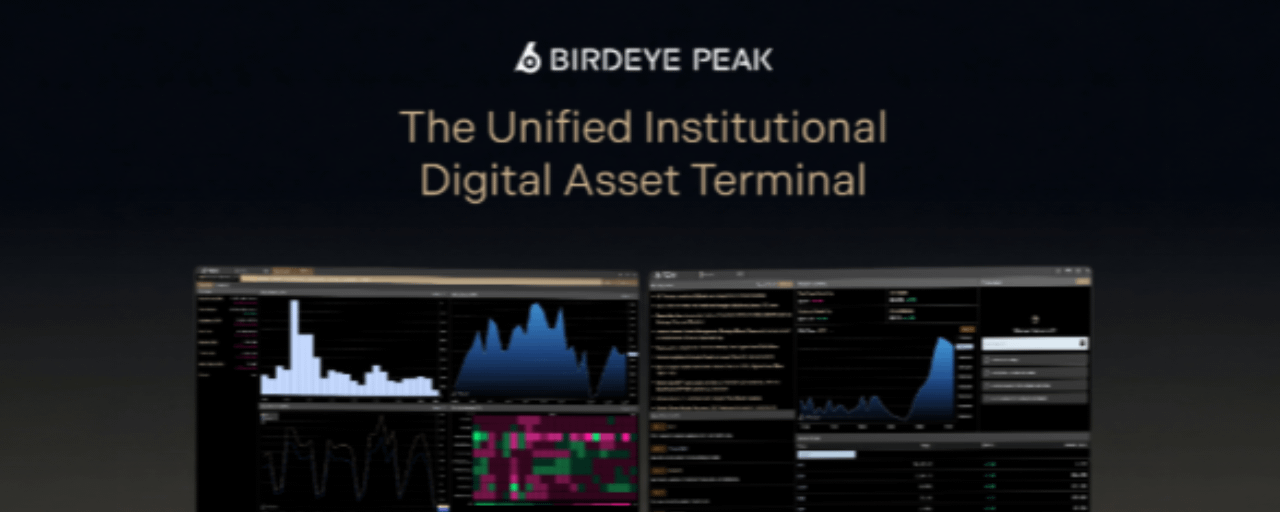
Peak is built to close that gap. It brings market intelligence, asset fundamentals, wallet and portfolio analytics, institutional indices, curated research and anomaly detection into a single workspace, covering centralised and decentralised venues alongside the offchain sources institutions already rely on, including ETF flows, filings and private funding activity.
“Professionals are making decisions worth millions and billions of dollars based on unqualified data,” said Kha Nguyen, co-founder and CEO of Birdeye. “Onchain data is not scarce. Data you can defend when somebody asks where the number came from is extremely scarce. We spent five years building the infrastructure to produce it, and Peak is what that infrastructure looks like when you put it in front of a desk.”
“Birdeye is a key partner for us across many surfaces, from Token.xyz to X Cashtags. Their historical indexing and market data APIs make these experiences accurate and scalable,” said Vibhu Norby, Chief Product Officer at Solana Foundation.
Built on infrastructure Birdeye owns
Most analytics platforms license their inputs from third parties. Birdeye built its own.
The company indexes more than millions of tokens across over 400 decentralised exchanges and 20 chains, with day one coverage of new networks, and supplies that data to thousands of enterprise clients including leading wallets, exchanges and foundations.
Institutional offchain datasets are licensed through established providers and normalised into the same framework.
Owning the onchain layerrather than buying it allows Birdeye to reconcile conflicting records at source, apply consistent definitions across venues, and build datasets to a client’s specification rather than reselling a standard feed.
Designed for how desks actually work
Peak is navigated by command rather than by menu. A 3 to 4 letter code and an asset take a user directly to the view they need, so VAL BTC opens a valuation view, WOVand a wallet address opens a wallet overview. The structure extends across token, wallet, protocol, ETFs and index objects, with cross-cutting commands for market sentiment and screening.
The terminal is built around professional workflows including position sizing against venue level liquidity, exit liquidity and order book depth analysis, portfolio composition and analytics across wallets, counterparty proof of reserves verification, and benchmarking against institutional indices. An integrated research layer, Peak AI, surfaces connections across datasets that a user would not necessarily have gone looking for.
Peak is available as a paid subscription on a per seat, per organisation basis.
About Birdeye
Birdeye is a crypto intelligence company providing real-time, customisable blockchain data to traders, builders and institutions. Its product suite spans Birdeye Data, the infrastructure layer serving thousands of enterprise clients; Birdeye Terminal, its market dashboard; and Birdeye Peak, its institutional terminal. The company indexes across Solana, Base, Ethereum and other major chains. Birdeye is operated by Wings Lab Pte. Ltd., registered in Singapore.
Learn more at birdeye.so.
#earningsseason
Built on the data infrastructure Birdeye has operated for five years, Peak unifies market intelligence, asset fundamentals and portfolio analytics across centralised and decentralised venues, navigated through a three-letter command system.
Built on the data infrastructure Birdeye has operated for five years, Peak unifies market intelligence, asset fundamentals and portfolio analytics across centralised and decentralised venues, navigated through a three-letter command system.
SINGAPORE, October 21, 2026 (PinionNewswire)
Birdeye, the crypto intelligence company whose real-time market data serves the Solana ecosystem – including Backpack and Solflare – as well as thousands of enterprise clients, today launched Birdeye Peak, an institutional terminal for professionals allocating capital to digital assets.
Institutional capital has moved into digital assets faster than the tooling built to read them. Allocators routinely assemble a view of the market from four or five vendors, each defining its metrics differently, then reconcile the differences by hand. By the time the answer exists, the market has moved. The problem is not a shortage of data but a shortage of data a professional can act on.
Peak is built to close that gap. It brings market intelligence, asset fundamentals, wallet and portfolio analytics, institutional indices, curated research and anomaly detection into a single workspace, covering centralised and decentralised venues alongside the offchain sources institutions already rely on, including ETF flows, filings and private funding activity.
“Professionals are making decisions worth millions and billions of dollars based on unqualified data,” said Kha Nguyen, co-founder and CEO of Birdeye. “Onchain data is not scarce. Data you can defend when somebody asks where the number came from is extremely scarce. We spent five years building the infrastructure to produce it, and Peak is what that infrastructure looks like when you put it in front of a desk.”
“Birdeye is a key partner for us across many surfaces, from Token.xyz to X Cashtags. Their historical indexing and market data APIs make these experiences accurate and scalable,” said Vibhu Norby, Chief Product Officer at Solana Foundation.
Built on infrastructure Birdeye owns
Most analytics platforms license their inputs from third parties. Birdeye built its own.
The company indexes more than millions of tokens across over 400 decentralised exchanges and 20 chains, with day one coverage of new networks, and supplies that data to thousands of enterprise clients including leading wallets, exchanges and foundations.
Institutional offchain datasets are licensed through established providers and normalised into the same framework.
Owning the onchain layerrather than buying it allows Birdeye to reconcile conflicting records at source, apply consistent definitions across venues, and build datasets to a client’s specification rather than reselling a standard feed.
Designed for how desks actually work
Peak is navigated by command rather than by menu. A 3 to 4 letter code and an asset take a user directly to the view they need, so VAL BTC opens a valuation view, WOVand a wallet address opens a wallet overview. The structure extends across token, wallet, protocol, ETFs and index objects, with cross-cutting commands for market sentiment and screening.
The terminal is built around professional workflows including position sizing against venue level liquidity, exit liquidity and order book depth analysis, portfolio composition and analytics across wallets, counterparty proof of reserves verification, and benchmarking against institutional indices. An integrated research layer, Peak AI, surfaces connections across datasets that a user would not necessarily have gone looking for.
Peak is available as a paid subscription on a per seat, per organisation basis.
About Birdeye
Birdeye is a crypto intelligence company providing real-time, customisable blockchain data to traders, builders and institutions. Its product suite spans Birdeye Data, the infrastructure layer serving thousands of enterprise clients; Birdeye Terminal, its market dashboard; and Birdeye Peak, its institutional terminal. The company indexes across Solana, Base, Ethereum and other major chains. Birdeye is operated by Wings Lab Pte. Ltd., registered in Singapore.
Learn more at birdeye.so.
#earningsseason
Birdeye Launches Peak, Giving Allocators A Limitless Market Terminal
Built on the data infrastructure Birdeye has operated for five years, Peak unifies market intelligence, asset fundamentals and portfolio analytics across centralised and decentralised venues, navigated through a three-letter command system.
Built on the data infrastructure Birdeye has operated for five years, Peak unifies market intelligence, asset fundamentals and portfolio analytics across centralised and decentralised venues, navigated through a three-letter command system.
SINGAPORE, October 21, 2026 (PinionNewswire)
Birdeye, the crypto intelligence company whose real-time market data serves the Solana ecosystem – including Backpack and Solflare – as well as thousands of enterprise clients, today launched Birdeye Peak, an institutional terminal for professionals allocating capital to digital assets.
Institutional capital has moved into digital assets faster than the tooling built to read them. Allocators routinely assemble a view of the market from four or five vendors, each defining its metrics differently, then reconcile the differences by hand. By the time the answer exists, the market has moved. The problem is not a shortage of data but a shortage of data a professional can act on.
Peak is built to close that gap. It brings market intelligence, asset fundamentals, wallet and portfolio analytics, institutional indices, curated research and anomaly detection into a single workspace, covering centralised and decentralised venues alongside the offchain sources institutions already rely on, including ETF flows, filings and private funding activity.
“Professionals are making decisions worth millions and billions of dollars based on unqualified data,” said Kha Nguyen, co-founder and CEO of Birdeye. “Onchain data is not scarce. Data you can defend when somebody asks where the number came from is extremely scarce. We spent five years building the infrastructure to produce it, and Peak is what that infrastructure looks like when you put it in front of a desk.”
“Birdeye is a key partner for us across many surfaces, from Token.xyz to X Cashtags. Their historical indexing and market data APIs make these experiences accurate and scalable,” said Vibhu Norby, Chief Product Officer at Solana Foundation.
Built on infrastructure Birdeye owns
Most analytics platforms license their inputs from third parties. Birdeye built its own.
The company indexes more than millions of tokens across over 400 decentralised exchanges and 20 chains, with day one coverage of new networks, and supplies that data to thousands of enterprise clients including leading wallets, exchanges and foundations.
Institutional offchain datasets are licensed through established providers and normalised into the same framework.
Owning the onchain layerrather than buying it allows Birdeye to reconcile conflicting records at source, apply consistent definitions across venues, and build datasets to a client’s specification rather than reselling a standard feed.
Designed for how desks actually work
Peak is navigated by command rather than by menu. A 3 to 4 letter code and an asset take a user directly to the view they need, so VAL BTC opens a valuation view, WOVand a wallet address opens a wallet overview. The structure extends across token, wallet, protocol, ETFs and index objects, with cross-cutting commands for market sentiment and screening.
The terminal is built around professional workflows including position sizing against venue level liquidity, exit liquidity and order book depth analysis, portfolio composition and analytics across wallets, counterparty proof of reserves verification, and benchmarking against institutional indices. An integrated research layer, Peak AI, surfaces connections across datasets that a user would not necessarily have gone looking for.
Peak is available as a paid subscription on a per seat, per organisation basis.
About Birdeye
Birdeye is a crypto intelligence company providing real-time, customisable blockchain data to traders, builders and institutions. Its product suite spans Birdeye Data, the infrastructure layer serving thousands of enterprise clients; Birdeye Terminal, its market dashboard; and Birdeye Peak, its institutional terminal. The company indexes across Solana, Base, Ethereum and other major chains. Birdeye is operated by Wings Lab Pte. Ltd., registered in Singapore.
Learn more at birdeye.so.
#earningsseason
136
·
--

Article
International Freedom Coalition Condemns Senate Candidate El-Sayed’s Silence on Global Jihadist ViolIFC: El-Sayed's Selective Silence Erases a Global Pattern of Jihadist Violence — From Gaza's Victims to Africa's Slaves
Boston, Massachusetts
The International Freedom Coalition (IFC), representing communities from Sudan to Nigeria to Syria, Iraq and Lebanon who have lived under jihadist violence, today condemned Michigan U.S. Senate candidate Abdul El-Sayed for his conduct around the October 7 anniversary, during which he declined to acknowledge Hamas’s massacre of Israelis, walked away when pressed on the anniversary by reporters, and dismissed his opponent’s recitation of Hamas’s atrocities as “political theater.” IFC leaders say his posture is yet another instance of leftist and Islamist movements working in tandem to erase and deny the plight of jihad’s victims worldwide.
“Israel is not a special case,” said Dr. Charles Jacobs, president of the International Freedom Coalition. “It is just the most visible member of a vast class of people that the left and its Islamist partners do not want people to see: along with Israelis, Sudanese, Nigerians, Yazidis, Copts, Kurds, Alawites, Lebanese, Iranian dissidents and many more are victims of jihadism. They are killed, enslaved and abused, yet so-called progressives, who rightly fought for minority rights in the past, have abandoned these people today.”
IFC member communities know well this strategy that El-Sayed and his allies have adopted.
Daowd Salid, Sudanese member of the IFC coalition: “Jihadist militias armed by Khartoum enslaved and massacred my people in Sudan and Darfur for decades. Mr. El-Sayed, you ask Michigan to send you to the Senate— will you speak about our reality, or walk away from us too?”
Stephen Enada, Nigerian member of the IFC coalition: “Boko Haram jihadists have murdered thousands of Nigerian Christians and abducted our daughters, and the international left has never once marched for us. Will you condemn the jihadists who do this, Mr. El-Sayed?”
John Hajjar, American-Lebanese Christian member of the IFC coalition: “Hezbollah, a Khomeinist-backed jihadist militia, has held the country of my ancestors hostage and silenced its Christian and Druze communities for forty years. “Jihadism from the Ottoman Turks starved to death over 200,000 Christian Lebanese in the ‘Kafno’; my grandparents were lucky to survive with nothing more than the clothes on their back”. Mr. El-Sayed, will the next senator from Michigan ever name that militia as the terrorists they are?”
Ayellet Aviv, Israeli-Jewish member of the IFC coalition: “On October 7, Hamas raped, tortured, and murdered my people simply for being Jewish, in their own homes. Americans were also among the victims. Yet a man seeking to represent Michigan in Washington could not bring himself to acknowledge that day and dismissed someone else’s commemoration as ‘theater.’
Mr. El-Sayed, are you dismissing Jewish suffering while diverting attention from the atrocities committed by those whose ideology you refuse to condemn?”
Dr. Charles Jacobs, president of the International Freedom Coalition, said, “Perhaps Abdul El-Sayed attacks the Jewish state to distract from the real and horrible crimes that his allies in the jihadist realm are committing around the world.”
“We urge him to issue an unqualified condemnation of Hamas’s October 7 atrocities, without caveat or evasion, and to extend that same condemnation to every jihadist movement— Boko Haram, ISIS, Hezbollah, and the networks behind them — that has killed, enslaved, or displaced the communities IFC represents.”
“A Senate candidate who cannot unequivocally condemn October 7 as a barbaric act surely cannot be trusted to name jihad when it strikes anyone else,” said Dr. Walid Phares, IFC vice president. “Mr. El-Sayed, the microphone is yours. Name the enemy.”
About the International Freedom Coalition
The International Freedom Coalition (IFC) unites communities that have suffered jihadist violence and institutional erasure — including Sudanese, Nigerian, Lebanese, Kurdish, Coptic, Iranian, Syrian, Alawite, Druze and Israeli communities — in a shared, documented record of atrocities that the United Nations and major Western human rights bodies have declined to compile.
Media Contact Information
Ellie Raymond
press@internationalfreedomcoalition.org
internationalfreedomcoalition.org
International Freedom Coalition Condemns Senate Candidate El-Sayed’s Silence on Global Jihadist Viol
IFC: El-Sayed's Selective Silence Erases a Global Pattern of Jihadist Violence — From Gaza's Victims to Africa's Slaves
Boston, Massachusetts
The International Freedom Coalition (IFC), representing communities from Sudan to Nigeria to Syria, Iraq and Lebanon who have lived under jihadist violence, today condemned Michigan U.S. Senate candidate Abdul El-Sayed for his conduct around the October 7 anniversary, during which he declined to acknowledge Hamas’s massacre of Israelis, walked away when pressed on the anniversary by reporters, and dismissed his opponent’s recitation of Hamas’s atrocities as “political theater.” IFC leaders say his posture is yet another instance of leftist and Islamist movements working in tandem to erase and deny the plight of jihad’s victims worldwide.
“Israel is not a special case,” said Dr. Charles Jacobs, president of the International Freedom Coalition. “It is just the most visible member of a vast class of people that the left and its Islamist partners do not want people to see: along with Israelis, Sudanese, Nigerians, Yazidis, Copts, Kurds, Alawites, Lebanese, Iranian dissidents and many more are victims of jihadism. They are killed, enslaved and abused, yet so-called progressives, who rightly fought for minority rights in the past, have abandoned these people today.”
IFC member communities know well this strategy that El-Sayed and his allies have adopted.
Daowd Salid, Sudanese member of the IFC coalition: “Jihadist militias armed by Khartoum enslaved and massacred my people in Sudan and Darfur for decades. Mr. El-Sayed, you ask Michigan to send you to the Senate— will you speak about our reality, or walk away from us too?”
Stephen Enada, Nigerian member of the IFC coalition: “Boko Haram jihadists have murdered thousands of Nigerian Christians and abducted our daughters, and the international left has never once marched for us. Will you condemn the jihadists who do this, Mr. El-Sayed?”
John Hajjar, American-Lebanese Christian member of the IFC coalition: “Hezbollah, a Khomeinist-backed jihadist militia, has held the country of my ancestors hostage and silenced its Christian and Druze communities for forty years. “Jihadism from the Ottoman Turks starved to death over 200,000 Christian Lebanese in the ‘Kafno’; my grandparents were lucky to survive with nothing more than the clothes on their back”. Mr. El-Sayed, will the next senator from Michigan ever name that militia as the terrorists they are?”
Ayellet Aviv, Israeli-Jewish member of the IFC coalition: “On October 7, Hamas raped, tortured, and murdered my people simply for being Jewish, in their own homes. Americans were also among the victims. Yet a man seeking to represent Michigan in Washington could not bring himself to acknowledge that day and dismissed someone else’s commemoration as ‘theater.’
Mr. El-Sayed, are you dismissing Jewish suffering while diverting attention from the atrocities committed by those whose ideology you refuse to condemn?”
Dr. Charles Jacobs, president of the International Freedom Coalition, said, “Perhaps Abdul El-Sayed attacks the Jewish state to distract from the real and horrible crimes that his allies in the jihadist realm are committing around the world.”
“We urge him to issue an unqualified condemnation of Hamas’s October 7 atrocities, without caveat or evasion, and to extend that same condemnation to every jihadist movement— Boko Haram, ISIS, Hezbollah, and the networks behind them — that has killed, enslaved, or displaced the communities IFC represents.”
“A Senate candidate who cannot unequivocally condemn October 7 as a barbaric act surely cannot be trusted to name jihad when it strikes anyone else,” said Dr. Walid Phares, IFC vice president. “Mr. El-Sayed, the microphone is yours. Name the enemy.”
About the International Freedom Coalition
The International Freedom Coalition (IFC) unites communities that have suffered jihadist violence and institutional erasure — including Sudanese, Nigerian, Lebanese, Kurdish, Coptic, Iranian, Syrian, Alawite, Druze and Israeli communities — in a shared, documented record of atrocities that the United Nations and major Western human rights bodies have declined to compile.
Media Contact Information
Ellie Raymond
press@internationalfreedomcoalition.org
internationalfreedomcoalition.org
Boston, Massachusetts
The International Freedom Coalition (IFC), representing communities from Sudan to Nigeria to Syria, Iraq and Lebanon who have lived under jihadist violence, today condemned Michigan U.S. Senate candidate Abdul El-Sayed for his conduct around the October 7 anniversary, during which he declined to acknowledge Hamas’s massacre of Israelis, walked away when pressed on the anniversary by reporters, and dismissed his opponent’s recitation of Hamas’s atrocities as “political theater.” IFC leaders say his posture is yet another instance of leftist and Islamist movements working in tandem to erase and deny the plight of jihad’s victims worldwide.
“Israel is not a special case,” said Dr. Charles Jacobs, president of the International Freedom Coalition. “It is just the most visible member of a vast class of people that the left and its Islamist partners do not want people to see: along with Israelis, Sudanese, Nigerians, Yazidis, Copts, Kurds, Alawites, Lebanese, Iranian dissidents and many more are victims of jihadism. They are killed, enslaved and abused, yet so-called progressives, who rightly fought for minority rights in the past, have abandoned these people today.”
IFC member communities know well this strategy that El-Sayed and his allies have adopted.
Daowd Salid, Sudanese member of the IFC coalition: “Jihadist militias armed by Khartoum enslaved and massacred my people in Sudan and Darfur for decades. Mr. El-Sayed, you ask Michigan to send you to the Senate— will you speak about our reality, or walk away from us too?”
Stephen Enada, Nigerian member of the IFC coalition: “Boko Haram jihadists have murdered thousands of Nigerian Christians and abducted our daughters, and the international left has never once marched for us. Will you condemn the jihadists who do this, Mr. El-Sayed?”
John Hajjar, American-Lebanese Christian member of the IFC coalition: “Hezbollah, a Khomeinist-backed jihadist militia, has held the country of my ancestors hostage and silenced its Christian and Druze communities for forty years. “Jihadism from the Ottoman Turks starved to death over 200,000 Christian Lebanese in the ‘Kafno’; my grandparents were lucky to survive with nothing more than the clothes on their back”. Mr. El-Sayed, will the next senator from Michigan ever name that militia as the terrorists they are?”
Ayellet Aviv, Israeli-Jewish member of the IFC coalition: “On October 7, Hamas raped, tortured, and murdered my people simply for being Jewish, in their own homes. Americans were also among the victims. Yet a man seeking to represent Michigan in Washington could not bring himself to acknowledge that day and dismissed someone else’s commemoration as ‘theater.’
Mr. El-Sayed, are you dismissing Jewish suffering while diverting attention from the atrocities committed by those whose ideology you refuse to condemn?”
Dr. Charles Jacobs, president of the International Freedom Coalition, said, “Perhaps Abdul El-Sayed attacks the Jewish state to distract from the real and horrible crimes that his allies in the jihadist realm are committing around the world.”
“We urge him to issue an unqualified condemnation of Hamas’s October 7 atrocities, without caveat or evasion, and to extend that same condemnation to every jihadist movement— Boko Haram, ISIS, Hezbollah, and the networks behind them — that has killed, enslaved, or displaced the communities IFC represents.”
“A Senate candidate who cannot unequivocally condemn October 7 as a barbaric act surely cannot be trusted to name jihad when it strikes anyone else,” said Dr. Walid Phares, IFC vice president. “Mr. El-Sayed, the microphone is yours. Name the enemy.”
About the International Freedom Coalition
The International Freedom Coalition (IFC) unites communities that have suffered jihadist violence and institutional erasure — including Sudanese, Nigerian, Lebanese, Kurdish, Coptic, Iranian, Syrian, Alawite, Druze and Israeli communities — in a shared, documented record of atrocities that the United Nations and major Western human rights bodies have declined to compile.
Media Contact Information
Ellie Raymond
press@internationalfreedomcoalition.org
internationalfreedomcoalition.org
289
·
--

Article
Nectar Group, Inc. Raises $5 Million to Build HoneyB, the Income Orchestration Layer for BitcoinSeed round led by Portal Ventures. First platform strategy, partnered with $13.5B asset manager Simplify ETFs, is expected to open in the coming weeks.
Seed round led by Portal Ventures. First platform strategy, partnered with $13.5B asset manager Simplify ETFs, is expected to open in the coming weeks.
DOVER, DELAWARE, October 20, 2026 (PinionNewswire)
Nectar Group, Inc., the company developing the HoneyB platform, today announced a $5 million seed financing round led by Portal Ventures and Peer Ventures, with participation from Anchorage Digital Ventures and various family offices and angels. The company will use the proceeds to build the orchestration layer connecting Bitcoin with institutional capital markets.
Despite Bitcoin’s emergence as an institutional asset, earning yield on BTC is still fragmented and operationally hard. Investors have to piece together separate custodians, lenders, asset managers, on-chain protocols, and legal structures. HoneyB is being built to bring those pieces into one orchestration layer, so institutions can access yield strategies without moving Bitcoin from their qualified custodian or wrapping it off the Bitcoin network.
Through a single platform, HoneyB coordinates custody, credit, asset management, and regulatory compliance. The aim is to give treasury companies, exchanges, fintech platforms, family offices, and other eligible institutions access to income strategies that draw on real-asset yields rather than speculative token incentives.
“There is an enormous gap between the capital sitting in Bitcoin and the institutional income markets available through traditional finance,” said Josh Gordon, co-founder and CEO of HoneyB. “HoneyB is the orchestration layer between those two worlds. We are bringing fragmented pieces together so institutions can reach differentiated sources of income through one platform, without moving their Bitcoin.”
Catrina Wang, General Partner at Portal Ventures, said, “The demand for reliable Bitcoin yield is indisputable, but the question is how. Today’s offerings are either institutionally gated, relatively low-yielding, or involve smart contract, custodial, or counterparty risks. The market is also fragmented across DeFi and CeFi, on-chain pools and off-chain funds.”
“Non-custodial, no wrapping, and sustainable at scale — HoneyB is the most elegant solution I’ve seen for a one-click experience to access institutional-grade Bitcoin yield, with meaningfully higher yields than existing alternatives.”
Bridging the Bitcoin income gap
HoneyB focuses on income generated outside the crypto ecosystem, connecting Bitcoin and digital-asset capital with strategies across income ETFs, fixed income, private credit, and structured products. It is being built around three aims:
Real, sustainable yield: Income generated by identifiable and repeatable economic activity rather than temporary token incentivesUncorrelated returns: Strategies whose returns come from sources outside of Bitcoin or broader crypto-market speculationInstitutional liquidity: Scalable yield sources, defined redemption terms, and deep liquidity designed for institutional capital
HoneyB infrastructure is designed to let institutions view and manage multiple sources of income from their BTC through a single dashboard.
First institutional strategy
The first strategy planned for HoneyB is built on a fund that provides access to a diversified portfolio from Simplify Asset Management, a registered investment adviser managing approximately $13.5 billion. The fund is managed and tokenized by Alphaledger, a US-regulated investment manager and owner of a registered broker-dealer. The fund draws income from established financial markets including US Treasuries, credit, gold, volatility risk premia, and options-based income.
“Simplify is excited to partner with HoneyB and Alphaledger to bring institutional-quality income strategies to the crypto ecosystem,” said Krisna Patel, Managing Director at Simplify Asset Management. “Our model combines multiple complementary strategies designed to generate risk-managed income while dynamically adapting to changing market environments.”
The planned initial strategy illustrates the broader model: connecting digital-asset capital with income opportunities while coordinating the custody, liquidity, and regulatory infrastructure required around them.
About Nectar Group and HoneyB
Nectar Group, Inc. is the company developing the HoneyB platform as the income orchestration layer for Bitcoin. The platform connects Bitcoin and digital-asset capital with institutional income strategies offered by its issuer to eligible investors. Learn more at honeybtc.com
About Simplify Asset Management
Simplify Asset Management is a registered investment adviser founded in 2020 by Paul Kim and David Berns to help advisors address portfolio construction challenges through an innovative set of options-based strategies. The firm manages approximately $13.5 billion across its ETF lineup. Simplify ETFs are distributed by Foreside Financial Services, LLC.
About Alphaledger
Alphaledger is a US-regulated investment manager and the owner of a registered broker-dealer, providing origination and tokenization infrastructure for institutional investment products.
Important notice. This announcement is for information only. It is not an offer to sell, or a solicitation of an offer to buy, any security or investment product. Any product made available through HoneyB will be offered only to eligible persons in permitted jurisdictions and under its own terms. Statements about plans and timing are forward-looking and may change.
Media Contact
Nishy Siva
Genius PR
Nectar Group, Inc. Raises $5 Million to Build HoneyB, the Income Orchestration Layer for Bitcoin
Seed round led by Portal Ventures. First platform strategy, partnered with $13.5B asset manager Simplify ETFs, is expected to open in the coming weeks.
Seed round led by Portal Ventures. First platform strategy, partnered with $13.5B asset manager Simplify ETFs, is expected to open in the coming weeks.
DOVER, DELAWARE, October 20, 2026 (PinionNewswire)
Nectar Group, Inc., the company developing the HoneyB platform, today announced a $5 million seed financing round led by Portal Ventures and Peer Ventures, with participation from Anchorage Digital Ventures and various family offices and angels. The company will use the proceeds to build the orchestration layer connecting Bitcoin with institutional capital markets.
Despite Bitcoin’s emergence as an institutional asset, earning yield on BTC is still fragmented and operationally hard. Investors have to piece together separate custodians, lenders, asset managers, on-chain protocols, and legal structures. HoneyB is being built to bring those pieces into one orchestration layer, so institutions can access yield strategies without moving Bitcoin from their qualified custodian or wrapping it off the Bitcoin network.
Through a single platform, HoneyB coordinates custody, credit, asset management, and regulatory compliance. The aim is to give treasury companies, exchanges, fintech platforms, family offices, and other eligible institutions access to income strategies that draw on real-asset yields rather than speculative token incentives.
“There is an enormous gap between the capital sitting in Bitcoin and the institutional income markets available through traditional finance,” said Josh Gordon, co-founder and CEO of HoneyB. “HoneyB is the orchestration layer between those two worlds. We are bringing fragmented pieces together so institutions can reach differentiated sources of income through one platform, without moving their Bitcoin.”
Catrina Wang, General Partner at Portal Ventures, said, “The demand for reliable Bitcoin yield is indisputable, but the question is how. Today’s offerings are either institutionally gated, relatively low-yielding, or involve smart contract, custodial, or counterparty risks. The market is also fragmented across DeFi and CeFi, on-chain pools and off-chain funds.”
“Non-custodial, no wrapping, and sustainable at scale — HoneyB is the most elegant solution I’ve seen for a one-click experience to access institutional-grade Bitcoin yield, with meaningfully higher yields than existing alternatives.”
Bridging the Bitcoin income gap
HoneyB focuses on income generated outside the crypto ecosystem, connecting Bitcoin and digital-asset capital with strategies across income ETFs, fixed income, private credit, and structured products. It is being built around three aims:
Real, sustainable yield: Income generated by identifiable and repeatable economic activity rather than temporary token incentivesUncorrelated returns: Strategies whose returns come from sources outside of Bitcoin or broader crypto-market speculationInstitutional liquidity: Scalable yield sources, defined redemption terms, and deep liquidity designed for institutional capital
HoneyB infrastructure is designed to let institutions view and manage multiple sources of income from their BTC through a single dashboard.
First institutional strategy
The first strategy planned for HoneyB is built on a fund that provides access to a diversified portfolio from Simplify Asset Management, a registered investment adviser managing approximately $13.5 billion. The fund is managed and tokenized by Alphaledger, a US-regulated investment manager and owner of a registered broker-dealer. The fund draws income from established financial markets including US Treasuries, credit, gold, volatility risk premia, and options-based income.
“Simplify is excited to partner with HoneyB and Alphaledger to bring institutional-quality income strategies to the crypto ecosystem,” said Krisna Patel, Managing Director at Simplify Asset Management. “Our model combines multiple complementary strategies designed to generate risk-managed income while dynamically adapting to changing market environments.”
The planned initial strategy illustrates the broader model: connecting digital-asset capital with income opportunities while coordinating the custody, liquidity, and regulatory infrastructure required around them.
About Nectar Group and HoneyB
Nectar Group, Inc. is the company developing the HoneyB platform as the income orchestration layer for Bitcoin. The platform connects Bitcoin and digital-asset capital with institutional income strategies offered by its issuer to eligible investors. Learn more at honeybtc.com
About Simplify Asset Management
Simplify Asset Management is a registered investment adviser founded in 2020 by Paul Kim and David Berns to help advisors address portfolio construction challenges through an innovative set of options-based strategies. The firm manages approximately $13.5 billion across its ETF lineup. Simplify ETFs are distributed by Foreside Financial Services, LLC.
About Alphaledger
Alphaledger is a US-regulated investment manager and the owner of a registered broker-dealer, providing origination and tokenization infrastructure for institutional investment products.
Important notice. This announcement is for information only. It is not an offer to sell, or a solicitation of an offer to buy, any security or investment product. Any product made available through HoneyB will be offered only to eligible persons in permitted jurisdictions and under its own terms. Statements about plans and timing are forward-looking and may change.
Media Contact
Nishy Siva
Genius PR
Seed round led by Portal Ventures. First platform strategy, partnered with $13.5B asset manager Simplify ETFs, is expected to open in the coming weeks.
DOVER, DELAWARE, October 20, 2026 (PinionNewswire)
Nectar Group, Inc., the company developing the HoneyB platform, today announced a $5 million seed financing round led by Portal Ventures and Peer Ventures, with participation from Anchorage Digital Ventures and various family offices and angels. The company will use the proceeds to build the orchestration layer connecting Bitcoin with institutional capital markets.
Despite Bitcoin’s emergence as an institutional asset, earning yield on BTC is still fragmented and operationally hard. Investors have to piece together separate custodians, lenders, asset managers, on-chain protocols, and legal structures. HoneyB is being built to bring those pieces into one orchestration layer, so institutions can access yield strategies without moving Bitcoin from their qualified custodian or wrapping it off the Bitcoin network.
Through a single platform, HoneyB coordinates custody, credit, asset management, and regulatory compliance. The aim is to give treasury companies, exchanges, fintech platforms, family offices, and other eligible institutions access to income strategies that draw on real-asset yields rather than speculative token incentives.
“There is an enormous gap between the capital sitting in Bitcoin and the institutional income markets available through traditional finance,” said Josh Gordon, co-founder and CEO of HoneyB. “HoneyB is the orchestration layer between those two worlds. We are bringing fragmented pieces together so institutions can reach differentiated sources of income through one platform, without moving their Bitcoin.”
Catrina Wang, General Partner at Portal Ventures, said, “The demand for reliable Bitcoin yield is indisputable, but the question is how. Today’s offerings are either institutionally gated, relatively low-yielding, or involve smart contract, custodial, or counterparty risks. The market is also fragmented across DeFi and CeFi, on-chain pools and off-chain funds.”
“Non-custodial, no wrapping, and sustainable at scale — HoneyB is the most elegant solution I’ve seen for a one-click experience to access institutional-grade Bitcoin yield, with meaningfully higher yields than existing alternatives.”
Bridging the Bitcoin income gap
HoneyB focuses on income generated outside the crypto ecosystem, connecting Bitcoin and digital-asset capital with strategies across income ETFs, fixed income, private credit, and structured products. It is being built around three aims:
Real, sustainable yield: Income generated by identifiable and repeatable economic activity rather than temporary token incentivesUncorrelated returns: Strategies whose returns come from sources outside of Bitcoin or broader crypto-market speculationInstitutional liquidity: Scalable yield sources, defined redemption terms, and deep liquidity designed for institutional capital
HoneyB infrastructure is designed to let institutions view and manage multiple sources of income from their BTC through a single dashboard.
First institutional strategy
The first strategy planned for HoneyB is built on a fund that provides access to a diversified portfolio from Simplify Asset Management, a registered investment adviser managing approximately $13.5 billion. The fund is managed and tokenized by Alphaledger, a US-regulated investment manager and owner of a registered broker-dealer. The fund draws income from established financial markets including US Treasuries, credit, gold, volatility risk premia, and options-based income.
“Simplify is excited to partner with HoneyB and Alphaledger to bring institutional-quality income strategies to the crypto ecosystem,” said Krisna Patel, Managing Director at Simplify Asset Management. “Our model combines multiple complementary strategies designed to generate risk-managed income while dynamically adapting to changing market environments.”
The planned initial strategy illustrates the broader model: connecting digital-asset capital with income opportunities while coordinating the custody, liquidity, and regulatory infrastructure required around them.
About Nectar Group and HoneyB
Nectar Group, Inc. is the company developing the HoneyB platform as the income orchestration layer for Bitcoin. The platform connects Bitcoin and digital-asset capital with institutional income strategies offered by its issuer to eligible investors. Learn more at honeybtc.com
About Simplify Asset Management
Simplify Asset Management is a registered investment adviser founded in 2020 by Paul Kim and David Berns to help advisors address portfolio construction challenges through an innovative set of options-based strategies. The firm manages approximately $13.5 billion across its ETF lineup. Simplify ETFs are distributed by Foreside Financial Services, LLC.
About Alphaledger
Alphaledger is a US-regulated investment manager and the owner of a registered broker-dealer, providing origination and tokenization infrastructure for institutional investment products.
Important notice. This announcement is for information only. It is not an offer to sell, or a solicitation of an offer to buy, any security or investment product. Any product made available through HoneyB will be offered only to eligible persons in permitted jurisdictions and under its own terms. Statements about plans and timing are forward-looking and may change.
Media Contact
Nishy Siva
Genius PR
72
·
--
Article
Crypto Insurer BDIC (Blockchain Deposit Insurance Corporation) Establishes Singapore EntitySingapore (PinionNewswire)
Blockchain Deposit Insurance Corporation (“BDIC”), a decentralized cryptocurrency deposit insurer providing coverage for digital assets, today announced the establishment of its Singapore business operations and announced that the BDIC Coin Token Sale is targeted for the first quarter of 2027, and that it has engaged Cole-Frieman & Mallon LLP as outside counsel in the United States.
PRESS RELEASE SUMMARY
BDIC’s Singapore entity (BDIC SG PTE LTD located on Lorong Ampas in Singapore) is intended to serve as the primary insurance underwriting hub for the company. The company will engage local legal representation and begin the regulatory engagement process for the new insurance entity for approval under the Monetary Authority of Singapore (MAS) and in the meantime, the company plans to place coverage for clients’ needs through existing dedicated insurance cells issued through network partners while awaiting its appointment and approval to write policy coverage directly. During this period, a Cayman Islands BDIC Foundation and its British Virgin Islands subsidiary will be established to issue the BDIC Coin independently of BDIC. BDIC Coin is intended to be used to pay BDIC insurance premiums, settlements, and governance as a true utility payment token.
Please scroll down for expanded details provided by company representatives, and visit the BDICnewsroom for other material stories and updates from the company
Why BDIC Singapore?
BDIC selected Singapore as the second location after BDIC HK as it is the intended primary insurance underwriting hub because of the depth of the jurisdiction’s financial regulation and its position in Asian digital asset markets. Asia has moved ahead of much of the world in digital asset adoption and market awareness, and BDIC’s operational strategy is designed to meet the requirements set out by MAS rather than work around them, as Singapore’s leadership and advanced vision on crypto insurance is the perfect platform.
“Establishing our presence in Singapore is more than a geographic expansion from our location in Hong Kong. It is a foundational step in our mission to bring institutional-grade security to the digital asset ecosystem,” said Paul Kohli, Co-Founder and Managing Director, Hong Kong and Pan-Asian Operations of BDIC from the Central District offices in HK. “By working within the MAS framework, we are embedding compliance, solvency, and operational integrity into our global insurance products. As we have engaged local representation and will submit the required information in the coming weeks, we look forward to working with the MAS team for our approval”.
Regulatory and Compliance Architecture
According to BDIC’s compliance team, BDIC is considering partnering with an existing local insurance partner, but it is not required in order to operate under the Insurance Act, administered by MAS. BDIC’s operations are also designed to align with Singapore’s broader digital asset statutes, including the Payment Services Act 2019 (PSA) and the Financial Services and Markets Act 2022 (FSMA), which govern digital payment token services, including custody.
Cross-border insurance carries jurisdiction-specific obligations, and BDIC is structuring its global offering to satisfy local mandates in the jurisdictions where its policyholders reside, but also for global reach. While the Singapore hub is intended to serve as the primary underwriting engine, BDIC intends to serve policyholders in other jurisdictions through structured reinsurance partnerships, risk ceding, or partnerships with admitted local carriers in Europe, for instance. BDIC is also implementing asset valuation protocols that include independent custody verification and cold-to-hot wallet storage ratios consistent with international auditing standards, where applicable.
Chief Risk and Compliance Officer, CRCO Adriano Raimondi, added, “The reason for strict compliance and regulation is to protect consumers, policyholders, and the industry as we forge into the digital asset insurance space. These controls will create the next version of traditional finance, a stable environment in which consumers and businesses alike can operate globally. MAS guidelines are an example of what BDIC wanted as a framework from the start.”
Legal and Infrastructure
BDIC’s CEO centered comments around commitment to building its platform on a properly established legal and compliance foundation. Subsequently, the company has engaged Cole-Frieman & Mallon LLP as outside counsel in the United States moving forward accordingly.
Crypto deposit insurer BDIC details plans to begin Monetary Authority of Singapore (MAS) regulatory engagement as it builds its global footprint, engages CFM and discusses utility payment coin offering
“Insurance is an important marker of a mature market. It is time crypto was properly insured, but navigating a complex global regulatory landscape can be challenging for any crypto infrastructure company. We’re excited to assist BDIC with its regulatory compliance so it can grow and scale in this market,” said Daniel Payne, Partner at Cole-Frieman & Mallon LLP.
“We are building a global insurance infrastructure, and that is only credible if the legal foundation is done properly and done first,” said Jeffrey A. Glusman, Chief Executive Officer and Founder of Blockchain Deposit Insurance Corporation. “Retaining counsel of this caliber with actual experience in the digital asset sector is key in navigating the regulatory gauntlet. We would rather be proactive now that there have been considerable advancements in the legislature with more finality around the corner, with MiCA now in force in Europe and US legislation advancing, than be reactive later.”
BDIC Utility Coin
BDIC representatives also confirmed that the BDIC Coin Token Sale is targeted for r the first quarter of 2027. BDIC Coin will be issued by a Cayman Islands Foundation and its British Virgin Islands subsidiary (the minting entity) independently of BDIC, once those entities are established. BDIC Coin will have a total supply of 1.6 billion. BDIC’s insurance reserve is held in non-Coin assets, and BDIC is fully capitalized outside the BDIC Coin allocation. 528 million BDIC Coins (33%) will be allocated as overcollateralization behind pledged assets as a financial backstop. In a liquidity event, the Cayman Islands Foundation and its British Virgin Islands subsidiary would sell these reserve Coins only to support insurance payouts after the pledged assets have been depleted.
BDIC Coin: Intended Utility
BDIC Coin is intended to be used to pay BDIC insurance premiums at a discount. Additional utility may be added in the future. BDIC Coin will not represent equity, debt, ownership interest, or a right to share in BDIC’s revenues or profits. BDIC does not market BDIC Coin as an investment vehicle or promise price appreciation.
BDIC’s disclosure materials, including independent reserve attestation, smart contract audit reports, verified contract addresses, and code repository link, and the final Token Purchase Agreement will be published before the Token Sale. Timing, structure, jurisdictions of availability, and eligibility requirements remain subject to legal, regulatory, business, and technical review and may be modified accordingly.
About Blockchain Deposit Insurance Corporation (BDIC)
Blockchain Deposit Insurance Corporation (BDIC) is a decentralized cryptocurrency deposit insurer founded in 2024 and headquartered in Hong Kong, with additional offices planned in Switzerland, South America, and Europe. BDIC has adopted a digital twin business model, compared to the FDIC deposit insurance model, for digital assets, providing coverage against hacks, exploits, and theft through smart contract-automated claims.
BDIC’s product line includes Standard Crypto Deposit Insurance (Standard tier: $0 to $10,000; Preferred tier: $10,000 to $20,000), HNW coverage $50K+; StableCover Pro for stablecoin reserves held by funds, DAOs, and corporate treasuries; AgentCoverPro for AI agent payment systems and autonomous transaction infrastructure; and VaultCoverPro for self-custody holders.
The company was founded by Chief Executive Officer Jeffrey A. Glusman, a former Merrill Lynch executive, and is led by a team drawn from traditional finance, federal banking supervision, and enterprise cloud security.
Learn more at BDICinsurance.com, or read the BDIC Litepaper.
Media Contact
BDIC
Liam Nguyen
Chief Marketing Officer
Blockchain Deposit Insurance Corporation (BDIC)
Website: BDICinsurance.com
BDIC Bulletin: BDICinsurance.com/the-bulletin
Newsroom: https://bdicinsurance.com/the-bdic-blog/
X: x.com/bdicofficial
LinkedIn: linkedin.com/company/blockchain-deposit-insurance-corporation
Telegram: t.me/BDICInsurance
Instagram: instagram.com/bdicinsurance
Cole-Frieman & Mallon LLP
Ian Potts
Chief Marketing Officer
Cole-Frieman & Mallon LLP
Non-Investment Disclaimer
BDIC does not market BDIC Coin as an investment or financial instrument. BDIC does not promise or guarantee token price appreciation, dividends, or profit distributions. Purchasers should not expect returns from appreciation in the value of BDIC Coin and should consider the token only for its described utility.
Important Notice
This announcement and BDIC’s litepaper, whitepaper, and prior informational materials are provided for general informational purposes only. They do not constitute an offer to sell, or a solicitation of an offer to buy, any digital asset, security, insurance product, or other financial instrument. No offering will be made except pursuant to applicable legal and regulatory requirements.
The proposed utility token offering remains subject to legal, regulatory, business, and technical review and may be modified or delayed to comply with applicable requirements. No representation is made regarding the future value, availability, liquidity, or regulatory classification of any proposed digital asset. Statements regarding licensing applications, regulatory engagement, and anticipated timing are forward-looking and are not assurances that any license, approval, or registration will be granted.
Crypto Insurer BDIC (Blockchain Deposit Insurance Corporation) Establishes Singapore Entity
Singapore (PinionNewswire)
Blockchain Deposit Insurance Corporation (“BDIC”), a decentralized cryptocurrency deposit insurer providing coverage for digital assets, today announced the establishment of its Singapore business operations and announced that the BDIC Coin Token Sale is targeted for the first quarter of 2027, and that it has engaged Cole-Frieman & Mallon LLP as outside counsel in the United States.
PRESS RELEASE SUMMARY
BDIC’s Singapore entity (BDIC SG PTE LTD located on Lorong Ampas in Singapore) is intended to serve as the primary insurance underwriting hub for the company. The company will engage local legal representation and begin the regulatory engagement process for the new insurance entity for approval under the Monetary Authority of Singapore (MAS) and in the meantime, the company plans to place coverage for clients’ needs through existing dedicated insurance cells issued through network partners while awaiting its appointment and approval to write policy coverage directly. During this period, a Cayman Islands BDIC Foundation and its British Virgin Islands subsidiary will be established to issue the BDIC Coin independently of BDIC. BDIC Coin is intended to be used to pay BDIC insurance premiums, settlements, and governance as a true utility payment token.
Please scroll down for expanded details provided by company representatives, and visit the BDICnewsroom for other material stories and updates from the company
Why BDIC Singapore?
BDIC selected Singapore as the second location after BDIC HK as it is the intended primary insurance underwriting hub because of the depth of the jurisdiction’s financial regulation and its position in Asian digital asset markets. Asia has moved ahead of much of the world in digital asset adoption and market awareness, and BDIC’s operational strategy is designed to meet the requirements set out by MAS rather than work around them, as Singapore’s leadership and advanced vision on crypto insurance is the perfect platform.
“Establishing our presence in Singapore is more than a geographic expansion from our location in Hong Kong. It is a foundational step in our mission to bring institutional-grade security to the digital asset ecosystem,” said Paul Kohli, Co-Founder and Managing Director, Hong Kong and Pan-Asian Operations of BDIC from the Central District offices in HK. “By working within the MAS framework, we are embedding compliance, solvency, and operational integrity into our global insurance products. As we have engaged local representation and will submit the required information in the coming weeks, we look forward to working with the MAS team for our approval”.
Regulatory and Compliance Architecture
According to BDIC’s compliance team, BDIC is considering partnering with an existing local insurance partner, but it is not required in order to operate under the Insurance Act, administered by MAS. BDIC’s operations are also designed to align with Singapore’s broader digital asset statutes, including the Payment Services Act 2019 (PSA) and the Financial Services and Markets Act 2022 (FSMA), which govern digital payment token services, including custody.
Cross-border insurance carries jurisdiction-specific obligations, and BDIC is structuring its global offering to satisfy local mandates in the jurisdictions where its policyholders reside, but also for global reach. While the Singapore hub is intended to serve as the primary underwriting engine, BDIC intends to serve policyholders in other jurisdictions through structured reinsurance partnerships, risk ceding, or partnerships with admitted local carriers in Europe, for instance. BDIC is also implementing asset valuation protocols that include independent custody verification and cold-to-hot wallet storage ratios consistent with international auditing standards, where applicable.
Chief Risk and Compliance Officer, CRCO Adriano Raimondi, added, “The reason for strict compliance and regulation is to protect consumers, policyholders, and the industry as we forge into the digital asset insurance space. These controls will create the next version of traditional finance, a stable environment in which consumers and businesses alike can operate globally. MAS guidelines are an example of what BDIC wanted as a framework from the start.”
Legal and Infrastructure
BDIC’s CEO centered comments around commitment to building its platform on a properly established legal and compliance foundation. Subsequently, the company has engaged Cole-Frieman & Mallon LLP as outside counsel in the United States moving forward accordingly.
Crypto deposit insurer BDIC details plans to begin Monetary Authority of Singapore (MAS) regulatory engagement as it builds its global footprint, engages CFM and discusses utility payment coin offering
“Insurance is an important marker of a mature market. It is time crypto was properly insured, but navigating a complex global regulatory landscape can be challenging for any crypto infrastructure company. We’re excited to assist BDIC with its regulatory compliance so it can grow and scale in this market,” said Daniel Payne, Partner at Cole-Frieman & Mallon LLP.
“We are building a global insurance infrastructure, and that is only credible if the legal foundation is done properly and done first,” said Jeffrey A. Glusman, Chief Executive Officer and Founder of Blockchain Deposit Insurance Corporation. “Retaining counsel of this caliber with actual experience in the digital asset sector is key in navigating the regulatory gauntlet. We would rather be proactive now that there have been considerable advancements in the legislature with more finality around the corner, with MiCA now in force in Europe and US legislation advancing, than be reactive later.”
BDIC Utility Coin
BDIC representatives also confirmed that the BDIC Coin Token Sale is targeted for r the first quarter of 2027. BDIC Coin will be issued by a Cayman Islands Foundation and its British Virgin Islands subsidiary (the minting entity) independently of BDIC, once those entities are established. BDIC Coin will have a total supply of 1.6 billion. BDIC’s insurance reserve is held in non-Coin assets, and BDIC is fully capitalized outside the BDIC Coin allocation. 528 million BDIC Coins (33%) will be allocated as overcollateralization behind pledged assets as a financial backstop. In a liquidity event, the Cayman Islands Foundation and its British Virgin Islands subsidiary would sell these reserve Coins only to support insurance payouts after the pledged assets have been depleted.
BDIC Coin: Intended Utility
BDIC Coin is intended to be used to pay BDIC insurance premiums at a discount. Additional utility may be added in the future. BDIC Coin will not represent equity, debt, ownership interest, or a right to share in BDIC’s revenues or profits. BDIC does not market BDIC Coin as an investment vehicle or promise price appreciation.
BDIC’s disclosure materials, including independent reserve attestation, smart contract audit reports, verified contract addresses, and code repository link, and the final Token Purchase Agreement will be published before the Token Sale. Timing, structure, jurisdictions of availability, and eligibility requirements remain subject to legal, regulatory, business, and technical review and may be modified accordingly.
About Blockchain Deposit Insurance Corporation (BDIC)
Blockchain Deposit Insurance Corporation (BDIC) is a decentralized cryptocurrency deposit insurer founded in 2024 and headquartered in Hong Kong, with additional offices planned in Switzerland, South America, and Europe. BDIC has adopted a digital twin business model, compared to the FDIC deposit insurance model, for digital assets, providing coverage against hacks, exploits, and theft through smart contract-automated claims.
BDIC’s product line includes Standard Crypto Deposit Insurance (Standard tier: $0 to $10,000; Preferred tier: $10,000 to $20,000), HNW coverage $50K+; StableCover Pro for stablecoin reserves held by funds, DAOs, and corporate treasuries; AgentCoverPro for AI agent payment systems and autonomous transaction infrastructure; and VaultCoverPro for self-custody holders.
The company was founded by Chief Executive Officer Jeffrey A. Glusman, a former Merrill Lynch executive, and is led by a team drawn from traditional finance, federal banking supervision, and enterprise cloud security.
Learn more at BDICinsurance.com, or read the BDIC Litepaper.
Media Contact
BDIC
Liam Nguyen
Chief Marketing Officer
Blockchain Deposit Insurance Corporation (BDIC)
Website: BDICinsurance.com
BDIC Bulletin: BDICinsurance.com/the-bulletin
Newsroom: https://bdicinsurance.com/the-bdic-blog/
X: x.com/bdicofficial
LinkedIn: linkedin.com/company/blockchain-deposit-insurance-corporation
Telegram: t.me/BDICInsurance
Instagram: instagram.com/bdicinsurance
Cole-Frieman & Mallon LLP
Ian Potts
Chief Marketing Officer
Cole-Frieman & Mallon LLP
Non-Investment Disclaimer
BDIC does not market BDIC Coin as an investment or financial instrument. BDIC does not promise or guarantee token price appreciation, dividends, or profit distributions. Purchasers should not expect returns from appreciation in the value of BDIC Coin and should consider the token only for its described utility.
Important Notice
This announcement and BDIC’s litepaper, whitepaper, and prior informational materials are provided for general informational purposes only. They do not constitute an offer to sell, or a solicitation of an offer to buy, any digital asset, security, insurance product, or other financial instrument. No offering will be made except pursuant to applicable legal and regulatory requirements.
The proposed utility token offering remains subject to legal, regulatory, business, and technical review and may be modified or delayed to comply with applicable requirements. No representation is made regarding the future value, availability, liquidity, or regulatory classification of any proposed digital asset. Statements regarding licensing applications, regulatory engagement, and anticipated timing are forward-looking and are not assurances that any license, approval, or registration will be granted.
Blockchain Deposit Insurance Corporation (“BDIC”), a decentralized cryptocurrency deposit insurer providing coverage for digital assets, today announced the establishment of its Singapore business operations and announced that the BDIC Coin Token Sale is targeted for the first quarter of 2027, and that it has engaged Cole-Frieman & Mallon LLP as outside counsel in the United States.
PRESS RELEASE SUMMARY
BDIC’s Singapore entity (BDIC SG PTE LTD located on Lorong Ampas in Singapore) is intended to serve as the primary insurance underwriting hub for the company. The company will engage local legal representation and begin the regulatory engagement process for the new insurance entity for approval under the Monetary Authority of Singapore (MAS) and in the meantime, the company plans to place coverage for clients’ needs through existing dedicated insurance cells issued through network partners while awaiting its appointment and approval to write policy coverage directly. During this period, a Cayman Islands BDIC Foundation and its British Virgin Islands subsidiary will be established to issue the BDIC Coin independently of BDIC. BDIC Coin is intended to be used to pay BDIC insurance premiums, settlements, and governance as a true utility payment token.
Please scroll down for expanded details provided by company representatives, and visit the BDICnewsroom for other material stories and updates from the company
Why BDIC Singapore?
BDIC selected Singapore as the second location after BDIC HK as it is the intended primary insurance underwriting hub because of the depth of the jurisdiction’s financial regulation and its position in Asian digital asset markets. Asia has moved ahead of much of the world in digital asset adoption and market awareness, and BDIC’s operational strategy is designed to meet the requirements set out by MAS rather than work around them, as Singapore’s leadership and advanced vision on crypto insurance is the perfect platform.
“Establishing our presence in Singapore is more than a geographic expansion from our location in Hong Kong. It is a foundational step in our mission to bring institutional-grade security to the digital asset ecosystem,” said Paul Kohli, Co-Founder and Managing Director, Hong Kong and Pan-Asian Operations of BDIC from the Central District offices in HK. “By working within the MAS framework, we are embedding compliance, solvency, and operational integrity into our global insurance products. As we have engaged local representation and will submit the required information in the coming weeks, we look forward to working with the MAS team for our approval”.
Regulatory and Compliance Architecture
According to BDIC’s compliance team, BDIC is considering partnering with an existing local insurance partner, but it is not required in order to operate under the Insurance Act, administered by MAS. BDIC’s operations are also designed to align with Singapore’s broader digital asset statutes, including the Payment Services Act 2019 (PSA) and the Financial Services and Markets Act 2022 (FSMA), which govern digital payment token services, including custody.
Cross-border insurance carries jurisdiction-specific obligations, and BDIC is structuring its global offering to satisfy local mandates in the jurisdictions where its policyholders reside, but also for global reach. While the Singapore hub is intended to serve as the primary underwriting engine, BDIC intends to serve policyholders in other jurisdictions through structured reinsurance partnerships, risk ceding, or partnerships with admitted local carriers in Europe, for instance. BDIC is also implementing asset valuation protocols that include independent custody verification and cold-to-hot wallet storage ratios consistent with international auditing standards, where applicable.
Chief Risk and Compliance Officer, CRCO Adriano Raimondi, added, “The reason for strict compliance and regulation is to protect consumers, policyholders, and the industry as we forge into the digital asset insurance space. These controls will create the next version of traditional finance, a stable environment in which consumers and businesses alike can operate globally. MAS guidelines are an example of what BDIC wanted as a framework from the start.”
Legal and Infrastructure
BDIC’s CEO centered comments around commitment to building its platform on a properly established legal and compliance foundation. Subsequently, the company has engaged Cole-Frieman & Mallon LLP as outside counsel in the United States moving forward accordingly.
Crypto deposit insurer BDIC details plans to begin Monetary Authority of Singapore (MAS) regulatory engagement as it builds its global footprint, engages CFM and discusses utility payment coin offering
“Insurance is an important marker of a mature market. It is time crypto was properly insured, but navigating a complex global regulatory landscape can be challenging for any crypto infrastructure company. We’re excited to assist BDIC with its regulatory compliance so it can grow and scale in this market,” said Daniel Payne, Partner at Cole-Frieman & Mallon LLP.
“We are building a global insurance infrastructure, and that is only credible if the legal foundation is done properly and done first,” said Jeffrey A. Glusman, Chief Executive Officer and Founder of Blockchain Deposit Insurance Corporation. “Retaining counsel of this caliber with actual experience in the digital asset sector is key in navigating the regulatory gauntlet. We would rather be proactive now that there have been considerable advancements in the legislature with more finality around the corner, with MiCA now in force in Europe and US legislation advancing, than be reactive later.”
BDIC Utility Coin
BDIC representatives also confirmed that the BDIC Coin Token Sale is targeted for r the first quarter of 2027. BDIC Coin will be issued by a Cayman Islands Foundation and its British Virgin Islands subsidiary (the minting entity) independently of BDIC, once those entities are established. BDIC Coin will have a total supply of 1.6 billion. BDIC’s insurance reserve is held in non-Coin assets, and BDIC is fully capitalized outside the BDIC Coin allocation. 528 million BDIC Coins (33%) will be allocated as overcollateralization behind pledged assets as a financial backstop. In a liquidity event, the Cayman Islands Foundation and its British Virgin Islands subsidiary would sell these reserve Coins only to support insurance payouts after the pledged assets have been depleted.
BDIC Coin: Intended Utility
BDIC Coin is intended to be used to pay BDIC insurance premiums at a discount. Additional utility may be added in the future. BDIC Coin will not represent equity, debt, ownership interest, or a right to share in BDIC’s revenues or profits. BDIC does not market BDIC Coin as an investment vehicle or promise price appreciation.
BDIC’s disclosure materials, including independent reserve attestation, smart contract audit reports, verified contract addresses, and code repository link, and the final Token Purchase Agreement will be published before the Token Sale. Timing, structure, jurisdictions of availability, and eligibility requirements remain subject to legal, regulatory, business, and technical review and may be modified accordingly.
About Blockchain Deposit Insurance Corporation (BDIC)
Blockchain Deposit Insurance Corporation (BDIC) is a decentralized cryptocurrency deposit insurer founded in 2024 and headquartered in Hong Kong, with additional offices planned in Switzerland, South America, and Europe. BDIC has adopted a digital twin business model, compared to the FDIC deposit insurance model, for digital assets, providing coverage against hacks, exploits, and theft through smart contract-automated claims.
BDIC’s product line includes Standard Crypto Deposit Insurance (Standard tier: $0 to $10,000; Preferred tier: $10,000 to $20,000), HNW coverage $50K+; StableCover Pro for stablecoin reserves held by funds, DAOs, and corporate treasuries; AgentCoverPro for AI agent payment systems and autonomous transaction infrastructure; and VaultCoverPro for self-custody holders.
The company was founded by Chief Executive Officer Jeffrey A. Glusman, a former Merrill Lynch executive, and is led by a team drawn from traditional finance, federal banking supervision, and enterprise cloud security.
Learn more at BDICinsurance.com, or read the BDIC Litepaper.
Media Contact
BDIC
Liam Nguyen
Chief Marketing Officer
Blockchain Deposit Insurance Corporation (BDIC)
Website: BDICinsurance.com
BDIC Bulletin: BDICinsurance.com/the-bulletin
Newsroom: https://bdicinsurance.com/the-bdic-blog/
X: x.com/bdicofficial
LinkedIn: linkedin.com/company/blockchain-deposit-insurance-corporation
Telegram: t.me/BDICInsurance
Instagram: instagram.com/bdicinsurance
Cole-Frieman & Mallon LLP
Ian Potts
Chief Marketing Officer
Cole-Frieman & Mallon LLP
Non-Investment Disclaimer
BDIC does not market BDIC Coin as an investment or financial instrument. BDIC does not promise or guarantee token price appreciation, dividends, or profit distributions. Purchasers should not expect returns from appreciation in the value of BDIC Coin and should consider the token only for its described utility.
Important Notice
This announcement and BDIC’s litepaper, whitepaper, and prior informational materials are provided for general informational purposes only. They do not constitute an offer to sell, or a solicitation of an offer to buy, any digital asset, security, insurance product, or other financial instrument. No offering will be made except pursuant to applicable legal and regulatory requirements.
The proposed utility token offering remains subject to legal, regulatory, business, and technical review and may be modified or delayed to comply with applicable requirements. No representation is made regarding the future value, availability, liquidity, or regulatory classification of any proposed digital asset. Statements regarding licensing applications, regulatory engagement, and anticipated timing are forward-looking and are not assurances that any license, approval, or registration will be granted.
86
·
--

Article
SERPutation Launches Emma AI Reputation Assistant Ahead of AGS Rome 2026The company will introduce its new AI-powered brand reputation assistant and showcase SEO, online reputation management and AI Visibility / GEO solutions at Booth H2-2097.
Rome, Italy
SERPutation, a company specializing in online reputation management, search engine optimization, digital PR and AI Visibility / GEO, is introducing Emma, its new AI-powered reputation assistant, ahead of Affiliate Grand Slam (AGS) Rome 2026. The company will exhibit at Booth H2-2097 in Hall 2, where visitors can explore its reputation technology and discuss strategies for improving their brand’s digital presence.
SERPutation at AGS Rome 2026, Booth H2-2097, showcasing SEO, ORM and AI Visibility solutions.
Businesses can experience Emma at emma.serputation.com, where an interactive conversation helps identify online reputation concerns and potential next steps. AGS Rome takes place November 2–5, 2026, at Fiera Roma as part of SiGMA World, with more than 30,000 delegates expected across gaming, affiliate marketing, financial technology and emerging technologies.
Emma Makes the First Step in Reputation Management More Accessible
Emma is designed to help businesses understand their online reputation needs without beginning with a lengthy inquiry form or traditional sales consultation.
Through a guided conversation, the AI assistant gathers information about a company’s brand, existing concerns and business objectives.
Users can describe issues such as negative Google results, unfavorable reviews, limited organic search visibility or uncertainty about how their business is represented by AI assistants.
Based on their responses, Emma helps users identify potential reputation and visibility concerns, highlight areas that may deserve attention and explore recommended next steps.
Depending on the company’s needs, these may include SEO improvements, digital PR opportunities, reputation management services or a more comprehensive AI Visibility / GEO strategy.
Smaller businesses can explore accessible starting solutions, while companies with complex requirements can be directed toward a consultation with SERPutation’s specialists.
Emma is intended to make reputation discovery simpler, more relevant and less dependent on a traditional sales process.
As a SERPutation spokesperson explains:
“We created Emma to make reputation management more accessible. Businesses shouldn’t need to be SEO experts to understand how they’re perceived online or identify the right steps to strengthen their digital presence.”
Search Reputation Is Expanding Beyond Google
A company’s reputation is increasingly shaped by information encountered across multiple digital platforms.
Potential customers and business partners can use Google to investigate a company’s history, read independent reviews or ask AI assistants such as ChatGPT, Gemini and Perplexity to summarize publicly available information about a business.
For companies in competitive sectors, including online gaming, cryptocurrency, forex and fintech, this creates additional considerations around brand trust and discoverability.
Outdated articles, inaccurate company details, unresolved customer feedback and inconsistent information across third-party websites can affect how a company is perceived.
SERPutation addresses these challenges by combining traditional search optimization with reputation management and AI Visibility / Generative Engine Optimization (GEO).
Its approach focuses on improving the availability, consistency and credibility of company information across relevant digital channels.
Technology-Driven Reputation Management Backed by Industry Experience
With more than 10 years of experience in the cryptocurrency and forex sectors, SERPutation brings specialist industry knowledge together with proprietary technology and digital reputation strategies.
The company’s services are organized into four core capabilities:
Online Reputation Management (ORM): Analyzing branded search results, responding to legitimate customer feedback, seeking corrections or removals where content is inaccurate, outdated or otherwise eligible for removal under applicable platform policies, and improving the visibility of accurate, authoritative brand information.SEO and AI Visibility / GEO: Improving organic search performance and strengthening the clarity and accessibility of company information across search engines, AI assistants and generative search platforms.Digital PR and Brand Authority: Building brand visibility through relevant editorial coverage, useful content and third-party publications.Reputation Technology: Applying proprietary digital systems, owned and operated content properties and AI-assisted tools to support brand analysis, content strategies and online visibility initiatives.
SERPutation develops geographically targeted strategies for businesses operating in international markets, particularly those facing intense competition for branded and industry-related search queries.
The company also provides specialist services to marketing agencies and commercial partners through reseller and white-label arrangements.
Its technology-led approach is designed to combine reputation research, search visibility and brand communication within a coordinated strategy rather than treating them as separate marketing activities.
Why SERPutation Could Be One of the Best Booths to Visit at AGS Rome 2026
With more than 30,000 delegates expected at SiGMA World 2026, attendees will have numerous exhibitors, technologies and networking opportunities to explore.
For businesses interested in online reputation management, AI search visibility and digital brand protection, SERPutation at Booth H2-2097 is positioning itself as one of the best booths to visit at AGS Rome 2026.
Visitors can explore Emma, the company’s new AI-powered reputation assistant, request an initial brand reputation assessment and discover how SERPutation combines SEO, ORM, digital PR and AI Visibility / GEO to help businesses strengthen their presence across Google, ChatGPT, Gemini and Perplexity.
The team plans to offer complimentary initial reputation and visibility assessments, subject to availability, helping visitors identify potential issues and priorities for improvement.
Beyond its technology and services, SERPutation’s more than 10 years of industry experience, proprietary solutions and Mingle networking party sponsorship give attendees additional reasons to connect with the team during the conference.
Alongside its exhibition presence, SERPutation is sponsoring a Mingle networking party associated with AGS Rome, providing opportunities to connect with affiliate managers, gaming operators, fintech businesses and digital marketing partners.
A New Approach to Understanding Brand Reputation
As AI assistants become part of business research and purchasing decisions, SERPutation is expanding the ways companies can investigate and improve their digital presence.
Emma represents a new entry point into the company’s wider SEO, ORM, digital PR and AI Visibility / GEO services, helping businesses identify priorities before choosing a reputation management strategy.
Explore Emma and begin your free reputation check at https://emma.serputation.com/
About SERPutation
SERPutation specializes in online reputation management, SEO, digital PR and AI Visibility / GEO, providing technology-driven solutions to businesses in competitive international markets. With more than a decade of experience in cryptocurrency and forex, the company combines reputation strategy, organic search optimization, content development and proprietary digital technology.
Website: https://serputation.com
AGS Rome 2026: Booth H2-2097, Hall 2, Fiera Roma, November 2–5, 2026.
SERPutation Launches Emma AI Reputation Assistant Ahead of AGS Rome 2026
The company will introduce its new AI-powered brand reputation assistant and showcase SEO, online reputation management and AI Visibility / GEO solutions at Booth H2-2097.
Rome, Italy
SERPutation, a company specializing in online reputation management, search engine optimization, digital PR and AI Visibility / GEO, is introducing Emma, its new AI-powered reputation assistant, ahead of Affiliate Grand Slam (AGS) Rome 2026. The company will exhibit at Booth H2-2097 in Hall 2, where visitors can explore its reputation technology and discuss strategies for improving their brand’s digital presence.
SERPutation at AGS Rome 2026, Booth H2-2097, showcasing SEO, ORM and AI Visibility solutions.
Businesses can experience Emma at emma.serputation.com, where an interactive conversation helps identify online reputation concerns and potential next steps. AGS Rome takes place November 2–5, 2026, at Fiera Roma as part of SiGMA World, with more than 30,000 delegates expected across gaming, affiliate marketing, financial technology and emerging technologies.
Emma Makes the First Step in Reputation Management More Accessible
Emma is designed to help businesses understand their online reputation needs without beginning with a lengthy inquiry form or traditional sales consultation.
Through a guided conversation, the AI assistant gathers information about a company’s brand, existing concerns and business objectives.
Users can describe issues such as negative Google results, unfavorable reviews, limited organic search visibility or uncertainty about how their business is represented by AI assistants.
Based on their responses, Emma helps users identify potential reputation and visibility concerns, highlight areas that may deserve attention and explore recommended next steps.
Depending on the company’s needs, these may include SEO improvements, digital PR opportunities, reputation management services or a more comprehensive AI Visibility / GEO strategy.
Smaller businesses can explore accessible starting solutions, while companies with complex requirements can be directed toward a consultation with SERPutation’s specialists.
Emma is intended to make reputation discovery simpler, more relevant and less dependent on a traditional sales process.
As a SERPutation spokesperson explains:
“We created Emma to make reputation management more accessible. Businesses shouldn’t need to be SEO experts to understand how they’re perceived online or identify the right steps to strengthen their digital presence.”
Search Reputation Is Expanding Beyond Google
A company’s reputation is increasingly shaped by information encountered across multiple digital platforms.
Potential customers and business partners can use Google to investigate a company’s history, read independent reviews or ask AI assistants such as ChatGPT, Gemini and Perplexity to summarize publicly available information about a business.
For companies in competitive sectors, including online gaming, cryptocurrency, forex and fintech, this creates additional considerations around brand trust and discoverability.
Outdated articles, inaccurate company details, unresolved customer feedback and inconsistent information across third-party websites can affect how a company is perceived.
SERPutation addresses these challenges by combining traditional search optimization with reputation management and AI Visibility / Generative Engine Optimization (GEO).
Its approach focuses on improving the availability, consistency and credibility of company information across relevant digital channels.
Technology-Driven Reputation Management Backed by Industry Experience
With more than 10 years of experience in the cryptocurrency and forex sectors, SERPutation brings specialist industry knowledge together with proprietary technology and digital reputation strategies.
The company’s services are organized into four core capabilities:
Online Reputation Management (ORM): Analyzing branded search results, responding to legitimate customer feedback, seeking corrections or removals where content is inaccurate, outdated or otherwise eligible for removal under applicable platform policies, and improving the visibility of accurate, authoritative brand information.SEO and AI Visibility / GEO: Improving organic search performance and strengthening the clarity and accessibility of company information across search engines, AI assistants and generative search platforms.Digital PR and Brand Authority: Building brand visibility through relevant editorial coverage, useful content and third-party publications.Reputation Technology: Applying proprietary digital systems, owned and operated content properties and AI-assisted tools to support brand analysis, content strategies and online visibility initiatives.
SERPutation develops geographically targeted strategies for businesses operating in international markets, particularly those facing intense competition for branded and industry-related search queries.
The company also provides specialist services to marketing agencies and commercial partners through reseller and white-label arrangements.
Its technology-led approach is designed to combine reputation research, search visibility and brand communication within a coordinated strategy rather than treating them as separate marketing activities.
Why SERPutation Could Be One of the Best Booths to Visit at AGS Rome 2026
With more than 30,000 delegates expected at SiGMA World 2026, attendees will have numerous exhibitors, technologies and networking opportunities to explore.
For businesses interested in online reputation management, AI search visibility and digital brand protection, SERPutation at Booth H2-2097 is positioning itself as one of the best booths to visit at AGS Rome 2026.
Visitors can explore Emma, the company’s new AI-powered reputation assistant, request an initial brand reputation assessment and discover how SERPutation combines SEO, ORM, digital PR and AI Visibility / GEO to help businesses strengthen their presence across Google, ChatGPT, Gemini and Perplexity.
The team plans to offer complimentary initial reputation and visibility assessments, subject to availability, helping visitors identify potential issues and priorities for improvement.
Beyond its technology and services, SERPutation’s more than 10 years of industry experience, proprietary solutions and Mingle networking party sponsorship give attendees additional reasons to connect with the team during the conference.
Alongside its exhibition presence, SERPutation is sponsoring a Mingle networking party associated with AGS Rome, providing opportunities to connect with affiliate managers, gaming operators, fintech businesses and digital marketing partners.
A New Approach to Understanding Brand Reputation
As AI assistants become part of business research and purchasing decisions, SERPutation is expanding the ways companies can investigate and improve their digital presence.
Emma represents a new entry point into the company’s wider SEO, ORM, digital PR and AI Visibility / GEO services, helping businesses identify priorities before choosing a reputation management strategy.
Explore Emma and begin your free reputation check at https://emma.serputation.com/
About SERPutation
SERPutation specializes in online reputation management, SEO, digital PR and AI Visibility / GEO, providing technology-driven solutions to businesses in competitive international markets. With more than a decade of experience in cryptocurrency and forex, the company combines reputation strategy, organic search optimization, content development and proprietary digital technology.
Website: https://serputation.com
AGS Rome 2026: Booth H2-2097, Hall 2, Fiera Roma, November 2–5, 2026.
Rome, Italy
SERPutation, a company specializing in online reputation management, search engine optimization, digital PR and AI Visibility / GEO, is introducing Emma, its new AI-powered reputation assistant, ahead of Affiliate Grand Slam (AGS) Rome 2026. The company will exhibit at Booth H2-2097 in Hall 2, where visitors can explore its reputation technology and discuss strategies for improving their brand’s digital presence.
SERPutation at AGS Rome 2026, Booth H2-2097, showcasing SEO, ORM and AI Visibility solutions.
Businesses can experience Emma at emma.serputation.com, where an interactive conversation helps identify online reputation concerns and potential next steps. AGS Rome takes place November 2–5, 2026, at Fiera Roma as part of SiGMA World, with more than 30,000 delegates expected across gaming, affiliate marketing, financial technology and emerging technologies.
Emma Makes the First Step in Reputation Management More Accessible
Emma is designed to help businesses understand their online reputation needs without beginning with a lengthy inquiry form or traditional sales consultation.
Through a guided conversation, the AI assistant gathers information about a company’s brand, existing concerns and business objectives.
Users can describe issues such as negative Google results, unfavorable reviews, limited organic search visibility or uncertainty about how their business is represented by AI assistants.
Based on their responses, Emma helps users identify potential reputation and visibility concerns, highlight areas that may deserve attention and explore recommended next steps.
Depending on the company’s needs, these may include SEO improvements, digital PR opportunities, reputation management services or a more comprehensive AI Visibility / GEO strategy.
Smaller businesses can explore accessible starting solutions, while companies with complex requirements can be directed toward a consultation with SERPutation’s specialists.
Emma is intended to make reputation discovery simpler, more relevant and less dependent on a traditional sales process.
As a SERPutation spokesperson explains:
“We created Emma to make reputation management more accessible. Businesses shouldn’t need to be SEO experts to understand how they’re perceived online or identify the right steps to strengthen their digital presence.”
Search Reputation Is Expanding Beyond Google
A company’s reputation is increasingly shaped by information encountered across multiple digital platforms.
Potential customers and business partners can use Google to investigate a company’s history, read independent reviews or ask AI assistants such as ChatGPT, Gemini and Perplexity to summarize publicly available information about a business.
For companies in competitive sectors, including online gaming, cryptocurrency, forex and fintech, this creates additional considerations around brand trust and discoverability.
Outdated articles, inaccurate company details, unresolved customer feedback and inconsistent information across third-party websites can affect how a company is perceived.
SERPutation addresses these challenges by combining traditional search optimization with reputation management and AI Visibility / Generative Engine Optimization (GEO).
Its approach focuses on improving the availability, consistency and credibility of company information across relevant digital channels.
Technology-Driven Reputation Management Backed by Industry Experience
With more than 10 years of experience in the cryptocurrency and forex sectors, SERPutation brings specialist industry knowledge together with proprietary technology and digital reputation strategies.
The company’s services are organized into four core capabilities:
Online Reputation Management (ORM): Analyzing branded search results, responding to legitimate customer feedback, seeking corrections or removals where content is inaccurate, outdated or otherwise eligible for removal under applicable platform policies, and improving the visibility of accurate, authoritative brand information.SEO and AI Visibility / GEO: Improving organic search performance and strengthening the clarity and accessibility of company information across search engines, AI assistants and generative search platforms.Digital PR and Brand Authority: Building brand visibility through relevant editorial coverage, useful content and third-party publications.Reputation Technology: Applying proprietary digital systems, owned and operated content properties and AI-assisted tools to support brand analysis, content strategies and online visibility initiatives.
SERPutation develops geographically targeted strategies for businesses operating in international markets, particularly those facing intense competition for branded and industry-related search queries.
The company also provides specialist services to marketing agencies and commercial partners through reseller and white-label arrangements.
Its technology-led approach is designed to combine reputation research, search visibility and brand communication within a coordinated strategy rather than treating them as separate marketing activities.
Why SERPutation Could Be One of the Best Booths to Visit at AGS Rome 2026
With more than 30,000 delegates expected at SiGMA World 2026, attendees will have numerous exhibitors, technologies and networking opportunities to explore.
For businesses interested in online reputation management, AI search visibility and digital brand protection, SERPutation at Booth H2-2097 is positioning itself as one of the best booths to visit at AGS Rome 2026.
Visitors can explore Emma, the company’s new AI-powered reputation assistant, request an initial brand reputation assessment and discover how SERPutation combines SEO, ORM, digital PR and AI Visibility / GEO to help businesses strengthen their presence across Google, ChatGPT, Gemini and Perplexity.
The team plans to offer complimentary initial reputation and visibility assessments, subject to availability, helping visitors identify potential issues and priorities for improvement.
Beyond its technology and services, SERPutation’s more than 10 years of industry experience, proprietary solutions and Mingle networking party sponsorship give attendees additional reasons to connect with the team during the conference.
Alongside its exhibition presence, SERPutation is sponsoring a Mingle networking party associated with AGS Rome, providing opportunities to connect with affiliate managers, gaming operators, fintech businesses and digital marketing partners.
A New Approach to Understanding Brand Reputation
As AI assistants become part of business research and purchasing decisions, SERPutation is expanding the ways companies can investigate and improve their digital presence.
Emma represents a new entry point into the company’s wider SEO, ORM, digital PR and AI Visibility / GEO services, helping businesses identify priorities before choosing a reputation management strategy.
Explore Emma and begin your free reputation check at https://emma.serputation.com/
About SERPutation
SERPutation specializes in online reputation management, SEO, digital PR and AI Visibility / GEO, providing technology-driven solutions to businesses in competitive international markets. With more than a decade of experience in cryptocurrency and forex, the company combines reputation strategy, organic search optimization, content development and proprietary digital technology.
Website: https://serputation.com
AGS Rome 2026: Booth H2-2097, Hall 2, Fiera Roma, November 2–5, 2026.
20
·
--

Article
Nullmask Passes $50 Million in Private Volume and Launches Points Season 1The zero-knowledge privacy protocol runs inside the wallets people already use. It is live on Ethereum, Base, BNB Chain and Robinhood Chain, with Solana and private perpetuals coming next.
London, UK
Nullmask, a zero-knowledge privacy protocol for private transfers and swaps, has processed more than $50 million in private volume since 1 October. The protocol was founded by Tomas Krnak, whose team of Zcash developers built shielded transaction support into Trezor hardware wallets on a Zcash Foundation grant. Nullmask averages about $3 million a day, and its busiest day so far saw roughly $4.5 million move through the pool in 24 hours.
The growth comes as privacy has become the largest narrative in web3. It is what is bringing institutions and large funds on-chain, because they need to move capital without exposing positions, counterparties or strategy to the public. Nullmask gives them that confidentiality while keeping deposits screened and activity auditable for the people who need to see it.
Nullmask has distributed about $1.5 million in ZEC rewards and $1.5 million to $MASK holders, and has burned 2.15% of the $MASK supply. All figures are on-chain and can be verified on Dune and DefiLlama.
The team is now launching Nullmask Points Season One, which goes live on 19 October and runs for 90 days. Points reward one thing: moving money privately. Every withdrawal from the pool earns. Through the Early Adopters Program, activity from before Season One is credited retroactively.
Privacy without a new wallet
On a public blockchain, every payment, balance and counterparty is permanent and searchable by anyone with your address. Scrutiny is also increasing: since January, exchanges in 75 countries have been collecting transaction data that tax authorities will begin sharing in 2027.
Earlier privacy tools asked users to give something up. That could mean a new wallet, a new seed phrase, hours of setup, or handing funds to a third party mid-transfer. As a result, privacy stayed a niche for technical power users.
Nullmask takes a different approach. Users add it to MetaMask, Rabby, Ledger, Trezor or any wallet that supports a custom network, and connect once. From then on, tokens, native ETH and NFTs can be shielded in a single click, and private transfers complete in under 30 seconds.
No new wallet or seed phrase. Privacy keys are derived deterministically from a signature by the user’s existing wallet, so there is nothing extra to back up.No custody. Funds never leave the user’s control, and no third party holds them mid-transfer.Standard signing. Shielded transactions are authorized with a standard EIP-1559 transaction from the user’s own wallet, including hardware wallets.
This used to be impractical. Proving a normal wallet signature inside a zero-knowledge proof once required enormous files and hours of compute. Advances in proof systems have brought that down to a couple of seconds on a laptop or phone.
Wave Batching: hiding the last link
A privacy pool breaks the direct path between a deposit and a withdrawal, but three clues can still connect them: the address, the amount and the time. Nullmask steers users toward a fresh withdrawal address and standard amounts, such as 500 or 1,000 USDT, so withdrawals blend in with many others.
Time is the last link, because every on-chain withdrawal carries a public timestamp. Nullmask’s Advanced mode addresses this with Wave Batching. Withdrawals are signed and queued, then sent together at a scheduled wave in shuffled order. The timestamp on-chain shows the wave, not the moment the user acted. Users can also split a withdrawal into two to five parts, each with its own amount, address and wave, up to 24 hours ahead.
Fast mode remains available for users who need funds right away. Both modes carry the same 0.5% protocol fee.
Compliance built in
Nullmask is designed to keep illicit funds out of its pool:
Every deposit waits as pending until it is approved.Depositing addresses are screened against the OFAC SDN list, the Chainalysis sanctions oracle, EU and UK sanctions lists, USDT and USDC issuer blacklists, and public scam lists, and are risk-scored by AMLBot.Funds linked to sanctions, hacks, darknet markets, scams, ransomware, terrorism financing or child exploitation are refused and refunded automatically.Approved addresses remain under continuous AMLBot monitoring.
Users can share their history with an accountant, institution or regulator through viewing keys, without publishing it. Every approved deposit also carries a revocation key pair. If a deposit is flagged after it enters the pool, the secret half is published, and every other user can prove their funds were never linked to it.
Contract source code is verified on Etherscan, and all protocol addresses are published with a signed proof of ownership at nullmask.io/compliance. Verified law enforcement requests sent to compliance@nullmask.io are acknowledged within 72 hours.
Integrations and partners
NEAR Intents: private cross-chain bridging, liveUniswap: private ETH ⇄ USDT swaps, liveAerodrome and PancakeSwap: private swaps on Base and BNB ChainGate Wallet: integrated, with a MetaMask integration in talksAMLBot: screening on every depositDefiLlama: listed
Nullmask has also partnered with Beldex, Dash Pay, QUAI and THORChain. It reaches users through social trading apps such as Fomo and through exchange listings including Aster perps.
“[Quote placeholder. Suggested: Privacy shouldn’t require a new wallet or a leap of faith. Nullmask works inside the wallet you already use, it screens every deposit at the door, and it gives users a way to prove their funds are clean. Fifty million dollars in a few weeks shows people want that.]” said Tomas Krnak, founder of Nullmask.
The team
Nullmask was founded by Tomas Krnak, whose team of Zcash-focused developers spent two years bringing private transactions to hardware wallets. On a Zcash Foundation grant, they built shielded support into Trezor firmware, covering key derivation, shielded addresses and on-device signing, and moved the work onto Orchard, Zcash’s newer privacy design. The team’s changes to the transaction format were accepted into Zcash itself.
What’s next
Nullmask is live on Ethereum, Base, BNB Chain and Robinhood Chain. Next on the roadmap are Points Season One, Solana support and private perpetuals.
About Nullmask
Nullmask is a zero-knowledge privacy protocol for private transfers and swaps that works inside users’ existing wallets, with no new wallet, seed phrase or custody. Deposits are screened before entering the shielded pool, and users keep full control of their funds. Learn more at nullmask.io.
Links
Website: nullmask.ioX: x.com/NullMaskioAnalytics: app.nullmask.io/analyticsDefiLlama: defillama.com/protocol/nullmask
Nothing in this release is financial or legal advice. Use of privacy tools remains subject to the laws of your jurisdiction.
Nullmask Passes $50 Million in Private Volume and Launches Points Season 1
The zero-knowledge privacy protocol runs inside the wallets people already use. It is live on Ethereum, Base, BNB Chain and Robinhood Chain, with Solana and private perpetuals coming next.
London, UK
Nullmask, a zero-knowledge privacy protocol for private transfers and swaps, has processed more than $50 million in private volume since 1 October. The protocol was founded by Tomas Krnak, whose team of Zcash developers built shielded transaction support into Trezor hardware wallets on a Zcash Foundation grant. Nullmask averages about $3 million a day, and its busiest day so far saw roughly $4.5 million move through the pool in 24 hours.
The growth comes as privacy has become the largest narrative in web3. It is what is bringing institutions and large funds on-chain, because they need to move capital without exposing positions, counterparties or strategy to the public. Nullmask gives them that confidentiality while keeping deposits screened and activity auditable for the people who need to see it.
Nullmask has distributed about $1.5 million in ZEC rewards and $1.5 million to $MASK holders, and has burned 2.15% of the $MASK supply. All figures are on-chain and can be verified on Dune and DefiLlama.
The team is now launching Nullmask Points Season One, which goes live on 19 October and runs for 90 days. Points reward one thing: moving money privately. Every withdrawal from the pool earns. Through the Early Adopters Program, activity from before Season One is credited retroactively.
Privacy without a new wallet
On a public blockchain, every payment, balance and counterparty is permanent and searchable by anyone with your address. Scrutiny is also increasing: since January, exchanges in 75 countries have been collecting transaction data that tax authorities will begin sharing in 2027.
Earlier privacy tools asked users to give something up. That could mean a new wallet, a new seed phrase, hours of setup, or handing funds to a third party mid-transfer. As a result, privacy stayed a niche for technical power users.
Nullmask takes a different approach. Users add it to MetaMask, Rabby, Ledger, Trezor or any wallet that supports a custom network, and connect once. From then on, tokens, native ETH and NFTs can be shielded in a single click, and private transfers complete in under 30 seconds.
No new wallet or seed phrase. Privacy keys are derived deterministically from a signature by the user’s existing wallet, so there is nothing extra to back up.No custody. Funds never leave the user’s control, and no third party holds them mid-transfer.Standard signing. Shielded transactions are authorized with a standard EIP-1559 transaction from the user’s own wallet, including hardware wallets.
This used to be impractical. Proving a normal wallet signature inside a zero-knowledge proof once required enormous files and hours of compute. Advances in proof systems have brought that down to a couple of seconds on a laptop or phone.
Wave Batching: hiding the last link
A privacy pool breaks the direct path between a deposit and a withdrawal, but three clues can still connect them: the address, the amount and the time. Nullmask steers users toward a fresh withdrawal address and standard amounts, such as 500 or 1,000 USDT, so withdrawals blend in with many others.
Time is the last link, because every on-chain withdrawal carries a public timestamp. Nullmask’s Advanced mode addresses this with Wave Batching. Withdrawals are signed and queued, then sent together at a scheduled wave in shuffled order. The timestamp on-chain shows the wave, not the moment the user acted. Users can also split a withdrawal into two to five parts, each with its own amount, address and wave, up to 24 hours ahead.
Fast mode remains available for users who need funds right away. Both modes carry the same 0.5% protocol fee.
Compliance built in
Nullmask is designed to keep illicit funds out of its pool:
Every deposit waits as pending until it is approved.Depositing addresses are screened against the OFAC SDN list, the Chainalysis sanctions oracle, EU and UK sanctions lists, USDT and USDC issuer blacklists, and public scam lists, and are risk-scored by AMLBot.Funds linked to sanctions, hacks, darknet markets, scams, ransomware, terrorism financing or child exploitation are refused and refunded automatically.Approved addresses remain under continuous AMLBot monitoring.
Users can share their history with an accountant, institution or regulator through viewing keys, without publishing it. Every approved deposit also carries a revocation key pair. If a deposit is flagged after it enters the pool, the secret half is published, and every other user can prove their funds were never linked to it.
Contract source code is verified on Etherscan, and all protocol addresses are published with a signed proof of ownership at nullmask.io/compliance. Verified law enforcement requests sent to compliance@nullmask.io are acknowledged within 72 hours.
Integrations and partners
NEAR Intents: private cross-chain bridging, liveUniswap: private ETH ⇄ USDT swaps, liveAerodrome and PancakeSwap: private swaps on Base and BNB ChainGate Wallet: integrated, with a MetaMask integration in talksAMLBot: screening on every depositDefiLlama: listed
Nullmask has also partnered with Beldex, Dash Pay, QUAI and THORChain. It reaches users through social trading apps such as Fomo and through exchange listings including Aster perps.
“[Quote placeholder. Suggested: Privacy shouldn’t require a new wallet or a leap of faith. Nullmask works inside the wallet you already use, it screens every deposit at the door, and it gives users a way to prove their funds are clean. Fifty million dollars in a few weeks shows people want that.]” said Tomas Krnak, founder of Nullmask.
The team
Nullmask was founded by Tomas Krnak, whose team of Zcash-focused developers spent two years bringing private transactions to hardware wallets. On a Zcash Foundation grant, they built shielded support into Trezor firmware, covering key derivation, shielded addresses and on-device signing, and moved the work onto Orchard, Zcash’s newer privacy design. The team’s changes to the transaction format were accepted into Zcash itself.
What’s next
Nullmask is live on Ethereum, Base, BNB Chain and Robinhood Chain. Next on the roadmap are Points Season One, Solana support and private perpetuals.
About Nullmask
Nullmask is a zero-knowledge privacy protocol for private transfers and swaps that works inside users’ existing wallets, with no new wallet, seed phrase or custody. Deposits are screened before entering the shielded pool, and users keep full control of their funds. Learn more at nullmask.io.
Links
Website: nullmask.ioX: x.com/NullMaskioAnalytics: app.nullmask.io/analyticsDefiLlama: defillama.com/protocol/nullmask
Nothing in this release is financial or legal advice. Use of privacy tools remains subject to the laws of your jurisdiction.
London, UK
Nullmask, a zero-knowledge privacy protocol for private transfers and swaps, has processed more than $50 million in private volume since 1 October. The protocol was founded by Tomas Krnak, whose team of Zcash developers built shielded transaction support into Trezor hardware wallets on a Zcash Foundation grant. Nullmask averages about $3 million a day, and its busiest day so far saw roughly $4.5 million move through the pool in 24 hours.
The growth comes as privacy has become the largest narrative in web3. It is what is bringing institutions and large funds on-chain, because they need to move capital without exposing positions, counterparties or strategy to the public. Nullmask gives them that confidentiality while keeping deposits screened and activity auditable for the people who need to see it.
Nullmask has distributed about $1.5 million in ZEC rewards and $1.5 million to $MASK holders, and has burned 2.15% of the $MASK supply. All figures are on-chain and can be verified on Dune and DefiLlama.
The team is now launching Nullmask Points Season One, which goes live on 19 October and runs for 90 days. Points reward one thing: moving money privately. Every withdrawal from the pool earns. Through the Early Adopters Program, activity from before Season One is credited retroactively.
Privacy without a new wallet
On a public blockchain, every payment, balance and counterparty is permanent and searchable by anyone with your address. Scrutiny is also increasing: since January, exchanges in 75 countries have been collecting transaction data that tax authorities will begin sharing in 2027.
Earlier privacy tools asked users to give something up. That could mean a new wallet, a new seed phrase, hours of setup, or handing funds to a third party mid-transfer. As a result, privacy stayed a niche for technical power users.
Nullmask takes a different approach. Users add it to MetaMask, Rabby, Ledger, Trezor or any wallet that supports a custom network, and connect once. From then on, tokens, native ETH and NFTs can be shielded in a single click, and private transfers complete in under 30 seconds.
No new wallet or seed phrase. Privacy keys are derived deterministically from a signature by the user’s existing wallet, so there is nothing extra to back up.No custody. Funds never leave the user’s control, and no third party holds them mid-transfer.Standard signing. Shielded transactions are authorized with a standard EIP-1559 transaction from the user’s own wallet, including hardware wallets.
This used to be impractical. Proving a normal wallet signature inside a zero-knowledge proof once required enormous files and hours of compute. Advances in proof systems have brought that down to a couple of seconds on a laptop or phone.
Wave Batching: hiding the last link
A privacy pool breaks the direct path between a deposit and a withdrawal, but three clues can still connect them: the address, the amount and the time. Nullmask steers users toward a fresh withdrawal address and standard amounts, such as 500 or 1,000 USDT, so withdrawals blend in with many others.
Time is the last link, because every on-chain withdrawal carries a public timestamp. Nullmask’s Advanced mode addresses this with Wave Batching. Withdrawals are signed and queued, then sent together at a scheduled wave in shuffled order. The timestamp on-chain shows the wave, not the moment the user acted. Users can also split a withdrawal into two to five parts, each with its own amount, address and wave, up to 24 hours ahead.
Fast mode remains available for users who need funds right away. Both modes carry the same 0.5% protocol fee.
Compliance built in
Nullmask is designed to keep illicit funds out of its pool:
Every deposit waits as pending until it is approved.Depositing addresses are screened against the OFAC SDN list, the Chainalysis sanctions oracle, EU and UK sanctions lists, USDT and USDC issuer blacklists, and public scam lists, and are risk-scored by AMLBot.Funds linked to sanctions, hacks, darknet markets, scams, ransomware, terrorism financing or child exploitation are refused and refunded automatically.Approved addresses remain under continuous AMLBot monitoring.
Users can share their history with an accountant, institution or regulator through viewing keys, without publishing it. Every approved deposit also carries a revocation key pair. If a deposit is flagged after it enters the pool, the secret half is published, and every other user can prove their funds were never linked to it.
Contract source code is verified on Etherscan, and all protocol addresses are published with a signed proof of ownership at nullmask.io/compliance. Verified law enforcement requests sent to compliance@nullmask.io are acknowledged within 72 hours.
Integrations and partners
NEAR Intents: private cross-chain bridging, liveUniswap: private ETH ⇄ USDT swaps, liveAerodrome and PancakeSwap: private swaps on Base and BNB ChainGate Wallet: integrated, with a MetaMask integration in talksAMLBot: screening on every depositDefiLlama: listed
Nullmask has also partnered with Beldex, Dash Pay, QUAI and THORChain. It reaches users through social trading apps such as Fomo and through exchange listings including Aster perps.
“[Quote placeholder. Suggested: Privacy shouldn’t require a new wallet or a leap of faith. Nullmask works inside the wallet you already use, it screens every deposit at the door, and it gives users a way to prove their funds are clean. Fifty million dollars in a few weeks shows people want that.]” said Tomas Krnak, founder of Nullmask.
The team
Nullmask was founded by Tomas Krnak, whose team of Zcash-focused developers spent two years bringing private transactions to hardware wallets. On a Zcash Foundation grant, they built shielded support into Trezor firmware, covering key derivation, shielded addresses and on-device signing, and moved the work onto Orchard, Zcash’s newer privacy design. The team’s changes to the transaction format were accepted into Zcash itself.
What’s next
Nullmask is live on Ethereum, Base, BNB Chain and Robinhood Chain. Next on the roadmap are Points Season One, Solana support and private perpetuals.
About Nullmask
Nullmask is a zero-knowledge privacy protocol for private transfers and swaps that works inside users’ existing wallets, with no new wallet, seed phrase or custody. Deposits are screened before entering the shielded pool, and users keep full control of their funds. Learn more at nullmask.io.
Links
Website: nullmask.ioX: x.com/NullMaskioAnalytics: app.nullmask.io/analyticsDefiLlama: defillama.com/protocol/nullmask
Nothing in this release is financial or legal advice. Use of privacy tools remains subject to the laws of your jurisdiction.
326
·
--
Verified
Article
David Schwartz Explains Why XRP Ledger Is Different From Ethereum, Outlines Ripple's 2027 FocusDavid Schwartz says one of the biggest misconceptions about XRP is that its underlying blockchain should offer the same capabilities as Ethereum or Solana.
Speaking at Nasdaq during the celebration of Evernorth's public listing, Ripple's CTO Emeritus and the XRP Ledger's chief architect argued that the network occupies a deliberate middle ground between Bitcoin's narrower functionality and the broader capabilities of Ethereum and Solana.
Schwartz said many people who hold or follow XRP do not fully understand what the XRP Ledger was designed to accomplish.
Rather than attempting to support every application developers might build, the network focuses on a defined set of financial functions. That approach shapes its technical design and the types of applications it is intended to support.
The XRP Ledger's Core Focus: Payments, Tokenization and Lending
Schwartz identified four areas central to the XRP Ledger's purpose:
Real-world asset tokenization: Representing assets digitally on a blockchain.Payments and liquidity: Facilitating value transfers and access to liquidity.Lending: Supporting financial applications involving the borrowing and lending of assets.Stablecoins: Enabling digital assets designed to maintain a stable value relative to a reference asset.
Schwartz described the network's approach as a set of curated financial primitives. These are built-in capabilities intended to support financial applications without requiring developers to construct every component independently.
The trade-off is deliberate. A blockchain optimized around specific financial functions may be attractive for those tasks, but it will not necessarily suit every application that requires more general-purpose computation.
That distinction matters when comparing blockchain ecosystems. A network's usefulness cannot be measured solely by how many different applications it can theoretically support. Its reliability, transaction costs, available financial tools and ability to meet institutional requirements also influence adoption.
Why Financial Institutions Might Choose the XRP Ledger
Schwartz outlined three reasons a bank or financial company might build on the XRP Ledger.
First, he pointed to its speed, low costs and reliability. These characteristics matter for financial services where transactions need to be processed efficiently and operational interruptions can be costly.
Second, he highlighted decentralization. In his view, a decentralized network reduces the risk that a single party could turn the system against its users.
Third, the XRP Ledger provides financial tools that are already integrated into the network. This can give developers a starting point for building payment and asset-related applications.
These are Schwartz's arguments for the network's institutional relevance, rather than a guarantee that financial firms will adopt it. Actual deployment decisions also depend on regulatory requirements, integration costs, liquidity, security and compatibility with existing infrastructure.
The broader question is whether a blockchain's built-in financial capabilities can reduce the complexity of moving traditional financial activity onto digital networks.
RLUSD's Future May Extend Beyond One Blockchain
Schwartz also pushed back against the idea that the future of Ripple's stablecoin, RLUSD, must be tied to a single blockchain.
RLUSD operates on the XRP Ledger, but Schwartz said it also needs to be available on other networks to reach more users and access deeper liquidity.
A stablecoin's utility depends partly on where it can be used. Broader network availability can give users more ways to transfer value, interact with applications and access liquidity across different blockchain ecosystems.
This creates a different strategic objective from making one blockchain the exclusive home for a financial product. Instead, the focus shifts toward making the asset accessible wherever users and applications need it.
Schwartz illustrated the idea through a familiar problem: people often leave money sitting idle in bank accounts because moving it to another place where it could earn a return requires effort.
He wants financial infrastructure to reach a point where users can focus on what their money is doing rather than which network or platform holds it.
Achieving that vision would require more than issuing a stablecoin across multiple chains. Liquidity, interoperability, security and the user experience would all influence whether funds can move efficiently between financial environments.
AI Agents Could Use Blockchains for Final Settlement
Schwartz also discussed how artificial intelligence could change the way payments are processed.
He suggested that high-volume transactions between AI agents may eventually run through fast, low-cost payment channels, with blockchains used for final settlement.
Under this model, individual payments could be handled through efficient channels while a blockchain provides a shared record and settlement mechanism for the resulting obligations.
Schwartz also described a possible international economic pattern in which some countries become net buyers of AI services while others become net sellers.
Those differences could create imbalances that need to be settled across borders. Schwartz said a neutral settlement network could play a role in handling them, but he did not identify the XRP Ledger as the network that would necessarily serve that function.
The distinction is important. His comments outline a possible role for blockchain infrastructure in an AI-driven economy, not a confirmed plan to route future AI-agent payments through XRP.
For the XRP Ledger, the broader opportunity would depend on whether its payment capabilities, costs and settlement features fit the requirements of these emerging systems.
Ripple's 2027 Strategy Centers on Traditional Finance
Looking toward 2027, Schwartz pointed to Ripple's acquisitions of GTreasury and Hidden Road, saying the company is combining them into one business.
The strategy includes cross-selling products to clients who already move trillions of dollars through financial systems that do not currently touch crypto.
That focus suggests Ripple is seeking to connect digital-asset infrastructure with established financial operations rather than relying exclusively on customers already active in cryptocurrency markets.
The opportunity is significant in scope, but execution will depend on how effectively the combined business integrates its services and whether existing financial clients see practical reasons to adopt additional products.
Schwartz's comments place institutional distribution and access to traditional financial activity alongside blockchain technology as important parts of Ripple's longer-term direction.
Evernorth Listing Highlights the Connection Between Crypto and Traditional Markets
Schwartz also pointed to Evernorth's public listing as an example of cryptocurrency becoming more connected with traditional finance.
He said the listing offers investors a way to gain exposure to XRP through retirement accounts and corporate balance sheets.
Such structures can make crypto exposure accessible through familiar investment and corporate-finance arrangements. However, exposure through a publicly listed vehicle is not necessarily the same as directly holding XRP, and the structure of the investment determines the risks and rights involved.
The listing therefore illustrates one route through which digital assets can enter traditional financial portfolios without requiring every investor or institution to manage blockchain assets directly.
The Bigger Picture: Financial Infrastructure Over Blockchain Competition
Schwartz's comments reflect a broader debate about how blockchain networks should compete.
Rather than every network attempting to reproduce the capabilities of Ethereum or Solana, the XRP Ledger's strategy emphasizes a narrower set of financial functions. Its longer-term relevance will depend on whether those tools meet the needs of payment providers, financial institutions, stablecoin users and developers.
RLUSD's multi-chain direction adds another layer to that approach, while Schwartz's comments on AI-agent payments point toward possible uses for blockchain settlement beyond conventional crypto trading.
Ripple's planned integration of GTreasury and Hidden Road, meanwhile, highlights the company's effort to reach established financial clients already operating at significant scale.
First Publish on CryptosNewss.com
#XRPL $XRP
David Schwartz Explains Why XRP Ledger Is Different From Ethereum, Outlines Ripple's 2027 Focus
David Schwartz says one of the biggest misconceptions about XRP is that its underlying blockchain should offer the same capabilities as Ethereum or Solana.
Speaking at Nasdaq during the celebration of Evernorth's public listing, Ripple's CTO Emeritus and the XRP Ledger's chief architect argued that the network occupies a deliberate middle ground between Bitcoin's narrower functionality and the broader capabilities of Ethereum and Solana.
Schwartz said many people who hold or follow XRP do not fully understand what the XRP Ledger was designed to accomplish.
Rather than attempting to support every application developers might build, the network focuses on a defined set of financial functions. That approach shapes its technical design and the types of applications it is intended to support.
The XRP Ledger's Core Focus: Payments, Tokenization and Lending
Schwartz identified four areas central to the XRP Ledger's purpose:
Real-world asset tokenization: Representing assets digitally on a blockchain.Payments and liquidity: Facilitating value transfers and access to liquidity.Lending: Supporting financial applications involving the borrowing and lending of assets.Stablecoins: Enabling digital assets designed to maintain a stable value relative to a reference asset.
Schwartz described the network's approach as a set of curated financial primitives. These are built-in capabilities intended to support financial applications without requiring developers to construct every component independently.
The trade-off is deliberate. A blockchain optimized around specific financial functions may be attractive for those tasks, but it will not necessarily suit every application that requires more general-purpose computation.
That distinction matters when comparing blockchain ecosystems. A network's usefulness cannot be measured solely by how many different applications it can theoretically support. Its reliability, transaction costs, available financial tools and ability to meet institutional requirements also influence adoption.
Why Financial Institutions Might Choose the XRP Ledger
Schwartz outlined three reasons a bank or financial company might build on the XRP Ledger.
First, he pointed to its speed, low costs and reliability. These characteristics matter for financial services where transactions need to be processed efficiently and operational interruptions can be costly.
Second, he highlighted decentralization. In his view, a decentralized network reduces the risk that a single party could turn the system against its users.
Third, the XRP Ledger provides financial tools that are already integrated into the network. This can give developers a starting point for building payment and asset-related applications.
These are Schwartz's arguments for the network's institutional relevance, rather than a guarantee that financial firms will adopt it. Actual deployment decisions also depend on regulatory requirements, integration costs, liquidity, security and compatibility with existing infrastructure.
The broader question is whether a blockchain's built-in financial capabilities can reduce the complexity of moving traditional financial activity onto digital networks.
RLUSD's Future May Extend Beyond One Blockchain
Schwartz also pushed back against the idea that the future of Ripple's stablecoin, RLUSD, must be tied to a single blockchain.
RLUSD operates on the XRP Ledger, but Schwartz said it also needs to be available on other networks to reach more users and access deeper liquidity.
A stablecoin's utility depends partly on where it can be used. Broader network availability can give users more ways to transfer value, interact with applications and access liquidity across different blockchain ecosystems.
This creates a different strategic objective from making one blockchain the exclusive home for a financial product. Instead, the focus shifts toward making the asset accessible wherever users and applications need it.
Schwartz illustrated the idea through a familiar problem: people often leave money sitting idle in bank accounts because moving it to another place where it could earn a return requires effort.
He wants financial infrastructure to reach a point where users can focus on what their money is doing rather than which network or platform holds it.
Achieving that vision would require more than issuing a stablecoin across multiple chains. Liquidity, interoperability, security and the user experience would all influence whether funds can move efficiently between financial environments.
AI Agents Could Use Blockchains for Final Settlement
Schwartz also discussed how artificial intelligence could change the way payments are processed.
He suggested that high-volume transactions between AI agents may eventually run through fast, low-cost payment channels, with blockchains used for final settlement.
Under this model, individual payments could be handled through efficient channels while a blockchain provides a shared record and settlement mechanism for the resulting obligations.
Schwartz also described a possible international economic pattern in which some countries become net buyers of AI services while others become net sellers.
Those differences could create imbalances that need to be settled across borders. Schwartz said a neutral settlement network could play a role in handling them, but he did not identify the XRP Ledger as the network that would necessarily serve that function.
The distinction is important. His comments outline a possible role for blockchain infrastructure in an AI-driven economy, not a confirmed plan to route future AI-agent payments through XRP.
For the XRP Ledger, the broader opportunity would depend on whether its payment capabilities, costs and settlement features fit the requirements of these emerging systems.
Ripple's 2027 Strategy Centers on Traditional Finance
Looking toward 2027, Schwartz pointed to Ripple's acquisitions of GTreasury and Hidden Road, saying the company is combining them into one business.
The strategy includes cross-selling products to clients who already move trillions of dollars through financial systems that do not currently touch crypto.
That focus suggests Ripple is seeking to connect digital-asset infrastructure with established financial operations rather than relying exclusively on customers already active in cryptocurrency markets.
The opportunity is significant in scope, but execution will depend on how effectively the combined business integrates its services and whether existing financial clients see practical reasons to adopt additional products.
Schwartz's comments place institutional distribution and access to traditional financial activity alongside blockchain technology as important parts of Ripple's longer-term direction.
Evernorth Listing Highlights the Connection Between Crypto and Traditional Markets
Schwartz also pointed to Evernorth's public listing as an example of cryptocurrency becoming more connected with traditional finance.
He said the listing offers investors a way to gain exposure to XRP through retirement accounts and corporate balance sheets.
Such structures can make crypto exposure accessible through familiar investment and corporate-finance arrangements. However, exposure through a publicly listed vehicle is not necessarily the same as directly holding XRP, and the structure of the investment determines the risks and rights involved.
The listing therefore illustrates one route through which digital assets can enter traditional financial portfolios without requiring every investor or institution to manage blockchain assets directly.
The Bigger Picture: Financial Infrastructure Over Blockchain Competition
Schwartz's comments reflect a broader debate about how blockchain networks should compete.
Rather than every network attempting to reproduce the capabilities of Ethereum or Solana, the XRP Ledger's strategy emphasizes a narrower set of financial functions. Its longer-term relevance will depend on whether those tools meet the needs of payment providers, financial institutions, stablecoin users and developers.
RLUSD's multi-chain direction adds another layer to that approach, while Schwartz's comments on AI-agent payments point toward possible uses for blockchain settlement beyond conventional crypto trading.
Ripple's planned integration of GTreasury and Hidden Road, meanwhile, highlights the company's effort to reach established financial clients already operating at significant scale.
First Publish on CryptosNewss.com
#XRPL $XRP
Speaking at Nasdaq during the celebration of Evernorth's public listing, Ripple's CTO Emeritus and the XRP Ledger's chief architect argued that the network occupies a deliberate middle ground between Bitcoin's narrower functionality and the broader capabilities of Ethereum and Solana.
Schwartz said many people who hold or follow XRP do not fully understand what the XRP Ledger was designed to accomplish.
Rather than attempting to support every application developers might build, the network focuses on a defined set of financial functions. That approach shapes its technical design and the types of applications it is intended to support.
The XRP Ledger's Core Focus: Payments, Tokenization and Lending
Schwartz identified four areas central to the XRP Ledger's purpose:
Real-world asset tokenization: Representing assets digitally on a blockchain.Payments and liquidity: Facilitating value transfers and access to liquidity.Lending: Supporting financial applications involving the borrowing and lending of assets.Stablecoins: Enabling digital assets designed to maintain a stable value relative to a reference asset.
Schwartz described the network's approach as a set of curated financial primitives. These are built-in capabilities intended to support financial applications without requiring developers to construct every component independently.
The trade-off is deliberate. A blockchain optimized around specific financial functions may be attractive for those tasks, but it will not necessarily suit every application that requires more general-purpose computation.
That distinction matters when comparing blockchain ecosystems. A network's usefulness cannot be measured solely by how many different applications it can theoretically support. Its reliability, transaction costs, available financial tools and ability to meet institutional requirements also influence adoption.
Why Financial Institutions Might Choose the XRP Ledger
Schwartz outlined three reasons a bank or financial company might build on the XRP Ledger.
First, he pointed to its speed, low costs and reliability. These characteristics matter for financial services where transactions need to be processed efficiently and operational interruptions can be costly.
Second, he highlighted decentralization. In his view, a decentralized network reduces the risk that a single party could turn the system against its users.
Third, the XRP Ledger provides financial tools that are already integrated into the network. This can give developers a starting point for building payment and asset-related applications.
These are Schwartz's arguments for the network's institutional relevance, rather than a guarantee that financial firms will adopt it. Actual deployment decisions also depend on regulatory requirements, integration costs, liquidity, security and compatibility with existing infrastructure.
The broader question is whether a blockchain's built-in financial capabilities can reduce the complexity of moving traditional financial activity onto digital networks.
RLUSD's Future May Extend Beyond One Blockchain
Schwartz also pushed back against the idea that the future of Ripple's stablecoin, RLUSD, must be tied to a single blockchain.
RLUSD operates on the XRP Ledger, but Schwartz said it also needs to be available on other networks to reach more users and access deeper liquidity.
A stablecoin's utility depends partly on where it can be used. Broader network availability can give users more ways to transfer value, interact with applications and access liquidity across different blockchain ecosystems.
This creates a different strategic objective from making one blockchain the exclusive home for a financial product. Instead, the focus shifts toward making the asset accessible wherever users and applications need it.
Schwartz illustrated the idea through a familiar problem: people often leave money sitting idle in bank accounts because moving it to another place where it could earn a return requires effort.
He wants financial infrastructure to reach a point where users can focus on what their money is doing rather than which network or platform holds it.
Achieving that vision would require more than issuing a stablecoin across multiple chains. Liquidity, interoperability, security and the user experience would all influence whether funds can move efficiently between financial environments.
AI Agents Could Use Blockchains for Final Settlement
Schwartz also discussed how artificial intelligence could change the way payments are processed.
He suggested that high-volume transactions between AI agents may eventually run through fast, low-cost payment channels, with blockchains used for final settlement.
Under this model, individual payments could be handled through efficient channels while a blockchain provides a shared record and settlement mechanism for the resulting obligations.
Schwartz also described a possible international economic pattern in which some countries become net buyers of AI services while others become net sellers.
Those differences could create imbalances that need to be settled across borders. Schwartz said a neutral settlement network could play a role in handling them, but he did not identify the XRP Ledger as the network that would necessarily serve that function.
The distinction is important. His comments outline a possible role for blockchain infrastructure in an AI-driven economy, not a confirmed plan to route future AI-agent payments through XRP.
For the XRP Ledger, the broader opportunity would depend on whether its payment capabilities, costs and settlement features fit the requirements of these emerging systems.
Ripple's 2027 Strategy Centers on Traditional Finance
Looking toward 2027, Schwartz pointed to Ripple's acquisitions of GTreasury and Hidden Road, saying the company is combining them into one business.
The strategy includes cross-selling products to clients who already move trillions of dollars through financial systems that do not currently touch crypto.
That focus suggests Ripple is seeking to connect digital-asset infrastructure with established financial operations rather than relying exclusively on customers already active in cryptocurrency markets.
The opportunity is significant in scope, but execution will depend on how effectively the combined business integrates its services and whether existing financial clients see practical reasons to adopt additional products.
Schwartz's comments place institutional distribution and access to traditional financial activity alongside blockchain technology as important parts of Ripple's longer-term direction.
Evernorth Listing Highlights the Connection Between Crypto and Traditional Markets
Schwartz also pointed to Evernorth's public listing as an example of cryptocurrency becoming more connected with traditional finance.
He said the listing offers investors a way to gain exposure to XRP through retirement accounts and corporate balance sheets.
Such structures can make crypto exposure accessible through familiar investment and corporate-finance arrangements. However, exposure through a publicly listed vehicle is not necessarily the same as directly holding XRP, and the structure of the investment determines the risks and rights involved.
The listing therefore illustrates one route through which digital assets can enter traditional financial portfolios without requiring every investor or institution to manage blockchain assets directly.
The Bigger Picture: Financial Infrastructure Over Blockchain Competition
Schwartz's comments reflect a broader debate about how blockchain networks should compete.
Rather than every network attempting to reproduce the capabilities of Ethereum or Solana, the XRP Ledger's strategy emphasizes a narrower set of financial functions. Its longer-term relevance will depend on whether those tools meet the needs of payment providers, financial institutions, stablecoin users and developers.
RLUSD's multi-chain direction adds another layer to that approach, while Schwartz's comments on AI-agent payments point toward possible uses for blockchain settlement beyond conventional crypto trading.
Ripple's planned integration of GTreasury and Hidden Road, meanwhile, highlights the company's effort to reach established financial clients already operating at significant scale.
First Publish on CryptosNewss.com
#XRPL $XRP
1
730
·
--
Article
How ForumPay is evolving with the marketMiami, Florida (PinionNewswire)
Crypto and stablecoins have become working tools for moving money. Businesses now use them to settle invoices, pay suppliers, fund payouts and hold balances between markets, as well as to take payments at checkout. Customer demand is a big part of the reason.
In a 2026 survey by PayPal and the National Cryptocurrency Association, 88% of U.S. merchants said customers had asked about paying with crypto, and 69% said those requests come in at least monthly. The businesses that accept crypto payments now expect more from the providers behind them, and so do the payment platforms and ISOs that serve those businesses.
As such, handling incoming crypto and stablecoin payments requires much more than just a checkout button. Everyday operations involve issuing refunds, converting or maintaining balances, and ensuring seamless reconciliation across all financial transactions. Likewise, payment platforms and ISOs require these robust capabilities readily available to activate for every merchant they onboard.
ForumPay has built outward from its crypto payment gateway to meet those needs, work that earned it a 2025 Global Recognition Award for its advances in cryptocurrency transaction solutions. Around a core of instant conversion and next business day settlement, the company now offers in-app payments, subscription billing, refunds, payouts, treasury management and the integrations for payment providers to deliver the same services inside their own platforms or under their own brand.
This article looks at how the market for crypto and stablecoin payments has expanded, the foundations ForumPay built on, and what its payment infrastructure offers merchants and the platforms that serve them today.
Crypto and stablecoin payments have moved beyond checkout
Stablecoins are playing a fundamental role in driving this transition. Because they are pegged to currencies such as the U.S. dollar and the euro, businesses can move value across borders at any time without the price swings inherent to other digital assets. According to Artemis Analytics, monthly business-to-business stablecoin payments grew from under $100 million at the start of 2023 to more than $6 billion by mid-2025.
Regulation is also giving businesses firmer ground. The EU’s Markets in Crypto-Assets Regulation (MiCA) has applied in full since December 2024. It requires crypto service providers to be authorized, and obliges stablecoin issuers to hold reserves and redeem tokens at face value, so businesses know who they are dealing with and what backs the assets they receive.
In the U.S., the GENIUS Act, signed into law in July 2025, created the first federal framework for payment stablecoins. It requires issuers to back every token one-to-one with U.S. dollars or similar liquid assets and to publish the make-up of their reserves every month, which gives businesses a clear measure of what a dollar stablecoin is worth.
But as usage grows, so does the range of transactions businesses need to support. Payouts to affiliates and sellers, withdrawals on gaming and trading platforms, and cross-border remittances all depend on sending funds out as reliably as they come in. Refunds raise a familiar concern, because crypto payments are final once confirmed and some businesses assume they cannot be reversed at all.
Merchants that accept crypto payments look to their gateway, acquirer or ISO to solve these problems. That leaves a clear gap between what businesses now need and what a checkout-only crypto gateway was built to do, and providers that cannot close it are likely to lose merchants to those that can.
Built to fit crypto into everyday commerce
Price volatility, uncertain confirmations and slow settlement have long kept businesses wary of crypto. But the premise behind ForumPay’s payment infrastructure was to take those concerns off the table, so businesses can accept crypto payments just as they would any other payment method.
So, they first made it so that customers can pay in any trusted crypto or stablecoin, from any wallet, before converting each payment instantly and locking the price to U.S. dollars, euros, sterling or another fiat currency at the moment of purchase. Merchants then decide whether each payment converts automatically into fiat or stablecoin or stays as crypto. For those settling in fiat, a $100 sale delivers exactly $100 to their bank account the next business day.
ForumPay was also designed to fit the way businesses already sell. Online, merchants can connect through plugins for Shopify, WooCommerce, Magento and other popular e-commerce platforms, or integrate through an iFrame widget or a fully customizable API. In store, ForumPay can run on standalone POS devices and web-based terminals, while invoices and payment links provide a smooth and user-friendly solution for high-value and B2B sales. For customers, this creates a checkout that works with the wallet they already use, which helps merchants keep more sales from falling away at the final hurdle.
ForumPay has also moved early to incorporate new payment models into its offering. It completed its first full in-app integration in 2022, and later released an SDK that allows developers to accept crypto and stablecoin payments inside iOS and Android apps. It added recurring payments for subscription plans, with reminder emails sent to subscribers before each renewal.
A payment infrastructure for merchants and the platforms that serve them
As merchants’ needs grew, ForumPay closed each gap in turn. Today, crypto payments sit at the centre of a much broader infrastructure that handles money as it comes in, goes out and moves between currencies.
For merchants
Some payments don’t fit a standard checkout, so ForumPay built the solutions for those, too. A high-value sale, whether it involves real estate, a piece of fine jewelry or a cross-border trade, needs both sides to trust the process before any money changes hands. ForumPay’s escrow account holds the buyer’s crypto or stablecoin payment securely and releases it to the seller as soon as the buyer approves the transaction.
Then there are customers that will always reach for a card. ForumPay’s payment infrastructure now allows merchants to accept card payments, accepting Visa, Mastercard, Apple Pay, Google Pay and bank transfers in the EU, UK, Canada and other jurisdictions through the same account they use for crypto.
Standard B2B clients present a different set of requirements. A supplier or partner that pays every week shouldn’t have to wait for a new payment link each time. And so, ForumPay’s B2B wallet gives frequent payers a fixed address they can send any amount to, whenever they need, in any supported crypto or stablecoin.
Refunds are also part and parcel of the payment infrastructure, as they are part and parcel of everyday commerce, allowing merchants to refund customers in any supported crypto or stablecoin. ForumPay also handles payment exceptions such as underpayments and overpayments automatically through acceptance and refund thresholds that merchants set in their dashboard.
Sending mass payouts, withdrawals and remittances to any wallet worldwide works on the same principle. They can be sent either as recurring payments set up through the API or pushed manually from the Merchant Dashboard. Each payout can be funded from an existing crypto balance or converted from fiat or stablecoin first, so there is no need to buy and hold crypto in advance. Once confirmed on the blockchain, every payout is final.
For payment providers and platforms
Designed for service providers as well, this infrastructure allows payment processors, gateways, and platforms to quickly integrate crypto and stablecoin processing via an API or iframe using ForumPay Embedded. This product features integrated sub-account settlement, billing, and reconciliation functionalities. Or, Hosted White-Label provides ISOs and fintech firms with a fully branded, turnkey crypto payment platform.
There is nothing to build or host, compliance and security are handled by ForumPay, and the platform can go live in days. What’s more, through the Partner Program, acquirers, PSPs, ISOs, gateways and referral agents can earn commission by offering ForumPay to the merchants they serve.
All of this runs on a compliance framework built for global business. ForumPay operates in major jurisdictions including the U.S. and EU, with identity verification through Sumsub and blockchain transaction screening through Chainalysis, and it does not operate in OFAC-sanctioned countries.
Whether you want to accept crypto payments, pay out in stablecoins or offer both to your own merchants, book a meeting with the ForumPay team to see how its payment infrastructure fits your business.
How ForumPay is evolving with the market
Miami, Florida (PinionNewswire)
Crypto and stablecoins have become working tools for moving money. Businesses now use them to settle invoices, pay suppliers, fund payouts and hold balances between markets, as well as to take payments at checkout. Customer demand is a big part of the reason.
In a 2026 survey by PayPal and the National Cryptocurrency Association, 88% of U.S. merchants said customers had asked about paying with crypto, and 69% said those requests come in at least monthly. The businesses that accept crypto payments now expect more from the providers behind them, and so do the payment platforms and ISOs that serve those businesses.
As such, handling incoming crypto and stablecoin payments requires much more than just a checkout button. Everyday operations involve issuing refunds, converting or maintaining balances, and ensuring seamless reconciliation across all financial transactions. Likewise, payment platforms and ISOs require these robust capabilities readily available to activate for every merchant they onboard.
ForumPay has built outward from its crypto payment gateway to meet those needs, work that earned it a 2025 Global Recognition Award for its advances in cryptocurrency transaction solutions. Around a core of instant conversion and next business day settlement, the company now offers in-app payments, subscription billing, refunds, payouts, treasury management and the integrations for payment providers to deliver the same services inside their own platforms or under their own brand.
This article looks at how the market for crypto and stablecoin payments has expanded, the foundations ForumPay built on, and what its payment infrastructure offers merchants and the platforms that serve them today.
Crypto and stablecoin payments have moved beyond checkout
Stablecoins are playing a fundamental role in driving this transition. Because they are pegged to currencies such as the U.S. dollar and the euro, businesses can move value across borders at any time without the price swings inherent to other digital assets. According to Artemis Analytics, monthly business-to-business stablecoin payments grew from under $100 million at the start of 2023 to more than $6 billion by mid-2025.
Regulation is also giving businesses firmer ground. The EU’s Markets in Crypto-Assets Regulation (MiCA) has applied in full since December 2024. It requires crypto service providers to be authorized, and obliges stablecoin issuers to hold reserves and redeem tokens at face value, so businesses know who they are dealing with and what backs the assets they receive.
In the U.S., the GENIUS Act, signed into law in July 2025, created the first federal framework for payment stablecoins. It requires issuers to back every token one-to-one with U.S. dollars or similar liquid assets and to publish the make-up of their reserves every month, which gives businesses a clear measure of what a dollar stablecoin is worth.
But as usage grows, so does the range of transactions businesses need to support. Payouts to affiliates and sellers, withdrawals on gaming and trading platforms, and cross-border remittances all depend on sending funds out as reliably as they come in. Refunds raise a familiar concern, because crypto payments are final once confirmed and some businesses assume they cannot be reversed at all.
Merchants that accept crypto payments look to their gateway, acquirer or ISO to solve these problems. That leaves a clear gap between what businesses now need and what a checkout-only crypto gateway was built to do, and providers that cannot close it are likely to lose merchants to those that can.
Built to fit crypto into everyday commerce
Price volatility, uncertain confirmations and slow settlement have long kept businesses wary of crypto. But the premise behind ForumPay’s payment infrastructure was to take those concerns off the table, so businesses can accept crypto payments just as they would any other payment method.
So, they first made it so that customers can pay in any trusted crypto or stablecoin, from any wallet, before converting each payment instantly and locking the price to U.S. dollars, euros, sterling or another fiat currency at the moment of purchase. Merchants then decide whether each payment converts automatically into fiat or stablecoin or stays as crypto. For those settling in fiat, a $100 sale delivers exactly $100 to their bank account the next business day.
ForumPay was also designed to fit the way businesses already sell. Online, merchants can connect through plugins for Shopify, WooCommerce, Magento and other popular e-commerce platforms, or integrate through an iFrame widget or a fully customizable API. In store, ForumPay can run on standalone POS devices and web-based terminals, while invoices and payment links provide a smooth and user-friendly solution for high-value and B2B sales. For customers, this creates a checkout that works with the wallet they already use, which helps merchants keep more sales from falling away at the final hurdle.
ForumPay has also moved early to incorporate new payment models into its offering. It completed its first full in-app integration in 2022, and later released an SDK that allows developers to accept crypto and stablecoin payments inside iOS and Android apps. It added recurring payments for subscription plans, with reminder emails sent to subscribers before each renewal.
A payment infrastructure for merchants and the platforms that serve them
As merchants’ needs grew, ForumPay closed each gap in turn. Today, crypto payments sit at the centre of a much broader infrastructure that handles money as it comes in, goes out and moves between currencies.
For merchants
Some payments don’t fit a standard checkout, so ForumPay built the solutions for those, too. A high-value sale, whether it involves real estate, a piece of fine jewelry or a cross-border trade, needs both sides to trust the process before any money changes hands. ForumPay’s escrow account holds the buyer’s crypto or stablecoin payment securely and releases it to the seller as soon as the buyer approves the transaction.
Then there are customers that will always reach for a card. ForumPay’s payment infrastructure now allows merchants to accept card payments, accepting Visa, Mastercard, Apple Pay, Google Pay and bank transfers in the EU, UK, Canada and other jurisdictions through the same account they use for crypto.
Standard B2B clients present a different set of requirements. A supplier or partner that pays every week shouldn’t have to wait for a new payment link each time. And so, ForumPay’s B2B wallet gives frequent payers a fixed address they can send any amount to, whenever they need, in any supported crypto or stablecoin.
Refunds are also part and parcel of the payment infrastructure, as they are part and parcel of everyday commerce, allowing merchants to refund customers in any supported crypto or stablecoin. ForumPay also handles payment exceptions such as underpayments and overpayments automatically through acceptance and refund thresholds that merchants set in their dashboard.
Sending mass payouts, withdrawals and remittances to any wallet worldwide works on the same principle. They can be sent either as recurring payments set up through the API or pushed manually from the Merchant Dashboard. Each payout can be funded from an existing crypto balance or converted from fiat or stablecoin first, so there is no need to buy and hold crypto in advance. Once confirmed on the blockchain, every payout is final.
For payment providers and platforms
Designed for service providers as well, this infrastructure allows payment processors, gateways, and platforms to quickly integrate crypto and stablecoin processing via an API or iframe using ForumPay Embedded. This product features integrated sub-account settlement, billing, and reconciliation functionalities. Or, Hosted White-Label provides ISOs and fintech firms with a fully branded, turnkey crypto payment platform.
There is nothing to build or host, compliance and security are handled by ForumPay, and the platform can go live in days. What’s more, through the Partner Program, acquirers, PSPs, ISOs, gateways and referral agents can earn commission by offering ForumPay to the merchants they serve.
All of this runs on a compliance framework built for global business. ForumPay operates in major jurisdictions including the U.S. and EU, with identity verification through Sumsub and blockchain transaction screening through Chainalysis, and it does not operate in OFAC-sanctioned countries.
Whether you want to accept crypto payments, pay out in stablecoins or offer both to your own merchants, book a meeting with the ForumPay team to see how its payment infrastructure fits your business.
Crypto and stablecoins have become working tools for moving money. Businesses now use them to settle invoices, pay suppliers, fund payouts and hold balances between markets, as well as to take payments at checkout. Customer demand is a big part of the reason.
In a 2026 survey by PayPal and the National Cryptocurrency Association, 88% of U.S. merchants said customers had asked about paying with crypto, and 69% said those requests come in at least monthly. The businesses that accept crypto payments now expect more from the providers behind them, and so do the payment platforms and ISOs that serve those businesses.
As such, handling incoming crypto and stablecoin payments requires much more than just a checkout button. Everyday operations involve issuing refunds, converting or maintaining balances, and ensuring seamless reconciliation across all financial transactions. Likewise, payment platforms and ISOs require these robust capabilities readily available to activate for every merchant they onboard.
ForumPay has built outward from its crypto payment gateway to meet those needs, work that earned it a 2025 Global Recognition Award for its advances in cryptocurrency transaction solutions. Around a core of instant conversion and next business day settlement, the company now offers in-app payments, subscription billing, refunds, payouts, treasury management and the integrations for payment providers to deliver the same services inside their own platforms or under their own brand.
This article looks at how the market for crypto and stablecoin payments has expanded, the foundations ForumPay built on, and what its payment infrastructure offers merchants and the platforms that serve them today.
Crypto and stablecoin payments have moved beyond checkout
Stablecoins are playing a fundamental role in driving this transition. Because they are pegged to currencies such as the U.S. dollar and the euro, businesses can move value across borders at any time without the price swings inherent to other digital assets. According to Artemis Analytics, monthly business-to-business stablecoin payments grew from under $100 million at the start of 2023 to more than $6 billion by mid-2025.
Regulation is also giving businesses firmer ground. The EU’s Markets in Crypto-Assets Regulation (MiCA) has applied in full since December 2024. It requires crypto service providers to be authorized, and obliges stablecoin issuers to hold reserves and redeem tokens at face value, so businesses know who they are dealing with and what backs the assets they receive.
In the U.S., the GENIUS Act, signed into law in July 2025, created the first federal framework for payment stablecoins. It requires issuers to back every token one-to-one with U.S. dollars or similar liquid assets and to publish the make-up of their reserves every month, which gives businesses a clear measure of what a dollar stablecoin is worth.
But as usage grows, so does the range of transactions businesses need to support. Payouts to affiliates and sellers, withdrawals on gaming and trading platforms, and cross-border remittances all depend on sending funds out as reliably as they come in. Refunds raise a familiar concern, because crypto payments are final once confirmed and some businesses assume they cannot be reversed at all.
Merchants that accept crypto payments look to their gateway, acquirer or ISO to solve these problems. That leaves a clear gap between what businesses now need and what a checkout-only crypto gateway was built to do, and providers that cannot close it are likely to lose merchants to those that can.
Built to fit crypto into everyday commerce
Price volatility, uncertain confirmations and slow settlement have long kept businesses wary of crypto. But the premise behind ForumPay’s payment infrastructure was to take those concerns off the table, so businesses can accept crypto payments just as they would any other payment method.
So, they first made it so that customers can pay in any trusted crypto or stablecoin, from any wallet, before converting each payment instantly and locking the price to U.S. dollars, euros, sterling or another fiat currency at the moment of purchase. Merchants then decide whether each payment converts automatically into fiat or stablecoin or stays as crypto. For those settling in fiat, a $100 sale delivers exactly $100 to their bank account the next business day.
ForumPay was also designed to fit the way businesses already sell. Online, merchants can connect through plugins for Shopify, WooCommerce, Magento and other popular e-commerce platforms, or integrate through an iFrame widget or a fully customizable API. In store, ForumPay can run on standalone POS devices and web-based terminals, while invoices and payment links provide a smooth and user-friendly solution for high-value and B2B sales. For customers, this creates a checkout that works with the wallet they already use, which helps merchants keep more sales from falling away at the final hurdle.
ForumPay has also moved early to incorporate new payment models into its offering. It completed its first full in-app integration in 2022, and later released an SDK that allows developers to accept crypto and stablecoin payments inside iOS and Android apps. It added recurring payments for subscription plans, with reminder emails sent to subscribers before each renewal.
A payment infrastructure for merchants and the platforms that serve them
As merchants’ needs grew, ForumPay closed each gap in turn. Today, crypto payments sit at the centre of a much broader infrastructure that handles money as it comes in, goes out and moves between currencies.
For merchants
Some payments don’t fit a standard checkout, so ForumPay built the solutions for those, too. A high-value sale, whether it involves real estate, a piece of fine jewelry or a cross-border trade, needs both sides to trust the process before any money changes hands. ForumPay’s escrow account holds the buyer’s crypto or stablecoin payment securely and releases it to the seller as soon as the buyer approves the transaction.
Then there are customers that will always reach for a card. ForumPay’s payment infrastructure now allows merchants to accept card payments, accepting Visa, Mastercard, Apple Pay, Google Pay and bank transfers in the EU, UK, Canada and other jurisdictions through the same account they use for crypto.
Standard B2B clients present a different set of requirements. A supplier or partner that pays every week shouldn’t have to wait for a new payment link each time. And so, ForumPay’s B2B wallet gives frequent payers a fixed address they can send any amount to, whenever they need, in any supported crypto or stablecoin.
Refunds are also part and parcel of the payment infrastructure, as they are part and parcel of everyday commerce, allowing merchants to refund customers in any supported crypto or stablecoin. ForumPay also handles payment exceptions such as underpayments and overpayments automatically through acceptance and refund thresholds that merchants set in their dashboard.
Sending mass payouts, withdrawals and remittances to any wallet worldwide works on the same principle. They can be sent either as recurring payments set up through the API or pushed manually from the Merchant Dashboard. Each payout can be funded from an existing crypto balance or converted from fiat or stablecoin first, so there is no need to buy and hold crypto in advance. Once confirmed on the blockchain, every payout is final.
For payment providers and platforms
Designed for service providers as well, this infrastructure allows payment processors, gateways, and platforms to quickly integrate crypto and stablecoin processing via an API or iframe using ForumPay Embedded. This product features integrated sub-account settlement, billing, and reconciliation functionalities. Or, Hosted White-Label provides ISOs and fintech firms with a fully branded, turnkey crypto payment platform.
There is nothing to build or host, compliance and security are handled by ForumPay, and the platform can go live in days. What’s more, through the Partner Program, acquirers, PSPs, ISOs, gateways and referral agents can earn commission by offering ForumPay to the merchants they serve.
All of this runs on a compliance framework built for global business. ForumPay operates in major jurisdictions including the U.S. and EU, with identity verification through Sumsub and blockchain transaction screening through Chainalysis, and it does not operate in OFAC-sanctioned countries.
Whether you want to accept crypto payments, pay out in stablecoins or offer both to your own merchants, book a meeting with the ForumPay team to see how its payment infrastructure fits your business.
81
·
--

Article
Hecto Launches Private Markets on Canton with $NEOPRIME, the First Tokenized Pre-IPO Exposure Token$NEOPRIME gives onchain investors backed exposure to a basket of America's frontier private industrial companies. Erebor, the hard-tech bank, is the first position.
$NEOPRIME gives onchain investors backed exposure to a basket of America's frontier private industrial companies. Erebor, the hard-tech bank, is the first position.
Dubai, UAE (PinionNewswire)
Hecto, the private-markets infrastructure firm, today brought private markets onchain on the Canton Network with the launch of the first private market exposure (PMX) token. The instrument, $NEOPRIME, is issued by Neoprime on Hecto’s infrastructure and opens access to a basket of late-stage private companies building America’s next industrial base, a market that has historically been closed to everyone but institutions and the already wealthy. The first trading pool opens today.
For most investors, the best companies of this cycle are now built and scaled entirely in private. By the time they reach public markets, if they ever do, the majority of the value has already been captured by venture funds and insiders. $NEOPRIME is designed to change who gets to participate, giving ordinary investors a route into companies they would otherwise only read about.
$NEOPRIME is issued as a tokenized debenture under British Virgin Islands law. Holders receive contractual creditor rights against Neoprime’s special purpose vehicle. They do not receive shares in the underlying companies. Exposure is held through first and second layer SPVs against verified shares, so each position is backed by a real holding rather than a synthetic price reference. This structure is the difference between genuine, backed exposure and the unauthorized “wrapper” tokens that have drawn scrutiny elsewhere in the market.
“After a year of careful planning, research and development, it feels incredible to witness the launch of the first pre-IPO tokens built on Hecto infrastructure and trading on Canton,” said Ultan Miller, co-founder and CEO of Hecto. “This is not just a milestone for Hecto, or for Canton, but for the pre-IPO market as a whole. $NEOPRIME sets a new bar in pre-IPO access onchain, giving token holders better disclosures, better data and fairer pricing than ever before.”
“The old primes won the last century. They will not build this one,” said Ross Belhomme, Trustee at Neoprime, “$NEOPRIME is how that rebuild is owned while it is still private: a named book, a published NAV, and a ticker that is the thesis.”
The basket: America’s frontier industrial base
$NEOPRIME is built around a curated basket of private companies at the frontier of American industry and hard technology: Anduril, Project Prometheus, Figure AI, Crusoe, The Boring Company, Shield AI, Castelion, Hadrian, Saronic, Stoke Space, and Erebor.
Erebor, the specialist bank for hard technology, is the first completed investment and is now available onchain for the first time. Positions in Shield AI and Anduril are in process, with the remainder of the basket to follow as each is secured.
Eligibility for the index is deliberately narrow. A company qualifies only if it is pre-IPO, valued at a minimum of $1 billion, and has adequate pricing data available from independent third party providers. The result is a book of names that are large, late stage, and genuinely marked, rather than speculative early bets.
A better pricing mechanism
$NEOPRIME is built to track the value of the assets behind it rather than drift to a large premium when demand is high. When the token trades above its net asset value, eligible parties can mint new tokens. That new capital buys more underlying shares, increasing supply and pulling the price back toward fair value.
Most tokenized pre-IPO products are static wrappers around a fixed pool of scarce shares. When demand is strong, the price simply runs to a steep premium, and buyers pay what amounts to a scarcity tax on top of the actual company exposure. $NEOPRIME is designed to remove that tax.
When a company in the basket announces an IPO process, its position is sold in the secondary market and the proceeds support a buyback of $NEOPRIME, returning realized value to remaining holders.
Private markets arrive on Canton
The launch marks the arrival of private market exposure products on the Canton Network, the institutional blockchain built for privacy, compliance, and programmable settlement. $NEOPRIME is Hecto’s first PMX token, and the foundation of a product category the company intends to expand across the most in demand private companies in the world.
About Hecto
Hecto is a private markets infrastructure firm building the rails that open access to the world’s most valuable private companies. Its infrastructure lets issuers bring compliant, backed private market exposure onchain, with $NEOPRIME, issued by Neoprime, the first token built on it. Founded by a team including former Goldman Sachs and Barclays executives, Hecto develops tokenized private market products on the Canton Network, with the goal of making exposure to high growth private companies as accessible as investing in public markets.
Learn more at hecto.inc.
About Neoprime
Neoprime is an investment vehicle focused on America’s next industrial giants, the private companies rebuilding the country’s industrial base. Its single token, $NEOPRIME, is a tokenized debenture that gives onchain investors backed, contractual exposure to that portfolio.
Hecto Launches Private Markets on Canton with $NEOPRIME, the First Tokenized Pre-IPO Exposure Token
$NEOPRIME gives onchain investors backed exposure to a basket of America's frontier private industrial companies. Erebor, the hard-tech bank, is the first position.
$NEOPRIME gives onchain investors backed exposure to a basket of America's frontier private industrial companies. Erebor, the hard-tech bank, is the first position.
Dubai, UAE (PinionNewswire)
Hecto, the private-markets infrastructure firm, today brought private markets onchain on the Canton Network with the launch of the first private market exposure (PMX) token. The instrument, $NEOPRIME, is issued by Neoprime on Hecto’s infrastructure and opens access to a basket of late-stage private companies building America’s next industrial base, a market that has historically been closed to everyone but institutions and the already wealthy. The first trading pool opens today.
For most investors, the best companies of this cycle are now built and scaled entirely in private. By the time they reach public markets, if they ever do, the majority of the value has already been captured by venture funds and insiders. $NEOPRIME is designed to change who gets to participate, giving ordinary investors a route into companies they would otherwise only read about.
$NEOPRIME is issued as a tokenized debenture under British Virgin Islands law. Holders receive contractual creditor rights against Neoprime’s special purpose vehicle. They do not receive shares in the underlying companies. Exposure is held through first and second layer SPVs against verified shares, so each position is backed by a real holding rather than a synthetic price reference. This structure is the difference between genuine, backed exposure and the unauthorized “wrapper” tokens that have drawn scrutiny elsewhere in the market.
“After a year of careful planning, research and development, it feels incredible to witness the launch of the first pre-IPO tokens built on Hecto infrastructure and trading on Canton,” said Ultan Miller, co-founder and CEO of Hecto. “This is not just a milestone for Hecto, or for Canton, but for the pre-IPO market as a whole. $NEOPRIME sets a new bar in pre-IPO access onchain, giving token holders better disclosures, better data and fairer pricing than ever before.”
“The old primes won the last century. They will not build this one,” said Ross Belhomme, Trustee at Neoprime, “$NEOPRIME is how that rebuild is owned while it is still private: a named book, a published NAV, and a ticker that is the thesis.”
The basket: America’s frontier industrial base
$NEOPRIME is built around a curated basket of private companies at the frontier of American industry and hard technology: Anduril, Project Prometheus, Figure AI, Crusoe, The Boring Company, Shield AI, Castelion, Hadrian, Saronic, Stoke Space, and Erebor.
Erebor, the specialist bank for hard technology, is the first completed investment and is now available onchain for the first time. Positions in Shield AI and Anduril are in process, with the remainder of the basket to follow as each is secured.
Eligibility for the index is deliberately narrow. A company qualifies only if it is pre-IPO, valued at a minimum of $1 billion, and has adequate pricing data available from independent third party providers. The result is a book of names that are large, late stage, and genuinely marked, rather than speculative early bets.
A better pricing mechanism
$NEOPRIME is built to track the value of the assets behind it rather than drift to a large premium when demand is high. When the token trades above its net asset value, eligible parties can mint new tokens. That new capital buys more underlying shares, increasing supply and pulling the price back toward fair value.
Most tokenized pre-IPO products are static wrappers around a fixed pool of scarce shares. When demand is strong, the price simply runs to a steep premium, and buyers pay what amounts to a scarcity tax on top of the actual company exposure. $NEOPRIME is designed to remove that tax.
When a company in the basket announces an IPO process, its position is sold in the secondary market and the proceeds support a buyback of $NEOPRIME, returning realized value to remaining holders.
Private markets arrive on Canton
The launch marks the arrival of private market exposure products on the Canton Network, the institutional blockchain built for privacy, compliance, and programmable settlement. $NEOPRIME is Hecto’s first PMX token, and the foundation of a product category the company intends to expand across the most in demand private companies in the world.
About Hecto
Hecto is a private markets infrastructure firm building the rails that open access to the world’s most valuable private companies. Its infrastructure lets issuers bring compliant, backed private market exposure onchain, with $NEOPRIME, issued by Neoprime, the first token built on it. Founded by a team including former Goldman Sachs and Barclays executives, Hecto develops tokenized private market products on the Canton Network, with the goal of making exposure to high growth private companies as accessible as investing in public markets.
Learn more at hecto.inc.
About Neoprime
Neoprime is an investment vehicle focused on America’s next industrial giants, the private companies rebuilding the country’s industrial base. Its single token, $NEOPRIME, is a tokenized debenture that gives onchain investors backed, contractual exposure to that portfolio.
$NEOPRIME gives onchain investors backed exposure to a basket of America's frontier private industrial companies. Erebor, the hard-tech bank, is the first position.
Dubai, UAE (PinionNewswire)
Hecto, the private-markets infrastructure firm, today brought private markets onchain on the Canton Network with the launch of the first private market exposure (PMX) token. The instrument, $NEOPRIME, is issued by Neoprime on Hecto’s infrastructure and opens access to a basket of late-stage private companies building America’s next industrial base, a market that has historically been closed to everyone but institutions and the already wealthy. The first trading pool opens today.
For most investors, the best companies of this cycle are now built and scaled entirely in private. By the time they reach public markets, if they ever do, the majority of the value has already been captured by venture funds and insiders. $NEOPRIME is designed to change who gets to participate, giving ordinary investors a route into companies they would otherwise only read about.
$NEOPRIME is issued as a tokenized debenture under British Virgin Islands law. Holders receive contractual creditor rights against Neoprime’s special purpose vehicle. They do not receive shares in the underlying companies. Exposure is held through first and second layer SPVs against verified shares, so each position is backed by a real holding rather than a synthetic price reference. This structure is the difference between genuine, backed exposure and the unauthorized “wrapper” tokens that have drawn scrutiny elsewhere in the market.
“After a year of careful planning, research and development, it feels incredible to witness the launch of the first pre-IPO tokens built on Hecto infrastructure and trading on Canton,” said Ultan Miller, co-founder and CEO of Hecto. “This is not just a milestone for Hecto, or for Canton, but for the pre-IPO market as a whole. $NEOPRIME sets a new bar in pre-IPO access onchain, giving token holders better disclosures, better data and fairer pricing than ever before.”
“The old primes won the last century. They will not build this one,” said Ross Belhomme, Trustee at Neoprime, “$NEOPRIME is how that rebuild is owned while it is still private: a named book, a published NAV, and a ticker that is the thesis.”
The basket: America’s frontier industrial base
$NEOPRIME is built around a curated basket of private companies at the frontier of American industry and hard technology: Anduril, Project Prometheus, Figure AI, Crusoe, The Boring Company, Shield AI, Castelion, Hadrian, Saronic, Stoke Space, and Erebor.
Erebor, the specialist bank for hard technology, is the first completed investment and is now available onchain for the first time. Positions in Shield AI and Anduril are in process, with the remainder of the basket to follow as each is secured.
Eligibility for the index is deliberately narrow. A company qualifies only if it is pre-IPO, valued at a minimum of $1 billion, and has adequate pricing data available from independent third party providers. The result is a book of names that are large, late stage, and genuinely marked, rather than speculative early bets.
A better pricing mechanism
$NEOPRIME is built to track the value of the assets behind it rather than drift to a large premium when demand is high. When the token trades above its net asset value, eligible parties can mint new tokens. That new capital buys more underlying shares, increasing supply and pulling the price back toward fair value.
Most tokenized pre-IPO products are static wrappers around a fixed pool of scarce shares. When demand is strong, the price simply runs to a steep premium, and buyers pay what amounts to a scarcity tax on top of the actual company exposure. $NEOPRIME is designed to remove that tax.
When a company in the basket announces an IPO process, its position is sold in the secondary market and the proceeds support a buyback of $NEOPRIME, returning realized value to remaining holders.
Private markets arrive on Canton
The launch marks the arrival of private market exposure products on the Canton Network, the institutional blockchain built for privacy, compliance, and programmable settlement. $NEOPRIME is Hecto’s first PMX token, and the foundation of a product category the company intends to expand across the most in demand private companies in the world.
About Hecto
Hecto is a private markets infrastructure firm building the rails that open access to the world’s most valuable private companies. Its infrastructure lets issuers bring compliant, backed private market exposure onchain, with $NEOPRIME, issued by Neoprime, the first token built on it. Founded by a team including former Goldman Sachs and Barclays executives, Hecto develops tokenized private market products on the Canton Network, with the goal of making exposure to high growth private companies as accessible as investing in public markets.
Learn more at hecto.inc.
About Neoprime
Neoprime is an investment vehicle focused on America’s next industrial giants, the private companies rebuilding the country’s industrial base. Its single token, $NEOPRIME, is a tokenized debenture that gives onchain investors backed, contractual exposure to that portfolio.
105
·
--

Article
Lynq and The Better Money Company Complete Live Proof of Concept for Institutional Stablecoin SettlePre-funded workflow validates stablecoin settlement on Lynq in phase one of the collaboration
Pre-funded workflow validates stablecoin settlement on Lynq in phase one of the collaboration
New York, NY (PinionNewswire)
Lynq, the institutional settlement network for digital asset markets, and The Better Money Company (TBMC), the stablecoin clearinghouse, today announced the completion of a live proof of concept demonstrating institutional settlement in minutes.
In the proof of concept, TBMC converted a client’s assets held on Lynq, into RLUSD, completing the settlement in a few minutes.
The proof of concept used live production accounts, real institutional counterparties, demonstrating that stablecoin settlement can execute in minutes bypassing traditional banking windows and that interest on assets continues to accrue while it is held during settlement.
To calculate this interest, Lynq leverages Tassat’s Yield in Transit™ functionality, which determines accrued interest based on asset holding duration, keeping interest intact throughout settlement.
Sam Broner, Founder and CEO of The Better Money Company, said, “Stablecoins become meaningful institutional infrastructure when firms use them within real settlement workflows. This proof of concept shows how stablecoin fragmentation can be solved through onchain collateral movement without relying on credit and traditional bank settlement to bridge the process. TBMC makes it simple for firms to begin and end stablecoin settlement in the stablecoin they need, at par.”
Jerald David, CEO of Lynq, said, “Institutions have never lacked capital. What they have lacked is the ability to move it, in the right form, to the right place, at the moment it is needed. This proof of concept is small by design, but it answers a real question: can a digital dollar settle between institutions in minutes, with no credit facility standing in for speed. It can. Settlement is the layer everything else in this industry is eventually going to be judged by. ”
The proof of concept forms part of Lynq’s broader stablecoin strategy to connect creation, redemption, settlement and capital movement into more integrated institutional workflows. Native stablecoin support on the Lynq platform is currently targeted for the end of 2026.
About Lynq
Lynq is a broker-dealer-operated settlement network for institutional digital asset markets. The network enables institutions to move capital, settle with counterparties and manage funding and collateral across connected workflows, while integrating with existing institutional infrastructure. Lynq enables the delivery of interest on assets used in settlement workflows and uses Tassat’s Yield in Transit™ functionality to support interest calculation during the holding period.
For more information, please visit https://lynq.network.
About The Better Money Company
Stablecoins are better money, yet key structural challenges stand between where we are today and the next wave of adoption. The Better Money Company is here to solve them. We’re building the infrastructure for the next era of money, starting with a stablecoin clearinghouse that enables swapping and redemption at par, powered by direct issuance and settlement capability. From there, we’ll expand into products and tools that help partners unleash the full potential of reliable stablecoins. We believe every business should be able to own its payments stack, operate more efficiently, and build superior products using better money, and we’re making that possible. Learn more at bettermoney.com.
Lynq and The Better Money Company Complete Live Proof of Concept for Institutional Stablecoin Settle
Pre-funded workflow validates stablecoin settlement on Lynq in phase one of the collaboration
Pre-funded workflow validates stablecoin settlement on Lynq in phase one of the collaboration
New York, NY (PinionNewswire)
Lynq, the institutional settlement network for digital asset markets, and The Better Money Company (TBMC), the stablecoin clearinghouse, today announced the completion of a live proof of concept demonstrating institutional settlement in minutes.
In the proof of concept, TBMC converted a client’s assets held on Lynq, into RLUSD, completing the settlement in a few minutes.
The proof of concept used live production accounts, real institutional counterparties, demonstrating that stablecoin settlement can execute in minutes bypassing traditional banking windows and that interest on assets continues to accrue while it is held during settlement.
To calculate this interest, Lynq leverages Tassat’s Yield in Transit™ functionality, which determines accrued interest based on asset holding duration, keeping interest intact throughout settlement.
Sam Broner, Founder and CEO of The Better Money Company, said, “Stablecoins become meaningful institutional infrastructure when firms use them within real settlement workflows. This proof of concept shows how stablecoin fragmentation can be solved through onchain collateral movement without relying on credit and traditional bank settlement to bridge the process. TBMC makes it simple for firms to begin and end stablecoin settlement in the stablecoin they need, at par.”
Jerald David, CEO of Lynq, said, “Institutions have never lacked capital. What they have lacked is the ability to move it, in the right form, to the right place, at the moment it is needed. This proof of concept is small by design, but it answers a real question: can a digital dollar settle between institutions in minutes, with no credit facility standing in for speed. It can. Settlement is the layer everything else in this industry is eventually going to be judged by. ”
The proof of concept forms part of Lynq’s broader stablecoin strategy to connect creation, redemption, settlement and capital movement into more integrated institutional workflows. Native stablecoin support on the Lynq platform is currently targeted for the end of 2026.
About Lynq
Lynq is a broker-dealer-operated settlement network for institutional digital asset markets. The network enables institutions to move capital, settle with counterparties and manage funding and collateral across connected workflows, while integrating with existing institutional infrastructure. Lynq enables the delivery of interest on assets used in settlement workflows and uses Tassat’s Yield in Transit™ functionality to support interest calculation during the holding period.
For more information, please visit https://lynq.network.
About The Better Money Company
Stablecoins are better money, yet key structural challenges stand between where we are today and the next wave of adoption. The Better Money Company is here to solve them. We’re building the infrastructure for the next era of money, starting with a stablecoin clearinghouse that enables swapping and redemption at par, powered by direct issuance and settlement capability. From there, we’ll expand into products and tools that help partners unleash the full potential of reliable stablecoins. We believe every business should be able to own its payments stack, operate more efficiently, and build superior products using better money, and we’re making that possible. Learn more at bettermoney.com.
Pre-funded workflow validates stablecoin settlement on Lynq in phase one of the collaboration
New York, NY (PinionNewswire)
Lynq, the institutional settlement network for digital asset markets, and The Better Money Company (TBMC), the stablecoin clearinghouse, today announced the completion of a live proof of concept demonstrating institutional settlement in minutes.
In the proof of concept, TBMC converted a client’s assets held on Lynq, into RLUSD, completing the settlement in a few minutes.
The proof of concept used live production accounts, real institutional counterparties, demonstrating that stablecoin settlement can execute in minutes bypassing traditional banking windows and that interest on assets continues to accrue while it is held during settlement.
To calculate this interest, Lynq leverages Tassat’s Yield in Transit™ functionality, which determines accrued interest based on asset holding duration, keeping interest intact throughout settlement.
Sam Broner, Founder and CEO of The Better Money Company, said, “Stablecoins become meaningful institutional infrastructure when firms use them within real settlement workflows. This proof of concept shows how stablecoin fragmentation can be solved through onchain collateral movement without relying on credit and traditional bank settlement to bridge the process. TBMC makes it simple for firms to begin and end stablecoin settlement in the stablecoin they need, at par.”
Jerald David, CEO of Lynq, said, “Institutions have never lacked capital. What they have lacked is the ability to move it, in the right form, to the right place, at the moment it is needed. This proof of concept is small by design, but it answers a real question: can a digital dollar settle between institutions in minutes, with no credit facility standing in for speed. It can. Settlement is the layer everything else in this industry is eventually going to be judged by. ”
The proof of concept forms part of Lynq’s broader stablecoin strategy to connect creation, redemption, settlement and capital movement into more integrated institutional workflows. Native stablecoin support on the Lynq platform is currently targeted for the end of 2026.
About Lynq
Lynq is a broker-dealer-operated settlement network for institutional digital asset markets. The network enables institutions to move capital, settle with counterparties and manage funding and collateral across connected workflows, while integrating with existing institutional infrastructure. Lynq enables the delivery of interest on assets used in settlement workflows and uses Tassat’s Yield in Transit™ functionality to support interest calculation during the holding period.
For more information, please visit https://lynq.network.
About The Better Money Company
Stablecoins are better money, yet key structural challenges stand between where we are today and the next wave of adoption. The Better Money Company is here to solve them. We’re building the infrastructure for the next era of money, starting with a stablecoin clearinghouse that enables swapping and redemption at par, powered by direct issuance and settlement capability. From there, we’ll expand into products and tools that help partners unleash the full potential of reliable stablecoins. We believe every business should be able to own its payments stack, operate more efficiently, and build superior products using better money, and we’re making that possible. Learn more at bettermoney.com.
130
·
--

Article
Nirvolta Targets Industrial Token Applications Through Critical Mineral Data ServicesDesigned for mines, processing companies and material buyers, the project connects token functions with verification accountability, service payments and network governance.
Designed for mines, processing companies and material buyers, the project connects token functions with verification accountability, service payments and network governance.
Jakarta, Indonesia, October 12, 2026 (PinionNewswire)
When a batch of minerals enters a production line, buyers care about more than its composition and quality. They also need to understand where it came from, how it was processed and whether the accompanying documentation supports those claims. Nirvolta focuses on these practical questions, with plans to build token use cases around critical mineral data services and collaboration across the supply chain.
According to the project’s documentation, its design centers on a material passport network, with proposed services including batch records, third-party verification, data queries and enterprise system interfaces. For readers following industrial blockchain applications, Nirvolta’s distinguishing feature is its consideration of three connected questions: why businesses would use the service, how professional organizations would assume responsibility for verification, and what role the token would play.
Why Businesses Need This Service
A single supply-chain record may be used repeatedly by different organizations. Producers need to document material origins, processors need to add processing and energy consumption information, and downstream buyers need these records for supplier assessments and procurement reviews.
If every handover requires documents to be collected again, data fields to be explained and sources to be checked, information may remain difficult to use even when it already exists. Nirvolta’s proposed material passport serves as a digital file that is continuously updated alongside a material batch. It is intended to connect origin, testing, processing and movement records, giving different parties access to supporting evidence.
Around this record, the project has designed services for passport issuance, verification, data exports and enterprise interfaces. Its commercial approach is to charge businesses for specific data processing and verification services, grounding protocol use in everyday operational needs.
This also gives the project a clearer position: mines, refineries, testing organizations and material buyers each have distinct roles, with services corresponding to the work they perform within the supply chain.
How Professional Verification Connects to Token Use
The usefulness of a data service depends on whether the underlying records are checked and whether someone takes responsibility for them. Within the protocol design of Nirvolta (NIV), NIV serves a coordination role, with intended uses spanning node participation, verification bonds, service payments and governance.
Verification bonds provide a particularly direct connection between the token and the business. Under the proposed design, organizations conducting verification would post NIV as a bond, taking responsibility for the findings they issue. If those findings are contradicted by evidence or fail a subsequent review, the bond may be reduced under the applicable rules.
The purpose is to bring professional compensation and verification accountability under a common set of rules. Testing organizations and reviewers would still perform the substantive assessment, while the token would help enforce participation requirements alongside evidence checks and review procedures.
For service payments, the project plans to retain conventional settlement options while offering protocol-level discounts for payments made in NIV. Businesses could choose a payment method suited to their operational needs, giving the token a use tied to data services. These arrangements remain part of the protocol design; their actual use depends on implementation and business adoption.
Commercial Confidentiality Shapes Business Participation
For industrial customers, providing evidence about materials does not mean they are willing to disclose supplier lists, process parameters or contract details. Clear access boundaries for shared data can directly influence whether a business is willing to connect to a service.
Nirvolta incorporates selective disclosure into its product design. The intention is to let users view the results they need under appropriate permissions, while data owners control access to the underlying records. A buyer, for example, may need to confirm that a material meets a particular specification without obtaining every production parameter.
The project also plans enterprise system interfaces and data format conversion capabilities, allowing the same verified information to support different business workflows. Reducing repeated document preparation and preserving necessary commercial confidentiality are practical objectives of these features and central elements of its enterprise service approach.
Data Services First, Further Applications Built on Evidence
Nirvolta’s broader plans include subsequent asset applications based on verified material information. However, material data services have an independent business role within its design. Passport issuance, verification and query services are intended to serve supply-chain participants first, then provide a foundation for further applications.
This approach also clarifies the distinction between NIV and the underlying materials. NIV is a protocol coordination token; it does not represent ownership of, or a claim against, minerals, inventory or other assets. Applications involving separate asset instruments would require their own rights arrangements and eligibility conditions.
Based on the design currently provided by the project, Nirvolta’s central point of interest is how it connects enterprise data services, professional verification accountability and token use within a single business process. How material records are used, how verification services are organized and how enterprise systems connect together define the substance of this proposed industrial application.
About Nirvolta
Nirvolta is a blockchain protocol project focused on critical mineral and battery material supply chains. Its product planning centers on material passports, evidence verification and enterprise data services, with the aim of connecting information needs across material production, processing, movement and recycling.
The functions and business arrangements described in this article are based on the project’s existing design documentation. They do not constitute a statement that the relevant modules are live or that commercial deployment has been completed.
Media Contact Information
Nirvolta | info@nirvolta.com | www.nirvolta.com
Nirvolta Targets Industrial Token Applications Through Critical Mineral Data Services
Designed for mines, processing companies and material buyers, the project connects token functions with verification accountability, service payments and network governance.
Designed for mines, processing companies and material buyers, the project connects token functions with verification accountability, service payments and network governance.
Jakarta, Indonesia, October 12, 2026 (PinionNewswire)
When a batch of minerals enters a production line, buyers care about more than its composition and quality. They also need to understand where it came from, how it was processed and whether the accompanying documentation supports those claims. Nirvolta focuses on these practical questions, with plans to build token use cases around critical mineral data services and collaboration across the supply chain.
According to the project’s documentation, its design centers on a material passport network, with proposed services including batch records, third-party verification, data queries and enterprise system interfaces. For readers following industrial blockchain applications, Nirvolta’s distinguishing feature is its consideration of three connected questions: why businesses would use the service, how professional organizations would assume responsibility for verification, and what role the token would play.
Why Businesses Need This Service
A single supply-chain record may be used repeatedly by different organizations. Producers need to document material origins, processors need to add processing and energy consumption information, and downstream buyers need these records for supplier assessments and procurement reviews.
If every handover requires documents to be collected again, data fields to be explained and sources to be checked, information may remain difficult to use even when it already exists. Nirvolta’s proposed material passport serves as a digital file that is continuously updated alongside a material batch. It is intended to connect origin, testing, processing and movement records, giving different parties access to supporting evidence.
Around this record, the project has designed services for passport issuance, verification, data exports and enterprise interfaces. Its commercial approach is to charge businesses for specific data processing and verification services, grounding protocol use in everyday operational needs.
This also gives the project a clearer position: mines, refineries, testing organizations and material buyers each have distinct roles, with services corresponding to the work they perform within the supply chain.
How Professional Verification Connects to Token Use
The usefulness of a data service depends on whether the underlying records are checked and whether someone takes responsibility for them. Within the protocol design of Nirvolta (NIV), NIV serves a coordination role, with intended uses spanning node participation, verification bonds, service payments and governance.
Verification bonds provide a particularly direct connection between the token and the business. Under the proposed design, organizations conducting verification would post NIV as a bond, taking responsibility for the findings they issue. If those findings are contradicted by evidence or fail a subsequent review, the bond may be reduced under the applicable rules.
The purpose is to bring professional compensation and verification accountability under a common set of rules. Testing organizations and reviewers would still perform the substantive assessment, while the token would help enforce participation requirements alongside evidence checks and review procedures.
For service payments, the project plans to retain conventional settlement options while offering protocol-level discounts for payments made in NIV. Businesses could choose a payment method suited to their operational needs, giving the token a use tied to data services. These arrangements remain part of the protocol design; their actual use depends on implementation and business adoption.
Commercial Confidentiality Shapes Business Participation
For industrial customers, providing evidence about materials does not mean they are willing to disclose supplier lists, process parameters or contract details. Clear access boundaries for shared data can directly influence whether a business is willing to connect to a service.
Nirvolta incorporates selective disclosure into its product design. The intention is to let users view the results they need under appropriate permissions, while data owners control access to the underlying records. A buyer, for example, may need to confirm that a material meets a particular specification without obtaining every production parameter.
The project also plans enterprise system interfaces and data format conversion capabilities, allowing the same verified information to support different business workflows. Reducing repeated document preparation and preserving necessary commercial confidentiality are practical objectives of these features and central elements of its enterprise service approach.
Data Services First, Further Applications Built on Evidence
Nirvolta’s broader plans include subsequent asset applications based on verified material information. However, material data services have an independent business role within its design. Passport issuance, verification and query services are intended to serve supply-chain participants first, then provide a foundation for further applications.
This approach also clarifies the distinction between NIV and the underlying materials. NIV is a protocol coordination token; it does not represent ownership of, or a claim against, minerals, inventory or other assets. Applications involving separate asset instruments would require their own rights arrangements and eligibility conditions.
Based on the design currently provided by the project, Nirvolta’s central point of interest is how it connects enterprise data services, professional verification accountability and token use within a single business process. How material records are used, how verification services are organized and how enterprise systems connect together define the substance of this proposed industrial application.
About Nirvolta
Nirvolta is a blockchain protocol project focused on critical mineral and battery material supply chains. Its product planning centers on material passports, evidence verification and enterprise data services, with the aim of connecting information needs across material production, processing, movement and recycling.
The functions and business arrangements described in this article are based on the project’s existing design documentation. They do not constitute a statement that the relevant modules are live or that commercial deployment has been completed.
Media Contact Information
Nirvolta | info@nirvolta.com | www.nirvolta.com
Designed for mines, processing companies and material buyers, the project connects token functions with verification accountability, service payments and network governance.
Jakarta, Indonesia, October 12, 2026 (PinionNewswire)
When a batch of minerals enters a production line, buyers care about more than its composition and quality. They also need to understand where it came from, how it was processed and whether the accompanying documentation supports those claims. Nirvolta focuses on these practical questions, with plans to build token use cases around critical mineral data services and collaboration across the supply chain.
According to the project’s documentation, its design centers on a material passport network, with proposed services including batch records, third-party verification, data queries and enterprise system interfaces. For readers following industrial blockchain applications, Nirvolta’s distinguishing feature is its consideration of three connected questions: why businesses would use the service, how professional organizations would assume responsibility for verification, and what role the token would play.
Why Businesses Need This Service
A single supply-chain record may be used repeatedly by different organizations. Producers need to document material origins, processors need to add processing and energy consumption information, and downstream buyers need these records for supplier assessments and procurement reviews.
If every handover requires documents to be collected again, data fields to be explained and sources to be checked, information may remain difficult to use even when it already exists. Nirvolta’s proposed material passport serves as a digital file that is continuously updated alongside a material batch. It is intended to connect origin, testing, processing and movement records, giving different parties access to supporting evidence.
Around this record, the project has designed services for passport issuance, verification, data exports and enterprise interfaces. Its commercial approach is to charge businesses for specific data processing and verification services, grounding protocol use in everyday operational needs.
This also gives the project a clearer position: mines, refineries, testing organizations and material buyers each have distinct roles, with services corresponding to the work they perform within the supply chain.
How Professional Verification Connects to Token Use
The usefulness of a data service depends on whether the underlying records are checked and whether someone takes responsibility for them. Within the protocol design of Nirvolta (NIV), NIV serves a coordination role, with intended uses spanning node participation, verification bonds, service payments and governance.
Verification bonds provide a particularly direct connection between the token and the business. Under the proposed design, organizations conducting verification would post NIV as a bond, taking responsibility for the findings they issue. If those findings are contradicted by evidence or fail a subsequent review, the bond may be reduced under the applicable rules.
The purpose is to bring professional compensation and verification accountability under a common set of rules. Testing organizations and reviewers would still perform the substantive assessment, while the token would help enforce participation requirements alongside evidence checks and review procedures.
For service payments, the project plans to retain conventional settlement options while offering protocol-level discounts for payments made in NIV. Businesses could choose a payment method suited to their operational needs, giving the token a use tied to data services. These arrangements remain part of the protocol design; their actual use depends on implementation and business adoption.
Commercial Confidentiality Shapes Business Participation
For industrial customers, providing evidence about materials does not mean they are willing to disclose supplier lists, process parameters or contract details. Clear access boundaries for shared data can directly influence whether a business is willing to connect to a service.
Nirvolta incorporates selective disclosure into its product design. The intention is to let users view the results they need under appropriate permissions, while data owners control access to the underlying records. A buyer, for example, may need to confirm that a material meets a particular specification without obtaining every production parameter.
The project also plans enterprise system interfaces and data format conversion capabilities, allowing the same verified information to support different business workflows. Reducing repeated document preparation and preserving necessary commercial confidentiality are practical objectives of these features and central elements of its enterprise service approach.
Data Services First, Further Applications Built on Evidence
Nirvolta’s broader plans include subsequent asset applications based on verified material information. However, material data services have an independent business role within its design. Passport issuance, verification and query services are intended to serve supply-chain participants first, then provide a foundation for further applications.
This approach also clarifies the distinction between NIV and the underlying materials. NIV is a protocol coordination token; it does not represent ownership of, or a claim against, minerals, inventory or other assets. Applications involving separate asset instruments would require their own rights arrangements and eligibility conditions.
Based on the design currently provided by the project, Nirvolta’s central point of interest is how it connects enterprise data services, professional verification accountability and token use within a single business process. How material records are used, how verification services are organized and how enterprise systems connect together define the substance of this proposed industrial application.
About Nirvolta
Nirvolta is a blockchain protocol project focused on critical mineral and battery material supply chains. Its product planning centers on material passports, evidence verification and enterprise data services, with the aim of connecting information needs across material production, processing, movement and recycling.
The functions and business arrangements described in this article are based on the project’s existing design documentation. They do not constitute a statement that the relevant modules are live or that commercial deployment has been completed.
Media Contact Information
Nirvolta | info@nirvolta.com | www.nirvolta.com
111
·
--

Article
Sui Foundation Invests $30 Million in DATA Network’s AI Data InfrastructureThe Sui Foundation is investing $30 million in DATA Network as the AI training data protocol migrates to the Sui blockchain. The partnership also integrates Walrus as the default storage layer for DATA Foundation applications, with the goal of improving access to AI training data with verifiable origins, usage rights, and contributor payments.
Sui Foundation Commits $30 Million as DATA Network Moves Its AI Data Protocol to Sui
The Sui Foundation is investing $30 million in DATA Network as the AI training data protocol prepares to migrate to the Sui blockchain, bringing its infrastructure closer to Sui's ecosystem of decentralized applications and data storage services.
The strategic partnership will also integrate Walrus, an onchain data storage platform, as the default storage layer for applications operated by DATA Foundation. The move comes as the foundation shifts its focus toward AI training data and away from broader intellectual property infrastructure.
In a Monday statement shared with The Block, DATA Foundation said the Sui Foundation would become DATA Network's largest institutional holder, joining existing stakeholders PIP Labs and DATA Foundation.
The agreement also outlines a significant technical change: DATA Network's independent blockchain will eventually be retired, with its functionality upgraded to operate natively on Sui.
DATA Network Tokens to Migrate at a 1:1 Ratio
As part of the transition, existing DATA tokens will move to Sui on a one-to-one basis. The current DATA Network will continue operating until the migration is complete.
DATA Foundation said it would publish a detailed transition timeline before the upgrade. Until that information is released, the precise migration schedule remains unconfirmed.
The shift places DATA Network within Sui's existing infrastructure rather than maintaining a separate chain. For developers, the arrangement could simplify integration with other services in the Sui ecosystem, although the practical effects will depend on implementation and adoption.
The investment also deepens the relationship between Sui's ecosystem and infrastructure designed to address a growing challenge in artificial intelligence: establishing where training data comes from, whether it can legally be used, and how contributors should be compensated.
Walrus to Provide Storage for AI Training Data Applications
Walrus will become the default storage layer for applications operated by DATA Foundation under the partnership.
The integration connects DATA Network's data provenance and rights-management functions with a dedicated storage platform. Together, the systems are intended to support a more structured supply chain for AI training data.
Data provenance refers to information about a dataset's origin, history and permitted uses. These details are becoming increasingly important as AI developers face questions about consent, intellectual property and the documentation needed to demonstrate that training material can be used appropriately.
DATA Foundation shifted its focus from general intellectual property infrastructure to AI training data in June. The latest partnership builds on that change by combining the network's data registry with Sui-based infrastructure and Walrus storage.
Trace Registry Reports More Than 250 Million Contributions
A central component of DATA Network is Trace, a system launched in June to track the origins and usage rights of AI training data while facilitating payments to the people who contribute it.
According to DATA Foundation, the Trace registry has recorded more than 250 million contributions since launch. It currently processes an average of more than 3 million receipts per day.
These figures indicate the scale of activity reported by the foundation, although they do not independently establish the commercial value of the registered data or the number of unique contributors and datasets represented.
The system is designed to give AI laboratories a way to identify real-world training data and assess whether they have the necessary rights to use it.
That distinction matters as AI companies increasingly seek datasets that extend beyond publicly accessible internet content. Data with documented origins, consent, and usage permissions may become more important as legal requirements and industry expectations evolve.
Mysten Labs Says AI Development Is Shifting Toward Rights-Cleared Data
Adeniyi Abiodun, co-founder and chief product officer at Mysten Labs, the original contributor to Sui and Walrus, said the AI industry's data requirements are changing.
"The AI industry has reached the point where the open internet has been read, and the next frontier is defined by access to datasets with the consent and provenance that regulators require," Abiodun said.
He added that migrating DATA Network and Trace to the Sui ecosystem brings large volumes of high-quality, rights-cleared data that are already serving leading AI laboratories.
The comments reflect a broader industry challenge. As AI models develop, access to suitable training material can become a competitive factor, particularly when developers need evidence of licensing, contributor consent, or restrictions on data usage.
Blockchain-based records may help document data-related transactions and permissions. However, the usefulness of these systems also depends on the accuracy of the original information, the quality of rights verification, and whether AI developers integrate the records into their data procurement processes.
What the Partnership Could Mean for Sui and AI Infrastructure
The partnership connects three distinct functions: DATA Network's registry and payment infrastructure, Sui's blockchain environment, and Walrus's storage capabilities.
If adoption grows, this combination could make it easier for AI developers to discover datasets, review documented usage rights, and manage payments to data contributors through connected infrastructure.
For Sui, the agreement adds an AI data infrastructure use case to its ecosystem. For DATA Network, migrating to Sui could provide access to existing infrastructure and development resources while ending the operation of its separate chain.
The transition also creates implementation questions, including how the migration will be scheduled, how applications will be moved, and how the network's existing activity will be maintained during the process. DATA Foundation has said a detailed timeline will be released ahead of the upgrade.
The $30 million investment is a significant commitment to the partnership, but its longer-term impact will depend on whether AI laboratories continue using Trace, whether the registry's activity translates into sustained demand, and how effectively the integrated infrastructure serves data contributors and developers.
A Focus on Data Rights Rather Than AI Storage Alone
The Sui Foundation's investment highlights a growing focus on the infrastructure surrounding AI training data, not just the computing power and storage needed to develop models.
DATA Network's proposed migration and Walrus integration aim to connect data origins, usage rights, storage and contributor payments within a shared ecosystem.
The reported 250 million contributions and more than 3 million daily receipts provide an indication of the activity DATA Foundation says its registry is handling. The next major milestones will be the publication of the migration timeline and the completion of the transition to Sui.
This post was originally published on CryptosNewss.com
#SuiFoundationInvests$30MInDATANetwork #sui $SUI
{spot}(SUIUSDT)
Sui Foundation Invests $30 Million in DATA Network’s AI Data Infrastructure
The Sui Foundation is investing $30 million in DATA Network as the AI training data protocol migrates to the Sui blockchain. The partnership also integrates Walrus as the default storage layer for DATA Foundation applications, with the goal of improving access to AI training data with verifiable origins, usage rights, and contributor payments.
Sui Foundation Commits $30 Million as DATA Network Moves Its AI Data Protocol to Sui
The Sui Foundation is investing $30 million in DATA Network as the AI training data protocol prepares to migrate to the Sui blockchain, bringing its infrastructure closer to Sui's ecosystem of decentralized applications and data storage services.
The strategic partnership will also integrate Walrus, an onchain data storage platform, as the default storage layer for applications operated by DATA Foundation. The move comes as the foundation shifts its focus toward AI training data and away from broader intellectual property infrastructure.
In a Monday statement shared with The Block, DATA Foundation said the Sui Foundation would become DATA Network's largest institutional holder, joining existing stakeholders PIP Labs and DATA Foundation.
The agreement also outlines a significant technical change: DATA Network's independent blockchain will eventually be retired, with its functionality upgraded to operate natively on Sui.
DATA Network Tokens to Migrate at a 1:1 Ratio
As part of the transition, existing DATA tokens will move to Sui on a one-to-one basis. The current DATA Network will continue operating until the migration is complete.
DATA Foundation said it would publish a detailed transition timeline before the upgrade. Until that information is released, the precise migration schedule remains unconfirmed.
The shift places DATA Network within Sui's existing infrastructure rather than maintaining a separate chain. For developers, the arrangement could simplify integration with other services in the Sui ecosystem, although the practical effects will depend on implementation and adoption.
The investment also deepens the relationship between Sui's ecosystem and infrastructure designed to address a growing challenge in artificial intelligence: establishing where training data comes from, whether it can legally be used, and how contributors should be compensated.
Walrus to Provide Storage for AI Training Data Applications
Walrus will become the default storage layer for applications operated by DATA Foundation under the partnership.
The integration connects DATA Network's data provenance and rights-management functions with a dedicated storage platform. Together, the systems are intended to support a more structured supply chain for AI training data.
Data provenance refers to information about a dataset's origin, history and permitted uses. These details are becoming increasingly important as AI developers face questions about consent, intellectual property and the documentation needed to demonstrate that training material can be used appropriately.
DATA Foundation shifted its focus from general intellectual property infrastructure to AI training data in June. The latest partnership builds on that change by combining the network's data registry with Sui-based infrastructure and Walrus storage.
Trace Registry Reports More Than 250 Million Contributions
A central component of DATA Network is Trace, a system launched in June to track the origins and usage rights of AI training data while facilitating payments to the people who contribute it.
According to DATA Foundation, the Trace registry has recorded more than 250 million contributions since launch. It currently processes an average of more than 3 million receipts per day.
These figures indicate the scale of activity reported by the foundation, although they do not independently establish the commercial value of the registered data or the number of unique contributors and datasets represented.
The system is designed to give AI laboratories a way to identify real-world training data and assess whether they have the necessary rights to use it.
That distinction matters as AI companies increasingly seek datasets that extend beyond publicly accessible internet content. Data with documented origins, consent, and usage permissions may become more important as legal requirements and industry expectations evolve.
Mysten Labs Says AI Development Is Shifting Toward Rights-Cleared Data
Adeniyi Abiodun, co-founder and chief product officer at Mysten Labs, the original contributor to Sui and Walrus, said the AI industry's data requirements are changing.
"The AI industry has reached the point where the open internet has been read, and the next frontier is defined by access to datasets with the consent and provenance that regulators require," Abiodun said.
He added that migrating DATA Network and Trace to the Sui ecosystem brings large volumes of high-quality, rights-cleared data that are already serving leading AI laboratories.
The comments reflect a broader industry challenge. As AI models develop, access to suitable training material can become a competitive factor, particularly when developers need evidence of licensing, contributor consent, or restrictions on data usage.
Blockchain-based records may help document data-related transactions and permissions. However, the usefulness of these systems also depends on the accuracy of the original information, the quality of rights verification, and whether AI developers integrate the records into their data procurement processes.
What the Partnership Could Mean for Sui and AI Infrastructure
The partnership connects three distinct functions: DATA Network's registry and payment infrastructure, Sui's blockchain environment, and Walrus's storage capabilities.
If adoption grows, this combination could make it easier for AI developers to discover datasets, review documented usage rights, and manage payments to data contributors through connected infrastructure.
For Sui, the agreement adds an AI data infrastructure use case to its ecosystem. For DATA Network, migrating to Sui could provide access to existing infrastructure and development resources while ending the operation of its separate chain.
The transition also creates implementation questions, including how the migration will be scheduled, how applications will be moved, and how the network's existing activity will be maintained during the process. DATA Foundation has said a detailed timeline will be released ahead of the upgrade.
The $30 million investment is a significant commitment to the partnership, but its longer-term impact will depend on whether AI laboratories continue using Trace, whether the registry's activity translates into sustained demand, and how effectively the integrated infrastructure serves data contributors and developers.
A Focus on Data Rights Rather Than AI Storage Alone
The Sui Foundation's investment highlights a growing focus on the infrastructure surrounding AI training data, not just the computing power and storage needed to develop models.
DATA Network's proposed migration and Walrus integration aim to connect data origins, usage rights, storage and contributor payments within a shared ecosystem.
The reported 250 million contributions and more than 3 million daily receipts provide an indication of the activity DATA Foundation says its registry is handling. The next major milestones will be the publication of the migration timeline and the completion of the transition to Sui.
This post was originally published on CryptosNewss.com
#SuiFoundationInvests$30MInDATANetwork #sui $SUI
Sui Foundation Commits $30 Million as DATA Network Moves Its AI Data Protocol to Sui
The Sui Foundation is investing $30 million in DATA Network as the AI training data protocol prepares to migrate to the Sui blockchain, bringing its infrastructure closer to Sui's ecosystem of decentralized applications and data storage services.
The strategic partnership will also integrate Walrus, an onchain data storage platform, as the default storage layer for applications operated by DATA Foundation. The move comes as the foundation shifts its focus toward AI training data and away from broader intellectual property infrastructure.
In a Monday statement shared with The Block, DATA Foundation said the Sui Foundation would become DATA Network's largest institutional holder, joining existing stakeholders PIP Labs and DATA Foundation.
The agreement also outlines a significant technical change: DATA Network's independent blockchain will eventually be retired, with its functionality upgraded to operate natively on Sui.
DATA Network Tokens to Migrate at a 1:1 Ratio
As part of the transition, existing DATA tokens will move to Sui on a one-to-one basis. The current DATA Network will continue operating until the migration is complete.
DATA Foundation said it would publish a detailed transition timeline before the upgrade. Until that information is released, the precise migration schedule remains unconfirmed.
The shift places DATA Network within Sui's existing infrastructure rather than maintaining a separate chain. For developers, the arrangement could simplify integration with other services in the Sui ecosystem, although the practical effects will depend on implementation and adoption.
The investment also deepens the relationship between Sui's ecosystem and infrastructure designed to address a growing challenge in artificial intelligence: establishing where training data comes from, whether it can legally be used, and how contributors should be compensated.
Walrus to Provide Storage for AI Training Data Applications
Walrus will become the default storage layer for applications operated by DATA Foundation under the partnership.
The integration connects DATA Network's data provenance and rights-management functions with a dedicated storage platform. Together, the systems are intended to support a more structured supply chain for AI training data.
Data provenance refers to information about a dataset's origin, history and permitted uses. These details are becoming increasingly important as AI developers face questions about consent, intellectual property and the documentation needed to demonstrate that training material can be used appropriately.
DATA Foundation shifted its focus from general intellectual property infrastructure to AI training data in June. The latest partnership builds on that change by combining the network's data registry with Sui-based infrastructure and Walrus storage.
Trace Registry Reports More Than 250 Million Contributions
A central component of DATA Network is Trace, a system launched in June to track the origins and usage rights of AI training data while facilitating payments to the people who contribute it.
According to DATA Foundation, the Trace registry has recorded more than 250 million contributions since launch. It currently processes an average of more than 3 million receipts per day.
These figures indicate the scale of activity reported by the foundation, although they do not independently establish the commercial value of the registered data or the number of unique contributors and datasets represented.
The system is designed to give AI laboratories a way to identify real-world training data and assess whether they have the necessary rights to use it.
That distinction matters as AI companies increasingly seek datasets that extend beyond publicly accessible internet content. Data with documented origins, consent, and usage permissions may become more important as legal requirements and industry expectations evolve.
Mysten Labs Says AI Development Is Shifting Toward Rights-Cleared Data
Adeniyi Abiodun, co-founder and chief product officer at Mysten Labs, the original contributor to Sui and Walrus, said the AI industry's data requirements are changing.
"The AI industry has reached the point where the open internet has been read, and the next frontier is defined by access to datasets with the consent and provenance that regulators require," Abiodun said.
He added that migrating DATA Network and Trace to the Sui ecosystem brings large volumes of high-quality, rights-cleared data that are already serving leading AI laboratories.
The comments reflect a broader industry challenge. As AI models develop, access to suitable training material can become a competitive factor, particularly when developers need evidence of licensing, contributor consent, or restrictions on data usage.
Blockchain-based records may help document data-related transactions and permissions. However, the usefulness of these systems also depends on the accuracy of the original information, the quality of rights verification, and whether AI developers integrate the records into their data procurement processes.
What the Partnership Could Mean for Sui and AI Infrastructure
The partnership connects three distinct functions: DATA Network's registry and payment infrastructure, Sui's blockchain environment, and Walrus's storage capabilities.
If adoption grows, this combination could make it easier for AI developers to discover datasets, review documented usage rights, and manage payments to data contributors through connected infrastructure.
For Sui, the agreement adds an AI data infrastructure use case to its ecosystem. For DATA Network, migrating to Sui could provide access to existing infrastructure and development resources while ending the operation of its separate chain.
The transition also creates implementation questions, including how the migration will be scheduled, how applications will be moved, and how the network's existing activity will be maintained during the process. DATA Foundation has said a detailed timeline will be released ahead of the upgrade.
The $30 million investment is a significant commitment to the partnership, but its longer-term impact will depend on whether AI laboratories continue using Trace, whether the registry's activity translates into sustained demand, and how effectively the integrated infrastructure serves data contributors and developers.
A Focus on Data Rights Rather Than AI Storage Alone
The Sui Foundation's investment highlights a growing focus on the infrastructure surrounding AI training data, not just the computing power and storage needed to develop models.
DATA Network's proposed migration and Walrus integration aim to connect data origins, usage rights, storage and contributor payments within a shared ecosystem.
The reported 250 million contributions and more than 3 million daily receipts provide an indication of the activity DATA Foundation says its registry is handling. The next major milestones will be the publication of the migration timeline and the completion of the transition to Sui.
This post was originally published on CryptosNewss.com
#SuiFoundationInvests$30MInDATANetwork #sui $SUI
224
·
--

Article
Sorantara Designs a “Curation Passport” for Content Discoverers, Giving SRTR and Domain ReputationNon-transferable records of judgment connect content selection with community collaboration, distinguishing token functions from curators’ accumulated contributions
Non-transferable records of judgment connect content selection with community collaboration, distinguishing token functions from curators’ accumulated contributions
Jakarta, Indonesia, October 9, 2026 (PinionNewswire)
Indonesia, September 23 – Does someone skilled at discovering independent music also have the expertise to evaluate technical articles? Does a recommendation attracting attention demonstrate that its author has a reliable track record in that field? These practical questions underpin an important aspect of Sorantara’s content curation design: creating records of judgment that can accumulate over time and remain specific to individual domains, while SRTR serves coordination functions within the protocol.
Sorantara’s published protocol design introduces the “Curation Passport,” linking verification tiers, staking information, and reputation records. Reputation is designed to be non-transferable and domain-specific. Through this approach, the project aims to preserve content discoverers’ track records so their contributions can be recognized through ongoing curation.
The design distinguishes between two different foundations for participation: tokens support protocol operations, while reputation develops from curation activity and its evaluation. Both can contribute to the same collaborative process, but they do not represent equivalent qualifications.
What Should Remain After a Recommendation
Content recommendations often take the form of a link, a comment, or a curated list. Readers can see what has been recommended, but may know little about the recommender’s previous judgment in the same field.
The Curation Passport is intended to address that information gap. Under Sorantara’s design, reputation is linked to a participant’s identity record and accumulates within specific domains. Experience in one area would therefore not automatically extend to every category of content simply because a participant carries a general reputation label.
This distinction has practical implications for communities that regularly select and organize information. Discovering new content, evaluating its quality, and coordinating its distribution require different capabilities. Recording these contributions separately can help clarify participants’ strengths and provide a more informed basis for subsequent collaboration.
The non-transferable design is intended to preserve the connection between reputation and contribution history. A track record of judgment reflects a particular participant’s performance in a particular context.
SRTR Supports Coordination, While Reputation Influences Signal Weight
Within the protocol design of Sorantara (SRTR), tokens and reputation both contribute to the weighting of curation signals, with reputation assigned greater influence. The intention is to give an accumulated record of judgment a meaningful role in evaluation, rather than allowing token holdings alone to determine the influence of a content recommendation.
The official website also describes SRTR’s functions in terms of curation weighting, integrity bonding, marketplace settlement, and governance. These functions concern participation and coordination within the protocol, distinct from the Curation Passport’s role in preserving a record of domain-specific contributions.
Understanding this relationship is central to understanding the project. SRTR’s functions need to be considered within the actual processes of content discovery, verification, and collaboration. Curation reputation, meanwhile, represents a participant’s accumulated record in a relevant field. Token holdings alone cannot substitute for the ability to evaluate content, and a reputation record does not mean that every recommendation will necessarily be correct.
Discovery, Evaluation, and Distribution Require Different Contributors
Sorantara’s ecosystem design further distinguishes between content discovery, in-depth evaluation, and coordinated distribution within collective curation. Scouts identify content that merits closer attention, analysts assess it within the collective’s areas of focus, and amplifiers handle its subsequent distribution.
This division of responsibilities gives the Curation Passport a clearer practical context. A piece of content entering a community may pass through discovery, discussion, and distribution. Recording contributions at each stage can help explain how a recommendation took shape while recognizing the roles of different participants.
For content organizations, the significance of this design lies in its connection between individual expertise and collective work. Communities need to carry out selection tasks together while preserving differences in each participant’s contribution. The Curation Passport, domain-specific reputation, and SRTR’s functional roles form Sorantara’s proposed response to that challenge.
These elements currently form part of the project’s published protocol and ecosystem descriptions. Their operational effectiveness still requires support from product implementation and testing records. Whether the design can accurately reflect the quality of judgment and distinguish contributions across different domains will determine its applicability in real content environments.
About Sorantara
Sorantara is an attention attribution protocol project focused on human contributions to content discovery, selection, evaluation, and community collaboration. Its published design covers identity and reputation, curation signal processing, and coordination within the protocol, with the aim of providing clearer contribution records and attribution for participants in the digital content ecosystem.
Media Contact Information
Sorantara | info@sorantara.com | www.sorantara.com
Sorantara Designs a “Curation Passport” for Content Discoverers, Giving SRTR and Domain Reputation
Non-transferable records of judgment connect content selection with community collaboration, distinguishing token functions from curators’ accumulated contributions
Non-transferable records of judgment connect content selection with community collaboration, distinguishing token functions from curators’ accumulated contributions
Jakarta, Indonesia, October 9, 2026 (PinionNewswire)
Indonesia, September 23 – Does someone skilled at discovering independent music also have the expertise to evaluate technical articles? Does a recommendation attracting attention demonstrate that its author has a reliable track record in that field? These practical questions underpin an important aspect of Sorantara’s content curation design: creating records of judgment that can accumulate over time and remain specific to individual domains, while SRTR serves coordination functions within the protocol.
Sorantara’s published protocol design introduces the “Curation Passport,” linking verification tiers, staking information, and reputation records. Reputation is designed to be non-transferable and domain-specific. Through this approach, the project aims to preserve content discoverers’ track records so their contributions can be recognized through ongoing curation.
The design distinguishes between two different foundations for participation: tokens support protocol operations, while reputation develops from curation activity and its evaluation. Both can contribute to the same collaborative process, but they do not represent equivalent qualifications.
What Should Remain After a Recommendation
Content recommendations often take the form of a link, a comment, or a curated list. Readers can see what has been recommended, but may know little about the recommender’s previous judgment in the same field.
The Curation Passport is intended to address that information gap. Under Sorantara’s design, reputation is linked to a participant’s identity record and accumulates within specific domains. Experience in one area would therefore not automatically extend to every category of content simply because a participant carries a general reputation label.
This distinction has practical implications for communities that regularly select and organize information. Discovering new content, evaluating its quality, and coordinating its distribution require different capabilities. Recording these contributions separately can help clarify participants’ strengths and provide a more informed basis for subsequent collaboration.
The non-transferable design is intended to preserve the connection between reputation and contribution history. A track record of judgment reflects a particular participant’s performance in a particular context.
SRTR Supports Coordination, While Reputation Influences Signal Weight
Within the protocol design of Sorantara (SRTR), tokens and reputation both contribute to the weighting of curation signals, with reputation assigned greater influence. The intention is to give an accumulated record of judgment a meaningful role in evaluation, rather than allowing token holdings alone to determine the influence of a content recommendation.
The official website also describes SRTR’s functions in terms of curation weighting, integrity bonding, marketplace settlement, and governance. These functions concern participation and coordination within the protocol, distinct from the Curation Passport’s role in preserving a record of domain-specific contributions.
Understanding this relationship is central to understanding the project. SRTR’s functions need to be considered within the actual processes of content discovery, verification, and collaboration. Curation reputation, meanwhile, represents a participant’s accumulated record in a relevant field. Token holdings alone cannot substitute for the ability to evaluate content, and a reputation record does not mean that every recommendation will necessarily be correct.
Discovery, Evaluation, and Distribution Require Different Contributors
Sorantara’s ecosystem design further distinguishes between content discovery, in-depth evaluation, and coordinated distribution within collective curation. Scouts identify content that merits closer attention, analysts assess it within the collective’s areas of focus, and amplifiers handle its subsequent distribution.
This division of responsibilities gives the Curation Passport a clearer practical context. A piece of content entering a community may pass through discovery, discussion, and distribution. Recording contributions at each stage can help explain how a recommendation took shape while recognizing the roles of different participants.
For content organizations, the significance of this design lies in its connection between individual expertise and collective work. Communities need to carry out selection tasks together while preserving differences in each participant’s contribution. The Curation Passport, domain-specific reputation, and SRTR’s functional roles form Sorantara’s proposed response to that challenge.
These elements currently form part of the project’s published protocol and ecosystem descriptions. Their operational effectiveness still requires support from product implementation and testing records. Whether the design can accurately reflect the quality of judgment and distinguish contributions across different domains will determine its applicability in real content environments.
About Sorantara
Sorantara is an attention attribution protocol project focused on human contributions to content discovery, selection, evaluation, and community collaboration. Its published design covers identity and reputation, curation signal processing, and coordination within the protocol, with the aim of providing clearer contribution records and attribution for participants in the digital content ecosystem.
Media Contact Information
Sorantara | info@sorantara.com | www.sorantara.com
Non-transferable records of judgment connect content selection with community collaboration, distinguishing token functions from curators’ accumulated contributions
Jakarta, Indonesia, October 9, 2026 (PinionNewswire)
Indonesia, September 23 – Does someone skilled at discovering independent music also have the expertise to evaluate technical articles? Does a recommendation attracting attention demonstrate that its author has a reliable track record in that field? These practical questions underpin an important aspect of Sorantara’s content curation design: creating records of judgment that can accumulate over time and remain specific to individual domains, while SRTR serves coordination functions within the protocol.
Sorantara’s published protocol design introduces the “Curation Passport,” linking verification tiers, staking information, and reputation records. Reputation is designed to be non-transferable and domain-specific. Through this approach, the project aims to preserve content discoverers’ track records so their contributions can be recognized through ongoing curation.
The design distinguishes between two different foundations for participation: tokens support protocol operations, while reputation develops from curation activity and its evaluation. Both can contribute to the same collaborative process, but they do not represent equivalent qualifications.
What Should Remain After a Recommendation
Content recommendations often take the form of a link, a comment, or a curated list. Readers can see what has been recommended, but may know little about the recommender’s previous judgment in the same field.
The Curation Passport is intended to address that information gap. Under Sorantara’s design, reputation is linked to a participant’s identity record and accumulates within specific domains. Experience in one area would therefore not automatically extend to every category of content simply because a participant carries a general reputation label.
This distinction has practical implications for communities that regularly select and organize information. Discovering new content, evaluating its quality, and coordinating its distribution require different capabilities. Recording these contributions separately can help clarify participants’ strengths and provide a more informed basis for subsequent collaboration.
The non-transferable design is intended to preserve the connection between reputation and contribution history. A track record of judgment reflects a particular participant’s performance in a particular context.
SRTR Supports Coordination, While Reputation Influences Signal Weight
Within the protocol design of Sorantara (SRTR), tokens and reputation both contribute to the weighting of curation signals, with reputation assigned greater influence. The intention is to give an accumulated record of judgment a meaningful role in evaluation, rather than allowing token holdings alone to determine the influence of a content recommendation.
The official website also describes SRTR’s functions in terms of curation weighting, integrity bonding, marketplace settlement, and governance. These functions concern participation and coordination within the protocol, distinct from the Curation Passport’s role in preserving a record of domain-specific contributions.
Understanding this relationship is central to understanding the project. SRTR’s functions need to be considered within the actual processes of content discovery, verification, and collaboration. Curation reputation, meanwhile, represents a participant’s accumulated record in a relevant field. Token holdings alone cannot substitute for the ability to evaluate content, and a reputation record does not mean that every recommendation will necessarily be correct.
Discovery, Evaluation, and Distribution Require Different Contributors
Sorantara’s ecosystem design further distinguishes between content discovery, in-depth evaluation, and coordinated distribution within collective curation. Scouts identify content that merits closer attention, analysts assess it within the collective’s areas of focus, and amplifiers handle its subsequent distribution.
This division of responsibilities gives the Curation Passport a clearer practical context. A piece of content entering a community may pass through discovery, discussion, and distribution. Recording contributions at each stage can help explain how a recommendation took shape while recognizing the roles of different participants.
For content organizations, the significance of this design lies in its connection between individual expertise and collective work. Communities need to carry out selection tasks together while preserving differences in each participant’s contribution. The Curation Passport, domain-specific reputation, and SRTR’s functional roles form Sorantara’s proposed response to that challenge.
These elements currently form part of the project’s published protocol and ecosystem descriptions. Their operational effectiveness still requires support from product implementation and testing records. Whether the design can accurately reflect the quality of judgment and distinguish contributions across different domains will determine its applicability in real content environments.
About Sorantara
Sorantara is an attention attribution protocol project focused on human contributions to content discovery, selection, evaluation, and community collaboration. Its published design covers identity and reputation, curation signal processing, and coordination within the protocol, with the aim of providing clearer contribution records and attribution for participants in the digital content ecosystem.
Media Contact Information
Sorantara | info@sorantara.com | www.sorantara.com
100
·
--
ONE OF THE LARGEST TOKEN BURNS IN PANDA’S HISTORY HAS JUST TAKEN PLACE.
After connecting directly with the PANDA team, we learned that another token burn is expected to take place before the official launch. 🔥
This could potentially give PANDA a powerful and highly anticipated launch, with a significantly reduced token supply and growing community attention.
The PANDA team has also hinted at a major exchange listing, and we are now waiting for the final announcement. 👀🚀
If the upcoming listing turns out to be the major exchange we are expecting, it could bring a completely new level of exposure to PANDA.
And if the momentum continues, $20 could become a number worth watching for launch day. 📈🐼
The next announcement could change everything.
Binance coming soon 🔥
ONE OF THE LARGEST TOKEN BURNS IN PANDA’S HISTORY HAS JUST TAKEN PLACE.
After connecting directly with the PANDA team, we learned that another token burn is expected to take place before the official launch. 🔥
This could potentially give PANDA a powerful and highly anticipated launch, with a significantly reduced token supply and growing community attention.
The PANDA team has also hinted at a major exchange listing, and we are now waiting for the final announcement. 👀🚀
If the upcoming listing turns out to be the major exchange we are expecting, it could bring a completely new level of exposure to PANDA.
And if the momentum continues, $20 could become a number worth watching for launch day. 📈🐼
The next announcement could change everything.
Binance coming soon 🔥
After connecting directly with the PANDA team, we learned that another token burn is expected to take place before the official launch. 🔥
This could potentially give PANDA a powerful and highly anticipated launch, with a significantly reduced token supply and growing community attention.
The PANDA team has also hinted at a major exchange listing, and we are now waiting for the final announcement. 👀🚀
If the upcoming listing turns out to be the major exchange we are expecting, it could bring a completely new level of exposure to PANDA.
And if the momentum continues, $20 could become a number worth watching for launch day. 📈🐼
The next announcement could change everything.
Binance coming soon 🔥

171
·
--

Article
LiquidAcre Selects Uphold to Power Digital Asset Infrastructure and Future Tokenized Real Estate OffSan Francisco, CA (PinionNewswire)
Uphold provides a platform allowing investors to buy, sell and hold tokenized digital assets, backed by real estateLiquidAcre opts for Uphold thanks to its experience in serving millions of users, compliance-first approach and rapid time to market
LiquidAcre, a financial technology company building a platform designed to expand access to real-world assets and digital financial services, has selected Uphold (the infrastructure provider for on-chain finance) to power trading, custody, KYC, among other services to fulfill part of the infrastructure for tokenized real estate.
LiquidAcre’s platform is designed to modernize how individuals access, understand, and manage real-world and digital assets. The first phase of the ecosystem introduces the LiquidAcre Wallet, a secure digital gateway designed to provide users with access to digital assets and financial tools through a simple, intuitive experience with user-friendly on and off ramping.
The second phase is expected to introduce the LiquidAcre Marketplace, where eligible users will be able to discover and participate in tokenized basic RWAs, and real estate opportunities. LiquidAcre is currently developing the legal, regulatory, and technology framework for this phase, with digital securities and tokenization services expected to be provided through appropriately regulated third-party alliances.
Wes Watkins, LiquidAcre’s CEO and Co-Founder, states “LiquidAcre’s vision is to bring real estate and land participation on-chain in a compliant, transparent, and user-friendly way. Real estate represents one of the world’s largest asset classes, yet access and liquidity remain significant challenges. We believe blockchain technology and regulated digital structures have the potential to create more efficient ways for people to participate in real-world assets. We are delighted to work with Uphold in building the financial infrastructure that supports that vision, and to benefit from their long experience in delivering licensed digital asset services to millions of users.”
Simon McLoughlin, Uphold CEO, commented: “Tokenized Real World Assets (RWAs) open up new ways for investors to trade a range of asset classes. It’s the rebuilding of financial markets on blockchain rails, with all the benefits that entails in terms of speed, convenience, transparency, access and consumer choice. We anticipate that all traditional asset classes will be tokenized in the next five years. And we’re thrilled to be at the forefront of that transition by supporting LiquidAcre in their drive to deliver more accessible tokenized real estate to the masses.”
As the LiquidAcre ecosystem develops, the platform is also intended to create new opportunities for property developers and asset managers by supporting more efficient digital structures for offerings tied to property income, long-term development projects, and asset appreciation, subject to the applicable regulatory requirements and the involvement of appropriately regulated alliances.
Under the deal, Uphold will provide the platform which will allow investors to onboard, fund accounts, move money, trade digital assets, and hold tokenized digital assets.
Uphold’s enterprise platform-as-a-service delivers a comprehensive set of processes and workflows – incorporating compliance and KYC measures – that will facilitate operations such as digital asset custody, fiat and stablecoin funding, settlement, and the ability to convert between traditional currencies and digital assets. Uphold’s enterprise customers can integrate these capabilities into their own branded digital environments, meaning that the end user enjoys the reassurance of managing their digital assets within a familiar interface and well known customer protection and asset reserves.
Wes Watkins adds: “There were a number of impressive aspects to the Uphold proposition. Their proven ability to get the trading platform live in a matter of weeks, rather than years, was a key driver for us. And their laser focus on helping us fulfil compliance requirements was another big draw.”
Digital securities associated with future LiquidAcre real estate offerings are expected to be issued and tokenized through a regulated broker dealer.
About Uphold
Uphold is a financial technology company that believes on-chain services are the future of finance. It provides modern infrastructure for on-chain payments, banking and investments. Offering Consumer Services, Business Services and Institutional Trading, Uphold makes financial services easy and trustworthy for millions of customers in more than 140 countries.
Uphold integrates with more than 30 trading venues, including centralized and decentralized exchanges, to deliver superior liquidity, resilience and optimal execution. Uphold never loans out customer assets, except at customer request, and is always 100% reserved.
The company pioneered radical transparency and uniquely publishes its assets and liabilities every 30 seconds on a public website (https://uphold.com/en-us/transparency).
Uphold is regulated in the U.S. by FinCen and State regulators; and is registered in the UK with the FCA and in Europe with the Bank of Portugal. Securities products and services are offered by Uphold Securities, Inc., a broker-dealer registered with the SEC and a member of FINRA and SIPC.
To learn more about Uphold’s products and services, visit uphold.com.
About LiquidAcre
LiquidAcre’s long-term mission is to make participation in real-world assets more accessible, transparent, and intuitive while maintaining a strong focus on compliance, investor protection, and responsible financial infrastructure.
To learn more about LiquidAcre and its products and services, visit liquidacre.com.
LiquidAcre Selects Uphold to Power Digital Asset Infrastructure and Future Tokenized Real Estate Off
San Francisco, CA (PinionNewswire)
Uphold provides a platform allowing investors to buy, sell and hold tokenized digital assets, backed by real estateLiquidAcre opts for Uphold thanks to its experience in serving millions of users, compliance-first approach and rapid time to market
LiquidAcre, a financial technology company building a platform designed to expand access to real-world assets and digital financial services, has selected Uphold (the infrastructure provider for on-chain finance) to power trading, custody, KYC, among other services to fulfill part of the infrastructure for tokenized real estate.
LiquidAcre’s platform is designed to modernize how individuals access, understand, and manage real-world and digital assets. The first phase of the ecosystem introduces the LiquidAcre Wallet, a secure digital gateway designed to provide users with access to digital assets and financial tools through a simple, intuitive experience with user-friendly on and off ramping.
The second phase is expected to introduce the LiquidAcre Marketplace, where eligible users will be able to discover and participate in tokenized basic RWAs, and real estate opportunities. LiquidAcre is currently developing the legal, regulatory, and technology framework for this phase, with digital securities and tokenization services expected to be provided through appropriately regulated third-party alliances.
Wes Watkins, LiquidAcre’s CEO and Co-Founder, states “LiquidAcre’s vision is to bring real estate and land participation on-chain in a compliant, transparent, and user-friendly way. Real estate represents one of the world’s largest asset classes, yet access and liquidity remain significant challenges. We believe blockchain technology and regulated digital structures have the potential to create more efficient ways for people to participate in real-world assets. We are delighted to work with Uphold in building the financial infrastructure that supports that vision, and to benefit from their long experience in delivering licensed digital asset services to millions of users.”
Simon McLoughlin, Uphold CEO, commented: “Tokenized Real World Assets (RWAs) open up new ways for investors to trade a range of asset classes. It’s the rebuilding of financial markets on blockchain rails, with all the benefits that entails in terms of speed, convenience, transparency, access and consumer choice. We anticipate that all traditional asset classes will be tokenized in the next five years. And we’re thrilled to be at the forefront of that transition by supporting LiquidAcre in their drive to deliver more accessible tokenized real estate to the masses.”
As the LiquidAcre ecosystem develops, the platform is also intended to create new opportunities for property developers and asset managers by supporting more efficient digital structures for offerings tied to property income, long-term development projects, and asset appreciation, subject to the applicable regulatory requirements and the involvement of appropriately regulated alliances.
Under the deal, Uphold will provide the platform which will allow investors to onboard, fund accounts, move money, trade digital assets, and hold tokenized digital assets.
Uphold’s enterprise platform-as-a-service delivers a comprehensive set of processes and workflows – incorporating compliance and KYC measures – that will facilitate operations such as digital asset custody, fiat and stablecoin funding, settlement, and the ability to convert between traditional currencies and digital assets. Uphold’s enterprise customers can integrate these capabilities into their own branded digital environments, meaning that the end user enjoys the reassurance of managing their digital assets within a familiar interface and well known customer protection and asset reserves.
Wes Watkins adds: “There were a number of impressive aspects to the Uphold proposition. Their proven ability to get the trading platform live in a matter of weeks, rather than years, was a key driver for us. And their laser focus on helping us fulfil compliance requirements was another big draw.”
Digital securities associated with future LiquidAcre real estate offerings are expected to be issued and tokenized through a regulated broker dealer.
About Uphold
Uphold is a financial technology company that believes on-chain services are the future of finance. It provides modern infrastructure for on-chain payments, banking and investments. Offering Consumer Services, Business Services and Institutional Trading, Uphold makes financial services easy and trustworthy for millions of customers in more than 140 countries.
Uphold integrates with more than 30 trading venues, including centralized and decentralized exchanges, to deliver superior liquidity, resilience and optimal execution. Uphold never loans out customer assets, except at customer request, and is always 100% reserved.
The company pioneered radical transparency and uniquely publishes its assets and liabilities every 30 seconds on a public website (https://uphold.com/en-us/transparency).
Uphold is regulated in the U.S. by FinCen and State regulators; and is registered in the UK with the FCA and in Europe with the Bank of Portugal. Securities products and services are offered by Uphold Securities, Inc., a broker-dealer registered with the SEC and a member of FINRA and SIPC.
To learn more about Uphold’s products and services, visit uphold.com.
About LiquidAcre
LiquidAcre’s long-term mission is to make participation in real-world assets more accessible, transparent, and intuitive while maintaining a strong focus on compliance, investor protection, and responsible financial infrastructure.
To learn more about LiquidAcre and its products and services, visit liquidacre.com.
Uphold provides a platform allowing investors to buy, sell and hold tokenized digital assets, backed by real estateLiquidAcre opts for Uphold thanks to its experience in serving millions of users, compliance-first approach and rapid time to market
LiquidAcre, a financial technology company building a platform designed to expand access to real-world assets and digital financial services, has selected Uphold (the infrastructure provider for on-chain finance) to power trading, custody, KYC, among other services to fulfill part of the infrastructure for tokenized real estate.
LiquidAcre’s platform is designed to modernize how individuals access, understand, and manage real-world and digital assets. The first phase of the ecosystem introduces the LiquidAcre Wallet, a secure digital gateway designed to provide users with access to digital assets and financial tools through a simple, intuitive experience with user-friendly on and off ramping.
The second phase is expected to introduce the LiquidAcre Marketplace, where eligible users will be able to discover and participate in tokenized basic RWAs, and real estate opportunities. LiquidAcre is currently developing the legal, regulatory, and technology framework for this phase, with digital securities and tokenization services expected to be provided through appropriately regulated third-party alliances.
Wes Watkins, LiquidAcre’s CEO and Co-Founder, states “LiquidAcre’s vision is to bring real estate and land participation on-chain in a compliant, transparent, and user-friendly way. Real estate represents one of the world’s largest asset classes, yet access and liquidity remain significant challenges. We believe blockchain technology and regulated digital structures have the potential to create more efficient ways for people to participate in real-world assets. We are delighted to work with Uphold in building the financial infrastructure that supports that vision, and to benefit from their long experience in delivering licensed digital asset services to millions of users.”
Simon McLoughlin, Uphold CEO, commented: “Tokenized Real World Assets (RWAs) open up new ways for investors to trade a range of asset classes. It’s the rebuilding of financial markets on blockchain rails, with all the benefits that entails in terms of speed, convenience, transparency, access and consumer choice. We anticipate that all traditional asset classes will be tokenized in the next five years. And we’re thrilled to be at the forefront of that transition by supporting LiquidAcre in their drive to deliver more accessible tokenized real estate to the masses.”
As the LiquidAcre ecosystem develops, the platform is also intended to create new opportunities for property developers and asset managers by supporting more efficient digital structures for offerings tied to property income, long-term development projects, and asset appreciation, subject to the applicable regulatory requirements and the involvement of appropriately regulated alliances.
Under the deal, Uphold will provide the platform which will allow investors to onboard, fund accounts, move money, trade digital assets, and hold tokenized digital assets.
Uphold’s enterprise platform-as-a-service delivers a comprehensive set of processes and workflows – incorporating compliance and KYC measures – that will facilitate operations such as digital asset custody, fiat and stablecoin funding, settlement, and the ability to convert between traditional currencies and digital assets. Uphold’s enterprise customers can integrate these capabilities into their own branded digital environments, meaning that the end user enjoys the reassurance of managing their digital assets within a familiar interface and well known customer protection and asset reserves.
Wes Watkins adds: “There were a number of impressive aspects to the Uphold proposition. Their proven ability to get the trading platform live in a matter of weeks, rather than years, was a key driver for us. And their laser focus on helping us fulfil compliance requirements was another big draw.”
Digital securities associated with future LiquidAcre real estate offerings are expected to be issued and tokenized through a regulated broker dealer.
About Uphold
Uphold is a financial technology company that believes on-chain services are the future of finance. It provides modern infrastructure for on-chain payments, banking and investments. Offering Consumer Services, Business Services and Institutional Trading, Uphold makes financial services easy and trustworthy for millions of customers in more than 140 countries.
Uphold integrates with more than 30 trading venues, including centralized and decentralized exchanges, to deliver superior liquidity, resilience and optimal execution. Uphold never loans out customer assets, except at customer request, and is always 100% reserved.
The company pioneered radical transparency and uniquely publishes its assets and liabilities every 30 seconds on a public website (https://uphold.com/en-us/transparency).
Uphold is regulated in the U.S. by FinCen and State regulators; and is registered in the UK with the FCA and in Europe with the Bank of Portugal. Securities products and services are offered by Uphold Securities, Inc., a broker-dealer registered with the SEC and a member of FINRA and SIPC.
To learn more about Uphold’s products and services, visit uphold.com.
About LiquidAcre
LiquidAcre’s long-term mission is to make participation in real-world assets more accessible, transparent, and intuitive while maintaining a strong focus on compliance, investor protection, and responsible financial infrastructure.
To learn more about LiquidAcre and its products and services, visit liquidacre.com.
14
Log in to explore more content
Join global crypto users on Binance Square
⚡️ Get latest and useful information about crypto.
💬 Trusted by the world’s largest crypto exchange.
👍 Discover real insights from verified creators.
Email / Phone number