
Crypto _Mars
2k Posts
Crypto _Mars
 Square Verified
Welcome to Crypto Mars Platform ! 🚀 Join our vibrant community to explore blockchain and cryptocurrency. X : @Henrycd85
Open Trade

SIGN Holder
Frequent Trader
1.7 Years
402 Following
32.9K+ Followers
12.8K+ Liked
Posts
Portfolio
All
Quotes
Videos
Live
Verified
🚨 TWO NEW bSTOCKS ARE COMING TO TRADE 🚨
CRMB (Salesforce) 🟢
HIMSB (Hims & Hers) 🔥
⏳ Trading opens soon…
Which one will make the bigger move after launch? 👀
🟢 CRMB
🔵 HIMSB
⚡ Both will pump
🔴 Both will dump
#USStrikesTargetsNearHormuzAndJask #IranSaysItCapturedUSUnmannedSubmarine #OilRisesToHighestSinceJuly #OilRisesToHighestSinceJuly
CRMB (Salesforce) 🟢
HIMSB (Hims & Hers) 🔥
⏳ Trading opens soon…
Which one will make the bigger move after launch? 👀
🟢 CRMB
🔵 HIMSB
⚡ Both will pump
🔴 Both will dump
#USStrikesTargetsNearHormuzAndJask #IranSaysItCapturedUSUnmannedSubmarine #OilRisesToHighestSinceJuly #OilRisesToHighestSinceJuly
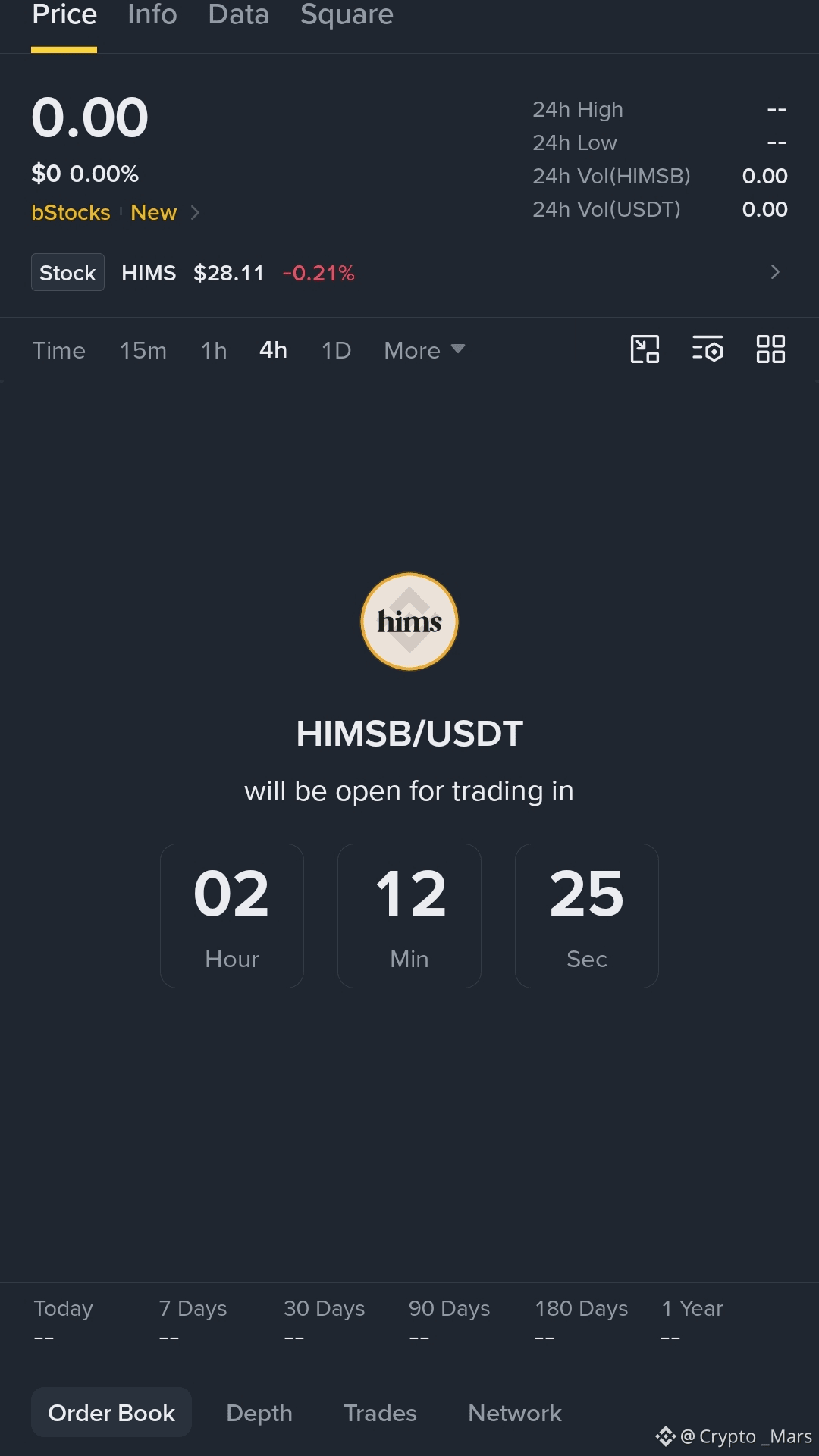
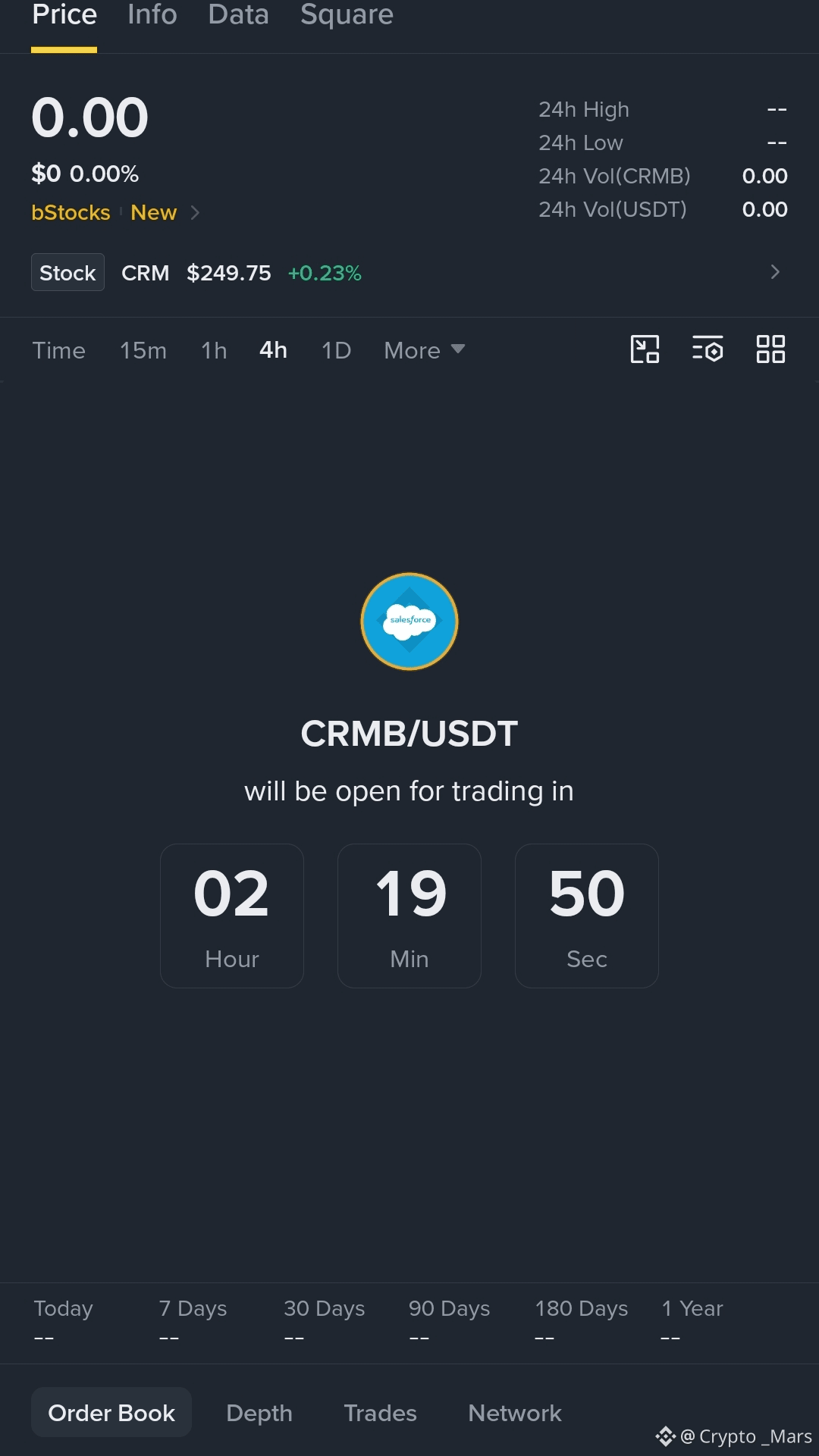
Guys, where do you think Salesforce (CRM) will price next? 👀
📊 Vote your target:
Vote your range & drop your exact price prediction in the comments! 👇🎯
#CRMB
📊 Vote your target:
Vote your range & drop your exact price prediction in the comments! 👇🎯
#CRMB
🔴$100
🔴$200
🔴$200+Boom🚀
12 hr(s) left
ETH — WHERE IS THE NEXT MOVE? 👀🔥
$2,490… Bulls or Bears? 🐂🐻
📈 $2,550+
📉 $2,440–
Drop your exact ETH price prediction below 👇🎯
#USIranTradeTankerStrikesEscalate #CanadaToImpose15%To50%TariffsOnUSGoods #ZcashRises45%WeeklyToHighestSince2016 #ZcashRises45%WeeklyToHighestSince2016
$2,490… Bulls or Bears? 🐂🐻
📈 $2,550+
📉 $2,440–
Drop your exact ETH price prediction below 👇🎯
#USIranTradeTankerStrikesEscalate #CanadaToImpose15%To50%TariffsOnUSGoods #ZcashRises45%WeeklyToHighestSince2016 #ZcashRises45%WeeklyToHighestSince2016
🔴$2550+🚀Up📈
66%
🔴$2440- Down📉
34%
32 votes • Voting closed
🚨 Where do you think ZEC goes next?🚀
$ZEC is testing the $1,241 resistance after a strong rally. 👀
Vote your range 👇
Then comment your exact price prediction 🎯
Let’s see who calls it right. 👀
$ZEC is testing the $1,241 resistance after a strong rally. 👀
Vote your range 👇
Then comment your exact price prediction 🎯
Let’s see who calls it right. 👀
🔴$1250-$1300
23%
🔴$1300-$1350
10%
🔴$1350-$1400
9%
🔴$1400+🚀Boom
58%
286 votes • Voting closed
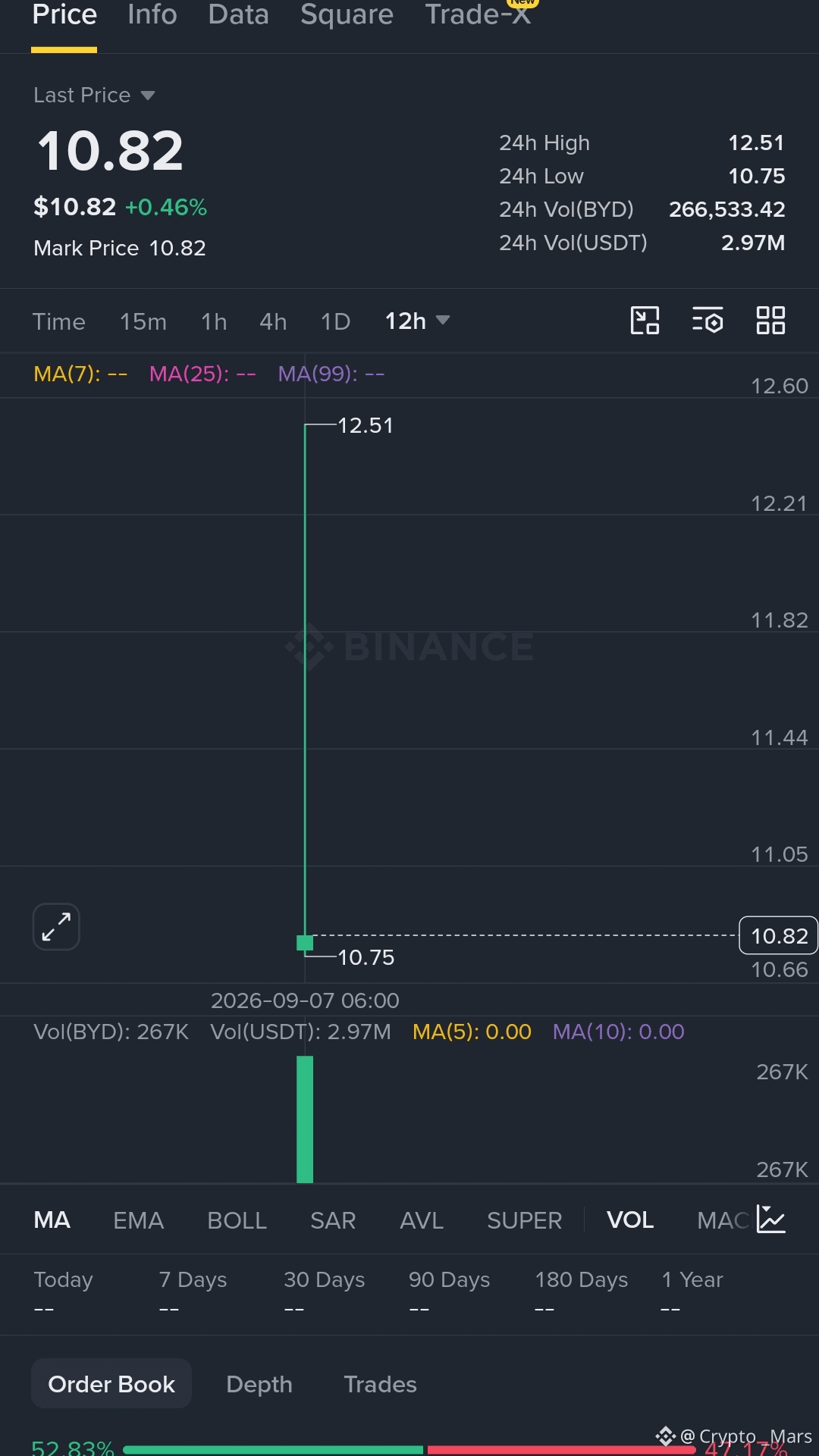
🚨 $BYD — DON’T JUST VOTE. MAKE A CALL.
Vote your range below 👇
Then comment your exact price prediction 🎯
Everyone will be watching the first candle.
But the smarter question is:
Where will the market find its first real price discovery?
$BYD Perp hasn’t even opened yet — currently $0 price, $0 volume.
That means we have a rare moment:
No chart bias. No hindsight. Just your thesis.
So before the first trade hits the book:
📊 WHERE DO YOU THINK $BYD WILL TRADE IN ITS FIRST 5 MINUTES?
🔘 $0.50 – $0.60
🔘 $0.60 – $0.70
🔘 $0.70 – $0.80
🔘 $0.80+ 🚀#ZECHitsANewAllTimeHigh #BYD
#RussiaUkraine72-hourCeasefire #BitcoinETFsBiggestDailyInflowSinceJanuary
But here’s the challenge 👇
Don’t just vote. Comment WHY.
Is it liquidity + hype?
Is it opening volatility?
Or do you expect an early FOMO trap & reversal?
I’ll be watching the comments before the market opens.
Let’s see who predicts the market — and who simply follows it. 👀
⏳ BYDUSDT Perp — Almost Live
Your price target? 🎯👇
Not financial advice. DYOR.
Vote your range below 👇
Then comment your exact price prediction 🎯
Everyone will be watching the first candle.
But the smarter question is:
Where will the market find its first real price discovery?
$BYD Perp hasn’t even opened yet — currently $0 price, $0 volume.
That means we have a rare moment:
No chart bias. No hindsight. Just your thesis.
So before the first trade hits the book:
📊 WHERE DO YOU THINK $BYD WILL TRADE IN ITS FIRST 5 MINUTES?
🔘 $0.50 – $0.60
🔘 $0.60 – $0.70
🔘 $0.70 – $0.80
🔘 $0.80+ 🚀#ZECHitsANewAllTimeHigh #BYD
#RussiaUkraine72-hourCeasefire #BitcoinETFsBiggestDailyInflowSinceJanuary
But here’s the challenge 👇
Don’t just vote. Comment WHY.
Is it liquidity + hype?
Is it opening volatility?
Or do you expect an early FOMO trap & reversal?
I’ll be watching the comments before the market opens.
Let’s see who predicts the market — and who simply follows it. 👀
⏳ BYDUSDT Perp — Almost Live
Your price target? 🎯👇
Not financial advice. DYOR.
🔴$0.50 – $0.60
22%
🔴$0.60 – $0.70
8%
🔴$0.70 – $0.80
8%
$0.80+🔥🚀
62%
174 votes • Voting closed
·
--
🎙️ Catching Impulses on DUSK Trading scenarios, levels, and risks for today
End
01 h 27 m 40 s
984
2

The Illusion of Floating Yields: Why TermMax is Redefining DeFi Certainty
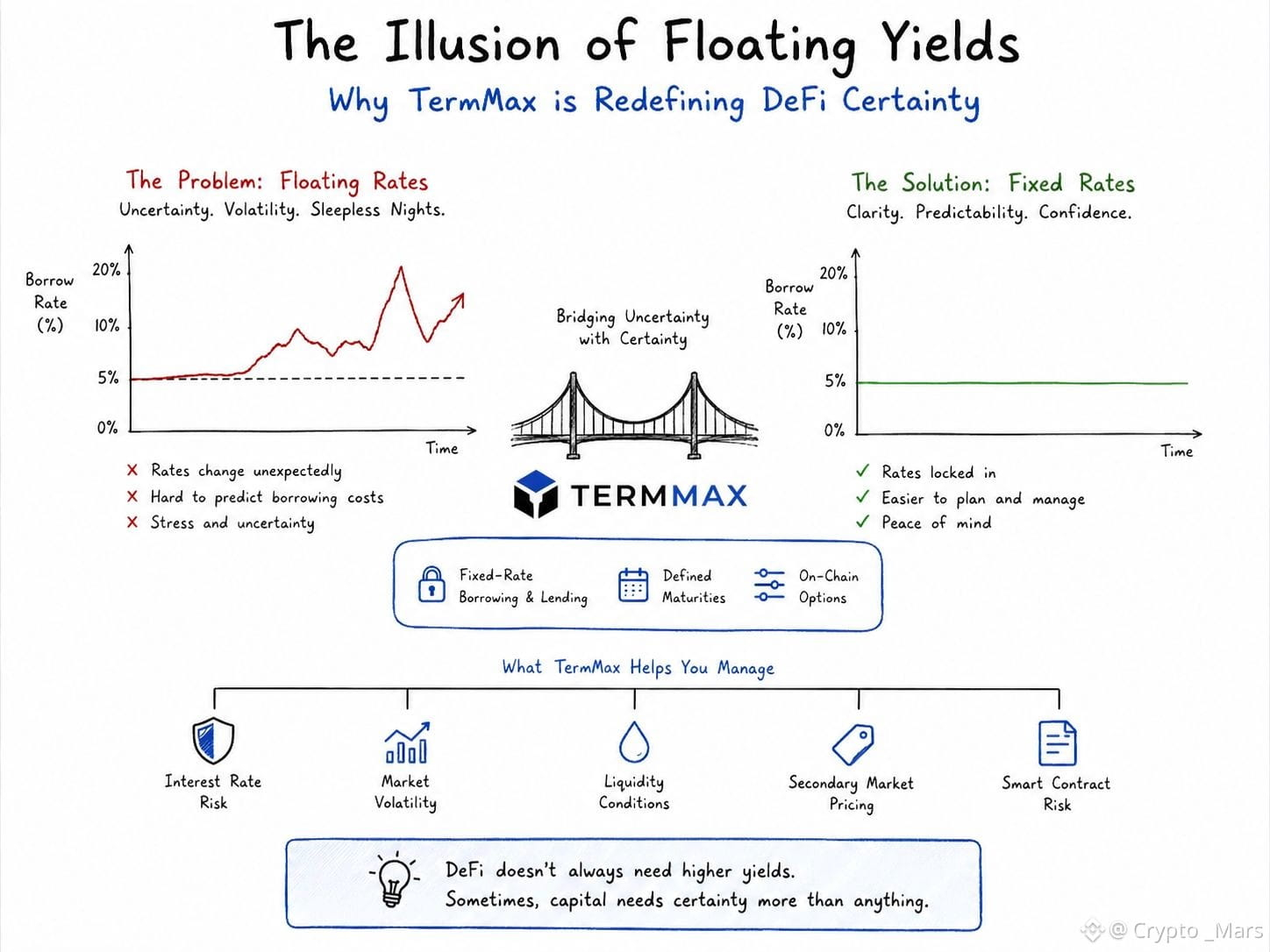
I checked my lending positions yesterday, and the numbers caught me off guard again. You enter a position expecting something around 5%, go to sleep, and wake up to borrowing costs that have suddenly jumped much higher. Hmmm… that kind of uncertainty gets old pretty quickly.
Variable yields can look great when markets are calm. But when volatility picks up, that flexibility can become the problem. Rates move, borrowing costs change, and suddenly it becomes difficult to know what your position will actually cost tomorrow.
That’s what makes TermMax interesting to me. Instead of simply accepting constantly changing rates, it focuses on fixed-rate borrowing and lending, defined maturities, and on-chain options that can help participants manage different forms of risk.
Of course, fixed-rate markets don’t magically remove risk. Smart-contract issues, liquidity conditions, and secondary-market pricing still matter. But the bigger idea feels important: DeFi may not always need higher yields. Sometimes, what capital really needs is a better sense of certainty.
Because financial maturity isn’t only about how much you can earn.
It’s also about how confidently you can understand what tomorrow might look like.
@TermMax #TermMax
I checked my lending positions yesterday, and the numbers caught me off guard again. You enter a position expecting something around 5%, go to sleep, and wake up to borrowing costs that have suddenly jumped much higher. Hmmm… that kind of uncertainty gets old pretty quickly.
Variable yields can look great when markets are calm. But when volatility picks up, that flexibility can become the problem. Rates move, borrowing costs change, and suddenly it becomes difficult to know what your position will actually cost tomorrow.
That’s what makes TermMax interesting to me. Instead of simply accepting constantly changing rates, it focuses on fixed-rate borrowing and lending, defined maturities, and on-chain options that can help participants manage different forms of risk.
Of course, fixed-rate markets don’t magically remove risk. Smart-contract issues, liquidity conditions, and secondary-market pricing still matter. But the bigger idea feels important: DeFi may not always need higher yields. Sometimes, what capital really needs is a better sense of certainty.
Because financial maturity isn’t only about how much you can earn.
It’s also about how confidently you can understand what tomorrow might look like.
@TermMax #TermMax
·
--
🎙️ Bull run fast return—has Musk’s little dogecoin got on board?

End
04 h 09 m 31 s
6.7k
273


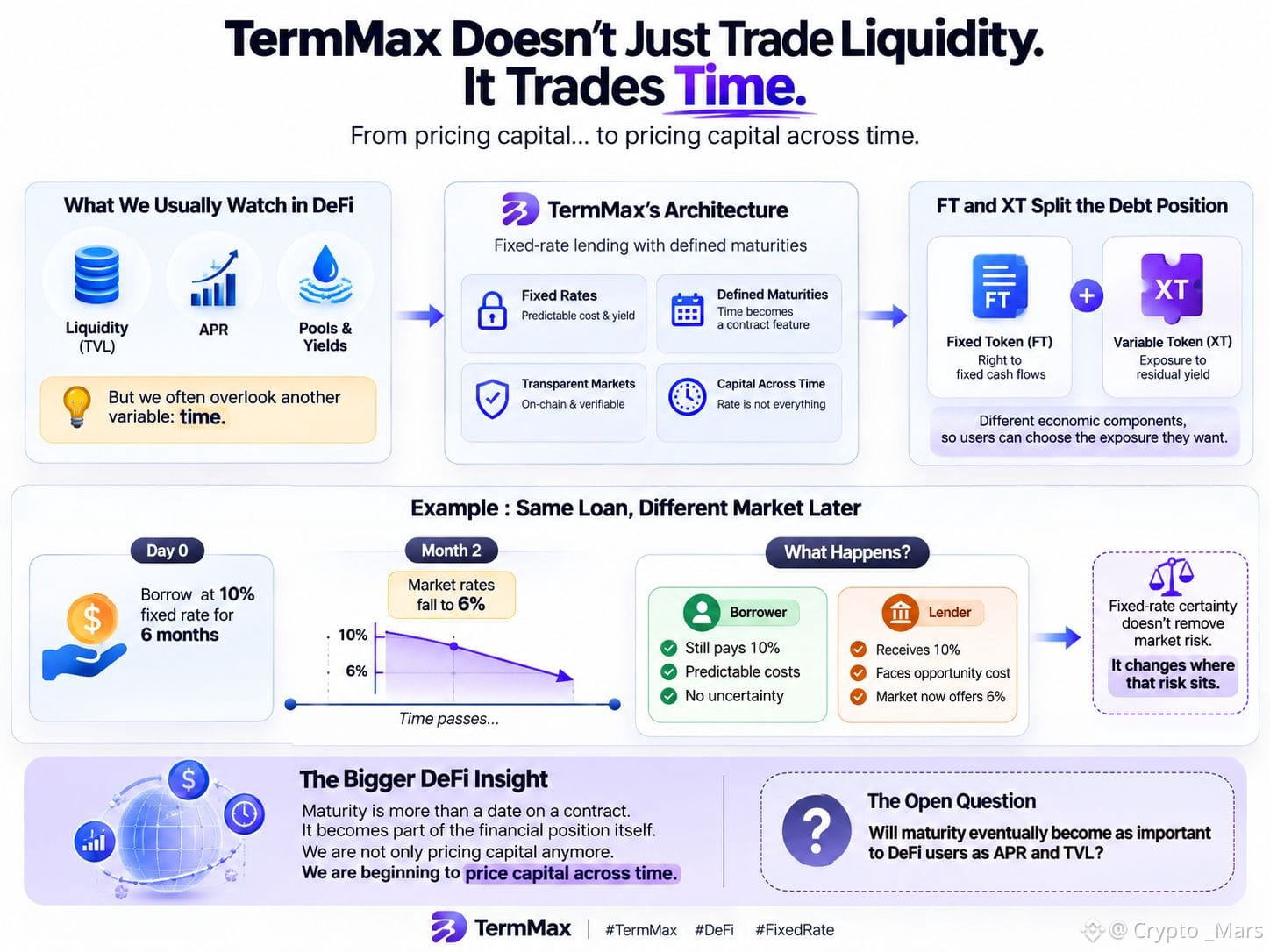
DeFi lending is usually viewed through liquidity, TVL and APR. But the deeper I look at fixed-rate markets, the more I think we often overlook another variable: time.
That is what makes TermMax interesting to me. Its architecture combines fixed-rate lending with defined maturities, while FT and XT separate different economic components of a debt position.
This changes the question from simply “What is the interest rate?” to “What is the rate for, and until when?”
Imagine borrowing at a 10% fixed rate for six months. Two months later, market rates fall to 6%. The borrower still has predictable costs, while the lender now faces an opportunity-cost question.
So fixed-rate certainty doesn't remove market risk. It changes where that risk sits.
That makes maturity more than a date on a contract. It becomes part of the financial position itself.
Maybe this is the bigger idea behind fixed-rate DeFi: we are not only pricing capital anymore. We are beginning to price capital across time.
And that leaves me with one question:
Will maturity eventually become as important to DeFi users as APR and TVL?
@TermMax $TERM
#TermMax #DeFi
That is what makes TermMax interesting to me. Its architecture combines fixed-rate lending with defined maturities, while FT and XT separate different economic components of a debt position.
This changes the question from simply “What is the interest rate?” to “What is the rate for, and until when?”
Imagine borrowing at a 10% fixed rate for six months. Two months later, market rates fall to 6%. The borrower still has predictable costs, while the lender now faces an opportunity-cost question.
So fixed-rate certainty doesn't remove market risk. It changes where that risk sits.
That makes maturity more than a date on a contract. It becomes part of the financial position itself.
Maybe this is the bigger idea behind fixed-rate DeFi: we are not only pricing capital anymore. We are beginning to price capital across time.
And that leaves me with one question:
Will maturity eventually become as important to DeFi users as APR and TVL?
@TermMax $TERM
#TermMax #DeFi
·
--
🎙️ Crypto market updates and discussion; answering questions from newcomers ✅ Keep up community building 🦅 Spread the idea of free exchange! Maintain ecological balance!

End
03 h 11 m 24 s
10.4k
78

#termmax @TermMax
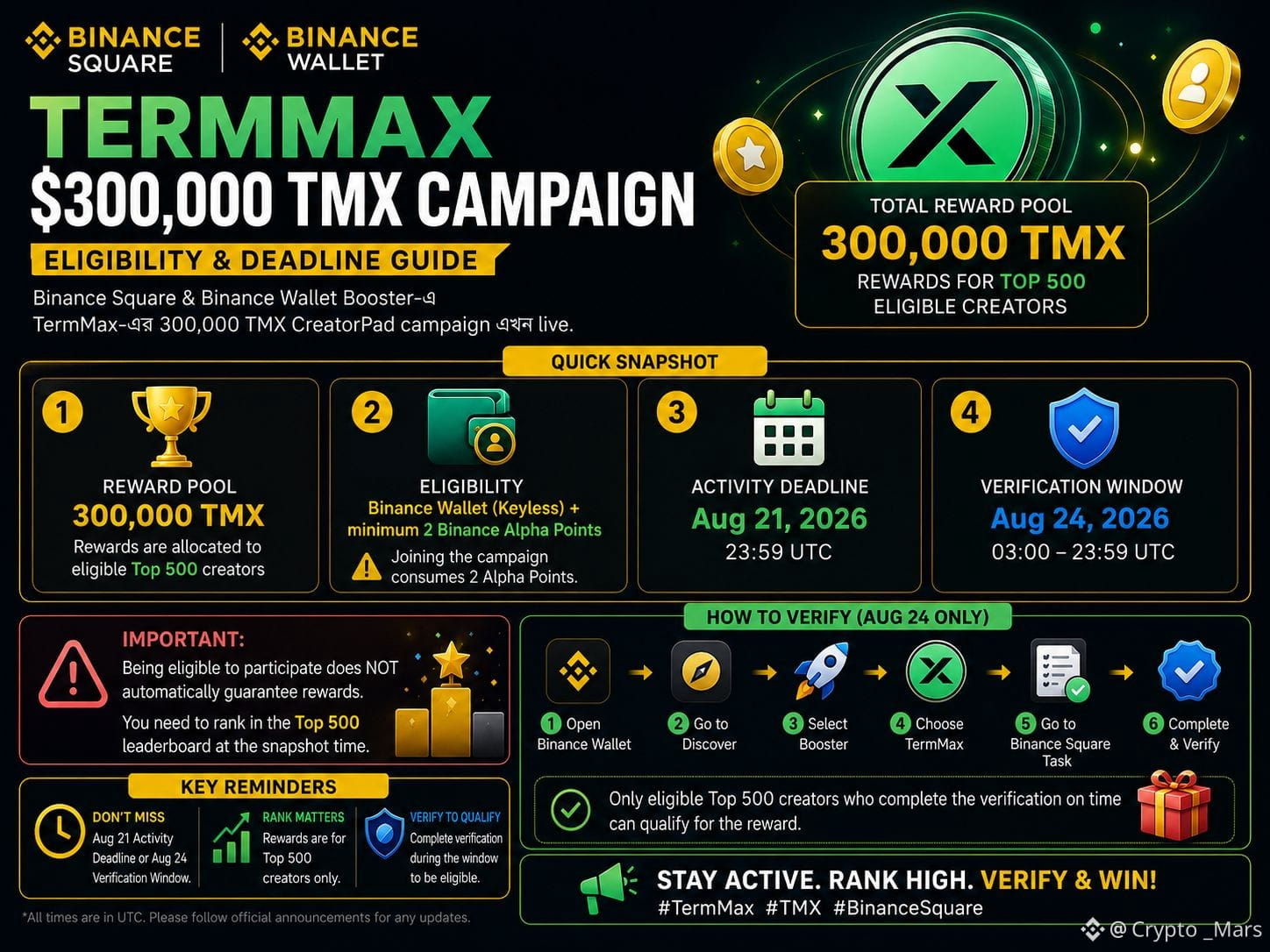
🔥 TermMax $300,000 TMX Campaign: Eligibility & Deadline Guide
Binance Square & Binance Wallet Booster's TermMax- 300,000 TMX CreatorPad campaign is now live.
📊 Quick Snapshot:
1️⃣ Reward Pool: 300,000 TMX
🏆 Rewards are allocated to eligible Top 500 creators
2️⃣ Eligibility: Binance Wallet (Keyless) + minimum 2 Binance Alpha Points
⚠️ Joining the campaign consumes 2 Alpha Points.
3️⃣ Activity Deadline: Aug 21, 2026 — 23:59 UTC
4️⃣ Verification Window: Aug 24, 2026 — 03:00–23:59 UTC
📌 Important: Being eligible to participate does NOT automatically guarantee rewards. You need to rank in the Top 500 leaderboard at the snapshot time.
Then, during the verification window, go to:
Binance Wallet → Discover → Booster → TermMax → Binance Square Task → Complete & Verify
Only eligible Top 500 creators who complete the verification on time can qualify for the reward.
⏰ Don’t miss the Aug 21 activity deadline or Aug 24 verification window.
#TermMax @TermMax #BinanceSquare #TermMax
🔥 TermMax $300,000 TMX Campaign: Eligibility & Deadline Guide
Binance Square & Binance Wallet Booster's TermMax- 300,000 TMX CreatorPad campaign is now live.
📊 Quick Snapshot:
1️⃣ Reward Pool: 300,000 TMX
🏆 Rewards are allocated to eligible Top 500 creators
2️⃣ Eligibility: Binance Wallet (Keyless) + minimum 2 Binance Alpha Points
⚠️ Joining the campaign consumes 2 Alpha Points.
3️⃣ Activity Deadline: Aug 21, 2026 — 23:59 UTC
4️⃣ Verification Window: Aug 24, 2026 — 03:00–23:59 UTC
📌 Important: Being eligible to participate does NOT automatically guarantee rewards. You need to rank in the Top 500 leaderboard at the snapshot time.
Then, during the verification window, go to:
Binance Wallet → Discover → Booster → TermMax → Binance Square Task → Complete & Verify
Only eligible Top 500 creators who complete the verification on time can qualify for the reward.
⏰ Don’t miss the Aug 21 activity deadline or Aug 24 verification window.
#TermMax @TermMax #BinanceSquare #TermMax
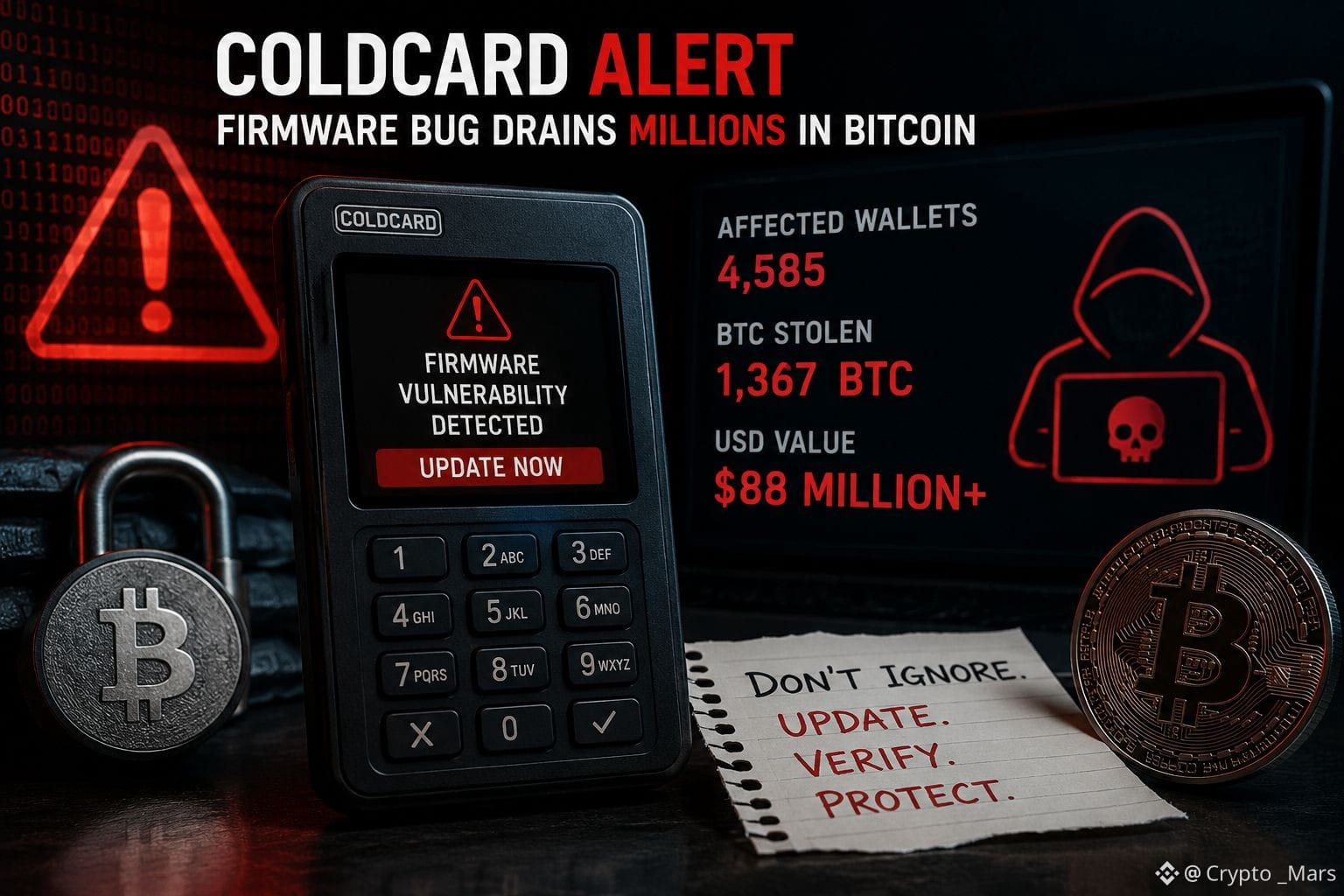
The biggest Bitcoin theft doesn't always begin with a stolen seed phrase. Sometimes it begins with a firmware you forgot to update.
The recent Coldcard security incident is a reminder that owning a hardware wallet isn't the end of your security journey. In this case, a firmware flaw affecting certain Coldcard devices allowed attackers to recover weakly generated seed phrases and steal more than 1,300 BTC from affected wallets.
If you're using a Coldcard Mk2, Mk3, Mk4, Mk5, or Q, don't ignore this warning.
Here's what you should do immediately:
Update to the latest official firmware.
Check whether your seed was generated using an affected firmware version.
If recommended by Coinkite, generate a new seed phrase.
Move your Bitcoin to a wallet protected by the new seed.
This isn't a reason to abandon self-custody. It's a reminder that security is an ongoing process, not a one-time purchase. Your seed phrase, firmware, and security habits all matter.
Don't wait until a vulnerability becomes your loss. Stay updated. Stay secure.
#USToCancelIranAttackSubjectToDeal #TrumpCancelsIranStrikePendingDeal #BTC ColdcardExploitHits$89MAcrossThreeWaves#BitcoinMiningDifficultyFalls14%FromYearHigh $BTC
The recent Coldcard security incident is a reminder that owning a hardware wallet isn't the end of your security journey. In this case, a firmware flaw affecting certain Coldcard devices allowed attackers to recover weakly generated seed phrases and steal more than 1,300 BTC from affected wallets.
If you're using a Coldcard Mk2, Mk3, Mk4, Mk5, or Q, don't ignore this warning.
Here's what you should do immediately:
Update to the latest official firmware.
Check whether your seed was generated using an affected firmware version.
If recommended by Coinkite, generate a new seed phrase.
Move your Bitcoin to a wallet protected by the new seed.
This isn't a reason to abandon self-custody. It's a reminder that security is an ongoing process, not a one-time purchase. Your seed phrase, firmware, and security habits all matter.
Don't wait until a vulnerability becomes your loss. Stay updated. Stay secure.
#USToCancelIranAttackSubjectToDeal #TrumpCancelsIranStrikePendingDeal #BTC ColdcardExploitHits$89MAcrossThreeWaves#BitcoinMiningDifficultyFalls14%FromYearHigh $BTC
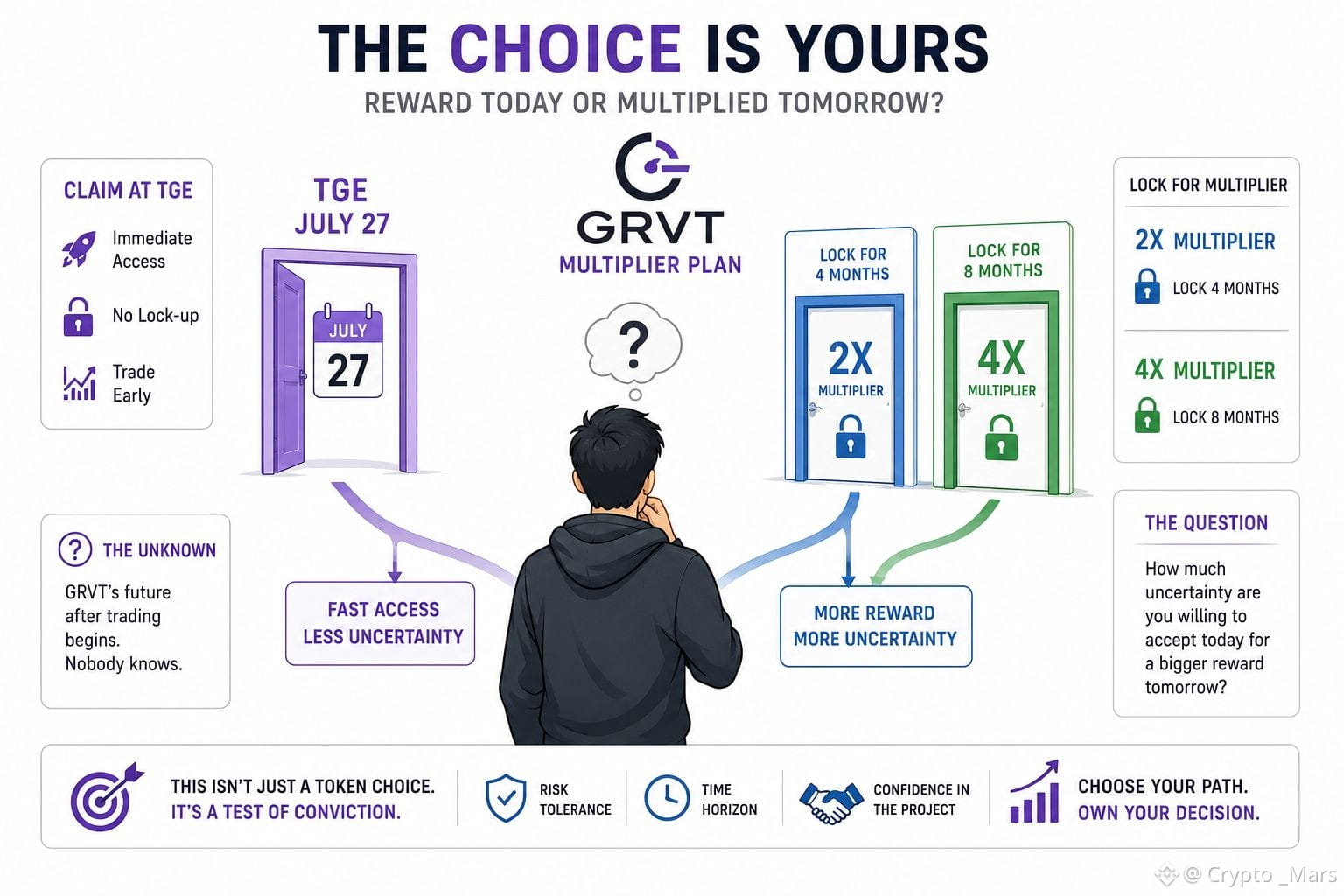
We like to believe that the biggest rewards go to the people who are willing to wait. But standing in front of @grvt_io Multiplier Plan, with only twelve days left before the July 27 deadline, that idea suddenly feels much harder to act on.
The difficult part isn't understanding the options. It's deciding which future you're more comfortable with. You can claim your allocation at TGE, or you can lock into a 2x or 4x multiplier and wait another four or eight months. Once you make that choice, there's no going back.
On paper, the trade-off is simple. Wait longer, receive a larger allocation. In reality, the decision depends on something nobody knows yet: how GRVT will evolve after it begins trading.
That's what I find most interesting about this design. The project encourages long-term participation, but the final decision is deeply personal. It quietly asks each participant a simple question: How much uncertainty are you willing to accept today for the possibility of a bigger reward tomorrow?
There isn't a universally "right" answer. It depends on your own risk tolerance, time horizon, and confidence in the project. For me, that's what makes this choice more than a token distribution mechanism -it's really a test of conviction.
@grvt_io #grvt #GRVT #grvt
The difficult part isn't understanding the options. It's deciding which future you're more comfortable with. You can claim your allocation at TGE, or you can lock into a 2x or 4x multiplier and wait another four or eight months. Once you make that choice, there's no going back.
On paper, the trade-off is simple. Wait longer, receive a larger allocation. In reality, the decision depends on something nobody knows yet: how GRVT will evolve after it begins trading.
That's what I find most interesting about this design. The project encourages long-term participation, but the final decision is deeply personal. It quietly asks each participant a simple question: How much uncertainty are you willing to accept today for the possibility of a bigger reward tomorrow?
There isn't a universally "right" answer. It depends on your own risk tolerance, time horizon, and confidence in the project. For me, that's what makes this choice more than a token distribution mechanism -it's really a test of conviction.
@grvt_io #grvt #GRVT #grvt
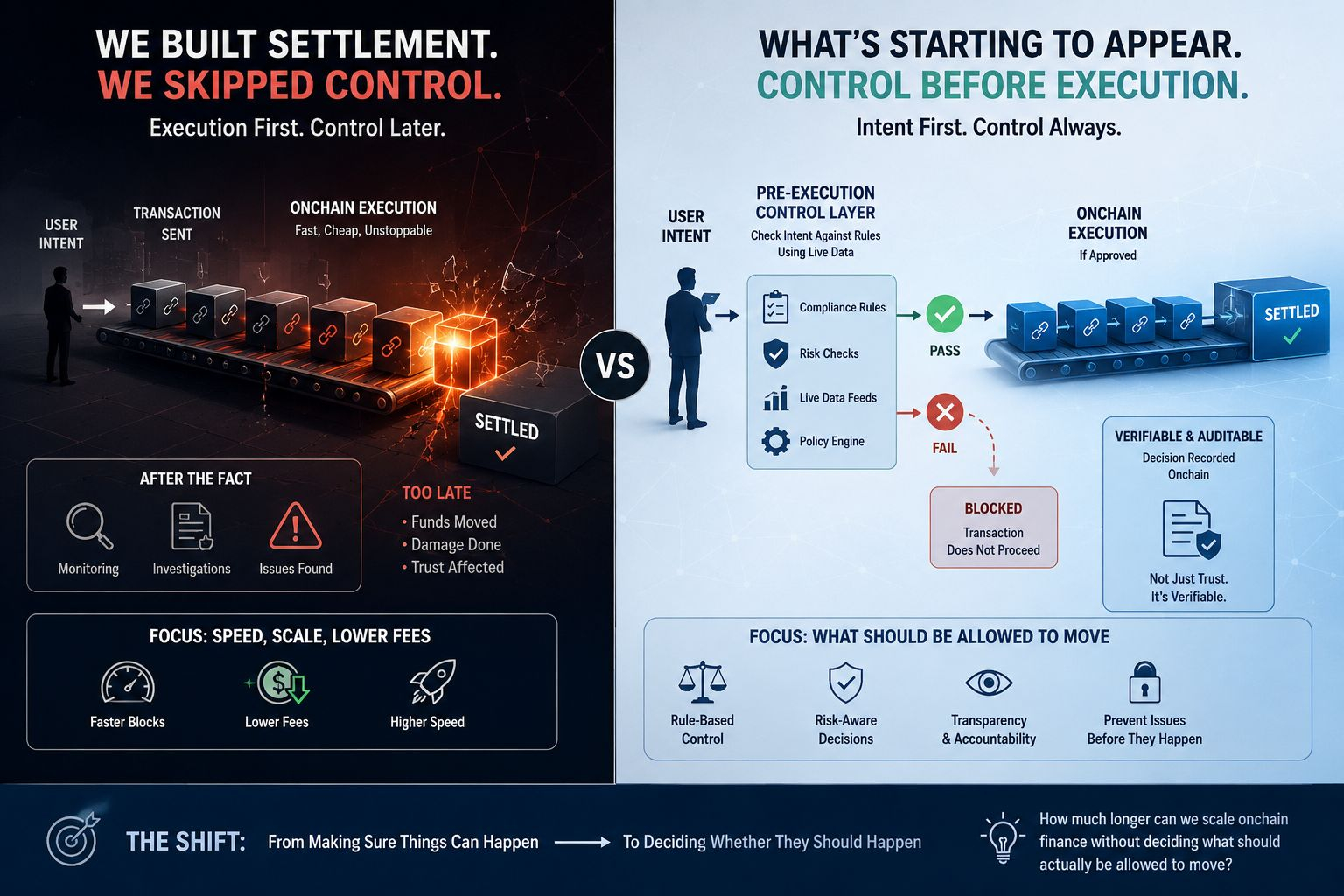
We Built Settlement. We Skipped Control.
I used to think that if we could just make onchain transactions faster and cheaper, most problems would eventually sort themselves out. For a long time, that’s where almost everyone focused — faster blocks, lower fees, higher speed. It felt like the obvious next step.
But slowly, something else started feeling more important. We became really good at moving value onchain, yet we never built much to control it before it moves. In traditional finance, most transactions go through some kind of check first. Rules are reviewed and risk is considered before anything actually settles. Onchain, we kind of skipped that part. We focused so much on execution that the question of whether something *should* happen was mostly left to basic smart contract rules or monitoring after the fact.
What’s starting to appear now feels different. Instead of waiting to see what went wrong after a transaction settles, there’s a layer that can check the intent against certain rules using live information before anything moves. If it doesn’t pass, the transaction simply doesn’t go through. And because the decision is recorded in a verifiable way, it doesn’t rely only on trust or looking back later.
This feels like more than just better tools. It’s a shift in how we think about onchain activity. We’ve spent years making sure things can happen. Now we’re slowly building systems that also help decide whether they should happen.
how much longer can we keep scaling onchain finance without putting real thought into what should actually be allowed to move?
@NewtonProtocol #Newt $NEWT
I used to think that if we could just make onchain transactions faster and cheaper, most problems would eventually sort themselves out. For a long time, that’s where almost everyone focused — faster blocks, lower fees, higher speed. It felt like the obvious next step.
But slowly, something else started feeling more important. We became really good at moving value onchain, yet we never built much to control it before it moves. In traditional finance, most transactions go through some kind of check first. Rules are reviewed and risk is considered before anything actually settles. Onchain, we kind of skipped that part. We focused so much on execution that the question of whether something *should* happen was mostly left to basic smart contract rules or monitoring after the fact.
What’s starting to appear now feels different. Instead of waiting to see what went wrong after a transaction settles, there’s a layer that can check the intent against certain rules using live information before anything moves. If it doesn’t pass, the transaction simply doesn’t go through. And because the decision is recorded in a verifiable way, it doesn’t rely only on trust or looking back later.
This feels like more than just better tools. It’s a shift in how we think about onchain activity. We’ve spent years making sure things can happen. Now we’re slowly building systems that also help decide whether they should happen.
how much longer can we keep scaling onchain finance without putting real thought into what should actually be allowed to move?
@NewtonProtocol #Newt $NEWT
Log in to explore more content