

灯塔说
1.3k Posts

灯塔说
 Square Verified
Report
Block User
老牌交易员,专注二级交易|投研,严谨计划交易,严格交易计划!合作|推特:@Cryptodengta

原创之星

NOKB Holder
Frequent Trader
7 Years
64 Following
14.0K+ Followers
19.7K+ Liked
1 Badges
Posts
All
Quotes
Videos
Live
PINNED
·
--
Important Announcement:
The market analysis and investment recommendations provided in this plaza are based solely on publicly available information and professional judgment, and do not constitute any guarantee of returns or assurance of principal safety.
Investing involves risk; decisions should be made carefully. Please assess your own risk tolerance and financial situation prudently, and assume responsibility for any related investment risks.
Note: All content on this plaza is for reference only and does not constitute any investment advice.
——Lighthouse Says. For business cooperation (copy-trading), please DM.
Important Announcement:
The market analysis and investment recommendations provided in this plaza are based solely on publicly available information and professional judgment, and do not constitute any guarantee of returns or assurance of principal safety.
Investing involves risk; decisions should be made carefully. Please assess your own risk tolerance and financial situation prudently, and assume responsibility for any related investment risks.
Note: All content on this plaza is for reference only and does not constitute any investment advice.
——Lighthouse Says. For business cooperation (copy-trading), please DM.
The market analysis and investment recommendations provided in this plaza are based solely on publicly available information and professional judgment, and do not constitute any guarantee of returns or assurance of principal safety.
Investing involves risk; decisions should be made carefully. Please assess your own risk tolerance and financial situation prudently, and assume responsibility for any related investment risks.
Note: All content on this plaza is for reference only and does not constitute any investment advice.
——Lighthouse Says. For business cooperation (copy-trading), please DM.
12
4.2k
·
--
On October 22, the Nasdaq fell about 2.6%, while the 10-year U.S. Treasury yield dropped to around 4.95%. This points to investors seeking safe havens.
On October 21, BTC ETFs saw net inflows of about $525 million, but on October 22 they shifted to net outflows of about $382 million. ETH ETFs saw net outflows of about $17.9 million on October 22.
On October 22, oil prices continued to rise amid tensions in the Middle East, while tech stocks saw a significant pullback. This suggests that safe-haven buying likely contributed to the decline in bond yields.
The Federal Reserve will hold its FOMC meeting on October 27–28, and the U.S. preliminary third-quarter GDP estimate and September PCE data will be released on October 29.
On October 22, the Nasdaq fell about 2.6%, while the 10-year U.S. Treasury yield dropped to around 4.95%. This points to investors seeking safe havens.
On October 21, BTC ETFs saw net inflows of about $525 million, but on October 22 they shifted to net outflows of about $382 million. ETH ETFs saw net outflows of about $17.9 million on October 22.
On October 22, oil prices continued to rise amid tensions in the Middle East, while tech stocks saw a significant pullback. This suggests that safe-haven buying likely contributed to the decline in bond yields.
The Federal Reserve will hold its FOMC meeting on October 27–28, and the U.S. preliminary third-quarter GDP estimate and September PCE data will be released on October 29.
On October 21, BTC ETFs saw net inflows of about $525 million, but on October 22 they shifted to net outflows of about $382 million. ETH ETFs saw net outflows of about $17.9 million on October 22.
On October 22, oil prices continued to rise amid tensions in the Middle East, while tech stocks saw a significant pullback. This suggests that safe-haven buying likely contributed to the decline in bond yields.
The Federal Reserve will hold its FOMC meeting on October 27–28, and the U.S. preliminary third-quarter GDP estimate and September PCE data will be released on October 29.
606
·
--
Why is gold dropping like this?
Aren't they all about to go to war?
A multinational military exercise on such a massive scale,
and I’m screwed again 😂😂😂
$XAU
Why is gold dropping like this?
Aren't they all about to go to war?
A multinational military exercise on such a massive scale,
and I’m screwed again 😂😂😂
$XAU
Aren't they all about to go to war?
A multinational military exercise on such a massive scale,
and I’m screwed again 😂😂😂
$XAU
3
1
4
5k
·
--
Verified
What should we expect from tonight’s CPI?
The previous reading was 3.4, and the forecast is 3.6. Market movements over the past few days have already reflected the market’s assumption that inflation rebounded in September.
So as long as the figure is in line with expectations, there shouldn’t be much of a bearish surprise.
The key is core CPI, which is forecast at 0.2. This measures inflation excluding energy.
As long as core CPI doesn’t exceed expectations, the impact from energy will be in line with what the market expects.
To sum up, watch the core CPI figure. Above 0.2 would be bearish and raise expectations of an October rate hike. At or below 0.2 would be in line with expectations, and the market is expected to find a floor and rebound.
$XAU $CL
{future}(XAUUSDT)
What should we expect from tonight’s CPI?
The previous reading was 3.4, and the forecast is 3.6. Market movements over the past few days have already reflected the market’s assumption that inflation rebounded in September.
So as long as the figure is in line with expectations, there shouldn’t be much of a bearish surprise.
The key is core CPI, which is forecast at 0.2. This measures inflation excluding energy.
As long as core CPI doesn’t exceed expectations, the impact from energy will be in line with what the market expects.
To sum up, watch the core CPI figure. Above 0.2 would be bearish and raise expectations of an October rate hike. At or below 0.2 would be in line with expectations, and the market is expected to find a floor and rebound.
$XAU $CL
The previous reading was 3.4, and the forecast is 3.6. Market movements over the past few days have already reflected the market’s assumption that inflation rebounded in September.
So as long as the figure is in line with expectations, there shouldn’t be much of a bearish surprise.
The key is core CPI, which is forecast at 0.2. This measures inflation excluding energy.
As long as core CPI doesn’t exceed expectations, the impact from energy will be in line with what the market expects.
To sum up, watch the core CPI figure. Above 0.2 would be bearish and raise expectations of an October rate hike. At or below 0.2 would be in line with expectations, and the market is expected to find a floor and rebound.
$XAU $CL

5
3k
·
--
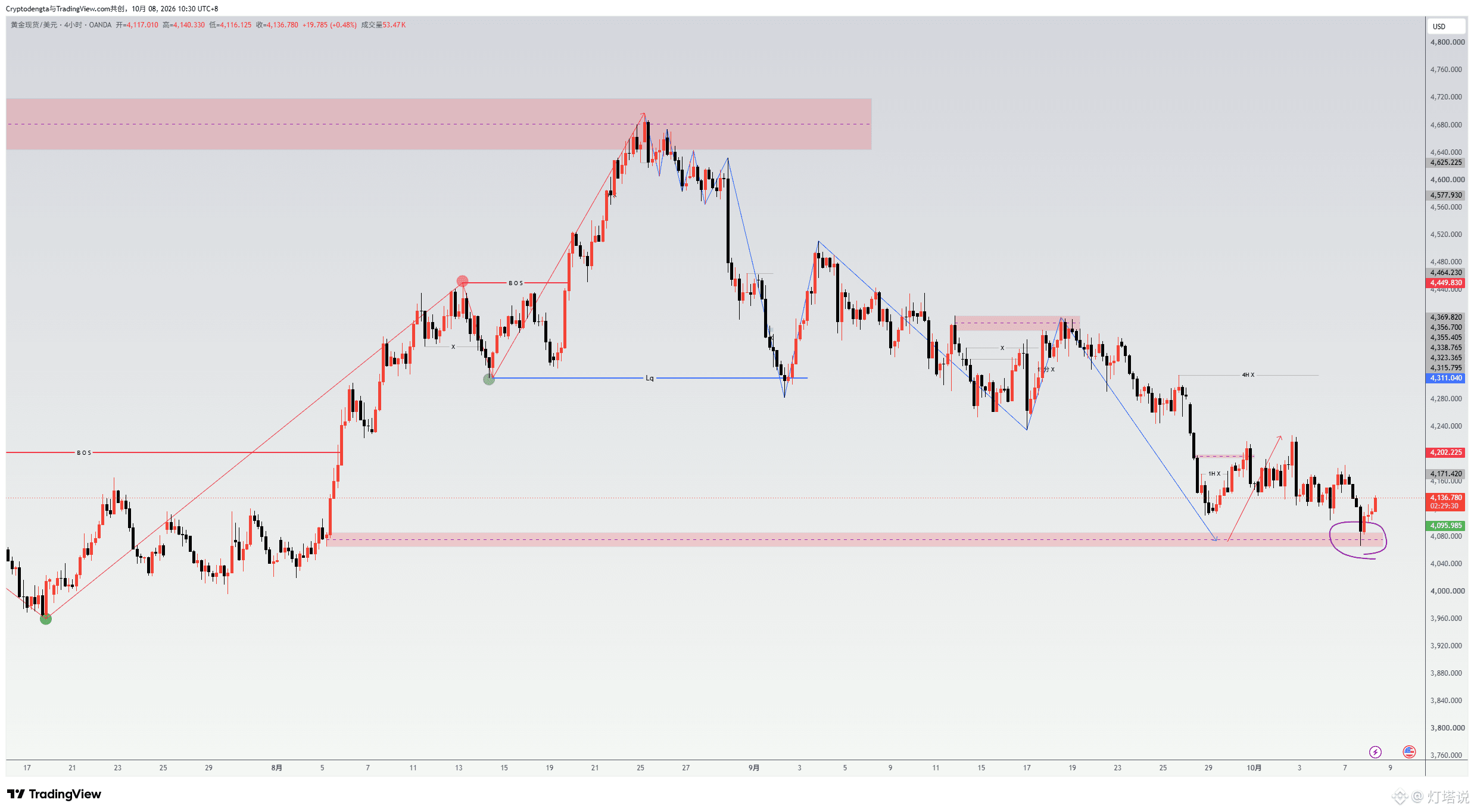
Gold reached the previously mentioned support zone around 4065–4080 and made its first rebound.
If it confirms that the decline has stopped,
gold may finally see a rebound.
$XAU
{future}(XAUUSDT)
Gold reached the previously mentioned support zone around 4065–4080 and made its first rebound.
If it confirms that the decline has stopped,
gold may finally see a rebound.
$XAU
If it confirms that the decline has stopped,
gold may finally see a rebound.
$XAU
灯塔说
·
--
Gold market:
Gold is currently continuing a 4-hour downtrend
This correction could fall to around 4000
For the key support on the 4-hour timeframe, watch the area around 4065–4085
If there is a structural shift on the smaller cycle here,
it would be a good bottom-buying opportunity.
$XAU
Gold is currently continuing a 4-hour downtrend
This correction could fall to around 4000
For the key support on the 4-hour timeframe, watch the area around 4065–4085
If there is a structural shift on the smaller cycle here,
it would be a good bottom-buying opportunity.
$XAU
1
3
2.1k
·
--
Verified
One long-form read per week:
This week, I read an article about AI. It mainly addresses
“Does AI really have a bubble?”
When AI investments truly become oversupplied, who will ultimately pay the bill?
According to estimates, cumulative investment in US AI data centers, chips, power, and network infrastructure from 2025 to 2032 could reach an astonishing $10.3 trillion. On average, that would be about 3.63% of the US GDP per year. Measured against economic scale, this even surpasses the construction booms in US history—railways, highways, electrification, and communications infrastructure.
So can AI earn enough money to justify all this? If it can’t, then who will be responsible for the money already spent?
When investments rely on cash flow,
when the bubble bursts,
first and foremost, shareholders are harmed.
But when more and more investment starts to be supported by debt, SPVs, private credit, and asset securitization,
the story changes.
Because when the next real turning point in the AI cycle arrives,
what we may need to watch won’t be just the Nasdaq.
It will be—
whether cracks appear first in the credit market.
If they do,
that crack may be the signal that this round of AI’s mega-capex supercycle has truly entered its second half.
Although this kind of risk hasn’t appeared yet,
the risks are becoming harder and harder to see.
$BTC
One long-form read per week:
This week, I read an article about AI. It mainly addresses
“Does AI really have a bubble?”
When AI investments truly become oversupplied, who will ultimately pay the bill?
According to estimates, cumulative investment in US AI data centers, chips, power, and network infrastructure from 2025 to 2032 could reach an astonishing $10.3 trillion. On average, that would be about 3.63% of the US GDP per year. Measured against economic scale, this even surpasses the construction booms in US history—railways, highways, electrification, and communications infrastructure.
So can AI earn enough money to justify all this? If it can’t, then who will be responsible for the money already spent?
When investments rely on cash flow,
when the bubble bursts,
first and foremost, shareholders are harmed.
But when more and more investment starts to be supported by debt, SPVs, private credit, and asset securitization,
the story changes.
Because when the next real turning point in the AI cycle arrives,
what we may need to watch won’t be just the Nasdaq.
It will be—
whether cracks appear first in the credit market.
If they do,
that crack may be the signal that this round of AI’s mega-capex supercycle has truly entered its second half.
Although this kind of risk hasn’t appeared yet,
the risks are becoming harder and harder to see.
$BTC
This week, I read an article about AI. It mainly addresses
“Does AI really have a bubble?”
When AI investments truly become oversupplied, who will ultimately pay the bill?
According to estimates, cumulative investment in US AI data centers, chips, power, and network infrastructure from 2025 to 2032 could reach an astonishing $10.3 trillion. On average, that would be about 3.63% of the US GDP per year. Measured against economic scale, this even surpasses the construction booms in US history—railways, highways, electrification, and communications infrastructure.
So can AI earn enough money to justify all this? If it can’t, then who will be responsible for the money already spent?
When investments rely on cash flow,
when the bubble bursts,
first and foremost, shareholders are harmed.
But when more and more investment starts to be supported by debt, SPVs, private credit, and asset securitization,
the story changes.
Because when the next real turning point in the AI cycle arrives,
what we may need to watch won’t be just the Nasdaq.
It will be—
whether cracks appear first in the credit market.
If they do,
that crack may be the signal that this round of AI’s mega-capex supercycle has truly entered its second half.
Although this kind of risk hasn’t appeared yet,
the risks are becoming harder and harder to see.
$BTC

3
1.9k
·
--
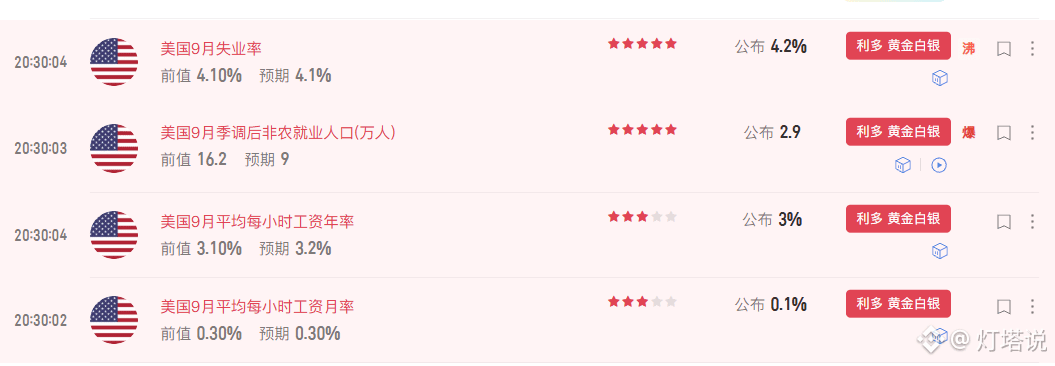
The nonfarm payrolls release value deviated seriously from expectations
and is extremely bearish for the U.S. dollar.
Although expectations for further rate hikes continue to be lowered,
being far below expectations instead makes the market worry whether an economic recession is impacting things.
After a modest spike higher, the market consolidates—possibly because the market has already priced in the positive move in advance over the past two days.
If macro factors don’t cause a breakout,
then be careful: a move that keeps trying but doesn’t achieve results.
The nonfarm payrolls release value deviated seriously from expectations
and is extremely bearish for the U.S. dollar.
Although expectations for further rate hikes continue to be lowered,
being far below expectations instead makes the market worry whether an economic recession is impacting things.
After a modest spike higher, the market consolidates—possibly because the market has already priced in the positive move in advance over the past two days.
If macro factors don’t cause a breakout,
then be careful: a move that keeps trying but doesn’t achieve results.
and is extremely bearish for the U.S. dollar.
Although expectations for further rate hikes continue to be lowered,
being far below expectations instead makes the market worry whether an economic recession is impacting things.
After a modest spike higher, the market consolidates—possibly because the market has already priced in the positive move in advance over the past two days.
If macro factors don’t cause a breakout,
then be careful: a move that keeps trying but doesn’t achieve results.
灯塔说
·
--
This evening’s Non-Farm Payrolls (NFP): market expectations are for an increase of 90,000 jobs. I think the published figure to watch is 80,000–100,000.
A Reuters survey expects 90,000, the Dow Jones survey expects 84,000, and this week’s ADP report is also 90,000. Compared with last month’s 162,000, I’m more inclined to believe hiring is cooling, but it’s not yet at the point of a slowdown.
However, a pullback doesn’t necessarily mean good news—markets were already waiting for a pullback.
To add fuel to the rebound for BTC and ETH, even if the result matches expectations, we still need to look at wages: if the hourly wage month-over-month falls to 0.2%, and the unemployment rate stays at 4.1%, I would view this combination more positively.
So, if employment numbers meet expectations, then wages are what may determine tonight’s surprise.
A Reuters survey expects 90,000, the Dow Jones survey expects 84,000, and this week’s ADP report is also 90,000. Compared with last month’s 162,000, I’m more inclined to believe hiring is cooling, but it’s not yet at the point of a slowdown.
However, a pullback doesn’t necessarily mean good news—markets were already waiting for a pullback.
To add fuel to the rebound for BTC and ETH, even if the result matches expectations, we still need to look at wages: if the hourly wage month-over-month falls to 0.2%, and the unemployment rate stays at 4.1%, I would view this combination more positively.
So, if employment numbers meet expectations, then wages are what may determine tonight’s surprise.
1
1
10
18.1k
·
--
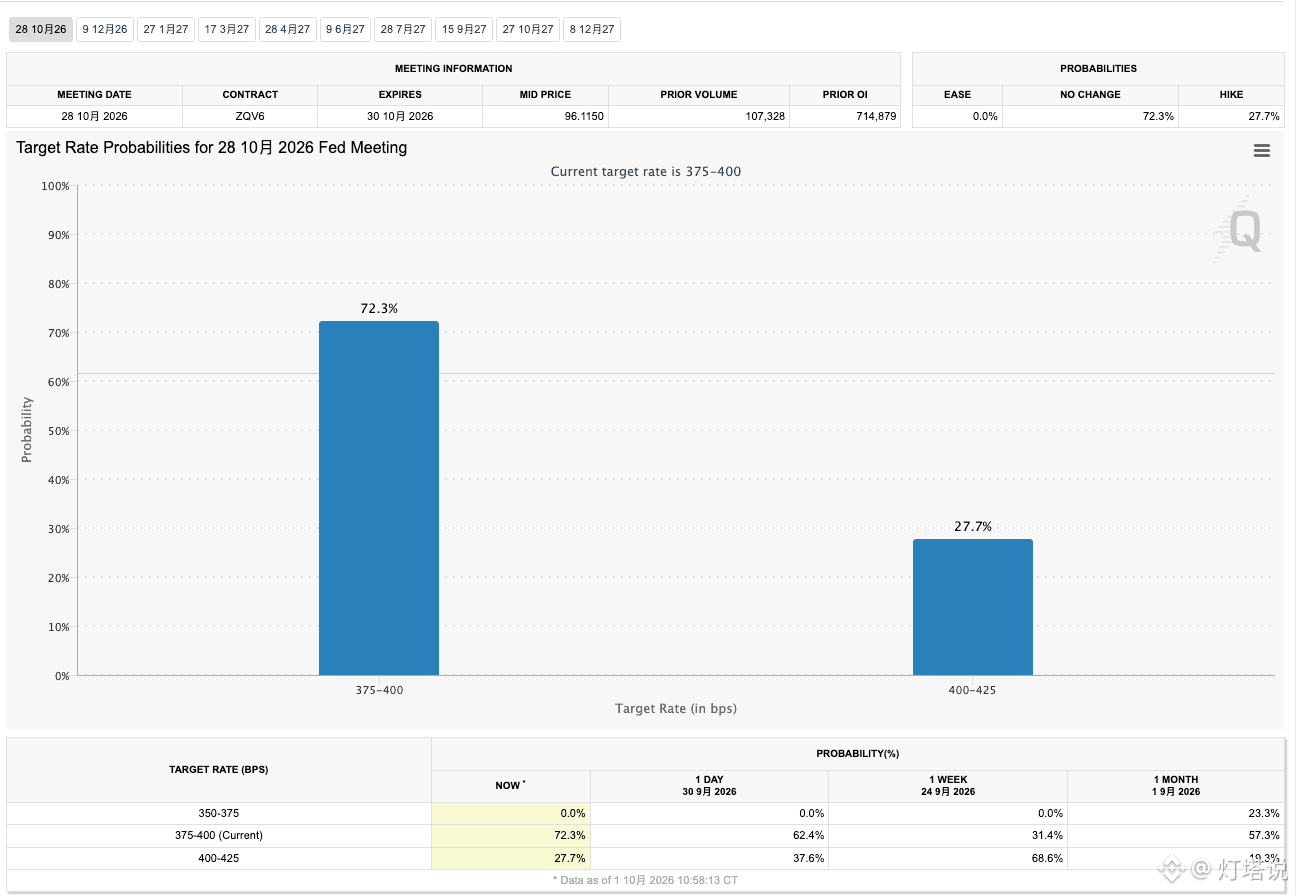
After the Wednesday PCE data came out, expectations for a rate hike in October fell from 66% to the current 27.7%.
The nonfarm payrolls data tonight will refocus the market again.
But judging from the BTC rally from last night to today,
the market seems to be anticipating that tonight’s nonfarm payrolls will come in within expectations.
There probably won’t be strong data or numbers that are unexpectedly cold.
As long as employment data does not see a strong rebound,
the probability of a rate hike will not rise significantly.
So, if tonight’s employment report comes in within the range, first check whether the hourly wage rate also falls below expectations.
If it’s above expectations, then don’t get overly bullish.
After the Wednesday PCE data came out, expectations for a rate hike in October fell from 66% to the current 27.7%.
The nonfarm payrolls data tonight will refocus the market again.
But judging from the BTC rally from last night to today,
the market seems to be anticipating that tonight’s nonfarm payrolls will come in within expectations.
There probably won’t be strong data or numbers that are unexpectedly cold.
As long as employment data does not see a strong rebound,
the probability of a rate hike will not rise significantly.
So, if tonight’s employment report comes in within the range, first check whether the hourly wage rate also falls below expectations.
If it’s above expectations, then don’t get overly bullish.
The nonfarm payrolls data tonight will refocus the market again.
But judging from the BTC rally from last night to today,
the market seems to be anticipating that tonight’s nonfarm payrolls will come in within expectations.
There probably won’t be strong data or numbers that are unexpectedly cold.
As long as employment data does not see a strong rebound,
the probability of a rate hike will not rise significantly.
So, if tonight’s employment report comes in within the range, first check whether the hourly wage rate also falls below expectations.
If it’s above expectations, then don’t get overly bullish.
1
3.2k
·
--
Verified
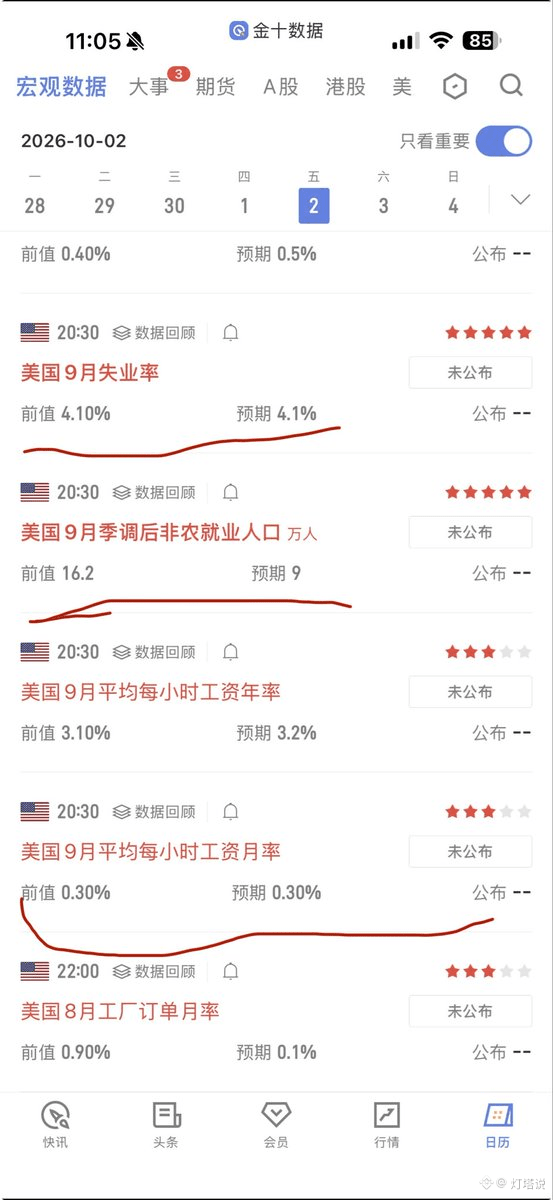
This evening’s Non-Farm Payrolls (NFP): market expectations are for an increase of 90,000 jobs. I think the published figure to watch is 80,000–100,000.
A Reuters survey expects 90,000, the Dow Jones survey expects 84,000, and this week’s ADP report is also 90,000. Compared with last month’s 162,000, I’m more inclined to believe hiring is cooling, but it’s not yet at the point of a slowdown.
However, a pullback doesn’t necessarily mean good news—markets were already waiting for a pullback.
To add fuel to the rebound for BTC and ETH, even if the result matches expectations, we still need to look at wages: if the hourly wage month-over-month falls to 0.2%, and the unemployment rate stays at 4.1%, I would view this combination more positively.
So, if employment numbers meet expectations, then wages are what may determine tonight’s surprise.
This evening’s Non-Farm Payrolls (NFP): market expectations are for an increase of 90,000 jobs. I think the published figure to watch is 80,000–100,000.
A Reuters survey expects 90,000, the Dow Jones survey expects 84,000, and this week’s ADP report is also 90,000. Compared with last month’s 162,000, I’m more inclined to believe hiring is cooling, but it’s not yet at the point of a slowdown.
However, a pullback doesn’t necessarily mean good news—markets were already waiting for a pullback.
To add fuel to the rebound for BTC and ETH, even if the result matches expectations, we still need to look at wages: if the hourly wage month-over-month falls to 0.2%, and the unemployment rate stays at 4.1%, I would view this combination more positively.
So, if employment numbers meet expectations, then wages are what may determine tonight’s surprise.
A Reuters survey expects 90,000, the Dow Jones survey expects 84,000, and this week’s ADP report is also 90,000. Compared with last month’s 162,000, I’m more inclined to believe hiring is cooling, but it’s not yet at the point of a slowdown.
However, a pullback doesn’t necessarily mean good news—markets were already waiting for a pullback.
To add fuel to the rebound for BTC and ETH, even if the result matches expectations, we still need to look at wages: if the hourly wage month-over-month falls to 0.2%, and the unemployment rate stays at 4.1%, I would view this combination more positively.
So, if employment numbers meet expectations, then wages are what may determine tonight’s surprise.
1
2
7.1k
·
--
Verified
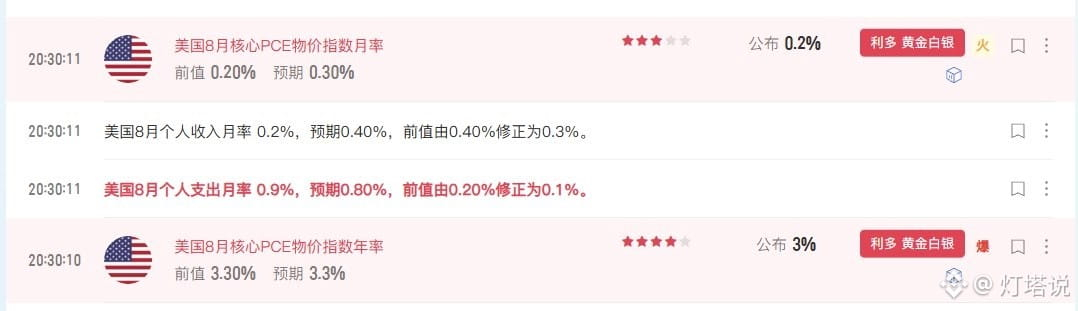
In sync: Below expectations—tonight’s released U.S. core PCE year-over-year rate is lower than expected, hitting a new six-month low.
It eases the pressure for further rate hikes.
Next, all eyes are on the U.S. nonfarm payrolls report for September to be released on October 2.
As long as expectations stay below 60%, Wosh’s style will hold steady and do nothing.
As long as there isn’t another rate hike, the market will improve and the pullback may end early.
Also, crude oil has already gone flat from the short side; preparing for a swing trade. The U.S. and Iran are locked in a standoff, neither backing down.
If it rebounds, look for a higher point to short again.$BTC $CL
In sync: Below expectations—tonight’s released U.S. core PCE year-over-year rate is lower than expected, hitting a new six-month low.
It eases the pressure for further rate hikes.
Next, all eyes are on the U.S. nonfarm payrolls report for September to be released on October 2.
As long as expectations stay below 60%, Wosh’s style will hold steady and do nothing.
As long as there isn’t another rate hike, the market will improve and the pullback may end early.
Also, crude oil has already gone flat from the short side; preparing for a swing trade. The U.S. and Iran are locked in a standoff, neither backing down.
If it rebounds, look for a higher point to short again.$BTC $CL
It eases the pressure for further rate hikes.
Next, all eyes are on the U.S. nonfarm payrolls report for September to be released on October 2.
As long as expectations stay below 60%, Wosh’s style will hold steady and do nothing.
As long as there isn’t another rate hike, the market will improve and the pullback may end early.
Also, crude oil has already gone flat from the short side; preparing for a swing trade. The U.S. and Iran are locked in a standoff, neither backing down.
If it rebounds, look for a higher point to short again.$BTC $CL
2
1
3.6k
·
--
Don't wait until crude oil drops to $80 before regretting that you didn't go short
A ceasefire is the main storyline right now
If you pause for a while, maybe it will flare up again
But right now is the best time on the left side
$CL
Don't wait until crude oil drops to $80 before regretting that you didn't go short
A ceasefire is the main storyline right now
If you pause for a while, maybe it will flare up again
But right now is the best time on the left side
$CL
A ceasefire is the main storyline right now
If you pause for a while, maybe it will flare up again
But right now is the best time on the left side
$CL
灯塔说
·
--
Crude Oil Market:
Trump is using “Figure 1” every day to “numb” the market
Last night, we saw another精彩 “dialogue.” Saudi media reported that Iran has agreed to stop uranium enrichment in exchange for the United States easing sanctions. But this was quickly denied by Iranian officials, and Trump also denied this morning any easing of sanctions against Iran and the release of frozen funds in exchange for Iran taking substantive steps on the nuclear issue.
Yesterday, crude oil prices fell from 96 to 91, and are currently rebounding around 93–94.
I’m holding my crude short positions at 96–95, and it’s almost making me sick.
Now, the U.S. and Iran are in a standoff. The good news is there are no shelling sounds; a third party is still mediating. The bad news is that neither side is willing to back down.
Here’s an experience-based tip: once negotiations actually become effective, don’t miss the crude oil sell-off—at least a 10-point move as a starting point, with targets directly at 83–85. If the gunfire resumes, abandon every single short position.
$CL
Trump is using “Figure 1” every day to “numb” the market
Last night, we saw another精彩 “dialogue.” Saudi media reported that Iran has agreed to stop uranium enrichment in exchange for the United States easing sanctions. But this was quickly denied by Iranian officials, and Trump also denied this morning any easing of sanctions against Iran and the release of frozen funds in exchange for Iran taking substantive steps on the nuclear issue.
Yesterday, crude oil prices fell from 96 to 91, and are currently rebounding around 93–94.
I’m holding my crude short positions at 96–95, and it’s almost making me sick.
Now, the U.S. and Iran are in a standoff. The good news is there are no shelling sounds; a third party is still mediating. The bad news is that neither side is willing to back down.
Here’s an experience-based tip: once negotiations actually become effective, don’t miss the crude oil sell-off—at least a 10-point move as a starting point, with targets directly at 83–85. If the gunfire resumes, abandon every single short position.
$CL

3
1.9k
·
--
Gold market:
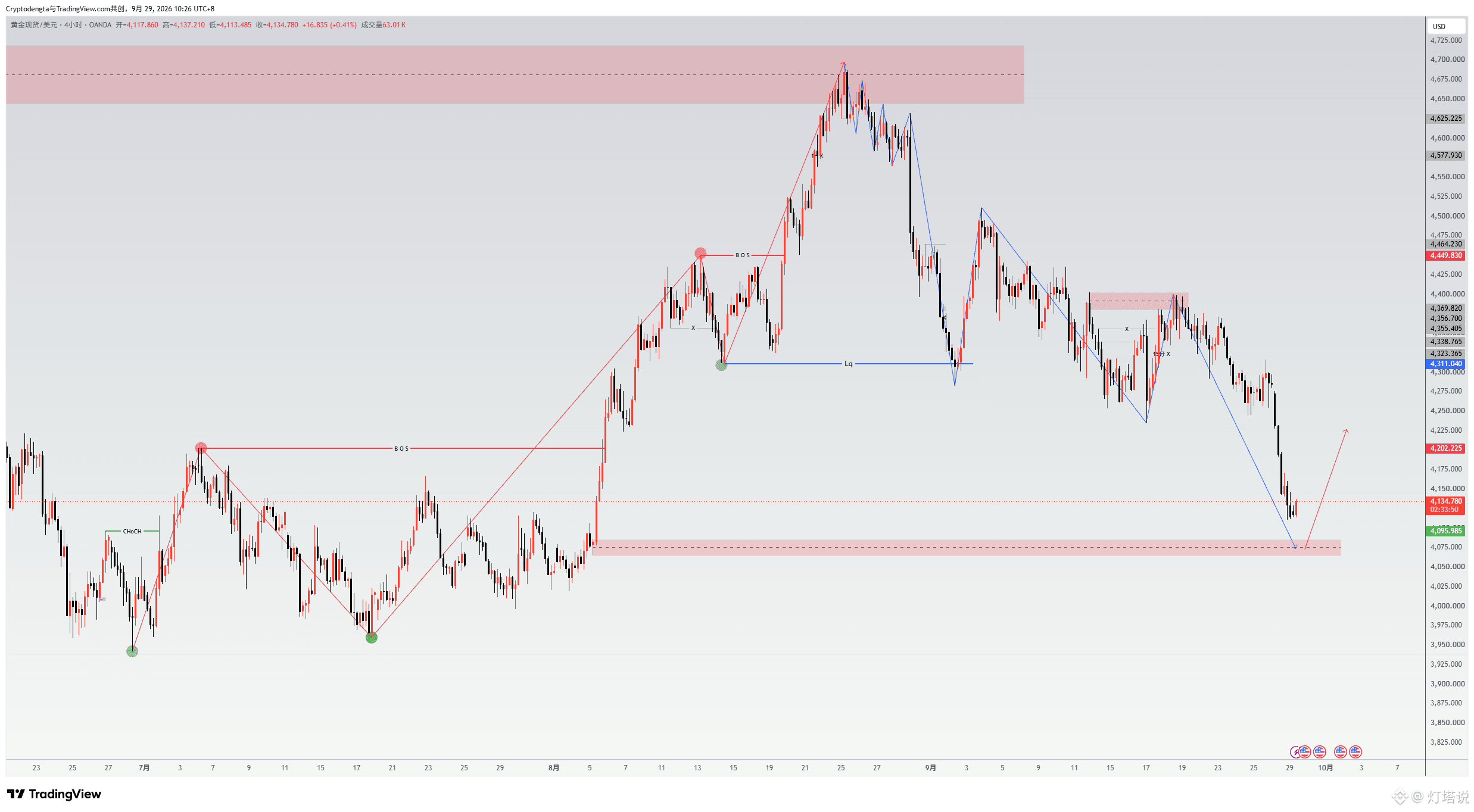
Gold is currently continuing a 4-hour downtrend
This correction could fall to around 4000
For the key support on the 4-hour timeframe, watch the area around 4065–4085
If there is a structural shift on the smaller cycle here,
it would be a good bottom-buying opportunity.
$XAU
{future}(XAUUSDT)
Gold market:
Gold is currently continuing a 4-hour downtrend
This correction could fall to around 4000
For the key support on the 4-hour timeframe, watch the area around 4065–4085
If there is a structural shift on the smaller cycle here,
it would be a good bottom-buying opportunity.
$XAU
Gold is currently continuing a 4-hour downtrend
This correction could fall to around 4000
For the key support on the 4-hour timeframe, watch the area around 4065–4085
If there is a structural shift on the smaller cycle here,
it would be a good bottom-buying opportunity.
$XAU
1
4
2.2k
·
--
Verified
Crude Oil Market:
Trump is using “Figure 1” every day to “numb” the market
Last night, we saw another精彩 “dialogue.” Saudi media reported that Iran has agreed to stop uranium enrichment in exchange for the United States easing sanctions. But this was quickly denied by Iranian officials, and Trump also denied this morning any easing of sanctions against Iran and the release of frozen funds in exchange for Iran taking substantive steps on the nuclear issue.
Yesterday, crude oil prices fell from 96 to 91, and are currently rebounding around 93–94.
I’m holding my crude short positions at 96–95, and it’s almost making me sick.
Now, the U.S. and Iran are in a standoff. The good news is there are no shelling sounds; a third party is still mediating. The bad news is that neither side is willing to back down.
Here’s an experience-based tip: once negotiations actually become effective, don’t miss the crude oil sell-off—at least a 10-point move as a starting point, with targets directly at 83–85. If the gunfire resumes, abandon every single short position.
$CL
{future}(CLUSDT)
Crude Oil Market:
Trump is using “Figure 1” every day to “numb” the market
Last night, we saw another精彩 “dialogue.” Saudi media reported that Iran has agreed to stop uranium enrichment in exchange for the United States easing sanctions. But this was quickly denied by Iranian officials, and Trump also denied this morning any easing of sanctions against Iran and the release of frozen funds in exchange for Iran taking substantive steps on the nuclear issue.
Yesterday, crude oil prices fell from 96 to 91, and are currently rebounding around 93–94.
I’m holding my crude short positions at 96–95, and it’s almost making me sick.
Now, the U.S. and Iran are in a standoff. The good news is there are no shelling sounds; a third party is still mediating. The bad news is that neither side is willing to back down.
Here’s an experience-based tip: once negotiations actually become effective, don’t miss the crude oil sell-off—at least a 10-point move as a starting point, with targets directly at 83–85. If the gunfire resumes, abandon every single short position.
$CL
Trump is using “Figure 1” every day to “numb” the market
Last night, we saw another精彩 “dialogue.” Saudi media reported that Iran has agreed to stop uranium enrichment in exchange for the United States easing sanctions. But this was quickly denied by Iranian officials, and Trump also denied this morning any easing of sanctions against Iran and the release of frozen funds in exchange for Iran taking substantive steps on the nuclear issue.
Yesterday, crude oil prices fell from 96 to 91, and are currently rebounding around 93–94.
I’m holding my crude short positions at 96–95, and it’s almost making me sick.
Now, the U.S. and Iran are in a standoff. The good news is there are no shelling sounds; a third party is still mediating. The bad news is that neither side is willing to back down.
Here’s an experience-based tip: once negotiations actually become effective, don’t miss the crude oil sell-off—at least a 10-point move as a starting point, with targets directly at 83–85. If the gunfire resumes, abandon every single short position.
$CL

灯塔说
·
--
The probability of a rate hike has risen to 70.9%.
If this week’s Non-Farm Payrolls data once again shows strong improvement,
then the current pullback expectations ahead of the rate hike will continue.
It’s somewhat similar to the adjustment before the rate hike in September.
$XAU
$CL
If this week’s Non-Farm Payrolls data once again shows strong improvement,
then the current pullback expectations ahead of the rate hike will continue.
It’s somewhat similar to the adjustment before the rate hike in September.
$XAU
$CL
1
3
3.7k
·
--
Partly True
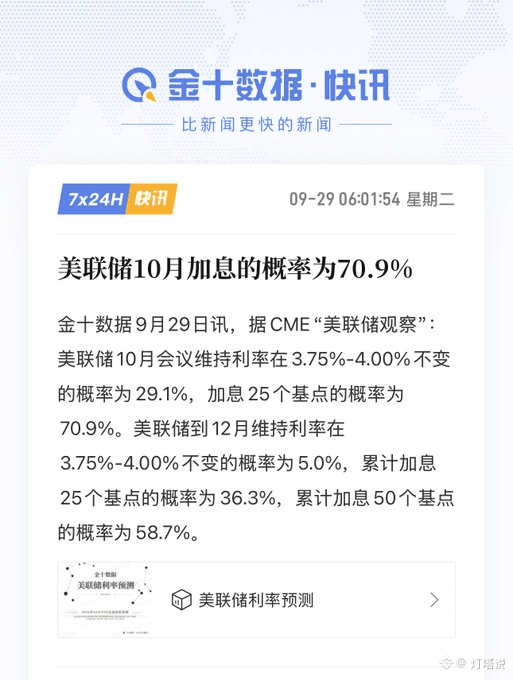
The probability of a rate hike has risen to 70.9%.
If this week’s Non-Farm Payrolls data once again shows strong improvement,
then the current pullback expectations ahead of the rate hike will continue.
It’s somewhat similar to the adjustment before the rate hike in September.
$XAU
$CL
The probability of a rate hike has risen to 70.9%.
If this week’s Non-Farm Payrolls data once again shows strong improvement,
then the current pullback expectations ahead of the rate hike will continue.
It’s somewhat similar to the adjustment before the rate hike in September.
$XAU
$CL
If this week’s Non-Farm Payrolls data once again shows strong improvement,
then the current pullback expectations ahead of the rate hike will continue.
It’s somewhat similar to the adjustment before the rate hike in September.
$XAU
$CL
1
4
4.8k
·
--
Hui Character Decision:
Negotiations will succeed
Oil will fall
Bitcoin will pull back
Gold will rise
Hui Character Decision:
Negotiations will succeed
Oil will fall
Bitcoin will pull back
Gold will rise
Negotiations will succeed
Oil will fall
Bitcoin will pull back
Gold will rise
2
1
2
1.2k
·
--
Partly True
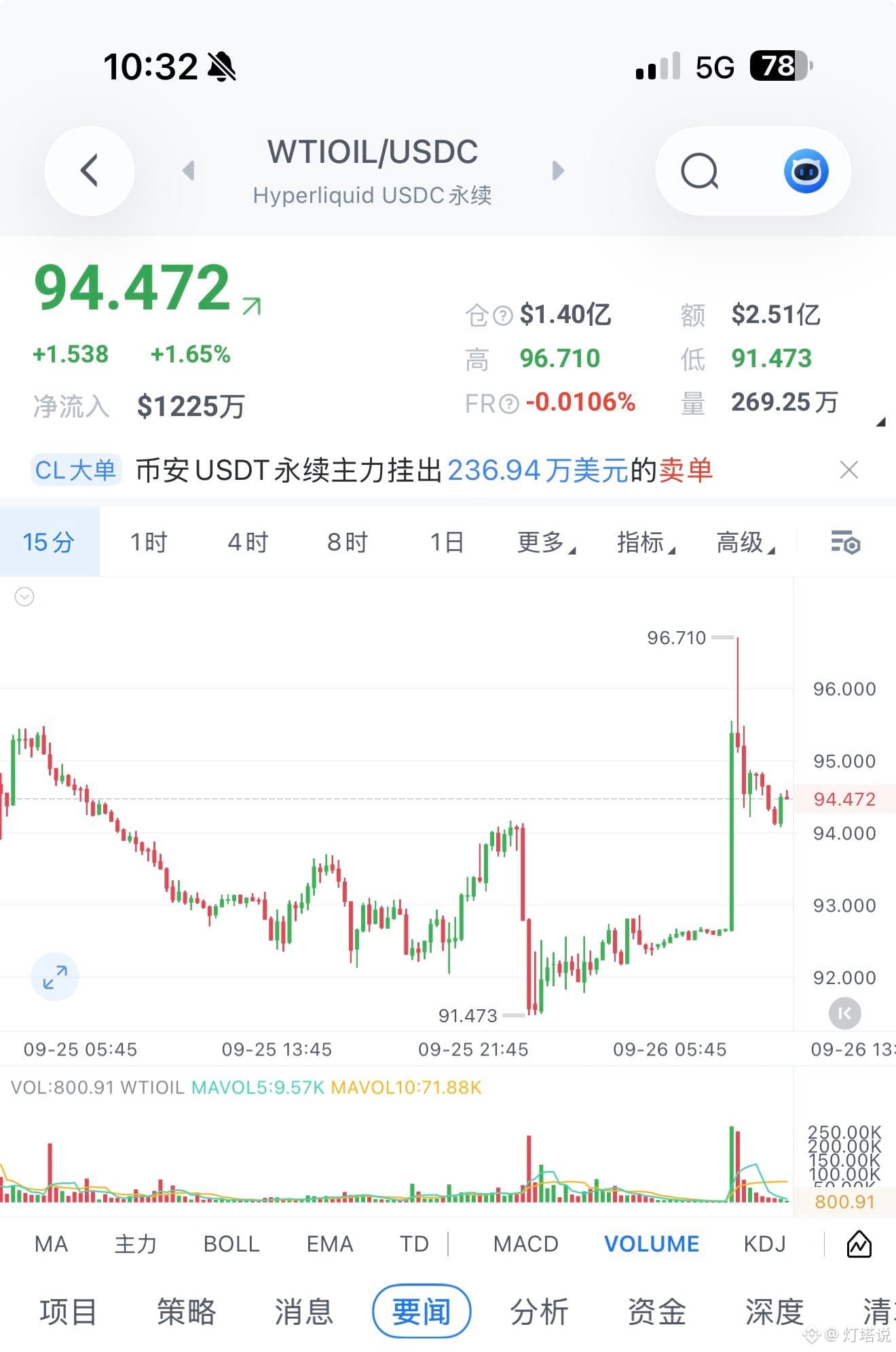
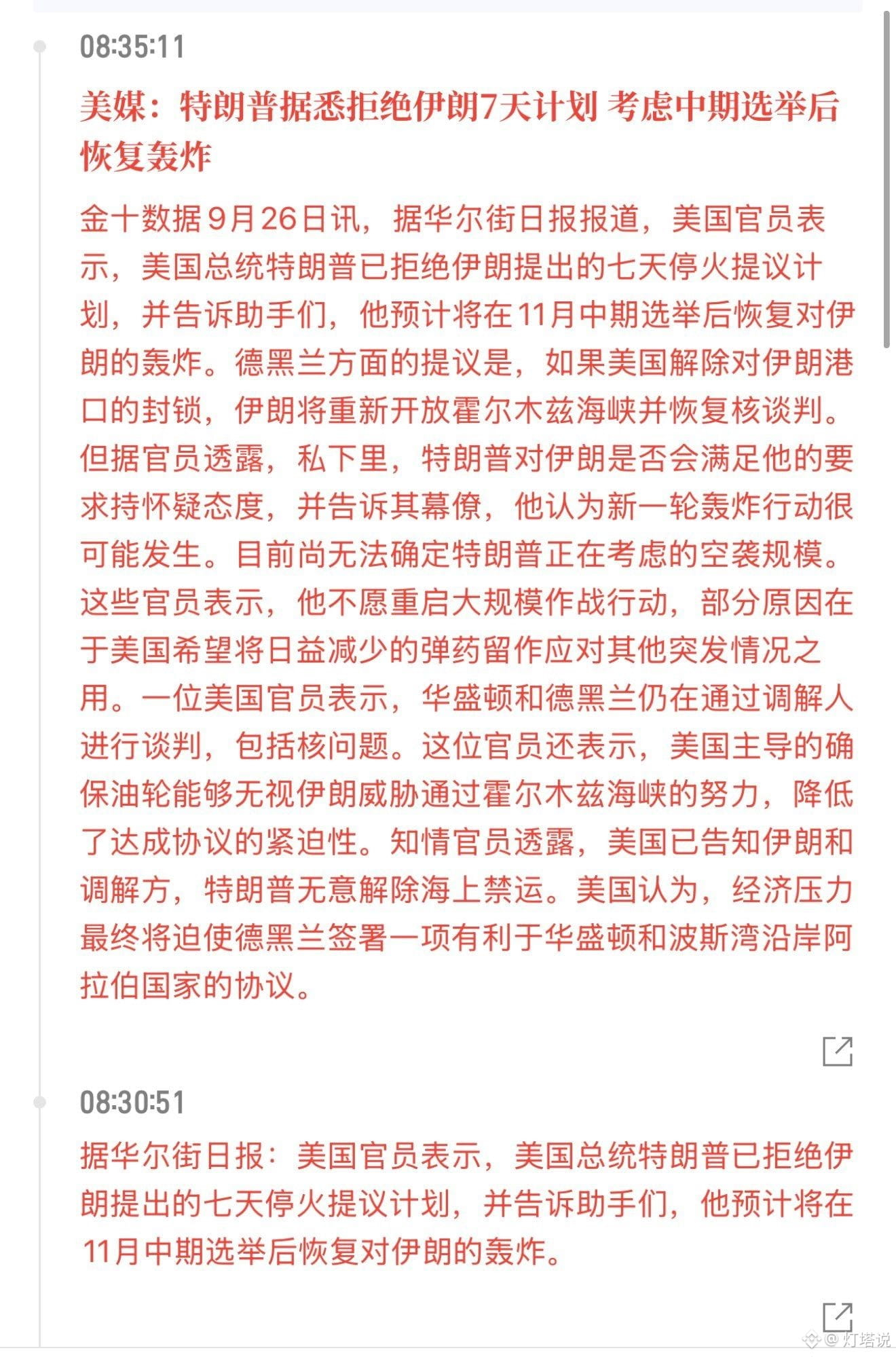
Trump today, in Beijing time, rejected Iran’s seven conditions
and said he would continue bombing after the midterm elections
Crude oil quickly rebounded to $96.7
This comes from information disclosed by an internal official; it has not yet been confirmed by Trump personally
But that doesn’t mean things will keep deteriorating—this is only an initial pressure test by both sides
The key to this game is Iran’s economic ability to withstand pressure and the U.S. voters’ ability to bear the costs—who will force leaders to adjust their conditions first.
The outcome may not happen quickly, but it’s going to be a prolonged battle
In the swing trading, look for selling into highs to match the expected market scenario
$CL
Trump today, in Beijing time, rejected Iran’s seven conditions
and said he would continue bombing after the midterm elections
Crude oil quickly rebounded to $96.7
This comes from information disclosed by an internal official; it has not yet been confirmed by Trump personally
But that doesn’t mean things will keep deteriorating—this is only an initial pressure test by both sides
The key to this game is Iran’s economic ability to withstand pressure and the U.S. voters’ ability to bear the costs—who will force leaders to adjust their conditions first.
The outcome may not happen quickly, but it’s going to be a prolonged battle
In the swing trading, look for selling into highs to match the expected market scenario
$CL
and said he would continue bombing after the midterm elections
Crude oil quickly rebounded to $96.7
This comes from information disclosed by an internal official; it has not yet been confirmed by Trump personally
But that doesn’t mean things will keep deteriorating—this is only an initial pressure test by both sides
The key to this game is Iran’s economic ability to withstand pressure and the U.S. voters’ ability to bear the costs—who will force leaders to adjust their conditions first.
The outcome may not happen quickly, but it’s going to be a prolonged battle
In the swing trading, look for selling into highs to match the expected market scenario
$CL
3
8.9k
·
--
Lately, I’ve been feeling more and more that,
when people talk about “de-dollarization,”
they often ask the wrong question.
Everyone keeps asking:
Who can replace the U.S. dollar?
But what may be truly worth paying attention to is,
that more and more countries are starting to think:
If one day I can no longer use the dollar, can I still do business normally?
The renminbi doesn’t need to become the next dollar.
And CIPS doesn’t need to defeat SWIFT.
As long as more and more countries have a second option,
the biggest advantage of the U.S. financial system—
“you have no other choice”
has already begun to loosen.
And what really changes a system is often not that the old one suddenly collapses.
It’s that people begin to have a second choice.$CL $XAU
Lately, I’ve been feeling more and more that,
when people talk about “de-dollarization,”
they often ask the wrong question.
Everyone keeps asking:
Who can replace the U.S. dollar?
But what may be truly worth paying attention to is,
that more and more countries are starting to think:
If one day I can no longer use the dollar, can I still do business normally?
The renminbi doesn’t need to become the next dollar.
And CIPS doesn’t need to defeat SWIFT.
As long as more and more countries have a second option,
the biggest advantage of the U.S. financial system—
“you have no other choice”
has already begun to loosen.
And what really changes a system is often not that the old one suddenly collapses.
It’s that people begin to have a second choice.$CL $XAU
when people talk about “de-dollarization,”
they often ask the wrong question.
Everyone keeps asking:
Who can replace the U.S. dollar?
But what may be truly worth paying attention to is,
that more and more countries are starting to think:
If one day I can no longer use the dollar, can I still do business normally?
The renminbi doesn’t need to become the next dollar.
And CIPS doesn’t need to defeat SWIFT.
As long as more and more countries have a second option,
the biggest advantage of the U.S. financial system—
“you have no other choice”
has already begun to loosen.
And what really changes a system is often not that the old one suddenly collapses.
It’s that people begin to have a second choice.$CL $XAU
1
2.4k
Log in to explore more content
Join global crypto users on Binance Square
⚡️ Get latest and useful information about crypto.
💬 Trusted by the world’s largest crypto exchange.
👍 Discover real insights from verified creators.
Email / Phone number