
聪哥sats
920 Posts

聪哥sats
 Square Verified
Report
Block User
X丨Web3 一级市场投研丨打新教程输出丨零撸空投分享丨所有内容均不是投资建议 ! DYOR ! BP-585E4B5126FE
87 Following
14.4K+ Followers
5.2K+ Liked
Posts
All
Quotes
Live
·
--
Bullish
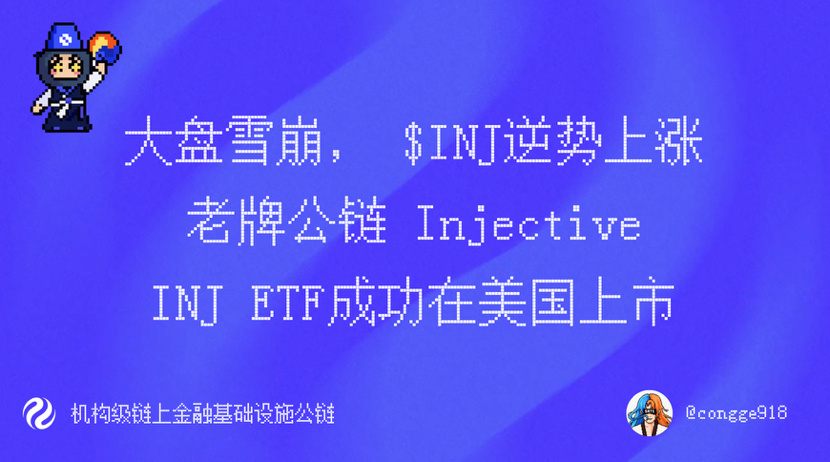
The broader market is in freefall, but INJ is rising against the trend.
Injective, the established public blockchain we've repeatedly urged everyone to keep a close eye on, is showing real strength.
There's a major catalyst behind this: the first U.S.-listed INJ ETF ($INJC) is now officially trading on Nasdaq!
Here are the key details:
Product: Canary Capital's Canary Staked INJ ETF, ticker INJC, listed on Nasdaq on November 5, 2026.
Structure: It directly holds spot INJ and, under normal circumstances, plans to stake at least 90% of its holdings through third parties such as Luganodes. Net staking rewards are included in the NAV. BitGo is the custodian.
Fees: An annual management fee of 1.10%, plus approximately 30% of staking rewards as related fees.
Seed capital: The Injective Foundation plans to invest up to approximately $15 million.
Significance: Of the thousands of crypto assets, only a dozen or so currently have U.S. ETFs. INJ has officially joined this “elite club.” Investors can hold it directly through their existing brokerage accounts, with no wallet or private key required.
Injective itself is a Layer 1 built from the ground up for trading, tokenization, and financial applications. It has tokenized more than $1 billion in assets, processed over 3.1 billion transactions, and permanently burned more than 7.2 million INJ through community buybacks.
The ETF listing directly connects this chain, “built for finance,” with Wall Street.
Consider the earlier spot Bitcoin ETFs:
Although they experienced a typical “buy the rumor, sell the news” pullback early on, they went on to achieve historic success.
Bitcoin's price more than doubled over 2024. ETFs saw hundreds of billions of dollars in cumulative net inflows, making them one of the most successful ETF launches ever. They brought institutional legitimacy and a gateway for mainstream capital to the entire crypto industry.
Keep a close eye on Injective from here on, because this isn't the finish line—it's the starting point for Injective's entry into the U.S. mainstream capital markets.
History shows that the true value of an ETF listing often becomes clear over the following months to a year.
Looking forward to more surprises from Injective.$INJ
{future}(INJUSDT)
The broader market is in freefall, but INJ is rising against the trend.
Injective, the established public blockchain we've repeatedly urged everyone to keep a close eye on, is showing real strength.
There's a major catalyst behind this: the first U.S.-listed INJ ETF ($INJC) is now officially trading on Nasdaq!
Here are the key details:
Product: Canary Capital's Canary Staked INJ ETF, ticker INJC, listed on Nasdaq on November 5, 2026.
Structure: It directly holds spot INJ and, under normal circumstances, plans to stake at least 90% of its holdings through third parties such as Luganodes. Net staking rewards are included in the NAV. BitGo is the custodian.
Fees: An annual management fee of 1.10%, plus approximately 30% of staking rewards as related fees.
Seed capital: The Injective Foundation plans to invest up to approximately $15 million.
Significance: Of the thousands of crypto assets, only a dozen or so currently have U.S. ETFs. INJ has officially joined this “elite club.” Investors can hold it directly through their existing brokerage accounts, with no wallet or private key required.
Injective itself is a Layer 1 built from the ground up for trading, tokenization, and financial applications. It has tokenized more than $1 billion in assets, processed over 3.1 billion transactions, and permanently burned more than 7.2 million INJ through community buybacks.
The ETF listing directly connects this chain, “built for finance,” with Wall Street.
Consider the earlier spot Bitcoin ETFs:
Although they experienced a typical “buy the rumor, sell the news” pullback early on, they went on to achieve historic success.
Bitcoin's price more than doubled over 2024. ETFs saw hundreds of billions of dollars in cumulative net inflows, making them one of the most successful ETF launches ever. They brought institutional legitimacy and a gateway for mainstream capital to the entire crypto industry.
Keep a close eye on Injective from here on, because this isn't the finish line—it's the starting point for Injective's entry into the U.S. mainstream capital markets.
History shows that the true value of an ETF listing often becomes clear over the following months to a year.
Looking forward to more surprises from Injective.$INJ
465
·
--
When looking at this ETH rebound, there’s one more number worth checking.
Trading volume.
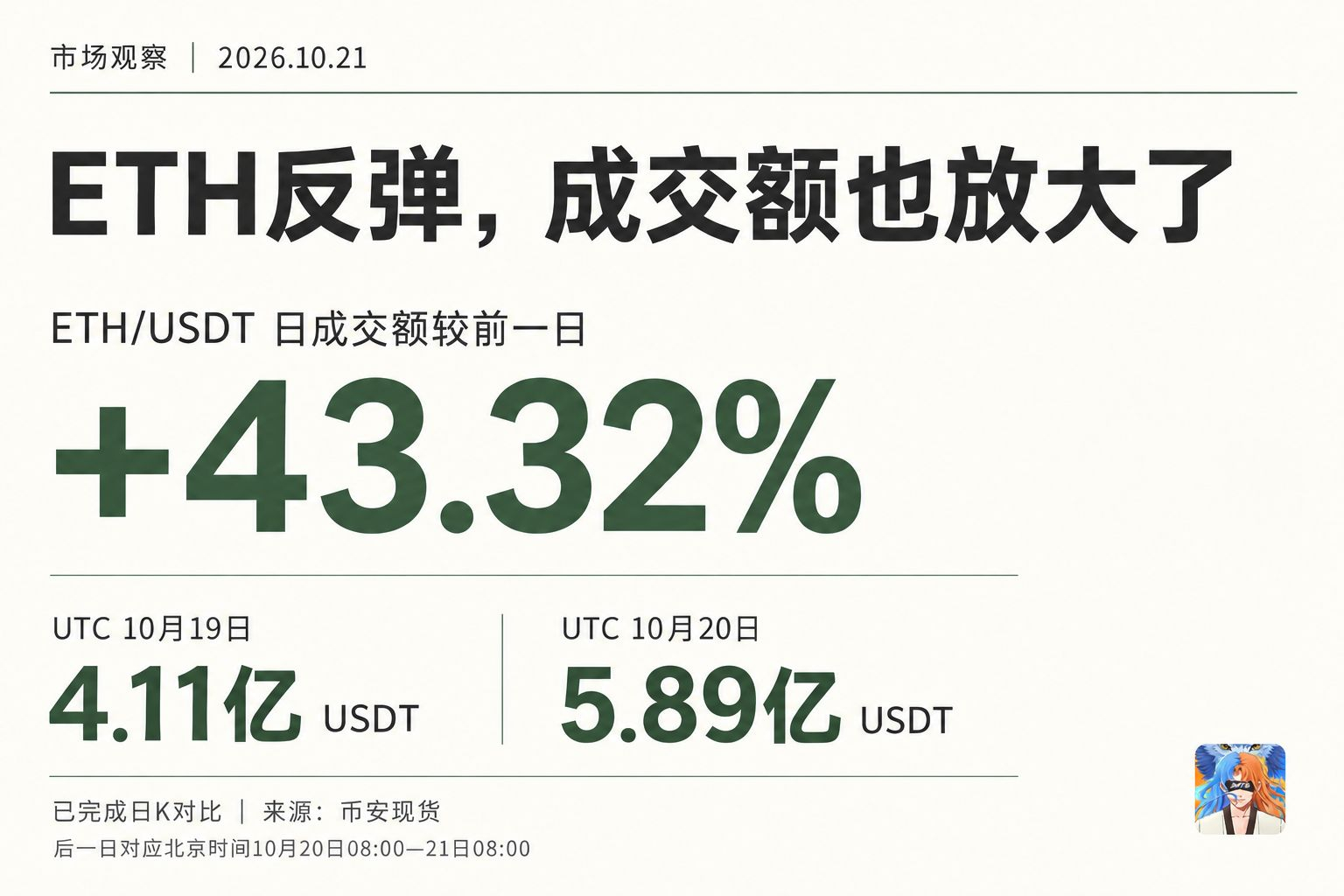
On Binance, the most recent completed daily candle showed ETH/USDT up about 1.71%, with trading volume of approximately 589 million USDT. The previous daily candle had volume of about 411 million, an increase of 43.32%.
Over the same period, BTC/USDT rose about 1.33%, while its trading volume increased by about 8.83%. In this window, both ETH’s price gain and its increase in trading volume were larger.
At least during this daily candle, trading picked up from the previous day as prices recovered. That gives us something more to verify than simply glancing at a green candle.
But 43.32% is the increase in trading volume, not the price gain—and it definitely shouldn’t be taken to mean net inflows. Trading volume includes both buying and selling, so by itself it can’t tell us who is adding to their positions.
What I’d like to see next is whether this level of trading activity can continue. If prices keep rising but volume quickly falls back, we’ll need to reassess how sustainable this rebound is. One daily candle isn’t enough to draw conclusions about the trend.
One other easy-to-miss detail: this comparison is between two completed daily candles, not today morning’s trading volume versus the full day yesterday.
Figures cover the daily candles for October 19 and 20 UTC. The latter candle corresponds to 08:00 on October 20 to 08:00 on October 21 Beijing time. Data accessed at 10:02 Beijing time on October 21, 2026. Source: Binance public spot candlestick data. For market observation only; not investment advice.
1
203
·
--
BNB has barely risen today, yet it has outperformed BTC.
Both statements can be true at the same time.
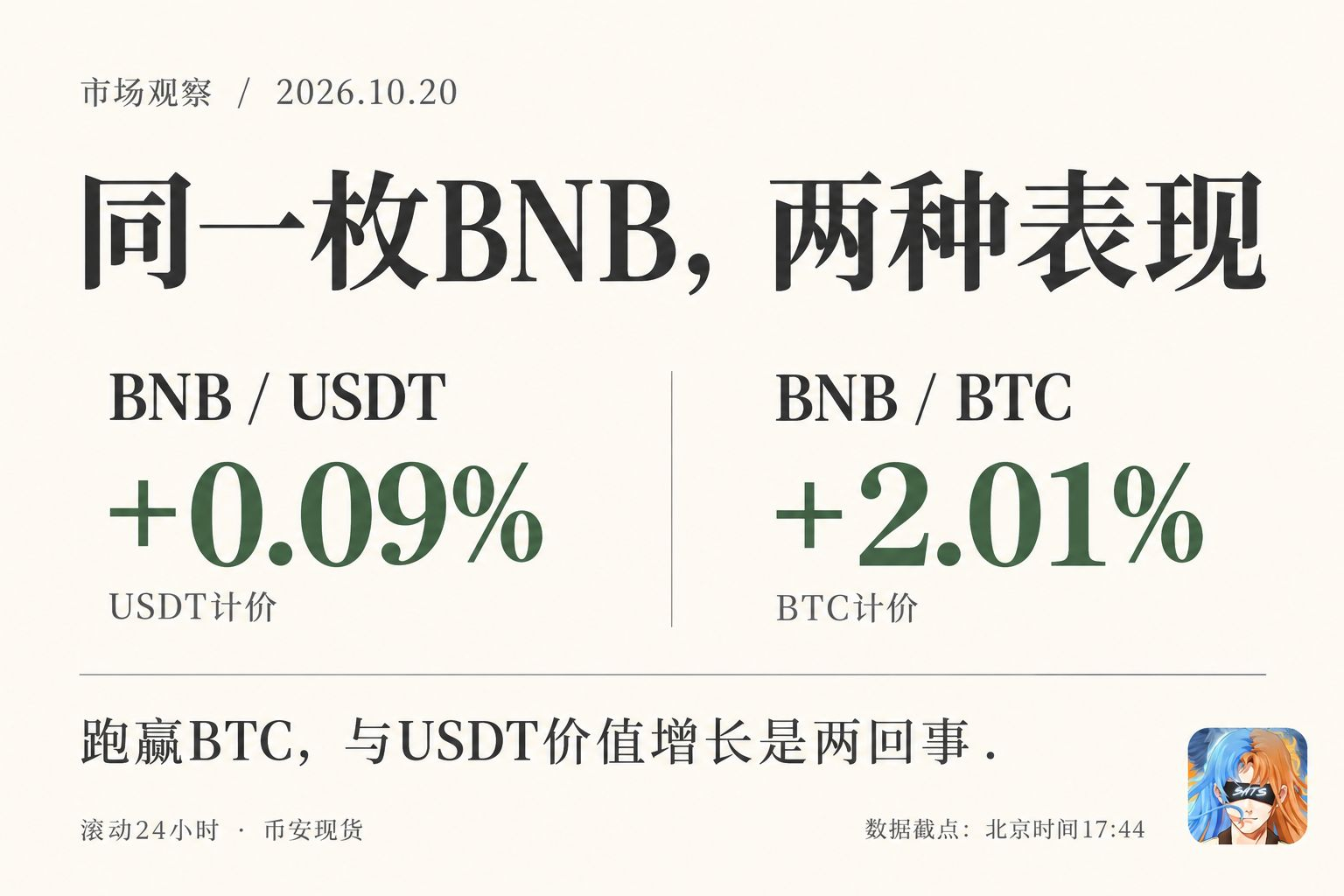
As of 17:44, over the past 24 hours on Binance Spot, BNB/USDT was up about 0.09%, at around 727.41 USDT, while BTC/USDT was down about 1.89%. The BNB/BTC pair was up about 2.01%.
The same coin can look different when measured in a different unit.
Measured in USDT, BNB has basically gone nowhere during this period. Measured in BTC, each BNB can be exchanged for more BTC. These figures are based on publicly quoted prices for trading pairs and don’t mean that everyone would have achieved the same results when buying or selling.
So when you say “outperformed BTC,” be clear about what that means. It describes relative performance; it isn’t the same as a return in USDT, and one day’s data alone is no reason to assume that BNB will keep outperforming.
If BTC recovers, can BNB maintain this relative advantage? That’s the change worth watching next. Looking resilient only while the other asset is falling isn’t enough to answer that question.
Before looking at returns, first check what you’re measuring them against.
Data timestamp: October 20, 2026, 17:44 Beijing time. Figures cover the rolling 24 hours for each trading pair, so the end times vary slightly. Source: Binance public spot market data. For market observation only; not investment advice.
1
226
·
--
Bullish
Verified
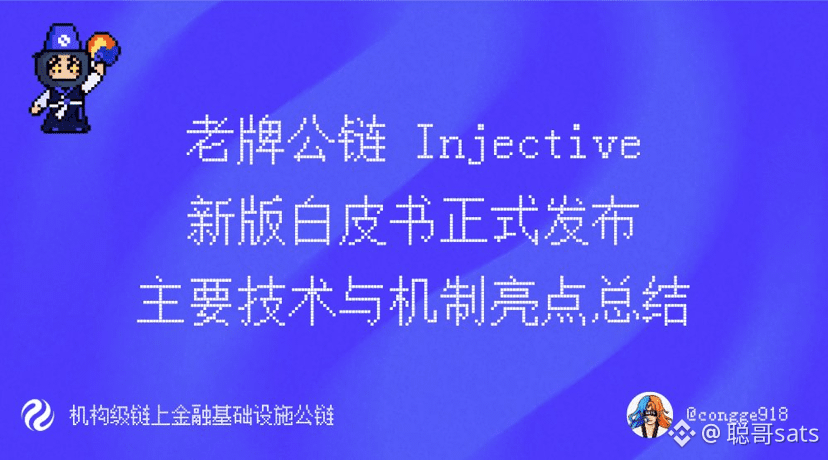
A veteran public blockchain @Injective has released a new white paper!
$INJ currently ranks 71st by market cap, and this white paper rewrite is highly significant.
Here are 8 key technical and mechanism highlights from the new white paper:
Fully on-chain order book + batch auctions every block
Buy and sell orders are placed directly on-chain, with a unified clearing process once per block. This reduces front-running and unfair ordering.
Fast confirmation, irreversible results
Once more than two-thirds of validators confirm, transactions are finalized in about 600 milliseconds. Trades cannot be rolled back afterward.
Native real-world asset issuance and access controls
Assets can be issued on-chain with permissions set for who can mint, transfer, receive, or burn them, supporting compliance management.
iAssets (exposure to real-world asset prices)
Trade price movements in external assets using stablecoin collateral, without bringing the real assets on-chain.
One state supports multiple development environments
Ethereum-style contracts and WebAssembly share the same ledger and asset balances, so assets aren't fragmented.
Perpetual contracts and risk management
Perpetual contracts are supported, with automatic margin checks, forced liquidations that only reduce positions, and an insurance fund to cover bad debt.
AI agents can participate in trading directly
AI can trade assets through standard interfaces, subject to amount and market limits, and can also make machine-to-machine payments using stablecoins.
Protocol revenue is used to buy back and burn INJ
Revenue such as transaction fees is periodically used to buy back and burn INJ, creating deflation alongside dynamic issuance.
The new white paper also makes Injective's positioning clear: it has evolved from an “MEV-resistant exchange protocol on Ethereum” in 2018 into a finance-native Layer 1.
It also builds the order book, permissioned asset issuance, iAssets, deterministic settlement, and AI agent support directly into the protocol layer, giving it a clearer and more comprehensive positioning.
Looking forward to what comes next.
@InjectiveLabsCN
Can't wait to see what surprises you have in store for us. I'll be keeping an eye out. $INJ
{future}(INJUSDT)
A veteran public blockchain @Injective has released a new white paper!
$INJ currently ranks 71st by market cap, and this white paper rewrite is highly significant.
Here are 8 key technical and mechanism highlights from the new white paper:
Fully on-chain order book + batch auctions every block
Buy and sell orders are placed directly on-chain, with a unified clearing process once per block. This reduces front-running and unfair ordering.
Fast confirmation, irreversible results
Once more than two-thirds of validators confirm, transactions are finalized in about 600 milliseconds. Trades cannot be rolled back afterward.
Native real-world asset issuance and access controls
Assets can be issued on-chain with permissions set for who can mint, transfer, receive, or burn them, supporting compliance management.
iAssets (exposure to real-world asset prices)
Trade price movements in external assets using stablecoin collateral, without bringing the real assets on-chain.
One state supports multiple development environments
Ethereum-style contracts and WebAssembly share the same ledger and asset balances, so assets aren't fragmented.
Perpetual contracts and risk management
Perpetual contracts are supported, with automatic margin checks, forced liquidations that only reduce positions, and an insurance fund to cover bad debt.
AI agents can participate in trading directly
AI can trade assets through standard interfaces, subject to amount and market limits, and can also make machine-to-machine payments using stablecoins.
Protocol revenue is used to buy back and burn INJ
Revenue such as transaction fees is periodically used to buy back and burn INJ, creating deflation alongside dynamic issuance.
The new white paper also makes Injective's positioning clear: it has evolved from an “MEV-resistant exchange protocol on Ethereum” in 2018 into a finance-native Layer 1.
It also builds the order book, permissioned asset issuance, iAssets, deterministic settlement, and AI agent support directly into the protocol layer, giving it a clearer and more comprehensive positioning.
Looking forward to what comes next.
@InjectiveLabsCN
Can't wait to see what surprises you have in store for us. I'll be keeping an eye out. $INJ
1
1.2k
·
--
BTC is down just 0.62% over the past 24 hours. At first glance, it looks like barely anything happened.
But look at the high and low together, and it feels different.
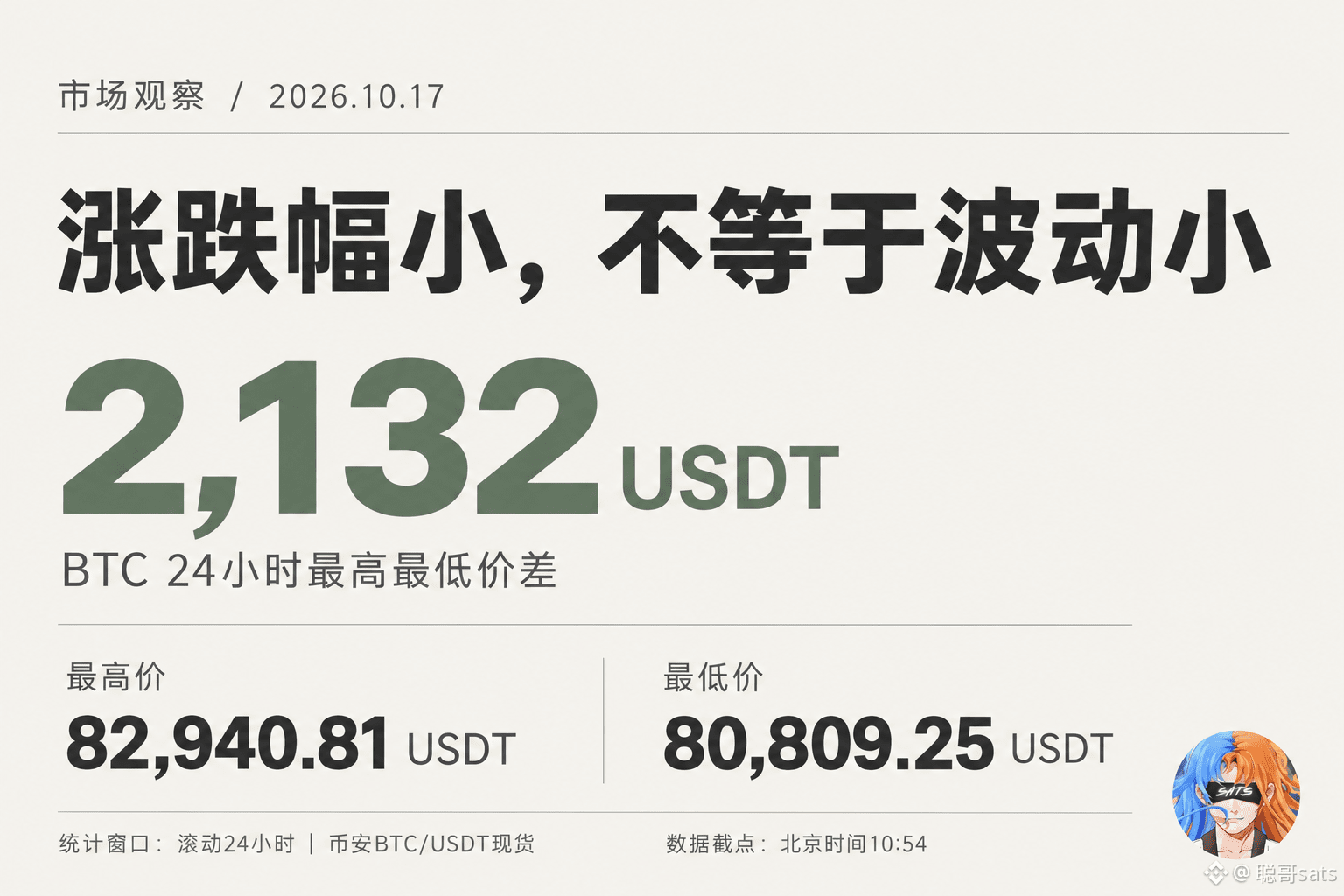
As of 10:54 today, BTC/USDT spot on Binance is around 81,486 USDT. Over the past 24 hours, the high was 82,940.81 and the low was 80,809.25—a difference of about 2,132 USDT.
One percentage change on the screen can’t capture everything that happened in between.
Buy at different times, and even though you’re looking at the same market window, your account can feel very different. Especially with a larger position, “it didn’t drop much today” doesn’t mean it was easy to hold through the move.
But these two extremes have their limits, too. A 24-hour market snapshot alone can’t tell you whether the high or the low came first, let alone let you piece them together into a price movement you imagine. And that price gap isn’t an opportunity everyone could have profited from.
So when I look at this kind of market, I consider the 24-hour change alongside the price range. The former shows the change from the start of the window to now; the latter reminds me how much the price may have swung in between.
Don’t judge whether you can hold on based only on that final percentage.
Data as of: October 17, 2026, 10:54 Beijing time. The measurement window is a rolling 24 hours, not a calendar day. Source: Binance public spot market data. For market observation only; not investment advice.
129
·
--
Watching the market today, I’m more interested in why ETH has fallen more than BTC.
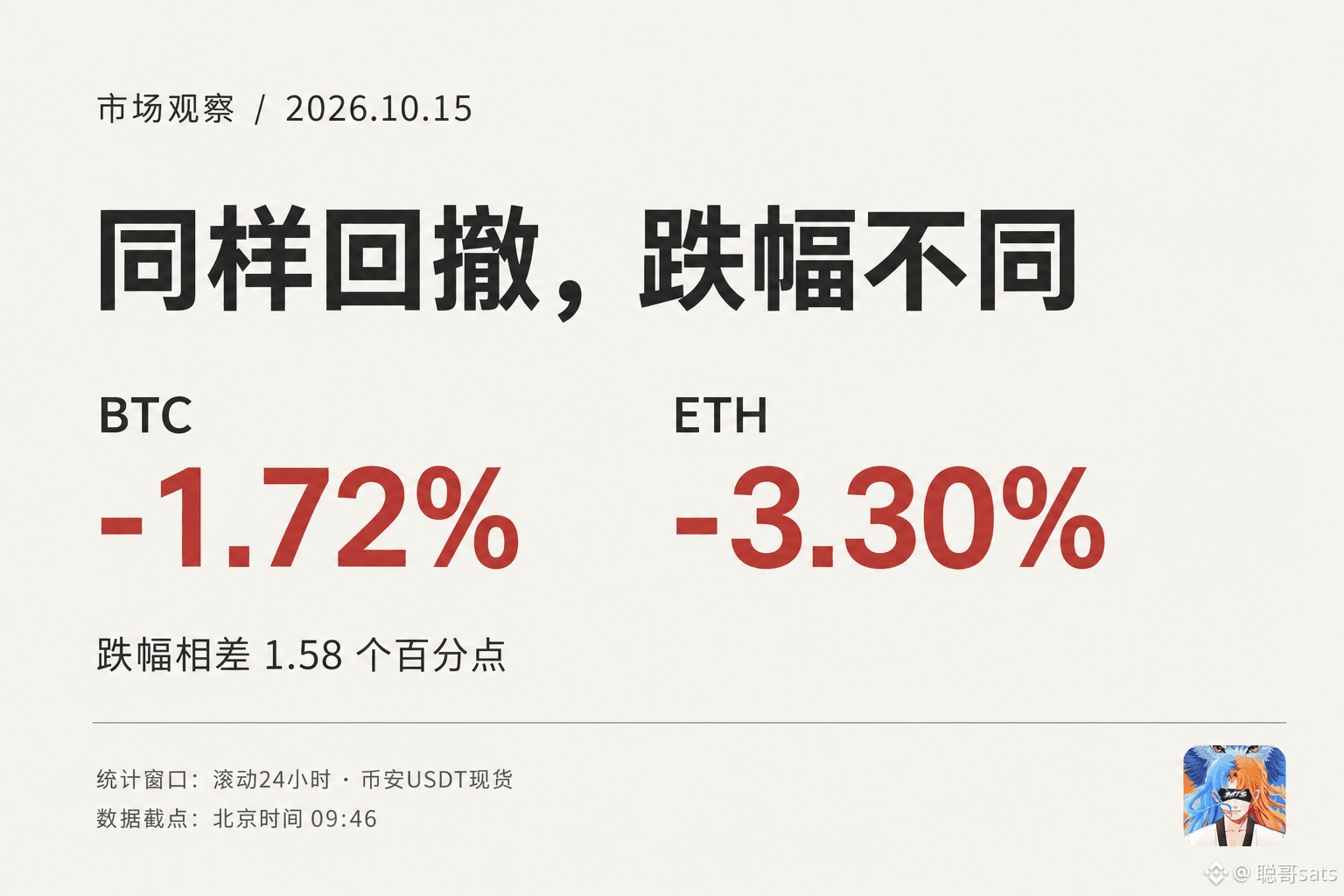
As of 09:46, over the past 24 hours on Binance’s USDT spot market, BTC was down 1.72% and ETH was down 3.30%. BNB was down 1.75%, and SOL was down 2.52%. All four trading pairs were pulling back, with ETH posting the biggest decline.
BTC was around 81,833 USDT, and ETH was around 2,422 USDT. The difference between their declines was 1.58 percentage points, with ETH’s drop approaching twice BTC’s.
But these figures alone don’t answer “why.” They confirm relative weakness during this time window, but they don’t directly prove that funds are moving from ETH to BTC, let alone tell us whether the decline is over.
ETH/USDT’s 24-hour trading volume was around 829 million USDT. High trading volume doesn’t necessarily mean strong buying support. Every trade has both a buyer and a seller, and trading volume by itself doesn’t show the direction of fund flows.
At a moment like this, rushing to explain the decline with a story can easily turn speculation into a supposed cause.
I’ll keep watching to see whether ETH can first narrow the gap between its decline and BTC’s. If it continues to lag during a rebound, that weakness is worth keeping an eye on. If the gap narrows, I’ll look for supporting evidence in trading activity and the direction of buying and selling.
First get a clear picture of what’s changing; then draw conclusions.
Data timestamp: October 15, 2026, 09:46 Beijing time; rolling 24-hour period, not a calendar day. Source: Binance public spot market data. For market observation only; not investment advice.
351
·
--
When you see gains of several thousand percent, don’t rush to ask whether it’s still worth chasing.
First, look at how deep the pool is.
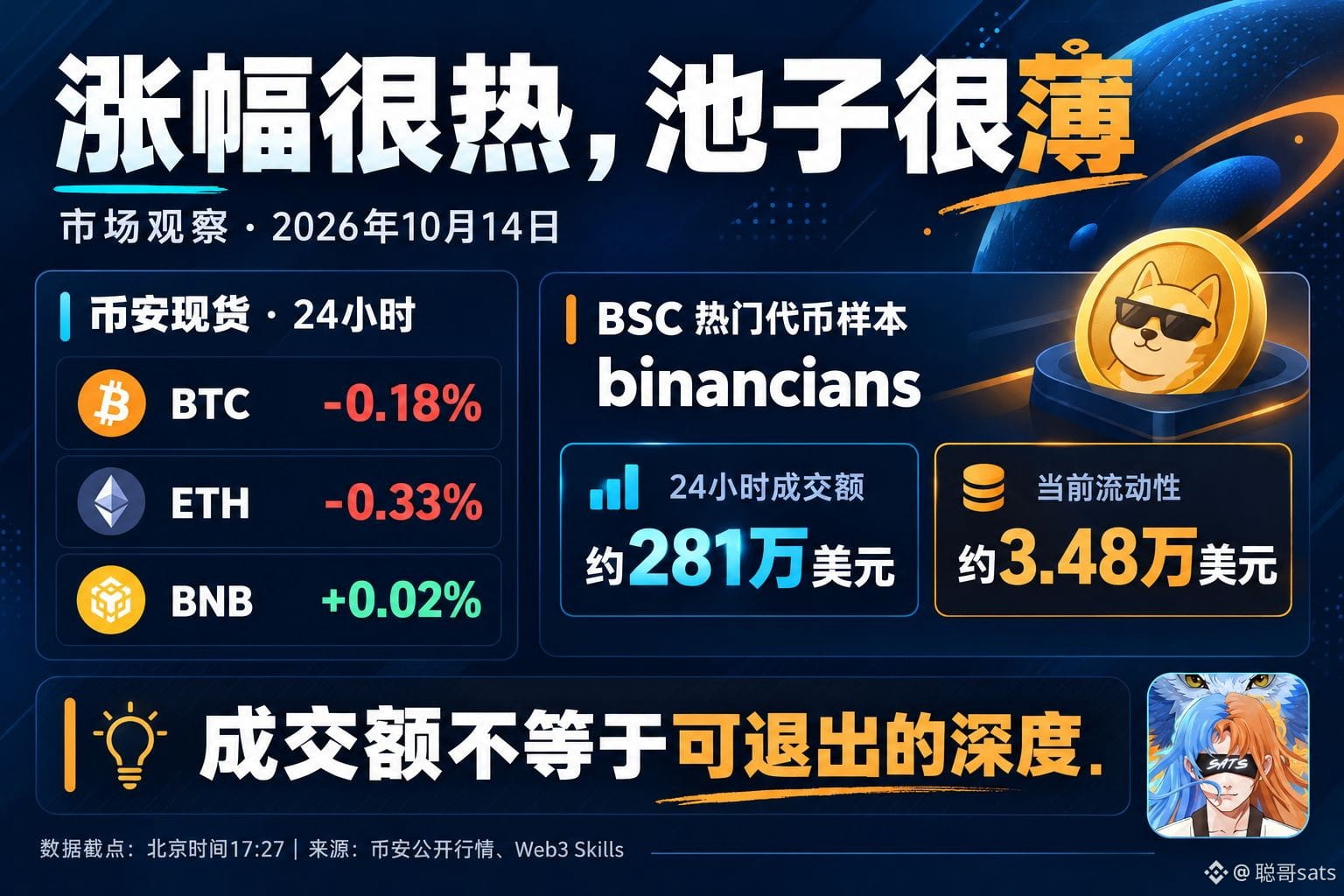
As of 17:27 today, BTC was around 83,329 USDT on Binance spot, down 0.18% over the past 24 hours; ETH was around 2,502 USDT, down 0.33%; and BNB was around 742 USDT, up 0.02%. The moves in all three trading pairs were small.
On the BSC trending list, binancians showed a 24-hour gain of around 2,871%. But put the other two figures alongside it, and the picture feels different.
24-hour trading volume: around $2.81 million.
Current liquidity: around $34,800.
The first is the cumulative amount traded over the past day; the second is a measure of the pool’s current liquidity. They are not the same thing, and you can’t directly treat either as the amount you’d be able to sell.
Trades can happen repeatedly. If you actually want to exit, you also need to consider the trade direction, slippage, and the pool’s depth at that moment.
The same token fell 8.11% over the past hour. Looking only at the green 24-hour figure can make it easy to miss a pullback that’s already underway.
I’ll keep watching two things: whether liquidity keeps up as the price rises, and whether pullbacks over shorter timeframes get larger. The activity is there; whether the market can absorb it needs to be checked separately.
This example illustrates liquidity risk only. It does not mean the token was issued or recommended by Binance.
Data timestamp: October 14, 2026, 17:27 Beijing time. Spot figures are rolling 24-hour data for USDT trading pairs; the on-chain sample is on BSC.
Sources: Binance public spot market data, Crypto Market Rank, Query Token Info.
Sample contract: 0x8dceff98285b93013ab708d65e0206880c167777
For market observation only; not investment advice.
366
·
--
Verified
30D trade $INJ 245.6 USDT
$INJ The recent trend on Injective has been pretty steady—here are the key updates from the past half month:
1⃣ Major breakthrough for the RWA sector
Pineapple Financial has placed over $1 billion in mortgage loan records on-chain. It has migrated 2,079 residential mortgage records (each containing 500+ data points) to Injective, corresponding to a value of over $1B.
Next, it plans to put all historical investment portfolios worth more than $10B on-chain. Pineapple also holds around $100 million in INJ treasury-bond positions.
This makes Injective one of the leading L1s in tokenized assets.
2⃣ Injective Mint platform sees further expansion
Institutions can issue compliant tokenized assets like tokenized stocks and bonds through a unified interface. It includes built-in compliance controls—no need to write smart contracts from scratch—meeting institutional use cases.
Cumulative RWA trading volume has exceeded $6.8B, with on-chain tokenized asset value of about $1.1B.
3⃣ Rise in stablecoins and improved position in the Cosmos ecosystem
Injective USDC has become the standard stablecoin for the Cosmos ecosystem + dYdX. It has partnered with Circle, Cosmos Hub, and dYdX, and Circle will gradually stop supporting USDC on the Noble chain.
The migration is carried out via Skip:Go. dYdX will use USDC.inj as the only eligible trading collateral. This strengthens Injective’s position as a stablecoin hub in Cosmos.
Native USDC deposits/withdrawals on Kraken are emphasized again: users can directly transfer Circle-issued native USDC between Kraken and Injective.
4⃣ Regulatory and U.S. market progress
The SEC is evaluating allowing regulated stock perpetual futures into the U.S. Injective is the first L1 to have an SEC-registered transfer agent, and it has already settled over $81B in RWA, stock, and crypto perpetual trading volume.
The CFTC previously approved INJ’s U.S.-regulated futures—progress on the compliance path has been quite solid.
5⃣ Network, developers, and ecosystem tools
Integrations Portal is live: a one-stop portal for builders, token issuers, and institutions. Users can choose to issue RWAs, deploy tokens, or build dApps based on their use cases, lowering the integration barrier.
Also, a new mainnet upgrade proposal is expected to be submitted soon: this week, a new proposal is anticipated, focusing on tokenization, regulated RWAs, and the $INJ -related surprises.
6⃣ Tokenomics & on-chain data: September community buyback completed
25,200 INJ has been permanently burned, and the staking amount has also hit a new high $INJ
689
·
--
Bullish
Verified
INJ has been showing steady momentum recently.
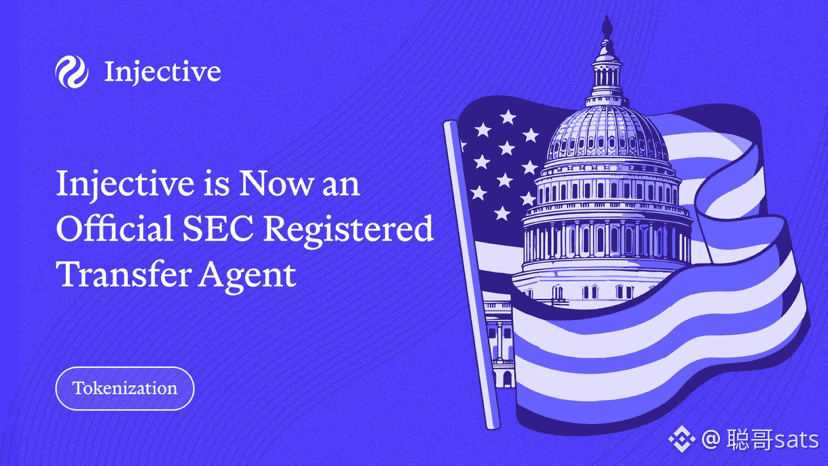
Injective has officially been approved in the US as a registered transfer agent by the SEC.
With this, Injective becomes the world’s first Layer-1 blockchain that simultaneously has both the RWA technical infrastructure and a regulatory-compliance reserve, pushing the development of asset tokenization to a whole new level.
In recent months, Injective has accelerated its expansion in the RWA business landscape. It has already launched tokenized markets for treasury bills, listed stocks, and multi-category on-chain trading platforms such as equity in Pre-IPO companies like SpaceX and OpenAI.
Recently, Injective has further moved into the corporate trade finance track. POSCO International, the largest trading company in South Korea, and LG CNS, the technology arm of the LG Group, have chosen Injective as the exclusive pilot network to enable the issuance, transfer, management, and end-to-end on-chain settlement of international trade receivables.
Over the past week, the tokenized lending collateral records on the Injective on-chain platform surpassed $1 billion, further solidifying its industry position as the fastest-growing public blockchain for RWA globally. Public company Pineapple Financial has also announced plans to gradually migrate more than $10 billion in asset portfolios to Injective over the coming months to complete token
For all-stack capital market infrastructure in the internet era, Injective has now been fully implemented. Powered entirely by its native token
$INJ
$INJ
{future}(INJUSDT)
INJ has been showing steady momentum recently.
Injective has officially been approved in the US as a registered transfer agent by the SEC.
With this, Injective becomes the world’s first Layer-1 blockchain that simultaneously has both the RWA technical infrastructure and a regulatory-compliance reserve, pushing the development of asset tokenization to a whole new level.
In recent months, Injective has accelerated its expansion in the RWA business landscape. It has already launched tokenized markets for treasury bills, listed stocks, and multi-category on-chain trading platforms such as equity in Pre-IPO companies like SpaceX and OpenAI.
Recently, Injective has further moved into the corporate trade finance track. POSCO International, the largest trading company in South Korea, and LG CNS, the technology arm of the LG Group, have chosen Injective as the exclusive pilot network to enable the issuance, transfer, management, and end-to-end on-chain settlement of international trade receivables.
Over the past week, the tokenized lending collateral records on the Injective on-chain platform surpassed $1 billion, further solidifying its industry position as the fastest-growing public blockchain for RWA globally. Public company Pineapple Financial has also announced plans to gradually migrate more than $10 billion in asset portfolios to Injective over the coming months to complete token
For all-stack capital market infrastructure in the internet era, Injective has now been fully implemented. Powered entirely by its native token
$INJ
$INJ
1
1.1k
·
--
Bullish
In just one short week, $INJ bounced off the bottom and surged nearly 45%.
The long-awaited key regulatory boost finally arrived for Injective, the long-standing established Layer 1 blockchain everyone has been watching.
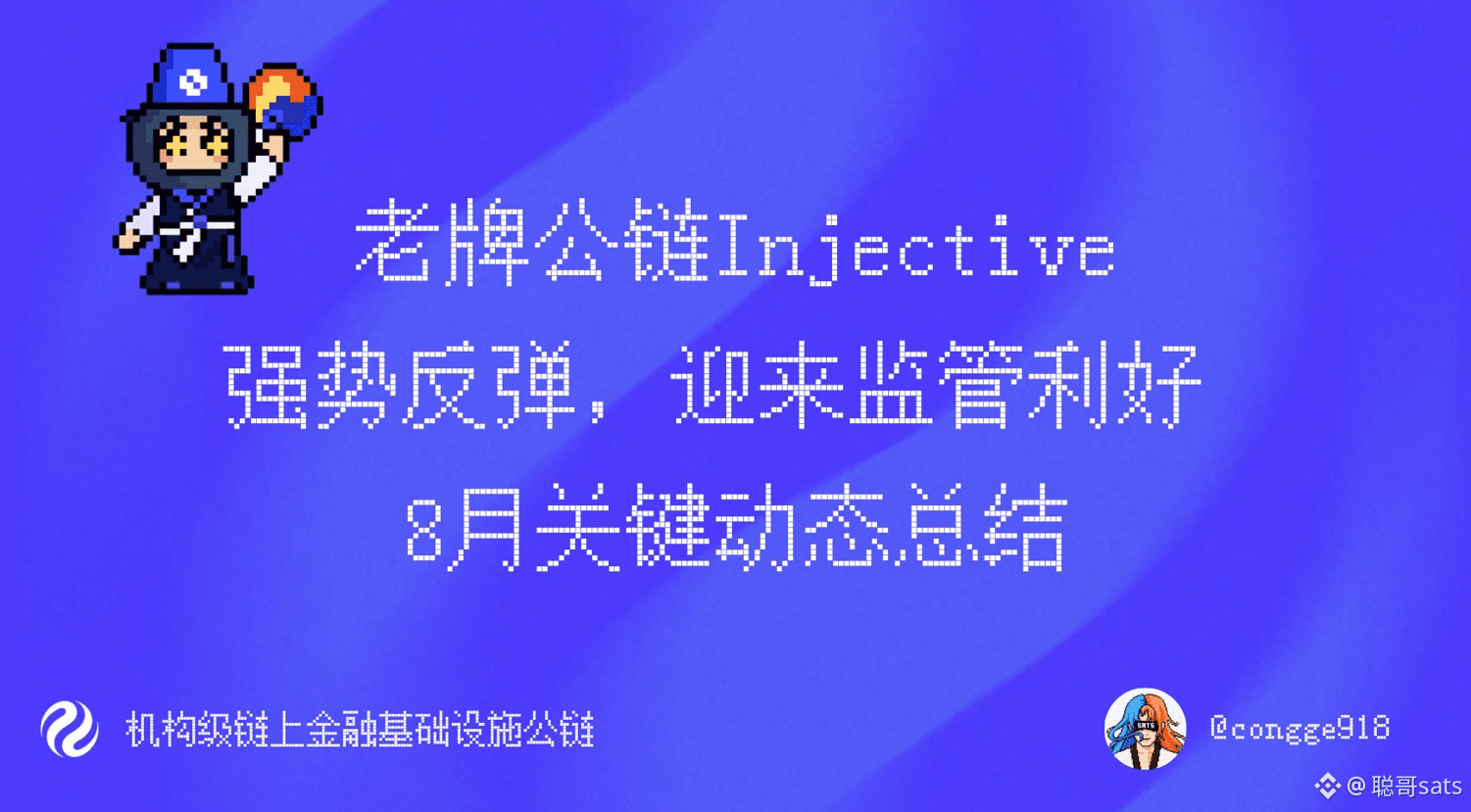
Pay attention: Injective is now officially a transfer agent registered with the U.S. Securities and Exchange Commission (SEC)!
This entity can maintain the shareholder registry and handle security transfers, adding a compliance tool to help Injective expand its tokenized securities business.
Other key developments
RWA trade finance pilot
In August, Injective disclosed again a trade finance pilot in collaboration with POSCO International and LG CNS. The project has completed a real-trade receivables transaction, and uses on-chain records, compliance controls, and AI document review for issuance and settlement.
This pilot validated the feasibility of Injective handling institution-level RWA, and attention now turns to further progress.
Cross-chain and liquidity expansion
After integrating with http://LI.FI, Injective can connect with and exchange assets across 60+ blockchain bridges. Kraken has enabled direct USDC transfers, and Coinbase has resumed INJ deposits and withdrawals after the EVM migration.
The Cardano IBC testnet is also connected, though the mainnet launch date has not yet been announced.
AI and developer ecosystem
Injective has launched an AI agent SDK, enabling developers to query documentation and on-chain data, and to perform on-chain actions.
The Nova Program attracted 89 projects from more than 10 countries.
At the AdventureX hackathon, more than 50 teams used Injective to build AI, payments, and RWA applications.
Network and market performance
Bitwise and Four Pillars both joined the validator set in sequence, and Injective’s all-time cumulative on-network transactions have exceeded 3 billion.
As a long-standing financial-grade blockchain, in August Injective significantly accelerated its institutional business rollout. Its regulatory status and trade finance pilot have made clear progress, while its cross-chain and AI ecosystem continues to expand in parallel.
As more partnerships turn into real-asset issuance and ongoing on-chain trading, Injective’s application scale is expected to keep growing—INJ is worth ongoing attention.$INJ
{future}(INJUSDT)
In just one short week, $INJ bounced off the bottom and surged nearly 45%.
The long-awaited key regulatory boost finally arrived for Injective, the long-standing established Layer 1 blockchain everyone has been watching.
Pay attention: Injective is now officially a transfer agent registered with the U.S. Securities and Exchange Commission (SEC)!
This entity can maintain the shareholder registry and handle security transfers, adding a compliance tool to help Injective expand its tokenized securities business.
Other key developments
RWA trade finance pilot
In August, Injective disclosed again a trade finance pilot in collaboration with POSCO International and LG CNS. The project has completed a real-trade receivables transaction, and uses on-chain records, compliance controls, and AI document review for issuance and settlement.
This pilot validated the feasibility of Injective handling institution-level RWA, and attention now turns to further progress.
Cross-chain and liquidity expansion
After integrating with http://LI.FI, Injective can connect with and exchange assets across 60+ blockchain bridges. Kraken has enabled direct USDC transfers, and Coinbase has resumed INJ deposits and withdrawals after the EVM migration.
The Cardano IBC testnet is also connected, though the mainnet launch date has not yet been announced.
AI and developer ecosystem
Injective has launched an AI agent SDK, enabling developers to query documentation and on-chain data, and to perform on-chain actions.
The Nova Program attracted 89 projects from more than 10 countries.
At the AdventureX hackathon, more than 50 teams used Injective to build AI, payments, and RWA applications.
Network and market performance
Bitwise and Four Pillars both joined the validator set in sequence, and Injective’s all-time cumulative on-network transactions have exceeded 3 billion.
As a long-standing financial-grade blockchain, in August Injective significantly accelerated its institutional business rollout. Its regulatory status and trade finance pilot have made clear progress, while its cross-chain and AI ecosystem continues to expand in parallel.
As more partnerships turn into real-asset issuance and ongoing on-chain trading, Injective’s application scale is expected to keep growing—INJ is worth ongoing attention.$INJ
346
·
--
INJ Major News—No wonder it’s been rising so much.
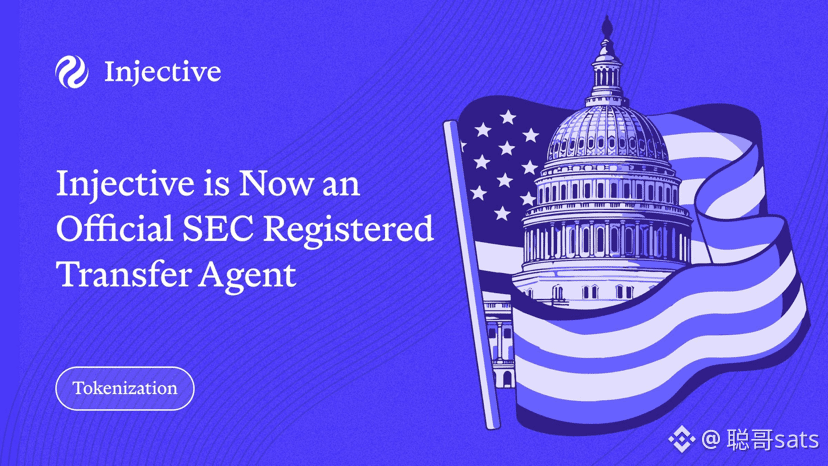
Injective has announced that it has officially become a U.S. SEC-registered transfer agent, making it the first Layer 1 blockchain that combines both RWA infrastructure and regulatory readiness.
This registration fills in the regulatory record layer required by the U.S. market for its tokenization business. Over the past few months, Injective has gradually rolled out tokenized digital asset treasury bills, listed stocks, and the shares of pre-IPO companies such as SpaceX and OpenAI.
In July, Injective further expanded its business into corporate trade finance. POSCO International and LG CNS in South Korea chose it for an exclusive pilot to handle the issuance, transfer, management, and settlement of international trade receivables.
Currently, institutional funds, listed stocks, shares of private companies, and corporate receivables have all been gathered and are operating on the same network.
Competition in RWA is entering a new phase where both infrastructure and compliance capabilities are being tested at the same time. $INJ
1
269
·
--
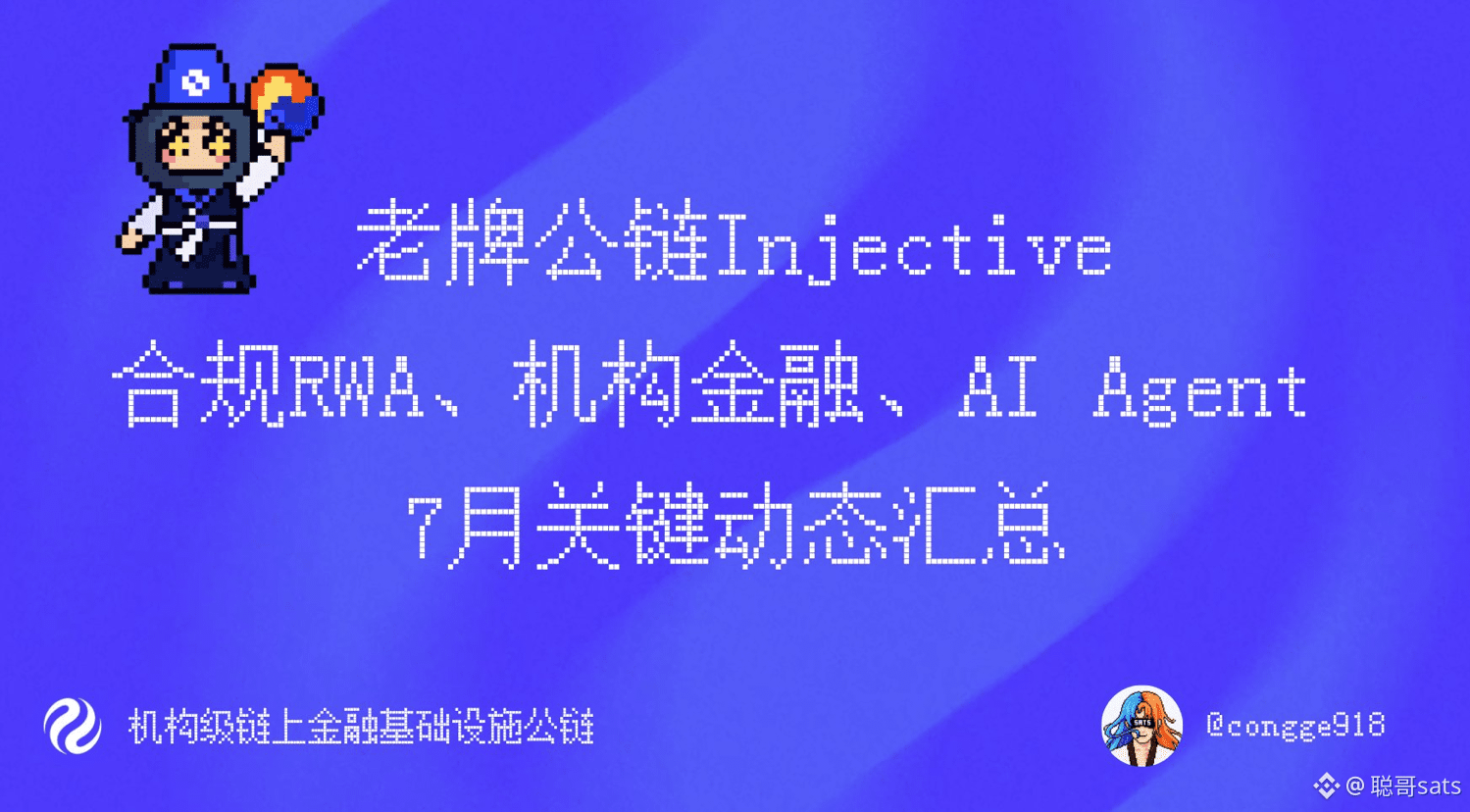
The long-standing L1 chain I’ve been watching, Injective, had significant progress in July.
Here’s a quick summary: Injective has shifted comprehensively from a “DeFi derivatives L1” to a financial infrastructure chain focused on compliant RWA, institutional finance, AI agents, and mainstream trading entry points.
Compliance: Progress on both tracks in the US and Europe
Europe: The MiCA whitepaper has been completed and disclosed. With Denmark as the home country, it can be passported to 29 EEA countries, providing institutions with a unified review framework.
United States: Injective has filed an application with the SEC to register a transfer agent. If approved, the chain can directly maintain securities ownership records on-chain, extending from “asset trading” to “transfer and settlement.”
I think these two major moves are the highest long-term value events of this month. If they land, it’s a big positive for INJ.
RWA implementation: Real trade finance pilot completed
On July 27, POSCO International and LG CNS completed a pilot on Injective to tokenize trade receivables. It uses real commercial invoices, cutting settlement time from several days down to several seconds.
It’s clear that Injective is getting more and more enterprise use cases.
Liquidity & entry: CEX channels fully connected
Robinhood launched INJ (US retail visibility).
Coinbase supports native INJ migration (reduces friction from wrapped assets and lets you enter the ecosystem directly).
Kraken enabled native USDC deposits and withdrawals (improves stablecoin fund rails).
Technology & AI narrative
The mainnet upgrade on July 3 (IIP-665), and the IIP-677 interoperability upgrade on July 29, together create cross-platform fund pathways via the CEX channels above.
Joined the x402 Foundation under the Linux Foundation and launched an AI Agent SDK, strengthening the narrative that “AI agents can hold assets, make payments, and trade.”
Market performance & risks
Currently, $INJ is about $4.60, down 7D -13.70% and up 30D +0.31%. The market is still digesting the news and hasn’t priced in the fundamentals fully.
Overall, in July Injective was a “month of compliance and institutionalization accelerating.” Next, the key things to watch are whether the POSCO pilot moves into production, SEC registration progress, actual platform access in Europe, the inflow of on-chain funds driven by the CEX channels, and cross-chain data following the interoperability upgrades.$INJ
{future}(INJUSDT)
The long-standing L1 chain I’ve been watching, Injective, had significant progress in July.
Here’s a quick summary: Injective has shifted comprehensively from a “DeFi derivatives L1” to a financial infrastructure chain focused on compliant RWA, institutional finance, AI agents, and mainstream trading entry points.
Compliance: Progress on both tracks in the US and Europe
Europe: The MiCA whitepaper has been completed and disclosed. With Denmark as the home country, it can be passported to 29 EEA countries, providing institutions with a unified review framework.
United States: Injective has filed an application with the SEC to register a transfer agent. If approved, the chain can directly maintain securities ownership records on-chain, extending from “asset trading” to “transfer and settlement.”
I think these two major moves are the highest long-term value events of this month. If they land, it’s a big positive for INJ.
RWA implementation: Real trade finance pilot completed
On July 27, POSCO International and LG CNS completed a pilot on Injective to tokenize trade receivables. It uses real commercial invoices, cutting settlement time from several days down to several seconds.
It’s clear that Injective is getting more and more enterprise use cases.
Liquidity & entry: CEX channels fully connected
Robinhood launched INJ (US retail visibility).
Coinbase supports native INJ migration (reduces friction from wrapped assets and lets you enter the ecosystem directly).
Kraken enabled native USDC deposits and withdrawals (improves stablecoin fund rails).
Technology & AI narrative
The mainnet upgrade on July 3 (IIP-665), and the IIP-677 interoperability upgrade on July 29, together create cross-platform fund pathways via the CEX channels above.
Joined the x402 Foundation under the Linux Foundation and launched an AI Agent SDK, strengthening the narrative that “AI agents can hold assets, make payments, and trade.”
Market performance & risks
Currently, $INJ is about $4.60, down 7D -13.70% and up 30D +0.31%. The market is still digesting the news and hasn’t priced in the fundamentals fully.
Overall, in July Injective was a “month of compliance and institutionalization accelerating.” Next, the key things to watch are whether the POSCO pilot moves into production, SEC registration progress, actual platform access in Europe, the inflow of on-chain funds driven by the CEX channels, and cross-chain data following the interoperability upgrades.$INJ
2
509
·
--
Verified
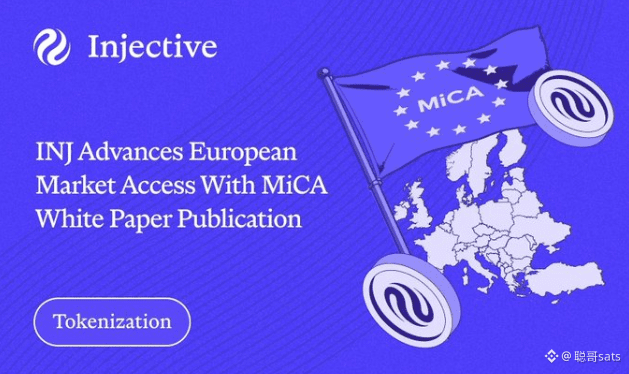
INJ has recently made a number of major moves, especially in the direction of compliance—so keep a close watch.
Injective has officially released its MiCA whitepaper, laying the regulatory groundwork to expand the use rights of
$INJ within the European Union.
Previously, Injective had filed an application with the U.S. Securities and Exchange Commission (SEC) to become a registered transfer agent in the United States.
In both Europe and the U.S., the regulatory foundation surrounding Injective is second to none.
As futures of
$INJ , which are regulated by the U.S. Commodity Futures Trading Commission (CFTC), have gone live, and applications for multiple INJ ETFs are being advanced, the infrastructure that supports institutional investors in using this stock is steadily improving.
INJ is taking the compliant route, and the ETFs are close to landing as well—so focus on what comes next. $INJ
373
·
--

Article
DeepSafe: A potential verification-layer winner for 2026—essential infrastructure for the Web3 and AI era. Have you been paying attention?In the Layer 1 public chain track, in the past few years, the widespread hype has mostly been about the “consensus layer” and the “execution layer”; in reality, there has long been a lack of a reliable “verification layer”.
For on-chain and off-chain messages, how exactly can we determine whether they’ve truly been verified?
The market has always been short of a “suitable” solution; most approaches are fragmented—for example, multi-signatures, oracles, or even relying on project-team endorsements. Fundamentally, it’s still “trusting people,” not “trusting cryptography.”
After learning about @DeepSafe_AI, I realized that what DeepSafe wants to build isn’t just another ordinary public chain, nor only a cross-chain verification tool:
DeepSafe: A potential verification-layer winner for 2026—essential infrastructure for the Web3 and AI era. Have you been paying attention?
In the Layer 1 public chain track, in the past few years, the widespread hype has mostly been about the “consensus layer” and the “execution layer”; in reality, there has long been a lack of a reliable “verification layer”.
For on-chain and off-chain messages, how exactly can we determine whether they’ve truly been verified?
The market has always been short of a “suitable” solution; most approaches are fragmented—for example, multi-signatures, oracles, or even relying on project-team endorsements. Fundamentally, it’s still “trusting people,” not “trusting cryptography.”
After learning about @DeepSafe_AI, I realized that what DeepSafe wants to build isn’t just another ordinary public chain, nor only a cross-chain verification tool:
255
·
--
Many people still see Injective as a “high-performance DeFi L1,” but after watching it make several big moves in June, my take leans more toward the other side:
It’s accelerating the process of turning itself into a settlement layer truly geared toward institutions and on-chain finance.
Last June, these six main tracks were all moving forward together:
1、Vulcan mainnet upgrade rolled out
The Vulcan mainnet upgrade has been rolled out, focusing on lower-cost settlement, USDC-related infrastructure, upgrades to the RWA market, and improvements to oracle capabilities.
The official also noted that oracle update costs have dropped by 90%, and that liquidity and price data between different virtual machines are beginning to be further connected.
2、$INJ buyback mechanism continues to be strengthened
In June, the size of the community buyback pool exceeded $315K. The buyback scale is getting larger, and buybacks are being maintained continuously.
The key isn’t just the buybacks themselves—it’s that the flow logic between protocol revenue and token demand is being continuously reinforced.
3、Institutional entry points are taking shape faster
Merkle Capital launched Asia’s first regulated $INJ strategy product, M-INJ, and Coinbase also announced support for native INJ.
This means that compliant products and mainstream exchange entry points are continuing to expand.
4、RWA and asset tokenization on-chain keep expanding
In June, Injective continued to strengthen its plans in areas like stock, commodities, FX, derivatives tied to unlisted companies, prediction markets, and more.
At the same time, FANDOM tokenized artist single-release revenue on Injective, showing that what it wants to capture isn’t only trading, but also the issuance and circulation of a broader range of assets.
5、Policy and institutional narrative keep heating up
Names like Invesco, Circle, Chainlink, Pantera, Grayscale, and Galaxy have been appearing one after another at the Injective Summit. Regulatory and policy-related figures are also joining in.
On the other hand, Injective has started speaking out around crypto regulation, DeFi frameworks, and stablecoin rules.
6、AI Agent financial scenarios start to take shape
The official is pushing the use of AI Agents for on-chain trading, risk management, and data settlement. Over the past 30 days, 700+ AI agents have joined Injective. If this line keeps running, the upside imagination space will be significant.
In short, Injective’s big moves in June were really numerous: it’s making progress across the settlement layer, liquidity entry points, institutional compliance, the RWA market, and the AI-driven finance execution layer.
Next, keep watching $INJ and look forward to a price rebound.$INJ
18
3
170
·
--
🤔 Bitcoin is now at $70,000—how high do you think it can reach by the end of the year?
A. Bitcoin ecosystem, Runes bring new opportunities
B. AI + crypto, the next 100x track
C. DeFi 2.0, the era of real returns
D. Meme coins, the eternal god
A. Go all-in, full position in a bull market
B. Hold 50–70% of your position—be aggressive when possible and defensive when needed
C. Below 30%—keep it conservative
D. Stay in cash, waiting to buy the dip
Tell us your choice and reasons in the comments!
#互动 #投票 #比特币 #bull market
162
·
--
The recent market volatility has been huge. Many friends ask me: 10 trading tips that 90% of people in futures contract trading don’t know.
1. **Risk control is always the top priority**
Information asymmetry is the biggest source of profit in this market. If you know something earlier than others, you get one more chance to make money. So you should keep learning and pay close attention to industry developments to improve your own understanding.
2. **Don’t fight the trend**
Many people lose money in the market not because their technical skills are poor, but because their mindset isn’t right. When prices rise, they get greedy; when prices fall, they get scared. That way, you’ll never make money. Investing is a marathon, not a sprint. It’s about who can go farther, not who can run faster.
3. **Cognition is more important than anything else**
Many people lose money in the market not because their technical skills are poor, but because their mindset isn’t right. When prices rise, they get greedy; when prices fall, they get scared. That way, you’ll never make money. Investing is a marathon, not a sprint. It’s about who can go farther, not who can run faster.
💡 Finally, a piece of advice for everyone:
Think independently—don’t let market sentiment affect your judgment.
Do you think what I said is right? Let’s talk about your views in the comments!
#交易心得 #合约交易 #经验分享 #investment
149
·
--
Recent market fluctuations have been huge. Many friends ask me: with Hong Kong’s crypto policy being favorable, which sectors will benefit?
1. **Learn to take profit, and also learn to cut losses**
The information gap is the biggest source of profit in this market. If you know a piece of information earlier than others, you get one more chance to make money. So you should study more in your day-to-day life, pay more attention to industry developments, and continuously improve your own understanding.
2. **Mindset matters more than anything**
Many people lose money in the market not because their technical skills are bad, but because their mindset isn’t right. When prices rise, they get greedy; when prices fall, they get scared. With that kind of mindset, you’ll never make money. Investing is a marathon, not a 100-meter sprint. It’s about who can go farther—not who can run faster.
3. **Only invest spare money if you want to be able to hold on**
Many people lose money in the market not because their technical skills are bad, but because their mindset isn’t right. When prices rise, they get greedy; when prices fall, they get scared. With that kind of mindset, you’ll never make money. Investing is a marathon, not a 100-meter sprint. It’s about who can go farther—not who can run faster.
💡 Finally, a piece of advice for everyone:
Risk is always the top priority. Protecting your principal matters more than anything.
Do you think what I said is right? Let’s discuss your views in the comments!
#热点解读 #Runes #AI #Layer2 #Ethereum
111
·
--
After fighting and grinding through the crypto market for so many years, here is an analysis of the three biggest risk points in the current crypto market.
1. **Mindset is more important than anything**
Many people lose money in the market not because the technology is bad, but because their mindset isn’t right. When it goes up, they get greedy; when it drops, they get scared—this way, they’ll never be able to make money. Investing is a marathon, not a sprint. What matters is who can go farther, not who can run faster.
2. **Don’t try to bottom-fish too easily in a bear market**
The market is always right; what’s wrong is always ourselves. Don’t complain about the market—learn to look for the reasons within yourself. Every loss is an opportunity to grow. Summarize your lessons so that next time you can avoid making the same mistake.
3. **Mindset is more important than anything**
The market is always right; what’s wrong is always ourselves. Don’t complain about the market—learn to look for the reasons within yourself. Every loss is an opportunity to grow. Summarize your lessons so that next time you can avoid making the same mistake.
4. **Don’t go against the trend**
In a bull market, everyone is a stock/crypto genius; only in a bear market do you find out who’s swimming naked. Don’t think you’re so capable during a bull market—that’s just the market giving you a false sense of confidence. Real ability is being able to make money even in a bear market.
💡 Finally, a piece of advice for everyone:
Investing is the monetization of knowledge. You will never earn money beyond your understanding.
Do you think what I said is right? Let’s discuss your views in the comments!
#投研 #加密货币 #行情分析 #PotentialCoin
157
Log in to explore more content
Join global crypto users on Binance Square
⚡️ Get latest and useful information about crypto.
💬 Trusted by the world’s largest crypto exchange.
👍 Discover real insights from verified creators.
Email / Phone number
Trending Topics
StrategyFaces$2.8BSelloffRiskFromMSCIRemoval
30,657 views
190 Discussing
Could MSCI Removal of Strategy Trigger Up to $2.8 Billion in Selling and Affect Bitcoin?
Binance News
·7 Likes
·11.1k views
ZcashFallsBelow$1000ForFirstTimeSinceSeptember
17,667 views
112 Discussing
AnthropicRejectsIPODelayValuationinQuestion
401,625 views
3,406 Discussing