
comradeDimitri
12 Posts

comradeDimitri
Report
Block User
Investor
Writer
Young bloke trying to get rich
The next big thing
1 Following
0 Followers
4 Liked
Posts
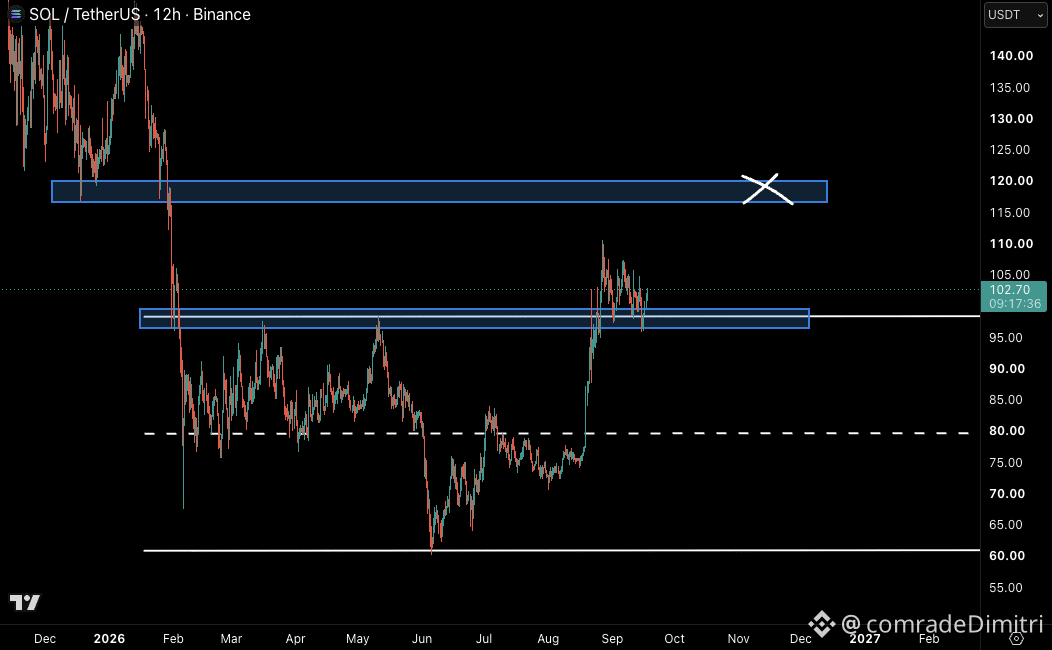
SOL, Watching $120
Just teleport $SOL to $120 already.
{spot}(SOLUSDT)
I’ve taken some calls with $106 and $112 strikes, mainly because the current setup looks interesting for another move higher.
The key for me is whether SOL can hold its current structure and build enough momentum to push through the nearby resistance. If that happens, $120 becomes the level I’m watching next.
Obviously, calls can move against you quickly, so I’m not treating it as guaranteed. But the risk/reward setup is what caught my attention here.
Now we wait and see if SOL makes that $120 move.
#SOL #MacroAnalysis #MEME
SOL, Watching $120
Just teleport $SOL to $120 already.
I’ve taken some calls with $106 and $112 strikes, mainly because the current setup looks interesting for another move higher.
The key for me is whether SOL can hold its current structure and build enough momentum to push through the nearby resistance. If that happens, $120 becomes the level I’m watching next.
Obviously, calls can move against you quickly, so I’m not treating it as guaranteed. But the risk/reward setup is what caught my attention here.
Now we wait and see if SOL makes that $120 move.
#SOL #MacroAnalysis #MEME
Just teleport $SOL to $120 already.
I’ve taken some calls with $106 and $112 strikes, mainly because the current setup looks interesting for another move higher.
The key for me is whether SOL can hold its current structure and build enough momentum to push through the nearby resistance. If that happens, $120 becomes the level I’m watching next.
Obviously, calls can move against you quickly, so I’m not treating it as guaranteed. But the risk/reward setup is what caught my attention here.
Now we wait and see if SOL makes that $120 move.
#SOL #MacroAnalysis #MEME
1
181
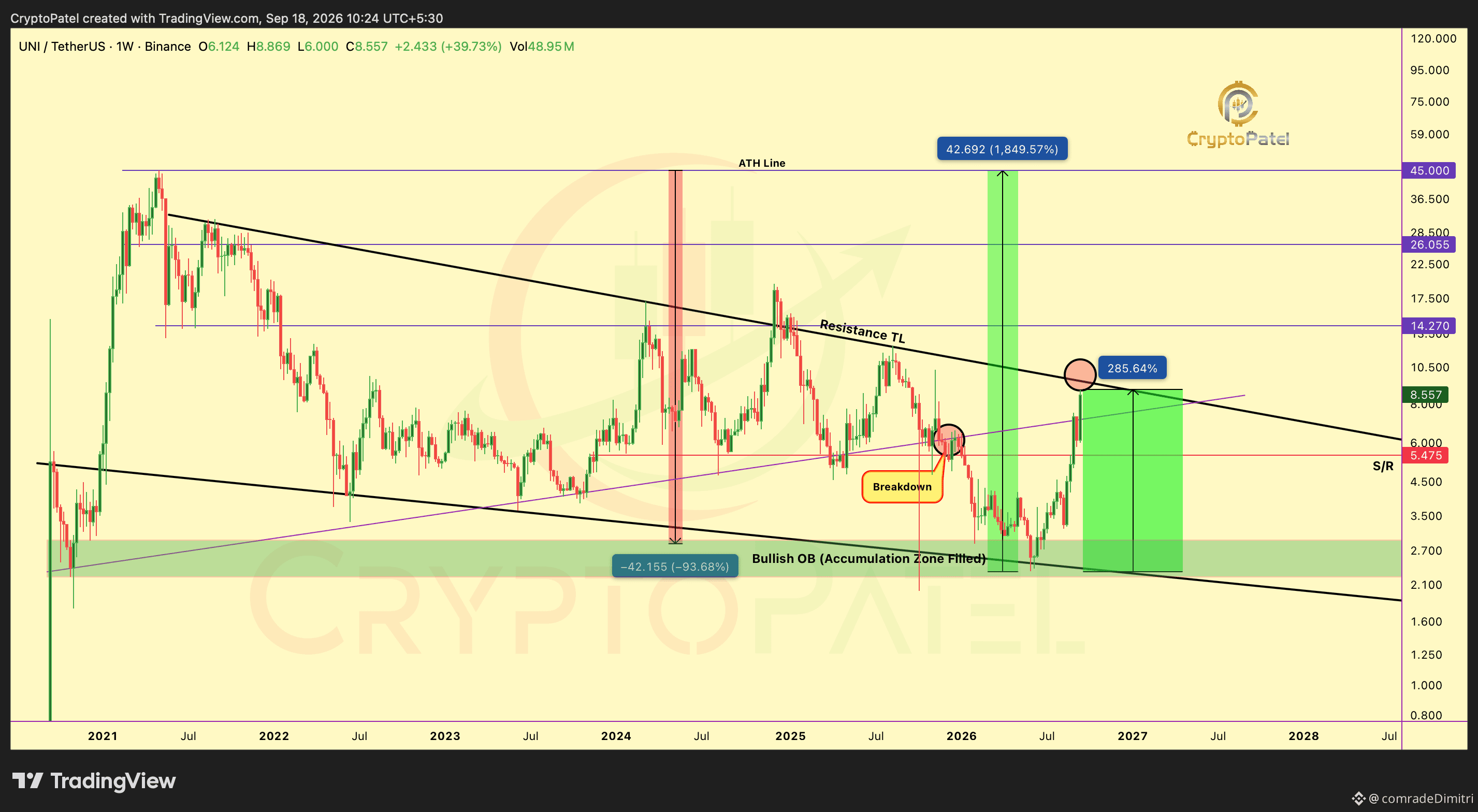
$UNI +285% FROM OUR ACCUMULATION ZONE | NOW THE $50 TARGET IS BACK IN FOCUS
{spot}(UNIUSDT)
When #UNI was sitting deep inside our accumulation zone, we highlighted the possibility of a massive HTF reversal.
Now look at it: +285% FROM OUR ACCUMULATION ZONE.
The patience trade is paying.
At this stage, protecting some gains through partial profit-taking is a disciplined approach. The thesis remains intact, but risk management comes first.
Now, ALL EYES ON $9.50.
Break & Hold Above $9.50 → $14 → $26 → $50 comes into focus.
Rejection → $5.40 becomes the key support to watch.
Our accumulation zone delivered. Now $9.50 decides the next major expansion.
The move may already be huge but the bigger question is whether $UNI can break the next macro resistance.
NFA. DYOR.
$UNI +285% FROM OUR ACCUMULATION ZONE | NOW THE $50 TARGET IS BACK IN FOCUS
When #UNI was sitting deep inside our accumulation zone, we highlighted the possibility of a massive HTF reversal.
Now look at it: +285% FROM OUR ACCUMULATION ZONE.
The patience trade is paying.
At this stage, protecting some gains through partial profit-taking is a disciplined approach. The thesis remains intact, but risk management comes first.
Now, ALL EYES ON $9.50.
Break & Hold Above $9.50 → $14 → $26 → $50 comes into focus.
Rejection → $5.40 becomes the key support to watch.
Our accumulation zone delivered. Now $9.50 decides the next major expansion.
The move may already be huge but the bigger question is whether $UNI can break the next macro resistance.
NFA. DYOR.
When #UNI was sitting deep inside our accumulation zone, we highlighted the possibility of a massive HTF reversal.
Now look at it: +285% FROM OUR ACCUMULATION ZONE.
The patience trade is paying.
At this stage, protecting some gains through partial profit-taking is a disciplined approach. The thesis remains intact, but risk management comes first.
Now, ALL EYES ON $9.50.
Break & Hold Above $9.50 → $14 → $26 → $50 comes into focus.
Rejection → $5.40 becomes the key support to watch.
Our accumulation zone delivered. Now $9.50 decides the next major expansion.
The move may already be huge but the bigger question is whether $UNI can break the next macro resistance.
NFA. DYOR.
63
$NEAR is now the second-best performer among the top 30, helped by a major incentive milestone.
{spot}(NEARUSDT)
I was following the CLARITY Act vote with the markets open.
Then the Senate failed to advance it.
What caught my attention was how quickly the reaction spread.
$BTC was under pressure, while Coinbase and Robinhood also dropped.
{spot}(BTCUSDT)
With BingX open, I switched between stocks and crypto to see if the move was broader.
Sometimes the headline isn’t the trade. The reaction is.
#NEAR #BTC #BTC ANALYSIS
$NEAR is now the second-best performer among the top 30, helped by a major incentive milestone.
I was following the CLARITY Act vote with the markets open.
Then the Senate failed to advance it.
What caught my attention was how quickly the reaction spread.
$BTC was under pressure, while Coinbase and Robinhood also dropped.
With BingX open, I switched between stocks and crypto to see if the move was broader.
Sometimes the headline isn’t the trade. The reaction is.
#NEAR #BTC #BTC ANALYSIS
I was following the CLARITY Act vote with the markets open.
Then the Senate failed to advance it.
What caught my attention was how quickly the reaction spread.
$BTC was under pressure, while Coinbase and Robinhood also dropped.
With BingX open, I switched between stocks and crypto to see if the move was broader.
Sometimes the headline isn’t the trade. The reaction is.
#NEAR #BTC #BTC ANALYSIS
29
{spot}(ONEUSDT)
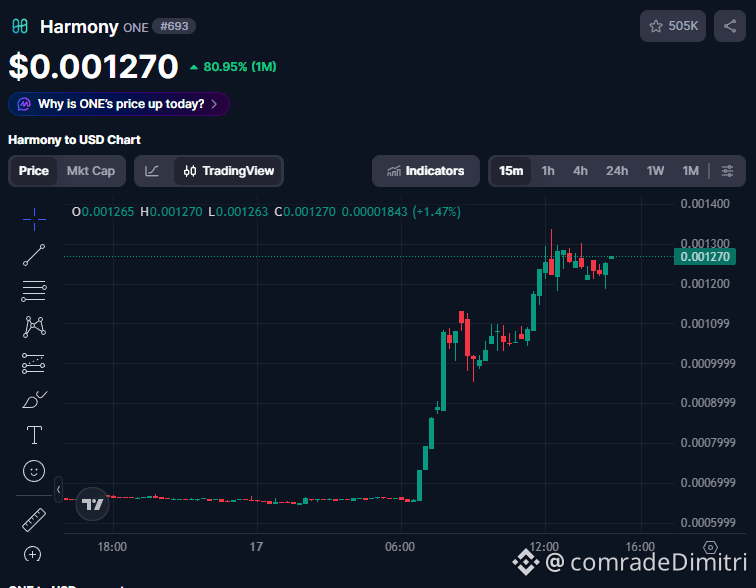
$ONE is trading around $0.001270, up roughly 81% over the past month, but the 15M chart makes the quality of that move difficult to trust.
For roughly 13 hours, price was almost completely flat around $0.000663.
Then everything changed.
ONE nearly doubled within about four hours, moving from roughly $0.00066 toward $0.00130 with very little consolidation along the way.
Since then, price has remained around $0.00120–$0.00130 rather than immediately retracing the move.
For me, $0.00130 is the immediate resistance.
$0.00110 is the first meaningful support, followed by $0.00090–$0.00100.
And $0.000663 remains the pre-move base that matters if the entire breakout begins unwinding.
But I would separate what the chart shows from what it cannot prove.
A long flatline followed by an almost vertical rally is consistent with extremely thin liquidity and poor price discovery. It does not, by itself, prove a coordinated pump, deliberate low-liquidity timing or an impending seller cascade.
Declining volume after the move also isn’t automatically evidence of distribution. It can simply mean activity is normalizing after an unusually large expansion.
That distinction matters with ONE.
The chart already gives us enough reasons for caution without needing to assume manipulation.
After an ~2x move from an extremely inactive base, I’m not interested in predicting another leg higher.
I want to see whether ONE can actually build sustained liquidity and defend the new range once the initial momentum disappears.
A vertical candle creates a new price.
It doesn’t necessarily create a new market.
Not financial advice. DYOR.
$ONE is trading around $0.001270, up roughly 81% over the past month, but the 15M chart makes the quality of that move difficult to trust.
For roughly 13 hours, price was almost completely flat around $0.000663.
Then everything changed.
ONE nearly doubled within about four hours, moving from roughly $0.00066 toward $0.00130 with very little consolidation along the way.
Since then, price has remained around $0.00120–$0.00130 rather than immediately retracing the move.
For me, $0.00130 is the immediate resistance.
$0.00110 is the first meaningful support, followed by $0.00090–$0.00100.
And $0.000663 remains the pre-move base that matters if the entire breakout begins unwinding.
But I would separate what the chart shows from what it cannot prove.
A long flatline followed by an almost vertical rally is consistent with extremely thin liquidity and poor price discovery. It does not, by itself, prove a coordinated pump, deliberate low-liquidity timing or an impending seller cascade.
Declining volume after the move also isn’t automatically evidence of distribution. It can simply mean activity is normalizing after an unusually large expansion.
That distinction matters with ONE.
The chart already gives us enough reasons for caution without needing to assume manipulation.
After an ~2x move from an extremely inactive base, I’m not interested in predicting another leg higher.
I want to see whether ONE can actually build sustained liquidity and defend the new range once the initial momentum disappears.
A vertical candle creates a new price.
It doesn’t necessarily create a new market.
Not financial advice. DYOR.
For roughly 13 hours, price was almost completely flat around $0.000663.
Then everything changed.
ONE nearly doubled within about four hours, moving from roughly $0.00066 toward $0.00130 with very little consolidation along the way.
Since then, price has remained around $0.00120–$0.00130 rather than immediately retracing the move.
For me, $0.00130 is the immediate resistance.
$0.00110 is the first meaningful support, followed by $0.00090–$0.00100.
And $0.000663 remains the pre-move base that matters if the entire breakout begins unwinding.
But I would separate what the chart shows from what it cannot prove.
A long flatline followed by an almost vertical rally is consistent with extremely thin liquidity and poor price discovery. It does not, by itself, prove a coordinated pump, deliberate low-liquidity timing or an impending seller cascade.
Declining volume after the move also isn’t automatically evidence of distribution. It can simply mean activity is normalizing after an unusually large expansion.
That distinction matters with ONE.
The chart already gives us enough reasons for caution without needing to assume manipulation.
After an ~2x move from an extremely inactive base, I’m not interested in predicting another leg higher.
I want to see whether ONE can actually build sustained liquidity and defend the new range once the initial momentum disappears.
A vertical candle creates a new price.
It doesn’t necessarily create a new market.
Not financial advice. DYOR.
1
183
BULLISH: $ZEC Skyrockets 2564% in a Year, Outperforming Major Assets!
Zcash's privacy features and a new ETF are fueling an unprecedented surge.
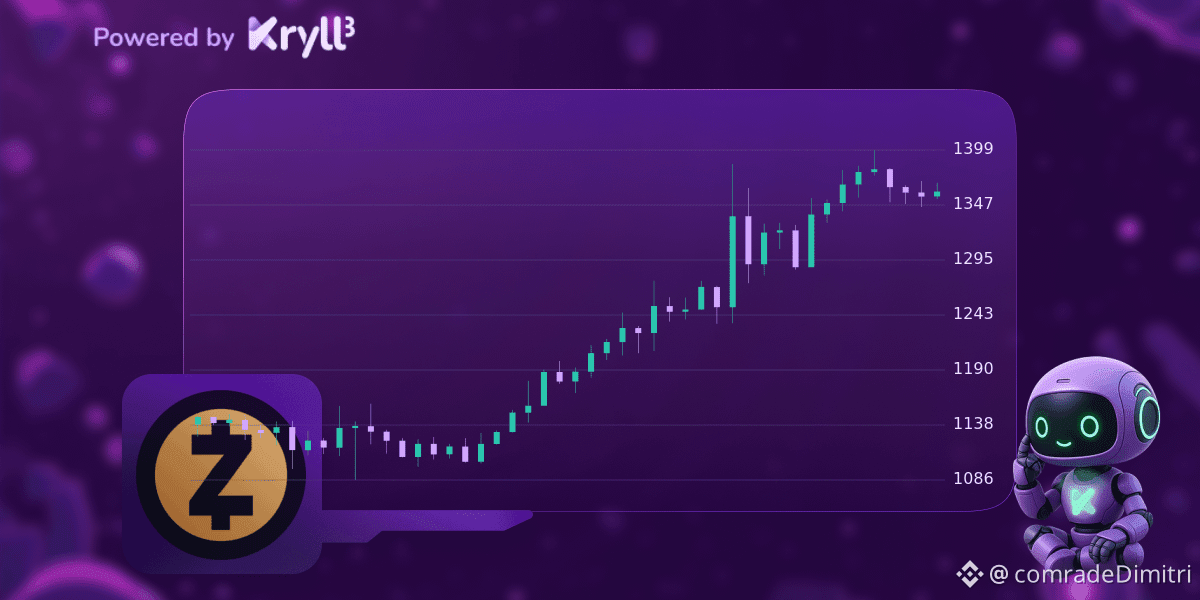
Zcash has achieved an astonishing 2564% price increase over the past year, far exceeding Bitcoin and even leading tech stocks. This remarkable rally comes amid growing concerns over financial surveillance, driving demand for privacy-focused cryptocurrencies like $ZEC . The recent launch of a Grayscale Zcash ETF has further boosted investor sentiment. While market headwinds exist, the demand for privacy and the ETF hype suggest a potentially sustained upward trend for $ZEC #Zcash #Crypto #PrivacyCoins #MarketAnalysis
{spot}(ZECUSDT)
BULLISH: $ZEC Skyrockets 2564% in a Year, Outperforming Major Assets!
Zcash's privacy features and a new ETF are fueling an unprecedented surge.
Zcash has achieved an astonishing 2564% price increase over the past year, far exceeding Bitcoin and even leading tech stocks. This remarkable rally comes amid growing concerns over financial surveillance, driving demand for privacy-focused cryptocurrencies like $ZEC . The recent launch of a Grayscale Zcash ETF has further boosted investor sentiment. While market headwinds exist, the demand for privacy and the ETF hype suggest a potentially sustained upward trend for $ZEC #Zcash #Crypto #PrivacyCoins #MarketAnalysis
Zcash's privacy features and a new ETF are fueling an unprecedented surge.
Zcash has achieved an astonishing 2564% price increase over the past year, far exceeding Bitcoin and even leading tech stocks. This remarkable rally comes amid growing concerns over financial surveillance, driving demand for privacy-focused cryptocurrencies like $ZEC . The recent launch of a Grayscale Zcash ETF has further boosted investor sentiment. While market headwinds exist, the demand for privacy and the ETF hype suggest a potentially sustained upward trend for $ZEC #Zcash #Crypto #PrivacyCoins #MarketAnalysis
1
203
🚀 $MARSCOIN is showing strong bullish momentum.
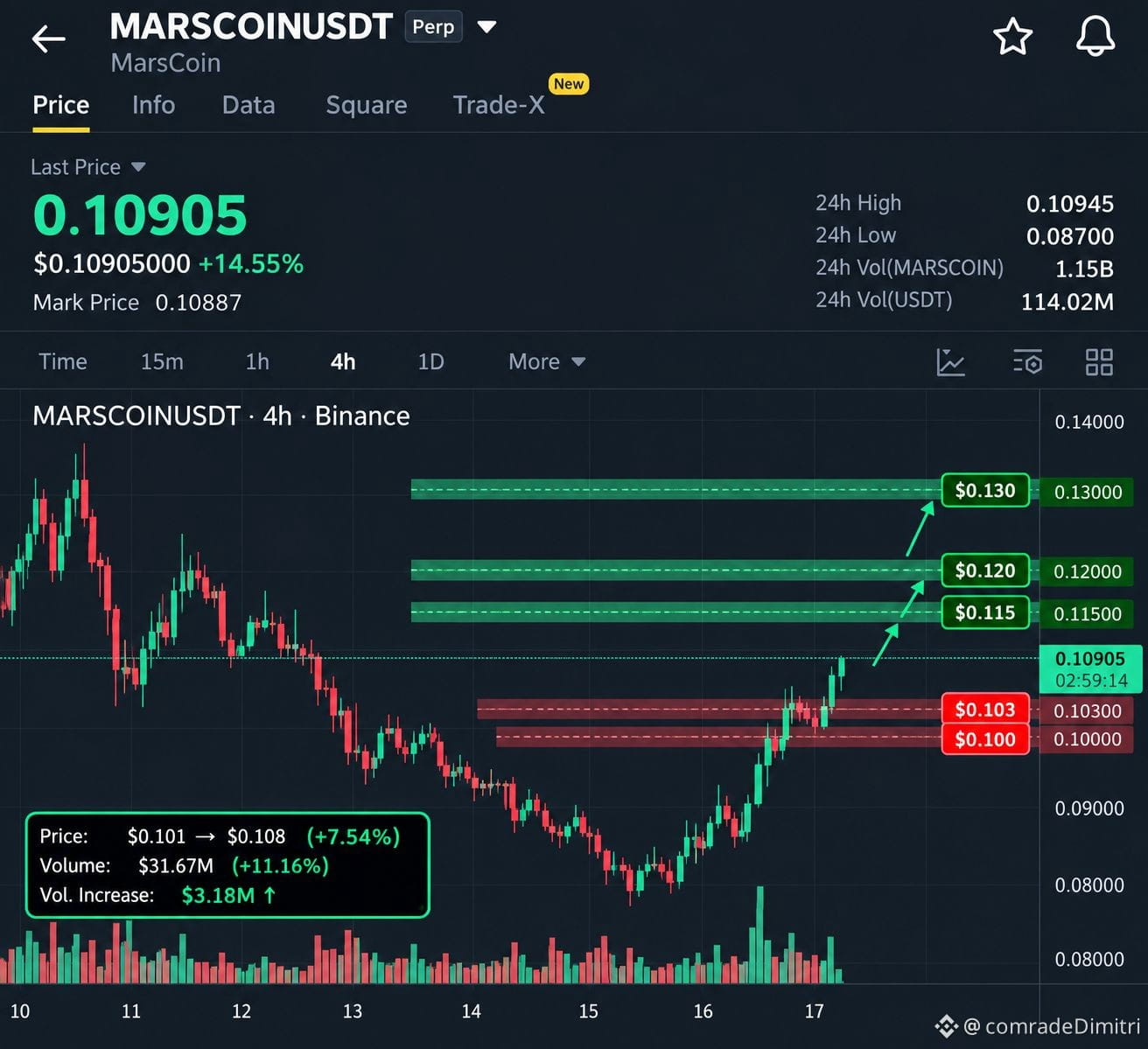
The price moved from $0.101 to $0.108, recording a +7.54% gain.
Trading volume increased to $31.67M, up 11.16%, with an additional $3.18M in volume - showing strong market activity behind the move.
The 4h chart shows a sharp recovery from the $0.08–$0.09 region, with price reclaiming the $0.10 level and pushing toward the $0.11 area.
If buying pressure continues, the next levels to watch are:
🎯 Target 1: $0.115
🎯 Target 2: $0.120
🎯 Target 3: $0.130
Key support is around $0.100–$0.103. Holding this zone on a retest could keep the short-term bullish structure intact.
⚠ After the recent move, volatility can remain high. A pullback and successful retest would provide stronger confirmation than chasing the current price.
#MARSCOIN #Altcoin season#BNBChain
$MARSCOIN
{spot}(MARSCOINUSDT)
🚀 $MARSCOIN is showing strong bullish momentum.
The price moved from $0.101 to $0.108, recording a +7.54% gain.
Trading volume increased to $31.67M, up 11.16%, with an additional $3.18M in volume - showing strong market activity behind the move.
The 4h chart shows a sharp recovery from the $0.08–$0.09 region, with price reclaiming the $0.10 level and pushing toward the $0.11 area.
If buying pressure continues, the next levels to watch are:
🎯 Target 1: $0.115
🎯 Target 2: $0.120
🎯 Target 3: $0.130
Key support is around $0.100–$0.103. Holding this zone on a retest could keep the short-term bullish structure intact.
⚠ After the recent move, volatility can remain high. A pullback and successful retest would provide stronger confirmation than chasing the current price.
#MARSCOIN #Altcoin season#BNBChain
$MARSCOIN
The price moved from $0.101 to $0.108, recording a +7.54% gain.
Trading volume increased to $31.67M, up 11.16%, with an additional $3.18M in volume - showing strong market activity behind the move.
The 4h chart shows a sharp recovery from the $0.08–$0.09 region, with price reclaiming the $0.10 level and pushing toward the $0.11 area.
If buying pressure continues, the next levels to watch are:
🎯 Target 1: $0.115
🎯 Target 2: $0.120
🎯 Target 3: $0.130
Key support is around $0.100–$0.103. Holding this zone on a retest could keep the short-term bullish structure intact.
⚠ After the recent move, volatility can remain high. A pullback and successful retest would provide stronger confirmation than chasing the current price.
#MARSCOIN #Altcoin season#BNBChain
$MARSCOIN
76
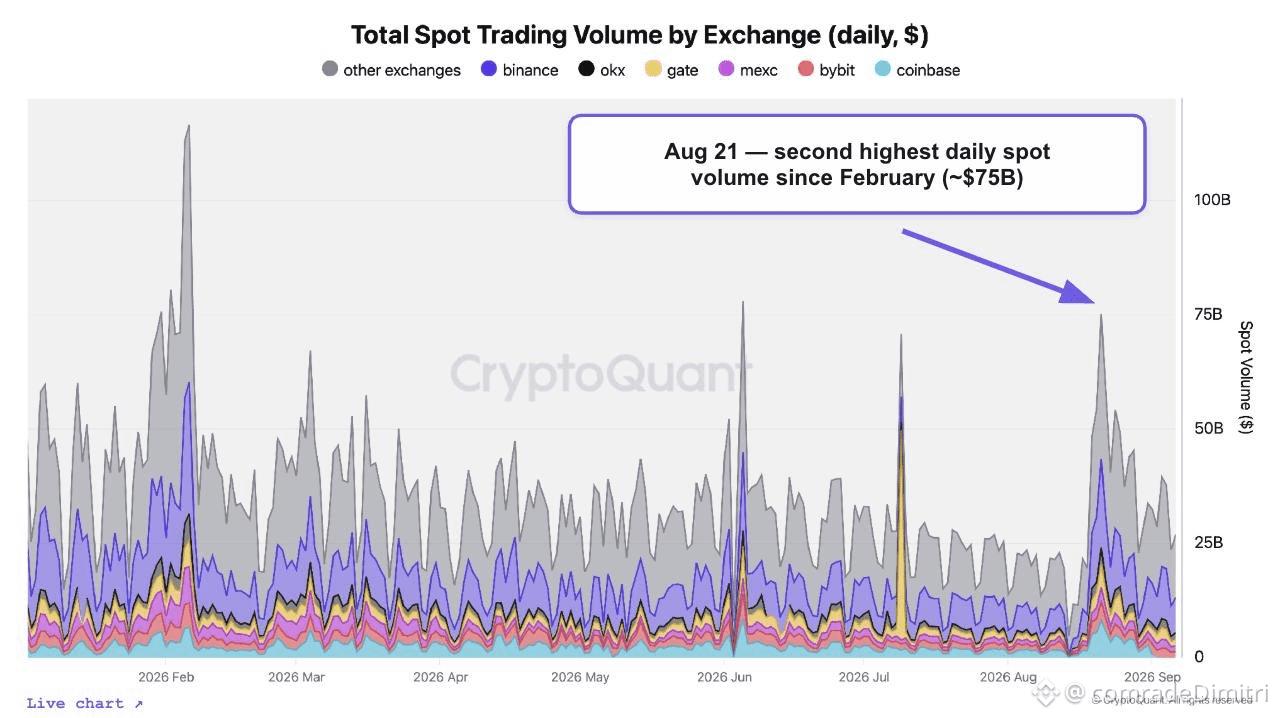
#Bitcoin trading volume is surging with the rally.
Spot volume hit around $75B and perpetual volume $336B, both multi-month highs.
Unlike previous spikes, this move is coming with sustained buying, suggesting broader participation behind the $BTC rally.
{spot}(BTCUSDT)
#MSTRTradingVolumeSurpassesMorganStanley #BitcoinFalls4%
#Bitcoin trading volume is surging with the rally.
Spot volume hit around $75B and perpetual volume $336B, both multi-month highs.
Unlike previous spikes, this move is coming with sustained buying, suggesting broader participation behind the $BTC rally.
#MSTRTradingVolumeSurpassesMorganStanley #BitcoinFalls4%
Spot volume hit around $75B and perpetual volume $336B, both multi-month highs.
Unlike previous spikes, this move is coming with sustained buying, suggesting broader participation behind the $BTC rally.
#MSTRTradingVolumeSurpassesMorganStanley #BitcoinFalls4%
64
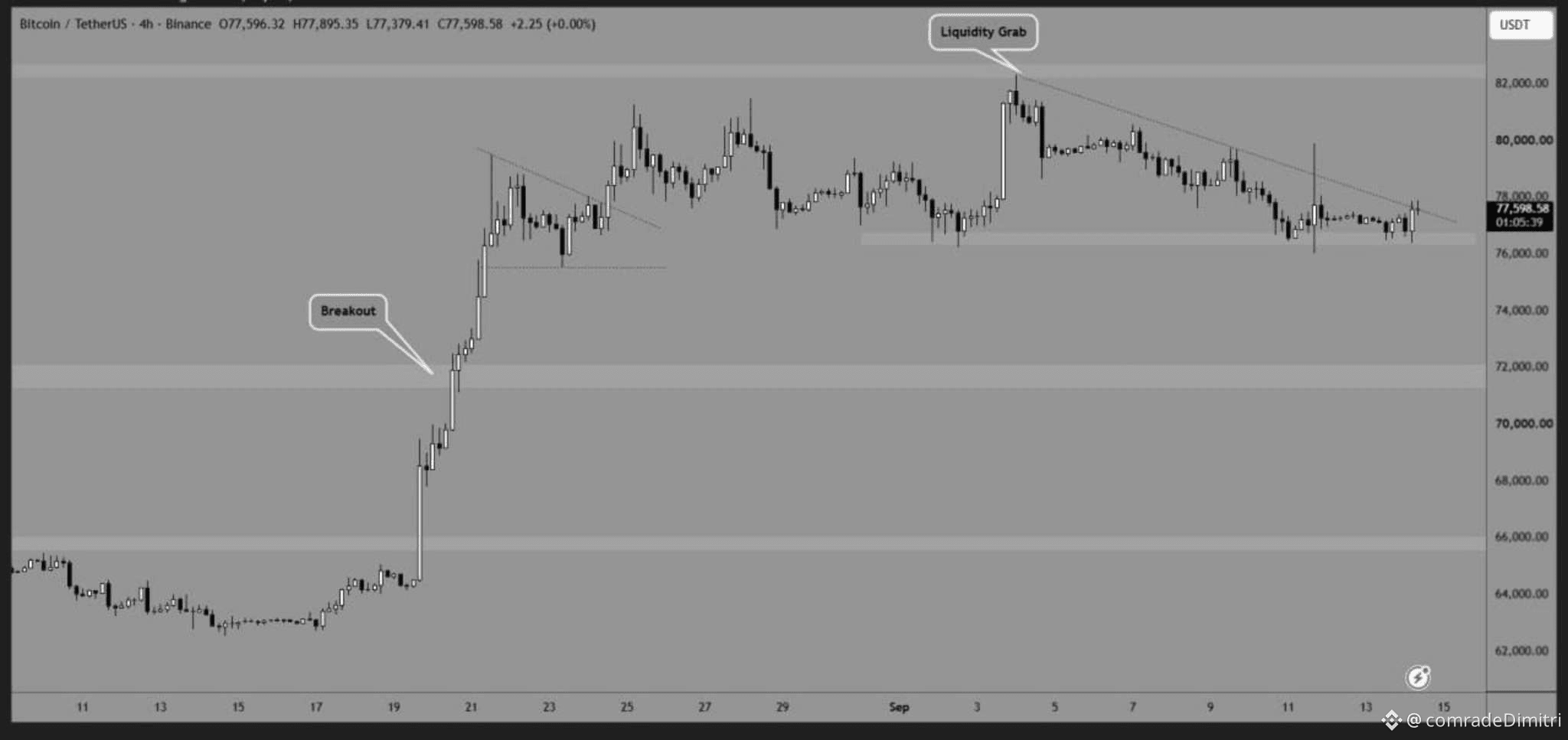
$BTC is breaking above the downtrend line after bouncing from a key support area. The setup is starting to look stronger, but we still need confirmation from volume and price action. As global markets open, let’s see if #BTC can hold this momentum and continue higher.
{spot}(BTCUSDT)
$BTC is breaking above the downtrend line after bouncing from a key support area. The setup is starting to look stronger, but we still need confirmation from volume and price action. As global markets open, let’s see if #BTC can hold this momentum and continue higher.
71
·
--
Bearish
DON’T SHORT $BTC NOW
{spot}(BTCUSDT)
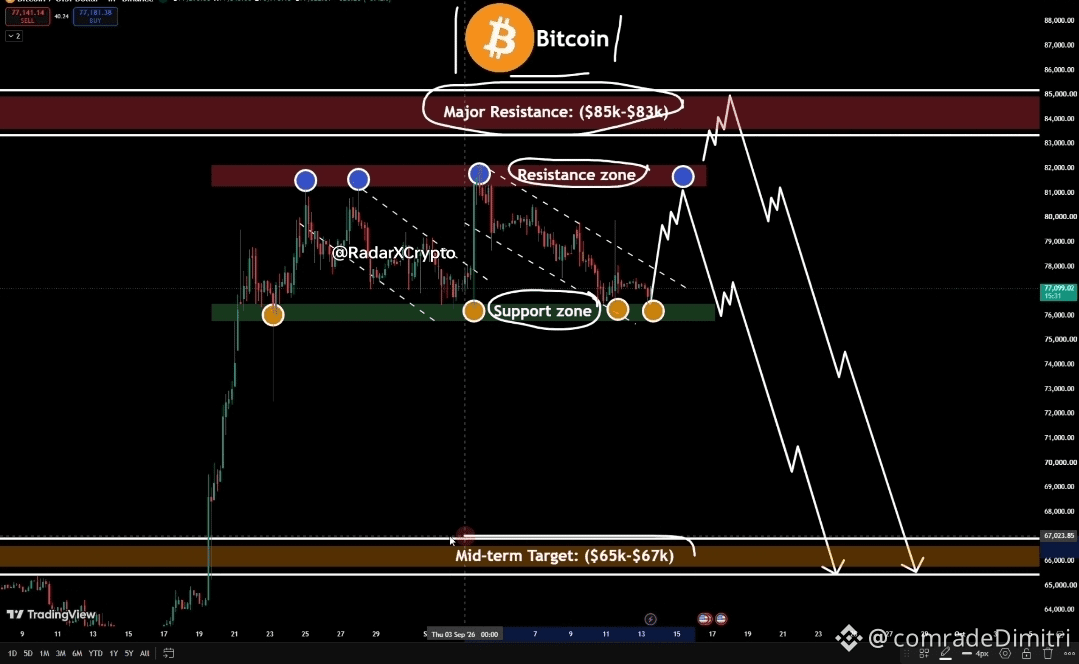
Bitcoin is entering the final stage of the bull trap.
Next week, another bearish rejection will send $BTC back to ~$65,000.
Scenario 1:
77K → $81K → $65K
Scenario 2:
77K → $85K → $65K
Don’t get trapped in the final pump.
$
DON’T SHORT $BTC NOW
Bitcoin is entering the final stage of the bull trap.
Next week, another bearish rejection will send $BTC back to ~$65,000.
Scenario 1:
77K → $81K → $65K
Scenario 2:
77K → $85K → $65K
Don’t get trapped in the final pump.
$
Bitcoin is entering the final stage of the bull trap.
Next week, another bearish rejection will send $BTC back to ~$65,000.
Scenario 1:
77K → $81K → $65K
Scenario 2:
77K → $85K → $65K
Don’t get trapped in the final pump.
$
1
57
BlackRock is making another massive move into crypto. 🚀
The world’s largest asset manager has launched a new tokenized money market fund across $SOL
{spot}(SOLUSDT)
and $ETH
{spot}(ETHUSDT)
and Tempo to manage stable coin reserves.
The fund invests in cash and U.S. Treasuries, requires a $ 3million minimum investment, and is structured to meet the GENIUS Act requirements.
Meanwhile, BlackRock’s BUIDL fund has already grown beyond $2.6 billion in assets under management.
Institutional adoption isn’t slowing down it’s accelerating.
Do you think tokenized real-world assets will be the next trillion-dollar crypto sector?
Follow for more crypto updates and trading signals!
BlackRock is making another massive move into crypto. 🚀
The world’s largest asset manager has launched a new tokenized money market fund across $SOL
and $ETH
and Tempo to manage stable coin reserves.
The fund invests in cash and U.S. Treasuries, requires a $ 3million minimum investment, and is structured to meet the GENIUS Act requirements.
Meanwhile, BlackRock’s BUIDL fund has already grown beyond $2.6 billion in assets under management.
Institutional adoption isn’t slowing down it’s accelerating.
Do you think tokenized real-world assets will be the next trillion-dollar crypto sector?
Follow for more crypto updates and trading signals!
The world’s largest asset manager has launched a new tokenized money market fund across $SOL
and $ETH
and Tempo to manage stable coin reserves.
The fund invests in cash and U.S. Treasuries, requires a $ 3million minimum investment, and is structured to meet the GENIUS Act requirements.
Meanwhile, BlackRock’s BUIDL fund has already grown beyond $2.6 billion in assets under management.
Institutional adoption isn’t slowing down it’s accelerating.
Do you think tokenized real-world assets will be the next trillion-dollar crypto sector?
Follow for more crypto updates and trading signals!

66
Log in to explore more content
Join global crypto users on Binance Square
⚡️ Get latest and useful information about crypto.
💬 Trusted by the world’s largest crypto exchange.
👍 Discover real insights from verified creators.
Email / Phone number
Trending Topics
HYPEJumpsOver11%
6,072 views
379 Discussing
🚨 HYPE JUST FLIPPED THE MARKET
$HYPE +11% in 7 Days
While $XRP and $ETH were bleeding...
HYPE broke into TOP 10 and kicked out Cardano.
Why?
-> $1.3B+ Open Interest
-> ETF inflows beating BTC & ETH ETFs
-> Massive supply burn in progress
This is not just a pump. This is dominance.
Are you watching or ARE YOU IN? 👇
#HYPE #Hyperliquid #Crypto #BinanceSquare#hypejumpsover11%
True News
·3 Likes
·1.7k views
ZcashDevelopersTargetNU7MainnetActivationNov5
1 views
62 Discussing
BitcoinSpotETFsNetInflow$159M
2,084 views
78 Discussing