

AiCoin官方
24.2k Posts
AiCoin官方
 Square Verified+
Report
Block User
AiCoin是全球领先的数据分析平台,提供专业K线、价格预警、AI分析、链上数据、热点快讯、KOL社区、智能下单及套利工具等服务。🎁币安邀请码:aicoin668
9 Following
12.4K+ Followers
16.3K+ Liked
Posts
All
Quotes
Videos
Live
·
--

Article
Anthropic Races Toward an IPO, but CZ Has His Eye on AI’s “Wallet”: Is a New Opportunity Emerging for Crypto?As AI companies gear up to go public, CZ is thinking about a different question: When AI starts working on its own, where will the money come from, and how will it pay?
On October 26, AI company Anthropic publicly filed its IPO registration documents, planning to list on Nasdaq under the ticker ANT. Meanwhile, after the opening bell ceremony for BNB Standard (Nasdaq ticker: BNC), CZ shared his view that cryptocurrency could become AI’s native currency.
Taken together, these two developments point to the acceleration of AI commercialization and the crypto industry’s search for new use cases. As AI begins to call models autonomously, purchase data, and rent computing power, payment methods may also be changing.
Anthropic Races Toward an IPO, but CZ Has His Eye on AI’s “Wallet”: Is a New Opportunity Emerging for Crypto?
As AI companies gear up to go public, CZ is thinking about a different question: When AI starts working on its own, where will the money come from, and how will it pay?
On October 26, AI company Anthropic publicly filed its IPO registration documents, planning to list on Nasdaq under the ticker ANT. Meanwhile, after the opening bell ceremony for BNB Standard (Nasdaq ticker: BNC), CZ shared his view that cryptocurrency could become AI’s native currency.
Taken together, these two developments point to the acceleration of AI commercialization and the crypto industry’s search for new use cases. As AI begins to call models autonomously, purchase data, and rent computing power, payment methods may also be changing.
On October 26, AI company Anthropic publicly filed its IPO registration documents, planning to list on Nasdaq under the ticker ANT. Meanwhile, after the opening bell ceremony for BNB Standard (Nasdaq ticker: BNC), CZ shared his view that cryptocurrency could become AI’s native currency.
Taken together, these two developments point to the acceleration of AI commercialization and the crypto industry’s search for new use cases. As AI begins to call models autonomously, purchase data, and rent computing power, payment methods may also be changing.
364
·
--
A $4.75 million sell order was placed at BTC 81,800 and stayed there for nearly 11 hours.
As the price rose, three consecutive candlesticks reached this level, but none broke through.
Only $370,000 in buy orders were filled—less than 10% of the sell order—before the price fell back to 81,388.
Another large order, worth $1.65 million, disappeared after just 3 seconds.
In AiCoin’s “Large Order Tracker,” the longer the horizontal line, the longer the order stays on the book.
Why are orders that stay posted longer worth paying more attention to?
What purpose do they serve before the price reaches them?
This video breaks down these two real orders to show you.
[Three Key Elements of Large Orders 2/3] Watch the Duration
#AiCoin #BTC #主力大单
A $4.75 million sell order was placed at BTC 81,800 and stayed there for nearly 11 hours.
As the price rose, three consecutive candlesticks reached this level, but none broke through.
Only $370,000 in buy orders were filled—less than 10% of the sell order—before the price fell back to 81,388.
Another large order, worth $1.65 million, disappeared after just 3 seconds.
In AiCoin’s “Large Order Tracker,” the longer the horizontal line, the longer the order stays on the book.
Why are orders that stay posted longer worth paying more attention to?
What purpose do they serve before the price reaches them?
This video breaks down these two real orders to show you.
[Three Key Elements of Large Orders 2/3] Watch the Duration
#AiCoin #BTC #主力大单
As the price rose, three consecutive candlesticks reached this level, but none broke through.
Only $370,000 in buy orders were filled—less than 10% of the sell order—before the price fell back to 81,388.
Another large order, worth $1.65 million, disappeared after just 3 seconds.
In AiCoin’s “Large Order Tracker,” the longer the horizontal line, the longer the order stays on the book.
Why are orders that stay posted longer worth paying more attention to?
What purpose do they serve before the price reaches them?
This video breaks down these two real orders to show you.
[Three Key Elements of Large Orders 2/3] Watch the Duration
#AiCoin #BTC #主力大单
338
·
--
Verified
On October 26, Ethereum core developers delayed the Hoodi testnet fork for the Glamsterdam upgrade, putting EIP-8037 squarely in the spotlight.
The reason is straightforward: a report from security auditing firm ChainSecurity flagged compatibility issues and potential security risks with EIP-8037 when interacting with some smart contracts. The development team chose to review the report before setting a new schedule, effectively adding an extra safety buffer to the upgrade process.
Ethereum Foundation researcher Toni Wahrstätter said that the specific impact of EIP-8037 on contracts in the Glamsterdam testnet environment has now been largely clarified. This suggests the risks are not out of control, but that the upgrade needs to proceed with greater caution.
In the short term, delaying the testnet fork could indirectly affect the mainnet upgrade timeline, but it does not mean there is a problem with the roadmap itself. The bigger takeaway is that security auditors are gaining influence. For future major upgrades, this kind of “audit first, schedule later” approach may become increasingly common.
On October 26, Ethereum core developers delayed the Hoodi testnet fork for the Glamsterdam upgrade, putting EIP-8037 squarely in the spotlight.
The reason is straightforward: a report from security auditing firm ChainSecurity flagged compatibility issues and potential security risks with EIP-8037 when interacting with some smart contracts. The development team chose to review the report before setting a new schedule, effectively adding an extra safety buffer to the upgrade process.
Ethereum Foundation researcher Toni Wahrstätter said that the specific impact of EIP-8037 on contracts in the Glamsterdam testnet environment has now been largely clarified. This suggests the risks are not out of control, but that the upgrade needs to proceed with greater caution.
In the short term, delaying the testnet fork could indirectly affect the mainnet upgrade timeline, but it does not mean there is a problem with the roadmap itself. The bigger takeaway is that security auditors are gaining influence. For future major upgrades, this kind of “audit first, schedule later” approach may become increasingly common.
The reason is straightforward: a report from security auditing firm ChainSecurity flagged compatibility issues and potential security risks with EIP-8037 when interacting with some smart contracts. The development team chose to review the report before setting a new schedule, effectively adding an extra safety buffer to the upgrade process.
Ethereum Foundation researcher Toni Wahrstätter said that the specific impact of EIP-8037 on contracts in the Glamsterdam testnet environment has now been largely clarified. This suggests the risks are not out of control, but that the upgrade needs to proceed with greater caution.
In the short term, delaying the testnet fork could indirectly affect the mainnet upgrade timeline, but it does not mean there is a problem with the roadmap itself. The bigger takeaway is that security auditors are gaining influence. For future major upgrades, this kind of “audit first, schedule later” approach may become increasingly common.

621
·
--
Verified
Article
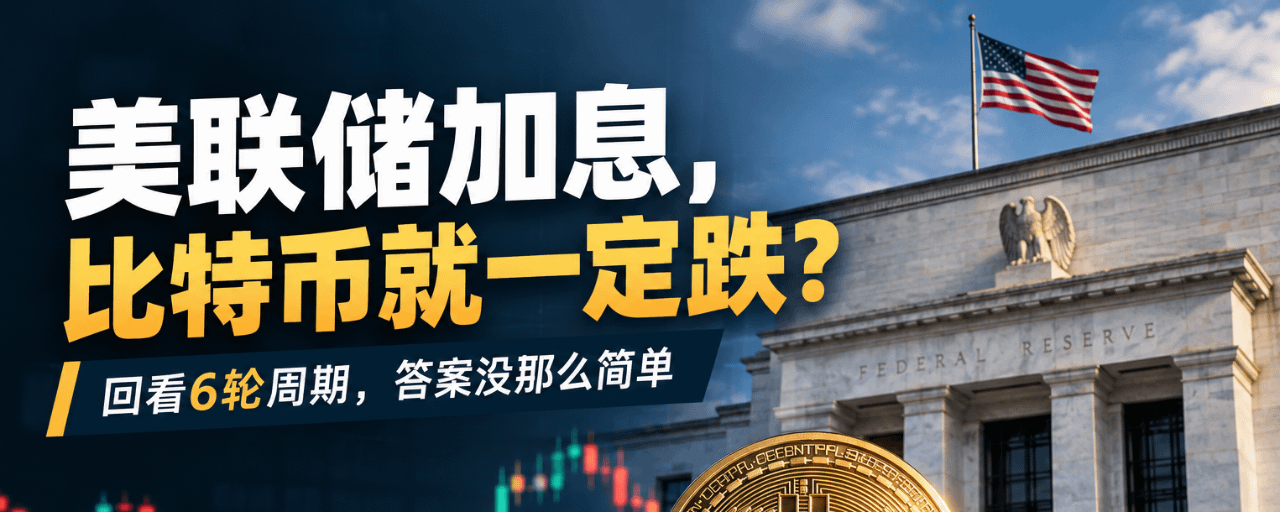
Does Bitcoin Always Fall When the Fed Hikes Rates? Six Historical Cycles Tell Different StoriesWhenever the Fed raises rates, does Bitcoin have to fall? History shows it’s not that simple.
In 2017, the Fed kept raising rates, yet Bitcoin went on a major bull run. In 2022, the Fed hiked aggressively, and BTC plunged from its highs.
Why have markets reacted so differently to rate hikes? And what should we pay close attention to this time?
In the early hours of October 29, the Federal Reserve will announce its latest interest rate decision, followed by a monetary policy press conference with Chair Kevin Warsh. Markets are watching not only to see whether rates will change, but also for the Fed’s views on inflation and the path of policy ahead.
Does Bitcoin Always Fall When the Fed Hikes Rates? Six Historical Cycles Tell Different Stories
Whenever the Fed raises rates, does Bitcoin have to fall? History shows it’s not that simple.
In 2017, the Fed kept raising rates, yet Bitcoin went on a major bull run. In 2022, the Fed hiked aggressively, and BTC plunged from its highs.
Why have markets reacted so differently to rate hikes? And what should we pay close attention to this time?
In the early hours of October 29, the Federal Reserve will announce its latest interest rate decision, followed by a monetary policy press conference with Chair Kevin Warsh. Markets are watching not only to see whether rates will change, but also for the Fed’s views on inflation and the path of policy ahead.
In 2017, the Fed kept raising rates, yet Bitcoin went on a major bull run. In 2022, the Fed hiked aggressively, and BTC plunged from its highs.
Why have markets reacted so differently to rate hikes? And what should we pay close attention to this time?
In the early hours of October 29, the Federal Reserve will announce its latest interest rate decision, followed by a monetary policy press conference with Chair Kevin Warsh. Markets are watching not only to see whether rates will change, but also for the Fed’s views on inflation and the path of policy ahead.
7
2.6k
·
--
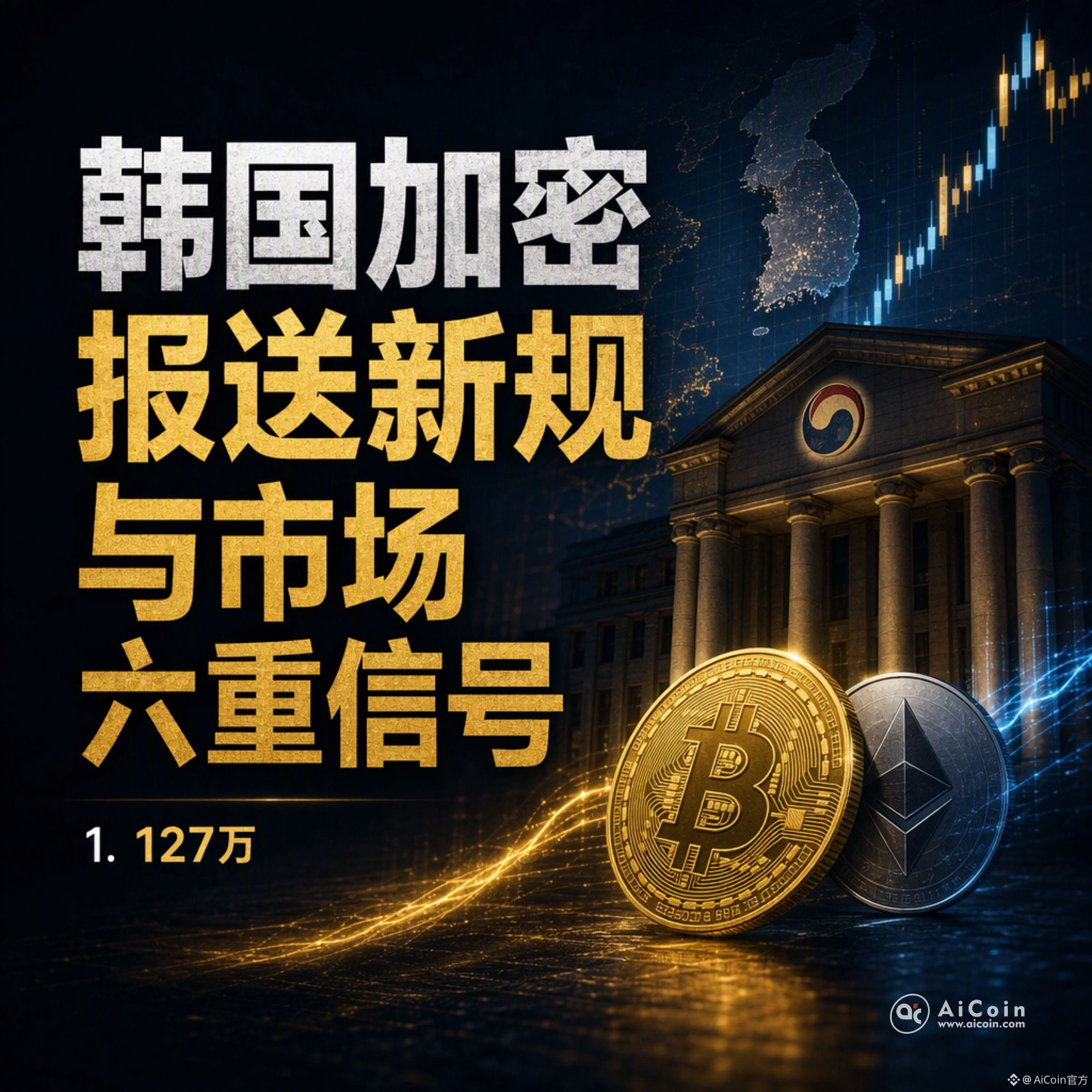
The South Korean government will require domestic virtual asset service providers to report transfer information for each cross-border crypto transaction to banks by 11:00 a.m. on the next business day, and to submit monthly balance reports by 5:30 p.m. on the 10th of the following month. FX1021.
In other words, cross-border crypto fund flows will no longer remain only in on-chain records; they will be fully incorporated into traditional foreign exchange monitoring and bank reconciliation systems. An estimated 1.27 million users will be affected.
For platforms and users, this means higher compliance costs and greater disclosure pressures. Activities such as cross-border arbitrage and asset transfers will be harder to carry out “without a trace,” while transparency and traceability will also increase.
What remains to be seen is how the detailed implementation rules will be put into practice, and whether other countries will adopt similar approaches. If more jurisdictions regulate crypto fund flows as part of foreign exchange, the industry’s cross-border business models may be reshaped.
The South Korean government will require domestic virtual asset service providers to report transfer information for each cross-border crypto transaction to banks by 11:00 a.m. on the next business day, and to submit monthly balance reports by 5:30 p.m. on the 10th of the following month. FX1021.
In other words, cross-border crypto fund flows will no longer remain only in on-chain records; they will be fully incorporated into traditional foreign exchange monitoring and bank reconciliation systems. An estimated 1.27 million users will be affected.
For platforms and users, this means higher compliance costs and greater disclosure pressures. Activities such as cross-border arbitrage and asset transfers will be harder to carry out “without a trace,” while transparency and traceability will also increase.
What remains to be seen is how the detailed implementation rules will be put into practice, and whether other countries will adopt similar approaches. If more jurisdictions regulate crypto fund flows as part of foreign exchange, the industry’s cross-border business models may be reshaped.
In other words, cross-border crypto fund flows will no longer remain only in on-chain records; they will be fully incorporated into traditional foreign exchange monitoring and bank reconciliation systems. An estimated 1.27 million users will be affected.
For platforms and users, this means higher compliance costs and greater disclosure pressures. Activities such as cross-border arbitrage and asset transfers will be harder to carry out “without a trace,” while transparency and traceability will also increase.
What remains to be seen is how the detailed implementation rules will be put into practice, and whether other countries will adopt similar approaches. If more jurisdictions regulate crypto fund flows as part of foreign exchange, the industry’s cross-border business models may be reshaped.
576
·
--
【AiCoin | 10.27 Snapshot: Bitcoin ETFs see net outflows of 2,123 BTC in a single day; Strive added 6,182 BTC last week; BitMNR added 10,452 ETH】1. 109 Israeli economists and business leaders warn Netanyahu against cryptocurrency sanctions-evasion plan
109 Israeli economists and business leaders warned Netanyahu not to pursue a cryptocurrency sanctions-evasion plan. Signatories include former Bank of Israel Governor Jacob Frenkel and 2025 Nobel Prize in Economics laureate Joel Mokyr. They said cryptocurrencies are a perplexing solution adopted by criminal organizations and do nothing to solve the problem. Netanyahu said on Friday that Israel should be prepared to build an alternative economy in case its banks are sanctioned, and confirmed that the plan involves cryptocurrency. The Bank of Israel has rejected the idea, and Israel’s general election will be held tomorrow. -Original
【AiCoin | 10.27 Snapshot: Bitcoin ETFs see net outflows of 2,123 BTC in a single day; Strive added 6,182 BTC last week; BitMNR added 10,452 ETH】
1. 109 Israeli economists and business leaders warn Netanyahu against cryptocurrency sanctions-evasion plan
109 Israeli economists and business leaders warned Netanyahu not to pursue a cryptocurrency sanctions-evasion plan. Signatories include former Bank of Israel Governor Jacob Frenkel and 2025 Nobel Prize in Economics laureate Joel Mokyr. They said cryptocurrencies are a perplexing solution adopted by criminal organizations and do nothing to solve the problem. Netanyahu said on Friday that Israel should be prepared to build an alternative economy in case its banks are sanctioned, and confirmed that the plan involves cryptocurrency. The Bank of Israel has rejected the idea, and Israel’s general election will be held tomorrow. -Original
109 Israeli economists and business leaders warned Netanyahu not to pursue a cryptocurrency sanctions-evasion plan. Signatories include former Bank of Israel Governor Jacob Frenkel and 2025 Nobel Prize in Economics laureate Joel Mokyr. They said cryptocurrencies are a perplexing solution adopted by criminal organizations and do nothing to solve the problem. Netanyahu said on Friday that Israel should be prepared to build an alternative economy in case its banks are sanctioned, and confirmed that the plan involves cryptocurrency. The Bank of Israel has rejected the idea, and Israel’s general election will be held tomorrow. -Original
1
1
1.1k
·
--
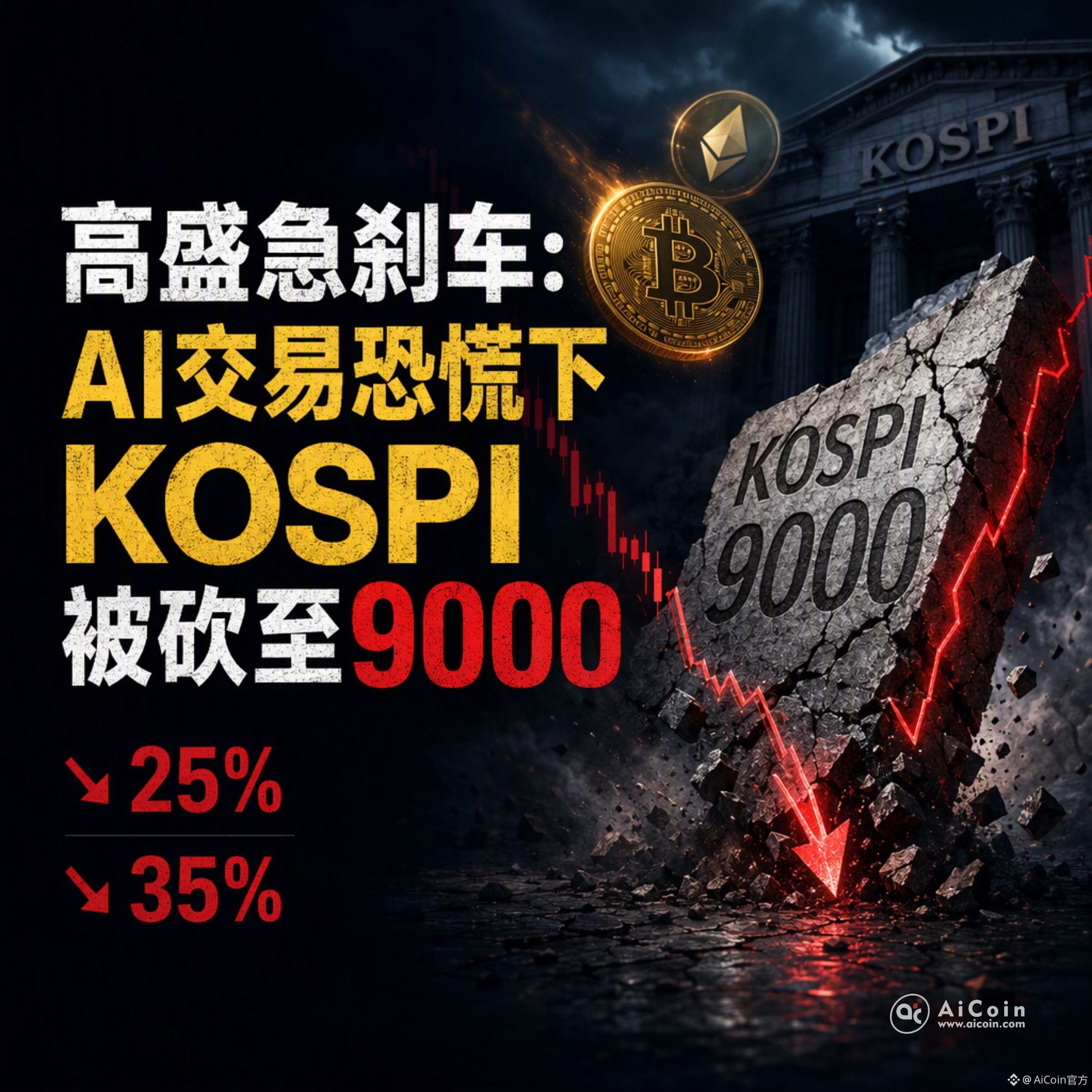
According to a single source, Goldman Sachs strategists have cut their 12-month target for South Korea’s KOSPI index from 12,000 to 9,000, a reduction of about 25%. The move comes as concerns about AI-related trades intensify in the market.
Before this adjustment, Goldman had raised its KOSPI target several times this year. Its sharp reversal now effectively scales back the optimistic assumption that AI would drive long-term expansion in the Korean stock market.
The report also notes that the KOSPI has fallen more than 35% from its June peak. In other words, prices corrected first, and then the sell side revised its models. The target cut is a concentrated response to both that pullback and the crowded nature of AI trades.
For crypto and tech assets, the key point is not the specific figure of 9,000, but the pace at which expectations are shifting from expansion to contraction. If sentiment around AI continues to cool, valuation discipline for high-beta assets may tighten. That is worth factoring into risk management in advance.
According to a single source, Goldman Sachs strategists have cut their 12-month target for South Korea’s KOSPI index from 12,000 to 9,000, a reduction of about 25%. The move comes as concerns about AI-related trades intensify in the market.
Before this adjustment, Goldman had raised its KOSPI target several times this year. Its sharp reversal now effectively scales back the optimistic assumption that AI would drive long-term expansion in the Korean stock market.
The report also notes that the KOSPI has fallen more than 35% from its June peak. In other words, prices corrected first, and then the sell side revised its models. The target cut is a concentrated response to both that pullback and the crowded nature of AI trades.
For crypto and tech assets, the key point is not the specific figure of 9,000, but the pace at which expectations are shifting from expansion to contraction. If sentiment around AI continues to cool, valuation discipline for high-beta assets may tighten. That is worth factoring into risk management in advance.
Before this adjustment, Goldman had raised its KOSPI target several times this year. Its sharp reversal now effectively scales back the optimistic assumption that AI would drive long-term expansion in the Korean stock market.
The report also notes that the KOSPI has fallen more than 35% from its June peak. In other words, prices corrected first, and then the sell side revised its models. The target cut is a concentrated response to both that pullback and the crowded nature of AI trades.
For crypto and tech assets, the key point is not the specific figure of 9,000, but the pace at which expectations are shifting from expansion to contraction. If sentiment around AI continues to cool, valuation discipline for high-beta assets may tighten. That is worth factoring into risk management in advance.
481
·
--
A $16.46 million sell order was placed at BTC 84,250.
As the price climbed, it began to fill, absorbing all the buying pressure.
The price peaked just above 84,300, then fell all the way to 81,005.
Large orders like this can actually be spotted on the candlestick chart ahead of time.
In AiCoin’s “Major Order Tracking,” the thicker the line, the larger the order amount.
With horizontal lines all over the screen, which one should you look at first?
Why does a larger order amount better reflect the judgment of big-money players?
Watch the video as we break down this real order.
[Three Key Elements of Major Orders 1/3] Look at the Thickness
#AiCoin #BTC #主力大单
A $16.46 million sell order was placed at BTC 84,250.
As the price climbed, it began to fill, absorbing all the buying pressure.
The price peaked just above 84,300, then fell all the way to 81,005.
Large orders like this can actually be spotted on the candlestick chart ahead of time.
In AiCoin’s “Major Order Tracking,” the thicker the line, the larger the order amount.
With horizontal lines all over the screen, which one should you look at first?
Why does a larger order amount better reflect the judgment of big-money players?
Watch the video as we break down this real order.
[Three Key Elements of Major Orders 1/3] Look at the Thickness
#AiCoin #BTC #主力大单
As the price climbed, it began to fill, absorbing all the buying pressure.
The price peaked just above 84,300, then fell all the way to 81,005.
Large orders like this can actually be spotted on the candlestick chart ahead of time.
In AiCoin’s “Major Order Tracking,” the thicker the line, the larger the order amount.
With horizontal lines all over the screen, which one should you look at first?
Why does a larger order amount better reflect the judgment of big-money players?
Watch the video as we break down this real order.
[Three Key Elements of Major Orders 1/3] Look at the Thickness
#AiCoin #BTC #主力大单
846
·
--
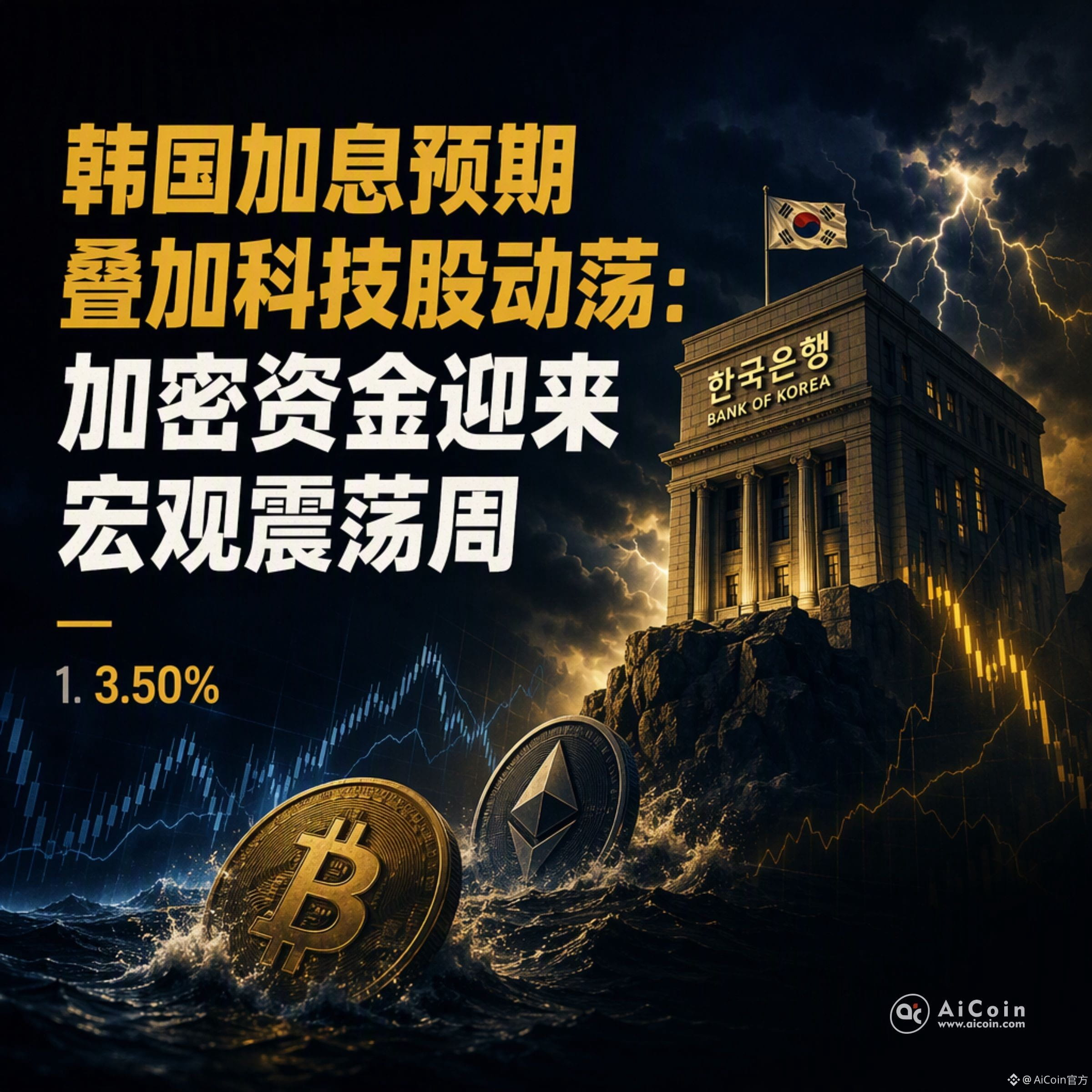
At its October meeting, the Bank of Korea unanimously kept interest rates unchanged. Nomura still forecasts a terminal rate of 3.50% and expects 25-basis-point hikes in November this year and February next year, as Asian monetary policy may be shifting from a wait-and-see stance toward a tighter path.
Meanwhile, interest rate decisions from four major central banks, U.S. third-quarter GDP figures and September PCE data are all due next Thursday. U.S. tech giants are also set to report earnings in quick succession, meaning markets will reprice the macroeconomic backdrop and corporate earnings at the same time.
Over the past week, U.S. chipmakers and AI stocks rebounded from a sharp sell-off, but capital rotated into healthcare and financials. After Meta announced massive AI capital expenditures, selling spread across the tech sector, while investors seeking safety flocked to U.S. Treasuries and the yen.
On the same day, Houthi militants attacked Saudi energy facilities, pushing Brent crude to a five-month high and putting inflation back in focus. For risk assets, including crypto, this “macro superweek” looks more like a stress test of liquidity and risk appetite. Short-term positions need to remain sensitive to interest-rate guidance and data surprises.
At its October meeting, the Bank of Korea unanimously kept interest rates unchanged. Nomura still forecasts a terminal rate of 3.50% and expects 25-basis-point hikes in November this year and February next year, as Asian monetary policy may be shifting from a wait-and-see stance toward a tighter path.
Meanwhile, interest rate decisions from four major central banks, U.S. third-quarter GDP figures and September PCE data are all due next Thursday. U.S. tech giants are also set to report earnings in quick succession, meaning markets will reprice the macroeconomic backdrop and corporate earnings at the same time.
Over the past week, U.S. chipmakers and AI stocks rebounded from a sharp sell-off, but capital rotated into healthcare and financials. After Meta announced massive AI capital expenditures, selling spread across the tech sector, while investors seeking safety flocked to U.S. Treasuries and the yen.
On the same day, Houthi militants attacked Saudi energy facilities, pushing Brent crude to a five-month high and putting inflation back in focus. For risk assets, including crypto, this “macro superweek” looks more like a stress test of liquidity and risk appetite. Short-term positions need to remain sensitive to interest-rate guidance and data surprises.
Meanwhile, interest rate decisions from four major central banks, U.S. third-quarter GDP figures and September PCE data are all due next Thursday. U.S. tech giants are also set to report earnings in quick succession, meaning markets will reprice the macroeconomic backdrop and corporate earnings at the same time.
Over the past week, U.S. chipmakers and AI stocks rebounded from a sharp sell-off, but capital rotated into healthcare and financials. After Meta announced massive AI capital expenditures, selling spread across the tech sector, while investors seeking safety flocked to U.S. Treasuries and the yen.
On the same day, Houthi militants attacked Saudi energy facilities, pushing Brent crude to a five-month high and putting inflation back in focus. For risk assets, including crypto, this “macro superweek” looks more like a stress test of liquidity and risk appetite. Short-term positions need to remain sensitive to interest-rate guidance and data surprises.
5
1.2k
·
--
【AiCoin | 10.26 Snapshot: Bitcoin ETFs end two consecutive weeks of outflows as Strive increases holdings to 50,000 BTC】1. Bitcoin ETFs end two consecutive weeks of outflows as Strive increases holdings to 50,000 BTC
Despite weakening later in the week, Bitcoin ETFs ended a two-week streak of outflows. -Original
2. Polymarket: Probability of WTI crude oil topping $110 falls to 31%
Polymarket data shows the probability of WTI crude oil topping $110 per barrel during the rest of October has fallen to 31%, down 19% in 24 hours. U.S. President Trump said oil prices would fall soon, adding that the U.S. could quickly end the war with Iran and take all of Iran’s oil. -Original
【AiCoin | 10.26 Snapshot: Bitcoin ETFs end two consecutive weeks of outflows as Strive increases holdings to 50,000 BTC】
1. Bitcoin ETFs end two consecutive weeks of outflows as Strive increases holdings to 50,000 BTC
Despite weakening later in the week, Bitcoin ETFs ended a two-week streak of outflows. -Original
2. Polymarket: Probability of WTI crude oil topping $110 falls to 31%
Polymarket data shows the probability of WTI crude oil topping $110 per barrel during the rest of October has fallen to 31%, down 19% in 24 hours. U.S. President Trump said oil prices would fall soon, adding that the U.S. could quickly end the war with Iran and take all of Iran’s oil. -Original
Despite weakening later in the week, Bitcoin ETFs ended a two-week streak of outflows. -Original
2. Polymarket: Probability of WTI crude oil topping $110 falls to 31%
Polymarket data shows the probability of WTI crude oil topping $110 per barrel during the rest of October has fallen to 31%, down 19% in 24 hours. U.S. President Trump said oil prices would fall soon, adding that the U.S. could quickly end the war with Iran and take all of Iran’s oil. -Original
1.2k
·
--
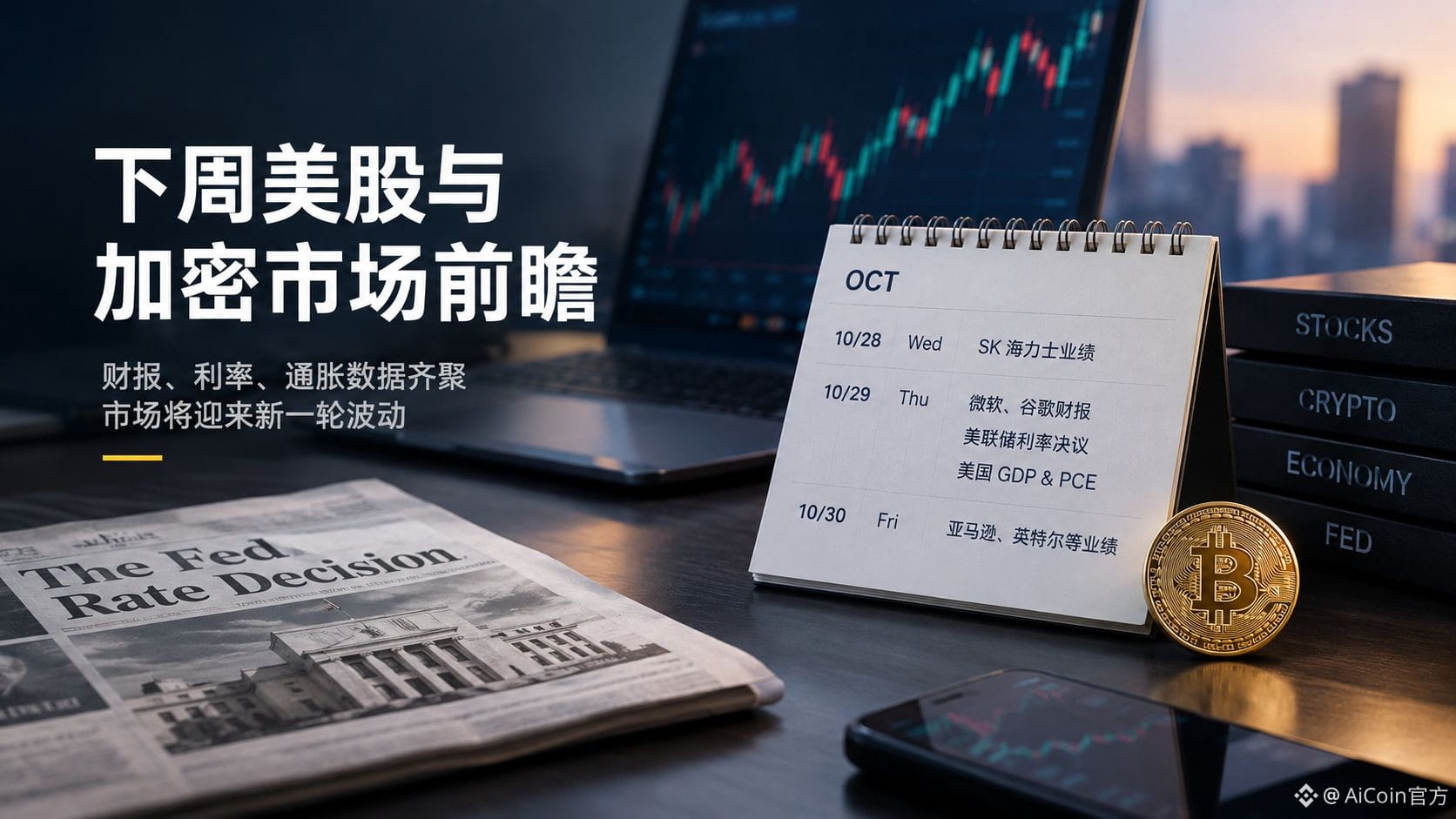
Next week, markets face another major test.
Earnings reports from tech giants, the Fed’s interest rate decision, U.S. GDP figures, and PCE inflation data are all on the agenda. There will be fresh clues about whether U.S. stocks can extend their gains, whether rate-cut expectations will shift, and what direction BTC may take.
📅 Key events:
· Wed, 10/28: SK Hynix reports earnings
· Early Thu, 10/29: Microsoft and Google report earnings; Fed interest rate decision
· Thu, 10/29, 20:30: U.S. preliminary Q3 GDP and September PCE
· Early Fri, 10/30: Amazon, Intel, and others report earnings
Three areas to watch next week:
1️⃣ Corporate earnings: Will the results and capital spending of tech giants support market expectations?
2️⃣ Interest rates and inflation: How will GDP, PCE, and the Fed’s comments affect rate-cut expectations?
3️⃣ Crypto markets: Could moves in U.S. stocks, the dollar, and Treasury yields spill over into BTC?
Macroeconomic news is just the starting point. What matters is how markets interpret it and how investors respond.
For the exact release times of earnings reports and data, please refer to official announcements.
#U.S.Stocks #BTC #Macroeconomics
Next week, markets face another major test.
Earnings reports from tech giants, the Fed’s interest rate decision, U.S. GDP figures, and PCE inflation data are all on the agenda. There will be fresh clues about whether U.S. stocks can extend their gains, whether rate-cut expectations will shift, and what direction BTC may take.
📅 Key events:
· Wed, 10/28: SK Hynix reports earnings
· Early Thu, 10/29: Microsoft and Google report earnings; Fed interest rate decision
· Thu, 10/29, 20:30: U.S. preliminary Q3 GDP and September PCE
· Early Fri, 10/30: Amazon, Intel, and others report earnings
Three areas to watch next week:
1️⃣ Corporate earnings: Will the results and capital spending of tech giants support market expectations?
2️⃣ Interest rates and inflation: How will GDP, PCE, and the Fed’s comments affect rate-cut expectations?
3️⃣ Crypto markets: Could moves in U.S. stocks, the dollar, and Treasury yields spill over into BTC?
Macroeconomic news is just the starting point. What matters is how markets interpret it and how investors respond.
For the exact release times of earnings reports and data, please refer to official announcements.
#U.S.Stocks #BTC #Macroeconomics
Earnings reports from tech giants, the Fed’s interest rate decision, U.S. GDP figures, and PCE inflation data are all on the agenda. There will be fresh clues about whether U.S. stocks can extend their gains, whether rate-cut expectations will shift, and what direction BTC may take.
📅 Key events:
· Wed, 10/28: SK Hynix reports earnings
· Early Thu, 10/29: Microsoft and Google report earnings; Fed interest rate decision
· Thu, 10/29, 20:30: U.S. preliminary Q3 GDP and September PCE
· Early Fri, 10/30: Amazon, Intel, and others report earnings
Three areas to watch next week:
1️⃣ Corporate earnings: Will the results and capital spending of tech giants support market expectations?
2️⃣ Interest rates and inflation: How will GDP, PCE, and the Fed’s comments affect rate-cut expectations?
3️⃣ Crypto markets: Could moves in U.S. stocks, the dollar, and Treasury yields spill over into BTC?
Macroeconomic news is just the starting point. What matters is how markets interpret it and how investors respond.
For the exact release times of earnings reports and data, please refer to official announcements.
#U.S.Stocks #BTC #Macroeconomics
740
·
--
【AiCoin | 10.25 Snapshot: 25x ETH Long Liquidated, Bitcoin Falls Below $80,000, X100 Attacked】1. Huang Licheng’s 25x leveraged ETH long position was liquidated, resulting in losses of more than $35.37 million
As a result of the crypto market downturn, Huang Licheng’s 25x leveraged Ethereum long position was completely liquidated. His address now holds only $5,357 in assets, with cumulative losses exceeding $35.37 million. - Original
2. Bloomberg: Trump preparing to escalate action against Iran after the midterm elections
U.S. President Trump is preparing to resume strikes against Iran after the November 3 U.S. midterm elections, having sent a third carrier strike group and 10,000 sailors and Marines to the Persian Gulf. U.S. Secretary of Defense Hegseth visited Israel and met with Netanyahu, while the U.S. State Department ordered some diplomatic staff stationed in Saudi Arabia and their family members to leave. Iran is planning retaliatory action in the Middle East, and Iranian Foreign Minister Araghchi said diplomatic progress remains limited. The conflict has disrupted energy transport through the Persian Gulf, pushing Brent crude up more than 80% this year and affecting the Republican Party’s midterm election prospects. - Original
【AiCoin | 10.25 Snapshot: 25x ETH Long Liquidated, Bitcoin Falls Below $80,000, X100 Attacked】
1. Huang Licheng’s 25x leveraged ETH long position was liquidated, resulting in losses of more than $35.37 million
As a result of the crypto market downturn, Huang Licheng’s 25x leveraged Ethereum long position was completely liquidated. His address now holds only $5,357 in assets, with cumulative losses exceeding $35.37 million. - Original
2. Bloomberg: Trump preparing to escalate action against Iran after the midterm elections
U.S. President Trump is preparing to resume strikes against Iran after the November 3 U.S. midterm elections, having sent a third carrier strike group and 10,000 sailors and Marines to the Persian Gulf. U.S. Secretary of Defense Hegseth visited Israel and met with Netanyahu, while the U.S. State Department ordered some diplomatic staff stationed in Saudi Arabia and their family members to leave. Iran is planning retaliatory action in the Middle East, and Iranian Foreign Minister Araghchi said diplomatic progress remains limited. The conflict has disrupted energy transport through the Persian Gulf, pushing Brent crude up more than 80% this year and affecting the Republican Party’s midterm election prospects. - Original
As a result of the crypto market downturn, Huang Licheng’s 25x leveraged Ethereum long position was completely liquidated. His address now holds only $5,357 in assets, with cumulative losses exceeding $35.37 million. - Original
2. Bloomberg: Trump preparing to escalate action against Iran after the midterm elections
U.S. President Trump is preparing to resume strikes against Iran after the November 3 U.S. midterm elections, having sent a third carrier strike group and 10,000 sailors and Marines to the Persian Gulf. U.S. Secretary of Defense Hegseth visited Israel and met with Netanyahu, while the U.S. State Department ordered some diplomatic staff stationed in Saudi Arabia and their family members to leave. Iran is planning retaliatory action in the Middle East, and Iranian Foreign Minister Araghchi said diplomatic progress remains limited. The conflict has disrupted energy transport through the Persian Gulf, pushing Brent crude up more than 80% this year and affecting the Republican Party’s midterm election prospects. - Original
1
11
9.6k
·
--
Verified
Gold is falling—why isn’t the safe-haven logic working?
Let’s talk about gold this weekend.
Uncertainty remains in the Middle East, while U.S. AI stocks have come under selling pressure—and gold has weakened too. Normally, the more unsettled the market, the more investors turn to gold. So why is this time different?
The key is that gold prices are influenced not only by safe-haven sentiment, but also by interest rates and capital flows.
U.S. employment data remains resilient, with initial jobless claims falling to 194,000. This has affected expectations for Fed rate cuts. If interest rates stay high for longer, the dollar could strengthen, putting pressure on gold.
At the same time, falling U.S. stocks may prompt investors to adjust their positions and raise cash, which could mean selling gold as well. Safe-haven demand may still be there, but that doesn’t guarantee gold prices will rise.
When watching gold, in addition to geopolitical developments, keep an eye on three signals: movements in the dollar and interest rates, market capital flows, and whether gold prices can gradually stabilize.
Next, the key question is whether selling pressure is easing. A price decline doesn’t mean the market has bottomed. Rather than rush to guess where the bottom is, it’s better to wait for clearer signals from the market.
Markets involve risk, and investment requires caution. The content above is for market observation only and does not constitute investment advice.
Gold is falling—why isn’t the safe-haven logic working?
Let’s talk about gold this weekend.
Uncertainty remains in the Middle East, while U.S. AI stocks have come under selling pressure—and gold has weakened too. Normally, the more unsettled the market, the more investors turn to gold. So why is this time different?
The key is that gold prices are influenced not only by safe-haven sentiment, but also by interest rates and capital flows.
U.S. employment data remains resilient, with initial jobless claims falling to 194,000. This has affected expectations for Fed rate cuts. If interest rates stay high for longer, the dollar could strengthen, putting pressure on gold.
At the same time, falling U.S. stocks may prompt investors to adjust their positions and raise cash, which could mean selling gold as well. Safe-haven demand may still be there, but that doesn’t guarantee gold prices will rise.
When watching gold, in addition to geopolitical developments, keep an eye on three signals: movements in the dollar and interest rates, market capital flows, and whether gold prices can gradually stabilize.
Next, the key question is whether selling pressure is easing. A price decline doesn’t mean the market has bottomed. Rather than rush to guess where the bottom is, it’s better to wait for clearer signals from the market.
Markets involve risk, and investment requires caution. The content above is for market observation only and does not constitute investment advice.
Let’s talk about gold this weekend.
Uncertainty remains in the Middle East, while U.S. AI stocks have come under selling pressure—and gold has weakened too. Normally, the more unsettled the market, the more investors turn to gold. So why is this time different?
The key is that gold prices are influenced not only by safe-haven sentiment, but also by interest rates and capital flows.
U.S. employment data remains resilient, with initial jobless claims falling to 194,000. This has affected expectations for Fed rate cuts. If interest rates stay high for longer, the dollar could strengthen, putting pressure on gold.
At the same time, falling U.S. stocks may prompt investors to adjust their positions and raise cash, which could mean selling gold as well. Safe-haven demand may still be there, but that doesn’t guarantee gold prices will rise.
When watching gold, in addition to geopolitical developments, keep an eye on three signals: movements in the dollar and interest rates, market capital flows, and whether gold prices can gradually stabilize.
Next, the key question is whether selling pressure is easing. A price decline doesn’t mean the market has bottomed. Rather than rush to guess where the bottom is, it’s better to wait for clearer signals from the market.
Markets involve risk, and investment requires caution. The content above is for market observation only and does not constitute investment advice.

1.3k
·
--

Article
Why Is It Harder to Save the Harder You Work? These 3 Levers Can Help Ordinary People Get AheadYou go to work every day, work hard, and strive for promotions and raises. So why, after a few years, has your income gone up a little, but your life feels more or less the same?
Think about it: many people have always made money the same way—trading their time for a salary and their energy for income.
If you want to earn a little more, you have to work a little more. When your work schedule is already full, it’s hard to find new sources of income. And even if your salary goes up, your living expenses may rise too.
More realistically, once you stop, your income may drop too.
I recently came across an idea that offers ordinary people another way to think about it: use AI to boost productivity, use social media to expand your influence, then put the money left over into long-term investments.
Why Is It Harder to Save the Harder You Work? These 3 Levers Can Help Ordinary People Get Ahead
You go to work every day, work hard, and strive for promotions and raises. So why, after a few years, has your income gone up a little, but your life feels more or less the same?
Think about it: many people have always made money the same way—trading their time for a salary and their energy for income.
If you want to earn a little more, you have to work a little more. When your work schedule is already full, it’s hard to find new sources of income. And even if your salary goes up, your living expenses may rise too.
More realistically, once you stop, your income may drop too.
I recently came across an idea that offers ordinary people another way to think about it: use AI to boost productivity, use social media to expand your influence, then put the money left over into long-term investments.
Think about it: many people have always made money the same way—trading their time for a salary and their energy for income.
If you want to earn a little more, you have to work a little more. When your work schedule is already full, it’s hard to find new sources of income. And even if your salary goes up, your living expenses may rise too.
More realistically, once you stop, your income may drop too.
I recently came across an idea that offers ordinary people another way to think about it: use AI to boost productivity, use social media to expand your influence, then put the money left over into long-term investments.
1
1.2k
·
--
【AiCoin | 10.24 Snapshot: U.S. spot Bitcoin ETFs see net outflows of 6,998 BTC; daily outflows from spot Bitcoin ETFs reach $636 million; BlackRock ETF wallets transfer $356 million in BTC and ETH to Coinbase Prime】1. China sets goal of completing national blockchain network by 2030
China has set a goal of completing its national blockchain network by 2030. The 15th Five-Year Plan calls for deploying blockchain across trade, finance, manufacturing, and agriculture, while China continues to maintain its ban on cryptocurrencies. -Original
2. U.S. consumer confidence falls to a five-month low as inflation expectations rise
The U.S. consumer confidence index fell to a five-month low as prices and interest rates rose. The University of Michigan’s final consumer sentiment index slipped to 48 from 48.1 in September, beating the preliminary reading and exceeding economists’ expectations. Consumers expect prices to rise 4.7% over the next year and an average of 3.5% annually over the next five to ten years, with both figures at their highest levels since May. -Original
【AiCoin | 10.24 Snapshot: U.S. spot Bitcoin ETFs see net outflows of 6,998 BTC; daily outflows from spot Bitcoin ETFs reach $636 million; BlackRock ETF wallets transfer $356 million in BTC and ETH to Coinbase Prime】
1. China sets goal of completing national blockchain network by 2030
China has set a goal of completing its national blockchain network by 2030. The 15th Five-Year Plan calls for deploying blockchain across trade, finance, manufacturing, and agriculture, while China continues to maintain its ban on cryptocurrencies. -Original
2. U.S. consumer confidence falls to a five-month low as inflation expectations rise
The U.S. consumer confidence index fell to a five-month low as prices and interest rates rose. The University of Michigan’s final consumer sentiment index slipped to 48 from 48.1 in September, beating the preliminary reading and exceeding economists’ expectations. Consumers expect prices to rise 4.7% over the next year and an average of 3.5% annually over the next five to ten years, with both figures at their highest levels since May. -Original
China has set a goal of completing its national blockchain network by 2030. The 15th Five-Year Plan calls for deploying blockchain across trade, finance, manufacturing, and agriculture, while China continues to maintain its ban on cryptocurrencies. -Original
2. U.S. consumer confidence falls to a five-month low as inflation expectations rise
The U.S. consumer confidence index fell to a five-month low as prices and interest rates rose. The University of Michigan’s final consumer sentiment index slipped to 48 from 48.1 in September, beating the preliminary reading and exceeding economists’ expectations. Consumers expect prices to rise 4.7% over the next year and an average of 3.5% annually over the next five to ten years, with both figures at their highest levels since May. -Original
1
2.3k
·
--
Partly True
Aligned (ALIGN) has moved from “under verification” to “claimable.” Its publicly disclosed funding total is approximately 45.27 million, while overall interest remains stable, with no significant uptick in short-term discussion.
This status change means shifting from completing tasks and waiting for results to actively checking eligibility and taking action within the claim window. There is less room for emotional speculation, and user behavior is more like following a checklist.
Note that neither the funding total nor the move to the claimable stage should be taken as a promise regarding the size of the airdrop or its potential returns. They are only part of the project’s broader resource background.
For now, this looks more like a window reserved for patient participants. Going forward, it will be worth watching whether the claim rules remain clear, whether the window is long enough, and whether the project team can keep the process running smoothly and consistently.
Aligned (ALIGN) has moved from “under verification” to “claimable.” Its publicly disclosed funding total is approximately 45.27 million, while overall interest remains stable, with no significant uptick in short-term discussion.
This status change means shifting from completing tasks and waiting for results to actively checking eligibility and taking action within the claim window. There is less room for emotional speculation, and user behavior is more like following a checklist.
Note that neither the funding total nor the move to the claimable stage should be taken as a promise regarding the size of the airdrop or its potential returns. They are only part of the project’s broader resource background.
For now, this looks more like a window reserved for patient participants. Going forward, it will be worth watching whether the claim rules remain clear, whether the window is long enough, and whether the project team can keep the process running smoothly and consistently.
This status change means shifting from completing tasks and waiting for results to actively checking eligibility and taking action within the claim window. There is less room for emotional speculation, and user behavior is more like following a checklist.
Note that neither the funding total nor the move to the claimable stage should be taken as a promise regarding the size of the airdrop or its potential returns. They are only part of the project’s broader resource background.
For now, this looks more like a window reserved for patient participants. Going forward, it will be worth watching whether the claim rules remain clear, whether the window is long enough, and whether the project team can keep the process running smoothly and consistently.

1
803
·
--
When the Fed raises rates, Bitcoin is supposed to fall?
On September 16, the Fed raised interest rates, but Bitcoin rose instead of falling.
But don’t breathe a sigh of relief just yet.
Across the two complete rate-hiking cycles in history, Bitcoin rose sevenfold during one of them. During the other, it temporarily lost two-thirds of its value.
Why did the same rate hikes lead to completely opposite outcomes?
The answer is just one word. And what determines that word has never been the first rate hike, but every meeting that follows.
This time, the market has already written the script it’s betting on. But there’s one scenario with less than a 30% chance of happening that could send BTC plunging if it does.
The Fed is meeting again on October 28. Could it be the first sign that the script is about to change?
#AiCoin #BTC #加密货币
When the Fed raises rates, Bitcoin is supposed to fall?
On September 16, the Fed raised interest rates, but Bitcoin rose instead of falling.
But don’t breathe a sigh of relief just yet.
Across the two complete rate-hiking cycles in history, Bitcoin rose sevenfold during one of them. During the other, it temporarily lost two-thirds of its value.
Why did the same rate hikes lead to completely opposite outcomes?
The answer is just one word. And what determines that word has never been the first rate hike, but every meeting that follows.
This time, the market has already written the script it’s betting on. But there’s one scenario with less than a 30% chance of happening that could send BTC plunging if it does.
The Fed is meeting again on October 28. Could it be the first sign that the script is about to change?
#AiCoin #BTC #加密货币
On September 16, the Fed raised interest rates, but Bitcoin rose instead of falling.
But don’t breathe a sigh of relief just yet.
Across the two complete rate-hiking cycles in history, Bitcoin rose sevenfold during one of them. During the other, it temporarily lost two-thirds of its value.
Why did the same rate hikes lead to completely opposite outcomes?
The answer is just one word. And what determines that word has never been the first rate hike, but every meeting that follows.
This time, the market has already written the script it’s betting on. But there’s one scenario with less than a 30% chance of happening that could send BTC plunging if it does.
The Fed is meeting again on October 28. Could it be the first sign that the script is about to change?
#AiCoin #BTC #加密货币
1
3.3k
·
--
【AiCoin | 10.23 Snapshot: U.S. Initial Jobless Claims Fall to 194,000, Below Expectations】1. U.S. initial jobless claims fell to 194,000, below expectations
U.S. initial jobless claims for the week ending October 17 totaled 194,000, versus expectations of 200,000 and a previous reading of 199,000. AI interpretation: Initial jobless claims came in below both expectations and the previous reading, providing clear evidence that demand in the U.S. labor market remains strong. Continued tightness in the job market provides firm support for economic resilience while also giving the Federal Reserve confidence to maintain its high-interest-rate policy. This data directly weakens the market’s urgent expectation of rate cuts in the near term, further reinforcing the policy rationale for keeping interest rates high over the long term. - Original text
【AiCoin | 10.23 Snapshot: U.S. Initial Jobless Claims Fall to 194,000, Below Expectations】
1. U.S. initial jobless claims fell to 194,000, below expectations
U.S. initial jobless claims for the week ending October 17 totaled 194,000, versus expectations of 200,000 and a previous reading of 199,000. AI interpretation: Initial jobless claims came in below both expectations and the previous reading, providing clear evidence that demand in the U.S. labor market remains strong. Continued tightness in the job market provides firm support for economic resilience while also giving the Federal Reserve confidence to maintain its high-interest-rate policy. This data directly weakens the market’s urgent expectation of rate cuts in the near term, further reinforcing the policy rationale for keeping interest rates high over the long term. - Original text
U.S. initial jobless claims for the week ending October 17 totaled 194,000, versus expectations of 200,000 and a previous reading of 199,000. AI interpretation: Initial jobless claims came in below both expectations and the previous reading, providing clear evidence that demand in the U.S. labor market remains strong. Continued tightness in the job market provides firm support for economic resilience while also giving the Federal Reserve confidence to maintain its high-interest-rate policy. This data directly weakens the market’s urgent expectation of rate cuts in the near term, further reinforcing the policy rationale for keeping interest rates high over the long term. - Original text
5
2.5k
·
--
Tencent Cloud Security Center issued an advisory on October 21 warning of the PHP remote code execution vulnerability php2shell, associated with CVE-2026-109618 and CVE-2026-109619.
The troubling thing about this vulnerability is that an attacker may be able to trigger memory corruption and gain remote code execution privileges using nothing more than a specially crafted multipart POST request—no login or account required. In theory, this could give them complete control over an affected server. Vulnerabilities at the language level like this can pose significant risks to traditional applications running in the cloud.
The White House was informed of the issue as early as October 16 and is coordinating with federal agencies, systems integration laboratories, and network operators to accelerate patch releases and assess the impact on government systems and critical infrastructure. The involvement of both cloud providers and the government indicates that this risk has escalated from an “ordinary open-source bug” to an infrastructure-level threat.
Public details about the affected version range and the official patch timeline are still lacking. In the short term, the more prudent approach is to check whether your business relies on the PHP stack, follow vendors’ remediation guidance, and treat this incident as an infrastructure security checkup—not just another news item to scroll past.
Tencent Cloud Security Center issued an advisory on October 21 warning of the PHP remote code execution vulnerability php2shell, associated with CVE-2026-109618 and CVE-2026-109619.
The troubling thing about this vulnerability is that an attacker may be able to trigger memory corruption and gain remote code execution privileges using nothing more than a specially crafted multipart POST request—no login or account required. In theory, this could give them complete control over an affected server. Vulnerabilities at the language level like this can pose significant risks to traditional applications running in the cloud.
The White House was informed of the issue as early as October 16 and is coordinating with federal agencies, systems integration laboratories, and network operators to accelerate patch releases and assess the impact on government systems and critical infrastructure. The involvement of both cloud providers and the government indicates that this risk has escalated from an “ordinary open-source bug” to an infrastructure-level threat.
Public details about the affected version range and the official patch timeline are still lacking. In the short term, the more prudent approach is to check whether your business relies on the PHP stack, follow vendors’ remediation guidance, and treat this incident as an infrastructure security checkup—not just another news item to scroll past.
The troubling thing about this vulnerability is that an attacker may be able to trigger memory corruption and gain remote code execution privileges using nothing more than a specially crafted multipart POST request—no login or account required. In theory, this could give them complete control over an affected server. Vulnerabilities at the language level like this can pose significant risks to traditional applications running in the cloud.
The White House was informed of the issue as early as October 16 and is coordinating with federal agencies, systems integration laboratories, and network operators to accelerate patch releases and assess the impact on government systems and critical infrastructure. The involvement of both cloud providers and the government indicates that this risk has escalated from an “ordinary open-source bug” to an infrastructure-level threat.
Public details about the affected version range and the official patch timeline are still lacking. In the short term, the more prudent approach is to check whether your business relies on the PHP stack, follow vendors’ remediation guidance, and treat this incident as an infrastructure security checkup—not just another news item to scroll past.

2
7
3.2k
·
--
Article
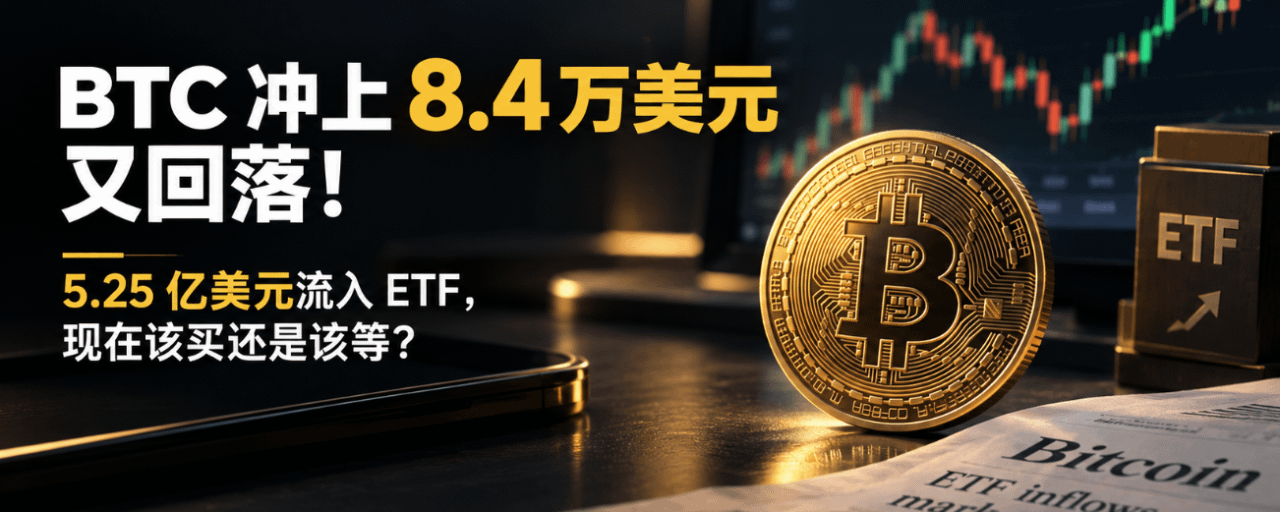
BTC Surges Above $84,000, Then Pulls Back! $525 Million Flows Into ETFs—Should You Buy or Wait?On October 21, U.S. spot BTC ETFs saw net inflows of about $525 million in a single day. By October 22, BTC had fallen from above $84,400 to around $82,500, creating a contrast between fund inflows and price weakness.#BitcoinDropsBelow$84K
How the market will move next is a question on many traders’ minds.
According to AiCoin monitoring data, ETF fund flows are worth keeping an eye on, but large net inflows don’t mean BTC is certain to rise. Price, trading volume, and market sentiment can still affect short-term trends.
If you buy now, you’re worried you’ll be buying at the top; if you wait for the price to fall, you’re afraid of missing a rebound. Many crypto traders have probably experienced this dilemma.
BTC Surges Above $84,000, Then Pulls Back! $525 Million Flows Into ETFs—Should You Buy or Wait?
On October 21, U.S. spot BTC ETFs saw net inflows of about $525 million in a single day. By October 22, BTC had fallen from above $84,400 to around $82,500, creating a contrast between fund inflows and price weakness.#BitcoinDropsBelow$84K
How the market will move next is a question on many traders’ minds.
According to AiCoin monitoring data, ETF fund flows are worth keeping an eye on, but large net inflows don’t mean BTC is certain to rise. Price, trading volume, and market sentiment can still affect short-term trends.
If you buy now, you’re worried you’ll be buying at the top; if you wait for the price to fall, you’re afraid of missing a rebound. Many crypto traders have probably experienced this dilemma.
How the market will move next is a question on many traders’ minds.
According to AiCoin monitoring data, ETF fund flows are worth keeping an eye on, but large net inflows don’t mean BTC is certain to rise. Price, trading volume, and market sentiment can still affect short-term trends.
If you buy now, you’re worried you’ll be buying at the top; if you wait for the price to fall, you’re afraid of missing a rebound. Many crypto traders have probably experienced this dilemma.
472
Log in to explore more content
Join global crypto users on Binance Square
⚡️ Get latest and useful information about crypto.
💬 Trusted by the world’s largest crypto exchange.
👍 Discover real insights from verified creators.
Email / Phone number
Trending Topics
EthereumDropsBelow$2300
1,641 views
74 Discussing
#EthereumDropsBelow$2300 📉 Ethereum Tests Key Support as Price Dips Below $2,300
The second-largest cryptocurrency by market cap has reached a critical technical juncture. Here’s what this recent price movement means for the broader Ethereum ecosystem and digital asset markets.
📰 Core News
Ethereum (ETH) has recently slipped below the $2,300 price level. This movement reflects a combination of broader market volatility, routine profit-taking, and shifting macroeconomic sentiment that continues to influence digital asset valuations.
📊 Market Impact
• Altcoin Sentiment As a primary market leader, ETH’s price action often sets the tone for the broader altcoin market, including Layer 2 scaling solutions and decentralized finance (DeFi) tokens.
•Technical Levels The $2,300 mark serves as a key psychological and historical support zone. Market participants are closely monitoring whether this level holds or if further consolidation occurs in the near term.
• Network Fundamentals Despite short-term price fluctuations, Ethereum’s underlying on-chain metrics, such as staking participation, validator growth, and ongoing network development, continue to progress independently of daily market charts.
💬 Join the Discussion
How do you view this current price level for Ethereum? Do you see it as a critical support zone to watch, or are you expecting further market consolidation? Share your analytical thoughts below! 👇
#Ethereum #ETH #CryptoMarket #DeFi #Web3
This is for educational purposes only. Not Financial Advice (NFA). Always Do Your Own Research (DYOR).
$HUMA $BANK $ETH
User-4d6a0d2
·0 Likes
·82 views
BitcoinSlipsBelow$80KAgain
3,623 views
41 Discussing
ThailandLaunchesWORPTStablecoinToQRPaymentApp
5,100 views
135 Discussing