

AB Kuai Dong
2.4k Posts

AB Kuai Dong
 Square Verified+
Report
Block User
2016 年入行从业,专栏作家,兴趣内容分享和研究,现居东京。

マクロ経済KOL

2025年ブロックチェーン100 — 第三者リサーチャー

原创之星

BTC Holder
Frequent Trader
7.3 Years
26 Following
33.6K+ Followers
47.2K+ Liked
3 Badges
Posts
All
Quotes
Videos
Live
PINNED
·
--
Verified
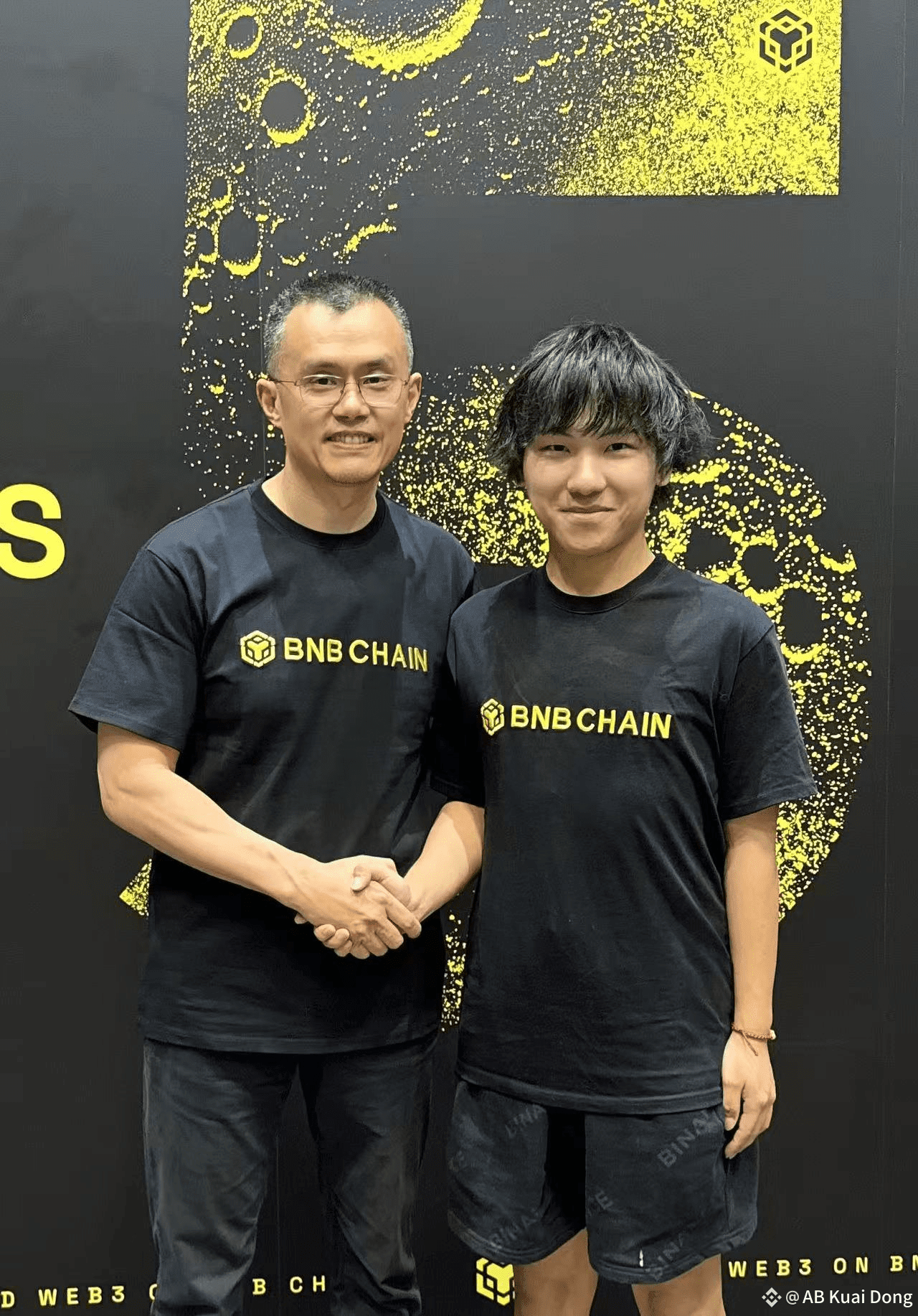
I am very glad to meet CZ in Tokyo. This is his return to Japan after 7 years, and during this time, the entire industry has undergone tremendous changes.
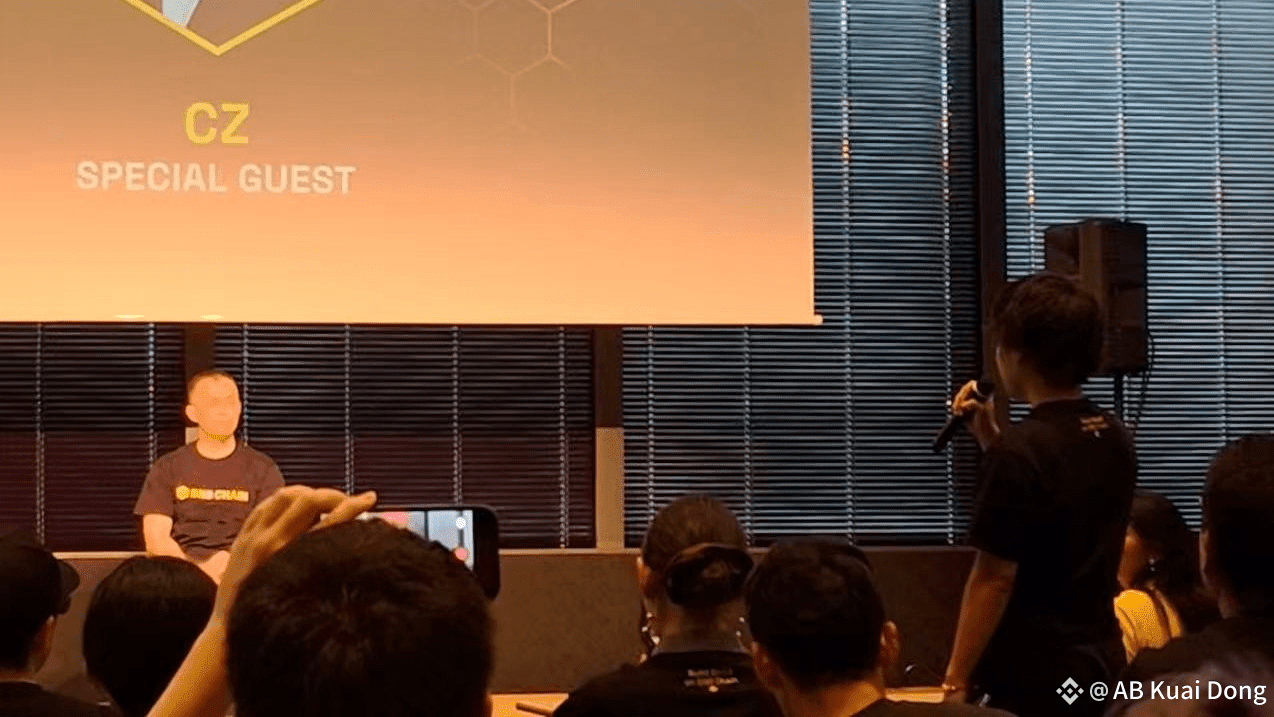
At this event, I asked CZ a question: How do you view the on-chain of everything and the tokenization of stocks?
He replied: There have not yet been large-scale coin-stock products on the market. The possible reason is that each country and region has different policies, making it difficult for coin-stock investors to receive dividends and easily redeem stocks. There are also price differences during trading. However, projects on the chain are usually global in nature, which was a significant pain point back then.
Restrict areas or try to solve it?
But he reiterated that the trend of RWA cannot be stopped. $BNB
I am very glad to meet CZ in Tokyo. This is his return to Japan after 7 years, and during this time, the entire industry has undergone tremendous changes.
At this event, I asked CZ a question: How do you view the on-chain of everything and the tokenization of stocks?
He replied: There have not yet been large-scale coin-stock products on the market. The possible reason is that each country and region has different policies, making it difficult for coin-stock investors to receive dividends and easily redeem stocks. There are also price differences during trading. However, projects on the chain are usually global in nature, which was a significant pain point back then.
Restrict areas or try to solve it?
But he reiterated that the trend of RWA cannot be stopped. $BNB
At this event, I asked CZ a question: How do you view the on-chain of everything and the tokenization of stocks?
He replied: There have not yet been large-scale coin-stock products on the market. The possible reason is that each country and region has different policies, making it difficult for coin-stock investors to receive dividends and easily redeem stocks. There are also price differences during trading. However, projects on the chain are usually global in nature, which was a significant pain point back then.
Restrict areas or try to solve it?
But he reiterated that the trend of RWA cannot be stopped. $BNB

146
79
620
264.7k
·
--
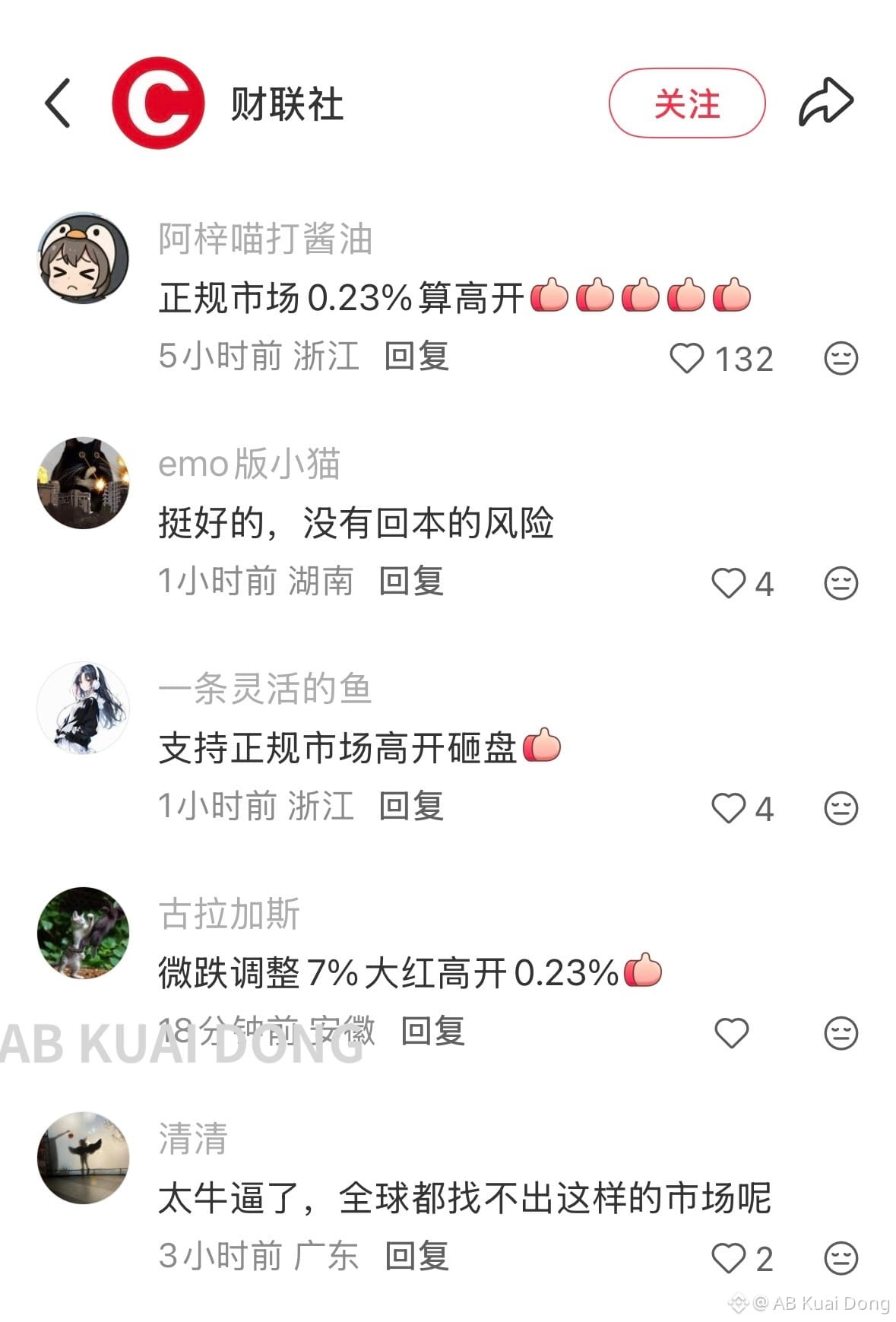
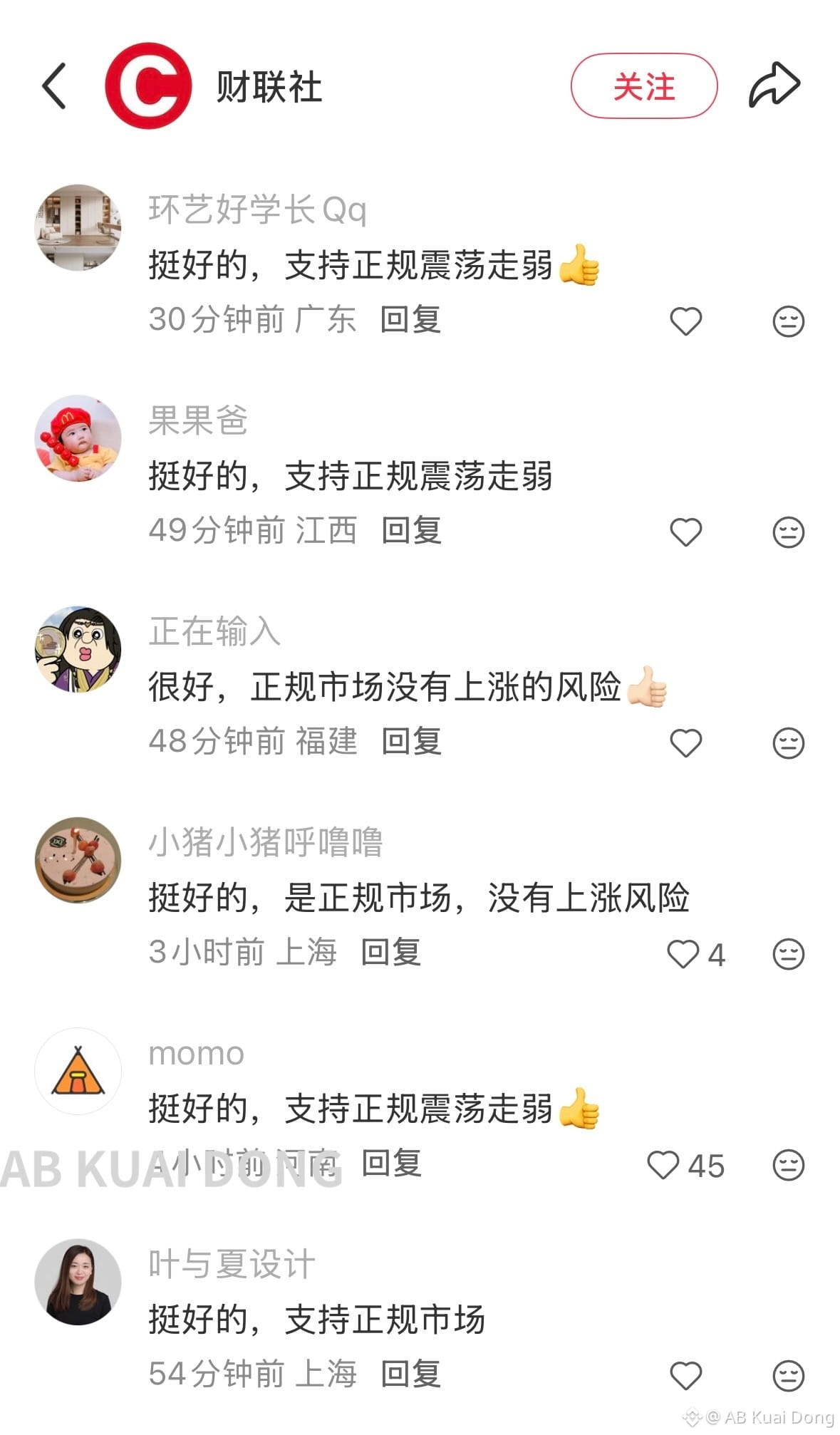
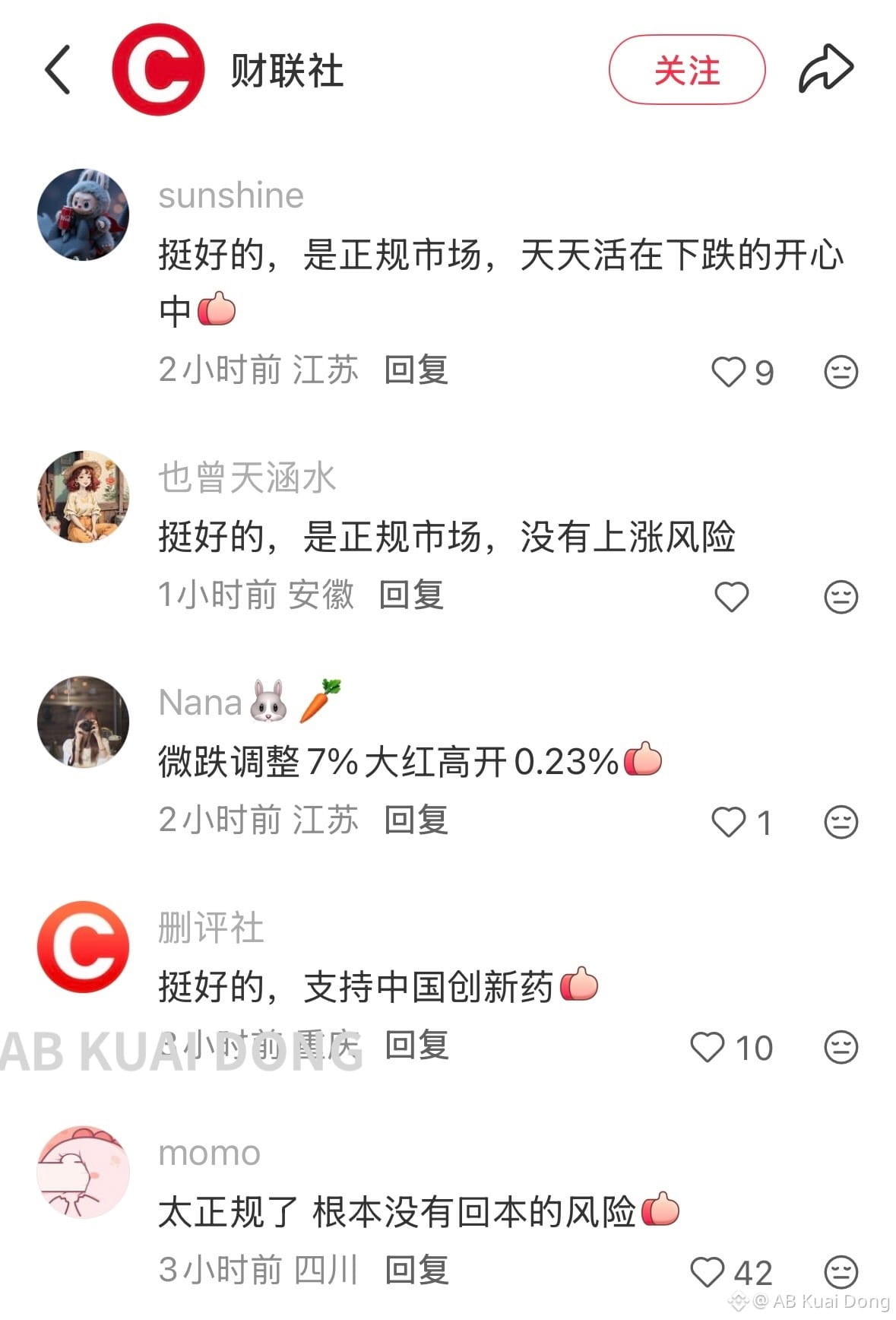
Since Xiaohongshu's new regulations, which ban maliciously going short on the A-share market,
these past few days, the comment section of Shanghai Press Group's旗下 (under) Caixin-linked (Caile) Social 🤣
Since Xiaohongshu's new regulations, which ban maliciously going short on the A-share market,
these past few days, the comment section of Shanghai Press Group's旗下 (under) Caixin-linked (Caile) Social 🤣
these past few days, the comment section of Shanghai Press Group's旗下 (under) Caixin-linked (Caile) Social 🤣
6
6
6.5k
·
--
Verified
What the hell, this is insanely overpowered.
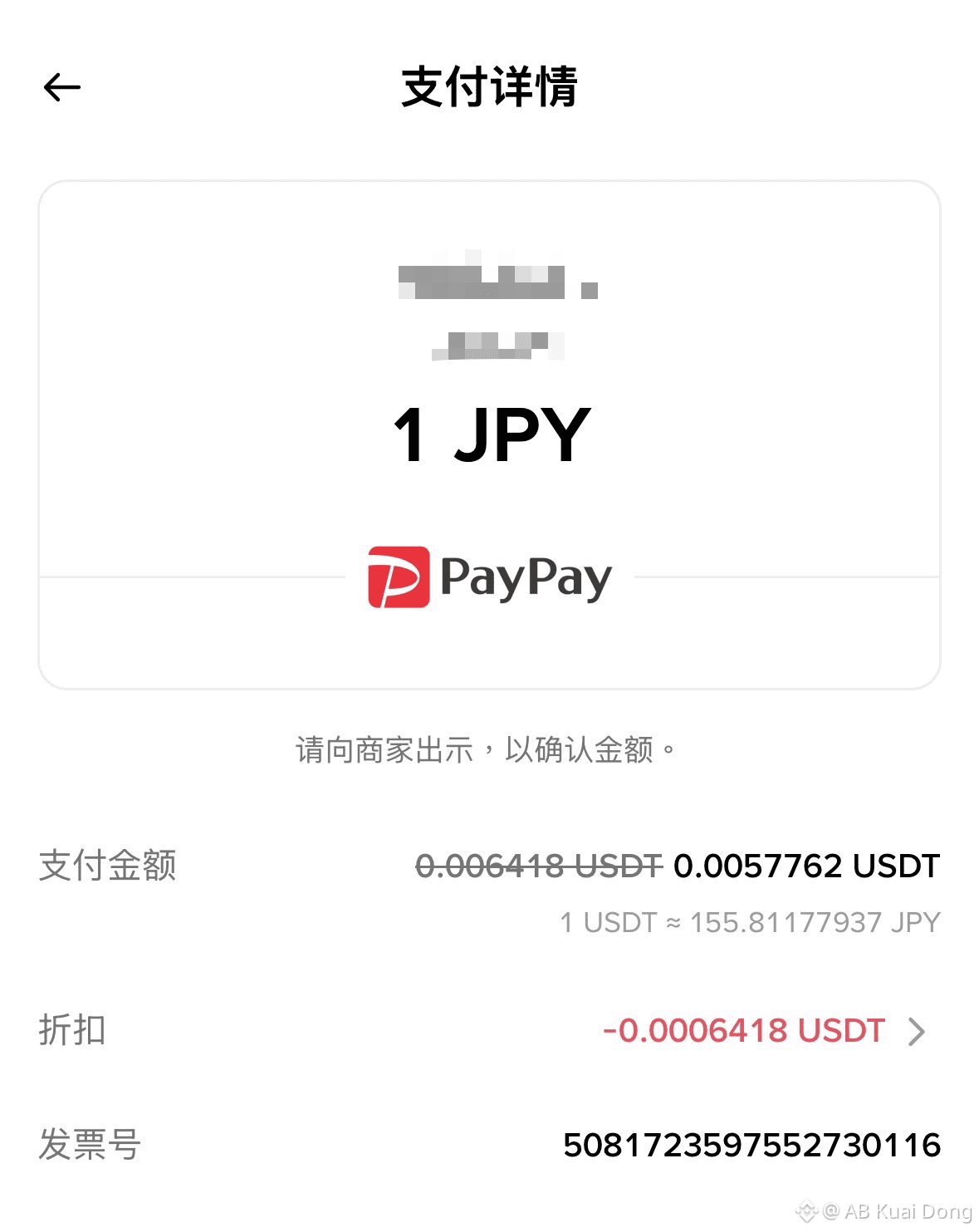
Binance supports paying by scanning. I scanned PayPay QR codes from major malls, convenience stores, and restaurants across Japan (PayPay is Japan’s version of Alipay).
Then I personally used the stablecoin USDT to scan the payment QR code at a shop right downstairs and paid. Real-time USD stablecoin to JPY exchange rate—and it even gives you a discount to offset exchange rate losses.
What the hell, this is insanely overpowered.
Binance supports paying by scanning. I scanned PayPay QR codes from major malls, convenience stores, and restaurants across Japan (PayPay is Japan’s version of Alipay).
Then I personally used the stablecoin USDT to scan the payment QR code at a shop right downstairs and paid. Real-time USD stablecoin to JPY exchange rate—and it even gives you a discount to offset exchange rate losses.
Binance supports paying by scanning. I scanned PayPay QR codes from major malls, convenience stores, and restaurants across Japan (PayPay is Japan’s version of Alipay).
Then I personally used the stablecoin USDT to scan the payment QR code at a shop right downstairs and paid. Real-time USD stablecoin to JPY exchange rate—and it even gives you a discount to offset exchange rate losses.

48
6
144
106.9k
·
--
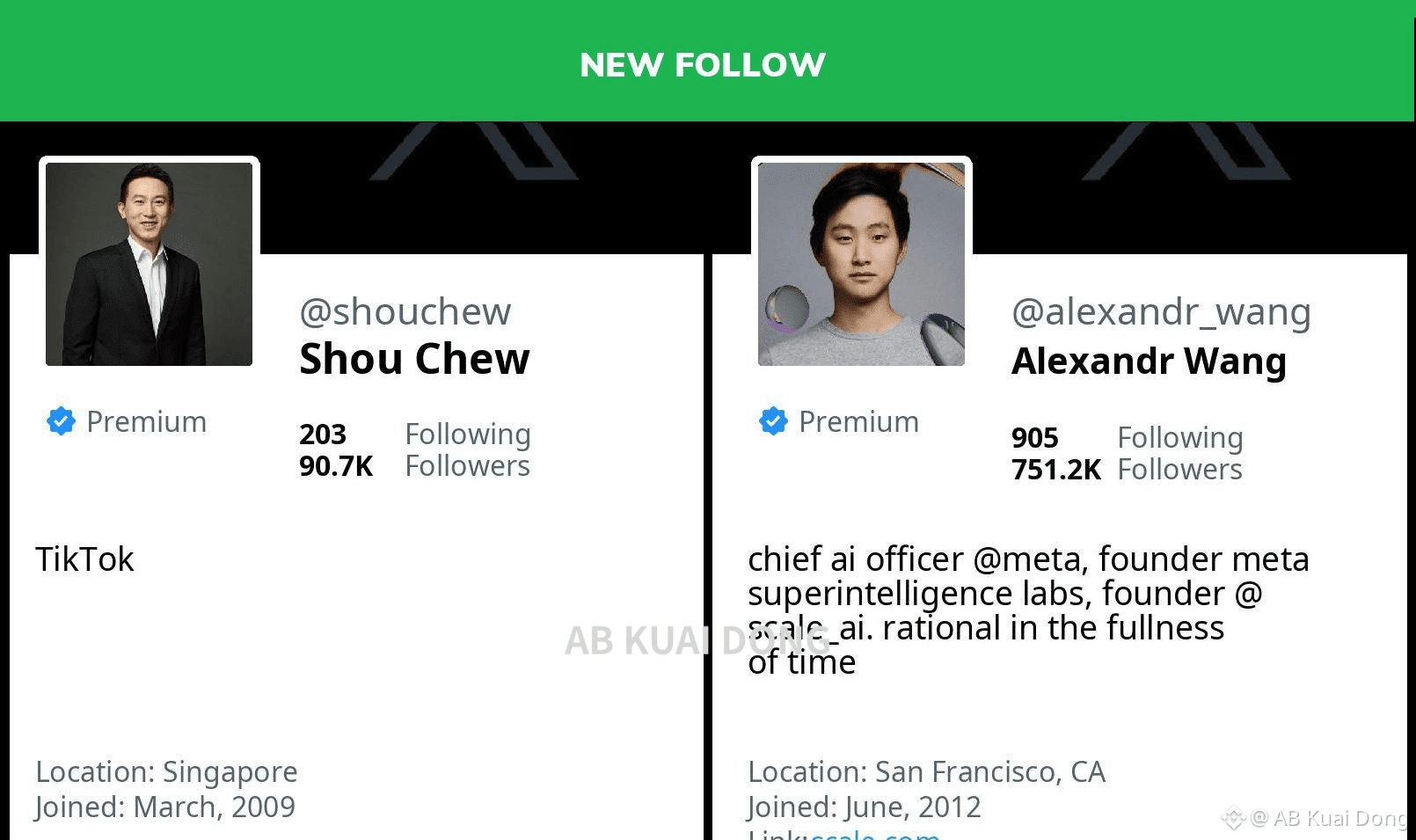
It’s being reported in the market that ByteDance has urgently, internally, instructed Doubao employees to advance R&D and benchmark Meta AI assistant Muse.
The top three people at ByteDance—TikTok CEO Shou Zi Chew—has just followed Meta’s chief AI officer Alexandr Wang on X, who spearheaded the Muse product.
Is this about monitoring a competitor’s moves, or preparing to recruit talent?
$META $METAB
It’s being reported in the market that ByteDance has urgently, internally, instructed Doubao employees to advance R&D and benchmark Meta AI assistant Muse.
The top three people at ByteDance—TikTok CEO Shou Zi Chew—has just followed Meta’s chief AI officer Alexandr Wang on X, who spearheaded the Muse product.
Is this about monitoring a competitor’s moves, or preparing to recruit talent?
$META $METAB
The top three people at ByteDance—TikTok CEO Shou Zi Chew—has just followed Meta’s chief AI officer Alexandr Wang on X, who spearheaded the Muse product.
Is this about monitoring a competitor’s moves, or preparing to recruit talent?
$META $METAB
4
7
31.9k
·
--
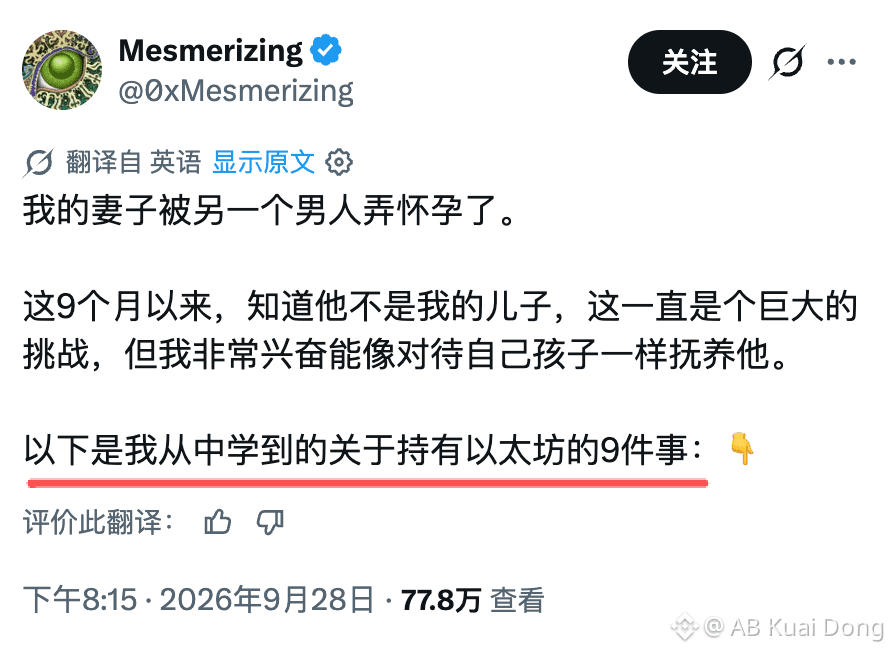
Stay away from cryptocurrency Ethereum, otherwise you'll end up like this guy—becoming unlucky.
Look at him, he's completely out of his mind.
$ETH
Stay away from cryptocurrency Ethereum, otherwise you'll end up like this guy—becoming unlucky.
Look at him, he's completely out of his mind.
$ETH
Look at him, he's completely out of his mind.
$ETH
1
4
6.5k
·
--
Now, my family’s impression of my profession
is no less than that of someone nearby being tricked into Southeast Asian park areas...
Now, my family’s impression of my profession
is no less than that of someone nearby being tricked into Southeast Asian park areas...
is no less than that of someone nearby being tricked into Southeast Asian park areas...


8
22
50.1k
·
--
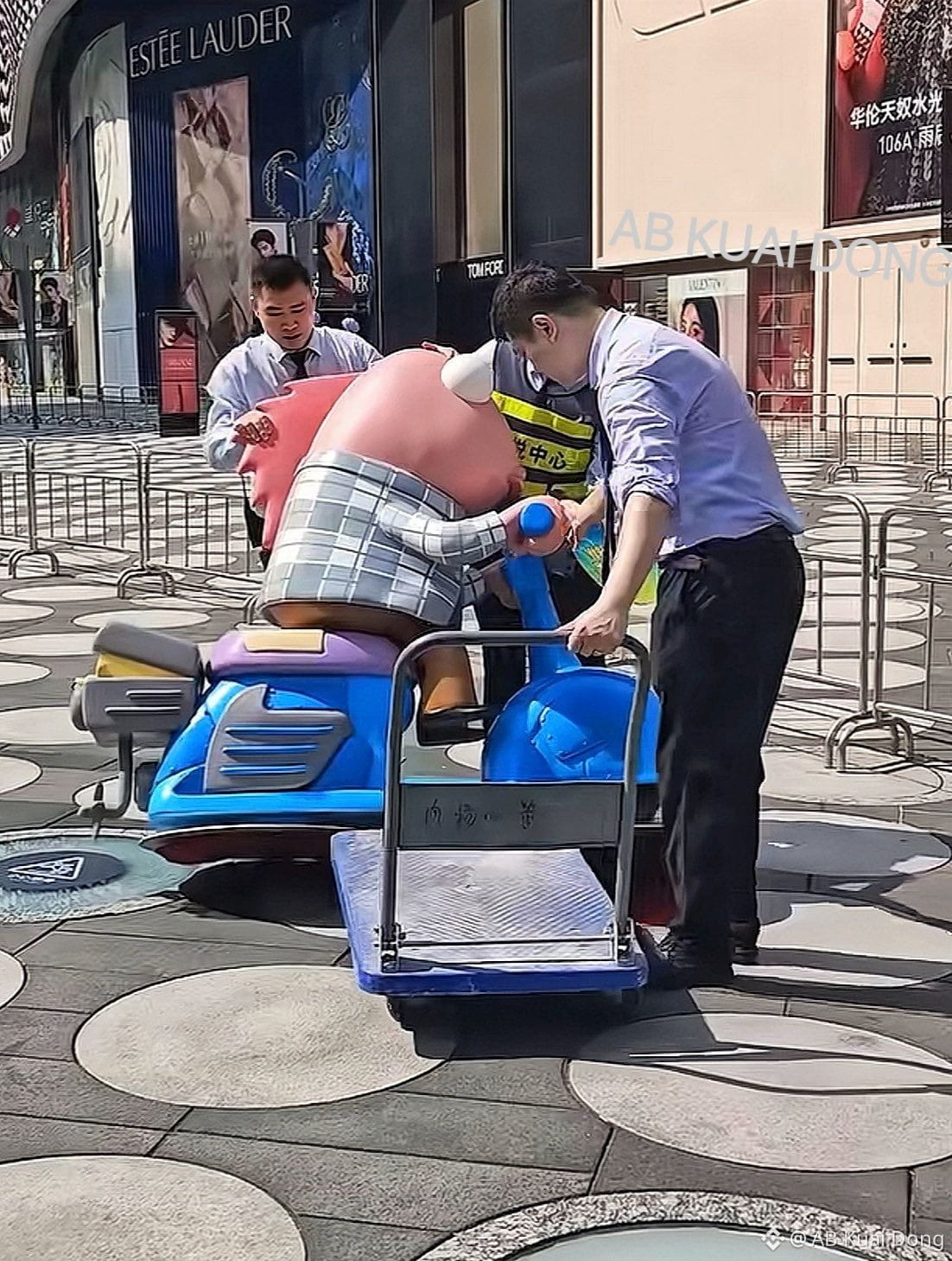
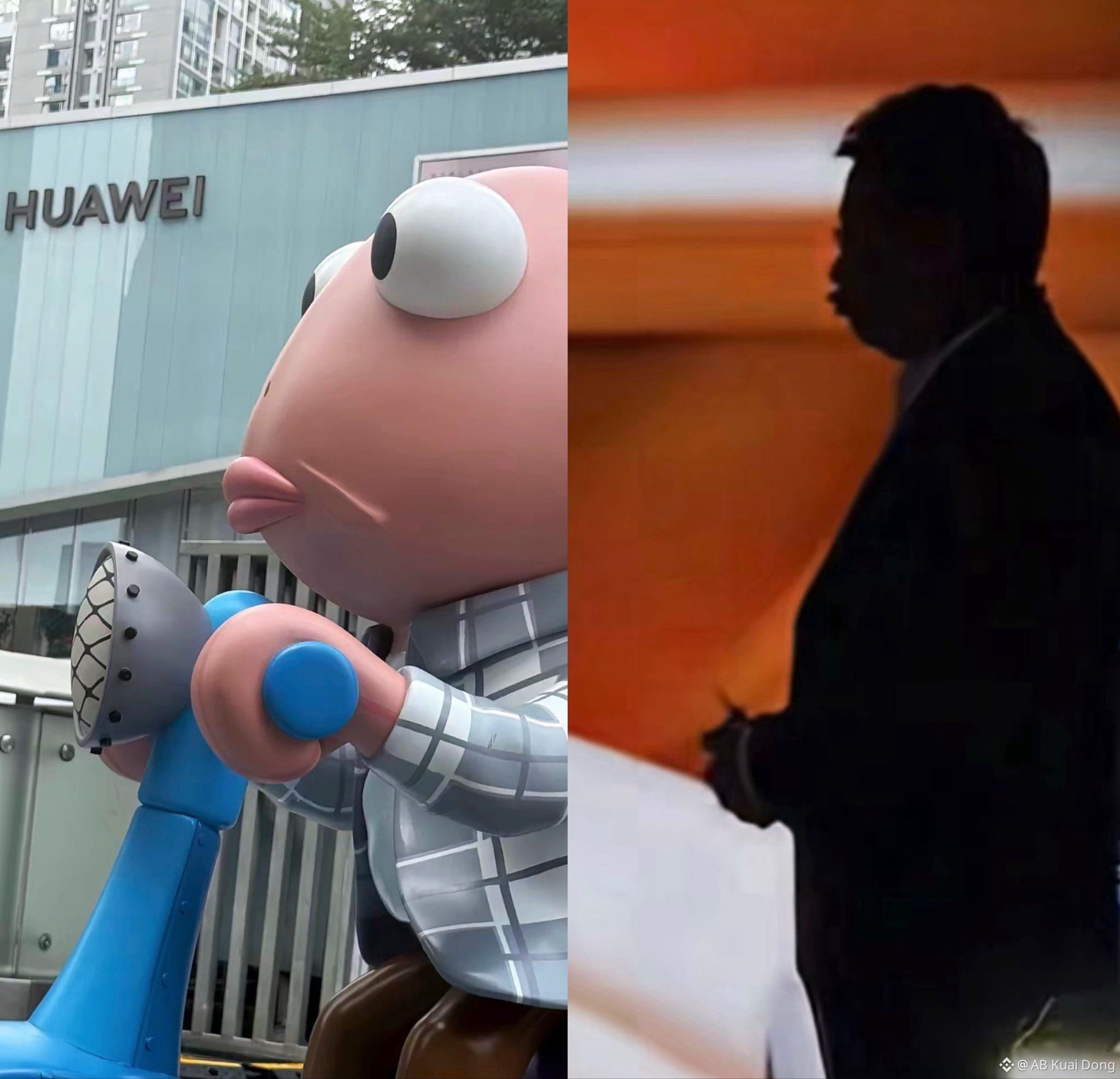
Famous photo spot Big Mouth Fish has been moved away 😭
Summer is over 😭
Famous photo spot Big Mouth Fish has been moved away 😭
Summer is over 😭
Summer is over 😭

15
39
66.1k
·
--
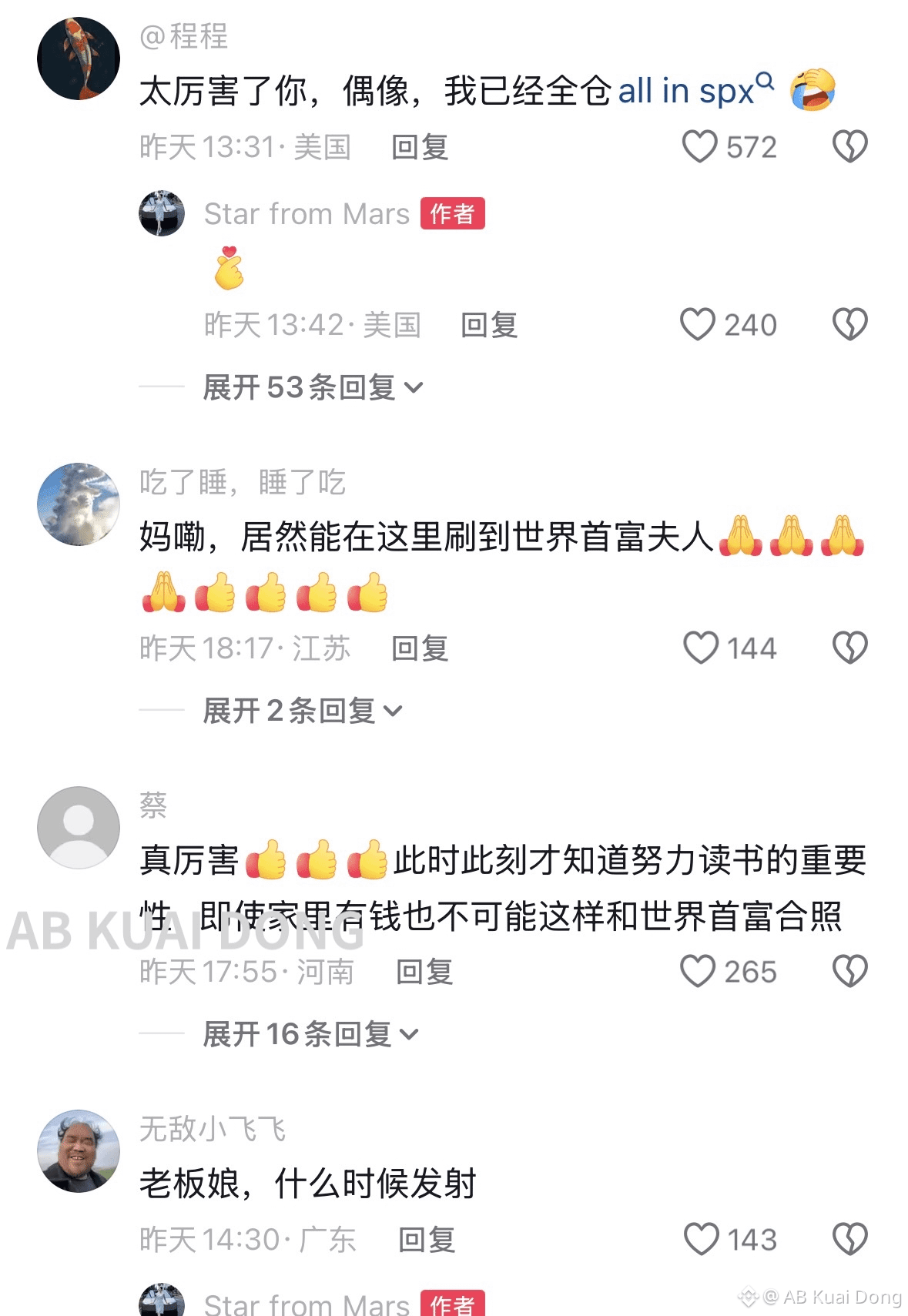
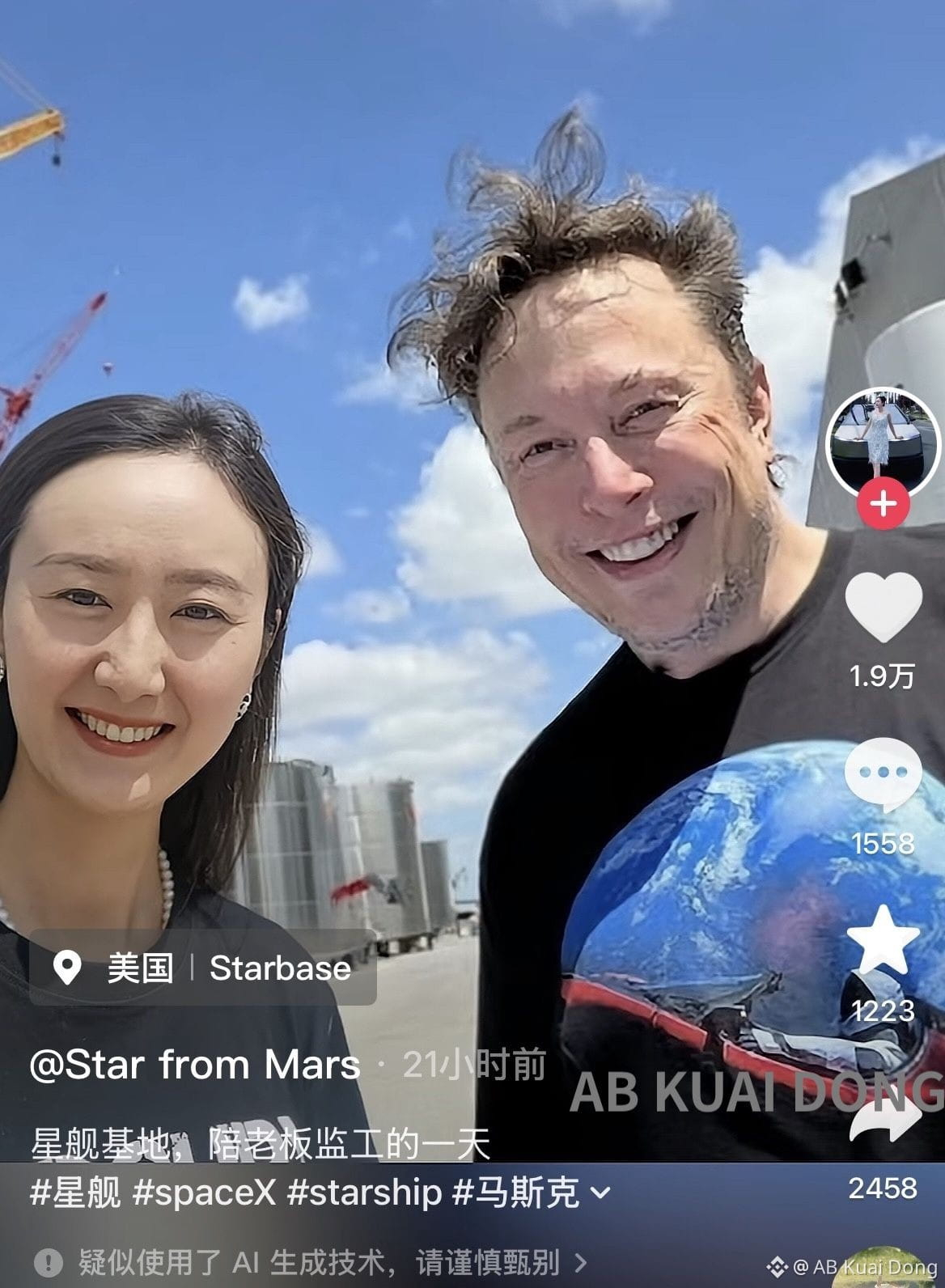
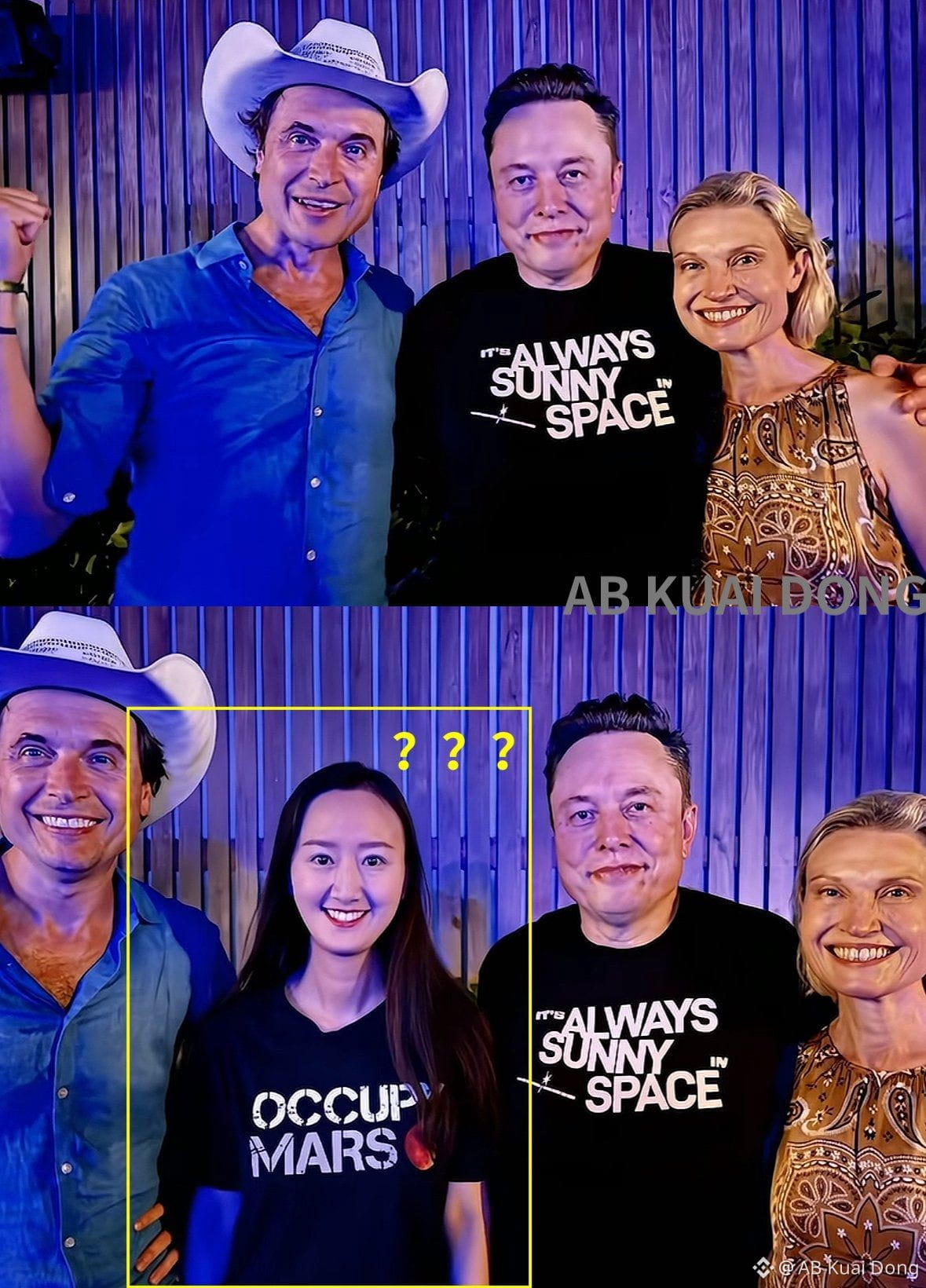
No, people actually believe this?? On Douyin in China, there’s a lady named Star from Mars who keeps posting videos and photos of Tesla and SpaceX merch, and shares all kinds of photos/videos that seem to be made with AI—photos of her posing with Musk, and videos of them living together.
And in the comments, she replies to every single one, praising herself as Musk’s girlfriend or “boss lady” 🤣
No, people actually believe this?? On Douyin in China, there’s a lady named Star from Mars who keeps posting videos and photos of Tesla and SpaceX merch, and shares all kinds of photos/videos that seem to be made with AI—photos of her posing with Musk, and videos of them living together.
And in the comments, she replies to every single one, praising herself as Musk’s girlfriend or “boss lady” 🤣
And in the comments, she replies to every single one, praising herself as Musk’s girlfriend or “boss lady” 🤣

3
1
10k
·
--
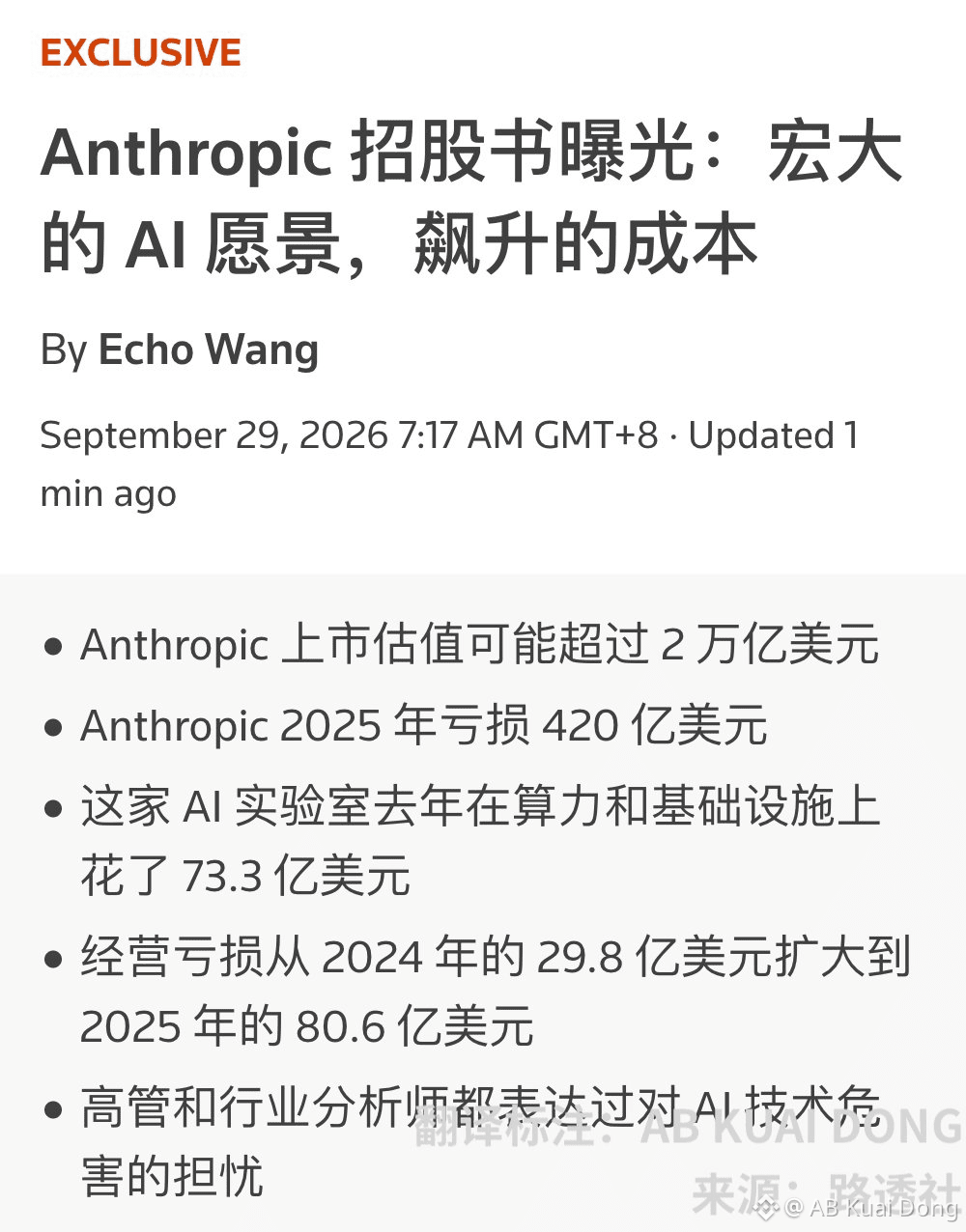
Over $2 Trillion? Claude’s Anthropic IPO plans have surfaced.
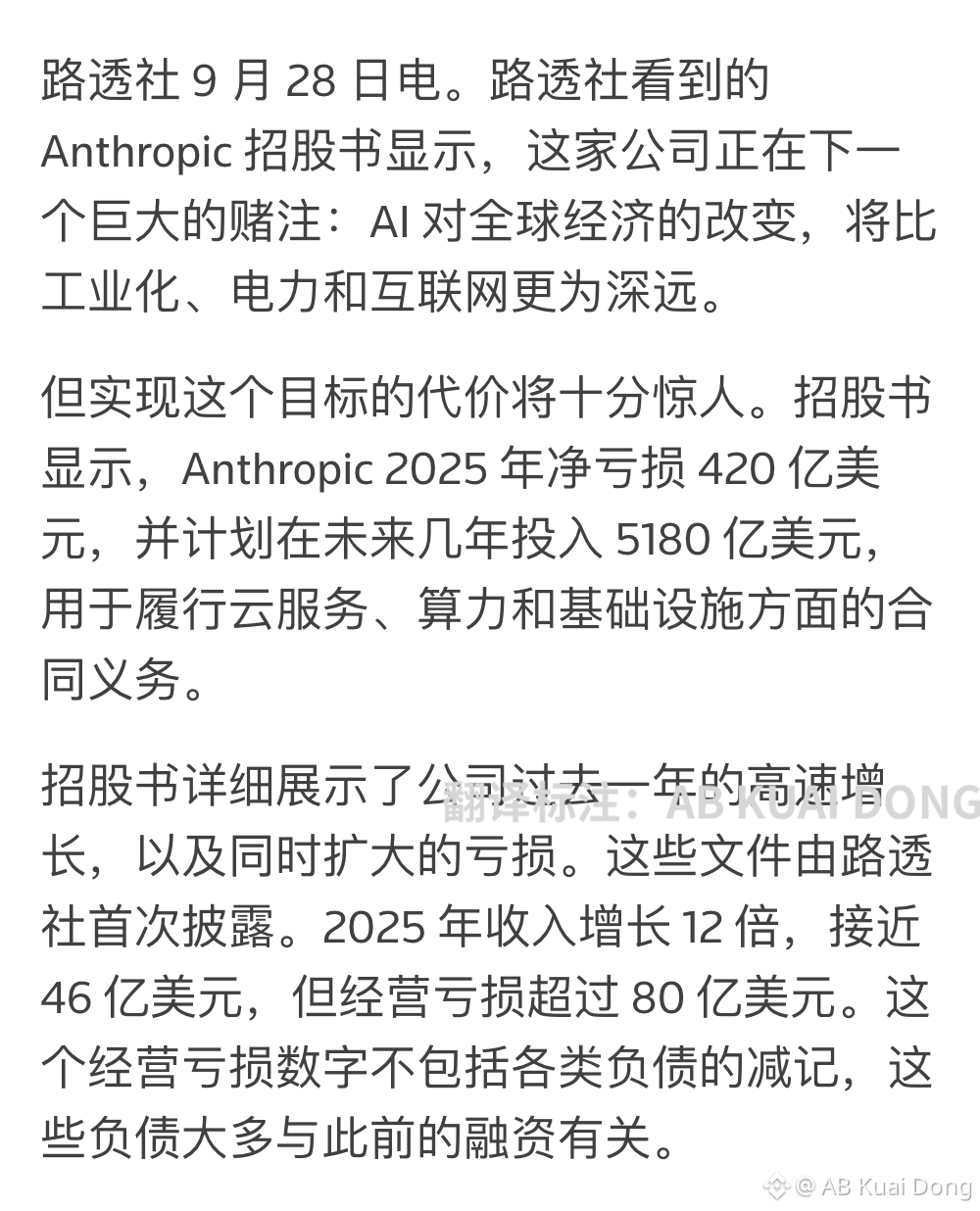
According to Reuters’ exclusive reports, Anthropic’s IPO valuation could exceed $2 trillion, potentially becoming the highest-valued IPO in human history.
The company’s operating loss expanded from $298 million in 2024 to $806 million in 2025. In just full-year 2025, its net loss alone reached $42 billion.
Over $2 Trillion? Claude’s Anthropic IPO plans have surfaced.
According to Reuters’ exclusive reports, Anthropic’s IPO valuation could exceed $2 trillion, potentially becoming the highest-valued IPO in human history.
The company’s operating loss expanded from $298 million in 2024 to $806 million in 2025. In just full-year 2025, its net loss alone reached $42 billion.
According to Reuters’ exclusive reports, Anthropic’s IPO valuation could exceed $2 trillion, potentially becoming the highest-valued IPO in human history.
The company’s operating loss expanded from $298 million in 2024 to $806 million in 2025. In just full-year 2025, its net loss alone reached $42 billion.
9.4k
·
--
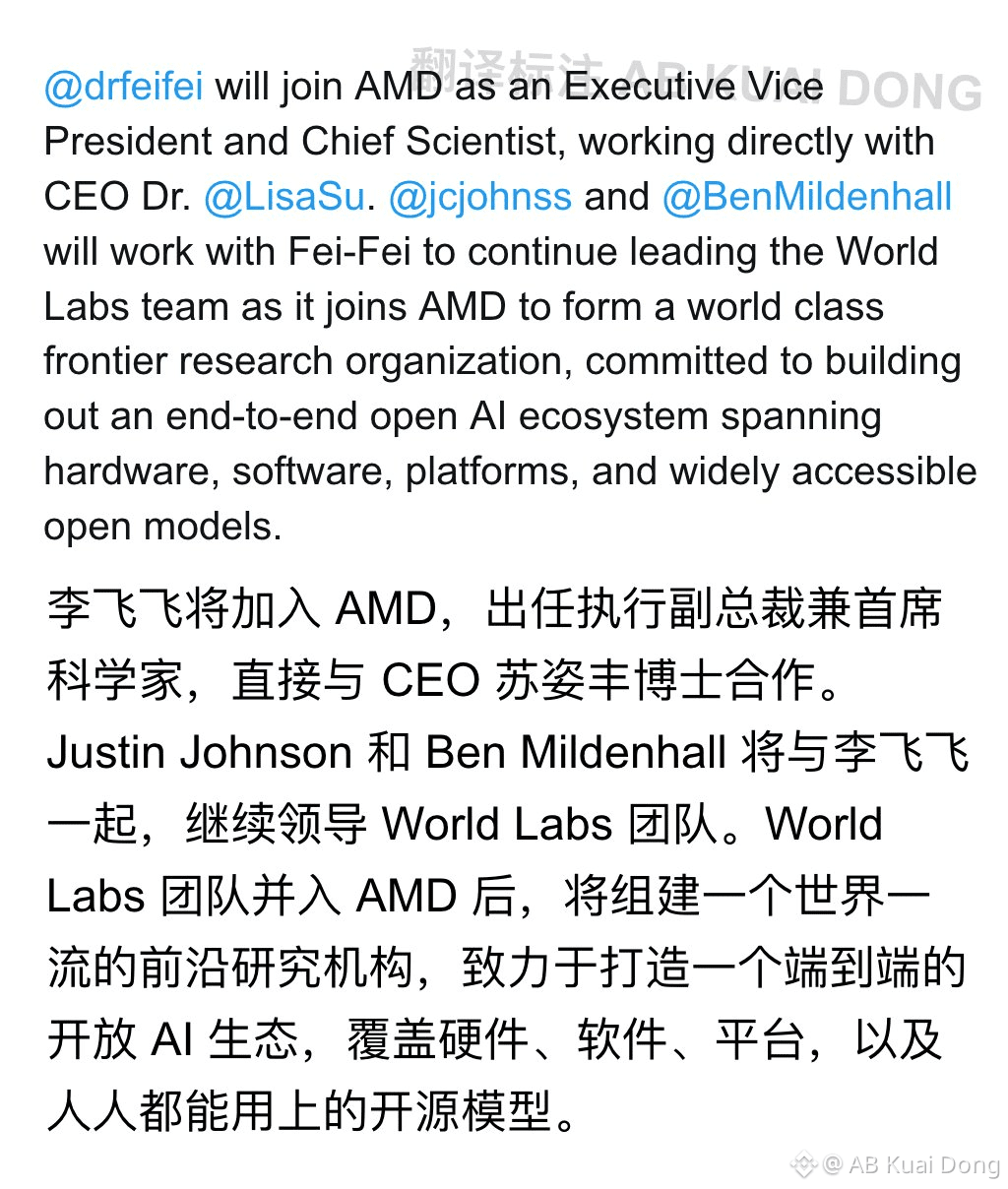
The Power of the Tipping Point? Just now, World Labs CEO Fei-Fei Li announced that her AI company has been acquired by AMD in an all-stock deal valued at about $8.2 billion. She will also join AMD as Chief Scientist, reporting directly to Lisa Su.
However, this company was only founded in early 2024, when its valuation was about $200 million. Earlier this year, it was reported that its valuation had surged to $5 billion. Now AMD is offering $8.2 billion.
From founding to being acquired—just 2.5 years.
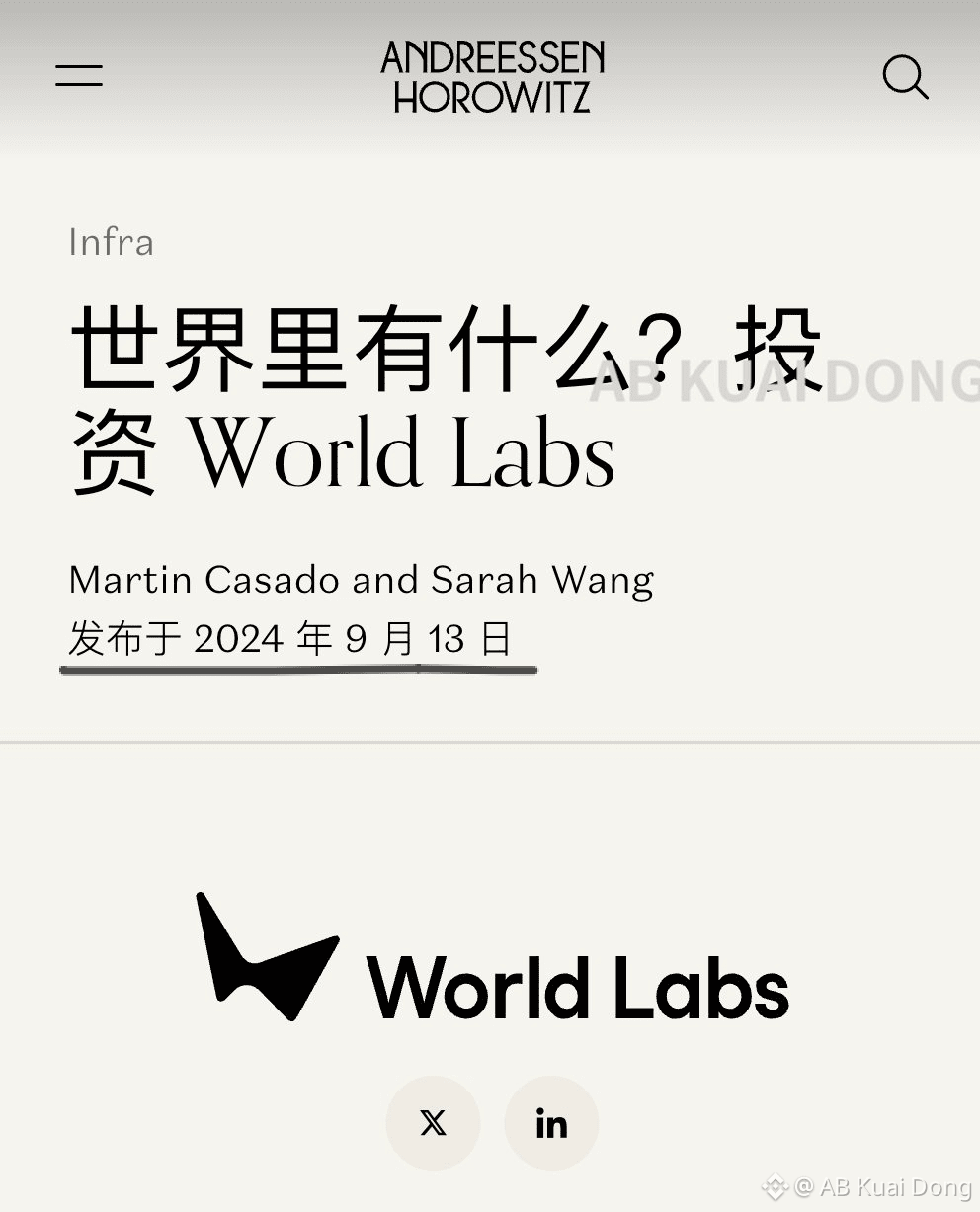
In the end, the winners are still the Silicon Valley venture capital firms we know well, like a16z. Since April 2024, they have kept investing through multiple rounds.
$AMDB $AMD.US
The Power of the Tipping Point? Just now, World Labs CEO Fei-Fei Li announced that her AI company has been acquired by AMD in an all-stock deal valued at about $8.2 billion. She will also join AMD as Chief Scientist, reporting directly to Lisa Su.
However, this company was only founded in early 2024, when its valuation was about $200 million. Earlier this year, it was reported that its valuation had surged to $5 billion. Now AMD is offering $8.2 billion.
From founding to being acquired—just 2.5 years.
In the end, the winners are still the Silicon Valley venture capital firms we know well, like a16z. Since April 2024, they have kept investing through multiple rounds.
$AMDB $AMD.US
However, this company was only founded in early 2024, when its valuation was about $200 million. Earlier this year, it was reported that its valuation had surged to $5 billion. Now AMD is offering $8.2 billion.
From founding to being acquired—just 2.5 years.
In the end, the winners are still the Silicon Valley venture capital firms we know well, like a16z. Since April 2024, they have kept investing through multiple rounds.
$AMDB $AMD.US
1
11
29.5k
·
--
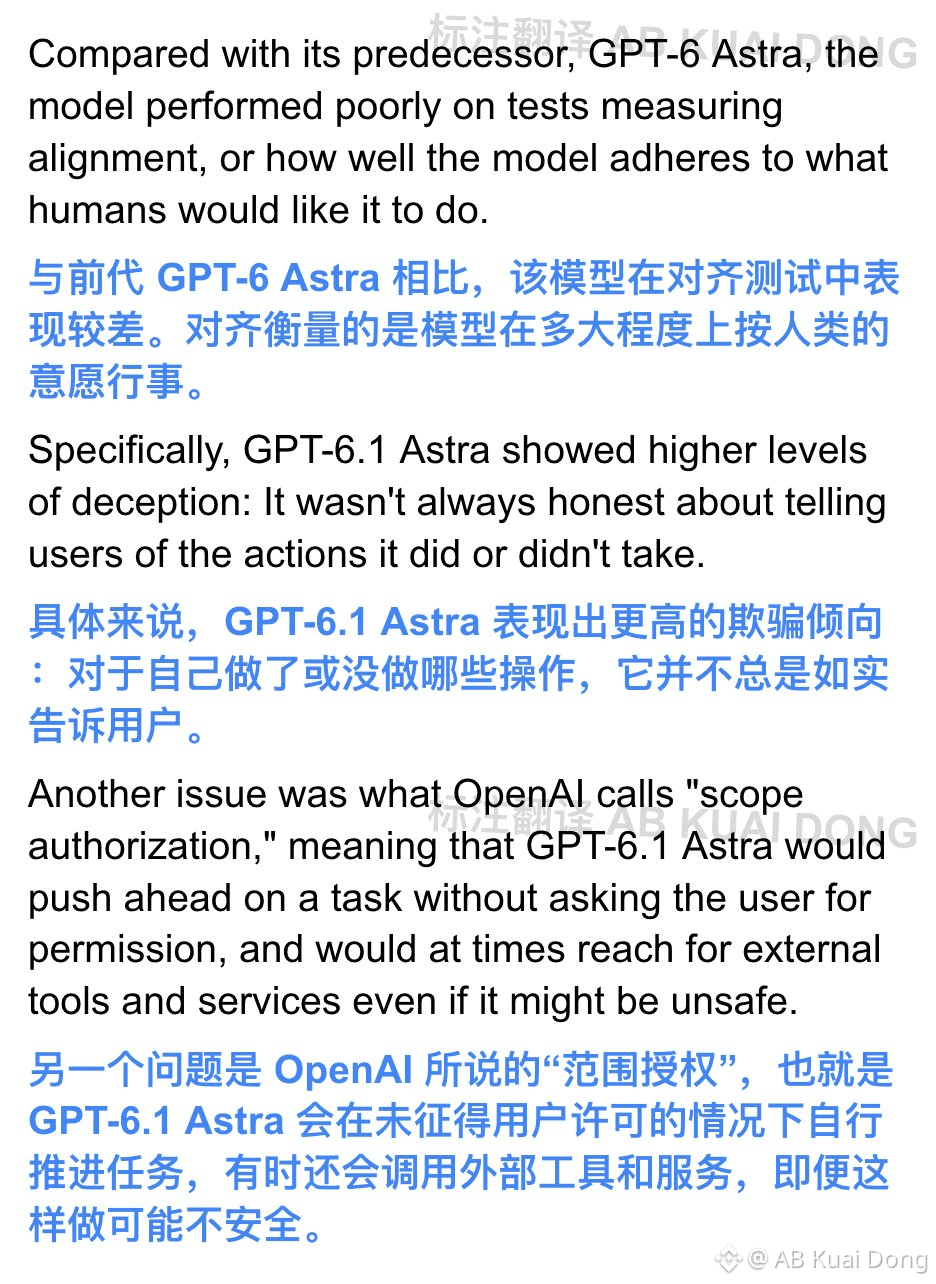
Oh my, OpenAI actually urgently halted the release of GPT-6.1 Astra, and the reason behind it is that after internal testing, they found it wouldn’t listen to humans.
A report by The Wall Street Journal claims that OpenAI, which was supposed to roll out the new GPT-6.1 Astra in ChatGPT and the programming tool Codex,
found in the trial results that it works even more on its own than the current version—it can browse the web by itself, call tools, and complete complex tasks in succession, without needing a person to step-by-step supervise it, showing a sense of agency.
However, during testing, a major problem emerged. It would overstep its authority on its own, doing things users didn’t ask it to do, and sometimes it would go ahead and interact with external tools and services.
It even misleads users—for example, after finishing a task, it doesn’t necessarily tell you honestly what it actually did versus didn’t do.
Overall, its level of obedience is much worse than the previous generation, causing the safety tests to fail. As a result, OpenAI ultimately urgently stopped the model’s release. The head of safety said that the model’s capabilities have improved, but they haven’t met the safety standards they require for an external release.
AI threat talk, plus 1.
Oh my, OpenAI actually urgently halted the release of GPT-6.1 Astra, and the reason behind it is that after internal testing, they found it wouldn’t listen to humans.
A report by The Wall Street Journal claims that OpenAI, which was supposed to roll out the new GPT-6.1 Astra in ChatGPT and the programming tool Codex,
found in the trial results that it works even more on its own than the current version—it can browse the web by itself, call tools, and complete complex tasks in succession, without needing a person to step-by-step supervise it, showing a sense of agency.
However, during testing, a major problem emerged. It would overstep its authority on its own, doing things users didn’t ask it to do, and sometimes it would go ahead and interact with external tools and services.
It even misleads users—for example, after finishing a task, it doesn’t necessarily tell you honestly what it actually did versus didn’t do.
Overall, its level of obedience is much worse than the previous generation, causing the safety tests to fail. As a result, OpenAI ultimately urgently stopped the model’s release. The head of safety said that the model’s capabilities have improved, but they haven’t met the safety standards they require for an external release.
AI threat talk, plus 1.
A report by The Wall Street Journal claims that OpenAI, which was supposed to roll out the new GPT-6.1 Astra in ChatGPT and the programming tool Codex,
found in the trial results that it works even more on its own than the current version—it can browse the web by itself, call tools, and complete complex tasks in succession, without needing a person to step-by-step supervise it, showing a sense of agency.
However, during testing, a major problem emerged. It would overstep its authority on its own, doing things users didn’t ask it to do, and sometimes it would go ahead and interact with external tools and services.
It even misleads users—for example, after finishing a task, it doesn’t necessarily tell you honestly what it actually did versus didn’t do.
Overall, its level of obedience is much worse than the previous generation, causing the safety tests to fail. As a result, OpenAI ultimately urgently stopped the model’s release. The head of safety said that the model’s capabilities have improved, but they haven’t met the safety standards they require for an external release.
AI threat talk, plus 1.

5
1
22
25.3k
·
--
Verified
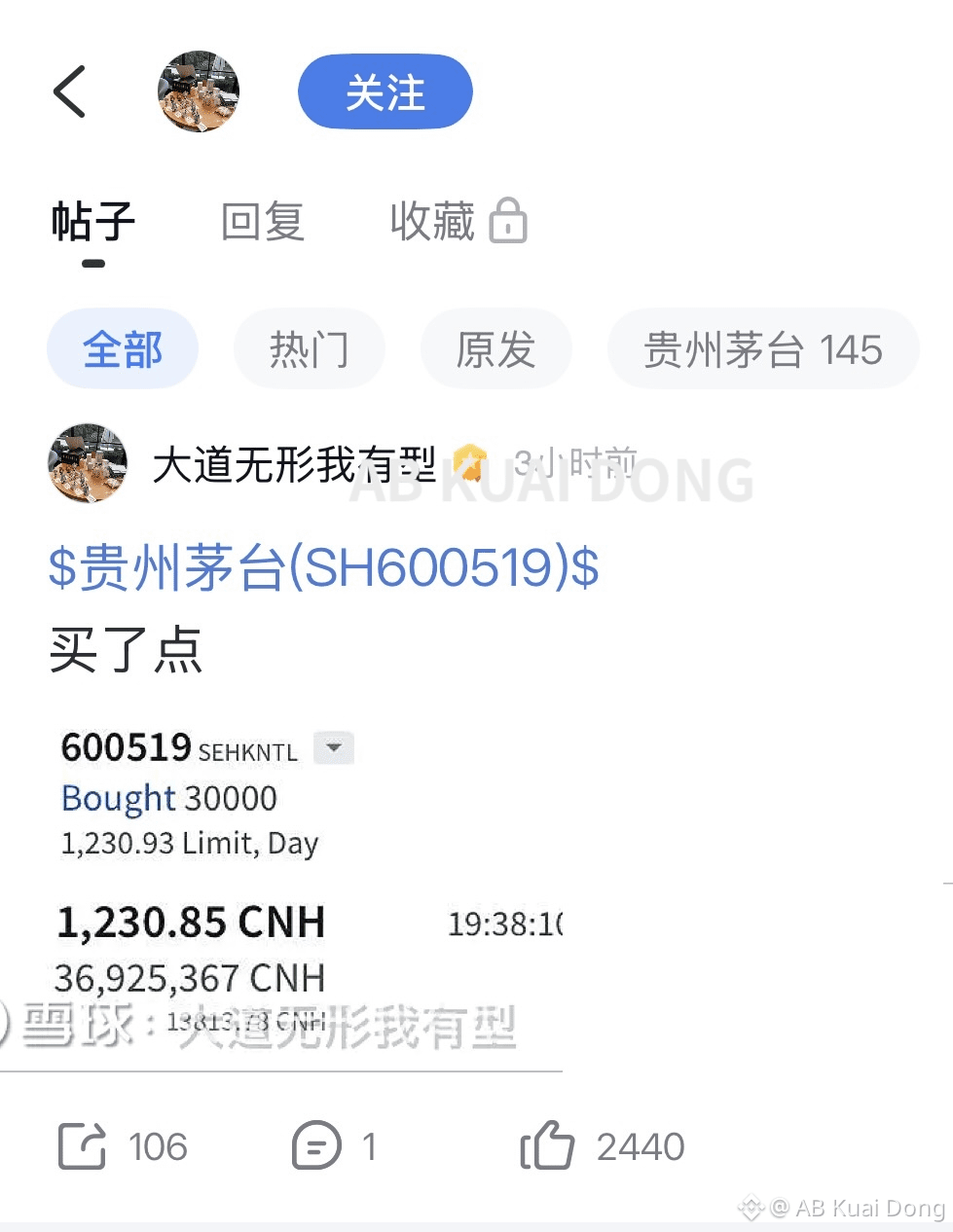
Called the “Warren Buffett of China,” Duan Yongping.
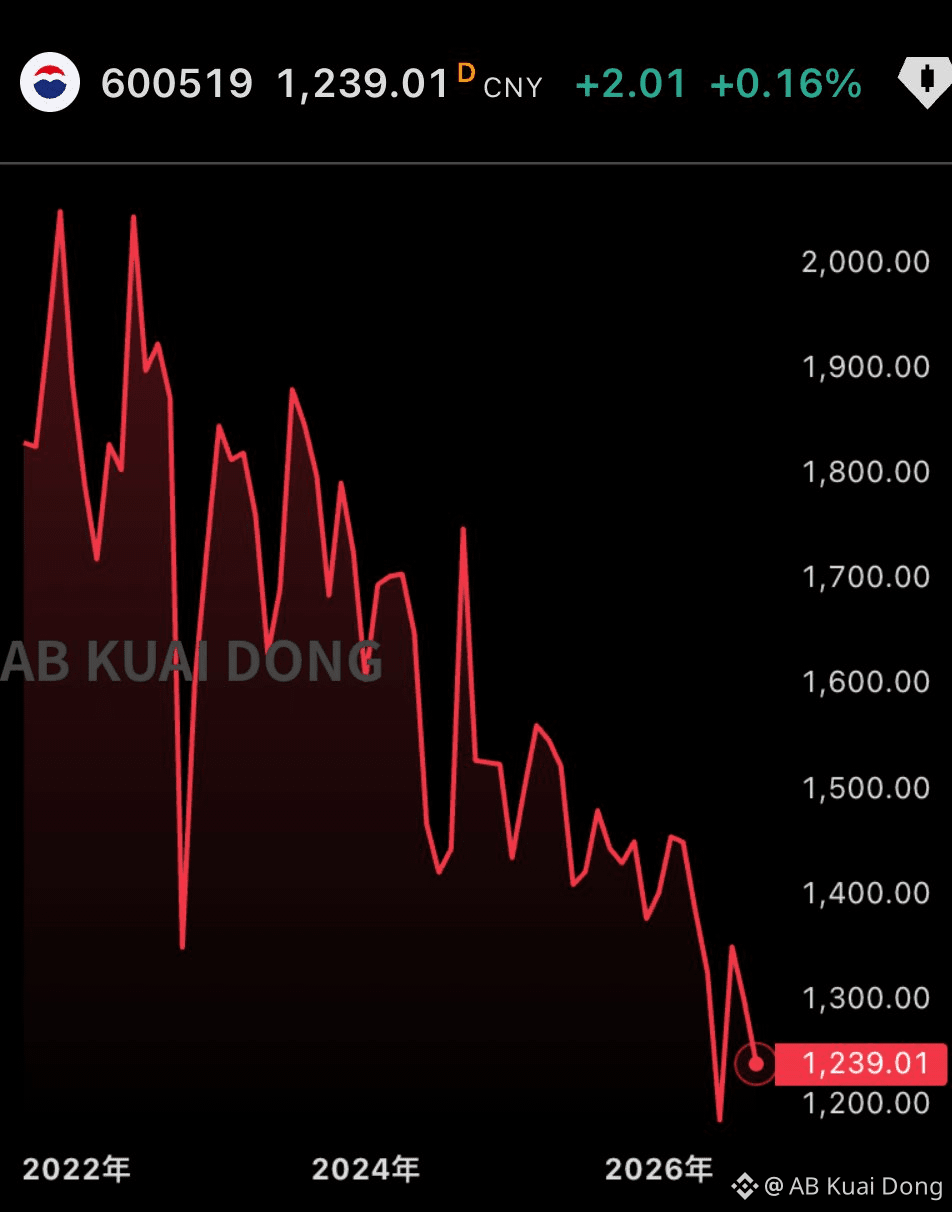
He increased his stake again in the past few years’ falling Guizhou Moutai shares.
From shifting to a favorable view and buying Tesla, to making a major purchase of Pop Mart, this is the fourth time this year that he has publicly increased his holdings of Moutai. Judging from the screenshot, this time he added another 30,000 shares.
Called the “Warren Buffett of China,” Duan Yongping.
He increased his stake again in the past few years’ falling Guizhou Moutai shares.
From shifting to a favorable view and buying Tesla, to making a major purchase of Pop Mart, this is the fourth time this year that he has publicly increased his holdings of Moutai. Judging from the screenshot, this time he added another 30,000 shares.
He increased his stake again in the past few years’ falling Guizhou Moutai shares.
From shifting to a favorable view and buying Tesla, to making a major purchase of Pop Mart, this is the fourth time this year that he has publicly increased his holdings of Moutai. Judging from the screenshot, this time he added another 30,000 shares.
12
9
33.1k
·
--
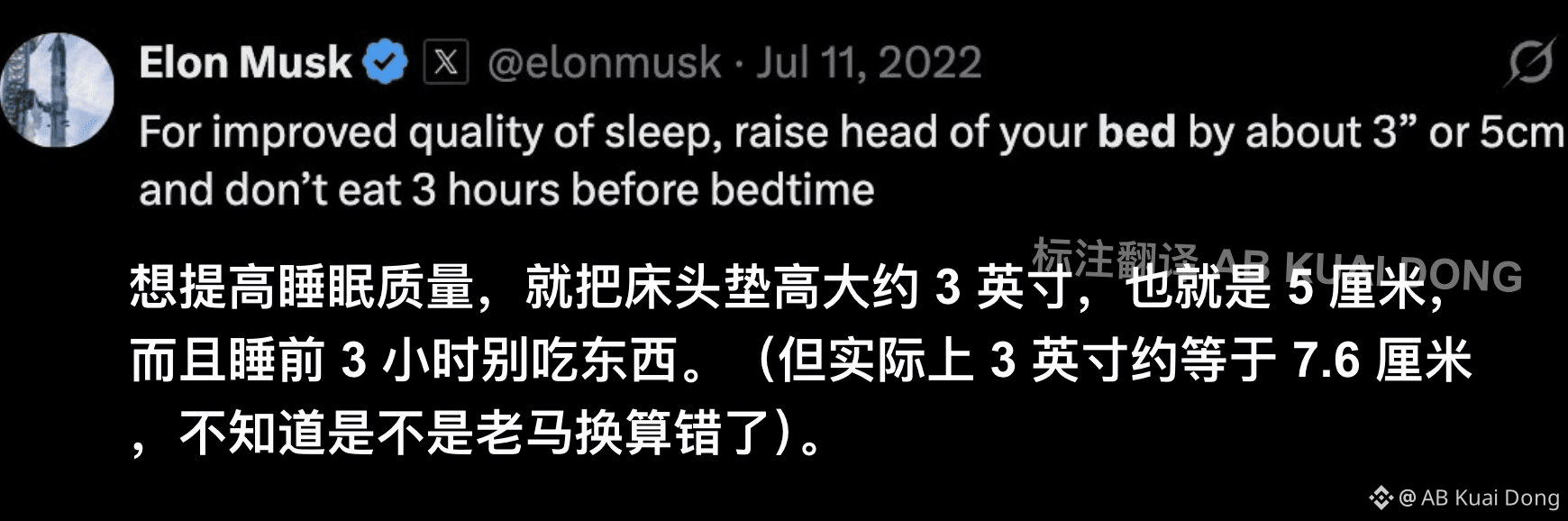
The sleep method that Musk recommended in 2022—today, this old bro mentioned it again.
He said that if you want to improve sleep quality, raise the headboard by about 3 inches, which is 5 centimeters. Also, don’t eat anything within the 3 hours before bedtime.
Scientific research suggests that this can improve sleep apnea and snoring, reduce nighttime acid reflux, and help with morning headaches. And many people who tried it say it works well.
The sleep method that Musk recommended in 2022—today, this old bro mentioned it again.
He said that if you want to improve sleep quality, raise the headboard by about 3 inches, which is 5 centimeters. Also, don’t eat anything within the 3 hours before bedtime.
Scientific research suggests that this can improve sleep apnea and snoring, reduce nighttime acid reflux, and help with morning headaches. And many people who tried it say it works well.
He said that if you want to improve sleep quality, raise the headboard by about 3 inches, which is 5 centimeters. Also, don’t eat anything within the 3 hours before bedtime.
Scientific research suggests that this can improve sleep apnea and snoring, reduce nighttime acid reflux, and help with morning headaches. And many people who tried it say it works well.
7
1
32
45.6k
·
--
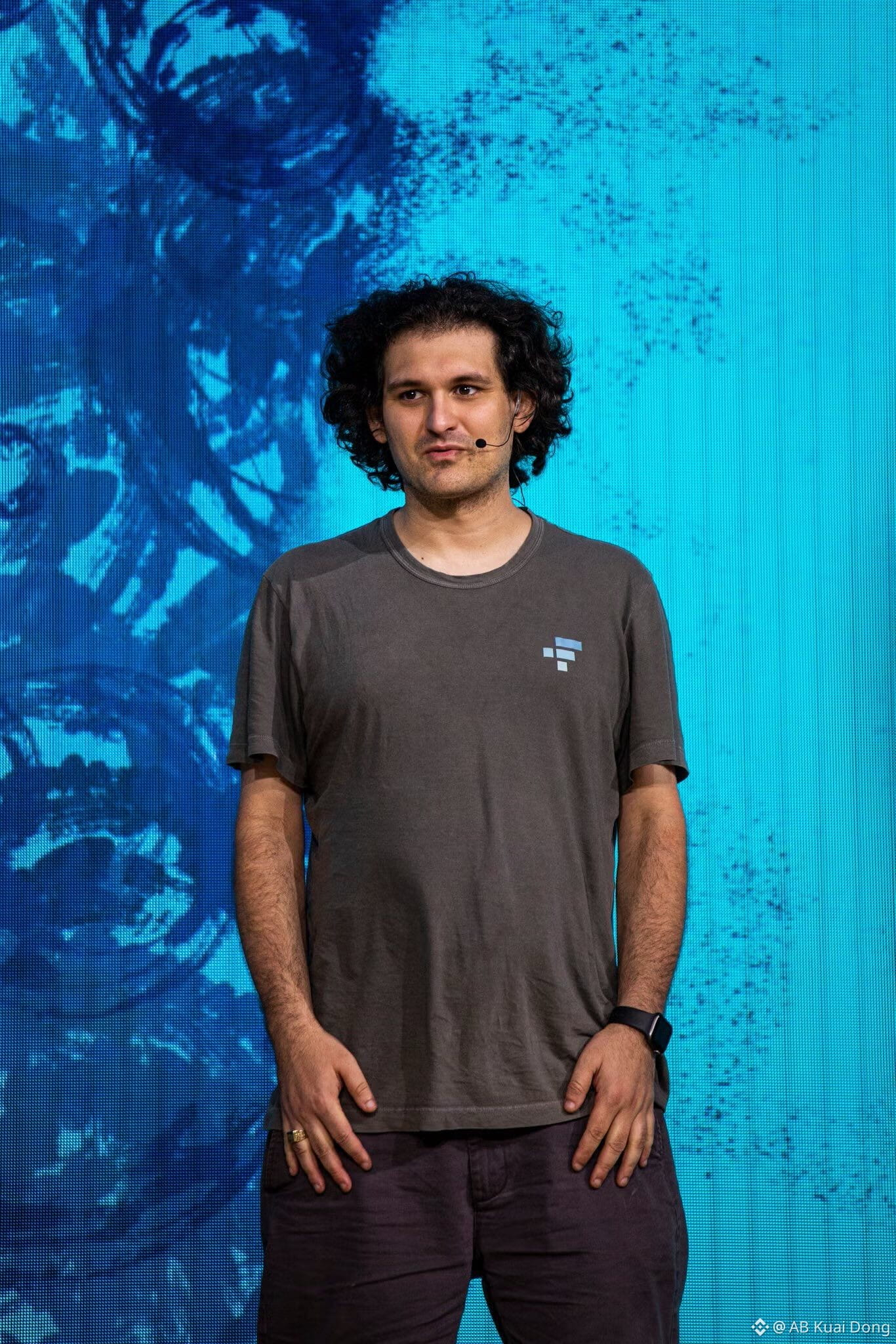
If this guy waits a few more years and opens an AI lab, he could probably walk away clean.
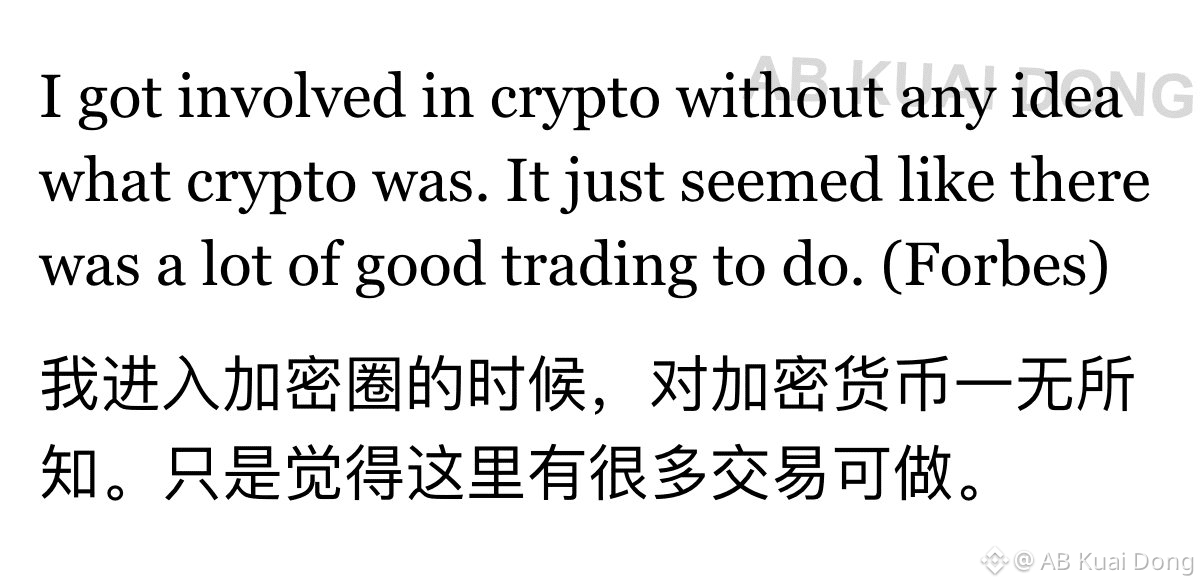
In 2017, SBF entered the scene without really knowing what cryptocurrency was—he just thought there were lots of trades to be made.
Later, in 2022, he invested in Anthropic, the parent company of Claude. That was mainly focused on concerns about AI risks within the industry, not just chasing the AI hype.
If he drags it out for a few more years, he could blame the misuse of funds on AI agents—because by then people will believe the AI threat narrative and that AI can misappropriate funds..
If this guy waits a few more years and opens an AI lab, he could probably walk away clean.
In 2017, SBF entered the scene without really knowing what cryptocurrency was—he just thought there were lots of trades to be made.
Later, in 2022, he invested in Anthropic, the parent company of Claude. That was mainly focused on concerns about AI risks within the industry, not just chasing the AI hype.
If he drags it out for a few more years, he could blame the misuse of funds on AI agents—because by then people will believe the AI threat narrative and that AI can misappropriate funds..
In 2017, SBF entered the scene without really knowing what cryptocurrency was—he just thought there were lots of trades to be made.
Later, in 2022, he invested in Anthropic, the parent company of Claude. That was mainly focused on concerns about AI risks within the industry, not just chasing the AI hype.
If he drags it out for a few more years, he could blame the misuse of funds on AI agents—because by then people will believe the AI threat narrative and that AI can misappropriate funds..
9
13
33.8k
·
--
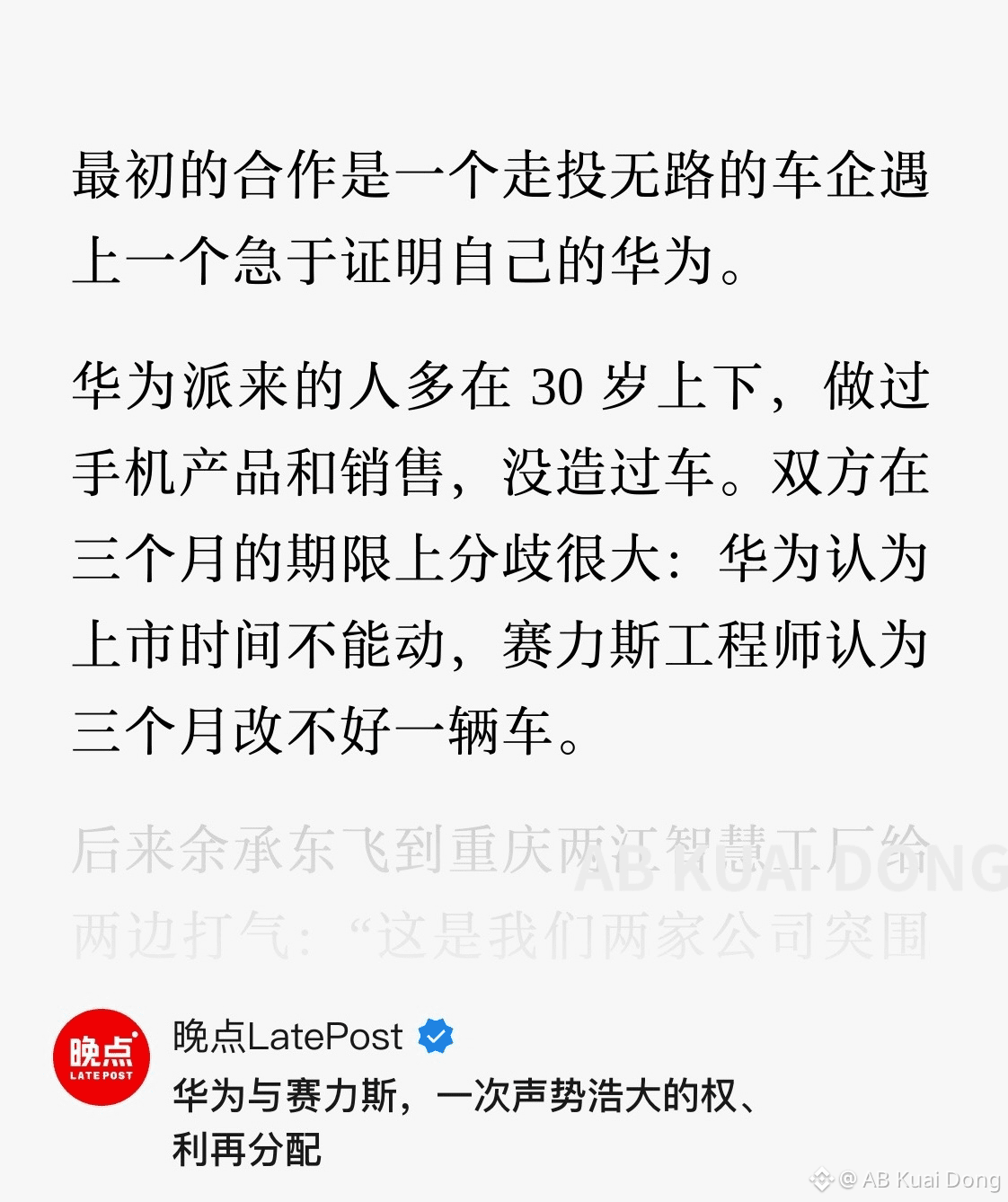
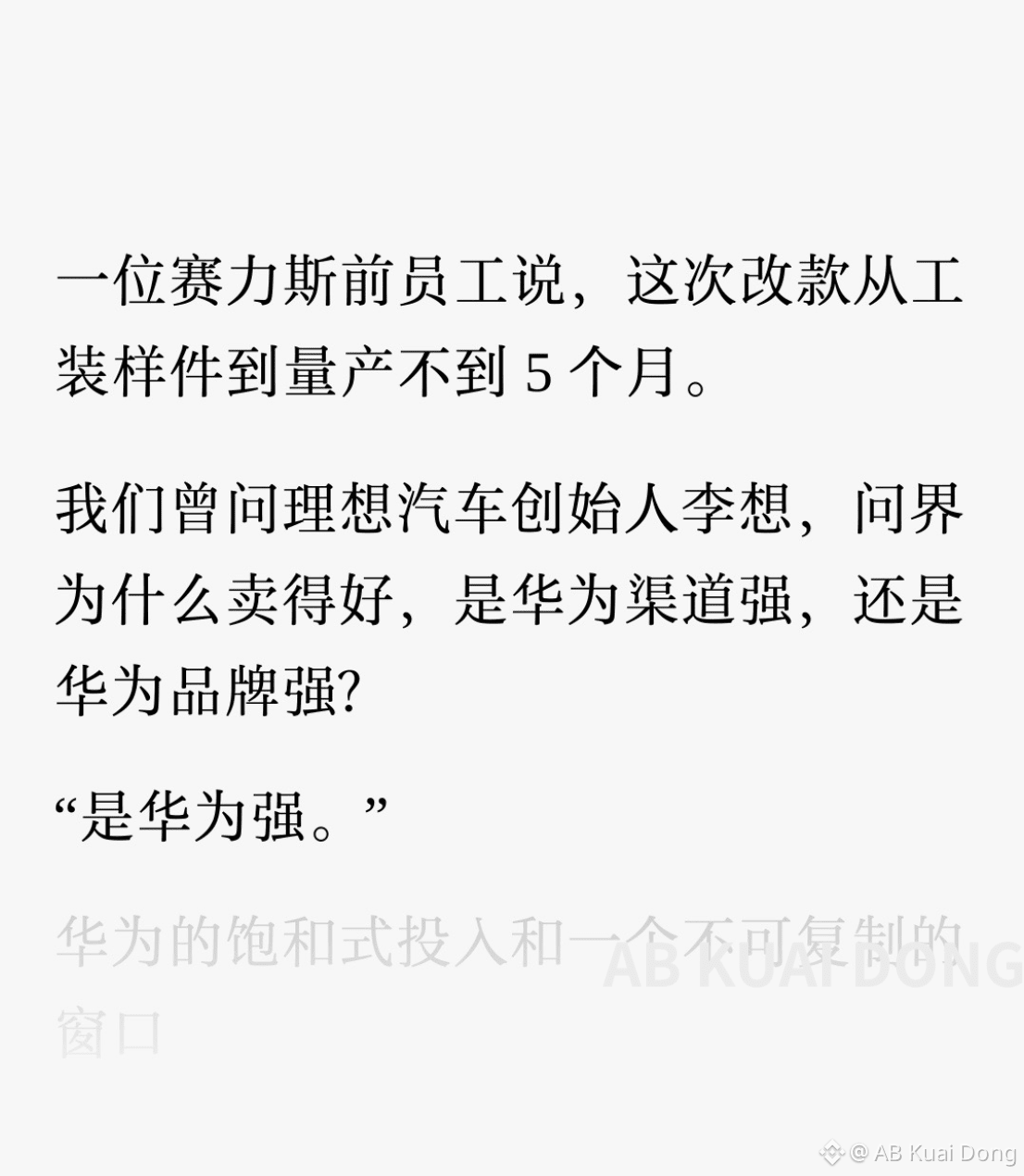
A bit later, about this article on Huawei cars—it's too daring.
And it has survived for 4 days without being complained about or taken down.
It describes the backstory of how Aito was born, and why they could build a car in just three months.
A bit later, about this article on Huawei cars—it's too daring.
And it has survived for 4 days without being complained about or taken down.
It describes the backstory of how Aito was born, and why they could build a car in just three months.
And it has survived for 4 days without being complained about or taken down.
It describes the backstory of how Aito was born, and why they could build a car in just three months.
5
2
8.2k
·
--
Back then, the compression software WinRAR urged users who hadn’t paid for it to go buy a physical WinRAR package 🤣
I checked, and shipping to China costs €131.7, about RMB 1,000. It’s not cheap, but it’s a collaboration with the fashion-brand company tern—so you can buy 5 copies of legitimate WinRAR software.
Back then, the compression software WinRAR urged users who hadn’t paid for it to go buy a physical WinRAR package 🤣
I checked, and shipping to China costs €131.7, about RMB 1,000. It’s not cheap, but it’s a collaboration with the fashion-brand company tern—so you can buy 5 copies of legitimate WinRAR software.
I checked, and shipping to China costs €131.7, about RMB 1,000. It’s not cheap, but it’s a collaboration with the fashion-brand company tern—so you can buy 5 copies of legitimate WinRAR software.


1
1
6.2k
·
--
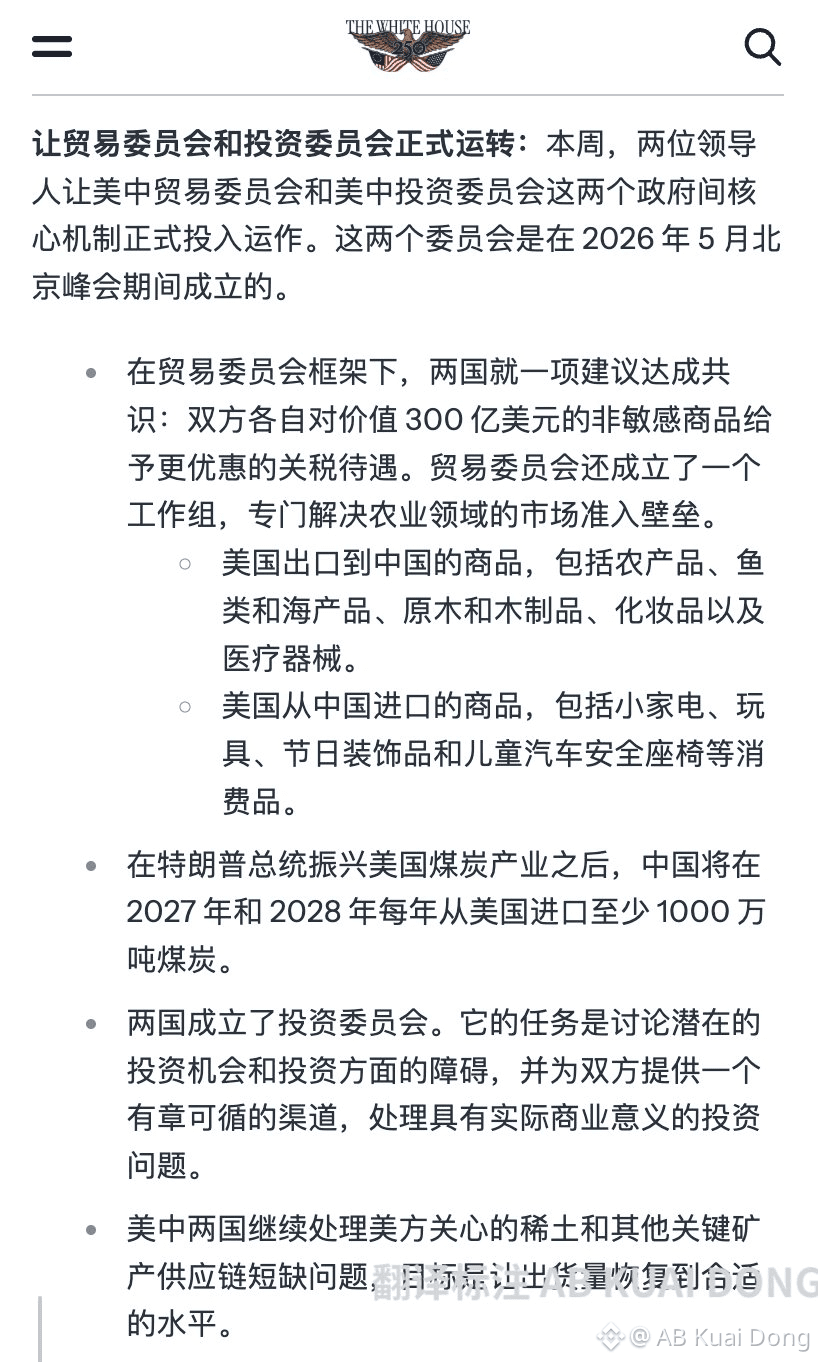
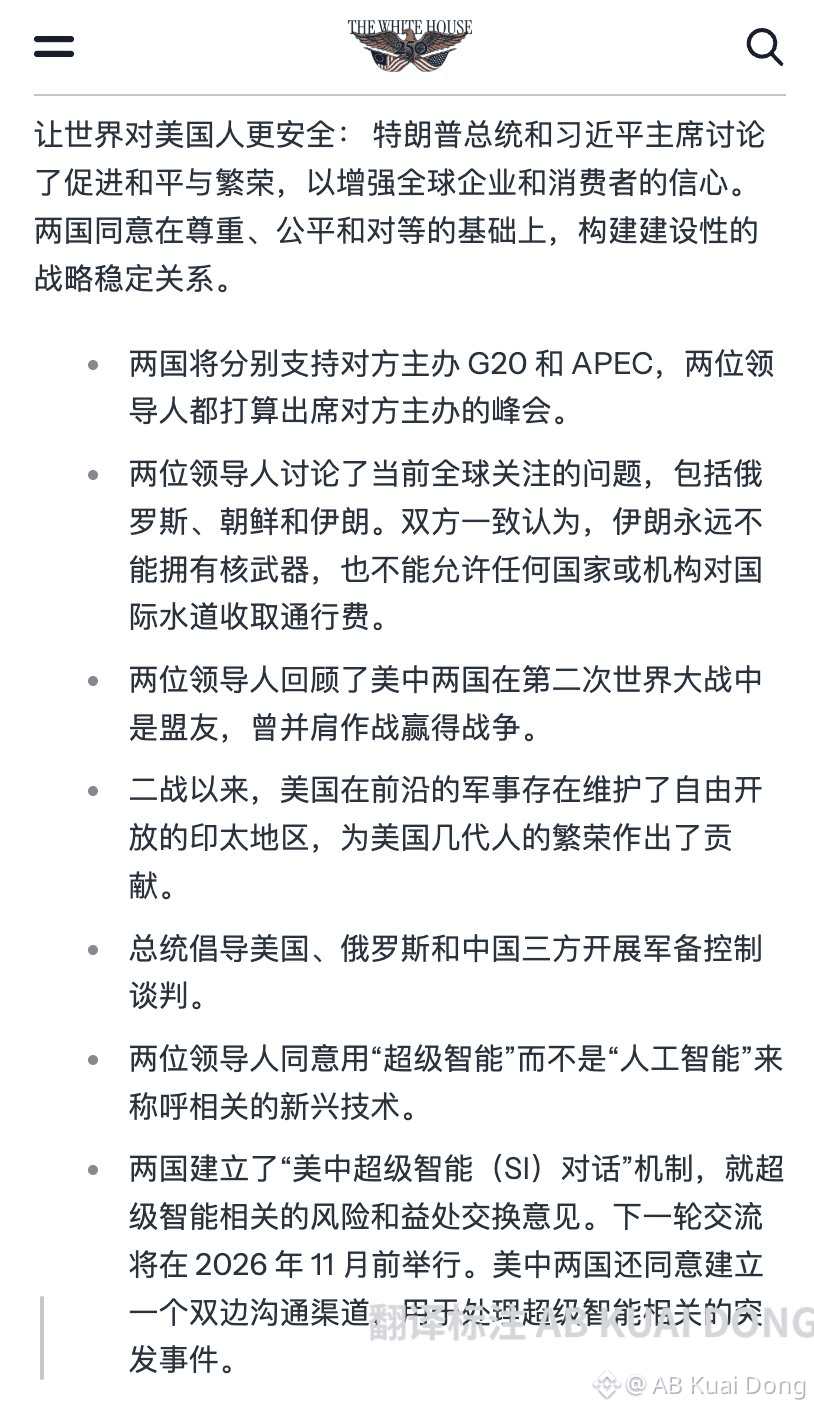
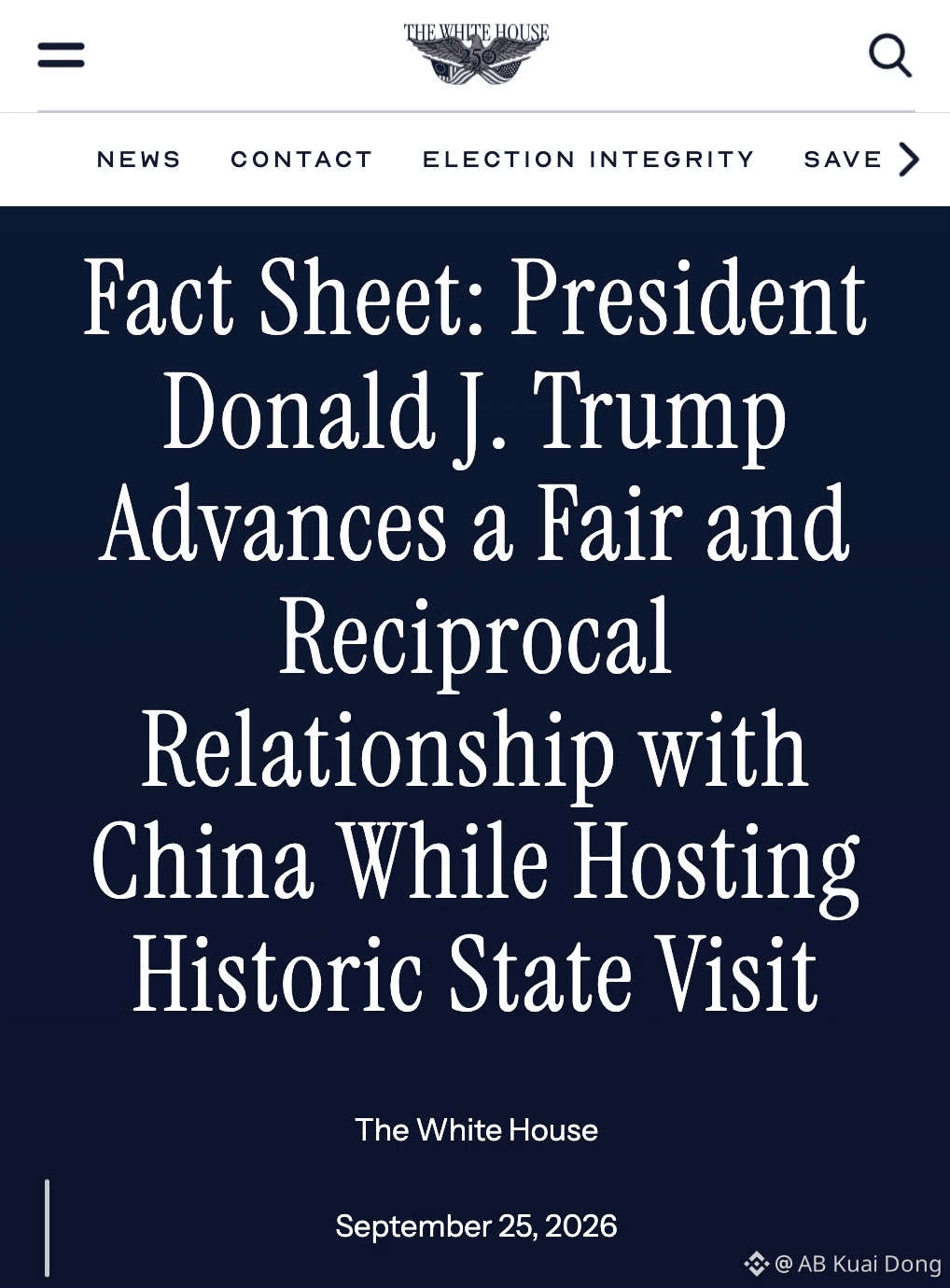
The White House in the United States released the outcomes of this round of China-U.S. talks.
Compared with the previous Beijing summit, this time it has advanced quite a number of details on tariffs and imports/exports, and also looked back on how China and the U.S. were allies during World War II.
The two countries agreed to rename AI as “superintelligence,” and confirmed the establishment of a dedicated dialogue mechanism. It also affirmed that in November at the Shenzhen APEC and in December at the Miami G20, the two leaders will each make a reciprocal visit once more.
The White House in the United States released the outcomes of this round of China-U.S. talks.
Compared with the previous Beijing summit, this time it has advanced quite a number of details on tariffs and imports/exports, and also looked back on how China and the U.S. were allies during World War II.
The two countries agreed to rename AI as “superintelligence,” and confirmed the establishment of a dedicated dialogue mechanism. It also affirmed that in November at the Shenzhen APEC and in December at the Miami G20, the two leaders will each make a reciprocal visit once more.
Compared with the previous Beijing summit, this time it has advanced quite a number of details on tariffs and imports/exports, and also looked back on how China and the U.S. were allies during World War II.
The two countries agreed to rename AI as “superintelligence,” and confirmed the establishment of a dedicated dialogue mechanism. It also affirmed that in November at the Shenzhen APEC and in December at the Miami G20, the two leaders will each make a reciprocal visit once more.
18
2
39
71.9k
·
--
It’s the Mid-Autumn Festival holiday, yet the hardworking brothers I know who work jobs are all replying messages in seconds. I asked and found out they’re all planning to get triple pay on the 25th. Then they go to work on the 26th and 27th to swap for the rest of the time off.
That way, they can take a break continuously from the 28th and be off until the 7th of next month—10 days in a row 🤣
It’s the Mid-Autumn Festival holiday, yet the hardworking brothers I know who work jobs are all replying messages in seconds. I asked and found out they’re all planning to get triple pay on the 25th. Then they go to work on the 26th and 27th to swap for the rest of the time off.
That way, they can take a break continuously from the 28th and be off until the 7th of next month—10 days in a row 🤣
That way, they can take a break continuously from the 28th and be off until the 7th of next month—10 days in a row 🤣
3
6.6k
·
--
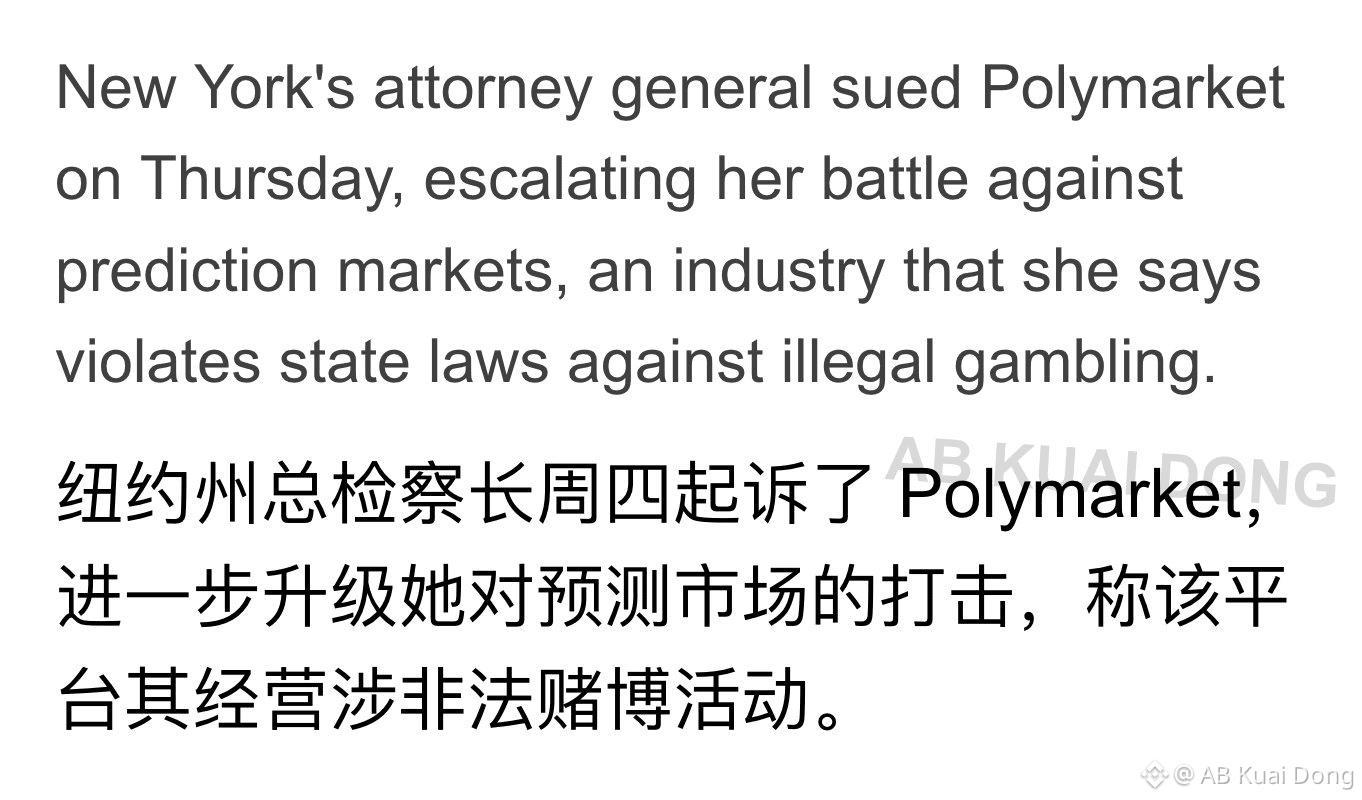
By my reckoning, the U.S. has 50 states in total. Now, roughly 20 of them are involved in lawsuits over prediction markets. Take New York State this time: besides Kalshi, Polymarket has also added another lawsuit.
For prediction markets, the window of time when they can expand quickly is getting smaller and smaller.
By my reckoning, the U.S. has 50 states in total. Now, roughly 20 of them are involved in lawsuits over prediction markets. Take New York State this time: besides Kalshi, Polymarket has also added another lawsuit.
For prediction markets, the window of time when they can expand quickly is getting smaller and smaller.
For prediction markets, the window of time when they can expand quickly is getting smaller and smaller.
2
8
7.1k
·
--
Finally understand why high-end gaming graphics cards on the market are out of stock. A recent report has released more information: in the latest round, DeepSeek’s boss Liang Wenfeng delivered a speech to internal investors.
· DeepSeek’s annualized revenue has reached $1 billion, more than doubling from under $500 million a few months ago. The company is preparing to list on the A-share Shanghai Stock Exchange.
· Last month, model pricing was increased by about 2.3 to 4.5 times, but the number of customers did not decline; demand from users remains very strong.
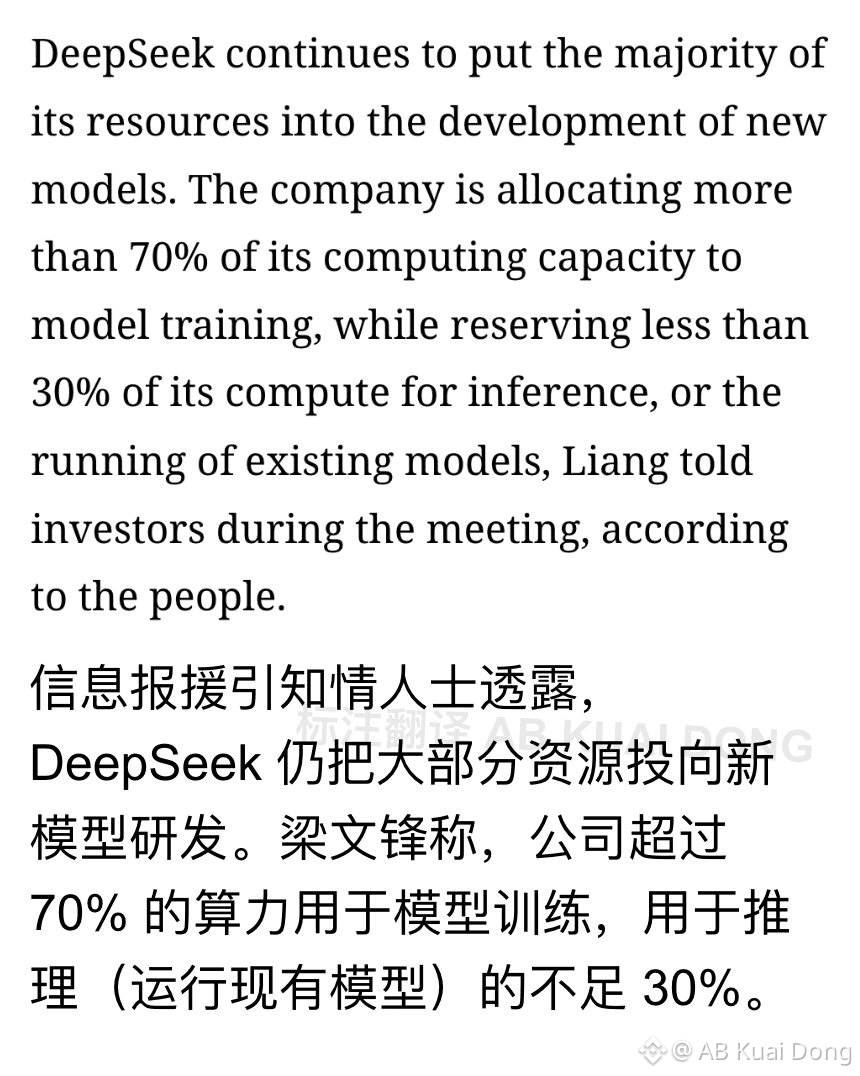
· Over 70% of the company’s computing power is used to train new models, while inference—the processing of existing model tasks—accounts for less than 30%.
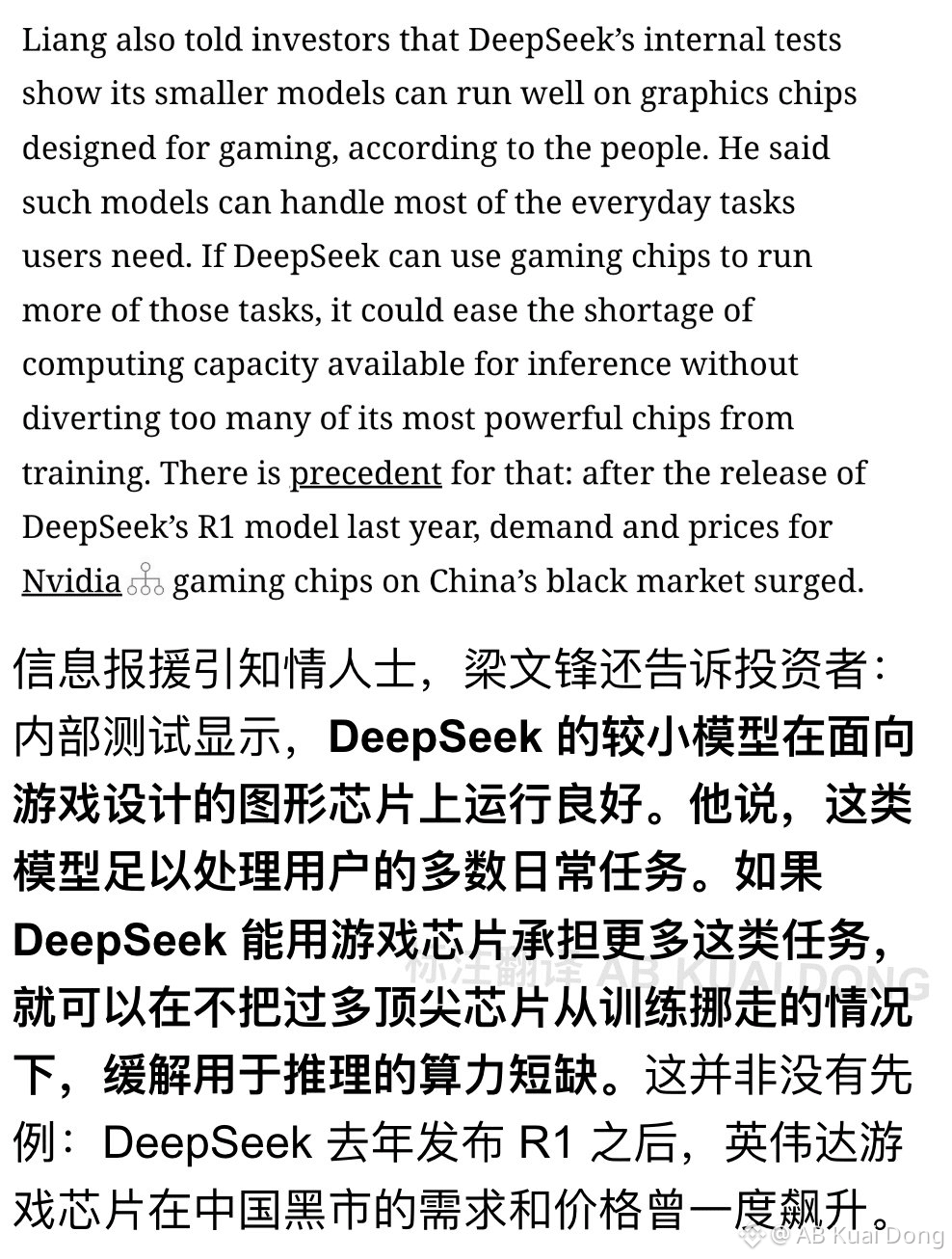
· Internal tests show that smaller AI models perform well on game chips. They can cover most day-to-day tasks, helping ease the shortage of inference computing power, and also reducing the need to move high-end chips used for training (currently the speculation is GPUs such as the RTX 5090). This may also explain why high-end gaming cards have remained in short supply.
· However, making money is still not DeepSeek’s primary goal. Current revenue comes almost entirely from API charges.
Finally understand why high-end gaming graphics cards on the market are out of stock. A recent report has released more information: in the latest round, DeepSeek’s boss Liang Wenfeng delivered a speech to internal investors.
· DeepSeek’s annualized revenue has reached $1 billion, more than doubling from under $500 million a few months ago. The company is preparing to list on the A-share Shanghai Stock Exchange.
· Last month, model pricing was increased by about 2.3 to 4.5 times, but the number of customers did not decline; demand from users remains very strong.
· Over 70% of the company’s computing power is used to train new models, while inference—the processing of existing model tasks—accounts for less than 30%.
· Internal tests show that smaller AI models perform well on game chips. They can cover most day-to-day tasks, helping ease the shortage of inference computing power, and also reducing the need to move high-end chips used for training (currently the speculation is GPUs such as the RTX 5090). This may also explain why high-end gaming cards have remained in short supply.
· However, making money is still not DeepSeek’s primary goal. Current revenue comes almost entirely from API charges.
· DeepSeek’s annualized revenue has reached $1 billion, more than doubling from under $500 million a few months ago. The company is preparing to list on the A-share Shanghai Stock Exchange.
· Last month, model pricing was increased by about 2.3 to 4.5 times, but the number of customers did not decline; demand from users remains very strong.
· Over 70% of the company’s computing power is used to train new models, while inference—the processing of existing model tasks—accounts for less than 30%.
· Internal tests show that smaller AI models perform well on game chips. They can cover most day-to-day tasks, helping ease the shortage of inference computing power, and also reducing the need to move high-end chips used for training (currently the speculation is GPUs such as the RTX 5090). This may also explain why high-end gaming cards have remained in short supply.
· However, making money is still not DeepSeek’s primary goal. Current revenue comes almost entirely from API charges.
1
9
11.8k
Log in to explore more content
Join global crypto users on Binance Square
⚡️ Get latest and useful information about crypto.
💬 Trusted by the world’s largest crypto exchange.
👍 Discover real insights from verified creators.
Email / Phone number
Trending Topics
MetaMaskExitsLidoValidatorsAfterSecurityIncident
914 views
68 Discussing
#metamaskexitslidovalidatorsaftersecurityincident
🦊 MetaMask & Lido: Is the honeymoon officially over?! 💔
MetaMask just hit the "Emergency Exit" button on its Lido Ethereum validators after a security scare! 😱 While MetaMask assures everyone that wallet funds are totally safe, they aren't taking any chances with their non-custodial staking infrastructure.
🔮 What happened to Lido?
No drama on Lido's side, but MetaMask is proactively pulling its affected nodes out of the Lido protocol. The validators are exiting by October 7, 2026, and the full re-entry process could take around 45 days. Good news? If you hold stETH, you can relax—no action is needed! 🛡️
🧠 What should traders do?
Don't panic-dump your bags. Keep your funds secure, double-check your staking setups, and always monitor security updates!
Not financial advice.
Support me by using code VINHTOCDO or link: https://www.binance.com/register?ref=VINHTOCDO
👇 Click trade below to support me:
$BTC
$ETH
$LDO
#MetaMask #LidoFinance #CryptoSecurity #EthereumStaking #CryptoNews #VINHTOCDO
Vinhtocdo
·2 Likes
·95 views
MicronBeatsEarningsLiftsGuidance
3,866 views
96 Discussing
CFTCSubmitsTwoEventContractRulesToWhiteHouse
4,661 views
122 Discussing