
Square_dampouTrader
36 Posts

Square_dampouTrader
Report
Block User
Open Trade
Frequent Trader
3.4 Years
0 Following
26 Followers
92 Liked
Posts
Portfolio
All
Quotes

·
--
Bullish
• XRP Pulls Back as BIS Tests #XRPL
{spot}(XRPUSDT)
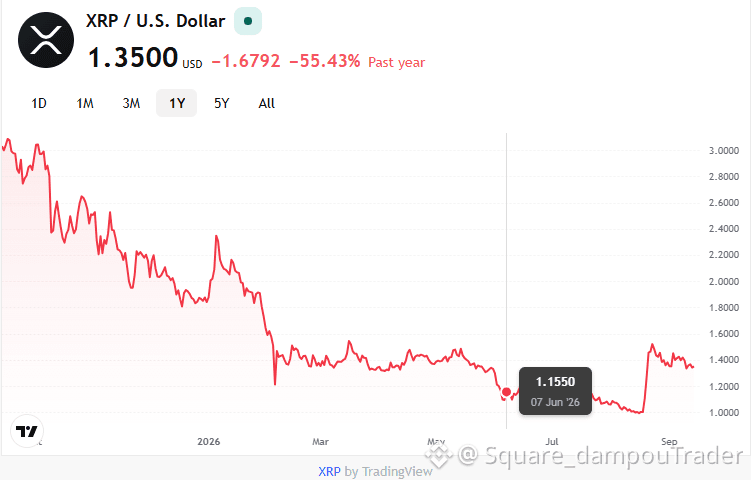
XRP slipped to around $1.40 after stronger U.S. jobs data revived expectations of another Federal Reserve rate hike, pulling the token lower even as the Bank for International Settlements was reported to be testing the XRP Ledger. The pullback tracked a broader risk-off move rather than any XRP-specific shock.
• XRP Pulls Back as BIS Tests #XRPL
XRP slipped to around $1.40 after stronger U.S. jobs data revived expectations of another Federal Reserve rate hike, pulling the token lower even as the Bank for International Settlements was reported to be testing the XRP Ledger. The pullback tracked a broader risk-off move rather than any XRP-specific shock.
XRP slipped to around $1.40 after stronger U.S. jobs data revived expectations of another Federal Reserve rate hike, pulling the token lower even as the Bank for International Settlements was reported to be testing the XRP Ledger. The pullback tracked a broader risk-off move rather than any XRP-specific shock.

1
160
·
--
Bearish
Verified
• XRP Cedes Spotlight to RLUSD as Ripple Eyes $13 Trillion Treasury Market Ahead of CLARITY Act Vote.
{spot}(XRPUSDT)
Ripple's RLUSD stablecoin, not XRP, is drawing the spotlight as Thinking Crypto host Tony Edward points to a possible $13 trillion opportunity ahead of the U.S. Senate's Sept. 15 CLARITY Act vote. Edward cited Ripple stablecoin chief Jack McDonald's estimate of the corporate treasury market RLUSD could tap, while other industry voices weighed in on the bill's odds.
• XRP Cedes Spotlight to RLUSD as Ripple Eyes $13 Trillion Treasury Market Ahead of CLARITY Act Vote.
Ripple's RLUSD stablecoin, not XRP, is drawing the spotlight as Thinking Crypto host Tony Edward points to a possible $13 trillion opportunity ahead of the U.S. Senate's Sept. 15 CLARITY Act vote. Edward cited Ripple stablecoin chief Jack McDonald's estimate of the corporate treasury market RLUSD could tap, while other industry voices weighed in on the bill's odds.
Ripple's RLUSD stablecoin, not XRP, is drawing the spotlight as Thinking Crypto host Tony Edward points to a possible $13 trillion opportunity ahead of the U.S. Senate's Sept. 15 CLARITY Act vote. Edward cited Ripple stablecoin chief Jack McDonald's estimate of the corporate treasury market RLUSD could tap, while other industry voices weighed in on the bill's odds.
1
570
{spot}(BTCUSDT)
• Bitcoin: Profitability of BTC mining collapses, accelerating the shift towards AI
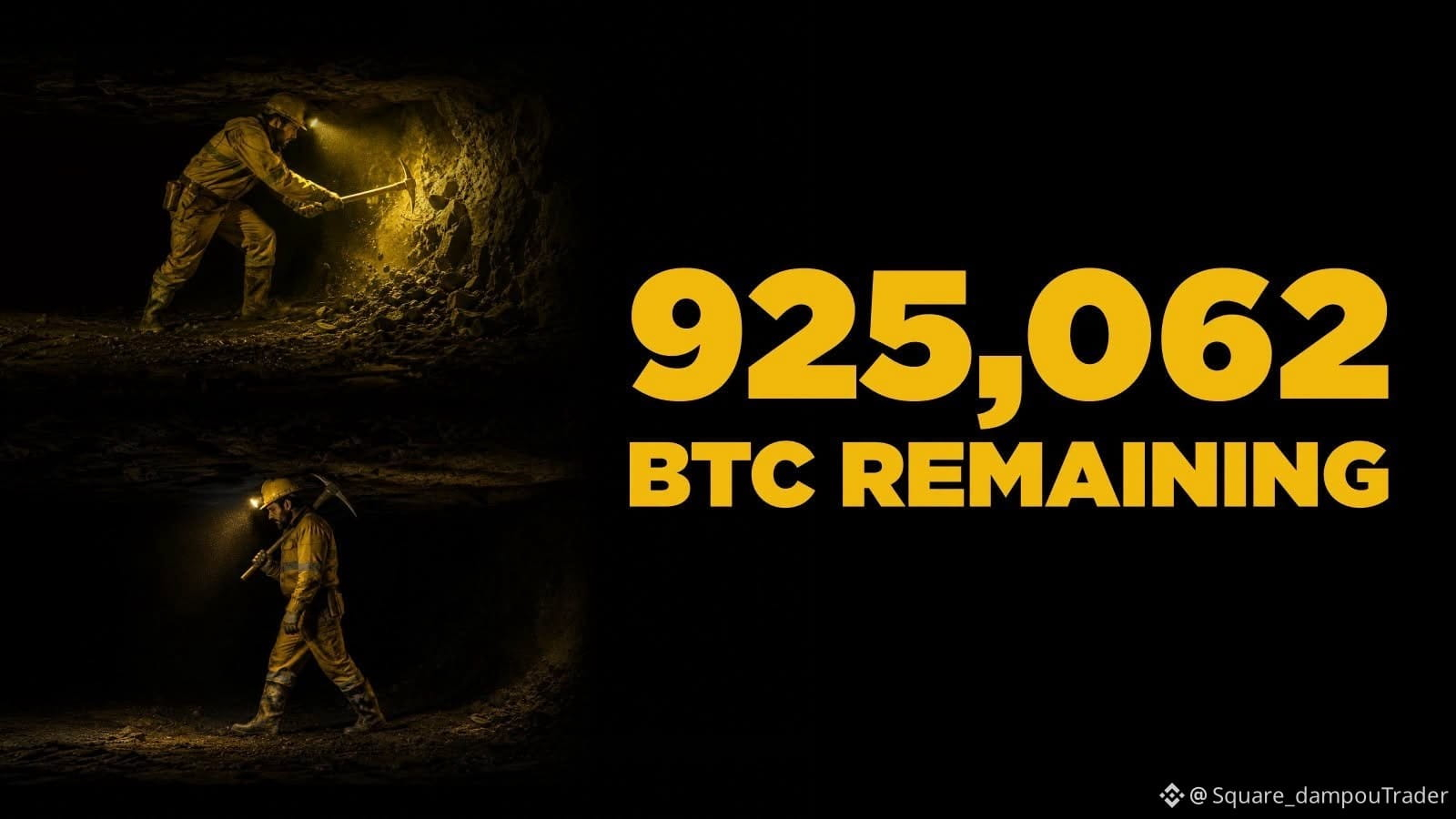
An unprecedented drop in Bitcoin mining difficulty. The Bitcoin network's mining difficulty reached an all-time high of nearly 156 trillion (T) at the end of October 2025, before beginning a continuous decline. By September 1, 2026, this difficulty had even fallen to approximately 125.8 T, after ten consecutive months of decline […]
• Bitcoin: Profitability of BTC mining collapses, accelerating the shift towards AI
An unprecedented drop in Bitcoin mining difficulty. The Bitcoin network's mining difficulty reached an all-time high of nearly 156 trillion (T) at the end of October 2025, before beginning a continuous decline. By September 1, 2026, this difficulty had even fallen to approximately 125.8 T, after ten consecutive months of decline […]
• Bitcoin: Profitability of BTC mining collapses, accelerating the shift towards AI
An unprecedented drop in Bitcoin mining difficulty. The Bitcoin network's mining difficulty reached an all-time high of nearly 156 trillion (T) at the end of October 2025, before beginning a continuous decline. By September 1, 2026, this difficulty had even fallen to approximately 125.8 T, after ten consecutive months of decline […]
1
100
• Quantum: the cost of an attack on Bitcoin and Ethereum drops by half in 2 months
A group of researchers has just cut by more than half the estimated quantum cost of breaking the cryptography of Bitcoin (BTC) and Ethereum (ETH). An advance that brings the much-talked-about Q-Day closer and prompts both networks to speed up their post-quantum preparations already underway.
• The estimated cost of a quantum attack cut in half in just 2 months
A team of more than 100 researchers, including members of the Ethereum Foundation, Eigen Labs, StarkWare, the Starknet Foundation, Theta Labs, Sei Labs, and Trail of Bits, has published a technical paper that reshuffles the threat posed by quantum computing to Bitcoin and Ethereum.
Their optimized circuit, released as part of the open challenge ECDSA.Fail, now requires only 1,151 logical qubits and around 1.30 million Toffoli gates to carry out a key operation of Shor’s algorithm on the secp256k1 curve. And it’s precisely this operation that is used to sign transactions on the Bitcoin and Ethereum networks. In two months, the Q×T reference score fell from 10.75 billion to nearly 1.5 billion—an 86% reduction.
This result is more than 50% below the benchmark published by Google Quantum AI in March 2026, even though the authors note that calculation conventions differ and that this is not a formal comparison.
{spot}(ETHUSDT)
{spot}(BTCUSDT)
• Quantum: the cost of an attack on Bitcoin and Ethereum drops by half in 2 months
A group of researchers has just cut by more than half the estimated quantum cost of breaking the cryptography of Bitcoin (BTC) and Ethereum (ETH). An advance that brings the much-talked-about Q-Day closer and prompts both networks to speed up their post-quantum preparations already underway.
• The estimated cost of a quantum attack cut in half in just 2 months
A team of more than 100 researchers, including members of the Ethereum Foundation, Eigen Labs, StarkWare, the Starknet Foundation, Theta Labs, Sei Labs, and Trail of Bits, has published a technical paper that reshuffles the threat posed by quantum computing to Bitcoin and Ethereum.
Their optimized circuit, released as part of the open challenge ECDSA.Fail, now requires only 1,151 logical qubits and around 1.30 million Toffoli gates to carry out a key operation of Shor’s algorithm on the secp256k1 curve. And it’s precisely this operation that is used to sign transactions on the Bitcoin and Ethereum networks. In two months, the Q×T reference score fell from 10.75 billion to nearly 1.5 billion—an 86% reduction.
This result is more than 50% below the benchmark published by Google Quantum AI in March 2026, even though the authors note that calculation conventions differ and that this is not a formal comparison.
A group of researchers has just cut by more than half the estimated quantum cost of breaking the cryptography of Bitcoin (BTC) and Ethereum (ETH). An advance that brings the much-talked-about Q-Day closer and prompts both networks to speed up their post-quantum preparations already underway.
• The estimated cost of a quantum attack cut in half in just 2 months
A team of more than 100 researchers, including members of the Ethereum Foundation, Eigen Labs, StarkWare, the Starknet Foundation, Theta Labs, Sei Labs, and Trail of Bits, has published a technical paper that reshuffles the threat posed by quantum computing to Bitcoin and Ethereum.
Their optimized circuit, released as part of the open challenge ECDSA.Fail, now requires only 1,151 logical qubits and around 1.30 million Toffoli gates to carry out a key operation of Shor’s algorithm on the secp256k1 curve. And it’s precisely this operation that is used to sign transactions on the Bitcoin and Ethereum networks. In two months, the Q×T reference score fell from 10.75 billion to nearly 1.5 billion—an 86% reduction.
This result is more than 50% below the benchmark published by Google Quantum AI in March 2026, even though the authors note that calculation conventions differ and that this is not a formal comparison.

1
494
·
--
Bullish
{spot}(BTCUSDT)
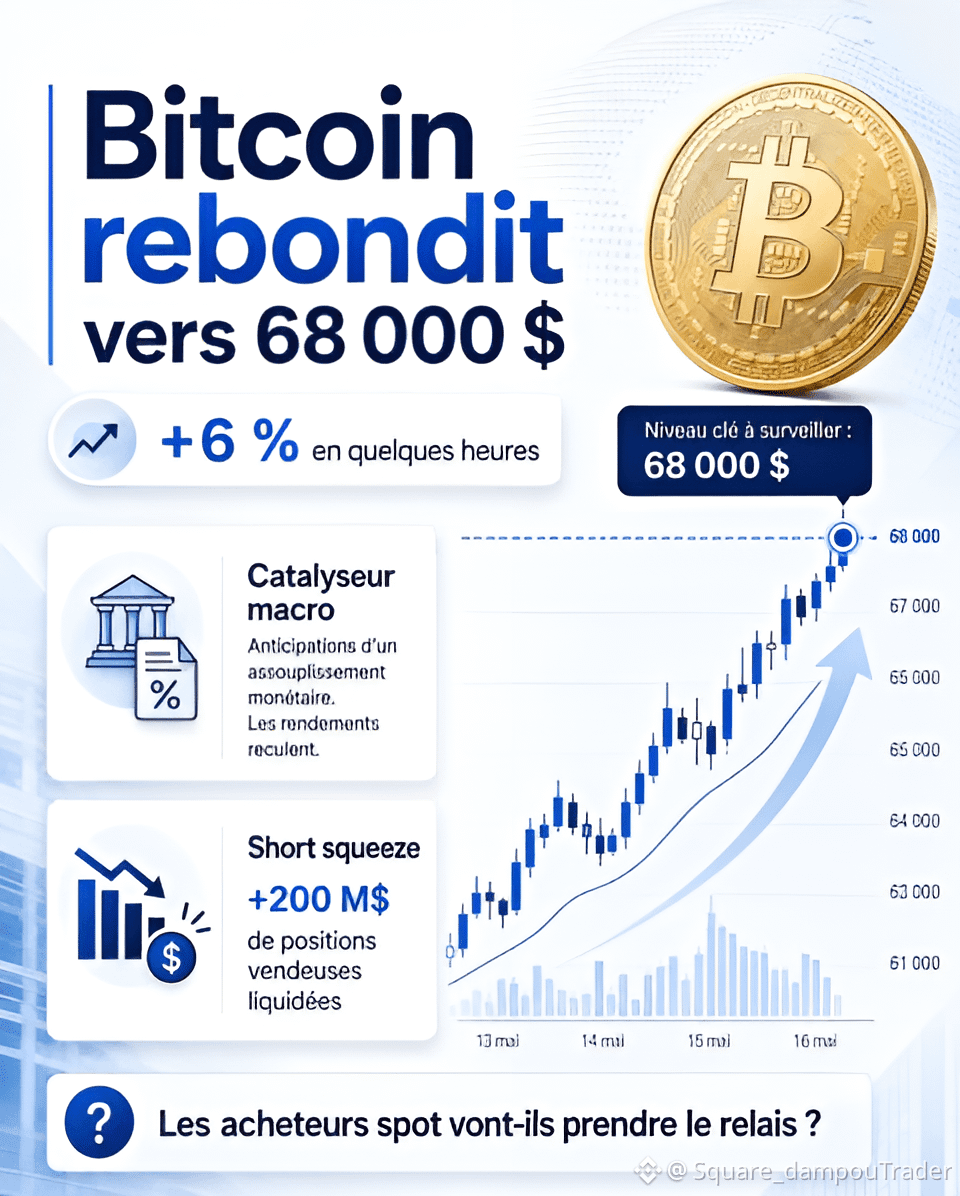
• Bitcoin : +6 % in just a few hours and back toward 68 000 $
The move appears to be driven by two factors:
👉 a macro catalyst, with easing in U.S. long-term rates;
👉 a major short squeeze, with more than 200 M$ short positions liquidated on Bitcoin.
This is a good illustration of the crypto market’s current mechanics: when positioning becomes too imbalanced, a relatively limited macro shift can trigger a very fast move through derivatives.
The key level is now clear: $67,000.
If Bitcoin is rejected below this zone, the move will probably remain a simple squeeze within the range.
On the other hand, a confirmed breakout above 67–68k could make the structure much more interesting.
• Bitcoin : +6 % in just a few hours and back toward 68 000 $
The move appears to be driven by two factors:
👉 a macro catalyst, with easing in U.S. long-term rates;
👉 a major short squeeze, with more than 200 M$ short positions liquidated on Bitcoin.
This is a good illustration of the crypto market’s current mechanics: when positioning becomes too imbalanced, a relatively limited macro shift can trigger a very fast move through derivatives.
The key level is now clear: $67,000.
If Bitcoin is rejected below this zone, the move will probably remain a simple squeeze within the range.
On the other hand, a confirmed breakout above 67–68k could make the structure much more interesting.
The move appears to be driven by two factors:
👉 a macro catalyst, with easing in U.S. long-term rates;
👉 a major short squeeze, with more than 200 M$ short positions liquidated on Bitcoin.
This is a good illustration of the crypto market’s current mechanics: when positioning becomes too imbalanced, a relatively limited macro shift can trigger a very fast move through derivatives.
The key level is now clear: $67,000.
If Bitcoin is rejected below this zone, the move will probably remain a simple squeeze within the range.
On the other hand, a confirmed breakout above 67–68k could make the structure much more interesting.
1
82
·
--
Bullish
More than 30 rubles, which is approximately half a dollar, directly from the website to Binance without any deposit.$USDT
🌐 youtube.com/channel/UCvqydiKFur4o_4_vvTPX70w
More than 30 rubles, which is approximately half a dollar, directly from the website to Binance without any deposit.$USDT
🌐 youtube.com/channel/UCvqydiKFur4o_4_vvTPX70w
🌐 youtube.com/channel/UCvqydiKFur4o_4_vvTPX70w

1
1
·
--
Bearish
•Tether could become illegal in the United States as early as 2028, while Circle obtains its banking license.
The GENIUS Act, the US regulatory framework for stablecoins, has just celebrated its first anniversary. This is an opportunity to revisit the publication of its implementing rules, which must occur before July 2028, and which risks permanently excluding Tether, the market leader, from the United States.
$USDT
•Tether could become illegal in the United States as early as 2028, while Circle obtains its banking license.
The GENIUS Act, the US regulatory framework for stablecoins, has just celebrated its first anniversary. This is an opportunity to revisit the publication of its implementing rules, which must occur before July 2028, and which risks permanently excluding Tether, the market leader, from the United States.
$USDT
The GENIUS Act, the US regulatory framework for stablecoins, has just celebrated its first anniversary. This is an opportunity to revisit the publication of its implementing rules, which must occur before July 2028, and which risks permanently excluding Tether, the market leader, from the United States.
$USDT

1
71


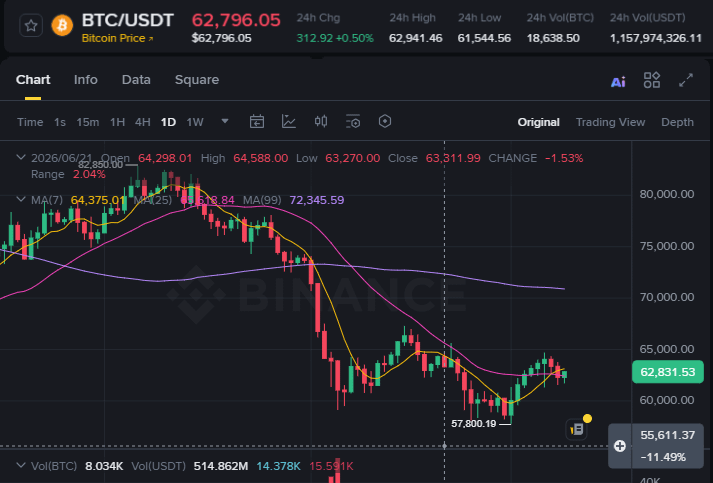
Bitcoin falls below $62,000 after President Trump says the interim accord with Iran to end the war is “over.”
{spot}(BTCUSDT)
Bitcoin falls below $62,000 after President Trump says the interim accord with Iran to end the war is “over.”
1
79
·
--
Bearish
{spot}(BTCUSDT)
• “Limiting the Bitcoin supply no longer makes any sense” – StarkWare CEO proposes an annual issuance rate of 4%
“Limiting the Bitcoin supply to 21 million units makes no sense.”
Since its origins - and more intensely with the arrival of traditional finance - Bitcoin has clashed with two visions that are sometimes difficult to reconcile: on the one hand, a monetary status applicable to its native cryptocurrency, and on the other, a desire to preserve it as a kind of digital gold mine from which it must remain difficult and rare to extract its precious BTC.
An equation to which we must not forget to add the very conservative character of a significant part of its developers, but also of its chief accumulator Michael Saylor, founder of Strategy, for whom it must not evolve too much in order to enter its new era of " digital capital ".
• “Limiting the Bitcoin supply no longer makes any sense” – StarkWare CEO proposes an annual issuance rate of 4%
“Limiting the Bitcoin supply to 21 million units makes no sense.”
Since its origins - and more intensely with the arrival of traditional finance - Bitcoin has clashed with two visions that are sometimes difficult to reconcile: on the one hand, a monetary status applicable to its native cryptocurrency, and on the other, a desire to preserve it as a kind of digital gold mine from which it must remain difficult and rare to extract its precious BTC.
An equation to which we must not forget to add the very conservative character of a significant part of its developers, but also of its chief accumulator Michael Saylor, founder of Strategy, for whom it must not evolve too much in order to enter its new era of " digital capital ".
“Limiting the Bitcoin supply to 21 million units makes no sense.”
Since its origins - and more intensely with the arrival of traditional finance - Bitcoin has clashed with two visions that are sometimes difficult to reconcile: on the one hand, a monetary status applicable to its native cryptocurrency, and on the other, a desire to preserve it as a kind of digital gold mine from which it must remain difficult and rare to extract its precious BTC.
An equation to which we must not forget to add the very conservative character of a significant part of its developers, but also of its chief accumulator Michael Saylor, founder of Strategy, for whom it must not evolve too much in order to enter its new era of " digital capital ".

1
96
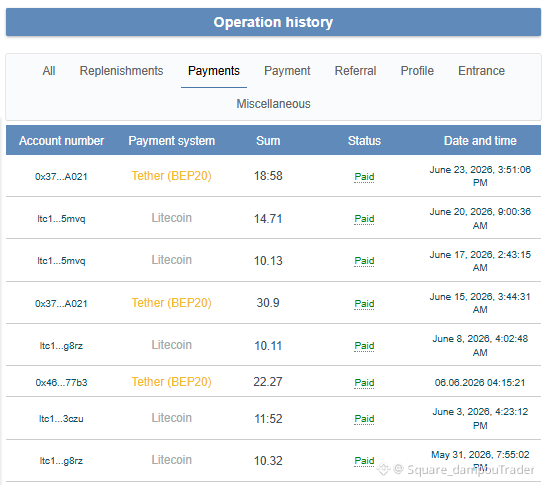
The easiest free methods
Direct withdrawal proof from the site 💥
The easiest free methods
Direct withdrawal proof from the site 💥
Direct withdrawal proof from the site 💥
1
87
·
--
Bullish
{spot}(XRPUSDT)
• Ripple (XRP) obtains its full MiCA approval
On Monday, Ripple announced it had obtained its full license as a Crypto-Asset Service Provider (CSP) under the MiCA regulation. Let's take a closer look.
Ripple (XRP) obtains its MiCA approval
Almost exactly a year ago, Ripple announced its intention to obtain MiCA approval to expand its operations in the European market. A few weeks ago, the company received a "Green Light Letter" from the Luxembourg Financial Sector Supervisory Commission (CSSF), paving the way for compliance with European regulations.
Today, Ripple officially announced that it has obtained its full license as a crypto-asset service provider (PSCA).
• All Social Media 👇👇👇
🌐 https://tradercatbinance.blogspot.com/p/accueil.html
• Ripple (XRP) obtains its full MiCA approval
On Monday, Ripple announced it had obtained its full license as a Crypto-Asset Service Provider (CSP) under the MiCA regulation. Let's take a closer look.
Ripple (XRP) obtains its MiCA approval
Almost exactly a year ago, Ripple announced its intention to obtain MiCA approval to expand its operations in the European market. A few weeks ago, the company received a "Green Light Letter" from the Luxembourg Financial Sector Supervisory Commission (CSSF), paving the way for compliance with European regulations.
Today, Ripple officially announced that it has obtained its full license as a crypto-asset service provider (PSCA).
• All Social Media 👇👇👇
🌐 https://tradercatbinance.blogspot.com/p/accueil.html
• Ripple (XRP) obtains its full MiCA approval
On Monday, Ripple announced it had obtained its full license as a Crypto-Asset Service Provider (CSP) under the MiCA regulation. Let's take a closer look.
Ripple (XRP) obtains its MiCA approval
Almost exactly a year ago, Ripple announced its intention to obtain MiCA approval to expand its operations in the European market. A few weeks ago, the company received a "Green Light Letter" from the Luxembourg Financial Sector Supervisory Commission (CSSF), paving the way for compliance with European regulations.
Today, Ripple officially announced that it has obtained its full license as a crypto-asset service provider (PSCA).
• All Social Media 👇👇👇
🌐 https://tradercatbinance.blogspot.com/p/accueil.html

1
145
·
--
Bearish
Official red flag📊
Official red flag📊


Binance News
·
--
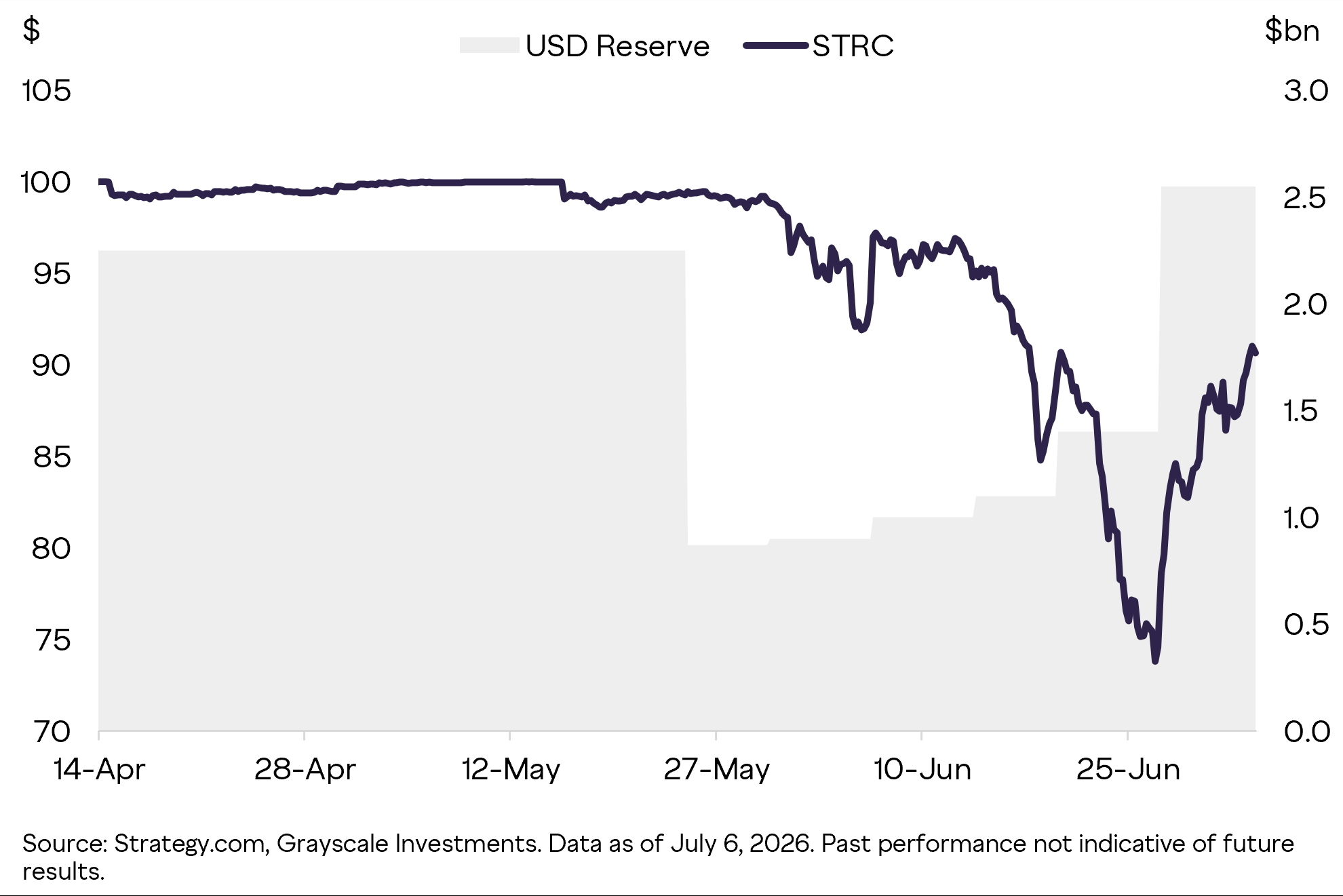
Strategy’s recent BTC sale is being viewed by some analysts as a stabilizing move rather than a bearish signal.
Strategy sold 3,588 BTC worth about $216M to fund preferred stock dividends and strengthen cash reserves
Grayscale says the move may help BTC find a more “durable bottom” by reducing concerns over future forced selling
Strategy’s USD reserves now reportedly cover around 17 months of dividend obligations
BTC and STRC both rebounded after the initial market reaction, suggesting investor concerns may have eased
Strategy sold 3,588 BTC worth about $216M to fund preferred stock dividends and strengthen cash reserves
Grayscale says the move may help BTC find a more “durable bottom” by reducing concerns over future forced selling
Strategy’s USD reserves now reportedly cover around 17 months of dividend obligations
BTC and STRC both rebounded after the initial market reaction, suggesting investor concerns may have eased
1
11
·
--
Bullish
JUST IN: SpaceX joins the Nasdaq-100 tomorrow as the index's forth Bitcoin holder alongside Tesla, Strategy, and Mercado Libre
Elon Musk now has two companies in the Nasdaq-100 holding a total of 30,221 BTC!
$USDC
{spot}(BTCUSDT)
{spot}(USDCUSDT)
{stock_us}(SPCX.US)
• All Social Media 👇👇👇
🌐 https://tradercatbinance.blogspot.com/p/accueil.html
JUST IN: SpaceX joins the Nasdaq-100 tomorrow as the index's forth Bitcoin holder alongside Tesla, Strategy, and Mercado Libre
Elon Musk now has two companies in the Nasdaq-100 holding a total of 30,221 BTC!
$USDC
• All Social Media 👇👇👇
🌐 https://tradercatbinance.blogspot.com/p/accueil.html
Elon Musk now has two companies in the Nasdaq-100 holding a total of 30,221 BTC!
$USDC
• All Social Media 👇👇👇
🌐 https://tradercatbinance.blogspot.com/p/accueil.html

1
12
·
--
Bearish
• Open USD: Companies contest their presence in the consortium.
The launch of the Open USD (OUSD) stablecoin was intended to unite 140 companies around a shared dollar. However, just days after the announcement, several companies listed in the consortium claimed they had never formally confirmed their participation.
• The launch of the OUSD stablecoin marred by controversy
Announced on June 30th, Open USD (OUSD) is presented as the most ambitious stablecoin ever launched. Backed by a consortium called Open Standard, the project boasts more than 140 partner companies, including Visa, Mastercard, Stripe, American Express, Coinbase, and BlackRock.
Rather than a single issuer capturing all the revenue from the reserves, the OUSD proposes a shared ownership model. Participating institutions can mint and redeem the token without volume limits, while sharing the revenue generated by the reserves.
But the launch has been accompanied by the beginnings of controversy. Indeed, several companies appearing on the official list say they have not been formally committed to the project.$USDC
{spot}(BTCUSDT)
{spot}(USDCUSDT)
• Open USD: Companies contest their presence in the consortium.
The launch of the Open USD (OUSD) stablecoin was intended to unite 140 companies around a shared dollar. However, just days after the announcement, several companies listed in the consortium claimed they had never formally confirmed their participation.
• The launch of the OUSD stablecoin marred by controversy
Announced on June 30th, Open USD (OUSD) is presented as the most ambitious stablecoin ever launched. Backed by a consortium called Open Standard, the project boasts more than 140 partner companies, including Visa, Mastercard, Stripe, American Express, Coinbase, and BlackRock.
Rather than a single issuer capturing all the revenue from the reserves, the OUSD proposes a shared ownership model. Participating institutions can mint and redeem the token without volume limits, while sharing the revenue generated by the reserves.
But the launch has been accompanied by the beginnings of controversy. Indeed, several companies appearing on the official list say they have not been formally committed to the project.$USDC
The launch of the Open USD (OUSD) stablecoin was intended to unite 140 companies around a shared dollar. However, just days after the announcement, several companies listed in the consortium claimed they had never formally confirmed their participation.
• The launch of the OUSD stablecoin marred by controversy
Announced on June 30th, Open USD (OUSD) is presented as the most ambitious stablecoin ever launched. Backed by a consortium called Open Standard, the project boasts more than 140 partner companies, including Visa, Mastercard, Stripe, American Express, Coinbase, and BlackRock.
Rather than a single issuer capturing all the revenue from the reserves, the OUSD proposes a shared ownership model. Participating institutions can mint and redeem the token without volume limits, while sharing the revenue generated by the reserves.
But the launch has been accompanied by the beginnings of controversy. Indeed, several companies appearing on the official list say they have not been formally committed to the project.$USDC

1
1
203
·
--
Bullish
Ethereum wants to attract governments and institutions with its “essential neutral infrastructure”
Despite some internal strategic disagreements, the Ethereum blockchain is trying to push ahead with its development by now targeting governments and institutional players with the neutrality of its infrastructure. A detailed position in a guide published by the Ethereum Foundation, aimed at public sector officials and leaders of institutions.
Ethereum wants to attract governments and institutions with its “essential neutral infrastructure”
Despite some internal strategic disagreements, the Ethereum blockchain is trying to push ahead with its development by now targeting governments and institutional players with the neutrality of its infrastructure. A detailed position in a guide published by the Ethereum Foundation, aimed at public sector officials and leaders of institutions.
Despite some internal strategic disagreements, the Ethereum blockchain is trying to push ahead with its development by now targeting governments and institutional players with the neutrality of its infrastructure. A detailed position in a guide published by the Ethereum Foundation, aimed at public sector officials and leaders of institutions.

2
168
·
--
Bullish
{spot}(DOGEUSDT)
• Federal Reserve Chairman Jerome Powell refuses to leave his post and defies Donald Trump
Federal Reserve Chairman Jerome Powell announced that he would remain in his post after the end of his term, contrary to tradition. He explained that he feared for the independence of the US central bank after repeated attacks from the Trump administration.
• Jerome Powell will not be leaving his post in May.
Traditionally, a Federal Reserve chairman leaves office at the end of his term to facilitate the transition to the new administration of the central bank. But this time, Jerome Powell will not be leaving. The current Fed chairman announced on Wednesday that he will remain in his position after May 15
Jerome Powell justifies his choice by citing the pressure campaign and legal attacks launched by the Trump administration against the Federal Reserve, which is accused of not lowering interest rates quickly enough.
For these reasons, the current Fed chairman fears for the independence of his institution and will remain in office, as he confirmed during what was to be his last conference
A sign of crisis between the Trump administration and an independent body
The move is highly unusual: the last Federal Reserve chairman to remain in office after his term was Marriner Eccles, in 1948. It's a sign of a crisis in the United States, where Donald Trump has repeatedly tested the limits of independent bodies. The Justice Department, for example, opened an investigation into renovations at the Federal Reserve headquarters—a pretext, according to Jerome Powell, to put pressure on the institution
He announced that he would only leave when the investigation was "truly and transparently concluded, and with a definitive character".
Donald Trump repeatedly threatened Jerome Powell with dismissal. In reality, a US president cannot fire a high-ranking official except in cases of serious misconduct. The Trump administration therefore tried to use the Fed reform affair as a valid reason for dismissal, so far without success.
#USDT
• Federal Reserve Chairman Jerome Powell refuses to leave his post and defies Donald Trump
Federal Reserve Chairman Jerome Powell announced that he would remain in his post after the end of his term, contrary to tradition. He explained that he feared for the independence of the US central bank after repeated attacks from the Trump administration.
• Jerome Powell will not be leaving his post in May.
Traditionally, a Federal Reserve chairman leaves office at the end of his term to facilitate the transition to the new administration of the central bank. But this time, Jerome Powell will not be leaving. The current Fed chairman announced on Wednesday that he will remain in his position after May 15
Jerome Powell justifies his choice by citing the pressure campaign and legal attacks launched by the Trump administration against the Federal Reserve, which is accused of not lowering interest rates quickly enough.
For these reasons, the current Fed chairman fears for the independence of his institution and will remain in office, as he confirmed during what was to be his last conference
A sign of crisis between the Trump administration and an independent body
The move is highly unusual: the last Federal Reserve chairman to remain in office after his term was Marriner Eccles, in 1948. It's a sign of a crisis in the United States, where Donald Trump has repeatedly tested the limits of independent bodies. The Justice Department, for example, opened an investigation into renovations at the Federal Reserve headquarters—a pretext, according to Jerome Powell, to put pressure on the institution
He announced that he would only leave when the investigation was "truly and transparently concluded, and with a definitive character".
Donald Trump repeatedly threatened Jerome Powell with dismissal. In reality, a US president cannot fire a high-ranking official except in cases of serious misconduct. The Trump administration therefore tried to use the Fed reform affair as a valid reason for dismissal, so far without success.
#USDT
Federal Reserve Chairman Jerome Powell announced that he would remain in his post after the end of his term, contrary to tradition. He explained that he feared for the independence of the US central bank after repeated attacks from the Trump administration.
• Jerome Powell will not be leaving his post in May.
Traditionally, a Federal Reserve chairman leaves office at the end of his term to facilitate the transition to the new administration of the central bank. But this time, Jerome Powell will not be leaving. The current Fed chairman announced on Wednesday that he will remain in his position after May 15
Jerome Powell justifies his choice by citing the pressure campaign and legal attacks launched by the Trump administration against the Federal Reserve, which is accused of not lowering interest rates quickly enough.
For these reasons, the current Fed chairman fears for the independence of his institution and will remain in office, as he confirmed during what was to be his last conference
A sign of crisis between the Trump administration and an independent body
The move is highly unusual: the last Federal Reserve chairman to remain in office after his term was Marriner Eccles, in 1948. It's a sign of a crisis in the United States, where Donald Trump has repeatedly tested the limits of independent bodies. The Justice Department, for example, opened an investigation into renovations at the Federal Reserve headquarters—a pretext, according to Jerome Powell, to put pressure on the institution
He announced that he would only leave when the investigation was "truly and transparently concluded, and with a definitive character".
Donald Trump repeatedly threatened Jerome Powell with dismissal. In reality, a US president cannot fire a high-ranking official except in cases of serious misconduct. The Trump administration therefore tried to use the Fed reform affair as a valid reason for dismissal, so far without success.
#USDT
1
1
69
Log in to explore more content
Join global crypto users on Binance Square
⚡️ Get latest and useful information about crypto.
💬 Trusted by the world’s largest crypto exchange.
👍 Discover real insights from verified creators.
Email / Phone number
Trending Topics
FedRateWatch
480,197 views
2,454 Discussing
Share & Win Traffic Reward in our Trending Hashtag Campaign
✨Topic: FOMC September, What's The Fed's Next Move?
👉How to Join:
Publish a short post or article with hashtag #FedRateWatch
Create content based on the below angles:
- August core CPI rose 0.3% month-over-month, and the odds of a 25bp hike this week are now close to 90%. Do you anticipate a rate hike this week? Is it a one-off, or the start of a longer hiking cycle?
- If the hike lands, how does it play out for BTC, tech stocks, and gold? Bullish or bearish?
- How are you planning to trade next? Share your BTC, stocks or gold trade/holdings with our trade sharing widget.
⏰Campaign Period:
- 2026-09-15 11:00 - 2026-09-17 3:00 UTC
🎁Reward:
- Qualified posts that comply with the above guidelines and contain more than 100 words will be reviewed and may receive a random traffic boost of 500 to 3,000 views. You will receive a notification from your feed secretary if your post is selected.
- Get a chance to have your article featured on Binance Square Official
Need ideas for your post? Visit the topic page #FedRateWatch or the Square Guide on How to Post for Better Reach.
Binance Square Official
·362 Likes
·771.9k views
BitcoinSlidesTo$76000
14,607 views
103 Discussing
BitcoinReboundsTo$79K
59,215 views
395 Discussing