
平静 108
38 Posts

平静 108
Report
Block User
12 Following
24 Followers
50 Liked
Posts
·
--
LayerZero's ZRO is the strongest large-cap mover in a quiet market, up 6.3% to $1.13 on $71 million of 24-hour volume and a $452 million market cap. Bitcoin ($BTC) is near $61,700 and BNB ($BNB) near $564, both up under 2%, so ZRO's gain is its own story rather than a rising tide. The token is still down about 11% over seven days and 34% over thirty, so this is a bounce from beaten-down levels, not a breakout.
The catalyst is a dated event three days out: LayerZero's Zero blockchain and its ATLAS trading infrastructure launch on November 30. Staking opened on November 23, rewards start accruing on launch day, and 75% of post-venue ATLAS fees are earmarked to buy and burn ZRO. The validator list keeps getting heavier — Kakao Pay, Samsung Card and ZAN were named genesis validators on November 25, and AI trading platform VisionMakers said on November 26 it will run through ATLAS from launch.
The risks are plain. Only about 40% of ZRO's supply circulates, so the fully diluted value runs 2.5 times the market cap, and a 23.3 million ZRO unlock for partners and contributors lands on December 20. Early stakers cannot withdraw until unstaking opens around March 31, 2027, and the launch itself starts with limited transfers and capacity, so a shaky debut could unwind the move fast. Worth watching into Monday's launch, not chasing. This is market commentary, not financial advice.
#BinanceSquare #ZRO #LayerZero #DeFi .
LayerZero's ZRO is the strongest large-cap mover in a quiet market, up 6.3% to $1.13 on $71 million of 24-hour volume and a $452 million market cap. Bitcoin ($BTC ) is near $61,700 and BNB ($BNB ) near $564, both up under 2%, so ZRO's gain is its own story rather than a rising tide. The token is still down about 11% over seven days and 34% over thirty, so this is a bounce from beaten-down levels, not a breakout.
The catalyst is a dated event three days out: LayerZero's Zero blockchain and its ATLAS trading infrastructure launch on November 30. Staking opened on November 23, rewards start accruing on launch day, and 75% of post-venue ATLAS fees are earmarked to buy and burn ZRO. The validator list keeps getting heavier — Kakao Pay, Samsung Card and ZAN were named genesis validators on November 25, and AI trading platform VisionMakers said on November 26 it will run through ATLAS from launch.
The risks are plain. Only about 40% of ZRO's supply circulates, so the fully diluted value runs 2.5 times the market cap, and a 23.3 million ZRO unlock for partners and contributors lands on December 20. Early stakers cannot withdraw until unstaking opens around March 31, 2027, and the launch itself starts with limited transfers and capacity, so a shaky debut could unwind the move fast. Worth watching into Monday's launch, not chasing. This is market commentary, not financial advice.
#BinanceSquare #ZRO #LayerZero #DeFi .
115
·
--
Hyperliquid's HYPE leads the large caps today, up 6.5% to $65.81 on $869 million of 24-hour volume and a $15.6 billion market cap. The wider market is drifting, with Bitcoin ($BTC) near $61,400 and BNB ($BNB) near $563, both up less than 1%, so HYPE's outperformance is its own story rather than a rising tide. After sliding about 19% over the past month, the token has steadied near the low $60s and is now testing the $66 area.
The fresh catalyst is institutional: Franklin Templeton filed on November 25 to add HYPE to its Franklin Crypto Index ETF, with the inclusion taking effect around December 1. That would put HYPE in front of brokerage investors who never touch a perpetuals exchange. The move also has a technical tailwind, with a short-covering burst lifting HYPE from $62.11 to $66.17 in four hours, while Hyperliquid's own engine keeps grinding through a validator vote on its Assistance Fund and the new HIP-4 outcome markets.
The risks are plain. Abraxas Capital reportedly closed its Hyperliquid trading book and sold about $13.25 million of HYPE, a reminder that large holders can exit fast. A 9.9 million HYPE unlock for core contributors lands on December 6, and US spot HYPE ETFs have seen about $37 million in net outflows. Resistance near $70 is the next test, and losing $62 would weaken the setup. Worth watching as the ETF date approaches, not chasing. This is market commentary, not financial advice.
#BinanceSquare #HYPE #DeFi #ETF .
Hyperliquid's HYPE leads the large caps today, up 6.5% to $65.81 on $869 million of 24-hour volume and a $15.6 billion market cap. The wider market is drifting, with Bitcoin ($BTC ) near $61,400 and BNB ($BNB ) near $563, both up less than 1%, so HYPE's outperformance is its own story rather than a rising tide. After sliding about 19% over the past month, the token has steadied near the low $60s and is now testing the $66 area.
The fresh catalyst is institutional: Franklin Templeton filed on November 25 to add HYPE to its Franklin Crypto Index ETF, with the inclusion taking effect around December 1. That would put HYPE in front of brokerage investors who never touch a perpetuals exchange. The move also has a technical tailwind, with a short-covering burst lifting HYPE from $62.11 to $66.17 in four hours, while Hyperliquid's own engine keeps grinding through a validator vote on its Assistance Fund and the new HIP-4 outcome markets.
The risks are plain. Abraxas Capital reportedly closed its Hyperliquid trading book and sold about $13.25 million of HYPE, a reminder that large holders can exit fast. A 9.9 million HYPE unlock for core contributors lands on December 6, and US spot HYPE ETFs have seen about $37 million in net outflows. Resistance near $70 is the next test, and losing $62 would weaken the setup. Worth watching as the ETF date approaches, not chasing. This is market commentary, not financial advice.
#BinanceSquare #HYPE #DeFi #ETF .
102
·
--
Binance Blockchain Week 2026 is almost here, and this year's theme says it all: Evolve.
On November 28-29 in Bangkok, industry leaders, builders, and community members from around the world will gather to talk about where crypto goes next. Not just price charts and hype cycles, but real evolution — how blockchain moves from speculation to everyday use, from wallets and payments to tokenized assets and AI-powered tools that actually solve problems.
What excites me most is the shift in conversation. A few years ago, the question was whether crypto would survive. Now the question is how it grows up: better infrastructure, clearer rules, stronger security, and products people can use without needing a manual. $BTC and $BNB have already shown that staying power matters more than any single rally, and the builders meeting in Bangkok are the ones shaping what comes after.
Evolution is not about chasing the next pump. It is about learning, building, and showing up consistently — the same way this community has grown, one post and one discussion at a time.
I am looking forward to the talks, the ideas, and the people behind them. See you in Bangkok, in spirit at least.
This is market commentary, not financial advice.
#BinanceSquare #币安区块链周进化由你 #EvolveAtBinanceBlockchainWeek #BinanceBlockchainWeek .

1
82
·
--
NEAR Protocol ($NEAR) leads the large-cap rebound, up about 7% in 24 hours to $3.08 while $BTC holds near $60,700 and $BNB trades around $554, both up close to 2%. With about $716 million in daily volume and a market cap near $4 billion, the move has real depth. The market is steadying after Bitcoin dipped toward $57,300 on hot US inflation data, and NEAR is bouncing from a selloff that left it down 31% in a month.
The buying has a fresh story behind it. NEAR joined NVIDIA's Open Secure AI Alliance on 24 November, in a group co-signed by the Linux Foundation, and GPT-6.2 Sol went live on NEAR AI Cloud on 22 November. Its Intents cross-chain system passed $40 billion in all-time volume on 23 November across more than 35 chains. Governance also ratified cutting maximum annual issuance from 2.5% to 1.6% over 24 months with 99.96% support, and Arthur Hayes has set a $6 target.
The risks are just as visible. NEAR is still down about 11% over the past seven days, and it only reclaimed $3 after trading near its 200-day average of $2.74 last week, so the downtrend is not broken yet. The issuance cut does not start phasing in until February 2027, and the alliance role is still light on detail. Watch whether volume stays high and NEAR holds above $3 before reading this as more than an oversold bounce.
This is market commentary, not financial advice.
#BinanceSquare #NEAR #AI #Intents .
NEAR Protocol ($NEAR ) leads the large-cap rebound, up about 7% in 24 hours to $3.08 while $BTC holds near $60,700 and $BNB trades around $554, both up close to 2%. With about $716 million in daily volume and a market cap near $4 billion, the move has real depth. The market is steadying after Bitcoin dipped toward $57,300 on hot US inflation data, and NEAR is bouncing from a selloff that left it down 31% in a month.
The buying has a fresh story behind it. NEAR joined NVIDIA's Open Secure AI Alliance on 24 November, in a group co-signed by the Linux Foundation, and GPT-6.2 Sol went live on NEAR AI Cloud on 22 November. Its Intents cross-chain system passed $40 billion in all-time volume on 23 November across more than 35 chains. Governance also ratified cutting maximum annual issuance from 2.5% to 1.6% over 24 months with 99.96% support, and Arthur Hayes has set a $6 target.
The risks are just as visible. NEAR is still down about 11% over the past seven days, and it only reclaimed $3 after trading near its 200-day average of $2.74 last week, so the downtrend is not broken yet. The issuance cut does not start phasing in until February 2027, and the alliance role is still light on detail. Watch whether volume stays high and NEAR holds above $3 before reading this as more than an oversold bounce.
This is market commentary, not financial advice.
#BinanceSquare #NEAR #AI #Intents .
1
126
·
--
Raydium ($RAY) is leading today's altcoin rebound, up about 10% in 24 hours to roughly $1.34 while $BTC climbs past $60,900 and $BNB trades near $560, both up around 3%. With about $33 million in daily volume and a market cap near $363 million, the move has real depth behind it. The wider market is recovering after Bitcoin dipped toward $57,300 on hotter-than-expected US inflation data, and Solana DeFi names are riding the bounce.
The buying has a real story behind it. Tokenized Nvidia stock trading on decentralized exchanges jumped 935% to $2.3 billion over the past 30 days, and Raydium was among the busiest venues, reporting $42 million in tokenized Nvidia volume in a single day on 23 November. Tokenized equities have now produced more of Raydium's swap revenue than memecoins for three straight months. The protocol also reported third-quarter net revenue of $7.99 million, up 264% from the previous quarter, alongside $5.23 million in RAY buybacks.
The risks are just as visible. RAY is still down about 5% over the past seven days and nearly 30% over the past month, and it trades below its 50-day average near $1.73, so the longer trend is still weak. A break back below $1.29 would put the recent $1.20 low back in view. Watch whether tokenized-stock volumes stay elevated and whether RAY can hold near its 200-day average before reading this as more than an oversold bounce.
This is market commentary, not financial advice.
#BinanceSquare #RAY #Solana #DeFi .
Raydium ($RAY ) is leading today's altcoin rebound, up about 10% in 24 hours to roughly $1.34 while $BTC climbs past $60,900 and $BNB trades near $560, both up around 3%. With about $33 million in daily volume and a market cap near $363 million, the move has real depth behind it. The wider market is recovering after Bitcoin dipped toward $57,300 on hotter-than-expected US inflation data, and Solana DeFi names are riding the bounce.
The buying has a real story behind it. Tokenized Nvidia stock trading on decentralized exchanges jumped 935% to $2.3 billion over the past 30 days, and Raydium was among the busiest venues, reporting $42 million in tokenized Nvidia volume in a single day on 23 November. Tokenized equities have now produced more of Raydium's swap revenue than memecoins for three straight months. The protocol also reported third-quarter net revenue of $7.99 million, up 264% from the previous quarter, alongside $5.23 million in RAY buybacks.
The risks are just as visible. RAY is still down about 5% over the past seven days and nearly 30% over the past month, and it trades below its 50-day average near $1.73, so the longer trend is still weak. A break back below $1.29 would put the recent $1.20 low back in view. Watch whether tokenized-stock volumes stay elevated and whether RAY can hold near its 200-day average before reading this as more than an oversold bounce.
This is market commentary, not financial advice.
#BinanceSquare #RAY #Solana #DeFi .
75
·
--
Venice Token ($VVV) is today's standout gainer, up about 23% in 24 hours to roughly $30.12 while $BTC rebounds toward $60,700 and $BNB trades near $556, both up close to 2%. With about $110 million in daily volume and a market cap near $1.48 billion, the move has real depth behind it. AI tokens are leading the recovery after a week that pushed Bitcoin toward a two-year low, and VVV is at the front of that pack.
The buying has a concrete trigger: an HTX spot listing is expected imminently, with deposits already open, and traders are positioning ahead of the wider access it brings. Venice also launched Venice Minds, an AI assistant marketplace, on 17 November, where part of every assistant fee is used to buy VVV and burn it. Annual token emissions were cut from 14 million to 2 million on 1 October, and BitMEX co-founder Arthur Hayes has publicly set a $40 target for the token.
The risks are just as visible. The HTX listing is still unconfirmed by the exchange itself, VVV is already up about 39% in seven days, and Hayes himself framed the trade as a ride before an eventual AI bubble peak. VVV is also not equity in Venice AI, so holders own no share of the company's profits. Watch for official listing confirmation and whether volume holds above $100 million before reading this as more than a fast, news-driven run.
This is market commentary, not financial advice.
#BinanceSquare #VVV #AI
Venice Token ($VVV ) is today's standout gainer, up about 23% in 24 hours to roughly $30.12 while $BTC rebounds toward $60,700 and $BNB trades near $556, both up close to 2%. With about $110 million in daily volume and a market cap near $1.48 billion, the move has real depth behind it. AI tokens are leading the recovery after a week that pushed Bitcoin toward a two-year low, and VVV is at the front of that pack.
The buying has a concrete trigger: an HTX spot listing is expected imminently, with deposits already open, and traders are positioning ahead of the wider access it brings. Venice also launched Venice Minds, an AI assistant marketplace, on 17 November, where part of every assistant fee is used to buy VVV and burn it. Annual token emissions were cut from 14 million to 2 million on 1 October, and BitMEX co-founder Arthur Hayes has publicly set a $40 target for the token.
The risks are just as visible. The HTX listing is still unconfirmed by the exchange itself, VVV is already up about 39% in seven days, and Hayes himself framed the trade as a ride before an eventual AI bubble peak. VVV is also not equity in Venice AI, so holders own no share of the company's profits. Watch for official listing confirmation and whether volume holds above $100 million before reading this as more than a fast, news-driven run.
This is market commentary, not financial advice.
#BinanceSquare #VVV #AI
297
·
--
Sky ($SKY) stood out on a red day for crypto, climbing about 6% to $0.040 while $BTC slipped roughly 2% toward $58,500 and $BNB fell about 1.5% to near $540. Only 20 of the top 100 coins were in the green, and $SKY was the strongest gainer with real trading depth behind it, a rare bright spot as ETF outflows and a weak tape kept most of the market under pressure.
The move came with a sharp jump in activity: SKY's 24-hour trading volume rose past $23 million, more than ten times the previous day's level, with a market cap near $932 million, according to CoinGecko. SKY is the governance token of Sky Protocol, the DeFi lender formerly known as MakerDAO and the issuer of the USDS stablecoin, so this is a recovery in a large, established protocol token rather than a thin low-cap spike. After sliding about 23% over the past week and 40% over the past month, the token is rebounding from well below its October high near $0.10.
The risk is that this is still just a bounce: SKY remains deep in the red on the week and the month, the broader market is fragile, and with no single fresh headline behind the move, momentum could fade fast if Bitcoin breaks lower. Watch whether volume holds up and whether SKY can clear its $0.0425 intraday high before calling this a turn.
This is market commentary, not financial advice.
#BinanceSquare #Sky #DeFi #Crypto
Sky ($SKY ) stood out on a red day for crypto, climbing about 6% to $0.040 while $BTC slipped roughly 2% toward $58,500 and $BNB fell about 1.5% to near $540. Only 20 of the top 100 coins were in the green, and $SKY was the strongest gainer with real trading depth behind it, a rare bright spot as ETF outflows and a weak tape kept most of the market under pressure.
The move came with a sharp jump in activity: SKY's 24-hour trading volume rose past $23 million, more than ten times the previous day's level, with a market cap near $932 million, according to CoinGecko. SKY is the governance token of Sky Protocol, the DeFi lender formerly known as MakerDAO and the issuer of the USDS stablecoin, so this is a recovery in a large, established protocol token rather than a thin low-cap spike. After sliding about 23% over the past week and 40% over the past month, the token is rebounding from well below its October high near $0.10.
The risk is that this is still just a bounce: SKY remains deep in the red on the week and the month, the broader market is fragile, and with no single fresh headline behind the move, momentum could fade fast if Bitcoin breaks lower. Watch whether volume holds up and whether SKY can clear its $0.0425 intraday high before calling this a turn.
This is market commentary, not financial advice.
#BinanceSquare #Sky #DeFi #Crypto
1
91
·
--
Verified
Sky ($SKY) is one of the few green names on a deeply red day, up about 6% in 24 hours to roughly $0.040 while $BTC slips toward $58,500 and $BNB trades near $538. With about $22 million in daily volume and a market cap near $924 million, the move carries real weight. Yet it is a bounce, not a breakout: SKY is still down about 24% over seven days in a market gripped by extreme fear.
The buying has a visible trigger. Sky's Core Council is running a one-off buyback, spending 750,000 USDS a day for seven days to buy SKY and burn it — a $5.25 million programme ending 26 November. A governance proposal would also cut stUSDS rates to 10% and pause new loans after the pool hit almost 100% utilisation. The backdrop is messy, though: co-founder Rune Christensen admitted borrowing about $77 million from the stUSDS pool, Korean exchanges suspended SKY deposits, and USDS supply has shrunk about 35% after $1.5 billion left reserves.
The risks are plain. The founder has said he may sell SKY to institutions to repay the $77 million, the buyback ends tomorrow, and the promised update on repayment is still pending. Until withdrawals normalise and the loan is repaid, this is a distressed protocol's relief rally, not a turn. Watch the founder's update and the stUSDS pool first; the buyback alone cannot carry the token.
This is market commentary, not financial advice.
#BinanceSquare #SKY #SkyProtocol #Buyback #DeFi
Sky ($SKY ) is one of the few green names on a deeply red day, up about 6% in 24 hours to roughly $0.040 while $BTC slips toward $58,500 and $BNB trades near $538. With about $22 million in daily volume and a market cap near $924 million, the move carries real weight. Yet it is a bounce, not a breakout: SKY is still down about 24% over seven days in a market gripped by extreme fear.
The buying has a visible trigger. Sky's Core Council is running a one-off buyback, spending 750,000 USDS a day for seven days to buy SKY and burn it — a $5.25 million programme ending 26 November. A governance proposal would also cut stUSDS rates to 10% and pause new loans after the pool hit almost 100% utilisation. The backdrop is messy, though: co-founder Rune Christensen admitted borrowing about $77 million from the stUSDS pool, Korean exchanges suspended SKY deposits, and USDS supply has shrunk about 35% after $1.5 billion left reserves.
The risks are plain. The founder has said he may sell SKY to institutions to repay the $77 million, the buyback ends tomorrow, and the promised update on repayment is still pending. Until withdrawals normalise and the loan is repaid, this is a distressed protocol's relief rally, not a turn. Watch the founder's update and the stUSDS pool first; the buyback alone cannot carry the token.
This is market commentary, not financial advice.
#BinanceSquare #SKY #SkyProtocol #Buyback #DeFi
1
104
·
--
Partly True
Derive ($DRV) is holding its ground while the wider market stays in the red, up 2.7% in 24 hours to about $0.337 as $BTC slips below $60,000 to roughly $59,200 and $BNB trades near $543. Trading volume near $15 million and a market cap of about $358 million give the move real weight, and the token is up about 23% over seven days while Bitcoin has lost more than 9%. The story behind it is a product launch, not a rumour. On 23 November Derive opened onchain options on six real-world markets — Anthropic, Nvidia, WTI crude, the S&P 500, the Nasdaq-100 and gold — USDC-settled and collateralised with crypto traders already hold. A week earlier, CoinRoutes plugged Derive's options, perps and spot into its institutional interface, and the protocol has cleared more than $14 billion in options notional this year. A first RWA trading competition starts today, with an RTX 5090 and a gold bar among the prizes. The risks are plain. DRV already spiked 38% on 21 November and faded from $0.372, short-term momentum looks stretched, roughly 30% of the 1.5 billion supply is yet to circulate, and Korean venues carry about a third of daily volume, so the bid can thin fast. With Wednesday's US PCE inflation report due tonight, this is a launch story running into a fearful tape. This is market commentary, not financial advice. #BinanceSquare #DRV #Derive #RWA #Options
Derive ($DRV) is holding its ground while the wider market stays in the red, up 2.7% in 24 hours to about $0.337 as $BTC slips below $60,000 to roughly $59,200 and $BNB trades near $543. Trading volume near $15 million and a market cap of about $358 million give the move real weight, and the token is up about 23% over seven days while Bitcoin has lost more than 9%. The story behind it is a product launch, not a rumour. On 23 November Derive opened onchain options on six real-world markets — Anthropic, Nvidia, WTI crude, the S&P 500, the Nasdaq-100 and gold — USDC-settled and collateralised with crypto traders already hold. A week earlier, CoinRoutes plugged Derive's options, perps and spot into its institutional interface, and the protocol has cleared more than $14 billion in options notional this year. A first RWA trading competition starts today, with an RTX 5090 and a gold bar among the prizes. The risks are plain. DRV already spiked 38% on 21 November and faded from $0.372, short-term momentum looks stretched, roughly 30% of the 1.5 billion supply is yet to circulate, and Korean venues carry about a third of daily volume, so the bid can thin fast. With Wednesday's US PCE inflation report due tonight, this is a launch story running into a fearful tape. This is market commentary, not financial advice. #BinanceSquare #DRV #Derive #RWA #Options
128
·
--
JUST ($JST) is holding its ground while the wider market bleeds, up 1.2% in 24 hours to about $0.147 as $BTC slips below $60,000 to roughly $59,000 and $BNB trades near $541. Trading volume near $23 million and a market cap of about $1.18 billion give the move substance, and the token is up about 2.4% over seven days while Bitcoin has lost nearly 8%. The story behind it is supply, not hype. JUST has completed five buyback-and-burn rounds that removed about 1.88 billion JST — roughly 19% of the original supply — worth around $118 million, and an upgraded mechanism from October now channels 100% of sustainable revenue from JustLend, USDD and GasFree into further buybacks, with a $20.34 million surplus scheduled in four instalments from this quarter. That is a real, revenue-funded deflationary engine on TRON's largest lending protocol. The risks are plain. JST is up about 290% over the past year, so much of the burn story is already priced in, and the freshest news cuts the other way: JustLend restricted new USD1 and wstUSDT supply and borrowing on 23 November, and a DAO vote is weighing tighter lending terms. With Wednesday's US PCE inflation report due tonight, this is resilience built on buybacks, not a breakout. This is market commentary, not financial advice. #BinanceSquare #JST #JUST #Buyback #DeFi
JUST ($JST ) is holding its ground while the wider market bleeds, up 1.2% in 24 hours to about $0.147 as $BTC slips below $60,000 to roughly $59,000 and $BNB trades near $541. Trading volume near $23 million and a market cap of about $1.18 billion give the move substance, and the token is up about 2.4% over seven days while Bitcoin has lost nearly 8%. The story behind it is supply, not hype. JUST has completed five buyback-and-burn rounds that removed about 1.88 billion JST — roughly 19% of the original supply — worth around $118 million, and an upgraded mechanism from October now channels 100% of sustainable revenue from JustLend, USDD and GasFree into further buybacks, with a $20.34 million surplus scheduled in four instalments from this quarter. That is a real, revenue-funded deflationary engine on TRON's largest lending protocol. The risks are plain. JST is up about 290% over the past year, so much of the burn story is already priced in, and the freshest news cuts the other way: JustLend restricted new USD1 and wstUSDT supply and borrowing on 23 November, and a DAO vote is weighing tighter lending terms. With Wednesday's US PCE inflation report due tonight, this is resilience built on buybacks, not a breakout. This is market commentary, not financial advice. #BinanceSquare #JST #JUST #Buyback #DeFi
1
1
280
·
--
Monero ($XMR) is the day's standout in a sea of red, up 4.7% in 24 hours to about $506 while $BTC slips below $60,000 and $BNB trades near $546. Trading volume near $128 million and a market cap of roughly $9.5 billion give the move real weight, and the 7-day change of about -0.8% shows it is holding up far better than most of the market. The trigger is a genuine one: Monero's FCMP++ privacy upgrade cleared its external audit by zkSecurity on 24 November with no high or medium severity issues, and mining software XMRig shipped FCMP++ support on 23 November. That is a real milestone for the privacy coin's roadmap, though mainnet timing is still unconfirmed and pencilled in for 2027 at the earliest. The risks are plain. XMR is down about 17% over 30 days and still sits roughly 39% below its all-time high near $798, the $500 area has repeatedly capped recovery attempts, and exchange access is shrinking, with MEXC suspending XMR trading and EU rules set to bar privacy-coin services at regulated providers from July 2027. A wrapped-XMR token also collapsed last week after a $13.5 million hack. With Wednesday's US PCE inflation report ahead, this is resilience backed by a real audit milestone, not a breakout. This is market commentary, not financial advice. #BinanceSquare #XMR #Privacy #Monero
Monero ($XMR ) is the day's standout in a sea of red, up 4.7% in 24 hours to about $506 while $BTC slips below $60,000 and $BNB trades near $546. Trading volume near $128 million and a market cap of roughly $9.5 billion give the move real weight, and the 7-day change of about -0.8% shows it is holding up far better than most of the market. The trigger is a genuine one: Monero's FCMP++ privacy upgrade cleared its external audit by zkSecurity on 24 November with no high or medium severity issues, and mining software XMRig shipped FCMP++ support on 23 November. That is a real milestone for the privacy coin's roadmap, though mainnet timing is still unconfirmed and pencilled in for 2027 at the earliest. The risks are plain. XMR is down about 17% over 30 days and still sits roughly 39% below its all-time high near $798, the $500 area has repeatedly capped recovery attempts, and exchange access is shrinking, with MEXC suspending XMR trading and EU rules set to bar privacy-coin services at regulated providers from July 2027. A wrapped-XMR token also collapsed last week after a $13.5 million hack. With Wednesday's US PCE inflation report ahead, this is resilience backed by a real audit milestone, not a breakout. This is market commentary, not financial advice. #BinanceSquare #XMR #Privacy #Monero
166
·
--
DGrid AI ($DGAI) is holding its ground while the wider market slides, up 4.6% in the last 24 hours to about $1.08, with 24-hour trading volume near $26 million and a market cap of roughly $162 million. The move has a real trigger: on 20 November DGrid announced a buyback-and-burn programme funded by Premium renewals, with 100% of renewal profits and at least 50% of renewal revenue in each settlement period going to open-market DGAI purchases, every token bought then burned, with amounts and transaction hashes published for verification. A reported gaming-commerce partnership with OVERTAKE on 23 November added to the attention, though that one is not yet confirmed by an official source. The risks are plain. $DGAI is up about 58.5% over seven days, momentum is stretched with RSI near overbought territory, and trading volume is down roughly 22% even as the price rises, which weakens confirmation. Only about 150 million of the 1 billion total supply circulates, and team and investor allocations begin unlocking from around August 2027, so dilution sits ahead. The wider market stays under pressure: $BTC trades near $59,500, down about 5.1% on the day, and $BNB near $544, down about 4.1%, with Wednesday's US PCE inflation release ahead. A catalyst-backed outperformer in a red market, but one that needs volume to confirm the move. This is market commentary, not financial advice. #BinanceSquare #DGAI #AI #Buyback
DGrid AI ($DGAI) is holding its ground while the wider market slides, up 4.6% in the last 24 hours to about $1.08, with 24-hour trading volume near $26 million and a market cap of roughly $162 million. The move has a real trigger: on 20 November DGrid announced a buyback-and-burn programme funded by Premium renewals, with 100% of renewal profits and at least 50% of renewal revenue in each settlement period going to open-market DGAI purchases, every token bought then burned, with amounts and transaction hashes published for verification. A reported gaming-commerce partnership with OVERTAKE on 23 November added to the attention, though that one is not yet confirmed by an official source. The risks are plain. $DGAI is up about 58.5% over seven days, momentum is stretched with RSI near overbought territory, and trading volume is down roughly 22% even as the price rises, which weakens confirmation. Only about 150 million of the 1 billion total supply circulates, and team and investor allocations begin unlocking from around August 2027, so dilution sits ahead. The wider market stays under pressure: $BTC trades near $59,500, down about 5.1% on the day, and $BNB near $544, down about 4.1%, with Wednesday's US PCE inflation release ahead. A catalyst-backed outperformer in a red market, but one that needs volume to confirm the move. This is market commentary, not financial advice. #BinanceSquare #DGAI #AI #Buyback
267
·
--
Pearl ($PEARL) is today's strongest large-cap gainer with a real catalyst behind it, up 8.3% in the last 24 hours to $2.22, with 24-hour trading volume of $50 million and a market cap of about $863 million. The driver is the FP8 upgrade, which reached Pearl's testnet last week and would let Nvidia Hopper and Blackwell hardware mine the network while running AI workloads, a proof-of-useful-work story that has kept the token hot since Coinbase opened spot and perpetual trading on 13 November and NEAR Intents reported $10 million in PEARL flows. The run is getting long, though: $PEARL is up 32.8% over seven days and now trades within about 10% of its all-time high of $2.46, with resistance between $2.39 and $2.46. The risks are plain. The Relative Strength Index sits near 65, elevated but not yet overbought, and only about 18% of the 2.1 billion maximum supply circulates, with roughly $8.8 million in tokens unlocking daily and the team holding about a quarter of circulating supply. A Blockworks report also questioned how much of the mining is genuine AI work. The wider market stays cautious: $BTC trades near $61,200, up about 0.5% on the day but down roughly 6% on the week, and $BNB near $554, down slightly. A catalyst-backed rally near its highs, one that needs the FP8 mainnet step to keep the story alive. This is market commentary, not financial advice. #BinanceSquare #Pearl #PEARL #AI
Pearl ($PEARL) is today's strongest large-cap gainer with a real catalyst behind it, up 8.3% in the last 24 hours to $2.22, with 24-hour trading volume of $50 million and a market cap of about $863 million. The driver is the FP8 upgrade, which reached Pearl's testnet last week and would let Nvidia Hopper and Blackwell hardware mine the network while running AI workloads, a proof-of-useful-work story that has kept the token hot since Coinbase opened spot and perpetual trading on 13 November and NEAR Intents reported $10 million in PEARL flows. The run is getting long, though: $PEARL is up 32.8% over seven days and now trades within about 10% of its all-time high of $2.46, with resistance between $2.39 and $2.46. The risks are plain. The Relative Strength Index sits near 65, elevated but not yet overbought, and only about 18% of the 2.1 billion maximum supply circulates, with roughly $8.8 million in tokens unlocking daily and the team holding about a quarter of circulating supply. A Blockworks report also questioned how much of the mining is genuine AI work. The wider market stays cautious: $BTC trades near $61,200, up about 0.5% on the day but down roughly 6% on the week, and $BNB near $554, down slightly. A catalyst-backed rally near its highs, one that needs the FP8 mainnet step to keep the story alive. This is market commentary, not financial advice. #BinanceSquare #Pearl #PEARL #AI
61
·
--
Quant's $QNT is today's pick among large-cap gainers, up about 15% in 24 hours to roughly $163, with $68 million in trading volume and a market cap near $2.4 billion. The rebound has a real on-chain story behind it: exchange balances have fallen to a yearly low while the number of QNT holders has grown about 13% since early September, to roughly 190,000 addresses, suggesting tokens are moving into self-custody rather than sitting on exchanges ready to sell. The chart adds to the picture, with a bullish RSI divergence forming as QNT bounced from its November 21 low near $127. The bigger backdrop is institutional: in September The Clearing House chose Quant's technology for its tokenized deposit network, expected to open to participating institutions in the first half of 2027, and UK banks completed live tokenized-deposit transactions on a Quant-built platform the same month. The wider market is firm too: $BTC trades near $62,800, up about 3% on the day, and $BNB near $569, up about 2%. The risk is plain. QNT is still down about 25% in November and sits roughly 58% below its September high near $357, and it remains below key moving averages, so this bounce has not yet confirmed a trend reversal. A constructive supply picture with a genuine institutional story, but one to watch rather than chase. This is market commentary, not financial advice. #BinanceSquare #QNT #RWA #Interoperability
Quant's $QNT is today's pick among large-cap gainers, up about 15% in 24 hours to roughly $163, with $68 million in trading volume and a market cap near $2.4 billion. The rebound has a real on-chain story behind it: exchange balances have fallen to a yearly low while the number of QNT holders has grown about 13% since early September, to roughly 190,000 addresses, suggesting tokens are moving into self-custody rather than sitting on exchanges ready to sell. The chart adds to the picture, with a bullish RSI divergence forming as QNT bounced from its November 21 low near $127. The bigger backdrop is institutional: in September The Clearing House chose Quant's technology for its tokenized deposit network, expected to open to participating institutions in the first half of 2027, and UK banks completed live tokenized-deposit transactions on a Quant-built platform the same month. The wider market is firm too: $BTC trades near $62,800, up about 3% on the day, and $BNB near $569, up about 2%. The risk is plain. QNT is still down about 25% in November and sits roughly 58% below its September high near $357, and it remains below key moving averages, so this bounce has not yet confirmed a trend reversal. A constructive supply picture with a genuine institutional story, but one to watch rather than chase. This is market commentary, not financial advice. #BinanceSquare #QNT #RWA #Interoperability
156
·
--
DGrid AI's $DGAI is today's pick among large-cap gainers, up 11% in 24 hours to about $1.00, with $36.2 million in trading volume and a market cap near $150 million. The move has a fresh catalyst: on 20 November DGrid AI announced a buyback and burn program funded by Premium renewals, with 100% of renewal profits going to $DGAI purchases and at least half of renewal revenue spent each settlement period, and every token bought burned permanently. The team says it will publish buyback amounts, burn amounts and transaction hashes for each burn, so each burn can be checked on-chain. $DGAI is a BNB Chain token powering an AI inference network that routes workloads across community nodes, and the buyback ties recurring product revenue directly to token supply. The wider market is steady: $BTC trades near $61,300, up about 0.4% on the day, and $BNB near $556, up about 0.5%. The risk is plain. $DGAI is already up about 43% over the past week and sits close to its $1.06 all-time high from September, so this is a hot move, and only about 15% of the 1 billion maximum supply circulates. The buyback also has no date yet, since it starts with the first Premium renewal, so no tokens have actually been bought or burned. A genuine revenue-linked catalyst, but with that supply overhang and the week's run, this is one to watch rather than chase. This is market commentary, not financial advice. #BinanceSquare #DGAI #AI #DePIN
DGrid AI's $DGAI is today's pick among large-cap gainers, up 11% in 24 hours to about $1.00, with $36.2 million in trading volume and a market cap near $150 million. The move has a fresh catalyst: on 20 November DGrid AI announced a buyback and burn program funded by Premium renewals, with 100% of renewal profits going to $DGAI purchases and at least half of renewal revenue spent each settlement period, and every token bought burned permanently. The team says it will publish buyback amounts, burn amounts and transaction hashes for each burn, so each burn can be checked on-chain. $DGAI is a BNB Chain token powering an AI inference network that routes workloads across community nodes, and the buyback ties recurring product revenue directly to token supply. The wider market is steady: $BTC trades near $61,300, up about 0.4% on the day, and $BNB near $556, up about 0.5%. The risk is plain. $DGAI is already up about 43% over the past week and sits close to its $1.06 all-time high from September, so this is a hot move, and only about 15% of the 1 billion maximum supply circulates. The buyback also has no date yet, since it starts with the first Premium renewal, so no tokens have actually been bought or burned. A genuine revenue-linked catalyst, but with that supply overhang and the week's run, this is one to watch rather than chase. This is market commentary, not financial advice. #BinanceSquare #DGAI #AI #DePIN
1
293
·
--
Midnight's $NIGHT is today's standout gainer, up 12.4% in 24 hours to around $0.0499, with $34.5 million in trading volume and a market cap near $828 million. The move extends a strong run for Cardano's privacy-focused sidechain, which has been drawing attention since its Ledger 9 mainnet upgrade on November 6 added institutional custody tools like ECDSA verification. The fundamental story got more concrete this week: UK lender Monument Bank has begun tokenizing deposits on Midnight, and the foundation disclosed a payments MOU in Japan on November 19, giving the privacy chain a real regulated-finance use case. Momentum is building too — Midnight processed far more transactions than Zcash earlier this month, and $NIGHT is now testing the $0.05 resistance level traders have been watching. The wider market is helping as well, with $BTC holding above $61,000, up 3.3%, and $BNB up 3.1% near $557. The risk is plain: no single fresh announcement explains today's jump, so this looks partly like momentum chasing a good story. The airdrop thaw also finishes on December 4, which could add selling pressure, and a failure to clear $0.05 risks a pullback toward $0.041–$0.045. This is market commentary, not financial advice. #BinanceSquare #NIGHT #Privacy #Cardano
Midnight's $NIGHT is today's standout gainer, up 12.4% in 24 hours to around $0.0499, with $34.5 million in trading volume and a market cap near $828 million. The move extends a strong run for Cardano's privacy-focused sidechain, which has been drawing attention since its Ledger 9 mainnet upgrade on November 6 added institutional custody tools like ECDSA verification. The fundamental story got more concrete this week: UK lender Monument Bank has begun tokenizing deposits on Midnight, and the foundation disclosed a payments MOU in Japan on November 19, giving the privacy chain a real regulated-finance use case. Momentum is building too — Midnight processed far more transactions than Zcash earlier this month, and $NIGHT is now testing the $0.05 resistance level traders have been watching. The wider market is helping as well, with $BTC holding above $61,000, up 3.3%, and $BNB up 3.1% near $557. The risk is plain: no single fresh announcement explains today's jump, so this looks partly like momentum chasing a good story. The airdrop thaw also finishes on December 4, which could add selling pressure, and a failure to clear $0.05 risks a pullback toward $0.041–$0.045. This is market commentary, not financial advice. #BinanceSquare #NIGHT #Privacy #Cardano
123
·
--
Derive ($DRV) is today's standout among large-cap gainers, up 18% in the last 24 hours to $0.39, with 24-hour trading volume of $29 million and a market cap of about $415 million. The move extends a 21% gain over the past week, and it comes with a real fundamental backdrop: Derive's on-chain options, perpetuals and spot markets were integrated into CoinRoutes' institutional trading portal on 17 November, opening the protocol to institutional desks after it cleared more than $14 billion in options notional during 2026. Derive also runs a live buyback program, directing 35% of protocol fees into $DRV purchases, with a governance proposal pending to lift that share to 50%. That revenue link is the core of the bull case, but the risks are plain. No single headline explains today's jump, so part of the move looks like momentum rather than news. An unconfirmed proposal from a co-founder to raise $DRV supply by 50% would dilute holders by a third if it advanced, and about 29% of total supply is still not circulating, so future unlocks can weigh on price. The wider market is steady rather than euphoric: $BTC trades near $60,900, up about 1% on the day, and $BNB near $558, up about 1.6%, both still down roughly 6% on the week. $DRV has a genuine institutional catalyst and a working buyback, but with the supply question unresolved, this is a story to watch closely rather than chase. This is market commentary, not financial advice.
Derive ($DRV) is today's standout among large-cap gainers, up 18% in the last 24 hours to $0.39, with 24-hour trading volume of $29 million and a market cap of about $415 million. The move extends a 21% gain over the past week, and it comes with a real fundamental backdrop: Derive's on-chain options, perpetuals and spot markets were integrated into CoinRoutes' institutional trading portal on 17 November, opening the protocol to institutional desks after it cleared more than $14 billion in options notional during 2026. Derive also runs a live buyback program, directing 35% of protocol fees into $DRV purchases, with a governance proposal pending to lift that share to 50%. That revenue link is the core of the bull case, but the risks are plain. No single headline explains today's jump, so part of the move looks like momentum rather than news. An unconfirmed proposal from a co-founder to raise $DRV supply by 50% would dilute holders by a third if it advanced, and about 29% of total supply is still not circulating, so future unlocks can weigh on price. The wider market is steady rather than euphoric: $BTC trades near $60,900, up about 1% on the day, and $BNB near $558, up about 1.6%, both still down roughly 6% on the week. $DRV has a genuine institutional catalyst and a working buyback, but with the supply question unresolved, this is a story to watch closely rather than chase. This is market commentary, not financial advice.
1
95
·
--
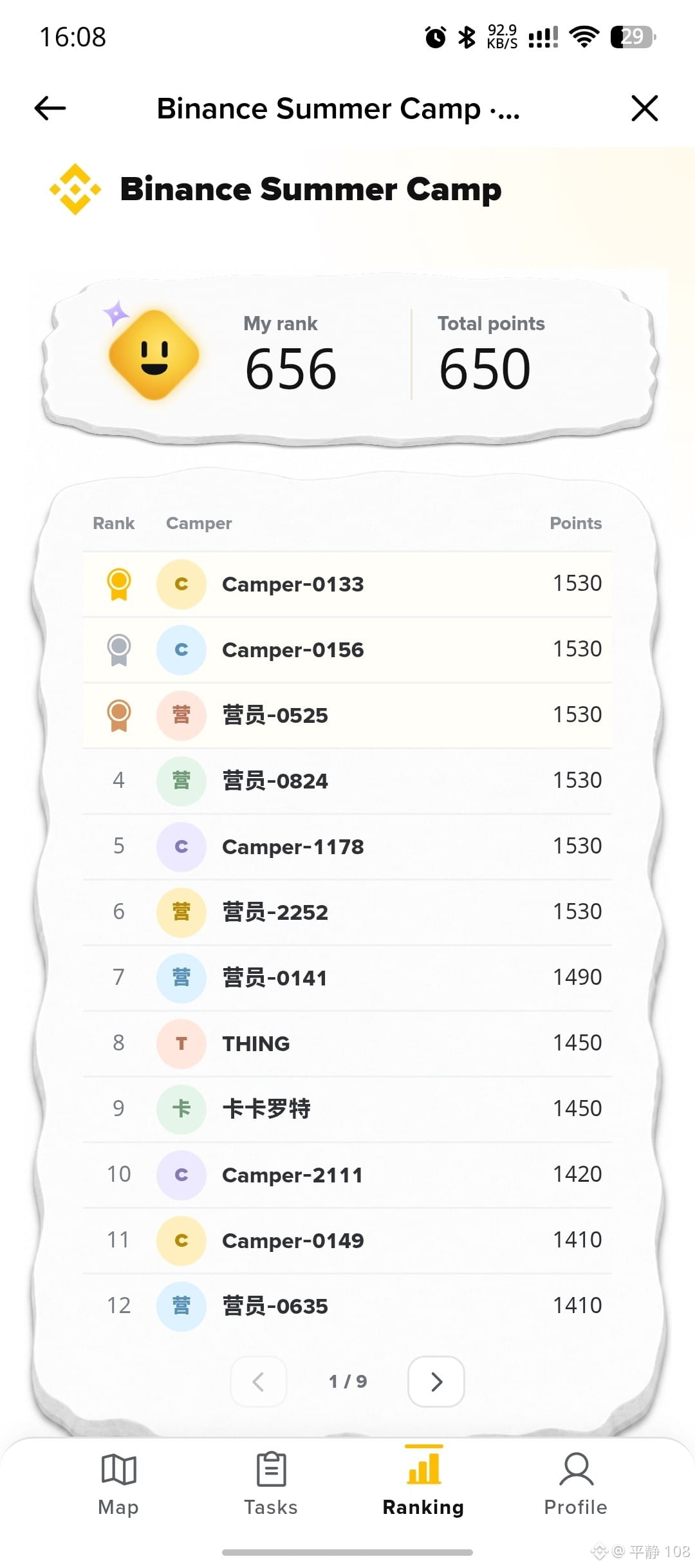
Day 4 Learning on #BinanceSummerCamp day by day we learn something new.
Day 4 Learning on #BinanceSummerCamp day by day we learn something new.
147
Log in to explore more content
Join global crypto users on Binance Square
⚡️ Get latest and useful information about crypto.
💬 Trusted by the world’s largest crypto exchange.
👍 Discover real insights from verified creators.
Email / Phone number