

Aeri 艾瑞
7.9k Posts

Aeri 艾瑞
Report
Block User
@Aeshiha
427 Following
17.1K+ Followers
11.4K+ Liked
Posts
All
Quotes
Live
PINNED
·
--
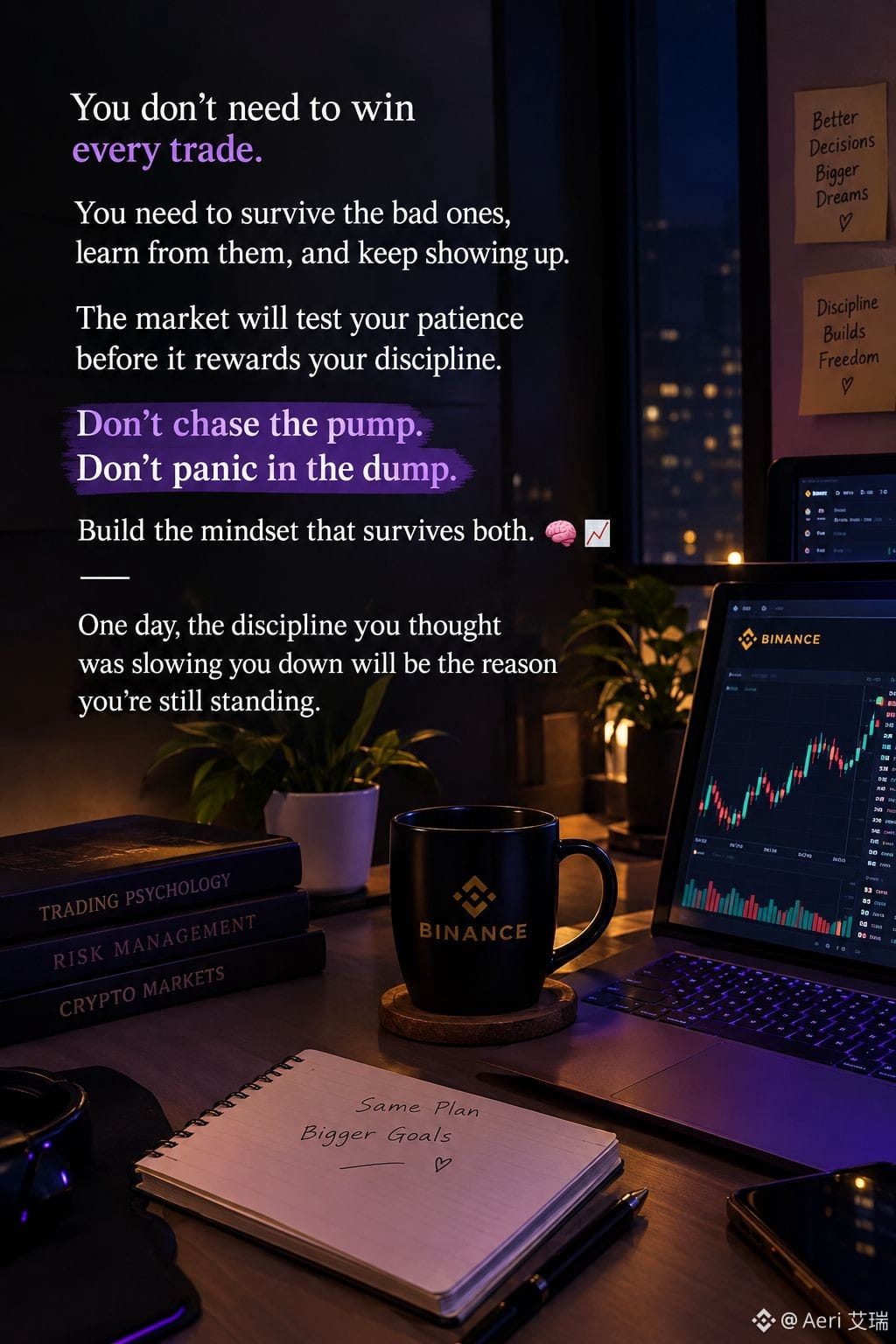
You don’t need to win every trade.
You need to survive the bad ones, learn from them, and keep showing up.
The market will test your patience before it rewards your discipline.
Don’t chase the pump.
Don’t panic in the dump.
Build the mindset that survives both. 🧠📈
One day, the discipline you thought was slowing you down will be the reason you’re still standing.
$XRP
{future}(XRPUSDT)
$GTC
{future}(GTCUSDT)
$AKE
{future}(AKEUSDT)
#MooDCirCuiT
#Aeri
You don’t need to win every trade.
You need to survive the bad ones, learn from them, and keep showing up.
The market will test your patience before it rewards your discipline.
Don’t chase the pump.
Don’t panic in the dump.
Build the mindset that survives both. 🧠📈
One day, the discipline you thought was slowing you down will be the reason you’re still standing.
$XRP
$GTC
$AKE
#MooDCirCuiT
#Aeri
You need to survive the bad ones, learn from them, and keep showing up.
The market will test your patience before it rewards your discipline.
Don’t chase the pump.
Don’t panic in the dump.
Build the mindset that survives both. 🧠📈
One day, the discipline you thought was slowing you down will be the reason you’re still standing.
$XRP
$GTC
$AKE
#MooDCirCuiT
#Aeri
537
3
38
1.1k
·
--
Bullish

Muzamil Abbas⁷⁵ 穆扎米尔_阿巴斯
·
--
Bullish$BROCCOLI714
BROCCOLI COIN GIVEAWAY! 🎁🔥
Ready for some $BROCCOLI? 👀
I’m giving away BROCCOLI COIN to lucky winners! 🚀
❤️ Like this post
🔄 Repost
💬 Comment 1
👤 Follow me
Good luck everyone
#BROCCOLI #Giveaway #Binance #Crypto
#MuzammilAbbas⁷⁵穆扎米拉巴斯
BROCCOLI COIN GIVEAWAY! 🎁🔥
Ready for some $BROCCOLI? 👀
I’m giving away BROCCOLI COIN to lucky winners! 🚀
❤️ Like this post
🔄 Repost
💬 Comment 1
👤 Follow me
Good luck everyone
#BROCCOLI #Giveaway #Binance #Crypto
#MuzammilAbbas⁷⁵穆扎米拉巴斯

357
·
--
Bullish
🚨 11K INCOMING! 🚨
@Square-Creator-d8c48aae1d5c2 is almost there. 👀🔥
From one milestone to the next the community keeps growing, the energy keeps rising and we’re just getting started.
11K loading… ⏳🚀
Who’s here before we hit it? 🫡💜
#MooDCirCuiT
$LYN
{future}(LYNUSDT)
$BEAMX
{future}(BEAMXUSDT)
#Aeri
$GTC
{future}(GTCUSDT)
🚨 11K INCOMING! 🚨
@Hoorain_X is almost there. 👀🔥
From one milestone to the next the community keeps growing, the energy keeps rising and we’re just getting started.
11K loading… ⏳🚀
Who’s here before we hit it? 🫡💜
#MooDCirCuiT
$LYN
$BEAMX
#Aeri
$GTC
@Hoorain_X is almost there. 👀🔥
From one milestone to the next the community keeps growing, the energy keeps rising and we’re just getting started.
11K loading… ⏳🚀
Who’s here before we hit it? 🫡💜
#MooDCirCuiT
$LYN
$BEAMX
#Aeri
$GTC

Hoorain_X
·
--
🧧 RED PACKET TIME! 🧧
A little surprise for the community 👀🔥
Stay active, keep your eyes open, and grab it before it’s gone! 😎
Good vibes + good community = the best combo. ❤️
Who’s getting there first? 👀🧧
A little surprise for the community 👀🔥
Stay active, keep your eyes open, and grab it before it’s gone! 😎
Good vibes + good community = the best combo. ❤️
Who’s getting there first? 👀🧧

1
3
689
·
--
🎙️ Welcome to Suleman 特币 Live — Crypto Talks, Charts & Market Moves 🚀📊

End
02 h 53 m 06 s
506
3
2
·
--
🎙️ Thanks everyone for make my birthday more special and memorable 💖
End
03 h 26 m 14 s
472
3
3
·
--
Don’t give up just because you can’t see the finish line yet.
You don’t need to know exactly where life is taking you.
Sometimes the path becomes clear only after you take the first step. Keep learning, keep trying and give yourself permission to grow slowly.
What feels small today may become something you’re proud of tomorrow. ✨
#MooDCirCuiT
#Aeri
Don’t give up just because you can’t see the finish line yet.
You don’t need to know exactly where life is taking you.
Sometimes the path becomes clear only after you take the first step. Keep learning, keep trying and give yourself permission to grow slowly.
What feels small today may become something you’re proud of tomorrow. ✨
#MooDCirCuiT
#Aeri
You don’t need to know exactly where life is taking you.
Sometimes the path becomes clear only after you take the first step. Keep learning, keep trying and give yourself permission to grow slowly.
What feels small today may become something you’re proud of tomorrow. ✨
#MooDCirCuiT
#Aeri

2k
28
122
2k
·
--
🎙️ Welcome to Suleman 特币 Live — Crypto Talks, Charts & Market Moves 🚀📊

End
01 h 04 m 42 s
181
7
4
·
--
AI stocks are getting a lot of attention, and I’m bullish on the longterm AI trend, but I’m also cautious about chasing every rally.
The demand for AI computing is clearly growing. Companies are investing heavily in chips, data centers, cloud infrastructure and the power needed to run increasingly demanding AI systems. Strong revenue growth from major AI companies suggests this is more than just hype.
However, rising expectations also create risks. When stock prices move quickly even strong companies can face sharp corrections if future growth doesn’t match what investors already expect. That’s why I’m watching earnings, AI infrastructure spending, chip demand, and actual business adoption rather than focusing only on price movements.
For me, the bigger question isn’t whether AI has a future. It’s which companies can turn this massive investment into sustainable revenue and profits.
I’m bullish on AI’s direction, but selective about valuations.
#AIStocksWhatNext
AI stocks are getting a lot of attention, and I’m bullish on the longterm AI trend, but I’m also cautious about chasing every rally.
The demand for AI computing is clearly growing. Companies are investing heavily in chips, data centers, cloud infrastructure and the power needed to run increasingly demanding AI systems. Strong revenue growth from major AI companies suggests this is more than just hype.
However, rising expectations also create risks. When stock prices move quickly even strong companies can face sharp corrections if future growth doesn’t match what investors already expect. That’s why I’m watching earnings, AI infrastructure spending, chip demand, and actual business adoption rather than focusing only on price movements.
For me, the bigger question isn’t whether AI has a future. It’s which companies can turn this massive investment into sustainable revenue and profits.
I’m bullish on AI’s direction, but selective about valuations.
#AIStocksWhatNext
The demand for AI computing is clearly growing. Companies are investing heavily in chips, data centers, cloud infrastructure and the power needed to run increasingly demanding AI systems. Strong revenue growth from major AI companies suggests this is more than just hype.
However, rising expectations also create risks. When stock prices move quickly even strong companies can face sharp corrections if future growth doesn’t match what investors already expect. That’s why I’m watching earnings, AI infrastructure spending, chip demand, and actual business adoption rather than focusing only on price movements.
For me, the bigger question isn’t whether AI has a future. It’s which companies can turn this massive investment into sustainable revenue and profits.
I’m bullish on AI’s direction, but selective about valuations.
#AIStocksWhatNext
1
2
592
·
--
Don’t worry if your journey looks different from everyone else’s.
You are not late and you are not behind. Everyone has their own timing, struggles and victories.
Focus on becoming a little better each day, protect your peace and keep moving forward.
Your story is still being written. 🌱
#MooDCirCuiT
#Aeri
$XRP
{future}(XRPUSDT)
Don’t worry if your journey looks different from everyone else’s.
You are not late and you are not behind. Everyone has their own timing, struggles and victories.
Focus on becoming a little better each day, protect your peace and keep moving forward.
Your story is still being written. 🌱
#MooDCirCuiT
#Aeri
$XRP
You are not late and you are not behind. Everyone has their own timing, struggles and victories.
Focus on becoming a little better each day, protect your peace and keep moving forward.
Your story is still being written. 🌱
#MooDCirCuiT
#Aeri
$XRP

1.9k
29
100
1.9k
·
--
🎙️ Welcome to Suleman 特币 Live — Crypto Talks, Charts & Market Moves 🚀📊

End
05 h 59 m 47 s
675
4
1
·
--
Some days will be difficult and some plans won’t work the way you expected.
That’s okay.
A setback doesn’t erase your progress.
Take a breath, learn from it, and try again.
You don’t need to have everything figured out today.
Just keep going, one step at a time. 💫
#MooDCirCuiT
#Aeri
Some days will be difficult and some plans won’t work the way you expected.
That’s okay.
A setback doesn’t erase your progress.
Take a breath, learn from it, and try again.
You don’t need to have everything figured out today.
Just keep going, one step at a time. 💫
#MooDCirCuiT
#Aeri
That’s okay.
A setback doesn’t erase your progress.
Take a breath, learn from it, and try again.
You don’t need to have everything figured out today.
Just keep going, one step at a time. 💫
#MooDCirCuiT
#Aeri

1.4k
11
70
1.4k
·
--
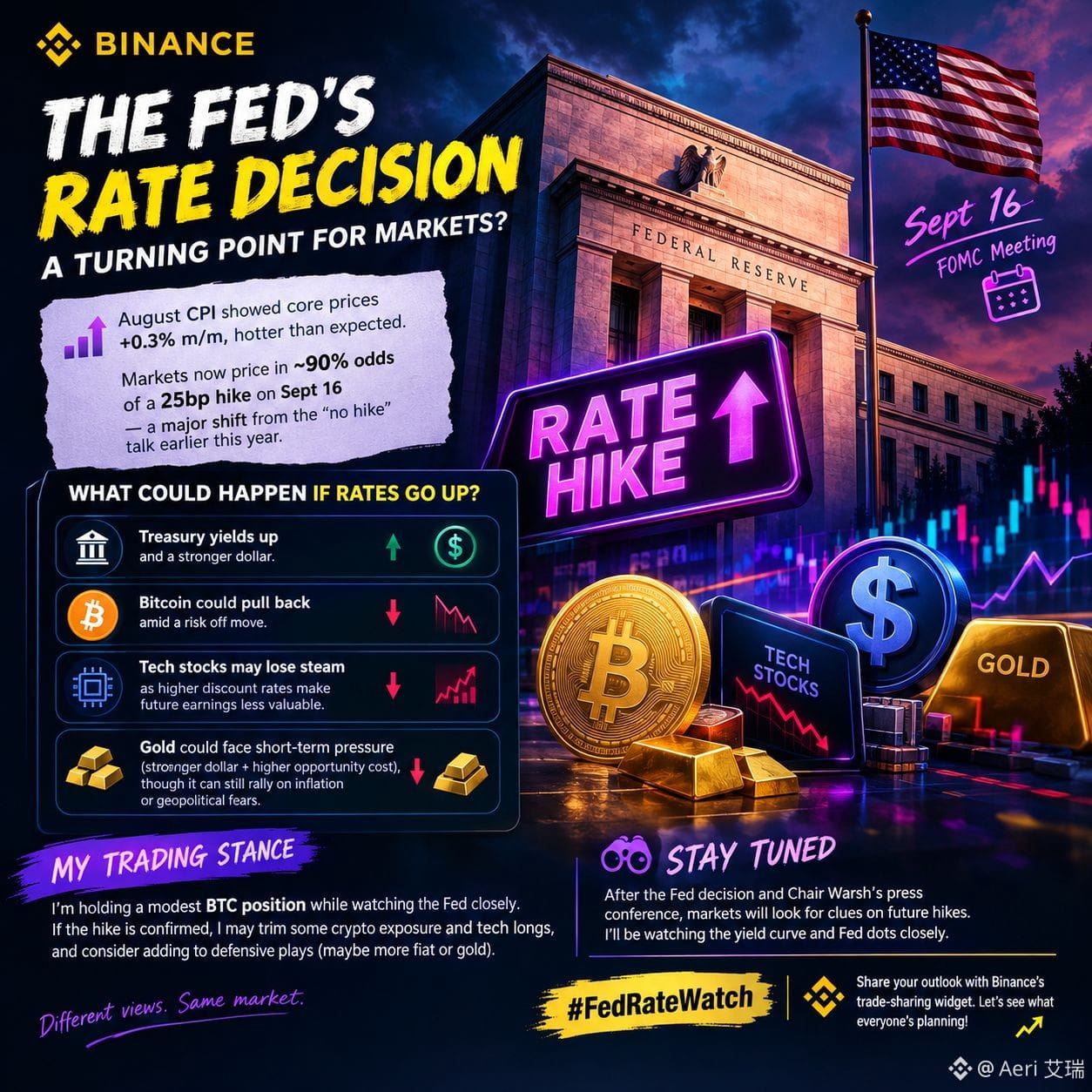
The Fed’s August CPI report showed core prices +0.3% m/m, hotter than expected. Markets have quickly priced in ~90% odds of a 25bp hike on Sept 16 a shift from the “no hike” talk earlier this year. This week’s Fed decision could be a turning point: if the FOMC does raise rates, it will mark the first hike in over a year.
What happens if rates go up? Generally, higher Fed rates push Treasury yields up and the dollar stronger, which tends to pressure speculative assets. We could see Bitcoin pull back amid a risk off move analysts note that Bitcoin’s recent 20% surge may not be sustained without stable yields and oil prices. Likewise, tech stocks (which have powered much of the rally) could lose steam as higher discount rates make future earnings less valuable. Even gold would likely feel short-term pressure: a Fed hike strengthens the dollar and raises opportunity costs of holding gold although gold can still rally on inflation or geopolitical fears.
My trading stance: I’m positioning cautiously. For example, I’m holding a modest BTC position while watching the Fed closely. If the hike is confirmed, I may trim some crypto exposure and tech longs, and consider adding to defensive plays (maybe more fiat or gold). I’ve just shared my portfolios with Binance’s trade-sharing widget check it out below to see my exact allocations.
Stay tuned: after the Fed decision and Chair Warsh’s press conference, markets will look for clues on future hikes. I’ll be watching the yield curve and Fed dots closely. What’s your plan? Use the #FedRateWatch hashtag and Binance’s trade-sharing widget to share your outlook we might all get a surprise boost in views if our posts stand out!
#FedRateWatch
#MooDCirCuiT
The Fed’s August CPI report showed core prices +0.3% m/m, hotter than expected. Markets have quickly priced in ~90% odds of a 25bp hike on Sept 16 a shift from the “no hike” talk earlier this year. This week’s Fed decision could be a turning point: if the FOMC does raise rates, it will mark the first hike in over a year.
What happens if rates go up? Generally, higher Fed rates push Treasury yields up and the dollar stronger, which tends to pressure speculative assets. We could see Bitcoin pull back amid a risk off move analysts note that Bitcoin’s recent 20% surge may not be sustained without stable yields and oil prices. Likewise, tech stocks (which have powered much of the rally) could lose steam as higher discount rates make future earnings less valuable. Even gold would likely feel short-term pressure: a Fed hike strengthens the dollar and raises opportunity costs of holding gold although gold can still rally on inflation or geopolitical fears.
My trading stance: I’m positioning cautiously. For example, I’m holding a modest BTC position while watching the Fed closely. If the hike is confirmed, I may trim some crypto exposure and tech longs, and consider adding to defensive plays (maybe more fiat or gold). I’ve just shared my portfolios with Binance’s trade-sharing widget check it out below to see my exact allocations.
Stay tuned: after the Fed decision and Chair Warsh’s press conference, markets will look for clues on future hikes. I’ll be watching the yield curve and Fed dots closely. What’s your plan? Use the #FedRateWatch hashtag and Binance’s trade-sharing widget to share your outlook we might all get a surprise boost in views if our posts stand out!
#FedRateWatch
#MooDCirCuiT
What happens if rates go up? Generally, higher Fed rates push Treasury yields up and the dollar stronger, which tends to pressure speculative assets. We could see Bitcoin pull back amid a risk off move analysts note that Bitcoin’s recent 20% surge may not be sustained without stable yields and oil prices. Likewise, tech stocks (which have powered much of the rally) could lose steam as higher discount rates make future earnings less valuable. Even gold would likely feel short-term pressure: a Fed hike strengthens the dollar and raises opportunity costs of holding gold although gold can still rally on inflation or geopolitical fears.
My trading stance: I’m positioning cautiously. For example, I’m holding a modest BTC position while watching the Fed closely. If the hike is confirmed, I may trim some crypto exposure and tech longs, and consider adding to defensive plays (maybe more fiat or gold). I’ve just shared my portfolios with Binance’s trade-sharing widget check it out below to see my exact allocations.
Stay tuned: after the Fed decision and Chair Warsh’s press conference, markets will look for clues on future hikes. I’ll be watching the yield curve and Fed dots closely. What’s your plan? Use the #FedRateWatch hashtag and Binance’s trade-sharing widget to share your outlook we might all get a surprise boost in views if our posts stand out!
#FedRateWatch
#MooDCirCuiT
1
2
369

·
--
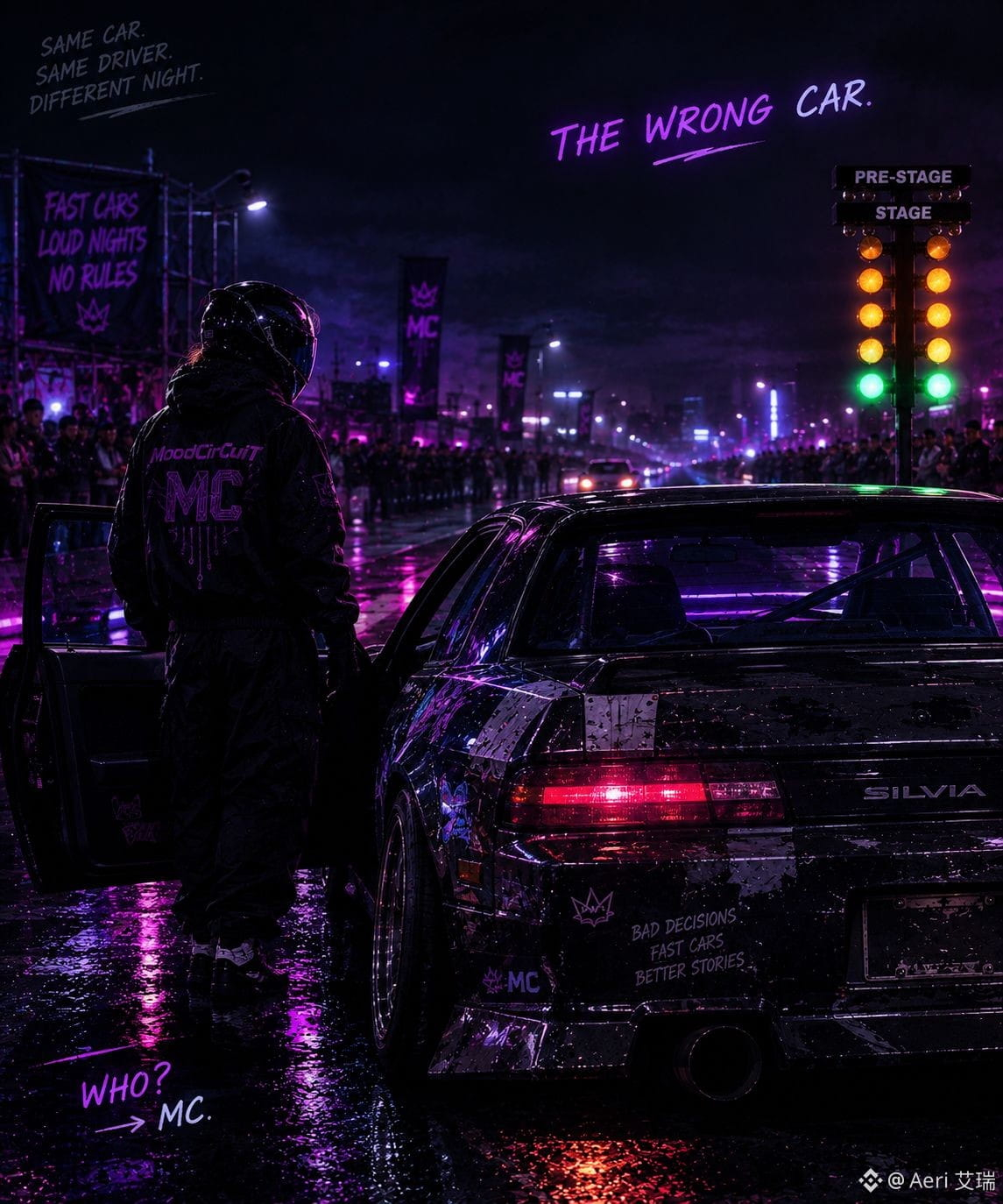
THE WRONG CAR
The underground circuit had seen fast cars before.
Built cars.
Expensive cars.
Cars that sounded like warnings before they even moved.
Then an old Silvia rolled into the lot.
Again.
Same scratches.
Same mismatched panels.
Same driver nobody could identify.
People started laughing.
Until the lights came on.
This time, nobody challenged the driver.
Nobody needed to.
Because everyone already knew what happened when those rear tires touched wet asphalt.
But tonight was different.
Tonight, the road was dry.
No rain.
No smoke hiding mistakes.
No excuses.
Just grip.
Just speed.
Just skill.
The driver tightened the gloves.
The helmet went on.
The engine climbed.
And somewhere in the crowd, someone whispered:
"Let's see if the legend still works without the rain."
The Silvia moved to the line.
The light turned red.
Three seconds later...
green.
And the wrong car became the fastest thing on the street.
#Aeri
#MC
#MooDCirCuiT
THE WRONG CAR
The underground circuit had seen fast cars before.
Built cars.
Expensive cars.
Cars that sounded like warnings before they even moved.
Then an old Silvia rolled into the lot.
Again.
Same scratches.
Same mismatched panels.
Same driver nobody could identify.
People started laughing.
Until the lights came on.
This time, nobody challenged the driver.
Nobody needed to.
Because everyone already knew what happened when those rear tires touched wet asphalt.
But tonight was different.
Tonight, the road was dry.
No rain.
No smoke hiding mistakes.
No excuses.
Just grip.
Just speed.
Just skill.
The driver tightened the gloves.
The helmet went on.
The engine climbed.
And somewhere in the crowd, someone whispered:
"Let's see if the legend still works without the rain."
The Silvia moved to the line.
The light turned red.
Three seconds later...
green.
And the wrong car became the fastest thing on the street.
#Aeri
#MC
#MooDCirCuiT
The underground circuit had seen fast cars before.
Built cars.
Expensive cars.
Cars that sounded like warnings before they even moved.
Then an old Silvia rolled into the lot.
Again.
Same scratches.
Same mismatched panels.
Same driver nobody could identify.
People started laughing.
Until the lights came on.
This time, nobody challenged the driver.
Nobody needed to.
Because everyone already knew what happened when those rear tires touched wet asphalt.
But tonight was different.
Tonight, the road was dry.
No rain.
No smoke hiding mistakes.
No excuses.
Just grip.
Just speed.
Just skill.
The driver tightened the gloves.
The helmet went on.
The engine climbed.
And somewhere in the crowd, someone whispered:
"Let's see if the legend still works without the rain."
The Silvia moved to the line.
The light turned red.
Three seconds later...
green.
And the wrong car became the fastest thing on the street.
#Aeri
#MC
#MooDCirCuiT
3k
19
154
3k
·
--
THE ONE WHO DIDN’T CLAP
By sunrise, the video had spread everywhere.
Millions of views.
Thousands of comments.
Everyone wanted to know who the girl in the Silvia was.
Nobody got an answer.
Then someone posted eleven seconds of another driver.
No caption.
No explanation.
Just a black car tearing through a rain-soaked mountain road.
One corner.
One transition.
Perfect.
The video ended.
The comments called him Ghost.
No face.
No name.
No history anyone could verify.
Just a reputation.
He had been running the underground circuit for years.
Never lost a wet-road run.
Never crashed.
Never celebrated.
And apparently...
Never clapped for anyone.
Three nights later, the Silvia returned to the circuit.
The crowd was bigger this time.
Phones were already raised.
But across the lot, one person wasn't watching the crowd.
He was watching the Silvia.
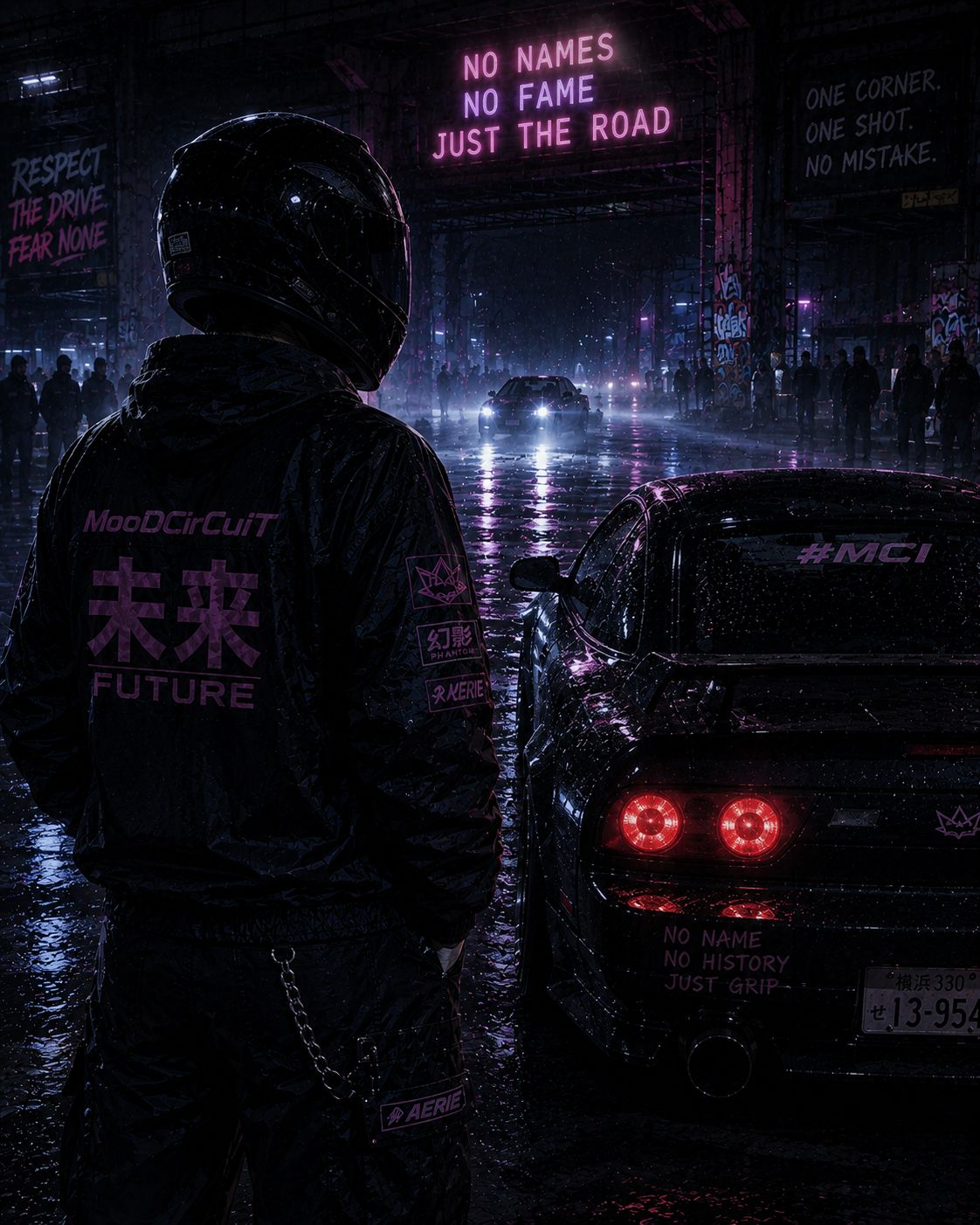
Black helmet.
Dark jacket.
Standing beside a car with its headlights off.
The driver slowly walked over.
He stopped beside the window.
Looked at the scratched bodywork.
The mismatched wheels.
The handmade repairs.
Then looked inside.
"You built it yourself?"
A pause.
"Mostly."
He nodded.
"That's why."
The window lowered.
"Why what?"
He looked toward the road.
"You drive like you're trying to prove something."
Silence.
Then:
"And you?"
He turned back.
"I drive like I've already proven it."
He walked away.
No challenge.
No race.
Nothing.
Just before midnight, an engine started somewhere beyond the warehouses.
Then another.
The black car rolled toward the exit.
The Silvia followed.
The road ahead disappeared into darkness.
One corner waited beyond the rain.
And somewhere ahead...
Someone was finally waiting for a driver worth chasing.
#Aeri
#MooDCirCuiT
$USELESS
{future}(USELESSUSDT)
$SOL
{future}(SOLUSDT)
$BEAT
{future}(BEATUSDT)
THE ONE WHO DIDN’T CLAP
By sunrise, the video had spread everywhere.
Millions of views.
Thousands of comments.
Everyone wanted to know who the girl in the Silvia was.
Nobody got an answer.
Then someone posted eleven seconds of another driver.
No caption.
No explanation.
Just a black car tearing through a rain-soaked mountain road.
One corner.
One transition.
Perfect.
The video ended.
The comments called him Ghost.
No face.
No name.
No history anyone could verify.
Just a reputation.
He had been running the underground circuit for years.
Never lost a wet-road run.
Never crashed.
Never celebrated.
And apparently...
Never clapped for anyone.
Three nights later, the Silvia returned to the circuit.
The crowd was bigger this time.
Phones were already raised.
But across the lot, one person wasn't watching the crowd.
He was watching the Silvia.
Black helmet.
Dark jacket.
Standing beside a car with its headlights off.
The driver slowly walked over.
He stopped beside the window.
Looked at the scratched bodywork.
The mismatched wheels.
The handmade repairs.
Then looked inside.
"You built it yourself?"
A pause.
"Mostly."
He nodded.
"That's why."
The window lowered.
"Why what?"
He looked toward the road.
"You drive like you're trying to prove something."
Silence.
Then:
"And you?"
He turned back.
"I drive like I've already proven it."
He walked away.
No challenge.
No race.
Nothing.
Just before midnight, an engine started somewhere beyond the warehouses.
Then another.
The black car rolled toward the exit.
The Silvia followed.
The road ahead disappeared into darkness.
One corner waited beyond the rain.
And somewhere ahead...
Someone was finally waiting for a driver worth chasing.
#Aeri
#MooDCirCuiT
$USELESS
$SOL
$BEAT
By sunrise, the video had spread everywhere.
Millions of views.
Thousands of comments.
Everyone wanted to know who the girl in the Silvia was.
Nobody got an answer.
Then someone posted eleven seconds of another driver.
No caption.
No explanation.
Just a black car tearing through a rain-soaked mountain road.
One corner.
One transition.
Perfect.
The video ended.
The comments called him Ghost.
No face.
No name.
No history anyone could verify.
Just a reputation.
He had been running the underground circuit for years.
Never lost a wet-road run.
Never crashed.
Never celebrated.
And apparently...
Never clapped for anyone.
Three nights later, the Silvia returned to the circuit.
The crowd was bigger this time.
Phones were already raised.
But across the lot, one person wasn't watching the crowd.
He was watching the Silvia.
Black helmet.
Dark jacket.
Standing beside a car with its headlights off.
The driver slowly walked over.
He stopped beside the window.
Looked at the scratched bodywork.
The mismatched wheels.
The handmade repairs.
Then looked inside.
"You built it yourself?"
A pause.
"Mostly."
He nodded.
"That's why."
The window lowered.
"Why what?"
He looked toward the road.
"You drive like you're trying to prove something."
Silence.
Then:
"And you?"
He turned back.
"I drive like I've already proven it."
He walked away.
No challenge.
No race.
Nothing.
Just before midnight, an engine started somewhere beyond the warehouses.
Then another.
The black car rolled toward the exit.
The Silvia followed.
The road ahead disappeared into darkness.
One corner waited beyond the rain.
And somewhere ahead...
Someone was finally waiting for a driver worth chasing.
#Aeri
#MooDCirCuiT
$USELESS
$SOL
$BEAT
2.3k
12
126
2.3k
·
--
Bearish
Coin vs Token What’s the Difference? 🪙
People often use “coin” and “token” like they mean the same thing,
but there’s one important difference:
🪙 Coin = has its own blockchain
BITCOIN ($BTC ) runs on the Bitcoin blockchain.
$ETH runs on Ethereum.
Coins are native assets of their own networks and are often used to pay transaction fees.
🧩 Token = built on an existing blockchain
A token doesn’t need its own blockchain. It can be created on networks like Ethereum, BNB Chain, or Solana.
USDT is a good example: it can exist on multiple blockchains, depending on the version being used.
The easiest way to remember it:
👉 Coin = its own blockchain
👉 Token = uses another blockchain
So, every coin is a crypto asset, but not every crypto asset is a coin.
#crypto #blockchain #Binance #Aeri #MooDCirCuiT
Coin vs Token What’s the Difference? 🪙
People often use “coin” and “token” like they mean the same thing,
but there’s one important difference:
🪙 Coin = has its own blockchain
BITCOIN ($BTC ) runs on the Bitcoin blockchain.
$ETH runs on Ethereum.
Coins are native assets of their own networks and are often used to pay transaction fees.
🧩 Token = built on an existing blockchain
A token doesn’t need its own blockchain. It can be created on networks like Ethereum, BNB Chain, or Solana.
USDT is a good example: it can exist on multiple blockchains, depending on the version being used.
The easiest way to remember it:
👉 Coin = its own blockchain
👉 Token = uses another blockchain
So, every coin is a crypto asset, but not every crypto asset is a coin.
#crypto #blockchain #Binance #Aeri #MooDCirCuiT
People often use “coin” and “token” like they mean the same thing,
but there’s one important difference:
🪙 Coin = has its own blockchain
BITCOIN ($BTC ) runs on the Bitcoin blockchain.
$ETH runs on Ethereum.
Coins are native assets of their own networks and are often used to pay transaction fees.
🧩 Token = built on an existing blockchain
A token doesn’t need its own blockchain. It can be created on networks like Ethereum, BNB Chain, or Solana.
USDT is a good example: it can exist on multiple blockchains, depending on the version being used.
The easiest way to remember it:
👉 Coin = its own blockchain
👉 Token = uses another blockchain
So, every coin is a crypto asset, but not every crypto asset is a coin.
#crypto #blockchain #Binance #Aeri #MooDCirCuiT
4
6
551
·
--
Shipping Strategy Is Becoming Part of the Oil Story
The Strait of Hormuz situation is creating a ripple effect beyond crude prices.
Gulf oil producers are reportedly adjusting how they move exports including expanding tanker capacity and changing transshipment strategies as shipping security becomes a bigger concern.
That shift matters because it can tighten tanker availability and push both vessel prices and charter rates higher.
So the interesting part isn’t only what happens to oil itself.
It’s how geopolitical risk is starting to reshape the logistics and cost structure behind global energy flows.
#MooDCirCuiT #Aeri
Shipping Strategy Is Becoming Part of the Oil Story
The Strait of Hormuz situation is creating a ripple effect beyond crude prices.
Gulf oil producers are reportedly adjusting how they move exports including expanding tanker capacity and changing transshipment strategies as shipping security becomes a bigger concern.
That shift matters because it can tighten tanker availability and push both vessel prices and charter rates higher.
So the interesting part isn’t only what happens to oil itself.
It’s how geopolitical risk is starting to reshape the logistics and cost structure behind global energy flows.
#MooDCirCuiT #Aeri
The Strait of Hormuz situation is creating a ripple effect beyond crude prices.
Gulf oil producers are reportedly adjusting how they move exports including expanding tanker capacity and changing transshipment strategies as shipping security becomes a bigger concern.
That shift matters because it can tighten tanker availability and push both vessel prices and charter rates higher.
So the interesting part isn’t only what happens to oil itself.
It’s how geopolitical risk is starting to reshape the logistics and cost structure behind global energy flows.
#MooDCirCuiT #Aeri
6
961
·
--
Bearish
#dusk $DUSK
{future}(DUSKUSDT)
@Dusk_Foundation
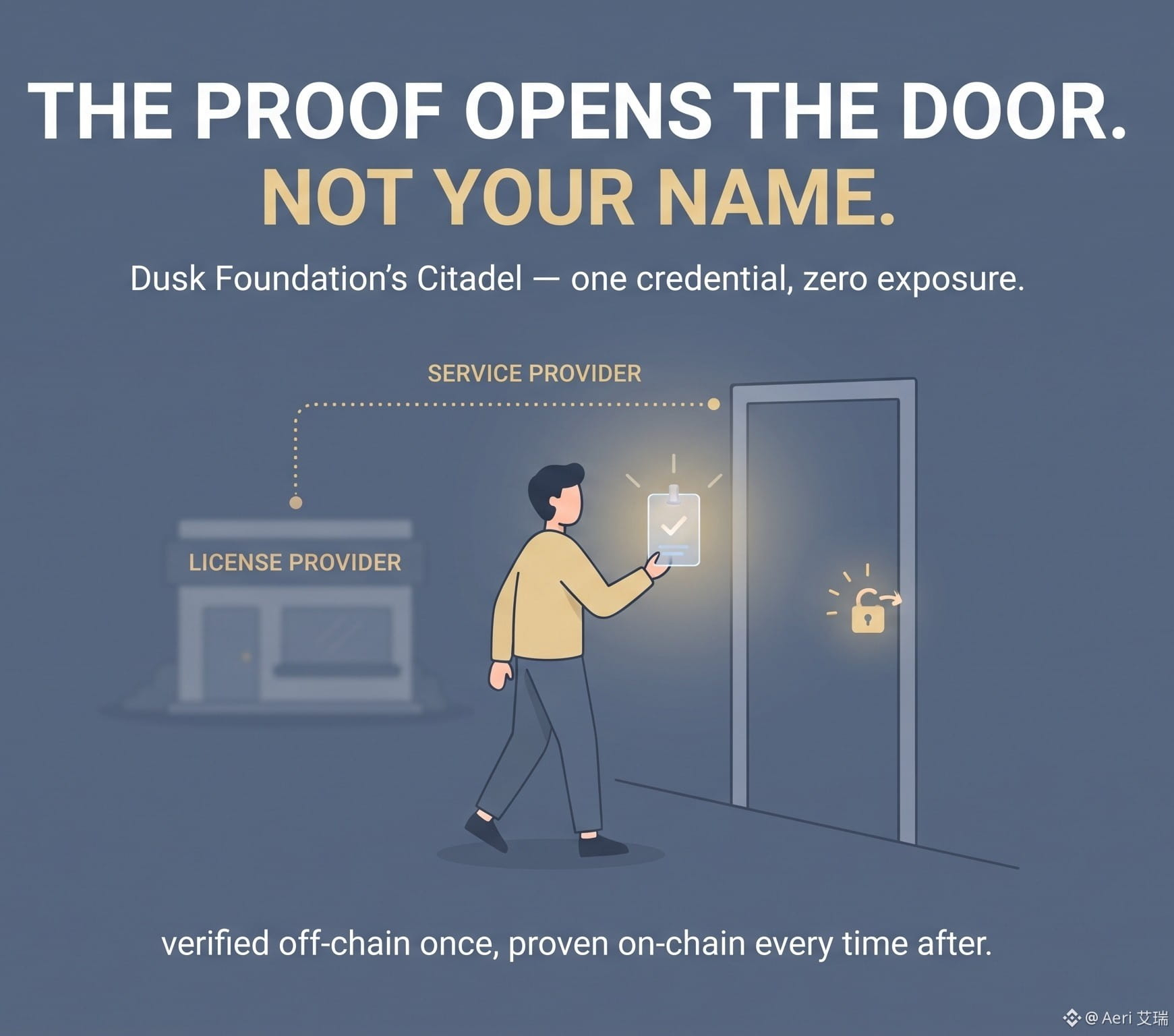
i’ve been digging into Dusk’s Citadel setup for a while now, and the way it handles identity feels more practical than most privacy tools I’ve seen.
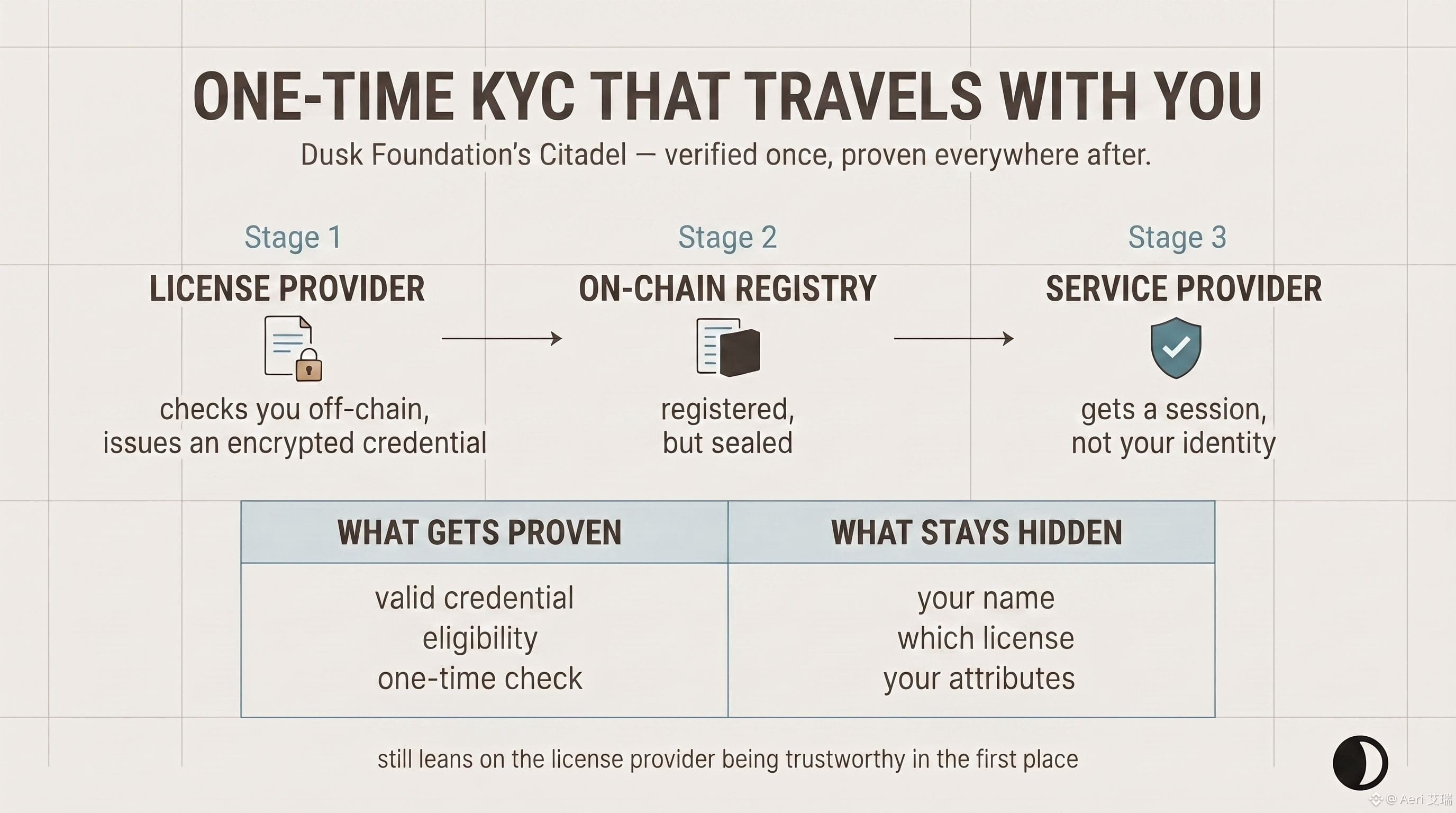
basically you go to a license provider, they check you off chain the normal way, then issue an encrypted credential that gets registered on chain. Later when you need access to something, you generate a zero knowledge proof that you hold a valid one. The contract verifies it and records a session, but nothing about you, the exact license or the attributes ends up public. You just hand the service provider a session cookie and they decide based on their own rules.
it’s a bit like showing a building pass that opens the door without ever revealing your name or which company issued it. The proof is enough. That matters for regulated stuff because institutions still get the compliance signal they need while users avoid dumping personal data across every platform. One time KYC that travels with you instead of getting repeated.
of course it still leans on those license providers being trustworthy in the first place, and service providers keep full control over what they accept. The code itself carries the usual caveats about not being production hardened yet. Adoption will hinge on whether enough real services actually plug into it and whether the incentives line up for issuers to stick around.
curious what others think: does this kind of selective proof model actually lower the barrier for institutions more than it complicates things for everyday users?
#dusk $DUSK
@Dusk
i’ve been digging into Dusk’s Citadel setup for a while now, and the way it handles identity feels more practical than most privacy tools I’ve seen.
basically you go to a license provider, they check you off chain the normal way, then issue an encrypted credential that gets registered on chain. Later when you need access to something, you generate a zero knowledge proof that you hold a valid one. The contract verifies it and records a session, but nothing about you, the exact license or the attributes ends up public. You just hand the service provider a session cookie and they decide based on their own rules.
it’s a bit like showing a building pass that opens the door without ever revealing your name or which company issued it. The proof is enough. That matters for regulated stuff because institutions still get the compliance signal they need while users avoid dumping personal data across every platform. One time KYC that travels with you instead of getting repeated.
of course it still leans on those license providers being trustworthy in the first place, and service providers keep full control over what they accept. The code itself carries the usual caveats about not being production hardened yet. Adoption will hinge on whether enough real services actually plug into it and whether the incentives line up for issuers to stick around.
curious what others think: does this kind of selective proof model actually lower the barrier for institutions more than it complicates things for everyday users?
@Dusk
i’ve been digging into Dusk’s Citadel setup for a while now, and the way it handles identity feels more practical than most privacy tools I’ve seen.
basically you go to a license provider, they check you off chain the normal way, then issue an encrypted credential that gets registered on chain. Later when you need access to something, you generate a zero knowledge proof that you hold a valid one. The contract verifies it and records a session, but nothing about you, the exact license or the attributes ends up public. You just hand the service provider a session cookie and they decide based on their own rules.
it’s a bit like showing a building pass that opens the door without ever revealing your name or which company issued it. The proof is enough. That matters for regulated stuff because institutions still get the compliance signal they need while users avoid dumping personal data across every platform. One time KYC that travels with you instead of getting repeated.
of course it still leans on those license providers being trustworthy in the first place, and service providers keep full control over what they accept. The code itself carries the usual caveats about not being production hardened yet. Adoption will hinge on whether enough real services actually plug into it and whether the incentives line up for issuers to stick around.
curious what others think: does this kind of selective proof model actually lower the barrier for institutions more than it complicates things for everyday users?
4
9
844
·
--
#dusk $DUSK @Dusk_Foundation
courts don't treat guilty and not guilty the same way. You need near everyone to agree to convict someone. One holdout is enough to walk them free. Different bar for different outcomes, because getting it wrong one way costs a lot more than the other.
dusk's consensus runs on that same logic and I didn't expect that from a blockchain.
when i looked into how a block actually gets confirmed i found the same split. To confirm it as valid, the committee needs two thirds on board. To reject it or say "we couldn't decide," it only takes half plus one. Yes is expensive. No is cheap. On purpose i'd guess. A bad block slipping through is a mess to undo. A stalled block just tries again next round.
those votes aren't headcount. Dusk splits each committee into 64 credits, and bigger stakers get more of them. Three credits from one whale beats three small holders voting the same way. The bar looks fixed 2/3 and half plus one, but who i'd need to convince to hit it depends on how those credits are spread out.
that's what nags at me. If stake keeps piling into fewer hands, the cheap side the "no" side, gets even easier to trigger. Not because the math changed, but because fewer people end up owning enough of Dusk to swing it and i don't love that.
#dusk $DUSK @Dusk
courts don't treat guilty and not guilty the same way. You need near everyone to agree to convict someone. One holdout is enough to walk them free. Different bar for different outcomes, because getting it wrong one way costs a lot more than the other.
dusk's consensus runs on that same logic and I didn't expect that from a blockchain.
when i looked into how a block actually gets confirmed i found the same split. To confirm it as valid, the committee needs two thirds on board. To reject it or say "we couldn't decide," it only takes half plus one. Yes is expensive. No is cheap. On purpose i'd guess. A bad block slipping through is a mess to undo. A stalled block just tries again next round.
those votes aren't headcount. Dusk splits each committee into 64 credits, and bigger stakers get more of them. Three credits from one whale beats three small holders voting the same way. The bar looks fixed 2/3 and half plus one, but who i'd need to convince to hit it depends on how those credits are spread out.
that's what nags at me. If stake keeps piling into fewer hands, the cheap side the "no" side, gets even easier to trigger. Not because the math changed, but because fewer people end up owning enough of Dusk to swing it and i don't love that.
courts don't treat guilty and not guilty the same way. You need near everyone to agree to convict someone. One holdout is enough to walk them free. Different bar for different outcomes, because getting it wrong one way costs a lot more than the other.
dusk's consensus runs on that same logic and I didn't expect that from a blockchain.
when i looked into how a block actually gets confirmed i found the same split. To confirm it as valid, the committee needs two thirds on board. To reject it or say "we couldn't decide," it only takes half plus one. Yes is expensive. No is cheap. On purpose i'd guess. A bad block slipping through is a mess to undo. A stalled block just tries again next round.
those votes aren't headcount. Dusk splits each committee into 64 credits, and bigger stakers get more of them. Three credits from one whale beats three small holders voting the same way. The bar looks fixed 2/3 and half plus one, but who i'd need to convince to hit it depends on how those credits are spread out.
that's what nags at me. If stake keeps piling into fewer hands, the cheap side the "no" side, gets even easier to trigger. Not because the math changed, but because fewer people end up owning enough of Dusk to swing it and i don't love that.
7
435
·
--
Verified
#dusk $DUSK @Dusk_Foundation
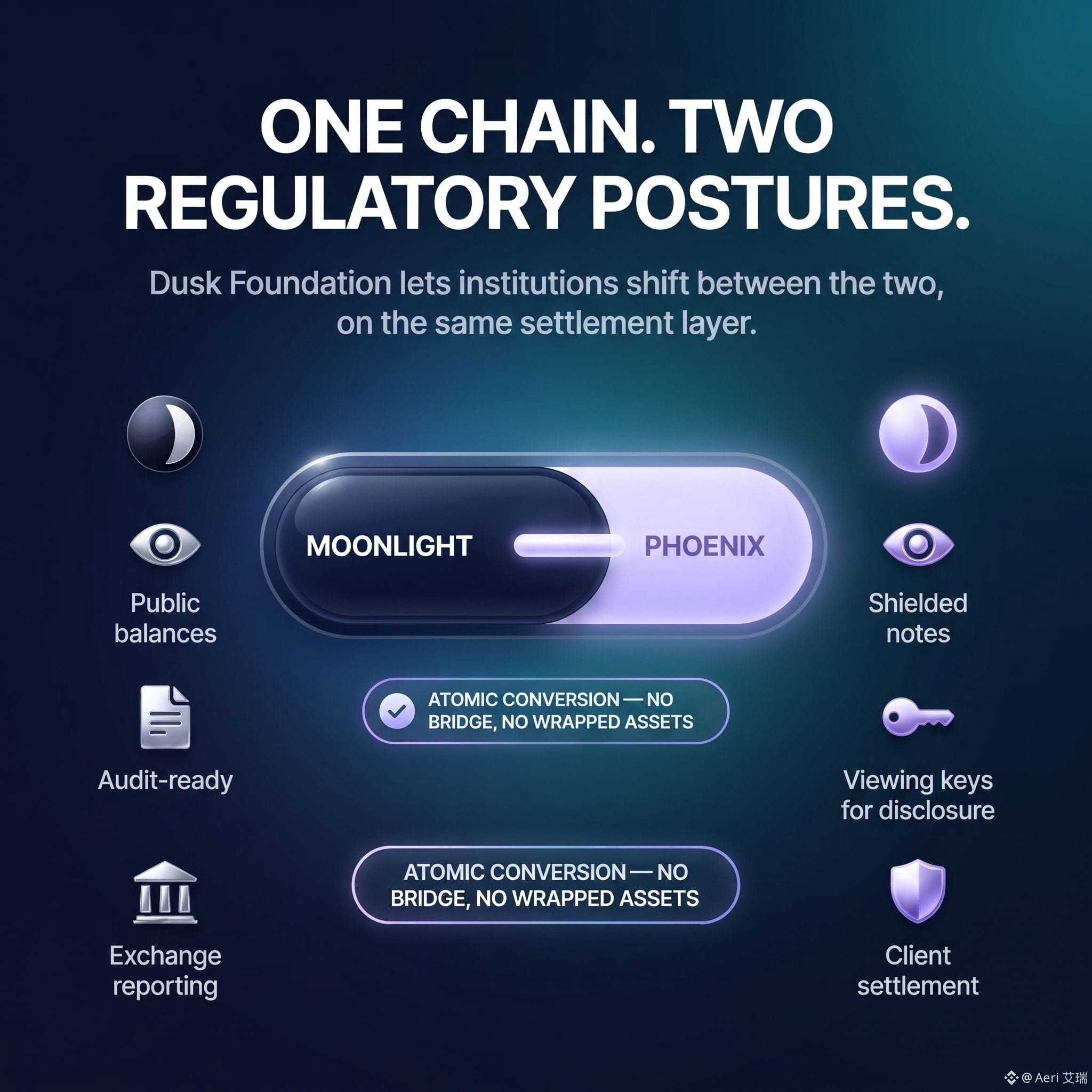
been digging into Dusk’s dual models more carefully lately and the Moonlight versus Phoenix setup feels less like two separate tools and more like a single institution’s ability to flip its regulatory posture without leaving the chain.
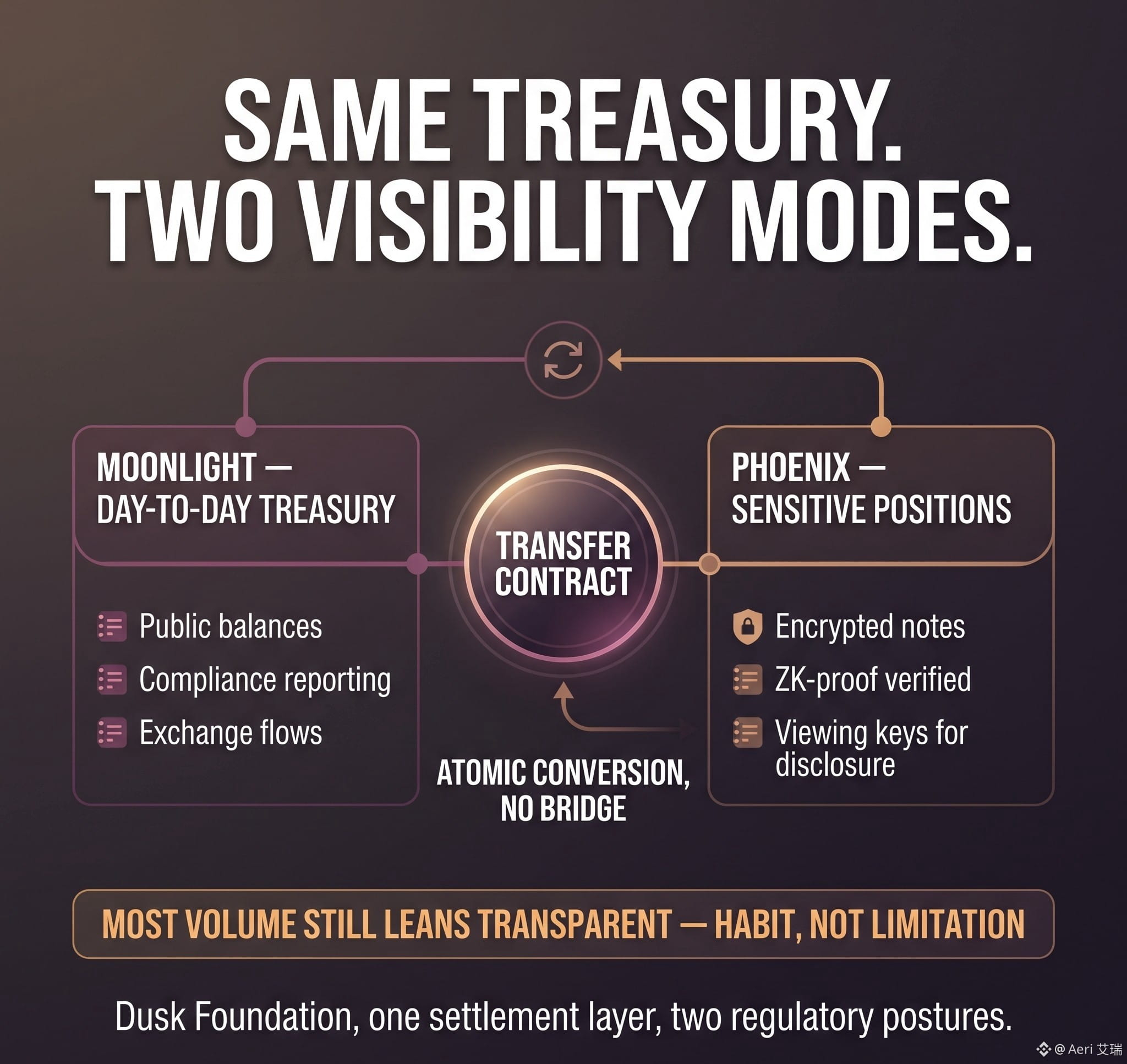
moonlight is the open ledger side. Balances sit in plain view, every transfer shows who sent what to whom. That makes it the path of least resistance for exchanges, reporting or any flow where auditors or counterparties need full visibility. Phoenix flips it. Funds move as encrypted notes. The network only sees that the math checks out through zero knowledge proofs. Amounts and links stay hidden from the public yet the receiver still knows the sender and viewing keys can open the box for authorized parties when required.
what stands out is how cleanly the two sit on the same settlement layer. An institution can keep day to day treasury or compliance reporting on Moonlight then move sensitive positions or client settlements into Phoenix when the disclosure rules tighten or when market impact becomes a concern. No bridge, no wrapped assets, just an atomic conversion through the Transfer contract. That removes the usual fragmentation tax you see when privacy and transparency live on different networks.
the limitation is real though. Most volume still seems to prefer the transparent path, whether from habit, wallet defaults or the simple fact that many regulated workflows still demand public trails. Privacy only matters if the incentives and tooling actually pull people into the shielded side.
does that dual mode flexibility actually lower the barrier for institutions or does it just create another layer of operational complexity they will hesitate to manage?
#dusk $DUSK @Dusk
been digging into Dusk’s dual models more carefully lately and the Moonlight versus Phoenix setup feels less like two separate tools and more like a single institution’s ability to flip its regulatory posture without leaving the chain.
moonlight is the open ledger side. Balances sit in plain view, every transfer shows who sent what to whom. That makes it the path of least resistance for exchanges, reporting or any flow where auditors or counterparties need full visibility. Phoenix flips it. Funds move as encrypted notes. The network only sees that the math checks out through zero knowledge proofs. Amounts and links stay hidden from the public yet the receiver still knows the sender and viewing keys can open the box for authorized parties when required.
what stands out is how cleanly the two sit on the same settlement layer. An institution can keep day to day treasury or compliance reporting on Moonlight then move sensitive positions or client settlements into Phoenix when the disclosure rules tighten or when market impact becomes a concern. No bridge, no wrapped assets, just an atomic conversion through the Transfer contract. That removes the usual fragmentation tax you see when privacy and transparency live on different networks.
the limitation is real though. Most volume still seems to prefer the transparent path, whether from habit, wallet defaults or the simple fact that many regulated workflows still demand public trails. Privacy only matters if the incentives and tooling actually pull people into the shielded side.
does that dual mode flexibility actually lower the barrier for institutions or does it just create another layer of operational complexity they will hesitate to manage?
been digging into Dusk’s dual models more carefully lately and the Moonlight versus Phoenix setup feels less like two separate tools and more like a single institution’s ability to flip its regulatory posture without leaving the chain.
moonlight is the open ledger side. Balances sit in plain view, every transfer shows who sent what to whom. That makes it the path of least resistance for exchanges, reporting or any flow where auditors or counterparties need full visibility. Phoenix flips it. Funds move as encrypted notes. The network only sees that the math checks out through zero knowledge proofs. Amounts and links stay hidden from the public yet the receiver still knows the sender and viewing keys can open the box for authorized parties when required.
what stands out is how cleanly the two sit on the same settlement layer. An institution can keep day to day treasury or compliance reporting on Moonlight then move sensitive positions or client settlements into Phoenix when the disclosure rules tighten or when market impact becomes a concern. No bridge, no wrapped assets, just an atomic conversion through the Transfer contract. That removes the usual fragmentation tax you see when privacy and transparency live on different networks.
the limitation is real though. Most volume still seems to prefer the transparent path, whether from habit, wallet defaults or the simple fact that many regulated workflows still demand public trails. Privacy only matters if the incentives and tooling actually pull people into the shielded side.
does that dual mode flexibility actually lower the barrier for institutions or does it just create another layer of operational complexity they will hesitate to manage?
9
14
1.1k
Log in to explore more content
Join global crypto users on Binance Square
⚡️ Get latest and useful information about crypto.
💬 Trusted by the world’s largest crypto exchange.
👍 Discover real insights from verified creators.
Email / Phone number
Trending Topics
FedMinutesFocusOnOctoberPause
2,898 views
196 Discussing
#fedminutesfocusonoctoberpause
The Fed minutes are about to drop—and here's the twist: The meeting isn't even over, yet everyone thinks they already know the Fed's "next moves"! 🤫
A lot of you are wondering: "The FOMC minutes won't be released for almost another six hours, so why are news outlets already analyzing them as if they're out?" The truth is, this is a "calculated leak" based on Fed officials' earlier remarks. The New York Fed chief said "there's no rush," while the Dallas Fed chief called for a "one-two punch." Combined with cooling inflation and a weakening jobs market, the market is reading between the lines: the Fed will pause rate hikes this October to catch its breath, rather than stay as hawkish as before.
What should traders do? Don't FOMO and jump the gun. When the official minutes come out, any surprises could send charts sweeping both ways in a flash. Sit tight and buckle up!
⚠️ This is not financial advice.
Sign up for Binance using code VINHTOCDO or this link: https://www.binance.com/register?ref=VINHTOCDO to claim your offer!
Click the trade button below to support me: $BTC
, $ETH
, $SOL
#FOMCMinutes #TinFed #TradFiNews #TheoDõiFOMC #VINHTOCDO
Vinhtocdo
·2 Likes
·1.6k views
BinanceLaunchesBinanceIntelligence
891,678 views
5,447 Discussing
RobinhoodAdds$25MInBitcoinToBalanceSheet
311 views
20 Discussing