

91videoeth
607 Posts

91videoeth
Report
Block User
阿酒社区主理人,喜欢分享自己的观点,谢谢你这么帅气漂亮还关注我!
62 Following
9.4K+ Followers
2.1K+ Liked
Posts
All
Quotes
Videos
PINNED
·
--
Bullish
Regarding the belief in $SOL, SOL is one of the strongest betas in this cycle in my opinion. So I opened a position at 30 and a heavy position at 40. I kept adding to my position and never reduced my position.
I was chatting with my parents in the car a few days ago, and they asked me what I was most optimistic about this round. I answered $SOL without hesitation.
I said if you want a stable annual return of 20%, buy U.S. Bond ETFs; if you want a doubling opportunity, choose BTC; if you want 5 to 10 times, choose $SOL.
It took a 30-minute drive to convince them, so they bought SOL at a price of 100. I'm looking forward to the day when he gets his ATH.
Regarding the belief in $SOL , SOL is one of the strongest betas in this cycle in my opinion. So I opened a position at 30 and a heavy position at 40. I kept adding to my position and never reduced my position.
I was chatting with my parents in the car a few days ago, and they asked me what I was most optimistic about this round. I answered $SOL without hesitation.
I said if you want a stable annual return of 20%, buy U.S. Bond ETFs; if you want a doubling opportunity, choose BTC; if you want 5 to 10 times, choose $SOL .
It took a 30-minute drive to convince them, so they bought SOL at a price of 100. I'm looking forward to the day when he gets his ATH.
I was chatting with my parents in the car a few days ago, and they asked me what I was most optimistic about this round. I answered $SOL without hesitation.
I said if you want a stable annual return of 20%, buy U.S. Bond ETFs; if you want a doubling opportunity, choose BTC; if you want 5 to 10 times, choose $SOL .
It took a 30-minute drive to convince them, so they bought SOL at a price of 100. I'm looking forward to the day when he gets his ATH.
75
2
38
126k
·
--
$BTC The current price is hovering around $80k, with a 24-hour range of roughly $79,300–$80,950, showing a slight pullback
In the short term, the price is near the key $80,000 level, with a slight bearish bias
After retreating from $86k–$87k at the start of the month, it has continued to test this level. It is both a psychological round-number level and an area where ETF/institutional cost bases are concentrated, giving it relatively strong support significance
A sustained move back above $81,500–$82,000 is needed to reverse the short-term weakness
Key levels:
Support: $79,300–$79,700 (recent low) → $77,600–$78,000 (strong support) → $75,000–$77,000
Resistance: $80,800–$81,500 → $82,000–$83,000 → $84,000–$85,000 / $88,000
If $80,000 holds: the price may rebound and test $81,500–$83,000
If it decisively breaks below $79,300: the next downside target is $77,600, followed by $75k–$77k
If it continues to trade sideways in the $79,000–$81,500 range, look to macroeconomic events (the Fed, PCE, etc.) for direction
{future}(BTCUSDT)
#韩国拟将稳定币纳入外汇法监管
$BTC The current price is hovering around $80k, with a 24-hour range of roughly $79,300–$80,950, showing a slight pullback
In the short term, the price is near the key $80,000 level, with a slight bearish bias
After retreating from $86k–$87k at the start of the month, it has continued to test this level. It is both a psychological round-number level and an area where ETF/institutional cost bases are concentrated, giving it relatively strong support significance
A sustained move back above $81,500–$82,000 is needed to reverse the short-term weakness
Key levels:
Support: $79,300–$79,700 (recent low) → $77,600–$78,000 (strong support) → $75,000–$77,000
Resistance: $80,800–$81,500 → $82,000–$83,000 → $84,000–$85,000 / $88,000
If $80,000 holds: the price may rebound and test $81,500–$83,000
If it decisively breaks below $79,300: the next downside target is $77,600, followed by $75k–$77k
If it continues to trade sideways in the $79,000–$81,500 range, look to macroeconomic events (the Fed, PCE, etc.) for direction
#韩国拟将稳定币纳入外汇法监管
In the short term, the price is near the key $80,000 level, with a slight bearish bias
After retreating from $86k–$87k at the start of the month, it has continued to test this level. It is both a psychological round-number level and an area where ETF/institutional cost bases are concentrated, giving it relatively strong support significance
A sustained move back above $81,500–$82,000 is needed to reverse the short-term weakness
Key levels:
Support: $79,300–$79,700 (recent low) → $77,600–$78,000 (strong support) → $75,000–$77,000
Resistance: $80,800–$81,500 → $82,000–$83,000 → $84,000–$85,000 / $88,000
If $80,000 holds: the price may rebound and test $81,500–$83,000
If it decisively breaks below $79,300: the next downside target is $77,600, followed by $75k–$77k
If it continues to trade sideways in the $79,000–$81,500 range, look to macroeconomic events (the Fed, PCE, etc.) for direction
#韩国拟将稳定币纳入外汇法监管
276
·
--
Everyone has hit hard times. Don't cry—have a cigarette and keep going!
$ETH
Everyone has hit hard times. Don't cry—have a cigarette and keep going!
$ETH
$ETH
325
·
--
The current price of $BTC is below the 20-day and 50-day moving averages. After facing resistance at $84–85k recently, it has pulled back and is now testing the key $80k support.
The RSI is neutral and the MACD leans bearish. ETFs have seen significant outflows recently, while macro factors (oil prices, yields, and next week’s Fed meeting) are also weighing on the market.
Support: $80,400–$80,500 (current) → $80,000 (key) → $78k → $76–77k
Resistance: $81.7–82k → $82.5–83k → $84–85k
If $80k doesn’t hold (especially if the daily candle closes below it), the price will likely drop to $78k or even $76–77k.
Any bounce will first face resistance at $81.7–82.5k. Upside is limited until that level breaks. I’m still bearish because I’ve gone short again and again and again 😂
{future}(BTCUSDT)
#比特币算力创七个月新高
The current price of $BTC is below the 20-day and 50-day moving averages. After facing resistance at $84–85k recently, it has pulled back and is now testing the key $80k support.
The RSI is neutral and the MACD leans bearish. ETFs have seen significant outflows recently, while macro factors (oil prices, yields, and next week’s Fed meeting) are also weighing on the market.
Support: $80,400–$80,500 (current) → $80,000 (key) → $78k → $76–77k
Resistance: $81.7–82k → $82.5–83k → $84–85k
If $80k doesn’t hold (especially if the daily candle closes below it), the price will likely drop to $78k or even $76–77k.
Any bounce will first face resistance at $81.7–82.5k. Upside is limited until that level breaks. I’m still bearish because I’ve gone short again and again and again 😂
#比特币算力创七个月新高
The RSI is neutral and the MACD leans bearish. ETFs have seen significant outflows recently, while macro factors (oil prices, yields, and next week’s Fed meeting) are also weighing on the market.
Support: $80,400–$80,500 (current) → $80,000 (key) → $78k → $76–77k
Resistance: $81.7–82k → $82.5–83k → $84–85k
If $80k doesn’t hold (especially if the daily candle closes below it), the price will likely drop to $78k or even $76–77k.
Any bounce will first face resistance at $81.7–82.5k. Upside is limited until that level breaks. I’m still bearish because I’ve gone short again and again and again 😂
#比特币算力创七个月新高
1
1
298
·
--
One decision separates kings from outlaws! $BTC
One decision separates kings from outlaws! $BTC
143
·
--
Verified
Article
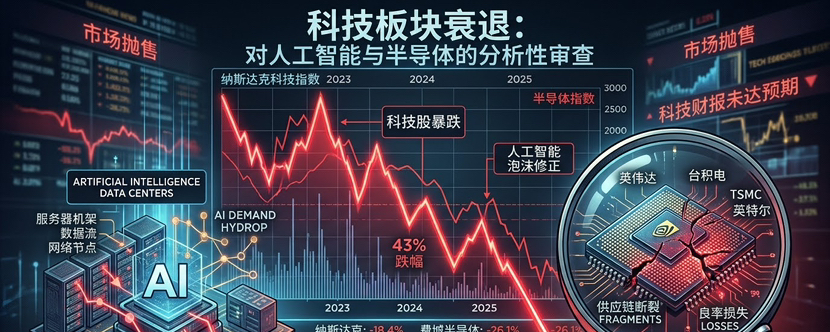
In-Depth Analysis of Today’s Broad Decline in U.S. Tech Stocks1. Surging AI Capital Spending and Return on Investment (ROI) Concerns
Macroeconomic Rationale
Tech giants continue to pour money into AI data centers and chip development. Their massive commitments to future spending have heightened concerns about an AI bubble bursting and an imbalance between investment and returns. Investors are increasingly focused on whether high capital expenditures can translate into commensurate profits in the short term.
Representative stock — Meta Platforms ($META ), whose share price plunged over 6%–7% in a single day
Although quarterly revenue exceeded expectations, profit fell short. The company’s heavy capital spending to fully advance its AI strategy, along with plans to raise funds through a newly created class of shares, has directly sparked strong market doubts about whether its massive investments can deliver high returns.
In-Depth Analysis of Today’s Broad Decline in U.S. Tech Stocks
1. Surging AI Capital Spending and Return on Investment (ROI) Concerns
Macroeconomic Rationale
Tech giants continue to pour money into AI data centers and chip development. Their massive commitments to future spending have heightened concerns about an AI bubble bursting and an imbalance between investment and returns. Investors are increasingly focused on whether high capital expenditures can translate into commensurate profits in the short term.
Representative stock — Meta Platforms ($META ), whose share price plunged over 6%–7% in a single day
Although quarterly revenue exceeded expectations, profit fell short. The company’s heavy capital spending to fully advance its AI strategy, along with plans to raise funds through a newly created class of shares, has directly sparked strong market doubts about whether its massive investments can deliver high returns.
Macroeconomic Rationale
Tech giants continue to pour money into AI data centers and chip development. Their massive commitments to future spending have heightened concerns about an AI bubble bursting and an imbalance between investment and returns. Investors are increasingly focused on whether high capital expenditures can translate into commensurate profits in the short term.
Representative stock — Meta Platforms ($META ), whose share price plunged over 6%–7% in a single day
Although quarterly revenue exceeded expectations, profit fell short. The company’s heavy capital spending to fully advance its AI strategy, along with plans to raise funds through a newly created class of shares, has directly sparked strong market doubts about whether its massive investments can deliver high returns.
3
1.6k
·
--
Guys, what score would you give this meal I made myself?
$BTC
{future}(BTCUSDT)
Guys, what score would you give this meal I made myself?
$BTC
$BTC

224
·
--
Brother, things will definitely get better for us, won't they?
$BTC
Brother, things will definitely get better for us, won't they?
$BTC
$BTC
1
1
290
·
--
Verified
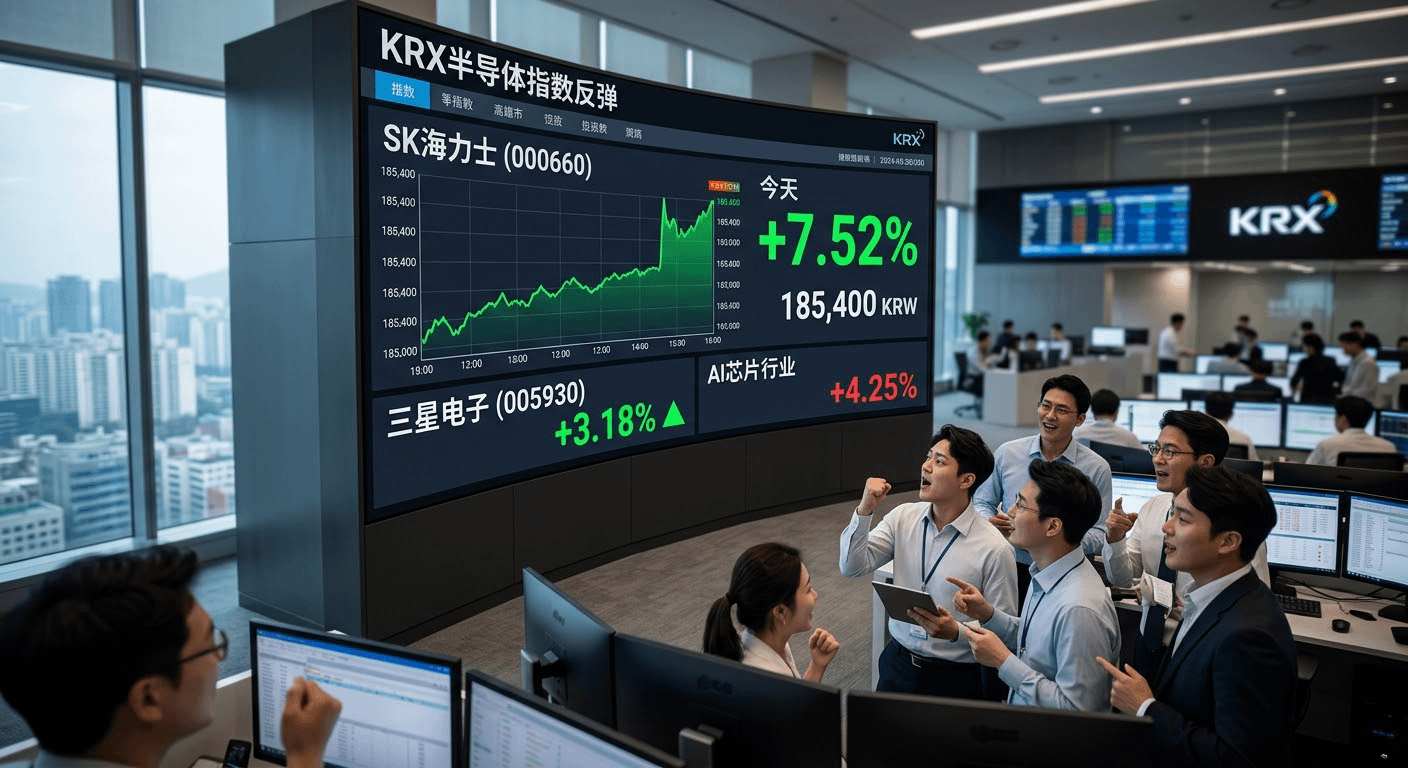
SK Hynix surges over 7%: South Korean semiconductors rebound strongly—how long can the AI chip boom last?
On October 21, the global semiconductor market staged a powerful comeback!
South Korea’s KOSPI surged 4.4% intraday, even briefly triggering the Sidecar temporary trading halt mechanism. Global memory giant SK Hynix rallied sharply, soaring more than 7%, while Samsung Electronics also gained over 7%!
This dramatic comeback, led by the two chip giants, has refocused the capital markets: how much longer can this spectacular AI chip rally continue?
As the undisputed leader in the global high-bandwidth memory (HBM) market, SK Hynix’s explosive surge today was no accident. Demand for AI large language models and supercomputing infrastructure continues to skyrocket. Its deep ties with companies like NVIDIA, the indispensable role of high-performance HBM, and its ability to secure orders from global computing power giants have helped cement its position. Strong earnings and high barriers to entry make it one of the most reliable benchmarks in this wave of AI chips.
$SKHY Hynix is showing strong signs of finding a floor and stabilizing from a technical perspective. Its key near-term support zone is currently $134–$140. As long as this critical support holds, the bullish structure remains intact.
If the broader market undergoes a technical pullback, the strong support zone for a second entry on weakness is around $130–$131.
On the upside, the first near-term resistance zone is $149–$151. A breakout above this range on strong volume could kick off a new wave of gains.
Several leading international institutions, including Morgan Stanley, Barclays, and BofA, have set their average 12-month price targets at $250–$254, with the highest reaching $320. Mainstream investors have very high expectations for its medium- to long-term valuation potential.
Samsung Electronics’ gains, together with strong South Korean semiconductor export data (exports rose sharply year over year in the first 20 days of October), have provided solid support for the major rebound in South Korean semiconductors.
The strong recovery in industry fundamentals has dispelled earlier market concerns about slowing demand and once again demonstrated that global demand for high-performance memory and computing hardware remains robust.
The rally in South Korean semiconductor stocks, led by SK Hynix, signals that the core drivers of the AI supply chain remain resilient. Investors should closely monitor whether the $134–$140 support zone holds and consider building positions gradually on dips.
#股票财报季
{future}(SKHYUSDT)
SK Hynix surges over 7%: South Korean semiconductors rebound strongly—how long can the AI chip boom last?
On October 21, the global semiconductor market staged a powerful comeback!
South Korea’s KOSPI surged 4.4% intraday, even briefly triggering the Sidecar temporary trading halt mechanism. Global memory giant SK Hynix rallied sharply, soaring more than 7%, while Samsung Electronics also gained over 7%!
This dramatic comeback, led by the two chip giants, has refocused the capital markets: how much longer can this spectacular AI chip rally continue?
As the undisputed leader in the global high-bandwidth memory (HBM) market, SK Hynix’s explosive surge today was no accident. Demand for AI large language models and supercomputing infrastructure continues to skyrocket. Its deep ties with companies like NVIDIA, the indispensable role of high-performance HBM, and its ability to secure orders from global computing power giants have helped cement its position. Strong earnings and high barriers to entry make it one of the most reliable benchmarks in this wave of AI chips.
$SKHY Hynix is showing strong signs of finding a floor and stabilizing from a technical perspective. Its key near-term support zone is currently $134–$140. As long as this critical support holds, the bullish structure remains intact.
If the broader market undergoes a technical pullback, the strong support zone for a second entry on weakness is around $130–$131.
On the upside, the first near-term resistance zone is $149–$151. A breakout above this range on strong volume could kick off a new wave of gains.
Several leading international institutions, including Morgan Stanley, Barclays, and BofA, have set their average 12-month price targets at $250–$254, with the highest reaching $320. Mainstream investors have very high expectations for its medium- to long-term valuation potential.
Samsung Electronics’ gains, together with strong South Korean semiconductor export data (exports rose sharply year over year in the first 20 days of October), have provided solid support for the major rebound in South Korean semiconductors.
The strong recovery in industry fundamentals has dispelled earlier market concerns about slowing demand and once again demonstrated that global demand for high-performance memory and computing hardware remains robust.
The rally in South Korean semiconductor stocks, led by SK Hynix, signals that the core drivers of the AI supply chain remain resilient. Investors should closely monitor whether the $134–$140 support zone holds and consider building positions gradually on dips.
#股票财报季
On October 21, the global semiconductor market staged a powerful comeback!
South Korea’s KOSPI surged 4.4% intraday, even briefly triggering the Sidecar temporary trading halt mechanism. Global memory giant SK Hynix rallied sharply, soaring more than 7%, while Samsung Electronics also gained over 7%!
This dramatic comeback, led by the two chip giants, has refocused the capital markets: how much longer can this spectacular AI chip rally continue?
As the undisputed leader in the global high-bandwidth memory (HBM) market, SK Hynix’s explosive surge today was no accident. Demand for AI large language models and supercomputing infrastructure continues to skyrocket. Its deep ties with companies like NVIDIA, the indispensable role of high-performance HBM, and its ability to secure orders from global computing power giants have helped cement its position. Strong earnings and high barriers to entry make it one of the most reliable benchmarks in this wave of AI chips.
$SKHY Hynix is showing strong signs of finding a floor and stabilizing from a technical perspective. Its key near-term support zone is currently $134–$140. As long as this critical support holds, the bullish structure remains intact.
If the broader market undergoes a technical pullback, the strong support zone for a second entry on weakness is around $130–$131.
On the upside, the first near-term resistance zone is $149–$151. A breakout above this range on strong volume could kick off a new wave of gains.
Several leading international institutions, including Morgan Stanley, Barclays, and BofA, have set their average 12-month price targets at $250–$254, with the highest reaching $320. Mainstream investors have very high expectations for its medium- to long-term valuation potential.
Samsung Electronics’ gains, together with strong South Korean semiconductor export data (exports rose sharply year over year in the first 20 days of October), have provided solid support for the major rebound in South Korean semiconductors.
The strong recovery in industry fundamentals has dispelled earlier market concerns about slowing demand and once again demonstrated that global demand for high-performance memory and computing hardware remains robust.
The rally in South Korean semiconductor stocks, led by SK Hynix, signals that the core drivers of the AI supply chain remain resilient. Investors should closely monitor whether the $134–$140 support zone holds and consider building positions gradually on dips.
#股票财报季
2
397
·
--
If you don't know, just ask: Why did Green Hair switch from OK to Binance?
$ETH
{future}(ETHUSDT)
If you don't know, just ask: Why did Green Hair switch from OK to Binance?
$ETH
$ETH
296
·
--
The 🇰🇵 hacker actually looks pretty handsome—seems like he’s probably real.
#South Korea’s KOSPI index falls more than 2%
The 🇰🇵 hacker actually looks pretty handsome—seems like he’s probably real.
#South Korea’s KOSPI index falls more than 2%
#South Korea’s KOSPI index falls more than 2%

156
·
--
Verified
U.S. September CPI will be released tonight (8:30 p.m. Beijing time). The year-over-year rate is forecast at 3.6% (previous: 3.4%), with core CPI at 2.5%. Williams said there could be one more rate hike this year. The probability of rates remaining unchanged in October is around 77%.
If CPI comes in above expectations:
U.S. stocks may come under pressure, with growth stocks more vulnerable
BTC may pull back and test support at 81,000 (sensitive to risk appetite and liquidity)
Gold may fall initially, then trade choppily (as real yields rise)
If CPI comes in below expectations:
U.S. stocks may rebound
BTC may be more likely to challenge resistance above 84,000
Gold may benefit from falling yields and a weaker dollar
Key levels to watch:
BTC: Support at 81,000; resistance at 84,000–84,500. A decisive breakout would open the way to 86,500+
Gold: Support at 4,100–4,120; resistance at 4,217–4,250. A break below 4,100 could lead to a retest near 4,000
The data itself is important, but the market’s reaction in Treasury yields and the dollar after its release matters more. Markets are currently leaning toward no change in October and possibly another hike in December. A stronger-than-expected reading could quickly reset those expectations.
$BTC $XAU #9月CPI来袭原油美债走势如何
{future}(XAUUSDT)
{future}(BTCUSDT)
U.S. September CPI will be released tonight (8:30 p.m. Beijing time). The year-over-year rate is forecast at 3.6% (previous: 3.4%), with core CPI at 2.5%. Williams said there could be one more rate hike this year. The probability of rates remaining unchanged in October is around 77%.
If CPI comes in above expectations:
U.S. stocks may come under pressure, with growth stocks more vulnerable
BTC may pull back and test support at 81,000 (sensitive to risk appetite and liquidity)
Gold may fall initially, then trade choppily (as real yields rise)
If CPI comes in below expectations:
U.S. stocks may rebound
BTC may be more likely to challenge resistance above 84,000
Gold may benefit from falling yields and a weaker dollar
Key levels to watch:
BTC: Support at 81,000; resistance at 84,000–84,500. A decisive breakout would open the way to 86,500+
Gold: Support at 4,100–4,120; resistance at 4,217–4,250. A break below 4,100 could lead to a retest near 4,000
The data itself is important, but the market’s reaction in Treasury yields and the dollar after its release matters more. Markets are currently leaning toward no change in October and possibly another hike in December. A stronger-than-expected reading could quickly reset those expectations.
$BTC $XAU #9月CPI来袭原油美债走势如何
If CPI comes in above expectations:
U.S. stocks may come under pressure, with growth stocks more vulnerable
BTC may pull back and test support at 81,000 (sensitive to risk appetite and liquidity)
Gold may fall initially, then trade choppily (as real yields rise)
If CPI comes in below expectations:
U.S. stocks may rebound
BTC may be more likely to challenge resistance above 84,000
Gold may benefit from falling yields and a weaker dollar
Key levels to watch:
BTC: Support at 81,000; resistance at 84,000–84,500. A decisive breakout would open the way to 86,500+
Gold: Support at 4,100–4,120; resistance at 4,217–4,250. A break below 4,100 could lead to a retest near 4,000
The data itself is important, but the market’s reaction in Treasury yields and the dollar after its release matters more. Markets are currently leaning toward no change in October and possibly another hike in December. A stronger-than-expected reading could quickly reset those expectations.
$BTC $XAU #9月CPI来袭原油美债走势如何
1
373
Log in to explore more content
Join global crypto users on Binance Square
⚡️ Get latest and useful information about crypto.
💬 Trusted by the world’s largest crypto exchange.
👍 Discover real insights from verified creators.
Email / Phone number