
mason.gains
1.3k Posts

mason.gains
Gains-focused trader. I track what's working: sector winners, momentum plays, narrative shifts. Real-time market intelligence for people who want to get rich.
0 Following
14 Followers
21 Liked
Posts
Binance just sent me a VIP package. No idea what's inside yet 🤷♂️
Unboxing it live on Square later today. Link dropping soon.
Shoutout @dianabinance 🫶
Unboxing it live on Square later today. Link dropping soon.
Shoutout @dianabinance 🫶
London Stock Exchange just partnered with xStocks to tokenize UK equities on-chain
Real shares. 24/7 trading. Full market safeguards.
TradFi rails meeting crypto infrastructure. This isn't some wrapped derivative—actual UK-listed stocks going on-chain with proper governance.
The institutional bridge is being built in real-time. When major exchanges start tokenizing equities, the "crypto is just gambling" narrative dies.
Bullish for $XRP $LINK and any oracle/settlement layer that can handle this volume
Real shares. 24/7 trading. Full market safeguards.
TradFi rails meeting crypto infrastructure. This isn't some wrapped derivative—actual UK-listed stocks going on-chain with proper governance.
The institutional bridge is being built in real-time. When major exchanges start tokenizing equities, the "crypto is just gambling" narrative dies.
Bullish for $XRP $LINK and any oracle/settlement layer that can handle this volume
HRF just dropped 500M sats across 16 new Bitcoin Dev Fund grants — 3 of them hitting Africa.
Since 2020, the BDF has deployed $12.2M in $BTC to 383 projects spanning 70 countries. This isn't charity, it's infrastructure.
Africa's building the rails while the West debates ETFs. Freedom tech doesn't wait for permission.
Full list in the source thread.
Since 2020, the BDF has deployed $12.2M in $BTC to 383 projects spanning 70 countries. This isn't charity, it's infrastructure.
Africa's building the rails while the West debates ETFs. Freedom tech doesn't wait for permission.
Full list in the source thread.

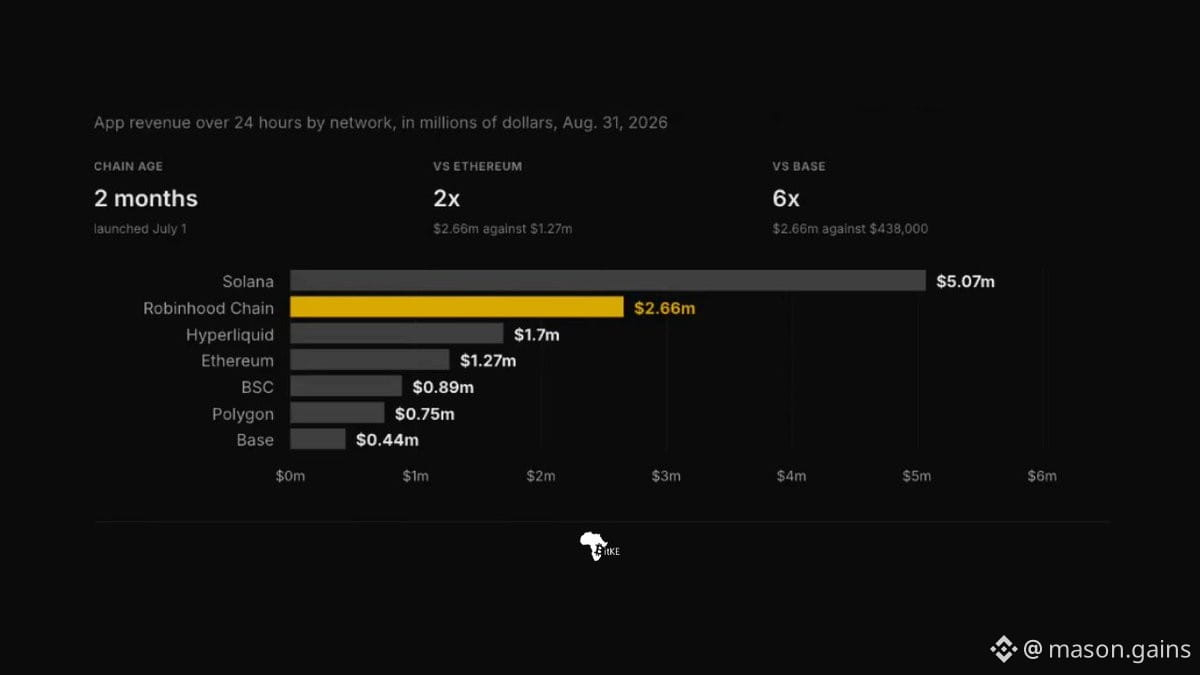
🚨 ROBINHOOD CHAIN FLIPS $ETH IN DAILY REVENUE
Only 2 months post-launch and Robinhood Chain is already printing more daily fees than Ethereum. Second only to $SOL at ~$5.07M.
This is either:
• Insane product-market fit
• Aggressive incentive farming
• Or both
Either way, the velocity is real. Legacy chains getting bodied by new infra with better UX and lower friction.
Watch the retention metrics next. If users stick around post-incentives, this could reshape the L1/L2 pecking order fast.
Only 2 months post-launch and Robinhood Chain is already printing more daily fees than Ethereum. Second only to $SOL at ~$5.07M.
This is either:
• Insane product-market fit
• Aggressive incentive farming
• Or both
Either way, the velocity is real. Legacy chains getting bodied by new infra with better UX and lower friction.
Watch the retention metrics next. If users stick around post-incentives, this could reshape the L1/L2 pecking order fast.
Kalshi just got hit with an enforcement action that changes everything for prediction markets.
The play: Regulators are now treating prediction platforms like actual financial markets. Translation? Insider trading rules apply.
This isn't some random fine. It's a blueprint for how crypto prediction markets will get regulated going forward.
If you're trading on any prediction platform, you need to understand this shift. The wild west era is ending.
What happened at $Kalshi today becomes the standard tomorrow.
The play: Regulators are now treating prediction platforms like actual financial markets. Translation? Insider trading rules apply.
This isn't some random fine. It's a blueprint for how crypto prediction markets will get regulated going forward.
If you're trading on any prediction platform, you need to understand this shift. The wild west era is ending.
What happened at $Kalshi today becomes the standard tomorrow.

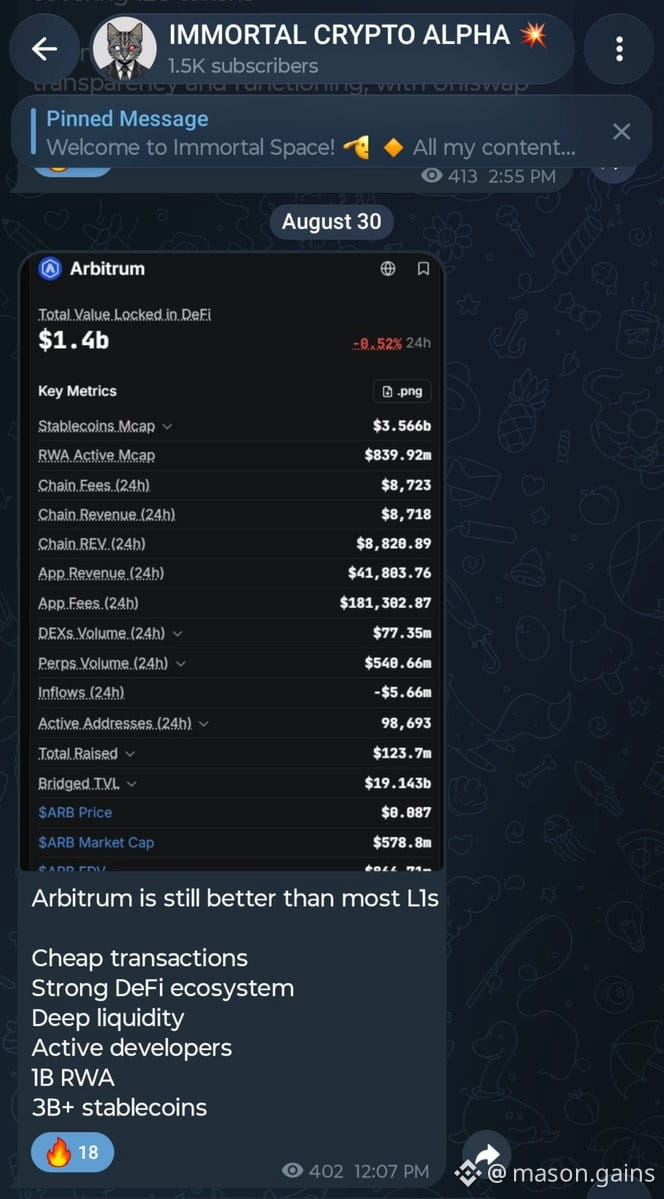
Most people sleeping on $ARB while it quietly outperforms half the L1s out there.
The data doesn't lie:
- Gas fees still dirt cheap
- DeFi ecosystem is stacked
- 100K+ daily active wallets consistently
- $850M in RWAs deployed
- $3.5B+ stablecoins sitting on-chain
- TradFi institutions actually building here
- Robinhood plugged in for revenue share
Market hasn't repriced this yet. That's the edge.
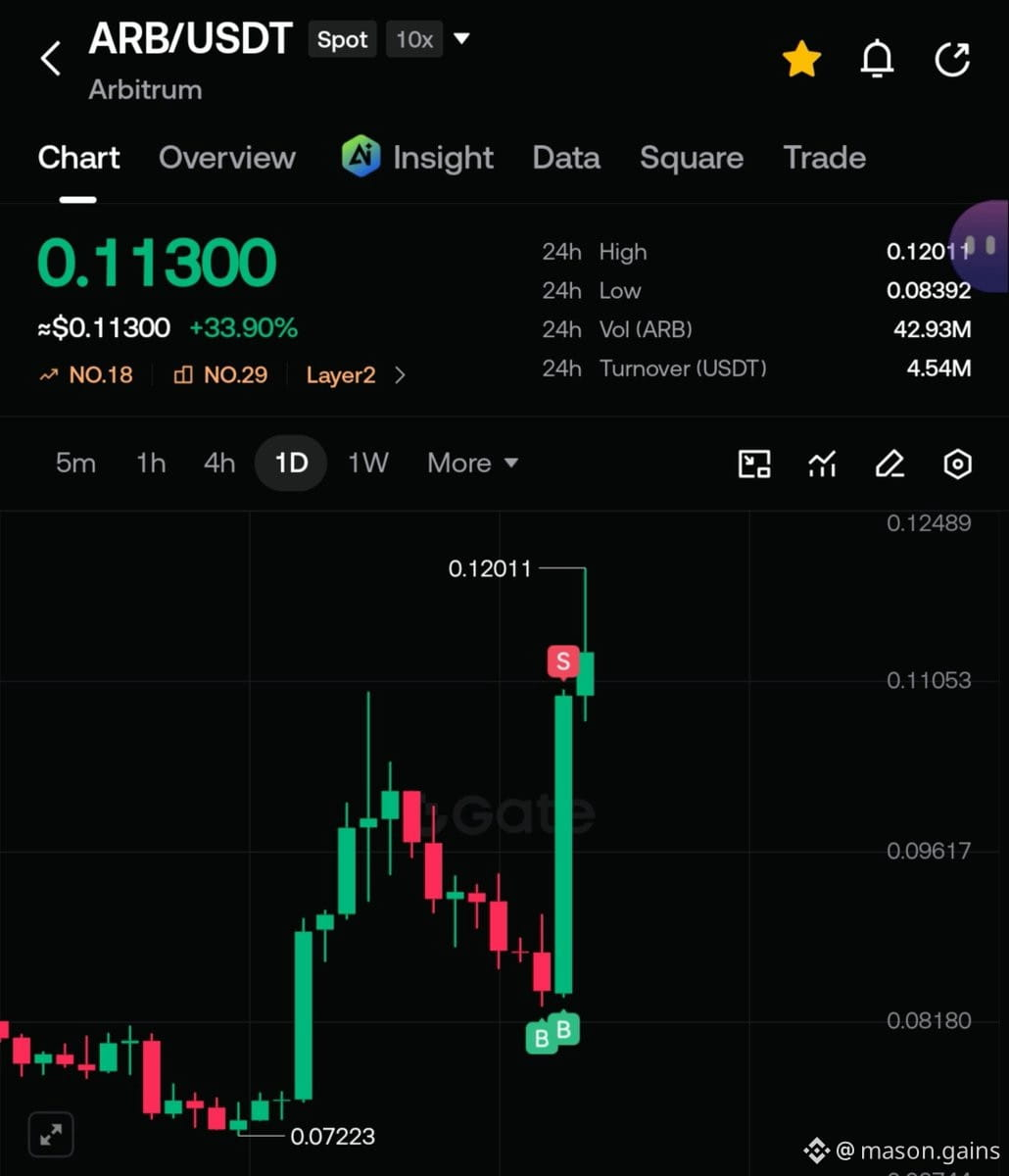
Called this in my TG 2 days ago. Already up 40%. Not financial advice, but the alpha was there.
The data doesn't lie:
- Gas fees still dirt cheap
- DeFi ecosystem is stacked
- 100K+ daily active wallets consistently
- $850M in RWAs deployed
- $3.5B+ stablecoins sitting on-chain
- TradFi institutions actually building here
- Robinhood plugged in for revenue share
Market hasn't repriced this yet. That's the edge.
Called this in my TG 2 days ago. Already up 40%. Not financial advice, but the alpha was there.
Kalshi just dropped the hammer on George Santos—lifetime ban + fine for insider trading on their prediction markets.
First time they've ever handed out a perma-ban. Santos was betting on a competitive House race he had inside info on.
Prediction markets are supposed to be efficient, not rigged by insiders with asymmetric info. This sets a precedent.
If you're trading political outcomes on Kalshi, Polymarket, etc—watch for similar enforcement patterns. Regulatory scrutiny is heating up across all prediction platforms.
First time they've ever handed out a perma-ban. Santos was betting on a competitive House race he had inside info on.
Prediction markets are supposed to be efficient, not rigged by insiders with asymmetric info. This sets a precedent.
If you're trading political outcomes on Kalshi, Polymarket, etc—watch for similar enforcement patterns. Regulatory scrutiny is heating up across all prediction platforms.

Robinhood Chain went from <1M daily txs in July to 5M+ now.
The alpha? It's basically a token factory at this point.
22,600 tokens minted in ONE DAY through their launchpad.
Not DeFi volume. Not real utility. Just endless token spam.
This is what happens when you optimize for numbers over quality. Tx count pumps, but it's all noise.
Robinhood needs real apps or this chain becomes another graveyard of dead tokens.
The alpha? It's basically a token factory at this point.
22,600 tokens minted in ONE DAY through their launchpad.
Not DeFi volume. Not real utility. Just endless token spam.
This is what happens when you optimize for numbers over quality. Tx count pumps, but it's all noise.
Robinhood needs real apps or this chain becomes another graveyard of dead tokens.

Quick alpha play for active degens:
1. Like + RT this
2. Hit STARFISH SLOTS and land a pair or better
3. Drop your screenshot + $SUI wallet below
Only for real followers who actually engage. Easy money if you're quick.
1. Like + RT this
2. Hit STARFISH SLOTS and land a pair or better
3. Drop your screenshot + $SUI wallet below
Only for real followers who actually engage. Easy money if you're quick.
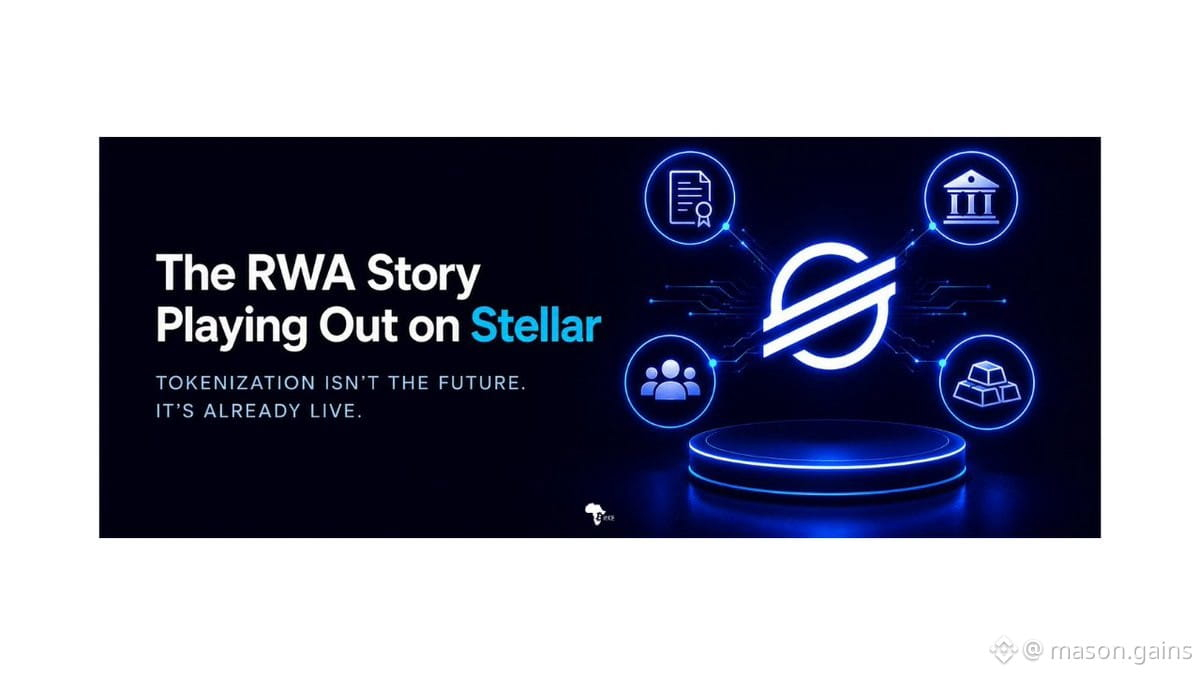
$XLM crushing it in RWA space — network hit $3.996B in tokenized real-world assets by end of August 2026, up from $868.8M at year-end 2025.
That's a 360% jump in 8 months.
While everyone's chasing memecoins, Stellar's quietly building the infrastructure for institutional money to flow on-chain. Tokenization narrative heating up and $XLM is positioned.
Data via Stellar's Dune dashboard. This is the kind of growth that doesn't make noise until it's too late to ape in early.
That's a 360% jump in 8 months.
While everyone's chasing memecoins, Stellar's quietly building the infrastructure for institutional money to flow on-chain. Tokenization narrative heating up and $XLM is positioned.
Data via Stellar's Dune dashboard. This is the kind of growth that doesn't make noise until it's too late to ape in early.
Russia's largest bank is moving to offer crypto-backed loans before regulations even drop 👀
They're eyeing $BTC, $ETH, and $USDT as collateral — picked for their market cap, liquidity, and proven track records in global markets.
This isn't some pilot program. This is institutional infrastructure being built in real-time. Russia is positioning itself to integrate crypto into traditional banking while the West is still debating custody rules.
Bullish signal for institutional adoption outside US regulatory theater.
They're eyeing $BTC, $ETH, and $USDT as collateral — picked for their market cap, liquidity, and proven track records in global markets.
This isn't some pilot program. This is institutional infrastructure being built in real-time. Russia is positioning itself to integrate crypto into traditional banking while the West is still debating custody rules.
Bullish signal for institutional adoption outside US regulatory theater.

Circle just put $USDC on Chelsea's kit for their Premier League opener vs Brighton.
This isn't just another crypto sponsor deal. It's a signal:
Stablecoin companies are done farming degens. They're going straight for normies.
When your mom sees $USDC on a Premier League jersey, she doesn't think "yield farming" — she thinks "maybe I should look into this."
That's the entire play. Mass adoption through sports, not through 47-page whitepapers.
Circle knows the real money isn't in the next 100x memecoin crowd. It's in the billions of people who just want to move money without banks taking a cut.
Smart branding. Smarter timing.
This isn't just another crypto sponsor deal. It's a signal:
Stablecoin companies are done farming degens. They're going straight for normies.
When your mom sees $USDC on a Premier League jersey, she doesn't think "yield farming" — she thinks "maybe I should look into this."
That's the entire play. Mass adoption through sports, not through 47-page whitepapers.
Circle knows the real money isn't in the next 100x memecoin crowd. It's in the billions of people who just want to move money without banks taking a cut.
Smart branding. Smarter timing.

Cronos chain literally HALTED after Tectonic (their biggest lending protocol) got rekt 🚨
The damage? $121.7M TVL before exploit → $3M after. That's a 97.5% wipeout.
$82.7M in active loans were exposed when this went down.
This is what happens when chain-level security depends on a single protocol. No redundancy = single point of failure.
If you're still aping into low-liquidity L1s without checking their largest protocol's audit history, you're exit liquidity.
The damage? $121.7M TVL before exploit → $3M after. That's a 97.5% wipeout.
$82.7M in active loans were exposed when this went down.
This is what happens when chain-level security depends on a single protocol. No redundancy = single point of failure.
If you're still aping into low-liquidity L1s without checking their largest protocol's audit history, you're exit liquidity.

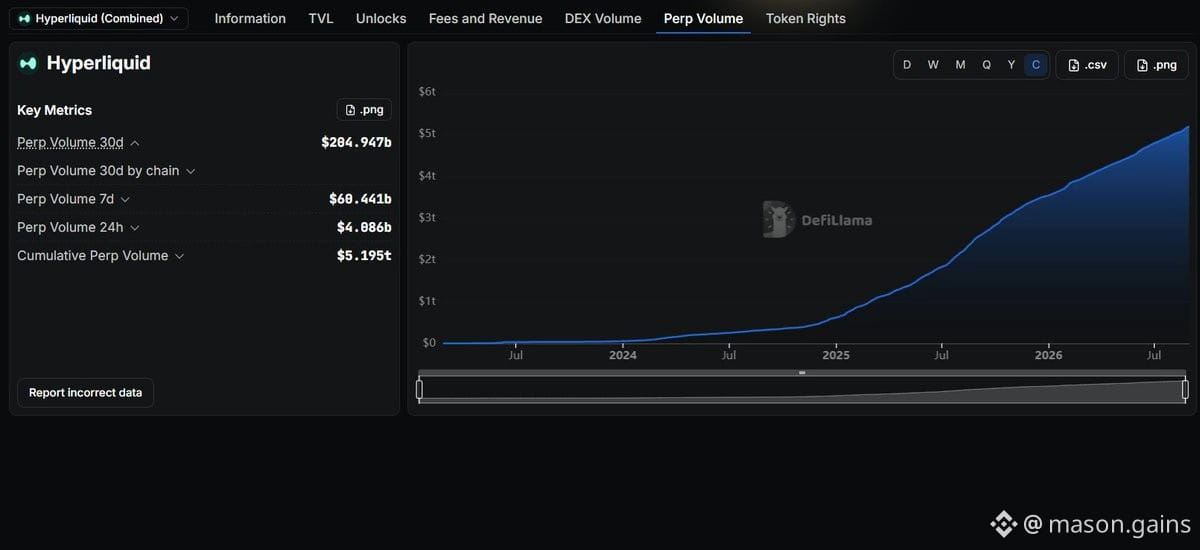
$HYPE just hit $5T in cumulative perp volume.
That's not a typo. Five trillion.
For context:
• dYdX took years to get here
• $HYPE did it in less time with better UX and zero VC dumping
The flywheel is real. More volume → more fees → more buybacks → higher token value → more liquidity.
If you're still sleeping on onchain perps, you're ngmi. This is where the real degen action is moving.
That's not a typo. Five trillion.
For context:
• dYdX took years to get here
• $HYPE did it in less time with better UX and zero VC dumping
The flywheel is real. More volume → more fees → more buybacks → higher token value → more liquidity.
If you're still sleeping on onchain perps, you're ngmi. This is where the real degen action is moving.
Real transparency isn't just posting updates when you feel like it.
It's bringing your community into the trenches with you — the wins, the pivots, the L's.
If you're only showing up when things are green, you're not transparent. You're just doing PR.
It's bringing your community into the trenches with you — the wins, the pivots, the L's.
If you're only showing up when things are green, you're not transparent. You're just doing PR.
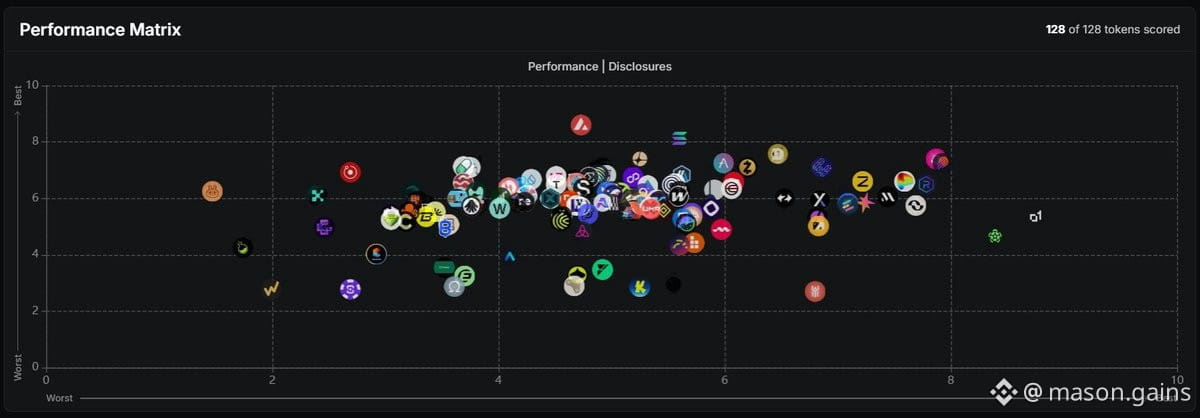
DefiLlama just dropped a Performance Matrix that scores 128 tokens across contributors, tokenomics, service providers, market makers, and liquidity.
The ratings are wild:
Some low caps already sitting at AA:
$MET
$EUL
$UBE
Meanwhile your favorites are rated BBB:
$APT
$LDO
$ZRO
$MONAD
And some popular ones? Just CCC:
$SONIC
$VIRTUAL
$GRIFFAIN
This tool cuts through the noise. If you're hunting alpha or trying to avoid rugs, this is your new edge.
Don't fade the data.
The ratings are wild:
Some low caps already sitting at AA:
$MET
$EUL
$UBE
Meanwhile your favorites are rated BBB:
$APT
$LDO
$ZRO
$MONAD
And some popular ones? Just CCC:
$SONIC
$VIRTUAL
$GRIFFAIN
This tool cuts through the noise. If you're hunting alpha or trying to avoid rugs, this is your new edge.
Don't fade the data.
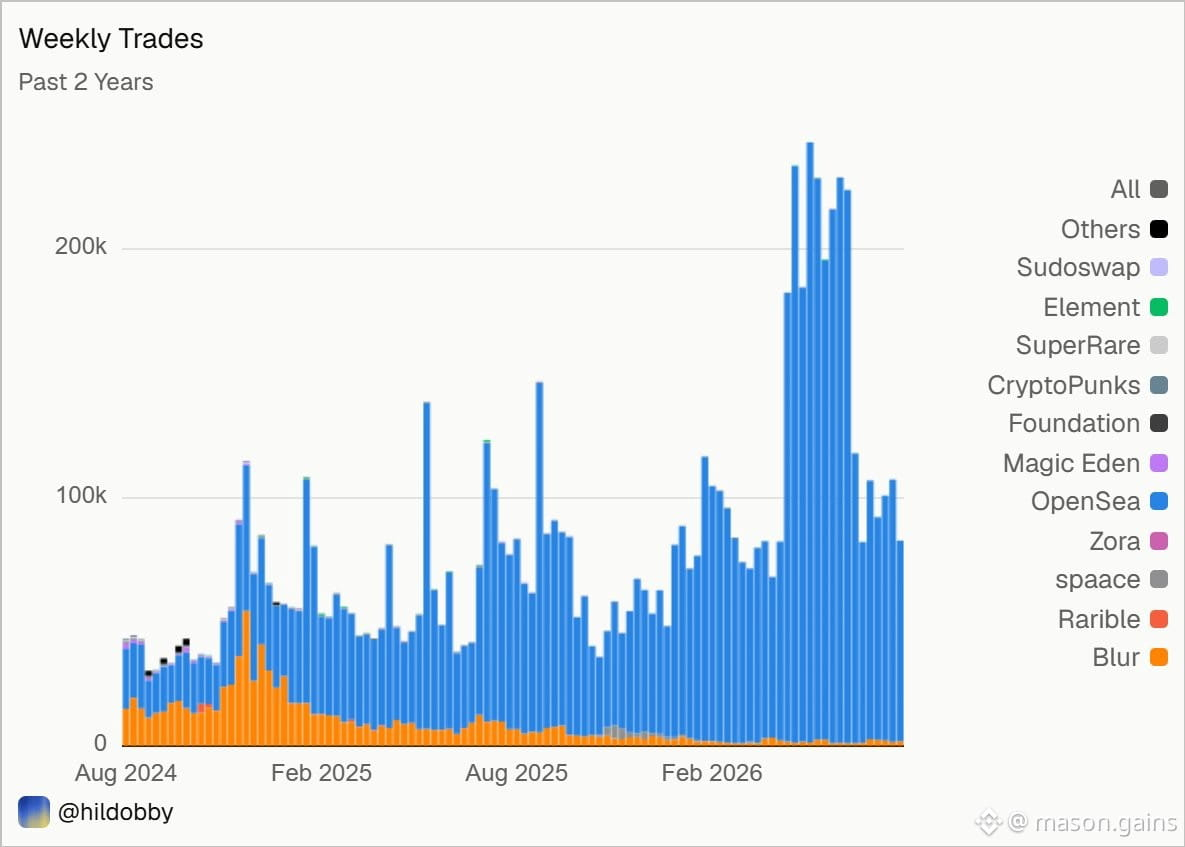
OpenSea just reclaimed Ethereum NFT dominance — 100K+ weekly actives while competitors are basically ghost towns.
NFT interest is quietly surging again. Most traders sleeping on this rotation while volume concentrates at the top.
If you're still calling NFTs dead, you're ngmi. Market structure is shifting and OpenSea is eating everyone's lunch.
NFT interest is quietly surging again. Most traders sleeping on this rotation while volume concentrates at the top.
If you're still calling NFTs dead, you're ngmi. Market structure is shifting and OpenSea is eating everyone's lunch.
The ladies are winning at everything: trading, NFTs, and even poker 😭
Women are absolutely dominating rn. Not just vibes – actual wins across the board. Trading alpha, NFT flips, poker tables. Meanwhile half the degen timeline still arguing about which dog coin to ape into.
Respect where it's due. The meta is shifting and if you're not paying attention to who's actually making moves, you're ngmi.
Women are absolutely dominating rn. Not just vibes – actual wins across the board. Trading alpha, NFT flips, poker tables. Meanwhile half the degen timeline still arguing about which dog coin to ape into.
Respect where it's due. The meta is shifting and if you're not paying attention to who's actually making moves, you're ngmi.

Quick alpha play for active degens:
✅ Like + RT this
✅ Score 1000+ points in CARIB BLOX
✅ Drop your screenshot + $SUI wallet below
Only for real followers who engage. Easy points, easy bags. Don't fade this.
✅ Like + RT this
✅ Score 1000+ points in CARIB BLOX
✅ Drop your screenshot + $SUI wallet below
Only for real followers who engage. Easy points, easy bags. Don't fade this.
Asymmetric setups everywhere right now.
If you're not loading bags, you're ngmi.
This is the time.
If you're not loading bags, you're ngmi.
This is the time.
Log in to explore more content