
#write2earrn
write2earrn
19.2M views
20,118 Discussing
Hot
Latest
·
--
Bullish
$NVDAB #Write2Earrn How can beginners earn $5 in a single day? 🚀💰
Are you new to Binance? 👀
You can explore programs like Write to Earn and create useful and original content about cryptocurrencies to have the opportunity to earn rewards. ✍️🪙
✅ Share useful crypto content
✅ Stay active and consistent
✅ Engage with the Binance community
✅ Follow the program rules and conditions
🎁 Users who meet the requirements may receive rewards of $5 or more! 💵🔥
⚠️ Rewards are not guaranteed. Eligibility requirements, availability, and the program rules apply. Be sure to always review the official program details before participating.
$MSFTB #Write2Earn! #btc70k
$NVDAB #Write2Earrn How can beginners earn $5 in a single day? 🚀💰
Are you new to Binance? 👀
You can explore programs like Write to Earn and create useful and original content about cryptocurrencies to have the opportunity to earn rewards. ✍️🪙
✅ Share useful crypto content
✅ Stay active and consistent
✅ Engage with the Binance community
✅ Follow the program rules and conditions
🎁 Users who meet the requirements may receive rewards of $5 or more! 💵🔥
⚠️ Rewards are not guaranteed. Eligibility requirements, availability, and the program rules apply. Be sure to always review the official program details before participating.
$MSFTB #Write2Earn! #btc70k
Are you new to Binance? 👀
You can explore programs like Write to Earn and create useful and original content about cryptocurrencies to have the opportunity to earn rewards. ✍️🪙
✅ Share useful crypto content
✅ Stay active and consistent
✅ Engage with the Binance community
✅ Follow the program rules and conditions
🎁 Users who meet the requirements may receive rewards of $5 or more! 💵🔥
⚠️ Rewards are not guaranteed. Eligibility requirements, availability, and the program rules apply. Be sure to always review the official program details before participating.
$MSFTB #Write2Earn! #btc70k
92

·
--
🚀 Write to Earn on Binance Square! 💰
The crypto world is moving fast, and Binance Square is a great place to share your ideas, market insights, and favorite projects. Create original content, grow your audience, and explore exciting Write to Earn opportunities! 🪙📈
Stay consistent, share valuable insights, and keep learning. Your next post could be your biggest one! 🔥
#BinanceSquare #Write2Earrn #Crypto #Bitcoin #BNB #Web3
🚀 Write to Earn on Binance Square! 💰
The crypto world is moving fast, and Binance Square is a great place to share your ideas, market insights, and favorite projects. Create original content, grow your audience, and explore exciting Write to Earn opportunities! 🪙📈
Stay consistent, share valuable insights, and keep learning. Your next post could be your biggest one! 🔥
#BinanceSquare #Write2Earrn #Crypto #Bitcoin #BNB #Web3
The crypto world is moving fast, and Binance Square is a great place to share your ideas, market insights, and favorite projects. Create original content, grow your audience, and explore exciting Write to Earn opportunities! 🪙📈
Stay consistent, share valuable insights, and keep learning. Your next post could be your biggest one! 🔥
#BinanceSquare #Write2Earrn #Crypto #Bitcoin #BNB #Web3
204

·
--
Bullish
LAST WEEK’S WRITE TO EARN REWARD — 21.26 USDC
Another week, another reward from creating content on Binance Square.
Last week, I earned 21.26 USDC with a 20% commission through Write to Earn and ranked among the top contributors.
For me, this is not just about the reward. It’s about staying consistent, sharing useful crypto content, building a strong community, and growing together with my traders and followers.
If you are already following my posts, stay connected and keep supporting me. Your likes, comments, shares, and follows help me keep creating more content.
And if you are new here, follow me now and join the journey.
I’ll keep bringing:
➡️Market updates
➡️Trading setups
➡️AlphaCoin opportunities
➡️Crypto insights
Currently Profect Performer coin Entries:
$GPS
$ACE
$EUL
Let’s grow together, stay active, and make every post count.
#Write2Earrn
LAST WEEK’S WRITE TO EARN REWARD — 21.26 USDC
Another week, another reward from creating content on Binance Square.
Last week, I earned 21.26 USDC with a 20% commission through Write to Earn and ranked among the top contributors.
For me, this is not just about the reward. It’s about staying consistent, sharing useful crypto content, building a strong community, and growing together with my traders and followers.
If you are already following my posts, stay connected and keep supporting me. Your likes, comments, shares, and follows help me keep creating more content.
And if you are new here, follow me now and join the journey.
I’ll keep bringing:
➡️Market updates
➡️Trading setups
➡️AlphaCoin opportunities
➡️Crypto insights
Currently Profect Performer coin Entries:
$GPS
$ACE
$EUL
Let’s grow together, stay active, and make every post count.
#Write2Earrn
Another week, another reward from creating content on Binance Square.
Last week, I earned 21.26 USDC with a 20% commission through Write to Earn and ranked among the top contributors.
For me, this is not just about the reward. It’s about staying consistent, sharing useful crypto content, building a strong community, and growing together with my traders and followers.
If you are already following my posts, stay connected and keep supporting me. Your likes, comments, shares, and follows help me keep creating more content.
And if you are new here, follow me now and join the journey.
I’ll keep bringing:
➡️Market updates
➡️Trading setups
➡️AlphaCoin opportunities
➡️Crypto insights
Currently Profect Performer coin Entries:
$GPS
$ACE
$EUL
Let’s grow together, stay active, and make every post count.
#Write2Earrn

3
332

To friends who are just starting to create content here and want to earn a 50% commission, let’s learn together! Based on Binance’s guidelines, here are some tips to help our posts stand out more:
Consistency is Key: Regularly updating the market is highly appreciated by readers.
Create an Attractive Title: Make sure the hook in the first sentence makes people want to read all the way to the end.
Build Engagement: Don’t forget to reply to comments and actively join discussions on other creators’ posts.
I’m still learning too and chasing my first reward. Is there anyone here who wants to add more valuable tips? Please share your experiences in the comments! 🤝📈
#Write2Earrn #cryptouniverseofficial #binancecreator #CuanCrypto
To friends who are just starting to create content here and want to earn a 50% commission, let’s learn together! Based on Binance’s guidelines, here are some tips to help our posts stand out more:
Consistency is Key: Regularly updating the market is highly appreciated by readers.
Create an Attractive Title: Make sure the hook in the first sentence makes people want to read all the way to the end.
Build Engagement: Don’t forget to reply to comments and actively join discussions on other creators’ posts.
I’m still learning too and chasing my first reward. Is there anyone here who wants to add more valuable tips? Please share your experiences in the comments! 🤝📈
#Write2Earrn #cryptouniverseofficial #binancecreator #CuanCrypto
Consistency is Key: Regularly updating the market is highly appreciated by readers.
Create an Attractive Title: Make sure the hook in the first sentence makes people want to read all the way to the end.
Build Engagement: Don’t forget to reply to comments and actively join discussions on other creators’ posts.
I’m still learning too and chasing my first reward. Is there anyone here who wants to add more valuable tips? Please share your experiences in the comments! 🤝📈
#Write2Earrn #cryptouniverseofficial #binancecreator #CuanCrypto
129
·
--
🚀 Write to Earn on Binance Square! ✍️💰
Create quality content, grow your audience, and unlock exciting earning opportunities! 🌟🔥
Your words can become your rewards! 💛🚀
#BinanceSquareFamily #Write2Earrn #Crypto #Binance $NVDAB
🚀 Write to Earn on Binance Square! ✍️💰
Create quality content, grow your audience, and unlock exciting earning opportunities! 🌟🔥
Your words can become your rewards! 💛🚀
#BinanceSquareFamily #Write2Earrn #Crypto #Binance $NVDAB
Create quality content, grow your audience, and unlock exciting earning opportunities! 🌟🔥
Your words can become your rewards! 💛🚀
#BinanceSquareFamily #Write2Earrn #Crypto #Binance $NVDAB

94

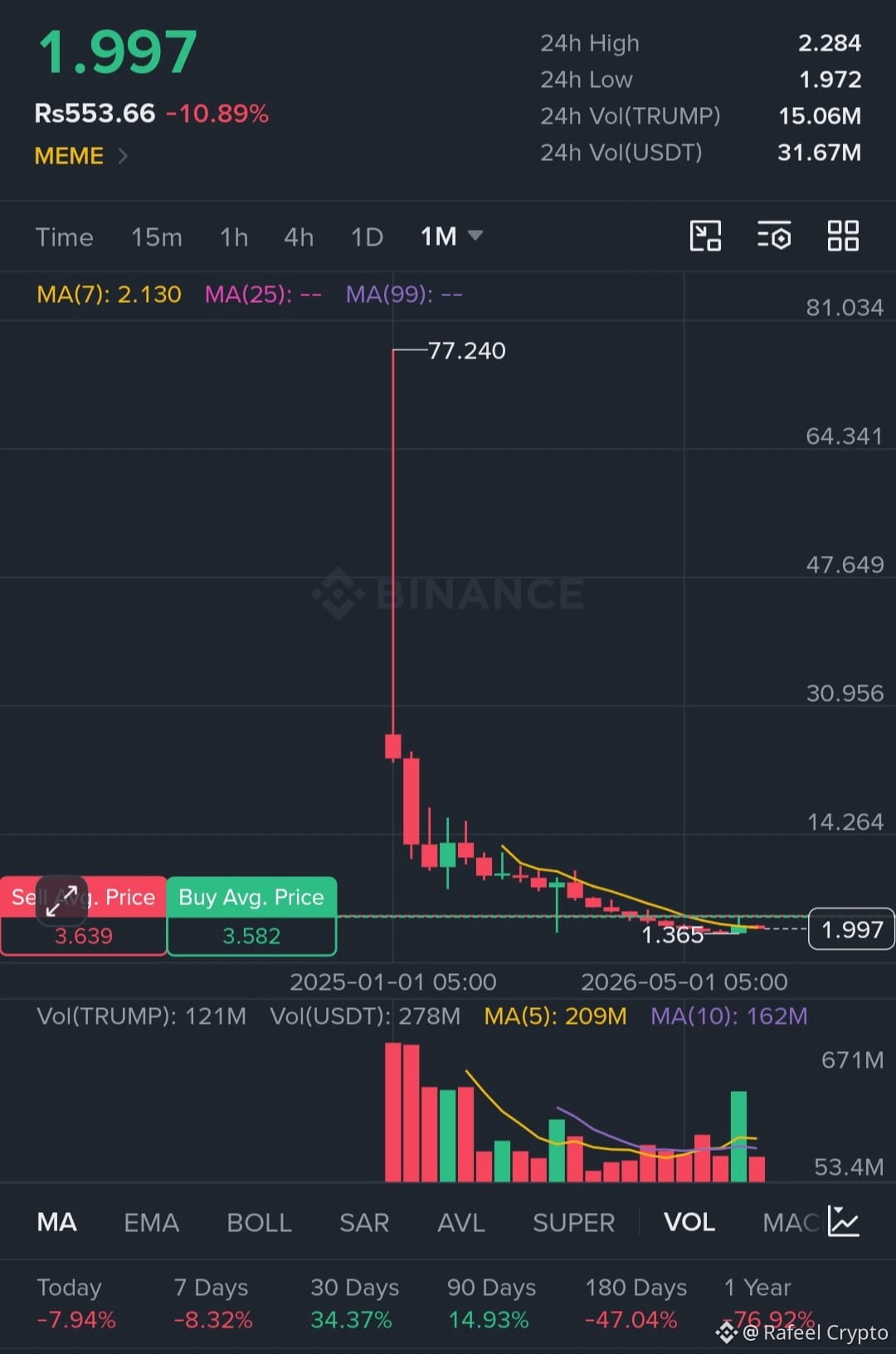
$TRUMP Long Setup Plan 🚀
⛔ Long Entry Zone: 1.900 - 1.972
🛑 Stop Loss: 1.850
🎯 Targets:
TP1: 2.130 (7-day MA)
TP2: 2.284 (24h high)
TP3: 2.400+ (if bullish momentum continues)
#TrumpCrypto #Binance #Write2Earrn
$TRUMP Long Setup Plan 🚀
⛔ Long Entry Zone: 1.900 - 1.972
🛑 Stop Loss: 1.850
🎯 Targets:
TP1: 2.130 (7-day MA)
TP2: 2.284 (24h high)
TP3: 2.400+ (if bullish momentum continues)
#TrumpCrypto #Binance #Write2Earrn
⛔ Long Entry Zone: 1.900 - 1.972
🛑 Stop Loss: 1.850
🎯 Targets:
TP1: 2.130 (7-day MA)
TP2: 2.284 (24h high)
TP3: 2.400+ (if bullish momentum continues)
#TrumpCrypto #Binance #Write2Earrn
1
153

·
--
Bearish
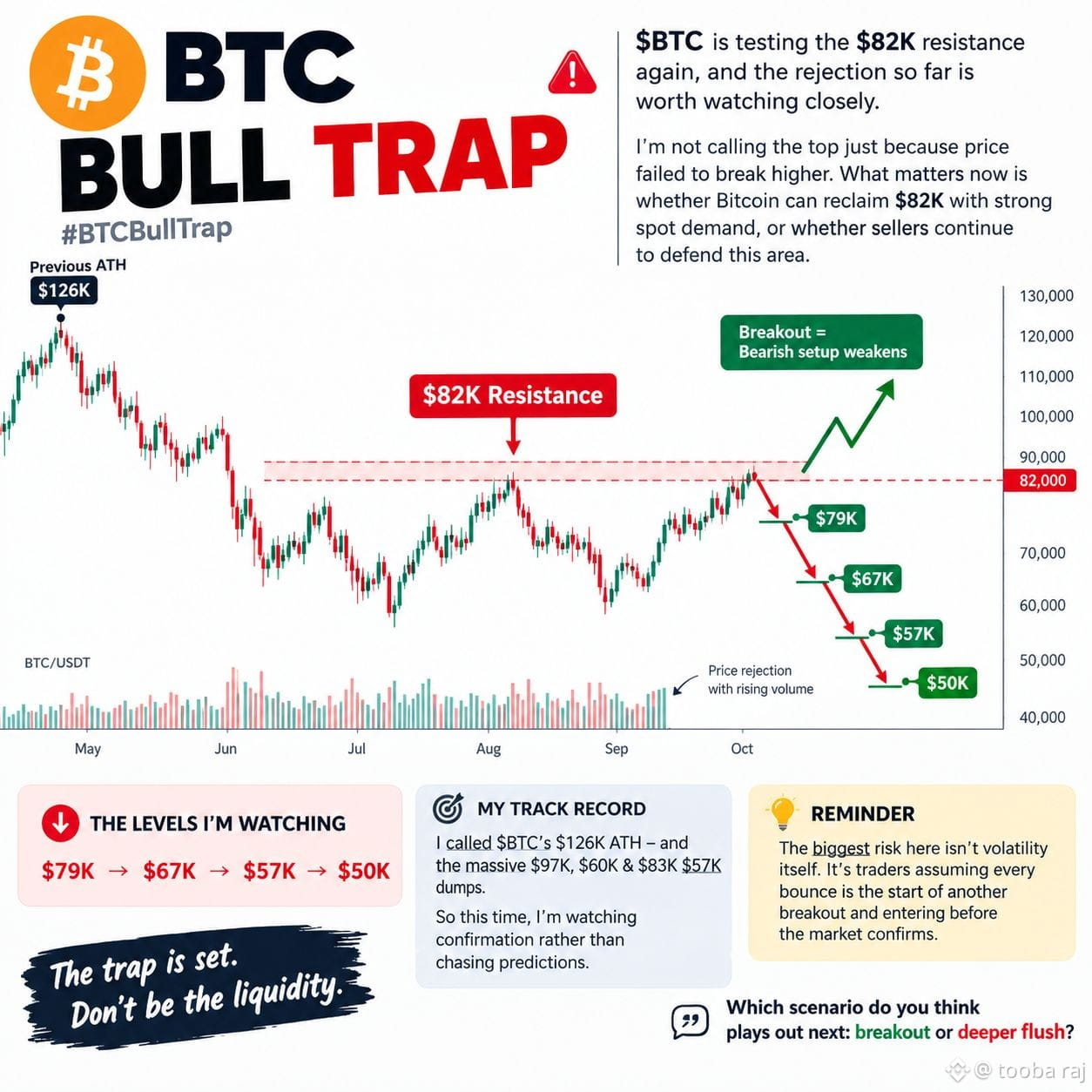
🚨#BTCBullTrap
$BTC is testing the $82K resistance again, and the rejection so far is worth watching closely.
I’m not calling the top just because price failed to break higher. What matters now is whether Bitcoin can reclaim $82K with strong spot demand, or whether sellers continue to defend this area.
If the rejection develops into a deeper correction, these are the levels I’m watching:
$79K → $67K → $57K → $50K
The biggest risk here isn’t volatility itself. It’s traders assuming every bounce is the start of another breakout and entering before the market confirms it.
I’ve been tracking Bitcoin through previous major moves, including the $126K ATH and the sharp declines around $97K, $83K, $60K and $57K.
So this time, I’m watching confirmation rather than chasing predictions.
If $82K breaks and holds with real demand, this bearish setup weakens.
If resistance keeps holding, the downside levels become much more relevant.
Which scenario do you think plays out next: breakout or deeper flush?
#btc70k
#Write2Earrn
#BTC突破7万大关
#write2earn🌐💹
$BTC
🚨#BTCBullTrap
$BTC is testing the $82K resistance again, and the rejection so far is worth watching closely.
I’m not calling the top just because price failed to break higher. What matters now is whether Bitcoin can reclaim $82K with strong spot demand, or whether sellers continue to defend this area.
If the rejection develops into a deeper correction, these are the levels I’m watching:
$79K → $67K → $57K → $50K
The biggest risk here isn’t volatility itself. It’s traders assuming every bounce is the start of another breakout and entering before the market confirms it.
I’ve been tracking Bitcoin through previous major moves, including the $126K ATH and the sharp declines around $97K, $83K, $60K and $57K.
So this time, I’m watching confirmation rather than chasing predictions.
If $82K breaks and holds with real demand, this bearish setup weakens.
If resistance keeps holding, the downside levels become much more relevant.
Which scenario do you think plays out next: breakout or deeper flush?
#btc70k
#Write2Earrn
#BTC突破7万大关
#write2earn🌐💹
$BTC
$BTC is testing the $82K resistance again, and the rejection so far is worth watching closely.
I’m not calling the top just because price failed to break higher. What matters now is whether Bitcoin can reclaim $82K with strong spot demand, or whether sellers continue to defend this area.
If the rejection develops into a deeper correction, these are the levels I’m watching:
$79K → $67K → $57K → $50K
The biggest risk here isn’t volatility itself. It’s traders assuming every bounce is the start of another breakout and entering before the market confirms it.
I’ve been tracking Bitcoin through previous major moves, including the $126K ATH and the sharp declines around $97K, $83K, $60K and $57K.
So this time, I’m watching confirmation rather than chasing predictions.
If $82K breaks and holds with real demand, this bearish setup weakens.
If resistance keeps holding, the downside levels become much more relevant.
Which scenario do you think plays out next: breakout or deeper flush?
#btc70k
#Write2Earrn
#BTC突破7万大关
#write2earn🌐💹
$BTC
124

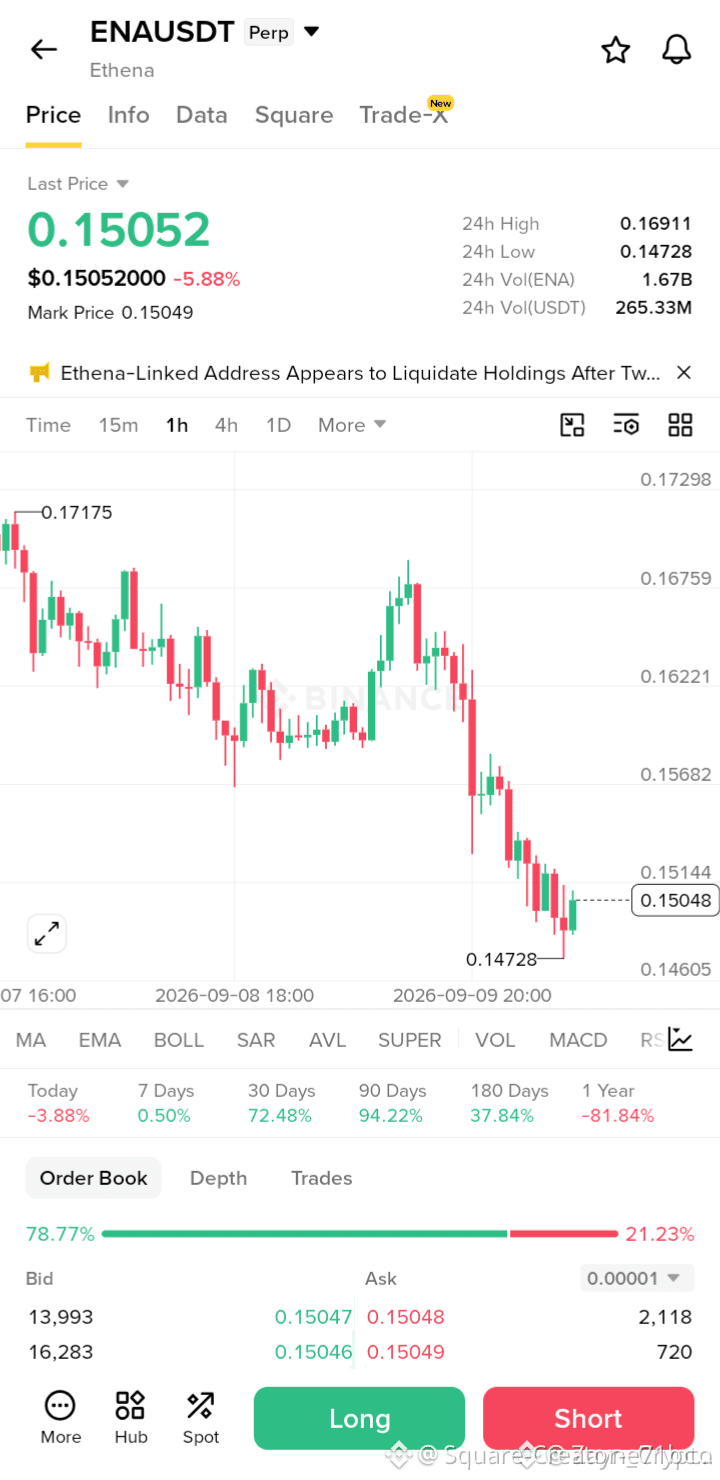
$ENA
ENA
0.1504
-5.46%
BIG SHORT 📉
Bear pressure continues once again after the most recent dip. If price stays below the entry zone, another downward wave may develop.
🔴 SHORT entry: $0.147–$0.151 Stop loss: $0.162 Target 1: $0.144 Target 2: $0.139 Target 3: $0.135
Manage your risk and avoid over-leveraging. DYOR.
#Write2Earrn
$ENA
ENA
0.1504
-5.46%
BIG SHORT 📉
Bear pressure continues once again after the most recent dip. If price stays below the entry zone, another downward wave may develop.
🔴 SHORT entry: $0.147–$0.151 Stop loss: $0.162 Target 1: $0.144 Target 2: $0.139 Target 3: $0.135
Manage your risk and avoid over-leveraging. DYOR.
#Write2Earrn
ENA
0.1504
-5.46%
BIG SHORT 📉
Bear pressure continues once again after the most recent dip. If price stays below the entry zone, another downward wave may develop.
🔴 SHORT entry: $0.147–$0.151 Stop loss: $0.162 Target 1: $0.144 Target 2: $0.139 Target 3: $0.135
Manage your risk and avoid over-leveraging. DYOR.
#Write2Earrn
68

·
--
Bullish
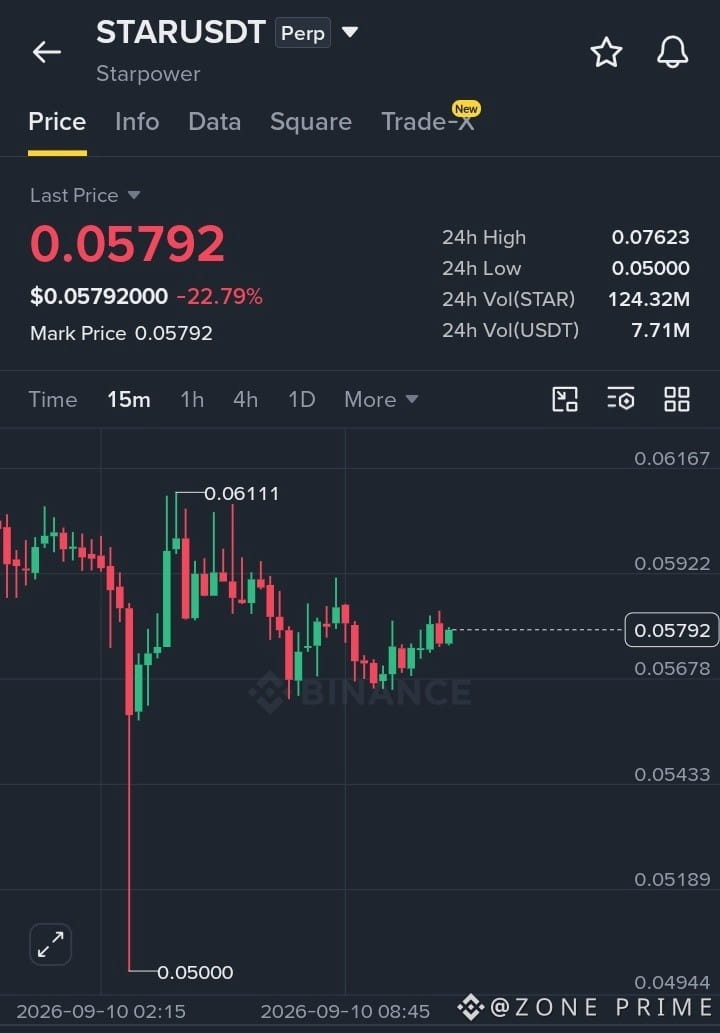
$STAR /USDT — LONG SETUP Go Everyone Fast 📈 🚀 💯 😱
Entry: 0.05000 - 0.05189
TP1: 0.05433
TP2: 0.05678
TP3: 0.05792
Stop: 0.04944
Deep liquidity sweep retesting major bottom demand.
Solid buyer defense off the low floor offers an optimal risk-to-reward bounce entry. 🚀
#star #starusdt #starpower #crypto #Write2Earrn $STAR
{future}(STARUSDT)
$STAR /USDT — LONG SETUP Go Everyone Fast 📈 🚀 💯 😱
Entry: 0.05000 - 0.05189
TP1: 0.05433
TP2: 0.05678
TP3: 0.05792
Stop: 0.04944
Deep liquidity sweep retesting major bottom demand.
Solid buyer defense off the low floor offers an optimal risk-to-reward bounce entry. 🚀
#star #starusdt #starpower #crypto #Write2Earrn $STAR
Entry: 0.05000 - 0.05189
TP1: 0.05433
TP2: 0.05678
TP3: 0.05792
Stop: 0.04944
Deep liquidity sweep retesting major bottom demand.
Solid buyer defense off the low floor offers an optimal risk-to-reward bounce entry. 🚀
#star #starusdt #starpower #crypto #Write2Earrn $STAR
190


·
--
#AppleDebutsFoldablePhone
Apple entry into foldables isn't just about bending glass—it’s about redefining what a multi-device workflow actually feels like.
If the rumors of a crease-free display and hybrid OS hold true, this isn't just a phone that folds; it’s a pocket-sized iPad built for serious split-screen productivity. Apple waited until the hardware matured, prioritizing durability and seamless hinge mechanics over being first to market.
Whether you’re editing on the go or multitasking across apps, the real test is how natural it fits into daily use. The bar for foldable hardware just got set.
What’s your take—are you upgrading on launch day or waiting for version 2.0?
$BULLA =On fire
$AAPL.US
$M
#Write2Earrn
#BankOfAmericaGroupPilotsUSBDCStablecoin
#LAPTOPFoundationXAccountSuspended
#AppleDebutsFoldablePhone
Apple entry into foldables isn't just about bending glass—it’s about redefining what a multi-device workflow actually feels like.
If the rumors of a crease-free display and hybrid OS hold true, this isn't just a phone that folds; it’s a pocket-sized iPad built for serious split-screen productivity. Apple waited until the hardware matured, prioritizing durability and seamless hinge mechanics over being first to market.
Whether you’re editing on the go or multitasking across apps, the real test is how natural it fits into daily use. The bar for foldable hardware just got set.
What’s your take—are you upgrading on launch day or waiting for version 2.0?
$BULLA =On fire
$AAPL.US
$M
#Write2Earrn
#BankOfAmericaGroupPilotsUSBDCStablecoin
#LAPTOPFoundationXAccountSuspended
Apple entry into foldables isn't just about bending glass—it’s about redefining what a multi-device workflow actually feels like.
If the rumors of a crease-free display and hybrid OS hold true, this isn't just a phone that folds; it’s a pocket-sized iPad built for serious split-screen productivity. Apple waited until the hardware matured, prioritizing durability and seamless hinge mechanics over being first to market.
Whether you’re editing on the go or multitasking across apps, the real test is how natural it fits into daily use. The bar for foldable hardware just got set.
What’s your take—are you upgrading on launch day or waiting for version 2.0?
$BULLA =On fire
$AAPL.US
$M
#Write2Earrn
#BankOfAmericaGroupPilotsUSBDCStablecoin
#LAPTOPFoundationXAccountSuspended
2
313

$NEWT
{future}(NEWTUSDT)
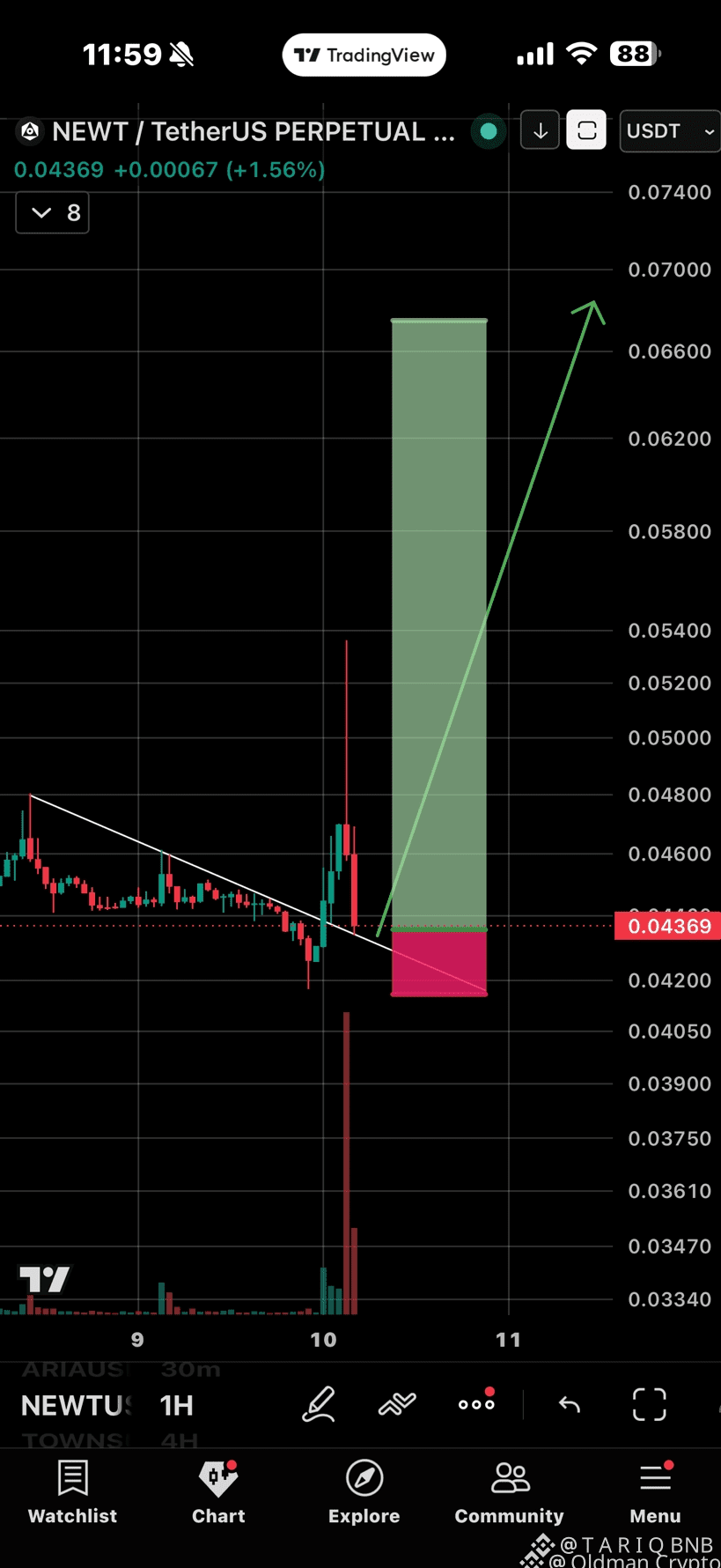
is retesting the breakout zone on the 1H chart. That initial pump to 0.054 proved strong buyer interest, making the current 0.04369 level a prime entry. High volume confirms the setup. Target: 0.067 | Stop: 0.0415 (~1:6 R:R). Second leg loading. (Not financial advice, DYOR)$NEWT #Newt #Write2Earrn
$NEWT
is retesting the breakout zone on the 1H chart. That initial pump to 0.054 proved strong buyer interest, making the current 0.04369 level a prime entry. High volume confirms the setup. Target: 0.067 | Stop: 0.0415 (~1:6 R:R). Second leg loading. (Not financial advice, DYOR)$NEWT #Newt #Write2Earrn
is retesting the breakout zone on the 1H chart. That initial pump to 0.054 proved strong buyer interest, making the current 0.04369 level a prime entry. High volume confirms the setup. Target: 0.067 | Stop: 0.0415 (~1:6 R:R). Second leg loading. (Not financial advice, DYOR)$NEWT #Newt #Write2Earrn
201

·
--
Bearish
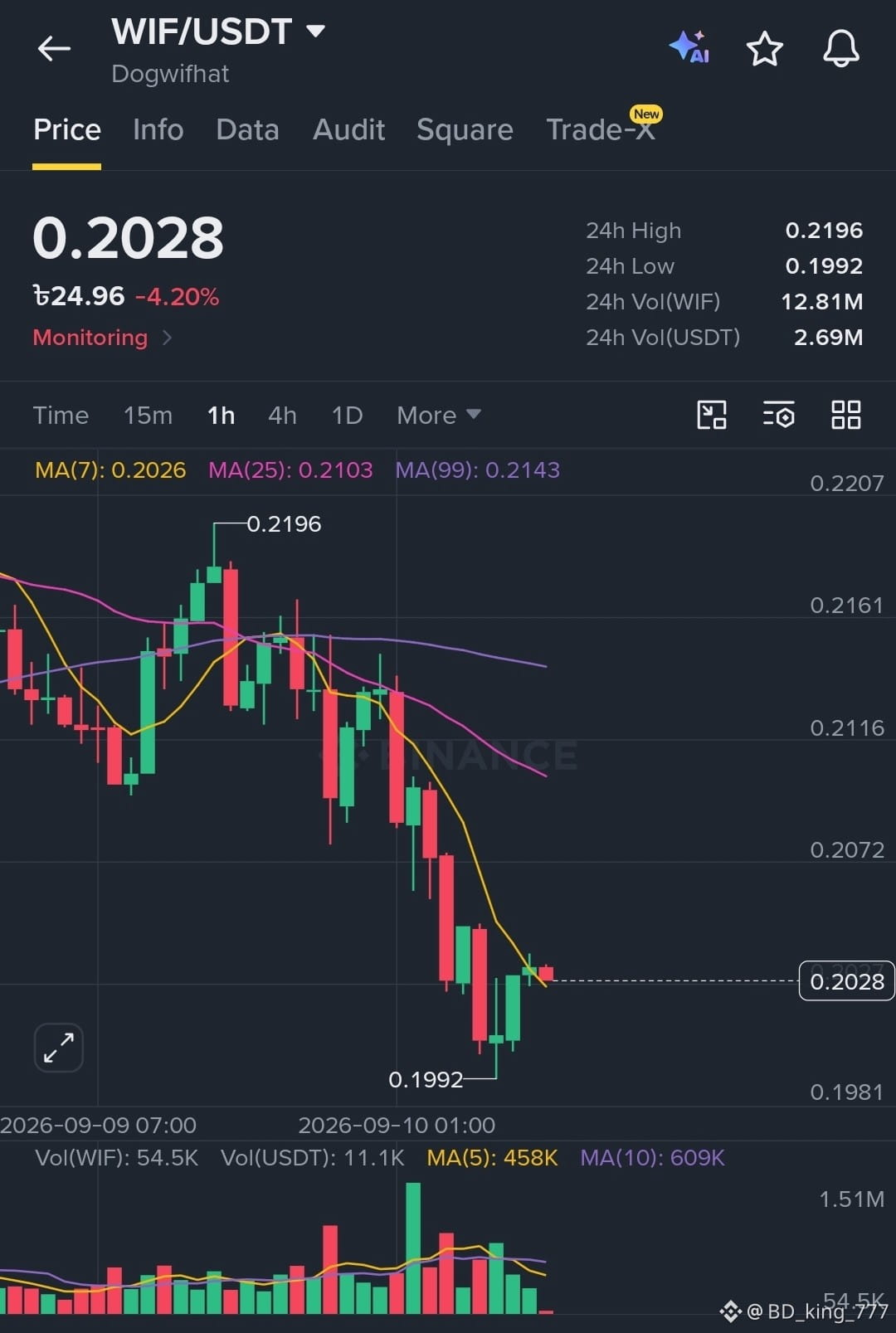
$WIF /USDT - SHORT
Trade Plan:
Entry: 0.2122317 – 0.2131683
SL: 0.2251667
TP1: 0.2033500
TP2: 0.1971167
TP3: 0.1877667
Trade and buy here..👇👇$WIF
{future}(WIFUSDT)
#WIF #Market_Update #Write2Earrn #BinanceSquareFamily
$WIF /USDT - SHORT
Trade Plan:
Entry: 0.2122317 – 0.2131683
SL: 0.2251667
TP1: 0.2033500
TP2: 0.1971167
TP3: 0.1877667
Trade and buy here..👇👇$WIF
#WIF #Market_Update #Write2Earrn #BinanceSquareFamily
Trade Plan:
Entry: 0.2122317 – 0.2131683
SL: 0.2251667
TP1: 0.2033500
TP2: 0.1971167
TP3: 0.1877667
Trade and buy here..👇👇$WIF
#WIF #Market_Update #Write2Earrn #BinanceSquareFamily
1
47

·
--
Bullish
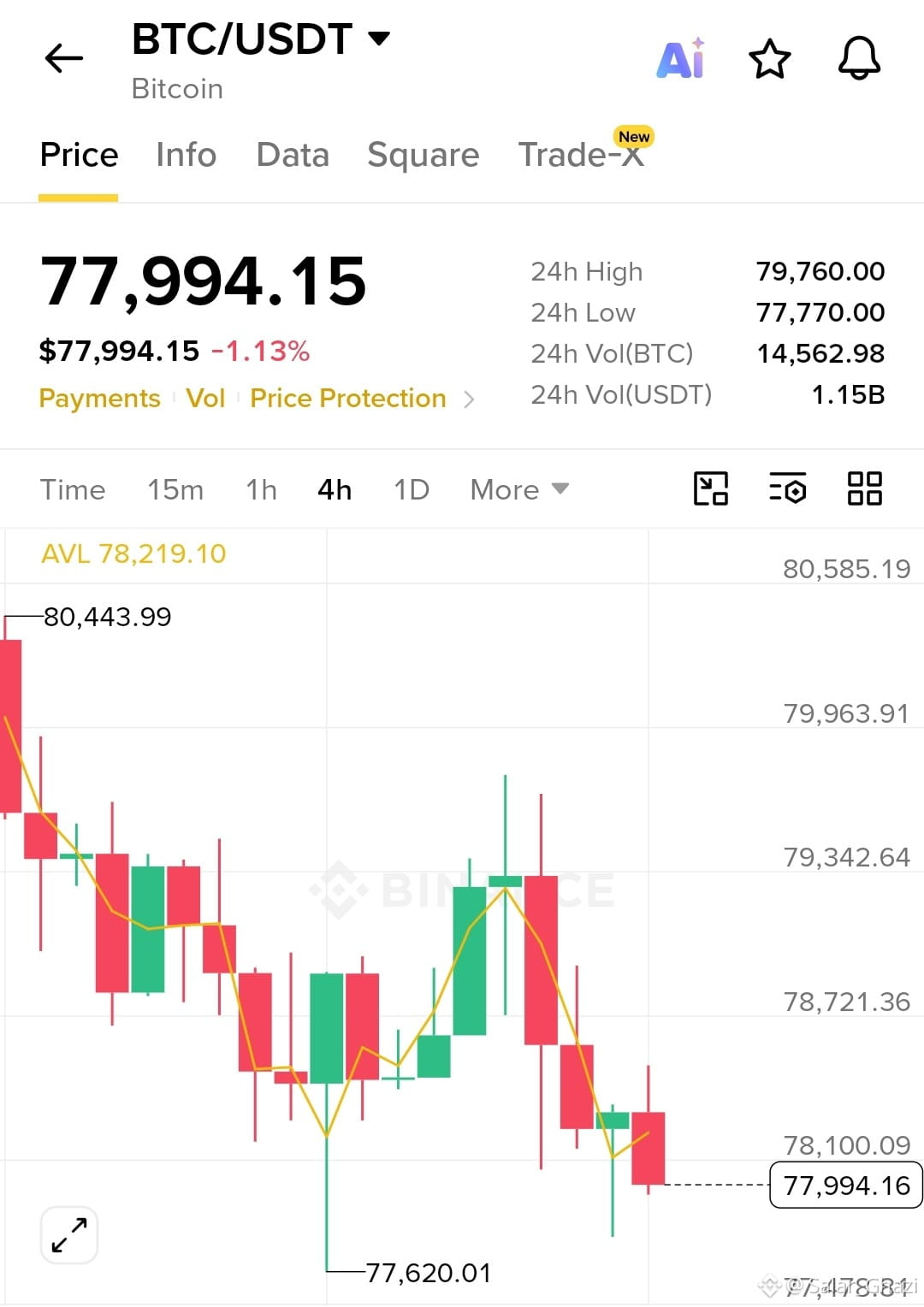
Guys, $BTC is sitting at a key level.
Price: $77,994
Support: $77,600–$77,800
Resistance: $78,700–$79,350
If BTC holds the support zone and reclaims $78.7K, we could see a push toward $79.3K+.
But if $77.6K breaks, downside pressure can accelerate.
Watch the levels, not the noise.
#Write2Earrn
Guys, $BTC is sitting at a key level.
Price: $77,994
Support: $77,600–$77,800
Resistance: $78,700–$79,350
If BTC holds the support zone and reclaims $78.7K, we could see a push toward $79.3K+.
But if $77.6K breaks, downside pressure can accelerate.
Watch the levels, not the noise.
#Write2Earrn
Price: $77,994
Support: $77,600–$77,800
Resistance: $78,700–$79,350
If BTC holds the support zone and reclaims $78.7K, we could see a push toward $79.3K+.
But if $77.6K breaks, downside pressure can accelerate.
Watch the levels, not the noise.
#Write2Earrn
1
88
·
--
Bearish
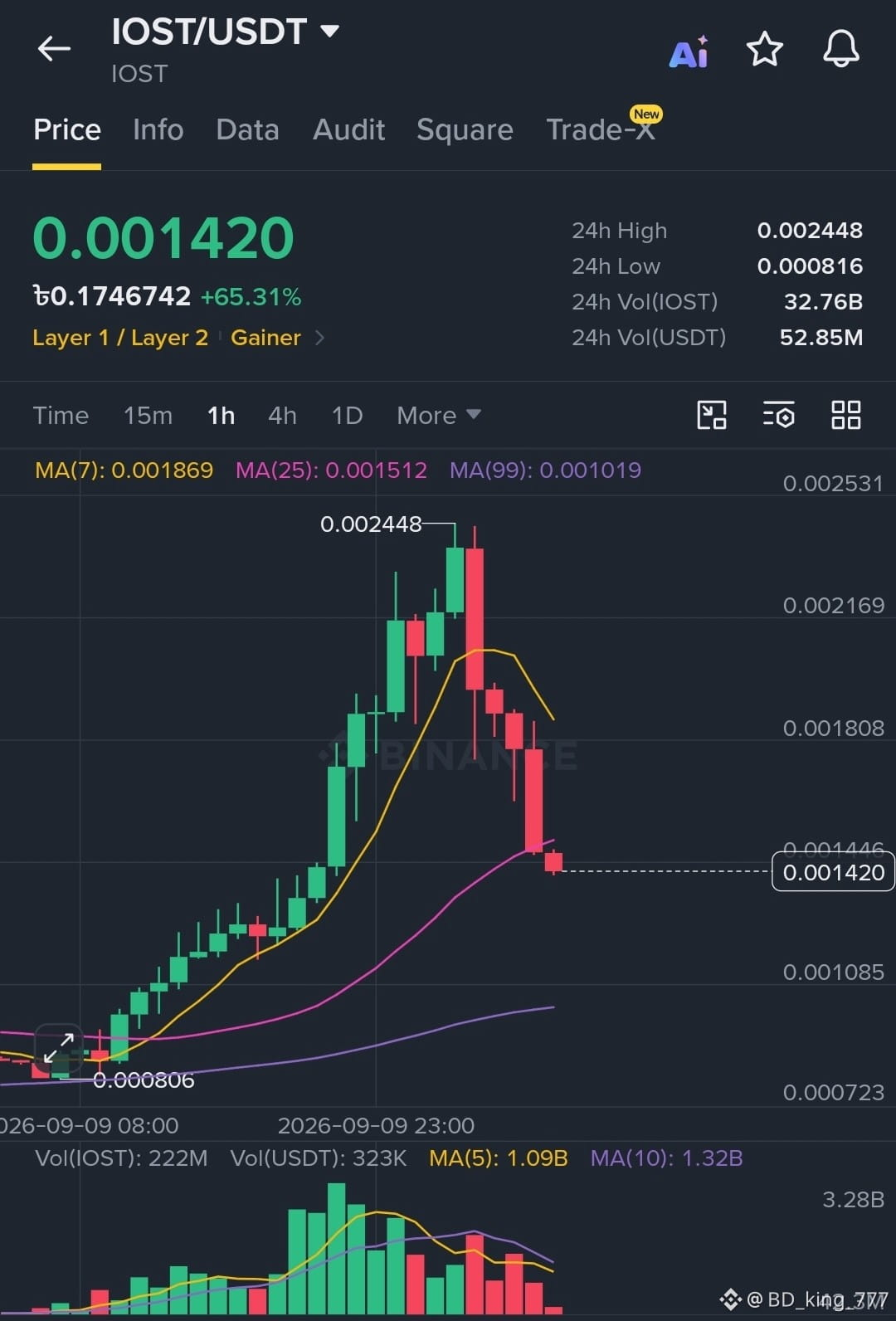
$IOST - Short
EP : 0.001420 - 0.001410
TP 1 : 0.001310
TP 2 : 0.001200
TP 3 : 0.001085
SL : 0.001808
Trade Here..👇👇$IOST
{future}(IOSTUSDT)
#iostusdt #Write2Earrn #Market_Update #BinanceSquareFamily
$IOST - Short
EP : 0.001420 - 0.001410
TP 1 : 0.001310
TP 2 : 0.001200
TP 3 : 0.001085
SL : 0.001808
Trade Here..👇👇$IOST
#iostusdt #Write2Earrn #Market_Update #BinanceSquareFamily
EP : 0.001420 - 0.001410
TP 1 : 0.001310
TP 2 : 0.001200
TP 3 : 0.001085
SL : 0.001808
Trade Here..👇👇$IOST
#iostusdt #Write2Earrn #Market_Update #BinanceSquareFamily
1
67
·
--
Bearish
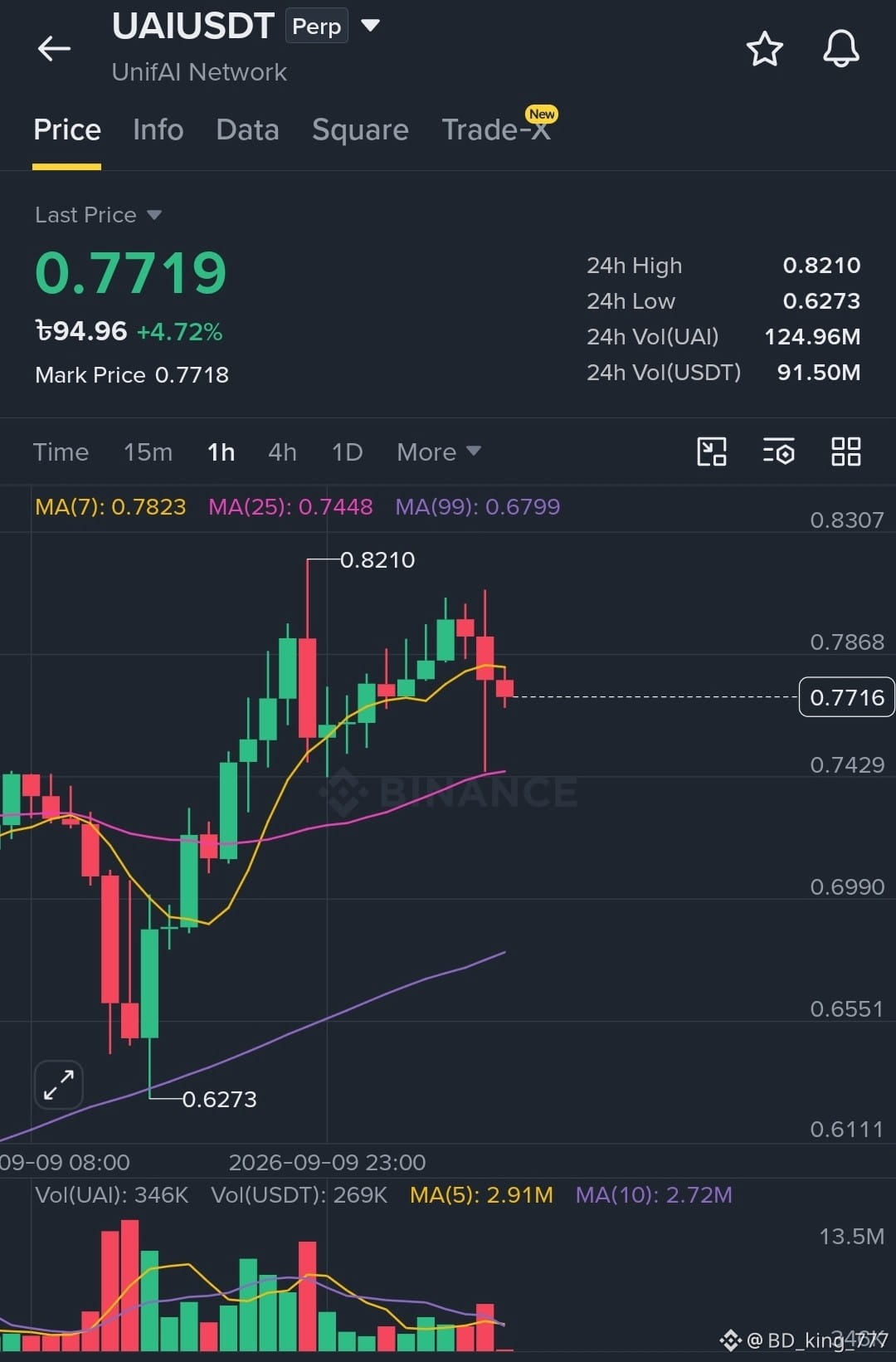
$UAI - Short📉
EP : 0.775 - 0.780
TP 1 : 0.755
TP 2 : 0.743
TP 3 : 0.730
SL : 0.801
Trade Here..👇👇
{future}(UAIUSDT)
#UAI #Market_Update #Write2Earrn #BinanceSquareFamily
$UAI - Short📉
EP : 0.775 - 0.780
TP 1 : 0.755
TP 2 : 0.743
TP 3 : 0.730
SL : 0.801
Trade Here..👇👇
#UAI #Market_Update #Write2Earrn #BinanceSquareFamily
EP : 0.775 - 0.780
TP 1 : 0.755
TP 2 : 0.743
TP 3 : 0.730
SL : 0.801
Trade Here..👇👇
#UAI #Market_Update #Write2Earrn #BinanceSquareFamily
2
76

·
--
Article
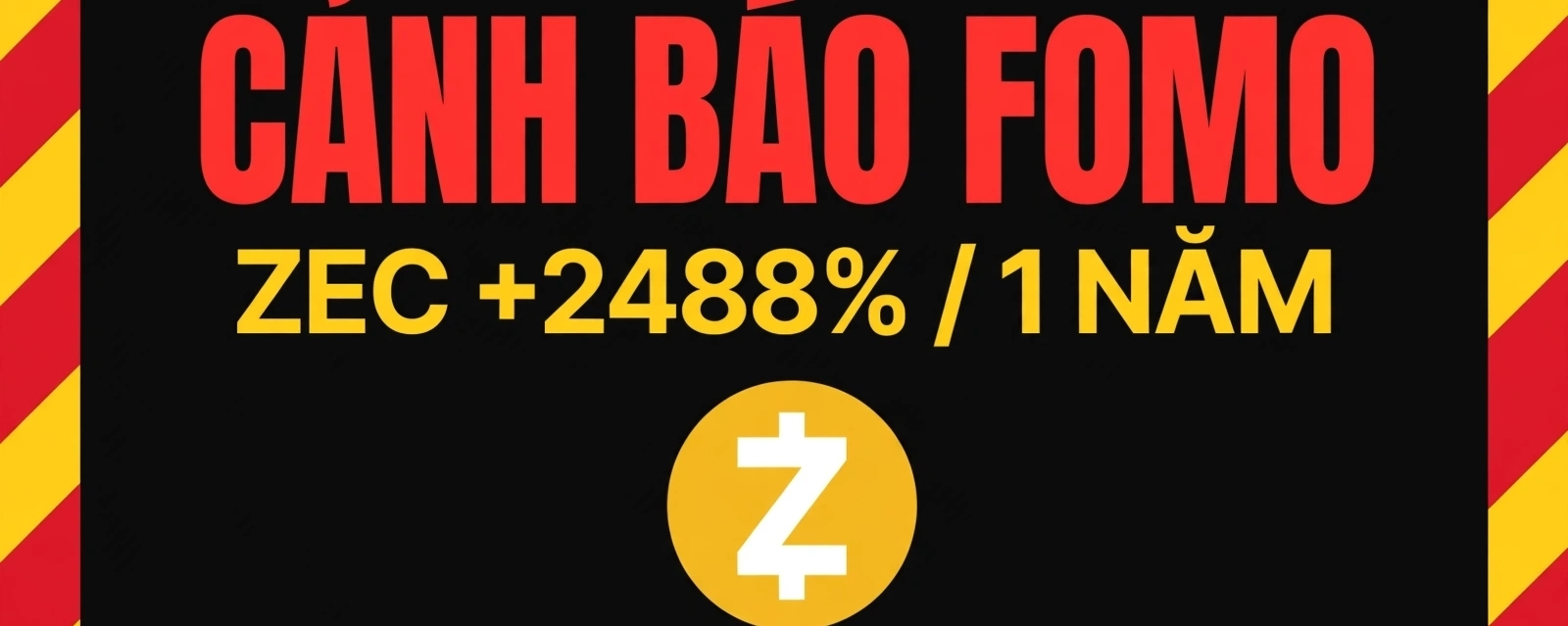
WHY IS THE ZEC COIN RISING? WARNINGZEC is the craziest coin on the market this week. Quick analysis so everyone understands.
1. Current situation - The indicator is extremely hot
Current price: ~ $1,231, with a daily range of $1,171 - $1,296.
Huge performance:
• 5 days: +21.12% • 1 month: +149.62% • 6 months: +456.5% • 1 year: +2,488%
Market cap ~ $18.9 billion, circulating supply 16M/21M ZEC. Last week, ZEC surged 32% and hit a peak near $1,249 on 9/7, so this looks like a continuation move.
WHY IS THE ZEC COIN RISING? WARNING
ZEC is the craziest coin on the market this week. Quick analysis so everyone understands.
1. Current situation - The indicator is extremely hot
Current price: ~ $1,231, with a daily range of $1,171 - $1,296.
Huge performance:
• 5 days: +21.12% • 1 month: +149.62% • 6 months: +456.5% • 1 year: +2,488%
Market cap ~ $18.9 billion, circulating supply 16M/21M ZEC. Last week, ZEC surged 32% and hit a peak near $1,249 on 9/7, so this looks like a continuation move.
1. Current situation - The indicator is extremely hot
Current price: ~ $1,231, with a daily range of $1,171 - $1,296.
Huge performance:
• 5 days: +21.12% • 1 month: +149.62% • 6 months: +456.5% • 1 year: +2,488%
Market cap ~ $18.9 billion, circulating supply 16M/21M ZEC. Last week, ZEC surged 32% and hit a peak near $1,249 on 9/7, so this looks like a continuation move.
361

·
--
Bearish
By the way, if I lose money in Bitcoin, I don’t regret it later. But if I lose money in a memecoin, I definitely regret it later, thinking, “I wish I had never invested in that memecoin. This wouldn’t have happened.” Does this happen to you too?
And yes, this is probably my last time. I have said many times that I will not invest in such shitty projects again, even if it’s just one dollar, because every single dollar is important to me. Whether it’s a thousand, a hundred, or just one dollar, every amount matters to me.
But in the end, I will definitely say this: to all the memecoin founders, a special curse from me to all of you.$IOST $TAC $VVV #Write2Earrn
By the way, if I lose money in Bitcoin, I don’t regret it later. But if I lose money in a memecoin, I definitely regret it later, thinking, “I wish I had never invested in that memecoin. This wouldn’t have happened.” Does this happen to you too?
And yes, this is probably my last time. I have said many times that I will not invest in such shitty projects again, even if it’s just one dollar, because every single dollar is important to me. Whether it’s a thousand, a hundred, or just one dollar, every amount matters to me.
But in the end, I will definitely say this: to all the memecoin founders, a special curse from me to all of you.$IOST $TAC $VVV #Write2Earrn
And yes, this is probably my last time. I have said many times that I will not invest in such shitty projects again, even if it’s just one dollar, because every single dollar is important to me. Whether it’s a thousand, a hundred, or just one dollar, every amount matters to me.
But in the end, I will definitely say this: to all the memecoin founders, a special curse from me to all of you.$IOST $TAC $VVV #Write2Earrn
AayanNoman اعیان نعمان :
ooh 😲
2
443
·
--
Bitcoin ($BTC) Rejected 4 Times at $82K — Two September Catalysts Decide Everything"
Built for maximum commissions: TL;DR hook box, trade-levels table, bull/bear scenarios tied to real events, 4 cashtags ($BTC, $ETH, $SOL, $BNB) each paired with reasoning, engagement CTA, and SEO keywords (bitcoin price today, Fed rate decision, CLARITY Act). It includes a full posting checklist and a ready-made follow-up post for Monday.
#BTC #ETFvsBTC #ETH🔥🔥🔥🔥🔥🔥 #BinanceSquareTalks #Write2Earrn
$ETH $BTC $NVDAB
Bitcoin ($BTC ) Rejected 4 Times at $82K — Two September Catalysts Decide Everything"
Built for maximum commissions: TL;DR hook box, trade-levels table, bull/bear scenarios tied to real events, 4 cashtags ($BTC , $ETH , $SOL, $BNB) each paired with reasoning, engagement CTA, and SEO keywords (bitcoin price today, Fed rate decision, CLARITY Act). It includes a full posting checklist and a ready-made follow-up post for Monday.
#BTC #ETFvsBTC #ETH🔥🔥🔥🔥🔥🔥 #BinanceSquareTalks #Write2Earrn
$ETH $BTC $NVDAB
Built for maximum commissions: TL;DR hook box, trade-levels table, bull/bear scenarios tied to real events, 4 cashtags ($BTC , $ETH , $SOL, $BNB) each paired with reasoning, engagement CTA, and SEO keywords (bitcoin price today, Fed rate decision, CLARITY Act). It includes a full posting checklist and a ready-made follow-up post for Monday.
#BTC #ETFvsBTC #ETH🔥🔥🔥🔥🔥🔥 #BinanceSquareTalks #Write2Earrn
$ETH $BTC $NVDAB
16

·
--
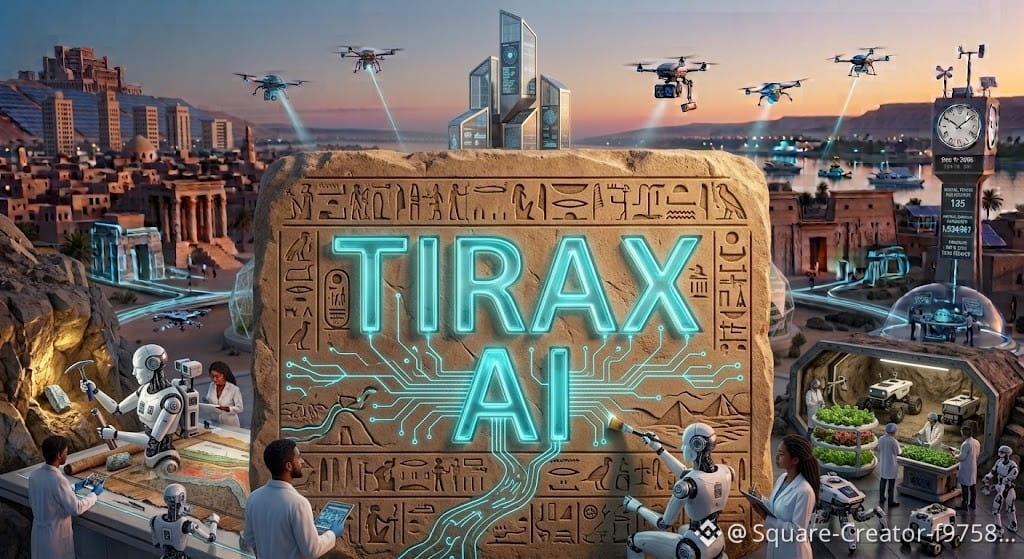
$TIRAX AI
🛡️ Risk management is the key to success with $TIRAX AI!
Price action shows an excellent opportunity to follow up and enter at current support levels while sticking to the plan:
Buy Price: $0.000066
First Target: $0.000100
Second Target: $0.000200
Third Target: $0.000500
💬 Share the post with your friends who are interested in digital currencies!
#Write2Earrn #USStrikesTargetsNearHormuzAndJask #OilRisesToHighestSinceJuly #CryptoCommunity #tradingStrategy
$TIRAX AI
🛡️ Risk management is the key to success with $TIRAX AI!
Price action shows an excellent opportunity to follow up and enter at current support levels while sticking to the plan:
Buy Price: $0.000066
First Target: $0.000100
Second Target: $0.000200
Third Target: $0.000500
💬 Share the post with your friends who are interested in digital currencies!
#Write2Earrn #USStrikesTargetsNearHormuzAndJask #OilRisesToHighestSinceJuly #CryptoCommunity #tradingStrategy
🛡️ Risk management is the key to success with $TIRAX AI!
Price action shows an excellent opportunity to follow up and enter at current support levels while sticking to the plan:
Buy Price: $0.000066
First Target: $0.000100
Second Target: $0.000200
Third Target: $0.000500
💬 Share the post with your friends who are interested in digital currencies!
#Write2Earrn #USStrikesTargetsNearHormuzAndJask #OilRisesToHighestSinceJuly #CryptoCommunity #tradingStrategy
1
50

Log in to explore more content
Join global crypto users on Binance Square
⚡️ Get latest and useful information about crypto.
💬 Trusted by the world’s largest crypto exchange.
👍 Discover real insights from verified creators.
Email / Phone number
Trending Topics
1
#AppleDebutsFoldablePhone
38,413 views
781 Discussing
2
#TSMCAugustRevenueUp53.3%YoY
7,071 views
228 Discussing
3
#IranSaysReadyToEscalateWarWithUS
10,412 views
240 Discussing
4
#EUExtendsCentralContactPointToCASPs
11,663 views
302 Discussing
5
#US10YTreasuryYieldHitsHighestSinceNov2023
33,785 views
527 Discussing
6
#USTreasuryToBuyBackUpTo$6BLongDatedDebt
19,910 views
178 Discussing
7
#BitcoinSurpasses$79K
71,505 views
291 Discussing
8
#BrentCrudeTops$100
130,498 views
416 Discussing
9
#USADPWeeklyEmploymentRises12000
119,849 views
1,428 Discussing
10
#BankOfAmericaGroupPilotsUSBDCStablecoin
89,941 views
1,121 Discussing