
#pce
pce
555,598 views
1,673 Discussing
Hot
Latest

·
--
Article
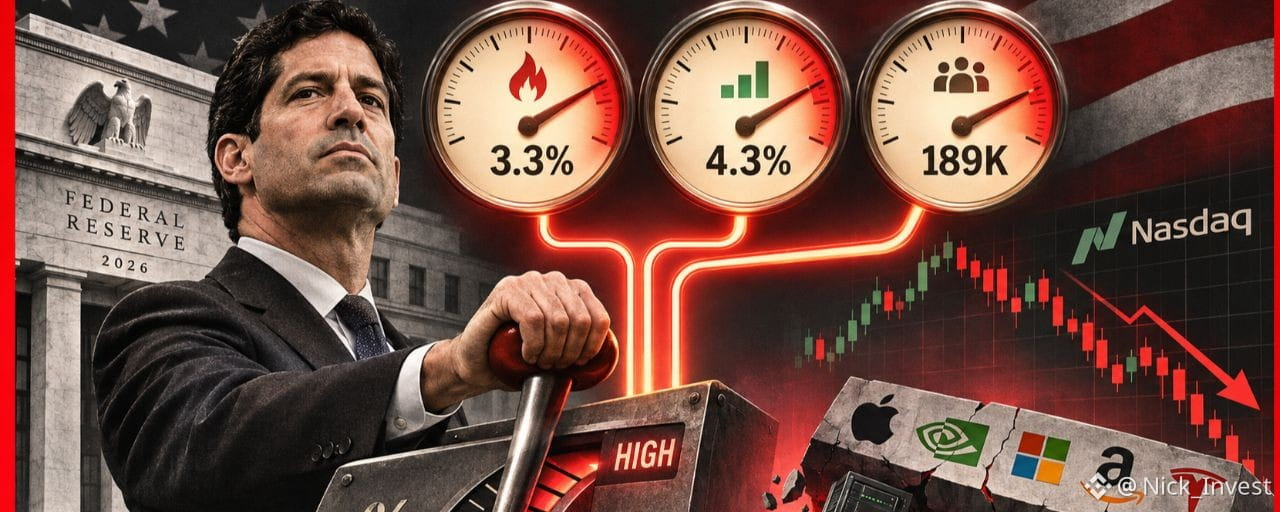
GDP at 4.3%, PCE above expectations. Cheap money is off the table againWell, the latest macro data is out, and I have bad news for you.
Today's data is a gift to the Fed hawks. For the rest of us, especially if your portfolio is heavy on tech, it's a reason to feel the pain)
👉🏻 Core PCE—the inflation measure the Fed watches most closely—came in at 3.3%, versus expectations of 3.2%. And that's up from 3.1% a month ago. So it's not just holding steady; it's accelerating again.
GDP at 4.3%, PCE above expectations. Cheap money is off the table again
Well, the latest macro data is out, and I have bad news for you.
Today's data is a gift to the Fed hawks. For the rest of us, especially if your portfolio is heavy on tech, it's a reason to feel the pain)
👉🏻 Core PCE—the inflation measure the Fed watches most closely—came in at 3.3%, versus expectations of 3.2%. And that's up from 3.1% a month ago. So it's not just holding steady; it's accelerating again.
BitChoice I Satya:
Strong economic growth combined with sticky inflation could reinforce the higher-for-longer narrative. For tech stocks and BTC, the key risk is a repricing of rate-cut expectations rather than inflation alone.
1
5
4.4k

·
--
U.S. Core PCE Rises to 3.3%: 94.4% Odds of a December Rate Hike—Can BTC Hold $60K?U.S. core PCE rose to 3.3% year over year in October, above the 3.2% forecast and up from 3.1% in September; headline PCE was 3.8% year over year, while both measures rose 0.3% month over month. The data bolstered expectations of a December rate hike, with CME FedWatch showing a 94.4% probability of a 25-basis-point hike (Cointelegraph, November 26).
The Federal Reserve will meet on December 8–9. A 25-basis-point hike would raise the policy rate to 4%–4.25%. The total crypto market cap has fallen from about $3.09 trillion at the start of the year to about $2.09 trillion, as high interest rates continue to weigh on risk-asset valuations.
Binance $BTC was at $60,343.68 at 05:02 CST on November 26, up 0.893% over 24 hours, with a range of 57,300.38–60,405.44; the day's open, high, and low were 59,832, 60,405.44, and 57,300.38. Personal view: If it breaks above 60,405.44 and holds 59,832, consider a small long position, targeting 61,682.01, with a stop-loss below 57,300.38. If it falls below 59,832 and cannot reclaim 60,405.44 on a rebound, the post-data rally has failed; the next level to watch is 55,778.
U.S. Core PCE Rises to 3.3%: 94.4% Odds of a December Rate Hike—Can BTC Hold $60K?
U.S. core PCE rose to 3.3% year over year in October, above the 3.2% forecast and up from 3.1% in September; headline PCE was 3.8% year over year, while both measures rose 0.3% month over month. The data bolstered expectations of a December rate hike, with CME FedWatch showing a 94.4% probability of a 25-basis-point hike (Cointelegraph, November 26).
The Federal Reserve will meet on December 8–9. A 25-basis-point hike would raise the policy rate to 4%–4.25%. The total crypto market cap has fallen from about $3.09 trillion at the start of the year to about $2.09 trillion, as high interest rates continue to weigh on risk-asset valuations.
Binance $BTC was at $60,343.68 at 05:02 CST on November 26, up 0.893% over 24 hours, with a range of 57,300.38–60,405.44; the day's open, high, and low were 59,832, 60,405.44, and 57,300.38. Personal view: If it breaks above 60,405.44 and holds 59,832, consider a small long position, targeting 61,682.01, with a stop-loss below 57,300.38. If it falls below 59,832 and cannot reclaim 60,405.44 on a rebound, the post-data rally has failed; the next level to watch is 55,778.
EFEEEEE:
核心 PCE 到 3.3%、整体 3.8%,环比都是 0.3%,这组数本身是偏粘的。但把 FedWatch 的 94.4% 直接写成「12 月加息」,我得先留个心眼——同样这组数据,更多人在说的是降息被往后推,不是已经在定价加息。位置上,60405 没站稳、59832 还在下面,先看这两个位置谁先失效,比先给一个 61682 的目标更实在。
2
515

·
--
Verified
Article
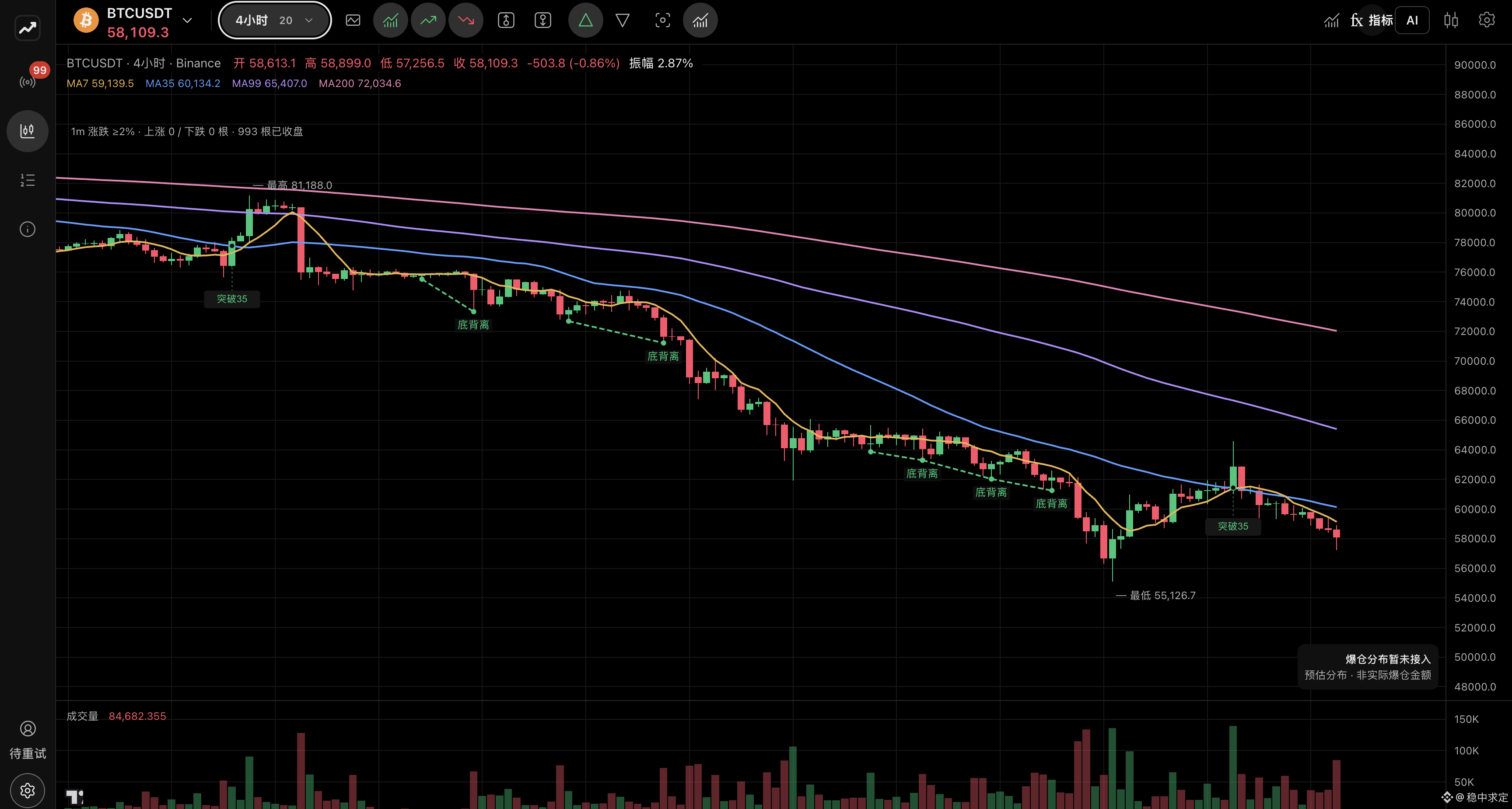
U.S. October PCE rose 0.3% month over month: the data didn’t exceed expectations, so why is BTC still lacking confirmation of a rebound?U.S. October PCE rose 0.3% month over month: the data didn’t exceed expectations, so why is BTC still lacking confirmation of a rebound?
This evening Beijing time, the U.S. October PCE data came in: the headline PCE price index rose 0.3% month over month, as did core PCE; their year-over-year rates were 3.8% and 3.3%, respectively. On the surface, the monthly figures matched market expectations, and headline PCE was below September’s 0.5%. But the real point of tension is that inflation has indeed eased from last month’s monthly high, yet remains well above the Federal Reserve’s 2% target, while core inflation rose to 3.3% year over year from 3.1%.
This is also the core disagreement around the current Binance Square trending topic `#USOctoberPCEPriceIndexAt0.3%MoM`. At around 23:43 Beijing time, the topic ranked fifth on the trends page, with 37 people discussing it; the topic page showed about 387 views and 46 people discussing it. These figures are only the visible engagement metrics on the pages, not sitewide statistics. The market is not asking, “Does PCE coming in below expectations mean risk assets must rise?” but rather, “Is the monthly slowdown enough to change expectations for tighter policy?”
U.S. October PCE rose 0.3% month over month: the data didn’t exceed expectations, so why is BTC still lacking confirmation of a rebound?
U.S. October PCE rose 0.3% month over month: the data didn’t exceed expectations, so why is BTC still lacking confirmation of a rebound?
This evening Beijing time, the U.S. October PCE data came in: the headline PCE price index rose 0.3% month over month, as did core PCE; their year-over-year rates were 3.8% and 3.3%, respectively. On the surface, the monthly figures matched market expectations, and headline PCE was below September’s 0.5%. But the real point of tension is that inflation has indeed eased from last month’s monthly high, yet remains well above the Federal Reserve’s 2% target, while core inflation rose to 3.3% year over year from 3.1%.
This is also the core disagreement around the current Binance Square trending topic `#USOctoberPCEPriceIndexAt0.3%MoM`. At around 23:43 Beijing time, the topic ranked fifth on the trends page, with 37 people discussing it; the topic page showed about 387 views and 46 people discussing it. These figures are only the visible engagement metrics on the pages, not sitewide statistics. The market is not asking, “Does PCE coming in below expectations mean risk assets must rise?” but rather, “Is the monthly slowdown enough to change expectations for tighter policy?”
风中浪客:
数据符合预期还是这副死样子 麻了 $BTC
1
2.5k

·
--
Oh no, a major negative catalyst on top of more bad news
U.S. 🇺🇸 PCE / GDP data:
Core PCE YoY: 3.3% (forecast 3.2%, previous 3.1%)
Core PCE MoM: 0.3% (forecast 0.3%, previous 0.3%)
PCE YoY: 3.8% (forecast 3.8%, previous 3.7%)
PCE MoM: 0.3% (forecast 0.3%, previous 0.5%)
Q3 GDP (second estimate): 4.3% (forecast 3.5%, previous 3.4%)
Spending MoM: 0.3% (forecast 0.4%, previous 0.6%)
#PCE #GDP #U.S. stocks
X 预言家:
哎哟这个数据确实有点凶哦,大家捂紧口袋莫慌嘛。 #PCE #美股 $BTC
1
168

·
--

Article
US PCE EXCEEDS FORECASTS – INFLATION PRESSURE HAS NOT COOLED, CRYPTO FACES RISKSThe US October PCE inflation report just released sent a less-than-positive signal to financial markets, especially Bitcoin and other risk assets.
Core PCE—the core inflation measure the Fed pays particular attention to—rose to 3.3% year over year, above the 3.2% forecast and up 0.2 percentage points from the previous reading of 3.1%.
Meanwhile, headline PCE came in at 3.8%, in line with market expectations, but also up 0.2 percentage points from the previous 3.6%.
US PCE EXCEEDS FORECASTS – INFLATION PRESSURE HAS NOT COOLED, CRYPTO FACES RISKS
The US October PCE inflation report just released sent a less-than-positive signal to financial markets, especially Bitcoin and other risk assets.
Core PCE—the core inflation measure the Fed pays particular attention to—rose to 3.3% year over year, above the 3.2% forecast and up 0.2 percentage points from the previous reading of 3.1%.
Meanwhile, headline PCE came in at 3.8%, in line with market expectations, but also up 0.2 percentage points from the previous 3.6%.
XT 2002:
@BiBi kiểm tra thông tin này
1
3
4k
·
--
Americans earned 0.7% more in October, but spent only 0.3% more.
Where did the rest go? Into savings. The personal saving rate jumped from 3.6% in September to 4.1%. After adjusting for inflation, consumption was basically flat.
Meanwhile, core PCE was up 3.3% year over year, 0.1 percentage point higher than expected and the hottest reading since November 2023. Headline PCE was 3.8%.
The toughest part of these figures is that inflation is still rising while consumption is already starting to pull back. The Fed has no reason to stop. Interest rate futures put the odds of a December rate hike at around 95%; after the hike, rates would be 4.00% to 4.25%.
The crypto market should keep an eye on 2 p.m. ET on December 9, or 3 a.m. Beijing time on December 10. Until then, BTC can hardly count on any good news from the interest rate front.
A rising saving rate usually means people are starting to get nervous. Nervous people generally don't rush to buy high-beta assets.
#美联储 #PCE #比特币 $BTC
694

·
--
$60,117. That's where Bitcoin closed yesterday — $1,731 above the $58,386 line I said would kill my range call. The call held. I said it plainly: a daily close below that line proves me wrong. It didn't happen. BTC dipped to $57,308 during the day, under the line for a few hours, then buyers stepped in and the close came in $60,117. A tested line that holds is worth more than one never tested.
But I'm not calling this a win and walking away. Why BTC dipped is still in the room: October core PCE printed 3.3% year on year, a touch above the 3.2% expected, and the December rate hike is now priced as a near certainty. The question now is not whether the Fed hikes, but how far it goes in 2027. That hangs over every risk asset, and BTC sits 52% below its record high with Fear & Greed at 9.
My read stays the same: above $58,386, the range is alive and $60,000 is the first line to hold. Lose $58,386 on a daily close and I was wrong — I'll say so plainly. What will I do about it? Watch $60,000 into the Dec 9 Fed decision and stay out of chasing green candles while the hike path is still being priced.
Did the close change your view, or are you waiting for the Fed decision too?
Follow for the next call — right or wrong, I'll post the verdict either way.
Not financial advice. Do your own research.
$BTC $BNB
#Bitcoin #BTC #PCE #Fed
300

·
--
$57,300—and back again. Overnight, Bitcoin was slammed below $58,000 by an inflation report, then climbed back above $60,000 just a few hours later.
I first spotted this in Vsnews’s AI morning brief today: at 9:30 p.m. Beijing time last night, the U.S. Department of Commerce released October PCE data. Headline inflation was up 3.8% year over year, the second-highest reading since May 2023; core inflation was up 3.3%, above the expected 3.2% and the highest since November 2023. The inflation gauge the Fed cares about most is moving further away from its 2% target, and the odds of a rate hike in December have climbed to nearly 100%.
As soon as the data came out, Bitcoin fell below $58,000, hitting an intraday low of $57,209 and dropping as much as 4.2% on the day. The Nasdaq also fell 4.2% that day, while the S&P 500 dropped 2.7%, with tariff concerns adding to the pressure. Around $512 million in positions were liquidated across the market in 24 hours, including $416 million in long positions.
But the story didn’t unfold in just one direction. After U.S. stocks closed, Bitcoin steadily climbed back, reaching around $60,500 shortly after 7 a.m. today. Buyers stepped in on the way down, but no one chased it on the way up—there was buying interest near $57,000, while above $60,000, plenty of people were waiting to break even.
My take: this drop isn’t a crypto-specific issue; it’s a repricing of the macro outlook. Inflation came in hotter than expected, rate-hike expectations tightened, and risk assets took a hit across the board. Bitcoin’s correlation with the Nasdaq has reached 0.73. ETFs are still seeing the same old story: another $231.6 million in outflows on Tuesday, marking a sixth consecutive day of outflows. November’s total has reached $4.94 billion, making it the worst month on record. Institutional money hasn’t returned yet.
Keep an eye on three things next: U.S. markets are closed for Thanksgiving today and will have only a half-day on Friday, leaving liquidity even thinner; around $6.6 billion in options expire Friday; and the next key data release is November’s nonfarm payrolls on December 4.
Do you think $57,300 was the bottom—or just halfway down?
#比特币 #PCE #Federal Reserve
209

·
--
THE DECEMBER HIKE IS NOW ~95% PRICED — SO WHAT IS LEFT TO MOVE?
Core PCE printed 3.3%, Q3 GDP smashed it at 4.3%, and December hike odds are now ~95% (CME FedWatch). The Fed meets Dec 8-9 — and the surprise would be if they DON'T hike.
Here's the trade nobody is talking about: the market is now pricing ANOTHER hike in early 2027 too. When everyone is positioned for the same outcome, the move comes from the thing nobody priced.
Setup I'm watching: the 10-year yield cracks below 4.80% — a 2.5-month low — and the hike-is-priced trade runs — $BTC (~$60,792) reclaiming $61,622 opens $64,603. Yields push back toward 5.00% and the hawkish surprise wins — lose $59,160 and the flush reopens toward $57,300. Risk: thin Thanksgiving liquidity, DXY stuck under 104 at ~103.7.
PRICED IN or PRICED WRONG — LONG the hike or SHORT the consensus? One word. 👇
$BTC #Fed #PCE #Crypto
6

·
--
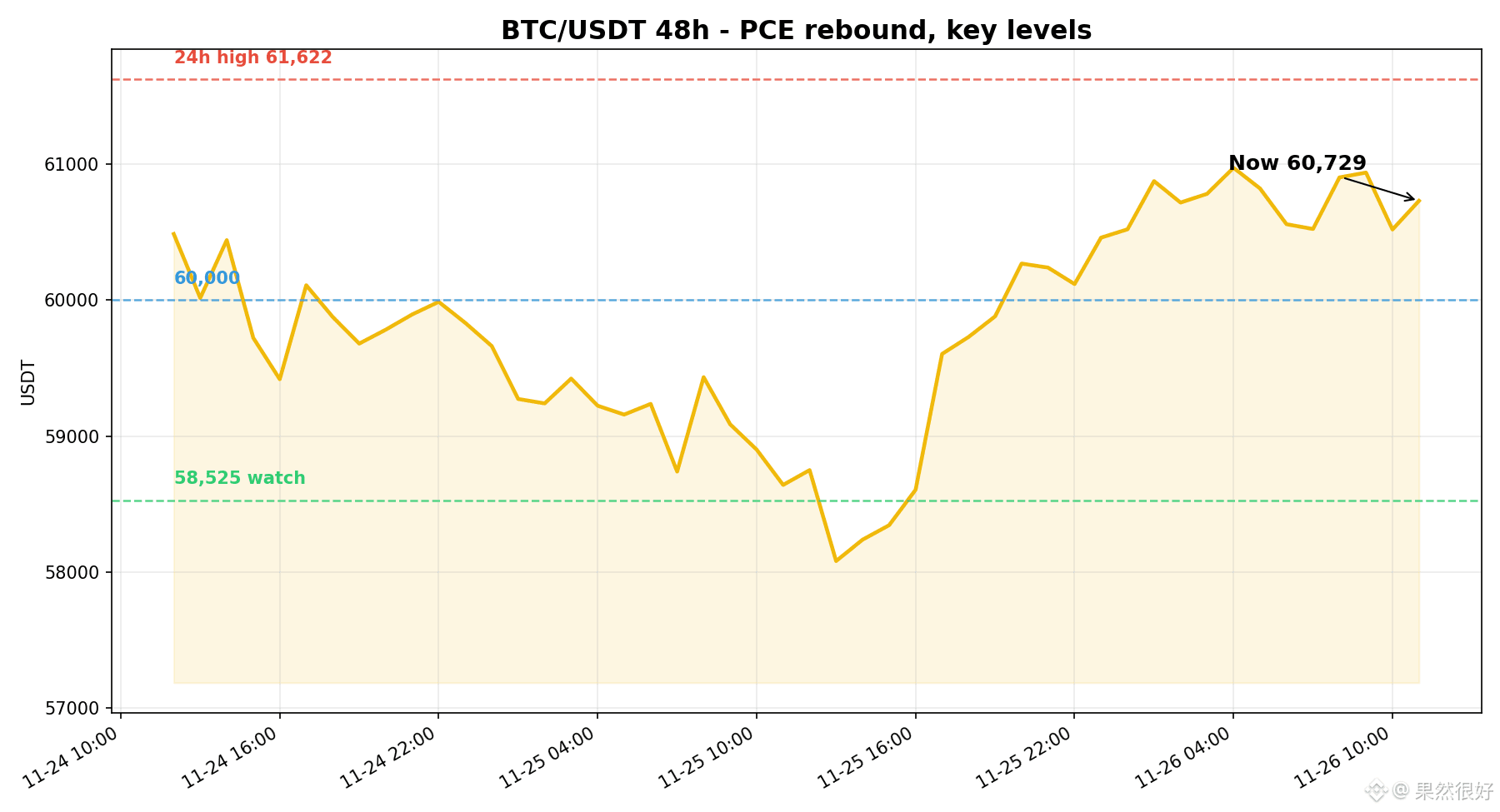
Rate-hike probability is 98.1%, yet BTC is up 3.36%, now at 60,729. Core PCE (the inflation gauge the Fed cares about most) rose 3.3% year over year in October, higher than the 3.2% expected. BTC briefly fell to 57,300 yesterday, but has climbed back above 60,000 today.
My conclusion: this isn’t a reversal; it’s an oversold bounce after the bad news was priced in early. A 0.25% rate hike in December has almost been priced in by the market. What will really determine the direction is tomorrow’s Friday confirmation—not tonight’s thin trading during the Thanksgiving market closure.
There are three key levels to watch:
61,622: 24-hour high; resistance above
60,000: the line between bulls and bears tonight
58,525: June daily low closing level; be cautious if it breaks
ETH is at 1,701, up 3.47%; SOL is at 70.89, up 4.80%, with altcoins bouncing along with them. But the Fear and Greed Index is only 11—still in extreme fear. Sentiment clearly hasn’t caught up with prices, which is why I’m not willing to call a reversal.
Let me make the invalidation conditions clear: if the daily candle closes below 58,525, my “bounce” thesis is invalid, and the next level to watch is the 48-hour low of 57,300. Conversely, only a high-volume move above 61,622 would justify talking about a continued rally. U.S. stocks will trade for only half a day tomorrow, and about $7 billion in BTC options will expire, so volatility is likely to be higher than tonight. #比特币
I’m on the side that 60,000 will hold and we’ll see consolidation; I’m not chasing above 61,622. Which side are you on: A) hold 60,000 and wait for tomorrow’s confirmation, or B) pull back to 58,525 first? Share your levels.
$BTC
$ETH #PCE
#美联储
$SOL
{future}(SOLUSDT)
{future}(ETHUSDT)
{future}(BTCUSDT)
Rate-hike probability is 98.1%, yet BTC is up 3.36%, now at 60,729. Core PCE (the inflation gauge the Fed cares about most) rose 3.3% year over year in October, higher than the 3.2% expected. BTC briefly fell to 57,300 yesterday, but has climbed back above 60,000 today.
My conclusion: this isn’t a reversal; it’s an oversold bounce after the bad news was priced in early. A 0.25% rate hike in December has almost been priced in by the market. What will really determine the direction is tomorrow’s Friday confirmation—not tonight’s thin trading during the Thanksgiving market closure.
There are three key levels to watch:
61,622: 24-hour high; resistance above
60,000: the line between bulls and bears tonight
58,525: June daily low closing level; be cautious if it breaks
ETH is at 1,701, up 3.47%; SOL is at 70.89, up 4.80%, with altcoins bouncing along with them. But the Fear and Greed Index is only 11—still in extreme fear. Sentiment clearly hasn’t caught up with prices, which is why I’m not willing to call a reversal.
Let me make the invalidation conditions clear: if the daily candle closes below 58,525, my “bounce” thesis is invalid, and the next level to watch is the 48-hour low of 57,300. Conversely, only a high-volume move above 61,622 would justify talking about a continued rally. U.S. stocks will trade for only half a day tomorrow, and about $7 billion in BTC options will expire, so volatility is likely to be higher than tonight. #比特币
I’m on the side that 60,000 will hold and we’ll see consolidation; I’m not chasing above 61,622. Which side are you on: A) hold 60,000 and wait for tomorrow’s confirmation, or B) pull back to 58,525 first? Share your levels.
$BTC
$ETH #PCE
#美联储
$SOL
1
35

·
--
#USOctoberPCEPriceIndexAt0.3%MoM
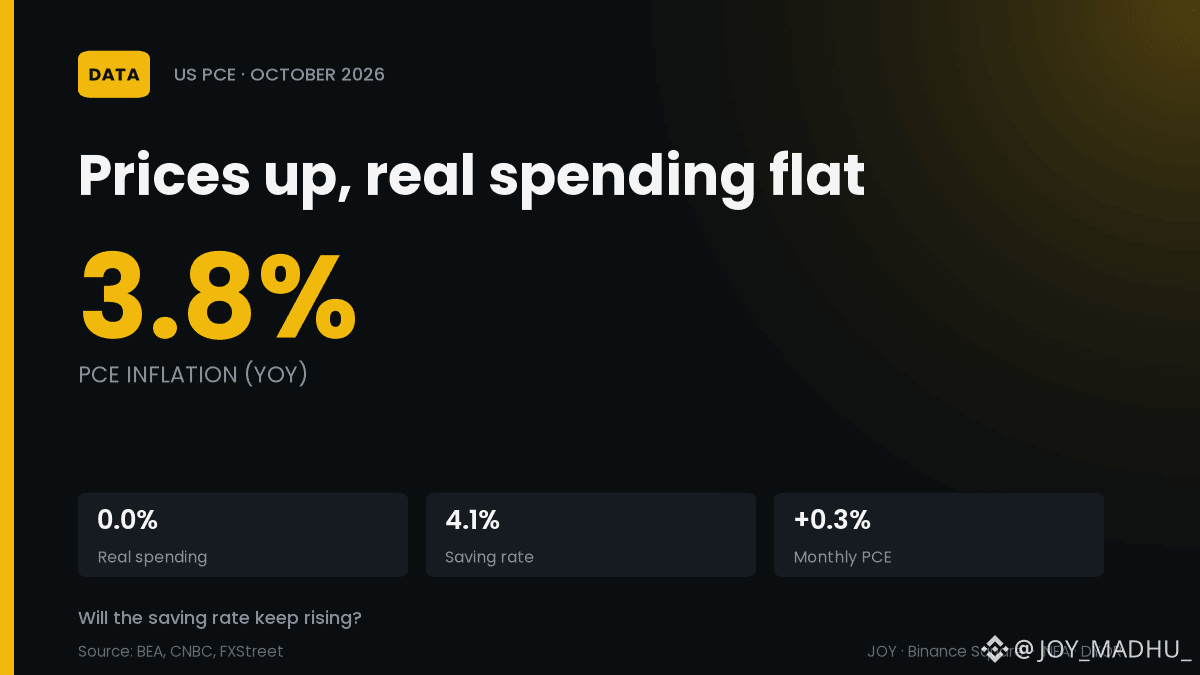
🛒 Prices +3.8%, Real Spending 0.0%: Consumers Hit Pause
October PCE matched the 0.3% monthly forecast, but the details show Americans saving more and buying less.
📊 PCE inflation 3.8% YoY, nearly double the Fed's 2% goal
📉 Real consumer spending flat; nominal +0.3% was all price
🏦 Saving rate jumped to 4.1% from 3.6% in September
⚠️ BTC briefly slipped below $58K after the release
My read: sticky prices plus cautious shoppers is a tough mix for risk assets. Dec 9 Fed is the next test.
Saving rate above 4.1% in December's PCE report: yes or no? 👇
$BTC
#USOctoberPCEPriceIndexAt0.3%MoM #PCE #Fed
17

·
--
🚨In less than 30 minutes, three important US economic indicators will be released:
Core PCE: 0.3% expected (Previous: 0.3%)
Prelim GDP: 3.5% expected (Previous: 3.4%)
GDP Price Index: 2.3% expected (Previous: 2.3%)
These reports have historically triggered significant market volatility, particularly when results surprise expectations.
Following recent strong employment data and persistent inflation, I expect Core PCE around 0.3% and GDP potentially slightly above expectations.
Hotter-than-expected inflation could strengthen DXY and pressure Bitcoin and US stock indices, particularly the S&P 500 and Nasdaq.
Softer inflation could weaken DXY and support a market recovery.
However, ongoing concerns about AI valuations and broader risk sentiment may complicate the reaction.
#PCE

ZANKANO ABU-DANGO:
Qu'est-ce que ça signifie concrètement pour un novice ?
2
1
4.9k

·
--
Verified
🚨#عاجل :
🇺🇸 Official release of the Personal Consumption Expenditures Price Index (#PCE ) in the United States
Forecast: 3.2%
Actual: 3.3%
This is not good for the markets...
#CorePCEBeatLiftsFedHikeOdds
$ETH
{future}(ETHUSDT)
$BNB
{future}(BNBUSDT)
🚨#عاجل :
🇺🇸 Official release of the Personal Consumption Expenditures Price Index (#PCE ) in the United States
Forecast: 3.2%
Actual: 3.3%
This is not good for the markets...
#CorePCEBeatLiftsFedHikeOdds
$ETH
$BNB
🇺🇸 Official release of the Personal Consumption Expenditures Price Index (#PCE ) in the United States
Forecast: 3.2%
Actual: 3.3%
This is not good for the markets...
#CorePCEBeatLiftsFedHikeOdds
$ETH
$BNB
SAQR77:
طرح مهم، فارتفاع مؤشر PCE الأساسي إلى 3.3% بدلًا من 3.2% المتوقع يشير إلى أن الضغوط التضخمية لا تزال قائمة، وهذا قد يقلل فرص التيسير النقدي ويؤثر سلبًا في شهية المستثمرين للأصول عالية المخاطر، ومنها العملات الرقمية.
لكن رد فعل السوق لا يعتمد على رقم التضخم وحده، بل أيضًا على توقعات الفائدة والسيولة وتصريحات الفيدرالي.
العبرة: لا تتسرع في البيع أو الشراء بسبب خبر واحد؛ راقب سلوك البيتكوين والسيولة، واجعل حماية رأس المال أولوية.
4
1
9
3.5k

·
--
#美国核心PCE超预期,美联储加息预期增强 #特朗普拟重启关税攻势,比特币和美股再度走弱 #PCE PCE makes a major splash! Rate hike expectations are through the roof 🔥
U.S. PCE data is out, and the inflation indicator the Fed cares about most has ticked up again 😮💨 Headline PCE was up 3.8% year over year and 0.3% month over month; core PCE rose 3.3% year over year, its highest since November 2023, and held at 0.3% month over month—above expectations and still a long way from the 2% target.
GDP was revised higher again, showing the economy’s resilience, while inflation just won’t come down 📉 The market mood shifted immediately: rate cuts, which had been on everyone’s mind, are now off the table; the odds of a December hike have climbed sharply, with 25 basis points now pretty much the base case—and 50 basis points not entirely out of the question ⚠️
The dollar strengthened in response, while gold, stocks, and crypto all came under pressure. Investors are scrambling to play defense, and people are only now realizing this inflation tug-of-war could last much longer than expected. With no quick turning point in sight, every data release from here could trigger major volatility. Be sure to manage your positions 🙏
A few other market numbers to keep in mind:
$BIGTIME $MANTRA $BTW
{web3_wallet_create}(10xcf91b70017eabde82c9671e30e5502d312ea6eb2)
{future}(BIGTIMEUSDT)
{future}(MANTRAUSDT)
#美国核心PCE超预期,美联储加息预期增强 #特朗普拟重启关税攻势,比特币和美股再度走弱 #PCE PCE makes a major splash! Rate hike expectations are through the roof 🔥
U.S. PCE data is out, and the inflation indicator the Fed cares about most has ticked up again 😮💨 Headline PCE was up 3.8% year over year and 0.3% month over month; core PCE rose 3.3% year over year, its highest since November 2023, and held at 0.3% month over month—above expectations and still a long way from the 2% target.
GDP was revised higher again, showing the economy’s resilience, while inflation just won’t come down 📉 The market mood shifted immediately: rate cuts, which had been on everyone’s mind, are now off the table; the odds of a December hike have climbed sharply, with 25 basis points now pretty much the base case—and 50 basis points not entirely out of the question ⚠️
The dollar strengthened in response, while gold, stocks, and crypto all came under pressure. Investors are scrambling to play defense, and people are only now realizing this inflation tug-of-war could last much longer than expected. With no quick turning point in sight, every data release from here could trigger major volatility. Be sure to manage your positions 🙏
A few other market numbers to keep in mind:
$BIGTIME $MANTRA $BTW

Binance BiBi:
Working on it. Your reply is on the way.
6
7
4.2k

·
--
₿ BITCOIN — November 26, 2026
📍 Price: ~$60,450–61,000 (+1–2.5% in 24 hours, rebound from $57,500)
⚔️ Trigger: Core PCE at 3.3% (above the 3.2% forecast) + GDP growth to 4.3% — a Fed rate hike in December is almost inevitable
📊 WHAT MATTERS
• ETFs: −$453M, 7th consecutive day of outflows; IBIT −$329.7M, November: record −$4.94B[reference:0][reference:1]
• Liquidations: $16B in shorts in the $60k–$100k zone, longs below $60k — less than $5B[reference:2]
• Fear & Greed: 11 (“extreme fear,” 9th consecutive day)[reference:3]
⚖️ LEVELS
🟢 Support: $57,000–58,000 → $55,000–53,000
🔴 Resistance: $61,000–62,000 → $63,000–65,000[reference:4]
💬 SENTIMENT
BTC held $60k, but the rebound is fragile: spot demand is weak, while $16B in shorts provides fuel for a squeeze. A break above $62k would trigger a move toward $65k; losing $57k would open the way to $55k and lower.
⚠️ RISKS
• ETF outflows for 7 consecutive days — institutions are not returning
• $57,000–58,000 is critical support; if it breaks, the target is $55,000–53,000
• FOMC on December 9 — a rate hike is priced in, but a “hawkish” tone would weigh on risk assets
⚠️ Not financial advice.
#Bitcoin #BTC #Crypto #ETF #FOMC #PCE $BTC
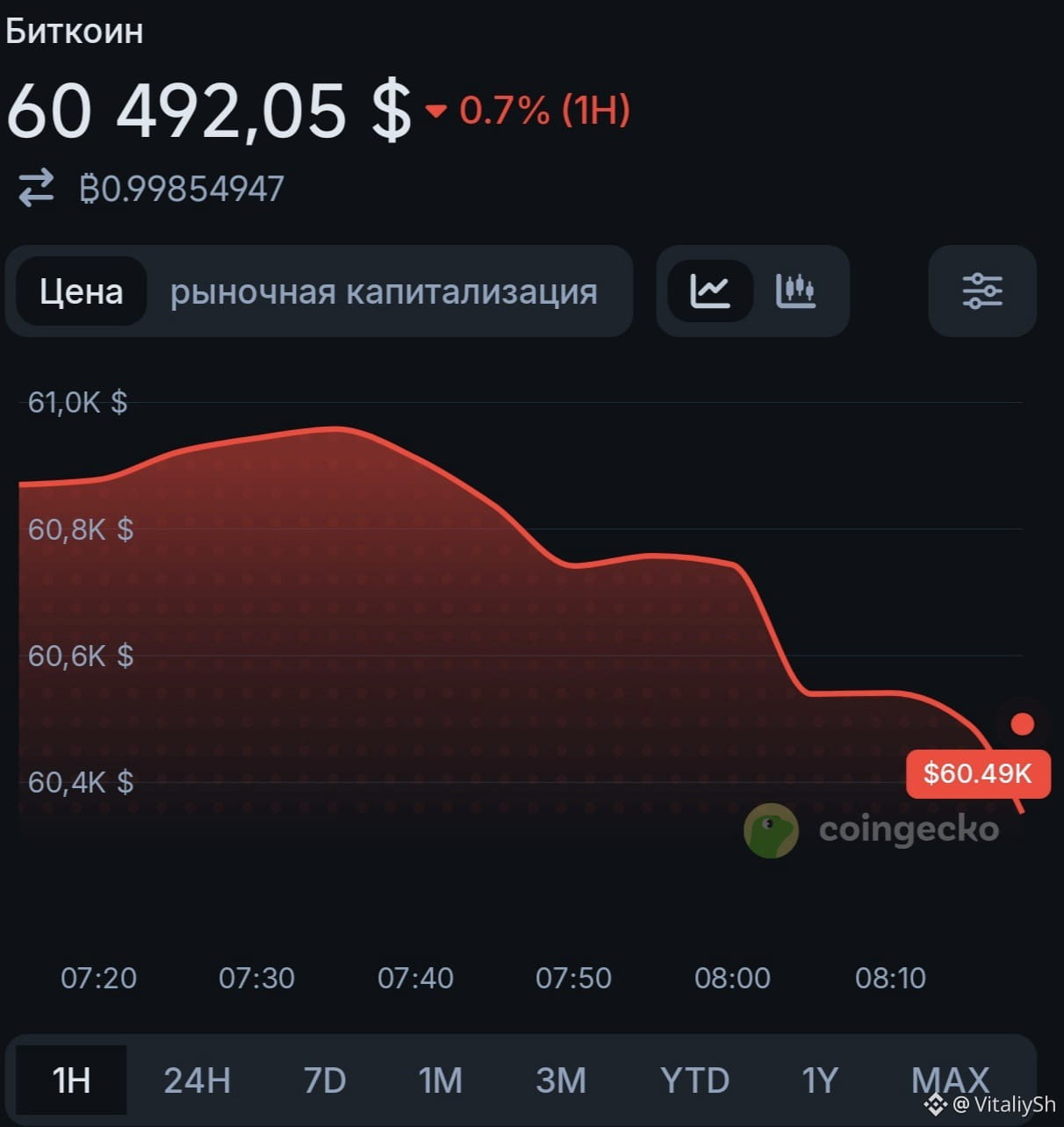
173
·
--
🇺🇸 U.S. INFLATION: TODAY’S DATA COULD SHAKE UP THE CRYPTO MARKET!
Today, November 25, investors are awaiting the release of the October PCE index—one of the key inflation indicators monitored by the U.S. Federal Reserve.
📊 What we’re watching:
- Headline PCE inflation: forecast at 3.8%, compared with 3.6% previously.
- Core PCE: forecast at 3.2%, compared with 3.1% previously.
- Monthly price growth is expected to come in at 0.3%.
🚀 How could this affect crypto?
If inflation comes in below expectations, it could ease pressure on markets and support BTC and altcoins.
If the figures come in above forecast, the dollar and bond yields could strengthen, putting additional pressure on cryptocurrencies.
My take: right now, it’s important not to guess which way the market will move, but to wait for the figures and investors’ reaction. A single economic announcement can shift short-term sentiment.
💬 What do you think—will PCE give the crypto market a reason to bounce, or are we in for another wave of pressure?
{spot}(XAUTUSDT)
{spot}(NVDABUSDT)
{spot}(BTCUSDT)
#Crypto #PCE #ФРС
🇺🇸 U.S. INFLATION: TODAY’S DATA COULD SHAKE UP THE CRYPTO MARKET!
Today, November 25, investors are awaiting the release of the October PCE index—one of the key inflation indicators monitored by the U.S. Federal Reserve.
📊 What we’re watching:
- Headline PCE inflation: forecast at 3.8%, compared with 3.6% previously.
- Core PCE: forecast at 3.2%, compared with 3.1% previously.
- Monthly price growth is expected to come in at 0.3%.
🚀 How could this affect crypto?
If inflation comes in below expectations, it could ease pressure on markets and support BTC and altcoins.
If the figures come in above forecast, the dollar and bond yields could strengthen, putting additional pressure on cryptocurrencies.
My take: right now, it’s important not to guess which way the market will move, but to wait for the figures and investors’ reaction. A single economic announcement can shift short-term sentiment.
💬 What do you think—will PCE give the crypto market a reason to bounce, or are we in for another wave of pressure?
#Crypto #PCE #ФРС
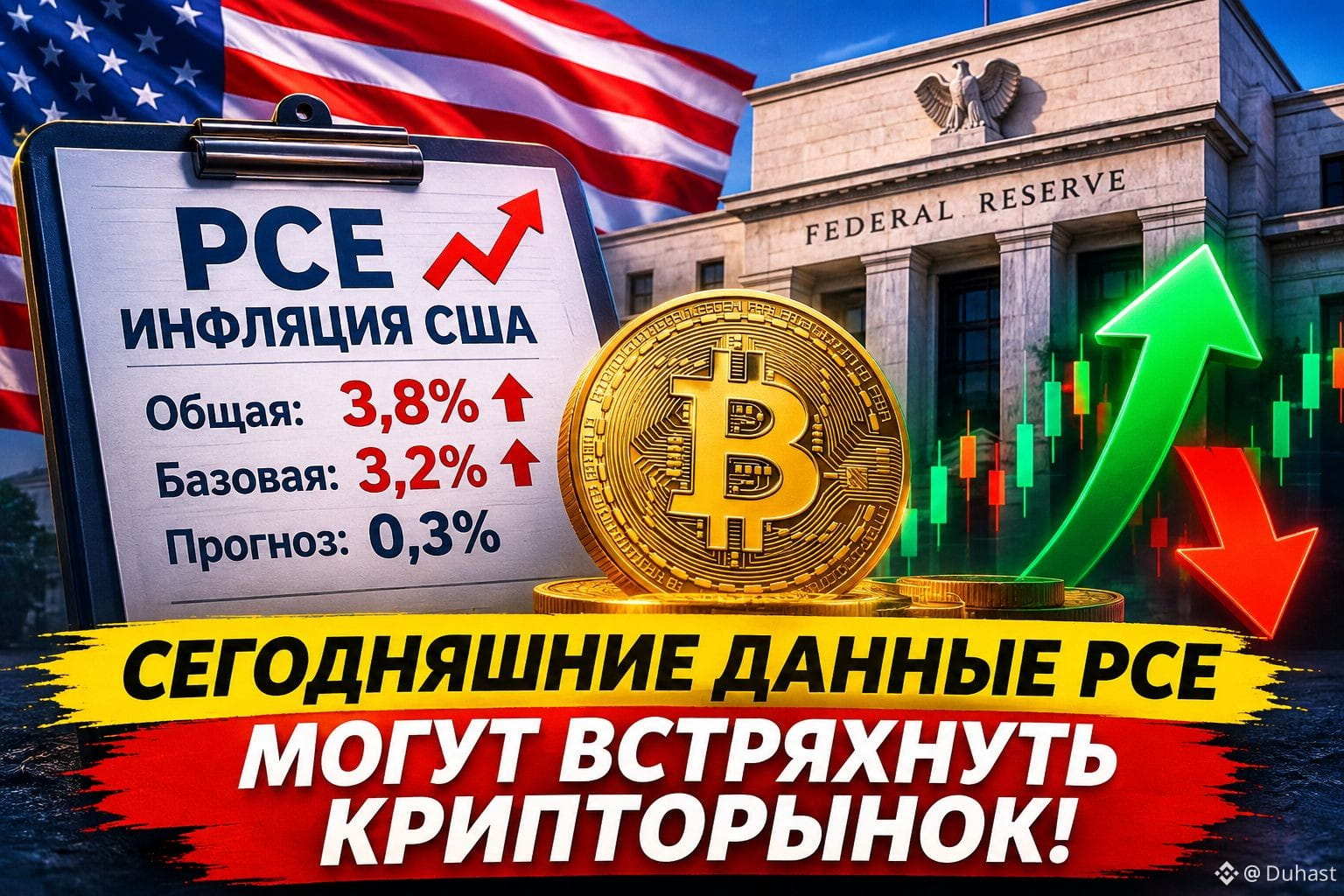
3
5.8k

·
--
BTC Morning Market Analysis 11.26
Last night, we asked whether core PCE would come in at 3.2% or higher. The answer was 3.3%—a little hotter than expected.
BTC made two completely opposite moves overnight.
🌙 What happened overnight
It plunged as soon as the data came out at 21:30. The 15-minute candle at 22:45 hit 57,300, and 58,141 didn’t hold.
Later, U.S. stocks recovered their losses. The Nasdaq was down as much as 4.6% intraday but closed down just 0.62%, and BTC rallied along with it.
At 8:15 this morning, it surged to 61,630—up more than 7% from the low—then pulled back a little.
$BTC Now at 60,895, +2.79% over 24 hours.
💰 Funds
BTC liquidations over 24 hours totaled around $265 million, with shorts accounting for 53.9% this time. Yesterday, longs made up more than 80%.
The long/short account ratio briefly hit 2.9 in the early hours; now it’s 2.75.
The Fear & Greed Index is at 11—still in extreme fear.
📊 Indicators
The 4-hour RSI is 54.18, back around the middle. The daily RSI is 28.71, still near oversold territory.
The current price is just shy of the 200-day DCA cost basis at 61,097.
$ETH 1,703, +2.64%, after touching 1,730 this morning.
SOL at 71.31, +3.66%, rebounding from 65.84—the strongest bounce of the three.
🎯 Key levels today
Resistance: 61,097 / 61,630
Support: 60,000 / 59,480
Outlook: A short-term rebound, but the broader trend hasn’t reversed. For now, expect range-bound trading.
My view: PCE came in hot, and GDP was revised up to 4.3%, so expectations for rate hikes haven’t eased at all. This rally was mainly driven by the recovery in U.S. stocks, along with short covering. U.S. markets are closed tonight for Thanksgiving, so there’ll be less external momentum. I won’t chase unless 61,630 breaks on strong volume. If BTC retests 60,000 and holds, I may consider a small position.
Will BTC break above 61,630 first today, or fall back below 60,000?
(Personal opinion; not investment advice)
#BTC #PCE #MarketAnalysis
355

·
--
Verified
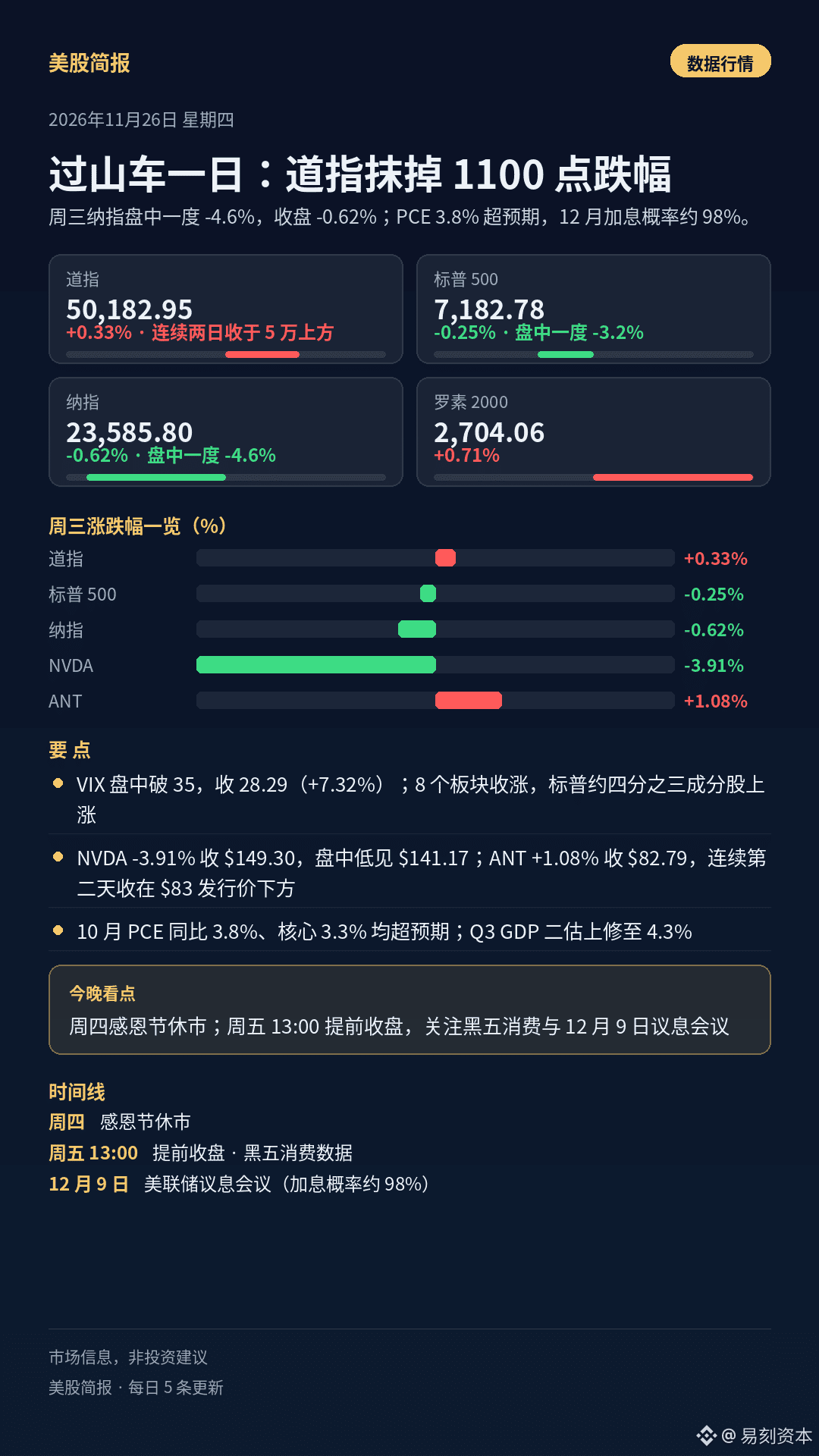
A roller-coaster day: Dow erases 1,100-point loss
My take: Wednesday’s move wasn’t a reversal—it was panic getting beaten back, then buying returning. PCE came in hotter than expected at 3.8%, with core at 3.3%. A December rate hike is almost a foregone conclusion, yet the market recovered its intraday losses all the same. That shows the bulls haven’t scattered, but they’re not exactly confident either.
The Dow rose 0.33% to close at 50,182.95, after falling as much as 1,105 points intraday. It closed above 50,000 for the second straight day. The S&P 500 fell 0.25% and the Nasdaq dropped 0.62%, after intraday losses of as much as 3.2% and 4.6%, respectively. The VIX briefly topped 35 intraday and closed at 28.29.
October PCE was up 3.8% year over year, and core PCE rose 3.3%—both above expectations. The second estimate for Q3 GDP was revised up to 4.3%. Strong growth, sticky inflation: the odds of a December rate hike are around 98%.
NVDA fell 3.91% to close at $149.30, after dipping as low as $141.17 intraday. ANT rose 1.08% to close at $82.79, its second straight close below its $83 IPO price; it fell as low as $73.85 intraday.
Reports that the U.S. is considering tariffs on China, the EU, and more than a dozen other economies were also among the factors behind the morning sell-off.
Index futures (around 16:30 ET snapshot): S&P 500 -0.21%, Nasdaq -0.61%, Dow +0.42%—a mixed picture.
Bollinger Band watch: 45 touches throughout Nov. 25 (upper band 7 / middle band 7 / lower band 31). Nearly 70% were at the lower band—the intraday panic was real.
URBN, which I discussed last night, fell 10.33% to close at $76.74, after briefly dipping below $75 intraday. ADI, on the other hand, rebounded 6.44% after falling 17% on Tuesday.
The market is closed today for Thanksgiving, and Friday’s session ends early at 13:00. What do you think—will buyers keep buying the dip during Friday’s half-day session?
#美股 #NVDA #道指 #PCE
508

·
--
U.S. stocks staged a deep-V rebound, while A-shares opened high and fell in an inverted V
On the 25th, the Dow fell more than 1,100 points at the open and the Nasdaq dropped 4.6%. A late-session rally pushed the Dow into positive territory, closing up 0.33%, while the Nasdaq still finished lower. On the 26th, the Shanghai Composite surged to 3,497 before closing flat at 3,476. The Shenzhen Component turned negative and fell below 10,000, while the ChiNext Index pared a gain of more than 2% to close up 0.29%. The STAR 50 closed down 1.36%. One was a deep V, the other an inverted V, but both were weighed down by the same thing.
Discount rates. Core PCE rose 3.3% year over year, a new high; third-quarter GDP was revised up to 4.3%; and a December rate hike was fully priced in. High-valuation AI stocks took the first hit. S&P put Nvidia $NVDAB on negative watch, and the cost of default protection for the AI supply chain also hit a new high. The market is punishing the cycle of borrowing money to buy chips and then renting out computing power.
The market structures are different.
The U.S. rebound was driven by financials, industrials, and consumer stocks in the Dow. Money rotated out of tech and into defensive sectors. The Dow could turn positive without help from tech, while the Nasdaq and Philadelphia Semiconductor Index remained lower. A-shares have no such cushion: electronics account for more than 80% of the STAR 50, leaving it tightly linked to overseas semiconductors. After opening high, it was dragged down by that chain all the way to the close.
The indexes held steady at the close, but individual stocks were weak: 1,766 rose and 3,642 fell. Large-cap stocks and broad-market ETFs propped up the market late in the session. Turnover across the two markets was 1.32 trillion yuan, down 60 billion yuan. A lower-volume inverted V gives sellers a window to cash out. The deep-V rebound in U.S. stocks doesn’t mean fundamentals have improved; it was a mechanical bounce driven by dip buyers and thin holiday trading. The afternoon selloff in A-shares was driven by forced liquidations in margin trading and a negative liquidity feedback loop. Unless trading volume returns to 1.5 trillion yuan, the inverted V isn’t over.
#PCE #美股 #英伟达
529
·
--
Verified
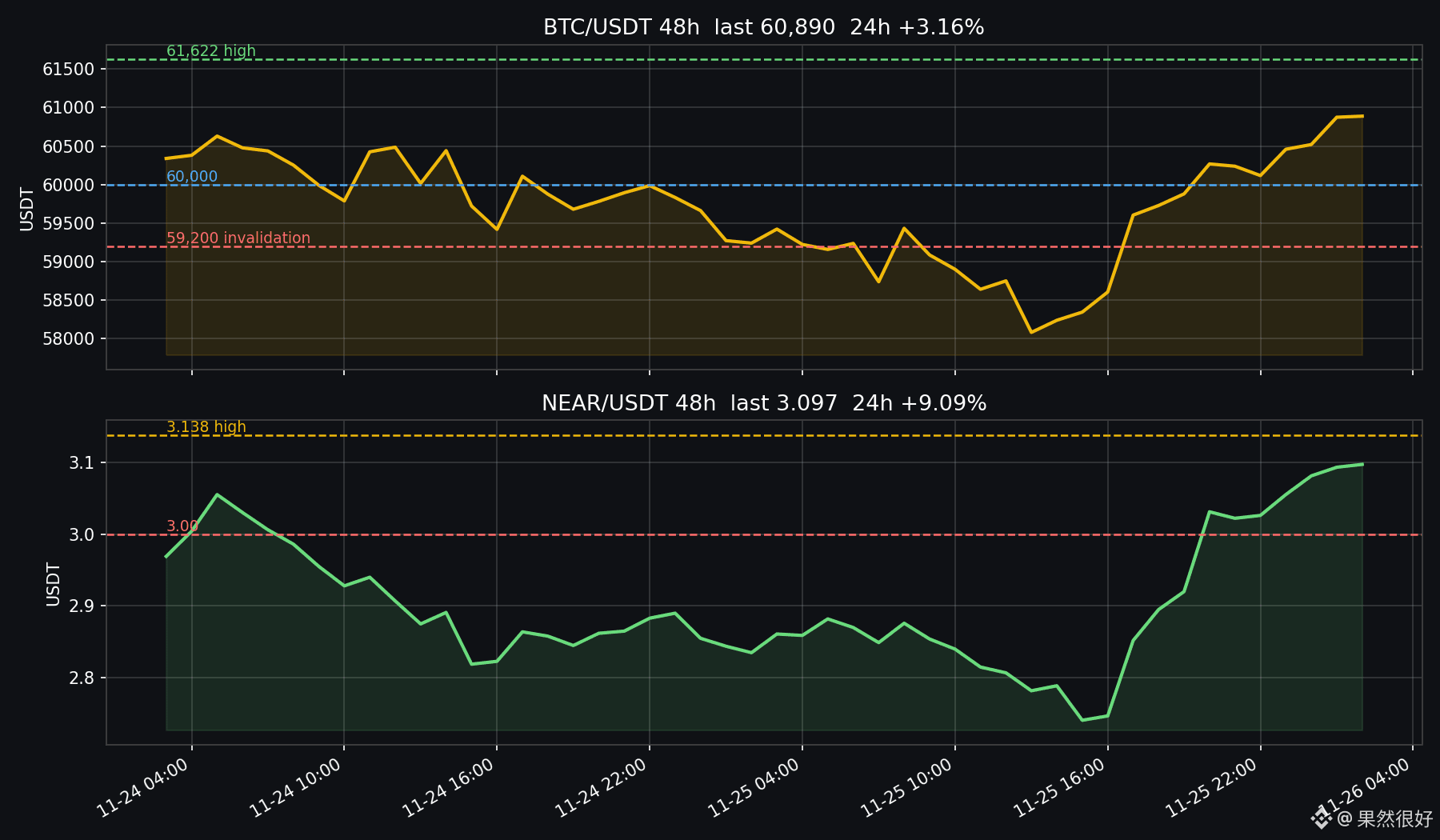
Core PCE came in at 3.3%, 0.1 percentage points higher than the 3.2% expected, yet BTC rebounded from 57,300.38 to around 60,890, up 3.16% in 24 hours.
My view is clear: this is a relief bounce after the bearish news was priced in, not confirmation of a reversal. U.S. stocks are closed today for Thanksgiving, so there are fewer cues from overseas markets. Whether BTC can hold 60,000 is more important; only if it stays above that level can we look toward the 24-hour high of 61,622.38. If it fails to hold, this rebound is just short covering.
Among altcoins, NEAR is stronger, up 9.09% in 24 hours to 3.097, with trading volume of about 78.32 million USDT and a high of 3.138. The supply narrative behind it is HSP-029, which lowers the annual issuance cap from 2.5% to 1.6%. But the price is already
near its intraday high, leaving little room for error if you chase it. ETH is up 2.97% to around 1,703, while the Fear & Greed Index is only 11, so sentiment has yet to recover.
Let's be clear about what would invalidate this view: if BTC falls below 59,200, or NEAR drops below 3.00 and fails to reclaim it, today's rebound thesis is invalidated. I'm on the side of “hold 60,000 before talking about recovery.” Which side are you on: BTC holds 60,000 and pushes toward 61,622, or falls back below 59,200 and tests the lows again?
$NEAR
{future}(NEARUSDT)
$BTC
{future}(BTCUSDT)
$ETH
{future}(ETHUSDT)
#比特币 #PCE #NEAR
Core PCE came in at 3.3%, 0.1 percentage points higher than the 3.2% expected, yet BTC rebounded from 57,300.38 to around 60,890, up 3.16% in 24 hours.
My view is clear: this is a relief bounce after the bearish news was priced in, not confirmation of a reversal. U.S. stocks are closed today for Thanksgiving, so there are fewer cues from overseas markets. Whether BTC can hold 60,000 is more important; only if it stays above that level can we look toward the 24-hour high of 61,622.38. If it fails to hold, this rebound is just short covering.
Among altcoins, NEAR is stronger, up 9.09% in 24 hours to 3.097, with trading volume of about 78.32 million USDT and a high of 3.138. The supply narrative behind it is HSP-029, which lowers the annual issuance cap from 2.5% to 1.6%. But the price is already
near its intraday high, leaving little room for error if you chase it. ETH is up 2.97% to around 1,703, while the Fear & Greed Index is only 11, so sentiment has yet to recover.
Let's be clear about what would invalidate this view: if BTC falls below 59,200, or NEAR drops below 3.00 and fails to reclaim it, today's rebound thesis is invalidated. I'm on the side of “hold 60,000 before talking about recovery.” Which side are you on: BTC holds 60,000 and pushes toward 61,622, or falls back below 59,200 and tests the lows again?
$NEAR
$BTC
$ETH
#比特币 #PCE #NEAR
1
1
667
Log in to explore more content
Join global crypto users on Binance Square
⚡️ Get latest and useful information about crypto.
💬 Trusted by the world’s largest crypto exchange.
👍 Discover real insights from verified creators.
Email / Phone number
Trending Topics
1
#CanMarketsReboundAfterThanksgiving?
160,166 views
1,792 Discussing
2
#CouldSpaceX’sOrbitalDataCentersBoostAIChipDemand?
76,086 views
1,085 Discussing
3
#SouthKoreaProposesMandatoryDigitalAssetTransactionDisclosure
2,660 views
70 Discussing
4
#EvolveAtBinanceBlockchainWeek
804,799 views
10,062 Discussing
5
#KoreaFSCSeeksPowerToSuspendCryptoListings
16,933 views
276 Discussing
6
#SouthKoreaPlansToRequireTetherCircleLocalReserves
14,562 views
205 Discussing
7
#UKFCAReportedlyPlansDeFiAuthorizationRules
12,370 views
127 Discussing
8
#ZcashDevelopersUrgeZECMoveToIronwood
23,282 views
135 Discussing
9
#TetherGoldFaces$2.55BUnrealizedLoss
2,458 views
13 Discussing
10
#CorePCEBeatLiftsFedHikeOdds
281,578 views
1,791 Discussing