

#onchain
onchain
3.2M views
16,647 Discussing
Hot
Latest

everyone thinks big institutions just hold forever, but actually watching their wallets tells a completely different story.
most retail traders panic and sell at the exact bottom, only to fomo back in when green candles appear and end up getting chopped to pieces. it is brutal watching your portfolio bleed while smart money plays chess with the order books.
ngl this recent on-chain movement is a textbook case study on how whales trade. they literally dumped 10,000 $BTC during q3 to trigger panic, waited for liquidity to build at lower levels, and then scooped up 11,000 back before anyone realized what happened. they closed the quarter sitting on a net increase of 1,000 coins while retail was busy capitulating into stables.
while the market was distracted watching $ETH and $SOL chop sideways, the real accumulation happened in plain sight. trading against these desks without watching order flows is basically donating your liquidity, ser.
did you get shaken out during that dip or were you buying with them?
#Bitcoin #CryptoTrading #OnChain
everyone thinks big institutions just hold forever, but actually watching their wallets tells a completely different story.
most retail traders panic and sell at the exact bottom, only to fomo back in when green candles appear and end up getting chopped to pieces. it is brutal watching your portfolio bleed while smart money plays chess with the order books.
ngl this recent on-chain movement is a textbook case study on how whales trade. they literally dumped 10,000 $BTC during q3 to trigger panic, waited for liquidity to build at lower levels, and then scooped up 11,000 back before anyone realized what happened. they closed the quarter sitting on a net increase of 1,000 coins while retail was busy capitulating into stables.
while the market was distracted watching $ETH and $SOL chop sideways, the real accumulation happened in plain sight. trading against these desks without watching order flows is basically donating your liquidity, ser.
did you get shaken out during that dip or were you buying with them?
#Bitcoin #CryptoTrading #OnChain
most retail traders panic and sell at the exact bottom, only to fomo back in when green candles appear and end up getting chopped to pieces. it is brutal watching your portfolio bleed while smart money plays chess with the order books.
ngl this recent on-chain movement is a textbook case study on how whales trade. they literally dumped 10,000 $BTC during q3 to trigger panic, waited for liquidity to build at lower levels, and then scooped up 11,000 back before anyone realized what happened. they closed the quarter sitting on a net increase of 1,000 coins while retail was busy capitulating into stables.
while the market was distracted watching $ETH and $SOL chop sideways, the real accumulation happened in plain sight. trading against these desks without watching order flows is basically donating your liquidity, ser.
did you get shaken out during that dip or were you buying with them?
#Bitcoin #CryptoTrading #OnChain

10

Could the world’s information eventually move on-chain?
Prediction markets are showing us something interesting: when new information appears, traders react almost instantly — and market probabilities move with them. 👀
Today, we see this around crypto assets like $BTC, $SOL, $DOGE and $SUI. But imagine extending this to:
📊 Interest rates
🛢️ Commodities
🌎 Global economic events
🗳️ Elections
🚀 Major industry developments
The potential is bigger than simply predicting outcomes.
On-chain prediction markets could become a new layer of real-time market intelligence — where information, sentiment and probabilities come together.
The real question is:
👉 How much of global information will eventually have a market on-chain?
What do you think? 👇
Not financial advice. Always DYOR.
#Polymarket #PredictionMarkets #Crypto #Web3 #Onchain hain #BTC TC #SOL #Dogecoin OGE #SUİ
Could the world’s information eventually move on-chain?
Prediction markets are showing us something interesting: when new information appears, traders react almost instantly — and market probabilities move with them. 👀
Today, we see this around crypto assets like $BTC, $SOL, $DOGE and $SUI. But imagine extending this to:
📊 Interest rates
🛢️ Commodities
🌎 Global economic events
🗳️ Elections
🚀 Major industry developments
The potential is bigger than simply predicting outcomes.
On-chain prediction markets could become a new layer of real-time market intelligence — where information, sentiment and probabilities come together.
The real question is:
👉 How much of global information will eventually have a market on-chain?
What do you think? 👇
Not financial advice. Always DYOR.
#Polymarket #PredictionMarkets #Crypto #Web3 #Onchain hain #BTC TC #SOL #Dogecoin OGE #SUİ
Prediction markets are showing us something interesting: when new information appears, traders react almost instantly — and market probabilities move with them. 👀
Today, we see this around crypto assets like $BTC, $SOL, $DOGE and $SUI. But imagine extending this to:
📊 Interest rates
🛢️ Commodities
🌎 Global economic events
🗳️ Elections
🚀 Major industry developments
The potential is bigger than simply predicting outcomes.
On-chain prediction markets could become a new layer of real-time market intelligence — where information, sentiment and probabilities come together.
The real question is:
👉 How much of global information will eventually have a market on-chain?
What do you think? 👇
Not financial advice. Always DYOR.
#Polymarket #PredictionMarkets #Crypto #Web3 #Onchain hain #BTC TC #SOL #Dogecoin OGE #SUİ

1
132

🦈 $BTC SHORT-TERM HOLDERS ADD 87,000 COINS WITH THE $74,100 DEFENSE LINE IN FOCUS! 📊
On-chain metrics reveal short-term $BTC holders stacked 87,000 coins over the last month, marking seven consecutive weeks of continuous position growth. 📊 Fresh capital is actively absorbing supply as coins moved within the past six months expand.
📌 The average cost basis for these recent market entrants has climbed to $74,100, holding an aggregate unrealized profit cushion near 15%. This level now stands as the critical market pivot—a solid wall of support where smart money cost basis meets market conviction. ⚡
💡 Maintaining price action above $74,100 keeps structural momentum firmly bullish, while a crack below threatens to push short-term bids underwater. 💬 Do you expect bulls to defend the $74,100 cost basis with authority, or are we set for a deeper liquidity sweep? 👇
⚠️ Not financial advice. Always manage your risk. 🛡️
🏷️ #BTC #OnChain #Bitcoin #MarketStructure
🔥 💎
🦈 $BTC SHORT-TERM HOLDERS ADD 87,000 COINS WITH THE $74,100 DEFENSE LINE IN FOCUS! 📊
On-chain metrics reveal short-term $BTC holders stacked 87,000 coins over the last month, marking seven consecutive weeks of continuous position growth. 📊 Fresh capital is actively absorbing supply as coins moved within the past six months expand.
📌 The average cost basis for these recent market entrants has climbed to $74,100, holding an aggregate unrealized profit cushion near 15%. This level now stands as the critical market pivot—a solid wall of support where smart money cost basis meets market conviction. ⚡
💡 Maintaining price action above $74,100 keeps structural momentum firmly bullish, while a crack below threatens to push short-term bids underwater. 💬 Do you expect bulls to defend the $74,100 cost basis with authority, or are we set for a deeper liquidity sweep? 👇
⚠️ Not financial advice. Always manage your risk. 🛡️
🏷️ #BTC #OnChain #Bitcoin #MarketStructure
🔥 💎
On-chain metrics reveal short-term $BTC holders stacked 87,000 coins over the last month, marking seven consecutive weeks of continuous position growth. 📊 Fresh capital is actively absorbing supply as coins moved within the past six months expand.
📌 The average cost basis for these recent market entrants has climbed to $74,100, holding an aggregate unrealized profit cushion near 15%. This level now stands as the critical market pivot—a solid wall of support where smart money cost basis meets market conviction. ⚡
💡 Maintaining price action above $74,100 keeps structural momentum firmly bullish, while a crack below threatens to push short-term bids underwater. 💬 Do you expect bulls to defend the $74,100 cost basis with authority, or are we set for a deeper liquidity sweep? 👇
⚠️ Not financial advice. Always manage your risk. 🛡️
🏷️ #BTC #OnChain #Bitcoin #MarketStructure
🔥 💎
19

·
--
🚨 Ethereum validators' exit queue jumps 392%: panic or a technical reorganization? 📉🔍
In the past few days, the Ethereum network ( $ETH H ) has recorded an atypical movement that lit up alarms across the on-chain ecosystem: the validators' exit queue surged by 392%, reaching a peak close to 850.736 ETH waiting for de-staking and raising the estimated exit time to nearly 15 days.
Are we seeing an imminent mass sell-off, or is this an isolated infrastructure event? We break down the data in depth.
1. The trigger: the MetaMask Staking security incident
Far from being a widespread panic among retail investors, most of this increase has an identified origin:
The source of volume: Of the approximately 850,000 ETH in the queue, more than 523,000 ETH comes from the preventive shutdown of nearly 17,000 validators managed by MetaMask Staking infrastructure (closely linked to Lido operators).
The incident: After detecting a partial compromise in its infrastructure on September 30 (involving a small leakage of block rewards without compromising users' keys or funds), the team decided to withdraw and restart its validators as the highest-safety measure. This process is expected to be completed around October 7.
2. Network context: is there a real liquidity threat?
To determine whether this will cause a cascade of selling in the Spot market, you need to look at the proportions:
Share of the total: The network has more than 43.6 million ETH staked and about 878,000 active validators. The current queue represents only about 2% of the locked supply.
#EthereumValidatorExitQueueJumps392% #ETH #OnChain
🚨 Ethereum validators' exit queue jumps 392%: panic or a technical reorganization? 📉🔍
In the past few days, the Ethereum network ( $ETH H ) has recorded an atypical movement that lit up alarms across the on-chain ecosystem: the validators' exit queue surged by 392%, reaching a peak close to 850.736 ETH waiting for de-staking and raising the estimated exit time to nearly 15 days.
Are we seeing an imminent mass sell-off, or is this an isolated infrastructure event? We break down the data in depth.
1. The trigger: the MetaMask Staking security incident
Far from being a widespread panic among retail investors, most of this increase has an identified origin:
The source of volume: Of the approximately 850,000 ETH in the queue, more than 523,000 ETH comes from the preventive shutdown of nearly 17,000 validators managed by MetaMask Staking infrastructure (closely linked to Lido operators).
The incident: After detecting a partial compromise in its infrastructure on September 30 (involving a small leakage of block rewards without compromising users' keys or funds), the team decided to withdraw and restart its validators as the highest-safety measure. This process is expected to be completed around October 7.
2. Network context: is there a real liquidity threat?
To determine whether this will cause a cascade of selling in the Spot market, you need to look at the proportions:
Share of the total: The network has more than 43.6 million ETH staked and about 878,000 active validators. The current queue represents only about 2% of the locked supply.
#EthereumValidatorExitQueueJumps392% #ETH #OnChain
In the past few days, the Ethereum network ( $ETH H ) has recorded an atypical movement that lit up alarms across the on-chain ecosystem: the validators' exit queue surged by 392%, reaching a peak close to 850.736 ETH waiting for de-staking and raising the estimated exit time to nearly 15 days.
Are we seeing an imminent mass sell-off, or is this an isolated infrastructure event? We break down the data in depth.
1. The trigger: the MetaMask Staking security incident
Far from being a widespread panic among retail investors, most of this increase has an identified origin:
The source of volume: Of the approximately 850,000 ETH in the queue, more than 523,000 ETH comes from the preventive shutdown of nearly 17,000 validators managed by MetaMask Staking infrastructure (closely linked to Lido operators).
The incident: After detecting a partial compromise in its infrastructure on September 30 (involving a small leakage of block rewards without compromising users' keys or funds), the team decided to withdraw and restart its validators as the highest-safety measure. This process is expected to be completed around October 7.
2. Network context: is there a real liquidity threat?
To determine whether this will cause a cascade of selling in the Spot market, you need to look at the proportions:
Share of the total: The network has more than 43.6 million ETH staked and about 878,000 active validators. The current queue represents only about 2% of the locked supply.
#EthereumValidatorExitQueueJumps392% #ETH #OnChain
191


·
--
If you're relying on historical exchange data to backtest your ETH trading strategies, pay close attention to this data update. 📉
Coin Metrics recently rebuilt its historical Ethereum Standard Flow Metrics from genesis. While identifying newly discovered exchange wallets helps reconstruct past supply movements with higher precision, it introduces a major pitfall for traders: revision bias.
Charts downloaded today reflect entity knowledge gathered long after those trades occurred. If you backtest using today's polished metrics, your model is essentially trading on "future" address data that wasn't available at the time. To avoid distorted signal testing, analysts need to isolate data vintages or rely on Point-in-Time (PIT) metrics.
For algorithmic traders and quantitative researchers, missing this distinction can lead to overly optimistic strategy performance that fails in live markets.
How do you handle look-ahead bias when testing on-chain metrics—do you rely on Point-in-Time data, or stick to simple price action?
#Ethereum #Crypto #Onchain #tradingStrategy
If you're relying on historical exchange data to backtest your ETH trading strategies, pay close attention to this data update. 📉
Coin Metrics recently rebuilt its historical Ethereum Standard Flow Metrics from genesis. While identifying newly discovered exchange wallets helps reconstruct past supply movements with higher precision, it introduces a major pitfall for traders: revision bias.
Charts downloaded today reflect entity knowledge gathered long after those trades occurred. If you backtest using today's polished metrics, your model is essentially trading on "future" address data that wasn't available at the time. To avoid distorted signal testing, analysts need to isolate data vintages or rely on Point-in-Time (PIT) metrics.
For algorithmic traders and quantitative researchers, missing this distinction can lead to overly optimistic strategy performance that fails in live markets.
How do you handle look-ahead bias when testing on-chain metrics—do you rely on Point-in-Time data, or stick to simple price action?
#Ethereum #Crypto #Onchain #tradingStrategy
Coin Metrics recently rebuilt its historical Ethereum Standard Flow Metrics from genesis. While identifying newly discovered exchange wallets helps reconstruct past supply movements with higher precision, it introduces a major pitfall for traders: revision bias.
Charts downloaded today reflect entity knowledge gathered long after those trades occurred. If you backtest using today's polished metrics, your model is essentially trading on "future" address data that wasn't available at the time. To avoid distorted signal testing, analysts need to isolate data vintages or rely on Point-in-Time (PIT) metrics.
For algorithmic traders and quantitative researchers, missing this distinction can lead to overly optimistic strategy performance that fails in live markets.
How do you handle look-ahead bias when testing on-chain metrics—do you rely on Point-in-Time data, or stick to simple price action?
#Ethereum #Crypto #Onchain #tradingStrategy
858

$🚨 WHEN FISH ARE DUMPING? 3 ON-CHAIN SIGNS TO SPOT SMART MONEY! 🚨
From October onward, don’t FOMO on the news. Big money always leaves traces on-chain before the price path starts running. Check these 3 signals right now:
1. Stablecoin flow 🐋
USDT/USDC minted and pushed heavily onto CEX = whales are loading ammo to accumulate. Conversely, if the price is green but Stablecoin is being withdrawn strongly = a take-profit signal.
2. Sudden spike in DEX Volume 📊
A token suddenly jumps its volume 10x on DEX without any announcement? Very likely insiders are accumulating ahead of a major upcoming news event.
3. Market Maker wallet moves 🕵️♂️
When big funds (Wintermute, DWF...) transfer large amounts of tokens from cold wallets to exchanges, 90% of the time it’s in preparation for dumping.
💡 Support/resistance may break, but on-chain money never lies.
👇 What tool are you using to check whale wallets (Arkham, Nansen, or DeBank)? Comment below! Hit Follow so we can hunt Alpha every day! 🚀
#Crypto #Onchain #SmartMoney #Alpha #Write2Earn
$🚨 WHEN FISH ARE DUMPING? 3 ON-CHAIN SIGNS TO SPOT SMART MONEY! 🚨
From October onward, don’t FOMO on the news. Big money always leaves traces on-chain before the price path starts running. Check these 3 signals right now:
1. Stablecoin flow 🐋
USDT/USDC minted and pushed heavily onto CEX = whales are loading ammo to accumulate. Conversely, if the price is green but Stablecoin is being withdrawn strongly = a take-profit signal.
2. Sudden spike in DEX Volume 📊
A token suddenly jumps its volume 10x on DEX without any announcement? Very likely insiders are accumulating ahead of a major upcoming news event.
3. Market Maker wallet moves 🕵️♂️
When big funds (Wintermute, DWF...) transfer large amounts of tokens from cold wallets to exchanges, 90% of the time it’s in preparation for dumping.
💡 Support/resistance may break, but on-chain money never lies.
👇 What tool are you using to check whale wallets (Arkham, Nansen, or DeBank)? Comment below! Hit Follow so we can hunt Alpha every day! 🚀
#Crypto #Onchain #SmartMoney #Alpha #Write2Earn
From October onward, don’t FOMO on the news. Big money always leaves traces on-chain before the price path starts running. Check these 3 signals right now:
1. Stablecoin flow 🐋
USDT/USDC minted and pushed heavily onto CEX = whales are loading ammo to accumulate. Conversely, if the price is green but Stablecoin is being withdrawn strongly = a take-profit signal.
2. Sudden spike in DEX Volume 📊
A token suddenly jumps its volume 10x on DEX without any announcement? Very likely insiders are accumulating ahead of a major upcoming news event.
3. Market Maker wallet moves 🕵️♂️
When big funds (Wintermute, DWF...) transfer large amounts of tokens from cold wallets to exchanges, 90% of the time it’s in preparation for dumping.
💡 Support/resistance may break, but on-chain money never lies.
👇 What tool are you using to check whale wallets (Arkham, Nansen, or DeBank)? Comment below! Hit Follow so we can hunt Alpha every day! 🚀
#Crypto #Onchain #SmartMoney #Alpha #Write2Earn

Thuy Breedon CS6u:
hmmmm
1
1
1
150

·
--
13-YEAR DORMANT $BTC WHALE AWAKENS WITH 801 BITCOIN TO TEST WATERS 🚨 🦈
An OG $BTC titan from the era of sub-$400 Bitcoin just shook off 13 years of dust. On-chain trackers caught this ancient wallet executing a tiny $43 test transfer from its 801 Bitcoin stash today. 🔍
Sitting on a staggering $67.82 million in unrealized gains, smart money eyes are glued to this address. 🌊 When diamond hands from 2011 start probing the order flow, market liquidity can re-price in a heartbeat. 🏦
💬 Do you view this test transfer as incoming sell-side pressure or simple cold storage migration? 👇
⚠️ Not financial advice. Always manage your risk. 🛡️
🏷️ #BTC #WhaleAlert #OnChain #Bitcoin
🦈 ⚡
13-YEAR DORMANT $BTC WHALE AWAKENS WITH 801 BITCOIN TO TEST WATERS 🚨 🦈
An OG $BTC titan from the era of sub-$400 Bitcoin just shook off 13 years of dust. On-chain trackers caught this ancient wallet executing a tiny $43 test transfer from its 801 Bitcoin stash today. 🔍
Sitting on a staggering $67.82 million in unrealized gains, smart money eyes are glued to this address. 🌊 When diamond hands from 2011 start probing the order flow, market liquidity can re-price in a heartbeat. 🏦
💬 Do you view this test transfer as incoming sell-side pressure or simple cold storage migration? 👇
⚠️ Not financial advice. Always manage your risk. 🛡️
🏷️ #BTC #WhaleAlert #OnChain #Bitcoin
🦈 ⚡
An OG $BTC titan from the era of sub-$400 Bitcoin just shook off 13 years of dust. On-chain trackers caught this ancient wallet executing a tiny $43 test transfer from its 801 Bitcoin stash today. 🔍
Sitting on a staggering $67.82 million in unrealized gains, smart money eyes are glued to this address. 🌊 When diamond hands from 2011 start probing the order flow, market liquidity can re-price in a heartbeat. 🏦
💬 Do you view this test transfer as incoming sell-side pressure or simple cold storage migration? 👇
⚠️ Not financial advice. Always manage your risk. 🛡️
🏷️ #BTC #WhaleAlert #OnChain #Bitcoin
🦈 ⚡
19

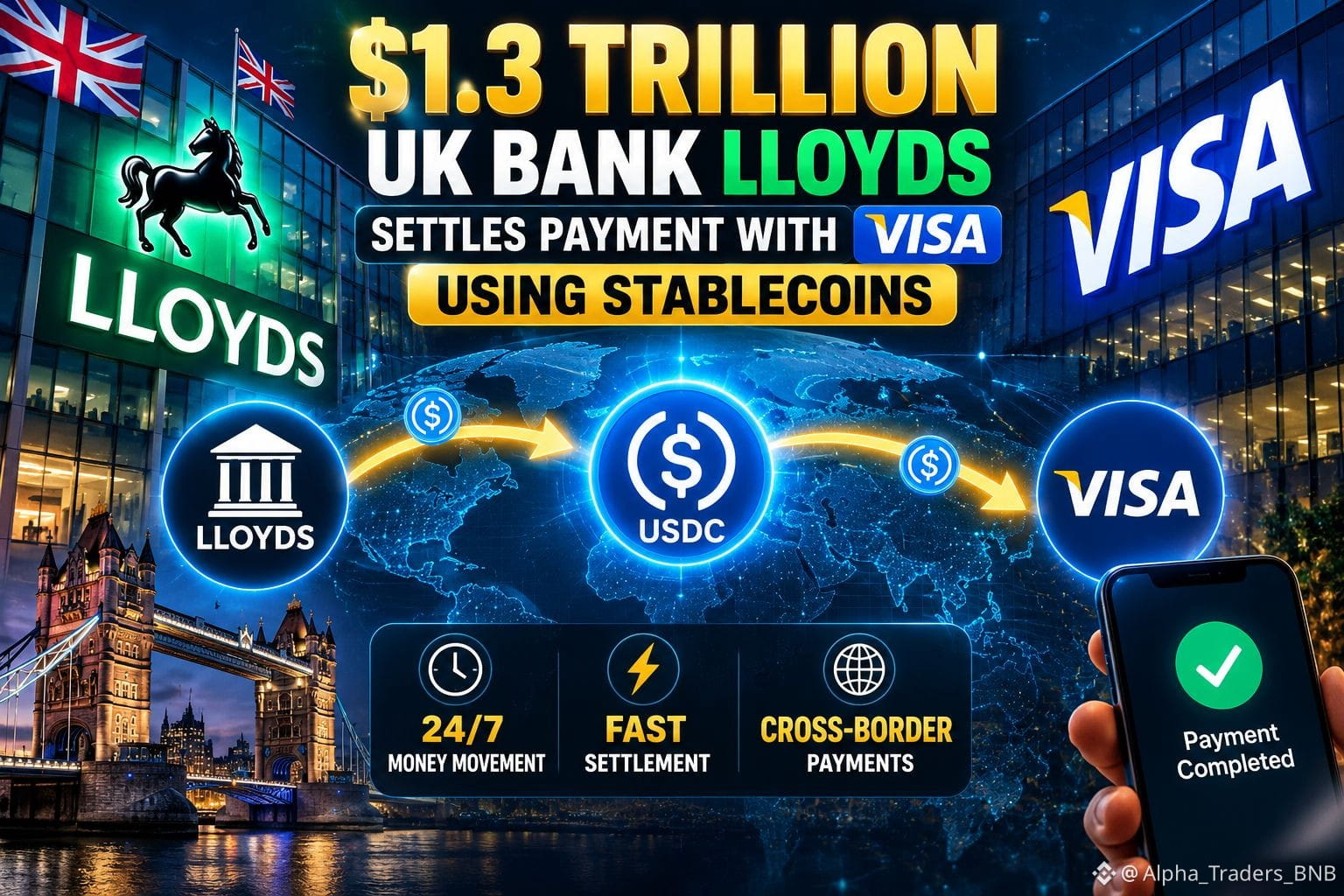
🚨 BANKING IS MOVING ON-CHAIN 👀
Lloyds and Visa just tested cross-border settlement using USDC, with $750K in payment obligations settled in under an hour — even over the weekend.
24/7 settlement is no longer just a crypto idea. Traditional finance is testing it in the real world. 🌐
#OnChain #Crypto #BinanceSquare
🚨 BANKING IS MOVING ON-CHAIN 👀
Lloyds and Visa just tested cross-border settlement using USDC, with $750K in payment obligations settled in under an hour — even over the weekend.
24/7 settlement is no longer just a crypto idea. Traditional finance is testing it in the real world. 🌐
#OnChain #Crypto #BinanceSquare
Lloyds and Visa just tested cross-border settlement using USDC, with $750K in payment obligations settled in under an hour — even over the weekend.
24/7 settlement is no longer just a crypto idea. Traditional finance is testing it in the real world. 🌐
#OnChain #Crypto #BinanceSquare
9

🚨 $BTC HISTORICAL ANOMALY: LONG-TERM HOLDERS REMAIN IN PROFIT ALL CYCLE LONG! 🦈
On-chain metrics reveal a profound structural shift in $BTC macro dynamics. For the first time since 2015, long-term holder MVRV failed to cross below the 1.0 threshold during the cycle low, signaling that smart money never lost their aggregate cost basis. 🔍
In prior cycles, deep capitulation forced long-term conviction into unrealized losses before a true macro bottom formed. 📊 Instead, institutional absorption created a permanent structural floor, with LTH-MVRV now accelerating upward once again. 💡
This persistent profitability highlights unprecedented supply locking by strong hands across the entire market cycle. 💬 Does this structural departure confirm that traditional crypto bear cycles are officially obsolete? 👇
⚠️ Not financial advice. Always manage your risk. 🛡️
🏷️ #BTC #OnChain #Bitcoin #MarketStructure
🎯 🦈
🚨 $BTC HISTORICAL ANOMALY: LONG-TERM HOLDERS REMAIN IN PROFIT ALL CYCLE LONG! 🦈
On-chain metrics reveal a profound structural shift in $BTC macro dynamics. For the first time since 2015, long-term holder MVRV failed to cross below the 1.0 threshold during the cycle low, signaling that smart money never lost their aggregate cost basis. 🔍
In prior cycles, deep capitulation forced long-term conviction into unrealized losses before a true macro bottom formed. 📊 Instead, institutional absorption created a permanent structural floor, with LTH-MVRV now accelerating upward once again. 💡
This persistent profitability highlights unprecedented supply locking by strong hands across the entire market cycle. 💬 Does this structural departure confirm that traditional crypto bear cycles are officially obsolete? 👇
⚠️ Not financial advice. Always manage your risk. 🛡️
🏷️ #BTC #OnChain #Bitcoin #MarketStructure
🎯 🦈
On-chain metrics reveal a profound structural shift in $BTC macro dynamics. For the first time since 2015, long-term holder MVRV failed to cross below the 1.0 threshold during the cycle low, signaling that smart money never lost their aggregate cost basis. 🔍
In prior cycles, deep capitulation forced long-term conviction into unrealized losses before a true macro bottom formed. 📊 Instead, institutional absorption created a permanent structural floor, with LTH-MVRV now accelerating upward once again. 💡
This persistent profitability highlights unprecedented supply locking by strong hands across the entire market cycle. 💬 Does this structural departure confirm that traditional crypto bear cycles are officially obsolete? 👇
⚠️ Not financial advice. Always manage your risk. 🛡️
🏷️ #BTC #OnChain #Bitcoin #MarketStructure
🎯 🦈
12

·
--
After a long break, I’m back 👋
And I don’t want to start with another prediction like “BTC will hit $100K.”
Instead, I want to talk about a metric that is actually worth keeping an eye on.
🔎 Look at how much Bitcoin is sitting on exchanges.
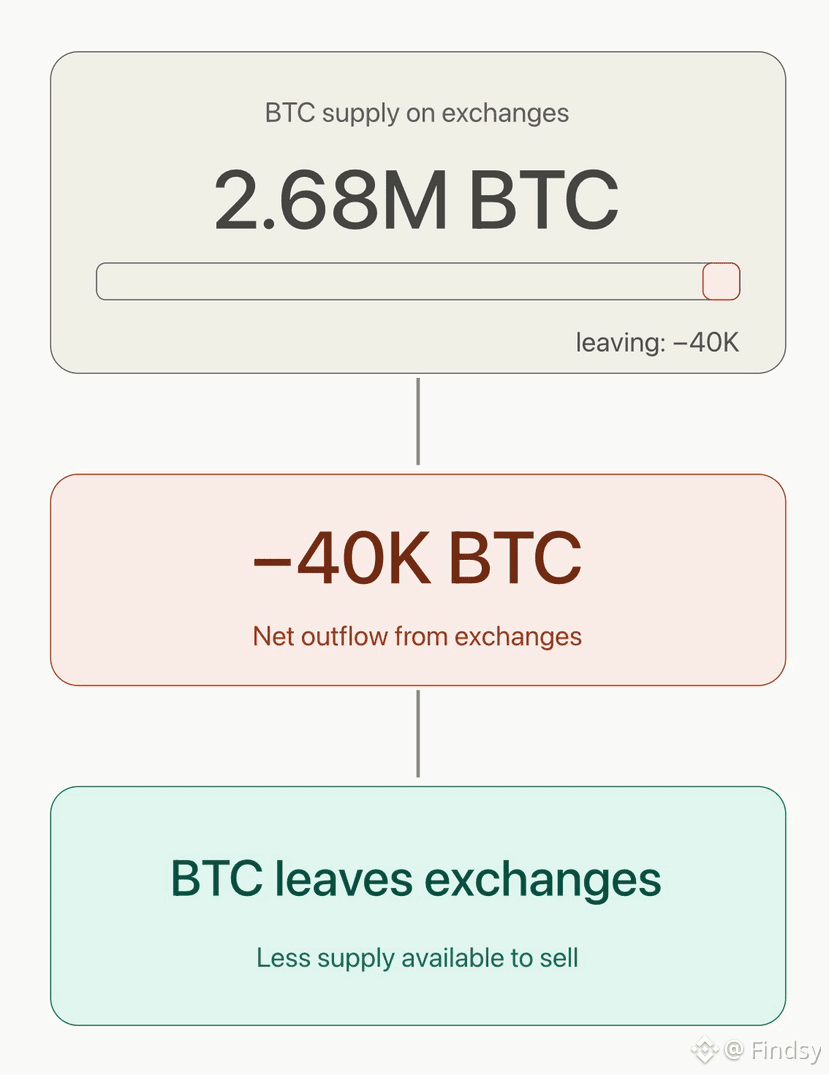
Right now, BTC reserves on exchanges have fallen to around 2.68M BTC - $the lowest level since September 2023.
And since September 22, more than 40,000 BTC has left exchanges.
Why is this interesting?
When large amounts of BTC move onto exchanges, it can potentially increase the amount of Bitcoin available for selling.
When BTC leaves exchanges, it may indicate that holders are moving their coins into self-custody and are not planning to sell them right away.
But there’s an important point 👇
❌ BTC leaving exchanges ≠ guaranteed price increase.
It’s just one signal.
Coins can move between different wallets, custodians, ETFs and other entities.
That’s why I personally wouldn’t focus on a single day. I’d rather watch the trend over several weeks.
My simple framework:
📈 BTC rising + exchange reserves falling → an interesting combination to watch.
📉 BTC falling + BTC flowing into exchanges → something to be more cautious about.
🔄 BTC moving sideways → watch the flows, ETF activity and trading volume.
You don’t need to predict every Bitcoin move.
Sometimes, it’s much more useful to simply understand where the coins are and what is happening to them.
Do you actually track exchange flows, or is the BTC chart all you care about? 👇
#OnChain #bitcoin #BTC #crypto #Findsy
After a long break, I’m back 👋
And I don’t want to start with another prediction like “BTC will hit $100K.”
Instead, I want to talk about a metric that is actually worth keeping an eye on.
🔎 Look at how much Bitcoin is sitting on exchanges.
Right now, BTC reserves on exchanges have fallen to around 2.68M BTC - $the lowest level since September 2023.
And since September 22, more than 40,000 BTC has left exchanges.
Why is this interesting?
When large amounts of BTC move onto exchanges, it can potentially increase the amount of Bitcoin available for selling.
When BTC leaves exchanges, it may indicate that holders are moving their coins into self-custody and are not planning to sell them right away.
But there’s an important point 👇
❌ BTC leaving exchanges ≠ guaranteed price increase.
It’s just one signal.
Coins can move between different wallets, custodians, ETFs and other entities.
That’s why I personally wouldn’t focus on a single day. I’d rather watch the trend over several weeks.
My simple framework:
📈 BTC rising + exchange reserves falling → an interesting combination to watch.
📉 BTC falling + BTC flowing into exchanges → something to be more cautious about.
🔄 BTC moving sideways → watch the flows, ETF activity and trading volume.
You don’t need to predict every Bitcoin move.
Sometimes, it’s much more useful to simply understand where the coins are and what is happening to them.
Do you actually track exchange flows, or is the BTC chart all you care about? 👇
#OnChain #bitcoin #BTC #crypto #Findsy
And I don’t want to start with another prediction like “BTC will hit $100K.”
Instead, I want to talk about a metric that is actually worth keeping an eye on.
🔎 Look at how much Bitcoin is sitting on exchanges.
Right now, BTC reserves on exchanges have fallen to around 2.68M BTC - $the lowest level since September 2023.
And since September 22, more than 40,000 BTC has left exchanges.
Why is this interesting?
When large amounts of BTC move onto exchanges, it can potentially increase the amount of Bitcoin available for selling.
When BTC leaves exchanges, it may indicate that holders are moving their coins into self-custody and are not planning to sell them right away.
But there’s an important point 👇
❌ BTC leaving exchanges ≠ guaranteed price increase.
It’s just one signal.
Coins can move between different wallets, custodians, ETFs and other entities.
That’s why I personally wouldn’t focus on a single day. I’d rather watch the trend over several weeks.
My simple framework:
📈 BTC rising + exchange reserves falling → an interesting combination to watch.
📉 BTC falling + BTC flowing into exchanges → something to be more cautious about.
🔄 BTC moving sideways → watch the flows, ETF activity and trading volume.
You don’t need to predict every Bitcoin move.
Sometimes, it’s much more useful to simply understand where the coins are and what is happening to them.
Do you actually track exchange flows, or is the BTC chart all you care about? 👇
#OnChain #bitcoin #BTC #crypto #Findsy
121

·
--
Removed trailing ads/source, optimized for Twitter format:
🚨 Glassnode: BTC short-term holders showing selling pressure
Loss group:
• Average entry price 1-2 years ago: $97,000
• Average entry price 6-12 months ago: $89,000
Those who entered during the 2025 uptrend period are currently showing the highest daily sell-off volume; dip-buyers during the downtrend have a strong willingness to hold, and no large-scale selling has been observed.
#Bitcoin #BTC #Glassnode #Onchain
Removed trailing ads/source, optimized for Twitter format:
🚨 Glassnode: BTC short-term holders showing selling pressure
Loss group:
• Average entry price 1-2 years ago: $97,000
• Average entry price 6-12 months ago: $89,000
Those who entered during the 2025 uptrend period are currently showing the highest daily sell-off volume; dip-buyers during the downtrend have a strong willingness to hold, and no large-scale selling has been observed.
#Bitcoin #BTC #Glassnode #Onchain
🚨 Glassnode: BTC short-term holders showing selling pressure
Loss group:
• Average entry price 1-2 years ago: $97,000
• Average entry price 6-12 months ago: $89,000
Those who entered during the 2025 uptrend period are currently showing the highest daily sell-off volume; dip-buyers during the downtrend have a strong willingness to hold, and no large-scale selling has been observed.
#Bitcoin #BTC #Glassnode #Onchain
104

🌐 Market signal: The TRUMP team quietly takes profit in the hundreds of millions!
Latest data shows the TRUMP token development group has carried out notable sell-off activity over the past 8 months:
💰 Profit taken: 249 million USD
📉 Tokens sold: 81.87 million TRUMP
💵 Average selling price: 3.04 USD (moved to Binance, OKX)
🏦 Remaining holdings: 718 million TRUMP (accounting for 71.8%)
💎 Value of remaining assets: 1.49 billion USD
*Why does it matter?*
1. Massive potential selling pressure: The development team still holds the majority of the supply. Any further sell-off actions could cause significant price volatility.
2. Profit-taking strategy: Transferring tokens to centralized exchanges suggests they are realizing gains in a systematic way.
3. Concentration risk from holdings: A small group controlling more than 70% of the total supply creates a high concentration risk for retail investors.
What do you think about this action by the TRUMP team? Will they continue to sell off, or hold long-term?
👉 Guided information — Follow [Channel](https://app.binance.com/uni-qr/cpro/Square-Creator-4a0f2008149d?l=en&r=BOZMO8A1)
#CryptoMarket #Trading #Crypto #WhaleAlert #OnChain $TRUMP
🌐 Market signal: The TRUMP team quietly takes profit in the hundreds of millions!
Latest data shows the TRUMP token development group has carried out notable sell-off activity over the past 8 months:
💰 Profit taken: 249 million USD
📉 Tokens sold: 81.87 million TRUMP
💵 Average selling price: 3.04 USD (moved to Binance, OKX)
🏦 Remaining holdings: 718 million TRUMP (accounting for 71.8%)
💎 Value of remaining assets: 1.49 billion USD
*Why does it matter?*
1. Massive potential selling pressure: The development team still holds the majority of the supply. Any further sell-off actions could cause significant price volatility.
2. Profit-taking strategy: Transferring tokens to centralized exchanges suggests they are realizing gains in a systematic way.
3. Concentration risk from holdings: A small group controlling more than 70% of the total supply creates a high concentration risk for retail investors.
What do you think about this action by the TRUMP team? Will they continue to sell off, or hold long-term?
👉 Guided information — Follow [Channel](https://app.binance.com/uni-qr/cpro/Square-Creator-4a0f2008149d?l=en&r=BOZMO8A1)
#CryptoMarket #Trading #Crypto #WhaleAlert #OnChain $TRUMP
Latest data shows the TRUMP token development group has carried out notable sell-off activity over the past 8 months:
💰 Profit taken: 249 million USD
📉 Tokens sold: 81.87 million TRUMP
💵 Average selling price: 3.04 USD (moved to Binance, OKX)
🏦 Remaining holdings: 718 million TRUMP (accounting for 71.8%)
💎 Value of remaining assets: 1.49 billion USD
*Why does it matter?*
1. Massive potential selling pressure: The development team still holds the majority of the supply. Any further sell-off actions could cause significant price volatility.
2. Profit-taking strategy: Transferring tokens to centralized exchanges suggests they are realizing gains in a systematic way.
3. Concentration risk from holdings: A small group controlling more than 70% of the total supply creates a high concentration risk for retail investors.
What do you think about this action by the TRUMP team? Will they continue to sell off, or hold long-term?
👉 Guided information — Follow [Channel](https://app.binance.com/uni-qr/cpro/Square-Creator-4a0f2008149d?l=en&r=BOZMO8A1)
#CryptoMarket #Trading #Crypto #WhaleAlert #OnChain $TRUMP
244


·
--
🚨 ON-CHAIN DATA SHOWS GLOBAL $BTC UTILITY SURGING DESPITE MARKET VOLATILITY! 📊
While macro noise dictates short-term price discovery, underlying structural adoption is carving out higher lows globally. 🔍 Institutional metrics reveal $252.5B flowing through top adoption hubs like Brazil, while emerging markets treat assets like $BTC and $SOL as functional settlement layers rather than mere speculative vehicles.
This divergence between price action and real-world transaction volume signals a classic liquidity accumulation phase. 💡 As on-chain velocity remains resilient across peer-to-peer networks, smart capital continues building structural support beneath $LINK and major protocols regardless of broader market sentiment. 💬 Which country's adoption metrics surprise your fundamental outlook the most? 👇
⚠️ Not financial advice. Always manage your risk. 🛡️
🏷️ #BTC #Crypto #MarketStructure #OnChain
🎯 💎
🚨 ON-CHAIN DATA SHOWS GLOBAL $BTC UTILITY SURGING DESPITE MARKET VOLATILITY! 📊
While macro noise dictates short-term price discovery, underlying structural adoption is carving out higher lows globally. 🔍 Institutional metrics reveal $252.5B flowing through top adoption hubs like Brazil, while emerging markets treat assets like $BTC and $SOL as functional settlement layers rather than mere speculative vehicles.
This divergence between price action and real-world transaction volume signals a classic liquidity accumulation phase. 💡 As on-chain velocity remains resilient across peer-to-peer networks, smart capital continues building structural support beneath $LINK and major protocols regardless of broader market sentiment. 💬 Which country's adoption metrics surprise your fundamental outlook the most? 👇
⚠️ Not financial advice. Always manage your risk. 🛡️
🏷️ #BTC #Crypto #MarketStructure #OnChain
🎯 💎
While macro noise dictates short-term price discovery, underlying structural adoption is carving out higher lows globally. 🔍 Institutional metrics reveal $252.5B flowing through top adoption hubs like Brazil, while emerging markets treat assets like $BTC and $SOL as functional settlement layers rather than mere speculative vehicles.
This divergence between price action and real-world transaction volume signals a classic liquidity accumulation phase. 💡 As on-chain velocity remains resilient across peer-to-peer networks, smart capital continues building structural support beneath $LINK and major protocols regardless of broader market sentiment. 💬 Which country's adoption metrics surprise your fundamental outlook the most? 👇
⚠️ Not financial advice. Always manage your risk. 🛡️
🏷️ #BTC #Crypto #MarketStructure #OnChain
🎯 💎

27

·
--
🚨 $HYPE SMART MONEY MOVES $1.87M TO EXCHANGE AFTER 1317% ROI SURGE! 🏦
On-chain tracking revealed a major smart money transfer as 20,950 $HYPE (~$1.87M) moved onto a top-tier exchange, marking a strategic profit-taking phase. 🦈 The original position entered two years ago at $4.48 per token, realizing an extraordinary 1,317% return totaling $7.24M in overall gains.
Despite this localized supply injection into exchange order books, 63,550 $HYPE (~$5.62M) remains held, indicating calculated inventory management rather than full distribution. 📊 As sell-side liquidity enters the market, technical focus shifts to demand zones to test if buy-side order blocks absorb the volume. 💬 Will order book depth absorb this fresh supply, or are we looking at a local market structure break? 👇
⚠️ Not financial advice. Always manage your risk. 🛡️
🏷️ #HYPE #SmartMoney #OnChain #Crypto
🎯 🦈
🚨 $HYPE SMART MONEY MOVES $1.87M TO EXCHANGE AFTER 1317% ROI SURGE! 🏦
On-chain tracking revealed a major smart money transfer as 20,950 $HYPE (~$1.87M) moved onto a top-tier exchange, marking a strategic profit-taking phase. 🦈 The original position entered two years ago at $4.48 per token, realizing an extraordinary 1,317% return totaling $7.24M in overall gains.
Despite this localized supply injection into exchange order books, 63,550 $HYPE (~$5.62M) remains held, indicating calculated inventory management rather than full distribution. 📊 As sell-side liquidity enters the market, technical focus shifts to demand zones to test if buy-side order blocks absorb the volume. 💬 Will order book depth absorb this fresh supply, or are we looking at a local market structure break? 👇
⚠️ Not financial advice. Always manage your risk. 🛡️
🏷️ #HYPE #SmartMoney #OnChain #Crypto
🎯 🦈
On-chain tracking revealed a major smart money transfer as 20,950 $HYPE (~$1.87M) moved onto a top-tier exchange, marking a strategic profit-taking phase. 🦈 The original position entered two years ago at $4.48 per token, realizing an extraordinary 1,317% return totaling $7.24M in overall gains.
Despite this localized supply injection into exchange order books, 63,550 $HYPE (~$5.62M) remains held, indicating calculated inventory management rather than full distribution. 📊 As sell-side liquidity enters the market, technical focus shifts to demand zones to test if buy-side order blocks absorb the volume. 💬 Will order book depth absorb this fresh supply, or are we looking at a local market structure break? 👇
⚠️ Not financial advice. Always manage your risk. 🛡️
🏷️ #HYPE #SmartMoney #OnChain #Crypto
🎯 🦈
24

·
--
🦈 INSTITUTIONAL $PUMP UNLOCK REALIZES $1.36M PROFIT AFTER LIQUIDITY DEPOSIT 🏦
On-chain tracking reveals a major institutional entity completing a strategic exit on $PUMP . After securing 1 billion tokens during last year's private allocation at $0.004, the entity routed the entire balance worth $5.36M into an institutional liquidity venue at $0.0054. 📊
This calculated move locked in a clean $1.36M realized gain (+34%), introducing potential supply overhead as smart money offloads legacy positions into market depth. 🌊 Advanced order flow tracking suggests these high-volume deposits frequently precede local structural consolidation. 💡
💬 Will this liquidity injection force a retest of demand zones, or can current buy-side interest absorb the float? 👇
⚠️ Not financial advice. Always manage your risk. 🛡️
🏷️ #PUMP #SmartMoney #OnChain #Crypto MarketStructure
🎯 🦈
🦈 INSTITUTIONAL $PUMP UNLOCK REALIZES $1.36M PROFIT AFTER LIQUIDITY DEPOSIT 🏦
On-chain tracking reveals a major institutional entity completing a strategic exit on $PUMP . After securing 1 billion tokens during last year's private allocation at $0.004, the entity routed the entire balance worth $5.36M into an institutional liquidity venue at $0.0054. 📊
This calculated move locked in a clean $1.36M realized gain (+34%), introducing potential supply overhead as smart money offloads legacy positions into market depth. 🌊 Advanced order flow tracking suggests these high-volume deposits frequently precede local structural consolidation. 💡
💬 Will this liquidity injection force a retest of demand zones, or can current buy-side interest absorb the float? 👇
⚠️ Not financial advice. Always manage your risk. 🛡️
🏷️ #PUMP #SmartMoney #OnChain #Crypto MarketStructure
🎯 🦈
On-chain tracking reveals a major institutional entity completing a strategic exit on $PUMP . After securing 1 billion tokens during last year's private allocation at $0.004, the entity routed the entire balance worth $5.36M into an institutional liquidity venue at $0.0054. 📊
This calculated move locked in a clean $1.36M realized gain (+34%), introducing potential supply overhead as smart money offloads legacy positions into market depth. 🌊 Advanced order flow tracking suggests these high-volume deposits frequently precede local structural consolidation. 💡
💬 Will this liquidity injection force a retest of demand zones, or can current buy-side interest absorb the float? 👇
⚠️ Not financial advice. Always manage your risk. 🛡️
🏷️ #PUMP #SmartMoney #OnChain #Crypto MarketStructure
🎯 🦈
23
·
--
🚨 ZACHXBT EXPOSES ON-CHAIN ILLICIT FLOWS LINKED TO $USDT CARD RAILS! 🔍
🔍 On-chain investigator ZachXBT has highlighted severe compliance vulnerabilities, calling out UPay for allegedly enabling sanctioned marketplace Xinbi to white-label crypto Visa cards. The flagged transactions are tied to illicit activities including money laundering and fraudulent schemes, exposing critical friction between real-world payment integrations and institutional regulatory oversight.
🏦 As institutional capital demands transparency, unmonitored liquidity bridges create structural headline risk for broader market rails. Smart money tracks these structural disclosures closely, as regulatory enforcement actions often trigger localized liquidity shifts across major stablecoin pairs like $USDT . 💬 How will tighter regulatory scrutiny on payment rails impact overall market liquidity this quarter? 👇
⚠️ Not financial advice. Always manage your risk. 🛡️
🏷️ #USDT #OnChain #CryptoCompliance #BlockchainSecurity
🛡️ 🔍
🚨 ZACHXBT EXPOSES ON-CHAIN ILLICIT FLOWS LINKED TO $USDT CARD RAILS! 🔍
🔍 On-chain investigator ZachXBT has highlighted severe compliance vulnerabilities, calling out UPay for allegedly enabling sanctioned marketplace Xinbi to white-label crypto Visa cards. The flagged transactions are tied to illicit activities including money laundering and fraudulent schemes, exposing critical friction between real-world payment integrations and institutional regulatory oversight.
🏦 As institutional capital demands transparency, unmonitored liquidity bridges create structural headline risk for broader market rails. Smart money tracks these structural disclosures closely, as regulatory enforcement actions often trigger localized liquidity shifts across major stablecoin pairs like $USDT . 💬 How will tighter regulatory scrutiny on payment rails impact overall market liquidity this quarter? 👇
⚠️ Not financial advice. Always manage your risk. 🛡️
🏷️ #USDT #OnChain #CryptoCompliance #BlockchainSecurity
🛡️ 🔍
🔍 On-chain investigator ZachXBT has highlighted severe compliance vulnerabilities, calling out UPay for allegedly enabling sanctioned marketplace Xinbi to white-label crypto Visa cards. The flagged transactions are tied to illicit activities including money laundering and fraudulent schemes, exposing critical friction between real-world payment integrations and institutional regulatory oversight.
🏦 As institutional capital demands transparency, unmonitored liquidity bridges create structural headline risk for broader market rails. Smart money tracks these structural disclosures closely, as regulatory enforcement actions often trigger localized liquidity shifts across major stablecoin pairs like $USDT . 💬 How will tighter regulatory scrutiny on payment rails impact overall market liquidity this quarter? 👇
⚠️ Not financial advice. Always manage your risk. 🛡️
🏷️ #USDT #OnChain #CryptoCompliance #BlockchainSecurity
🛡️ 🔍
10
Picture this: you used to need a brokerage account and three business days just to buy a government bond.
Crypto traders know the pain of watching alts dump 70% after a FOMO buy, or getting rugged on some new protocol. Traditional yields sat there at 4-5% but felt completely out of reach unless you had connections and capital.
Tokenization is quietly flipping that script by turning bonds, real estate, and even private credit into onchain markets anyone can access. BlackRock launched BUIDL and it hit over $500 million in assets under management in just a few months. That's a far cry from the security token offerings of 2018 that generated headlines then vanished because regulators weren't ready and liquidity never showed up.
The difference now is institutions are driving it instead of hoping for it. $ONDO has tokenized Treasuries that settle instantly in $USDC on $ETH rails, giving 24/7 access to those yields without the old gatekeepers. Real estate platforms are doing the same with fractional properties that trade like any other token.
What we can learn is that the quiet ones often matter more than the loud memecoin pumps. This isn't about replacing crypto, it's about expanding the pie so traditional assets finally live where they can be programmed, fractionalized, and traded around the clock.
Where do you think this tokenization wave goes from here?
#RWA #Tokenization #Onchain
Picture this: you used to need a brokerage account and three business days just to buy a government bond.
Crypto traders know the pain of watching alts dump 70% after a FOMO buy, or getting rugged on some new protocol. Traditional yields sat there at 4-5% but felt completely out of reach unless you had connections and capital.
Tokenization is quietly flipping that script by turning bonds, real estate, and even private credit into onchain markets anyone can access. BlackRock launched BUIDL and it hit over $500 million in assets under management in just a few months. That's a far cry from the security token offerings of 2018 that generated headlines then vanished because regulators weren't ready and liquidity never showed up.
The difference now is institutions are driving it instead of hoping for it. $ONDO has tokenized Treasuries that settle instantly in $USDC on $ETH rails, giving 24/7 access to those yields without the old gatekeepers. Real estate platforms are doing the same with fractional properties that trade like any other token.
What we can learn is that the quiet ones often matter more than the loud memecoin pumps. This isn't about replacing crypto, it's about expanding the pie so traditional assets finally live where they can be programmed, fractionalized, and traded around the clock.
Where do you think this tokenization wave goes from here?
#RWA #Tokenization #Onchain
Crypto traders know the pain of watching alts dump 70% after a FOMO buy, or getting rugged on some new protocol. Traditional yields sat there at 4-5% but felt completely out of reach unless you had connections and capital.
Tokenization is quietly flipping that script by turning bonds, real estate, and even private credit into onchain markets anyone can access. BlackRock launched BUIDL and it hit over $500 million in assets under management in just a few months. That's a far cry from the security token offerings of 2018 that generated headlines then vanished because regulators weren't ready and liquidity never showed up.
The difference now is institutions are driving it instead of hoping for it. $ONDO has tokenized Treasuries that settle instantly in $USDC on $ETH rails, giving 24/7 access to those yields without the old gatekeepers. Real estate platforms are doing the same with fractional properties that trade like any other token.
What we can learn is that the quiet ones often matter more than the loud memecoin pumps. This isn't about replacing crypto, it's about expanding the pie so traditional assets finally live where they can be programmed, fractionalized, and traded around the clock.
Where do you think this tokenization wave goes from here?
#RWA #Tokenization #Onchain

94
·
--
🚨 INSIDER SUPPLY DUMP: AAVE TEAM ADDRESS OFFLOADS $8M IN AAVE! 📉
🐋 On-chain tracking reveals a long-standing vesting address connected to the project team offloaded 50,000 $AAVE over the past seven days, locking in 8 million USDC at an average price of $160. This wallet originally received 108,000 vested tokens years ago, leaving a remaining balance of 30,000 tokens still waiting in the wings.
🔍 Persistent insider distribution at key resistance often caps upward momentum until the market fully absorbs the heavy sell-side liquidity. 📊 With roughly $5.5 million in residual holding power sitting on that wallet, buyers need to stay sharp while order flow recalibrates. 💬 Are you bidding into this heavy supply overhang, or waiting for lower demand zones to clear? 👇
⚠️ Not financial advice. Always manage your risk. 🛡️
🏷️ #AAVE #OnChain #DeFi #Crypto
🚨 🦈
🚨 INSIDER SUPPLY DUMP: AAVE TEAM ADDRESS OFFLOADS $8M IN AAVE! 📉
🐋 On-chain tracking reveals a long-standing vesting address connected to the project team offloaded 50,000 $AAVE over the past seven days, locking in 8 million USDC at an average price of $160. This wallet originally received 108,000 vested tokens years ago, leaving a remaining balance of 30,000 tokens still waiting in the wings.
🔍 Persistent insider distribution at key resistance often caps upward momentum until the market fully absorbs the heavy sell-side liquidity. 📊 With roughly $5.5 million in residual holding power sitting on that wallet, buyers need to stay sharp while order flow recalibrates. 💬 Are you bidding into this heavy supply overhang, or waiting for lower demand zones to clear? 👇
⚠️ Not financial advice. Always manage your risk. 🛡️
🏷️ #AAVE #OnChain #DeFi #Crypto
🚨 🦈
🐋 On-chain tracking reveals a long-standing vesting address connected to the project team offloaded 50,000 $AAVE over the past seven days, locking in 8 million USDC at an average price of $160. This wallet originally received 108,000 vested tokens years ago, leaving a remaining balance of 30,000 tokens still waiting in the wings.
🔍 Persistent insider distribution at key resistance often caps upward momentum until the market fully absorbs the heavy sell-side liquidity. 📊 With roughly $5.5 million in residual holding power sitting on that wallet, buyers need to stay sharp while order flow recalibrates. 💬 Are you bidding into this heavy supply overhang, or waiting for lower demand zones to clear? 👇
⚠️ Not financial advice. Always manage your risk. 🛡️
🏷️ #AAVE #OnChain #DeFi #Crypto
🚨 🦈
19

·
--
🚨 $ETH JUST RIPPED +70.9% IN Q3 — BUT THE REAL SHIFT IS ON-CHAIN 🚨
Price action is loud, but the underlying supply shock is deafening. While everyone is eyeing the charts, smart money is watching the supply evaporate in real time.
Here is what the on-chain data is actually screaming: 👇
📉 1. Exchange Reserves Are Collapsing
ETH is fleeing exchanges at a frantic pace. When exchange balances drop like this, the immediate sell-side liquidity vaporizes. Less supply to dump = massive support for higher prices.
🐋 2. Whales Are Inhaling the Floating Supply
Smart money isn't taking profits—they’re aggressively stacking. The biggest wallets on the network are quietly vacuuming up coins while retail hesitates.
🔒 3. The Great Liquidity Lockup
Record amounts of ETH are getting locked into staking protocols and smart contracts. Every token staked is a token taken off the open market. We are staring at an increasingly illiquid asset. $SCR
The Bottom Line: A 70%+ price surge combined with a rapidly shrinking liquid supply is a textbook setup for explosive continuation. 💥
Are you riding ETHinto Q4 or watching from the sidelines? Drop your price targets below! 👇
#ethergains70.9%inq3 #Ethereum #Crypto #OnChain
$GTC
🚨 $ETH JUST RIPPED +70.9% IN Q3 — BUT THE REAL SHIFT IS ON-CHAIN 🚨
Price action is loud, but the underlying supply shock is deafening. While everyone is eyeing the charts, smart money is watching the supply evaporate in real time.
Here is what the on-chain data is actually screaming: 👇
📉 1. Exchange Reserves Are Collapsing
ETH is fleeing exchanges at a frantic pace. When exchange balances drop like this, the immediate sell-side liquidity vaporizes. Less supply to dump = massive support for higher prices.
🐋 2. Whales Are Inhaling the Floating Supply
Smart money isn't taking profits—they’re aggressively stacking. The biggest wallets on the network are quietly vacuuming up coins while retail hesitates.
🔒 3. The Great Liquidity Lockup
Record amounts of ETH are getting locked into staking protocols and smart contracts. Every token staked is a token taken off the open market. We are staring at an increasingly illiquid asset. $SCR
The Bottom Line: A 70%+ price surge combined with a rapidly shrinking liquid supply is a textbook setup for explosive continuation. 💥
Are you riding ETHinto Q4 or watching from the sidelines? Drop your price targets below! 👇
#ethergains70.9%inq3 #Ethereum #Crypto #OnChain
$GTC
Price action is loud, but the underlying supply shock is deafening. While everyone is eyeing the charts, smart money is watching the supply evaporate in real time.
Here is what the on-chain data is actually screaming: 👇
📉 1. Exchange Reserves Are Collapsing
ETH is fleeing exchanges at a frantic pace. When exchange balances drop like this, the immediate sell-side liquidity vaporizes. Less supply to dump = massive support for higher prices.
🐋 2. Whales Are Inhaling the Floating Supply
Smart money isn't taking profits—they’re aggressively stacking. The biggest wallets on the network are quietly vacuuming up coins while retail hesitates.
🔒 3. The Great Liquidity Lockup
Record amounts of ETH are getting locked into staking protocols and smart contracts. Every token staked is a token taken off the open market. We are staring at an increasingly illiquid asset. $SCR
The Bottom Line: A 70%+ price surge combined with a rapidly shrinking liquid supply is a textbook setup for explosive continuation. 💥
Are you riding ETHinto Q4 or watching from the sidelines? Drop your price targets below! 👇
#ethergains70.9%inq3 #Ethereum #Crypto #OnChain
$GTC
1
854
Log in to explore more content
Join global crypto users on Binance Square
⚡️ Get latest and useful information about crypto.
💬 Trusted by the world’s largest crypto exchange.
👍 Discover real insights from verified creators.
Email / Phone number
Trending Topics
1
#ADAGains10%Above$0.27
681 views
38 Discussing
2
#ETHUp70%InQ3ButLiquidityFalls
10,022 views
221 Discussing
3
#EthStakingExitQueueHits2026High
4,056 views
253 Discussing
4
#FedOctoberHoldOdds82.3%
6,712 views
240 Discussing
5
#Nikkei225Jumps2.5%ToThreeMonthHigh
40,581 views
663 Discussing
6
#CircleMints$2.75BUSDCOnSolanaIn7Days
293 views
16 Discussing
7
#DriftHackVictimsBeginClaims
118,170 views
1,310 Discussing
8
#SolanaTokenizedStockVolumeTops$4.4BInSeptember
10,359 views
122 Discussing
9
#BitcoinSpotETFsDraw$6.34BInflowsInQ3
37,769 views
234 Discussing
10
#EthereumValidatorExitQueueJumps392%
252,102 views
2,242 Discussing