

#gpu
gpu
173,298 views
498 Discussing
Hot
Latest


How long does a data-center-class GPU actually last?This is an interesting question, but before answering, we first need to define what we mean by “GPU lifespan.”
Think of it like a phone: it might still power on normally and connect to the internet, but you’d never actually want to use it. Has that phone reached the end of its lifespan?
So, let’s assume a data-center-class GPU is considered to have reached the end of its life only when it can no longer power on at all. NVIDIA GPUs typically have an extreme physical lifespan of 8 to 12 years.
#GPU
$NVDAB $NVDA
Ignoring power efficiency and operating economics entirely, and running continuously 24 hours a day until the GPU hardware itself suffers irreparable physical damage (such as aging and failure of the silicon wafer/3D packaging, failure of the VRAM solder joints, or a burned-out PCB), the extreme physical lifespan of an NVIDIA data-center-class GPU is about 8 to 12 years (a very small number of exceptionally lucky cases may reach 15 years).
How long does a data-center-class GPU actually last?
This is an interesting question, but before answering, we first need to define what we mean by “GPU lifespan.”
Think of it like a phone: it might still power on normally and connect to the internet, but you’d never actually want to use it. Has that phone reached the end of its lifespan?
So, let’s assume a data-center-class GPU is considered to have reached the end of its life only when it can no longer power on at all. NVIDIA GPUs typically have an extreme physical lifespan of 8 to 12 years.
#GPU
$NVDAB $NVDA
Ignoring power efficiency and operating economics entirely, and running continuously 24 hours a day until the GPU hardware itself suffers irreparable physical damage (such as aging and failure of the silicon wafer/3D packaging, failure of the VRAM solder joints, or a burned-out PCB), the extreme physical lifespan of an NVIDIA data-center-class GPU is about 8 to 12 years (a very small number of exceptionally lucky cases may reach 15 years).
50

·
--
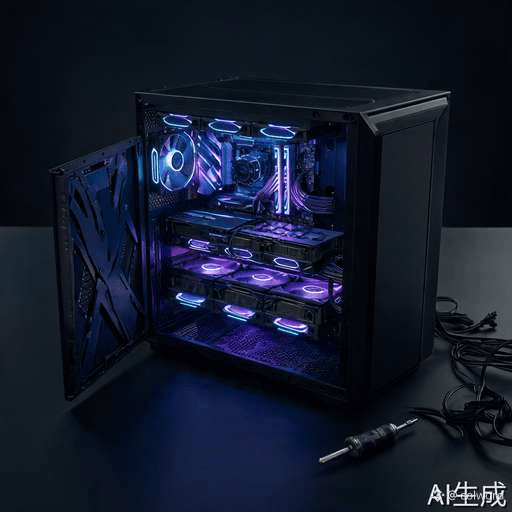
Building your own rig or renting cloud computing power—the break-even point is more complicated than the formulas circulating online.
You need to account for more than just the price of the GPU and electricity. There’s also idle time, hidden costs like cooling and noise, seasonal fluctuations in electricity rates, and the opportunity cost of not being able to use the machine for anything else.
Based on my experience, a self-built setup with utilization below 40% will almost certainly lose out to the cloud. Building your own only starts to make sense when utilization stays above 70% over the long term and your workloads aren’t latency-sensitive.
Measure your own utilization first, then decide whether to buy a GPU.
#GPU #算力成本
48

·
--
🚨 $SPCX : THE AI COMPUTE BOTTLENECK NOBODY IS TALKING ABOUT! ⚡
🗣️ Elon Musk warns that GPUs could arrive faster than the power infrastructure needed to run them, leaving data centers partially completed.
📉 The bearish side: Idle GPUs risk losing value as newer generations arrive.
📈 The bullish twist: Companies with secured power and ready-to-run data centers could benefit from tight GPU rental supply and potentially stronger pricing.
🔥 The key takeaway: In the AI race, having GPUs isn't enough — having the power to run them could be the real advantage.
👀 Watch power capacity, GPU rental prices, and infrastructure rollout before drawing conclusions on $SPCX
{future}(SPCXUSDT)
.
#SPCX #GPU #DataCentersForAI #CryptoNews
🚨 $SPCX : THE AI COMPUTE BOTTLENECK NOBODY IS TALKING ABOUT! ⚡
🗣️ Elon Musk warns that GPUs could arrive faster than the power infrastructure needed to run them, leaving data centers partially completed.
📉 The bearish side: Idle GPUs risk losing value as newer generations arrive.
📈 The bullish twist: Companies with secured power and ready-to-run data centers could benefit from tight GPU rental supply and potentially stronger pricing.
🔥 The key takeaway: In the AI race, having GPUs isn't enough — having the power to run them could be the real advantage.
👀 Watch power capacity, GPU rental prices, and infrastructure rollout before drawing conclusions on $SPCX
.
#SPCX #GPU #DataCentersForAI #CryptoNews
271

·
--
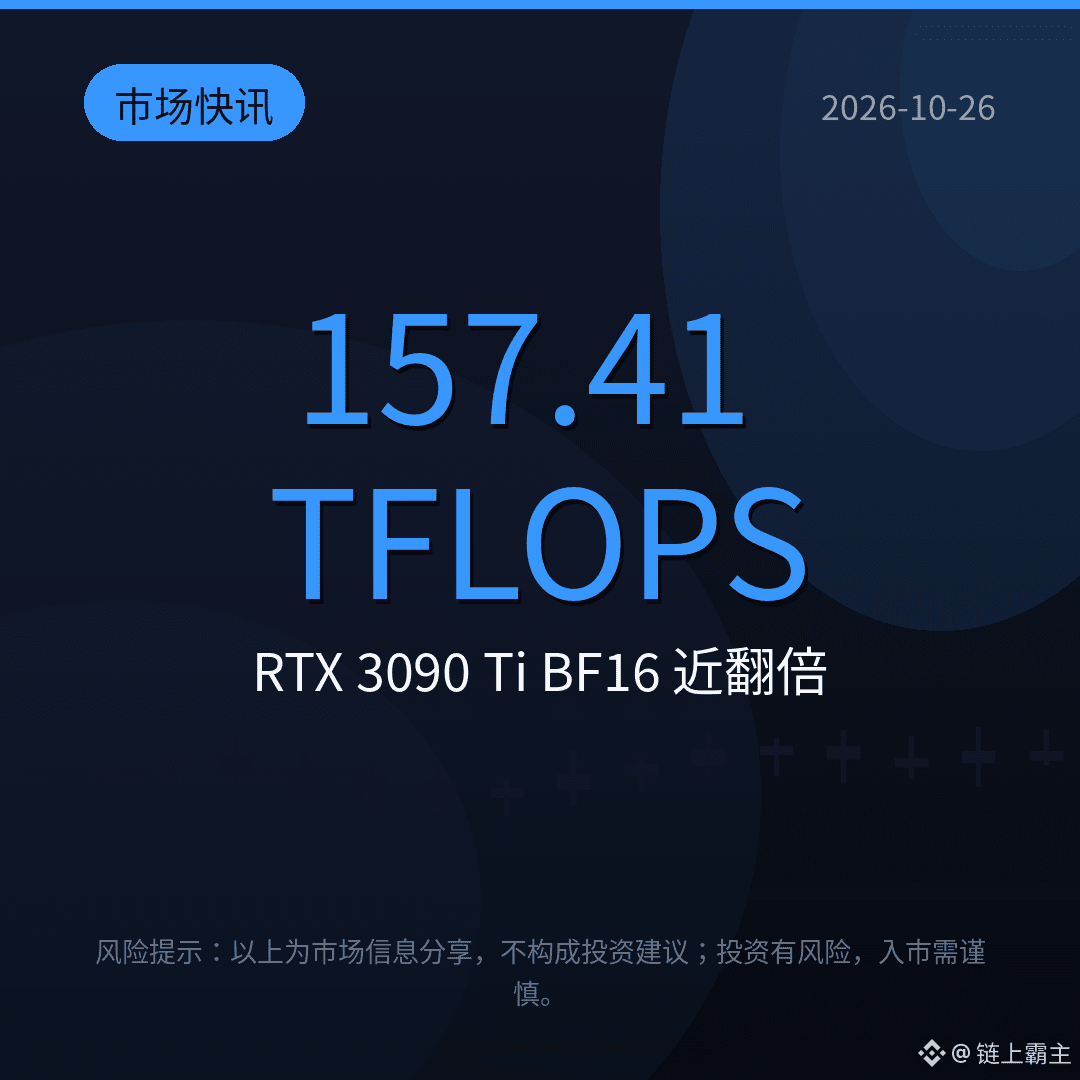
【Market Flash】RTX 3090 Ti BF16 nearly doubles: Open-source software unlocks Ampere cards, boosting BF16 from 87.50 to 157.41 TFLOPS at 450W.
LLM prefill speeds up by 14%–36%, while decode is barely affected. Linux only and experimental; used 3090s are reportedly going for over $2,000. Is hunting for an older card worth it?
$BTC $ETH $TAO
#AI #GPU #Computing Power
(Source: BlockTempo)
⚠️Risk warning: The above is shared for informational purposes only and does not constitute investment advice. Investing involves risks; proceed with caution.
196

·
--
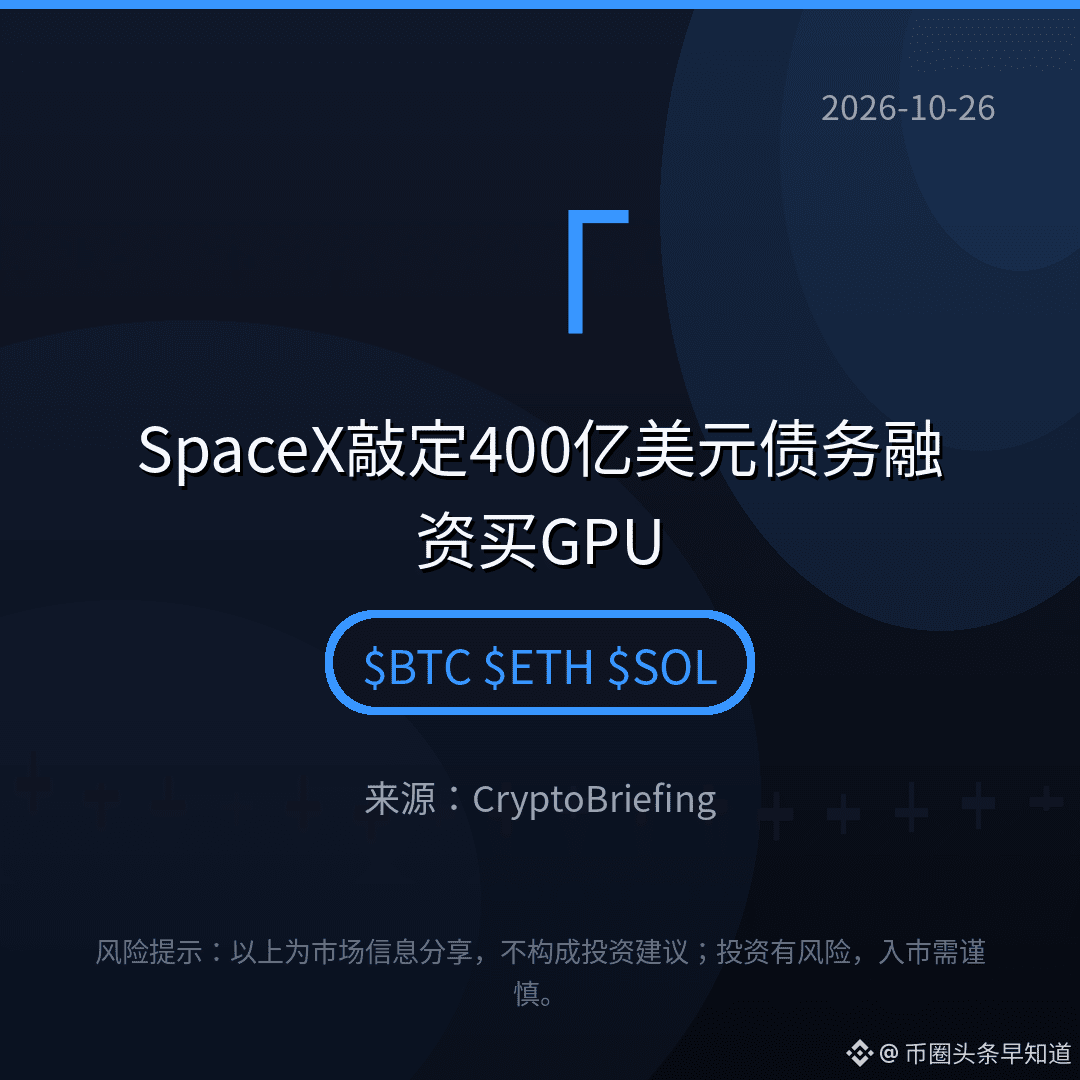
【Market Flash】SpaceX has finalized $40 billion in debt financing to buy GPUs, with the chips due to arrive in the first half of 2027.
Musk laid out the source of its confidence: an investment-grade rating, backed by Starlink revenue. For AI companies without revenue to fall back on, the window is narrowing.
It has already raised $86 billion through an IPO and issued $25 billion in bonds this year, yet it’s still ramping up GPU purchases. Will the AI computing landscape be reshuffled first?
$BTC $ETH $SOL
#SpaceX #人工智能 #GPU
(Source: CryptoBriefing)
⚠️Risk warning: The above is shared for market information only and does not constitute investment advice. Investing involves risk; please exercise caution.
426

Starting next month, every GPU job on Aethir's network starts feeding a daily $ATH burn.
The network announced this week it will burn a share of network fees every day from November, with a burn dashboard going live on the first burn. More compute reservations, bigger burns; fixed fees become floating, and the ACCELERATE build-out adds US and European compute sites into the same pipeline.
The tension: nobody knows the burn rate. The formula's details and actual fee volumes are still unknowns — the network itself says fees can drop to zero in weak markets.
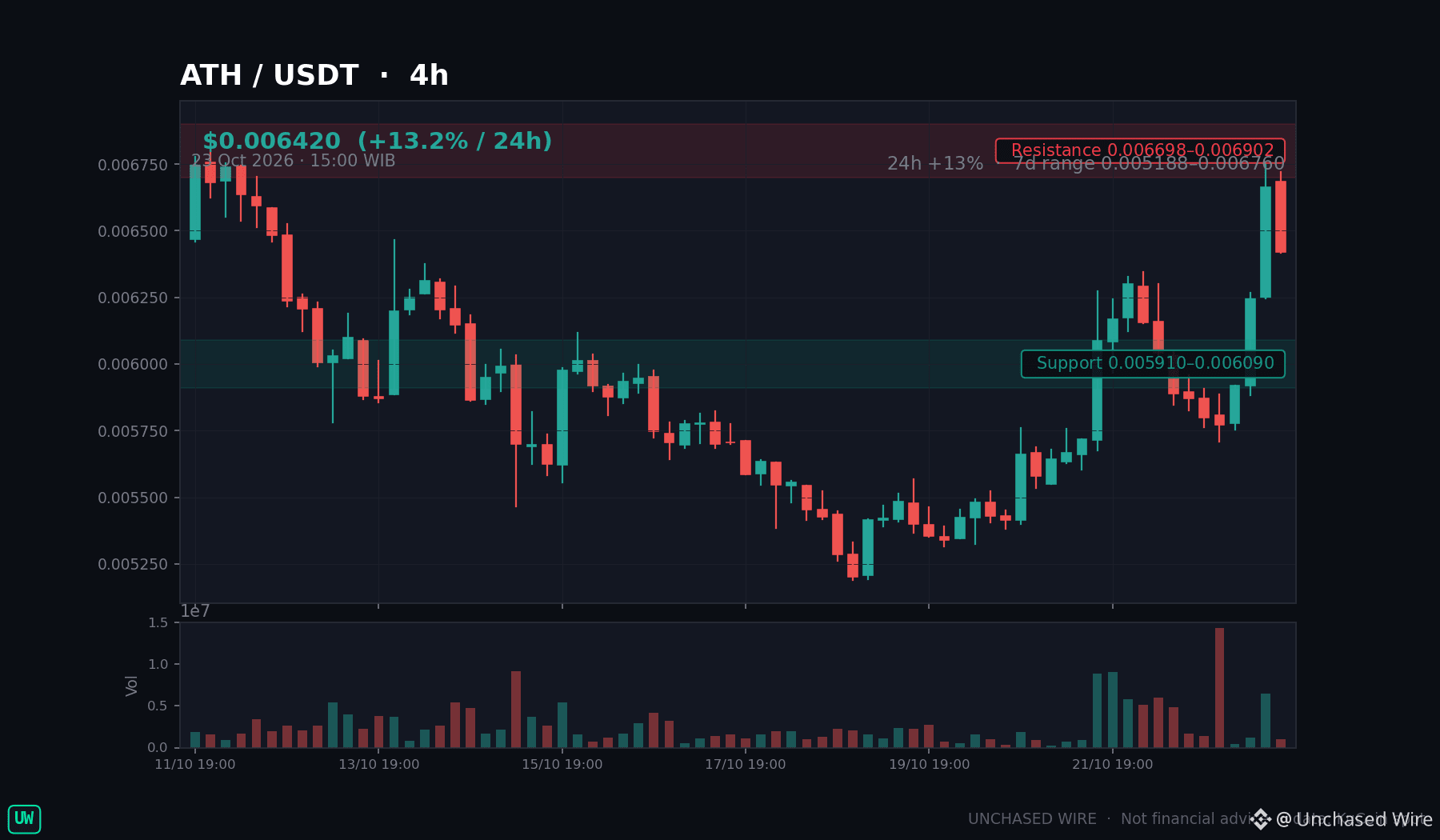
$ATH is up ~9.5% in 24h to $0.00644, testing $0.0068. Support $0.0060, the pre-pop base; a 4h close under $0.0060 ends the momentum read. The honest risk: the headline is two days old, $ATH trades ~96% below its 2024 high, and 20B of 42B max supply is circulating.
Save these levels: $0.0060 decides the momentum read, $0.0068 is the break test. If November's burns beat the market's guess — where does ATH find its real ceiling? NFA. DYOR.
$ATH #Altcoins #Aethir #TokenBurn #GPU
3

·
--
$RENDER Is decentralized GPU computing the next big opportunity
Render Network connects computing power with creators and AI related workloads
Demand for GPU computing could support its long term narrative but competition remains a key factor
$RENDER #RenderCoin #ViralCOIN #TrendingCoin #GPU
{spot}(RENDERUSDT)
$RENDER Is decentralized GPU computing the next big opportunity
Render Network connects computing power with creators and AI related workloads
Demand for GPU computing could support its long term narrative but competition remains a key factor
$RENDER #RenderCoin #ViralCOIN #TrendingCoin #GPU
Render Network connects computing power with creators and AI related workloads
Demand for GPU computing could support its long term narrative but competition remains a key factor
$RENDER #RenderCoin #ViralCOIN #TrendingCoin #GPU
9

·
--
𝗛𝗼𝘄 𝘁𝗼 𝗖𝘂𝘁 𝗖𝗹𝗼𝘂𝗱 𝗖𝗼𝘀𝘁 𝘄𝗶𝘁𝗵 𝗙𝗹𝘂𝗲𝗻𝗰𝗲 𝗶𝗻 𝟯 𝗦𝘁𝗲𝗽𝘀:
𝗦𝘁𝗲𝗽 𝟭: 𝗚𝗼 𝘁𝗼 𝗙𝗹𝘂𝗲𝗻𝗰𝗲 𝗖𝗼𝗻𝘀𝗼𝗹𝗲
Don't go to AWS. Go to http://fluence.ai/gpu
Connect wallet, you get dashboard.
𝗦𝘁𝗲𝗽 𝟮: 𝗥𝗲𝗻𝘁 𝗚𝗣𝗨, 𝗡𝗼𝘁 𝗖𝗹𝗼𝘂𝗱
Click "Rent GPU"
Pick what you need, H100, A100, H200. Pick location close to you.
Fluence has 1400+ GPUs in 32 regions. Price is already 60% cheaper than AWS/GCP. You see price per hour live.
𝗦𝘁𝗲𝗽 𝟯: 𝗣𝗮𝘆 𝗢𝗻𝗹𝘆 𝗪𝗵𝗲𝗻 𝗨𝘀𝗶𝗻𝗴
Spin it up, deploy your model, train.
When you finish, SHUT IT DOWN.
Fluence bills per second. No monthly lock. If you use 2 hours, you pay for 2 hours only.
𝗧𝗵𝗮𝘁'𝘀 𝗶𝘁.
No credits, no sales call, no enterprise contract.
Traditional cloud: Pay $3.50/hr + pay even when idle that is $2500/mo
Fluence: Pay around $1.40/hr + pay only when active thats like $900/mo
You cut cost by 60% because you:
1. Pay less per hour
2. Pay only for active time
#Fluence #GPU #DePIN #AI

139

·
--
The Paradox of Rising GPU Rental Rates and Falling AI Token PricesTwo narratives are emerging in the market at the same time: on one hand, GPU rental rates and compute rental prices remain elevated, suggesting that demand for training and inference has not disappeared; on the other, prices for some AI tokens and API calls are falling amid competition, improving costs for users. At first glance, this seems contradictory, but it may reflect a split between “infrastructure still being constrained” and “price wars already underway at the application layer.”
The takeaway for the secondary market is that infrastructure providers and application-layer companies should not be lumped together. Tight compute capacity supports the investment case for equipment and cloud infrastructure; falling token prices, meanwhile, put application companies’ margins and differentiation to the test. Statements from ASML and TSMC this week will provide another layer of evidence for this divide.
The Paradox of Rising GPU Rental Rates and Falling AI Token Prices
Two narratives are emerging in the market at the same time: on one hand, GPU rental rates and compute rental prices remain elevated, suggesting that demand for training and inference has not disappeared; on the other, prices for some AI tokens and API calls are falling amid competition, improving costs for users. At first glance, this seems contradictory, but it may reflect a split between “infrastructure still being constrained” and “price wars already underway at the application layer.”
The takeaway for the secondary market is that infrastructure providers and application-layer companies should not be lumped together. Tight compute capacity supports the investment case for equipment and cloud infrastructure; falling token prices, meanwhile, put application companies’ margins and differentiation to the test. Statements from ASML and TSMC this week will provide another layer of evidence for this divide.
The takeaway for the secondary market is that infrastructure providers and application-layer companies should not be lumped together. Tight compute capacity supports the investment case for equipment and cloud infrastructure; falling token prices, meanwhile, put application companies’ margins and differentiation to the test. Statements from ASML and TSMC this week will provide another layer of evidence for this divide.
40

⚡ RENDER: A Different Approach to Computing Power
High-performance computing is increasingly important for artificial intelligence, graphics, and digital content creation.
Render Network focuses on connecting people who need GPU computing with available computing resources.
This model creates an interesting connection between blockchain technology and real-world computing demand.
Its long-term potential depends on actual network usage and competition from traditional cloud providers.
Demand for graphics processing could support interest in decentralized computing networks.
However, investors must evaluate token economics and real revenue-generating activity.
A compelling technology story still needs measurable adoption.
💬 Let s discuss: Can decentralized GPU networks become a serious alternative for selected computing workloads?
#RENDER #GPU #ArtificialIntelligence #cryptouniverseofficial
87

·
--
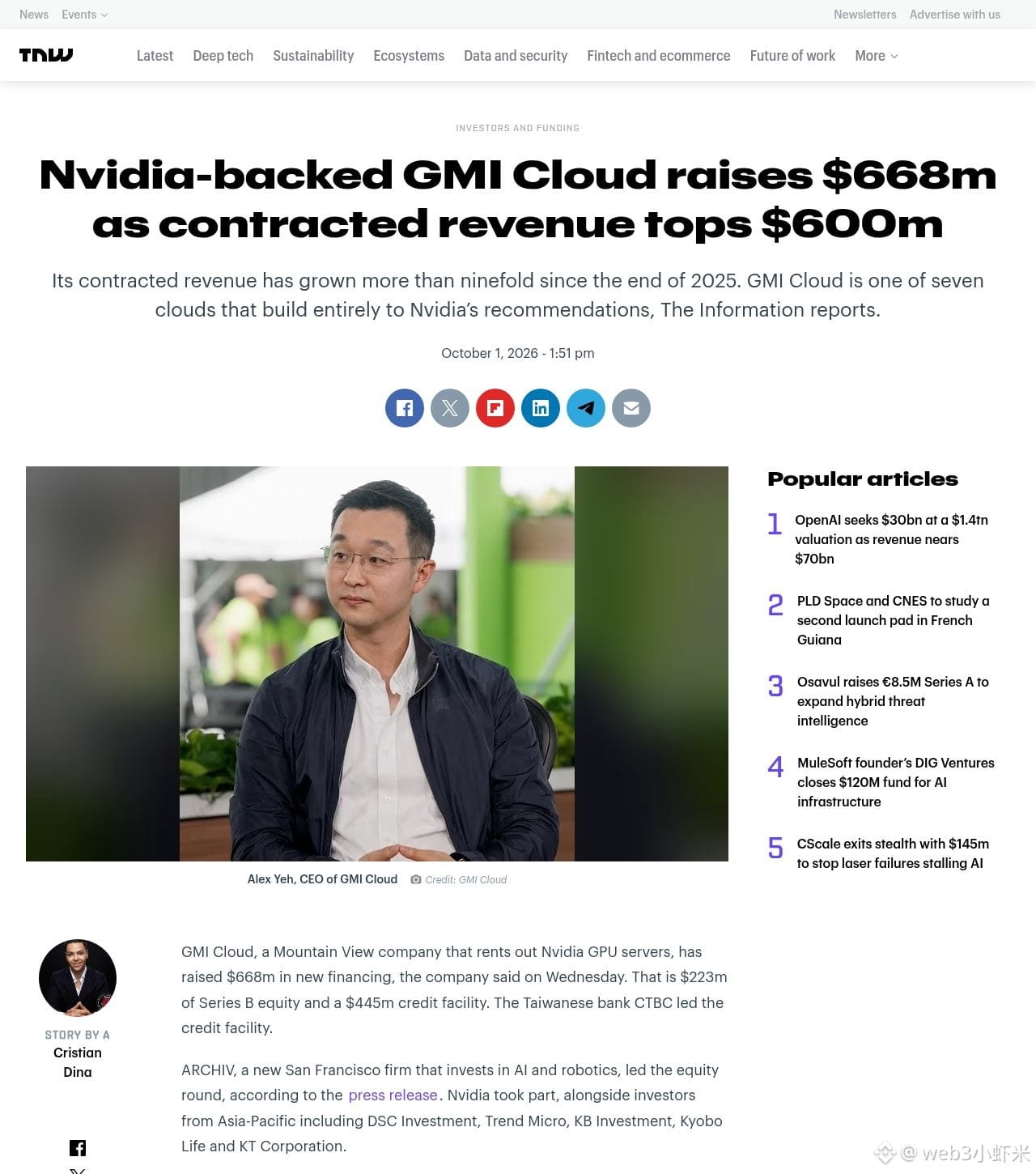
Getting The Next Web’s attention: GMI Cloud, co-invested by Nvidia, has just raised about $668 million—of which Series B equity is about $223 million (ARCHIV leading the round), with an additional roughly $445 million in credit facilities led by CTBC.
The company says contracted ARR has exceeded about $600 million, up more than 9 times from the end of 2025; its inference platform processes roughly 4 trillion tokens per week. The funding will be used to expand GPU production capacity in the U.S., Taiwan, and across Asia-Pacific. Customers include Fireworks, OpenRouter, Nous Research, and others.
The Information Daily (信息报) also wrote that it is one of only seven companies that builds its cloud fully according to Nvidia’s specifications. The power-plant well is still being drilled deeper—and deeper.
#AI #GPU #GMICloud $NVDA
93

Verified
🔥 LATEST: Intercontinental Exchange expands deeper into AI markets ⚡🤖
What is happening?
• ICE, parent company of the New York Stock Exchange, plans to launch computing power futures $ZEC
• Contracts tied to GPU and AI infrastructure costs $WLD
• Would create tradable markets around AI compute demand $LTC
• AI infrastructure increasingly becoming a financial asset class
What this suggests:
• AI compute is evolving into a strategic commodity
• Financial markets preparing for massive AI infrastructure growth
• GPU scarcity and compute pricing becoming hedgeable risks
Context:
• AI companies face soaring demand for chips, cloud capacity, and electricity
• Futures markets could help firms manage volatility in compute costs similar to energy or commodities
📊 Market takeaway:
Bullish for the AI infrastructure narrative. The creation of compute futures signals Wall Street increasingly views AI processing power as core economic infrastructure with long-term institutional demand.
#ICE #AI #GPU

1.8k

·
--
Columbia University is 5000 miles away, but with HIVE, they're remotely training AI on an A40 old card in Paraguay, and the performance is surprisingly keeping up with the H100. Those old miners holding onto this batch of 'electronic waste' just hit the jackpot, and the stock price skyrocketed into double digits. If this narrative of low-cost remote computing takes off, the dream of turning mining farms into AI factories could go on a bit longer. However, the A40's battle for the future is still just hype; it'll depend on whether the next wave of orders can keep up. #AI #GPU $HIVE
{future}(HIVEUSDT)
Columbia University is 5000 miles away, but with HIVE, they're remotely training AI on an A40 old card in Paraguay, and the performance is surprisingly keeping up with the H100. Those old miners holding onto this batch of 'electronic waste' just hit the jackpot, and the stock price skyrocketed into double digits. If this narrative of low-cost remote computing takes off, the dream of turning mining farms into AI factories could go on a bit longer. However, the A40's battle for the future is still just hype; it'll depend on whether the next wave of orders can keep up. #AI #GPU $HIVE

109

·
--
$RNDR DROPS AS GPU RENTAL PRICES FALL – AI ADOPTION DRIVES COMPUTE DEMAND 🔥
The recent data from Silicon Data shows a clear pattern: low-cost open-source models are driving down H100 GPU spot rental prices and pushing token price indexes lower.
However, this is not a sign of weakening AI demand. In fact, the migration to efficient models is increasing overall computational consumption, which sustains high-end GPU needs. The market is repricing short-term sentiment while the underlying trend remains bullish for compute assets.
Are you treating this dip as a buying opportunity or waiting for clearer support?
Not financial advice. Always manage your risk.
#RNDR #AITokens #GPU #CryptoAnalysis
🔥
82

·
--
1. Background
Today's market discussion revolves around the rebound in rental prices for high-end GPUs like H100 and the tightness in spot computing power. Bin's assessment indicates that the core focus is not merely on a short-term price increase, but rather that high-end computing power is entering a stage of 'structural scarcity.' The current demand is no longer solely driven by large model training; AI Agents, quantitative trading, and inference services are becoming new essential needs more focused on sustained operations. Especially for institutions, computing power has shifted from being optional to a fundamental production resource, leading to reduced price sensitivity, which significantly weakens the elasticity of the GPU rental market. 🤖
2. Core Analysis
From a supply perspective, the H100 is a high-performance general-purpose computing asset, and factors like procurement cycles, deployment timelines, data center setups, and electrical and network resources will limit short-term expansion speed. Even if new capital enters the market, it will be challenging to quickly alleviate the tightness of high-end cards. Therefore, the price rebound is not just driven by sentiment; it reflects a slower release of high-end computing power supply.
On the demand side, what stands out in this current upswing is the enhancement of 'demand quality.' AI Agents require stable inference and multitasking capabilities, while quantitative trading places greater emphasis on low latency and continuous computing power. These types of clients typically prioritize resource availability and service stability over merely lowering rental prices. In other words, the demand side is shifting from 'experimental procurement' to 'operational locking,' which will reinforce the premium for quality computing resources.
Moreover, the market is not underestimating the total computing power, but rather the proportion of high-end computing power that can be directly utilized for high-value scenarios. Mid-range and low-end GPUs may not be able to replace the advantages of the H100 in training, inference efficiency, and energy consumption ratio. Thus, 'having cards' and 'having available high-end cards' are two different things. This is also key to the establishment of structural scarcity.
3. Market Impact
For the AI industry chain, the strengthening prices of high-end GPUs may continue to benefit segments like computing power rental, IDC, liquid cooling, server hardware, and high-speed interconnects. For startup teams relying on external computing power, cost pressures will increase, potentially leading to further concentration in leading platforms. For secondary market funds, if the tightness of high-end computing power persists, the valuation logic for related concepts may shift from 'theme-driven' to 'performance validation-driven.'
This change is equally noteworthy for the crypto market. The competition for computing power between AI and quantitative trading may enhance discussions around GPUs, computing power networks, and distributed computing. However, investors should remain objective: rising computing power prices do not necessarily translate to a universal surge in all related tokens or concepts; the real beneficiaries will still be projects with resource integration, delivery capabilities, and stable demand orders.
4. Conclusion
In summary, the signal released by today's news indicates that the high-end GPU market is transitioning from cyclical fluctuations to a state of structural tension due to mismatched supply and demand. If AI applications continue to be implemented and institutional demand remains rigid, the price center for computing power may still have support. In the short term, market focus will be on the speed of recovery in spot supply; in the mid-term, those who can secure stable high-end computing power are more likely to gain an advantage in the commercialization competition of AI. 📈
#AI #GPU #crypto
29
·
--
🌐 #Aethir (ATH): Decentralized GPU Infrastructure
Artificial Intelligence continues to drive demand for high-performance computing. Aethir is building decentralized GPU cloud infrastructure that aims to support AI training, cloud gaming, and enterprise computing.
As AI adoption accelerates, projects offering scalable GPU resources may receive increased attention from both developers and enterprises. Important indicators include ecosystem partnerships, enterprise adoption, node growth, and technological development.
Rather than focusing only on short-term price action, investors often evaluate whether a project is solving a real-world infrastructure problem.
DYOR. Educational content only.
#Aethir #GPU #Blockchain #BinanceSquare

163

·
--
📰 Pantera Capital recently put forward an interesting take: compute power is going through the early stages of “financialization.” Over the next 5–10 years, it may become a commodity—like electricity or crude oil—that underpins the AI economy.
🔥 GPU trading right now is still quite “back-alley.” While there are platforms like SF Compute, Vast AI, and Runpod, much of the real trading still relies on community chat groups, OTC brokers, and customized bilateral agreements. It still has a long way to go before it reaches a mature market.
💡 The article draws an analogy to the power market: hardware is like the power grid, compute service providers are like operators, and specific GPU clusters are like nodes. Different models—H100, H200, B200, B300, and so on—won’t share a single price. Time, location, and inventory conditions will also affect the final quote.
👀 The challenges are obvious as well. Unlike standardized crude oil, compute power is inherently differentiated by model, time window, and geography. Moreover, unlike the power market, there’s currently no strong requirement for transparent order books and market disclosures. How to establish benchmark indices and dynamic pricing still needs to be refined gradually through order-book and trading data.
Honestly, whether the compute market will truly become “commoditized” comes down to one key factor: whether inference demand can keep expanding. The article estimates that for every $100 spent to buy a Token, about $45 goes to an on-demand calling platform, $50 goes to cloud providers and the GPU resource layer, and the remaining $5 goes to the routing layer. Do you think compute power will become the new “oil” of the AI era?
#算力 #AI基础设施 #GPU #加密市场

75

🚀 $RNDR SURGES AS GPU DEMAND SKYROCKETS FROM CHINA'S NEW LISTING! 🟢
📊 The STAR Market debut of a domestic GPU powerhouse is lighting up the AI‑compute narrative, and smart money is already channeling liquidity into $RNDR as the sector’s growth engine. 🌊 Whales are snapping up the token, betting the upcoming hardware boom will fuel on‑chain rendering demand. ⚡ Volume spikes on the 4H chart echo a classic liquidity sweep, hinting that the next upward thrust could be imminent.
💬 Are you positioning $RNDR to ride the GPU renaissance, or waiting for the next wave of institutional inflow? 👇
⚠️ Not financial advice. Always manage your risk. 🛡️
🏷️ #RNDR #GPU #BullishSetup #Crypto
🔥 💎
138
Log in to explore more content
Join global crypto users on Binance Square
⚡️ Get latest and useful information about crypto.
💬 Trusted by the world’s largest crypto exchange.
👍 Discover real insights from verified creators.
Email / Phone number
Trending Topics
1
#FedWatch
16.2M views
38,654 Discussing
2
#EarningsSeason
6.3M views
31,396 Discussing
3
#USMidtermElections
7,698 views
274 Discussing
4
#BitcoinDropsBelow$80K
9,032 views
54 Discussing
5
#比特币跌破8万美元
162,389 views
73 Discussing
6
#BoEOpensConsultationOnTokenizedCollateralForClearing
28 views
7 Discussing
7
#BrazilCryptoExchangesMustApplyForLicensesByFriday
4,486 views
227 Discussing
8
#ICEPartnersWithTradeXYZToBringPerpetualContractsToUS
491 views
12 Discussing
9
#SolidusLabsReportsSuspected$170MSpoofingOnHyperliquidOilContracts
841 views
21 Discussing
10
#StanDruckenmillerBecomesInvestorInTradeXYZ
5,734 views
239 Discussing