

#stablecoin
stablecoin
3.9M views
18,684 Discussing
Hot
Latest

·
--
Canada’s Stablecoin Draft: Redemption Fee Capped at 1%, Yield-Sharing Banned
Canada has formally opened public consultation on its stablecoin regulatory framework. The draft sets clear limits on two contentious issues—redemption fees and yield-sharing—and is seen as one of the most concrete stablecoin regulatory proposals outside the U.S. GENIUS framework.
According to Decrypt, Ottawa has launched a 60-day consultation. The draft requires stablecoin issuers to maintain 1:1 reserves, offer prompt redemption, and cap redemption fees at 1%. Cointelegraph reports that this is part of the potential implementation of the Stablecoin Act, with officials explicitly citing the U.S. GENIUS Act as a reference.
The framework is noteworthy because it draws clear lines around two sensitive aspects of the stablecoin business model. First, the 1% cap on redemption fees limits the friction costs issuers can charge during periods of extreme redemption pressure. Second, the draft explicitly prohibits sharing returns generated by reserve assets with holders, directly affecting one of the main sources of income for stablecoin issuers today.
Fundamentally, the combination of 1:1 reserves and prompt redemption steers stablecoins toward being “freely redeemable fiat claims” rather than “yield-generating cash equivalents.” The 60-day consultation period indicates that regulators are still gathering industry feedback, so the details of the rules could change.
For markets, frameworks of this kind typically do not trigger an immediate price reaction. Instead, they tend to affect compliance costs and the competitive landscape over the medium to long term. Major stablecoin issuers such as USDC and USDT will need to assess how a ban on yield-sharing could affect their pricing and reserve-management strategies. However, the proposal is still under consultation and is not final legislation, so its near-term impact is limited.
The main risk is overinterpretation. There are differing views on how the draft relates to the U.S. GENIUS framework, and the path from consultation to formal legislation is a long one. The final provisions could differ significantly.
What to watch next: first, how officials respond to industry feedback after the 60-day consultation; second, whether the final legislative text retains the ban on yield-sharing; and third, whether major stablecoin issuers adjust their reserve and product strategies in response. The regulatory direction is more important to track than any single rule.
#Stablecoin #Canada #CryptoRegulation
The above is a compilation of information and personal analysis, and does not constitute investment advice.
I will continue to provide updates as further policy details become clear.

The OCC is urging U.S. community banks to enter the stablecoin payments market! This is more than just an invitation—it’s a major strategy to reshape the future of finance.
The U.S. Office of the Comptroller of the Currency (OCC) wants smaller banks to be able to issue USD-pegged stablecoins under the GENIUS Act. The goal is clear: empower smaller financial institutions and help them compete on equal footing with large banks and crypto companies.
This matters a lot. When the GENIUS Act’s final rules take effect on 18/01/2027, the market will see a wave of stablecoins authorized to operate legally. Existing issuers may also apply for temporary exemptions to continue operating.
This move comes as traditional banks worry that high-yield stablecoins could draw deposits away from their systems. The battle for market share is heating up.
Could this be a turning point that makes stablecoins the backbone of the global payments system, or is it just an attempt to curb crypto’s rise? What do you think?
#Stablecoin #OCC #Crypto
1
1
Canada has just “ambushed” the stablecoin market with a tough new regulatory proposal, raising concerns about the future of DeFi.
The key point is a TOTAL BAN on paying interest or yield to stablecoin holders, whether directly or indirectly. This turns stablecoins into pure payment instruments, not income-generating investment assets.
Non-bank issuers will have to maintain 1:1 reserves at Canadian financial institutions, ensuring absolute safety but also tightly tying them to the traditional system. The rules also require redemption within 3 business days, with a maximum fee of 1%.
This is an extremely significant move. If this trend spreads, the future of DeFi projects based on stablecoin yield farming could change dramatically. It sends a clear message: stablecoins are not banks.
How will the crypto market react to stablecoins being “sterilized” of every form of yield? Could this be the beginning of a global wave of tighter regulations?
#Crypto #Stablecoin #Regulation #Canada
1

·
--
January 18, 2027: that date is now the official deadline for stablecoin issuers in the US—and the regulator is inviting small banks to get involved.
The facts: On Oct. 26, the Office of the Comptroller of the Currency (OCC) invited US community banks to apply to become licensed payment stablecoin issuers under the GENIUS Act, either directly or through a subsidiary (CoinDesk, Oct. 26; confirmed by KuCoin and the OCC’s own post on X). The OCC’s final GENIUS rules were issued on Oct. 21 and take effect on Jan. 18, 2027; existing issuers with sufficiently complete applications can request a temporary waiver. But applications aren’t open yet—the OCC is waiting for OMB to approve the forms.
My take: This is a role reversal—from a regulator holding back to one extending an invitation. If community banks actually get involved, stablecoins will stop being purely crypto products and become payment infrastructure for small banks. But an invitation without open applications won’t have a real impact until 2027, and the fight over yield—whether stablecoins can pay interest—is still unresolved. That’s what will determine whether bank deposits are truly at risk.
What I’m watching: when OMB approves the forms and applications open, whether community banks actually apply, and the outcome of the ICBA lawsuit over crypto trust bank charters.
What do you think: would small banks issuing their own stablecoins threaten USDT/USDC, or would it be the biggest validation yet for stablecoins?
This is my analysis, not financial advice—always DYOR.
#Stablecoin #RegulasiCrypto $USDC
1

·
--
Canada proposes new stablecoin rules: redemption fees capped at 1%, with interest payments still prohibited! Issuers must also maintain 1:1 reserves and ensure prompt redemptions. What does this mean for the stablecoin market?#稳定币 #加密货币法规 $USDT $USDC
Canada's stablecoin rules: redemption fees capped at 1%, no interest allowed! 1:1 reserves & fast redemptions required. Market implications? #Stablecoin #CryptoRegulation $USDT $USDC
Canada's stablecoin rules: redemption fees capped at 1%, no interest allowed! 1:1 reserves & fast redemptions required. Market implications? #Stablecoin #CryptoRegulation $USDT $USDC

·
--
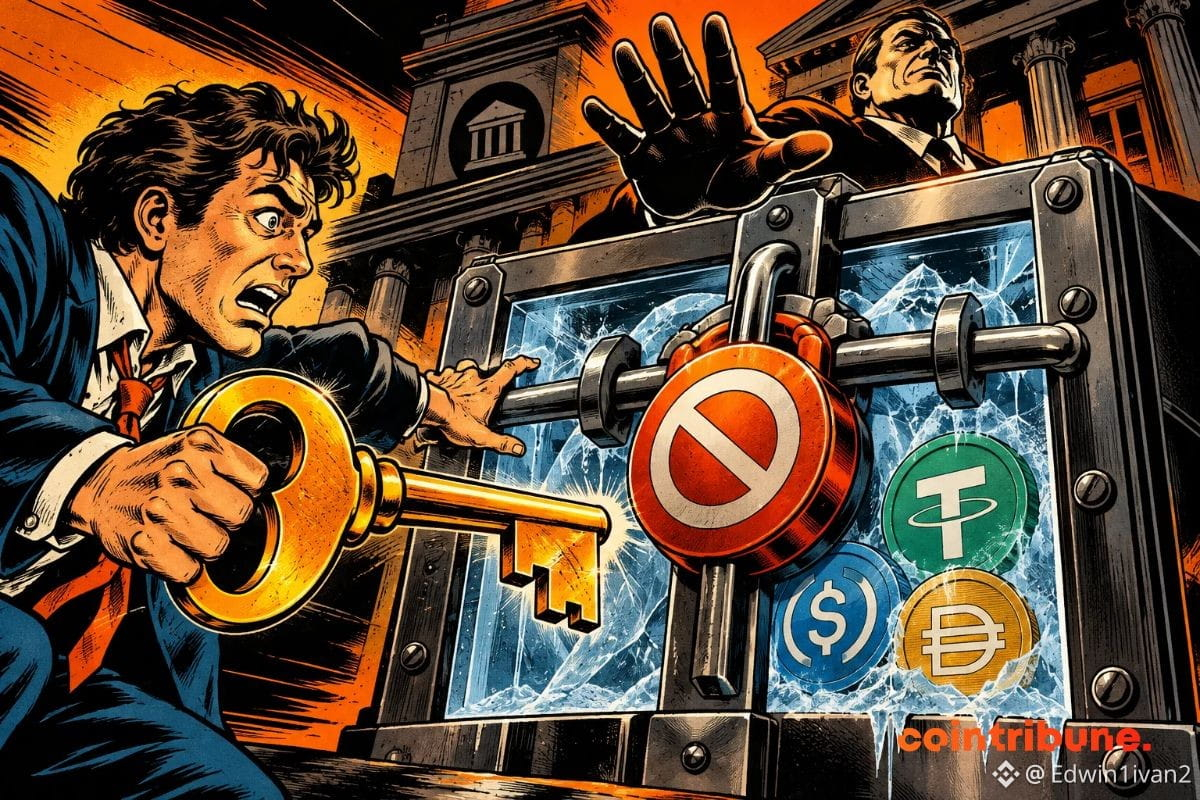
Frozen stablecoin: your private key isn’t enough
A frozen stablecoin remains visible in your wallet, but you can no longer transfer it. Circle can effectively freeze an address for USDC and EURC, even if you’re the only one who holds the private key. Tether applies the same principle to USDT. On April 23, 2026, it announced that it had helped freeze $344 million across two addresses.
$344 million: on April 23, 2026, Tether announced that it had helped freeze this amount in USDT.
More than $4.4 billion: as of April 23, 2026, this was the amount Tether attributed to freezes carried out with law enforcement.
7 roles: the number defined by the USDC contract, all controlled by Circle, including the one that freezes an address.
5 business days: Circle’s estimated refund processing time in Europe, once checks are complete.
Frozen stablecoin: your private key doesn’t control the contract
A stablecoin like USDC isn’t stored in your wallet. It’s a balance recorded in a smart contract managed by its issuer. Your private key lets you sign a transfer. However, the contract decides whether to execute it.
This contract provides for several roles reserved for Circle. Its technical documentation on GitHub lists seven, two of which act directly on transfers. First, the “blacklister” role blocks all transfers to or from an address. Then, the “pauser” role can suspend all transfers in the event of a serious failure or a compromised key.
With a frozen stablecoin, your address can neither send nor receive USDC. Your transaction fails, even with a valid signature. The freeze applies token by token, and your other cryptocurrencies remain usable. Circle can target the same address for USDC and EURC, and across several blockchains.
$STABLE
{future}(STABLEUSDT)
$USDC
{spot}(USDCUSDT)
$EURL.ETF
{etf_us}(EURL.ETF)
#stablecoin
Frozen stablecoin: your private key isn’t enough
A frozen stablecoin remains visible in your wallet, but you can no longer transfer it. Circle can effectively freeze an address for USDC and EURC, even if you’re the only one who holds the private key. Tether applies the same principle to USDT. On April 23, 2026, it announced that it had helped freeze $344 million across two addresses.
$344 million: on April 23, 2026, Tether announced that it had helped freeze this amount in USDT.
More than $4.4 billion: as of April 23, 2026, this was the amount Tether attributed to freezes carried out with law enforcement.
7 roles: the number defined by the USDC contract, all controlled by Circle, including the one that freezes an address.
5 business days: Circle’s estimated refund processing time in Europe, once checks are complete.
Frozen stablecoin: your private key doesn’t control the contract
A stablecoin like USDC isn’t stored in your wallet. It’s a balance recorded in a smart contract managed by its issuer. Your private key lets you sign a transfer. However, the contract decides whether to execute it.
This contract provides for several roles reserved for Circle. Its technical documentation on GitHub lists seven, two of which act directly on transfers. First, the “blacklister” role blocks all transfers to or from an address. Then, the “pauser” role can suspend all transfers in the event of a serious failure or a compromised key.
With a frozen stablecoin, your address can neither send nor receive USDC. Your transaction fails, even with a valid signature. The freeze applies token by token, and your other cryptocurrencies remain usable. Circle can target the same address for USDC and EURC, and across several blockchains.
$STABLE
$USDC
$EURL.ETF
#stablecoin
70
Canada has just released a draft Stablecoin regulation, and this is a major shock for DeFi!
The core point? A complete ban on paying interest on stablecoins. Issuers are only allowed to hold 1:1 reserve assets, at Canadian institutions. Redemption must be quick and straightforward, within 3 business days.
Clearly, this move is aimed at protecting the traditional banking system and preventing stablecoins from becoming a competing deposit product. Without interest, the appeal of stablecoins to crypto investors will drop significantly.
This could set a bad precedent. If other countries follow suit, will the future of yield-bearing stablecoins and DeFi still look bright? Where will the money flow?
The impact on liquidity and DeFi strategies is far from small. What do you think about this "containment" move?
#Crypto #Stablecoin
$USDC $USDT
34

·
--
📰 Canada proposes new stablecoin rules: Why is “banning yield” key?
Canada’s financial regulator has announced a consultation on stablecoin regulations, explicitly retaining a provision that “prohibits issuers from offering yield.” This means stablecoin models like USDC, which earn interest through lending protocols, could face significant restrictions in Canada. This directly affects the amount of funds held in stablecoins and the incentive to innovate, but the resulting regulatory clarity could boost market confidence.
Why does this news matter?
Behind this rule is Canada’s priority on financial stability. Stablecoins essentially bypass the traditional banking system, and their yield model (similar to banks’ lending-deposit interest margins) could amplify systemic risks. Canada’s move is in line with the spirit of the EU’s Markets in Crypto-Assets Regulation, with both tending to restrict leverage and the scope for stablecoin innovation. But this is not a global standard—while the US is also regulating stablecoins, it is more focused on technical details and anti-money-laundering issues. The key point is that Canada is a G7 member, and its regulatory moves could prompt other developed economies to follow suit.
Market impact
In the short term, the news could put downward pressure on stablecoin tokens (such as USDC and USDT) in secondary markets, even though they typically track the US dollar. Funds held in stablecoins may shift to more flexible DeFi protocols, but yield restrictions would further undermine that option. The direct impact on BTC and ETH is limited because they are stores of value, not stablecoins. In the long term, however, if major economies around the world all restrict stablecoin yields, the industry could be pushed toward more transparent central bank digital currency (CBDC) models.
Trading approach
Canada’s move suggests the stablecoin sector may be reaching a turning point, with less room for innovation. If more similar regulations emerge, funds held in stablecoins may begin to exit faster. Put simply: the purse strings on stablecoin “money” may keep getting tightened. This assessment no longer applies if the US or EU follows suit.
This article is not sponsored by any project. The author does not hold any of the assets mentioned.
$BTC $ETH #BTC #ETH
⚠️ Not investment advice. Predictions are for reference only.
#Stablecoin
$XRP



319

Canada opens consultation on plans to regulate stablecoins, maintain ban on yield
- Non-bank stablecoin issuers must hold 1:1 reserves at eligible Canadian institutions
- Transactions must be settled within 3 business days
- The text is open for public comment
#BinanceSquare #CryptoNews #Stablecoin #Canada #Regulation
$btc $eth
vlikevn Titanbot
Source: CoinDesk
- Non-bank stablecoin issuers must hold 1:1 reserves at eligible Canadian institutions
- Transactions must be settled within 3 business days
- The text is open for public comment
#BinanceSquare #CryptoNews #Stablecoin #Canada #Regulation
$btc $eth
vlikevn Titanbot
Source: CoinDesk
348

·
--
🚨 $ZEC STABLECOIN REDEMPTION RULES SET TO REDEFINE RETAIL PROTECTION 🟢
Canada’s draft rule forces stablecoin issuers to honor redemptions within three business days, removing any minimum cash‑out floor. 🦈 The mandatory liquidity window guarantees that every token holder can exit on demand, a move that aligns with institutional liquidity hunting patterns.
A 1% fee ceiling caps redemption costs, turning the fee structure into a predictable data point for smart‑money models. 📊 With yields barred but usage rewards still alive, the market faces a clear risk‑reward matrix that traders can quantify. 💡
🤔 Will this liquidity‑first framework become the global benchmark for stablecoin design? 👇
⚠️ Not financial advice. Always manage your risk. 🛡️
🏷️ #ZEC #Regulation #Stablecoin #Liquidity #Crypto
🔥 💎
8

·
--
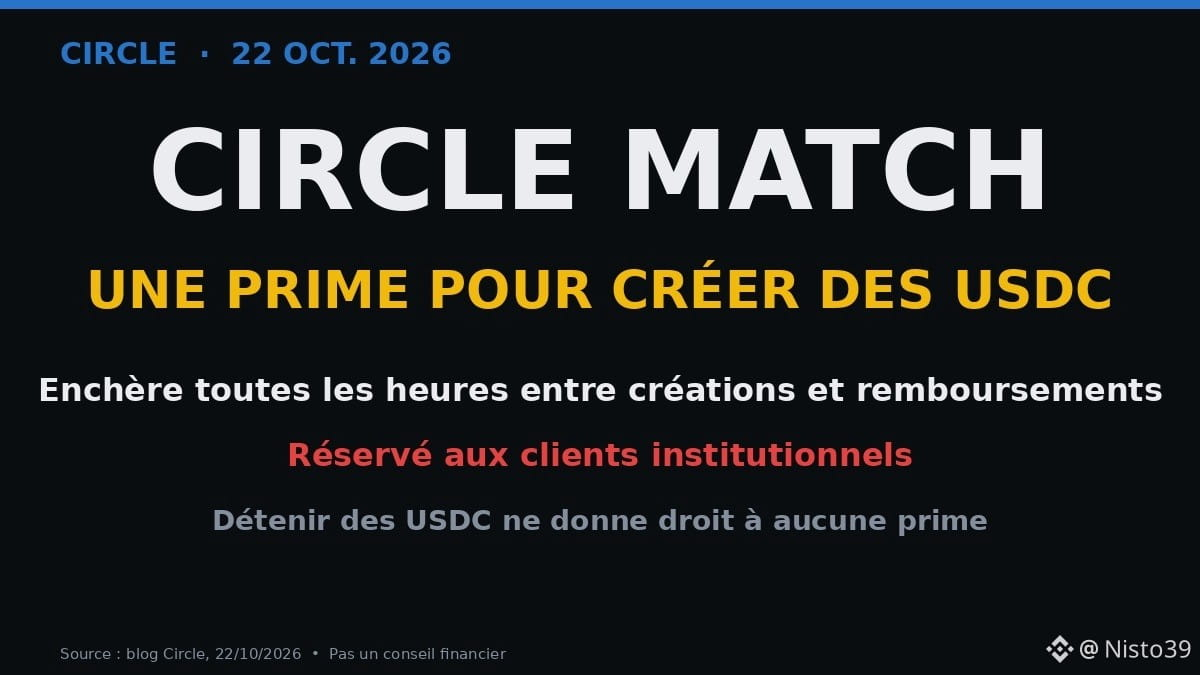
💵 Minting USDC can now earn a reward… but only for major players. Here’s how it works.
📌 The facts (October 22, 2026)
• Circle, the issuer of USDC, is launching “Circle Match” for its institutional clients
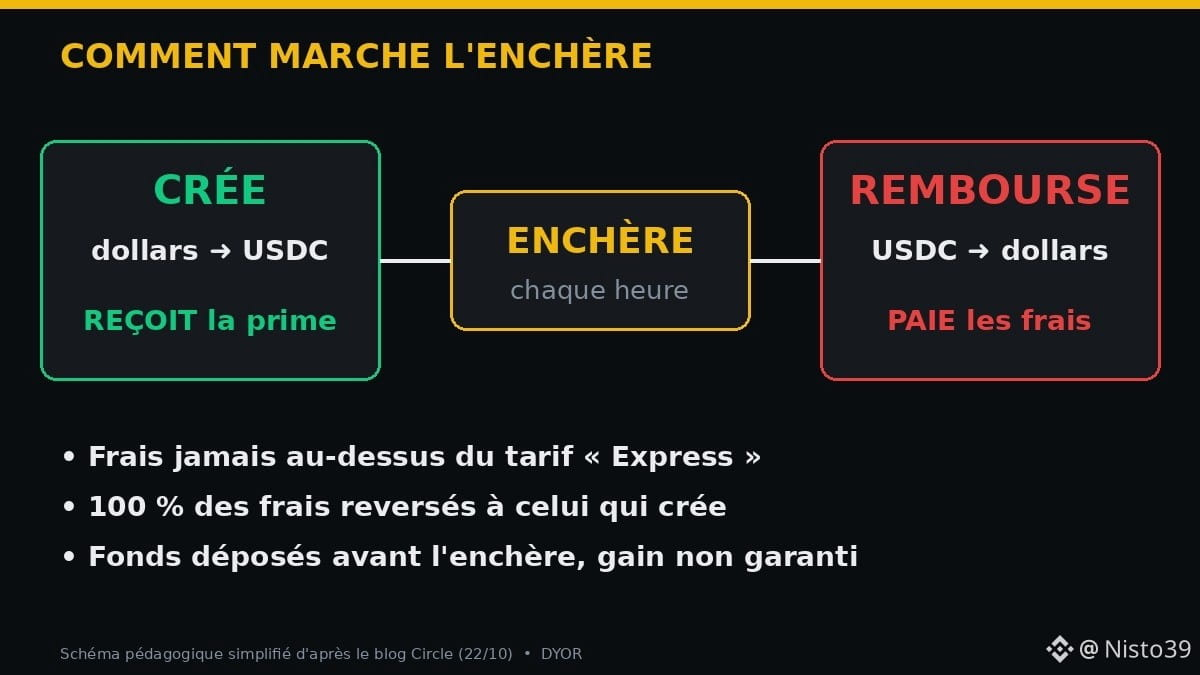
• Every hour, an auction matches those looking to mint USDC (dollars ➜ USDC) with those looking to redeem it (USDC ➜ dollars)
• When two orders are matched, the party redeeming USDC pays a fee, never higher than Circle’s “Express” rate
• The entire fee is passed on to the party minting USDC as a reward
• Circle says it takes no margin on matched orders
🔍 Why does this matter?
Until now, minting USDC didn’t earn you anything directly. By connecting both sides, Circle reduces entry and exit costs for large volumes. Less friction upfront theoretically makes a digital dollar easier to move around.
⚖️ A few caveats
• Simply holding USDC does not entitle you to any reward
• Funds must be deposited before the auction, and earnings are not guaranteed
• Dollar payments depend on US banking hours
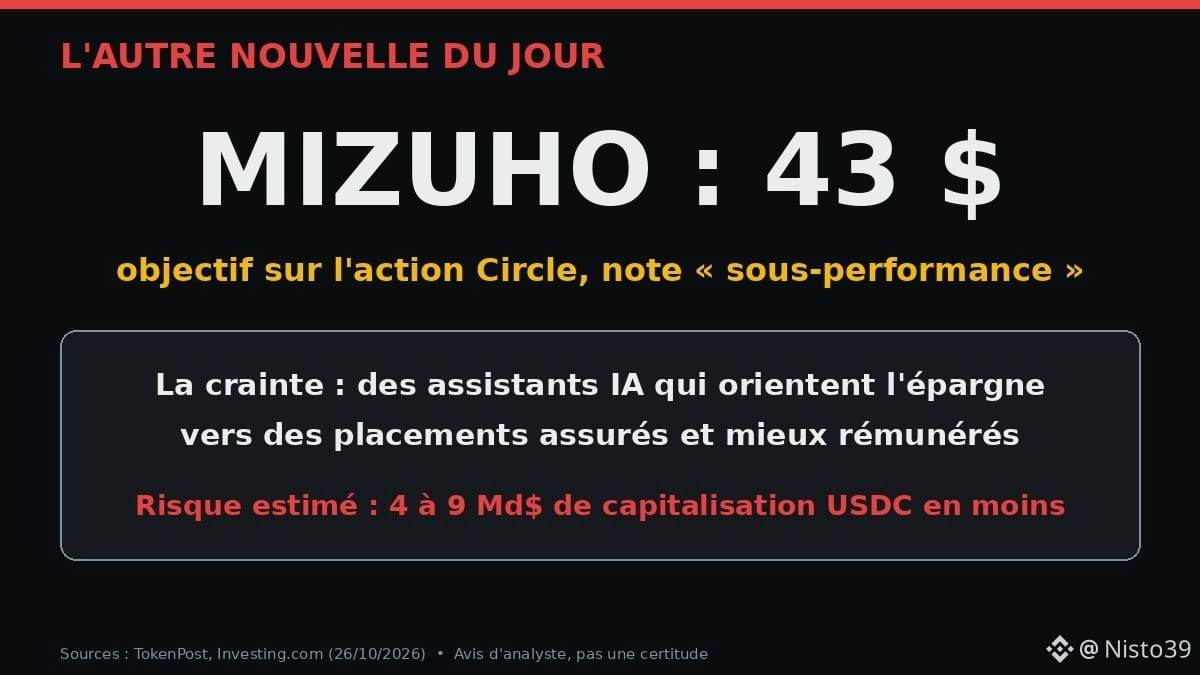
• On the same day (10/26), Mizuho sets a $43 price target for Circle shares (with an “Underperform” rating): the bank fears AI assistants could steer savings toward insured, higher-yield investments
👤 Mariama (a fictional character) sells traditional wax-print fabrics in Bamako and keeps some of her savings in USDC. She won’t receive this reward. But if platforms pay less to enter and exit the digital dollar, her conversion fees could eventually fall.
💬 Should stablecoins pay their users? Yes 👍 / No 👀 👇
Not financial advice. DYOR.
Sources: Circle blog (10/22), Crypto Times (10/26), TokenPost and Investing.com (10/26).
$USDC
#Stablecoin #USDC #CryptoNews #Afrique
7


#CanadaProposesStablecoinRedemptionWithin3BusinessDays
🇨🇦 💵 Canada Proposes 3-Day Stablecoin Redemption: A Major Shift for Crypto Trust 💵 🇨🇦
Imagine holding a digital dollar when you suddenly need cash. You request redemption, but the real question is simple: how long should you have to wait for your own money?
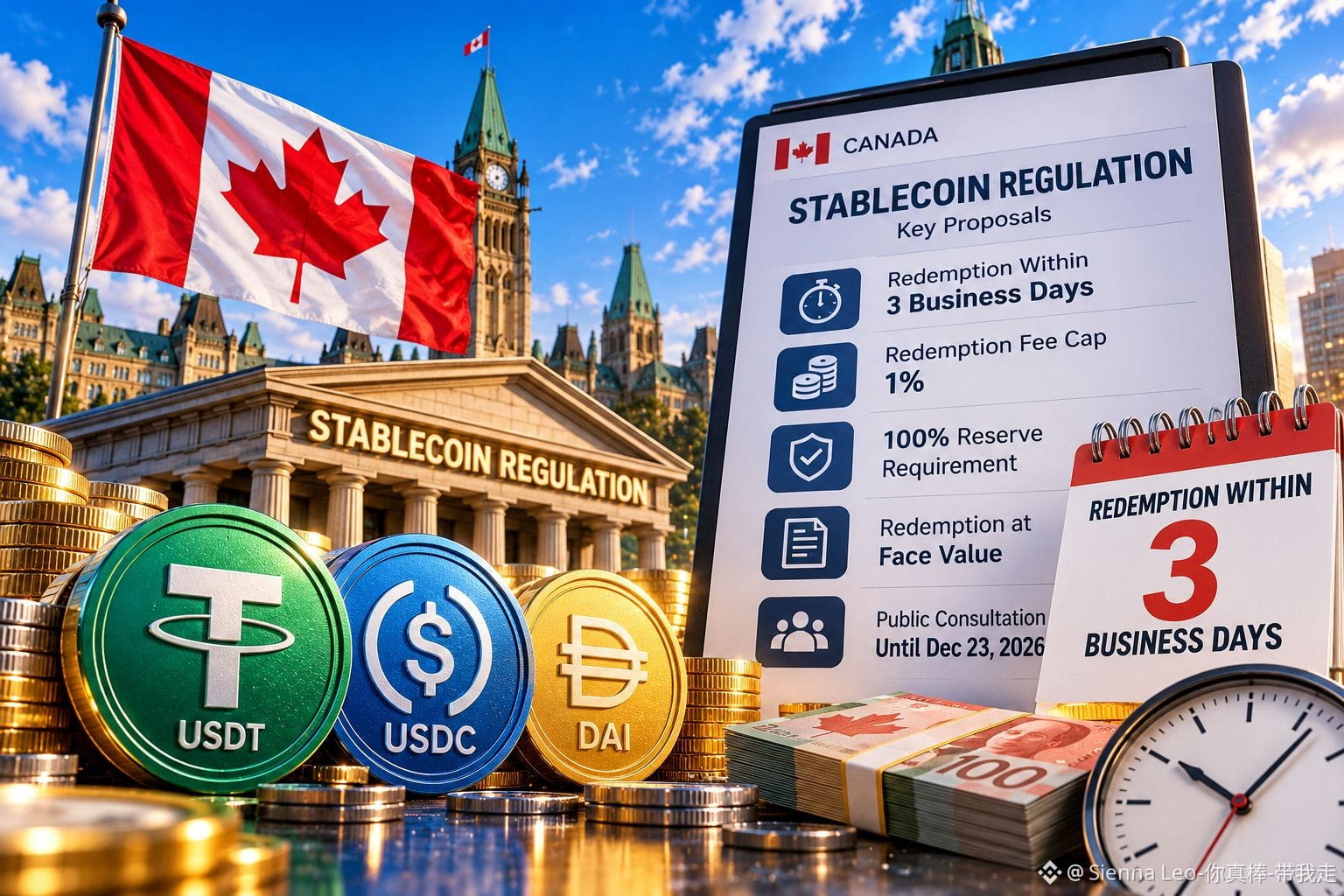
Canada is proposing a clearer answer. Draft stablecoin regulations published on October 24 would require covered issuers to redeem tokens within three business days of a request, with redemption fees capped at 1%. The rules are still under consultation, not yet in force.
The proposal goes beyond timing. Issuers would need reserves worth at least 100% of outstanding stablecoins, held in eligible assets, alongside redemption at face value in the currency the token tracks.
The real story is confidence. A stablecoin can trade close to Dolor 1 during normal conditions, but users need to know whether they can actually redeem it when markets become stressed.
The three-day deadline could strengthen accountability, while the 1% fee ceiling offers predictability. However, the draft allows daily redemption limits when reserve-market liquidity is insufficient to meet all requests. That exception matters most during periods of stress.
Public consultation runs until December 23, 2026, with implementation intended for fall 2027. Until then, these requirements remain proposals.
A stablecoin earns its name through reliable redemption, not merely a stable price.
Would a guaranteed redemption process make you more confident about holding stablecoins?
Disclaimer: Educational content only, not financial advice.
#Stablecoin #CryptoRegulation #GrowWithSAC $ERA $DODO $REZ
434

·
--
#CanadaProposesStablecoinRedemptionWithin3BusinessDays
🚨 Canada’s Proposed Stablecoin Rules: What 3-Day Redemptions Mean for Crypto Users
Canada is shaping the future of digital asset regulation with a newly proposed framework for fiat-backed stablecoins. While the goal is to enhance consumer protection, it introduces significant shifts that every crypto user and trader should keep on their radar.
📌 Key Highlights of the Proposal:
3-Business-Day Redemption: Covered issuers would be required to complete stablecoin redemptions within three business days of a valid request.
1:1 Reserve Backing: Issuers must maintain adequate reserve assets to cover outstanding tokens at par.
Fee Cap & Accessibility: Redemption fees would be capped at a maximum of $1\%$, with no minimum redemption amount required for holders.
Safeguards During Volatility: The proposal allows for daily redemption limits if illiquid reserve-asset markets prevent issuers from meeting sudden spikes in demand.
💡 Why It Matters:
While clear guidelines and reserve transparency help build long-term trust in digital payments, a 3-day turnaround window means traders will need to plan ahead during periods of high market volatility.
With public consultations underway and implementation targeted for 2027, how will these rules affect your strategy? Are fast redemptions and stronger reserves worth the wait? Let’s discuss below! 👇
#Stablecoin #CryptoRegulation #CanadaCrypto $BTC $BNB

36

·
--
$HSBC.US 🚨 HSBC LAUNCHES REDCOIN STABLECOIN IN HONG KONG
HSBC has launched RedCoin (RCHKD), its first Hong Kong dollar-denominated stablecoin, through its PayMe payment platform.
🔹 What’s new?
• Designed to be redeemable 1:1 for Hong Kong dollars
• Supports person-to-person transfers and payments to merchants
• More than 3.3 million PayMe users will be able to activate wallets in phases
• HSBC plans to expand into tokenised investment products
🌐 Why it matters: A major traditional bank is bringing regulated stablecoin technology closer to everyday payments.
📌 Important: The 3.3 million figure refers to potential PayMe users, not confirmed active RedCoin wallets.
🔗 Official source: https://www.about.hsbc.com.hk/news-and-media/hsbc-redcoin-launches-today
What impact could bank-issued stablecoins have on digital payments? 👇
#redcoin #stablecoin #blockchain #CryptoNews
{stock_us}(HSBC.US)
$HSBC.US 🚨 HSBC LAUNCHES REDCOIN STABLECOIN IN HONG KONG
HSBC has launched RedCoin (RCHKD), its first Hong Kong dollar-denominated stablecoin, through its PayMe payment platform.
🔹 What’s new?
• Designed to be redeemable 1:1 for Hong Kong dollars
• Supports person-to-person transfers and payments to merchants
• More than 3.3 million PayMe users will be able to activate wallets in phases
• HSBC plans to expand into tokenised investment products
🌐 Why it matters: A major traditional bank is bringing regulated stablecoin technology closer to everyday payments.
📌 Important: The 3.3 million figure refers to potential PayMe users, not confirmed active RedCoin wallets.
🔗 Official source: https://www.about.hsbc.com.hk/news-and-media/hsbc-redcoin-launches-today
What impact could bank-issued stablecoins have on digital payments? 👇
#redcoin #stablecoin #blockchain #CryptoNews

50

·
--
The Standard Chartered-backed joint venture has slowed the pace of its retail stablecoin rollout, and expectations for institutional on-ramps need to be revised.
According to Cointelegraph, Anchorpoint, the joint venture between Standard Chartered and Animoca Brands, has made it clear that it is not in a hurry to launch retail stablecoin services by the end of 2026. This statement directly revises earlier market expectations that institutional stablecoin access points would expand rapidly.
The joint venture had previously set a target of enabling retail access by the end of 2026, but its latest stance shows it is not rushing ahead. The specific reasons for the slowdown and the new timeline have not yet been disclosed.
The significance of this lies in the fact that stablecoins are one of the important channels through which institutional capital enters the crypto market. When a joint venture led by a major bank chooses to slow its pace, it means the speed at which institutional funds flow into the crypto market through stablecoin on-ramps may be lower than previously optimistic expectations, creating some constraint on near-term liquidity expansion.
From a capital-flow perspective, the issuance and circulation scale of stablecoins is an important indicator of crypto market liquidity. A slowdown in institutional execution may imply that stablecoin supply growth over the next few quarters will be below earlier expectations, thereby affecting overall market liquidity in crypto.
That said, it is worth noting that the slowdown may only reflect a change in execution pace rather than a fundamental decline in institutional demand for stablecoins. As a traditional financial institution, Standard Chartered typically has a long decision-making cycle, and a pace adjustment does not necessarily indicate a strategic shift.
What is worth watching next is whether Anchorpoint will provide a new, explicit timeline, and whether the rollout pace of other institutional stablecoin projects will also change in a similar way. If multiple institutions slow down at the same time, it may indicate that the expansion cycle for institutional stablecoin on-ramps will lengthen, and the impact on crypto market liquidity will need to be reassessed.
#Stablecoin #CryptoMarket
The above is a summary of information and personal analysis, and does not constitute investment advice.
Follow me to keep tracking key market changes and data.
35
·
--
Canada has just proposed rules that change how stablecoin holders redeem their funds.
Fact: Canada’s draft Stablecoin Regulations were published in the Canada Gazette on Oct. 24, 2026: covered retail holders can redeem directly with the issuer with no minimum amount, be paid within a maximum of 3 business days, and pay fees capped at 1%. This is still a proposal — public comments are open until Dec. 23, 2026, and implementation is targeted for fall 2027.
My take: This is about the right to exit, not the price. Using an exchange is convenient, but direct redemption with the issuer may not be available to all holders, especially small holders. If these rules are adopted, there will be clear certainty: funds are returned at face value, with a clear fee cap. For USDC holders, redemption at par means being paid in U.S. dollars.
What I’m watching: the consultation results through December and any changes to major issuers’ redemption terms.
Should other countries adopt this too, or would that just constrain issuers?
This is my analysis, not financial advice — always DYOR.
#Stablecoin #RegulasiCrypto $USDC
9
·
--
HSBC Hong Kong Dollar Stablecoin Reaches 3 Million Wallets as Bank Payment Access Expands
According to Decrypt, HSBC enabled its Hong Kong dollar stablecoin in PayMe on Friday, reaching around 3 million wallets. The significance of this development is not the price volatility of any particular coin, but that a bank-issued stablecoin is undergoing its first large-scale test within a real-world payment channel.
From a funds-flow perspective, PayMe is a local Hong Kong payment service. Reaching 3 million wallets means that, for the first time, the stablecoin supply side is connected to a bank-level user base. This tests not whether there is direct buying demand from the crypto market, but whether stablecoins can function as a payment medium in frequent, low-value, localized transactions. If usage increases, the circulation of Hong Kong dollar stablecoins may change before crypto asset prices do, making it an early indicator of how widely bank stablecoins are being adopted.
Why does this matter? Because bank stablecoins typically gain traction first in payments and settlement, rather than trading or investment. HSBC’s choice of PayMe suggests its focus is on creating a closed liquidity loop: users make payments with stablecoins, the bank controls issuance and redemption, and funds circulate within the system. The direct impact on the crypto market is likely to be indirect, but this could reshape stablecoin access points—from exchange wallets to bank payment wallets.
The key question is whether 3 million wallets will translate into actual transaction frequency. If most users simply hold the stablecoin without making payments, its contribution to liquidity will be limited. Conversely, if stablecoin payments make up a growing share of PayMe transactions, this could affect the on-chain or off-chain circulation of Hong Kong dollar stablecoins. For now, however, the stablecoin is limited to Hong Kong dollars and the PayMe ecosystem; its interoperability across blockchains and its cross-border payment capabilities have yet to be tested, so it would be premature to draw broad conclusions in the short term.
The developments worth watching next are the level of activity in stablecoin payments within PayMe, whether HSBC opens access to third-party merchants, and whether demand emerges for cross-institution settlement using Hong Kong dollar stablecoins. These signals will reveal more about the real impact of bank stablecoins on crypto market fund flows than wallet numbers alone.
#Stablecoin #CryptoMarket
The above is a summary of information and personal analysis, and does not constitute investment advice.
47

DeFi’s future competitors may not be limited to other DeFi protocols
I recently saw that SoFi launched a tokenized bank deposit product called SOFIE.
It currently offers a variable annual percentage yield of 4.40%, with bank deposit insurance coverage where applicable.
When users need to access their funds, they can convert them to SoFiUSD and use them to trade crypto assets or make on-chain transfers.
This got me thinking.
When I used to research DeFi stablecoins, I focused more on competition between different protocols, such as yields, fund size, and use cases.
But now traditional banks are also starting to offer similar digital dollar services.
Although bank deposits and DeFi stablecoins are not the same kind of product, and differ in usage restrictions, risks, and liquidity,
from a user’s perspective, the questions are ultimately the same:
Where is my money safer? What kind of returns can I get? How convenient is it to use?
This means that DeFi stablecoins may face competition in the future not just from other on-chain protocols.
Of course, it’s too early to say that traditional banks are already taking market share away from DeFi.
What’s really worth watching is whether these new products will change how users store and use their funds.
I think that in the long run, the ability to keep attracting users and capital matters more than simply offering higher yields.
#defi #Stablecoin
57

·
--
🚨 $HSBC.US JUST ENTERED THE STABLECOIN SPOTLIGHT! 🌏
🏦 HSBC RedCoin: Traditional Banking Meets Digital Payments!
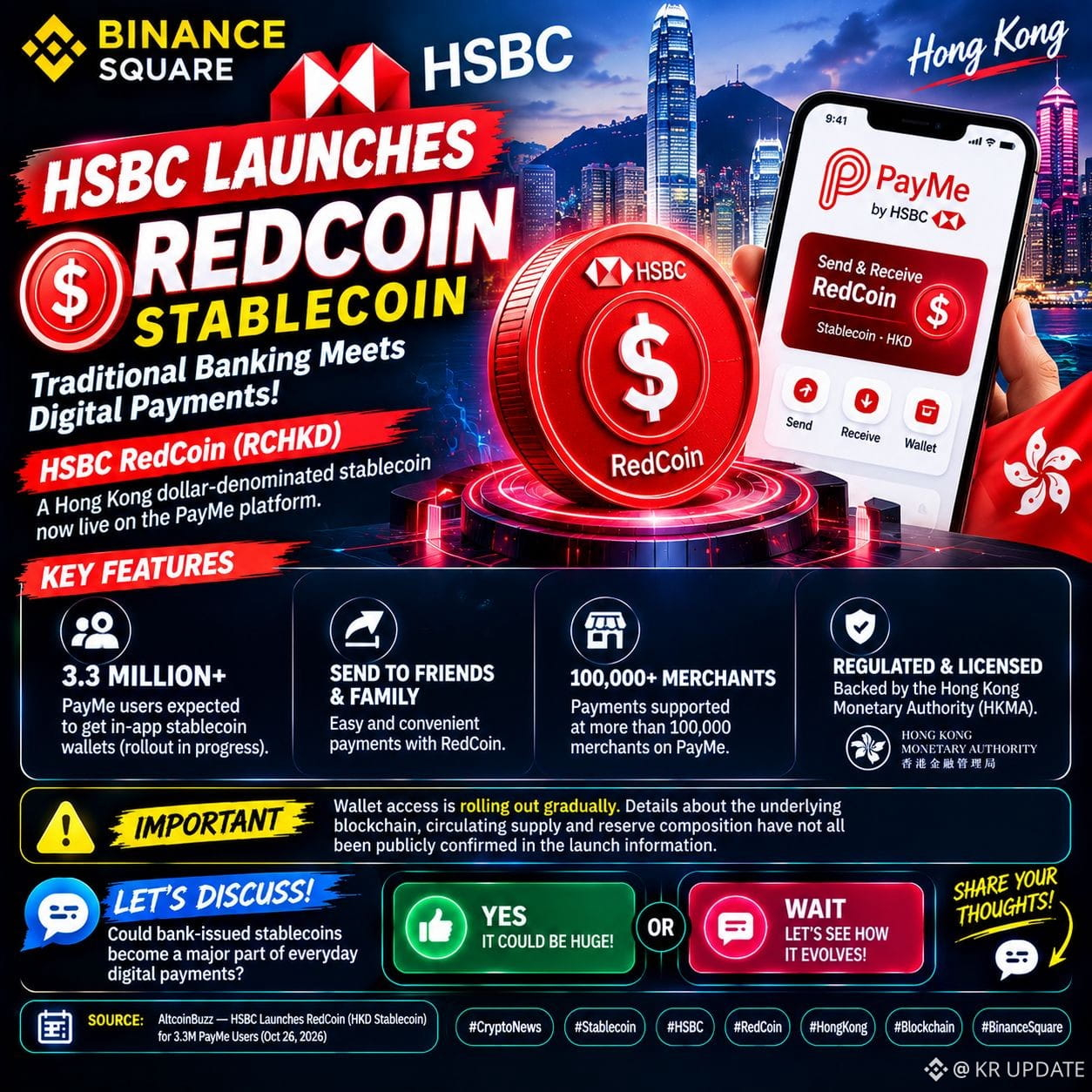
HSBC has launched RedCoin ($RCHKD), a Hong Kong dollar-denominated stablecoin, on its PayMe platform.
🔥 Why is this news important?
🔹 More than 3.3 million PayMe users are expected to gain access to in-app stablecoin wallets as the rollout progresses.
🔹 Users will be able to send RedCoin to friends and family.
🔹 HSBC says payments will be supported at more than 100,000 merchants on PayMe.
🔹 The stablecoin is licensed and regulated by the Hong Kong Monetary Authority.
⚠️ Important: Wallet access is rolling out gradually. Details about the underlying blockchain, circulating supply and reserve composition have not all been publicly confirmed in the launch information.
💬 DISCUSSION: Could bank-issued stablecoins become a major part of everyday digital payments?
Share your thoughts below! 👇
#CryptoNews #stablecoin #redcoin #HongKongFinance #BinanceSquare
73

🚨 LATEST: Standard Chartered-led Anchorpoint says it’s planning a retail stablecoin on a public blockchain but won’t rush a launch, eyeing cross-border payments as a key use case.
#Crypto #Stablecoin
🚨 LATEST: Standard Chartered-led Anchorpoint says it’s planning a retail stablecoin on a public blockchain but won’t rush a launch, eyeing cross-border payments as a key use case.
#Crypto #Stablecoin
#Crypto #Stablecoin


1
40
Log in to explore more content
Join global crypto users on Binance Square
⚡️ Get latest and useful information about crypto.
💬 Trusted by the world’s largest crypto exchange.
👍 Discover real insights from verified creators.
Email / Phone number
Trending Topics
1
#BinancePick
3.2M views
156,602 Discussing
2
#EarningsSeason
5.4M views
26,205 Discussing
3
#SouthKoreaConsidersEducationTaxOnCryptoExchanges
0 views
7 Discussing
4
#OCCUrgesCommunityBanksToEnterStablecoinPayments
0 views
4 Discussing
5
#RippleWinsFullApprovalAsNationalTrustBank
0 views
4 Discussing
6
#OndoToOpenSubscriptionsForOpenAIPreIPOTokenizedNotes
0 views
2 Discussing
7
#AnthropicTTMRevenueGrewAbout1200%
41,137 views
494 Discussing
8
#AnthropicS1ExpectedToday
33,814 views
384 Discussing
9
#SouthKoreaReportedlyWeighsFourthCryptoTaxDelay
35,796 views
514 Discussing
10
#FranklinTempletonFilesForTwoDividendToBitcoinETFs
47,256 views
588 Discussing