
#cbdc
cbdc
36.1M views
156,913 Discussing
Hot
Latest

·
--
Verified
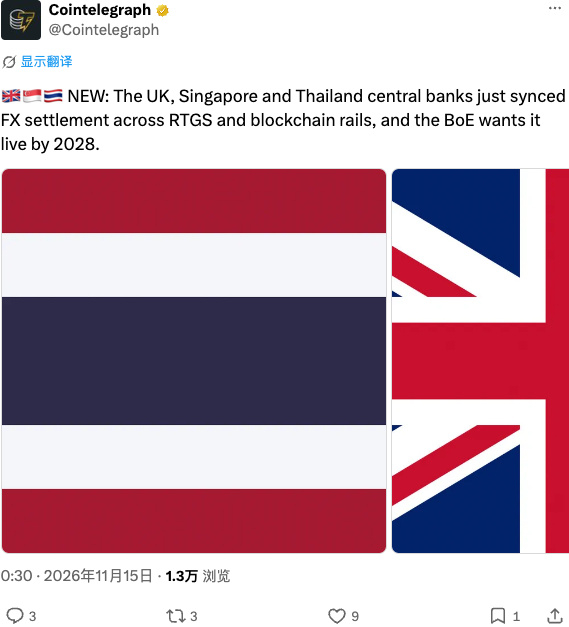
The central banks of the UK, Singapore, and Thailand have finally dropped the act: they’re going to use blockchain for cross-currency settlement in 2028. These old fossils are finally getting serious—the moat protecting dollar hegemony may be about to get breached. Don’t just focus on ETFs; this is the real big story.
$BTC $XRP #CBDC #CryptoNews
The central banks of the UK, Singapore, and Thailand have finally dropped the act: they’re going to use blockchain for cross-currency settlement in 2028. These old fossils are finally getting serious—the moat protecting dollar hegemony may be about to get breached. Don’t just focus on ETFs; this is the real big story.
$BTC $XRP #CBDC #CryptoNews
$BTC $XRP #CBDC #CryptoNews
1
836


·
--
Article
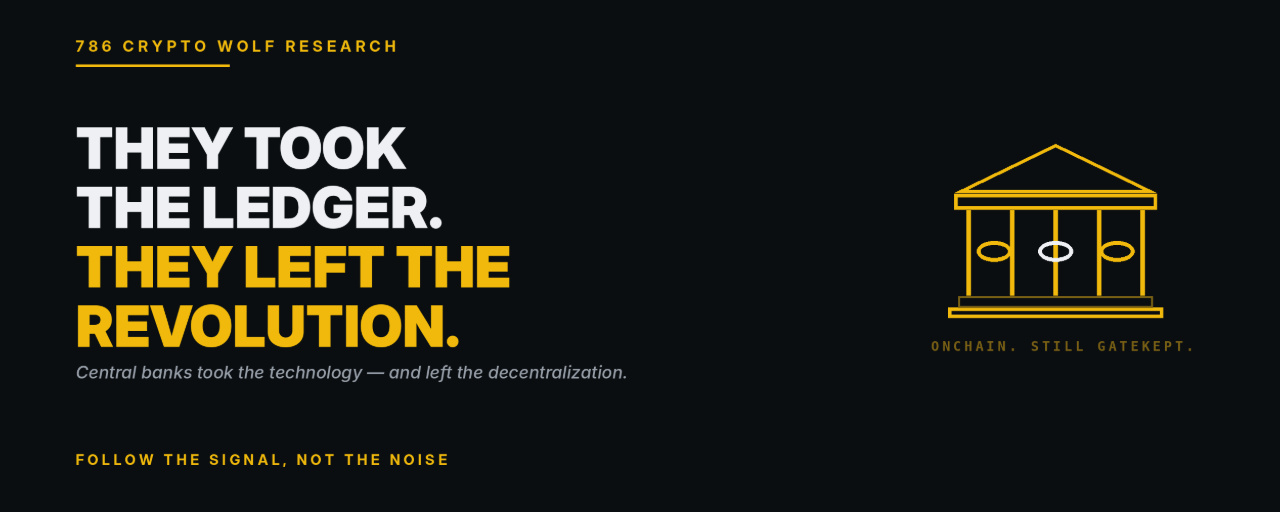
They Took the Ledger. They Left the Revolution.This week three central banks — the Bank of England, the Monetary Authority of Singapore, and the Bank of Thailand — ran Project Meridian FX: an experiment linking their national settlement systems with distributed ledger tech to settle cross-border currency trades atomically, both sides clearing together or not at all. The crypto timeline erupted: “TradFi is going onchain. Game over. Bullish.”
Read what they actually built.
The mechanism. Meridian uses a “synchronisation operator” — a permissioned coordinator that connects existing central-bank systems through a shared ledger. The ledger is real. The efficiency is real. But there is no public blockchain here. No cryptocurrency. No token anyone can buy, hold, or stake. It’s the plumbing of blockchain, installed inside the plumbing of central banking.
The hidden dependency. The cheering assumes “uses a ledger” means “adopted crypto.” But crypto was never just the ledger — a shared database that records transactions is forty years old. What made crypto different was the ledger without a gatekeeper: settlement no single party could approve, reverse, or deny. Central banks kept the gatekeeper. They adopted the technology and quietly rejected the idea underneath it.
The human consequence. Look at who the benefits go to. Faster settlement, less counterparty risk, lower cost — those accrue to the institutions running the system. The decentralization, the self-custody, the permissionlessness — the parts that were supposed to be for you — are exactly what got left out. You can’t own Meridian. You can’t hold it. It makes banks faster. It doesn’t make users freer.
The strategic fork. One read: this normalizes tokenization, and a rising institutional tide eventually lifts every onchain asset. The harder read: it proves institutions can capture every efficiency of blockchain while discarding decentralization entirely — making permissionless crypto not the future of finance, but a niche beside it. Both can look true for a while. Only one survives contact with scale.
The unanswered question. If a settlement rail can be fast, programmable, and onchain without being decentralized, then decentralization no longer gets to justify itself on efficiency. It has to stand on something else — censorship-resistance, self-custody, access for the unbanked. The real question Meridian forces isn’t whether crypto won. It’s: once the institutions have taken the ledger, what is decentralization actually for?
That’s the question worth sitting with. The banks took the part that was easy to copy. What’s left is the part crypto still has to prove was worth building.
786 Crypto Wolf Research — Follow the signal, not the noise.
#Tokenization #CBDC #ProjectMeridian #786CryptoWolf
They Took the Ledger. They Left the Revolution.
This week three central banks — the Bank of England, the Monetary Authority of Singapore, and the Bank of Thailand — ran Project Meridian FX: an experiment linking their national settlement systems with distributed ledger tech to settle cross-border currency trades atomically, both sides clearing together or not at all. The crypto timeline erupted: “TradFi is going onchain. Game over. Bullish.”
Read what they actually built.
The mechanism. Meridian uses a “synchronisation operator” — a permissioned coordinator that connects existing central-bank systems through a shared ledger. The ledger is real. The efficiency is real. But there is no public blockchain here. No cryptocurrency. No token anyone can buy, hold, or stake. It’s the plumbing of blockchain, installed inside the plumbing of central banking.
The hidden dependency. The cheering assumes “uses a ledger” means “adopted crypto.” But crypto was never just the ledger — a shared database that records transactions is forty years old. What made crypto different was the ledger without a gatekeeper: settlement no single party could approve, reverse, or deny. Central banks kept the gatekeeper. They adopted the technology and quietly rejected the idea underneath it.
The human consequence. Look at who the benefits go to. Faster settlement, less counterparty risk, lower cost — those accrue to the institutions running the system. The decentralization, the self-custody, the permissionlessness — the parts that were supposed to be for you — are exactly what got left out. You can’t own Meridian. You can’t hold it. It makes banks faster. It doesn’t make users freer.
The strategic fork. One read: this normalizes tokenization, and a rising institutional tide eventually lifts every onchain asset. The harder read: it proves institutions can capture every efficiency of blockchain while discarding decentralization entirely — making permissionless crypto not the future of finance, but a niche beside it. Both can look true for a while. Only one survives contact with scale.
The unanswered question. If a settlement rail can be fast, programmable, and onchain without being decentralized, then decentralization no longer gets to justify itself on efficiency. It has to stand on something else — censorship-resistance, self-custody, access for the unbanked. The real question Meridian forces isn’t whether crypto won. It’s: once the institutions have taken the ledger, what is decentralization actually for?
That’s the question worth sitting with. The banks took the part that was easy to copy. What’s left is the part crypto still has to prove was worth building.
786 Crypto Wolf Research — Follow the signal, not the noise.
#Tokenization #CBDC #ProjectMeridian #786CryptoWolf
Read what they actually built.
The mechanism. Meridian uses a “synchronisation operator” — a permissioned coordinator that connects existing central-bank systems through a shared ledger. The ledger is real. The efficiency is real. But there is no public blockchain here. No cryptocurrency. No token anyone can buy, hold, or stake. It’s the plumbing of blockchain, installed inside the plumbing of central banking.
The hidden dependency. The cheering assumes “uses a ledger” means “adopted crypto.” But crypto was never just the ledger — a shared database that records transactions is forty years old. What made crypto different was the ledger without a gatekeeper: settlement no single party could approve, reverse, or deny. Central banks kept the gatekeeper. They adopted the technology and quietly rejected the idea underneath it.
The human consequence. Look at who the benefits go to. Faster settlement, less counterparty risk, lower cost — those accrue to the institutions running the system. The decentralization, the self-custody, the permissionlessness — the parts that were supposed to be for you — are exactly what got left out. You can’t own Meridian. You can’t hold it. It makes banks faster. It doesn’t make users freer.
The strategic fork. One read: this normalizes tokenization, and a rising institutional tide eventually lifts every onchain asset. The harder read: it proves institutions can capture every efficiency of blockchain while discarding decentralization entirely — making permissionless crypto not the future of finance, but a niche beside it. Both can look true for a while. Only one survives contact with scale.
The unanswered question. If a settlement rail can be fast, programmable, and onchain without being decentralized, then decentralization no longer gets to justify itself on efficiency. It has to stand on something else — censorship-resistance, self-custody, access for the unbanked. The real question Meridian forces isn’t whether crypto won. It’s: once the institutions have taken the ledger, what is decentralization actually for?
That’s the question worth sitting with. The banks took the part that was easy to copy. What’s left is the part crypto still has to prove was worth building.
786 Crypto Wolf Research — Follow the signal, not the noise.
#Tokenization #CBDC #ProjectMeridian #786CryptoWolf
89

·
--
The ECB says its 2029 digital euro target depends on EU lawmakers finishing the legislation by year-end.
• Cipollone told EU lawmakers on Nov. 10 that a delay in adopting the law could postpone the digital euro
• The ECB aims to be ready for a possible first issuance in 2029 if the law passes by end-2026
• A pilot without legal tender status still starts in the second half of 2027
Why it matters: The timeline of Europe's CBDC shapes how banks, payment firms and euro stablecoins plan ahead.
Source: European Central Bank
Not financial advice.
💬 Will the digital euro arrive before euro stablecoins go mainstream? Share your view below.
#DigitalEuro #CBDC #ECB
The ECB says its 2029 digital euro target depends on EU lawmakers finishing the legislation by year-end.
• Cipollone told EU lawmakers on Nov. 10 that a delay in adopting the law could postpone the digital euro
• The ECB aims to be ready for a possible first issuance in 2029 if the law passes by end-2026
• A pilot without legal tender status still starts in the second half of 2027
Why it matters: The timeline of Europe's CBDC shapes how banks, payment firms and euro stablecoins plan ahead.
Source: European Central Bank
Not financial advice.
💬 Will the digital euro arrive before euro stablecoins go mainstream? Share your view below.
#DigitalEuro #CBDC #ECB
• Cipollone told EU lawmakers on Nov. 10 that a delay in adopting the law could postpone the digital euro
• The ECB aims to be ready for a possible first issuance in 2029 if the law passes by end-2026
• A pilot without legal tender status still starts in the second half of 2027
Why it matters: The timeline of Europe's CBDC shapes how banks, payment firms and euro stablecoins plan ahead.
Source: European Central Bank
Not financial advice.
💬 Will the digital euro arrive before euro stablecoins go mainstream? Share your view below.
#DigitalEuro #CBDC #ECB

ECB warns legal delays could push back the launch of the digital euro
- ECB Executive Board member Piero Cipollone has warned EU lawmakers about delays in finalizing the digital euro bill.
- Delays in passing the legislation could affect the planned launch date in 2029.
- This highlights the importance of a legal framework for implementing central bank digital currencies (CBDCs) in the euro area.
#BinanceSquare #CryptoNews #CBDC #DigitalEuro
$btc $eth
#vlikevn Titanbot
Source: CoinTelegraph
ECB warns legal delays could push back the launch of the digital euro
- ECB Executive Board member Piero Cipollone has warned EU lawmakers about delays in finalizing the digital euro bill.
- Delays in passing the legislation could affect the planned launch date in 2029.
- This highlights the importance of a legal framework for implementing central bank digital currencies (CBDCs) in the euro area.
#BinanceSquare #CryptoNews #CBDC #DigitalEuro
$btc $eth
#vlikevn Titanbot
Source: CoinTelegraph
- ECB Executive Board member Piero Cipollone has warned EU lawmakers about delays in finalizing the digital euro bill.
- Delays in passing the legislation could affect the planned launch date in 2029.
- This highlights the importance of a legal framework for implementing central bank digital currencies (CBDCs) in the euro area.
#BinanceSquare #CryptoNews #CBDC #DigitalEuro
$btc $eth
#vlikevn Titanbot
Source: CoinTelegraph

·
--
The ECB warns: legislative delays could postpone the launch of the digital euro until 2029! Competition in the CBDC race is intensifying, and the European Central Bank is also accelerating its plans. Is the era of digital wallet payments really coming? #DigitalEuro #CBDC
ECB warns legislative delays could push back digital euro launch to 2029! CBDC race heats up as European central bank accelerates plans. Are we really entering the digital wallet payment era? #DigitalEuro #CBDC $BTC
The ECB warns: legislative delays could postpone the launch of the digital euro until 2029! Competition in the CBDC race is intensifying, and the European Central Bank is also accelerating its plans. Is the era of digital wallet payments really coming? #DigitalEuro #CBDC
ECB warns legislative delays could push back digital euro launch to 2029! CBDC race heats up as European central bank accelerates plans. Are we really entering the digital wallet payment era? #DigitalEuro #CBDC $BTC
ECB warns legislative delays could push back digital euro launch to 2029! CBDC race heats up as European central bank accelerates plans. Are we really entering the digital wallet payment era? #DigitalEuro #CBDC $BTC
97
ECB warns delayed legislation could postpone digital euro to 2029
- ECB Executive Board member Piero Cipollone warns EU lawmakers
- Delays in finalizing digital euro legislation could push back the 2029 launch plan
- The RSS source has not provided further details on the specific timeline
#BinanceSquare #CryptoNews #CBDC #Euro #ECB
$btc $eth
vlikevn Titanbot
Source: CoinTelegraph
ECB warns delayed legislation could postpone digital euro to 2029
- ECB Executive Board member Piero Cipollone warns EU lawmakers
- Delays in finalizing digital euro legislation could push back the 2029 launch plan
- The RSS source has not provided further details on the specific timeline
#BinanceSquare #CryptoNews #CBDC #Euro #ECB
$btc $eth
vlikevn Titanbot
Source: CoinTelegraph
- ECB Executive Board member Piero Cipollone warns EU lawmakers
- Delays in finalizing digital euro legislation could push back the 2029 launch plan
- The RSS source has not provided further details on the specific timeline
#BinanceSquare #CryptoNews #CBDC #Euro #ECB
$btc $eth
vlikevn Titanbot
Source: CoinTelegraph
133

·
--
Bullish
🚨 ECB Targets Digital Euro Launch in 2029!
The European Central Bank is moving closer to introducing its Digital Euro, with a potential launch targeted for 2029.
Key Highlights:
🔹 A 12-month pilot is planned for the second half of 2027.
🔹 36 payment service providers have been selected.
🔹EU lawmakers are working on the required legislation.
🔹 The Digital Euro will support online and offline payments.
Why Does It Matter?
This could be a major step towards digital payments and the future of Europe's financial system.
The Digital Euro will complement cash rather than replace it.
Could this accelerate global adoption of digital currencies?
Share your thoughts! 👇
#DigitalEuro #ECB #CBDC #CryptoNews
{spot}(BTCUSDT)
{spot}(LINKUSDT)
{spot}(XPLUSDT)
🚨 ECB Targets Digital Euro Launch in 2029!
The European Central Bank is moving closer to introducing its Digital Euro, with a potential launch targeted for 2029.
Key Highlights:
🔹 A 12-month pilot is planned for the second half of 2027.
🔹 36 payment service providers have been selected.
🔹EU lawmakers are working on the required legislation.
🔹 The Digital Euro will support online and offline payments.
Why Does It Matter?
This could be a major step towards digital payments and the future of Europe's financial system.
The Digital Euro will complement cash rather than replace it.
Could this accelerate global adoption of digital currencies?
Share your thoughts! 👇
#DigitalEuro #ECB #CBDC #CryptoNews
The European Central Bank is moving closer to introducing its Digital Euro, with a potential launch targeted for 2029.
Key Highlights:
🔹 A 12-month pilot is planned for the second half of 2027.
🔹 36 payment service providers have been selected.
🔹EU lawmakers are working on the required legislation.
🔹 The Digital Euro will support online and offline payments.
Why Does It Matter?
This could be a major step towards digital payments and the future of Europe's financial system.
The Digital Euro will complement cash rather than replace it.
Could this accelerate global adoption of digital currencies?
Share your thoughts! 👇
#DigitalEuro #ECB #CBDC #CryptoNews
16

·
--
INDIA LAUNCHES FIRST BLOCKCHAIN TOKENIZED BOND POWERED BY WHOLESALE $CBDC INFRASTRUCTURE! 🏦⚡
India is taking institutional real-world asset tokenization live this September with a state-owned bond pilot worth up to 5 billion rupees. 🏦 Capital flow is shifting directly onto distributed ledger rails, settling natively through wholesale $CBDC and newly engineered DEMT 2.0 security wallets.
A dedicated off-exchange secondary market is slated to activate by December, bypassing legacy financial platforms entirely. 💡 This pilot signals a heavy structural shift as sovereign institutions build native liquidity networks directly on-chain.
🔍 As real-world assets integrate directly with central bank digital currencies, the historic friction between traditional finance and blockchain infrastructure is rapidly evaporating. 💬 Will tokenized sovereign debt become the ultimate catalyst for institutional crypto adoption? 👇
⚠️ Not financial advice. Always manage your risk. 🛡️
🏷️ #CBDC #RWA #Tokenization #Blockchain #Crypto
🔥 💎
INDIA LAUNCHES FIRST BLOCKCHAIN TOKENIZED BOND POWERED BY WHOLESALE $CBDC INFRASTRUCTURE! 🏦⚡
India is taking institutional real-world asset tokenization live this September with a state-owned bond pilot worth up to 5 billion rupees. 🏦 Capital flow is shifting directly onto distributed ledger rails, settling natively through wholesale $CBDC and newly engineered DEMT 2.0 security wallets.
A dedicated off-exchange secondary market is slated to activate by December, bypassing legacy financial platforms entirely. 💡 This pilot signals a heavy structural shift as sovereign institutions build native liquidity networks directly on-chain.
🔍 As real-world assets integrate directly with central bank digital currencies, the historic friction between traditional finance and blockchain infrastructure is rapidly evaporating. 💬 Will tokenized sovereign debt become the ultimate catalyst for institutional crypto adoption? 👇
⚠️ Not financial advice. Always manage your risk. 🛡️
🏷️ #CBDC #RWA #Tokenization #Blockchain #Crypto
🔥 💎
India is taking institutional real-world asset tokenization live this September with a state-owned bond pilot worth up to 5 billion rupees. 🏦 Capital flow is shifting directly onto distributed ledger rails, settling natively through wholesale $CBDC and newly engineered DEMT 2.0 security wallets.
A dedicated off-exchange secondary market is slated to activate by December, bypassing legacy financial platforms entirely. 💡 This pilot signals a heavy structural shift as sovereign institutions build native liquidity networks directly on-chain.
🔍 As real-world assets integrate directly with central bank digital currencies, the historic friction between traditional finance and blockchain infrastructure is rapidly evaporating. 💬 Will tokenized sovereign debt become the ultimate catalyst for institutional crypto adoption? 👇
⚠️ Not financial advice. Always manage your risk. 🛡️
🏷️ #CBDC #RWA #Tokenization #Blockchain #Crypto
🔥 💎
9

·
--
Today, China and Oman signed an agreement covering two areas: digital currencies and cross-border payments. Two independent sources separately reported the same details: the cooperation includes digital payments and central bank digital currencies.
It’s easy to read this kind of document as an immediate positive catalyst. In practice, implementation has to clear three hurdles: how to connect the settlement arrangements, how to align regulatory approaches, and how to define the scope of the pilot. Getting from signing to a fully functioning system is a project measured in years.
What this does is broaden a settlement channel; it doesn’t change the pricing of any asset. The market often won’t feel the impact until the first real transaction is settled.
Competition at the settlement layer is being written into agreements one by one. Prices, meanwhile, are always a step behind.
#CBDC #Cross-border payments
Today, China and Oman signed an agreement covering two areas: digital currencies and cross-border payments. Two independent sources separately reported the same details: the cooperation includes digital payments and central bank digital currencies.
It’s easy to read this kind of document as an immediate positive catalyst. In practice, implementation has to clear three hurdles: how to connect the settlement arrangements, how to align regulatory approaches, and how to define the scope of the pilot. Getting from signing to a fully functioning system is a project measured in years.
What this does is broaden a settlement channel; it doesn’t change the pricing of any asset. The market often won’t feel the impact until the first real transaction is settled.
Competition at the settlement layer is being written into agreements one by one. Prices, meanwhile, are always a step behind.
#CBDC #Cross-border payments
It’s easy to read this kind of document as an immediate positive catalyst. In practice, implementation has to clear three hurdles: how to connect the settlement arrangements, how to align regulatory approaches, and how to define the scope of the pilot. Getting from signing to a fully functioning system is a project measured in years.
What this does is broaden a settlement channel; it doesn’t change the pricing of any asset. The market often won’t feel the impact until the first real transaction is settled.
Competition at the settlement layer is being written into agreements one by one. Prices, meanwhile, are always a step behind.
#CBDC #Cross-border payments

7

·
--
The ECB just said its digital euro pilot is underway, with a 2029 launch target.
It's pitched as a complement to cash, not a replacement. Meanwhile stablecoins like $USDC keep growing outside the euro system, and tokenized assets are moving onchain at the same time.
My take: central bank digital money and crypto rails may end up competing for the same payments use case, while $BTC stays a separate store-of-value debate.
Would you actually use a digital euro if it launched, or stick with stablecoins? Tell me why.
#DigitalEuro #CBDC #Stablecoins #ECB
The ECB just said its digital euro pilot is underway, with a 2029 launch target.
It's pitched as a complement to cash, not a replacement. Meanwhile stablecoins like $USDC keep growing outside the euro system, and tokenized assets are moving onchain at the same time.
My take: central bank digital money and crypto rails may end up competing for the same payments use case, while $BTC stays a separate store-of-value debate.
Would you actually use a digital euro if it launched, or stick with stablecoins? Tell me why.
#DigitalEuro #CBDC #Stablecoins #ECB
It's pitched as a complement to cash, not a replacement. Meanwhile stablecoins like $USDC keep growing outside the euro system, and tokenized assets are moving onchain at the same time.
My take: central bank digital money and crypto rails may end up competing for the same payments use case, while $BTC stays a separate store-of-value debate.
Would you actually use a digital euro if it launched, or stick with stablecoins? Tell me why.
#DigitalEuro #CBDC #Stablecoins #ECB
16


Article
Who protects your purchases if you pay with the digital euro?If you pay by card and your order doesn’t arrive, you usually get your money back. With the digital euro advocated by the European Council, maybe not.
In the new episode of Territorio Bitcoin, I review the three battles being wrapped up in Brussels before the end of the year that will determine what the digital euro will look like in your day-to-day life:
• Refunds: what happens when a purchase goes wrong.
• Fees: who pays for each payment.
• The per-person limit: how many digital euros you’ll be able to hold.
Full episode (22 minutes) on Territorio Bitcoin, the Territorio Blockchain podcast, on iVoox.
Who protects your purchases if you pay with the digital euro?
If you pay by card and your order doesn’t arrive, you usually get your money back. With the digital euro advocated by the European Council, maybe not.
In the new episode of Territorio Bitcoin, I review the three battles being wrapped up in Brussels before the end of the year that will determine what the digital euro will look like in your day-to-day life:
• Refunds: what happens when a purchase goes wrong.
• Fees: who pays for each payment.
• The per-person limit: how many digital euros you’ll be able to hold.
Full episode (22 minutes) on Territorio Bitcoin, the Territorio Blockchain podcast, on iVoox.
In the new episode of Territorio Bitcoin, I review the three battles being wrapped up in Brussels before the end of the year that will determine what the digital euro will look like in your day-to-day life:
• Refunds: what happens when a purchase goes wrong.
• Fees: who pays for each payment.
• The per-person limit: how many digital euros you’ll be able to hold.
Full episode (22 minutes) on Territorio Bitcoin, the Territorio Blockchain podcast, on iVoox.
1
318

·
--
Verified
🚨 Digital yuan adoption is accelerating! China is gradually opening up applications of blockchain technology!
On October 21, 2026, the People’s Bank of China announced a comprehensive upgrade to the digital yuan infrastructure, officially launching a new-generation payment and settlement system and a smart contract ecosystem framework. This will further expand applications such as blockchain payments and cross-border settlement.
Data shows that by the end of September 2026, cumulative digital yuan transactions had reached 4.3 billion, with a total value of approximately 31 trillion yuan. As use cases continue to expand, China’s digital yuan is accelerating toward large-scale adoption.
🔭 Outlook:
The continued development of the digital yuan could drive changes in the global payment system, improve the efficiency of cross-border settlement, and create more opportunities to integrate blockchain technology with traditional finance. Whether the digital yuan will play a greater role in international trade is something the global digital asset market will continue to watch closely.
#数字人民币 #区块链 #CBDC #DigitalFinance
🚨 Digital yuan adoption is accelerating! China is gradually opening up applications of blockchain technology!
On October 21, 2026, the People’s Bank of China announced a comprehensive upgrade to the digital yuan infrastructure, officially launching a new-generation payment and settlement system and a smart contract ecosystem framework. This will further expand applications such as blockchain payments and cross-border settlement.
Data shows that by the end of September 2026, cumulative digital yuan transactions had reached 4.3 billion, with a total value of approximately 31 trillion yuan. As use cases continue to expand, China’s digital yuan is accelerating toward large-scale adoption.
🔭 Outlook:
The continued development of the digital yuan could drive changes in the global payment system, improve the efficiency of cross-border settlement, and create more opportunities to integrate blockchain technology with traditional finance. Whether the digital yuan will play a greater role in international trade is something the global digital asset market will continue to watch closely.
#数字人民币 #区块链 #CBDC #DigitalFinance
On October 21, 2026, the People’s Bank of China announced a comprehensive upgrade to the digital yuan infrastructure, officially launching a new-generation payment and settlement system and a smart contract ecosystem framework. This will further expand applications such as blockchain payments and cross-border settlement.
Data shows that by the end of September 2026, cumulative digital yuan transactions had reached 4.3 billion, with a total value of approximately 31 trillion yuan. As use cases continue to expand, China’s digital yuan is accelerating toward large-scale adoption.
🔭 Outlook:
The continued development of the digital yuan could drive changes in the global payment system, improve the efficiency of cross-border settlement, and create more opportunities to integrate blockchain technology with traditional finance. Whether the digital yuan will play a greater role in international trade is something the global digital asset market will continue to watch closely.
#数字人民币 #区块链 #CBDC #DigitalFinance

5
4
6.4k

Article
Digital euro or card: who protects your purchases, and who benefits from the changeWhen people talk about the digital euro, almost everyone compares it with what they already carry in their wallet: a card. In the latest video on the Territorio Blockchain channel, I revisit that comparison with a specific question: who really protects your purchases?
They are based on two different models. Cards are issued by private entities and operate on international payment networks. The digital euro is public money in digital form—a central bank digital currency being developed by the ECB to coexist with cash and today’s electronic payments.
Digital euro or card: who protects your purchases, and who benefits from the change
When people talk about the digital euro, almost everyone compares it with what they already carry in their wallet: a card. In the latest video on the Territorio Blockchain channel, I revisit that comparison with a specific question: who really protects your purchases?
They are based on two different models. Cards are issued by private entities and operate on international payment networks. The digital euro is public money in digital form—a central bank digital currency being developed by the ECB to coexist with cash and today’s electronic payments.
They are based on two different models. Cards are issued by private entities and operate on international payment networks. The digital euro is public money in digital form—a central bank digital currency being developed by the ECB to coexist with cash and today’s electronic payments.
303
·
--
To protect its sovereignty, the European Central Bank has decided to roll out a digital euro, with a launch planned for 2029, because third parties now handle most card payments.
Dollar hegemony can no longer sit still. The ECB’s move is a direct challenge to the US in the financial arena, an attempt to take back control of wallets. This is the real non-sovereign savior.
$BTC #DigitalEuro #CBDC #Bitcoin #DeFi
To protect its sovereignty, the European Central Bank has decided to roll out a digital euro, with a launch planned for 2029, because third parties now handle most card payments.
Dollar hegemony can no longer sit still. The ECB’s move is a direct challenge to the US in the financial arena, an attempt to take back control of wallets. This is the real non-sovereign savior.
$BTC #DigitalEuro #CBDC #Bitcoin #DeFi
Dollar hegemony can no longer sit still. The ECB’s move is a direct challenge to the US in the financial arena, an attempt to take back control of wallets. This is the real non-sovereign savior.
$BTC #DigitalEuro #CBDC #Bitcoin #DeFi

2
356

·
--
🚨 $T EYES EUROZONE CBDC LAUNCH – SOVEREIGN DIGITAL EURO ON THE HORIZON 💥
📊 The ECB’s announcement to pilot a digital euro next year signals a strategic shift toward monetary sovereignty, a move that smart‑money allocators are already flagging as a long‑term structural catalyst. 🌊 With two‑thirds of euro‑area card traffic currently funneled through non‑European processors, the forthcoming CBDC could re‑route massive liquidity back into the bloc, tightening the institutional demand curve.
🔍 Market reaction is modest but telling: the euro inches higher as traders price in a potential new asset class, while crypto projects eye integration pathways to capture cross‑border flow. The interplay between sovereign digital currency and decentralized finance may unlock novel arbitrage layers for the savvy. 💬 How do you position your exposure ahead of the digital euro rollout? 👇
⚠️ Not financial advice. Always manage your risk. 🛡️
🏷️ #T #CBDC #Eurozone #SmartMoney #Crypto
🦈 🔥
🚨 $T EYES EUROZONE CBDC LAUNCH – SOVEREIGN DIGITAL EURO ON THE HORIZON 💥
📊 The ECB’s announcement to pilot a digital euro next year signals a strategic shift toward monetary sovereignty, a move that smart‑money allocators are already flagging as a long‑term structural catalyst. 🌊 With two‑thirds of euro‑area card traffic currently funneled through non‑European processors, the forthcoming CBDC could re‑route massive liquidity back into the bloc, tightening the institutional demand curve.
🔍 Market reaction is modest but telling: the euro inches higher as traders price in a potential new asset class, while crypto projects eye integration pathways to capture cross‑border flow. The interplay between sovereign digital currency and decentralized finance may unlock novel arbitrage layers for the savvy. 💬 How do you position your exposure ahead of the digital euro rollout? 👇
⚠️ Not financial advice. Always manage your risk. 🛡️
🏷️ #T #CBDC #Eurozone #SmartMoney #Crypto
🦈 🔥
📊 The ECB’s announcement to pilot a digital euro next year signals a strategic shift toward monetary sovereignty, a move that smart‑money allocators are already flagging as a long‑term structural catalyst. 🌊 With two‑thirds of euro‑area card traffic currently funneled through non‑European processors, the forthcoming CBDC could re‑route massive liquidity back into the bloc, tightening the institutional demand curve.
🔍 Market reaction is modest but telling: the euro inches higher as traders price in a potential new asset class, while crypto projects eye integration pathways to capture cross‑border flow. The interplay between sovereign digital currency and decentralized finance may unlock novel arbitrage layers for the savvy. 💬 How do you position your exposure ahead of the digital euro rollout? 👇
⚠️ Not financial advice. Always manage your risk. 🛡️
🏷️ #T #CBDC #Eurozone #SmartMoney #Crypto
🦈 🔥

11
Article
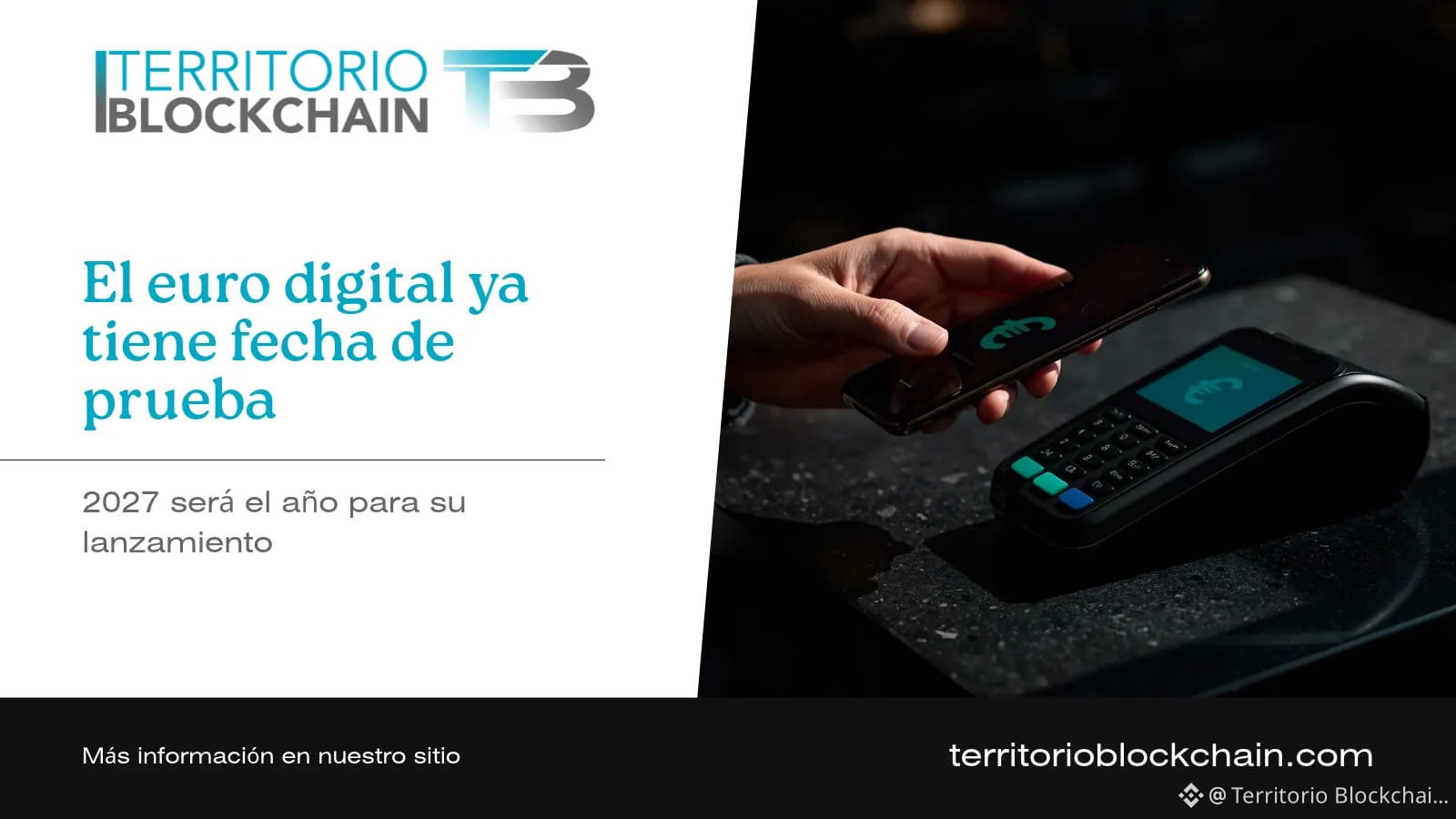
Digital euro: ECB prepares pilot with real payments in 2027 and targets 2029 for launchThe digital euro now has a timeline. Piero Cipollone, a member of the ECB’s Executive Board responsible for payments, said in an interview with Milano Finanza (published by the ECB on October 24) that a pilot will begin in 2027, in which ECB staff and staff from national central banks will make real payments.
The underlying issue is sovereignty. Today, cash is the only central bank money citizens can use, and we are paying more and more online. Two out of every three card payments go through non-European networks.
Digital euro: ECB prepares pilot with real payments in 2027 and targets 2029 for launch
The digital euro now has a timeline. Piero Cipollone, a member of the ECB’s Executive Board responsible for payments, said in an interview with Milano Finanza (published by the ECB on October 24) that a pilot will begin in 2027, in which ECB staff and staff from national central banks will make real payments.
The underlying issue is sovereignty. Today, cash is the only central bank money citizens can use, and we are paying more and more online. Two out of every three card payments go through non-European networks.
The underlying issue is sovereignty. Today, cash is the only central bank money citizens can use, and we are paying more and more online. Two out of every three card payments go through non-European networks.
148

·
--
Came across notices from the finance offices of Nantong University and Yangzhou University: at the request of the Jiangsu Provincial Department of Finance, starting in November 2026, salaries for established staff and personnel agency employees at both universities will be paid into digital RMB wallets.
Key deadlines: Nantong requires staff to open or upgrade their digital RMB wallets by October 30. Salary and performance pay are issued to separate cards, and wallets must be set up for both. Yangzhou’s deadline is earlier, on October 23; on October 24, it will collect wallet account details in bulk from four banks to test the payroll payment integration. The Finance Office of Jiangsu Normal University is also collecting Bank of China digital RMB wallet numbers, with a deadline of the morning of October 30.
The background is Jiangsu Provincial Government Notice [2026] No. 98, which promotes the use of digital RMB for fiscal payments such as salaries and allowances, while requiring end-to-end tracking of funds. CBDC has moved beyond pilot-program rhetoric and into a high-frequency, guaranteed-payment scenario like university payroll.
#数字人民币 #CBDC
Came across notices from the finance offices of Nantong University and Yangzhou University: at the request of the Jiangsu Provincial Department of Finance, starting in November 2026, salaries for established staff and personnel agency employees at both universities will be paid into digital RMB wallets.
Key deadlines: Nantong requires staff to open or upgrade their digital RMB wallets by October 30. Salary and performance pay are issued to separate cards, and wallets must be set up for both. Yangzhou’s deadline is earlier, on October 23; on October 24, it will collect wallet account details in bulk from four banks to test the payroll payment integration. The Finance Office of Jiangsu Normal University is also collecting Bank of China digital RMB wallet numbers, with a deadline of the morning of October 30.
The background is Jiangsu Provincial Government Notice [2026] No. 98, which promotes the use of digital RMB for fiscal payments such as salaries and allowances, while requiring end-to-end tracking of funds. CBDC has moved beyond pilot-program rhetoric and into a high-frequency, guaranteed-payment scenario like university payroll.
#数字人民币 #CBDC
Key deadlines: Nantong requires staff to open or upgrade their digital RMB wallets by October 30. Salary and performance pay are issued to separate cards, and wallets must be set up for both. Yangzhou’s deadline is earlier, on October 23; on October 24, it will collect wallet account details in bulk from four banks to test the payroll payment integration. The Finance Office of Jiangsu Normal University is also collecting Bank of China digital RMB wallet numbers, with a deadline of the morning of October 30.
The background is Jiangsu Provincial Government Notice [2026] No. 98, which promotes the use of digital RMB for fiscal payments such as salaries and allowances, while requiring end-to-end tracking of funds. CBDC has moved beyond pilot-program rhetoric and into a high-frequency, guaranteed-payment scenario like university payroll.
#数字人民币 #CBDC
434

·
--
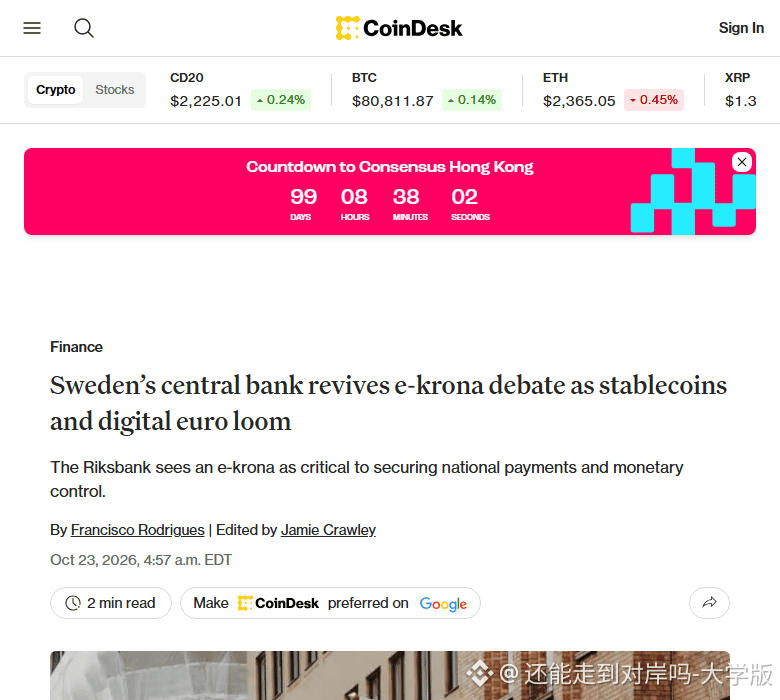
Sweden’s central bank revisits the e-krona, concerned that stablecoins and the digital euro could erode demand for the krona. It sees a central bank digital currency as key to safeguarding payment sovereignty. Trend: competition over sovereign digital currencies is heating up. #CBDC #e-krona #stablecoins
Sweden’s central bank revisits the e-krona, concerned that stablecoins and the digital euro could erode demand for the krona. It sees a central bank digital currency as key to safeguarding payment sovereignty. Trend: competition over sovereign digital currencies is heating up. #CBDC #e-krona #stablecoins
40

·
--
The Monetary Authority of Singapore (MAS) announced on October 23 that Bank Negara Malaysia and the Bank of Thailand have officially joined the BLOOM digital currency initiative. The project aims to standardize and connect cross-border payment infrastructure, with major financial institutions such as Mastercard, Visa, Ripple, and the World Bank taking part.
This move marks an important step toward institutionalizing digital currencies in Southeast Asia. Rather than operating in fragmented systems, the region’s three leading economies are building a shared framework for risk management and identity verification to optimize international payment flows.
This connectivity will significantly reduce intermediary costs and the time needed to process commercial transactions between countries. In the long term, intergovernmental digital payment infrastructure will strengthen confidence in advanced financial technology solutions and promote capital flows across the region.
For the crypto market, the direct involvement of major organizations such as Ripple ($XRP) in central bank infrastructure is a positive signal for real-world utility. Cross-border digital payment flows will pave the way for wider adoption of compliant blockchain solutions.
#CBDC #CrossBorderPayments #Fintech
The Monetary Authority of Singapore (MAS) announced on October 23 that Bank Negara Malaysia and the Bank of Thailand have officially joined the BLOOM digital currency initiative. The project aims to standardize and connect cross-border payment infrastructure, with major financial institutions such as Mastercard, Visa, Ripple, and the World Bank taking part.
This move marks an important step toward institutionalizing digital currencies in Southeast Asia. Rather than operating in fragmented systems, the region’s three leading economies are building a shared framework for risk management and identity verification to optimize international payment flows.
This connectivity will significantly reduce intermediary costs and the time needed to process commercial transactions between countries. In the long term, intergovernmental digital payment infrastructure will strengthen confidence in advanced financial technology solutions and promote capital flows across the region.
For the crypto market, the direct involvement of major organizations such as Ripple ($XRP ) in central bank infrastructure is a positive signal for real-world utility. Cross-border digital payment flows will pave the way for wider adoption of compliant blockchain solutions.
#CBDC #CrossBorderPayments #Fintech
This move marks an important step toward institutionalizing digital currencies in Southeast Asia. Rather than operating in fragmented systems, the region’s three leading economies are building a shared framework for risk management and identity verification to optimize international payment flows.
This connectivity will significantly reduce intermediary costs and the time needed to process commercial transactions between countries. In the long term, intergovernmental digital payment infrastructure will strengthen confidence in advanced financial technology solutions and promote capital flows across the region.
For the crypto market, the direct involvement of major organizations such as Ripple ($XRP ) in central bank infrastructure is a positive signal for real-world utility. Cross-border digital payment flows will pave the way for wider adoption of compliant blockchain solutions.
#CBDC #CrossBorderPayments #Fintech
178

·
--
The Monetary Authority of Singapore announced on the 23rd that Bank Negara Malaysia and the Bank of Thailand have joined Project BLOOM. This tripartite initiative aims to advance cross-border digital currency settlements alongside partners like Mastercard, Visa, Ripple, and the World Bank Group.
This collaboration marks a key milestone for regional financial infrastructure, focusing on CBDC acceptance, system interoperability, and risk compliance. The integration of traditional payment giants and blockchain firms highlights a decisive shift toward institutional distributed ledger adoption.
Streamlining regional remittances and foreign exchange settlements establishes strong regulatory frameworks for cross-border capital flows across Southeast Asia.
For enterprise crypto networks like Ripple ($XRP), this pilot validates real-world utility in sovereign settlement rails, strengthening institutional adoption. #CBDC #CrossBorderPayments #DigitalAssets
The Monetary Authority of Singapore announced on the 23rd that Bank Negara Malaysia and the Bank of Thailand have joined Project BLOOM. This tripartite initiative aims to advance cross-border digital currency settlements alongside partners like Mastercard, Visa, Ripple, and the World Bank Group.
This collaboration marks a key milestone for regional financial infrastructure, focusing on CBDC acceptance, system interoperability, and risk compliance. The integration of traditional payment giants and blockchain firms highlights a decisive shift toward institutional distributed ledger adoption.
Streamlining regional remittances and foreign exchange settlements establishes strong regulatory frameworks for cross-border capital flows across Southeast Asia.
For enterprise crypto networks like Ripple ($XRP ), this pilot validates real-world utility in sovereign settlement rails, strengthening institutional adoption. #CBDC #CrossBorderPayments #DigitalAssets
This collaboration marks a key milestone for regional financial infrastructure, focusing on CBDC acceptance, system interoperability, and risk compliance. The integration of traditional payment giants and blockchain firms highlights a decisive shift toward institutional distributed ledger adoption.
Streamlining regional remittances and foreign exchange settlements establishes strong regulatory frameworks for cross-border capital flows across Southeast Asia.
For enterprise crypto networks like Ripple ($XRP ), this pilot validates real-world utility in sovereign settlement rails, strengthening institutional adoption. #CBDC #CrossBorderPayments #DigitalAssets
81
Log in to explore more content
Join global crypto users on Binance Square
⚡️ Get latest and useful information about crypto.
💬 Trusted by the world’s largest crypto exchange.
👍 Discover real insights from verified creators.
Email / Phone number
Trending Topics
1
#WhoWillSucceedJensenHuangatNvidia?
135,148 views
1,498 Discussing
2
#WhatWillDriveCryptoandStocks’NextRebound?
522,969 views
3,343 Discussing
3
#BitcoinActiveSupplyInProfitDropsBelow45%
57,880 views
621 Discussing
4
#KavaSaysAbnormalActivityLimitedToKavaLend
30,275 views
348 Discussing
5
#USSpotXRPETFsSeeLargestWeeklyOutflowIn8Months
23,057 views
300 Discussing
6
#USPPIMissMayEaseBTCPressure
264,557 views
2,191 Discussing
7
#WORPTLetsTouristsConvertCryptoToThaiBaht
8,461 views
83 Discussing
8
#TONStrategyReports$23.97MQ3NetLoss
8,844 views
41 Discussing
9
#PolkadotCommunityApprovesNewStrategyWith97%Vote
24,999 views
282 Discussing
10
#dYdXPlansV9.9UpgradeToShiftUSDCToInjective
21,383 views
237 Discussing