
RobtCrypto
2 Posts
RobtCrypto
Report
Block User
lCrypto Education | BTC • ETH • BNB Making crypto simple for beginners | Learn • Grow • Stay Informed. Educational content only. DYOR.
0 Following
0 Followers
0 Liked
Posts
·
--
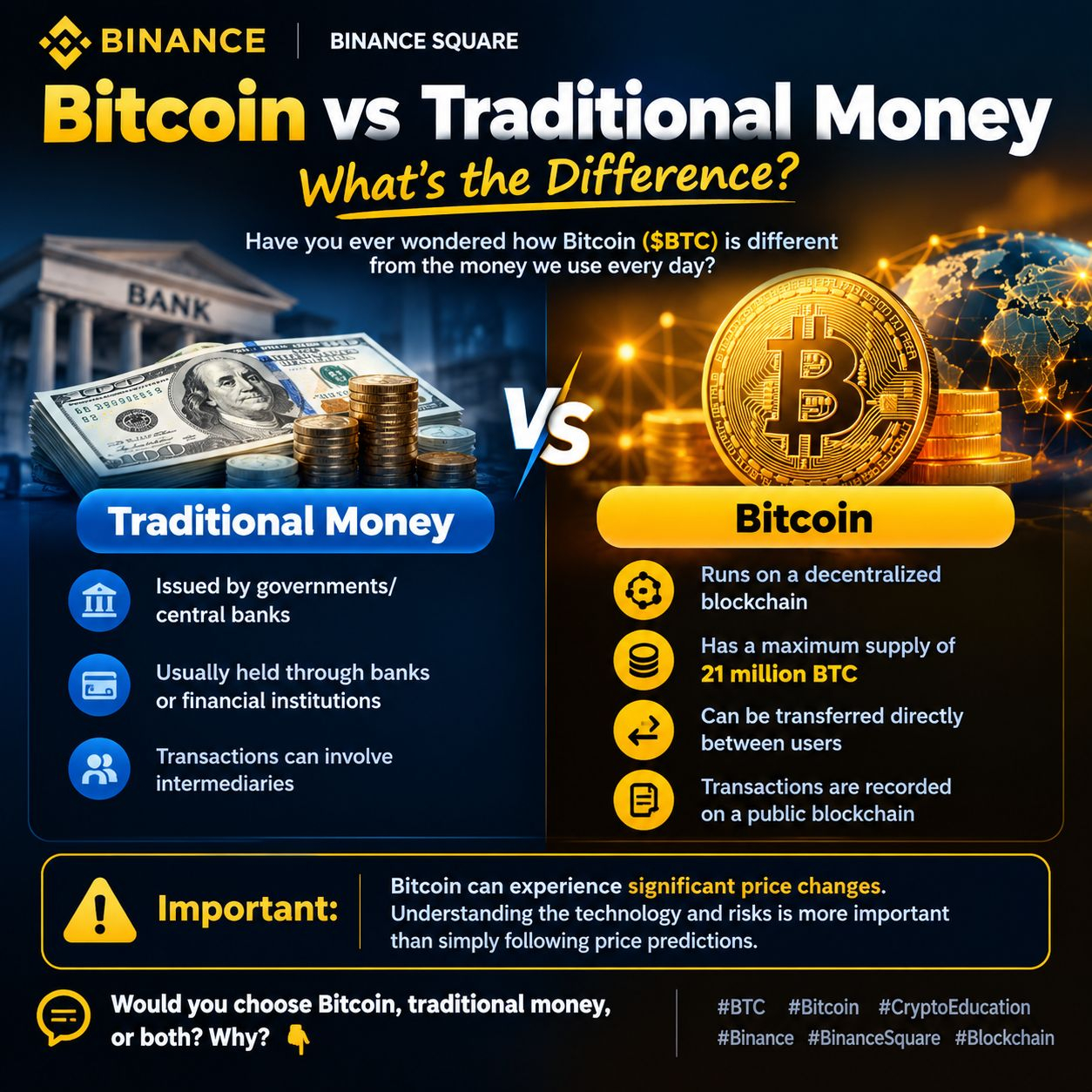
💰 Bitcoin vs Traditional Money — What's the Difference?
Have you ever wondered how Bitcoin ($BTC) is different from the money we use every day?
🔸 Traditional Money • Issued by governments/central banks
• Usually held through banks or financial institutions
• Transactions can involve intermediaries
🔸 Bitcoin • Runs on a decentralized blockchain
• Has a maximum supply of 21 million BTC
• Can be transferred directly between users
• Transactions are recorded on a public blockchain
⚠️ Important: Bitcoin can experience significant price changes. Understanding the technology and risks is more important than simply following price predictions.
Would you choose Bitcoin, traditional money, or both? Why? 👇
#BTC #bitcoin #CryptoEducation #Binance #BinanceSquareFamily #Blockchain
💰 Bitcoin vs Traditional Money — What's the Difference?
Have you ever wondered how Bitcoin ($BTC) is different from the money we use every day?
🔸 Traditional Money • Issued by governments/central banks
• Usually held through banks or financial institutions
• Transactions can involve intermediaries
🔸 Bitcoin • Runs on a decentralized blockchain
• Has a maximum supply of 21 million BTC
• Can be transferred directly between users
• Transactions are recorded on a public blockchain
⚠️ Important: Bitcoin can experience significant price changes. Understanding the technology and risks is more important than simply following price predictions.
Would you choose Bitcoin, traditional money, or both? Why? 👇
#BTC #bitcoin #CryptoEducation #Binance #BinanceSquareFamily #Blockchain
Have you ever wondered how Bitcoin ($BTC) is different from the money we use every day?
🔸 Traditional Money • Issued by governments/central banks
• Usually held through banks or financial institutions
• Transactions can involve intermediaries
🔸 Bitcoin • Runs on a decentralized blockchain
• Has a maximum supply of 21 million BTC
• Can be transferred directly between users
• Transactions are recorded on a public blockchain
⚠️ Important: Bitcoin can experience significant price changes. Understanding the technology and risks is more important than simply following price predictions.
Would you choose Bitcoin, traditional money, or both? Why? 👇
#BTC #bitcoin #CryptoEducation #Binance #BinanceSquareFamily #Blockchain
69
·
--
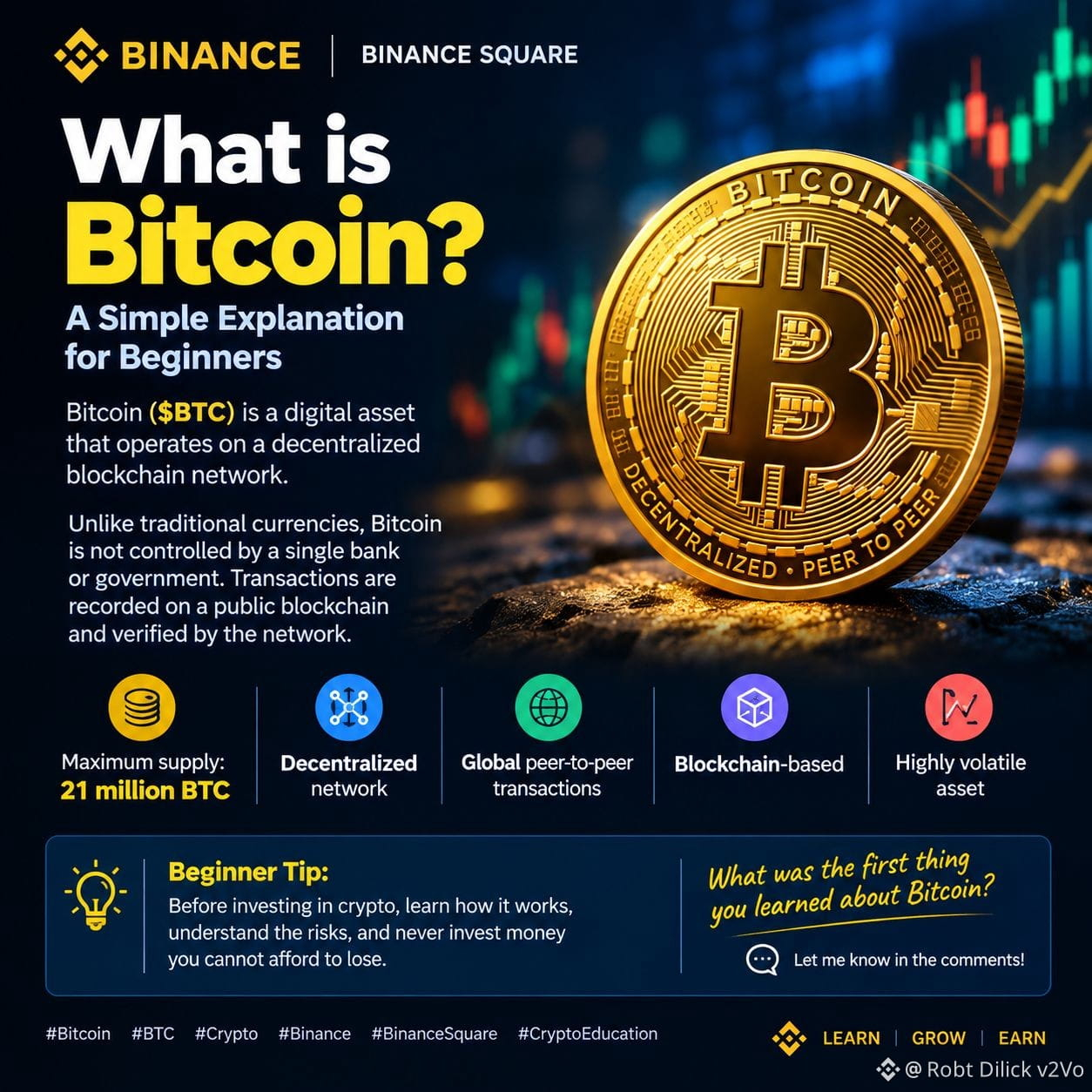
🚀 What Is Bitcoin? A Simple Explanation for Beginners
Bitcoin ($BTC) is a digital asset that operates on a decentralized blockchain network.
Unlike traditional currencies, Bitcoin is not controlled by a single bank or government. Transactions are recorded on a public blockchain and verified by the network.
🔹 Maximum supply: 21 million BTC 🔹 Decentralized network 🔹 Global peer-to-peer transactions 🔹 Blockchain-based 🔹 Highly volatile asset
📌 Beginner Tip:
Before investing in crypto, learn how it works, understand the risks, and never invest money you cannot afford to lose.
What was the first thing you learned about Bitcoin? 👇
#bitcoin #BTC #crypto #Binance #BinaceSquare
#bnb
🚀 What Is Bitcoin? A Simple Explanation for Beginners
Bitcoin ($BTC) is a digital asset that operates on a decentralized blockchain network.
Unlike traditional currencies, Bitcoin is not controlled by a single bank or government. Transactions are recorded on a public blockchain and verified by the network.
🔹 Maximum supply: 21 million BTC 🔹 Decentralized network 🔹 Global peer-to-peer transactions 🔹 Blockchain-based 🔹 Highly volatile asset
📌 Beginner Tip:
Before investing in crypto, learn how it works, understand the risks, and never invest money you cannot afford to lose.
What was the first thing you learned about Bitcoin? 👇
#bitcoin #BTC #crypto #Binance #BinaceSquare
#bnb
Bitcoin ($BTC) is a digital asset that operates on a decentralized blockchain network.
Unlike traditional currencies, Bitcoin is not controlled by a single bank or government. Transactions are recorded on a public blockchain and verified by the network.
🔹 Maximum supply: 21 million BTC 🔹 Decentralized network 🔹 Global peer-to-peer transactions 🔹 Blockchain-based 🔹 Highly volatile asset
📌 Beginner Tip:
Before investing in crypto, learn how it works, understand the risks, and never invest money you cannot afford to lose.
What was the first thing you learned about Bitcoin? 👇
#bitcoin #BTC #crypto #Binance #BinaceSquare
#bnb
46
Log in to explore more content
Join global crypto users on Binance Square
⚡️ Get latest and useful information about crypto.
💬 Trusted by the world’s largest crypto exchange.
👍 Discover real insights from verified creators.
Email / Phone number
Trending Topics
AppleDebutsFoldablePhone
24,370 views
505 Discussing
Apple just dropped the foldable iPhone — and the market is paying attention. This isn't just another product cycle; it's a new product category, a new CEO on stage, and a $1,999 price tag that pushes $AAPL further into ultra-premium territory. Foldables are the narrative, and Apple is now the headline.
#appledebutsfoldablephone #EUExtendsCentralContactPointToCASPs #US10YTreasuryYieldHitsHighestSinceNov2023 #BrentCrudeTops$100 #USTreasuryToBuyBackUpTo$6BLongDatedDebt
KimHotbae
·2 Likes
·2.7k views
TSMCAugustRevenueUp53.3%YoY
61 views
30 Discussing
IranSaysReadyToEscalateWarWithUS
2,213 views
91 Discussing