

Musabeh
77 Posts

Musabeh
Report
Block User
x @MMOA83
Occasional Trader
7.3 Years
12 Following
51 Followers
69 Liked
Posts
All
Quotes
Videos
·
--
Bullish
Breaking: Ripple’s Chief Legal Officer, Stuart Alderoty, stated that the company had no alternative but to pursue litigation. He emphasized that failure to contest and prevail would have resulted in the firm’s collapse.
$XRP
{spot}(XRPUSDT)
#xrp
#Xrp🔥🔥
Breaking: Ripple’s Chief Legal Officer, Stuart Alderoty, stated that the company had no alternative but to pursue litigation. He emphasized that failure to contest and prevail would have resulted in the firm’s collapse.
$XRP
#xrp
#Xrp🔥🔥
$XRP
#xrp
#Xrp🔥🔥
102
·
--
Bullish
Breaking News:
BlackRock clients have acquired $108.44 million in Bitcoin $BTC
{spot}(BTCUSDT)
Breaking News:
BlackRock clients have acquired $108.44 million in Bitcoin $BTC
BlackRock clients have acquired $108.44 million in Bitcoin $BTC
97
·
--
Bullish
Breaking News: Robinhood announces upcoming support for Arc L1, developed by Circle.
$BTC
{spot}(BTCUSDT)
Breaking News: Robinhood announces upcoming support for Arc L1, developed by Circle.
$BTC
$BTC
142
·
--
Malachite $MALA on Arc surged over 400% in 24 hours. Arc relies entirely on Malachite consensus.
#
$BTC
{spot}(BTCUSDT)
Malachite $MALA on Arc surged over 400% in 24 hours. Arc relies entirely on Malachite consensus.
#
$BTC
#
$BTC


58
·
--
Bullish
FOR IMMEDIATE RELEASE –
Patrick Witt, White House cryptocurrency adviser, has stated that the banking lobby lacks credibility because it has not actively urged senators to enact the Crypto CLARITY Act, legislation intended to provide regulatory protections for the sector.
$BTC
{spot}(BTCUSDT)
#btc
FOR IMMEDIATE RELEASE –
Patrick Witt, White House cryptocurrency adviser, has stated that the banking lobby lacks credibility because it has not actively urged senators to enact the Crypto CLARITY Act, legislation intended to provide regulatory protections for the sector.
$BTC
#btc
Patrick Witt, White House cryptocurrency adviser, has stated that the banking lobby lacks credibility because it has not actively urged senators to enact the Crypto CLARITY Act, legislation intended to provide regulatory protections for the sector.
$BTC
#btc

37
·
--
Bearish
Breaking News:
According to a Wall Street Journal survey, nearly all major Wall Street institutions anticipate a Federal Reserve interest rate increase in September.
Breaking News:
According to a Wall Street Journal survey, nearly all major Wall Street institutions anticipate a Federal Reserve interest rate increase in September.
According to a Wall Street Journal survey, nearly all major Wall Street institutions anticipate a Federal Reserve interest rate increase in September.
333
·
--
Bullish
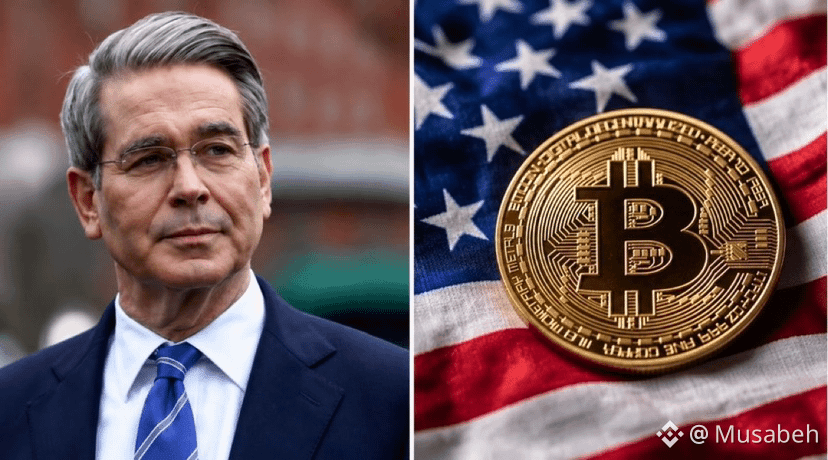
U.S. Treasury Secretary Bessent has expressed support for the CLARITY Act and the establishment of a Strategic Bitcoin Reserve, asserting that the United States must maintain its position as the global leader in cryptocurrency innovation. Immediate action is encouraged.
$BTC
{spot}(BTCUSDT)
U.S. Treasury Secretary Bessent has expressed support for the CLARITY Act and the establishment of a Strategic Bitcoin Reserve, asserting that the United States must maintain its position as the global leader in cryptocurrency innovation. Immediate action is encouraged.
$BTC
$BTC
39
·
--
Bitwise ETF clients have purchased $11.26 million in XRP.
$XRP
{spot}(XRPUSDT)
Bitwise ETF clients have purchased $11.26 million in XRP.
$XRP
$XRP
44
·
--
Breaking: U.S. Treasury Secretary Scott Bessent has urged the immediate passage of the Crypto CLARITY Act.
Breaking: U.S. Treasury Secretary Scott Bessent has urged the immediate passage of the Crypto CLARITY Act.
48
·
--
Bearish
$298,000,000 in long positions has been liquidated from the crypto market over the past 24 hours.
$BTC $ETH $SOL
{spot}(SOLUSDT)
{spot}(ETHUSDT)
{spot}(BTCUSDT)
$298,000,000 in long positions has been liquidated from the crypto market over the past 24 hours.
$BTC $ETH $SOL
$BTC $ETH $SOL
37
·
--
Bullish
$BOTIFY has announced its Solana relaunch on September 21, 2026, returning after emerging as a prominent topic during the 2025 AI Agent cycle.
$SOL
{spot}(SOLUSDT)
#botify
$BOTIFY has announced its Solana relaunch on September 21, 2026, returning after emerging as a prominent topic during the 2025 AI Agent cycle.
$SOL
#botify
$SOL
#botify

271
·
--
Bullish
@zama is bringing confidential DeFi to the institutional market after a $40M TVL surge, launching 16 vaults, 5 curators and Zama Swap Protocol - with its confidentiality layer designed to deploy across any L1 or L2 without fragmenting existing liquidity.
$ZAMA
{spot}(ZAMAUSDT)
@zama is bringing confidential DeFi to the institutional market after a $40M TVL surge, launching 16 vaults, 5 curators and Zama Swap Protocol - with its confidentiality layer designed to deploy across any L1 or L2 without fragmenting existing liquidity.
$ZAMA
$ZAMA

131
·
--
Bullish
UAE BRINGS DIGITAL ID VERIFICATION
TO AVALANCHE
Most discussion of blockchain in government stays theoretical, which makes the operating examples worth attention.
A federal regulator responsible for a platform 12.5 million people depend on evaluated infrastructure for a live, citizen-facing system and selected Avalanche. Public procurement is slow and heavily documented precisely because the consequences of getting it wrong are public. Infrastructure that comes through that process has been tested against a different standard than infrastructure chosen by a market.
For any government or institution weighing the same decision, the UAE is a reference point rather than a proposal. One identity layer, one place verification happens, 350 institutions relying on it. The measure of success is that none of the 12.5 million people using it ever has to think about any of it.UAE’s Identity System Serving 12 Million People Upgrades to Avalanche.
$AVAX
{spot}(AVAXUSDT)
UAE BRINGS DIGITAL ID VERIFICATION
TO AVALANCHE
Most discussion of blockchain in government stays theoretical, which makes the operating examples worth attention.
A federal regulator responsible for a platform 12.5 million people depend on evaluated infrastructure for a live, citizen-facing system and selected Avalanche. Public procurement is slow and heavily documented precisely because the consequences of getting it wrong are public. Infrastructure that comes through that process has been tested against a different standard than infrastructure chosen by a market.
For any government or institution weighing the same decision, the UAE is a reference point rather than a proposal. One identity layer, one place verification happens, 350 institutions relying on it. The measure of success is that none of the 12.5 million people using it ever has to think about any of it.UAE’s Identity System Serving 12 Million People Upgrades to Avalanche.
$AVAX
TO AVALANCHE
Most discussion of blockchain in government stays theoretical, which makes the operating examples worth attention.
A federal regulator responsible for a platform 12.5 million people depend on evaluated infrastructure for a live, citizen-facing system and selected Avalanche. Public procurement is slow and heavily documented precisely because the consequences of getting it wrong are public. Infrastructure that comes through that process has been tested against a different standard than infrastructure chosen by a market.
For any government or institution weighing the same decision, the UAE is a reference point rather than a proposal. One identity layer, one place verification happens, 350 institutions relying on it. The measure of success is that none of the 12.5 million people using it ever has to think about any of it.UAE’s Identity System Serving 12 Million People Upgrades to Avalanche.
$AVAX

227
·
--
Bullish
Markets are expected to see the Federal Reserve raise interest rates with a likelihood of up to 80%. However, others also expect the Fed not to raise interest rates.
Next week is expected to be prone to volatility and market manipulation. Despite everything, Bitcoin was able to stay above the $77,000 level.
Meanwhile, the anticipated gains in the altcoin market have not yet materialized.
#Bitcoin #FED #BTC $BTC #CPIWatch $BTC
$LUNC
{spot}(LUNCUSDT)
Markets are expected to see the Federal Reserve raise interest rates with a likelihood of up to 80%. However, others also expect the Fed not to raise interest rates.
Next week is expected to be prone to volatility and market manipulation. Despite everything, Bitcoin was able to stay above the $77,000 level.
Meanwhile, the anticipated gains in the altcoin market have not yet materialized.
#Bitcoin #FED #BTC $BTC #CPIWatch $BTC
$LUNC
Next week is expected to be prone to volatility and market manipulation. Despite everything, Bitcoin was able to stay above the $77,000 level.
Meanwhile, the anticipated gains in the altcoin market have not yet materialized.
#Bitcoin #FED #BTC $BTC #CPIWatch $BTC
$LUNC
1
2.4k
·
--
Bullish
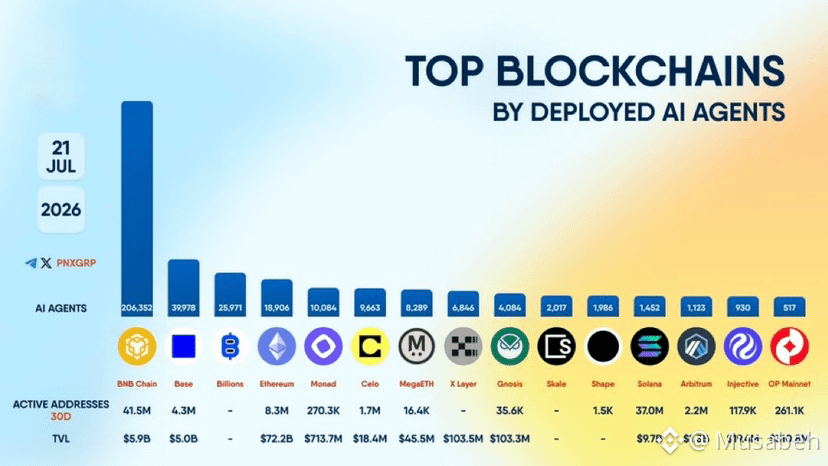
TOP BLOCKCHAINS BY DEPLOYED AI AGENTS
#BNBChain #Base #Billions #Ethereum #Monad #Celo #MegaETH #XLayer #Gnosis #Skale #Shape #Solana #Arbitrum #Injective
$BNB
{spot}(BNBUSDT)
TOP BLOCKCHAINS BY DEPLOYED AI AGENTS
#BNBChain #Base #Billions #Ethereum #Monad #Celo #MegaETH #XLayer #Gnosis #Skale #Shape #Solana #Arbitrum #Injective
$BNB
#BNBChain #Base #Billions #Ethereum #Monad #Celo #MegaETH #XLayer #Gnosis #Skale #Shape #Solana #Arbitrum #Injective
$BNB
85
·
--
$INDEX went 50x
500K → 25M
$500 is now $25K
$INDEX holders earn tokenized stocks from trading fees on the Robinhood chain.
$INDEX went 50x
500K → 25M
$500 is now $25K
$INDEX holders earn tokenized stocks from trading fees on the Robinhood chain.
500K → 25M
$500 is now $25K
$INDEX holders earn tokenized stocks from trading fees on the Robinhood chain.
40
·
--
Article
MEMECOIN #CASHCAT DROPA memecoin dropping from $230M to $65M market cap in 72 hours usually means a few forces stacked on top of each other:
What probably happened
1. Liquidity was thinner than the market cap made it look Market cap is just:
price × circulating supply
It is not the amount of money sitting there ready to absorb sells. In memecoins, a token can show a huge market cap while actual buy-side liquidity is relatively small. So once selling starts, price can fall much faster than people expect.
2. A few large holders can move the whole market If whales, insiders, early buyers, or market makers reduce exposure, that can trigger a sharp drop. In many memecoins, ownership is concentrated, so a limited number of wallets can create outsized pressure.
3. Perps/futures can accelerate spot weakness If there’s a futures market:
longs get liquidated
funding flips or becomes hostile
traders hedge by selling spot
momentum traders short the breakdown
That creates a feedback loop. Price drops, liquidations hit, sentiment worsens, more selling follows.
4. Retail panic compounds the move Retail usually doesn’t start the whole crash, but they often finish it:
chart breaks support
influencers go quiet
Telegram/X mood changes
people rush to “save what’s left”
That can turn a controlled unwind into a waterfall.
5. Market makers may widen out or step back If volatility spikes or they sense one-way flow, market makers may quote less aggressively. That means less support in the book, so each sell order pushes price down more.
6. Narrative collapse matters more than fundamentals in memecoins A memecoin’s value is mostly:
attention
belief
community energy
expectation of future buyers
If the narrative cracks, valuation can compress brutally fast because there’s often no cash flow or intrinsic anchor to slow the fall.
So did everyone dump together?
Not necessarily. More often it looks like this:
a few large sellers start exiting
price weakens
leveraged longs get liquidated
traders frontrun more downside
retail panics
bids disappear
everyone looks like they sold together
It’s usually a cascade, not a meeting.
Why the drop can be so extreme
A fall from $230M to $65M is about a 72% drawdown. For a memecoin, that’s violent but not unusual if:
holder concentration is high
liquidity is shallow
leverage exists
hype was ahead of reality
the token had recently gone vertical
The faster it went up, the less stable the base usually is.
The key thing most people misunderstand
Market cap is not support. A token can “lose” $165M in market cap without $165M of net selling capital literally exiting. If the last traded price falls hard on thin liquidity, the headline market cap collapses with it.
What to check if you want the real answer for #CASHCAT
If you want to diagnose this specific move, look at:
top holder concentration
unlocks / insider wallets
DEX/CEX liquidity depth
perp open interest
funding rate changes
liquidation clusters
market maker withdrawals
social sentiment shift
NFA ….
MEMECOIN #CASHCAT DROP
A memecoin dropping from $230M to $65M market cap in 72 hours usually means a few forces stacked on top of each other:
What probably happened
1. Liquidity was thinner than the market cap made it look Market cap is just:
price × circulating supply
It is not the amount of money sitting there ready to absorb sells. In memecoins, a token can show a huge market cap while actual buy-side liquidity is relatively small. So once selling starts, price can fall much faster than people expect.
2. A few large holders can move the whole market If whales, insiders, early buyers, or market makers reduce exposure, that can trigger a sharp drop. In many memecoins, ownership is concentrated, so a limited number of wallets can create outsized pressure.
3. Perps/futures can accelerate spot weakness If there’s a futures market:
longs get liquidated
funding flips or becomes hostile
traders hedge by selling spot
momentum traders short the breakdown
That creates a feedback loop. Price drops, liquidations hit, sentiment worsens, more selling follows.
4. Retail panic compounds the move Retail usually doesn’t start the whole crash, but they often finish it:
chart breaks support
influencers go quiet
Telegram/X mood changes
people rush to “save what’s left”
That can turn a controlled unwind into a waterfall.
5. Market makers may widen out or step back If volatility spikes or they sense one-way flow, market makers may quote less aggressively. That means less support in the book, so each sell order pushes price down more.
6. Narrative collapse matters more than fundamentals in memecoins A memecoin’s value is mostly:
attention
belief
community energy
expectation of future buyers
If the narrative cracks, valuation can compress brutally fast because there’s often no cash flow or intrinsic anchor to slow the fall.
So did everyone dump together?
Not necessarily. More often it looks like this:
a few large sellers start exiting
price weakens
leveraged longs get liquidated
traders frontrun more downside
retail panics
bids disappear
everyone looks like they sold together
It’s usually a cascade, not a meeting.
Why the drop can be so extreme
A fall from $230M to $65M is about a 72% drawdown. For a memecoin, that’s violent but not unusual if:
holder concentration is high
liquidity is shallow
leverage exists
hype was ahead of reality
the token had recently gone vertical
The faster it went up, the less stable the base usually is.
The key thing most people misunderstand
Market cap is not support. A token can “lose” $165M in market cap without $165M of net selling capital literally exiting. If the last traded price falls hard on thin liquidity, the headline market cap collapses with it.
What to check if you want the real answer for #CASHCAT
If you want to diagnose this specific move, look at:
top holder concentration
unlocks / insider wallets
DEX/CEX liquidity depth
perp open interest
funding rate changes
liquidation clusters
market maker withdrawals
social sentiment shift
NFA ….
What probably happened
1. Liquidity was thinner than the market cap made it look Market cap is just:
price × circulating supply
It is not the amount of money sitting there ready to absorb sells. In memecoins, a token can show a huge market cap while actual buy-side liquidity is relatively small. So once selling starts, price can fall much faster than people expect.
2. A few large holders can move the whole market If whales, insiders, early buyers, or market makers reduce exposure, that can trigger a sharp drop. In many memecoins, ownership is concentrated, so a limited number of wallets can create outsized pressure.
3. Perps/futures can accelerate spot weakness If there’s a futures market:
longs get liquidated
funding flips or becomes hostile
traders hedge by selling spot
momentum traders short the breakdown
That creates a feedback loop. Price drops, liquidations hit, sentiment worsens, more selling follows.
4. Retail panic compounds the move Retail usually doesn’t start the whole crash, but they often finish it:
chart breaks support
influencers go quiet
Telegram/X mood changes
people rush to “save what’s left”
That can turn a controlled unwind into a waterfall.
5. Market makers may widen out or step back If volatility spikes or they sense one-way flow, market makers may quote less aggressively. That means less support in the book, so each sell order pushes price down more.
6. Narrative collapse matters more than fundamentals in memecoins A memecoin’s value is mostly:
attention
belief
community energy
expectation of future buyers
If the narrative cracks, valuation can compress brutally fast because there’s often no cash flow or intrinsic anchor to slow the fall.
So did everyone dump together?
Not necessarily. More often it looks like this:
a few large sellers start exiting
price weakens
leveraged longs get liquidated
traders frontrun more downside
retail panics
bids disappear
everyone looks like they sold together
It’s usually a cascade, not a meeting.
Why the drop can be so extreme
A fall from $230M to $65M is about a 72% drawdown. For a memecoin, that’s violent but not unusual if:
holder concentration is high
liquidity is shallow
leverage exists
hype was ahead of reality
the token had recently gone vertical
The faster it went up, the less stable the base usually is.
The key thing most people misunderstand
Market cap is not support. A token can “lose” $165M in market cap without $165M of net selling capital literally exiting. If the last traded price falls hard on thin liquidity, the headline market cap collapses with it.
What to check if you want the real answer for #CASHCAT
If you want to diagnose this specific move, look at:
top holder concentration
unlocks / insider wallets
DEX/CEX liquidity depth
perp open interest
funding rate changes
liquidation clusters
market maker withdrawals
social sentiment shift
NFA ….
642
·
--
Bullish
🚀 Daily #Crypto Market:
📰 Today's News
🔥 SEC Approves BlackRock Bitcoin ETF IBIT Options Limit to 1 Million Contracts
The U.S. SEC has approved a NYSE rule change, effective immediately, to raise the position and exercise limits for BlackRock's Bitcoin spot ETF (IBIT) options to 1 million contracts, signaling growing institutional acceptance of Bitcoin products.
⚡ Japan Redefines Crypto as Financial Assets, Implements Strict Regulations
Japan's Parliament passed a bill reclassifying cryptocurrencies as financial instruments, establishing separate taxation, a Bitcoin ETF framework, and imposing 10-year prison terms for unregistered operators, aligning its regulatory stance with other major economies.
📉 DeFi Platform Summer.fi Shuts Down After $6.1M Attack
DeFi yield platform Summer.fi announced it will cease operations by August 31 following a $6.1 million attack on its Lazy Summer Protocol on July 6, highlighting persistent security vulnerabilities within the DeFi ecosystem.
📈 Mainstream Asset Performance (24h)
BTC: +0.5% — Bitcoin saw a slight increase, trading at $65,185.92, amidst mixed market sentiment.$BTC
ETH: +2.5% — Ethereum showed stronger gains, reaching $1,922.29. $ETH
BNB: -0.5% — BNB experienced a minor dip, currently at $579.90. $BNB
SOL: +0.4% — Solana posted a modest gain, trading at $77.77. $SOL
🚀 Today's Top Gainers (Selected)
DODOUSDT: +47.1% — Significant increase in trading volume and continuous capital inflow.
PORTOUSDT: +32.1% — Significant increase in trading volume and continuous capital inflow.
{spot}(BNBUSDT)
{spot}(ETHUSDT)
{spot}(BTCUSDT)
🚀 Daily #Crypto Market:
📰 Today's News
🔥 SEC Approves BlackRock Bitcoin ETF IBIT Options Limit to 1 Million Contracts
The U.S. SEC has approved a NYSE rule change, effective immediately, to raise the position and exercise limits for BlackRock's Bitcoin spot ETF (IBIT) options to 1 million contracts, signaling growing institutional acceptance of Bitcoin products.
⚡ Japan Redefines Crypto as Financial Assets, Implements Strict Regulations
Japan's Parliament passed a bill reclassifying cryptocurrencies as financial instruments, establishing separate taxation, a Bitcoin ETF framework, and imposing 10-year prison terms for unregistered operators, aligning its regulatory stance with other major economies.
📉 DeFi Platform Summer.fi Shuts Down After $6.1M Attack
DeFi yield platform Summer.fi announced it will cease operations by August 31 following a $6.1 million attack on its Lazy Summer Protocol on July 6, highlighting persistent security vulnerabilities within the DeFi ecosystem.
📈 Mainstream Asset Performance (24h)
BTC: +0.5% — Bitcoin saw a slight increase, trading at $65,185.92, amidst mixed market sentiment.$BTC
ETH: +2.5% — Ethereum showed stronger gains, reaching $1,922.29. $ETH
BNB: -0.5% — BNB experienced a minor dip, currently at $579.90. $BNB
SOL: +0.4% — Solana posted a modest gain, trading at $77.77. $SOL
🚀 Today's Top Gainers (Selected)
DODOUSDT: +47.1% — Significant increase in trading volume and continuous capital inflow.
PORTOUSDT: +32.1% — Significant increase in trading volume and continuous capital inflow.
📰 Today's News
🔥 SEC Approves BlackRock Bitcoin ETF IBIT Options Limit to 1 Million Contracts
The U.S. SEC has approved a NYSE rule change, effective immediately, to raise the position and exercise limits for BlackRock's Bitcoin spot ETF (IBIT) options to 1 million contracts, signaling growing institutional acceptance of Bitcoin products.
⚡ Japan Redefines Crypto as Financial Assets, Implements Strict Regulations
Japan's Parliament passed a bill reclassifying cryptocurrencies as financial instruments, establishing separate taxation, a Bitcoin ETF framework, and imposing 10-year prison terms for unregistered operators, aligning its regulatory stance with other major economies.
📉 DeFi Platform Summer.fi Shuts Down After $6.1M Attack
DeFi yield platform Summer.fi announced it will cease operations by August 31 following a $6.1 million attack on its Lazy Summer Protocol on July 6, highlighting persistent security vulnerabilities within the DeFi ecosystem.
📈 Mainstream Asset Performance (24h)
BTC: +0.5% — Bitcoin saw a slight increase, trading at $65,185.92, amidst mixed market sentiment.$BTC
ETH: +2.5% — Ethereum showed stronger gains, reaching $1,922.29. $ETH
BNB: -0.5% — BNB experienced a minor dip, currently at $579.90. $BNB
SOL: +0.4% — Solana posted a modest gain, trading at $77.77. $SOL
🚀 Today's Top Gainers (Selected)
DODOUSDT: +47.1% — Significant increase in trading volume and continuous capital inflow.
PORTOUSDT: +32.1% — Significant increase in trading volume and continuous capital inflow.
82
Log in to explore more content
Join global crypto users on Binance Square
⚡️ Get latest and useful information about crypto.
💬 Trusted by the world’s largest crypto exchange.
👍 Discover real insights from verified creators.
Email / Phone number
Trending Topics
CircleMints500MUSDCOnSolana
76,423 views
1,770 Discussing
#circlemints500musdconsolana
🚨 $500M USDC MINTED ON SOLANA! 💵🔥
Circle Treasury just minted 500M USDC on Solana, pushing total global supply to $75.2B! 📈✨
💡 Quick Reality Check:
🔹 Minting = Fresh Inventory Creation (Not instant buying power!🛒
🔹 Real Trigger = Capital Deployment into DeFi, Exchanges & Pools! 🌐🚀
🎯 Coins to Watch:
⚡ $SOL — Network activity is booming, and fresh liquidity continues to drive ecosystem growth!
💎 $RARE — A high-volatility altcoin that reacts fast to fresh market liquidity and sentiment!🪐
💥 Are you accumulating now or waiting for full capital deployment? Drop your thoughts below! 👇✨
#CircleMints500MUSDCOnSolana
#PolymarketBankFailureBetsDrawFDICConcern
#BlackRockBuildsTokenizedPortfoliosForOndo
#BitwiseFilesToListNEARETFOnNYSEArca
Hifza Rubab
·4 Likes
·4.3k views
PolymarketBankFailureBetsDrawFDICConcern
83,166 views
1,656 Discussing
BlackRockBuildsTokenizedPortfoliosForOndo
73,195 views
1,171 Discussing