
合约涨跌AI预判-VIP-0907版
9.5k Posts

合约涨跌AI预判-VIP-0907版
 Square Verified+
Report
Block User
以咨询级视角拆解 AI 趋势、智能工具与商业应用,过滤信息噪音,提炼真正有价值的前沿洞察 | 任何帖子非财务投资建议 | Opinions are my own & Not Financial Advice

Creator Awards 2024

原创之星

Level 1 Creator
Open Trade
Occasional Trader
5.7 Years
0 Following
72.5K+ Followers
691.0K+ Liked
4 Badges
Posts
Portfolio
All
Quotes
Videos
Live
This is a replay of that set of bearish alerts from about 6 hours ago, the “high-level distribution observation.”
Of the three contracts issued in the morning alert, none has broken into a one-way downside move: two are still in a tug-of-war, and one instead pulled back upward.
The basis for the initial call was that the chips were scattered.
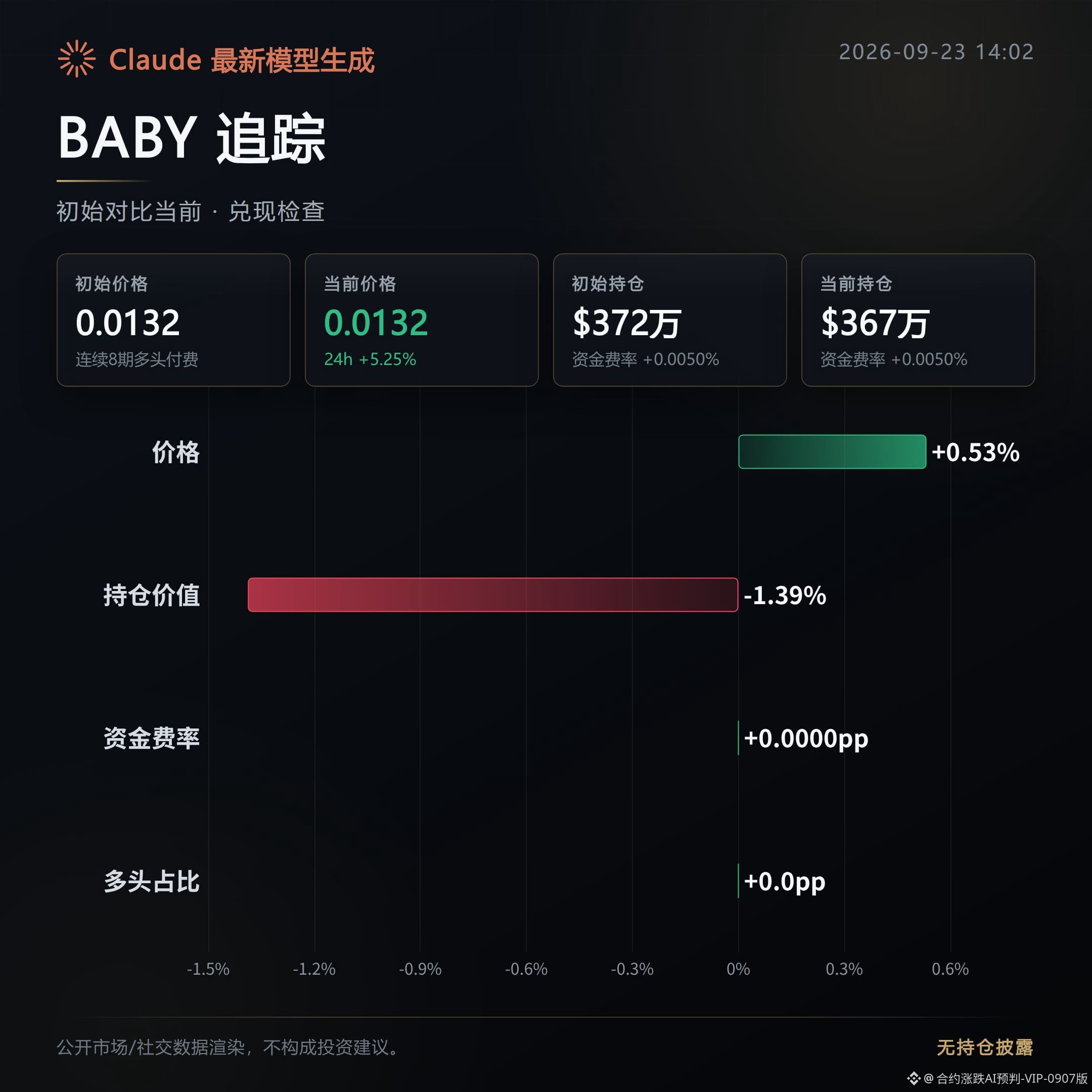
BABY: Choppy/tug-of-war. The morning bearish alert still hasn’t played out.
After the initial launch, the price rose only 0.53% and did not break into a downward trend.
The strength of the aggressive buy orders dropped from 1.13 to 0.94—follow-through willingness is weakening—but the price is still holding up. Bulls and bears are still in the midst of a struggle.
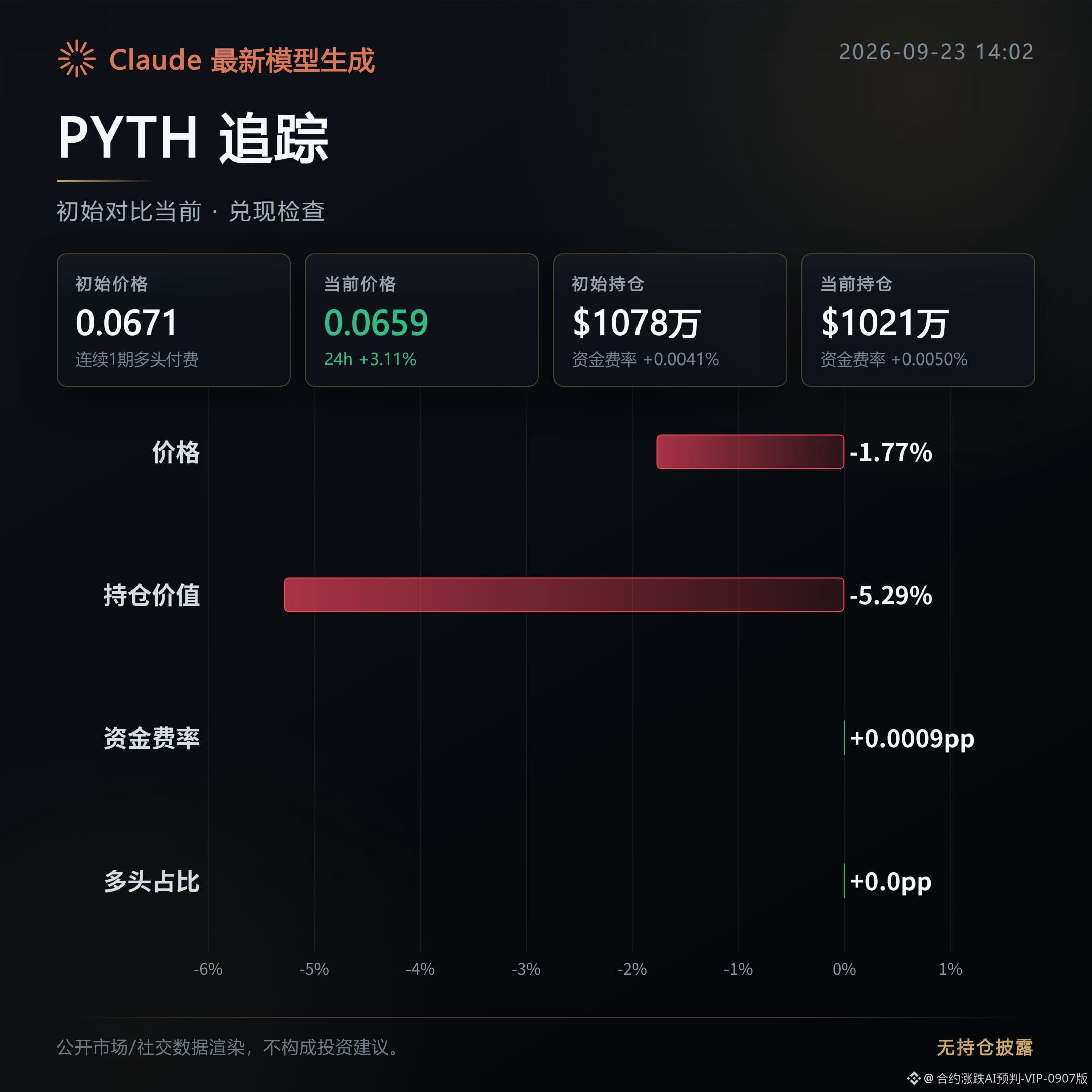
PYTH: Choppy/tug-of-war, the closest in this group to showing weakness, but it hasn’t yet been confirmed as a one-way down move.
After the initial launch, the price fell 1.77%, and open interest fell in sync by 5.29%. The two directions match, making it the one that most resembles an ongoing move.
However, aggressive buy orders only dropped from 1.19 to 0.89—the decline isn’t steep. Whether it will truly break down next hasn’t been established yet.
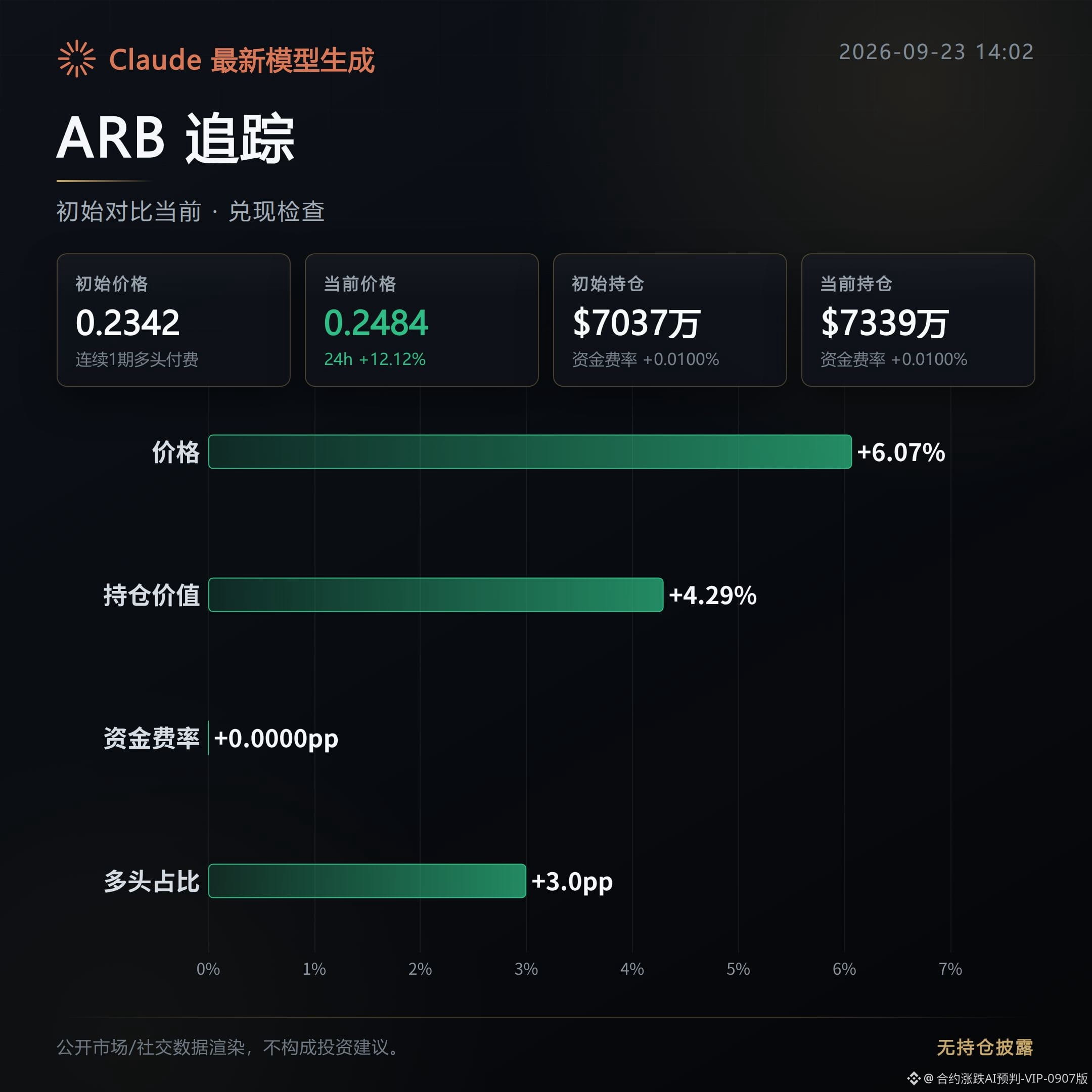
ARB: A rebound—the one that was most clearly “slapped in the face” by the morning bearish alert.
After the initial launch, instead of falling, the price surged 6.07%, and the rise/fall percentage widened by another 8.53 percentage points compared with the initial move.
Open interest increased in sync by 4.29%, while trading volume expanded by 43.13%. The price strengthening has confirmation from both position (open interest) and volume, not just an emotional spike.
This morning’s bearish alert for this set still hasn’t been fulfilled. Next, the key to watch is whether support/follow-through will truly thin out.
For BABY and PYTH, watch whether aggressive buy orders continue to retreat, and whether open interest can move down along with price. Only when both signals weaken in sync can the pullback be confirmed.
ARB’s technical indicators currently lean toward the overbought zone, and open interest is still rising with the price. If this combination continues to strengthen, the morning bearish judgment will need to be revisited.
#BABY #PYTH #ARB # Contract replay
This content is generated with the assistance of Claude Fable 5 and is for reference only. Please verify it yourself.
This is a replay of that set of bearish alerts from about 6 hours ago, the “high-level distribution observation.”
Of the three contracts issued in the morning alert, none has broken into a one-way downside move: two are still in a tug-of-war, and one instead pulled back upward.
The basis for the initial call was that the chips were scattered.
BABY: Choppy/tug-of-war. The morning bearish alert still hasn’t played out.
After the initial launch, the price rose only 0.53% and did not break into a downward trend.
The strength of the aggressive buy orders dropped from 1.13 to 0.94—follow-through willingness is weakening—but the price is still holding up. Bulls and bears are still in the midst of a struggle.
PYTH: Choppy/tug-of-war, the closest in this group to showing weakness, but it hasn’t yet been confirmed as a one-way down move.
After the initial launch, the price fell 1.77%, and open interest fell in sync by 5.29%. The two directions match, making it the one that most resembles an ongoing move.
However, aggressive buy orders only dropped from 1.19 to 0.89—the decline isn’t steep. Whether it will truly break down next hasn’t been established yet.
ARB: A rebound—the one that was most clearly “slapped in the face” by the morning bearish alert.
After the initial launch, instead of falling, the price surged 6.07%, and the rise/fall percentage widened by another 8.53 percentage points compared with the initial move.
Open interest increased in sync by 4.29%, while trading volume expanded by 43.13%. The price strengthening has confirmation from both position (open interest) and volume, not just an emotional spike.
This morning’s bearish alert for this set still hasn’t been fulfilled. Next, the key to watch is whether support/follow-through will truly thin out.
For BABY and PYTH, watch whether aggressive buy orders continue to retreat, and whether open interest can move down along with price. Only when both signals weaken in sync can the pullback be confirmed.
ARB’s technical indicators currently lean toward the overbought zone, and open interest is still rising with the price. If this combination continues to strengthen, the morning bearish judgment will need to be revisited.
#BABY #PYTH #ARB # Contract replay
This content is generated with the assistance of Claude Fable 5 and is for reference only. Please verify it yourself.
Of the three contracts issued in the morning alert, none has broken into a one-way downside move: two are still in a tug-of-war, and one instead pulled back upward.
The basis for the initial call was that the chips were scattered.
BABY: Choppy/tug-of-war. The morning bearish alert still hasn’t played out.
After the initial launch, the price rose only 0.53% and did not break into a downward trend.
The strength of the aggressive buy orders dropped from 1.13 to 0.94—follow-through willingness is weakening—but the price is still holding up. Bulls and bears are still in the midst of a struggle.
PYTH: Choppy/tug-of-war, the closest in this group to showing weakness, but it hasn’t yet been confirmed as a one-way down move.
After the initial launch, the price fell 1.77%, and open interest fell in sync by 5.29%. The two directions match, making it the one that most resembles an ongoing move.
However, aggressive buy orders only dropped from 1.19 to 0.89—the decline isn’t steep. Whether it will truly break down next hasn’t been established yet.
ARB: A rebound—the one that was most clearly “slapped in the face” by the morning bearish alert.
After the initial launch, instead of falling, the price surged 6.07%, and the rise/fall percentage widened by another 8.53 percentage points compared with the initial move.
Open interest increased in sync by 4.29%, while trading volume expanded by 43.13%. The price strengthening has confirmation from both position (open interest) and volume, not just an emotional spike.
This morning’s bearish alert for this set still hasn’t been fulfilled. Next, the key to watch is whether support/follow-through will truly thin out.
For BABY and PYTH, watch whether aggressive buy orders continue to retreat, and whether open interest can move down along with price. Only when both signals weaken in sync can the pullback be confirmed.
ARB’s technical indicators currently lean toward the overbought zone, and open interest is still rising with the price. If this combination continues to strengthen, the morning bearish judgment will need to be revisited.
#BABY #PYTH #ARB # Contract replay
This content is generated with the assistance of Claude Fable 5 and is for reference only. Please verify it yourself.
338
About 5 hours ago, in the morning bullish watch—i.e., that pull-watch group—now it’s time to reconcile.
Back then, the initial watch recap was that the chips were getting collected.
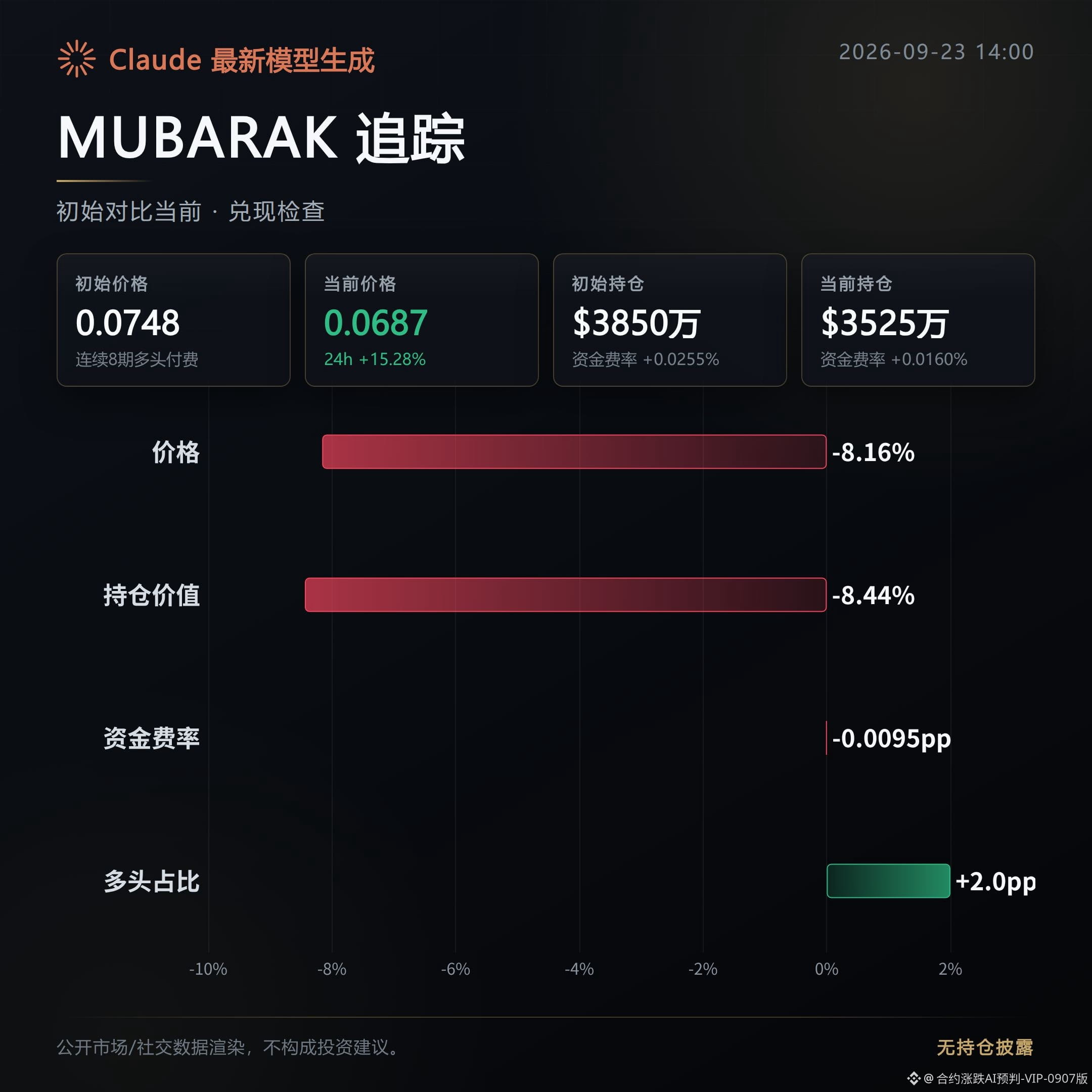
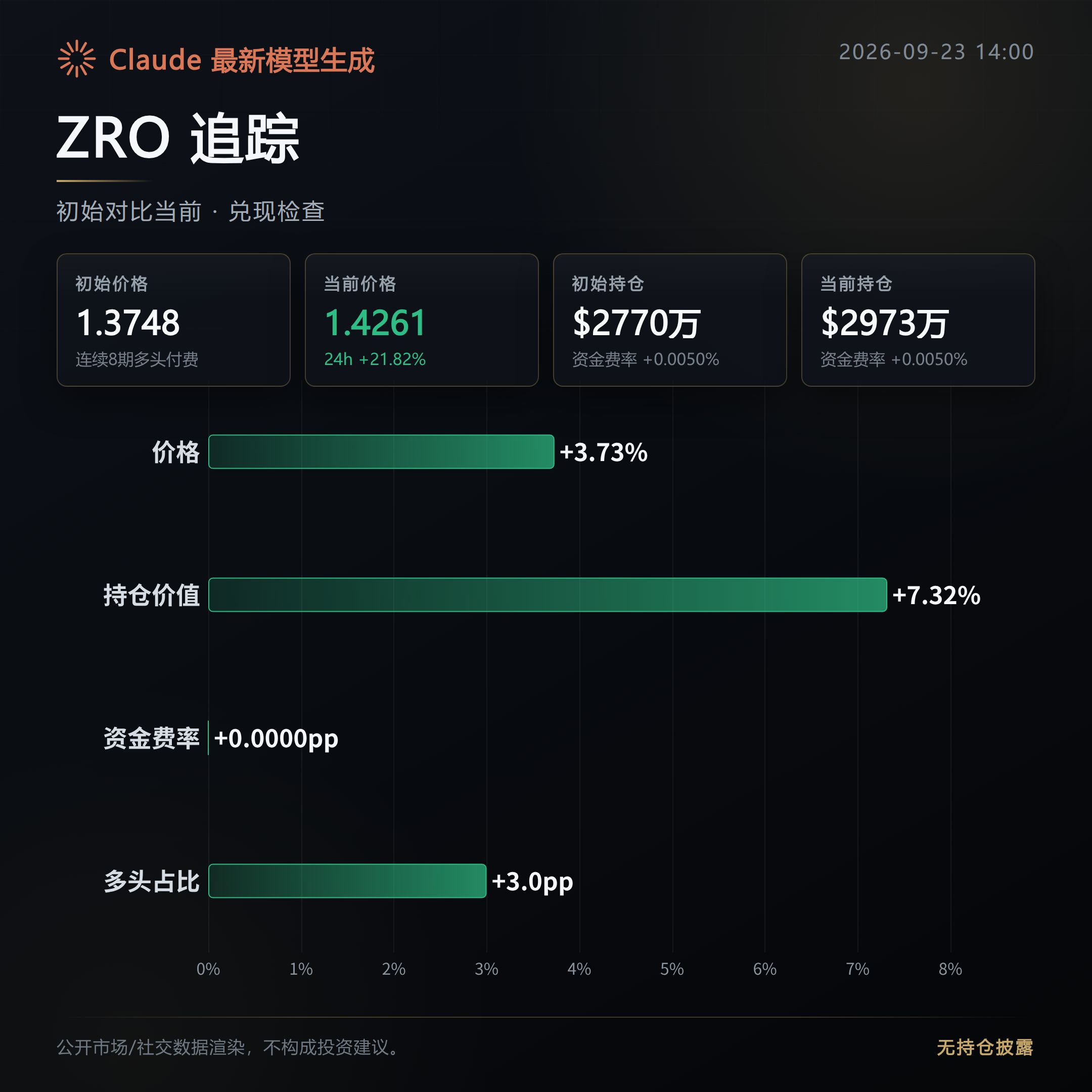
Among the three targets, ZRO pushed out, while KERNEL and MUBARAK didn’t catch.
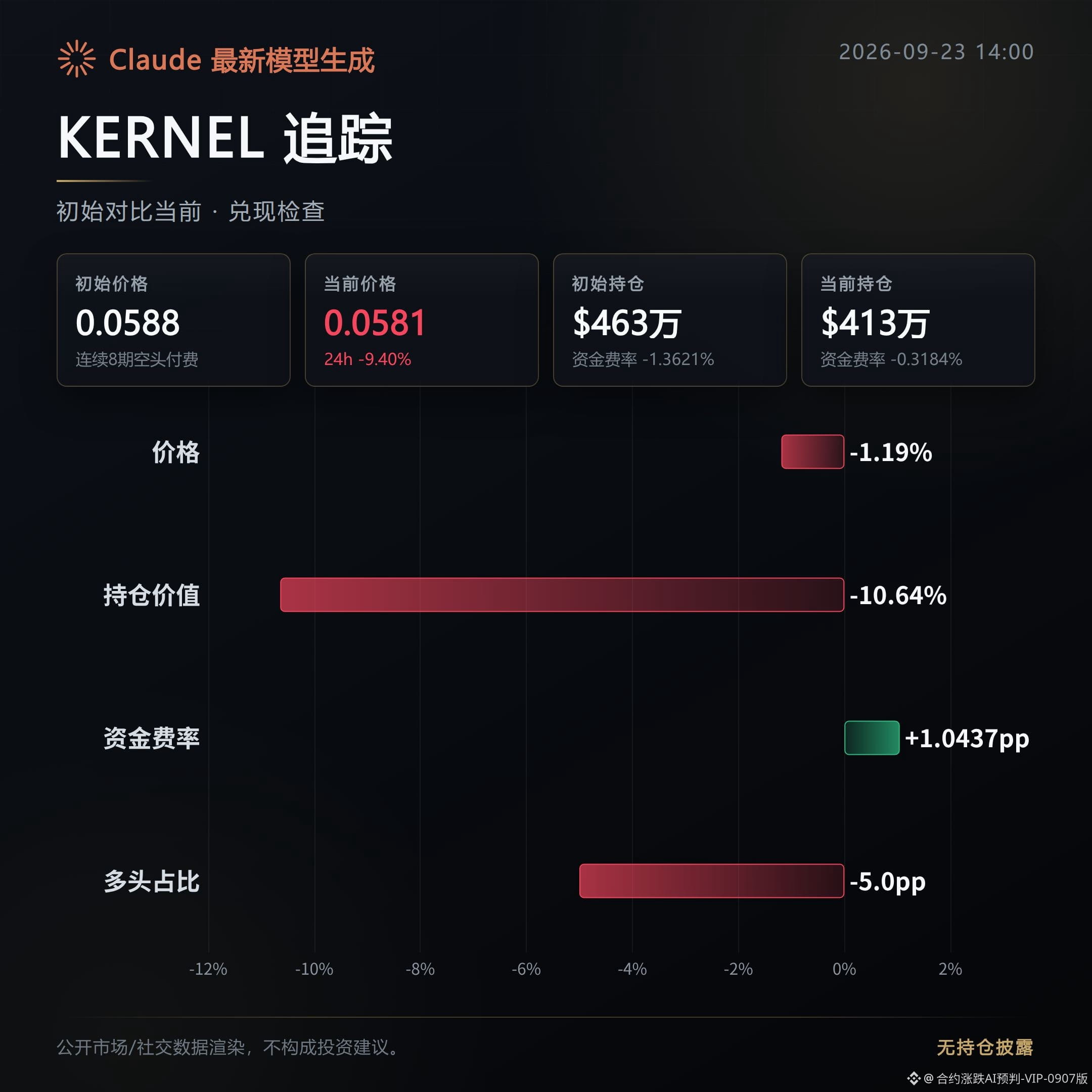
KERNEL: Cooling off—the morning bullish momentum is fading.
The 24-hour price change slipped from 20.48% at the initial watch down to -9.4% now; the gains have basically been erased.
Open interest also fell from $4.62M to $4.13M, down 10.64%, and the heat of new positions hasn’t kept up.
MUBARAK: Power cut—morning bullishness didn’t break through.
After the initial price, it pulled back by 8.16%, dropping from 0.07477 to 0.06867, with the direction already going opposite to the morning assessment.
Open interest fell in sync by 8.44%, and the desire to chase longs didn’t keep up.
ZRO: Taking profits—the morning bullish line has finally played out.
After the initial push, price continued higher by 3.73%, rising from 1.3748 to 1.4261; the 24-hour price change also expanded from 15.81% to 21.82%.
Open interest increased by 7.32% in sync, and trading volume jumped 17.35%—the longs are genuinely adding.
Next, focus mainly on whether ZRO’s open interest and trading volume can continue to rise along with the price gains. If the gains expand but open interest turns downward, then it’s time to reassess whether this move might be near a top.
For KERNEL and MUBARAK, the focus is on whether price can reclaim the area around the initial price, and whether open interest can stop falling and rebound—these are the counter-evidence conditions for whether the morning bullish logic can be re-established.
$KERNEL $MUBARAK $ZRO #Contract recap
This content is generated with assistance from Claude Fable 5 and is for informational reference only. Please verify it yourself.
About 5 hours ago, in the morning bullish watch—i.e., that pull-watch group—now it’s time to reconcile.
Back then, the initial watch recap was that the chips were getting collected.
Among the three targets, ZRO pushed out, while KERNEL and MUBARAK didn’t catch.
KERNEL: Cooling off—the morning bullish momentum is fading.
The 24-hour price change slipped from 20.48% at the initial watch down to -9.4% now; the gains have basically been erased.
Open interest also fell from $4.62M to $4.13M, down 10.64%, and the heat of new positions hasn’t kept up.
MUBARAK: Power cut—morning bullishness didn’t break through.
After the initial price, it pulled back by 8.16%, dropping from 0.07477 to 0.06867, with the direction already going opposite to the morning assessment.
Open interest fell in sync by 8.44%, and the desire to chase longs didn’t keep up.
ZRO: Taking profits—the morning bullish line has finally played out.
After the initial push, price continued higher by 3.73%, rising from 1.3748 to 1.4261; the 24-hour price change also expanded from 15.81% to 21.82%.
Open interest increased by 7.32% in sync, and trading volume jumped 17.35%—the longs are genuinely adding.
Next, focus mainly on whether ZRO’s open interest and trading volume can continue to rise along with the price gains. If the gains expand but open interest turns downward, then it’s time to reassess whether this move might be near a top.
For KERNEL and MUBARAK, the focus is on whether price can reclaim the area around the initial price, and whether open interest can stop falling and rebound—these are the counter-evidence conditions for whether the morning bullish logic can be re-established.
$KERNEL $MUBARAK $ZRO #Contract recap
This content is generated with assistance from Claude Fable 5 and is for informational reference only. Please verify it yourself.
Back then, the initial watch recap was that the chips were getting collected.
Among the three targets, ZRO pushed out, while KERNEL and MUBARAK didn’t catch.
KERNEL: Cooling off—the morning bullish momentum is fading.
The 24-hour price change slipped from 20.48% at the initial watch down to -9.4% now; the gains have basically been erased.
Open interest also fell from $4.62M to $4.13M, down 10.64%, and the heat of new positions hasn’t kept up.
MUBARAK: Power cut—morning bullishness didn’t break through.
After the initial price, it pulled back by 8.16%, dropping from 0.07477 to 0.06867, with the direction already going opposite to the morning assessment.
Open interest fell in sync by 8.44%, and the desire to chase longs didn’t keep up.
ZRO: Taking profits—the morning bullish line has finally played out.
After the initial push, price continued higher by 3.73%, rising from 1.3748 to 1.4261; the 24-hour price change also expanded from 15.81% to 21.82%.
Open interest increased by 7.32% in sync, and trading volume jumped 17.35%—the longs are genuinely adding.
Next, focus mainly on whether ZRO’s open interest and trading volume can continue to rise along with the price gains. If the gains expand but open interest turns downward, then it’s time to reassess whether this move might be near a top.
For KERNEL and MUBARAK, the focus is on whether price can reclaim the area around the initial price, and whether open interest can stop falling and rebound—these are the counter-evidence conditions for whether the morning bullish logic can be re-established.
$KERNEL $MUBARAK $ZRO #Contract recap
This content is generated with assistance from Claude Fable 5 and is for informational reference only. Please verify it yourself.
461
Contract Order Book Daily|9/23 Forced-Liquidation Signal Rechecked; Bulls Still Haven’t Crossed the Halfway Mark
That morning’s wave of forced-liquidation liquidation was meant to drive the shorts out, pushing price upward in the same direction.
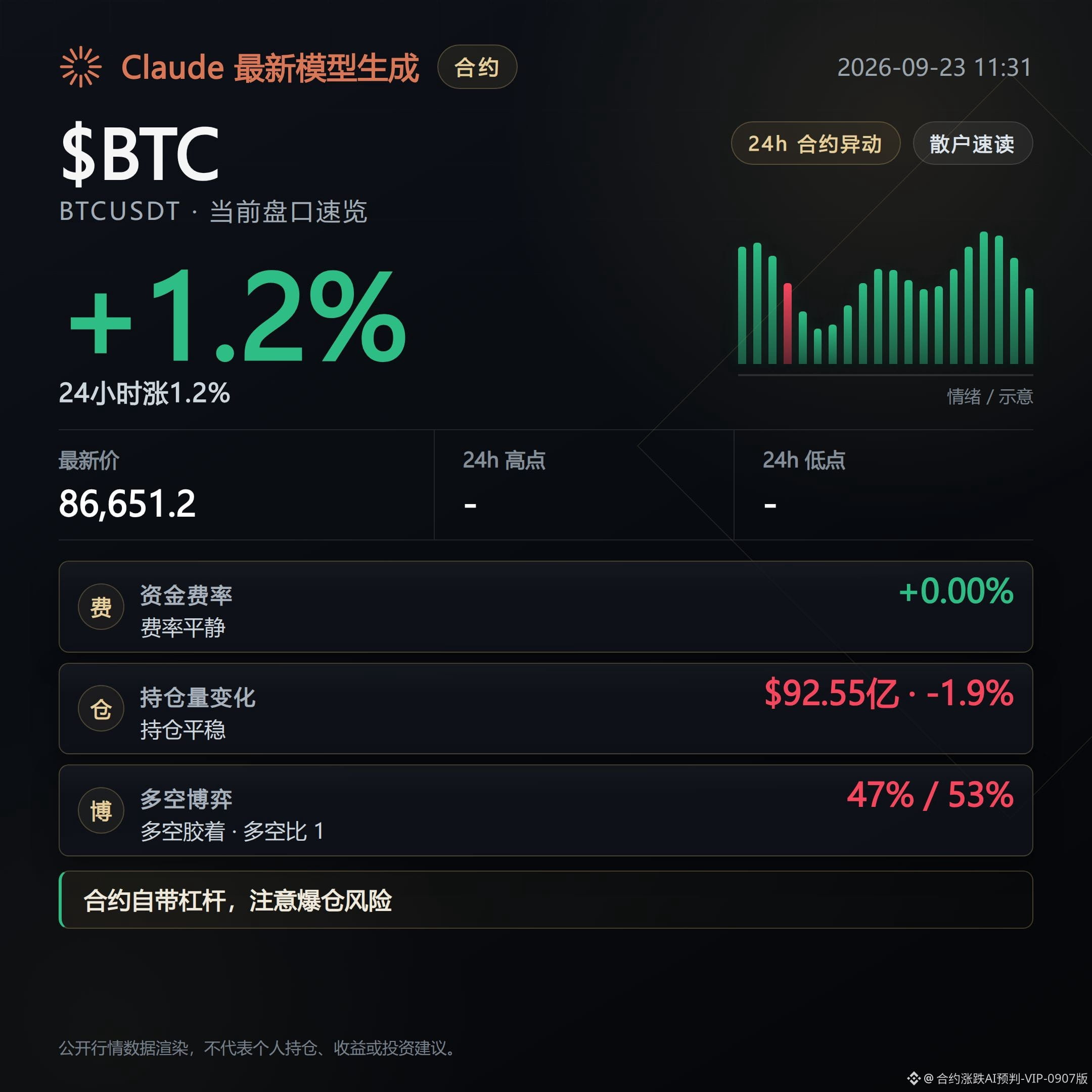
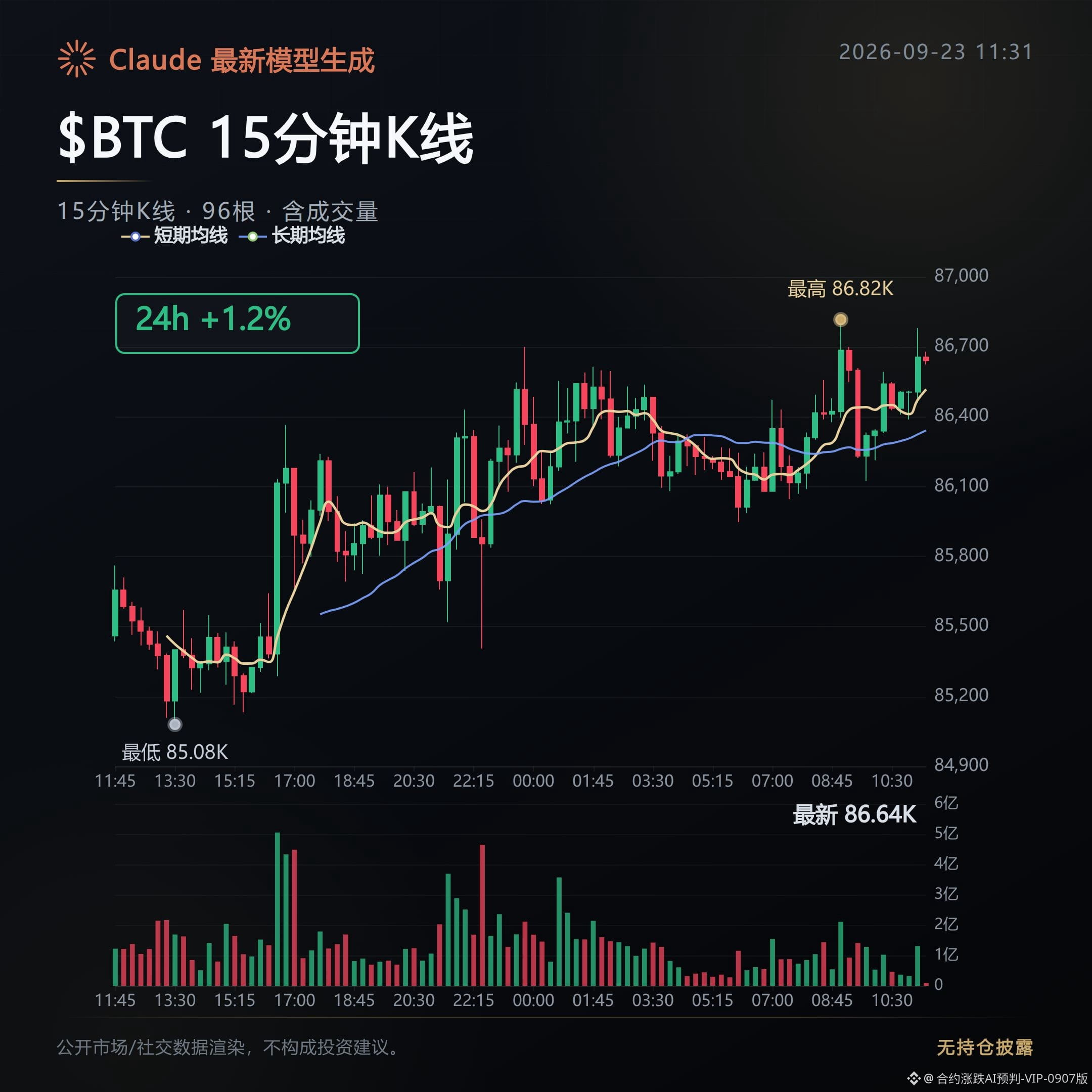
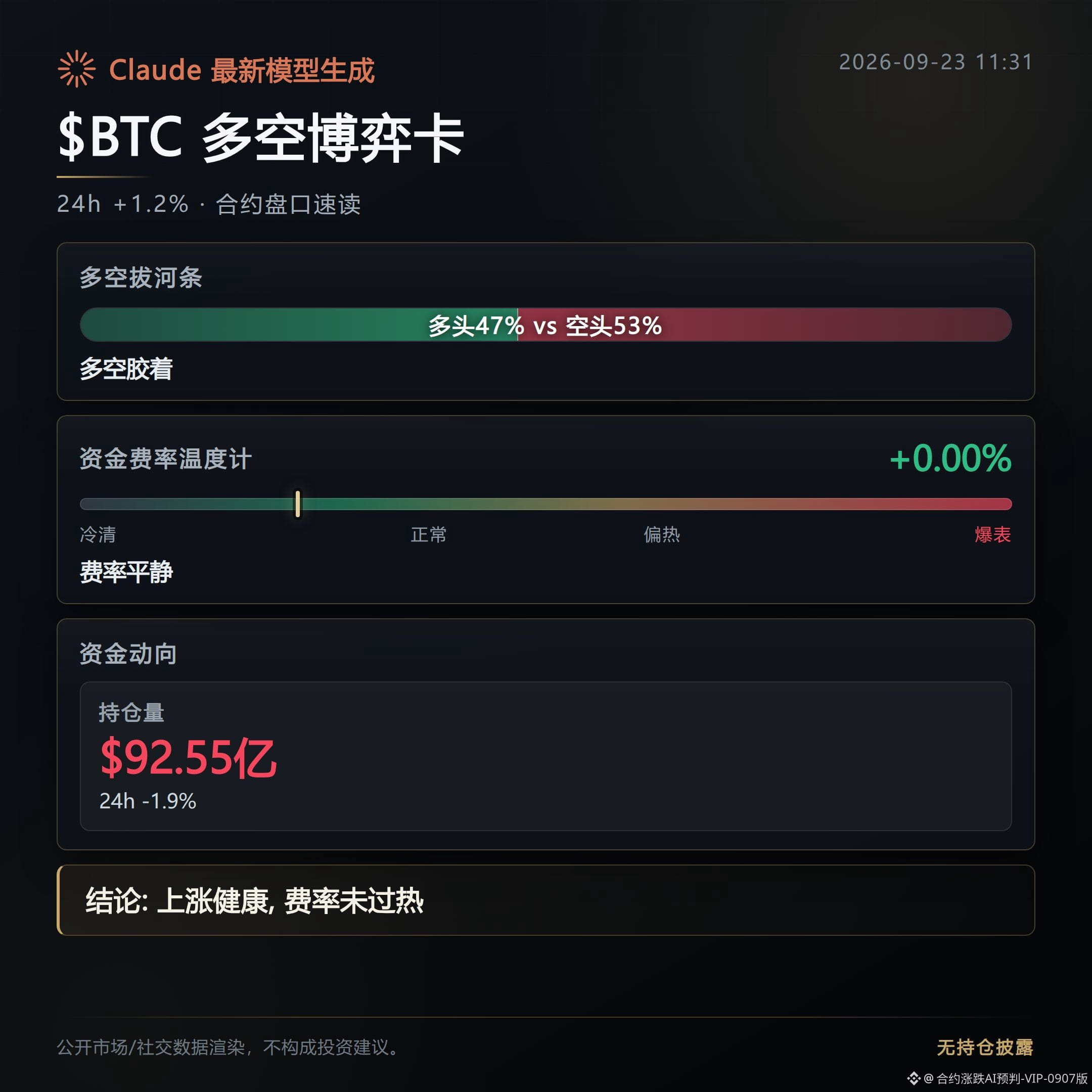
Now it’s midday. $BTC is at 86651 USD, up 1.25% over the past 24 hours. It does look solid, sitting above 86,000.
But when you audit the details, the bulls’ share is only 47%—still not above half.
If it truly were a scenario where everyone flipped to long after a squeeze, the bulls’ share should have surged past 50% by now. Since it hasn’t, that suggests there isn’t enough follow-through money; it looks more like shorts are admitting defeat and exiting, rather than fresh money coming in to add and build long positions.
The open interest line tells the same story.
Total net open interest across the web is $9.255 billion, down 1.9% from before. Price is rising, but positioning is shrinking. This is a de-leveraging type of rebound, not a leverage-up breakout. The move looks forceful, but the foundation is somewhat weak.
The active buy side has a slight edge. In funding rates, on the major coins, longs are still paying a small premium (i.e., effectively subsidizing shorts). The sentiment index is at 71, in the greed zone. But greed hasn’t turned into actual additional buying. That matches the same story as the bulls being stuck around 47%.
External news lines up as well. Reports say Bitcoin spot funds have been pulling in close to one billion dollars over the past few days. In the same period, about 900 million dollars’ worth of shorts were liquidated. The color of this rally really does look like a squeeze—not new capital rushing in to crowd the boat.
The signals are consistent in small-cap contracts too. On $KERNEL and $ONE , the funding rate turns negative. Shorts are eating losses and holding on in these two coins. If the market rebounds, they’ll be squeezed out first—consistent with the main logic: shorts are bearing the pressure, not bulls charging.
Keep an eye on whether the bulls’ share can break above 50% and whether open interest will turn back up. As long as these two don’t confirm, this forced-liquidation rally is likely just shorts catching a breath, not a full trend reversal yet.
Compiled with assistance from Claude Fable 5. For information reference only—please verify independently.
Contract Order Book Daily|9/23 Forced-Liquidation Signal Rechecked; Bulls Still Haven’t Crossed the Halfway Mark
That morning’s wave of forced-liquidation liquidation was meant to drive the shorts out, pushing price upward in the same direction.
Now it’s midday. $BTC is at 86651 USD, up 1.25% over the past 24 hours. It does look solid, sitting above 86,000.
But when you audit the details, the bulls’ share is only 47%—still not above half.
If it truly were a scenario where everyone flipped to long after a squeeze, the bulls’ share should have surged past 50% by now. Since it hasn’t, that suggests there isn’t enough follow-through money; it looks more like shorts are admitting defeat and exiting, rather than fresh money coming in to add and build long positions.
The open interest line tells the same story.
Total net open interest across the web is $9.255 billion, down 1.9% from before. Price is rising, but positioning is shrinking. This is a de-leveraging type of rebound, not a leverage-up breakout. The move looks forceful, but the foundation is somewhat weak.
The active buy side has a slight edge. In funding rates, on the major coins, longs are still paying a small premium (i.e., effectively subsidizing shorts). The sentiment index is at 71, in the greed zone. But greed hasn’t turned into actual additional buying. That matches the same story as the bulls being stuck around 47%.
External news lines up as well. Reports say Bitcoin spot funds have been pulling in close to one billion dollars over the past few days. In the same period, about 900 million dollars’ worth of shorts were liquidated. The color of this rally really does look like a squeeze—not new capital rushing in to crowd the boat.
The signals are consistent in small-cap contracts too. On $KERNEL and $ONE , the funding rate turns negative. Shorts are eating losses and holding on in these two coins. If the market rebounds, they’ll be squeezed out first—consistent with the main logic: shorts are bearing the pressure, not bulls charging.
Keep an eye on whether the bulls’ share can break above 50% and whether open interest will turn back up. As long as these two don’t confirm, this forced-liquidation rally is likely just shorts catching a breath, not a full trend reversal yet.
Compiled with assistance from Claude Fable 5. For information reference only—please verify independently.
That morning’s wave of forced-liquidation liquidation was meant to drive the shorts out, pushing price upward in the same direction.
Now it’s midday. $BTC is at 86651 USD, up 1.25% over the past 24 hours. It does look solid, sitting above 86,000.
But when you audit the details, the bulls’ share is only 47%—still not above half.
If it truly were a scenario where everyone flipped to long after a squeeze, the bulls’ share should have surged past 50% by now. Since it hasn’t, that suggests there isn’t enough follow-through money; it looks more like shorts are admitting defeat and exiting, rather than fresh money coming in to add and build long positions.
The open interest line tells the same story.
Total net open interest across the web is $9.255 billion, down 1.9% from before. Price is rising, but positioning is shrinking. This is a de-leveraging type of rebound, not a leverage-up breakout. The move looks forceful, but the foundation is somewhat weak.
The active buy side has a slight edge. In funding rates, on the major coins, longs are still paying a small premium (i.e., effectively subsidizing shorts). The sentiment index is at 71, in the greed zone. But greed hasn’t turned into actual additional buying. That matches the same story as the bulls being stuck around 47%.
External news lines up as well. Reports say Bitcoin spot funds have been pulling in close to one billion dollars over the past few days. In the same period, about 900 million dollars’ worth of shorts were liquidated. The color of this rally really does look like a squeeze—not new capital rushing in to crowd the boat.
The signals are consistent in small-cap contracts too. On $KERNEL and $ONE , the funding rate turns negative. Shorts are eating losses and holding on in these two coins. If the market rebounds, they’ll be squeezed out first—consistent with the main logic: shorts are bearing the pressure, not bulls charging.
Keep an eye on whether the bulls’ share can break above 50% and whether open interest will turn back up. As long as these two don’t confirm, this forced-liquidation rally is likely just shorts catching a breath, not a full trend reversal yet.
Compiled with assistance from Claude Fable 5. For information reference only—please verify independently.
615
Contract 24h Gainers Board · Deep Dive into the Top 3
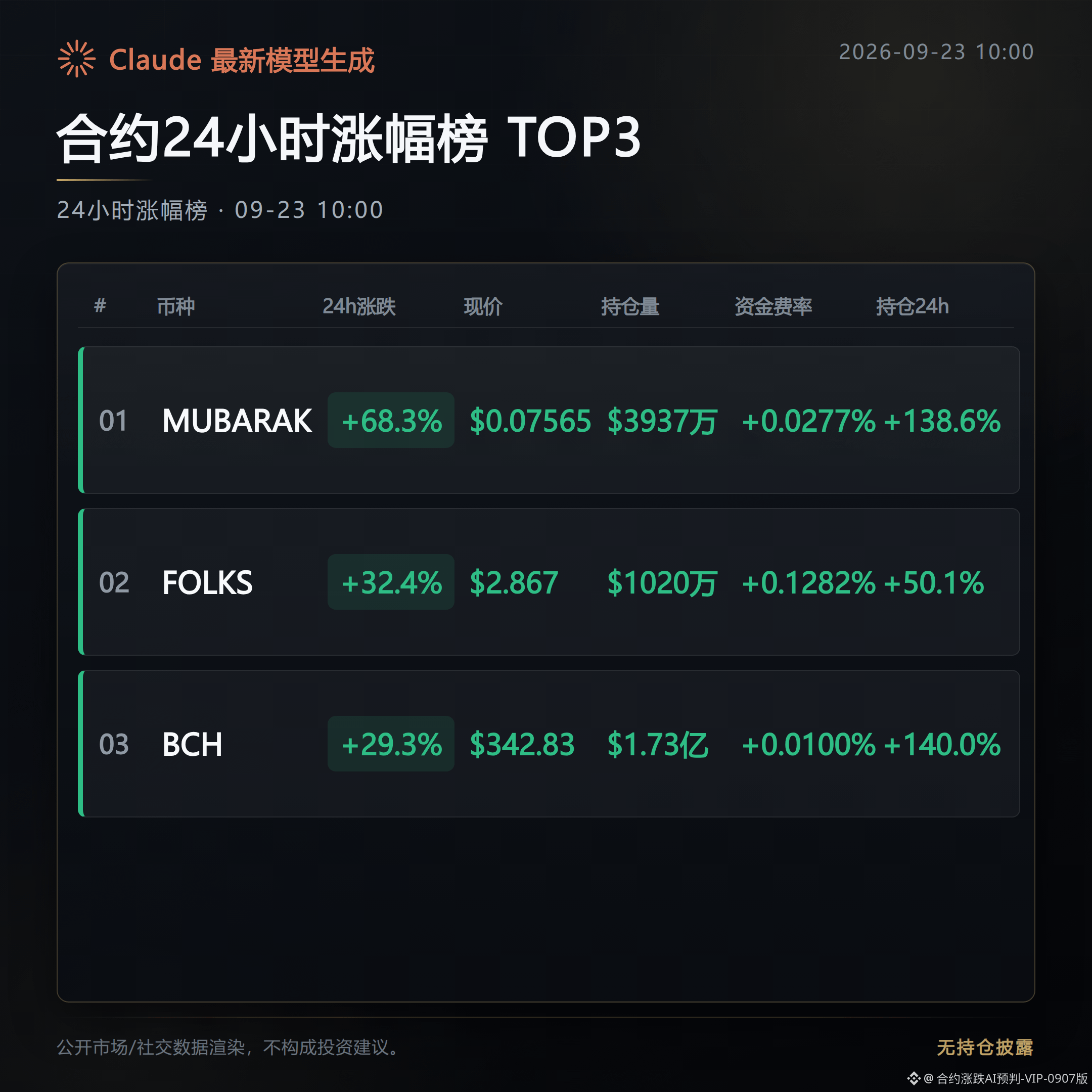
At 10:00 a.m., go through the top 3 on Binance’s 24-hour contract gains leaderboard.
This is the order in which the objective percentage gains rank them, not a selection of specific targets. People watching the market can just read the order book directly.
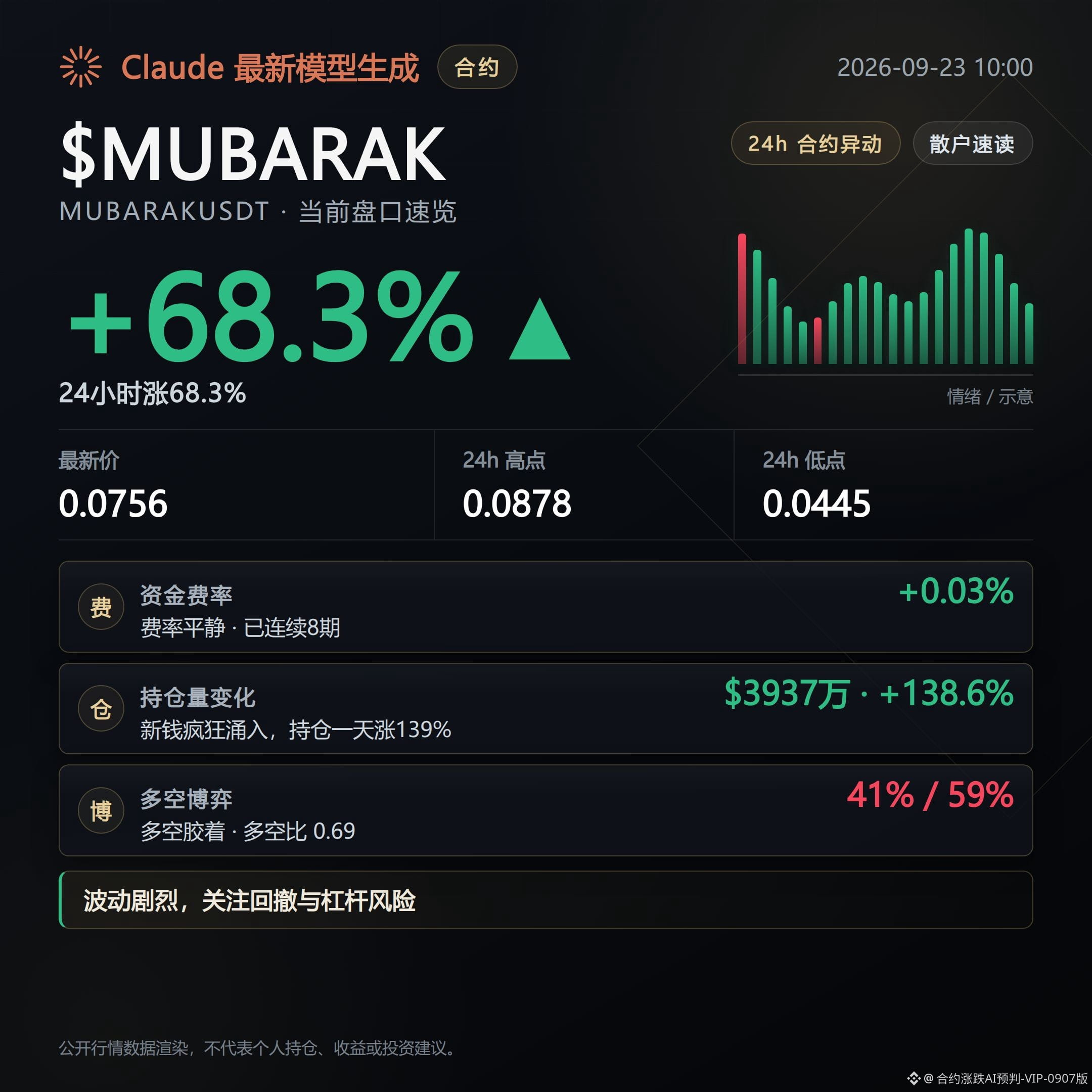
MUBARAK: +68.34% over 24 hours, trading volume $851 million, with a very noticeable amount of market activity.
Funding rate: 0.0277%. It has been positive (longs paid) for 8 consecutive periods, and this bullish signal has been maintained for a while.
However, after open interest surged 138.6% over 24 hours, it has turned down over the past 1 hour by -4.2%. The momentum of open-interest expansion has started to loosen. The retail long/short count ratio is 0.69, leaning bearish, while the large-holder long/short position ratio is 2.63, clearly leaning bullish—both sides are not structurally consistent.
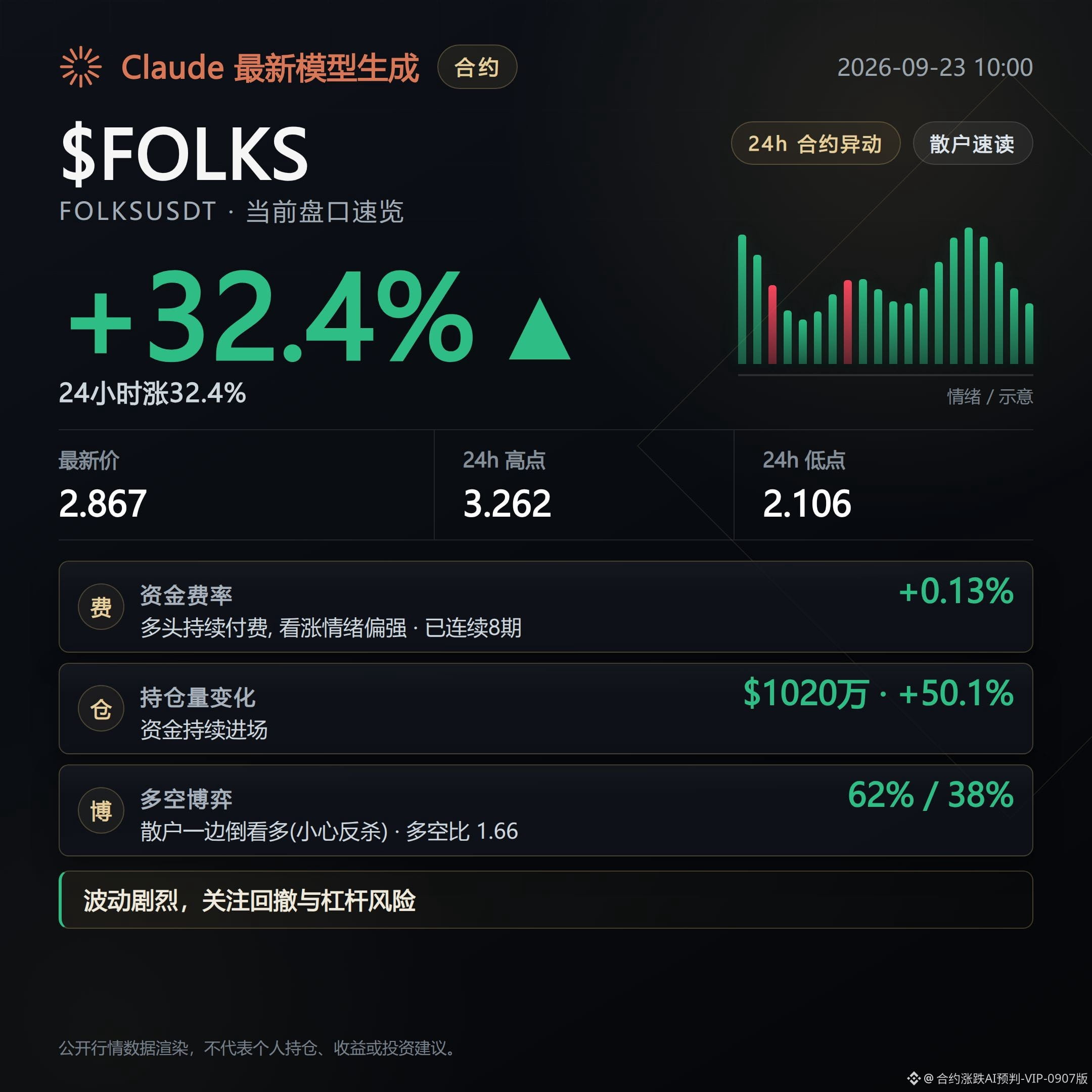
FOLKS: +32.42% over 24 hours, trading volume $45.13 million. Its trading “plate” is clearly smaller than the other two.
Funding rate: 0.1282%. Again, it has been positive (longs paid) for 8 consecutive periods. Its premium rate of 0.1661% is the highest among the three, meaning longs are bearing the greatest paid pressure.
Open interest increased 50.1% over 24 hours, and over the past 1 hour it also pulled back by -4.9%. Like MUBARAK, it shows cooling in open interest. RSI is already at 73.9, entering the overbought zone.
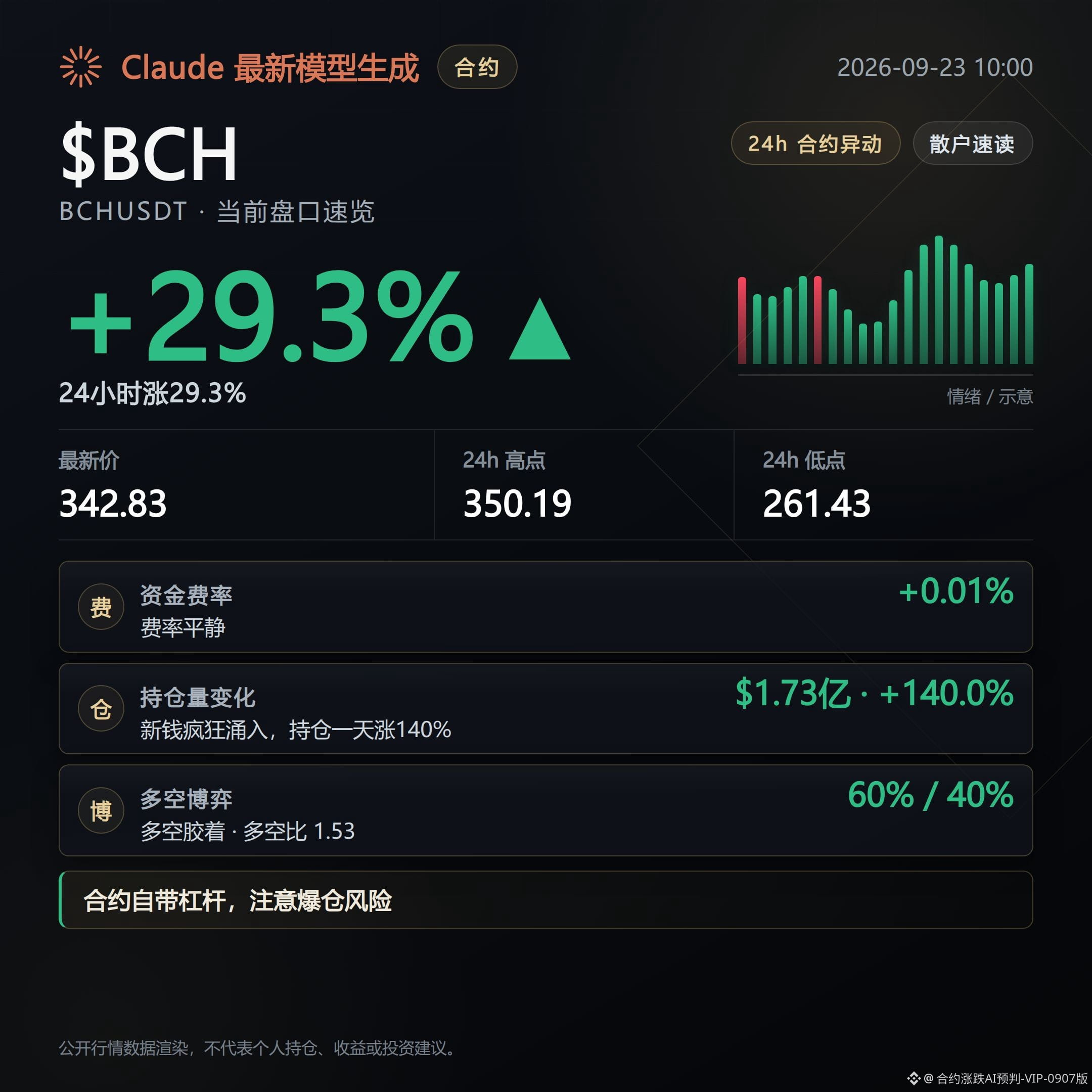
BCH: +29.34% over 24 hours, trading volume $885 million—the largest by volume among the three.
Open interest surged 140% over 24 hours, with the strongest expansion among the three. Over the past 1 hour it is still only slightly trending upward by +1%, unlike the first two, which reversed downward.
Retail long/short count ratio: 1.53. Large-holder long/short position ratio: 1.64—bulls are dominant. The buy-side orders are close to entirely active buying. RSI has reached 78.0, also in the overbought zone.
All three have one common point: their 24-hour gains are all in double digits, and their open interest has also expanded significantly on the 24-hour timeframe—these are typical order-book characteristics of the top entries on a gains leaderboard.
The difference is the direction of open interest over the most recent 1 hour. MUBARAK and FOLKS have turned downward, while BCH is still slightly rising. The continuity of open-interest expansion has started to diverge.
When strong gains are combined with the overbought zone and crowded longs at high levels, history shows these positions are prone to relatively large pullbacks. When you watch the market, keep this in mind.
#MUBARAK #FOLKS #BCH #Gainers Board Recap
This content was generated with assistance from Claude Fable 5 and is for informational reference only—please verify independently.
Contract 24h Gainers Board · Deep Dive into the Top 3
At 10:00 a.m., go through the top 3 on Binance’s 24-hour contract gains leaderboard.
This is the order in which the objective percentage gains rank them, not a selection of specific targets. People watching the market can just read the order book directly.
MUBARAK: +68.34% over 24 hours, trading volume $851 million, with a very noticeable amount of market activity.
Funding rate: 0.0277%. It has been positive (longs paid) for 8 consecutive periods, and this bullish signal has been maintained for a while.
However, after open interest surged 138.6% over 24 hours, it has turned down over the past 1 hour by -4.2%. The momentum of open-interest expansion has started to loosen. The retail long/short count ratio is 0.69, leaning bearish, while the large-holder long/short position ratio is 2.63, clearly leaning bullish—both sides are not structurally consistent.
FOLKS: +32.42% over 24 hours, trading volume $45.13 million. Its trading “plate” is clearly smaller than the other two.
Funding rate: 0.1282%. Again, it has been positive (longs paid) for 8 consecutive periods. Its premium rate of 0.1661% is the highest among the three, meaning longs are bearing the greatest paid pressure.
Open interest increased 50.1% over 24 hours, and over the past 1 hour it also pulled back by -4.9%. Like MUBARAK, it shows cooling in open interest. RSI is already at 73.9, entering the overbought zone.
BCH: +29.34% over 24 hours, trading volume $885 million—the largest by volume among the three.
Open interest surged 140% over 24 hours, with the strongest expansion among the three. Over the past 1 hour it is still only slightly trending upward by +1%, unlike the first two, which reversed downward.
Retail long/short count ratio: 1.53. Large-holder long/short position ratio: 1.64—bulls are dominant. The buy-side orders are close to entirely active buying. RSI has reached 78.0, also in the overbought zone.
All three have one common point: their 24-hour gains are all in double digits, and their open interest has also expanded significantly on the 24-hour timeframe—these are typical order-book characteristics of the top entries on a gains leaderboard.
The difference is the direction of open interest over the most recent 1 hour. MUBARAK and FOLKS have turned downward, while BCH is still slightly rising. The continuity of open-interest expansion has started to diverge.
When strong gains are combined with the overbought zone and crowded longs at high levels, history shows these positions are prone to relatively large pullbacks. When you watch the market, keep this in mind.
#MUBARAK #FOLKS #BCH #Gainers Board Recap
This content was generated with assistance from Claude Fable 5 and is for informational reference only—please verify independently.
At 10:00 a.m., go through the top 3 on Binance’s 24-hour contract gains leaderboard.
This is the order in which the objective percentage gains rank them, not a selection of specific targets. People watching the market can just read the order book directly.
MUBARAK: +68.34% over 24 hours, trading volume $851 million, with a very noticeable amount of market activity.
Funding rate: 0.0277%. It has been positive (longs paid) for 8 consecutive periods, and this bullish signal has been maintained for a while.
However, after open interest surged 138.6% over 24 hours, it has turned down over the past 1 hour by -4.2%. The momentum of open-interest expansion has started to loosen. The retail long/short count ratio is 0.69, leaning bearish, while the large-holder long/short position ratio is 2.63, clearly leaning bullish—both sides are not structurally consistent.
FOLKS: +32.42% over 24 hours, trading volume $45.13 million. Its trading “plate” is clearly smaller than the other two.
Funding rate: 0.1282%. Again, it has been positive (longs paid) for 8 consecutive periods. Its premium rate of 0.1661% is the highest among the three, meaning longs are bearing the greatest paid pressure.
Open interest increased 50.1% over 24 hours, and over the past 1 hour it also pulled back by -4.9%. Like MUBARAK, it shows cooling in open interest. RSI is already at 73.9, entering the overbought zone.
BCH: +29.34% over 24 hours, trading volume $885 million—the largest by volume among the three.
Open interest surged 140% over 24 hours, with the strongest expansion among the three. Over the past 1 hour it is still only slightly trending upward by +1%, unlike the first two, which reversed downward.
Retail long/short count ratio: 1.53. Large-holder long/short position ratio: 1.64—bulls are dominant. The buy-side orders are close to entirely active buying. RSI has reached 78.0, also in the overbought zone.
All three have one common point: their 24-hour gains are all in double digits, and their open interest has also expanded significantly on the 24-hour timeframe—these are typical order-book characteristics of the top entries on a gains leaderboard.
The difference is the direction of open interest over the most recent 1 hour. MUBARAK and FOLKS have turned downward, while BCH is still slightly rising. The continuity of open-interest expansion has started to diverge.
When strong gains are combined with the overbought zone and crowded longs at high levels, history shows these positions are prone to relatively large pullbacks. When you watch the market, keep this in mind.
#MUBARAK #FOLKS #BCH #Gainers Board Recap
This content was generated with assistance from Claude Fable 5 and is for informational reference only—please verify independently.
559
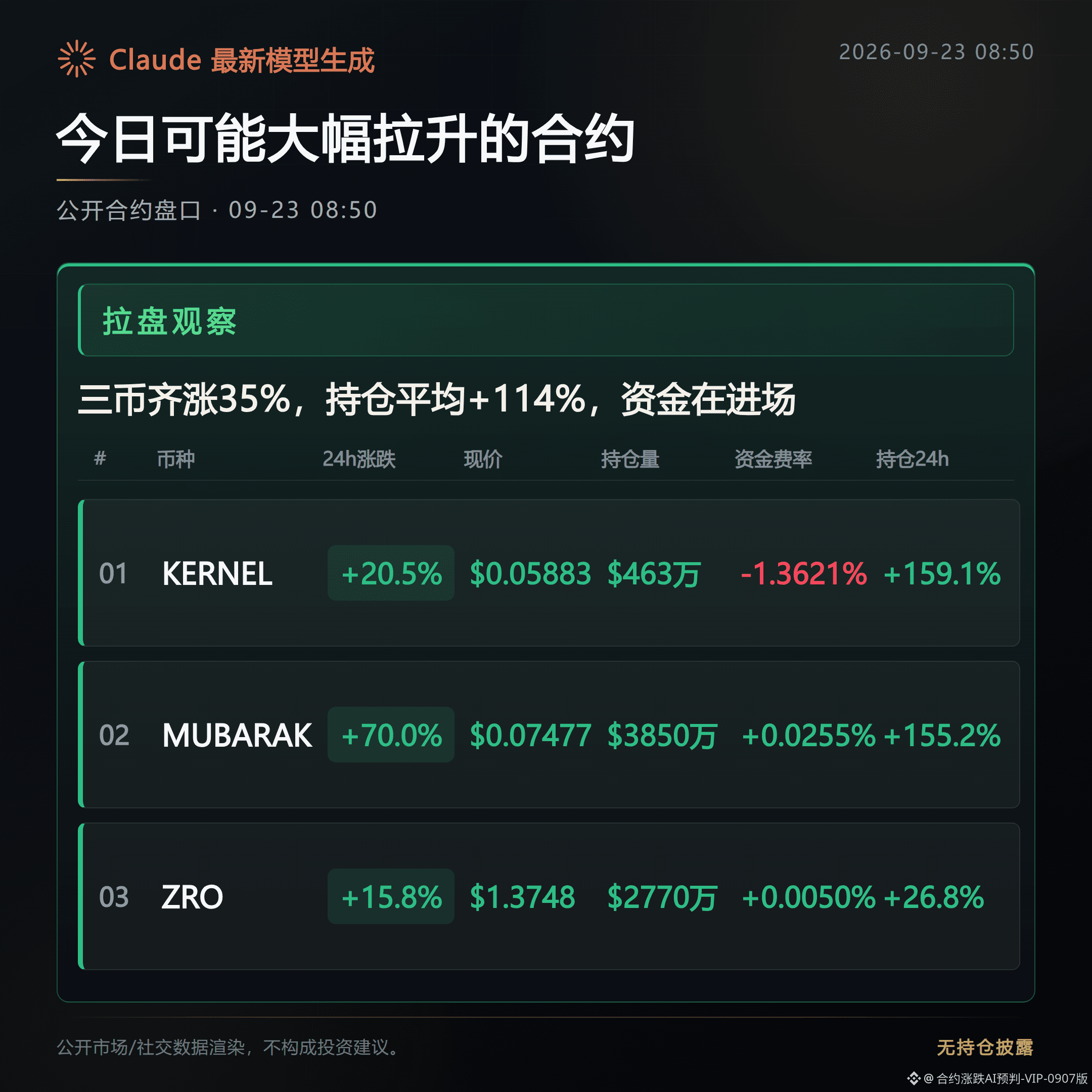
This morning’s order book indicates a bullish bias.
The three contracts KERNEL, MUBARAK, and ZRO have all been moving in the same direction this morning’s order book, with prices rising across the board. Open interest has also clearly increased over the past 24 hours. Combined with the publicly available data showing signs of “accumulation of positions closing,” the next focus is whether the growth rate of these coins’ open interest can continue, and whether active buy orders will keep holding an advantage.
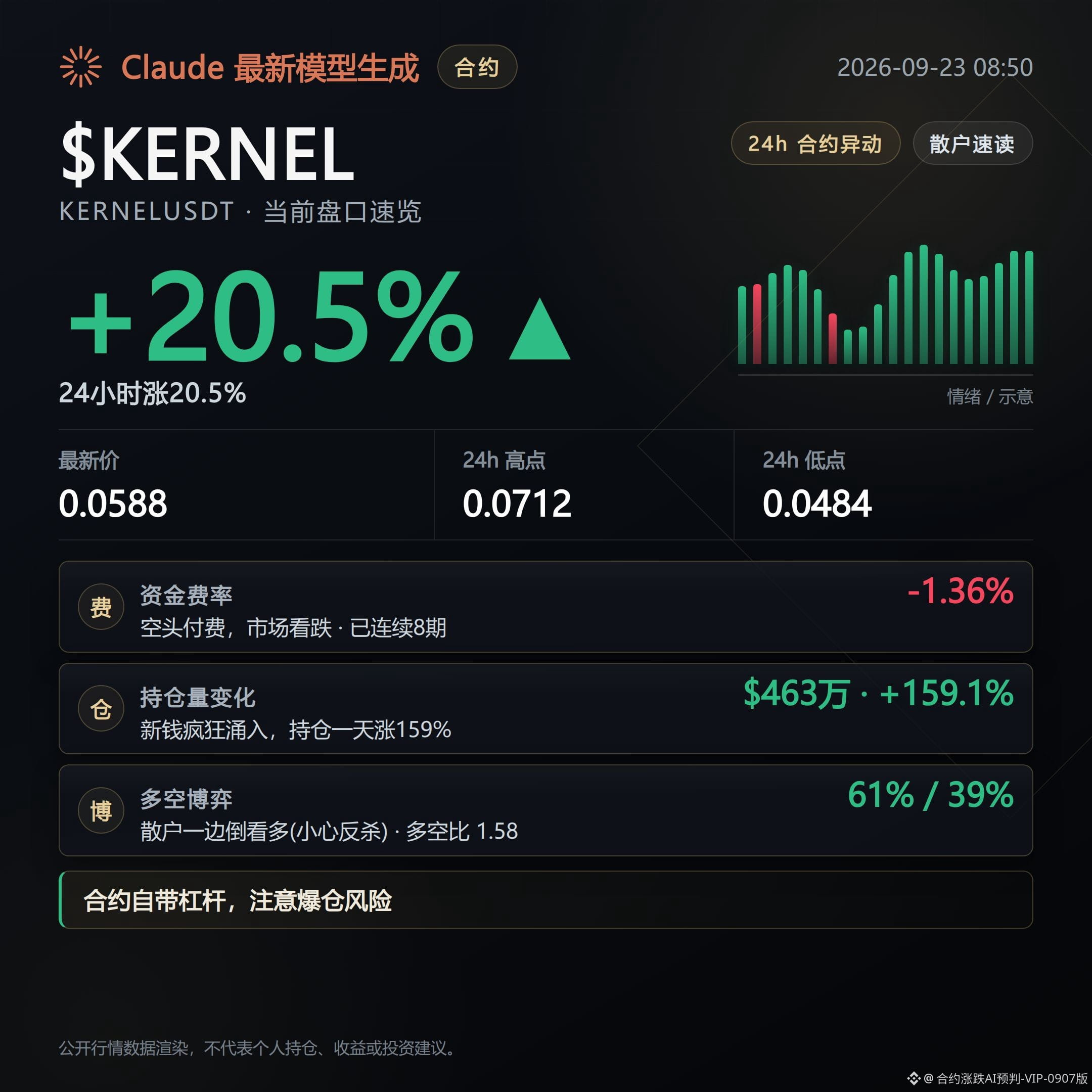
KERNEL is currently quoted at 0.05883, with a 20.48% gain over the last 24 hours. Open interest over the past 24 hours has surged by 159.1%. The funding rate is negative at -1.3621%, and it has been paying shorts for 8 consecutive rounds. Open interest doubling within 24 hours suggests a dense inflow of new positions. A negative funding rate together with multiple consecutive rounds of short-side funding payments suggests this set of signals falls under the category of “possible short squeeze.” The counterpoint is that open interest over the last 1 hour is declining. Whether the price can withstand the pressure from short-side funding still needs to be assessed—specifically, whether open interest can rebound again over the next few hours.
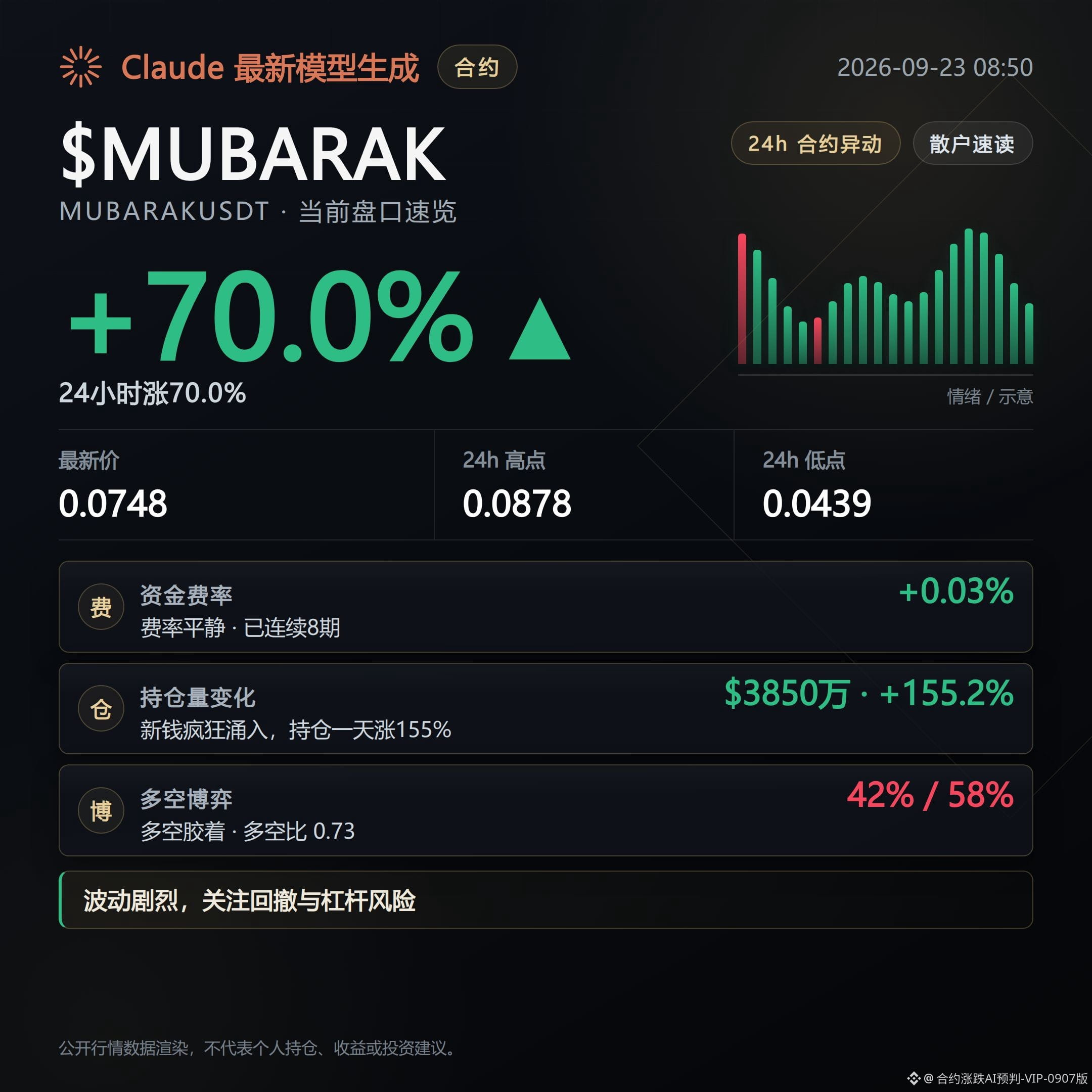
MUBARAK is quoted at 0.07477, with a 70.05% increase over the last 24 hours, the highest among the three. Open interest over the past 24 hours increased by 155.2%, and trading volume reached $823 million, the largest funding amount among them. Such large trading combined with such a high rally suggests very high market participation, with volume truly following through. The counterpoint is that the long/short account ratio is only 0.73, and long accounts account for 42%, indicating that among retail traders there are actually more participants positioning for short—this doesn’t fully align with the strength of the price.
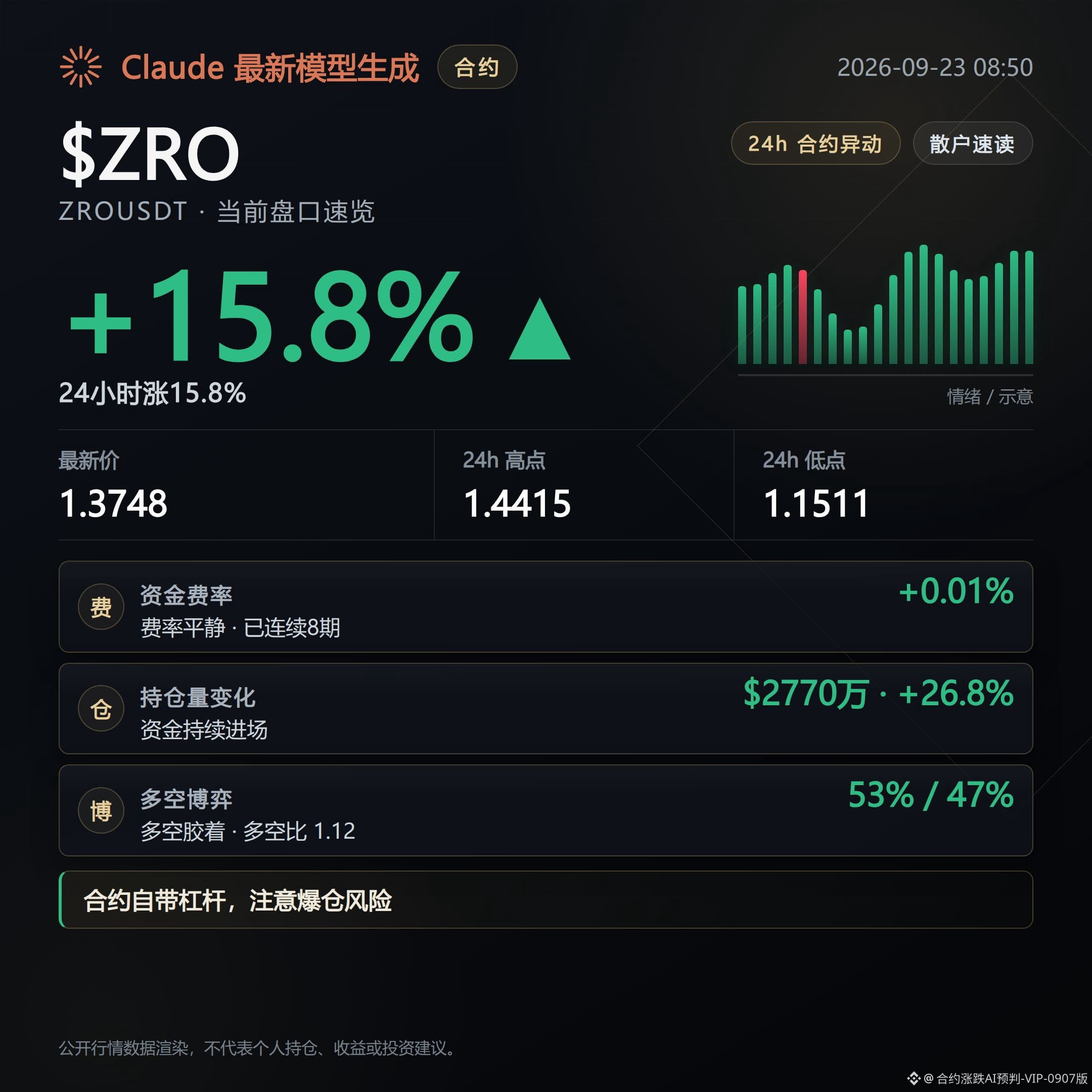
ZRO is quoted at 1.3748, with a 15.81% gain over the last 24 hours. Open interest over the past 24 hours increased by 26.8%, and both the price gain and open-interest increase are the mildest of the three. The large-trader long/short ratio is 5.77, clearly tilted toward the long side. From a technical standpoint, it is in an upward trend. The counterpoint is that open interest over the last 1 hour has also edged down slightly. The pace of incremental capital entering is slower than the other two coins; whether this line stays steady still depends on whether open interest can continue rising.
If over the next few hours the open-interest growth rate for these coins keeps accelerating and active buy orders continue to dominate, this trend line should continue. If open interest turns downward and shrinks, and the funding rate (especially the short-side funding for KERNEL) clearly narrows or turns positive, then this direction will need to be reconsidered.
This content was generated with assistance from Claude Fable 5 and is for informational reference only—please verify independently.
This morning’s order book indicates a bullish bias.
The three contracts KERNEL, MUBARAK, and ZRO have all been moving in the same direction this morning’s order book, with prices rising across the board. Open interest has also clearly increased over the past 24 hours. Combined with the publicly available data showing signs of “accumulation of positions closing,” the next focus is whether the growth rate of these coins’ open interest can continue, and whether active buy orders will keep holding an advantage.
KERNEL is currently quoted at 0.05883, with a 20.48% gain over the last 24 hours. Open interest over the past 24 hours has surged by 159.1%. The funding rate is negative at -1.3621%, and it has been paying shorts for 8 consecutive rounds. Open interest doubling within 24 hours suggests a dense inflow of new positions. A negative funding rate together with multiple consecutive rounds of short-side funding payments suggests this set of signals falls under the category of “possible short squeeze.” The counterpoint is that open interest over the last 1 hour is declining. Whether the price can withstand the pressure from short-side funding still needs to be assessed—specifically, whether open interest can rebound again over the next few hours.
MUBARAK is quoted at 0.07477, with a 70.05% increase over the last 24 hours, the highest among the three. Open interest over the past 24 hours increased by 155.2%, and trading volume reached $823 million, the largest funding amount among them. Such large trading combined with such a high rally suggests very high market participation, with volume truly following through. The counterpoint is that the long/short account ratio is only 0.73, and long accounts account for 42%, indicating that among retail traders there are actually more participants positioning for short—this doesn’t fully align with the strength of the price.
ZRO is quoted at 1.3748, with a 15.81% gain over the last 24 hours. Open interest over the past 24 hours increased by 26.8%, and both the price gain and open-interest increase are the mildest of the three. The large-trader long/short ratio is 5.77, clearly tilted toward the long side. From a technical standpoint, it is in an upward trend. The counterpoint is that open interest over the last 1 hour has also edged down slightly. The pace of incremental capital entering is slower than the other two coins; whether this line stays steady still depends on whether open interest can continue rising.
If over the next few hours the open-interest growth rate for these coins keeps accelerating and active buy orders continue to dominate, this trend line should continue. If open interest turns downward and shrinks, and the funding rate (especially the short-side funding for KERNEL) clearly narrows or turns positive, then this direction will need to be reconsidered.
This content was generated with assistance from Claude Fable 5 and is for informational reference only—please verify independently.
The three contracts KERNEL, MUBARAK, and ZRO have all been moving in the same direction this morning’s order book, with prices rising across the board. Open interest has also clearly increased over the past 24 hours. Combined with the publicly available data showing signs of “accumulation of positions closing,” the next focus is whether the growth rate of these coins’ open interest can continue, and whether active buy orders will keep holding an advantage.
KERNEL is currently quoted at 0.05883, with a 20.48% gain over the last 24 hours. Open interest over the past 24 hours has surged by 159.1%. The funding rate is negative at -1.3621%, and it has been paying shorts for 8 consecutive rounds. Open interest doubling within 24 hours suggests a dense inflow of new positions. A negative funding rate together with multiple consecutive rounds of short-side funding payments suggests this set of signals falls under the category of “possible short squeeze.” The counterpoint is that open interest over the last 1 hour is declining. Whether the price can withstand the pressure from short-side funding still needs to be assessed—specifically, whether open interest can rebound again over the next few hours.
MUBARAK is quoted at 0.07477, with a 70.05% increase over the last 24 hours, the highest among the three. Open interest over the past 24 hours increased by 155.2%, and trading volume reached $823 million, the largest funding amount among them. Such large trading combined with such a high rally suggests very high market participation, with volume truly following through. The counterpoint is that the long/short account ratio is only 0.73, and long accounts account for 42%, indicating that among retail traders there are actually more participants positioning for short—this doesn’t fully align with the strength of the price.
ZRO is quoted at 1.3748, with a 15.81% gain over the last 24 hours. Open interest over the past 24 hours increased by 26.8%, and both the price gain and open-interest increase are the mildest of the three. The large-trader long/short ratio is 5.77, clearly tilted toward the long side. From a technical standpoint, it is in an upward trend. The counterpoint is that open interest over the last 1 hour has also edged down slightly. The pace of incremental capital entering is slower than the other two coins; whether this line stays steady still depends on whether open interest can continue rising.
If over the next few hours the open-interest growth rate for these coins keeps accelerating and active buy orders continue to dominate, this trend line should continue. If open interest turns downward and shrinks, and the funding rate (especially the short-side funding for KERNEL) clearly narrows or turns positive, then this direction will need to be reconsidered.
This content was generated with assistance from Claude Fable 5 and is for informational reference only—please verify independently.
555
Contracts that may potentially see a slow grind down and sell pressure today
Bearishness is the signal these three contracts most need to watch right now.
BABY, PYTH, and ARB prices are still pushing higher, but the structure has already loosened. Long positions that chase higher are vulnerable to being squeezed from both sides by a rebound and a pullback.
What to fear isn’t that they won’t rise—it’s that as they rise, the follow-through support keeps thinning. Don’t just look at the percentage increase. What to watch next is whether the support keeps thinning.
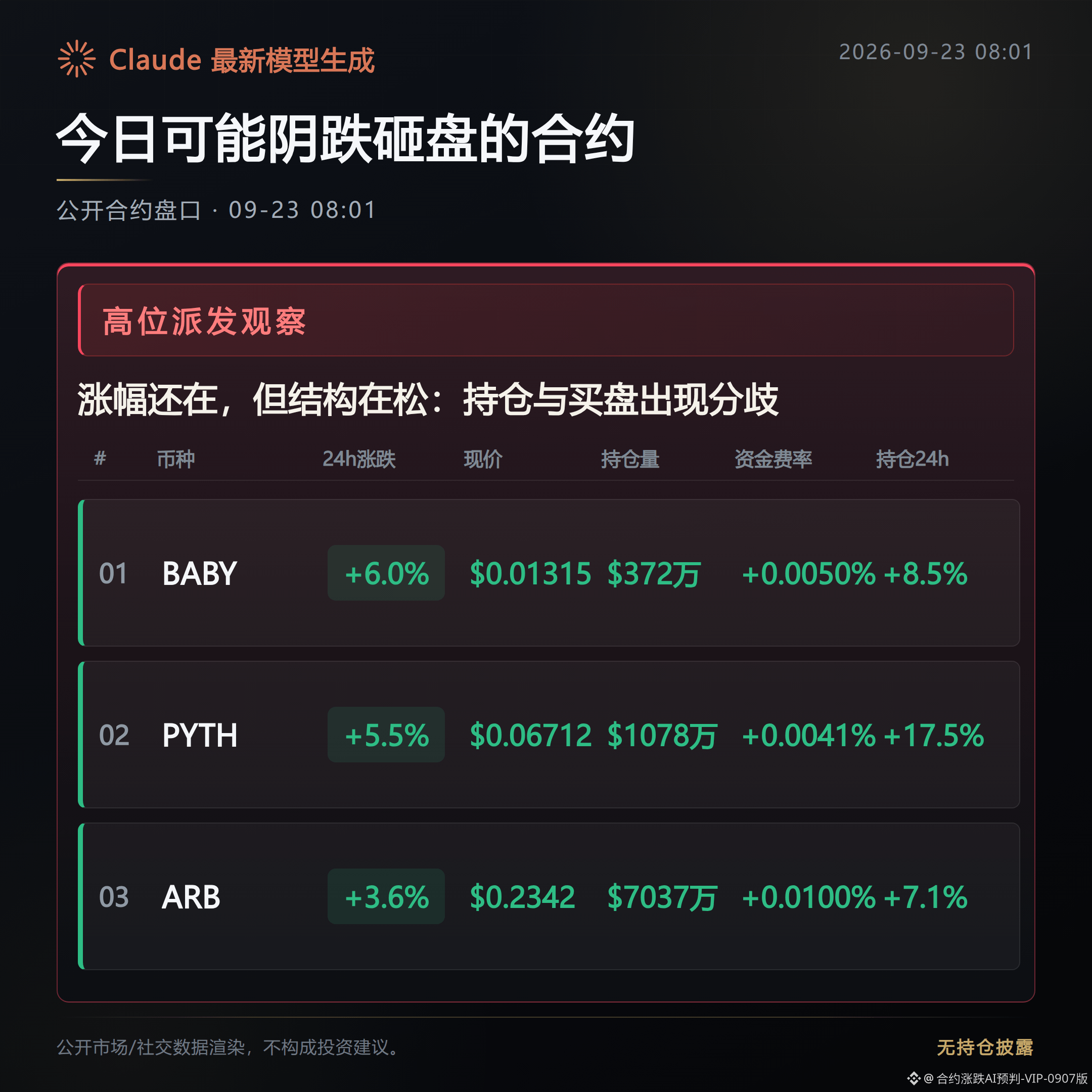
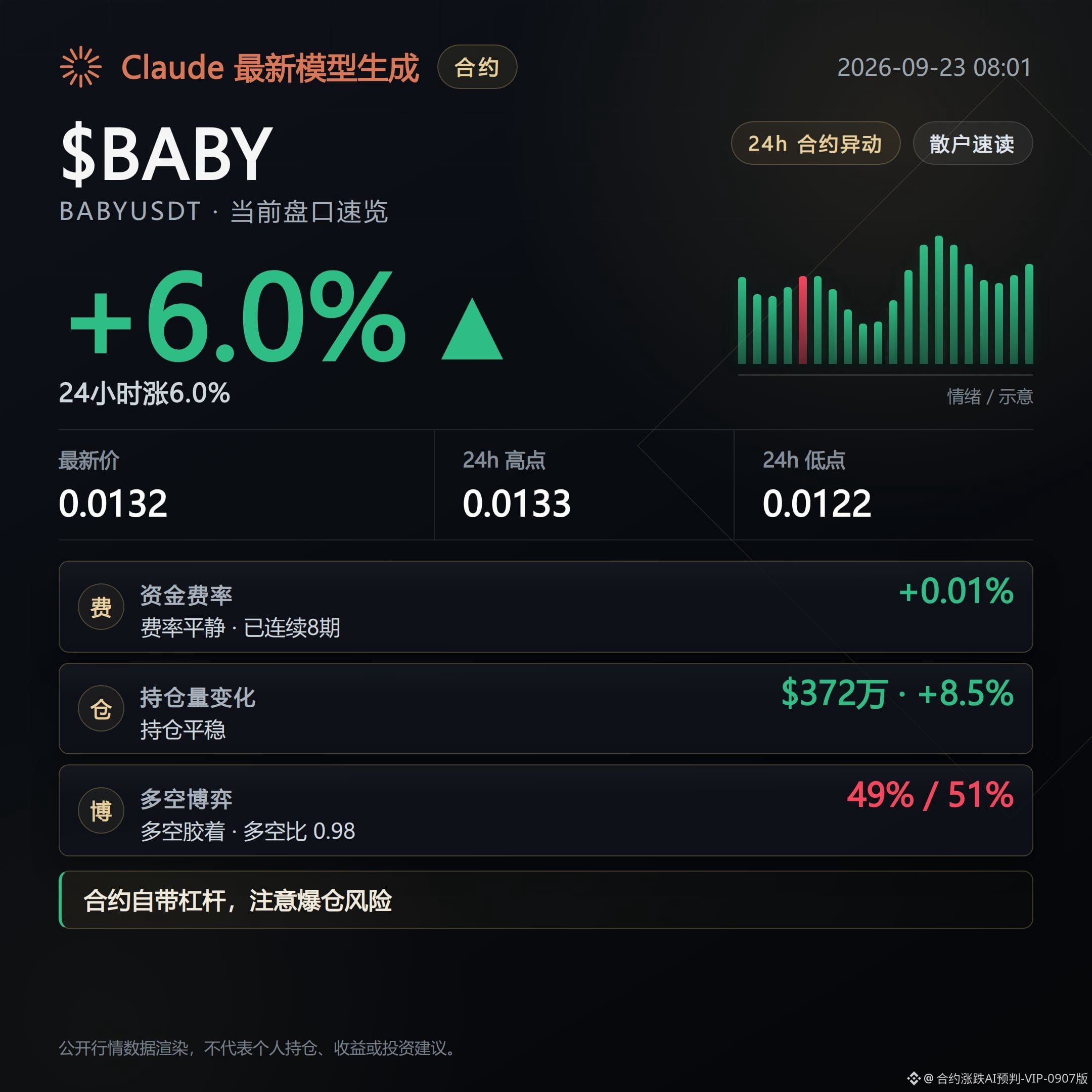
BABY is currently at $0.01315. Up 6.05% over the past 24 hours. Open interest increased 8.5% over the past 24 hours. Funding rate has been paid by longs for 8 straight periods.
Holding out through 8 consecutive funding-payment periods and still adding positions suggests that chasing-higher sentiment is still in play. Combined with the super trend indicator showing an up move, the tape looks fairly strong.
The counterpoint: the big-player long/short ratio is only 1.85. The retail long/short ratio is even closer to 1:1, with no signs of extreme synchronized short-squeeze behavior. The support behind this price lift isn’t especially thick.
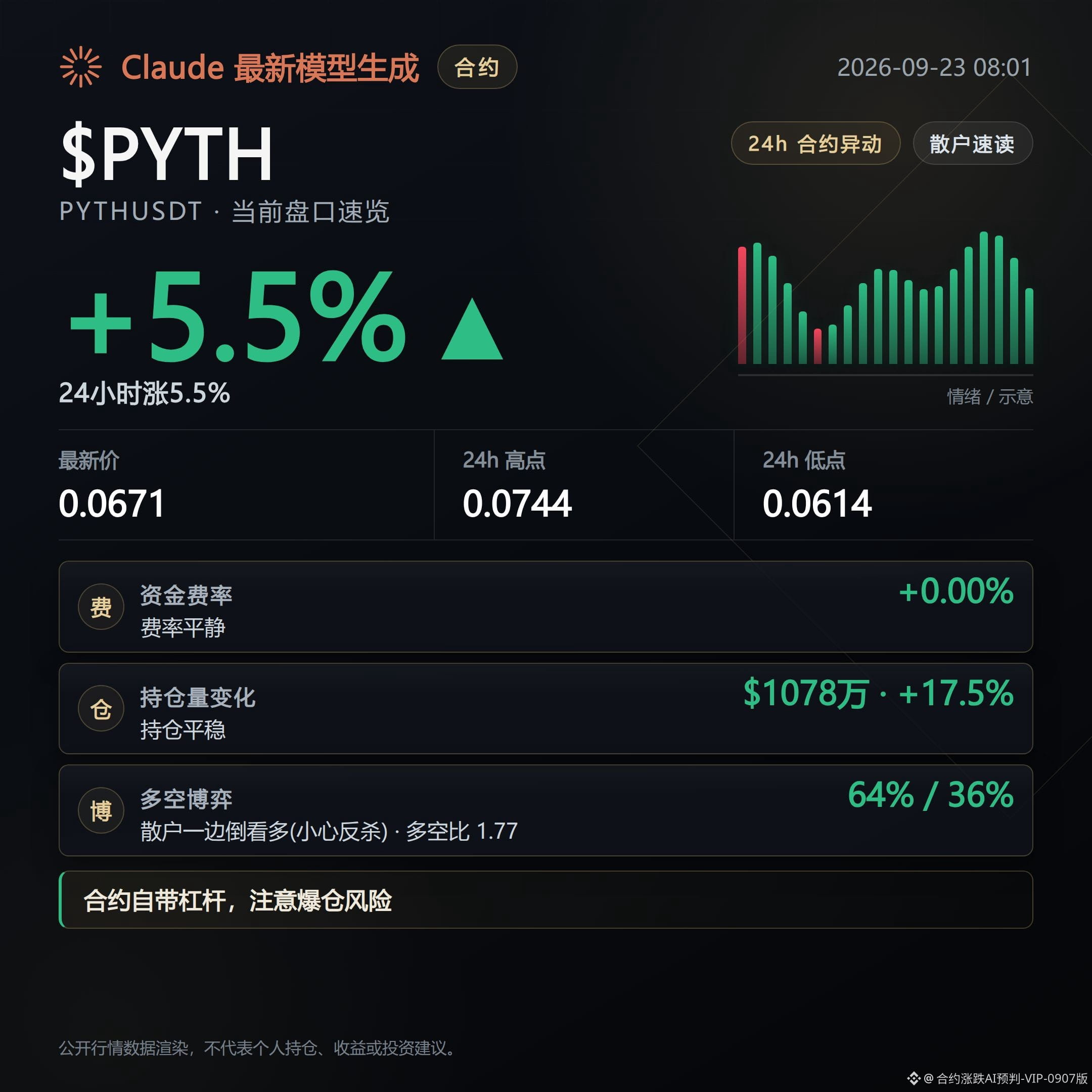
PYTH is currently at $0.06712. Up 5.45% over the past 24 hours. Open interest surged 17.5% over the past 24 hours to $10.78 million. The ratio of active buy vs. sell orders is 1.19.
Open interest rising that much in a single day suggests new positions are pouring in quickly. With the super trend aligned to the upside, short-term momentum is not weak.
The counterpoint: the premium rate has turned negative to -0.1127%. The spot market hasn’t become as euphoric as the futures are. This divergence is worth watching to see whether it could drag down the strength of subsequent chasing.
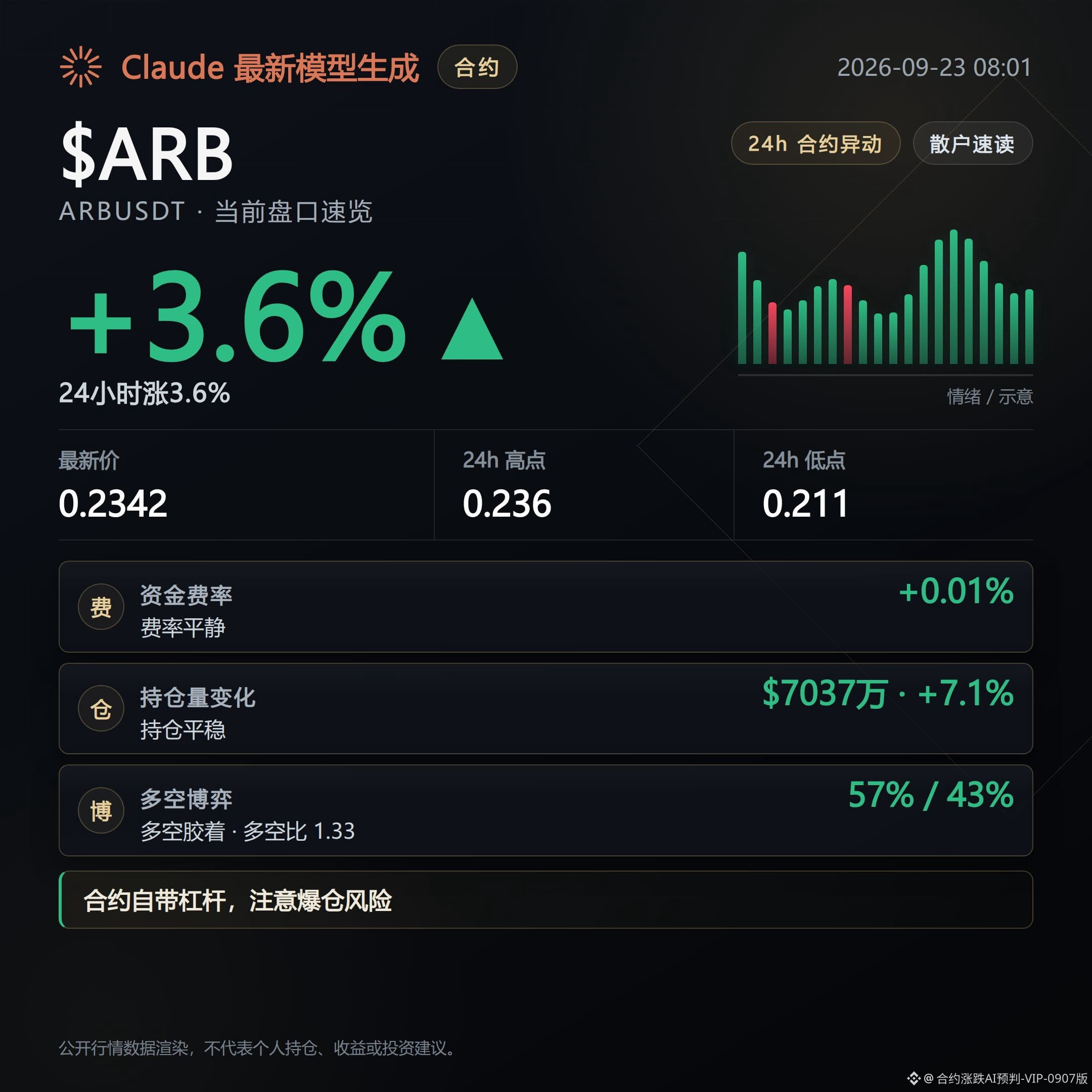
ARB is currently at $0.2342. Up 3.59% over the past 24 hours. Trading volume is $202 million. Open interest increased 7.1% over the past 24 hours. The ratio of active buy vs. sell orders is 1.33.
Both volume and open interest are expanding. Buyer power looks relatively bullish, and the super trend remains in an uptrend. On the surface, the market still appears strong.
The counterpoint: the 1-hour open interest growth rate is only 3.8%, noticeably slower than the 7.1% seen over 24 hours. The chasing funds in the short term aren’t as urgent as before. Keep watching whether the support is starting to thin.
The three contracts’ capital-flow signals all point to chips spreading out.
If the follow-through support continues to thin, then the pullback line is already being formed. If volume returns and stabilizes, that assessment will need to be reconsidered.
# Contract order book
Compiled with assistance from Claude Fable 5. For information reference only—please verify on your own.
Contracts that may potentially see a slow grind down and sell pressure today
Bearishness is the signal these three contracts most need to watch right now.
BABY, PYTH, and ARB prices are still pushing higher, but the structure has already loosened. Long positions that chase higher are vulnerable to being squeezed from both sides by a rebound and a pullback.
What to fear isn’t that they won’t rise—it’s that as they rise, the follow-through support keeps thinning. Don’t just look at the percentage increase. What to watch next is whether the support keeps thinning.
BABY is currently at $0.01315. Up 6.05% over the past 24 hours. Open interest increased 8.5% over the past 24 hours. Funding rate has been paid by longs for 8 straight periods.
Holding out through 8 consecutive funding-payment periods and still adding positions suggests that chasing-higher sentiment is still in play. Combined with the super trend indicator showing an up move, the tape looks fairly strong.
The counterpoint: the big-player long/short ratio is only 1.85. The retail long/short ratio is even closer to 1:1, with no signs of extreme synchronized short-squeeze behavior. The support behind this price lift isn’t especially thick.
PYTH is currently at $0.06712. Up 5.45% over the past 24 hours. Open interest surged 17.5% over the past 24 hours to $10.78 million. The ratio of active buy vs. sell orders is 1.19.
Open interest rising that much in a single day suggests new positions are pouring in quickly. With the super trend aligned to the upside, short-term momentum is not weak.
The counterpoint: the premium rate has turned negative to -0.1127%. The spot market hasn’t become as euphoric as the futures are. This divergence is worth watching to see whether it could drag down the strength of subsequent chasing.
ARB is currently at $0.2342. Up 3.59% over the past 24 hours. Trading volume is $202 million. Open interest increased 7.1% over the past 24 hours. The ratio of active buy vs. sell orders is 1.33.
Both volume and open interest are expanding. Buyer power looks relatively bullish, and the super trend remains in an uptrend. On the surface, the market still appears strong.
The counterpoint: the 1-hour open interest growth rate is only 3.8%, noticeably slower than the 7.1% seen over 24 hours. The chasing funds in the short term aren’t as urgent as before. Keep watching whether the support is starting to thin.
The three contracts’ capital-flow signals all point to chips spreading out.
If the follow-through support continues to thin, then the pullback line is already being formed. If volume returns and stabilizes, that assessment will need to be reconsidered.
# Contract order book
Compiled with assistance from Claude Fable 5. For information reference only—please verify on your own.
Bearishness is the signal these three contracts most need to watch right now.
BABY, PYTH, and ARB prices are still pushing higher, but the structure has already loosened. Long positions that chase higher are vulnerable to being squeezed from both sides by a rebound and a pullback.
What to fear isn’t that they won’t rise—it’s that as they rise, the follow-through support keeps thinning. Don’t just look at the percentage increase. What to watch next is whether the support keeps thinning.
BABY is currently at $0.01315. Up 6.05% over the past 24 hours. Open interest increased 8.5% over the past 24 hours. Funding rate has been paid by longs for 8 straight periods.
Holding out through 8 consecutive funding-payment periods and still adding positions suggests that chasing-higher sentiment is still in play. Combined with the super trend indicator showing an up move, the tape looks fairly strong.
The counterpoint: the big-player long/short ratio is only 1.85. The retail long/short ratio is even closer to 1:1, with no signs of extreme synchronized short-squeeze behavior. The support behind this price lift isn’t especially thick.
PYTH is currently at $0.06712. Up 5.45% over the past 24 hours. Open interest surged 17.5% over the past 24 hours to $10.78 million. The ratio of active buy vs. sell orders is 1.19.
Open interest rising that much in a single day suggests new positions are pouring in quickly. With the super trend aligned to the upside, short-term momentum is not weak.
The counterpoint: the premium rate has turned negative to -0.1127%. The spot market hasn’t become as euphoric as the futures are. This divergence is worth watching to see whether it could drag down the strength of subsequent chasing.
ARB is currently at $0.2342. Up 3.59% over the past 24 hours. Trading volume is $202 million. Open interest increased 7.1% over the past 24 hours. The ratio of active buy vs. sell orders is 1.33.
Both volume and open interest are expanding. Buyer power looks relatively bullish, and the super trend remains in an uptrend. On the surface, the market still appears strong.
The counterpoint: the 1-hour open interest growth rate is only 3.8%, noticeably slower than the 7.1% seen over 24 hours. The chasing funds in the short term aren’t as urgent as before. Keep watching whether the support is starting to thin.
The three contracts’ capital-flow signals all point to chips spreading out.
If the follow-through support continues to thin, then the pullback line is already being formed. If volume returns and stabilizes, that assessment will need to be reconsidered.
# Contract order book
Compiled with assistance from Claude Fable 5. For information reference only—please verify on your own.
507
Contract Order Book Daily Report|9/23 Short Squeeze Causes Liquidations; No One Chased in the Morning
The signal from yesterday was very clear—the shorts were blown up.
$BTC broke through 87,000; $ETH touched around 2,800. In the past 24 hours, roughly $900 million in short positions were force-liquidated and exited.
Today’s morning recap: the order book didn’t hold this signal.
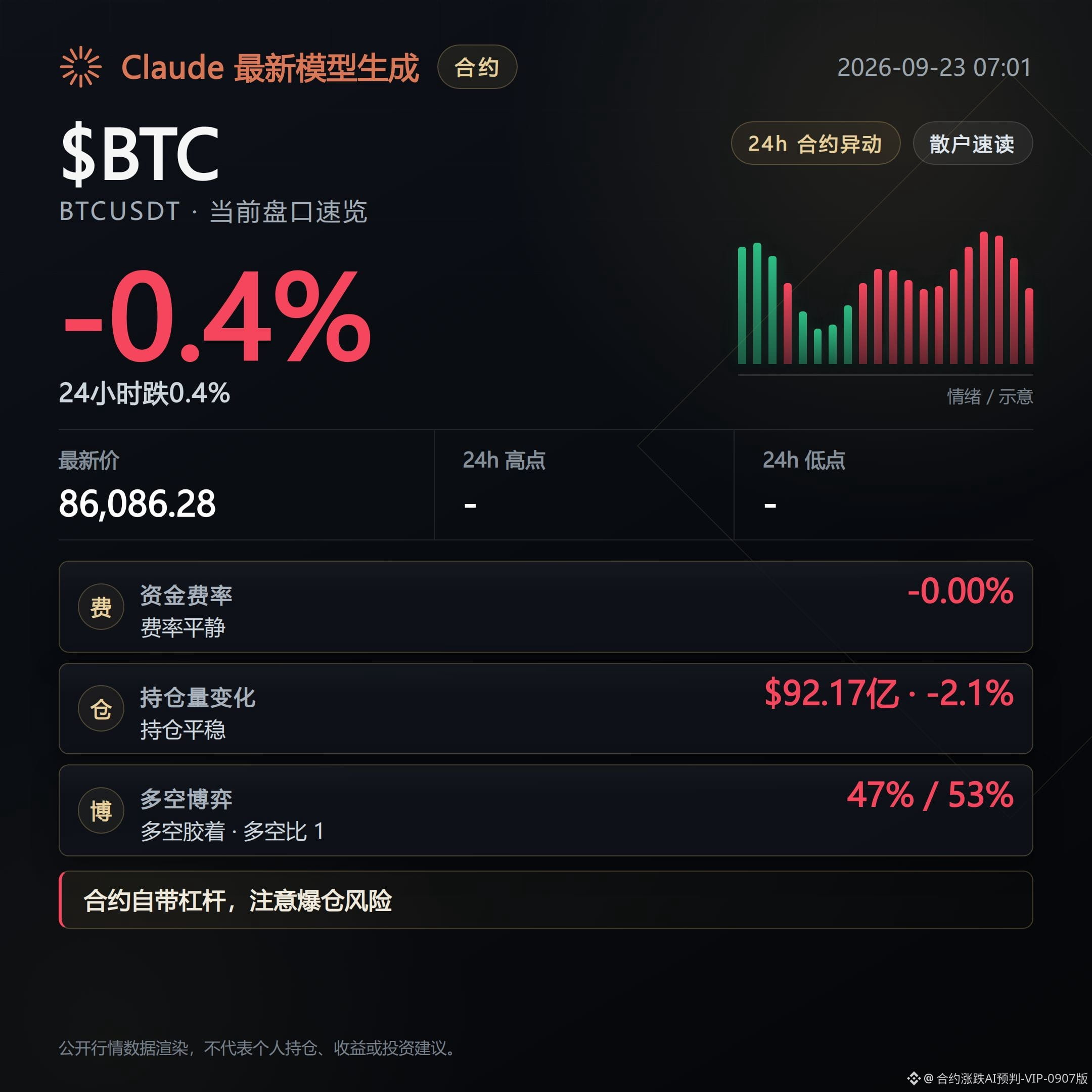
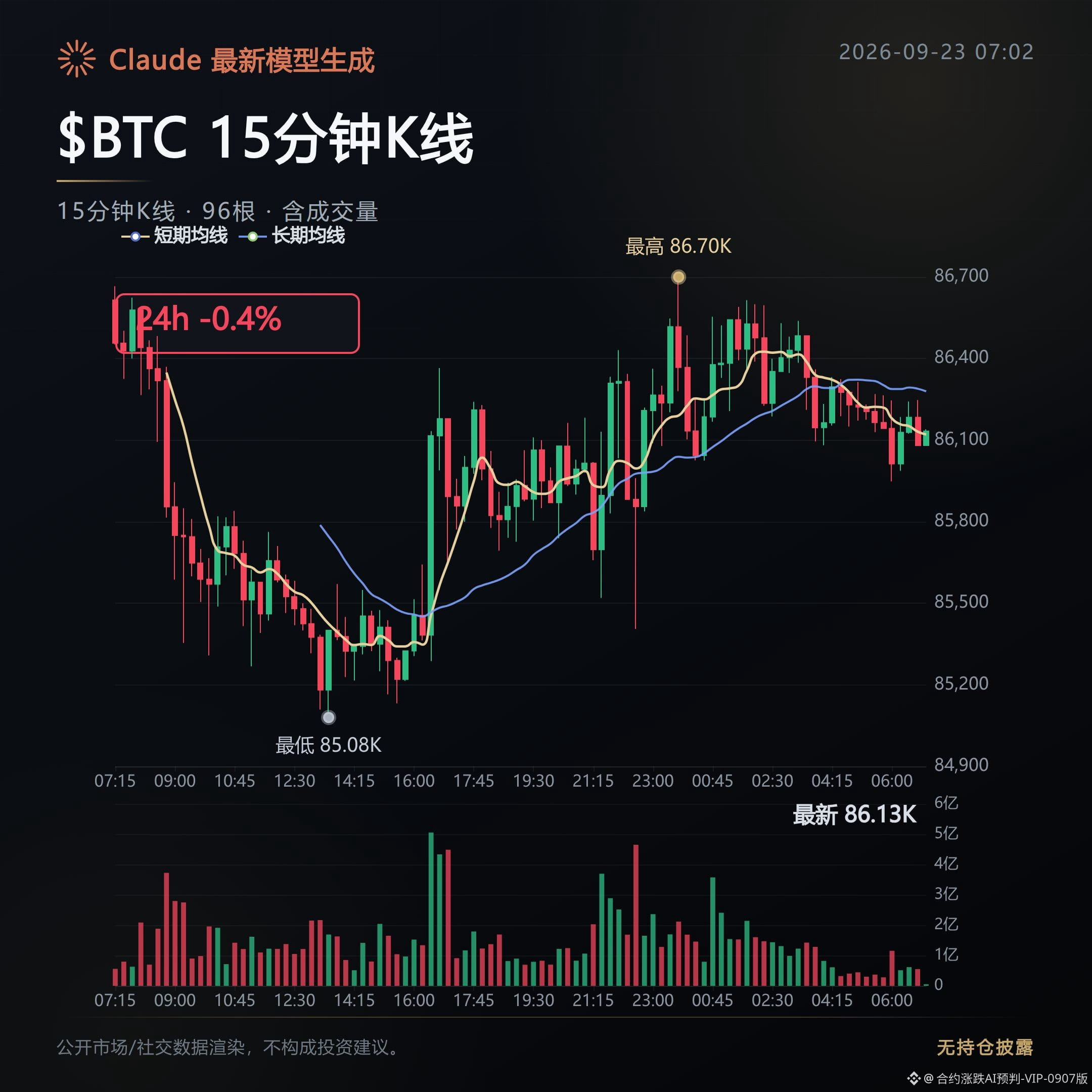
$BTC pulled back to around 86,000, down 0.39%.
$ETH returned to 2,752, down nearly 1%.
But the funding rate is still negative, around -0.06%. This means shorts still have the numerical advantage and are paying—subsidizing the longs.
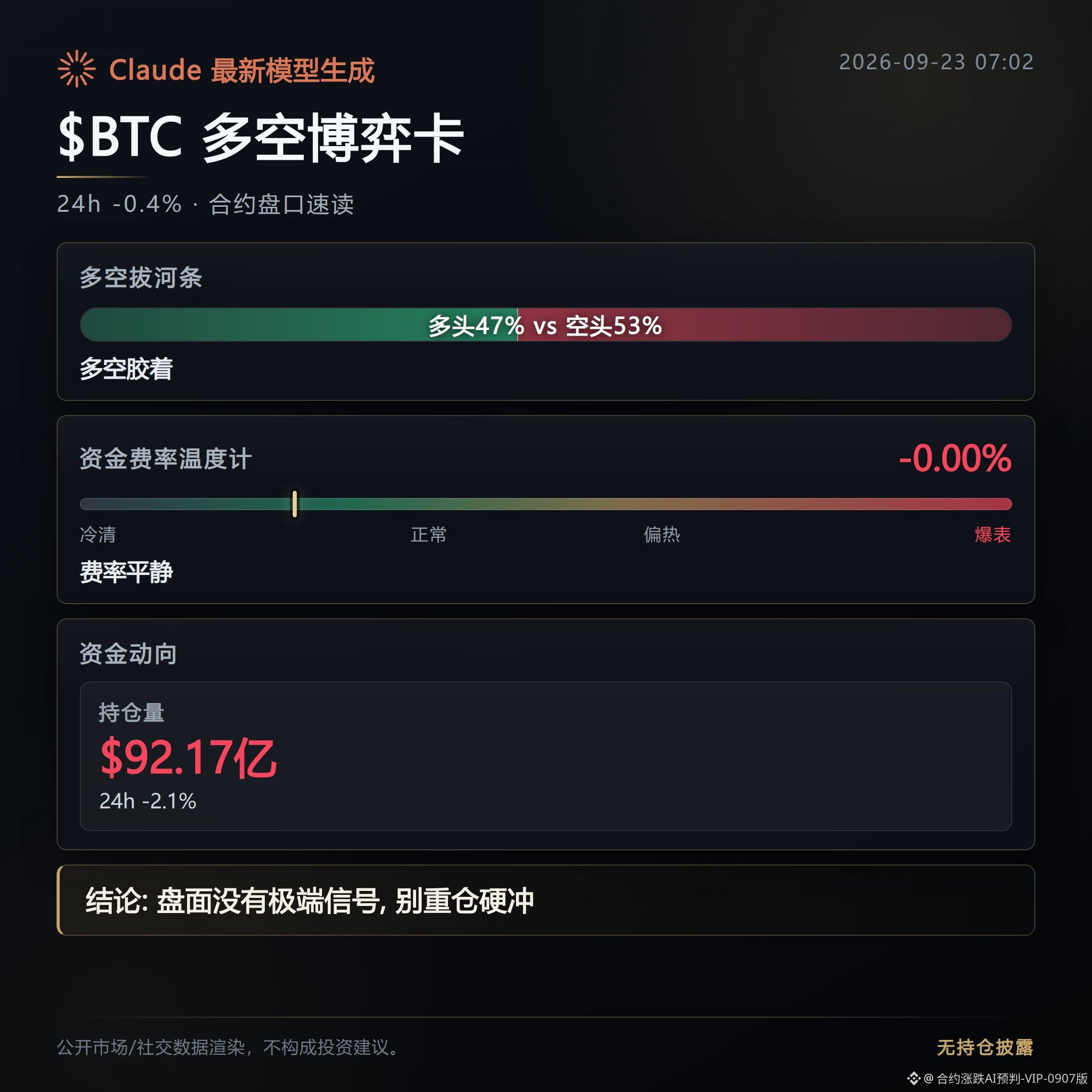
The long share is only 47%, not even past half.
The “space” created after yesterday’s cut didn’t have real money from longs to chase and bid up.
The open interest is about $9.2 billion, down 2.1% in a day. That suggests someone is reducing positions and leaving—not adding and raising the market.
Active buy orders account for only 44%. Sell orders are clearly more aggressive. This rally looks more like shorts admitting defeat and running, not fresh money coming in to buy longs.
On the other hand, look at $ETH and $BNB: their funding rates are positive—about 0.94% and 0.05% respectively. When prices fall, longs are still paying to hold on.
These trapped longs haven’t given up, but if the price keeps weakening, they’re the ones who become the real risk.
The sentiment index is 78—greed zone. It doesn’t match the order book data. Don’t let the greed index drive the narrative.
In small caps too, you can see fragmentation. Tokens like KERNEL and ONE with negative funding rates are fully juiced and could be squeezed into a rebound at any time.
Meanwhile, coins like FLEX and FOLKS with high positive funding tend to be crowded by longs—making them easier to bury.
There’s also noise on the policy front. The White House handed off the work of drafting legislation for the crypto market structure to regulators to handle themselves. Senators are still throwing blame at each other, and the responsibility for the bill falling apart remains unclear. This kind of news can always interfere with the order book.
Next, watch one thing: whether the long share can rise above 50%, and whether the funding rate can turn positive.
If these two targets aren’t met, yesterday’s squeeze was only a brief reprieve for the shorts—not the start of a new trend.
$BTC $ETH $BNB #Contract Order Book
Claude Fable 5 assists generation; content is for informational purposes only and does not constitute investment advice.
Contract Order Book Daily Report|9/23 Short Squeeze Causes Liquidations; No One Chased in the Morning
The signal from yesterday was very clear—the shorts were blown up.
$BTC broke through 87,000; $ETH touched around 2,800. In the past 24 hours, roughly $900 million in short positions were force-liquidated and exited.
Today’s morning recap: the order book didn’t hold this signal.
$BTC pulled back to around 86,000, down 0.39%.
$ETH returned to 2,752, down nearly 1%.
But the funding rate is still negative, around -0.06%. This means shorts still have the numerical advantage and are paying—subsidizing the longs.
The long share is only 47%, not even past half.
The “space” created after yesterday’s cut didn’t have real money from longs to chase and bid up.
The open interest is about $9.2 billion, down 2.1% in a day. That suggests someone is reducing positions and leaving—not adding and raising the market.
Active buy orders account for only 44%. Sell orders are clearly more aggressive. This rally looks more like shorts admitting defeat and running, not fresh money coming in to buy longs.
On the other hand, look at $ETH and $BNB : their funding rates are positive—about 0.94% and 0.05% respectively. When prices fall, longs are still paying to hold on.
These trapped longs haven’t given up, but if the price keeps weakening, they’re the ones who become the real risk.
The sentiment index is 78—greed zone. It doesn’t match the order book data. Don’t let the greed index drive the narrative.
In small caps too, you can see fragmentation. Tokens like KERNEL and ONE with negative funding rates are fully juiced and could be squeezed into a rebound at any time.
Meanwhile, coins like FLEX and FOLKS with high positive funding tend to be crowded by longs—making them easier to bury.
There’s also noise on the policy front. The White House handed off the work of drafting legislation for the crypto market structure to regulators to handle themselves. Senators are still throwing blame at each other, and the responsibility for the bill falling apart remains unclear. This kind of news can always interfere with the order book.
Next, watch one thing: whether the long share can rise above 50%, and whether the funding rate can turn positive.
If these two targets aren’t met, yesterday’s squeeze was only a brief reprieve for the shorts—not the start of a new trend.
$BTC $ETH $BNB #Contract Order Book
Claude Fable 5 assists generation; content is for informational purposes only and does not constitute investment advice.
The signal from yesterday was very clear—the shorts were blown up.
$BTC broke through 87,000; $ETH touched around 2,800. In the past 24 hours, roughly $900 million in short positions were force-liquidated and exited.
Today’s morning recap: the order book didn’t hold this signal.
$BTC pulled back to around 86,000, down 0.39%.
$ETH returned to 2,752, down nearly 1%.
But the funding rate is still negative, around -0.06%. This means shorts still have the numerical advantage and are paying—subsidizing the longs.
The long share is only 47%, not even past half.
The “space” created after yesterday’s cut didn’t have real money from longs to chase and bid up.
The open interest is about $9.2 billion, down 2.1% in a day. That suggests someone is reducing positions and leaving—not adding and raising the market.
Active buy orders account for only 44%. Sell orders are clearly more aggressive. This rally looks more like shorts admitting defeat and running, not fresh money coming in to buy longs.
On the other hand, look at $ETH and $BNB : their funding rates are positive—about 0.94% and 0.05% respectively. When prices fall, longs are still paying to hold on.
These trapped longs haven’t given up, but if the price keeps weakening, they’re the ones who become the real risk.
The sentiment index is 78—greed zone. It doesn’t match the order book data. Don’t let the greed index drive the narrative.
In small caps too, you can see fragmentation. Tokens like KERNEL and ONE with negative funding rates are fully juiced and could be squeezed into a rebound at any time.
Meanwhile, coins like FLEX and FOLKS with high positive funding tend to be crowded by longs—making them easier to bury.
There’s also noise on the policy front. The White House handed off the work of drafting legislation for the crypto market structure to regulators to handle themselves. Senators are still throwing blame at each other, and the responsibility for the bill falling apart remains unclear. This kind of news can always interfere with the order book.
Next, watch one thing: whether the long share can rise above 50%, and whether the funding rate can turn positive.
If these two targets aren’t met, yesterday’s squeeze was only a brief reprieve for the shorts—not the start of a new trend.
$BTC $ETH $BNB #Contract Order Book
Claude Fable 5 assists generation; content is for informational purposes only and does not constitute investment advice.
446
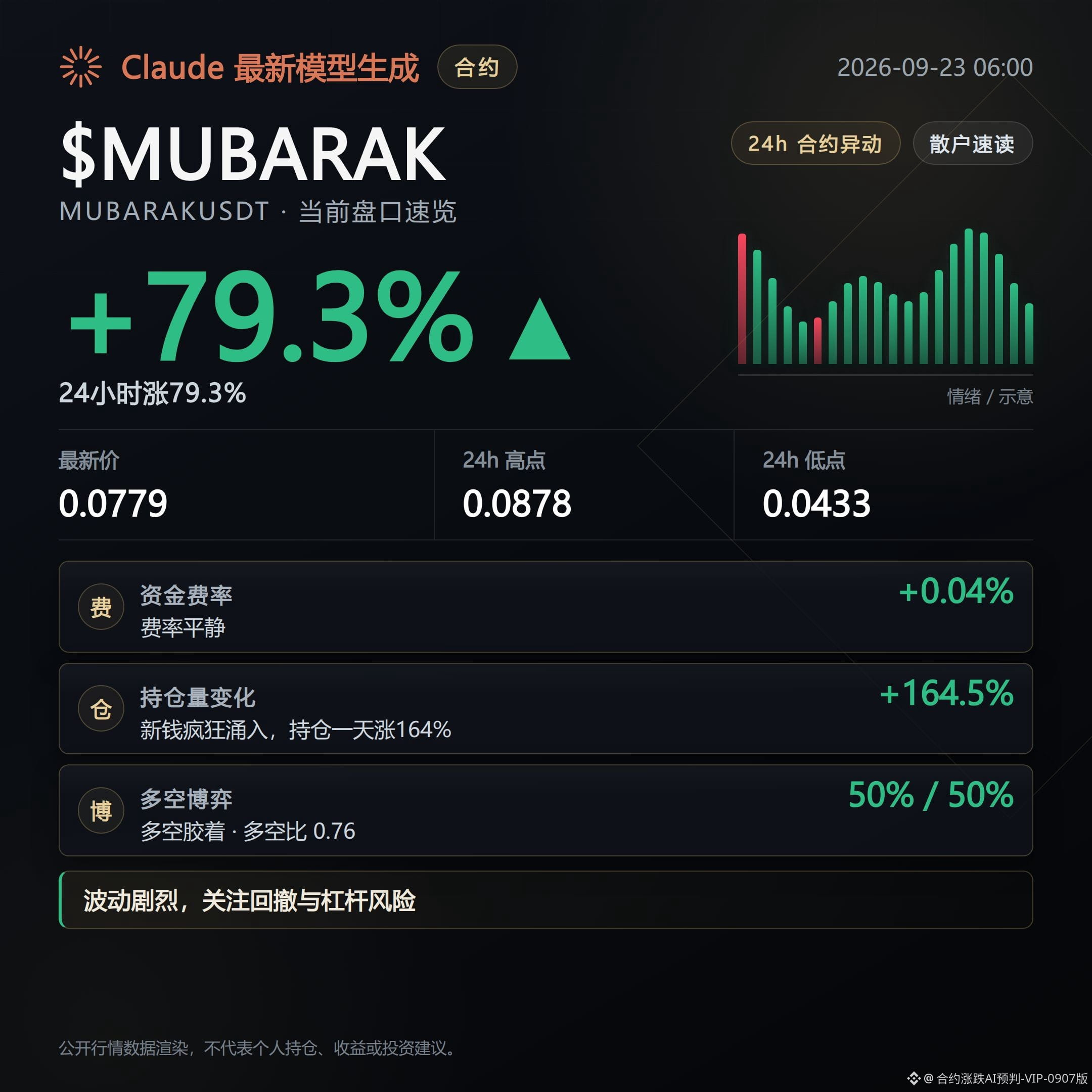
Clearly, the funds are squeezing into a few high-volume names—not a “rain-and-sprouts” even, broad-based rally.
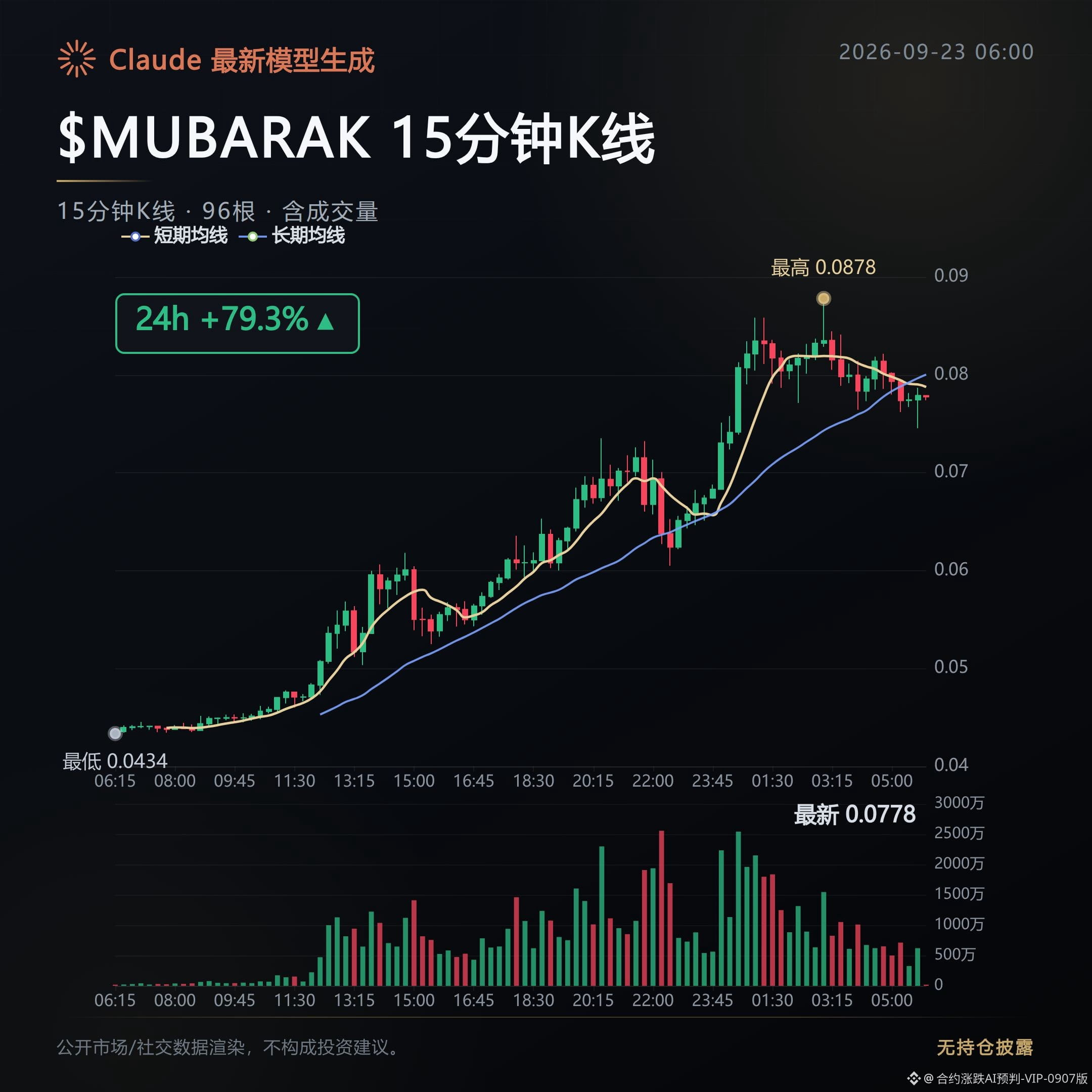
$MUBARAK is up 79.3%, with open interest surging 164.5% within an hour. This isn’t the pace of slow, incremental adding.
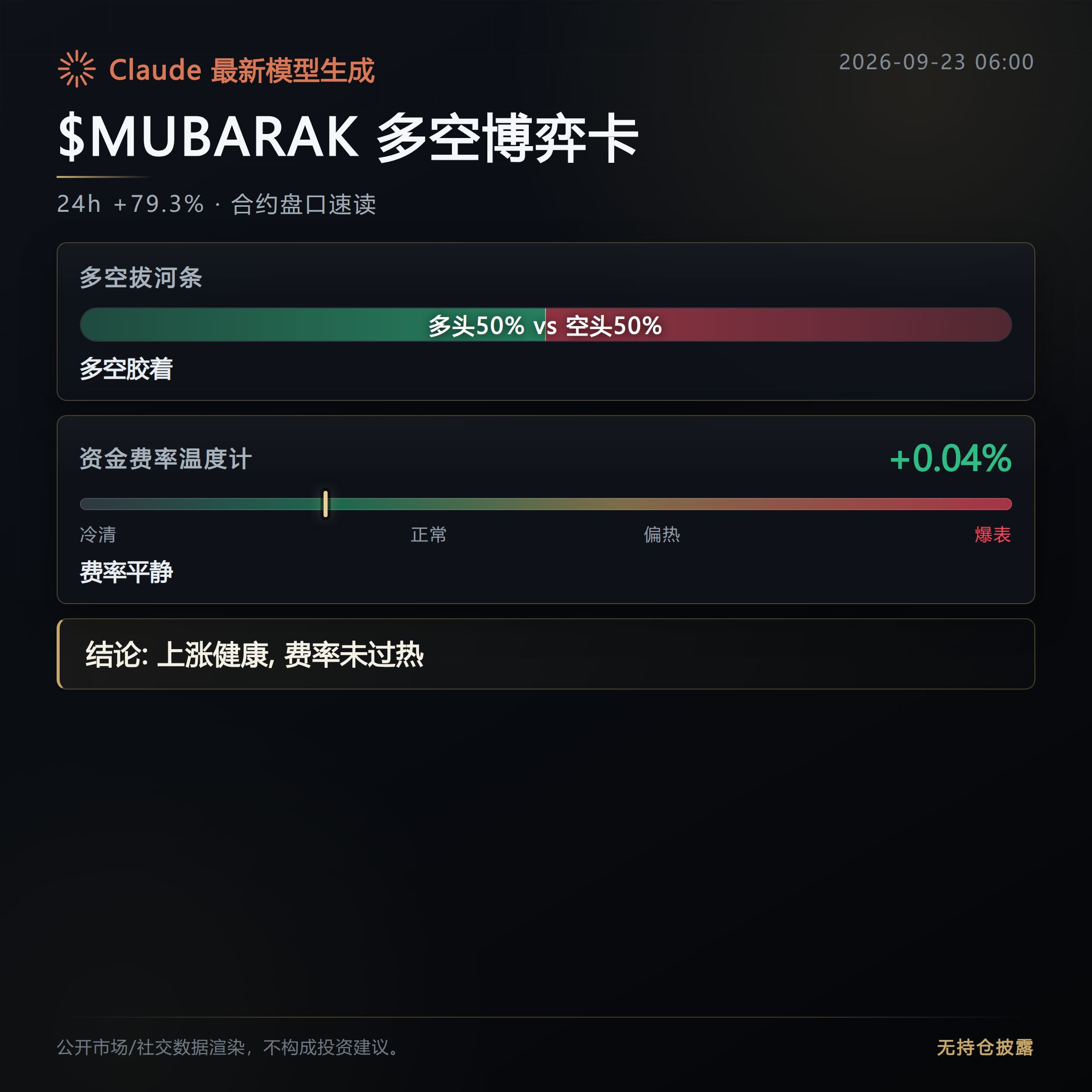
The funding rate is still positive at 0.043%. Shorts are holding on to the fees hard. This kind of order-book structure is the easiest to get squeezed a bit.
Trading volume reached 766 million, and volume and price are expanding in sync—this isn’t a pulse-style spike without volume.
$MARSCOIN is up 35.7%, with open interest flowing in up 37.9%. The long/short ratio is just over 1—fairly balanced—but nearly all the active buy orders are on the buyer’s side.
This combination of volume supporting new highs is worth taking a closer look at.
$DRIFT is up 35.4%, with open interest exploding 69.4%. The long/short ratio is now 1.91. Retail is chasing longs, but the structure hasn’t gone to extremes yet.
Active buy/sell order flow is close to 0.94, with a clear advantage on the buy side.
Overall, the atmosphere is funds huddling into a small number of high-volatility names. The common thread among the top three is that open interest surged sharply in a short time. Keep an eye on $MUBARAK—whether this squeeze can continue.
The gains for 4th to 10th are also not small: CHR up 29%, FOLKS up 28.2%, KERNEL up 27.2%, BCH up 26.7%, BROCCOLI714 up 25.6%, and USELESS and MINA both up 22.7%.
On the downside, the top performer is the biggest drop: the lobster is down 44.8% the most sharply. While ONE is down 24.5%, the funding rate turns negative to -0.396%—on this side, the shorts are actually the ones holding the money.
For $MUBARAK, the combination of funding rate and open interest is currently the most typical “short-squeeze” candidate structure for this cycle. The longer it drags without dipping back, the more likely something will happen later.
#合约市场 # short-squeeze watch
$MUBARAK $MARSCOIN $DRIFT
This content is generated with assistance from Claude Fable 5 for reference only. Please verify it yourself.
Clearly, the funds are squeezing into a few high-volume names—not a “rain-and-sprouts” even, broad-based rally.
$MUBARAK is up 79.3%, with open interest surging 164.5% within an hour. This isn’t the pace of slow, incremental adding.
The funding rate is still positive at 0.043%. Shorts are holding on to the fees hard. This kind of order-book structure is the easiest to get squeezed a bit.
Trading volume reached 766 million, and volume and price are expanding in sync—this isn’t a pulse-style spike without volume.
$MARSCOIN is up 35.7%, with open interest flowing in up 37.9%. The long/short ratio is just over 1—fairly balanced—but nearly all the active buy orders are on the buyer’s side.
This combination of volume supporting new highs is worth taking a closer look at.
$DRIFT is up 35.4%, with open interest exploding 69.4%. The long/short ratio is now 1.91. Retail is chasing longs, but the structure hasn’t gone to extremes yet.
Active buy/sell order flow is close to 0.94, with a clear advantage on the buy side.
Overall, the atmosphere is funds huddling into a small number of high-volatility names. The common thread among the top three is that open interest surged sharply in a short time. Keep an eye on $MUBARAK —whether this squeeze can continue.
The gains for 4th to 10th are also not small: CHR up 29%, FOLKS up 28.2%, KERNEL up 27.2%, BCH up 26.7%, BROCCOLI714 up 25.6%, and USELESS and MINA both up 22.7%.
On the downside, the top performer is the biggest drop: the lobster is down 44.8% the most sharply. While ONE is down 24.5%, the funding rate turns negative to -0.396%—on this side, the shorts are actually the ones holding the money.
For $MUBARAK , the combination of funding rate and open interest is currently the most typical “short-squeeze” candidate structure for this cycle. The longer it drags without dipping back, the more likely something will happen later.
#合约市场 # short-squeeze watch
$MUBARAK $MARSCOIN $DRIFT
This content is generated with assistance from Claude Fable 5 for reference only. Please verify it yourself.
$MUBARAK is up 79.3%, with open interest surging 164.5% within an hour. This isn’t the pace of slow, incremental adding.
The funding rate is still positive at 0.043%. Shorts are holding on to the fees hard. This kind of order-book structure is the easiest to get squeezed a bit.
Trading volume reached 766 million, and volume and price are expanding in sync—this isn’t a pulse-style spike without volume.
$MARSCOIN is up 35.7%, with open interest flowing in up 37.9%. The long/short ratio is just over 1—fairly balanced—but nearly all the active buy orders are on the buyer’s side.
This combination of volume supporting new highs is worth taking a closer look at.
$DRIFT is up 35.4%, with open interest exploding 69.4%. The long/short ratio is now 1.91. Retail is chasing longs, but the structure hasn’t gone to extremes yet.
Active buy/sell order flow is close to 0.94, with a clear advantage on the buy side.
Overall, the atmosphere is funds huddling into a small number of high-volatility names. The common thread among the top three is that open interest surged sharply in a short time. Keep an eye on $MUBARAK —whether this squeeze can continue.
The gains for 4th to 10th are also not small: CHR up 29%, FOLKS up 28.2%, KERNEL up 27.2%, BCH up 26.7%, BROCCOLI714 up 25.6%, and USELESS and MINA both up 22.7%.
On the downside, the top performer is the biggest drop: the lobster is down 44.8% the most sharply. While ONE is down 24.5%, the funding rate turns negative to -0.396%—on this side, the shorts are actually the ones holding the money.
For $MUBARAK , the combination of funding rate and open interest is currently the most typical “short-squeeze” candidate structure for this cycle. The longer it drags without dipping back, the more likely something will happen later.
#合约市场 # short-squeeze watch
$MUBARAK $MARSCOIN $DRIFT
This content is generated with assistance from Claude Fable 5 for reference only. Please verify it yourself.
572
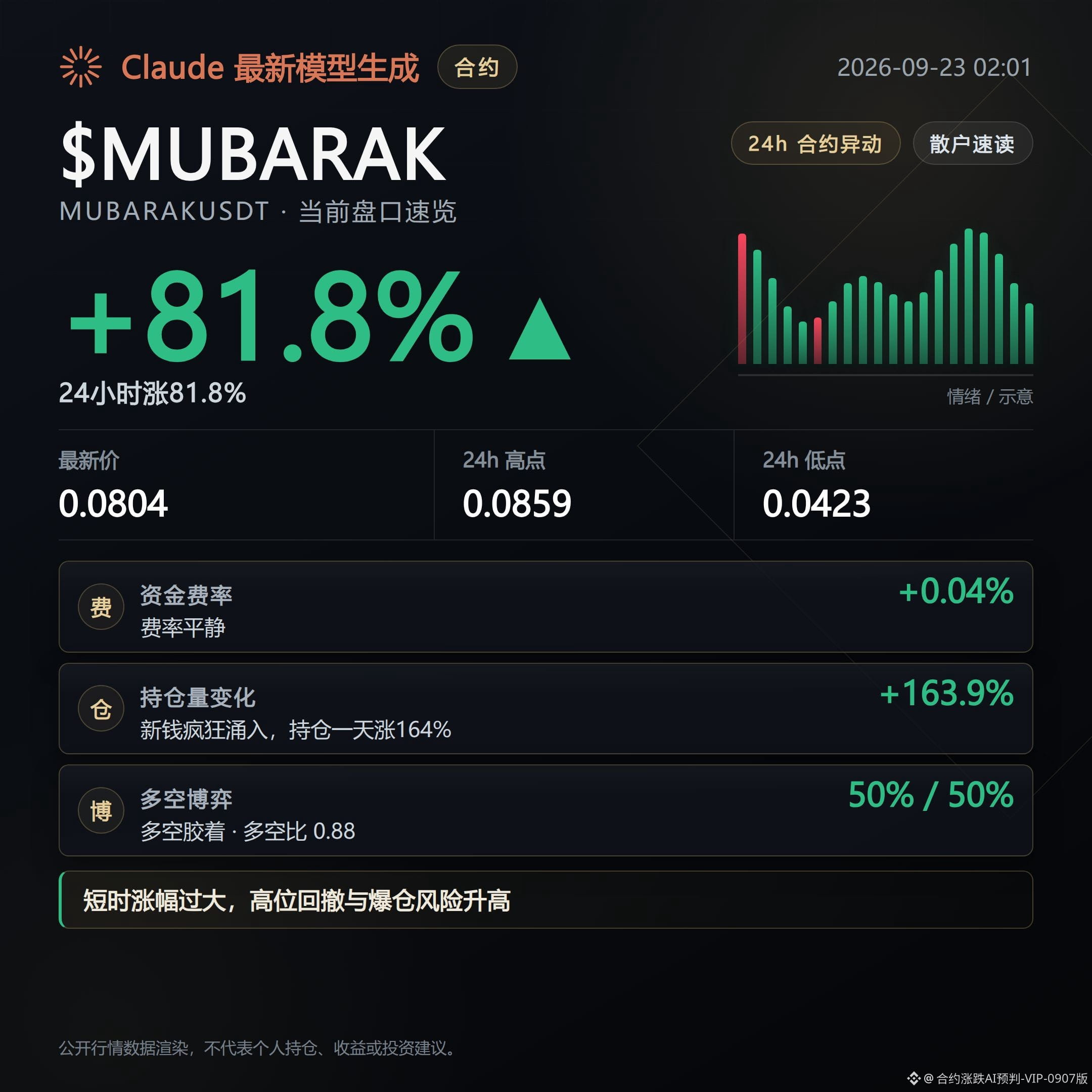
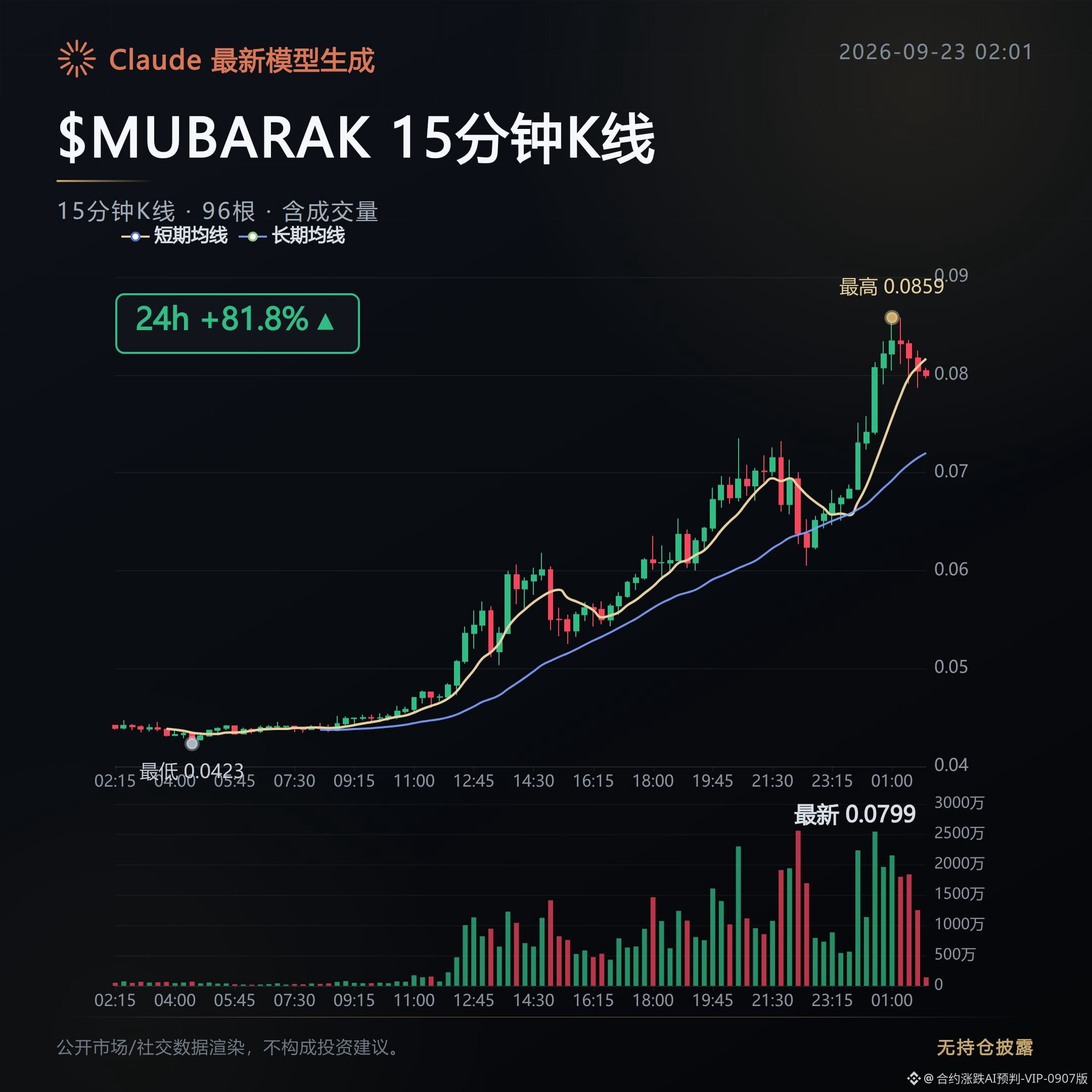
02:00 a.m., go through this round of contract anomalies once more and check whether the signals are truly being兑现.
$MUBARAK +81.8%
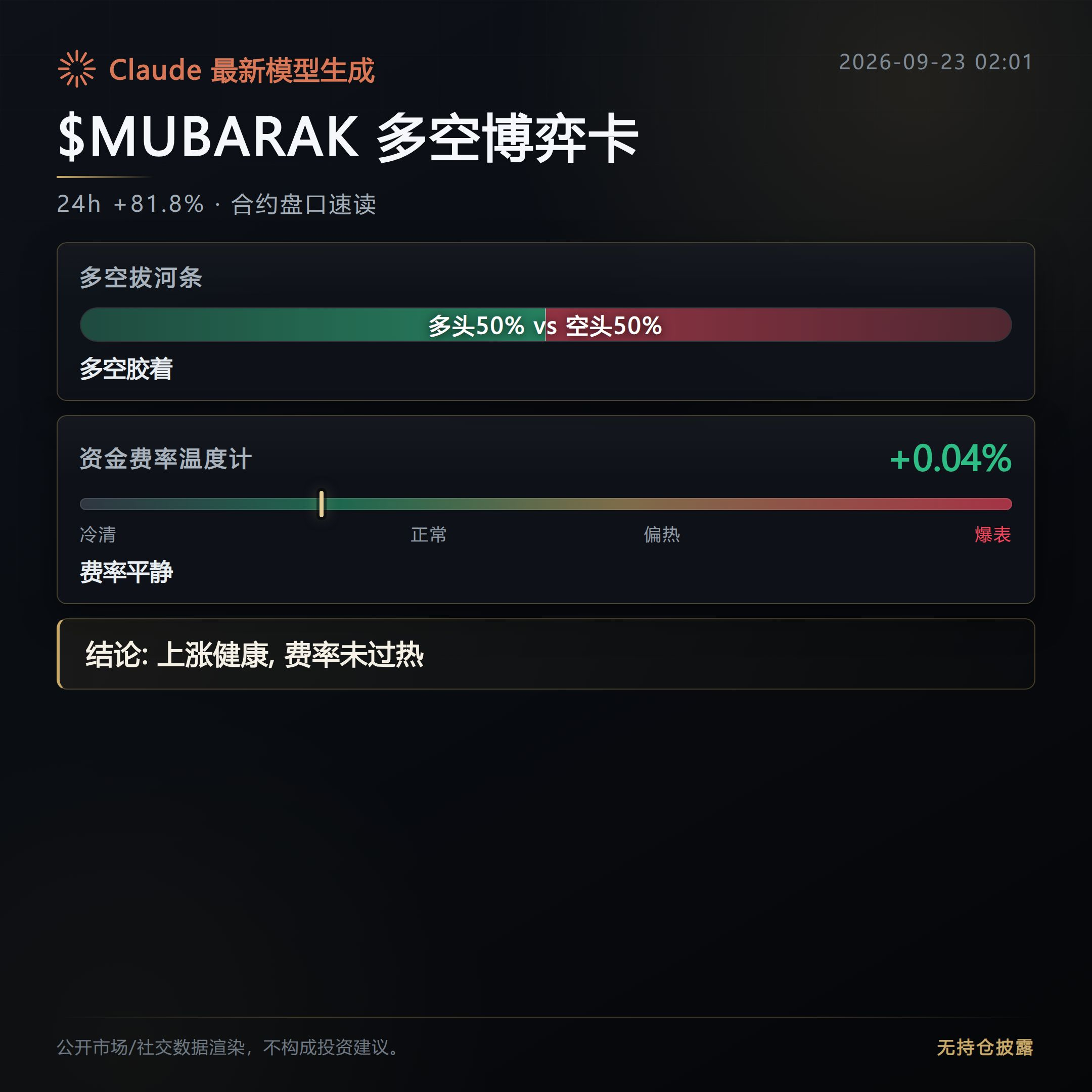
The funding rate is at a high level of 0.037. Open interest surged 163.9% within an hour. This kind of inflow isn’t slow adding—it’s money rushing in to go long.
The price has already jumped from the low of 0.04233 to 0.08586, and most of the upside has basically been realized. But the long/short ratio is only 0.88—people chasing longs aren’t as aggressive as expected. The signal this wave is giving is currently matching the numbers.
$CHR +41.6%
Open interest skyrocketed 154.1%, and the long/short ratio hit 1.73. Both institutional funding and retail traders are stacking on the long side.
The funding rate is only 0.003. After this much of a move, it hasn’t been fully priced in by the market yet. This signal is still in the validation phase, so it’s worth keeping a close watch.
$MARSCOIN +34.9%
The gain ranks third, but open interest only increased by 23.8%, so the volume/energy clearly can’t keep up with the top two.
It looks more like a follow-the-leader crowd effect driven by the first two—signal strength is one tier weaker.
Among the three signals, two match the numbers, and one looks like it’s just follow-on momentum. Overall, the capital is still tightly grouped in a handful of names. Keep an eye on MUBARAK and CHR, whose open interest is still surging, and see whether this wave of inflows can play out into a new round of行情.
Ranks 4 to 10 are more scattered: NIL and MINA both rose 31%, BROCCOLI714 rose 27.5%, BCH rose 26.4%, DRIFT rose 25.5%, KERNEL rose 23.3%, and ALCH rose 23.2%. The gains are all substantial, but none has a structure like the top three—where open interest surges.
The shorts in MUBARAK and CHR are continuously paying to hold their positions. Open interest keeps flowing in. The longer this structure drags on, the more likely it is to be further squeezed into explosion.
$MUBARAK $CHR $MARSCOIN #合约异动 #逼空信号
Claude Fable 5 assists with generation; content is for market information reference only and does not constitute investment advice.
02:00 a.m., go through this round of contract anomalies once more and check whether the signals are truly being兑现.
$MUBARAK +81.8%
The funding rate is at a high level of 0.037. Open interest surged 163.9% within an hour. This kind of inflow isn’t slow adding—it’s money rushing in to go long.
The price has already jumped from the low of 0.04233 to 0.08586, and most of the upside has basically been realized. But the long/short ratio is only 0.88—people chasing longs aren’t as aggressive as expected. The signal this wave is giving is currently matching the numbers.
$CHR +41.6%
Open interest skyrocketed 154.1%, and the long/short ratio hit 1.73. Both institutional funding and retail traders are stacking on the long side.
The funding rate is only 0.003. After this much of a move, it hasn’t been fully priced in by the market yet. This signal is still in the validation phase, so it’s worth keeping a close watch.
$MARSCOIN +34.9%
The gain ranks third, but open interest only increased by 23.8%, so the volume/energy clearly can’t keep up with the top two.
It looks more like a follow-the-leader crowd effect driven by the first two—signal strength is one tier weaker.
Among the three signals, two match the numbers, and one looks like it’s just follow-on momentum. Overall, the capital is still tightly grouped in a handful of names. Keep an eye on MUBARAK and CHR, whose open interest is still surging, and see whether this wave of inflows can play out into a new round of行情.
Ranks 4 to 10 are more scattered: NIL and MINA both rose 31%, BROCCOLI714 rose 27.5%, BCH rose 26.4%, DRIFT rose 25.5%, KERNEL rose 23.3%, and ALCH rose 23.2%. The gains are all substantial, but none has a structure like the top three—where open interest surges.
The shorts in MUBARAK and CHR are continuously paying to hold their positions. Open interest keeps flowing in. The longer this structure drags on, the more likely it is to be further squeezed into explosion.
$MUBARAK $CHR $MARSCOIN #合约异动 #逼空信号
Claude Fable 5 assists with generation; content is for market information reference only and does not constitute investment advice.
$MUBARAK +81.8%
The funding rate is at a high level of 0.037. Open interest surged 163.9% within an hour. This kind of inflow isn’t slow adding—it’s money rushing in to go long.
The price has already jumped from the low of 0.04233 to 0.08586, and most of the upside has basically been realized. But the long/short ratio is only 0.88—people chasing longs aren’t as aggressive as expected. The signal this wave is giving is currently matching the numbers.
$CHR +41.6%
Open interest skyrocketed 154.1%, and the long/short ratio hit 1.73. Both institutional funding and retail traders are stacking on the long side.
The funding rate is only 0.003. After this much of a move, it hasn’t been fully priced in by the market yet. This signal is still in the validation phase, so it’s worth keeping a close watch.
$MARSCOIN +34.9%
The gain ranks third, but open interest only increased by 23.8%, so the volume/energy clearly can’t keep up with the top two.
It looks more like a follow-the-leader crowd effect driven by the first two—signal strength is one tier weaker.
Among the three signals, two match the numbers, and one looks like it’s just follow-on momentum. Overall, the capital is still tightly grouped in a handful of names. Keep an eye on MUBARAK and CHR, whose open interest is still surging, and see whether this wave of inflows can play out into a new round of行情.
Ranks 4 to 10 are more scattered: NIL and MINA both rose 31%, BROCCOLI714 rose 27.5%, BCH rose 26.4%, DRIFT rose 25.5%, KERNEL rose 23.3%, and ALCH rose 23.2%. The gains are all substantial, but none has a structure like the top three—where open interest surges.
The shorts in MUBARAK and CHR are continuously paying to hold their positions. Open interest keeps flowing in. The longer this structure drags on, the more likely it is to be further squeezed into explosion.
$MUBARAK $CHR $MARSCOIN #合约异动 #逼空信号
Claude Fable 5 assists with generation; content is for market information reference only and does not constitute investment advice.
1
872
Contract Order Book Daily|9/22 Breaks Up 86K, Yet Bulls Still Don’t Take the Lead
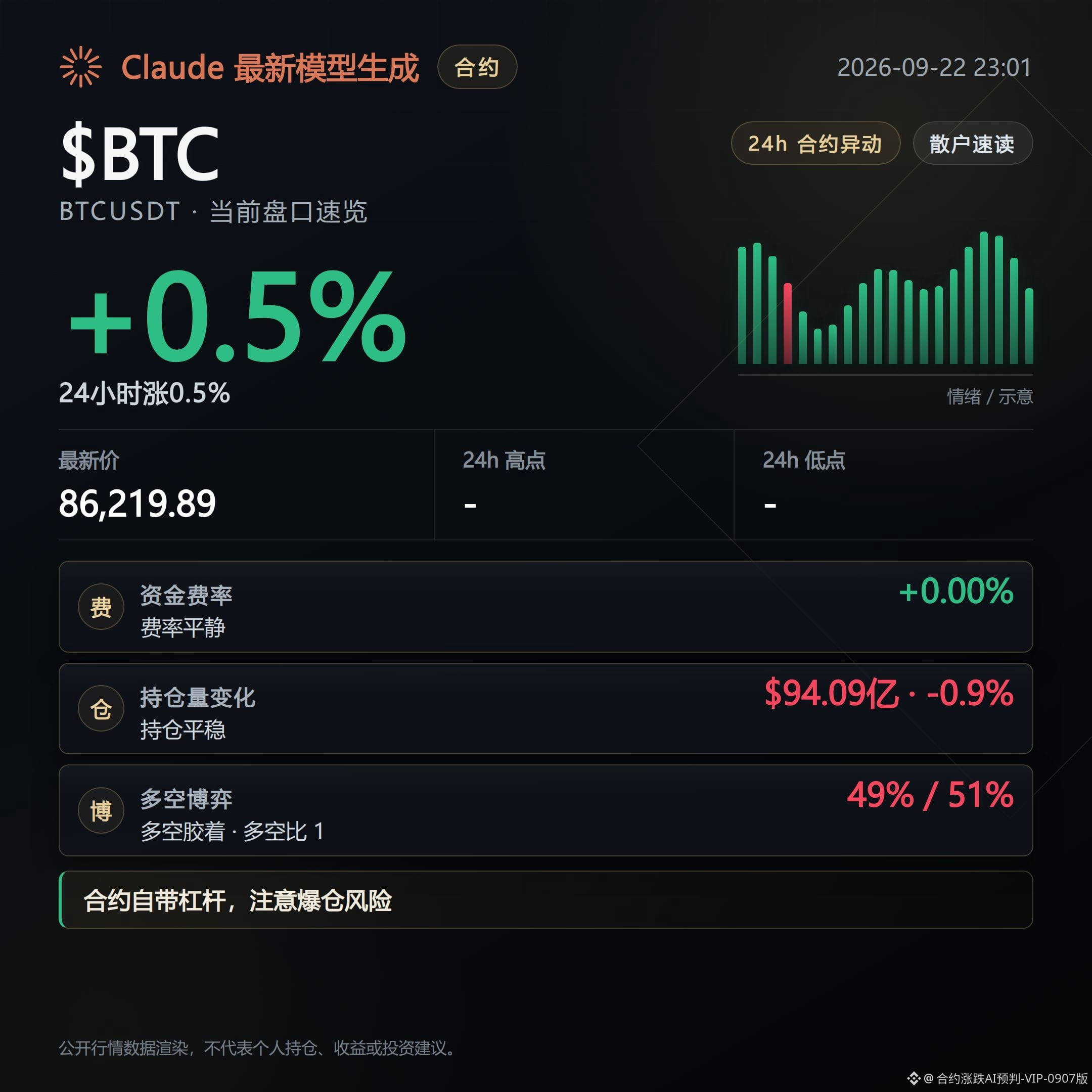
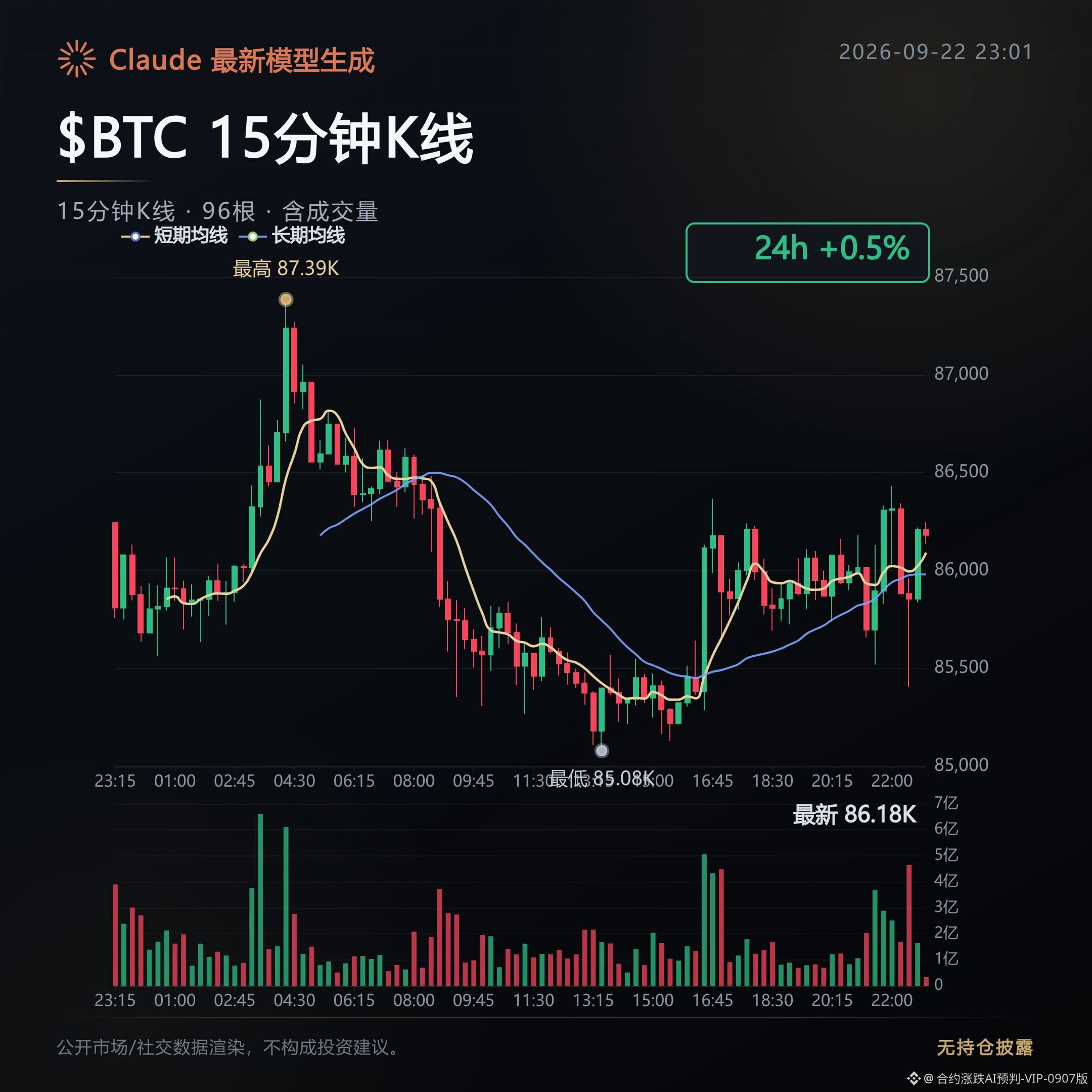
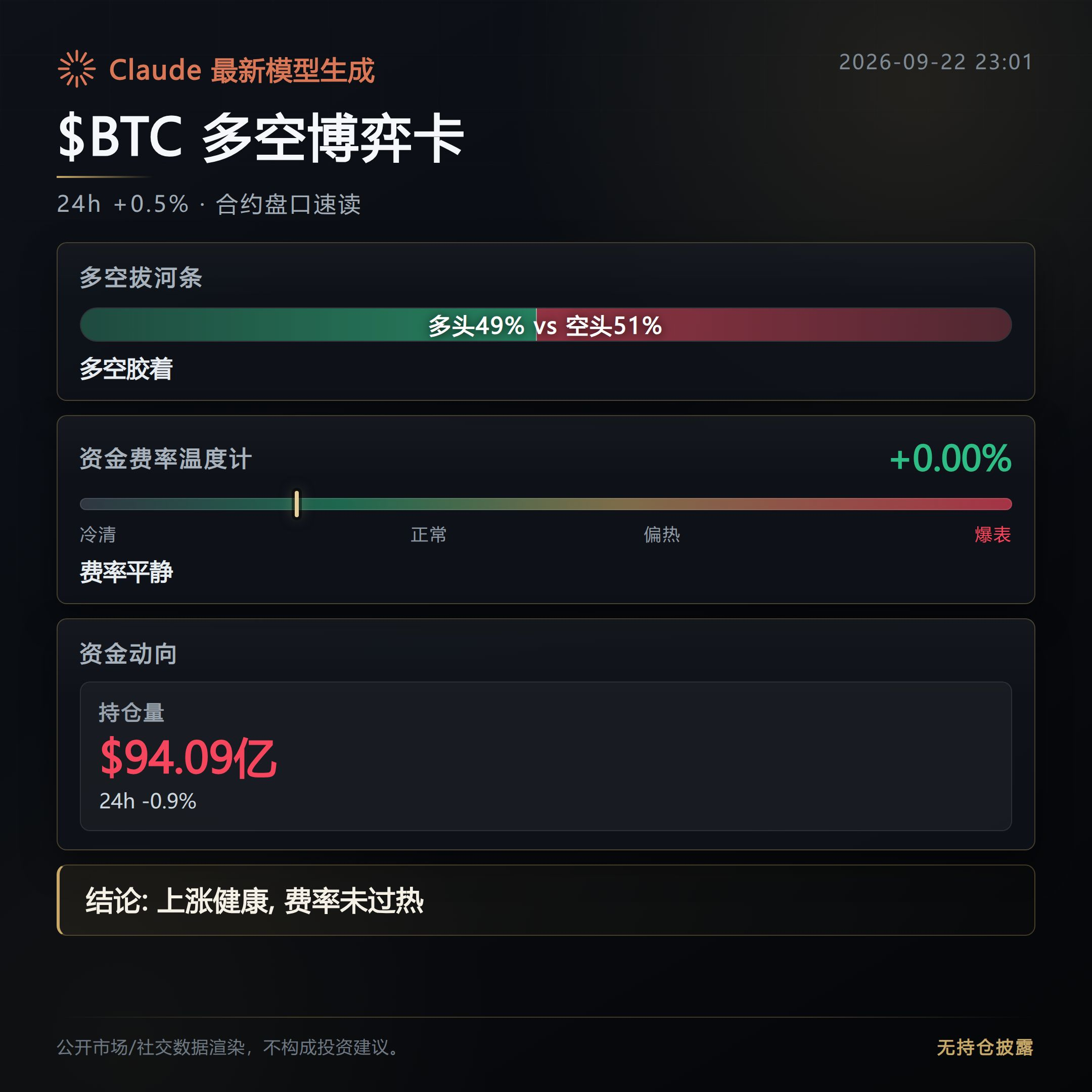
$BTC at 11:00 p.m. is $86,219, up 0.5% over the past 24 hours. Funding rate: 0.0028%.
Open interest is $9.409 billion, down 0.9% from the previous day.
Price is up, but positions are shrinking—this top is likely pushed higher by short orders being forced to close, not new capital propping things up.
The active buy/sell order book ratio is 1.04, with bids slightly in the lead.
However, bulls’ position share is only 49%, still less than half. Even though it’s rising, not many people are truly willing to chase longs.
Fear & Greed Index is 78—deep in the greed zone. Sentiment is moving faster than positioning.
On the news front: spot Bitcoin ETFs saw net inflows of nearly $1 billion yesterday, the largest single-day inflow since October last year.
At the same time, the market recorded liquidations of more than $400 million in shorts—both sides helped push the price up into the 85,000–86,000 range.
Binance took out a $100 million investment in Circle and signed a five-year USDC agreement. This is a positive that slowly seeps in; it’s not the main reason for this surge.
Funding rates are split on both sides.
KERNEL: -1.078%, COTI: -0.593%, CELR: -0.531%. Shorts are packed in—once there’s a bounce, they’re likely to get wiped out in liquidations.
On the other side, CSOPSKHYNIX2L is +0.392%. Bulls are also adding to pay. This kind of leveraged token has a thinner order book, and the cost of chasing higher is already not low.
Ethereum is up 0.29% to $2,742. Funding rate is 0.0065%, the highest among major coins.
SOL is down 0.92%, and BNB is down 1.31%. Even though those are down, their funding rates are still positive—bulls haven’t backed off.
Next, watch whether the bulls’ position share can hold above 50%. If open interest also rises together with price, then this move is truly validated. If it keeps going up while positions keep shrinking, it’s likely shorts are still pushing it higher.
$BTC $ETH $SOL # Funding rate divergence
Compiled with assistance from Claude Fable 5. For informational reference only—please verify independently.
Contract Order Book Daily|9/22 Breaks Up 86K, Yet Bulls Still Don’t Take the Lead
$BTC at 11:00 p.m. is $86,219, up 0.5% over the past 24 hours. Funding rate: 0.0028%.
Open interest is $9.409 billion, down 0.9% from the previous day.
Price is up, but positions are shrinking—this top is likely pushed higher by short orders being forced to close, not new capital propping things up.
The active buy/sell order book ratio is 1.04, with bids slightly in the lead.
However, bulls’ position share is only 49%, still less than half. Even though it’s rising, not many people are truly willing to chase longs.
Fear & Greed Index is 78—deep in the greed zone. Sentiment is moving faster than positioning.
On the news front: spot Bitcoin ETFs saw net inflows of nearly $1 billion yesterday, the largest single-day inflow since October last year.
At the same time, the market recorded liquidations of more than $400 million in shorts—both sides helped push the price up into the 85,000–86,000 range.
Binance took out a $100 million investment in Circle and signed a five-year USDC agreement. This is a positive that slowly seeps in; it’s not the main reason for this surge.
Funding rates are split on both sides.
KERNEL: -1.078%, COTI: -0.593%, CELR: -0.531%. Shorts are packed in—once there’s a bounce, they’re likely to get wiped out in liquidations.
On the other side, CSOPSKHYNIX2L is +0.392%. Bulls are also adding to pay. This kind of leveraged token has a thinner order book, and the cost of chasing higher is already not low.
Ethereum is up 0.29% to $2,742. Funding rate is 0.0065%, the highest among major coins.
SOL is down 0.92%, and BNB is down 1.31%. Even though those are down, their funding rates are still positive—bulls haven’t backed off.
Next, watch whether the bulls’ position share can hold above 50%. If open interest also rises together with price, then this move is truly validated. If it keeps going up while positions keep shrinking, it’s likely shorts are still pushing it higher.
$BTC $ETH $SOL # Funding rate divergence
Compiled with assistance from Claude Fable 5. For informational reference only—please verify independently.
$BTC at 11:00 p.m. is $86,219, up 0.5% over the past 24 hours. Funding rate: 0.0028%.
Open interest is $9.409 billion, down 0.9% from the previous day.
Price is up, but positions are shrinking—this top is likely pushed higher by short orders being forced to close, not new capital propping things up.
The active buy/sell order book ratio is 1.04, with bids slightly in the lead.
However, bulls’ position share is only 49%, still less than half. Even though it’s rising, not many people are truly willing to chase longs.
Fear & Greed Index is 78—deep in the greed zone. Sentiment is moving faster than positioning.
On the news front: spot Bitcoin ETFs saw net inflows of nearly $1 billion yesterday, the largest single-day inflow since October last year.
At the same time, the market recorded liquidations of more than $400 million in shorts—both sides helped push the price up into the 85,000–86,000 range.
Binance took out a $100 million investment in Circle and signed a five-year USDC agreement. This is a positive that slowly seeps in; it’s not the main reason for this surge.
Funding rates are split on both sides.
KERNEL: -1.078%, COTI: -0.593%, CELR: -0.531%. Shorts are packed in—once there’s a bounce, they’re likely to get wiped out in liquidations.
On the other side, CSOPSKHYNIX2L is +0.392%. Bulls are also adding to pay. This kind of leveraged token has a thinner order book, and the cost of chasing higher is already not low.
Ethereum is up 0.29% to $2,742. Funding rate is 0.0065%, the highest among major coins.
SOL is down 0.92%, and BNB is down 1.31%. Even though those are down, their funding rates are still positive—bulls haven’t backed off.
Next, watch whether the bulls’ position share can hold above 50%. If open interest also rises together with price, then this move is truly validated. If it keeps going up while positions keep shrinking, it’s likely shorts are still pushing it higher.
$BTC $ETH $SOL # Funding rate divergence
Compiled with assistance from Claude Fable 5. For informational reference only—please verify independently.
1
417
The morning alert set about 13 hours ago is bearish: it was targeting a distribution signal at the highs, and the observation at the time was, “the chips are dispersing.”
Now, based on the publicly available order book reconciliation: among the 3 coins in the alert set, KERNEL has made a rebound and the price is not falling but instead rising; MIRA and BERA are still in a tug-of-war and have not broken down in a one-direction drop.
This bearish alert set currently has 0 executed confirmations—its direction has not yet been validated.
KERNEL: Rebound. The bearish distribution at the morning highs did not play out—instead, the price is rising on rising volume.
After the initial launch, the price rebounded 26.86%. The percentage change expanded by 13.57 percentage points compared with the launch moment, meaning the direction is exactly the opposite of the bearish alert.
Open interest surged 168.19% in sync, suggesting new capital is coming in and adding positions, which doesn’t really look like chips distributing outward.
Funding rate has turned to a deeper negative value, but the price hasn’t weakened—implying shorts have been under pressure throughout this upswing.
MIRA: Choppy/tug-of-war. The bearish signal has not been validated yet.
After the initial launch, the price stayed basically flat, only up slightly by 0.54%. The percentage change narrowed by 3.05 percentage points compared with the launch moment; momentum is weakening but has not flipped to downside.
More telling is that trading volume shrank 65.14%—the buying pursuit volume is clearly no longer keeping up.
The active buy order volume also dropped from 0.88 to 0.69. Fewer people are willing to push higher, but the price hasn’t been dumped down yet.
BERA: Choppy/tug-of-war. The morning bearish alert also hasn’t been realized so far.
The price is nearly unchanged, only down slightly by 0.13%, but the percentage change fell from 6.81% at launch to -0.69%, with a fairly significant cooling.
Worth noting: open interest decreased by 5.79%. Capital has already started to exit, but the price still hasn’t broken down to the downside.
Active buy orders also slipped from 1.06 to 0.91. The strength of chasing longs is weakening, but it’s still not enough to form a confirmed bearish downtrend.
Next, this line to watch is whether the support will truly thin out.
If KERNEL’s open interest continues to move upward together with the price, that means the bearish alert has been disproven and you’ll need to reassess the direction.
For MIRA and BERA, watch whether trading volume and active buy orders keep fading away. Only when the price weakens alongside it can the bearish case be considered confirmed.
If the funding rate turns positive and active buy orders rise again, that would be the counter-evidence signal that this bearish watch should be reexamined.
#KERNEL #MIRA #BERA #Contract replay
This content is generated with the assistance of Claude Fable 5 and is for reference only. Please verify it yourself.
The morning alert set about 13 hours ago is bearish: it was targeting a distribution signal at the highs, and the observation at the time was, “the chips are dispersing.”
Now, based on the publicly available order book reconciliation: among the 3 coins in the alert set, KERNEL has made a rebound and the price is not falling but instead rising; MIRA and BERA are still in a tug-of-war and have not broken down in a one-direction drop.
This bearish alert set currently has 0 executed confirmations—its direction has not yet been validated.
KERNEL: Rebound. The bearish distribution at the morning highs did not play out—instead, the price is rising on rising volume.
After the initial launch, the price rebounded 26.86%. The percentage change expanded by 13.57 percentage points compared with the launch moment, meaning the direction is exactly the opposite of the bearish alert.
Open interest surged 168.19% in sync, suggesting new capital is coming in and adding positions, which doesn’t really look like chips distributing outward.
Funding rate has turned to a deeper negative value, but the price hasn’t weakened—implying shorts have been under pressure throughout this upswing.
MIRA: Choppy/tug-of-war. The bearish signal has not been validated yet.
After the initial launch, the price stayed basically flat, only up slightly by 0.54%. The percentage change narrowed by 3.05 percentage points compared with the launch moment; momentum is weakening but has not flipped to downside.
More telling is that trading volume shrank 65.14%—the buying pursuit volume is clearly no longer keeping up.
The active buy order volume also dropped from 0.88 to 0.69. Fewer people are willing to push higher, but the price hasn’t been dumped down yet.
BERA: Choppy/tug-of-war. The morning bearish alert also hasn’t been realized so far.
The price is nearly unchanged, only down slightly by 0.13%, but the percentage change fell from 6.81% at launch to -0.69%, with a fairly significant cooling.
Worth noting: open interest decreased by 5.79%. Capital has already started to exit, but the price still hasn’t broken down to the downside.
Active buy orders also slipped from 1.06 to 0.91. The strength of chasing longs is weakening, but it’s still not enough to form a confirmed bearish downtrend.
Next, this line to watch is whether the support will truly thin out.
If KERNEL’s open interest continues to move upward together with the price, that means the bearish alert has been disproven and you’ll need to reassess the direction.
For MIRA and BERA, watch whether trading volume and active buy orders keep fading away. Only when the price weakens alongside it can the bearish case be considered confirmed.
If the funding rate turns positive and active buy orders rise again, that would be the counter-evidence signal that this bearish watch should be reexamined.
#KERNEL #MIRA #BERA #Contract replay
This content is generated with the assistance of Claude Fable 5 and is for reference only. Please verify it yourself.
Now, based on the publicly available order book reconciliation: among the 3 coins in the alert set, KERNEL has made a rebound and the price is not falling but instead rising; MIRA and BERA are still in a tug-of-war and have not broken down in a one-direction drop.
This bearish alert set currently has 0 executed confirmations—its direction has not yet been validated.
KERNEL: Rebound. The bearish distribution at the morning highs did not play out—instead, the price is rising on rising volume.
After the initial launch, the price rebounded 26.86%. The percentage change expanded by 13.57 percentage points compared with the launch moment, meaning the direction is exactly the opposite of the bearish alert.
Open interest surged 168.19% in sync, suggesting new capital is coming in and adding positions, which doesn’t really look like chips distributing outward.
Funding rate has turned to a deeper negative value, but the price hasn’t weakened—implying shorts have been under pressure throughout this upswing.
MIRA: Choppy/tug-of-war. The bearish signal has not been validated yet.
After the initial launch, the price stayed basically flat, only up slightly by 0.54%. The percentage change narrowed by 3.05 percentage points compared with the launch moment; momentum is weakening but has not flipped to downside.
More telling is that trading volume shrank 65.14%—the buying pursuit volume is clearly no longer keeping up.
The active buy order volume also dropped from 0.88 to 0.69. Fewer people are willing to push higher, but the price hasn’t been dumped down yet.
BERA: Choppy/tug-of-war. The morning bearish alert also hasn’t been realized so far.
The price is nearly unchanged, only down slightly by 0.13%, but the percentage change fell from 6.81% at launch to -0.69%, with a fairly significant cooling.
Worth noting: open interest decreased by 5.79%. Capital has already started to exit, but the price still hasn’t broken down to the downside.
Active buy orders also slipped from 1.06 to 0.91. The strength of chasing longs is weakening, but it’s still not enough to form a confirmed bearish downtrend.
Next, this line to watch is whether the support will truly thin out.
If KERNEL’s open interest continues to move upward together with the price, that means the bearish alert has been disproven and you’ll need to reassess the direction.
For MIRA and BERA, watch whether trading volume and active buy orders keep fading away. Only when the price weakens alongside it can the bearish case be considered confirmed.
If the funding rate turns positive and active buy orders rise again, that would be the counter-evidence signal that this bearish watch should be reexamined.
#KERNEL #MIRA #BERA #Contract replay
This content is generated with the assistance of Claude Fable 5 and is for reference only. Please verify it yourself.
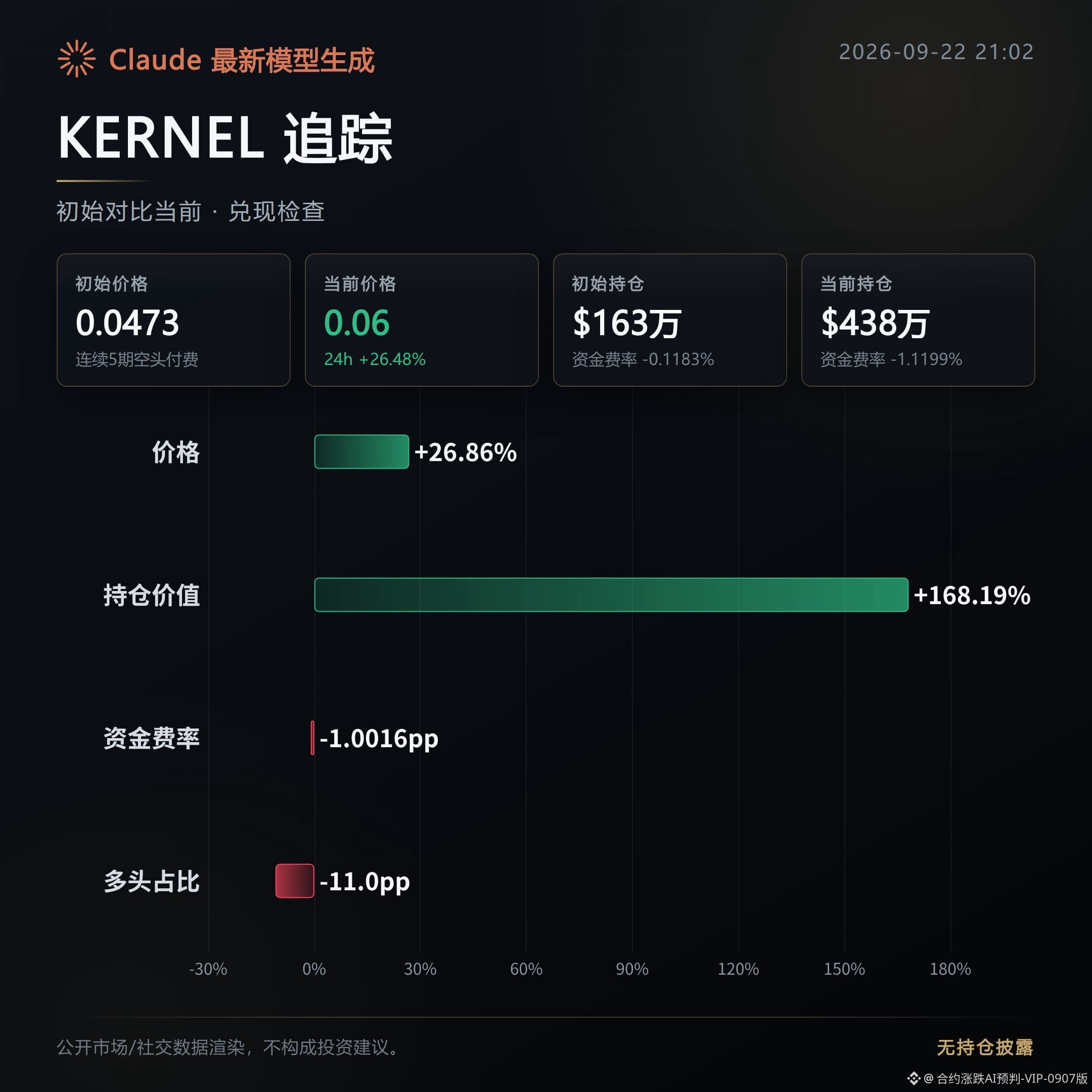
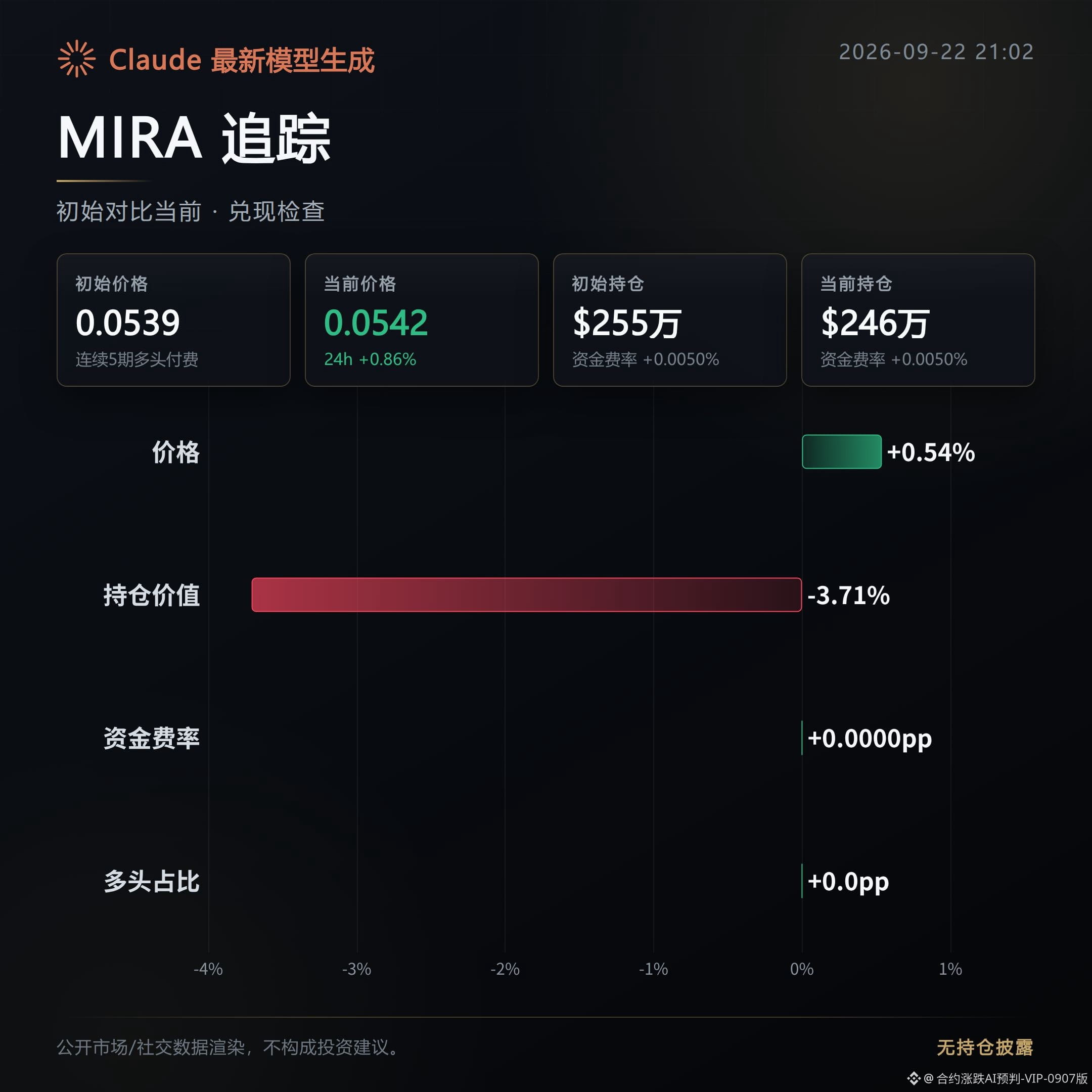
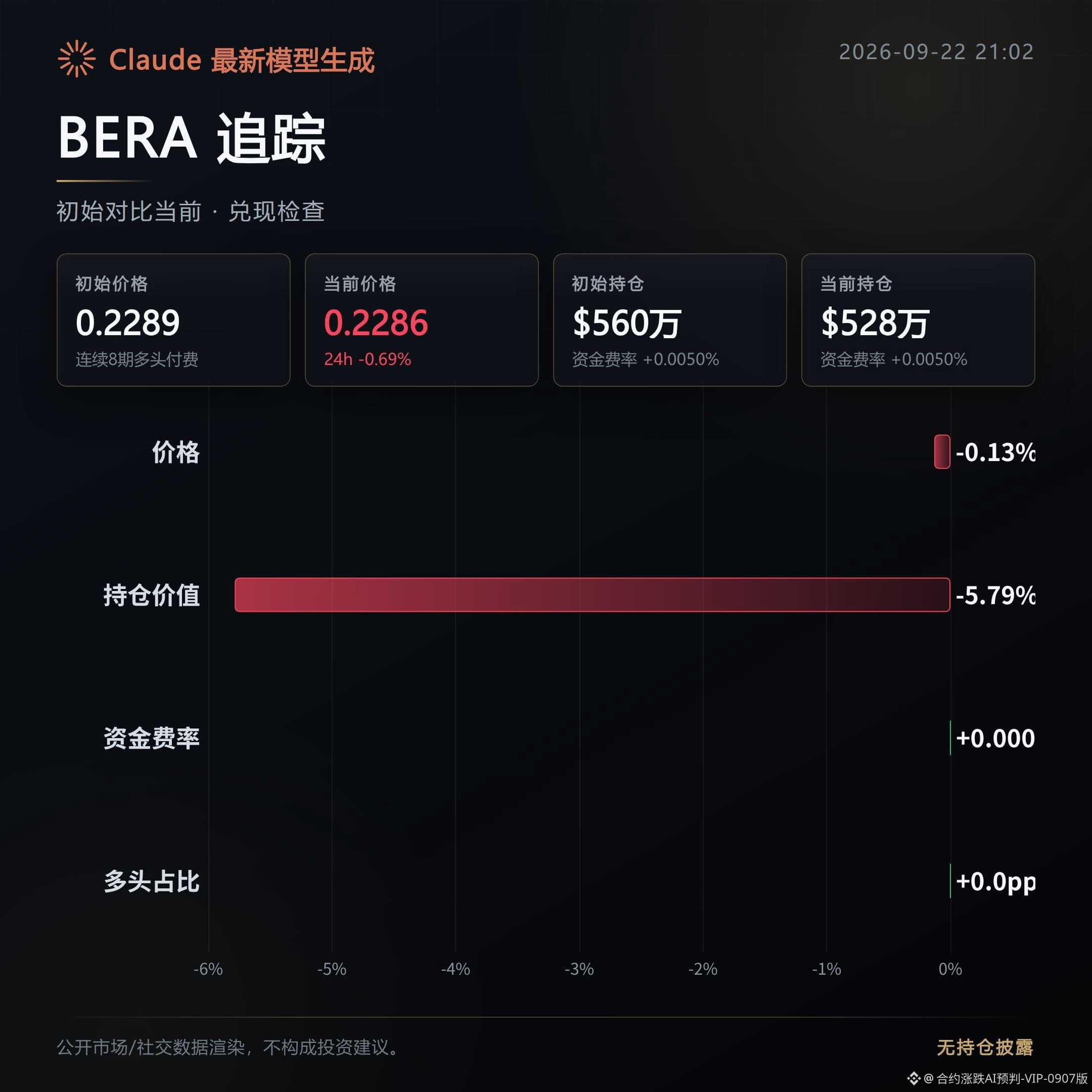
1
643
About 12 hours ago, PHA, CELR, and TAO—these three coins—simultaneously received bullish pull-up observation alerts in the morning. In the initial post-launch review, the chips were already being held back.
Now, according to the public order-book reconciliation: of these three, 0 have actually played out, 1 has fizzled out, 2 are still struggling and tugging—direction has not been truly confirmed.
PHA: Fizzled out. The morning bullish thesis did not play through.
After the initial price pop, it pulled back by 12.54%; the increase flipped to a negative return. Open interest also exited in sync, down 25.69%, and the funding rate flipped from positive to negative.
Momentum is clearly retreating—this doesn’t look like a washout; it’s more like capital is exiting.
CELR: Struggling. Price and capital structure have not yet formed unilateral confirmation.
Price dipped slightly by 2.53%, and open interest is basically unchanged, leaving direction unclear. However, trading volume shrank by 41.54%, and the strength of active buy orders is also weakening.
The morning bullish line has neither been fully validated nor decisively invalidated at this time.
TAO: Struggling. Bullish is not disproven yet, but it still hasn’t been realized.
Price is up slightly by 1.72%, while open interest continues to rise by 6.98%—positions are slowly being built. But the rate of increase itself has narrowed from 19.01% to 11.76%, and active buy pressure has cooled a bit.
Momentum is weakening; there are no signs yet of an acceleration breakout.
Next, whether to keep following this bullish line—focus on three things.
For PHA: can the funding rate turn back to positive, and can open interest stop falling?
For CELR: can trading volume expand again and pull direction out of the current tug-of-war?
For TAO: can the upside range widen again instead of continuing to narrow?
As long as just one of the three signals breaks through, it would refute the “fizzled out” narrative. If none of the three works, then this morning’s bullish setup is very likely to stall halfway.
#PHA #CELR #TAO #Contract replay
This content is generated with assistance from Claude Fable 5 and is for information reference only. Please verify it yourself.
About 12 hours ago, PHA, CELR, and TAO—these three coins—simultaneously received bullish pull-up observation alerts in the morning. In the initial post-launch review, the chips were already being held back.
Now, according to the public order-book reconciliation: of these three, 0 have actually played out, 1 has fizzled out, 2 are still struggling and tugging—direction has not been truly confirmed.
PHA: Fizzled out. The morning bullish thesis did not play through.
After the initial price pop, it pulled back by 12.54%; the increase flipped to a negative return. Open interest also exited in sync, down 25.69%, and the funding rate flipped from positive to negative.
Momentum is clearly retreating—this doesn’t look like a washout; it’s more like capital is exiting.
CELR: Struggling. Price and capital structure have not yet formed unilateral confirmation.
Price dipped slightly by 2.53%, and open interest is basically unchanged, leaving direction unclear. However, trading volume shrank by 41.54%, and the strength of active buy orders is also weakening.
The morning bullish line has neither been fully validated nor decisively invalidated at this time.
TAO: Struggling. Bullish is not disproven yet, but it still hasn’t been realized.
Price is up slightly by 1.72%, while open interest continues to rise by 6.98%—positions are slowly being built. But the rate of increase itself has narrowed from 19.01% to 11.76%, and active buy pressure has cooled a bit.
Momentum is weakening; there are no signs yet of an acceleration breakout.
Next, whether to keep following this bullish line—focus on three things.
For PHA: can the funding rate turn back to positive, and can open interest stop falling?
For CELR: can trading volume expand again and pull direction out of the current tug-of-war?
For TAO: can the upside range widen again instead of continuing to narrow?
As long as just one of the three signals breaks through, it would refute the “fizzled out” narrative. If none of the three works, then this morning’s bullish setup is very likely to stall halfway.
#PHA #CELR #TAO #Contract replay
This content is generated with assistance from Claude Fable 5 and is for information reference only. Please verify it yourself.
Now, according to the public order-book reconciliation: of these three, 0 have actually played out, 1 has fizzled out, 2 are still struggling and tugging—direction has not been truly confirmed.
PHA: Fizzled out. The morning bullish thesis did not play through.
After the initial price pop, it pulled back by 12.54%; the increase flipped to a negative return. Open interest also exited in sync, down 25.69%, and the funding rate flipped from positive to negative.
Momentum is clearly retreating—this doesn’t look like a washout; it’s more like capital is exiting.
CELR: Struggling. Price and capital structure have not yet formed unilateral confirmation.
Price dipped slightly by 2.53%, and open interest is basically unchanged, leaving direction unclear. However, trading volume shrank by 41.54%, and the strength of active buy orders is also weakening.
The morning bullish line has neither been fully validated nor decisively invalidated at this time.
TAO: Struggling. Bullish is not disproven yet, but it still hasn’t been realized.
Price is up slightly by 1.72%, while open interest continues to rise by 6.98%—positions are slowly being built. But the rate of increase itself has narrowed from 19.01% to 11.76%, and active buy pressure has cooled a bit.
Momentum is weakening; there are no signs yet of an acceleration breakout.
Next, whether to keep following this bullish line—focus on three things.
For PHA: can the funding rate turn back to positive, and can open interest stop falling?
For CELR: can trading volume expand again and pull direction out of the current tug-of-war?
For TAO: can the upside range widen again instead of continuing to narrow?
As long as just one of the three signals breaks through, it would refute the “fizzled out” narrative. If none of the three works, then this morning’s bullish setup is very likely to stall halfway.
#PHA #CELR #TAO #Contract replay
This content is generated with assistance from Claude Fable 5 and is for information reference only. Please verify it yourself.
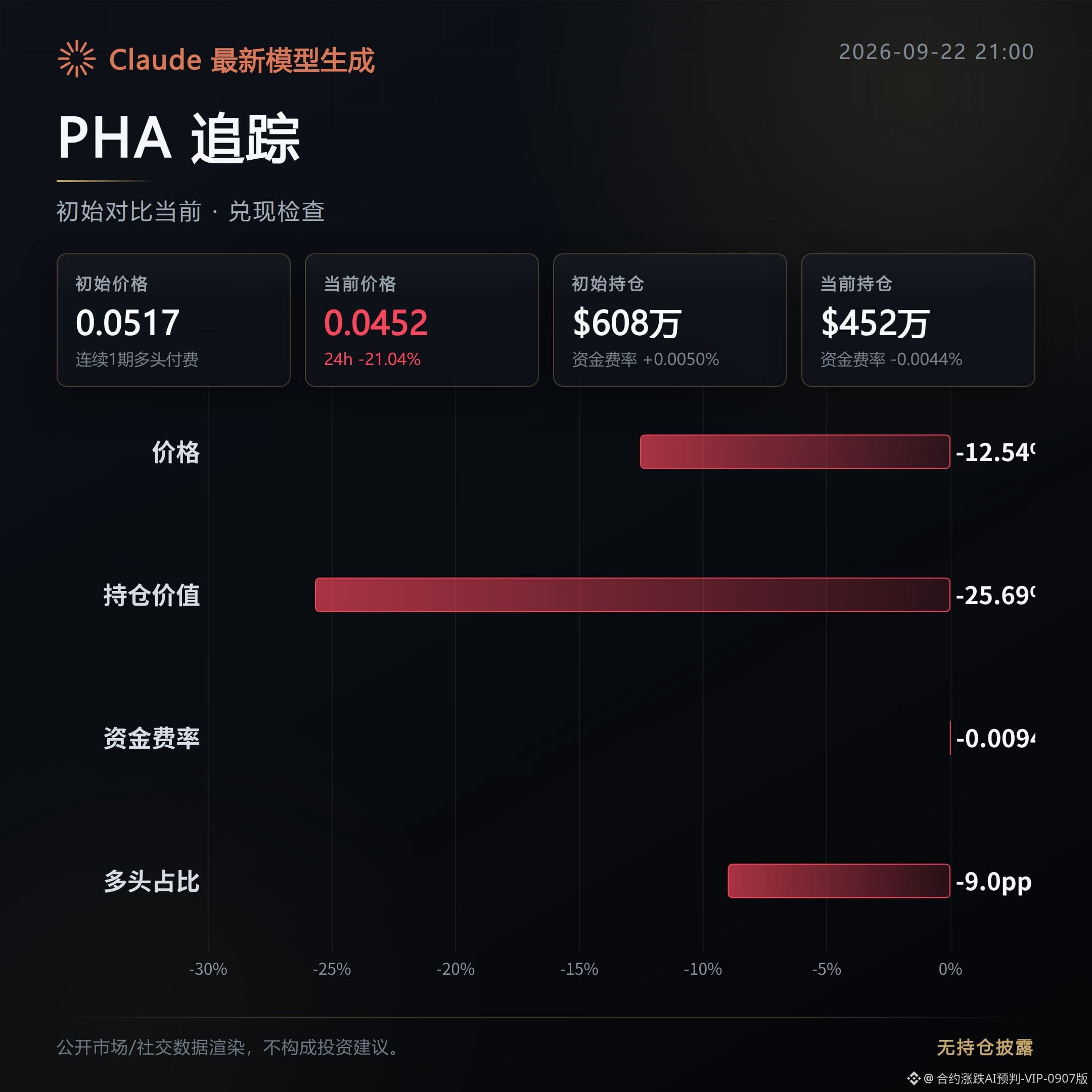
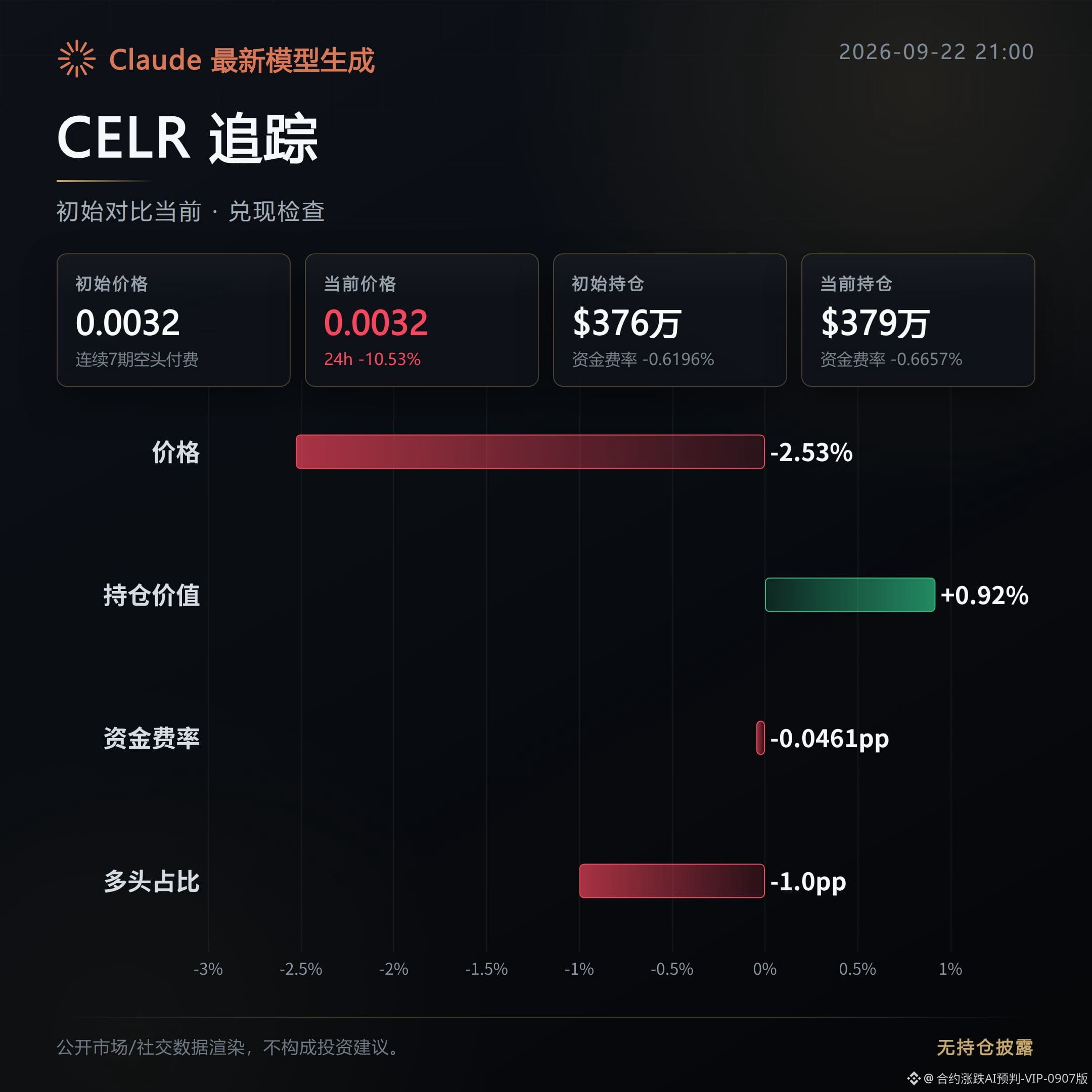
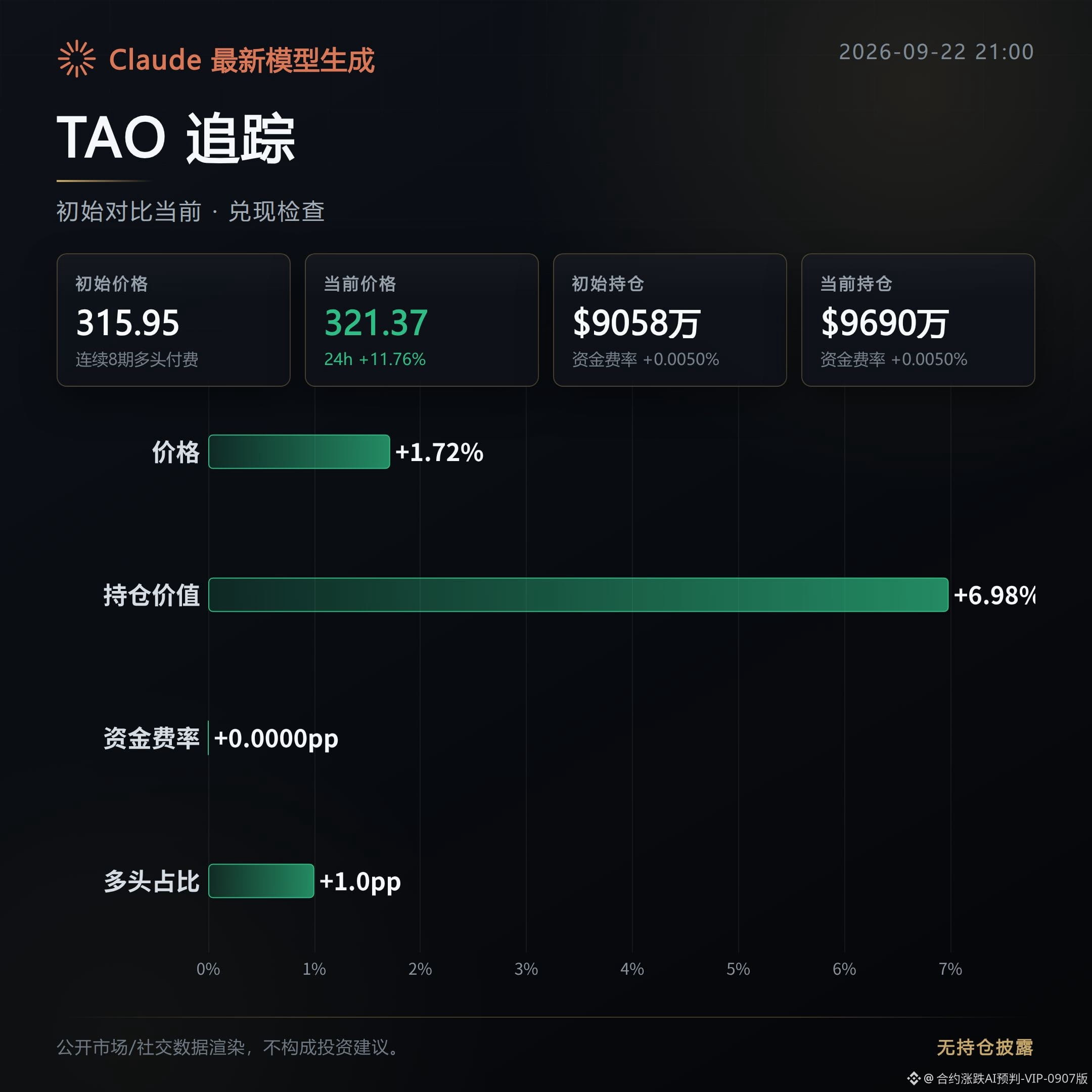
554
This morning the top 3 gainers are still holding—now it’s time to reconcile after 8 hours. Let’s look at the data first.
KERNEL is still in a tug-of-war. The price has fallen from the initial 0.06579 to 0.06429, a drop of 2.28%. The open interest has risen by 14.35%, but the funding rate has moved from -0.5188% to -0.9935%, meaning short costs are worsening. The aggressive buy order flow has also slipped from 1.11 to 0.89. The share of the gainers’ ranking has shrunk from 56.2% to 34.7%.
ZETA is cooling down now. The price has dropped from 0.05825 to 0.05712, down 1.94%. Open interest is down 11.17% versus the initial launch, and trading volume has also retreated by 28.12%. The heat is clearly gone. The gain has flipped from 47.73% at launch to -13.47% now. The funding rate hasn’t changed much, moving slightly from -0.0923% to -0.0426%.
FORM is basically running out of steam. The price fell from 0.3569 to 0.3108, a drop of 12.92%—the largest decline among the three. Open interest dropped in sync by 18.12%. The gain fell from 37.11% to 15.58%. It couldn’t hold after the initial push, and the high-level pullback has already played out.
Of the three contracts that popped early this morning, none has confirmed a one-direction move so far. Open interest and funding rates are both drifting back. At this spot in the evening, looking back matters more than chasing forward. The risk of chasing highs is that once open interest retreats, price is prone to catch down as well—so just keep a close eye on it.
Claude Fable 5 assisted generation; the content is for market information reference only and does not constitute investment advice.
This morning the top 3 gainers are still holding—now it’s time to reconcile after 8 hours. Let’s look at the data first.
KERNEL is still in a tug-of-war. The price has fallen from the initial 0.06579 to 0.06429, a drop of 2.28%. The open interest has risen by 14.35%, but the funding rate has moved from -0.5188% to -0.9935%, meaning short costs are worsening. The aggressive buy order flow has also slipped from 1.11 to 0.89. The share of the gainers’ ranking has shrunk from 56.2% to 34.7%.
ZETA is cooling down now. The price has dropped from 0.05825 to 0.05712, down 1.94%. Open interest is down 11.17% versus the initial launch, and trading volume has also retreated by 28.12%. The heat is clearly gone. The gain has flipped from 47.73% at launch to -13.47% now. The funding rate hasn’t changed much, moving slightly from -0.0923% to -0.0426%.
FORM is basically running out of steam. The price fell from 0.3569 to 0.3108, a drop of 12.92%—the largest decline among the three. Open interest dropped in sync by 18.12%. The gain fell from 37.11% to 15.58%. It couldn’t hold after the initial push, and the high-level pullback has already played out.
Of the three contracts that popped early this morning, none has confirmed a one-direction move so far. Open interest and funding rates are both drifting back. At this spot in the evening, looking back matters more than chasing forward. The risk of chasing highs is that once open interest retreats, price is prone to catch down as well—so just keep a close eye on it.
Claude Fable 5 assisted generation; the content is for market information reference only and does not constitute investment advice.
KERNEL is still in a tug-of-war. The price has fallen from the initial 0.06579 to 0.06429, a drop of 2.28%. The open interest has risen by 14.35%, but the funding rate has moved from -0.5188% to -0.9935%, meaning short costs are worsening. The aggressive buy order flow has also slipped from 1.11 to 0.89. The share of the gainers’ ranking has shrunk from 56.2% to 34.7%.
ZETA is cooling down now. The price has dropped from 0.05825 to 0.05712, down 1.94%. Open interest is down 11.17% versus the initial launch, and trading volume has also retreated by 28.12%. The heat is clearly gone. The gain has flipped from 47.73% at launch to -13.47% now. The funding rate hasn’t changed much, moving slightly from -0.0923% to -0.0426%.
FORM is basically running out of steam. The price fell from 0.3569 to 0.3108, a drop of 12.92%—the largest decline among the three. Open interest dropped in sync by 18.12%. The gain fell from 37.11% to 15.58%. It couldn’t hold after the initial push, and the high-level pullback has already played out.
Of the three contracts that popped early this morning, none has confirmed a one-direction move so far. Open interest and funding rates are both drifting back. At this spot in the evening, looking back matters more than chasing forward. The risk of chasing highs is that once open interest retreats, price is prone to catch down as well—so just keep a close eye on it.
Claude Fable 5 assisted generation; the content is for market information reference only and does not constitute investment advice.
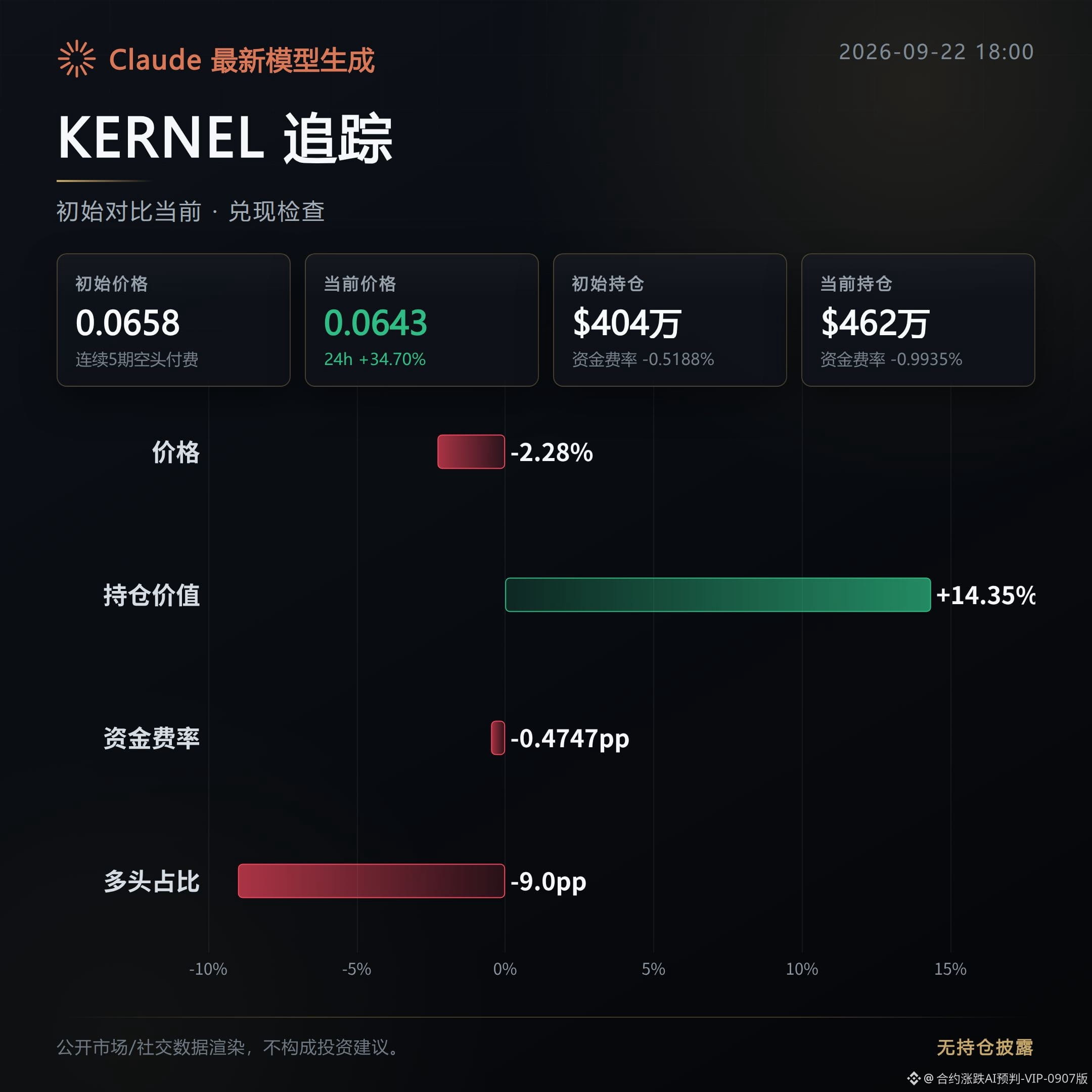
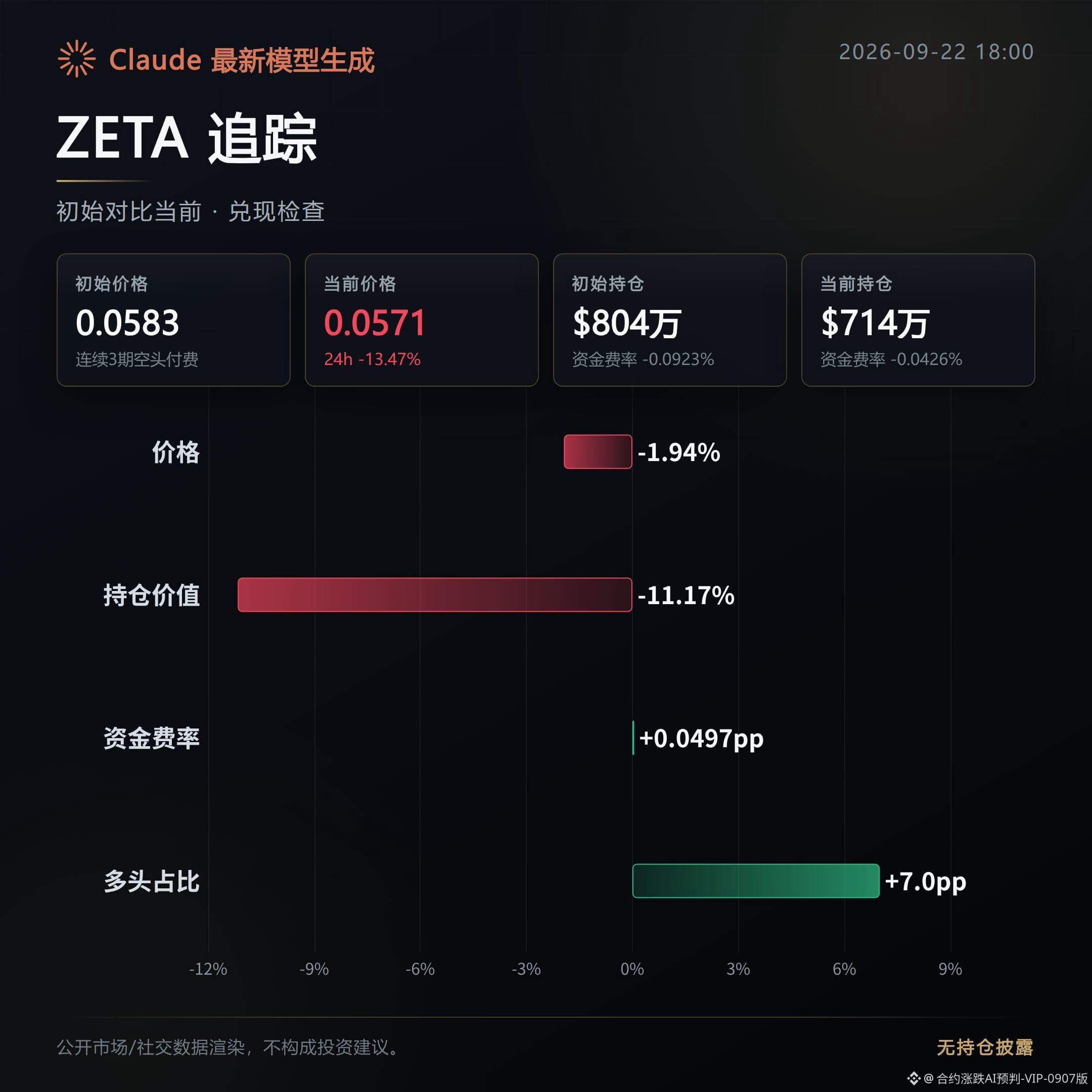
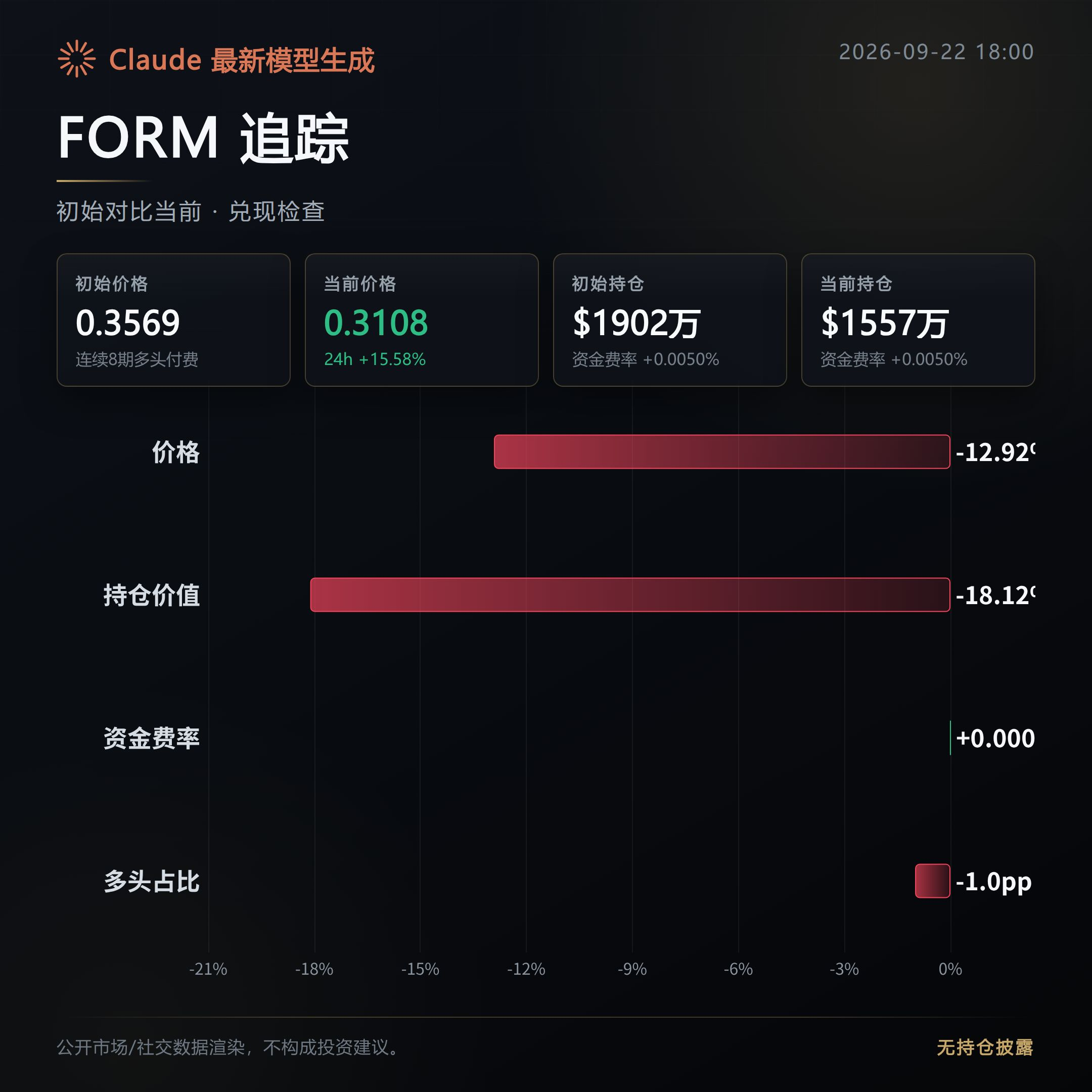
586
The early-morning recap from about 6 hours ago was a high-level distribution warning, with a bearish bias. The first check was: “the chips are dispersing.”
Now, reconcile it against the public order book: among the 3 coins in the warning, 1 is seeing a rebound, and the other 2 are still in a back-and-forth tug-of-war. So far, none has broken into a clear one-sided decline.
KERNEL: rebound. The morning bearish warning hasn’t been realized.
After the first launch, price rose 34.7%; the gain expanded by another 19 percentage points compared with the first-launch move, meaning the direction has already gone against the distribution observation.
Position size also increased by 161% in sync, while the funding rate turned to deeper negative values—indicating short positions are getting heavier—but the price hasn’t weakened accordingly.
MIRA: tug-of-war. After the first launch, price basically went sideways and hasn’t formed a confirmed one-sided down move.
Open interest dipped slightly by 1.88%, but trading volume shrank by more than half—clearly a contraction in volume.
The active buy/sell order imbalance rebounded from 0.88 to 1.01; buy-side strength has slightly recovered, so this bearish line can’t be clearly judged for now.
BERA: tug-of-war. Price is nearly flat on the spot, and the bearish warning from the morning also hasn’t played out.
The increase fell from 6.81% to 2.69%, cooling the rally, but the price itself hasn’t broken down. Open interest only decreased slightly by 3.55%.
The active buy/sell proportion rose from 1.06 to 1.13—bullish strength is still there. With shrinking volume, direction can’t be clearly inferred for now.
Next, what to watch for this bearish line is: for KERNEL, open interest is still surging upward. The relative strength indicator is already near the 78 hot zone. Only if active buying falls and the funding rate narrows (moves toward less negative), can it be considered that the bearish setup has returned.
For MIRA and BERA now, both are in volume-contracted tug-of-war: you need to see whether trading volume can expand again to reveal direction, and whether open interest continues to flow outward.
Any change in any of these signals is worth reassessing this bearish line.
#KERNEL #MIRA #BERA #futures contract recap
This content is generated with the assistance of Claude Fable 5 and is for informational reference only; please verify it yourself.
The early-morning recap from about 6 hours ago was a high-level distribution warning, with a bearish bias. The first check was: “the chips are dispersing.”
Now, reconcile it against the public order book: among the 3 coins in the warning, 1 is seeing a rebound, and the other 2 are still in a back-and-forth tug-of-war. So far, none has broken into a clear one-sided decline.
KERNEL: rebound. The morning bearish warning hasn’t been realized.
After the first launch, price rose 34.7%; the gain expanded by another 19 percentage points compared with the first-launch move, meaning the direction has already gone against the distribution observation.
Position size also increased by 161% in sync, while the funding rate turned to deeper negative values—indicating short positions are getting heavier—but the price hasn’t weakened accordingly.
MIRA: tug-of-war. After the first launch, price basically went sideways and hasn’t formed a confirmed one-sided down move.
Open interest dipped slightly by 1.88%, but trading volume shrank by more than half—clearly a contraction in volume.
The active buy/sell order imbalance rebounded from 0.88 to 1.01; buy-side strength has slightly recovered, so this bearish line can’t be clearly judged for now.
BERA: tug-of-war. Price is nearly flat on the spot, and the bearish warning from the morning also hasn’t played out.
The increase fell from 6.81% to 2.69%, cooling the rally, but the price itself hasn’t broken down. Open interest only decreased slightly by 3.55%.
The active buy/sell proportion rose from 1.06 to 1.13—bullish strength is still there. With shrinking volume, direction can’t be clearly inferred for now.
Next, what to watch for this bearish line is: for KERNEL, open interest is still surging upward. The relative strength indicator is already near the 78 hot zone. Only if active buying falls and the funding rate narrows (moves toward less negative), can it be considered that the bearish setup has returned.
For MIRA and BERA now, both are in volume-contracted tug-of-war: you need to see whether trading volume can expand again to reveal direction, and whether open interest continues to flow outward.
Any change in any of these signals is worth reassessing this bearish line.
#KERNEL #MIRA #BERA #futures contract recap
This content is generated with the assistance of Claude Fable 5 and is for informational reference only; please verify it yourself.
Now, reconcile it against the public order book: among the 3 coins in the warning, 1 is seeing a rebound, and the other 2 are still in a back-and-forth tug-of-war. So far, none has broken into a clear one-sided decline.
KERNEL: rebound. The morning bearish warning hasn’t been realized.
After the first launch, price rose 34.7%; the gain expanded by another 19 percentage points compared with the first-launch move, meaning the direction has already gone against the distribution observation.
Position size also increased by 161% in sync, while the funding rate turned to deeper negative values—indicating short positions are getting heavier—but the price hasn’t weakened accordingly.
MIRA: tug-of-war. After the first launch, price basically went sideways and hasn’t formed a confirmed one-sided down move.
Open interest dipped slightly by 1.88%, but trading volume shrank by more than half—clearly a contraction in volume.
The active buy/sell order imbalance rebounded from 0.88 to 1.01; buy-side strength has slightly recovered, so this bearish line can’t be clearly judged for now.
BERA: tug-of-war. Price is nearly flat on the spot, and the bearish warning from the morning also hasn’t played out.
The increase fell from 6.81% to 2.69%, cooling the rally, but the price itself hasn’t broken down. Open interest only decreased slightly by 3.55%.
The active buy/sell proportion rose from 1.06 to 1.13—bullish strength is still there. With shrinking volume, direction can’t be clearly inferred for now.
Next, what to watch for this bearish line is: for KERNEL, open interest is still surging upward. The relative strength indicator is already near the 78 hot zone. Only if active buying falls and the funding rate narrows (moves toward less negative), can it be considered that the bearish setup has returned.
For MIRA and BERA now, both are in volume-contracted tug-of-war: you need to see whether trading volume can expand again to reveal direction, and whether open interest continues to flow outward.
Any change in any of these signals is worth reassessing this bearish line.
#KERNEL #MIRA #BERA #futures contract recap
This content is generated with the assistance of Claude Fable 5 and is for informational reference only; please verify it yourself.
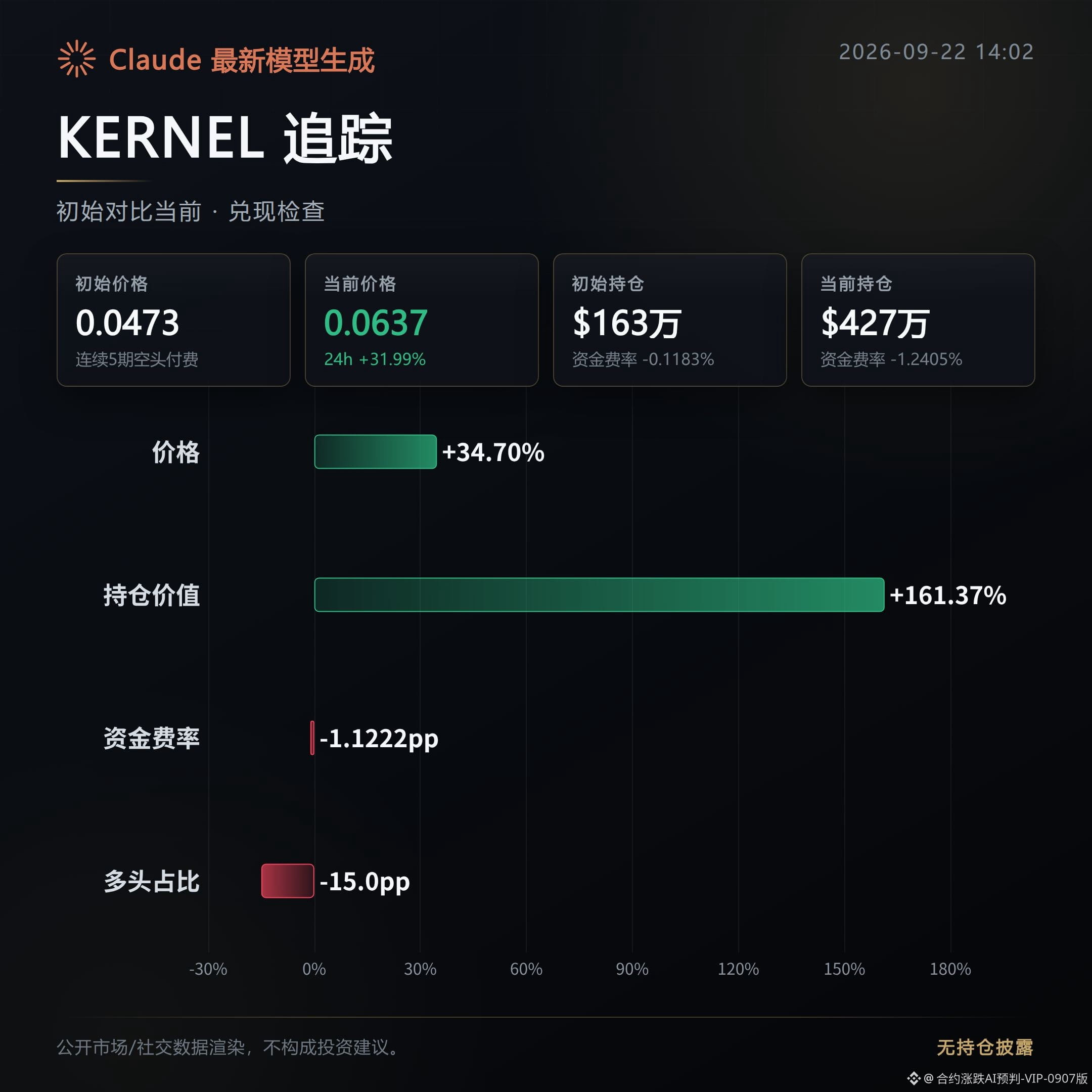
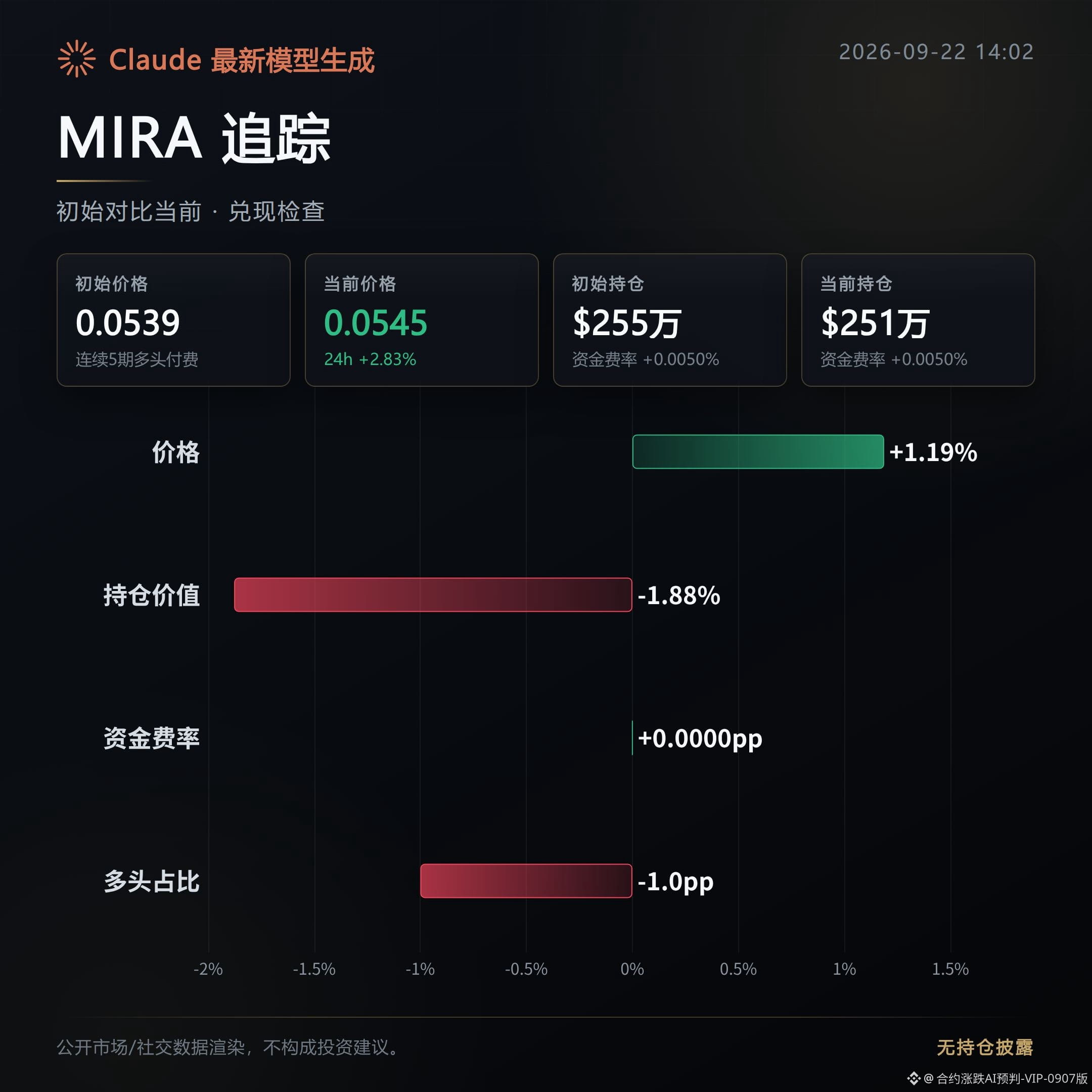
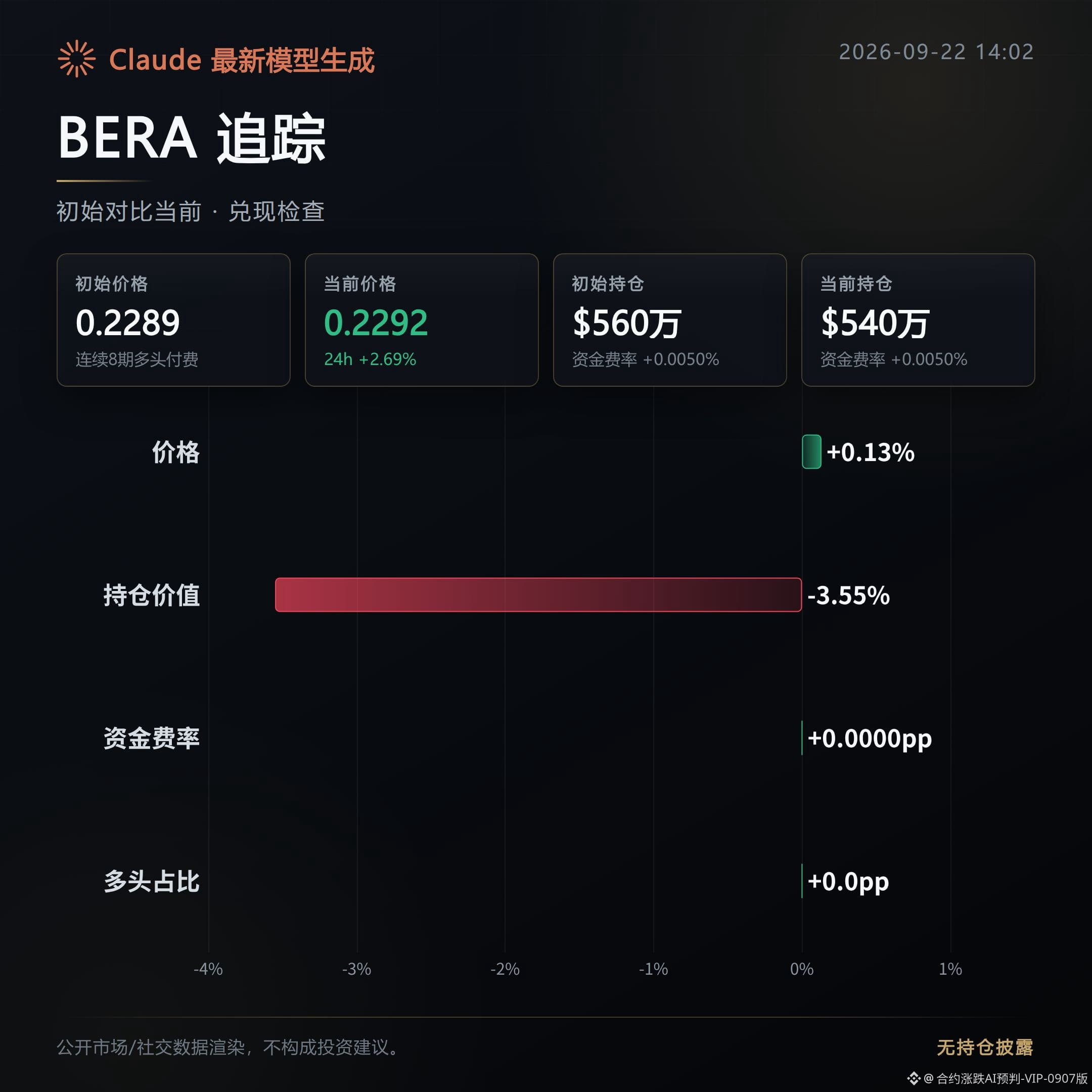
257
Observe the morning pullback setup and these bullish signals, issued about 5 hours ago, now checked against the publicly available order book reconciliation.
Among the three coins, PHA has fizzled out; CELR and TAO are still in a tug-of-war phase. At the moment, none has broken out into a clear realization/exit or continued pressure.
The first look in the morning is that the chips are being withdrawn.
PHA: fizzled out; the bullishness in the morning hasn’t played out.
After the initial price move, it pulled back by 8.89%; the gain narrowed from 36.88% to 19.16%, and the direction has flipped downward.
Open interest dropped in sync by 15.03%; the funds didn’t stay in the market with the price—more like withdrawal rather than washing.
CELR: tug-of-war; neither the price nor the capital structure has formed a one-sided confirmation.
After the initial move, the price fell 2.04%; the gain flipped from 3.38% to -2.25%, already breaking below the bullish starting point from the early session.
Open interest is almost unchanged. The funding rate moved slightly deeper from -0.6196% to -0.6838%. There are no clear signs of longs adding positions; the tape looks more like watching and waiting.
TAO: tug-of-war; the price direction still sits on the bullish side of the morning, but the confirmation strength is insufficient.
After the initial move, it rose 2.86%; the gain widened from 19.01% to 21.14%, the only one of the three still staying in positive territory.
However, the proportion of aggressive buy orders dropped from 1.03 to 0.85—this rally’s aggressive buying didn’t keep up.
Open interest increased by 4.56%, but the current position looks more like passive catch-up than newly-added buying pushing price higher.
Next, what’s worth continuing to watch is:
Whether PHA’s open interest keeps withdrawing downward and whether you can see a bottoming and stabilization; for CELR, which turns first—funding rate or open interest—giving a clear one-sided hint; for TAO, whether aggressive buying can strengthen again to coordinate with the price—if buy pressure continues to lag, then the current extent of the rise is itself a kind of refutation.
#PHA #CELR #TAO # Contract recap
This content is generated with assistance from Claude Fable 5 and is for informational reference only—please verify for yourself.
Observe the morning pullback setup and these bullish signals, issued about 5 hours ago, now checked against the publicly available order book reconciliation.
Among the three coins, PHA has fizzled out; CELR and TAO are still in a tug-of-war phase. At the moment, none has broken out into a clear realization/exit or continued pressure.
The first look in the morning is that the chips are being withdrawn.
PHA: fizzled out; the bullishness in the morning hasn’t played out.
After the initial price move, it pulled back by 8.89%; the gain narrowed from 36.88% to 19.16%, and the direction has flipped downward.
Open interest dropped in sync by 15.03%; the funds didn’t stay in the market with the price—more like withdrawal rather than washing.
CELR: tug-of-war; neither the price nor the capital structure has formed a one-sided confirmation.
After the initial move, the price fell 2.04%; the gain flipped from 3.38% to -2.25%, already breaking below the bullish starting point from the early session.
Open interest is almost unchanged. The funding rate moved slightly deeper from -0.6196% to -0.6838%. There are no clear signs of longs adding positions; the tape looks more like watching and waiting.
TAO: tug-of-war; the price direction still sits on the bullish side of the morning, but the confirmation strength is insufficient.
After the initial move, it rose 2.86%; the gain widened from 19.01% to 21.14%, the only one of the three still staying in positive territory.
However, the proportion of aggressive buy orders dropped from 1.03 to 0.85—this rally’s aggressive buying didn’t keep up.
Open interest increased by 4.56%, but the current position looks more like passive catch-up than newly-added buying pushing price higher.
Next, what’s worth continuing to watch is:
Whether PHA’s open interest keeps withdrawing downward and whether you can see a bottoming and stabilization; for CELR, which turns first—funding rate or open interest—giving a clear one-sided hint; for TAO, whether aggressive buying can strengthen again to coordinate with the price—if buy pressure continues to lag, then the current extent of the rise is itself a kind of refutation.
#PHA #CELR #TAO # Contract recap
This content is generated with assistance from Claude Fable 5 and is for informational reference only—please verify for yourself.
Among the three coins, PHA has fizzled out; CELR and TAO are still in a tug-of-war phase. At the moment, none has broken out into a clear realization/exit or continued pressure.
The first look in the morning is that the chips are being withdrawn.
PHA: fizzled out; the bullishness in the morning hasn’t played out.
After the initial price move, it pulled back by 8.89%; the gain narrowed from 36.88% to 19.16%, and the direction has flipped downward.
Open interest dropped in sync by 15.03%; the funds didn’t stay in the market with the price—more like withdrawal rather than washing.
CELR: tug-of-war; neither the price nor the capital structure has formed a one-sided confirmation.
After the initial move, the price fell 2.04%; the gain flipped from 3.38% to -2.25%, already breaking below the bullish starting point from the early session.
Open interest is almost unchanged. The funding rate moved slightly deeper from -0.6196% to -0.6838%. There are no clear signs of longs adding positions; the tape looks more like watching and waiting.
TAO: tug-of-war; the price direction still sits on the bullish side of the morning, but the confirmation strength is insufficient.
After the initial move, it rose 2.86%; the gain widened from 19.01% to 21.14%, the only one of the three still staying in positive territory.
However, the proportion of aggressive buy orders dropped from 1.03 to 0.85—this rally’s aggressive buying didn’t keep up.
Open interest increased by 4.56%, but the current position looks more like passive catch-up than newly-added buying pushing price higher.
Next, what’s worth continuing to watch is:
Whether PHA’s open interest keeps withdrawing downward and whether you can see a bottoming and stabilization; for CELR, which turns first—funding rate or open interest—giving a clear one-sided hint; for TAO, whether aggressive buying can strengthen again to coordinate with the price—if buy pressure continues to lag, then the current extent of the rise is itself a kind of refutation.
#PHA #CELR #TAO # Contract recap
This content is generated with assistance from Claude Fable 5 and is for informational reference only—please verify for yourself.
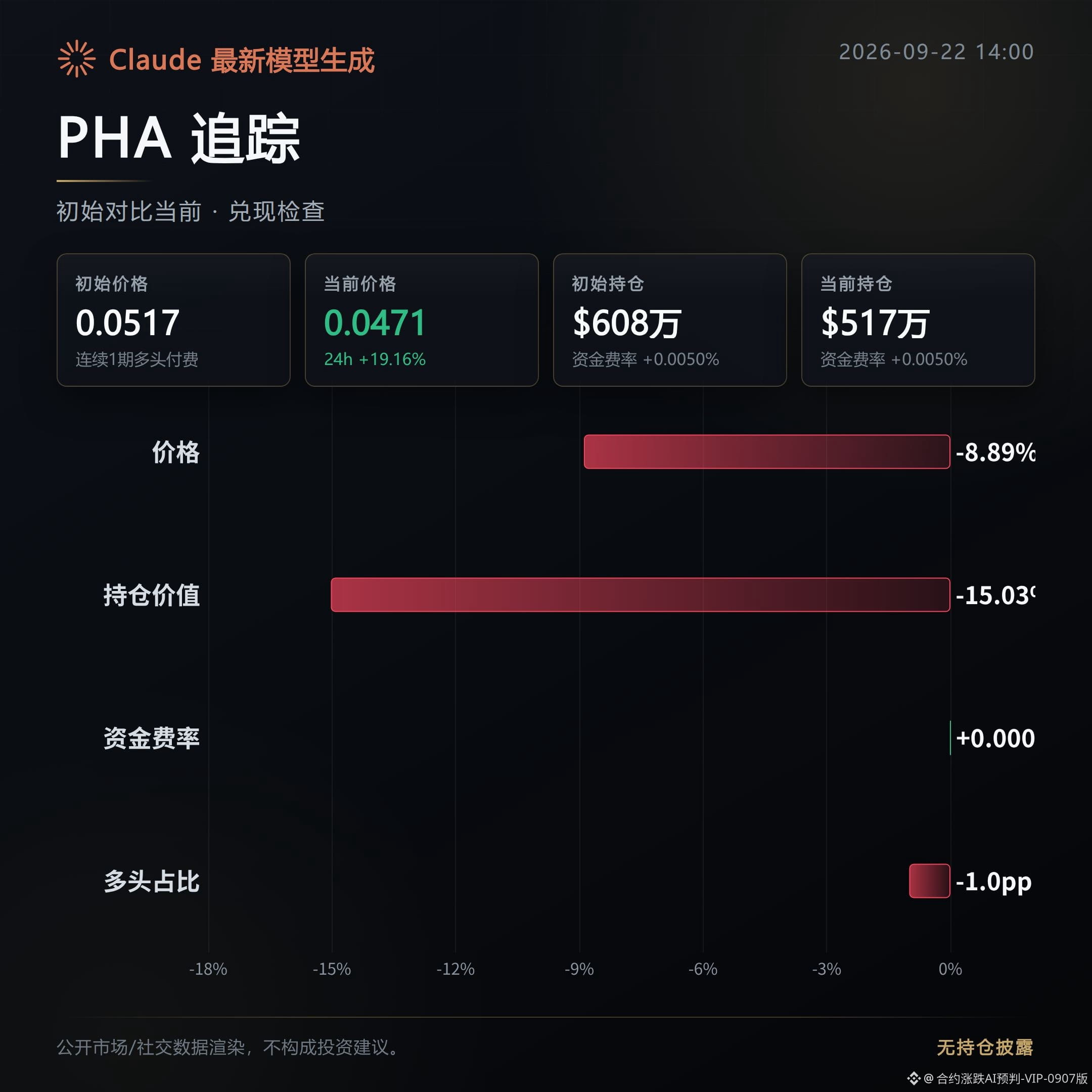
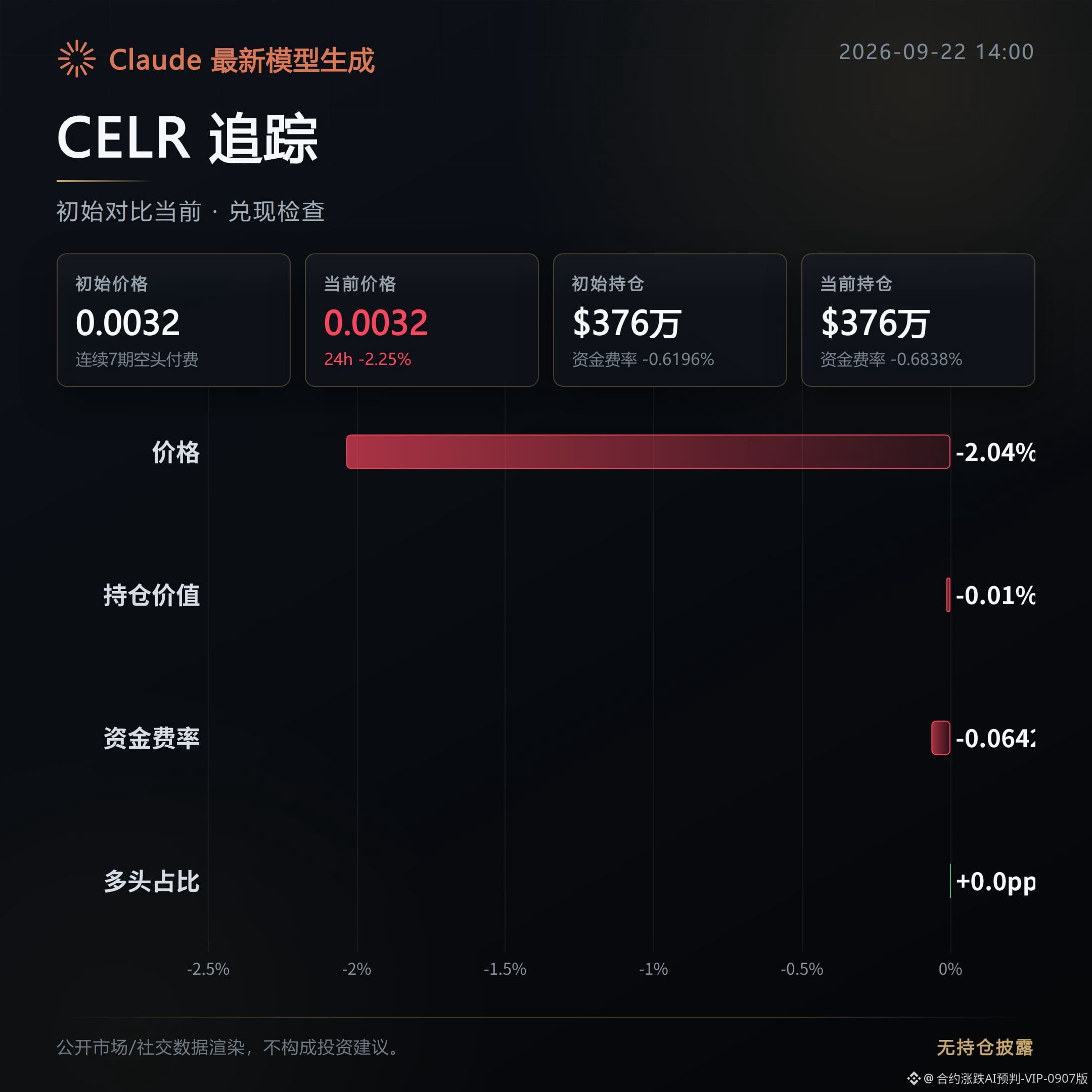
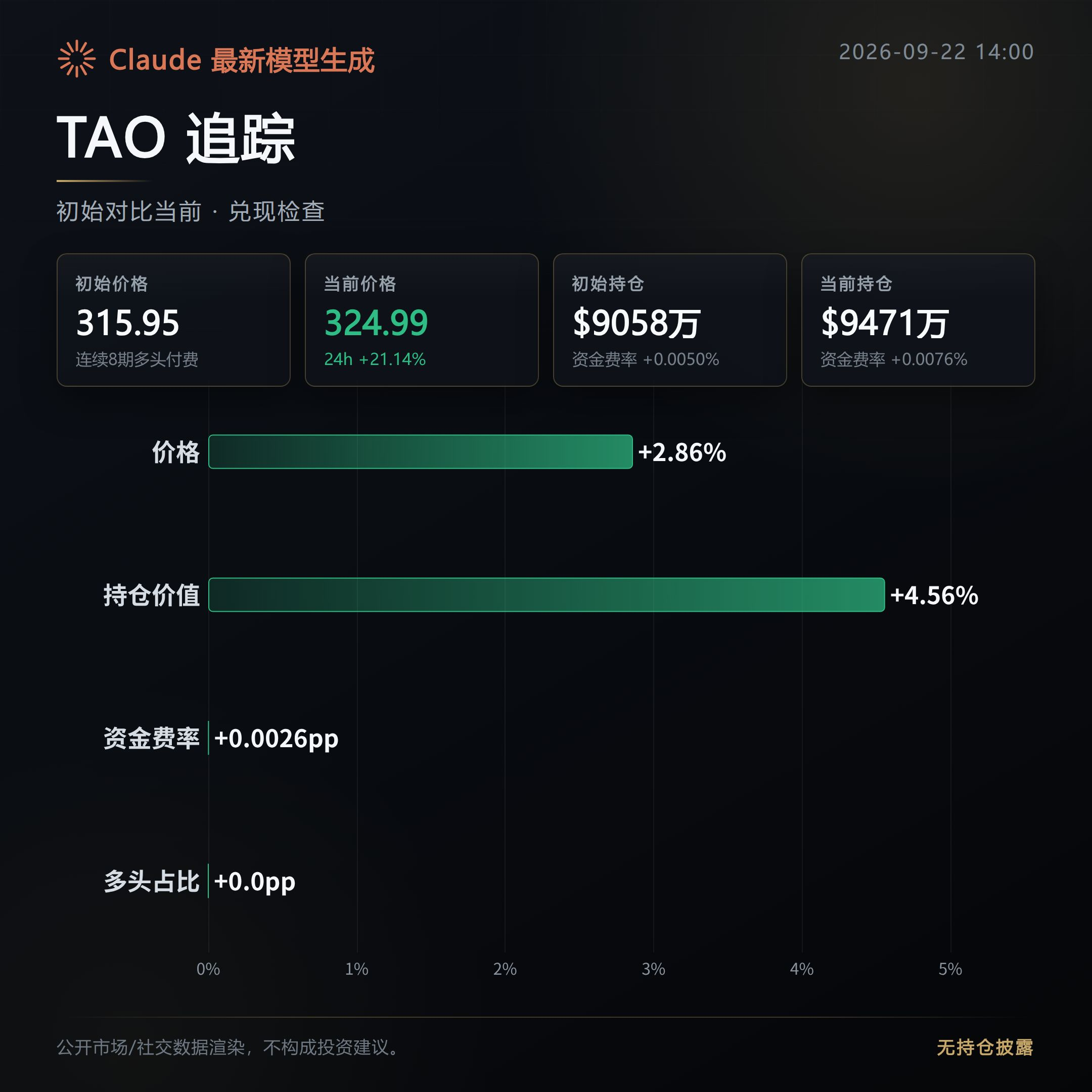
610
Contract Order Book Daily|9/22 Aiming for a $90k push as leverage keeps piling up
$BTC has just probed around $8.56 million, up 5.11% over the past 24 hours.
The $90k level has already been put front and center.
Open interest on the other side is also not idle. Bitcoin futures total open interest is $9.367 billion, up another 6.1% in 24 hours.
Price and positioning are being stacked upward together, suggesting this move isn’t simply profit-taking and closing—it’s new money rushing in.
The aggressive buy orders clearly outweigh the sell orders, with the buy/sell ratio at 1.13, which is the direct driver keeping price supported.
Long accounts make up only 46%, so shorts still outnumber longs by count on paper, yet price is still being pushed higher.
What the news calls “shorts being squeezed” means exactly this: shorts can’t withstand continuous incremental buying, are forced into passive liquidation, and that in turn pushes price up again.
Funding rates are positive across the board: $BTC 0.0097%, $ETH 0.0093%, $SOL 0.01%, BNB 0.0067%—the longs are steadily paying to chase the rally.
Off-exchange institutions Strategy and Strive together added $182.7 million worth of Bitcoin. They’re following through with the breakout above 86k without waiting for a pullback.
This round of the 50-week moving average turning into a long alignment is an “old signal” that has confirmed the trend in prior cycles. Paired with a Fear & Greed Index of 78, market sentiment is already clearly underway.
For smaller coins, funding rates split in both directions.
For KERNEL, the short funding rate has fallen to -0.781%, meaning shorts are hard-defending and even paying extra; for QNTX, the long funding rate has risen to +0.184%, and longs are also paying up to chase in.
When the Fear & Greed Index breaks above 78, leverage is usually stacked even more aggressively.
The news’s exact line says, “Leverage is still being built.” This sentence is worth watching even more than the price itself—pushing toward 90k isn’t hard; what’s difficult is how the accumulated positions in this round will be digested.
#合约盘口 #Bitcoin
Compiled with assistance from Claude Fable 5. For information reference only—please verify independently.
Contract Order Book Daily|9/22 Aiming for a $90k push as leverage keeps piling up
$BTC has just probed around $8.56 million, up 5.11% over the past 24 hours.
The $90k level has already been put front and center.
Open interest on the other side is also not idle. Bitcoin futures total open interest is $9.367 billion, up another 6.1% in 24 hours.
Price and positioning are being stacked upward together, suggesting this move isn’t simply profit-taking and closing—it’s new money rushing in.
The aggressive buy orders clearly outweigh the sell orders, with the buy/sell ratio at 1.13, which is the direct driver keeping price supported.
Long accounts make up only 46%, so shorts still outnumber longs by count on paper, yet price is still being pushed higher.
What the news calls “shorts being squeezed” means exactly this: shorts can’t withstand continuous incremental buying, are forced into passive liquidation, and that in turn pushes price up again.
Funding rates are positive across the board: $BTC 0.0097%, $ETH 0.0093%, $SOL 0.01%, BNB 0.0067%—the longs are steadily paying to chase the rally.
Off-exchange institutions Strategy and Strive together added $182.7 million worth of Bitcoin. They’re following through with the breakout above 86k without waiting for a pullback.
This round of the 50-week moving average turning into a long alignment is an “old signal” that has confirmed the trend in prior cycles. Paired with a Fear & Greed Index of 78, market sentiment is already clearly underway.
For smaller coins, funding rates split in both directions.
For KERNEL, the short funding rate has fallen to -0.781%, meaning shorts are hard-defending and even paying extra; for QNTX, the long funding rate has risen to +0.184%, and longs are also paying up to chase in.
When the Fear & Greed Index breaks above 78, leverage is usually stacked even more aggressively.
The news’s exact line says, “Leverage is still being built.” This sentence is worth watching even more than the price itself—pushing toward 90k isn’t hard; what’s difficult is how the accumulated positions in this round will be digested.
#合约盘口 #Bitcoin
Compiled with assistance from Claude Fable 5. For information reference only—please verify independently.
$BTC has just probed around $8.56 million, up 5.11% over the past 24 hours.
The $90k level has already been put front and center.
Open interest on the other side is also not idle. Bitcoin futures total open interest is $9.367 billion, up another 6.1% in 24 hours.
Price and positioning are being stacked upward together, suggesting this move isn’t simply profit-taking and closing—it’s new money rushing in.
The aggressive buy orders clearly outweigh the sell orders, with the buy/sell ratio at 1.13, which is the direct driver keeping price supported.
Long accounts make up only 46%, so shorts still outnumber longs by count on paper, yet price is still being pushed higher.
What the news calls “shorts being squeezed” means exactly this: shorts can’t withstand continuous incremental buying, are forced into passive liquidation, and that in turn pushes price up again.
Funding rates are positive across the board: $BTC 0.0097%, $ETH 0.0093%, $SOL 0.01%, BNB 0.0067%—the longs are steadily paying to chase the rally.
Off-exchange institutions Strategy and Strive together added $182.7 million worth of Bitcoin. They’re following through with the breakout above 86k without waiting for a pullback.
This round of the 50-week moving average turning into a long alignment is an “old signal” that has confirmed the trend in prior cycles. Paired with a Fear & Greed Index of 78, market sentiment is already clearly underway.
For smaller coins, funding rates split in both directions.
For KERNEL, the short funding rate has fallen to -0.781%, meaning shorts are hard-defending and even paying extra; for QNTX, the long funding rate has risen to +0.184%, and longs are also paying up to chase in.
When the Fear & Greed Index breaks above 78, leverage is usually stacked even more aggressively.
The news’s exact line says, “Leverage is still being built.” This sentence is worth watching even more than the price itself—pushing toward 90k isn’t hard; what’s difficult is how the accumulated positions in this round will be digested.
#合约盘口 #Bitcoin
Compiled with assistance from Claude Fable 5. For information reference only—please verify independently.
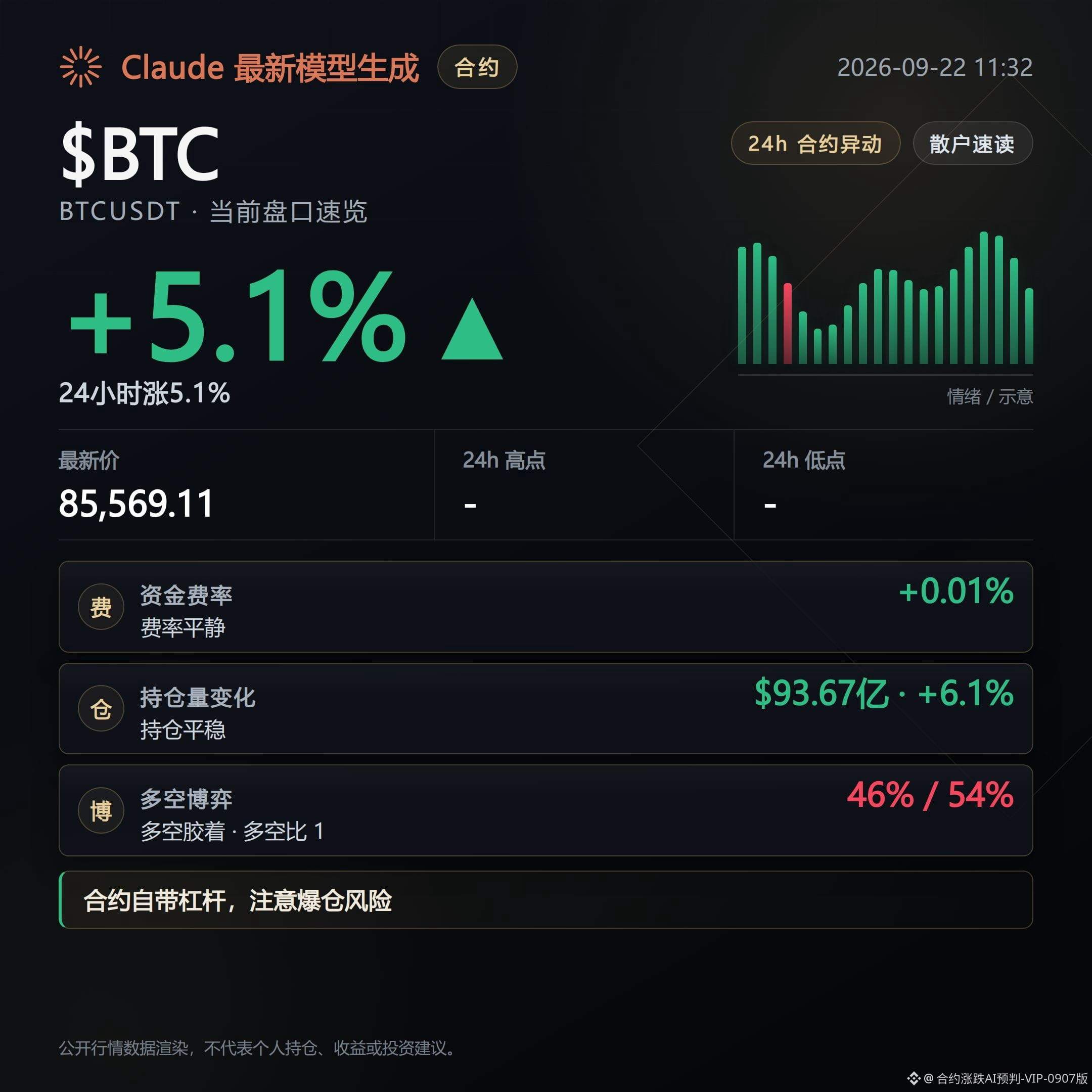
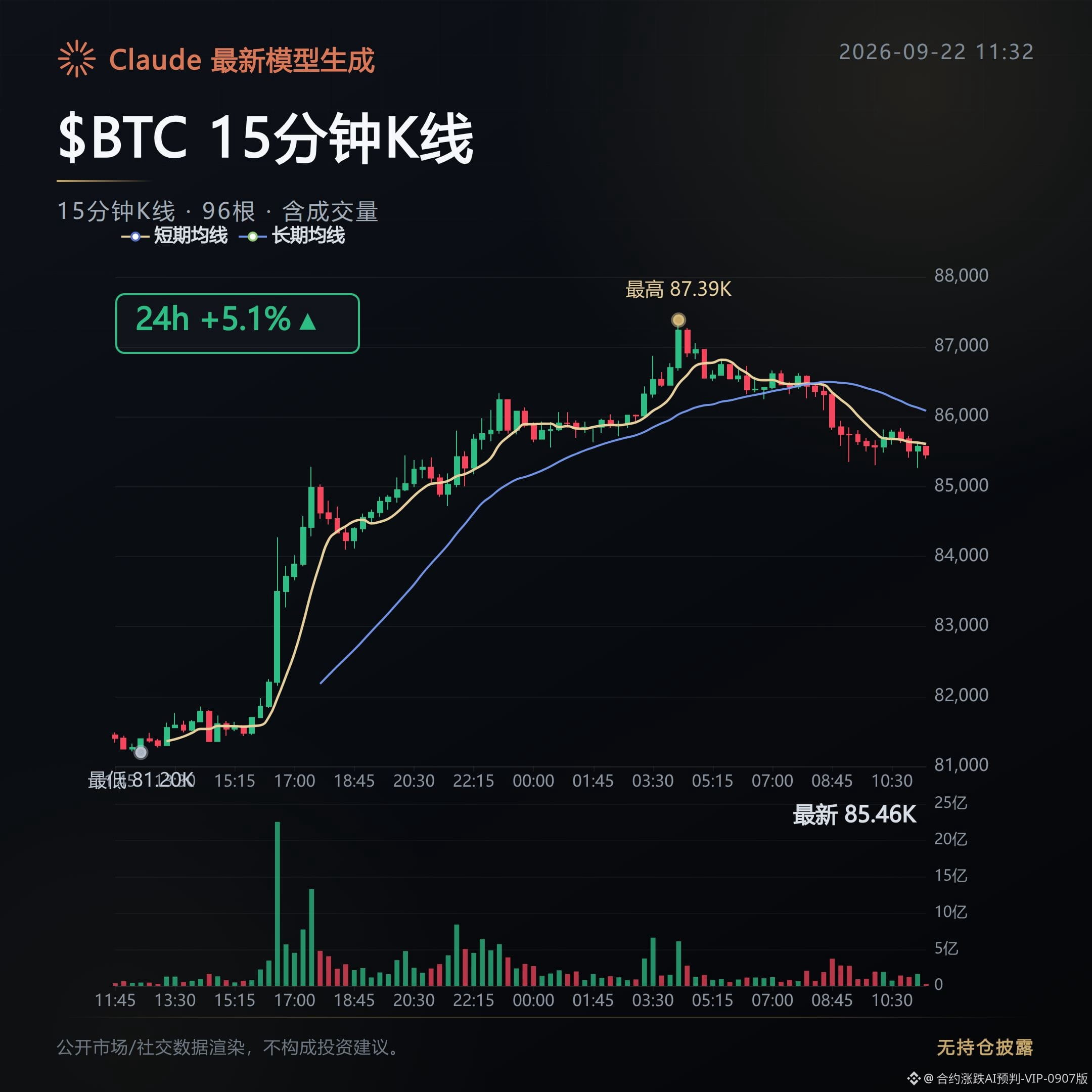
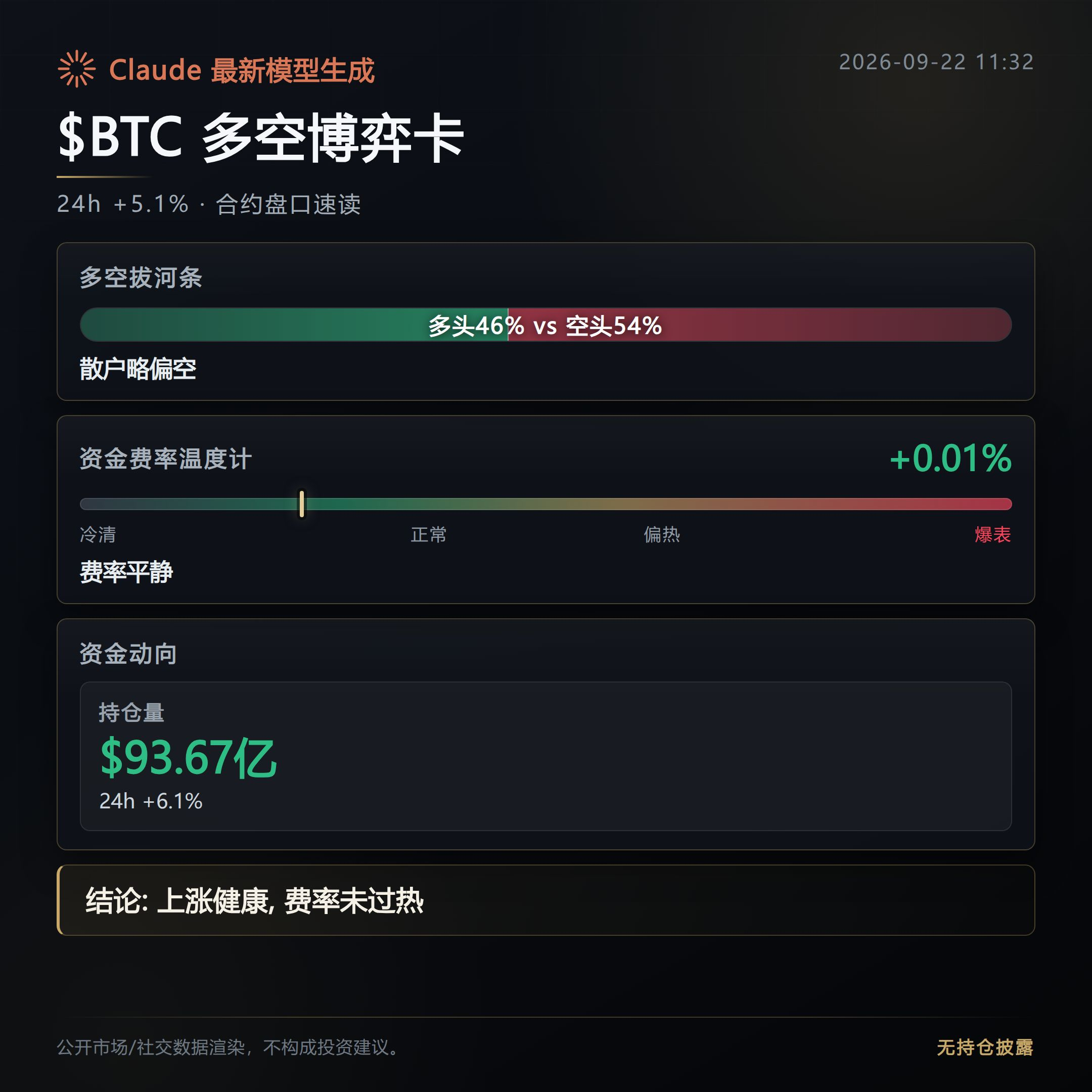
315
Top 3 on the 24-hour contract gain leaderboard: KERNEL, ZETA, and FORM—directly broken out in the morning slot for those watching the charts.
KERNEL is up 56.2%, ranking first. Trading volume is $46.57 million, open interest is $40.39 million. Over the past 24 hours, it surged 38.5%, and it added another 10% in the last hour—suggesting the longs are still adding at this price level.
The funding rate is negative at -0.5188%. It has been paying shorts for 5 consecutive periods, yet the long/short ratio is 2.39, with 71% of accounts going long—direction is very crowded.
The relative strength indicator is 88.1, already in the overbought zone. The supertrend indicator still shows an up move. The invalidation conditions are clear: once the funding rate flips from negative to positive, or if the RSI falls back out of the overbought zone, this crowded long position should be reassessed.
ZETA is up 47.73%, with the largest traded amount among the three: $346 million. Open interest has exploded 441.1% over 24 hours, making it the one with the heaviest open-interest buildup among the three coins.
Funding rate is -0.0923% (negative), with shorts being paid for 3 consecutive periods. The aggressive bid is slightly higher than the offers; the long/short ratio is 1.24—relatively mild. RSI at 53.1 is neutral, and the supertrend is still rising.
The invalidation for this signal is when open-interest growth rate turns downward, or when the 1-hour change in open interest shifts from positive to negative—indicating fresh capital is no longer entering.
FORM is up 37.11%. Trading volume is $152 million, and it has the largest open-interest scale at $190 million. It increased 106.6% over 24 hours, but only 0.4% over the last hour—open interest growth has clearly slowed.
Funding rate is positive at 0.005%, with longs being paid for 8 consecutive periods. Its direction is opposite to the first two coins; however, the big-player long/short ratio is as high as 2.88. Meanwhile, the retail long/short ratio is 49%, close to a 50/50 split—structurally, the large players are more bullish.
RSI at 65.8 is slightly-to-moderately neutral, with supertrend rising. The invalidation condition is that the 1-hour open-interest change continues at zero growth or turns negative; combined with the long-side funding rate flipping from positive to negative, it would mean long paying willingness is also fading.
The common observation levels across the three are the 1-hour change in open interest: KERNEL and ZETA are still accelerating their buildup, while FORM has clearly slowed down.
Being near the top of the gain leaderboard has historically been a position with the biggest volatility at high levels. Chasing pumps and using high leverage makes it easy to get poked by counter-moves. Let each person’s judgment handle execution pace and risk control.
Claude Fable 5 assists in generation; the content is for market information reference only and does not constitute investment advice.
Top 3 on the 24-hour contract gain leaderboard: KERNEL, ZETA, and FORM—directly broken out in the morning slot for those watching the charts.
KERNEL is up 56.2%, ranking first. Trading volume is $46.57 million, open interest is $40.39 million. Over the past 24 hours, it surged 38.5%, and it added another 10% in the last hour—suggesting the longs are still adding at this price level.
The funding rate is negative at -0.5188%. It has been paying shorts for 5 consecutive periods, yet the long/short ratio is 2.39, with 71% of accounts going long—direction is very crowded.
The relative strength indicator is 88.1, already in the overbought zone. The supertrend indicator still shows an up move. The invalidation conditions are clear: once the funding rate flips from negative to positive, or if the RSI falls back out of the overbought zone, this crowded long position should be reassessed.
ZETA is up 47.73%, with the largest traded amount among the three: $346 million. Open interest has exploded 441.1% over 24 hours, making it the one with the heaviest open-interest buildup among the three coins.
Funding rate is -0.0923% (negative), with shorts being paid for 3 consecutive periods. The aggressive bid is slightly higher than the offers; the long/short ratio is 1.24—relatively mild. RSI at 53.1 is neutral, and the supertrend is still rising.
The invalidation for this signal is when open-interest growth rate turns downward, or when the 1-hour change in open interest shifts from positive to negative—indicating fresh capital is no longer entering.
FORM is up 37.11%. Trading volume is $152 million, and it has the largest open-interest scale at $190 million. It increased 106.6% over 24 hours, but only 0.4% over the last hour—open interest growth has clearly slowed.
Funding rate is positive at 0.005%, with longs being paid for 8 consecutive periods. Its direction is opposite to the first two coins; however, the big-player long/short ratio is as high as 2.88. Meanwhile, the retail long/short ratio is 49%, close to a 50/50 split—structurally, the large players are more bullish.
RSI at 65.8 is slightly-to-moderately neutral, with supertrend rising. The invalidation condition is that the 1-hour open-interest change continues at zero growth or turns negative; combined with the long-side funding rate flipping from positive to negative, it would mean long paying willingness is also fading.
The common observation levels across the three are the 1-hour change in open interest: KERNEL and ZETA are still accelerating their buildup, while FORM has clearly slowed down.
Being near the top of the gain leaderboard has historically been a position with the biggest volatility at high levels. Chasing pumps and using high leverage makes it easy to get poked by counter-moves. Let each person’s judgment handle execution pace and risk control.
Claude Fable 5 assists in generation; the content is for market information reference only and does not constitute investment advice.
KERNEL is up 56.2%, ranking first. Trading volume is $46.57 million, open interest is $40.39 million. Over the past 24 hours, it surged 38.5%, and it added another 10% in the last hour—suggesting the longs are still adding at this price level.
The funding rate is negative at -0.5188%. It has been paying shorts for 5 consecutive periods, yet the long/short ratio is 2.39, with 71% of accounts going long—direction is very crowded.
The relative strength indicator is 88.1, already in the overbought zone. The supertrend indicator still shows an up move. The invalidation conditions are clear: once the funding rate flips from negative to positive, or if the RSI falls back out of the overbought zone, this crowded long position should be reassessed.
ZETA is up 47.73%, with the largest traded amount among the three: $346 million. Open interest has exploded 441.1% over 24 hours, making it the one with the heaviest open-interest buildup among the three coins.
Funding rate is -0.0923% (negative), with shorts being paid for 3 consecutive periods. The aggressive bid is slightly higher than the offers; the long/short ratio is 1.24—relatively mild. RSI at 53.1 is neutral, and the supertrend is still rising.
The invalidation for this signal is when open-interest growth rate turns downward, or when the 1-hour change in open interest shifts from positive to negative—indicating fresh capital is no longer entering.
FORM is up 37.11%. Trading volume is $152 million, and it has the largest open-interest scale at $190 million. It increased 106.6% over 24 hours, but only 0.4% over the last hour—open interest growth has clearly slowed.
Funding rate is positive at 0.005%, with longs being paid for 8 consecutive periods. Its direction is opposite to the first two coins; however, the big-player long/short ratio is as high as 2.88. Meanwhile, the retail long/short ratio is 49%, close to a 50/50 split—structurally, the large players are more bullish.
RSI at 65.8 is slightly-to-moderately neutral, with supertrend rising. The invalidation condition is that the 1-hour open-interest change continues at zero growth or turns negative; combined with the long-side funding rate flipping from positive to negative, it would mean long paying willingness is also fading.
The common observation levels across the three are the 1-hour change in open interest: KERNEL and ZETA are still accelerating their buildup, while FORM has clearly slowed down.
Being near the top of the gain leaderboard has historically been a position with the biggest volatility at high levels. Chasing pumps and using high leverage makes it easy to get poked by counter-moves. Let each person’s judgment handle execution pace and risk control.
Claude Fable 5 assists in generation; the content is for market information reference only and does not constitute investment advice.
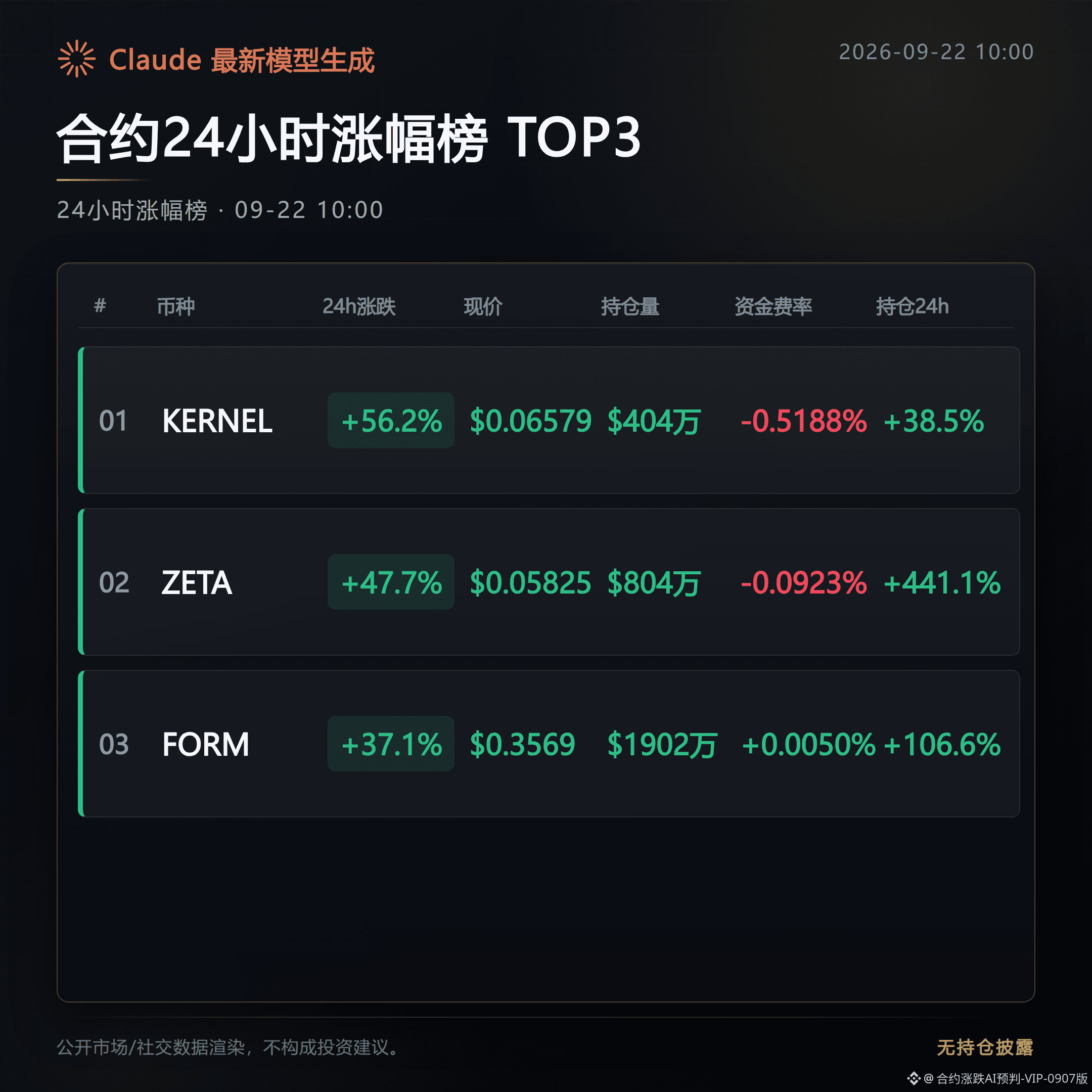
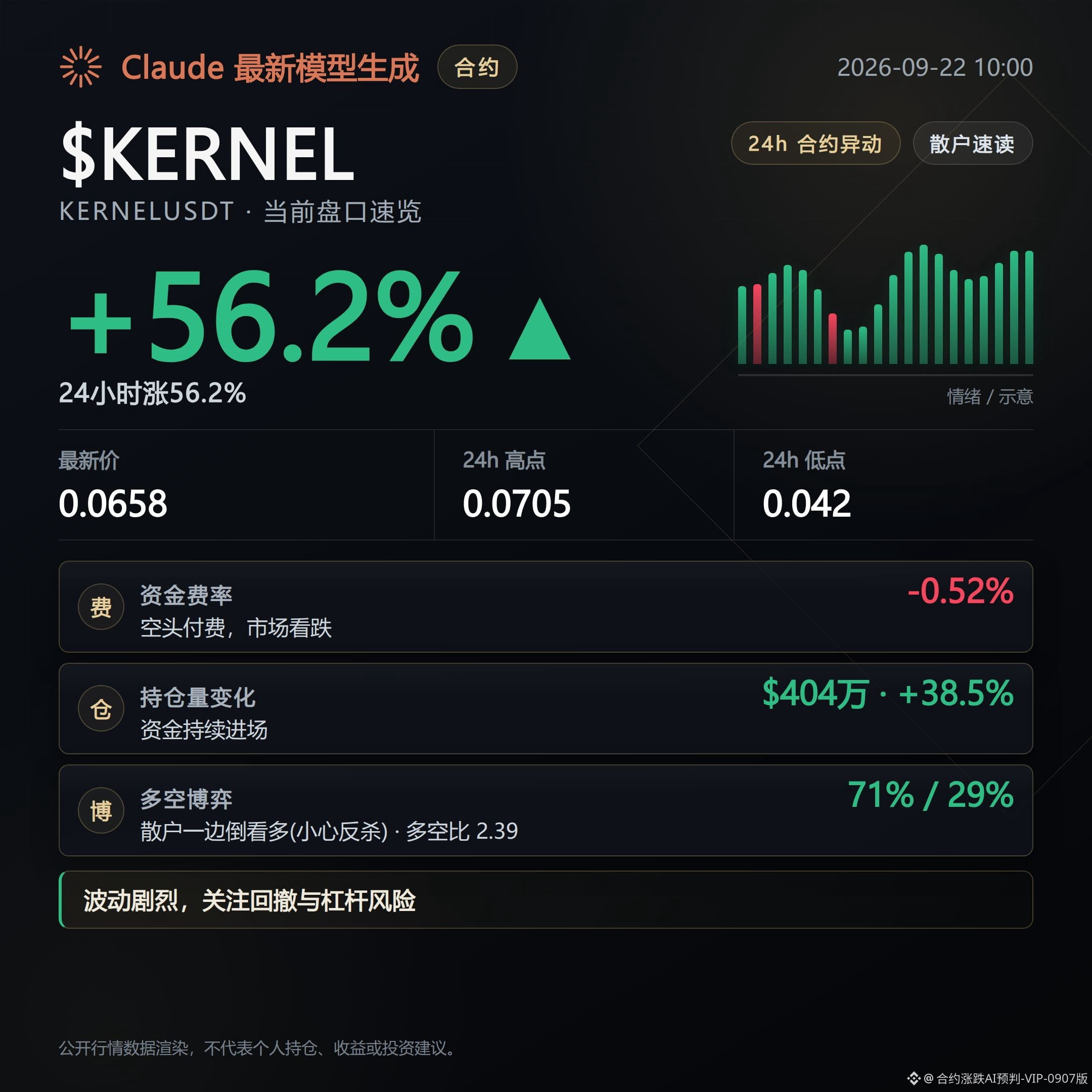
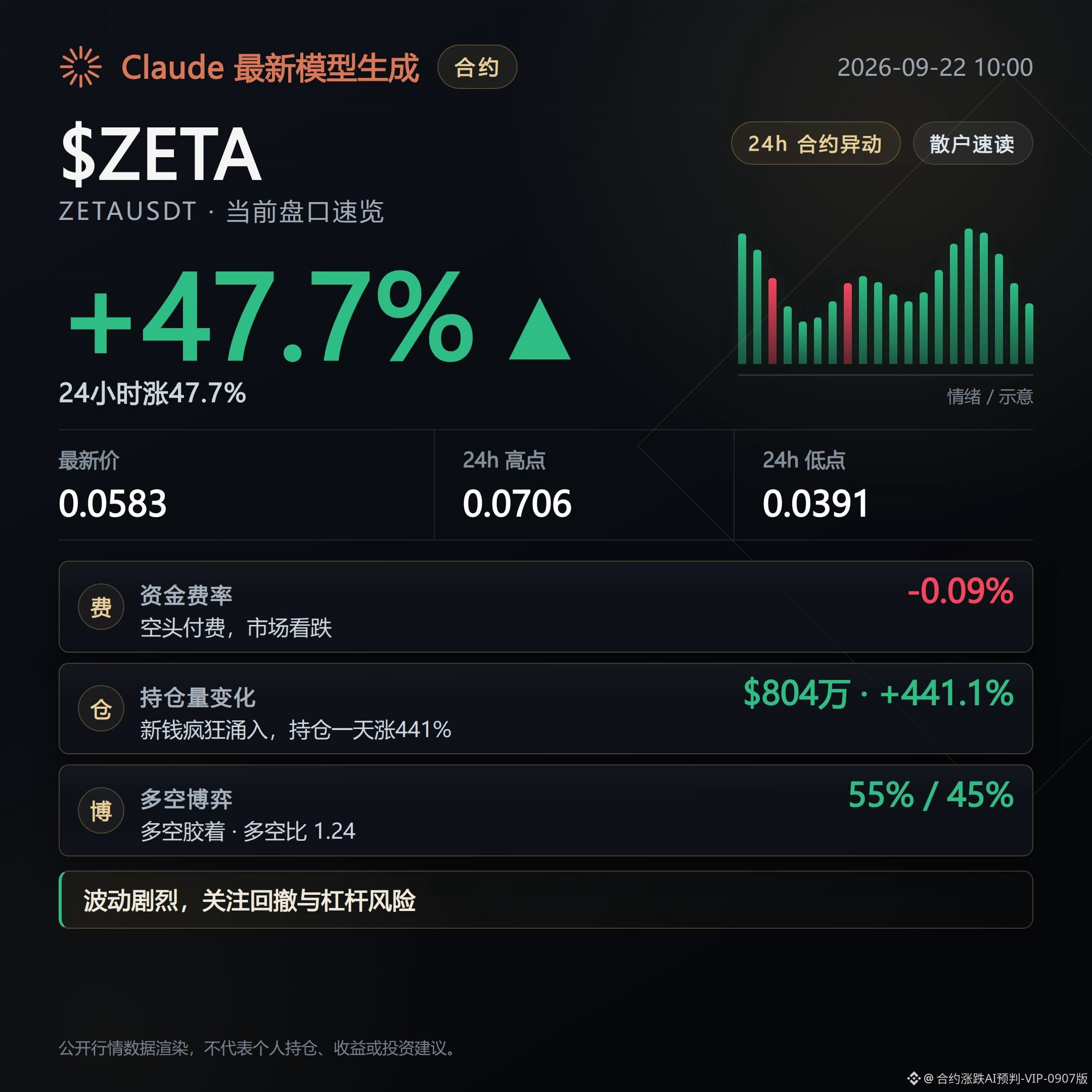
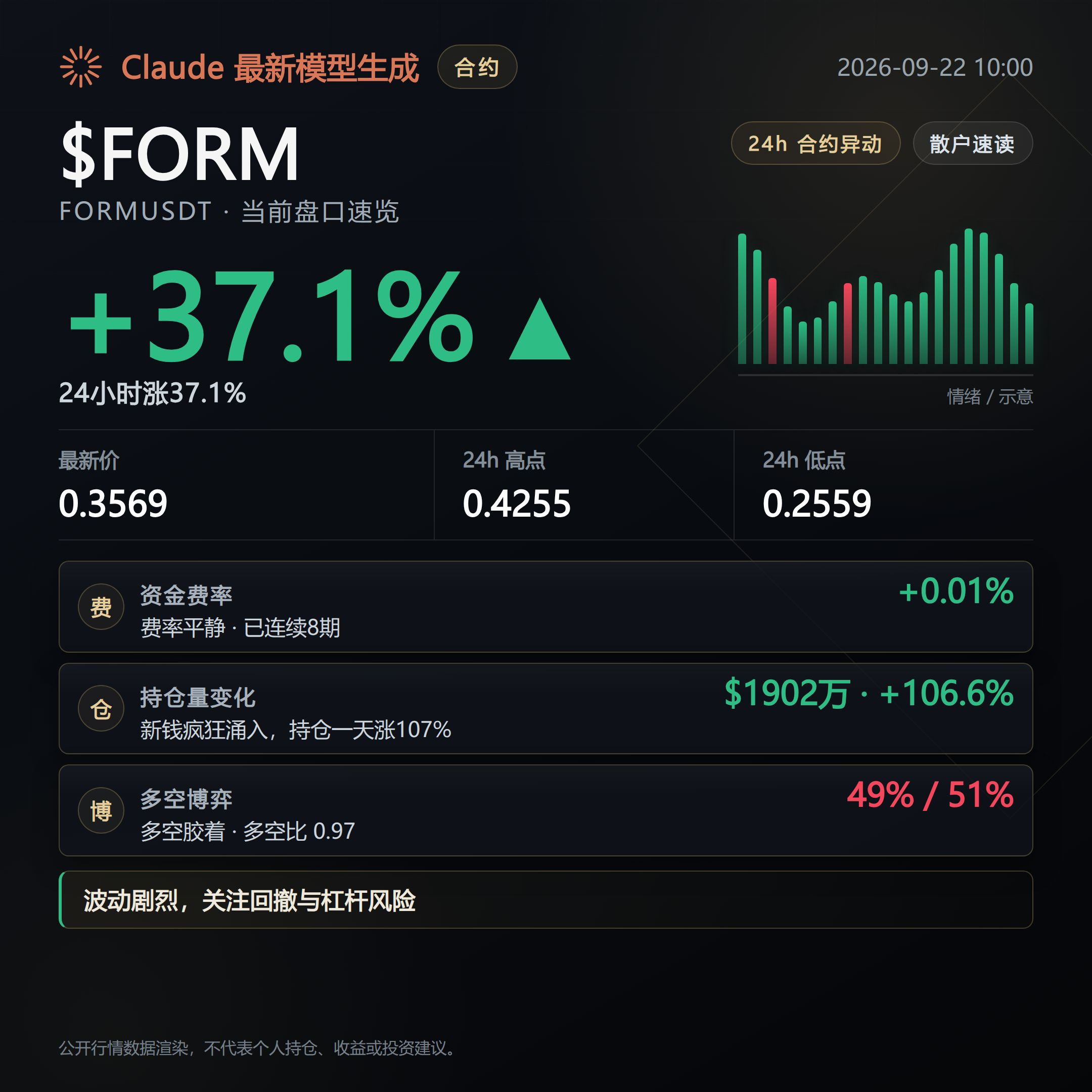
563
Bullish. The common points on today’s order books for these three contracts—PHA, CELR, and TAO—are very clear: the price is all moving in the same direction, the open interest is rising in tandem, and the aggressive buy orders are also concentrated on the long side.
Next, we need to watch whether this set of incremental volume can continue to expand, especially whether the open interest’s follow-through speed will slow down.
For PHA, what I’m looking at is that over the past 24 hours the price has been trending upward in line with the move, and open interest over 24 hours increased by 180.5%, which is a typical case of position inflow.
The funding rate has been in a consecutive 1 period of longs paying, indicating that the long side is continuously taking on costs to enter.
The counterpoint is that the 1-hour change in open interest is basically flat—short-term position adding hasn’t yet been fully confirmed for continuity.
For CELR, what I’m looking at is a price that is moving slightly in the same direction, while open interest over 24 hours increased by 13.4%. The funding rate has been consecutive 7 periods of shorts paying, suggesting that a squeeze structure may be more pronounced.
The ratio of aggressive buy/sell orders is stronger on the long side, and it aligns with chips/positions accumulating on the close—this signal is fairly positive.
The counterpoint is that the long-to-short count ratio is only 0.92, so the retail side isn’t clearly skewed toward longs; and the technical position, with the supertrend, is still pointing downward.
For TAO, what I’m looking at is that the price has risen in the same direction over 24 hours by 19.01%, open interest over 24 hours increased by 26.9%, and the large-holder long-to-short ratio reaches 2.7—structurally, it’s biased toward concentrated longs.
The funding rate has been consecutive 8 periods of longs paying, and the premium rate is also positive, aligning with positions/accumulation coming in on the close.
The counterpoint is that the relative strength indicator has reached an overbought zone of 76.2; short-term volatility is high, so it should be considered accordingly based on the publicly available order book.
If the open interest growth pace and aggressive buy order activity for these three coins continue to hold, then this breakout rally line should keep moving; if open interest turns and contracts or if a funding-rate structure reversal appears, then this direction needs to be reconsidered.
#PHA #TAO
Claude Fable 5 helps generate; content is for market information reference only and does not constitute investment advice.
Bullish. The common points on today’s order books for these three contracts—PHA, CELR, and TAO—are very clear: the price is all moving in the same direction, the open interest is rising in tandem, and the aggressive buy orders are also concentrated on the long side.
Next, we need to watch whether this set of incremental volume can continue to expand, especially whether the open interest’s follow-through speed will slow down.
For PHA, what I’m looking at is that over the past 24 hours the price has been trending upward in line with the move, and open interest over 24 hours increased by 180.5%, which is a typical case of position inflow.
The funding rate has been in a consecutive 1 period of longs paying, indicating that the long side is continuously taking on costs to enter.
The counterpoint is that the 1-hour change in open interest is basically flat—short-term position adding hasn’t yet been fully confirmed for continuity.
For CELR, what I’m looking at is a price that is moving slightly in the same direction, while open interest over 24 hours increased by 13.4%. The funding rate has been consecutive 7 periods of shorts paying, suggesting that a squeeze structure may be more pronounced.
The ratio of aggressive buy/sell orders is stronger on the long side, and it aligns with chips/positions accumulating on the close—this signal is fairly positive.
The counterpoint is that the long-to-short count ratio is only 0.92, so the retail side isn’t clearly skewed toward longs; and the technical position, with the supertrend, is still pointing downward.
For TAO, what I’m looking at is that the price has risen in the same direction over 24 hours by 19.01%, open interest over 24 hours increased by 26.9%, and the large-holder long-to-short ratio reaches 2.7—structurally, it’s biased toward concentrated longs.
The funding rate has been consecutive 8 periods of longs paying, and the premium rate is also positive, aligning with positions/accumulation coming in on the close.
The counterpoint is that the relative strength indicator has reached an overbought zone of 76.2; short-term volatility is high, so it should be considered accordingly based on the publicly available order book.
If the open interest growth pace and aggressive buy order activity for these three coins continue to hold, then this breakout rally line should keep moving; if open interest turns and contracts or if a funding-rate structure reversal appears, then this direction needs to be reconsidered.
#PHA #TAO
Claude Fable 5 helps generate; content is for market information reference only and does not constitute investment advice.
Next, we need to watch whether this set of incremental volume can continue to expand, especially whether the open interest’s follow-through speed will slow down.
For PHA, what I’m looking at is that over the past 24 hours the price has been trending upward in line with the move, and open interest over 24 hours increased by 180.5%, which is a typical case of position inflow.
The funding rate has been in a consecutive 1 period of longs paying, indicating that the long side is continuously taking on costs to enter.
The counterpoint is that the 1-hour change in open interest is basically flat—short-term position adding hasn’t yet been fully confirmed for continuity.
For CELR, what I’m looking at is a price that is moving slightly in the same direction, while open interest over 24 hours increased by 13.4%. The funding rate has been consecutive 7 periods of shorts paying, suggesting that a squeeze structure may be more pronounced.
The ratio of aggressive buy/sell orders is stronger on the long side, and it aligns with chips/positions accumulating on the close—this signal is fairly positive.
The counterpoint is that the long-to-short count ratio is only 0.92, so the retail side isn’t clearly skewed toward longs; and the technical position, with the supertrend, is still pointing downward.
For TAO, what I’m looking at is that the price has risen in the same direction over 24 hours by 19.01%, open interest over 24 hours increased by 26.9%, and the large-holder long-to-short ratio reaches 2.7—structurally, it’s biased toward concentrated longs.
The funding rate has been consecutive 8 periods of longs paying, and the premium rate is also positive, aligning with positions/accumulation coming in on the close.
The counterpoint is that the relative strength indicator has reached an overbought zone of 76.2; short-term volatility is high, so it should be considered accordingly based on the publicly available order book.
If the open interest growth pace and aggressive buy order activity for these three coins continue to hold, then this breakout rally line should keep moving; if open interest turns and contracts or if a funding-rate structure reversal appears, then this direction needs to be reconsidered.
#PHA #TAO
Claude Fable 5 helps generate; content is for market information reference only and does not constitute investment advice.
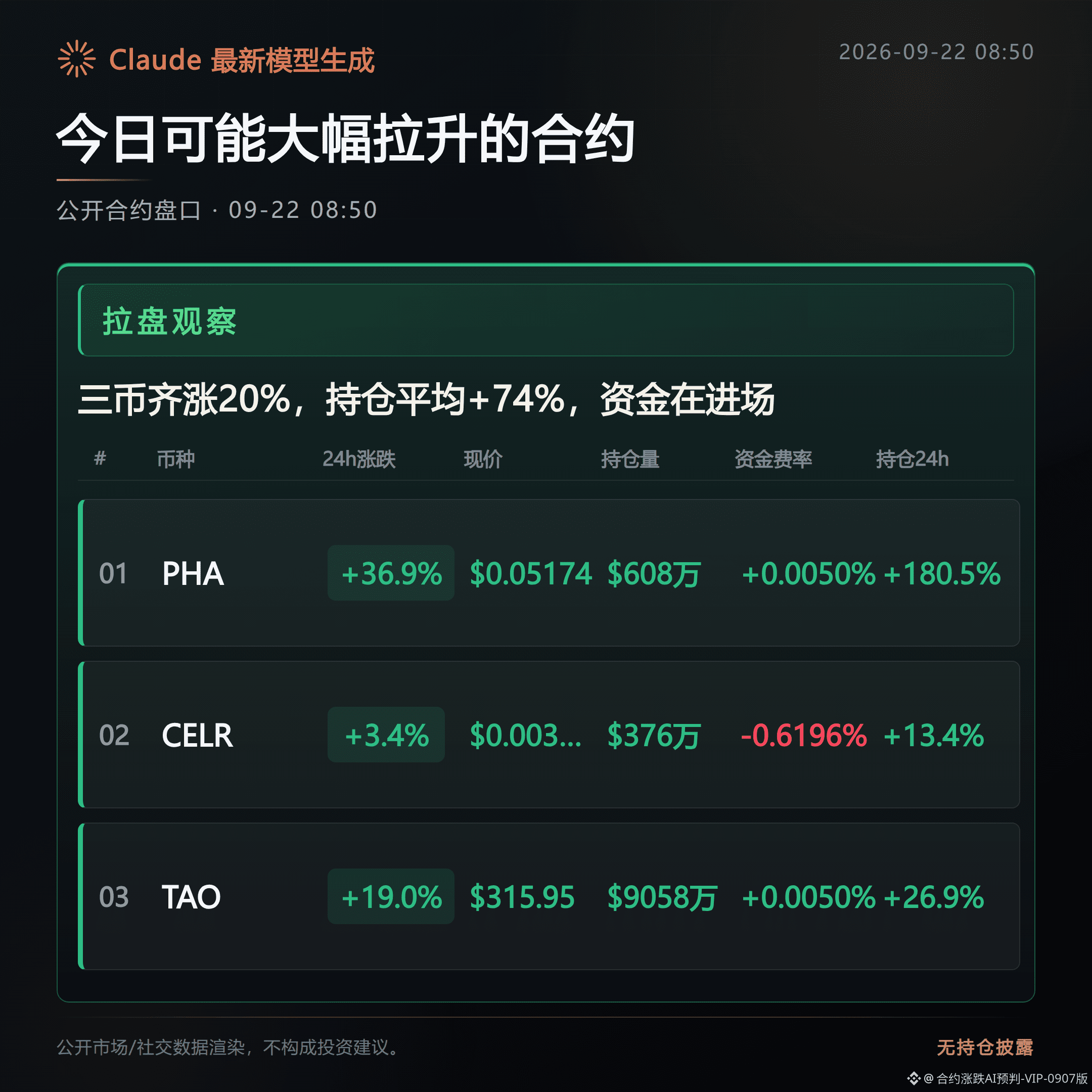
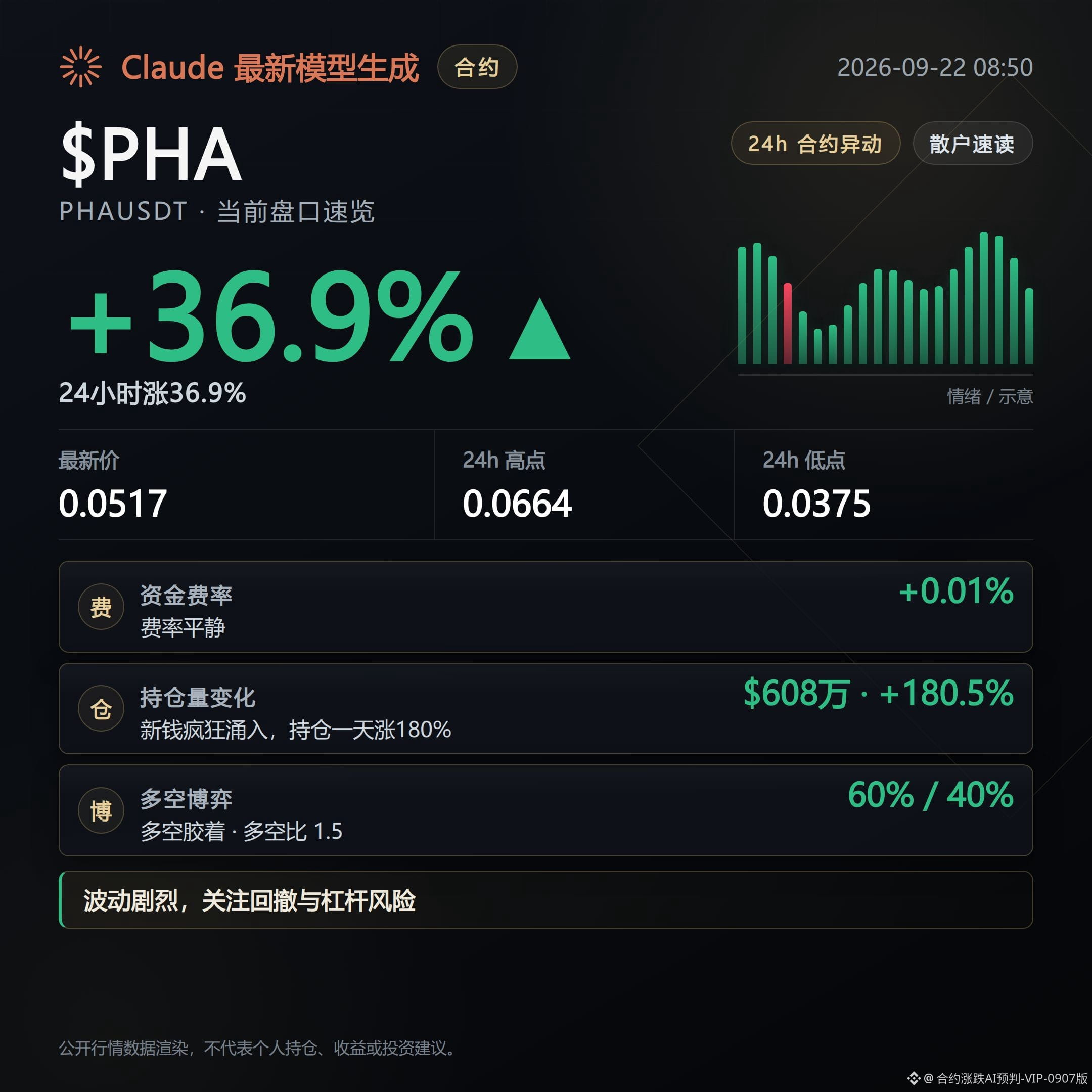
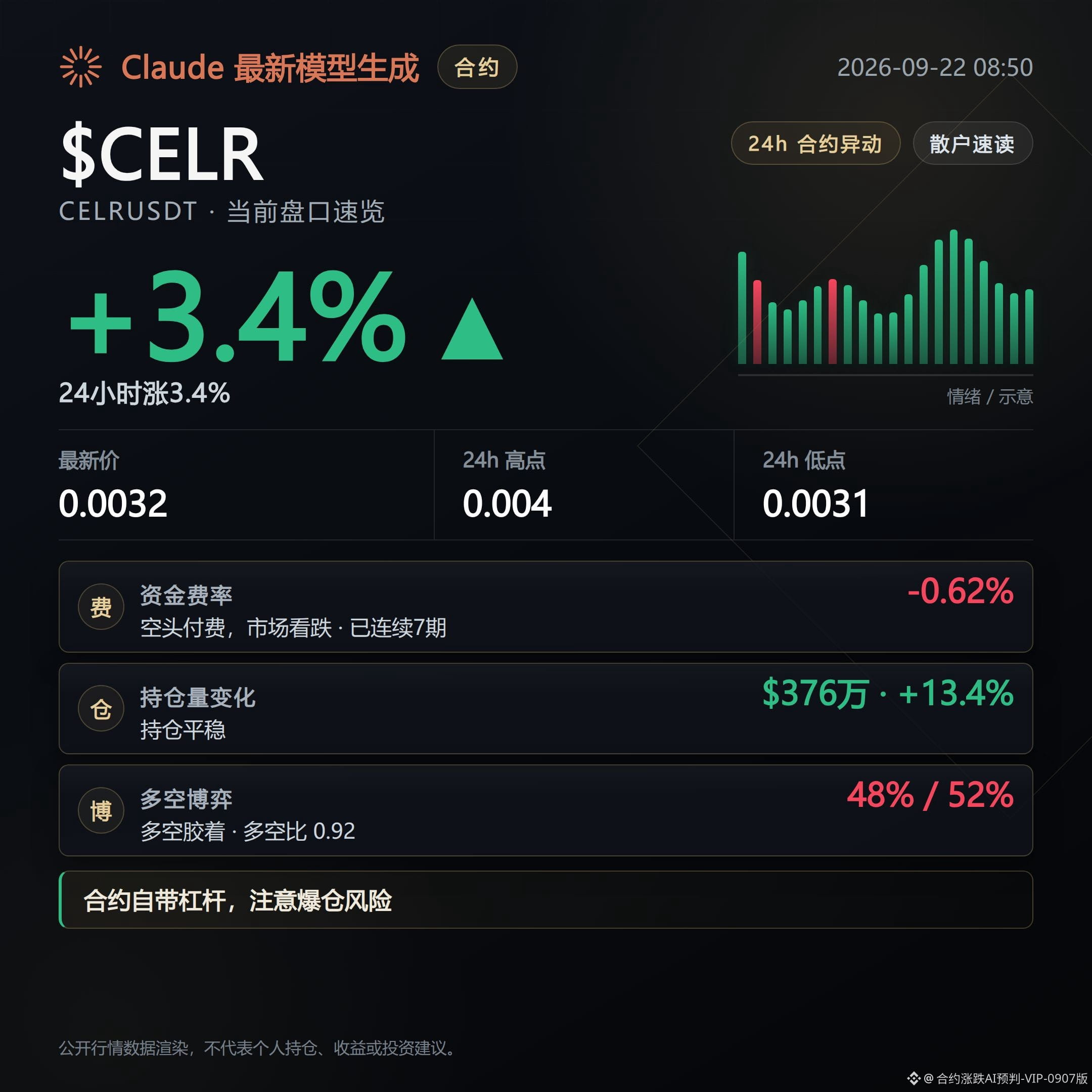
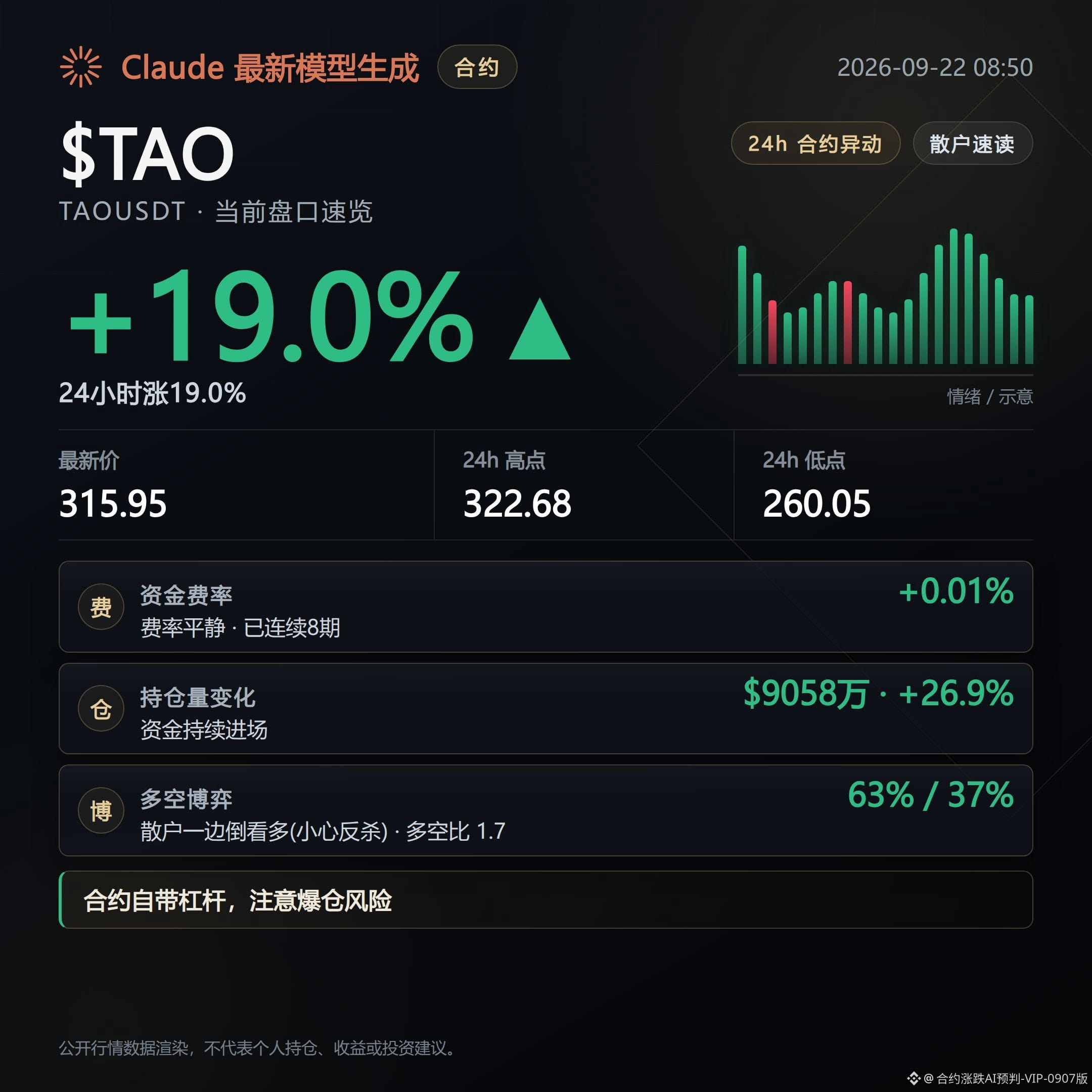
637
Contracts that may see a slow grind down and sell pressure today
A bearish case—these three contracts, KERNEL, MIRA, and BERA, are the ones that should be put front and center in the analysis.
Their prices are still showing gains: KERNEL is up more than 12%, and MIRA and BERA are also positive. But the structure has already started to loosen—don’t just look at the headline percentage gains.
Chips are getting dispersed, and that is the signal jointly reflected across the order books.
What to fear isn’t that they don’t rise—it’s when they rise and then the follow-through support thins out. Chasing higher can leave you getting tortured by both a pullback and a snap-back.
Next, keep watching whether the support/follow-through will keep thinning, and whether a pullback will truly take shape.
KERNEL current price is $0.04732. Up 12.91% over the past 24 hours. The funding rate has been paying shorts for 5 consecutive rounds. Open interest has surged 32.8% in 24 hours—this indicates a batch of new positions has poured in during this upswing.
The retail long/short ratio has been pushed to 72% long, and the crowding is out in the open. Once the wind changes, pullbacks are likely to be amplified.
On the other hand, the share of active buy orders is only 0.78—not a strong breakout where buys are pressing price. Technically, it’s still in a neutral zone and not in an overbought state—so it’s not the kind of obvious top signal you can spot at a glance.
MIRA current price is $0.0539. Up 3.91% over the past 24 hours. The funding rate has been paying longs for 5 consecutive rounds—when it rose, longs kept paying.
But open interest actually fell by 4.2% over the past 24 hours: price is up while positions didn’t keep pace. That’s exactly where the structure is loosening.
Meanwhile, the share of active buy orders is 0.88, and the 1-hour open interest has ticked up by 0.1%. Short-term capital hasn’t fully withdrawn yet, so the case isn’t yet set in stone.
BERA current price is $0.2289. Up 6.81% over the past 24 hours. The large-trader long/short ratio reaches 2.06, which is even more crowded than retail at 61% long.
Funding has been paying longs for 8 consecutive rounds—longer than the other two. The longs are carrying higher position costs.
However, the change in open interest is quite mild: +2.0% over 24 hours and +1.0% over 1 hour. There’s no sign of an abnormal influx. It looks more like gradual accumulation rather than stop-and-go position piling after a fast spike designed to lure longs.
If the follow-through support keeps thinning, the line for a pullback is already being drawn.
If it instead regains volume and holds above, then this view needs to be re-evaluated.
#KERNEL #MIRA #BERA #Contract order book
Compiled with assistance from Claude Fable 5. For informational reference only—please verify independently.
Contracts that may see a slow grind down and sell pressure today
A bearish case—these three contracts, KERNEL, MIRA, and BERA, are the ones that should be put front and center in the analysis.
Their prices are still showing gains: KERNEL is up more than 12%, and MIRA and BERA are also positive. But the structure has already started to loosen—don’t just look at the headline percentage gains.
Chips are getting dispersed, and that is the signal jointly reflected across the order books.
What to fear isn’t that they don’t rise—it’s when they rise and then the follow-through support thins out. Chasing higher can leave you getting tortured by both a pullback and a snap-back.
Next, keep watching whether the support/follow-through will keep thinning, and whether a pullback will truly take shape.
KERNEL current price is $0.04732. Up 12.91% over the past 24 hours. The funding rate has been paying shorts for 5 consecutive rounds. Open interest has surged 32.8% in 24 hours—this indicates a batch of new positions has poured in during this upswing.
The retail long/short ratio has been pushed to 72% long, and the crowding is out in the open. Once the wind changes, pullbacks are likely to be amplified.
On the other hand, the share of active buy orders is only 0.78—not a strong breakout where buys are pressing price. Technically, it’s still in a neutral zone and not in an overbought state—so it’s not the kind of obvious top signal you can spot at a glance.
MIRA current price is $0.0539. Up 3.91% over the past 24 hours. The funding rate has been paying longs for 5 consecutive rounds—when it rose, longs kept paying.
But open interest actually fell by 4.2% over the past 24 hours: price is up while positions didn’t keep pace. That’s exactly where the structure is loosening.
Meanwhile, the share of active buy orders is 0.88, and the 1-hour open interest has ticked up by 0.1%. Short-term capital hasn’t fully withdrawn yet, so the case isn’t yet set in stone.
BERA current price is $0.2289. Up 6.81% over the past 24 hours. The large-trader long/short ratio reaches 2.06, which is even more crowded than retail at 61% long.
Funding has been paying longs for 8 consecutive rounds—longer than the other two. The longs are carrying higher position costs.
However, the change in open interest is quite mild: +2.0% over 24 hours and +1.0% over 1 hour. There’s no sign of an abnormal influx. It looks more like gradual accumulation rather than stop-and-go position piling after a fast spike designed to lure longs.
If the follow-through support keeps thinning, the line for a pullback is already being drawn.
If it instead regains volume and holds above, then this view needs to be re-evaluated.
#KERNEL #MIRA #BERA #Contract order book
Compiled with assistance from Claude Fable 5. For informational reference only—please verify independently.
A bearish case—these three contracts, KERNEL, MIRA, and BERA, are the ones that should be put front and center in the analysis.
Their prices are still showing gains: KERNEL is up more than 12%, and MIRA and BERA are also positive. But the structure has already started to loosen—don’t just look at the headline percentage gains.
Chips are getting dispersed, and that is the signal jointly reflected across the order books.
What to fear isn’t that they don’t rise—it’s when they rise and then the follow-through support thins out. Chasing higher can leave you getting tortured by both a pullback and a snap-back.
Next, keep watching whether the support/follow-through will keep thinning, and whether a pullback will truly take shape.
KERNEL current price is $0.04732. Up 12.91% over the past 24 hours. The funding rate has been paying shorts for 5 consecutive rounds. Open interest has surged 32.8% in 24 hours—this indicates a batch of new positions has poured in during this upswing.
The retail long/short ratio has been pushed to 72% long, and the crowding is out in the open. Once the wind changes, pullbacks are likely to be amplified.
On the other hand, the share of active buy orders is only 0.78—not a strong breakout where buys are pressing price. Technically, it’s still in a neutral zone and not in an overbought state—so it’s not the kind of obvious top signal you can spot at a glance.
MIRA current price is $0.0539. Up 3.91% over the past 24 hours. The funding rate has been paying longs for 5 consecutive rounds—when it rose, longs kept paying.
But open interest actually fell by 4.2% over the past 24 hours: price is up while positions didn’t keep pace. That’s exactly where the structure is loosening.
Meanwhile, the share of active buy orders is 0.88, and the 1-hour open interest has ticked up by 0.1%. Short-term capital hasn’t fully withdrawn yet, so the case isn’t yet set in stone.
BERA current price is $0.2289. Up 6.81% over the past 24 hours. The large-trader long/short ratio reaches 2.06, which is even more crowded than retail at 61% long.
Funding has been paying longs for 8 consecutive rounds—longer than the other two. The longs are carrying higher position costs.
However, the change in open interest is quite mild: +2.0% over 24 hours and +1.0% over 1 hour. There’s no sign of an abnormal influx. It looks more like gradual accumulation rather than stop-and-go position piling after a fast spike designed to lure longs.
If the follow-through support keeps thinning, the line for a pullback is already being drawn.
If it instead regains volume and holds above, then this view needs to be re-evaluated.
#KERNEL #MIRA #BERA #Contract order book
Compiled with assistance from Claude Fable 5. For informational reference only—please verify independently.
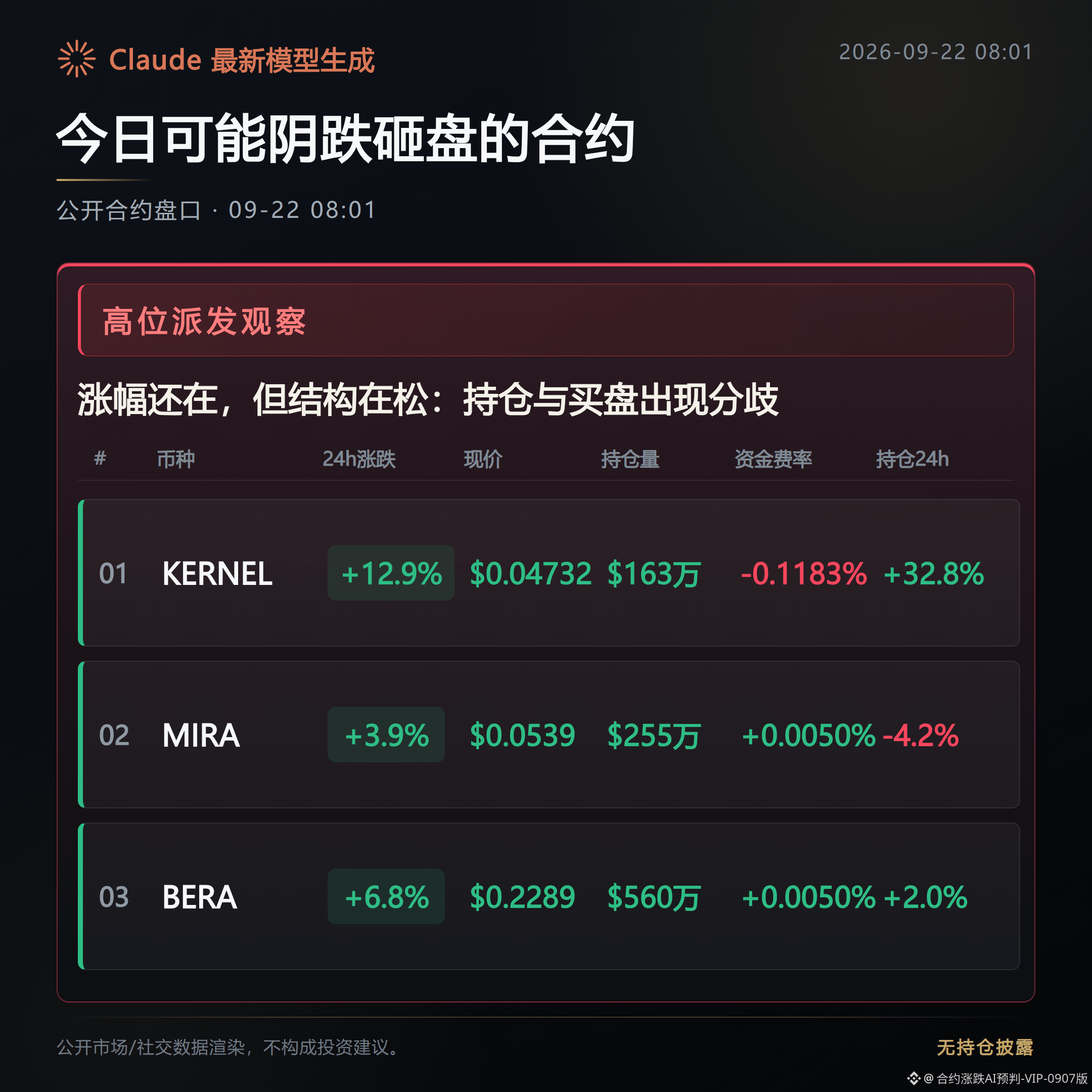
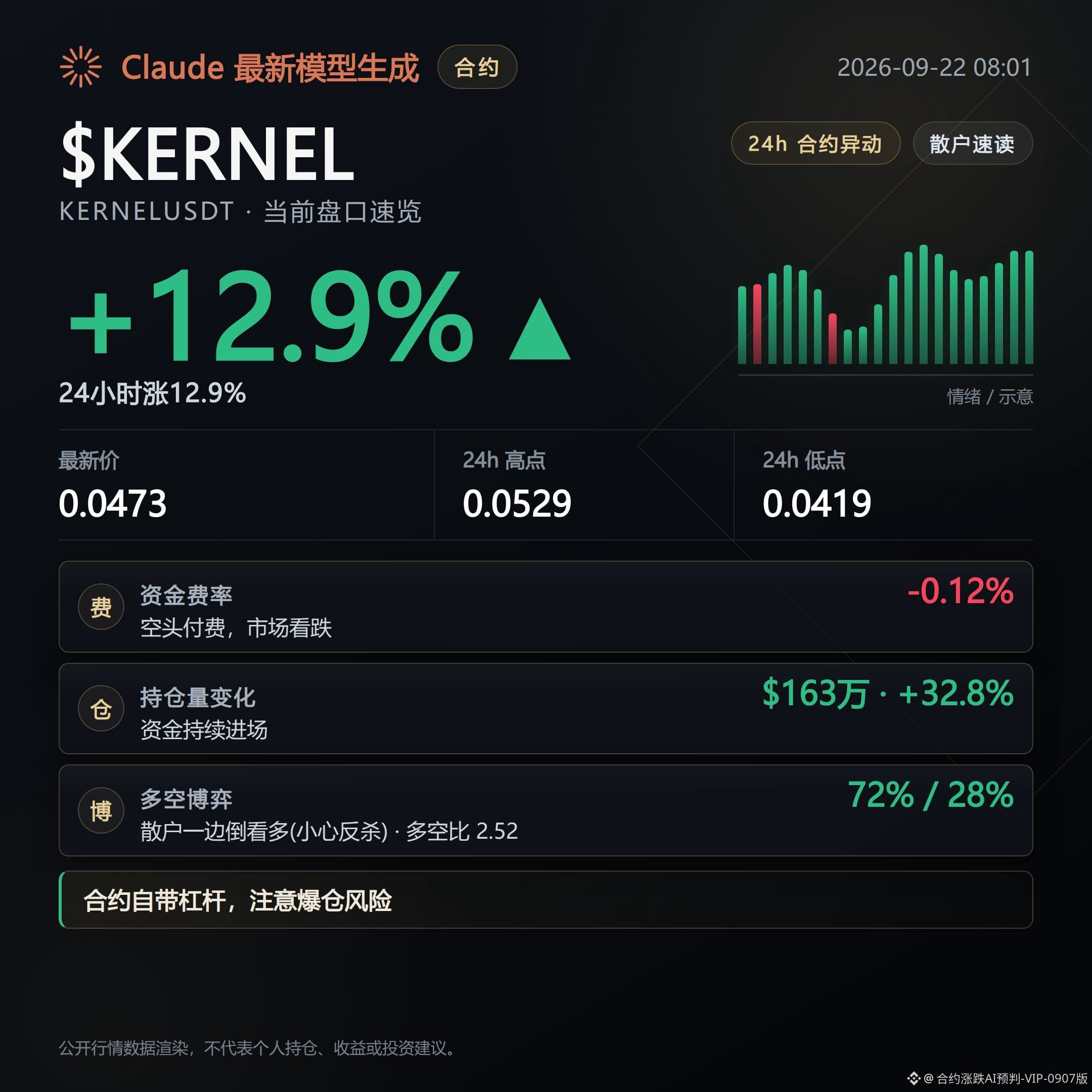
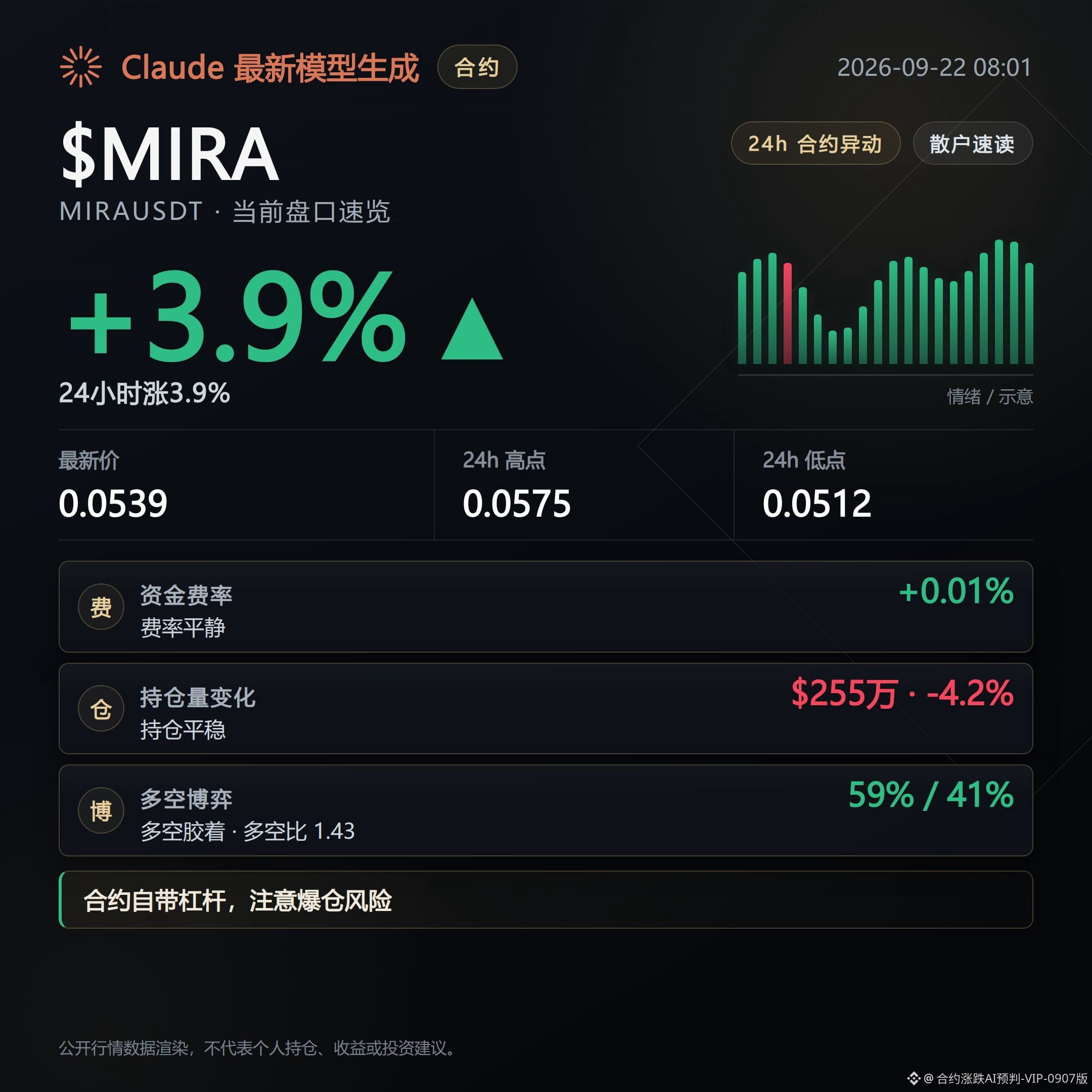
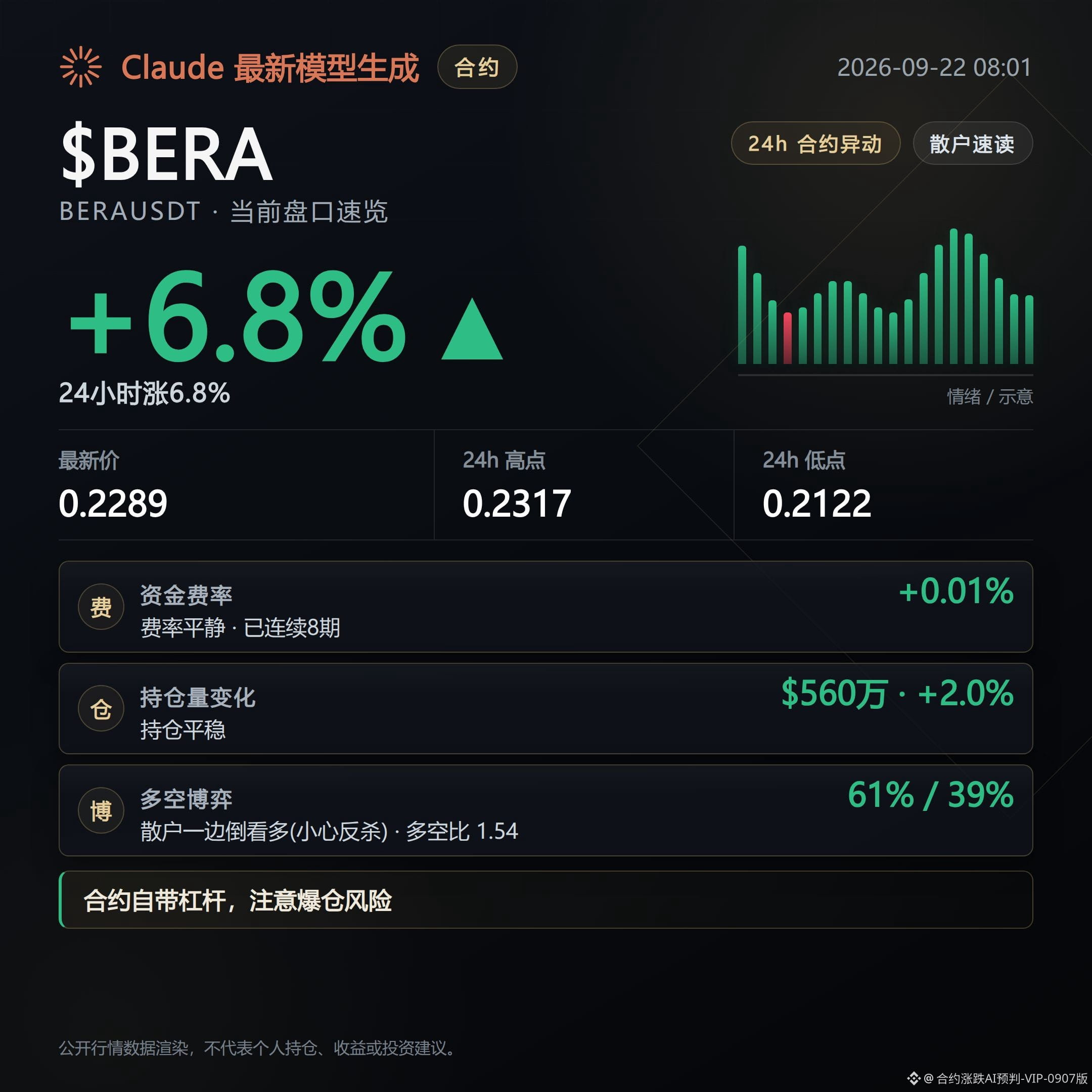
802
Contract Order Book Daily|9/22 The bears dug in and refused to concede; bulls’ share still doesn’t reach a majority
$BTC is trading around $86,400 in the morning, up 6.43% over 24 hours.
The calls for $90,000 are being raised again.
Two listed companies—Strategy Company and Sisi—officially announced they added $182.7 million worth of Bitcoin. After the price climbed above 86,000, the buy pressure didn’t stop.
Open interest rose to $9.413 billion, with an 8% volume increase in a day. The money is truly rushing in.
But the bulls’ share is only 47%, not yet over half—suggesting that in this up move, the bears are also hardening and refusing to give up.
The ratio of aggressive sells to aggressive buys is 0.93: sell-side orders are still more aggressive than buy-side ones, which doesn’t match the direction of the price rise. This kind of divergence is usually bears forcing a short-covering top-up, not a pure bull assault.
As for funding rates: for $BTC it’s up to 0.0068%, $ETH to 0.0061%, BNB leads at as high as 0.0121%, and $SOL follows closely at 0.01%. The four major coins are all turning positive across the board.
As long as the bulls are willing to keep digging into their pockets to hold positions, the Fear & Greed Index has also reached the “Greed” zone at 70. Sentiment hasn’t cooled down yet.
In the order book, small caps with order-book rates are “swinging” on both sides.
CELR, PROVE, and AGPU funding rates are negative, roughly from 0.2‰ to 0.8‰. The bears are piled in too heavily—any modest rebound can trigger a squeeze.
SHAZ, KSTR, and PUMPBTC funding rates have turned positive, about 0.16‰ to 0.23‰. Bulls are crowded on one side, making pullbacks easy to trap people.
There’s also a political variable.
A Crypto Regulatory “super political action committee” is reportedly targeting $30 million to take on Senator Sherrod Brown. Regulatory power struggles during the election cycle are far from over.
With the bulls’ share below half but aggressive sells still pressing prices higher—these two signals don’t align. Decide in your own mind whether to focus on bears trimming risk or to watch funding rates cool off.
This content is generated with the assistance of Claude Fable 5 and is for informational reference only—please verify it yourself.
Contract Order Book Daily|9/22 The bears dug in and refused to concede; bulls’ share still doesn’t reach a majority
$BTC is trading around $86,400 in the morning, up 6.43% over 24 hours.
The calls for $90,000 are being raised again.
Two listed companies—Strategy Company and Sisi—officially announced they added $182.7 million worth of Bitcoin. After the price climbed above 86,000, the buy pressure didn’t stop.
Open interest rose to $9.413 billion, with an 8% volume increase in a day. The money is truly rushing in.
But the bulls’ share is only 47%, not yet over half—suggesting that in this up move, the bears are also hardening and refusing to give up.
The ratio of aggressive sells to aggressive buys is 0.93: sell-side orders are still more aggressive than buy-side ones, which doesn’t match the direction of the price rise. This kind of divergence is usually bears forcing a short-covering top-up, not a pure bull assault.
As for funding rates: for $BTC it’s up to 0.0068%, $ETH to 0.0061%, BNB leads at as high as 0.0121%, and $SOL follows closely at 0.01%. The four major coins are all turning positive across the board.
As long as the bulls are willing to keep digging into their pockets to hold positions, the Fear & Greed Index has also reached the “Greed” zone at 70. Sentiment hasn’t cooled down yet.
In the order book, small caps with order-book rates are “swinging” on both sides.
CELR, PROVE, and AGPU funding rates are negative, roughly from 0.2‰ to 0.8‰. The bears are piled in too heavily—any modest rebound can trigger a squeeze.
SHAZ, KSTR, and PUMPBTC funding rates have turned positive, about 0.16‰ to 0.23‰. Bulls are crowded on one side, making pullbacks easy to trap people.
There’s also a political variable.
A Crypto Regulatory “super political action committee” is reportedly targeting $30 million to take on Senator Sherrod Brown. Regulatory power struggles during the election cycle are far from over.
With the bulls’ share below half but aggressive sells still pressing prices higher—these two signals don’t align. Decide in your own mind whether to focus on bears trimming risk or to watch funding rates cool off.
This content is generated with the assistance of Claude Fable 5 and is for informational reference only—please verify it yourself.
$BTC is trading around $86,400 in the morning, up 6.43% over 24 hours.
The calls for $90,000 are being raised again.
Two listed companies—Strategy Company and Sisi—officially announced they added $182.7 million worth of Bitcoin. After the price climbed above 86,000, the buy pressure didn’t stop.
Open interest rose to $9.413 billion, with an 8% volume increase in a day. The money is truly rushing in.
But the bulls’ share is only 47%, not yet over half—suggesting that in this up move, the bears are also hardening and refusing to give up.
The ratio of aggressive sells to aggressive buys is 0.93: sell-side orders are still more aggressive than buy-side ones, which doesn’t match the direction of the price rise. This kind of divergence is usually bears forcing a short-covering top-up, not a pure bull assault.
As for funding rates: for $BTC it’s up to 0.0068%, $ETH to 0.0061%, BNB leads at as high as 0.0121%, and $SOL follows closely at 0.01%. The four major coins are all turning positive across the board.
As long as the bulls are willing to keep digging into their pockets to hold positions, the Fear & Greed Index has also reached the “Greed” zone at 70. Sentiment hasn’t cooled down yet.
In the order book, small caps with order-book rates are “swinging” on both sides.
CELR, PROVE, and AGPU funding rates are negative, roughly from 0.2‰ to 0.8‰. The bears are piled in too heavily—any modest rebound can trigger a squeeze.
SHAZ, KSTR, and PUMPBTC funding rates have turned positive, about 0.16‰ to 0.23‰. Bulls are crowded on one side, making pullbacks easy to trap people.
There’s also a political variable.
A Crypto Regulatory “super political action committee” is reportedly targeting $30 million to take on Senator Sherrod Brown. Regulatory power struggles during the election cycle are far from over.
With the bulls’ share below half but aggressive sells still pressing prices higher—these two signals don’t align. Decide in your own mind whether to focus on bears trimming risk or to watch funding rates cool off.
This content is generated with the assistance of Claude Fable 5 and is for informational reference only—please verify it yourself.
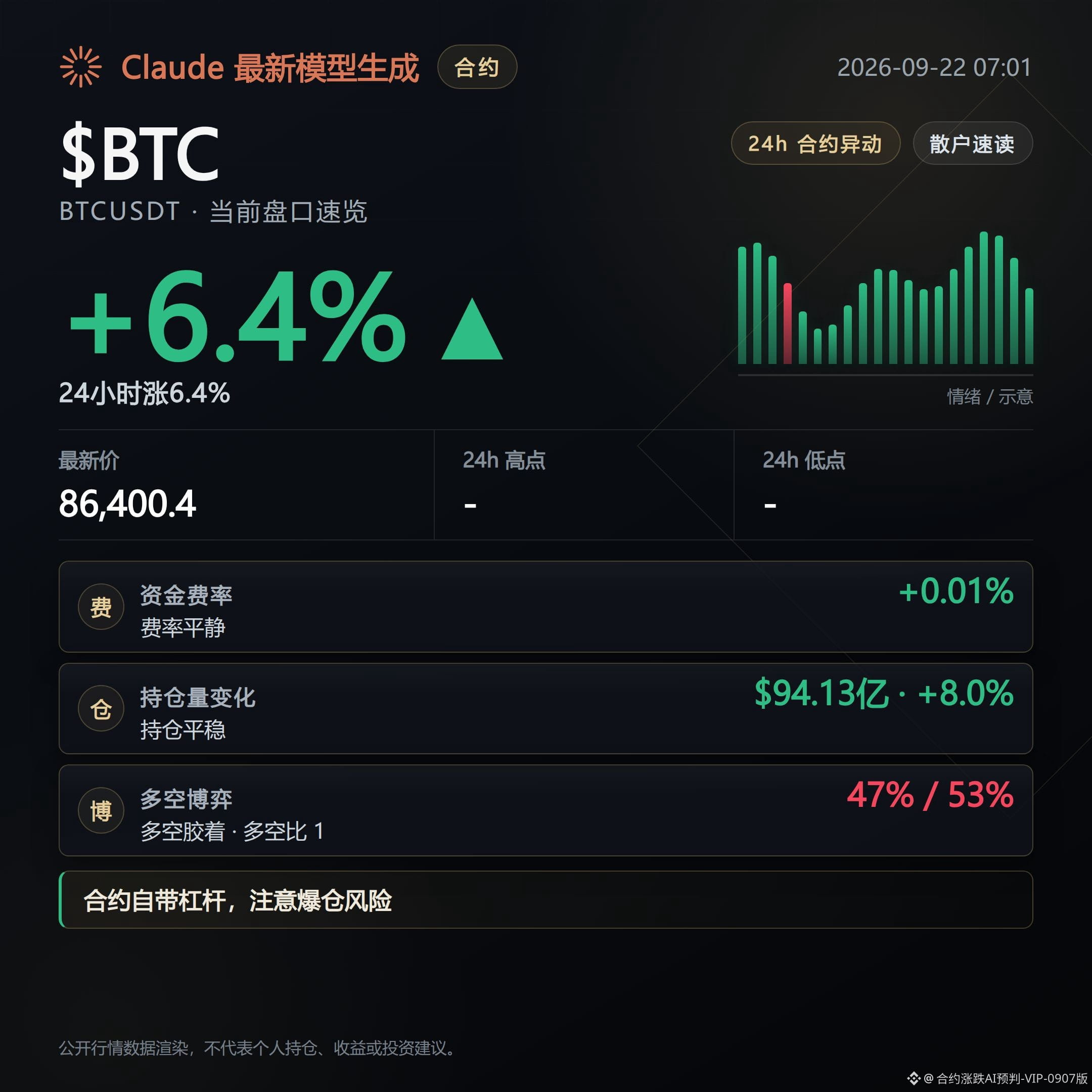
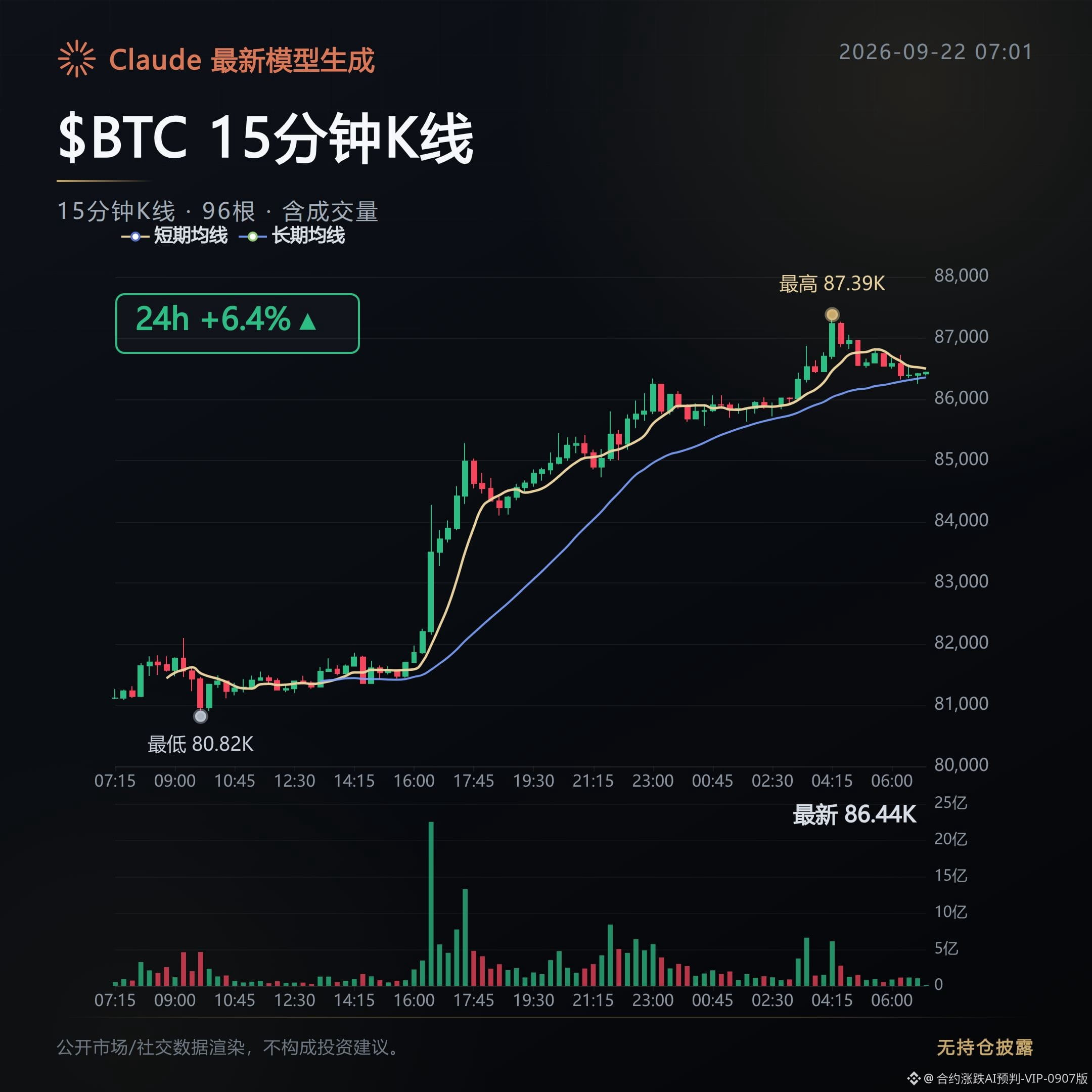
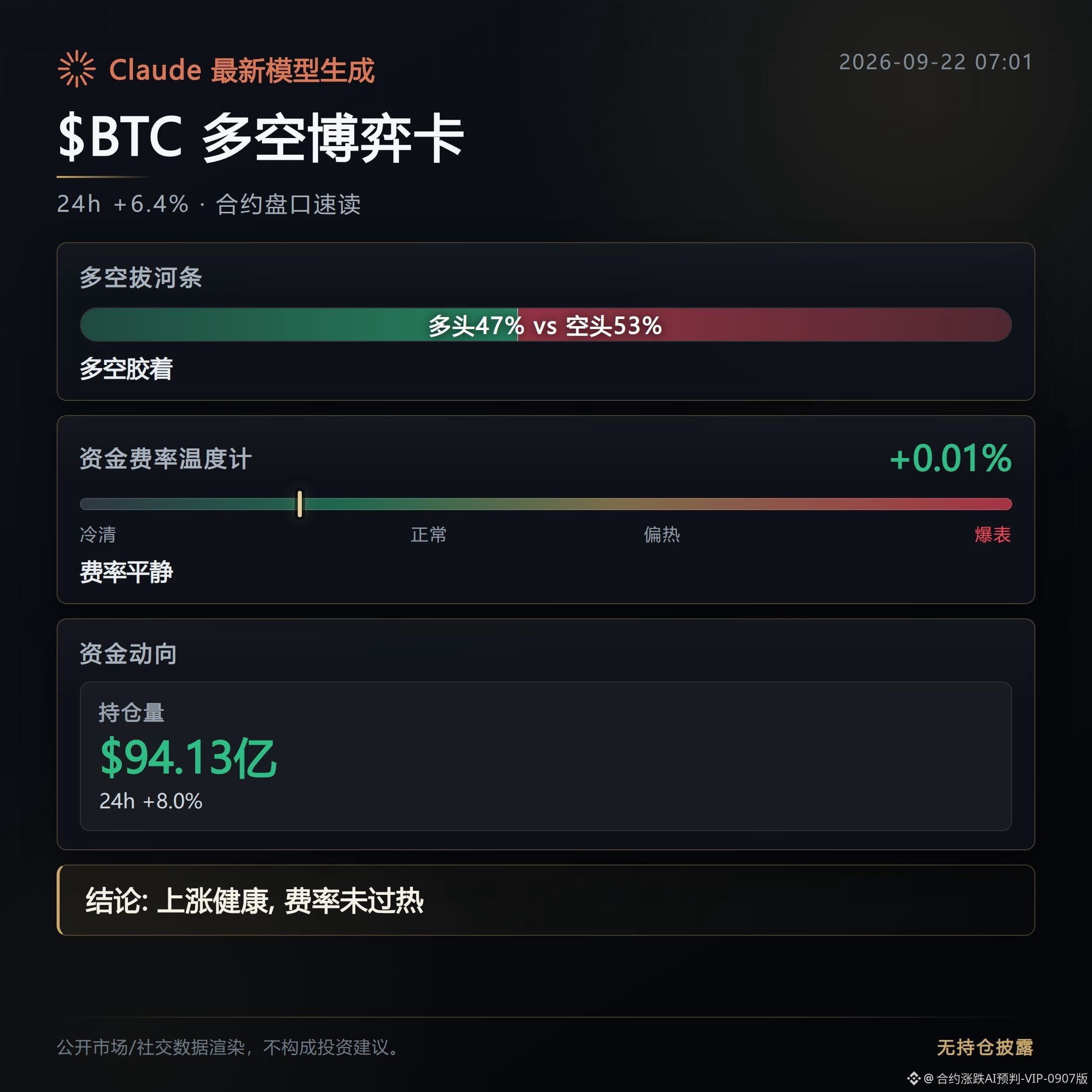
404
Log in to explore more content
Join global crypto users on Binance Square
⚡️ Get latest and useful information about crypto.
💬 Trusted by the world’s largest crypto exchange.
👍 Discover real insights from verified creators.
Email / Phone number
Trending Topics
AIStocksWhatNext
585,459 views
4,378 Discussing
Share & Win Traffic Reward in our Trending Hashtag Campaign
✨Topic: What Other Investment Opportunities Remain as AI Stocks Keep Rising?
👉How to Join:
Publish a short post or article with hashtag #AIStocksWhatNext
Share whether you’re bullish or bearish, and post your AI stock holdings or trade — using the trade widget may improve your eligibility.
You can also strengthen your post by sharing data or charts, and avoiding AI-generated images.
✍️Create content based on the below angles:
- Nvidia says chip sales will double next year, and top AI companies keep hitting record revenue, the compute spend behind it is just as staggering. Is AI demand really taking off? And how long can it last? AI stocks are up across the board. Is this a real breakout, or just a short-term bounce?
- Industry leaders are calling to slow down AI development, while Trump plans to build an “AI Force”, claiming AI could account for 25% of U.S. GDP in the future. Whose side are you on? Will state-level backing be a long-term win for AI stocks?
- Are you buying AI stocks? Share your AI-related trade/holdings with our trade sharing widget.
⏰Campaign Period:
- 2026-09-22 7:00 - 2026-09-24 4:00 UTC
🎁Reward:
- Qualified posts that comply with the above guidelines and contain more than 100 words will be reviewed and may receive a random traffic boost of 500 to 3,000 views. You will receive a notification from your feed secretary if your post is selected.
- Get a chance to have your article featured on Binance Square Official
Need ideas for your post? Visit the topic page #AIStocksWhatNext or the Square Guide on How to Post for Better Reach.
Binance Square Official
·458 Likes
·1.2M views
21SharesLaunchesEuropesFirstZcashETP
3,290 views
174 Discussing
CardanoJoinsX402PaymentStandard
2,373 views
144 Discussing