

#openusd
openusd
10,442 views
99 Discussing
Hot
Latest

Visa, Mastercard, Stripe, Coinbase and Shopify just launched a stablecoin together. It's called Open USD.
OUSD went live on Sept 30, issued by Stripe's Bridge, on Ethereum, Solana, Base and Stripe's own Tempo chain. Reserves sit with BlackRock, Lead Bank and BNY. Businesses mint and redeem 1:1 for free, and the anchor partners committed to mint about $1B to seed liquidity. Open Standard says 140+ firms have joined.
The pitch is aimed straight at USDT and USDC: instead of the issuer keeping the reserve yield, it flows back to partner companies based on adoption and volume.
Now look at the first week of on-chain data:
- Supply is about $666M, fully backed by roughly $588M in Treasuries and $78M in cash.
- 71% of it sits on Tempo, Stripe's chain.
- Ten wallets hold 74% of supply. About $396M hasn't moved from eight Tempo wallets, and $200M sits in Coinbase custody.
That isn't organic demand yet. It's launch inventory parked by the founders.
And "open" deserves a second look. The issuer is Stripe's company, most supply lives on Stripe's chain, and the yield is shared with the partner firms that distribute it. Coinbase, meanwhile, already earns from USDC through its deal with Circle, and now backs a rival too.
The fair counterpoint: when Visa, Mastercard and Stripe all push one token through checkout flows, distribution can arrive almost overnight. And 100% Treasury and cash backing is exactly what regulators want to see.
Is OUSD a real challenger to Tether and Circle, or a payments cartel with a blockchain logo?
If this helped you read past the press release, like and follow for more.
#Stablecoins #OpenUSD
1
137

·
--
One week after the Open Standard stablecoin $OUSD, co-founded by giants including Coinbase and Mastercard, launched, its supply has reached $666.3 million. However, a wallet study by Crystal Intelligence on October 6 found that most tokens remain in issuer and custodian wallets, with the top ten wallets controlling the vast majority of the supply and limited evidence of actual circulation.
OUSD launched on September 30 across four chains: Base, Ethereum, Solana, and Tempo. It is geared toward enterprise payments and treasury management. Despite strong backing from major players, its real-world adoption remains to be seen.
(Source: X)
#稳定币 #OpenUSD
OUSD launched on September 30 across four chains: Base, Ethereum, Solana, and Tempo. It is geared toward enterprise payments and treasury management. Despite strong backing from major players, its real-world adoption remains to be seen.
(Source: X)
#稳定币 #OpenUSD
62


·
--
Verified
💵 Open USD Enters the Stablecoin Race
🚀 OUSD Launches
🌐 Open Standard has launched Open USD (OUSD) on Ethereum, Solana, Base, and Tempo.
💳 The stablecoin targets payments, banking, cross-border transfers, settlement, and institutional trading.
🤝 Partner-Driven Model
🏦 Coinbase, Mastercard, Shopify, Stripe, and Visa are its five founding investors.
📈 Open Standard plans to distribute much of its equity over 4–5 years based on partners’ contributions to OUSD growth and activity.
💰 Challenging USDT & USDC
🌎 OUSD enters a $300B+ stablecoin market dominated by Tether’s USDT and Circle’s USDC.
⚡ It also plans to eliminate minting and burning fees, potentially lowering costs for large users.
🔮 Long-Term Vision
🌍 Open Standard aims to make stablecoins a major part of global payments and eventually support hundreds of trillions of dollars in annual money movement.
🏷️#OpenUSD #OUSD #Stablecoins #CryptoPayments #DigitalDollar
2
5
593

Open USD has launched across four blockchains with over $1 billion in liquidity commitments. The new model links rewards and ownership directly to token supply and usage.
#OpenUSD #LiquidityInjection
Open USD has launched across four blockchains with over $1 billion in liquidity commitments. The new model links rewards and ownership directly to token supply and usage.
#OpenUSD #LiquidityInjection
#OpenUSD #LiquidityInjection
78
Article
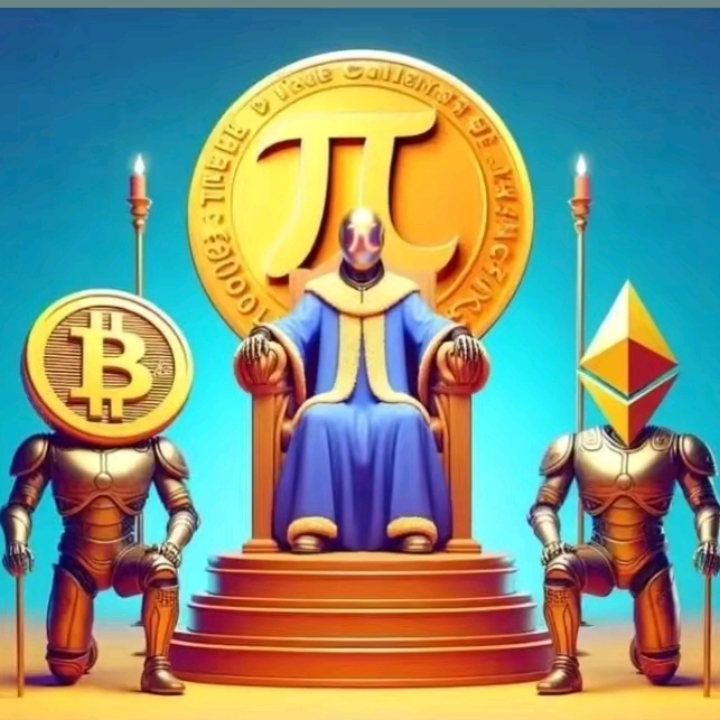
Pi Network joins the Open USD consortium!🚨 A HISTORIC STEP IN THE GLOBAL FINANCE AND WEB3 ECOSYSTEM: Pi Network joins the Open USD consortium! 🌐
A momentous breakthrough has occurred at the intersection between traditional finance giants and decentralized technologies. As of September 29, 2026, Pi Network takes its place on the official list of "Ecosystem Partners" of Open USD (OUSD), a next-generation *stablecoin*. So, what does this historic inclusion mean for Pi’s institutional future? Below, we explore all the details. 👇
Pi Network joins the Open USD consortium!
🚨 A HISTORIC STEP IN THE GLOBAL FINANCE AND WEB3 ECOSYSTEM: Pi Network joins the Open USD consortium! 🌐
A momentous breakthrough has occurred at the intersection between traditional finance giants and decentralized technologies. As of September 29, 2026, Pi Network takes its place on the official list of "Ecosystem Partners" of Open USD (OUSD), a next-generation *stablecoin*. So, what does this historic inclusion mean for Pi’s institutional future? Below, we explore all the details. 👇
A momentous breakthrough has occurred at the intersection between traditional finance giants and decentralized technologies. As of September 29, 2026, Pi Network takes its place on the official list of "Ecosystem Partners" of Open USD (OUSD), a next-generation *stablecoin*. So, what does this historic inclusion mean for Pi’s institutional future? Below, we explore all the details. 👇
GOOGLUS-0.09%
3
377

·
--
140 institutions team up to launch a new stablecoin—what game are the smart funds playing?I just saw a piece of data and I was completely stunned.
Visa, BlackRock, Stripe, Coinbase, Mastercard, American Express—140-plus institutions, working together to push a stablecoin called Open USD. 140— not 14, but 140. What does that even mean? Do you know how many years it took Circle, with just one company, to reach the current scale when USDC came out? Open USD launches with 140 partners, including your card-issuing bank.
Someone says, isn’t this just another USDT? Bigger-picture thinking, sisters.
Open USD’s design is different from all existing stablecoins. First, enterprises can mint and redeem at zero cost—major institutions don’t need to pay millions in fees. Second, the returns from the reserve assets are used to cover management fees and then everything is returned to partner institutions—meaning Visa takes the money users hold in OUSD to invest, earns profits, and shares them with Visa, not with Open Standard. Third, it’s not controlled by a single company; Open Standard and its partners form a board to govern together.
140 institutions team up to launch a new stablecoin—what game are the smart funds playing?
I just saw a piece of data and I was completely stunned.
Visa, BlackRock, Stripe, Coinbase, Mastercard, American Express—140-plus institutions, working together to push a stablecoin called Open USD. 140— not 14, but 140. What does that even mean? Do you know how many years it took Circle, with just one company, to reach the current scale when USDC came out? Open USD launches with 140 partners, including your card-issuing bank.
Someone says, isn’t this just another USDT? Bigger-picture thinking, sisters.
Open USD’s design is different from all existing stablecoins. First, enterprises can mint and redeem at zero cost—major institutions don’t need to pay millions in fees. Second, the returns from the reserve assets are used to cover management fees and then everything is returned to partner institutions—meaning Visa takes the money users hold in OUSD to invest, earns profits, and shares them with Visa, not with Open Standard. Third, it’s not controlled by a single company; Open Standard and its partners form a board to govern together.
78

·
--
Article
More than 140 global giants convene: How will the new stablecoin Open USD reshape the underlying logic of cross-border payments?Digital financial infrastructure is set to undergo an epic turning point. As blockchain technology gradually matures, stablecoins—acting as the bridge between fiat currency and digital assets—are now quietly approaching the scale of traditional ACH (Automated Clearing House) systems in terms of global network transfer volume. However, when enterprise users embrace this technology, they consistently face business pain points such as costly exchange losses, uneven distribution of returns from underlying reserves, and highly centralized monopolistic dynamics.
Against this macro backdrop, a new stablecoin project aimed at reshaping the global funds transfer network—Open USD—has officially entered the public spotlight. Spearheaded by a newly established independent operating organization, Open Standard, the project is expected to be fully rolled out to the market in the second half of 2026.
More than 140 global giants convene: How will the new stablecoin Open USD reshape the underlying logic of cross-border payments?
Digital financial infrastructure is set to undergo an epic turning point. As blockchain technology gradually matures, stablecoins—acting as the bridge between fiat currency and digital assets—are now quietly approaching the scale of traditional ACH (Automated Clearing House) systems in terms of global network transfer volume. However, when enterprise users embrace this technology, they consistently face business pain points such as costly exchange losses, uneven distribution of returns from underlying reserves, and highly centralized monopolistic dynamics.
Against this macro backdrop, a new stablecoin project aimed at reshaping the global funds transfer network—Open USD—has officially entered the public spotlight. Spearheaded by a newly established independent operating organization, Open Standard, the project is expected to be fully rolled out to the market in the second half of 2026.
Against this macro backdrop, a new stablecoin project aimed at reshaping the global funds transfer network—Open USD—has officially entered the public spotlight. Spearheaded by a newly established independent operating organization, Open Standard, the project is expected to be fully rolled out to the market in the second half of 2026.
AAVE-2.18%
COINUS-0.37%
761

·
--
Circle-related assets fall to new lows. What the market is truly worried about isn’t short-term price fluctuations, but the revaluation of stablecoin profit models. 140 institutions pushing OpenUSD is equivalent to taking the competition directly to Circle’s core cash flow: reserve earnings and $USDC ecosystem share.
Next, focus on two things: whether OpenUSD can quickly secure use cases and liquidity, and whether Circle can protect its moat with compliance, channels, and transparency. The stablecoin sector may move from a “single-dominant narrative” to an “alliance competition” phase.#稳定币 #Circle #OpenUSD
Next, focus on two things: whether OpenUSD can quickly secure use cases and liquidity, and whether Circle can protect its moat with compliance, channels, and transparency. The stablecoin sector may move from a “single-dominant narrative” to an “alliance competition” phase.#稳定币 #Circle #OpenUSD
19

Visa, Coinbase, and Stripe are launching the Open USD stablecoin!
#OpenUSD #CryptoNews #Visa #Stripe #USDT
A real bomb in the crypto market! The Open Standard organization has announced the launch of a new stablecoin, Open USD, and more than 140 giants have already come together around this project. Among the partners are Visa, Mastercard, American Express, Stripe, Coinbase, Ripple, Blackrock, BNY, Solana, and OKX. A full launch is planned for the end of 2026.
Why will this change the rules of the game? Open USD was created for big business that moves enormous volumes of dollars. The project's key features:
1. Issuance and redemption of the coin will be completely free and without any limits.
2. All partners will receive income from reserves (after deducting operating costs).
3. The asset will be managed by a board of partners, not by any one company.
Stripe has already stated that it will make Open USD the default coin on its platform.
157

·
--
Why OpenLedger’s Verifiable Data Layer Is a Game Changer for AIA major unresolved challenge at the intersection of cryptocurrency and artificial intelligence is the issue of data provenance. How can one be certain that the dataset utilized for model training remains unaltered?
This is where @OpenLedger comes into play — a blockchain crafted specifically to address this concern. By utilizing a scalable and verifiable data layer, OpenLedger guarantees that every data element can be traced, is immutable, and can be audited. The era of opaque training datasets is over.
The ecosystem is driven by the native token $OPEN, which motivates data contributors, validators, and AI developers to engage in a transparent data marketplace.
What truly excites me is that OpenLedger is not merely a concept. Their testnet is actively handling verifiable data streams, and its architecture is designed to support practical AI applications — rather than just DeFi trends.
To achieve accountability in AI, infrastructure like #OpenLedger is essential. With strong foundations, a clear vision, and an expanding community of builders, this is certainly a project to keep an eye on in 2026.@Square-Creator-a1f131473399 #open $OPEN
{future}(OPENUSDT)
$BNB
{spot}(BNBUSDT)
#openusdt #OPENUSD #openladgechain #openladger
Why OpenLedger’s Verifiable Data Layer Is a Game Changer for AI
A major unresolved challenge at the intersection of cryptocurrency and artificial intelligence is the issue of data provenance. How can one be certain that the dataset utilized for model training remains unaltered?
This is where @OpenLedger comes into play — a blockchain crafted specifically to address this concern. By utilizing a scalable and verifiable data layer, OpenLedger guarantees that every data element can be traced, is immutable, and can be audited. The era of opaque training datasets is over.
The ecosystem is driven by the native token $OPEN , which motivates data contributors, validators, and AI developers to engage in a transparent data marketplace.
What truly excites me is that OpenLedger is not merely a concept. Their testnet is actively handling verifiable data streams, and its architecture is designed to support practical AI applications — rather than just DeFi trends.
To achieve accountability in AI, infrastructure like #OpenLedger is essential. With strong foundations, a clear vision, and an expanding community of builders, this is certainly a project to keep an eye on in 2026.@Open #open $OPEN
$BNB
#openusdt #OPENUSD #openladgechain #openladger
1
35

·
--
Circle suffers a single-day plunge of 17.5%, setting a new low—what’s really worth watching isn’t the drawdown itself, but the fact that the stablecoin landscape is being repriced.
With 140 major players teaming up to launch OpenUSD, the goal is clear: to tap into the core chain of stablecoin issuance, reserve yields, and payment and settlement. For Circle, the pressure doesn’t just come from peer competition—it also comes from the trend of “stablecoin infrastructure becoming platformized.”
If OpenUSD can secure support from exchanges, payment networks, and institutional use cases, the growth narrative for $USDC may face higher hurdles. In the short term, it’s about sentiment; in the long term, it’s about distribution channels and regulatory barriers.
#稳定币 #Circle #OpenUSD
41

Several tech giants team up to launch the stablecoin OpenUSD, and Circle’s stock price plunges 18% on the news!🔥
The moment the news broke, the entire stablecoin sector was shaken, and the traditional issuance landscape may be rewritten. OpenUSD is backed by major tech companies, giving it built-in traffic and trust from day one, launching a direct challenge to existing market share.
The market’s reaction shows that the industry welcomes new competition—more and more heavyweight players want a slice of the stablecoin “cake.” Do you think Circle’s leading position will be shaken?
#稳定币 #OpenUSD #crypto market
$USDC
49

·
--
671 people participated in the Open USD vote—sentiment is optimistic: 48% bullish, 32% neutral, and only 20% skeptical.
Our analyst falls into that 20%. Here’s why.
More than 140 brands—Visa, Mastercard, BlackRock, Coinbase—support a stablecoin that shares reserve earnings with partners, rather than letting the issuer keep it all. Sounds like a game-changer:
Paxos implemented the exact same strategy back in 2024—supply around $3.0 billion, while USDC is $73.0 billion and USDT is $145.0 billion. Good idea, but no one paid attention.
Samsung, Shinhan, Dunamu, and K-Bank say the negotiations were never finalized—so that 140+ figure may be exaggerated.
The real pressure lands on Circle’s profits.
Full breakdown👇
#比特币 #稳定币 #OpenUSD
CRCL-3.61%
CRCLUS+0.03%
88

🚨 Ripple joins OpenUSD while continuing to drive RLUSD.
The company confirmed its incorporation into the Open Standard consortium as an integrator member of OpenUSD, a new stablecoin backed by more than 140 companies. Far from signaling an abandonment of RLUSD, Ripple has made it clear that it will continue developing its own stablecoin.
This decision shows that the company is betting on interoperability and on building open standards for the stablecoin ecosystem, actively participating in initiatives that could benefit the entire industry.
One striking detail is that neither Tether nor Circle, the two main stablecoin issuers in the market, are part of this alliance. Ripple’s participation could strengthen the adoption of OpenUSD and consolidate its role as one of the most influential players in the evolution of blockchain-based financial infrastructure.
This approach does not imply competition between OpenUSD and RLUSD, but rather a strategy to drive a more interoperable ecosystem, where different solutions can coexist and complement each other.
#Ripple $XRP $RLUSD #OpenUSD #Stablecoins
1
215

Article
OpenUSD Might Not Dethrone USDC: Circle's CEO Explains WhyThe launch of Open USD, the 140-plus company stablecoin consortium backed by Visa, Mastercard, Stripe, Coinbase, and BlackRock, drew a direct response from the person with a lot to lose.
Key Takeaways
Circle CEO Jeremy Allaire publicly argued Open USD won't dethrone USDC.He cites Artemis data putting USDC at 80% of on-chain dollar stablecoin volume.His sharpest point: consortium products have a "dismal" track record at scale.It's the incumbent's rebuttal, not neutral proof, and he has a clear stake.
Circle co-founder and CEO Jeremy Allaire, whose company issues USDC, laid out a methodical argument via post on X for why he isn't worried, which is itself a signal that the launch registered as a genuine competitive event worth answering.
The Market Is Already Asking the Question
The timing tracks with the data. Per Santiment's trending dashboard, the Open USD launch was one of crypto's top trending stories, sitting alongside whale activity and MiCA licensing, with social volume spiking sharply and sentiment leaning mixed-to-bearish. The dashboard framed the open question plainly: whether another major stablecoin can truly compete with USDC and USDT. Allaire's post is the incumbent's direct answer to exactly that question, and the accurate read is that the market hasn't resolved it, it has simply heard the market leader's strongest case for why the answer is no.
His Core Argument: Stablecoins Are Winner-Take-Most
Allaire's foundational claim is that stablecoin networks behave like internet platform utilities, tending toward winner-take-most market structures built over long periods. The strength, in his framing, isn't the token but the number and range of applications integrated to it. Every developer integration compounds network effects, which drives currency demand, which reinforces liquidity, a loop he argues a new entrant can't simply buy its way into with a big logo list. As he put it, stablecoin networks "tend towards winner-take-most market structures."
The Market-Share Numbers
His hardest weapon is usage data. Citing third-party info from Artemis , Allaire states that in Q1 2026, USDC handled nearly $30 trillion in on-chain transactions, which he frames as "80% of all dollar stablecoin transactions on blockchains," with USDT handling the remaining 20% and all other dollar stablecoins combined accounting for effectively zero, under half a percent. On the other hand Circle's report declares USDC onchain transaction volume in Q1’26 of $21.5 trillion grew 263%. His point is that other stablecoins may have circulation, but real usage is minimal because they lack liquidity and network utility. These are his cited figures via Artemis, not independently verified here, and they are the incumbent's strongest data point precisely because they measure usage rather than announcements.
The Liquidity Moat
Allaire extends that into a liquidity argument. He contends USDC is a top-three most liquid digital asset alongside Bitcoin and USDT, with liquidity falling off sharply after those three. The closest competing dollar stablecoins, in his telling, are roughly 10 times smaller, with liquidity concentrated in promotional order books on single exchanges rather than dispersed across dozens of venues the way USDC's is. It's a direct counter to Open USD's implicit pitch that a coalition of large companies can manufacture liquidity: his claim is that liquidity is earned over a decade, not assembled by consortium.
We’ve had lots of questions from our investor community looking for thoughts on OUSD, and so I thought I’d share my direct views here for anyone.Stablecoin networks are platform and network effect businesses that are established over a long period of time, tend towards…— Jeremy Allaire - jerallaire.arc (@jerallaire) July 1, 2026
The Consortium Critique
This is his sharpest and most pointed argument, and it targets Open USD's core differentiator directly. Allaire's claim is that the track record of consortium products achieving scale, product-market fit, or basic agility is, in his words, "absolutely dismal." Large groups of large companies, he argues, coordinate poorly, carry misaligned incentives, move slowly, and starve the venture out of self-interest. He notes Circle tried a consortium model in USDC's early days, even with a small group, and hit endless complexity.
From there he makes a prediction: smaller, tighter commercial partnerships with a market leader will outcompete large consortiums, and the same firms lending their logos to Open USD will, in practice, direct their operating units to partner with USDC because that serves their customers best. It's worth being precise that this is a forecast of how Open USD will struggle, not evidence that it has, but as a structural argument it's his most persuasive, because it reframes Open USD's main selling point, broad shared governance, as its main weakness.
His Rebuttals to Open USD's Selling Points
Allaire also pre-empts Open USD's three headline pitches:
On "free mint and burn": he argues the payments industry runs on small basis-point fees, and that a stablecoin with strong redemption facilities and no fees simply becomes the off-ramp for its competitors. Circle, he says, handles this through contractual mechanisms instead of blanket fee exemption.On "everybody shares the reserve income": he counters that giving away all reserve income starves infrastructure investment, and that Circle already shares the majority of its income with distribution partners while retaining enough to keep investing.On shared governance: the consortium critique above.
The Diplomatic Close
Notably, Allaire doesn't dismiss Open USD outright. He says Circle's partnership with Coinbase "remains as strong as ever," that Circle works closely with many Open USD founding members he expects will stay large USDC partners, and he welcomes Open USD "as a new member of the community." Welcoming a competitor rather than attacking it is a posture only the market leader can afford, and it's part of the message: confidence, not alarm.
The Honest Read
Allaire's argument is strong precisely because it leans on the two things Open USD can't replicate overnight: cited market-share dominance, 80% of on-chain dollar volume by his Artemis figures, and a decade of accumulated liquidity and regulatory licensing, including USDC's availability across all of Europe and Japan. The consortium critique is his most compelling point because it's structural rather than defensive.
But it should be read as the incumbent's perspective, not settled fact. Allaire has an obvious interest in dismissing a competitor backed by Visa, Mastercard, and BlackRock. The Artemis figures are his citation, and the consortium critique, however well-argued, is a prediction about how Open USD fails, not proof that it will. The Santiment data captures the real market uncertainty his confidence is designed to counter. The honest conclusion is that the question, can a new consortium stablecoin challenge USDC, remains open. What Allaire has provided is the clearest version of the market leader's case for why it can't.
#OpenUSD
OpenUSD Might Not Dethrone USDC: Circle's CEO Explains Why
The launch of Open USD, the 140-plus company stablecoin consortium backed by Visa, Mastercard, Stripe, Coinbase, and BlackRock, drew a direct response from the person with a lot to lose.
Key Takeaways
Circle CEO Jeremy Allaire publicly argued Open USD won't dethrone USDC.He cites Artemis data putting USDC at 80% of on-chain dollar stablecoin volume.His sharpest point: consortium products have a "dismal" track record at scale.It's the incumbent's rebuttal, not neutral proof, and he has a clear stake.
Circle co-founder and CEO Jeremy Allaire, whose company issues USDC, laid out a methodical argument via post on X for why he isn't worried, which is itself a signal that the launch registered as a genuine competitive event worth answering.
The Market Is Already Asking the Question
The timing tracks with the data. Per Santiment's trending dashboard, the Open USD launch was one of crypto's top trending stories, sitting alongside whale activity and MiCA licensing, with social volume spiking sharply and sentiment leaning mixed-to-bearish. The dashboard framed the open question plainly: whether another major stablecoin can truly compete with USDC and USDT. Allaire's post is the incumbent's direct answer to exactly that question, and the accurate read is that the market hasn't resolved it, it has simply heard the market leader's strongest case for why the answer is no.
His Core Argument: Stablecoins Are Winner-Take-Most
Allaire's foundational claim is that stablecoin networks behave like internet platform utilities, tending toward winner-take-most market structures built over long periods. The strength, in his framing, isn't the token but the number and range of applications integrated to it. Every developer integration compounds network effects, which drives currency demand, which reinforces liquidity, a loop he argues a new entrant can't simply buy its way into with a big logo list. As he put it, stablecoin networks "tend towards winner-take-most market structures."
The Market-Share Numbers
His hardest weapon is usage data. Citing third-party info from Artemis , Allaire states that in Q1 2026, USDC handled nearly $30 trillion in on-chain transactions, which he frames as "80% of all dollar stablecoin transactions on blockchains," with USDT handling the remaining 20% and all other dollar stablecoins combined accounting for effectively zero, under half a percent. On the other hand Circle's report declares USDC onchain transaction volume in Q1’26 of $21.5 trillion grew 263%. His point is that other stablecoins may have circulation, but real usage is minimal because they lack liquidity and network utility. These are his cited figures via Artemis, not independently verified here, and they are the incumbent's strongest data point precisely because they measure usage rather than announcements.
The Liquidity Moat
Allaire extends that into a liquidity argument. He contends USDC is a top-three most liquid digital asset alongside Bitcoin and USDT, with liquidity falling off sharply after those three. The closest competing dollar stablecoins, in his telling, are roughly 10 times smaller, with liquidity concentrated in promotional order books on single exchanges rather than dispersed across dozens of venues the way USDC's is. It's a direct counter to Open USD's implicit pitch that a coalition of large companies can manufacture liquidity: his claim is that liquidity is earned over a decade, not assembled by consortium.
We’ve had lots of questions from our investor community looking for thoughts on OUSD, and so I thought I’d share my direct views here for anyone.Stablecoin networks are platform and network effect businesses that are established over a long period of time, tend towards…— Jeremy Allaire - jerallaire.arc (@jerallaire) July 1, 2026
The Consortium Critique
This is his sharpest and most pointed argument, and it targets Open USD's core differentiator directly. Allaire's claim is that the track record of consortium products achieving scale, product-market fit, or basic agility is, in his words, "absolutely dismal." Large groups of large companies, he argues, coordinate poorly, carry misaligned incentives, move slowly, and starve the venture out of self-interest. He notes Circle tried a consortium model in USDC's early days, even with a small group, and hit endless complexity.
From there he makes a prediction: smaller, tighter commercial partnerships with a market leader will outcompete large consortiums, and the same firms lending their logos to Open USD will, in practice, direct their operating units to partner with USDC because that serves their customers best. It's worth being precise that this is a forecast of how Open USD will struggle, not evidence that it has, but as a structural argument it's his most persuasive, because it reframes Open USD's main selling point, broad shared governance, as its main weakness.
His Rebuttals to Open USD's Selling Points
Allaire also pre-empts Open USD's three headline pitches:
On "free mint and burn": he argues the payments industry runs on small basis-point fees, and that a stablecoin with strong redemption facilities and no fees simply becomes the off-ramp for its competitors. Circle, he says, handles this through contractual mechanisms instead of blanket fee exemption.On "everybody shares the reserve income": he counters that giving away all reserve income starves infrastructure investment, and that Circle already shares the majority of its income with distribution partners while retaining enough to keep investing.On shared governance: the consortium critique above.
The Diplomatic Close
Notably, Allaire doesn't dismiss Open USD outright. He says Circle's partnership with Coinbase "remains as strong as ever," that Circle works closely with many Open USD founding members he expects will stay large USDC partners, and he welcomes Open USD "as a new member of the community." Welcoming a competitor rather than attacking it is a posture only the market leader can afford, and it's part of the message: confidence, not alarm.
The Honest Read
Allaire's argument is strong precisely because it leans on the two things Open USD can't replicate overnight: cited market-share dominance, 80% of on-chain dollar volume by his Artemis figures, and a decade of accumulated liquidity and regulatory licensing, including USDC's availability across all of Europe and Japan. The consortium critique is his most compelling point because it's structural rather than defensive.
But it should be read as the incumbent's perspective, not settled fact. Allaire has an obvious interest in dismissing a competitor backed by Visa, Mastercard, and BlackRock. The Artemis figures are his citation, and the consortium critique, however well-argued, is a prediction about how Open USD fails, not proof that it will. The Santiment data captures the real market uncertainty his confidence is designed to counter. The honest conclusion is that the question, can a new consortium stablecoin challenge USDC, remains open. What Allaire has provided is the clearest version of the market leader's case for why it can't.
#OpenUSD
148

·
--
🤝🌐 Global Alliance: 140 tech giants join the initiative "Open USD" 🗺️🔒
None of the 140 members of the Open USD alliance managed to individually overcome the absolute dominance of Tether (USDT) and Circle (USDC).
This massive strategic agreement does not represent a show of strength, but rather a tactical admission that corporations could not compete on their own in the global stablecoin market ⚖️📉.
The move aims to unify infrastructure and standards to challenge the current duopoly, which financial experts have already dubbed "the dollar of the armistice" within the digital ecosystem 🏛️.
$BTC
{spot}(BTCUSDT)
$USDC
{spot}(USDCUSDT)
#BinanceSquare #OpenUSD #Tether #Circle #Stablecoins 🚀
🤝🌐 Global Alliance: 140 tech giants join the initiative "Open USD" 🗺️🔒
None of the 140 members of the Open USD alliance managed to individually overcome the absolute dominance of Tether (USDT) and Circle (USDC).
This massive strategic agreement does not represent a show of strength, but rather a tactical admission that corporations could not compete on their own in the global stablecoin market ⚖️📉.
The move aims to unify infrastructure and standards to challenge the current duopoly, which financial experts have already dubbed "the dollar of the armistice" within the digital ecosystem 🏛️.
$BTC
$USDC
#BinanceSquare #OpenUSD #Tether #Circle #Stablecoins 🚀
1
55

·
--
OPENUSD: An Innocent Stablecoin Launch or a Digital Dollar Operation?
Newly launched, $OPENUSD appears at first glance to be an innocent product promising a "more open, cheaper, and more accessible" stablecoin. But why is the timing so striking?
At a time when stablecoin regulations, the Clarity Act debates, and the global struggle over reserve revenues are at their peak, could the emergence of a new stablecoin model backed by large institutions be a coincidence?
Is it simply about issuing a "token"?
The real question here is: Is a new stablecoin being launched, or is the control of digital dollar reserve revenue and distribution channels being redesigned?
I'm not criticizing OPENUSD. However, to interpret this launch solely as a technological product would be a major mistake. While we discuss "speed and cost" here, new power dynamics in digital finance are being constructed in the background.
Who will be responsible for the security of the reserves?
Who will gain the power of distribution with the digital dollar?
How does this model bypass the existing financial system?
We're not guessing, we're reading. And what we're reading shows that the issue is less about technical convenience and more about the future "dominance" battle of the digital dollar.
Do you think OPENUSD is part of the existing order, or a "backdoor" that will fundamentally change the system? Let's start the discussion.
#OPENUSD #Stablecoin #DigitalDollar #Crypto #Blockchain #Economy #Finance #MeteAnalysis #RedOrGreen
Note: This content is for informational purposes only and does not constitute investment advice.
{future}(OPENUSDT)
OPENUSD: An Innocent Stablecoin Launch or a Digital Dollar Operation?
Newly launched, $OPENUSD appears at first glance to be an innocent product promising a "more open, cheaper, and more accessible" stablecoin. But why is the timing so striking?
At a time when stablecoin regulations, the Clarity Act debates, and the global struggle over reserve revenues are at their peak, could the emergence of a new stablecoin model backed by large institutions be a coincidence?
Is it simply about issuing a "token"?
The real question here is: Is a new stablecoin being launched, or is the control of digital dollar reserve revenue and distribution channels being redesigned?
I'm not criticizing OPENUSD. However, to interpret this launch solely as a technological product would be a major mistake. While we discuss "speed and cost" here, new power dynamics in digital finance are being constructed in the background.
Who will be responsible for the security of the reserves?
Who will gain the power of distribution with the digital dollar?
How does this model bypass the existing financial system?
We're not guessing, we're reading. And what we're reading shows that the issue is less about technical convenience and more about the future "dominance" battle of the digital dollar.
Do you think OPENUSD is part of the existing order, or a "backdoor" that will fundamentally change the system? Let's start the discussion.
#OPENUSD #Stablecoin #DigitalDollar #Crypto #Blockchain #Economy #Finance #MeteAnalysis #RedOrGreen
Note: This content is for informational purposes only and does not constitute investment advice.
2
221

·
--
Article
Visa, Mastercard, Coinbase, and BlackRock Just Teamed Up to Launch a StablecoinThis is still the story trending across every crypto platform right now, and Binance's own search leaderboard has it ranked directly alongside MiCA's launch and Trump's $1.4 billion disclosure as one of this week's three biggest crypto stories. Open USD — a new dollar-pegged stablecoin — launched this week backed by a consortium of more than 140 companies including Visa, Mastercard, Stripe, Coinbase, and BlackRock.
I covered the immediate market impact yesterday — Circle's stock crashed 17.5% on the news, its worst single-day performance since going public. But it's worth stepping back today and understanding exactly why this specific coalition of backers makes Open USD structurally different from every other stablecoin challenger that's tried and failed to dent USDC or USDT's dominance.
Every previous consortium-backed stablecoin challenge — PayPal's $PYUSD after three years still sits at $2.6 billion market cap, Ripple's $RLUSD after nearly two years sits at $1.6 billion — has struggled precisely because a single company backing a stablecoin doesn't automatically bring genuine transaction volume with it. Open USD is different in one crucial structural way: Visa and Mastercard aren't just "supporting" this stablecoin, they're payment networks that literally control the rails through which a meaningful percentage of global commerce flows. If Visa and Mastercard start routing even a modest percentage of their existing transaction volume through Open USD instead of traditional card rails or competing stablecoins, that's not speculative adoption — that's forced volume from infrastructure these companies already own and control.
The economic model is the real disruption here, and it's worth understanding precisely. Circle currently pays Coinbase $908 million annually just to distribute USDC — meaning Circle's own key partner has been a major line-item cost rather than a profit center. Open USD flips this entirely: zero minting fees, zero redemption fees, no volume caps, and 100% of Treasury reserve interest earned gets shared directly with the partners generating that volume. For Visa, Mastercard, and Stripe, that means they finally capture economic upside from stablecoin volume they were previously helping generate for someone else's bottom line, for free.
The realistic timeline matters for anyone trying to trade this story rather than just read about it. Open USD faces the exact same cold-start adoption problem every stablecoin challenger faces — announcing 140 backers is very different from those backers actually routing meaningful daily transaction volume through the new token. William Blair maintains an Outperform rating on Circle specifically citing this first-mover advantage gap. Watch Open USD's actual on-chain transaction volume over the coming weeks, not just the headline backer list, to know whether this genuinely threatens USDC's $73 billion market position or fades like every consortium stablecoin before it.$SPCXB
Please subscribe, like, and share this article. It genuinely helps.$NVDAB
#OpenUSD #Stablecoin #Visa #Mastercard #Circle #BinanceSquare
Visa, Mastercard, Coinbase, and BlackRock Just Teamed Up to Launch a Stablecoin
This is still the story trending across every crypto platform right now, and Binance's own search leaderboard has it ranked directly alongside MiCA's launch and Trump's $1.4 billion disclosure as one of this week's three biggest crypto stories. Open USD — a new dollar-pegged stablecoin — launched this week backed by a consortium of more than 140 companies including Visa, Mastercard, Stripe, Coinbase, and BlackRock.
I covered the immediate market impact yesterday — Circle's stock crashed 17.5% on the news, its worst single-day performance since going public. But it's worth stepping back today and understanding exactly why this specific coalition of backers makes Open USD structurally different from every other stablecoin challenger that's tried and failed to dent USDC or USDT's dominance.
Every previous consortium-backed stablecoin challenge — PayPal's $PYUSD after three years still sits at $2.6 billion market cap, Ripple's $RLUSD after nearly two years sits at $1.6 billion — has struggled precisely because a single company backing a stablecoin doesn't automatically bring genuine transaction volume with it. Open USD is different in one crucial structural way: Visa and Mastercard aren't just "supporting" this stablecoin, they're payment networks that literally control the rails through which a meaningful percentage of global commerce flows. If Visa and Mastercard start routing even a modest percentage of their existing transaction volume through Open USD instead of traditional card rails or competing stablecoins, that's not speculative adoption — that's forced volume from infrastructure these companies already own and control.
The economic model is the real disruption here, and it's worth understanding precisely. Circle currently pays Coinbase $908 million annually just to distribute USDC — meaning Circle's own key partner has been a major line-item cost rather than a profit center. Open USD flips this entirely: zero minting fees, zero redemption fees, no volume caps, and 100% of Treasury reserve interest earned gets shared directly with the partners generating that volume. For Visa, Mastercard, and Stripe, that means they finally capture economic upside from stablecoin volume they were previously helping generate for someone else's bottom line, for free.
The realistic timeline matters for anyone trying to trade this story rather than just read about it. Open USD faces the exact same cold-start adoption problem every stablecoin challenger faces — announcing 140 backers is very different from those backers actually routing meaningful daily transaction volume through the new token. William Blair maintains an Outperform rating on Circle specifically citing this first-mover advantage gap. Watch Open USD's actual on-chain transaction volume over the coming weeks, not just the headline backer list, to know whether this genuinely threatens USDC's $73 billion market position or fades like every consortium stablecoin before it.$SPCXB
Please subscribe, like, and share this article. It genuinely helps.$NVDAB
#OpenUSD #Stablecoin #Visa #Mastercard #Circle #BinanceSquare
CRCL-3.61%
CRCLUS+0.03%
131
·
--
Visa and BlackRock team up to launch a stablecoin? 140 giant players jump in—could the crypto world be about to changeEveryone is watching to see whether BTC at $58K can hold, and I’m watching something else.
Open Standard launched a new stablecoin called Open USD. If it were just another stablecoin, I wouldn’t single it out. But its partner list looks like this: Visa, Stripe, Mastercard, American Express, BlackRock, BNY Mellon, DBS, Coinbase, OKX, Aave, Ripple, Solana, Polygon. More than 140 companies. It spans everything—from bank cards, to asset management, to exchanges, to DeFi—covering the full spectrum.
The most crucial part is its design logic. It’s not like Tether’s “you mint your own currency and then you pocket the interest” kind of play. The yield on OUSD’s reserve assets—meaning the money you deposit in USD that BlackRock then invests in short-term government bonds—after deducting management fees, is returned in full to the partners. Open Standard doesn’t retain profits for itself; instead, it convened a board of directors so everyone can share in it together.
Visa and BlackRock team up to launch a stablecoin? 140 giant players jump in—could the crypto world be about to change
Everyone is watching to see whether BTC at $58K can hold, and I’m watching something else.
Open Standard launched a new stablecoin called Open USD. If it were just another stablecoin, I wouldn’t single it out. But its partner list looks like this: Visa, Stripe, Mastercard, American Express, BlackRock, BNY Mellon, DBS, Coinbase, OKX, Aave, Ripple, Solana, Polygon. More than 140 companies. It spans everything—from bank cards, to asset management, to exchanges, to DeFi—covering the full spectrum.
The most crucial part is its design logic. It’s not like Tether’s “you mint your own currency and then you pocket the interest” kind of play. The yield on OUSD’s reserve assets—meaning the money you deposit in USD that BlackRock then invests in short-term government bonds—after deducting management fees, is returned in full to the partners. Open Standard doesn’t retain profits for itself; instead, it convened a board of directors so everyone can share in it together.
72

🚨 Ripple's latest move is raising a big question for $XRP holders.
{future}(XRPUSDT)
LATEST: ⚡
Ripple has joined the OpenUSD consortium, a stablecoin initiative backed by over 140 companies across banking, payments, fintech, and crypto.
But there's one detail catching attention: OpenUSD will launch on Solana, Stellar, Base, and Polygon — not on the $XRP Ledger.
👀 Is Ripple building the future of global payments... or missing a major opportunity for XRP adoption?
❓ Will OpenUSD eventually become a catalyst for $XRP , or is this bigger for Ripple than for the token itself?
#xrp #Ripple #OPENUSD #crypto #BinanceSquare
🚨 Ripple's latest move is raising a big question for $XRP holders.
LATEST: ⚡
Ripple has joined the OpenUSD consortium, a stablecoin initiative backed by over 140 companies across banking, payments, fintech, and crypto.
But there's one detail catching attention: OpenUSD will launch on Solana, Stellar, Base, and Polygon — not on the $XRP Ledger.
👀 Is Ripple building the future of global payments... or missing a major opportunity for XRP adoption?
❓ Will OpenUSD eventually become a catalyst for $XRP , or is this bigger for Ripple than for the token itself?
#xrp #Ripple #OPENUSD #crypto #BinanceSquare
144
Log in to explore more content
Join global crypto users on Binance Square
⚡️ Get latest and useful information about crypto.
💬 Trusted by the world’s largest crypto exchange.
👍 Discover real insights from verified creators.
Email / Phone number
Trending Topics
1
#KOSPIFallsMoreThan2%
21,232 views
274 Discussing
2
#ElicePlunges33%InKoreanIPODebut
6,358 views
116 Discussing
3
#GoogleSetsUAELicensingRulesForCryptoAds
3,143 views
121 Discussing
4
#BlockchainAssociationSubmitsGENIUSActComments
3,391 views
115 Discussing
5
#BitMineAdds12535ETH
5,997 views
124 Discussing
6
#StrategyBuys267BTC
6,610 views
120 Discussing
7
#CFTCRebutsCMELegalStanceInPerpetualFuturesFight
10,177 views
118 Discussing
8
#ChipStocksReboundLiftingUSShares
5,764 views
119 Discussing
9
#CryptoVaultDepositsTop$10Billion
14,135 views
157 Discussing
10
#JapanFSAPublishesOnChainFinanceForumMinutes
172,624 views
1,417 Discussing