
#cryptomacro
cryptomacro
386,464 views
1,727 Discussing
Hot
Latest

50 days of chart momentum were just about to trigger one of the classic bullish signals, but macro markets just pulled the plug. The anticipated $BTC Golden Cross is flickering off as traders rapidly price in firmer rate-hike expectations from central bankers. Is macro once again going to dictate technical chart patterns for the rest of the quarter? Here is what is happening right now: 🔹 The 50-day moving average was closing in on the 200-day line, signaling potential upside momentum. 🔹 Shifting interest rate expectations flipped trader sentiment away from risk assets almost instantly. 🔹 Technical indicators are taking a back seat as macro yields firm up. Honestly, trading charts without watching interest rates right now feels like driving with your eyes closed. Stay sharp out there! #Write2Earn #Bitcoin #CryptoMacro #TechnicalAnalysis
50 days of chart momentum were just about to trigger one of the classic bullish signals, but macro markets just pulled the plug. The anticipated $BTC Golden Cross is flickering off as traders rapidly price in firmer rate-hike expectations from central bankers. Is macro once again going to dictate technical chart patterns for the rest of the quarter? Here is what is happening right now: 🔹 The 50-day moving average was closing in on the 200-day line, signaling potential upside momentum. 🔹 Shifting interest rate expectations flipped trader sentiment away from risk assets almost instantly. 🔹 Technical indicators are taking a back seat as macro yields firm up. Honestly, trading charts without watching interest rates right now feels like driving with your eyes closed. Stay sharp out there! #Write2Earn #Bitcoin #CryptoMacro #TechnicalAnalysis

54

Why is nobody talking about how "as expected" inflation data actually traps retail traders into bad entries?
Most investors see a headline CPI number matching expectations and immediately rush to chase the green candles, only to end up holding the bag on intraday chop. They treat flat macro prints like massive liquidity injections without realizing the market already priced it in days ago.
Take the latest US CPI print coming in at exactly 3.4%, matching forecast to the decimal. The knee-jerk reaction looked constructive with $BTC ticking up +0.30% while $ETH pushed a bit stronger at +2.57%. Yet, when numbers land strictly on target, it offers zero real catalyst for the Federal Reserve to shift their timeline or pivot rates sooner.
Chasing met expectations is usually where traders bleed capital because volatility dries up right after the initial spike. Instead of celebrating an on-target 3.4% reading as an automatic launchpad, we need to recognize it simply maintains the current restrictive regime.
Are you actively positioning around macro releases right now, or waiting for actual policy shifts before making bigger moves?
#CPI #CryptoMacro #Bitcoin
Why is nobody talking about how "as expected" inflation data actually traps retail traders into bad entries?
Most investors see a headline CPI number matching expectations and immediately rush to chase the green candles, only to end up holding the bag on intraday chop. They treat flat macro prints like massive liquidity injections without realizing the market already priced it in days ago.
Take the latest US CPI print coming in at exactly 3.4%, matching forecast to the decimal. The knee-jerk reaction looked constructive with $BTC ticking up +0.30% while $ETH pushed a bit stronger at +2.57%. Yet, when numbers land strictly on target, it offers zero real catalyst for the Federal Reserve to shift their timeline or pivot rates sooner.
Chasing met expectations is usually where traders bleed capital because volatility dries up right after the initial spike. Instead of celebrating an on-target 3.4% reading as an automatic launchpad, we need to recognize it simply maintains the current restrictive regime.
Are you actively positioning around macro releases right now, or waiting for actual policy shifts before making bigger moves?
#CPI #CryptoMacro #Bitcoin
Most investors see a headline CPI number matching expectations and immediately rush to chase the green candles, only to end up holding the bag on intraday chop. They treat flat macro prints like massive liquidity injections without realizing the market already priced it in days ago.
Take the latest US CPI print coming in at exactly 3.4%, matching forecast to the decimal. The knee-jerk reaction looked constructive with $BTC ticking up +0.30% while $ETH pushed a bit stronger at +2.57%. Yet, when numbers land strictly on target, it offers zero real catalyst for the Federal Reserve to shift their timeline or pivot rates sooner.
Chasing met expectations is usually where traders bleed capital because volatility dries up right after the initial spike. Instead of celebrating an on-target 3.4% reading as an automatic launchpad, we need to recognize it simply maintains the current restrictive regime.
Are you actively positioning around macro releases right now, or waiting for actual policy shifts before making bigger moves?
#CPI #CryptoMacro #Bitcoin
10

·
--
Picture this: you are positioned for a clean macro breakout, only to watch energy markets quietly pull the rug on risk assets.
Most crypto traders get chopped up because they watch charts in a vacuum, completely blind to how sticky inflation data delays rate cuts and drains liquidity right at local resistance.
We saw this exact script play out during the mid-2023 inflation scare, where a sudden uptick in commodities halted momentum across the board. Now, history seems to be rhyming as energy prices are projected to rebound roughly 2.5% month-over-month, led by gasoline surging over 4%. That single move is poised to accelerate headline CPI on a monthly basis, forcing central banks to keep liquidity conditions tighter for longer.
When headline prints heat up like this, high-beta assets like $SOL and $ETH usually take the initial liquidity hit before $BTC finds its footing as macro collateral. If energy costs keep grinding higher into next quarter, the aggressive easing cycle the market wants to price in could face a sharp reality check.
Where do you think macro liquidity heads if headline inflation refuses to cool down?
#CryptoMacro #CPI #Bitcoin
Picture this: you are positioned for a clean macro breakout, only to watch energy markets quietly pull the rug on risk assets.
Most crypto traders get chopped up because they watch charts in a vacuum, completely blind to how sticky inflation data delays rate cuts and drains liquidity right at local resistance.
We saw this exact script play out during the mid-2023 inflation scare, where a sudden uptick in commodities halted momentum across the board. Now, history seems to be rhyming as energy prices are projected to rebound roughly 2.5% month-over-month, led by gasoline surging over 4%. That single move is poised to accelerate headline CPI on a monthly basis, forcing central banks to keep liquidity conditions tighter for longer.
When headline prints heat up like this, high-beta assets like $SOL and $ETH usually take the initial liquidity hit before $BTC finds its footing as macro collateral. If energy costs keep grinding higher into next quarter, the aggressive easing cycle the market wants to price in could face a sharp reality check.
Where do you think macro liquidity heads if headline inflation refuses to cool down?
#CryptoMacro #CPI #Bitcoin
Most crypto traders get chopped up because they watch charts in a vacuum, completely blind to how sticky inflation data delays rate cuts and drains liquidity right at local resistance.
We saw this exact script play out during the mid-2023 inflation scare, where a sudden uptick in commodities halted momentum across the board. Now, history seems to be rhyming as energy prices are projected to rebound roughly 2.5% month-over-month, led by gasoline surging over 4%. That single move is poised to accelerate headline CPI on a monthly basis, forcing central banks to keep liquidity conditions tighter for longer.
When headline prints heat up like this, high-beta assets like $SOL and $ETH usually take the initial liquidity hit before $BTC finds its footing as macro collateral. If energy costs keep grinding higher into next quarter, the aggressive easing cycle the market wants to price in could face a sharp reality check.
Where do you think macro liquidity heads if headline inflation refuses to cool down?
#CryptoMacro #CPI #Bitcoin

42

·
--
The UK Maritime Trade Operations Office (UKMTO) has just issued an urgent alert about an attack on a cargo vessel using an unidentified object in the Strait of Hormuz area. Although the extent of the damage and the condition of the crew have not yet been fully disclosed, this development immediately triggered a heightened alert status across Middle East shipping routes.
The Strait of Hormuz is the world’s most critical energy chokepoint, where around 20% of global oil output is transshipped. Any disruption or security risk here could drive maritime insurance costs sharply higher, directly threatening crude oil supplies and reigniting fears of cost-push inflation on a global scale.
For now, traditional financial markets are rapidly shifting into a risk-defense mode. Crude oil prices and gold are often the earliest-reacting assets to regional geopolitical shocks, while the US dollar tends to strengthen as capital flows into safe havens, putting pressure on the stock market.
For the crypto market, short-term “risk-off” sentiment may cause speculative capital to pull back, leading to adjustment pressure on $BTC and the entire altcoin group. However, if tensions push inflation and prolonged monetary instability, the value-preservation narrative for Bitcoin may once again be reconsidered by institutional investors.
#Geopolitics #OilMarket #CryptoMacro
The UK Maritime Trade Operations Office (UKMTO) has just issued an urgent alert about an attack on a cargo vessel using an unidentified object in the Strait of Hormuz area. Although the extent of the damage and the condition of the crew have not yet been fully disclosed, this development immediately triggered a heightened alert status across Middle East shipping routes.
The Strait of Hormuz is the world’s most critical energy chokepoint, where around 20% of global oil output is transshipped. Any disruption or security risk here could drive maritime insurance costs sharply higher, directly threatening crude oil supplies and reigniting fears of cost-push inflation on a global scale.
For now, traditional financial markets are rapidly shifting into a risk-defense mode. Crude oil prices and gold are often the earliest-reacting assets to regional geopolitical shocks, while the US dollar tends to strengthen as capital flows into safe havens, putting pressure on the stock market.
For the crypto market, short-term “risk-off” sentiment may cause speculative capital to pull back, leading to adjustment pressure on $BTC and the entire altcoin group. However, if tensions push inflation and prolonged monetary instability, the value-preservation narrative for Bitcoin may once again be reconsidered by institutional investors.
#Geopolitics #OilMarket #CryptoMacro
The Strait of Hormuz is the world’s most critical energy chokepoint, where around 20% of global oil output is transshipped. Any disruption or security risk here could drive maritime insurance costs sharply higher, directly threatening crude oil supplies and reigniting fears of cost-push inflation on a global scale.
For now, traditional financial markets are rapidly shifting into a risk-defense mode. Crude oil prices and gold are often the earliest-reacting assets to regional geopolitical shocks, while the US dollar tends to strengthen as capital flows into safe havens, putting pressure on the stock market.
For the crypto market, short-term “risk-off” sentiment may cause speculative capital to pull back, leading to adjustment pressure on $BTC and the entire altcoin group. However, if tensions push inflation and prolonged monetary instability, the value-preservation narrative for Bitcoin may once again be reconsidered by institutional investors.
#Geopolitics #OilMarket #CryptoMacro
107

·
--
Bullish
#BTC #Ethereum #CryptoMacro
🏛️ ETH’S CRYSTAL CEILING VS. BTC’S PATH: 📊⚖️
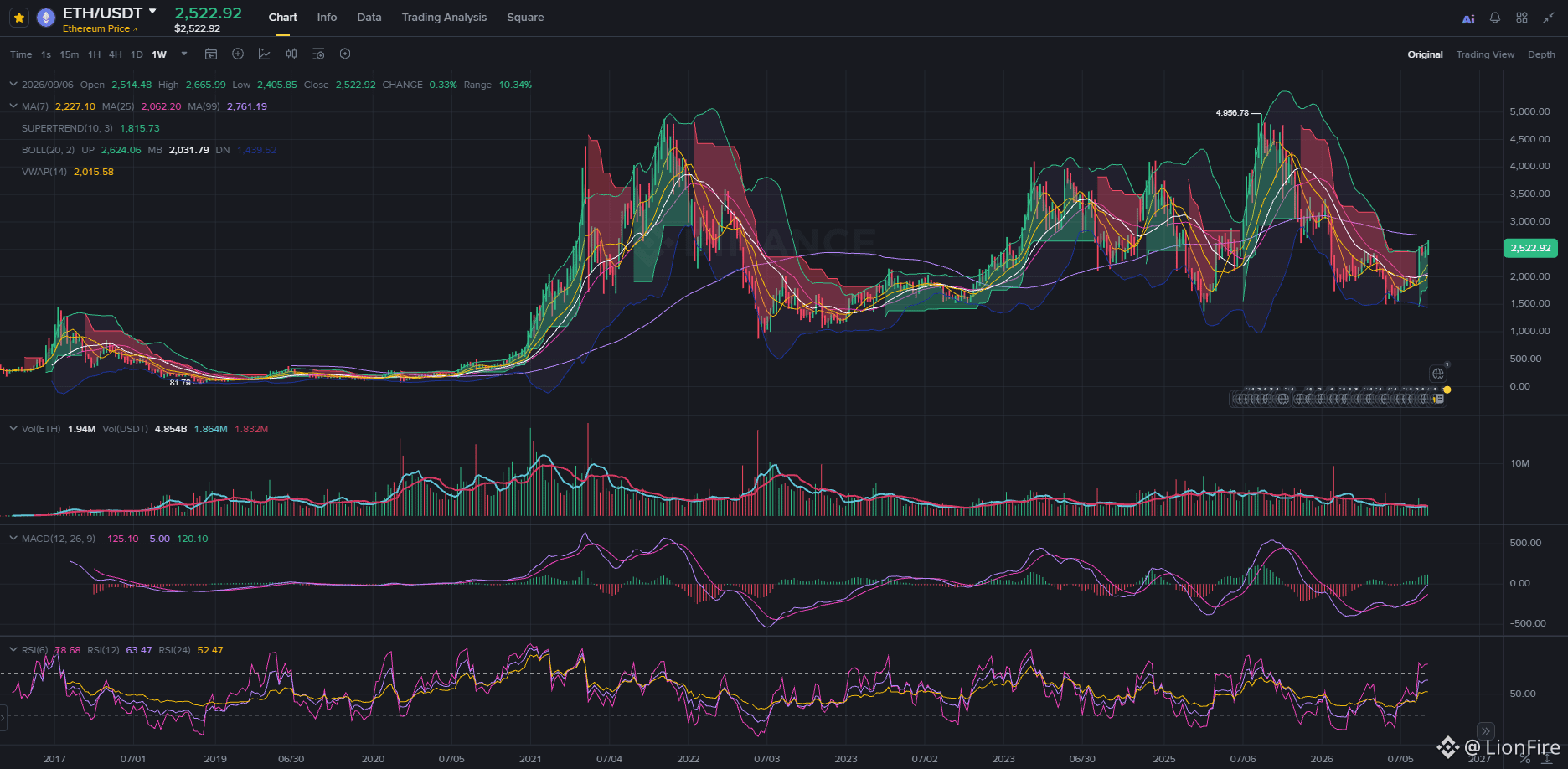
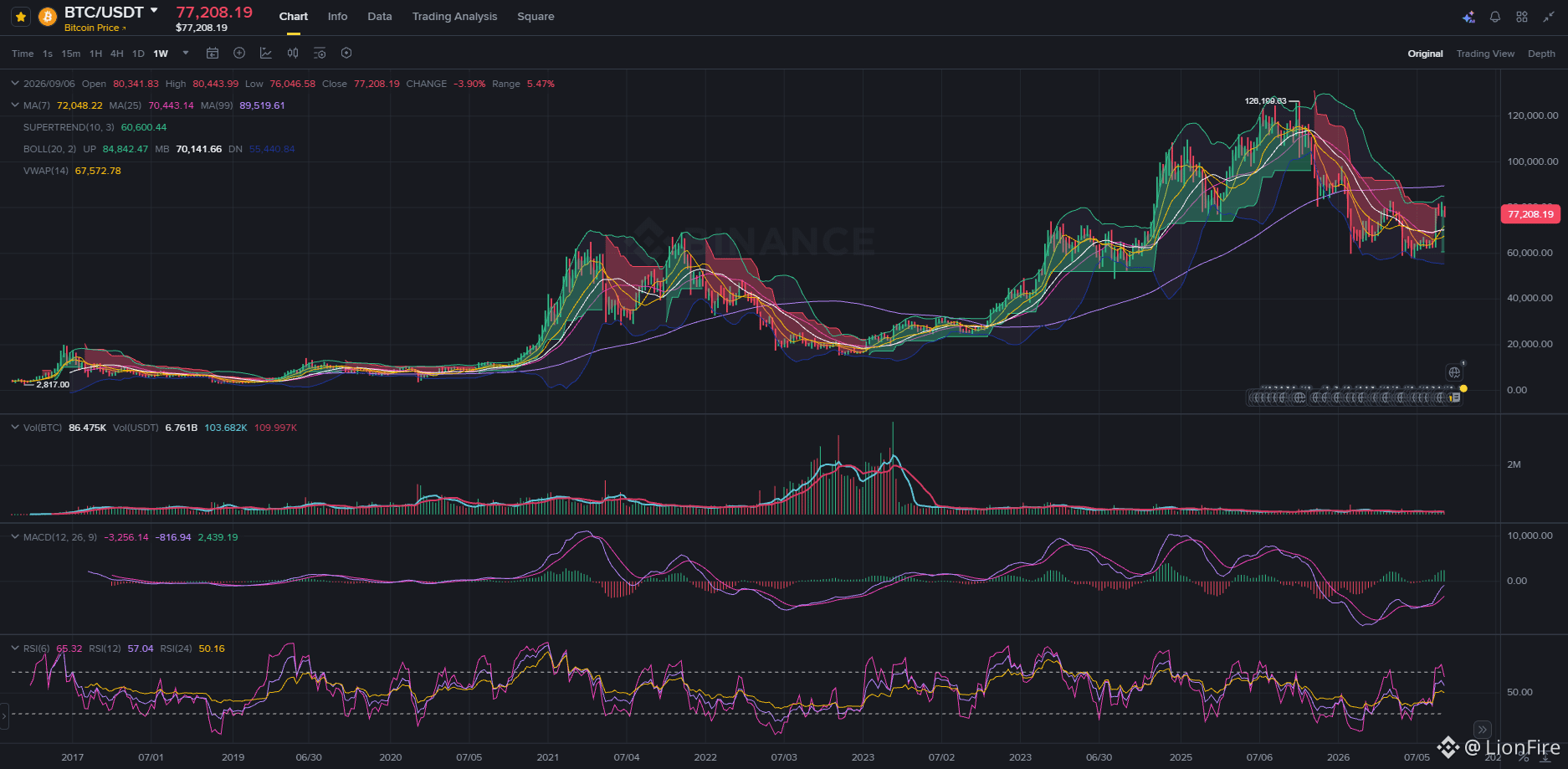
When you zoom out to the Weekly chart, the disconnect between the two dominant assets stops being a matter of sentiment and becomes a mathematical reality of flows and structure.
🧱 1. Why $ETH is facing a structural wall at $5,000:
🩸 Cannibalization by L2s and the end of "Ultrasound Money": The massive migration of activity to secondary layers stripped the base layer of commission income. The burn mechanism collapsed and ETH returned to being inflationary, dismantling its core scarcity thesis.
📉 Trapped under its moving averages: After failing repeatedly to break through its historical ceiling of $4,868.79, ETH trades boxed in below its MA99 ($2,761.19) and its MA25 ($2,862.20). Every attempt to push upward toward $4k hits a gigantic distribution wall of trapped participants.
⚠️ Competitive pressure: In terms of performance and retail adoption, high-throughput chains like Solana erode its market share, while spot ETH ETFs without staking fail to gain institutional traction.
🚀 2. Why $BTC has a clear path to $200,000:
📐 Impeccable bullish macro structure: Unlike ETH, BTC set a new all-time high in this cycle, reaching $126,198.83. Its weekly moving averages maintain a perfect bullish order: MA7 ($72,048) > MA25 ($70,443) > MA99 ($60,519).
🧮 The multiple is feasible: Trading at $200k doesn’t require a miracle—it only needs about a ~2.6x move from current prices (or a +58% from its local high). A ~$4T market cap represents only a conservative fraction versus the gold market.
👑 BTC doesn’t compete as a computing network; it’s the global reserve asset and sovereign settlement layer. The capital it absorbs seeks macro refuge, not interaction with dApps.
💡 ETH competes like a tech company in a sector where software gets cheaper; BTC competes like scarce money in a world where fiat is being devalued.
#BTC #Ethereum #CryptoMacro
🏛️ ETH’S CRYSTAL CEILING VS. BTC’S PATH: 📊⚖️
When you zoom out to the Weekly chart, the disconnect between the two dominant assets stops being a matter of sentiment and becomes a mathematical reality of flows and structure.
🧱 1. Why $ETH is facing a structural wall at $5,000:
🩸 Cannibalization by L2s and the end of "Ultrasound Money": The massive migration of activity to secondary layers stripped the base layer of commission income. The burn mechanism collapsed and ETH returned to being inflationary, dismantling its core scarcity thesis.
📉 Trapped under its moving averages: After failing repeatedly to break through its historical ceiling of $4,868.79, ETH trades boxed in below its MA99 ($2,761.19) and its MA25 ($2,862.20). Every attempt to push upward toward $4k hits a gigantic distribution wall of trapped participants.
⚠️ Competitive pressure: In terms of performance and retail adoption, high-throughput chains like Solana erode its market share, while spot ETH ETFs without staking fail to gain institutional traction.
🚀 2. Why $BTC has a clear path to $200,000:
📐 Impeccable bullish macro structure: Unlike ETH, BTC set a new all-time high in this cycle, reaching $126,198.83. Its weekly moving averages maintain a perfect bullish order: MA7 ($72,048) > MA25 ($70,443) > MA99 ($60,519).
🧮 The multiple is feasible: Trading at $200k doesn’t require a miracle—it only needs about a ~2.6x move from current prices (or a +58% from its local high). A ~$4T market cap represents only a conservative fraction versus the gold market.
👑 BTC doesn’t compete as a computing network; it’s the global reserve asset and sovereign settlement layer. The capital it absorbs seeks macro refuge, not interaction with dApps.
💡 ETH competes like a tech company in a sector where software gets cheaper; BTC competes like scarce money in a world where fiat is being devalued.
🏛️ ETH’S CRYSTAL CEILING VS. BTC’S PATH: 📊⚖️
When you zoom out to the Weekly chart, the disconnect between the two dominant assets stops being a matter of sentiment and becomes a mathematical reality of flows and structure.
🧱 1. Why $ETH is facing a structural wall at $5,000:
🩸 Cannibalization by L2s and the end of "Ultrasound Money": The massive migration of activity to secondary layers stripped the base layer of commission income. The burn mechanism collapsed and ETH returned to being inflationary, dismantling its core scarcity thesis.
📉 Trapped under its moving averages: After failing repeatedly to break through its historical ceiling of $4,868.79, ETH trades boxed in below its MA99 ($2,761.19) and its MA25 ($2,862.20). Every attempt to push upward toward $4k hits a gigantic distribution wall of trapped participants.
⚠️ Competitive pressure: In terms of performance and retail adoption, high-throughput chains like Solana erode its market share, while spot ETH ETFs without staking fail to gain institutional traction.
🚀 2. Why $BTC has a clear path to $200,000:
📐 Impeccable bullish macro structure: Unlike ETH, BTC set a new all-time high in this cycle, reaching $126,198.83. Its weekly moving averages maintain a perfect bullish order: MA7 ($72,048) > MA25 ($70,443) > MA99 ($60,519).
🧮 The multiple is feasible: Trading at $200k doesn’t require a miracle—it only needs about a ~2.6x move from current prices (or a +58% from its local high). A ~$4T market cap represents only a conservative fraction versus the gold market.
👑 BTC doesn’t compete as a computing network; it’s the global reserve asset and sovereign settlement layer. The capital it absorbs seeks macro refuge, not interaction with dApps.
💡 ETH competes like a tech company in a sector where software gets cheaper; BTC competes like scarce money in a world where fiat is being devalued.
50

Crypto Macro : The impact of Bitcoin dominance (BTC.D)
Title : BTC Dominance : The key indicator to anticipate Altseasons 📊🚀
Content :
The Bitcoin dominance index (BTC.D) measures the market share of BTC relative to all cryptocurrencies.
🔄 The classic scenarios :
BTC rises + BTC.D rises : Bitcoin absorbs all the liquidity; Altcoins stagnate or fall.
BTC stabilizes/ranges + BTC.D drops : Liquidity moves toward Altcoins (a favorable period for Altcoins).
BTC falls + BTC.D rises : Overall bearish pressure; Altcoins fall harder than Bitcoin.
Following BTC.D helps you avoid looking for Longs in Altcoins at the wrong time.
#Bitcoin #BTCDominance #Altseason #MarketAnalysis #CryptoMacro @Dusk_Foundation
Crypto Macro : The impact of Bitcoin dominance (BTC.D)
Title : BTC Dominance : The key indicator to anticipate Altseasons 📊🚀
Content :
The Bitcoin dominance index (BTC.D) measures the market share of BTC relative to all cryptocurrencies.
🔄 The classic scenarios :
BTC rises + BTC.D rises : Bitcoin absorbs all the liquidity; Altcoins stagnate or fall.
BTC stabilizes/ranges + BTC.D drops : Liquidity moves toward Altcoins (a favorable period for Altcoins).
BTC falls + BTC.D rises : Overall bearish pressure; Altcoins fall harder than Bitcoin.
Following BTC.D helps you avoid looking for Longs in Altcoins at the wrong time.
#Bitcoin #BTCDominance #Altseason #MarketAnalysis #CryptoMacro @Dusk
Title : BTC Dominance : The key indicator to anticipate Altseasons 📊🚀
Content :
The Bitcoin dominance index (BTC.D) measures the market share of BTC relative to all cryptocurrencies.
🔄 The classic scenarios :
BTC rises + BTC.D rises : Bitcoin absorbs all the liquidity; Altcoins stagnate or fall.
BTC stabilizes/ranges + BTC.D drops : Liquidity moves toward Altcoins (a favorable period for Altcoins).
BTC falls + BTC.D rises : Overall bearish pressure; Altcoins fall harder than Bitcoin.
Following BTC.D helps you avoid looking for Longs in Altcoins at the wrong time.
#Bitcoin #BTCDominance #Altseason #MarketAnalysis #CryptoMacro @Dusk
24

·
--
🦈 $BTC FEELS THE YIELD SURGE – LIQUIDITY SHIFT ON THE HORIZON! 🚀
📊 The latest PPI release pushed the 10‑year Treasury to 4.893%, its highest since 2007, while the 2‑year and 30‑year notes climbed in tandem. Smart‑money corridors are gravitating toward safe‑haven assets, draining risk appetite from the crypto arena. 🌊
⚡ Institutional order blocks on $BTC are now perched at the last swing high, awaiting a decisive test. With Treasury yields tightening, any breakout will need a strong liquidity sweep to validate the move. 🦈
💬 How are you positioning your crypto exposure amid this yield spike? 👇
⚠️ Not financial advice. Always manage your risk. 🛡️
🏷️ #BTC #YieldShift #SmartMoney #CryptoMacro
🚀 ⚡
🦈 $BTC FEELS THE YIELD SURGE – LIQUIDITY SHIFT ON THE HORIZON! 🚀
📊 The latest PPI release pushed the 10‑year Treasury to 4.893%, its highest since 2007, while the 2‑year and 30‑year notes climbed in tandem. Smart‑money corridors are gravitating toward safe‑haven assets, draining risk appetite from the crypto arena. 🌊
⚡ Institutional order blocks on $BTC are now perched at the last swing high, awaiting a decisive test. With Treasury yields tightening, any breakout will need a strong liquidity sweep to validate the move. 🦈
💬 How are you positioning your crypto exposure amid this yield spike? 👇
⚠️ Not financial advice. Always manage your risk. 🛡️
🏷️ #BTC #YieldShift #SmartMoney #CryptoMacro
🚀 ⚡
📊 The latest PPI release pushed the 10‑year Treasury to 4.893%, its highest since 2007, while the 2‑year and 30‑year notes climbed in tandem. Smart‑money corridors are gravitating toward safe‑haven assets, draining risk appetite from the crypto arena. 🌊
⚡ Institutional order blocks on $BTC are now perched at the last swing high, awaiting a decisive test. With Treasury yields tightening, any breakout will need a strong liquidity sweep to validate the move. 🦈
💬 How are you positioning your crypto exposure amid this yield spike? 👇
⚠️ Not financial advice. Always manage your risk. 🛡️
🏷️ #BTC #YieldShift #SmartMoney #CryptoMacro
🚀 ⚡
26

·
--
The idea that $BTC is a reliable macro hedge is crumbling under the weight of real central bank policy.
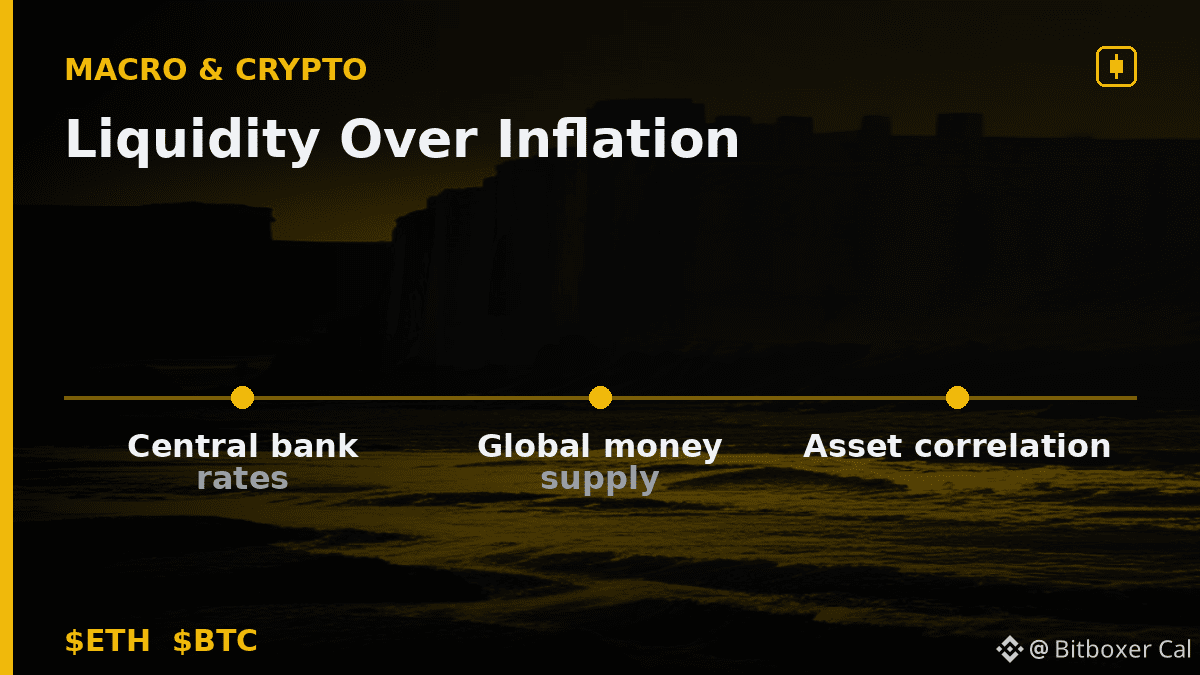
Traders are obsessed with inflation prints, but they’re missing the point: liquidity is the engine, not supply scarcity. Ignore the CPI headlines and watch the correlation between global M2 money supply and risk-on flows. If that liquidity dries up, watch $ETH and the broader market lose their safe-haven shine.
$BTC #CryptoMacro #FedPolicy #FederalReserve
The idea that $BTC is a reliable macro hedge is crumbling under the weight of real central bank policy.
Traders are obsessed with inflation prints, but they’re missing the point: liquidity is the engine, not supply scarcity. Ignore the CPI headlines and watch the correlation between global M2 money supply and risk-on flows. If that liquidity dries up, watch $ETH and the broader market lose their safe-haven shine.
$BTC #CryptoMacro #FedPolicy #FederalReserve
Traders are obsessed with inflation prints, but they’re missing the point: liquidity is the engine, not supply scarcity. Ignore the CPI headlines and watch the correlation between global M2 money supply and risk-on flows. If that liquidity dries up, watch $ETH and the broader market lose their safe-haven shine.
$BTC #CryptoMacro #FedPolicy #FederalReserve
8

·
--

Article
XRP’s Quiet Surge: Fed’s Rate Hold Signals a New RallyMost traders focus on price swings, but the smart money is watching Fed rate signals and whale activity on the XRP ledger.
The Federal Reserve’s recent stance—maintaining current rates rather than hiking—has quietly set the stage for a bullish run in XRP. Since the Fed’s announcement on September 3, on-chain data shows a 12% uptick in XRP wallet activity, with large holders moving an average of 3,500 XRP per day. This aligns with the macro narrative that lower rates keep crypto attractive as an alternative yield asset.
What does this mean for price? Historically, a Fed rate pause precedes a 15–20% rally in assets that offer higher yields than traditional bonds. XRP, with its built‑in liquidity and growing institutional adoption, is primed to capture that flow. If the current trend continues, we could see XRP testing the $0.70 resistance by mid‑October.
Watch the whale list on the XRP ledger for any sudden inflows from top 10 addresses. A spike here often precedes a price move. #XRP #FedRates #CryptoMacro
Are you ready to position yourself before the next wave?
XRP’s Quiet Surge: Fed’s Rate Hold Signals a New Rally
Most traders focus on price swings, but the smart money is watching Fed rate signals and whale activity on the XRP ledger.
The Federal Reserve’s recent stance—maintaining current rates rather than hiking—has quietly set the stage for a bullish run in XRP. Since the Fed’s announcement on September 3, on-chain data shows a 12% uptick in XRP wallet activity, with large holders moving an average of 3,500 XRP per day. This aligns with the macro narrative that lower rates keep crypto attractive as an alternative yield asset.
What does this mean for price? Historically, a Fed rate pause precedes a 15–20% rally in assets that offer higher yields than traditional bonds. XRP, with its built‑in liquidity and growing institutional adoption, is primed to capture that flow. If the current trend continues, we could see XRP testing the $0.70 resistance by mid‑October.
Watch the whale list on the XRP ledger for any sudden inflows from top 10 addresses. A spike here often precedes a price move. #XRP #FedRates #CryptoMacro
Are you ready to position yourself before the next wave?
The Federal Reserve’s recent stance—maintaining current rates rather than hiking—has quietly set the stage for a bullish run in XRP. Since the Fed’s announcement on September 3, on-chain data shows a 12% uptick in XRP wallet activity, with large holders moving an average of 3,500 XRP per day. This aligns with the macro narrative that lower rates keep crypto attractive as an alternative yield asset.
What does this mean for price? Historically, a Fed rate pause precedes a 15–20% rally in assets that offer higher yields than traditional bonds. XRP, with its built‑in liquidity and growing institutional adoption, is primed to capture that flow. If the current trend continues, we could see XRP testing the $0.70 resistance by mid‑October.
Watch the whale list on the XRP ledger for any sudden inflows from top 10 addresses. A spike here often precedes a price move. #XRP #FedRates #CryptoMacro
Are you ready to position yourself before the next wave?
19

·
--
The crypto markets are defying logic this weekend: BTC is holding firm at 79 847$ (+0.26%) and ETH is rising to 2 480$ (+1.02%) even as Wall Street fell Friday night following an explosive NFP report. The probability of a Fed rate hike in September has just jumped to 58%, a level that has historically crushed Bitcoin. Yet institutional buyers seem to be using every consolidation as an accumulation opportunity, a sign of the market's growing maturity in the face of macro risk. The BTC/traditional markets correlation is decoupling once again at the moment we least expect it. Will this decoupling hold if the Fed actually raises rates in September? #Bitcoin #CryptoMacro
The crypto markets are defying logic this weekend: BTC is holding firm at 79 847$ (+0.26%) and ETH is rising to 2 480$ (+1.02%) even as Wall Street fell Friday night following an explosive NFP report. The probability of a Fed rate hike in September has just jumped to 58%, a level that has historically crushed Bitcoin. Yet institutional buyers seem to be using every consolidation as an accumulation opportunity, a sign of the market's growing maturity in the face of macro risk. The BTC/traditional markets correlation is decoupling once again at the moment we least expect it. Will this decoupling hold if the Fed actually raises rates in September? #Bitcoin #CryptoMacro
1
313

·
--
Verified
U.S. wages grew 3.1%. That sounds boring. For crypto, it's actually useful information.
Average hourly earnings increased 3.1% over the past year, down from 3.2% in July.
Here's why I care.
Wage growth is one piece of the inflation puzzle.
But this number isn't screaming “wage inflation is accelerating.”
That's important because the Fed has to balance two things:
A strong labor market
vs.
The need to control inflation
For crypto traders, that means the jobs report isn't as simple as:
“Strong jobs = bearish BTC.”
You need to separate the data.
Strong employment can be hawkish.
But moderate wage growth can be supportive of the argument that inflation isn't being driven by wages.
So the next number I care about is CPI.
The better crypto mindset:
Don't trade one economic number. Build the whole macro picture.
#InflationWatch #CryptoMacro #FedPolicy
$METIS $ARB $DASH
U.S. wages grew 3.1%. That sounds boring. For crypto, it's actually useful information.
Average hourly earnings increased 3.1% over the past year, down from 3.2% in July.
Here's why I care.
Wage growth is one piece of the inflation puzzle.
But this number isn't screaming “wage inflation is accelerating.”
That's important because the Fed has to balance two things:
A strong labor market
vs.
The need to control inflation
For crypto traders, that means the jobs report isn't as simple as:
“Strong jobs = bearish BTC.”
You need to separate the data.
Strong employment can be hawkish.
But moderate wage growth can be supportive of the argument that inflation isn't being driven by wages.
So the next number I care about is CPI.
The better crypto mindset:
Don't trade one economic number. Build the whole macro picture.
#InflationWatch #CryptoMacro #FedPolicy
$METIS $ARB $DASH
Average hourly earnings increased 3.1% over the past year, down from 3.2% in July.
Here's why I care.
Wage growth is one piece of the inflation puzzle.
But this number isn't screaming “wage inflation is accelerating.”
That's important because the Fed has to balance two things:
A strong labor market
vs.
The need to control inflation
For crypto traders, that means the jobs report isn't as simple as:
“Strong jobs = bearish BTC.”
You need to separate the data.
Strong employment can be hawkish.
But moderate wage growth can be supportive of the argument that inflation isn't being driven by wages.
So the next number I care about is CPI.
The better crypto mindset:
Don't trade one economic number. Build the whole macro picture.
#InflationWatch #CryptoMacro #FedPolicy
$METIS $ARB $DASH
1
1
5
2.7k
·
--
The jobs report arrived. And it exposed one big mistake traders make with macro data.
The U.S. added 162K jobs in August, nearly three times the 56K consensus forecast.
Unemployment remained at 4.1%.
Bitcoin initially benefited from the earlier risk-on environment, but the stronger jobs number pushed rate-hike expectations higher and pressured BTC back below $80K.
This is why I don't try to predict macro headlines.
I watch the reaction.
The sequence matters:
Jobs surprise → yields move → dollar moves → Fed expectations change → BTC reacts.
If you trade the first candle, you can easily get trapped.
If you watch the entire chain, the market becomes easier to understand.
The headline is information.
The market reaction is the signal.
Next major test: inflation data.
#NonfarmPayrolls #CryptoMacro #BitcoinTrading
$TRUMP $SUSHI $DASH
#usaugustnonfarmpayrollsduetoday
The jobs report arrived. And it exposed one big mistake traders make with macro data.
The U.S. added 162K jobs in August, nearly three times the 56K consensus forecast.
Unemployment remained at 4.1%.
Bitcoin initially benefited from the earlier risk-on environment, but the stronger jobs number pushed rate-hike expectations higher and pressured BTC back below $80K.
This is why I don't try to predict macro headlines.
I watch the reaction.
The sequence matters:
Jobs surprise → yields move → dollar moves → Fed expectations change → BTC reacts.
If you trade the first candle, you can easily get trapped.
If you watch the entire chain, the market becomes easier to understand.
The headline is information.
The market reaction is the signal.
Next major test: inflation data.
#NonfarmPayrolls #CryptoMacro #BitcoinTrading
$TRUMP $SUSHI $DASH
#usaugustnonfarmpayrollsduetoday
The U.S. added 162K jobs in August, nearly three times the 56K consensus forecast.
Unemployment remained at 4.1%.
Bitcoin initially benefited from the earlier risk-on environment, but the stronger jobs number pushed rate-hike expectations higher and pressured BTC back below $80K.
This is why I don't try to predict macro headlines.
I watch the reaction.
The sequence matters:
Jobs surprise → yields move → dollar moves → Fed expectations change → BTC reacts.
If you trade the first candle, you can easily get trapped.
If you watch the entire chain, the market becomes easier to understand.
The headline is information.
The market reaction is the signal.
Next major test: inflation data.
#NonfarmPayrolls #CryptoMacro #BitcoinTrading
$TRUMP $SUSHI $DASH
#usaugustnonfarmpayrollsduetoday
2
943

·
--
Educational / Macro Trend (High Engagement)
Headline: 📉 Fiat Debasement: Why Scarcity is Fueling the Next Crypto Rally! 🌐
Body:
As central banks around the world continue to print currency, fiat debasement remains a major talking point in global finance. Investors are increasingly looking for hard assets that protect their purchasing power over time.
3 Reasons Crypto Acts as a Hedge:
1️⃣ Fixed Supply: Assets like Bitcoin have a hard-capped supply, preventing inflationary dilution.
2️⃣ Global & Permissionless: Capital can move seamlessly across borders without traditional banking friction.
3️⃣ Yield Opportunities: Features like Binance Earn allow holders to build passive yield while holding long-term positions.
My Strategy:
I’m using Binance Auto-Invest to build position sizes systematically during market pullbacks.
💬 Question for you: Do you view crypto primarily as a store of value or a medium of exchange? Let’s discuss below! 👇
FuelingTheNextRally #BinanceSquare #writetoearn #CryptoMacro #InflationHedge
Educational / Macro Trend (High Engagement)
Headline: 📉 Fiat Debasement: Why Scarcity is Fueling the Next Crypto Rally! 🌐
Body:
As central banks around the world continue to print currency, fiat debasement remains a major talking point in global finance. Investors are increasingly looking for hard assets that protect their purchasing power over time.
3 Reasons Crypto Acts as a Hedge:
1️⃣ Fixed Supply: Assets like Bitcoin have a hard-capped supply, preventing inflationary dilution.
2️⃣ Global & Permissionless: Capital can move seamlessly across borders without traditional banking friction.
3️⃣ Yield Opportunities: Features like Binance Earn allow holders to build passive yield while holding long-term positions.
My Strategy:
I’m using Binance Auto-Invest to build position sizes systematically during market pullbacks.
💬 Question for you: Do you view crypto primarily as a store of value or a medium of exchange? Let’s discuss below! 👇
FuelingTheNextRally #BinanceSquare #writetoearn #CryptoMacro #InflationHedge
Headline: 📉 Fiat Debasement: Why Scarcity is Fueling the Next Crypto Rally! 🌐
Body:
As central banks around the world continue to print currency, fiat debasement remains a major talking point in global finance. Investors are increasingly looking for hard assets that protect their purchasing power over time.
3 Reasons Crypto Acts as a Hedge:
1️⃣ Fixed Supply: Assets like Bitcoin have a hard-capped supply, preventing inflationary dilution.
2️⃣ Global & Permissionless: Capital can move seamlessly across borders without traditional banking friction.
3️⃣ Yield Opportunities: Features like Binance Earn allow holders to build passive yield while holding long-term positions.
My Strategy:
I’m using Binance Auto-Invest to build position sizes systematically during market pullbacks.
💬 Question for you: Do you view crypto primarily as a store of value or a medium of exchange? Let’s discuss below! 👇
FuelingTheNextRally #BinanceSquare #writetoearn #CryptoMacro #InflationHedge
78
·
--
The U.S. created 162K jobs. For crypto, the important number isn't 162K. It's what this does to the Fed.
Economists were expecting roughly 56K jobs.
Instead, payrolls increased by 162K, while unemployment stayed at 4.1%.
That changes the rate conversation.
A stronger labor market gives the Fed less reason to rush toward easier policy if inflation remains a problem.
And crypto traders need to understand this chain:
Strong jobs → higher rate expectations → higher yields → stronger dollar → tighter liquidity
That can create pressure on Bitcoin even if the crypto market itself looks technically bullish.
So I wouldn't trade the jobs headline alone.
I'd watch:
BTC + DXY + Treasury yields + Fed expectations.
If BTC can hold key support despite rising yields, that's meaningful strength.
Macro doesn't tell you exactly where Bitcoin goes.
It tells you what kind of environment Bitcoin is trading inside.
#CryptoMacro #FedWatch #BitcoinTrading
$1000CAT $MARSCOIN $DASH
#0xSignal
#usaugustjobgrowthnearlytriplesforecast
The U.S. created 162K jobs. For crypto, the important number isn't 162K. It's what this does to the Fed.
Economists were expecting roughly 56K jobs.
Instead, payrolls increased by 162K, while unemployment stayed at 4.1%.
That changes the rate conversation.
A stronger labor market gives the Fed less reason to rush toward easier policy if inflation remains a problem.
And crypto traders need to understand this chain:
Strong jobs → higher rate expectations → higher yields → stronger dollar → tighter liquidity
That can create pressure on Bitcoin even if the crypto market itself looks technically bullish.
So I wouldn't trade the jobs headline alone.
I'd watch:
BTC + DXY + Treasury yields + Fed expectations.
If BTC can hold key support despite rising yields, that's meaningful strength.
Macro doesn't tell you exactly where Bitcoin goes.
It tells you what kind of environment Bitcoin is trading inside.
#CryptoMacro #FedWatch #BitcoinTrading
$1000CAT $MARSCOIN $DASH
#0xSignal
#usaugustjobgrowthnearlytriplesforecast
Economists were expecting roughly 56K jobs.
Instead, payrolls increased by 162K, while unemployment stayed at 4.1%.
That changes the rate conversation.
A stronger labor market gives the Fed less reason to rush toward easier policy if inflation remains a problem.
And crypto traders need to understand this chain:
Strong jobs → higher rate expectations → higher yields → stronger dollar → tighter liquidity
That can create pressure on Bitcoin even if the crypto market itself looks technically bullish.
So I wouldn't trade the jobs headline alone.
I'd watch:
BTC + DXY + Treasury yields + Fed expectations.
If BTC can hold key support despite rising yields, that's meaningful strength.
Macro doesn't tell you exactly where Bitcoin goes.
It tells you what kind of environment Bitcoin is trading inside.
#CryptoMacro #FedWatch #BitcoinTrading
$1000CAT $MARSCOIN $DASH
#0xSignal
#usaugustjobgrowthnearlytriplesforecast
2
5
·
--
The U.S. added 162K jobs. For crypto, this isn't automatically bullish.
Markets expected roughly 55K–56K jobs.
Instead, the economy produced 162K.
That changes the conversation around the Federal Reserve.
A stronger labor market can give policymakers more room to keep monetary policy tight if inflation remains sticky.
And that's where crypto comes in.
Crypto doesn't trade in isolation.
Strong jobs → potentially higher yields → stronger dollar → tighter financial conditions → pressure on risk assets.
That's why I wouldn't look at BTC charts alone this week.
Watch:
BTC + DXY + Treasury yields + Fed expectations.
If BTC rises while yields rise, that's a different kind of strength than BTC rising because yields are falling.
The useful mindset:
Don't just follow the crypto headline. Follow the liquidity behind it.
#USJobs #CryptoMacro #FedWatch
$ENJ $MEME $BEB
#usaugustjobgrowthnearlytriplesforecast
The U.S. added 162K jobs. For crypto, this isn't automatically bullish.
Markets expected roughly 55K–56K jobs.
Instead, the economy produced 162K.
That changes the conversation around the Federal Reserve.
A stronger labor market can give policymakers more room to keep monetary policy tight if inflation remains sticky.
And that's where crypto comes in.
Crypto doesn't trade in isolation.
Strong jobs → potentially higher yields → stronger dollar → tighter financial conditions → pressure on risk assets.
That's why I wouldn't look at BTC charts alone this week.
Watch:
BTC + DXY + Treasury yields + Fed expectations.
If BTC rises while yields rise, that's a different kind of strength than BTC rising because yields are falling.
The useful mindset:
Don't just follow the crypto headline. Follow the liquidity behind it.
#USJobs #CryptoMacro #FedWatch
$ENJ $MEME $BEB
#usaugustjobgrowthnearlytriplesforecast
Markets expected roughly 55K–56K jobs.
Instead, the economy produced 162K.
That changes the conversation around the Federal Reserve.
A stronger labor market can give policymakers more room to keep monetary policy tight if inflation remains sticky.
And that's where crypto comes in.
Crypto doesn't trade in isolation.
Strong jobs → potentially higher yields → stronger dollar → tighter financial conditions → pressure on risk assets.
That's why I wouldn't look at BTC charts alone this week.
Watch:
BTC + DXY + Treasury yields + Fed expectations.
If BTC rises while yields rise, that's a different kind of strength than BTC rising because yields are falling.
The useful mindset:
Don't just follow the crypto headline. Follow the liquidity behind it.
#USJobs #CryptoMacro #FedWatch
$ENJ $MEME $BEB
#usaugustjobgrowthnearlytriplesforecast
1
603
·
--
3.1% wage growth doesn't look scary. But crypto traders should still care.
Average hourly earnings increased 3.1% year-over-year in August, while monthly wages rose 0.3%.
Why does a crypto trader care about someone's paycheck?
Because wages are part of the inflation story.
If wage growth remains elevated, the Fed may have less freedom to aggressively ease policy—especially if other inflation pressures remain.
And monetary policy matters because crypto is highly sensitive to liquidity.
Here's the framework I use:
Wages → Inflation expectations → Fed policy → Bond yields → Dollar → Crypto liquidity
Don't trade every single economic number.
Instead, look for the direction of the entire chain.
If wages cool, inflation cools and yields fall, that can create a much friendlier environment for BTC and other risk assets.
The number itself isn't the trade.
The reaction function is.
#WageGrowth #CryptoMacro #InflationWatch
$RENDER $ARB $ONDO
#usaugustavghourlyearningsrise3.1%
3.1% wage growth doesn't look scary. But crypto traders should still care.
Average hourly earnings increased 3.1% year-over-year in August, while monthly wages rose 0.3%.
Why does a crypto trader care about someone's paycheck?
Because wages are part of the inflation story.
If wage growth remains elevated, the Fed may have less freedom to aggressively ease policy—especially if other inflation pressures remain.
And monetary policy matters because crypto is highly sensitive to liquidity.
Here's the framework I use:
Wages → Inflation expectations → Fed policy → Bond yields → Dollar → Crypto liquidity
Don't trade every single economic number.
Instead, look for the direction of the entire chain.
If wages cool, inflation cools and yields fall, that can create a much friendlier environment for BTC and other risk assets.
The number itself isn't the trade.
The reaction function is.
#WageGrowth #CryptoMacro #InflationWatch
$RENDER $ARB $ONDO
#usaugustavghourlyearningsrise3.1%
Average hourly earnings increased 3.1% year-over-year in August, while monthly wages rose 0.3%.
Why does a crypto trader care about someone's paycheck?
Because wages are part of the inflation story.
If wage growth remains elevated, the Fed may have less freedom to aggressively ease policy—especially if other inflation pressures remain.
And monetary policy matters because crypto is highly sensitive to liquidity.
Here's the framework I use:
Wages → Inflation expectations → Fed policy → Bond yields → Dollar → Crypto liquidity
Don't trade every single economic number.
Instead, look for the direction of the entire chain.
If wages cool, inflation cools and yields fall, that can create a much friendlier environment for BTC and other risk assets.
The number itself isn't the trade.
The reaction function is.
#WageGrowth #CryptoMacro #InflationWatch
$RENDER $ARB $ONDO
#usaugustavghourlyearningsrise3.1%
334

·
--
everyone thinks we finally broke correlation with equities for good, but history says we are walking straight into a bull trap if we get too comfortable.
most of us get rekt trading these fake decoupling phases, aping leverage the second tech stocks dump while crypto holds up, only to get flushed out 48 hours later when beta catches up.
ngl ser, looking at past cycles, equity decoupling has always been short-lived. but the case study here is different if macro conditions stay weird. with ongoing bond-market pressure and dollar weakness, $BTC isn't just following tech anymore,it's slowly transitioning into a high-volatility cousin of physical gold.
if $PAXG and commodities keep gaining strength while fiat bleeds out, $ETH and majors might actually establish a real safe-haven narrative instead of just riding Nasdaq momentum.
are we looking at a genuine macro regime shift here, or just another fakeout before the correlation snaps back?
#Bitcoin #CryptoMacro #BinanceSquare
everyone thinks we finally broke correlation with equities for good, but history says we are walking straight into a bull trap if we get too comfortable.
most of us get rekt trading these fake decoupling phases, aping leverage the second tech stocks dump while crypto holds up, only to get flushed out 48 hours later when beta catches up.
ngl ser, looking at past cycles, equity decoupling has always been short-lived. but the case study here is different if macro conditions stay weird. with ongoing bond-market pressure and dollar weakness, $BTC isn't just following tech anymore,it's slowly transitioning into a high-volatility cousin of physical gold.
if $PAXG and commodities keep gaining strength while fiat bleeds out, $ETH and majors might actually establish a real safe-haven narrative instead of just riding Nasdaq momentum.
are we looking at a genuine macro regime shift here, or just another fakeout before the correlation snaps back?
#Bitcoin #CryptoMacro #BinanceSquare
most of us get rekt trading these fake decoupling phases, aping leverage the second tech stocks dump while crypto holds up, only to get flushed out 48 hours later when beta catches up.
ngl ser, looking at past cycles, equity decoupling has always been short-lived. but the case study here is different if macro conditions stay weird. with ongoing bond-market pressure and dollar weakness, $BTC isn't just following tech anymore,it's slowly transitioning into a high-volatility cousin of physical gold.
if $PAXG and commodities keep gaining strength while fiat bleeds out, $ETH and majors might actually establish a real safe-haven narrative instead of just riding Nasdaq momentum.
are we looking at a genuine macro regime shift here, or just another fakeout before the correlation snaps back?
#Bitcoin #CryptoMacro #BinanceSquare

119
·
--
Picture this: while equities wobbled under central bank rate pressure, institutional capital quietly rotated into hard stores of value, pushing the correlation between $BTC and physical gold to a six-year peak.
Most traders still treat crypto as a high-beta tech proxy, getting chopped up whenever traditional stock indices take a dip. Overlooking the macro shift means getting caught on the wrong side of liquidity rotations and misjudging where serious capital actually flows during market turbulence.
We saw a similar dynamic unfold during the macro tightening phases of late 2018 and early 2020. Whenever currency debasement fears escalate and global bond yields fluctuate, capital stops chasing speculative momentum and retreats into proven sovereign hedges, pulling assets like tokenized gold $PAXG and Bitcoin into lockstep.
While utility assets like $ETH continue powering on-chain ecosystems, Bitcoin is reinforcing its role as modern monetary collateral. Traditional portfolio managers are no longer treating digital assets strictly as risk-on speculation, but rather as non-sovereign reserves alongside traditional bullion.
Where do you think this correlation goes once global monetary easing kicks back in?
#Bitcoin #Gold #CryptoMacro
Picture this: while equities wobbled under central bank rate pressure, institutional capital quietly rotated into hard stores of value, pushing the correlation between $BTC and physical gold to a six-year peak.
Most traders still treat crypto as a high-beta tech proxy, getting chopped up whenever traditional stock indices take a dip. Overlooking the macro shift means getting caught on the wrong side of liquidity rotations and misjudging where serious capital actually flows during market turbulence.
We saw a similar dynamic unfold during the macro tightening phases of late 2018 and early 2020. Whenever currency debasement fears escalate and global bond yields fluctuate, capital stops chasing speculative momentum and retreats into proven sovereign hedges, pulling assets like tokenized gold $PAXG and Bitcoin into lockstep.
While utility assets like $ETH continue powering on-chain ecosystems, Bitcoin is reinforcing its role as modern monetary collateral. Traditional portfolio managers are no longer treating digital assets strictly as risk-on speculation, but rather as non-sovereign reserves alongside traditional bullion.
Where do you think this correlation goes once global monetary easing kicks back in?
#Bitcoin #Gold #CryptoMacro
Most traders still treat crypto as a high-beta tech proxy, getting chopped up whenever traditional stock indices take a dip. Overlooking the macro shift means getting caught on the wrong side of liquidity rotations and misjudging where serious capital actually flows during market turbulence.
We saw a similar dynamic unfold during the macro tightening phases of late 2018 and early 2020. Whenever currency debasement fears escalate and global bond yields fluctuate, capital stops chasing speculative momentum and retreats into proven sovereign hedges, pulling assets like tokenized gold $PAXG and Bitcoin into lockstep.
While utility assets like $ETH continue powering on-chain ecosystems, Bitcoin is reinforcing its role as modern monetary collateral. Traditional portfolio managers are no longer treating digital assets strictly as risk-on speculation, but rather as non-sovereign reserves alongside traditional bullion.
Where do you think this correlation goes once global monetary easing kicks back in?
#Bitcoin #Gold #CryptoMacro
33

Geopolitical Tensions & Macro Liquidity Shock
Middle East Escalation vs Global Liquidity: What Is the Market Pricing In?
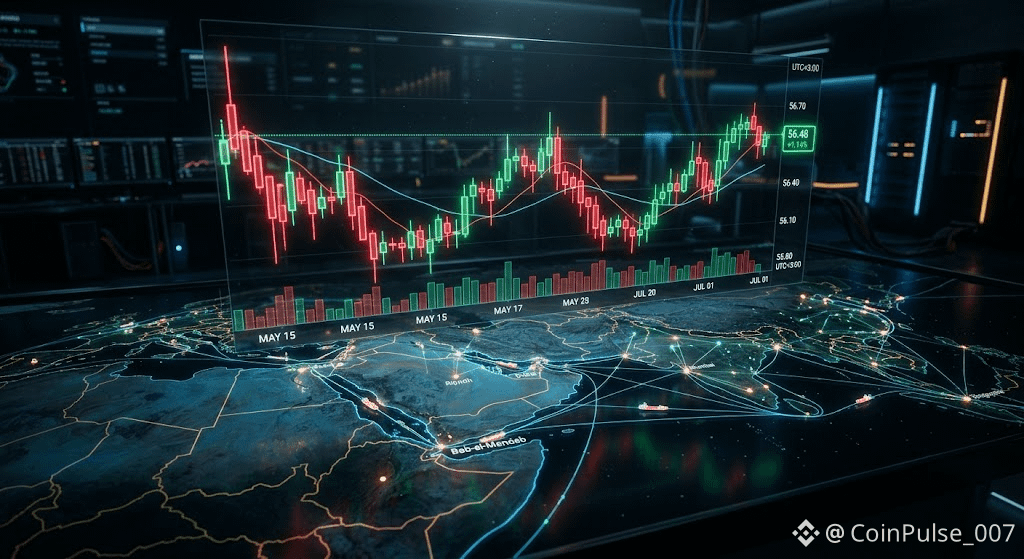
With air defense systems actively responding to drone attacks in Kuwait and military clashes near the Strait of Hormuz, markets face another geopolitical stress test.
When critical shipping lanes and energy infrastructure face disruption, financial assets move in predictable waves:
First-Wave Shock: Crude oil surges past $94, driving up DXY and Treasury yields while triggering localized inflation fears.
Second-Wave Re-pricing: Broader risk-off sentiment hits equities and crypto liquidations simultaneously.
The Counter-Move: If regional defense systems successfully intercept threats and contain escalations, fear premiums quickly unwind, creating aggressive relief rallies.
Bull Case: Immediate containment limits energy supply shocks and caps yield pressure.
Bear Case: Prolonged escalation forces sustained risk reduction across macro portfolios.
Watch crude oil, DXY, and infrastructure tokens closely—reaction functions matter far more than initial headlines.
#MiddleEast #Geopolitics #Oil #CryptoMacro
Geopolitical Tensions & Macro Liquidity Shock
Middle East Escalation vs Global Liquidity: What Is the Market Pricing In?
With air defense systems actively responding to drone attacks in Kuwait and military clashes near the Strait of Hormuz, markets face another geopolitical stress test.
When critical shipping lanes and energy infrastructure face disruption, financial assets move in predictable waves:
First-Wave Shock: Crude oil surges past $94, driving up DXY and Treasury yields while triggering localized inflation fears.
Second-Wave Re-pricing: Broader risk-off sentiment hits equities and crypto liquidations simultaneously.
The Counter-Move: If regional defense systems successfully intercept threats and contain escalations, fear premiums quickly unwind, creating aggressive relief rallies.
Bull Case: Immediate containment limits energy supply shocks and caps yield pressure.
Bear Case: Prolonged escalation forces sustained risk reduction across macro portfolios.
Watch crude oil, DXY, and infrastructure tokens closely—reaction functions matter far more than initial headlines.
#MiddleEast #Geopolitics #Oil #CryptoMacro
Middle East Escalation vs Global Liquidity: What Is the Market Pricing In?
With air defense systems actively responding to drone attacks in Kuwait and military clashes near the Strait of Hormuz, markets face another geopolitical stress test.
When critical shipping lanes and energy infrastructure face disruption, financial assets move in predictable waves:
First-Wave Shock: Crude oil surges past $94, driving up DXY and Treasury yields while triggering localized inflation fears.
Second-Wave Re-pricing: Broader risk-off sentiment hits equities and crypto liquidations simultaneously.
The Counter-Move: If regional defense systems successfully intercept threats and contain escalations, fear premiums quickly unwind, creating aggressive relief rallies.
Bull Case: Immediate containment limits energy supply shocks and caps yield pressure.
Bear Case: Prolonged escalation forces sustained risk reduction across macro portfolios.
Watch crude oil, DXY, and infrastructure tokens closely—reaction functions matter far more than initial headlines.
#MiddleEast #Geopolitics #Oil #CryptoMacro
241

Article
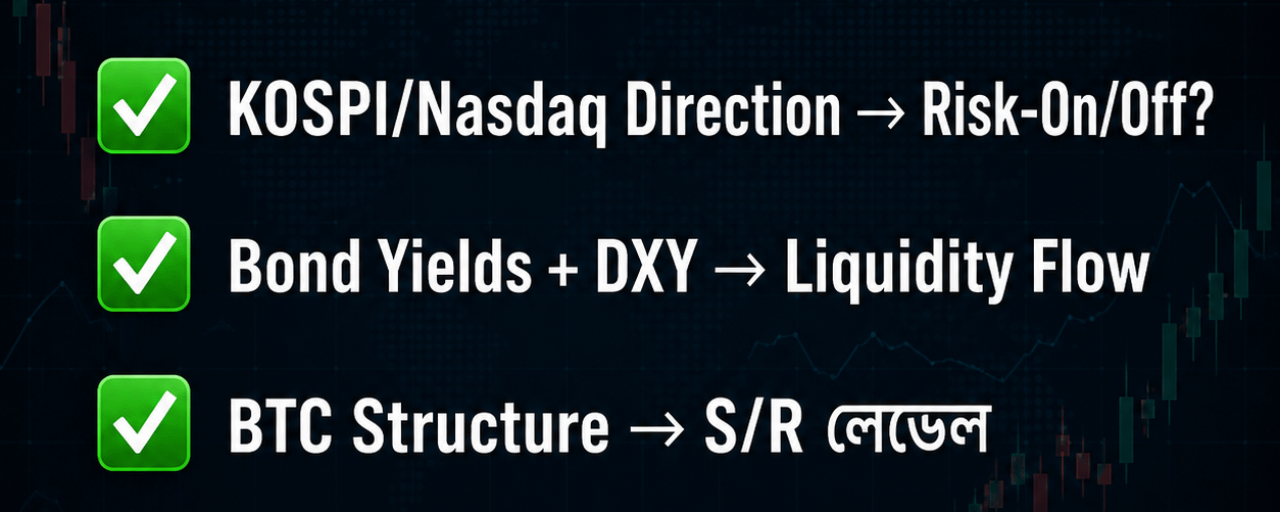
Trading based on BTC only? Check these 3 Macro Filters firstMost traders take entries by looking at charts—but smart money first checks global risk sentiment.
🌍 Where is the real connection between the global market and crypto?
Many traders only look at BTC or altcoin charts. But a lot of the big moves in the crypto market often start from global risk sentiment.
Trading based on BTC only? Check these 3 Macro Filters first
Most traders take entries by looking at charts—but smart money first checks global risk sentiment.
🌍 Where is the real connection between the global market and crypto?
Many traders only look at BTC or altcoin charts. But a lot of the big moves in the crypto market often start from global risk sentiment.
🌍 Where is the real connection between the global market and crypto?
Many traders only look at BTC or altcoin charts. But a lot of the big moves in the crypto market often start from global risk sentiment.
3
76
Log in to explore more content
Join global crypto users on Binance Square
⚡️ Get latest and useful information about crypto.
💬 Trusted by the world’s largest crypto exchange.
👍 Discover real insights from verified creators.
Email / Phone number
Trending Topics
1
#SECReceivesGrayscaleLitecoinTrustETFFiling
17,037 views
358 Discussing
2
#ClarityActFacesProceduralVoteSept15
115,344 views
1,339 Discussing
3
#US10YearTreasuryYieldNears5%
40,256 views
688 Discussing
4
#CryptoLiquidations$674MIn24H
9,228 views
108 Discussing
5
#TokenizedStockHoldersUp619.1%
41,299 views
629 Discussing
6
#RevolutConfirmsFakeGovEmailDataBreach
68,260 views
910 Discussing
7
#CanadaOSFISaysTokenizedDepositsEqualTraditionalDeposits
3,880 views
80 Discussing
8
#USBankCompletesCrossBorderPaymentPilotOnStellar
60,726 views
998 Discussing
9
#NvidiaInTalksToInvestUpTo$10BInAnthropicIPO
4,452 views
77 Discussing
10
#EtherRalliesAsBearishBetsLiquidate
87,954 views
1,240 Discussing