

#chip
chip
2M views
11,407 Discussing
Hot
Latest

🚀 $CHIP RISES ON BLACKROCK‑JPYSC MOU! 📈
🦈 Smart money is already circling the tokenized money‑market bridge, linking BlackRock’s vaults to the yen‑backed JPYSC. 📊 On‑chain liquidity could flood Japanese investors, turning traditional yields into blockchain‑ready assets. 🌊
⚡ The buzz fuels a short‑term surge in stablecoin appetite across Asia, with $SYN and $Q poised to catch the tailwind. Regulators whisper uncertainty, but the market’s momentum feels like a tide you don’t want to miss. 💡
💬 Are you loading up on $CHIP or waiting for the next liquidity surge? 👇
⚠️ Not financial advice. Always manage your risk. 🛡️
🏷️ #CHIP #Stablecoin #DeFi #Asia #Crypto
🚀 🦈
🚀 $CHIP RISES ON BLACKROCK‑JPYSC MOU! 📈
🦈 Smart money is already circling the tokenized money‑market bridge, linking BlackRock’s vaults to the yen‑backed JPYSC. 📊 On‑chain liquidity could flood Japanese investors, turning traditional yields into blockchain‑ready assets. 🌊
⚡ The buzz fuels a short‑term surge in stablecoin appetite across Asia, with $SYN and $Q poised to catch the tailwind. Regulators whisper uncertainty, but the market’s momentum feels like a tide you don’t want to miss. 💡
💬 Are you loading up on $CHIP or waiting for the next liquidity surge? 👇
⚠️ Not financial advice. Always manage your risk. 🛡️
🏷️ #CHIP #Stablecoin #DeFi #Asia #Crypto
🚀 🦈
🦈 Smart money is already circling the tokenized money‑market bridge, linking BlackRock’s vaults to the yen‑backed JPYSC. 📊 On‑chain liquidity could flood Japanese investors, turning traditional yields into blockchain‑ready assets. 🌊
⚡ The buzz fuels a short‑term surge in stablecoin appetite across Asia, with $SYN and $Q poised to catch the tailwind. Regulators whisper uncertainty, but the market’s momentum feels like a tide you don’t want to miss. 💡
💬 Are you loading up on $CHIP or waiting for the next liquidity surge? 👇
⚠️ Not financial advice. Always manage your risk. 🛡️
🏷️ #CHIP #Stablecoin #DeFi #Asia #Crypto
🚀 🦈



13

·
--
Bullish
$CHIP USDT — LONG SETUP
Entry: 0.0500 – 0.0515
TP1: 0.0530
TP2: 0.0550
TP3: 0.0570
Stop Loss: 0.0485
Will $CHIP reclaim 0.0572 and push higher, or is this bounce about to fail? Drop your prediction in the comments!
{future}(CHIPUSDT)
#EarningsSeason #chip
$CHIP USDT — LONG SETUP
Entry: 0.0500 – 0.0515
TP1: 0.0530
TP2: 0.0550
TP3: 0.0570
Stop Loss: 0.0485
Will $CHIP reclaim 0.0572 and push higher, or is this bounce about to fail? Drop your prediction in the comments!
#EarningsSeason #chip
Entry: 0.0500 – 0.0515
TP1: 0.0530
TP2: 0.0550
TP3: 0.0570
Stop Loss: 0.0485
Will $CHIP reclaim 0.0572 and push higher, or is this bounce about to fail? Drop your prediction in the comments!
#EarningsSeason #chip
88

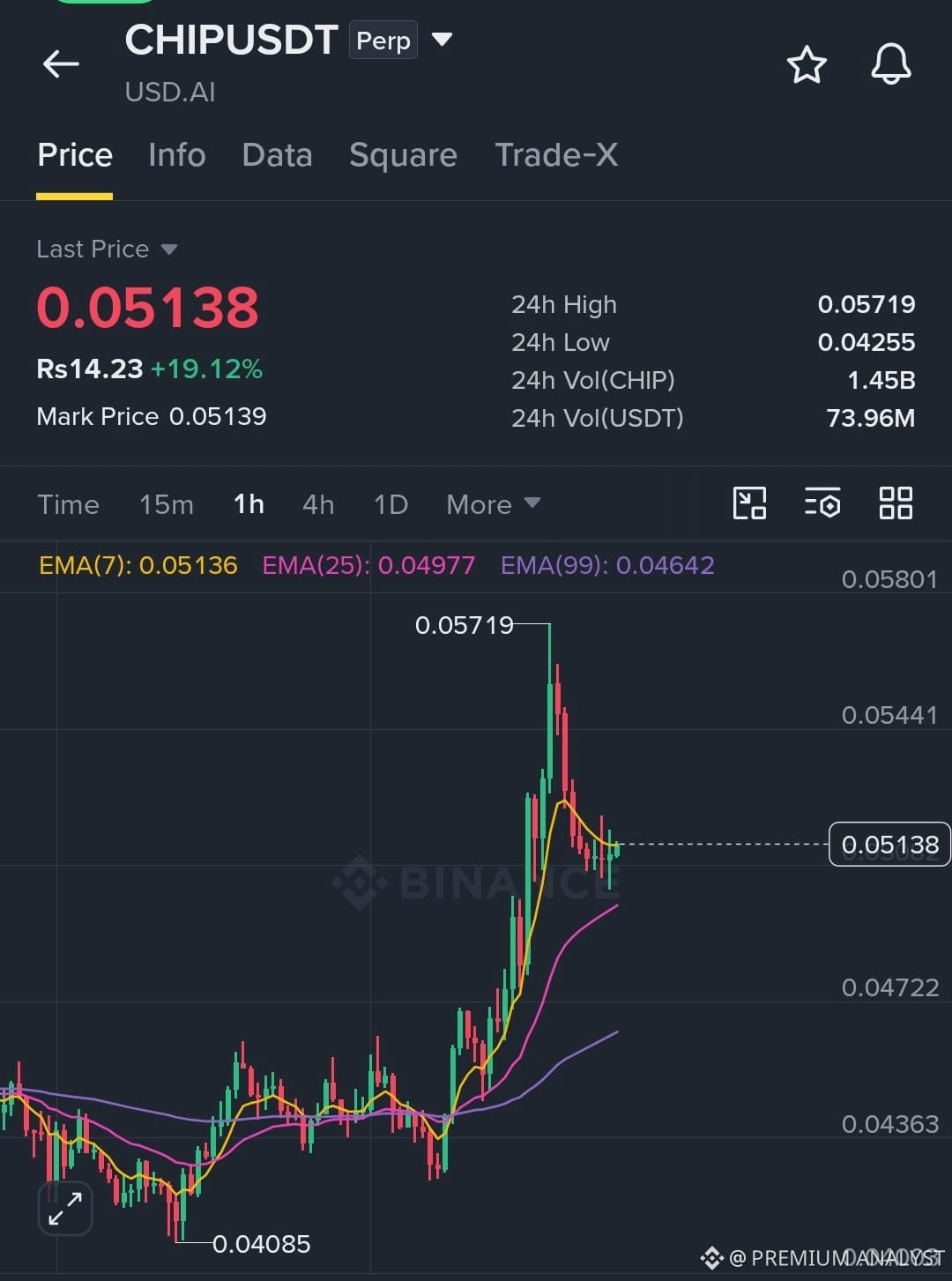
$CHIP SURGES +16%! OVER 13M VOL DEFI GAINER HOLDING LOCAL SUPPORT FLOOR — RSI OVERSOLD RESET AT 38.09 TARGETING A BREAKOUT PAST $0.05169 SAR RESISTANCE?
Binance DeFi top gainers are leading the market morning momentum today! $CHIP (USD.AI) has logged a strong +16.89% daily surge, backed by an impressive 13.98M USDT (274.80M $CHIP) in 24-hour trading volume!
After rocketing off its 0.04320 daily bottom floor and reaching a 24-hour peak high of 0.05725, price action completed a deep cooling-off retrace to test firm demand support near 0.05026. It is now consolidating steadily near 0.05066.
Master Scalp Setup & Strategic Levels:
Trade Bias: Oversold Rebound / Scalp Long
Accumulation Entry Zone: 0.05000 – 0.05066 (Local demand support consolidation range)
Key Targets: 0.05169 ➡️ 0.05458 ➡️ 0.05725 (24h Peak Retest)
Stop Loss: Below 0.04950
Why This Setup is Primed for Expansion:
Clean RSI Oversold Reset: The 15m RSI (6) has cleanly reset from overbought levels down to an oversold zone of 38.09. This cool-down offers buyers optimal upside breathing room for a sharp V-shape bounce.
Overhead SAR Breakout Trigger: Dynamic Parabolic SAR overhead resistance currently sits right above at 0.05169. A decisive 15m candle close above 0.05169 will flip momentum bullish and clear the pathway toward local resistance levels at 0.05458 and a full retest of the 0.05725 peak high.
Are you taking a long entry on CHIP at this $0.05026 support floor bounce, or waiting for a breakout close above $0.05169? Share your thoughts in the comments below!
Trade Now $CHIP
{spot}(CHIPUSDT)
#chip #USD_AI #BinanceSquare #cryptosignals
$CHIP SURGES +16%! OVER 13M VOL DEFI GAINER HOLDING LOCAL SUPPORT FLOOR — RSI OVERSOLD RESET AT 38.09 TARGETING A BREAKOUT PAST $0.05169 SAR RESISTANCE?
Binance DeFi top gainers are leading the market morning momentum today! $CHIP (USD.AI) has logged a strong +16.89% daily surge, backed by an impressive 13.98M USDT (274.80M $CHIP ) in 24-hour trading volume!
After rocketing off its 0.04320 daily bottom floor and reaching a 24-hour peak high of 0.05725, price action completed a deep cooling-off retrace to test firm demand support near 0.05026. It is now consolidating steadily near 0.05066.
Master Scalp Setup & Strategic Levels:
Trade Bias: Oversold Rebound / Scalp Long
Accumulation Entry Zone: 0.05000 – 0.05066 (Local demand support consolidation range)
Key Targets: 0.05169 ➡️ 0.05458 ➡️ 0.05725 (24h Peak Retest)
Stop Loss: Below 0.04950
Why This Setup is Primed for Expansion:
Clean RSI Oversold Reset: The 15m RSI (6) has cleanly reset from overbought levels down to an oversold zone of 38.09. This cool-down offers buyers optimal upside breathing room for a sharp V-shape bounce.
Overhead SAR Breakout Trigger: Dynamic Parabolic SAR overhead resistance currently sits right above at 0.05169. A decisive 15m candle close above 0.05169 will flip momentum bullish and clear the pathway toward local resistance levels at 0.05458 and a full retest of the 0.05725 peak high.
Are you taking a long entry on CHIP at this $0.05026 support floor bounce, or waiting for a breakout close above $0.05169? Share your thoughts in the comments below!
Trade Now $CHIP
#chip #USD_AI #BinanceSquare #cryptosignals
Binance DeFi top gainers are leading the market morning momentum today! $CHIP (USD.AI) has logged a strong +16.89% daily surge, backed by an impressive 13.98M USDT (274.80M $CHIP ) in 24-hour trading volume!
After rocketing off its 0.04320 daily bottom floor and reaching a 24-hour peak high of 0.05725, price action completed a deep cooling-off retrace to test firm demand support near 0.05026. It is now consolidating steadily near 0.05066.
Master Scalp Setup & Strategic Levels:
Trade Bias: Oversold Rebound / Scalp Long
Accumulation Entry Zone: 0.05000 – 0.05066 (Local demand support consolidation range)
Key Targets: 0.05169 ➡️ 0.05458 ➡️ 0.05725 (24h Peak Retest)
Stop Loss: Below 0.04950
Why This Setup is Primed for Expansion:
Clean RSI Oversold Reset: The 15m RSI (6) has cleanly reset from overbought levels down to an oversold zone of 38.09. This cool-down offers buyers optimal upside breathing room for a sharp V-shape bounce.
Overhead SAR Breakout Trigger: Dynamic Parabolic SAR overhead resistance currently sits right above at 0.05169. A decisive 15m candle close above 0.05169 will flip momentum bullish and clear the pathway toward local resistance levels at 0.05458 and a full retest of the 0.05725 peak high.
Are you taking a long entry on CHIP at this $0.05026 support floor bounce, or waiting for a breakout close above $0.05169? Share your thoughts in the comments below!
Trade Now $CHIP
#chip #USD_AI #BinanceSquare #cryptosignals
1
142


·
--
Bullish
Guys, I have just opened a long position on $CHIP with 20x Leverage....
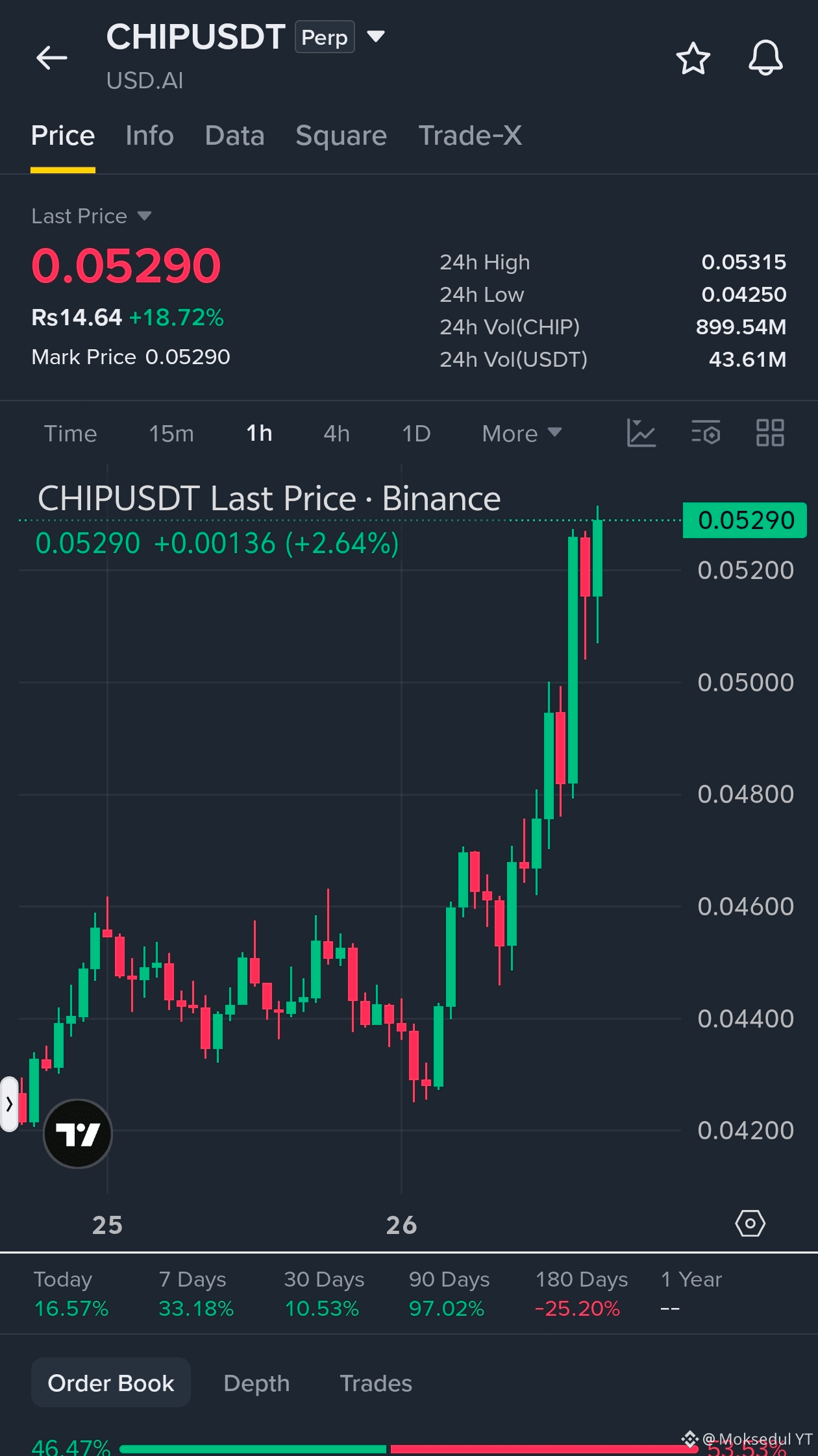
#CHIP is compressing right under $0.05315 resistance — a classic pre-breakout setup with momentum building.
Break $0.05315 → $0.05600 → $0.06000. Lose $0.05000 → invalid.
Entry: $0.05250–$0.05300
TP: $0.05600 → $0.06000 → $0.06500
SL: $0.04850
Buy and Trade 🚀
{future}(CHIPUSDT)
$BULLA
{future}(BULLAUSDT)
$ZEC
{future}(ZECUSDT)
#BinancePick #EarningsSeason #AnthropicS1ExpectedToday #CHIP
Guys, I have just opened a long position on $CHIP with 20x Leverage....
#CHIP is compressing right under $0.05315 resistance — a classic pre-breakout setup with momentum building.
Break $0.05315 → $0.05600 → $0.06000. Lose $0.05000 → invalid.
Entry: $0.05250–$0.05300
TP: $0.05600 → $0.06000 → $0.06500
SL: $0.04850
Buy and Trade 🚀
$BULLA
$ZEC
#BinancePick #EarningsSeason #AnthropicS1ExpectedToday #CHIP
#CHIP is compressing right under $0.05315 resistance — a classic pre-breakout setup with momentum building.
Break $0.05315 → $0.05600 → $0.06000. Lose $0.05000 → invalid.
Entry: $0.05250–$0.05300
TP: $0.05600 → $0.06000 → $0.06500
SL: $0.04850
Buy and Trade 🚀
$BULLA
$ZEC
#BinancePick #EarningsSeason #AnthropicS1ExpectedToday #CHIP
1
6
1.3k
🚨 $CHIP SURGES ON XYZ LISTING – WILL IT REDEFINE LIQUIDITY? 🚀
📊 The moment $CHIP hit the Binance Square stage alongside the fresh XYZ token, the order flow lit up like a flash ⚡, pulling in a wave of smart‑money bids 🦈 that could reshape depth.
Optimists see a liquidity boost as institutions line up, while skeptics warn the sudden influx may spark a short‑term volatility spike 📈. The market’s next move hinges on whether buyers can hold the line or liquidity sweeps force a correction.
💬 Are you loading up on $CHIP or waiting for the dust to settle? 👇
⚠️ Not financial advice. Always manage your risk. 🛡️
🏷️ #CHIP #XYZListing #Liquidity #Crypto
🔥 💎
🚨 $CHIP SURGES ON XYZ LISTING – WILL IT REDEFINE LIQUIDITY? 🚀
📊 The moment $CHIP hit the Binance Square stage alongside the fresh XYZ token, the order flow lit up like a flash ⚡, pulling in a wave of smart‑money bids 🦈 that could reshape depth.
Optimists see a liquidity boost as institutions line up, while skeptics warn the sudden influx may spark a short‑term volatility spike 📈. The market’s next move hinges on whether buyers can hold the line or liquidity sweeps force a correction.
💬 Are you loading up on $CHIP or waiting for the dust to settle? 👇
⚠️ Not financial advice. Always manage your risk. 🛡️
🏷️ #CHIP #XYZListing #Liquidity #Crypto
🔥 💎
📊 The moment $CHIP hit the Binance Square stage alongside the fresh XYZ token, the order flow lit up like a flash ⚡, pulling in a wave of smart‑money bids 🦈 that could reshape depth.
Optimists see a liquidity boost as institutions line up, while skeptics warn the sudden influx may spark a short‑term volatility spike 📈. The market’s next move hinges on whether buyers can hold the line or liquidity sweeps force a correction.
💬 Are you loading up on $CHIP or waiting for the dust to settle? 👇
⚠️ Not financial advice. Always manage your risk. 🛡️
🏷️ #CHIP #XYZListing #Liquidity #Crypto
🔥 💎


24

·
--
Bullish
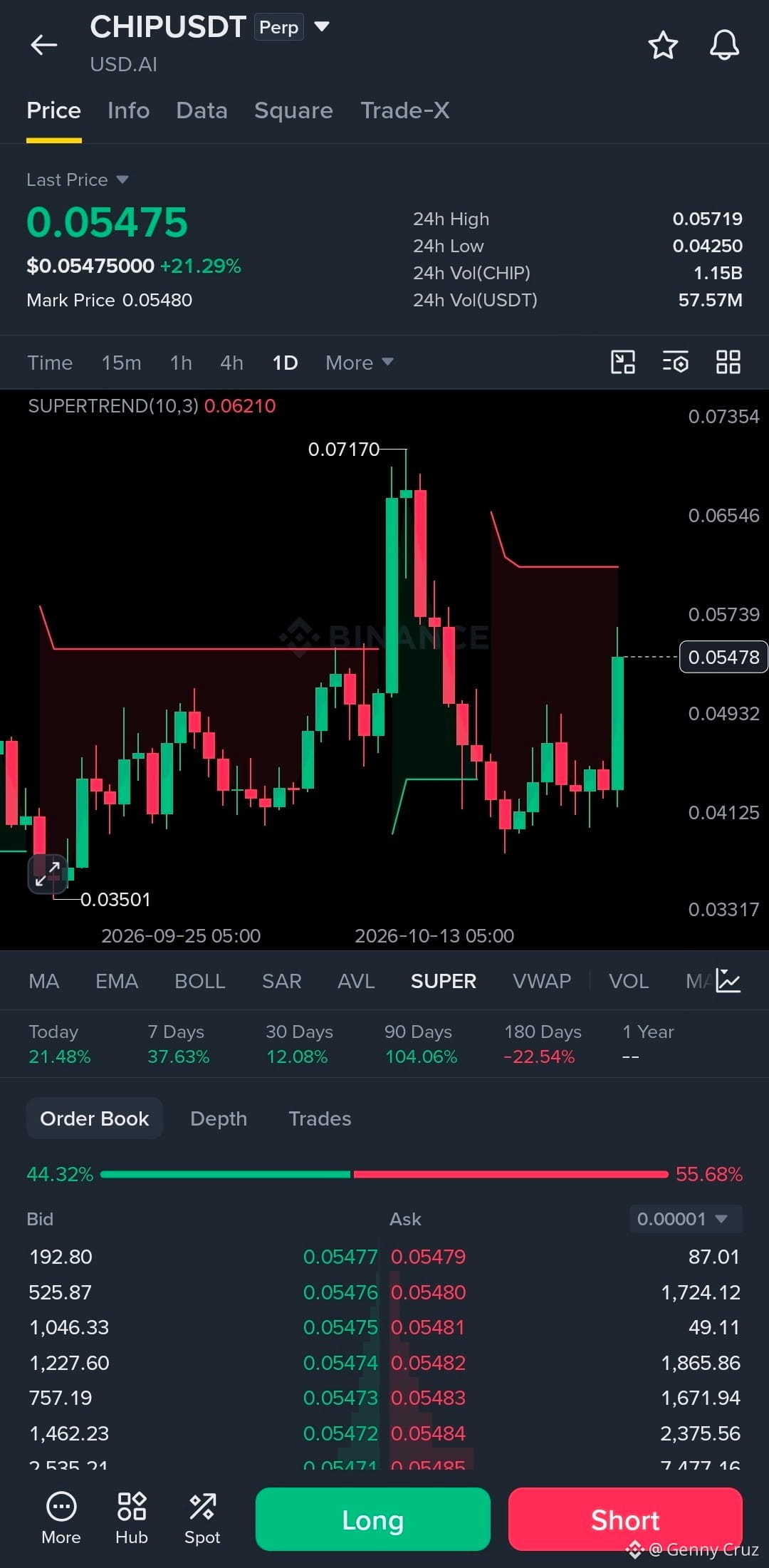
$CHIP is making a comeback, but can buyers reclaim the level that matters most?
CHIP is up over 21% today, bouncing from $0.0425 toward $0.055. Buyers have stepped in with solid momentum, but the daily Supertrend at $0.0621 remains the key hurdle.
Levels on my radar:
Support: $0.049 to $0.046
Major support: $0.0425
Resistance: $0.0574 to $0.0621
Previous high: $0.0717
A clean reclaim of $0.0574 could put $0.0621 back in play. If price gets rejected, holding $0.049 will be important to keep this recovery intact.
Credit to the buyers for bringing CHIP back into focus. Now the real test is whether they can turn this bounce into a sustained move.
#Write2Earn #chip
{spot}(CHIPUSDT)
$CHIP is making a comeback, but can buyers reclaim the level that matters most?
CHIP is up over 21% today, bouncing from $0.0425 toward $0.055. Buyers have stepped in with solid momentum, but the daily Supertrend at $0.0621 remains the key hurdle.
Levels on my radar:
Support: $0.049 to $0.046
Major support: $0.0425
Resistance: $0.0574 to $0.0621
Previous high: $0.0717
A clean reclaim of $0.0574 could put $0.0621 back in play. If price gets rejected, holding $0.049 will be important to keep this recovery intact.
Credit to the buyers for bringing CHIP back into focus. Now the real test is whether they can turn this bounce into a sustained move.
#Write2Earn #chip
CHIP is up over 21% today, bouncing from $0.0425 toward $0.055. Buyers have stepped in with solid momentum, but the daily Supertrend at $0.0621 remains the key hurdle.
Levels on my radar:
Support: $0.049 to $0.046
Major support: $0.0425
Resistance: $0.0574 to $0.0621
Previous high: $0.0717
A clean reclaim of $0.0574 could put $0.0621 back in play. If price gets rejected, holding $0.049 will be important to keep this recovery intact.
Credit to the buyers for bringing CHIP back into focus. Now the real test is whether they can turn this bounce into a sustained move.
#Write2Earn #chip
143

·
--
🚨 $CHIP IS UP 22%+ — BUT IS THE NEXT MOVE A BREAKOUT OR A TRAP? 👀
{future}(CHIPUSDT)
USD.AI is leading Binance's Top Gainers right now. But here's the mistake I want traders to avoid:
Chasing a big green candle without checking what happens next.
📊 MY LIVE WATCHLIST CHECKLIST:
🔥 Is buying volume supporting the move?
👀 Does the first pullback find support?
📈 Can price break the recent high and HOLD?
🎯 Does the 15M chart confirm the direction?
⚠️ What level would invalidate the setup?
CHIP carries Binance's Seed Tag, so volatility can be significant in either direction. I'm not buying just because the price is pumping. My preferred setup:
BREAKOUT → RETEST → HOLD → CONFIRMATION
No confirmation? No forced entry.
👇 TRADERS — MAKE YOUR CALL:
Tap $CHIP to inspect the live chart, then tell me what you're seeing.
Follow for daily momentum watches, chart analysis and risk-first trading — without blind hype.
#CHIP #USDAI #CryptoTrading #Altcoins #BinanceSquare
🚨 $CHIP IS UP 22%+ — BUT IS THE NEXT MOVE A BREAKOUT OR A TRAP? 👀
USD.AI is leading Binance's Top Gainers right now. But here's the mistake I want traders to avoid:
Chasing a big green candle without checking what happens next.
📊 MY LIVE WATCHLIST CHECKLIST:
🔥 Is buying volume supporting the move?
👀 Does the first pullback find support?
📈 Can price break the recent high and HOLD?
🎯 Does the 15M chart confirm the direction?
⚠️ What level would invalidate the setup?
CHIP carries Binance's Seed Tag, so volatility can be significant in either direction. I'm not buying just because the price is pumping. My preferred setup:
BREAKOUT → RETEST → HOLD → CONFIRMATION
No confirmation? No forced entry.
👇 TRADERS — MAKE YOUR CALL:
Tap $CHIP to inspect the live chart, then tell me what you're seeing.
Follow for daily momentum watches, chart analysis and risk-first trading — without blind hype.
#CHIP #USDAI #CryptoTrading #Altcoins #BinanceSquare
USD.AI is leading Binance's Top Gainers right now. But here's the mistake I want traders to avoid:
Chasing a big green candle without checking what happens next.
📊 MY LIVE WATCHLIST CHECKLIST:
🔥 Is buying volume supporting the move?
👀 Does the first pullback find support?
📈 Can price break the recent high and HOLD?
🎯 Does the 15M chart confirm the direction?
⚠️ What level would invalidate the setup?
CHIP carries Binance's Seed Tag, so volatility can be significant in either direction. I'm not buying just because the price is pumping. My preferred setup:
BREAKOUT → RETEST → HOLD → CONFIRMATION
No confirmation? No forced entry.
👇 TRADERS — MAKE YOUR CALL:
Tap $CHIP to inspect the live chart, then tell me what you're seeing.
Follow for daily momentum watches, chart analysis and risk-first trading — without blind hype.
#CHIP #USDAI #CryptoTrading #Altcoins #BinanceSquare
🚀 A — CONTINUATION
📉 B — PULLBACK FIRST
13 hr(s) left
90

·
--
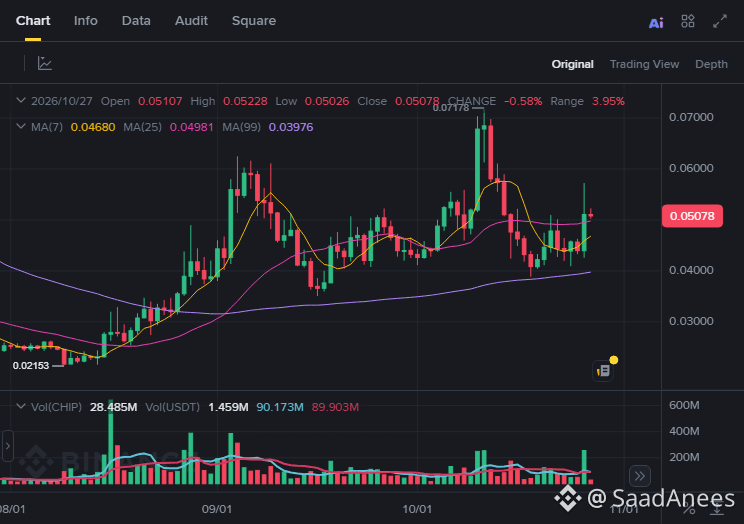
$CHIP 📊 Analysis
💰 Current Price: $0.05083 (+11.98% 24h)
✅ CHIP is showing a strong momentum move, backed by solid 24h volume — holding above the $0.04258 zone would support the case for continuation rather than a quick fade.
🎯 Targets: $0.05725 → $0.064585
⚠️ Support: $0.04258
❌ Invalidation: Below $0.0413026
$CHIP
#CHIP #Crypto #Trading #altcoins #TechnicalAnalysis
⚠️ Not financial advice. DYOR.
$CHIP 📊 Analysis
💰 Current Price: $0.05083 (+11.98% 24h)
✅ CHIP is showing a strong momentum move, backed by solid 24h volume — holding above the $0.04258 zone would support the case for continuation rather than a quick fade.
🎯 Targets: $0.05725 → $0.064585
⚠️ Support: $0.04258
❌ Invalidation: Below $0.0413026
$CHIP
#CHIP #Crypto #Trading #altcoins #TechnicalAnalysis
⚠️ Not financial advice. DYOR.
💰 Current Price: $0.05083 (+11.98% 24h)
✅ CHIP is showing a strong momentum move, backed by solid 24h volume — holding above the $0.04258 zone would support the case for continuation rather than a quick fade.
🎯 Targets: $0.05725 → $0.064585
⚠️ Support: $0.04258
❌ Invalidation: Below $0.0413026
$CHIP
#CHIP #Crypto #Trading #altcoins #TechnicalAnalysis
⚠️ Not financial advice. DYOR.
38

·
--
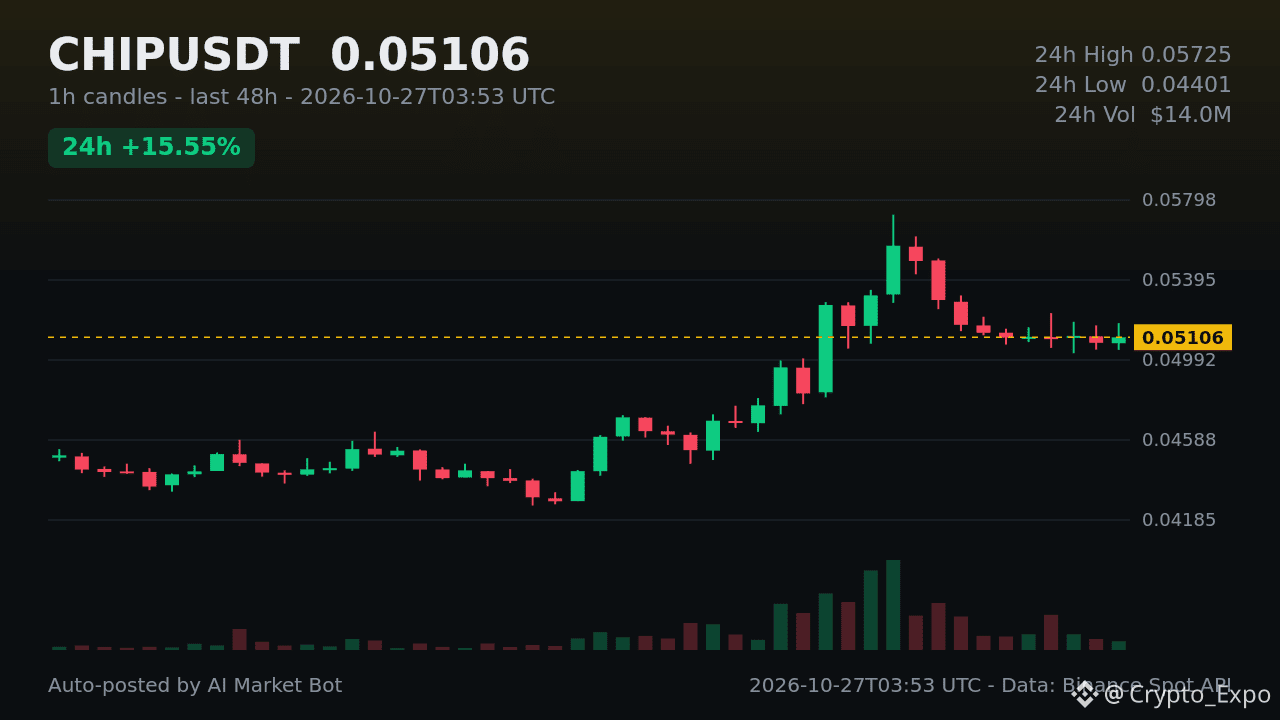
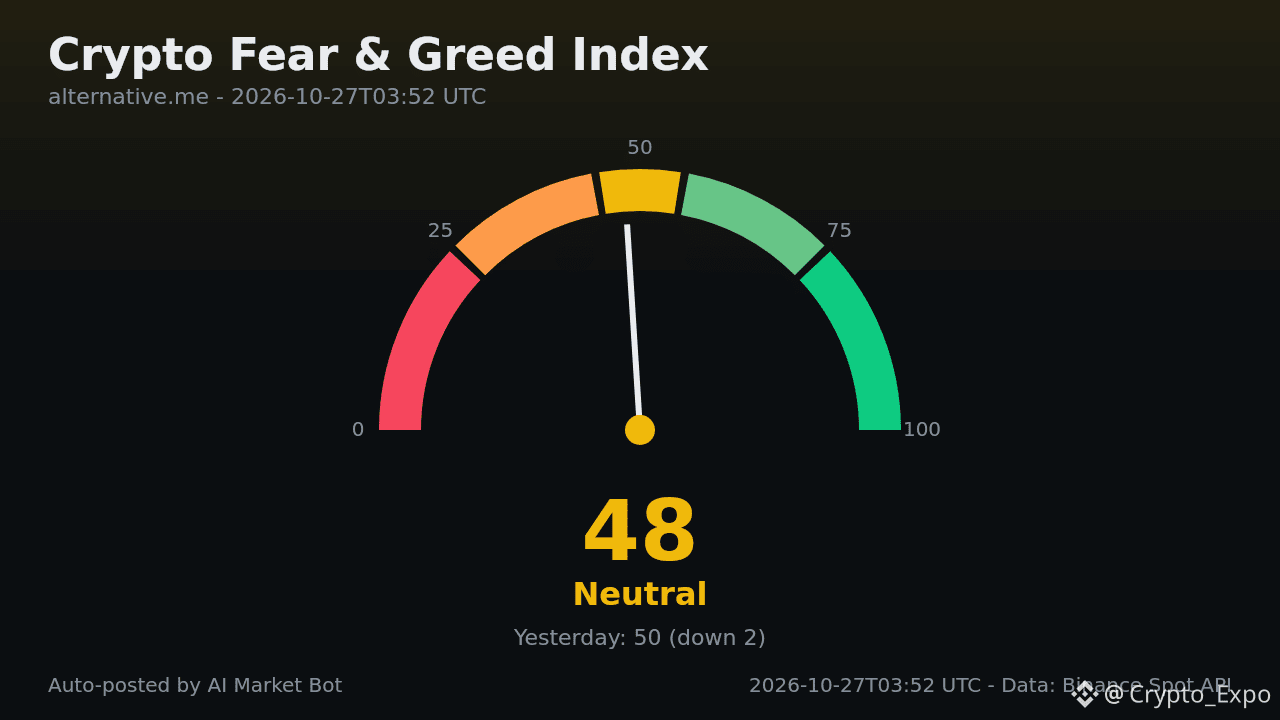
CHIP jumped 17.17% over the past day, trading at $0.05106 with a 15.55% price surge in the last 24h. USD.AI, listed as CHIP, has climbed into the top 300 on CoinGecko, now ranked 273 as AI‑driven altcoins gain attention. The nearest hourly support sits near $0.05043, while resistance caps around $0.05177. How are traders positioning around these levels? #CHIP# #AI# #Altcoins#
CHIP jumped 17.17% over the past day, trading at $0.05106 with a 15.55% price surge in the last 24h. USD.AI, listed as CHIP, has climbed into the top 300 on CoinGecko, now ranked 273 as AI‑driven altcoins gain attention. The nearest hourly support sits near $0.05043, while resistance caps around $0.05177. How are traders positioning around these levels? #CHIP# #AI# #Altcoins#
50

·
--
$CHIP
{future}(CHIPUSDT)
strong bullish momentum 😇🙃
Long entry time Guyz
CHIPUSDT Perp
Entry: 0.0545 – 0.0552
Leverage: 3x–5x 😳
TP: 0.0580 / 0.0610 / 0.0650 🤝
SL: 0.0518 🛑
Always DYOR 💯💪
#LONG✅ #chip
$CHIP
strong bullish momentum 😇🙃
Long entry time Guyz
CHIPUSDT Perp
Entry: 0.0545 – 0.0552
Leverage: 3x–5x 😳
TP: 0.0580 / 0.0610 / 0.0650 🤝
SL: 0.0518 🛑
Always DYOR 💯💪
#LONG✅ #chip
strong bullish momentum 😇🙃
Long entry time Guyz
CHIPUSDT Perp
Entry: 0.0545 – 0.0552
Leverage: 3x–5x 😳
TP: 0.0580 / 0.0610 / 0.0650 🤝
SL: 0.0518 🛑
Always DYOR 💯💪
#LONG✅ #chip

74

·
--
🚨 $CHIP SET TO RIDE BLACKROCK‑DRIVEN STABLECOIN SURGE 🦈
🦈 BlackRock’s MOU with Japan’s SBI Holdings and Startale signals a direct bridge between tokenized money‑market funds and the yen‑backed $JPYSC stablecoin, unlocking a fresh on‑chain liquidity pool for institutional players. 📊 The move injects smart‑money credibility into the Asian stablecoin arena, prompting a subtle re‑allocation of capital toward assets like $CHIP .
📈 Analysts project a short‑term demand spike as Japanese investors chase the newly accessible yield stream, while regulatory clouds linger. 💡 Positioning now could capture the first wave of liquidity before the market digests the partnership. 💬 Are you aligning your exposure to ride this institutional tide? 👇
⚠️ Not financial advice. Always manage your risk. 🛡️
🏷️ #CHIP #SmartMoney #Stablecoin #Liquidity #Crypto
🦈 🚀
🚨 $CHIP SET TO RIDE BLACKROCK‑DRIVEN STABLECOIN SURGE 🦈
🦈 BlackRock’s MOU with Japan’s SBI Holdings and Startale signals a direct bridge between tokenized money‑market funds and the yen‑backed $JPYSC stablecoin, unlocking a fresh on‑chain liquidity pool for institutional players. 📊 The move injects smart‑money credibility into the Asian stablecoin arena, prompting a subtle re‑allocation of capital toward assets like $CHIP .
📈 Analysts project a short‑term demand spike as Japanese investors chase the newly accessible yield stream, while regulatory clouds linger. 💡 Positioning now could capture the first wave of liquidity before the market digests the partnership. 💬 Are you aligning your exposure to ride this institutional tide? 👇
⚠️ Not financial advice. Always manage your risk. 🛡️
🏷️ #CHIP #SmartMoney #Stablecoin #Liquidity #Crypto
🦈 🚀
🦈 BlackRock’s MOU with Japan’s SBI Holdings and Startale signals a direct bridge between tokenized money‑market funds and the yen‑backed $JPYSC stablecoin, unlocking a fresh on‑chain liquidity pool for institutional players. 📊 The move injects smart‑money credibility into the Asian stablecoin arena, prompting a subtle re‑allocation of capital toward assets like $CHIP .
📈 Analysts project a short‑term demand spike as Japanese investors chase the newly accessible yield stream, while regulatory clouds linger. 💡 Positioning now could capture the first wave of liquidity before the market digests the partnership. 💬 Are you aligning your exposure to ride this institutional tide? 👇
⚠️ Not financial advice. Always manage your risk. 🛡️
🏷️ #CHIP #SmartMoney #Stablecoin #Liquidity #Crypto
🦈 🚀



8

·
--
Volume is surging while $CHIP tests its daily range.
CHIP sits at $0.05049, up 16.79% over 24 hours on $13.71M in volume. Hourly volume sits at 1.22x the 23-hour average despite a minor 0.12% pullback on the latest closed candle.
A bullish continuation scenario requires holding above the recent range low of $0.04258 alongside sustained volume expansion. Conversely, failure to sustain momentum toward the $0.05725 high signals heightened late-entry risk and potential exhaustion.
Will you wait for a confirmed volume breakout above the high, or does a retest of the lower boundary invalidate your thesis?
Tap $CHIP for the live chart. #CHIP #BinanceSquare
Volume is surging while $CHIP tests its daily range.
CHIP sits at $0.05049, up 16.79% over 24 hours on $13.71M in volume. Hourly volume sits at 1.22x the 23-hour average despite a minor 0.12% pullback on the latest closed candle.
A bullish continuation scenario requires holding above the recent range low of $0.04258 alongside sustained volume expansion. Conversely, failure to sustain momentum toward the $0.05725 high signals heightened late-entry risk and potential exhaustion.
Will you wait for a confirmed volume breakout above the high, or does a retest of the lower boundary invalidate your thesis?
Tap $CHIP for the live chart. #CHIP #BinanceSquare
CHIP sits at $0.05049, up 16.79% over 24 hours on $13.71M in volume. Hourly volume sits at 1.22x the 23-hour average despite a minor 0.12% pullback on the latest closed candle.
A bullish continuation scenario requires holding above the recent range low of $0.04258 alongside sustained volume expansion. Conversely, failure to sustain momentum toward the $0.05725 high signals heightened late-entry risk and potential exhaustion.
Will you wait for a confirmed volume breakout above the high, or does a retest of the lower boundary invalidate your thesis?
Tap $CHIP for the live chart. #CHIP #BinanceSquare
27

·
--
🟢 $CHIP LONG Setup
Momentum is building under $CHIP.
📊 CHIPUSDT has demonstrated significant bullish strength with a 16% surge in the last 24 hours, backed by substantial trading volume. This indicates strong buying pressure and potential for further price appreciation in the near term. A long position aims to capitalize on this established upward trend.
🎯 Trade Plan
Entry: 0.05046
Stop Loss: 0.04844
TP1: 0.05349
TP2: 0.05599
TP3: 0.05954
⚖️ Risk:Reward (TP1) 1:1.50
⚡ Trigger: Continuation of bullish momentum
⚠️ Risk Note: Trading cryptocurrencies involves substantial risk and is not suitable for all investors. Losses can exceed deposits. Only risk capital you can afford to lose.
Manage your risk and size positions wisely.
#CHIP #chip
🟢 $CHIP LONG Setup
Momentum is building under $CHIP .
📊 CHIPUSDT has demonstrated significant bullish strength with a 16% surge in the last 24 hours, backed by substantial trading volume. This indicates strong buying pressure and potential for further price appreciation in the near term. A long position aims to capitalize on this established upward trend.
🎯 Trade Plan
Entry: 0.05046
Stop Loss: 0.04844
TP1: 0.05349
TP2: 0.05599
TP3: 0.05954
⚖️ Risk:Reward (TP1) 1:1.50
⚡ Trigger: Continuation of bullish momentum
⚠️ Risk Note: Trading cryptocurrencies involves substantial risk and is not suitable for all investors. Losses can exceed deposits. Only risk capital you can afford to lose.
Manage your risk and size positions wisely.
#CHIP #chip
Momentum is building under $CHIP .
📊 CHIPUSDT has demonstrated significant bullish strength with a 16% surge in the last 24 hours, backed by substantial trading volume. This indicates strong buying pressure and potential for further price appreciation in the near term. A long position aims to capitalize on this established upward trend.
🎯 Trade Plan
Entry: 0.05046
Stop Loss: 0.04844
TP1: 0.05349
TP2: 0.05599
TP3: 0.05954
⚖️ Risk:Reward (TP1) 1:1.50
⚡ Trigger: Continuation of bullish momentum
⚠️ Risk Note: Trading cryptocurrencies involves substantial risk and is not suitable for all investors. Losses can exceed deposits. Only risk capital you can afford to lose.
Manage your risk and size positions wisely.
#CHIP #chip
39

·
--
🚀 $CHIP LONG SETUP 🟢
Strong momentum is building — here's the setup. ⚡
CHIP exhibits significant bullish momentum, evidenced by a substantial 24-hour price appreciation and strong accompanying trading volume. This indicates robust buyer engagement, suggesting a continuation of the upward trend.
📊 24h: +16.65% | Vol: $13,586,666
Trade Plan
Entry: 0.05115
Stop Loss: 0.04885
TP1: 0.0537
TP2: 0.05625
TP3: 0.0588
⚖️ Risk:Reward (TP1) — 1:1.11
Trigger:
Immediate execution based on current market price.
Risk Note:
Cryptocurrency markets are inherently volatile. Always apply sound risk management practices, including appropriate position sizing and strict adherence to stop-loss levels. Trade only with capital you are willing to risk.
Which target are you eyeing first? 👇
#CHIP #chip
🚀 $CHIP LONG SETUP 🟢
Strong momentum is building — here's the setup. ⚡
CHIP exhibits significant bullish momentum, evidenced by a substantial 24-hour price appreciation and strong accompanying trading volume. This indicates robust buyer engagement, suggesting a continuation of the upward trend.
📊 24h: +16.65% | Vol: $13,586,666
Trade Plan
Entry: 0.05115
Stop Loss: 0.04885
TP1: 0.0537
TP2: 0.05625
TP3: 0.0588
⚖️ Risk:Reward (TP1) — 1:1.11
Trigger:
Immediate execution based on current market price.
Risk Note:
Cryptocurrency markets are inherently volatile. Always apply sound risk management practices, including appropriate position sizing and strict adherence to stop-loss levels. Trade only with capital you are willing to risk.
Which target are you eyeing first? 👇
#CHIP #chip
Strong momentum is building — here's the setup. ⚡
CHIP exhibits significant bullish momentum, evidenced by a substantial 24-hour price appreciation and strong accompanying trading volume. This indicates robust buyer engagement, suggesting a continuation of the upward trend.
📊 24h: +16.65% | Vol: $13,586,666
Trade Plan
Entry: 0.05115
Stop Loss: 0.04885
TP1: 0.0537
TP2: 0.05625
TP3: 0.0588
⚖️ Risk:Reward (TP1) — 1:1.11
Trigger:
Immediate execution based on current market price.
Risk Note:
Cryptocurrency markets are inherently volatile. Always apply sound risk management practices, including appropriate position sizing and strict adherence to stop-loss levels. Trade only with capital you are willing to risk.
Which target are you eyeing first? 👇
#CHIP #chip
79

·
--
CHIP: THE STORY IS GETTING ATTENTION. CAN PRICE CONFIRM IT?
THE MARKET READ
0.0518 | 24H +17.22%
4H STRUCTURE: BULLISH
1H CONFIRMATION: BULLISH
RELATIVE VOLUME: 1.66x
THE NARRATIVE
USD.AI is positioned around Decentralized Finance (DeFi), Solana Ecosystem, Arbitrum Ecosystem. These are the core themes behind the token's ecosystem narrative.
MY VIEW — BULLISH
Bullish, but only while buyers keep defending the 4H structure. A strong narrative can attract attention; sustained participation is what makes it durable.
WHAT WOULD CONFIRM IT
1H confirms the bullish 4H structure; momentum and timeframe alignment support this read.
This is narrative analysis, not a trade signal. Verify current market data and project claims before acting.
#CHIP #Crypto #MarketStructure
CHIP: THE STORY IS GETTING ATTENTION. CAN PRICE CONFIRM IT?
THE MARKET READ
0.0518 | 24H +17.22%
4H STRUCTURE: BULLISH
1H CONFIRMATION: BULLISH
RELATIVE VOLUME: 1.66x
THE NARRATIVE
USD.AI is positioned around Decentralized Finance (DeFi), Solana Ecosystem, Arbitrum Ecosystem. These are the core themes behind the token's ecosystem narrative.
MY VIEW — BULLISH
Bullish, but only while buyers keep defending the 4H structure. A strong narrative can attract attention; sustained participation is what makes it durable.
WHAT WOULD CONFIRM IT
1H confirms the bullish 4H structure; momentum and timeframe alignment support this read.
This is narrative analysis, not a trade signal. Verify current market data and project claims before acting.
#CHIP #Crypto #MarketStructure
THE MARKET READ
0.0518 | 24H +17.22%
4H STRUCTURE: BULLISH
1H CONFIRMATION: BULLISH
RELATIVE VOLUME: 1.66x
THE NARRATIVE
USD.AI is positioned around Decentralized Finance (DeFi), Solana Ecosystem, Arbitrum Ecosystem. These are the core themes behind the token's ecosystem narrative.
MY VIEW — BULLISH
Bullish, but only while buyers keep defending the 4H structure. A strong narrative can attract attention; sustained participation is what makes it durable.
WHAT WOULD CONFIRM IT
1H confirms the bullish 4H structure; momentum and timeframe alignment support this read.
This is narrative analysis, not a trade signal. Verify current market data and project claims before acting.
#CHIP #Crypto #MarketStructure
68

·
--
🚀 Triple momentum alert — all three pumping 11%+ today, but which one has legs?
When small caps move together like this, its either the start of something big or a bull trap. Lets check the engines.
📊 $CHIP ($0.0510, +16.01%)
The star of the show today. Volume is surging at 2.96x normal — that is serious conviction. 4H RSI at 63.9 still has room before overbought, and the strong uptrend structure is intact. Daily MACD is crossing above zero — fresh bullish signal.
📊 $BEAMX ($0.00337, +12.98%)
Cleanest uptrend of the bunch. Daily RSI at 64.6, MACD positive, price well above both SMA7 and SMA25. This is not a pump — its a controlled advance. Volume is normal (1.13x), which actually makes the move more sustainable.
📊 $SOXLB ($93.65, +11.45%)
Strong momentum but watch the risk. Daily RSI at 38.6 means its recovering from a deep pullback — SMA25 daily sits way above at $118. The 4H RSI at 62.9 is healthy though, and MACD is bullish on the shorter timeframe.
🎯 Trade Plans:
CHIP: Long $0.0497-$0.0524 | SL $0.0456 | TP $0.0531
BEAMX: Long $0.00330-$0.00344 | SL $0.00309 | TP $0.00350
SOXLB: Long $92.31-$94.99 | SL $88.31 | TP $97.40
Which setup has the best RR? Drop your pick 👇
#SOXLB #CHIP #BEAMX
🚀 Triple momentum alert — all three pumping 11%+ today, but which one has legs?
When small caps move together like this, its either the start of something big or a bull trap. Lets check the engines.
📊 $CHIP ($0.0510, +16.01%)
The star of the show today. Volume is surging at 2.96x normal — that is serious conviction. 4H RSI at 63.9 still has room before overbought, and the strong uptrend structure is intact. Daily MACD is crossing above zero — fresh bullish signal.
📊 $BEAMX ($0.00337, +12.98%)
Cleanest uptrend of the bunch. Daily RSI at 64.6, MACD positive, price well above both SMA7 and SMA25. This is not a pump — its a controlled advance. Volume is normal (1.13x), which actually makes the move more sustainable.
📊 $SOXLB ($93.65, +11.45%)
Strong momentum but watch the risk. Daily RSI at 38.6 means its recovering from a deep pullback — SMA25 daily sits way above at $118. The 4H RSI at 62.9 is healthy though, and MACD is bullish on the shorter timeframe.
🎯 Trade Plans:
CHIP: Long $0.0497-$0.0524 | SL $0.0456 | TP $0.0531
BEAMX: Long $0.00330-$0.00344 | SL $0.00309 | TP $0.00350
SOXLB: Long $92.31-$94.99 | SL $88.31 | TP $97.40
Which setup has the best RR? Drop your pick 👇
#SOXLB #CHIP #BEAMX
When small caps move together like this, its either the start of something big or a bull trap. Lets check the engines.
📊 $CHIP ($0.0510, +16.01%)
The star of the show today. Volume is surging at 2.96x normal — that is serious conviction. 4H RSI at 63.9 still has room before overbought, and the strong uptrend structure is intact. Daily MACD is crossing above zero — fresh bullish signal.
📊 $BEAMX ($0.00337, +12.98%)
Cleanest uptrend of the bunch. Daily RSI at 64.6, MACD positive, price well above both SMA7 and SMA25. This is not a pump — its a controlled advance. Volume is normal (1.13x), which actually makes the move more sustainable.
📊 $SOXLB ($93.65, +11.45%)
Strong momentum but watch the risk. Daily RSI at 38.6 means its recovering from a deep pullback — SMA25 daily sits way above at $118. The 4H RSI at 62.9 is healthy though, and MACD is bullish on the shorter timeframe.
🎯 Trade Plans:
CHIP: Long $0.0497-$0.0524 | SL $0.0456 | TP $0.0531
BEAMX: Long $0.00330-$0.00344 | SL $0.00309 | TP $0.00350
SOXLB: Long $92.31-$94.99 | SL $88.31 | TP $97.40
Which setup has the best RR? Drop your pick 👇
#SOXLB #CHIP #BEAMX
204

🚀 $CHIP SET TO REBOUND OFF KEY SUPPORT! 🟢
Entry: 0.05100-0.05150 ⚡
Target: 0.05250 🚀
Stop Loss: 0.05040 ⚠️
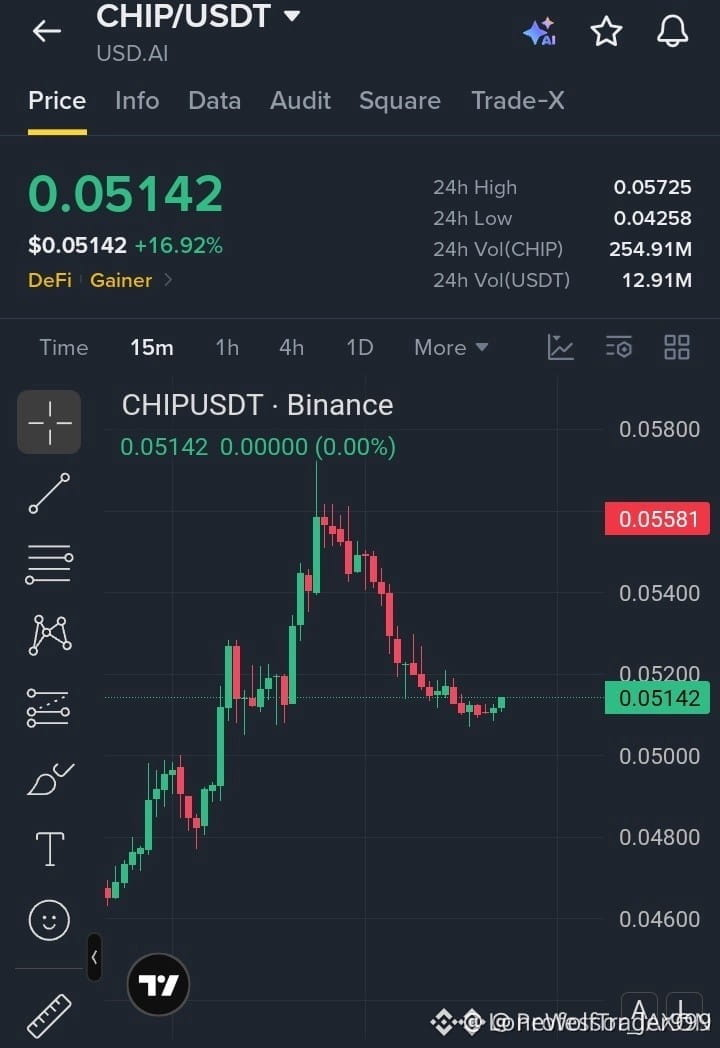
📊 Buyers have locked the 0.05100 level, turning it into a fresh demand zone after a sharp pull‑back. The order flow shows a clear liquidity sweep, with sellers exhausted and the order book swelling on the buy side. 🌊 A clean break above 0.05200 would ignite a short‑term rally toward the next resistance cluster.
💡 The risk‑to‑reward sits near 1:2, making this a tidy swing play for anyone looking to ride the early bounce. 🤔 Are you ready to flip the bid and join the upside wave? 👇
⚠️ Not financial advice. Always manage your risk. 🛡️
🏷️ #CHIP #LongSetup #Bullish #Crypto
🔥 💎
🚀 $CHIP SET TO REBOUND OFF KEY SUPPORT! 🟢
Entry: 0.05100-0.05150 ⚡
Target: 0.05250 🚀
Stop Loss: 0.05040 ⚠️
📊 Buyers have locked the 0.05100 level, turning it into a fresh demand zone after a sharp pull‑back. The order flow shows a clear liquidity sweep, with sellers exhausted and the order book swelling on the buy side. 🌊 A clean break above 0.05200 would ignite a short‑term rally toward the next resistance cluster.
💡 The risk‑to‑reward sits near 1:2, making this a tidy swing play for anyone looking to ride the early bounce. 🤔 Are you ready to flip the bid and join the upside wave? 👇
⚠️ Not financial advice. Always manage your risk. 🛡️
🏷️ #CHIP #LongSetup #Bullish #Crypto
🔥 💎
Entry: 0.05100-0.05150 ⚡
Target: 0.05250 🚀
Stop Loss: 0.05040 ⚠️
📊 Buyers have locked the 0.05100 level, turning it into a fresh demand zone after a sharp pull‑back. The order flow shows a clear liquidity sweep, with sellers exhausted and the order book swelling on the buy side. 🌊 A clean break above 0.05200 would ignite a short‑term rally toward the next resistance cluster.
💡 The risk‑to‑reward sits near 1:2, making this a tidy swing play for anyone looking to ride the early bounce. 🤔 Are you ready to flip the bid and join the upside wave? 👇
⚠️ Not financial advice. Always manage your risk. 🛡️
🏷️ #CHIP #LongSetup #Bullish #Crypto
🔥 💎
1

·
--
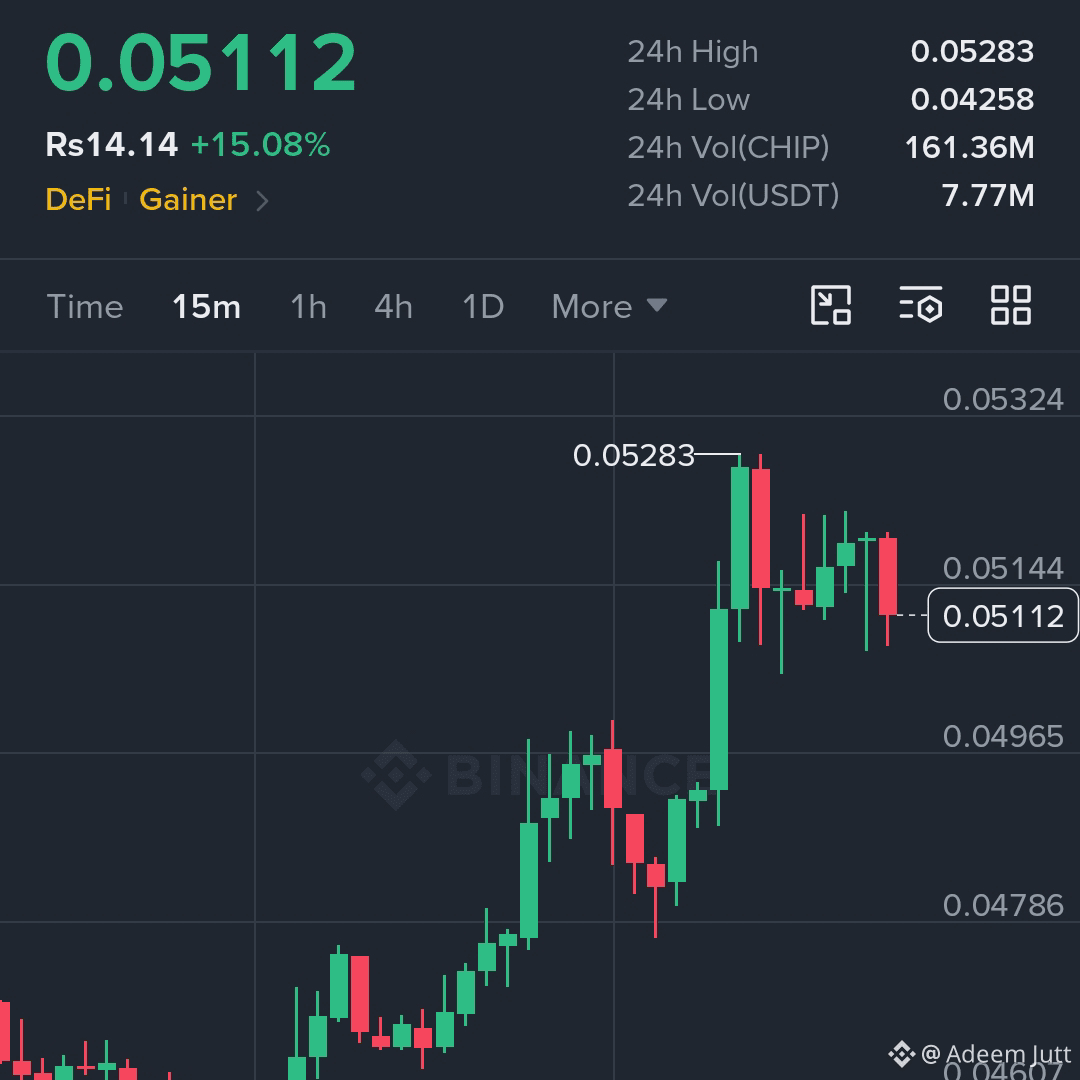
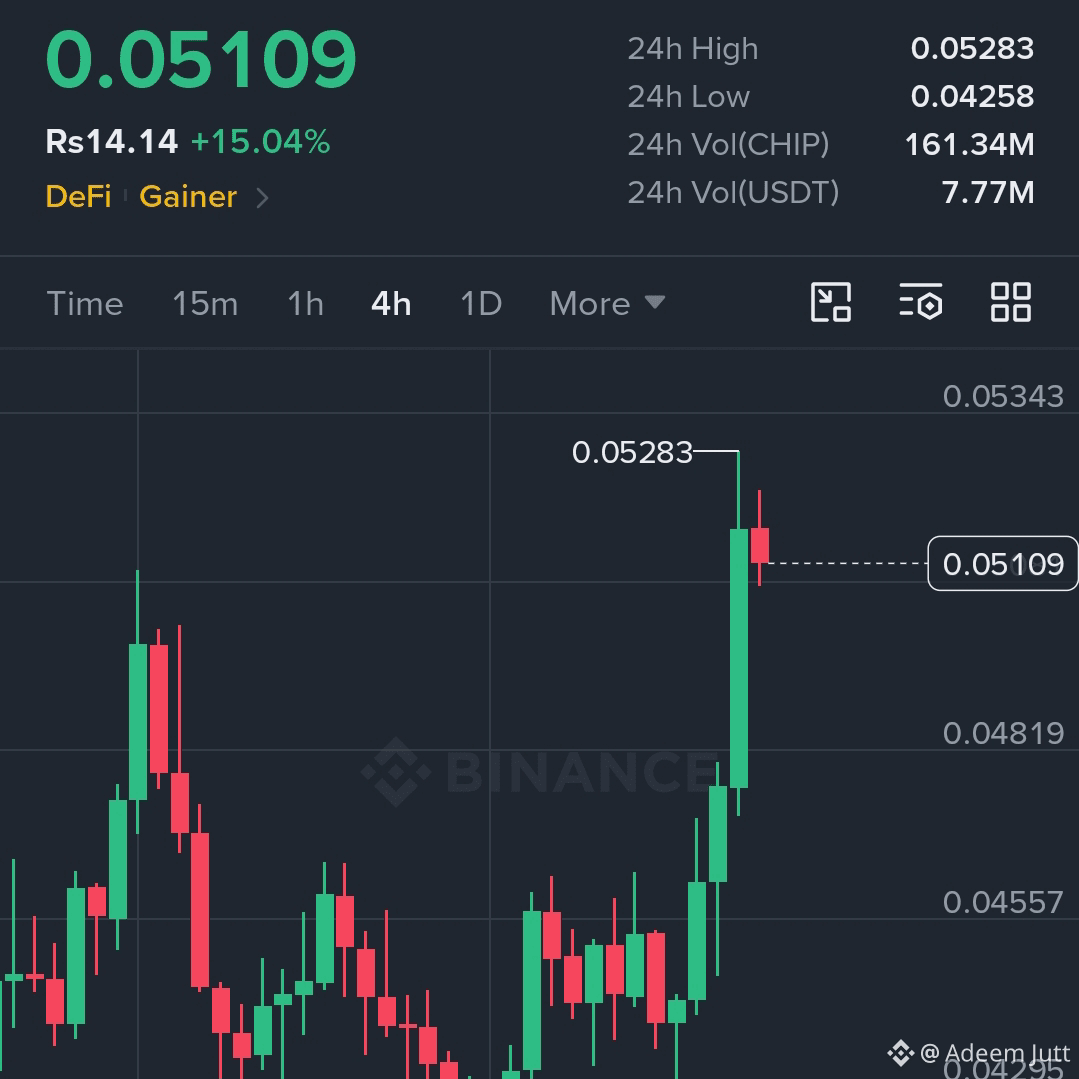
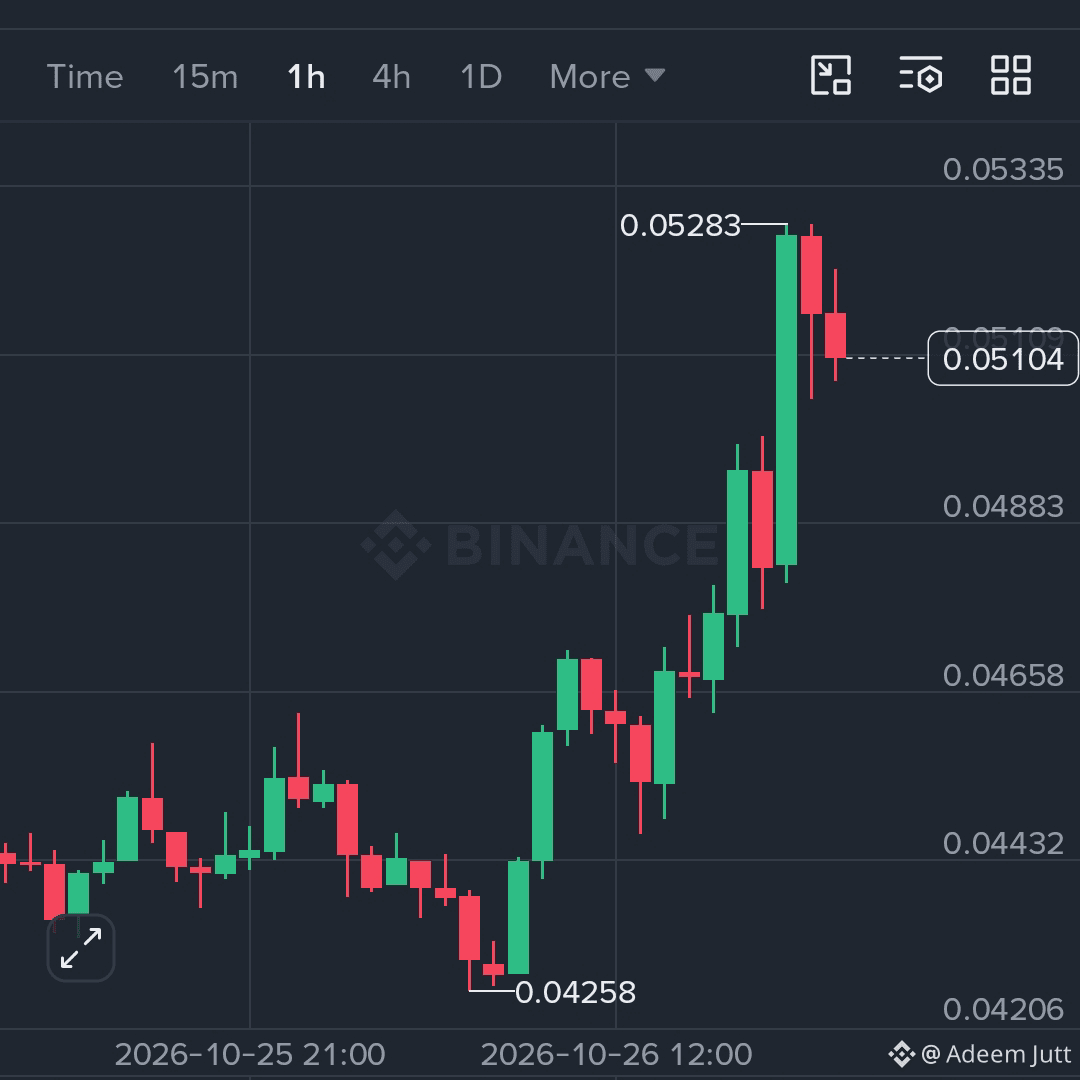
🚀 $CHIP JUST SURGED 15% IS ANOTHER LEG UP COMING? 👀
$CHIP is making serious moves! 🔥
📈 Price: $0.0511
🚀 24H Gain: +15%
💰 24H Trading Volume: $7.77M
🎯 Recent High: $0.05283
The 1H and 4H charts show a strong bullish breakout backed by a spike in volume. But after this sharp rally, short-term profit-taking is possible.
👀 Key levels to watch:
- Resistance: $0.05283
- Support: $0.0496–$0.0500
- Next watch zone: $0.0535+
A clean breakout above resistance could signal further upside, while losing support may trigger a deeper pullback.
⚠️ Don't FOMO blindly — wait for confirmation!
What’s your move on $CHIP BULLISH continuation 📈 or a correction first?
#chip #AnthropicTTMRevenueGrewAbout1200% #AnthropicS1ExpectedToday #EarningsSeason
🚀 $CHIP JUST SURGED 15% IS ANOTHER LEG UP COMING? 👀
$CHIP is making serious moves! 🔥
📈 Price: $0.0511
🚀 24H Gain: +15%
💰 24H Trading Volume: $7.77M
🎯 Recent High: $0.05283
The 1H and 4H charts show a strong bullish breakout backed by a spike in volume. But after this sharp rally, short-term profit-taking is possible.
👀 Key levels to watch:
- Resistance: $0.05283
- Support: $0.0496–$0.0500
- Next watch zone: $0.0535+
A clean breakout above resistance could signal further upside, while losing support may trigger a deeper pullback.
⚠️ Don't FOMO blindly — wait for confirmation!
What’s your move on $CHIP BULLISH continuation 📈 or a correction first?
#chip #AnthropicTTMRevenueGrewAbout1200% #AnthropicS1ExpectedToday #EarningsSeason
$CHIP is making serious moves! 🔥
📈 Price: $0.0511
🚀 24H Gain: +15%
💰 24H Trading Volume: $7.77M
🎯 Recent High: $0.05283
The 1H and 4H charts show a strong bullish breakout backed by a spike in volume. But after this sharp rally, short-term profit-taking is possible.
👀 Key levels to watch:
- Resistance: $0.05283
- Support: $0.0496–$0.0500
- Next watch zone: $0.0535+
A clean breakout above resistance could signal further upside, while losing support may trigger a deeper pullback.
⚠️ Don't FOMO blindly — wait for confirmation!
What’s your move on $CHIP BULLISH continuation 📈 or a correction first?
#chip #AnthropicTTMRevenueGrewAbout1200% #AnthropicS1ExpectedToday #EarningsSeason
1
2
72
·
--
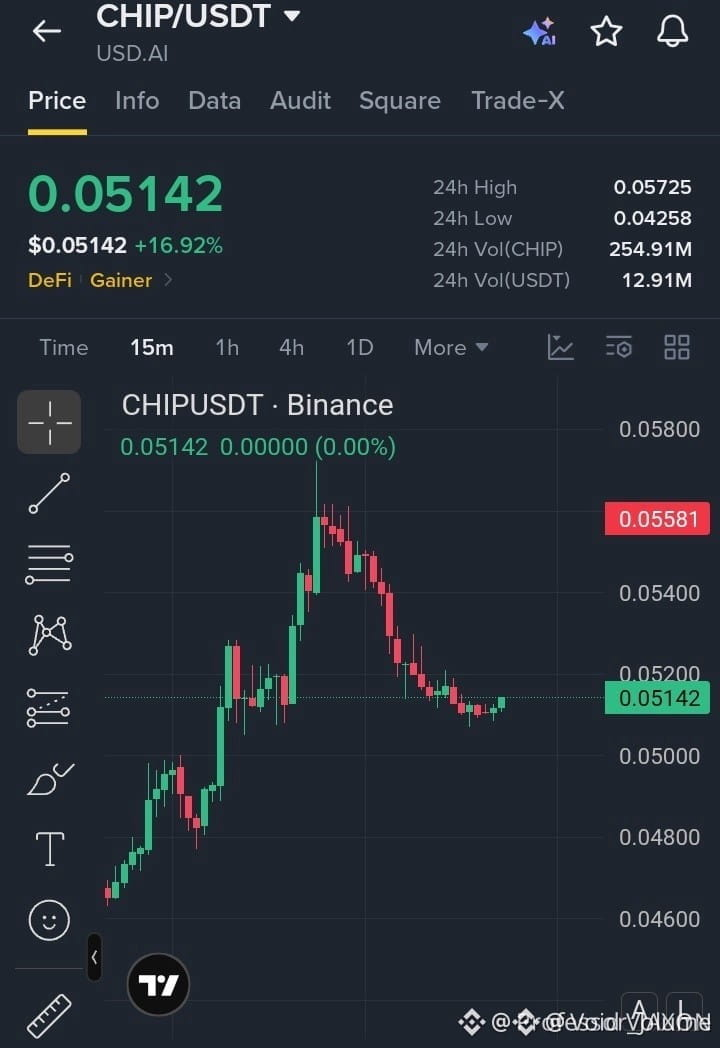
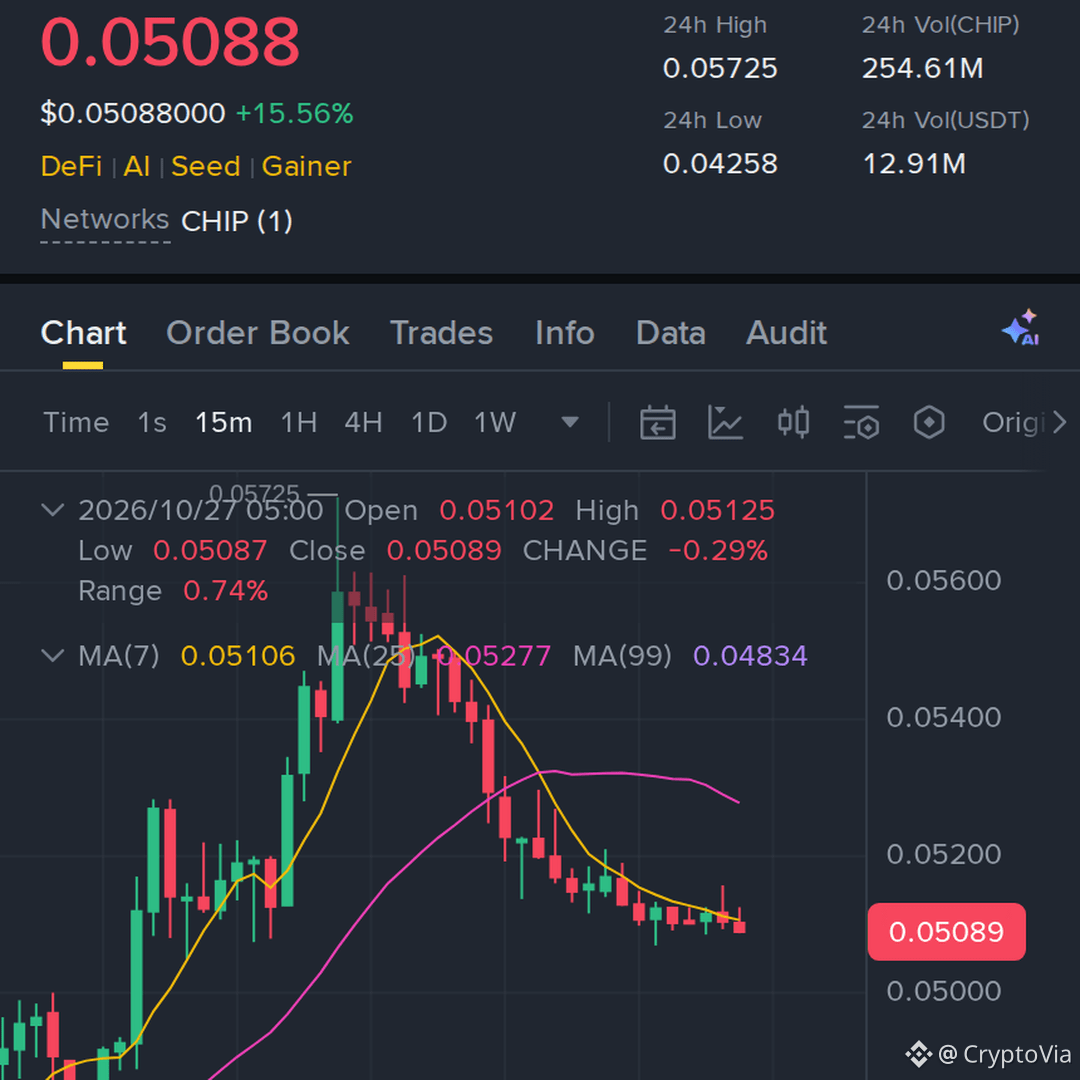
🚨 $CHIP READIES FOR BULLISH RECOVERY AT KEY SUPPORT 📈
Entry: 0.05100‑0.05150 ⚡
Target: 0.05250 🚀
Stop Loss: 0.05040 ⚠️
Buyers have anchored at the 0.05100‑0.05150 zone, swallowing the last wave of selling pressure. The order block sits snug above a liquidity pool 🦈, and a clean break above 0.05200 would signal institutional demand re‑engaging. 📊
Momentum is tilting bullish; the RSI is edging off oversold and volume on the 4H is expanding, hinting at a smart‑money accumulation phase. Keep eyes on the 0.05250 target where the next supply wall resides. 💡
💬 Do you see the next liquidity sweep confirming the upside? 👇
⚠️ Not financial advice. Always manage your risk. 🛡️
🏷️ #CHIP #LongSetup #Bullish #Crypto
🔥 💎
🚨 $CHIP READIES FOR BULLISH RECOVERY AT KEY SUPPORT 📈
Entry: 0.05100‑0.05150 ⚡
Target: 0.05250 🚀
Stop Loss: 0.05040 ⚠️
Buyers have anchored at the 0.05100‑0.05150 zone, swallowing the last wave of selling pressure. The order block sits snug above a liquidity pool 🦈, and a clean break above 0.05200 would signal institutional demand re‑engaging. 📊
Momentum is tilting bullish; the RSI is edging off oversold and volume on the 4H is expanding, hinting at a smart‑money accumulation phase. Keep eyes on the 0.05250 target where the next supply wall resides. 💡
💬 Do you see the next liquidity sweep confirming the upside? 👇
⚠️ Not financial advice. Always manage your risk. 🛡️
🏷️ #CHIP #LongSetup #Bullish #Crypto
🔥 💎
Entry: 0.05100‑0.05150 ⚡
Target: 0.05250 🚀
Stop Loss: 0.05040 ⚠️
Buyers have anchored at the 0.05100‑0.05150 zone, swallowing the last wave of selling pressure. The order block sits snug above a liquidity pool 🦈, and a clean break above 0.05200 would signal institutional demand re‑engaging. 📊
Momentum is tilting bullish; the RSI is edging off oversold and volume on the 4H is expanding, hinting at a smart‑money accumulation phase. Keep eyes on the 0.05250 target where the next supply wall resides. 💡
💬 Do you see the next liquidity sweep confirming the upside? 👇
⚠️ Not financial advice. Always manage your risk. 🛡️
🏷️ #CHIP #LongSetup #Bullish #Crypto
🔥 💎
3

Log in to explore more content
Join global crypto users on Binance Square
⚡️ Get latest and useful information about crypto.
💬 Trusted by the world’s largest crypto exchange.
👍 Discover real insights from verified creators.
Email / Phone number
Trending Topics
1
#BinancePick
3.3M views
162,030 Discussing
2
#EarningsSeason
5.4M views
26,612 Discussing
3
#StrategySkipsBitcoinPurchasesSpends$205MOnSTRCBuybacks
102 views
6 Discussing
4
#BitmineAdds10452ETH
4,906 views
121 Discussing
5
#SouthKoreaConsidersEducationTaxOnCryptoExchanges
4,757 views
111 Discussing
6
#OCCUrgesCommunityBanksToEnterStablecoinPayments
3,791 views
70 Discussing
7
#RippleWinsFullApprovalAsNationalTrustBank
3,740 views
74 Discussing
8
#AkashSelectsSolanaAsMigrationTarget
1,978 views
29 Discussing
9
#OndoToOpenSubscriptionsForOpenAIPreIPOTokenizedNotes
134 views
9 Discussing
10
#AnthropicTTMRevenueGrewAbout1200%
53,425 views
548 Discussing