
LEDGER QUEEN
2.3k Posts

LEDGER QUEEN
Report
Block User
May Allah Save Us From Evil Eyes
Open Trade
Frequent Trader
11.4 Months
140 Following
21.8K+ Followers
3.9K+ Liked
Posts
Portfolio
All
Quotes
Videos
Live
·
--
Everyone talks about the future of crypto. But at some point, we need to stop talking about the future and start building it. 🌍
That’s what “EVOLVE” means to me at Binance Blockchain Week Bangkok 2026.
The real evolution of blockchain isn't about faster chains, bigger numbers, or another wave of hype. It's about making technology genuinely useful for people who don't even know what blockchain is.
Can crypto make financial access easier? Can AI and blockchain work together responsibly? Can security, transparency, and real-world utility become the foundation instead of just marketing narratives?
These are the conversations I hope will shape BBW Bangkok.
And honestly, the most exciting part isn't just what industry leaders will say on stage. It's the ideas, connections, and perspectives that emerge when builders and communities from different parts of the world come together.
Evolution doesn't happen by watching. It happens when we participate, question, build, and contribute.
Bangkok, let's make this more than a conference. Let's make it a step forward for the entire industry. 🚀
@BinanceBlockchainWeek
#币安区块链周进化由你 #BinanceBlockchainWeek #Evolve
Everyone talks about the future of crypto. But at some point, we need to stop talking about the future and start building it. 🌍
That’s what “EVOLVE” means to me at Binance Blockchain Week Bangkok 2026.
The real evolution of blockchain isn't about faster chains, bigger numbers, or another wave of hype. It's about making technology genuinely useful for people who don't even know what blockchain is.
Can crypto make financial access easier? Can AI and blockchain work together responsibly? Can security, transparency, and real-world utility become the foundation instead of just marketing narratives?
These are the conversations I hope will shape BBW Bangkok.
And honestly, the most exciting part isn't just what industry leaders will say on stage. It's the ideas, connections, and perspectives that emerge when builders and communities from different parts of the world come together.
Evolution doesn't happen by watching. It happens when we participate, question, build, and contribute.
Bangkok, let's make this more than a conference. Let's make it a step forward for the entire industry. 🚀
@Binance Blockchain Week
#币安区块链周进化由你 #BinanceBlockchainWeek #Evolve
3
125
·
--
Article
CELO: The Blockchain People May Never Need to NoticeFrom Ethereum Layer 2 to global stablecoin payments, Celo is building financial infrastructure around a simple idea: technology should disappear behind the experience.
The most successful financial technology rarely asks users to understand how it works.
People don't think about payment settlement when they send money. They don't study network architecture before paying a bill. They simply expect money to arrive, payments to work, and the experience to be affordable.
Blockchain still has a long way to go before it reaches that level of simplicity.
And that's the problem Celo is trying to solve.
Rather than competing purely on theoretical throughput or another impressive technical benchmark, Celo is building around a more practical question:
Can blockchain become useful enough that people use it without needing to understand blockchain?
That question explains much of Celo's strategy today, from its Ethereum Layer 2 architecture and stablecoin-focused infrastructure to mobile wallets, local currencies, payment integrations, and its emerging agentic economy.
1. Celo's evolution: Why Ethereum Layer 2 was a strategic decision
Celo originally launched as an independent Layer 1 in 2020, with mobile accessibility, low transaction costs, and financial inclusion at the center of its design.
But the blockchain landscape changed.
Ethereum's ecosystem continued expanding, and the importance of shared security, liquidity, interoperability, and developer infrastructure became increasingly difficult to ignore.
Celo's transition to an Ethereum Layer 2 was therefore more than a technical upgrade. It represented a strategic repositioning.
On March 26, 2025, Celo completed its migration to an Ethereum L2 built using the OP Stack, preserving its existing network history while moving closer to Ethereum's settlement ecosystem.
The move gave Celo a different foundation for its ambitions:
• Ethereum settlement infrastructure
• OP Stack execution architecture
• EVM compatibility for developers
• Access to the broader Superchain ecosystem
• Payment-focused optimization rather than simply chasing general-purpose blockchain activity
The important distinction is that Celo isn't abandoning its original identity.
It is attempting to combine Ethereum's ecosystem advantages with infrastructure designed around the specific needs of payments and stablecoin applications.
In my view, that is a more interesting strategy than building another isolated blockchain and hoping developers, liquidity, and users arrive independently.
However, an L2 architecture does not automatically eliminate risk. Security also depends on its implementation, sequencing, data availability, proof systems, bridges, and governance.
The architecture creates an opportunity. Execution determines whether that opportunity becomes durable.
2. The stablecoin thesis: Blockchain utility measured in money moving
For years, crypto adoption discussions were dominated by trading, speculation, and token prices.
But stablecoins are changing the conversation.
A person sending money internationally may not care about a blockchain's native token. They may simply want to transfer $50 without excessive fees, unnecessary delays, or complicated banking access.
A small business may care more about receiving digital dollars than about which consensus mechanism powers the transaction.
This is where Celo's design becomes particularly relevant.
The network supports stablecoin-focused financial activity, including payments, remittances, savings, on-chain foreign exchange, and DeFi.
According to Celo's May 2026 announcement, the network had processed more than $65 billion in stablecoin volume since its L2 migration, alongside over 1.3 billion lifetime transactions and hundreds of thousands of daily active users.
These are ecosystem-reported figures, not independently audited proof of financial adoption. Still, they provide useful context for understanding where Celo is positioning itself.
The more interesting question isn't how many transactions a network can process.
It is what those transactions represent.
Are people sending money to family? Paying merchants? Moving between currencies? Accessing savings products? Or interacting mainly because incentives temporarily make activity attractive?
Those distinctions matter.
A network processing genuine financial activity has a fundamentally different long-term opportunity from one whose growth depends primarily on speculative participation.
Celo's ambition is to make stablecoin infrastructure useful outside crypto-native communities.
3. MiniPay: Distribution may be Celo's biggest advantage
Technology can be excellent and still fail to reach people.
This is one of crypto's biggest problems. Many networks have sophisticated infrastructure, but onboarding remains confusing, wallets require technical understanding, and users must navigate unfamiliar applications.
MiniPay approaches distribution differently.
Built by Opera and running on Celo, MiniPay is a self-custodial wallet designed around mobile accessibility and stablecoin usage.
Instead of asking users to understand gas, bridges, networks, and complex wallet interfaces, it attempts to make the experience more familiar.
According to Celo's November 12, 2026 update, MiniPay had surpassed:
• 20 million wallet activations
• 600 million transactions
• 70+ countries
• 77+ Mini Apps
The same announcement introduced Stripe's Link payment integration for eligible users in the United States and Europe, allowing deposits through familiar payment methods, including cards, Apple Pay, and Google Pay.
This development addresses something many blockchain projects overlook:
Getting users onto a network is not only a wallet problem. It is an access-to-money problem.
If adding funds feels complicated, people may never reach the application in the first place.
MiniPay's distribution strategy could therefore be important beyond the wallet itself. It creates a potential bridge between familiar consumer payment experiences and on-chain financial applications.
Of course, wallet activations are not equivalent to unique active users, and transaction totals alone cannot prove product-market fit.
The real test is whether users return because the product solves a problem—not because a campaign or incentive brought them there temporarily.
4. Fee abstraction: Removing one of crypto's most unnecessary barriers
Imagine receiving digital dollars but being unable to send them because you don't own the network's native gas token.
For an experienced crypto user, buying a small amount of gas may be routine.
For someone new to blockchain, it can be confusing.
Celo's fee abstraction allows supported tokens to be used for transaction fees, including eligible stablecoins.
This changes the onboarding experience.
A user holding a stablecoin may be able to transact without first purchasing a separate token purely to pay gas.
That sounds like a small technical feature, but it addresses a very real UX problem.
The broader principle is simple:
If the purpose of a blockchain application is to move money, users shouldn't necessarily need to understand an additional asset just to move their money.
Fee abstraction doesn't remove every complication. Wallet security, token support, liquidity, smart contracts, and application integrations remain important.
But reducing unnecessary friction is exactly the kind of improvement that can make blockchain more accessible.
5. Local currencies: The next stage beyond digital dollars
Stablecoin adoption is often discussed almost exclusively through USD-denominated assets.
But financial access isn't identical everywhere.
A user in Brazil may need Brazilian reais. Someone in Argentina may prefer pesos. A business operating across several markets may need to manage multiple currencies without repeatedly depending on traditional banking infrastructure.
Celo's ecosystem has been expanding its local-currency infrastructure alongside dollar-based stablecoins.
Its ecosystem announcements have highlighted assets associated with currencies such as the Brazilian real, Argentine peso, Colombian peso, Mexican peso, Chilean peso, Peruvian sol, Nigerian naira, and Indonesian rupiah.
This creates a more interesting possibility than simply transferring digital dollars.
An on-chain currency ecosystem could potentially connect local payments, international settlement, liquidity, and currency exchange within a common financial environment.
But local-currency stablecoins aren't automatically risk-free.
Users still need to consider issuer reliability, reserve quality, redemption mechanisms, regulation, liquidity, and the possibility that an asset may fail to maintain its intended peg.
The infrastructure can improve access. It cannot remove the financial risks of the underlying assets.
6. Celo is also preparing for an economy of AI agents
This is the part of Celo's development that I find particularly interesting.
The internet is moving toward software agents capable of performing tasks, accessing services, purchasing information, and interacting with other systems.
But autonomous software also needs a payment mechanism.
Traditional payment systems weren't necessarily designed for machine-to-machine transactions involving tiny amounts, global availability, automated settlement, and continuous interaction.
Celo's x402 payment infrastructure is exploring this direction through stablecoin-based payments for agents.
In September 2026, Celo announced support for USA₮ through its native x402 facilitator, enabling agents to pay for APIs, data, and services using supported stablecoins.
The ecosystem has also expanded support for local-currency stablecoins, including assets linked to the Argentine peso, Brazilian real, and Colombian peso.
Think about the possibilities.
An AI agent could pay for data. Another could purchase an API service. Software could settle payments automatically based on usage.
These are not necessarily transactions that require a human to manually approve every small payment.
That creates a potential new use case for fast, low-cost, programmable financial infrastructure.
However, agentic payments remain an emerging field. Actual adoption, security, authorization controls, and economic sustainability will determine whether the opportunity becomes meaningful.
The interesting part is that Celo's payment infrastructure isn't being designed exclusively for today's wallet users.
It may also become relevant to tomorrow's autonomous software.
7. Ecosystem expansion: Infrastructure becomes more valuable when assets and applications connect
A blockchain ecosystem is rarely defined by a single application.
Its strength often comes from the connections between wallets, assets, liquidity, payment services, developers, and financial applications.
Celo's recent integrations demonstrate that direction.
On November 24, 2026, Frax announced that its asset suite had deployed natively on Celo, including frxUSD, sfrxUSD, WFRAX, frxETH, and sfrxETH.
The announcement also stated that Celo Core Co. planned to allocate up to $9 million of reserves into sfrxUSD, while Frax planned to buy and hold CELO.
This is notable because ecosystem expansion can potentially connect stablecoin payments with savings, liquidity, and broader DeFi activity.
But integrations shouldn't be mistaken for guaranteed adoption.
The long-term value of these developments depends on whether users actually utilize the products, liquidity remains healthy, applications attract recurring activity, and the underlying systems remain secure.
A growing list of integrations is encouraging.
Sustained usage is the stronger signal.
8. Where does CELO fit into this entire system?
This is a question worth asking honestly.
CELO is the network's native token and plays roles in network fees, governance, and participation mechanisms.
But Celo's stablecoin-first design creates an important distinction between network adoption and direct token demand.
If users can pay transaction fees using supported stablecoins, increasing stablecoin activity does not automatically mean every user must purchase CELO.
That is an important consideration for anyone evaluating the token's economic model.
The relationship between infrastructure growth and token value depends on the mechanisms that actually capture and distribute economic value.
Network activity alone is not a price prediction.
Governance decisions, token economics, market conditions, liquidity, supply dynamics, and investor sentiment can all influence CELO's value.
I would rather evaluate these mechanisms carefully than claim that more transactions automatically mean a higher token price.
That distinction is what separates an infrastructure thesis from a speculative narrative.
9. The risks Celo still has to overcome
No serious analysis should discuss adoption without discussing what could go wrong.
Technical risk: Layer 2 infrastructure, smart contracts, bridges, sequencing, and proving systems can introduce vulnerabilities.
Stablecoin risk: Assets may experience depegging, liquidity problems, issuer failures, or regulatory restrictions.
Adoption risk: Reported activations and transaction numbers do not guarantee consistent real-world usage.
Competition: Celo competes with other Ethereum L2s, payment-focused networks, traditional financial infrastructure, and emerging stablecoin platforms.
Economic risk: The growth of the ecosystem does not necessarily translate into proportional value capture for CELO.
Execution risk: Building infrastructure is one challenge. Making it reliable, intuitive, secure, and financially sustainable at scale is another.
These aren't reasons to dismiss the project.
They are the questions that need to be answered before an ambitious vision can be considered a proven success.
My final perspective: The best infrastructure might be the infrastructure users never think about
What stands out to me about Celo is the connection between its different layers of strategy.
Ethereum provides the settlement foundation.
The Superchain direction connects its infrastructure with a broader ecosystem.
Stablecoins provide a practical financial use case.
Fee abstraction reduces friction.
MiniPay provides distribution.
Local-currency assets expand the possibilities beyond digital dollars.
And agentic payments explore how this infrastructure might eventually serve software as well as people.
Each component matters, but none is sufficient on its own.
The real opportunity exists when they reinforce each other.
I don't think the most important question for Celo is whether it can produce another record-breaking transaction figure.
My question is more practical:
Can Celo make sending, receiving, saving, and spending digital money so simple that people stop thinking about the blockchain underneath it?
If that happens, adoption could become much more meaningful than a headline metric.
The next chapter of crypto may not be defined by how many people know the names of blockchain networks.
It may be defined by how many people use them without needing to know their names.
And that is the direction I believe Celo is worth watching.
#Celo @celo $CELO
{spot}(CELOUSDT)
#CeloFestival
Disclaimer: This article is for educational and informational purposes only and does not constitute financial advice. Digital assets are volatile, and you may lose money. Network and ecosystem statistics cited in this article are based on project announcements and may not represent independently audited figures. Always conduct your own research.
CELO: The Blockchain People May Never Need to Notice
From Ethereum Layer 2 to global stablecoin payments, Celo is building financial infrastructure around a simple idea: technology should disappear behind the experience.
The most successful financial technology rarely asks users to understand how it works.
People don't think about payment settlement when they send money. They don't study network architecture before paying a bill. They simply expect money to arrive, payments to work, and the experience to be affordable.
Blockchain still has a long way to go before it reaches that level of simplicity.
And that's the problem Celo is trying to solve.
Rather than competing purely on theoretical throughput or another impressive technical benchmark, Celo is building around a more practical question:
Can blockchain become useful enough that people use it without needing to understand blockchain?
That question explains much of Celo's strategy today, from its Ethereum Layer 2 architecture and stablecoin-focused infrastructure to mobile wallets, local currencies, payment integrations, and its emerging agentic economy.
1. Celo's evolution: Why Ethereum Layer 2 was a strategic decision
Celo originally launched as an independent Layer 1 in 2020, with mobile accessibility, low transaction costs, and financial inclusion at the center of its design.
But the blockchain landscape changed.
Ethereum's ecosystem continued expanding, and the importance of shared security, liquidity, interoperability, and developer infrastructure became increasingly difficult to ignore.
Celo's transition to an Ethereum Layer 2 was therefore more than a technical upgrade. It represented a strategic repositioning.
On March 26, 2025, Celo completed its migration to an Ethereum L2 built using the OP Stack, preserving its existing network history while moving closer to Ethereum's settlement ecosystem.
The move gave Celo a different foundation for its ambitions:
• Ethereum settlement infrastructure
• OP Stack execution architecture
• EVM compatibility for developers
• Access to the broader Superchain ecosystem
• Payment-focused optimization rather than simply chasing general-purpose blockchain activity
The important distinction is that Celo isn't abandoning its original identity.
It is attempting to combine Ethereum's ecosystem advantages with infrastructure designed around the specific needs of payments and stablecoin applications.
In my view, that is a more interesting strategy than building another isolated blockchain and hoping developers, liquidity, and users arrive independently.
However, an L2 architecture does not automatically eliminate risk. Security also depends on its implementation, sequencing, data availability, proof systems, bridges, and governance.
The architecture creates an opportunity. Execution determines whether that opportunity becomes durable.
2. The stablecoin thesis: Blockchain utility measured in money moving
For years, crypto adoption discussions were dominated by trading, speculation, and token prices.
But stablecoins are changing the conversation.
A person sending money internationally may not care about a blockchain's native token. They may simply want to transfer $50 without excessive fees, unnecessary delays, or complicated banking access.
A small business may care more about receiving digital dollars than about which consensus mechanism powers the transaction.
This is where Celo's design becomes particularly relevant.
The network supports stablecoin-focused financial activity, including payments, remittances, savings, on-chain foreign exchange, and DeFi.
According to Celo's May 2026 announcement, the network had processed more than $65 billion in stablecoin volume since its L2 migration, alongside over 1.3 billion lifetime transactions and hundreds of thousands of daily active users.
These are ecosystem-reported figures, not independently audited proof of financial adoption. Still, they provide useful context for understanding where Celo is positioning itself.
The more interesting question isn't how many transactions a network can process.
It is what those transactions represent.
Are people sending money to family? Paying merchants? Moving between currencies? Accessing savings products? Or interacting mainly because incentives temporarily make activity attractive?
Those distinctions matter.
A network processing genuine financial activity has a fundamentally different long-term opportunity from one whose growth depends primarily on speculative participation.
Celo's ambition is to make stablecoin infrastructure useful outside crypto-native communities.
3. MiniPay: Distribution may be Celo's biggest advantage
Technology can be excellent and still fail to reach people.
This is one of crypto's biggest problems. Many networks have sophisticated infrastructure, but onboarding remains confusing, wallets require technical understanding, and users must navigate unfamiliar applications.
MiniPay approaches distribution differently.
Built by Opera and running on Celo, MiniPay is a self-custodial wallet designed around mobile accessibility and stablecoin usage.
Instead of asking users to understand gas, bridges, networks, and complex wallet interfaces, it attempts to make the experience more familiar.
According to Celo's November 12, 2026 update, MiniPay had surpassed:
• 20 million wallet activations
• 600 million transactions
• 70+ countries
• 77+ Mini Apps
The same announcement introduced Stripe's Link payment integration for eligible users in the United States and Europe, allowing deposits through familiar payment methods, including cards, Apple Pay, and Google Pay.
This development addresses something many blockchain projects overlook:
Getting users onto a network is not only a wallet problem. It is an access-to-money problem.
If adding funds feels complicated, people may never reach the application in the first place.
MiniPay's distribution strategy could therefore be important beyond the wallet itself. It creates a potential bridge between familiar consumer payment experiences and on-chain financial applications.
Of course, wallet activations are not equivalent to unique active users, and transaction totals alone cannot prove product-market fit.
The real test is whether users return because the product solves a problem—not because a campaign or incentive brought them there temporarily.
4. Fee abstraction: Removing one of crypto's most unnecessary barriers
Imagine receiving digital dollars but being unable to send them because you don't own the network's native gas token.
For an experienced crypto user, buying a small amount of gas may be routine.
For someone new to blockchain, it can be confusing.
Celo's fee abstraction allows supported tokens to be used for transaction fees, including eligible stablecoins.
This changes the onboarding experience.
A user holding a stablecoin may be able to transact without first purchasing a separate token purely to pay gas.
That sounds like a small technical feature, but it addresses a very real UX problem.
The broader principle is simple:
If the purpose of a blockchain application is to move money, users shouldn't necessarily need to understand an additional asset just to move their money.
Fee abstraction doesn't remove every complication. Wallet security, token support, liquidity, smart contracts, and application integrations remain important.
But reducing unnecessary friction is exactly the kind of improvement that can make blockchain more accessible.
5. Local currencies: The next stage beyond digital dollars
Stablecoin adoption is often discussed almost exclusively through USD-denominated assets.
But financial access isn't identical everywhere.
A user in Brazil may need Brazilian reais. Someone in Argentina may prefer pesos. A business operating across several markets may need to manage multiple currencies without repeatedly depending on traditional banking infrastructure.
Celo's ecosystem has been expanding its local-currency infrastructure alongside dollar-based stablecoins.
Its ecosystem announcements have highlighted assets associated with currencies such as the Brazilian real, Argentine peso, Colombian peso, Mexican peso, Chilean peso, Peruvian sol, Nigerian naira, and Indonesian rupiah.
This creates a more interesting possibility than simply transferring digital dollars.
An on-chain currency ecosystem could potentially connect local payments, international settlement, liquidity, and currency exchange within a common financial environment.
But local-currency stablecoins aren't automatically risk-free.
Users still need to consider issuer reliability, reserve quality, redemption mechanisms, regulation, liquidity, and the possibility that an asset may fail to maintain its intended peg.
The infrastructure can improve access. It cannot remove the financial risks of the underlying assets.
6. Celo is also preparing for an economy of AI agents
This is the part of Celo's development that I find particularly interesting.
The internet is moving toward software agents capable of performing tasks, accessing services, purchasing information, and interacting with other systems.
But autonomous software also needs a payment mechanism.
Traditional payment systems weren't necessarily designed for machine-to-machine transactions involving tiny amounts, global availability, automated settlement, and continuous interaction.
Celo's x402 payment infrastructure is exploring this direction through stablecoin-based payments for agents.
In September 2026, Celo announced support for USA₮ through its native x402 facilitator, enabling agents to pay for APIs, data, and services using supported stablecoins.
The ecosystem has also expanded support for local-currency stablecoins, including assets linked to the Argentine peso, Brazilian real, and Colombian peso.
Think about the possibilities.
An AI agent could pay for data. Another could purchase an API service. Software could settle payments automatically based on usage.
These are not necessarily transactions that require a human to manually approve every small payment.
That creates a potential new use case for fast, low-cost, programmable financial infrastructure.
However, agentic payments remain an emerging field. Actual adoption, security, authorization controls, and economic sustainability will determine whether the opportunity becomes meaningful.
The interesting part is that Celo's payment infrastructure isn't being designed exclusively for today's wallet users.
It may also become relevant to tomorrow's autonomous software.
7. Ecosystem expansion: Infrastructure becomes more valuable when assets and applications connect
A blockchain ecosystem is rarely defined by a single application.
Its strength often comes from the connections between wallets, assets, liquidity, payment services, developers, and financial applications.
Celo's recent integrations demonstrate that direction.
On November 24, 2026, Frax announced that its asset suite had deployed natively on Celo, including frxUSD, sfrxUSD, WFRAX, frxETH, and sfrxETH.
The announcement also stated that Celo Core Co. planned to allocate up to $9 million of reserves into sfrxUSD, while Frax planned to buy and hold CELO.
This is notable because ecosystem expansion can potentially connect stablecoin payments with savings, liquidity, and broader DeFi activity.
But integrations shouldn't be mistaken for guaranteed adoption.
The long-term value of these developments depends on whether users actually utilize the products, liquidity remains healthy, applications attract recurring activity, and the underlying systems remain secure.
A growing list of integrations is encouraging.
Sustained usage is the stronger signal.
8. Where does CELO fit into this entire system?
This is a question worth asking honestly.
CELO is the network's native token and plays roles in network fees, governance, and participation mechanisms.
But Celo's stablecoin-first design creates an important distinction between network adoption and direct token demand.
If users can pay transaction fees using supported stablecoins, increasing stablecoin activity does not automatically mean every user must purchase CELO.
That is an important consideration for anyone evaluating the token's economic model.
The relationship between infrastructure growth and token value depends on the mechanisms that actually capture and distribute economic value.
Network activity alone is not a price prediction.
Governance decisions, token economics, market conditions, liquidity, supply dynamics, and investor sentiment can all influence CELO's value.
I would rather evaluate these mechanisms carefully than claim that more transactions automatically mean a higher token price.
That distinction is what separates an infrastructure thesis from a speculative narrative.
9. The risks Celo still has to overcome
No serious analysis should discuss adoption without discussing what could go wrong.
Technical risk: Layer 2 infrastructure, smart contracts, bridges, sequencing, and proving systems can introduce vulnerabilities.
Stablecoin risk: Assets may experience depegging, liquidity problems, issuer failures, or regulatory restrictions.
Adoption risk: Reported activations and transaction numbers do not guarantee consistent real-world usage.
Competition: Celo competes with other Ethereum L2s, payment-focused networks, traditional financial infrastructure, and emerging stablecoin platforms.
Economic risk: The growth of the ecosystem does not necessarily translate into proportional value capture for CELO.
Execution risk: Building infrastructure is one challenge. Making it reliable, intuitive, secure, and financially sustainable at scale is another.
These aren't reasons to dismiss the project.
They are the questions that need to be answered before an ambitious vision can be considered a proven success.
My final perspective: The best infrastructure might be the infrastructure users never think about
What stands out to me about Celo is the connection between its different layers of strategy.
Ethereum provides the settlement foundation.
The Superchain direction connects its infrastructure with a broader ecosystem.
Stablecoins provide a practical financial use case.
Fee abstraction reduces friction.
MiniPay provides distribution.
Local-currency assets expand the possibilities beyond digital dollars.
And agentic payments explore how this infrastructure might eventually serve software as well as people.
Each component matters, but none is sufficient on its own.
The real opportunity exists when they reinforce each other.
I don't think the most important question for Celo is whether it can produce another record-breaking transaction figure.
My question is more practical:
Can Celo make sending, receiving, saving, and spending digital money so simple that people stop thinking about the blockchain underneath it?
If that happens, adoption could become much more meaningful than a headline metric.
The next chapter of crypto may not be defined by how many people know the names of blockchain networks.
It may be defined by how many people use them without needing to know their names.
And that is the direction I believe Celo is worth watching.
#Celo @celo $CELO
#CeloFestival
Disclaimer: This article is for educational and informational purposes only and does not constitute financial advice. Digital assets are volatile, and you may lose money. Network and ecosystem statistics cited in this article are based on project announcements and may not represent independently audited figures. Always conduct your own research.
2
292
·
--
What if the biggest achievement of blockchain is the day people no longer need to know they're using it? 👀
Blockchain has spent years proving what technology can do. Faster networks, smart contracts, decentralized finance, tokenization and digital assets have opened possibilities that once seemed impossible.
But there's another challenge we don't discuss enough:
Can we make all this technology genuinely useful for people who don't care about crypto?
Imagine a small business owner receiving international payments without complicated processes or unnecessary delays.
Imagine someone sending money across borders without needing to understand different blockchain networks.
Imagine a person accessing financial services without being overwhelmed by wallets, gas fees, private keys and technical barriers.
That's when blockchain starts becoming more than an interesting technology. It becomes useful infrastructure.
For me, three things will define that journey:
Trust: People should feel confident using blockchain without constantly worrying about security, transparency or losing access to their assets.
Accessibility: The technology should become easier to use, not more complicated with every new innovation.
Real-world relevance: Projects should focus on solving actual problems instead of building products simply to attract attention or follow the next market trend.
This is one of the reasons I'm looking forward to @Binance Blockchain Week 2026 in Bangkok.
Under the theme Evolve, I'm interested in hearing how builders, developers, founders and industry leaders are thinking beyond the current limitations of crypto.
Not just what we can build next, but what deserves to be built.
The future of blockchain won't be defined by how many people learn to use crypto. It will be defined by how many people benefit from it without needing to understand the technology behind it.
That's the kind of evolution worth building.
What needs to happen before blockchain becomes an invisible but essential part of everyday life?
#EvolveAtBinanceBlockchainWeek

2
132
·
--
Bitcoin's next cycle could be bigger than most expect. 👀
This chart highlights a fascinating pattern:
2017 peak: $19K → Bottom: $3.5K
2021 peak: $69K → Bottom: $15K
2025 peak: $126K → Bottom: $40K
2029 projected peak: $170K → Bottom: $51K
The pattern suggests higher cycle floors but diminishing percentage returns.
However, $170K is a projection, not a guarantee.
My biggest takeaway: Bitcoin may be evolving from explosive boom-and-bust cycles into a more mature market.
Can $BTC reach $170K by 2029? Or will this cycle break the historical pattern?
7
669
·
--
Gold has survived three major bull traps, a deep correction toward $3,400, and now it's challenging the long-term bearish structure.
The chart points toward a potential $6,100 ATH.
But this time, the real test isn't the target. It's whether Gold can hold the breakout.
One failed move can change everything. 👀
The chart points toward a potential $6,100 ATH.
But this time, the real test isn't the target. It's whether Gold can hold the breakout.
One failed move can change everything. 👀
1
195
·
--
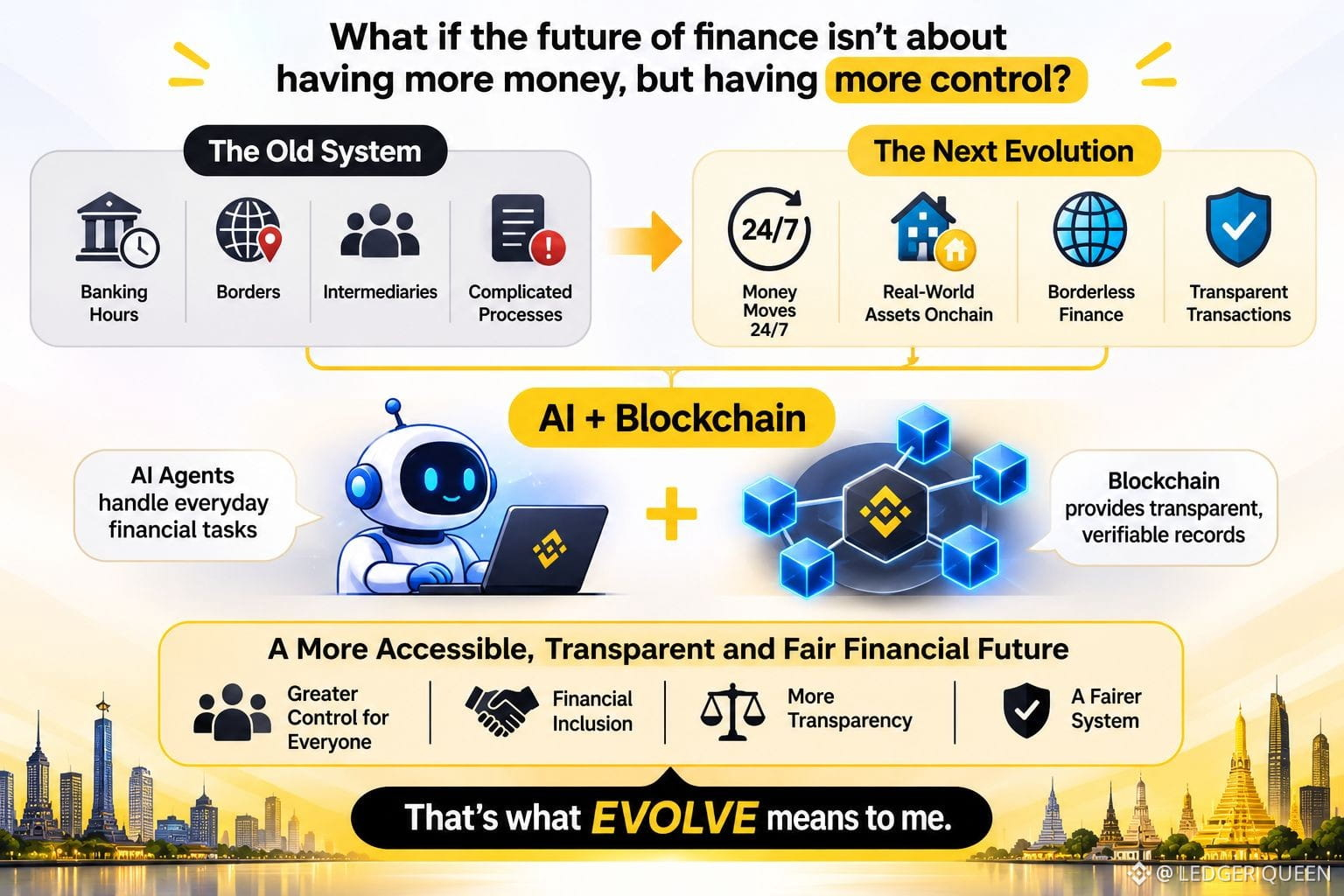
What if the future of finance isn't about having more money, but having more control over it?
For decades, finance has operated around banking hours, borders, intermediaries and complicated processes. But I believe the next evolution will challenge all four.
Imagine a world where money moves 24/7, real-world assets can be owned digitally, and financial services are accessible beyond traditional borders. Blockchain can make transactions more transparent, while AI can make financial experiences smarter and more personalized.
But there's one development I'm especially excited about: AI + Blockchain.
Imagine AI agents handling everyday financial tasks, while blockchain provides transparent, verifiable records of every action. That's more than technological progress. It's a completely different way of interacting with money.
I don't think the future should simply make finance faster. It should make finance more accessible, transparent and fair for everyone.
That's what EVOLVE means to me: moving from a financial system where people depend on access, to one where people have greater control.
The real question isn't whether finance will change. It's who will benefit from that change.
Looking forward to exploring these possibilities at #BinanceBlockchainWeek in Bangkok! 🌏
$HUMA
{spot}(HUMAUSDT)
$LUNC
{spot}(LUNCUSDT)
$UVXYB
{spot}(UVXYBUSDT)
What if the future of finance isn't about having more money, but having more control over it?
For decades, finance has operated around banking hours, borders, intermediaries and complicated processes. But I believe the next evolution will challenge all four.
Imagine a world where money moves 24/7, real-world assets can be owned digitally, and financial services are accessible beyond traditional borders. Blockchain can make transactions more transparent, while AI can make financial experiences smarter and more personalized.
But there's one development I'm especially excited about: AI + Blockchain.
Imagine AI agents handling everyday financial tasks, while blockchain provides transparent, verifiable records of every action. That's more than technological progress. It's a completely different way of interacting with money.
I don't think the future should simply make finance faster. It should make finance more accessible, transparent and fair for everyone.
That's what EVOLVE means to me: moving from a financial system where people depend on access, to one where people have greater control.
The real question isn't whether finance will change. It's who will benefit from that change.
Looking forward to exploring these possibilities at #BinanceBlockchainWeek in Bangkok! 🌏
$HUMA
$LUNC
$UVXYB
9
699
·
--
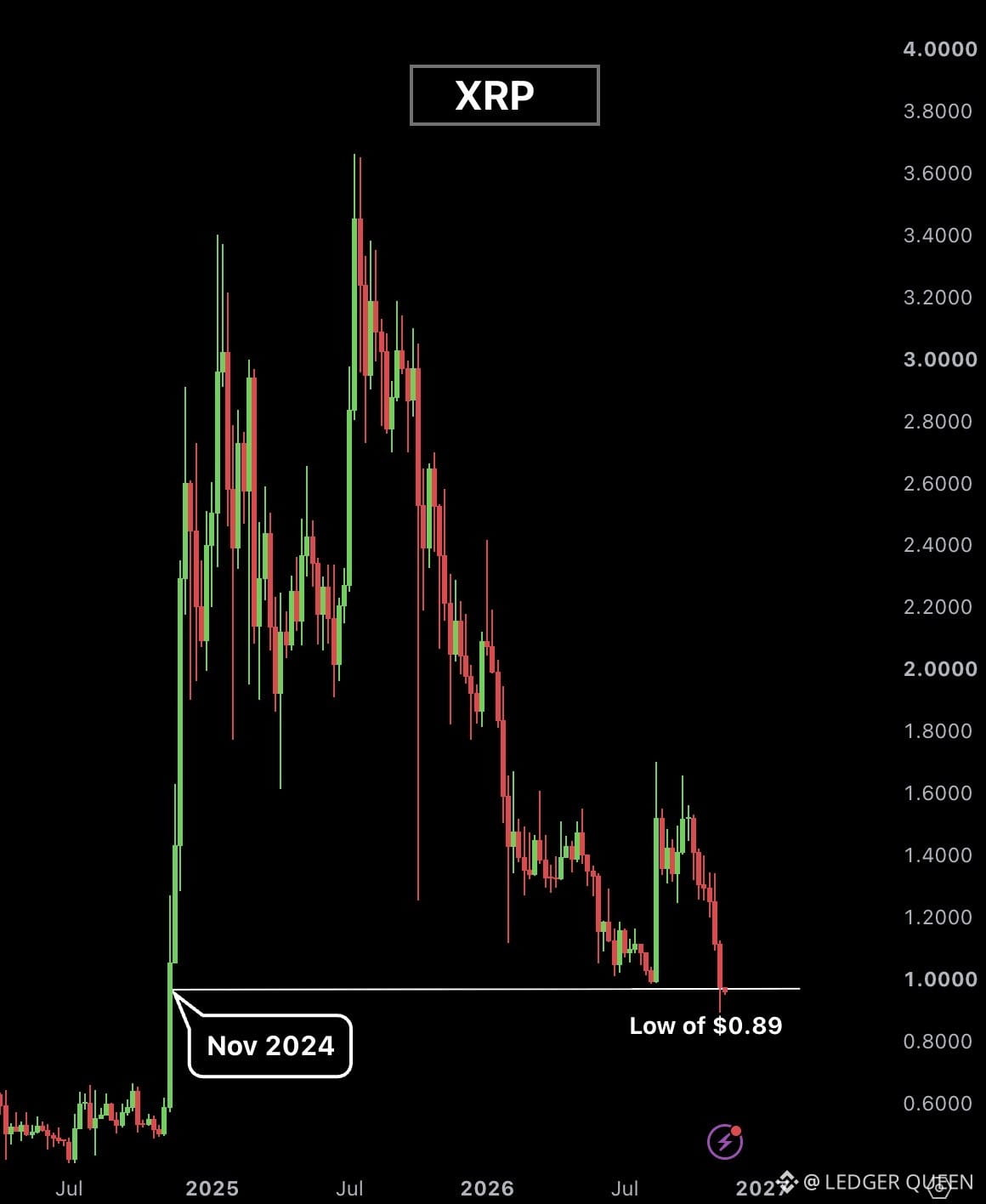
🚨 XRP JUST HIT A 2-YEAR WEEKLY CLOSE LOW!
$XRP closed around $0.97, its weakest weekly close since November 2024, marking its 6th consecutive weekly loss.
The price even crashed near $0.89 before bouncing almost 7%.
But pressure remains:
🔴 Heavy ETF outflows
🔴 Persistent selling pressure
🔴 Key support near $0.89
Can XRP reclaim $1 and reverse the trend, or is another brutal leg down coming?
IS THE BOTTOM FINALLY IN? 👀
#NvidiaEarningsTonight:AIStocks’NextMove?
#AnthropicIPOTestsInvestorAppetiteForAI
#NvidiaBoardNotConsideringHuang’sReturnasCEO
#WhatInvestmentSignalsDo13FFilingsReveal?
#InvescoStablecoinReservesFundLaunchesOnEthereum
$XRP
{spot}(XRPUSDT)
🚨 XRP JUST HIT A 2-YEAR WEEKLY CLOSE LOW!
$XRP closed around $0.97, its weakest weekly close since November 2024, marking its 6th consecutive weekly loss.
The price even crashed near $0.89 before bouncing almost 7%.
But pressure remains:
🔴 Heavy ETF outflows
🔴 Persistent selling pressure
🔴 Key support near $0.89
Can XRP reclaim $1 and reverse the trend, or is another brutal leg down coming?
IS THE BOTTOM FINALLY IN? 👀
#NvidiaEarningsTonight:AIStocks’NextMove?
#AnthropicIPOTestsInvestorAppetiteForAI
#NvidiaBoardNotConsideringHuang’sReturnasCEO
#WhatInvestmentSignalsDo13FFilingsReveal?
#InvescoStablecoinReservesFundLaunchesOnEthereum
$XRP
1
119
·
--
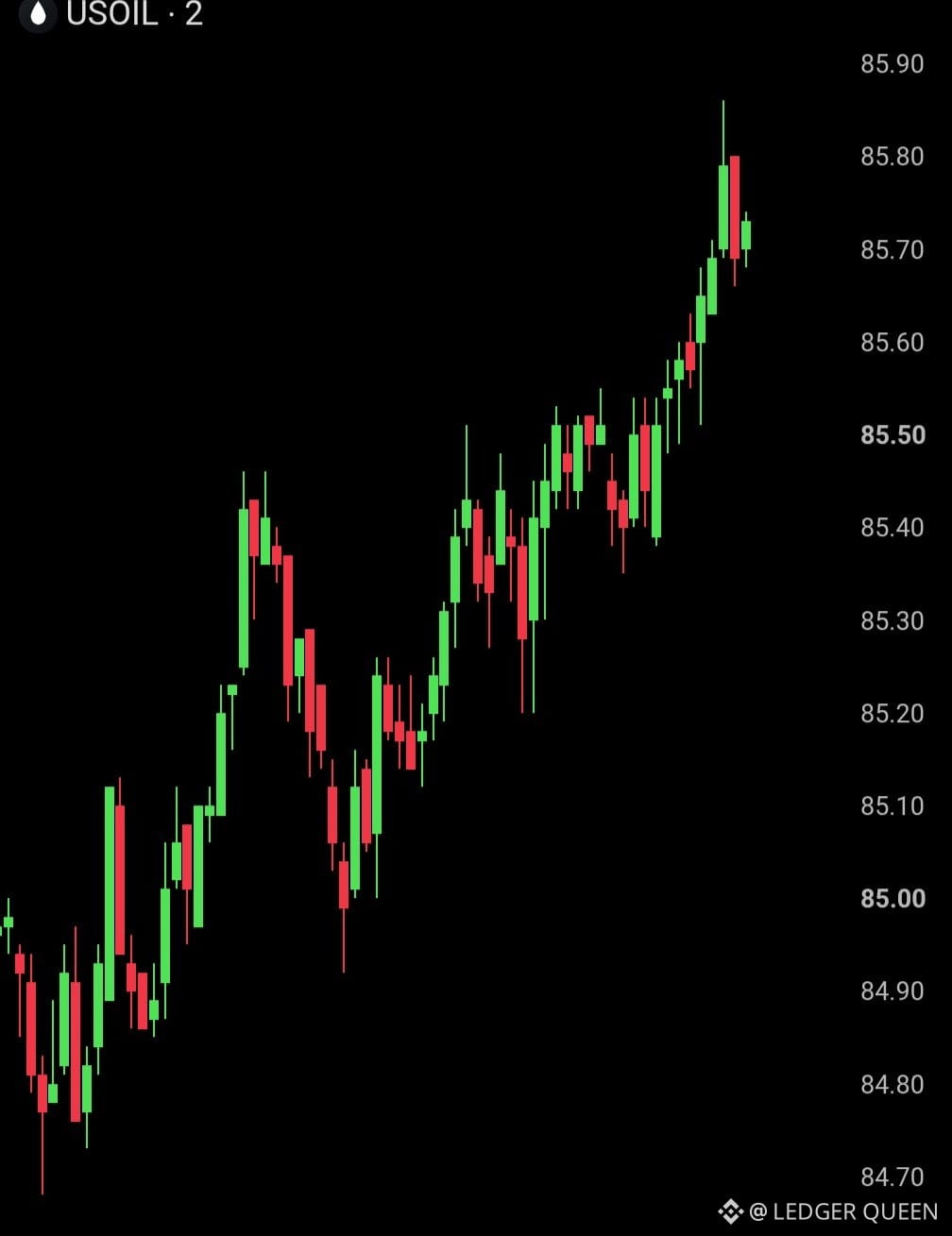
🚨 BREAKING: Tensions in the Gulf are escalating fast!
Iran's IRGC claims it launched drone attacks targeting a US military radar system at Sheikh Isa Air Base in Bahrain.
Bahrain says its air defences intercepted incoming aerial threats, while security alerts were issued across the country.
Meanwhile, oil markets are reacting to rising geopolitical uncertainty, with reports indicating a 1.4% jump in crude prices over two hours.
⚠️ The big question now: Will this remain a regional confrontation, or trigger a much wider escalation?
All eyes are on the Gulf and the Strait of Hormuz. 🌍
#NvidiaEarningsTonight:AIStocks’NextMove? #AnthropicIPOTestsInvestorAppetiteForAI
#NvidiaBoardNotConsideringHuang’sReturnasCEO
#WhatInvestmentSignalsDo13FFilingsReveal?
#InvescoStablecoinReservesFundLaunchesOnEthereum
1
384
·
--
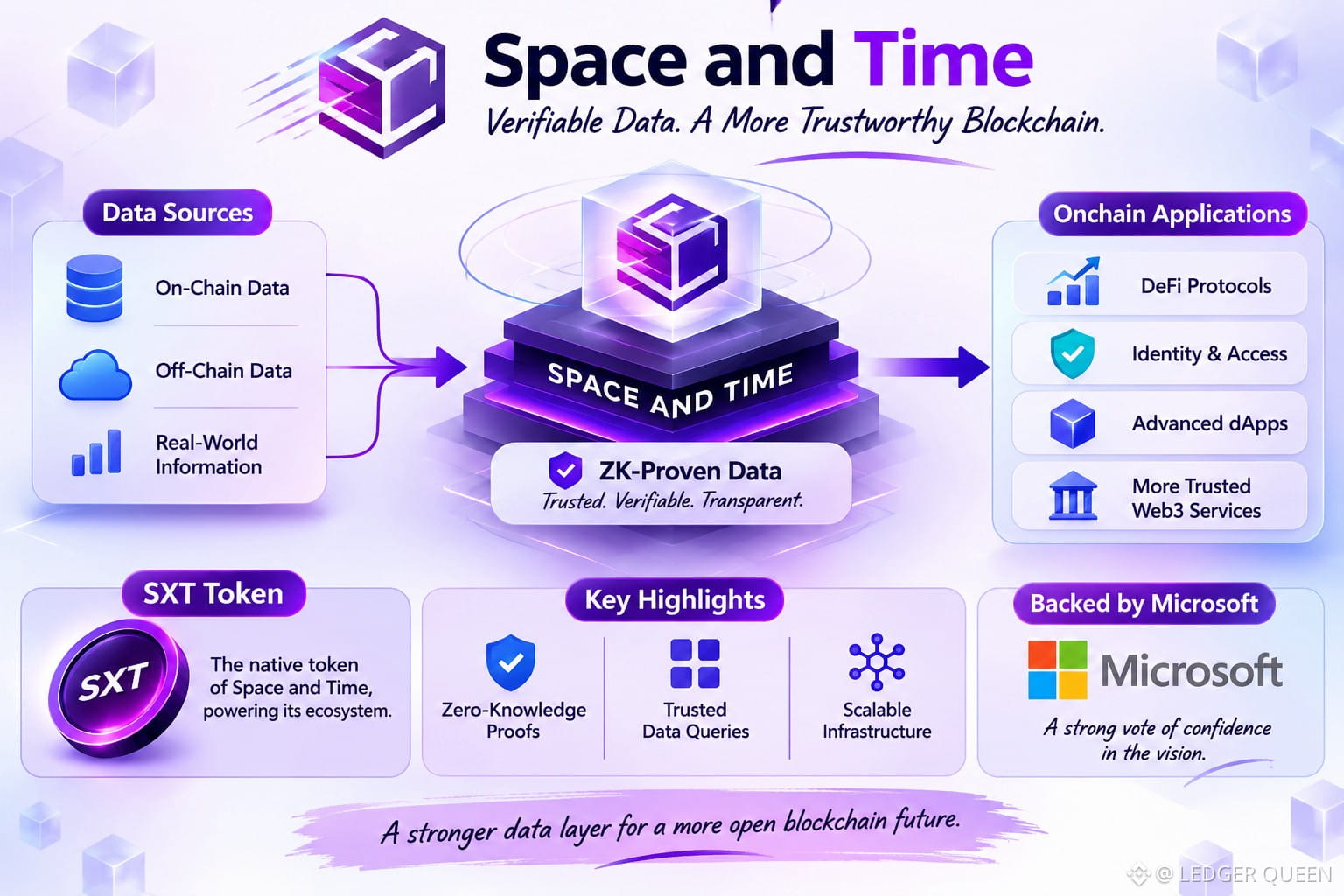
Space and Time is exploring a problem that crypto cannot afford to ignore
Have you ever looked at an onchain transaction and wondered how much information is actually available behind it? We can see wallet activity, balances and contract interactions, but making sense of large amounts of data is another challenge entirely.
That is where Space and Time caught my attention. It is a Microsoft-backed blockchain project focused on making data verifiable through zero-knowledge proofs. The interesting part is not simply collecting information. It is proving that the information and the results of a query can be trusted. I think this distinction matters more than people sometimes realise.
As blockchain applications become more complex, developers need access to data from different sources without blindly trusting whoever provides it. Imagine a DeFi application checking historical trading activity or a protocol verifying user information before executing a specific action. If those results can be cryptographically verified, the application has a stronger foundation. Of course, implementation and real-world adoption are still important questions.
Another thing worth watching is SXT, the native token of Space and Time. A project's technology and its token economics are two different conversations. Even if the underlying infrastructure becomes useful, I would still want to understand how SXT captures value and what genuine demand looks like over time.
Maybe I am looking at this from the wrong angle, but I find verifiable data an underrated part of blockchain development. We talk constantly about faster networks and cheaper transactions. Who is making sure the information behind those transactions can actually be trusted? That is the question I will be watching Space and Time for.
#sxt $SXT @SpaceandTimeDB
Space and Time is exploring a problem that crypto cannot afford to ignore
Have you ever looked at an onchain transaction and wondered how much information is actually available behind it? We can see wallet activity, balances and contract interactions, but making sense of large amounts of data is another challenge entirely.
That is where Space and Time caught my attention. It is a Microsoft-backed blockchain project focused on making data verifiable through zero-knowledge proofs. The interesting part is not simply collecting information. It is proving that the information and the results of a query can be trusted. I think this distinction matters more than people sometimes realise.
As blockchain applications become more complex, developers need access to data from different sources without blindly trusting whoever provides it. Imagine a DeFi application checking historical trading activity or a protocol verifying user information before executing a specific action. If those results can be cryptographically verified, the application has a stronger foundation. Of course, implementation and real-world adoption are still important questions.
Another thing worth watching is SXT, the native token of Space and Time. A project's technology and its token economics are two different conversations. Even if the underlying infrastructure becomes useful, I would still want to understand how SXT captures value and what genuine demand looks like over time.
Maybe I am looking at this from the wrong angle, but I find verifiable data an underrated part of blockchain development. We talk constantly about faster networks and cheaper transactions. Who is making sure the information behind those transactions can actually be trusted? That is the question I will be watching Space and Time for.
#sxt $SXT @SpaceandTime
1
3
202
·
--
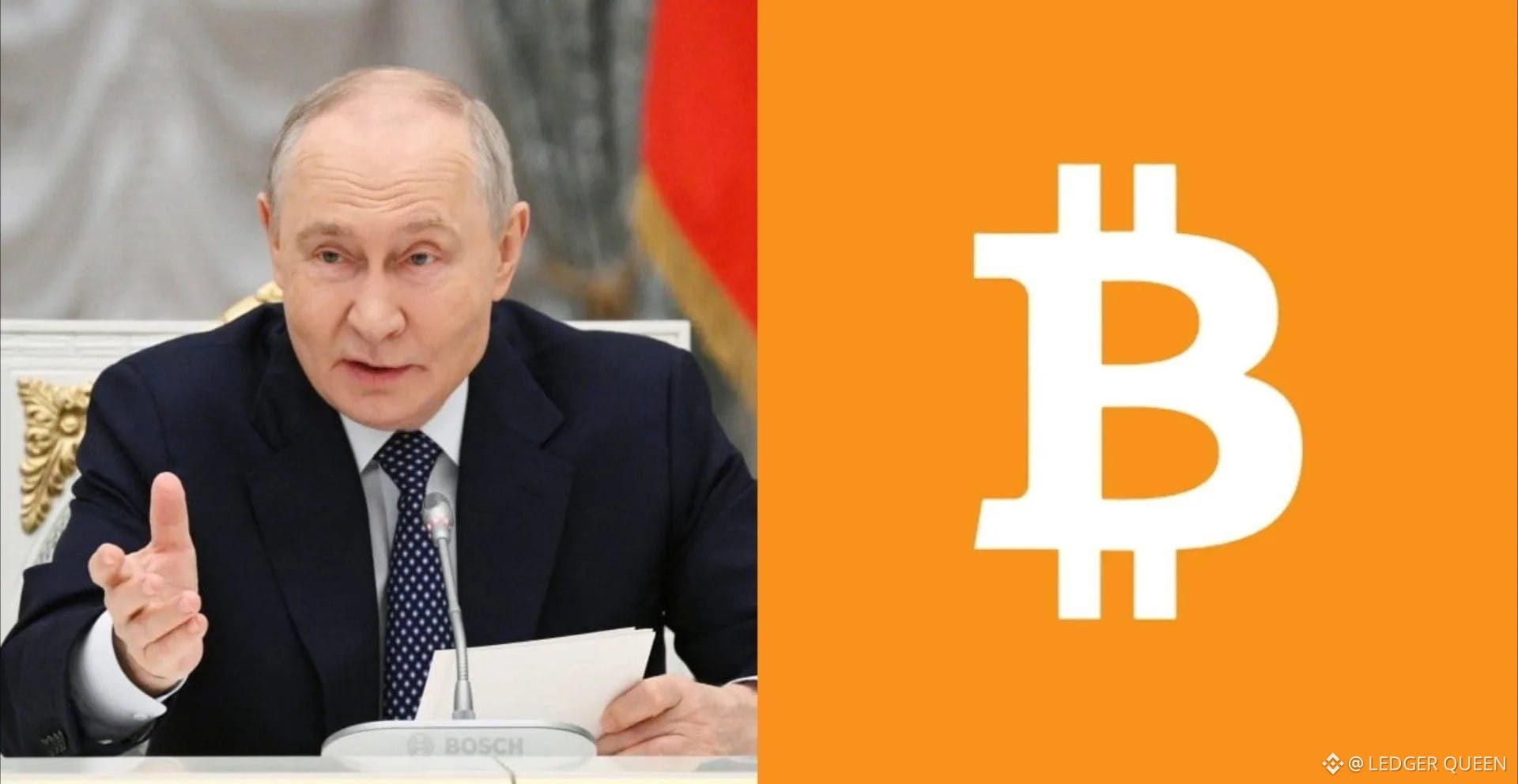
🚨 HUGE MOVE FROM RUSSIA! 🇷🇺
Russia's central bank has officially approved Bitcoin, Ethereum, and USDT for retail trading starting November 17, 2026.
But there's more:
🔥 Retail investors can buy up to 300,000 rubles annually per intermediary.
🔥 Qualified investors get access to all crypto assets without purchase limits.
🔥 Mandatory risk testing applies before trading.
Russia is opening its regulated crypto market.
One thing is becoming clear: Crypto is moving deeper into mainstream finance. 👀
The question is no longer whether countries will embrace crypto, but how fast they will move. 🚀
1
352
·
--
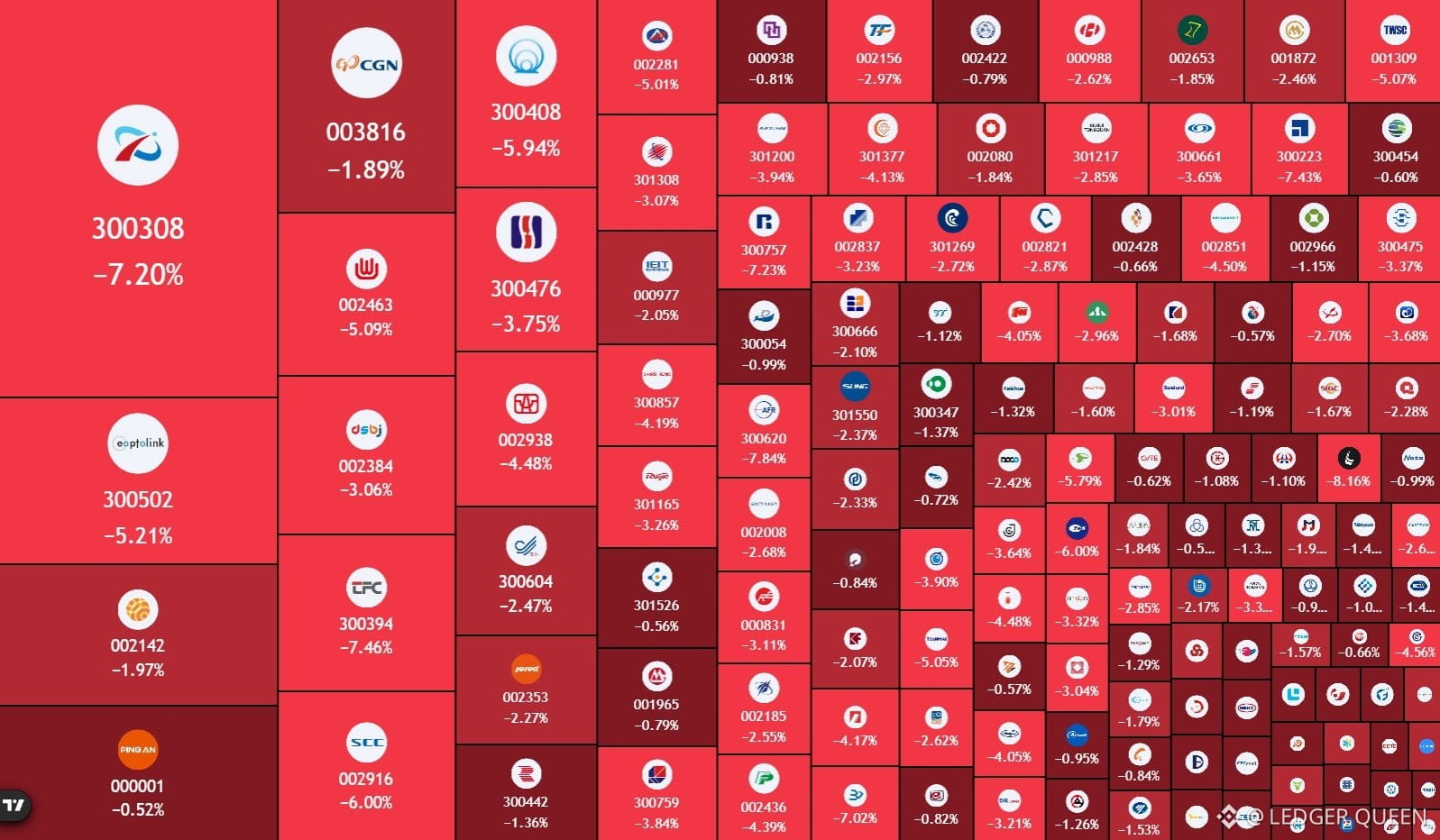
🚨 MASSIVE MARKET WIPEOUT!
🇨🇳 Chinese stocks reportedly lost a staggering ¥1.579 TRILLION ($237 BILLION) in just 15 MINUTES after the market opened!
A brutal start to the trading session. Billions vanished in minutes, sending shockwaves through the market. 📉
Is this the beginning of a bigger sell-off? 👀
🇨🇳 Chinese stocks reportedly lost a staggering ¥1.579 TRILLION ($237 BILLION) in just 15 MINUTES after the market opened!
A brutal start to the trading session. Billions vanished in minutes, sending shockwaves through the market. 📉
Is this the beginning of a bigger sell-off? 👀
1
177
·
--
🚨 BREAKING: 🇺🇸 US ECONOMY SHOWS STRONG MOMENTUM!
The ISM PMI surged to 55.5, beating expectations of 54.7.
📈 Highest reading in 3 months!
📊 Above 50 = Economic expansion.
🔥 Manufacturing activity signals stronger-than-expected growth.
The US economy is heating up. Now the big question: Will this strength support the dollar, or complicate the Fed's rate-cut plans?
Markets are watching! 👀
#BinanceWithdrawalScamWarning
1
140
·
--
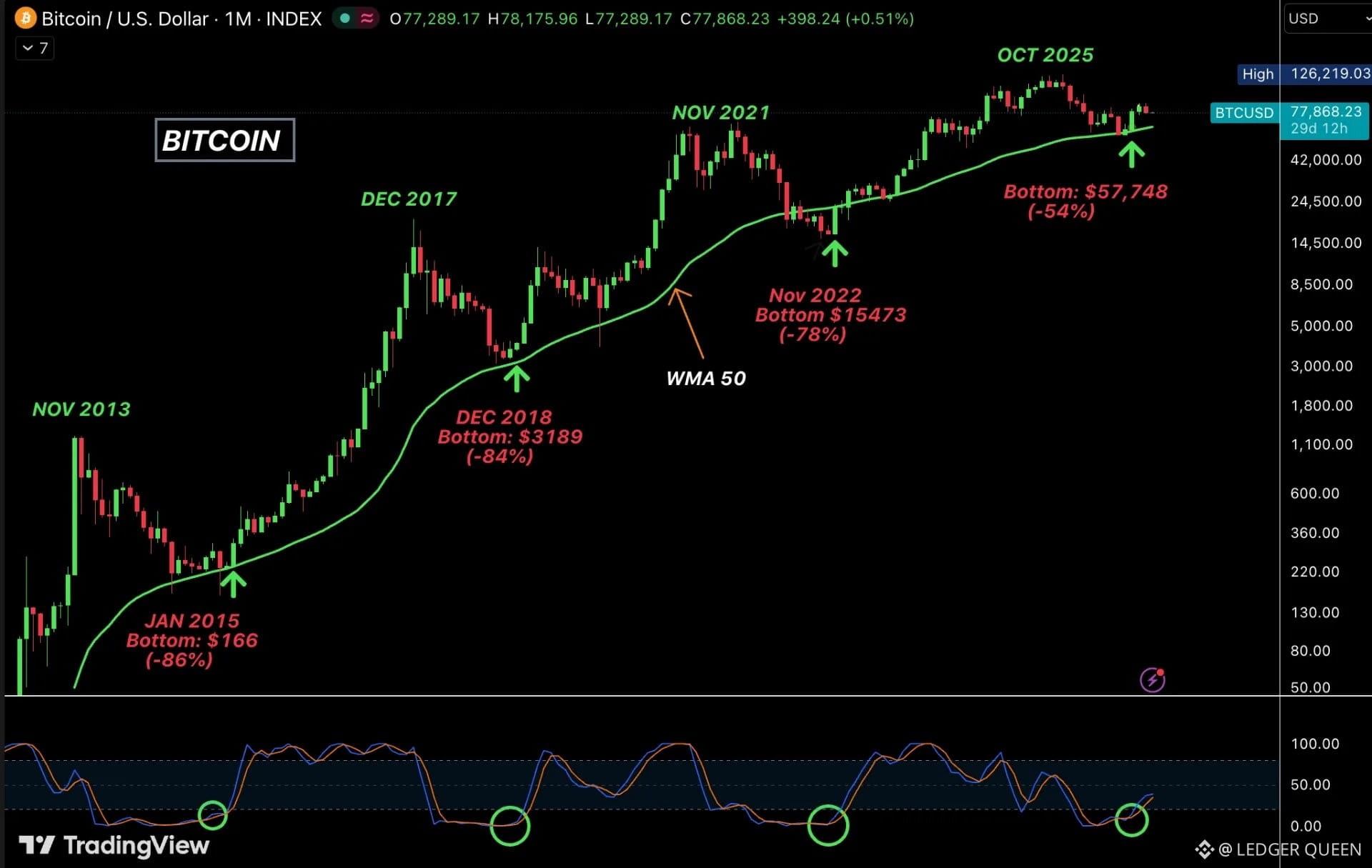
BITCOIN'S NEXT BIG MOVE COULD COME FROM FEAR!
After gaining 43% in Q3, BTC closed October down 7.3%. Interestingly, Nasdaq 100 and Gold also fell nearly 7%, while oil surged above $117.
Key BTC levels to watch:
- Support: $75,770 (Weekly MA 50)
- Major support: $64,580 (Monthly MA 50)
- Resistance: $87,500
The bigger trend may still be positive, but volatility isn't over. Even a 20% correction can happen during a Bitcoin bull market.
I'm watching the $65K–$75K zone for potential accumulation with a 3-year horizon.
Add the US midterm election pattern to the mix, and volatility could create some interesting opportunities.
Sometimes the biggest opportunities appear when fear is at its peak. Will you buy the dip or wait for confirmation?
$BTC
{spot}(BTCUSDT)
#BinanceRestores28FiatWithdrawals
#ETHFalls16.1%InOctober
#SouthKoreaPlans11%TaxOnUSStockPerpetualFutures
#BitcoinClosesAbove50WeekMAFor7thStraightWeek
BITCOIN'S NEXT BIG MOVE COULD COME FROM FEAR!
After gaining 43% in Q3, BTC closed October down 7.3%. Interestingly, Nasdaq 100 and Gold also fell nearly 7%, while oil surged above $117.
Key BTC levels to watch:
- Support: $75,770 (Weekly MA 50)
- Major support: $64,580 (Monthly MA 50)
- Resistance: $87,500
The bigger trend may still be positive, but volatility isn't over. Even a 20% correction can happen during a Bitcoin bull market.
I'm watching the $65K–$75K zone for potential accumulation with a 3-year horizon.
Add the US midterm election pattern to the mix, and volatility could create some interesting opportunities.
Sometimes the biggest opportunities appear when fear is at its peak. Will you buy the dip or wait for confirmation?
$BTC
#BinanceRestores28FiatWithdrawals
#ETHFalls16.1%InOctober
#SouthKoreaPlans11%TaxOnUSStockPerpetualFutures
#BitcoinClosesAbove50WeekMAFor7thStraightWeek
130
·
--
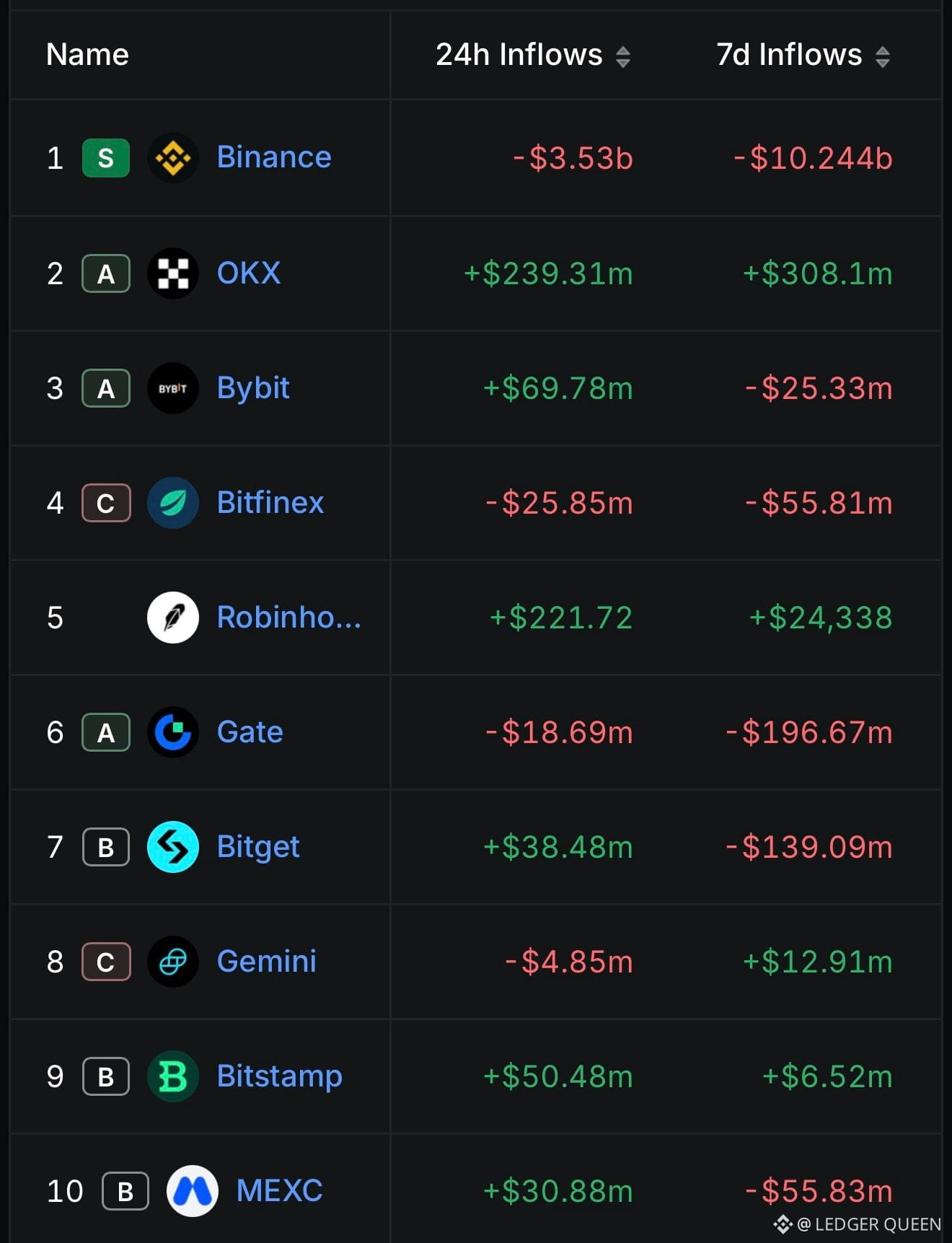
🚨 Binance Faces $10.24B in Weekly Net Outflows After $6.3B Security Incident
Binance has recorded approximately $10.24 billion in net outflows over the past 7 days, including $3.53 billion in the last 24 hours, according to the latest data in the attached screenshot.
The numbers are significant, but the bigger question is whether Binance can restore user confidence after one of the largest security incidents in crypto history.
I personally tested deposits, withdrawals, P2P, and internal transfers on Binance, and everything appeared to be working smoothly at the time of my test.
However, one successful test does not mean every service is fully restored for every user.
The incident reportedly resulted in approximately $6.3 billion in losses from compromised hot wallets.
Binance has stated that it will cover the financial impact through its corporate treasury, SAFU, and other designated funds. Its latest recovery update says approximately 90% of the affected assets have been replenished, while around $3 billion in stolen assets has been frozen on-chain.
These are two different things: replenishing assets means replacing the losses, while freezing assets means restricting the movement of stolen funds. Frozen assets are not necessarily recovered.
Binance has also published a new Proof of Reserves snapshot, with the complete verification proof expected by November 3.
The incident is a reminder that even major centralized exchanges face serious security risks. No exchange can guarantee absolute security, and users should remain careful with their own wallets and account protection.
I feel sorry for Binance and the people working to resolve this incident. The financial pressure and loss of confidence are significant challenges for any exchange.
But the response also highlights the importance of financial reserves, transparency, and accountability during a crisis.
Security failures matter. What matters next is whether Binance can complete the recovery, restore confidence, and demonstrate that stronger safeguards are in place.
What do you think
132
·
--
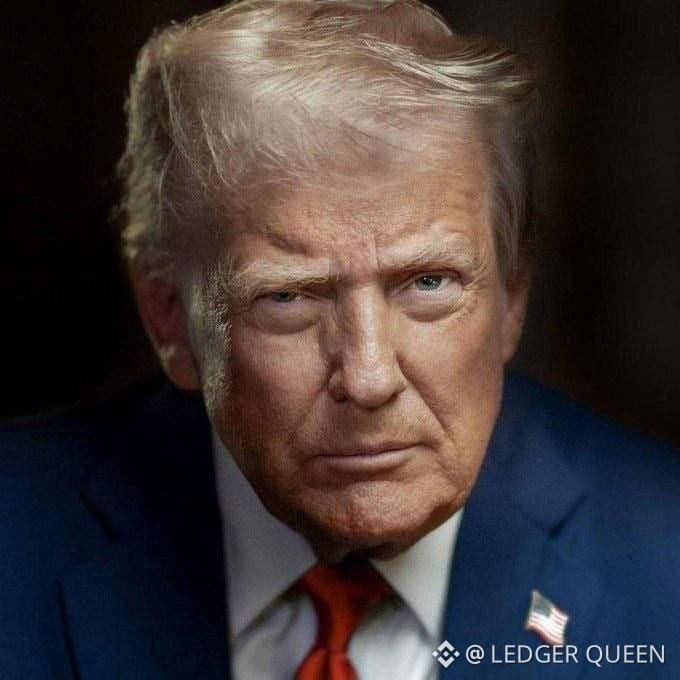
🚨 TRUMP, BINANCE & A $6.3 BILLION HACK!
Trump pardoned Binance founder CZ, then told 60 Minutes he didn't even know him and brushed off corruption concerns.
Now, after a record $6.3 billion crypto heist, Trump says the U.S. is investigating and Binance claims the situation is under control.
But with billions stolen and North Korean hackers under suspicion, one question remains:
Can Binance recover the funds before they disappear forever?
The crypto world is watching.
#Binance #Bitcoin #Crypto
160
·
--
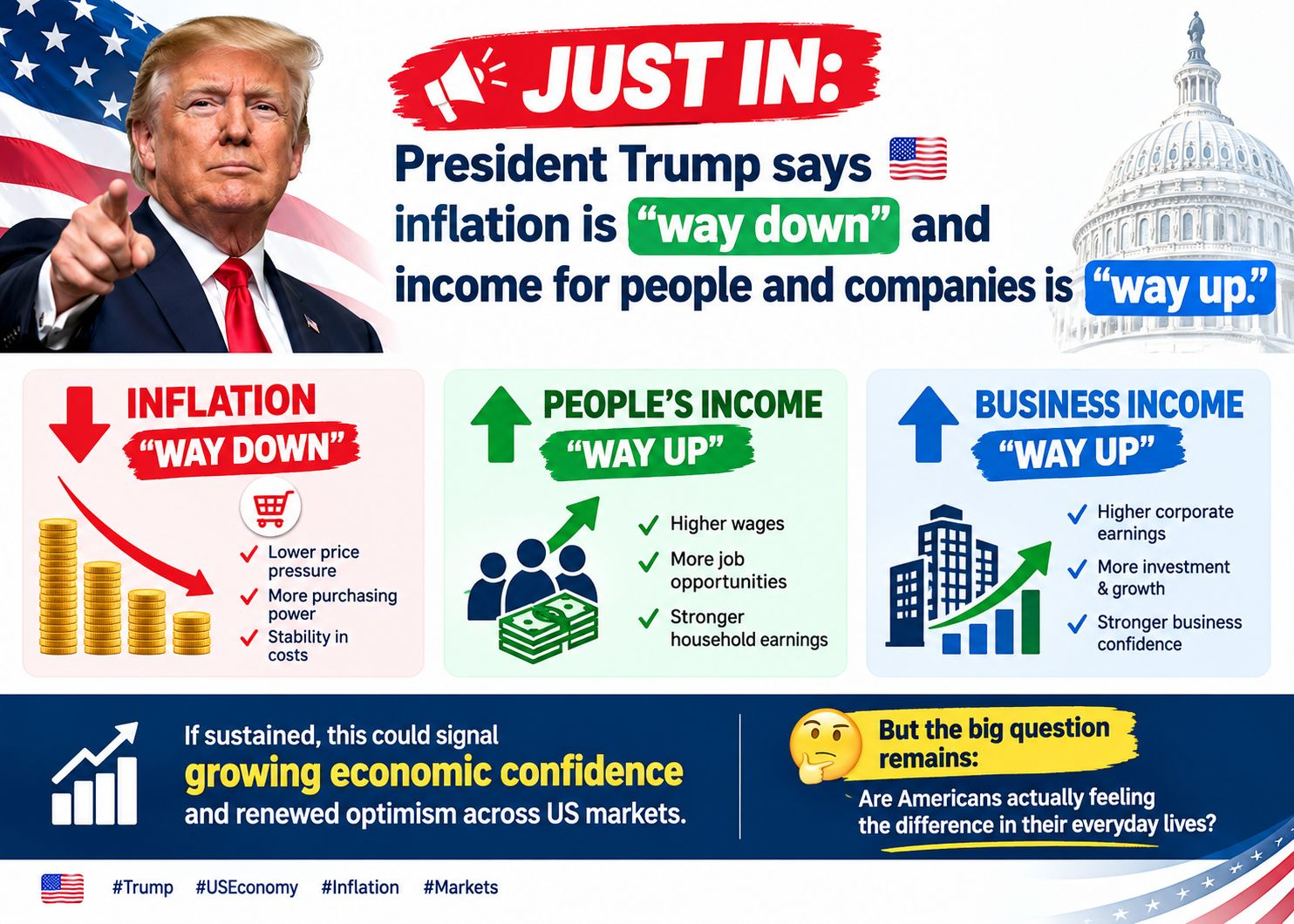
🚨 JUST IN: 🇺🇸 President Donald Trump makes a bold economic claim!
Trump says inflation is “way down” while incomes for both Americans and businesses are “way up.”
📉 Lower inflation
📈 Higher incomes
🏢 Stronger business earnings
If sustained, this could signal growing economic confidence and renewed optimism across US markets.
But the big question remains: Are Americans actually feeling the difference in their everyday lives? 👀
185
·
--
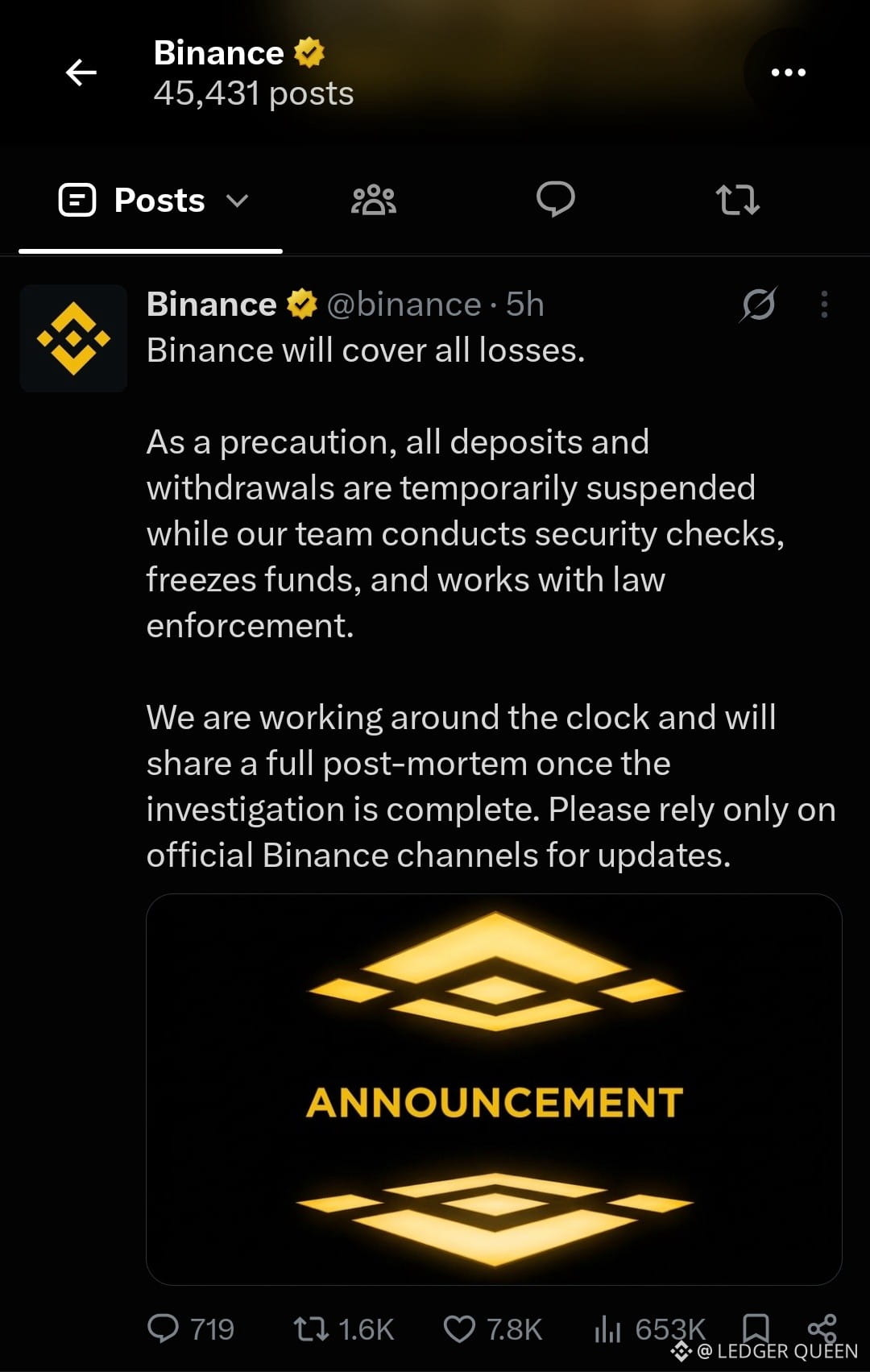
🚨 BINANCE SECURITY INCIDENT: A CRITICAL MOMENT FOR CRYPTO SECURITY
October 30, 2026, brings an important reminder for the entire crypto industry.
Binance has officially reported a security incident with an estimated total impact of approximately $6.3 billion.
Here is what Binance has confirmed so far:
🔹 Deposits and withdrawals have been temporarily suspended as a precaution.
🔹 Approximately $3 billion in affected assets has been frozen on-chain with the help of blockchain partners.
🔹 Initial investigations suggest a potentially compromised DevOps engineer's laptop.
🔹 Binance says it will cover all losses through its SAFU Fund and company funds.
🔹 No evidence of wallet private key leaks has been found so far.
My perspective:
Security is one of the most important foundations of crypto adoption.
An incident like this reminds us that even major exchanges must continuously improve their security infrastructure, internal controls, and risk management systems.
What matters now is transparency, responsible communication, and a complete investigation.
I believe the industry's response to security challenges is just as important as its technological progress.
Let's follow verified information and avoid spreading unconfirmed claims.
What do you think is the biggest priority for crypto exchanges after a security incident: prevention, transparency, or user protection?
#Binance #CryptoSecurity #SAFU
241
·
--
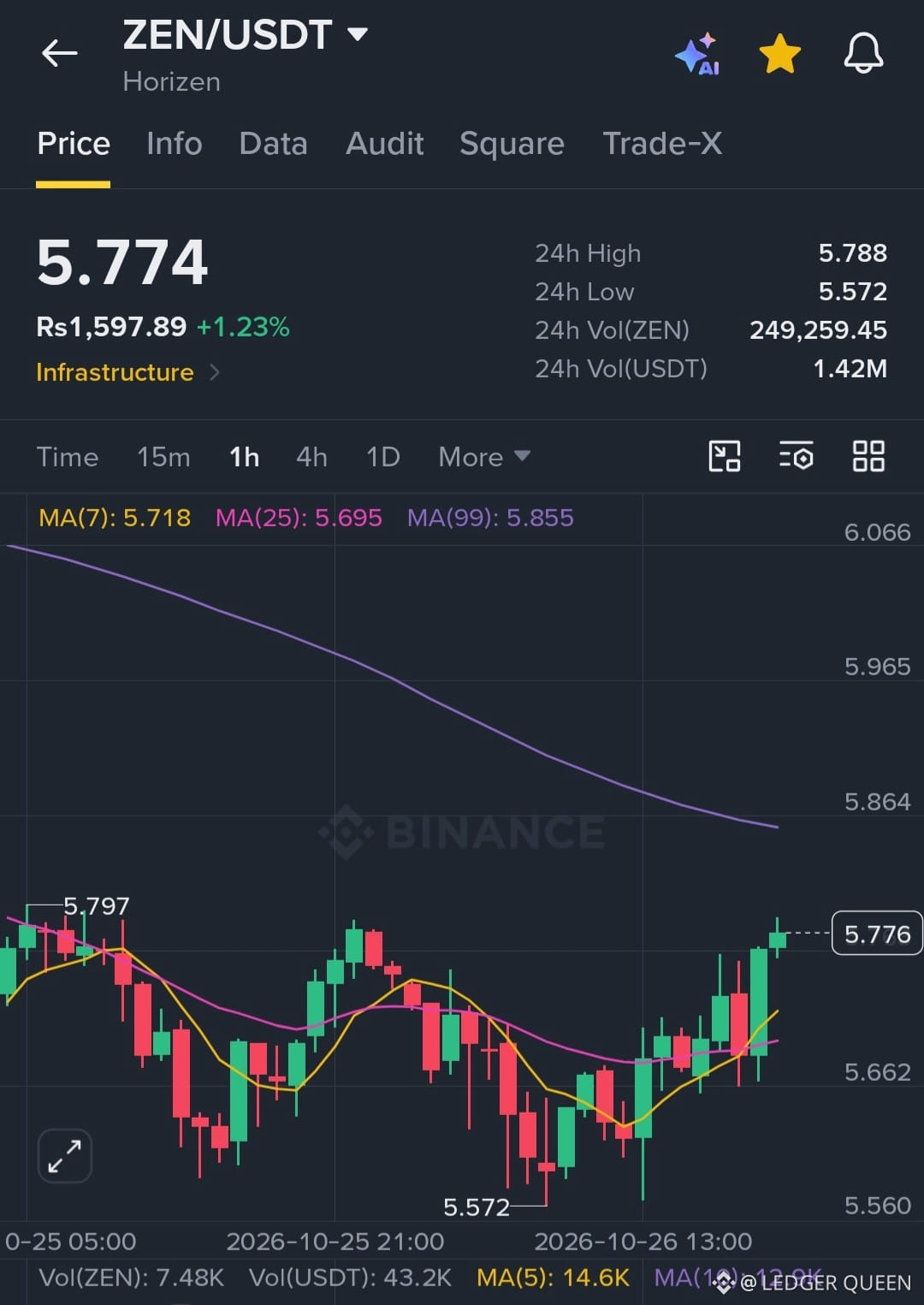
$ZEN /USDT IS MAKING A MOVE!
ZEN is trading at 5.774 USDT (+1.23%), pushing toward its 24H high of 5.788 USDT!
🔹 24H High: 5.788
🔹 24H Low: 5.572
🔹 24H Volume: 249.26K ZEN
🔹 USDT Volume: 1.42M
🔹 MA(7): 5.718 | MA(25): 5.695 | MA(99): 5.855
Bulls are gaining momentum, but can ZEN break above 5.788 and challenge the 5.85 zone? Or will resistance push it back down? 👀
Eyes on the breakout! ⚡️
{spot}(ZENUSDT)
#BinancePick
#EarningsSeason
#AnthropicTTMRevenueGrewAbout1200%
#AnthropicS1ExpectedToday
#FranklinTempletonFilesForTwoDividendToBitcoinETFs
$ZEN /USDT IS MAKING A MOVE!
ZEN is trading at 5.774 USDT (+1.23%), pushing toward its 24H high of 5.788 USDT!
🔹 24H High: 5.788
🔹 24H Low: 5.572
🔹 24H Volume: 249.26K ZEN
🔹 USDT Volume: 1.42M
🔹 MA(7): 5.718 | MA(25): 5.695 | MA(99): 5.855
Bulls are gaining momentum, but can ZEN break above 5.788 and challenge the 5.85 zone? Or will resistance push it back down? 👀
Eyes on the breakout! ⚡️
#BinancePick
#EarningsSeason
#AnthropicTTMRevenueGrewAbout1200%
#AnthropicS1ExpectedToday
#FranklinTempletonFilesForTwoDividendToBitcoinETFs
664
·
--
Article
🎃 THE LITTLE PUMPKIN THAT CHANGED MY HALLOWEEN NIGHT 👻💛A Halloween story about imagination, creativity, courage, and the magic of bringing people together.
What if one little pumpkin could turn an ordinary October evening into a memory worth sharing? 🎃
Halloween has a special kind of magic. It transforms simple decorations into creative masterpieces, ordinary rooms into mysterious places, and small ideas into stories that make people smile. For me, the best part of Halloween is not how frightening something looks, but how much imagination goes into creating it.
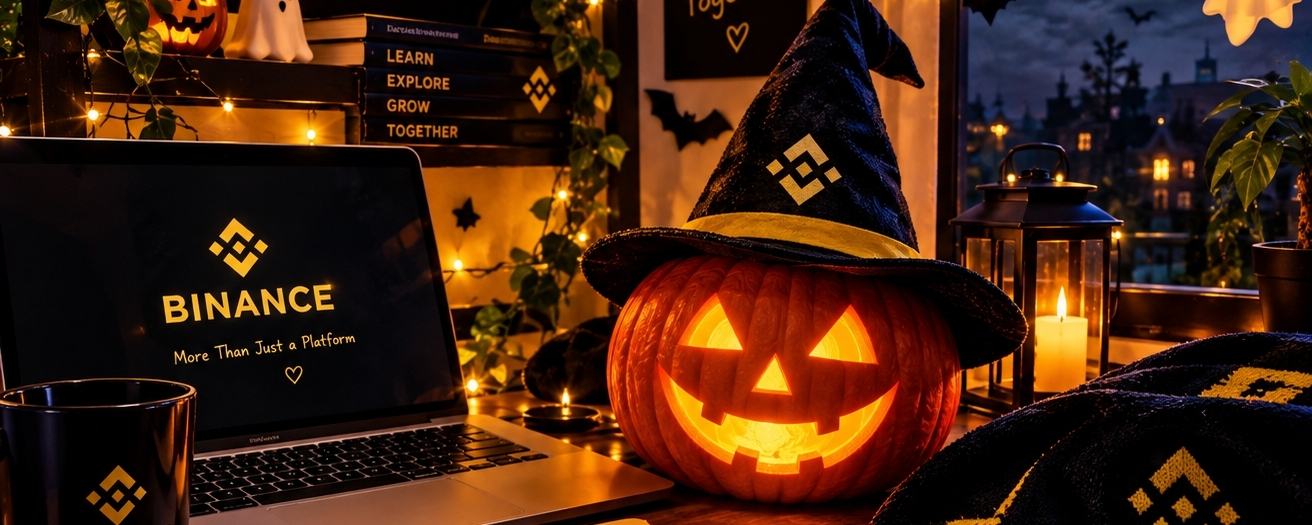
This year, I imagined a Halloween evening filled with glowing pumpkins, handmade ghosts, paper bats, warm orange lights, and a little touch of Binance yellow. What began as a simple creative idea turned into a story about something much bigger than decorations.
It became a reminder that sometimes, the smallest ideas can create the most memorable moments.
🕯️ A Little Creativity, A Lot of Halloween Magic
Imagine a quiet October evening. The sky is dark blue, a cool breeze moves through the trees, and tiny lights begin to glow around a window.
On a table sits a bright orange pumpkin with a playful smile. Paper bats decorate the walls, a little ghost hangs near the window, and candles create dancing shadows across the room.
Everything feels peaceful, yet mysterious.
Now imagine adding one special detail: a splash of Binance yellow among the traditional Halloween colours.
Black, orange, and yellow come together to create a unique atmosphere. The decorations are not expensive or complicated. Some are handmade, some are simple household items, and others are just little ideas brought to life with pencils, paper, and colour.
That is what makes creative celebrations so special. You do not need a perfect setup or professional equipment to create something meaningful. You only need an idea, a little patience, and the willingness to experiment.
And perhaps the most important ingredient is having fun along the way.
🎃 The Pumpkin With a Secret
In my imagined Halloween story, the main character is not a ghost, a witch, or a mysterious creature.
It is a little pumpkin.
Unlike the frightening pumpkins in horror movies, this one has a funny smile, slightly uneven eyes, and a tiny crooked nose. It is not perfect, but that is exactly what makes it special.
As the evening grows darker, the pumpkin sits quietly among the decorations. Its orange colour catches the light, making it appear to glow from within.
Someone looking at it might see an ordinary Halloween ornament. Someone else might imagine a friendly character with a thousand stories to tell.
And that is the secret.
The pumpkin does not need to move, speak, or perform a supernatural trick to become memorable. Its personality comes from the creativity of the person who imagined it.
Perhaps it is a brave little pumpkin protecting the house from imaginary monsters. Perhaps it is a shy character waiting to make new friends. Or perhaps it is simply the funniest pumpkin on the table.
Whatever the interpretation, it gives people something to smile about.
Sometimes, imagination is more powerful than special effects.
👻 Why Halloween Is About More Than Fear
Halloween is often associated with frightening costumes, spooky sounds, and mysterious stories. But there is another side to the celebration that deserves attention.
It encourages people to create.
A plain sheet of paper becomes a ghost. An ordinary jar becomes a lantern. A simple pumpkin becomes the centrepiece of an entire decoration theme.
These small transformations remind us that creativity does not always require expensive tools or advanced skills.
It begins when we look at something ordinary and ask, “What else could this become?”
That question applies to more than Halloween.
In everyday life, we often hesitate before trying something new. We worry that our work might not be good enough, that people might not understand our ideas, or that our first attempt might not succeed.
But creativity grows through experimentation. Every attempt teaches us something, and every new idea gives us another opportunity to improve.
A handmade decoration might have imperfect lines. A drawing might have uneven colours. A story might need several revisions before it feels complete.
That does not make the effort worthless.
It makes the process real.
💛 A Little Binance Spirit in the Celebration
My connection with Binance is also part of my journey of learning and creativity.
When exploring the crypto world, there is always something new to discover, a new concept to understand, or a different perspective to consider. Creating content has given me another way to explore ideas and share them with a wider community.
What I appreciate about a creative community is the opportunity to learn from different people, exchange ideas, and see how others express themselves.
Not everyone begins with the same experience or knowledge. Some people are experienced creators, while others are still discovering their style. What matters is the willingness to participate, learn, and keep improving.
That is the spirit I would bring into my Halloween decorations.
A little Binance-yellow detail would represent my connection to a community that has become part of my creative journey. Combined with pumpkins, handmade decorations, and playful Halloween characters, it would make the setup personal rather than ordinary.
The goal would not be to make everything perfect.
The goal would be to make something original, meaningful, and fun to share.
Because creativity becomes even more enjoyable when it gives people a reason to connect.
🦇 My Favourite Halloween Lesson
If this little pumpkin could share one message, I imagine it would say:
“You do not have to be perfect to make someone smile.”
A simple decoration can brighten a room. A funny costume can make someone's evening. A thoughtful story can bring people together, even when they are far apart.
And sometimes, the most memorable part of a celebration is not the biggest attraction. It is a tiny detail that nobody expected.
That is why I would choose imagination over perfection this Halloween.
I would choose handmade decorations over worrying about expensive materials. I would choose trying a new creative idea over wondering whether it would work. And I would choose sharing the experience over keeping every idea to myself.
After all, celebrations become more meaningful when we create something that others can enjoy, too.
🎃 One Pumpkin, One Story, Countless Possibilities
When I picture the finished Halloween scene, I see orange lights glowing against a dark background, little bats scattered across the wall, a friendly ghost near the window, and a smiling pumpkin sitting proudly in the centre.
A small Binance-yellow detail completes the scene.
Nothing needs to be frightening beyond imagination. Nothing needs to be complicated beyond creativity.
The charm comes from the combination of simple things, each contributing something different to the final picture.
And perhaps that is the real magic of Halloween: it allows us to turn ordinary objects into extraordinary experiences through imagination.
This story may begin with a little pumpkin, but its message reaches far beyond Halloween.
Keep creating. Keep learning. Do not let the fear of imperfection stop you from trying something new.
Because the best memories are not always the ones we plan perfectly. Sometimes, they are the ones we create simply by giving an idea a chance.
Now I have a question for the Binance community: If you could design your own Halloween character, would you choose a smiling pumpkin, a friendly ghost, or a mysterious black cat? Tell me your choice in the comments! 👇
Happy Halloween, Binance family! May your decorations be creative, your stories be memorable, and your celebrations be filled with imagination, laughter, and community spirit. 🎃💛👻
#SEAPumpkinFrenzy #Binance #Halloween
$BMT
{spot}(BMTUSDT)
$GTC
{spot}(GTCUSDT)
$OSMO
{spot}(OSMOUSDT)
🎃 THE LITTLE PUMPKIN THAT CHANGED MY HALLOWEEN NIGHT 👻💛
A Halloween story about imagination, creativity, courage, and the magic of bringing people together.
What if one little pumpkin could turn an ordinary October evening into a memory worth sharing? 🎃
Halloween has a special kind of magic. It transforms simple decorations into creative masterpieces, ordinary rooms into mysterious places, and small ideas into stories that make people smile. For me, the best part of Halloween is not how frightening something looks, but how much imagination goes into creating it.
This year, I imagined a Halloween evening filled with glowing pumpkins, handmade ghosts, paper bats, warm orange lights, and a little touch of Binance yellow. What began as a simple creative idea turned into a story about something much bigger than decorations.
It became a reminder that sometimes, the smallest ideas can create the most memorable moments.
🕯️ A Little Creativity, A Lot of Halloween Magic
Imagine a quiet October evening. The sky is dark blue, a cool breeze moves through the trees, and tiny lights begin to glow around a window.
On a table sits a bright orange pumpkin with a playful smile. Paper bats decorate the walls, a little ghost hangs near the window, and candles create dancing shadows across the room.
Everything feels peaceful, yet mysterious.
Now imagine adding one special detail: a splash of Binance yellow among the traditional Halloween colours.
Black, orange, and yellow come together to create a unique atmosphere. The decorations are not expensive or complicated. Some are handmade, some are simple household items, and others are just little ideas brought to life with pencils, paper, and colour.
That is what makes creative celebrations so special. You do not need a perfect setup or professional equipment to create something meaningful. You only need an idea, a little patience, and the willingness to experiment.
And perhaps the most important ingredient is having fun along the way.
🎃 The Pumpkin With a Secret
In my imagined Halloween story, the main character is not a ghost, a witch, or a mysterious creature.
It is a little pumpkin.
Unlike the frightening pumpkins in horror movies, this one has a funny smile, slightly uneven eyes, and a tiny crooked nose. It is not perfect, but that is exactly what makes it special.
As the evening grows darker, the pumpkin sits quietly among the decorations. Its orange colour catches the light, making it appear to glow from within.
Someone looking at it might see an ordinary Halloween ornament. Someone else might imagine a friendly character with a thousand stories to tell.
And that is the secret.
The pumpkin does not need to move, speak, or perform a supernatural trick to become memorable. Its personality comes from the creativity of the person who imagined it.
Perhaps it is a brave little pumpkin protecting the house from imaginary monsters. Perhaps it is a shy character waiting to make new friends. Or perhaps it is simply the funniest pumpkin on the table.
Whatever the interpretation, it gives people something to smile about.
Sometimes, imagination is more powerful than special effects.
👻 Why Halloween Is About More Than Fear
Halloween is often associated with frightening costumes, spooky sounds, and mysterious stories. But there is another side to the celebration that deserves attention.
It encourages people to create.
A plain sheet of paper becomes a ghost. An ordinary jar becomes a lantern. A simple pumpkin becomes the centrepiece of an entire decoration theme.
These small transformations remind us that creativity does not always require expensive tools or advanced skills.
It begins when we look at something ordinary and ask, “What else could this become?”
That question applies to more than Halloween.
In everyday life, we often hesitate before trying something new. We worry that our work might not be good enough, that people might not understand our ideas, or that our first attempt might not succeed.
But creativity grows through experimentation. Every attempt teaches us something, and every new idea gives us another opportunity to improve.
A handmade decoration might have imperfect lines. A drawing might have uneven colours. A story might need several revisions before it feels complete.
That does not make the effort worthless.
It makes the process real.
💛 A Little Binance Spirit in the Celebration
My connection with Binance is also part of my journey of learning and creativity.
When exploring the crypto world, there is always something new to discover, a new concept to understand, or a different perspective to consider. Creating content has given me another way to explore ideas and share them with a wider community.
What I appreciate about a creative community is the opportunity to learn from different people, exchange ideas, and see how others express themselves.
Not everyone begins with the same experience or knowledge. Some people are experienced creators, while others are still discovering their style. What matters is the willingness to participate, learn, and keep improving.
That is the spirit I would bring into my Halloween decorations.
A little Binance-yellow detail would represent my connection to a community that has become part of my creative journey. Combined with pumpkins, handmade decorations, and playful Halloween characters, it would make the setup personal rather than ordinary.
The goal would not be to make everything perfect.
The goal would be to make something original, meaningful, and fun to share.
Because creativity becomes even more enjoyable when it gives people a reason to connect.
🦇 My Favourite Halloween Lesson
If this little pumpkin could share one message, I imagine it would say:
“You do not have to be perfect to make someone smile.”
A simple decoration can brighten a room. A funny costume can make someone's evening. A thoughtful story can bring people together, even when they are far apart.
And sometimes, the most memorable part of a celebration is not the biggest attraction. It is a tiny detail that nobody expected.
That is why I would choose imagination over perfection this Halloween.
I would choose handmade decorations over worrying about expensive materials. I would choose trying a new creative idea over wondering whether it would work. And I would choose sharing the experience over keeping every idea to myself.
After all, celebrations become more meaningful when we create something that others can enjoy, too.
🎃 One Pumpkin, One Story, Countless Possibilities
When I picture the finished Halloween scene, I see orange lights glowing against a dark background, little bats scattered across the wall, a friendly ghost near the window, and a smiling pumpkin sitting proudly in the centre.
A small Binance-yellow detail completes the scene.
Nothing needs to be frightening beyond imagination. Nothing needs to be complicated beyond creativity.
The charm comes from the combination of simple things, each contributing something different to the final picture.
And perhaps that is the real magic of Halloween: it allows us to turn ordinary objects into extraordinary experiences through imagination.
This story may begin with a little pumpkin, but its message reaches far beyond Halloween.
Keep creating. Keep learning. Do not let the fear of imperfection stop you from trying something new.
Because the best memories are not always the ones we plan perfectly. Sometimes, they are the ones we create simply by giving an idea a chance.
Now I have a question for the Binance community: If you could design your own Halloween character, would you choose a smiling pumpkin, a friendly ghost, or a mysterious black cat? Tell me your choice in the comments! 👇
Happy Halloween, Binance family! May your decorations be creative, your stories be memorable, and your celebrations be filled with imagination, laughter, and community spirit. 🎃💛👻
#SEAPumpkinFrenzy #Binance #Halloween
$BMT
$GTC
$OSMO
64
42
5.8k
·
--
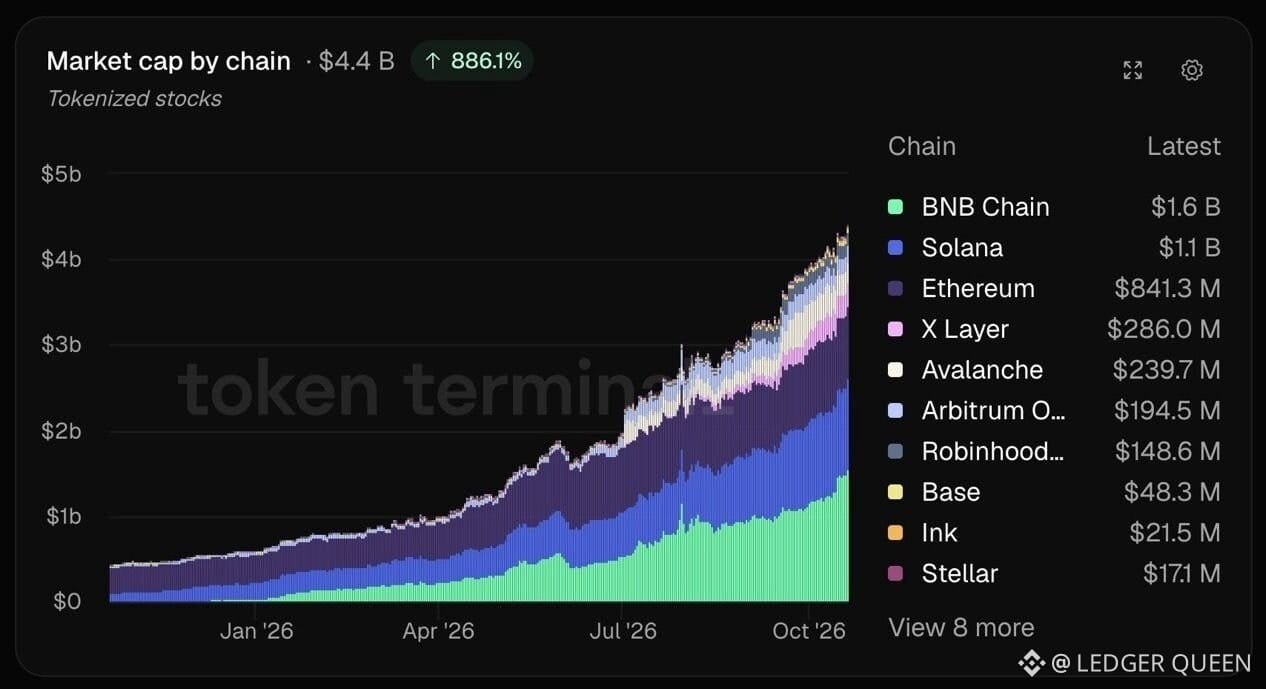
🔥 TOKENIZED STOCKS JUST EXPLODED! 🚀
📈 $4.4B Market Cap
⚡ +886% Growth in ONE YEAR!
🌐 Expanding across BNB Chain, Solana & Ethereum!
Wall Street meets Web3 — tokenized stocks are bringing traditional markets on-chain. 👀
Is this just the beginning of the RWA revolution? 🌍🔥
$ETH
{spot}(ETHUSDT)
🔥 TOKENIZED STOCKS JUST EXPLODED! 🚀
📈 $4.4B Market Cap
⚡ +886% Growth in ONE YEAR!
🌐 Expanding across BNB Chain, Solana & Ethereum!
Wall Street meets Web3 — tokenized stocks are bringing traditional markets on-chain. 👀
Is this just the beginning of the RWA revolution? 🌍🔥
$ETH
📈 $4.4B Market Cap
⚡ +886% Growth in ONE YEAR!
🌐 Expanding across BNB Chain, Solana & Ethereum!
Wall Street meets Web3 — tokenized stocks are bringing traditional markets on-chain. 👀
Is this just the beginning of the RWA revolution? 🌍🔥
$ETH
1
122
Log in to explore more content
Join global crypto users on Binance Square
⚡️ Get latest and useful information about crypto.
💬 Trusted by the world’s largest crypto exchange.
👍 Discover real insights from verified creators.
Email / Phone number