

Aasim Majeed AMC
14.3k Posts

Aasim Majeed AMC
 Square Verified+
Report
Block User
Analyst | Trader | Web3 Expert| Youtuber | Founder AMC | KOL | Investor | https://x.com/AasimKhCrypto
Frequent Trader
2.7 Years
40 Following
53.2K+ Followers
24.1K+ Liked
Posts
All
Quotes
Videos
Live
🛢️ OIL + GEOPOLITICS = WATCH THE MARKET
Reports indicate that discussions involving the U.S., Russia and Ukraine have reportedly expanded to include a potential multibillion-dollar oil deal involving Lukoil assets. The proposal remains uncertain. :contentReference[oaicite:0]{index=0}
Why should crypto traders care?
Because major geopolitical developments can influence:
⛽ Energy prices
💵 Inflation expectations
🏦 Central-bank policy
💰 Global liquidity
📊 Risk assets
Crypto doesn't trade in isolation.
When macro conditions change, Bitcoin and altcoins can react even if the original headline isn't about crypto.
Stay informed. Stay flexible.
#USRussiaUkraineTalksReportedlyIncludeLukoilOilDeal
🛢️ OIL + GEOPOLITICS = WATCH THE MARKET
Reports indicate that discussions involving the U.S., Russia and Ukraine have reportedly expanded to include a potential multibillion-dollar oil deal involving Lukoil assets. The proposal remains uncertain. :contentReference[oaicite:0]{index=0}
Why should crypto traders care?
Because major geopolitical developments can influence:
⛽ Energy prices
💵 Inflation expectations
🏦 Central-bank policy
💰 Global liquidity
📊 Risk assets
Crypto doesn't trade in isolation.
When macro conditions change, Bitcoin and altcoins can react even if the original headline isn't about crypto.
Stay informed. Stay flexible.
#USRussiaUkraineTalksReportedlyIncludeLukoilOilDeal
Reports indicate that discussions involving the U.S., Russia and Ukraine have reportedly expanded to include a potential multibillion-dollar oil deal involving Lukoil assets. The proposal remains uncertain. :contentReference[oaicite:0]{index=0}
Why should crypto traders care?
Because major geopolitical developments can influence:
⛽ Energy prices
💵 Inflation expectations
🏦 Central-bank policy
💰 Global liquidity
📊 Risk assets
Crypto doesn't trade in isolation.
When macro conditions change, Bitcoin and altcoins can react even if the original headline isn't about crypto.
Stay informed. Stay flexible.
#USRussiaUkraineTalksReportedlyIncludeLukoilOilDeal
110
₿ BITCOIN PULLS BACK AFTER THE RALLY
BTC reaching the $86.5K area and then pulling back creates an important question:
Is this simply profit-taking…
or the beginning of a deeper correction?
Don't guess.
Watch the structure.
🔹 Does support hold?
🔹 Does selling volume increase?
🔹 Can BTC reclaim the recent high?
🔹 Are buyers defending the dip?
🔹 Is the market making higher or lower lows?
A pullback inside an uptrend can be normal.
A breakdown of important structure is a different story.
Price confirmation > emotional prediction. 🧠📊
#BitcoinParesGainsAfterRallyTo$86.5K #APT
₿ BITCOIN PULLS BACK AFTER THE RALLY
BTC reaching the $86.5K area and then pulling back creates an important question:
Is this simply profit-taking…
or the beginning of a deeper correction?
Don't guess.
Watch the structure.
🔹 Does support hold?
🔹 Does selling volume increase?
🔹 Can BTC reclaim the recent high?
🔹 Are buyers defending the dip?
🔹 Is the market making higher or lower lows?
A pullback inside an uptrend can be normal.
A breakdown of important structure is a different story.
Price confirmation > emotional prediction. 🧠📊
#BitcoinParesGainsAfterRallyTo$86.5K #APT
BTC reaching the $86.5K area and then pulling back creates an important question:
Is this simply profit-taking…
or the beginning of a deeper correction?
Don't guess.
Watch the structure.
🔹 Does support hold?
🔹 Does selling volume increase?
🔹 Can BTC reclaim the recent high?
🔹 Are buyers defending the dip?
🔹 Is the market making higher or lower lows?
A pullback inside an uptrend can be normal.
A breakdown of important structure is a different story.
Price confirmation > emotional prediction. 🧠📊
#BitcoinParesGainsAfterRallyTo$86.5K #APT
49
🐸 PEPE ETF STORY IS GETTING ATTENTION
The latest filing development around a potential PEPE ETF puts meme-coin exposure back into the institutional conversation.
That's interesting because meme coins historically depend heavily on:
🔥 Community
🔥 Liquidity
🔥 Narrative
🔥 Social attention
🔥 Exchange activity
An ETF-related development can create attention, but attention alone doesn't guarantee price performance.
For $PEPE traders, the important confirmation remains:
📊 Volume
📈 Price structure
💧 Liquidity
🎯 Key support/resistance zones
Don't buy simply because the headline is trending.
Let the chart confirm the story.
#CanaryFilesAmendedS1ForPEPEETF $PEPE
🐸 PEPE ETF STORY IS GETTING ATTENTION
The latest filing development around a potential PEPE ETF puts meme-coin exposure back into the institutional conversation.
That's interesting because meme coins historically depend heavily on:
🔥 Community
🔥 Liquidity
🔥 Narrative
🔥 Social attention
🔥 Exchange activity
An ETF-related development can create attention, but attention alone doesn't guarantee price performance.
For $PEPE traders, the important confirmation remains:
📊 Volume
📈 Price structure
💧 Liquidity
🎯 Key support/resistance zones
Don't buy simply because the headline is trending.
Let the chart confirm the story.
#CanaryFilesAmendedS1ForPEPEETF $PEPE
The latest filing development around a potential PEPE ETF puts meme-coin exposure back into the institutional conversation.
That's interesting because meme coins historically depend heavily on:
🔥 Community
🔥 Liquidity
🔥 Narrative
🔥 Social attention
🔥 Exchange activity
An ETF-related development can create attention, but attention alone doesn't guarantee price performance.
For $PEPE traders, the important confirmation remains:
📊 Volume
📈 Price structure
💧 Liquidity
🎯 Key support/resistance zones
Don't buy simply because the headline is trending.
Let the chart confirm the story.
#CanaryFilesAmendedS1ForPEPEETF $PEPE
149
🤖 AI POWER DEMAND IS BECOMING A MARKET STORY
The latest move involving Cerebras and Nvidia highlights how important AI computing infrastructure has become.
AI isn't only about software anymore.
It's also about:
⚡ Electricity
🖥️ Chips
🏭 Data centers
🌐 Infrastructure
💰 Capital expenditure
For crypto traders, this matters because the AI narrative has expanded beyond individual companies.
Blockchain projects connected to decentralized computing and AI infrastructure can also attract attention when the sector heats up.
But again:
Narrative first.
Confirmation second.
Risk management always. 📊
#CerebrasSinksNearly20%OnReportNvidiaToPowerOpenAI $AAPLB
{spot}(AAPLBUSDT)
🤖 AI POWER DEMAND IS BECOMING A MARKET STORY
The latest move involving Cerebras and Nvidia highlights how important AI computing infrastructure has become.
AI isn't only about software anymore.
It's also about:
⚡ Electricity
🖥️ Chips
🏭 Data centers
🌐 Infrastructure
💰 Capital expenditure
For crypto traders, this matters because the AI narrative has expanded beyond individual companies.
Blockchain projects connected to decentralized computing and AI infrastructure can also attract attention when the sector heats up.
But again:
Narrative first.
Confirmation second.
Risk management always. 📊
#CerebrasSinksNearly20%OnReportNvidiaToPowerOpenAI $AAPLB
The latest move involving Cerebras and Nvidia highlights how important AI computing infrastructure has become.
AI isn't only about software anymore.
It's also about:
⚡ Electricity
🖥️ Chips
🏭 Data centers
🌐 Infrastructure
💰 Capital expenditure
For crypto traders, this matters because the AI narrative has expanded beyond individual companies.
Blockchain projects connected to decentralized computing and AI infrastructure can also attract attention when the sector heats up.
But again:
Narrative first.
Confirmation second.
Risk management always. 📊
#CerebrasSinksNearly20%OnReportNvidiaToPowerOpenAI $AAPLB
63
🏛️ SEC PROPOSES NEW CRYPTO CUSTODY FRAMEWORK
The SEC has proposed rules aimed at creating a tailored framework for crypto custody by investment advisers and regulated funds. The proposal includes certain conditions under which self-custody could be permitted and also addresses state trust companies as custodians.
For the crypto market, custody rules matter because institutions need clear answers around:
🔐 Where assets can be held
📋 Compliance requirements
🏦 Qualified custodians
💰 Institutional access
⚖️ Regulatory responsibilities
The proposal is not the same as a final rule.
Public comments are part of the process, so the details can still change.
For traders, this is another regulatory development worth watching.$BTC $ETH $BNB
#SECProposesCryptoCustodyRules
🏛️ SEC PROPOSES NEW CRYPTO CUSTODY FRAMEWORK
The SEC has proposed rules aimed at creating a tailored framework for crypto custody by investment advisers and regulated funds. The proposal includes certain conditions under which self-custody could be permitted and also addresses state trust companies as custodians.
For the crypto market, custody rules matter because institutions need clear answers around:
🔐 Where assets can be held
📋 Compliance requirements
🏦 Qualified custodians
💰 Institutional access
⚖️ Regulatory responsibilities
The proposal is not the same as a final rule.
Public comments are part of the process, so the details can still change.
For traders, this is another regulatory development worth watching.$BTC $ETH $BNB
#SECProposesCryptoCustodyRules
The SEC has proposed rules aimed at creating a tailored framework for crypto custody by investment advisers and regulated funds. The proposal includes certain conditions under which self-custody could be permitted and also addresses state trust companies as custodians.
For the crypto market, custody rules matter because institutions need clear answers around:
🔐 Where assets can be held
📋 Compliance requirements
🏦 Qualified custodians
💰 Institutional access
⚖️ Regulatory responsibilities
The proposal is not the same as a final rule.
Public comments are part of the process, so the details can still change.
For traders, this is another regulatory development worth watching.$BTC $ETH $BNB
#SECProposesCryptoCustodyRules
1
52
🎙️ How to manage portfolio in CFDs intruding

End
01 h 04 m 33 s
67
0
0
🎙️ Liquidity Master Class | BSL & SSL Liquidity Sweep + Secret Entry
End
01 h 02 m 50 s
141
0
0
DAY 3 :TRADING PSYCHOLOGY: LOSS AVERSION
Loss aversion is one of the biggest psychological problems in trading.
It means the pain of losing money feels stronger than the happiness of making the same amount.
And this can completely change the way you trade.
You take a trade and it starts going against you.
Instead of accepting a small loss, you think:
“I’ll wait. Maybe it will come back.”
So you keep holding the losing trade because you don't want to accept the loss.
But when a winning trade comes, you often close it too quickly because you're afraid the profit might disappear.
This creates a dangerous cycle:
Small profit → Close quickly
Small loss → Keep holding
Bigger loss → Hope for recovery
Even bigger loss → Panic or revenge trade
The market doesn't care about your entry price.
It doesn't care how much you have already lost.
Your job is NOT to avoid every loss.
Your job is to CONTROL your losses.
Set your SL before entering.
Accept that losses are part of trading.
Never move your SL just because you don't want to take the loss.
And never turn one small loss into a huge loss.
Remember:
A controlled loss is part of the game.
An uncontrolled loss can destroy your account.
DAY 3 LESSON:
DON'T TRADE TO AVOID LOSSES.
TRADE TO MANAGE RISK.
Accept small losses.
Protect your capital.
Stay disciplined.
A good trader doesn't avoid losses
A good trader knows how to LOSE SMALL
#tradingpsychology
$BTC $ETH $SOL
DAY 3 :TRADING PSYCHOLOGY: LOSS AVERSION
Loss aversion is one of the biggest psychological problems in trading.
It means the pain of losing money feels stronger than the happiness of making the same amount.
And this can completely change the way you trade.
You take a trade and it starts going against you.
Instead of accepting a small loss, you think:
“I’ll wait. Maybe it will come back.”
So you keep holding the losing trade because you don't want to accept the loss.
But when a winning trade comes, you often close it too quickly because you're afraid the profit might disappear.
This creates a dangerous cycle:
Small profit → Close quickly
Small loss → Keep holding
Bigger loss → Hope for recovery
Even bigger loss → Panic or revenge trade
The market doesn't care about your entry price.
It doesn't care how much you have already lost.
Your job is NOT to avoid every loss.
Your job is to CONTROL your losses.
Set your SL before entering.
Accept that losses are part of trading.
Never move your SL just because you don't want to take the loss.
And never turn one small loss into a huge loss.
Remember:
A controlled loss is part of the game.
An uncontrolled loss can destroy your account.
DAY 3 LESSON:
DON'T TRADE TO AVOID LOSSES.
TRADE TO MANAGE RISK.
Accept small losses.
Protect your capital.
Stay disciplined.
A good trader doesn't avoid losses
A good trader knows how to LOSE SMALL
#tradingpsychology
$BTC $ETH $SOL
Loss aversion is one of the biggest psychological problems in trading.
It means the pain of losing money feels stronger than the happiness of making the same amount.
And this can completely change the way you trade.
You take a trade and it starts going against you.
Instead of accepting a small loss, you think:
“I’ll wait. Maybe it will come back.”
So you keep holding the losing trade because you don't want to accept the loss.
But when a winning trade comes, you often close it too quickly because you're afraid the profit might disappear.
This creates a dangerous cycle:
Small profit → Close quickly
Small loss → Keep holding
Bigger loss → Hope for recovery
Even bigger loss → Panic or revenge trade
The market doesn't care about your entry price.
It doesn't care how much you have already lost.
Your job is NOT to avoid every loss.
Your job is to CONTROL your losses.
Set your SL before entering.
Accept that losses are part of trading.
Never move your SL just because you don't want to take the loss.
And never turn one small loss into a huge loss.
Remember:
A controlled loss is part of the game.
An uncontrolled loss can destroy your account.
DAY 3 LESSON:
DON'T TRADE TO AVOID LOSSES.
TRADE TO MANAGE RISK.
Accept small losses.
Protect your capital.
Stay disciplined.
A good trader doesn't avoid losses
A good trader knows how to LOSE SMALL
#tradingpsychology
$BTC $ETH $SOL

Aasim Majeed AMC
·
--
Day 3 : Learning Trading Psychology
$AAPL.US $BTC $XAU
#LearningTogether #Binance #learnAndEarn
$AAPL.US $BTC $XAU
#LearningTogether #Binance #learnAndEarn
1
104
BTC REJECTED AT $87K — NOW WHAT?
Bitcoin's rejection around the $87K area puts short-term market structure back under the microscope.
The key question isn't:
“Did BTC get rejected?”
The real question is:
👉 What happens after the rejection?
Watch for:
📌 Lower-timeframe structure
📌 Volume during the pullback
📌 Retest of broken levels
📌 Strong support reaction
📌 A possible reclaim of $87K
A rejection doesn't automatically mean a major dump.
Likewise, one bounce doesn't automatically mean a new rally.
Let price confirm the direction.
Trade the setup, not the emotion. 🧠
$BTC
#BitcoinRejectedAt$87
BTC REJECTED AT $87K — NOW WHAT?
Bitcoin's rejection around the $87K area puts short-term market structure back under the microscope.
The key question isn't:
“Did BTC get rejected?”
The real question is:
👉 What happens after the rejection?
Watch for:
📌 Lower-timeframe structure
📌 Volume during the pullback
📌 Retest of broken levels
📌 Strong support reaction
📌 A possible reclaim of $87K
A rejection doesn't automatically mean a major dump.
Likewise, one bounce doesn't automatically mean a new rally.
Let price confirm the direction.
Trade the setup, not the emotion. 🧠
$BTC
#BitcoinRejectedAt$87
Bitcoin's rejection around the $87K area puts short-term market structure back under the microscope.
The key question isn't:
“Did BTC get rejected?”
The real question is:
👉 What happens after the rejection?
Watch for:
📌 Lower-timeframe structure
📌 Volume during the pullback
📌 Retest of broken levels
📌 Strong support reaction
📌 A possible reclaim of $87K
A rejection doesn't automatically mean a major dump.
Likewise, one bounce doesn't automatically mean a new rally.
Let price confirm the direction.
Trade the setup, not the emotion. 🧠
$BTC
#BitcoinRejectedAt$87
36
again
again

VishalTechzone
·
--
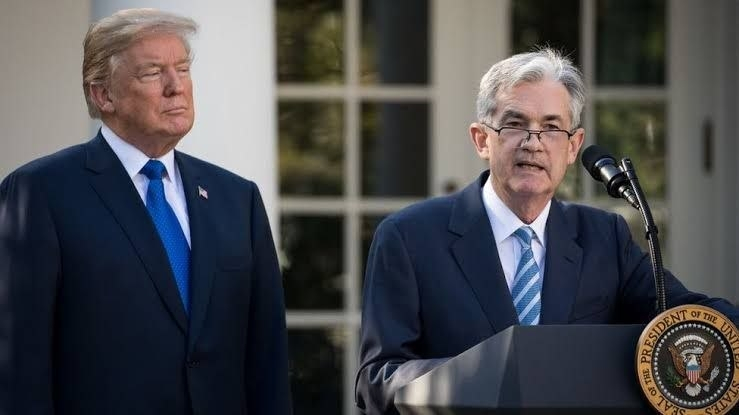
President Trump called former Fed Chair Jerome Powell “incompetent,” saying:
“A man that’s incompetent should not be sitting on the Federal Reserve Board.”
Trump has continued to criticize Powell over the Fed’s headquarters renovation and monetary policy.
#Trump #Fed #FederalReserve
“A man that’s incompetent should not be sitting on the Federal Reserve Board.”
Trump has continued to criticize Powell over the Fed’s headquarters renovation and monetary policy.
#Trump #Fed #FederalReserve
25
#greekpolicebustcryptoscamringarrest17
🚨 Crypto Scam Arrests: A Reminder For Every Trader
Reports of a crypto scam network being busted in Greece are another reminder that crypto security isn't optional.
The biggest risk isn't always market volatility.
Sometimes it's:
❌ Fake investment platforms
❌ Fake support accounts
❌ Unrealistic guaranteed returns
❌ Phishing links
❌ Fake wallet connections
A strong trading strategy means nothing if your funds aren't protected.
Before sending money or connecting your wallet:
✅ Verify the official website
✅ Check the account carefully
✅ Never share your seed phrase
✅ Don't trust guaranteed-profit promises
In crypto, security is part of the strategy. 🔐
$BTC $XAU $ETH
#greekpolicebustcryptoscamringarrest17
🚨 Crypto Scam Arrests: A Reminder For Every Trader
Reports of a crypto scam network being busted in Greece are another reminder that crypto security isn't optional.
The biggest risk isn't always market volatility.
Sometimes it's:
❌ Fake investment platforms
❌ Fake support accounts
❌ Unrealistic guaranteed returns
❌ Phishing links
❌ Fake wallet connections
A strong trading strategy means nothing if your funds aren't protected.
Before sending money or connecting your wallet:
✅ Verify the official website
✅ Check the account carefully
✅ Never share your seed phrase
✅ Don't trust guaranteed-profit promises
In crypto, security is part of the strategy. 🔐
$BTC $XAU $ETH
🚨 Crypto Scam Arrests: A Reminder For Every Trader
Reports of a crypto scam network being busted in Greece are another reminder that crypto security isn't optional.
The biggest risk isn't always market volatility.
Sometimes it's:
❌ Fake investment platforms
❌ Fake support accounts
❌ Unrealistic guaranteed returns
❌ Phishing links
❌ Fake wallet connections
A strong trading strategy means nothing if your funds aren't protected.
Before sending money or connecting your wallet:
✅ Verify the official website
✅ Check the account carefully
✅ Never share your seed phrase
✅ Don't trust guaranteed-profit promises
In crypto, security is part of the strategy. 🔐
$BTC $XAU $ETH
32
📉 Zcash ETF Sees Its First Weekly Outflow — What Does It Mean?
$ZEC is now facing its first notable weekly ETF outflow, putting investor flows back in focus.
But one week of outflows doesn't automatically define the long-term trend.
For traders, the important things to watch are:
🔹 ETF inflows vs outflows
🔹 Spot volume
🔹 $ZEC price reaction
🔹 Support holding after the news
🔹 Whether sellers continue pressing
Sometimes the market reacts to the headline first and the real trend appears later.
Don't trade the headline alone.
Watch the price + volume together. 📊
DYOR and manage your risk.
#ZcashETFPostsFirstWeeklyOutflow$93.6M
📉 Zcash ETF Sees Its First Weekly Outflow — What Does It Mean?
$ZEC is now facing its first notable weekly ETF outflow, putting investor flows back in focus.
But one week of outflows doesn't automatically define the long-term trend.
For traders, the important things to watch are:
🔹 ETF inflows vs outflows
🔹 Spot volume
🔹 $ZEC price reaction
🔹 Support holding after the news
🔹 Whether sellers continue pressing
Sometimes the market reacts to the headline first and the real trend appears later.
Don't trade the headline alone.
Watch the price + volume together. 📊
DYOR and manage your risk.
#ZcashETFPostsFirstWeeklyOutflow$93.6M
$ZEC is now facing its first notable weekly ETF outflow, putting investor flows back in focus.
But one week of outflows doesn't automatically define the long-term trend.
For traders, the important things to watch are:
🔹 ETF inflows vs outflows
🔹 Spot volume
🔹 $ZEC price reaction
🔹 Support holding after the news
🔹 Whether sellers continue pressing
Sometimes the market reacts to the headline first and the real trend appears later.
Don't trade the headline alone.
Watch the price + volume together. 📊
DYOR and manage your risk.
#ZcashETFPostsFirstWeeklyOutflow$93.6M
334
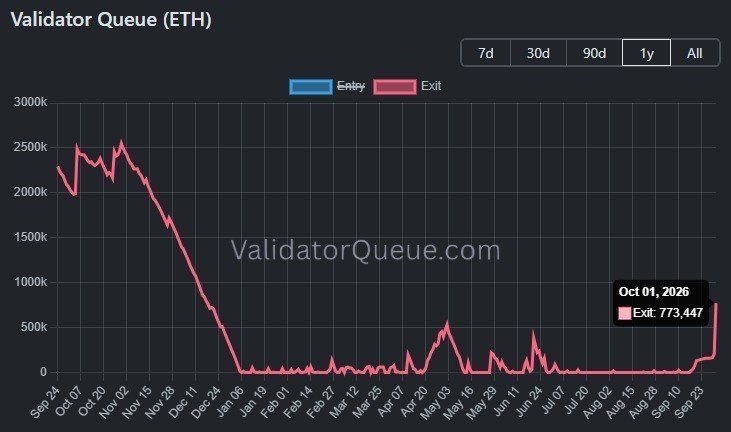
🚨 ETHEREUM’S EXIT QUEUE HAS HIT A 2026 HIGH
The Ethereum validator exit queue has climbed to approximately **773,447 ETH**.
That is the highest level recorded in 2026.
The estimated waiting time has also increased to nearly **two weeks**.
This means a large number of validators are trying to exit Ethereum staking at the same time.
Why does this matter?
A rising exit queue can signal:
• Reduced confidence among stakers
• Increased demand for liquidity
• Possible profit-taking
• Future ETH supply becoming available
• Short-term pressure on market sentiment
But there is an important distinction:
ETH in the exit queue is not the same as ETH being sold immediately.
Ethereum’s protocol limits how quickly validators can exit, which spreads withdrawals over time.
The key question is what happens next.
If new staking deposits remain strong, the exit queue may eventually normalize.
If exits continue rising while entry demand weakens, more ETH could gradually return to liquid markets.
That could create additional selling pressure.
Watch these metrics closely:
ETH exit queue
ETH entry queue
Staking participation
Exchange balances
ETH/BTC ratio
Ethereum ETF flows
Validator activity
The exit queue is not an automatic sell signal.
But a sudden increase in unstaking demand is a clear sentiment warning.
Ethereum’s next major move may depend on whether new stakers absorb the exits—or whether more supply reaches the market.
Aasim Majeed AMC
$ETH
{future}(ETHUSDT)
#Ethereum #ETH #Crypto #staking #DeFi
🚨 ETHEREUM’S EXIT QUEUE HAS HIT A 2026 HIGH
The Ethereum validator exit queue has climbed to approximately **773,447 ETH**.
That is the highest level recorded in 2026.
The estimated waiting time has also increased to nearly **two weeks**.
This means a large number of validators are trying to exit Ethereum staking at the same time.
Why does this matter?
A rising exit queue can signal:
• Reduced confidence among stakers
• Increased demand for liquidity
• Possible profit-taking
• Future ETH supply becoming available
• Short-term pressure on market sentiment
But there is an important distinction:
ETH in the exit queue is not the same as ETH being sold immediately.
Ethereum’s protocol limits how quickly validators can exit, which spreads withdrawals over time.
The key question is what happens next.
If new staking deposits remain strong, the exit queue may eventually normalize.
If exits continue rising while entry demand weakens, more ETH could gradually return to liquid markets.
That could create additional selling pressure.
Watch these metrics closely:
ETH exit queue
ETH entry queue
Staking participation
Exchange balances
ETH/BTC ratio
Ethereum ETF flows
Validator activity
The exit queue is not an automatic sell signal.
But a sudden increase in unstaking demand is a clear sentiment warning.
Ethereum’s next major move may depend on whether new stakers absorb the exits—or whether more supply reaches the market.
Aasim Majeed AMC
$ETH
#Ethereum #ETH #Crypto #staking #DeFi
The Ethereum validator exit queue has climbed to approximately **773,447 ETH**.
That is the highest level recorded in 2026.
The estimated waiting time has also increased to nearly **two weeks**.
This means a large number of validators are trying to exit Ethereum staking at the same time.
Why does this matter?
A rising exit queue can signal:
• Reduced confidence among stakers
• Increased demand for liquidity
• Possible profit-taking
• Future ETH supply becoming available
• Short-term pressure on market sentiment
But there is an important distinction:
ETH in the exit queue is not the same as ETH being sold immediately.
Ethereum’s protocol limits how quickly validators can exit, which spreads withdrawals over time.
The key question is what happens next.
If new staking deposits remain strong, the exit queue may eventually normalize.
If exits continue rising while entry demand weakens, more ETH could gradually return to liquid markets.
That could create additional selling pressure.
Watch these metrics closely:
ETH exit queue
ETH entry queue
Staking participation
Exchange balances
ETH/BTC ratio
Ethereum ETF flows
Validator activity
The exit queue is not an automatic sell signal.
But a sudden increase in unstaking demand is a clear sentiment warning.
Ethereum’s next major move may depend on whether new stakers absorb the exits—or whether more supply reaches the market.
Aasim Majeed AMC
$ETH
#Ethereum #ETH #Crypto #staking #DeFi
79
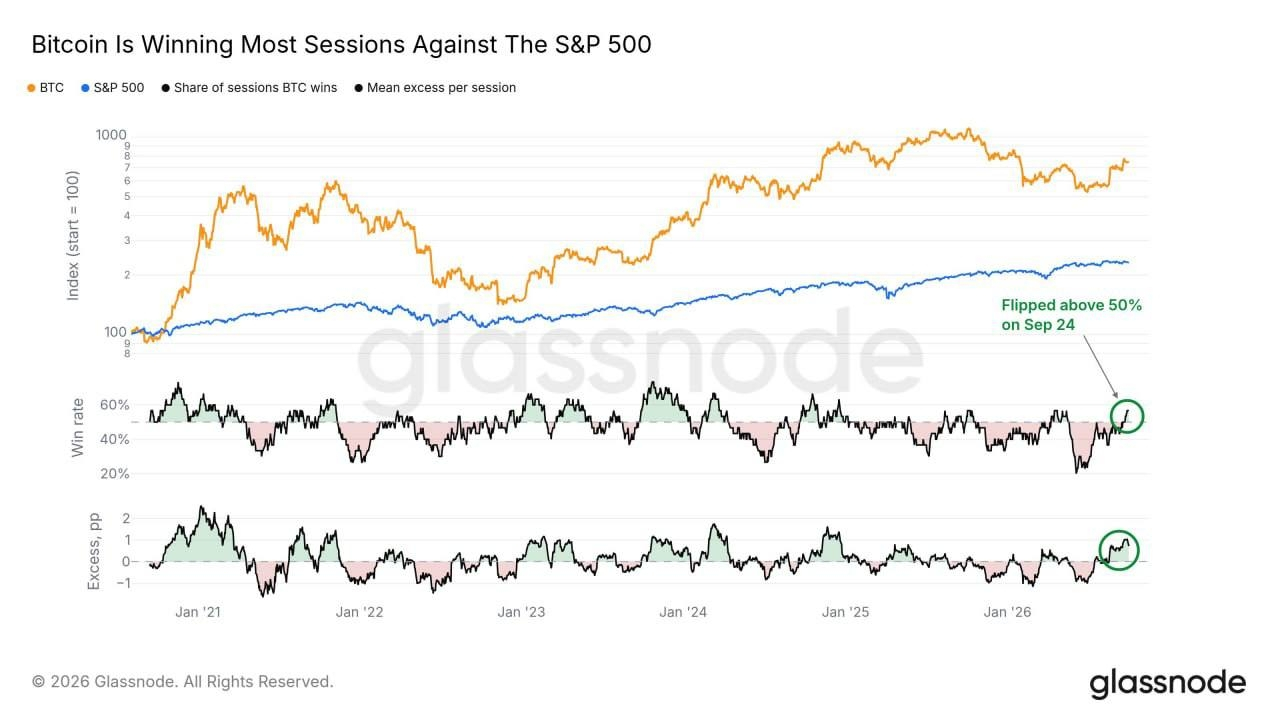
📈 Bitcoin’s relative strength is back.
In June, $BTC outperformed the S&P 500 on just 1 in 5 trading days — its weakest stretch in six years. Now, Bitcoin’s win rate has climbed back above 50% while stocks remain relatively flat.
👉 This suggests a renewed, more Bitcoin-specific demand rather than simply broader risk-on momentum
#FedOctoberRateHikeOddsFallTo17% #NvidiaHitsRecordHighUp2.4% #CanaryFilesAmendedS1ForPEPEETF #USRussiaUkraineTalksReportedlyIncludeLukoilOilDeal #CerebrasSinksNearly20%OnReportNvidiaToPowerOpenAI
{future}(BTCUSDT)
📈 Bitcoin’s relative strength is back.
In June, $BTC outperformed the S&P 500 on just 1 in 5 trading days — its weakest stretch in six years. Now, Bitcoin’s win rate has climbed back above 50% while stocks remain relatively flat.
👉 This suggests a renewed, more Bitcoin-specific demand rather than simply broader risk-on momentum
#FedOctoberRateHikeOddsFallTo17% #NvidiaHitsRecordHighUp2.4% #CanaryFilesAmendedS1ForPEPEETF #USRussiaUkraineTalksReportedlyIncludeLukoilOilDeal #CerebrasSinksNearly20%OnReportNvidiaToPowerOpenAI
In June, $BTC outperformed the S&P 500 on just 1 in 5 trading days — its weakest stretch in six years. Now, Bitcoin’s win rate has climbed back above 50% while stocks remain relatively flat.
👉 This suggests a renewed, more Bitcoin-specific demand rather than simply broader risk-on momentum
#FedOctoberRateHikeOddsFallTo17% #NvidiaHitsRecordHighUp2.4% #CanaryFilesAmendedS1ForPEPEETF #USRussiaUkraineTalksReportedlyIncludeLukoilOilDeal #CerebrasSinksNearly20%OnReportNvidiaToPowerOpenAI
49
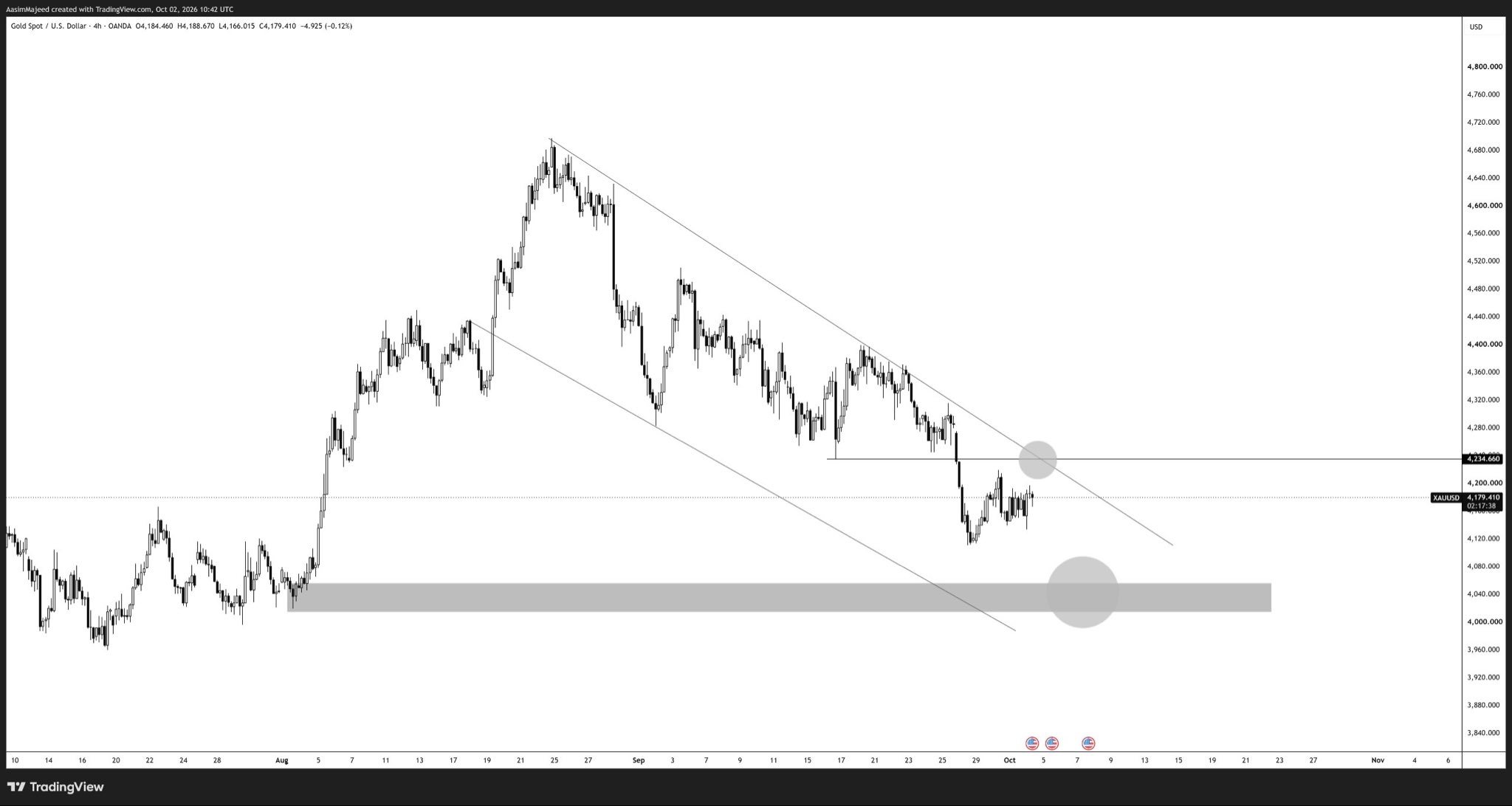
🚨 XAUUSD IS TRADING INSIDE A 4H DESCENDING CHANNEL
Gold is currently trading around $4,179 after facing rejection from higher levels.
The 4-hour chart shows a clear descending channel, with price still moving below the trendline resistance.
The key level to watch is around $4,234.
This area has acted as an important resistance level, and a clean 4H close above it could signal a change in short-term momentum.
Bullish scenario:
Gold reclaims $4,234 and breaks above the descending channel.
That could open the way toward the $4,280–$4,320 area.
Bearish scenario:
Price gets rejected below $4,234 and loses the recent support around $4,120.
That could expose the next major demand zone near $4,020–$4,060.
The current structure is still cautious.
Gold has strong long-term momentum, but the short-term chart remains under pressure until price breaks the channel.
Watch for:
• 4H close above $4,234
• Breakout from the descending channel
• Rejection near resistance
• Support around $4,120
• Demand zone near $4,020–$4,060
• US Dollar and Treasury yields
Do not chase the first candle.
Wait for confirmation from the level and the structure.
Aasim Majeed AMC
$XAU
{future}(XAUUSDT)
#Gold #XAUUSD #TechnicalAnalysis
This is chart analysis, not financial advice.
🚨 XAUUSD IS TRADING INSIDE A 4H DESCENDING CHANNEL
Gold is currently trading around $4,179 after facing rejection from higher levels.
The 4-hour chart shows a clear descending channel, with price still moving below the trendline resistance.
The key level to watch is around $4,234.
This area has acted as an important resistance level, and a clean 4H close above it could signal a change in short-term momentum.
Bullish scenario:
Gold reclaims $4,234 and breaks above the descending channel.
That could open the way toward the $4,280–$4,320 area.
Bearish scenario:
Price gets rejected below $4,234 and loses the recent support around $4,120.
That could expose the next major demand zone near $4,020–$4,060.
The current structure is still cautious.
Gold has strong long-term momentum, but the short-term chart remains under pressure until price breaks the channel.
Watch for:
• 4H close above $4,234
• Breakout from the descending channel
• Rejection near resistance
• Support around $4,120
• Demand zone near $4,020–$4,060
• US Dollar and Treasury yields
Do not chase the first candle.
Wait for confirmation from the level and the structure.
Aasim Majeed AMC
$XAU
#Gold #XAUUSD #TechnicalAnalysis
This is chart analysis, not financial advice.
Gold is currently trading around $4,179 after facing rejection from higher levels.
The 4-hour chart shows a clear descending channel, with price still moving below the trendline resistance.
The key level to watch is around $4,234.
This area has acted as an important resistance level, and a clean 4H close above it could signal a change in short-term momentum.
Bullish scenario:
Gold reclaims $4,234 and breaks above the descending channel.
That could open the way toward the $4,280–$4,320 area.
Bearish scenario:
Price gets rejected below $4,234 and loses the recent support around $4,120.
That could expose the next major demand zone near $4,020–$4,060.
The current structure is still cautious.
Gold has strong long-term momentum, but the short-term chart remains under pressure until price breaks the channel.
Watch for:
• 4H close above $4,234
• Breakout from the descending channel
• Rejection near resistance
• Support around $4,120
• Demand zone near $4,020–$4,060
• US Dollar and Treasury yields
Do not chase the first candle.
Wait for confirmation from the level and the structure.
Aasim Majeed AMC
$XAU
#Gold #XAUUSD #TechnicalAnalysis
This is chart analysis, not financial advice.
208
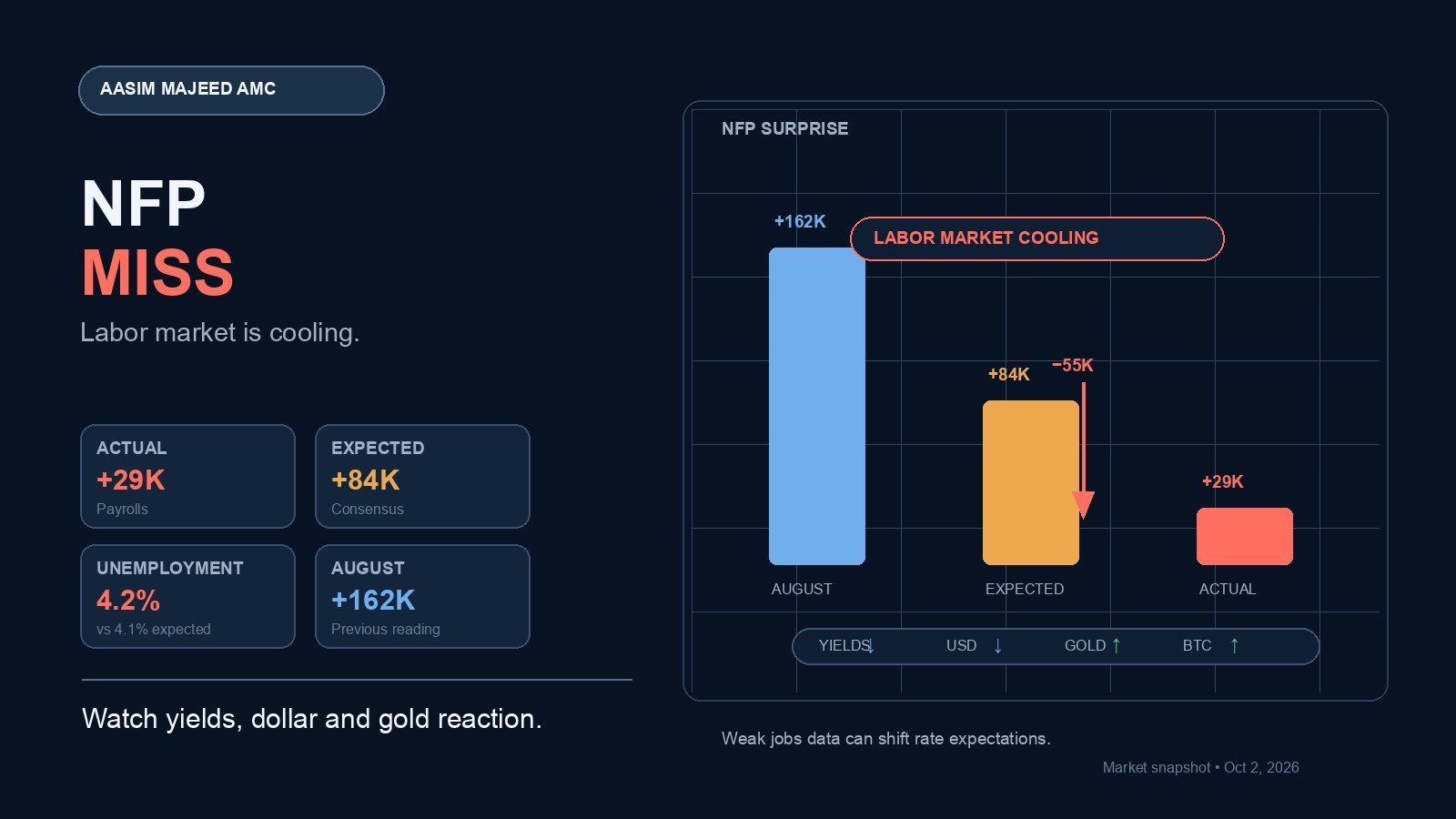
🚨 US NFP JUST MISSED — LABOR MARKET IS COOLING
The September US jobs report came in much weaker than expected.
Nonfarm payrolls:
Actual: +29K
Expected: +84K–90K
Unemployment rate:
Actual: 4.2%
Expected: 4.1%
August payrolls were previously reported at +162K.
This is a significant slowdown in job creation.
The first market reaction may favor a dovish repricing:
Lower Treasury yields
Weaker US Dollar
Higher gold
Higher Bitcoin
Support for rate-sensitive tech stocks
But the setup is not completely straightforward.
Weak jobs data can increase expectations for easier monetary policy.
At the same time, a sharp slowdown can raise concerns about recession risk.
The Federal Reserve is now facing a difficult balance:
The labor market is losing momentum.
But inflation and commodity prices remain elevated.
That means weak NFP alone does not guarantee an immediate policy pivot.
Watch these markets closely:
2Y Treasury yield
10Y Treasury yield
US Dollar Index
Gold
Bitcoin
Nasdaq
Oil
The most important question now is not only how many jobs were created.
Markets will also watch:
• Wage growth
• Previous-month revisions
• Labor-force participation
• Fed rate expectations
Do not trade the headline blindly.
Watch the yield reaction.
If yields fall and the dollar weakens, gold and crypto may benefit.
If yields fall because recession fears rise, risk assets may struggle later.
— Aasim Majeed AMC
#NFP #CerebrasSinksNearly20%OnReportNvidiaToPowerOpenAI #SECProposesCryptoCustodyRules #SECApproves3xLongCryptoCommodityETPs #G7PlansToReleaseUpTo100MBarrelsOilDiesel $AAPLB $ENS $ZEC
🚨 US NFP JUST MISSED — LABOR MARKET IS COOLING
The September US jobs report came in much weaker than expected.
Nonfarm payrolls:
Actual: +29K
Expected: +84K–90K
Unemployment rate:
Actual: 4.2%
Expected: 4.1%
August payrolls were previously reported at +162K.
This is a significant slowdown in job creation.
The first market reaction may favor a dovish repricing:
Lower Treasury yields
Weaker US Dollar
Higher gold
Higher Bitcoin
Support for rate-sensitive tech stocks
But the setup is not completely straightforward.
Weak jobs data can increase expectations for easier monetary policy.
At the same time, a sharp slowdown can raise concerns about recession risk.
The Federal Reserve is now facing a difficult balance:
The labor market is losing momentum.
But inflation and commodity prices remain elevated.
That means weak NFP alone does not guarantee an immediate policy pivot.
Watch these markets closely:
2Y Treasury yield
10Y Treasury yield
US Dollar Index
Gold
Bitcoin
Nasdaq
Oil
The most important question now is not only how many jobs were created.
Markets will also watch:
• Wage growth
• Previous-month revisions
• Labor-force participation
• Fed rate expectations
Do not trade the headline blindly.
Watch the yield reaction.
If yields fall and the dollar weakens, gold and crypto may benefit.
If yields fall because recession fears rise, risk assets may struggle later.
— Aasim Majeed AMC
#NFP #CerebrasSinksNearly20%OnReportNvidiaToPowerOpenAI #SECProposesCryptoCustodyRules #SECApproves3xLongCryptoCommodityETPs #G7PlansToReleaseUpTo100MBarrelsOilDiesel $AAPLB $ENS $ZEC
The September US jobs report came in much weaker than expected.
Nonfarm payrolls:
Actual: +29K
Expected: +84K–90K
Unemployment rate:
Actual: 4.2%
Expected: 4.1%
August payrolls were previously reported at +162K.
This is a significant slowdown in job creation.
The first market reaction may favor a dovish repricing:
Lower Treasury yields
Weaker US Dollar
Higher gold
Higher Bitcoin
Support for rate-sensitive tech stocks
But the setup is not completely straightforward.
Weak jobs data can increase expectations for easier monetary policy.
At the same time, a sharp slowdown can raise concerns about recession risk.
The Federal Reserve is now facing a difficult balance:
The labor market is losing momentum.
But inflation and commodity prices remain elevated.
That means weak NFP alone does not guarantee an immediate policy pivot.
Watch these markets closely:
2Y Treasury yield
10Y Treasury yield
US Dollar Index
Gold
Bitcoin
Nasdaq
Oil
The most important question now is not only how many jobs were created.
Markets will also watch:
• Wage growth
• Previous-month revisions
• Labor-force participation
• Fed rate expectations
Do not trade the headline blindly.
Watch the yield reaction.
If yields fall and the dollar weakens, gold and crypto may benefit.
If yields fall because recession fears rise, risk assets may struggle later.
— Aasim Majeed AMC
#NFP #CerebrasSinksNearly20%OnReportNvidiaToPowerOpenAI #SECProposesCryptoCustodyRules #SECApproves3xLongCryptoCommodityETPs #G7PlansToReleaseUpTo100MBarrelsOilDiesel $AAPLB $ENS $ZEC
1
283
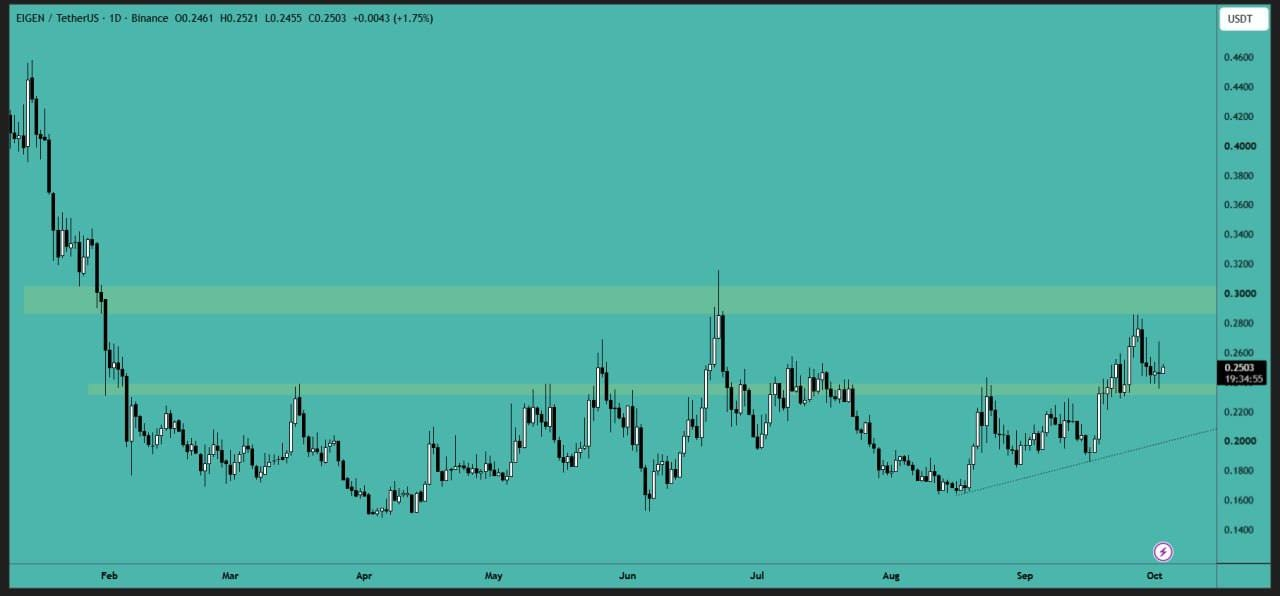
$EIGEN analysis:
Price is currently trading between the support and resistance levels. You can consider opening long positions near the support area with a tight stop-loss. A breakout above the $0.30 resistance level could lead to significant upward movement
#CerebrasSinksNearly20%OnReportNvidiaToPowerOpenAI #SECProposesCryptoCustodyRules #SECApproves3xLongCryptoCommodityETPs #G7PlansToReleaseUpTo100MBarrelsOilDiesel #ICBASuesOCCOverCryptoBankCharters
{future}(EIGENUSDT)
$EIGEN analysis:
Price is currently trading between the support and resistance levels. You can consider opening long positions near the support area with a tight stop-loss. A breakout above the $0.30 resistance level could lead to significant upward movement
#CerebrasSinksNearly20%OnReportNvidiaToPowerOpenAI #SECProposesCryptoCustodyRules #SECApproves3xLongCryptoCommodityETPs #G7PlansToReleaseUpTo100MBarrelsOilDiesel #ICBASuesOCCOverCryptoBankCharters
Price is currently trading between the support and resistance levels. You can consider opening long positions near the support area with a tight stop-loss. A breakout above the $0.30 resistance level could lead to significant upward movement
#CerebrasSinksNearly20%OnReportNvidiaToPowerOpenAI #SECProposesCryptoCustodyRules #SECApproves3xLongCryptoCommodityETPs #G7PlansToReleaseUpTo100MBarrelsOilDiesel #ICBASuesOCCOverCryptoBankCharters
1
122
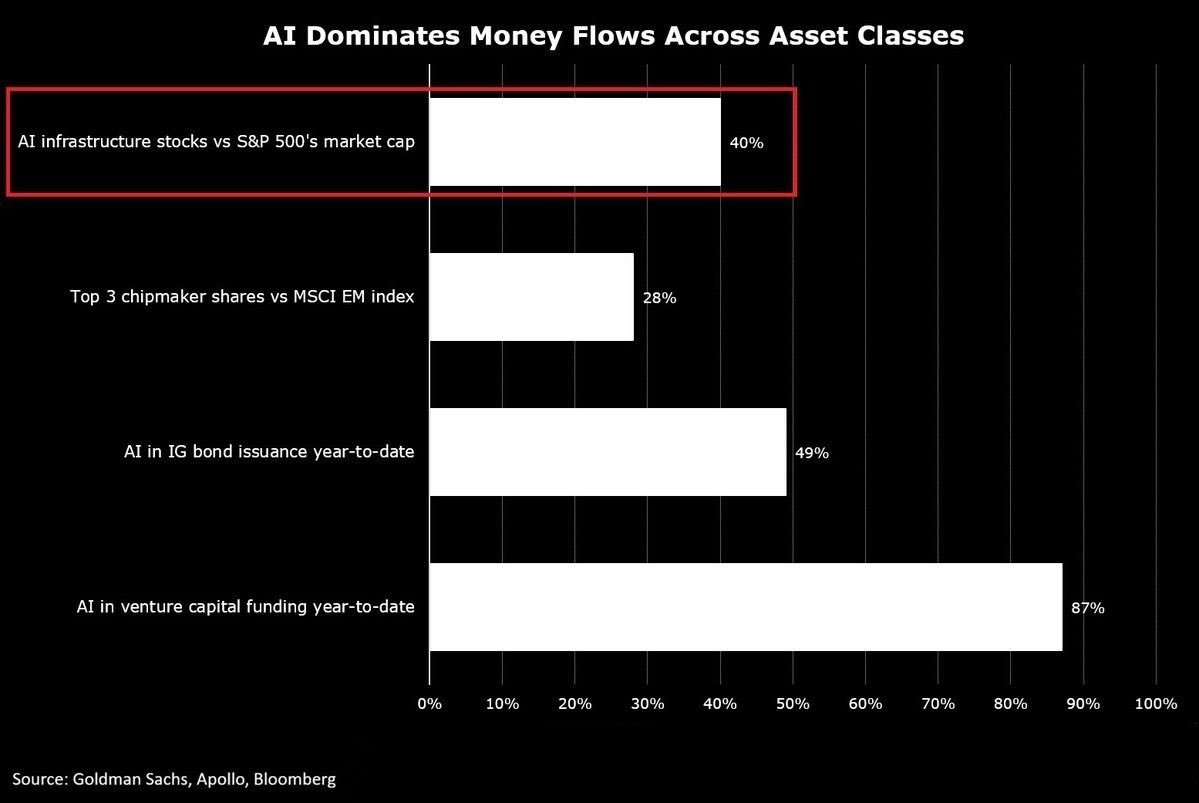
🚨 AI HAS BECOME THE MARKET
AI is no longer just a technology trade.
It is now influencing stocks, bonds, emerging markets and private capital.
The exposure is extraordinary:
• AI infrastructure companies represent 40% of the S&P 500’s market capitalization
• Just 3 chipmakers represent 28% of the MSCI Emerging Markets Index
• AI-related companies account for 49% of investment-grade bond issuance in 2026
• AI has captured 87% of venture capital funding year-to-date
For comparison, internet-related companies represented less than 40% of venture capital funding during the 1999 Dot-Com bubble.
This means the AI trade is now spread across multiple asset classes.
The opportunity is clear:
More infrastructure spending
Higher chip demand
Stronger data-center growth
Potential productivity gains
But the risk is also becoming larger.
If the AI cycle slows, investors may not be selling only technology stocks.
They may be selling:
• Equities
• Corporate bonds
• Emerging-market exposure
• Private-market investments
• AI infrastructure assets
The same theme is now embedded across the financial system.
That creates powerful momentum on the way up.
It can also create concentration risk on the way down.
The real question is not whether AI matters.
The real question is:
How much AI exposure does your portfolio already have without you realizing it?
Watch:
AI capex
Chip orders
Data-center demand
Power consumption
Corporate debt issuance
Credit spreads
Private-market valuations
AI has become the market.
That creates opportunity but also vulnerability.
— Aasim Majeed AMC
$NVDAB $XAU $BTC
#AI #Markets #Stocks #Bonds #Investing
🚨 AI HAS BECOME THE MARKET
AI is no longer just a technology trade.
It is now influencing stocks, bonds, emerging markets and private capital.
The exposure is extraordinary:
• AI infrastructure companies represent 40% of the S&P 500’s market capitalization
• Just 3 chipmakers represent 28% of the MSCI Emerging Markets Index
• AI-related companies account for 49% of investment-grade bond issuance in 2026
• AI has captured 87% of venture capital funding year-to-date
For comparison, internet-related companies represented less than 40% of venture capital funding during the 1999 Dot-Com bubble.
This means the AI trade is now spread across multiple asset classes.
The opportunity is clear:
More infrastructure spending
Higher chip demand
Stronger data-center growth
Potential productivity gains
But the risk is also becoming larger.
If the AI cycle slows, investors may not be selling only technology stocks.
They may be selling:
• Equities
• Corporate bonds
• Emerging-market exposure
• Private-market investments
• AI infrastructure assets
The same theme is now embedded across the financial system.
That creates powerful momentum on the way up.
It can also create concentration risk on the way down.
The real question is not whether AI matters.
The real question is:
How much AI exposure does your portfolio already have without you realizing it?
Watch:
AI capex
Chip orders
Data-center demand
Power consumption
Corporate debt issuance
Credit spreads
Private-market valuations
AI has become the market.
That creates opportunity but also vulnerability.
— Aasim Majeed AMC
$NVDAB $XAU $BTC
#AI #Markets #Stocks #Bonds #Investing
AI is no longer just a technology trade.
It is now influencing stocks, bonds, emerging markets and private capital.
The exposure is extraordinary:
• AI infrastructure companies represent 40% of the S&P 500’s market capitalization
• Just 3 chipmakers represent 28% of the MSCI Emerging Markets Index
• AI-related companies account for 49% of investment-grade bond issuance in 2026
• AI has captured 87% of venture capital funding year-to-date
For comparison, internet-related companies represented less than 40% of venture capital funding during the 1999 Dot-Com bubble.
This means the AI trade is now spread across multiple asset classes.
The opportunity is clear:
More infrastructure spending
Higher chip demand
Stronger data-center growth
Potential productivity gains
But the risk is also becoming larger.
If the AI cycle slows, investors may not be selling only technology stocks.
They may be selling:
• Equities
• Corporate bonds
• Emerging-market exposure
• Private-market investments
• AI infrastructure assets
The same theme is now embedded across the financial system.
That creates powerful momentum on the way up.
It can also create concentration risk on the way down.
The real question is not whether AI matters.
The real question is:
How much AI exposure does your portfolio already have without you realizing it?
Watch:
AI capex
Chip orders
Data-center demand
Power consumption
Corporate debt issuance
Credit spreads
Private-market valuations
AI has become the market.
That creates opportunity but also vulnerability.
— Aasim Majeed AMC
$NVDAB $XAU $BTC
#AI #Markets #Stocks #Bonds #Investing
1
271
Log in to explore more content
Join global crypto users on Binance Square
⚡️ Get latest and useful information about crypto.
💬 Trusted by the world’s largest crypto exchange.
👍 Discover real insights from verified creators.
Email / Phone number