
Crypto Paws
613 Posts
Crypto Paws
Report
Block User
Exploring crypto, sharing insights, and following every market move. One paw at a time.
274 Following
1.4K+ Followers
324 Liked
Posts
All
Quotes
Live
·
--
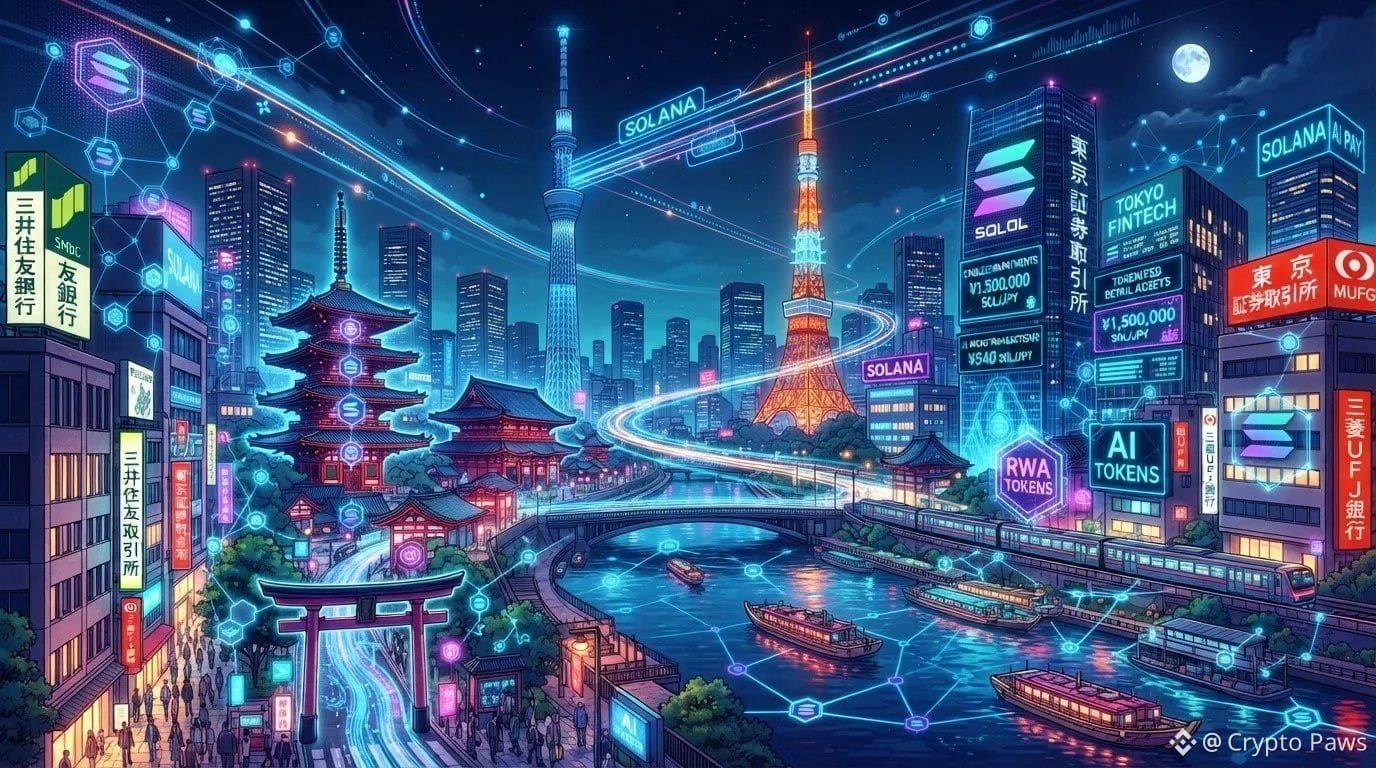
Japan Is Bringing Traditional Finance On-Chain — And Solana Is Part of the Plan!
A major development for the crypto industry: SBI Solana Global has officially commenced full-scale operations in Japan, bringing together three major players: SBI Holdings, Sumitomo Mitsui Financial Group (SMBC), and the Solana Foundation.
Announced on November 25, 2026, the initiative aims to connect Japan's traditional financial infrastructure with Solana's blockchain ecosystem.
The company will focus on four key areas:
🔹 Stablecoin Payments: Building domestic and cross-border payment infrastructure.
🔹 Tokenized Financial Assets: Bringing bonds, investment funds, and loan receivables on-chain.
🔹 Real-World Asset Tokenization: Connecting real-world assets with blockchain technology.
🔹 On-Chain Asset Management:
Exploring new financial services powered by stablecoins and tokenized assets.
What's particularly interesting is the AI agent economy. SBI Solana Global also plans to support emerging payment use cases, including micropayments made by AI agents.
The bigger vision is to establish Japan as a major on-chain financial hub and eventually expand across Asia and global markets.
This is more than another blockchain partnership. It's a potential bridge between traditional banking and the future of digital finance.
Could institutional adoption become one of Solana's biggest growth drivers?
$INIT
{future}(INITUSDT)
$SKY
{future}(SKYUSDT)
$AKE
{future}(AKEUSDT)
#BitcoinAndStocksSlipAgainAmidTrump’sTariffPlans
#ZcashDevelopersUrgeZECMoveToIronwood
#EvolveAtBinanceBlockchainWeek
Japan Is Bringing Traditional Finance On-Chain — And Solana Is Part of the Plan!
A major development for the crypto industry: SBI Solana Global has officially commenced full-scale operations in Japan, bringing together three major players: SBI Holdings, Sumitomo Mitsui Financial Group (SMBC), and the Solana Foundation.
Announced on November 25, 2026, the initiative aims to connect Japan's traditional financial infrastructure with Solana's blockchain ecosystem.
The company will focus on four key areas:
🔹 Stablecoin Payments: Building domestic and cross-border payment infrastructure.
🔹 Tokenized Financial Assets: Bringing bonds, investment funds, and loan receivables on-chain.
🔹 Real-World Asset Tokenization: Connecting real-world assets with blockchain technology.
🔹 On-Chain Asset Management:
Exploring new financial services powered by stablecoins and tokenized assets.
What's particularly interesting is the AI agent economy. SBI Solana Global also plans to support emerging payment use cases, including micropayments made by AI agents.
The bigger vision is to establish Japan as a major on-chain financial hub and eventually expand across Asia and global markets.
This is more than another blockchain partnership. It's a potential bridge between traditional banking and the future of digital finance.
Could institutional adoption become one of Solana's biggest growth drivers?
$INIT
$SKY
$AKE
#BitcoinAndStocksSlipAgainAmidTrump’sTariffPlans
#ZcashDevelopersUrgeZECMoveToIronwood
#EvolveAtBinanceBlockchainWeek
1
99
·
--
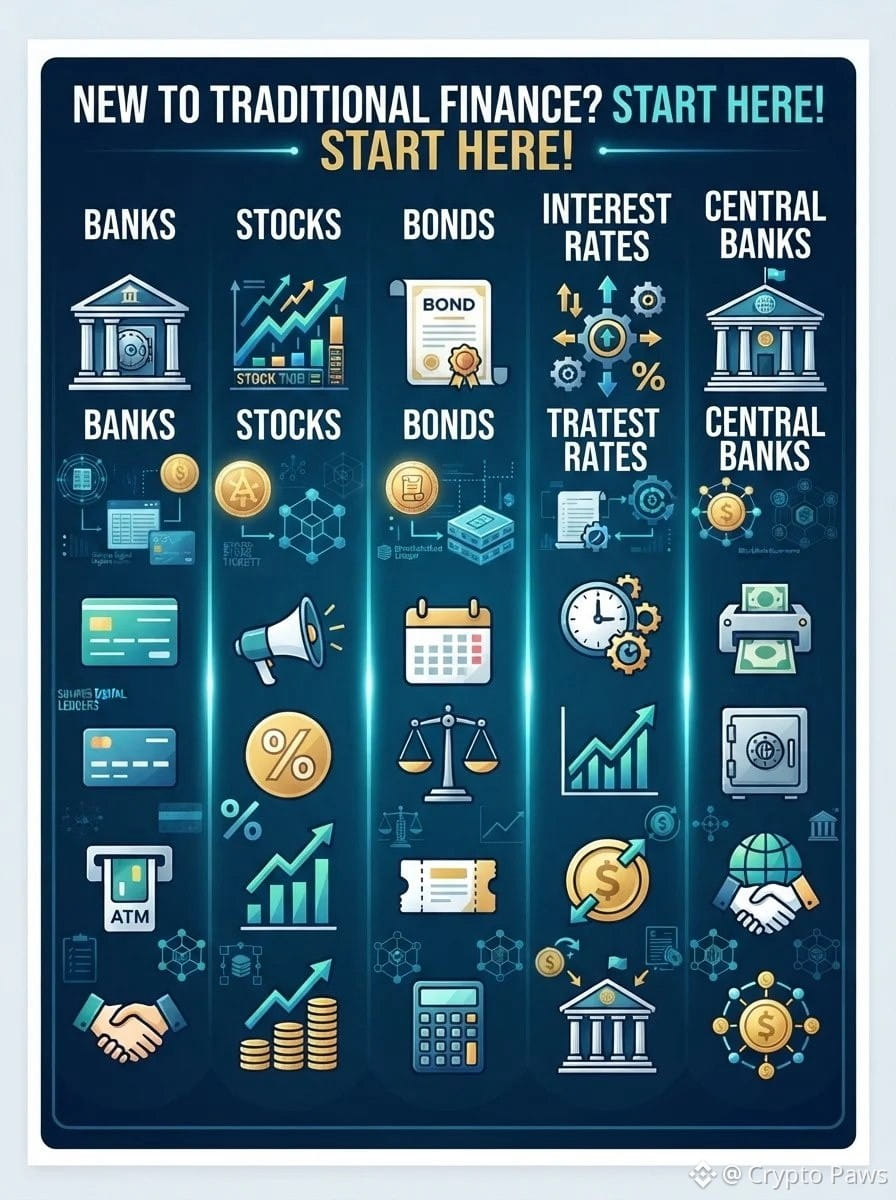
NEW TO TRADITIONAL FINANCE? START HERE!
Before exploring crypto, it's worth understanding how Traditional Finance (TradFi) actually works.
TradFi is the financial system most people already know. It includes banks, stock markets, insurance companies, central banks, and other established financial institutions.
Here are 5 key concepts every beginner should understand:
🔹 Banks: Institutions that manage deposits, loans, and payments.
🔹 Stocks: Ownership shares in publicly traded companies.
🔹 Bonds: Financial instruments through which governments or companies borrow money from investors.
🔹 Interest Rates: The cost of borrowing money and the reward for saving it.
🔹 Central Banks: Institutions that influence monetary policy, inflation, and economic stability.
But here's what makes TradFi interesting: it's gradually evolving.
Technology is bringing traditional financial products closer to blockchain, tokenization, and digital assets. The boundary between TradFi and DeFi may become less clear in the coming years.
Understanding traditional finance is not just for beginners. It's essential for understanding where the future of money is heading.
💬 What's the first financial concept you think every beginner should learn? $SSV
{future}(SSVUSDT)
$MOVE
{future}(MOVEUSDT)
$MMT
{future}(MMTUSDT)
NEW TO TRADITIONAL FINANCE? START HERE!
Before exploring crypto, it's worth understanding how Traditional Finance (TradFi) actually works.
TradFi is the financial system most people already know. It includes banks, stock markets, insurance companies, central banks, and other established financial institutions.
Here are 5 key concepts every beginner should understand:
🔹 Banks: Institutions that manage deposits, loans, and payments.
🔹 Stocks: Ownership shares in publicly traded companies.
🔹 Bonds: Financial instruments through which governments or companies borrow money from investors.
🔹 Interest Rates: The cost of borrowing money and the reward for saving it.
🔹 Central Banks: Institutions that influence monetary policy, inflation, and economic stability.
But here's what makes TradFi interesting: it's gradually evolving.
Technology is bringing traditional financial products closer to blockchain, tokenization, and digital assets. The boundary between TradFi and DeFi may become less clear in the coming years.
Understanding traditional finance is not just for beginners. It's essential for understanding where the future of money is heading.
💬 What's the first financial concept you think every beginner should learn? $SSV
$MOVE
$MMT
1
134
·
--
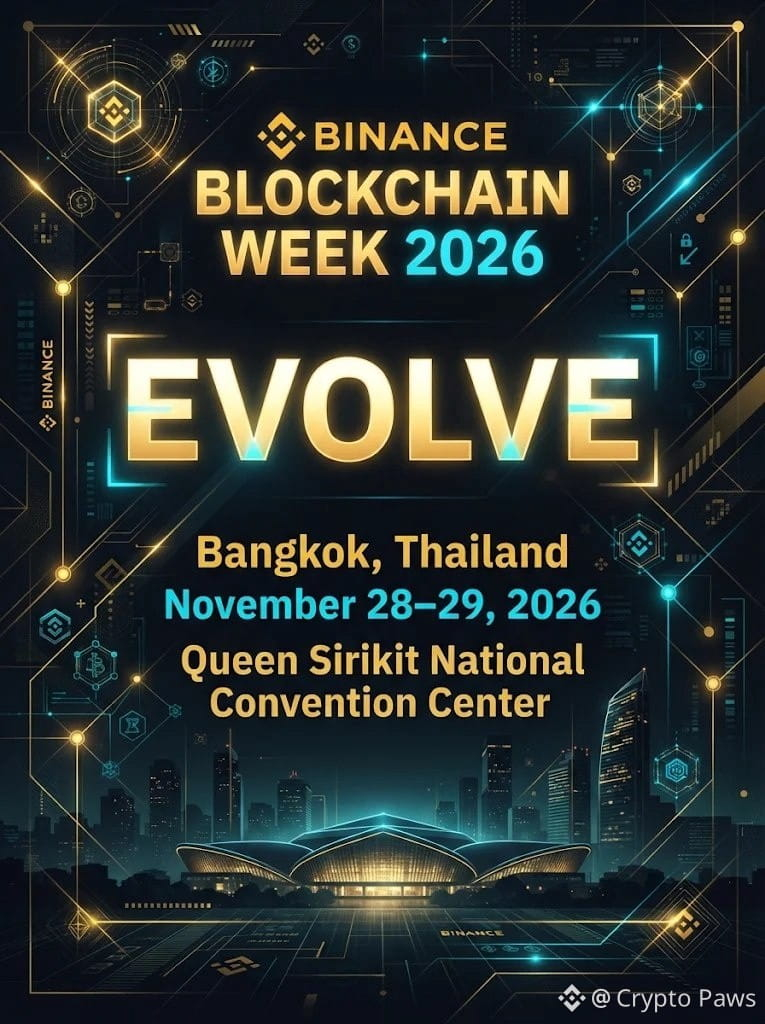
BINANCE BLOCKCHAIN WEEK 2026 IS ALMOST HERE — THE FUTURE OF FINANCE IS EVOLVING!
The global crypto community is getting ready for one of the biggest blockchain events of the year.
📍 Bangkok, Thailand
📅 November 28–29, 2026
🏛️ Queen Sirikit National Convention Center
This year's theme is EVOLVE, and the agenda goes far beyond cryptocurrency trading.
🔥 Here are 4 major topics to watch:
🏦 1. Institutional Adoption: Leaders from BlackRock, Nasdaq, Visa and Franklin Templeton will explore how traditional finance is moving on-chain.
🤖 2. AI-Powered Finance: Can AI agents eventually manage payments, execute trades and make financial decisions?
🌐 3. Tokenization & RWA: Could stocks, financial products and real-world assets become accessible through blockchain?
💵 4. Stablecoin Revolution: Are stablecoins becoming the next generation of global payment infrastructure?
The speaker lineup also includes CZ, Arthur Hayes, Richard Teng and Yi He.
One thing stands out: Blockchain is no longer just about digital currencies. It's increasingly becoming part of the infrastructure behind global finance.
The real question is: Which technology will shape the next generation of finance — AI, tokenization, or stablecoins?
$ACE
{future}(ACEUSDT)
$ONE
{future}(ONEUSDT)
$ONDO
{future}(ONDOUSDT)
#EvolveAtBinanceBlockchainWeek
#WillMarketsStageAThanksgivingReliefRally? #TradFiForBeginners
BINANCE BLOCKCHAIN WEEK 2026 IS ALMOST HERE — THE FUTURE OF FINANCE IS EVOLVING!
The global crypto community is getting ready for one of the biggest blockchain events of the year.
📍 Bangkok, Thailand
📅 November 28–29, 2026
🏛️ Queen Sirikit National Convention Center
This year's theme is EVOLVE, and the agenda goes far beyond cryptocurrency trading.
🔥 Here are 4 major topics to watch:
🏦 1. Institutional Adoption: Leaders from BlackRock, Nasdaq, Visa and Franklin Templeton will explore how traditional finance is moving on-chain.
🤖 2. AI-Powered Finance: Can AI agents eventually manage payments, execute trades and make financial decisions?
🌐 3. Tokenization & RWA: Could stocks, financial products and real-world assets become accessible through blockchain?
💵 4. Stablecoin Revolution: Are stablecoins becoming the next generation of global payment infrastructure?
The speaker lineup also includes CZ, Arthur Hayes, Richard Teng and Yi He.
One thing stands out: Blockchain is no longer just about digital currencies. It's increasingly becoming part of the infrastructure behind global finance.
The real question is: Which technology will shape the next generation of finance — AI, tokenization, or stablecoins?
$ACE
$ONE
$ONDO
#EvolveAtBinanceBlockchainWeek
#WillMarketsStageAThanksgivingReliefRally? #TradFiForBeginners
779
·
--
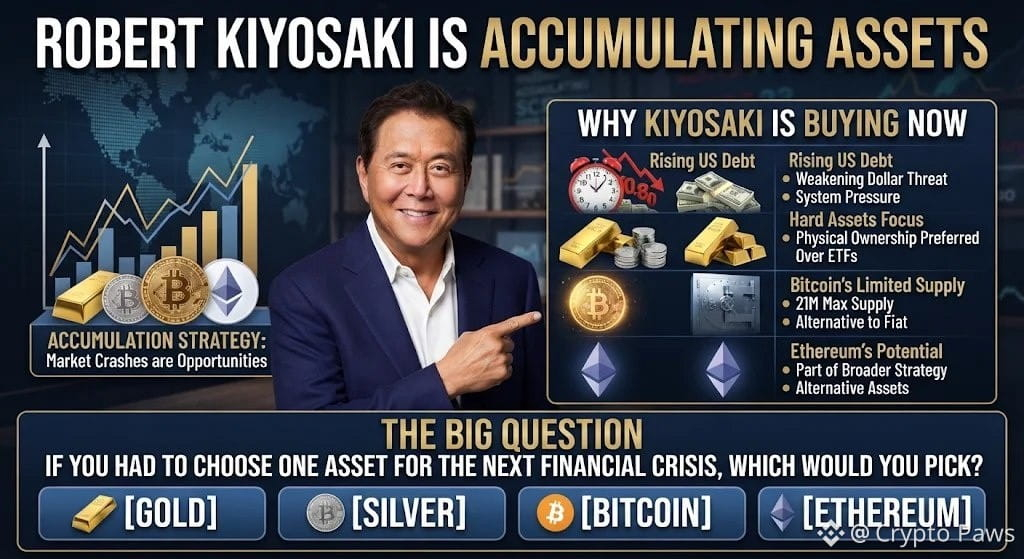
ROBERT KIYOSAKI IS BUYING BTC, ETH, GOLD & SILVER — HERE'S WHY!
While financial markets struggle with uncertainty, Robert Kiyosaki is looking beyond short-term price movements.
The author of Rich Dad Poor Dad says he is accumulating more physical gold, silver, Bitcoin and Ethereum, alongside real estate and oil.
But what's driving this strategy?
💰 1. Rising US Debt: Kiyosaki believes growing government debt could weaken the dollar and put pressure on the global financial system.
🥇 2. Hard Assets: He prefers physical gold and silver over ETFs, focusing on assets he can directly own.
₿ 3. Bitcoin's Limited Supply: With a maximum supply of 21 million BTC, he believes Bitcoin offers an alternative to traditional fiat currencies.
⟠ 4. Ethereum's Potential: ETH is also part of his broader strategy to hold alternative assets.
Interestingly, he has also advised investors not to rush into Bitcoin during a sharp decline, saying he wants to wait for the market bottom.
His message is clear: he sees market crashes as potential opportunities, not just threats.
🔥 THE BIG QUESTION: If you had to choose one asset for the next financial crisis, which would you pick?
$BTC
{spot}(BTCUSDT)
$ETH
{spot}(ETHUSDT)
$XAU
{future}(XAUUSDT)
#Kiyosaki
ROBERT KIYOSAKI IS BUYING BTC, ETH, GOLD & SILVER — HERE'S WHY!
While financial markets struggle with uncertainty, Robert Kiyosaki is looking beyond short-term price movements.
The author of Rich Dad Poor Dad says he is accumulating more physical gold, silver, Bitcoin and Ethereum, alongside real estate and oil.
But what's driving this strategy?
💰 1. Rising US Debt: Kiyosaki believes growing government debt could weaken the dollar and put pressure on the global financial system.
🥇 2. Hard Assets: He prefers physical gold and silver over ETFs, focusing on assets he can directly own.
₿ 3. Bitcoin's Limited Supply: With a maximum supply of 21 million BTC, he believes Bitcoin offers an alternative to traditional fiat currencies.
⟠ 4. Ethereum's Potential: ETH is also part of his broader strategy to hold alternative assets.
Interestingly, he has also advised investors not to rush into Bitcoin during a sharp decline, saying he wants to wait for the market bottom.
His message is clear: he sees market crashes as potential opportunities, not just threats.
🔥 THE BIG QUESTION: If you had to choose one asset for the next financial crisis, which would you pick?
$BTC
$ETH
$XAU
#Kiyosaki
289


·
--
🚨 THANKSGIVING RELIEF RALLY: IS CRYPTO FINALLY GETTING A Break?
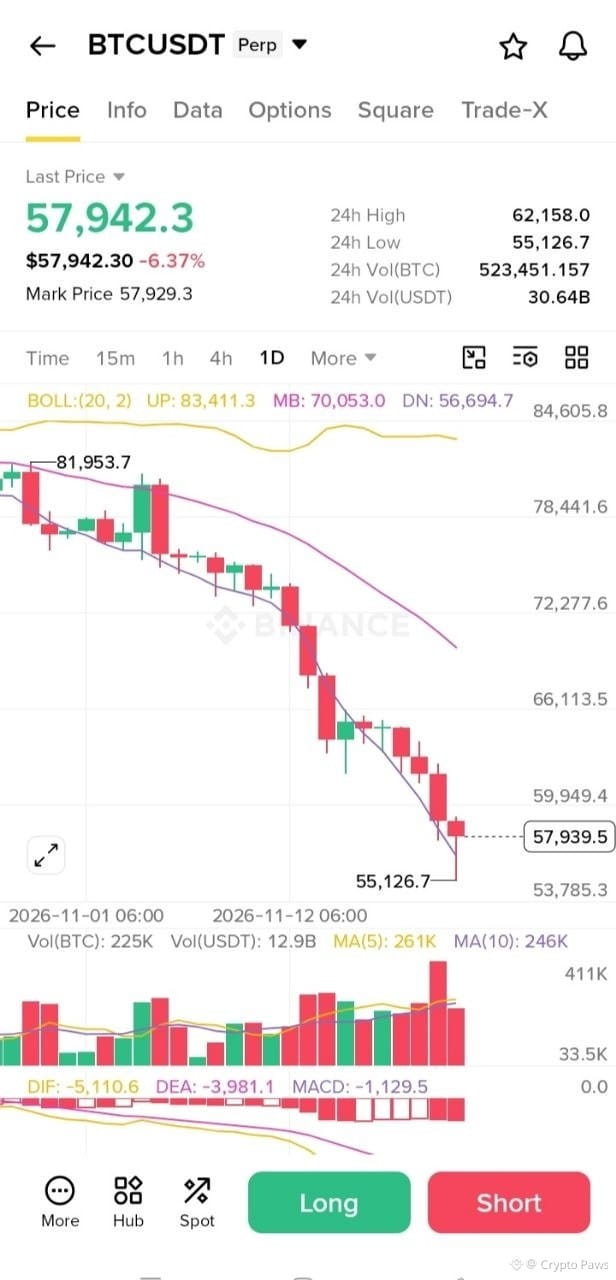
After weeks of heavy selling, the crypto market is showing signs of recovery. Bitcoin bounced sharply from around $55,000, briefly reclaiming the $60,000 level and bringing fresh optimism back to the market.
But is this the beginning of a real comeback?
Thanksgiving week could bring an important turning point. Here are three things traders should watch:
📊 1. US Economic Data: Wednesday's PCE inflation report could influence expectations for the Fed's next move.
💰 2. Market Liquidity: US stock markets will close Thursday for Thanksgiving. Lower participation could make crypto price movements more unpredictable.
🐂 3. Bitcoin Recovery: BTC needs sustained buying pressure and stronger market confidence to turn a temporary bounce into a meaningful recovery.
One green weekend doesn't erase weeks of bearish pressure. The real test is whether buyers can maintain momentum.
So, will Thanksgiving bring a relief rally, or is another correction waiting?
$AKE
{future}(AKEUSDT)
$BEAT
{future}(BEATUSDT)
$ARIA
{future}(ARIAUSDT)
#WillMarketsStageAThanksgivingReliefRally? #PreciousMetals
Will crypto stage a Thanksgiving relief rally?
🚨 THANKSGIVING RELIEF RALLY: IS CRYPTO FINALLY GETTING A Break?
After weeks of heavy selling, the crypto market is showing signs of recovery. Bitcoin bounced sharply from around $55,000, briefly reclaiming the $60,000 level and bringing fresh optimism back to the market.
But is this the beginning of a real comeback?
Thanksgiving week could bring an important turning point. Here are three things traders should watch:
📊 1. US Economic Data: Wednesday's PCE inflation report could influence expectations for the Fed's next move.
💰 2. Market Liquidity: US stock markets will close Thursday for Thanksgiving. Lower participation could make crypto price movements more unpredictable.
🐂 3. Bitcoin Recovery: BTC needs sustained buying pressure and stronger market confidence to turn a temporary bounce into a meaningful recovery.
One green weekend doesn't erase weeks of bearish pressure. The real test is whether buyers can maintain momentum.
So, will Thanksgiving bring a relief rally, or is another correction waiting?
$AKE
$BEAT
$ARIA
#WillMarketsStageAThanksgivingReliefRally? #PreciousMetals
Will crypto stage a Thanksgiving relief rally?
Bullish – Relief rally 📈
68%
Bearish – More downside 📉
27%
Neutral – Sideways market
5%
41 votes • Voting closed
3.9k
·
--
What a tragedy 🤪🙄😭😫
$SOXL
{future}(SOXLUSDT)
$SOXS
{future}(SOXSUSDT)
$PIEVERSE
{future}(PIEVERSEUSDT)
What a tragedy 🤪🙄😭😫
$SOXL
$SOXS
$PIEVERSE
$SOXL
$SOXS
$PIEVERSE
338
2
14
527
·
--
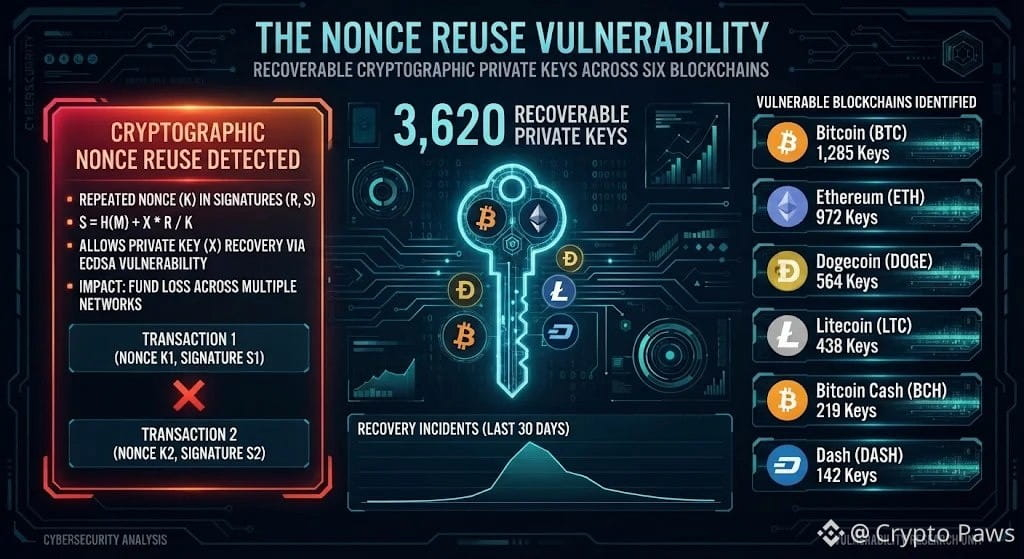
3,620 Private Keys Recovered Across Six Blockchains
A University of Liège study revealed a critical flaw in how some crypto wallets generate digital signatures—exposing 3,620 recoverable private keys across Bitcoin (~3,278), Ethereum, Dogecoin, Litecoin, Bitcoin Cash, and Dash. Automated bots targeted exposed test wallets within seconds.
How Nonce Reuse Exposes Keys Signing a transaction requires a unique secret number called a nonce. If wallet software reuses the same nonce with the same private key across two signatures, anyone observing the public data can mathematically solve for the private key itself.
Context & Takeaway Recoverable keys do not mean every affected wallet was drained or the underlying blockchains failed. Still, it is a sharp reminder: even rock-solid networks cannot save users from flawed signing software.
Would you trust a wallet with serious funds if you could not verify its signature security?
$PIEVERSE
{future}(PIEVERSEUSDT)
$MMT
{future}(MMTUSDT)
$ENSO
{future}(ENSOUSDT)
#CanBTCReboundAfterFallingBelow60K?
#GlobalStocksFaceLongestLosingStreakSince2023
#AnthropicPlungesTowardIPOPriceonDay2
#TwentyOneCapitalAdds172.25BTC
3,620 Private Keys Recovered Across Six Blockchains
A University of Liège study revealed a critical flaw in how some crypto wallets generate digital signatures—exposing 3,620 recoverable private keys across Bitcoin (~3,278), Ethereum, Dogecoin, Litecoin, Bitcoin Cash, and Dash. Automated bots targeted exposed test wallets within seconds.
How Nonce Reuse Exposes Keys Signing a transaction requires a unique secret number called a nonce. If wallet software reuses the same nonce with the same private key across two signatures, anyone observing the public data can mathematically solve for the private key itself.
Context & Takeaway Recoverable keys do not mean every affected wallet was drained or the underlying blockchains failed. Still, it is a sharp reminder: even rock-solid networks cannot save users from flawed signing software.
Would you trust a wallet with serious funds if you could not verify its signature security?
$PIEVERSE
$MMT
$ENSO
#CanBTCReboundAfterFallingBelow60K?
#GlobalStocksFaceLongestLosingStreakSince2023
#AnthropicPlungesTowardIPOPriceonDay2
#TwentyOneCapitalAdds172.25BTC
1
398
·
--
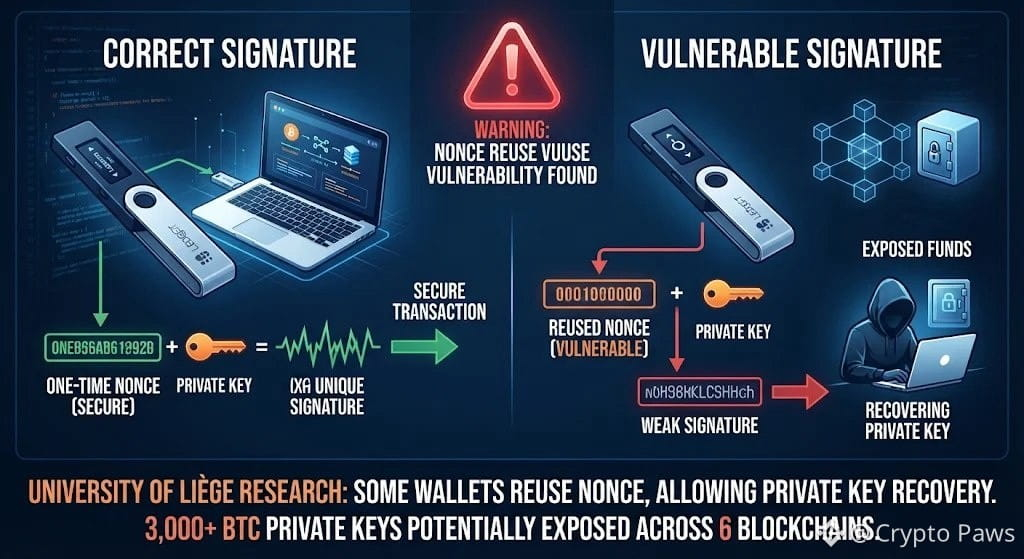
YOUR BITCOIN MAY BE SAFE—BUT IS YOUR WALLET SIGNING IT RIGHT?
University of Liège researchers found that some wallets reused a one-time number called a "nonce" when signing transactions.
Reusing a nonce with the same private key lets attackers mathematically recover the private key.
Key findings:
🔴 3,620 private keys recovered across 6 blockchains (3,278 on Bitcoin).
🔴 Vulnerable test wallets drew automated attackers within seconds.
🔴 Affected addresses held ~$106M in combined historical peak balances—an estimated exposure, not confirmed stolen funds.
The takeaway: security isn't just about protecting your seed phrase or picking a trusted chain; the software generating your signatures matters just as much.
Cryptography only works as well as its implementation.
Do you trust your wallet's security completely, or do you see wallet software as one of crypto's biggest hidden risks?
$SOXL
{future}(SOXLUSDT)
$SOXS
{future}(SOXSUSDT)
$EVAA
{future}(EVAAUSDT)
YOUR BITCOIN MAY BE SAFE—BUT IS YOUR WALLET SIGNING IT RIGHT?
University of Liège researchers found that some wallets reused a one-time number called a "nonce" when signing transactions.
Reusing a nonce with the same private key lets attackers mathematically recover the private key.
Key findings:
🔴 3,620 private keys recovered across 6 blockchains (3,278 on Bitcoin).
🔴 Vulnerable test wallets drew automated attackers within seconds.
🔴 Affected addresses held ~$106M in combined historical peak balances—an estimated exposure, not confirmed stolen funds.
The takeaway: security isn't just about protecting your seed phrase or picking a trusted chain; the software generating your signatures matters just as much.
Cryptography only works as well as its implementation.
Do you trust your wallet's security completely, or do you see wallet software as one of crypto's biggest hidden risks?
$SOXL
$SOXS
$EVAA
1
154
·
--
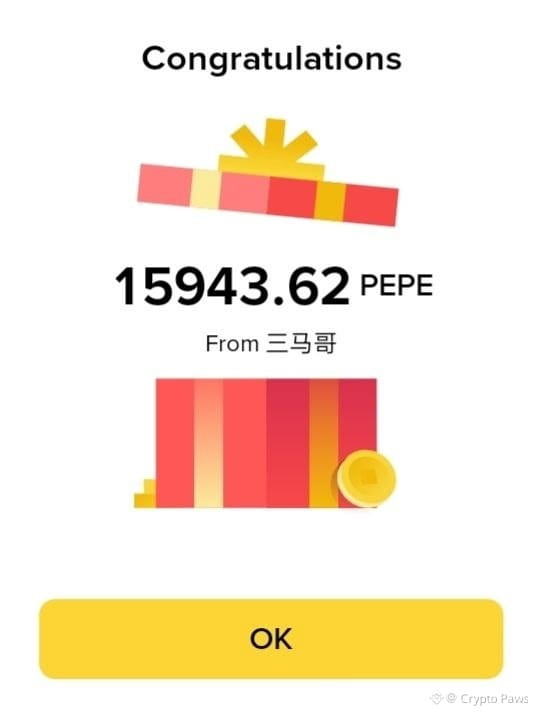
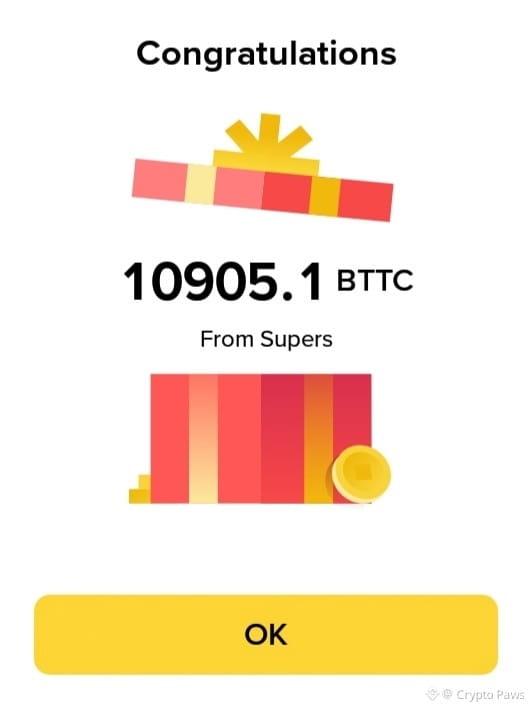
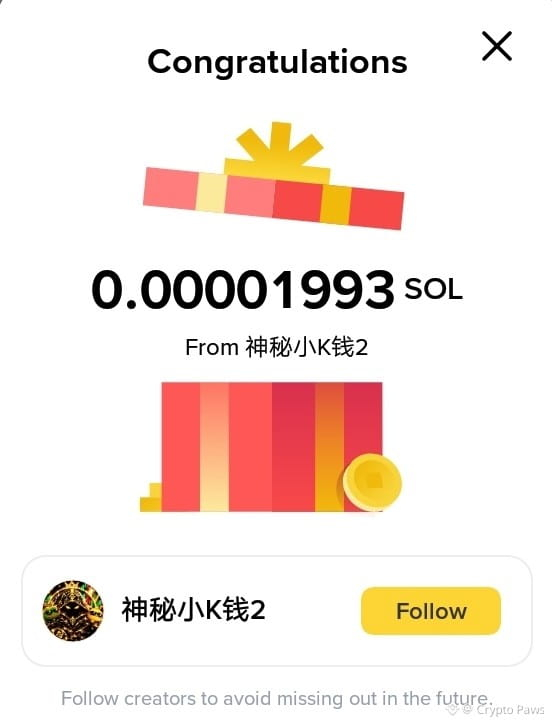
Yes! Yes! Yes!
Just claim some big red packets💪💪
Did you get them?
$PEPE
{spot}(PEPEUSDT)
$SOL
{spot}(SOLUSDT)
$BTTC
{spot}(BTTCUSDT)
Yes! Yes! Yes!
Just claim some big red packets💪💪
Did you get them?
$PEPE
$SOL
$BTTC
Just claim some big red packets💪💪
Did you get them?
$PEPE
$SOL
$BTTC
24
·
--
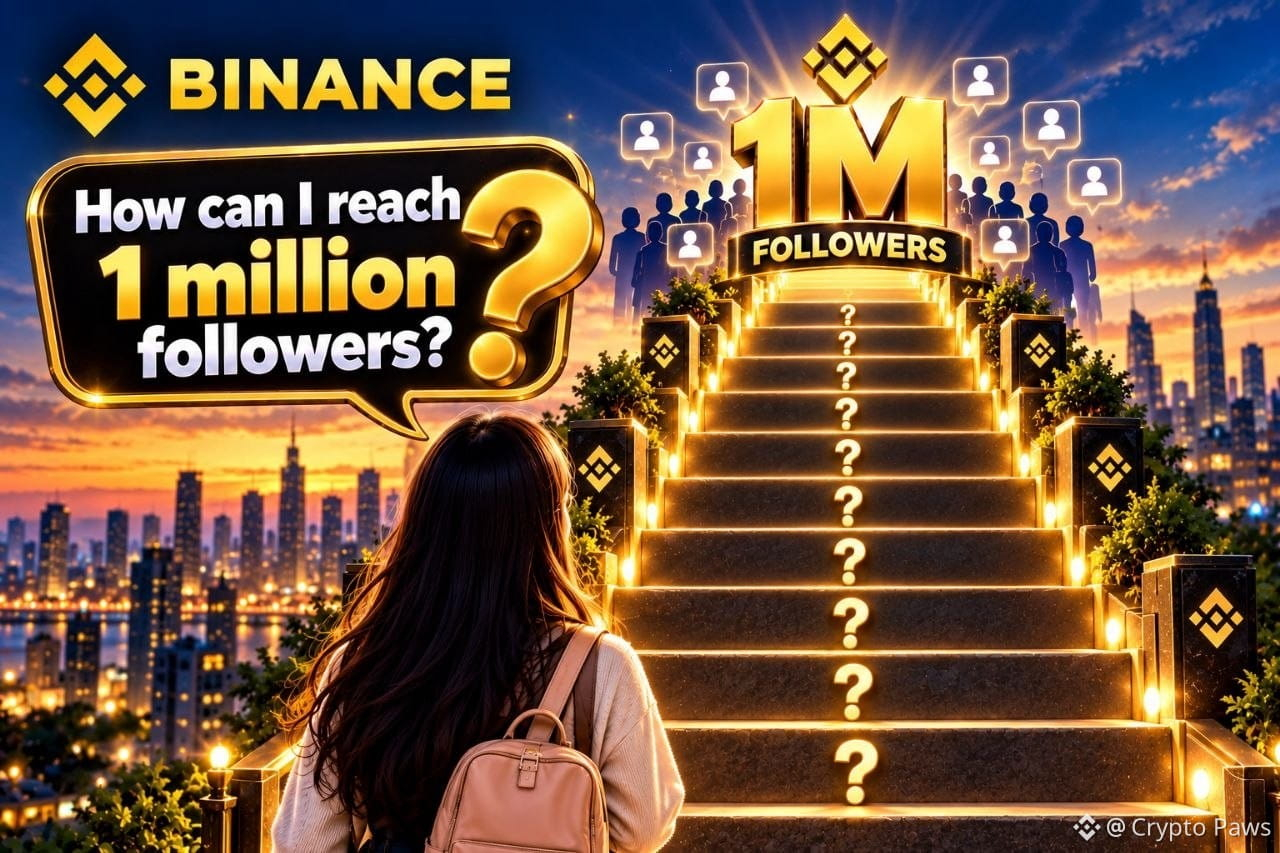
How can I reach 1 million followers? I would really appreciate advice from those who are experienced and knowledgeable. Please share your tips and strategies. 🙏
$BR
{future}(BRUSDT)
$ARIA
{future}(ARIAUSDT)
$TMX
{alpha}(560x3c2f61f2e27c865981d2e7aaf6b2cdf823030039)
How can I reach 1 million followers? I would really appreciate advice from those who are experienced and knowledgeable. Please share your tips and strategies. 🙏
$BR
$ARIA
$TMX
$BR
$ARIA
$TMX
1
2k
·
--
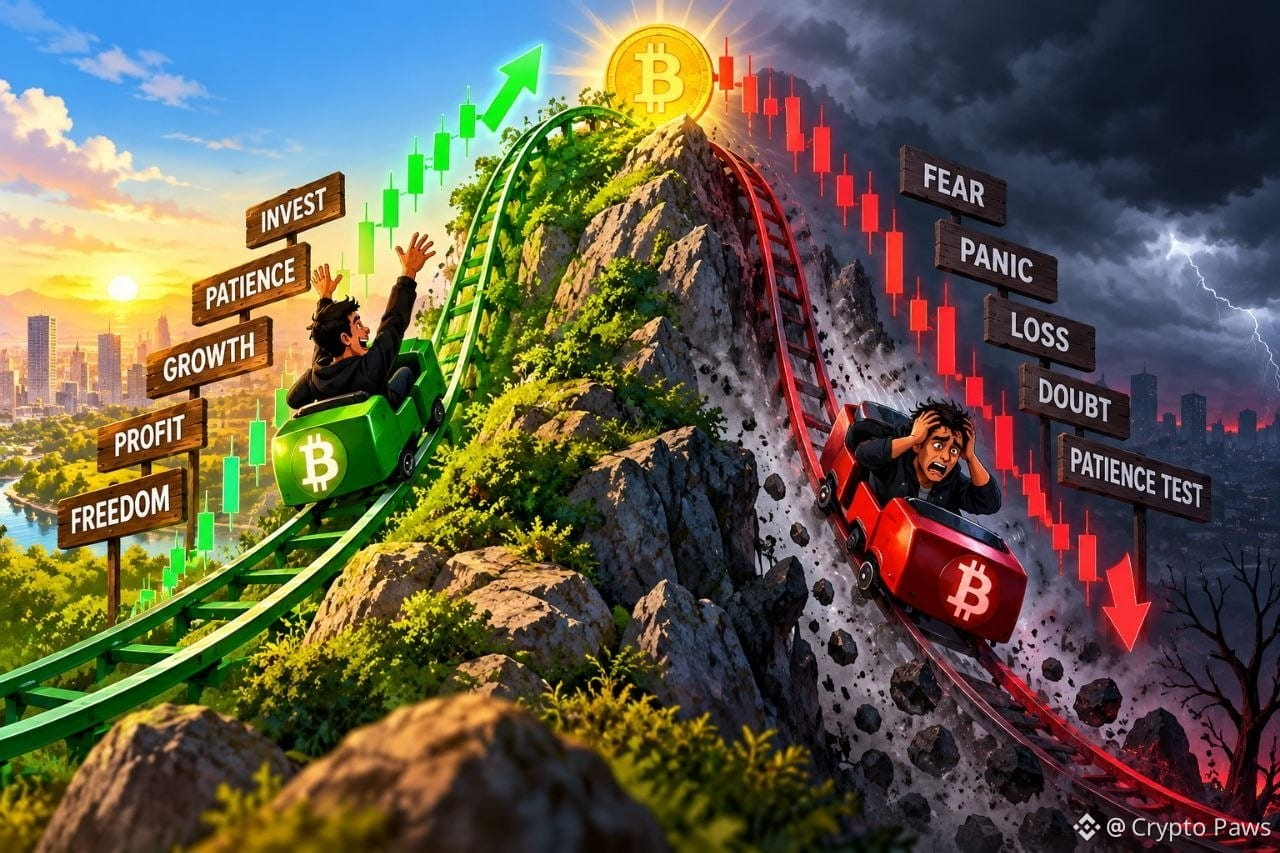
📈 Crypto Market: One Day You're Flying, the Next Day You're Fighting to Survive! 📉
The crypto market has two faces. 🟢 When prices rise, everyone talks about profit, freedom, and the next big opportunity. But when the market falls, fear, panic, and doubt take control.
I've learned one important lesson: Bull markets test your discipline, while bear markets test your patience. 🚀🐻
Don't let greed control you when the market is green, and don't let fear make every decision when it's red. Understand the risks, manage your investments wisely, and never invest more than you can afford to lose.
Remember, the market won't move in your favor every day. Sometimes, protecting your capital is more important than chasing profits.
💡 Stay calm. Think smart. Let discipline lead the way.
$BTW
{future}(BTWUSDT)
$AKE
{future}(AKEUSDT)
$BEAT
{future}(BEATUSDT)
#crypto #bullmarket #bearmarket #cryptotrading #Binance
📈 Crypto Market: One Day You're Flying, the Next Day You're Fighting to Survive! 📉
The crypto market has two faces. 🟢 When prices rise, everyone talks about profit, freedom, and the next big opportunity. But when the market falls, fear, panic, and doubt take control.
I've learned one important lesson: Bull markets test your discipline, while bear markets test your patience. 🚀🐻
Don't let greed control you when the market is green, and don't let fear make every decision when it's red. Understand the risks, manage your investments wisely, and never invest more than you can afford to lose.
Remember, the market won't move in your favor every day. Sometimes, protecting your capital is more important than chasing profits.
💡 Stay calm. Think smart. Let discipline lead the way.
$BTW
$AKE
$BEAT
#crypto #bullmarket #bearmarket #cryptotrading #Binance
1
1k
·
--
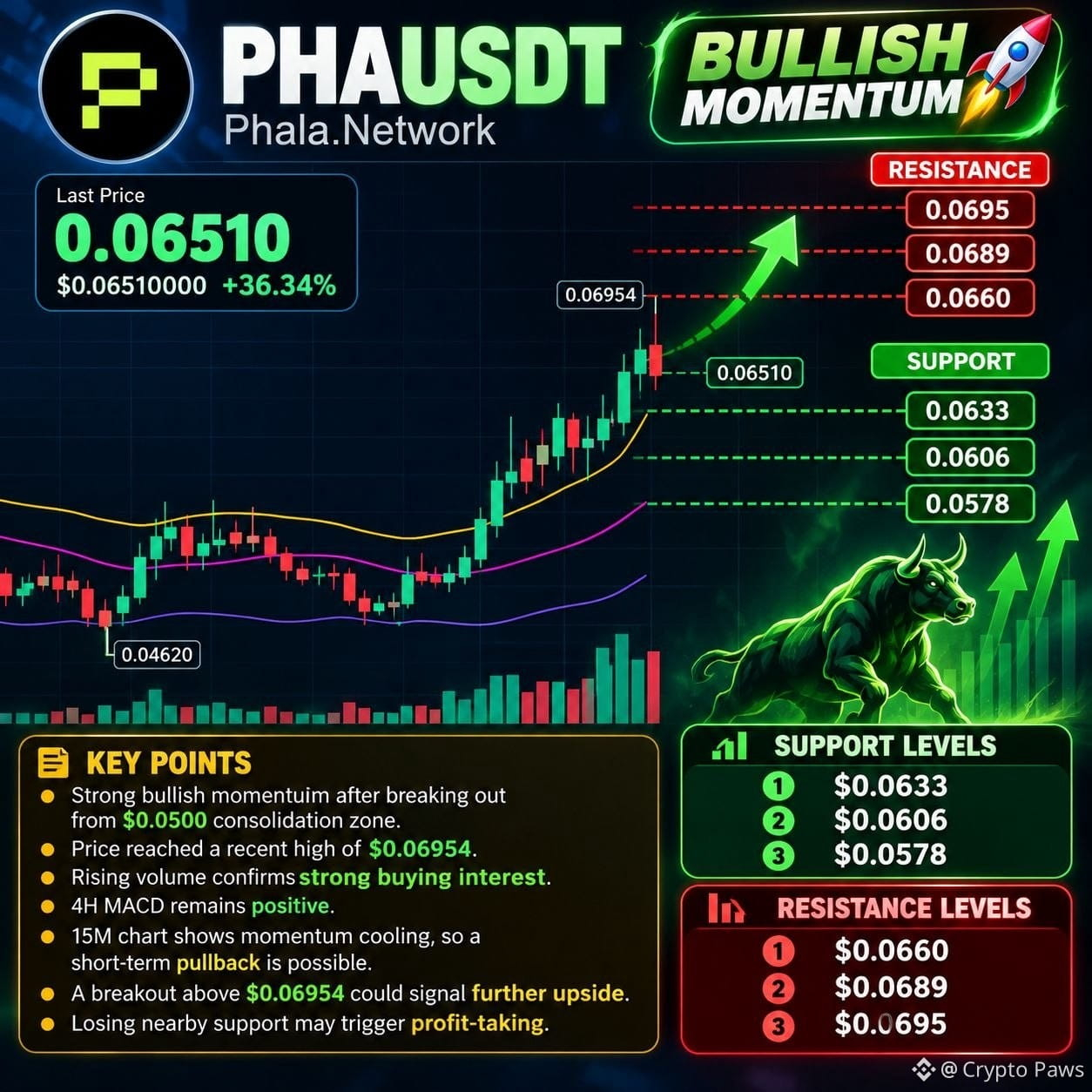
PHA is showing strong bullish momentum after breaking out from the $0.0500 consolidation zone. 🚀
Price has climbed to $0.0651, with a recent high of $0.06954. Rising volume confirms strong buying interest, while the 4H MACD remains positive. However, the 15M chart shows momentum cooling, so a short-term pullback is possible.
A breakout above $0.06954 could signal further upside, while losing nearby support may trigger profit-taking.
🟢 Support:
$0.0633
$0.0606
$0.0578
🔴 Resistance:
$0.0660
$0.0689
$0.0695
$PHA
{future}(PHAUSDT)
$GTC
{future}(GTCUSDT)
$OSMO
{spot}(OSMOUSDT)
#PHA/USDT
PHA is showing strong bullish momentum after breaking out from the $0.0500 consolidation zone. 🚀
Price has climbed to $0.0651, with a recent high of $0.06954. Rising volume confirms strong buying interest, while the 4H MACD remains positive. However, the 15M chart shows momentum cooling, so a short-term pullback is possible.
A breakout above $0.06954 could signal further upside, while losing nearby support may trigger profit-taking.
🟢 Support:
$0.0633
$0.0606
$0.0578
🔴 Resistance:
$0.0660
$0.0689
$0.0695
$PHA
$GTC
$OSMO
#PHA/USDT
572
·
--
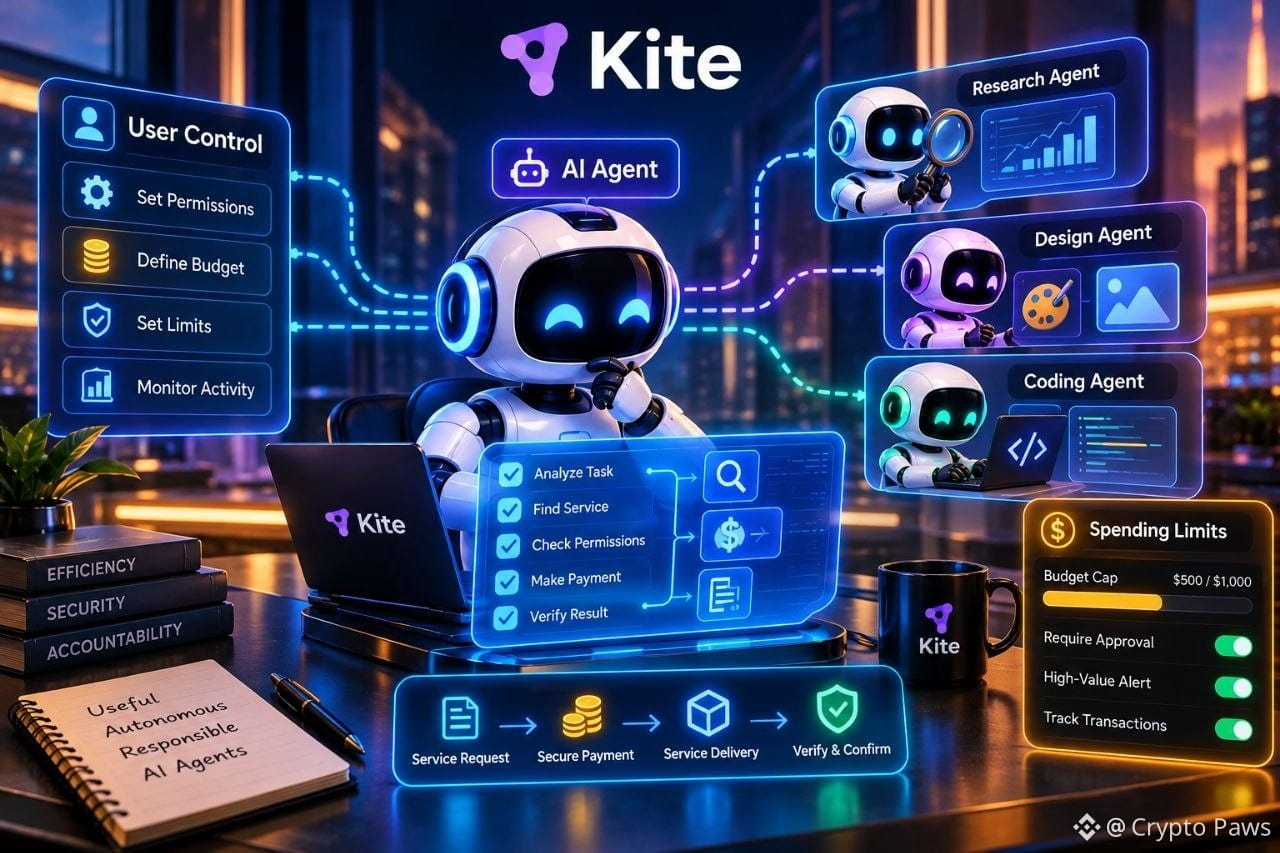
I believe the agent economy becomes truly useful when AI agents can exchange services and value, not just answer questions.
Imagine a research agent buying specialized data from another agent through a paid API, while a payment agent handles the transaction. This workflow requires more than intelligence. It needs reliable service discovery, authorized payments, and a way to verify whether the promised service was delivered.
This is where @GoKiteAI deserves attention. Kite is building infrastructure for AI agents, with a focus on identity, delegated permissions, and payments.
But important questions remain. What happens if a service fails after payment? How can agents evaluate providers, and who is accountable when automated transactions go wrong?
In my view, the agent economy needs secure transactions, clear permissions, and reliable verification. Automation becomes valuable when users retain control and agents can interact safely.
Which matters most for autonomous commerce: security, interoperability, or accountability?
$KITE #KiteBBW @GoKiteAI
{future}(KITEUSDT)
I believe the agent economy becomes truly useful when AI agents can exchange services and value, not just answer questions.
Imagine a research agent buying specialized data from another agent through a paid API, while a payment agent handles the transaction. This workflow requires more than intelligence. It needs reliable service discovery, authorized payments, and a way to verify whether the promised service was delivered.
This is where @KITE AI 中文 deserves attention. Kite is building infrastructure for AI agents, with a focus on identity, delegated permissions, and payments.
But important questions remain. What happens if a service fails after payment? How can agents evaluate providers, and who is accountable when automated transactions go wrong?
In my view, the agent economy needs secure transactions, clear permissions, and reliable verification. Automation becomes valuable when users retain control and agents can interact safely.
Which matters most for autonomous commerce: security, interoperability, or accountability?
$KITE #KiteBBW @KITE AI 中文
1
1
139
·
--
Partly True
The more I looked at @Dusk_Foundation ’s validator selection, the more interesting one contradiction became to me: the result needs to be reproducible, but future participants shouldn’t be predictable too early.
That’s where the seed matters. Dusk updates the seed from the current block generator’s signature over the previous seed, then uses that evolving value in the deterministic selection process. Once the required information exists, everyone can independently reproduce the result. But beforehand, future selections shouldn’t be easy to calculate.
I like that distinction because deterministic doesn’t necessarily mean predictable.
Still, it makes me focus on the seed itself. If future committee selection depends on an unpredictable input, then the assumptions around how that input is produced become part of the security model.
So I’m wondering: does Dusk’s seeded sortition strike the right balance between reproducibility and unpredictability, or does the seed become a security boundary that deserves just as much scrutiny as the selection algorithm itself?
$DUSK
{future}(DUSKUSDT)
$BTR
{future}(BTRUSDT)
$BTW
{future}(BTWUSDT)
@Dusk_Foundation #dusk
🧐 What’s the key challenge in Dusk’s seeded sortition?
The more I looked at @Dusk ’s validator selection, the more interesting one contradiction became to me: the result needs to be reproducible, but future participants shouldn’t be predictable too early.
That’s where the seed matters. Dusk updates the seed from the current block generator’s signature over the previous seed, then uses that evolving value in the deterministic selection process. Once the required information exists, everyone can independently reproduce the result. But beforehand, future selections shouldn’t be easy to calculate.
I like that distinction because deterministic doesn’t necessarily mean predictable.
Still, it makes me focus on the seed itself. If future committee selection depends on an unpredictable input, then the assumptions around how that input is produced become part of the security model.
So I’m wondering: does Dusk’s seeded sortition strike the right balance between reproducibility and unpredictability, or does the seed become a security boundary that deserves just as much scrutiny as the selection algorithm itself?
$DUSK
$BTR
$BTW
@Dusk #dusk
🧐 What’s the key challenge in Dusk’s seeded sortition?
🔄 Reproducible selection
0%
🎲 Unpredictable selection
34%
⚖️ Both equally
33%
🔐 Seed security
33%
3 votes • Voting closed
1
1.2k
·
--
#dusk $DUSK @Dusk_Foundation
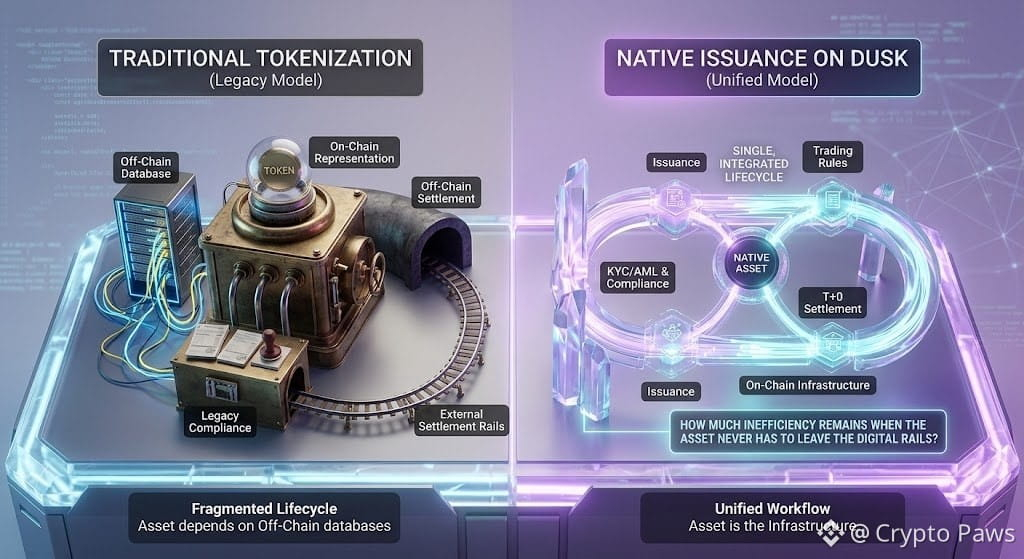
Tokenization can put an asset onchain without actually moving its financial lifecycle there.
That distinction is what makes Dusk interesting to me.
A traditional tokenized asset can still depend on off-chain databases, legacy compliance processes, and external settlement rails. The blockchain may represent the asset, while the underlying workflow remains largely unchanged.
Native issuance takes a different approach.
On Dusk, the asset is created directly onchain, allowing issuance, KYC/AML, compliance, trading rules, and settlement to become part of the same lifecycle.
That changes the role of the blockchain.
Instead of being another layer sitting above existing infrastructure, it can become the infrastructure itself—with private, compliant secondary trading and T+0 settlement available 24/7.
The bigger question is:
How much inefficiency remains when the asset never has to leave the digital rails?
$ONT
{future}(ONTUSDT)
$SOLV
#dusk $DUSK @Dusk
Tokenization can put an asset onchain without actually moving its financial lifecycle there.
That distinction is what makes Dusk interesting to me.
A traditional tokenized asset can still depend on off-chain databases, legacy compliance processes, and external settlement rails. The blockchain may represent the asset, while the underlying workflow remains largely unchanged.
Native issuance takes a different approach.
On Dusk, the asset is created directly onchain, allowing issuance, KYC/AML, compliance, trading rules, and settlement to become part of the same lifecycle.
That changes the role of the blockchain.
Instead of being another layer sitting above existing infrastructure, it can become the infrastructure itself—with private, compliant secondary trading and T+0 settlement available 24/7.
The bigger question is:
How much inefficiency remains when the asset never has to leave the digital rails?
$ONT
$SOLV
1
97
·
--
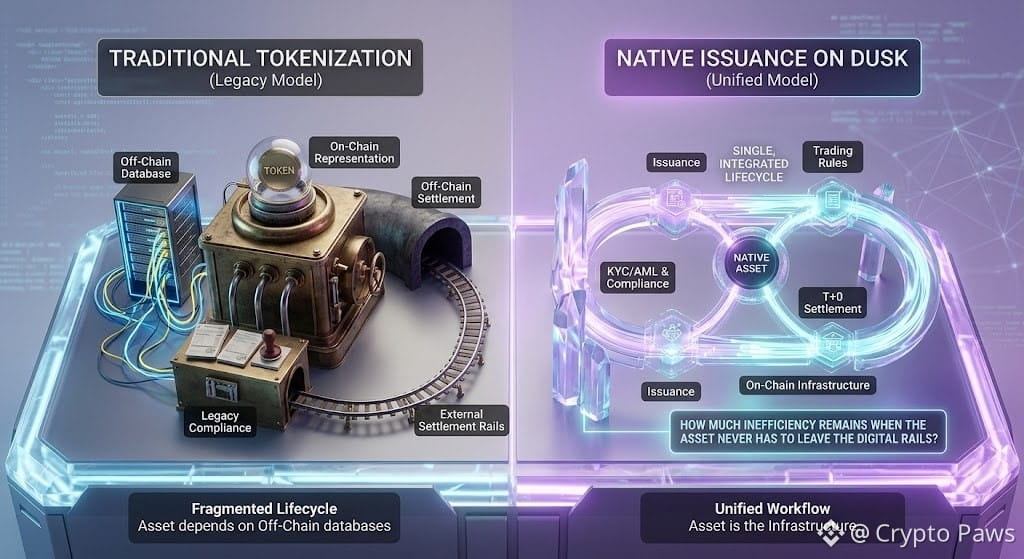
Tokenization can put an asset onchain without actually moving its financial lifecycle there.
That distinction is what makes Dusk interesting to me.
A traditional tokenized asset can still depend on off-chain databases, legacy compliance processes, and external settlement rails. The blockchain may represent the asset, while the underlying workflow remains largely unchanged.
Native issuance takes a different approach.
On Dusk, the asset is created directly onchain, allowing issuance, KYC/AML, compliance, trading rules, and settlement to become part of the same lifecycle.
That changes the role of the blockchain.
Instead of being another layer sitting above existing infrastructure, it can become the infrastructure itself—with private, compliant secondary trading and T+0 settlement available 24/7.
The bigger question is:
How much inefficiency remains when the asset never has to leave the digital rails?
$SOLV
{future}(SOLVUSDT)
$ONT
{future}(ONTUSDT)
$DUSK
{future}(DUSKUSDT)
Tokenization can put an asset onchain without actually moving its financial lifecycle there.
That distinction is what makes Dusk interesting to me.
A traditional tokenized asset can still depend on off-chain databases, legacy compliance processes, and external settlement rails. The blockchain may represent the asset, while the underlying workflow remains largely unchanged.
Native issuance takes a different approach.
On Dusk, the asset is created directly onchain, allowing issuance, KYC/AML, compliance, trading rules, and settlement to become part of the same lifecycle.
That changes the role of the blockchain.
Instead of being another layer sitting above existing infrastructure, it can become the infrastructure itself—with private, compliant secondary trading and T+0 settlement available 24/7.
The bigger question is:
How much inefficiency remains when the asset never has to leave the digital rails?
$SOLV
$ONT
$DUSK
151
·
--
I used to think transaction finality was basically binary: confirmed or not confirmed.
Looking at @Dusk_Foundation made me reconsider that assumption.
A transaction can move through four distinct states: Accepted, Confirmed, Stable, and finally Final.
Accepted means it has entered the chain. Confirmed means more blocks have built around it. Stable signals deeper settlement confidence. Final is the point where cryptographic finality is reached and reversal is no longer possible.
What I find interesting is the information this progression gives users.
Instead of treating every transaction as equally settled, Dusk exposes how confidence develops over time.
That makes “finality” less like a switch and more like a measurable journey.
The question I’d ask is:
Could this staged model make settlement risk easier to understand in real-world financial applications?
$PROM
{future}(PROMUSDT)
$CATI
{future}(CATIUSDT)
$DUSK
{future}(DUSKUSDT)
#dusk @Dusk_Foundation
What matters most when judging a transaction’s finality?
I used to think transaction finality was basically binary: confirmed or not confirmed.
Looking at @Dusk made me reconsider that assumption.
A transaction can move through four distinct states: Accepted, Confirmed, Stable, and finally Final.
Accepted means it has entered the chain. Confirmed means more blocks have built around it. Stable signals deeper settlement confidence. Final is the point where cryptographic finality is reached and reversal is no longer possible.
What I find interesting is the information this progression gives users.
Instead of treating every transaction as equally settled, Dusk exposes how confidence develops over time.
That makes “finality” less like a switch and more like a measurable journey.
The question I’d ask is:
Could this staged model make settlement risk easier to understand in real-world financial applications?
$PROM
$CATI
$DUSK
#dusk @Dusk
What matters most when judging a transaction’s finality?
⚡ Fast confirmation
0%
🛡️ Deep settlement confidence
0%
🔒 Irreversibility
0%
📊 Clear finality stages
0%
0 votes • Voting closed
1
116
Log in to explore more content
Join global crypto users on Binance Square
⚡️ Get latest and useful information about crypto.
💬 Trusted by the world’s largest crypto exchange.
👍 Discover real insights from verified creators.
Email / Phone number
Trending Topics
EvolveAtBinanceBlockchainWeek
970,398 views
12,020 Discussing
Binance Blockchain Week 2026 is coming to Bangkok! 🌍
On November 28–29, industry leaders, builders and community members from around the world will come together.
This year’s theme is Evolve. From technological innovation to real-world applications, we’ll explore the future of blockchain and crypto. Whether you’re joining us in person or following online, your voice is part of the conversation!
Starting today, follow this account and post on Binance Square using #EvolveAtBinanceBlockchainWeek . Include an image and share what you’re looking forward to, your perspectives on the industry, or the ideas and moments that stand out during the event. 🎉🙌
🎁 We’ll select 20 users who post with the hashtag to receive 50 USDT each! The cutoff for draw entries is November 29 at 23:59 (UTC).
Let’s be part of this evolution and explore what’s possible together!
Binance Blockchain Week
·576 Likes
·487.4k views
CanMarketsReboundAfterThanksgiving?
293,343 views
2,497 Discussing
Nasdaq100FiveDayAvgIntradayVolatilityHits3.8%
17,714 views
244 Discussing