

While Binance Blockchain Week was happening in Bangkok, Thailand's regulator was quietly working on two important rule changes. The Thai SEC ran public consultations on stablecoin transfers through licensed operators and on letting digital assets be used for derivatives. Both closed this month.
Quick Facts
Stablecoin transfer consultation ran from 11 to 26 November 2026.
Derivatives licensing consultation ran from 29 October to 28 November.
Existing digital asset exchanges, brokers and dealers would be exempt from derivatives licence fees.
Neither proposal is a final rule yet.
01 Thailand's Bigger Plan
Thailand already has one of the most developed crypto licensing systems in Southeast Asia, with licensed exchanges, brokers and dealers. These two consultations add new pieces to that system: one for stablecoin flows and one for derivatives.
02 The Stablecoin Proposal
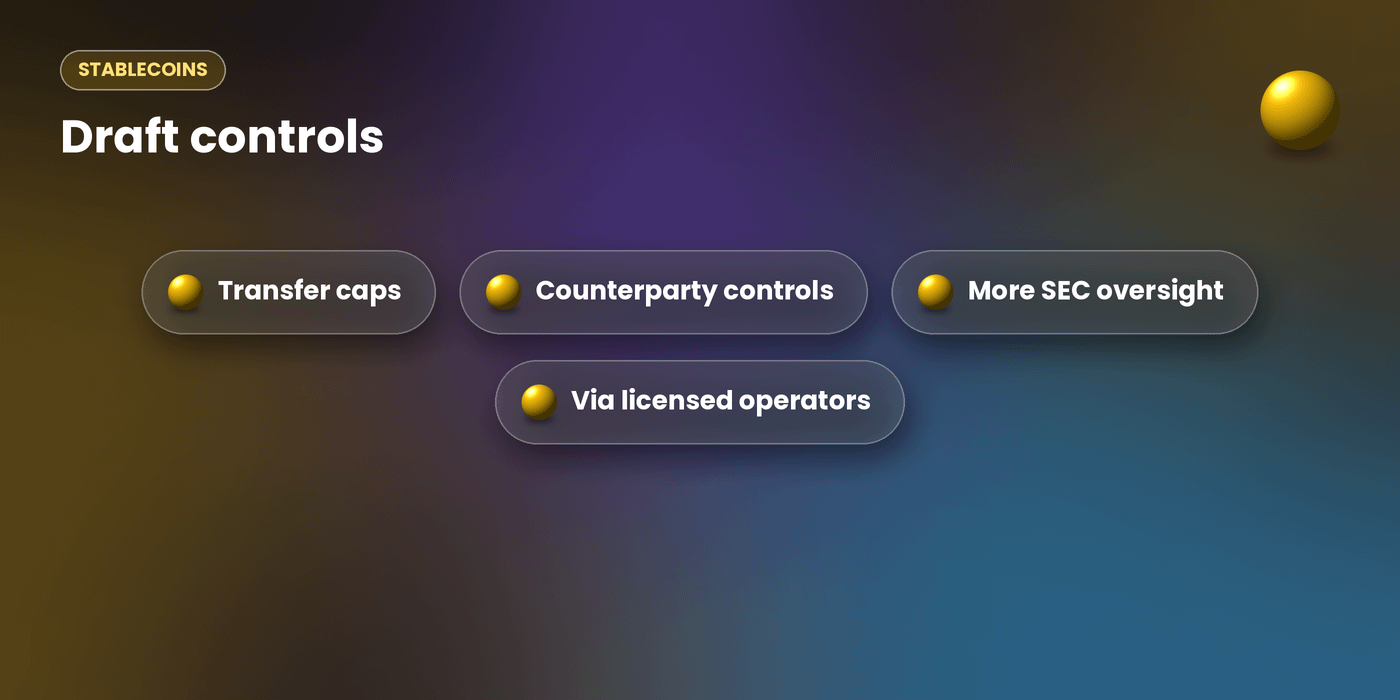
The SEC published Consultation Paper No. 82/2569 on stablecoin transactions through licensed digital asset operators. The draft proposes:
Caps on certain stablecoin transfers.
Controls on counterparties.
Stronger oversight powers for the SEC Office.
Licensed operators would carry more of the responsibility for checking who is on the other side of each transfer.
03 Why Control Stablecoin Flows
Stablecoins move money across borders quickly. Regulators want to make sure that transfers through licensed platforms do not become a channel for money laundering or for avoiding currency rules. Caps and counterparty checks are tools to keep that flow visible.
Thailand also has its own currency rules, so stablecoin flows touch both financial regulation and foreign exchange policy.
04 The Derivatives Proposal
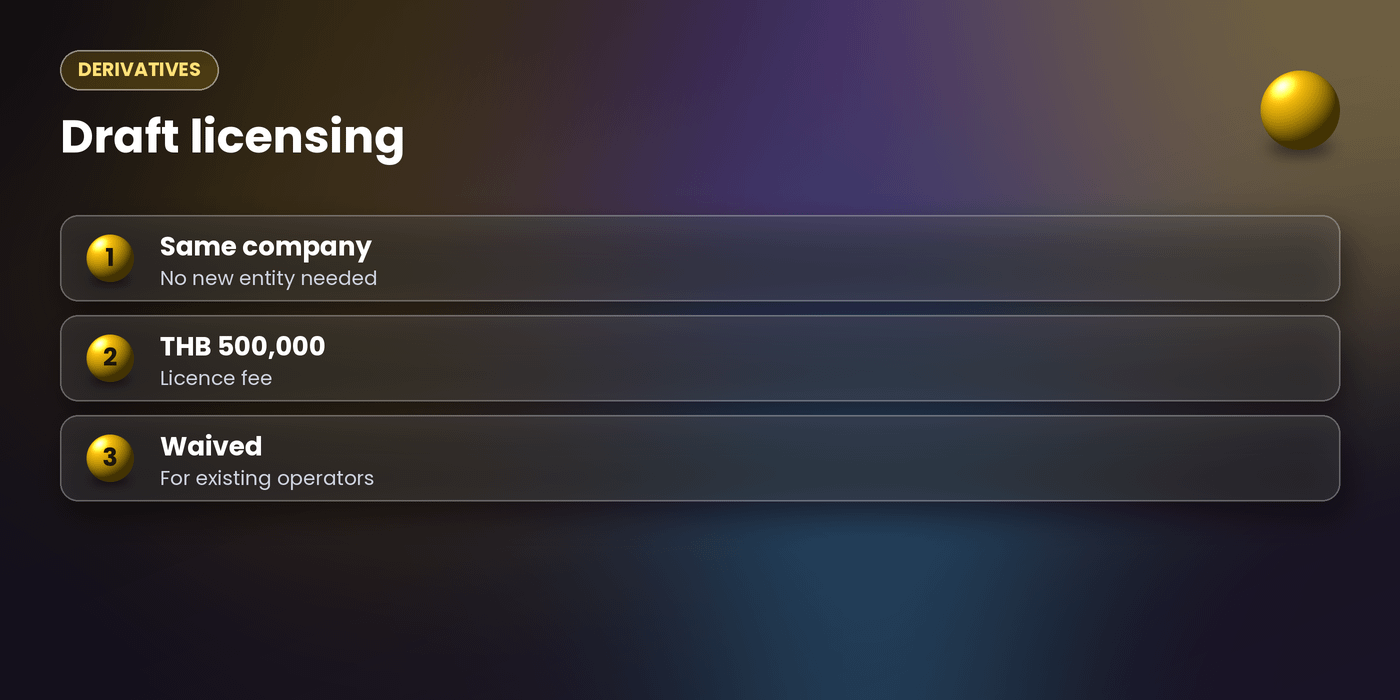
Separately, the SEC proposed rules to let digital asset operators offer derivatives. Digital asset operators could apply for derivatives licences without setting up a new company. The licence fee is set at THB 500,000, with exemptions for existing exchanges, brokers and dealers.
05 What It Could Mean
If finalised, Thai users could one day trade crypto derivatives on locally licensed platforms instead of offshore ones. That would bring more protection but also more rules, possibly including suitability checks and leverage limits. Any final rules would also need time to take effect, so nothing changes for users overnight.
Using the same company for spot and derivatives could also make it easier for existing exchanges to offer both under one roof.
06 Why It Matters for Cambodia
Thailand is a regional reference point. Its choices on stablecoins and derivatives often influence how neighbours think about the same issues. For Cambodian users, it is a preview of the kind of rules that may arrive here as our own framework develops.
Both drafts may still change after the comments are reviewed.
Bottom Line
Thailand's SEC is preparing rules for stablecoin transfers and crypto derivatives through licensed operators. Both are still drafts, but they show a clear move toward a fully regulated market.
This article is for information only and is not financial advice.