
#oracles
oracles
151,632 views
1,269 Discussing
Hot
Latest

Verified
Fidelity Files for a Chainlink Fund. Is LINK Moving Alone?What Fidelity filed
Fidelity filed a preliminary S-1 on November 25 for a fund designed to track LINK. The filing names Nasdaq as the expected venue and includes [FLNK] as a proposed ticker. The document is preliminary, so the market still has to wait for an effective registration and any actual fund flows.
LINK is the asset named in the filing. PYTH and API3 serve as oracle-sector comparisons.
$LINK | Bullish bias, pending confirmation. The Binance perpetual card showed LINK near 9.265 USDT (+8.09%), the strongest of the three. An earlier Fibonomy snapshot showed 24-hour open interest up 5.29%. Watch for a 1H close above the preceding completed hour’s high and a successful retest. A close below that reference hour’s low would invalidate the continuation setup.
$PYTH | Relative lag. The Binance perpetual card showed PYTH near 0.049 USDT (+5.94%), the smallest gain of the group. An earlier Fibonomy snapshot showed 24-hour open interest down 4.21%. A fresh hourly low while LINK holds its range would confirm the divergence. A close above its preceding 1H high with stronger turnover would challenge it.
$API3 | Cautiously bullish. The Binance perpetual card showed API3 near 0.178 USDT (+7.16%). Short-term bias is cautiously bullish, with hourly turnover still to confirm. Two completed hourly candles with rising highs and lows plus stronger turnover would favor an upside move. A close below the first candle’s low would invalidate that setup.
The next useful comparison is whether both peers begin confirming higher hourly closes. All three were higher at the snapshot, with LINK leading and PYTH trailing. Binance USDT perpetual card snapshot, November 26, 2026, around 22:20 (UTC+8). Filing: https://www.sec.gov/Archives/edgar/data/2166611/000119312526477751/d85304ds1.htm
#Chainlink #Oracles
{future}(API3USDT)
{future}(PYTHUSDT)
{future}(LINKUSDT)
Fidelity Files for a Chainlink Fund. Is LINK Moving Alone?
What Fidelity filed
Fidelity filed a preliminary S-1 on November 25 for a fund designed to track LINK. The filing names Nasdaq as the expected venue and includes [FLNK] as a proposed ticker. The document is preliminary, so the market still has to wait for an effective registration and any actual fund flows.
LINK is the asset named in the filing. PYTH and API3 serve as oracle-sector comparisons.
$LINK | Bullish bias, pending confirmation. The Binance perpetual card showed LINK near 9.265 USDT (+8.09%), the strongest of the three. An earlier Fibonomy snapshot showed 24-hour open interest up 5.29%. Watch for a 1H close above the preceding completed hour’s high and a successful retest. A close below that reference hour’s low would invalidate the continuation setup.
$PYTH | Relative lag. The Binance perpetual card showed PYTH near 0.049 USDT (+5.94%), the smallest gain of the group. An earlier Fibonomy snapshot showed 24-hour open interest down 4.21%. A fresh hourly low while LINK holds its range would confirm the divergence. A close above its preceding 1H high with stronger turnover would challenge it.
$API3 | Cautiously bullish. The Binance perpetual card showed API3 near 0.178 USDT (+7.16%). Short-term bias is cautiously bullish, with hourly turnover still to confirm. Two completed hourly candles with rising highs and lows plus stronger turnover would favor an upside move. A close below the first candle’s low would invalidate that setup.
The next useful comparison is whether both peers begin confirming higher hourly closes. All three were higher at the snapshot, with LINK leading and PYTH trailing. Binance USDT perpetual card snapshot, November 26, 2026, around 22:20 (UTC+8). Filing: https://www.sec.gov/Archives/edgar/data/2166611/000119312526477751/d85304ds1.htm
#Chainlink #Oracles
11

·
--
📡 A Nasdaq veteran joins Pyth. What would make you use its data?
Nick Carso, formerly Nasdaq’s global head of compliance, joined Pyth as head of data solutions, according to Whale Insider.
The test I’d give $PYTH is simple: take the same asset and compare its feed across two venues during a fast market. How quickly do the quotes update? What happens when one venue prints a strange price?
$LINK is a useful oracle comparison. For the market reaction, tap $CYS , which was up 37.17% in 24h in the Binance snapshot.
Check whether the move was already underway across Solana DeFi before the hiring headline.
#PythNetwork #Oracles #SolanaDeFi

1
347

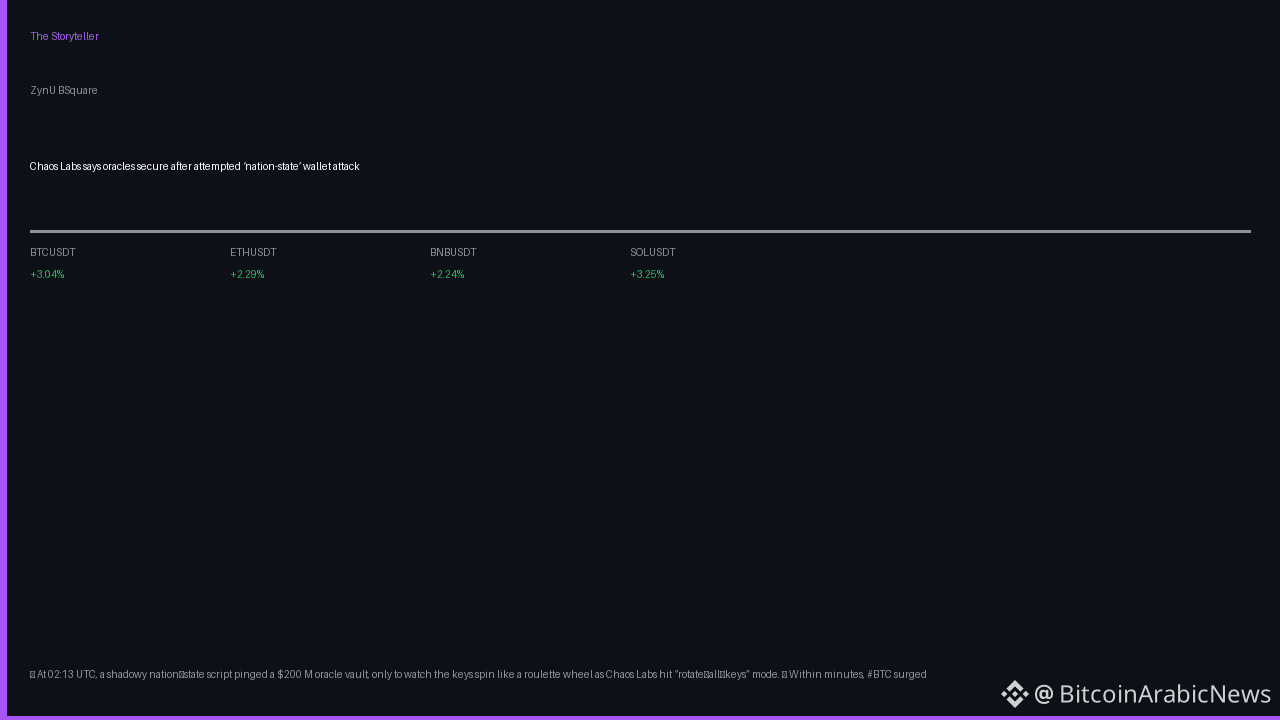
🔥 At 02:13 UTC, a shadowy nation‑state script pinged a $200 M oracle vault, only to watch the keys spin like a roulette wheel as Chaos Labs hit “rotate‑all‑keys” mode.
📊 Within minutes, #BTC surged 3.04% to $61,317, a rally powered by extreme fear (11/100) that pushed long‑biased futures traders (OI $5.65 B, L/S 2.06, funding +0.0035%) to double‑down, while the #DeFi ecosystem breathed relief that its price feeds stayed intact. The #Oracles narrative now rides the same bullish MACD crossover as Bitcoin, and smart‑money wallets on #Solana (ZOL up 8,335%) are already loading up, turning security drama into fresh buying pressure.
💡 The twist? The attempted hack proved the very redundancy critics feared, turning a nation‑state’s nightmare into a public‑relations win for oracle security and a new catalyst for risk‑averse investors.
❓ Will the next wave of institutional capital chase the safety of verified price feeds, or will they gamble on the next unseen vector?
47

·
--
Oracles play a crucial role in bringing off-chain data on-chain. Chainlink is a popular oracle network that provides real-time data to blockchain protocols. It is sitting at over 700 partnerships, including $ETH and $BTC. Pyth is another oracle network that focuses on providing high-frequency data. For example, Pyth can provide stock prices to blockchain protocols, enabling new use cases. Oracles like Chainlink and Pyth are essential for decentralized applications. They enable the creation of more complex and data-driven smart contracts. With oracles, the possibilities for blockchain protocols are endless. blockchainprotocols #oracles #cryptotechnology
Oracles play a crucial role in bringing off-chain data on-chain. Chainlink is a popular oracle network that provides real-time data to blockchain protocols. It is sitting at over 700 partnerships, including $ETH and $BTC . Pyth is another oracle network that focuses on providing high-frequency data. For example, Pyth can provide stock prices to blockchain protocols, enabling new use cases. Oracles like Chainlink and Pyth are essential for decentralized applications. They enable the creation of more complex and data-driven smart contracts. With oracles, the possibilities for blockchain protocols are endless. blockchainprotocols #oracles #cryptotechnology
79

·
--
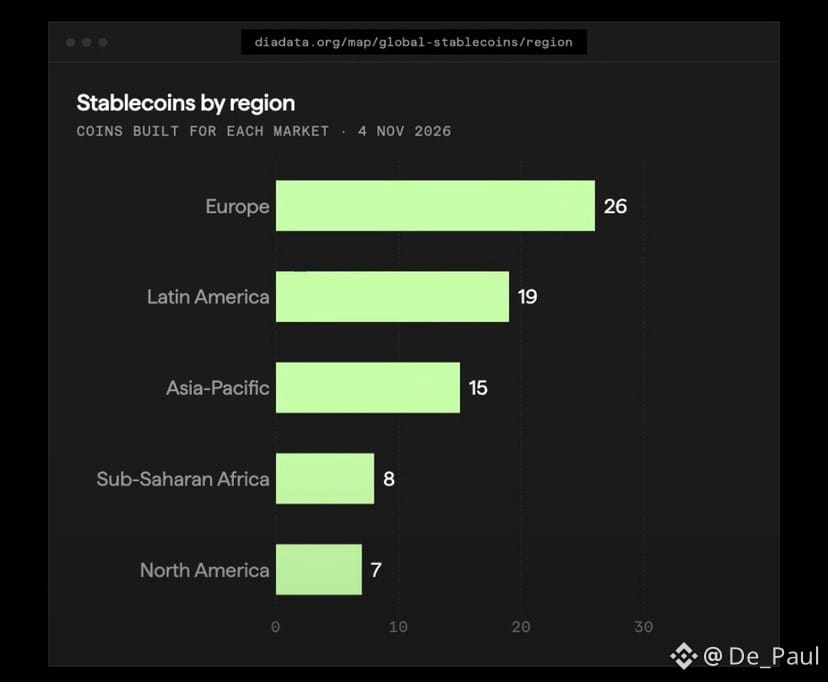
Sub-Saharan Africa has 8 stablecoins on DIA’s Global Stablecoin Map.
Combined supply: $8.1M. Five currencies: Ghanaian cedi, Kenyan shilling, Nigerian naira, CFA franc and South African rand.
That’s not a headline number. It’s a starting line. DIA’s map puts it well: a dollar stablecoin is issued in one place and used everywhere, but a naira, rand or cedi stablecoin exists because someone in that market needed it.
Small markets still need pricing and reserves. A #coin with a few million in liquidity can’t be priced by sampling the biggest exchange.
That’s the problem DIA’s #oracles and Proof of Reserves are built for.
$DIA
1
129
·
--
Smart contracts are powerful but blind. They cannot see the real world. Oracles fix this by bridging off-chain data to on-chain logic. Think of them as trusted messengers. Chainlink is a dominant player. It uses a decentralized network of node operators. For example, if a protocol needs the $ETH gas fee, multiple oracles fetch this value. If they disagree, the system rejects the bad data. This prevents single points of failure. Pyth takes a different approach. It uses first-party financial institutions. These firms push feeds directly to the blockchain. This reduces latency significantly. Pyth can update data in under 400 milliseconds. This speed is crucial for high-frequency trading strategies. Why does this matter? Without reliable oracles, a lending platform might lend out $100 million based on wrong collateral values. One bad data point could bankrupt the protocol. Oracles are the unsung heroes of DeFi. They ensure that $BTC and other assets have accurate valuations on-chain. As the space grows, expect oracle networks to become more specialized and competitive. Understanding how they work is key to trusting decentralized finance. Blockchain #DeFi #Oracles
Smart contracts are powerful but blind. They cannot see the real world. Oracles fix this by bridging off-chain data to on-chain logic. Think of them as trusted messengers. Chainlink is a dominant player. It uses a decentralized network of node operators. For example, if a protocol needs the $ETH gas fee, multiple oracles fetch this value. If they disagree, the system rejects the bad data. This prevents single points of failure. Pyth takes a different approach. It uses first-party financial institutions. These firms push feeds directly to the blockchain. This reduces latency significantly. Pyth can update data in under 400 milliseconds. This speed is crucial for high-frequency trading strategies. Why does this matter? Without reliable oracles, a lending platform might lend out $100 million based on wrong collateral values. One bad data point could bankrupt the protocol. Oracles are the unsung heroes of DeFi. They ensure that $BTC and other assets have accurate valuations on-chain. As the space grows, expect oracle networks to become more specialized and competitive. Understanding how they work is key to trusting decentralized finance. Blockchain #DeFi #Oracles
61

·
--
🚨 $PYTH INFRASTRUCTURE IS THE SILENT BACKBONE POWERING ON-CHAIN PERPETUALS!
In the arena of high-frequency DeFi, split-second data delays can trigger catastrophic liquidations across lending protocols. That is precisely why institutional-grade oracles delivering sub-second cross-chain pricing are dominating order flow discussions right now. 📊
When markets flash crash, protocols relying on sluggish feeds get front-run by arbitrageurs, draining liquidity pools instantly. Keeping $PYTH locked on my radar because reliable multi-chain data infrastructure forms the bedrock of every sustainable scaling wave.
Are you tracking oracle networks as core structural plays or just focusing on layer-one tokens? 👇
⚠️ Not financial advice. Always manage your risk. 🛡️
🏷️ #PYTH #DeFi #Oracles #Crypto
🔥 💎
12

·
--
🔗 Blockchain networks need reliable communication and data connections.
$PYTH delivers market data infrastructure, $BAND provides oracle services, and $QNT focuses on connecting different networks and systems.
Infrastructure projects can be worth studying beyond short-term price movements.
#PythNetwork #BandProtocol #Quant #Oracles #Interoperability
$PYTH delivers market data infrastructure, $BAND provides oracle services, and $QNT focuses on connecting different networks and systems.
Infrastructure projects can be worth studying beyond short-term price movements.
#PythNetwork #BandProtocol #Quant #Oracles #Interoperability
1
20
·
--
Blockchains are isolated systems. They cannot see the outside world. Oracles act as bridges moving real-world data onto the network. Think of them as trusted couriers delivering facts to smart contracts. Chainlink is the industry standard. It uses many independent data providers to aggregate information. This prevents any single source from lying. Pyth offers a different approach. It provides first-party data directly from financial institutions. This reduces latency significantly. Why does this matter? Imagine a decentralized lending protocol. A borrower requests funds. The system needs to know the exact value of their collateral. Without an oracle, the loan cannot execute. The oracle fetches the current market value in milliseconds. This infrastructure enables automated insurance claims, yield farming, and automated market makers. Data integrity is critical. One bad data point can deplete a protocol's liquidity. Modern oracles use weighted voting and staking mechanisms to penalize fake data. Understanding these layers helps you navigate the decentralized finance landscape safely. $LINK $PYTH $ETH Blockchain #DeFi #Oracles
Blockchains are isolated systems. They cannot see the outside world. Oracles act as bridges moving real-world data onto the network. Think of them as trusted couriers delivering facts to smart contracts. Chainlink is the industry standard. It uses many independent data providers to aggregate information. This prevents any single source from lying. Pyth offers a different approach. It provides first-party data directly from financial institutions. This reduces latency significantly. Why does this matter? Imagine a decentralized lending protocol. A borrower requests funds. The system needs to know the exact value of their collateral. Without an oracle, the loan cannot execute. The oracle fetches the current market value in milliseconds. This infrastructure enables automated insurance claims, yield farming, and automated market makers. Data integrity is critical. One bad data point can deplete a protocol's liquidity. Modern oracles use weighted voting and staking mechanisms to penalize fake data. Understanding these layers helps you navigate the decentralized finance landscape safely. $LINK $PYTH $ETH Blockchain #DeFi #Oracles
96
·
--
Oracles like Chainlink and Pyth bring off-chain data on-chain, enabling smart contracts to interact with external information. This data is at a high level of accuracy, allowing for secure and reliable execution of contracts. For instance, a contract may need the current value of $ETH to execute a trade. Oracles provide this data, which is then used to determine the outcome of the contract. With the rise of decentralized finance, oracles are playing a crucial role in connecting blockchain networks with traditional finance systems. Chainlink is currently sitting at a high usage rate, with over 700 projects using its services. Blockchain technology relies on oracles to access real-world data, making them a fundamental component of the ecosystem. #blockchaininfrastructure #oracles #cryptotechnology
Oracles like Chainlink and Pyth bring off-chain data on-chain, enabling smart contracts to interact with external information. This data is at a high level of accuracy, allowing for secure and reliable execution of contracts. For instance, a contract may need the current value of $ETH to execute a trade. Oracles provide this data, which is then used to determine the outcome of the contract. With the rise of decentralized finance, oracles are playing a crucial role in connecting blockchain networks with traditional finance systems. Chainlink is currently sitting at a high usage rate, with over 700 projects using its services. Blockchain technology relies on oracles to access real-world data, making them a fundamental component of the ecosystem. #blockchaininfrastructure #oracles #cryptotechnology
144


·
--
Centralized Oracles as Single Points of Failure
A perfectly written smart contract can still be exploited if it relies on a centralized or vulnerable oracle feed.
If hackers manipulate the price feed feeding data to the contract, they can trigger false liquidations or drain collateral.
Oracle health is just as critical as code audits.
#Oracles #BlockchainSecurity #DeFi
239

·
--
Monday morning. Oracle networks do not observe weekends.
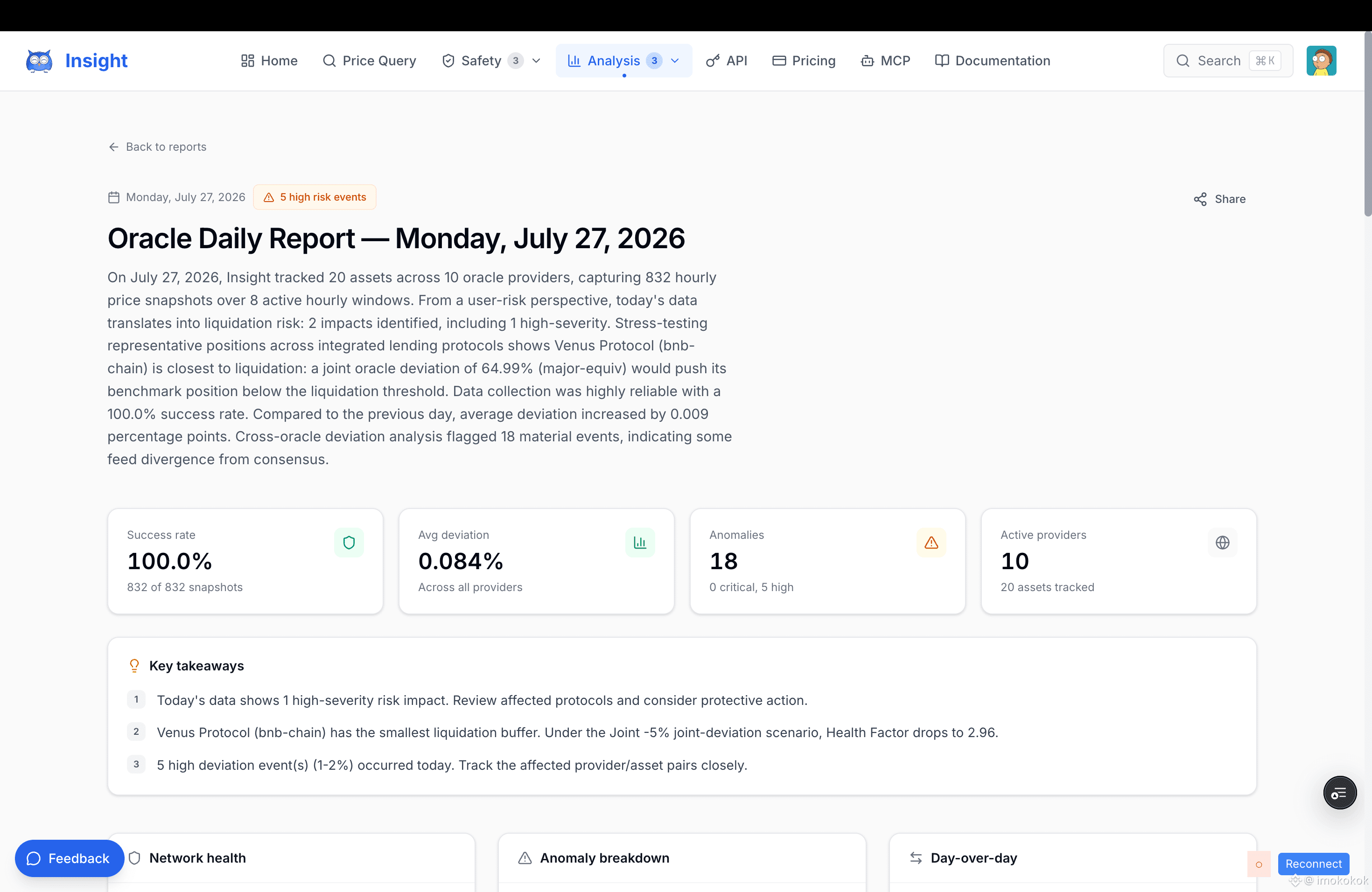
On July 27, InsightOracle pulled 832 snapshots from 10 providers across 20 assets. A 100% success rate. Yet beneath the surface, 18 anomaly signals were flashing. Nearly half of yesterday’s count, but still no room for complacency.
COMP is today’s eye of the storm. Cross-provider deviation peaked at 1.990%. API3’s COMP quote diverged +1.99% from consensus. ETH remains tense too, with WINkLink recording a +1.69% deviation and API3 posting a 1.22% negative drift. Two risks locked in: ETH feed divergence (High), BNB feed divergence (Medium).
Seventeen assets showed significant volatility. ADA leads at 5.06% volatility, UNI at 4.14%. Four providers exhibited anomalies; API3 carried the largest average deviation at 0.396%, making it today’s most active source of drift.
Who is on the edge? Venus Protocol holds a health factor of just 3.13 with a joint liquidation threshold of 64.99%, still the closest to danger. Aave V3 sits at 4.02, safer but still no place for complacency.
Network health score: 93, rated good. Anomalies dropped 43.75% day over day, yet those five high severity events remind us: the surface looks calm, but undercurrents remain.
Data does not lie, but a single source can. Verifying all of them is the rite of passage this industry demands.
📊 Full report: oracleinsight.xyz/reports/2026-07-27
#oracles
91

·
--
Everyone's chasing memes, but here's the education: @diadata_org delivers battle-tested oracles feeding real-world data to RWAs, ST0x liquidity pools crushing 4k% APY, and smart contract leaders.
This is the game changer reliable price feeds powering the bullrun's core narrative. Utility wins, price follows.
More to come... $DIA #oracles #RWA
This is the game changer reliable price feeds powering the bullrun's core narrative. Utility wins, price follows.
More to come... $DIA #oracles #RWA
64
·
--
When Prices Pulse Across 40 Chains, Who Is Actually Watching Your Position?
At 3:00 AM, a liquidation bot on an L2 jolts awake. A transient price deviation of 0.8% flashes across the feed, and hundreds of leveraged positions are triggered within twelve seconds. This is not science fiction. It is a story that has played out repeatedly across DeFi over the past two years. Oracles are the nervous system of the crypto world, yet most people have never seen their pulse.
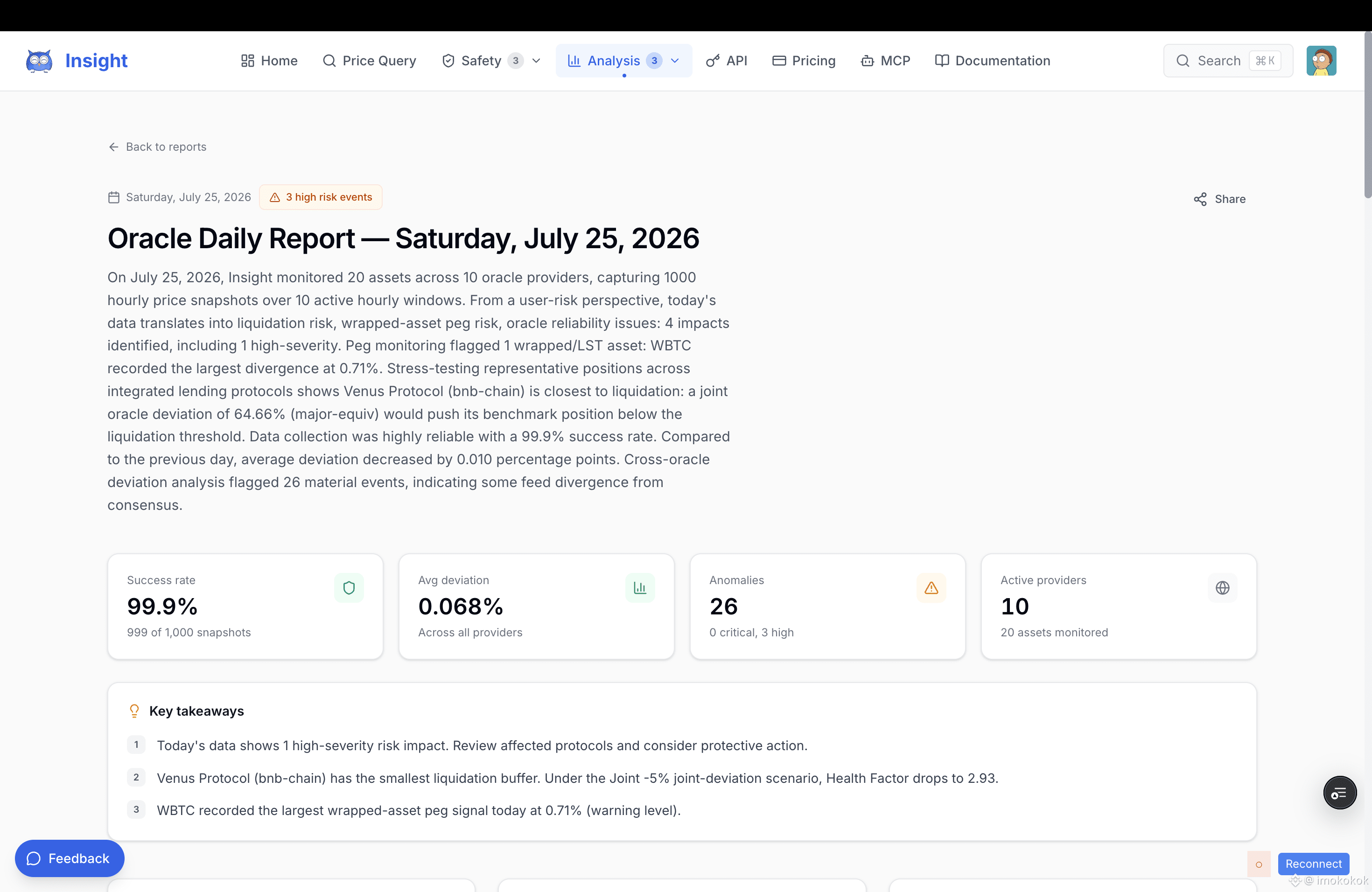
Today, InsightOracle releases the July 25, 2026 Daily Data Report. This is not a cold spreadsheet. It is a live health map covering ten plus major oracle providers and more than forty blockchain networks.
Over the past twenty four hours, our system completed comprehensive hourly price scans. How many deviations did the cross oracle comparison module capture? Which chains showed abnormal latency spikes? Which protocols are seeing their position safety margins tighten? The answers are all inside today’s report.
We believe the next wave of DeFi growth will not come from higher APY. It will come from deeper trust. When every price point is traceable, every deviation is auditable, and risk on every chain is transparent, everyday users can finally feel safe handing their assets to smart contracts.
Oracles should not be a black box. InsightOracle is here to open it.
#oracles
109

⚖️ DeFi Security in Focus After Ostium Oracle Exploit Pauses Trading: Oracles remain critical vulnerability in decentralized finance
On July 16, 2026, security firms report a multimillion-dollar oracle exploit at Ostium, forcing the protocol to pause trading. The incident underscores persistent security challenges in DeFi. Bitcoin $BTC trades at $64,557 as the market assesses implications.
Oracle manipulation has been a recurring attack vector in DeFi. Ethereum $ETH at $1,917 hosts the majority of DeFi protocols and could see increased focus on oracle security solutions.
The Ostium exploit joins a list of high-profile oracle attacks, emphasizing the need for robust, decentralized data infrastructure.
📌 Key Takeaway:
Ostium oracle exploit highlights persistent DeFi security challenges. Oracle integrity remains critical for protocol safety and user trust.
#DeFiSecurity #Oracles
#BinanceAlphaAlert
35

·
--
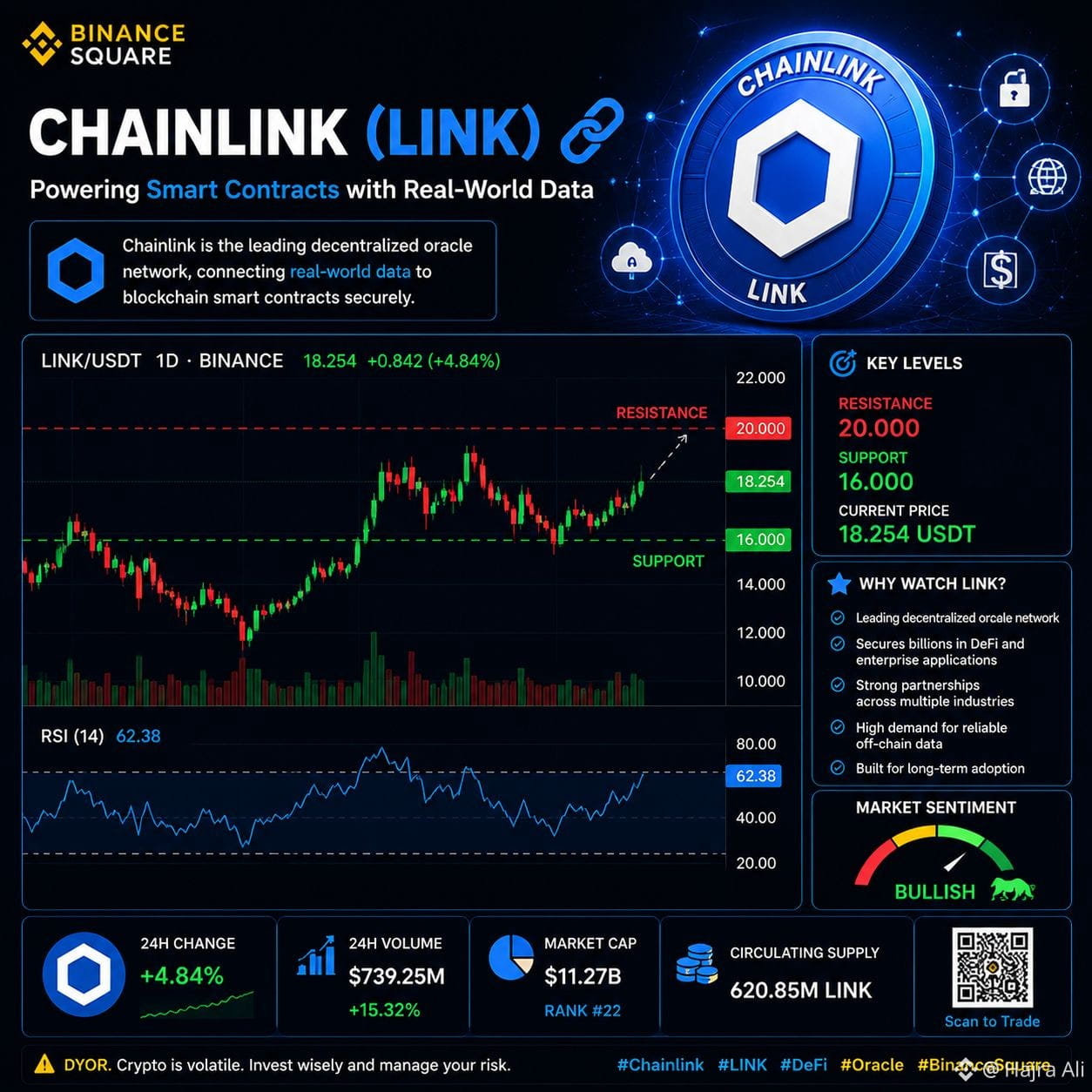
$LINK
{spot}(LINKUSDT)
Chainlink (LINK) 🔗
Without reliable data, smart contracts can't thrive.
Chainlink continues to be a key infrastructure project.
#LINK🔥🔥🔥 #Chainlink's #crypto #oracles
$LINK
Chainlink (LINK) 🔗
Without reliable data, smart contracts can't thrive.
Chainlink continues to be a key infrastructure project.
#LINK🔥🔥🔥 #Chainlink's #crypto #oracles
Chainlink (LINK) 🔗
Without reliable data, smart contracts can't thrive.
Chainlink continues to be a key infrastructure project.
#LINK🔥🔥🔥 #Chainlink's #crypto #oracles
45
·
--
The Perfect Streak Ends. Oracles Just Went Dark for the First Time.
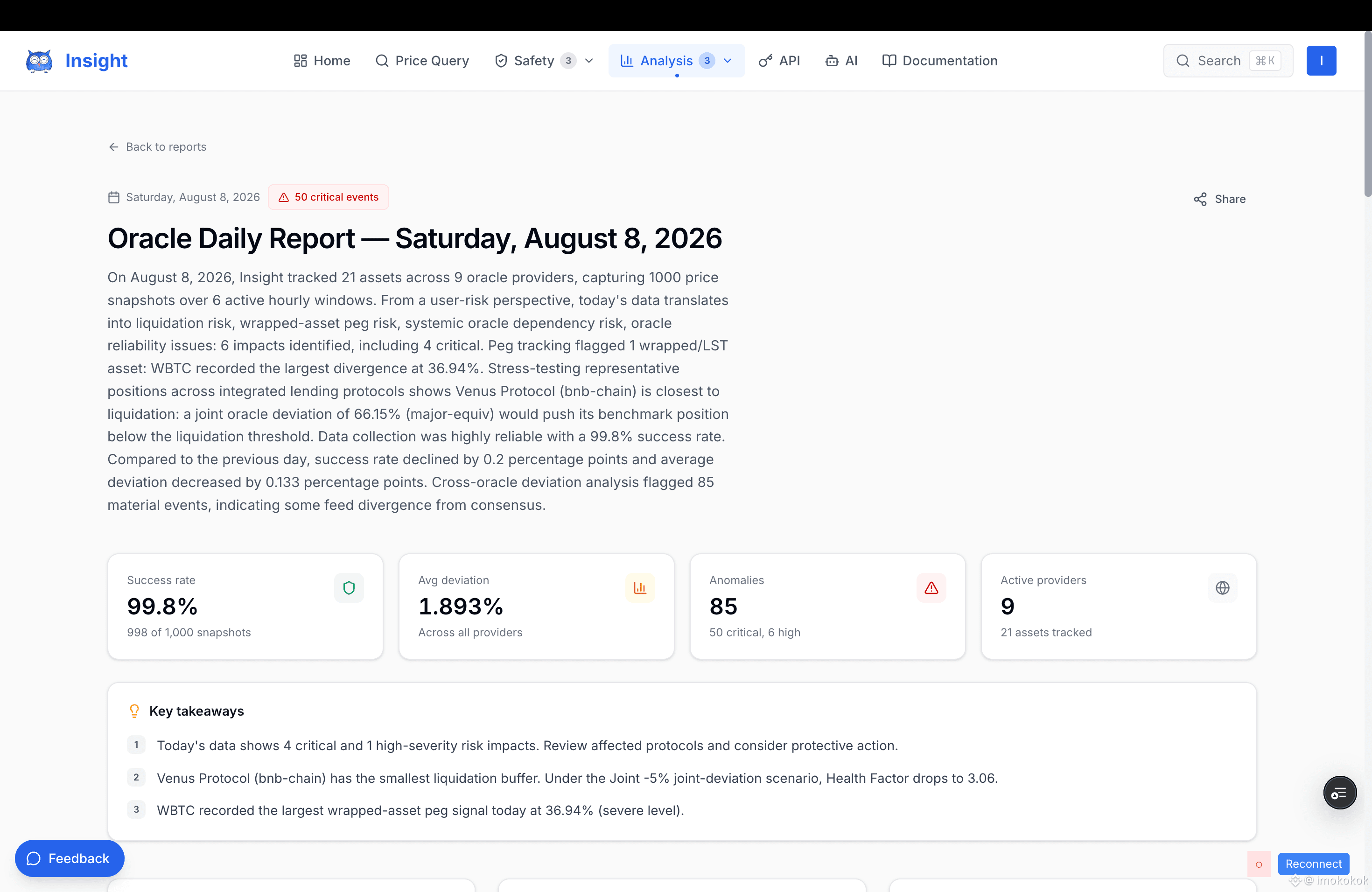
Two days of zero failures ended today. RedStone dropped 2 snapshots on SNX. That is not noise. That is the first crack.
Anomalies fell from 108 to 85, yet critical risks rose from 3 to 4. API3 and XRP still diverge by 112.45%. WBTC peg deviation sits at 36.94%, severe. Venus Protocol holds the thinnest buffer with a health factor of 3.25.
4 of 9 providers are shaky. A 99.8% success rate is a beautiful curtain. Behind it, the stage is trembling.
Oracles will not always be right. The win is seeing the glitch before it sees you.
#oracles
237
·
--
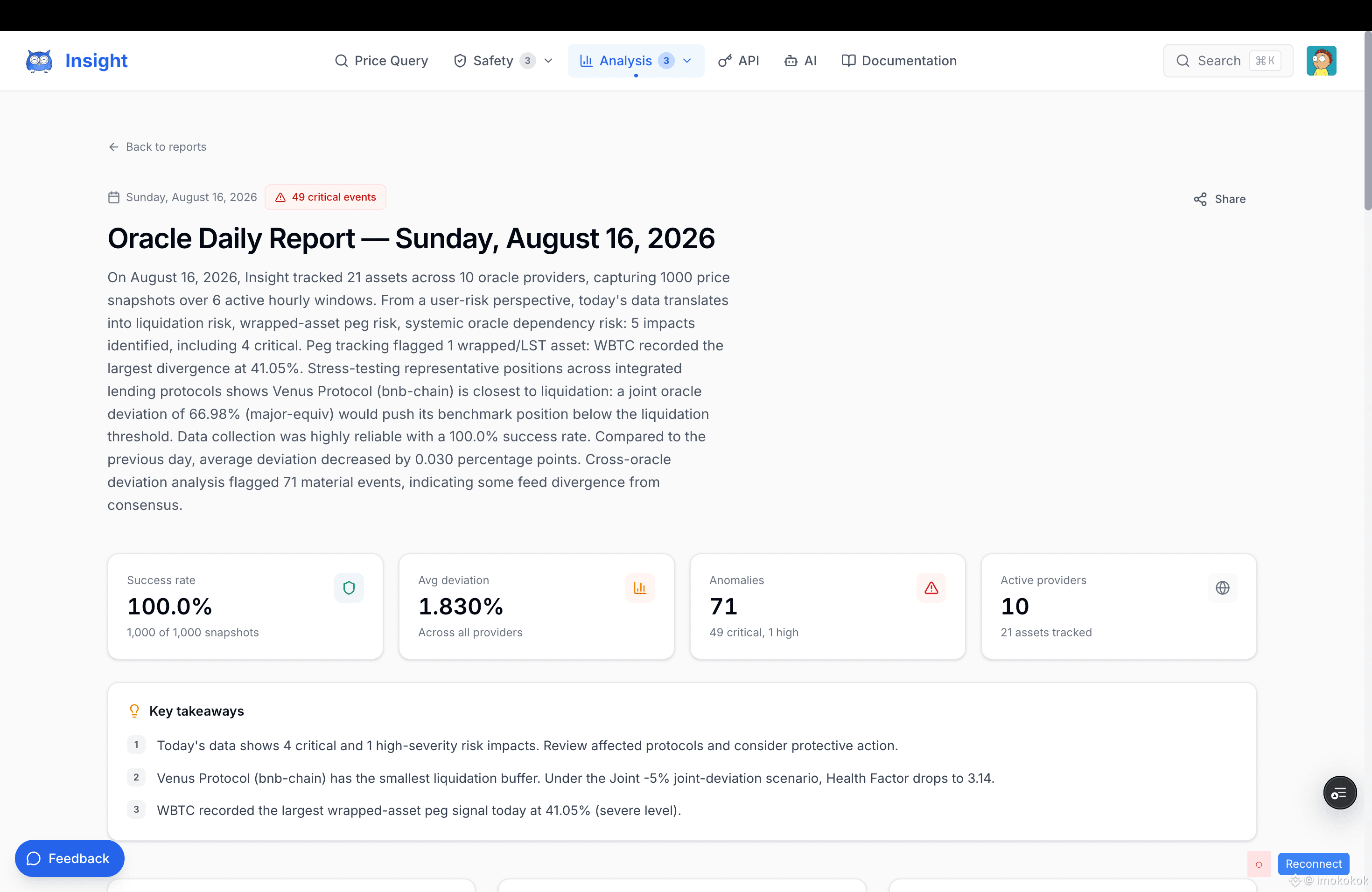
August 16, Sunday. The oracle network finally exhaled.
Anomalies dropped from 102 to 71, a decline of over 30%. High severity events collapsed from 8 to just 1. Anomalous providers retreated from 6 back to 3. Average deviation fell to 1.830%, and network health climbed to 63. The system even flashed green: day over day metrics are stable or improved.
But hold the champagne.
XRP cross provider deviation remains locked at 117.86%. API3 is still pricing double the consensus. WBTC peg divergence holds firm at 41.05%, severe and unyielding. Venus Protocol's health factor ticked up slightly from 3.31 to 3.33, yet its 66.98% joint liquidation threshold remains a guillotine overhead.
Sunday calm is often the most deceptive kind. When most anomaly counts are retreating but core risks refuse to budge, this is not a crisis resolved. It is the market catching its breath before the next wave.
On the DeFi frontline, the real danger is never the noise of the numbers. It is the silence that follows. Because in that silence, the next storm is already taking shape.
#oracles
273
·
--
The 99.9% Silence, and the Boiling Beneath
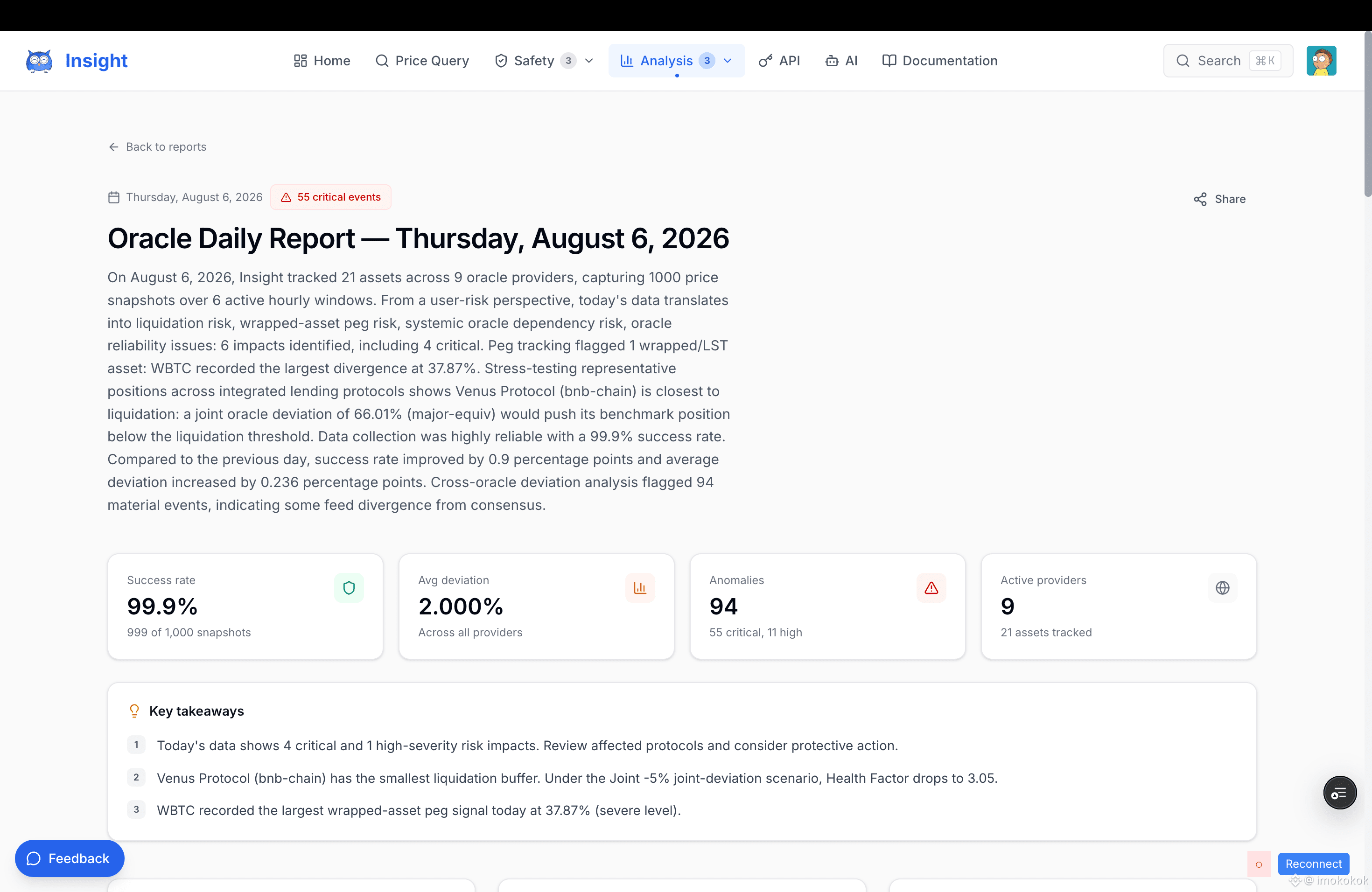
One thousand price snapshots. Only one failed. A 99.9% success rate, the cleanest number in six days. Failed snapshots collapsed from ten to one, nearly erased.
If you only read that line, today looks like flat water.
But beneath the surface, the current is accelerating. Anomalies surged from sixty six to ninety four, a jump of over forty percent. High severity alerts climbed from three to eleven. Average deviation rose from 1.764% to 2.000%. Among nine active providers, five remain on the anomaly list.
On API3, XRP now diverges from consensus by over 108%. The off key record player has become a runaway loudspeaker. WBTC's peg looseness holds at 37.87%, still severe. On BNB Chain, Venus Protocol sits at a health factor of 3.23 with a 66.01% liquidation threshold. Its cushion is thin as paper.
The most telling contradiction is this. The closer collection success approaches perfection, the more violent the price divergence becomes. When the data pipeline barely leaks, the content flowing through it is distorting.
This is not the calm before a storm. This is boiling in silence.
Insight keeps watching.
#oracles
143
Log in to explore more content
Join global crypto users on Binance Square
⚡️ Get latest and useful information about crypto.
💬 Trusted by the world’s largest crypto exchange.
👍 Discover real insights from verified creators.
Email / Phone number
Trending Topics
1
#EvolveAtBinanceBlockchainWeek
868,661 views
10,795 Discussing
2
#CanMarketsReboundAfterThanksgiving?
221,734 views
2,094 Discussing
3
#CouldSpaceX’sOrbitalDataCentersBoostAIChipDemand?
108,656 views
1,250 Discussing
4
#StellarAdds$80.4MTokenizedFundsInOneDay
857 views
6 Discussing
5
#ZcashDevelopersUrgeZECMoveToIronwood
39,222 views
197 Discussing
6
#TradFiForBeginners
1.2M views
6,297 Discussing
7
#Nasdaq100FiveDayAvgIntradayVolatilityHits3.8%
23 views
2 Discussing
8
#KoreaFSCSeeksPowerToSuspendCryptoListings
24,532 views
365 Discussing
9
#SouthKoreaPlansToRequireTetherCircleLocalReserves
23,058 views
254 Discussing
10
#UKFCAReportedlyPlansDeFiAuthorizationRules
17,291 views
154 Discussing