

#polymarketbankfailurebetsdrawfdicconcern
polymarketbankfailurebetsdrawfdicconcern
261,039 views
2,455 Discussing
Hot
Latest

Verified
⚡ BANK FAILURE MARKETS ARE MAKING HEADLINES
Polymarket offers contracts tied to whether specific banks could fail by year-end, while FDIC officials have expressed concern about possible financial-system spillovers.
That makes risk sentiment a key variable for crypto.
📊 Watch $BTC $SOL $XRP and look for confirmed spot setups.
#polymarketbankfailurebetsdrawfdicconcern
⚡ BANK FAILURE MARKETS ARE MAKING HEADLINES
Polymarket offers contracts tied to whether specific banks could fail by year-end, while FDIC officials have expressed concern about possible financial-system spillovers.
That makes risk sentiment a key variable for crypto.
📊 Watch $BTC $SOL $XRP and look for confirmed spot setups.
#polymarketbankfailurebetsdrawfdicconcern
Polymarket offers contracts tied to whether specific banks could fail by year-end, while FDIC officials have expressed concern about possible financial-system spillovers.
That makes risk sentiment a key variable for crypto.
📊 Watch $BTC $SOL $XRP and look for confirmed spot setups.
#polymarketbankfailurebetsdrawfdicconcern
3
1.9k
🔥 BANKING RISK MEETS PREDICTION MARKETS
Polymarket bank-failure contracts are attracting regulatory attention, with officials discussing the possibility of market activity affecting depositor behavior.
For crypto traders, changing banking sentiment can bring volatility.
👀 Keep $BTC $ETH $XRP on the spot watchlist.
#polymarketbankfailurebetsdrawfdicconcern
🔥 BANKING RISK MEETS PREDICTION MARKETS
Polymarket bank-failure contracts are attracting regulatory attention, with officials discussing the possibility of market activity affecting depositor behavior.
For crypto traders, changing banking sentiment can bring volatility.
👀 Keep $BTC $ETH $XRP on the spot watchlist.
#polymarketbankfailurebetsdrawfdicconcern
Polymarket bank-failure contracts are attracting regulatory attention, with officials discussing the possibility of market activity affecting depositor behavior.
For crypto traders, changing banking sentiment can bring volatility.
👀 Keep $BTC $ETH $XRP on the spot watchlist.
#polymarketbankfailurebetsdrawfdicconcern
1
474


·
--
Have you seen this? 👀
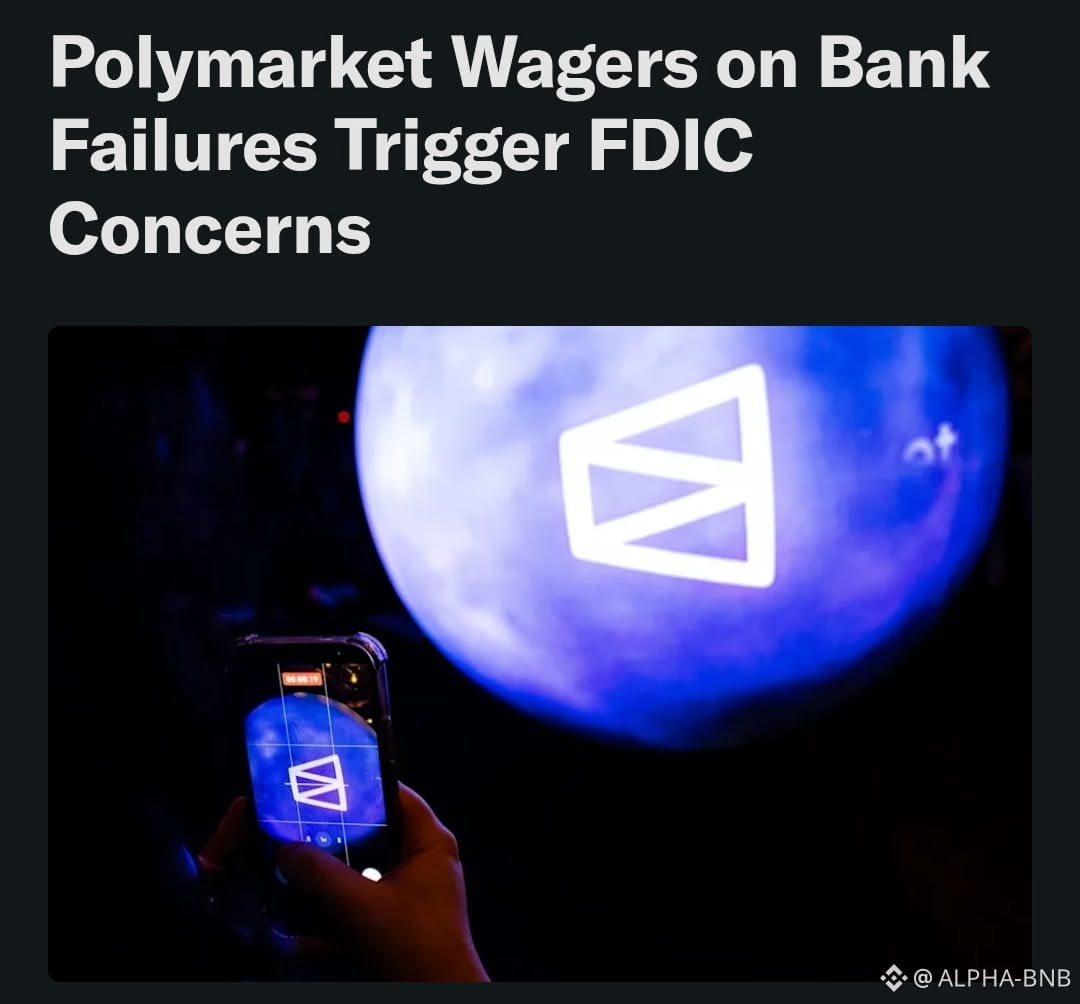
Polymarket’s bets on potential bank failures are now drawing attention from the FDIC.
Traders are betting on whether major banks like JPMorgan, Wells Fargo and Bank of America could fail by the end of 2026.
The interesting part? Reported trading volume is still relatively small, around $76K for these contracts.
But the concern is bigger than the money involved.
If people start treating prediction market odds as a warning signal, could that affect depositor confidence and potentially accelerate a bank run?
At the same time, these markets could provide another way to measure financial risk and market sentiment.
Personally, I think the real question is whether prediction markets can identify risks without amplifying them.
Small markets today, but an interesting debate for the future of finance.
What do you think? 👇
#PolymarketBankFailureBetsDrawFDICConcern #CoinMarketCapCompletesCoinglassAcquisition #CircleMints500MUSDCOnSolana
Have you seen this? 👀
Polymarket’s bets on potential bank failures are now drawing attention from the FDIC.
Traders are betting on whether major banks like JPMorgan, Wells Fargo and Bank of America could fail by the end of 2026.
The interesting part? Reported trading volume is still relatively small, around $76K for these contracts.
But the concern is bigger than the money involved.
If people start treating prediction market odds as a warning signal, could that affect depositor confidence and potentially accelerate a bank run?
At the same time, these markets could provide another way to measure financial risk and market sentiment.
Personally, I think the real question is whether prediction markets can identify risks without amplifying them.
Small markets today, but an interesting debate for the future of finance.
What do you think? 👇
#PolymarketBankFailureBetsDrawFDICConcern #CoinMarketCapCompletesCoinglassAcquisition #CircleMints500MUSDCOnSolana
Polymarket’s bets on potential bank failures are now drawing attention from the FDIC.
Traders are betting on whether major banks like JPMorgan, Wells Fargo and Bank of America could fail by the end of 2026.
The interesting part? Reported trading volume is still relatively small, around $76K for these contracts.
But the concern is bigger than the money involved.
If people start treating prediction market odds as a warning signal, could that affect depositor confidence and potentially accelerate a bank run?
At the same time, these markets could provide another way to measure financial risk and market sentiment.
Personally, I think the real question is whether prediction markets can identify risks without amplifying them.
Small markets today, but an interesting debate for the future of finance.
What do you think? 👇
#PolymarketBankFailureBetsDrawFDICConcern #CoinMarketCapCompletesCoinglassAcquisition #CircleMints500MUSDCOnSolana
2
181

·
--
#polymarketbankfailurebetsdrawfdicconcern
🏛️ Regulatory Oversight: FDIC Raises Concerns Over Prediction Market Contracts Targeting Banking Instability 📉
Prediction markets face fresh regulatory scrutiny! Internal reports confirm that the Federal Deposit Insurance Corporation (FDIC) and federal lawmakers are closely monitoring prediction-market contracts on platforms like Polymarket that allow users to speculate on potential bank failures.
While trading volume on contracts tied to institutions like Wells Fargo, JPMorgan, and Bank of America remains modest—ranging from hundreds to thousands of dollars—officials voice concern that high-volume speculative bets could trigger panic, fuel rumors, and potentially provoke real-world bank runs.
💡 Key Highlights:
🚨 Systemic Risk Concerns: Former FDIC leadership and regulatory experts warn that binary failure contracts lack commercial hedging utility while creating dangerous incentives for bad actors to spread market-panicking rumors on social media.
🔒 Ethics & Non-Public Information: Senior FDIC officials held internal discussions regarding insider trading rules, confirming that agency staff holding access to confidential "problem bank" lists are strictly barred from participating in failure markets.
🗣️ Polymarket Defends Market Transparency: Polymarket pushed back against criticism, arguing that decentralized prediction markets aggregate distributed information in real-time, providing a transparent risk signal to ordinary investors rather than obscuring data within closed institutional walls.
Do you view prediction contracts on bank stability as a valuable early-warning signal or an unjustified risk to financial stability? Share your take below! 👇
#StrategyStriveAdd2305BitcoinThisWeek #CircleMints500MUSDCOnSolana #CryptoNews
#polymarketbankfailurebetsdrawfdicconcern
🏛️ Regulatory Oversight: FDIC Raises Concerns Over Prediction Market Contracts Targeting Banking Instability 📉
Prediction markets face fresh regulatory scrutiny! Internal reports confirm that the Federal Deposit Insurance Corporation (FDIC) and federal lawmakers are closely monitoring prediction-market contracts on platforms like Polymarket that allow users to speculate on potential bank failures.
While trading volume on contracts tied to institutions like Wells Fargo, JPMorgan, and Bank of America remains modest—ranging from hundreds to thousands of dollars—officials voice concern that high-volume speculative bets could trigger panic, fuel rumors, and potentially provoke real-world bank runs.
💡 Key Highlights:
🚨 Systemic Risk Concerns: Former FDIC leadership and regulatory experts warn that binary failure contracts lack commercial hedging utility while creating dangerous incentives for bad actors to spread market-panicking rumors on social media.
🔒 Ethics & Non-Public Information: Senior FDIC officials held internal discussions regarding insider trading rules, confirming that agency staff holding access to confidential "problem bank" lists are strictly barred from participating in failure markets.
🗣️ Polymarket Defends Market Transparency: Polymarket pushed back against criticism, arguing that decentralized prediction markets aggregate distributed information in real-time, providing a transparent risk signal to ordinary investors rather than obscuring data within closed institutional walls.
Do you view prediction contracts on bank stability as a valuable early-warning signal or an unjustified risk to financial stability? Share your take below! 👇
#StrategyStriveAdd2305BitcoinThisWeek #CircleMints500MUSDCOnSolana #CryptoNews
🏛️ Regulatory Oversight: FDIC Raises Concerns Over Prediction Market Contracts Targeting Banking Instability 📉
Prediction markets face fresh regulatory scrutiny! Internal reports confirm that the Federal Deposit Insurance Corporation (FDIC) and federal lawmakers are closely monitoring prediction-market contracts on platforms like Polymarket that allow users to speculate on potential bank failures.
While trading volume on contracts tied to institutions like Wells Fargo, JPMorgan, and Bank of America remains modest—ranging from hundreds to thousands of dollars—officials voice concern that high-volume speculative bets could trigger panic, fuel rumors, and potentially provoke real-world bank runs.
💡 Key Highlights:
🚨 Systemic Risk Concerns: Former FDIC leadership and regulatory experts warn that binary failure contracts lack commercial hedging utility while creating dangerous incentives for bad actors to spread market-panicking rumors on social media.
🔒 Ethics & Non-Public Information: Senior FDIC officials held internal discussions regarding insider trading rules, confirming that agency staff holding access to confidential "problem bank" lists are strictly barred from participating in failure markets.
🗣️ Polymarket Defends Market Transparency: Polymarket pushed back against criticism, arguing that decentralized prediction markets aggregate distributed information in real-time, providing a transparent risk signal to ordinary investors rather than obscuring data within closed institutional walls.
Do you view prediction contracts on bank stability as a valuable early-warning signal or an unjustified risk to financial stability? Share your take below! 👇
#StrategyStriveAdd2305BitcoinThisWeek #CircleMints500MUSDCOnSolana #CryptoNews
2
189
🔎 Prediction Markets vs Financial Stability
Bank-failure contracts are becoming a new point of debate as prediction markets expand.
FDIC officials have reportedly questioned the potential impact of these contracts, while Polymarket argues prediction markets can aggregate information from participants.
For spot-focused investors, the key is separating market signals from speculation. Watch $BTC $ETH $SOL closely. 📈
#polymarketbankfailurebetsdrawfdicconcern
🔎 Prediction Markets vs Financial Stability
Bank-failure contracts are becoming a new point of debate as prediction markets expand.
FDIC officials have reportedly questioned the potential impact of these contracts, while Polymarket argues prediction markets can aggregate information from participants.
For spot-focused investors, the key is separating market signals from speculation. Watch $BTC $ETH $SOL closely. 📈
#polymarketbankfailurebetsdrawfdicconcern
Bank-failure contracts are becoming a new point of debate as prediction markets expand.
FDIC officials have reportedly questioned the potential impact of these contracts, while Polymarket argues prediction markets can aggregate information from participants.
For spot-focused investors, the key is separating market signals from speculation. Watch $BTC $ETH $SOL closely. 📈
#polymarketbankfailurebetsdrawfdicconcern
Farzanahameed01:
Totally agree with you! Prediction markets are great as an early warning signal, but only when combined with on-chain data. Alone they can definitely create extra fear. Your approach of watching $BTC $ETH $SOL flows + price action together is the smartest way. It's a signal, not a strategy
5
5
1.4k
🚨 BANK FAILURE BETS DRAW FDIC ATTENTION
Polymarket contracts tied to major banks are drawing scrutiny from FDIC officials. 📊
The concern is that larger volumes could influence depositor sentiment and amplify financial-market volatility.
For spot traders, watch $BTC $ETH $BNB as risk sentiment shifts. 🔥
#polymarketbankfailurebetsdrawfdicconcern
🚨 BANK FAILURE BETS DRAW FDIC ATTENTION
Polymarket contracts tied to major banks are drawing scrutiny from FDIC officials. 📊
The concern is that larger volumes could influence depositor sentiment and amplify financial-market volatility.
For spot traders, watch $BTC $ETH $BNB as risk sentiment shifts. 🔥
#polymarketbankfailurebetsdrawfdicconcern
Polymarket contracts tied to major banks are drawing scrutiny from FDIC officials. 📊
The concern is that larger volumes could influence depositor sentiment and amplify financial-market volatility.
For spot traders, watch $BTC $ETH $BNB as risk sentiment shifts. 🔥
#polymarketbankfailurebetsdrawfdicconcern
18

·
--
Article
Polymarket Bank-Failure Bets Draw FDIC Attention: Could Prediction Markets Fuel Panic?#polymarketbankfailurebetsdrawfdicconcern
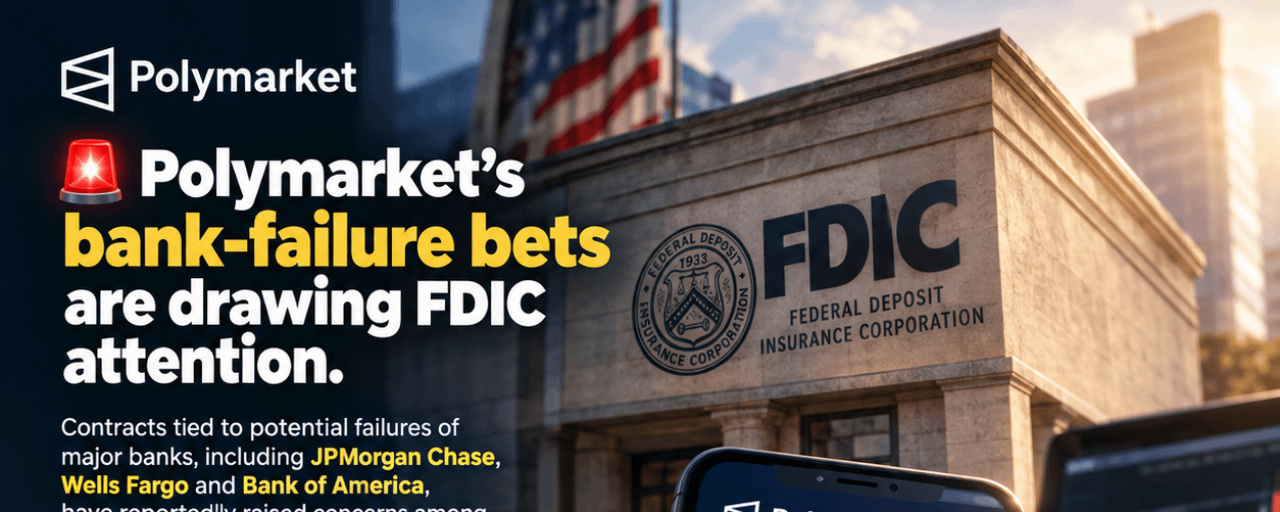
🚨 Polymarket’s Bank-Failure Bets Are Drawing FDIC Attention
Prediction markets are increasingly moving into areas that regulators normally watch closely.
Polymarket contracts tied to potential failures of major banks — including JPMorgan Chase, Wells Fargo and Bank of America — have reportedly drawn scrutiny from US banking officials, according to Bloomberg.
The contracts are still relatively small compared with the broader prediction-market ecosystem. Recent wagers tied to banks failing by the end of 2026 had around $76,000 in total volume, while an earlier group of bank-failure contracts generated about $591,000.
But the size of the market isn't the only issue.
🏦 Why is the FDIC paying attention?
The Federal Deposit Insurance Corporation reportedly discussed whether these contracts could create risks if they became larger and more influential.
The concern is not simply that traders are betting on whether a bank will fail.
It's what could happen after the prediction gets attention.
A prediction market can turn a possibility into a highly visible headline. If enough people see a market suggesting that a bank could fail, that information could potentially influence how depositors behave.
That creates a feedback loop worth watching:
Prediction → attention → depositor reaction → liquidity pressure
Bloomberg reported that FDIC officials specifically considered whether these contracts could eventually contribute to a real-world bank run. The agency also discussed whether its existing ethics rules were sufficient to prevent employees with access to confidential information from trading on such markets.
📊 But a prediction isn't proof of a bank problem
This distinction matters.
The existence of a market where traders can bet on a bank failure doesn't mean the bank is actually approaching failure.
In fact, research from the Federal Reserve Bank of Richmond published in 2026 notes that bank failures are generally preceded by weak fundamentals such as poor loan performance, low capital or declining earnings. Depositor runs can accelerate a crisis, but the research says they are rarely the fundamental root cause.
So traders shouldn't automatically interpret prediction-market activity as a fundamental signal.
It's another piece of information — and one that needs context.
🔄 The interesting part: markets can influence what they measure
This is where prediction markets become particularly interesting.
Normally, markets are expected to reflect information.
But when the underlying event involves human behavior, the market itself can potentially become part of the information environment.
Imagine a scenario:
A prediction market shows increased trading around a potential bank failure.
↓
The market receives attention on social media.
↓
More people become aware of the possibility.
↓
Some depositors become concerned and move money.
↓
The bank experiences additional liquidity pressure.
The original prediction hasn't necessarily been correct.
Yet the attention surrounding it could potentially affect the outcome.
That's the regulatory concern worth watching.
🌐 Why this matters for crypto
Crypto traders are already familiar with prediction markets becoming a real-time source of market sentiment.
Polymarket covers everything from crypto and finance to politics, sports and technology. The expansion into financial-system events creates a different question:
Where does information discovery end and market influence begin?
For crypto, this matters because prediction markets increasingly sit at the intersection of trading, information and social media.
A market can move quickly when a headline breaks. But the headline can also change what traders believe, which can change their behavior.
That's why volume alone shouldn't be treated as confirmation.
👀 What traders should watch
For markets, the important signals are likely to be:
Changes in prediction-market volumeWhether major financial news confirms the underlying narrativeBank deposit and liquidity dataCredit-market stressOfficial statements from regulatorsWhether social-media discussion begins acceleratingWhether actual bank fundamentals are changing
The FDIC's reported concerns don't establish that any of the named banks are facing imminent failure.
The more interesting question is whether prediction markets can remain information tools without becoming catalysts for the events they're measuring.
My take
Prediction markets are designed to aggregate information.
But when the event being predicted is a potential bank failure, the information itself can influence behavior.
That's the loop traders should keep an eye on:
Prediction → attention → reaction → liquidity.
The line between predicting a market event and influencing it could become increasingly important as prediction markets expand into financial-system risks.
#Polymarket #Crypto #PredictionMarkets #Markets #FDIC #Banking #Trading
Polymarket Bank-Failure Bets Draw FDIC Attention: Could Prediction Markets Fuel Panic?
#polymarketbankfailurebetsdrawfdicconcern
🚨 Polymarket’s Bank-Failure Bets Are Drawing FDIC Attention
Prediction markets are increasingly moving into areas that regulators normally watch closely.
Polymarket contracts tied to potential failures of major banks — including JPMorgan Chase, Wells Fargo and Bank of America — have reportedly drawn scrutiny from US banking officials, according to Bloomberg.
The contracts are still relatively small compared with the broader prediction-market ecosystem. Recent wagers tied to banks failing by the end of 2026 had around $76,000 in total volume, while an earlier group of bank-failure contracts generated about $591,000.
But the size of the market isn't the only issue.
🏦 Why is the FDIC paying attention?
The Federal Deposit Insurance Corporation reportedly discussed whether these contracts could create risks if they became larger and more influential.
The concern is not simply that traders are betting on whether a bank will fail.
It's what could happen after the prediction gets attention.
A prediction market can turn a possibility into a highly visible headline. If enough people see a market suggesting that a bank could fail, that information could potentially influence how depositors behave.
That creates a feedback loop worth watching:
Prediction → attention → depositor reaction → liquidity pressure
Bloomberg reported that FDIC officials specifically considered whether these contracts could eventually contribute to a real-world bank run. The agency also discussed whether its existing ethics rules were sufficient to prevent employees with access to confidential information from trading on such markets.
📊 But a prediction isn't proof of a bank problem
This distinction matters.
The existence of a market where traders can bet on a bank failure doesn't mean the bank is actually approaching failure.
In fact, research from the Federal Reserve Bank of Richmond published in 2026 notes that bank failures are generally preceded by weak fundamentals such as poor loan performance, low capital or declining earnings. Depositor runs can accelerate a crisis, but the research says they are rarely the fundamental root cause.
So traders shouldn't automatically interpret prediction-market activity as a fundamental signal.
It's another piece of information — and one that needs context.
🔄 The interesting part: markets can influence what they measure
This is where prediction markets become particularly interesting.
Normally, markets are expected to reflect information.
But when the underlying event involves human behavior, the market itself can potentially become part of the information environment.
Imagine a scenario:
A prediction market shows increased trading around a potential bank failure.
↓
The market receives attention on social media.
↓
More people become aware of the possibility.
↓
Some depositors become concerned and move money.
↓
The bank experiences additional liquidity pressure.
The original prediction hasn't necessarily been correct.
Yet the attention surrounding it could potentially affect the outcome.
That's the regulatory concern worth watching.
🌐 Why this matters for crypto
Crypto traders are already familiar with prediction markets becoming a real-time source of market sentiment.
Polymarket covers everything from crypto and finance to politics, sports and technology. The expansion into financial-system events creates a different question:
Where does information discovery end and market influence begin?
For crypto, this matters because prediction markets increasingly sit at the intersection of trading, information and social media.
A market can move quickly when a headline breaks. But the headline can also change what traders believe, which can change their behavior.
That's why volume alone shouldn't be treated as confirmation.
👀 What traders should watch
For markets, the important signals are likely to be:
Changes in prediction-market volumeWhether major financial news confirms the underlying narrativeBank deposit and liquidity dataCredit-market stressOfficial statements from regulatorsWhether social-media discussion begins acceleratingWhether actual bank fundamentals are changing
The FDIC's reported concerns don't establish that any of the named banks are facing imminent failure.
The more interesting question is whether prediction markets can remain information tools without becoming catalysts for the events they're measuring.
My take
Prediction markets are designed to aggregate information.
But when the event being predicted is a potential bank failure, the information itself can influence behavior.
That's the loop traders should keep an eye on:
Prediction → attention → reaction → liquidity.
The line between predicting a market event and influencing it could become increasingly important as prediction markets expand into financial-system risks.
#Polymarket #Crypto #PredictionMarkets #Markets #FDIC #Banking #Trading
🚨 Polymarket’s Bank-Failure Bets Are Drawing FDIC Attention
Prediction markets are increasingly moving into areas that regulators normally watch closely.
Polymarket contracts tied to potential failures of major banks — including JPMorgan Chase, Wells Fargo and Bank of America — have reportedly drawn scrutiny from US banking officials, according to Bloomberg.
The contracts are still relatively small compared with the broader prediction-market ecosystem. Recent wagers tied to banks failing by the end of 2026 had around $76,000 in total volume, while an earlier group of bank-failure contracts generated about $591,000.
But the size of the market isn't the only issue.
🏦 Why is the FDIC paying attention?
The Federal Deposit Insurance Corporation reportedly discussed whether these contracts could create risks if they became larger and more influential.
The concern is not simply that traders are betting on whether a bank will fail.
It's what could happen after the prediction gets attention.
A prediction market can turn a possibility into a highly visible headline. If enough people see a market suggesting that a bank could fail, that information could potentially influence how depositors behave.
That creates a feedback loop worth watching:
Prediction → attention → depositor reaction → liquidity pressure
Bloomberg reported that FDIC officials specifically considered whether these contracts could eventually contribute to a real-world bank run. The agency also discussed whether its existing ethics rules were sufficient to prevent employees with access to confidential information from trading on such markets.
📊 But a prediction isn't proof of a bank problem
This distinction matters.
The existence of a market where traders can bet on a bank failure doesn't mean the bank is actually approaching failure.
In fact, research from the Federal Reserve Bank of Richmond published in 2026 notes that bank failures are generally preceded by weak fundamentals such as poor loan performance, low capital or declining earnings. Depositor runs can accelerate a crisis, but the research says they are rarely the fundamental root cause.
So traders shouldn't automatically interpret prediction-market activity as a fundamental signal.
It's another piece of information — and one that needs context.
🔄 The interesting part: markets can influence what they measure
This is where prediction markets become particularly interesting.
Normally, markets are expected to reflect information.
But when the underlying event involves human behavior, the market itself can potentially become part of the information environment.
Imagine a scenario:
A prediction market shows increased trading around a potential bank failure.
↓
The market receives attention on social media.
↓
More people become aware of the possibility.
↓
Some depositors become concerned and move money.
↓
The bank experiences additional liquidity pressure.
The original prediction hasn't necessarily been correct.
Yet the attention surrounding it could potentially affect the outcome.
That's the regulatory concern worth watching.
🌐 Why this matters for crypto
Crypto traders are already familiar with prediction markets becoming a real-time source of market sentiment.
Polymarket covers everything from crypto and finance to politics, sports and technology. The expansion into financial-system events creates a different question:
Where does information discovery end and market influence begin?
For crypto, this matters because prediction markets increasingly sit at the intersection of trading, information and social media.
A market can move quickly when a headline breaks. But the headline can also change what traders believe, which can change their behavior.
That's why volume alone shouldn't be treated as confirmation.
👀 What traders should watch
For markets, the important signals are likely to be:
Changes in prediction-market volumeWhether major financial news confirms the underlying narrativeBank deposit and liquidity dataCredit-market stressOfficial statements from regulatorsWhether social-media discussion begins acceleratingWhether actual bank fundamentals are changing
The FDIC's reported concerns don't establish that any of the named banks are facing imminent failure.
The more interesting question is whether prediction markets can remain information tools without becoming catalysts for the events they're measuring.
My take
Prediction markets are designed to aggregate information.
But when the event being predicted is a potential bank failure, the information itself can influence behavior.
That's the loop traders should keep an eye on:
Prediction → attention → reaction → liquidity.
The line between predicting a market event and influencing it could become increasingly important as prediction markets expand into financial-system risks.
#Polymarket #Crypto #PredictionMarkets #Markets #FDIC #Banking #Trading
9
·
--
Verified
#polymarketbankfailurebetsdrawfdicconcern
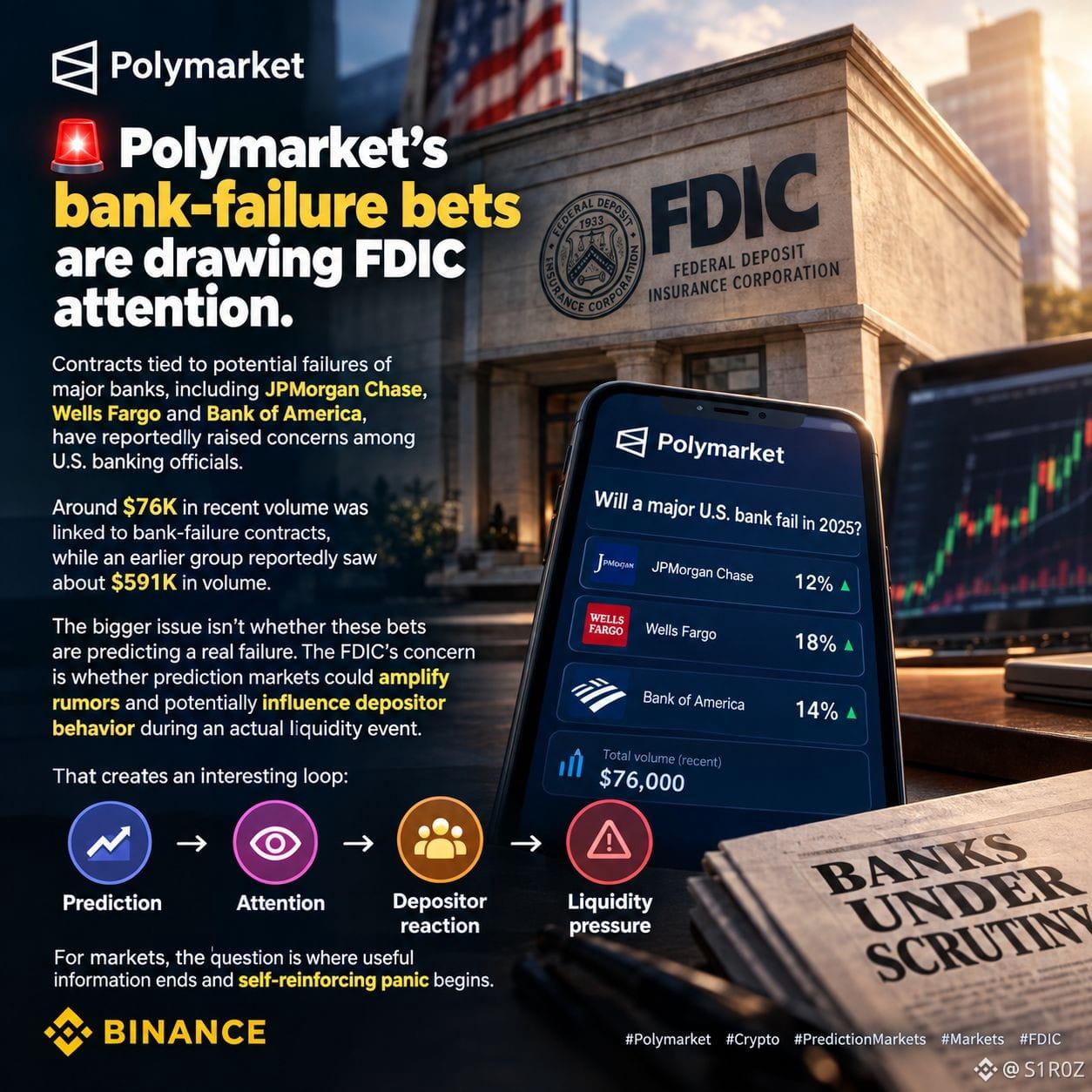
🚨 Polymarket’s bank-failure bets are drawing FDIC attention.
Contracts tied to potential failures of major banks, including JPMorgan Chase, Wells Fargo and Bank of America, have reportedly raised concerns among U.S. banking officials.
Around $76K in recent volume was linked to bank-failure contracts, while an earlier group reportedly saw about $591K in volume.
The bigger issue isn’t whether these bets are predicting a real failure. The FDIC’s concern is whether prediction markets could amplify rumors and potentially influence depositor behavior during an actual liquidity event.
That creates an interesting loop:
Prediction → attention → depositor reaction → liquidity pressure
For markets, the question is where useful information ends and self-reinforcing panic begins.
$MARSCOIN $KMNO $2Z
{spot}(2ZUSDT)
{spot}(KMNOUSDT)
{spot}(MARSCOINUSDT)
#Polymarket #crypto #PredictionMarkets #markets #FDIC
#polymarketbankfailurebetsdrawfdicconcern
🚨 Polymarket’s bank-failure bets are drawing FDIC attention.
Contracts tied to potential failures of major banks, including JPMorgan Chase, Wells Fargo and Bank of America, have reportedly raised concerns among U.S. banking officials.
Around $76K in recent volume was linked to bank-failure contracts, while an earlier group reportedly saw about $591K in volume.
The bigger issue isn’t whether these bets are predicting a real failure. The FDIC’s concern is whether prediction markets could amplify rumors and potentially influence depositor behavior during an actual liquidity event.
That creates an interesting loop:
Prediction → attention → depositor reaction → liquidity pressure
For markets, the question is where useful information ends and self-reinforcing panic begins.
$MARSCOIN $KMNO $2Z
#Polymarket #crypto #PredictionMarkets #markets #FDIC
🚨 Polymarket’s bank-failure bets are drawing FDIC attention.
Contracts tied to potential failures of major banks, including JPMorgan Chase, Wells Fargo and Bank of America, have reportedly raised concerns among U.S. banking officials.
Around $76K in recent volume was linked to bank-failure contracts, while an earlier group reportedly saw about $591K in volume.
The bigger issue isn’t whether these bets are predicting a real failure. The FDIC’s concern is whether prediction markets could amplify rumors and potentially influence depositor behavior during an actual liquidity event.
That creates an interesting loop:
Prediction → attention → depositor reaction → liquidity pressure
For markets, the question is where useful information ends and self-reinforcing panic begins.
$MARSCOIN $KMNO $2Z
#Polymarket #crypto #PredictionMarkets #markets #FDIC
13
💰 $76K BETS — AND REGULATORS ARE WATCHING
Polymarket contracts covering potential bank failures have generated around $76,000 in volume. 📊
FDIC officials have raised concerns about what could happen if these markets become much larger.
Spot traders should monitor $BTC $ETH $BNB when traditional-finance risk headlines accelerate. ⚡
#polymarketbankfailurebetsdrawfdicconcern
💰 $76K BETS — AND REGULATORS ARE WATCHING
Polymarket contracts covering potential bank failures have generated around $76,000 in volume. 📊
FDIC officials have raised concerns about what could happen if these markets become much larger.
Spot traders should monitor $BTC $ETH $BNB when traditional-finance risk headlines accelerate. ⚡
#polymarketbankfailurebetsdrawfdicconcern
Polymarket contracts covering potential bank failures have generated around $76,000 in volume. 📊
FDIC officials have raised concerns about what could happen if these markets become much larger.
Spot traders should monitor $BTC $ETH $BNB when traditional-finance risk headlines accelerate. ⚡
#polymarketbankfailurebetsdrawfdicconcern
235
🚨 Why Are Regulators Watching Polymarket?
Contracts asking whether major banks could fail are attracting attention from U.S. banking officials.
The concern reported by Bloomberg is that much larger volumes could potentially amplify fear around individual banks.
Crypto traders should watch how this develops across traditional finance and spot markets. $BTC $ETH 📊
#polymarketbankfailurebetsdrawfdicconcern
🚨 Why Are Regulators Watching Polymarket?
Contracts asking whether major banks could fail are attracting attention from U.S. banking officials.
The concern reported by Bloomberg is that much larger volumes could potentially amplify fear around individual banks.
Crypto traders should watch how this develops across traditional finance and spot markets. $BTC $ETH 📊
#polymarketbankfailurebetsdrawfdicconcern
Contracts asking whether major banks could fail are attracting attention from U.S. banking officials.
The concern reported by Bloomberg is that much larger volumes could potentially amplify fear around individual banks.
Crypto traders should watch how this develops across traditional finance and spot markets. $BTC $ETH 📊
#polymarketbankfailurebetsdrawfdicconcern
10
📊 $76K Bank-Failure Market — Small, But Noticed
Polymarket's year-end bank-failure contracts have generated roughly $76,000 in trading volume.
FDIC officials reportedly discussed concerns around these markets, including potential use of nonpublic information. Existing ethics rules were considered sufficient to prohibit such trading by FDIC employees.
Keep your focus on transparent market data when trading $BTC $ETH and $SOL.
#polymarketbankfailurebetsdrawfdicconcern
📊 $76K Bank-Failure Market — Small, But Noticed
Polymarket's year-end bank-failure contracts have generated roughly $76,000 in trading volume.
FDIC officials reportedly discussed concerns around these markets, including potential use of nonpublic information. Existing ethics rules were considered sufficient to prohibit such trading by FDIC employees.
Keep your focus on transparent market data when trading $BTC $ETH and $SOL.
#polymarketbankfailurebetsdrawfdicconcern
Polymarket's year-end bank-failure contracts have generated roughly $76,000 in trading volume.
FDIC officials reportedly discussed concerns around these markets, including potential use of nonpublic information. Existing ethics rules were considered sufficient to prohibit such trading by FDIC employees.
Keep your focus on transparent market data when trading $BTC $ETH and $SOL.
#polymarketbankfailurebetsdrawfdicconcern
1
332

·
--
#polymarketbankfailurebetsdrawfdicconcern 🚨
Polymarket bets on JPMorgan, Bank of America and Wells Fargo collapsing are reportedly raising concerns at the FDIC
and in Congress.
Prediction markets are getting so big that regulators are now questioning whether betting on
bank failures could actually fuel panic.
👀$BOME $SENT $1000XEC
#polymarketbankfailurebetsdrawfdicconcern 🚨
Polymarket bets on JPMorgan, Bank of America and Wells Fargo collapsing are reportedly raising concerns at the FDIC
and in Congress.
Prediction markets are getting so big that regulators are now questioning whether betting on
bank failures could actually fuel panic.
👀$BOME $SENT $1000XEC
Polymarket bets on JPMorgan, Bank of America and Wells Fargo collapsing are reportedly raising concerns at the FDIC
and in Congress.
Prediction markets are getting so big that regulators are now questioning whether betting on
bank failures could actually fuel panic.
👀$BOME $SENT $1000XEC
Theodora Hema q1Fp:
https://app.binance.com/uni-qr/cpro/Square-Creator-9cb583b693a78?l=en&r=URQ1QSTL&uc=app_square_share_link&us=copylink
6 followers left 20$
1
1
1.4k

#PolymarketBankFailureBetsDrawFDICConcern
🔥 INTERESTING: Prediction markets just entered the banking conversation in a big way.
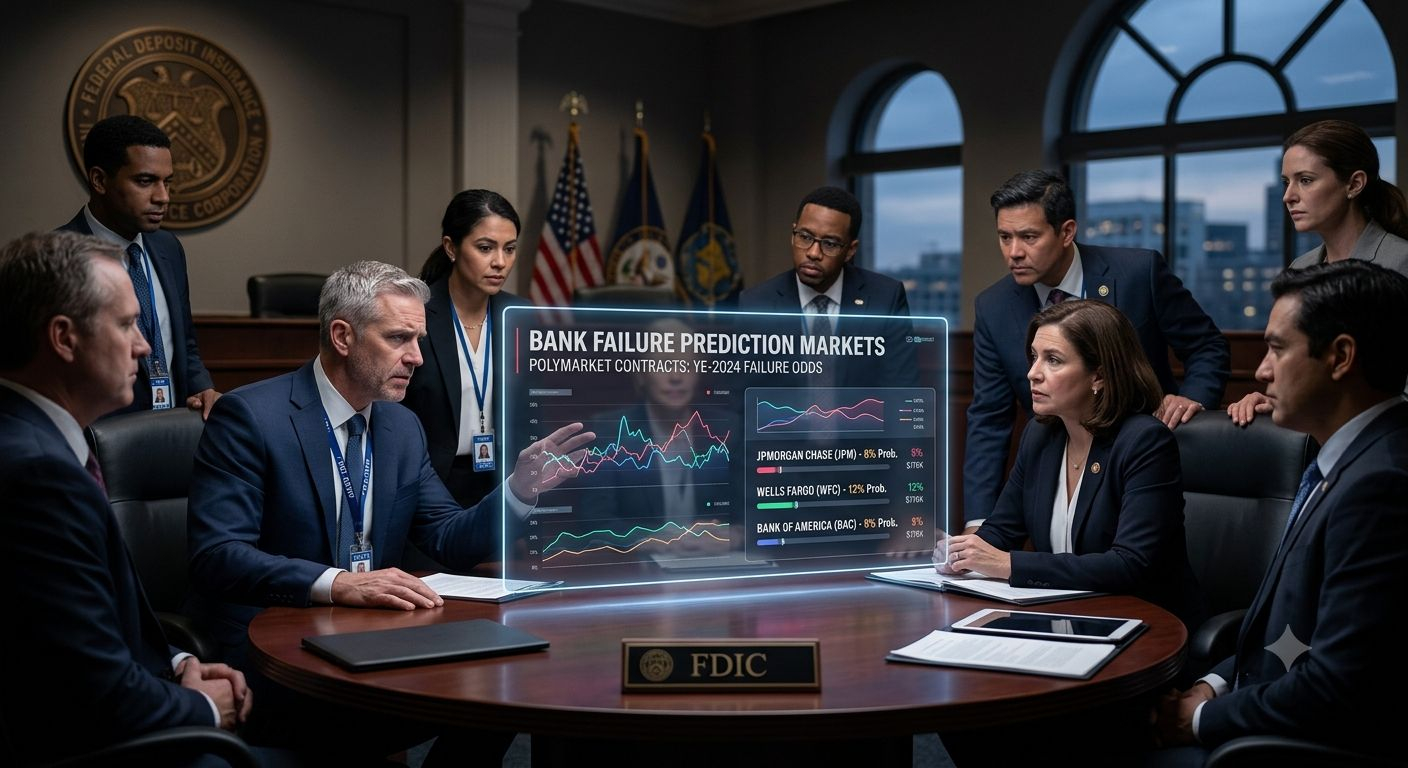
Polymarket contracts betting on the potential failure of major U.S. banks — including JPMorgan, Wells Fargo, and Bank of America — are drawing attention from the FDIC and members of Congress, according to Bloomberg.
Even though current trading volumes remain relatively small (around $76K on recent year-end failure contracts), regulators are watching closely. Some officials worry that if these markets grow significantly, they could theoretically influence real-world confidence or contribute to bank-run dynamics.
Polymarket itself is an offshore platform that restricts U.S. users, yet the mere existence of these contracts has sparked internal discussions at the FDIC about ethics rules and market implications.
Prediction markets are powerful tools for aggregating information — but when the underlying assets are the stability of systemically important banks, the conversation quickly moves from speculation to systemic risk.
Is this just noise, or an early signal that traditional finance is starting to feel the weight of decentralized prediction markets?
What do you think — healthy price discovery or a potential flashpoint?
#Polymarket #Banking #FDIC #JPMorgan #WellsFargo #BankOfAmerica #PredictionMarkets #Crypto #Finance #DeFi #Stablecoins #BinanceSquare
#PolymarketBankFailureBetsDrawFDICConcern
🔥 INTERESTING: Prediction markets just entered the banking conversation in a big way.
Polymarket contracts betting on the potential failure of major U.S. banks — including JPMorgan, Wells Fargo, and Bank of America — are drawing attention from the FDIC and members of Congress, according to Bloomberg.
Even though current trading volumes remain relatively small (around $76K on recent year-end failure contracts), regulators are watching closely. Some officials worry that if these markets grow significantly, they could theoretically influence real-world confidence or contribute to bank-run dynamics.
Polymarket itself is an offshore platform that restricts U.S. users, yet the mere existence of these contracts has sparked internal discussions at the FDIC about ethics rules and market implications.
Prediction markets are powerful tools for aggregating information — but when the underlying assets are the stability of systemically important banks, the conversation quickly moves from speculation to systemic risk.
Is this just noise, or an early signal that traditional finance is starting to feel the weight of decentralized prediction markets?
What do you think — healthy price discovery or a potential flashpoint?
#Polymarket #Banking #FDIC #JPMorgan #WellsFargo #BankOfAmerica #PredictionMarkets #Crypto #Finance #DeFi #Stablecoins #BinanceSquare
🔥 INTERESTING: Prediction markets just entered the banking conversation in a big way.
Polymarket contracts betting on the potential failure of major U.S. banks — including JPMorgan, Wells Fargo, and Bank of America — are drawing attention from the FDIC and members of Congress, according to Bloomberg.
Even though current trading volumes remain relatively small (around $76K on recent year-end failure contracts), regulators are watching closely. Some officials worry that if these markets grow significantly, they could theoretically influence real-world confidence or contribute to bank-run dynamics.
Polymarket itself is an offshore platform that restricts U.S. users, yet the mere existence of these contracts has sparked internal discussions at the FDIC about ethics rules and market implications.
Prediction markets are powerful tools for aggregating information — but when the underlying assets are the stability of systemically important banks, the conversation quickly moves from speculation to systemic risk.
Is this just noise, or an early signal that traditional finance is starting to feel the weight of decentralized prediction markets?
What do you think — healthy price discovery or a potential flashpoint?
#Polymarket #Banking #FDIC #JPMorgan #WellsFargo #BankOfAmerica #PredictionMarkets #Crypto #Finance #DeFi #Stablecoins #BinanceSquare
1
96

·
--
#polymarketbankfailurebetsdrawfdicconcern
Polymarket’s Bank Failure Bets Raise New Questions
Prediction markets are once again attracting attention as users speculate on potential bank failures.
While platforms like Polymarket can be viewed as a way to measure market expectations, betting on sensitive financial events raises an important question: when does market speculation begin to affect public confidence?
The FDIC’s concerns highlight the delicate balance between financial innovation and banking stability. A prediction market may simply reflect sentiment—but in the financial sector, sentiment itself can become powerful.
As prediction markets continue to evolve, regulators may face growing pressure to determine where innovation ends and systemic risk begins.
The bigger question is no longer just what the market predicts, but how those predictions could influence the market itself.
#PolymarketBankFailureBetsDrawFDICConcern
#polymarketbankfailurebetsdrawfdicconcern
Polymarket’s Bank Failure Bets Raise New Questions
Prediction markets are once again attracting attention as users speculate on potential bank failures.
While platforms like Polymarket can be viewed as a way to measure market expectations, betting on sensitive financial events raises an important question: when does market speculation begin to affect public confidence?
The FDIC’s concerns highlight the delicate balance between financial innovation and banking stability. A prediction market may simply reflect sentiment—but in the financial sector, sentiment itself can become powerful.
As prediction markets continue to evolve, regulators may face growing pressure to determine where innovation ends and systemic risk begins.
The bigger question is no longer just what the market predicts, but how those predictions could influence the market itself.
#PolymarketBankFailureBetsDrawFDICConcern
Polymarket’s Bank Failure Bets Raise New Questions
Prediction markets are once again attracting attention as users speculate on potential bank failures.
While platforms like Polymarket can be viewed as a way to measure market expectations, betting on sensitive financial events raises an important question: when does market speculation begin to affect public confidence?
The FDIC’s concerns highlight the delicate balance between financial innovation and banking stability. A prediction market may simply reflect sentiment—but in the financial sector, sentiment itself can become powerful.
As prediction markets continue to evolve, regulators may face growing pressure to determine where innovation ends and systemic risk begins.
The bigger question is no longer just what the market predicts, but how those predictions could influence the market itself.
#PolymarketBankFailureBetsDrawFDICConcern
Shazali002:
follow me guys I'm following back immediately
2
1
654
⚡ Bank-Failure Bets Meet Crypto Market Watch
Polymarket offers contracts on whether individual banks will fail, including major financial institutions. The offshore platform's contracts have now attracted regulatory attention.
The U.S. version of Polymarket does not offer these bank-failure contracts.
For spot traders, financial-system headlines can influence risk sentiment quickly. $BTC $ETH $BNB 👀
#polymarketbankfailurebetsdrawfdicconcern
⚡ Bank-Failure Bets Meet Crypto Market Watch
Polymarket offers contracts on whether individual banks will fail, including major financial institutions. The offshore platform's contracts have now attracted regulatory attention.
The U.S. version of Polymarket does not offer these bank-failure contracts.
For spot traders, financial-system headlines can influence risk sentiment quickly. $BTC $ETH $BNB 👀
#polymarketbankfailurebetsdrawfdicconcern
Polymarket offers contracts on whether individual banks will fail, including major financial institutions. The offshore platform's contracts have now attracted regulatory attention.
The U.S. version of Polymarket does not offer these bank-failure contracts.
For spot traders, financial-system headlines can influence risk sentiment quickly. $BTC $ETH $BNB 👀
#polymarketbankfailurebetsdrawfdicconcern
353

·
--
Bullish
#PolymarketBankFailureBetsDrawFDICConcern
Polymarket bank-failure bets involving major banks such as Wells Fargo, JPMorgan and Bank of America have drawn FDIC scrutiny. While the current betting volumes are small, regulators worry larger volumes could amplify fear and potentially contribute to bank-run dynamics. For stock-market traders, this is negative for banking-sector sentiment, particularly regional and smaller banks, though it does not by itself indicate an actual bank failure.
#PolymarketBankFailureBetsDrawFDICConcern
Polymarket bank-failure bets involving major banks such as Wells Fargo, JPMorgan and Bank of America have drawn FDIC scrutiny. While the current betting volumes are small, regulators worry larger volumes could amplify fear and potentially contribute to bank-run dynamics. For stock-market traders, this is negative for banking-sector sentiment, particularly regional and smaller banks, though it does not by itself indicate an actual bank failure.
Polymarket bank-failure bets involving major banks such as Wells Fargo, JPMorgan and Bank of America have drawn FDIC scrutiny. While the current betting volumes are small, regulators worry larger volumes could amplify fear and potentially contribute to bank-run dynamics. For stock-market traders, this is negative for banking-sector sentiment, particularly regional and smaller banks, though it does not by itself indicate an actual bank failure.
1
74

·
--
#PolymarketBankFailureBetsDrawFDICConcern
🚨 POLYMARKET IS BETTING ON BANK FAILURES?! 👀
Prediction markets are getting attention after Polymarket users placed bets on whether major banks—including JPMorgan, Bank of America and Wells Fargo—could fail.
The bets are currently relatively small, but the story has reportedly caught the attention of FDIC officials and lawmakers, who are concerned about what could happen if these markets ever became large enough to influence public sentiment or bank runs.
This raises a bigger question:
Are prediction markets simply reflecting market fears… or could they actually influence financial markets? 🤔
Crypto traders 👇
Would you trust a prediction market as an early warning signal?
#Binance #Crypto #Polymarket #Bitcoin #USDC #DeFi #Finance #Banking Banking #Web3 #BİNANCESQUARE #Binance
#PolymarketBankFailureBetsDrawFDICConcern
🚨 POLYMARKET IS BETTING ON BANK FAILURES?! 👀
Prediction markets are getting attention after Polymarket users placed bets on whether major banks—including JPMorgan, Bank of America and Wells Fargo—could fail.
The bets are currently relatively small, but the story has reportedly caught the attention of FDIC officials and lawmakers, who are concerned about what could happen if these markets ever became large enough to influence public sentiment or bank runs.
This raises a bigger question:
Are prediction markets simply reflecting market fears… or could they actually influence financial markets? 🤔
Crypto traders 👇
Would you trust a prediction market as an early warning signal?
#Binance #Crypto #Polymarket #Bitcoin #USDC #DeFi #Finance #Banking Banking #Web3 #BİNANCESQUARE #Binance
🚨 POLYMARKET IS BETTING ON BANK FAILURES?! 👀
Prediction markets are getting attention after Polymarket users placed bets on whether major banks—including JPMorgan, Bank of America and Wells Fargo—could fail.
The bets are currently relatively small, but the story has reportedly caught the attention of FDIC officials and lawmakers, who are concerned about what could happen if these markets ever became large enough to influence public sentiment or bank runs.
This raises a bigger question:
Are prediction markets simply reflecting market fears… or could they actually influence financial markets? 🤔
Crypto traders 👇
Would you trust a prediction market as an early warning signal?
#Binance #Crypto #Polymarket #Bitcoin #USDC #DeFi #Finance #Banking Banking #Web3 #BİNANCESQUARE #Binance
40

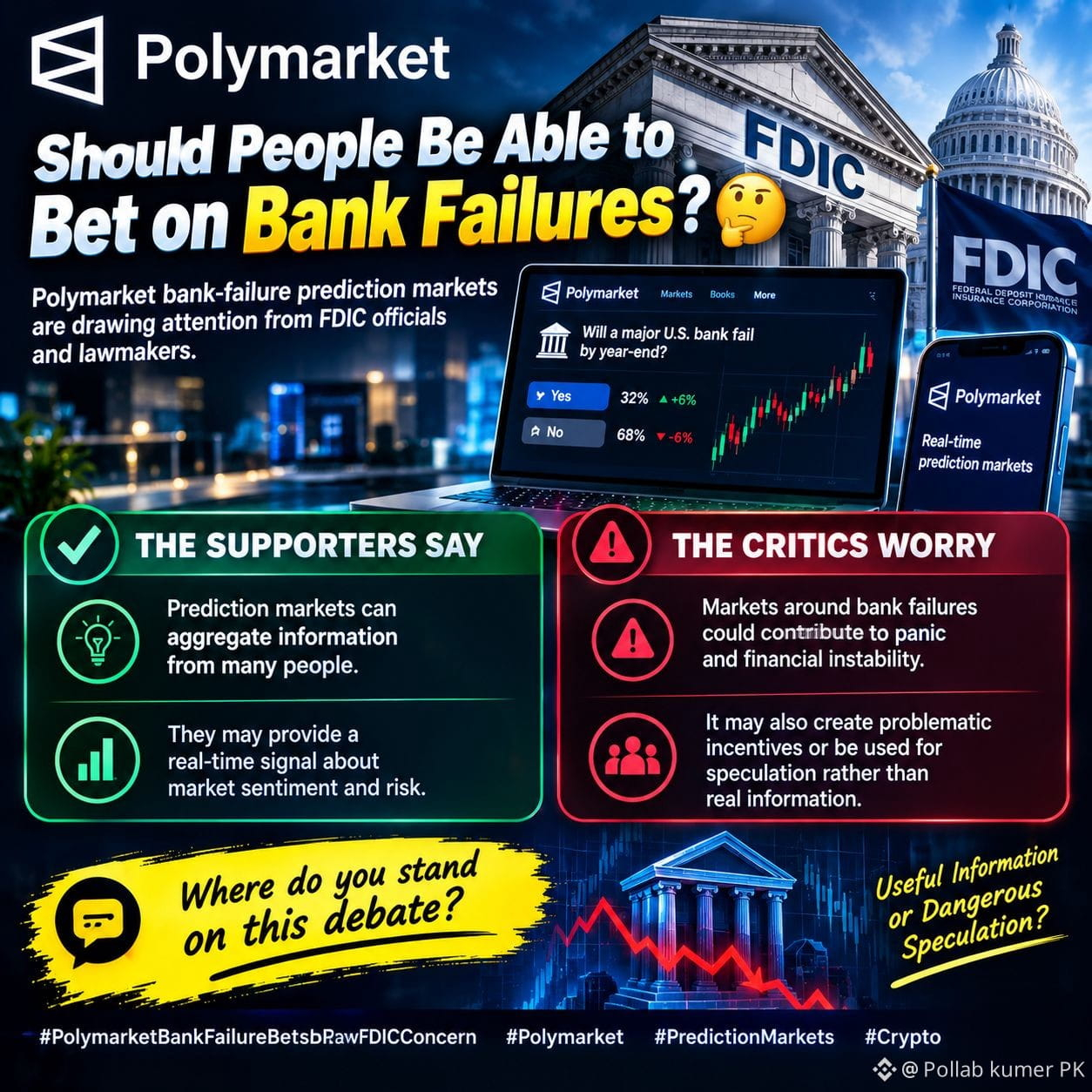
Should People Be Able to Bet on Bank Failures? 🤔
Polymarket bank-failure prediction markets are drawing attention from FDIC officials and lawmakers.
Supporters argue that prediction markets can aggregate information and provide a real-time signal.
Critics worry that markets around bank failures could contribute to panic or create problematic incentives.
Where do you stand on this debate?
#PolymarketBankFailureBetsDrawFDICConcern #Polymarket #PredictionMarkets #crypto
Should People Be Able to Bet on Bank Failures? 🤔
Polymarket bank-failure prediction markets are drawing attention from FDIC officials and lawmakers.
Supporters argue that prediction markets can aggregate information and provide a real-time signal.
Critics worry that markets around bank failures could contribute to panic or create problematic incentives.
Where do you stand on this debate?
#PolymarketBankFailureBetsDrawFDICConcern #Polymarket #PredictionMarkets #crypto
Polymarket bank-failure prediction markets are drawing attention from FDIC officials and lawmakers.
Supporters argue that prediction markets can aggregate information and provide a real-time signal.
Critics worry that markets around bank failures could contribute to panic or create problematic incentives.
Where do you stand on this debate?
#PolymarketBankFailureBetsDrawFDICConcern #Polymarket #PredictionMarkets #crypto
39

Prediction markets are supposed to price real-world probabilities, but betting on regional bank collapses might actually trigger the regulatory crackdown DeFi has been trying to dodge.
Most people jumping into these contracts think they are just playing a harmless macro hedge with their idle $USDT. In reality, capital gets trapped in illiquid outcome pools while regulators start viewing these binary bets as predatory speculation against systemic stability.
When platforms let retail speculate on bank insolvencies, it immediately catches the FDIC radar. Regulators do not look at this as free-market price discovery; they see an unregulated derivative that incentivizes bank runs and panic spreading across social feeds. The moment mainstream regulators decide prediction markets pose systemic risks to traditional finance, compliance pressure trickles down fast across on-chain settlement layers like $NEAR and broader DeFi rails.
If liquidity dries up or jurisdictions force sudden market freezes, anyone holding open positions ends up holding the bag on resolution disputes. We have seen how quickly intervention hits when crypto products touch traditional banking nerves.
Do you think targeting bank-failure markets will trigger harsher oversight across all prediction protocols, or will volume just migrate deeper on-chain?
#PolymarketBankFailureBetsDrawFDICConcern #CircleTetherFreezeBitgetHackerWallet
Prediction markets are supposed to price real-world probabilities, but betting on regional bank collapses might actually trigger the regulatory crackdown DeFi has been trying to dodge.
Most people jumping into these contracts think they are just playing a harmless macro hedge with their idle $USDT. In reality, capital gets trapped in illiquid outcome pools while regulators start viewing these binary bets as predatory speculation against systemic stability.
When platforms let retail speculate on bank insolvencies, it immediately catches the FDIC radar. Regulators do not look at this as free-market price discovery; they see an unregulated derivative that incentivizes bank runs and panic spreading across social feeds. The moment mainstream regulators decide prediction markets pose systemic risks to traditional finance, compliance pressure trickles down fast across on-chain settlement layers like $NEAR and broader DeFi rails.
If liquidity dries up or jurisdictions force sudden market freezes, anyone holding open positions ends up holding the bag on resolution disputes. We have seen how quickly intervention hits when crypto products touch traditional banking nerves.
Do you think targeting bank-failure markets will trigger harsher oversight across all prediction protocols, or will volume just migrate deeper on-chain?
#PolymarketBankFailureBetsDrawFDICConcern #CircleTetherFreezeBitgetHackerWallet
Most people jumping into these contracts think they are just playing a harmless macro hedge with their idle $USDT. In reality, capital gets trapped in illiquid outcome pools while regulators start viewing these binary bets as predatory speculation against systemic stability.
When platforms let retail speculate on bank insolvencies, it immediately catches the FDIC radar. Regulators do not look at this as free-market price discovery; they see an unregulated derivative that incentivizes bank runs and panic spreading across social feeds. The moment mainstream regulators decide prediction markets pose systemic risks to traditional finance, compliance pressure trickles down fast across on-chain settlement layers like $NEAR and broader DeFi rails.
If liquidity dries up or jurisdictions force sudden market freezes, anyone holding open positions ends up holding the bag on resolution disputes. We have seen how quickly intervention hits when crypto products touch traditional banking nerves.
Do you think targeting bank-failure markets will trigger harsher oversight across all prediction protocols, or will volume just migrate deeper on-chain?
#PolymarketBankFailureBetsDrawFDICConcern #CircleTetherFreezeBitgetHackerWallet
149

·
--
Everyone thinks betting on macroeconomic fallout is harmless hedging, but actually, treating prediction markets like a casino during banking stress is walking straight into a regulatory crosshair.
Too many traders park their $USDT into speculative disaster contracts expecting easy gains, only to find themselves trapped when sudden regulatory scrutiny freezes settlement liquidity right when they need to exit.
Prediction markets act like a digital thermometer for systemic panic. When retail traders pile capital into bank failure contracts, regulators like the FDIC do not see harmless wagering; they see incentives that could accelerate real-world bank runs. It is like shouting fire in a crowded room simply to win a bet on who reaches the emergency exit first.
If oversight agencies decide these contracts pose systemic threats, the fallout will not stay contained to betting dApps. The friction quickly ripples across settlement rails, collateral layers, and ecosystem liquidity where traders hold assets like $NEAR. In a market running on high greed, overlooking contract resolution rules and counterparty risk is how retail accounts get caught off guard.
How do you think regulators will handle decentralized prediction markets if banking volatility picks up again?
#PolymarketBankFailureBetsDrawFDICConcern #CircleMints500MUSDCOnSolana
Everyone thinks betting on macroeconomic fallout is harmless hedging, but actually, treating prediction markets like a casino during banking stress is walking straight into a regulatory crosshair.
Too many traders park their $USDT into speculative disaster contracts expecting easy gains, only to find themselves trapped when sudden regulatory scrutiny freezes settlement liquidity right when they need to exit.
Prediction markets act like a digital thermometer for systemic panic. When retail traders pile capital into bank failure contracts, regulators like the FDIC do not see harmless wagering; they see incentives that could accelerate real-world bank runs. It is like shouting fire in a crowded room simply to win a bet on who reaches the emergency exit first.
If oversight agencies decide these contracts pose systemic threats, the fallout will not stay contained to betting dApps. The friction quickly ripples across settlement rails, collateral layers, and ecosystem liquidity where traders hold assets like $NEAR . In a market running on high greed, overlooking contract resolution rules and counterparty risk is how retail accounts get caught off guard.
How do you think regulators will handle decentralized prediction markets if banking volatility picks up again?
#PolymarketBankFailureBetsDrawFDICConcern #CircleMints500MUSDCOnSolana
Too many traders park their $USDT into speculative disaster contracts expecting easy gains, only to find themselves trapped when sudden regulatory scrutiny freezes settlement liquidity right when they need to exit.
Prediction markets act like a digital thermometer for systemic panic. When retail traders pile capital into bank failure contracts, regulators like the FDIC do not see harmless wagering; they see incentives that could accelerate real-world bank runs. It is like shouting fire in a crowded room simply to win a bet on who reaches the emergency exit first.
If oversight agencies decide these contracts pose systemic threats, the fallout will not stay contained to betting dApps. The friction quickly ripples across settlement rails, collateral layers, and ecosystem liquidity where traders hold assets like $NEAR . In a market running on high greed, overlooking contract resolution rules and counterparty risk is how retail accounts get caught off guard.
How do you think regulators will handle decentralized prediction markets if banking volatility picks up again?
#PolymarketBankFailureBetsDrawFDICConcern #CircleMints500MUSDCOnSolana

149
Log in to explore more content
Join global crypto users on Binance Square
⚡️ Get latest and useful information about crypto.
💬 Trusted by the world’s largest crypto exchange.
👍 Discover real insights from verified creators.
Email / Phone number
Trending Topics
1
#UKFCAWinsCourtOrderToRecover851400Pounds
38,599 views
824 Discussing
2
#ChainlinkLaunchesCCIP2WithEnterpriseVerification
50,791 views
996 Discussing
3
#GoldFallsTo$4144
17,474 views
167 Discussing
4
#QNTFallsOver40%FromMorningHigh
98,373 views
1,389 Discussing
5
#USDTAdds845900HoldersInPast7Days
21,831 views
447 Discussing
6
#KospiFalls2.7%SamsungSKHynixDropOver5%
34,330 views
615 Discussing
7
#BitgetCEOConfirms$388MStolenInHack
5,683 views
43 Discussing
8
#BTCFallsBelow$83000
35,173 views
170 Discussing
9
#BitgetDetailsSecurityIncidentTimeline
56,070 views
764 Discussing
10
#BitcoinSpotETFs$2.39BWeeklyNetInflow
16,544 views
49 Discussing