

土豆谈币
4.7k Posts

土豆谈币
Report
Block User
公众号:《听宝儿姐说》,喂(TDTB07)自有投研团队,顶级一二级资源,擅长各种现货均线理论分析操作,以及短线合约策略入场布局!
14 Following
3.4K+ Followers
4.0K+ Liked
Posts
All
Videos
PINNED
·
--
Come to the Binance chat collection
Seize future layout opportunities
Share swing and long-term strategies in real time!
Come to the Binance chat collection
Seize future layout opportunities
Share swing and long-term strategies in real time!
Seize future layout opportunities
Share swing and long-term strategies in real time!

3
58
·
--
$HYPE is live on the spot market. Put simply: if you can’t beat them, you bring them in. Binance has listed the token of its biggest rival, Hyperliquid, on spot—if you can’t block it, let it in, and in the meantime ride on its liquidity and hype.
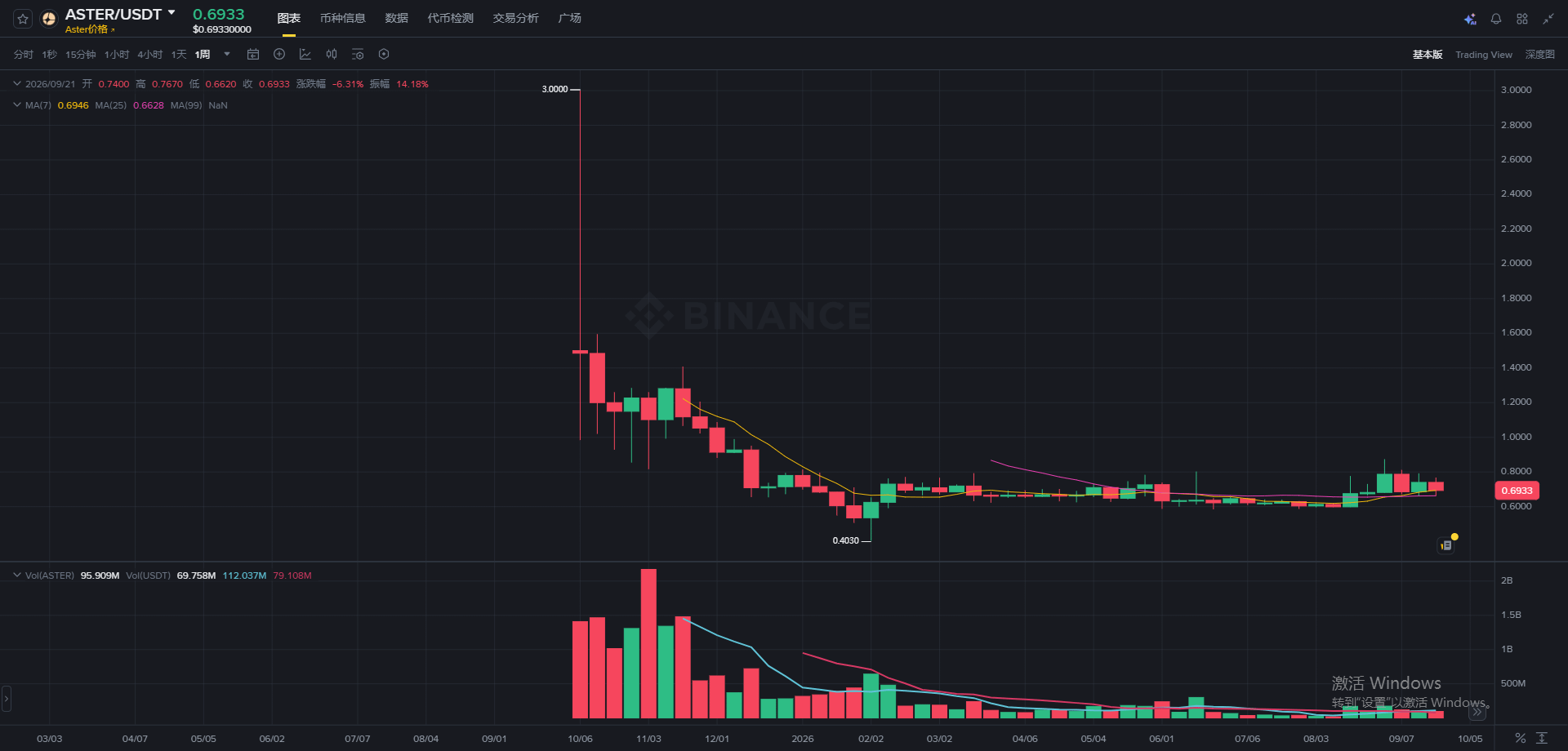
On the other hand, $ASTER is awkward. It was originally treated like a contender that could challenge Hyperliquid, got started with support from CZ and Binance—but now everything in the data is sliding, trading volume has sharply fallen from its peak, open interest hasn’t caught up, and TVL has shrunk as the incentive wave has gone quiet. Engagement still largely depends on the BNB ecosystem and Binance, not something that naturally grew.
{spot}(ASTERUSDT)
{future}(HYPEUSDT)
$HYPE is live on the spot market. Put simply: if you can’t beat them, you bring them in. Binance has listed the token of its biggest rival, Hyperliquid, on spot—if you can’t block it, let it in, and in the meantime ride on its liquidity and hype.
On the other hand, $ASTER is awkward. It was originally treated like a contender that could challenge Hyperliquid, got started with support from CZ and Binance—but now everything in the data is sliding, trading volume has sharply fallen from its peak, open interest hasn’t caught up, and TVL has shrunk as the incentive wave has gone quiet. Engagement still largely depends on the BNB ecosystem and Binance, not something that naturally grew.
On the other hand, $ASTER is awkward. It was originally treated like a contender that could challenge Hyperliquid, got started with support from CZ and Binance—but now everything in the data is sliding, trading volume has sharply fallen from its peak, open interest hasn’t caught up, and TVL has shrunk as the incentive wave has gone quiet. Engagement still largely depends on the BNB ecosystem and Binance, not something that naturally grew.
466
·
--
Bearish
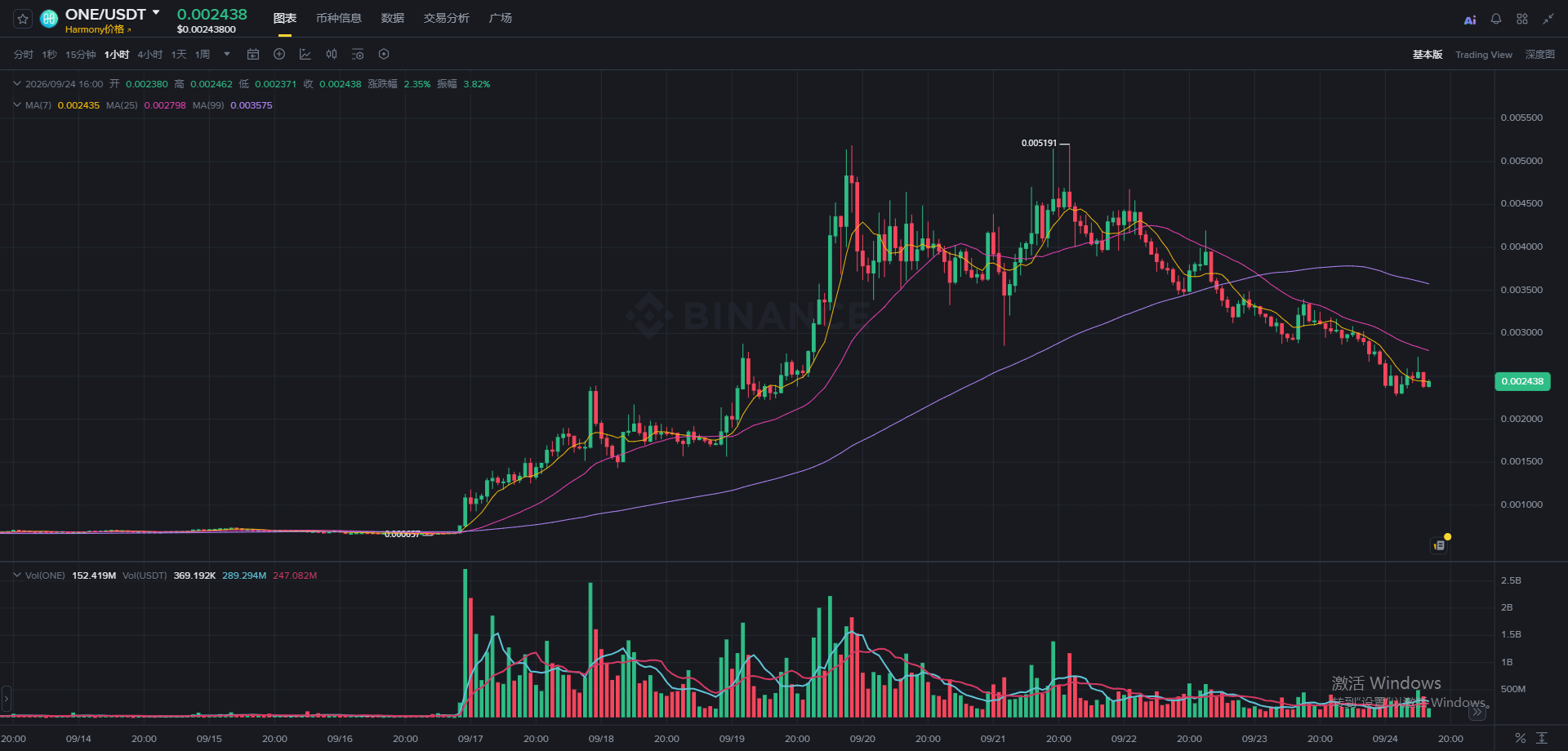
$ONE This wave can be pulled—put simply, the plate is shallow, so pulling it up doesn’t take much effort. If you want to pull, you can pull.
I can’t clearly explain other reasons either, but looking at the various data, it feels like it’s not over yet.
{spot}(ONEUSDT)
$ONE This wave can be pulled—put simply, the plate is shallow, so pulling it up doesn’t take much effort. If you want to pull, you can pull.
I can’t clearly explain other reasons either, but looking at the various data, it feels like it’s not over yet.
I can’t clearly explain other reasons either, but looking at the various data, it feels like it’s not over yet.
189
·
--

Article
BTC after a sharp drop: consolidation on low volume—how to trade ETH, UNI, and ZEC?After a sharp drop last night, market sentiment has changed immediately. However, after the first wave of selloff, we’re now seeing consolidation on lower volume, and everyone is waiting to see whether it can stabilize today. Below, I’ll break down a few key coins directly.
BTC
Bitcoin: it’s a two-day bearish streak on the daily chart. The move at 87000 looks like an M-top pullback, and 83700 is holding as support. Now it’s consolidating around 84,000. It looks like distribution near the top; the 4-hour chart shows a double top, and in the short term it may first shake out and then rally. Upside: first target 85,200. If it can’t break through, there’s still downside pressure. Major resistance: 86,000-90,600. Downside: 83,555-82,455. Further down, 82,000 is a hard support.
ETH
For Ethereum: after it broke below 2711, it bounced back and found support at 2647. Today, watch 2711 and 2647. If it reclaims 2711, there should be stabilization and a stop-the-fall on the hourly timeframe. If it can’t reclaim it and instead retests, then it’s likely to retap 2647. Break above = bullish; break below = bearish. Resistance: 2686-2710-2752. Support: 2662-2626-2600. Trading-wise: buy on dips at 2626-2602, with a defense level at 2580. You can consider opening the first position around 2647.
BTC after a sharp drop: consolidation on low volume—how to trade ETH, UNI, and ZEC?
After a sharp drop last night, market sentiment has changed immediately. However, after the first wave of selloff, we’re now seeing consolidation on lower volume, and everyone is waiting to see whether it can stabilize today. Below, I’ll break down a few key coins directly.
BTC
Bitcoin: it’s a two-day bearish streak on the daily chart. The move at 87000 looks like an M-top pullback, and 83700 is holding as support. Now it’s consolidating around 84,000. It looks like distribution near the top; the 4-hour chart shows a double top, and in the short term it may first shake out and then rally. Upside: first target 85,200. If it can’t break through, there’s still downside pressure. Major resistance: 86,000-90,600. Downside: 83,555-82,455. Further down, 82,000 is a hard support.
ETH
For Ethereum: after it broke below 2711, it bounced back and found support at 2647. Today, watch 2711 and 2647. If it reclaims 2711, there should be stabilization and a stop-the-fall on the hourly timeframe. If it can’t reclaim it and instead retests, then it’s likely to retap 2647. Break above = bullish; break below = bearish. Resistance: 2686-2710-2752. Support: 2662-2626-2600. Trading-wise: buy on dips at 2626-2602, with a defense level at 2580. You can consider opening the first position around 2647.
BTC
Bitcoin: it’s a two-day bearish streak on the daily chart. The move at 87000 looks like an M-top pullback, and 83700 is holding as support. Now it’s consolidating around 84,000. It looks like distribution near the top; the 4-hour chart shows a double top, and in the short term it may first shake out and then rally. Upside: first target 85,200. If it can’t break through, there’s still downside pressure. Major resistance: 86,000-90,600. Downside: 83,555-82,455. Further down, 82,000 is a hard support.
ETH
For Ethereum: after it broke below 2711, it bounced back and found support at 2647. Today, watch 2711 and 2647. If it reclaims 2711, there should be stabilization and a stop-the-fall on the hourly timeframe. If it can’t reclaim it and instead retests, then it’s likely to retap 2647. Break above = bullish; break below = bearish. Resistance: 2686-2710-2752. Support: 2662-2626-2600. Trading-wise: buy on dips at 2626-2602, with a defense level at 2580. You can consider opening the first position around 2647.
480
·
--
Bullish
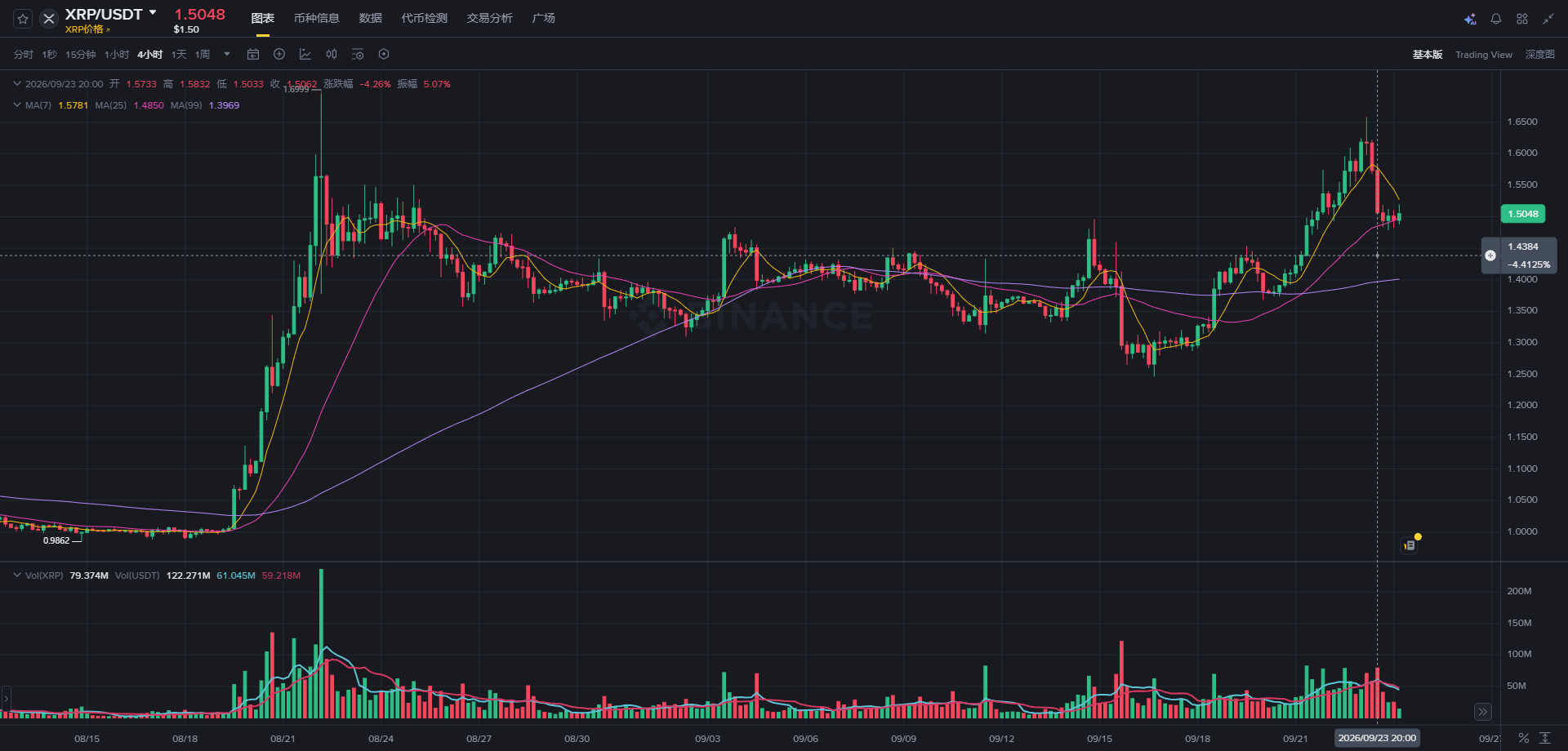
$XRP 4 hour-level, the breakthrough didn’t quite happen; now we’re in a pullback. But the uptrend hasn’t broken down, and it hasn’t formed a bearish structure. Next, if it can push to make a new high, there’s still a chance. If it can’t rally, it may continue to fall; support to watch is around 1.4.
In a bull market, there are often steep drops—there are too many people chasing the rally and using high leverage. Volatility at high levels is naturally big. Control the rhythm, and don’t get carried away.
{spot}(XRPUSDT)
$XRP 4 hour-level, the breakthrough didn’t quite happen; now we’re in a pullback. But the uptrend hasn’t broken down, and it hasn’t formed a bearish structure. Next, if it can push to make a new high, there’s still a chance. If it can’t rally, it may continue to fall; support to watch is around 1.4.
In a bull market, there are often steep drops—there are too many people chasing the rally and using high leverage. Volatility at high levels is naturally big. Control the rhythm, and don’t get carried away.
In a bull market, there are often steep drops—there are too many people chasing the rally and using high leverage. Volatility at high levels is naturally big. Control the rhythm, and don’t get carried away.
234
·
--
Bearish
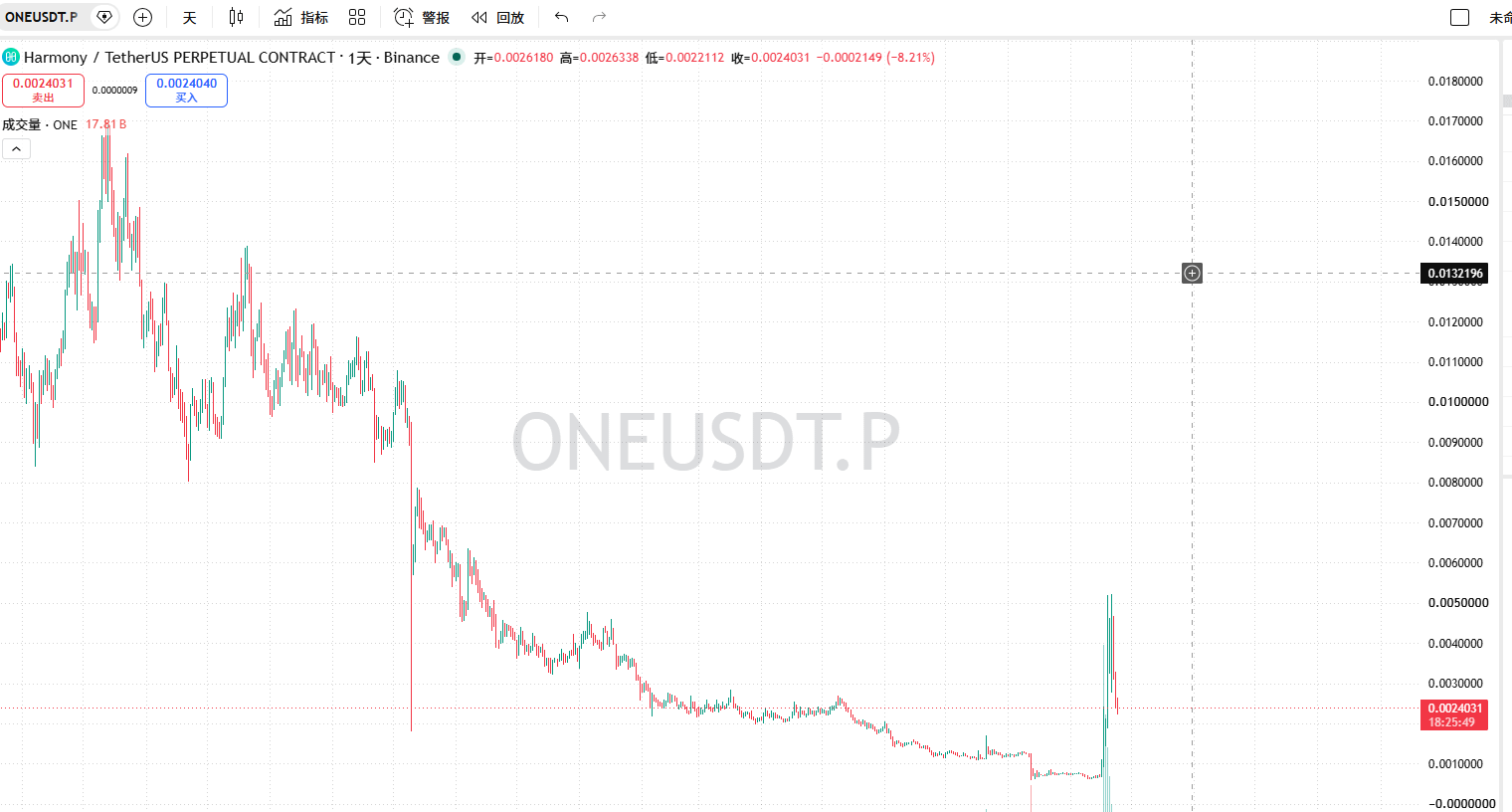
$ONE from 0.0007 to 0.005 — roughly an 8x increase. Now we can wait for it to move a bit further and then come back (a pullback/rip) to look for another opportunity to enter. Down the line, at least we should be able to see around 0.001, with dozens of points of downside room.
{spot}(ONEUSDT)
$ONE from 0.0007 to 0.005 — roughly an 8x increase. Now we can wait for it to move a bit further and then come back (a pullback/rip) to look for another opportunity to enter. Down the line, at least we should be able to see around 0.001, with dozens of points of downside room.
255
·
--
Bullish
Verified
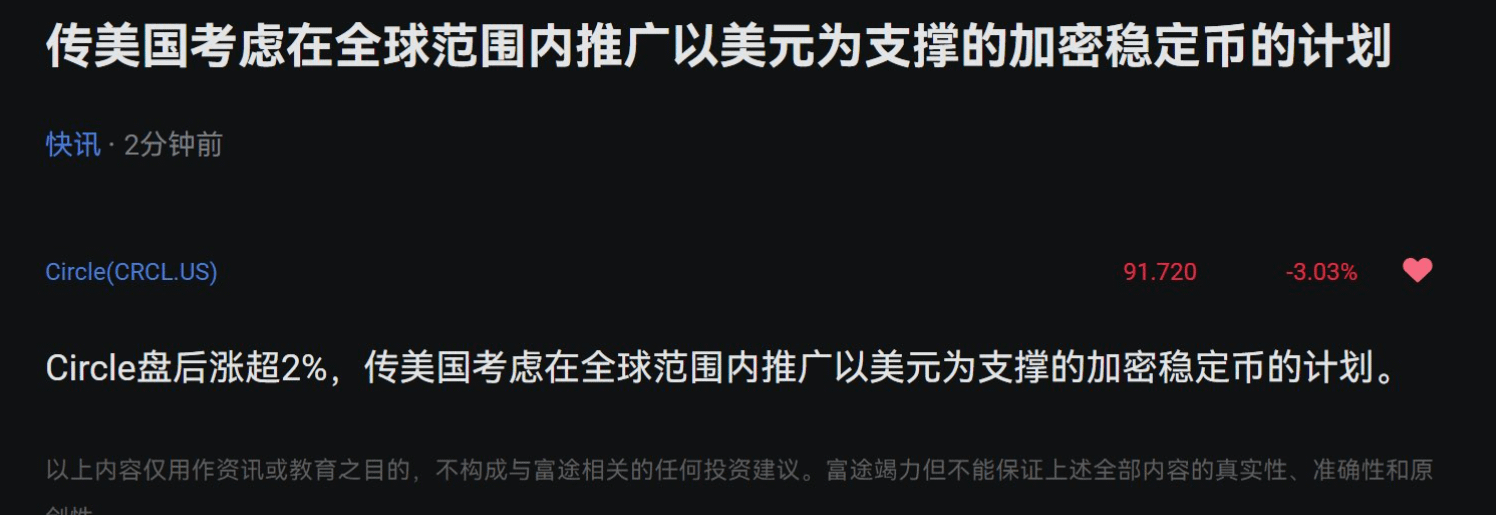
$CRCL Recently there’s been a whole pile of good news, but the stock price seems like it didn’t hear a thing—the issue isn’t complicated. There are three pieces of good news:
1. The clear bill didn’t pass, so Plan B kicks in. Regulators have started closing loopholes between the SEC and the CFTC.
2. Binance invested $100 million into CRCL—at $80.84 per share—buying 1.237 million shares of Class A stock. They also signed a five-year cooperation agreement to jointly push USDC.
3. The U.S. government is figuring out how to take the dollar stablecoin global, maintain the dollar’s reserve status, and stablecoins are a key area of support.
So why hasn’t it risen?
Because the market isn’t just looking at the story anymore—it’s waiting for the USDC issuance volume. No matter how lively the policies get, it ultimately has to turn into Circle’s fundamentals. Circle’s core isn’t how much it can make in the short term, but whether USDC can grow beyond expectations.
USDC hit a peak of $81.1 billion in March 2026, setting a new high. After that, it fell again, and now it’s around $74 billion.
So what the market is waiting for is just two things: when USDC will regain the $80 billion level, and when it can push up to $100 billion.
{future}(CRCLUSDT)
$CRCL Recently there’s been a whole pile of good news, but the stock price seems like it didn’t hear a thing—the issue isn’t complicated. There are three pieces of good news:
1. The clear bill didn’t pass, so Plan B kicks in. Regulators have started closing loopholes between the SEC and the CFTC.
2. Binance invested $100 million into CRCL—at $80.84 per share—buying 1.237 million shares of Class A stock. They also signed a five-year cooperation agreement to jointly push USDC.
3. The U.S. government is figuring out how to take the dollar stablecoin global, maintain the dollar’s reserve status, and stablecoins are a key area of support.
So why hasn’t it risen?
Because the market isn’t just looking at the story anymore—it’s waiting for the USDC issuance volume. No matter how lively the policies get, it ultimately has to turn into Circle’s fundamentals. Circle’s core isn’t how much it can make in the short term, but whether USDC can grow beyond expectations.
USDC hit a peak of $81.1 billion in March 2026, setting a new high. After that, it fell again, and now it’s around $74 billion.
So what the market is waiting for is just two things: when USDC will regain the $80 billion level, and when it can push up to $100 billion.
1. The clear bill didn’t pass, so Plan B kicks in. Regulators have started closing loopholes between the SEC and the CFTC.
2. Binance invested $100 million into CRCL—at $80.84 per share—buying 1.237 million shares of Class A stock. They also signed a five-year cooperation agreement to jointly push USDC.
3. The U.S. government is figuring out how to take the dollar stablecoin global, maintain the dollar’s reserve status, and stablecoins are a key area of support.
So why hasn’t it risen?
Because the market isn’t just looking at the story anymore—it’s waiting for the USDC issuance volume. No matter how lively the policies get, it ultimately has to turn into Circle’s fundamentals. Circle’s core isn’t how much it can make in the short term, but whether USDC can grow beyond expectations.
USDC hit a peak of $81.1 billion in March 2026, setting a new high. After that, it fell again, and now it’s around $74 billion.
So what the market is waiting for is just two things: when USDC will regain the $80 billion level, and when it can push up to $100 billion.
2
2
2.1k
·
--
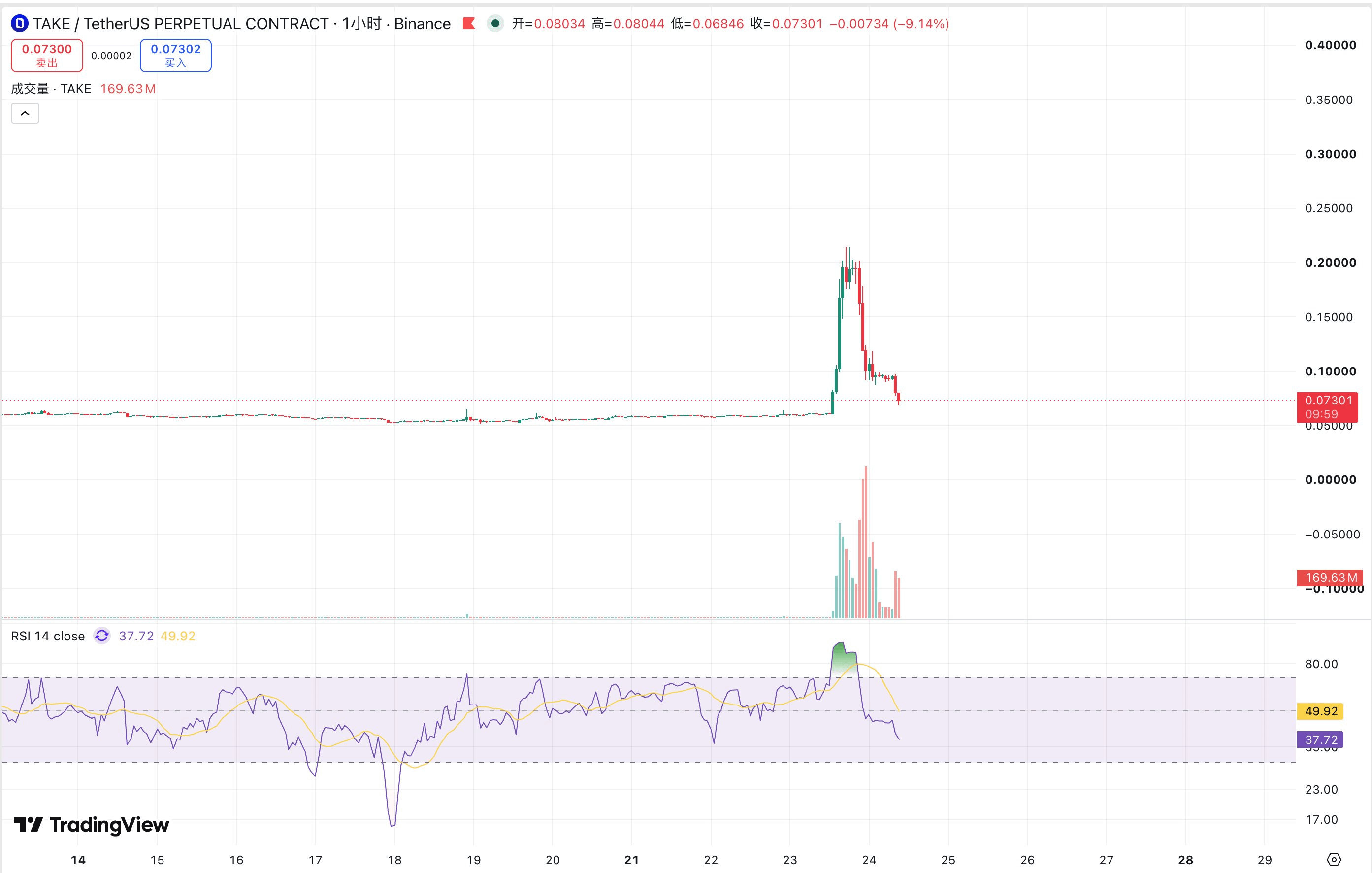
$TAKE Has dropped back to the starting point again. With this kind of market, the only thing we can do is daily pay. If it dips even a little, no one dares to take it.
$TAKE Has dropped back to the starting point again. With this kind of market, the only thing we can do is daily pay. If it dips even a little, no one dares to take it.
322
·
--
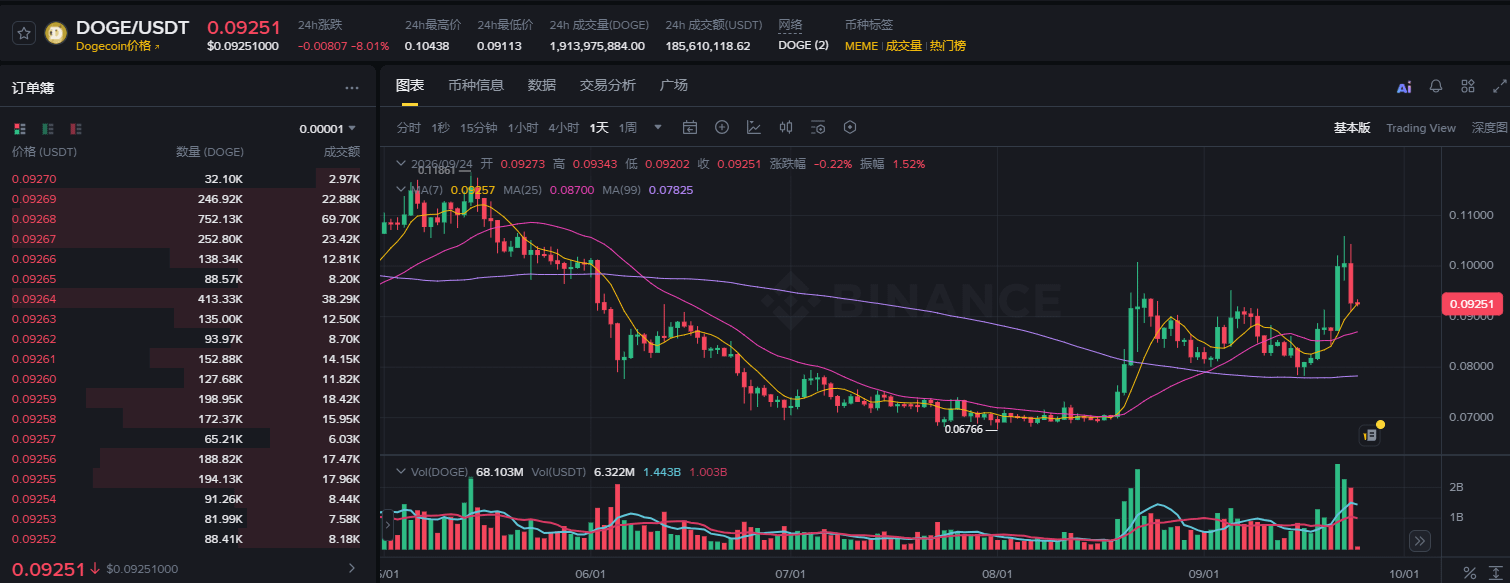
$DOGE Dogecoin surged a bit and it looks strong, but the pullback came quickly too. Dogecoin is just like that—when it climbs, it climbs fast, and when it drops, it drops fast. Then it spends a long time moving sideways and oscillating.
Now the daily chart has already reached its top, and there’s a fairly good chance it will move downward next. If you’re holding coins and your cost basis is high, you can wait for a rebound and then liquidate.
{spot}(DOGEUSDT)
$DOGE Dogecoin surged a bit and it looks strong, but the pullback came quickly too. Dogecoin is just like that—when it climbs, it climbs fast, and when it drops, it drops fast. Then it spends a long time moving sideways and oscillating.
Now the daily chart has already reached its top, and there’s a fairly good chance it will move downward next. If you’re holding coins and your cost basis is high, you can wait for a rebound and then liquidate.
Now the daily chart has already reached its top, and there’s a fairly good chance it will move downward next. If you’re holding coins and your cost basis is high, you can wait for a rebound and then liquidate.
1
2
1.2k
·
--
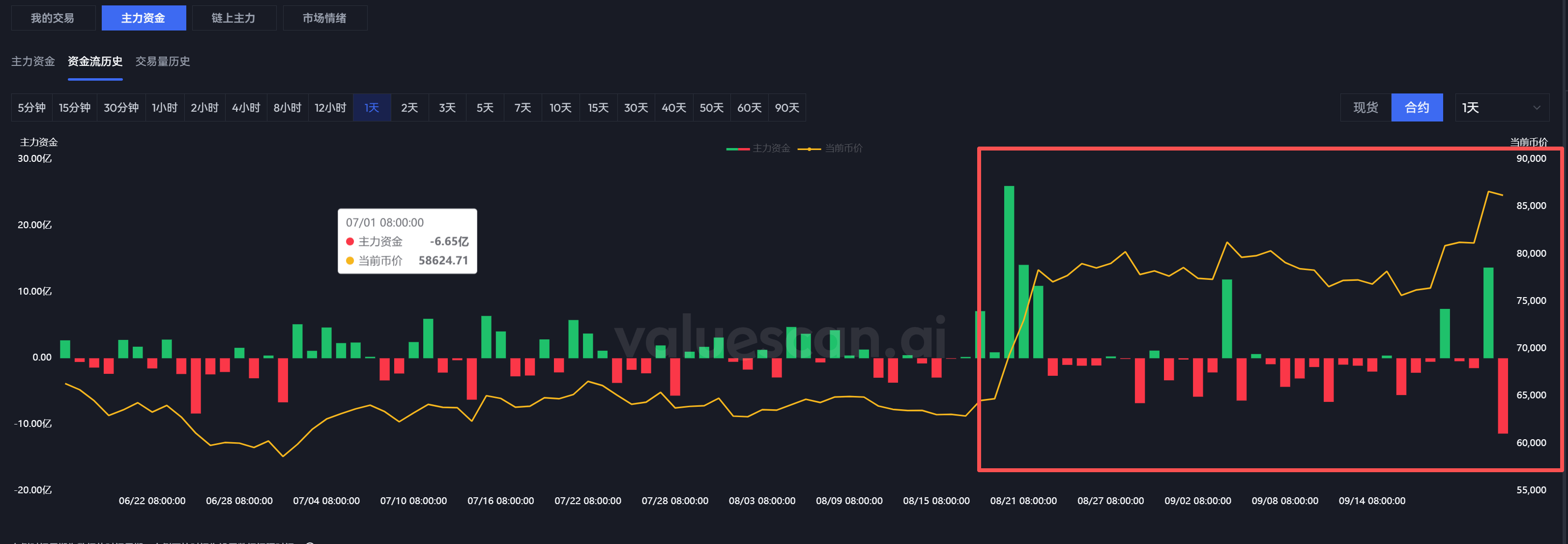
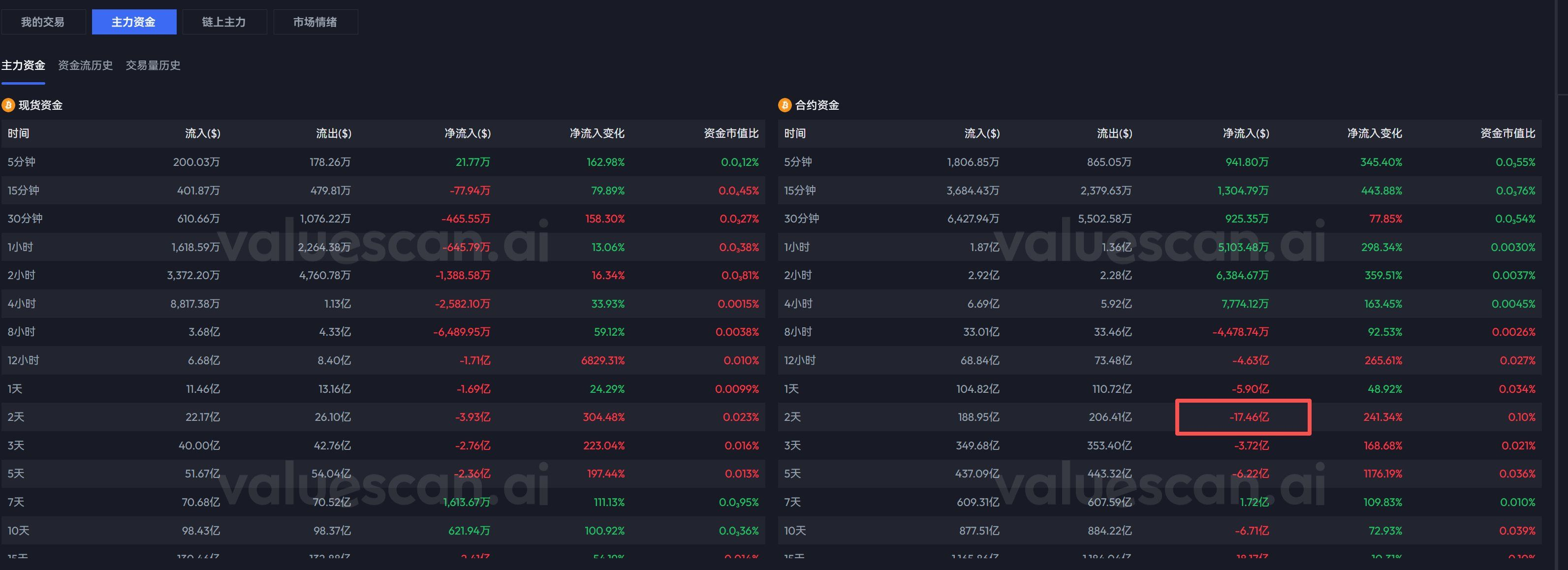
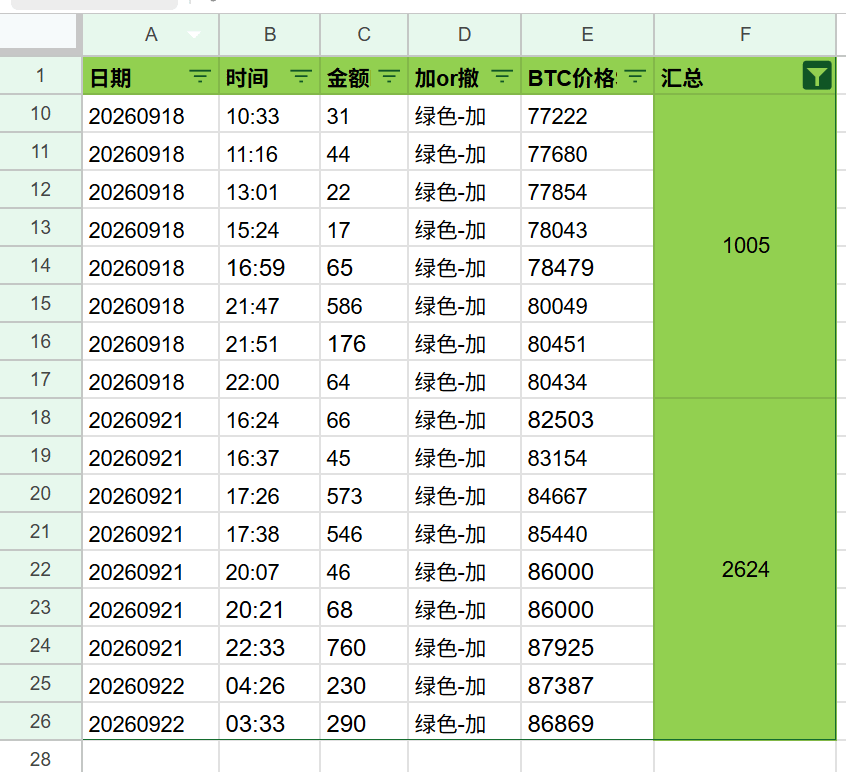
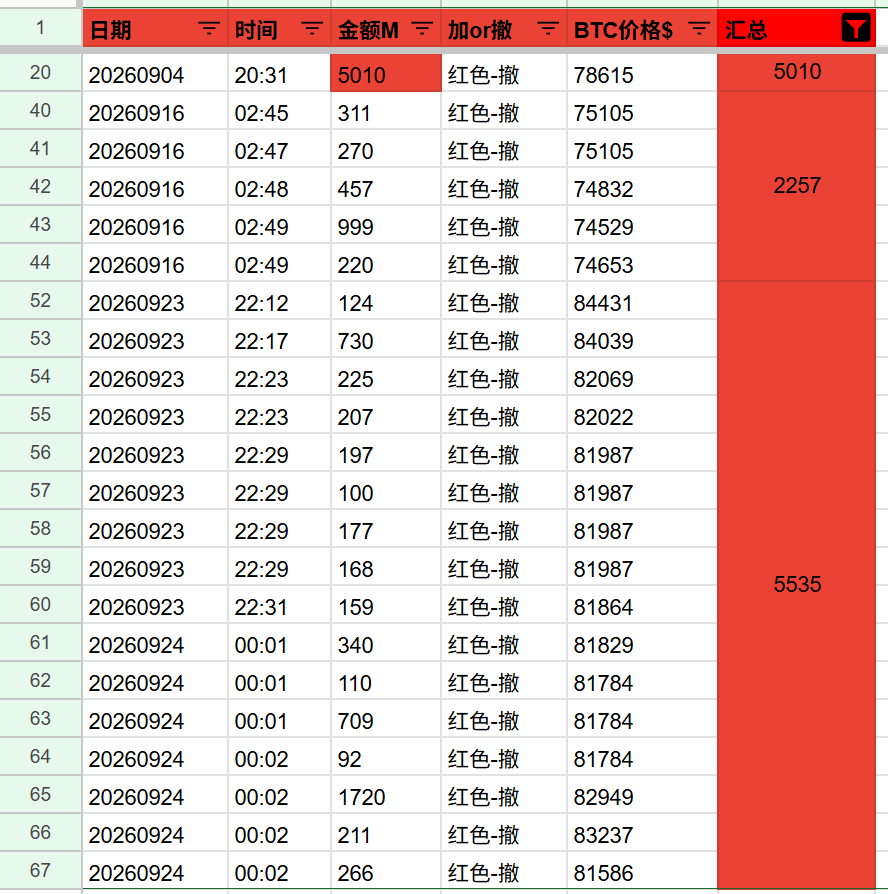
This "dog dealer" style play is really shady. Before they pull the order, they first add liquidity—on September 18, they added 3.6 billion. Then after the pull, they start withdrawing. From last night to now, they’ve withdrawn 5.5 billion. They add slowly and withdraw quickly—basically pulling out the ladder you’re standing on.
They’re selling while they’re pulling. You watch the candlestick chart and think it’s still going up, but in reality they’re quietly offloading inventory. The price is being propped up by small buy orders, while the real main group is retreating.
Look at Sept 4, 16, and 23: pull out the high-activity data for those days and you’ll see the rhythm is almost the same—rally with a surge in volume, then quickly pull the liquidity back out. Don’t be fooled by the green candles. The "dog dealer" green candles are sometimes just for you to see.
This "dog dealer" style play is really shady. Before they pull the order, they first add liquidity—on September 18, they added 3.6 billion. Then after the pull, they start withdrawing. From last night to now, they’ve withdrawn 5.5 billion. They add slowly and withdraw quickly—basically pulling out the ladder you’re standing on.
They’re selling while they’re pulling. You watch the candlestick chart and think it’s still going up, but in reality they’re quietly offloading inventory. The price is being propped up by small buy orders, while the real main group is retreating.
Look at Sept 4, 16, and 23: pull out the high-activity data for those days and you’ll see the rhythm is almost the same—rally with a surge in volume, then quickly pull the liquidity back out. Don’t be fooled by the green candles. The "dog dealer" green candles are sometimes just for you to see.
They’re selling while they’re pulling. You watch the candlestick chart and think it’s still going up, but in reality they’re quietly offloading inventory. The price is being propped up by small buy orders, while the real main group is retreating.
Look at Sept 4, 16, and 23: pull out the high-activity data for those days and you’ll see the rhythm is almost the same—rally with a surge in volume, then quickly pull the liquidity back out. Don’t be fooled by the green candles. The "dog dealer" green candles are sometimes just for you to see.
1
2
1.2k
·
--
Bullish
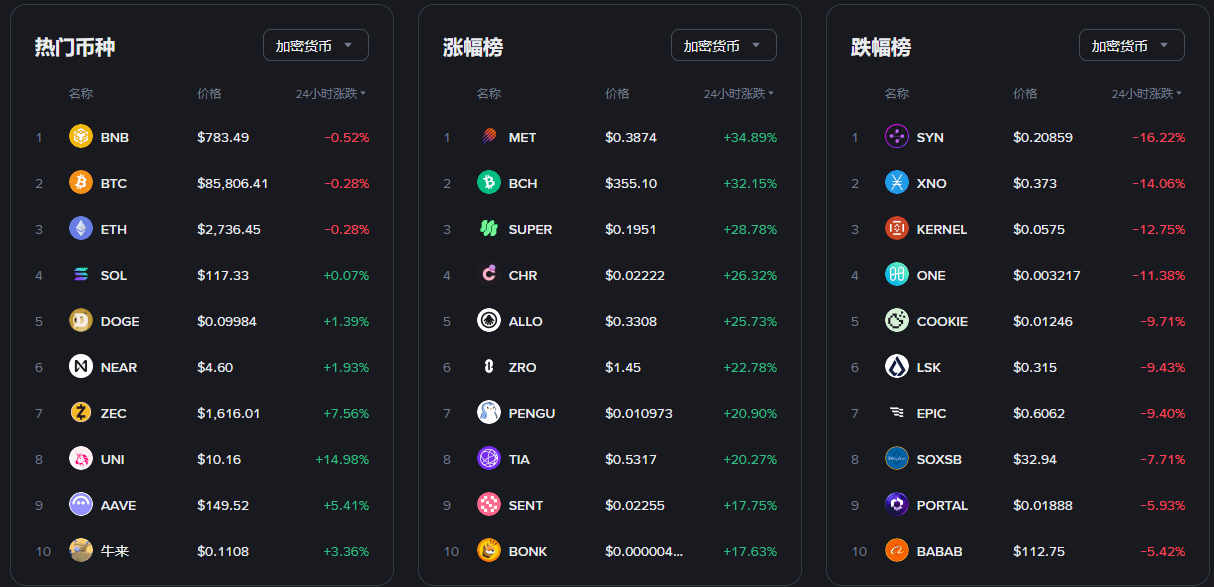
I think the most underrated space right now is the privacy track. If you’re talking about specific targets, and you missed ZEC, you can重点看 (pay special attention to) $NEAR and $ZAMA .
The underlying logic is very simple: freedom and privacy are the base colors of blockchain. From the cypherpunks to Bitcoin, there have always been people pushing the ceiling of freedom higher. The more centralized reality becomes, the more we need to rebuild the rules on-chain. This isn’t just an ideal—it’s also the soil for economics and innovation.
Why ZEC can break out this round is also pretty clear: it’s an old coin from 2016. Early selling pressure was washed out over many years, the float is light, and once capital comes in, it rebounds sharply. Plus, with Naval’s call-outs, institutions and ETFs started paying attention, and privacy has returned to mainstream narratives. Since February, NEAR and ZAMA have also been clearly rising.
In terms of division of labor: NEAR is a public chain that improves its own privacy capabilities; ZAMA is a privacy technology service provider, offering solutions to different public chains. One leans toward the infrastructure layer, the other toward services.
{spot}(ZAMAUSDT)
{spot}(NEARUSDT)
I think the most underrated space right now is the privacy track. If you’re talking about specific targets, and you missed ZEC, you can重点看 (pay special attention to) $NEAR and $ZAMA .
The underlying logic is very simple: freedom and privacy are the base colors of blockchain. From the cypherpunks to Bitcoin, there have always been people pushing the ceiling of freedom higher. The more centralized reality becomes, the more we need to rebuild the rules on-chain. This isn’t just an ideal—it’s also the soil for economics and innovation.
Why ZEC can break out this round is also pretty clear: it’s an old coin from 2016. Early selling pressure was washed out over many years, the float is light, and once capital comes in, it rebounds sharply. Plus, with Naval’s call-outs, institutions and ETFs started paying attention, and privacy has returned to mainstream narratives. Since February, NEAR and ZAMA have also been clearly rising.
In terms of division of labor: NEAR is a public chain that improves its own privacy capabilities; ZAMA is a privacy technology service provider, offering solutions to different public chains. One leans toward the infrastructure layer, the other toward services.
The underlying logic is very simple: freedom and privacy are the base colors of blockchain. From the cypherpunks to Bitcoin, there have always been people pushing the ceiling of freedom higher. The more centralized reality becomes, the more we need to rebuild the rules on-chain. This isn’t just an ideal—it’s also the soil for economics and innovation.
Why ZEC can break out this round is also pretty clear: it’s an old coin from 2016. Early selling pressure was washed out over many years, the float is light, and once capital comes in, it rebounds sharply. Plus, with Naval’s call-outs, institutions and ETFs started paying attention, and privacy has returned to mainstream narratives. Since February, NEAR and ZAMA have also been clearly rising.
In terms of division of labor: NEAR is a public chain that improves its own privacy capabilities; ZAMA is a privacy technology service provider, offering solutions to different public chains. One leans toward the infrastructure layer, the other toward services.
1.1k
·
--
Lingxi is the kind of person whose track record is even more thrilling than a candlestick chart.
At 15, he broke into the top three of 王者巅峰赛. As a boosting service player, he could earn tens of thousands a month. In 2020, he opened an exchange account using his father’s ID, officially entering the crypto scene. On May 19, 2021, with just a few thousand yuan in principal and 100x leverage, he went short on BTC—at one point his account soared to over 40 million. He also donated over 1 million to impoverished children, and some of the money was kept by his father.
But when the market turned in the second half of 2021, he kept shorting and got liquidated along the way. In the end, it all went to zero—he owed debts, and netizens dubbed him the “Zeroing Master.” After that, he had a falling out with his father over money, was sent to a psychiatric hospital, and he accused them of illegal detention.
On October 17, 2021, he held his first Twitter Spaces session. With 56,000 online viewers, big names like Justin Sun and Du Jun came too—over 10,000 online at peak—setting a record for Chinese crypto Twitter Spaces. He even surged to #1 globally in real-time Twitter Spaces.
In 2022, his debts ballooned to 200 million. In September 2023, he livestreamed himself drinking pesticide; his Weibo account was banned, and he owed more than 40 million. He had to undergo full anesthesia surgery for a respiratory issue. He sold shoes worth 200,000 U but only got back 50,000 U. He then had more nerve surgery, and at the end of the month he went to a construction site to搬砖.
In 2024, word in the community was that he made a low-profile comeback to repay his debts. On February 24, 2025, when BTC crashed hard, he used 2000 U and, within a few hours, made 1 million U. In the next two-plus months, he earned over 40 million U profit on the account—turning the tables in a storm and gradually paying off his debts.
Recently he’s gone quieter: he takes profits from a round and then locks in—no longer watching the chart 24 hours a day. He says one round of profit is enough. By mid-to-late August 2026, he has repeatedly posted on X to promote some coin, claiming he bought to “stand guard” (protect the price), that pullbacks are opportunities, and that this month will break new highs.
So—what do you think of this trading prodigy who’s basically a crypto demon?
Lingxi is the kind of person whose track record is even more thrilling than a candlestick chart.
At 15, he broke into the top three of 王者巅峰赛. As a boosting service player, he could earn tens of thousands a month. In 2020, he opened an exchange account using his father’s ID, officially entering the crypto scene. On May 19, 2021, with just a few thousand yuan in principal and 100x leverage, he went short on BTC—at one point his account soared to over 40 million. He also donated over 1 million to impoverished children, and some of the money was kept by his father.
But when the market turned in the second half of 2021, he kept shorting and got liquidated along the way. In the end, it all went to zero—he owed debts, and netizens dubbed him the “Zeroing Master.” After that, he had a falling out with his father over money, was sent to a psychiatric hospital, and he accused them of illegal detention.
On October 17, 2021, he held his first Twitter Spaces session. With 56,000 online viewers, big names like Justin Sun and Du Jun came too—over 10,000 online at peak—setting a record for Chinese crypto Twitter Spaces. He even surged to #1 globally in real-time Twitter Spaces.
In 2022, his debts ballooned to 200 million. In September 2023, he livestreamed himself drinking pesticide; his Weibo account was banned, and he owed more than 40 million. He had to undergo full anesthesia surgery for a respiratory issue. He sold shoes worth 200,000 U but only got back 50,000 U. He then had more nerve surgery, and at the end of the month he went to a construction site to搬砖.
In 2024, word in the community was that he made a low-profile comeback to repay his debts. On February 24, 2025, when BTC crashed hard, he used 2000 U and, within a few hours, made 1 million U. In the next two-plus months, he earned over 40 million U profit on the account—turning the tables in a storm and gradually paying off his debts.
Recently he’s gone quieter: he takes profits from a round and then locks in—no longer watching the chart 24 hours a day. He says one round of profit is enough. By mid-to-late August 2026, he has repeatedly posted on X to promote some coin, claiming he bought to “stand guard” (protect the price), that pullbacks are opportunities, and that this month will break new highs.
So—what do you think of this trading prodigy who’s basically a crypto demon?
At 15, he broke into the top three of 王者巅峰赛. As a boosting service player, he could earn tens of thousands a month. In 2020, he opened an exchange account using his father’s ID, officially entering the crypto scene. On May 19, 2021, with just a few thousand yuan in principal and 100x leverage, he went short on BTC—at one point his account soared to over 40 million. He also donated over 1 million to impoverished children, and some of the money was kept by his father.
But when the market turned in the second half of 2021, he kept shorting and got liquidated along the way. In the end, it all went to zero—he owed debts, and netizens dubbed him the “Zeroing Master.” After that, he had a falling out with his father over money, was sent to a psychiatric hospital, and he accused them of illegal detention.
On October 17, 2021, he held his first Twitter Spaces session. With 56,000 online viewers, big names like Justin Sun and Du Jun came too—over 10,000 online at peak—setting a record for Chinese crypto Twitter Spaces. He even surged to #1 globally in real-time Twitter Spaces.
In 2022, his debts ballooned to 200 million. In September 2023, he livestreamed himself drinking pesticide; his Weibo account was banned, and he owed more than 40 million. He had to undergo full anesthesia surgery for a respiratory issue. He sold shoes worth 200,000 U but only got back 50,000 U. He then had more nerve surgery, and at the end of the month he went to a construction site to搬砖.
In 2024, word in the community was that he made a low-profile comeback to repay his debts. On February 24, 2025, when BTC crashed hard, he used 2000 U and, within a few hours, made 1 million U. In the next two-plus months, he earned over 40 million U profit on the account—turning the tables in a storm and gradually paying off his debts.
Recently he’s gone quieter: he takes profits from a round and then locks in—no longer watching the chart 24 hours a day. He says one round of profit is enough. By mid-to-late August 2026, he has repeatedly posted on X to promote some coin, claiming he bought to “stand guard” (protect the price), that pullbacks are opportunities, and that this month will break new highs.
So—what do you think of this trading prodigy who’s basically a crypto demon?
2
1
2
4.6k
·
--
In this market, the fundamentals are basically firewood, while narrative and attention are the oil. Pure Meme—like Marscoin or the “bull comes” (Bull come)—basically 0:10. It’s all about burning the oil; the fire is intense but it doesn’t last.
For things like ZEC and NEAR, it’s about 2:8: a bit of fundamentals (privacy, AI, Intent), but mainly it still runs on story and eyeballs.
$UNI is the rarest—5:5. The fundamentals are solid, the narrative is also fully loaded, and there’s enough oil and firewood—so it can go far. HYPE reached this kind of state before too; it directly surged by several multiples.
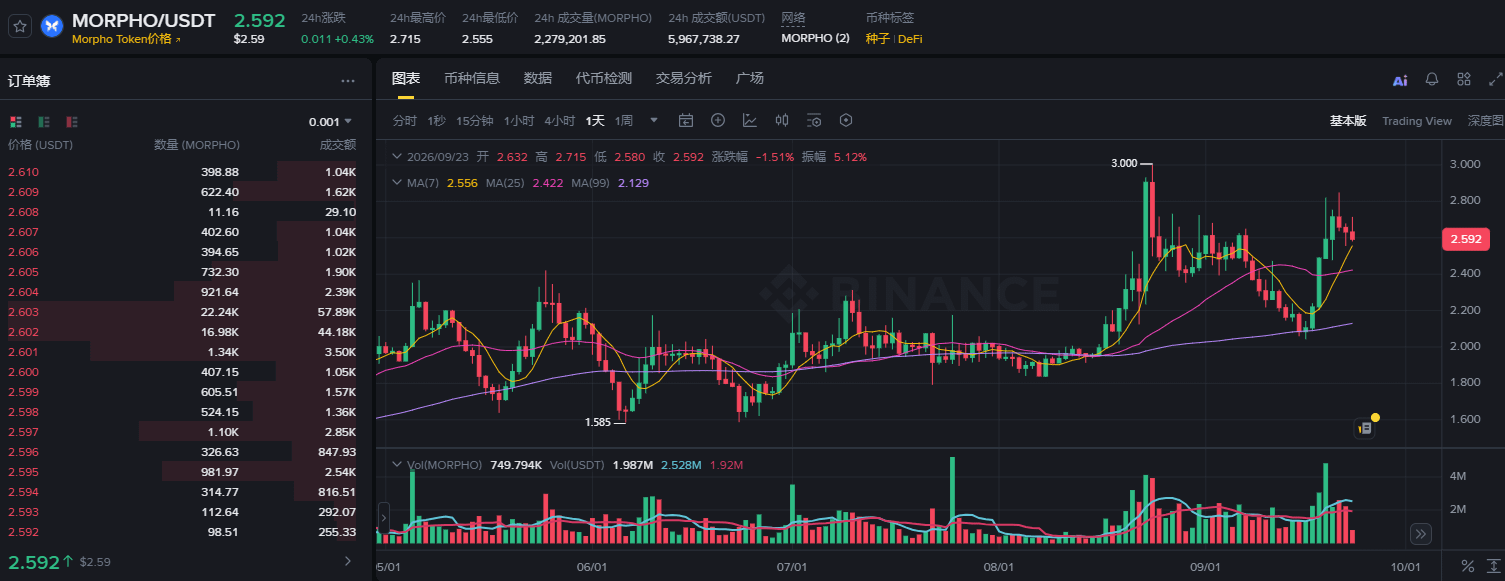
$MORPHO is roughly 9:1—very solid fundamentals, but nobody’s paying attention. There’s no oil, so it can’t burn brightly; any rise is slow and lukewarm.
{spot}(UNIUSDT)
{spot}(MORPHOUSDT)
In this market, the fundamentals are basically firewood, while narrative and attention are the oil. Pure Meme—like Marscoin or the “bull comes” (Bull come)—basically 0:10. It’s all about burning the oil; the fire is intense but it doesn’t last.
For things like ZEC and NEAR, it’s about 2:8: a bit of fundamentals (privacy, AI, Intent), but mainly it still runs on story and eyeballs.
$UNI is the rarest—5:5. The fundamentals are solid, the narrative is also fully loaded, and there’s enough oil and firewood—so it can go far. HYPE reached this kind of state before too; it directly surged by several multiples.
$MORPHO is roughly 9:1—very solid fundamentals, but nobody’s paying attention. There’s no oil, so it can’t burn brightly; any rise is slow and lukewarm.
For things like ZEC and NEAR, it’s about 2:8: a bit of fundamentals (privacy, AI, Intent), but mainly it still runs on story and eyeballs.
$UNI is the rarest—5:5. The fundamentals are solid, the narrative is also fully loaded, and there’s enough oil and firewood—so it can go far. HYPE reached this kind of state before too; it directly surged by several multiples.
$MORPHO is roughly 9:1—very solid fundamentals, but nobody’s paying attention. There’s no oil, so it can’t burn brightly; any rise is slow and lukewarm.
250
·
--

Article
September 23 Market Analysis: Why is it up today? BTC, ETH, BNB, SOL, TAKE, NIL, MARSCOIN, ONE, XNO altcoin trading suggestions!🚀 In the past 24 hours, the cryptocurrency market rose by 1.57%, and this growth was mainly driven by activity from institutional investors. The market’s correlation with the S&P 500 is as high as 80%, suggesting it is influenced by shared macroeconomic factors.
1. Main reason: due to U.S. Treasury repo operations and record spot Bitcoin ETF trading, a large amount of institutional capital has poured in.
2. Secondary reason: large-scale short squeezes and a broad shift of funds toward altcoins and network meme tokens.
3. Short-term market outlook: whether the upward momentum can continue depends on the sustained inflow of ETF funds. Breaking below the $2.86T Fibonacci support level may indicate a pause in the recovery process.
September 23 Market Analysis: Why is it up today? BTC, ETH, BNB, SOL, TAKE, NIL, MARSCOIN, ONE, XNO altcoin trading suggestions!
🚀 In the past 24 hours, the cryptocurrency market rose by 1.57%, and this growth was mainly driven by activity from institutional investors. The market’s correlation with the S&P 500 is as high as 80%, suggesting it is influenced by shared macroeconomic factors.
1. Main reason: due to U.S. Treasury repo operations and record spot Bitcoin ETF trading, a large amount of institutional capital has poured in.
2. Secondary reason: large-scale short squeezes and a broad shift of funds toward altcoins and network meme tokens.
3. Short-term market outlook: whether the upward momentum can continue depends on the sustained inflow of ETF funds. Breaking below the $2.86T Fibonacci support level may indicate a pause in the recovery process.
1. Main reason: due to U.S. Treasury repo operations and record spot Bitcoin ETF trading, a large amount of institutional capital has poured in.
2. Secondary reason: large-scale short squeezes and a broad shift of funds toward altcoins and network meme tokens.
3. Short-term market outlook: whether the upward momentum can continue depends on the sustained inflow of ETF funds. Breaking below the $2.86T Fibonacci support level may indicate a pause in the recovery process.
1
619
·
--
Don’t back down in October—good show still coming:
1. BTC at 100,000, there’s still an upside of 14,000+.
2. The more the crypto-and-stocks story gets inflated, the more US-listed DAT Company starts to “resurrect.”
3. These Robinhood-style launch pads—Wave 2 is already on the way.
4. The pre-IPO narrative can keep spawning offshoots.
5. After the big coins finish singing, MEME coins and small-cap altcoins will accelerate next.
Don’t use “death” mindset—just lock onto the big pie price and do it. Buy the big coins first, then MEME and lottery-style plays. Right now, don’t PvP each other in the trenches—that’s just dumb.
Don’t back down in October—good show still coming:
1. BTC at 100,000, there’s still an upside of 14,000+.
2. The more the crypto-and-stocks story gets inflated, the more US-listed DAT Company starts to “resurrect.”
3. These Robinhood-style launch pads—Wave 2 is already on the way.
4. The pre-IPO narrative can keep spawning offshoots.
5. After the big coins finish singing, MEME coins and small-cap altcoins will accelerate next.
Don’t use “death” mindset—just lock onto the big pie price and do it. Buy the big coins first, then MEME and lottery-style plays. Right now, don’t PvP each other in the trenches—that’s just dumb.
1. BTC at 100,000, there’s still an upside of 14,000+.
2. The more the crypto-and-stocks story gets inflated, the more US-listed DAT Company starts to “resurrect.”
3. These Robinhood-style launch pads—Wave 2 is already on the way.
4. The pre-IPO narrative can keep spawning offshoots.
5. After the big coins finish singing, MEME coins and small-cap altcoins will accelerate next.
Don’t use “death” mindset—just lock onto the big pie price and do it. Buy the big coins first, then MEME and lottery-style plays. Right now, don’t PvP each other in the trenches—that’s just dumb.
143
·
--
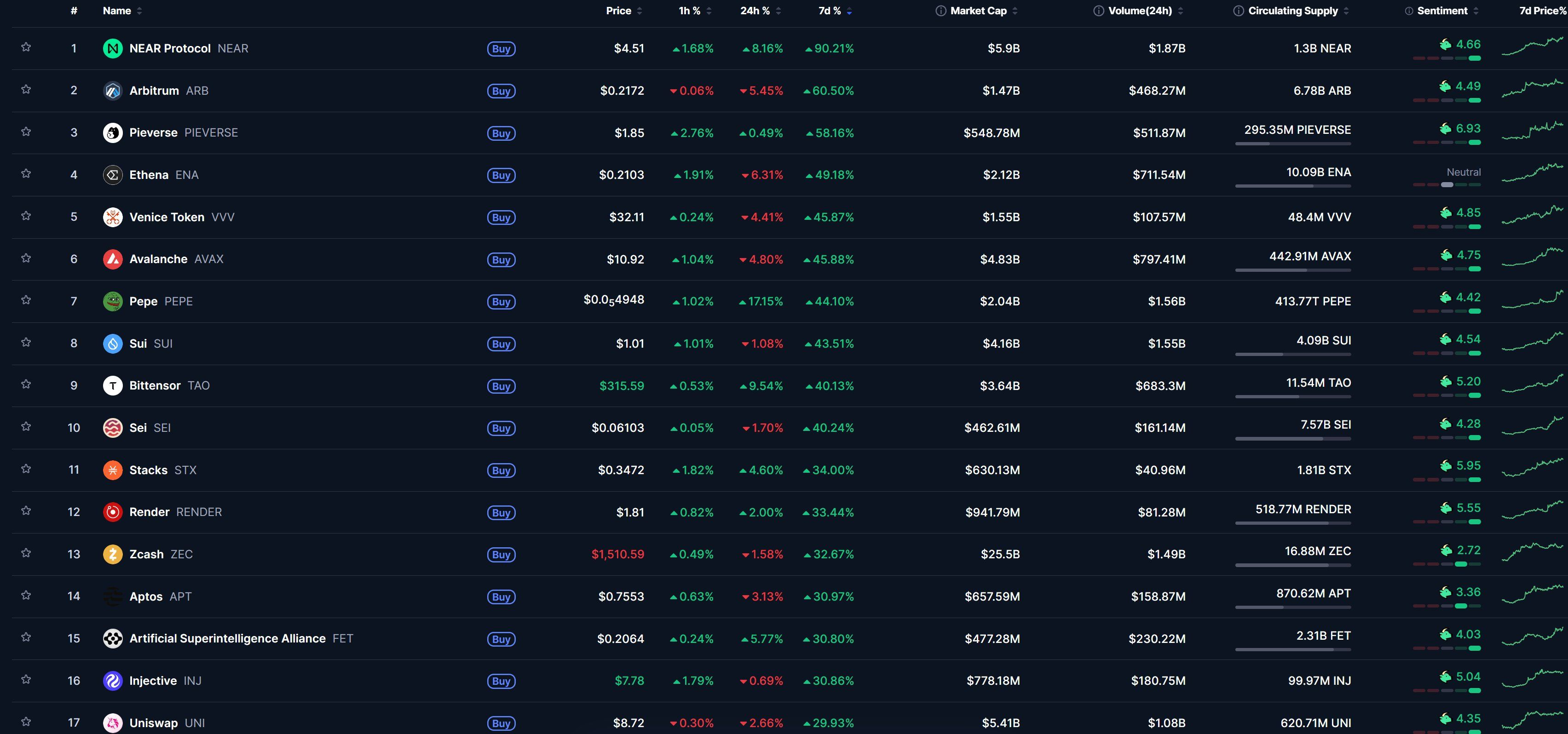
This wave of copycat season is different from before. Previously it relied on storytelling; now it relies on real income. Hyperliquid led the way by not pocketing the profits—directly buying back and burning. Seeing that, project teams followed suit one after another. But you still need to keep your eyes sharp: are they truly generating real, cash-like buybacks from genuine profits, or are they just gaming the numbers—left hand buying while the right hand sells? Those are two completely different things.
Then RWA added fuel by bringing more activity to on-chain trading. As infrastructure trading volume, TVL, and revenue all surged, once buybacks and burns kicked in alongside higher revenue, the flywheel started turning: data goes up → revenue goes up → buybacks → token price goes up. Tokens finally begin to truly capture the value of the protocol.
Examples include: HYPE, UNI, RAY, LIT. The next batch of “launch pads,” like $PONS , STONK, and AI, also fits into this playbook.
{future}(PONSUSDT)
This wave of copycat season is different from before. Previously it relied on storytelling; now it relies on real income. Hyperliquid led the way by not pocketing the profits—directly buying back and burning. Seeing that, project teams followed suit one after another. But you still need to keep your eyes sharp: are they truly generating real, cash-like buybacks from genuine profits, or are they just gaming the numbers—left hand buying while the right hand sells? Those are two completely different things.
Then RWA added fuel by bringing more activity to on-chain trading. As infrastructure trading volume, TVL, and revenue all surged, once buybacks and burns kicked in alongside higher revenue, the flywheel started turning: data goes up → revenue goes up → buybacks → token price goes up. Tokens finally begin to truly capture the value of the protocol.
Examples include: HYPE, UNI, RAY, LIT. The next batch of “launch pads,” like $PONS , STONK, and AI, also fits into this playbook.
Then RWA added fuel by bringing more activity to on-chain trading. As infrastructure trading volume, TVL, and revenue all surged, once buybacks and burns kicked in alongside higher revenue, the flywheel started turning: data goes up → revenue goes up → buybacks → token price goes up. Tokens finally begin to truly capture the value of the protocol.
Examples include: HYPE, UNI, RAY, LIT. The next batch of “launch pads,” like $PONS , STONK, and AI, also fits into this playbook.
1
2
4.2k
·
--
Verified
Early morning, more news: $WTI briefly fell below 89. From the news, the discussion seems to be going fairly well—there are indications that talks will continue again soon. That suggests there’s room for exchange; otherwise, it would have broken down much earlier.
Iran’s conditions: lift the maritime blockade, unfreeze assets, and end the “resistance front.” The ball is now in the hands of the United States. Tonight, the East Desk delegation visits the U.S. How this game between Iran and the U.S. plays out—whether it moves forward—will need to be watched together. If talks break down or see reversals, oil prices could bounce back above 90, and risk assets would likely come under renewed pressure. If talks go smoothly and expectations for passage through the strait improve: oil prices may keep falling, and risk assets could catch their breath—so we’ll see what happens over the next couple of days.
Just looking at the K-line charts: WTI’s daily chart has been down for several straight days, so it likely won’t keep falling endlessly. Looking back to early August as a reference, it may first stab upward for a rebound and then trade sideways before continuing lower. (Just a personal guess.)
Early morning, more news: $WTI briefly fell below 89. From the news, the discussion seems to be going fairly well—there are indications that talks will continue again soon. That suggests there’s room for exchange; otherwise, it would have broken down much earlier.
Iran’s conditions: lift the maritime blockade, unfreeze assets, and end the “resistance front.” The ball is now in the hands of the United States. Tonight, the East Desk delegation visits the U.S. How this game between Iran and the U.S. plays out—whether it moves forward—will need to be watched together. If talks break down or see reversals, oil prices could bounce back above 90, and risk assets would likely come under renewed pressure. If talks go smoothly and expectations for passage through the strait improve: oil prices may keep falling, and risk assets could catch their breath—so we’ll see what happens over the next couple of days.
Just looking at the K-line charts: WTI’s daily chart has been down for several straight days, so it likely won’t keep falling endlessly. Looking back to early August as a reference, it may first stab upward for a rebound and then trade sideways before continuing lower. (Just a personal guess.)
Iran’s conditions: lift the maritime blockade, unfreeze assets, and end the “resistance front.” The ball is now in the hands of the United States. Tonight, the East Desk delegation visits the U.S. How this game between Iran and the U.S. plays out—whether it moves forward—will need to be watched together. If talks break down or see reversals, oil prices could bounce back above 90, and risk assets would likely come under renewed pressure. If talks go smoothly and expectations for passage through the strait improve: oil prices may keep falling, and risk assets could catch their breath—so we’ll see what happens over the next couple of days.
Just looking at the K-line charts: WTI’s daily chart has been down for several straight days, so it likely won’t keep falling endlessly. Looking back to early August as a reference, it may first stab upward for a rebound and then trade sideways before continuing lower. (Just a personal guess.)


1
3k
·
--
Verified
$UNI Last night was a living textbook: spot just lay back and won, while contracts on both sides got beaten.
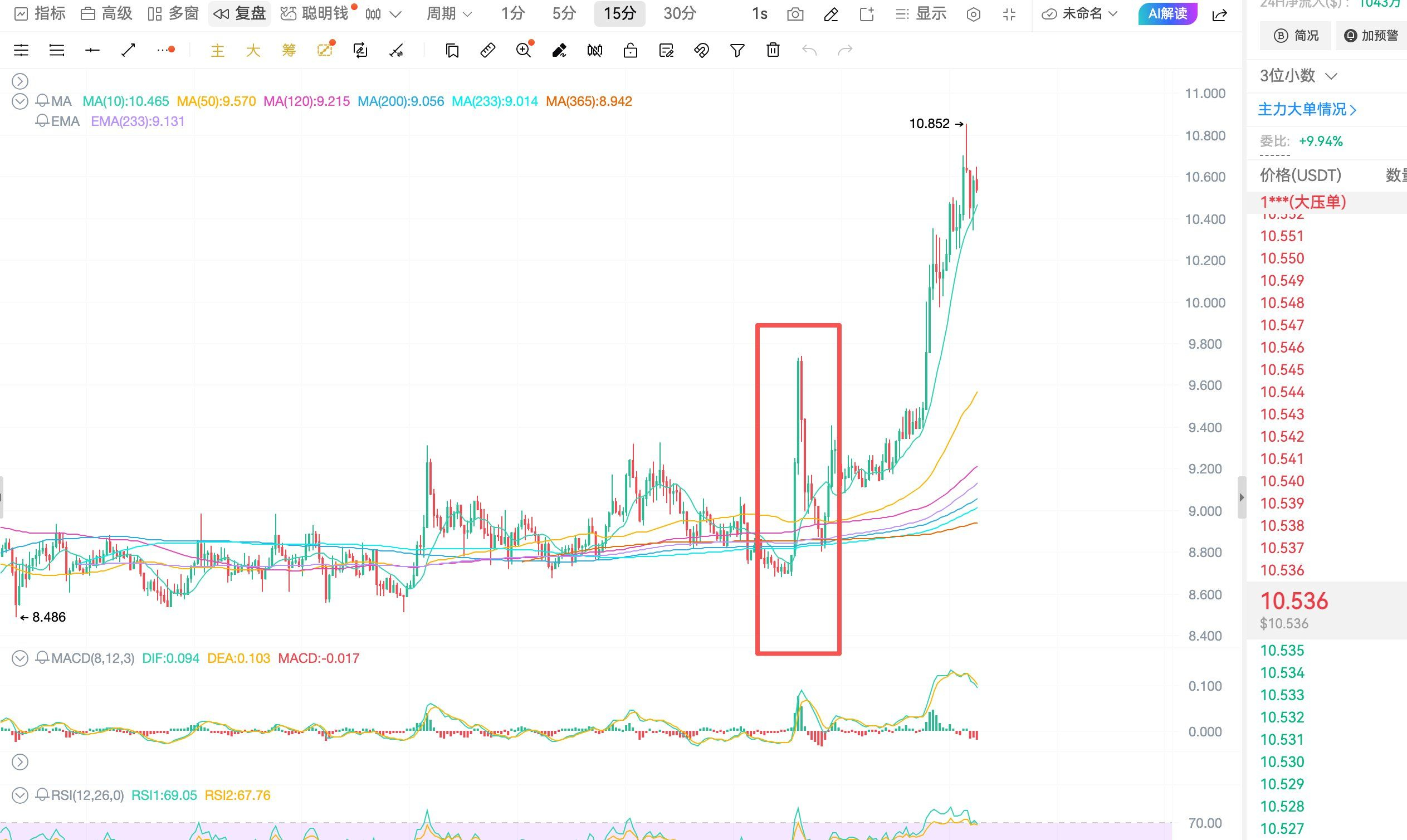
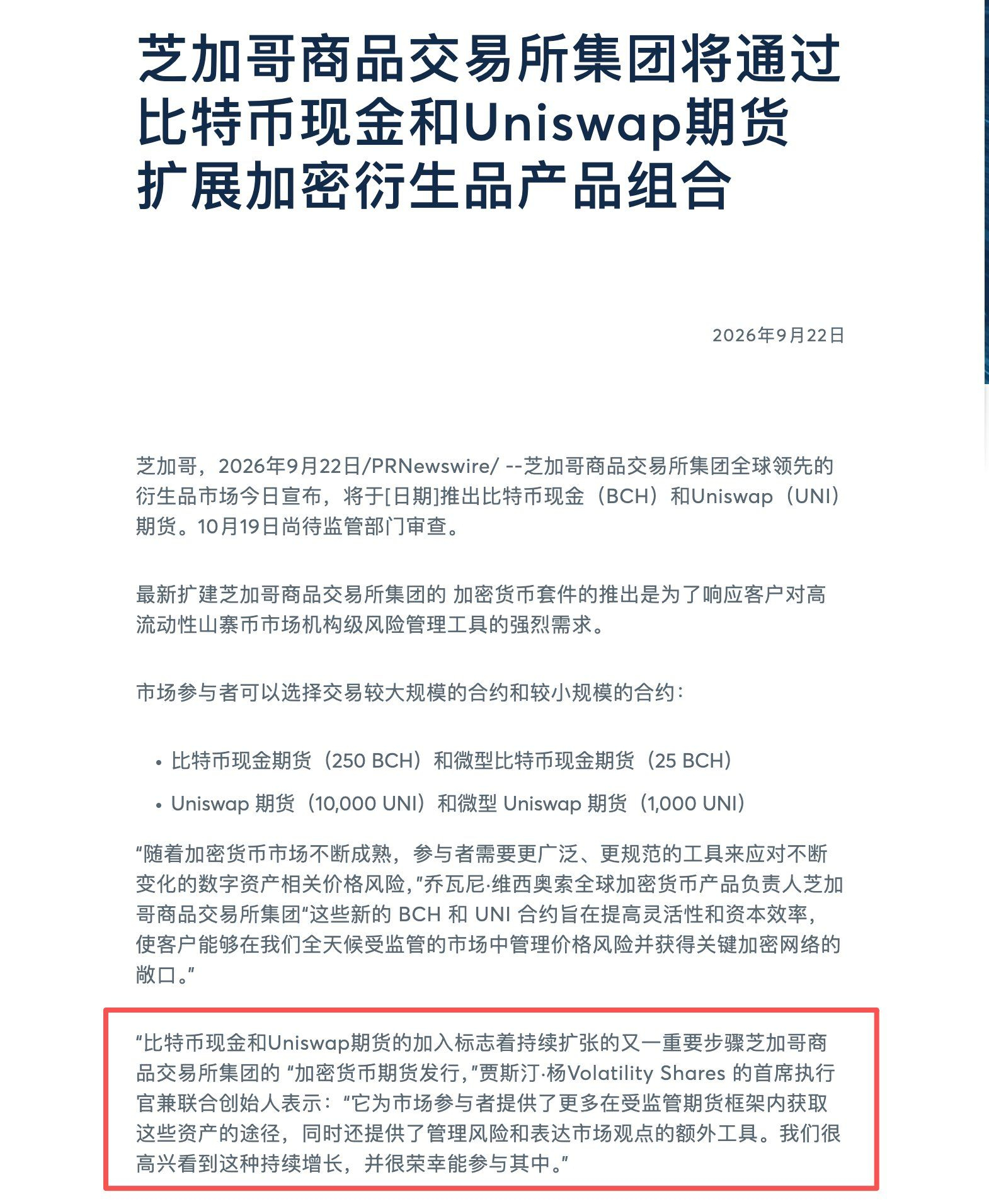
CME said it would list UNI and BCH futures. UNI first surged to 9.7, and those who chased long saw the “good news” and rushed in. Then one single wick slammed it back to 8.7—every long position got stopped out. Everyone thought the good news was finally exhausted, and it was over. But after washing the book, it was pulled straight up to 10.85.
So, hold spot, and touch futures as little as possible. If you want to make money and also sleep well, just stick with the strongest coin—don’t go around moving things.
{spot}(UNIUSDT)
$UNI Last night was a living textbook: spot just lay back and won, while contracts on both sides got beaten.
CME said it would list UNI and BCH futures. UNI first surged to 9.7, and those who chased long saw the “good news” and rushed in. Then one single wick slammed it back to 8.7—every long position got stopped out. Everyone thought the good news was finally exhausted, and it was over. But after washing the book, it was pulled straight up to 10.85.
So, hold spot, and touch futures as little as possible. If you want to make money and also sleep well, just stick with the strongest coin—don’t go around moving things.
CME said it would list UNI and BCH futures. UNI first surged to 9.7, and those who chased long saw the “good news” and rushed in. Then one single wick slammed it back to 8.7—every long position got stopped out. Everyone thought the good news was finally exhausted, and it was over. But after washing the book, it was pulled straight up to 10.85.
So, hold spot, and touch futures as little as possible. If you want to make money and also sleep well, just stick with the strongest coin—don’t go around moving things.
1
2
1.7k
·
--
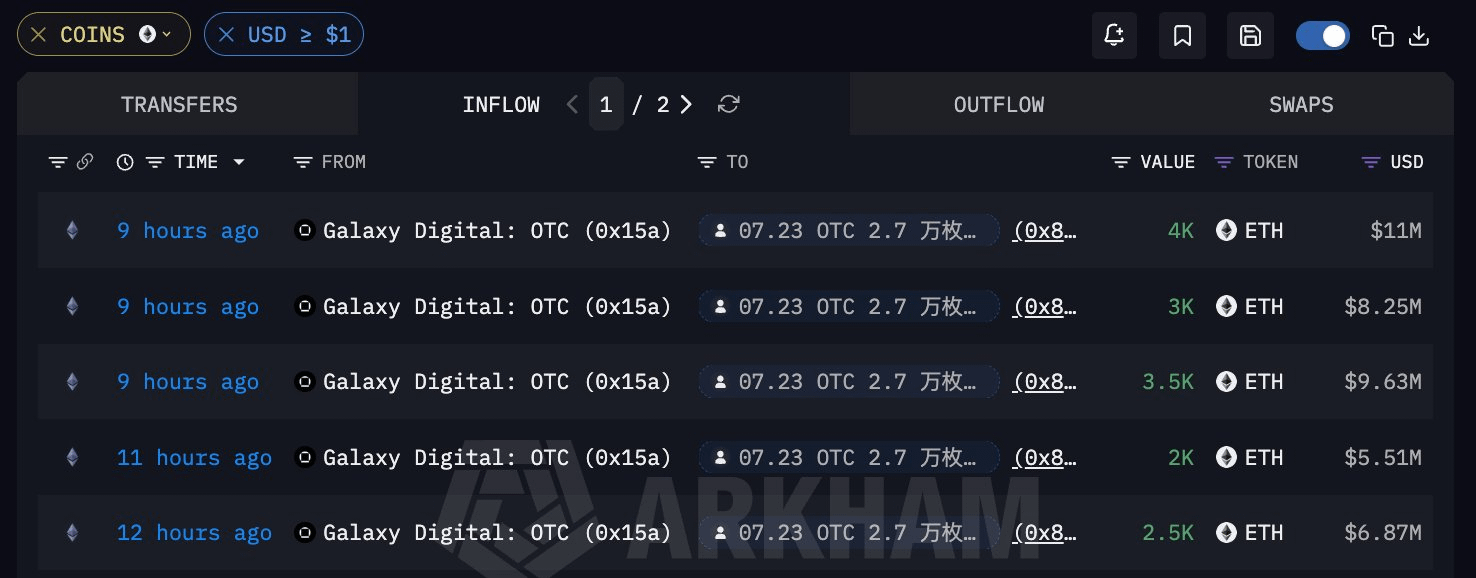
There’s a $ETH giant whale still going crazy buying—so intense! Since July, they’ve been slowly stockpiling ETH over-the-counter through Galaxy Digital. At first, they bought 37,000 units at an average price of $1,923. Today, they made another move—directly purchasing 15,000 ETH at a price of $2,751, spending $41.26 million in one go.
Now they hold a total of 52,000 ETH, worth $143 million, with an average cost of $2,161. Their unrealized profit is already $31.10 million.
The trading rhythm here is: accumulate slowly at the low end; when the price rises, they still dare to add—classic big-money, long-term bullish. They’re really sweeping up with real cash, not just talk-in-theory.
{spot}(ETHUSDT)
There’s a $ETH giant whale still going crazy buying—so intense! Since July, they’ve been slowly stockpiling ETH over-the-counter through Galaxy Digital. At first, they bought 37,000 units at an average price of $1,923. Today, they made another move—directly purchasing 15,000 ETH at a price of $2,751, spending $41.26 million in one go.
Now they hold a total of 52,000 ETH, worth $143 million, with an average cost of $2,161. Their unrealized profit is already $31.10 million.
The trading rhythm here is: accumulate slowly at the low end; when the price rises, they still dare to add—classic big-money, long-term bullish. They’re really sweeping up with real cash, not just talk-in-theory.
Now they hold a total of 52,000 ETH, worth $143 million, with an average cost of $2,161. Their unrealized profit is already $31.10 million.
The trading rhythm here is: accumulate slowly at the low end; when the price rises, they still dare to add—classic big-money, long-term bullish. They’re really sweeping up with real cash, not just talk-in-theory.
1.8k
·
--
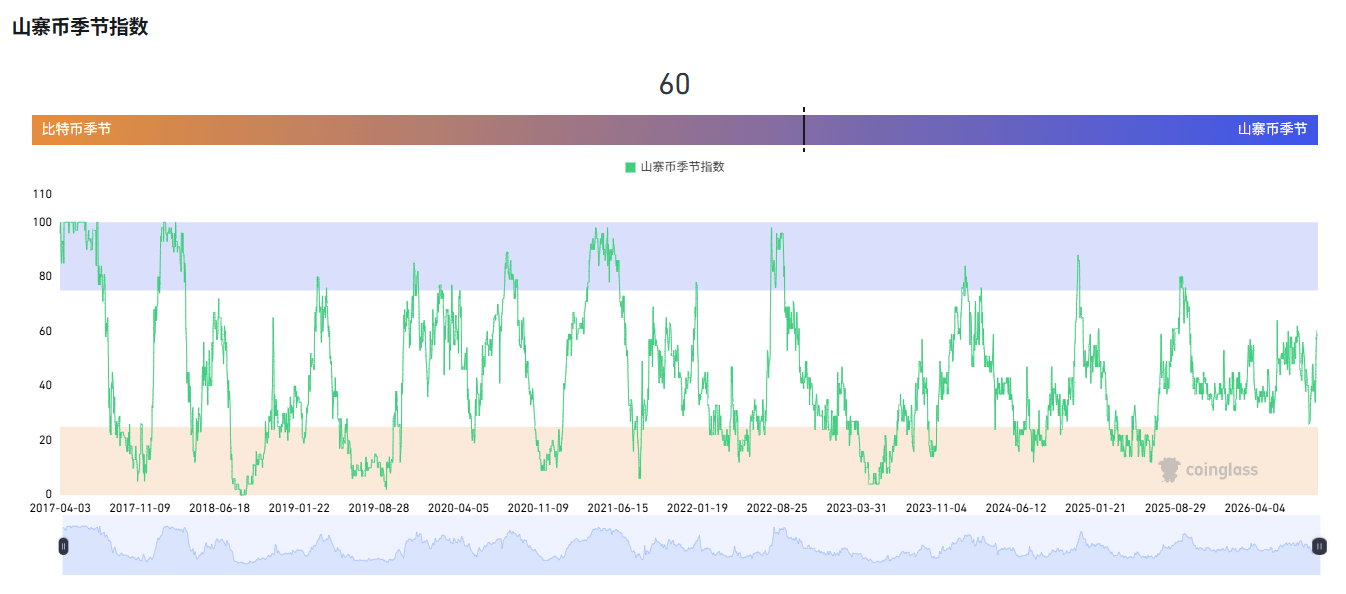
On the $BTC line, 86k is reached; the knockoffs are also getting restless. ZEC keeps hitting new highs—acting like the big brother leading the way. The knockoff-season signal has pushed to 81.25. BTC dominance is stuck at 59%–60% and won’t go higher. Total market cap of the knockoffs has returned to 1.19 trillion—money really is flowing into the knockoffs.
But don’t get too excited yet: the knockoff-season index is only 60, still far from the 75 confirmation line. Among the top 50 knockoffs, fewer than half have outperformed BTC.
The bigger change is institutions. In the first half of 2026, institutions made up 72% of spot OTC trading volume for a certain top market maker—money is increasingly clustering in a coordinated way. Only a handful of projects have strong fundamentals, good liquidity, and clear regulatory status. As they put it: not every knockoff will rise; the next knockoff-season cycle belongs only to a small number of projects with narratives and institutional funding support.
So the old knockoff-season where “buy anything and it goes up” is gone. Now choosing coins matters more than trying to time the market. Allocation should start with BTC and ETH, then look at DeFi and emerging memes—such as UNI, AVAX, and NEAR. For memes, keep an eye on MUBARAK, MARSCOIN, and NiuLai.
{spot}(BTCUSDT)
On the $BTC line, 86k is reached; the knockoffs are also getting restless. ZEC keeps hitting new highs—acting like the big brother leading the way. The knockoff-season signal has pushed to 81.25. BTC dominance is stuck at 59%–60% and won’t go higher. Total market cap of the knockoffs has returned to 1.19 trillion—money really is flowing into the knockoffs.
But don’t get too excited yet: the knockoff-season index is only 60, still far from the 75 confirmation line. Among the top 50 knockoffs, fewer than half have outperformed BTC.
The bigger change is institutions. In the first half of 2026, institutions made up 72% of spot OTC trading volume for a certain top market maker—money is increasingly clustering in a coordinated way. Only a handful of projects have strong fundamentals, good liquidity, and clear regulatory status. As they put it: not every knockoff will rise; the next knockoff-season cycle belongs only to a small number of projects with narratives and institutional funding support.
So the old knockoff-season where “buy anything and it goes up” is gone. Now choosing coins matters more than trying to time the market. Allocation should start with BTC and ETH, then look at DeFi and emerging memes—such as UNI, AVAX, and NEAR. For memes, keep an eye on MUBARAK, MARSCOIN, and NiuLai.
But don’t get too excited yet: the knockoff-season index is only 60, still far from the 75 confirmation line. Among the top 50 knockoffs, fewer than half have outperformed BTC.
The bigger change is institutions. In the first half of 2026, institutions made up 72% of spot OTC trading volume for a certain top market maker—money is increasingly clustering in a coordinated way. Only a handful of projects have strong fundamentals, good liquidity, and clear regulatory status. As they put it: not every knockoff will rise; the next knockoff-season cycle belongs only to a small number of projects with narratives and institutional funding support.
So the old knockoff-season where “buy anything and it goes up” is gone. Now choosing coins matters more than trying to time the market. Allocation should start with BTC and ETH, then look at DeFi and emerging memes—such as UNI, AVAX, and NEAR. For memes, keep an eye on MUBARAK, MARSCOIN, and NiuLai.
937
Log in to explore more content
Join global crypto users on Binance Square
⚡️ Get latest and useful information about crypto.
💬 Trusted by the world’s largest crypto exchange.
👍 Discover real insights from verified creators.
Email / Phone number
Trending Topics
BitcoinClears$85200
15,195 views
235 Discussing
We got the move, and $BTC is standing exactly where we were before the data. That’s what actual patience for a trade looks like.
The data came in mixed but with some important numbers. ADP Non-Farm Employment Change came at 90K vs 73K forecast, while Core PCE came in at 0.2% vs 0.3% expected. Final GDP was also stronger at 2.2% vs 1.5% forecast, while Personal Spending came in at 0.9% vs 0.8% expected. At the same time, Personal Income missed at 0.2% vs 0.5% forecast.
BTC initially surged to $85,600 and is now back where it needs to be. I’m still looking toward the lower ranges at $82,759 and the $80,000 liquidity, because the overhead liquidity is done and dusted.
We had a live session during the data, and during that session we saw the market at $83,800, then $85,600, and then back toward $83,000 and we still didn’t enter a trade.
That’s what patience is.
We can’t force an entry when the market has no clear direction. The same range is still in focus, and we’ll wait for the market to give us the setup.
Let me know, guys, how was the session? And should we have more regular sessions with our respected members so we can have proper discussions regarding the market?
#BitcoinClears$85200 #AltcoinSeasonIndexHoldsAbove60For5Days #USADPAdds90000JobsInSeptember #BitcoinSlipsBelow$84000 #SECToClarifyOnChainFundraisingRules
Crypto_LUX
·26 Likes
·21.8k views
AltcoinSeasonIndexHoldsAbove60For5Days
73,110 views
1,257 Discussing
USADPAdds90000JobsInSeptember
33,167 views
701 Discussing