

minamium
11.8k Posts

minamium
Report
Block User
1 Following
99 Followers
375 Liked
Posts
·
--
Long-term Bitcoin holders sitting on massive profits might sound like bullish fuel, but it actually masks a hidden liquidity trap that most retail traders never prepare for. Most folks keep buying local dips thinking the floor is solid, only to panic-sell right into the hands of diamond hands who decide it is finally time to de-risk.
When long-term holders ($LTH) refuse to capitulate, it keeps the higher-timeframe structure of $BTC intact through heavy volatility. On paper, that resilience looks reassuring compared to previous brutal bear market washouts. However, when an overwhelming share of supply remains in unrealized profit, any sudden macro shock can turn those calm holders into aggressive sellers looking to lock in gains before anyone else does.
If major support levels crack, the lack of prior capitulation means the real flush hasn't even started yet, potentially dragging down correlated assets like $ETH along with it. Strong structural holding looks safe right until the largest wallets decide they have waited long enough to take chips off the table.
Are you treating this resilience as a safety net, or are you de-risking in case long-term holders start distributing?
#Bitcoin #CryptoAnalysis #OnChainData
Long-term Bitcoin holders sitting on massive profits might sound like bullish fuel, but it actually masks a hidden liquidity trap that most retail traders never prepare for. Most folks keep buying local dips thinking the floor is solid, only to panic-sell right into the hands of diamond hands who decide it is finally time to de-risk.
When long-term holders ($LTH) refuse to capitulate, it keeps the higher-timeframe structure of $BTC intact through heavy volatility. On paper, that resilience looks reassuring compared to previous brutal bear market washouts. However, when an overwhelming share of supply remains in unrealized profit, any sudden macro shock can turn those calm holders into aggressive sellers looking to lock in gains before anyone else does.
If major support levels crack, the lack of prior capitulation means the real flush hasn't even started yet, potentially dragging down correlated assets like $ETH along with it. Strong structural holding looks safe right until the largest wallets decide they have waited long enough to take chips off the table.
Are you treating this resilience as a safety net, or are you de-risking in case long-term holders start distributing?
#Bitcoin #CryptoAnalysis #OnChainData
When long-term holders ($LTH) refuse to capitulate, it keeps the higher-timeframe structure of $BTC intact through heavy volatility. On paper, that resilience looks reassuring compared to previous brutal bear market washouts. However, when an overwhelming share of supply remains in unrealized profit, any sudden macro shock can turn those calm holders into aggressive sellers looking to lock in gains before anyone else does.
If major support levels crack, the lack of prior capitulation means the real flush hasn't even started yet, potentially dragging down correlated assets like $ETH along with it. Strong structural holding looks safe right until the largest wallets decide they have waited long enough to take chips off the table.
Are you treating this resilience as a safety net, or are you de-risking in case long-term holders start distributing?
#Bitcoin #CryptoAnalysis #OnChainData
20
·
--
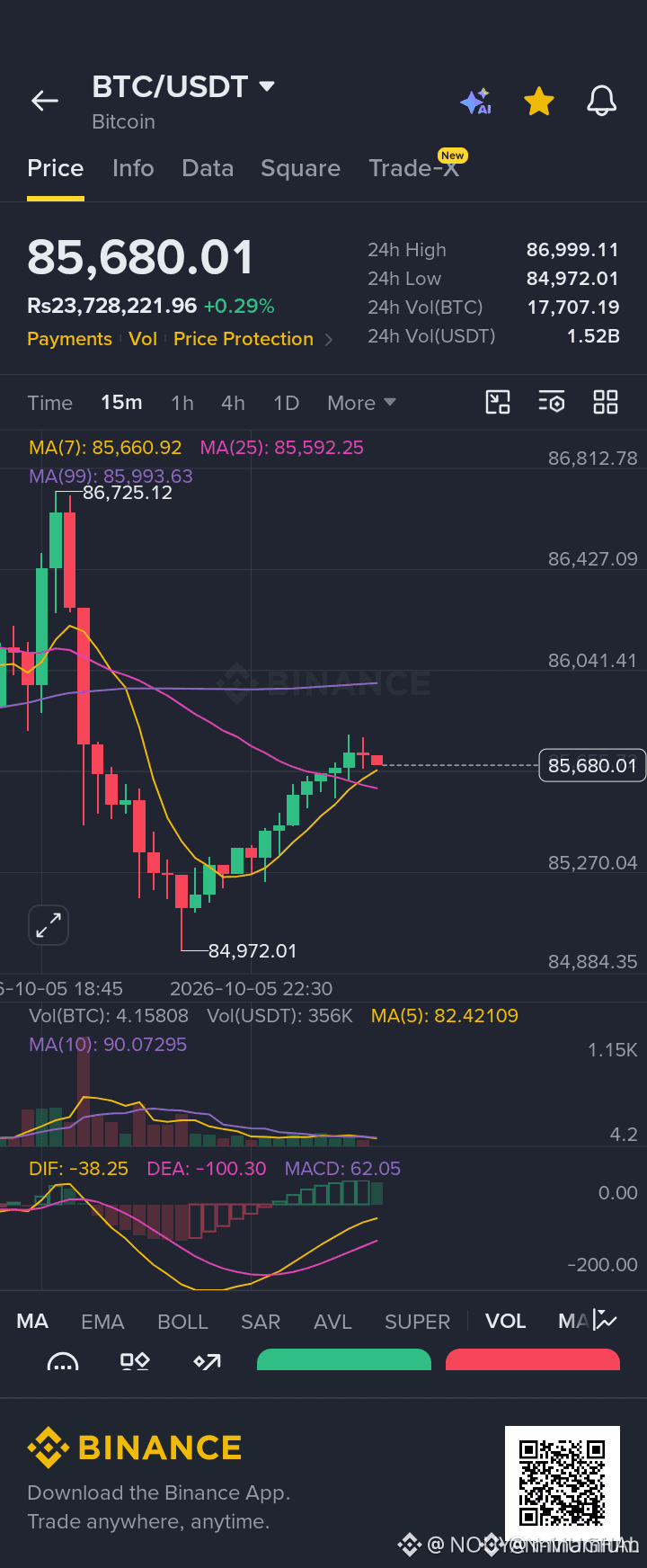
everyone thinks $BTC printing its strongest weekly close in eight months confirms a real breakout, but actually this looks like another trap ready to wreck late longs.
getting wrecked fomoing into these strong closes then watching it reverse is too common. you buy the pump and have no idea when to exit as it dumps back into the range.
$BTC just printed that strongest weekly close in eight months. ngl ser the numbers look decent on paper but this case study of the current chart shows mixed signals with $ETH not confirming the move and $SOL lagging hard.
we've seen this exact liquidity grab setup before. volume isn't backing a clean continuation either.
where do you think this goes from here?
#Bitcoin #Crypto #Trading
everyone thinks $BTC printing its strongest weekly close in eight months confirms a real breakout, but actually this looks like another trap ready to wreck late longs.
getting wrecked fomoing into these strong closes then watching it reverse is too common. you buy the pump and have no idea when to exit as it dumps back into the range.
$BTC just printed that strongest weekly close in eight months. ngl ser the numbers look decent on paper but this case study of the current chart shows mixed signals with $ETH not confirming the move and $SOL lagging hard.
we've seen this exact liquidity grab setup before. volume isn't backing a clean continuation either.
where do you think this goes from here?
#Bitcoin #Crypto #Trading
getting wrecked fomoing into these strong closes then watching it reverse is too common. you buy the pump and have no idea when to exit as it dumps back into the range.
$BTC just printed that strongest weekly close in eight months. ngl ser the numbers look decent on paper but this case study of the current chart shows mixed signals with $ETH not confirming the move and $SOL lagging hard.
we've seen this exact liquidity grab setup before. volume isn't backing a clean continuation either.
where do you think this goes from here?
#Bitcoin #Crypto #Trading

54
·
--
If you're still waiting for $BTC to crash harder before you buy, stop now.
Traders who hesitate like this often miss the real opportunity and end up chasing after the move starts, locking in worse prices.
The Power Law Oscillator shows $BTC trading well below its long term regression trend. With readings near +34.5K, Bitcoin looks significantly undervalued versus the model's path.
Some will say power law models are too simplistic for current conditions and $BTC could stay undervalued longer. I lean the other way because historically these extreme deviations have preceded stronger upside, which could lift $ETH as well.
Where do you think this goes from here?
#Bitcoin #BTC #Crypto
If you're still waiting for $BTC to crash harder before you buy, stop now.
Traders who hesitate like this often miss the real opportunity and end up chasing after the move starts, locking in worse prices.
The Power Law Oscillator shows $BTC trading well below its long term regression trend. With readings near +34.5K, Bitcoin looks significantly undervalued versus the model's path.
Some will say power law models are too simplistic for current conditions and $BTC could stay undervalued longer. I lean the other way because historically these extreme deviations have preceded stronger upside, which could lift $ETH as well.
Where do you think this goes from here?
#Bitcoin #BTC #Crypto
Traders who hesitate like this often miss the real opportunity and end up chasing after the move starts, locking in worse prices.
The Power Law Oscillator shows $BTC trading well below its long term regression trend. With readings near +34.5K, Bitcoin looks significantly undervalued versus the model's path.
Some will say power law models are too simplistic for current conditions and $BTC could stay undervalued longer. I lean the other way because historically these extreme deviations have preceded stronger upside, which could lift $ETH as well.
Where do you think this goes from here?
#Bitcoin #BTC #Crypto

79
·
--
everyone thinks the real play is hunting 50x microcaps before the cycle ends, but actually you are just bleeding your stack while institutions quietly corner the real supply.
most retail traders get chopped up chasing green candles and rotating into vaporware because holding feels too slow, only to end up with empty bags right before the macro breakout.
saylor just labeled the next 10 years as an outright gold rush for $BTC, and ngl the math backs it up ser. while everyone is distracted gambling on short-term pumps, corporate treasuries and etf issuers are treating this decade as an aggressive accumulation window. they are absorbing every dip and locking up liquid supply faster than miners can produce it.
if you look at how microstrategy built their stack, the playbook was never about timing local tops or catching quick bounces into $ETH or $SOL. it was purely about recognizing an institutional land grab early and refusing to get shaken out by volatility. retail keeps trying to outsmart the market instead of just frontrunning the easiest macro trade of our lifetime.
how are you positioning your spot bag for this 10-year window?
#Bitcoin #Crypto #Binance
everyone thinks the real play is hunting 50x microcaps before the cycle ends, but actually you are just bleeding your stack while institutions quietly corner the real supply.
most retail traders get chopped up chasing green candles and rotating into vaporware because holding feels too slow, only to end up with empty bags right before the macro breakout.
saylor just labeled the next 10 years as an outright gold rush for $BTC , and ngl the math backs it up ser. while everyone is distracted gambling on short-term pumps, corporate treasuries and etf issuers are treating this decade as an aggressive accumulation window. they are absorbing every dip and locking up liquid supply faster than miners can produce it.
if you look at how microstrategy built their stack, the playbook was never about timing local tops or catching quick bounces into $ETH or $SOL . it was purely about recognizing an institutional land grab early and refusing to get shaken out by volatility. retail keeps trying to outsmart the market instead of just frontrunning the easiest macro trade of our lifetime.
how are you positioning your spot bag for this 10-year window?
#Bitcoin #Crypto #Binance
most retail traders get chopped up chasing green candles and rotating into vaporware because holding feels too slow, only to end up with empty bags right before the macro breakout.
saylor just labeled the next 10 years as an outright gold rush for $BTC , and ngl the math backs it up ser. while everyone is distracted gambling on short-term pumps, corporate treasuries and etf issuers are treating this decade as an aggressive accumulation window. they are absorbing every dip and locking up liquid supply faster than miners can produce it.
if you look at how microstrategy built their stack, the playbook was never about timing local tops or catching quick bounces into $ETH or $SOL . it was purely about recognizing an institutional land grab early and refusing to get shaken out by volatility. retail keeps trying to outsmart the market instead of just frontrunning the easiest macro trade of our lifetime.
how are you positioning your spot bag for this 10-year window?
#Bitcoin #Crypto #Binance

·
--
Have you noticed how protocols flashing 18,000% TVL growth get all the attention while more realistic moves get ignored?
Traders keep FOMO buying these stories and end up losing money when the tiny starting base becomes obvious. It is a reliable way to get caught in dumps after the hype fades.
AllLayer $ALL saw its TVL climb 18,851% in seven days. Question that number first. Extreme jumps like this almost always start from almost nothing, not a genuine inflection.
Shibarium $SHIB grew 165% from a much stronger base, which actually signals traction. When these headlines appear, check the absolute TVL before anything else. A massive percent from a few thousand dollars is still small money.
Then confirm if it is real demand or just incentives flowing through $ETH. The difference between hype and signal is in those details.
What's your take on these TVL explosions?
#DeFi #TVL #Crypto
Have you noticed how protocols flashing 18,000% TVL growth get all the attention while more realistic moves get ignored?
Traders keep FOMO buying these stories and end up losing money when the tiny starting base becomes obvious. It is a reliable way to get caught in dumps after the hype fades.
AllLayer $ALL saw its TVL climb 18,851% in seven days. Question that number first. Extreme jumps like this almost always start from almost nothing, not a genuine inflection.
Shibarium $SHIB grew 165% from a much stronger base, which actually signals traction. When these headlines appear, check the absolute TVL before anything else. A massive percent from a few thousand dollars is still small money.
Then confirm if it is real demand or just incentives flowing through $ETH . The difference between hype and signal is in those details.
What's your take on these TVL explosions?
#DeFi #TVL #Crypto
Traders keep FOMO buying these stories and end up losing money when the tiny starting base becomes obvious. It is a reliable way to get caught in dumps after the hype fades.
AllLayer $ALL saw its TVL climb 18,851% in seven days. Question that number first. Extreme jumps like this almost always start from almost nothing, not a genuine inflection.
Shibarium $SHIB grew 165% from a much stronger base, which actually signals traction. When these headlines appear, check the absolute TVL before anything else. A massive percent from a few thousand dollars is still small money.
Then confirm if it is real demand or just incentives flowing through $ETH . The difference between hype and signal is in those details.
What's your take on these TVL explosions?
#DeFi #TVL #Crypto

·
--
Why is nobody talking about how Bitcoin spot ETF drawdowns are actually exposing weak retail conviction instead of institutional exit?
Most traders keep panic-selling at the first sign of red outflows, only to watch institutional buyers silently scoop up the discount a few days later. You get chopped up trying to time short-term noise while managing risk on assets like $BTC and high-beta plays like $NEAR.
The mainstream narrative assumes ETF outflows equal a macro reversal. Look at the recent flows: institutions treat these pullbacks as liquidity windows, quietly rebalancing while sentiment sits firmly in Greed territory. Retail dumps liquidity into the book, while passive balance-sheet allocations absorb the volume across $USDT pairs with zero rush.
When institutional products draw down, they test whether spot holders actually understand market structure or just follow daily net inflow headlines.
Are you using these ETF dips to accumulate, or are you waiting for confirmation at higher levels?
#BitcoinSpotETFsDraw #FedOctoberHoldOdds82 #Nikkei225Jumps2
Why is nobody talking about how Bitcoin spot ETF drawdowns are actually exposing weak retail conviction instead of institutional exit?
Most traders keep panic-selling at the first sign of red outflows, only to watch institutional buyers silently scoop up the discount a few days later. You get chopped up trying to time short-term noise while managing risk on assets like $BTC and high-beta plays like $NEAR .
The mainstream narrative assumes ETF outflows equal a macro reversal. Look at the recent flows: institutions treat these pullbacks as liquidity windows, quietly rebalancing while sentiment sits firmly in Greed territory. Retail dumps liquidity into the book, while passive balance-sheet allocations absorb the volume across $USDT pairs with zero rush.
When institutional products draw down, they test whether spot holders actually understand market structure or just follow daily net inflow headlines.
Are you using these ETF dips to accumulate, or are you waiting for confirmation at higher levels?
#BitcoinSpotETFsDraw #FedOctoberHoldOdds82 #Nikkei225Jumps2
Most traders keep panic-selling at the first sign of red outflows, only to watch institutional buyers silently scoop up the discount a few days later. You get chopped up trying to time short-term noise while managing risk on assets like $BTC and high-beta plays like $NEAR .
The mainstream narrative assumes ETF outflows equal a macro reversal. Look at the recent flows: institutions treat these pullbacks as liquidity windows, quietly rebalancing while sentiment sits firmly in Greed territory. Retail dumps liquidity into the book, while passive balance-sheet allocations absorb the volume across $USDT pairs with zero rush.
When institutional products draw down, they test whether spot holders actually understand market structure or just follow daily net inflow headlines.
Are you using these ETF dips to accumulate, or are you waiting for confirmation at higher levels?
#BitcoinSpotETFsDraw #FedOctoberHoldOdds82 #Nikkei225Jumps2
1
·
--
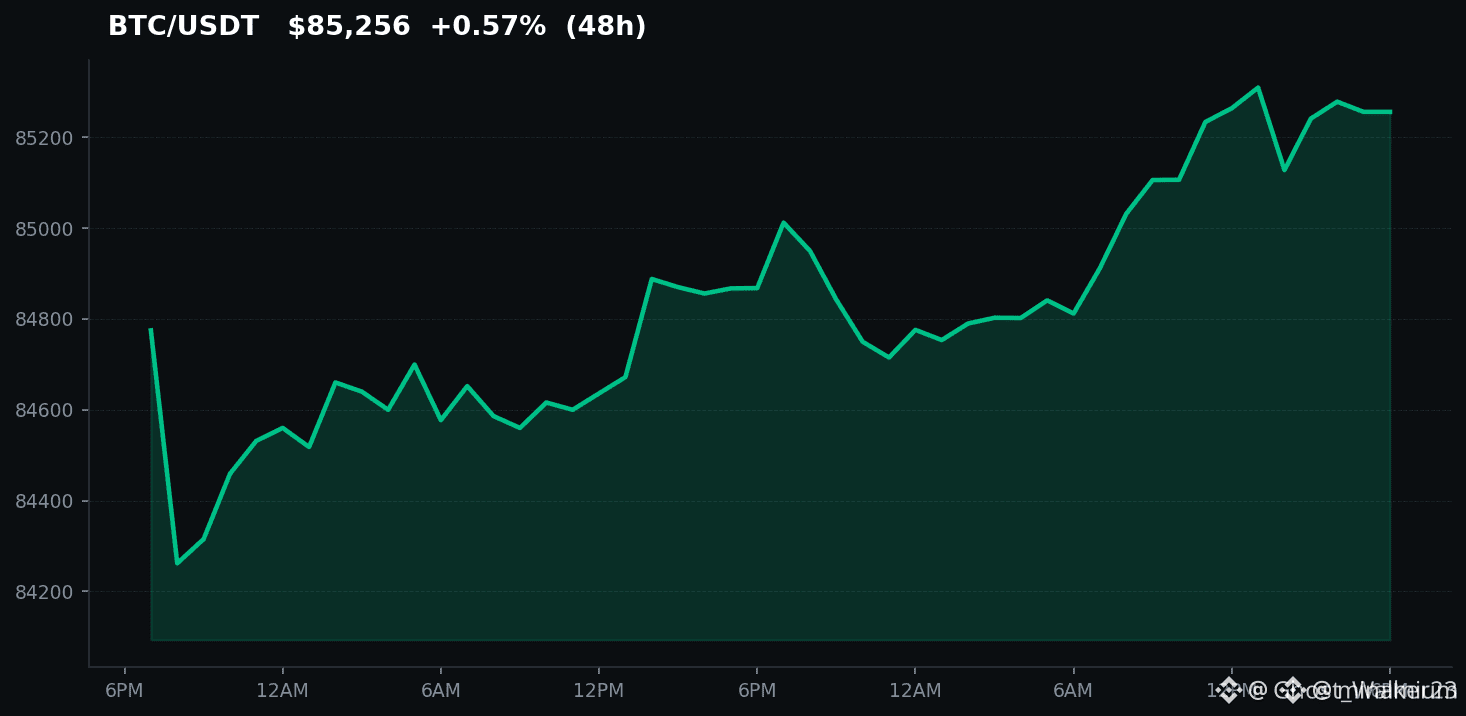
Everyone thinks an 82 percent chance the Fed holds rates in October is a green light for crypto, but actually that is when a lot of traders get quietly wrecked.
You have seen this movie. The odds climb, people load the boat on $BTC and $ETH expecting a relief bounce, then the actual print or the press conference does the opposite and weeks of gains vanish in one session.
A hold is not a cut. Think of it like your landlord deciding not to raise the rent this month. Your payment stays high. You do not suddenly have extra cash to throw at every alt. High rates still make sitting in $USDT look more rational than chasing the next bounce, especially while greed is already at 67.
The second trap is treating 82 percent like fresh news. By the time the number is that high, positioning is already done. Buying the headline is like showing up to dinner after everyone else has eaten. The third mistake is ignoring the words around the decision. They can hold rates and still sound hawkish, and that tone often hits $BTC harder than the hold itself.
What's your plan if they hold but the language stays tight?
#FedOctoberHoldOdds82 #BitcoinSpotETFsDraw #CircleMints
Everyone thinks an 82 percent chance the Fed holds rates in October is a green light for crypto, but actually that is when a lot of traders get quietly wrecked.
You have seen this movie. The odds climb, people load the boat on $BTC and $ETH expecting a relief bounce, then the actual print or the press conference does the opposite and weeks of gains vanish in one session.
A hold is not a cut. Think of it like your landlord deciding not to raise the rent this month. Your payment stays high. You do not suddenly have extra cash to throw at every alt. High rates still make sitting in $USDT look more rational than chasing the next bounce, especially while greed is already at 67.
The second trap is treating 82 percent like fresh news. By the time the number is that high, positioning is already done. Buying the headline is like showing up to dinner after everyone else has eaten. The third mistake is ignoring the words around the decision. They can hold rates and still sound hawkish, and that tone often hits $BTC harder than the hold itself.
What's your plan if they hold but the language stays tight?
#FedOctoberHoldOdds82 #BitcoinSpotETFsDraw #CircleMints
You have seen this movie. The odds climb, people load the boat on $BTC and $ETH expecting a relief bounce, then the actual print or the press conference does the opposite and weeks of gains vanish in one session.
A hold is not a cut. Think of it like your landlord deciding not to raise the rent this month. Your payment stays high. You do not suddenly have extra cash to throw at every alt. High rates still make sitting in $USDT look more rational than chasing the next bounce, especially while greed is already at 67.
The second trap is treating 82 percent like fresh news. By the time the number is that high, positioning is already done. Buying the headline is like showing up to dinner after everyone else has eaten. The third mistake is ignoring the words around the decision. They can hold rates and still sound hawkish, and that tone often hits $BTC harder than the hold itself.
What's your plan if they hold but the language stays tight?
#FedOctoberHoldOdds82 #BitcoinSpotETFsDraw #CircleMints
2
·
--
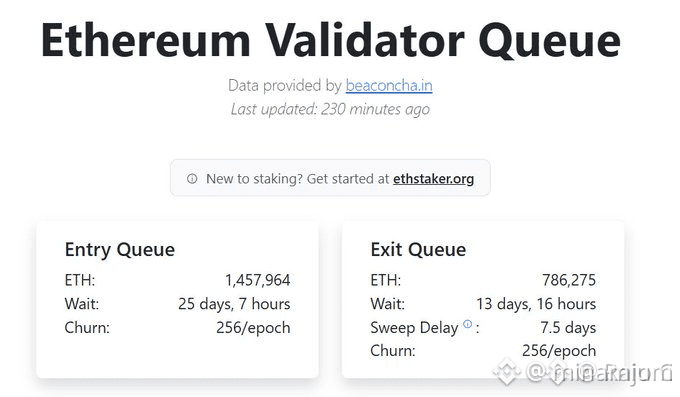
Why is everyone panicking over the rising validator exit queue when it might actually be the healthiest reset $ETH has seen in months?
Retail investors keep falling into the same trap of panic selling every time on-chain validator metrics spike, mistaking routine capital reallocation for a catastrophic collapse.
Instead of dumping your spot bag on headlines, look at what is really happening beneath the surface. Validators rotate out for dozens of operational reasons, from rebalancing into liquid staking alternatives to shifting capital towards active ecosystem plays like $NEAR and $ETC while market sentiment sits comfortably in greed. The smart move here is straightforward: track the entry-versus-exit ratio rather than raw exit totals, monitor whether freed liquidity flows directly into exchange order books or stays on-chain, and use temporary FUD-driven dips to scale into core positions gradually.
The exit queue is a natural feature of Ethereum design, not a systemic failure. Where do you think this unstaked liquidity is heading next?
#EthStakingExitQueueHits2026High #EthereumValidatorExitQueueJumps392
Why is everyone panicking over the rising validator exit queue when it might actually be the healthiest reset $ETH has seen in months?
Retail investors keep falling into the same trap of panic selling every time on-chain validator metrics spike, mistaking routine capital reallocation for a catastrophic collapse.
Instead of dumping your spot bag on headlines, look at what is really happening beneath the surface. Validators rotate out for dozens of operational reasons, from rebalancing into liquid staking alternatives to shifting capital towards active ecosystem plays like $NEAR and $ETC while market sentiment sits comfortably in greed. The smart move here is straightforward: track the entry-versus-exit ratio rather than raw exit totals, monitor whether freed liquidity flows directly into exchange order books or stays on-chain, and use temporary FUD-driven dips to scale into core positions gradually.
The exit queue is a natural feature of Ethereum design, not a systemic failure. Where do you think this unstaked liquidity is heading next?
#EthStakingExitQueueHits2026High #EthereumValidatorExitQueueJumps392
Retail investors keep falling into the same trap of panic selling every time on-chain validator metrics spike, mistaking routine capital reallocation for a catastrophic collapse.
Instead of dumping your spot bag on headlines, look at what is really happening beneath the surface. Validators rotate out for dozens of operational reasons, from rebalancing into liquid staking alternatives to shifting capital towards active ecosystem plays like $NEAR and $ETC while market sentiment sits comfortably in greed. The smart move here is straightforward: track the entry-versus-exit ratio rather than raw exit totals, monitor whether freed liquidity flows directly into exchange order books or stays on-chain, and use temporary FUD-driven dips to scale into core positions gradually.
The exit queue is a natural feature of Ethereum design, not a systemic failure. Where do you think this unstaked liquidity is heading next?
#EthStakingExitQueueHits2026High #EthereumValidatorExitQueueJumps392
6
·
--
Most profitable traders survive not by winning massive bets, but by refusing to size up even when a setup looks completely free.
We all know that sinking feeling of watching a runner like $BTW pump, scaling in way too heavy at the 0.8 level out of pure greed, and getting wiped out by a single wick.
Looking through 30-day top trader PnL data, you notice a recurring habit among consistent winners. One closed position locked in +7,629.47 USDT shorting $BTW on the perp side, yet the trader explicitly noted they refused to size up despite the tempting 0.8 mark. When price action barely budged with a -0.01% shift, tight risk management was the only thing protecting the downside.
When volatility picks up across momentum plays like $BTC and high-beta alts, oversized leverage turns a routine pullback into total liquidation. Protecting your principal always matters more than squeezing every last dollar out of a single move.
How do you manage position sizing when a setup looks too easy to pass up?
#CryptoTrading #RiskManagement #FuturesTrading
Most profitable traders survive not by winning massive bets, but by refusing to size up even when a setup looks completely free.
We all know that sinking feeling of watching a runner like $BTW pump, scaling in way too heavy at the 0.8 level out of pure greed, and getting wiped out by a single wick.
Looking through 30-day top trader PnL data, you notice a recurring habit among consistent winners. One closed position locked in +7,629.47 USDT shorting $BTW on the perp side, yet the trader explicitly noted they refused to size up despite the tempting 0.8 mark. When price action barely budged with a -0.01% shift, tight risk management was the only thing protecting the downside.
When volatility picks up across momentum plays like $BTC and high-beta alts, oversized leverage turns a routine pullback into total liquidation. Protecting your principal always matters more than squeezing every last dollar out of a single move.
How do you manage position sizing when a setup looks too easy to pass up?
#CryptoTrading #RiskManagement #FuturesTrading
We all know that sinking feeling of watching a runner like $BTW pump, scaling in way too heavy at the 0.8 level out of pure greed, and getting wiped out by a single wick.
Looking through 30-day top trader PnL data, you notice a recurring habit among consistent winners. One closed position locked in +7,629.47 USDT shorting $BTW on the perp side, yet the trader explicitly noted they refused to size up despite the tempting 0.8 mark. When price action barely budged with a -0.01% shift, tight risk management was the only thing protecting the downside.
When volatility picks up across momentum plays like $BTC and high-beta alts, oversized leverage turns a routine pullback into total liquidation. Protecting your principal always matters more than squeezing every last dollar out of a single move.
How do you manage position sizing when a setup looks too easy to pass up?
#CryptoTrading #RiskManagement #FuturesTrading

9
·
--
Picture this: you wake up, check your portfolio, and see the Crypto Fear and Greed Index sitting right at 69.
Most traders see that green number and instantly feel the itch to ape into green candles, only to end up buying the exact local top right before a painful pullback. We have all been there, trapped between the fear of missing out and the dread of being exit liquidity.
Back in early 2024, when the index first hovered around this exact 69 to 75 zone, market participants treated greed as an automatic green light to leverage long. What actually followed was weeks of choppy consolidation as $BTC traded sideways while liquidating over-eager positions, even as $ETH tried to find momentum. Reading a 69 does not mean the bull run is ending tomorrow, but historically, it signals that late buyers are getting comfortable while smart money quietly sets limit orders lower.
When you look back at past cycles where sentiment crossed into solid greed territory, the playbook rarely changes. Instead of chasing rallies across major caps like $SOL, seasoned capital usually waits for the inevitable sentiment reset before taking high-conviction entries.
How are you adjusting your current positions with sentiment heating up to these levels?
#CryptoTrading #Bitcoin #MarketAnalysis
Picture this: you wake up, check your portfolio, and see the Crypto Fear and Greed Index sitting right at 69.
Most traders see that green number and instantly feel the itch to ape into green candles, only to end up buying the exact local top right before a painful pullback. We have all been there, trapped between the fear of missing out and the dread of being exit liquidity.
Back in early 2024, when the index first hovered around this exact 69 to 75 zone, market participants treated greed as an automatic green light to leverage long. What actually followed was weeks of choppy consolidation as $BTC traded sideways while liquidating over-eager positions, even as $ETH tried to find momentum. Reading a 69 does not mean the bull run is ending tomorrow, but historically, it signals that late buyers are getting comfortable while smart money quietly sets limit orders lower.
When you look back at past cycles where sentiment crossed into solid greed territory, the playbook rarely changes. Instead of chasing rallies across major caps like $SOL , seasoned capital usually waits for the inevitable sentiment reset before taking high-conviction entries.
How are you adjusting your current positions with sentiment heating up to these levels?
#CryptoTrading #Bitcoin #MarketAnalysis
Most traders see that green number and instantly feel the itch to ape into green candles, only to end up buying the exact local top right before a painful pullback. We have all been there, trapped between the fear of missing out and the dread of being exit liquidity.
Back in early 2024, when the index first hovered around this exact 69 to 75 zone, market participants treated greed as an automatic green light to leverage long. What actually followed was weeks of choppy consolidation as $BTC traded sideways while liquidating over-eager positions, even as $ETH tried to find momentum. Reading a 69 does not mean the bull run is ending tomorrow, but historically, it signals that late buyers are getting comfortable while smart money quietly sets limit orders lower.
When you look back at past cycles where sentiment crossed into solid greed territory, the playbook rarely changes. Instead of chasing rallies across major caps like $SOL , seasoned capital usually waits for the inevitable sentiment reset before taking high-conviction entries.
How are you adjusting your current positions with sentiment heating up to these levels?
#CryptoTrading #Bitcoin #MarketAnalysis
·
--
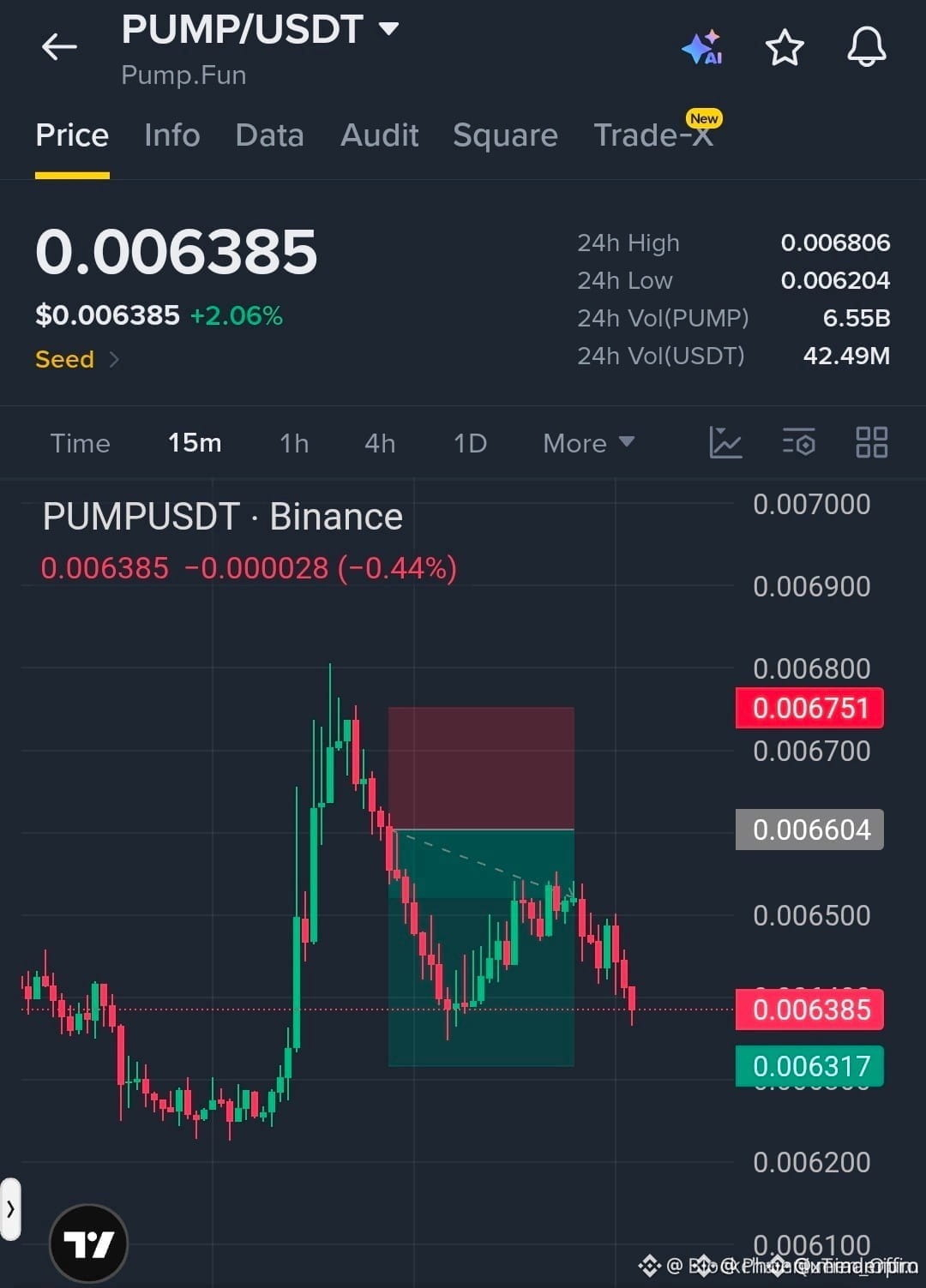
Picture this: a leaderboard showcases top 30-day trader profits, while the underlying token quietly slips into the red.
Most traders get trapped chasing leaderboards and paper gains, jumping into high-momentum plays right when smart money is preparing an exit. By the time retail spots the green PnL screenshots, the liquidity profile has usually shifted against them.
Looking closely at the recent 30-day top trader metrics, there was heavy volume and strong realized profits around $PUMP, even as the spot price pulled back -2.55%. That divergence between top-tier realized profit and downward spot pressure often signals aggressive distribution into strength rather than genuine accumulation.
When large players print massive 30-day returns on high-beta tokens like $PUMP or speculative rotations into $SOL and $PEPE, they need exit liquidity to lock in those gains. If you are entering solely because the leaderboard looks impressive, you might just be funding someone else's winning month.
Are you treating trader leaderboards as a confirmation signal, or as a potential warning sign?
#CryptoTrading #RiskManagement #BinanceSquare
Picture this: a leaderboard showcases top 30-day trader profits, while the underlying token quietly slips into the red.
Most traders get trapped chasing leaderboards and paper gains, jumping into high-momentum plays right when smart money is preparing an exit. By the time retail spots the green PnL screenshots, the liquidity profile has usually shifted against them.
Looking closely at the recent 30-day top trader metrics, there was heavy volume and strong realized profits around $PUMP , even as the spot price pulled back -2.55%. That divergence between top-tier realized profit and downward spot pressure often signals aggressive distribution into strength rather than genuine accumulation.
When large players print massive 30-day returns on high-beta tokens like $PUMP or speculative rotations into $SOL and $PEPE , they need exit liquidity to lock in those gains. If you are entering solely because the leaderboard looks impressive, you might just be funding someone else's winning month.
Are you treating trader leaderboards as a confirmation signal, or as a potential warning sign?
#CryptoTrading #RiskManagement #BinanceSquare
Most traders get trapped chasing leaderboards and paper gains, jumping into high-momentum plays right when smart money is preparing an exit. By the time retail spots the green PnL screenshots, the liquidity profile has usually shifted against them.
Looking closely at the recent 30-day top trader metrics, there was heavy volume and strong realized profits around $PUMP , even as the spot price pulled back -2.55%. That divergence between top-tier realized profit and downward spot pressure often signals aggressive distribution into strength rather than genuine accumulation.
When large players print massive 30-day returns on high-beta tokens like $PUMP or speculative rotations into $SOL and $PEPE , they need exit liquidity to lock in those gains. If you are entering solely because the leaderboard looks impressive, you might just be funding someone else's winning month.
Are you treating trader leaderboards as a confirmation signal, or as a potential warning sign?
#CryptoTrading #RiskManagement #BinanceSquare
1
·
--
If you're still buying $ADA without setting stops, stop now.
The pain of missing exits or getting wrecked on a reversal hits hard when you don't have a plan. FOMO after a 7.3 percent pump usually ends badly.
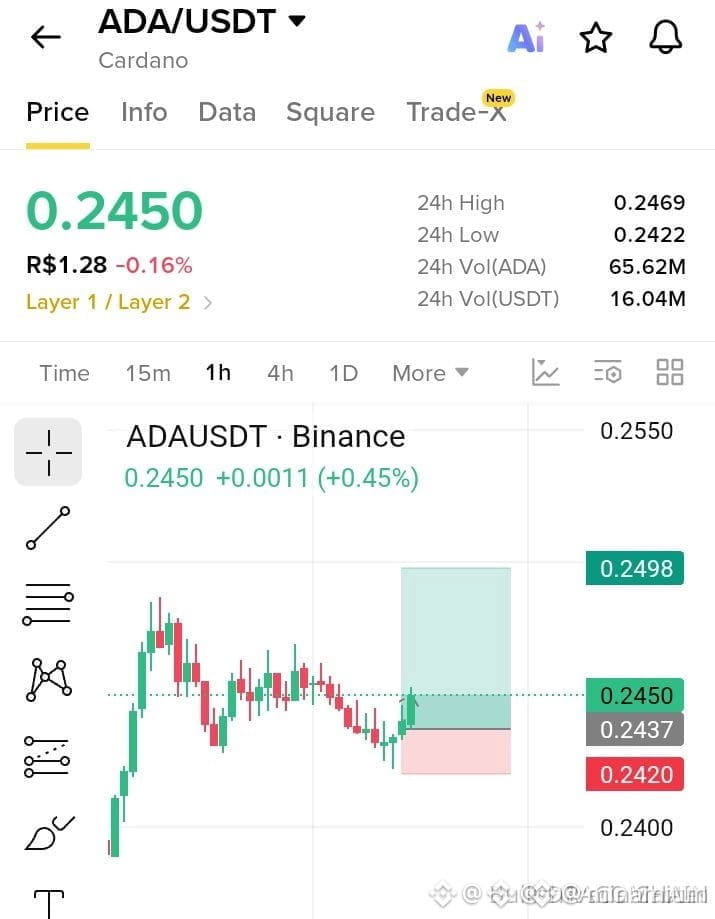
The debate around $ADA is clear. Skeptics say it lacks catalysts and $BTC will keep alts suppressed. Supporters highlight the bounce from 0.27 as a buying opportunity targeting 0.33.
I argue for taking the long. Entries at 0.27 to 0.28 with targets at 0.30 and 0.33 and a stop at 0.22 keep the risk in check. $ETH's recent move often leads these recoveries.
Where do you think $ADA goes from here?
#ADA #Cardano #CryptoTrading
If you're still buying $ADA without setting stops, stop now.
The pain of missing exits or getting wrecked on a reversal hits hard when you don't have a plan. FOMO after a 7.3 percent pump usually ends badly.
The debate around $ADA is clear. Skeptics say it lacks catalysts and $BTC will keep alts suppressed. Supporters highlight the bounce from 0.27 as a buying opportunity targeting 0.33.
I argue for taking the long. Entries at 0.27 to 0.28 with targets at 0.30 and 0.33 and a stop at 0.22 keep the risk in check. $ETH 's recent move often leads these recoveries.
Where do you think $ADA goes from here?
#ADA #Cardano #CryptoTrading
The pain of missing exits or getting wrecked on a reversal hits hard when you don't have a plan. FOMO after a 7.3 percent pump usually ends badly.
The debate around $ADA is clear. Skeptics say it lacks catalysts and $BTC will keep alts suppressed. Supporters highlight the bounce from 0.27 as a buying opportunity targeting 0.33.
I argue for taking the long. Entries at 0.27 to 0.28 with targets at 0.30 and 0.33 and a stop at 0.22 keep the risk in check. $ETH 's recent move often leads these recoveries.
Where do you think $ADA goes from here?
#ADA #Cardano #CryptoTrading
·
--
Everyone thinks chasing volume spikes guarantees a clean breakout, but actually most degens just end up funding exit liquidity for early callers.
We see it constantly with traders blindly longing green impulses right after a modest +1.32% tick, only to end up holding bags when the momentum abruptly dies. FOMO buying into heavily hyped volume leaders is usually the fastest route to getting chopped up.
Take this textbook setup with $4 that pushed heavy 30d trader volume across binance feeds. A caller hyped an imminent god candle within a couple hours while tracking over 111k impressions, betting that sheer volume alone would carry the move. But ngl ser, when a token barely sits up 1% and everyone starts front-running the same obvious breakout, late retail usually ends up taking the hit.
High volume without confirmed structural strength is just noise, especially when broader majors like $BTC are chopping. Smart money uses that liquidity to de-risk while latecomers stare at their screens wondering why the print stalled.
Are you bidding breakouts based on volume spikes right now, or waiting for structural retests?
#CryptoTrading #BinanceSquare #Altcoins
Everyone thinks chasing volume spikes guarantees a clean breakout, but actually most degens just end up funding exit liquidity for early callers.
We see it constantly with traders blindly longing green impulses right after a modest +1.32% tick, only to end up holding bags when the momentum abruptly dies. FOMO buying into heavily hyped volume leaders is usually the fastest route to getting chopped up.
Take this textbook setup with $4 that pushed heavy 30d trader volume across binance feeds. A caller hyped an imminent god candle within a couple hours while tracking over 111k impressions, betting that sheer volume alone would carry the move. But ngl ser, when a token barely sits up 1% and everyone starts front-running the same obvious breakout, late retail usually ends up taking the hit.
High volume without confirmed structural strength is just noise, especially when broader majors like $BTC are chopping. Smart money uses that liquidity to de-risk while latecomers stare at their screens wondering why the print stalled.
Are you bidding breakouts based on volume spikes right now, or waiting for structural retests?
#CryptoTrading #BinanceSquare #Altcoins
We see it constantly with traders blindly longing green impulses right after a modest +1.32% tick, only to end up holding bags when the momentum abruptly dies. FOMO buying into heavily hyped volume leaders is usually the fastest route to getting chopped up.
Take this textbook setup with $4 that pushed heavy 30d trader volume across binance feeds. A caller hyped an imminent god candle within a couple hours while tracking over 111k impressions, betting that sheer volume alone would carry the move. But ngl ser, when a token barely sits up 1% and everyone starts front-running the same obvious breakout, late retail usually ends up taking the hit.
High volume without confirmed structural strength is just noise, especially when broader majors like $BTC are chopping. Smart money uses that liquidity to de-risk while latecomers stare at their screens wondering why the print stalled.
Are you bidding breakouts based on volume spikes right now, or waiting for structural retests?
#CryptoTrading #BinanceSquare #Altcoins

·
--
Why is nobody talking about the real reason most retail traders blow their accounts while smart money quietly prints gains? Most people enter positions with zero exit plan, risking half their portfolio on hype alone and wondering why they end up holding the bag.
Look at how whale accumulation actually works on setups like $BTW before the crowd catches on. When large wallets spend days absorbing supply at key levels, the play is not about guessing tops or bottoms. It is strictly about asymmetric payoff, which is exactly how a recent trade on $BTW netted +2,504.94 USDT with controlled downside.
The math is simple yet constantly ignored. Capping risk with a tight 20% stop loss lets you hunt for 200% to 1000% upside moves on volatile runners like $BTC or high-beta plays like $SOL. Even with a low win rate, a 1:10 risk-reward setup keeps your capital intact while catching the true breakout legs.
How strict are you with your stop loss when entering whale-accumulated setups?
#CryptoTrading #RiskManagement #Altcoins
Why is nobody talking about the real reason most retail traders blow their accounts while smart money quietly prints gains? Most people enter positions with zero exit plan, risking half their portfolio on hype alone and wondering why they end up holding the bag.
Look at how whale accumulation actually works on setups like $BTW before the crowd catches on. When large wallets spend days absorbing supply at key levels, the play is not about guessing tops or bottoms. It is strictly about asymmetric payoff, which is exactly how a recent trade on $BTW netted +2,504.94 USDT with controlled downside.
The math is simple yet constantly ignored. Capping risk with a tight 20% stop loss lets you hunt for 200% to 1000% upside moves on volatile runners like $BTC or high-beta plays like $SOL . Even with a low win rate, a 1:10 risk-reward setup keeps your capital intact while catching the true breakout legs.
How strict are you with your stop loss when entering whale-accumulated setups?
#CryptoTrading #RiskManagement #Altcoins
Look at how whale accumulation actually works on setups like $BTW before the crowd catches on. When large wallets spend days absorbing supply at key levels, the play is not about guessing tops or bottoms. It is strictly about asymmetric payoff, which is exactly how a recent trade on $BTW netted +2,504.94 USDT with controlled downside.
The math is simple yet constantly ignored. Capping risk with a tight 20% stop loss lets you hunt for 200% to 1000% upside moves on volatile runners like $BTC or high-beta plays like $SOL . Even with a low win rate, a 1:10 risk-reward setup keeps your capital intact while catching the true breakout legs.
How strict are you with your stop loss when entering whale-accumulated setups?
#CryptoTrading #RiskManagement #Altcoins

7
·
--
The market just priced October Fed hike odds at 17 percent, a collapse that in 2019 preceded Bitcoin's sharpest liquidity-driven run while most traders were still arguing rates had nothing to do with crypto.
Too many of us have FOMO bought the first green candles in $SOL after similar headlines, only to sit through weeks of chop when the actual policy delivery lagged the narrative.
This 17 percent figure is the market admitting the tightening cycle is likely finished. That historically eases dollar pressure and pushes capital into high-beta names, the same pattern that lifted $FIL and $ARB once the Fed paused in prior cycles. I watched the 2020 version unfold and the 2021 greed peak that followed it. With sentiment already at 68, the setup rhymes, but the veterans I respect are not treating the probability drop as a green light. They are waiting to see whether ETF flows and on-chain activity actually confirm the liquidity return rather than just pricing it in.
The real edge has always been surviving the gap between the headline and the follow-through.
Where do you think the first real bid shows up if this holds, or are we looking at another priced-in fakeout before October?
#FedOctoberRateHikeOddsFallTo17 #BitcoinSpotETFsDraw #SolanaTokenizedStockVolumeTops
The market just priced October Fed hike odds at 17 percent, a collapse that in 2019 preceded Bitcoin's sharpest liquidity-driven run while most traders were still arguing rates had nothing to do with crypto.
Too many of us have FOMO bought the first green candles in $SOL after similar headlines, only to sit through weeks of chop when the actual policy delivery lagged the narrative.
This 17 percent figure is the market admitting the tightening cycle is likely finished. That historically eases dollar pressure and pushes capital into high-beta names, the same pattern that lifted $FIL and $ARB once the Fed paused in prior cycles. I watched the 2020 version unfold and the 2021 greed peak that followed it. With sentiment already at 68, the setup rhymes, but the veterans I respect are not treating the probability drop as a green light. They are waiting to see whether ETF flows and on-chain activity actually confirm the liquidity return rather than just pricing it in.
The real edge has always been surviving the gap between the headline and the follow-through.
Where do you think the first real bid shows up if this holds, or are we looking at another priced-in fakeout before October?
#FedOctoberRateHikeOddsFallTo17 #BitcoinSpotETFsDraw #SolanaTokenizedStockVolumeTops
Too many of us have FOMO bought the first green candles in $SOL after similar headlines, only to sit through weeks of chop when the actual policy delivery lagged the narrative.
This 17 percent figure is the market admitting the tightening cycle is likely finished. That historically eases dollar pressure and pushes capital into high-beta names, the same pattern that lifted $FIL and $ARB once the Fed paused in prior cycles. I watched the 2020 version unfold and the 2021 greed peak that followed it. With sentiment already at 68, the setup rhymes, but the veterans I respect are not treating the probability drop as a green light. They are waiting to see whether ETF flows and on-chain activity actually confirm the liquidity return rather than just pricing it in.
The real edge has always been surviving the gap between the headline and the follow-through.
Where do you think the first real bid shows up if this holds, or are we looking at another priced-in fakeout before October?
#FedOctoberRateHikeOddsFallTo17 #BitcoinSpotETFsDraw #SolanaTokenizedStockVolumeTops

14
·
--
Picture this: you wake up to green candles smashing into heavy resistance, order books heating up, and retail aggressively market-buying the top of the range. Most traders end up trapped because they confuse sudden momentum with genuine structural confirmation, only to watch their positions get wiped the moment price snaps back down.
We have seen this playbook unfold multiple times across previous cycles. Back during the mid-2021 range expansions and again during recent ETF absorption phases, $BTC repeatedly swept overhead liquidity before cooling off to reset funding rates. When Bitcoin stalls at these heavy overhead supply zones, capital rarely leaves the ecosystem entirely; instead, liquidity often rotates into high-beta plays like $SOL or layer-2 networks like $ARB while traders wait for the dust to settle.
The takeaway from every major rejection is that spot order books dictate the real ceiling far more than derivative excitement. When spot volume fails to back up the push, a clean rejection is just the market clearing out late leverage before building a healthier foundation for the next leg.
Where do you think we consolidate before the next real attempt?
#BitcoinRejectedAt #BitcoinSpotETFsDraw
Picture this: you wake up to green candles smashing into heavy resistance, order books heating up, and retail aggressively market-buying the top of the range. Most traders end up trapped because they confuse sudden momentum with genuine structural confirmation, only to watch their positions get wiped the moment price snaps back down.
We have seen this playbook unfold multiple times across previous cycles. Back during the mid-2021 range expansions and again during recent ETF absorption phases, $BTC repeatedly swept overhead liquidity before cooling off to reset funding rates. When Bitcoin stalls at these heavy overhead supply zones, capital rarely leaves the ecosystem entirely; instead, liquidity often rotates into high-beta plays like $SOL or layer-2 networks like $ARB while traders wait for the dust to settle.
The takeaway from every major rejection is that spot order books dictate the real ceiling far more than derivative excitement. When spot volume fails to back up the push, a clean rejection is just the market clearing out late leverage before building a healthier foundation for the next leg.
Where do you think we consolidate before the next real attempt?
#BitcoinRejectedAt #BitcoinSpotETFsDraw
We have seen this playbook unfold multiple times across previous cycles. Back during the mid-2021 range expansions and again during recent ETF absorption phases, $BTC repeatedly swept overhead liquidity before cooling off to reset funding rates. When Bitcoin stalls at these heavy overhead supply zones, capital rarely leaves the ecosystem entirely; instead, liquidity often rotates into high-beta plays like $SOL or layer-2 networks like $ARB while traders wait for the dust to settle.
The takeaway from every major rejection is that spot order books dictate the real ceiling far more than derivative excitement. When spot volume fails to back up the push, a clean rejection is just the market clearing out late leverage before building a healthier foundation for the next leg.
Where do you think we consolidate before the next real attempt?
#BitcoinRejectedAt #BitcoinSpotETFsDraw

2
·
--
If you are still parking your $USDT into glossy high-yield investment schemes promising guaranteed daily returns, stop now.
Watching your hard-earned portfolio vanish into an unregulated black hole is the single worst feeling in web3, especially when greed clouds basic risk management. We keep chasing alpha in every corner, only to hand over our capital to sophisticated syndicates running fake trading dashboards and vanity metrics.
Greek authorities just dismantled a massive international fraud network, arresting 17 operators behind coordinated fake investment platforms. It feels eerily similar to the classic boiler-room operations we saw during the early ICO days and recent offshore wash-trading schemes, where sleek interfaces masked complete liquidity traps. While real utility flows across chains like $SOL and ecosystems like $ARB, bad actors continue exploiting the retail appetite for passive yields with textbook Ponzi mechanics.
The playbook never really changes, yet thousands still fall for the exact same traps every market cycle.
Why do you think smart traders still get caught in these high-yield traps despite all the warnings?
#GreekPoliceBustCryptoScamRingArrest17 #DriftHackVictimsBeginClaims
If you are still parking your $USDT into glossy high-yield investment schemes promising guaranteed daily returns, stop now.
Watching your hard-earned portfolio vanish into an unregulated black hole is the single worst feeling in web3, especially when greed clouds basic risk management. We keep chasing alpha in every corner, only to hand over our capital to sophisticated syndicates running fake trading dashboards and vanity metrics.
Greek authorities just dismantled a massive international fraud network, arresting 17 operators behind coordinated fake investment platforms. It feels eerily similar to the classic boiler-room operations we saw during the early ICO days and recent offshore wash-trading schemes, where sleek interfaces masked complete liquidity traps. While real utility flows across chains like $SOL and ecosystems like $ARB , bad actors continue exploiting the retail appetite for passive yields with textbook Ponzi mechanics.
The playbook never really changes, yet thousands still fall for the exact same traps every market cycle.
Why do you think smart traders still get caught in these high-yield traps despite all the warnings?
#GreekPoliceBustCryptoScamRingArrest17 #DriftHackVictimsBeginClaims
Watching your hard-earned portfolio vanish into an unregulated black hole is the single worst feeling in web3, especially when greed clouds basic risk management. We keep chasing alpha in every corner, only to hand over our capital to sophisticated syndicates running fake trading dashboards and vanity metrics.
Greek authorities just dismantled a massive international fraud network, arresting 17 operators behind coordinated fake investment platforms. It feels eerily similar to the classic boiler-room operations we saw during the early ICO days and recent offshore wash-trading schemes, where sleek interfaces masked complete liquidity traps. While real utility flows across chains like $SOL and ecosystems like $ARB , bad actors continue exploiting the retail appetite for passive yields with textbook Ponzi mechanics.
The playbook never really changes, yet thousands still fall for the exact same traps every market cycle.
Why do you think smart traders still get caught in these high-yield traps despite all the warnings?
#GreekPoliceBustCryptoScamRingArrest17 #DriftHackVictimsBeginClaims

·
--
Here's what happened when they sold 10,000 $BTC in Q3 and then scooped up 11,000 more, finishing the quarter with a net 1,000 coin increase.
Too many traders sell into fear and buy back at peaks, locking in losses instead of stacking more. This event highlights how missing those re-entry points can leave you with fewer coins than you started with.
They didn't just dump and walk away. After selling 10,000 $BTC, they bought 11,000 back, netting an extra 1,000 by quarter's end. The timing suggests they used the sales to reposition during Q3's volatility, something we haven't always seen from similar large holders.
Compare this to past cycles where institutions sold $ETH or even $SOL during downturns and sat on the sidelines, missing recoveries. Last year several miners did exactly that and regretted it as prices rebounded. Competing projects often lack this agility, holding or dumping without the buyback.
What we can learn is that net accumulation after sales signals real conviction. It shows active treasury management rather than panic, a pattern that has rewarded those paying attention in previous $BTC bull runs.
Where do you think this kind of net buying leads from here?
#Bitcoin #CryptoStrategy #InstitutionalFlows
Here's what happened when they sold 10,000 $BTC in Q3 and then scooped up 11,000 more, finishing the quarter with a net 1,000 coin increase.
Too many traders sell into fear and buy back at peaks, locking in losses instead of stacking more. This event highlights how missing those re-entry points can leave you with fewer coins than you started with.
They didn't just dump and walk away. After selling 10,000 $BTC , they bought 11,000 back, netting an extra 1,000 by quarter's end. The timing suggests they used the sales to reposition during Q3's volatility, something we haven't always seen from similar large holders.
Compare this to past cycles where institutions sold $ETH or even $SOL during downturns and sat on the sidelines, missing recoveries. Last year several miners did exactly that and regretted it as prices rebounded. Competing projects often lack this agility, holding or dumping without the buyback.
What we can learn is that net accumulation after sales signals real conviction. It shows active treasury management rather than panic, a pattern that has rewarded those paying attention in previous $BTC bull runs.
Where do you think this kind of net buying leads from here?
#Bitcoin #CryptoStrategy #InstitutionalFlows
Too many traders sell into fear and buy back at peaks, locking in losses instead of stacking more. This event highlights how missing those re-entry points can leave you with fewer coins than you started with.
They didn't just dump and walk away. After selling 10,000 $BTC , they bought 11,000 back, netting an extra 1,000 by quarter's end. The timing suggests they used the sales to reposition during Q3's volatility, something we haven't always seen from similar large holders.
Compare this to past cycles where institutions sold $ETH or even $SOL during downturns and sat on the sidelines, missing recoveries. Last year several miners did exactly that and regretted it as prices rebounded. Competing projects often lack this agility, holding or dumping without the buyback.
What we can learn is that net accumulation after sales signals real conviction. It shows active treasury management rather than panic, a pattern that has rewarded those paying attention in previous $BTC bull runs.
Where do you think this kind of net buying leads from here?
#Bitcoin #CryptoStrategy #InstitutionalFlows

·
--
Most retail traders treat major institutional sell-offs as the start of a bear market, but on-chain history shows that panic is usually just someone else's liquidity.
Most people panic-sell into those massive red candles, only to buy back higher when the market suddenly rebounds. It is the easiest way to bleed your portfolio dry without ever realizing you were just trading the chop.
Looking at recent quarterly flows, a major player offloaded roughly 10,000 $BTC into weakness, sparking a chain reaction of de-risking across $ETH and altcoins. While retail was busy hedging and expecting lower lows, the exact same entity quietly scooped 11,000 $BTC back onto their balance sheet before the quarter wrapped up.
That left them sitting on a net increase of 1,000 $BTC while late sellers effectively funded the entire round-trip. Trying to trade headline dumps without checking actual wallet balances usually ends with you providing cheap entries for players with much deeper pockets.
How do you usually manage risk when you see sudden large-scale treasury rotations like this?
#Bitcoin #CryptoTrading #OnChainAnalysis
Most retail traders treat major institutional sell-offs as the start of a bear market, but on-chain history shows that panic is usually just someone else's liquidity.
Most people panic-sell into those massive red candles, only to buy back higher when the market suddenly rebounds. It is the easiest way to bleed your portfolio dry without ever realizing you were just trading the chop.
Looking at recent quarterly flows, a major player offloaded roughly 10,000 $BTC into weakness, sparking a chain reaction of de-risking across $ETH and altcoins. While retail was busy hedging and expecting lower lows, the exact same entity quietly scooped 11,000 $BTC back onto their balance sheet before the quarter wrapped up.
That left them sitting on a net increase of 1,000 $BTC while late sellers effectively funded the entire round-trip. Trying to trade headline dumps without checking actual wallet balances usually ends with you providing cheap entries for players with much deeper pockets.
How do you usually manage risk when you see sudden large-scale treasury rotations like this?
#Bitcoin #CryptoTrading #OnChainAnalysis
Most people panic-sell into those massive red candles, only to buy back higher when the market suddenly rebounds. It is the easiest way to bleed your portfolio dry without ever realizing you were just trading the chop.
Looking at recent quarterly flows, a major player offloaded roughly 10,000 $BTC into weakness, sparking a chain reaction of de-risking across $ETH and altcoins. While retail was busy hedging and expecting lower lows, the exact same entity quietly scooped 11,000 $BTC back onto their balance sheet before the quarter wrapped up.
That left them sitting on a net increase of 1,000 $BTC while late sellers effectively funded the entire round-trip. Trying to trade headline dumps without checking actual wallet balances usually ends with you providing cheap entries for players with much deeper pockets.
How do you usually manage risk when you see sudden large-scale treasury rotations like this?
#Bitcoin #CryptoTrading #OnChainAnalysis

1
·
--
Have you noticed nobody is talking about how the Drift claims process could leave victims shortchanged again?
Too many traders already lost funds in the hack. They're now rushing into the claims window without verifying the numbers, which is how you miss the real recovery.
The official story is that it's straightforward and you'll get your money. I see it differently. These Solana protocols like Drift frequently have incomplete snapshots that ignore certain $SOL perpetual trades.
You have to independently audit your on-chain activity and push back on any mismatches immediately. With the Fear and Greed Index at 68, most are too busy scanning $USDT and $ARB to bother with the details.
Keep records of submissions and avoid new positions until the claim clears.
Where do you think this goes from here?
#DriftHackVictimsBeginClaims #SolanaTokenizedStockVolumeTops
Have you noticed nobody is talking about how the Drift claims process could leave victims shortchanged again?
Too many traders already lost funds in the hack. They're now rushing into the claims window without verifying the numbers, which is how you miss the real recovery.
The official story is that it's straightforward and you'll get your money. I see it differently. These Solana protocols like Drift frequently have incomplete snapshots that ignore certain $SOL perpetual trades.
You have to independently audit your on-chain activity and push back on any mismatches immediately. With the Fear and Greed Index at 68, most are too busy scanning $USDT and $ARB to bother with the details.
Keep records of submissions and avoid new positions until the claim clears.
Where do you think this goes from here?
#DriftHackVictimsBeginClaims #SolanaTokenizedStockVolumeTops
Too many traders already lost funds in the hack. They're now rushing into the claims window without verifying the numbers, which is how you miss the real recovery.
The official story is that it's straightforward and you'll get your money. I see it differently. These Solana protocols like Drift frequently have incomplete snapshots that ignore certain $SOL perpetual trades.
You have to independently audit your on-chain activity and push back on any mismatches immediately. With the Fear and Greed Index at 68, most are too busy scanning $USDT and $ARB to bother with the details.
Keep records of submissions and avoid new positions until the claim clears.
Where do you think this goes from here?
#DriftHackVictimsBeginClaims #SolanaTokenizedStockVolumeTops

1
Log in to explore more content
Join global crypto users on Binance Square
⚡️ Get latest and useful information about crypto.
💬 Trusted by the world’s largest crypto exchange.
👍 Discover real insights from verified creators.
Email / Phone number
Trending Topics
BinanceLaunchesBinanceIntelligence
137,358 views
1,329 Discussing
🚨 BINANCE JUST PUT AI DIRECTLY INSIDE THE EXCHANGE — AND THIS COULD CHANGE HOW RETAIL TRADES.
Binance has officially launched Binance Intelligence, a new AI layer built into the Binance ecosystem. It combines three products:
Binance AI for everyday users,
Binance AI Pro for automated trading workflows,
and Agent OS for developers building financial agents.
The part traders should care about?
Binance AI can surface market briefs, smart alerts, PnL recaps and personalized information, while AI Pro is designed to turn a plain-English trading idea into a visual strategy workflow.
That means the next phase of exchange competition may not be:
lowest fees vs deepest liquidity.
It could be:
who gives traders the best AI execution layer.
If Binance Intelligence actually drives heavier user activity, automated strategies and higher trading frequency, watch $BNB first.
AI adoption ↑
→ Binance engagement ↑
→ trading activity ↑
→ ecosystem narrative strengthens.
The catalyst I’d watch now:
global rollout + AI Pro launch + measurable user adoption.
Because once AI stops just telling you what the market is doing…
…and starts helping build the trade itself?
That’s when this gets much bigger than another chatbot. 👀
#binancelaunchesbinanceintelligence #EvernorthXRPTreasuryCompletesSPACMerger #ADAGains10%Above$0.27 #ETHUp70%InQ3ButLiquidityFalls #EthStakingExitQueueHits2026High
KimHotbae
·35 Likes
·44.1k views
StriveBuys2000BTCFor$169M
5,508 views
60 Discussing
EvernorthXRPTreasuryCompletesSPACMerger
83,226 views
855 Discussing