

Elayaa
10.1k Posts

Elayaa
Report
Block User
Exploring crypto, breaking down new projects, and sharing insights from the blockchain world

Traders League Badge Expert
233 Following
27.9K+ Followers
57.8K+ Liked
1 Badges
Posts
All
Quotes
Live
·
--
$PEPE to $1? The dream is loud, but the math matters.
A low token price doesn’t mean an asset is undervalued. With PEPE’s massive supply, reaching $1 would imply an astronomical market cap.
Demand can drive rallies, but supply and market capitalization still matter. 🔥
$PEPE to $1? The dream is loud, but the math matters.
A low token price doesn’t mean an asset is undervalued. With PEPE’s massive supply, reaching $1 would imply an astronomical market cap.
Demand can drive rallies, but supply and market capitalization still matter. 🔥
A low token price doesn’t mean an asset is undervalued. With PEPE’s massive supply, reaching $1 would imply an astronomical market cap.
Demand can drive rallies, but supply and market capitalization still matter. 🔥
1
3
442
·
--
Crypto’s weekend sell-off pushed BTC below $80K and ETH under $2,300, as rising Treasury yields, shifting Fed expectations, ETF outflows, and leveraged liquidations added pressure.
For now, volatility remains elevated, and any relief bounce needs confirmation before being treated as a trend reversal. A more hawkish Fed stance could leave room for further downside.
The key signals to watch are the FOMC decision, ETF flows, and US Treasury yields. Risk management matters more than chasing a bottom in this environment.
$BTC $ETH
Crypto’s weekend sell-off pushed BTC below $80K and ETH under $2,300, as rising Treasury yields, shifting Fed expectations, ETF outflows, and leveraged liquidations added pressure.
For now, volatility remains elevated, and any relief bounce needs confirmation before being treated as a trend reversal. A more hawkish Fed stance could leave room for further downside.
The key signals to watch are the FOMC decision, ETF flows, and US Treasury yields. Risk management matters more than chasing a bottom in this environment.
$BTC $ETH
For now, volatility remains elevated, and any relief bounce needs confirmation before being treated as a trend reversal. A more hawkish Fed stance could leave room for further downside.
The key signals to watch are the FOMC decision, ETF flows, and US Treasury yields. Risk management matters more than chasing a bottom in this environment.
$BTC $ETH
2
303
·
--
Is $1 just a dream, or can $SHIB really reach this milestone? Could Shiba Inu surprise the market one day?
#USConsumerSentimentHoldsAtSecondLowestOnRecord #EarningsSeason #BinancePick
Is $1 just a dream, or can $SHIB really reach this milestone? Could Shiba Inu surprise the market one day?
#USConsumerSentimentHoldsAtSecondLowestOnRecord #EarningsSeason #BinancePick
#USConsumerSentimentHoldsAtSecondLowestOnRecord #EarningsSeason #BinancePick

11
2.3k
·
--
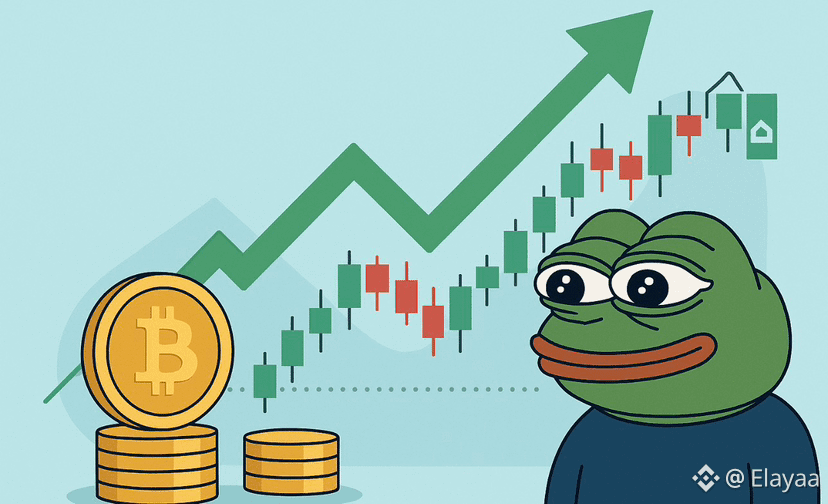
$PEPE to $0.001? Is it really possible, or just a dream? The journey would require a massive rally and a huge market cap. Can PEPE surprise everyone this cycle?
$PEPE to $0.001? Is it really possible, or just a dream? The journey would require a massive rally and a huge market cap. Can PEPE surprise everyone this cycle?
9
1
49
20k
·
--
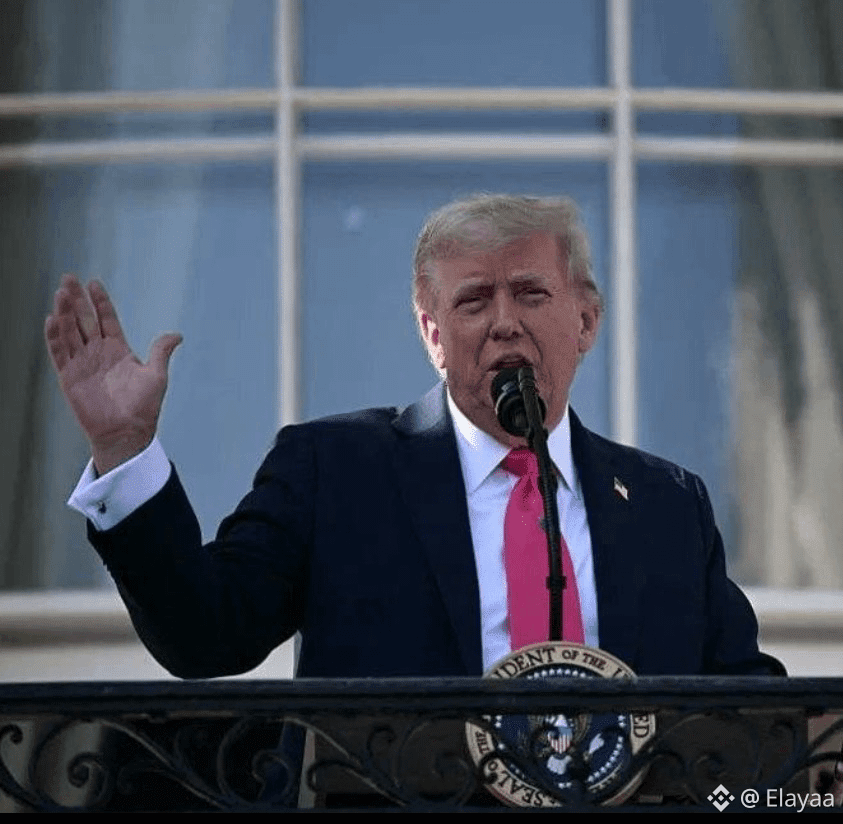
BREAKING: TRUMP TARGETS CRYPTO SCAMS
President Donald Trump is reportedly preparing a plan to crack down on crypto scammers targeting Americans.
The proposed move could strengthen investor protection and hold fraudsters accountable.
Will this bring tougher regulations and stronger security for crypto users?
Stay cautious, verify before investing, and protect your funds
#BinancePick #TeslaSlides5%PreMarket #EarningsSeason #TeslaAndNvidiaToInvest$2.8BInSamsungElectroMechanics
BREAKING: TRUMP TARGETS CRYPTO SCAMS
President Donald Trump is reportedly preparing a plan to crack down on crypto scammers targeting Americans.
The proposed move could strengthen investor protection and hold fraudsters accountable.
Will this bring tougher regulations and stronger security for crypto users?
Stay cautious, verify before investing, and protect your funds
#BinancePick #TeslaSlides5%PreMarket #EarningsSeason #TeslaAndNvidiaToInvest$2.8BInSamsungElectroMechanics
President Donald Trump is reportedly preparing a plan to crack down on crypto scammers targeting Americans.
The proposed move could strengthen investor protection and hold fraudsters accountable.
Will this bring tougher regulations and stronger security for crypto users?
Stay cautious, verify before investing, and protect your funds
#BinancePick #TeslaSlides5%PreMarket #EarningsSeason #TeslaAndNvidiaToInvest$2.8BInSamsungElectroMechanics
2
1
1.6k
·
--
$ELSA BREAKOUT ALERT!
Up 17.65% and testing resistance at $0.06920.
Targets: $0.072 / $0.075 / $0.080
Support: $0.0655
Major Support: $0.0608
Will $ELSA break above $0.07 or face a pullback?
#NasdaqDowWeeklyGapWidestSinceJuly2002 #BitcoinSurpasses$82K #GrayscaleAndRepublicLaunchThreeCryptoFunds
$ELSA BREAKOUT ALERT!
Up 17.65% and testing resistance at $0.06920.
Targets: $0.072 / $0.075 / $0.080
Support: $0.0655
Major Support: $0.0608
Will $ELSA break above $0.07 or face a pullback?
#NasdaqDowWeeklyGapWidestSinceJuly2002 #BitcoinSurpasses$82K #GrayscaleAndRepublicLaunchThreeCryptoFunds
Up 17.65% and testing resistance at $0.06920.
Targets: $0.072 / $0.075 / $0.080
Support: $0.0655
Major Support: $0.0608
Will $ELSA break above $0.07 or face a pullback?
#NasdaqDowWeeklyGapWidestSinceJuly2002 #BitcoinSurpasses$82K #GrayscaleAndRepublicLaunchThreeCryptoFunds
3
579
·
--
When life is good, nothing bothers you. When life gets hard, even a bird chirping feels like a personal attack.
#AustraliaProposesCryptoTransactionReportingLaw #USSeptemberPPIRisesTo6.3% #MSCIFinalizesRulesThatCouldExcludeStrategy
When life is good, nothing bothers you. When life gets hard, even a bird chirping feels like a personal attack.
#AustraliaProposesCryptoTransactionReportingLaw #USSeptemberPPIRisesTo6.3% #MSCIFinalizesRulesThatCouldExcludeStrategy
#AustraliaProposesCryptoTransactionReportingLaw #USSeptemberPPIRisesTo6.3% #MSCIFinalizesRulesThatCouldExcludeStrategy

2
513
·
--
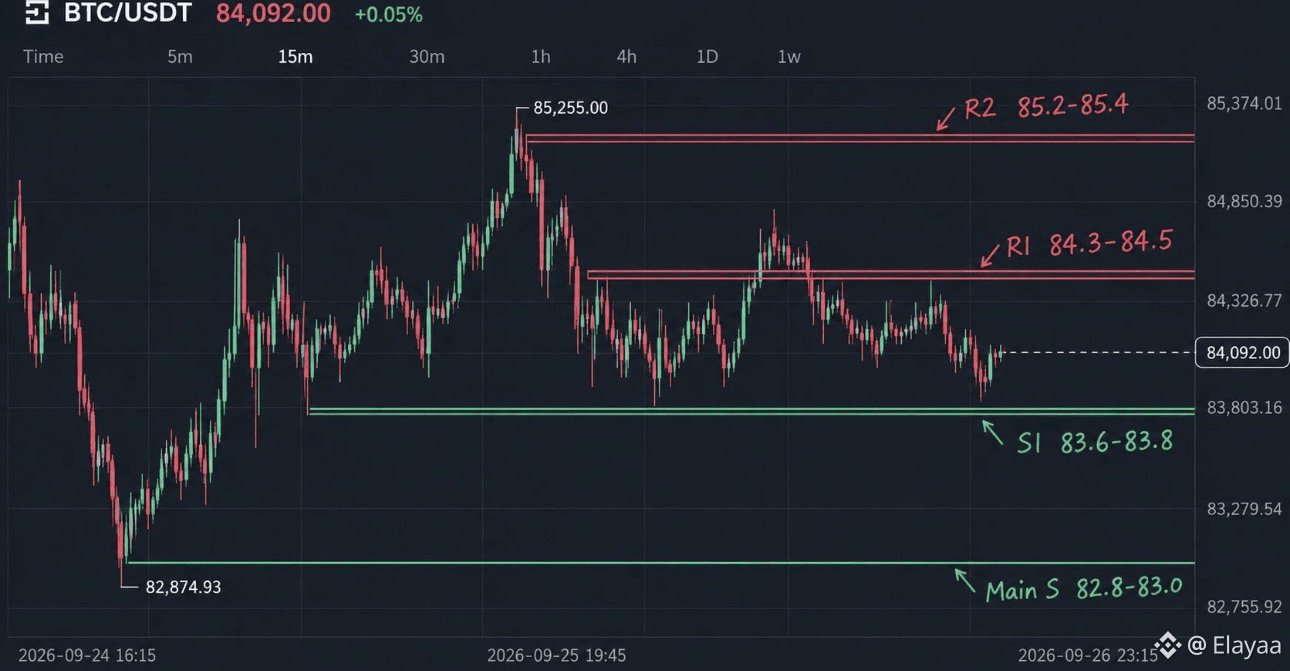
$BTC is holding up well, but still needs a clean breakout. I’m watching $82K–$83K as the key support zone. If it holds, I’d rather add spot gradually on a pullback than chase a breakout.
$SOL is showing relative strength, helped by the Alpenglow testnet announcement. But at $121, I wouldn’t chase it. I’d prefer a pullback closer to $110, with $130–$140 as the next targets.
For now, patience matters. Let the market come to you. Keep some cash ready and don’t force an entry just because prices are moving.
#CircleTetherFreezeBitgetHackerWallet #StrategyStriveAdd2305BitcoinThisWeek #SOLSpotETFWeeklyInflow$188M #BitwiseFilesFinalNEARSpotETFProspectus
$BTC is holding up well, but still needs a clean breakout. I’m watching $82K–$83K as the key support zone. If it holds, I’d rather add spot gradually on a pullback than chase a breakout.
$SOL is showing relative strength, helped by the Alpenglow testnet announcement. But at $121, I wouldn’t chase it. I’d prefer a pullback closer to $110, with $130–$140 as the next targets.
For now, patience matters. Let the market come to you. Keep some cash ready and don’t force an entry just because prices are moving.
#CircleTetherFreezeBitgetHackerWallet #StrategyStriveAdd2305BitcoinThisWeek #SOLSpotETFWeeklyInflow$188M #BitwiseFilesFinalNEARSpotETFProspectus
$SOL is showing relative strength, helped by the Alpenglow testnet announcement. But at $121, I wouldn’t chase it. I’d prefer a pullback closer to $110, with $130–$140 as the next targets.
For now, patience matters. Let the market come to you. Keep some cash ready and don’t force an entry just because prices are moving.
#CircleTetherFreezeBitgetHackerWallet #StrategyStriveAdd2305BitcoinThisWeek #SOLSpotETFWeeklyInflow$188M #BitwiseFilesFinalNEARSpotETFProspectus
1
4
704
·
--
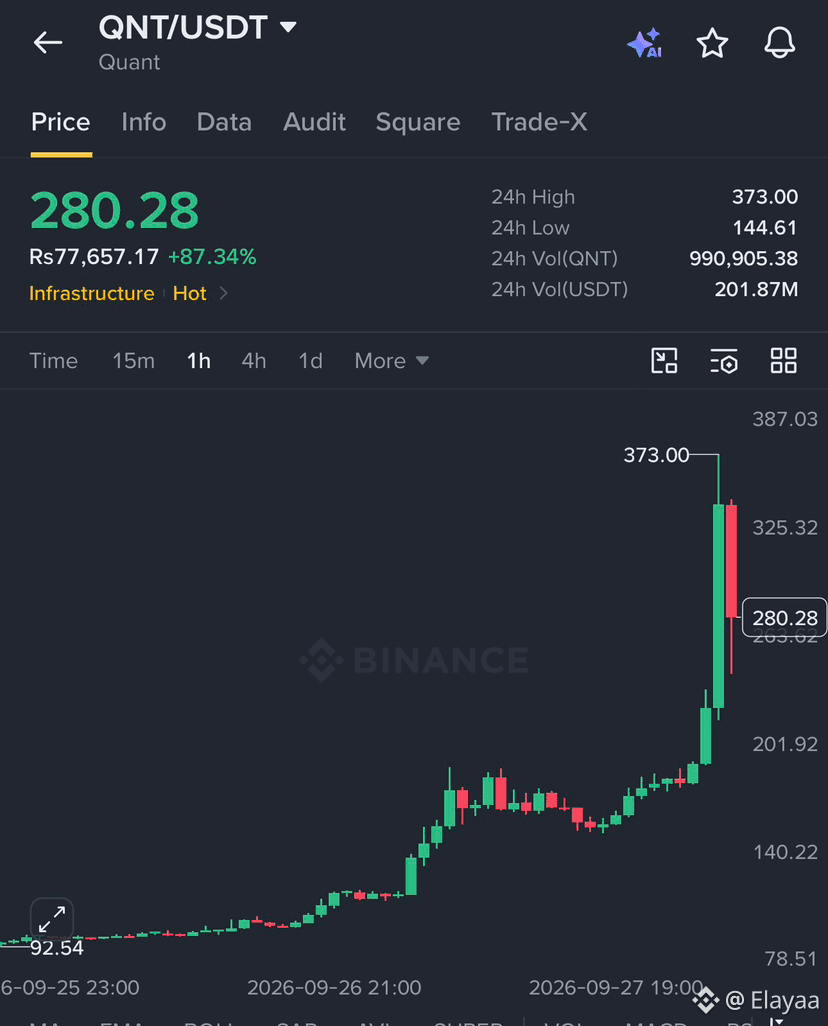
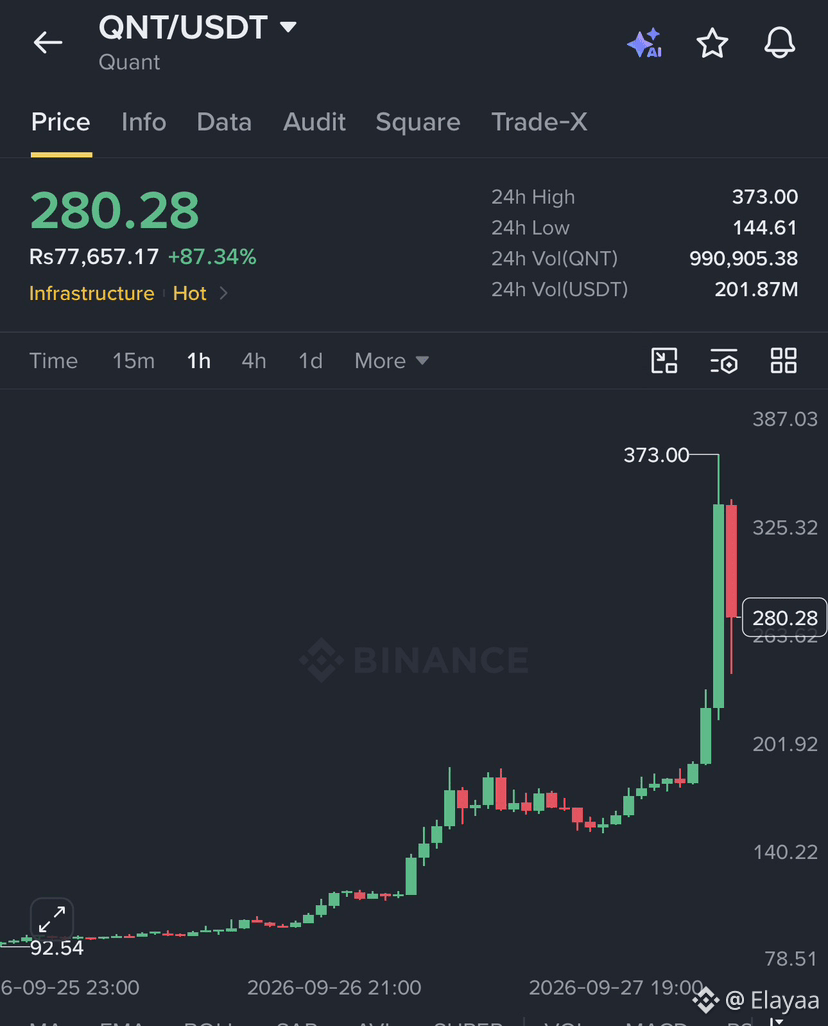
🚨$QNT has surged nearly 90% in 24 hours, reaching $373 before pulling back to $280.
That’s a sharp rejection after a massive move. I’d watch how price behaves around $280 now. If buyers can’t hold this area, more downside is possible.
Chasing here is risky.
🚨$QNT has surged nearly 90% in 24 hours, reaching $373 before pulling back to $280.
That’s a sharp rejection after a massive move. I’d watch how price behaves around $280 now. If buyers can’t hold this area, more downside is possible.
Chasing here is risky.
That’s a sharp rejection after a massive move. I’d watch how price behaves around $280 now. If buyers can’t hold this area, more downside is possible.
Chasing here is risky.
1
1k
·
--
Verified
Why is $QNT rising?
The Clearing House selected Quant on September 24 to power its On-Chain Money Initiative, bringing tokenized deposits into US banking infrastructure.
It’s a major development for Quant, but after such a sharp rally, a correction wouldn’t be surprising.
Why is $QNT rising?
The Clearing House selected Quant on September 24 to power its On-Chain Money Initiative, bringing tokenized deposits into US banking infrastructure.
It’s a major development for Quant, but after such a sharp rally, a correction wouldn’t be surprising.
The Clearing House selected Quant on September 24 to power its On-Chain Money Initiative, bringing tokenized deposits into US banking infrastructure.
It’s a major development for Quant, but after such a sharp rally, a correction wouldn’t be surprising.
4
2.2k
·
--
Verified
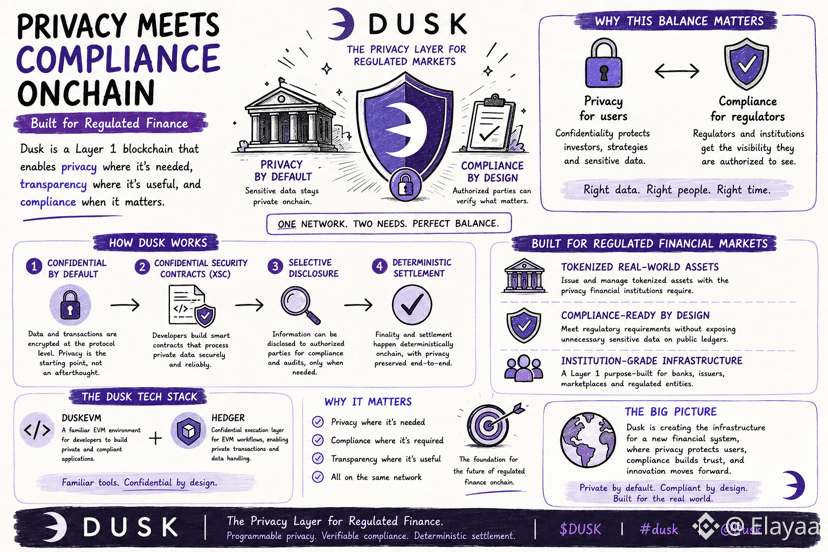
I’ll be honest, I never really thought about how much information a financial asset carries beyond its price. But while looking into @Dusk_Foundation , I started thinking about what happens when those assets move onchain.
Who can own them? What information should stay private? What does a regulator need to see? And how do you make the whole process settle properly?
That’s the part I find interesting about Dusk. Instead of treating these as separate problems, it’s trying to build them into the same infrastructure for regulated financial markets.
Dusk is a Layer 1 built around programmable privacy, with DuskEVM for familiar development and confidential workflows for sensitive financial use cases.
I’m still learning the deeper technical side, but the more I understand the problem, the more Dusk makes sense to me.
$DUSK #dusk
I’ll be honest, I never really thought about how much information a financial asset carries beyond its price. But while looking into @Dusk , I started thinking about what happens when those assets move onchain.
Who can own them? What information should stay private? What does a regulator need to see? And how do you make the whole process settle properly?
That’s the part I find interesting about Dusk. Instead of treating these as separate problems, it’s trying to build them into the same infrastructure for regulated financial markets.
Dusk is a Layer 1 built around programmable privacy, with DuskEVM for familiar development and confidential workflows for sensitive financial use cases.
I’m still learning the deeper technical side, but the more I understand the problem, the more Dusk makes sense to me.
$DUSK #dusk
Who can own them? What information should stay private? What does a regulator need to see? And how do you make the whole process settle properly?
That’s the part I find interesting about Dusk. Instead of treating these as separate problems, it’s trying to build them into the same infrastructure for regulated financial markets.
Dusk is a Layer 1 built around programmable privacy, with DuskEVM for familiar development and confidential workflows for sensitive financial use cases.
I’m still learning the deeper technical side, but the more I understand the problem, the more Dusk makes sense to me.
$DUSK #dusk
2
5
1.1k
·
--
I’ll be honest, I usually scroll past security updates when they get too technical. But while looking into @Dusk_Foundation recently, I came across something that actually made me think about how privacy infrastructure works in practice.
A bridge can have strong cryptography behind it, but there are still real people and operational controls involved when something unusual happens. That made me think about the difference between protecting data onchain and securing everything around the infrastructure.
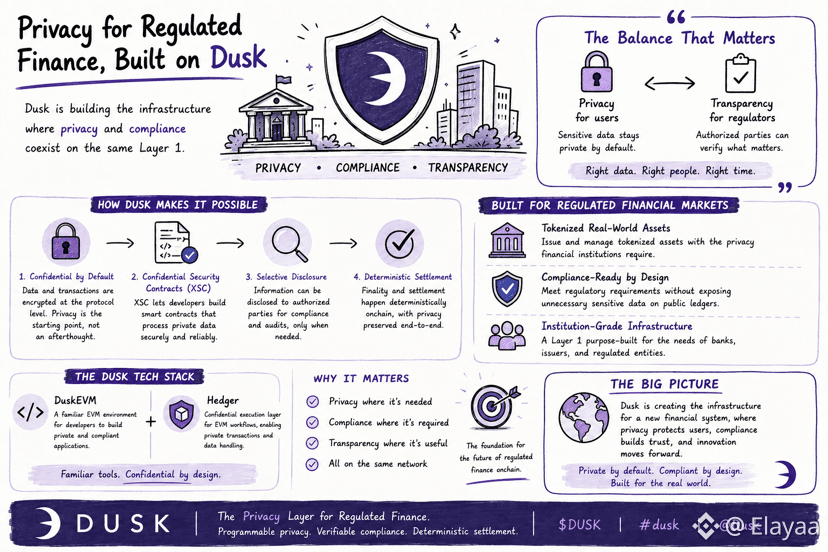
That’s the part I find interesting about Dusk. Its whole approach is built around privacy for regulated finance, while still keeping compliance and authorized oversight possible.
Dusk is a Layer 1 designed for regulated markets, with confidential workflows, DuskEVM and tools built around programmable privacy.
I’m still learning the deeper technical side, but this made me appreciate that building private financial infrastructure involves more than just the cryptography.
$DUSK #dusk @Dusk_Foundation
I’ll be honest, I usually scroll past security updates when they get too technical. But while looking into @Dusk recently, I came across something that actually made me think about how privacy infrastructure works in practice.
A bridge can have strong cryptography behind it, but there are still real people and operational controls involved when something unusual happens. That made me think about the difference between protecting data onchain and securing everything around the infrastructure.
That’s the part I find interesting about Dusk. Its whole approach is built around privacy for regulated finance, while still keeping compliance and authorized oversight possible.
Dusk is a Layer 1 designed for regulated markets, with confidential workflows, DuskEVM and tools built around programmable privacy.
I’m still learning the deeper technical side, but this made me appreciate that building private financial infrastructure involves more than just the cryptography.
$DUSK #dusk @Dusk
A bridge can have strong cryptography behind it, but there are still real people and operational controls involved when something unusual happens. That made me think about the difference between protecting data onchain and securing everything around the infrastructure.
That’s the part I find interesting about Dusk. Its whole approach is built around privacy for regulated finance, while still keeping compliance and authorized oversight possible.
Dusk is a Layer 1 designed for regulated markets, with confidential workflows, DuskEVM and tools built around programmable privacy.
I’m still learning the deeper technical side, but this made me appreciate that building private financial infrastructure involves more than just the cryptography.
$DUSK #dusk @Dusk
1
4
583
·
--
Verified
I was thinking about the word “privacy” in crypto today, and I realized I had been looking at it too simply.
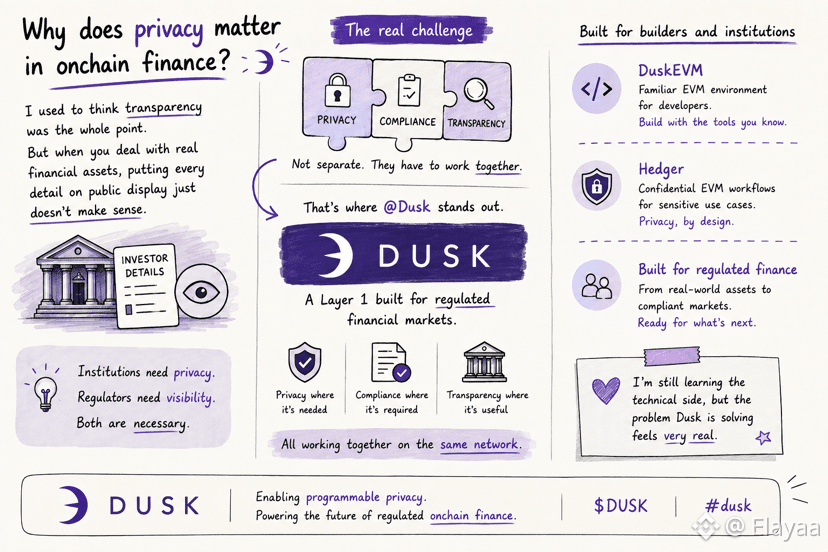
For most blockchains, transparency is treated like the obvious advantage. But imagine you’re dealing with a real financial asset and suddenly every investor detail, transaction and piece of sensitive information is sitting in public. That doesn’t sound very practical for institutions.
At the same time, you can’t just hide everything. Regulators still need to know what happened and verify what matters.
That’s where @Dusk_Foundation makes sense to me. It’s building a Layer 1 for regulated financial markets where privacy, compliance and transparency can actually coexist.
DuskEVM gives developers a familiar environment, while Hedger is designed for confidential EVM workflows.
I’m still learning the technical side, but the more I think about this problem, the more practical Dusk feels.
$DUSK #dusk
I was thinking about the word “privacy” in crypto today, and I realized I had been looking at it too simply.
For most blockchains, transparency is treated like the obvious advantage. But imagine you’re dealing with a real financial asset and suddenly every investor detail, transaction and piece of sensitive information is sitting in public. That doesn’t sound very practical for institutions.
At the same time, you can’t just hide everything. Regulators still need to know what happened and verify what matters.
That’s where @Dusk makes sense to me. It’s building a Layer 1 for regulated financial markets where privacy, compliance and transparency can actually coexist.
DuskEVM gives developers a familiar environment, while Hedger is designed for confidential EVM workflows.
I’m still learning the technical side, but the more I think about this problem, the more practical Dusk feels.
$DUSK #dusk
For most blockchains, transparency is treated like the obvious advantage. But imagine you’re dealing with a real financial asset and suddenly every investor detail, transaction and piece of sensitive information is sitting in public. That doesn’t sound very practical for institutions.
At the same time, you can’t just hide everything. Regulators still need to know what happened and verify what matters.
That’s where @Dusk makes sense to me. It’s building a Layer 1 for regulated financial markets where privacy, compliance and transparency can actually coexist.
DuskEVM gives developers a familiar environment, while Hedger is designed for confidential EVM workflows.
I’m still learning the technical side, but the more I think about this problem, the more practical Dusk feels.
$DUSK #dusk
1
5
531
·
--
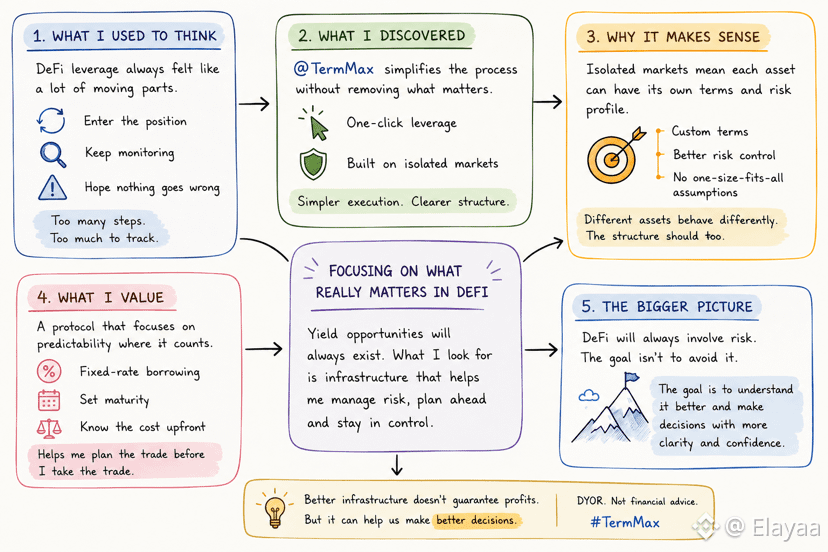
The more I explore DeFi, the more I realize that having more opportunities isn’t always the difficult part…. understanding what you’re actually taking on is.
That’s one thing I’ve been thinking about with @termmax . The combination of isolated markets, fixed-rate borrowing and one-click leverage makes the structure feel more deliberate. Different markets can have different conditions, while the fixed rate gives you a known borrowing cost until maturity.
I like that approach because it shifts the focus a little. Instead of only asking how much I can earn, I’m also asking whether I understand the position, the risks and the cost before entering it.
DeFi will always involve uncertainty. For me, better infrastructure is about making that uncertainty easier to manage. #TermMax
The more I explore DeFi, the more I realize that having more opportunities isn’t always the difficult part…. understanding what you’re actually taking on is.
That’s one thing I’ve been thinking about with @TermMax . The combination of isolated markets, fixed-rate borrowing and one-click leverage makes the structure feel more deliberate. Different markets can have different conditions, while the fixed rate gives you a known borrowing cost until maturity.
I like that approach because it shifts the focus a little. Instead of only asking how much I can earn, I’m also asking whether I understand the position, the risks and the cost before entering it.
DeFi will always involve uncertainty. For me, better infrastructure is about making that uncertainty easier to manage. #TermMax
That’s one thing I’ve been thinking about with @TermMax . The combination of isolated markets, fixed-rate borrowing and one-click leverage makes the structure feel more deliberate. Different markets can have different conditions, while the fixed rate gives you a known borrowing cost until maturity.
I like that approach because it shifts the focus a little. Instead of only asking how much I can earn, I’m also asking whether I understand the position, the risks and the cost before entering it.
DeFi will always involve uncertainty. For me, better infrastructure is about making that uncertainty easier to manage. #TermMax
1
3
553
·
--
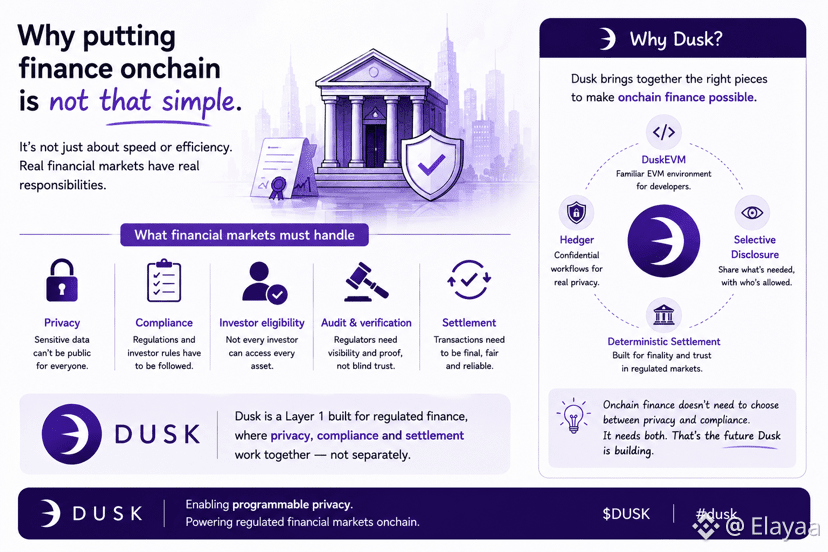
I used to think blockchain was mostly about speed and transparency. But when you look at real financial markets, it gets complicated fast… privacy, investor eligibility, compliance and settlement all matter.
That’s what I find interesting about @Dusk_Foundation . It’s building a Layer 1 where these things are considered together, not separately.
DuskEVM gives builders a familiar environment, while Hedger brings confidential workflows into the picture.
I’m still learning the deeper tech, but the problem Dusk is tackling feels very real to me.
$DUSK #dusk
I used to think blockchain was mostly about speed and transparency. But when you look at real financial markets, it gets complicated fast… privacy, investor eligibility, compliance and settlement all matter.
That’s what I find interesting about @Dusk . It’s building a Layer 1 where these things are considered together, not separately.
DuskEVM gives builders a familiar environment, while Hedger brings confidential workflows into the picture.
I’m still learning the deeper tech, but the problem Dusk is tackling feels very real to me.
$DUSK #dusk
That’s what I find interesting about @Dusk . It’s building a Layer 1 where these things are considered together, not separately.
DuskEVM gives builders a familiar environment, while Hedger brings confidential workflows into the picture.
I’m still learning the deeper tech, but the problem Dusk is tackling feels very real to me.
$DUSK #dusk
1
284
·
--
🇺🇸₿ Trump just added another interesting layer to the U.S. crypto strategy.
When asked whether the government could accumulate more Bitcoin, Trump said the idea “has been talked about” and that he would consider recommendations from his advisers. No purchase amount or timeline has been announced, so for now this is a policy signal, not a confirmed buying plan. (CoinMarketCap)
At the same time, the White House is pushing Congress to advance the CLARITY Act, which would create clearer rules around crypto market structure and the roles of the SEC and CFTC. The first Senate procedural vote is currently expected around September 15. (Reuters)
The bigger picture is becoming clear: Bitcoin accumulation could create direct demand, while regulatory clarity could build the framework for much broader institutional adoption.
If both move forward, which matters more for crypto long term: government BTC demand or regulatory clarity?#BitcoinHitsIntradayHigh$75500 #BitcoinBestWeekSinceMarch2023 #USRefinersFaceLoomingCrudeSupplyDrop
🇺🇸₿ Trump just added another interesting layer to the U.S. crypto strategy.
When asked whether the government could accumulate more Bitcoin, Trump said the idea “has been talked about” and that he would consider recommendations from his advisers. No purchase amount or timeline has been announced, so for now this is a policy signal, not a confirmed buying plan. (CoinMarketCap)
At the same time, the White House is pushing Congress to advance the CLARITY Act, which would create clearer rules around crypto market structure and the roles of the SEC and CFTC. The first Senate procedural vote is currently expected around September 15. (Reuters)
The bigger picture is becoming clear: Bitcoin accumulation could create direct demand, while regulatory clarity could build the framework for much broader institutional adoption.
If both move forward, which matters more for crypto long term: government BTC demand or regulatory clarity?#BitcoinHitsIntradayHigh$75500 #BitcoinBestWeekSinceMarch2023 #USRefinersFaceLoomingCrudeSupplyDrop
When asked whether the government could accumulate more Bitcoin, Trump said the idea “has been talked about” and that he would consider recommendations from his advisers. No purchase amount or timeline has been announced, so for now this is a policy signal, not a confirmed buying plan. (CoinMarketCap)
At the same time, the White House is pushing Congress to advance the CLARITY Act, which would create clearer rules around crypto market structure and the roles of the SEC and CFTC. The first Senate procedural vote is currently expected around September 15. (Reuters)
The bigger picture is becoming clear: Bitcoin accumulation could create direct demand, while regulatory clarity could build the framework for much broader institutional adoption.
If both move forward, which matters more for crypto long term: government BTC demand or regulatory clarity?#BitcoinHitsIntradayHigh$75500 #BitcoinBestWeekSinceMarch2023 #USRefinersFaceLoomingCrudeSupplyDrop
230
·
--
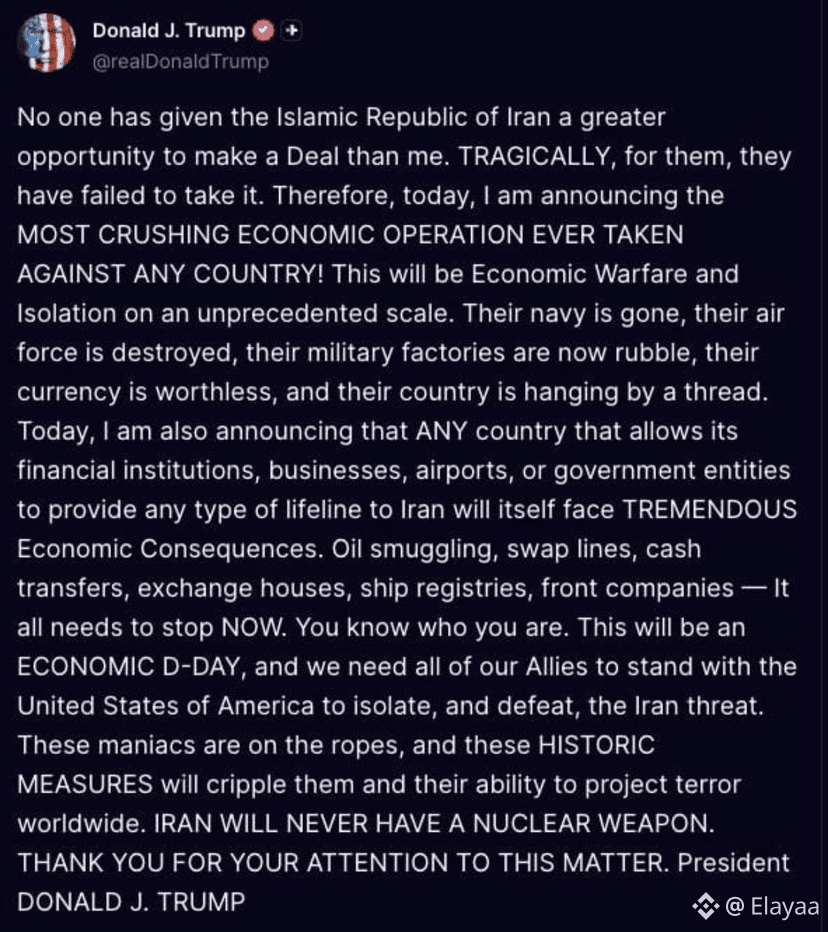
🚨 Trump has announced a major escalation in economic pressure against Iran, calling it the “most crushing economic operation ever” and an “Economic D-Day.”
He warned that countries providing Iran with financial or commercial support could face severe economic consequences. The campaign targets channels including oil smuggling, financial transfers, exchange houses and front companies. (CBS News)
This could have major implications for global trade, oil markets and overall risk sentiment as the pressure campaign expands.#BitcoinBestWeekSinceMarch2023 #TreasuryBuybacksCouldExceed$4BPerIssue #GoldReboundsNearly5% #SpotGoldHitsHighestSinceMay15 $BTC
🚨 Trump has announced a major escalation in economic pressure against Iran, calling it the “most crushing economic operation ever” and an “Economic D-Day.”
He warned that countries providing Iran with financial or commercial support could face severe economic consequences. The campaign targets channels including oil smuggling, financial transfers, exchange houses and front companies. (CBS News)
This could have major implications for global trade, oil markets and overall risk sentiment as the pressure campaign expands.#BitcoinBestWeekSinceMarch2023 #TreasuryBuybacksCouldExceed$4BPerIssue #GoldReboundsNearly5% #SpotGoldHitsHighestSinceMay15 $BTC
He warned that countries providing Iran with financial or commercial support could face severe economic consequences. The campaign targets channels including oil smuggling, financial transfers, exchange houses and front companies. (CBS News)
This could have major implications for global trade, oil markets and overall risk sentiment as the pressure campaign expands.#BitcoinBestWeekSinceMarch2023 #TreasuryBuybacksCouldExceed$4BPerIssue #GoldReboundsNearly5% #SpotGoldHitsHighestSinceMay15 $BTC
121
·
--
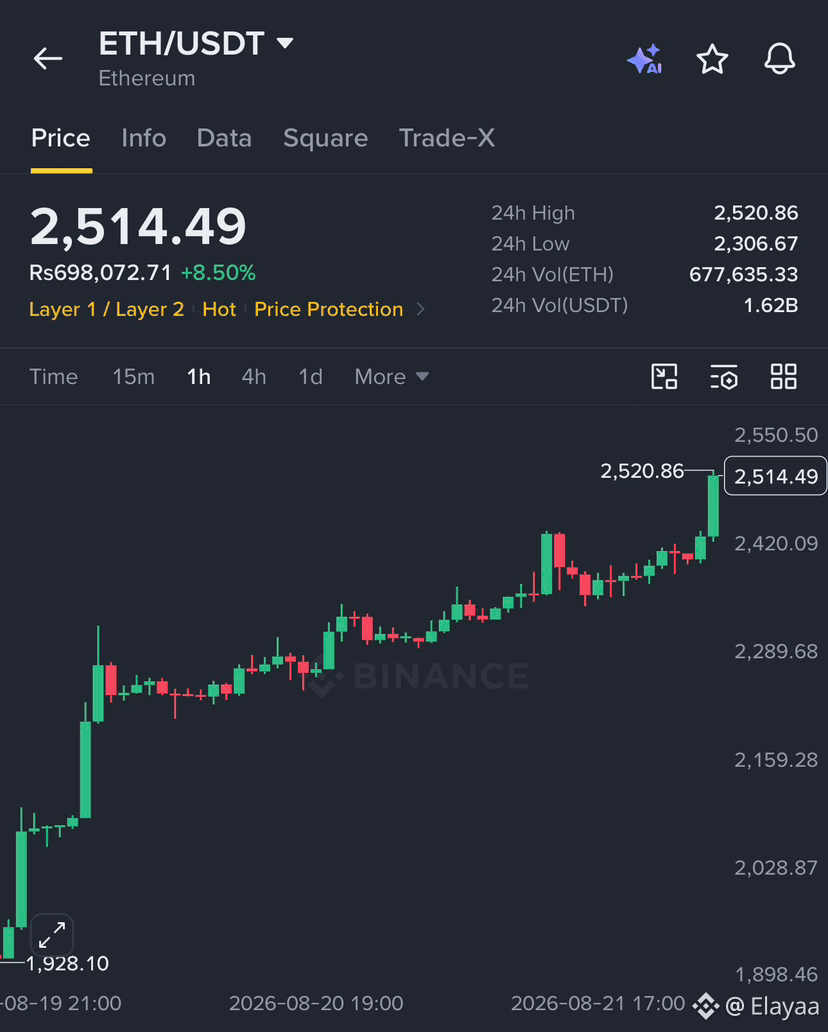
🚨 $ETH IS BREAKING OUT! NEXT STOP COULD BE HIGHER 🔥
$ETH/USDT 1H 📈
Call: Long
Entry: 2,480–2,515
SL: 2,430
TP1: 2,550
TP2: 2,600
TP3: 2,680
Strong bullish momentum. Break above 2,520 confirms continuation. 🚀
#TreasuryBuybacksCouldExceed$4BPerIssue #SpotGoldHitsHighestSinceMay15 #
🚨 $ETH IS BREAKING OUT! NEXT STOP COULD BE HIGHER 🔥
$ETH /USDT 1H 📈
Call: Long
Entry: 2,480–2,515
SL: 2,430
TP1: 2,550
TP2: 2,600
TP3: 2,680
Strong bullish momentum. Break above 2,520 confirms continuation. 🚀
#TreasuryBuybacksCouldExceed$4BPerIssue #SpotGoldHitsHighestSinceMay15 #
$ETH /USDT 1H 📈
Call: Long
Entry: 2,480–2,515
SL: 2,430
TP1: 2,550
TP2: 2,600
TP3: 2,680
Strong bullish momentum. Break above 2,520 confirms continuation. 🚀
#TreasuryBuybacksCouldExceed$4BPerIssue #SpotGoldHitsHighestSinceMay15 #
196
·
--
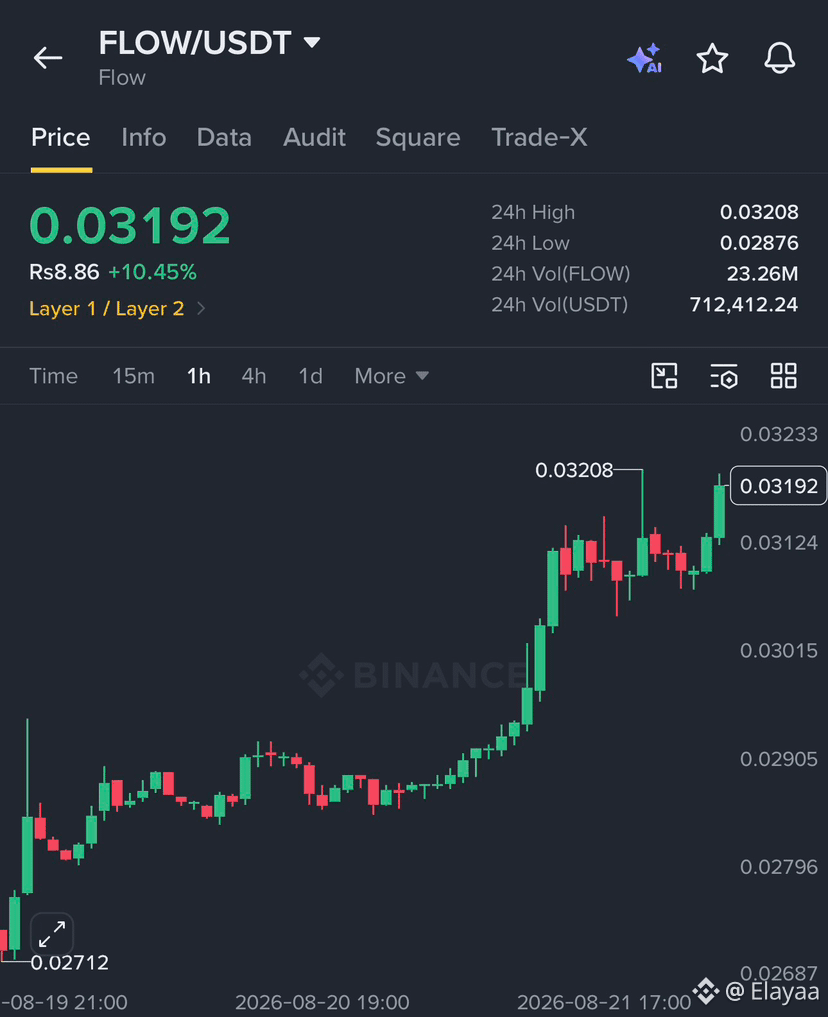
🚨 $FLOW JUST BROKE OUT! NEXT MOVE COULD BE BIG 🔥
$FLOW/USDT 1H 📈
Call: Long
Entry: 0.0314–0.0319
SL: 0.0306
TP1: 0.0325
TP2: 0.0332
TP3: 0.0340
Strong momentum with buyers holding the breakout. 🚀
#TreasuryBuybacksCouldExceed$4BPerIssue #SamsungToAnnounceNewShareholderReturnPlanFriday #SpotGoldHitsHighestSinceMay15
🚨 $FLOW JUST BROKE OUT! NEXT MOVE COULD BE BIG 🔥
$FLOW /USDT 1H 📈
Call: Long
Entry: 0.0314–0.0319
SL: 0.0306
TP1: 0.0325
TP2: 0.0332
TP3: 0.0340
Strong momentum with buyers holding the breakout. 🚀
#TreasuryBuybacksCouldExceed$4BPerIssue #SamsungToAnnounceNewShareholderReturnPlanFriday #SpotGoldHitsHighestSinceMay15
$FLOW /USDT 1H 📈
Call: Long
Entry: 0.0314–0.0319
SL: 0.0306
TP1: 0.0325
TP2: 0.0332
TP3: 0.0340
Strong momentum with buyers holding the breakout. 🚀
#TreasuryBuybacksCouldExceed$4BPerIssue #SamsungToAnnounceNewShareholderReturnPlanFriday #SpotGoldHitsHighestSinceMay15
1
194
·
--
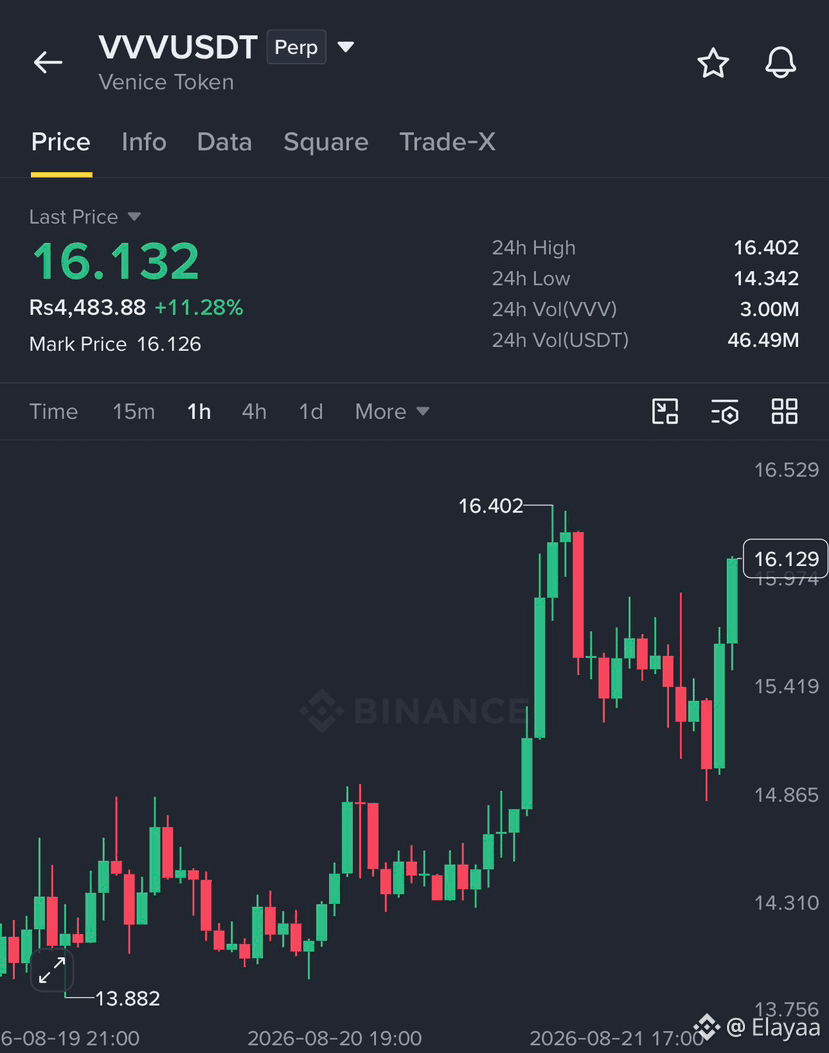
Guys look at $VVV here 👀
$VVV is showing strong 1H bullish momentum after reclaiming the 15.40–15.50 area. Price is pushing back toward the 16.40 resistance, and a clean breakout could extend the move higher.
Entry: $15.90–16.15
SL: $15.40
TP1: $16.40
TP2: $16.80
TP3: $17.30
Momentum context: Bullish while price holds above $15.40. Volume and strong candles favor continuation, but 16.40 is the key resistance.
Conviction: Bullish
Bullish scenario: 1H close above $16.40 → continuation toward $16.80–17.30 🚀
Bearish invalidation: Lose $15.40 → setup weakens and a deeper pullback becomes likely. 🚀
Guys look at $VVV here 👀
$VVV is showing strong 1H bullish momentum after reclaiming the 15.40–15.50 area. Price is pushing back toward the 16.40 resistance, and a clean breakout could extend the move higher.
Entry: $15.90–16.15
SL: $15.40
TP1: $16.40
TP2: $16.80
TP3: $17.30
Momentum context: Bullish while price holds above $15.40. Volume and strong candles favor continuation, but 16.40 is the key resistance.
Conviction: Bullish
Bullish scenario: 1H close above $16.40 → continuation toward $16.80–17.30 🚀
Bearish invalidation: Lose $15.40 → setup weakens and a deeper pullback becomes likely. 🚀
$VVV is showing strong 1H bullish momentum after reclaiming the 15.40–15.50 area. Price is pushing back toward the 16.40 resistance, and a clean breakout could extend the move higher.
Entry: $15.90–16.15
SL: $15.40
TP1: $16.40
TP2: $16.80
TP3: $17.30
Momentum context: Bullish while price holds above $15.40. Volume and strong candles favor continuation, but 16.40 is the key resistance.
Conviction: Bullish
Bullish scenario: 1H close above $16.40 → continuation toward $16.80–17.30 🚀
Bearish invalidation: Lose $15.40 → setup weakens and a deeper pullback becomes likely. 🚀
152
Log in to explore more content
Join global crypto users on Binance Square
⚡️ Get latest and useful information about crypto.
💬 Trusted by the world’s largest crypto exchange.
👍 Discover real insights from verified creators.
Email / Phone number
Trending Topics
BinancePick
3.2M views
156,602 Discussing
Join #EarningsSeason: Predict Earnings on Binance Pick, Share Your Take on Binance Square!
Binance Square Official
·413 Likes
·343.9k views
EarningsSeason
5.4M views
26,199 Discussing
SouthKoreaConsidersEducationTaxOnCryptoExchanges
0 views
7 Discussing