

#stellar
stellar
1.8M views
4,555 Discussing
Hot
Latest

·
--
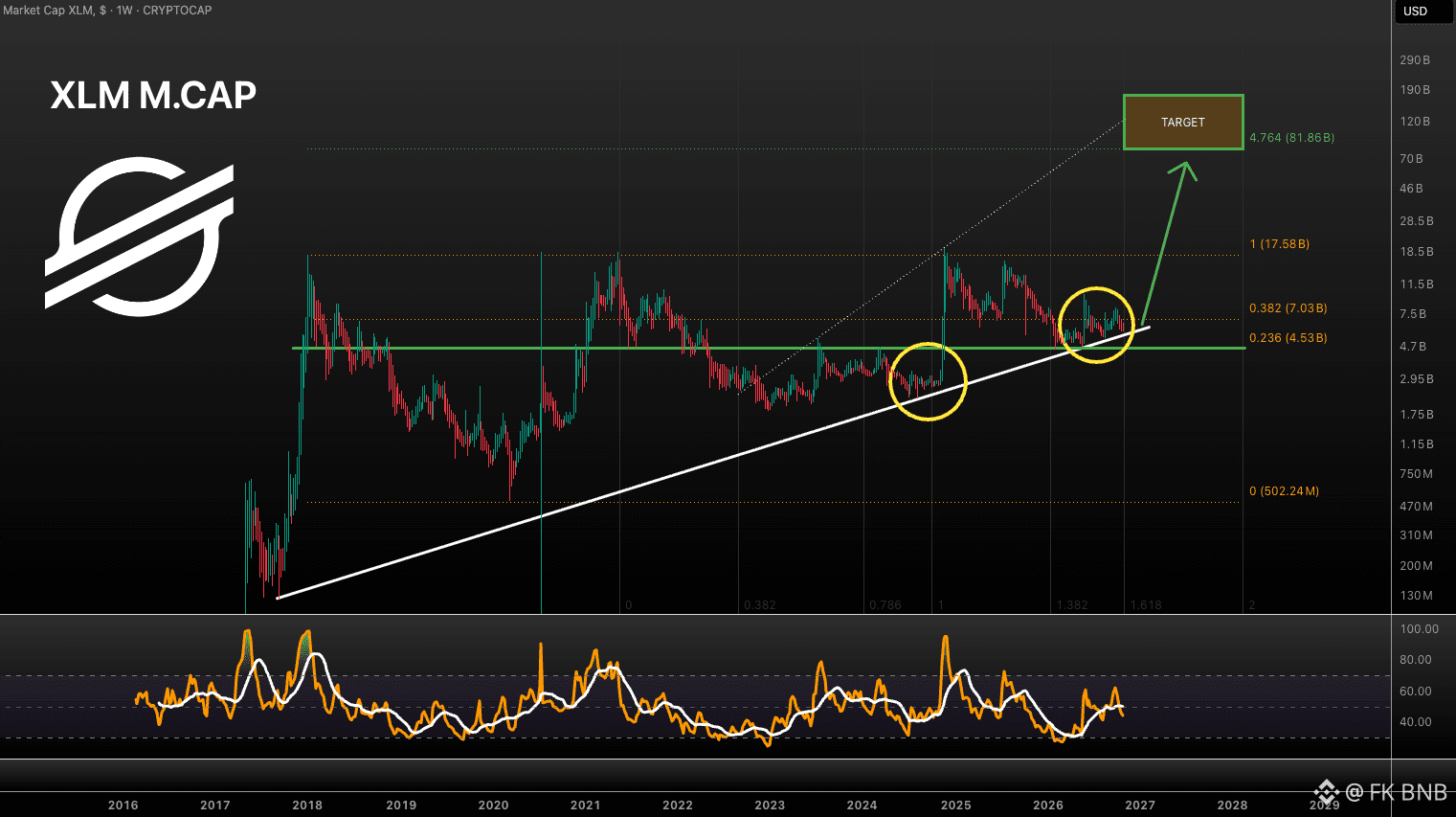
$XLM M.CAP UPDATE!!! (from Aug 16)
8 months mostly sideways... Building a solid bottom! Time to send! We should finally start to move within couple of months! 🚀
HTF Target is still that 80B (roughly 13X)
Not Fa | STAY TUNED | #stellar
{future}(XLMUSDT)
$XLM M.CAP UPDATE!!! (from Aug 16)
8 months mostly sideways... Building a solid bottom! Time to send! We should finally start to move within couple of months! 🚀
HTF Target is still that 80B (roughly 13X)
Not Fa | STAY TUNED | #stellar
8 months mostly sideways... Building a solid bottom! Time to send! We should finally start to move within couple of months! 🚀
HTF Target is still that 80B (roughly 13X)
Not Fa | STAY TUNED | #stellar
39

·
--
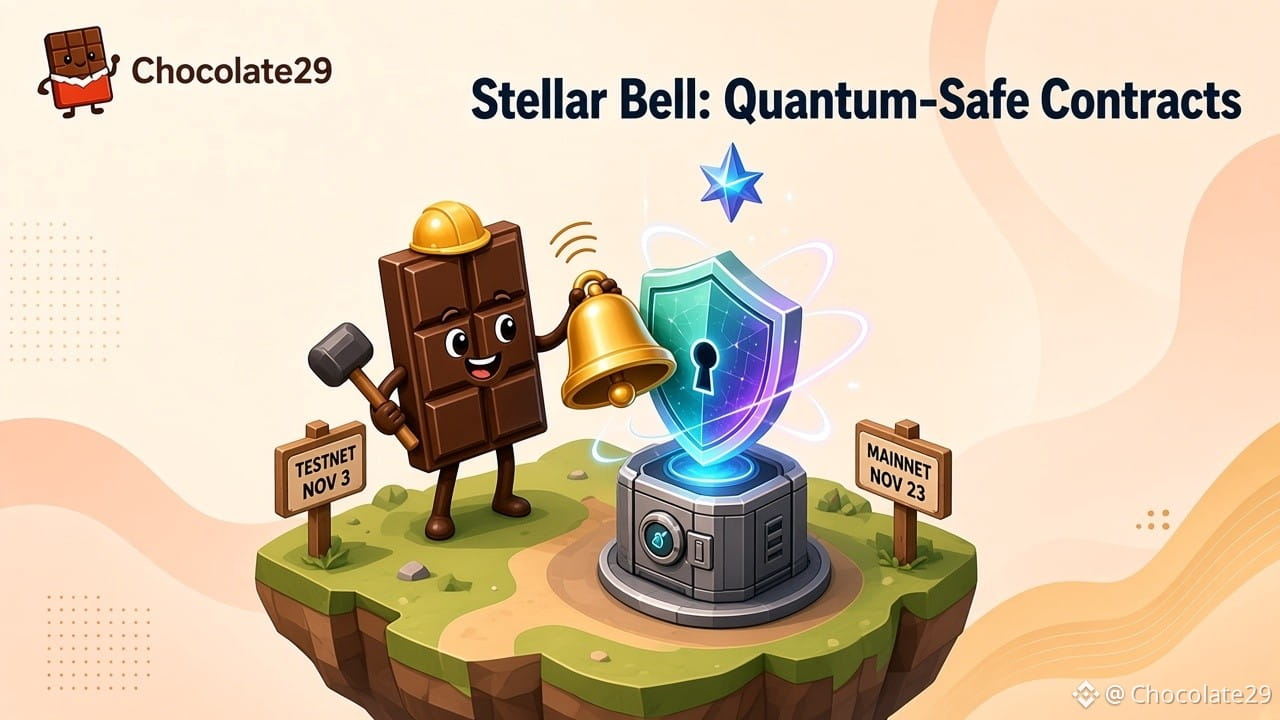
Stellar's next upgrade lets smart contracts check quantum-safe signatures — and validators vote on it in November 2026.
The Stellar Development Foundation's Bell upgrade (Protocol 30) bundles three changes. CAP-87 adds ML-DSA signature checks, a post-quantum standard NIST finalized in 2024, so a custom account contract can require a quantum-safe signature to spend. CAP-84 adds "W" muxed contract addresses that carry a customer ID, and CAP-88 moves ledgers to millisecond timestamps. Regular network transactions still use Ed25519 for now.
The timeline: a testnet validator vote on November 3, 2026 at 17:00 UTC, then a mainnet vote on November 23, 2026 at 17:00 UTC, with dates subject to change. The SDK update is mandatory this cycle, so wallets and exchanges supporting $XLM need to handle the new address type before the votes.
#Stellar #XLM #QuantumSafe #Crypto
DYOR. Not financial advice.
2
315

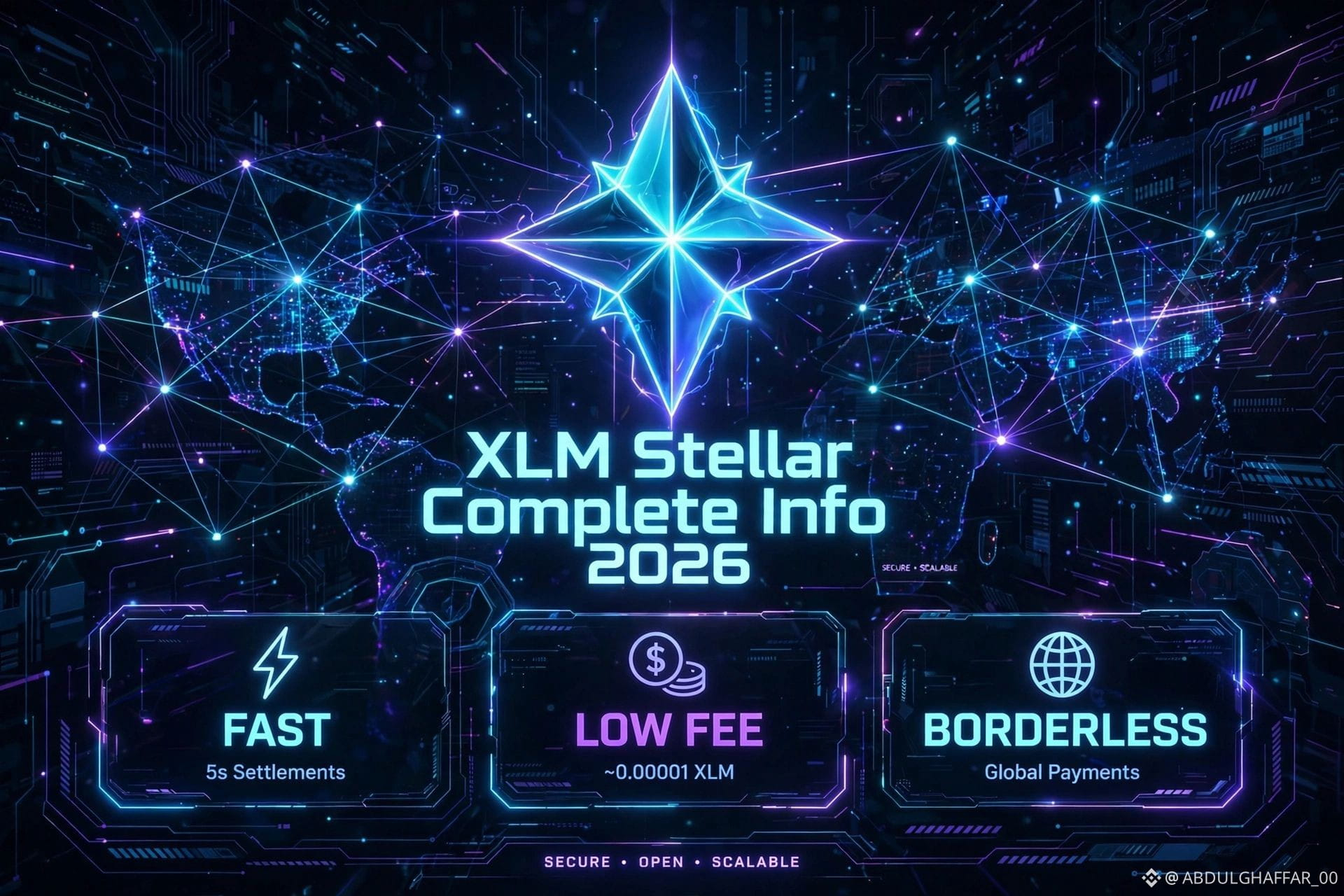
What Is XLM (Stellar)? Complete Info for 2026 🚀
1. Price Update:
XLM is currently trading at $0.17. Its ATH was $0.93 (in 2021), so it’s currently down 80%.
2. What Does It Do?
Like Ripple (XRP), it’s used for payments. It enables fast and cheap international payments. IBM and MoneyGram use its network.
3. Strong Points:
Market cap: $5.9B - Top 30 coin
Transaction fee: ~$0.00001
Payments confirmed in 3–5 seconds
It has a real-world use case
4. Important Event:
The Stellar Meridian Conference is taking place in Lisbon on October 28–29. Market activity is often seen around events like this.
5. Market Levels:
Support: $0.15–$0.16, resistance: $0.18. It’s being considered for the long term.
This isn’t a meme coin; it’s a utility coin. A slow but steady project.
This is not financial advice. Do your own research.
#XLM #Stellar #crypto #Altcoin $XLM
{future}(XLMUSDT)
What Is XLM (Stellar)? Complete Info for 2026 🚀
1. Price Update:
XLM is currently trading at $0.17. Its ATH was $0.93 (in 2021), so it’s currently down 80%.
2. What Does It Do?
Like Ripple (XRP), it’s used for payments. It enables fast and cheap international payments. IBM and MoneyGram use its network.
3. Strong Points:
Market cap: $5.9B - Top 30 coin
Transaction fee: ~$0.00001
Payments confirmed in 3–5 seconds
It has a real-world use case
4. Important Event:
The Stellar Meridian Conference is taking place in Lisbon on October 28–29. Market activity is often seen around events like this.
5. Market Levels:
Support: $0.15–$0.16, resistance: $0.18. It’s being considered for the long term.
This isn’t a meme coin; it’s a utility coin. A slow but steady project.
This is not financial advice. Do your own research.
#XLM #Stellar #crypto #Altcoin $XLM
1
7

XLM’s 8-hour funding rate has turned negative, at -0.0070%, or approximately -7.7% annualized. Over the same period, the price fell just 1.38%, to 0.1682. The price decline is modest, but the pricing direction on the leverage side has shifted: shorts now pay a fee every 8 hours to maintain their positions.
First, consider the size of the rate. At -0.0070%, with three settlements per day, that’s about -0.021% daily. The cost of holding a short for a week is roughly 0.15%. Compared with a daily price movement of 1.38%, that figure is almost negligible. So this doesn’t indicate that “shorts are so crowded they’re about to be squeezed.” It’s a milder signal: some traders are willing to pay to be bearish, but not yet in a big way. The extreme negative rates that are genuinely cause for concern are usually below -0.05%; XLM is still a long way from that.
Next, look at the open-interest structure. Open interest of 34.96 million USDT versus 24.2M in 24-hour trading volume means open interest is about 1.4 times daily volume. For an asset like XLM, which already has relatively modest liquidity, this ratio suggests that the amount of leverage in the market is relatively high compared with normal turnover, and the order book is thin. The effects go both ways: a small number of aggressive orders can move the price; conversely, if shorts try to close their positions all at once, slippage will be amplified. That’s also why a reversal on unexpected news can be sharper than usual with this kind of structure.
Then there’s the divergence in account positioning. Long accounts make up 51.3%, so more than half of accounts are long, but the funding rate is negative. When account counts and capital flows point in different directions, it often indicates a structure where retail accounts are leaning long while larger positions are short. In this setup, a decline could first trigger stop-losses from long accounts and accelerate the drop; but the same structure also means fuel for short covering is building up, so if the direction reverses, the move could be fast.
Finally, there’s the event itself. The vote on the Bell upgrade’s mainnet deployment is scheduled for November 23, one week from now. The key point is that this is a decision made by validator vote, not a guaranteed rollout date; the vote could fail or be delayed and held again. The leverage market pricing in negative funding a week ahead is, to some extent, buying insurance against the possibility that “the event doesn’t come through.” Price reactions to governance votes of this kind are usually concentrated in the 48 hours before the vote and after the results are announced. The period in between is often an inefficient zone, where marginal changes in funding rates and open interest are more informative than the price itself.
⚖️ My bias is to treat this week as a window for observation, not as a time to take a directional position. Watch two variables: whether the funding rate continues moving lower (shorts adding positions) or returns above zero (shorts exiting); and whether open interest builds up significantly before the vote. A return to positive funding alongside rising open interest would suggest longs are starting to take over; a deeper negative rate would mean shorts are doubling down. These two signals imply completely opposite odds, so betting now is like flipping a coin.
The risk lies on the other side: if the vote is delayed or divisions among validators become public, the funding rate could turn even more negative, and liquidity below 0.1682 may not be deep. The price reaction could be far larger than the change in the funding rate.
#XLM #Stellar #Crypto
3


·
--
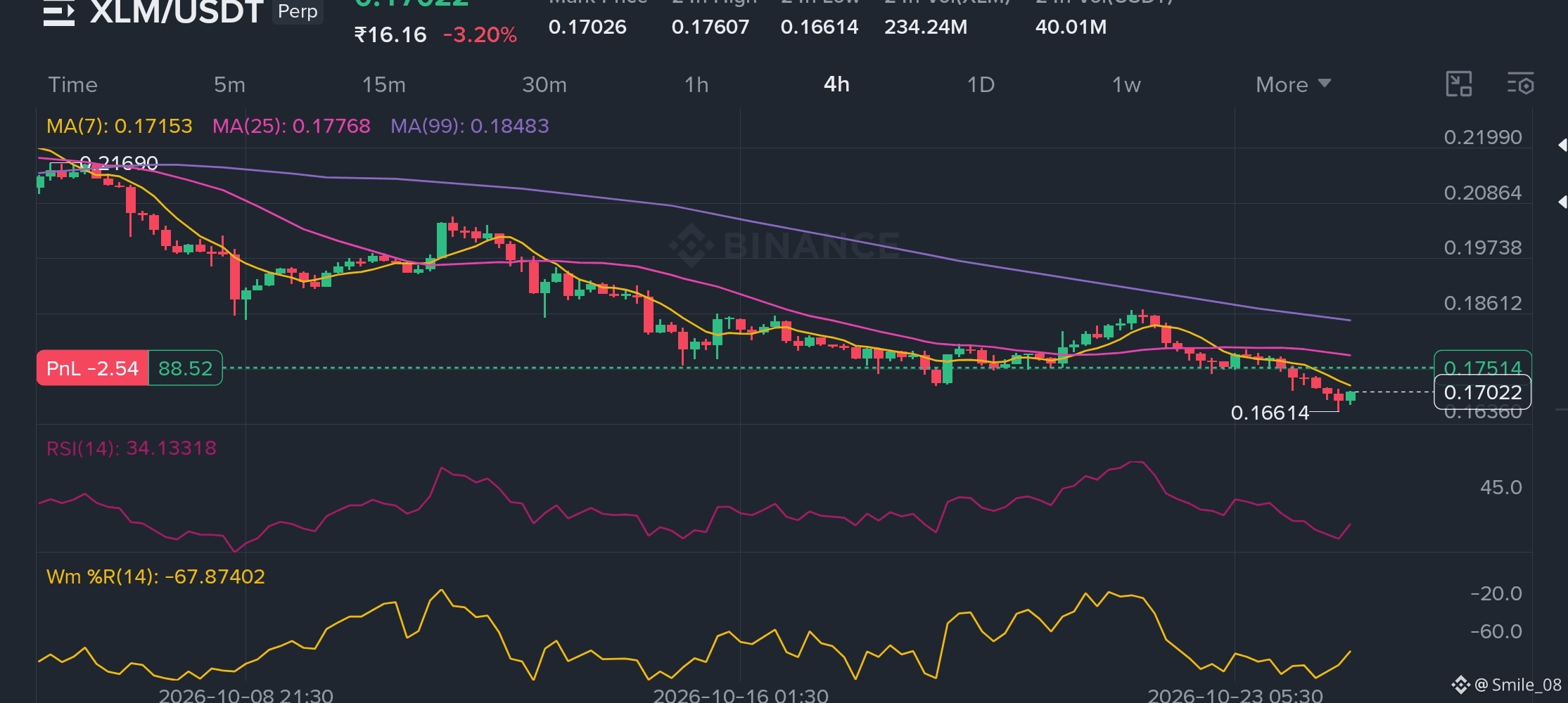
📊 $XLM Trade Setup | 4H
🟢 Entry: $0.1660 – $0.1700
🎯 TP1: $0.1760
🎯 TP2: $0.1820
🎯 TP3: $0.1900
🛑 SL: $0.1620
Price recently corrected and trading near short-term support. Wait for bullish confirmation (higher low + volume pickup) before entry. Patience over FOMO. Always manage risk.
#XLM #stellar #BinanceSquare #writetoearn
1
4
455
Stellar’s recent market performance has improved, and this is not driven by sentiment alone—several fundamental signals are converging.
The rapid growth in the supply of PayPal’s PYUSD stablecoin on Stellar indicates that it is being used in real payment and stablecoin settlement applications. Large-scale adoption by institutions such as WisdomTree has also enhanced the network’s credibility in traditional financial use cases. Meanwhile, the RWA sector has reached approximately $4.1 billion, up 548% year over year in the third quarter, and Stellar is one of the key infrastructure providers in this space.
At the protocol level, Protocol 30 is set to bring a quantum security upgrade, helping address long-term security challenges. Recognition from authoritative institutions such as the IMF and DTCC further strengthens Stellar’s positioning in compliant payments and financial infrastructure.
$XLM is currently priced at around $0.167, with a market capitalization of approximately $5.89 billion. Rather than simply chasing a rally, it is more important to watch whether stablecoins, institutional adoption, RWAs, and protocol upgrades can continue translating into on-chain activity. If these catalysts continue to materialize, Stellar’s ability to capture value over the medium to long term may be reassessed.
#Stellar #XLM #RWA
1
62

Stellar’s fundamentals are undergoing a qualitative shift, rather than merely recovering from short-term sentiment. The surge in PYUSD supply suggests that regulated stablecoins are bringing real payment and on-chain settlement demand to the Stellar network. Continued activity by institutions such as WisdomTree is also making the gateway for traditional capital increasingly clear. The more important signal is that RWA value has risen to $4.1 billion, up 548% in the third quarter: tokenized assets are moving from narrative to real-world adoption.
Protocol 30 has put post-quantum security on the agenda. Combined with recognition from authoritative institutions such as the IMF and DTCC, this is strengthening XLM’s long-term credibility and the case for institutional adoption. On-chain payments, regulated access, and infrastructure upgrades are beginning to reinforce one another.
The current price is around $0.1672, with a market cap of about $5.89 billion. It remains to be seen whether trading volume can continue to grow. If ecosystem metrics keep delivering, $XLM may gradually move beyond a purely beta-driven market and toward a valuation re-rating driven by real adoption.
#Stellar #RWA #XLM
5

·
--
Verified
Stellar’s fundamentals heated up significantly last week, with five catalysts beginning to reinforce one another:
First, stablecoin supply is expanding. The supply of PayPal’s PYUSD on the Stellar network has surged, directly driving on-chain activity and settlement demand;
Second, institutional capital is moving in. Traditional asset managers such as WisdomTree are adopting Stellar at scale, viewing it as an important channel for fund issuance and distribution;
Third, the RWA narrative is becoming reality. Related activity grew by about 548% in the third quarter, reaching approximately $4.1 billion, and Stellar is one of the networks benefiting most in this sector;
Fourth, a technical milestone is approaching. The Protocol 30 upgrade will introduce post-quantum security mechanisms, laying the groundwork for large-scale asset tokenization in the future;
Fifth, it has the backing of authoritative institutions. Continued recognition from the IMF and DTCC reinforces Stellar’s distinctive position in the compliant cross-border settlement sector.
On the data front, $XLM is currently priced at around $0.167, with 24-hour trading volume of approximately $123 million and a market capitalization of about $5.89 billion. With narratives, institutions, and technology all reinforcing one another, keep an eye on the rollout timeline for Protocol 30 and net growth in on-chain stablecoins.
#Stellar #XLM #RWA
1
72

·
--
This shift in the Stellar ecosystem is more than just short-term sentiment—it looks more like a fundamental repricing. The key takeaway for $XLM is that the supply of stablecoins such as PYUSD is growing rapidly, while use cases for on-chain payments and cross-border settlement are becoming more established. Institutions such as WisdomTree are also accelerating their investment, highlighting the value of Stellar’s infrastructure to compliant capital.
Meanwhile, the RWA ecosystem has reached approximately $4.1 billion, growing 548% in the third quarter. The tokenization of real-world assets is no longer just a narrative. With the Protocol 30 quantum-safe upgrade approaching, alongside recognition from authoritative institutions such as the IMF and DTCC, confidence in the technology’s long-term credibility and expectations for institutional adoption are both growing.
The price is currently fluctuating around $0.167. Key things to watch next are the rollout of the upgrade, net stablecoin inflows, and the pace at which institutional products expand. If ecosystem metrics continue to improve, XLM has room for a valuation recovery. However, shifts in broader market risk appetite could still bring volatility, so consider managing position sizes and monitoring developments in stages.
#Stellar #XLM #RWA
34

·
--
This rally in $XLM looks more like a concentrated realization of fundamental catalysts than just short-term sentiment rotation.
The rapid rise in the supply of stablecoins such as PYUSD on the Stellar network points to growing real-world demand for payments, settlement, and cross-border transfers. Large-scale adoption by institutions such as WisdomTree also connects traditional sources of capital more directly to the blockchain. The overall RWA sector has reached approximately $4.1 billion, growing 548% in the third quarter, and Stellar is one of the infrastructure projects worth watching.
Meanwhile, Protocol 30 will advance a quantum-resistant security upgrade, positioning Stellar early on security and long-term compliance—priorities for institutions. Recognition from authoritative organizations such as the IMF and DTCC also reinforces its narrative as a bridge to the formal financial system.
XLM is currently priced at around $0.167, with approximately $123 million in 24-hour trading volume and a market capitalization of about $5.89 billion. Short-term prices will still be influenced by market sentiment, but the convergence of four trends—stablecoins, RWAs, institutional adoption, and security upgrades—could prove to be a key catalyst for a medium-term valuation re-rating.
#Stellar #XLM #RWA
40

·
--
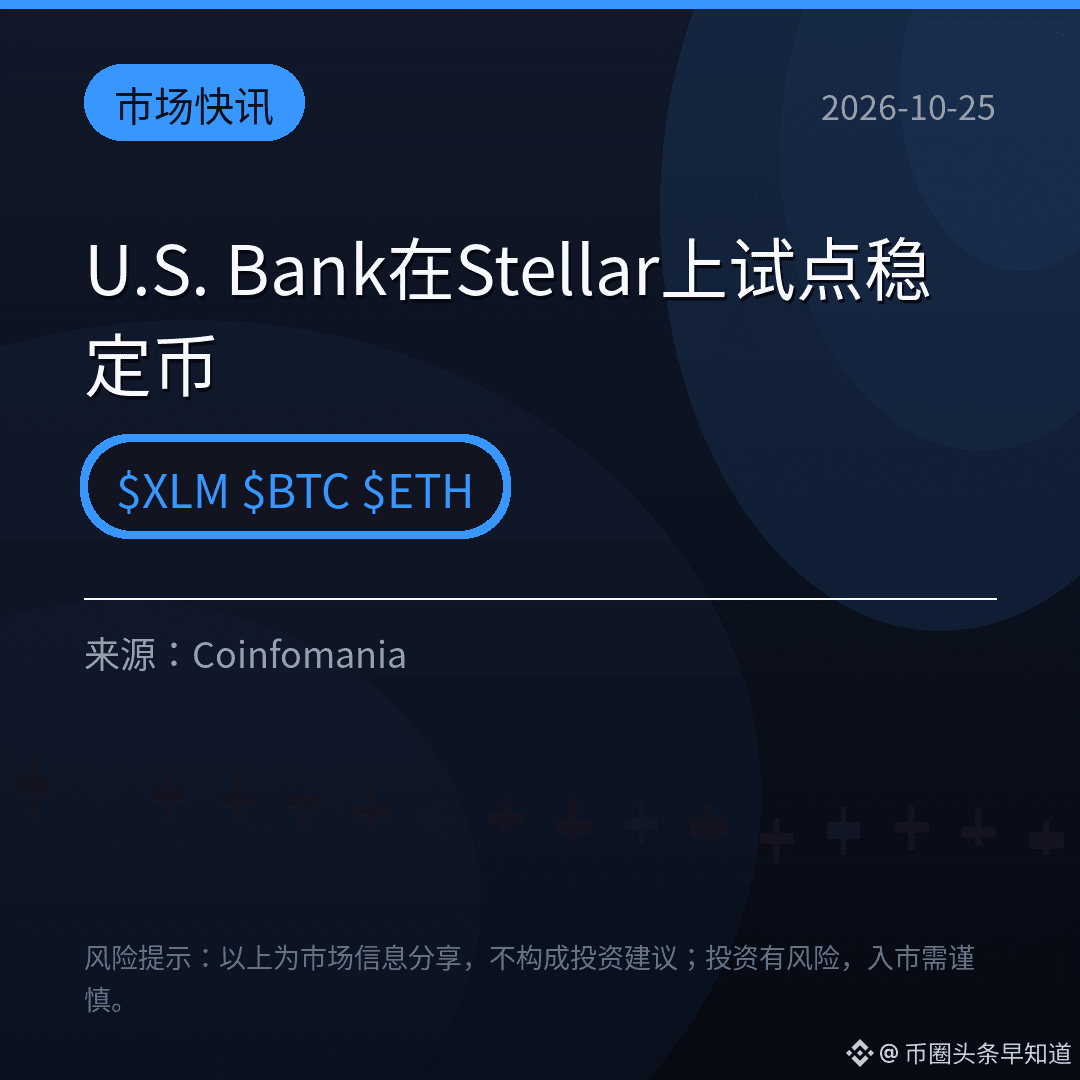
【Market Flash】U.S. Bank is going on-chain too: launching a stablecoin pilot on the Stellar network, targeting cross-border payments.
The pilot highlights Stellar’s open-source, secure, and resilient architecture, with the goal of making cross-border payments faster. Traditional institutions embracing open source isn’t about following a trend—it’s about getting ahead.
Whoever moves settlement on-chain first will be first to gain a say in clearing. Is this good or bad news for $XLM ? Vote bullish: 1; bearish: 2
$XLM $BTC $ETH
#Stellar #稳定币 #BanksOnChain
(Source: Coinfomania)
⚠️Risk warning: The above is for sharing market information only and does not constitute investment advice. Investing involves risks; please exercise caution.
219

·
--
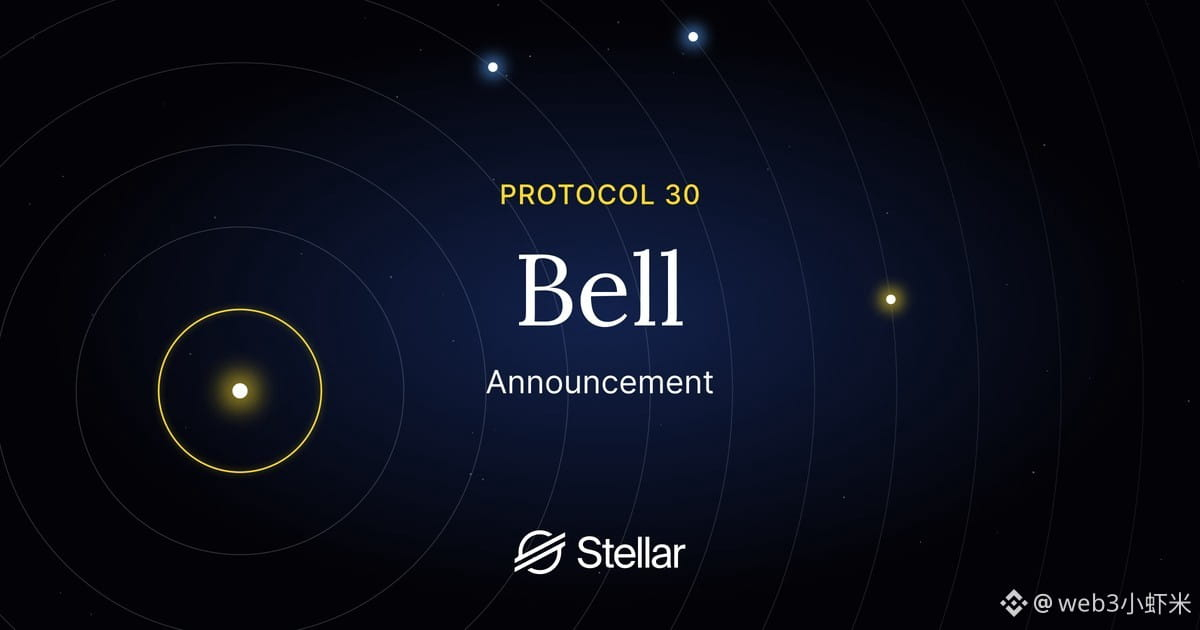
Came across this on Stellar’s official account: the next network upgrade is called Bell (Protocol 30). Three CAPs are going live together—smart contracts can use muxed addresses (starting with W, so one contract can serve multiple clients), contracts can verify NIST’s post-quantum ML-DSA signatures, and ledger timestamps gain millisecond precision, paving the way for shorter ledger-close times in the future.
The testnet vote is scheduled for November 3 at 17:00 UTC, with the mainnet vote at the same time on November 23. The official announcement also makes the limits clear: this does not make the entire network post-quantum overnight—transaction signatures will still use Ed25519. Nor will this upgrade itself bring ledger closes below five seconds; it simply removes the hard one-second-per-ledger floor.
Wallets and exchanges should upgrade their SDKs in advance and add W addresses to their validation checks. Core v30 stable was released on October 16. $XLM #Stellar #PostQuantum
38

·
--
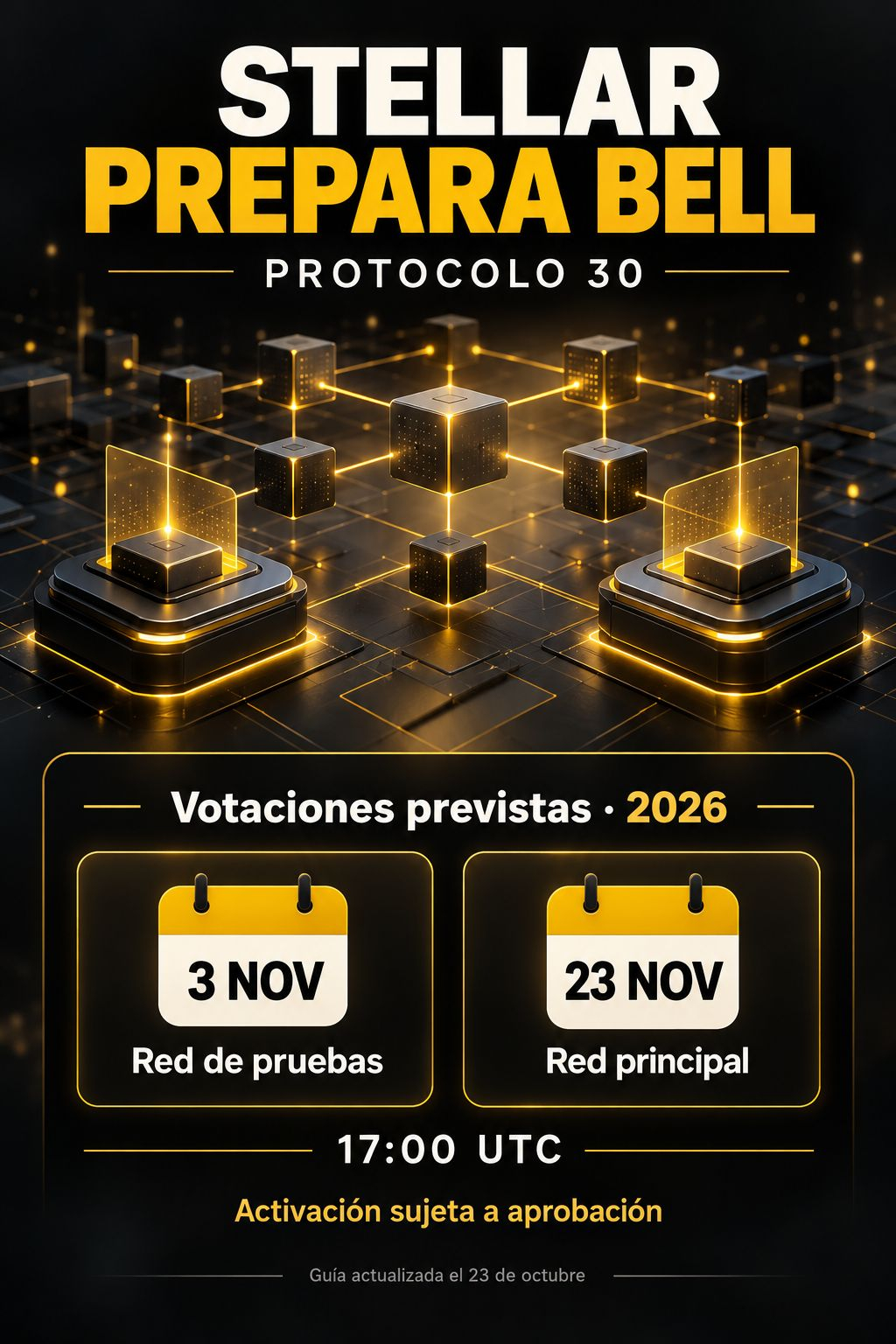
Stellar prepares for Bell: two key votes in November
The Bell guide, Protocol 30, updated on October 23, sets out validator votes for November 2026: on the 3rd on the testnet and the 23rd on the mainnet, both at 17:00 UTC. Activation depends on approval, and the dates may change.
The proposal brings together three changes: identifying payments from different clients within the same contract; verifying post-quantum ML-DSA signatures in smart contracts; and recording timestamps with millisecond precision.
The scope matters: signatures for network transactions would continue to use Ed25519. In addition, greater clock precision lays the groundwork for future speed improvements, but Bell does not automatically reduce ledger close times.
For applications and operators, the immediate risk is compatibility: they must update their tools and data readers before the change. The guide warns that older versions may fail to interpret the new records.
Stellar already supports USDC and EURC, according to Circle. An infrastructure upgrade could facilitate services built on those assets; actual usage will depend on each integration.
Market snapshot: on 10/25 at 07:02 UTC, Binance spot showed XLM at 0.1695 USDT, down 1.796% over 24 hours. That move does not demonstrate a reaction to Bell. To assess its impact, it is useful to distinguish technical approval, application adoption, and demand for the token.
Sources: Stellar Development Foundation, Circle, and public Binance data.
$XLM $USDC $EURC
Educational Content. Not financial advice.
#Stellar #Bell #Blockchain #Stablecoins
108
·
--
Verified
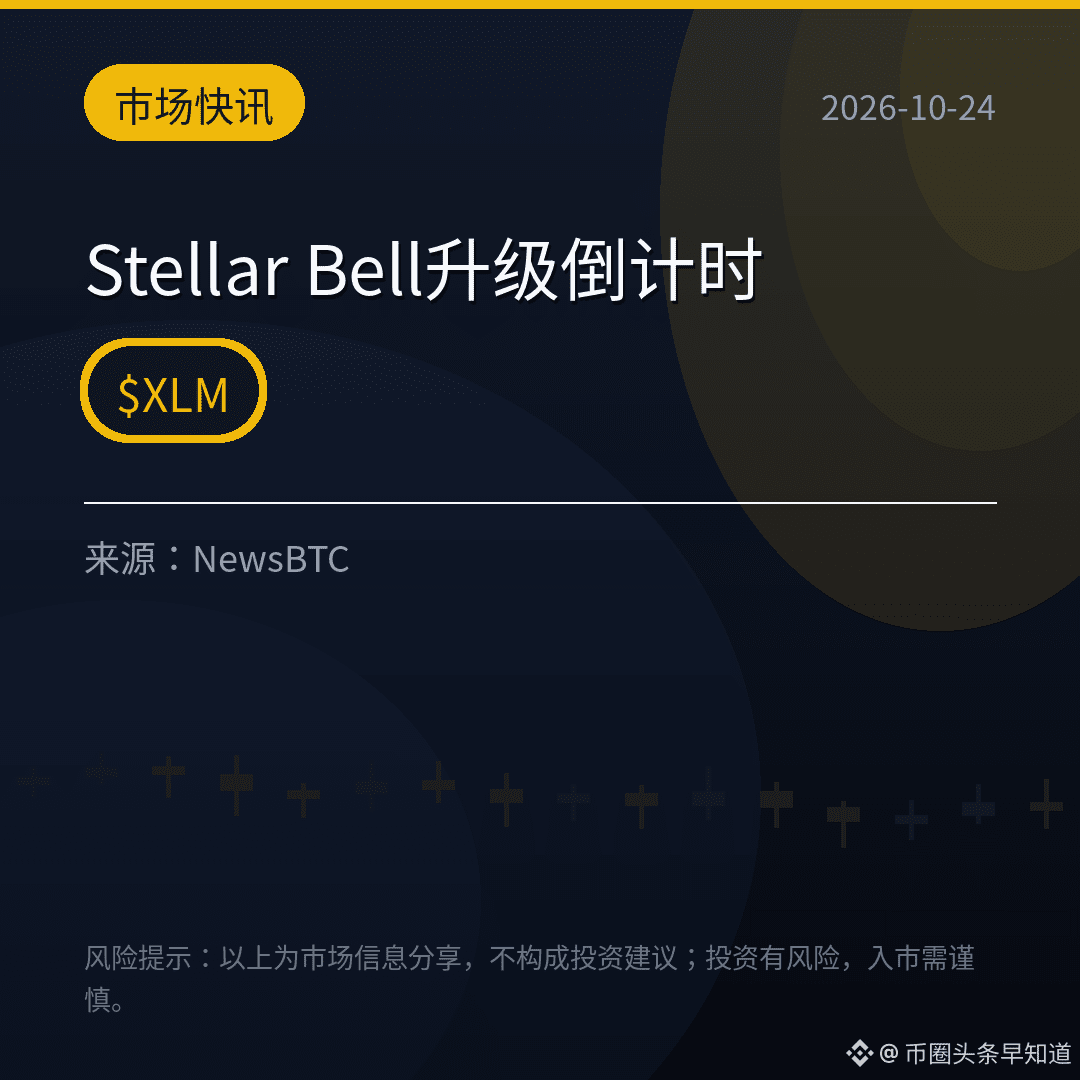
【Market Flash】Stellar Bell upgrade countdown: Testnet vote on November 3, mainnet vote on November 23—Protocol 30’s success or failure hinges on these two votes!
Wallets and exchanges must upgrade first: contract addresses start with W and can include customer identifiers, allowing multiple customers per contract and clearer reconciliation. Once the ledger header changes, old decoders will stop working.
Quantum-resistant signatures will only be supported in contracts; the network will continue using Ed25519. Millisecond timestamps are just laying the groundwork.
Do you think this could help XLM make a comeback?
$XLM $BTC $ETH
#Stellar #协议升级 #QuantumResistant
(Source: NewsBTC)
⚠️Risk warning: The above is shared for market information purposes only and does not constitute investment advice. Investing involves risks; please exercise caution.
345
·
--
Verified
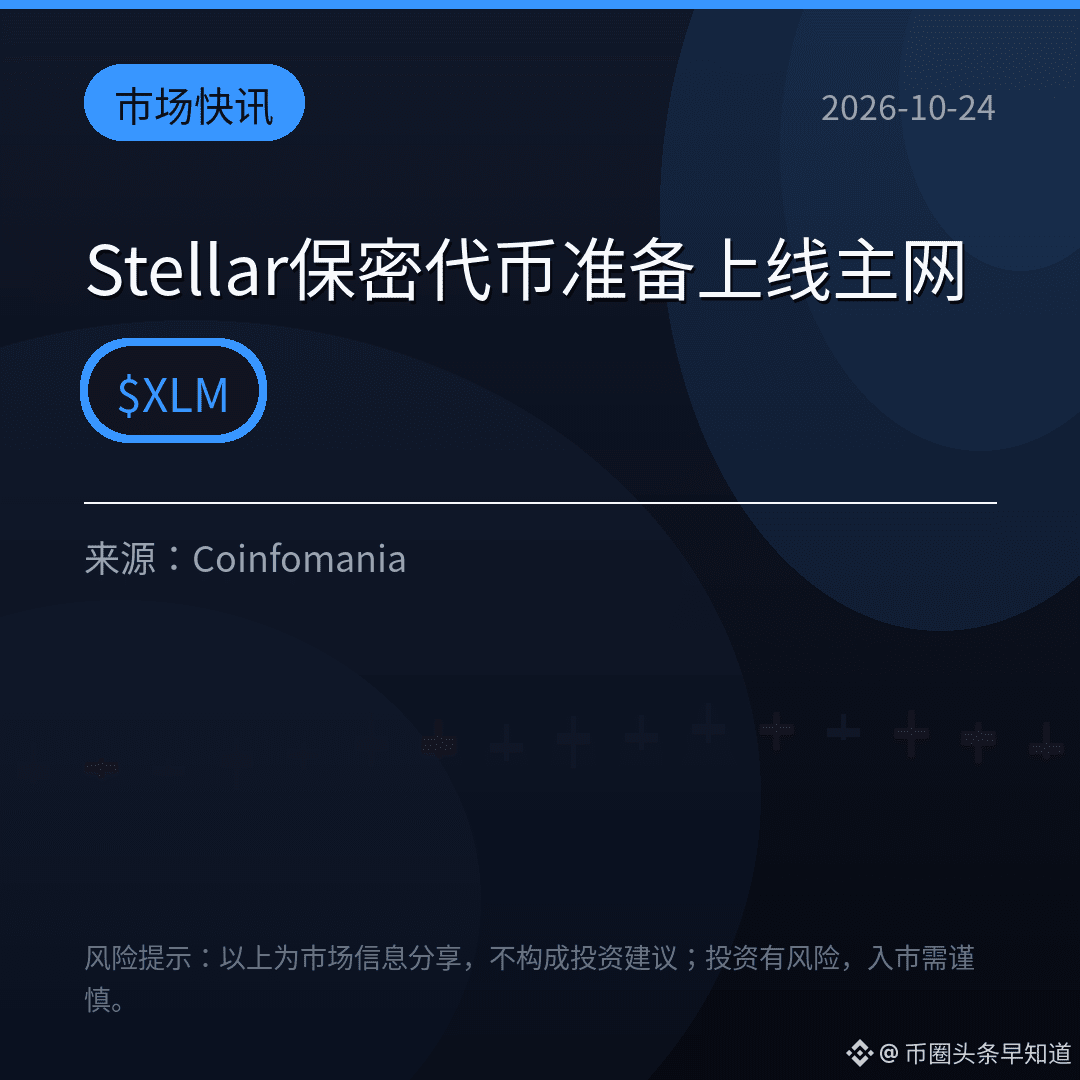
【Market Update】Stellar’s confidential token is preparing to launch on mainnet, adding a layer of privacy to SEP-41.
Teased by @BuildOnStellar and reposted by OpenZeppelin, it aims to make transactions more private and secure, attracting developers back. But with trading volume sluggish and regulations tightening, is this a competitive edge or a new target?
Will privacy features help $XLM turn things around? Comment 1 if you’re bullish, 2 if you’re bearish.
$XLM $BTC $ETH
#Stellar #隐私代币 #Cross-borderPayments
(Source: Coinfomania)
⚠️Risk warning: The above is shared for informational purposes only and does not constitute investment advice. Investing involves risks; please exercise caution.
1
454
·
--
Came across a pretty substantial development: Ascend Markets and M1X Global completed the first institutional repo on Stellar, backed by USDM1, an on-chain dollar-denominated sovereign bond (1:1 short-term U.S. Treasuries). From October 16 to 19, they ran 72 automatic hourly rollovers in a row, including overnight and over the weekend, priced at SOFR+10bp (about 3.98% annualized), with a 2% haircut and 98% LTV. Principal and interest were fully repaid, and the collateral was returned. The traditional repo market is enormous, so seeing this kind of programmable 24/7 financing actually happen on a public blockchain feels more tangible than just slogans. #RWA #Stellar #InstitutionalCapital
Came across a pretty substantial development: Ascend Markets and M1X Global completed the first institutional repo on Stellar, backed by USDM1, an on-chain dollar-denominated sovereign bond (1:1 short-term U.S. Treasuries). From October 16 to 19, they ran 72 automatic hourly rollovers in a row, including overnight and over the weekend, priced at SOFR+10bp (about 3.98% annualized), with a 2% haircut and 98% LTV. Principal and interest were fully repaid, and the collateral was returned. The traditional repo market is enormous, so seeing this kind of programmable 24/7 financing actually happen on a public blockchain feels more tangible than just slogans. #RWA #Stellar #InstitutionalCapital

133

·
--
Stellar is preparing for quantum resistant smart accounts. But there's a catch most upgrade headlines could miss.
Bell (Protocol 30) is not making the entire Stellar network quantum proof overnight.
📌 VERIFIED FACTS
• Stellar's October 20 announcement describes three proposed changes: smart contract compatible customer addresses, post-quantum signature verification for smart contracts, and millisecond ledger timing.
• The testnet upgrade vote is scheduled for November 3, with the mainnet vote scheduled for November 23, 2026. Both depend on validator approval.
• The upgrade does NOT immediately make all Stellar transactions quantum resistant, and millisecond timing alone does not make the network faster.
💡 QUANTVANTA TAKE
The interesting part isn't just the quantum narrative.
Bell addresses practical infrastructure problems: businesses need scalable customer accounting, developers need more flexible smart accounts, and future ledger-speed improvements need protocol support.
But technical readiness is only the first step.
The investment thesis becomes stronger if developers adopt these capabilities, applications gain real users, and network activity grows.
✅ CONFIRMATION:
The upgrade passes, applications adopt the new capabilities, and measurable usage follows.
⚠️ INVALIDATION:
Implementation is delayed, adoption remains limited, or technical improvements fail to translate into meaningful network demand.
My view: infrastructure upgrades deserve attention, but their value should be judged by what developers and users actually do with them not by the size of the technology headline.
Would you value XLM more for its long-term infrastructure roadmap, or wait for measurable adoption before changing your outlook?
$XLM
{future}(XLMUSDT)
#stellar #XLM #crypto
Stellar is preparing for quantum resistant smart accounts. But there's a catch most upgrade headlines could miss.
Bell (Protocol 30) is not making the entire Stellar network quantum proof overnight.
📌 VERIFIED FACTS
• Stellar's October 20 announcement describes three proposed changes: smart contract compatible customer addresses, post-quantum signature verification for smart contracts, and millisecond ledger timing.
• The testnet upgrade vote is scheduled for November 3, with the mainnet vote scheduled for November 23, 2026. Both depend on validator approval.
• The upgrade does NOT immediately make all Stellar transactions quantum resistant, and millisecond timing alone does not make the network faster.
💡 QUANTVANTA TAKE
The interesting part isn't just the quantum narrative.
Bell addresses practical infrastructure problems: businesses need scalable customer accounting, developers need more flexible smart accounts, and future ledger-speed improvements need protocol support.
But technical readiness is only the first step.
The investment thesis becomes stronger if developers adopt these capabilities, applications gain real users, and network activity grows.
✅ CONFIRMATION:
The upgrade passes, applications adopt the new capabilities, and measurable usage follows.
⚠️ INVALIDATION:
Implementation is delayed, adoption remains limited, or technical improvements fail to translate into meaningful network demand.
My view: infrastructure upgrades deserve attention, but their value should be judged by what developers and users actually do with them not by the size of the technology headline.
Would you value XLM more for its long-term infrastructure roadmap, or wait for measurable adoption before changing your outlook?
$XLM
#stellar #XLM #crypto

247

·
--
Bullish
Stellar Hosts First Institutional Repo Using USDM1 Sovereign Bond in 72 Automated Rolls
#XLM #stellar #stellarnetwork #XLM/ $XLM
{spot}(XLMUSDT)
Read Here: https://altcoinsanalysis.com/stellar-hosts-first-institutional-repo-using-usdm1-sovereign-bond-in-72-automated-rolls/
Stellar Hosts First Institutional Repo Using USDM1 Sovereign Bond in 72 Automated Rolls
#XLM #stellar #stellarnetwork #XLM/ $XLM
Read Here: https://altcoinsanalysis.com/stellar-hosts-first-institutional-repo-using-usdm1-sovereign-bond-in-72-automated-rolls/
#XLM #stellar #stellarnetwork #XLM/ $XLM
Read Here: https://altcoinsanalysis.com/stellar-hosts-first-institutional-repo-using-usdm1-sovereign-bond-in-72-automated-rolls/
129

·
--
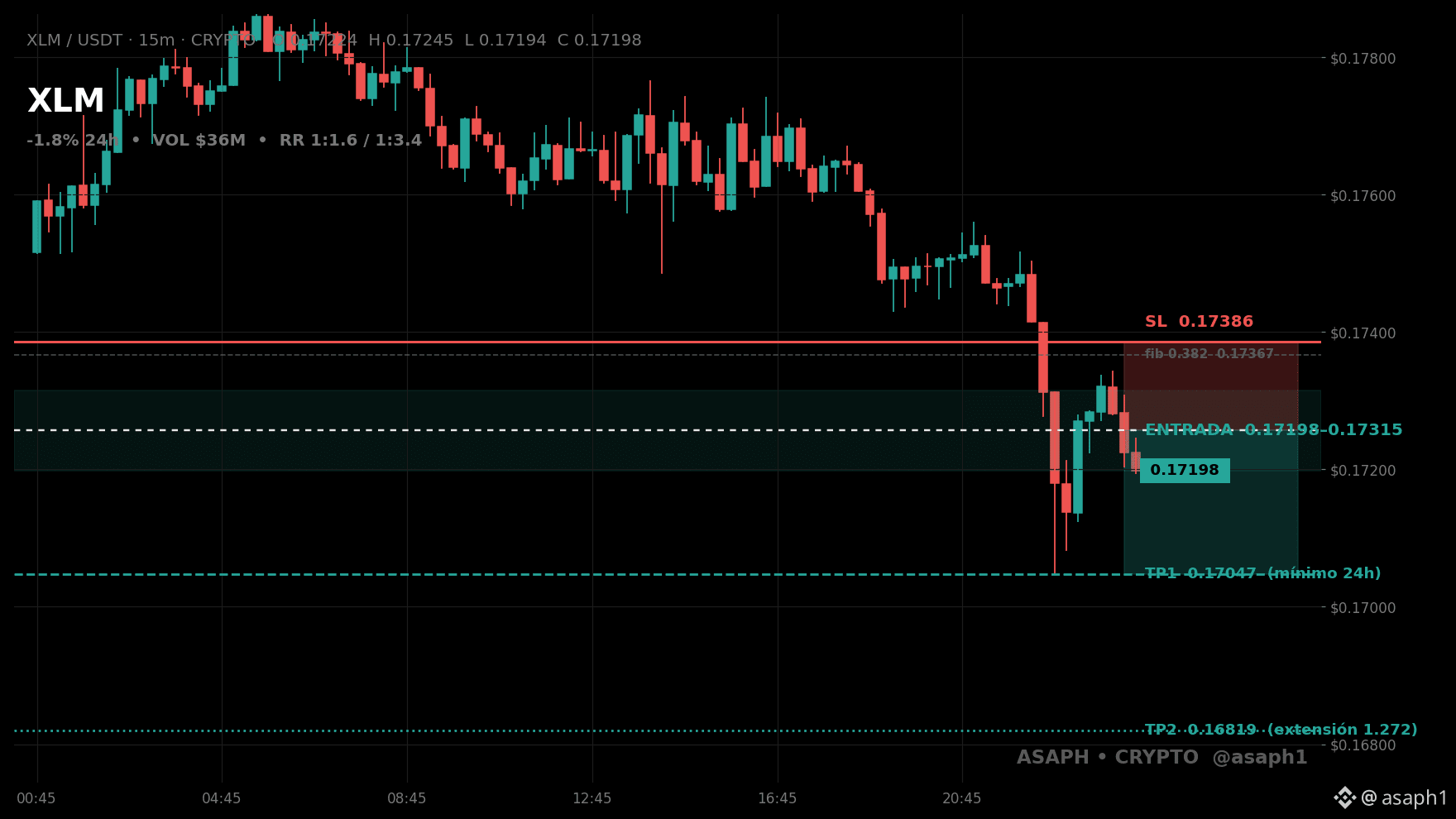
💀 $XLM: Every bounce dies lower — I’m selling the series
XLM $0.17198 -1.79% 24h
October: each bounce stalls lower than the one before
news: Mastercard + RWA at $3.06B… and the price isn’t reacting
When bounces keep dying lower, this zone is the last ceiling left to sell.
positioning: 65.5% of top positions are long, price is -4.5% below the 4h EMA50 ($0.1801)
OI: $35.2M, -4.87% in 24h → they’re leaving, not entering
volume: -13.9% vs. average → the drop doesn’t need euphoria
funding: -0.00013361 → no premium in either direction
divergence: record RWA vs. price at lows
BTC network: mempool with 48,980 txs, fee of 3 sat/vB
📊 XLM SIGNAL — SHORT
📍 Price now: $0.17198
🎯 Zone: $0.17198–$0.1731525 (dist. 0.0%)
Enter with a limit order: 50% at the current price, 50% at $0.1731525.
🛑 Stop at $0.173856 (-0.75%), the resistance, confirmed BEFORE entry.
Risk per trade: 2% of capital.
✅ TP1: $0.17047 (24h low) — first take profit: close 50% and move the stop to break-even.
🏁 TP2: $0.16819336 (1.272 extension) — the base of the October range.
R/R: 1:1.63 · 1:3.39
⏳ Valid: next 4h / as long as $0.173856 holds
Save this: this zone marks the next ceiling in the series.
Will XLM break $0.17047, or will this bounce die too?
Share it and let’s follow the trade: live price here 👇 XLM
XLM #Stellar #RWA #Crypto
This is a plan, not financial advice.
💀 $XLM : Every bounce dies lower — I’m selling the series
XLM $0.17198 -1.79% 24h
October: each bounce stalls lower than the one before
news: Mastercard + RWA at $3.06B… and the price isn’t reacting
When bounces keep dying lower, this zone is the last ceiling left to sell.
positioning: 65.5% of top positions are long, price is -4.5% below the 4h EMA50 ($0.1801)
OI: $35.2M, -4.87% in 24h → they’re leaving, not entering
volume: -13.9% vs. average → the drop doesn’t need euphoria
funding: -0.00013361 → no premium in either direction
divergence: record RWA vs. price at lows
BTC network: mempool with 48,980 txs, fee of 3 sat/vB
📊 XLM SIGNAL — SHORT
📍 Price now: $0.17198
🎯 Zone: $0.17198–$0.1731525 (dist. 0.0%)
Enter with a limit order: 50% at the current price, 50% at $0.1731525.
🛑 Stop at $0.173856 (-0.75%), the resistance, confirmed BEFORE entry.
Risk per trade: 2% of capital.
✅ TP1: $0.17047 (24h low) — first take profit: close 50% and move the stop to break-even.
🏁 TP2: $0.16819336 (1.272 extension) — the base of the October range.
R/R: 1:1.63 · 1:3.39
⏳ Valid: next 4h / as long as $0.173856 holds
Save this: this zone marks the next ceiling in the series.
Will XLM break $0.17047, or will this bounce die too?
Share it and let’s follow the trade: live price here 👇 XLM
XLM #Stellar #RWA #Crypto
This is a plan, not financial advice.
125

🚨 $XLM
{spot}(XLMUSDT)
STELLAR IS PREPARING A QUANTUM-SAFER SMART-CONTRACT UPGRADE.
Stellar’s proposed Bell upgrade targets three areas: contract addresses that can better handle many users, post-quantum signature verification, and millisecond-precision ledger timestamps. Validator votes are reportedly planned for November 3 on testnet and November 23 on mainnet.
This is infrastructure progress—not proof of immediate XLM demand. Watch the official vote, developer readiness, and real application adoption. Will better tooling translate into more network use?
#XLM #Stellar #blockchain #CryptoNewss
🚨 $XLM
STELLAR IS PREPARING A QUANTUM-SAFER SMART-CONTRACT UPGRADE.
Stellar’s proposed Bell upgrade targets three areas: contract addresses that can better handle many users, post-quantum signature verification, and millisecond-precision ledger timestamps. Validator votes are reportedly planned for November 3 on testnet and November 23 on mainnet.
This is infrastructure progress—not proof of immediate XLM demand. Watch the official vote, developer readiness, and real application adoption. Will better tooling translate into more network use?
#XLM #Stellar #blockchain #CryptoNewss

116
Log in to explore more content
Join global crypto users on Binance Square
⚡️ Get latest and useful information about crypto.
💬 Trusted by the world’s largest crypto exchange.
👍 Discover real insights from verified creators.
Email / Phone number
Trending Topics
1
#BinancePick
3.3M views
161,314 Discussing
2
#EarningsSeason
5.4M views
26,534 Discussing
3
#StrategySkipsBitcoinPurchasesSpends$205MOnSTRCBuybacks
34 views
6 Discussing
4
#BitmineAdds10452ETH
3,875 views
102 Discussing
5
#SouthKoreaConsidersEducationTaxOnCryptoExchanges
3,837 views
96 Discussing
6
#OCCUrgesCommunityBanksToEnterStablecoinPayments
3,121 views
63 Discussing
7
#RippleWinsFullApprovalAsNationalTrustBank
2,872 views
64 Discussing
8
#AkashSelectsSolanaAsMigrationTarget
1,235 views
24 Discussing
9
#OndoToOpenSubscriptionsForOpenAIPreIPOTokenizedNotes
110 views
7 Discussing
10
#AnthropicTTMRevenueGrewAbout1200%
51,483 views
537 Discussing