

#hashflow
hashflow
90,302 views
351 Discussing
Hot
Latest

Hashflow’s recent market performance is concerning. Many netizens have directly categorized it as a “dead project”—low attention, sluggish activity, and creating significant downward pressure on the price.
According to the data, the current quote is just $0.00904, with a 24-hour trading volume of $4.61 million and a market cap of $7.57 million. More importantly, there are underlying structural issues: the project team lacks substantive progress updates, ecosystem support continues to weaken, and community confidence is also steadily eroding.
When a project loses fundamental support, it is difficult to sustain itself with only existing capital. For current holders, this may be a signal to reassess risk.
#Hashflow #Cryptocurrency Watch
Hashflow’s recent market performance is concerning. Many netizens have directly categorized it as a “dead project”—low attention, sluggish activity, and creating significant downward pressure on the price.
According to the data, the current quote is just $0.00904, with a 24-hour trading volume of $4.61 million and a market cap of $7.57 million. More importantly, there are underlying structural issues: the project team lacks substantive progress updates, ecosystem support continues to weaken, and community confidence is also steadily eroding.
When a project loses fundamental support, it is difficult to sustain itself with only existing capital. For current holders, this may be a signal to reassess risk.
#Hashflow #Cryptocurrency Watch
According to the data, the current quote is just $0.00904, with a 24-hour trading volume of $4.61 million and a market cap of $7.57 million. More importantly, there are underlying structural issues: the project team lacks substantive progress updates, ecosystem support continues to weaken, and community confidence is also steadily eroding.
When a project loses fundamental support, it is difficult to sustain itself with only existing capital. For current holders, this may be a signal to reassess risk.
#Hashflow #Cryptocurrency Watch
13

·
--
Hashflow’s recent market performance is indeed worth watching with caution.
Netizens have started describing its current state as a “dead project.” The most direct takeaway is that both market attention and activity have been steadily declining—and that’s obviously not a good sign for the price.
When you dig into the underlying reasons, it’s actually not complicated: the team hasn’t provided substantial progress updates in a long time, ecosystem-level support is gradually weakening, and most importantly, community confidence is being lost.
Current quote: $0.00904. 24-hour trading volume: about $4.61 million. Market cap: about $7.57 million.
For projects that lack sustained operational momentum, it’s still wise to stay extra vigilant.
#Hashflow #加密市场观察
Hashflow’s recent market performance is indeed worth watching with caution.
Netizens have started describing its current state as a “dead project.” The most direct takeaway is that both market attention and activity have been steadily declining—and that’s obviously not a good sign for the price.
When you dig into the underlying reasons, it’s actually not complicated: the team hasn’t provided substantial progress updates in a long time, ecosystem-level support is gradually weakening, and most importantly, community confidence is being lost.
Current quote: $0.00904. 24-hour trading volume: about $4.61 million. Market cap: about $7.57 million.
For projects that lack sustained operational momentum, it’s still wise to stay extra vigilant.
#Hashflow #加密市场观察
Netizens have started describing its current state as a “dead project.” The most direct takeaway is that both market attention and activity have been steadily declining—and that’s obviously not a good sign for the price.
When you dig into the underlying reasons, it’s actually not complicated: the team hasn’t provided substantial progress updates in a long time, ecosystem-level support is gradually weakening, and most importantly, community confidence is being lost.
Current quote: $0.00904. 24-hour trading volume: about $4.61 million. Market cap: about $7.57 million.
For projects that lack sustained operational momentum, it’s still wise to stay extra vigilant.
#Hashflow #加密市场观察
116
·
--
Hashflow’s situation has recently taken a sharp turn for the worse. Binance announced that it will delist the HFT token on August 17, 2026. With major exchanges removing the token on top of liquidity being pulled out and market confidence collapsing, the price has suffered a significant negative shock.
Even more worrying is that the Hashflow official website has frequently gone down, scam activity has appeared in the Discord community, and the founder has even deleted their LinkedIn profile. This series of signals has continuously amplified calls questioning whether it’s a “getaway scam.”
From on-chain data, the HFT quote is only around $0.00879. The 24-hour trading volume is about $47.5 million, and its market cap has shrunk to roughly $7.54 million—an enormous drop compared with its historical high. For users who still hold related positions, an exchange delisting often means exit channels become narrower and depth deteriorates. It’s recommended to assess liquidity risk in advance and never underestimate the impact of tail-end events.
What to be wary of is that in panic, retail investors are the easiest targets to become the bag-holders. If the project really shows signs of a “soft exit,” any rebound could be a trap designed to lure in buyers. DYOR, manage your position sizing, and stay away from high-risk small caps—these are always the most basic survival rules in a bear market.
$HFT #Hashflow #币安下架
Hashflow’s situation has recently taken a sharp turn for the worse. Binance announced that it will delist the HFT token on August 17, 2026. With major exchanges removing the token on top of liquidity being pulled out and market confidence collapsing, the price has suffered a significant negative shock.
Even more worrying is that the Hashflow official website has frequently gone down, scam activity has appeared in the Discord community, and the founder has even deleted their LinkedIn profile. This series of signals has continuously amplified calls questioning whether it’s a “getaway scam.”
From on-chain data, the HFT quote is only around $0.00879. The 24-hour trading volume is about $47.5 million, and its market cap has shrunk to roughly $7.54 million—an enormous drop compared with its historical high. For users who still hold related positions, an exchange delisting often means exit channels become narrower and depth deteriorates. It’s recommended to assess liquidity risk in advance and never underestimate the impact of tail-end events.
What to be wary of is that in panic, retail investors are the easiest targets to become the bag-holders. If the project really shows signs of a “soft exit,” any rebound could be a trap designed to lure in buyers. DYOR, manage your position sizing, and stay away from high-risk small caps—these are always the most basic survival rules in a bear market.
$HFT #Hashflow #币安下架
Even more worrying is that the Hashflow official website has frequently gone down, scam activity has appeared in the Discord community, and the founder has even deleted their LinkedIn profile. This series of signals has continuously amplified calls questioning whether it’s a “getaway scam.”
From on-chain data, the HFT quote is only around $0.00879. The 24-hour trading volume is about $47.5 million, and its market cap has shrunk to roughly $7.54 million—an enormous drop compared with its historical high. For users who still hold related positions, an exchange delisting often means exit channels become narrower and depth deteriorates. It’s recommended to assess liquidity risk in advance and never underestimate the impact of tail-end events.
What to be wary of is that in panic, retail investors are the easiest targets to become the bag-holders. If the project really shows signs of a “soft exit,” any rebound could be a trap designed to lure in buyers. DYOR, manage your position sizing, and stay away from high-risk small caps—these are always the most basic survival rules in a bear market.
$HFT #Hashflow #币安下架
155
HFT (Hashflow) is about to be delisted by Binance, yet the open interest is surging against the trend—this anomalous signal deserves high attention.
In normal circumstances, after Binance announces the delisting of a token, market sentiment quickly turns bearish, and OI (open interest) then declines. But HFT is moving in the opposite direction—open interest keeps expanding, indicating that the long-vs-short battle is intensifying, and long capital is daring to step in despite the countdown to delisting.
This divergence of "bad news without a drop, and open interest暴增" often means:
1. Arbitrageurs have been positioning in advance for the price-gap opportunity before the delisting
2. Some funds are betting on a migration to other exchanges, with expectations of a rebound
3. The futures market may be building up for short-term, intense volatility
For spot holders, delisting means reduced liquidity and increased costs for withdrawing and transferring funds. It’s recommended to plan ahead. For derivatives traders, a surge in OI plus the delisting time window is a high-volatility, high-risk zone—go light.
Do you have $HFT ? Are you planning to clear out before the delisting or hold off and watch?
#Hashflow #币安下架 #Contract market
HFT (Hashflow) is about to be delisted by Binance, yet the open interest is surging against the trend—this anomalous signal deserves high attention.
In normal circumstances, after Binance announces the delisting of a token, market sentiment quickly turns bearish, and OI (open interest) then declines. But HFT is moving in the opposite direction—open interest keeps expanding, indicating that the long-vs-short battle is intensifying, and long capital is daring to step in despite the countdown to delisting.
This divergence of "bad news without a drop, and open interest暴增" often means:
1. Arbitrageurs have been positioning in advance for the price-gap opportunity before the delisting
2. Some funds are betting on a migration to other exchanges, with expectations of a rebound
3. The futures market may be building up for short-term, intense volatility
For spot holders, delisting means reduced liquidity and increased costs for withdrawing and transferring funds. It’s recommended to plan ahead. For derivatives traders, a surge in OI plus the delisting time window is a high-volatility, high-risk zone—go light.
Do you have $HFT ? Are you planning to clear out before the delisting or hold off and watch?
#Hashflow #币安下架 #Contract market
In normal circumstances, after Binance announces the delisting of a token, market sentiment quickly turns bearish, and OI (open interest) then declines. But HFT is moving in the opposite direction—open interest keeps expanding, indicating that the long-vs-short battle is intensifying, and long capital is daring to step in despite the countdown to delisting.
This divergence of "bad news without a drop, and open interest暴增" often means:
1. Arbitrageurs have been positioning in advance for the price-gap opportunity before the delisting
2. Some funds are betting on a migration to other exchanges, with expectations of a rebound
3. The futures market may be building up for short-term, intense volatility
For spot holders, delisting means reduced liquidity and increased costs for withdrawing and transferring funds. It’s recommended to plan ahead. For derivatives traders, a surge in OI plus the delisting time window is a high-volatility, high-risk zone—go light.
Do you have $HFT ? Are you planning to clear out before the delisting or hold off and watch?
#Hashflow #币安下架 #Contract market
67

#hashflow
🚀 Hashflow ($HFT ) Analysis
Hashflow ($HFT ) has shown a rapid growth of +29.68% in 24 hours, reaching the $0.00960 mark. We analyze what is behind this momentum and what technical benchmarks should be considered.
🔑 Key facts and analysis
➡️ Trading volume and activity:
Trading volume increased by 20.77% and reached $58.5 million. The volume-to-capitalization ratio is 7.07, which indicates extremely high market activity and increased interest from buyers.
➡️ Market and DeFi correlation:
HFT's market share is only 1.24%, but the token shows autonomous momentum, ahead of the general trends of the DeFi sector.
➡️ Technical picture and levels:
The price confidently tests the psychological resistance of $0.01. The main support was formed at $0.0090, and the critical insurance level for the pullback is $0.0085.
📊 Forecast and trading plan
Main scenario: A breakout and consolidation above $0.01 paves the way for a further uptrend.
Alternative scenario: In case of profit taking after a 29% jump, a correction to the support zone of $0.0090 or $0.0085 is possible, which can serve as a point for a retracement.
⚠️ Conclusion: The current active volume indicates the strength of buyers, but entry near the $0.01 resistance requires caution and clear stop orders.
{future}(HFTUSDT)
#hashflow
🚀 Hashflow ($HFT ) Analysis
Hashflow ($HFT ) has shown a rapid growth of +29.68% in 24 hours, reaching the $0.00960 mark. We analyze what is behind this momentum and what technical benchmarks should be considered.
🔑 Key facts and analysis
➡️ Trading volume and activity:
Trading volume increased by 20.77% and reached $58.5 million. The volume-to-capitalization ratio is 7.07, which indicates extremely high market activity and increased interest from buyers.
➡️ Market and DeFi correlation:
HFT's market share is only 1.24%, but the token shows autonomous momentum, ahead of the general trends of the DeFi sector.
➡️ Technical picture and levels:
The price confidently tests the psychological resistance of $0.01. The main support was formed at $0.0090, and the critical insurance level for the pullback is $0.0085.
📊 Forecast and trading plan
Main scenario: A breakout and consolidation above $0.01 paves the way for a further uptrend.
Alternative scenario: In case of profit taking after a 29% jump, a correction to the support zone of $0.0090 or $0.0085 is possible, which can serve as a point for a retracement.
⚠️ Conclusion: The current active volume indicates the strength of buyers, but entry near the $0.01 resistance requires caution and clear stop orders.
🚀 Hashflow ($HFT ) Analysis
Hashflow ($HFT ) has shown a rapid growth of +29.68% in 24 hours, reaching the $0.00960 mark. We analyze what is behind this momentum and what technical benchmarks should be considered.
🔑 Key facts and analysis
➡️ Trading volume and activity:
Trading volume increased by 20.77% and reached $58.5 million. The volume-to-capitalization ratio is 7.07, which indicates extremely high market activity and increased interest from buyers.
➡️ Market and DeFi correlation:
HFT's market share is only 1.24%, but the token shows autonomous momentum, ahead of the general trends of the DeFi sector.
➡️ Technical picture and levels:
The price confidently tests the psychological resistance of $0.01. The main support was formed at $0.0090, and the critical insurance level for the pullback is $0.0085.
📊 Forecast and trading plan
Main scenario: A breakout and consolidation above $0.01 paves the way for a further uptrend.
Alternative scenario: In case of profit taking after a 29% jump, a correction to the support zone of $0.0090 or $0.0085 is possible, which can serve as a point for a retracement.
⚠️ Conclusion: The current active volume indicates the strength of buyers, but entry near the $0.01 resistance requires caution and clear stop orders.
1
181

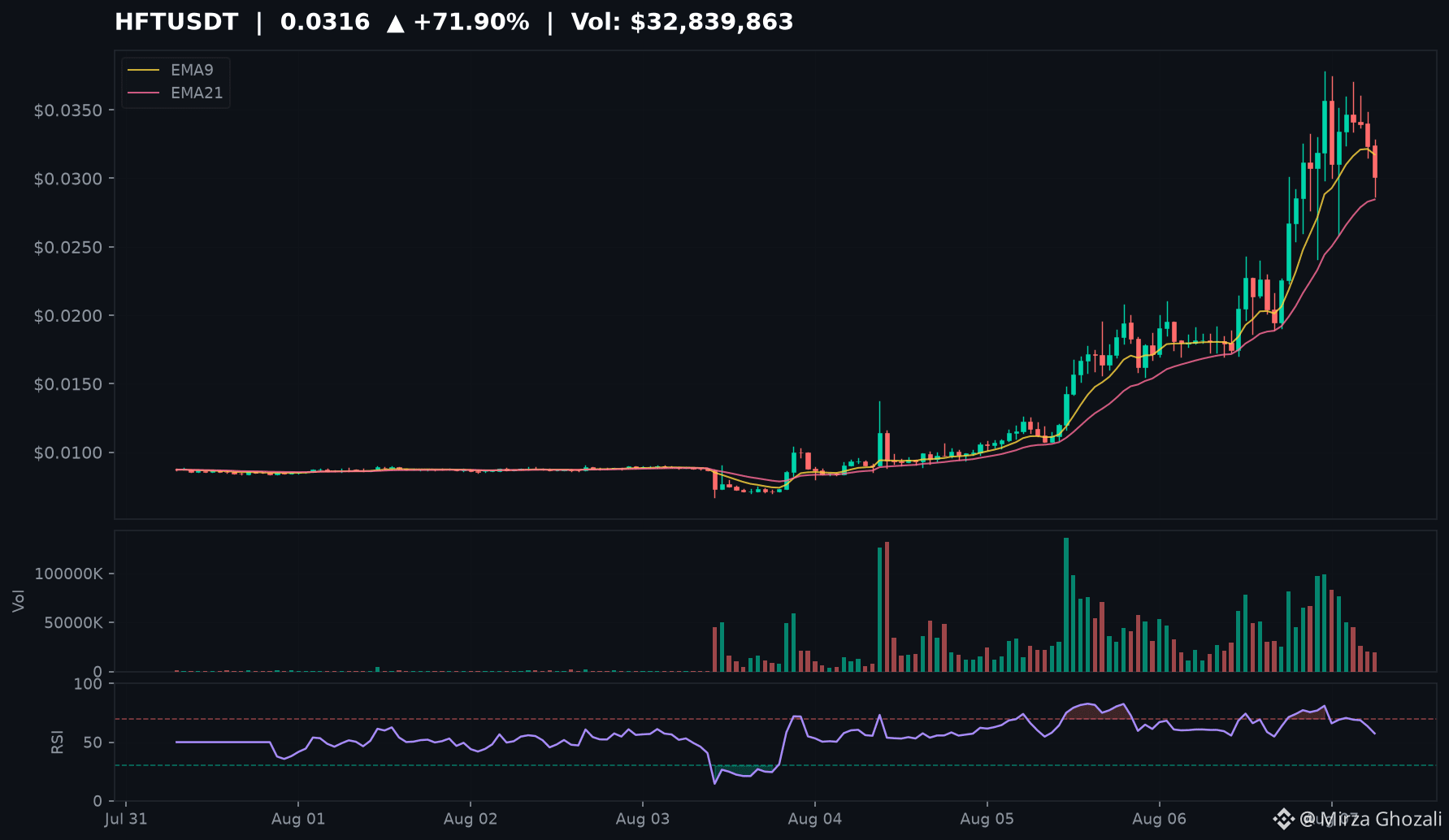
$HFT exploded +71% in 24h with $32M+ volume 🔥
Hashflow DEX aggregator heating up as DeFi momentum returns. Price surged from $0.017 to peak $0.0378 before consolidating at $0.0315.
Technical breakdown:
• EMA9 crossed above EMA21 — bullish momentum confirmed
• RSI cooled from 80+ to ~55 — healthy pullback, not exhaustion
• Volume profile shows massive buy-side pressure during the pump
Key levels:
Support: $0.028 (EMA21)
Resistance: $0.0378 (local top)
This is not a random pump — HFT has been building infrastructure for cross-chain swaps. With DeFi summer energy returning, DEX aggregators are primed.
What is your take on $HFT? 🤔
$HFT #Hashflow #DeFi #DEX #CryptoTrading #BinanceSquare
$HFT exploded +71% in 24h with $32M+ volume 🔥
Hashflow DEX aggregator heating up as DeFi momentum returns. Price surged from $0.017 to peak $0.0378 before consolidating at $0.0315.
Technical breakdown:
• EMA9 crossed above EMA21 — bullish momentum confirmed
• RSI cooled from 80+ to ~55 — healthy pullback, not exhaustion
• Volume profile shows massive buy-side pressure during the pump
Key levels:
Support: $0.028 (EMA21)
Resistance: $0.0378 (local top)
This is not a random pump — HFT has been building infrastructure for cross-chain swaps. With DeFi summer energy returning, DEX aggregators are primed.
What is your take on $HFT? 🤔
$HFT #Hashflow #DeFi #DEX #CryptoTrading #BinanceSquare
Hashflow DEX aggregator heating up as DeFi momentum returns. Price surged from $0.017 to peak $0.0378 before consolidating at $0.0315.
Technical breakdown:
• EMA9 crossed above EMA21 — bullish momentum confirmed
• RSI cooled from 80+ to ~55 — healthy pullback, not exhaustion
• Volume profile shows massive buy-side pressure during the pump
Key levels:
Support: $0.028 (EMA21)
Resistance: $0.0378 (local top)
This is not a random pump — HFT has been building infrastructure for cross-chain swaps. With DeFi summer energy returning, DEX aggregators are primed.
What is your take on $HFT? 🤔
$HFT #Hashflow #DeFi #DEX #CryptoTrading #BinanceSquare
225

·
--
Bullish
🚀 $HFT /USDT — LONG SETUP
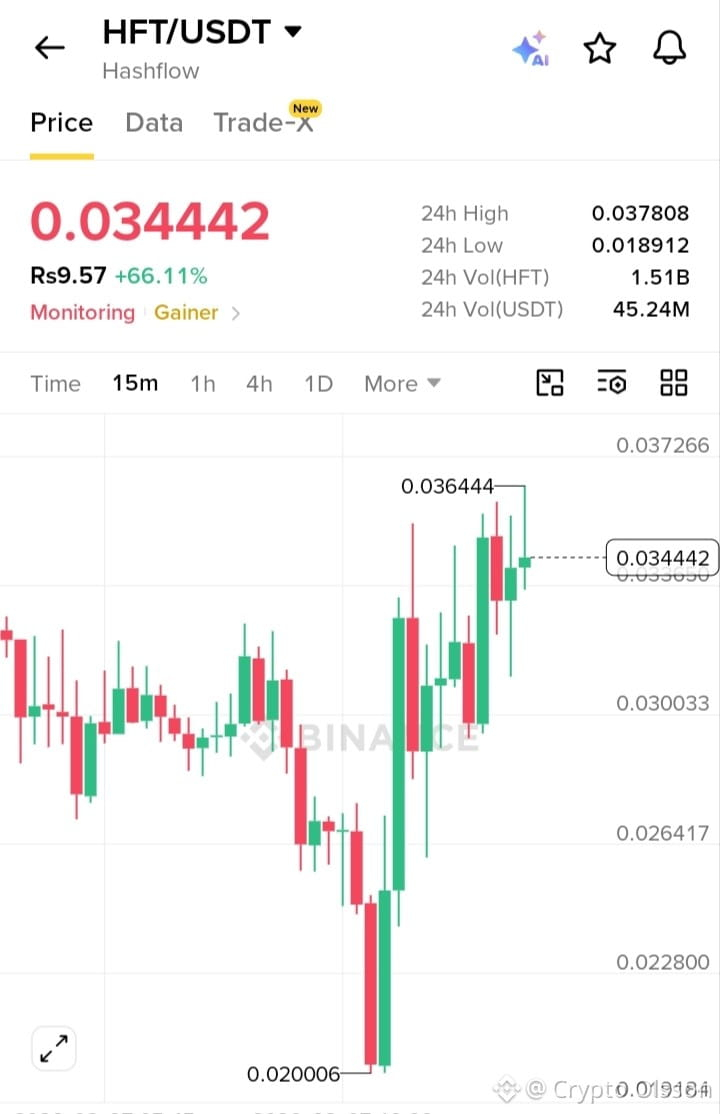
+66% momentum 🔥 — waiting for a controlled entry, not chasing.
🟢 EP: 0.0338–0.0345 🎯 TP1: 0.0364 🎯 TP2: 0.0378 🎯 TP3: 0.0400 🛑 SL: 0.0300
⚠️ Extreme volatility. Small position, strict risk management.
#HFT #Hashflow #LongSetup #BinanceSquare
$HFT
{future}(HFTUSDT)
🚀 $HFT /USDT — LONG SETUP
+66% momentum 🔥 — waiting for a controlled entry, not chasing.
🟢 EP: 0.0338–0.0345 🎯 TP1: 0.0364 🎯 TP2: 0.0378 🎯 TP3: 0.0400 🛑 SL: 0.0300
⚠️ Extreme volatility. Small position, strict risk management.
#HFT #Hashflow #LongSetup #BinanceSquare
$HFT
+66% momentum 🔥 — waiting for a controlled entry, not chasing.
🟢 EP: 0.0338–0.0345 🎯 TP1: 0.0364 🎯 TP2: 0.0378 🎯 TP3: 0.0400 🛑 SL: 0.0300
⚠️ Extreme volatility. Small position, strict risk management.
#HFT #Hashflow #LongSetup #BinanceSquare
$HFT
1
289

·
--
HFT (Hashflow) is about to be delisted by Binance. Once the news broke, open interest surged against the trend—clearly indicating that market-hedging sentiment is heating up.
This round of capital feels more like a “doomsday wheel” style showdown: some bet that before the delisting, there will be a pump used as a cover to dump, while others are betting that once liquidity is withdrawn, the price will crash. Historically, high OI before delisting usually isn’t new money flowing in—it’s position holders racing to seize the time window.
A few signals worth watching:
🔸 Are spot and futures moving out of sync? Low/zero spot volume with rising futures volume often signals “false prosperity”
🔸 Is the funding rate staying elevated? High funding rates imply longs are paying for it
🔸 Changes in liquidity pool depth—during the countdown to delisting, market makers will gradually pull out, and slippage risk will spike
Stay rational: don’t try to bottom-fish, and don’t FOMO. The HFT event might only be a snapshot of the next altcoin rotation cycle. Assets “sentenced to death” by a platform aren’t necessarily opportunities—they’re more likely traps.
$HFT #Hashflow #加密市场
HFT (Hashflow) is about to be delisted by Binance. Once the news broke, open interest surged against the trend—clearly indicating that market-hedging sentiment is heating up.
This round of capital feels more like a “doomsday wheel” style showdown: some bet that before the delisting, there will be a pump used as a cover to dump, while others are betting that once liquidity is withdrawn, the price will crash. Historically, high OI before delisting usually isn’t new money flowing in—it’s position holders racing to seize the time window.
A few signals worth watching:
🔸 Are spot and futures moving out of sync? Low/zero spot volume with rising futures volume often signals “false prosperity”
🔸 Is the funding rate staying elevated? High funding rates imply longs are paying for it
🔸 Changes in liquidity pool depth—during the countdown to delisting, market makers will gradually pull out, and slippage risk will spike
Stay rational: don’t try to bottom-fish, and don’t FOMO. The HFT event might only be a snapshot of the next altcoin rotation cycle. Assets “sentenced to death” by a platform aren’t necessarily opportunities—they’re more likely traps.
$HFT #Hashflow #加密市场
This round of capital feels more like a “doomsday wheel” style showdown: some bet that before the delisting, there will be a pump used as a cover to dump, while others are betting that once liquidity is withdrawn, the price will crash. Historically, high OI before delisting usually isn’t new money flowing in—it’s position holders racing to seize the time window.
A few signals worth watching:
🔸 Are spot and futures moving out of sync? Low/zero spot volume with rising futures volume often signals “false prosperity”
🔸 Is the funding rate staying elevated? High funding rates imply longs are paying for it
🔸 Changes in liquidity pool depth—during the countdown to delisting, market makers will gradually pull out, and slippage risk will spike
Stay rational: don’t try to bottom-fish, and don’t FOMO. The HFT event might only be a snapshot of the next altcoin rotation cycle. Assets “sentenced to death” by a platform aren’t necessarily opportunities—they’re more likely traps.
$HFT #Hashflow #加密市场
156
·
--
#HFT Delisting Countdown | Binance Announces It Will Remove $HFT on August 17, 2026, and the Market Reaction Is Violent
In recent times, Hashflow’s price has been swinging sharply. The key driver is the sudden liquidity drop expectation triggered by Binance’s delisting announcement. Currently it is $HFT at $0.01659, with a 24-hour trading volume of $62.33 million, but its market cap is only $14.31 million—liquidity has already been relatively thin.
More concerning is that the futures open interest ratio has surged to 48.3%, heating up the long-versus-short battle. With the delisting being an almost certain event, the withdrawal of market-making depth and the weakening of buy-side demand are nearly unavoidable. Combined with the buildup of high leverage, once a direction is chosen, the risk of a downward liquidation cascade is significantly higher than the chance of an upward rebound.
Trading approach:
- Spot holders: Watch Binance’s specific delisting time points and assess withdrawal or swap plans in advance
- Futures participants: High open interest ratio + low liquidity = extreme volatility; avoid going all-in on the trade
- Observers: Don’t buy the dip or chase shorts; wait until the shoe drops before making a decision
In event-driven market moves, the weighting of news far outweighs technical indicators—rationally managing position size is the key.
#Hashflow #Binance delisting
#HFT Delisting Countdown | Binance Announces It Will Remove $HFT on August 17, 2026, and the Market Reaction Is Violent
In recent times, Hashflow’s price has been swinging sharply. The key driver is the sudden liquidity drop expectation triggered by Binance’s delisting announcement. Currently it is $HFT at $0.01659, with a 24-hour trading volume of $62.33 million, but its market cap is only $14.31 million—liquidity has already been relatively thin.
More concerning is that the futures open interest ratio has surged to 48.3%, heating up the long-versus-short battle. With the delisting being an almost certain event, the withdrawal of market-making depth and the weakening of buy-side demand are nearly unavoidable. Combined with the buildup of high leverage, once a direction is chosen, the risk of a downward liquidation cascade is significantly higher than the chance of an upward rebound.
Trading approach:
- Spot holders: Watch Binance’s specific delisting time points and assess withdrawal or swap plans in advance
- Futures participants: High open interest ratio + low liquidity = extreme volatility; avoid going all-in on the trade
- Observers: Don’t buy the dip or chase shorts; wait until the shoe drops before making a decision
In event-driven market moves, the weighting of news far outweighs technical indicators—rationally managing position size is the key.
#Hashflow #Binance delisting
In recent times, Hashflow’s price has been swinging sharply. The key driver is the sudden liquidity drop expectation triggered by Binance’s delisting announcement. Currently it is $HFT at $0.01659, with a 24-hour trading volume of $62.33 million, but its market cap is only $14.31 million—liquidity has already been relatively thin.
More concerning is that the futures open interest ratio has surged to 48.3%, heating up the long-versus-short battle. With the delisting being an almost certain event, the withdrawal of market-making depth and the weakening of buy-side demand are nearly unavoidable. Combined with the buildup of high leverage, once a direction is chosen, the risk of a downward liquidation cascade is significantly higher than the chance of an upward rebound.
Trading approach:
- Spot holders: Watch Binance’s specific delisting time points and assess withdrawal or swap plans in advance
- Futures participants: High open interest ratio + low liquidity = extreme volatility; avoid going all-in on the trade
- Observers: Don’t buy the dip or chase shorts; wait until the shoe drops before making a decision
In event-driven market moves, the weighting of news far outweighs technical indicators—rationally managing position size is the key.
#Hashflow #Binance delisting
47

# Hashflow’s heat is off the charts—will the DeFi space take off again? Cross-chain DEXs have been making frequent moves lately; can HFT keep its strong performance going?
---
If you’re an old-school DeFi player, you’ve definitely been seeing Hashflow everywhere these past few days. After lying low for a while, this cross-chain DEX project has suddenly seen its momentum surge sharply: TVL (total value locked) is growing fast, and community discussion has returned to the level of the 2021 DeFi Summer. Many people are asking: Is Hashflow about to make a comeback? Can HFT’s value be supported sustainably?
In today’s article, I won’t hype it up or dismiss it—starting from fundamentals and industry trends, I’ll break down the logic behind this Hashflow rally.
---
## First, the project: what problem is Hashflow actually solving?
Hashflow is a DEX focused on **cross-chain zero slippage trading**. Its core product is Cross-chain AMM (cross-chain automated market maker). Its business model is quite different from traditional DEXs:
**1. Cross-chain trading without bridging**
When most DEXs do cross-chain trading, users first need to move assets from chain A to chain B via a bridge, and then do the Swap. This step not only comes with high fees, but also carries the risk of bridge hack attacks. Hashflow’s solution is: users initiate the transaction directly on the source chain. The cross-chain market maker then completes the quote and trade on the target chain. In reality, the assets are not actually bridged cross-chain, but the user experience achieves “one-step execution.”
**2. A zero-slippage pricing mechanism**
Hashflow uses an RFQ (Request for Quote) model—users request a trade, and market makers proactively provide quotes. Because market makers supply the liquidity flow, the price can be set very close to, or even equal to, the trade price on the source chain, resulting in extremely low slippage. This is especially attractive for users making large trades.
**3. Permissionless market maker onboarding**
Anyone can become a market maker on Hashflow. This gives it more flexibility in acquiring liquidity than traditional DEXs.
These technical features helped Hashflow gain good market attention during the 2021 DeFi Summer. But later, the entire crypto market entered a bear phase, and Hashflow’s heat also temporarily cooled.
---
## Where is this wave of momentum coming from?
**First-layer logic: the DeFi sector is broadly recovering**
Since the second half of 2024, the DeFi sector has clearly been showing signs of revival. Established DeFi protocols like Compound and VAMM have continued iterating, and Uniswap’s TVL and trading volume have repeatedly hit new highs. The DeFi segment’s share of capital within the overall crypto market has been gradually rising. The industry narrative has shifted from “trading hype on new things” back toward “fundamentals.” Projects with real user demand and technical accumulation have started to regain capital and users’ favor again. Hashflow just happens to be positioned at exactly this timing.
**Second-layer logic: a rigid increase in cross-chain demand**
With the explosive growth of Layer2 and Layer3 ecosystems, users need to move assets across multiple chains more frequently. Security issues with traditional cross-chain bridges have always been an industry pain point. In 2023, cross-chain bridge security incidents led to losses totaling tens of billions of dollars. Hashflow’s approach—“not bridging, but still completing cross-chain trades”—hits the market’s dual demand for both safety and efficiency.
**Third-layer logic: the incentive effect of the HFT token**
HFT is Hashflow’s governance and staking token. As project interest picks back up, market attention returns to HFT staking yields and governance rights. Some users also expect Hashflow to roll out new incentive programs, and positioning early can be an important factor driving price and community enthusiasm.
---
## Risk reminder: don’t only see the opportunities
After talking so much about opportunities, we should also pour some cold water:
1. **Intense competition**: the cross-chain DEX space isn’t only Hashflow. Projects like Across Protocol, Stargate, and Li.Fi each have their own strengths in terms of technical routes. The competitive landscape hasn’t yet fully solidified.
2. **Liquidity depth**: although TVL has been growing recently, compared with top DeFi protocols like Uniswap and Aave, Hashflow’s liquidity depth still has a lot of room to improve.
3. **Tokenomics model**: factors like HFT’s unlock schedule and inflation mechanism need investors to examine carefully. Historical experience suggests that when a project’s hype fades, token prices often undergo a significant pullback.
---
## Conclusion: worth watching, but don’t blindly FOMO
This wave of Hashflow momentum didn’t appear out of thin air—it’s the combined result of triple forces: technical accumulation, sector revival, and market demand. Cross-chain DEXs truly are an important infrastructure direction for DeFi’s future, and Hashflow has some first-mover advantage and technical barriers in this niche.
But from an investment perspective, my advice is: **stay attentive and evaluate rationally**. If Hashflow can continue to provide data support through TVL, real trading volume, and ecosystem partnerships, then this rally has a sustainable foundation. If it’s driven only by short-term hype, then be careful.
DeFi never lacks stories—it’s actual products that are hard to find.
---
📌 **Related tags**
#HFT #Hashflow #DeFi #Cryptocurrency
---
*The above content is for personal analysis only and does not constitute investment advice. The crypto market is highly volatile—please be sure to do your own research and make prudent decisions.*
# Hashflow’s heat is off the charts—will the DeFi space take off again? Cross-chain DEXs have been making frequent moves lately; can HFT keep its strong performance going?
---
If you’re an old-school DeFi player, you’ve definitely been seeing Hashflow everywhere these past few days. After lying low for a while, this cross-chain DEX project has suddenly seen its momentum surge sharply: TVL (total value locked) is growing fast, and community discussion has returned to the level of the 2021 DeFi Summer. Many people are asking: Is Hashflow about to make a comeback? Can HFT’s value be supported sustainably?
In today’s article, I won’t hype it up or dismiss it—starting from fundamentals and industry trends, I’ll break down the logic behind this Hashflow rally.
---
## First, the project: what problem is Hashflow actually solving?
Hashflow is a DEX focused on **cross-chain zero slippage trading**. Its core product is Cross-chain AMM (cross-chain automated market maker). Its business model is quite different from traditional DEXs:
**1. Cross-chain trading without bridging**
When most DEXs do cross-chain trading, users first need to move assets from chain A to chain B via a bridge, and then do the Swap. This step not only comes with high fees, but also carries the risk of bridge hack attacks. Hashflow’s solution is: users initiate the transaction directly on the source chain. The cross-chain market maker then completes the quote and trade on the target chain. In reality, the assets are not actually bridged cross-chain, but the user experience achieves “one-step execution.”
**2. A zero-slippage pricing mechanism**
Hashflow uses an RFQ (Request for Quote) model—users request a trade, and market makers proactively provide quotes. Because market makers supply the liquidity flow, the price can be set very close to, or even equal to, the trade price on the source chain, resulting in extremely low slippage. This is especially attractive for users making large trades.
**3. Permissionless market maker onboarding**
Anyone can become a market maker on Hashflow. This gives it more flexibility in acquiring liquidity than traditional DEXs.
These technical features helped Hashflow gain good market attention during the 2021 DeFi Summer. But later, the entire crypto market entered a bear phase, and Hashflow’s heat also temporarily cooled.
---
## Where is this wave of momentum coming from?
**First-layer logic: the DeFi sector is broadly recovering**
Since the second half of 2024, the DeFi sector has clearly been showing signs of revival. Established DeFi protocols like Compound and VAMM have continued iterating, and Uniswap’s TVL and trading volume have repeatedly hit new highs. The DeFi segment’s share of capital within the overall crypto market has been gradually rising. The industry narrative has shifted from “trading hype on new things” back toward “fundamentals.” Projects with real user demand and technical accumulation have started to regain capital and users’ favor again. Hashflow just happens to be positioned at exactly this timing.
**Second-layer logic: a rigid increase in cross-chain demand**
With the explosive growth of Layer2 and Layer3 ecosystems, users need to move assets across multiple chains more frequently. Security issues with traditional cross-chain bridges have always been an industry pain point. In 2023, cross-chain bridge security incidents led to losses totaling tens of billions of dollars. Hashflow’s approach—“not bridging, but still completing cross-chain trades”—hits the market’s dual demand for both safety and efficiency.
**Third-layer logic: the incentive effect of the HFT token**
HFT is Hashflow’s governance and staking token. As project interest picks back up, market attention returns to HFT staking yields and governance rights. Some users also expect Hashflow to roll out new incentive programs, and positioning early can be an important factor driving price and community enthusiasm.
---
## Risk reminder: don’t only see the opportunities
After talking so much about opportunities, we should also pour some cold water:
1. **Intense competition**: the cross-chain DEX space isn’t only Hashflow. Projects like Across Protocol, Stargate, and Li.Fi each have their own strengths in terms of technical routes. The competitive landscape hasn’t yet fully solidified.
2. **Liquidity depth**: although TVL has been growing recently, compared with top DeFi protocols like Uniswap and Aave, Hashflow’s liquidity depth still has a lot of room to improve.
3. **Tokenomics model**: factors like HFT’s unlock schedule and inflation mechanism need investors to examine carefully. Historical experience suggests that when a project’s hype fades, token prices often undergo a significant pullback.
---
## Conclusion: worth watching, but don’t blindly FOMO
This wave of Hashflow momentum didn’t appear out of thin air—it’s the combined result of triple forces: technical accumulation, sector revival, and market demand. Cross-chain DEXs truly are an important infrastructure direction for DeFi’s future, and Hashflow has some first-mover advantage and technical barriers in this niche.
But from an investment perspective, my advice is: **stay attentive and evaluate rationally**. If Hashflow can continue to provide data support through TVL, real trading volume, and ecosystem partnerships, then this rally has a sustainable foundation. If it’s driven only by short-term hype, then be careful.
DeFi never lacks stories—it’s actual products that are hard to find.
---
📌 **Related tags**
#HFT #Hashflow #DeFi #Cryptocurrency
---
*The above content is for personal analysis only and does not constitute investment advice. The crypto market is highly volatile—please be sure to do your own research and make prudent decisions.*
---
If you’re an old-school DeFi player, you’ve definitely been seeing Hashflow everywhere these past few days. After lying low for a while, this cross-chain DEX project has suddenly seen its momentum surge sharply: TVL (total value locked) is growing fast, and community discussion has returned to the level of the 2021 DeFi Summer. Many people are asking: Is Hashflow about to make a comeback? Can HFT’s value be supported sustainably?
In today’s article, I won’t hype it up or dismiss it—starting from fundamentals and industry trends, I’ll break down the logic behind this Hashflow rally.
---
## First, the project: what problem is Hashflow actually solving?
Hashflow is a DEX focused on **cross-chain zero slippage trading**. Its core product is Cross-chain AMM (cross-chain automated market maker). Its business model is quite different from traditional DEXs:
**1. Cross-chain trading without bridging**
When most DEXs do cross-chain trading, users first need to move assets from chain A to chain B via a bridge, and then do the Swap. This step not only comes with high fees, but also carries the risk of bridge hack attacks. Hashflow’s solution is: users initiate the transaction directly on the source chain. The cross-chain market maker then completes the quote and trade on the target chain. In reality, the assets are not actually bridged cross-chain, but the user experience achieves “one-step execution.”
**2. A zero-slippage pricing mechanism**
Hashflow uses an RFQ (Request for Quote) model—users request a trade, and market makers proactively provide quotes. Because market makers supply the liquidity flow, the price can be set very close to, or even equal to, the trade price on the source chain, resulting in extremely low slippage. This is especially attractive for users making large trades.
**3. Permissionless market maker onboarding**
Anyone can become a market maker on Hashflow. This gives it more flexibility in acquiring liquidity than traditional DEXs.
These technical features helped Hashflow gain good market attention during the 2021 DeFi Summer. But later, the entire crypto market entered a bear phase, and Hashflow’s heat also temporarily cooled.
---
## Where is this wave of momentum coming from?
**First-layer logic: the DeFi sector is broadly recovering**
Since the second half of 2024, the DeFi sector has clearly been showing signs of revival. Established DeFi protocols like Compound and VAMM have continued iterating, and Uniswap’s TVL and trading volume have repeatedly hit new highs. The DeFi segment’s share of capital within the overall crypto market has been gradually rising. The industry narrative has shifted from “trading hype on new things” back toward “fundamentals.” Projects with real user demand and technical accumulation have started to regain capital and users’ favor again. Hashflow just happens to be positioned at exactly this timing.
**Second-layer logic: a rigid increase in cross-chain demand**
With the explosive growth of Layer2 and Layer3 ecosystems, users need to move assets across multiple chains more frequently. Security issues with traditional cross-chain bridges have always been an industry pain point. In 2023, cross-chain bridge security incidents led to losses totaling tens of billions of dollars. Hashflow’s approach—“not bridging, but still completing cross-chain trades”—hits the market’s dual demand for both safety and efficiency.
**Third-layer logic: the incentive effect of the HFT token**
HFT is Hashflow’s governance and staking token. As project interest picks back up, market attention returns to HFT staking yields and governance rights. Some users also expect Hashflow to roll out new incentive programs, and positioning early can be an important factor driving price and community enthusiasm.
---
## Risk reminder: don’t only see the opportunities
After talking so much about opportunities, we should also pour some cold water:
1. **Intense competition**: the cross-chain DEX space isn’t only Hashflow. Projects like Across Protocol, Stargate, and Li.Fi each have their own strengths in terms of technical routes. The competitive landscape hasn’t yet fully solidified.
2. **Liquidity depth**: although TVL has been growing recently, compared with top DeFi protocols like Uniswap and Aave, Hashflow’s liquidity depth still has a lot of room to improve.
3. **Tokenomics model**: factors like HFT’s unlock schedule and inflation mechanism need investors to examine carefully. Historical experience suggests that when a project’s hype fades, token prices often undergo a significant pullback.
---
## Conclusion: worth watching, but don’t blindly FOMO
This wave of Hashflow momentum didn’t appear out of thin air—it’s the combined result of triple forces: technical accumulation, sector revival, and market demand. Cross-chain DEXs truly are an important infrastructure direction for DeFi’s future, and Hashflow has some first-mover advantage and technical barriers in this niche.
But from an investment perspective, my advice is: **stay attentive and evaluate rationally**. If Hashflow can continue to provide data support through TVL, real trading volume, and ecosystem partnerships, then this rally has a sustainable foundation. If it’s driven only by short-term hype, then be careful.
DeFi never lacks stories—it’s actual products that are hard to find.
---
📌 **Related tags**
#HFT #Hashflow #DeFi #Cryptocurrency
---
*The above content is for personal analysis only and does not constitute investment advice. The crypto market is highly volatile—please be sure to do your own research and make prudent decisions.*
253
Binance announced that it will delist $HFT on August 17, 2026—an event that could be catastrophic for Hashflow.
As a DeFi protocol that once marketed "zero-slippage cross-chain trading," HFT previously attracted a lot of users backed by Binance Launchpad. But now its market cap has fallen to around $7.4 million; its 24-hour trading volume is about $36.91 million, and the price is down to just $0.00868—nearly zero.
Even more concerning are several abnormal signals appearing at the same time: the official website frequently goes down, scam chaos emerges within the Discord community, and the founder quietly clears their LinkedIn profile. Liquidity being pulled out, confidence collapsing, and the core team seemingly retreating—this chain of signs has led speculation about an "exit scam" to rapidly gain traction in the community.
Based on past experience, when major exchanges delist tokens, it is often the beginning of the end for copycat coins. Depth and liquidity are usually drained within a very short period, and ordinary investors often end up being the last ones holding the bag.
Learn from past mistakes and be guided accordingly. In each cycle of bull and bear rotations, a similar script has been played out repeatedly: pump—listing—hype fades—delisting—going to zero. Survivor bias makes us remember only a few dozens- or hundreds-fold miracle stories, while overlooking the lessons left behind by the many projects that went to zero.
Remember: DYOR is never just a meaningless slogan. Managing your position size matters more than chasing narratives.
#Hashflow #DeFi #风险警示
Binance announced that it will delist $HFT on August 17, 2026—an event that could be catastrophic for Hashflow.
As a DeFi protocol that once marketed "zero-slippage cross-chain trading," HFT previously attracted a lot of users backed by Binance Launchpad. But now its market cap has fallen to around $7.4 million; its 24-hour trading volume is about $36.91 million, and the price is down to just $0.00868—nearly zero.
Even more concerning are several abnormal signals appearing at the same time: the official website frequently goes down, scam chaos emerges within the Discord community, and the founder quietly clears their LinkedIn profile. Liquidity being pulled out, confidence collapsing, and the core team seemingly retreating—this chain of signs has led speculation about an "exit scam" to rapidly gain traction in the community.
Based on past experience, when major exchanges delist tokens, it is often the beginning of the end for copycat coins. Depth and liquidity are usually drained within a very short period, and ordinary investors often end up being the last ones holding the bag.
Learn from past mistakes and be guided accordingly. In each cycle of bull and bear rotations, a similar script has been played out repeatedly: pump—listing—hype fades—delisting—going to zero. Survivor bias makes us remember only a few dozens- or hundreds-fold miracle stories, while overlooking the lessons left behind by the many projects that went to zero.
Remember: DYOR is never just a meaningless slogan. Managing your position size matters more than chasing narratives.
#Hashflow #DeFi #风险警示
As a DeFi protocol that once marketed "zero-slippage cross-chain trading," HFT previously attracted a lot of users backed by Binance Launchpad. But now its market cap has fallen to around $7.4 million; its 24-hour trading volume is about $36.91 million, and the price is down to just $0.00868—nearly zero.
Even more concerning are several abnormal signals appearing at the same time: the official website frequently goes down, scam chaos emerges within the Discord community, and the founder quietly clears their LinkedIn profile. Liquidity being pulled out, confidence collapsing, and the core team seemingly retreating—this chain of signs has led speculation about an "exit scam" to rapidly gain traction in the community.
Based on past experience, when major exchanges delist tokens, it is often the beginning of the end for copycat coins. Depth and liquidity are usually drained within a very short period, and ordinary investors often end up being the last ones holding the bag.
Learn from past mistakes and be guided accordingly. In each cycle of bull and bear rotations, a similar script has been played out repeatedly: pump—listing—hype fades—delisting—going to zero. Survivor bias makes us remember only a few dozens- or hundreds-fold miracle stories, while overlooking the lessons left behind by the many projects that went to zero.
Remember: DYOR is never just a meaningless slogan. Managing your position size matters more than chasing narratives.
#Hashflow #DeFi #风险警示
62

·
--
Bearish
$HFT
{spot}(HFTUSDT)
Smart money data and whales show that the current drop might not be the final bottom. Holding stable assets allows for a more precise entry if a clear reversal pattern appears.
Key levels:
• Break of 0.0140$ = continued selling pressure
• Possible new support at 0.0101$
• Recovery to 0.0145$ = confirmation of a possible trend change
It’s best to wait for price stability above 0.0120$ with an increase in volume to confirm the buyers’ conviction. Entries become clearer when momentum is far from the stage of complete capitulation.
Social sentiment is currently nearly balanced (around 50/50).
#HFT #hashflow #تحليل_فني
$HFT
Smart money data and whales show that the current drop might not be the final bottom. Holding stable assets allows for a more precise entry if a clear reversal pattern appears.
Key levels:
• Break of 0.0140$ = continued selling pressure
• Possible new support at 0.0101$
• Recovery to 0.0145$ = confirmation of a possible trend change
It’s best to wait for price stability above 0.0120$ with an increase in volume to confirm the buyers’ conviction. Entries become clearer when momentum is far from the stage of complete capitulation.
Social sentiment is currently nearly balanced (around 50/50).
#HFT #hashflow #تحليل_فني
Smart money data and whales show that the current drop might not be the final bottom. Holding stable assets allows for a more precise entry if a clear reversal pattern appears.
Key levels:
• Break of 0.0140$ = continued selling pressure
• Possible new support at 0.0101$
• Recovery to 0.0145$ = confirmation of a possible trend change
It’s best to wait for price stability above 0.0120$ with an increase in volume to confirm the buyers’ conviction. Entries become clearer when momentum is far from the stage of complete capitulation.
Social sentiment is currently nearly balanced (around 50/50).
#HFT #hashflow #تحليل_فني
1
239

·
--
Bearish
🔴 $HFT
{future}(HFTUSDT)
Long Liquidation Alert
💰 Liquidated Amount:
$2.0577K
📍 Liquidation Price:
$0.00943 (BINANCE)
━━━━━━━━━━━━━━
📊 Trade Outlook
🎯 Target:
$0.00880
📥 Entry Zone:
$0.00938 - $0.00925
📈 Take Profit:
$0.00895
🛑 Stop Loss:
$0.00985
━━━━━━━━━━━━━━
⚡ ELITE TRADE INSIGHT ⚡
Heavy selling pressure has successfully swept through late-stage buyer stops, triggering a sudden downside liquidity sweep. The structural order flow remains fundamentally heavy as bidding blocks struggle to find traction. Prioritize waiting for absolute structural validation and confirmation before committing capital, and always practice strict risk management.
#HFT
#hashflow
#DEX
🔴 $HFT
Long Liquidation Alert
💰 Liquidated Amount:
$2.0577K
📍 Liquidation Price:
$0.00943 (BINANCE)
━━━━━━━━━━━━━━
📊 Trade Outlook
🎯 Target:
$0.00880
📥 Entry Zone:
$0.00938 - $0.00925
📈 Take Profit:
$0.00895
🛑 Stop Loss:
$0.00985
━━━━━━━━━━━━━━
⚡ ELITE TRADE INSIGHT ⚡
Heavy selling pressure has successfully swept through late-stage buyer stops, triggering a sudden downside liquidity sweep. The structural order flow remains fundamentally heavy as bidding blocks struggle to find traction. Prioritize waiting for absolute structural validation and confirmation before committing capital, and always practice strict risk management.
#HFT
#hashflow
#DEX
Long Liquidation Alert
💰 Liquidated Amount:
$2.0577K
📍 Liquidation Price:
$0.00943 (BINANCE)
━━━━━━━━━━━━━━
📊 Trade Outlook
🎯 Target:
$0.00880
📥 Entry Zone:
$0.00938 - $0.00925
📈 Take Profit:
$0.00895
🛑 Stop Loss:
$0.00985
━━━━━━━━━━━━━━
⚡ ELITE TRADE INSIGHT ⚡
Heavy selling pressure has successfully swept through late-stage buyer stops, triggering a sudden downside liquidity sweep. The structural order flow remains fundamentally heavy as bidding blocks struggle to find traction. Prioritize waiting for absolute structural validation and confirmation before committing capital, and always practice strict risk management.
#HFT
#hashflow
#DEX
2

$HFT 24 hours sees a “roller coaster” market unfold—first surge up 78%, then crash down 70%.
The trigger was that Binance announced it would delist $HFT on August 17, 2026. The current market cap is only about $10.4 million, and the ratio of contract open interest to market cap is as high as 61.1%. With low liquidity combined with high leverage, the price action is driven straight into extreme long-vs-short battles, with cascading liquidations happening frequently.
Reminder: When the combo of low market cap + high leverage meets delisting expectations, volatility will be amplified. Be sure to control your position size and leverage.
#Hashflow #Contract risk
$HFT 24 hours sees a “roller coaster” market unfold—first surge up 78%, then crash down 70%.
The trigger was that Binance announced it would delist $HFT on August 17, 2026. The current market cap is only about $10.4 million, and the ratio of contract open interest to market cap is as high as 61.1%. With low liquidity combined with high leverage, the price action is driven straight into extreme long-vs-short battles, with cascading liquidations happening frequently.
Reminder: When the combo of low market cap + high leverage meets delisting expectations, volatility will be amplified. Be sure to control your position size and leverage.
#Hashflow #Contract risk
The trigger was that Binance announced it would delist $HFT on August 17, 2026. The current market cap is only about $10.4 million, and the ratio of contract open interest to market cap is as high as 61.1%. With low liquidity combined with high leverage, the price action is driven straight into extreme long-vs-short battles, with cascading liquidations happening frequently.
Reminder: When the combo of low market cap + high leverage meets delisting expectations, volatility will be amplified. Be sure to control your position size and leverage.
#Hashflow #Contract risk
50
·
--
Bullish
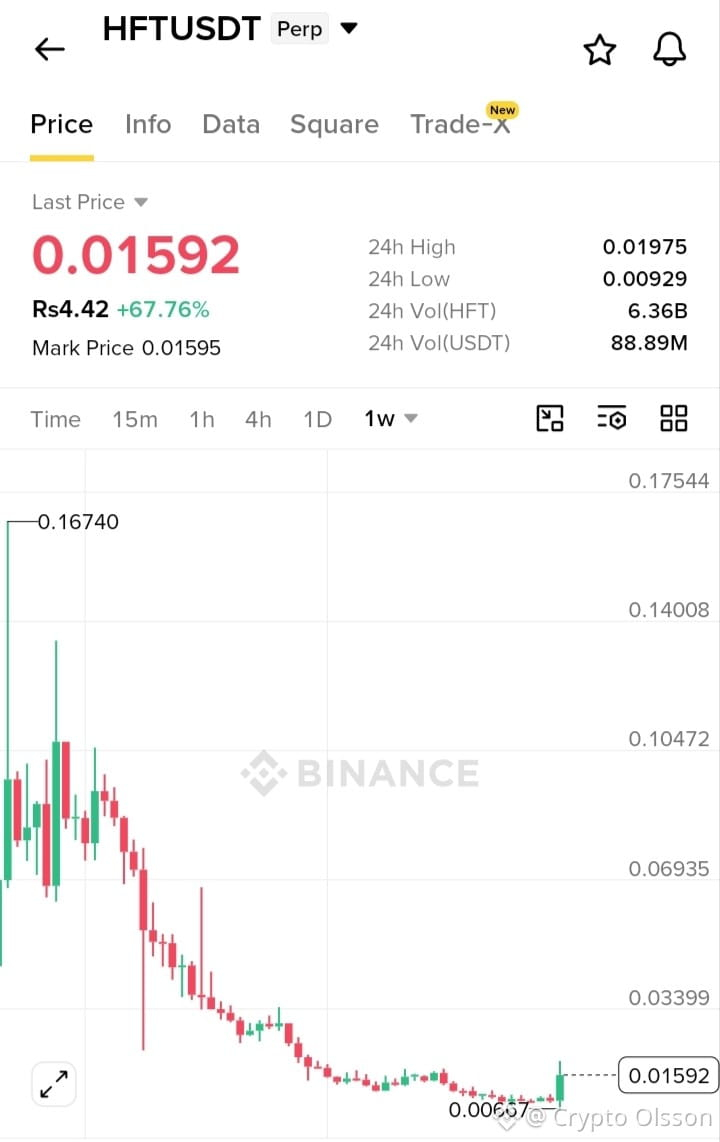
🚨 $HFT is one of today's biggest movers, but a strong rally doesn't always mean the trend has changed.
The token has gained significant momentum in a short period, drawing plenty of attention across the market. One factor that may be influencing trading activity is the upcoming Binance delisting scheduled for August 17, which can lead to increased volatility and speculative price action.
Before entering, consider a few things:
• Rapid price increases often come with equally sharp pullbacks. • Event-driven rallies can be unpredictable and may not reflect long-term value. • If bullish momentum continues, watch how price reacts near the next resistance. If key support levels fail, downside pressure could increase.
For me, this isn't a setup worth chasing after such a large move. I'd rather wait for confirmation or look for opportunities with a clearer risk-to-reward profile.
Stay patient, protect your capital, and always do your own research before making any trading decisions.
#HFT #Hashflow #Crypto #BinanceSquare
$HFT
{future}(HFTUSDT)
🚨 $HFT is one of today's biggest movers, but a strong rally doesn't always mean the trend has changed.
The token has gained significant momentum in a short period, drawing plenty of attention across the market. One factor that may be influencing trading activity is the upcoming Binance delisting scheduled for August 17, which can lead to increased volatility and speculative price action.
Before entering, consider a few things:
• Rapid price increases often come with equally sharp pullbacks. • Event-driven rallies can be unpredictable and may not reflect long-term value. • If bullish momentum continues, watch how price reacts near the next resistance. If key support levels fail, downside pressure could increase.
For me, this isn't a setup worth chasing after such a large move. I'd rather wait for confirmation or look for opportunities with a clearer risk-to-reward profile.
Stay patient, protect your capital, and always do your own research before making any trading decisions.
#HFT #Hashflow #Crypto #BinanceSquare
$HFT
The token has gained significant momentum in a short period, drawing plenty of attention across the market. One factor that may be influencing trading activity is the upcoming Binance delisting scheduled for August 17, which can lead to increased volatility and speculative price action.
Before entering, consider a few things:
• Rapid price increases often come with equally sharp pullbacks. • Event-driven rallies can be unpredictable and may not reflect long-term value. • If bullish momentum continues, watch how price reacts near the next resistance. If key support levels fail, downside pressure could increase.
For me, this isn't a setup worth chasing after such a large move. I'd rather wait for confirmation or look for opportunities with a clearer risk-to-reward profile.
Stay patient, protect your capital, and always do your own research before making any trading decisions.
#HFT #Hashflow #Crypto #BinanceSquare
$HFT
1
203
HFT (Hashflow) just dumped -53.9% in 24h after a +66.9% weekly pump. Price collapsed from $0.039 to $0.014.
Volume hit $127M — nearly 10x its $13M market cap. Classic blow-off top with massive exit liquidity.
Key numbers:
24h: -53.9%
7d: +66.9% (before the crash)
Vol/MCap ratio: ~9.7x
This is why chasing green candles kills portfolios. When volume dwarfs market cap by 10x, smart money is distributing to you.
What are your thoughts on low-cap pump-and-dump cycles? #Hashflow #HFT #CryptoAnalysis
HFT (Hashflow) just dumped -53.9% in 24h after a +66.9% weekly pump. Price collapsed from $0.039 to $0.014.
Volume hit $127M — nearly 10x its $13M market cap. Classic blow-off top with massive exit liquidity.
Key numbers:
24h: -53.9%
7d: +66.9% (before the crash)
Vol/MCap ratio: ~9.7x
This is why chasing green candles kills portfolios. When volume dwarfs market cap by 10x, smart money is distributing to you.
What are your thoughts on low-cap pump-and-dump cycles? #Hashflow #HFT #CryptoAnalysis
Volume hit $127M — nearly 10x its $13M market cap. Classic blow-off top with massive exit liquidity.
Key numbers:
24h: -53.9%
7d: +66.9% (before the crash)
Vol/MCap ratio: ~9.7x
This is why chasing green candles kills portfolios. When volume dwarfs market cap by 10x, smart money is distributing to you.
What are your thoughts on low-cap pump-and-dump cycles? #Hashflow #HFT #CryptoAnalysis
85
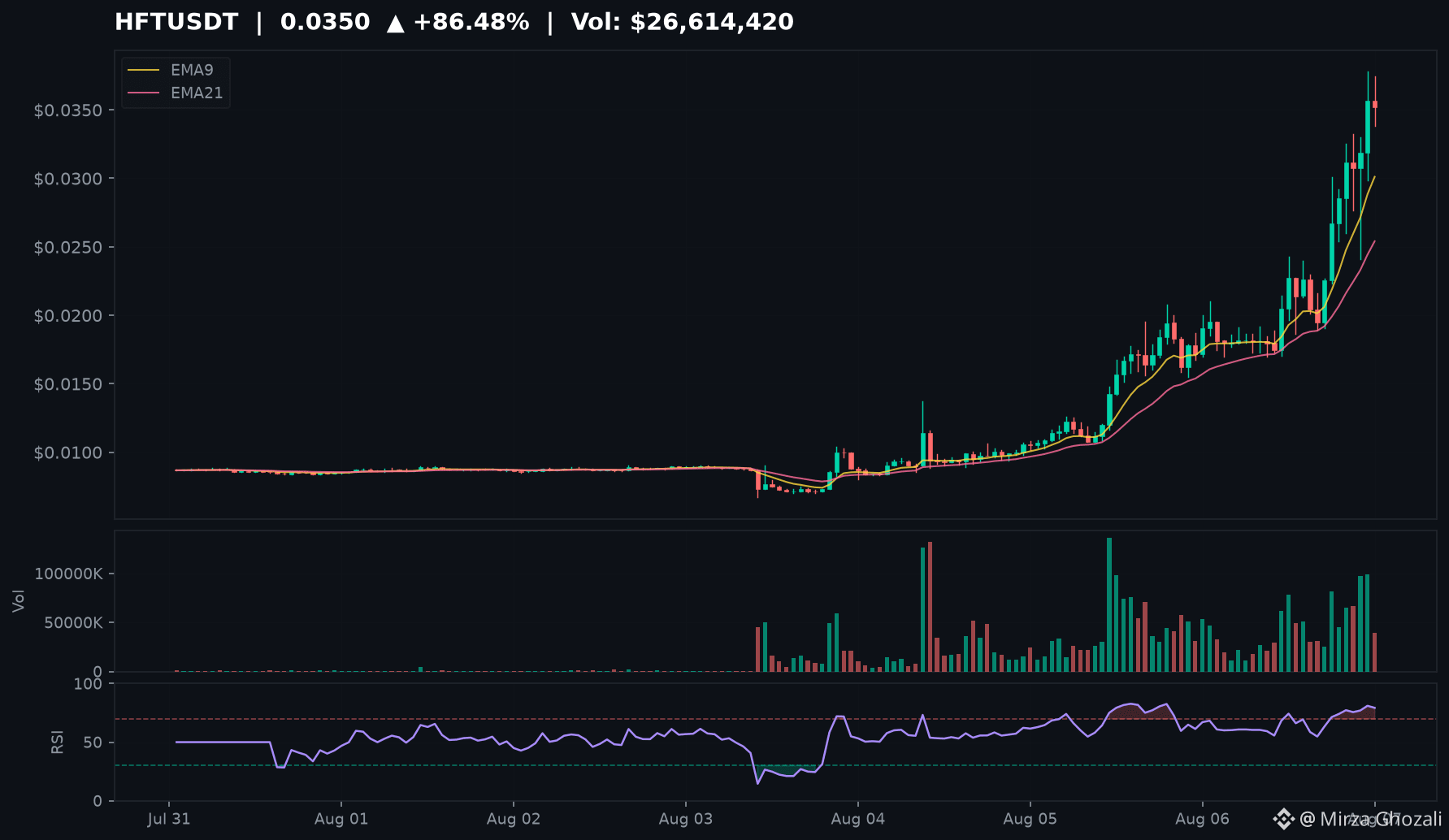
📊 $HFT exploded +87% — what just happened?
Hashflow just went vertical. $0.007 → $0.035 in days, with $26M volume pouring in on Binance alone.
The technicals tell the story:
• EMA9 ($0.0301) crossed above EMA21 ($0.0254) — clean bullish divergence
• RSI at 79 — overbought, but volume confirms this isn't a fake pump
• 7-day candle structure: steady accumulation followed by a breakout candle with 3x normal volume
Why now? Hashflow's cross-chain RFQ protocol is gaining traction in the AI trading narrative. Market makers are moving on-chain, and HFT is positioned as the liquidity backbone.
⚠️ Overbought RSI means a pullback to the $0.025-$0.028 zone (EMA21 support) is healthy. If it holds, next target is the $0.04 psychological level.
What's driving your attention today? Drop your watchlist 👇
$HFT #Hashflow #DeFi #Trading #Crypto
📊 $HFT exploded +87% — what just happened?
Hashflow just went vertical. $0.007 → $0.035 in days, with $26M volume pouring in on Binance alone.
The technicals tell the story:
• EMA9 ($0.0301) crossed above EMA21 ($0.0254) — clean bullish divergence
• RSI at 79 — overbought, but volume confirms this isn't a fake pump
• 7-day candle structure: steady accumulation followed by a breakout candle with 3x normal volume
Why now? Hashflow's cross-chain RFQ protocol is gaining traction in the AI trading narrative. Market makers are moving on-chain, and HFT is positioned as the liquidity backbone.
⚠️ Overbought RSI means a pullback to the $0.025-$0.028 zone (EMA21 support) is healthy. If it holds, next target is the $0.04 psychological level.
What's driving your attention today? Drop your watchlist 👇
$HFT #Hashflow #DeFi #Trading #Crypto
Hashflow just went vertical. $0.007 → $0.035 in days, with $26M volume pouring in on Binance alone.
The technicals tell the story:
• EMA9 ($0.0301) crossed above EMA21 ($0.0254) — clean bullish divergence
• RSI at 79 — overbought, but volume confirms this isn't a fake pump
• 7-day candle structure: steady accumulation followed by a breakout candle with 3x normal volume
Why now? Hashflow's cross-chain RFQ protocol is gaining traction in the AI trading narrative. Market makers are moving on-chain, and HFT is positioned as the liquidity backbone.
⚠️ Overbought RSI means a pullback to the $0.025-$0.028 zone (EMA21 support) is healthy. If it holds, next target is the $0.04 psychological level.
What's driving your attention today? Drop your watchlist 👇
$HFT #Hashflow #DeFi #Trading #Crypto
187

·
--
$HFT Delisting Countdown! On August 17, Binance will officially remove Hashflow. After the news is released, the market is likely to experience violent fluctuations—short-term spikes followed by a rapid pullback.
A sudden drop in liquidity is the core bearish factor. Once market-making depth is withdrawn, the bid-ask spread widens, and any large order can easily trigger avalanche-like slippage. Combined with panic-driven liquidation and event-driven cross-currents between bulls and bears, downward pressure on price is hard to avoid.
Currently, $HFT is trading around $0.00695. 24-hour trading volume is $10.25 million, and its market cap is only $6.38 million. Its small size means very weak resilience to risk. Holders should evaluate stop-loss and position sizing in advance—before the delisting, the volatility during the final window is only going to intensify.
#Hashflow #Delisting Risk
$HFT Delisting Countdown! On August 17, Binance will officially remove Hashflow. After the news is released, the market is likely to experience violent fluctuations—short-term spikes followed by a rapid pullback.
A sudden drop in liquidity is the core bearish factor. Once market-making depth is withdrawn, the bid-ask spread widens, and any large order can easily trigger avalanche-like slippage. Combined with panic-driven liquidation and event-driven cross-currents between bulls and bears, downward pressure on price is hard to avoid.
Currently, $HFT is trading around $0.00695. 24-hour trading volume is $10.25 million, and its market cap is only $6.38 million. Its small size means very weak resilience to risk. Holders should evaluate stop-loss and position sizing in advance—before the delisting, the volatility during the final window is only going to intensify.
#Hashflow #Delisting Risk
A sudden drop in liquidity is the core bearish factor. Once market-making depth is withdrawn, the bid-ask spread widens, and any large order can easily trigger avalanche-like slippage. Combined with panic-driven liquidation and event-driven cross-currents between bulls and bears, downward pressure on price is hard to avoid.
Currently, $HFT is trading around $0.00695. 24-hour trading volume is $10.25 million, and its market cap is only $6.38 million. Its small size means very weak resilience to risk. Holders should evaluate stop-loss and position sizing in advance—before the delisting, the volatility during the final window is only going to intensify.
#Hashflow #Delisting Risk
17

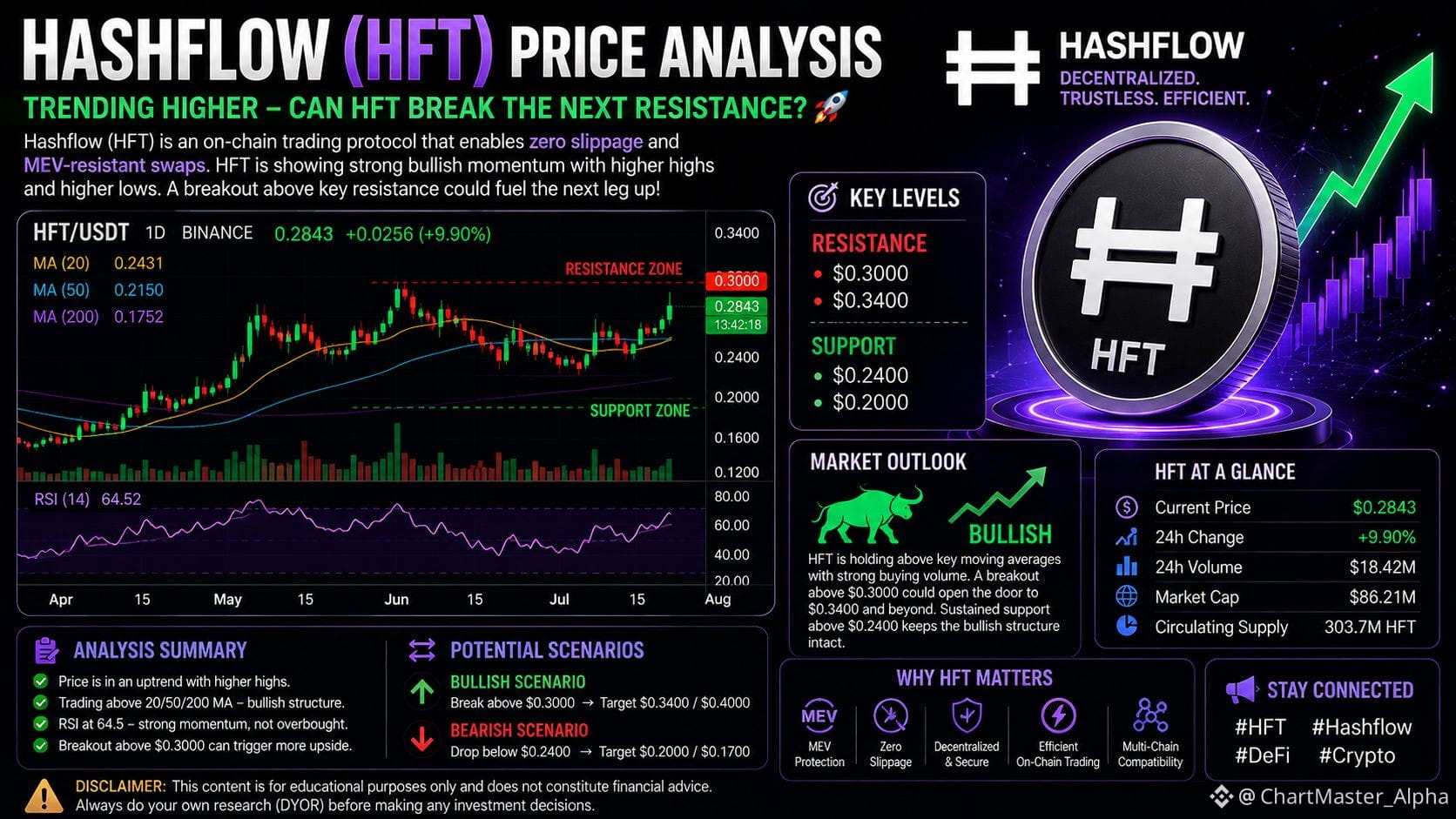
🚀 Hashflow ($HFT ) Price Analysis: Is HFT Ready for a Bullish Rebound?
HFT is attempting to recover after a period of market volatility, with buyers stepping in around key support levels. The recent price structure suggests momentum is gradually improving, but a confirmed breakout above the nearest resistance is needed to strengthen the bullish outlook. If buying volume continues to increase, HFT could target higher resistance zones in the short term. However, losing current support may lead to another round of consolidation or a deeper pullback. Traders should monitor Bitcoin's trend and overall market sentiment for confirmation of the next move.
#Write2Earn #hashflow #HFT. #Altcoins
{spot}(HFTUSDT)
🚀 Hashflow ($HFT ) Price Analysis: Is HFT Ready for a Bullish Rebound?
HFT is attempting to recover after a period of market volatility, with buyers stepping in around key support levels. The recent price structure suggests momentum is gradually improving, but a confirmed breakout above the nearest resistance is needed to strengthen the bullish outlook. If buying volume continues to increase, HFT could target higher resistance zones in the short term. However, losing current support may lead to another round of consolidation or a deeper pullback. Traders should monitor Bitcoin's trend and overall market sentiment for confirmation of the next move.
#Write2Earn #hashflow #HFT. #Altcoins
HFT is attempting to recover after a period of market volatility, with buyers stepping in around key support levels. The recent price structure suggests momentum is gradually improving, but a confirmed breakout above the nearest resistance is needed to strengthen the bullish outlook. If buying volume continues to increase, HFT could target higher resistance zones in the short term. However, losing current support may lead to another round of consolidation or a deeper pullback. Traders should monitor Bitcoin's trend and overall market sentiment for confirmation of the next move.
#Write2Earn #hashflow #HFT. #Altcoins
110

·
--
Bearish
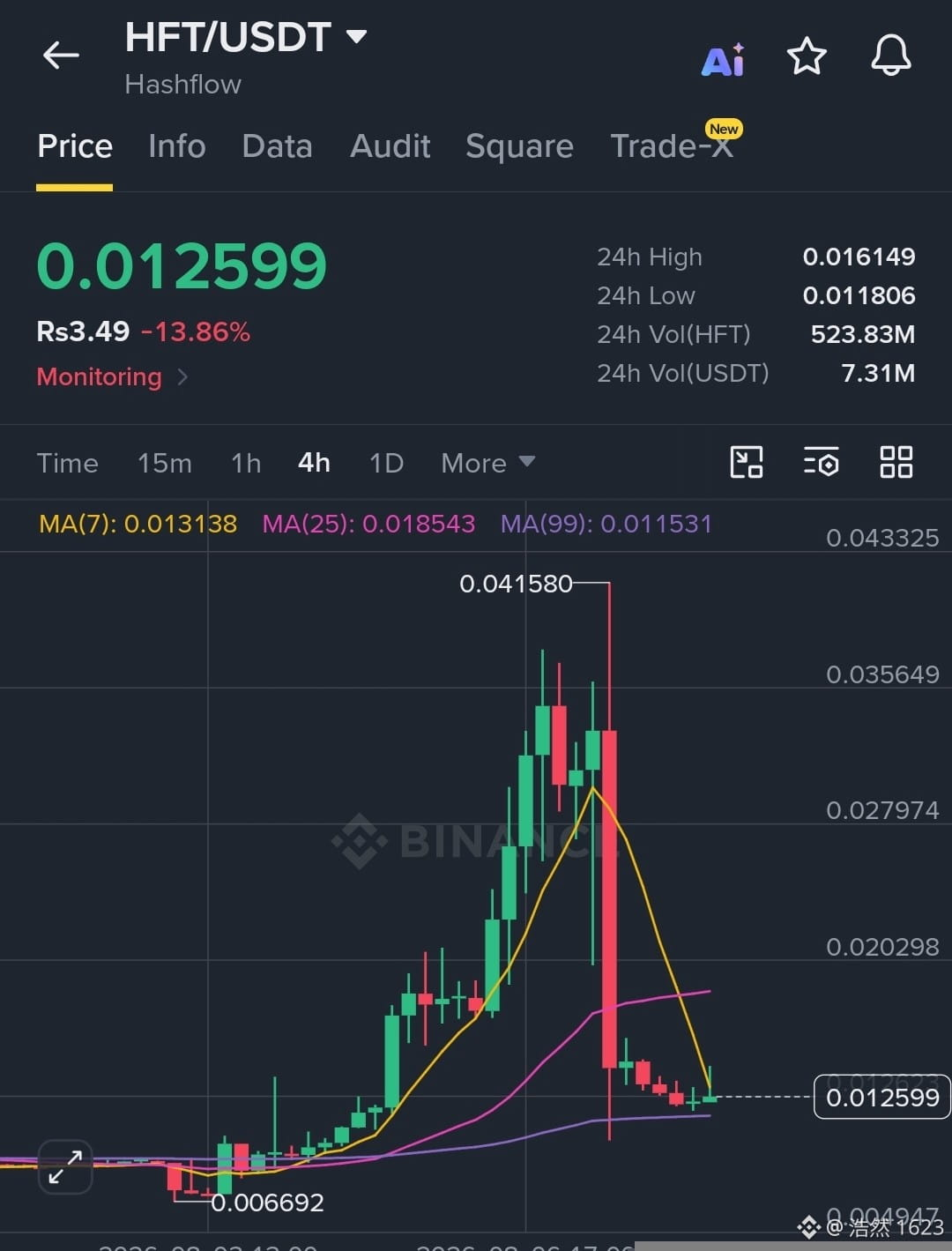
$HFT is currently stabilizing after experiencing a significant pullback from its recent high at 0.041580, holding key support near the 0.011531 mark on the 4H chart. With the price attempting a rebound around 0.012599, early signs of consolidation suggest an upcoming breakout opportunity as buying volume begins to rebuild near the lower boundary.
Target 1: 0.018500 Target 2: 0.027900 Target 3: 0.035600
#HFT #Hashflow #CryptoTrading
$GWEI
{alpha}(560x30117e4bc17d7b044194b76a38365c53b72f7d49)
$HFT
{spot}(HFTUSDT)
{alpha}(560x444045b0ee1ee319a660a5e3d604ca0ffa35acaa)
$HFT is currently stabilizing after experiencing a significant pullback from its recent high at 0.041580, holding key support near the 0.011531 mark on the 4H chart. With the price attempting a rebound around 0.012599, early signs of consolidation suggest an upcoming breakout opportunity as buying volume begins to rebuild near the lower boundary.
Target 1: 0.018500 Target 2: 0.027900 Target 3: 0.035600
#HFT #Hashflow #CryptoTrading
$GWEI
$HFT
Target 1: 0.018500 Target 2: 0.027900 Target 3: 0.035600
#HFT #Hashflow #CryptoTrading
$GWEI
$HFT
1
2
217
Log in to explore more content
Join global crypto users on Binance Square
⚡️ Get latest and useful information about crypto.
💬 Trusted by the world’s largest crypto exchange.
👍 Discover real insights from verified creators.
Email / Phone number
Trending Topics
1
#BinancePick
2.7M views
144,727 Discussing
2
#EarningsSeason
5.1M views
24,814 Discussing
3
#SouthKoreaReportedlyWeighsFourthCryptoTaxDelay
4,592 views
172 Discussing
4
#FranklinTempletonFilesForTwoDividendToBitcoinETFs
10,107 views
291 Discussing
5
#StrategyMSTRSurpassesNasdaqInMarketCap
8,845 views
246 Discussing
6
#CanadaProposesStablecoinRedemptionWithin3BusinessDays
295 views
25 Discussing
7
#ElectrumWalletBugLetRogueServersStealFunds
14,201 views
364 Discussing
8
#ArgentineCourtDismissesLIBRACaseAgainstMilei
24,378 views
428 Discussing
9
#SKHynixReportedlyPlansSpecialDividendFromKioxiaStakeSale
3,690 views
52 Discussing
10
#KeystoneWebsiteBreachExposesBuyersShippingAddresses
1,913 views
45 Discussing