
#binancemena
binancemena
72,590 views
208 Discussing
Hot
Latest

·
--
🚀 The fourth stop of the Binance Community Caravan is here! 💛
Our journey continues, and the fourth mission is ready! 🎯
🎁 Join the caravan for a chance to win prizes worth up to 5,000 USDC.
📌 Remember:
✅ You must complete all five missions to qualify.
🔒 Participation is open to users who have completed identity verification (KYC).
💛 To learn more about the mission and how to participate, join the Binance Arabic Community on Telegram.
Let’s continue the journey together! ✨
#Binance #BinanceMENA ✨

2
120

Imagine a caravan where every person brings a different story, but everyone has a place around the same fire. 🔥
That’s the spirit of QAFILA to me. Not just traveling together, but sharing knowledge, exchanging ideas, and helping each other move forward.
Different stories, one journey. 💛
Join the @Binancearabic Community Caravan for the Middle East & North Africa (MENAP) region and get your chance to win a share of prizes worth up to 5,000 USDC 💛
🎯 Task Two is live now.
#BinanceMENA
Imagine a caravan where every person brings a different story, but everyone has a place around the same fire. 🔥
That’s the spirit of QAFILA to me. Not just traveling together, but sharing knowledge, exchanging ideas, and helping each other move forward.
Different stories, one journey. 💛
Join the @Binance MENA Community Caravan for the Middle East & North Africa (MENAP) region and get your chance to win a share of prizes worth up to 5,000 USDC 💛
🎯 Task Two is live now.
#BinanceMENA

2
179
·
--
💛 The community grows stronger when we share, connect, and learn together!
Join the Community Qafila live session with Tarik Erk, our MENAT Lead, and be part of the conversation! 🎙️
💬 Have a question for Tarik? Drop it in the comments!
💰 1,000 USDC in rewards are up for grabs!
📅 October 20, 2026
⏰ 2 PM KSA
Don’t miss the chance to connect with the community and win! 🚀
#BinanceMENAWebinar #BinanceCommunity #BinanceMENA @Binancearabic
💛 The community grows stronger when we share, connect, and learn together!
Join the Community Qafila live session with Tarik Erk, our MENAT Lead, and be part of the conversation! 🎙️
💬 Have a question for Tarik? Drop it in the comments!
💰 1,000 USDC in rewards are up for grabs!
📅 October 20, 2026
⏰ 2 PM KSA
Don’t miss the chance to connect with the community and win! 🚀
#BinanceMENAWebinar #BinanceCommunity #BinanceMENA @Binance MENA

1
1
2
122

·
--
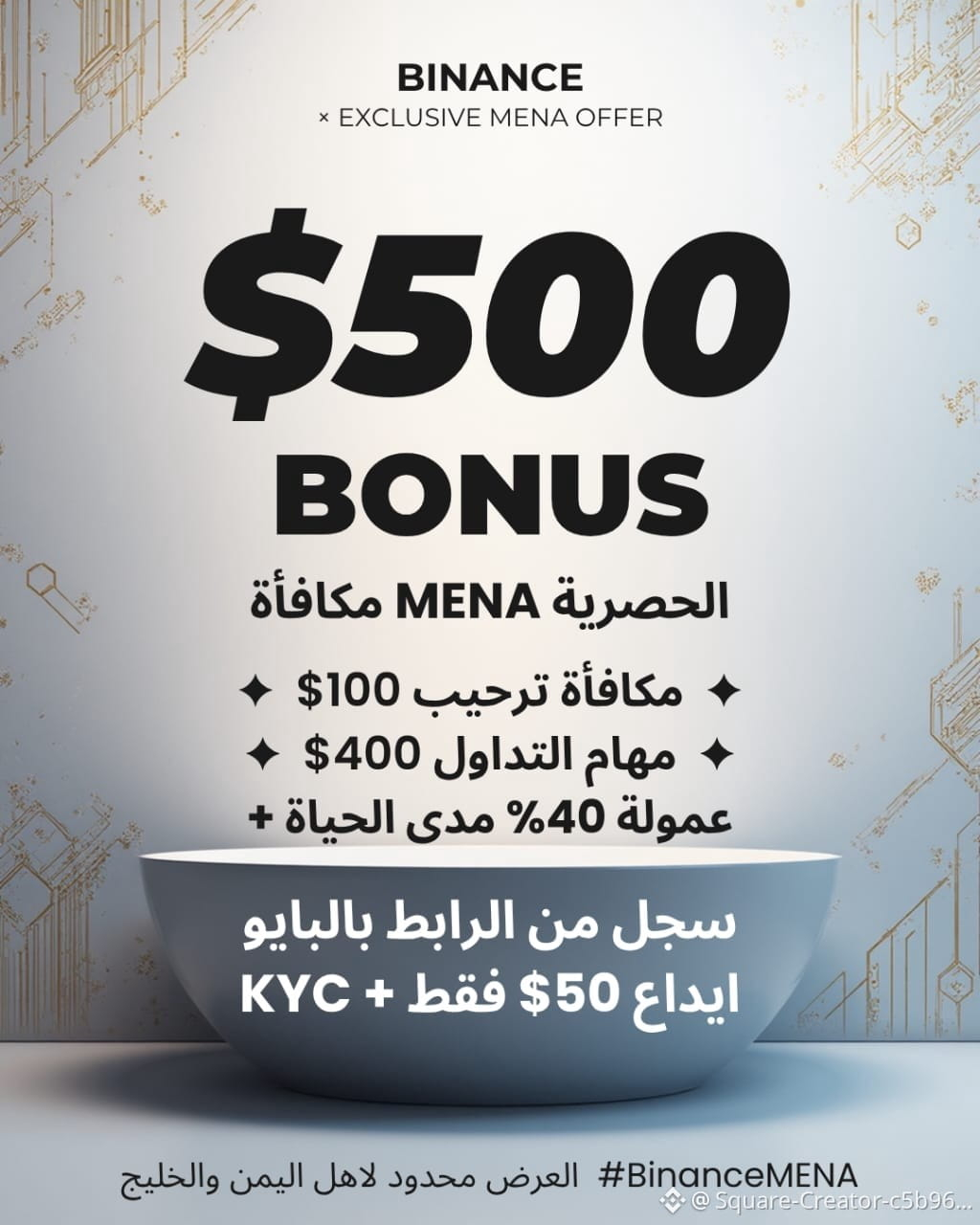
💰 Once in a lifetime opportunity for MENA folks 💰
Binance is giving you a free $500 bonus
How to get it:
1. Sign up through the link in the bio
2. Verify your account with KYC using your card
3. Deposit $50 and trade once
I've tried it and withdrew from it. The offer is limited to Yemen and the Gulf
#BinanceMENA #كريبتو_اليمن #فرص
Binance is giving you a free $500 bonus
How to get it:
1. Sign up through the link in the bio
2. Verify your account with KYC using your card
3. Deposit $50 and trade once
I've tried it and withdrew from it. The offer is limited to Yemen and the Gulf
#BinanceMENA #كريبتو_اليمن #فرص
7
2
369

09 . 11 . 2026 A Memorable Day
From being a valued member of our MENA family to becoming an Angel what a beautiful journey Sir Amer 💛 It's always special to see familiar faces grow take on new responsibilities and reach new heights. Your dedication, kindness and contribution to this community have brought you here and this new chapter is truly well deserved.
Congratulations on becoming an Angel Sir Amer . May this new role bring you even more success happiness and unforgettable moments. Keep shining and inspiring 💛
#BinanceMENA 💞
2
94
QAFILA COMMUNITY - Join The Future! 🌙✨
Binance MENA is bringing us together! Just like a caravan in the desert, we move together in crypto.
Live on 20 Oct - 1000 USDC rewards!
Already 2K joined, are you in?
Strong community = Strong future
#Qafila #BinanceMENA
$BTC $BNB $ETH $SOL
{spot}(SOLUSDT)
{spot}(BTCUSDT)
{spot}(ETHUSDT)
QAFILA COMMUNITY - Join The Future! 🌙✨
Binance MENA is bringing us together! Just like a caravan in the desert, we move together in crypto.
Live on 20 Oct - 1000 USDC rewards!
Already 2K joined, are you in?
Strong community = Strong future
#Qafila #BinanceMENA
$BTC $BNB $ETH $SOL
Binance MENA is bringing us together! Just like a caravan in the desert, we move together in crypto.
Live on 20 Oct - 1000 USDC rewards!
Already 2K joined, are you in?
Strong community = Strong future
#Qafila #BinanceMENA
$BTC $BNB $ETH $SOL

35
1
18
2.8k


·
--
🔥 BINANCE MENA SURPRISE! 🎁
Follow us 👀
❤️ Leave a like
💬 Write #BinanceMENA in the comments!
Maybe the next surprise will come to your DM 😉🚀
Don’t miss your chance! 🔥
#BinanceMENA
🔥 BINANCE MENA SURPRISE! 🎁
Follow us 👀
❤️ Leave a like
💬 Write #BinanceMENA in the comments!
Maybe the next surprise will come to your DM 😉🚀
Don’t miss your chance! 🔥
#BinanceMENA
Follow us 👀
❤️ Leave a like
💬 Write #BinanceMENA in the comments!
Maybe the next surprise will come to your DM 😉🚀
Don’t miss your chance! 🔥
#BinanceMENA
6
5
380

·
--
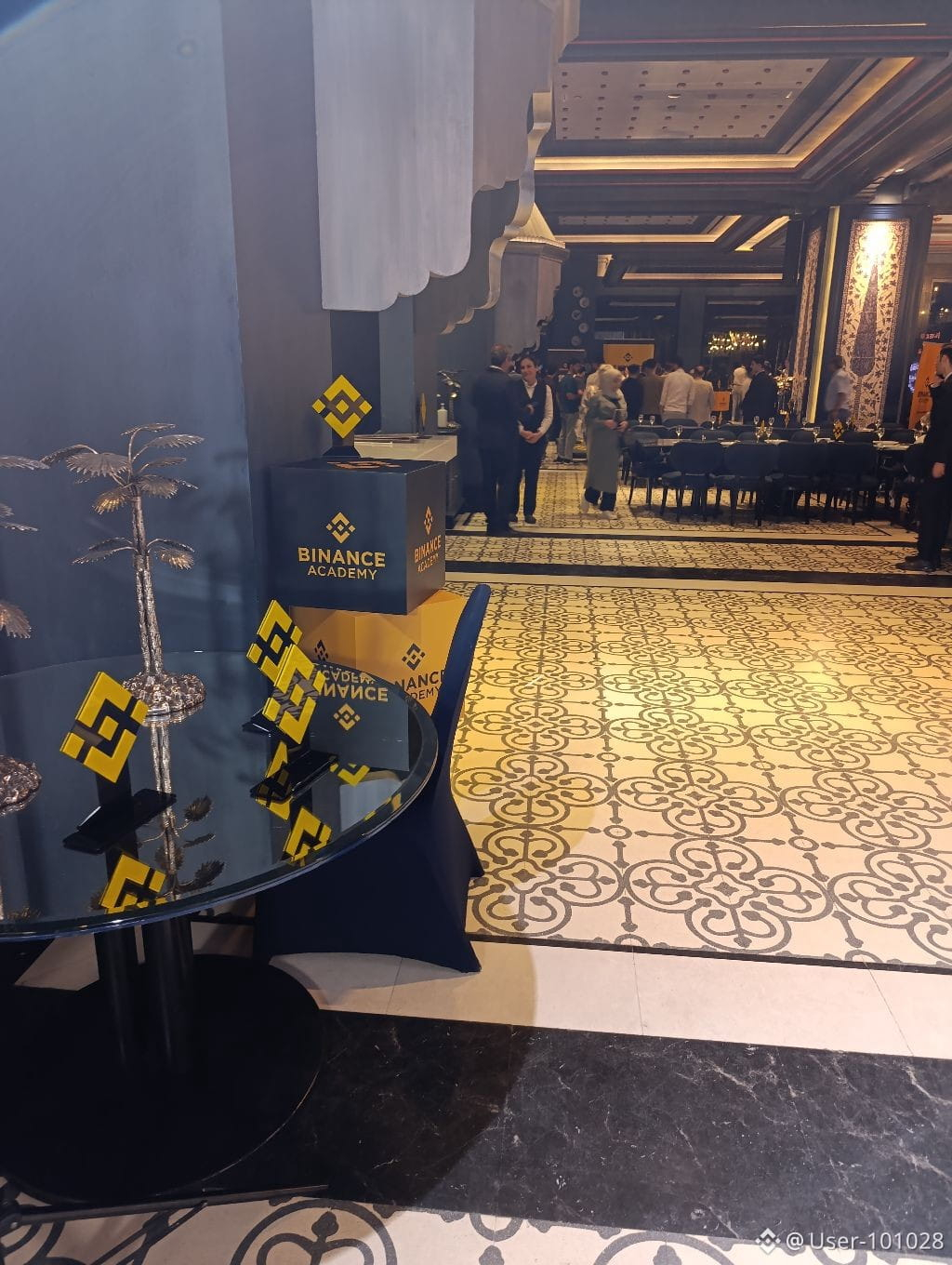
Happy to attend the Binance Academy event in Syria, a great opportunity
#binancemena
Happy to attend the Binance Academy event in Syria, a great opportunity
#binancemena
#binancemena
148

·
--
Bullish
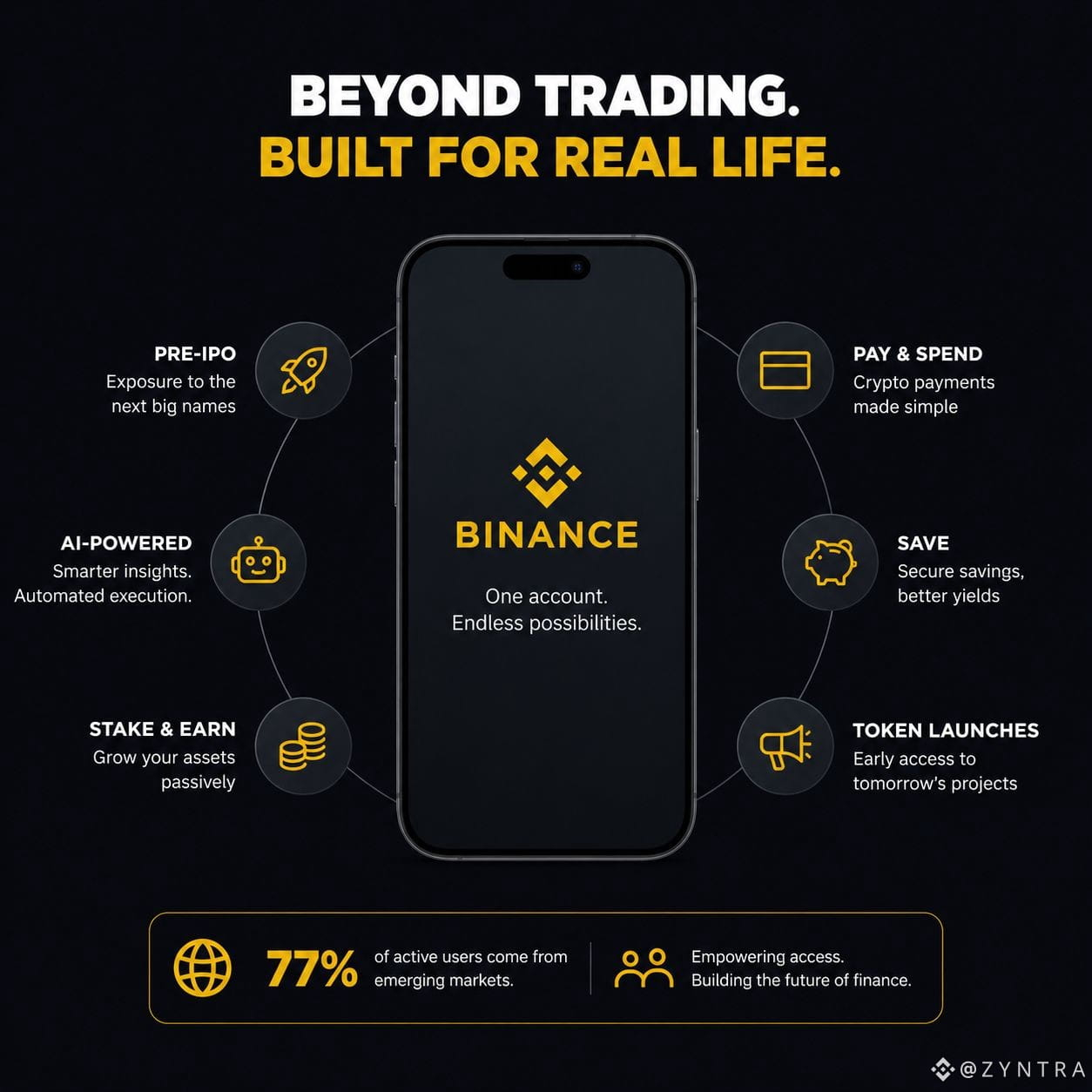
Most people opened a Binance account to trade.
But trading might be the least interesting thing Binance does now.
Think about what is actually sitting inside that one account in 2026.
Pre-IPO exposure on companies that have not gone public yet. AI that does not just advise on trades but executes them. Staking, savings, payments, and token launches all under one login. And 77% of its active users now come from emerging markets — people using it not to speculate, but to access financial services that were never available to them before.
That is not an exchange. That is infrastructure.
The shift most people missed is not about price charts. It is about who gets to participate in global finance and on what terms. Binance has been quietly rebuilding the answer to that question from the ground up.
Crypto gave people a reason to show up. The ecosystem is what makes them stay.
Where are you using it beyond just trading?
#BinanceCreators #Binance #binancemena
3
388

Article
Important Security Update and Reassurance for All Traders in the Arab World and the Middle EastIn light of recent developments, Binance reiterates to all its users and traders in the Middle East and North Africa that their funds and assets are completely safe and fully protected by the highest global security standards and the Secure Asset Fund for Users (SAFU).
The platform demonstrates its financial strength and solvency through its historic commitment to allocating 6.34 billion US dollars to cover all the effects of the recent security incident and return the affected assets to their owners without placing any burden on investors.
Important Security Update and Reassurance for All Traders in the Arab World and the Middle East
In light of recent developments, Binance reiterates to all its users and traders in the Middle East and North Africa that their funds and assets are completely safe and fully protected by the highest global security standards and the Secure Asset Fund for Users (SAFU).
The platform demonstrates its financial strength and solvency through its historic commitment to allocating 6.34 billion US dollars to cover all the effects of the recent security incident and return the affected assets to their owners without placing any burden on investors.
The platform demonstrates its financial strength and solvency through its historic commitment to allocating 6.34 billion US dollars to cover all the effects of the recent security incident and return the affected assets to their owners without placing any burden on investors.
2
2.8k

·
--
Article
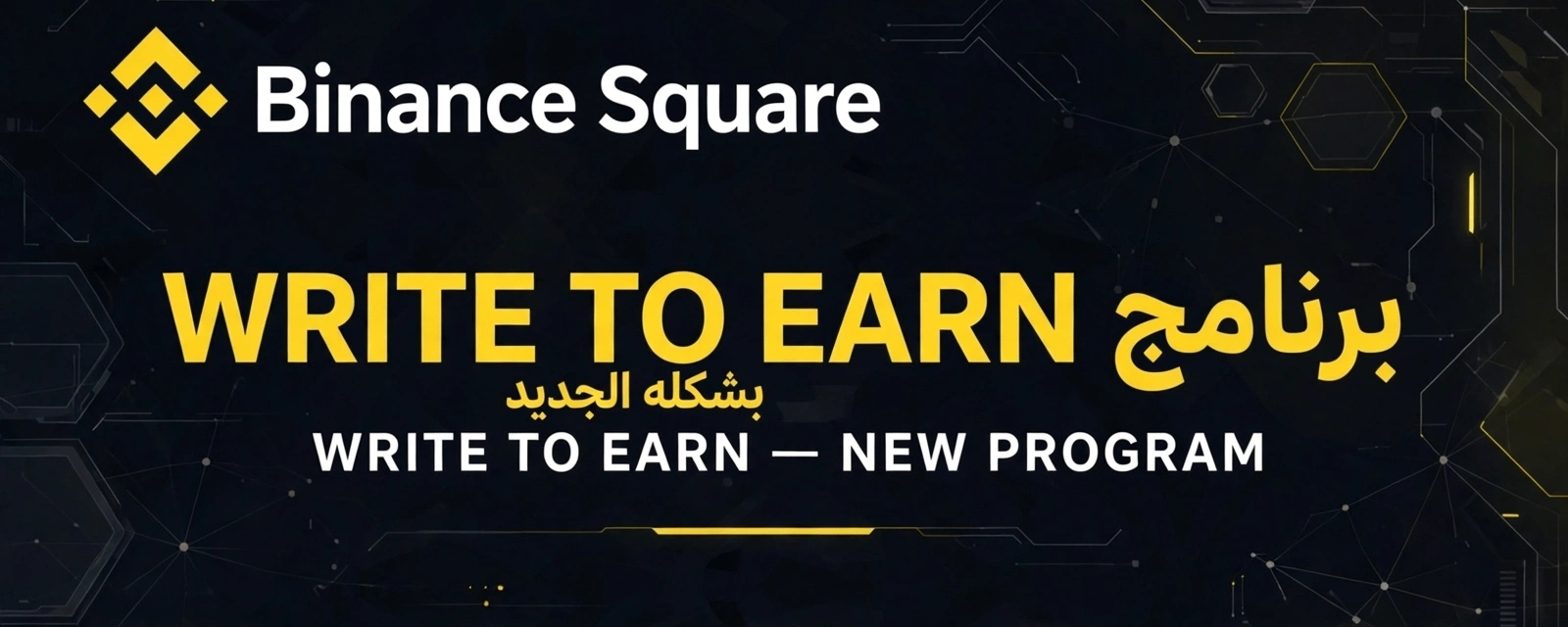
Binance in its new look> *WRITE TO EARN in its new format — your earnings are no longer limited to trading!*
> Binance Square has finally figured it out. Now you can earn in 4 new ways besides trading commissions 👇
> ✅ High-quality posts
> ✅ Live streaming
> ✅ Group chats
> ✅ Building a real community
> I started today with this profile picture and this post. Who’s joining me to build a strong Arab community and earn together?
Binance in its new look
> *WRITE TO EARN in its new format — your earnings are no longer limited to trading!*
> Binance Square has finally figured it out. Now you can earn in 4 new ways besides trading commissions 👇
> ✅ High-quality posts
> ✅ Live streaming
> ✅ Group chats
> ✅ Building a real community
> I started today with this profile picture and this post. Who’s joining me to build a strong Arab community and earn together?
85

Holding $USDT 4 USDT
Join My Qafila & Share $500,000! $USDC
I just joined Qafila campaign, Total pool $500k USDC.
My Code: HQ04Y2G6 - Join with my link and we both earn Lamps up to $20 each!
$USDT
Don't have Binance? I will guide you for KYC + $50 deposit.
$BTC
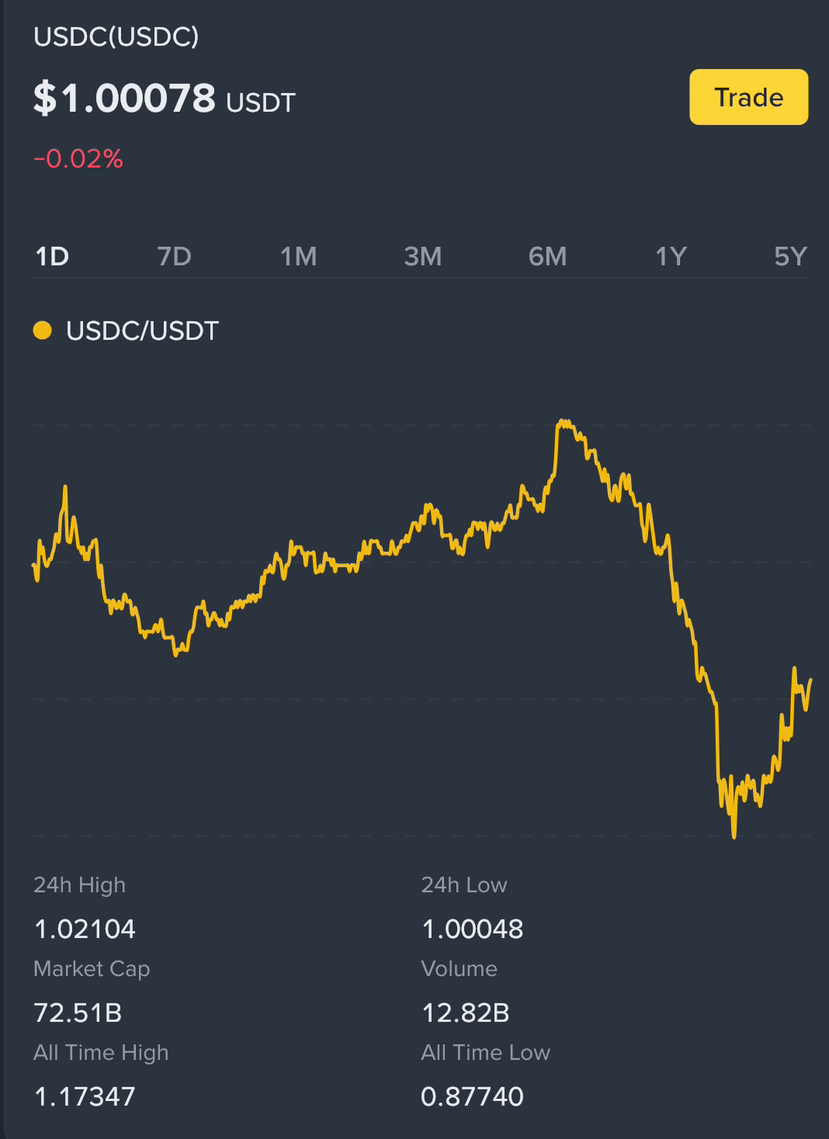
USDC/USDT is currently $1.00076, down about 0.02% over the past 24 hours. The 24h high is $1.02104 and low is $1.00048.
Limited to 25 lamps per person. DM me!
#Qafila #BinanceMENA #USDC #InviteAndEarn #BTC
{spot}(BTCUSDT)
{spot}(USDCUSDT)
Join My Qafila & Share $500,000! $USDC
I just joined Qafila campaign, Total pool $500k USDC.
My Code: HQ04Y2G6 - Join with my link and we both earn Lamps up to $20 each!
$USDT
Don't have Binance? I will guide you for KYC + $50 deposit.
$BTC
USDC/USDT is currently $1.00076, down about 0.02% over the past 24 hours. The 24h high is $1.02104 and low is $1.00048.
Limited to 25 lamps per person. DM me!
#Qafila #BinanceMENA #USDC #InviteAndEarn #BTC
106

🐪 QAFILA: The First Gate is LIVE - $250,000 Pool! 🐪
I just started my journey! The First Gate is super easy for beginners.
✅ How to join:
1. Click my link below 👇
2. Tap "Start the Mission"
3. Do your First Trade of just $25 (Use Convert)
You will get up to $20 USDC Token Voucher!
Time left: 41 Days. Don't wait!
Join Qafila from my link:
https://s.binance.com/JvqG6Kip?ref=1281988562&utm_medium=web_share_copy
#qafila #BinanceMENA #Binance squre#USDT #Write2Earn
1
2
87

·
--
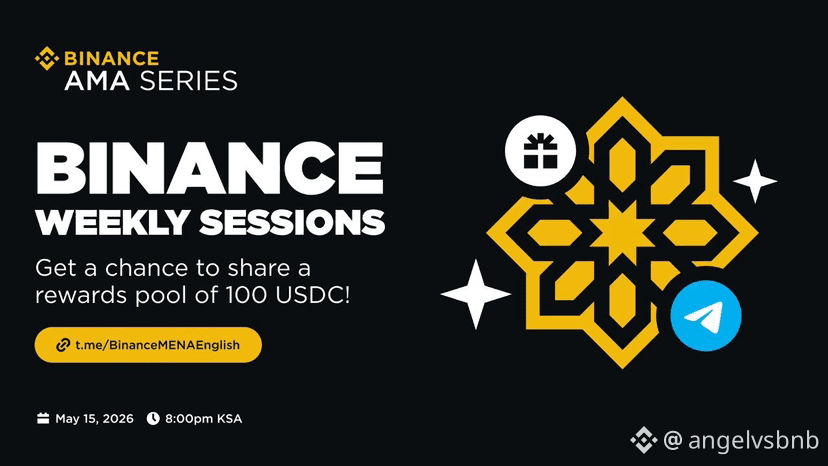
How do u guys feel about our weekly AMA? 💛
Last week, the community gathered together in a helpful and warm discussion, with many questions answered 🥰 If you're in the MENA English group, be on the lookout for the next one and bring questions!
#BinanceMENA @Binancearabic
How do u guys feel about our weekly AMA? 💛
Last week, the community gathered together in a helpful and warm discussion, with many questions answered 🥰 If you're in the MENA English group, be on the lookout for the next one and bring questions!
#BinanceMENA @Binance MENA
Last week, the community gathered together in a helpful and warm discussion, with many questions answered 🥰 If you're in the MENA English group, be on the lookout for the next one and bring questions!
#BinanceMENA @Binance MENA
1
179

·
--
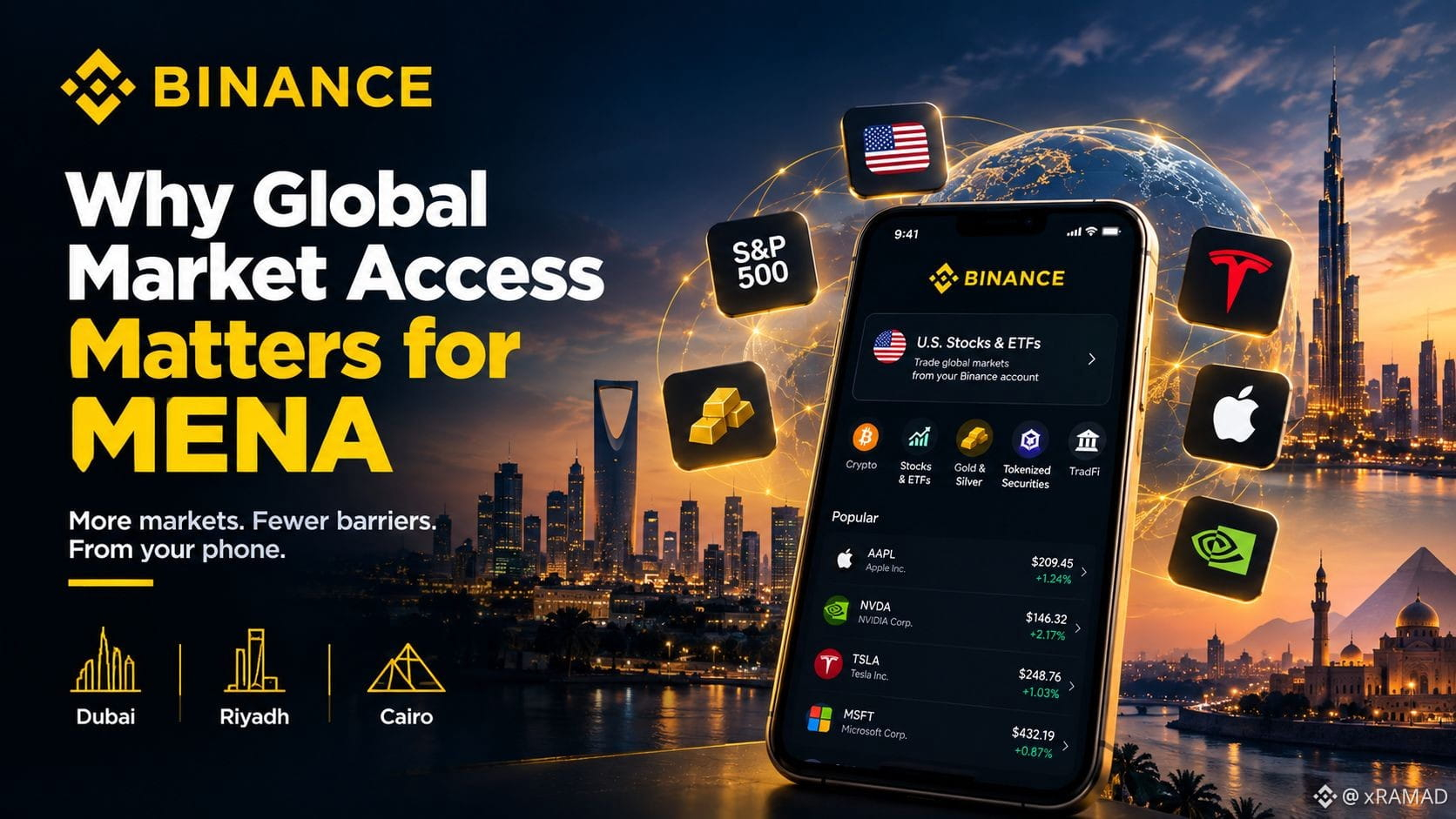
🌍Why does global market access matter for MENA?
For someone in Dubai, Riyadh, or Cairo, accessing U.S. markets can involve different platforms, currencies, banking systems, and onboarding processes.
Binance is expanding access to supported global markets through the same ecosystem used for crypto — including U.S. stocks & ETFs for eligible users.
📱 One app
🌍 More markets
🔗 A more connected financial experience
The goal isn't just having more products — it's making access to global markets simpler where available
⚠️ Availability depends on your country, eligibility, and regulatory requirements
Would you use one platform for both crypto and global markets? 👇
🟢 Yes
🔵 I prefer separate platforms
#Binance #TradFi #Crypto #BinanceMENA #SuperFinancialApp
4
200
·
--
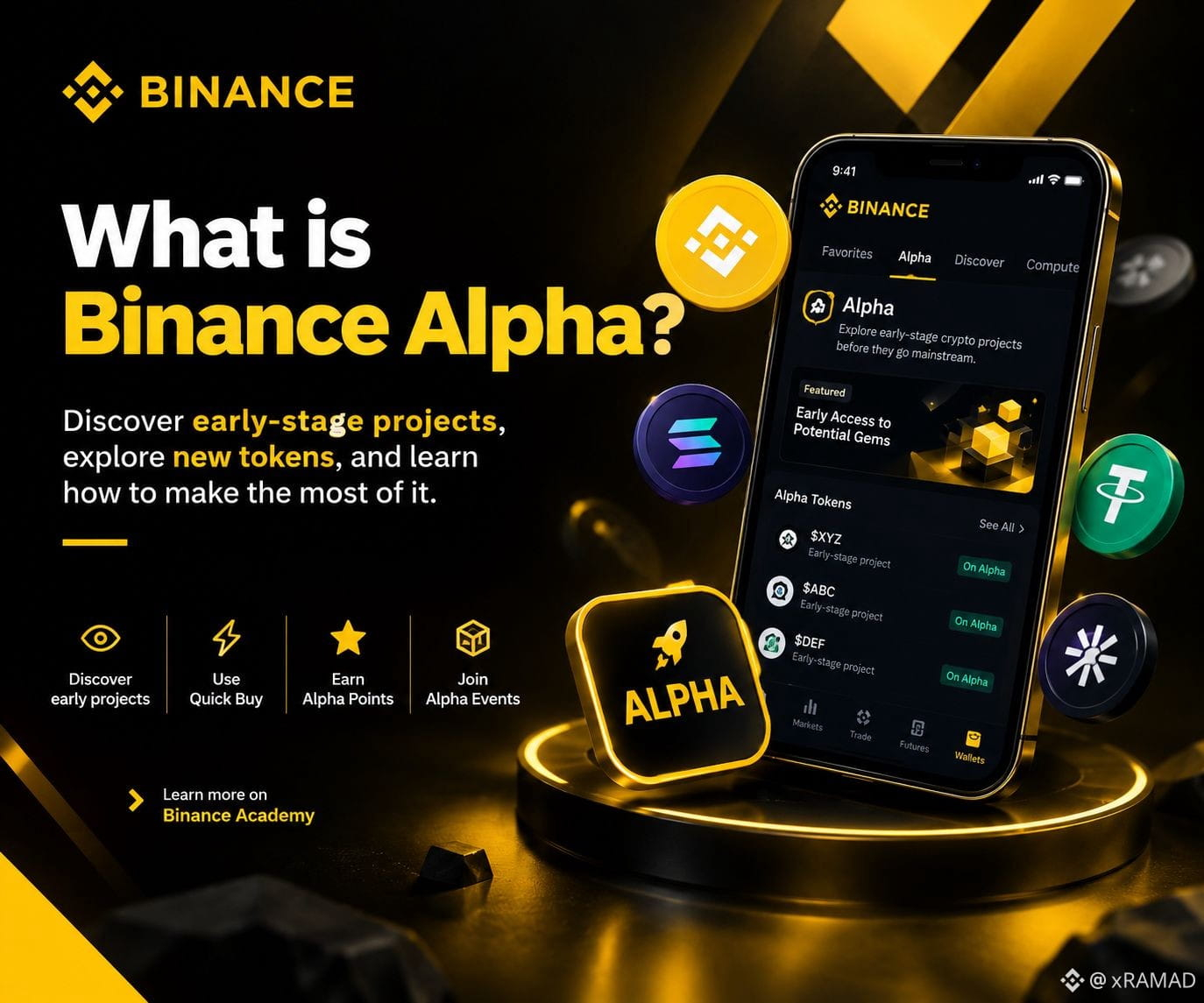
🔎 Have you explored Binance Alpha yet?
Binance Alpha is a place to discover and explore early-stage crypto projects and tokens within the Binance ecosystem.
You can find it through Binance Wallet and explore features like Quick Buy and Alpha Events. 👀
Want to understand how it works and how to get started?
I broke it down here 👇
[Read More !](https://app.binance.com/uni-qr/cart/365228494957681?r=LK8JJR0U&l=en&uco=-CWaesuR_7qC2bXGJ0jBcg&uc=app_square_share_link&us=copylink)
On X : https://x.com/xRMAAD/status/2098081335952687531
Have you used Binance Alpha before?
🟢 Yes, I use it
🔵 I’ve tried it
⚪ Not yet
Educational content only. Not financial advice. DYOR!
#Binance #BinanceAcademy #BinanceMENA #Crypto #Web3 @Binance_Academy @Binancearabic
🔎 Have you explored Binance Alpha yet?
Binance Alpha is a place to discover and explore early-stage crypto projects and tokens within the Binance ecosystem.
You can find it through Binance Wallet and explore features like Quick Buy and Alpha Events. 👀
Want to understand how it works and how to get started?
I broke it down here 👇
Read More !
On X : https://x.com/xRMAAD/status/2098081335952687531
Have you used Binance Alpha before?
🟢 Yes, I use it
🔵 I’ve tried it
⚪ Not yet
Educational content only. Not financial advice. DYOR!
#Binance #BinanceAcademy #BinanceMENA #Crypto #Web3 @Binance Academy @Binance MENA
3
194
Share, young people, and don’t miss the opportunities—look for the Binance WhatsApp channel $BTC $ETH
#BinanceTurns9 #BinanceSquare #CryptoCommunity #BinanceMENA
Share, young people, and don’t miss the opportunities—look for the Binance WhatsApp channel $BTC $ETH
#BinanceTurns9 #BinanceSquare #CryptoCommunity #BinanceMENA
#BinanceTurns9 #BinanceSquare #CryptoCommunity #BinanceMENA

40

·
--
Binance opens the “On Chain Council” and they’re talking about stablecoins 💰
So what does that mean? It means money you don’t have to worry about going down 😂
And you still haven’t started yet with 20$ ?
Binance is giving it for free to new beginners
Take it and start learning with them
The link is in the bio 👇
#مجلس_أون_تشين #BinanceMENA
So what does that mean? It means money you don’t have to worry about going down 😂
And you still haven’t started yet with 20$ ?
Binance is giving it for free to new beginners
Take it and start learning with them
The link is in the bio 👇
#مجلس_أون_تشين #BinanceMENA
1
1
120
·
--
🌍 What if you didn’t need 3 different apps to explore different markets?
Crypto, stocks, ETFs, gold, silver and more Binance is expanding toward a broader multi-asset experience. 👀
Depending on your country and eligibility, you may be able to access different markets from the same Binance ecosystem.
📱 One app. Multiple markets.
Which market would you explore first if they were all available to you? 👇
🟡 Crypto
📈 Stocks & ETFs
🥇 Gold & Silver
🔵 DeFi
#Binance #TradFi #Crypto #SuperFinancialApp #binancemena

2
224
Article
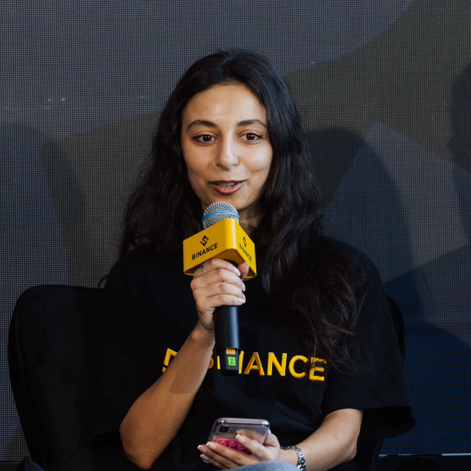
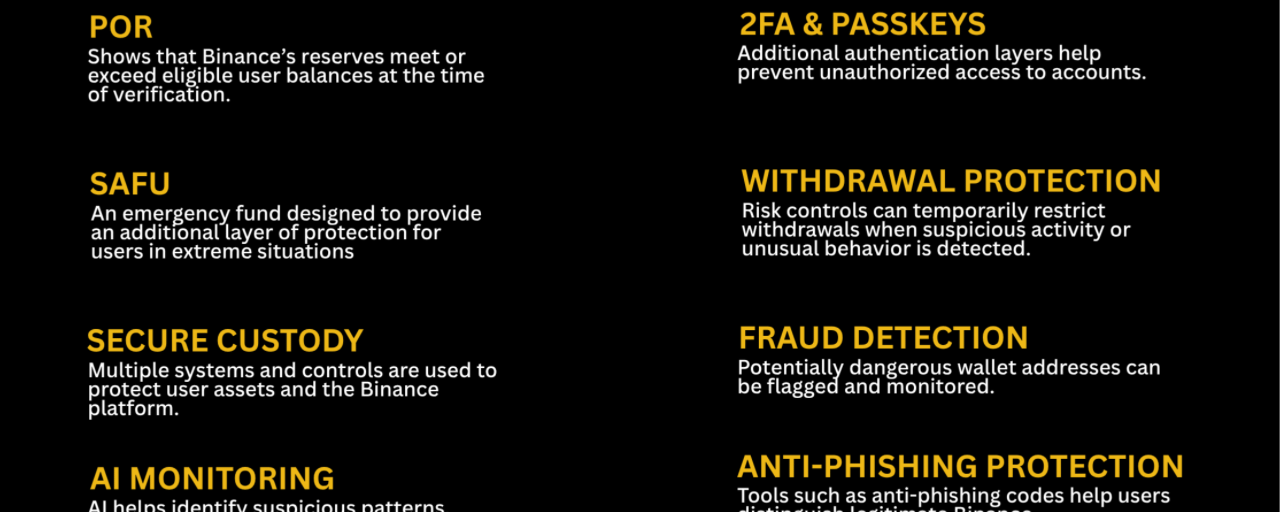
How Does Binance Protect User Funds in MENA in 2026?Binance protects user funds in MENA in 2026 through multiple layers of security, including Proof of Reserves, the Secure Asset Fund for Users (SAFU), secure custody systems, AI-powered risk monitoring and account-level protection tools. But when we talk about “security” in crypto, I think it is important to understand that there is no single button that makes funds safe. Security is a system made of multiple layers, and each layer is designed to address a different type of risk.
For a user in the MENA region, that distinction matters. Whether you are holding your first 50$ of Bitcoin, actively trading, or keeping a larger portfolio on an exchange, protecting your assets involves both the infrastructure of the platform and the security decisions you make yourself. Binance's approach combines platform-level controls, transparency mechanisms, emergency reserves, automated monitoring and tools that users can activate directly on their accounts.
How Does Binance Protect User Funds?
The first layer is risk control. [Binance](https://www.binance.com/en-in) monitors activity across its platform to identify patterns that could indicate scams, account takeovers or other suspicious behavior. This can include unusual login activity, suspicious transactions, abnormal withdrawal behavior and other signals that may require additional verification or intervention.
The important part is that these systems are designed to act before a potential loss becomes irreversible. Crypto withdrawals are particularly sensitive because once assets leave an exchange and are transferred on-chain, recovering them can be significantly more difficult. Binance therefore uses controls such as suspicious-address monitoring, withdrawal restrictions in certain risk scenarios, user questionnaires and other interventions designed to slow down potentially fraudulent transactions.
There is also a human element behind the technology. Automated systems can identify patterns at enormous scale, but higher-risk cases can be escalated for human review. Binance has reported that its risk operations use AI across more than 80% of anti-fraud and anti-scam decision-making workflows, illustrating how machine-based detection and human judgment increasingly work together.
For MENA users, another important consideration is that Binance operates through different regulated entities and services depending on the jurisdiction. Availability, products and regulatory protections can therefore differ between countries. Users should always check the Binance services and legal terms applicable to their specific country rather than assuming that every Binance feature is available under identical conditions throughout the region.
What Is Proof of Reserves and Why Does It Matter?
Proof of Reserves, commonly called PoR, answers one of the most basic questions a centralized crypto platform should be able to address: does the platform actually hold the assets corresponding to its users' balances?
Think about it this way. If 100 people each deposit 1 BTC, the platform should be able to demonstrate that it holds at least the corresponding amount of BTC in its reserves. Proof of Reserves provides a cryptographic and auditable framework for demonstrating that relationship rather than asking users to simply trust a statement.
Binance's PoR process uses cryptographic structures such as Merkle trees. Without getting unnecessarily technical, a Merkle tree allows large amounts of user balance information to be combined into a cryptographic structure that users can verify without exposing everyone else's private financial information. Independent verification can then be used to compare user liabilities with the assets held in relevant on-chain wallets. Binance has also adopted zero-knowledge proof technology to improve privacy during this verification process.
This is particularly important because transparency and security are not the same thing. Proof of Reserves provides evidence about asset backing, but it is not a guarantee that an exchange can never experience a security incident or that every aspect of its financial position is risk-free. PoR is also a point-in-time snapshot and does not, by itself, establish all off-chain liabilities.
That is why I see Proof of Reserves as one layer of confidence, not the entire security system. Binance users can independently check their inclusion in the PoR process through the official Proof of Reserves system.
What Is Binance's SAFU and How Does It Protect Users?
Now imagine that despite all the preventive security measures, an extreme platform-level incident happens. This is where another layer comes into the picture: SAFU, the Secure Asset Fund for Users.
Binance established SAFU in 2018 as an emergency reserve designed to provide an additional layer of protection for users in extreme situations. Unlike Proof of Reserves, which focuses on demonstrating asset backing, SAFU is designed as a contingency mechanism that may be used to help protect affected users if a qualifying security incident results in losses.
As of 2026, Binance's published information describes SAFU as a reserve of approximately 1 billion US$, held in Bitcoin, with custody and management arrangements that include regulated infrastructure in the Abu Dhabi Global Market.
The distinction is worth remembering: PoR is about transparency; SAFU is about an emergency reserve; risk controls are about prevention. They solve different problems.
And SAFU should not be interpreted as unlimited insurance or a guarantee that every possible loss will automatically be reimbursed. It is an additional protection mechanism within Binance's broader security framework.
How Does Binance Secure User Assets and Its Platform?
Security doesn't stop at the blockchain addresses holding assets. A major threat in crypto is the attacker who doesn't break the exchange itself but instead gets access to your account.
That is why Binance provides multiple account-level protections. Two-factor authentication adds another verification layer beyond the password, while passkeys and authenticator-based methods can reduce reliance on SMS-based authentication. Binance also supports withdrawal-address whitelisting, which allows users to restrict withdrawals to approved addresses. A new address can be subject to a security waiting period, giving the account owner an opportunity to detect an unauthorized change before funds can be transferred.
There are also anti-phishing codes and account alerts. An anti-phishing code is particularly simple but useful: after you set your unique code, you can use it to distinguish legitimate Binance communications from messages attempting to impersonate Binance. If someone sends you a message claiming to be from Binance but cannot provide the expected verification signal, that should immediately raise suspicion.
API users have another security consideration. API keys can provide third-party applications with access to parts of an account, so restricting permissions and using IP whitelisting can reduce the damage if an API credential is exposed. Binance's security guidance specifically recommends limiting API permissions and using IP restrictions where appropriate.
This is where I always come back to one simple point: the strongest security system in the world cannot compensate for a user voluntarily handing their password, authentication code or private key to a scammer. Platform security and personal security have to work together.
How Does Binance Use AI to Detect Fraud and Suspicious Activity?
Crypto scams are becoming more sophisticated, and AI is now being used on both sides of the fight. Attackers can use artificial intelligence to create convincing impersonations, deepfakes, synthetic identities and highly personalized scams. That means security systems also need to become more adaptive.
Binance has significantly expanded its use of AI in compliance and risk operations. According to Binance's 2026 reporting, the company operates more than 24 AI initiatives and 100 AI models, with AI supporting more than 80% of anti-fraud and anti-scam decision-making workflows and assisting around 45% of human review processes.
The goal isn't simply to replace humans with algorithms. AI can process enormous amounts of information, identify relationships between seemingly unrelated activities, prioritize suspicious cases and help route higher-risk situations to human specialists. That allows human investigators to concentrate on cases where judgment and context are particularly important.
AI is also used in identity security. Binance reports that approximately 80% of attacks it encounters involve KYC-related fraud, which is why systems such as Face Attack Detection and Liveness Detection are continually updated to address increasingly sophisticated attempts to manipulate identity verification.
The bigger picture is that crypto security is becoming an adaptive process. A security rule created yesterday may not be enough against a scam created tomorrow. AI allows risk systems to analyze new patterns at scale while human teams provide oversight and decision-making.
What Security Tools Can Binance Users Activate?
There is a lot users can do themselves, and these tools should not be treated as optional extras.
Start with 2FA or a passkey and use a strong, unique password. Then activate your anti-phishing code so you have an additional way to verify Binance communications. Enable relevant account notifications so you know when important activity occurs.
If you frequently withdraw crypto, consider withdrawal address whitelisting. It creates an additional barrier against unauthorized transfers because funds cannot simply be sent to an unapproved address.
If you use APIs, review your permissions carefully. Don't give an application withdrawal access if it doesn't need withdrawal access, and consider IP whitelisting for additional protection.
And perhaps the most underrated security tool is education. Learn how phishing works, understand how fake support accounts operate, verify suspicious messages and never assume that someone contacting you privately is a Binance employee simply because they know information about your account. Binance Verify can also be used to check whether certain Binance contact details are officially associated with Binance.
In other words, security isn't just something Binance does for you. It is something Binance and the user have to do together.
Is Binance Safe and Trustworthy in MENA?
There is no responsible way to describe any crypto platform as completely risk-free. Cryptocurrency itself carries market, technology, counterparty and operational risks, and regulatory frameworks differ across MENA countries.
What can be evaluated is the security framework. Binance combines Proof of Reserves, SAFU, risk monitoring, account protections, custody controls, AI-supported fraud detection, compliance operations and user security tools. Its regional presence also includes regulated entities in specific MENA jurisdictions. For example, Binance's Bahrain entity is licensed by the Central Bank of Bahrain, while Binance FZE is licensed by Dubai's VARA for specified virtual-asset activities.
That does not mean a user should blindly trust any platform, including Binance. Quite the opposite. I think the healthier approach is to understand why the platform uses each security layer, what that layer can protect you from, and what it cannot.
If you are keeping funds on an exchange, don't just ask, “Is it safe?” Ask better questions: Are user assets transparently accounted for? What happens in an extreme incident? What account protections can I activate? How are suspicious transactions detected? What regulatory framework applies to my country? And what am I personally doing to protect my account?
Those are much better questions to ask before trusting any platform with your money.
Binance User Fund Protection in MENA: A Summary
Binance protects user funds in MENA through a layered security and risk-management framework that includes Proof of Reserves, SAFU, secure custody and platform infrastructure, AI-supported fraud and compliance systems, transaction monitoring, identity verification, and user-controlled account protections such as 2FA, passkeys, anti-phishing codes, withdrawal-address whitelisting and security alerts. Proof of Reserves provides transparency into the relationship between user balances and reserves, while SAFU provides an additional emergency reserve for qualifying extreme incidents. The exact services, regulatory protections and availability can vary by MENA country, so users should check the Binance entity and terms applicable to their jurisdiction.
Binance Security in Lebanon
For users in Lebanon, the same core security principles apply: protecting your crypto starts with both the platform’s infrastructure and your own account habits. Binance uses multiple layers of protection, including Proof of Reserves, risk monitoring, account security controls, and tools designed to detect suspicious activity. For Lebanese users in particular, where crypto users may rely on different local and international payment methods, it is important to remember that how you access and move your funds matters just as much as where you hold them. Before making a deposit, withdrawal, or peer-to-peer transaction, always verify the payment details and the recipient, and be especially cautious of anyone claiming to represent Binance.
Security also becomes particularly important when using Binance P2P. P2P transactions involve interactions with other users, so users should keep communication and transactions within Binance’s designated process, carefully check payment information, and never release crypto simply because someone sends a screenshot or claims that a payment has been completed. If something feels unusual, stop the transaction and contact Binance Support rather than trying to resolve it privately.
Ultimately, being a Binance user in Lebanon does not eliminate the normal risks associated with crypto. Platform-level protections can help detect suspicious behavior, prevent certain unauthorized withdrawals, and respond to scams, but they cannot replace good personal security practices. Enabling strong two-factor authentication or a passkey, activating anti-phishing protections, reviewing account alerts, and carefully verifying every transaction remain some of the simplest and most effective steps a Lebanese user can take to protect their funds.
FAQ
Does Binance hold user assets 1:1? Binance's Proof of Reserves system is designed to demonstrate that the assets held in its reserves meet or exceed the corresponding user liabilities for the assets covered by the PoR report. Users can independently verify their inclusion in the PoR process. However, Proof of Reserves is a point-in-time verification and does not by itself establish every aspect of an exchange's financial position or off-chain liabilities.
What is SAFU? SAFU, or the Secure Asset Fund for Users, is an emergency reserve established by Binance in 2018 to provide an additional layer of protection for users in extreme security incidents. As of 2026, Binance describes the fund as approximately 1 billion US$ in Bitcoin.
Can Binance prevent every crypto scam? No platform can guarantee that every scam will be prevented. Binance uses risk monitoring, automated detection, AI-supported systems, suspicious-address controls, user warnings and human investigations to identify and disrupt suspicious activity, but users also play a critical role in protecting their accounts.
What is the most important thing I can do to protect my Binance account? Start with the basics: use a unique strong password, enable 2FA or a passkey, activate an anti-phishing code, review security alerts, and consider withdrawal-address whitelisting. Never share your password, authentication codes or private keys with anyone. Binance's own security guidance recommends combining these controls rather than relying on a single protection.
Does Binance's security framework apply identically across MENA? Not necessarily. Binance operates through different entities and regulatory frameworks in different jurisdictions, and product availability, legal terms and protections can vary by country. MENA users should always verify the Binance entity and services applicable to their own jurisdiction before using a particular product.
My biggest takeaway? Security in crypto should never be reduced to one word like “SAFU” or one feature like Proof of Reserves. It is a chain of protection: transparency to verify reserves, technology to detect threats, controls to stop suspicious activity, emergency mechanisms for extreme situations, and responsible behavior from the user. The stronger each link becomes, the stronger the overall security picture becomes.
#Binancesecurity #ProofOfReserves #safu #CryptoSecurity #binancemena
How Does Binance Protect User Funds in MENA in 2026?
Binance protects user funds in MENA in 2026 through multiple layers of security, including Proof of Reserves, the Secure Asset Fund for Users (SAFU), secure custody systems, AI-powered risk monitoring and account-level protection tools. But when we talk about “security” in crypto, I think it is important to understand that there is no single button that makes funds safe. Security is a system made of multiple layers, and each layer is designed to address a different type of risk.
For a user in the MENA region, that distinction matters. Whether you are holding your first 50$ of Bitcoin, actively trading, or keeping a larger portfolio on an exchange, protecting your assets involves both the infrastructure of the platform and the security decisions you make yourself. Binance's approach combines platform-level controls, transparency mechanisms, emergency reserves, automated monitoring and tools that users can activate directly on their accounts.
How Does Binance Protect User Funds?
The first layer is risk control. Binance monitors activity across its platform to identify patterns that could indicate scams, account takeovers or other suspicious behavior. This can include unusual login activity, suspicious transactions, abnormal withdrawal behavior and other signals that may require additional verification or intervention.
The important part is that these systems are designed to act before a potential loss becomes irreversible. Crypto withdrawals are particularly sensitive because once assets leave an exchange and are transferred on-chain, recovering them can be significantly more difficult. Binance therefore uses controls such as suspicious-address monitoring, withdrawal restrictions in certain risk scenarios, user questionnaires and other interventions designed to slow down potentially fraudulent transactions.
There is also a human element behind the technology. Automated systems can identify patterns at enormous scale, but higher-risk cases can be escalated for human review. Binance has reported that its risk operations use AI across more than 80% of anti-fraud and anti-scam decision-making workflows, illustrating how machine-based detection and human judgment increasingly work together.
For MENA users, another important consideration is that Binance operates through different regulated entities and services depending on the jurisdiction. Availability, products and regulatory protections can therefore differ between countries. Users should always check the Binance services and legal terms applicable to their specific country rather than assuming that every Binance feature is available under identical conditions throughout the region.
What Is Proof of Reserves and Why Does It Matter?
Proof of Reserves, commonly called PoR, answers one of the most basic questions a centralized crypto platform should be able to address: does the platform actually hold the assets corresponding to its users' balances?
Think about it this way. If 100 people each deposit 1 BTC, the platform should be able to demonstrate that it holds at least the corresponding amount of BTC in its reserves. Proof of Reserves provides a cryptographic and auditable framework for demonstrating that relationship rather than asking users to simply trust a statement.
Binance's PoR process uses cryptographic structures such as Merkle trees. Without getting unnecessarily technical, a Merkle tree allows large amounts of user balance information to be combined into a cryptographic structure that users can verify without exposing everyone else's private financial information. Independent verification can then be used to compare user liabilities with the assets held in relevant on-chain wallets. Binance has also adopted zero-knowledge proof technology to improve privacy during this verification process.
This is particularly important because transparency and security are not the same thing. Proof of Reserves provides evidence about asset backing, but it is not a guarantee that an exchange can never experience a security incident or that every aspect of its financial position is risk-free. PoR is also a point-in-time snapshot and does not, by itself, establish all off-chain liabilities.
That is why I see Proof of Reserves as one layer of confidence, not the entire security system. Binance users can independently check their inclusion in the PoR process through the official Proof of Reserves system.
What Is Binance's SAFU and How Does It Protect Users?
Now imagine that despite all the preventive security measures, an extreme platform-level incident happens. This is where another layer comes into the picture: SAFU, the Secure Asset Fund for Users.
Binance established SAFU in 2018 as an emergency reserve designed to provide an additional layer of protection for users in extreme situations. Unlike Proof of Reserves, which focuses on demonstrating asset backing, SAFU is designed as a contingency mechanism that may be used to help protect affected users if a qualifying security incident results in losses.
As of 2026, Binance's published information describes SAFU as a reserve of approximately 1 billion US$, held in Bitcoin, with custody and management arrangements that include regulated infrastructure in the Abu Dhabi Global Market.
The distinction is worth remembering: PoR is about transparency; SAFU is about an emergency reserve; risk controls are about prevention. They solve different problems.
And SAFU should not be interpreted as unlimited insurance or a guarantee that every possible loss will automatically be reimbursed. It is an additional protection mechanism within Binance's broader security framework.
How Does Binance Secure User Assets and Its Platform?
Security doesn't stop at the blockchain addresses holding assets. A major threat in crypto is the attacker who doesn't break the exchange itself but instead gets access to your account.
That is why Binance provides multiple account-level protections. Two-factor authentication adds another verification layer beyond the password, while passkeys and authenticator-based methods can reduce reliance on SMS-based authentication. Binance also supports withdrawal-address whitelisting, which allows users to restrict withdrawals to approved addresses. A new address can be subject to a security waiting period, giving the account owner an opportunity to detect an unauthorized change before funds can be transferred.
There are also anti-phishing codes and account alerts. An anti-phishing code is particularly simple but useful: after you set your unique code, you can use it to distinguish legitimate Binance communications from messages attempting to impersonate Binance. If someone sends you a message claiming to be from Binance but cannot provide the expected verification signal, that should immediately raise suspicion.
API users have another security consideration. API keys can provide third-party applications with access to parts of an account, so restricting permissions and using IP whitelisting can reduce the damage if an API credential is exposed. Binance's security guidance specifically recommends limiting API permissions and using IP restrictions where appropriate.
This is where I always come back to one simple point: the strongest security system in the world cannot compensate for a user voluntarily handing their password, authentication code or private key to a scammer. Platform security and personal security have to work together.
How Does Binance Use AI to Detect Fraud and Suspicious Activity?
Crypto scams are becoming more sophisticated, and AI is now being used on both sides of the fight. Attackers can use artificial intelligence to create convincing impersonations, deepfakes, synthetic identities and highly personalized scams. That means security systems also need to become more adaptive.
Binance has significantly expanded its use of AI in compliance and risk operations. According to Binance's 2026 reporting, the company operates more than 24 AI initiatives and 100 AI models, with AI supporting more than 80% of anti-fraud and anti-scam decision-making workflows and assisting around 45% of human review processes.
The goal isn't simply to replace humans with algorithms. AI can process enormous amounts of information, identify relationships between seemingly unrelated activities, prioritize suspicious cases and help route higher-risk situations to human specialists. That allows human investigators to concentrate on cases where judgment and context are particularly important.
AI is also used in identity security. Binance reports that approximately 80% of attacks it encounters involve KYC-related fraud, which is why systems such as Face Attack Detection and Liveness Detection are continually updated to address increasingly sophisticated attempts to manipulate identity verification.
The bigger picture is that crypto security is becoming an adaptive process. A security rule created yesterday may not be enough against a scam created tomorrow. AI allows risk systems to analyze new patterns at scale while human teams provide oversight and decision-making.
What Security Tools Can Binance Users Activate?
There is a lot users can do themselves, and these tools should not be treated as optional extras.
Start with 2FA or a passkey and use a strong, unique password. Then activate your anti-phishing code so you have an additional way to verify Binance communications. Enable relevant account notifications so you know when important activity occurs.
If you frequently withdraw crypto, consider withdrawal address whitelisting. It creates an additional barrier against unauthorized transfers because funds cannot simply be sent to an unapproved address.
If you use APIs, review your permissions carefully. Don't give an application withdrawal access if it doesn't need withdrawal access, and consider IP whitelisting for additional protection.
And perhaps the most underrated security tool is education. Learn how phishing works, understand how fake support accounts operate, verify suspicious messages and never assume that someone contacting you privately is a Binance employee simply because they know information about your account. Binance Verify can also be used to check whether certain Binance contact details are officially associated with Binance.
In other words, security isn't just something Binance does for you. It is something Binance and the user have to do together.
Is Binance Safe and Trustworthy in MENA?
There is no responsible way to describe any crypto platform as completely risk-free. Cryptocurrency itself carries market, technology, counterparty and operational risks, and regulatory frameworks differ across MENA countries.
What can be evaluated is the security framework. Binance combines Proof of Reserves, SAFU, risk monitoring, account protections, custody controls, AI-supported fraud detection, compliance operations and user security tools. Its regional presence also includes regulated entities in specific MENA jurisdictions. For example, Binance's Bahrain entity is licensed by the Central Bank of Bahrain, while Binance FZE is licensed by Dubai's VARA for specified virtual-asset activities.
That does not mean a user should blindly trust any platform, including Binance. Quite the opposite. I think the healthier approach is to understand why the platform uses each security layer, what that layer can protect you from, and what it cannot.
If you are keeping funds on an exchange, don't just ask, “Is it safe?” Ask better questions: Are user assets transparently accounted for? What happens in an extreme incident? What account protections can I activate? How are suspicious transactions detected? What regulatory framework applies to my country? And what am I personally doing to protect my account?
Those are much better questions to ask before trusting any platform with your money.
Binance User Fund Protection in MENA: A Summary
Binance protects user funds in MENA through a layered security and risk-management framework that includes Proof of Reserves, SAFU, secure custody and platform infrastructure, AI-supported fraud and compliance systems, transaction monitoring, identity verification, and user-controlled account protections such as 2FA, passkeys, anti-phishing codes, withdrawal-address whitelisting and security alerts. Proof of Reserves provides transparency into the relationship between user balances and reserves, while SAFU provides an additional emergency reserve for qualifying extreme incidents. The exact services, regulatory protections and availability can vary by MENA country, so users should check the Binance entity and terms applicable to their jurisdiction.
Binance Security in Lebanon
For users in Lebanon, the same core security principles apply: protecting your crypto starts with both the platform’s infrastructure and your own account habits. Binance uses multiple layers of protection, including Proof of Reserves, risk monitoring, account security controls, and tools designed to detect suspicious activity. For Lebanese users in particular, where crypto users may rely on different local and international payment methods, it is important to remember that how you access and move your funds matters just as much as where you hold them. Before making a deposit, withdrawal, or peer-to-peer transaction, always verify the payment details and the recipient, and be especially cautious of anyone claiming to represent Binance.
Security also becomes particularly important when using Binance P2P. P2P transactions involve interactions with other users, so users should keep communication and transactions within Binance’s designated process, carefully check payment information, and never release crypto simply because someone sends a screenshot or claims that a payment has been completed. If something feels unusual, stop the transaction and contact Binance Support rather than trying to resolve it privately.
Ultimately, being a Binance user in Lebanon does not eliminate the normal risks associated with crypto. Platform-level protections can help detect suspicious behavior, prevent certain unauthorized withdrawals, and respond to scams, but they cannot replace good personal security practices. Enabling strong two-factor authentication or a passkey, activating anti-phishing protections, reviewing account alerts, and carefully verifying every transaction remain some of the simplest and most effective steps a Lebanese user can take to protect their funds.
FAQ
Does Binance hold user assets 1:1? Binance's Proof of Reserves system is designed to demonstrate that the assets held in its reserves meet or exceed the corresponding user liabilities for the assets covered by the PoR report. Users can independently verify their inclusion in the PoR process. However, Proof of Reserves is a point-in-time verification and does not by itself establish every aspect of an exchange's financial position or off-chain liabilities.
What is SAFU? SAFU, or the Secure Asset Fund for Users, is an emergency reserve established by Binance in 2018 to provide an additional layer of protection for users in extreme security incidents. As of 2026, Binance describes the fund as approximately 1 billion US$ in Bitcoin.
Can Binance prevent every crypto scam? No platform can guarantee that every scam will be prevented. Binance uses risk monitoring, automated detection, AI-supported systems, suspicious-address controls, user warnings and human investigations to identify and disrupt suspicious activity, but users also play a critical role in protecting their accounts.
What is the most important thing I can do to protect my Binance account? Start with the basics: use a unique strong password, enable 2FA or a passkey, activate an anti-phishing code, review security alerts, and consider withdrawal-address whitelisting. Never share your password, authentication codes or private keys with anyone. Binance's own security guidance recommends combining these controls rather than relying on a single protection.
Does Binance's security framework apply identically across MENA? Not necessarily. Binance operates through different entities and regulatory frameworks in different jurisdictions, and product availability, legal terms and protections can vary by country. MENA users should always verify the Binance entity and services applicable to their own jurisdiction before using a particular product.
My biggest takeaway? Security in crypto should never be reduced to one word like “SAFU” or one feature like Proof of Reserves. It is a chain of protection: transparency to verify reserves, technology to detect threats, controls to stop suspicious activity, emergency mechanisms for extreme situations, and responsible behavior from the user. The stronger each link becomes, the stronger the overall security picture becomes.
#Binancesecurity #ProofOfReserves #safu #CryptoSecurity #binancemena
3
599
Log in to explore more content
Join global crypto users on Binance Square
⚡️ Get latest and useful information about crypto.
💬 Trusted by the world’s largest crypto exchange.
👍 Discover real insights from verified creators.
Email / Phone number
Trending Topics
1
#HuangExitNvidiaStrategyInFocus
69,015 views
844 Discussing
2
#AnthropicRejectsIPODelayValuationinQuestion
662,135 views
5,125 Discussing
3
#BitMineReports$6.3BNetLossForFiscal2026
8,462 views
99 Discussing
4
#ChipStocksExtendLossesAfterNvidiaCEOChange
25,079 views
362 Discussing
5
#ThailandProposes$148KDailyStablecoinDepositWithdrawalCaps
2,278 views
33 Discussing
6
#CoreWeaveJumps10%On168%RevenueGrowth
171,733 views
1,600 Discussing
7
#ZcashFallsBelow$1000ForFirstTimeSinceSeptember
83,011 views
258 Discussing
8
#MSCIRemovalMayCurbStrategy’sBitcoinBuying
47,031 views
554 Discussing
9
#TradFiForBeginners
524,424 views
3,658 Discussing
10
#USJoblessClaimsRise
19.1M views
7,774 Discussing