
BITWU
819 Posts

BITWU
 Square Verified
Crypto investor|4XLabs | BTC BNB ETH HOLDER

原创之星
Open Trade

BTC Holder
Frequent Trader
8.8 Years
24 Following
28.7K+ Followers
6.3K+ Liked
2 Badges
Posts
Portfolio
All
Quotes
Live

Verified
A speech by Federal Reserve Chair Waller at Jackson Hole delivered clear hawkish signals.
The key points in three sentences:
1. The U.S. economy may be stronger than markets expect;
2. AI investment could trigger a new round of productivity growth;
3. Inflation remains clearly above the 2% target.
The probability of an interest-rate hike was about 35% before the speech, rising to over 60% after.
Frankly, this is a hot seat—one that can make the Fed pivot and send the exchange rate crashing, cause yields on U.S. Treasuries to collapse if hikes are priced out, and make inflation expectations collapse if rate cuts are priced in.
The key points in three sentences:
1. The U.S. economy may be stronger than markets expect;
2. AI investment could trigger a new round of productivity growth;
3. Inflation remains clearly above the 2% target.
The probability of an interest-rate hike was about 35% before the speech, rising to over 60% after.
Frankly, this is a hot seat—one that can make the Fed pivot and send the exchange rate crashing, cause yields on U.S. Treasuries to collapse if hikes are priced out, and make inflation expectations collapse if rate cuts are priced in.
Seeing CZ @CZ again, I once more received a full roundup of coverage;
When it comes to a few aspects that are especially interesting, I’d like to highlight the key points for everyone:
1️⃣
BTC reaching the $1 million target will happen much faster than expected.
2️⃣
Infrastructure is in the best development window of the next ten years:
Across multiple sectors—including payments, AI, agentic financial infrastructure, stablecoins, tokenization, and more—there will be substantial growth over the next decade. This is the moment in history with the greatest opportunities.
People often overestimate what they can accomplish in one year, but underestimate what they can achieve in ten years. Over the next decade, a huge amount of infrastructure will be built.
For example, Binance’s bStocks launched only about three months ago and has already grown rapidly. Looking ahead over ten years, that will be an enormous market.
3️⃣
RWA is growing faster than expected;
RWA will be an important direction going forward. In essence, stablecoins are also a form of RWA—bringing fiat onto the blockchain.
Right now, the market is mainly dominated by U.S. dollar stablecoins. In the future, more countries may push to put their own currencies on-chain, expanding their reach to global circulation.
4️⃣
Opportunities in Hong Kong;
CZ put it very plainly: Hong Kong has unique advantages—move quickly to seize them.
And after seeing this, I can’t help but want to shout: Hong Kong, you’ve got this!
Where will Hong Kong’s future opportunities come from? It just needs to gradually move the financial advantages it has built up over decades—such as capital, regulation, talent, liquidity, and global connectivity—onto the chain. That could enable a massive catch-up and leap.
The key is: don’t keep hesitating, holding back, or shrinking back any longer!
5️⃣
Summary:
I think the most direct trend CZ discussed this time is the bigger trend behind it: over the next ten years, more and more assets, capital, and financial infrastructure will migrate onto the blockchain.
This is also an opportunity for investors in our industry. Let’s pay special attention together to BTC, stablecoins, RWA, tokenized stocks, DEX, and even AI + agentic finance.
Finally, let me say it one more time: Hong Kong, you’ve got this!
When it comes to a few aspects that are especially interesting, I’d like to highlight the key points for everyone:
1️⃣
BTC reaching the $1 million target will happen much faster than expected.
2️⃣
Infrastructure is in the best development window of the next ten years:
Across multiple sectors—including payments, AI, agentic financial infrastructure, stablecoins, tokenization, and more—there will be substantial growth over the next decade. This is the moment in history with the greatest opportunities.
People often overestimate what they can accomplish in one year, but underestimate what they can achieve in ten years. Over the next decade, a huge amount of infrastructure will be built.
For example, Binance’s bStocks launched only about three months ago and has already grown rapidly. Looking ahead over ten years, that will be an enormous market.
3️⃣
RWA is growing faster than expected;
RWA will be an important direction going forward. In essence, stablecoins are also a form of RWA—bringing fiat onto the blockchain.
Right now, the market is mainly dominated by U.S. dollar stablecoins. In the future, more countries may push to put their own currencies on-chain, expanding their reach to global circulation.
4️⃣
Opportunities in Hong Kong;
CZ put it very plainly: Hong Kong has unique advantages—move quickly to seize them.
And after seeing this, I can’t help but want to shout: Hong Kong, you’ve got this!
Where will Hong Kong’s future opportunities come from? It just needs to gradually move the financial advantages it has built up over decades—such as capital, regulation, talent, liquidity, and global connectivity—onto the chain. That could enable a massive catch-up and leap.
The key is: don’t keep hesitating, holding back, or shrinking back any longer!
5️⃣
Summary:
I think the most direct trend CZ discussed this time is the bigger trend behind it: over the next ten years, more and more assets, capital, and financial infrastructure will migrate onto the blockchain.
This is also an opportunity for investors in our industry. Let’s pay special attention together to BTC, stablecoins, RWA, tokenized stocks, DEX, and even AI + agentic finance.
Finally, let me say it one more time: Hong Kong, you’ve got this!

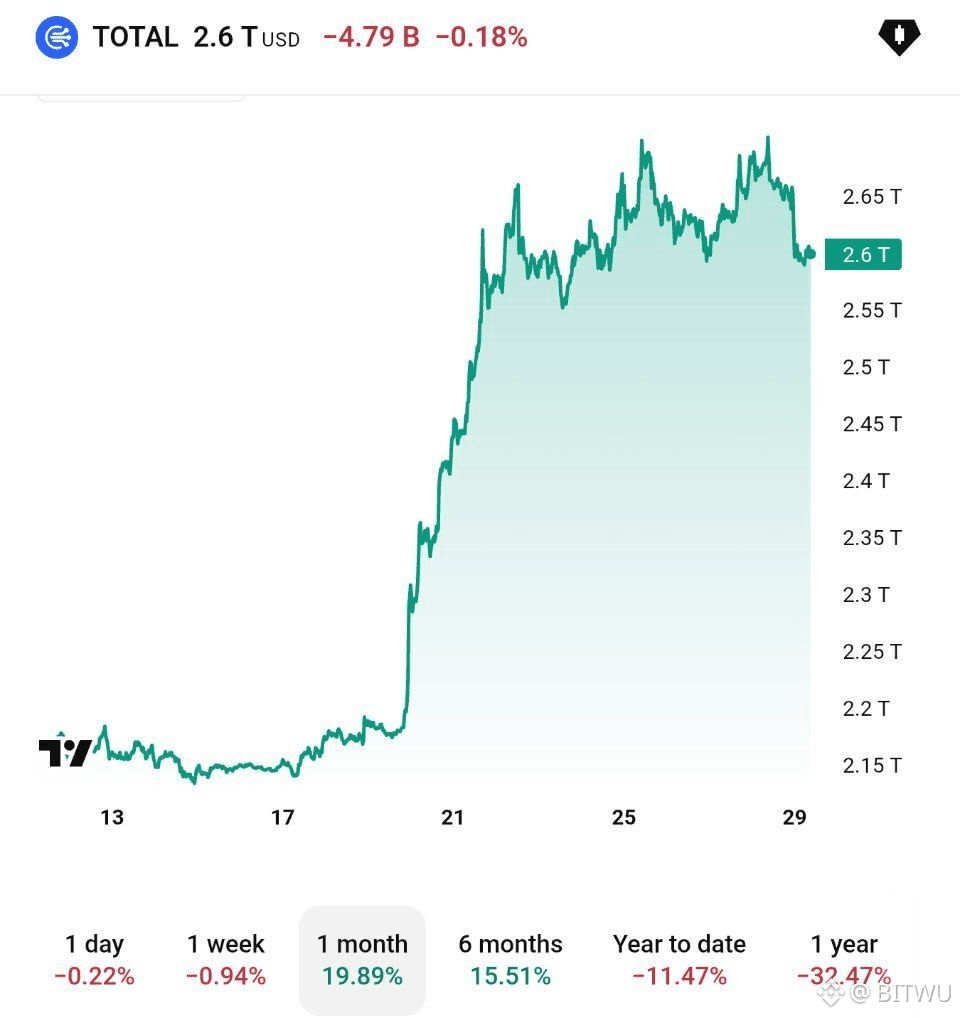
Total cryptocurrency market capitalization increases by over $43 billion in one week!
$BTC may keep ranging here for a while—be mentally prepared. Buy gradually, do staged dip-buying, and remember: patience is king!
Right now, the current range is the best opportunity. A range market is a time to build up energy. A range is our chance to get on the train—not the chance to get off.
In this stage, we only need to do two things:
1️⃣ Set a periodic strategy for DCA. Decide daily and weekly targets for yourself, and turn on DCA;
2️⃣ When there’s a big drop, buy big; when there’s a small drop, buy small. Make a plan and follow through with discipline!
Then keep living life—eat, drink, play. Don’t pay too much attention to unnecessary market noise.
$BTC may keep ranging here for a while—be mentally prepared. Buy gradually, do staged dip-buying, and remember: patience is king!
Right now, the current range is the best opportunity. A range market is a time to build up energy. A range is our chance to get on the train—not the chance to get off.
In this stage, we only need to do two things:
1️⃣ Set a periodic strategy for DCA. Decide daily and weekly targets for yourself, and turn on DCA;
2️⃣ When there’s a big drop, buy big; when there’s a small drop, buy small. Make a plan and follow through with discipline!
Then keep living life—eat, drink, play. Don’t pay too much attention to unnecessary market noise.
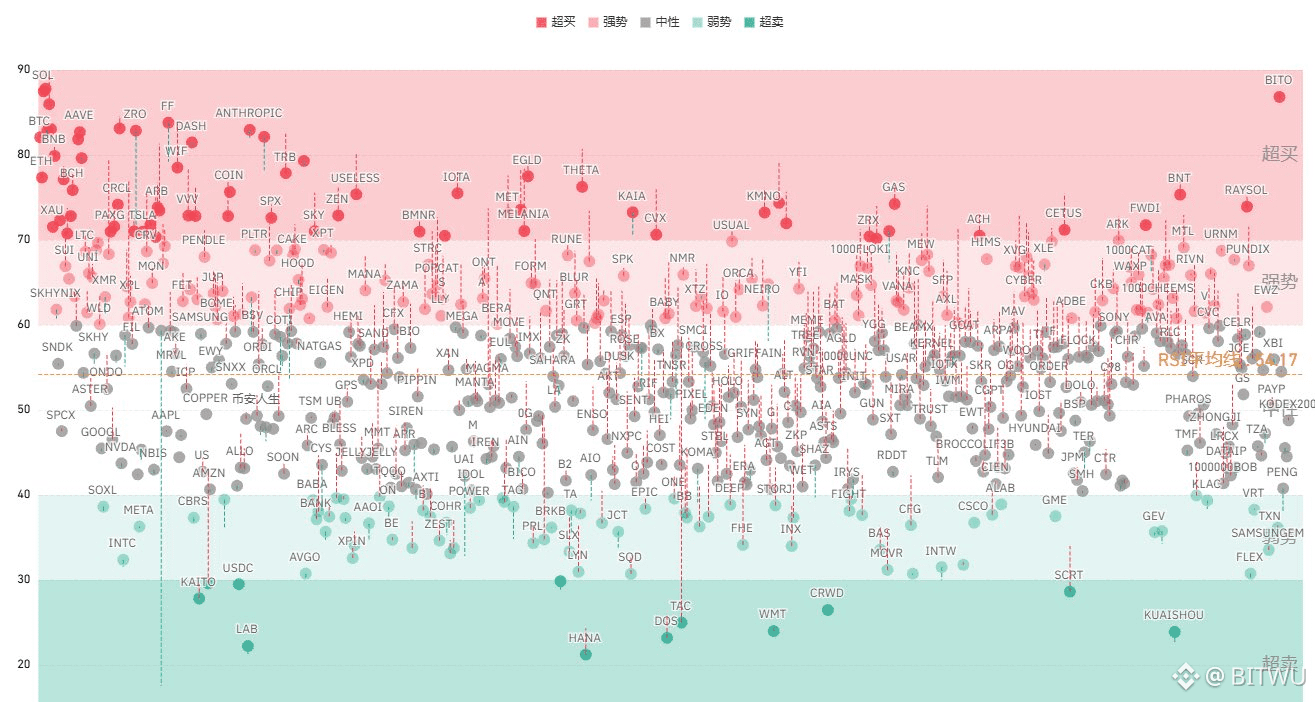
This chart is actually pretty interesting!
On the daily timeframe, the RSI hit around 86 on $BTC . On the four-hour timeframe, RSI rose to a seven-year high—one of the strongest overbought zones in the past two years.
Traders generally have high expectations, with the bulls relying largely on the $75k~$76k support band;
if that holds, the upside targets move toward $83k~$88k;
if, after a severe overbought condition, momentum fades, the deeper pullback zone is likely to focus on $70k~$72k.
On the daily timeframe, the RSI hit around 86 on $BTC . On the four-hour timeframe, RSI rose to a seven-year high—one of the strongest overbought zones in the past two years.
Traders generally have high expectations, with the bulls relying largely on the $75k~$76k support band;
if that holds, the upside targets move toward $83k~$88k;
if, after a severe overbought condition, momentum fades, the deeper pullback zone is likely to focus on $70k~$72k.
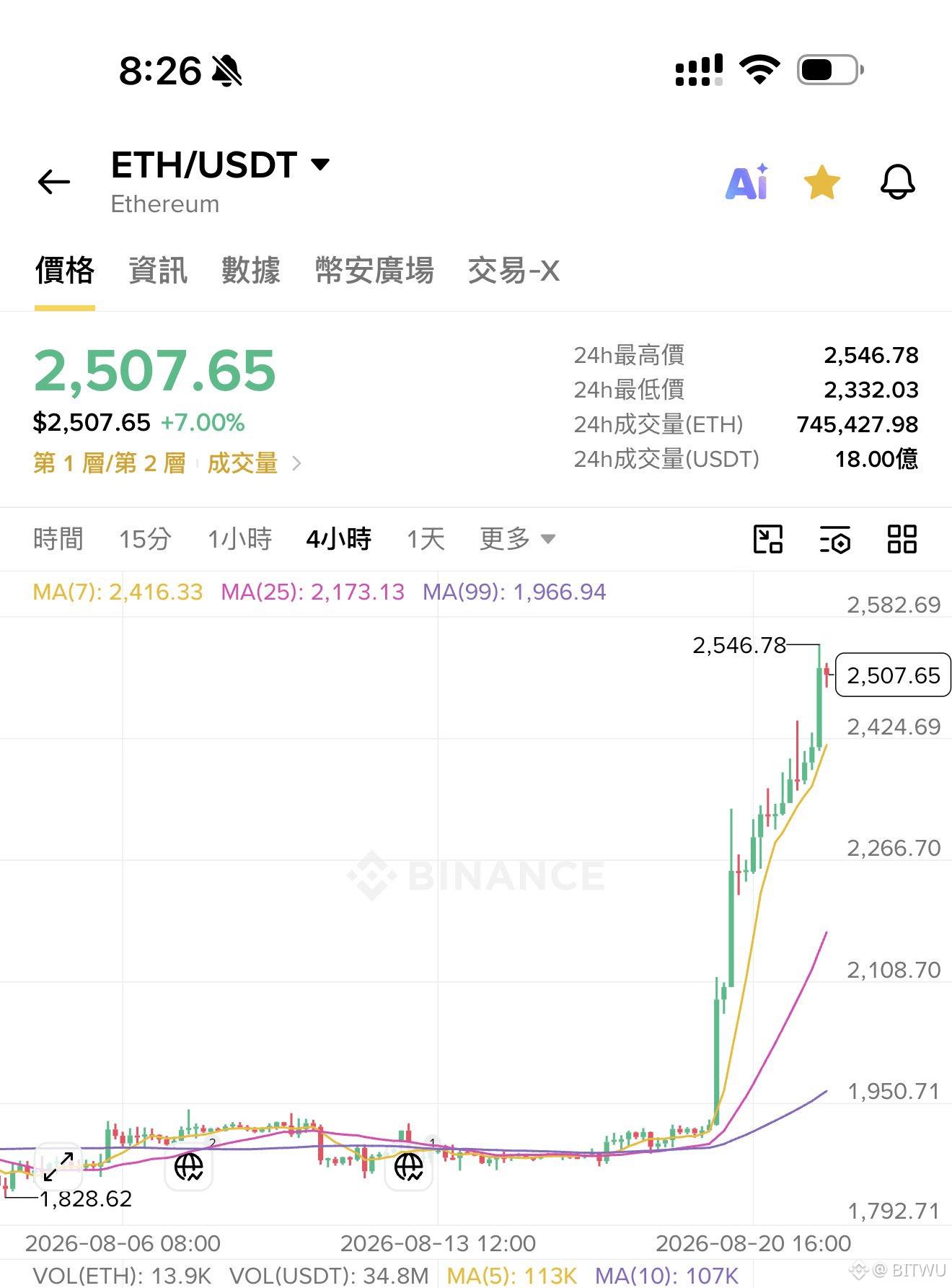
$ETH For the first time in seven months, it breaks above 2500
All of Strategy’s funds are now back—turning a floating loss of 10 billion into profits. How long until BitMine follows suit?
In another six months, these two companies will take off directly!
Ethereum’s catch-up rally will be the strongest catch-up rally!
All of Strategy’s funds are now back—turning a floating loss of 10 billion into profits. How long until BitMine follows suit?
In another six months, these two companies will take off directly!
Ethereum’s catch-up rally will be the strongest catch-up rally!
The breakthrough is real, but right now we’re just in the middle of the first stress test.
At this moment, what’s more important is to share some operational suggestions:
Here are my own thoughts—just for reference!
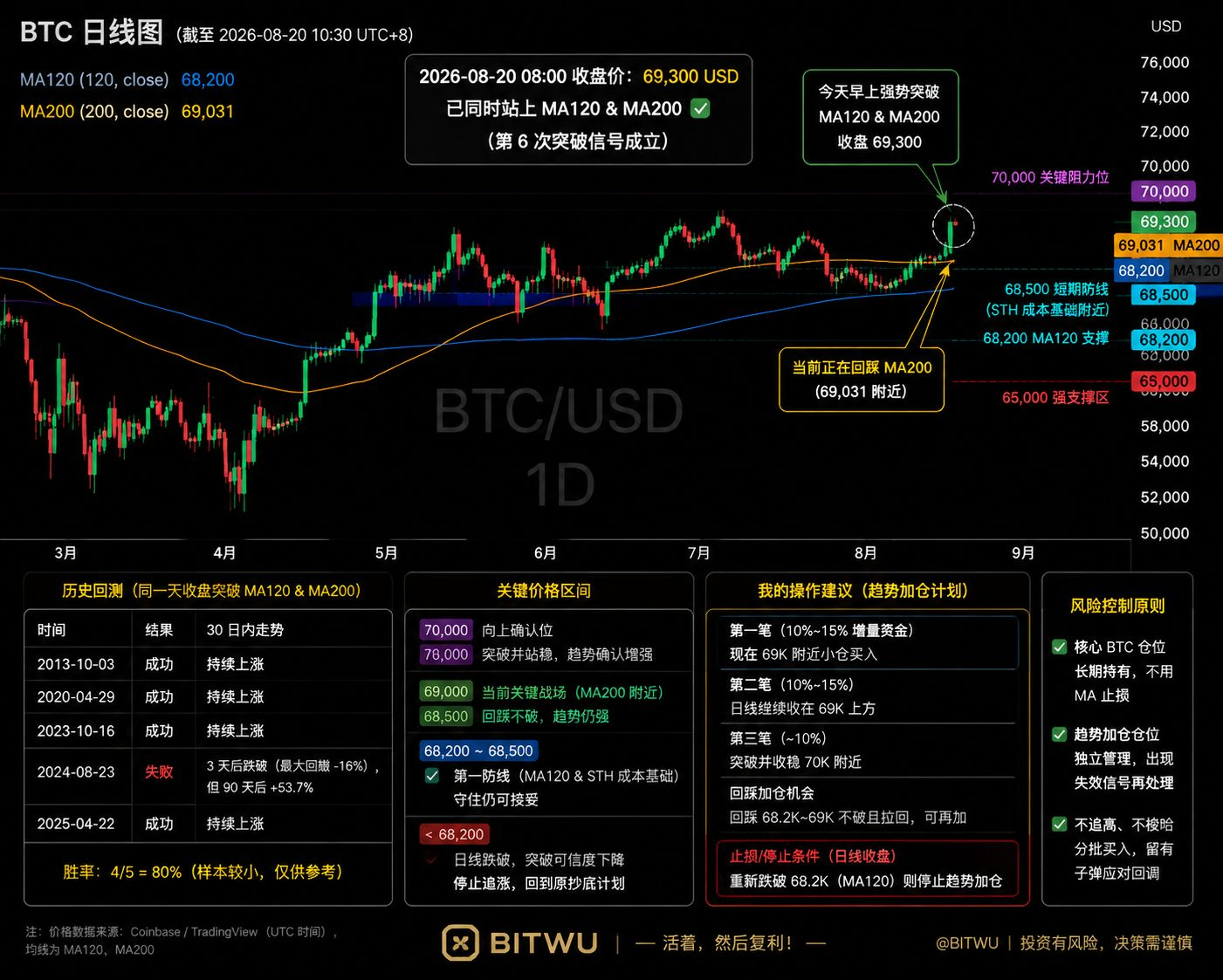
Recovering both MA120 + MA200 at the same time is quite rare;
The current instant price of $BTC is around $69,000. That means after this morning’s 8:00 a.m. close confirmed at $69,300, it has now immediately returned to the vicinity of MA200 ≈ $69,031.
Right now, this is a very good observation window:
If: 69,300 breaks out → pulls back toward around 69,000 → gets held/absorbed → then continues upward, that’s a reversal—not just a simple bounce.
What you need to pay the most attention to right now is that within this big bullish candle, there is very clear short-squeeze pressure. During BTC’s rapid move from about $64,100 up to $70,000, roughly $1.4 billion worth of crypto shorts were liquidated within four hours.
My suggestion is:
If you’re a trend trader: this is a high-value entry.
The MA120 + MA200 signal is very strong—if you don’t buy now, when would you?
But if it breaks down, you must be brave enough to sell. For example, if you buy 40% now: if it breaks MA200, cut losses by 20%; if it then breaks below MA120 again, cut losses by another 20%.
If you’re a long-term holder, you need to be clear about whether you’re suited to a left-side entry or a right-side entry. If you’re not comfortable with right-side setups, then at this moment it might be better not to do anything. If you’re worried about missing the move, you already have a clear right-side signal now—you can overturn your earlier bottom-fishing plan and recommend buying part of your position for long-term holding.
I’ll allocate, for instance, 20% of my total bottom-buying allocation, and then add to it at different stages. At this time, buy 10% first; if the daily chart continues to close above $70K, then add another 10%. After a pullback to $68.2K–$69K, if price pulls back up again, you can add another 20%. If the daily chart closes back below $68.2K, then stop adding and return to the original plan.
The chart below is something GPT helped me make to map out a plan based on my own ideas. Use it as a reference—it fits me, but it may not fit you.
At this moment, what’s more important is to share some operational suggestions:
Here are my own thoughts—just for reference!
Recovering both MA120 + MA200 at the same time is quite rare;
The current instant price of $BTC is around $69,000. That means after this morning’s 8:00 a.m. close confirmed at $69,300, it has now immediately returned to the vicinity of MA200 ≈ $69,031.
Right now, this is a very good observation window:
If: 69,300 breaks out → pulls back toward around 69,000 → gets held/absorbed → then continues upward, that’s a reversal—not just a simple bounce.
What you need to pay the most attention to right now is that within this big bullish candle, there is very clear short-squeeze pressure. During BTC’s rapid move from about $64,100 up to $70,000, roughly $1.4 billion worth of crypto shorts were liquidated within four hours.
My suggestion is:
If you’re a trend trader: this is a high-value entry.
The MA120 + MA200 signal is very strong—if you don’t buy now, when would you?
But if it breaks down, you must be brave enough to sell. For example, if you buy 40% now: if it breaks MA200, cut losses by 20%; if it then breaks below MA120 again, cut losses by another 20%.
If you’re a long-term holder, you need to be clear about whether you’re suited to a left-side entry or a right-side entry. If you’re not comfortable with right-side setups, then at this moment it might be better not to do anything. If you’re worried about missing the move, you already have a clear right-side signal now—you can overturn your earlier bottom-fishing plan and recommend buying part of your position for long-term holding.
I’ll allocate, for instance, 20% of my total bottom-buying allocation, and then add to it at different stages. At this time, buy 10% first; if the daily chart continues to close above $70K, then add another 10%. After a pullback to $68.2K–$69K, if price pulls back up again, you can add another 20%. If the daily chart closes back below $68.2K, then stop adding and return to the original plan.
The chart below is something GPT helped me make to map out a plan based on my own ideas. Use it as a reference—it fits me, but it may not fit you.
The real “bull run”
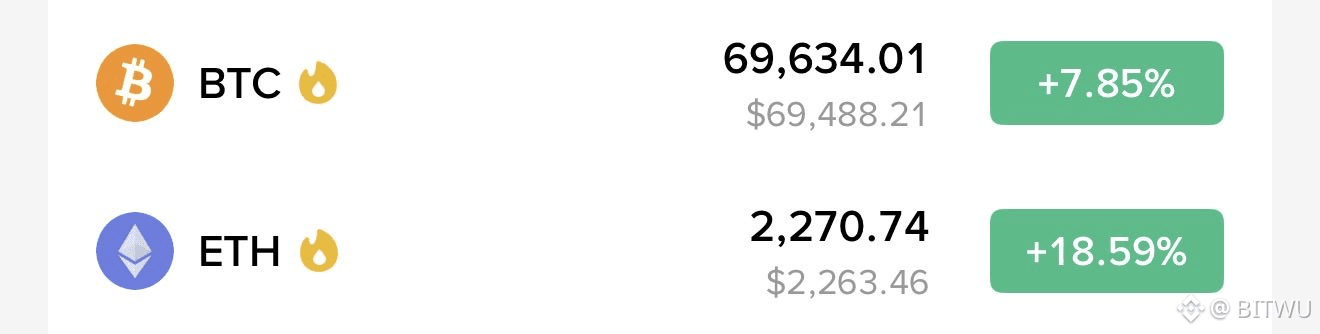
It’s that Ethereum (ETH) has greatly outperformed Bitcoin (BTC) in terms of its rise, driven by the increase in the ETH/BTC exchange rate!
If you understood, clap your hands!
Go look it up yourself—over the past six months, how many big Wall Street institutions and major players have been stockpiling a lot of Ethereum.
They’re not buying it just for fun.
$BTC $ETH
It’s that Ethereum (ETH) has greatly outperformed Bitcoin (BTC) in terms of its rise, driven by the increase in the ETH/BTC exchange rate!
If you understood, clap your hands!
Go look it up yourself—over the past six months, how many big Wall Street institutions and major players have been stockpiling a lot of Ethereum.
They’re not buying it just for fun.
$BTC $ETH
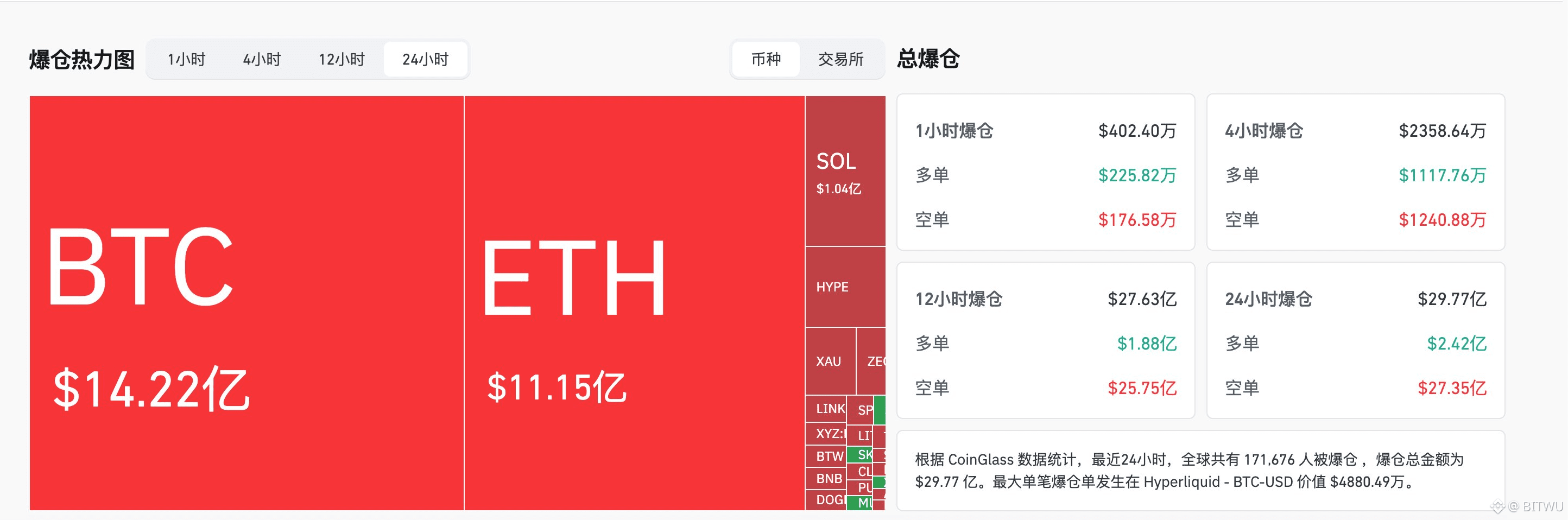
In the past 24 hours, liquidations across the entire web totaled $2.975 billion, including more than $2.7 billion in short liquidations.
This figure surpasses 10.11’s $2.4666 billion in short liquidations and has become the largest short-liquidation day in the crypto market in nearly two years.
This figure surpasses 10.11’s $2.4666 billion in short liquidations and has become the largest short-liquidation day in the crypto market in nearly two years.
Do you also pay attention to that news from a few days ago about “Anthropic’s challenge to the Riemann Hypothesis failing”?
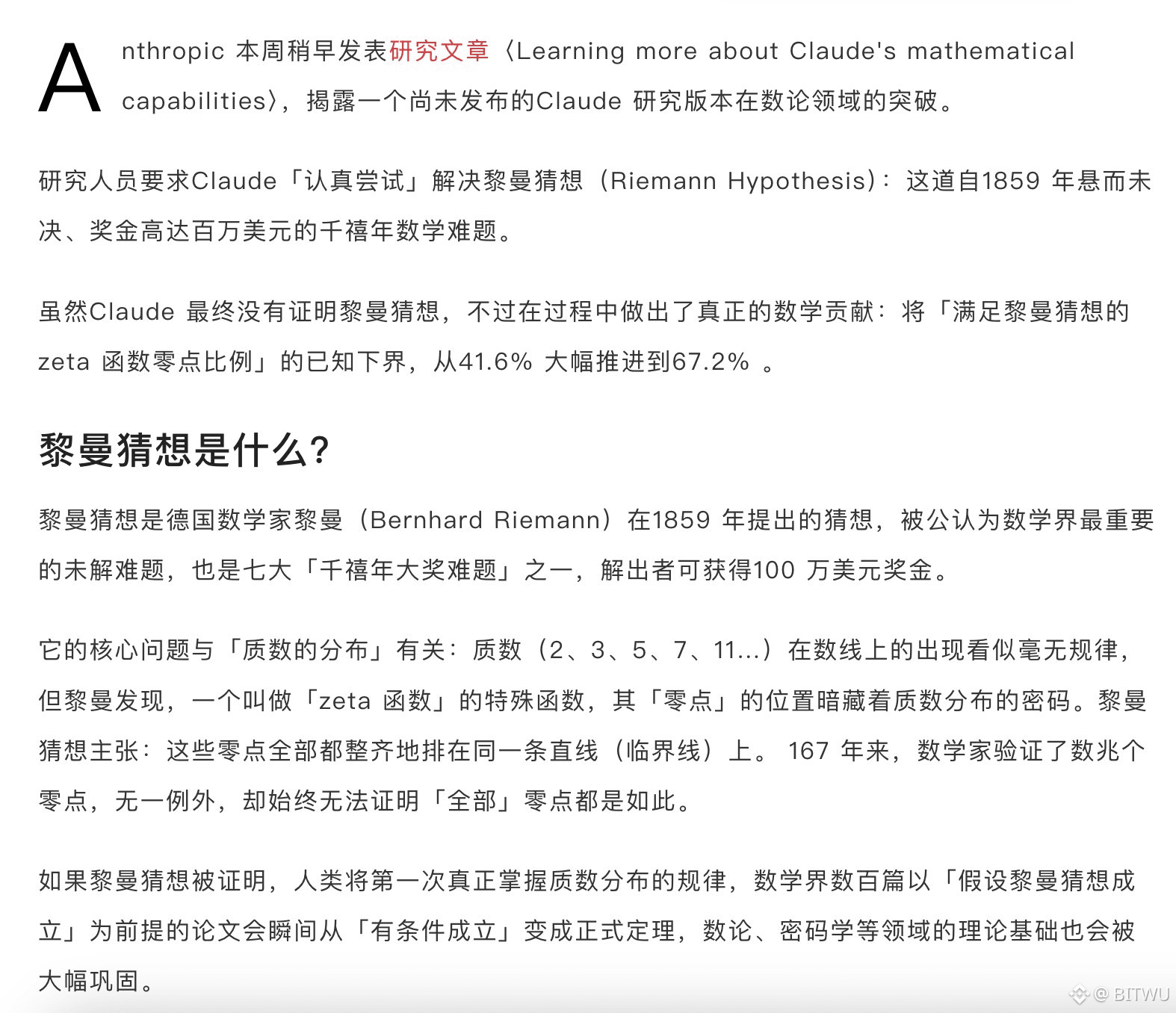
Anthropic ran an experiment where they had an unreleased research version of Claude seriously try to solve the Riemann Hypothesis;
Although it ultimately didn’t manage to prove it, it unexpectedly pushed a mathematical record that had advanced at a painfully slow pace for decades—from 41.6% all the way to 67.2%.
A friend asked me in a private message:
“Has AI already started breaking the Riemann Hypothesis? Since the Riemann Hypothesis involves prime numbers, and modern cryptography is built on prime numbers, could Bitcoin’s cryptography be broken in the future? Would $BTC be under long-term pressure because of this?”
I think there’s no impact in the short term;
From a technical perspective, Bitcoin’s ownership security relies mainly on the secp256k1 elliptic curve.
Put simply:
I have a private key, which is used with mathematical operations to generate a public key. Others know the public key, the algorithm, and even the entire set of mathematical rules—but under current computational conditions, deriving the private key from the public key is still almost infeasible.
What it really depends on is the elliptic curve discrete logarithm problem.
And the Riemann Hypothesis mainly studies the relationship between the zeros of the Riemann zeta function and the distribution of prime numbers.
Both sides belong to the same big neighborhood of number theory, but just because they both recognize “prime numbers” as their neighbor doesn’t mean that once the Riemann Hypothesis is proven, Bitcoin private keys will be exposed and “naked” the very next day.
How do we generally define security in cryptography?
In many cases, it’s not about absolute impossibility to break—but rather a cost problem.
Any system that relies on cryptography must accept this reality:
A problem that is considered computationally infeasible today doesn’t mean it will be infeasible forever.
In a sense, human civilization has always moved forward this way.
First we invent locks, then someone figures out how to pick them; once the locks are picked, we invent better locks.
Cryptography, financial systems, cybersecurity, and even law—at their core, are an ongoing game of attack and defense without a final endpoint.
AI could become the more intelligent lock-picker—or it could help us design the next generation of locks.
What I’d rather believe is this: as long as the cost of attacks remains far higher than the payoff, and as long as this network still has the ability to migrate through consensus, then Bitcoin’s security will still hold!
Anthropic ran an experiment where they had an unreleased research version of Claude seriously try to solve the Riemann Hypothesis;
Although it ultimately didn’t manage to prove it, it unexpectedly pushed a mathematical record that had advanced at a painfully slow pace for decades—from 41.6% all the way to 67.2%.
A friend asked me in a private message:
“Has AI already started breaking the Riemann Hypothesis? Since the Riemann Hypothesis involves prime numbers, and modern cryptography is built on prime numbers, could Bitcoin’s cryptography be broken in the future? Would $BTC be under long-term pressure because of this?”
I think there’s no impact in the short term;
From a technical perspective, Bitcoin’s ownership security relies mainly on the secp256k1 elliptic curve.
Put simply:
I have a private key, which is used with mathematical operations to generate a public key. Others know the public key, the algorithm, and even the entire set of mathematical rules—but under current computational conditions, deriving the private key from the public key is still almost infeasible.
What it really depends on is the elliptic curve discrete logarithm problem.
And the Riemann Hypothesis mainly studies the relationship between the zeros of the Riemann zeta function and the distribution of prime numbers.
Both sides belong to the same big neighborhood of number theory, but just because they both recognize “prime numbers” as their neighbor doesn’t mean that once the Riemann Hypothesis is proven, Bitcoin private keys will be exposed and “naked” the very next day.
How do we generally define security in cryptography?
In many cases, it’s not about absolute impossibility to break—but rather a cost problem.
Any system that relies on cryptography must accept this reality:
A problem that is considered computationally infeasible today doesn’t mean it will be infeasible forever.
In a sense, human civilization has always moved forward this way.
First we invent locks, then someone figures out how to pick them; once the locks are picked, we invent better locks.
Cryptography, financial systems, cybersecurity, and even law—at their core, are an ongoing game of attack and defense without a final endpoint.
AI could become the more intelligent lock-picker—or it could help us design the next generation of locks.
What I’d rather believe is this: as long as the cost of attacks remains far higher than the payoff, and as long as this network still has the ability to migrate through consensus, then Bitcoin’s security will still hold!
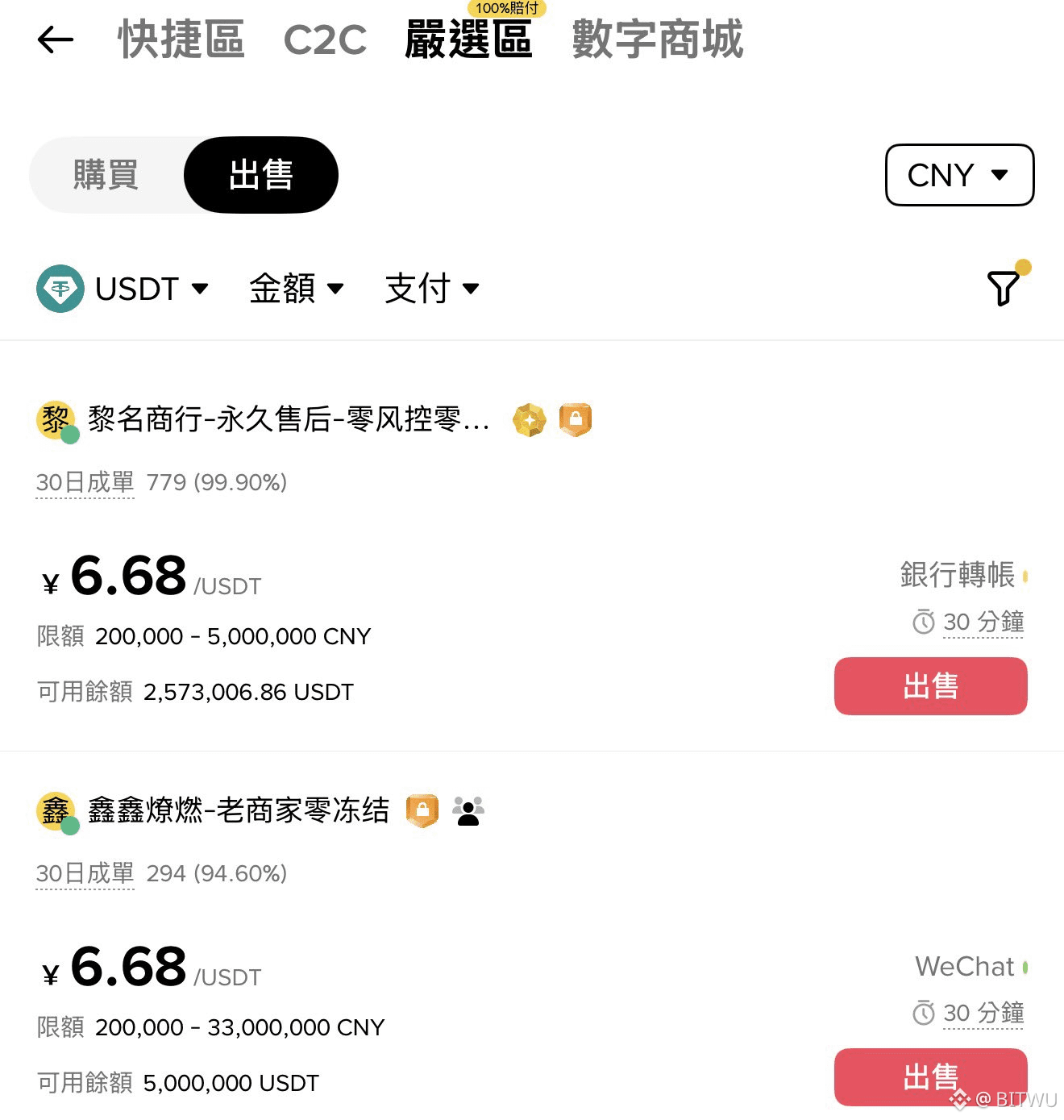
The RMB has cycles, and the USD also has cycles.
If you urgently need RMB, exchange in batches. If you don’t need it urgently, any missing balance shouldn’t be loss-making to exchange at this stage.
To see 7.2 again, I think at least one or two obvious variables must appear:
For example, US inflation gets out of control again, and the Fed turns clearly more hawkish again; China’s economy weakens noticeably and moves toward further easing; US-China trade relations deteriorate; or global risk-off conditions cause funds to embrace the US dollar again.
And these variables are all on the way!
If you urgently need RMB, exchange in batches. If you don’t need it urgently, any missing balance shouldn’t be loss-making to exchange at this stage.
To see 7.2 again, I think at least one or two obvious variables must appear:
For example, US inflation gets out of control again, and the Fed turns clearly more hawkish again; China’s economy weakens noticeably and moves toward further easing; US-China trade relations deteriorate; or global risk-off conditions cause funds to embrace the US dollar again.
And these variables are all on the way!
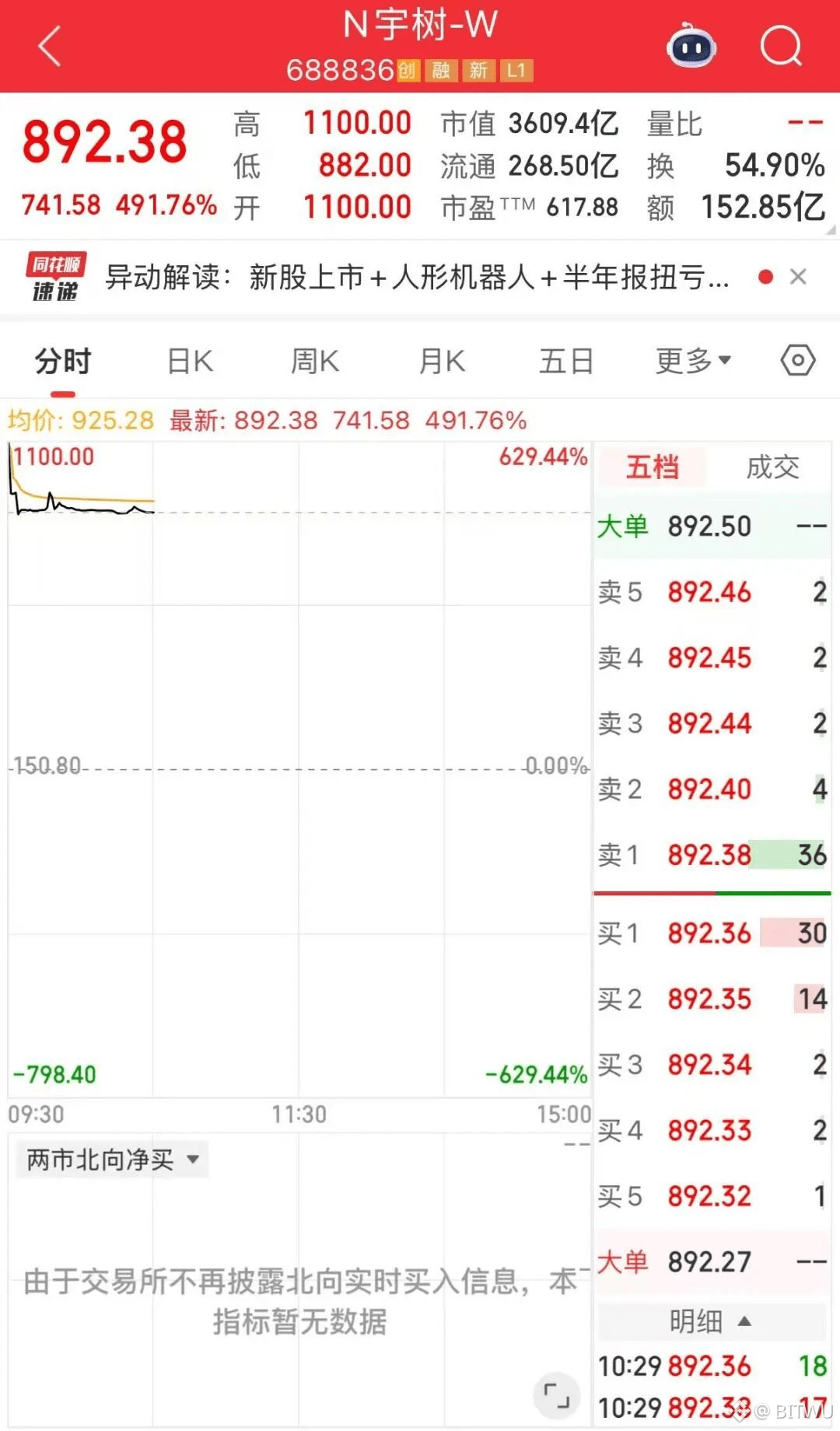
The Rise of a New Elite:
Unitree Technology debuts today on the Shanghai Stock Exchange’s STAR Market,
opening the first day up 629.44% to 1100 yuan per share, with a total market value of 444.9 billion yuan—becoming the second A-share stock to open above 1,000 yuan, and setting multiple records.
In the IPO subscription, the final winning (allotment) rate was only 0.01809759%, meaning that among every 10,000 application numbers, fewer than two are successful.
In terms of allocations, Liang Wenfeng’s DeepSeek, Hongfan Quant and Nine Chapters Asset obtained approximately 1.1916 million shares in total through a combination of strategic placements and offline/underwriting subscriptions. Based on the issue price, Liang Wenfeng’s IPO gains on Unitree Technology amount to over 1.1 billion yuan. Astrend IV, an entity related to Shunwei Capital founded by Lei Jun, holds 16.106 million shares, with unrealized gains of over 15.2 billion yuan.
Wang Xingxing’s personal net worth reaches 100 billion yuan, making him the first “post-90s” billionaire!
Unitree Technology debuts today on the Shanghai Stock Exchange’s STAR Market,
opening the first day up 629.44% to 1100 yuan per share, with a total market value of 444.9 billion yuan—becoming the second A-share stock to open above 1,000 yuan, and setting multiple records.
In the IPO subscription, the final winning (allotment) rate was only 0.01809759%, meaning that among every 10,000 application numbers, fewer than two are successful.
In terms of allocations, Liang Wenfeng’s DeepSeek, Hongfan Quant and Nine Chapters Asset obtained approximately 1.1916 million shares in total through a combination of strategic placements and offline/underwriting subscriptions. Based on the issue price, Liang Wenfeng’s IPO gains on Unitree Technology amount to over 1.1 billion yuan. Astrend IV, an entity related to Shunwei Capital founded by Lei Jun, holds 16.106 million shares, with unrealized gains of over 15.2 billion yuan.
Wang Xingxing’s personal net worth reaches 100 billion yuan, making him the first “post-90s” billionaire!
Verified
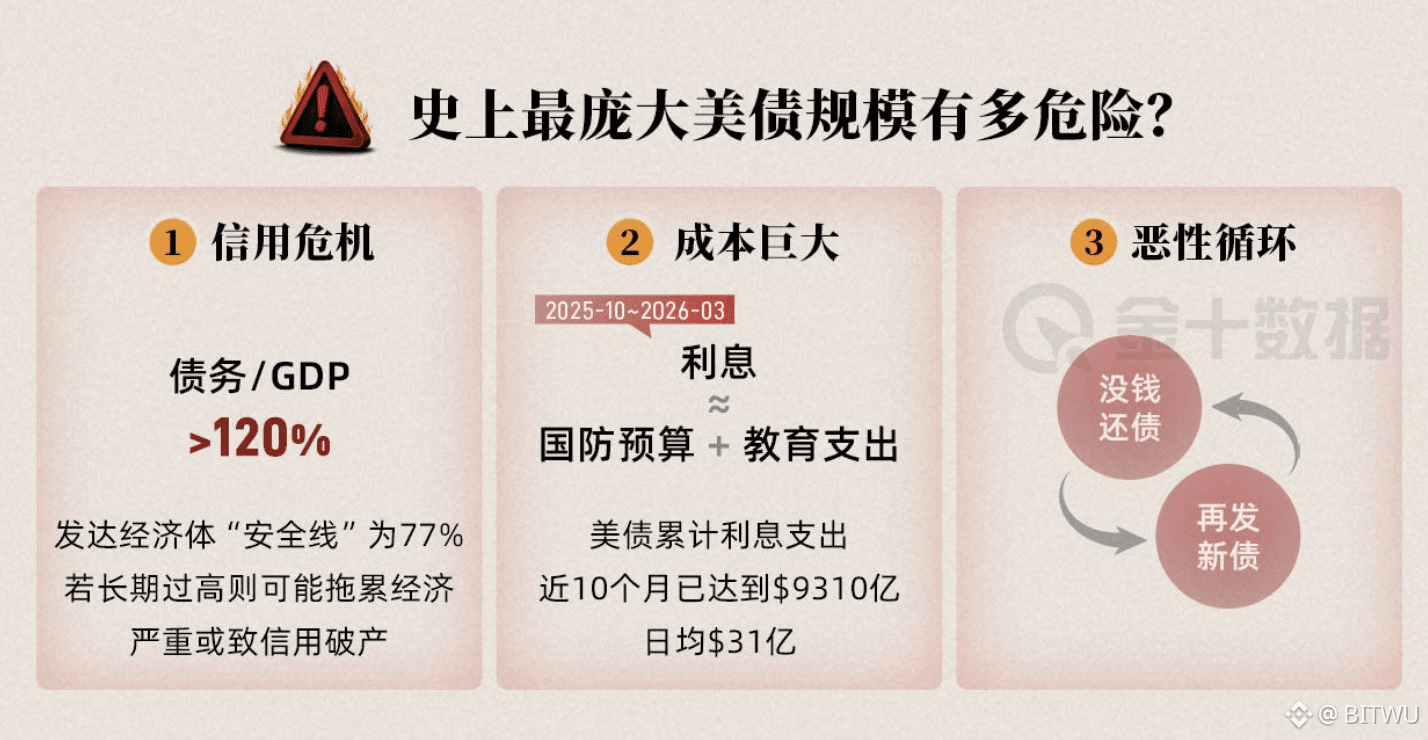
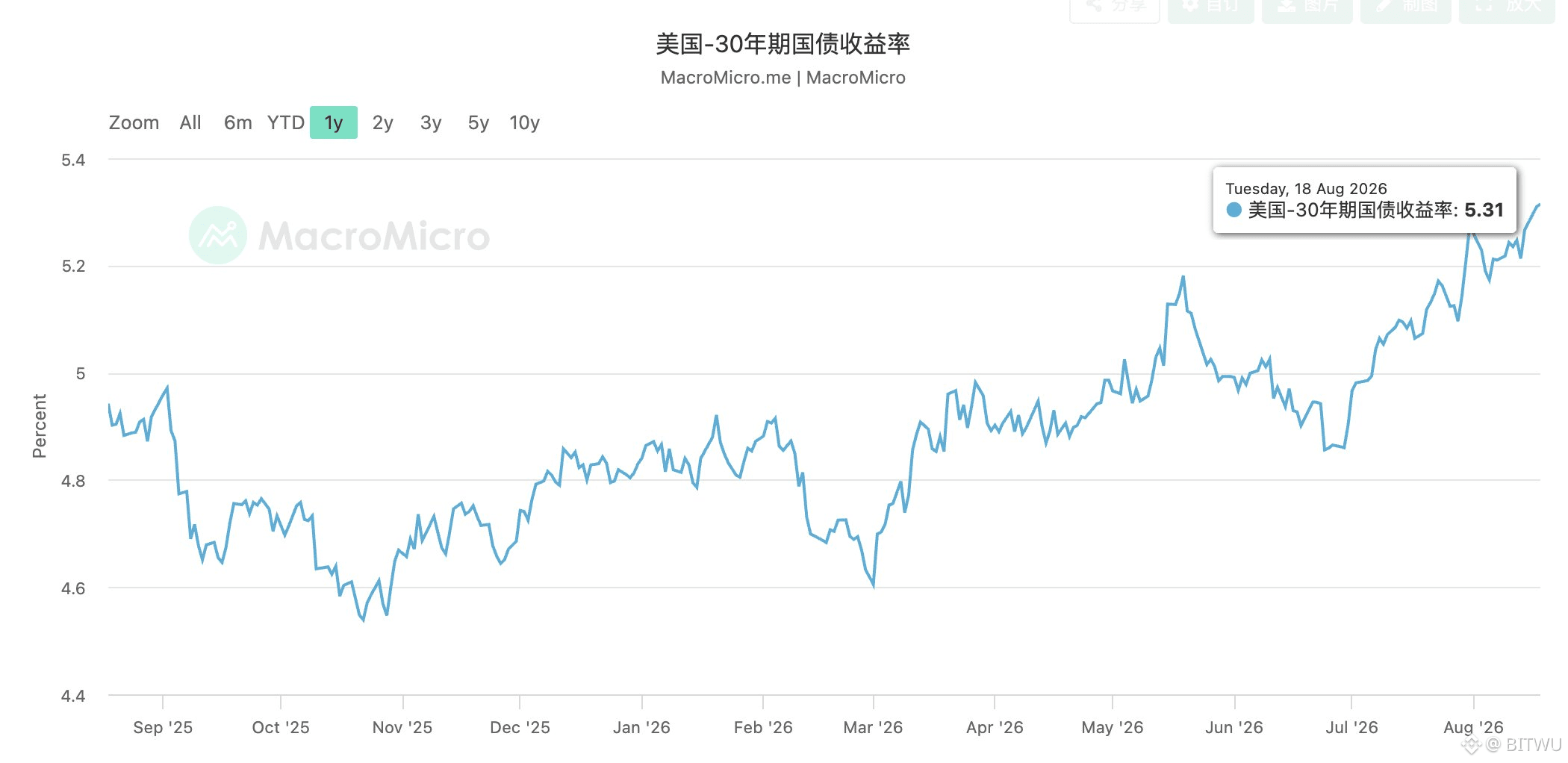
🚨 U.S. Treasury 30-year yields have already risen to 5.31%, hitting the highest level since 2007!
In *The Price of Time*, Edward Chancellor repeatedly emphasizes: interest rates are the price of time.
Applied to the 30-year Treasury, it means investors are not just buying a single 5% coupon—they are accepting the risk that the 30-year rate will be repriced over time.
For the U.S., this risk comes from inflation.
For foreign countries, this risk comes from the depreciation of the U.S. dollar.
Obviously, the world is moving on from the era of cheap long-term capital over the past decade or so—every asset may end up replicating the kind of moves seen in March 2020!
In *The Price of Time*, Edward Chancellor repeatedly emphasizes: interest rates are the price of time.
Applied to the 30-year Treasury, it means investors are not just buying a single 5% coupon—they are accepting the risk that the 30-year rate will be repriced over time.
For the U.S., this risk comes from inflation.
For foreign countries, this risk comes from the depreciation of the U.S. dollar.
Obviously, the world is moving on from the era of cheap long-term capital over the past decade or so—every asset may end up replicating the kind of moves seen in March 2020!
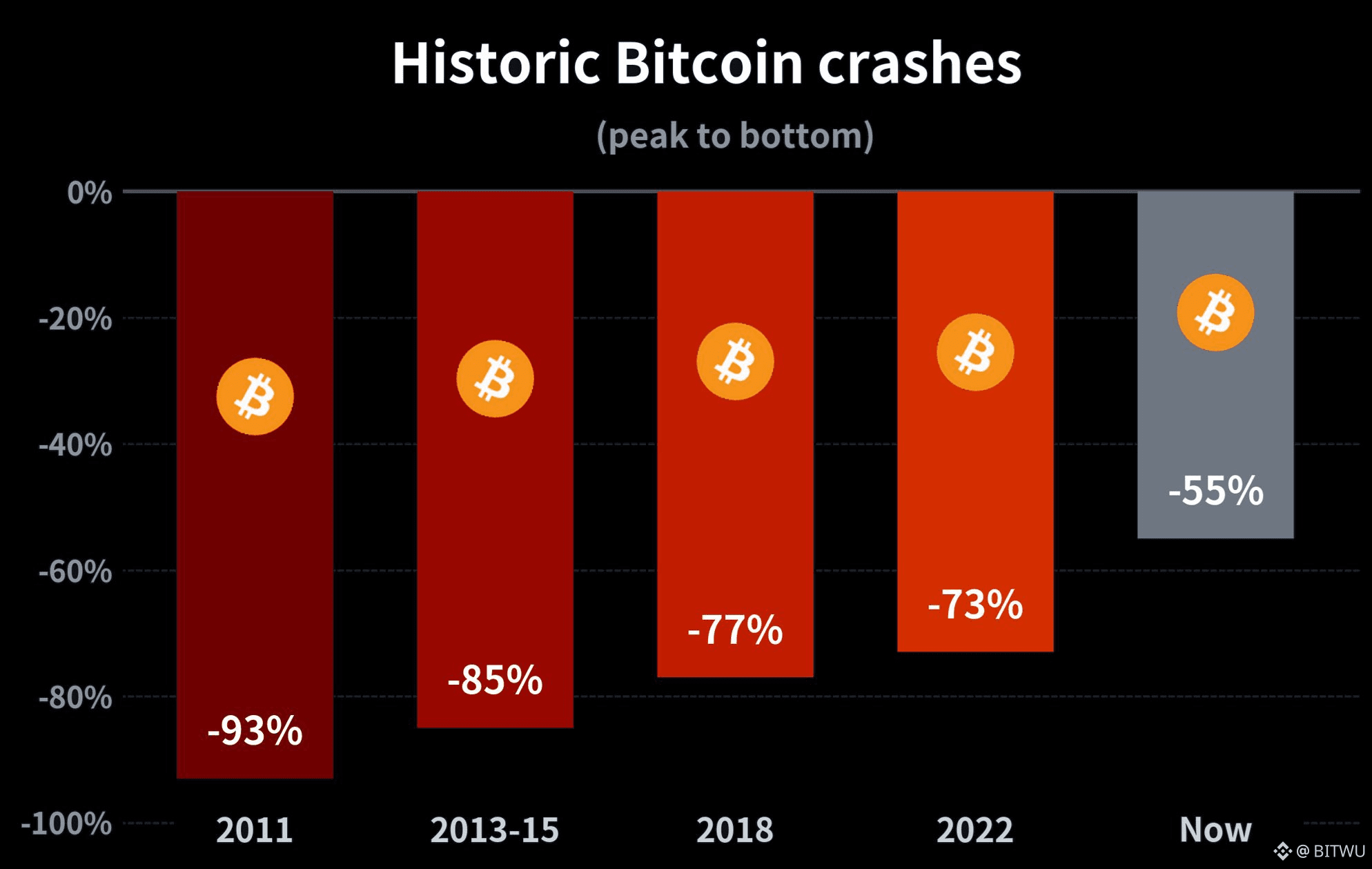
$BTC Each round of bull-bear cycles' drawdowns are getting shallower.
This indicates it is gradually evolving from a high-volatility speculative asset into a more mature one capable of supporting larger amounts of capital.
So, how much drawdown do you think is reasonable for this cycle?
Is a maximum drawdown of 62% credible?
This indicates it is gradually evolving from a high-volatility speculative asset into a more mature one capable of supporting larger amounts of capital.
So, how much drawdown do you think is reasonable for this cycle?
Is a maximum drawdown of 62% credible?
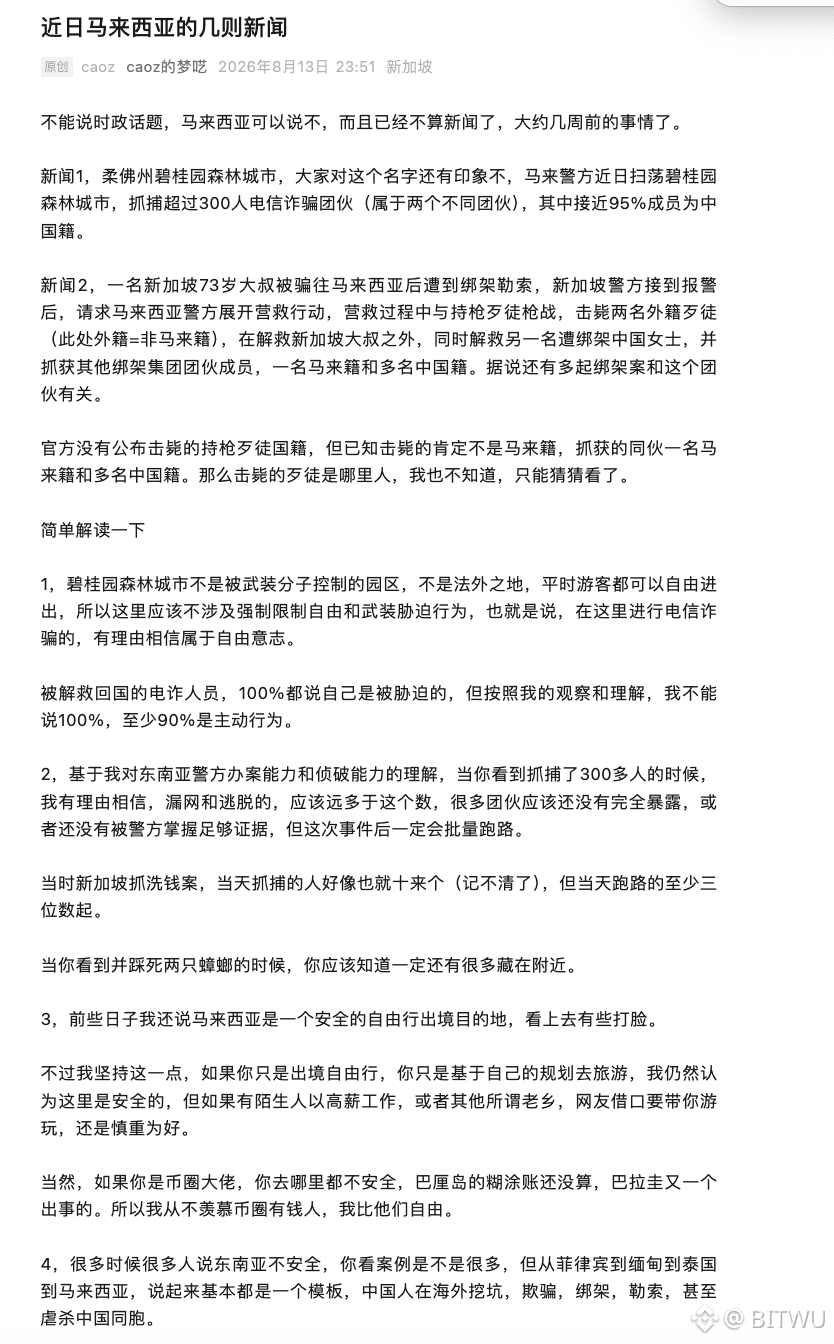
caoz:
If you’re just traveling independently overseas—going based on your own plans—I still believe it’s safe here. But if someone you don’t know offers you a high-paying job, or uses some so-called “fellow countryman” or online friend as an excuse to take you sightseeing, you’d better be cautious.
Of course, if you’re a big shot in the crypto world, then no matter where you go, it’s not safe. The messy affairs of Bali haven’t been settled yet, and Paraguay has had another incident. So I never envy the rich in the crypto world; I’m freer than they are.
If you’re just traveling independently overseas—going based on your own plans—I still believe it’s safe here. But if someone you don’t know offers you a high-paying job, or uses some so-called “fellow countryman” or online friend as an excuse to take you sightseeing, you’d better be cautious.
Of course, if you’re a big shot in the crypto world, then no matter where you go, it’s not safe. The messy affairs of Bali haven’t been settled yet, and Paraguay has had another incident. So I never envy the rich in the crypto world; I’m freer than they are.
Verified
Recently, B3 Labs—founded by the former Coinbase team—launched B3IQ, and I think this approach is quite interesting.
In the current boom of AI, what everyone discusses the most is compute power,
Compute power is the foundation and the root of AI. Many friends around me have been tinkering with compute power and machines since last year, and they’ve been making a lot of money from it.
But in the past, getting compute power required GPUs, and there were basically two paths:
1) Either rent cloud compute—your machines are never really yours;
2) Or buy machines with a huge amount of money, and then deal with the server room, cooling, and maintenance.
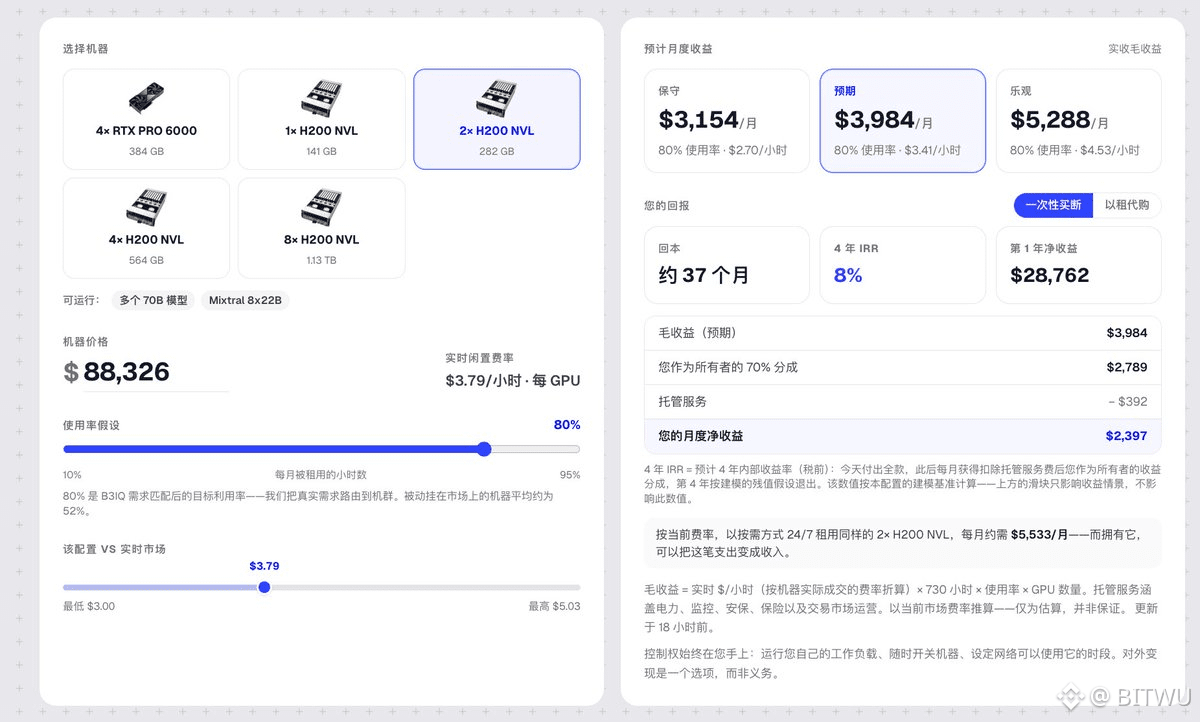
With B3IQ, they made a third choice in the middle: put down about 30% to buy NVIDIA GPUs → B3 helps you host them → when you need them, you run them yourself → when they’re idle, they automatically rent out the compute power → once the machine is fully paid for, it’s yours.
I think the most crucial part is actually the final step: you own the machines, and you can sell only the idle time.
I ran the numbers with the calculator on the official website. As shown in the image, a setup of 2×H200 NVL costs about $88,300. Based on an 80% utilization rate and current compute pricing, the estimated net monthly income is about $2,397, and the static payback period is roughly 37 months.
Of course, this is only a projection. GPU rental fees, utilization rates, and depreciation will all change—so it’s not something you can assume is guaranteed profit.
But this is definitely a shift: in the past, you paid money to buy compute power; now you own compute power and make cash flow from idle compute.
From my understanding, this model is especially attractive to many universities or hospitals, because their own GPUs have an even more practical value: sensitive data doesn’t need to be handed to a third party. Medical cancer research, proprietary models, and even diplomatic simulations can all run directly on their own machines.
When you see this, it may feel like it’s similar to cloud compute renting, but in reality it’s the exact opposite direction from what cloud computing looked like back then:
Cloud computing is: I don’t own the machines; I only buy the right to use them.
B3IQ wants to do the opposite: I own the machines, and I just sell the time I’m not using.
And there’s a bigger trend behind it: Compute is becoming an asset class.
In the AI era, compute power may no longer be only a service we purchase. Instead, it could truly become a kind of production asset that you can own. And in the future, it may become increasingly scarce—just like land, gold, or Bitcoin. The scarcer it is, the more valuable it becomes over time.
In the current boom of AI, what everyone discusses the most is compute power,
Compute power is the foundation and the root of AI. Many friends around me have been tinkering with compute power and machines since last year, and they’ve been making a lot of money from it.
But in the past, getting compute power required GPUs, and there were basically two paths:
1) Either rent cloud compute—your machines are never really yours;
2) Or buy machines with a huge amount of money, and then deal with the server room, cooling, and maintenance.
With B3IQ, they made a third choice in the middle: put down about 30% to buy NVIDIA GPUs → B3 helps you host them → when you need them, you run them yourself → when they’re idle, they automatically rent out the compute power → once the machine is fully paid for, it’s yours.
I think the most crucial part is actually the final step: you own the machines, and you can sell only the idle time.
I ran the numbers with the calculator on the official website. As shown in the image, a setup of 2×H200 NVL costs about $88,300. Based on an 80% utilization rate and current compute pricing, the estimated net monthly income is about $2,397, and the static payback period is roughly 37 months.
Of course, this is only a projection. GPU rental fees, utilization rates, and depreciation will all change—so it’s not something you can assume is guaranteed profit.
But this is definitely a shift: in the past, you paid money to buy compute power; now you own compute power and make cash flow from idle compute.
From my understanding, this model is especially attractive to many universities or hospitals, because their own GPUs have an even more practical value: sensitive data doesn’t need to be handed to a third party. Medical cancer research, proprietary models, and even diplomatic simulations can all run directly on their own machines.
When you see this, it may feel like it’s similar to cloud compute renting, but in reality it’s the exact opposite direction from what cloud computing looked like back then:
Cloud computing is: I don’t own the machines; I only buy the right to use them.
B3IQ wants to do the opposite: I own the machines, and I just sell the time I’m not using.
And there’s a bigger trend behind it: Compute is becoming an asset class.
In the AI era, compute power may no longer be only a service we purchase. Instead, it could truly become a kind of production asset that you can own. And in the future, it may become increasingly scarce—just like land, gold, or Bitcoin. The scarcer it is, the more valuable it becomes over time.
Partly True
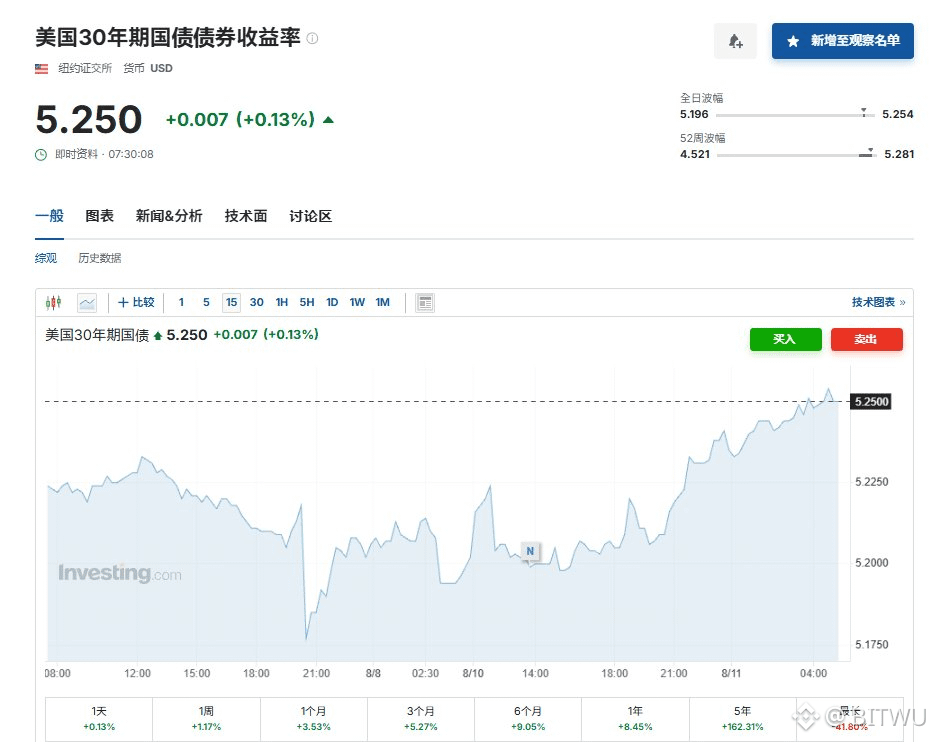
🚨 The yield on US 30-year Treasury bonds has risen to a terrifying 5.25%, essentially reaching the rate levels seen on the eve of the 2007 financial crisis!
And U.S. Treasuries have officially broken through $4 trillion—an all-time first! It took just 150 days to go from $3.9 trillion to $4 trillion.
Based on the current 3.75% interest rate, the United States’ annual debt interest expense is as high as $1.5 trillion. This means that for every $5 in tax revenue collected, $1 is directly used to pay interest.
Now the situation is absurd:
Hiking rates doesn’t work, cutting rates doesn’t work, shrinking the balance sheet doesn’t work, and expanding it doesn’t work—every path has fatal side effects.
If the U.S. cannot quickly resolve the U.S.–Iran conflict, calm oil prices, and bring down inflation, then in the end it will have to fall back on the classic playbook of flooding the system with liquidity, because the surge in long-term bond yields will ultimately seriously threaten valuations in the U.S. stock market.
The only way to crack it—should be to go all out and levy taxes aggressively on the rest of the world, right?!
And U.S. Treasuries have officially broken through $4 trillion—an all-time first! It took just 150 days to go from $3.9 trillion to $4 trillion.
Based on the current 3.75% interest rate, the United States’ annual debt interest expense is as high as $1.5 trillion. This means that for every $5 in tax revenue collected, $1 is directly used to pay interest.
Now the situation is absurd:
Hiking rates doesn’t work, cutting rates doesn’t work, shrinking the balance sheet doesn’t work, and expanding it doesn’t work—every path has fatal side effects.
If the U.S. cannot quickly resolve the U.S.–Iran conflict, calm oil prices, and bring down inflation, then in the end it will have to fall back on the classic playbook of flooding the system with liquidity, because the surge in long-term bond yields will ultimately seriously threaten valuations in the U.S. stock market.
The only way to crack it—should be to go all out and levy taxes aggressively on the rest of the world, right?!
This is what differentiation is—scarce resources!
If you ask me to spend this 1,500 on risk control, I think it’s quite reasonable and I’d be willing to pay for it!
Are there any similar Red Team–style projects in the crypto market? It still feels like a solid direction!
For example, in DeFi, behind almost any project you might find things like:
Token Unlocks, team wallets, VC costs, market makers, oracles, bridges, multisigs, upgrade keys, governance permissions, nested collateral, liquidation depth, exchange liquidity, funding, on-chain whale concentration, treasury runway, protocol revenue, incentive subsidies, regulatory risks...
It seems like institutions have something like this, but for individuals it probably isn’t that easy to implement.
If you ask me to spend this 1,500 on risk control, I think it’s quite reasonable and I’d be willing to pay for it!
Are there any similar Red Team–style projects in the crypto market? It still feels like a solid direction!
For example, in DeFi, behind almost any project you might find things like:
Token Unlocks, team wallets, VC costs, market makers, oracles, bridges, multisigs, upgrade keys, governance permissions, nested collateral, liquidation depth, exchange liquidity, funding, on-chain whale concentration, treasury runway, protocol revenue, incentive subsidies, regulatory risks...
It seems like institutions have something like this, but for individuals it probably isn’t that easy to implement.


The CLARITY Act has completed the hardest first half, but it has not yet cleared the full Senate-wide threshold that will truly determine whether it succeeds.
If it cannot complete a vote before the August recess, that would be an obvious negative signal!
Because if it drags into next month, the Senate will still have to deal with agendas such as government appropriations, sanctions, and nominations; before the midterm elections, it becomes even harder for the controversial bill.
In terms of market impact, if CLARITY becomes law, the biggest beneficiaries are not a single token, but rather:
1⃣ U.S. compliant trading platforms and brokerage/custody institutions: Coinbase, Kraken, Robinhood Crypto, Bullish, and others.
2⃣ Stablecoins and payment rails: however, the revenue/reward terms will determine who benefits and who is limited.
3⃣ DeFi and wallet infrastructure: if the BRCA safe harbor is retained, it would be a major positive for non-custodial developers.
4⃣ Altcoin / L1 / DeFi assets suppressed by regulatory uncertainty—especially assets long held back by the “is it a security?” question.
5⃣ Institutional capital: clear rules reduce the compliance risk premium.
Based on the current situation, September may see procedural momentum or text negotiations, but it is not yet time for the bill to pass.
Each time there is progress, it will boost narratives around XRP, SOL, UNI, COIN, HOOD, and stablecoin-related themes—so you can position yourself a bit as appropriate!
If it cannot complete a vote before the August recess, that would be an obvious negative signal!
Because if it drags into next month, the Senate will still have to deal with agendas such as government appropriations, sanctions, and nominations; before the midterm elections, it becomes even harder for the controversial bill.
In terms of market impact, if CLARITY becomes law, the biggest beneficiaries are not a single token, but rather:
1⃣ U.S. compliant trading platforms and brokerage/custody institutions: Coinbase, Kraken, Robinhood Crypto, Bullish, and others.
2⃣ Stablecoins and payment rails: however, the revenue/reward terms will determine who benefits and who is limited.
3⃣ DeFi and wallet infrastructure: if the BRCA safe harbor is retained, it would be a major positive for non-custodial developers.
4⃣ Altcoin / L1 / DeFi assets suppressed by regulatory uncertainty—especially assets long held back by the “is it a security?” question.
5⃣ Institutional capital: clear rules reduce the compliance risk premium.
Based on the current situation, September may see procedural momentum or text negotiations, but it is not yet time for the bill to pass.
Each time there is progress, it will boost narratives around XRP, SOL, UNI, COIN, HOOD, and stablecoin-related themes—so you can position yourself a bit as appropriate!

Log in to explore more content