
活力寶_CN
125 Posts

活力寶_CN
Report
Block User
黃沙百戰穿金甲,不破樓蘭終不還

BNB Holder
High-Frequency Trader
2.2 Years
219 Following
940 Followers
273 Liked
Posts
PINNED
·
--
$BTC
{future}(BTCUSDT)
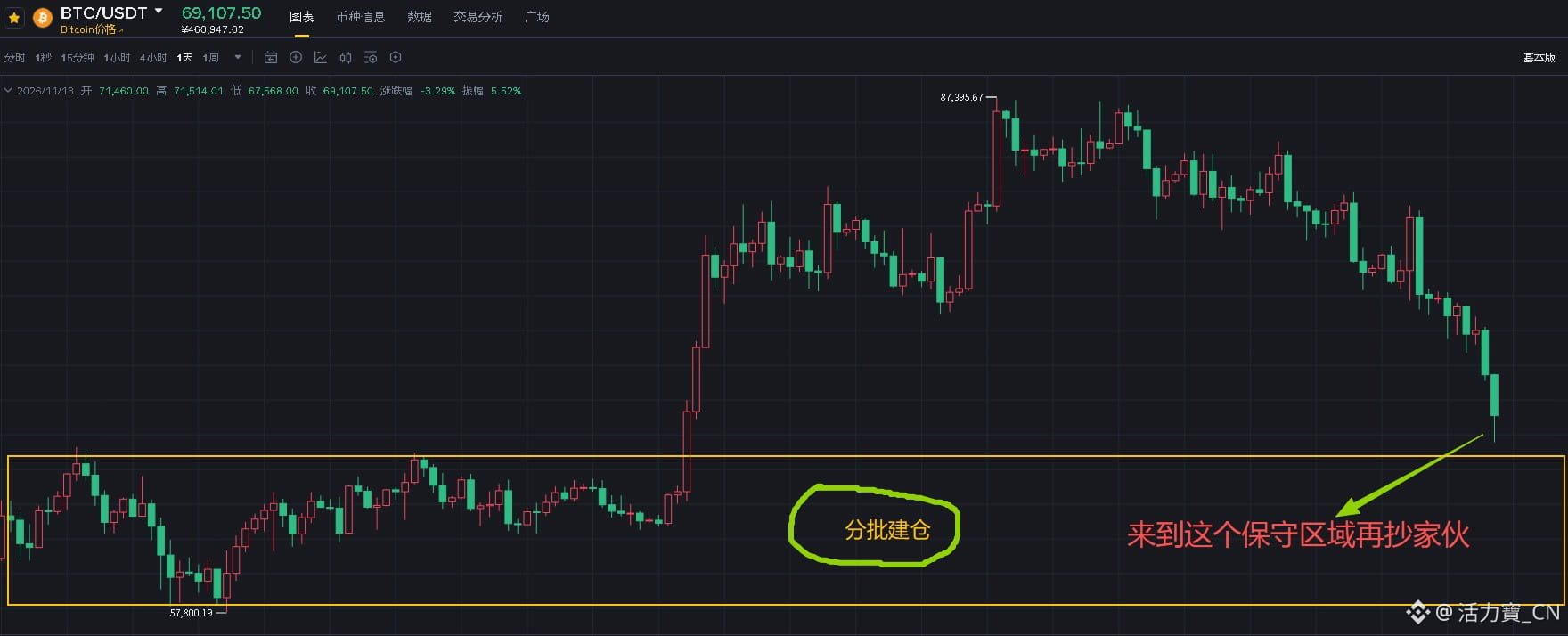
Everyone’s shouting “buy the dip”—wow! But right now, all I want to do is raid your place 😅 Don’t panic. It’s a turbulent time, and there’s still a lot of uncertainty. Until things reach that point, I wouldn’t recommend trying to buy the dip 😓#加密美股齐跌,下轮反弹的驱动力在哪? #btc失守7万关口
$BTC
Everyone’s shouting “buy the dip”—wow! But right now, all I want to do is raid your place 😅 Don’t panic. It’s a turbulent time, and there’s still a lot of uncertainty. Until things reach that point, I wouldn’t recommend trying to buy the dip 😓#加密美股齐跌,下轮反弹的驱动力在哪? #btc失守7万关口
Everyone’s shouting “buy the dip”—wow! But right now, all I want to do is raid your place 😅 Don’t panic. It’s a turbulent time, and there’s still a lot of uncertainty. Until things reach that point, I wouldn’t recommend trying to buy the dip 😓#加密美股齐跌,下轮反弹的驱动力在哪? #btc失守7万关口
1
1
254
·
--
Article
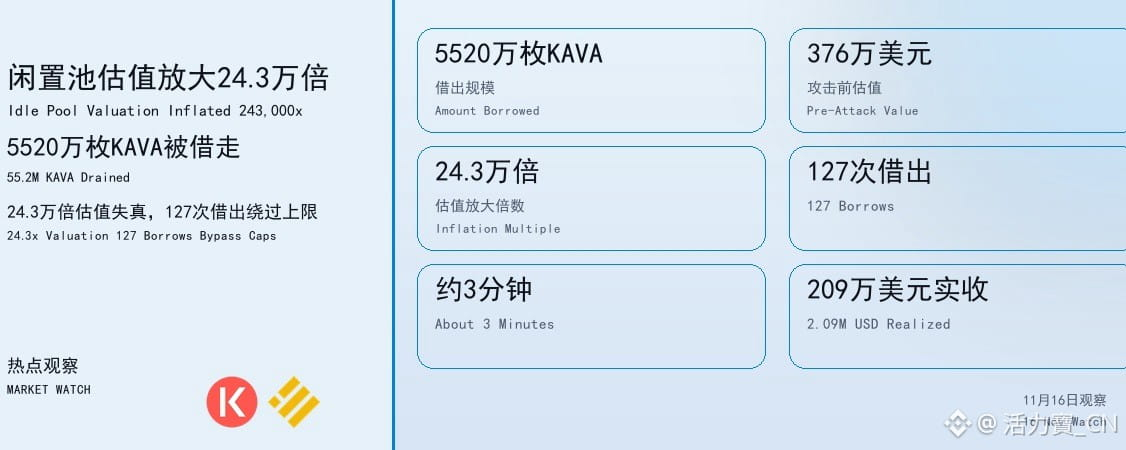
Idle pool’s valuation inflated 243,000-fold; 55.2 million KAVA borrowedOn the evening of November 14, 2026, Kava Lend, the native lending protocol on the Kava chain, was attacked. On-chain monitoring records show that the attacker borrowed about 55.2 million KAVA, worth approximately $3.76 million at pre-attack prices. The Kava team said the incident did not involve unlimited token minting and was confined to Kava Lend.
The vulnerability entry point was a BUSD market that was almost empty. Paxos, the issuer of this stablecoin, had stopped minting it back in 2023, leaving the collateral pool idle for a long time. The attacker pushed the market’s effective net supply close to zero, distorting the protocol’s accounting of deposit values. In about three minutes, a real deposit was inflated into a book value 243,000 times larger.
Idle pool’s valuation inflated 243,000-fold; 55.2 million KAVA borrowed
On the evening of November 14, 2026, Kava Lend, the native lending protocol on the Kava chain, was attacked. On-chain monitoring records show that the attacker borrowed about 55.2 million KAVA, worth approximately $3.76 million at pre-attack prices. The Kava team said the incident did not involve unlimited token minting and was confined to Kava Lend.
The vulnerability entry point was a BUSD market that was almost empty. Paxos, the issuer of this stablecoin, had stopped minting it back in 2023, leaving the collateral pool idle for a long time. The attacker pushed the market’s effective net supply close to zero, distorting the protocol’s accounting of deposit values. In about three minutes, a real deposit was inflated into a book value 243,000 times larger.
The vulnerability entry point was a BUSD market that was almost empty. Paxos, the issuer of this stablecoin, had stopped minting it back in 2023, leaving the collateral pool idle for a long time. The attacker pushed the market’s effective net supply close to zero, distorting the protocol’s accounting of deposit values. In about three minutes, a real deposit was inflated into a book value 243,000 times larger.
196
·
--
Article
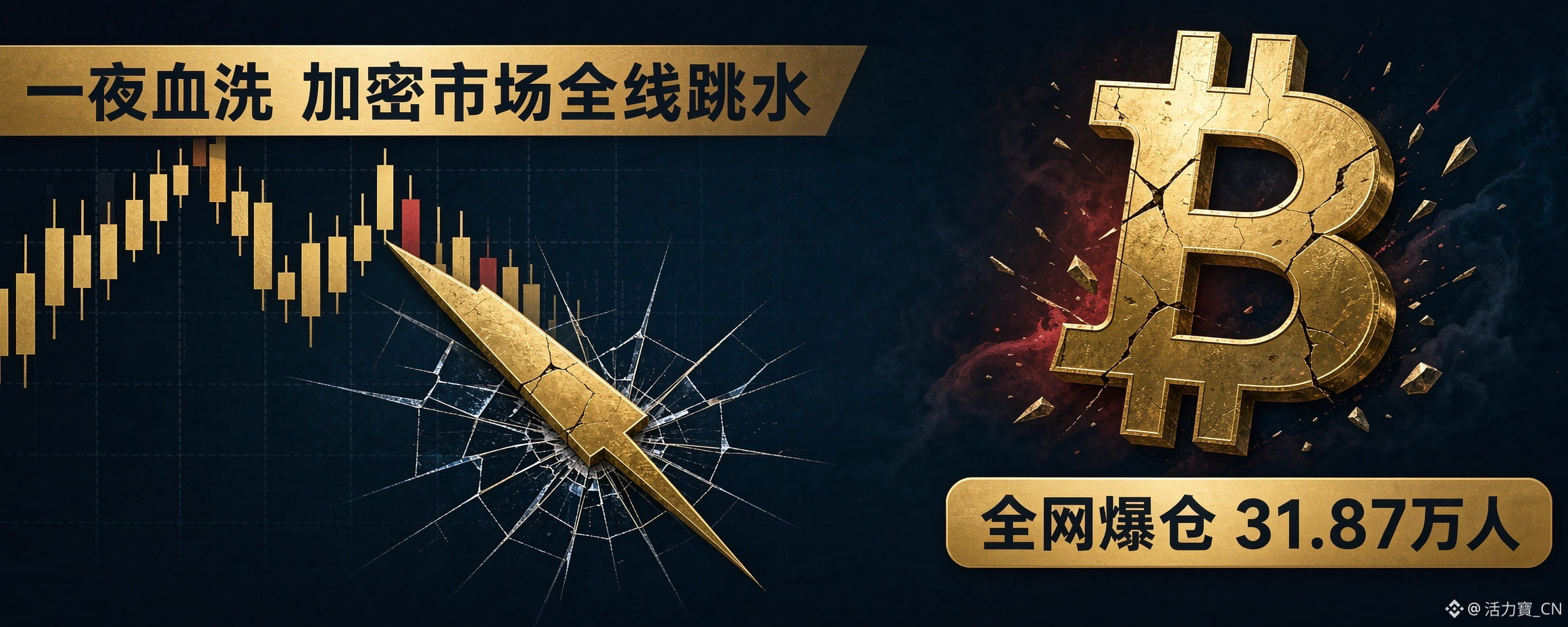
A brutal overnight sell-off! 318,700 traders liquidated as Bitcoin falls below $63,000—what happened?Over the past 24 hours, the crypto market took a sharp nosedive. Bitcoin fell nearly 8%, dropping below $63,000; BNB and XRP fell more than 9%, Ethereum more than 10%, and Solana more than 11%. Risk assets with strong speculative characteristics were hit almost across the board.
Worse still was the cascade of liquidations. Data from CoinGlass shows that over the past 24 hours, 318,700 traders were liquidated across the market, with total liquidations exceeding $1.9 billion. More than 90% were long positions. Put simply, leveraged bulls were collectively “wiped out.”
Why was the sell-off so severe? Rich Rosenblum, co-founder of crypto market maker GSR, thinks it was more like a move triggered by technical factors. Bitcoin had previously fallen below its 200-day moving average of $73,000, triggering large-scale forced liquidations and prompting investors to establish new short positions.
A brutal overnight sell-off! 318,700 traders liquidated as Bitcoin falls below $63,000—what happened?
Over the past 24 hours, the crypto market took a sharp nosedive. Bitcoin fell nearly 8%, dropping below $63,000; BNB and XRP fell more than 9%, Ethereum more than 10%, and Solana more than 11%. Risk assets with strong speculative characteristics were hit almost across the board.
Worse still was the cascade of liquidations. Data from CoinGlass shows that over the past 24 hours, 318,700 traders were liquidated across the market, with total liquidations exceeding $1.9 billion. More than 90% were long positions. Put simply, leveraged bulls were collectively “wiped out.”
Why was the sell-off so severe? Rich Rosenblum, co-founder of crypto market maker GSR, thinks it was more like a move triggered by technical factors. Bitcoin had previously fallen below its 200-day moving average of $73,000, triggering large-scale forced liquidations and prompting investors to establish new short positions.
2
2
116
·
--
Article
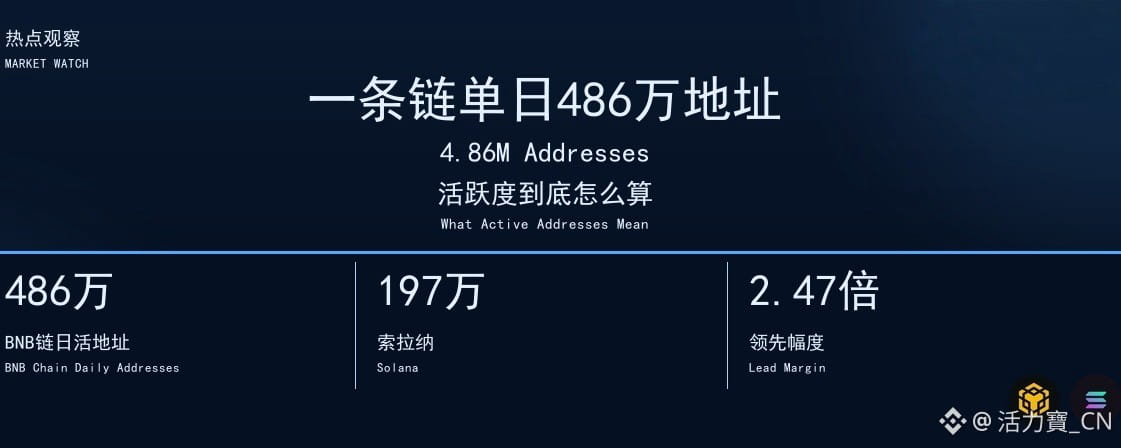
A blockchain sees 4.86 million addresses in one day—how is activity measured?Recently, the on-chain data platform DeFiLlama reported a set of figures: BNB Chain, home to Binance Coin (BNB), had 4.86 million active addresses in a single day, ranking first among all public blockchains. Solana (SOL) came second with 1.97 million, a difference of 2.47 times. Active address count is a key metric for gauging how popular a public blockchain is.
What exactly do active addresses count?
Active addresses refers to the number of wallets that have sent or received coins within 24 hours. It’s like a building’s access-card system: it counts how many people entered and left that day, not how many companies are based in the building. Wallets that hold coins but haven’t moved them that day aren’t counted as active for that day.
A blockchain sees 4.86 million addresses in one day—how is activity measured?
Recently, the on-chain data platform DeFiLlama reported a set of figures: BNB Chain, home to Binance Coin (BNB), had 4.86 million active addresses in a single day, ranking first among all public blockchains. Solana (SOL) came second with 1.97 million, a difference of 2.47 times. Active address count is a key metric for gauging how popular a public blockchain is.
What exactly do active addresses count?
Active addresses refers to the number of wallets that have sent or received coins within 24 hours. It’s like a building’s access-card system: it counts how many people entered and left that day, not how many companies are based in the building. Wallets that hold coins but haven’t moved them that day aren’t counted as active for that day.
260
·
--
Article
In 2026, a wave of long-dormant Bitcoin wallets is coming back to life. What signal does this send?In 2026, a wave of long-dormant Bitcoin wallets is coming back to life. What signal does this send?
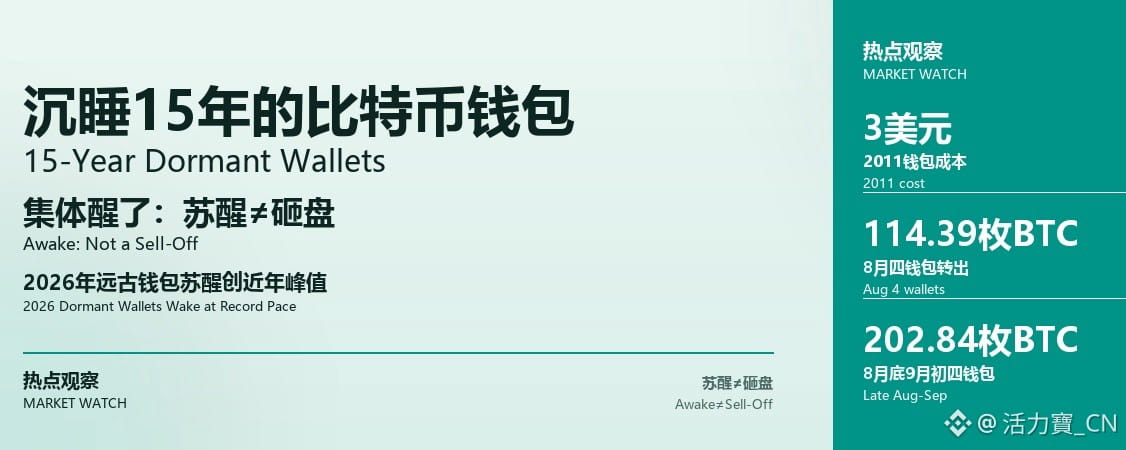
In 2026, an unusual trend has emerged on the blockchain: a wave of Bitcoin wallets dormant for more than a decade is springing back to life. Public data from organizations such as Galaxy Research shows that wallet activity has reached a multiyear high this year, with several large, verifiable transfers occurring from August through September.
On August 11, four wallets created in 2014 transferred a total of 114.39 Bitcoin (BTC) within 48 hours, worth approximately $5.58 million at the time. On September 19, a wallet created in 2011 that had been dormant for 15 years transferred 100 Bitcoin; based on its cost of about $3 per coin at the time, the unrealized gain exceeded a millionfold. From late August to early September, four more long-dormant wallets became active, transferring a total of 202.84 Bitcoin.
In 2026, a wave of long-dormant Bitcoin wallets is coming back to life. What signal does this send?
In 2026, a wave of long-dormant Bitcoin wallets is coming back to life. What signal does this send?
In 2026, an unusual trend has emerged on the blockchain: a wave of Bitcoin wallets dormant for more than a decade is springing back to life. Public data from organizations such as Galaxy Research shows that wallet activity has reached a multiyear high this year, with several large, verifiable transfers occurring from August through September.
On August 11, four wallets created in 2014 transferred a total of 114.39 Bitcoin (BTC) within 48 hours, worth approximately $5.58 million at the time. On September 19, a wallet created in 2011 that had been dormant for 15 years transferred 100 Bitcoin; based on its cost of about $3 per coin at the time, the unrealized gain exceeded a millionfold. From late August to early September, four more long-dormant wallets became active, transferring a total of 202.84 Bitcoin.
2
1
178
·
--

Article
The Dollar Hits a 19-Month High: Why Are Non-Yielding Assets Under Pressure First?On November 14, 2026, publicly available market and interest rate data showed that the U.S. Dollar Index closed at 103.40 on Friday, its highest level since April 2025, up 0.25%; the 10-year U.S. Treasury yield closed at 5.14%, climbing back above 5.1%. In the same wave of repricing, spot gold fell to around $3,875, down about 4.7% for the week, while major crypto assets also fell below key levels.
The U.S. Dollar Index’s climb to a 19-month high was driven by two forces: rising Treasury yields, with the 10-year yield back above 5.1%, widening the interest rate advantage; and safe-haven funds flowing back into the dollar. U.S. inflation data that came in above expectations and hawkish remarks from Fed officials reignited expectations of “a rate hike next month.”
The Dollar Hits a 19-Month High: Why Are Non-Yielding Assets Under Pressure First?
On November 14, 2026, publicly available market and interest rate data showed that the U.S. Dollar Index closed at 103.40 on Friday, its highest level since April 2025, up 0.25%; the 10-year U.S. Treasury yield closed at 5.14%, climbing back above 5.1%. In the same wave of repricing, spot gold fell to around $3,875, down about 4.7% for the week, while major crypto assets also fell below key levels.
The U.S. Dollar Index’s climb to a 19-month high was driven by two forces: rising Treasury yields, with the 10-year yield back above 5.1%, widening the interest rate advantage; and safe-haven funds flowing back into the dollar. U.S. inflation data that came in above expectations and hawkish remarks from Fed officials reignited expectations of “a rate hike next month.”
The U.S. Dollar Index’s climb to a 19-month high was driven by two forces: rising Treasury yields, with the 10-year yield back above 5.1%, widening the interest rate advantage; and safe-haven funds flowing back into the dollar. U.S. inflation data that came in above expectations and hawkish remarks from Fed officials reignited expectations of “a rate hike next month.”
1
1.8k
·
--

Article
Ethereum Falls Below $1,900: Why Has This Correction Been More Severe?On November 14, 2026, market data showed that Ethereum (ETH) briefly fell to $1,878 intraday and was most recently trading at around $1,905, down approximately 2.3% over 24 hours, with a market capitalization of about $235.5 billion. Bitcoin (BTC) also fell below $70,000 that day, trading at around $67,400. Altcoins generally fell more sharply than Bitcoin.
In terms of liquidity, ETH's order books are less deep, contributing to its weaker performance. A single large sell order can push the price down further. As for leverage, ETH's open interest and funding rate structure are more sensitive, making liquidations more intense during deleveraging. On the flows side, spot ETH ETFs have recently seen net outflows, and buying support has been weaker than for BTC.
Ethereum Falls Below $1,900: Why Has This Correction Been More Severe?
On November 14, 2026, market data showed that Ethereum (ETH) briefly fell to $1,878 intraday and was most recently trading at around $1,905, down approximately 2.3% over 24 hours, with a market capitalization of about $235.5 billion. Bitcoin (BTC) also fell below $70,000 that day, trading at around $67,400. Altcoins generally fell more sharply than Bitcoin.
In terms of liquidity, ETH's order books are less deep, contributing to its weaker performance. A single large sell order can push the price down further. As for leverage, ETH's open interest and funding rate structure are more sensitive, making liquidations more intense during deleveraging. On the flows side, spot ETH ETFs have recently seen net outflows, and buying support has been weaker than for BTC.
In terms of liquidity, ETH's order books are less deep, contributing to its weaker performance. A single large sell order can push the price down further. As for leverage, ETH's open interest and funding rate structure are more sensitive, making liquidations more intense during deleveraging. On the flows side, spot ETH ETFs have recently seen net outflows, and buying support has been weaker than for BTC.
1
1
348
·
--
Article
PPI Data Looks Positive, So Why Is BTC Plunging? Don’t Blindly Buy the Dip$BTC The U.S. October PPI data just came out, and it’s clearly positive—but don’t rush to buy the dip! Many people saw the numbers and blindly went long, only to get trapped. Today, let’s break down the market dynamics in detail.
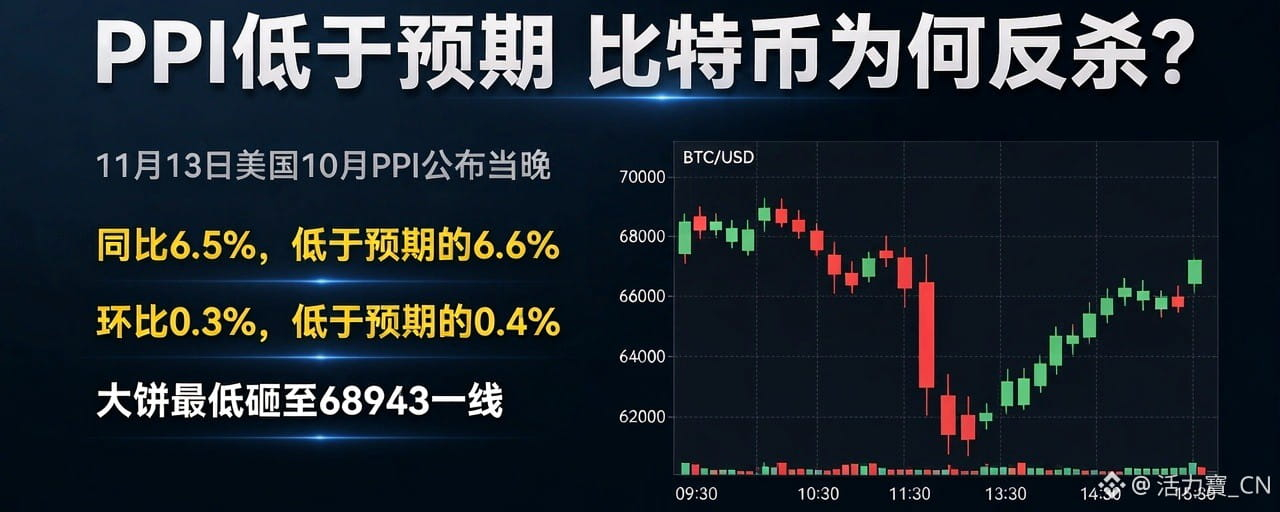
First, the key figures: October PPI was up 6.5% year over year, below the market forecast of 6.6%; month over month, it rose 0.3%, also below expectations of 0.4%.
By conventional macro logic, cooling inflation data should directly cool expectations of Fed tightening, and risk assets ought to rebound accordingly. But reality dealt the bulls a harsh blow: Bitcoin not only failed to rise, but plunged quickly, hitting a low around 68,943. It has now fallen below 68,000 again, with total liquidations of long positions across the crypto market reaching $1.088 billion and countless retail traders who chased the rally left holding the bag!
PPI Data Looks Positive, So Why Is BTC Plunging? Don’t Blindly Buy the Dip
$BTC The U.S. October PPI data just came out, and it’s clearly positive—but don’t rush to buy the dip! Many people saw the numbers and blindly went long, only to get trapped. Today, let’s break down the market dynamics in detail.
First, the key figures: October PPI was up 6.5% year over year, below the market forecast of 6.6%; month over month, it rose 0.3%, also below expectations of 0.4%.
By conventional macro logic, cooling inflation data should directly cool expectations of Fed tightening, and risk assets ought to rebound accordingly. But reality dealt the bulls a harsh blow: Bitcoin not only failed to rise, but plunged quickly, hitting a low around 68,943. It has now fallen below 68,000 again, with total liquidations of long positions across the crypto market reaching $1.088 billion and countless retail traders who chased the rally left holding the bag!
85
·
--
Article
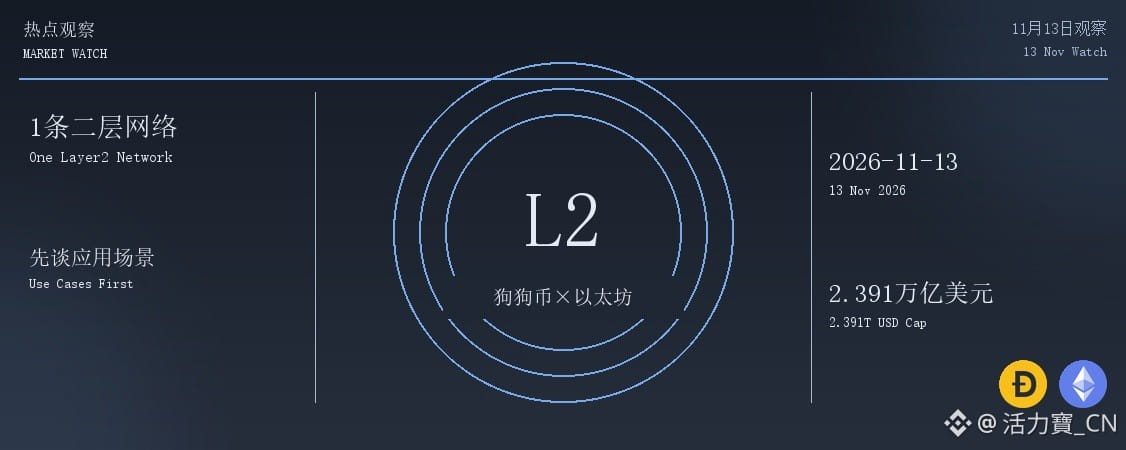
DogeOS and Dogecoin: One Layer 2 Network—Why Talk About Applications First?The Doge Foundation disclosed an update: DogeOS, an Ethereum (ETH)-compatible Layer 2 network, is nearing its mainnet launch, with the aim of bringing Dogecoin (DOGE) into DeFi and other applications. A public market snapshot released the same day put the total market capitalization at $2.391 trillion and 24-hour trading volume at $69.604 billion.
What makes this news worth noting isn't the new name. A Layer 2 network has a very specific purpose: it moves some transactions off the main chain for processing, then bundles the results and sends them back, reducing fees and confirmation times. The main chain stays unchanged, while an additional layer creates room for applications to run.
DogeOS and Dogecoin: One Layer 2 Network—Why Talk About Applications First?
The Doge Foundation disclosed an update: DogeOS, an Ethereum (ETH)-compatible Layer 2 network, is nearing its mainnet launch, with the aim of bringing Dogecoin (DOGE) into DeFi and other applications. A public market snapshot released the same day put the total market capitalization at $2.391 trillion and 24-hour trading volume at $69.604 billion.
What makes this news worth noting isn't the new name. A Layer 2 network has a very specific purpose: it moves some transactions off the main chain for processing, then bundles the results and sends them back, reducing fees and confirmation times. The main chain stays unchanged, while an additional layer creates room for applications to run.
What makes this news worth noting isn't the new name. A Layer 2 network has a very specific purpose: it moves some transactions off the main chain for processing, then bundles the results and sends them back, reducing fees and confirmation times. The main chain stays unchanged, while an additional layer creates room for applications to run.
380
·
--
Verified
Article
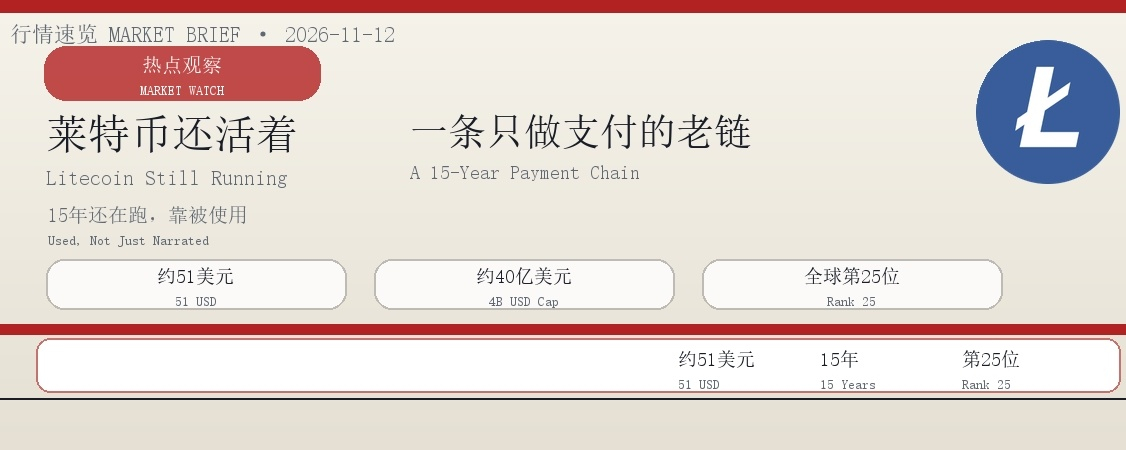
Litecoin (LTC) Is Still Alive: Why Is This Old Payment-Only Chain Still Running After 15 Years?As of November 12, 2026, Litecoin (LTC) is trading at around $51, with a market cap of about $4 billion, ranking roughly 25th among cryptocurrencies worldwide. The chain launched in 2011 and has been running for 15 years. As new public blockchains take turns in the spotlight, it keeps producing blocks at its own pace.
What it does has never changed: make transfers faster and cheaper. It has no complex smart-contract ecosystem and doesn't rely on new narratives to attract users. Its focus is simply on payments and transfers.
There have also been technical developments in recent years: MWEB makes privacy an optional feature, while LitVM is exploring Layer 2 scaling to let smart-contract applications connect to the network. Changes are made incrementally; older wallets still work, and the chain remains unified.
Litecoin (LTC) Is Still Alive: Why Is This Old Payment-Only Chain Still Running After 15 Years?
As of November 12, 2026, Litecoin (LTC) is trading at around $51, with a market cap of about $4 billion, ranking roughly 25th among cryptocurrencies worldwide. The chain launched in 2011 and has been running for 15 years. As new public blockchains take turns in the spotlight, it keeps producing blocks at its own pace.
What it does has never changed: make transfers faster and cheaper. It has no complex smart-contract ecosystem and doesn't rely on new narratives to attract users. Its focus is simply on payments and transfers.
There have also been technical developments in recent years: MWEB makes privacy an optional feature, while LitVM is exploring Layer 2 scaling to let smart-contract applications connect to the network. Changes are made incrementally; older wallets still work, and the chain remains unified.
3
2
4.1k
·
--
Verified

Article
Chainlink: 8 Integrations in One Week—Why Do RWAs Need Oracles?On November 12, 2026, Chainlink’s official integration list showed 8 new additions in a week. Looking back: its 24/7 pricing service launched in late October 2026, with Aave Horizon as its first adopter; on October 29, Hanwha Investment & Securities announced that its RWA platform would use CCIP and data standards.
Taken individually, these developments may seem scattered, but together they point to the same layer: continuously and reliably feeding off-chain prices to on-chain contracts. RWA refers to real-world assets brought on-chain, but a bond or a basket of funds doesn’t know its own value today when it’s on-chain.
That’s exactly what an oracle does: retrieve, validate, and deliver data. It doesn’t issue tokens, match trades, or hold assets on anyone’s behalf; it simply keeps the data pipeline connected and reliable. That’s the plumbing of on-chain finance.
Chainlink: 8 Integrations in One Week—Why Do RWAs Need Oracles?
On November 12, 2026, Chainlink’s official integration list showed 8 new additions in a week. Looking back: its 24/7 pricing service launched in late October 2026, with Aave Horizon as its first adopter; on October 29, Hanwha Investment & Securities announced that its RWA platform would use CCIP and data standards.
Taken individually, these developments may seem scattered, but together they point to the same layer: continuously and reliably feeding off-chain prices to on-chain contracts. RWA refers to real-world assets brought on-chain, but a bond or a basket of funds doesn’t know its own value today when it’s on-chain.
That’s exactly what an oracle does: retrieve, validate, and deliver data. It doesn’t issue tokens, match trades, or hold assets on anyone’s behalf; it simply keeps the data pipeline connected and reliable. That’s the plumbing of on-chain finance.
1
842
·
--
Article
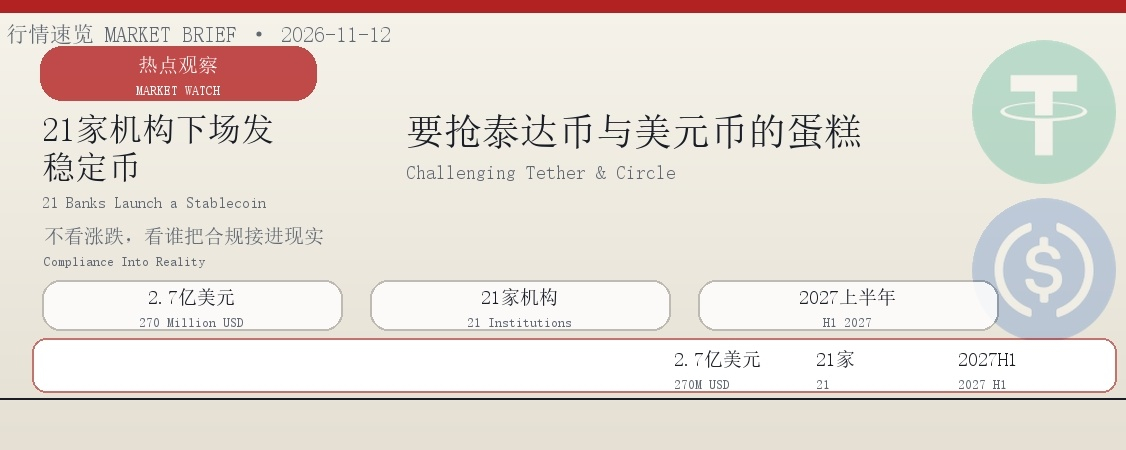
Goldman Sachs, Citigroup and 19 other institutions commit $270 million to launch a stablecoin, taking aim at Tether and USDCOn November 11, 2026, multiple media outlets, including Global Market Broadcast, confirmed that 21 financial institutions—including Goldman Sachs and Citigroup, which are leading the effort, as well as Santander, Deutsche Bank, Bank of America, Wells Fargo, Fidelity Investments, and UBS—have pledged approximately $270 million to a joint stablecoin project to support its operations during its first five years after launch.
Internally codenamed Project Faro, the project plans to establish a stablecoin-issuing entity in the United States and launch a stablecoin pegged 1:1 to the U.S. dollar in the first half of 2027. It will then gradually expand to the currencies of the other Group of Seven (G7) countries, with a euro stablecoin as a priority. The funding comes from traditional financial institutions, not crypto-native teams, and the project targets cross-border payments and asset settlement in wholesale finance, institutional markets, and retail.
Goldman Sachs, Citigroup and 19 other institutions commit $270 million to launch a stablecoin, taking aim at Tether and USDC
On November 11, 2026, multiple media outlets, including Global Market Broadcast, confirmed that 21 financial institutions—including Goldman Sachs and Citigroup, which are leading the effort, as well as Santander, Deutsche Bank, Bank of America, Wells Fargo, Fidelity Investments, and UBS—have pledged approximately $270 million to a joint stablecoin project to support its operations during its first five years after launch.
Internally codenamed Project Faro, the project plans to establish a stablecoin-issuing entity in the United States and launch a stablecoin pegged 1:1 to the U.S. dollar in the first half of 2027. It will then gradually expand to the currencies of the other Group of Seven (G7) countries, with a euro stablecoin as a priority. The funding comes from traditional financial institutions, not crypto-native teams, and the project targets cross-border payments and asset settlement in wholesale finance, institutional markets, and retail.
Internally codenamed Project Faro, the project plans to establish a stablecoin-issuing entity in the United States and launch a stablecoin pegged 1:1 to the U.S. dollar in the first half of 2027. It will then gradually expand to the currencies of the other Group of Seven (G7) countries, with a euro stablecoin as a priority. The funding comes from traditional financial institutions, not crypto-native teams, and the project targets cross-border payments and asset settlement in wholesale finance, institutional markets, and retail.
495
·
--
Article
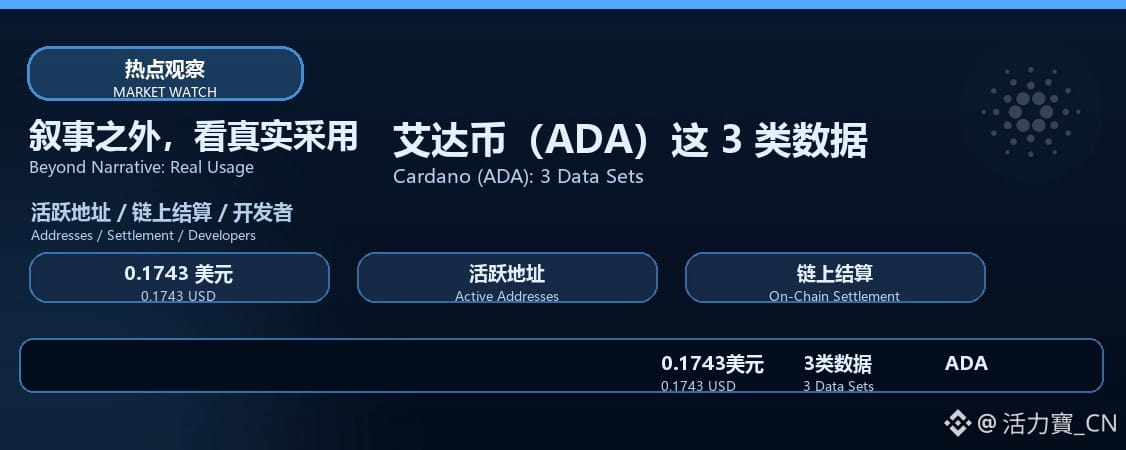
Why Are These 3 Types of ADA Data More Worth Watching Than the Story?On November 11, ADA was trading at $0.1743. Over the same period, macroeconomic data pushed interest-rate expectations higher, and trading across major blockchain tokens slowed as a result. The price is just one snapshot of the day.
To judge whether a public blockchain is worth anything, ignore the hype and look at three measurable indicators: How many active addresses are there? How many transactions are settled on-chain? Are developers still submitting code? These numbers don’t swing with sentiment. They build slowly, and they decline slowly too.
Cardano takes a peer-review-based approach: protocol changes go through academic papers before being deployed on the mainnet, so its pace is a little slower than that of other public blockchains. That slower pace has its costs, but also its benefits: every upgrade is documented, and anyone can look through the records.
Why Are These 3 Types of ADA Data More Worth Watching Than the Story?
On November 11, ADA was trading at $0.1743. Over the same period, macroeconomic data pushed interest-rate expectations higher, and trading across major blockchain tokens slowed as a result. The price is just one snapshot of the day.
To judge whether a public blockchain is worth anything, ignore the hype and look at three measurable indicators: How many active addresses are there? How many transactions are settled on-chain? Are developers still submitting code? These numbers don’t swing with sentiment. They build slowly, and they decline slowly too.
Cardano takes a peer-review-based approach: protocol changes go through academic papers before being deployed on the mainnet, so its pace is a little slower than that of other public blockchains. That slower pace has its costs, but also its benefits: every upgrade is documented, and anyone can look through the records.
928
·
--
Article
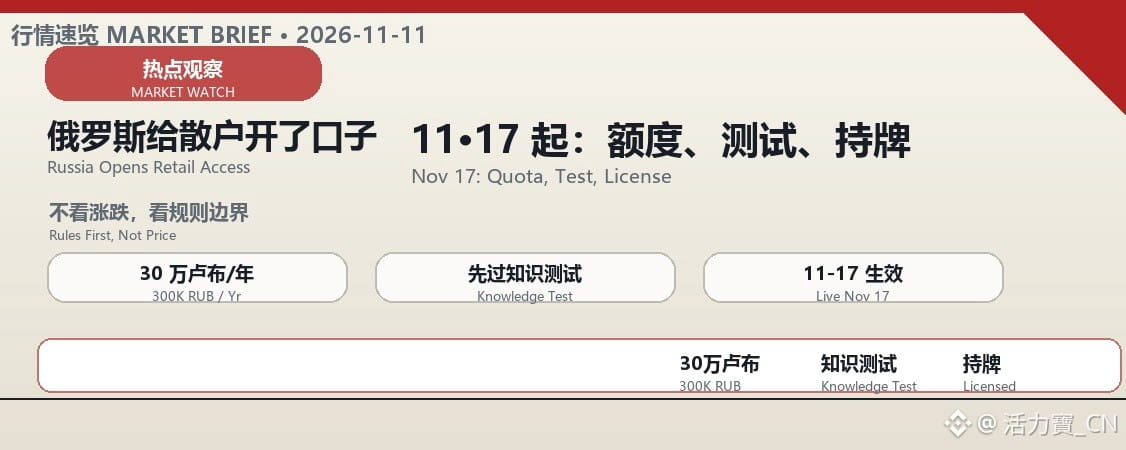
Russia opens the door to retail investors: Why must they first pass a risk test to clear these 3 hurdles?On November 11, media outlets including Sina Finance reported that the Russian central bank had officially published detailed rules for regulating crypto-asset trading: starting November 17, licensed institutions may offer ordinary investors access to trading in three major crypto assets. The door has been opened, but its dimensions have been set in stone.
Three hurdles, taken together: retail investors face an annual trading limit of 300,000 rubles; they must pass a crypto-risk knowledge test before gaining access; and all trades must go through licensed institutions. The limit controls exposure, the test addresses understanding, and the license governs access—each has its own role.
A timeline has also been set out. The rules state that, starting in July 2027, all person-to-person transactions by individuals will cease, with trading routed through licensed institutions; crypto assets will still be prohibited for everyday domestic payments and settlements. What is allowed and what is not is written down, rather than left to interpretation.
Russia opens the door to retail investors: Why must they first pass a risk test to clear these 3 hurdles?
On November 11, media outlets including Sina Finance reported that the Russian central bank had officially published detailed rules for regulating crypto-asset trading: starting November 17, licensed institutions may offer ordinary investors access to trading in three major crypto assets. The door has been opened, but its dimensions have been set in stone.
Three hurdles, taken together: retail investors face an annual trading limit of 300,000 rubles; they must pass a crypto-risk knowledge test before gaining access; and all trades must go through licensed institutions. The limit controls exposure, the test addresses understanding, and the license governs access—each has its own role.
A timeline has also been set out. The rules state that, starting in July 2027, all person-to-person transactions by individuals will cease, with trading routed through licensed institutions; crypto assets will still be prohibited for everyday domestic payments and settlements. What is allowed and what is not is written down, rather than left to interpretation.
133
·
--
Article
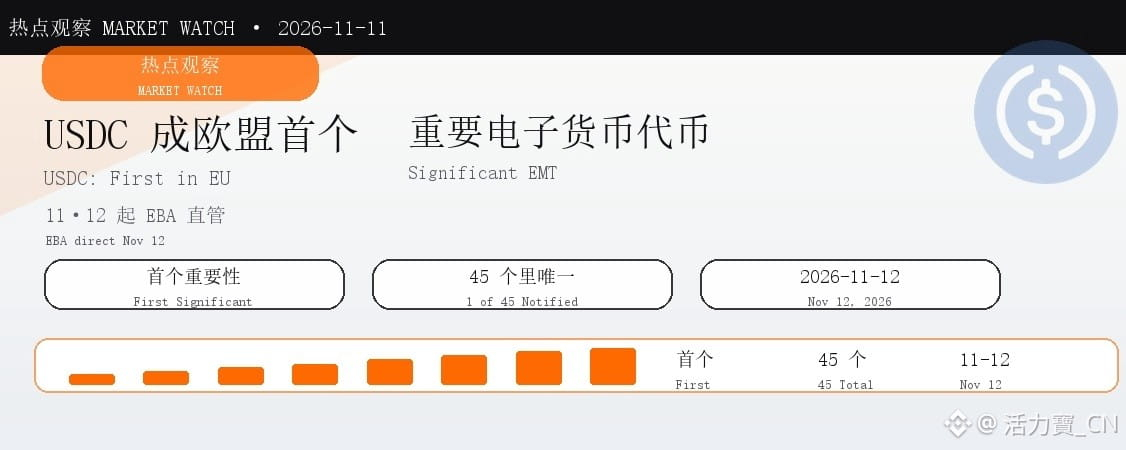
USDC becomes the EU’s first EMT, under direct EBA supervision from Nov. 12On November 11, an official European Banking Authority (EBA) announcement confirmed that the dollar stablecoin USD Coin (USDC) had been formally designated the first “Significant EMT” under the EU Markets in Crypto-Assets Regulation (MiCA). The arrangement is now part of the regulatory process.
The rules specify “who oversees it”
USDC is a stablecoin pegged 1:1 to the US dollar, issued by Circle’s EU entity, Circle Internet Financial Europe SAS. It was previously overseen by France’s banking regulator (ACPR). From November 12, 2026, the EBA will directly take over supervision of own funds, reserve assets, liquidity requirements, and recovery and redemption plans. The ACPR will still oversee “softer” matters such as corporate governance and qualifying holdings. In effect, it has a more direct boss: the work hasn’t changed, but the level of oversight has gone up.
USDC becomes the EU’s first EMT, under direct EBA supervision from Nov. 12
On November 11, an official European Banking Authority (EBA) announcement confirmed that the dollar stablecoin USD Coin (USDC) had been formally designated the first “Significant EMT” under the EU Markets in Crypto-Assets Regulation (MiCA). The arrangement is now part of the regulatory process.
The rules specify “who oversees it”
USDC is a stablecoin pegged 1:1 to the US dollar, issued by Circle’s EU entity, Circle Internet Financial Europe SAS. It was previously overseen by France’s banking regulator (ACPR). From November 12, 2026, the EBA will directly take over supervision of own funds, reserve assets, liquidity requirements, and recovery and redemption plans. The ACPR will still oversee “softer” matters such as corporate governance and qualifying holdings. In effect, it has a more direct boss: the work hasn’t changed, but the level of oversight has gone up.
1
877
·
--
Article
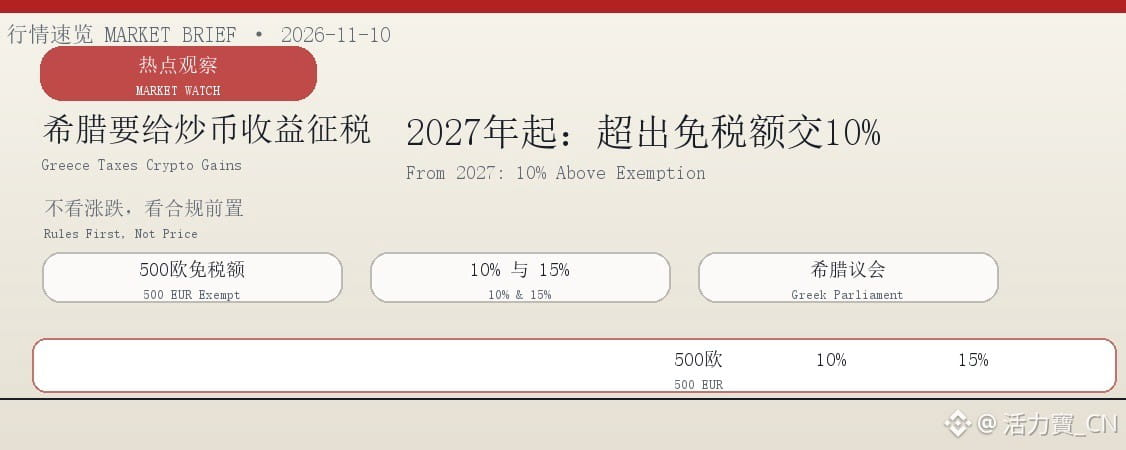
Greece to Tax Crypto Trading Gains From 2027: 10% on Amounts Above Tax-Free AllowanceOn November 6, the Greek Parliament passed a tax regime for crypto assets, which will take effect in January 2027. Individuals will pay 10% tax on crypto trading capital gains above the €500 tax-free allowance; income from activities such as staking, lending, and DeFi will be taxed at 15%.
This further chips away at the old notion that crypto trading is tax-free. A few years ago, many people thought digital assets were beyond the reach of the law everywhere. In reality, countries are rolling out tax rules one after another, and Greece is just the latest to join the trend.
The key point is the tax-free allowance. Gains of up to €500 are exempt; only amounts above that are taxed. For people who invest small amounts regularly, this threshold keeps most of their everyday holdings outside the tax base. For frequent traders, records of every amount above the threshold need to be kept clear.
Greece to Tax Crypto Trading Gains From 2027: 10% on Amounts Above Tax-Free Allowance
On November 6, the Greek Parliament passed a tax regime for crypto assets, which will take effect in January 2027. Individuals will pay 10% tax on crypto trading capital gains above the €500 tax-free allowance; income from activities such as staking, lending, and DeFi will be taxed at 15%.
This further chips away at the old notion that crypto trading is tax-free. A few years ago, many people thought digital assets were beyond the reach of the law everywhere. In reality, countries are rolling out tax rules one after another, and Greece is just the latest to join the trend.
The key point is the tax-free allowance. Gains of up to €500 are exempt; only amounts above that are taxed. For people who invest small amounts regularly, this threshold keeps most of their everyday holdings outside the tax base. For frequent traders, records of every amount above the threshold need to be kept clear.
1
311
·
--
Article
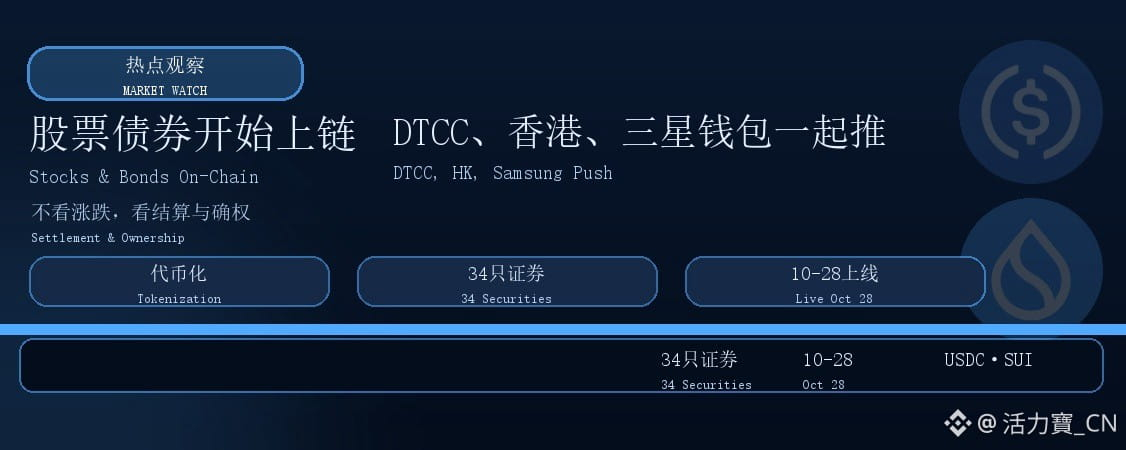
Why are stocks and bonds the RWA use case driving tokenization into reality?The move to bring stocks and bonds on-chain has been gaining momentum over the past two weeks. DTCC’s tokenization service went live on October 28, with 34 securities in its first batch; on October 26, Hong Kong’s Securities and Futures Commission approved secondary trading of tokenized funds; and on October 27, Robinhood publicly called for clear rules.
On-chain securities address settlement. Traditional trades require waiting for counterparties and clearing windows, while on-chain systems can link changes in ownership directly to their records and operate 24/7. For institutions, this means greater efficiency; for ordinary people, lower barriers to entry.
The wallet makes this step feel more tangible. In November, the Sui network was integrated with Samsung Wallet, bringing the on-chain dollar stablecoin USDC to users. Holders can now access on-chain assets right from their phones. Blockchain is no longer just an idea you encounter at a computer—it’s in your everyday pocket.
Why are stocks and bonds the RWA use case driving tokenization into reality?
The move to bring stocks and bonds on-chain has been gaining momentum over the past two weeks. DTCC’s tokenization service went live on October 28, with 34 securities in its first batch; on October 26, Hong Kong’s Securities and Futures Commission approved secondary trading of tokenized funds; and on October 27, Robinhood publicly called for clear rules.
On-chain securities address settlement. Traditional trades require waiting for counterparties and clearing windows, while on-chain systems can link changes in ownership directly to their records and operate 24/7. For institutions, this means greater efficiency; for ordinary people, lower barriers to entry.
The wallet makes this step feel more tangible. In November, the Sui network was integrated with Samsung Wallet, bringing the on-chain dollar stablecoin USDC to users. Holders can now access on-chain assets right from their phones. Blockchain is no longer just an idea you encounter at a computer—it’s in your everyday pocket.
444
·
--
Article
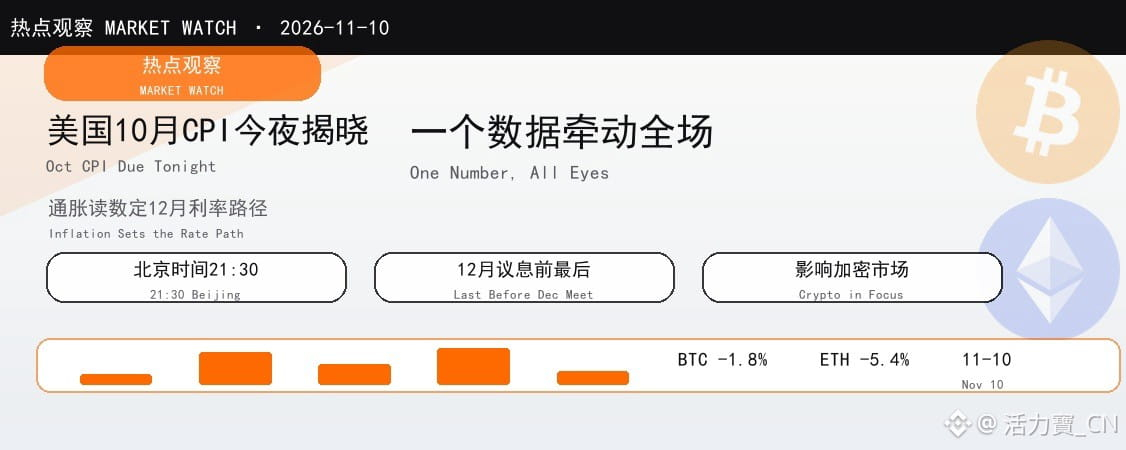
U.S. October CPI to Be Released Tonight: What’s Next for the Crypto Market?Tonight (November 10 at 9:30 p.m. Beijing time, 8:30 a.m. Eastern time), the U.S. Consumer Price Index (CPI) for October will be released. This is the final inflation report before the Federal Reserve’s December 9 policy meeting, and the market sees it as a key basis for judging whether rates will be raised in December.
How can a single data release move the entire market?
The CPI measures price changes in a basket of goods and services, making it the most direct window into inflation. Rising inflation means expectations of interest rate hikes grow; when rates rise, risk-free returns become more attractive, and money flows out of non-yielding assets like Bitcoin. The market will reprice this chain of effects tonight.
U.S. October CPI to Be Released Tonight: What’s Next for the Crypto Market?
Tonight (November 10 at 9:30 p.m. Beijing time, 8:30 a.m. Eastern time), the U.S. Consumer Price Index (CPI) for October will be released. This is the final inflation report before the Federal Reserve’s December 9 policy meeting, and the market sees it as a key basis for judging whether rates will be raised in December.
How can a single data release move the entire market?
The CPI measures price changes in a basket of goods and services, making it the most direct window into inflation. Rising inflation means expectations of interest rate hikes grow; when rates rise, risk-free returns become more attractive, and money flows out of non-yielding assets like Bitcoin. The market will reprice this chain of effects tonight.
196
·
--
Article
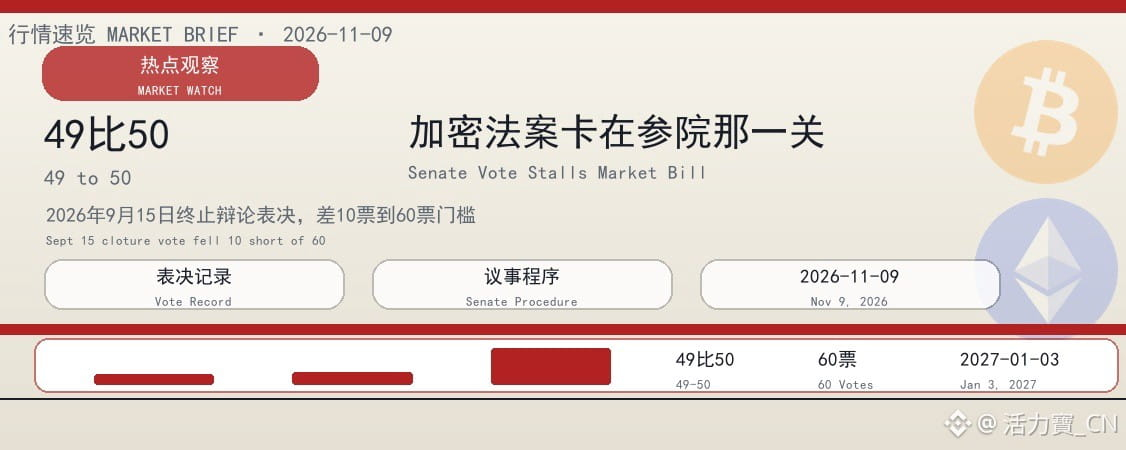
49 to 50: Why Did the Crypto Bill Get Stuck in the Senate?The U.S. midterm elections concluded on November 3, with Democrats winning both the House and the Senate. One bill that keeps coming up is a market structure bill called the CLARITY Act: it passed the House in July 2025 by 294 to 134, but a Senate cloture vote on September 15, 2026, stalled at 49 to 50—10 votes short of the 60-vote threshold. Looking at that number today, what held it up wasn’t the quality of its provisions, but the voting procedure.
The Senate’s rules are simple: ending debate takes 60 votes, and without them, a bill can’t proceed to consideration on the floor. The new Congress takes office on January 3, 2027, and any bill that hasn’t completed the process in the current Congress has to be introduced all over again. This is a procedural rule laid out in the Senate’s standing rules; it has nothing to do with who supports crypto and who opposes it.
49 to 50: Why Did the Crypto Bill Get Stuck in the Senate?
The U.S. midterm elections concluded on November 3, with Democrats winning both the House and the Senate. One bill that keeps coming up is a market structure bill called the CLARITY Act: it passed the House in July 2025 by 294 to 134, but a Senate cloture vote on September 15, 2026, stalled at 49 to 50—10 votes short of the 60-vote threshold. Looking at that number today, what held it up wasn’t the quality of its provisions, but the voting procedure.
The Senate’s rules are simple: ending debate takes 60 votes, and without them, a bill can’t proceed to consideration on the floor. The new Congress takes office on January 3, 2027, and any bill that hasn’t completed the process in the current Congress has to be introduced all over again. This is a procedural rule laid out in the Senate’s standing rules; it has nothing to do with who supports crypto and who opposes it.
The Senate’s rules are simple: ending debate takes 60 votes, and without them, a bill can’t proceed to consideration on the floor. The new Congress takes office on January 3, 2027, and any bill that hasn’t completed the process in the current Congress has to be introduced all over again. This is a procedural rule laid out in the Senate’s standing rules; it has nothing to do with who supports crypto and who opposes it.
433
Log in to explore more content
Join global crypto users on Binance Square
⚡️ Get latest and useful information about crypto.
💬 Trusted by the world’s largest crypto exchange.
👍 Discover real insights from verified creators.
Email / Phone number
Trending Topics
A Packed Week of Earnings and Data Tests Markets
16,798 views
160 Discussing
🚨🇺🇸 BIG WEEK AHEAD FOR THE MARKETS!
Markets are pricing in a Fed rate hike in December and $BTC could see some big moves next week.
Here's what's coming:
• Monday: Fed Chair Warsh speaks
• Tuesday: US Retail Sales + $NVDA earnings
• Wednesday: FOMC Minutes
• Thursday: Jobless Claims + Philly Fed Index
• Friday: Consumer Sentiment + Fed speeches
All eyes on $BTC as another important week begins.
#bitcoin
Mookie
·6 Likes
·3.7k views
AnthropicIPOTestsInvestorAppetiteForAI
12,409 views
321 Discussing
HuangReportedlyConsidersReturnToNvidia
33,503 views
505 Discussing