
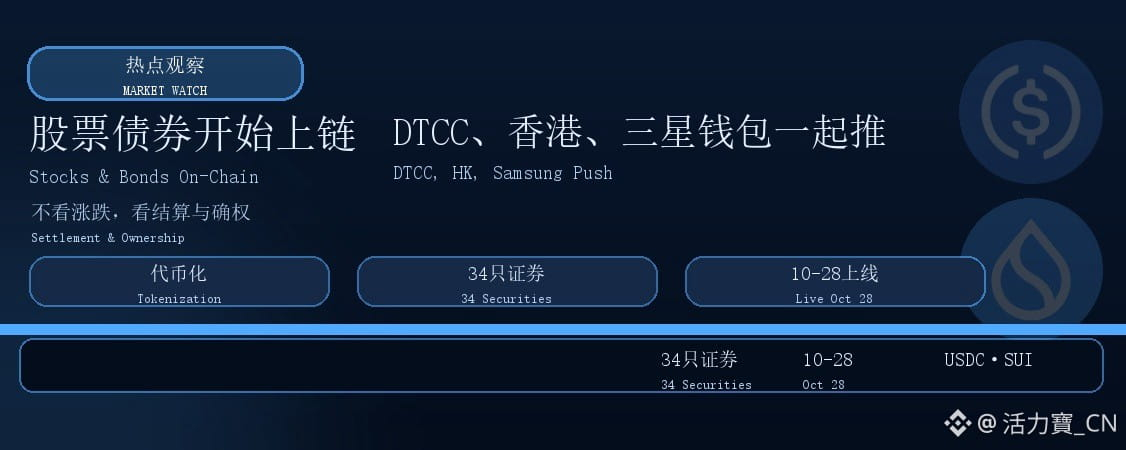

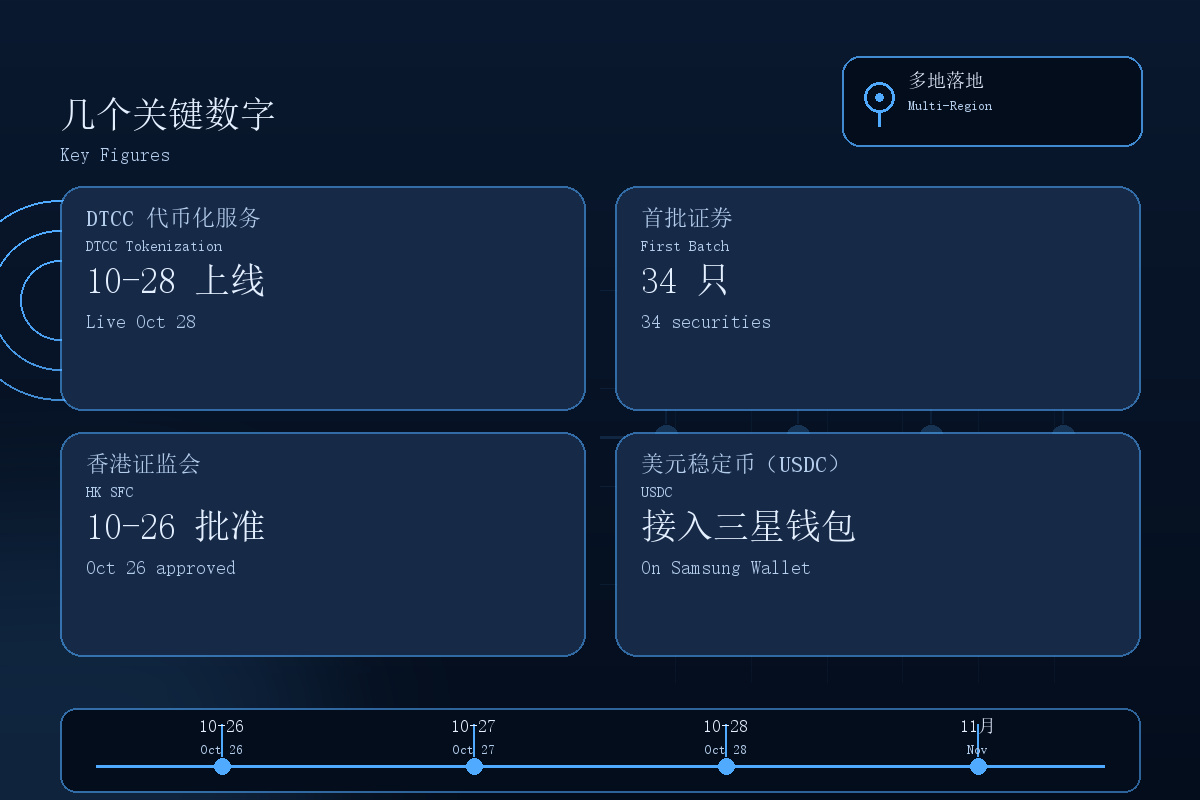
The move to bring stocks and bonds on-chain has been gaining momentum over the past two weeks. DTCC’s tokenization service went live on October 28, with 34 securities in its first batch; on October 26, Hong Kong’s Securities and Futures Commission approved secondary trading of tokenized funds; and on October 27, Robinhood publicly called for clear rules.
On-chain securities address settlement. Traditional trades require waiting for counterparties and clearing windows, while on-chain systems can link changes in ownership directly to their records and operate 24/7. For institutions, this means greater efficiency; for ordinary people, lower barriers to entry.
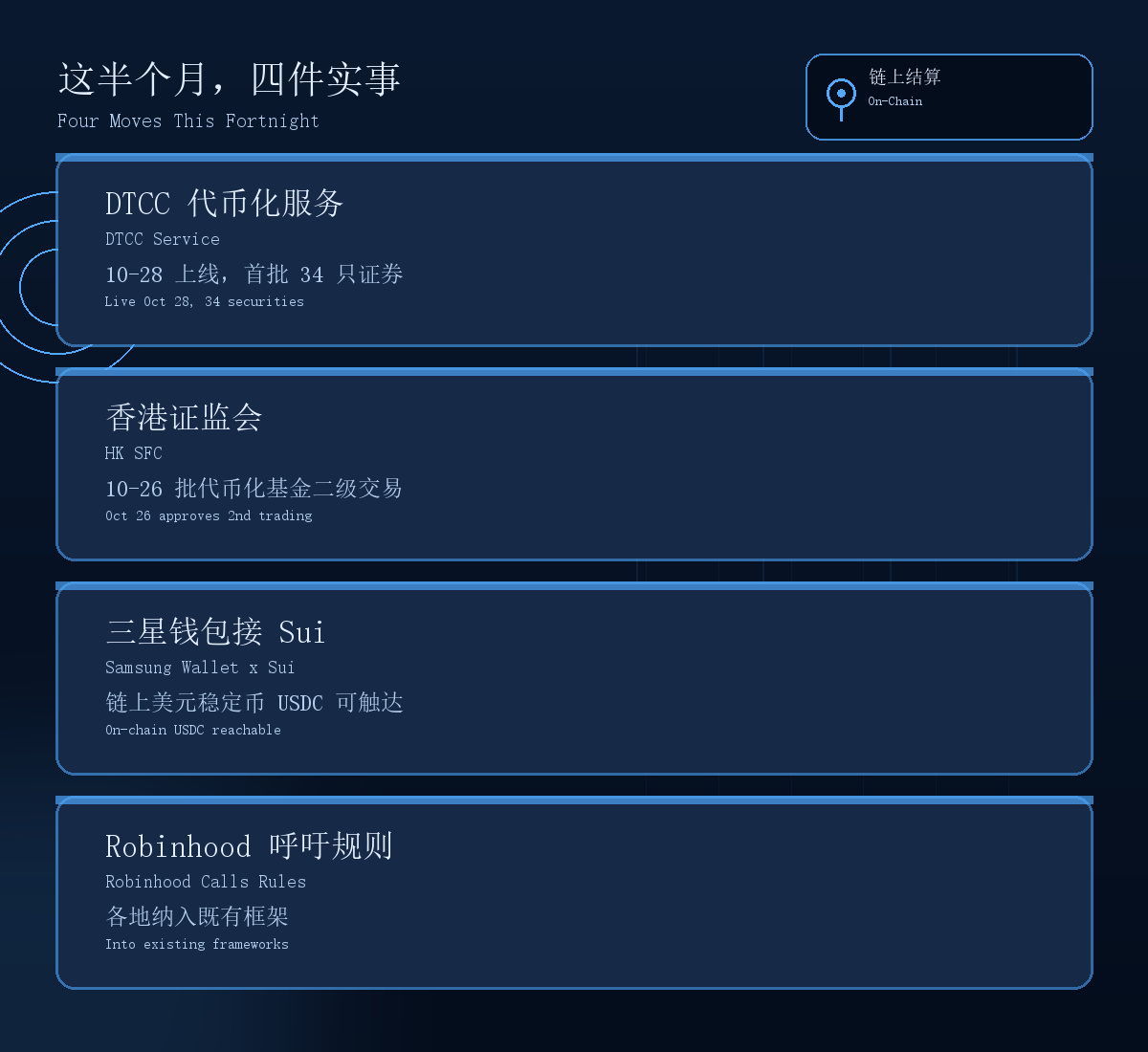
The wallet makes this step feel more tangible. In November, the Sui network was integrated with Samsung Wallet, bringing the on-chain dollar stablecoin USDC to users. Holders can now access on-chain assets right from their phones. Blockchain is no longer just an idea you encounter at a computer—it’s in your everyday pocket.
Tokenization isn’t about pumping up token prices; it’s about keeping a clearer record of who owns what and making transfers smoother. SUI is building the underlying rails to move assets from exchanges into self-custody wallets.
Regulation is catching up, too. Hong Kong’s approval of secondary trading and Robinhood’s call for rules show that jurisdictions are bringing this technology into existing frameworks rather than leaving it unchecked. The goal is to make on-chain assets verifiable and accountable.#sui #CPI前瞻,12月利率走向迎关键考验 #稳定币 #RWA