
bryan-phan-66
466 Posts

bryan-phan-66
Report
Block User
Explore the crypto world with us! Hot news, sharp analysis, real investment experiences. Don't miss the chance to grasp the future!
Open Trade

GRAM Holder
Occasional Trader
4.3 Years
0 Following
207 Followers
177 Liked
Posts
Portfolio
All
Videos
Borrowing millions of dollars without collateral sounds like a trap. The key is the word "atomic": every step happens in a single transaction—either the whole sequence succeeds or the whole thing is canceled—so lenders don't need to hold anything of yours. I see this as how blockchain turns "trusting people" into "trusting code in execution." This is my perspective, not financial advice; this type of borrowing requires advanced technical knowledge.
Source: ethereum.org (Decentralized finance)
Would you trust people or code in execution?
#DeFi #FlashLoan #Ethereum
Source: ethereum.org (Decentralized finance)
Would you trust people or code in execution?
#DeFi #FlashLoan #Ethereum
838
Why does your swap get front-run?
I think of MEV as someone cutting in line: whoever spots a large order first buys ahead of it, then sells afterward, leaving you with a worse price. Not all MEV is harmful, since arbitrage and liquidations help keep DeFi running smoothly. For $ETH, sending your transaction privately through Flashbots can reduce this risk. This is my comparison, not financial advice.
Source: ethereum.org
Would you rather block all MEV or accept some of it?
#Ethereum #MEV #DeFi
Why does your swap get front-run?
I think of MEV as someone cutting in line: whoever spots a large order first buys ahead of it, then sells afterward, leaving you with a worse price. Not all MEV is harmful, since arbitrage and liquidations help keep DeFi running smoothly. For $ETH , sending your transaction privately through Flashbots can reduce this risk. This is my comparison, not financial advice.
Source: ethereum.org
Would you rather block all MEV or accept some of it?
#Ethereum #MEV #DeFi
348
You change phones—where does your Ethereum account go?
I think of a wallet like a magnifying glass: change the glass and what you see stays exactly the same, because the account isn’t in the glass. What’s worth considering is who holds the private key: me or someone else. With $ETH, if you send it to the wrong place, you can’t get it back. This is my analogy, not advice.
Source: ethereum.org
Do you think self-custody or having an exchange hold your assets suits you better?
#Ethereum #Wallet #Crypto
You change phones—where does your Ethereum account go?
I think of a wallet like a magnifying glass: change the glass and what you see stays exactly the same, because the account isn’t in the glass. What’s worth considering is who holds the private key: me or someone else. With $ETH , if you send it to the wrong place, you can’t get it back. This is my analogy, not advice.
Source: ethereum.org
Do you think self-custody or having an exchange hold your assets suits you better?
#Ethereum #Wallet #Crypto
1
1.1k
Why did crypto mining once consume as much electricity as an entire country?
I think of proof of work as an exam: whoever solves the test first gets to add a new page to the ledger and receive a reward. The more people taking the exam, the harder it is for a cheater to sneak in—but the whole exam hall has to keep its lights on. That’s just my analogy, not investment advice. $ETH switched off this mechanism in 2022.
Source: ethereum.org
Do you think that kind of security is worth using that much electricity for?
#Ethereum #ProofOfWork #Blockchain
1.6k
Two tokens look the same, so why is one still unique?
I think of a seat with its own number in a theater: the seats generally look alike, but each seat number belongs to just one person, and anyone can view the booking list. That’s my analogy for NFTs, not investment advice. The thing to be careful about is the user: phishing scams or exposing your private key.
Source: ethereum.org (NFT)
What example would you use to explain NFTs to a friend?
#NFT #Ethereum #Blockchain
429
Which café gives away half as much for free every few years?
That’s how I think about the $BTC halving: an automatically running reward-reduction schedule, with no one pressing a button or negotiating. What I like about it is its predictability: everyone knows the rules in advance, and those rules have an endpoint.
Source: Wikipedia (Bitcoin protocol)
What example would you use to explain the halving to a friend who’s new to crypto?
#Bitcoin #Halving #BTC
468
The taxi meter keeps running once the ride starts ⛽
I often think of gas fees for $ETH like a taxi meter: once the computer starts working, it deserves to be paid, even if the trip fails. The difference is that the price isn’t fixed: the more people trying to get in, the more those in a hurry are willing to tip. Once you understand that, you’ll see that rising fees aren’t random.
Source: ethereum.org
If you’re not in a hurry, can you wait until the network is quieter?
#Ethereum #GasFee #Crypto
936
The promise of technology is different from a usable product 🛠️
Markets often react to ideas first, but developers only switch when there’s clear documentation, tools, and a roadmap. For $ADA, what’s worth waiting for is a technical specification, not another statement.
Currently $ADA is up 0.97% in 24 hours but down 10.21% over 7 days, with the Fear and Greed Index at 59.
What do you think makes developers trust a new language?
Source: CoinDesk, alternative.me
#Cardano #ADA #Crypto
The promise of technology is different from a usable product 🛠️
Markets often react to ideas first, but developers only switch when there’s clear documentation, tools, and a roadmap. For $ADA , what’s worth waiting for is a technical specification, not another statement.
Currently $ADA is up 0.97% in 24 hours but down 10.21% over 7 days, with the Fear and Greed Index at 59.
What do you think makes developers trust a new language?
Source: CoinDesk, alternative.me
#Cardano #ADA #Crypto
1
1.2k
🏝️ Exchange Tether for Vietnamese dong—now at Da Nang Airport, too
Da Nang has expanded the Basal Pay pilot from 3 to 10 locations: the international airport, golf courses, and resorts. The report doesn’t mention exchange rates, limits, or user numbers.
My take: a pilot is still just a pilot. Going from 3 to 10 is a signal, not a conclusion.
$BTC +1.55% 24h, -0.5% 7 days. Fear & Greed 59.
Source: Coin68, alternative.me
Have you ever tried exchanging stablecoins at an airport?
#Stablecoin #DaNang #CryptoVietnam
273
🔧 Ledger $XRP patches lending bug before anyone can use it
According to CoinDesk: validators with the patch are on track to go live on Friday, but the lending system it partially fixes is still 10 votes short of approval.
$XRP: +1.3% in 24 hours, -6.12% over 7 days. Fear & Greed: 59 (Greed, according to alternative.me).
My take: fixing a bug while the doors are still closed is always cheaper than fixing it after money has started flowing in.
Would you dare to use the lending system as soon as it opens?
#XRP #XRPLedger #DeFi
🔧 Ledger $XRP patches lending bug before anyone can use it
According to CoinDesk: validators with the patch are on track to go live on Friday, but the lending system it partially fixes is still 10 votes short of approval.
$XRP : +1.3% in 24 hours, -6.12% over 7 days. Fear & Greed: 59 (Greed, according to alternative.me).
My take: fixing a bug while the doors are still closed is always cheaper than fixing it after money has started flowing in.
Would you dare to use the lending system as soon as it opens?
#XRP #XRPLedger #DeFi
928
🪑 The White House crypto policy chair is now vacant.
According to CoinDesk, Patrick Witt announced his departure from the White House last week. No reason, successor, or policy signal has been given.
The market is fairly calm: $BTC +0,98% in 24 hours, -0,91% over 7 days. Fear & Greed is at 59, in the Greed zone (alternative.me).
My take: a vacant seat doesn’t mean a new policy. Separate what’s been confirmed from speculation.
Is this personnel change enough to move the market?
#Bitcoin #ChinhSachCrypto #WhiteHouse
271
🔐 Weak seeds, 1.4K wallets drained: Qubic had to freeze the entire chain
An attacker drained funds from around 1.4K wallets on Qubic. What these wallets had in common was that their seeds were weak and easy to guess. Qubic froze the chain. The project said 87.1% of the stolen funds remain onchain, while the rest were frozen on the MEXC exchange, and validators are preparing to vote on a recovery plan. (Source: Cointelegraph)
What stands out: this wasn’t a smart contract bug or an exchange hack, but a failure at the very first step—creating the wallet. If the seed is weak, every layer of security that follows is pointless.
There’s another side that gets less attention: a chain that can be “frozen” also means a small group has the power to halt the entire network. That power helped users this time, but questions about decentralization remain.
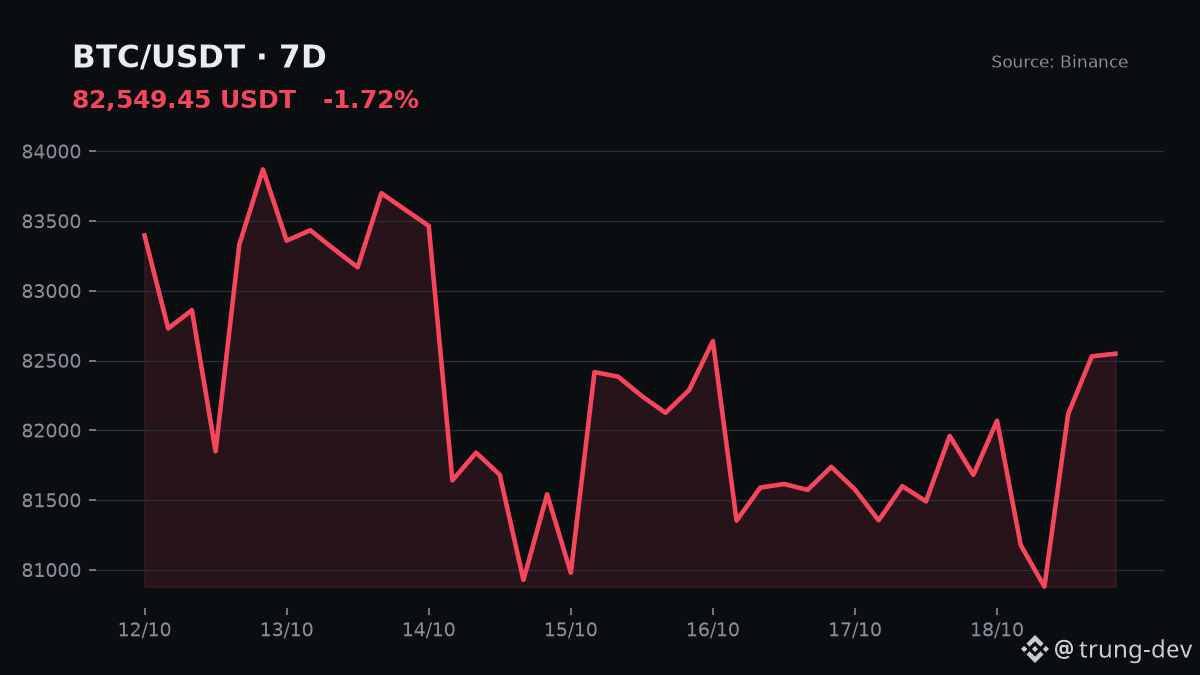
The broader market barely reacted: $BTC rose 0.77% in 24 hours. Risks like this are specific to individual projects and wallets, not the entire industry.
My takeaway: wallets created with unfamiliar tools, homemade scripts, or websites of uncertain origin pose a major risk that many people overlook because they “seem to work just fine.”
Have you ever checked how your wallet was created?
#Qubic #BảoMật #Crypto
403
🏍️ Leverage explained by a pawn shop
Collateral is the vehicle you deposit at the pawn shop. Leverage is the pawn shop that lends multiple times the vehicle’s value. When the price moves against you to the liquidation line, the shop sells the vehicle.
100 USDT collateral: x2 loses everything when the price drops 50%, x10 only needs a 10% drop, x50 only needs a 2% drop.
My perspective: leverage doesn’t help you predict better—it only makes your mistake happen faster.
$BTC đ is at 83.934 USDT. Educational content, not investment advice.
How many times do you usually use leverage?
#DonBay #FuturesTrading #BTC
2.5k
US seizes $84.2 million, cash flow around Tether is scrutinized 🔍
The U.S. Department of Justice has just seized about $84.2 million from bank accounts linked to Capstone, a payments company that previously handled hundreds of millions of dollars for Tether and Bitfinex. Source: Blogtienao.
The notable point isn’t the number itself. A stablecoin only runs smoothly when the on/off ramps for fiat deposits and withdrawals are operating without friction. When regulators go after the banks and the payment intermediaries, the risk piles up toward the "plumbing" rather than the blockchain.
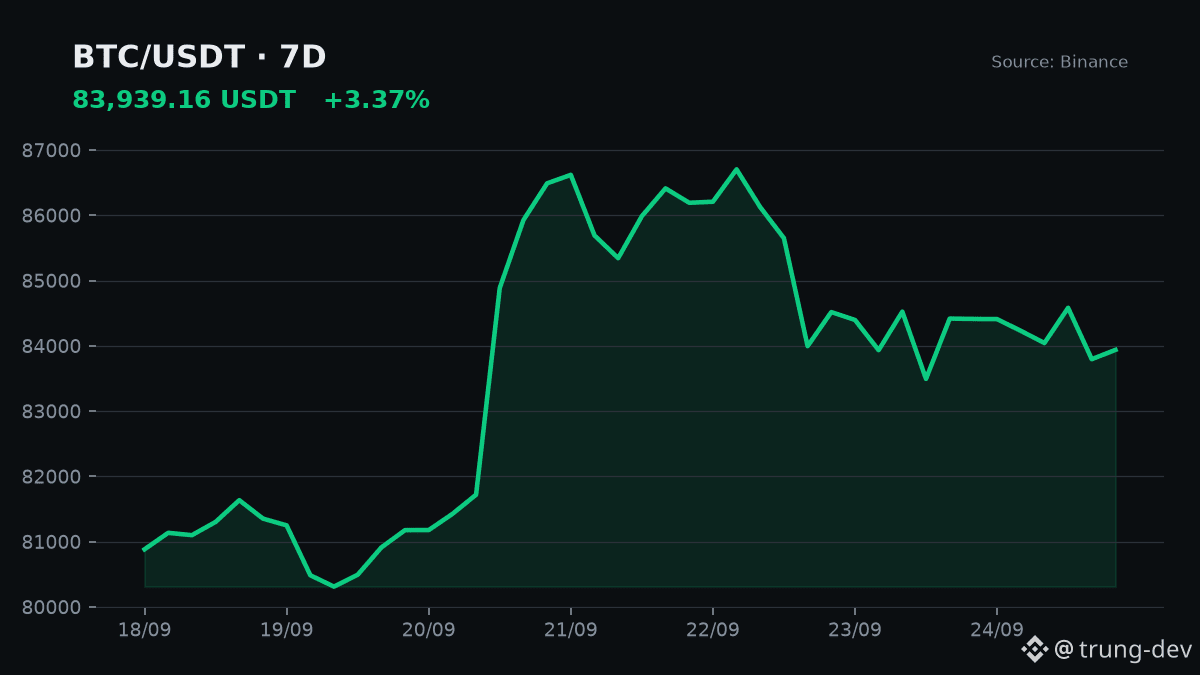
The market hasn’t reacted strongly yet: $BTC is at $83,939.16, down 1.13% over 24 hours but still up 3.37% over a week. The Fear & Greed index is at 71, in the Greed zone (alternative.me).
My perspective: when sentiment is greedy, legal news like this is very easy to overlook. But counterparty risk is something most people don’t consider until it happens. Instead of only looking at the price, understand who your stablecoin depends on to operate—and what happens if one link gets cut.
Have you ever looked into which bank your stablecoin depends on?
#Bitcoin #Stablecoin #PhapLyCrypto
276
⚖️ Hacked for $293 million: Kelp DAO sues LayerZero
Kelp DAO has just filed a lawsuit against LayerZero and its CEO, Bryan Pellegrino. They claim that LayerZero’s infrastructure caused the $293 million hack and are seeking compensation for damages. Source: Coin68.
Why should traders care? In DeFi, a protocol rarely operates alone. It relies on bridges, oracles, and cross-chain messaging layers. When one link breaks, the question of "who is responsible" has often been left unanswered. This lawsuit could set a precedent for legal responsibility of infrastructure providers.
My take: the risk of a project isn’t only on the issuing team. Before depositing assets into a restaking or cross-chain protocol, you should check which infrastructure it depends on—and if one party is attacked, who will compensate. “It has been audited” doesn’t mean it’s safe.
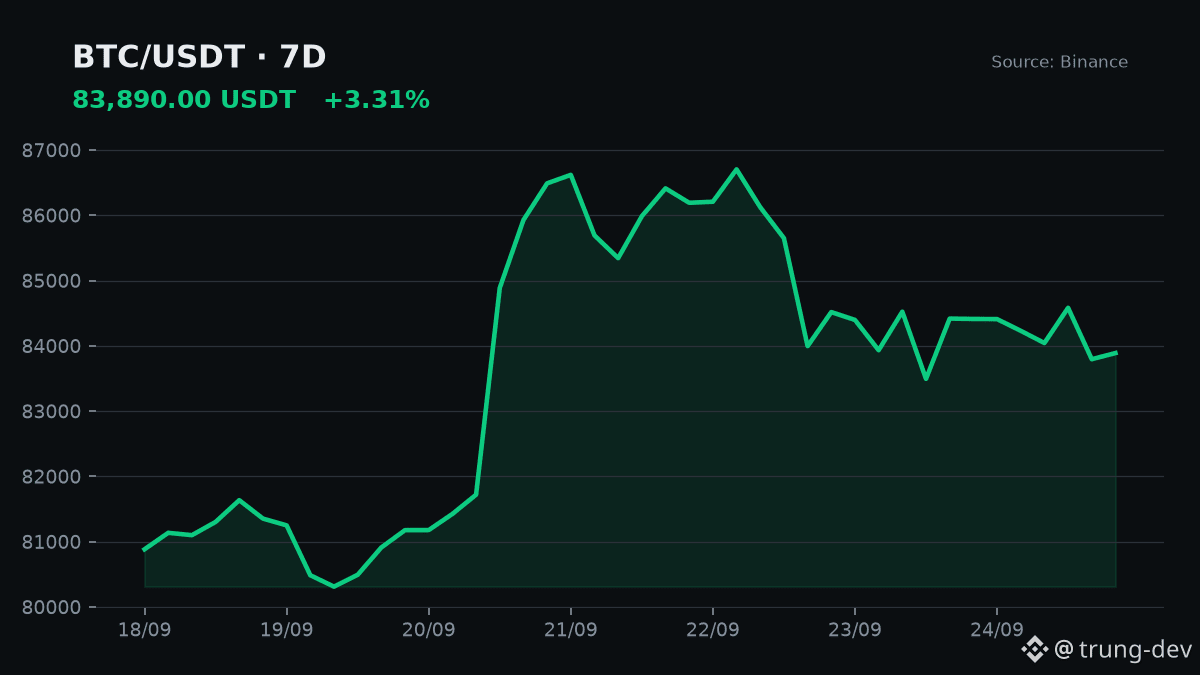
The overall market is fairly calm: $BTC around 83.890 USDT, down 1.06% over the past 24 hours. The Fear & Greed index is still at 71, the Greed zone (alternative.me). Greed can easily make people overlook infrastructure risks.
Do you check the bridge and oracle before sending money into a DeFi protocol? 👇
#DeFi #BảoMật #LayerZero
636
⏳ Options nearing expiry worth $15.6 billion, $BTC stalls
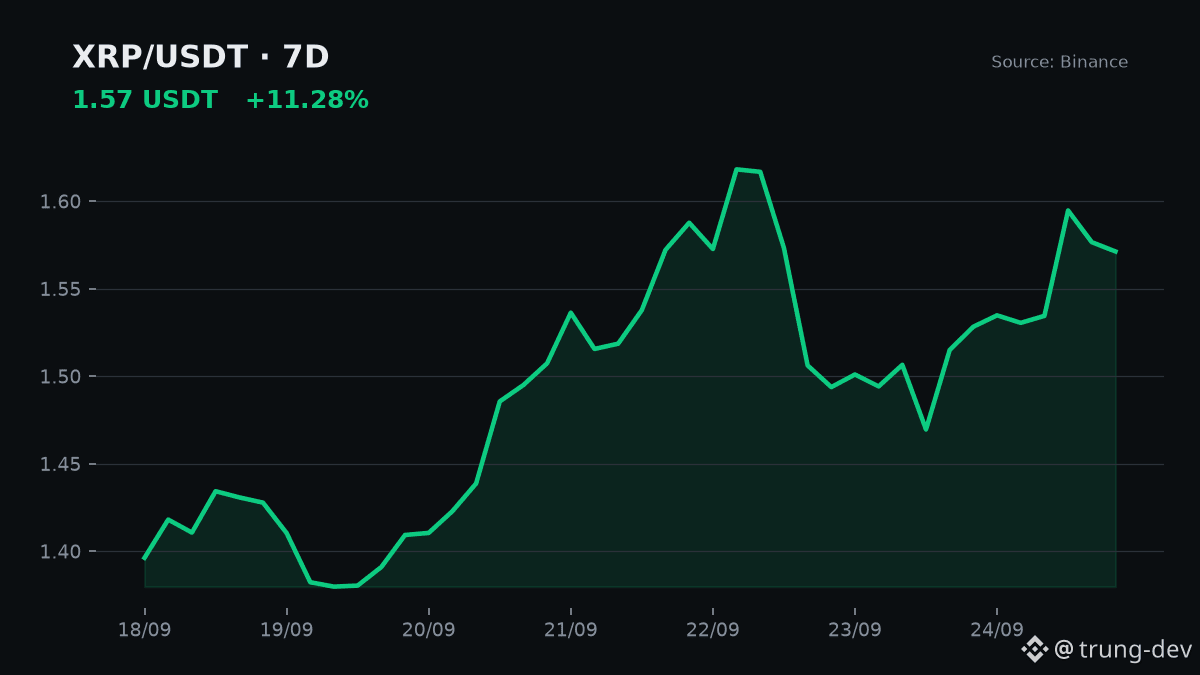
According to Decrypt, the uptrend of $BTC slowed down right around the time approximately $15.6 billion worth of expiring options contracts were due. On Binance, $BTC is hovering around 83.922 USDT, down 0.89% over 24 hours. In contrast, $XRP is up 2.81% to 1.5713 USDT, and $SOL is up 3.42% to 121.45 USDT.
Why should traders pay attention? Large expiry sessions often cause prices to swing sharply around strike levels with many open contracts. A pause during the expiry day is not enough to conclude that the trend has reversed. Usually, you need to wait for a few more sessions, when hedged positions are unwound, before the price shows its true direction.
Another notable point is that capital appears to be rotating into altcoins. $XRP has gained 11.28% over the past 7 days, trading in the range of 1.368 to 1.6581 USDT. The Fear & Greed Index is at 71, in the Greed zone (alternative.me). When sentiment tilts toward greed, the risk of chasing green candles is higher.
My takeaway: option expiry day is a day to reduce leverage and observe more than act. The volatility right now is largely driven by derivatives positions, not necessarily by genuine demand.
Source: Decrypt
Do you think this stall in $BTC is just a breather or a sign of reversal? 🤔
#Bitcoin #Options #Altcoin
488
$BTC has surpassed every cost-basis milestone—so what comes next? 🧐
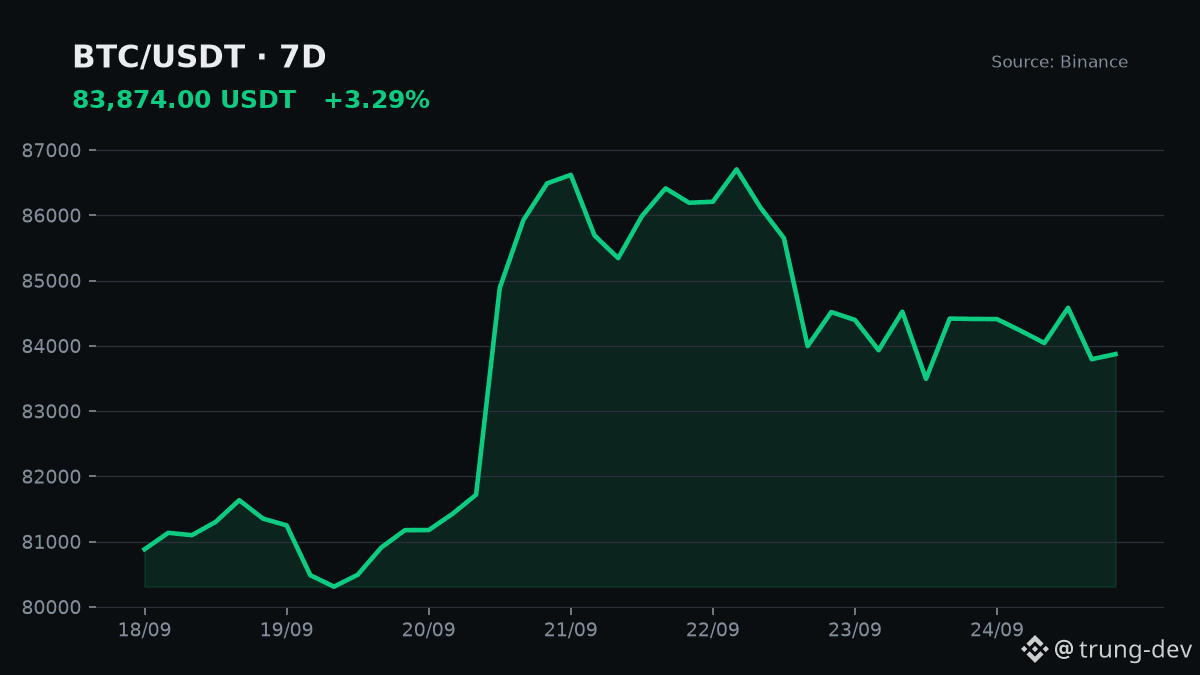
Last week, $BTC rose 4.3%, closing on Thursday at 84,380 USD after reaching an early-week high of 87,447 USD. In the same period, USTEC gained 2.8%, while the S&P 500 added just 0.7%. What’s notable is that the rally began right after the Fed returned to its tightening cycle. The area mentioned as the next test is around 96,700 USD. Source: Blogtienao.
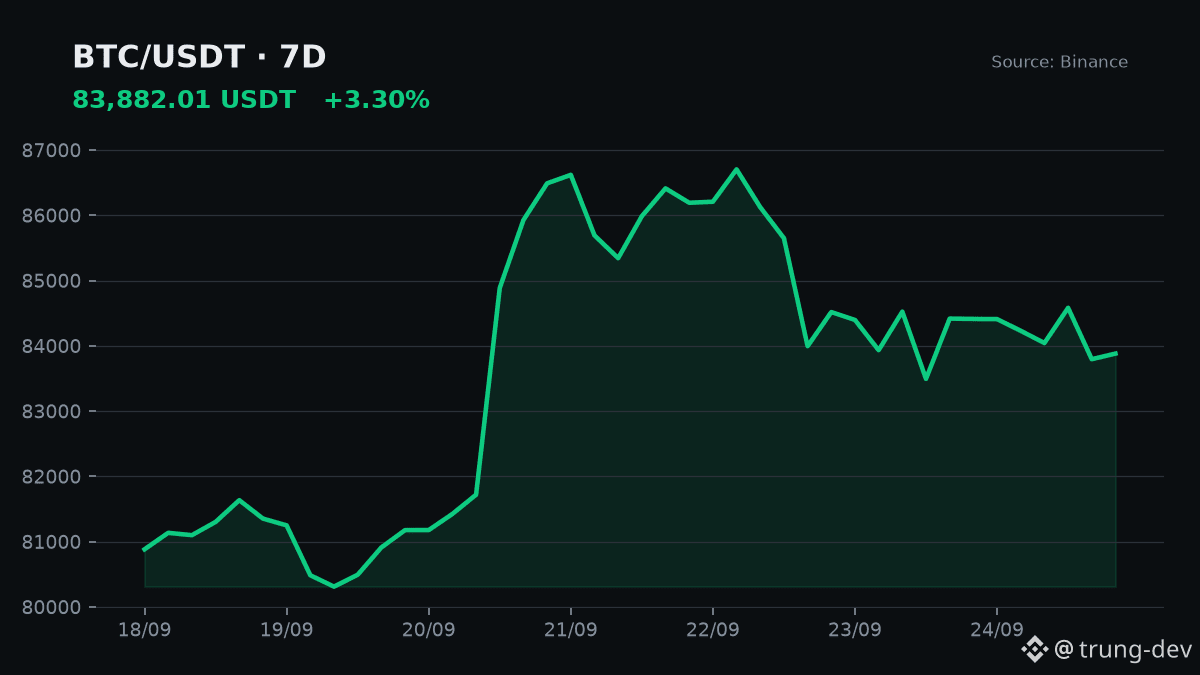
The current price on Binance is 83,874 USDT, down 0.94% over the past 24 hours. Over 7 days, $BTC is still up 3.29%, ranging from 80,126 to 87,395 USDT.
Why should traders pay attention? When the price is above the cost basis of most holders, panic-driven sell pressure often decreases, because fewer people are underwater. But at the same time, many participants who are already in profit are ready to take gains when price meets resistance.
My take: the Fear & Greed index is at 71, the Greed level (alternative.me). An exuberant mood isn’t a signal to act—it’s a reminder to review your position size and risk-management plan. A mild dip over the midweek rise is normal; don’t let it decide for you.
Which price zone of $BTC are you watching next week?
#Bitcoin #BTC #PhanTichThiTruong
266
🚨 Big exchange hacked—are your funds safe?
Bitget has just confirmed a security incident affecting a portion of its hot wallet system, impacting approximately $351.6 million worth of assets. The exchange has temporarily suspended withdrawals to investigate and stated that cold wallets remain safe. Notably, Bitget’s Protection Fund is sized at $464 million—larger than the disclosed losses.
For traders, this news matters for two reasons. First, when withdrawals are paused, your capital can become locked up right when you need to adjust positions. Second, market sentiment is easily shaken after hacks, even though this time $BTC only dipped slightly by -0.94% over the day.
My perspective: the protection fund is a good buffer, but it doesn’t replace the habit of managing risk yourself. Hot wallets are always the weakest point because they’re online continuously. Assets that you don’t use for frequent trading should be considered for storage where you control the keys yourself. Diversifying capital across multiple places also helps ensure one incident doesn’t paralyze the entire plan.
The biggest takeaway: read carefully how the exchange reports the incident—transparency speed says a lot.
Source: Blogtienao
How many percent of your assets are you keeping on an exchange, and why?
#Bitget #BaoMat #CryptoSafety
1k
This week, economic activity continues to focus on statements from Federal Reserve (FED) officials, especially information related to the consumer inflation index (CPI), an important factor shaping market expectations.
This week, economic activity continues to focus on statements from Federal Reserve (FED) officials, especially information related to the consumer inflation index (CPI), an important factor shaping market expectations.
1
1
135

Article
TRUMP MemeCoin: A Fresh Breeze or Just a Hype?The crypto community is buzzing about “TRUMP MemeCoin” – a new coin that is said to be tied to a famous person. Is this the next big thing in the market, when memes combined with the charisma of a famous person can become a new “phenomenon”?
At this point, despite the question marks surrounding its legitimacy, the project is still attracting strong attention. Imagine a potential FOMO wave when the influence and coverage of this brand is not small. Who knows, in the near future, we will see “TRUMP MemeCoin” become a surprise explosion, or it may just be a passing trend.
TRUMP MemeCoin: A Fresh Breeze or Just a Hype?
The crypto community is buzzing about “TRUMP MemeCoin” – a new coin that is said to be tied to a famous person. Is this the next big thing in the market, when memes combined with the charisma of a famous person can become a new “phenomenon”?
At this point, despite the question marks surrounding its legitimacy, the project is still attracting strong attention. Imagine a potential FOMO wave when the influence and coverage of this brand is not small. Who knows, in the near future, we will see “TRUMP MemeCoin” become a surprise explosion, or it may just be a passing trend.
At this point, despite the question marks surrounding its legitimacy, the project is still attracting strong attention. Imagine a potential FOMO wave when the influence and coverage of this brand is not small. Who knows, in the near future, we will see “TRUMP MemeCoin” become a surprise explosion, or it may just be a passing trend.
918
Log in to explore more content
Join global crypto users on Binance Square
⚡️ Get latest and useful information about crypto.
💬 Trusted by the world’s largest crypto exchange.
👍 Discover real insights from verified creators.
Email / Phone number
Trending Topics
CPITestsDecemberRateOutlook
704,221 views
3,201 Discussing
October CPI Seen Up 0.3%, Keeping Fed on Course for December Rate Increase
Binance News
·4 Likes
·3.6k views
NvidiaInvestigatesAfterHuang’sAffairApology
260,878 views
2,050 Discussing
AnthropicRejectsIPODelayValuationinQuestion
64,461 views
594 Discussing