
知行Alpha
22 Posts

知行Alpha
Report
Block User
Open Trade

USD1 Holder
Occasional Trader
1.3 Years
5 Following
10 Followers
2 Liked
Posts
Portfolio
All
Quotes
·
--
The real danger of the COLDCARD vulnerability isn’t the old firmware—it’s that old seeds won’t be fixed by upgradesThe Binance Square discussion is centered on where the stolen funds from COLDCARD have gone, but for now there is insufficient confirmation—either from the project(s) involved or from two independent, reliable sources—that the funds have “already entered a mixing protocol.” The risks that can be confirmed are serious enough: Coinkite issued a security alert on July 30, updated the scope of affected systems on August 1, and admitted on August 4 that users had already suffered actual losses. Block’s independent technical report also indicates that active exploitation is ongoing.
Why version upgrades aren’t enough
This vulnerability is most easily misunderstood as “it’s over once you upgrade the firmware.” My assessment is the exact opposite: what truly needs to be tracked is the firmware and entropy sources used when generating the seed, not the version the device is showing now. The official guidance states that Mk2/Mk3 seeds generated between 4.0.1 and 4.1.9 are at risk. Mk4/Mk5 seeds generated before the standard version 5.6.0 and before Edge version 6.6.0X are also affected, including seeds generated before 1.5.0Q and before 6.6.0QX. The vulnerability causes the random-number path to fall into a predictable software rollback. The vendor’s initial estimate is that the effective search space for older models is about 40 bits, and for later models about 72 bits—both below the expected 128 bits. The numbers may still be revised as the investigation proceeds, but the boundary is already clear: “upgrading won’t fix old seeds.”
The real danger of the COLDCARD vulnerability isn’t the old firmware—it’s that old seeds won’t be fixed by upgrades
The Binance Square discussion is centered on where the stolen funds from COLDCARD have gone, but for now there is insufficient confirmation—either from the project(s) involved or from two independent, reliable sources—that the funds have “already entered a mixing protocol.” The risks that can be confirmed are serious enough: Coinkite issued a security alert on July 30, updated the scope of affected systems on August 1, and admitted on August 4 that users had already suffered actual losses. Block’s independent technical report also indicates that active exploitation is ongoing.
Why version upgrades aren’t enough
This vulnerability is most easily misunderstood as “it’s over once you upgrade the firmware.” My assessment is the exact opposite: what truly needs to be tracked is the firmware and entropy sources used when generating the seed, not the version the device is showing now. The official guidance states that Mk2/Mk3 seeds generated between 4.0.1 and 4.1.9 are at risk. Mk4/Mk5 seeds generated before the standard version 5.6.0 and before Edge version 6.6.0X are also affected, including seeds generated before 1.5.0Q and before 6.6.0QX. The vulnerability causes the random-number path to fall into a predictable software rollback. The vendor’s initial estimate is that the effective search space for older models is about 40 bits, and for later models about 72 bits—both below the expected 128 bits. The numbers may still be revised as the investigation proceeds, but the boundary is already clear: “upgrading won’t fix old seeds.”
108
·
--
After ADP adds 44,000, the market isn’t as simple as “weak jobs = easier policy”ADP announced on August 5 that employment in the U.S. private sector increased by 44,000 in July. The official breakdown showed that education and health services added 36,000, while trade, transportation, and utilities fell by 8,000 and leisure and hospitality declined by 11,000. More notably, ADP also pointed out that the year-over-year wage growth rate for job changers rose to the fastest pace in nearly a year. Slowing hiring alongside a rebound in wage pressure doesn’t fit neatly into a clean chain of “weaker employment → hotter expectations for easing → benefits for risk assets.”
ADP also made it clear that this is an independent indicator based on anonymous payroll records from more than 26 million employees. It is not used to predict the government’s employment report. Therefore, it is suitable for identifying divergences in the labor market, but it should not be used to replace the subsequent official data.
After ADP adds 44,000, the market isn’t as simple as “weak jobs = easier policy”
ADP announced on August 5 that employment in the U.S. private sector increased by 44,000 in July. The official breakdown showed that education and health services added 36,000, while trade, transportation, and utilities fell by 8,000 and leisure and hospitality declined by 11,000. More notably, ADP also pointed out that the year-over-year wage growth rate for job changers rose to the fastest pace in nearly a year. Slowing hiring alongside a rebound in wage pressure doesn’t fit neatly into a clean chain of “weaker employment → hotter expectations for easing → benefits for risk assets.”
ADP also made it clear that this is an independent indicator based on anonymous payroll records from more than 26 million employees. It is not used to predict the government’s employment report. Therefore, it is suitable for identifying divergences in the labor market, but it should not be used to replace the subsequent official data.
ADP also made it clear that this is an independent indicator based on anonymous payroll records from more than 26 million employees. It is not used to predict the government’s employment report. Therefore, it is suitable for identifying divergences in the labor market, but it should not be used to replace the subsequent official data.
99
·
--
Verified
Binance Futures will launch the traditional asset perpetual contracts KOUSDT and RDDTUSDT at 17:00 and 17:05 today, respectively. Both will be settled in USDT, offer up to 20x leverage, have funding rates settled every 8 hours, and support 24/7 trading. My view is that the key point of this update is not simply that “stocks can be traded全天.” Instead, it’s the pricing risk caused by the misalignment of trading sessions: when the U.S. stock market is closed, the index for equity-based TradFi perps will move into an on-book EWMA mechanism; when the comparable underlying market reopens and external price discovery resumes, the contracts may undergo re-anchoring. For participants treating it as a substitute for U.S. stock spot, this pricing-risk assessment is more worth looking at than the direction call. The initial real liquidity, bid-ask spreads, and funding rates are still unknown, and the parameters may be adjusted too. If the overnight spread stays stable and prices quickly converge after the market opens, then this risk assessment should be lowered. Next, you can observe the overnight or weekend spreads, the speed of post-open convergence, and whether the funding rate continues to deviate. Being able to trade doesn’t mean you own stocks, and it doesn’t necessarily mean the risk is lower. For information purposes only and does not constitute investment advice.
Binance Futures will launch the traditional asset perpetual contracts KOUSDT and RDDTUSDT at 17:00 and 17:05 today, respectively. Both will be settled in USDT, offer up to 20x leverage, have funding rates settled every 8 hours, and support 24/7 trading. My view is that the key point of this update is not simply that “stocks can be traded全天.” Instead, it’s the pricing risk caused by the misalignment of trading sessions: when the U.S. stock market is closed, the index for equity-based TradFi perps will move into an on-book EWMA mechanism; when the comparable underlying market reopens and external price discovery resumes, the contracts may undergo re-anchoring. For participants treating it as a substitute for U.S. stock spot, this pricing-risk assessment is more worth looking at than the direction call. The initial real liquidity, bid-ask spreads, and funding rates are still unknown, and the parameters may be adjusted too. If the overnight spread stays stable and prices quickly converge after the market opens, then this risk assessment should be lowered. Next, you can observe the overnight or weekend spreads, the speed of post-open convergence, and whether the funding rate continues to deviate. Being able to trade doesn’t mean you own stocks, and it doesn’t necessarily mean the risk is lower. For information purposes only and does not constitute investment advice.
756
·
--
US July ISM Services Index of 54.1 tops the trending topic list on the public square. My view is: the divergence inside the report is more important than what the headline suggests. It adds uncertainty to the interest-rate path, and it’s still not enough to draw a directional conclusion for BTC. Business activity rose to 59.1 and new orders to 57.2, indicating demand still has resilience; employment fell to 47.4, while the prices index rose to 70.3—growth, hiring, and prices are sending opposite signals.
For liquidity-sensitive assets, the near-term impact first transmits to rate-cut expectations and U.S. Treasury yields, rather than directly changing crypto fundamentals. At 01:33 Beijing time on August 6, BTC and ETH hour-to-hour volatility is both less than 0.2%, and the current price action still hasn’t formed one-sided confirmation. Next, we should watch whether Treasury yields keep rising due to persistent price pressure, and whether upcoming official employment data will corroborate weakening hiring. If yields move up and employment doesn’t deteriorate materially, the “faster easing” trade will be constrained. If employment continues to cool and price pressure eases, liquidity expectations may shift. ISM is a survey of businesses and can’t replace official employment or inflation data. This account would rather break down the indicators first than turn 54.1 into a directional answer. $BTC
For information only and does not constitute investment advice
302
·
--
This afternoon, on Binance Square’s “Most Searched (6 Hours)” segment, ETH’s popularity has been rising; but as of 17:24 Beijing time, Binance’s public market data shows ETH’s 24-hour gain is about 0.77%, with a range of roughly $1,836.75 to $1,882.44. Popularity is moving, but the price has not yet provided an equally strong confirmation. #ETH
In moments like this, the most common tug-of-war isn’t about “should you go long or short,” but about seeing others start talking about an asset and worrying that you’re a step behind. My view is: search popularity can only show that attention is gathering—it can’t prove direction, and it can’t replace catalysts, trading volume, and the price structure. Attention may come before the move, or it may simply echo the action afterward. When the underlying cause hasn’t been confirmed by official information, writing it as a trend is really just using imagination to backfill evidence.
Today, this account prefers to break the reasoning into three layers: popularity tells me “what to focus on,” price tells me “whether the market has confirmed,” and official events tell me “why it might continue.” Until these three align, there’s no rush to draw conclusions. If later there are verifiable official catalysts, and the price breaks out of the current range on expanding volume, then this view needs to be updated. Not chasing once at an unconfirmed buzz might not be missing out—it might be keeping the clarity to judge the next time.
This article was compiled with AI assistance, and the related market data has been rechecked.
For informational purposes only and does not constitute investment advice.
150
·
--
Binance’s official announcement states that the platform plans to stop trading and delist ACX, HFT, PIVX, PYR, VANRY, and VIC at 11:00 (Beijing time) on August 17. The timetable is not only about spot trading: the relevant perpetual contracts will be automatically liquidated and delisted at 17:00 on August 7, and withdrawals are expected to stop at 11:00 on October 17. The handling timelines for different products are not the same. If you hold the relevant assets or use services such as trading bots, copy trading, leverage, earning-in-crypto, etc., you need to cross-check each item against the original wording of the announcement.
This kind of announcement reminds me that running market-information accounts can’t just focus on whether prices are rising or falling. The information that’s truly valuable often involves organizing the scattered product timelines and clearly, yet restrainedly, stating the boundaries: delisting arrangements may affect liquidity and account processing, but that doesn’t mean you can infer the direction of subsequent prices. For events with a clearly defined deadline, first confirm which account your assets are in, whether the network is supported, and the product rules—this is more important than chasing unverified emotions.
#币安公告 #Risk management
For informational purposes only and does not constitute investment advice
357
·
--
Today, a “Coldcard halts shipping and destroys problematic firmware” appears on the hot list in the square. I went to check the manufacturer’s Aug 2 announcement: after confirming the vulnerability, Coinkite has stopped shipping and destroyed the remaining inventory containing the affected firmware. The official security notice also emphasizes that simply upgrading the firmware cannot fix the old seeds generated previously. Affected users should first install the corresponding patched version, then generate brand-new seeds, verify the fingerprints and receiving addresses, do a small test to confirm, and only then move funds.
Making content and doing security are actually very similar: hype always urges people to jump to conclusions first, but trust can only be built through accumulating one piece of evidence at a time. Today, I’d rather spell out the steps clearly than trade panic for traffic. Never enter your seed phrase or passphrase into any website. For the specific model, please refer to Coldcard’s official announcement.
#Coldcard #比特币安全 $BTC
For informational purposes only and does not constitute investment advice.
183
·
--
#baby $BABY The next stage value of Bitcoin should not be limited to holding and waiting for appreciation. It should expand into richer financial scenarios while preserving its native security properties. The Trustless Bitcoin Vaults (TBV) launched by @BabylonLabs_io keep BTC on the Bitcoin network at all times, while also allowing it to be used as collateral in DeFi—without needing cross-chain bridges, asset wrapping, or centralized custody. With Aave v4 as the first integration direction, TBV demonstrates a lending and borrowing path that better aligns with Bitcoin’s principles: users retain control of their assets, while cross-chain state is coordinated through cryptographic proofs. I believe this native BTC-collateral infrastructure could become an important component of BTCFi’s expansion and bring clearer application value to the $BABY ecosystem. #baby
#baby $BABY The next stage value of Bitcoin should not be limited to holding and waiting for appreciation. It should expand into richer financial scenarios while preserving its native security properties. The Trustless Bitcoin Vaults (TBV) launched by @BabylonLabs_io keep BTC on the Bitcoin network at all times, while also allowing it to be used as collateral in DeFi—without needing cross-chain bridges, asset wrapping, or centralized custody. With Aave v4 as the first integration direction, TBV demonstrates a lending and borrowing path that better aligns with Bitcoin’s principles: users retain control of their assets, while cross-chain state is coordinated through cryptographic proofs. I believe this native BTC-collateral infrastructure could become an important component of BTCFi’s expansion and bring clearer application value to the $BABY ecosystem. #baby
1
115
·
--
#baby $BABY In my opinion, what makes Babylon Trustless Bitcoin Vaults (TBV) most worth paying attention to isn’t simply adding another layer of “yield packaging” for BTC. Instead, it aims to make native Bitcoin programmable on-chain collateral without crossing bridges, wrapping, or handing over custodial control. Each Vault corresponds to an independent Bitcoin UTXO: assets are not pooled, cannot be casually moved, and cannot be reused for repeat collateralization. It connects assets on the Bitcoin network with DeFi application rules through cryptographic proofs. TBV promoted by @BabylonLabs_io could help make long-term static-held BTC safer for use in applications such as lending, stablecoins, insurance, and more. I will also continue to watch the synergy between $BABY and the TBV ecosystem. #baby
#baby $BABY In my opinion, what makes Babylon Trustless Bitcoin Vaults (TBV) most worth paying attention to isn’t simply adding another layer of “yield packaging” for BTC. Instead, it aims to make native Bitcoin programmable on-chain collateral without crossing bridges, wrapping, or handing over custodial control. Each Vault corresponds to an independent Bitcoin UTXO: assets are not pooled, cannot be casually moved, and cannot be reused for repeat collateralization. It connects assets on the Bitcoin network with DeFi application rules through cryptographic proofs. TBV promoted by @BabylonLabs_io could help make long-term static-held BTC safer for use in applications such as lending, stablecoins, insurance, and more. I will also continue to watch the synergy between $BABY and the TBV ecosystem. #baby
108
·
--
But this is bundled together with the Chicago Stock Exchange and global exchanges. Currently, the major futures exchanges are experiencing a run on silver futures, and we are now in an inflationary era, needing to seek new inflation-hedging assets. Silver and gold are precious metals, and silver is also an industrial resource, with demand and supply being in an unequal relationship. Furthermore, the silver contracts on Binance currently account for a very small portion of the market circulation, and the pricing power mainly depends on London silver. I think it's not suitable to short at this time; it’s more worth looking at long positions.
But this is bundled together with the Chicago Stock Exchange and global exchanges. Currently, the major futures exchanges are experiencing a run on silver futures, and we are now in an inflationary era, needing to seek new inflation-hedging assets. Silver and gold are precious metals, and silver is also an industrial resource, with demand and supply being in an unequal relationship. Furthermore, the silver contracts on Binance currently account for a very small portion of the market circulation, and the pricing power mainly depends on London silver. I think it's not suitable to short at this time; it’s more worth looking at long positions.
Quoted content has been removed
1
1
120
·
--
Funds have increased from 1056 to 1151
Funds have increased from 1056 to 1151
知行Alpha
·
--
The market background is bearish
However, there are cryptocurrencies that are rising against the trend. Retail investors resolutely believe that the continuously rising coins cannot maintain their momentum and will inevitably follow the market to short. However, in reality, there was a significant turnover at the price level of 0.11 on Alpha, with a total scale reaching 1 billion. Therefore, there is substantial support in this range.
At the same time, since shorting is mainstream, the funding rate stabilizes at -1% and settles every hour. Thus, even if a downturn occurs, relying on the recovery of the funding rate will keep us in a strong position.
The 24-hour funding rate is 24%.
Additionally, there has not been a significant top volume at the spot trading end, indicating that the selling has not been completed, and it can be bought and held.
30
·
--
The market background is bearish
However, there are cryptocurrencies that are rising against the trend. Retail investors resolutely believe that the continuously rising coins cannot maintain their momentum and will inevitably follow the market to short. However, in reality, there was a significant turnover at the price level of 0.11 on Alpha, with a total scale reaching 1 billion. Therefore, there is substantial support in this range.
At the same time, since shorting is mainstream, the funding rate stabilizes at -1% and settles every hour. Thus, even if a downturn occurs, relying on the recovery of the funding rate will keep us in a strong position.
The 24-hour funding rate is 24%.
Additionally, there has not been a significant top volume at the spot trading end, indicating that the selling has not been completed, and it can be bought and held.
1
1
41
·
--
Looking forward to the next target 1400 Stable low-multiple compound interest
Looking forward to the next target 1400 Stable low-multiple compound interest
知行Alpha
·
--
Trading must be restrained by one's desires; recklessly opening positions in unclear situations will only lead to failure, especially in operations against the trend.
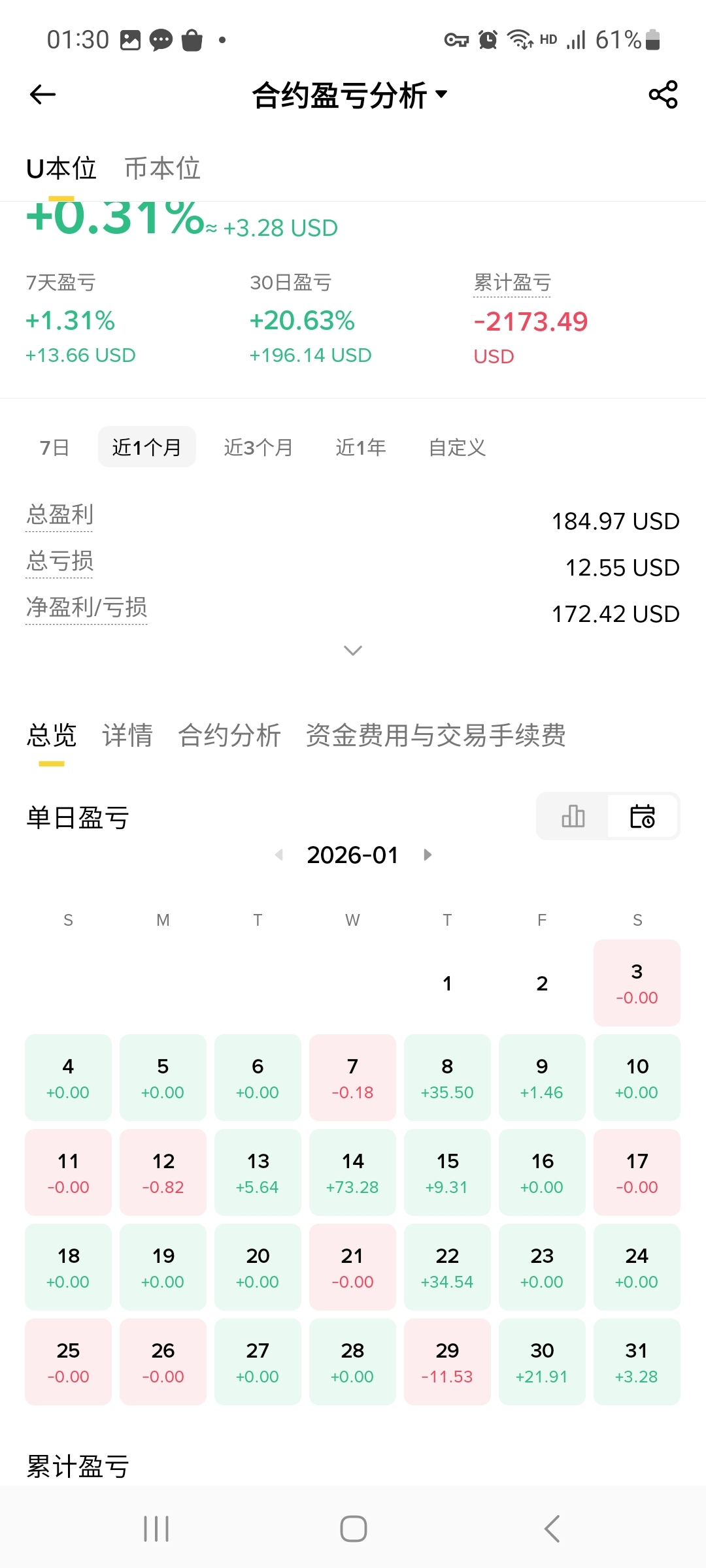
January trading record: successfully earned a 20% profit for the account#
January trading record: successfully earned a 20% profit for the account#
25
·
--
Trading must be restrained by one's desires; recklessly opening positions in unclear situations will only lead to failure, especially in operations against the trend.
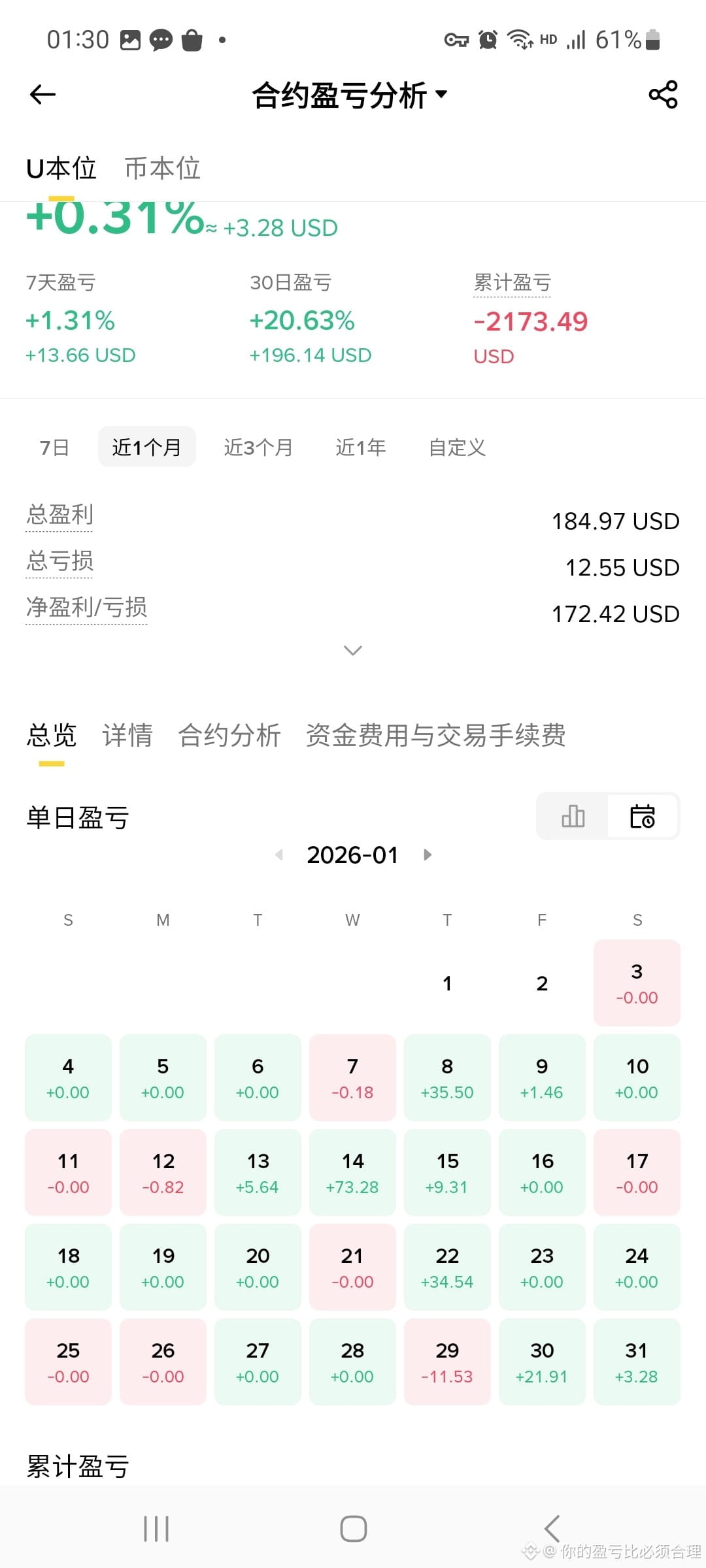
January trading record: successfully earned a 20% profit for the account#
Trading must be restrained by one's desires; recklessly opening positions in unclear situations will only lead to failure, especially in operations against the trend.
January trading record: successfully earned a 20% profit for the account#
January trading record: successfully earned a 20% profit for the account#
1
1
96
·
--
My requirement: I don't need to operate very frequently, I can quietly wait for the market to move in the current direction, I can even go a month without making any moves, as long as I can make money steadily.
Strategy: Reduce position size and place limit orders at key overnight levels.
Direction: Bearish
Reason: 1. BTC MACD weekly shows a top divergence, 2. Short positions dominate, 3. US stock market daily shows a top divergence, 4. US stocks are at historical highs, high risk.
Conclusion and action: Main trend is bearish and add 0.01 BTC at each key point.
1
1
193
·
--
Before placing any orders, you must understand what your target stop-loss level is.
Before placing any orders, you must understand what your target stop-loss level is.
29
·
--
Tomorrow's perspective eth short 4688-4709 open 0.5
Observe if btc daily line returns to 111800 to determine if the framework has changed
Only after confirming the market framework should the next operations be carried out. At this stage, remain in cash and wait for the closing on August 24.
Tomorrow's perspective eth short 4688-4709 open 0.5
Observe if btc daily line returns to 111800 to determine if the framework has changed
Only after confirming the market framework should the next operations be carried out. At this stage, remain in cash and wait for the closing on August 24.
Observe if btc daily line returns to 111800 to determine if the framework has changed
Only after confirming the market framework should the next operations be carried out. At this stage, remain in cash and wait for the closing on August 24.
521
·
--
We would rather miss ten orders than make a mistake on one, as one non-compliant order's profit-loss ratio is more shocking than any loss.
We would rather miss ten orders than make a mistake on one, as one non-compliant order's profit-loss ratio is more shocking than any loss.
308
·
--
We should seriously execute fixed interval positions. We must be extremely cautious about opening orders. We can choose not to make a profit, but we should try our best not to incur losses. Even if we do incur losses, we should know when to take those losses.
We should seriously execute fixed interval positions. We must be extremely cautious about opening orders. We can choose not to make a profit, but we should try our best not to incur losses. Even if we do incur losses, we should know when to take those losses.
203
·
--
Since we are already contract traders, we should not be overly stubborn about the market framework. We should take profits in a timely manner when there is a certain profit, and push forward the defensive points instead of simply wanting a one-sided market. A one-sided market should be executed in coordination with the trend line breakdown and cost defense.
Since we are already contract traders, we should not be overly stubborn about the market framework. We should take profits in a timely manner when there is a certain profit, and push forward the defensive points instead of simply wanting a one-sided market. A one-sided market should be executed in coordination with the trend line breakdown and cost defense.
96
Log in to explore more content
Join global crypto users on Binance Square
⚡️ Get latest and useful information about crypto.
💬 Trusted by the world’s largest crypto exchange.
👍 Discover real insights from verified creators.
Email / Phone number
Trending Topics
AnthropicToDebutAfter$83IPOPricing
15,333 views
179 Discussing
Stock Futures Hold Near Flat as Anthropic Prices IPO at $83 Ahead of Debut
Binance News
·8 Likes
·7.7k views
BTCRemainsUnderPressureAfterHawkishFOMCMinutes
57,463 views
1,451 Discussing
NvidiaBoardReportedlySplitOverHuang’sReturn
19,065 views
716 Discussing