
Skuf_BY
139 Posts

Skuf_BY
Report
Block User
1 Following
2 Followers
5 Liked
Posts
PINNED
·
--
Bullish
🎉 First Subscribers!
I want to say a huge thank you to everyone who has already subscribed to me! 🤝
There may not be many of you yet, but this is already a small victory for me.
I'll do my best to regularly share the latest news from the world of cryptocurrency, and over time I'll start showing my real futures trades too.
Skuf also has a little dream—to see 1,000 subscribers on his profile someday. 🚀
I'm still a long way from that number, but everyone has to start somewhere!
Thank you for being here with me. Let's grow together, little by little!
#BinanceSquare #Crypto #Binance

135
·
--
💼 Bitget and Merkl prepare payouts for tokenized stocks in DeFi
On November 8, news emerged of a partnership between Bitget’s Reality protocol and the Merkl platform. The companies plan to arrange dividend distributions in stablecoins for holders of eligible rTokens, even when those tokens are deployed in supported DeFi protocols.
Merkl’s technology is expected to determine which users on lending markets, liquidity pools, and staking platforms qualify for payouts. This is a planned mechanism, not a confirmed launch of payouts; the participation terms and list of supported protocols matter.
rTokens represent tokenized exposure to U.S. stocks, not direct ownership of the shares themselves. Source: TokenPost, published on November 7 U.S. time (November 8 in Minsk).
#Токенизация #DeFi
·
--
💳 Stablecoin payments rose 45% while supply remained almost unchanged
On November 8, CoinDesk published data from analytics firm Allium: in the first nine months of 2026, stablecoin payment volume rose 45% to $482 billion, while the number of transactions increased 71% to 1.04 billion. Meanwhile, the total supply of stablecoins grew by just 0.4%, to $305 billion.
The gap shows that digital dollars already in circulation are being used more actively, even without a significant influx of new tokens. Use cases include cross-border settlements, crypto-backed cards, and automated payments between software agents.
AI agent payments are still modest, however: according to Allium, 68.3 million such transactions took place in the third quarter, totaling just $3.7 million. Source: CoinDesk, November 8, 2026, Allium data.
#Стейблкоины #Платежи
·
--
⚡ DAILY RECAP — NOVEMBER 8, 2026⚡ DAILY RECAP — NOVEMBER 8, 2026
The crypto market is ending Sunday amid the fallout from major security incidents and investor caution. Below are the day's main confirmed events from 00:00 to 21:00 Minsk time. Where developments began earlier, this is noted separately.
🔐 KEPLR AND WEB3AUTH: INCIDENT SCOPE STILL BEING DETERMINED
⚡ DAILY RECAP — NOVEMBER 8, 2026
⚡ DAILY RECAP — NOVEMBER 8, 2026
The crypto market is ending Sunday amid the fallout from major security incidents and investor caution. Below are the day's main confirmed events from 00:00 to 21:00 Minsk time. Where developments began earlier, this is noted separately.
🔐 KEPLR AND WEB3AUTH: INCIDENT SCOPE STILL BEING DETERMINED
The crypto market is ending Sunday amid the fallout from major security incidents and investor caution. Below are the day's main confirmed events from 00:00 to 21:00 Minsk time. Where developments began earlier, this is noted separately.
🔐 KEPLR AND WEB3AUTH: INCIDENT SCOPE STILL BEING DETERMINED
·
--
🏦 Binance resumes withdrawals of HYPE and APT after security review
On November 8, 2026, Binance announced that it had reopened withdrawals of HYPE and APT tokens. These assets have been added to the list of cryptocurrencies for which withdrawals have been restored following a recent security incident.
Previously, the exchange gradually resumed withdrawals of several tokens on the Ethereum network, including LINK, SHIB, ONDO, and PENDLE, as well as certain Solana assets. The resumption of HYPE and APT withdrawals does not mean that all networks and assets are available again: Binance continues its reviews and is lifting restrictions on individual routes.
Source: Binance’s official account, November 8, 2026; crypto.news.
#Binance #Безопасность
148
·
--
🔐 Keplr disabled Google and Apple sign-in after the Web3Auth incident
On November 8, 2026, new details emerged about the incident involving Keplr wallets created using Google or Apple sign-in. The vulnerability is linked to Web3Auth’s infrastructure. Keplr temporarily disabled social sign-in; according to the team, wallets secured with a seed phrase or hardware device were not affected.
Bitquery analysts tracked transfers totaling approximately $6 million from tens of thousands of addresses. However, Web3Auth disputes characterizing the entire amount as stolen: it says some transfers were sent to team-controlled addresses to safeguard funds. The final amount of confirmed losses is still unknown.
Users are advised to rely on official announcements from Keplr and Web3Auth and to beware of fraudulent offers to “recover” assets.
Sources: Crypto Briefing, BeInCrypto, Bitquery, November 7–8, 2026.
#Keplr #Безопасность
192
·
--
⚡ NEWS THIS HOUR
(Full news on my channel)
Current events for November 8
🔹 Keplr restricted sign-ins via Google and Apple after a Web3Auth vulnerability; the amount of actual losses is still being determined.
🔹 Binance resumed HYPE and APT withdrawals after security checks.
#НовостиСкуфа #Криптовалюты
(Full news on my channel)
Current events for November 8
🔹 Keplr restricted sign-ins via Google and Apple after a Web3Auth vulnerability; the amount of actual losses is still being determined.
🔹 Binance resumed HYPE and APT withdrawals after security checks.
#НовостиСкуфа #Криптовалюты
83
·
--
⚖️ China launches investigation into organizers of Solana advertising in Shanghai
On November 6, 2026, a representative of the People’s Bank of China told the newspaper Financial News that authorities had halted Solana Accelerate China 2026 and intended to investigate the activities of local organizations and individuals involved in promoting the project. This includes advertising for Solana on the façade of Citigroup Tower in Shanghai’s Lujiazui district.
According to the regulator, such advertising constitutes the promotion of virtual currencies, which is prohibited in mainland China. The event, scheduled for October, had already been halted; the new development was a public explanation of the reasons and the intention to conduct an investigation.
The names of the companies under investigation, specific penalties, and the investigation’s timeline have not yet been announced. This is not an announcement that the Solana network is banned worldwide, nor is it evidence of wrongdoing by all ecosystem participants.
Source: Financial News (interview with a PBOC representative, November 6), Solana Compass, Boursorama/Cryptoast.
#Solana #Регулирование
56
·
--
Verified
🏦 BINANCE APPOINTS NEW CHIEF FINANCIAL OFFICER
On November 7, 2026, The Defiant reported that Binance had appointed Justin Yek as chief financial officer. He will replace Kaiser Ng, who is preparing to step down.
According to Binance co-CEO Yi He, the transition plan had been in preparation for about six months—before the exchange’s recent major hack. This statement concerns the timing of the personnel decision; it does not prove either a connection or a lack of connection between the departure and the incident.
Source: The Defiant, November 7, 2026.
#Binance #Криптоиндустрия
32
·
--
🔐 LOOPSCALE RESUMES OPERATIONS AT ALL VAULTS AFTER ATTACK
On November 7, 2026, DeFi platform Loopscale announced that all vaults had resumed operations after restrictions imposed in response to an attack. The reopening also included the USDC Genesis Vault.
According to The Defiant, the platform also lifted the remaining restrictions on loan management. Loopscale has promised to publish a technical postmortem of the incident. The resumption of operations does not in itself mean that all risks have been eliminated: users should follow official updates.
Source: The Defiant, November 7, 2026.
#DeFi #Безопасность
8
·
--
Verified
⚡ NEWS THIS HOUR
(Full news on my channel)
Current events for November 7
🔹 Loopscale restored operations at all vaults after they were frozen due to an attack.
🔹 Binance appointed Justin Yek as CFO, replacing Kaiser Ng.
#НовостиСкуфа #Криптовалюты
⚡ NEWS THIS HOUR
(Full news on my channel)
Current events for November 7
🔹 Loopscale restored operations at all vaults after they were frozen due to an attack.
🔹 Binance appointed Justin Yek as CFO, replacing Kaiser Ng.
#НовостиСкуфа #Криптовалюты
(Full news on my channel)
Current events for November 7
🔹 Loopscale restored operations at all vaults after they were frozen due to an attack.
🔹 Binance appointed Justin Yek as CFO, replacing Kaiser Ng.
#НовостиСкуфа #Криптовалюты
8
·
--
Bearish
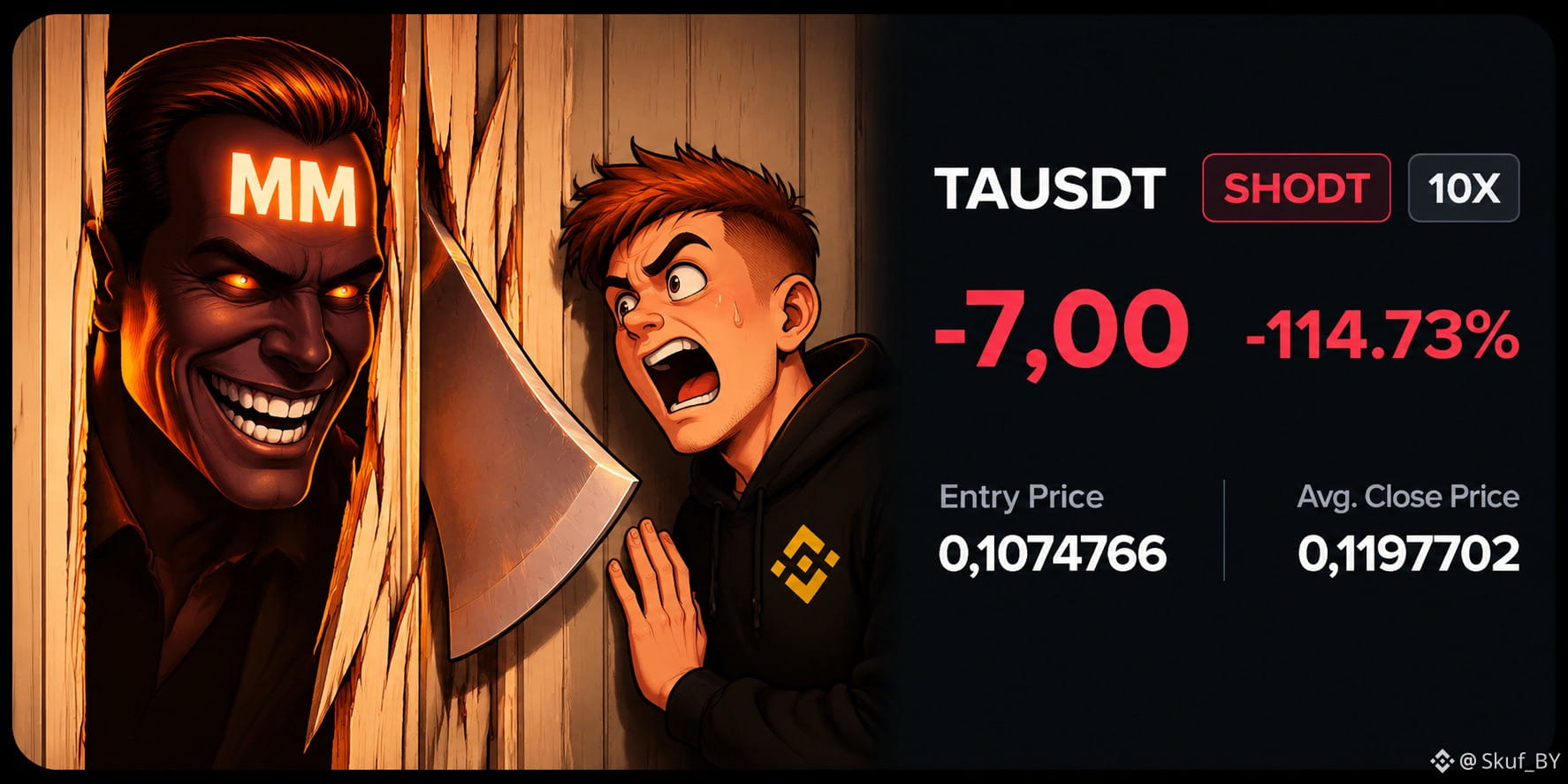
I struggled for over an hour on $TA , and when I was forced to close to avoid liquidation... it dumped.
Went off to take some Validol
I struggled for over an hour on $TA , and when I was forced to close to avoid liquidation... it dumped.
Went off to take some Validol
Went off to take some Validol
33
·
--
⚖️ India investigates CoinDCX and Delta Exchange over overseas crypto transactions
On November 6, 2026, India’s Enforcement Directorate (ED) reported searches conducted on November 4–5 at offices of companies linked to CoinDCX and Delta Exchange. The agency is investigating alleged violations of foreign exchange laws under FEMA involving transactions in crypto derivatives and tokenized foreign stocks.
According to the ED, client funds may have been converted into USDT and routed to execute trades on overseas platforms, including Binance and KuCoin. Mention of these exchanges does not imply any accusation against them. CoinDCX and Delta Exchange said they are cooperating with the investigation and continuing normal operations; Delta disputes claims of cross-border transfers. The allegations have not yet been established in court.
Sources: ED (November 6), Business Today and ThePrint (November 7).
#Криптобиржи #Регулирование
78
·
--
💰 CRYPTO STARTUPS RAISED $43.5M IN A WEEK
On November 7, crypto.news reviewed funding rounds announced between October 31 and November 6: six deals with disclosed amounts totaled $43.5 million. Five more investments took place without amounts being disclosed.
The largest disclosed round was a $16.5 million Series A for Uranium Digital, led by Blockchain Capital. LO:TECH raised $12 million to expand its trading services in the US and Asia-Pacific region, while Takenos raised an additional $7 million in seed funding.
This is an investment roundup, not data on token price growth. Source: crypto.news, 07.11.2026.
#Криптоиндустрия #Инвестиции
1
·
--
Bearish
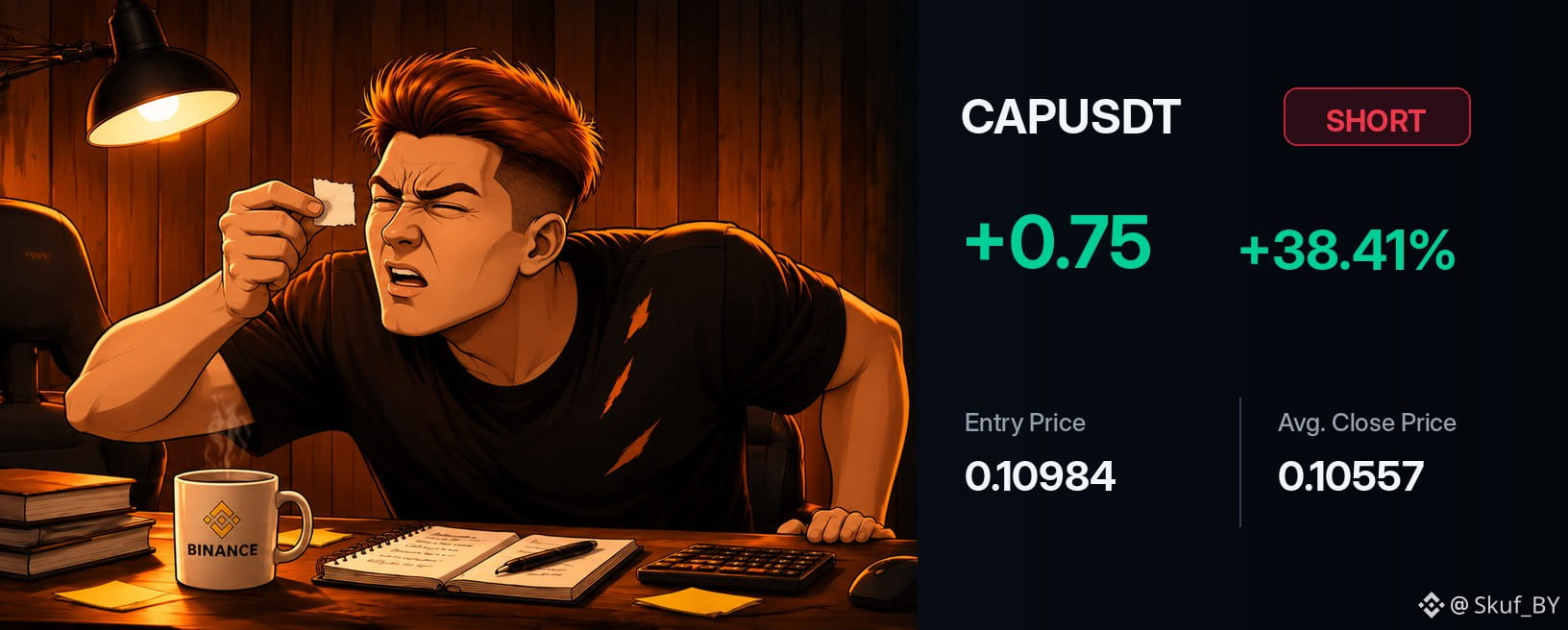
For now, I'm trading with a small deposit. I'll gradually share my trades and results.
$CAP
For now, I'm trading with a small deposit. I'll gradually share my trades and results.
$CAP
$CAP
74
·
--
📉 ETH ETFs: SIXTH STRAIGHT WEEK OF OUTFLOWS
For the trading period of November 2–6, 2026, U.S. spot Ethereum ETFs saw net outflows of around $365 million. According to CryptoTicker on November 7, this was the sixth consecutive week of negative flows; on Friday, November 6 alone, outflows totaled around $93.19 million.
Amid declining demand for ETH exchange-traded funds, ETH traded at around $2,235 on November 7. ETF outflows are not a direct forecast of further price declines, but they do indicate investor caution toward regulated Ethereum products. Source: CryptoTicker, November 7, 2026.
#ETH #ETF
240
·
--
📊 TERAWULF: BTC MINING REVENUE FELL 69%, WHILE AI LEASING GREW
On November 6, TeraWulf reported its results for the third quarter of 2026. Revenue from digital asset mining fell from $43.4 million a year earlier to $13.2 million. Meanwhile, leasing capacity for high-performance computing (HPC) generated $63 million — about 83% of the company’s total quarterly revenue of $76.2 million.
The company is shifting its focus from mining to AI infrastructure. Net income of about $710 million includes a substantial non-cash gain from the revaluation of liabilities; at the same time, the operating loss was $88.2 million. This reflects a change in the business model, but does not mean the AI segment is already profitable on an operating basis. Sources: TeraWulf’s quarterly report dated November 6, The Block.
#BTC #Майнинг
10
·
--
⚖️ CFTC DEMANDS THAT PREDICTION MARKETS EXPLAIN STATE-LEVEL BLOCKS
On November 6, CoinDesk reported a new demand from the U.S. Commodity Futures Trading Commission (CFTC). The regulator believes that registered prediction markets, including platforms offering event contracts, should not arbitrarily deny access to customers in individual states. They have 30 days to explain the restrictions or restore access.
The problem is that several courts, by contrast, have required certain prediction markets to restrict their operations in some jurisdictions. As a result, market participants are facing conflicting requirements. This is a dispute over the regulation of event contracts, not permission for crypto exchanges to ignore local laws. Source: CoinDesk, November 6.
#CFTC #Регулирование
128
·
--
⚖️ US: CRYPTO ASSETS IN 401(K) RETIREMENT PLANS — RULE NOT YET ADOPTED
On November 6, The Block reported that on November 5, the US Department of Labor submitted a rule on choosing alternative investments for 401(k) retirement plans to the White House Office of Information and Regulatory Affairs (OIRA). Potential options include digital assets, private funds, and real estate.
The document is still under review, and its final version has not been published. This does not mean that all retirement plans can already automatically add bitcoin: plan managers must assess risks, fees, liquidity, and participants’ interests. Sources: The Block, 401(k) Specialist.
#BTC #Регулирование
38
Log in to explore more content
Join global crypto users on Binance Square
⚡️ Get latest and useful information about crypto.
💬 Trusted by the world’s largest crypto exchange.
👍 Discover real insights from verified creators.
Email / Phone number