
2026Rabbit
187 Posts

2026Rabbit
Report
Block User
Newbie tryin’ earn some from the market 👀
12 Following
42 Followers
74 Liked
Posts
All
Videos
·
--
#termmax @termmax
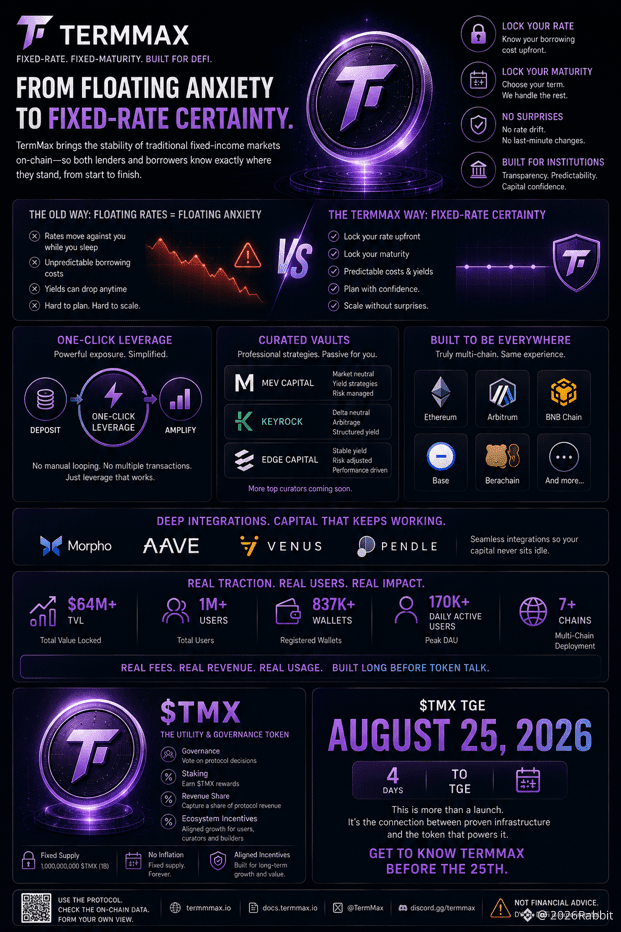
Most people still price DeFi lending like it's 2021, floating rates, floating anxiety. TermMax is quietly rewriting that.
The idea is straightforward once you see it in action: lock a rate, lock a maturity, and both lenders and borrowers know exactly where they stand. No checking the dashboard every hour hoping the rate didn't move against you. That's the kind of certainty institutions actually need before they touch on-chain credit at scale.
What pushes TermMax past "nice concept" is the build around it. One-click leverage compresses looping into a single transaction. Curated vaults let you tap professional rate strategies passively instead of managing positions yourself. And it's genuinely multi-chain, live across Ethereum, Arbitrum, BNB Chain, Base, Berachain and more, with deep integrations into Morpho, Aave, Venus and Pendle so capital keeps earning instead of sitting idle mid-match.
None of this is theoretical either. Real TVL, real fee generation, real users across chains, long before token talk even started. That's the kind of foundation a launch should stand on.
Now it's official: $TMX TGE is set for August 25, 2026. That's when this entire track record starts connecting to a token.
Get to know TermMax before the 25th.
Not financial advice. DYOR.
#termmax @TermMax
Most people still price DeFi lending like it's 2021, floating rates, floating anxiety. TermMax is quietly rewriting that.
The idea is straightforward once you see it in action: lock a rate, lock a maturity, and both lenders and borrowers know exactly where they stand. No checking the dashboard every hour hoping the rate didn't move against you. That's the kind of certainty institutions actually need before they touch on-chain credit at scale.
What pushes TermMax past "nice concept" is the build around it. One-click leverage compresses looping into a single transaction. Curated vaults let you tap professional rate strategies passively instead of managing positions yourself. And it's genuinely multi-chain, live across Ethereum, Arbitrum, BNB Chain, Base, Berachain and more, with deep integrations into Morpho, Aave, Venus and Pendle so capital keeps earning instead of sitting idle mid-match.
None of this is theoretical either. Real TVL, real fee generation, real users across chains, long before token talk even started. That's the kind of foundation a launch should stand on.
Now it's official: $TMX TGE is set for August 25, 2026. That's when this entire track record starts connecting to a token.
Get to know TermMax before the 25th.
Not financial advice. DYOR.
Most people still price DeFi lending like it's 2021, floating rates, floating anxiety. TermMax is quietly rewriting that.
The idea is straightforward once you see it in action: lock a rate, lock a maturity, and both lenders and borrowers know exactly where they stand. No checking the dashboard every hour hoping the rate didn't move against you. That's the kind of certainty institutions actually need before they touch on-chain credit at scale.
What pushes TermMax past "nice concept" is the build around it. One-click leverage compresses looping into a single transaction. Curated vaults let you tap professional rate strategies passively instead of managing positions yourself. And it's genuinely multi-chain, live across Ethereum, Arbitrum, BNB Chain, Base, Berachain and more, with deep integrations into Morpho, Aave, Venus and Pendle so capital keeps earning instead of sitting idle mid-match.
None of this is theoretical either. Real TVL, real fee generation, real users across chains, long before token talk even started. That's the kind of foundation a launch should stand on.
Now it's official: $TMX TGE is set for August 25, 2026. That's when this entire track record starts connecting to a token.
Get to know TermMax before the 25th.
Not financial advice. DYOR.
74
·
--
#termmax @termmax
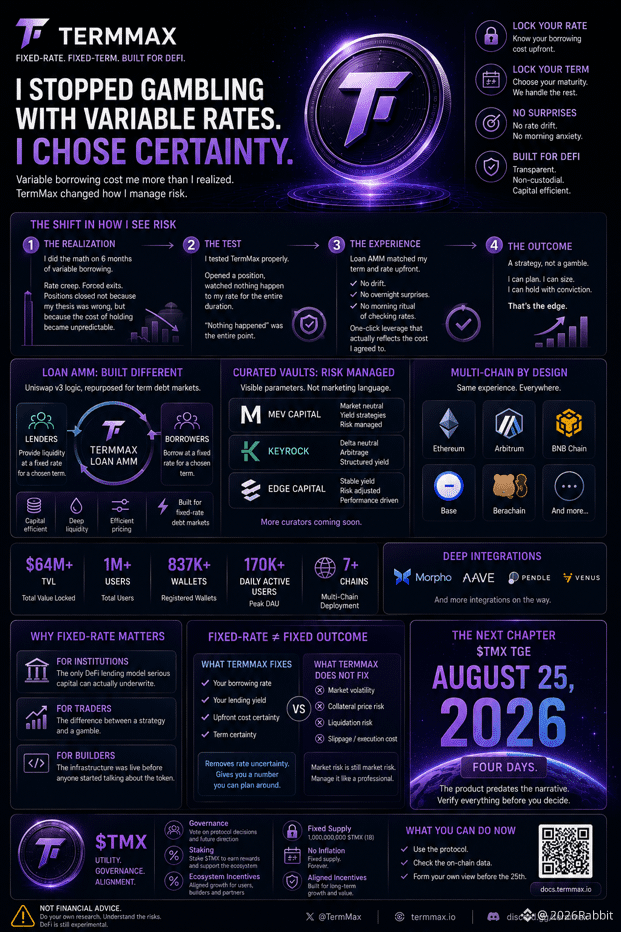
Something shifted in how I think about risk the day I stopped using variable rate protocols for anything longer than a 48-hour trade.
I didn't switch to TermMax because of a thread. I switched because I did the math on what variable borrowing had actually cost me across six months — rate creep, forced exits, positions closed not because my thesis was wrong but because the cost of holding it became unpredictable. The number was uncomfortable.
So I tested TermMax properly. Opened a position, watched nothing happen to my rate for the entire duration, and realized that "nothing happened" was the entire point. The loan AMM matched my term and rate upfront — no drift, no overnight surprises, no morning ritual of checking whether my borrowing cost had silently repriced while I was offline. One-click leverage that actually reflected the cost I agreed to, not a cost that would reveal itself later.
The curated vaults changed my view on risk management too. Visible parameters, not marketing language. Multi-chain deployment that held the same experience across networks, not a single flagship chain with cosmetic deployments elsewhere.
From an institutional angle this is the only DeFi lending model that serious capital can actually underwrite. From a trader angle it's the difference between a strategy and a gamble. From a builder angle the infrastructure was live before anyone started talking about the token.
That last point matters most right now. $TMX TGE is August 25, 2026. Four days. The product predates the narrative — which means you can verify everything before you decide anything.
Use the protocol. Check the on-chain data. Form your own view before the 25th.
Not financial advice. Just someone who did the math.
#termmax @TermMax
Something shifted in how I think about risk the day I stopped using variable rate protocols for anything longer than a 48-hour trade.
I didn't switch to TermMax because of a thread. I switched because I did the math on what variable borrowing had actually cost me across six months — rate creep, forced exits, positions closed not because my thesis was wrong but because the cost of holding it became unpredictable. The number was uncomfortable.
So I tested TermMax properly. Opened a position, watched nothing happen to my rate for the entire duration, and realized that "nothing happened" was the entire point. The loan AMM matched my term and rate upfront — no drift, no overnight surprises, no morning ritual of checking whether my borrowing cost had silently repriced while I was offline. One-click leverage that actually reflected the cost I agreed to, not a cost that would reveal itself later.
The curated vaults changed my view on risk management too. Visible parameters, not marketing language. Multi-chain deployment that held the same experience across networks, not a single flagship chain with cosmetic deployments elsewhere.
From an institutional angle this is the only DeFi lending model that serious capital can actually underwrite. From a trader angle it's the difference between a strategy and a gamble. From a builder angle the infrastructure was live before anyone started talking about the token.
That last point matters most right now. $TMX TGE is August 25, 2026. Four days. The product predates the narrative — which means you can verify everything before you decide anything.
Use the protocol. Check the on-chain data. Form your own view before the 25th.
Not financial advice. Just someone who did the math.
Something shifted in how I think about risk the day I stopped using variable rate protocols for anything longer than a 48-hour trade.
I didn't switch to TermMax because of a thread. I switched because I did the math on what variable borrowing had actually cost me across six months — rate creep, forced exits, positions closed not because my thesis was wrong but because the cost of holding it became unpredictable. The number was uncomfortable.
So I tested TermMax properly. Opened a position, watched nothing happen to my rate for the entire duration, and realized that "nothing happened" was the entire point. The loan AMM matched my term and rate upfront — no drift, no overnight surprises, no morning ritual of checking whether my borrowing cost had silently repriced while I was offline. One-click leverage that actually reflected the cost I agreed to, not a cost that would reveal itself later.
The curated vaults changed my view on risk management too. Visible parameters, not marketing language. Multi-chain deployment that held the same experience across networks, not a single flagship chain with cosmetic deployments elsewhere.
From an institutional angle this is the only DeFi lending model that serious capital can actually underwrite. From a trader angle it's the difference between a strategy and a gamble. From a builder angle the infrastructure was live before anyone started talking about the token.
That last point matters most right now. $TMX TGE is August 25, 2026. Four days. The product predates the narrative — which means you can verify everything before you decide anything.
Use the protocol. Check the on-chain data. Form your own view before the 25th.
Not financial advice. Just someone who did the math.
51
·
--
#binancep2pantoan @Binance_Vietnam
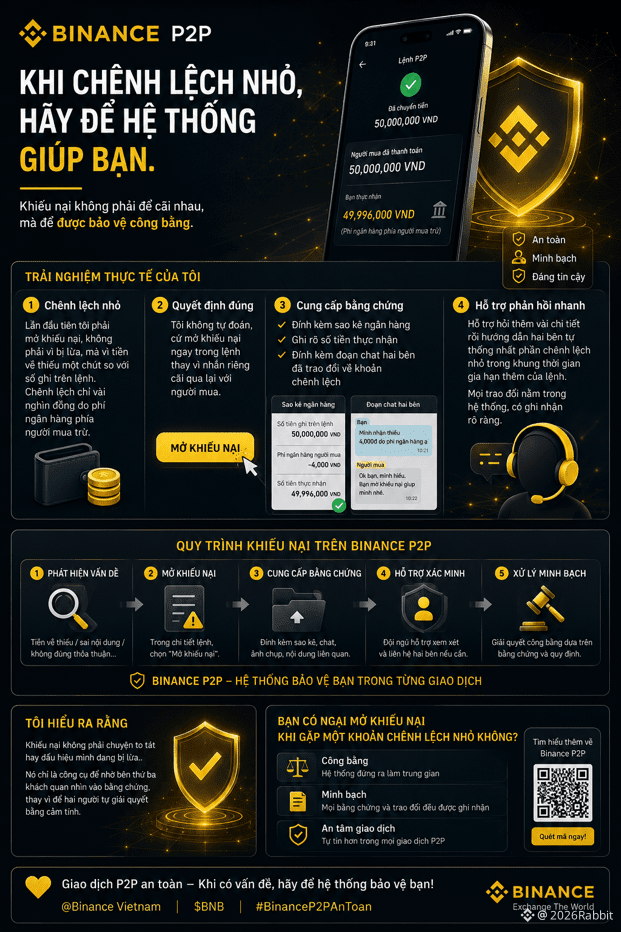
The first time I had to open a dispute, it wasn’t because I was being tricked, but because the money I received was slightly less than the amount written on the order. The difference was only a few thousand VND, due to the bank fee on the buyer’s side being deducted. I didn’t know whether to release or wait.
I decided not to guess. I opened a dispute right in the order instead of messaging separately and going back and forth with the buyer. I attached a screenshot of my bank statement, clearly showing the actual amount received, along with the chat between the two sides about that discrepancy.
Support replied quite quickly. They asked for a few more details about the transfer content, then guided both parties to reach an agreement on the small difference within the extended timeframe of the order. I didn’t have to confront the situation alone; all communication remained in the system, with clear records.
After that, I understood that opening a dispute isn’t a big deal or necessarily a sign that I’m being scammed. It’s simply a tool to ask an objective third party to review the evidence, instead of leaving the two people to resolve it based on feelings.
Are you hesitant to open a dispute when you encounter a small amount of discrepancy?
#binancep2pantoan @Binance Vietnam
The first time I had to open a dispute, it wasn’t because I was being tricked, but because the money I received was slightly less than the amount written on the order. The difference was only a few thousand VND, due to the bank fee on the buyer’s side being deducted. I didn’t know whether to release or wait.
I decided not to guess. I opened a dispute right in the order instead of messaging separately and going back and forth with the buyer. I attached a screenshot of my bank statement, clearly showing the actual amount received, along with the chat between the two sides about that discrepancy.
Support replied quite quickly. They asked for a few more details about the transfer content, then guided both parties to reach an agreement on the small difference within the extended timeframe of the order. I didn’t have to confront the situation alone; all communication remained in the system, with clear records.
After that, I understood that opening a dispute isn’t a big deal or necessarily a sign that I’m being scammed. It’s simply a tool to ask an objective third party to review the evidence, instead of leaving the two people to resolve it based on feelings.
Are you hesitant to open a dispute when you encounter a small amount of discrepancy?
The first time I had to open a dispute, it wasn’t because I was being tricked, but because the money I received was slightly less than the amount written on the order. The difference was only a few thousand VND, due to the bank fee on the buyer’s side being deducted. I didn’t know whether to release or wait.
I decided not to guess. I opened a dispute right in the order instead of messaging separately and going back and forth with the buyer. I attached a screenshot of my bank statement, clearly showing the actual amount received, along with the chat between the two sides about that discrepancy.
Support replied quite quickly. They asked for a few more details about the transfer content, then guided both parties to reach an agreement on the small difference within the extended timeframe of the order. I didn’t have to confront the situation alone; all communication remained in the system, with clear records.
After that, I understood that opening a dispute isn’t a big deal or necessarily a sign that I’m being scammed. It’s simply a tool to ask an objective third party to review the evidence, instead of leaving the two people to resolve it based on feelings.
Are you hesitant to open a dispute when you encounter a small amount of discrepancy?
81
·
--
#termmax @termmax
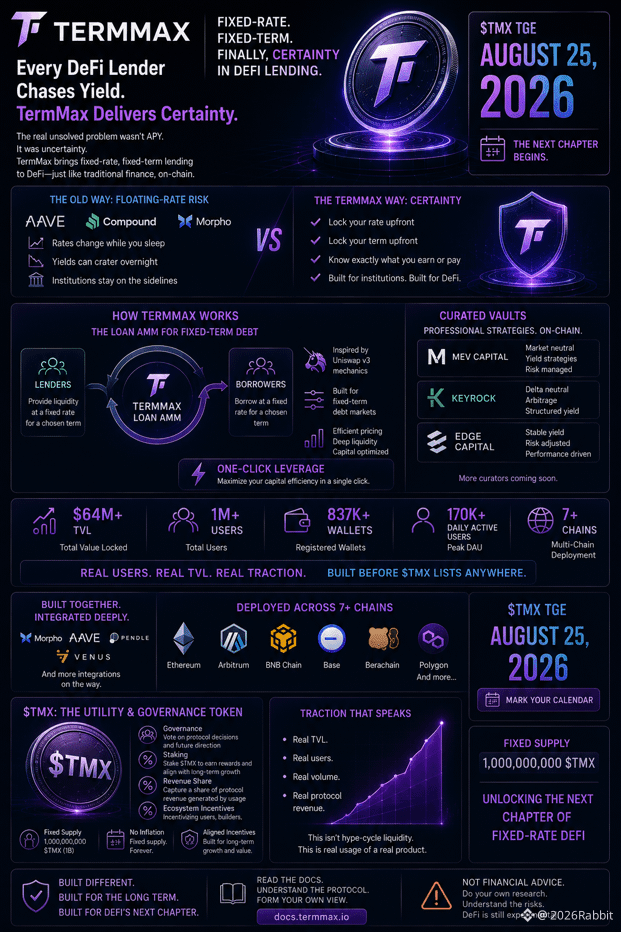
Everyone's obsessed with TVL and APY numbers in DeFi lending. But the real unsolved problem was never "how much yield" — it's "how much certainty." Aave, Compound, Morpho: all brilliant, all still floating-rate. Your borrowing cost can double while you sleep. Your lending yield can crater the moment demand shifts. That unpredictability is exactly why institutions have stayed on the sidelines of on-chain credit markets.
TermMax attacks that problem directly. Fixed rate, fixed term, agreed upfront — the same logic that runs trillions in traditional fixed-income markets, finally on-chain. The loan AMM (Uniswap v3 logic, repurposed for term debt) is what makes this actually work at scale instead of just sounding good on paper.
And the traction backs the thesis: $64M+ TVL, 1M+ users, 837K+ wallets, live across 7+ chains, plugged into Morpho, Aave, Pendle, Venus. That's not hype-cycle liquidity. That's usage.
Now $TMX ties directly into that fee-generating engine — staking, governance, revenue share, fixed 1B supply, TGE August 25, 2026.
This is the kind of setup you want to already understand before the market catches on. Go read the docs, form your own view. 👀
#termmax @TermMax
Everyone's obsessed with TVL and APY numbers in DeFi lending. But the real unsolved problem was never "how much yield" — it's "how much certainty." Aave, Compound, Morpho: all brilliant, all still floating-rate. Your borrowing cost can double while you sleep. Your lending yield can crater the moment demand shifts. That unpredictability is exactly why institutions have stayed on the sidelines of on-chain credit markets.
TermMax attacks that problem directly. Fixed rate, fixed term, agreed upfront — the same logic that runs trillions in traditional fixed-income markets, finally on-chain. The loan AMM (Uniswap v3 logic, repurposed for term debt) is what makes this actually work at scale instead of just sounding good on paper.
And the traction backs the thesis: $64M+ TVL, 1M+ users, 837K+ wallets, live across 7+ chains, plugged into Morpho, Aave, Pendle, Venus. That's not hype-cycle liquidity. That's usage.
Now $TMX ties directly into that fee-generating engine — staking, governance, revenue share, fixed 1B supply, TGE August 25, 2026.
This is the kind of setup you want to already understand before the market catches on. Go read the docs, form your own view. 👀
Everyone's obsessed with TVL and APY numbers in DeFi lending. But the real unsolved problem was never "how much yield" — it's "how much certainty." Aave, Compound, Morpho: all brilliant, all still floating-rate. Your borrowing cost can double while you sleep. Your lending yield can crater the moment demand shifts. That unpredictability is exactly why institutions have stayed on the sidelines of on-chain credit markets.
TermMax attacks that problem directly. Fixed rate, fixed term, agreed upfront — the same logic that runs trillions in traditional fixed-income markets, finally on-chain. The loan AMM (Uniswap v3 logic, repurposed for term debt) is what makes this actually work at scale instead of just sounding good on paper.
And the traction backs the thesis: $64M+ TVL, 1M+ users, 837K+ wallets, live across 7+ chains, plugged into Morpho, Aave, Pendle, Venus. That's not hype-cycle liquidity. That's usage.
Now $TMX ties directly into that fee-generating engine — staking, governance, revenue share, fixed 1B supply, TGE August 25, 2026.
This is the kind of setup you want to already understand before the market catches on. Go read the docs, form your own view. 👀
2
133
·
--
#binancep2pantoan @Binance_Vietnam
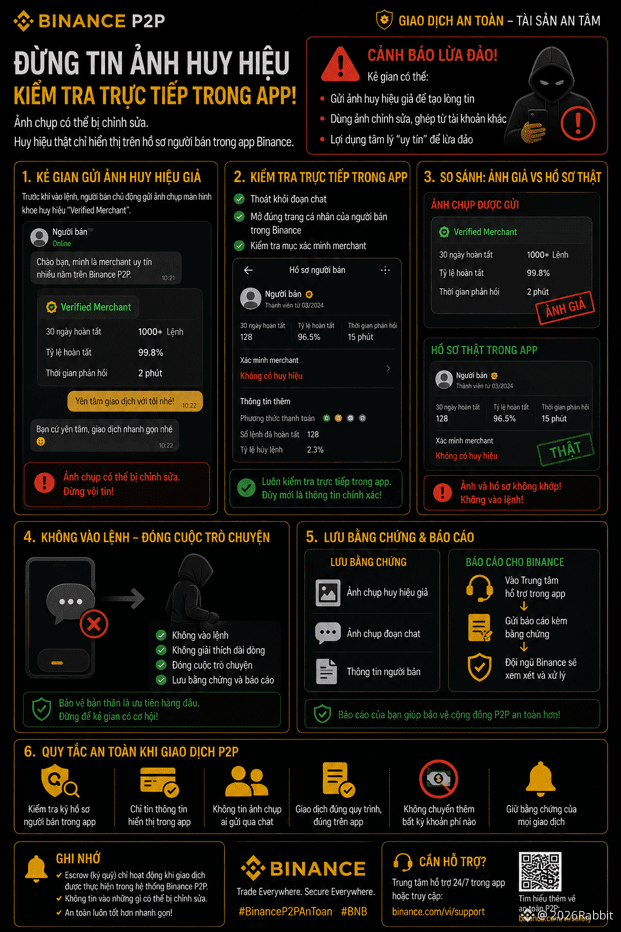
Before placing the order, the seller proactively sent me a screenshot showing off their “Verified Merchant” badge, along with the line “Don’t worry—deal with me.” I looked at the image and thought it seemed reasonable, but I still didn’t confirm right away.
I realized that a screenshot can be edited by anyone, while a real badge must appear directly on the merchant’s profile in the app—no one needs to send it separately to prove anything. I left the chat, opened the seller’s exact profile page on Binance, and checked the merchant verification section there instead of trusting the screenshot I’d just received.
The real profile had no badge at all—completely different from the screenshot that was sent. I didn’t place the order, and I didn’t write a long explanation either—I just closed the conversation.
I saved that fake-badge screenshot along with the chat messages and reported it to support so they could have more data if this account tries the same trick on others again. After that, I only trusted what was shown directly in the app, and I no longer trusted screenshots sent via chat.
Before trusting someone, do you check the verification badge directly in the app?
#binancep2pantoan @Binance Vietnam
Before placing the order, the seller proactively sent me a screenshot showing off their “Verified Merchant” badge, along with the line “Don’t worry—deal with me.” I looked at the image and thought it seemed reasonable, but I still didn’t confirm right away.
I realized that a screenshot can be edited by anyone, while a real badge must appear directly on the merchant’s profile in the app—no one needs to send it separately to prove anything. I left the chat, opened the seller’s exact profile page on Binance, and checked the merchant verification section there instead of trusting the screenshot I’d just received.
The real profile had no badge at all—completely different from the screenshot that was sent. I didn’t place the order, and I didn’t write a long explanation either—I just closed the conversation.
I saved that fake-badge screenshot along with the chat messages and reported it to support so they could have more data if this account tries the same trick on others again. After that, I only trusted what was shown directly in the app, and I no longer trusted screenshots sent via chat.
Before trusting someone, do you check the verification badge directly in the app?
Before placing the order, the seller proactively sent me a screenshot showing off their “Verified Merchant” badge, along with the line “Don’t worry—deal with me.” I looked at the image and thought it seemed reasonable, but I still didn’t confirm right away.
I realized that a screenshot can be edited by anyone, while a real badge must appear directly on the merchant’s profile in the app—no one needs to send it separately to prove anything. I left the chat, opened the seller’s exact profile page on Binance, and checked the merchant verification section there instead of trusting the screenshot I’d just received.
The real profile had no badge at all—completely different from the screenshot that was sent. I didn’t place the order, and I didn’t write a long explanation either—I just closed the conversation.
I saved that fake-badge screenshot along with the chat messages and reported it to support so they could have more data if this account tries the same trick on others again. After that, I only trusted what was shown directly in the app, and I no longer trusted screenshots sent via chat.
Before trusting someone, do you check the verification badge directly in the app?
92
·
--
#binancep2pantoan @Binance_Vietnam
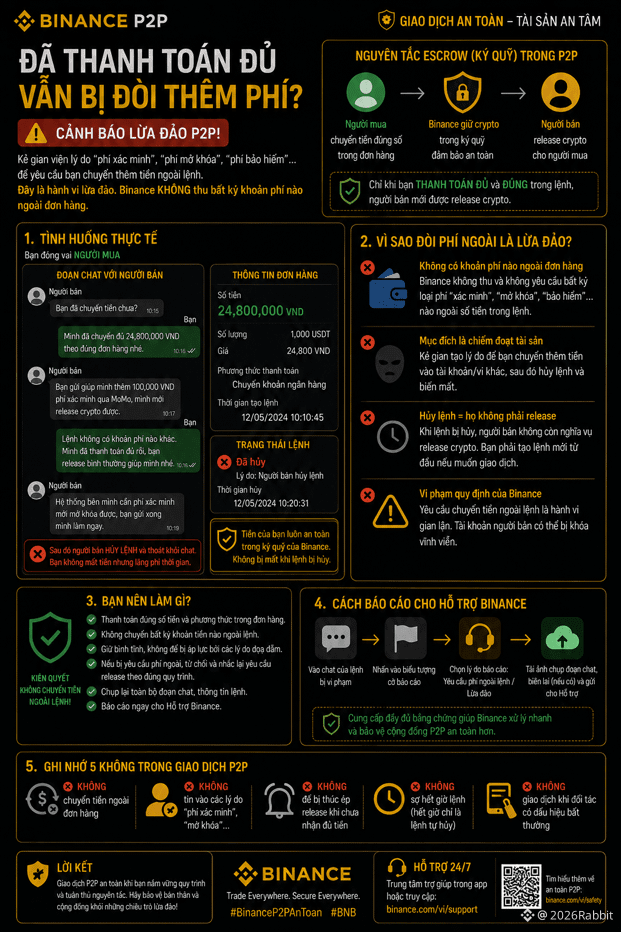
That time, I acted as the buyer. After I transferred the exact amount of money stated in the order, the seller messaged me saying I had to send an additional "verification fee" through another e-wallet before they would release the crypto.
I stopped to read that carefully, because throughout all the orders before, I had never seen any system that asked for any extra fees beyond the amount clearly stated on the order. Escrow works based on that exact amount—there is no "additional verification" step.
I refused to send anything extra and repeated that I had already paid in full according to the order, asking the seller to release it normally. The seller kept circling around a few more lines, then they canceled the order themselves and disappeared from the chat.
I reported the entire situation to support, along with screenshots of the chat. This kind of extra-fee demand might have tricked other buyers before me. Luckily, I hadn’t sent a single cent outside the original order.
Have you ever been asked to pay an extra fee before the crypto was released?
#binancep2pantoan @Binance Vietnam
That time, I acted as the buyer. After I transferred the exact amount of money stated in the order, the seller messaged me saying I had to send an additional "verification fee" through another e-wallet before they would release the crypto.
I stopped to read that carefully, because throughout all the orders before, I had never seen any system that asked for any extra fees beyond the amount clearly stated on the order. Escrow works based on that exact amount—there is no "additional verification" step.
I refused to send anything extra and repeated that I had already paid in full according to the order, asking the seller to release it normally. The seller kept circling around a few more lines, then they canceled the order themselves and disappeared from the chat.
I reported the entire situation to support, along with screenshots of the chat. This kind of extra-fee demand might have tricked other buyers before me. Luckily, I hadn’t sent a single cent outside the original order.
Have you ever been asked to pay an extra fee before the crypto was released?
That time, I acted as the buyer. After I transferred the exact amount of money stated in the order, the seller messaged me saying I had to send an additional "verification fee" through another e-wallet before they would release the crypto.
I stopped to read that carefully, because throughout all the orders before, I had never seen any system that asked for any extra fees beyond the amount clearly stated on the order. Escrow works based on that exact amount—there is no "additional verification" step.
I refused to send anything extra and repeated that I had already paid in full according to the order, asking the seller to release it normally. The seller kept circling around a few more lines, then they canceled the order themselves and disappeared from the chat.
I reported the entire situation to support, along with screenshots of the chat. This kind of extra-fee demand might have tricked other buyers before me. Luckily, I hadn’t sent a single cent outside the original order.
Have you ever been asked to pay an extra fee before the crypto was released?
67
·
--
#termmax @termmax
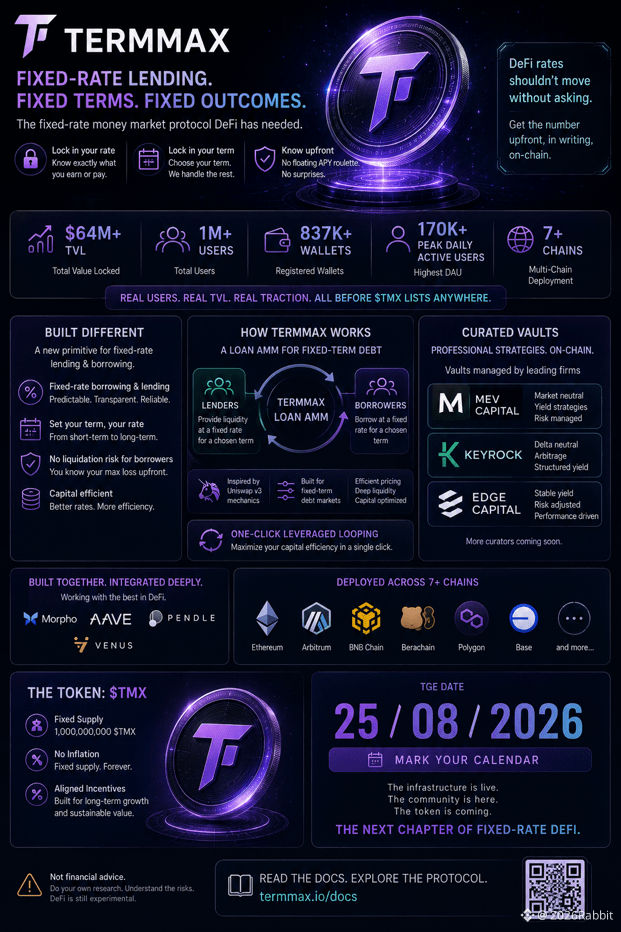
$64M+ TVL. Over 1M users. 837K+ registered wallets. 170K+ peak daily active users. Across 7+ chains. All before $TMX even has a ticker on any exchange.
That's the part people keep skipping past.
TermMax built a fixed-rate lending and borrowing protocol — the kind DeFi has needed for years but somehow never fully cracked. Lock in your rate, lock in your term, know exactly what you earn or pay before you commit. No floating APY roulette. No waking up to a rate that doubled overnight.
Under the hood, it runs on a loan AMM modeled after Uniswap v3 mechanics, but built for fixed-term debt. One-click leveraged looping. Vaults run by real curators — MEV Capital, Keyrock, Edge Capital — doing the strategy work so you don't have to babysit positions.
Deployed across Ethereum, Arbitrum, BNB Chain, Berachain, and more. Integrated with Morpho, Aave, Pendle, Venus. This isn't a protocol testing an idea. It's infrastructure that's already been used.
And now the token: $TMX, fixed 1B supply, no inflation, TGE set for August 25, 2026.
CEXs give you a rate someone else decides. Most DeFi lending gives you a rate that moves without asking. TermMax gives you the number upfront, in writing, on-chain.
Not financial advice — just a protocol worth having on your radar before the 25th. Go look at the docs yourself. 👀
#termmax @TermMax
$64M+ TVL. Over 1M users. 837K+ registered wallets. 170K+ peak daily active users. Across 7+ chains. All before $TMX even has a ticker on any exchange.
That's the part people keep skipping past.
TermMax built a fixed-rate lending and borrowing protocol — the kind DeFi has needed for years but somehow never fully cracked. Lock in your rate, lock in your term, know exactly what you earn or pay before you commit. No floating APY roulette. No waking up to a rate that doubled overnight.
Under the hood, it runs on a loan AMM modeled after Uniswap v3 mechanics, but built for fixed-term debt. One-click leveraged looping. Vaults run by real curators — MEV Capital, Keyrock, Edge Capital — doing the strategy work so you don't have to babysit positions.
Deployed across Ethereum, Arbitrum, BNB Chain, Berachain, and more. Integrated with Morpho, Aave, Pendle, Venus. This isn't a protocol testing an idea. It's infrastructure that's already been used.
And now the token: $TMX, fixed 1B supply, no inflation, TGE set for August 25, 2026.
CEXs give you a rate someone else decides. Most DeFi lending gives you a rate that moves without asking. TermMax gives you the number upfront, in writing, on-chain.
Not financial advice — just a protocol worth having on your radar before the 25th. Go look at the docs yourself. 👀
$64M+ TVL. Over 1M users. 837K+ registered wallets. 170K+ peak daily active users. Across 7+ chains. All before $TMX even has a ticker on any exchange.
That's the part people keep skipping past.
TermMax built a fixed-rate lending and borrowing protocol — the kind DeFi has needed for years but somehow never fully cracked. Lock in your rate, lock in your term, know exactly what you earn or pay before you commit. No floating APY roulette. No waking up to a rate that doubled overnight.
Under the hood, it runs on a loan AMM modeled after Uniswap v3 mechanics, but built for fixed-term debt. One-click leveraged looping. Vaults run by real curators — MEV Capital, Keyrock, Edge Capital — doing the strategy work so you don't have to babysit positions.
Deployed across Ethereum, Arbitrum, BNB Chain, Berachain, and more. Integrated with Morpho, Aave, Pendle, Venus. This isn't a protocol testing an idea. It's infrastructure that's already been used.
And now the token: $TMX, fixed 1B supply, no inflation, TGE set for August 25, 2026.
CEXs give you a rate someone else decides. Most DeFi lending gives you a rate that moves without asking. TermMax gives you the number upfront, in writing, on-chain.
Not financial advice — just a protocol worth having on your radar before the 25th. Go look at the docs yourself. 👀
81
·
--
#binancep2pantoan @Binance_Vietnam
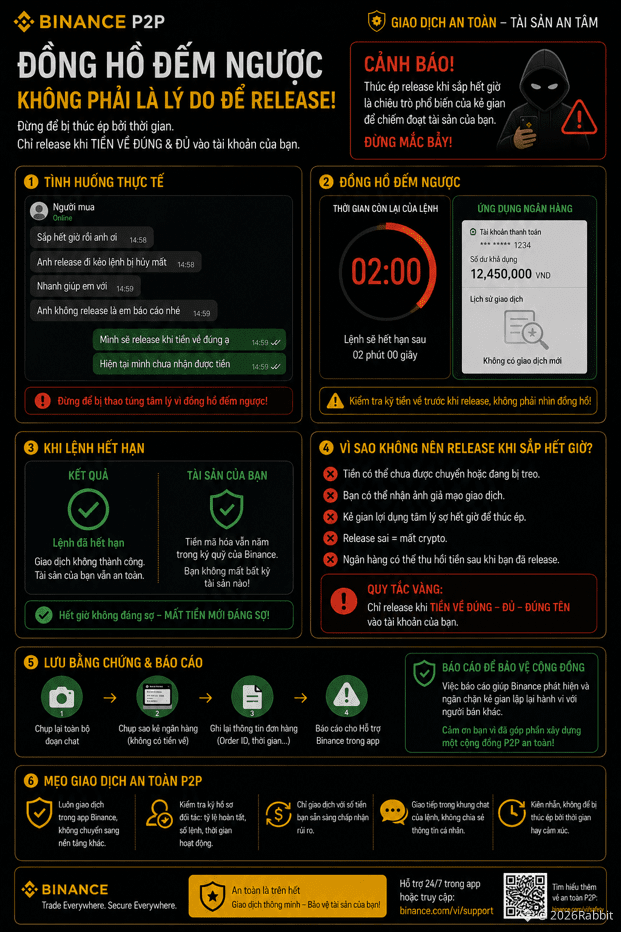
The countdown timer for the order shows there are two minutes left. The buyer keeps messaging, "Time is almost up—please release it, otherwise the order will be canceled." I look at the clock, then check the banking app again, but the money still hasn’t arrived.
I used to think that having time run out was the scariest part of a P2P order. But actually, when time runs out, the order simply cancels itself—the money I put up remains untouched in escrow; it isn’t gone anywhere. Much scarier is releasing at the wrong moment before the funds have truly come in.
So I let the timer keep running. I didn’t release just because I was being pressured by the countdown. The order expires, the system cancels it automatically—and exactly as I thought, no real deposit was ever made into my account during that time.
After that, I still took screenshots of the entire chat and reported it to support, because this kind of countdown-pressure tactic could very likely be repeated with other sellers if it isn’t acknowledged.
Have you ever been urged to release just because the order time is almost up?
#binancep2pantoan @Binance Vietnam
The countdown timer for the order shows there are two minutes left. The buyer keeps messaging, "Time is almost up—please release it, otherwise the order will be canceled." I look at the clock, then check the banking app again, but the money still hasn’t arrived.
I used to think that having time run out was the scariest part of a P2P order. But actually, when time runs out, the order simply cancels itself—the money I put up remains untouched in escrow; it isn’t gone anywhere. Much scarier is releasing at the wrong moment before the funds have truly come in.
So I let the timer keep running. I didn’t release just because I was being pressured by the countdown. The order expires, the system cancels it automatically—and exactly as I thought, no real deposit was ever made into my account during that time.
After that, I still took screenshots of the entire chat and reported it to support, because this kind of countdown-pressure tactic could very likely be repeated with other sellers if it isn’t acknowledged.
Have you ever been urged to release just because the order time is almost up?
The countdown timer for the order shows there are two minutes left. The buyer keeps messaging, "Time is almost up—please release it, otherwise the order will be canceled." I look at the clock, then check the banking app again, but the money still hasn’t arrived.
I used to think that having time run out was the scariest part of a P2P order. But actually, when time runs out, the order simply cancels itself—the money I put up remains untouched in escrow; it isn’t gone anywhere. Much scarier is releasing at the wrong moment before the funds have truly come in.
So I let the timer keep running. I didn’t release just because I was being pressured by the countdown. The order expires, the system cancels it automatically—and exactly as I thought, no real deposit was ever made into my account during that time.
After that, I still took screenshots of the entire chat and reported it to support, because this kind of countdown-pressure tactic could very likely be repeated with other sellers if it isn’t acknowledged.
Have you ever been urged to release just because the order time is almost up?
90
·
--
#dusk $DUSK @Dusk_Foundation
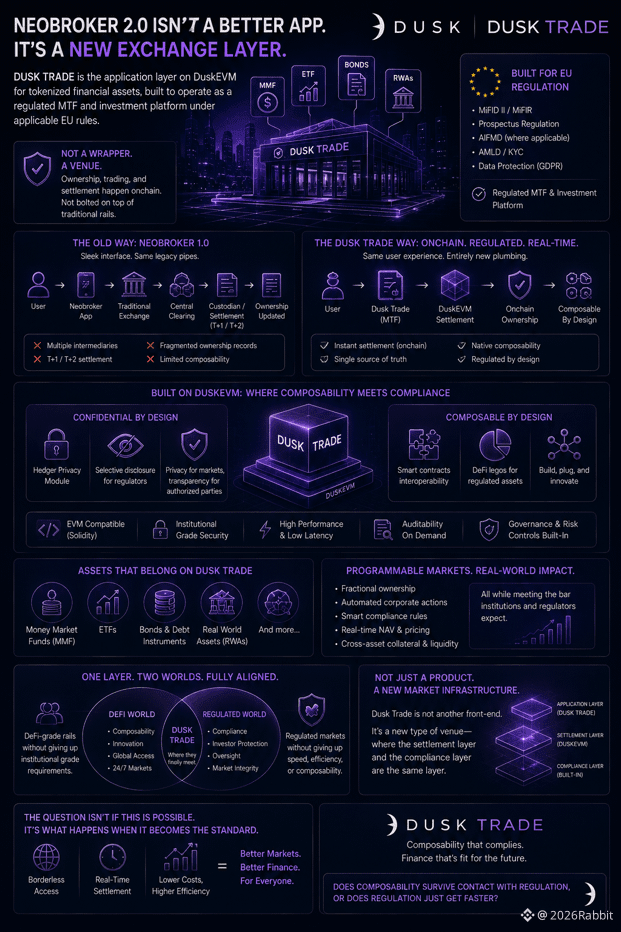
A neobroker usually means a slicker app on top of the same old settlement pipes underneath. Dusk Trade is trying to skip that layer entirely.
It's the application layer built on DuskEVM for tokenized financial assets — money market funds, ETFs, bonds, RWAs — structured to run as a regulated MTF and investment platform under applicable EU rules. Not a wrapper sitting on top of traditional brokerage rails, but a venue where settlement and ownership happen on the chain itself.
That's a strange combination on paper. Instant settlement and DeFi-grade composability usually live in the permissionless world. Regulated MTF status usually lives in the world of paperwork and custodians. Dusk Trade is asking both to sit at the same table.
It's less like a new trading app and more like a new floor being built under the exchange, one where the settlement layer and the compliance layer are the same layer instead of two systems syncing after the fact.
Does composability survive contact with regulation, or does regulation just get faster?
#dusk $DUSK @Dusk
A neobroker usually means a slicker app on top of the same old settlement pipes underneath. Dusk Trade is trying to skip that layer entirely.
It's the application layer built on DuskEVM for tokenized financial assets — money market funds, ETFs, bonds, RWAs — structured to run as a regulated MTF and investment platform under applicable EU rules. Not a wrapper sitting on top of traditional brokerage rails, but a venue where settlement and ownership happen on the chain itself.
That's a strange combination on paper. Instant settlement and DeFi-grade composability usually live in the permissionless world. Regulated MTF status usually lives in the world of paperwork and custodians. Dusk Trade is asking both to sit at the same table.
It's less like a new trading app and more like a new floor being built under the exchange, one where the settlement layer and the compliance layer are the same layer instead of two systems syncing after the fact.
Does composability survive contact with regulation, or does regulation just get faster?
A neobroker usually means a slicker app on top of the same old settlement pipes underneath. Dusk Trade is trying to skip that layer entirely.
It's the application layer built on DuskEVM for tokenized financial assets — money market funds, ETFs, bonds, RWAs — structured to run as a regulated MTF and investment platform under applicable EU rules. Not a wrapper sitting on top of traditional brokerage rails, but a venue where settlement and ownership happen on the chain itself.
That's a strange combination on paper. Instant settlement and DeFi-grade composability usually live in the permissionless world. Regulated MTF status usually lives in the world of paperwork and custodians. Dusk Trade is asking both to sit at the same table.
It's less like a new trading app and more like a new floor being built under the exchange, one where the settlement layer and the compliance layer are the same layer instead of two systems syncing after the fact.
Does composability survive contact with regulation, or does regulation just get faster?
70
·
--
#binancep2pantoan @Binance_Vietnam
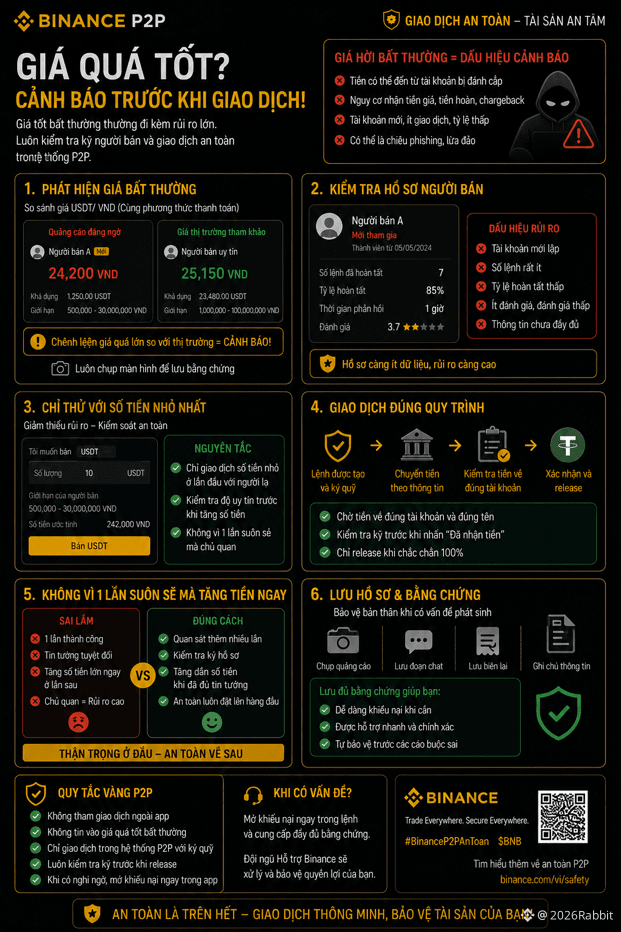
I once saw an advertisement selling USDT for much less than the market price—so low that I had to take a screenshot just to compare, thinking I had read the numbers wrong. Normally I would have ignored it right away, but that time I got curious to see who the seller was.
An unusually good price is already a warning sign on its own—no one sells cheaper than the market without a reason. I opened the profile and found it was a newly created account; there wasn’t enough data on the completion rate, and the number of orders completed could be counted on one hand. I didn’t outright avoid it, but decided that if I was going to try, I would only try with the smallest amount allowed.
I placed a small order, followed the exact margin/escrow procedure, transferred the money, and then double-checked the funds before the release. Everything went smoothly, but I didn’t immediately increase the transaction amount on the next attempt with the same person.
A bargain is only trustworthy when it comes with a trustworthy profile; otherwise, it’s best to test it at the lowest risk level you’re willing to accept.
Have you ever doubted an overly good price on P2P?
#binancep2pantoan @Binance Vietnam
I once saw an advertisement selling USDT for much less than the market price—so low that I had to take a screenshot just to compare, thinking I had read the numbers wrong. Normally I would have ignored it right away, but that time I got curious to see who the seller was.
An unusually good price is already a warning sign on its own—no one sells cheaper than the market without a reason. I opened the profile and found it was a newly created account; there wasn’t enough data on the completion rate, and the number of orders completed could be counted on one hand. I didn’t outright avoid it, but decided that if I was going to try, I would only try with the smallest amount allowed.
I placed a small order, followed the exact margin/escrow procedure, transferred the money, and then double-checked the funds before the release. Everything went smoothly, but I didn’t immediately increase the transaction amount on the next attempt with the same person.
A bargain is only trustworthy when it comes with a trustworthy profile; otherwise, it’s best to test it at the lowest risk level you’re willing to accept.
Have you ever doubted an overly good price on P2P?
I once saw an advertisement selling USDT for much less than the market price—so low that I had to take a screenshot just to compare, thinking I had read the numbers wrong. Normally I would have ignored it right away, but that time I got curious to see who the seller was.
An unusually good price is already a warning sign on its own—no one sells cheaper than the market without a reason. I opened the profile and found it was a newly created account; there wasn’t enough data on the completion rate, and the number of orders completed could be counted on one hand. I didn’t outright avoid it, but decided that if I was going to try, I would only try with the smallest amount allowed.
I placed a small order, followed the exact margin/escrow procedure, transferred the money, and then double-checked the funds before the release. Everything went smoothly, but I didn’t immediately increase the transaction amount on the next attempt with the same person.
A bargain is only trustworthy when it comes with a trustworthy profile; otherwise, it’s best to test it at the lowest risk level you’re willing to accept.
Have you ever doubted an overly good price on P2P?
1
97
·
--
#dusk $DUSK @Dusk_Foundation
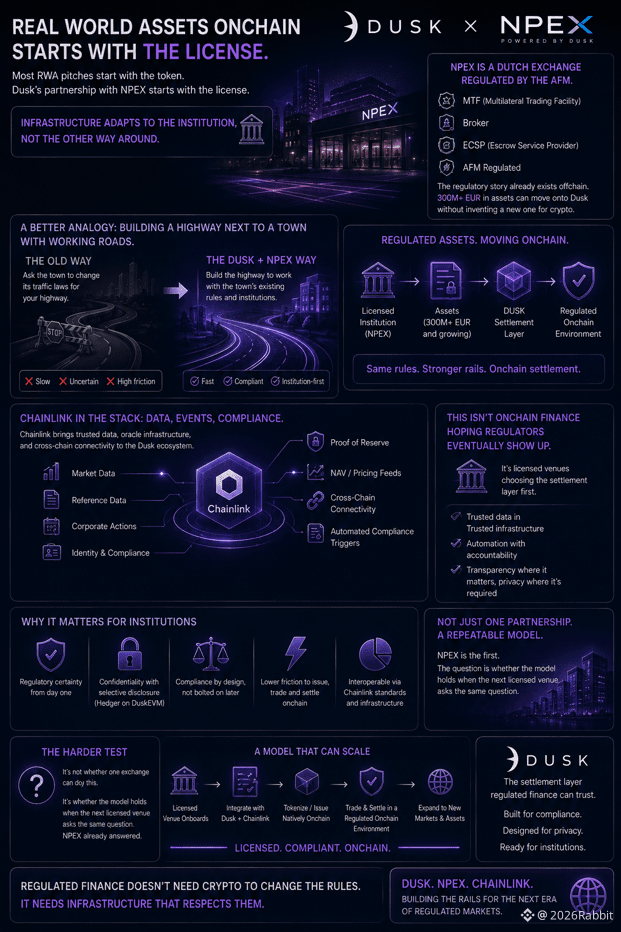
Most "real world assets onchain" pitches start with the token. Dusk's partnership with NPEX starts with the license.
NPEX is a Dutch exchange regulated by the AFM, licensed as an MTF, a broker, and under ECSP rules. That's not a marketing detail, it's the whole point: 300M+ EUR in assets moving onto Dusk doesn't need a new regulatory story invented for crypto, because the regulatory story already exists offchain.
It's a bit like building a highway next to a town that already has working roads, instead of asking the town to redesign its traffic laws around your highway. The infrastructure adapts to the institution, not the other way around.
Add Chainlink into the stack and the picture gets more specific: this isn't onchain finance hoping regulators eventually show up. It's licensed venues choosing the settlement layer first.
The harder test isn't whether one exchange can do this. It's whether the model holds when the next licensed venue asks the same question NPEX already answered.
#dusk $DUSK @Dusk
Most "real world assets onchain" pitches start with the token. Dusk's partnership with NPEX starts with the license.
NPEX is a Dutch exchange regulated by the AFM, licensed as an MTF, a broker, and under ECSP rules. That's not a marketing detail, it's the whole point: 300M+ EUR in assets moving onto Dusk doesn't need a new regulatory story invented for crypto, because the regulatory story already exists offchain.
It's a bit like building a highway next to a town that already has working roads, instead of asking the town to redesign its traffic laws around your highway. The infrastructure adapts to the institution, not the other way around.
Add Chainlink into the stack and the picture gets more specific: this isn't onchain finance hoping regulators eventually show up. It's licensed venues choosing the settlement layer first.
The harder test isn't whether one exchange can do this. It's whether the model holds when the next licensed venue asks the same question NPEX already answered.
Most "real world assets onchain" pitches start with the token. Dusk's partnership with NPEX starts with the license.
NPEX is a Dutch exchange regulated by the AFM, licensed as an MTF, a broker, and under ECSP rules. That's not a marketing detail, it's the whole point: 300M+ EUR in assets moving onto Dusk doesn't need a new regulatory story invented for crypto, because the regulatory story already exists offchain.
It's a bit like building a highway next to a town that already has working roads, instead of asking the town to redesign its traffic laws around your highway. The infrastructure adapts to the institution, not the other way around.
Add Chainlink into the stack and the picture gets more specific: this isn't onchain finance hoping regulators eventually show up. It's licensed venues choosing the settlement layer first.
The harder test isn't whether one exchange can do this. It's whether the model holds when the next licensed venue asks the same question NPEX already answered.
2
1
58
·
--
#binancep2pantoan @Binance_Vietnam
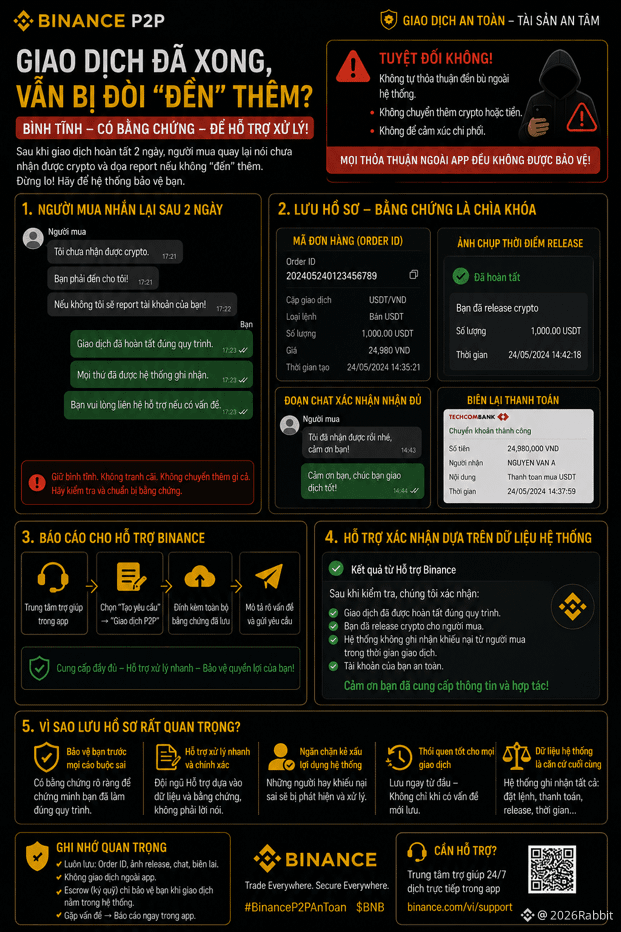
The transaction was already all settled for two days, and then the buyer suddenly messaged again claiming they had never received any crypto and threatening to report my account if I didn’t “compensate” them once more. I read it and thought it was unreasonable, but I still had to stay calm and handle it properly.
That’s when I realized the true value of keeping records from the very beginning. I already had the order ID, photos from the time the release happened, and even the chat log where the buyer previously confirmed they had received everything. It wasn’t something I had to rely on my memory for—there was concrete evidence to present.
I didn’t agree to negotiate separate compensation just to make things quiet, because doing that would accidentally confirm that I was wrong when, in fact, I wasn’t. I reported the situation directly to Binance Support, attached all the saved proof, and asked them to cross-check the margin history.
Support confirmed that the order was completed according to the proper process based on system data—not just back-and-forth between the two parties. From that, I understood that keeping records isn’t only to protect myself in case I get scammed, but also to defend myself against incorrect accusations.
Have you ever been asked to “compensate” again after the transaction was already completed?
#binancep2pantoan @Binance Vietnam
The transaction was already all settled for two days, and then the buyer suddenly messaged again claiming they had never received any crypto and threatening to report my account if I didn’t “compensate” them once more. I read it and thought it was unreasonable, but I still had to stay calm and handle it properly.
That’s when I realized the true value of keeping records from the very beginning. I already had the order ID, photos from the time the release happened, and even the chat log where the buyer previously confirmed they had received everything. It wasn’t something I had to rely on my memory for—there was concrete evidence to present.
I didn’t agree to negotiate separate compensation just to make things quiet, because doing that would accidentally confirm that I was wrong when, in fact, I wasn’t. I reported the situation directly to Binance Support, attached all the saved proof, and asked them to cross-check the margin history.
Support confirmed that the order was completed according to the proper process based on system data—not just back-and-forth between the two parties. From that, I understood that keeping records isn’t only to protect myself in case I get scammed, but also to defend myself against incorrect accusations.
Have you ever been asked to “compensate” again after the transaction was already completed?
The transaction was already all settled for two days, and then the buyer suddenly messaged again claiming they had never received any crypto and threatening to report my account if I didn’t “compensate” them once more. I read it and thought it was unreasonable, but I still had to stay calm and handle it properly.
That’s when I realized the true value of keeping records from the very beginning. I already had the order ID, photos from the time the release happened, and even the chat log where the buyer previously confirmed they had received everything. It wasn’t something I had to rely on my memory for—there was concrete evidence to present.
I didn’t agree to negotiate separate compensation just to make things quiet, because doing that would accidentally confirm that I was wrong when, in fact, I wasn’t. I reported the situation directly to Binance Support, attached all the saved proof, and asked them to cross-check the margin history.
Support confirmed that the order was completed according to the proper process based on system data—not just back-and-forth between the two parties. From that, I understood that keeping records isn’t only to protect myself in case I get scammed, but also to defend myself against incorrect accusations.
Have you ever been asked to “compensate” again after the transaction was already completed?
81
·
--
#dusk $DUSK @Dusk_Foundation
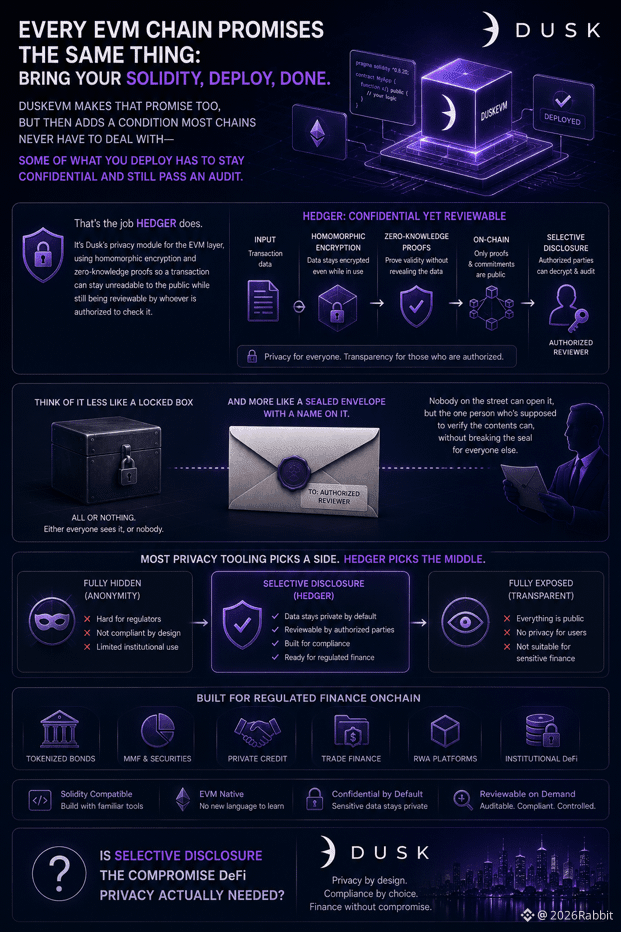
Every EVM chain promises the same thing: bring your Solidity, deploy, done. DuskEVM makes that promise too, but then adds a condition most chains never have to deal with — some of what you deploy has to stay confidential and still pass an audit.
That's the job Hedger does. It's Dusk's privacy module for the EVM layer, using homomorphic encryption and zero-knowledge proofs so a transaction can stay unreadable to the public while still being reviewable by whoever is authorized to check it.
Think of it less like a locked box and more like a sealed envelope with a name on it. Nobody on the street can open it, but the one person who's supposed to verify the contents can, without breaking the seal for everyone else.
Most privacy tooling picks a side: either fully hidden or fully exposed. Hedger is betting institutions need something in between, and that "in between" is exactly what regulated finance has been missing on EVM chains.
Is selective disclosure the compromise DeFi privacy actually needed?
#dusk $DUSK @Dusk
Every EVM chain promises the same thing: bring your Solidity, deploy, done. DuskEVM makes that promise too, but then adds a condition most chains never have to deal with — some of what you deploy has to stay confidential and still pass an audit.
That's the job Hedger does. It's Dusk's privacy module for the EVM layer, using homomorphic encryption and zero-knowledge proofs so a transaction can stay unreadable to the public while still being reviewable by whoever is authorized to check it.
Think of it less like a locked box and more like a sealed envelope with a name on it. Nobody on the street can open it, but the one person who's supposed to verify the contents can, without breaking the seal for everyone else.
Most privacy tooling picks a side: either fully hidden or fully exposed. Hedger is betting institutions need something in between, and that "in between" is exactly what regulated finance has been missing on EVM chains.
Is selective disclosure the compromise DeFi privacy actually needed?
Every EVM chain promises the same thing: bring your Solidity, deploy, done. DuskEVM makes that promise too, but then adds a condition most chains never have to deal with — some of what you deploy has to stay confidential and still pass an audit.
That's the job Hedger does. It's Dusk's privacy module for the EVM layer, using homomorphic encryption and zero-knowledge proofs so a transaction can stay unreadable to the public while still being reviewable by whoever is authorized to check it.
Think of it less like a locked box and more like a sealed envelope with a name on it. Nobody on the street can open it, but the one person who's supposed to verify the contents can, without breaking the seal for everyone else.
Most privacy tooling picks a side: either fully hidden or fully exposed. Hedger is betting institutions need something in between, and that "in between" is exactly what regulated finance has been missing on EVM chains.
Is selective disclosure the compromise DeFi privacy actually needed?
2
1
37
·
--
#dusk $DUSK @Dusk_Foundation
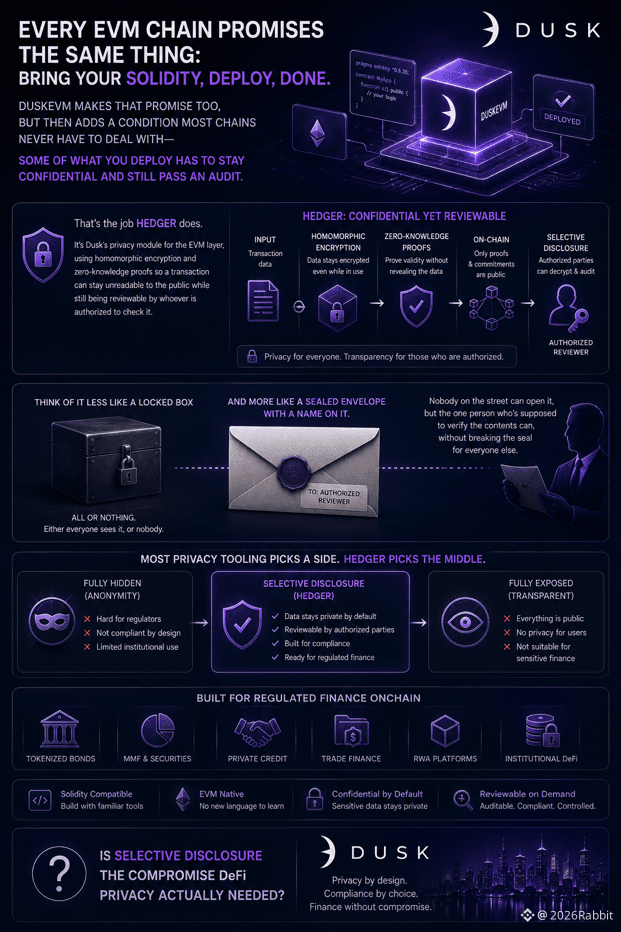
Every EVM chain promises the same thing: bring your Solidity, deploy, done. DuskEVM makes that promise too, but then adds a condition most chains never have to deal with — some of what you deploy has to stay confidential and still pass an audit.
That's the job Hedger does. It's Dusk's privacy module for the EVM layer, using homomorphic encryption and zero-knowledge proofs so a transaction can stay unreadable to the public while still being reviewable by whoever is authorized to check it.
Think of it less like a locked box and more like a sealed envelope with a name on it. Nobody on the street can open it, but the one person who's supposed to verify the contents can, without breaking the seal for everyone else.
Most privacy tooling picks a side: either fully hidden or fully exposed. Hedger is betting institutions need something in between, and that "in between" is exactly what regulated finance has been missing on EVM chains.
Is selective disclosure the compromise DeFi privacy actually needed?
#dusk $DUSK @Dusk
Every EVM chain promises the same thing: bring your Solidity, deploy, done. DuskEVM makes that promise too, but then adds a condition most chains never have to deal with — some of what you deploy has to stay confidential and still pass an audit.
That's the job Hedger does. It's Dusk's privacy module for the EVM layer, using homomorphic encryption and zero-knowledge proofs so a transaction can stay unreadable to the public while still being reviewable by whoever is authorized to check it.
Think of it less like a locked box and more like a sealed envelope with a name on it. Nobody on the street can open it, but the one person who's supposed to verify the contents can, without breaking the seal for everyone else.
Most privacy tooling picks a side: either fully hidden or fully exposed. Hedger is betting institutions need something in between, and that "in between" is exactly what regulated finance has been missing on EVM chains.
Is selective disclosure the compromise DeFi privacy actually needed?
Every EVM chain promises the same thing: bring your Solidity, deploy, done. DuskEVM makes that promise too, but then adds a condition most chains never have to deal with — some of what you deploy has to stay confidential and still pass an audit.
That's the job Hedger does. It's Dusk's privacy module for the EVM layer, using homomorphic encryption and zero-knowledge proofs so a transaction can stay unreadable to the public while still being reviewable by whoever is authorized to check it.
Think of it less like a locked box and more like a sealed envelope with a name on it. Nobody on the street can open it, but the one person who's supposed to verify the contents can, without breaking the seal for everyone else.
Most privacy tooling picks a side: either fully hidden or fully exposed. Hedger is betting institutions need something in between, and that "in between" is exactly what regulated finance has been missing on EVM chains.
Is selective disclosure the compromise DeFi privacy actually needed?
57
·
--
#binancep2pantoan @Binance_Vietnam
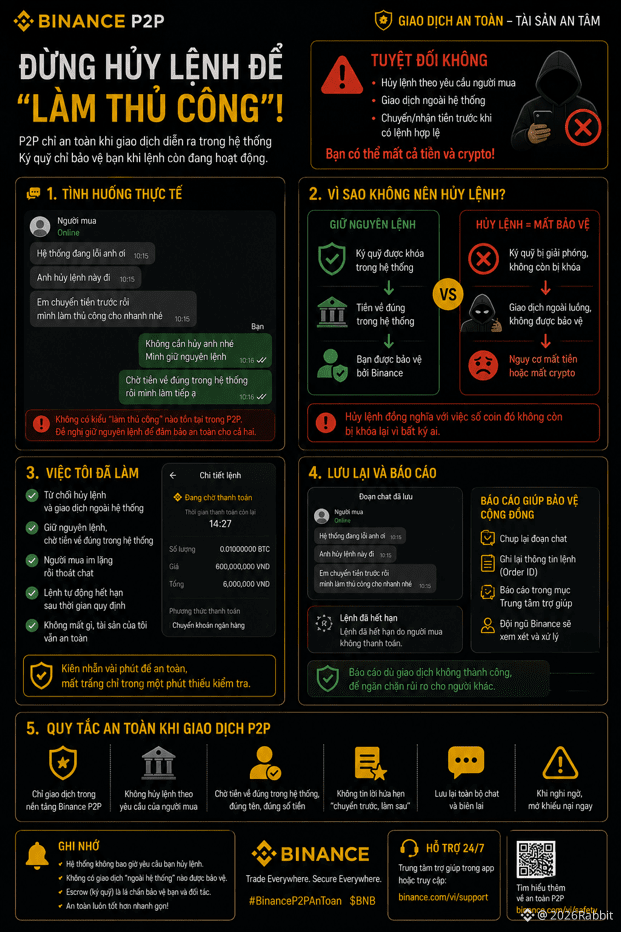
When I was conducting a normal transaction, the buyer messaged me saying, "The system is malfunctioning—cancel this order. I'll transfer the money first, and then we can do it manually for faster processing." I reread that message three times.
There’s no such thing as “doing it manually” in P2P. Escrow only works while the order remains in the system. Canceling the order means those coins are no longer locked for anyone. If I cancel and then receive money off the books, I’m basically throwing away the only protection I have in place.
I refused to cancel and asked them to keep the original order as it was, then wait for the payment to come through correctly in the system. The buyer went silent for a while, then left the chat. After that, the order automatically timed out. Nothing was lost, but I realized this trick targets the seller’s psychology—the desire for things to be quick and convenient.
I still screenshot that conversation and reported it to support, even though the transaction didn’t go through, because I figured that account might try the same trick with someone else.
Have you ever been pressured to cancel an order so they could “do it manually” like that?
#binancep2pantoan @Binance Vietnam
When I was conducting a normal transaction, the buyer messaged me saying, "The system is malfunctioning—cancel this order. I'll transfer the money first, and then we can do it manually for faster processing." I reread that message three times.
There’s no such thing as “doing it manually” in P2P. Escrow only works while the order remains in the system. Canceling the order means those coins are no longer locked for anyone. If I cancel and then receive money off the books, I’m basically throwing away the only protection I have in place.
I refused to cancel and asked them to keep the original order as it was, then wait for the payment to come through correctly in the system. The buyer went silent for a while, then left the chat. After that, the order automatically timed out. Nothing was lost, but I realized this trick targets the seller’s psychology—the desire for things to be quick and convenient.
I still screenshot that conversation and reported it to support, even though the transaction didn’t go through, because I figured that account might try the same trick with someone else.
Have you ever been pressured to cancel an order so they could “do it manually” like that?
When I was conducting a normal transaction, the buyer messaged me saying, "The system is malfunctioning—cancel this order. I'll transfer the money first, and then we can do it manually for faster processing." I reread that message three times.
There’s no such thing as “doing it manually” in P2P. Escrow only works while the order remains in the system. Canceling the order means those coins are no longer locked for anyone. If I cancel and then receive money off the books, I’m basically throwing away the only protection I have in place.
I refused to cancel and asked them to keep the original order as it was, then wait for the payment to come through correctly in the system. The buyer went silent for a while, then left the chat. After that, the order automatically timed out. Nothing was lost, but I realized this trick targets the seller’s psychology—the desire for things to be quick and convenient.
I still screenshot that conversation and reported it to support, even though the transaction didn’t go through, because I figured that account might try the same trick with someone else.
Have you ever been pressured to cancel an order so they could “do it manually” like that?
102
·
--
#dusk $DUSK @Dusk_Foundation
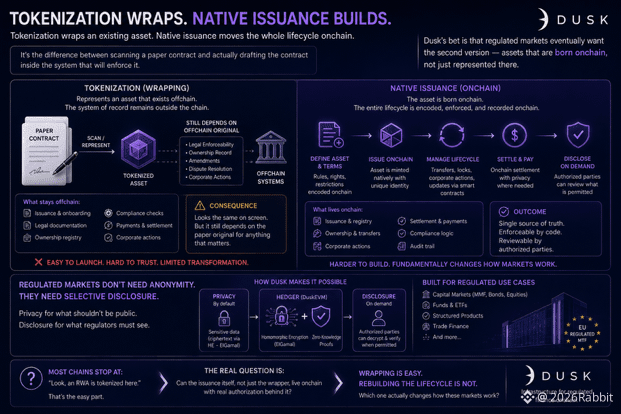
I kept staring at one line in Dusk's docs longer than I expected: tokenization wraps an existing asset, native issuance moves the whole lifecycle onchain. Small distinction, big consequence.
It's the difference between scanning a paper contract and actually drafting the contract inside the system that will enforce it. The scanned version looks the same on screen. But it still depends on the paper original for anything that matters.
Dusk's bet is that regulated markets eventually want the second version — assets that are born onchain, not just represented there. That requires more than a token standard. It requires privacy for the parts that shouldn't be public, and disclosure for the parts regulators need to see.
Most chains skip straight to "look, an RWA is tokenized here" and stop. The harder question is whether the issuance itself, not just the wrapper, can live onchain with real authorization behind it.
Wrapping is easy. Rebuilding the lifecycle is not. Which one actually changes how these markets work?
#dusk $DUSK @Dusk
I kept staring at one line in Dusk's docs longer than I expected: tokenization wraps an existing asset, native issuance moves the whole lifecycle onchain. Small distinction, big consequence.
It's the difference between scanning a paper contract and actually drafting the contract inside the system that will enforce it. The scanned version looks the same on screen. But it still depends on the paper original for anything that matters.
Dusk's bet is that regulated markets eventually want the second version — assets that are born onchain, not just represented there. That requires more than a token standard. It requires privacy for the parts that shouldn't be public, and disclosure for the parts regulators need to see.
Most chains skip straight to "look, an RWA is tokenized here" and stop. The harder question is whether the issuance itself, not just the wrapper, can live onchain with real authorization behind it.
Wrapping is easy. Rebuilding the lifecycle is not. Which one actually changes how these markets work?
I kept staring at one line in Dusk's docs longer than I expected: tokenization wraps an existing asset, native issuance moves the whole lifecycle onchain. Small distinction, big consequence.
It's the difference between scanning a paper contract and actually drafting the contract inside the system that will enforce it. The scanned version looks the same on screen. But it still depends on the paper original for anything that matters.
Dusk's bet is that regulated markets eventually want the second version — assets that are born onchain, not just represented there. That requires more than a token standard. It requires privacy for the parts that shouldn't be public, and disclosure for the parts regulators need to see.
Most chains skip straight to "look, an RWA is tokenized here" and stop. The harder question is whether the issuance itself, not just the wrapper, can live onchain with real authorization behind it.
Wrapping is easy. Rebuilding the lifecycle is not. Which one actually changes how these markets work?
2
62
·
--
#binancep2pantoan @Binance_Vietnam
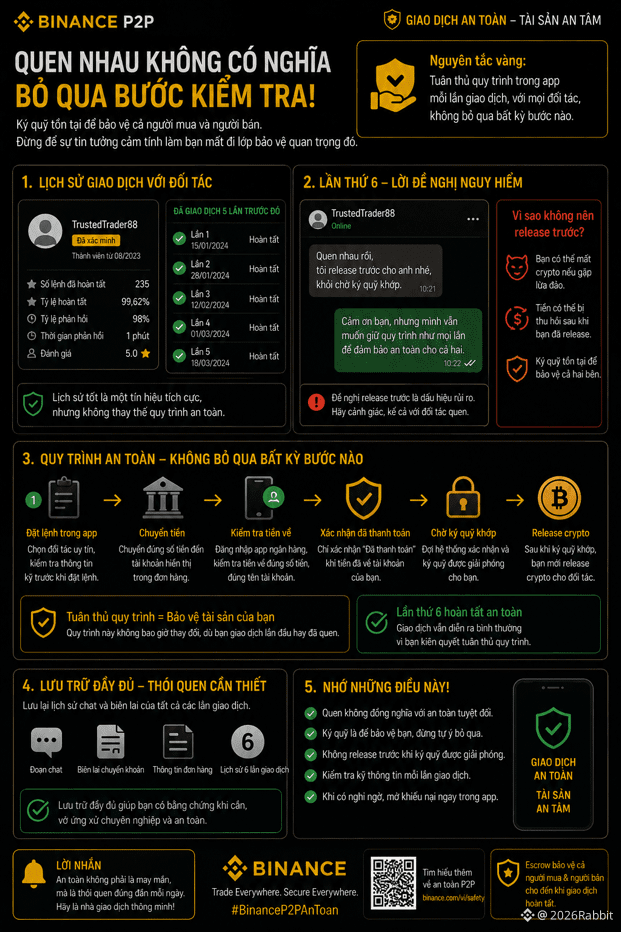
I used to trade with the same person up to five times; every time went smoothly, the money came in correctly, and the responses were fast. By the sixth time, they messaged: "We know each other already—I'll release it to you first. No need to wait for the matching margin to kick in."
I almost agreed on reflex, because there was nothing suspicious in the previous five times. But I stopped in time, because I remembered that margin exists precisely so that nobody has to trust each other based on feelings. Familiarity doesn’t change how the system’s protection works for both sides.
I followed the same procedure as usual: wait for the order to match in the app, verify that the funds arrived under the correct name, and only then release. They didn’t object to anything else, and the transaction still completed normally. But I realized that the most dangerous part was the thought: "We’re familiar, so we can skip the verification step."
I saved the chat history and receipts from all six times—not because I suspected this person, but because it’s a habit I apply to every transaction, not just with anyone.
Have you ever skipped a verification step just because you’ve traded with someone before?
#binancep2pantoan @Binance Vietnam
I used to trade with the same person up to five times; every time went smoothly, the money came in correctly, and the responses were fast. By the sixth time, they messaged: "We know each other already—I'll release it to you first. No need to wait for the matching margin to kick in."
I almost agreed on reflex, because there was nothing suspicious in the previous five times. But I stopped in time, because I remembered that margin exists precisely so that nobody has to trust each other based on feelings. Familiarity doesn’t change how the system’s protection works for both sides.
I followed the same procedure as usual: wait for the order to match in the app, verify that the funds arrived under the correct name, and only then release. They didn’t object to anything else, and the transaction still completed normally. But I realized that the most dangerous part was the thought: "We’re familiar, so we can skip the verification step."
I saved the chat history and receipts from all six times—not because I suspected this person, but because it’s a habit I apply to every transaction, not just with anyone.
Have you ever skipped a verification step just because you’ve traded with someone before?
I used to trade with the same person up to five times; every time went smoothly, the money came in correctly, and the responses were fast. By the sixth time, they messaged: "We know each other already—I'll release it to you first. No need to wait for the matching margin to kick in."
I almost agreed on reflex, because there was nothing suspicious in the previous five times. But I stopped in time, because I remembered that margin exists precisely so that nobody has to trust each other based on feelings. Familiarity doesn’t change how the system’s protection works for both sides.
I followed the same procedure as usual: wait for the order to match in the app, verify that the funds arrived under the correct name, and only then release. They didn’t object to anything else, and the transaction still completed normally. But I realized that the most dangerous part was the thought: "We’re familiar, so we can skip the verification step."
I saved the chat history and receipts from all six times—not because I suspected this person, but because it’s a habit I apply to every transaction, not just with anyone.
Have you ever skipped a verification step just because you’ve traded with someone before?
86
·
--
#binancep2pantoan @Binance_Vietnam
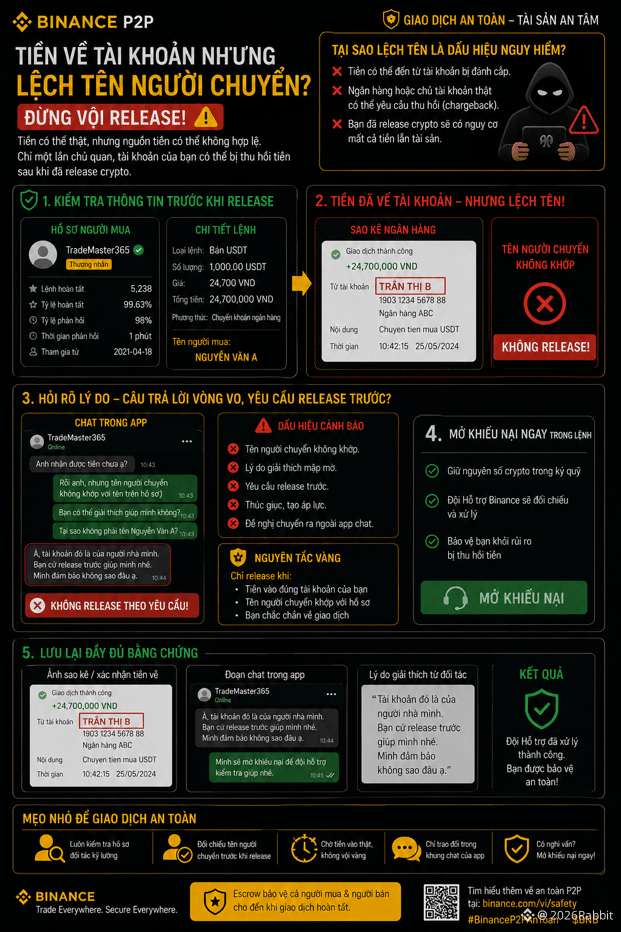
There was once I sold and the money transfer notification came through the banking app as real—no fake screenshots—but the name on the transfer didn’t match the name on the buyer’s profile. I froze instead of hitting “release” right away.
Before that, I always thought that as long as the money had been deposited, everything would be fine. This time I looked more closely: the name on the statement was completely different—neither a relative’s name nor a company name that had been clearly explained. That’s exactly the kind of warning sign, because the funds could come from an account that was stolen, and the bank could completely claw the money back after I’d already released the crypto.
I asked directly why the name was different. The buyer responded evasively and told me to release first, saying that account “belongs to a family member.” I still didn’t release. I only opened a dispute immediately in the order and asked the support team to verify it.
I saved the proof of statement screenshots, the chat, and the reason the buyer gave. Looking back later, waiting just a few more minutes helped me avoid a total loss.
Do you check whether the sender’s name matches the partner’s profile before you release?
#binancep2pantoan @Binance Vietnam
There was once I sold and the money transfer notification came through the banking app as real—no fake screenshots—but the name on the transfer didn’t match the name on the buyer’s profile. I froze instead of hitting “release” right away.
Before that, I always thought that as long as the money had been deposited, everything would be fine. This time I looked more closely: the name on the statement was completely different—neither a relative’s name nor a company name that had been clearly explained. That’s exactly the kind of warning sign, because the funds could come from an account that was stolen, and the bank could completely claw the money back after I’d already released the crypto.
I asked directly why the name was different. The buyer responded evasively and told me to release first, saying that account “belongs to a family member.” I still didn’t release. I only opened a dispute immediately in the order and asked the support team to verify it.
I saved the proof of statement screenshots, the chat, and the reason the buyer gave. Looking back later, waiting just a few more minutes helped me avoid a total loss.
Do you check whether the sender’s name matches the partner’s profile before you release?
There was once I sold and the money transfer notification came through the banking app as real—no fake screenshots—but the name on the transfer didn’t match the name on the buyer’s profile. I froze instead of hitting “release” right away.
Before that, I always thought that as long as the money had been deposited, everything would be fine. This time I looked more closely: the name on the statement was completely different—neither a relative’s name nor a company name that had been clearly explained. That’s exactly the kind of warning sign, because the funds could come from an account that was stolen, and the bank could completely claw the money back after I’d already released the crypto.
I asked directly why the name was different. The buyer responded evasively and told me to release first, saying that account “belongs to a family member.” I still didn’t release. I only opened a dispute immediately in the order and asked the support team to verify it.
I saved the proof of statement screenshots, the chat, and the reason the buyer gave. Looking back later, waiting just a few more minutes helped me avoid a total loss.
Do you check whether the sender’s name matches the partner’s profile before you release?
85
·
--
#binancep2pantoan @Binance_Vietnam
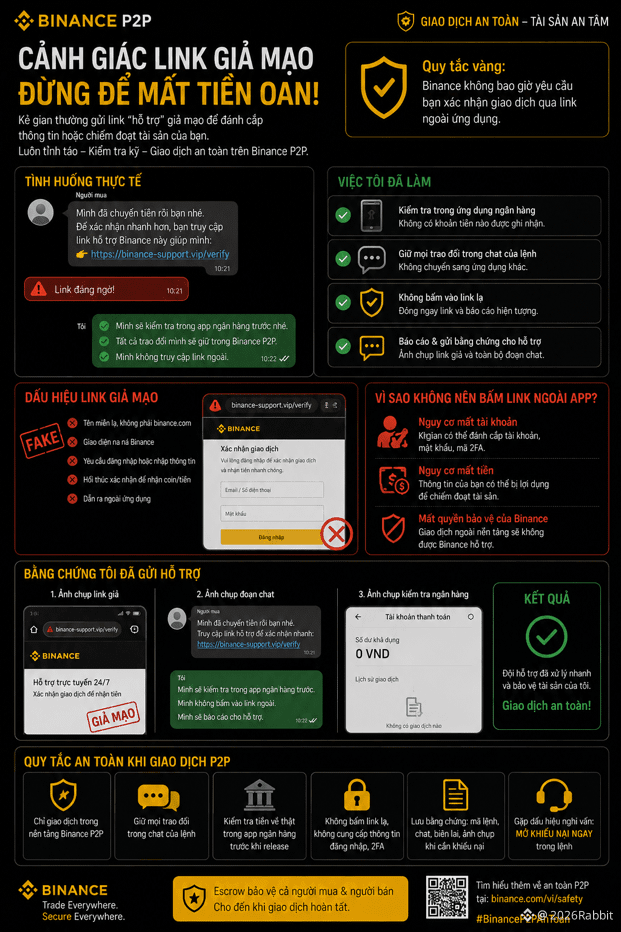
Once, after a sale, the buyer messaged me with a link, saying it was a “Binance support page” to confirm the transaction faster. I paused and examined it carefully before clicking anything.
Binance never asks for transaction confirmations via links outside the app—I was certain of that. I closed the link, then went back to directly check in my bank app to see whether the money had arrived. Nothing—despite the buyer insisting they had already transferred and attaching what looked like a very convincing screenshot.
I didn’t release the funds just because I was being pressured or because of a single picture. I also didn’t leave the in-app chat to “talk faster,” as the other person suggested, because doing so would mean giving up the protection I had.
After reporting the situation, I attached screenshots of the fake link and the entire chat log to the support team. There was solid evidence, and they handled it faster than I expected.
Have you ever received a suspicious “support” link like this before?
#binancep2pantoan @Binance Vietnam
Once, after a sale, the buyer messaged me with a link, saying it was a “Binance support page” to confirm the transaction faster. I paused and examined it carefully before clicking anything.
Binance never asks for transaction confirmations via links outside the app—I was certain of that. I closed the link, then went back to directly check in my bank app to see whether the money had arrived. Nothing—despite the buyer insisting they had already transferred and attaching what looked like a very convincing screenshot.
I didn’t release the funds just because I was being pressured or because of a single picture. I also didn’t leave the in-app chat to “talk faster,” as the other person suggested, because doing so would mean giving up the protection I had.
After reporting the situation, I attached screenshots of the fake link and the entire chat log to the support team. There was solid evidence, and they handled it faster than I expected.
Have you ever received a suspicious “support” link like this before?
Once, after a sale, the buyer messaged me with a link, saying it was a “Binance support page” to confirm the transaction faster. I paused and examined it carefully before clicking anything.
Binance never asks for transaction confirmations via links outside the app—I was certain of that. I closed the link, then went back to directly check in my bank app to see whether the money had arrived. Nothing—despite the buyer insisting they had already transferred and attaching what looked like a very convincing screenshot.
I didn’t release the funds just because I was being pressured or because of a single picture. I also didn’t leave the in-app chat to “talk faster,” as the other person suggested, because doing so would mean giving up the protection I had.
After reporting the situation, I attached screenshots of the fake link and the entire chat log to the support team. There was solid evidence, and they handled it faster than I expected.
Have you ever received a suspicious “support” link like this before?
81
·
--
#binancep2pantoan @Binance_Vietnam
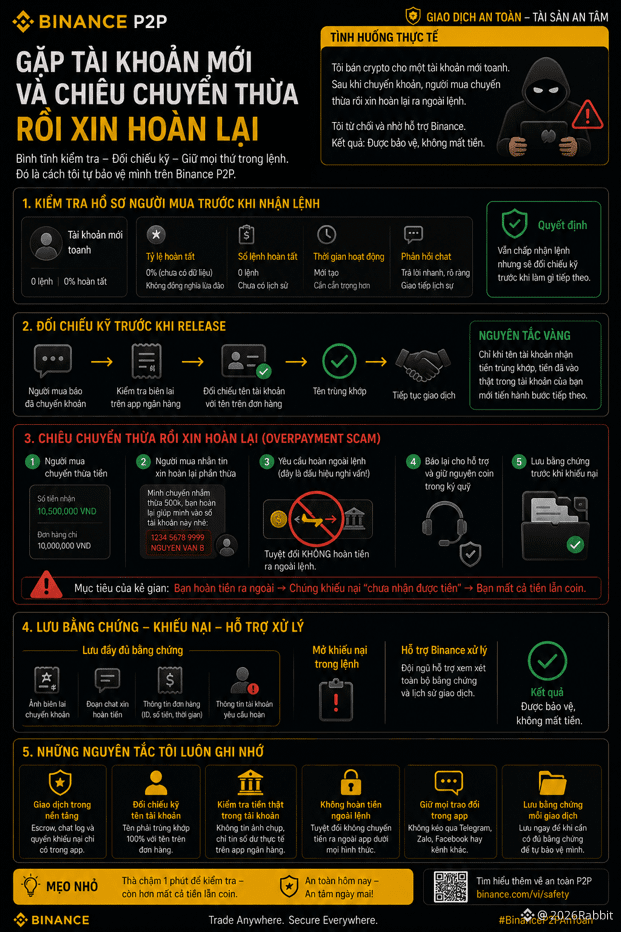
There was once I sold crypto to a brand-new account with no transaction history. Normally I would avoid it, but that time I decided to check the profile thoroughly before declining.
The completion rate shown was 0%, which doesn’t mean it’s a scam—just that there’s no data yet. I still accepted the order, but I carefully matched the name on the bank transfer receipt with the name displayed on the order before doing anything further. If they matched, then I felt comfortable moving on.
A few minutes later, that person made an overpayment of a small amount and messaged asking for a refund to a different account number. This was exactly the overpayment trick I’d read about but had never encountered in real life. I didn’t issue any refunds outside the order; I just reported it to support and kept the coin amount unchanged in escrow.
I saved everything—the screenshots of the transfer receipt and the messages requesting a refund—before opening a dispute. That’s why the support team was able to handle it quite quickly, since all the evidence was already ready.
Have you ever come across this kind of overpayment trick where they ask for a refund like that?
#binancep2pantoan @Binance Vietnam
There was once I sold crypto to a brand-new account with no transaction history. Normally I would avoid it, but that time I decided to check the profile thoroughly before declining.
The completion rate shown was 0%, which doesn’t mean it’s a scam—just that there’s no data yet. I still accepted the order, but I carefully matched the name on the bank transfer receipt with the name displayed on the order before doing anything further. If they matched, then I felt comfortable moving on.
A few minutes later, that person made an overpayment of a small amount and messaged asking for a refund to a different account number. This was exactly the overpayment trick I’d read about but had never encountered in real life. I didn’t issue any refunds outside the order; I just reported it to support and kept the coin amount unchanged in escrow.
I saved everything—the screenshots of the transfer receipt and the messages requesting a refund—before opening a dispute. That’s why the support team was able to handle it quite quickly, since all the evidence was already ready.
Have you ever come across this kind of overpayment trick where they ask for a refund like that?
There was once I sold crypto to a brand-new account with no transaction history. Normally I would avoid it, but that time I decided to check the profile thoroughly before declining.
The completion rate shown was 0%, which doesn’t mean it’s a scam—just that there’s no data yet. I still accepted the order, but I carefully matched the name on the bank transfer receipt with the name displayed on the order before doing anything further. If they matched, then I felt comfortable moving on.
A few minutes later, that person made an overpayment of a small amount and messaged asking for a refund to a different account number. This was exactly the overpayment trick I’d read about but had never encountered in real life. I didn’t issue any refunds outside the order; I just reported it to support and kept the coin amount unchanged in escrow.
I saved everything—the screenshots of the transfer receipt and the messages requesting a refund—before opening a dispute. That’s why the support team was able to handle it quite quickly, since all the evidence was already ready.
Have you ever come across this kind of overpayment trick where they ask for a refund like that?
73
Log in to explore more content
Join global crypto users on Binance Square
⚡️ Get latest and useful information about crypto.
💬 Trusted by the world’s largest crypto exchange.
👍 Discover real insights from verified creators.
Email / Phone number
Trending Topics
BOJRaisesRatesTo31YearHigh
52,988 views
1,000 Discussing
Bitcoin Reclaims the Spotlight as Macro Pressure Fails to Break Crypto Demand
Fatima_Tariq
·12 Likes
·5.7k views
BuffettStepsDownAsBerkshireChairman
21,969 views
454 Discussing
XRPExchangeReservesHitSevenYearLow
27,523 views
439 Discussing