
Cryptoreach
631 Posts

Cryptoreach
Report
Block User
Activateur Web3 | Builder d’écosystèmes décentralisés | Tokenisation & Adoption RWA
1.2K+ Following
675 Followers
870 Liked
Posts
All
Quotes
Videos
·
--
Cryptocurrency topics of today
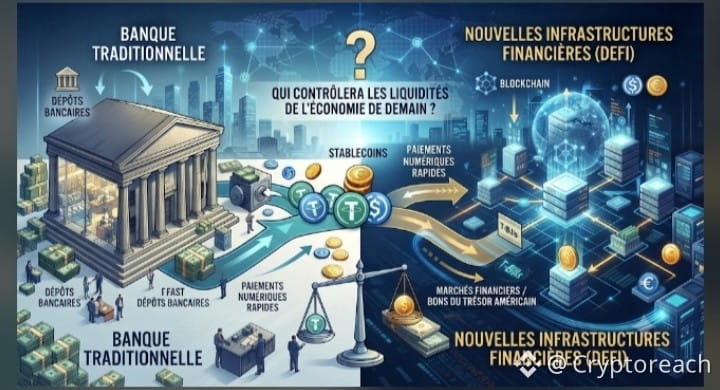
Bank disintermediation: will stablecoins change the financial system?
For decades, banks have been the indispensable intermediary between our money and the economy.
But a new model is emerging:
Bank deposit → Stablecoin → Financial markets / T-Bills
If users keep more of their liquidity in stablecoins rather than bank deposits, banks could gradually lose part of their deposit base.
And that’s where the real debate begins.
Stablecoins can simultaneously:
🔹 boost demand for U.S. Treasury bills;
🔹 accelerate digital payments;
🔹 reduce certain intermediation costs;
🔹 but also put pressure on traditional bank funding.
So the real issue may not be “crypto versus banks.”
It’s rather:
Who will control the liquidity of tomorrow’s economy: banks, or the new blockchain-based financial infrastructures?
The next financial revolution may not eliminate banks.
It could simply reduce their role as intermediaries.
$NVDAB $AAPLB $MSFTB
#Crypto #Stablecoins #Blockchain #DeFi #Finance #Bitcoin #CLARITYAct
Cryptocurrency topics of today
Bank disintermediation: will stablecoins change the financial system?
For decades, banks have been the indispensable intermediary between our money and the economy.
But a new model is emerging:
Bank deposit → Stablecoin → Financial markets / T-Bills
If users keep more of their liquidity in stablecoins rather than bank deposits, banks could gradually lose part of their deposit base.
And that’s where the real debate begins.
Stablecoins can simultaneously:
🔹 boost demand for U.S. Treasury bills;
🔹 accelerate digital payments;
🔹 reduce certain intermediation costs;
🔹 but also put pressure on traditional bank funding.
So the real issue may not be “crypto versus banks.”
It’s rather:
Who will control the liquidity of tomorrow’s economy: banks, or the new blockchain-based financial infrastructures?
The next financial revolution may not eliminate banks.
It could simply reduce their role as intermediaries.
$NVDAB $AAPLB $MSFTB
#Crypto #Stablecoins #Blockchain #DeFi #Finance #Bitcoin #CLARITYAct
Bank disintermediation: will stablecoins change the financial system?
For decades, banks have been the indispensable intermediary between our money and the economy.
But a new model is emerging:
Bank deposit → Stablecoin → Financial markets / T-Bills
If users keep more of their liquidity in stablecoins rather than bank deposits, banks could gradually lose part of their deposit base.
And that’s where the real debate begins.
Stablecoins can simultaneously:
🔹 boost demand for U.S. Treasury bills;
🔹 accelerate digital payments;
🔹 reduce certain intermediation costs;
🔹 but also put pressure on traditional bank funding.
So the real issue may not be “crypto versus banks.”
It’s rather:
Who will control the liquidity of tomorrow’s economy: banks, or the new blockchain-based financial infrastructures?
The next financial revolution may not eliminate banks.
It could simply reduce their role as intermediaries.
$NVDAB $AAPLB $MSFTB
#Crypto #Stablecoins #Blockchain #DeFi #Finance #Bitcoin #CLARITYAct
95
·
--
CLARITY Act: the real battle is no longer “crypto versus banks,” but who will control tomorrow’s financial rails?
The crypto market is entering a decisive week: the U.S. Senate must hold a key vote on the CLARITY Act on September 15. This vote does not yet mean the law will be adopted, but its outcome could determine whether the United States moves toward a much clearer regulatory framework for digital assets.
The most interesting part is elsewhere.
Bitcoin could benefit from a more predictable institutional environment.
Ethereum could benefit from the acceleration of tokenization, stablecoins, and real-world assets (RWAs).
XRP could benefit from reduced regulatory uncertainty surrounding digital assets used in payments.
But the real issue could be stablecoins.
Today, stablecoins already act as a bridge between the dollar and the blockchain. And Ripple, for example, is looking to position its RLUSD with corporate treasuries representing potentially $13,000 billion in annual cash flows.
The scenario to watch
CLARITY Act
↓
regulatory framework
↓
banks + stablecoins
↓
tokenization of assets
↓
RWA + blockchain
↓
new payment and settlement rails
The real change could be much deeper:
The next crypto wave may come less from speculation and more from the integration of blockchain into traditional finance.
And that transformation is what will have to be watched after September 15.
#Bitcoin #Ethereum #XRP #Stablecoins #CLARITYAct #RWA #Blockchain #Crypto #DeFi #Tokenization $NVDAB $AAPLB $MSFTB
CLARITY Act: the real battle is no longer “crypto versus banks,” but who will control tomorrow’s financial rails?
The crypto market is entering a decisive week: the U.S. Senate must hold a key vote on the CLARITY Act on September 15. This vote does not yet mean the law will be adopted, but its outcome could determine whether the United States moves toward a much clearer regulatory framework for digital assets.
The most interesting part is elsewhere.
Bitcoin could benefit from a more predictable institutional environment.
Ethereum could benefit from the acceleration of tokenization, stablecoins, and real-world assets (RWAs).
XRP could benefit from reduced regulatory uncertainty surrounding digital assets used in payments.
But the real issue could be stablecoins.
Today, stablecoins already act as a bridge between the dollar and the blockchain. And Ripple, for example, is looking to position its RLUSD with corporate treasuries representing potentially $13,000 billion in annual cash flows.
The scenario to watch
CLARITY Act
↓
regulatory framework
↓
banks + stablecoins
↓
tokenization of assets
↓
RWA + blockchain
↓
new payment and settlement rails
The real change could be much deeper:
The next crypto wave may come less from speculation and more from the integration of blockchain into traditional finance.
And that transformation is what will have to be watched after September 15.
#Bitcoin #Ethereum #XRP #Stablecoins #CLARITYAct #RWA #Blockchain #Crypto #DeFi #Tokenization $NVDAB $AAPLB $MSFTB
The crypto market is entering a decisive week: the U.S. Senate must hold a key vote on the CLARITY Act on September 15. This vote does not yet mean the law will be adopted, but its outcome could determine whether the United States moves toward a much clearer regulatory framework for digital assets.
The most interesting part is elsewhere.
Bitcoin could benefit from a more predictable institutional environment.
Ethereum could benefit from the acceleration of tokenization, stablecoins, and real-world assets (RWAs).
XRP could benefit from reduced regulatory uncertainty surrounding digital assets used in payments.
But the real issue could be stablecoins.
Today, stablecoins already act as a bridge between the dollar and the blockchain. And Ripple, for example, is looking to position its RLUSD with corporate treasuries representing potentially $13,000 billion in annual cash flows.
The scenario to watch
CLARITY Act
↓
regulatory framework
↓
banks + stablecoins
↓
tokenization of assets
↓
RWA + blockchain
↓
new payment and settlement rails
The real change could be much deeper:
The next crypto wave may come less from speculation and more from the integration of blockchain into traditional finance.
And that transformation is what will have to be watched after September 15.
#Bitcoin #Ethereum #XRP #Stablecoins #CLARITYAct #RWA #Blockchain #Crypto #DeFi #Tokenization $NVDAB $AAPLB $MSFTB

327
·
--
The next crypto revolution may not be a brand-new cryptocurrency.
It could be the financial infrastructure built around the blockchain.
Why?
* Banks tokenize assets
* Institutions use stablecoins
* DeFi seeks to integrate institutional liquidity
* RWAs turn real-world assets into digital assets
* Payments become programmable
The real challenge is therefore no longer only:
“Which crypto will explode?”
But rather:
“Which infrastructure will become indispensable to the finance of tomorrow?”
Bitcoin popularized decentralized digital money.
The next step could be the convergence of TradFi, DeFi, stablecoins, and tokenization.
Value could gradually shift from the token itself to the infrastructure that enables capital to flow.
$AMZNB $MSFTB $AAPLB
#Crypto #Blockchain #DeFi #RWA #Stablecoins #Web3
The next crypto revolution may not be a brand-new cryptocurrency.
It could be the financial infrastructure built around the blockchain.
Why?
* Banks tokenize assets
* Institutions use stablecoins
* DeFi seeks to integrate institutional liquidity
* RWAs turn real-world assets into digital assets
* Payments become programmable
The real challenge is therefore no longer only:
“Which crypto will explode?”
But rather:
“Which infrastructure will become indispensable to the finance of tomorrow?”
Bitcoin popularized decentralized digital money.
The next step could be the convergence of TradFi, DeFi, stablecoins, and tokenization.
Value could gradually shift from the token itself to the infrastructure that enables capital to flow.
$AMZNB $MSFTB $AAPLB
#Crypto #Blockchain #DeFi #RWA #Stablecoins #Web3
It could be the financial infrastructure built around the blockchain.
Why?
* Banks tokenize assets
* Institutions use stablecoins
* DeFi seeks to integrate institutional liquidity
* RWAs turn real-world assets into digital assets
* Payments become programmable
The real challenge is therefore no longer only:
“Which crypto will explode?”
But rather:
“Which infrastructure will become indispensable to the finance of tomorrow?”
Bitcoin popularized decentralized digital money.
The next step could be the convergence of TradFi, DeFi, stablecoins, and tokenization.
Value could gradually shift from the token itself to the infrastructure that enables capital to flow.
$AMZNB $MSFTB $AAPLB
#Crypto #Blockchain #DeFi #RWA #Stablecoins #Web3

1
70
·
--
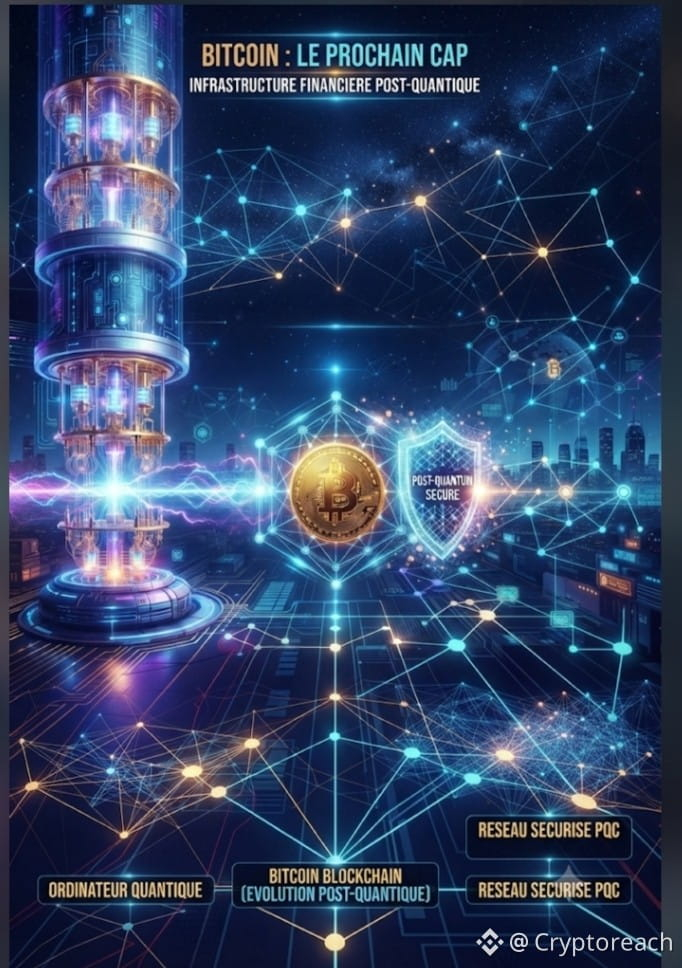
COULD A POST-QUANTUM FINANCIAL INFRASTRUCTURE BE THE NEXT GENERATION OF BITCOIN?
Quantum computing could one day call into question certain cryptographies used by today’s blockchains.
Bitcoin will therefore need to evolve: new signatures, post-quantum cryptography, strengthened security, and potentially new financial infrastructures.
But beware: post-quantum doesn’t automatically mean QFS, nor that Bitcoin is doomed.
The real question is elsewhere.
What if the next crypto revolution wasn’t about replacing Bitcoin, but about building an infrastructure capable of working in the post-quantum era?
Will Bitcoin be adapted… or overtaken?
$TSMB $MSFTB $AAPLB
#Bitcoin #Crypto #Blockchain #QuantumComputing #PostQuantum #Web3 #DeFi
COULD A POST-QUANTUM FINANCIAL INFRASTRUCTURE BE THE NEXT GENERATION OF BITCOIN?
Quantum computing could one day call into question certain cryptographies used by today’s blockchains.
Bitcoin will therefore need to evolve: new signatures, post-quantum cryptography, strengthened security, and potentially new financial infrastructures.
But beware: post-quantum doesn’t automatically mean QFS, nor that Bitcoin is doomed.
The real question is elsewhere.
What if the next crypto revolution wasn’t about replacing Bitcoin, but about building an infrastructure capable of working in the post-quantum era?
Will Bitcoin be adapted… or overtaken?
$TSMB $MSFTB $AAPLB
#Bitcoin #Crypto #Blockchain #QuantumComputing #PostQuantum #Web3 #DeFi
Quantum computing could one day call into question certain cryptographies used by today’s blockchains.
Bitcoin will therefore need to evolve: new signatures, post-quantum cryptography, strengthened security, and potentially new financial infrastructures.
But beware: post-quantum doesn’t automatically mean QFS, nor that Bitcoin is doomed.
The real question is elsewhere.
What if the next crypto revolution wasn’t about replacing Bitcoin, but about building an infrastructure capable of working in the post-quantum era?
Will Bitcoin be adapted… or overtaken?
$TSMB $MSFTB $AAPLB
#Bitcoin #Crypto #Blockchain #QuantumComputing #PostQuantum #Web3 #DeFi
119
·
--
$NVDAB $AAPLB $MSFTB All favor will be given only until the supporting document is found.
$NVDAB $AAPLB $MSFTB All favor will be given only until the supporting document is found.

277
·
--
Crypto topics of today
TradFi + Blockchain + DeFi: the winning trio of tomorrow’s finance.
The next financial revolution will probably not be the replacement of traditional finance, but its convergence with blockchain and DeFi.
TradFi brings banks, capital, regulation, and institutional trust.
Blockchain brings traceability, tokenization, and faster settlement.
DeFi brings smart contracts, programmability, and markets accessible 24/7.
The tokenization of bonds, funds, deposits, and other real-world assets is already showing this convergence. The IMF also estimates that the most likely scenario is a hybrid financial infrastructure, where institutions and blockchain technology work together.
And the movement is tangible: Nasdaq has just announced a $100 million investment in Kraken’s parent company to develop the infrastructure for tokenized securities.
Tomorrow, the question may no longer be TradFi OR DeFi, but: TradFi + Blockchain + DeFi.
$NVDAB $AAPLB $AMZNB
#Crypto #Blockchain #DeFi #TradFi #Tokenisation #Web3
Crypto topics of today
TradFi + Blockchain + DeFi: the winning trio of tomorrow’s finance.
The next financial revolution will probably not be the replacement of traditional finance, but its convergence with blockchain and DeFi.
TradFi brings banks, capital, regulation, and institutional trust.
Blockchain brings traceability, tokenization, and faster settlement.
DeFi brings smart contracts, programmability, and markets accessible 24/7.
The tokenization of bonds, funds, deposits, and other real-world assets is already showing this convergence. The IMF also estimates that the most likely scenario is a hybrid financial infrastructure, where institutions and blockchain technology work together.
And the movement is tangible: Nasdaq has just announced a $100 million investment in Kraken’s parent company to develop the infrastructure for tokenized securities.
Tomorrow, the question may no longer be TradFi OR DeFi, but: TradFi + Blockchain + DeFi.
$NVDAB $AAPLB $AMZNB
#Crypto #Blockchain #DeFi #TradFi #Tokenisation #Web3
TradFi + Blockchain + DeFi: the winning trio of tomorrow’s finance.
The next financial revolution will probably not be the replacement of traditional finance, but its convergence with blockchain and DeFi.
TradFi brings banks, capital, regulation, and institutional trust.
Blockchain brings traceability, tokenization, and faster settlement.
DeFi brings smart contracts, programmability, and markets accessible 24/7.
The tokenization of bonds, funds, deposits, and other real-world assets is already showing this convergence. The IMF also estimates that the most likely scenario is a hybrid financial infrastructure, where institutions and blockchain technology work together.
And the movement is tangible: Nasdaq has just announced a $100 million investment in Kraken’s parent company to develop the infrastructure for tokenized securities.
Tomorrow, the question may no longer be TradFi OR DeFi, but: TradFi + Blockchain + DeFi.
$NVDAB $AAPLB $AMZNB
#Crypto #Blockchain #DeFi #TradFi #Tokenisation #Web3

104
·
--
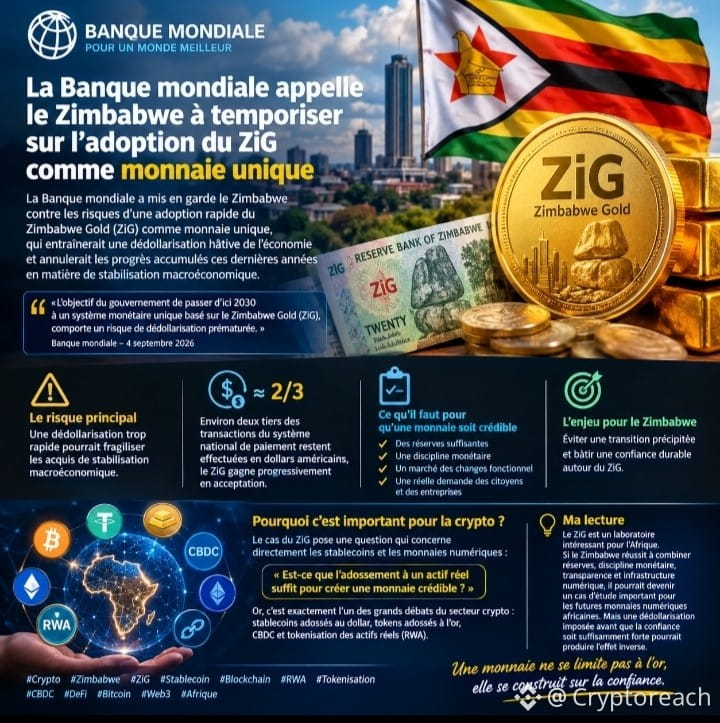
ZiG versus the dollar
The World Bank calls on Zimbabwe not to rush the transition to a single currency based on Zimbabwe Gold (ZiG). The government’s goal is to reach a ZiG-dominated monetary system by 2030, but the institution believes that de-dollarization that is too rapid could undermine the gains made in stabilization.
The problem is straightforward: a currency does not become credible just because it is backed by gold. It must also inspire confidence, have sufficient reserves, have a functional foreign-exchange market, and be genuinely demanded by citizens and businesses.
The IMF also points out that around two-thirds of transactions in the national payment system are still carried out in US dollars, while the ZiG is gradually gaining acceptance.
Why it matters for crypto?
The ZiG case raises a question that directly concerns stablecoins and digital currencies:
Is backing by a real asset enough to create a credible currency?
In fact, this is exactly one of the major debates in the crypto sector: dollar-backed stablecoins, gold-backed tokens, CBDCs, and the tokenization of real-world assets (RWAs).
Zimbabwe shows that between creating a new currency and winning market trust, there is a huge gap.
My take: ZiG is an interesting laboratory for Africa. If Zimbabwe manages to combine reserves, monetary discipline, transparency, and digital infrastructure, it could become an important case study for future African digital currencies. But de-dollarization imposed before trust is strong enough could produce the opposite effect.
$NVDAB $AMZNB $TSMB
#Crypto #Zimbabwe #ZiG #Stablecoin #Blockchain #RWA #Tokenisation #CBDC #DeFi #Bitcoin #Web3 #Afrique
ZiG versus the dollar
The World Bank calls on Zimbabwe not to rush the transition to a single currency based on Zimbabwe Gold (ZiG). The government’s goal is to reach a ZiG-dominated monetary system by 2030, but the institution believes that de-dollarization that is too rapid could undermine the gains made in stabilization.
The problem is straightforward: a currency does not become credible just because it is backed by gold. It must also inspire confidence, have sufficient reserves, have a functional foreign-exchange market, and be genuinely demanded by citizens and businesses.
The IMF also points out that around two-thirds of transactions in the national payment system are still carried out in US dollars, while the ZiG is gradually gaining acceptance.
Why it matters for crypto?
The ZiG case raises a question that directly concerns stablecoins and digital currencies:
Is backing by a real asset enough to create a credible currency?
In fact, this is exactly one of the major debates in the crypto sector: dollar-backed stablecoins, gold-backed tokens, CBDCs, and the tokenization of real-world assets (RWAs).
Zimbabwe shows that between creating a new currency and winning market trust, there is a huge gap.
My take: ZiG is an interesting laboratory for Africa. If Zimbabwe manages to combine reserves, monetary discipline, transparency, and digital infrastructure, it could become an important case study for future African digital currencies. But de-dollarization imposed before trust is strong enough could produce the opposite effect.
$NVDAB $AMZNB $TSMB
#Crypto #Zimbabwe #ZiG #Stablecoin #Blockchain #RWA #Tokenisation #CBDC #DeFi #Bitcoin #Web3 #Afrique
The World Bank calls on Zimbabwe not to rush the transition to a single currency based on Zimbabwe Gold (ZiG). The government’s goal is to reach a ZiG-dominated monetary system by 2030, but the institution believes that de-dollarization that is too rapid could undermine the gains made in stabilization.
The problem is straightforward: a currency does not become credible just because it is backed by gold. It must also inspire confidence, have sufficient reserves, have a functional foreign-exchange market, and be genuinely demanded by citizens and businesses.
The IMF also points out that around two-thirds of transactions in the national payment system are still carried out in US dollars, while the ZiG is gradually gaining acceptance.
Why it matters for crypto?
The ZiG case raises a question that directly concerns stablecoins and digital currencies:
Is backing by a real asset enough to create a credible currency?
In fact, this is exactly one of the major debates in the crypto sector: dollar-backed stablecoins, gold-backed tokens, CBDCs, and the tokenization of real-world assets (RWAs).
Zimbabwe shows that between creating a new currency and winning market trust, there is a huge gap.
My take: ZiG is an interesting laboratory for Africa. If Zimbabwe manages to combine reserves, monetary discipline, transparency, and digital infrastructure, it could become an important case study for future African digital currencies. But de-dollarization imposed before trust is strong enough could produce the opposite effect.
$NVDAB $AMZNB $TSMB
#Crypto #Zimbabwe #ZiG #Stablecoin #Blockchain #RWA #Tokenisation #CBDC #DeFi #Bitcoin #Web3 #Afrique
1
144
·
--
JAPAN: THE RISK THAT COULD SPREAD TO CRYPTOS
The real issue might not be a “war” between Japan and the United States.
It’s the yen carry trade.
The yen is strengthening quickly as markets anticipate another rate hike by the Bank of Japan. As a result, investors who had borrowed in yen to buy higher-risk assets may be forced to unwind their positions.
And cryptocurrencies?
If the unwind accelerates, the pressure could spill over to stocks, risky assets, and potentially Bitcoin and altcoins—especially positions that are heavily leveraged.
So September 18 becomes a date to watch, with the BoJ meeting and expectations around the yen.
But be careful: talking about a “guaranteed crash” would be premature.
The real question is:
Will Japan trigger a simple global rebalancing of capital, or a new liquidity shock for the crypto markets?
$AMZNB $MSFTB $NVDAB
#Bitcoin #Crypto #BTC #Ethereum #ETH #Japan #BOJ #Yen #CarryTrade #Liquidity #CryptoMarket #Finance
JAPAN: THE RISK THAT COULD SPREAD TO CRYPTOS
The real issue might not be a “war” between Japan and the United States.
It’s the yen carry trade.
The yen is strengthening quickly as markets anticipate another rate hike by the Bank of Japan. As a result, investors who had borrowed in yen to buy higher-risk assets may be forced to unwind their positions.
And cryptocurrencies?
If the unwind accelerates, the pressure could spill over to stocks, risky assets, and potentially Bitcoin and altcoins—especially positions that are heavily leveraged.
So September 18 becomes a date to watch, with the BoJ meeting and expectations around the yen.
But be careful: talking about a “guaranteed crash” would be premature.
The real question is:
Will Japan trigger a simple global rebalancing of capital, or a new liquidity shock for the crypto markets?
$AMZNB $MSFTB $NVDAB
#Bitcoin #Crypto #BTC #Ethereum #ETH #Japan #BOJ #Yen #CarryTrade #Liquidity #CryptoMarket #Finance
The real issue might not be a “war” between Japan and the United States.
It’s the yen carry trade.
The yen is strengthening quickly as markets anticipate another rate hike by the Bank of Japan. As a result, investors who had borrowed in yen to buy higher-risk assets may be forced to unwind their positions.
And cryptocurrencies?
If the unwind accelerates, the pressure could spill over to stocks, risky assets, and potentially Bitcoin and altcoins—especially positions that are heavily leveraged.
So September 18 becomes a date to watch, with the BoJ meeting and expectations around the yen.
But be careful: talking about a “guaranteed crash” would be premature.
The real question is:
Will Japan trigger a simple global rebalancing of capital, or a new liquidity shock for the crypto markets?
$AMZNB $MSFTB $NVDAB
#Bitcoin #Crypto #BTC #Ethereum #ETH #Japan #BOJ #Yen #CarryTrade #Liquidity #CryptoMarket #Finance

·
--
MORTGAGES ARE COMING TO THE BLOCKCHAIN!
Pineapple Financial and Injective are accelerating the tokenization of real-world assets (RWAs).
More than $1 billion in mortgage loans have already been recorded on-chain, with a target of over $10 billion.
The stakes are high: turning real receivables into assets that can be verified, managed, and potentially used within a blockchain-based financial infrastructure.
If this experiment succeeds, Injective could demonstrate that blockchain can become a true infrastructure for traditional finance.
RWA + Blockchain + Institutional Finance = one of the big crypto narratives of 2026.
#Crypto #Injective #INJ #Pineapple #RWA #Tokenization #Blockchain #DeFi #Web3 $NVDAB $AAPLB $MSFTB
MORTGAGES ARE COMING TO THE BLOCKCHAIN!
Pineapple Financial and Injective are accelerating the tokenization of real-world assets (RWAs).
More than $1 billion in mortgage loans have already been recorded on-chain, with a target of over $10 billion.
The stakes are high: turning real receivables into assets that can be verified, managed, and potentially used within a blockchain-based financial infrastructure.
If this experiment succeeds, Injective could demonstrate that blockchain can become a true infrastructure for traditional finance.
RWA + Blockchain + Institutional Finance = one of the big crypto narratives of 2026.
#Crypto #Injective #INJ #Pineapple #RWA #Tokenization #Blockchain #DeFi #Web3 $NVDAB $AAPLB $MSFTB
Pineapple Financial and Injective are accelerating the tokenization of real-world assets (RWAs).
More than $1 billion in mortgage loans have already been recorded on-chain, with a target of over $10 billion.
The stakes are high: turning real receivables into assets that can be verified, managed, and potentially used within a blockchain-based financial infrastructure.
If this experiment succeeds, Injective could demonstrate that blockchain can become a true infrastructure for traditional finance.
RWA + Blockchain + Institutional Finance = one of the big crypto narratives of 2026.
#Crypto #Injective #INJ #Pineapple #RWA #Tokenization #Blockchain #DeFi #Web3 $NVDAB $AAPLB $MSFTB

134
·
--
ALERT — GLOBAL ECONOMY: SIGNS OF TENSION ARE PILING UP
Due diligence, macroeconomic analysis, and observation of financial flows show a global system that is increasingly under pressure.
The Fed is trying to preserve financial stability by maintaining favorable liquidity conditions when it becomes necessary. Meanwhile, several central banks continue to strengthen their gold reserves, while Japan has to deal with a particularly complex fiscal and monetary situation, especially around its holdings of U.S. Treasury bonds.
Taken separately, each of these elements may seem normal. Taken together, they constitute a signal that deserves maximum attention.
In trading, there is a fundamental rule:
""You do not catch a falling knife.""
The goal is therefore not to panic, but to prepare.
Those who ignore the signs of fragility in a financial system risk suffering events rather than anticipating them.
Our analysis crosses several dimensions:
- global liquidity and central bank policies
- sovereign debt and U.S. bonds
- gold accumulation by central banks
- capital flows and on-chain data
- geopolitical and trade tensions
- evolution of commodities
- gradual transformation of the global financial architecture
If a major systemic crisis were indeed to occur, the world could be forced to fundamentally rethink the mechanisms of the international economy.
One possible scenario would then be an economy more structured around gold, commodities, tangible assets, and new digital financial infrastructures.
But beware: a global collapse is not certain and no analysis can guarantee its timing or scale. The purpose of this alert is simply to recall an essential rule: prepare your risks before the storm,
ALERT — GLOBAL ECONOMY: SIGNS OF TENSION ARE PILING UP
Due diligence, macroeconomic analysis, and observation of financial flows show a global system that is increasingly under pressure.
The Fed is trying to preserve financial stability by maintaining favorable liquidity conditions when it becomes necessary. Meanwhile, several central banks continue to strengthen their gold reserves, while Japan has to deal with a particularly complex fiscal and monetary situation, especially around its holdings of U.S. Treasury bonds.
Taken separately, each of these elements may seem normal. Taken together, they constitute a signal that deserves maximum attention.
In trading, there is a fundamental rule:
""You do not catch a falling knife.""
The goal is therefore not to panic, but to prepare.
Those who ignore the signs of fragility in a financial system risk suffering events rather than anticipating them.
Our analysis crosses several dimensions:
- global liquidity and central bank policies
- sovereign debt and U.S. bonds
- gold accumulation by central banks
- capital flows and on-chain data
- geopolitical and trade tensions
- evolution of commodities
- gradual transformation of the global financial architecture
If a major systemic crisis were indeed to occur, the world could be forced to fundamentally rethink the mechanisms of the international economy.
One possible scenario would then be an economy more structured around gold, commodities, tangible assets, and new digital financial infrastructures.
But beware: a global collapse is not certain and no analysis can guarantee its timing or scale. The purpose of this alert is simply to recall an essential rule: prepare your risks before the storm,
Due diligence, macroeconomic analysis, and observation of financial flows show a global system that is increasingly under pressure.
The Fed is trying to preserve financial stability by maintaining favorable liquidity conditions when it becomes necessary. Meanwhile, several central banks continue to strengthen their gold reserves, while Japan has to deal with a particularly complex fiscal and monetary situation, especially around its holdings of U.S. Treasury bonds.
Taken separately, each of these elements may seem normal. Taken together, they constitute a signal that deserves maximum attention.
In trading, there is a fundamental rule:
""You do not catch a falling knife.""
The goal is therefore not to panic, but to prepare.
Those who ignore the signs of fragility in a financial system risk suffering events rather than anticipating them.
Our analysis crosses several dimensions:
- global liquidity and central bank policies
- sovereign debt and U.S. bonds
- gold accumulation by central banks
- capital flows and on-chain data
- geopolitical and trade tensions
- evolution of commodities
- gradual transformation of the global financial architecture
If a major systemic crisis were indeed to occur, the world could be forced to fundamentally rethink the mechanisms of the international economy.
One possible scenario would then be an economy more structured around gold, commodities, tangible assets, and new digital financial infrastructures.
But beware: a global collapse is not certain and no analysis can guarantee its timing or scale. The purpose of this alert is simply to recall an essential rule: prepare your risks before the storm,

1
143
·
--
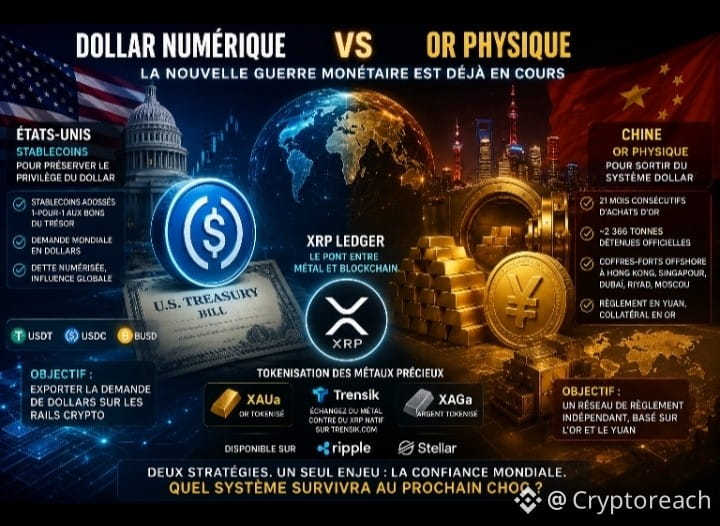
Digital Dollar vs Physical Gold
The United States are betting on stablecoins to strengthen global demand for dollars and U.S. Treasury bonds.
China continues accumulating physical gold and developing alternative settlement infrastructures.
At the same time, XRP Ledger is emerging as a potential rail for the tokenization of gold and silver.
Two strategies: digitizing dollar debt versus strengthening physical gold collateral.
The big question for crypto: what role will XRP, stablecoins, and tokenized assets play in the future of international settlement?
#Crypto #Cryptomomies #XRP #Ripple #XRPL #Stablecoins #Gold #Tokenization #Blockchain #DigitalAssets #Bitcoin #DeFi #Web3 #CBDC #Dollar #China #Finance #CryptoAfrique $NVDAB $AAPLB $MSFTB
Digital Dollar vs Physical Gold
The United States are betting on stablecoins to strengthen global demand for dollars and U.S. Treasury bonds.
China continues accumulating physical gold and developing alternative settlement infrastructures.
At the same time, XRP Ledger is emerging as a potential rail for the tokenization of gold and silver.
Two strategies: digitizing dollar debt versus strengthening physical gold collateral.
The big question for crypto: what role will XRP, stablecoins, and tokenized assets play in the future of international settlement?
#Crypto #Cryptomomies #XRP #Ripple #XRPL #Stablecoins #Gold #Tokenization #Blockchain #DigitalAssets #Bitcoin #DeFi #Web3 #CBDC #Dollar #China #Finance #CryptoAfrique $NVDAB $AAPLB $MSFTB
The United States are betting on stablecoins to strengthen global demand for dollars and U.S. Treasury bonds.
China continues accumulating physical gold and developing alternative settlement infrastructures.
At the same time, XRP Ledger is emerging as a potential rail for the tokenization of gold and silver.
Two strategies: digitizing dollar debt versus strengthening physical gold collateral.
The big question for crypto: what role will XRP, stablecoins, and tokenized assets play in the future of international settlement?
#Crypto #Cryptomomies #XRP #Ripple #XRPL #Stablecoins #Gold #Tokenization #Blockchain #DigitalAssets #Bitcoin #DeFi #Web3 #CBDC #Dollar #China #Finance #CryptoAfrique $NVDAB $AAPLB $MSFTB
1
413
·
--
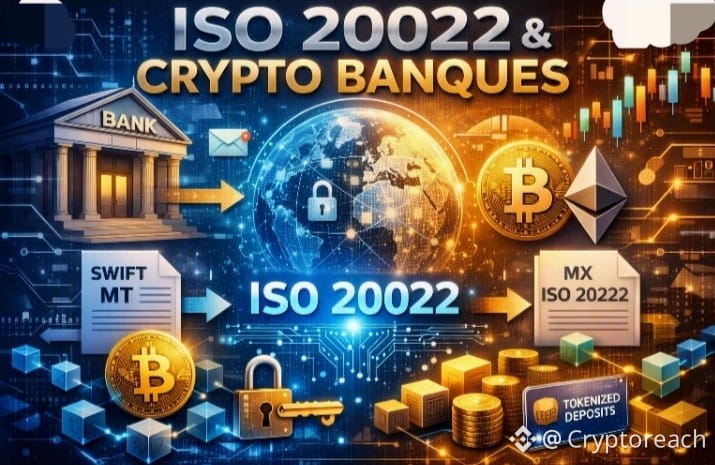
Global banks are accelerating the ISO‑20022 transition and post‑quantum cryptography.
Objective: prepare clients for key reinitialization and the integration of a new hybrid monetary system, where tokenized deposits and certified blockchains become the norm.
Key points:
- Migration from SWIFT MT to MX ISO 20022 in November 2026.
- Adoption of NIST post‑quantum standards to secure payments.
- Interoperability between banking rails and crypto.
- Opportunity for Africa: tokenized deposits and programmable liquidity.
#ISO20022 #CryptoAgility #PostQuantum #DigitalBanks #Tokenization $NVDAB $AAPLB $MSFTB
Global banks are accelerating the ISO‑20022 transition and post‑quantum cryptography.
Objective: prepare clients for key reinitialization and the integration of a new hybrid monetary system, where tokenized deposits and certified blockchains become the norm.
Key points:
- Migration from SWIFT MT to MX ISO 20022 in November 2026.
- Adoption of NIST post‑quantum standards to secure payments.
- Interoperability between banking rails and crypto.
- Opportunity for Africa: tokenized deposits and programmable liquidity.
#ISO20022 #CryptoAgility #PostQuantum #DigitalBanks #Tokenization $NVDAB $AAPLB $MSFTB
Objective: prepare clients for key reinitialization and the integration of a new hybrid monetary system, where tokenized deposits and certified blockchains become the norm.
Key points:
- Migration from SWIFT MT to MX ISO 20022 in November 2026.
- Adoption of NIST post‑quantum standards to secure payments.
- Interoperability between banking rails and crypto.
- Opportunity for Africa: tokenized deposits and programmable liquidity.
#ISO20022 #CryptoAgility #PostQuantum #DigitalBanks #Tokenization $NVDAB $AAPLB $MSFTB
123
·
--
Cryptocurrency-backed mortgages
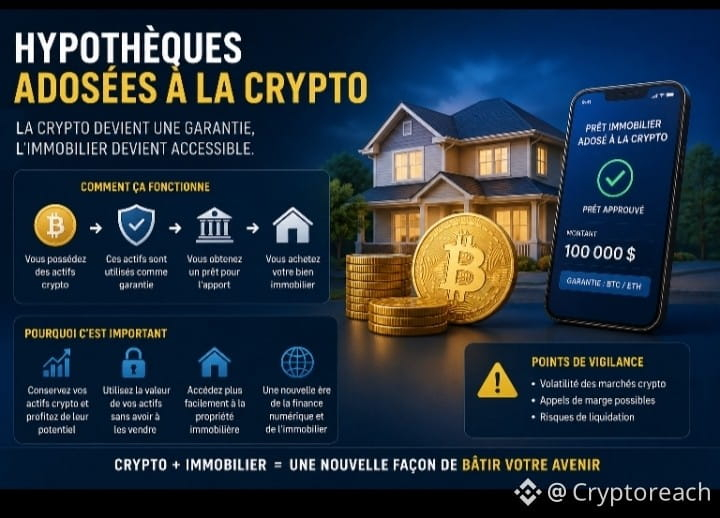
The crypto market reaches a new stage: Bitcoin and stablecoins are beginning to become collateral to access mortgage credit.
In 2026, Better Mortgage and Coinbase launched in the United States a model that allows certain buyers to finance their down payment with a loan backed by their crypto assets, without having to sell their Bitcoin.
How does it work?
A buyer can, for example:
$250,000 worth of BTC → used as collateral → $100,000 of financing for the down payment → purchase of the property.
The setup is based on two loans:
a traditional home loan backed by the house;
a separate loan backed by the Bitcoin.
In the Better/Coinbase model, the BTC must represent at least 250% of the amount of the loan intended for the down payment.
Why is it important for crypto?
This is a paradigm shift:
Before:
Crypto → sale → fiat currency → real estate purchase.
Tomorrow:
Crypto → collateral → credit → real estate.
So the investor can keep exposure to Bitcoin while using its value as financial leverage.
But the risk is real
The owner takes on debt while putting a highly volatile asset as collateral. A significant drop in Bitcoin can make the structure much riskier, depending on the contract terms. Other crypto-loan models may also include margin calls or liquidations.
And for Africa?
Imagine tomorrow in Côte d’Ivoire, Nigeria, Kenya, or Ghana:
BTC/ETH/Stablecoins → digital collateral → mortgage credit → land or a house.
Crypto would then no longer be only a means of payment or an investment: it would become a new form of financial collateral.
So the real question for African banks is no longer: “Should we accept cryptocurrencies?” but rather: “How can we legally and prudently turn digital assets into collateral to finance the real economy?”
$AMZNB $MSFTB $AAPLB
Cryptocurrency-backed mortgages
The crypto market reaches a new stage: Bitcoin and stablecoins are beginning to become collateral to access mortgage credit.
In 2026, Better Mortgage and Coinbase launched in the United States a model that allows certain buyers to finance their down payment with a loan backed by their crypto assets, without having to sell their Bitcoin.
How does it work?
A buyer can, for example:
$250,000 worth of BTC → used as collateral → $100,000 of financing for the down payment → purchase of the property.
The setup is based on two loans:
a traditional home loan backed by the house;
a separate loan backed by the Bitcoin.
In the Better/Coinbase model, the BTC must represent at least 250% of the amount of the loan intended for the down payment.
Why is it important for crypto?
This is a paradigm shift:
Before:
Crypto → sale → fiat currency → real estate purchase.
Tomorrow:
Crypto → collateral → credit → real estate.
So the investor can keep exposure to Bitcoin while using its value as financial leverage.
But the risk is real
The owner takes on debt while putting a highly volatile asset as collateral. A significant drop in Bitcoin can make the structure much riskier, depending on the contract terms. Other crypto-loan models may also include margin calls or liquidations.
And for Africa?
Imagine tomorrow in Côte d’Ivoire, Nigeria, Kenya, or Ghana:
BTC/ETH/Stablecoins → digital collateral → mortgage credit → land or a house.
Crypto would then no longer be only a means of payment or an investment: it would become a new form of financial collateral.
So the real question for African banks is no longer: “Should we accept cryptocurrencies?” but rather: “How can we legally and prudently turn digital assets into collateral to finance the real economy?”
$AMZNB $MSFTB $AAPLB
The crypto market reaches a new stage: Bitcoin and stablecoins are beginning to become collateral to access mortgage credit.
In 2026, Better Mortgage and Coinbase launched in the United States a model that allows certain buyers to finance their down payment with a loan backed by their crypto assets, without having to sell their Bitcoin.
How does it work?
A buyer can, for example:
$250,000 worth of BTC → used as collateral → $100,000 of financing for the down payment → purchase of the property.
The setup is based on two loans:
a traditional home loan backed by the house;
a separate loan backed by the Bitcoin.
In the Better/Coinbase model, the BTC must represent at least 250% of the amount of the loan intended for the down payment.
Why is it important for crypto?
This is a paradigm shift:
Before:
Crypto → sale → fiat currency → real estate purchase.
Tomorrow:
Crypto → collateral → credit → real estate.
So the investor can keep exposure to Bitcoin while using its value as financial leverage.
But the risk is real
The owner takes on debt while putting a highly volatile asset as collateral. A significant drop in Bitcoin can make the structure much riskier, depending on the contract terms. Other crypto-loan models may also include margin calls or liquidations.
And for Africa?
Imagine tomorrow in Côte d’Ivoire, Nigeria, Kenya, or Ghana:
BTC/ETH/Stablecoins → digital collateral → mortgage credit → land or a house.
Crypto would then no longer be only a means of payment or an investment: it would become a new form of financial collateral.
So the real question for African banks is no longer: “Should we accept cryptocurrencies?” but rather: “How can we legally and prudently turn digital assets into collateral to finance the real economy?”
$AMZNB $MSFTB $AAPLB
3
320
·
--
FORENSIC ANALYSIS OF A SMART CONTRACT
The Core DAO case shows why on-chain analysis is essential.
An anomaly allowed certain validators to accumulate rewards higher than the amount originally issued. Core is preparing an emergency hard fork to fix the problem.
The investigation must follow the entire chain:
Code → contract → rewards → wallets → transfers → exchanges → impact on the supply.
The 26 million CORE mentioned by some community sources remains unconfirmed at this stage.
So the real question is: how many CORE were actually over-issued, and where are they today?
In crypto, a suspicious transaction is only the beginning of the investigation. The code and the blockchain tell the whole story.$AAPLB $MSFTB $AMZNB
#Crypto #CoreDAO #CORE #Blockchain #OnChain #SmartContract #DeFi #Web3 #CryptoAnalysis #Forensics
FORENSIC ANALYSIS OF A SMART CONTRACT
The Core DAO case shows why on-chain analysis is essential.
An anomaly allowed certain validators to accumulate rewards higher than the amount originally issued. Core is preparing an emergency hard fork to fix the problem.
The investigation must follow the entire chain:
Code → contract → rewards → wallets → transfers → exchanges → impact on the supply.
The 26 million CORE mentioned by some community sources remains unconfirmed at this stage.
So the real question is: how many CORE were actually over-issued, and where are they today?
In crypto, a suspicious transaction is only the beginning of the investigation. The code and the blockchain tell the whole story.$AAPLB $MSFTB $AMZNB
#Crypto #CoreDAO #CORE #Blockchain #OnChain #SmartContract #DeFi #Web3 #CryptoAnalysis #Forensics
The Core DAO case shows why on-chain analysis is essential.
An anomaly allowed certain validators to accumulate rewards higher than the amount originally issued. Core is preparing an emergency hard fork to fix the problem.
The investigation must follow the entire chain:
Code → contract → rewards → wallets → transfers → exchanges → impact on the supply.
The 26 million CORE mentioned by some community sources remains unconfirmed at this stage.
So the real question is: how many CORE were actually over-issued, and where are they today?
In crypto, a suspicious transaction is only the beginning of the investigation. The code and the blockchain tell the whole story.$AAPLB $MSFTB $AMZNB
#Crypto #CoreDAO #CORE #Blockchain #OnChain #SmartContract #DeFi #Web3 #CryptoAnalysis #Forensics

2
137
·
--
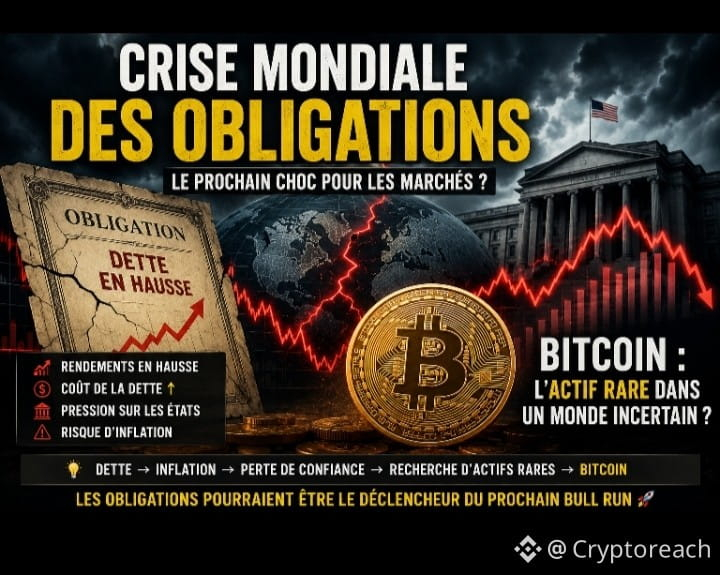
GLOBAL DEBT CRISIS: THE NEXT SHOCK?
Governments are heavily indebted and investors are demanding higher returns.
Bond yields
Cost of debt
Pressure on banks and governments
Risk of inflation and a liquidity crisis
And what about Bitcoin in all this?
If confidence in currencies and sovereign debt deteriorates, BTC could strengthen its role as a rare, decentralized asset.
But a liquidity crisis can first trigger a sharp correction.
The real question: will bonds be the trigger for the next major crypto move?
#Bitcoin #BTC #Crypto #Finance #Fed #Inflation #Debt #Web3 $NVDAB $AAPLB $AMZNB
GLOBAL DEBT CRISIS: THE NEXT SHOCK?
Governments are heavily indebted and investors are demanding higher returns.
Bond yields
Cost of debt
Pressure on banks and governments
Risk of inflation and a liquidity crisis
And what about Bitcoin in all this?
If confidence in currencies and sovereign debt deteriorates, BTC could strengthen its role as a rare, decentralized asset.
But a liquidity crisis can first trigger a sharp correction.
The real question: will bonds be the trigger for the next major crypto move?
#Bitcoin #BTC #Crypto #Finance #Fed #Inflation #Debt #Web3 $NVDAB $AAPLB $AMZNB
Governments are heavily indebted and investors are demanding higher returns.
Bond yields
Cost of debt
Pressure on banks and governments
Risk of inflation and a liquidity crisis
And what about Bitcoin in all this?
If confidence in currencies and sovereign debt deteriorates, BTC could strengthen its role as a rare, decentralized asset.
But a liquidity crisis can first trigger a sharp correction.
The real question: will bonds be the trigger for the next major crypto move?
#Bitcoin #BTC #Crypto #Finance #Fed #Inflation #Debt #Web3 $NVDAB $AAPLB $AMZNB
110
·
--
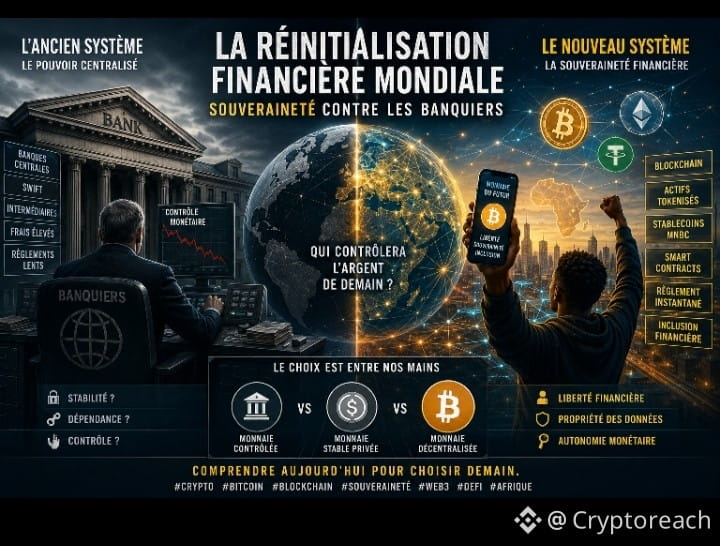
GLOBAL FINANCIAL RESET
Sovereignty against bankers
The global financial system is undergoing a major transformation.
Banks are adopting blockchain, stablecoins, and tokenization.
Bitcoin offers a decentralized alternative, without control by a central bank.
Stablecoins could speed up digital payments, but also strengthen the dollar’s dominance.
Africa must meet a challenge: to benefit from this revolution without losing financial sovereignty.
The next crypto revolution may not be simply Bitcoin versus banks.
It could be:
Banks + central banks + stablecoins + CBDC + tokenization + Bitcoin
within a new global financial architecture.
The real battle then will be over sovereignty, ownership of data, control of infrastructure, and the issuance of money.
Question of the day:
In this new economy, do you prefer a currency controlled by central banks, a private currency like stablecoins, or a decentralized currency like Bitcoin?
The real question is no longer just “banks or crypto?”
Who will control the money of tomorrow?
$TSMB $AMZNB $AAPLB
#Crypto #Bitcoin #Blockchain #Stablecoins #Web3 #Africa #Sovereignty #DeFi #CotedIvoire
GLOBAL FINANCIAL RESET
Sovereignty against bankers
The global financial system is undergoing a major transformation.
Banks are adopting blockchain, stablecoins, and tokenization.
Bitcoin offers a decentralized alternative, without control by a central bank.
Stablecoins could speed up digital payments, but also strengthen the dollar’s dominance.
Africa must meet a challenge: to benefit from this revolution without losing financial sovereignty.
The next crypto revolution may not be simply Bitcoin versus banks.
It could be:
Banks + central banks + stablecoins + CBDC + tokenization + Bitcoin
within a new global financial architecture.
The real battle then will be over sovereignty, ownership of data, control of infrastructure, and the issuance of money.
Question of the day:
In this new economy, do you prefer a currency controlled by central banks, a private currency like stablecoins, or a decentralized currency like Bitcoin?
The real question is no longer just “banks or crypto?”
Who will control the money of tomorrow?
$TSMB $AMZNB $AAPLB
#Crypto #Bitcoin #Blockchain #Stablecoins #Web3 #Africa #Sovereignty #DeFi #CotedIvoire
Sovereignty against bankers
The global financial system is undergoing a major transformation.
Banks are adopting blockchain, stablecoins, and tokenization.
Bitcoin offers a decentralized alternative, without control by a central bank.
Stablecoins could speed up digital payments, but also strengthen the dollar’s dominance.
Africa must meet a challenge: to benefit from this revolution without losing financial sovereignty.
The next crypto revolution may not be simply Bitcoin versus banks.
It could be:
Banks + central banks + stablecoins + CBDC + tokenization + Bitcoin
within a new global financial architecture.
The real battle then will be over sovereignty, ownership of data, control of infrastructure, and the issuance of money.
Question of the day:
In this new economy, do you prefer a currency controlled by central banks, a private currency like stablecoins, or a decentralized currency like Bitcoin?
The real question is no longer just “banks or crypto?”
Who will control the money of tomorrow?
$TSMB $AMZNB $AAPLB
#Crypto #Bitcoin #Blockchain #Stablecoins #Web3 #Africa #Sovereignty #DeFi #CotedIvoire
1
108
·
--
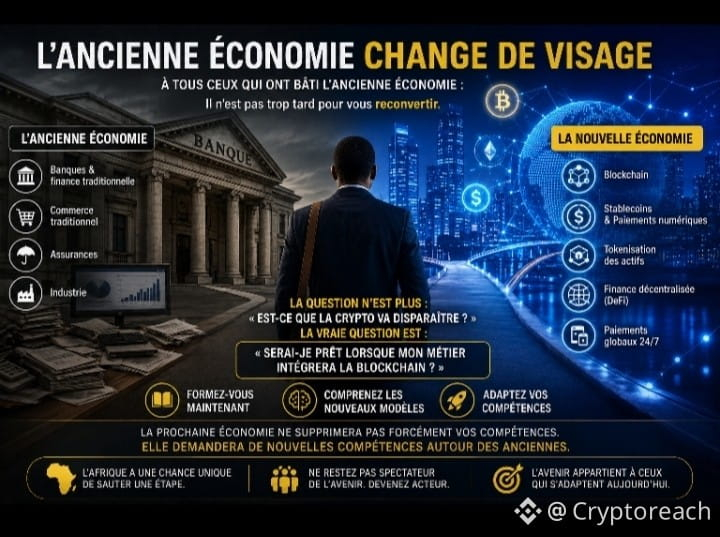
THE OLD ECONOMY CHANGES FACE
To everyone who built their career in the old economy: banks, traditional finance, commerce, insurance, industry…
It’s not too late to retrain.
Blockchain, stablecoins, tokenization, and digital payments are no longer just replacing certain systems: traditional players are starting to adopt them themselves.
The question is no longer: “Will crypto disappear?”
The real question is:
“Will I be ready when my profession integrates blockchain?”
Train now.
Understand the new models.
Adapt your skills.
The next economy won’t necessarily erase your skills. It will require new skills built around the old ones.
Good to know for knowledge-keepers.
$NVDAB $AAPLB $MSFTB
UniversitéFélixHouphouëtBoigny #UNA #UniversitéNanguiAbrogoua #UniversitéAlassaneOuattara #UniversitéPéléforoGbonCoulibaly #UniversitéJeanLorougnonGuédé #UniversitédeKorhogo
Private universities & grandes écoles #UMECI #UniversitéMéthodiste #UCAO #UniversitéCatholique #ESATIC #INPHB #ENSEA #ESCAE #PigierCôteDIvoire #HECAbidjan #ISTCPolytechnique #CERAP
Education & the new economy
#Students #HigherEducation #GrandesÉcoles #University #Training #Blockchain #Crypto #Web3 #Fintech #Stablecoins #Tokenization #DigitalFinance #Innovation #Jobs #CareerChange #CôteIvoire #Abidjan #Africa
#CoteIvoire #Abidjan #University #Students #GrandesÉcoles #Blockchain #Crypto #Web3 #Fintech #Stablecoins #Tokenization #DigitalFinance #CareerChange #Innovation #Africa
#Crypto #Blockchain #Web3 #Stablecoins #Tokenization #Fintech #Finance #Banking #CareerChange #FutureOfFinance #Africa
THE OLD ECONOMY CHANGES FACE
To everyone who built their career in the old economy: banks, traditional finance, commerce, insurance, industry…
It’s not too late to retrain.
Blockchain, stablecoins, tokenization, and digital payments are no longer just replacing certain systems: traditional players are starting to adopt them themselves.
The question is no longer: “Will crypto disappear?”
The real question is:
“Will I be ready when my profession integrates blockchain?”
Train now.
Understand the new models.
Adapt your skills.
The next economy won’t necessarily erase your skills. It will require new skills built around the old ones.
Good to know for knowledge-keepers.
$NVDAB $AAPLB $MSFTB
UniversitéFélixHouphouëtBoigny #UNA #UniversitéNanguiAbrogoua #UniversitéAlassaneOuattara #UniversitéPéléforoGbonCoulibaly #UniversitéJeanLorougnonGuédé #UniversitédeKorhogo
Private universities & grandes écoles #UMECI #UniversitéMéthodiste #UCAO #UniversitéCatholique #ESATIC #INPHB #ENSEA #ESCAE #PigierCôteDIvoire #HECAbidjan #ISTCPolytechnique #CERAP
Education & the new economy
#Students #HigherEducation #GrandesÉcoles #University #Training #Blockchain #Crypto #Web3 #Fintech #Stablecoins #Tokenization #DigitalFinance #Innovation #Jobs #CareerChange #CôteIvoire #Abidjan #Africa
#CoteIvoire #Abidjan #University #Students #GrandesÉcoles #Blockchain #Crypto #Web3 #Fintech #Stablecoins #Tokenization #DigitalFinance #CareerChange #Innovation #Africa
#Crypto #Blockchain #Web3 #Stablecoins #Tokenization #Fintech #Finance #Banking #CareerChange #FutureOfFinance #Africa
To everyone who built their career in the old economy: banks, traditional finance, commerce, insurance, industry…
It’s not too late to retrain.
Blockchain, stablecoins, tokenization, and digital payments are no longer just replacing certain systems: traditional players are starting to adopt them themselves.
The question is no longer: “Will crypto disappear?”
The real question is:
“Will I be ready when my profession integrates blockchain?”
Train now.
Understand the new models.
Adapt your skills.
The next economy won’t necessarily erase your skills. It will require new skills built around the old ones.
Good to know for knowledge-keepers.
$NVDAB $AAPLB $MSFTB
UniversitéFélixHouphouëtBoigny #UNA #UniversitéNanguiAbrogoua #UniversitéAlassaneOuattara #UniversitéPéléforoGbonCoulibaly #UniversitéJeanLorougnonGuédé #UniversitédeKorhogo
Private universities & grandes écoles #UMECI #UniversitéMéthodiste #UCAO #UniversitéCatholique #ESATIC #INPHB #ENSEA #ESCAE #PigierCôteDIvoire #HECAbidjan #ISTCPolytechnique #CERAP
Education & the new economy
#Students #HigherEducation #GrandesÉcoles #University #Training #Blockchain #Crypto #Web3 #Fintech #Stablecoins #Tokenization #DigitalFinance #Innovation #Jobs #CareerChange #CôteIvoire #Abidjan #Africa
#CoteIvoire #Abidjan #University #Students #GrandesÉcoles #Blockchain #Crypto #Web3 #Fintech #Stablecoins #Tokenization #DigitalFinance #CareerChange #Innovation #Africa
#Crypto #Blockchain #Web3 #Stablecoins #Tokenization #Fintech #Finance #Banking #CareerChange #FutureOfFinance #Africa
119
·
--
Little by little, we have it—something impossible at the start, a reminder: we are no longer fools, but realists.
Banks are moving into crypto payments
Change is accelerating: banks are no longer just trying to fight cryptocurrencies. They now want to use their infrastructure to move money on the blockchain.
In 2026, several signals are very strong:
* 37 European banks are working together within Qivalis to develop a euro stablecoin intended for payments and on-chain settlements.
* 17 banks from six continents are preparing cross-border transactions using tokenized deposits via SWIFT’s blockchain infrastructure.
* American banks are now exploring their own stablecoins, particularly for commercial payments.
* Mastercard is also developing settlement of transactions with regulated stablecoins, including 24/7 and on weekends.
* The UK even wants to set a specific objective for the Bank of England to promote innovation in digital payments and stablecoins.
- What this means
The real battle might no longer be:
Banks vs Crypto
but rather:
Banks + Blockchain + Stablecoins = a new payments infrastructure.
Bitcoin remains mainly a digital asset. But for everyday and international payments, stablecoins and tokenized deposits could become the bridge between the traditional banking system and the blockchain.
And for Africa, the stakes are huge: cheaper international transfers, 24/7 payments, and better interoperability could profoundly change cross-border payments.
Question: will banks ultimately become the biggest users of blockchain?
$AMZNB $MSFTB $AAPLB
#Crypto #Blockchain #Stablecoins #Bitcoin #Web3 #DeFi #Payments #Banking #Tokenisation #Fintech #Africa #CryptoAfrica
Little by little, we have it—something impossible at the start, a reminder: we are no longer fools, but realists.
Banks are moving into crypto payments
Change is accelerating: banks are no longer just trying to fight cryptocurrencies. They now want to use their infrastructure to move money on the blockchain.
In 2026, several signals are very strong:
* 37 European banks are working together within Qivalis to develop a euro stablecoin intended for payments and on-chain settlements.
* 17 banks from six continents are preparing cross-border transactions using tokenized deposits via SWIFT’s blockchain infrastructure.
* American banks are now exploring their own stablecoins, particularly for commercial payments.
* Mastercard is also developing settlement of transactions with regulated stablecoins, including 24/7 and on weekends.
* The UK even wants to set a specific objective for the Bank of England to promote innovation in digital payments and stablecoins.
- What this means
The real battle might no longer be:
Banks vs Crypto
but rather:
Banks + Blockchain + Stablecoins = a new payments infrastructure.
Bitcoin remains mainly a digital asset. But for everyday and international payments, stablecoins and tokenized deposits could become the bridge between the traditional banking system and the blockchain.
And for Africa, the stakes are huge: cheaper international transfers, 24/7 payments, and better interoperability could profoundly change cross-border payments.
Question: will banks ultimately become the biggest users of blockchain?
$AMZNB $MSFTB $AAPLB
#Crypto #Blockchain #Stablecoins #Bitcoin #Web3 #DeFi #Payments #Banking #Tokenisation #Fintech #Africa #CryptoAfrica
Banks are moving into crypto payments
Change is accelerating: banks are no longer just trying to fight cryptocurrencies. They now want to use their infrastructure to move money on the blockchain.
In 2026, several signals are very strong:
* 37 European banks are working together within Qivalis to develop a euro stablecoin intended for payments and on-chain settlements.
* 17 banks from six continents are preparing cross-border transactions using tokenized deposits via SWIFT’s blockchain infrastructure.
* American banks are now exploring their own stablecoins, particularly for commercial payments.
* Mastercard is also developing settlement of transactions with regulated stablecoins, including 24/7 and on weekends.
* The UK even wants to set a specific objective for the Bank of England to promote innovation in digital payments and stablecoins.
- What this means
The real battle might no longer be:
Banks vs Crypto
but rather:
Banks + Blockchain + Stablecoins = a new payments infrastructure.
Bitcoin remains mainly a digital asset. But for everyday and international payments, stablecoins and tokenized deposits could become the bridge between the traditional banking system and the blockchain.
And for Africa, the stakes are huge: cheaper international transfers, 24/7 payments, and better interoperability could profoundly change cross-border payments.
Question: will banks ultimately become the biggest users of blockchain?
$AMZNB $MSFTB $AAPLB
#Crypto #Blockchain #Stablecoins #Bitcoin #Web3 #DeFi #Payments #Banking #Tokenisation #Fintech #Africa #CryptoAfrica

1
99
·
--
Jackson Hole under high tension
Kevin Warsh’s speech at Jackson Hole could strongly influence the markets.
A hawkish tone → higher rates for longer → reduced liquidity → pressure on BTC and risk assets.
A dovish tone → expectations of rate cuts → improved liquidity → potential rebound for Bitcoin and crypto.
August 28 could therefore be a key day for the crypto market.
Above all, watch the speech’s tone, US yields, and the dollar.$TSMB $MSFTB $AAPLB
#Bitcoin #BTC #Crypto #Cryptomonnaies #JacksonHole #Fed #FederalReserve #CryptoMarket #Altcoins #Trading
Jackson Hole under high tension
Kevin Warsh’s speech at Jackson Hole could strongly influence the markets.
A hawkish tone → higher rates for longer → reduced liquidity → pressure on BTC and risk assets.
A dovish tone → expectations of rate cuts → improved liquidity → potential rebound for Bitcoin and crypto.
August 28 could therefore be a key day for the crypto market.
Above all, watch the speech’s tone, US yields, and the dollar.$TSMB $MSFTB $AAPLB
#Bitcoin #BTC #Crypto #Cryptomonnaies #JacksonHole #Fed #FederalReserve #CryptoMarket #Altcoins #Trading
Kevin Warsh’s speech at Jackson Hole could strongly influence the markets.
A hawkish tone → higher rates for longer → reduced liquidity → pressure on BTC and risk assets.
A dovish tone → expectations of rate cuts → improved liquidity → potential rebound for Bitcoin and crypto.
August 28 could therefore be a key day for the crypto market.
Above all, watch the speech’s tone, US yields, and the dollar.$TSMB $MSFTB $AAPLB
#Bitcoin #BTC #Crypto #Cryptomonnaies #JacksonHole #Fed #FederalReserve #CryptoMarket #Altcoins #Trading

8
1
168
Log in to explore more content
Join global crypto users on Binance Square
⚡️ Get latest and useful information about crypto.
💬 Trusted by the world’s largest crypto exchange.
👍 Discover real insights from verified creators.
Email / Phone number
Trending Topics
FedRateWatch
523,154 views
2,572 Discussing
Share & Win Traffic Reward in our Trending Hashtag Campaign
✨Topic: FOMC September, What's The Fed's Next Move?
👉How to Join:
Publish a short post or article with hashtag #FedRateWatch
Create content based on the below angles:
- August core CPI rose 0.3% month-over-month, and the odds of a 25bp hike this week are now close to 90%. Do you anticipate a rate hike this week? Is it a one-off, or the start of a longer hiking cycle?
- If the hike lands, how does it play out for BTC, tech stocks, and gold? Bullish or bearish?
- How are you planning to trade next? Share your BTC, stocks or gold trade/holdings with our trade sharing widget.
⏰Campaign Period:
- 2026-09-15 11:00 - 2026-09-17 3:00 UTC
🎁Reward:
- Qualified posts that comply with the above guidelines and contain more than 100 words will be reviewed and may receive a random traffic boost of 500 to 3,000 views. You will receive a notification from your feed secretary if your post is selected.
- Get a chance to have your article featured on Binance Square Official
Need ideas for your post? Visit the topic page #FedRateWatch or the Square Guide on How to Post for Better Reach.
Binance Square Official
·372 Likes
·806.6k views
BitcoinSlidesTo$76000
17,744 views
110 Discussing
BitcoinReboundsTo$79K
60,542 views
398 Discussing