
aiteok
48 Posts

aiteok
Report
Block User
Webmaster, hodler y entusiasta de crypto.
21 Following
35 Followers
40 Liked
Posts
All
Quotes

·
--
Tell me something about crypto 😏
Tell me something about crypto 😏


Binance Argentina Official
·
--
Bot or human? Prove it. 🤖🚫🇦🇷
We’re giving away 🟡 1000 USDT and kicking off our anti-bot campaign with a phrase no algorithm could understand:
“You’re such a bot, I’ve never seen binary code as bitter as you.”
Bots don’t have street smarts, they don’t linger at the table after a meal, and they don’t know what it’s like to drink mate that’s gone weak. You do. Leave a comment only a human could write.
⚠️ Heads up: the winner won’t be the person with the most correct, serious, or “appropriate” answer. The most creative one wins. The absurd, the unexpected, whatever makes us laugh.
To enter:
❤️ Like this post.
💬 Leave your most human phrase in the comments. The most original comment wins 1000 USDT.
🇦🇷 Open to users in Argentina only.
📣 We’ll announce the new THE ONE on Saturday, October 31.

2
·
--
BINANCE was hacked, but ... I found this comment 4 days earlier on Binance Argentina's Instagram while looking for comments about the case
BINANCE was hacked, but ... I found this comment 4 days earlier on Binance Argentina's Instagram while looking for comments about the case

3
14
15.3k
·
--
What does a "blockchain IPO" mean in practice?
An IPO is more of a sequence than a single event. It includes preparing the offering, creating the order book, issuing shares, settling transactions, updating the market capitalization table, applying transfer rules, and managing corporate actions such as dividends and voting.
An IPO is more of a sequence than a single event. It includes preparing the offering, creating the order book, issuing shares, settling transactions, updating the market capitalization table, applying transfer rules, and managing corporate actions such as dividends and voting.

165
·
--
the one! 500K 😎
the one! 500K 😎

Binance Argentina Official
·
--
🟡 500 USDT. 1 winner. Are you going to be THE ONE? 👀
How to participate? 👇
❤️ Like this post.
💬 What would THE ONE do with the 500 USDT? Leave your answer in the comments.
😉 Done! You're now participating for 500 USDT.⚡
📣 We'll announce the winner on Friday, September 25
Applies Términos y Condiciones.
How to participate? 👇
❤️ Like this post.
💬 What would THE ONE do with the 500 USDT? Leave your answer in the comments.
😉 Done! You're now participating for 500 USDT.⚡
📣 We'll announce the winner on Friday, September 25
Applies Términos y Condiciones.
·
--
Bitcoin goes back up... what expectations do you have regarding your savings in $BTC ? Do you save in #BTC
{spot}(BTCUSDT)
Bitcoin goes back up... what expectations do you have regarding your savings in $BTC ? Do you save in #BTC

17
·
--
Bitcoin is rising again... what are your expectations regarding your $BTC savings? Do you save in #BTC ?
{spot}(BTCUSDT)
Bitcoin is rising again... what are your expectations regarding your $BTC savings? Do you save in #BTC ?

17
·
--
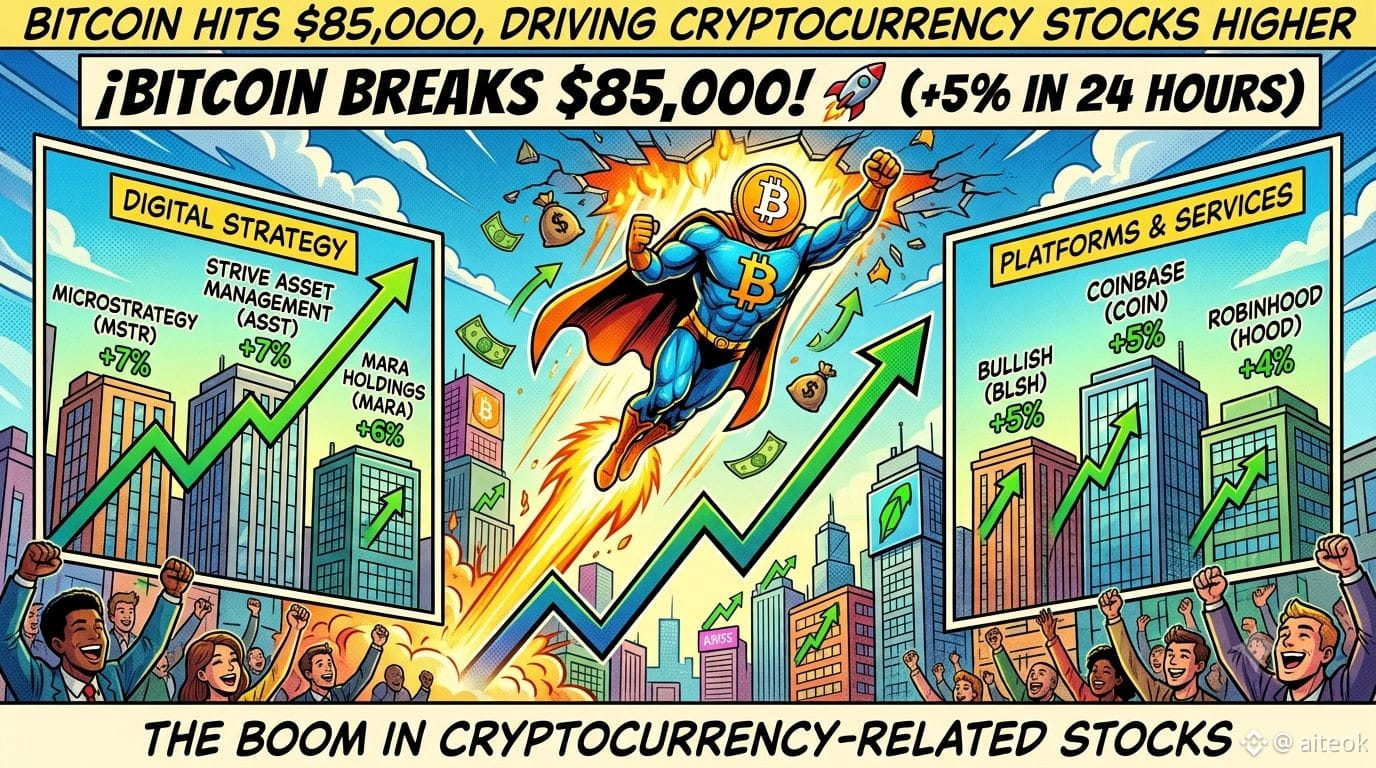
Bitcoin hits $85,000, lifting crypto-linked stocks
Bitcoin has surged past $85,000, gaining 5% over the past 24 hours and lifting crypto-linked stocks. Strategy (MSTR) and Strive Asset Management (ASST) are both up 7%, while MARA Holdings (MARA) has gained 6%. CoinDesk parent company Bullish (BLSH) and Coinbase (COIN) are up 5%, with Robinhood (HOOD) rising 4%.
$BTC #btc
{spot}(BTCUSDT)
Bitcoin hits $85,000, lifting crypto-linked stocks
Bitcoin has surged past $85,000, gaining 5% over the past 24 hours and lifting crypto-linked stocks. Strategy (MSTR) and Strive Asset Management (ASST) are both up 7%, while MARA Holdings (MARA) has gained 6%. CoinDesk parent company Bullish (BLSH) and Coinbase (COIN) are up 5%, with Robinhood (HOOD) rising 4%.
$BTC #btc
33
·
--
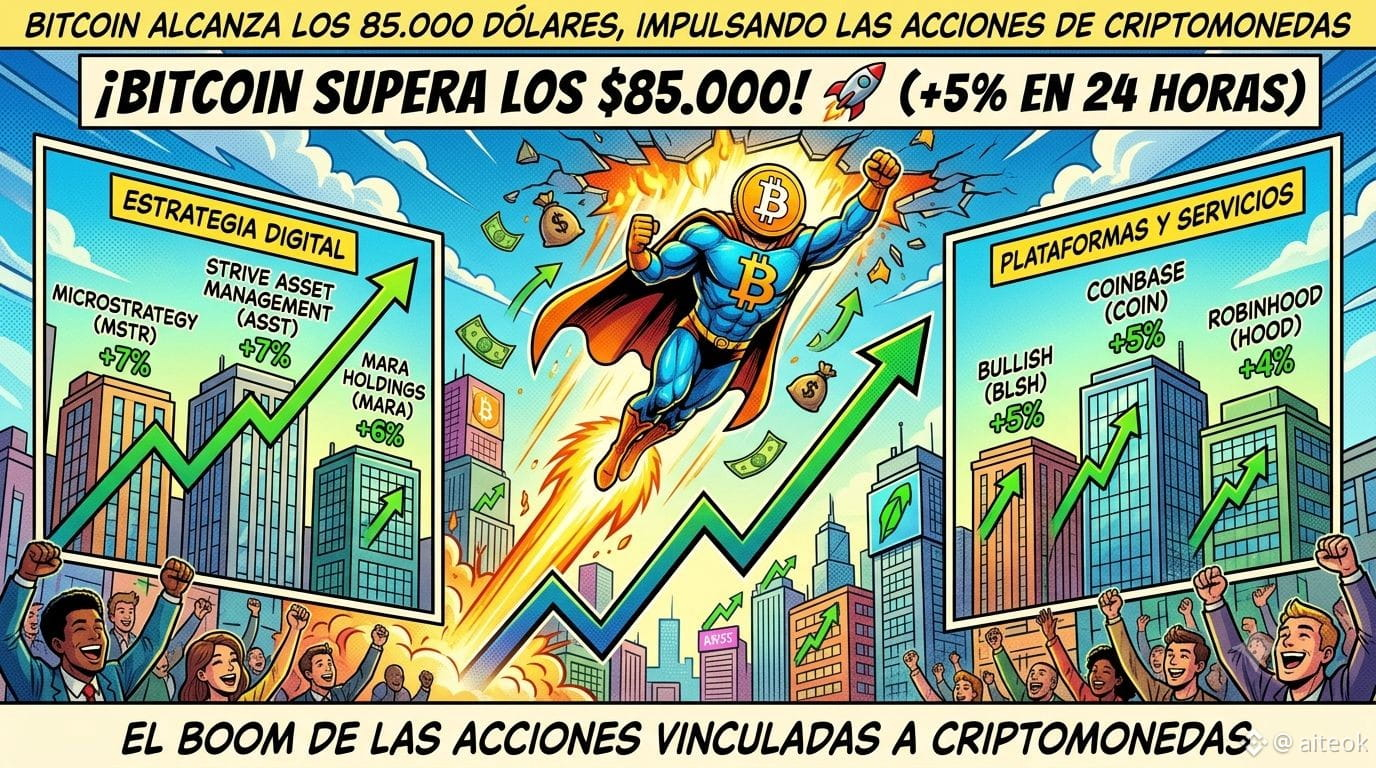
Bitcoin hits $85,000, boosting cryptocurrency-linked stocks
Bitcoin has surpassed $85,000, gaining 5% over the last 24 hours and lifting cryptocurrency-related shares. Strategy (MSTR) and Strive Asset Management (ASST) rose 7%, while MARA Holdings (MARA) gained 6%. The parent company of CoinDesk, Bullish (BLSH) and Coinbase (COIN), climbed 5%, and Robinhood (HOOD) rose 4%.
$BTC #BTC
{spot}(BTCUSDT)
Bitcoin hits $85,000, boosting cryptocurrency-linked stocks
Bitcoin has surpassed $85,000, gaining 5% over the last 24 hours and lifting cryptocurrency-related shares. Strategy (MSTR) and Strive Asset Management (ASST) rose 7%, while MARA Holdings (MARA) gained 6%. The parent company of CoinDesk, Bullish (BLSH) and Coinbase (COIN), climbed 5%, and Robinhood (HOOD) rose 4%.
$BTC #BTC
56
·
--
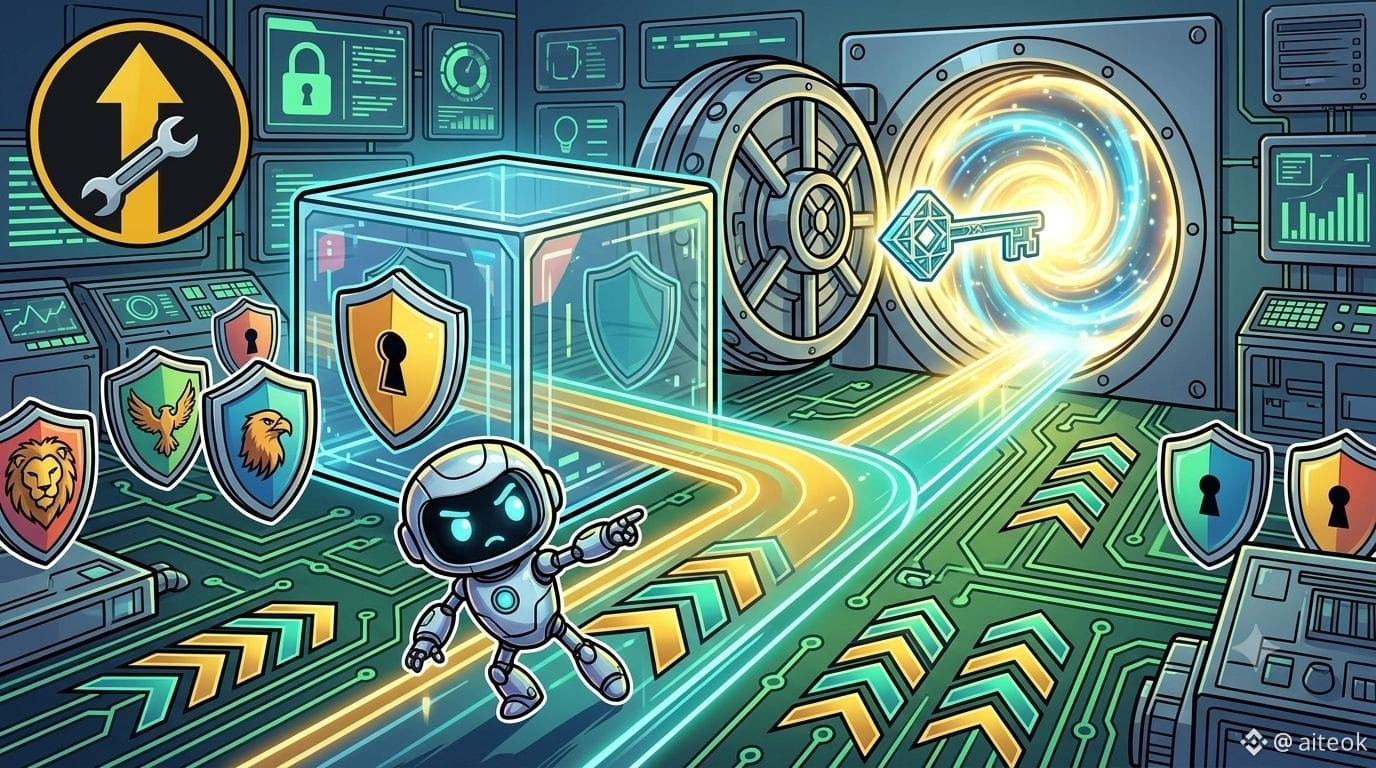
Did you know about ADVANCE implementation in an AI agent? Developer Mode: Additional security measures for advanced permissions
Some users may want their agents to sign transactions constructed externally; that is, raw transactions that are not limited to Binance’s official contracts. Since the risk profile is higher, Agentic Wallet provides an independent set of security measures through Developer Mode.
Developer Mode is disabled by default. To enable this feature for the first time, you must read a disclaimer notice and complete an additional confirmation.
#AI
76
·
--
HONEYPOT
A honeypot is a security resource designed with intentional vulnerabilities to act as a decoy. Its primary function is to trap attackers or automated systems in an isolated environment, allowing security teams to study their tactics, protect real production systems, and gain response time.
Origin and Implementation
Conceptually created in 1986 by Clifford Stoll and consolidated during the 1990s, a honeypot is deployed by setting up servers, networks, or databases without legitimate users or traffic. Consequently, any registered interaction is considered suspicious. Its level of interaction varies from basic simulations (low interaction) to fully operational environments (high interaction).
Current Relevance
In Artificial Intelligence (AI):
Agent Alignment and Control (Keeps AI in check): Used as a sandbox or controlled test environment where autonomous agents are evaluated to detect if they attempt to violate their ethical boundaries or exploit vulnerabilities before being deployed to production.
Protection Against Scraping and Prompt Injection: Serves to capture unauthorized bots harvesting data without permission and to study how models react to prompt injection attacks using decoy APIs.
In Cryptocurrency and Blockchain:
Infrastructure Defense: DeFi protocols and exchanges deploy fake nodes or wallets with apparent flaws to attract cybercriminals and identify security loopholes before they can impact real funds.
Smart Contract Frauds: In the Web3 ecosystem, the term is also used to describe malicious smart contracts designed by scammers; they appear to have a bug that would allow extracting money, but they permanently lock withdrawals once victims deposit their funds.
#Web3

75
·
--
Honeypot (Honey Pot)
A honeypot is a security resource designed with intentional vulnerabilities to act as a decoy. Its main function is to trap attackers or automated systems in an isolated environment, enabling the study of their tactics, protection of real production systems, and gaining response time.
Origin and Implementation
Conceptually born in 1986 by Clifford Stoll and consolidated in the 1990s, a honeypot is deployed by configuring servers, networks, or databases without legitimate users or traffic, so that any recorded interaction is considered suspicious. Its level of interaction ranges from basic simulations (low interaction) to fully operational environments (high interaction).
Current Relevance
In Artificial Intelligence (AI):
Alignment and control of agents (Keeps AI in check): It’s used as a sandbox or controlled testing environment where autonomous agents are evaluated to see whether they attempt to violate ethical boundaries or exploit vulnerabilities before being put into production.
Protection against scraping and prompt injection: It helps capture unauthorized bots that extract information without permission, and to study how models respond to prompt injection attacks using decoy APIs.
In Cryptocurrencies and Blockchain:
Infrastructure defense: DeFi protocols and exchanges deploy fake nodes or wallets with apparent failures to attract cybercriminals and identify security gaps before they affect real funds.
Frauds in Smart Contracts: In the Web3 context, the term is also used to describe malicious smart contracts created by scammers; they appear to have an error that would allow money to be extracted, but they block withdrawals once victims deposit their funds.
#Web3

1
298
·
--
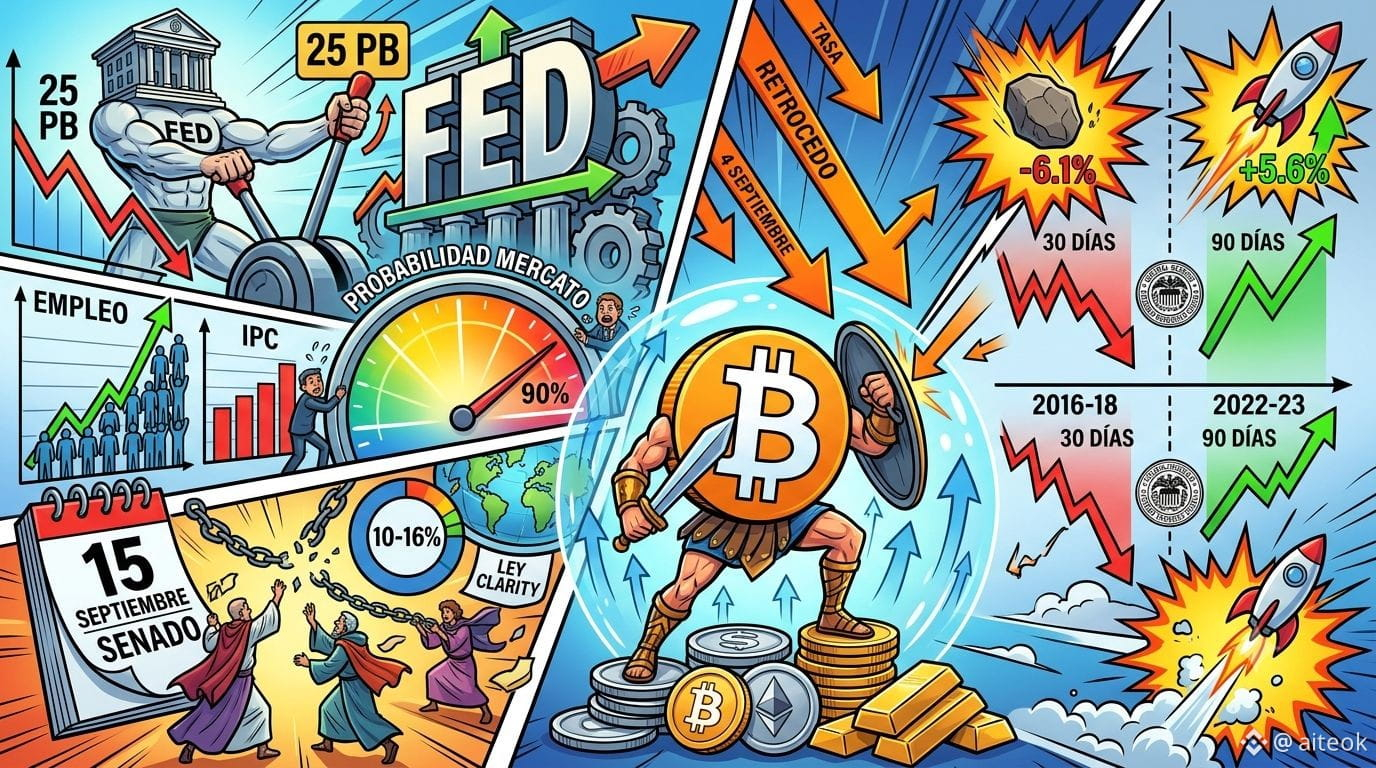
The article analyzes the impact that a possible interest-rate hike by the Federal Reserve (Fed) could have on Bitcoin, noting that the market is already pricing in this increase following strong employment data and persistent inflation.
Macroeconomic outlook: After rate-cut forecasts that did not materialize in 2026, futures point to roughly a 90% probability of a 25-basis-point increase at Wednesday’s meeting.
Bitcoin’s reaction and historical data: $BTC fell from nearly $82,000 to $76,840 in anticipation of this scenario. While historically Bitcoin drops an average of -6.1% in the first 30 days after a rate hike, at 90 days the average impact turns neutral (+5.6%).
Structural resilience: The long-term impact often becomes softer thanks to the momentum that higher rates provide to stablecoins and tokenized bonds, as well as a less leveraged market.
Regulatory catalyst: The procedure vote on the CLARITY Act in the Senate on September 15 is added to the mix. Since the market does not expect surprises, any unexpected change could trigger additional volatility.
The real focus: Beyond the rate adjustment itself, the key will be whether the measure responds to a specific event or marks the start of a new restrictive cycle.
#BTC
{spot}(BTCUSDT)
The article analyzes the impact that a possible interest-rate hike by the Federal Reserve (Fed) could have on Bitcoin, noting that the market is already pricing in this increase following strong employment data and persistent inflation.
Macroeconomic outlook: After rate-cut forecasts that did not materialize in 2026, futures point to roughly a 90% probability of a 25-basis-point increase at Wednesday’s meeting.
Bitcoin’s reaction and historical data: $BTC fell from nearly $82,000 to $76,840 in anticipation of this scenario. While historically Bitcoin drops an average of -6.1% in the first 30 days after a rate hike, at 90 days the average impact turns neutral (+5.6%).
Structural resilience: The long-term impact often becomes softer thanks to the momentum that higher rates provide to stablecoins and tokenized bonds, as well as a less leveraged market.
Regulatory catalyst: The procedure vote on the CLARITY Act in the Senate on September 15 is added to the mix. Since the market does not expect surprises, any unexpected change could trigger additional volatility.
The real focus: Beyond the rate adjustment itself, the key will be whether the measure responds to a specific event or marks the start of a new restrictive cycle.
#BTC
65
·
--
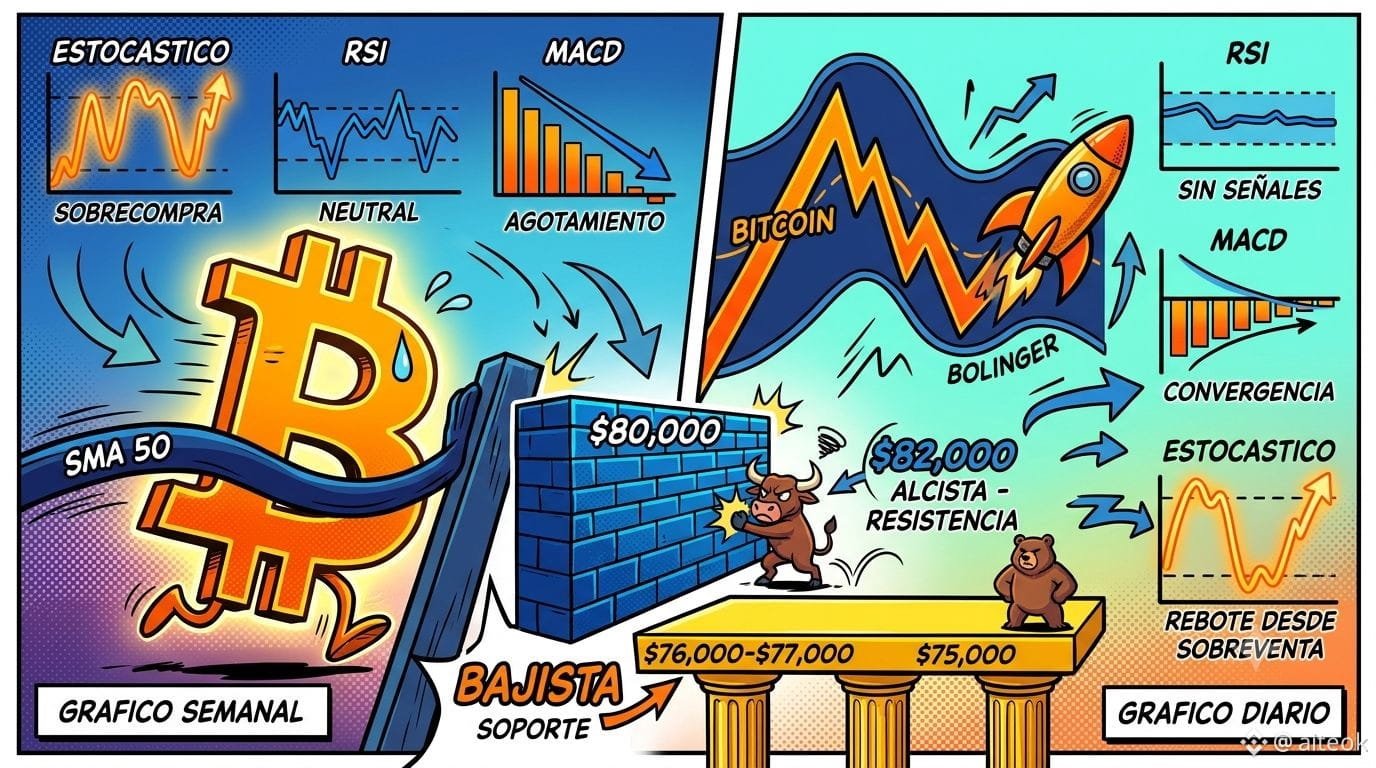
The price of Bitcoin $BTC is in a consolidation phase and a depletion of the bullish momentum, trading within a range on the daily chart and pausing around the 50-period SMA on the weekly chart.
Weekly analysis: Shows a loss of bullish strength. The Stochastic is overextended, the RSI is neutral, and both the MACD histogram and the ADX are declining.
Daily analysis: Moves within a range between the mid and lower band of Bollinger Bands. The MACD is negative but converging toward zero, and the Stochastic is pointing to a bounce from oversold conditions.
Support levels: $76,000–$77,000 as the first floor, followed by $75,000.
Resistance levels: $80,000 and $82,000, added to the dynamic resistance of the 50-week SMA.
#btc
{spot}(BTCUSDT)
The price of Bitcoin $BTC is in a consolidation phase and a depletion of the bullish momentum, trading within a range on the daily chart and pausing around the 50-period SMA on the weekly chart.
Weekly analysis: Shows a loss of bullish strength. The Stochastic is overextended, the RSI is neutral, and both the MACD histogram and the ADX are declining.
Daily analysis: Moves within a range between the mid and lower band of Bollinger Bands. The MACD is negative but converging toward zero, and the Stochastic is pointing to a bounce from oversold conditions.
Support levels: $76,000–$77,000 as the first floor, followed by $75,000.
Resistance levels: $80,000 and $82,000, added to the dynamic resistance of the 50-week SMA.
#btc
91
·
--
Crypto Markets Face Pressure as Oil Prices Fuel Rate Hike Speculation
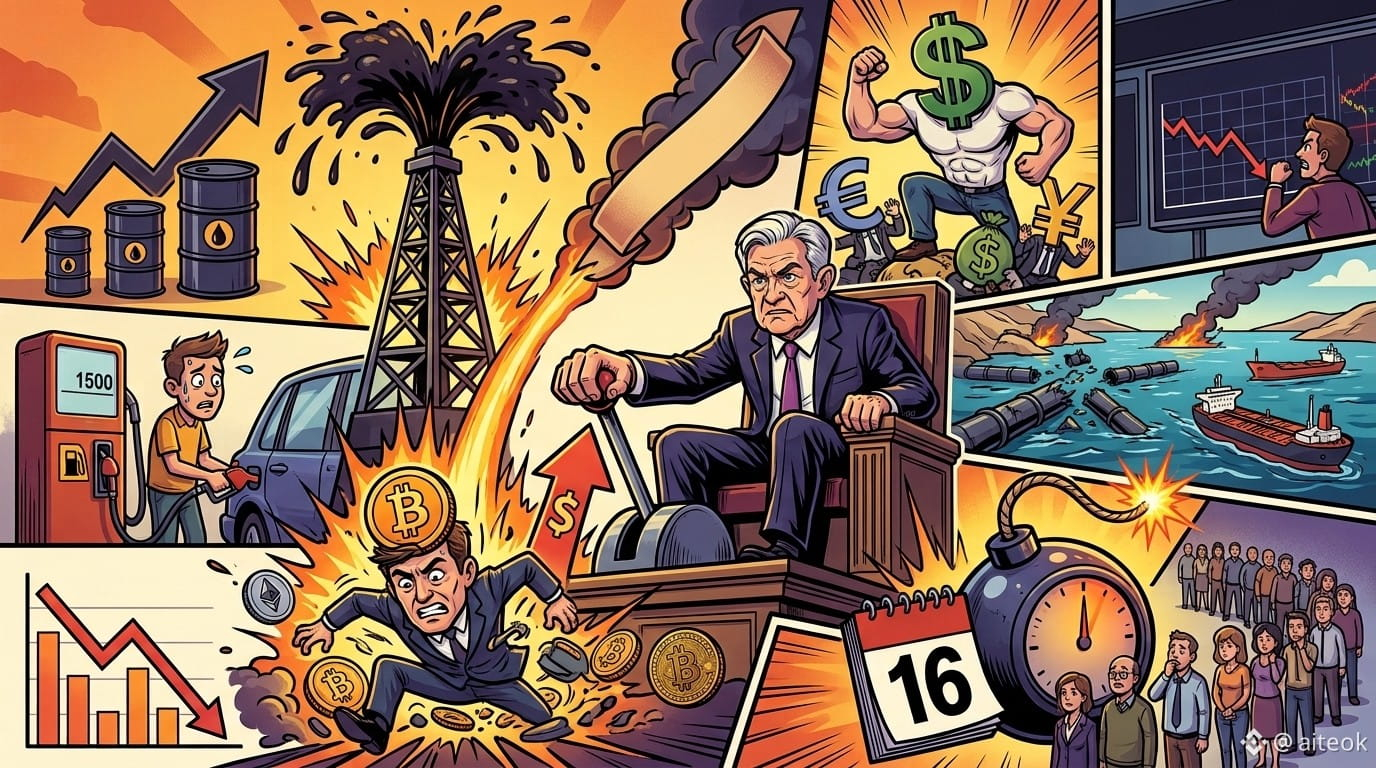
Bitcoin $BTC and the broader cryptocurrency market are currently facing downward pressure, mirroring recent weakness in U.S. equities and a strengthening Dollar Index. This market turbulence is primarily driven by inflation concerns tied to rising energy costs, with WTI crude rallying to $90—up from $70 at the start of July.
This surge in oil prices is largely attributed to supply disruptions from the Iran conflict rather than an overheating U.S. economy. Nonetheless, markets are increasingly pricing in a Federal Reserve rate hike to combat this perceived inflation, with the CME's FedWatch tool currently showing a 68% probability of an increase at the upcoming Sept. 16 meeting.
However, prominent economists argue that raising rates would be a mistake. Because energy spikes act as a direct tax on consumers and businesses, tightening credit would only worsen economic deceleration without fixing the underlying supply issues.
James E. Thorne, chief market strategist at Wellington-Altus, characterized the oil spike as "a growth shock dressed up as inflation," warning that a rate hike would be a "policy error masquerading as prudence." Moody’s Analytics Chief Economist Mark Zandi echoed this sentiment in a July 28, 2026, interview, stating that traditional monetary policy dictates the Fed should simply not respond to a supply shock.
Despite these warnings, the high odds of a Sept. 16 rate hike mean that any further increases in oil prices could continue to weigh heavily on risk assets, including crypto, in the near term. #fed
{spot}(BTCUSDT)
Crypto Markets Face Pressure as Oil Prices Fuel Rate Hike Speculation
Bitcoin $BTC and the broader cryptocurrency market are currently facing downward pressure, mirroring recent weakness in U.S. equities and a strengthening Dollar Index. This market turbulence is primarily driven by inflation concerns tied to rising energy costs, with WTI crude rallying to $90—up from $70 at the start of July.
This surge in oil prices is largely attributed to supply disruptions from the Iran conflict rather than an overheating U.S. economy. Nonetheless, markets are increasingly pricing in a Federal Reserve rate hike to combat this perceived inflation, with the CME's FedWatch tool currently showing a 68% probability of an increase at the upcoming Sept. 16 meeting.
However, prominent economists argue that raising rates would be a mistake. Because energy spikes act as a direct tax on consumers and businesses, tightening credit would only worsen economic deceleration without fixing the underlying supply issues.
James E. Thorne, chief market strategist at Wellington-Altus, characterized the oil spike as "a growth shock dressed up as inflation," warning that a rate hike would be a "policy error masquerading as prudence." Moody’s Analytics Chief Economist Mark Zandi echoed this sentiment in a July 28, 2026, interview, stating that traditional monetary policy dictates the Fed should simply not respond to a supply shock.
Despite these warnings, the high odds of a Sept. 16 rate hike mean that any further increases in oil prices could continue to weigh heavily on risk assets, including crypto, in the near term. #fed
319
·
--
The technology sector drives artificial intelligence metrics
The giants in technology infrastructure and hardware for artificial intelligence continue to release record quarterly reports. The strong demand for computing capacity not only supports traditional stock markets, but also maintains a direct correlation with decentralized infrastructure and crypto networks focused on #IA .
The giants in technology infrastructure and hardware for artificial intelligence continue to release record quarterly reports. The strong demand for computing capacity not only supports traditional stock markets, but also maintains a direct correlation with decentralized infrastructure and crypto networks focused on #IA .

79
·
--
European banks accelerate crypto integration under #MiCA
The entry into force of the MiCA regulatory framework in the European Union continues to push traditional banking institutions to prepare their own custody and digital-asset trading solutions. Legal clarity in Europe contrasts with ongoing regulatory moves in the United States, drawing institutionalized projects to the European ecosystem.
The entry into force of the MiCA regulatory framework in the European Union continues to push traditional banking institutions to prepare their own custody and digital-asset trading solutions. Legal clarity in Europe contrasts with ongoing regulatory moves in the United States, drawing institutionalized projects to the European ecosystem.

68
·
--
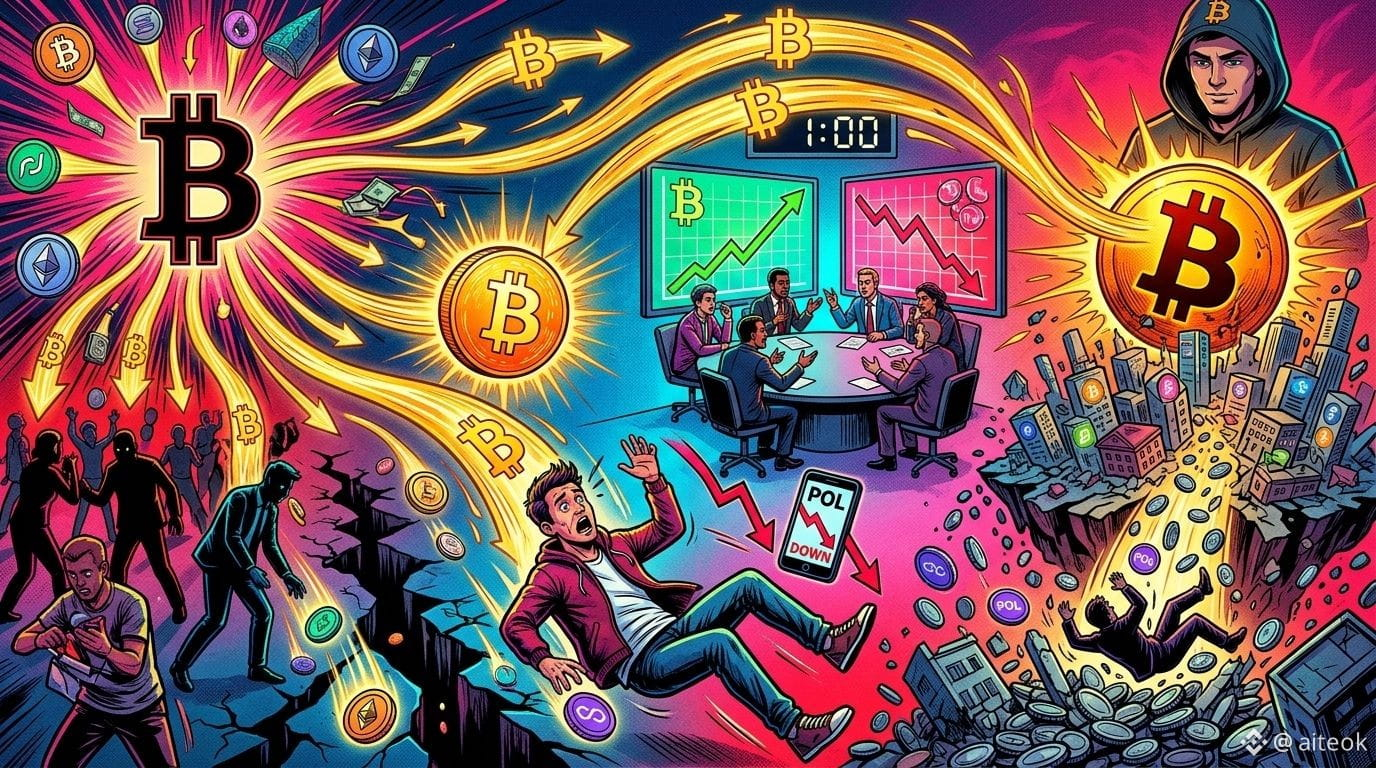
Capital rotation towards Bitcoin impacts POL and secondary tokens
Major alternative cryptocurrencies face selling pressure due to the marked concentration of liquidity towards Bitcoin. Cases such as $POL (Polygon) reflect double-digit declines over short periods, reigniting the debate over when operating strength in altcoins will resume in the face of the dominance of the first cryptocurrency.
{spot}(POLUSDT)
Capital rotation towards Bitcoin impacts POL and secondary tokens
Major alternative cryptocurrencies face selling pressure due to the marked concentration of liquidity towards Bitcoin. Cases such as $POL (Polygon) reflect double-digit declines over short periods, reigniting the debate over when operating strength in altcoins will resume in the face of the dominance of the first cryptocurrency.
Major alternative cryptocurrencies face selling pressure due to the marked concentration of liquidity towards Bitcoin. Cases such as $POL (Polygon) reflect double-digit declines over short periods, reigniting the debate over when operating strength in altcoins will resume in the face of the dominance of the first cryptocurrency.
1
351
·
--
😱 Cronos halts its network after a $75 million exploit on Tectonic
The DeFi platform Tectonic suffered a massive security attack estimated at $75 million, forcing Cronos blockchain developers to carry out an emergency shutdown lasting more than 10 hours to stop the flow of funds. As an immediate consequence, the native CRO token saw a price drop and a notable increase in selling volumes due to market nervousness.
But... WHAT IS CRONO?
Crypto.com Chain is one of the products from Crypto.com designed to provide solutions that help accelerate the global adoption of cryptocurrencies as a means to increase personal control over money, safeguard users’ data, and protect their identities. The CRO blockchain primarily serves as a vehicle that promotes mobile payment applications through Crypto.com Pay.
In the future, Crypto.com plans to expand the reach of the CRO platform to drive its other products as well.
CRO went live between November and December 2018.

309
·
--
Crypto Market: Bitcoin $BTC seeks consolidation near USD 80,000
After attempting to break through the psychological barrier of USD 80,000, Bitcoin is showing a phase of consolidation and testing the strength of its narrative as a store of value. Market analysts point out that, following a sustained bullish run driven by institutional interest, the price of the main digital assets remains attentive to global macroeconomic signals and international interest rates.
What expectations do you have for BTC and for your portfolio?
{spot}(BTCUSDT)
Crypto Market: Bitcoin $BTC seeks consolidation near USD 80,000
After attempting to break through the psychological barrier of USD 80,000, Bitcoin is showing a phase of consolidation and testing the strength of its narrative as a store of value. Market analysts point out that, following a sustained bullish run driven by institutional interest, the price of the main digital assets remains attentive to global macroeconomic signals and international interest rates.
What expectations do you have for BTC and for your portfolio?

288
Log in to explore more content
Join global crypto users on Binance Square
⚡️ Get latest and useful information about crypto.
💬 Trusted by the world’s largest crypto exchange.
👍 Discover real insights from verified creators.
Email / Phone number
Trending Topics
BinanceReopensWithdrawalsForMoreAssets
841,519 views
4,577 Discussing
Security Incident | Recovery Update #8: Withdrawals for More Assets to Reopen (2026-11-05)
Binance Announcement
·393 Likes
·1.7M views
Binance98PercentReplenished
184,224 views
1,850 Discussing
USStocksSlipandCryptoMarketUnderBroadPressure
11,099 views
237 Discussing