

#iran
iran
10.1M views
18,515 Discussing
Hot
Latest
·
--
Bullish
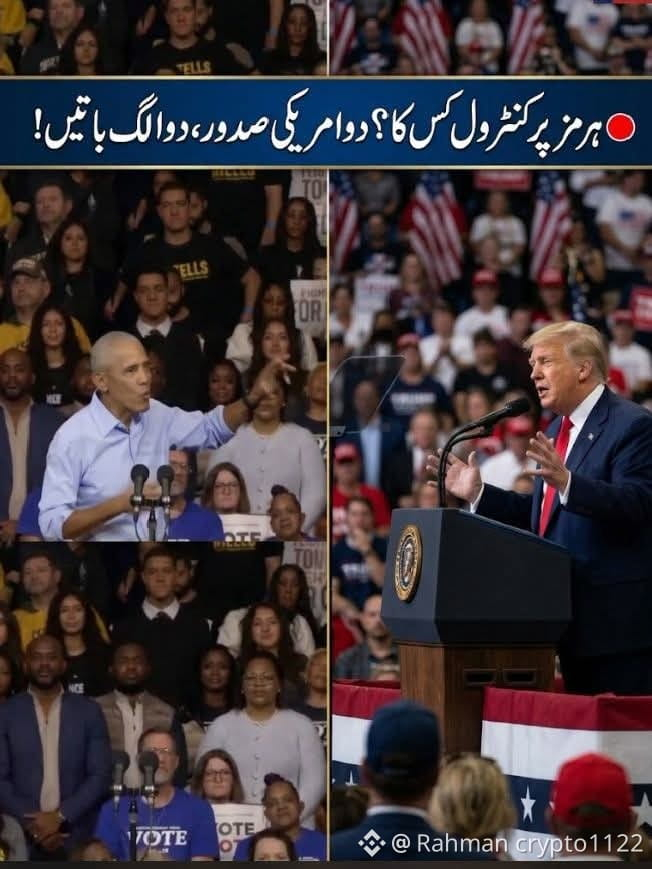
🔴 Who Controls the Strait of Hormuz? Trump vs. Obama!
🇺🇸 President Donald Trump has repeatedly claimed that the United States has full control over the Strait of Hormuz. Former President Barack Obama, however, argued at an Ohio campaign rally that Iran now has “veto power” over the strategic waterway.
🛢️ Obama blamed the Iran war for rising oil and diesel prices and the increasing cost of everyday goods.
⚖️ Two presidents, two competing narratives—but global energy markets and ordinary people are paying the price.
👉 Who really holds the strategic advantage in Hormuz: the US or Iran? Share your thoughts below!
Reference: Al Jazeera, October 25, 2026 — "Obama’s Ohio and Michigan speeches: Key takeaways" (https://www.aljazeera.com/news/2026/10/25/obamas-ohio-michigan-speeches-key-takeaways-on-trump-iran-war-midterms)
#DonaldTrump #BarackObama #Iran #StraitOfHormu #OilPrices
$REZ $ENA $TRX
🔴 Who Controls the Strait of Hormuz? Trump vs. Obama!
🇺🇸 President Donald Trump has repeatedly claimed that the United States has full control over the Strait of Hormuz. Former President Barack Obama, however, argued at an Ohio campaign rally that Iran now has “veto power” over the strategic waterway.
🛢️ Obama blamed the Iran war for rising oil and diesel prices and the increasing cost of everyday goods.
⚖️ Two presidents, two competing narratives—but global energy markets and ordinary people are paying the price.
👉 Who really holds the strategic advantage in Hormuz: the US or Iran? Share your thoughts below!
Reference: Al Jazeera, October 25, 2026 — "Obama’s Ohio and Michigan speeches: Key takeaways" (https://www.aljazeera.com/news/2026/10/25/obamas-ohio-michigan-speeches-key-takeaways-on-trump-iran-war-midterms)
#DonaldTrump #BarackObama #Iran #StraitOfHormu #OilPrices
$REZ $ENA $TRX
🇺🇸 President Donald Trump has repeatedly claimed that the United States has full control over the Strait of Hormuz. Former President Barack Obama, however, argued at an Ohio campaign rally that Iran now has “veto power” over the strategic waterway.
🛢️ Obama blamed the Iran war for rising oil and diesel prices and the increasing cost of everyday goods.
⚖️ Two presidents, two competing narratives—but global energy markets and ordinary people are paying the price.
👉 Who really holds the strategic advantage in Hormuz: the US or Iran? Share your thoughts below!
Reference: Al Jazeera, October 25, 2026 — "Obama’s Ohio and Michigan speeches: Key takeaways" (https://www.aljazeera.com/news/2026/10/25/obamas-ohio-michigan-speeches-key-takeaways-on-trump-iran-war-midterms)
#DonaldTrump #BarackObama #Iran #StraitOfHormu #OilPrices
$REZ $ENA $TRX
633

·
--
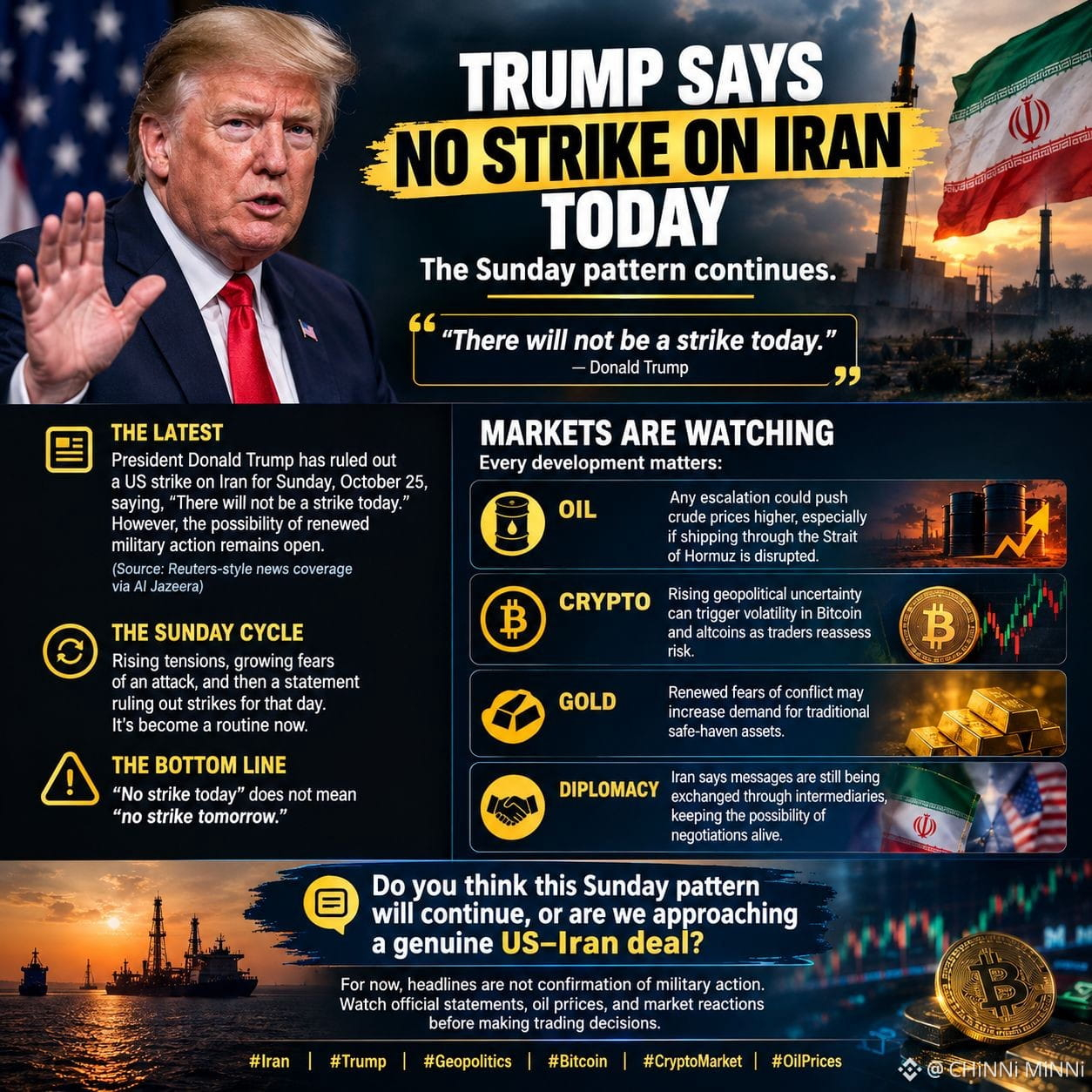
🚨 TRUMP SAYS NO STRIKE ON IRAN TODAY — THE SUNDAY PATTERN CONTINUES
President Donald Trump has ruled out a US strike on Iran for Sunday, October 25, saying, “There will not be a strike today.” However, the possibility of renewed military action remains open. "Source: Reuters-style news coverage via Al Jazeera" (https://www.aljazeera.com/news/liveblog/2026/10/26/iran-war-live-trump-rules-out-strikes-today-israeli-forces-raid-hebron)
What stands out is the recurring Sunday cycle: rising tensions, growing fears of an attack, and then a statement ruling out strikes for that day.
But “no strike today” does not mean “no strike tomorrow.”
Markets are watching every development closely:
📌 Oil: Any escalation could push crude prices higher, especially if shipping through the Strait of Hormuz is disrupted.
📌 Crypto: Rising geopolitical uncertainty can trigger volatility in Bitcoin and altcoins as traders reassess risk.
📌 Gold: Renewed fears of conflict may increase demand for traditional safe-haven assets.
📌 Diplomacy: Iran says messages are still being exchanged through intermediaries, keeping the possibility of negotiations alive.
The key question is whether this repeated pause creates room for a real agreement—or simply delays another escalation.
For now, headlines are not confirmation of military action. Watch official statements, oil prices, and market reactions before making trading decisions.
Do you think this Sunday pattern will continue, or are we approaching a genuine US–Iran deal?
#iran #TRUMP #Geopolitics #bitcoin #OilPrices
🚨 TRUMP SAYS NO STRIKE ON IRAN TODAY — THE SUNDAY PATTERN CONTINUES
President Donald Trump has ruled out a US strike on Iran for Sunday, October 25, saying, “There will not be a strike today.” However, the possibility of renewed military action remains open. "Source: Reuters-style news coverage via Al Jazeera" (https://www.aljazeera.com/news/liveblog/2026/10/26/iran-war-live-trump-rules-out-strikes-today-israeli-forces-raid-hebron)
What stands out is the recurring Sunday cycle: rising tensions, growing fears of an attack, and then a statement ruling out strikes for that day.
But “no strike today” does not mean “no strike tomorrow.”
Markets are watching every development closely:
📌 Oil: Any escalation could push crude prices higher, especially if shipping through the Strait of Hormuz is disrupted.
📌 Crypto: Rising geopolitical uncertainty can trigger volatility in Bitcoin and altcoins as traders reassess risk.
📌 Gold: Renewed fears of conflict may increase demand for traditional safe-haven assets.
📌 Diplomacy: Iran says messages are still being exchanged through intermediaries, keeping the possibility of negotiations alive.
The key question is whether this repeated pause creates room for a real agreement—or simply delays another escalation.
For now, headlines are not confirmation of military action. Watch official statements, oil prices, and market reactions before making trading decisions.
Do you think this Sunday pattern will continue, or are we approaching a genuine US–Iran deal?
#iran #TRUMP #Geopolitics #bitcoin #OilPrices
President Donald Trump has ruled out a US strike on Iran for Sunday, October 25, saying, “There will not be a strike today.” However, the possibility of renewed military action remains open. "Source: Reuters-style news coverage via Al Jazeera" (https://www.aljazeera.com/news/liveblog/2026/10/26/iran-war-live-trump-rules-out-strikes-today-israeli-forces-raid-hebron)
What stands out is the recurring Sunday cycle: rising tensions, growing fears of an attack, and then a statement ruling out strikes for that day.
But “no strike today” does not mean “no strike tomorrow.”
Markets are watching every development closely:
📌 Oil: Any escalation could push crude prices higher, especially if shipping through the Strait of Hormuz is disrupted.
📌 Crypto: Rising geopolitical uncertainty can trigger volatility in Bitcoin and altcoins as traders reassess risk.
📌 Gold: Renewed fears of conflict may increase demand for traditional safe-haven assets.
📌 Diplomacy: Iran says messages are still being exchanged through intermediaries, keeping the possibility of negotiations alive.
The key question is whether this repeated pause creates room for a real agreement—or simply delays another escalation.
For now, headlines are not confirmation of military action. Watch official statements, oil prices, and market reactions before making trading decisions.
Do you think this Sunday pattern will continue, or are we approaching a genuine US–Iran deal?
#iran #TRUMP #Geopolitics #bitcoin #OilPrices
1
65

U.S. military forces in the Middle East have finalized operational preparations for potential large-scale strikes against Iran, positioned to launch within 96 hours of receiving an order from President Donald Trump. According to U.S. officials, the scope of these planned operations extends far beyond routine defensive strikes, targeting critical infrastructure rather than easily replaceable missile launchers.
This shift represents a significant escalation from prior containment strategies, raising the probability of direct conflict rather than limited skirmishes. Observers indicate the key question is no longer whether action will occur, but rather the exact timing of the executive directive.
Escalating military friction immediately elevates risk premiums across global financial markets. Crude oil prices face sharp upward pressure due to potential supply disruptions, while sovereign bond yields and the U.S. dollar are likely to reflect flight-to-safety flows.
For crypto assets, broad geopolitical shockwaves typically trigger initial liquidation cascades as leveraged risk is pulled off the table. A sustained conflict could weigh heavily on $BTC and altcoin liquidity before any secondary safe-haven narrative gains traction.
#Geopolitics #Iran #MacroEconomy
U.S. military forces in the Middle East have finalized operational preparations for potential large-scale strikes against Iran, positioned to launch within 96 hours of receiving an order from President Donald Trump. According to U.S. officials, the scope of these planned operations extends far beyond routine defensive strikes, targeting critical infrastructure rather than easily replaceable missile launchers.
This shift represents a significant escalation from prior containment strategies, raising the probability of direct conflict rather than limited skirmishes. Observers indicate the key question is no longer whether action will occur, but rather the exact timing of the executive directive.
Escalating military friction immediately elevates risk premiums across global financial markets. Crude oil prices face sharp upward pressure due to potential supply disruptions, while sovereign bond yields and the U.S. dollar are likely to reflect flight-to-safety flows.
For crypto assets, broad geopolitical shockwaves typically trigger initial liquidation cascades as leveraged risk is pulled off the table. A sustained conflict could weigh heavily on $BTC and altcoin liquidity before any secondary safe-haven narrative gains traction.
#Geopolitics #Iran #MacroEconomy
This shift represents a significant escalation from prior containment strategies, raising the probability of direct conflict rather than limited skirmishes. Observers indicate the key question is no longer whether action will occur, but rather the exact timing of the executive directive.
Escalating military friction immediately elevates risk premiums across global financial markets. Crude oil prices face sharp upward pressure due to potential supply disruptions, while sovereign bond yields and the U.S. dollar are likely to reflect flight-to-safety flows.
For crypto assets, broad geopolitical shockwaves typically trigger initial liquidation cascades as leveraged risk is pulled off the table. A sustained conflict could weigh heavily on $BTC and altcoin liquidity before any secondary safe-haven narrative gains traction.
#Geopolitics #Iran #MacroEconomy
301


·
--
Bullish
$TRUMP
{spot}(TRUMPUSDT)
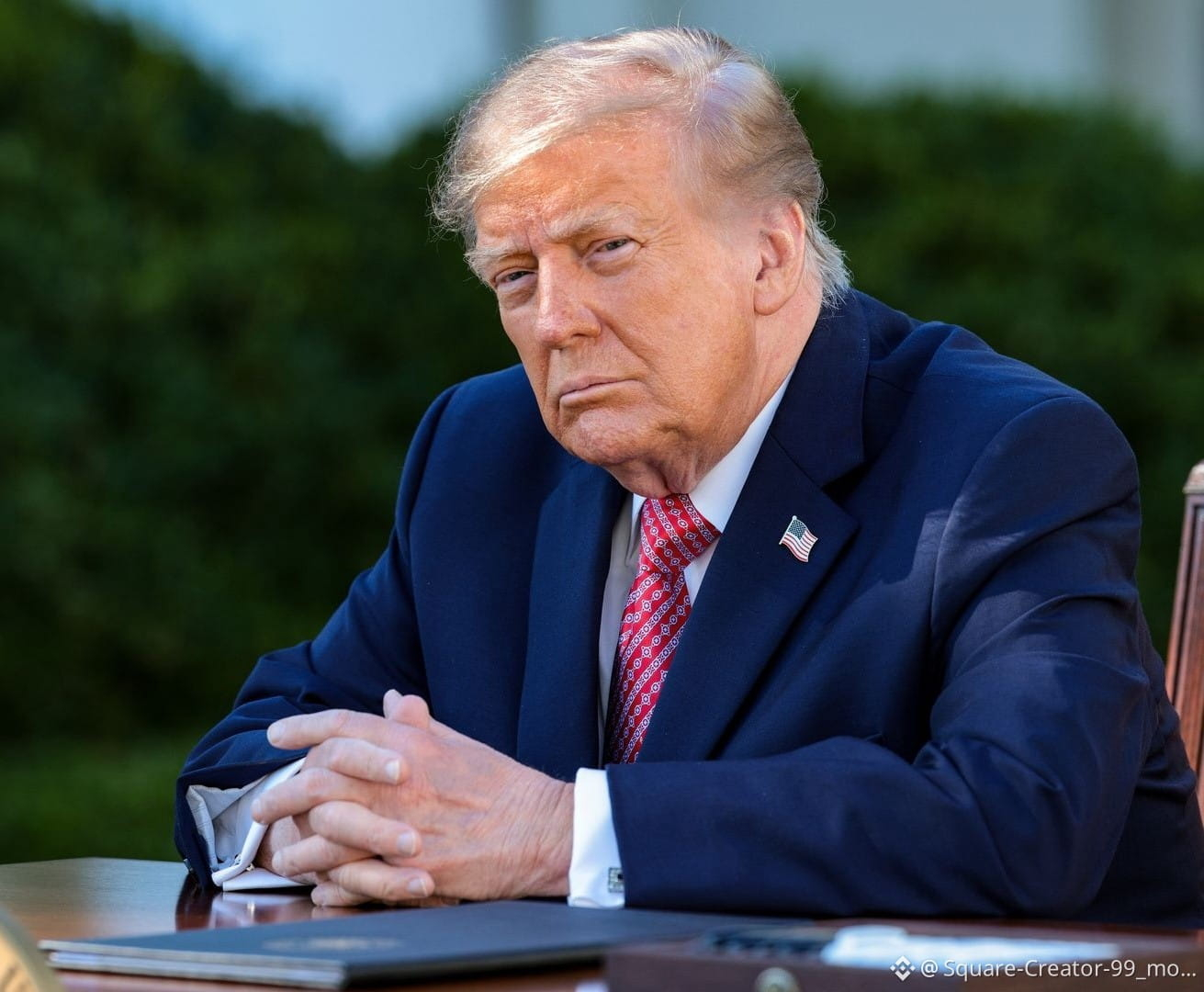
President Trump has announced that the United States is considering launching military strikes against Iran in the early hours of tomorrow—a move that raises profound questions regarding both timing and motives
With the US legislative elections only ten days away, any military decision is fraught with immense political and economic risks
Such an escalation might be perceived as an attempt to project strength and reinforce the image of resolute leadership before voters, particularly concerning national security issues
$ETH
{spot}(ETHUSDT)
However, history teaches us that sudden conflicts on the eve of elections frequently backfire on financial markets and cryptocurrencies, heightening a sense of uncertainty among investors
Strategically speaking, the timing appears far from ideal; any military operation could trigger uncalculated Iranian reprisals and complicate the entire regional landscape
Markets, which are eagerly anticipating any sign of de-escalation, could experience severe volatility
Therefore, the burning question remains: is this threat a clever political manoeuvre, or a gamble that could cost dearly just a few days before the ballot? The coming days will reveal the answer
$BTC
{spot}(BTCUSDT)
#iran #TRUMP #Market_Update
$TRUMP
President Trump has announced that the United States is considering launching military strikes against Iran in the early hours of tomorrow—a move that raises profound questions regarding both timing and motives
With the US legislative elections only ten days away, any military decision is fraught with immense political and economic risks
Such an escalation might be perceived as an attempt to project strength and reinforce the image of resolute leadership before voters, particularly concerning national security issues
$ETH
However, history teaches us that sudden conflicts on the eve of elections frequently backfire on financial markets and cryptocurrencies, heightening a sense of uncertainty among investors
Strategically speaking, the timing appears far from ideal; any military operation could trigger uncalculated Iranian reprisals and complicate the entire regional landscape
Markets, which are eagerly anticipating any sign of de-escalation, could experience severe volatility
Therefore, the burning question remains: is this threat a clever political manoeuvre, or a gamble that could cost dearly just a few days before the ballot? The coming days will reveal the answer
$BTC
#iran #TRUMP #Market_Update
President Trump has announced that the United States is considering launching military strikes against Iran in the early hours of tomorrow—a move that raises profound questions regarding both timing and motives
With the US legislative elections only ten days away, any military decision is fraught with immense political and economic risks
Such an escalation might be perceived as an attempt to project strength and reinforce the image of resolute leadership before voters, particularly concerning national security issues
$ETH
However, history teaches us that sudden conflicts on the eve of elections frequently backfire on financial markets and cryptocurrencies, heightening a sense of uncertainty among investors
Strategically speaking, the timing appears far from ideal; any military operation could trigger uncalculated Iranian reprisals and complicate the entire regional landscape
Markets, which are eagerly anticipating any sign of de-escalation, could experience severe volatility
Therefore, the burning question remains: is this threat a clever political manoeuvre, or a gamble that could cost dearly just a few days before the ballot? The coming days will reveal the answer
$BTC
#iran #TRUMP #Market_Update
1
2
1.9k

·
--
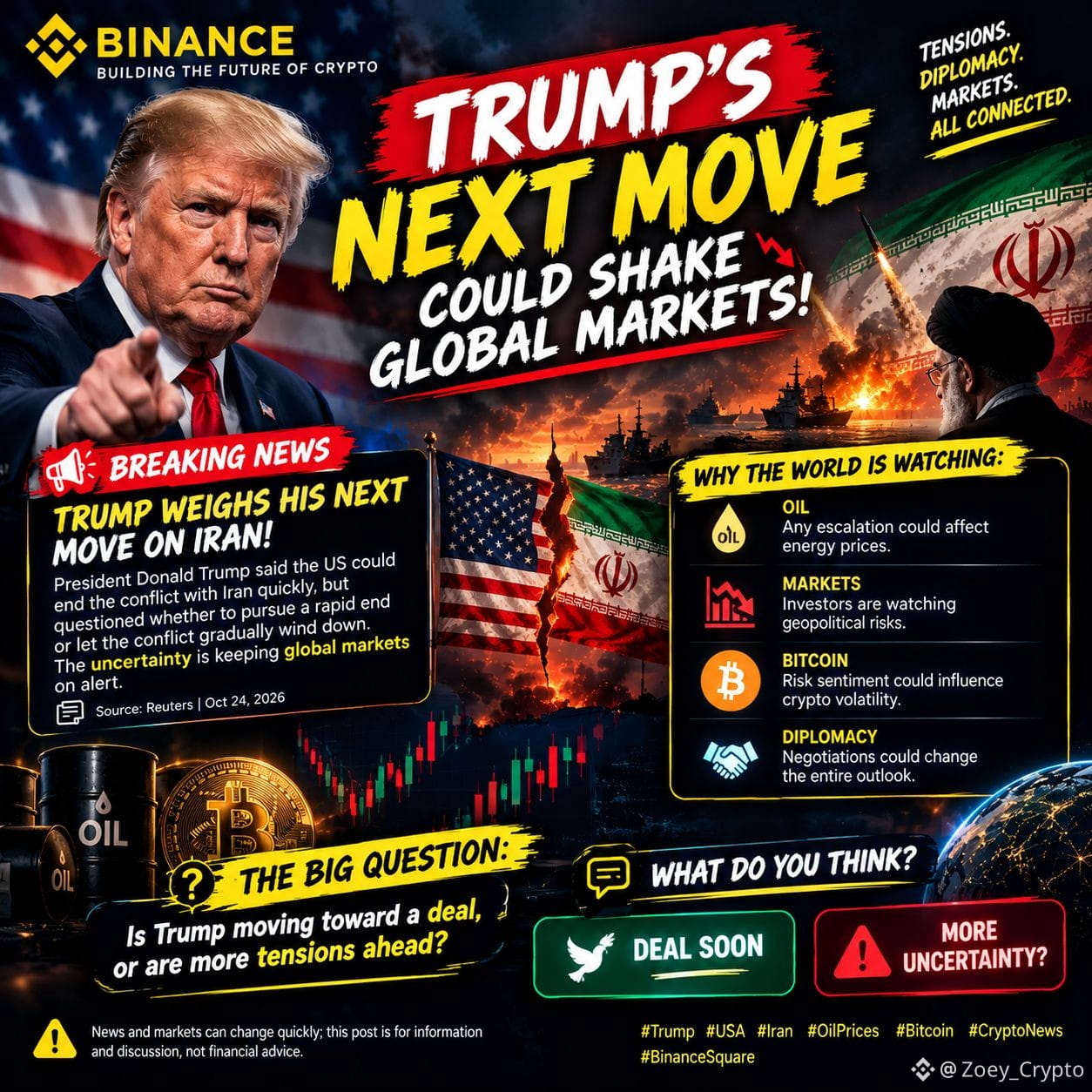
🚨🇺🇸 TRUMP’S NEXT MOVE COULD SHAKE GLOBAL MARKETS! 🌍🔥
💥 BREAKING: TRUMP WEIGHS HIS NEXT MOVE ON IRAN!
President Donald Trump said the US could end the conflict with Iran quickly, but questioned whether to pursue a rapid end or let the conflict gradually wind down. The uncertainty is keeping global markets on alert. 👀 <Cite refs={["turn959994search0","turn959994news5"]}/>
⚡ WHY THE WORLD IS WATCHING: 🛢️ OIL: Any escalation could affect energy prices. 📉 MARKETS: Investors are watching geopolitical risks. ₿ BITCOIN: Risk sentiment could influence crypto volatility. 🤝 DIPLOMACY: Negotiations could change the entire outlook.
🔥 THE BIG QUESTION: Is Trump moving toward a deal, or are more tensions ahead?
💬 What do you think? 👇 🕊️ DEAL SOON or ⚠️ MORE UNCERTAINTY?
#Trump #USA #Iran #BreakingNews #OilPrices #Bitcoin #CryptoNews
⚠️ News and markets can change quickly; this is for information and discussion, not financial advice.
$ETH $BTC
🚨🇺🇸 TRUMP’S NEXT MOVE COULD SHAKE GLOBAL MARKETS! 🌍🔥
💥 BREAKING: TRUMP WEIGHS HIS NEXT MOVE ON IRAN!
President Donald Trump said the US could end the conflict with Iran quickly, but questioned whether to pursue a rapid end or let the conflict gradually wind down. The uncertainty is keeping global markets on alert. 👀 <Cite refs={["turn959994search0","turn959994news5"]}/>
⚡ WHY THE WORLD IS WATCHING: 🛢️ OIL: Any escalation could affect energy prices. 📉 MARKETS: Investors are watching geopolitical risks. ₿ BITCOIN: Risk sentiment could influence crypto volatility. 🤝 DIPLOMACY: Negotiations could change the entire outlook.
🔥 THE BIG QUESTION: Is Trump moving toward a deal, or are more tensions ahead?
💬 What do you think? 👇 🕊️ DEAL SOON or ⚠️ MORE UNCERTAINTY?
#Trump #USA #Iran #BreakingNews #OilPrices #Bitcoin #CryptoNews
⚠️ News and markets can change quickly; this is for information and discussion, not financial advice.
$ETH $BTC
💥 BREAKING: TRUMP WEIGHS HIS NEXT MOVE ON IRAN!
President Donald Trump said the US could end the conflict with Iran quickly, but questioned whether to pursue a rapid end or let the conflict gradually wind down. The uncertainty is keeping global markets on alert. 👀 <Cite refs={["turn959994search0","turn959994news5"]}/>
⚡ WHY THE WORLD IS WATCHING: 🛢️ OIL: Any escalation could affect energy prices. 📉 MARKETS: Investors are watching geopolitical risks. ₿ BITCOIN: Risk sentiment could influence crypto volatility. 🤝 DIPLOMACY: Negotiations could change the entire outlook.
🔥 THE BIG QUESTION: Is Trump moving toward a deal, or are more tensions ahead?
💬 What do you think? 👇 🕊️ DEAL SOON or ⚠️ MORE UNCERTAINTY?
#Trump #USA #Iran #BreakingNews #OilPrices #Bitcoin #CryptoNews
⚠️ News and markets can change quickly; this is for information and discussion, not financial advice.
$ETH $BTC
86
U.S. President Donald Trump has stated that he may launch a military strike against Iran. This direct warning signals a sharp escalation in Middle East geopolitical tensions and places global financial markets on high alert.
This development is critical because any direct military confrontation immediately threatens key energy transit corridors. A disruption in regional shipping routes could trigger severe supply shocks and revive global inflationary pressures that central banks are fighting to contain.
Across traditional finance, markets are bracing for swift risk-off sentiment. Crude oil prices face sharp upward pressure, while safe-haven assets like gold and the U.S. dollar are likely to see strong capital inflows at the expense of equities.
For the crypto market, initial risk aversion could drive sharp short-term volatility and leverage flushes. However, sustained geopolitical instability may eventually reinforce the narrative for $BTC as an alternative macro hedge.
#Geopolitics #Iran #MacroEconomy
U.S. President Donald Trump has stated that he may launch a military strike against Iran. This direct warning signals a sharp escalation in Middle East geopolitical tensions and places global financial markets on high alert.
This development is critical because any direct military confrontation immediately threatens key energy transit corridors. A disruption in regional shipping routes could trigger severe supply shocks and revive global inflationary pressures that central banks are fighting to contain.
Across traditional finance, markets are bracing for swift risk-off sentiment. Crude oil prices face sharp upward pressure, while safe-haven assets like gold and the U.S. dollar are likely to see strong capital inflows at the expense of equities.
For the crypto market, initial risk aversion could drive sharp short-term volatility and leverage flushes. However, sustained geopolitical instability may eventually reinforce the narrative for $BTC as an alternative macro hedge.
#Geopolitics #Iran #MacroEconomy
This development is critical because any direct military confrontation immediately threatens key energy transit corridors. A disruption in regional shipping routes could trigger severe supply shocks and revive global inflationary pressures that central banks are fighting to contain.
Across traditional finance, markets are bracing for swift risk-off sentiment. Crude oil prices face sharp upward pressure, while safe-haven assets like gold and the U.S. dollar are likely to see strong capital inflows at the expense of equities.
For the crypto market, initial risk aversion could drive sharp short-term volatility and leverage flushes. However, sustained geopolitical instability may eventually reinforce the narrative for $BTC as an alternative macro hedge.
#Geopolitics #Iran #MacroEconomy
473
·
--
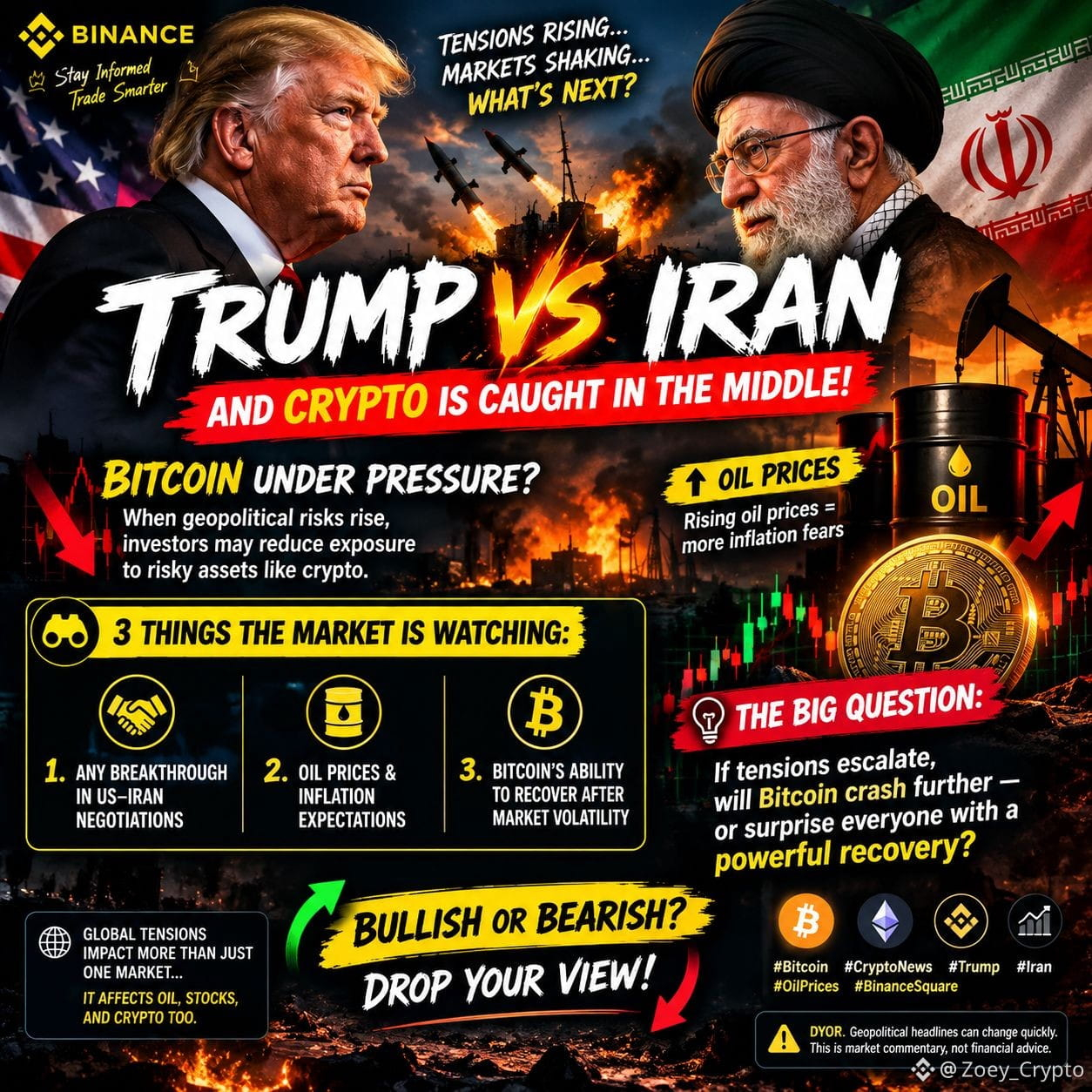
🚨🔥 TRUMP vs IRAN — AND CRYPTO IS CAUGHT IN THE MIDDLE! 🇺🇸🇮🇷
⚠️ BITCOIN, OIL & GLOBAL MARKETS: THE NEXT BIG MOVE?
🌍 Tensions between the US and Iran are putting global markets on edge. Rising oil prices are adding inflation fears, and crypto traders are watching every headline. 🛢️📉
🟠 BITCOIN UNDER PRESSURE?
When geopolitical risks rise, investors may reduce exposure to risky assets like crypto.
💥 3 THINGS THE MARKET IS WATCHING:
🔹 Any breakthrough in US–Iran negotiations
🔹 Oil prices and inflation expectations
🔹 Bitcoin’s ability to recover after market volatility
👀 THE BIG QUESTION:
If tensions escalate, will Bitcoin crash further — or surprise everyone with a powerful recovery? 🚀
👇 BULLISH OR BEARISH? DROP YOUR VIEW!
#Bitcoin #Trump #Iran #CryptoNews #BinanceSquare #BTC #OilPrices
⚠️ DYOR. Geopolitical headlines can change quickly. This is market commentary, not financial advice.
$ETH $BTC $SOL
🚨🔥 TRUMP vs IRAN — AND CRYPTO IS CAUGHT IN THE MIDDLE! 🇺🇸🇮🇷
⚠️ BITCOIN, OIL & GLOBAL MARKETS: THE NEXT BIG MOVE?
🌍 Tensions between the US and Iran are putting global markets on edge. Rising oil prices are adding inflation fears, and crypto traders are watching every headline. 🛢️📉
🟠 BITCOIN UNDER PRESSURE?
When geopolitical risks rise, investors may reduce exposure to risky assets like crypto.
💥 3 THINGS THE MARKET IS WATCHING:
🔹 Any breakthrough in US–Iran negotiations
🔹 Oil prices and inflation expectations
🔹 Bitcoin’s ability to recover after market volatility
👀 THE BIG QUESTION:
If tensions escalate, will Bitcoin crash further — or surprise everyone with a powerful recovery? 🚀
👇 BULLISH OR BEARISH? DROP YOUR VIEW!
#Bitcoin #Trump #Iran #CryptoNews #BinanceSquare #BTC #OilPrices
⚠️ DYOR. Geopolitical headlines can change quickly. This is market commentary, not financial advice.
$ETH $BTC $SOL
⚠️ BITCOIN, OIL & GLOBAL MARKETS: THE NEXT BIG MOVE?
🌍 Tensions between the US and Iran are putting global markets on edge. Rising oil prices are adding inflation fears, and crypto traders are watching every headline. 🛢️📉
🟠 BITCOIN UNDER PRESSURE?
When geopolitical risks rise, investors may reduce exposure to risky assets like crypto.
💥 3 THINGS THE MARKET IS WATCHING:
🔹 Any breakthrough in US–Iran negotiations
🔹 Oil prices and inflation expectations
🔹 Bitcoin’s ability to recover after market volatility
👀 THE BIG QUESTION:
If tensions escalate, will Bitcoin crash further — or surprise everyone with a powerful recovery? 🚀
👇 BULLISH OR BEARISH? DROP YOUR VIEW!
#Bitcoin #Trump #Iran #CryptoNews #BinanceSquare #BTC #OilPrices
⚠️ DYOR. Geopolitical headlines can change quickly. This is market commentary, not financial advice.
$ETH $BTC $SOL
1
165

·
--
Verified
A new round of strikes has yet to be confirmed, but Middle Eastern stock markets have already fallen.
On Sunday, Egypt’s stock market plunged by around 5% at one point during trading, while Saudi stocks also fell sharply.
The conflict between Saudi Arabia and the Houthis is escalating. Saudi Arabia says it intercepted drones and missiles, while Trump has again not ruled out new action against Iran. Meanwhile, Iran’s military claims it shot down a US drone, and Iran’s foreign minister warned that the Strait of Hormuz will never be the same as it was.
These reports don’t necessarily mean the war will expand imminently, but markets have already started pricing in the risk of escalation.
What markets fear most is not a strike that has already happened, but that no one can be sure what will happen next.
On Monday, watch oil prices first.
If oil prices surge again, the impact won’t be limited to energy stocks—it will also affect inflation, interest-rate expectations, and the valuations of global risk assets.
#Oil #iran #MiddleEast
A new round of strikes has yet to be confirmed, but Middle Eastern stock markets have already fallen.
On Sunday, Egypt’s stock market plunged by around 5% at one point during trading, while Saudi stocks also fell sharply.
The conflict between Saudi Arabia and the Houthis is escalating. Saudi Arabia says it intercepted drones and missiles, while Trump has again not ruled out new action against Iran. Meanwhile, Iran’s military claims it shot down a US drone, and Iran’s foreign minister warned that the Strait of Hormuz will never be the same as it was.
These reports don’t necessarily mean the war will expand imminently, but markets have already started pricing in the risk of escalation.
What markets fear most is not a strike that has already happened, but that no one can be sure what will happen next.
On Monday, watch oil prices first.
If oil prices surge again, the impact won’t be limited to energy stocks—it will also affect inflation, interest-rate expectations, and the valuations of global risk assets.
#Oil #iran #MiddleEast
On Sunday, Egypt’s stock market plunged by around 5% at one point during trading, while Saudi stocks also fell sharply.
The conflict between Saudi Arabia and the Houthis is escalating. Saudi Arabia says it intercepted drones and missiles, while Trump has again not ruled out new action against Iran. Meanwhile, Iran’s military claims it shot down a US drone, and Iran’s foreign minister warned that the Strait of Hormuz will never be the same as it was.
These reports don’t necessarily mean the war will expand imminently, but markets have already started pricing in the risk of escalation.
What markets fear most is not a strike that has already happened, but that no one can be sure what will happen next.
On Monday, watch oil prices first.
If oil prices surge again, the impact won’t be limited to energy stocks—it will also affect inflation, interest-rate expectations, and the valuations of global risk assets.
#Oil #iran #MiddleEast
1k

·
--
Verified
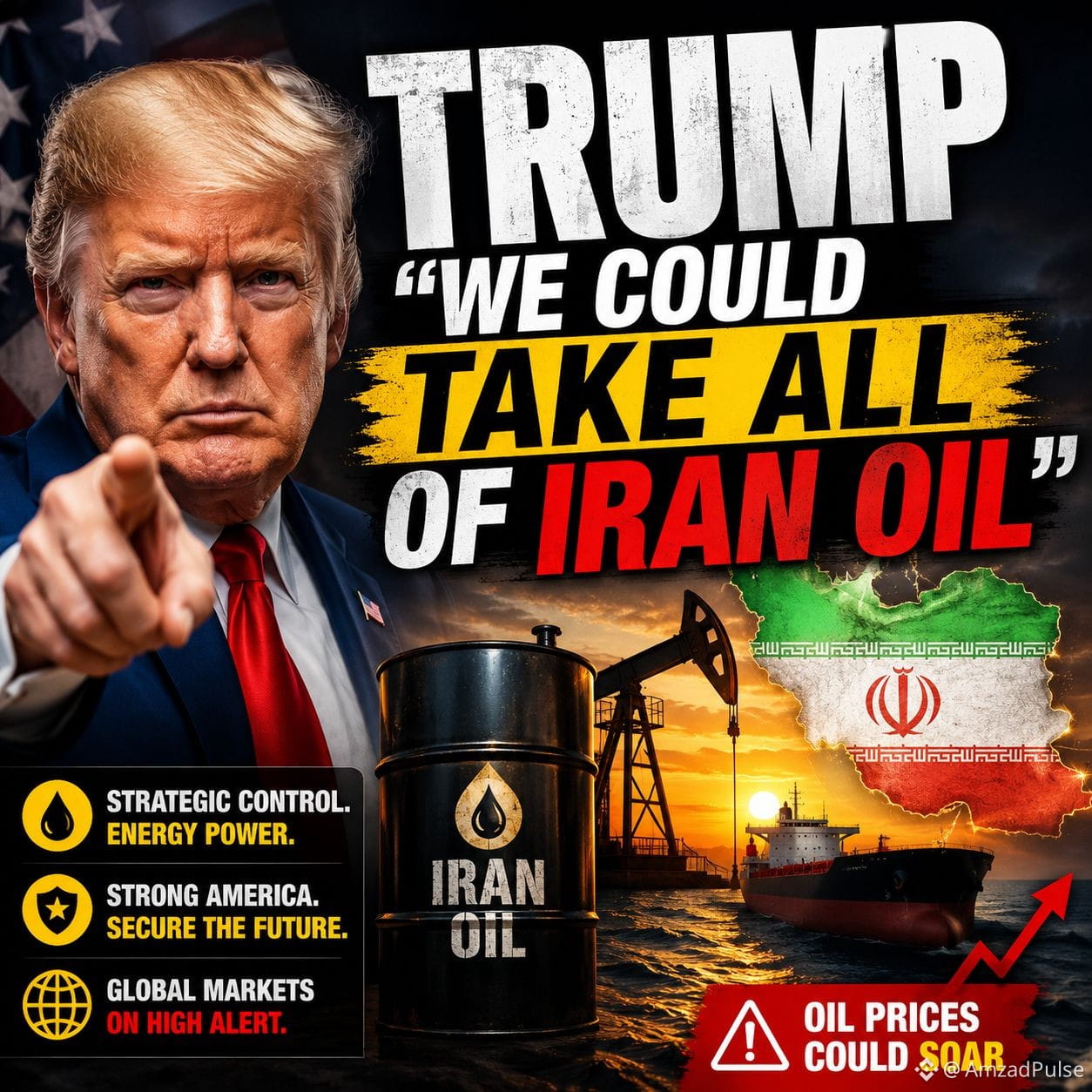
🚨 TRUMP WE COULD TAKE ALL OF IRAN OIL
President Trump said the U.S. could take all of the oil” from Iran and claimed Washington has significant control over the Strait of Hormuz.
The remarks come as tensions around Iran and the Strait of Hormuz continue to put global oil markets on edge.
Potential market focus Oil volatility inflation expectations Gold USD and risk assets could all react to further escalation.
#Iran #Trump #Oil #CrudeOil #BinanceSquare
🚨 TRUMP WE COULD TAKE ALL OF IRAN OIL
President Trump said the U.S. could take all of the oil” from Iran and claimed Washington has significant control over the Strait of Hormuz.
The remarks come as tensions around Iran and the Strait of Hormuz continue to put global oil markets on edge.
Potential market focus Oil volatility inflation expectations Gold USD and risk assets could all react to further escalation.
#Iran #Trump #Oil #CrudeOil #BinanceSquare
President Trump said the U.S. could take all of the oil” from Iran and claimed Washington has significant control over the Strait of Hormuz.
The remarks come as tensions around Iran and the Strait of Hormuz continue to put global oil markets on edge.
Potential market focus Oil volatility inflation expectations Gold USD and risk assets could all react to further escalation.
#Iran #Trump #Oil #CrudeOil #BinanceSquare
User-69ec038f:
没有人会相信他言论了满嘴跑火车
4
1.2k

According to information recently disclosed by two U.S. officials, U.S. forces stationed in the Middle East have completed preparations for a large-scale military strike and could launch a full-scale military operation against Iran within 96 hours if President Donald Trump gives the order. This deployment is no longer limited to the “mowing the lawn” style of strikes seen in the past, targeting facilities such as radar systems and missile launchers that can be quickly restored. Instead, it is shifting toward the destruction of deeper strategic targets.
From a broad geopolitical perspective, the substantial escalation in U.S.-Iran tensions has directly reshaped expectations for global energy prices and safe-haven premiums. Markets had already priced in some localized friction, but with the U.S. military’s potential plan for an exceptionally large-scale strike before the end of the year, the risk premium for supply-chain disruptions is being rapidly repriced by investors.
In terms of technicals and asset performance, crude oil and safe-haven gold have shown strong buying momentum at key support levels, while the U.S. Dollar Index has also remained range-bound at elevated levels, supported by safe-haven demand. For risk assets, short-term panic often coincides with a sharp spike in the VIX volatility index, prompting leveraged investors to rapidly unwind positions and complete a reshuffling of holdings.
In crypto markets, $BTC and major assets have held firm above key technical support levels despite the initial sentiment-driven selling pressure following the geopolitical news. Historical data shows that short-term pullbacks triggered by geopolitical shocks often create attractive windows for liquidity to return. As the market gradually absorbs the panic, a recovery in risk appetite is likely to drive capital back into high-beta assets.
#Geopolitics #Iran #MacroEconomics
According to information recently disclosed by two U.S. officials, U.S. forces stationed in the Middle East have completed preparations for a large-scale military strike and could launch a full-scale military operation against Iran within 96 hours if President Donald Trump gives the order. This deployment is no longer limited to the “mowing the lawn” style of strikes seen in the past, targeting facilities such as radar systems and missile launchers that can be quickly restored. Instead, it is shifting toward the destruction of deeper strategic targets.
From a broad geopolitical perspective, the substantial escalation in U.S.-Iran tensions has directly reshaped expectations for global energy prices and safe-haven premiums. Markets had already priced in some localized friction, but with the U.S. military’s potential plan for an exceptionally large-scale strike before the end of the year, the risk premium for supply-chain disruptions is being rapidly repriced by investors.
In terms of technicals and asset performance, crude oil and safe-haven gold have shown strong buying momentum at key support levels, while the U.S. Dollar Index has also remained range-bound at elevated levels, supported by safe-haven demand. For risk assets, short-term panic often coincides with a sharp spike in the VIX volatility index, prompting leveraged investors to rapidly unwind positions and complete a reshuffling of holdings.
In crypto markets, $BTC and major assets have held firm above key technical support levels despite the initial sentiment-driven selling pressure following the geopolitical news. Historical data shows that short-term pullbacks triggered by geopolitical shocks often create attractive windows for liquidity to return. As the market gradually absorbs the panic, a recovery in risk appetite is likely to drive capital back into high-beta assets.
#Geopolitics #Iran #MacroEconomics
From a broad geopolitical perspective, the substantial escalation in U.S.-Iran tensions has directly reshaped expectations for global energy prices and safe-haven premiums. Markets had already priced in some localized friction, but with the U.S. military’s potential plan for an exceptionally large-scale strike before the end of the year, the risk premium for supply-chain disruptions is being rapidly repriced by investors.
In terms of technicals and asset performance, crude oil and safe-haven gold have shown strong buying momentum at key support levels, while the U.S. Dollar Index has also remained range-bound at elevated levels, supported by safe-haven demand. For risk assets, short-term panic often coincides with a sharp spike in the VIX volatility index, prompting leveraged investors to rapidly unwind positions and complete a reshuffling of holdings.
In crypto markets, $BTC and major assets have held firm above key technical support levels despite the initial sentiment-driven selling pressure following the geopolitical news. Historical data shows that short-term pullbacks triggered by geopolitical shocks often create attractive windows for liquidity to return. As the market gradually absorbs the panic, a recovery in risk appetite is likely to drive capital back into high-beta assets.
#Geopolitics #Iran #MacroEconomics
56

·
--
BREAKING: 🇺🇸🇮🇷 President Trump has canceled the planned attacks on Iran for today.
Good for the markets.
$TRUMP
{spot}(TRUMPUSDT)
#TRUMP #iran
@Crypto_Eagles ✅
BREAKING: 🇺🇸🇮🇷 President Trump has canceled the planned attacks on Iran for today.
Good for the markets.
$TRUMP
#TRUMP #iran
@Crypto Eagles ✅
Good for the markets.
$TRUMP
#TRUMP #iran
@Crypto Eagles ✅
1
22

·
--
$MSFTB
{spot}(MSFTBUSDT)
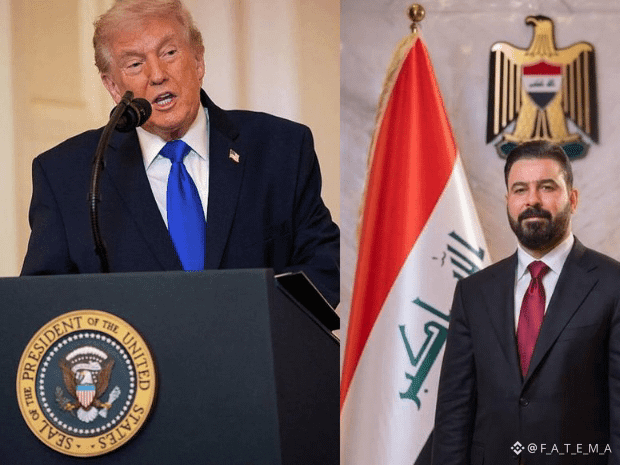
🇺🇸🇮🇷🇮🇶 The U.S. has reportedly warned Iraq it could strike Iran within days.
Washington informed Iraqi Prime Minister Ali Faleh al-Zaidi, who then warned armed groups to stay out of any fighting or face legal action.
But powerful Iran-backed groups like Kata'ib Hezbollah and Nujaba are still refusing to give up their weapons, despite earlier agreements.
And Baghdad isn't taking chances. It's closed a border crossing with Iran over security concerns and reportedly ordered the Houthi office in Iraq shut down, with its members deported.
The government wants to keep Iraq out of another war, but getting these armed groups to cooperate is another story.
Source: Channel8
#iran #USGovernment #worldnews
$MSFTB
🇺🇸🇮🇷🇮🇶 The U.S. has reportedly warned Iraq it could strike Iran within days.
Washington informed Iraqi Prime Minister Ali Faleh al-Zaidi, who then warned armed groups to stay out of any fighting or face legal action.
But powerful Iran-backed groups like Kata'ib Hezbollah and Nujaba are still refusing to give up their weapons, despite earlier agreements.
And Baghdad isn't taking chances. It's closed a border crossing with Iran over security concerns and reportedly ordered the Houthi office in Iraq shut down, with its members deported.
The government wants to keep Iraq out of another war, but getting these armed groups to cooperate is another story.
Source: Channel8
#iran #USGovernment #worldnews
🇺🇸🇮🇷🇮🇶 The U.S. has reportedly warned Iraq it could strike Iran within days.
Washington informed Iraqi Prime Minister Ali Faleh al-Zaidi, who then warned armed groups to stay out of any fighting or face legal action.
But powerful Iran-backed groups like Kata'ib Hezbollah and Nujaba are still refusing to give up their weapons, despite earlier agreements.
And Baghdad isn't taking chances. It's closed a border crossing with Iran over security concerns and reportedly ordered the Houthi office in Iraq shut down, with its members deported.
The government wants to keep Iraq out of another war, but getting these armed groups to cooperate is another story.
Source: Channel8
#iran #USGovernment #worldnews
209

·
--
Iran Nuclear Test Rumors: What Is Confirmed and What Is Not
A claim is spreading online that Iran will soon carry out its first nuclear test. As of today, no credible source has confirmed any official announcement. What exists is a mix of warnings and accusations. One US analyst has warned of a possible test in October, but also stressed there is no confirmed evidence Iran holds a nuclear weapon. Israel has alleged Tehran is moving toward a bomb, while Iran's president recently repeated that nuclear weapons are forbidden.
For markets, headlines like this can move sentiment fast. Oil, gold and risk assets often react to geopolitical fear before facts are verified. Traders should watch official statements, not rumors, and manage risk during volatile news cycles.
$BTC $BNB $PAXG
#Iran #CryptoMarkets #MarketAnalysis
Iran Nuclear Test Rumors: What Is Confirmed and What Is Not
A claim is spreading online that Iran will soon carry out its first nuclear test. As of today, no credible source has confirmed any official announcement. What exists is a mix of warnings and accusations. One US analyst has warned of a possible test in October, but also stressed there is no confirmed evidence Iran holds a nuclear weapon. Israel has alleged Tehran is moving toward a bomb, while Iran's president recently repeated that nuclear weapons are forbidden.
For markets, headlines like this can move sentiment fast. Oil, gold and risk assets often react to geopolitical fear before facts are verified. Traders should watch official statements, not rumors, and manage risk during volatile news cycles.
$BTC $BNB $PAXG
#Iran #CryptoMarkets #MarketAnalysis
A claim is spreading online that Iran will soon carry out its first nuclear test. As of today, no credible source has confirmed any official announcement. What exists is a mix of warnings and accusations. One US analyst has warned of a possible test in October, but also stressed there is no confirmed evidence Iran holds a nuclear weapon. Israel has alleged Tehran is moving toward a bomb, while Iran's president recently repeated that nuclear weapons are forbidden.
For markets, headlines like this can move sentiment fast. Oil, gold and risk assets often react to geopolitical fear before facts are verified. Traders should watch official statements, not rumors, and manage risk during volatile news cycles.
$BTC $BNB $PAXG
#Iran #CryptoMarkets #MarketAnalysis
132

·
--
U.S. President Donald Trump recently made public remarks saying he might launch a military strike against Iran. The comments quickly sparked widespread global concern and debate over the possibility of further escalation in the Middle East.
The remarks are significant because if tensions between the U.S. and Iran were to develop into direct military conflict, they would inevitably disrupt the current regional balance. Markets had broadly expected the situation to remain focused on deterrence and diplomatic pressure, so this sudden hard-line signal has sharply increased uncertainty.
In traditional financial markets, geopolitical risks of this kind often directly drive up volatility in crude oil and other safe-haven assets, while fueling risk aversion and affecting the U.S. dollar and Treasury yields. When faced with sudden military risks, global investors typically adjust their positions quickly to prepare for potential shocks.
For crypto markets, overall liquidity and risk appetite may be weighed down by safe-haven sentiment in the short term, though some investors may view $BTC as an alternative hedge against extreme events. The outlook will depend on whether the situation deteriorates further or returns to a phase of strategic maneuvering.
#Geopolitics #Iran #MacroEconomy
U.S. President Donald Trump recently made public remarks saying he might launch a military strike against Iran. The comments quickly sparked widespread global concern and debate over the possibility of further escalation in the Middle East.
The remarks are significant because if tensions between the U.S. and Iran were to develop into direct military conflict, they would inevitably disrupt the current regional balance. Markets had broadly expected the situation to remain focused on deterrence and diplomatic pressure, so this sudden hard-line signal has sharply increased uncertainty.
In traditional financial markets, geopolitical risks of this kind often directly drive up volatility in crude oil and other safe-haven assets, while fueling risk aversion and affecting the U.S. dollar and Treasury yields. When faced with sudden military risks, global investors typically adjust their positions quickly to prepare for potential shocks.
For crypto markets, overall liquidity and risk appetite may be weighed down by safe-haven sentiment in the short term, though some investors may view $BTC as an alternative hedge against extreme events. The outlook will depend on whether the situation deteriorates further or returns to a phase of strategic maneuvering.
#Geopolitics #Iran #MacroEconomy
The remarks are significant because if tensions between the U.S. and Iran were to develop into direct military conflict, they would inevitably disrupt the current regional balance. Markets had broadly expected the situation to remain focused on deterrence and diplomatic pressure, so this sudden hard-line signal has sharply increased uncertainty.
In traditional financial markets, geopolitical risks of this kind often directly drive up volatility in crude oil and other safe-haven assets, while fueling risk aversion and affecting the U.S. dollar and Treasury yields. When faced with sudden military risks, global investors typically adjust their positions quickly to prepare for potential shocks.
For crypto markets, overall liquidity and risk appetite may be weighed down by safe-haven sentiment in the short term, though some investors may view $BTC as an alternative hedge against extreme events. The outlook will depend on whether the situation deteriorates further or returns to a phase of strategic maneuvering.
#Geopolitics #Iran #MacroEconomy
645

·
--
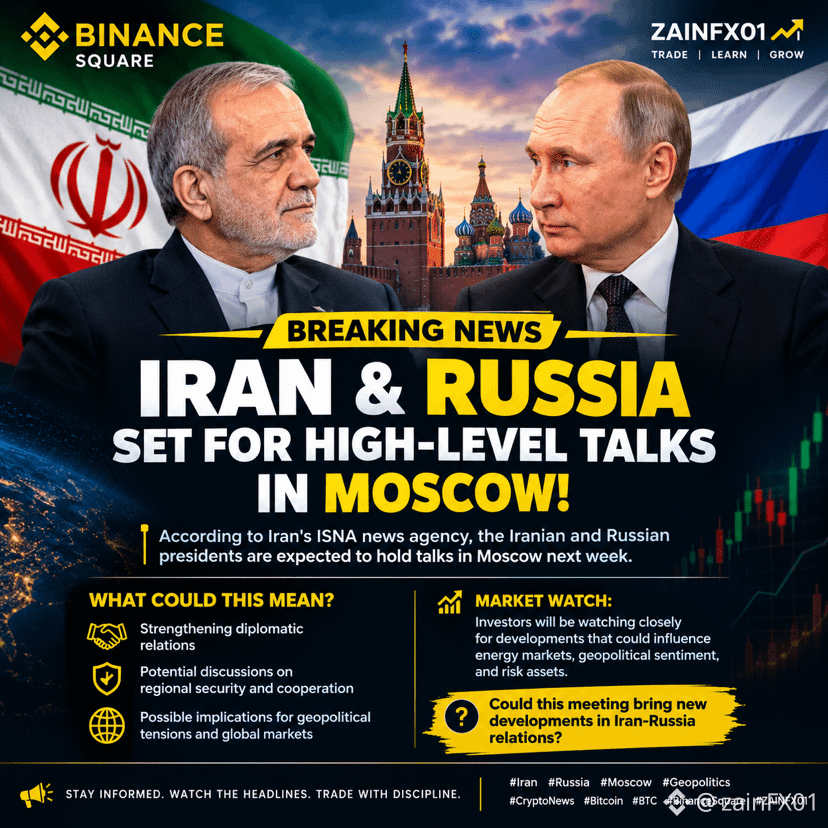
🚨 IRAN 🇮🇷 & RUSSIA 🇷🇺 SET FOR HIGH-LEVEL TALKS IN MOSCOW!
$BTC
According to Iran’s ISNA news agency, the Iranian and Russian presidents are expected to hold talks in Moscow next week.
🌍 What Could This Mean?
🇮🇷🇷🇺 Strengthening diplomatic relations
🤝 Potential discussions on regional security and cooperation
⚡ Possible implications for geopolitical tensions and global markets
MARKET WATCH: Investors will be watching closely for developments that could influence energy markets, geopolitical sentiment, and risk assets.
The big question: Could this meeting bring new developments in Iran-Russia relations?
📌 Stay informed. Watch the headlines. Trade with discipline.
#Iran #Russia #Moscow #Geopolitics #BTC
🚨 IRAN 🇮🇷 & RUSSIA 🇷🇺 SET FOR HIGH-LEVEL TALKS IN MOSCOW!
$BTC
According to Iran’s ISNA news agency, the Iranian and Russian presidents are expected to hold talks in Moscow next week.
🌍 What Could This Mean?
🇮🇷🇷🇺 Strengthening diplomatic relations
🤝 Potential discussions on regional security and cooperation
⚡ Possible implications for geopolitical tensions and global markets
MARKET WATCH: Investors will be watching closely for developments that could influence energy markets, geopolitical sentiment, and risk assets.
The big question: Could this meeting bring new developments in Iran-Russia relations?
📌 Stay informed. Watch the headlines. Trade with discipline.
#Iran #Russia #Moscow #Geopolitics #BTC
$BTC
According to Iran’s ISNA news agency, the Iranian and Russian presidents are expected to hold talks in Moscow next week.
🌍 What Could This Mean?
🇮🇷🇷🇺 Strengthening diplomatic relations
🤝 Potential discussions on regional security and cooperation
⚡ Possible implications for geopolitical tensions and global markets
MARKET WATCH: Investors will be watching closely for developments that could influence energy markets, geopolitical sentiment, and risk assets.
The big question: Could this meeting bring new developments in Iran-Russia relations?
📌 Stay informed. Watch the headlines. Trade with discipline.
#Iran #Russia #Moscow #Geopolitics #BTC
88

·
--
🚨 TRUMP’S IRAN BLOCKADE CLAIM: WHAT IT MEANS FOR OIL & CRYPTO
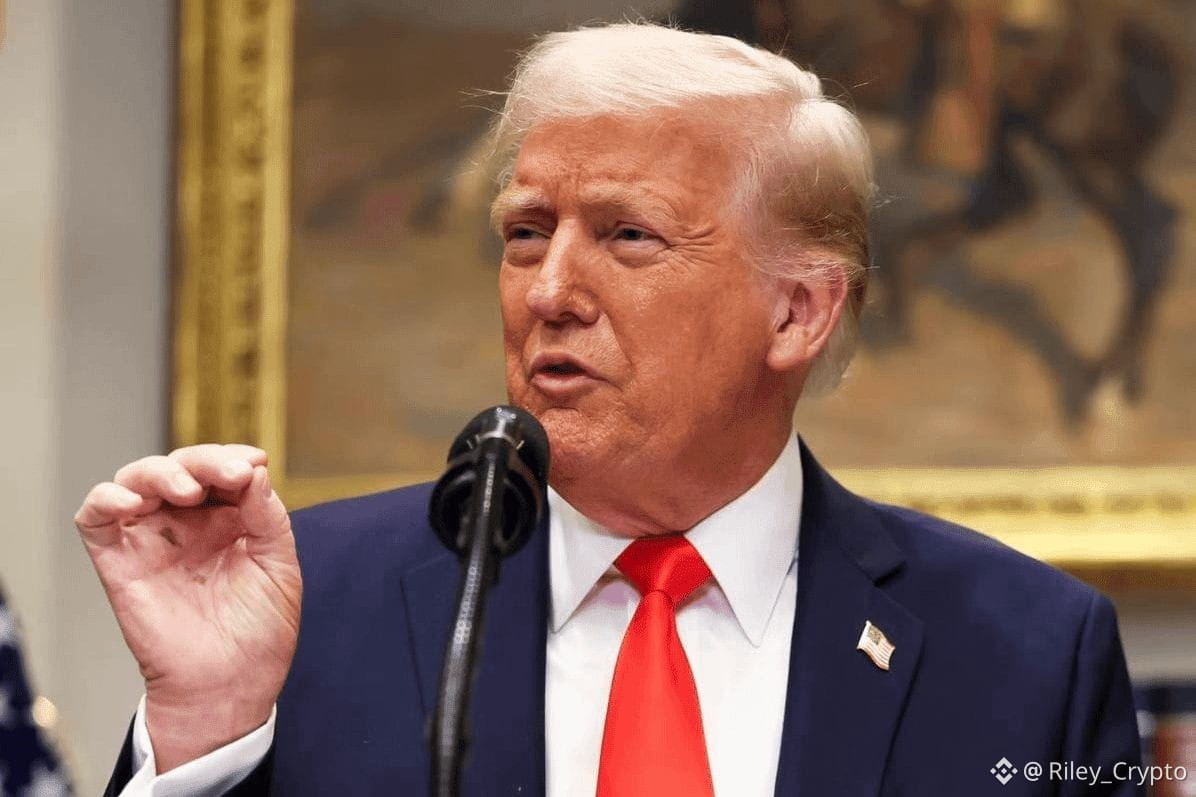
🇺🇸 Trump claims the US blockade of Iran is successful, while reports of oil flows through the Strait of Hormuz could influence global energy markets.
🕊️ Diplomacy vs. Military Risk: Conflicting signals about possible US military action keep geopolitical uncertainty alive.
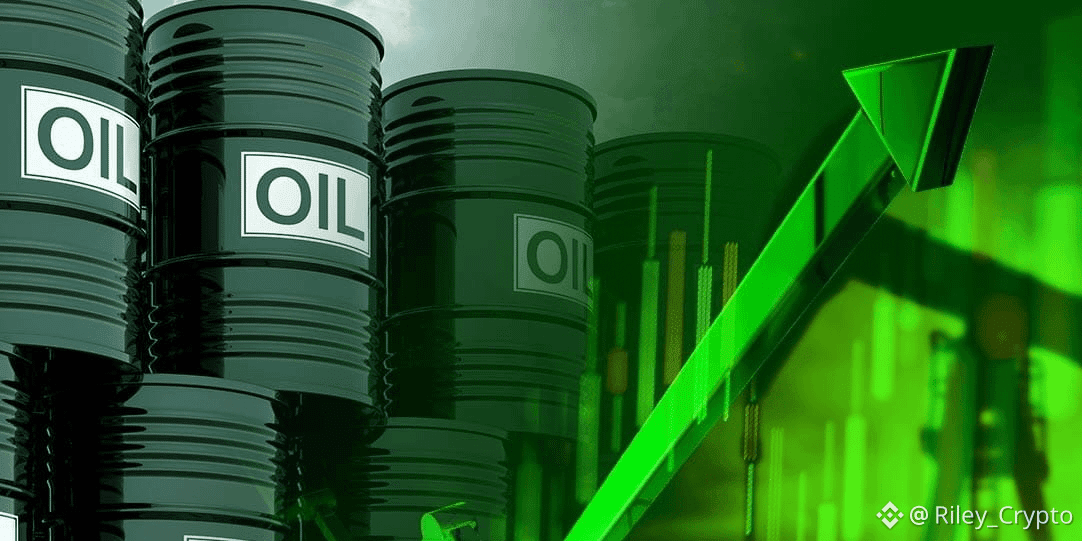
🛢️ Market Impact: Sustained oil shipments could ease supply concerns and reduce upward pressure on crude prices. However, any escalation could reverse that trend.
📊 Crypto Connection: Changes in oil prices can influence inflation expectations, Federal Reserve policy, and risk appetite across Bitcoin and other cryptocurrencies.
🎯 Key Takeaway: Watch verified shipping data, diplomatic developments, and crude oil price action before drawing conclusions. Headlines alone are not a trading signal.
What do you think — will oil prices cool down, or will tensions rise again? 👇
$CL $BZ $TRUMP
#Bitcoin #CryptoMarket #Iran #CrudeOil
#Geopolitics
🚨 TRUMP’S IRAN BLOCKADE CLAIM: WHAT IT MEANS FOR OIL & CRYPTO
🇺🇸 Trump claims the US blockade of Iran is successful, while reports of oil flows through the Strait of Hormuz could influence global energy markets.
🕊️ Diplomacy vs. Military Risk: Conflicting signals about possible US military action keep geopolitical uncertainty alive.
🛢️ Market Impact: Sustained oil shipments could ease supply concerns and reduce upward pressure on crude prices. However, any escalation could reverse that trend.
📊 Crypto Connection: Changes in oil prices can influence inflation expectations, Federal Reserve policy, and risk appetite across Bitcoin and other cryptocurrencies.
🎯 Key Takeaway: Watch verified shipping data, diplomatic developments, and crude oil price action before drawing conclusions. Headlines alone are not a trading signal.
What do you think — will oil prices cool down, or will tensions rise again? 👇
$CL $BZ $TRUMP
#Bitcoin #CryptoMarket #Iran #CrudeOil
#Geopolitics
🇺🇸 Trump claims the US blockade of Iran is successful, while reports of oil flows through the Strait of Hormuz could influence global energy markets.
🕊️ Diplomacy vs. Military Risk: Conflicting signals about possible US military action keep geopolitical uncertainty alive.
🛢️ Market Impact: Sustained oil shipments could ease supply concerns and reduce upward pressure on crude prices. However, any escalation could reverse that trend.
📊 Crypto Connection: Changes in oil prices can influence inflation expectations, Federal Reserve policy, and risk appetite across Bitcoin and other cryptocurrencies.
🎯 Key Takeaway: Watch verified shipping data, diplomatic developments, and crude oil price action before drawing conclusions. Headlines alone are not a trading signal.
What do you think — will oil prices cool down, or will tensions rise again? 👇
$CL $BZ $TRUMP
#Bitcoin #CryptoMarket #Iran #CrudeOil
#Geopolitics
807

·
--
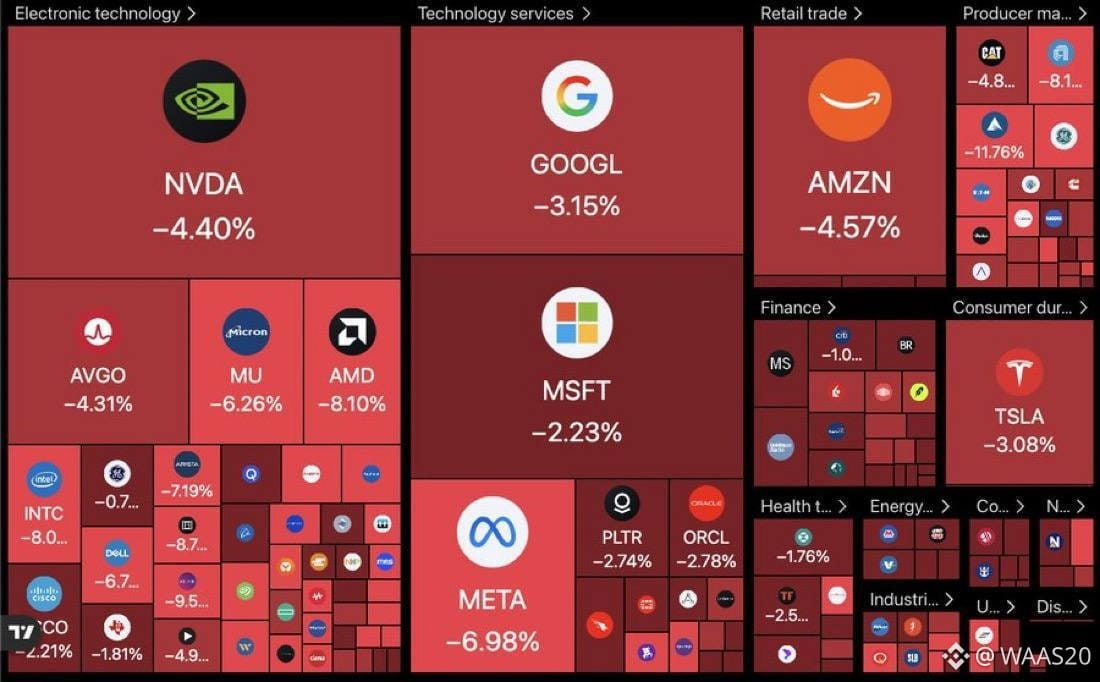
❌Iran threatens to shut down the internet worldwide, stock markets are showing declines.
#worldnews #iran #crypto
$NVDAB
{spot}(NVDABUSDT)
$MSFTB
{spot}(MSFTBUSDT)
$AAPLB
{spot}(AAPLBUSDT)
❌Iran threatens to shut down the internet worldwide, stock markets are showing declines.
#worldnews #iran #crypto
$NVDAB
$MSFTB
$AAPLB
#worldnews #iran #crypto
$NVDAB
$MSFTB
$AAPLB
1
410
U.S. President Donald Trump announced today that the United States has launched powerful strikes against Iran, signaling that further military actions are likely. This direct confirmation of kinetic escalation marks a critical shift in Middle Eastern geopolitics, moving tensions into an active conflict phase.
This aggressive military posture raises systemic concerns over global energy supply lines and regional stability. Market participants are recalibrating for prolonged geopolitical friction, sharply contrasting with earlier diplomatic de-escalation expectations.
Traditional financial markets face immediate risk-off pressure across global equities and sovereign bonds, alongside a firming U.S. dollar. Fears of retaliatory disruption to crude oil transit corridors are prompting broad defensive positioning across commodities.
For digital assets, immediate liquidity is tightening as capital flees toward conventional cash havens. A sustained geopolitical crisis may initially keep $BTC and the broader crypto market volatile, though prolonged fiat instability could eventually revive alternative-asset demand. 🛡️
#Geopolitics #Iran #MacroEconomics
U.S. President Donald Trump announced today that the United States has launched powerful strikes against Iran, signaling that further military actions are likely. This direct confirmation of kinetic escalation marks a critical shift in Middle Eastern geopolitics, moving tensions into an active conflict phase.
This aggressive military posture raises systemic concerns over global energy supply lines and regional stability. Market participants are recalibrating for prolonged geopolitical friction, sharply contrasting with earlier diplomatic de-escalation expectations.
Traditional financial markets face immediate risk-off pressure across global equities and sovereign bonds, alongside a firming U.S. dollar. Fears of retaliatory disruption to crude oil transit corridors are prompting broad defensive positioning across commodities.
For digital assets, immediate liquidity is tightening as capital flees toward conventional cash havens. A sustained geopolitical crisis may initially keep $BTC and the broader crypto market volatile, though prolonged fiat instability could eventually revive alternative-asset demand. 🛡️
#Geopolitics #Iran #MacroEconomics
This aggressive military posture raises systemic concerns over global energy supply lines and regional stability. Market participants are recalibrating for prolonged geopolitical friction, sharply contrasting with earlier diplomatic de-escalation expectations.
Traditional financial markets face immediate risk-off pressure across global equities and sovereign bonds, alongside a firming U.S. dollar. Fears of retaliatory disruption to crude oil transit corridors are prompting broad defensive positioning across commodities.
For digital assets, immediate liquidity is tightening as capital flees toward conventional cash havens. A sustained geopolitical crisis may initially keep $BTC and the broader crypto market volatile, though prolonged fiat instability could eventually revive alternative-asset demand. 🛡️
#Geopolitics #Iran #MacroEconomics
41

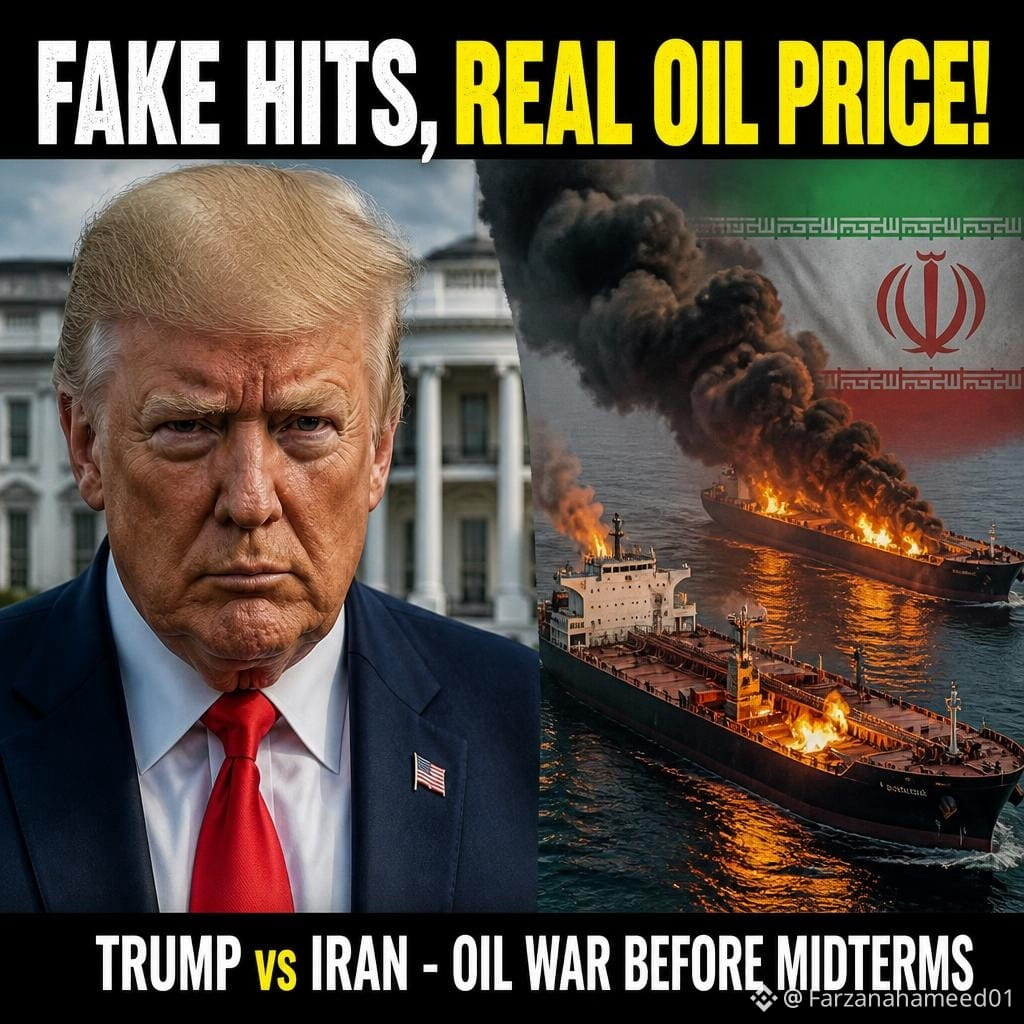
🚨 𝗙𝗔𝗞𝗘 𝗛𝗜𝗧𝗦, 𝗥𝗘𝗔𝗟 𝗢𝗜𝗟 𝗣𝗥𝗜𝗖𝗘! 🛢️💣
TRUMP SLAMS IRAN!
Trump ka dhamaka: “Iran is making up fake hits, mines & everything to drive up oil prices before U.S. Midterms!”
Iran ka claim: 7 tankers Hormuz me tabah!
Trump ka jawab: Drama hai, Hormuz se pehle se ZYADA oil ja raha hai!
Midterm = 3 Nov, Oil = 5-Month High! 🔥
IRAN CAN NEVER HAVE A NUKE! ☢️🚫
Trump #Iran #OilPrices #Hormuz #BreakingNews
🚨 𝗙𝗔𝗞𝗘 𝗛𝗜𝗧𝗦, 𝗥𝗘𝗔𝗟 𝗢𝗜𝗟 𝗣𝗥𝗜𝗖𝗘! 🛢️💣
TRUMP SLAMS IRAN!
Trump ka dhamaka: “Iran is making up fake hits, mines & everything to drive up oil prices before U.S. Midterms!”
Iran ka claim: 7 tankers Hormuz me tabah!
Trump ka jawab: Drama hai, Hormuz se pehle se ZYADA oil ja raha hai!
Midterm = 3 Nov, Oil = 5-Month High! 🔥
IRAN CAN NEVER HAVE A NUKE! ☢️🚫
Trump #Iran #OilPrices #Hormuz #BreakingNews
TRUMP SLAMS IRAN!
Trump ka dhamaka: “Iran is making up fake hits, mines & everything to drive up oil prices before U.S. Midterms!”
Iran ka claim: 7 tankers Hormuz me tabah!
Trump ka jawab: Drama hai, Hormuz se pehle se ZYADA oil ja raha hai!
Midterm = 3 Nov, Oil = 5-Month High! 🔥
IRAN CAN NEVER HAVE A NUKE! ☢️🚫
Trump #Iran #OilPrices #Hormuz #BreakingNews
4
453
·
--
Bearish
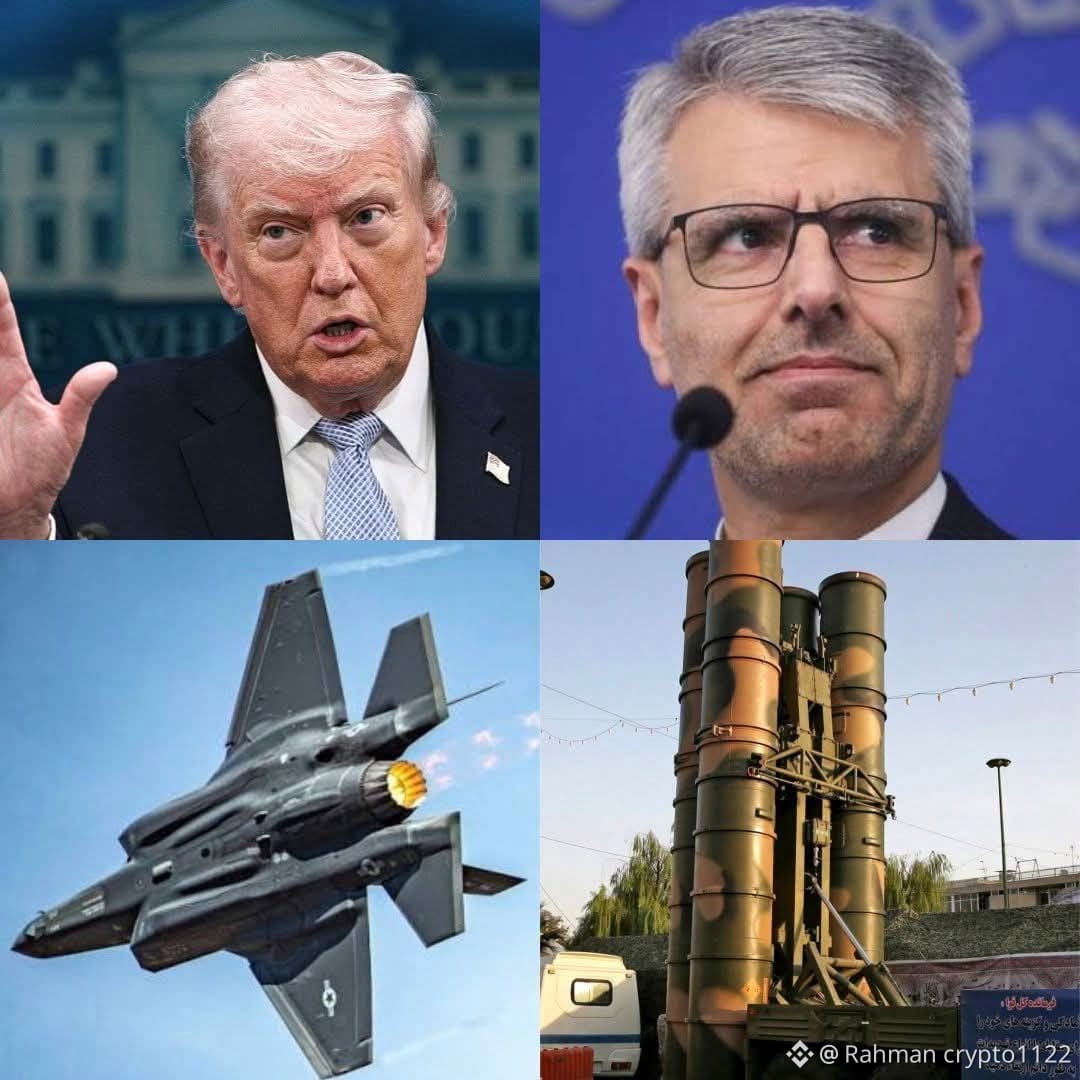
🚨🇺🇸🇮🇷 U.S. F-35 MAKES EMERGENCY LANDING AFTER IRAN MISSION
A U.S. F-35 stealth fighter reportedly sustained damage during a combat mission over Iran on March 19, 2026, forcing an emergency landing at a regional U.S. airbase. 🇮🇷
U.S. Central Command (CENTCOM) confirmed that the aircraft landed safely and the pilot was in stable condition. Reports about infrared missile targeting and the alleged transmission of emergency code 7600 have not been independently verified.
📌 Reference: "CNN via KESQ" (https://kesq.com/news/national-politics/cnn-us-politics/2026/03/19/us-f-35-damaged-by-suspected-iranian-fire-makes-emergency-landing-sources-say/) | "Air & Space Forces Magazine" (https://www.airandspaceforces.com/f-35a-lands-after-taking-fire-over-iran-pilot-stable/)
#USA #Iran #F35 #MilitaryNews
$XAG $XAU $NOKB
🚨🇺🇸🇮🇷 U.S. F-35 MAKES EMERGENCY LANDING AFTER IRAN MISSION
A U.S. F-35 stealth fighter reportedly sustained damage during a combat mission over Iran on March 19, 2026, forcing an emergency landing at a regional U.S. airbase. 🇮🇷
U.S. Central Command (CENTCOM) confirmed that the aircraft landed safely and the pilot was in stable condition. Reports about infrared missile targeting and the alleged transmission of emergency code 7600 have not been independently verified.
📌 Reference: "CNN via KESQ" (https://kesq.com/news/national-politics/cnn-us-politics/2026/03/19/us-f-35-damaged-by-suspected-iranian-fire-makes-emergency-landing-sources-say/) | "Air & Space Forces Magazine" (https://www.airandspaceforces.com/f-35a-lands-after-taking-fire-over-iran-pilot-stable/)
#USA #Iran #F35 #MilitaryNews
$XAG $XAU $NOKB
A U.S. F-35 stealth fighter reportedly sustained damage during a combat mission over Iran on March 19, 2026, forcing an emergency landing at a regional U.S. airbase. 🇮🇷
U.S. Central Command (CENTCOM) confirmed that the aircraft landed safely and the pilot was in stable condition. Reports about infrared missile targeting and the alleged transmission of emergency code 7600 have not been independently verified.
📌 Reference: "CNN via KESQ" (https://kesq.com/news/national-politics/cnn-us-politics/2026/03/19/us-f-35-damaged-by-suspected-iranian-fire-makes-emergency-landing-sources-say/) | "Air & Space Forces Magazine" (https://www.airandspaceforces.com/f-35a-lands-after-taking-fire-over-iran-pilot-stable/)
#USA #Iran #F35 #MilitaryNews
$XAG $XAU $NOKB
515
Log in to explore more content
Join global crypto users on Binance Square
⚡️ Get latest and useful information about crypto.
💬 Trusted by the world’s largest crypto exchange.
👍 Discover real insights from verified creators.
Email / Phone number
Trending Topics
1
#BinancePick
2.5M views
136,552 Discussing
2
#EarningsSeason
4.9M views
23,756 Discussing
3
#ElectrumWalletBugLetRogueServersStealFunds
903 views
77 Discussing
4
#ArgentineCourtDismissesLIBRACaseAgainstMilei
8,057 views
192 Discussing
5
#SKHynixReportedlyPlansSpecialDividendFromKioxiaStakeSale
1,918 views
28 Discussing
6
#KeystoneWebsiteBreachExposesBuyersShippingAddresses
959 views
18 Discussing
7
#USQ3GDPAndSeptemberPCEDueNextWeek
79,180 views
1,005 Discussing
8
#SouthKoreaDelaysCryptoIncomeTax
147,401 views
1,057 Discussing
9
#ElectrumFixesHighRiskExploitInVersionsBefore4.8.3
65,484 views
762 Discussing
10
#SouthKoreaPlansToRegulateStablecoinsUnderFXLaw
63,355 views
677 Discussing